
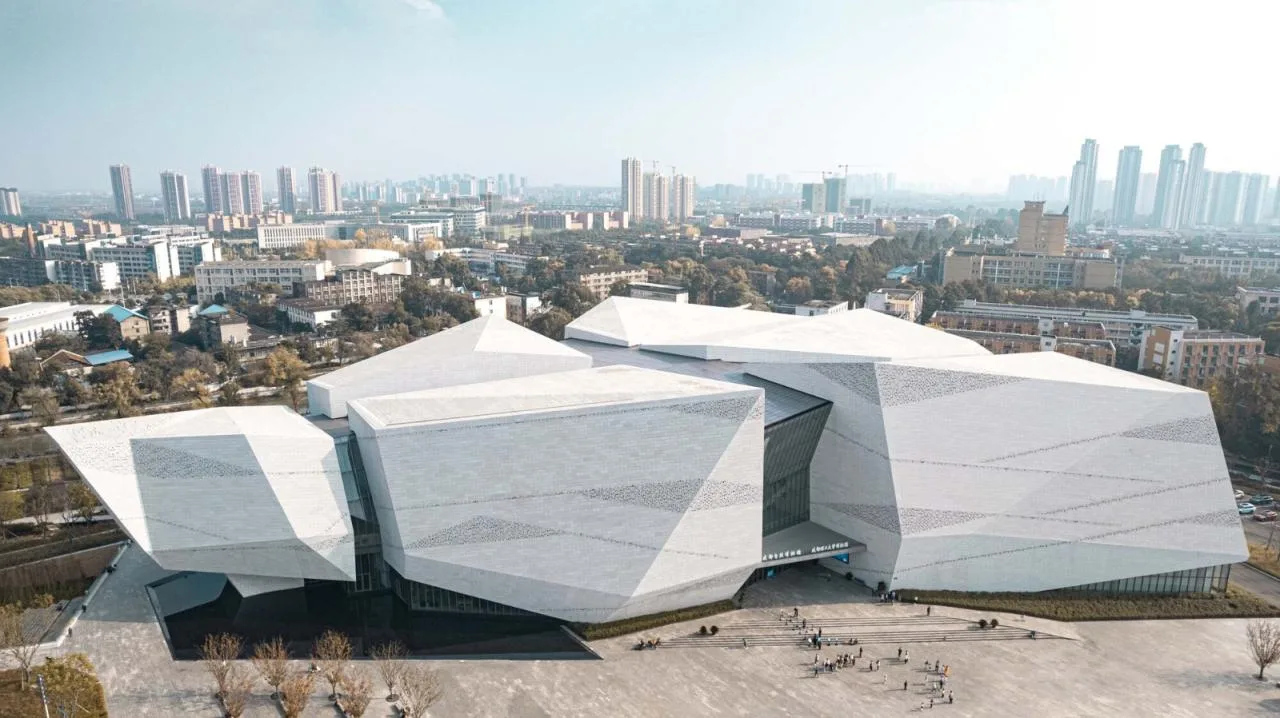
The Chengdu Natural History Museum, affiliated with Chengdu University of Technology, honors the city’s rich historical legacy and contemporary character. It transforms the urban skyline into a vibrant symbol of Chengdu’s energy and innovative spirit. The design deeply explores local cultural elements—known as the “Shu Mountains, Shu Roads, and Shu Waters”—successfully weaving the region’s extensive history, culture, and urban heritage into the project.
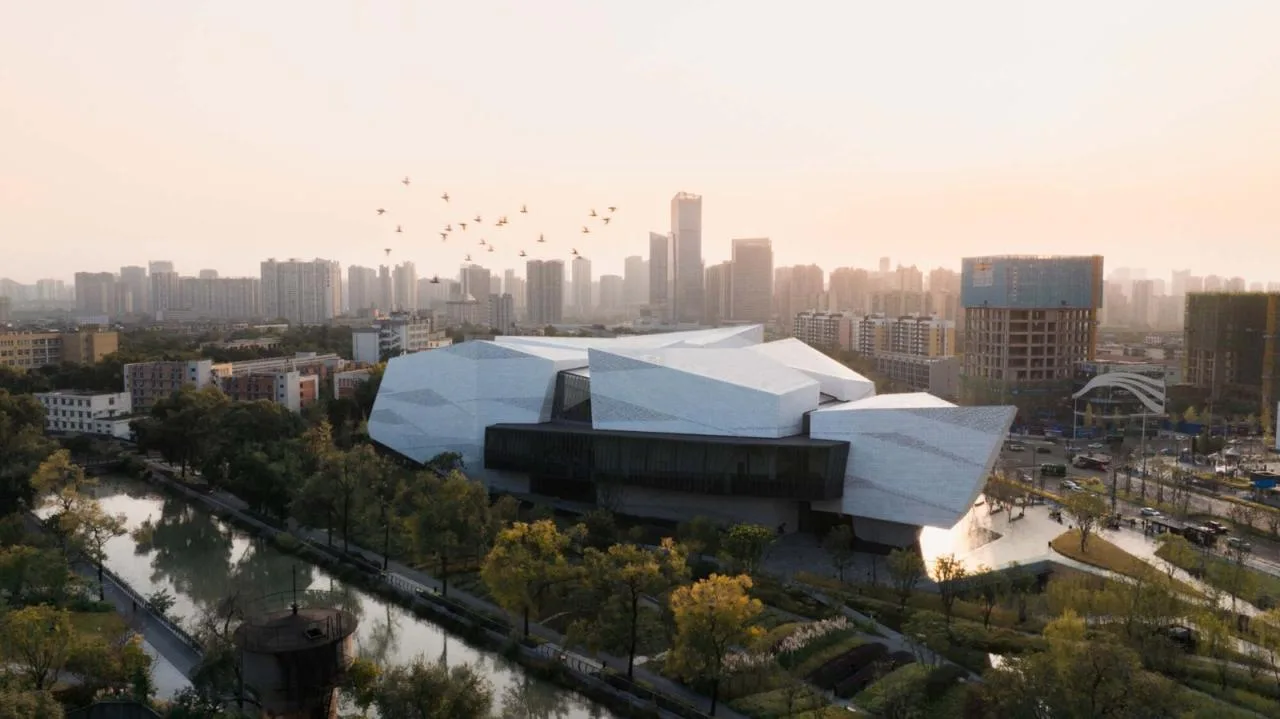
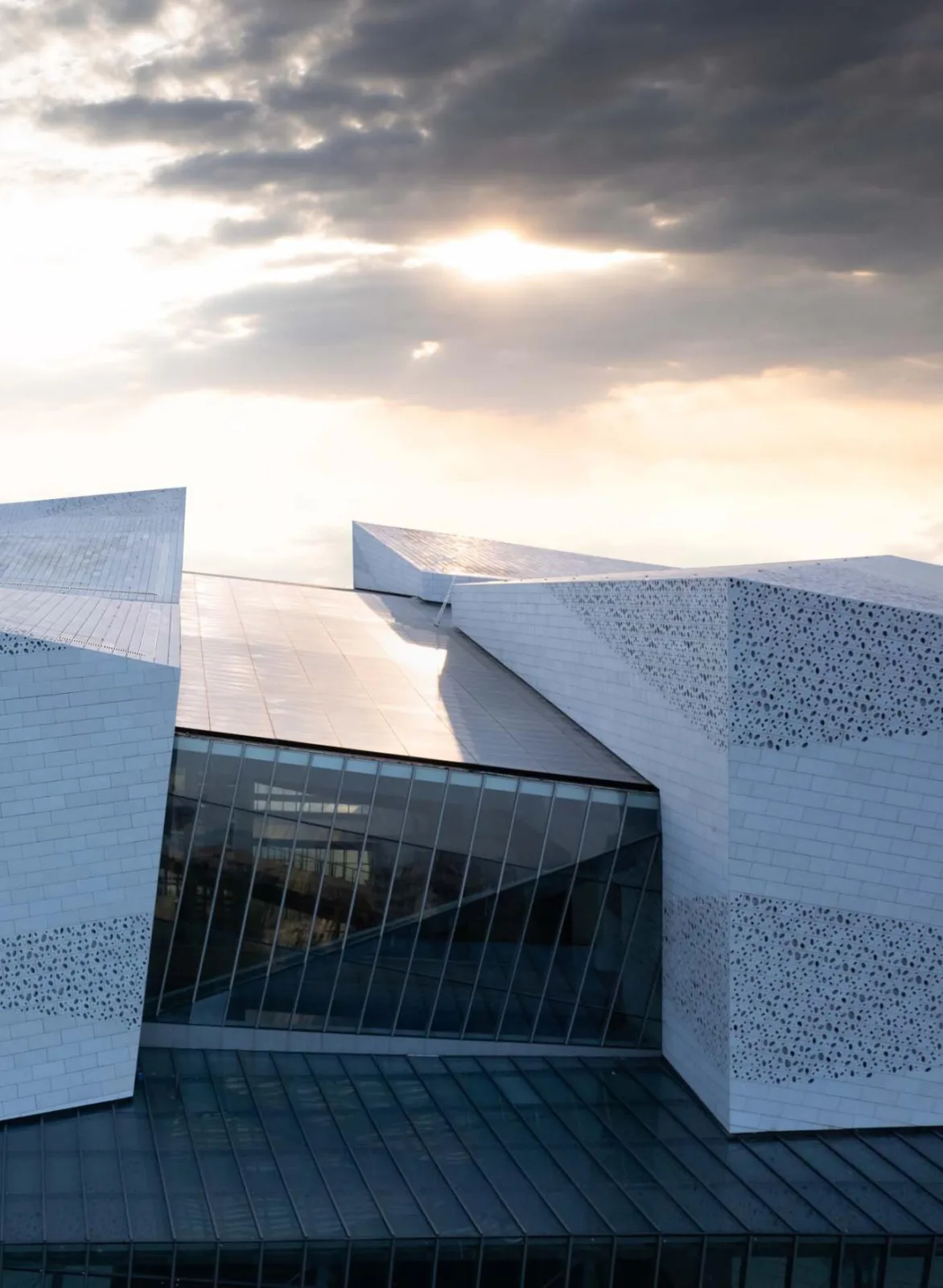
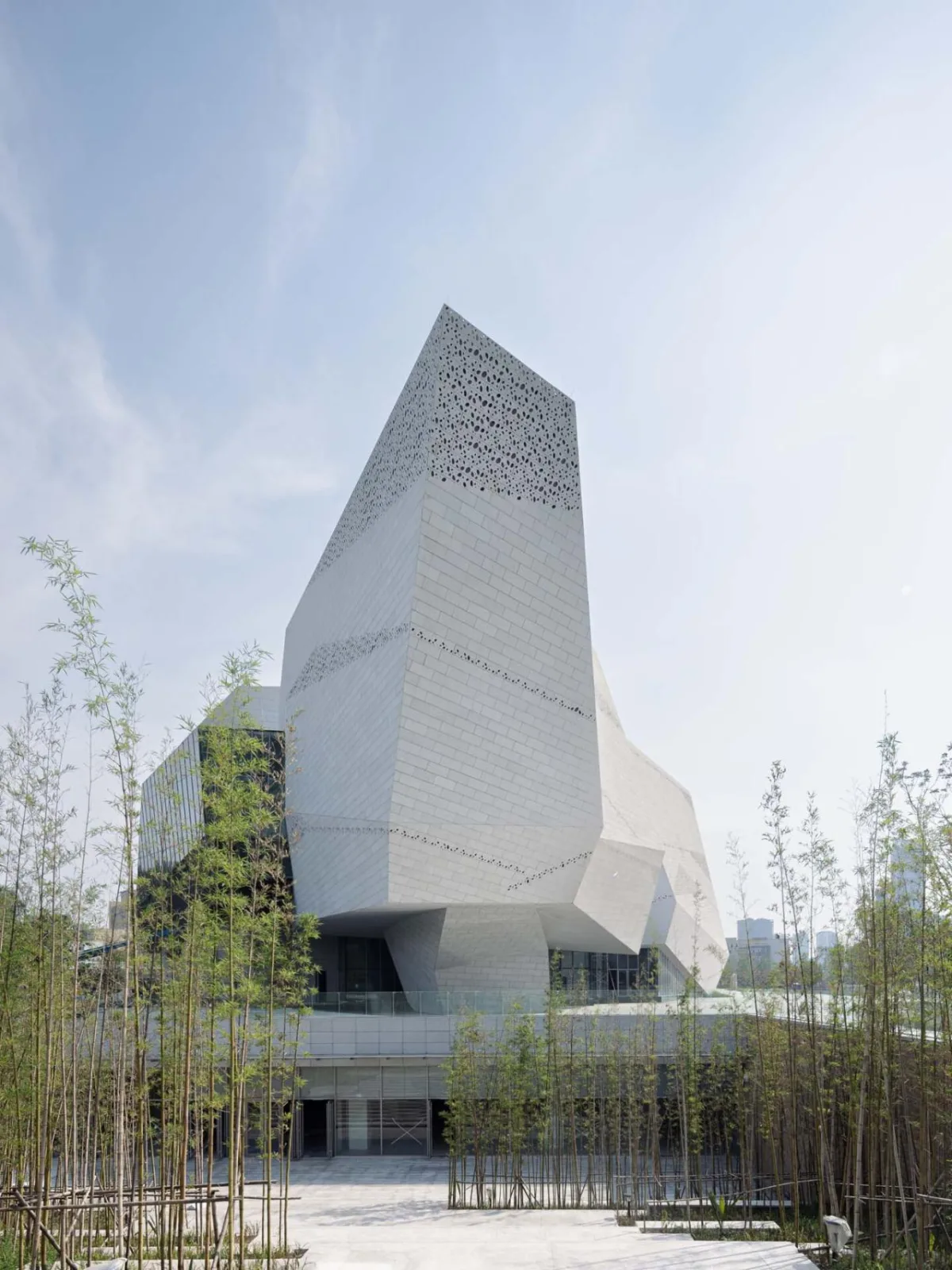
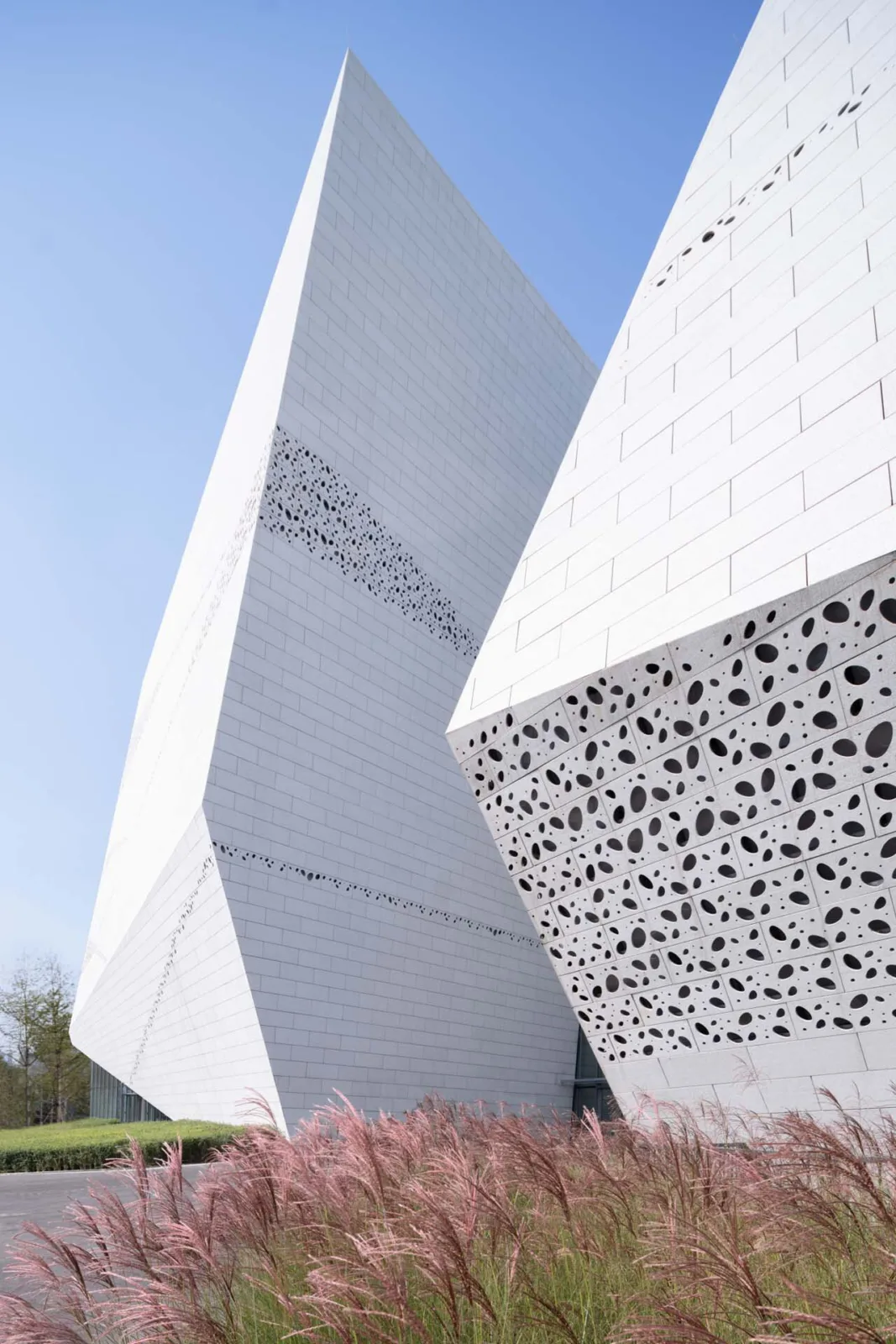
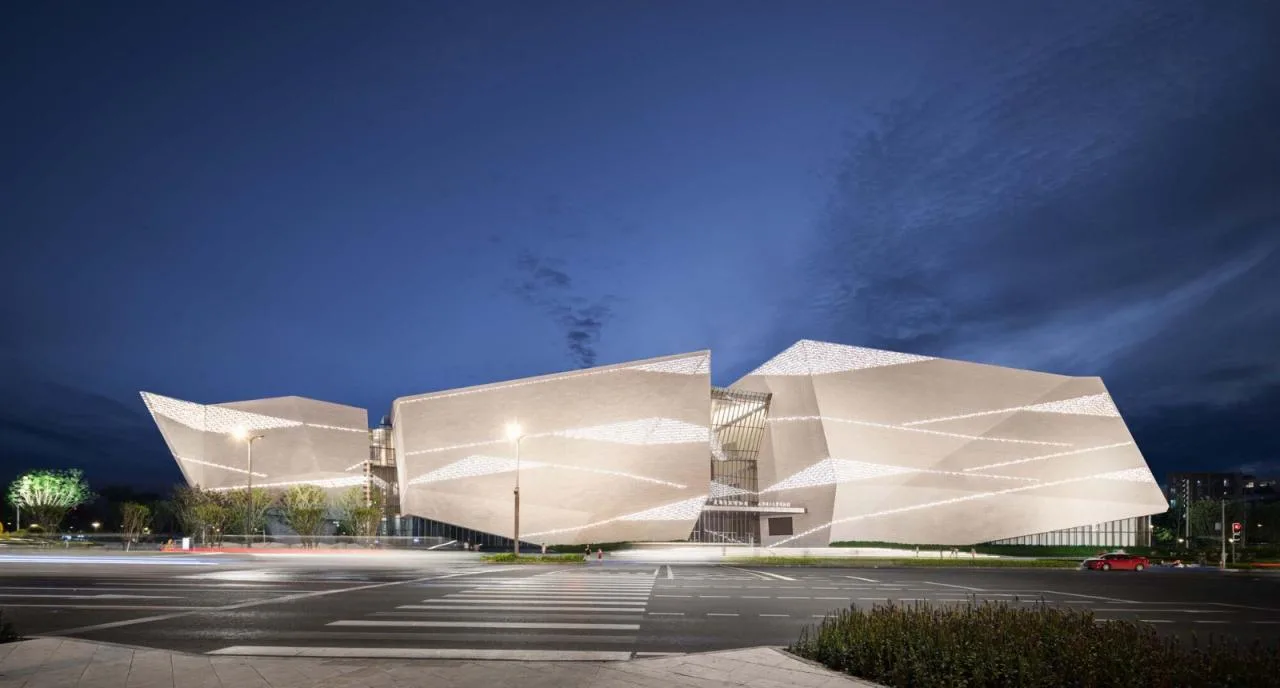
The architectural design draws inspiration from the Sichuan Mountains, evoking the image of a “window containing a thousand autumn snows on the western ridge.” The primary creative influence comes from these western Sichuan Mountains, shaping the building’s form. Historically, the Chengdu area’s geology was shaped by tectonic forces causing rock fractures and displacements, leading to the current mountainous landscape. This geological history inspired the building’s composition of interlocking blocks. In some areas, the structures appear to rise naturally from the earth, revealing inviting public spaces inside while maintaining a grounded presence.
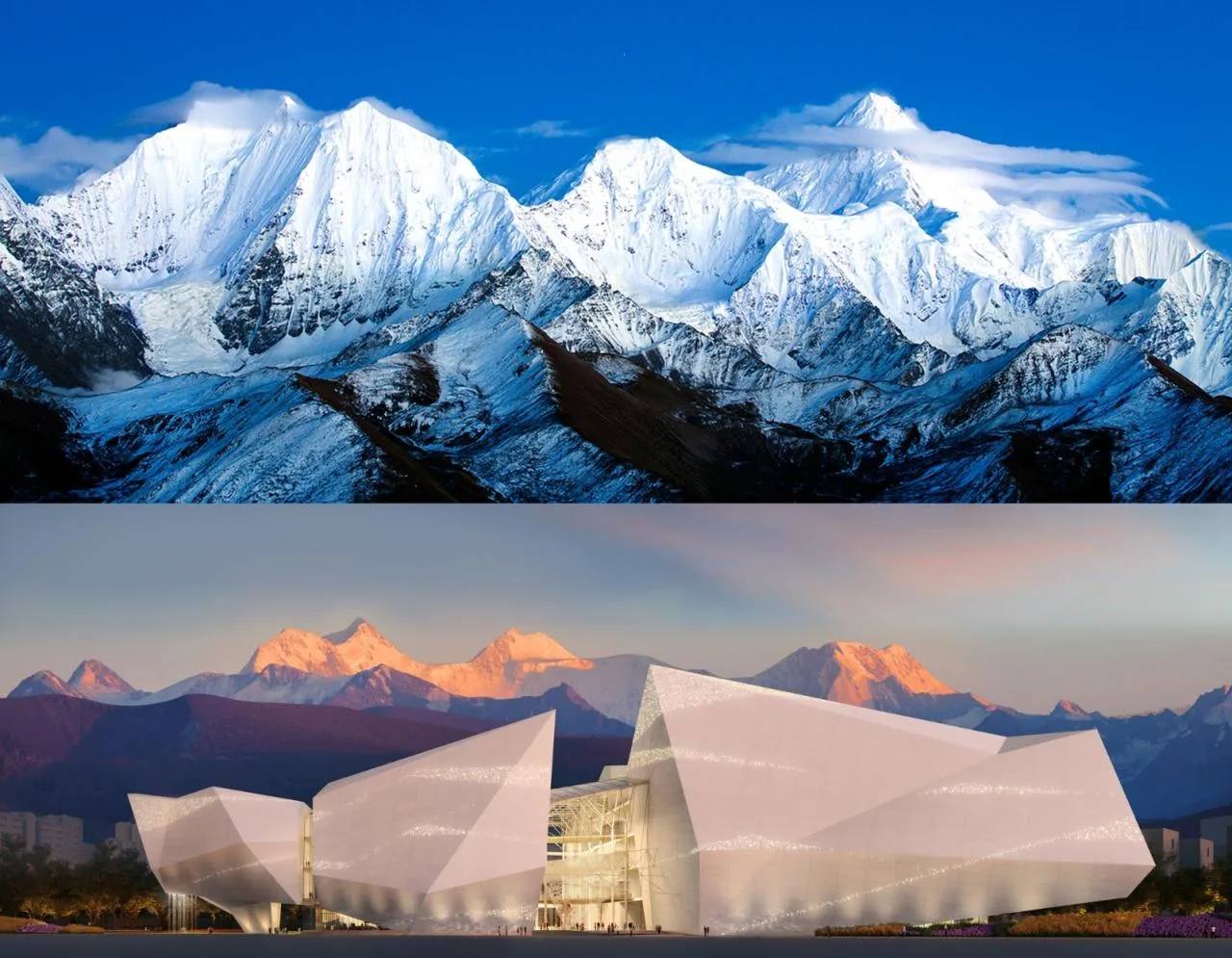
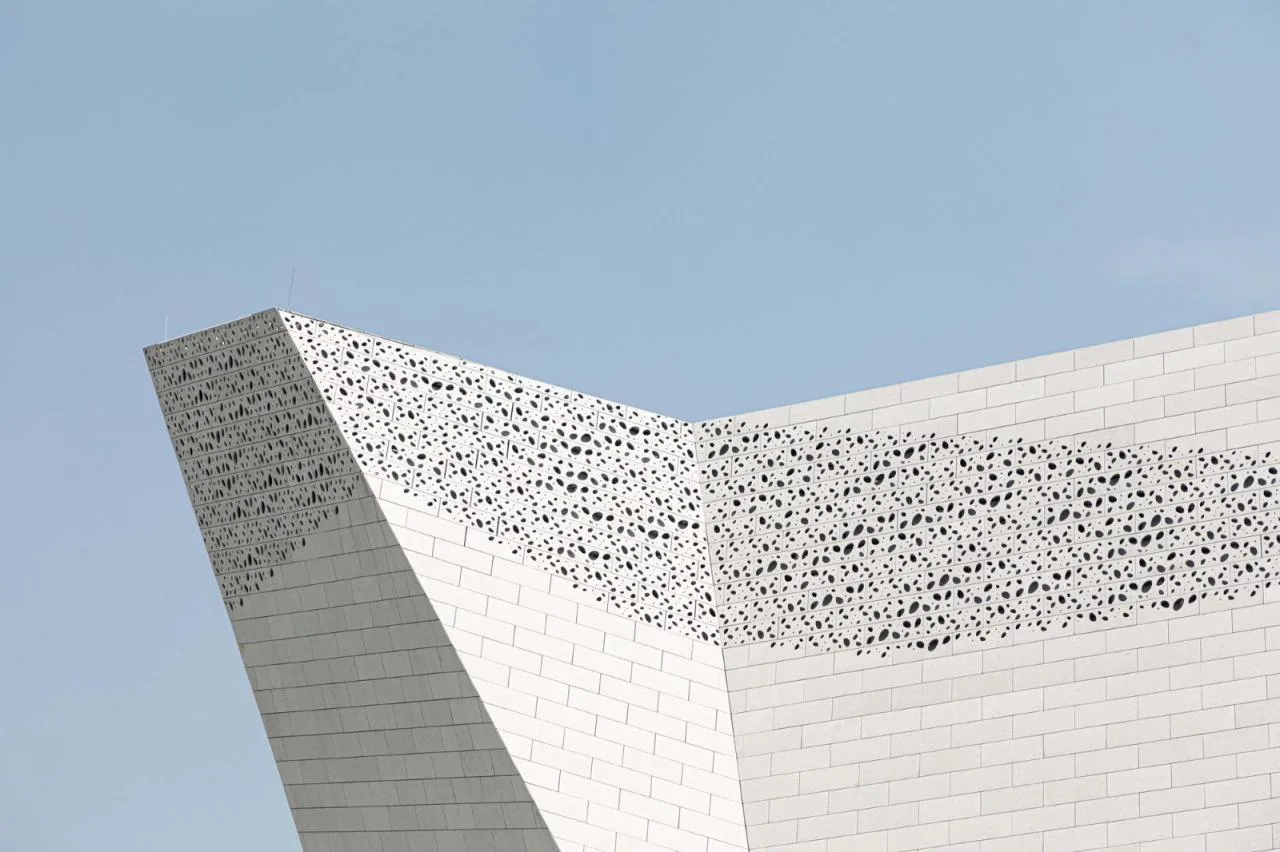
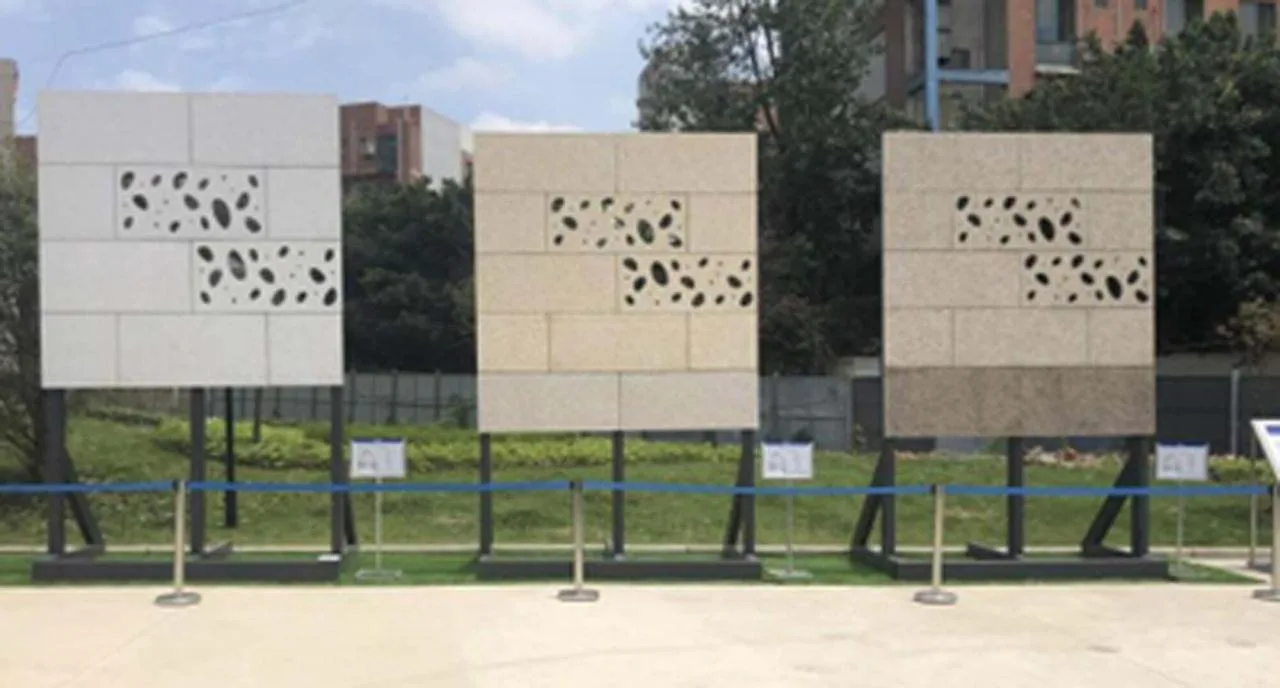
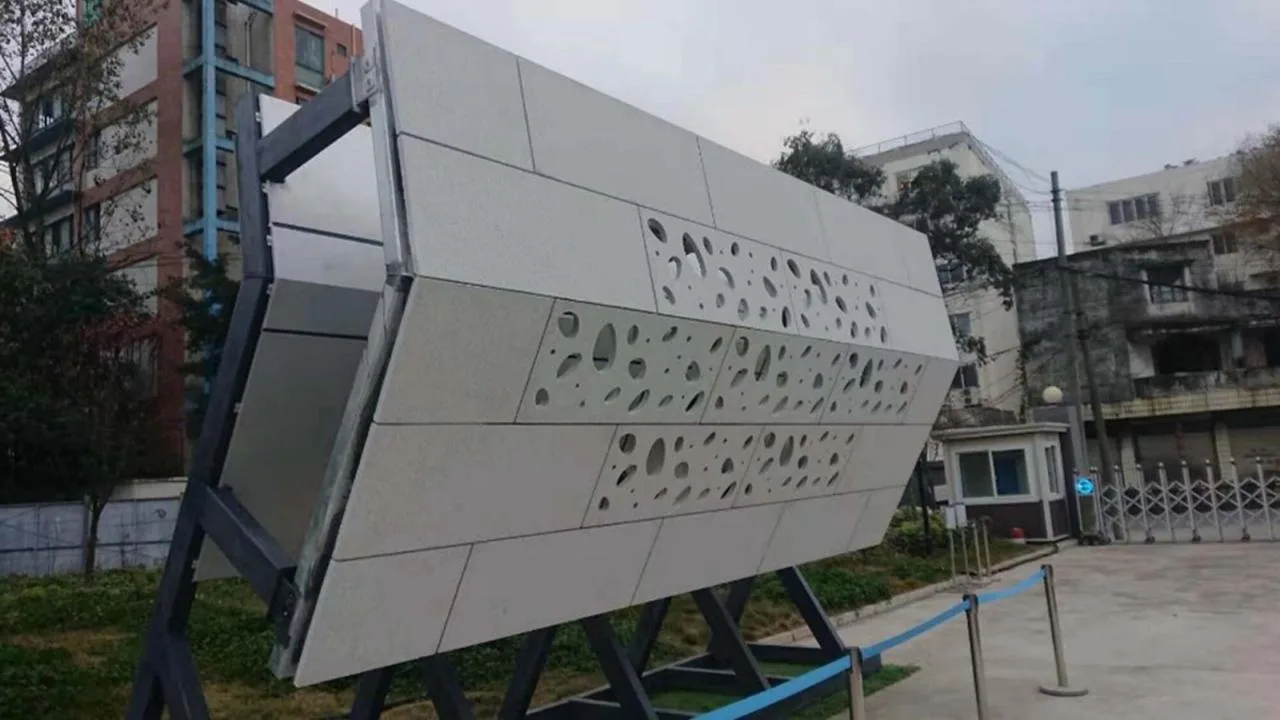
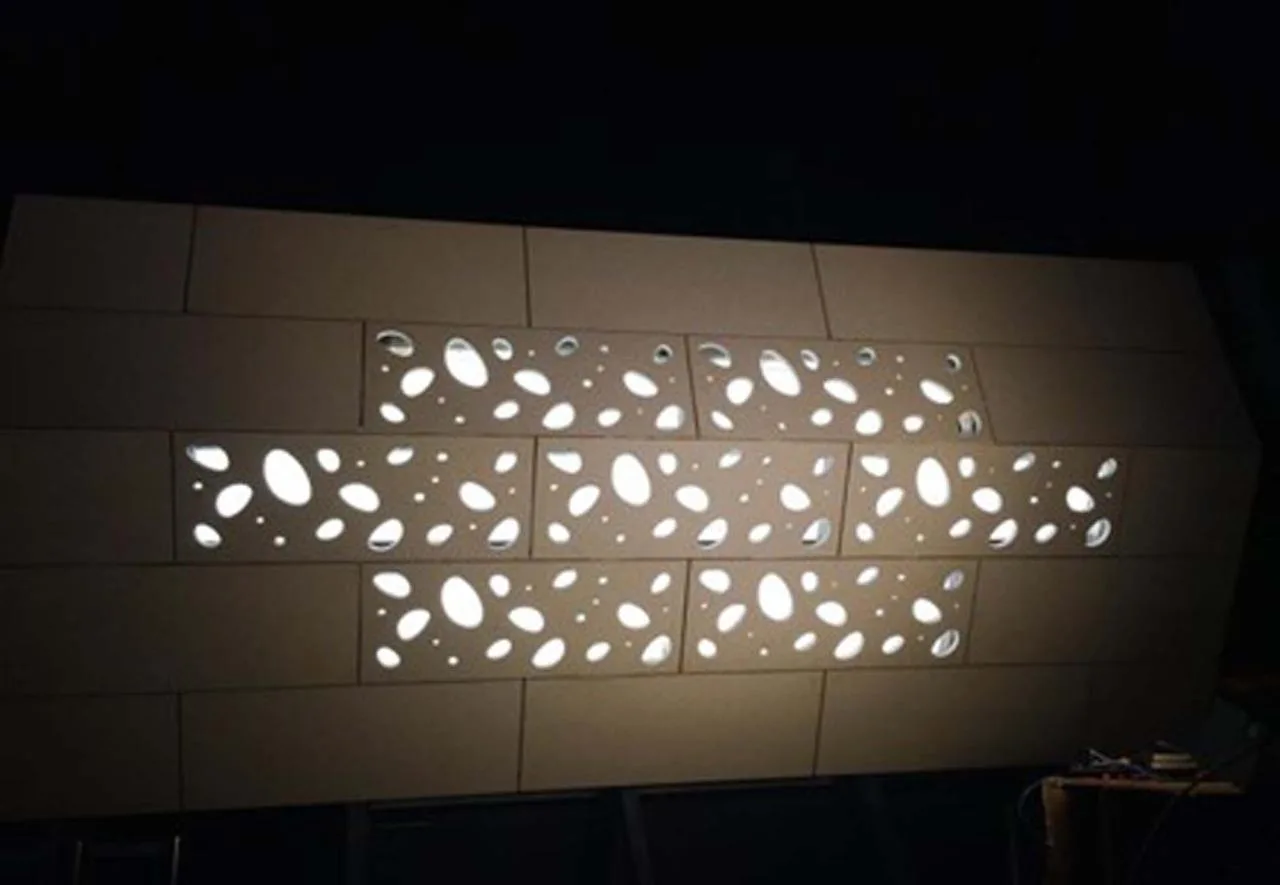
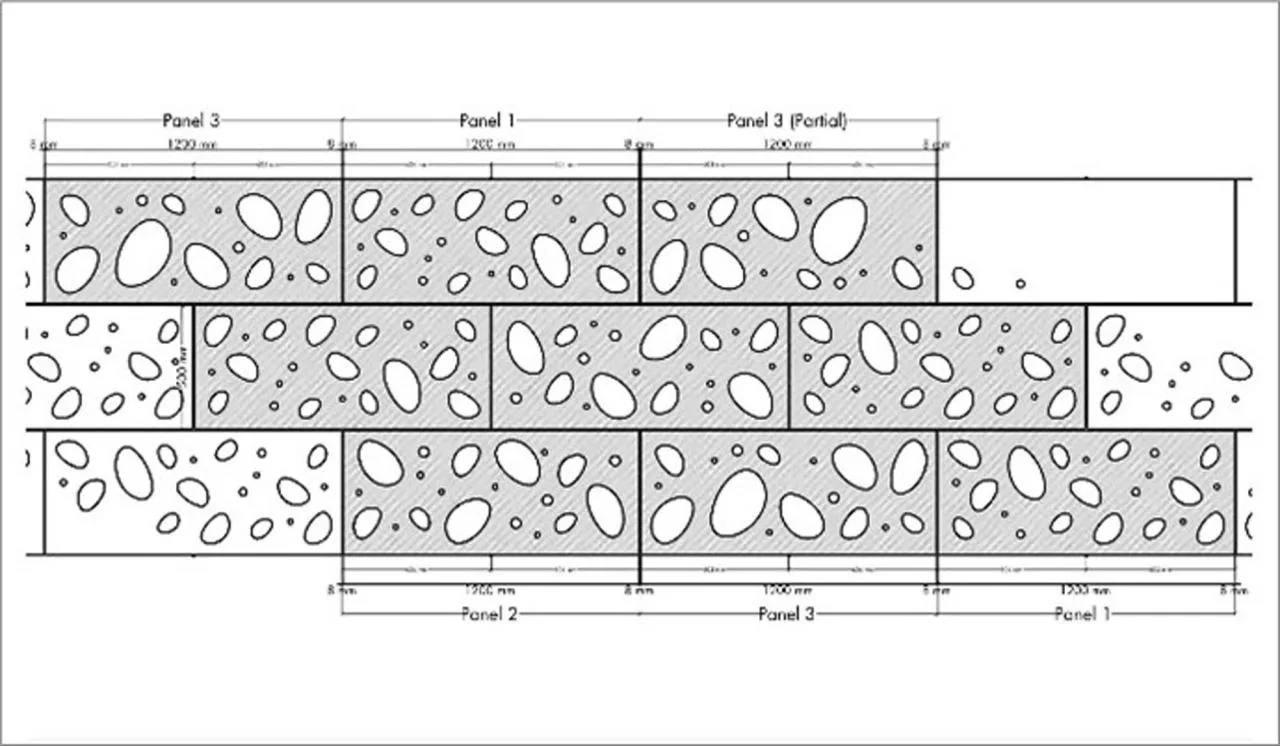
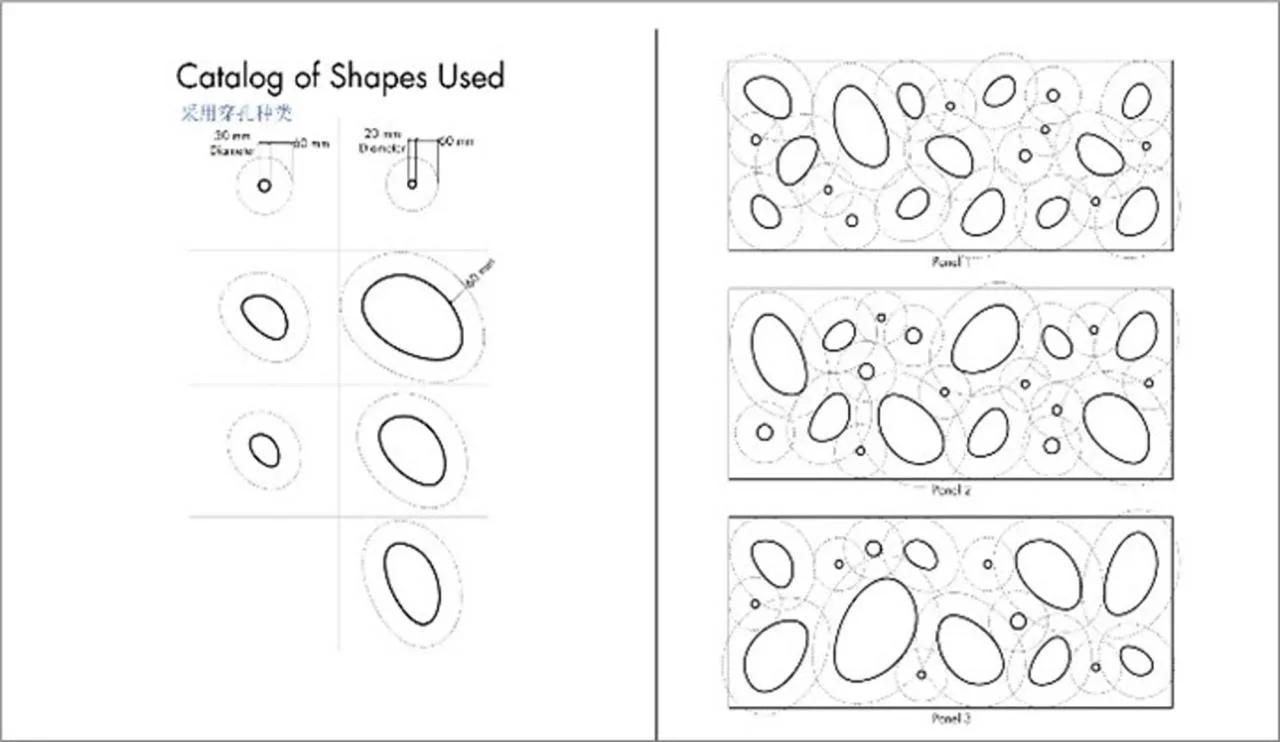
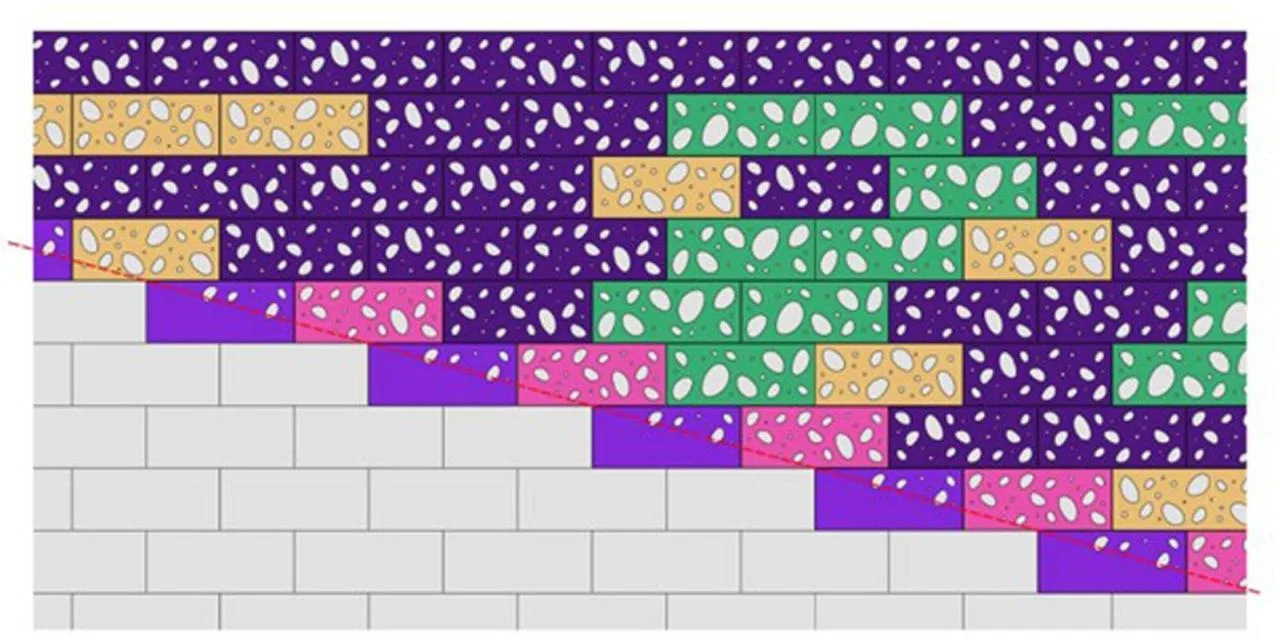
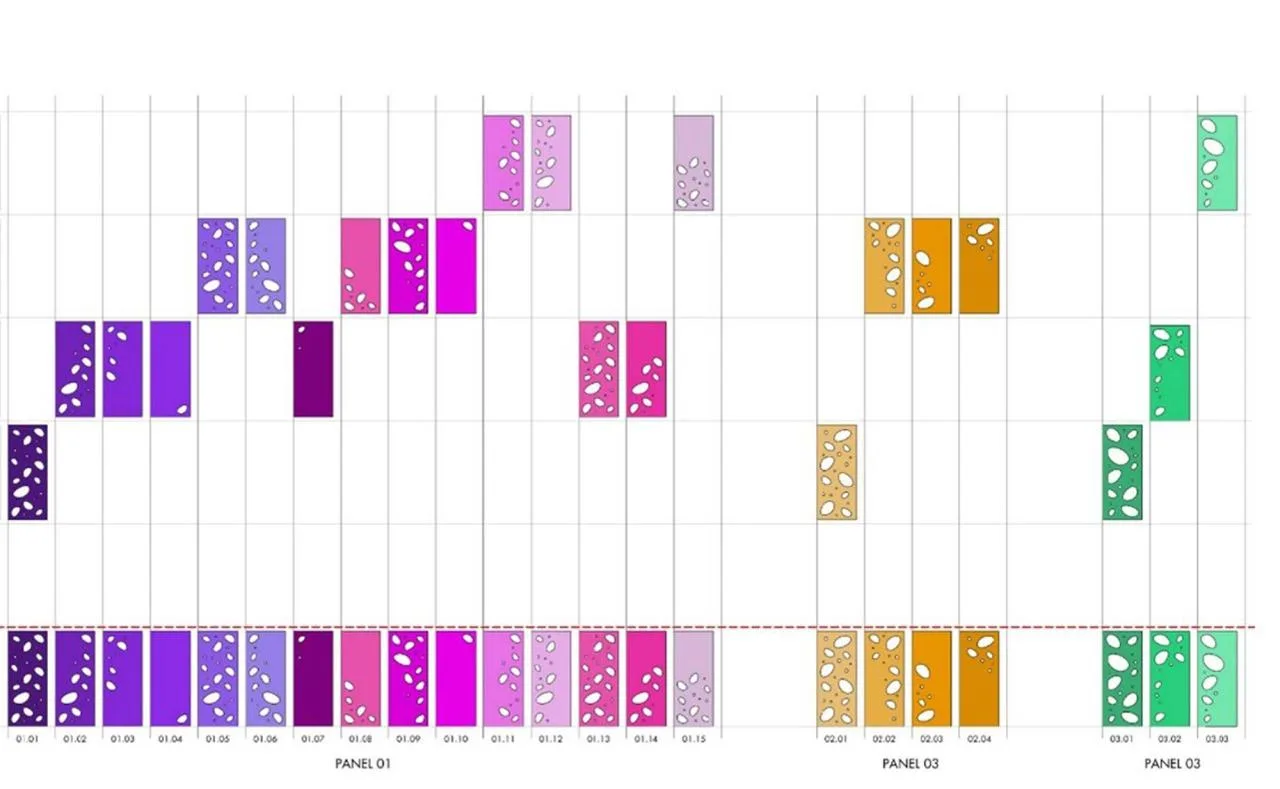
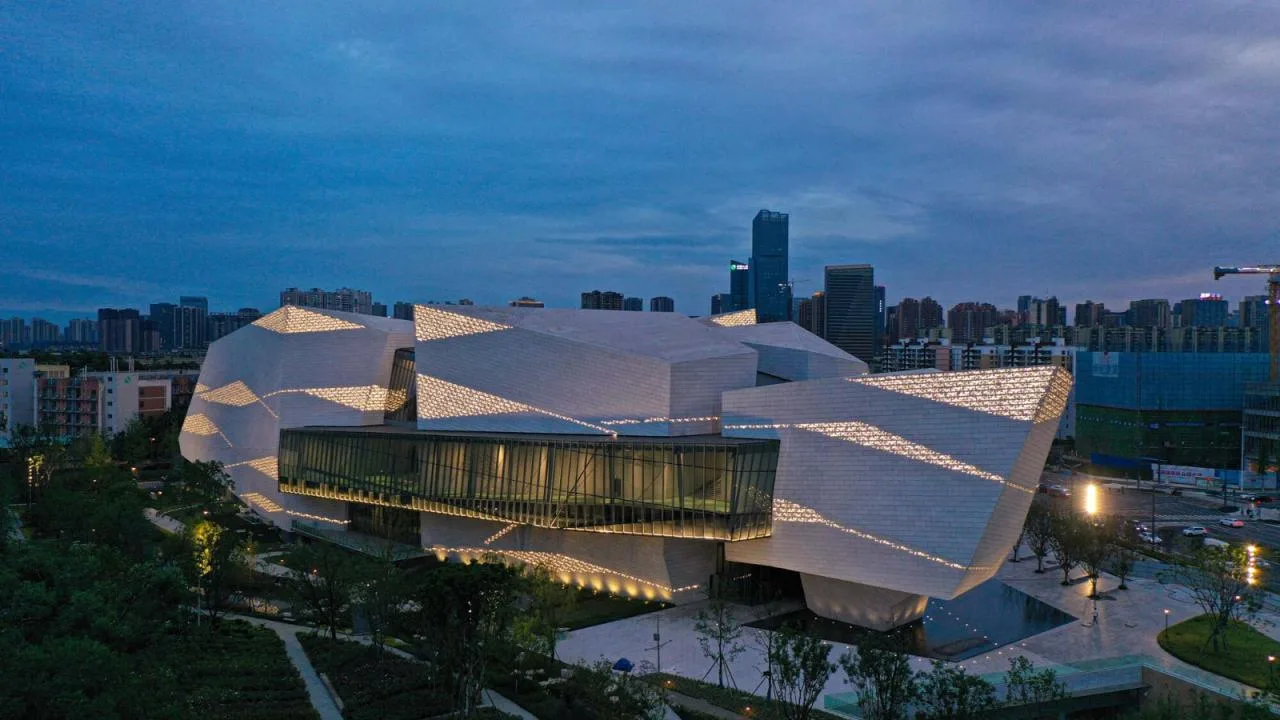
Each massive “stone” or “mountain” within the design becomes a distinct exhibition space, connected and separated by sunlit public areas. The stones feature perforations of various shapes and organic patterns, mimicking the appearance of white snow covering mountain peaks during the day. At night, these openings are illuminated from behind with LEDs, creating a striking starry effect.
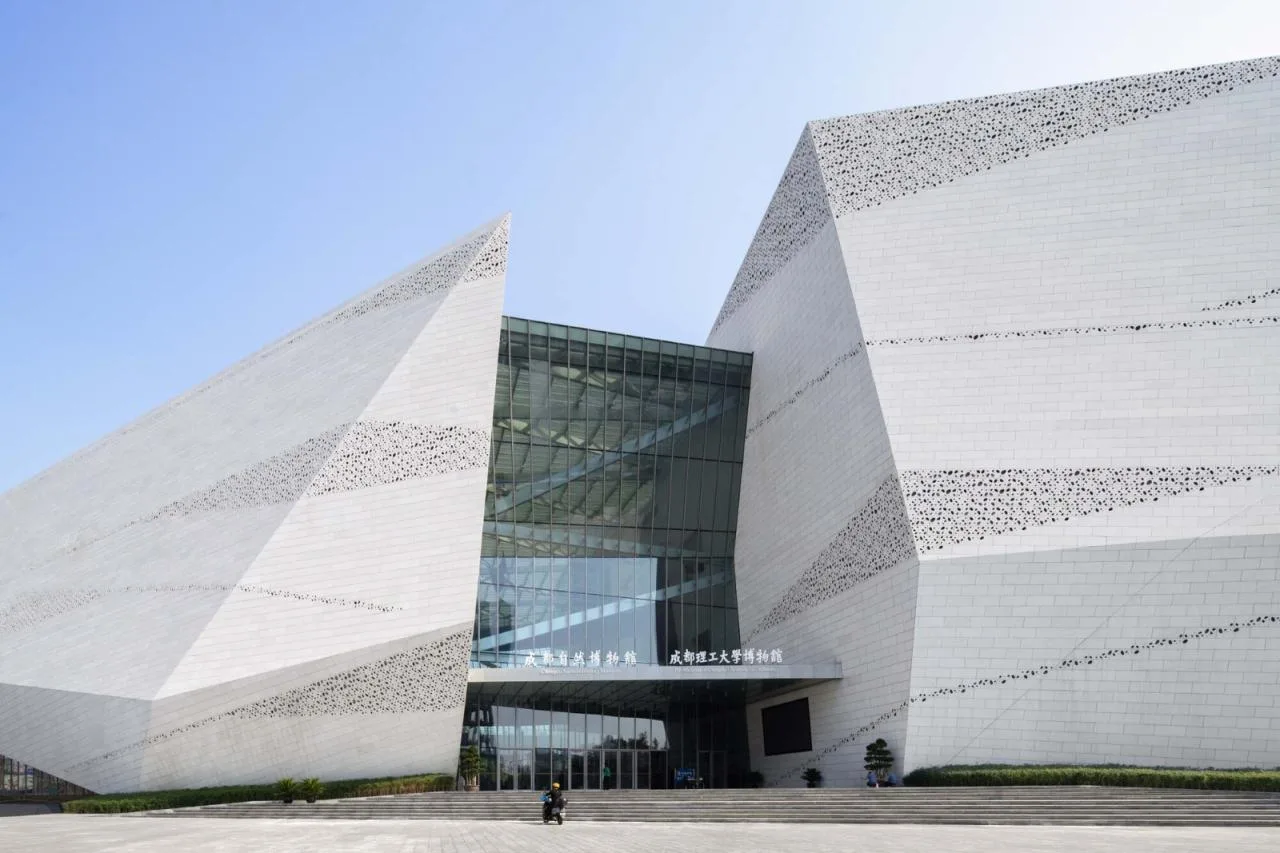
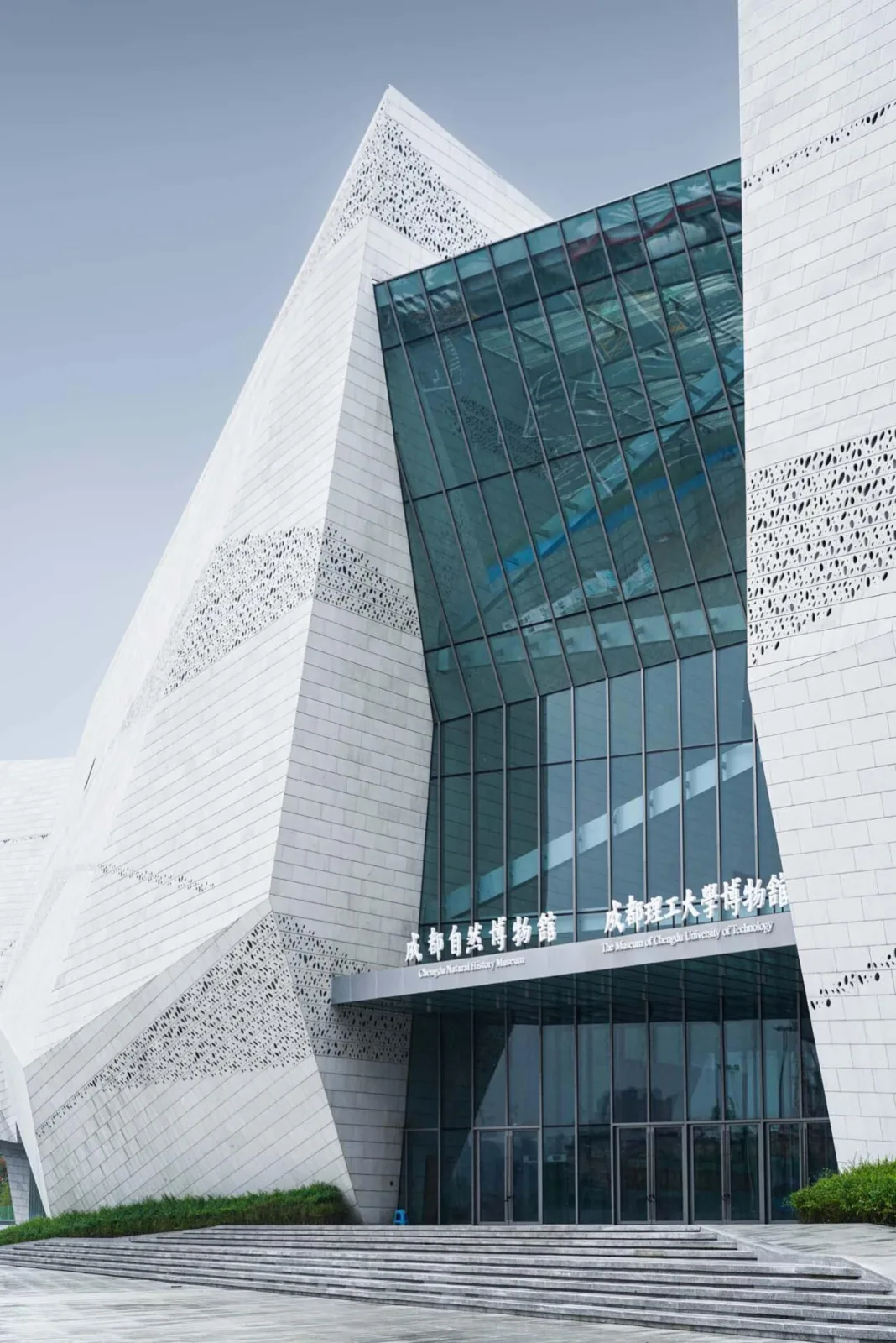
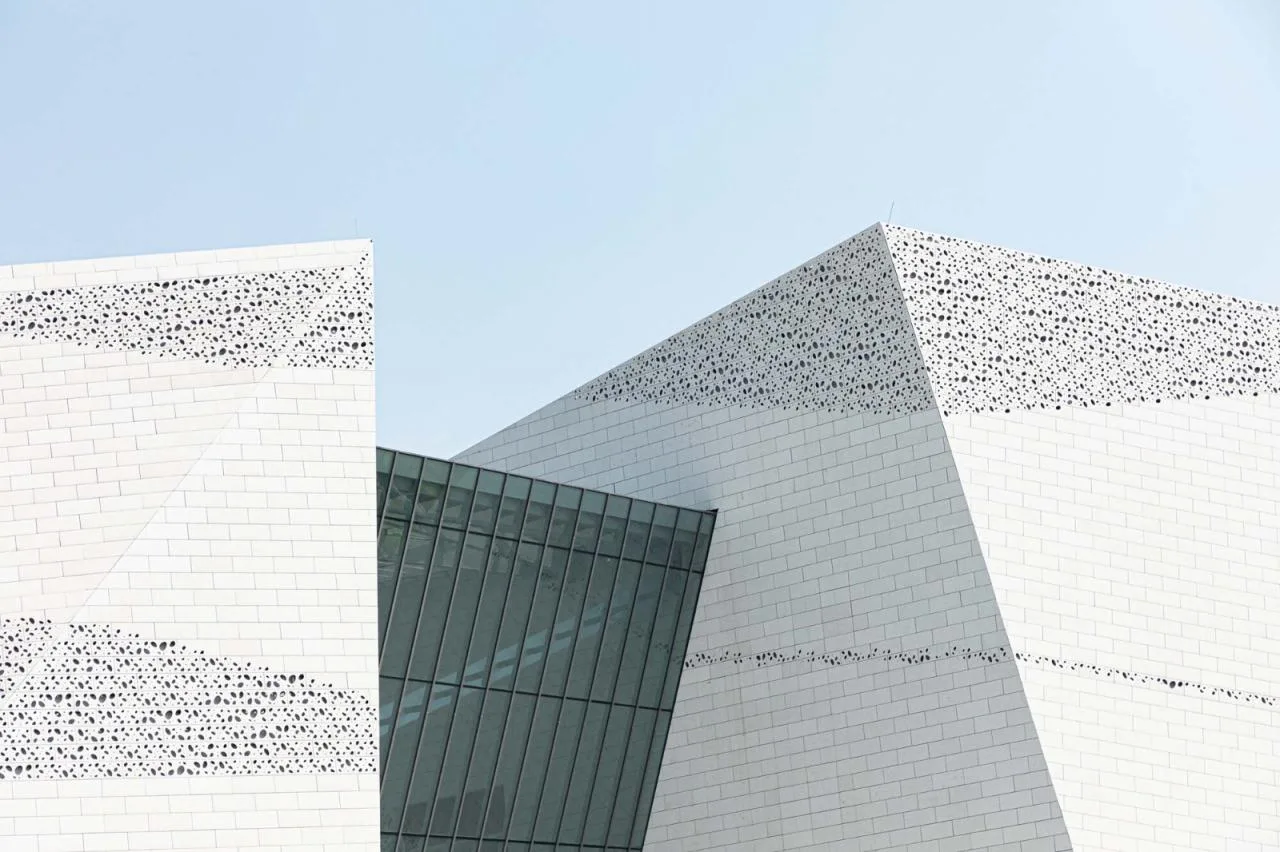
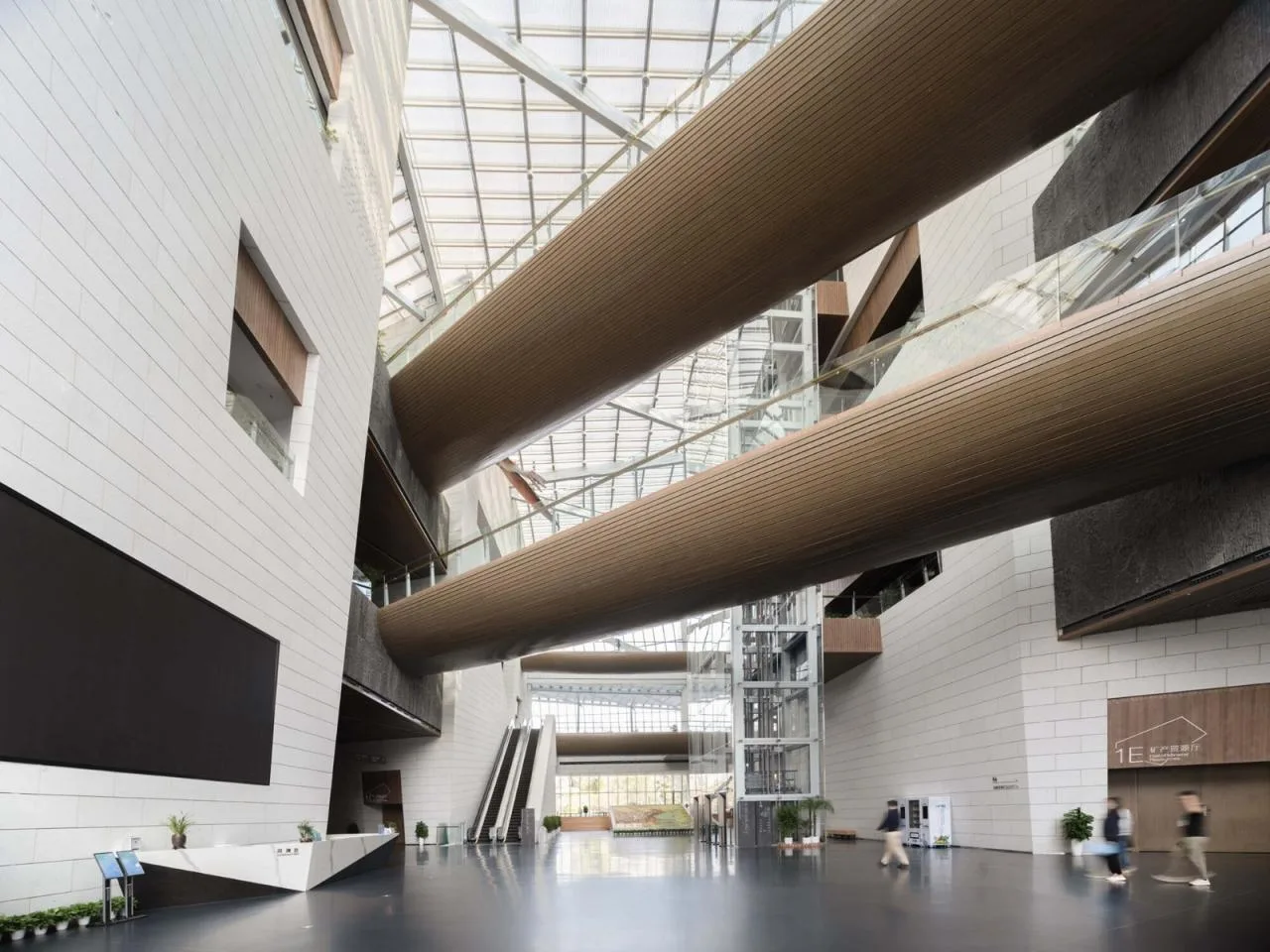
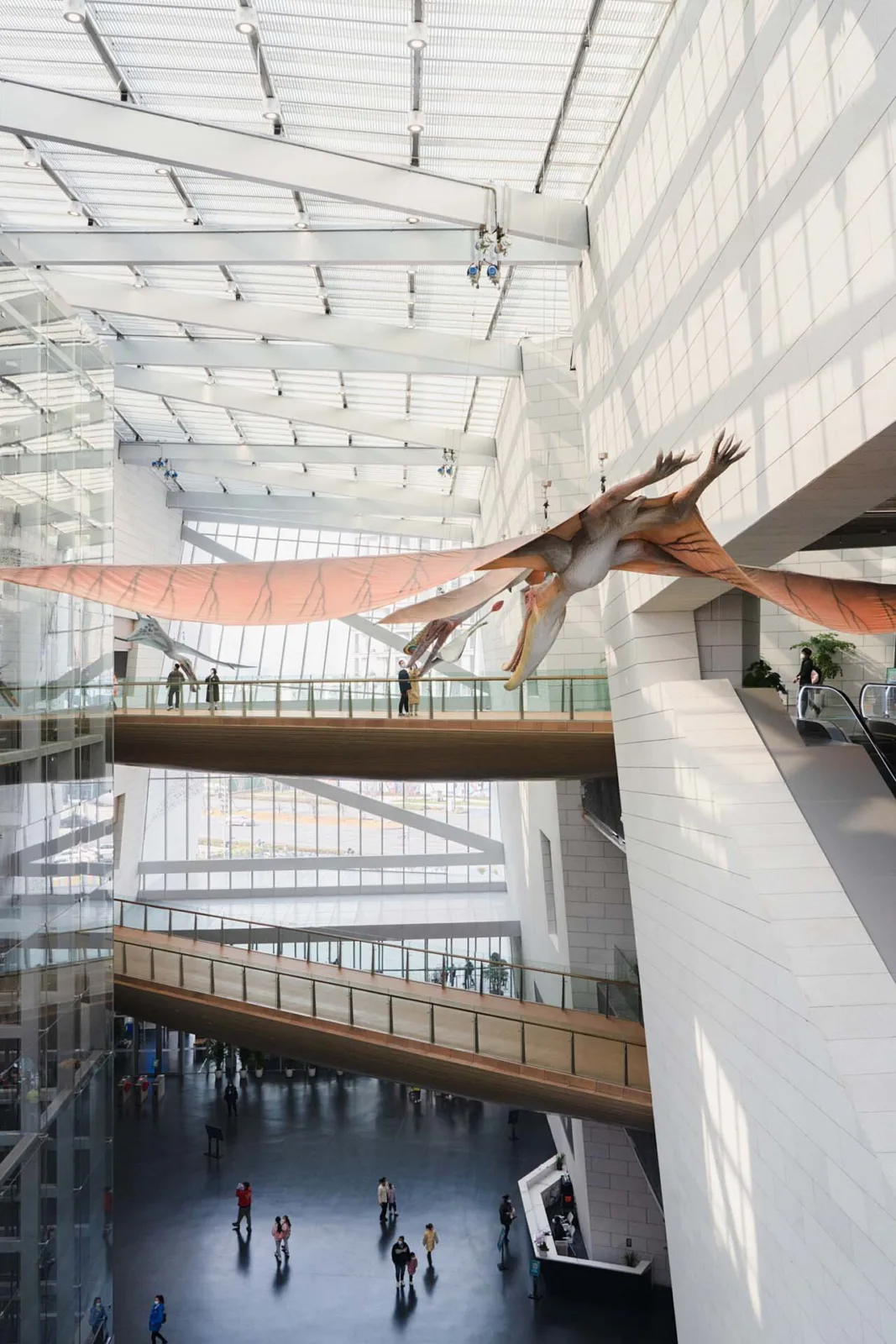
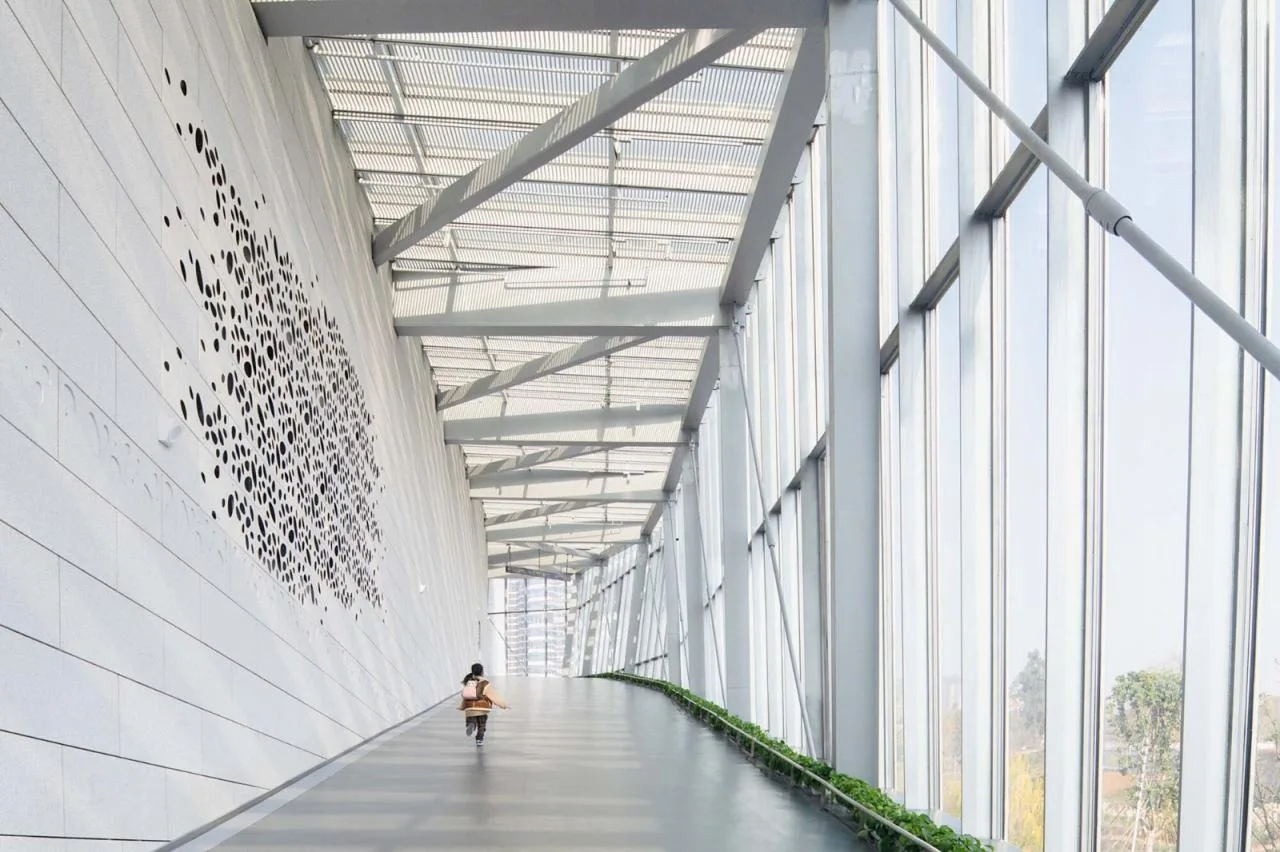
The second major inspiration comes from the “Dinosaur Box” and the Lianqiao of Shu Road, referencing the wooden boardwalks built along cliff edges in Sichuan. This element preserves the local cultural heritage of “Shu Road.” In the museum design, the Shu Road is represented by a suspended “Dinosaur Box,” attached to the stone-like structures and connecting the second and third floors. This tilted, interactive space enhances a sense of adventure and seamlessly links the exhibition areas. The transparent cracks between the rock forms invite sunlight in, creating spaces for reflection, observation, and interaction.
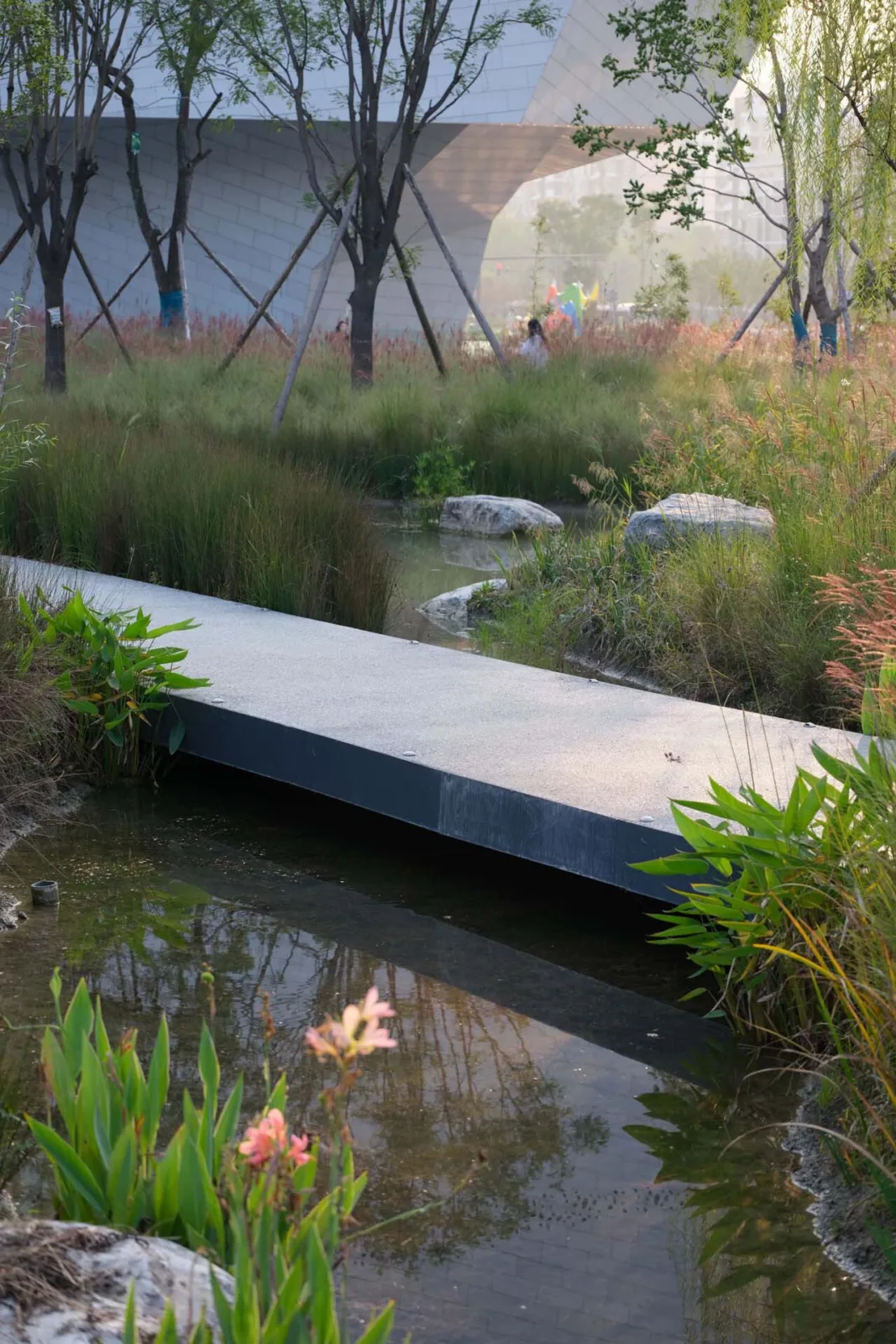
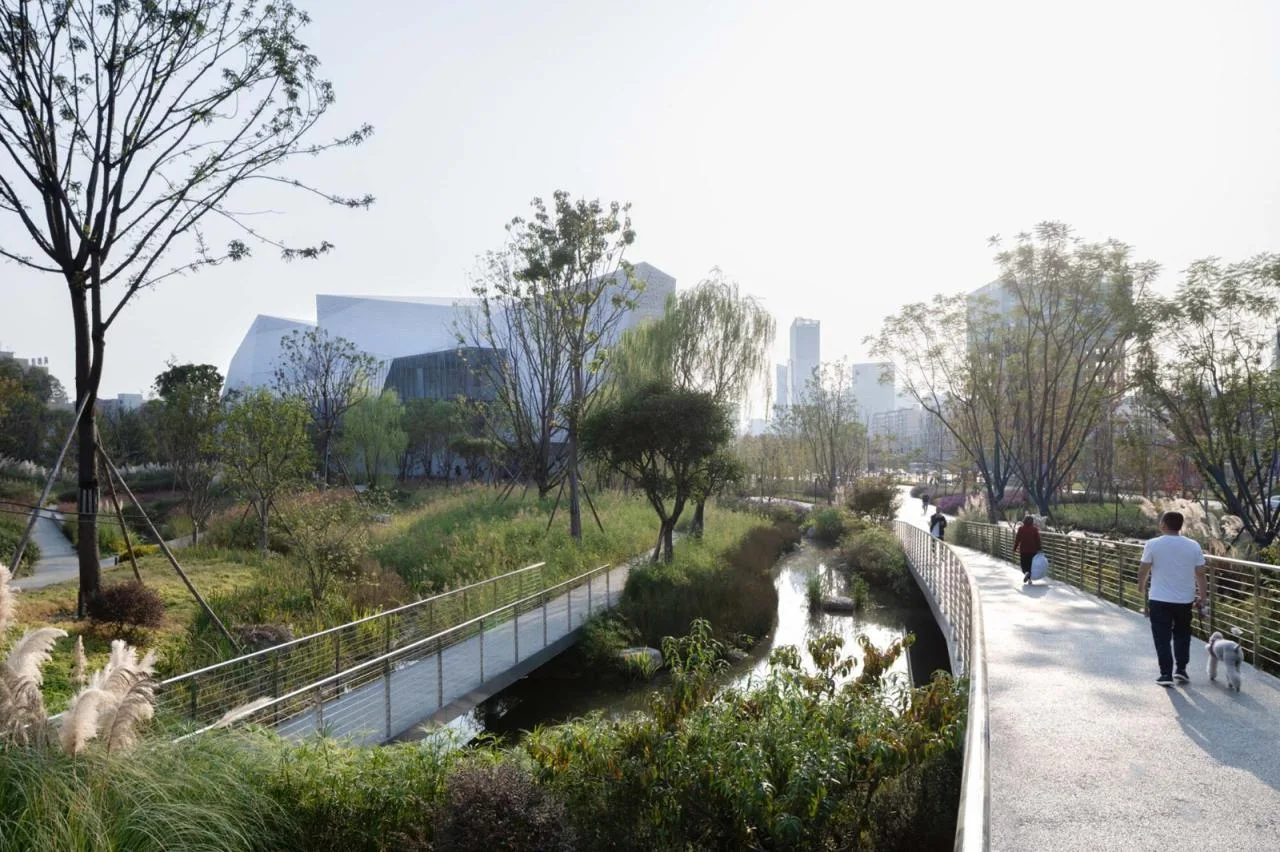
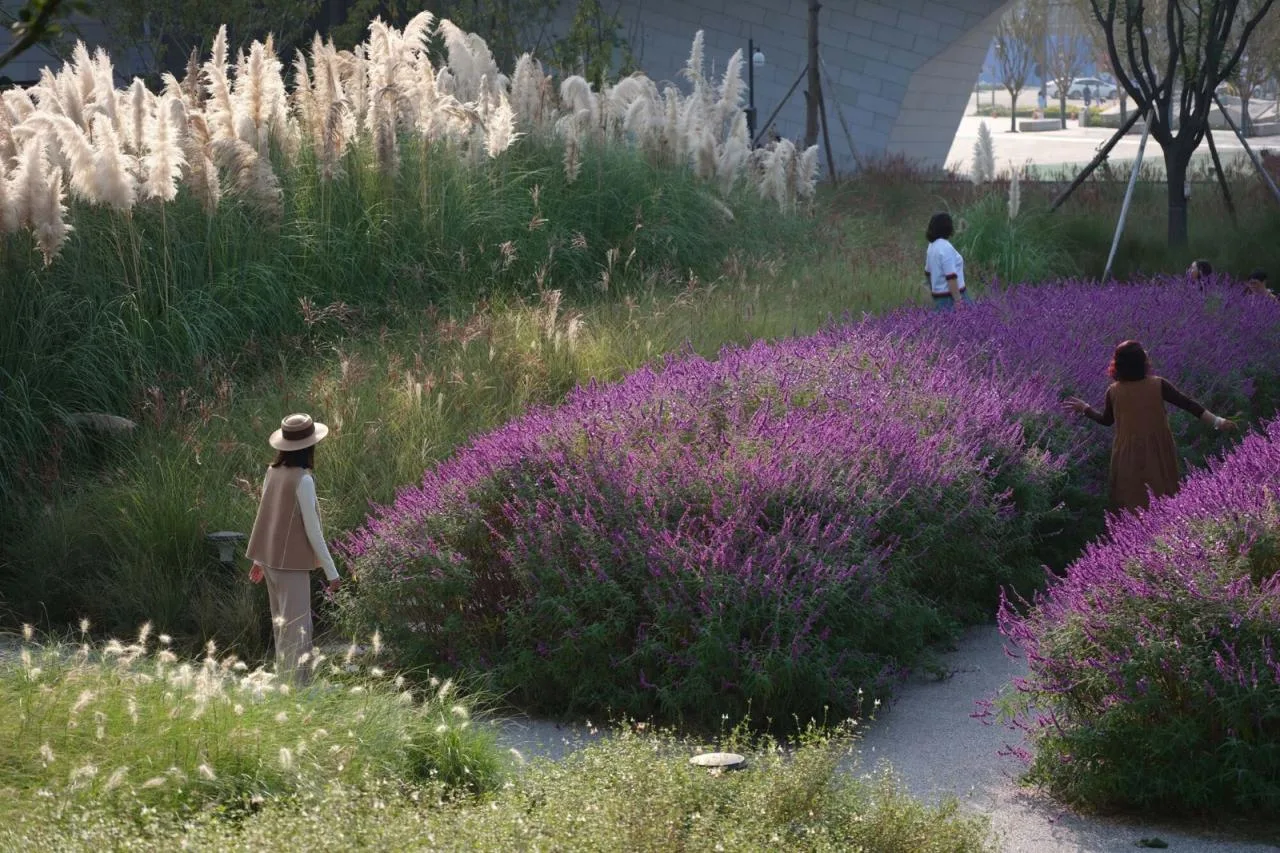
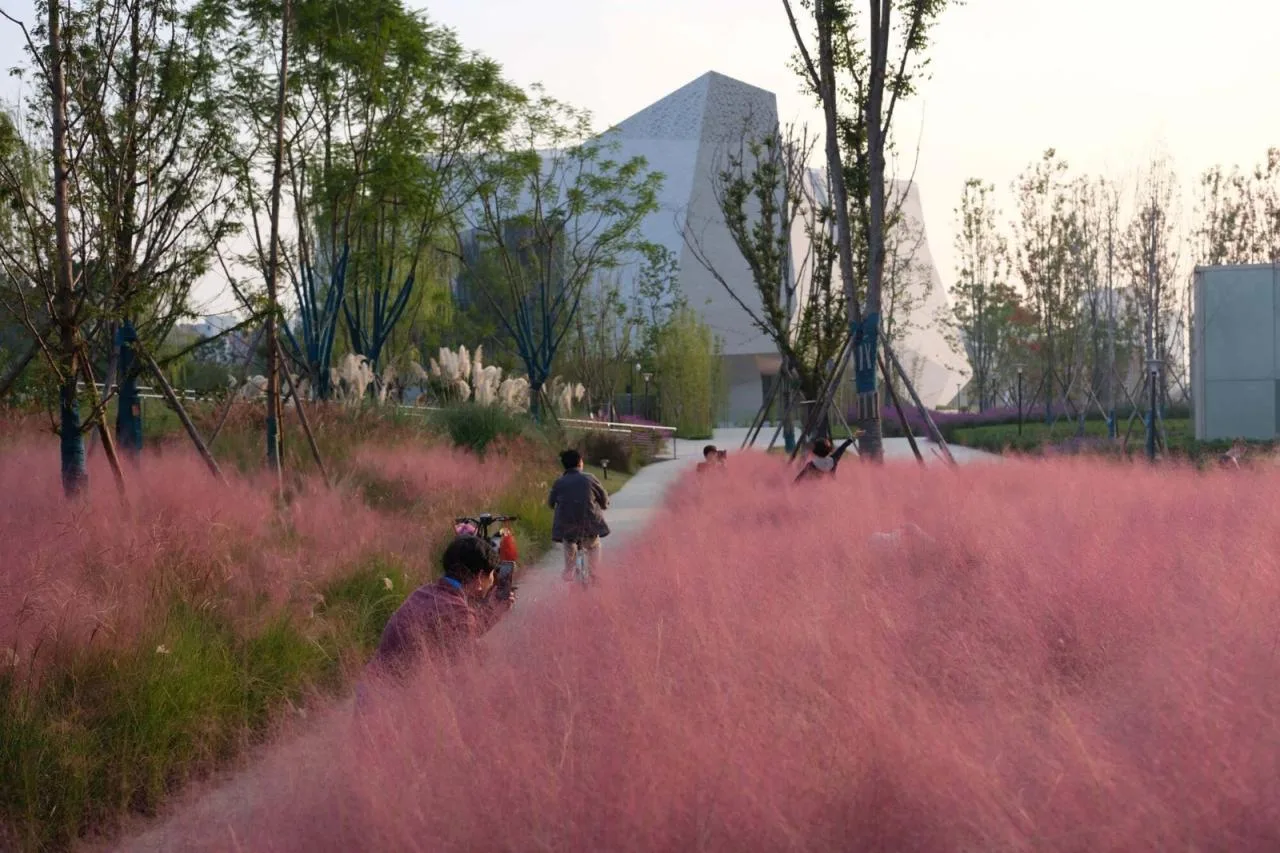
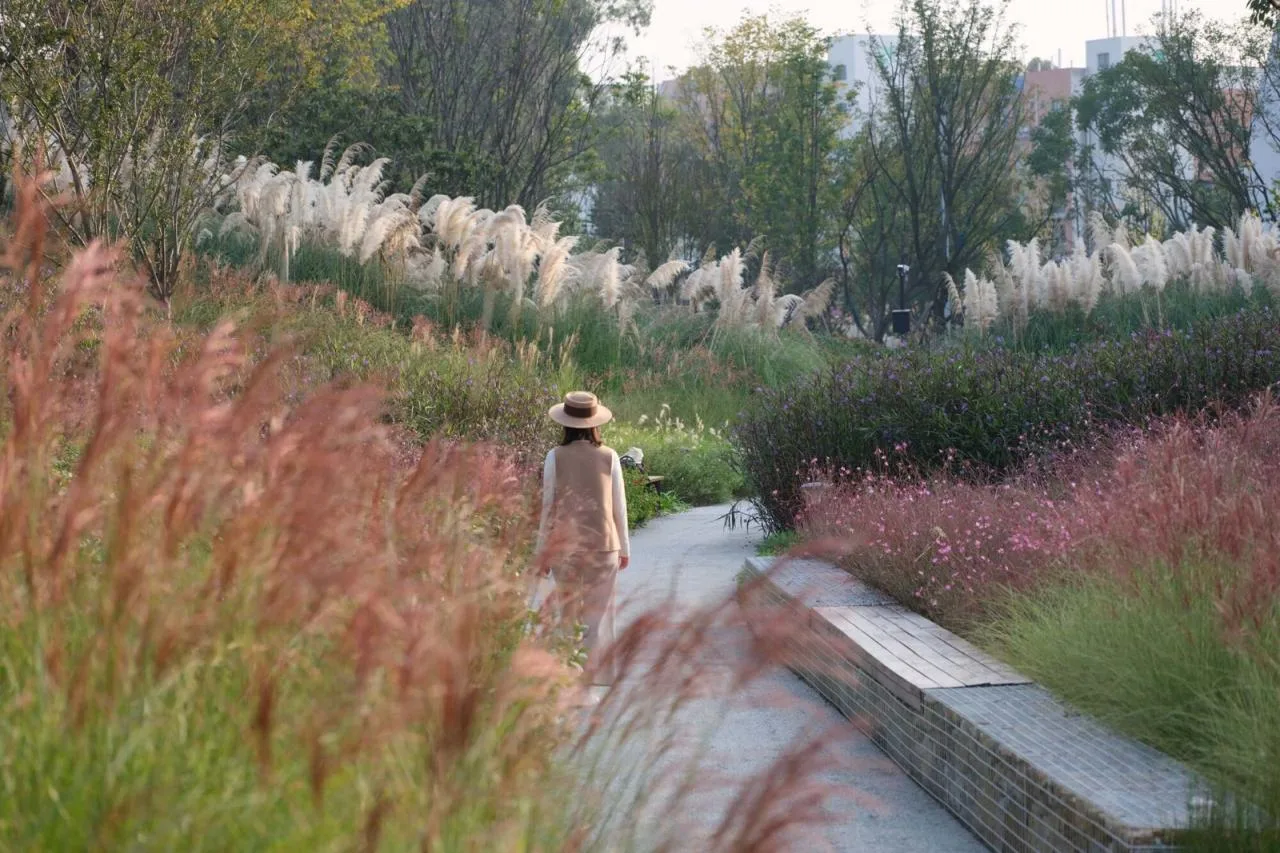
The site’s eastern boundary is defined by the existing Dongfeng Canal, which inspired the landscape design to echo the meandering waterway and scattered reflection pools. Waterfront paths and pedestrian bridges interlace the site, complementing the water features. Vegetation is arranged to create a layered, stepped landscape belt, graphically referencing Chengdu’s ancient terraced fields. Visitors experience a rich variety of plant species and landforms, including wetland parks, bamboo groves, water lily gardens, and seasonal botanical displays.
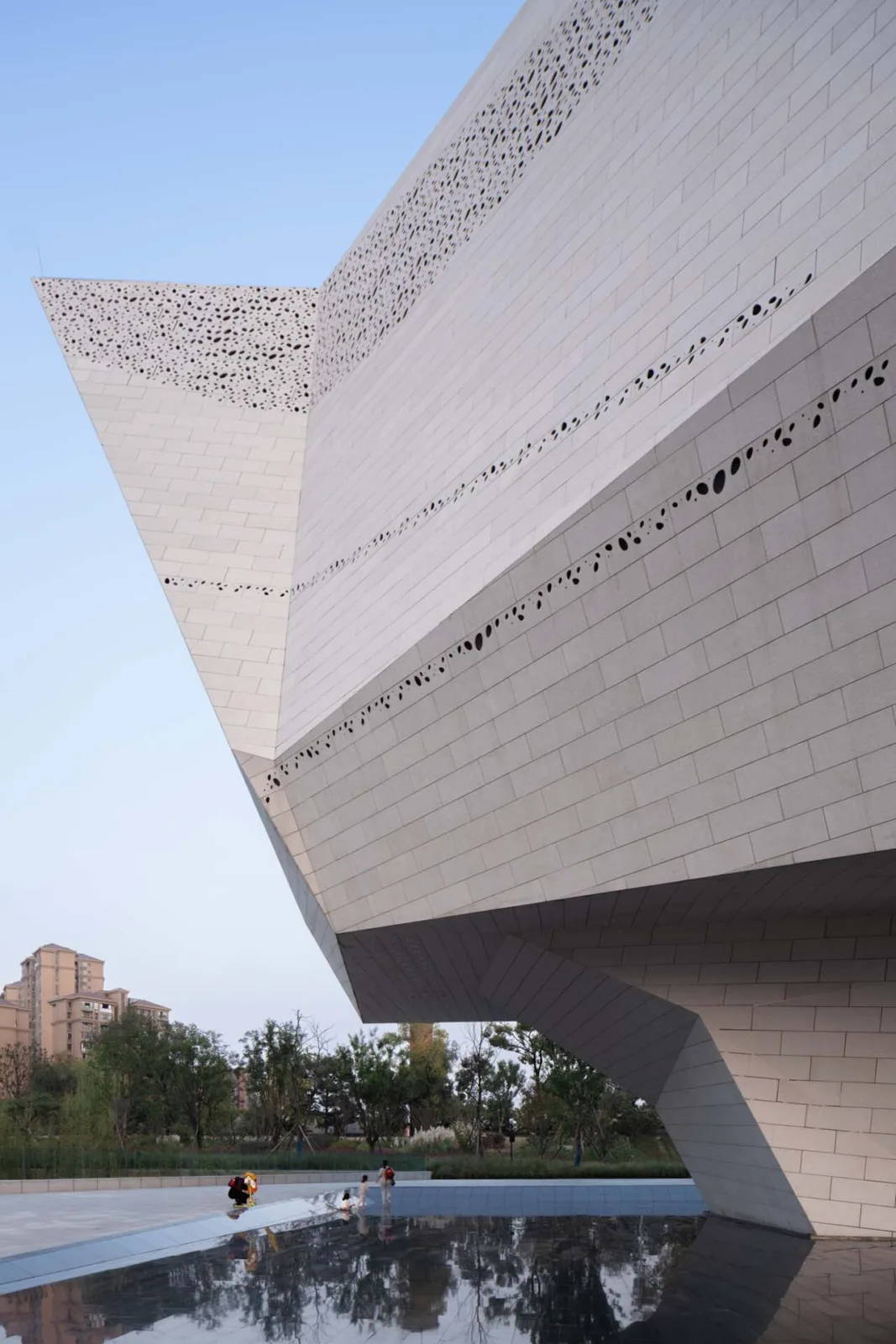
From the street, visitors can admire the waterfall-like water curtain on the building’s northernmost block. The design thoughtfully considers children’s interactive play with water features. The building’s form is also mirrored in the shallow pool to the north, where gentle breezes animate the surface, adding a dynamic and lively element to the environment.
Project Drawings
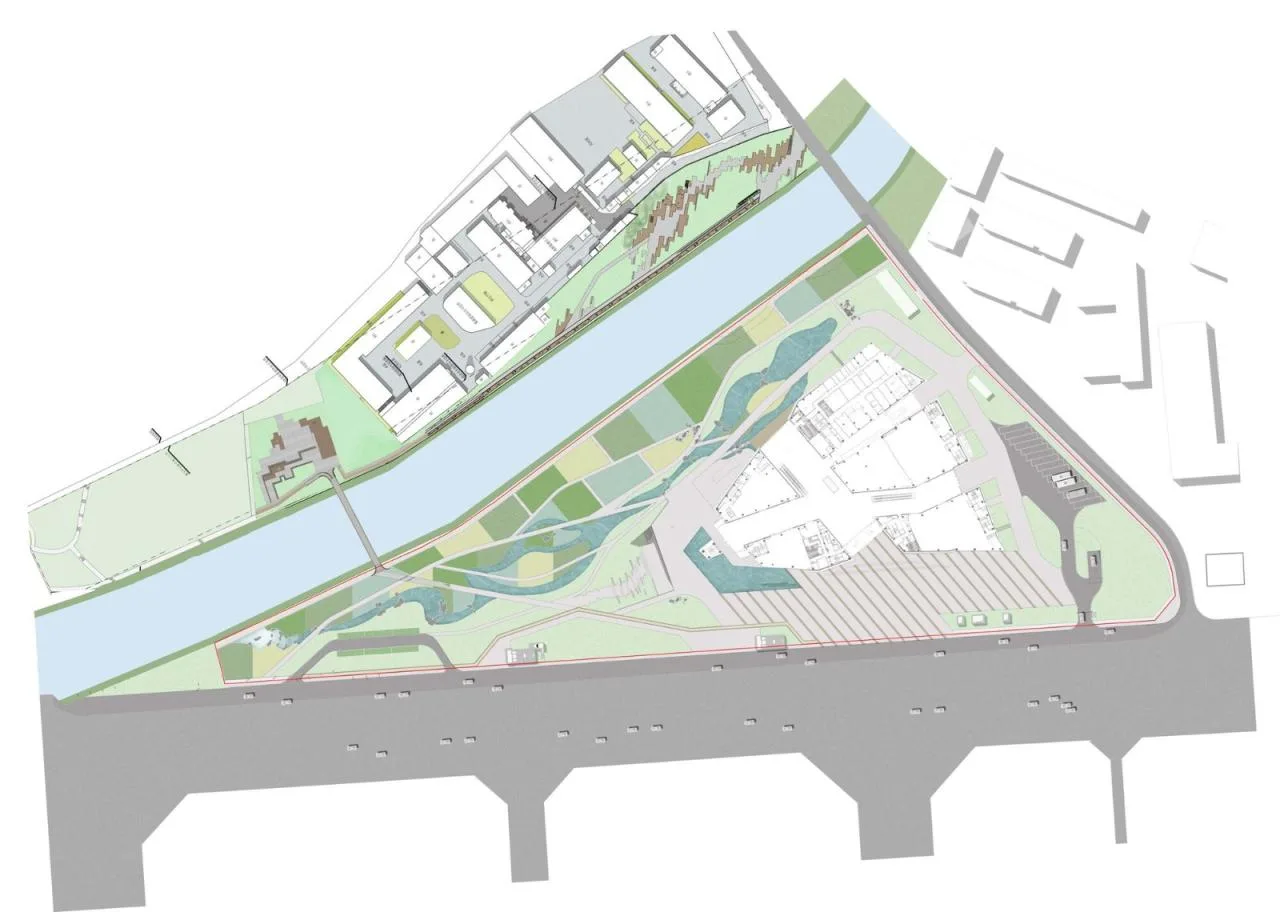
△ General Layout Plan
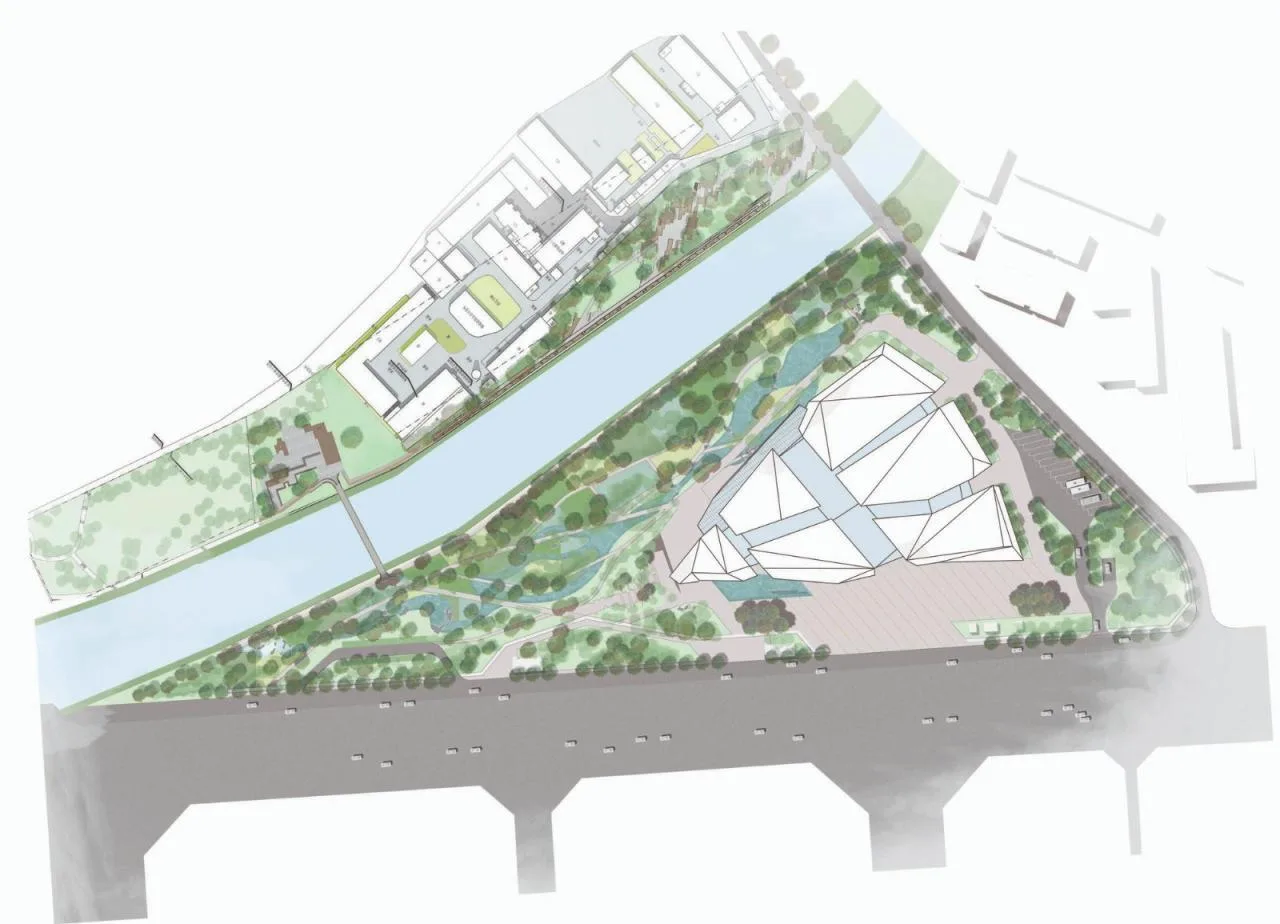
△ Aerial View
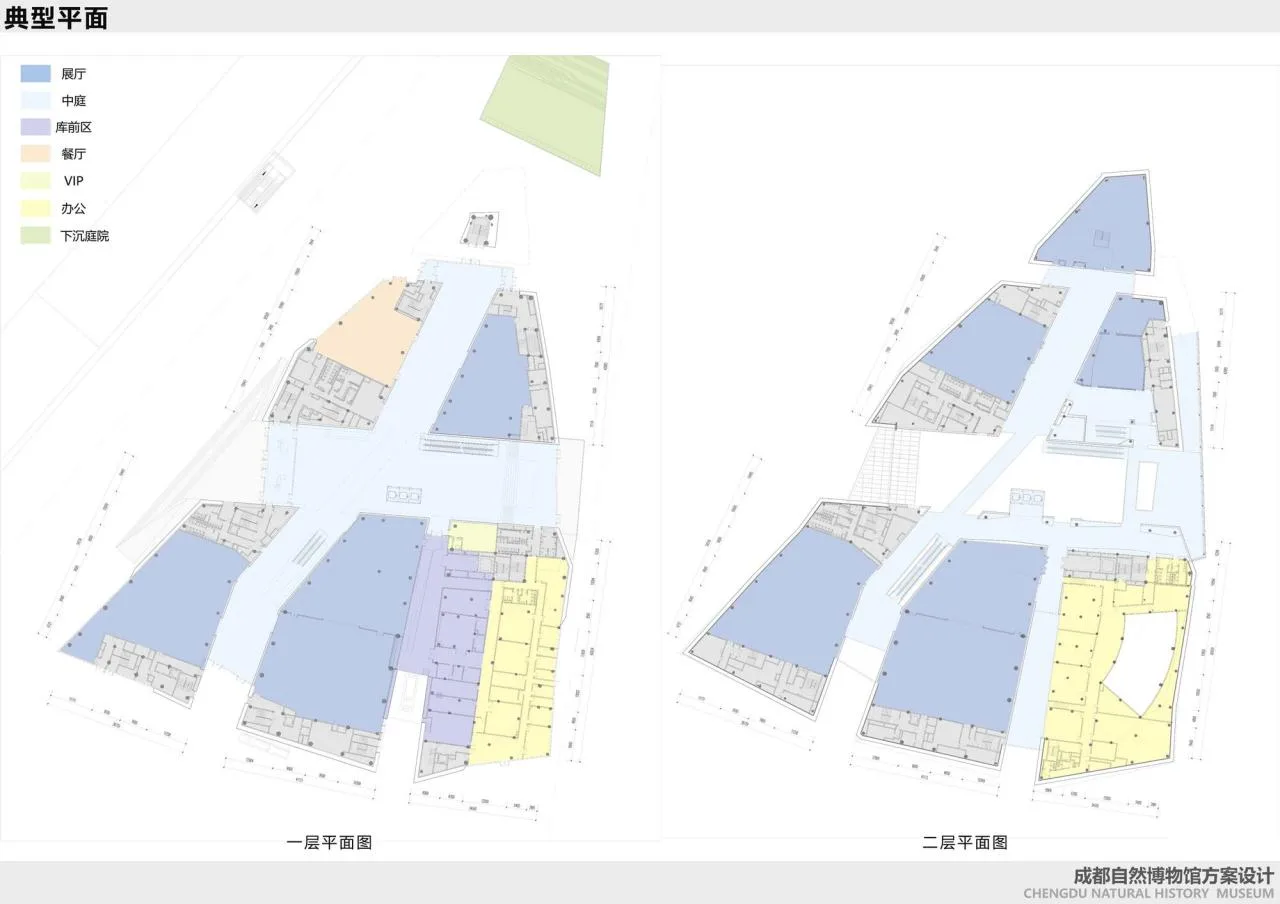
△ First and Second Floor Plans
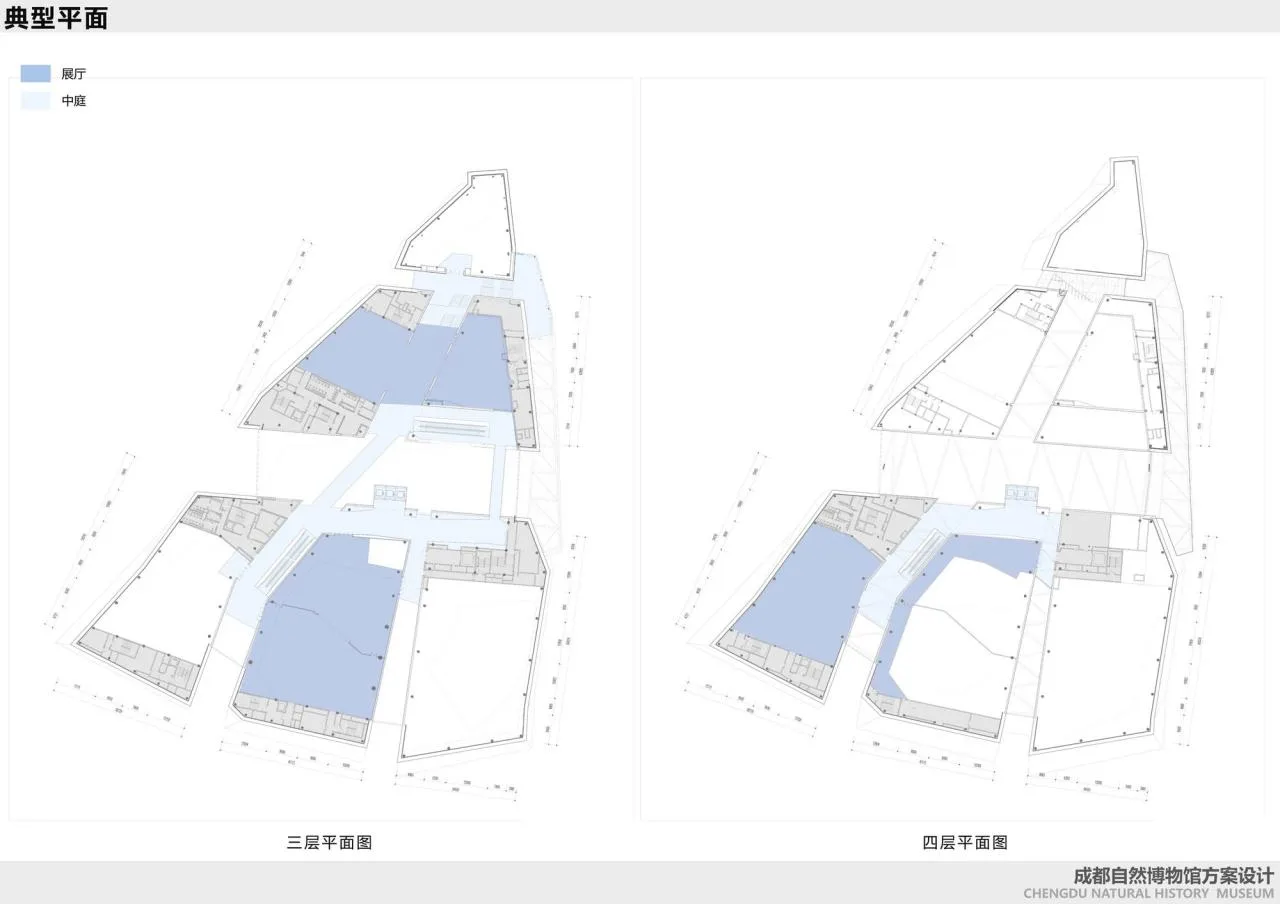
△ Third and Fourth Floor Plans
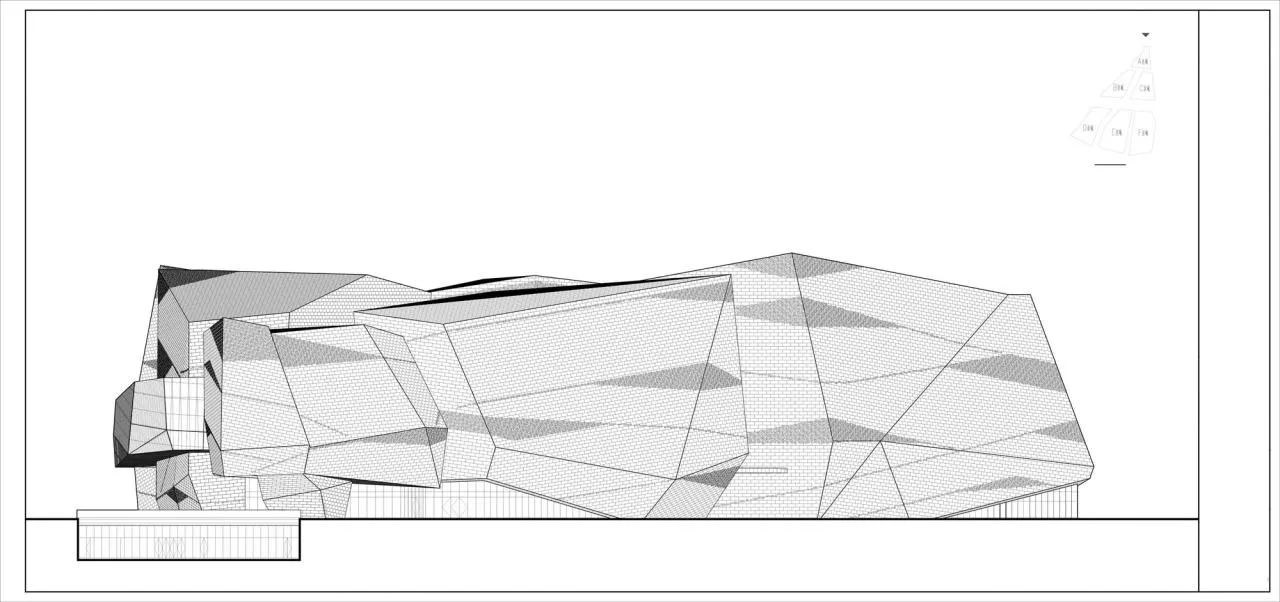
△ Elevation Drawing
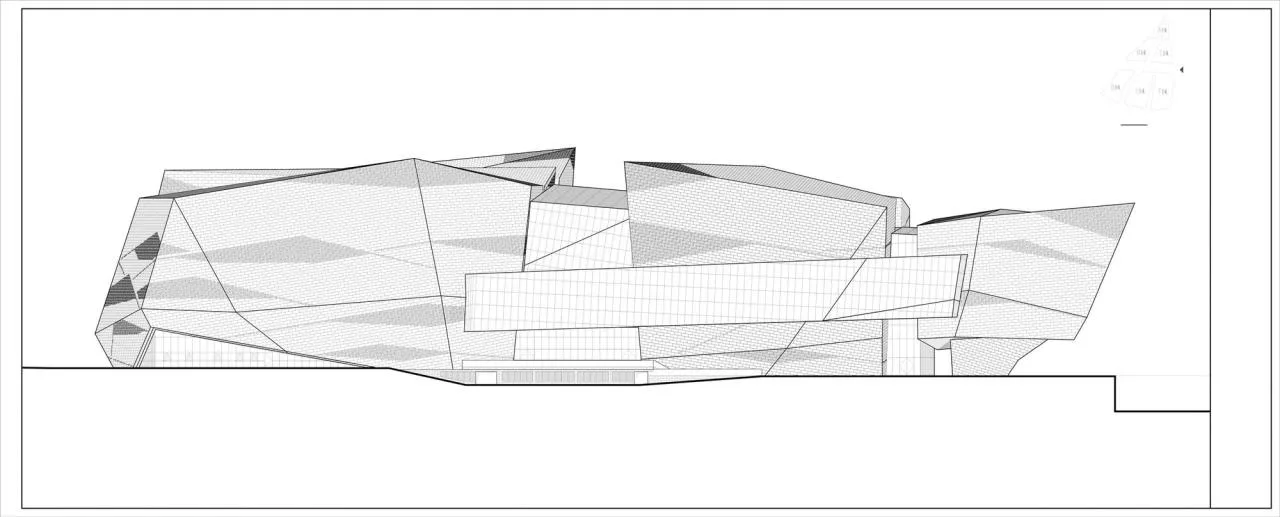
△ Elevation Drawing
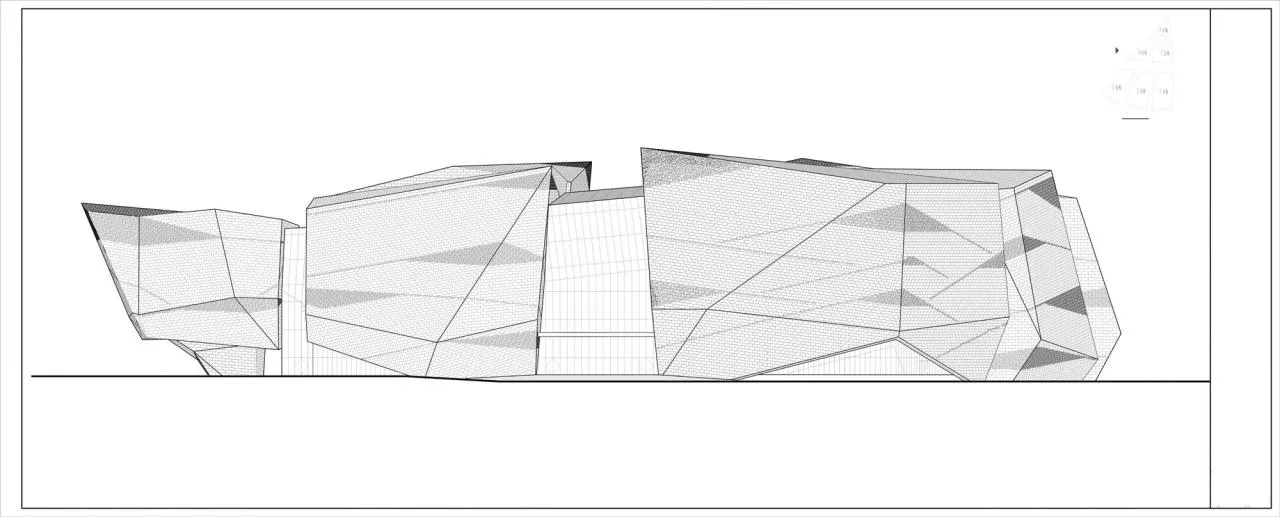
△ Elevation Drawing
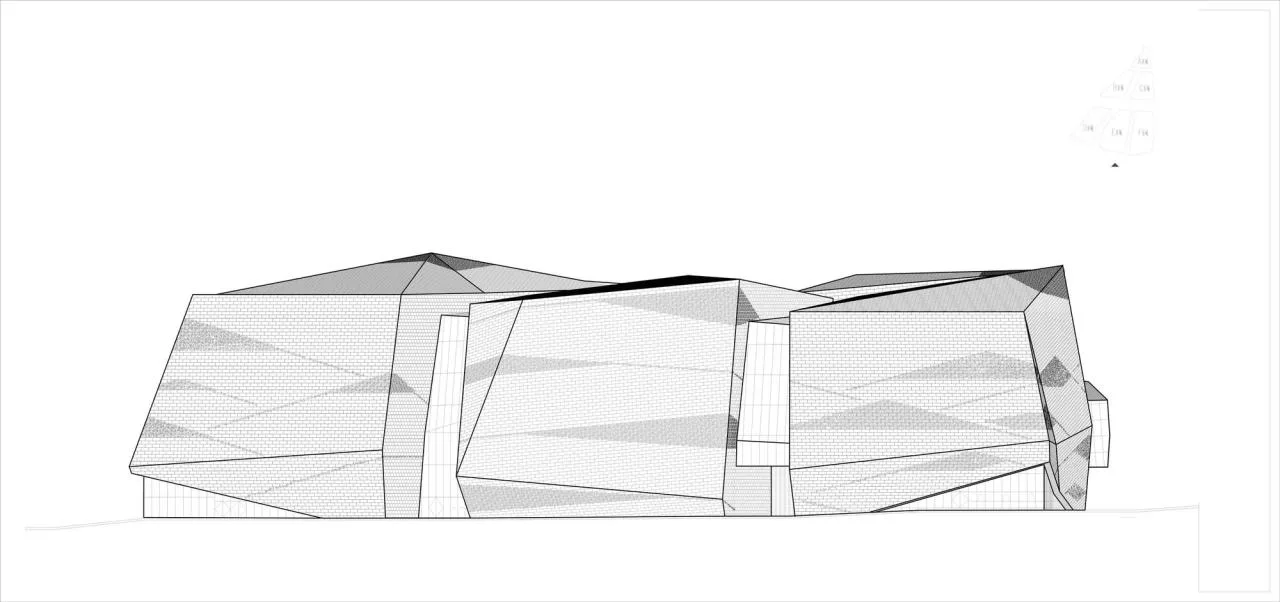
△ Elevation Drawing
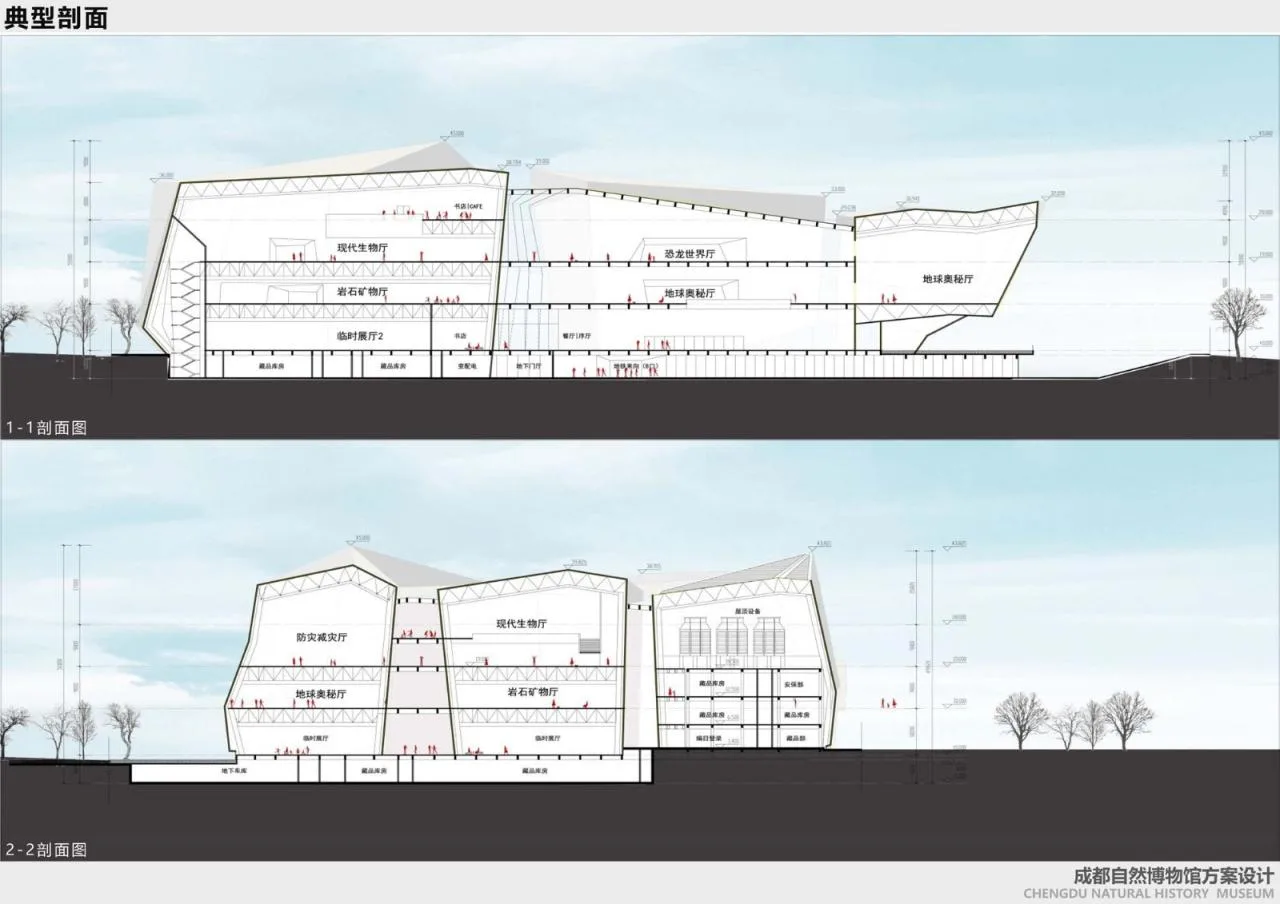
△ Section Diagram
Project Information
Architects: China Southwest Architectural Design and Research Institute, Pelli Clarke & Partners
Area: 50,520 m²
Year Completed: 2022
Photographers: Xin Zhen, There Is Architecture Present, CDCI, Lv Xiaobin, CSWADI
Manufacturers: CSG HOLDING, Huanggang Shengli Stone Co., Ltd
Pelli Clarke & Partners Design Team: Fred W. Clarke, Kristin Hawkins, Cory Frost, Hongxi Yang, Hongqian Yang, Rong Chen, Ileana Dumitriu, Olivia Huang, Shenglin Huang, Jie Zhang, Chen Chen, Beidi Zhang
Project Managers (China Southwest Architectural Design and Research Institute): Liu Yi, Xiao Bo
Architectural Design: Yang Yang, Shu Chenxiao, Yan Shunkai, Liu Yu, Wu Yao, Sha Peng
Structural Design: Xiao Kejian, Wang Liwei, Zhang Yan, Yang Wen, Xu Jingmeng, Qiu Tian
HVAC Design: Wei Minghua, Dong Lijuan, He Sihao, He Miao
Water Supply and Drainage Design: Wang Jianjun, Yang Jiuzhou, Wang Danke, Chen Yao
Electrical Design: Li Hui, Ao Faxing, Qiu Yu
Curtain Wall Design: Dong Biao, Luo Jiancheng, Zhang Yu, Huang Ziyang, Xian Qingjun, Cai Honglin, Yin Bingli
Interior Design: Zhang Guoqiang, Tu Qiang, Liu Yuan, Li Yan
Architectural Technology: Gao Qinglong, Nan Yanli, Yu Xiaomin, Cai Junwei, Dou Mei
Intelligent Design: Wang Shaowei, Wu Huan, Xiong Zezhu, Bu Xiangyu
Cost Engineering Team: Zhang Tingxue, Zhang Yumei, Peng Xiaofang, Jia Yaolin, Cao Jishu, Zou Yamei, Chen Yong
Landscape Design: Landscape Design DU · SCAPE
Lighting Design: Zhongtai Lighting
Construction Contractor: China Railway Construction Engineering Group Co., Ltd
Owners: Chengdu Urban Investment Group, Chengdu University of Technology
Location: Chengdu, China















Must log in before commenting!
Sign Up