
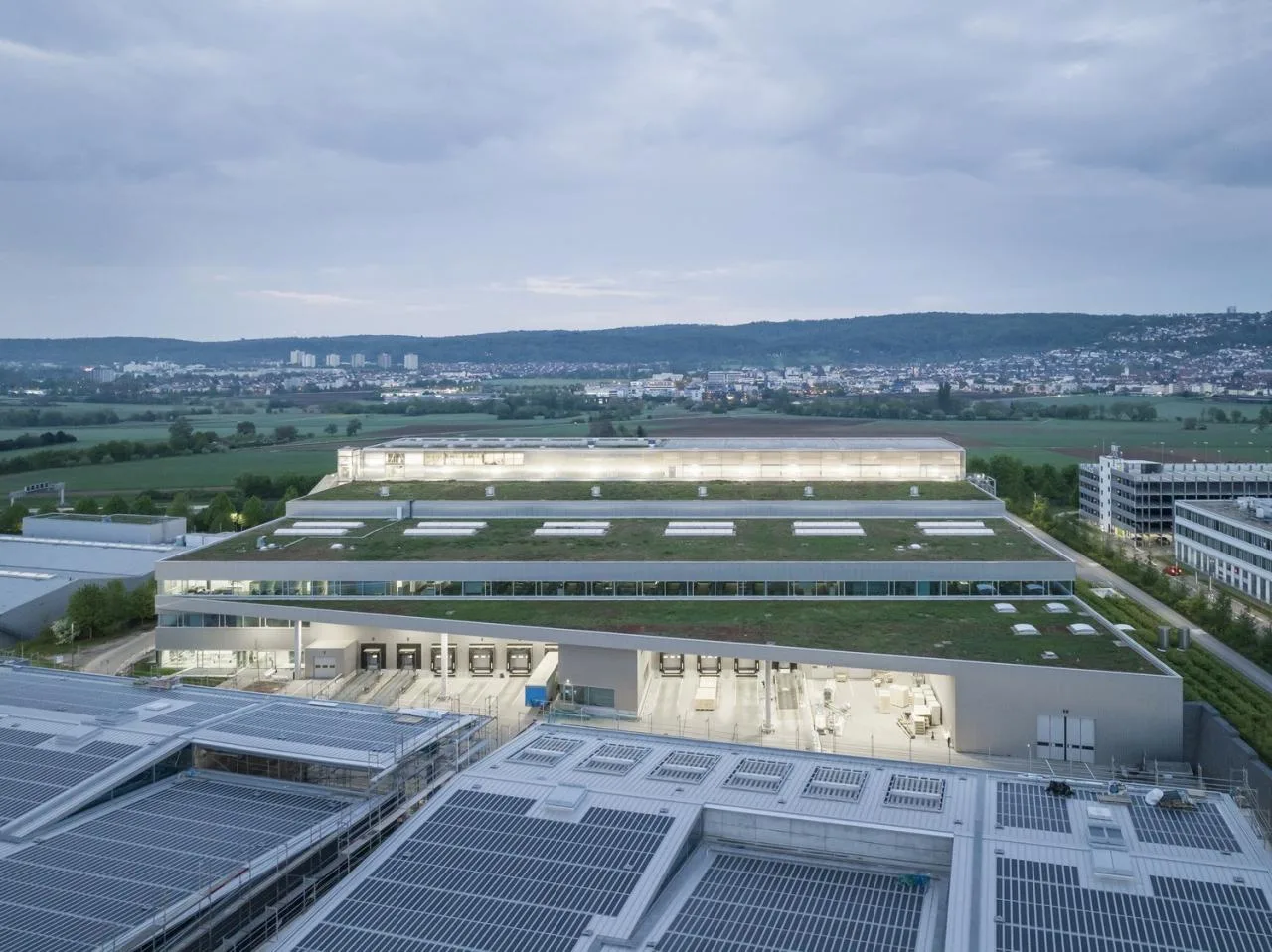
Founded in the late 1960s, Tongkuai Group is located along Germany’s A81 highway. Over the decades, it has evolved into a thriving high-tech company with a forward-looking industrial park that even includes an industrial village. Beyond its production workshops and administrative offices, the park features a training center, daycare facilities, various activity spaces for dining, music, lectures, and social gatherings, as well as gardens and parks for relaxation. It also offers parking lots equipped with electric vehicle and bicycle spaces, and most recently, a newly completed fitness center.
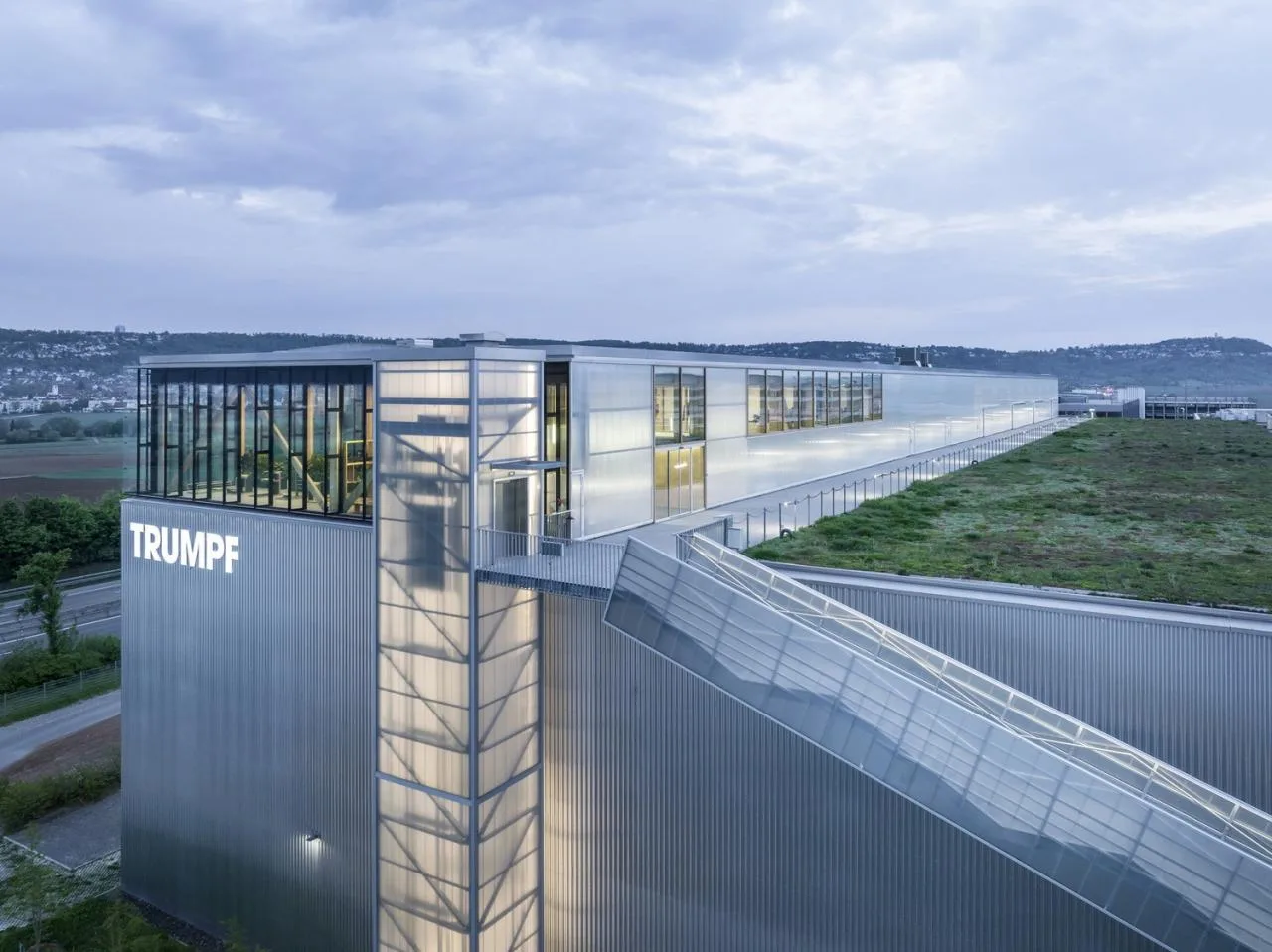
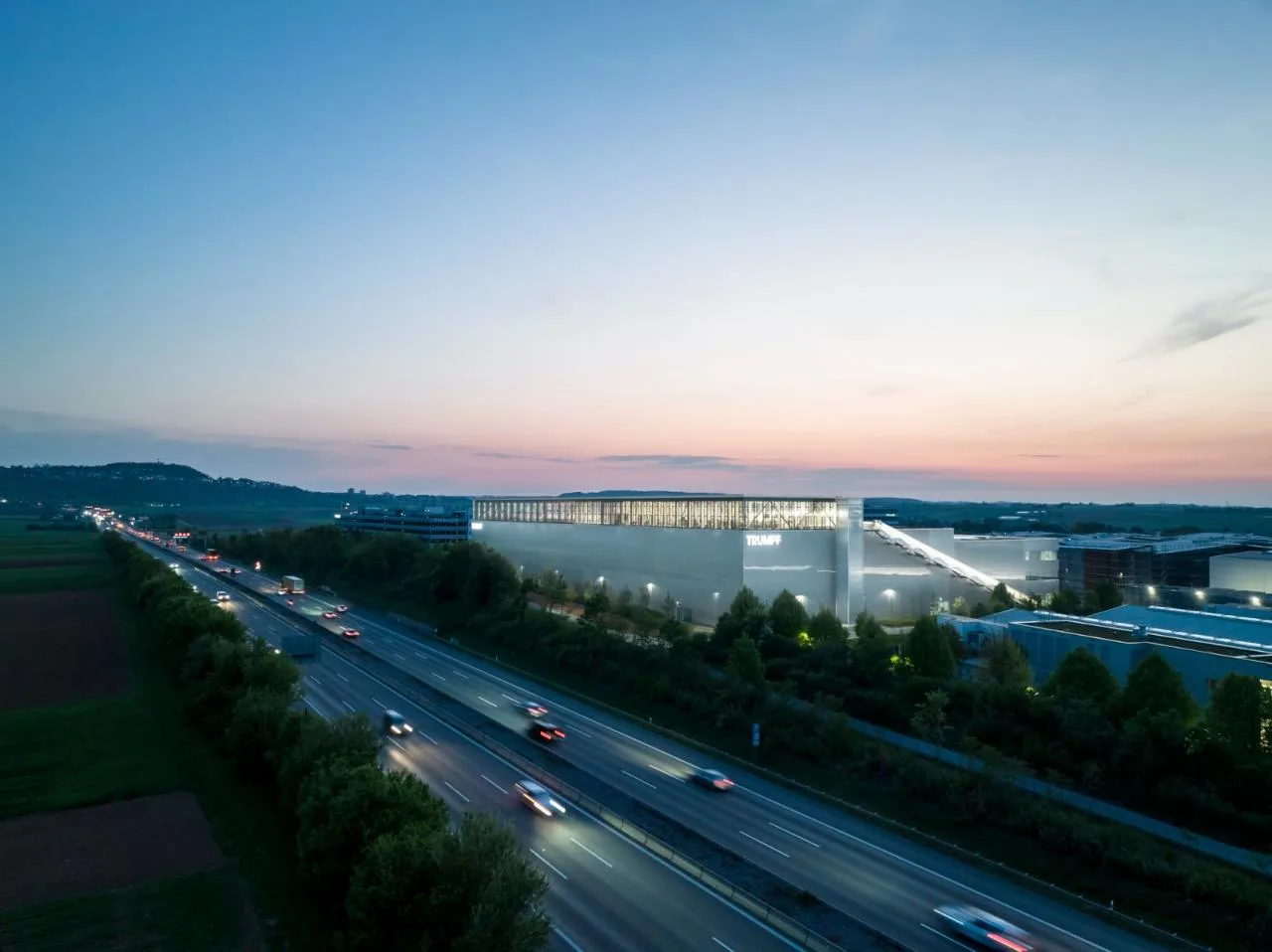
As the park expanded, some land parcels and existing buildings were reclaimed and repurposed, creating new spaces and enabling vertical growth at the core. The horizontal expansion has now reached its limits, constrained by the highway, the city boundary of Dechingen, and neighboring businesses. This has necessitated an intensive vertical construction approach.
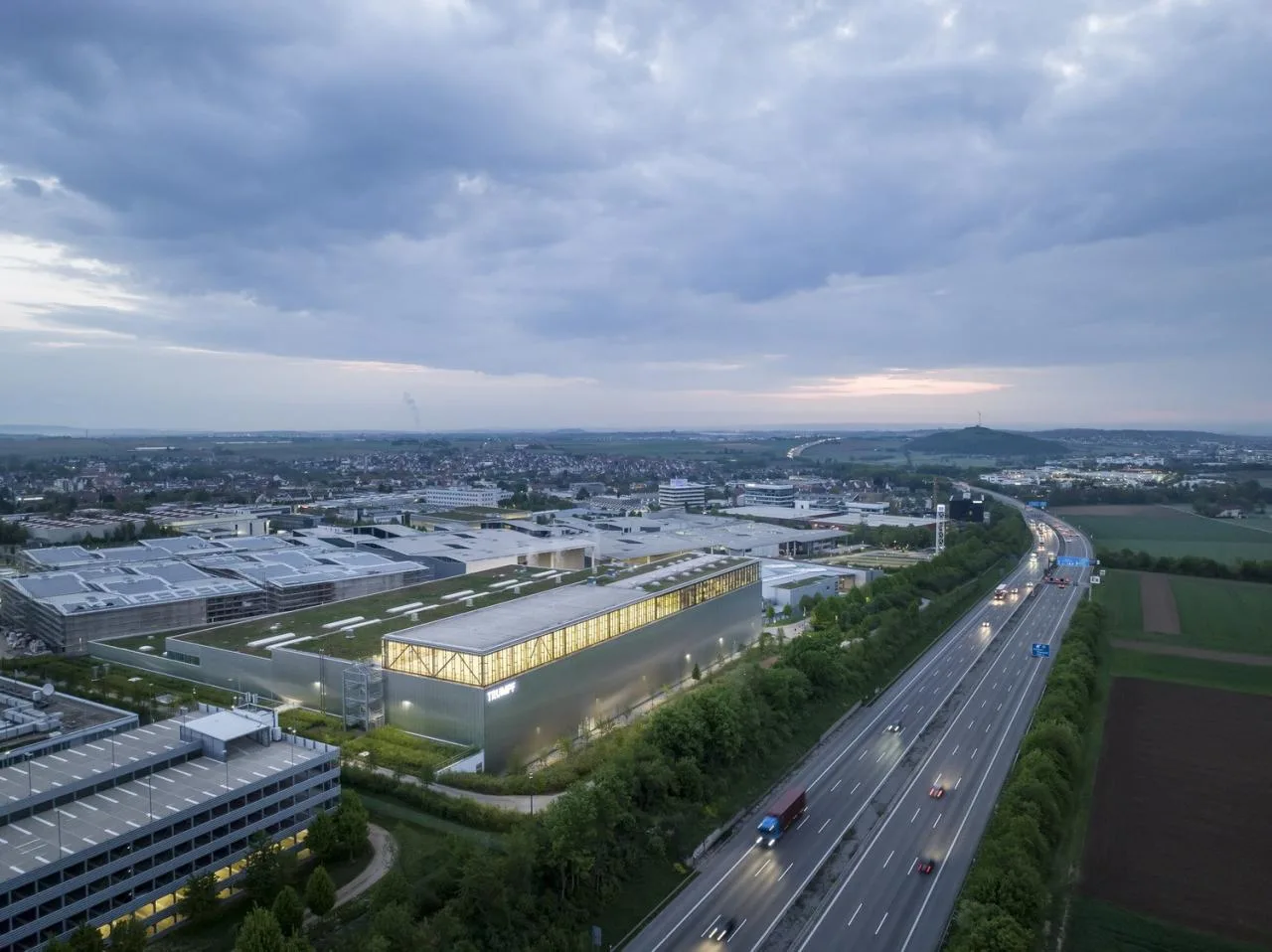
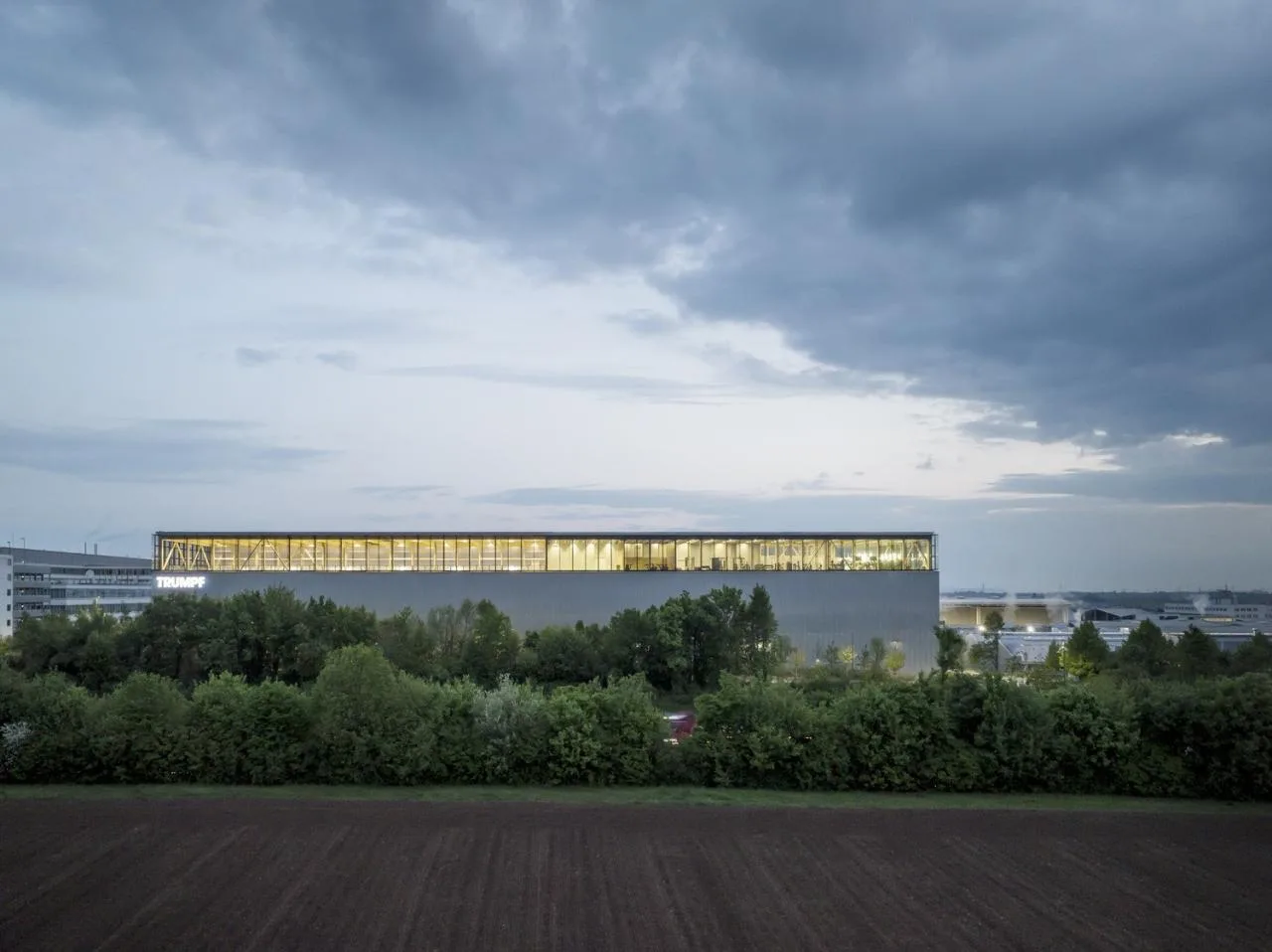
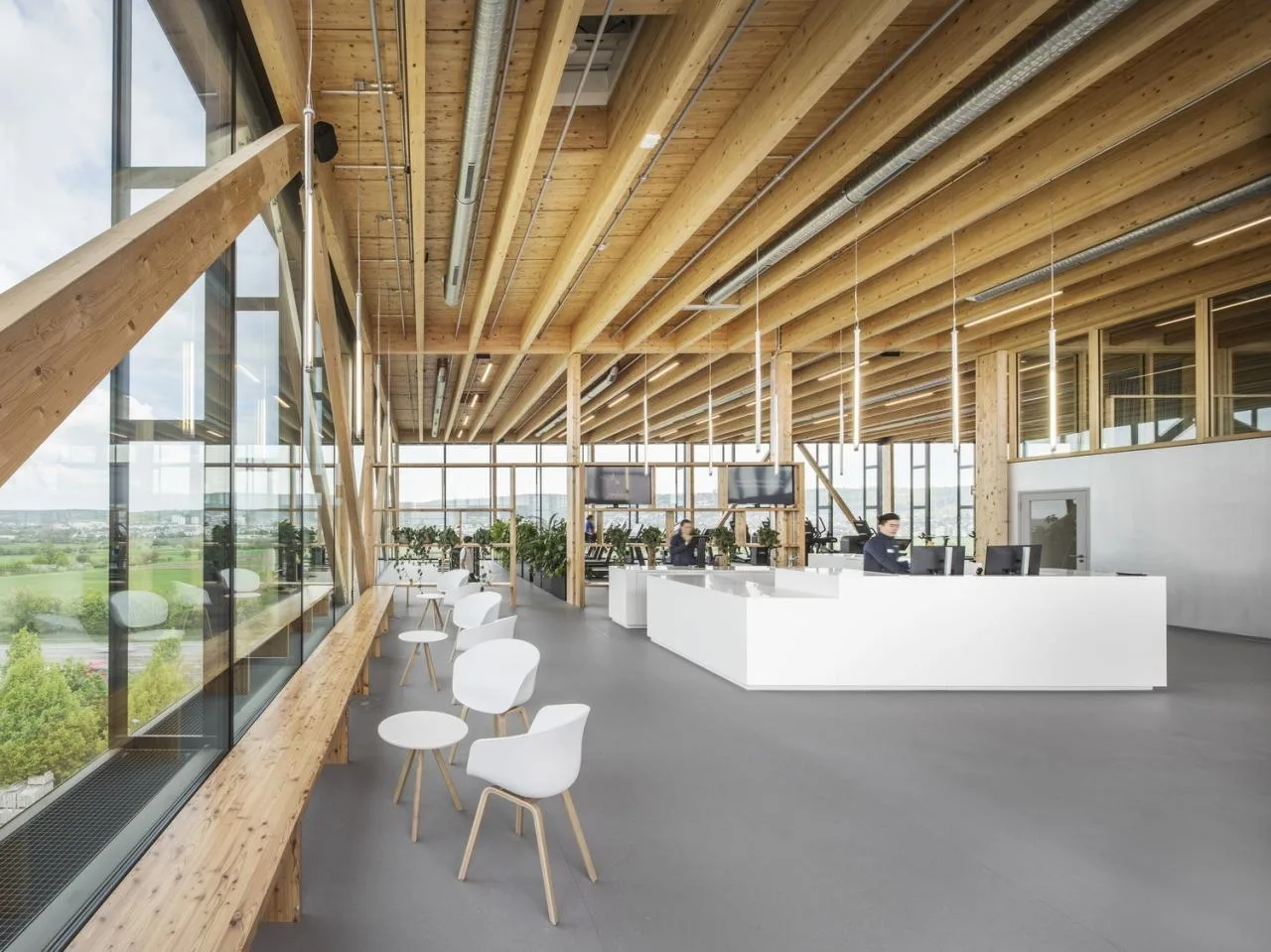
The new sports and fitness center symbolizes a cultural shift within Tongkuai Group, the machinery manufacturer. This facility responds to the evolving social and spatial needs of employees in a dynamic work environment, offering a space deeply integrated into daily park life. It fosters social and cultural interactions, reflecting the company’s commitment to employee well-being. The vertical construction strategy—building atop existing structures—provides a practical solution while introducing diverse layouts within the park.
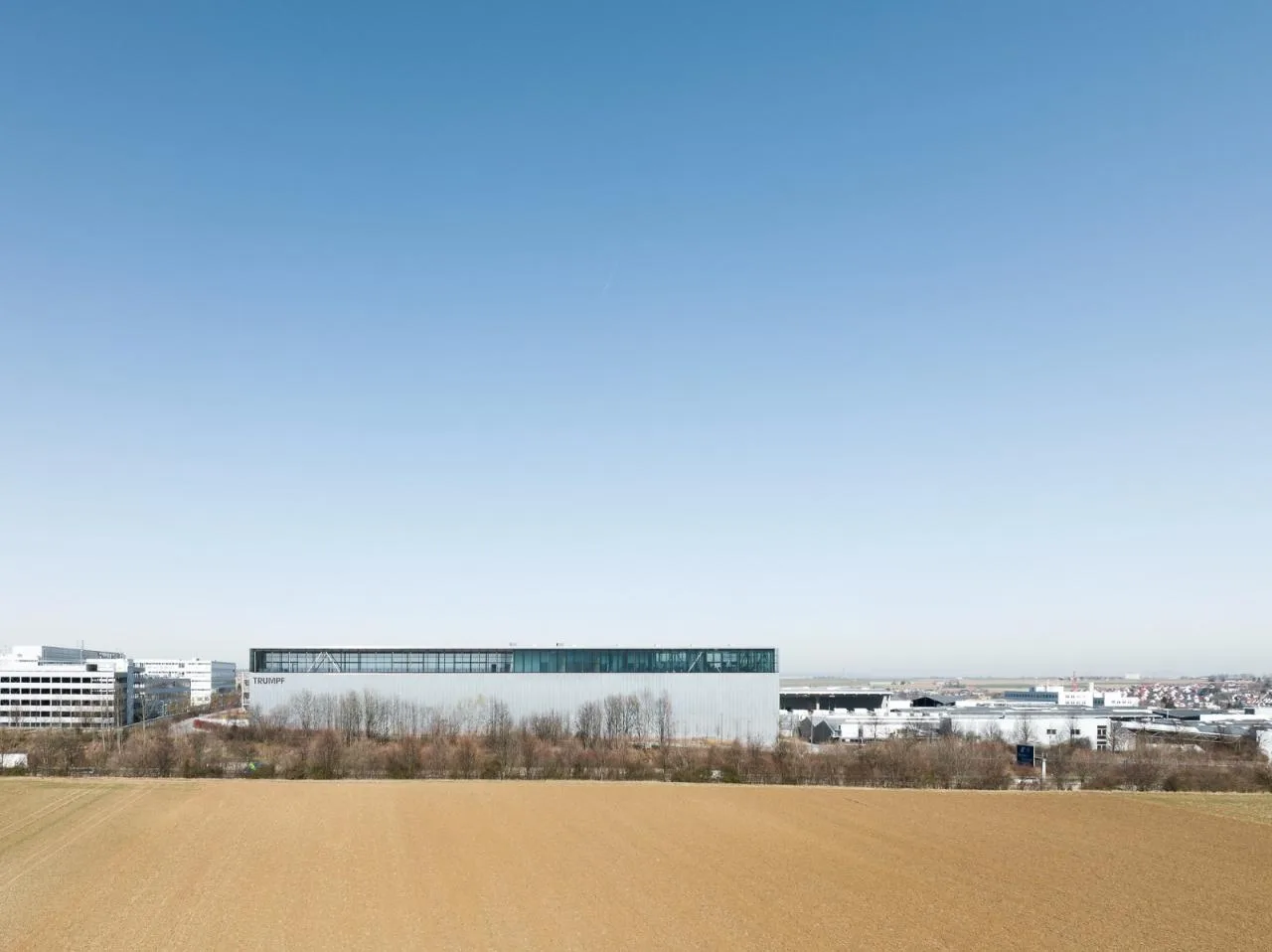
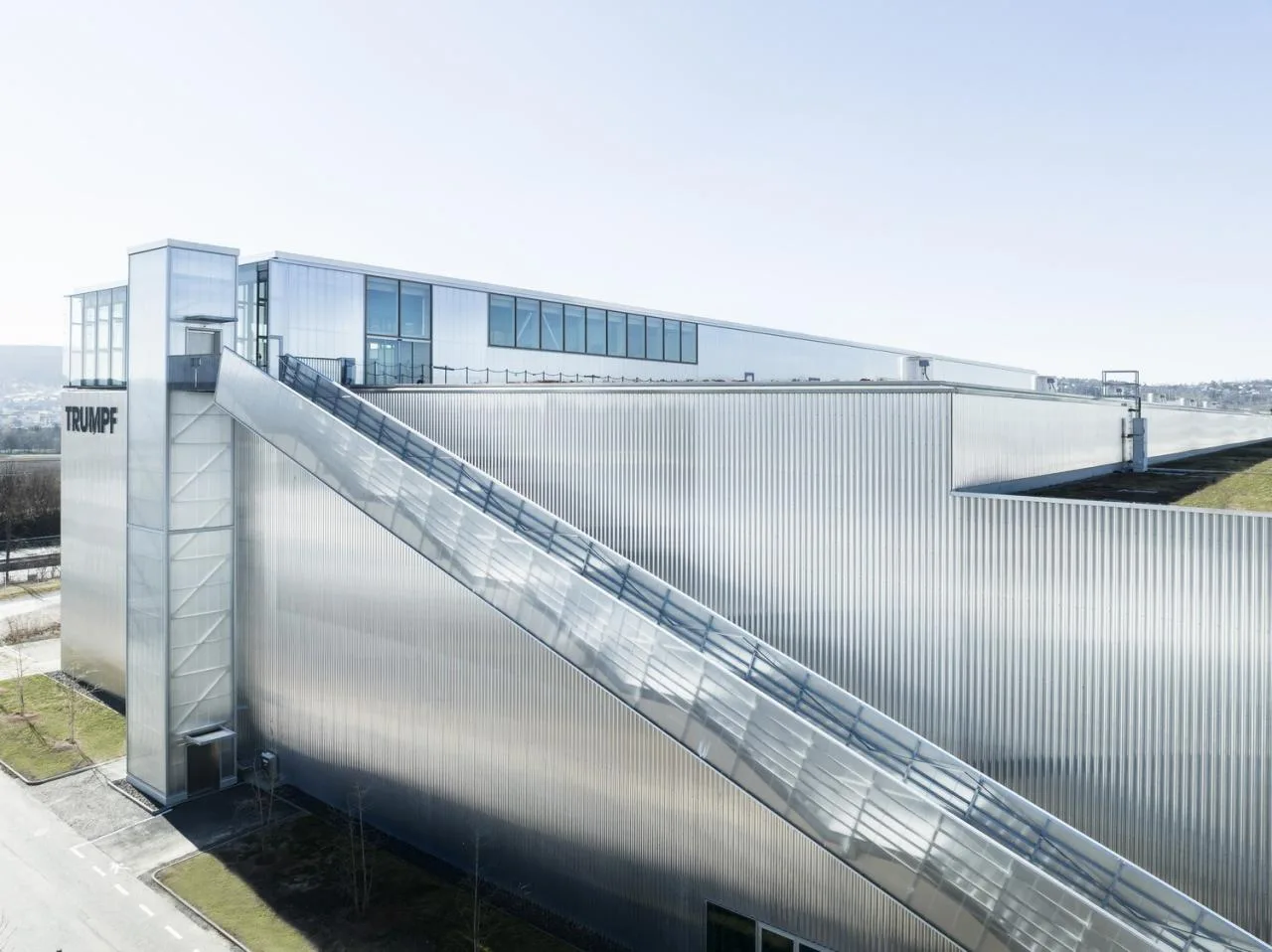
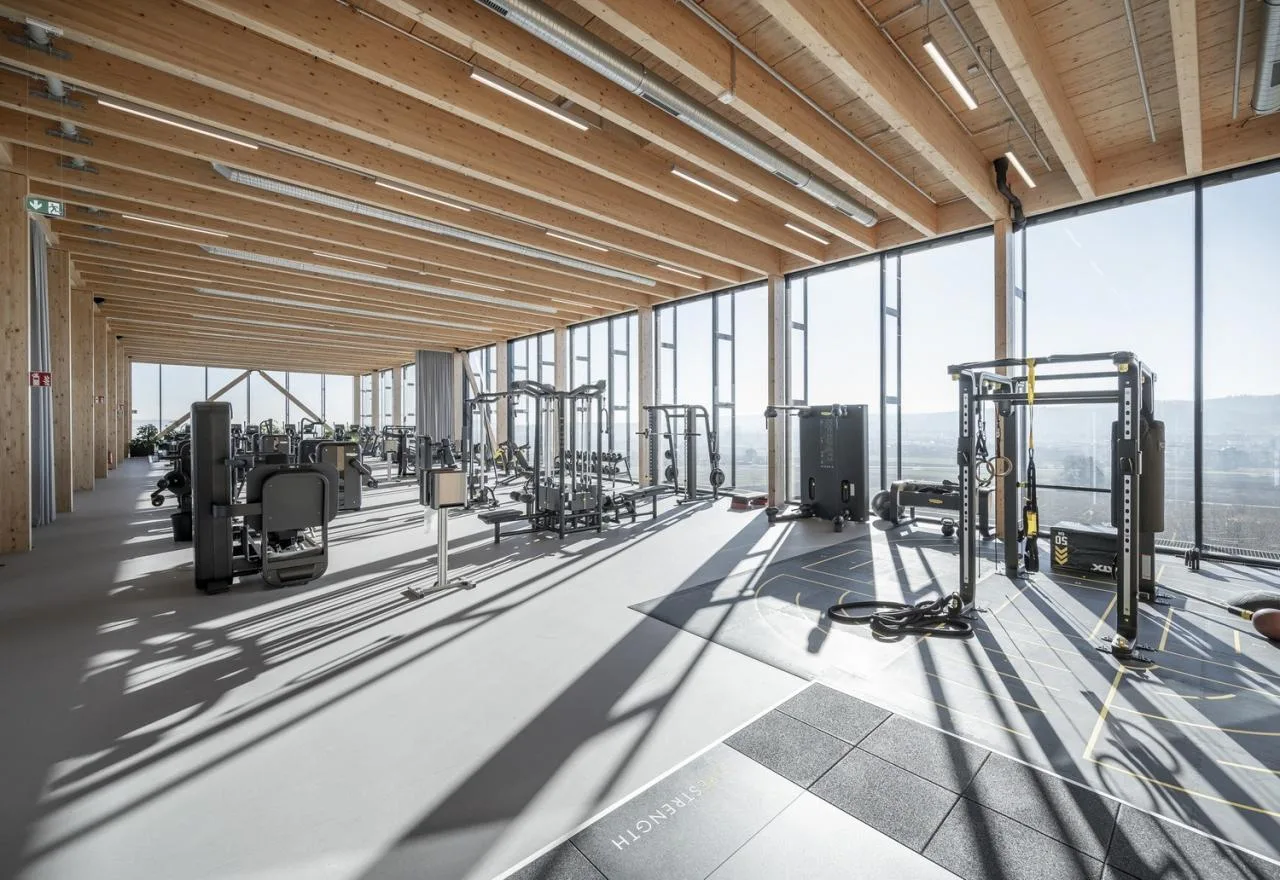
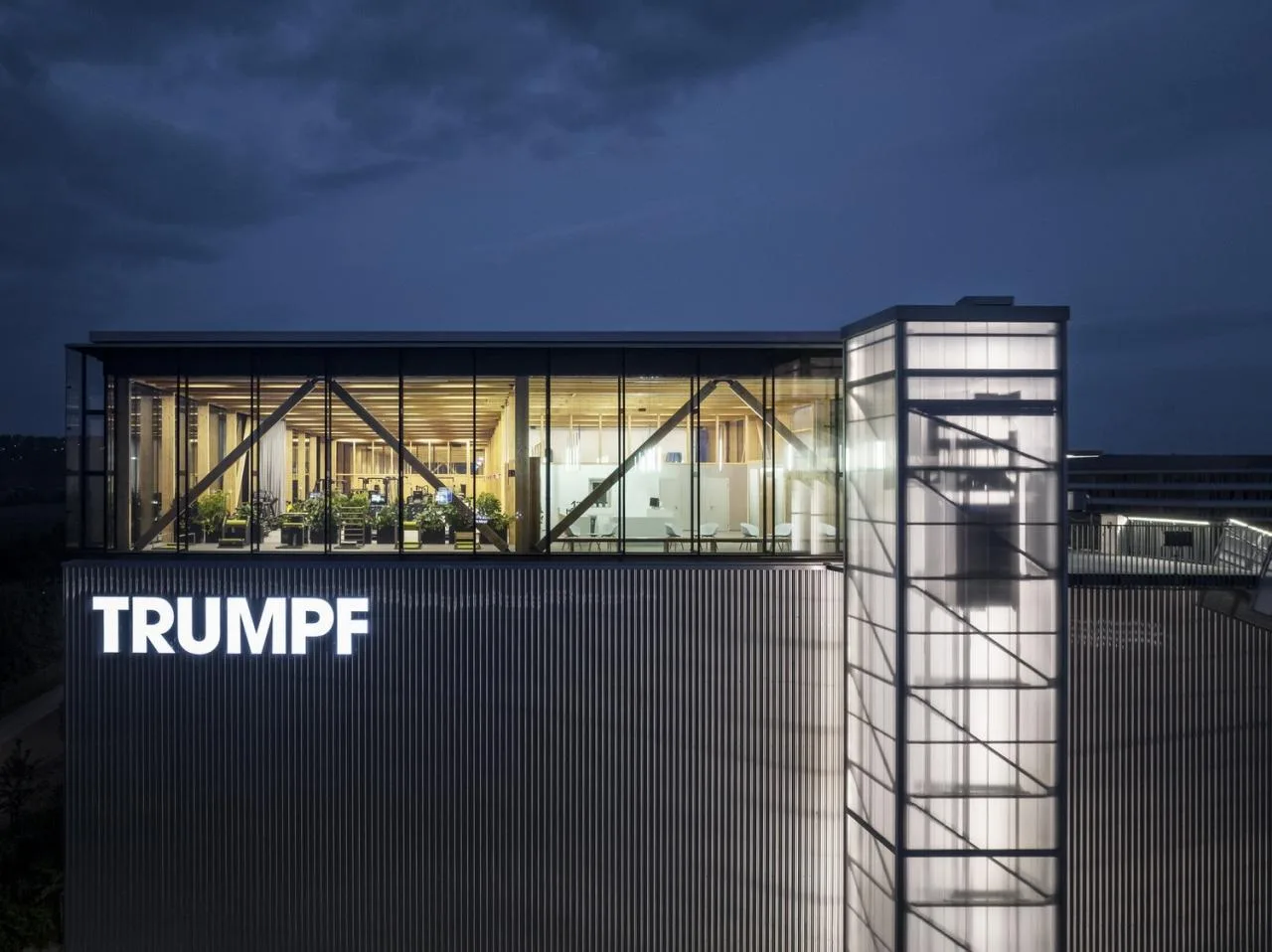
A vacant rooftop space above the logistics center at the park’s southwest end was selected for the new 7,400-square-meter sports center. Positioned approximately 30 meters above ground, it is accessible via an external staircase—which also serves as parkour training—and an elevator for transporting people and goods. The center is divided into two main areas: a fitness zone including yoga and classrooms with an entrance and changing rooms, and a sports hall featuring three courts that accommodate Tongkuai’s sports club, basketball, soccer, and badminton teams. The remaining rooftop area is dedicated to extensive landscaping, offering stunning panoramic views of the campus.
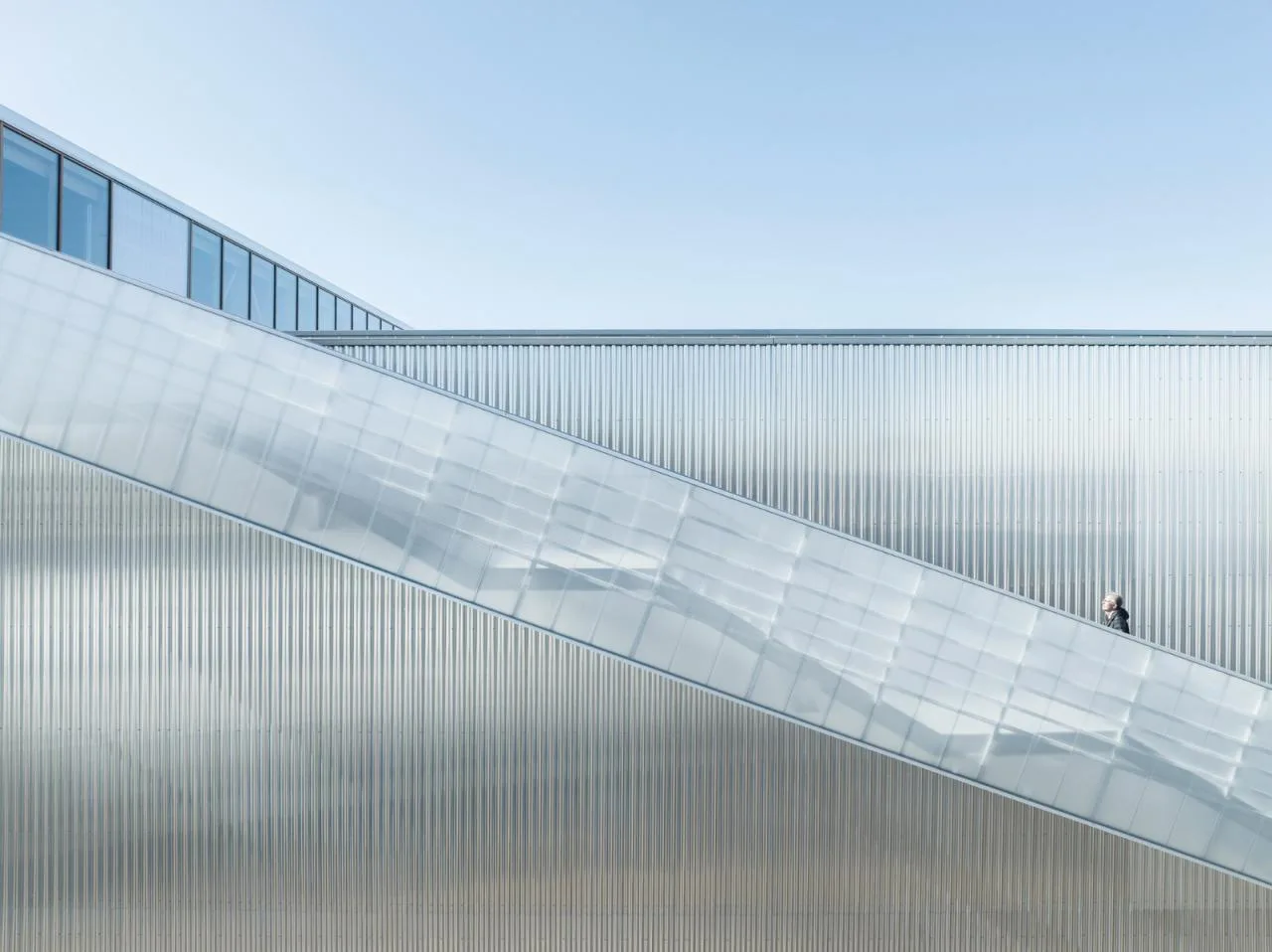
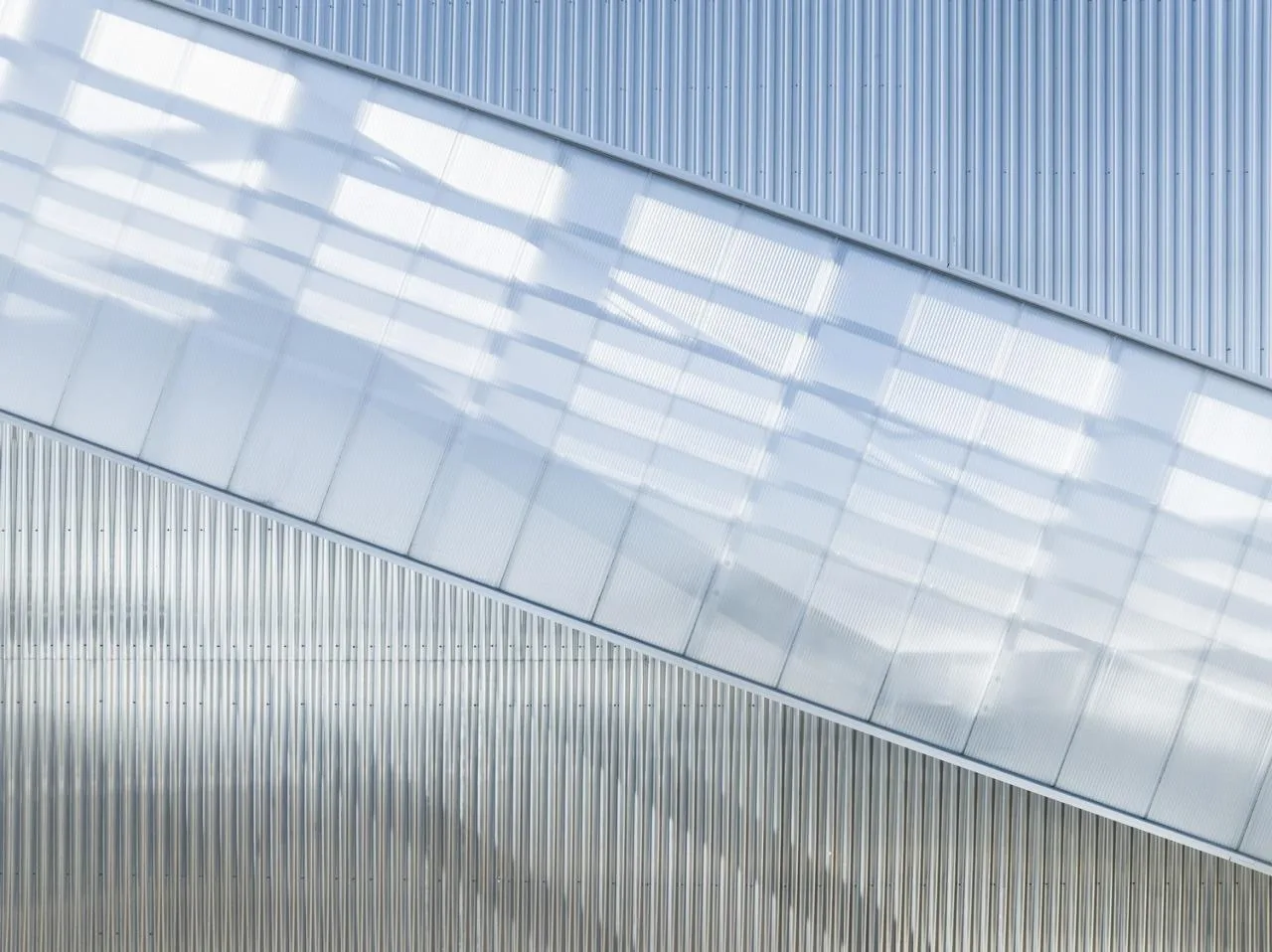
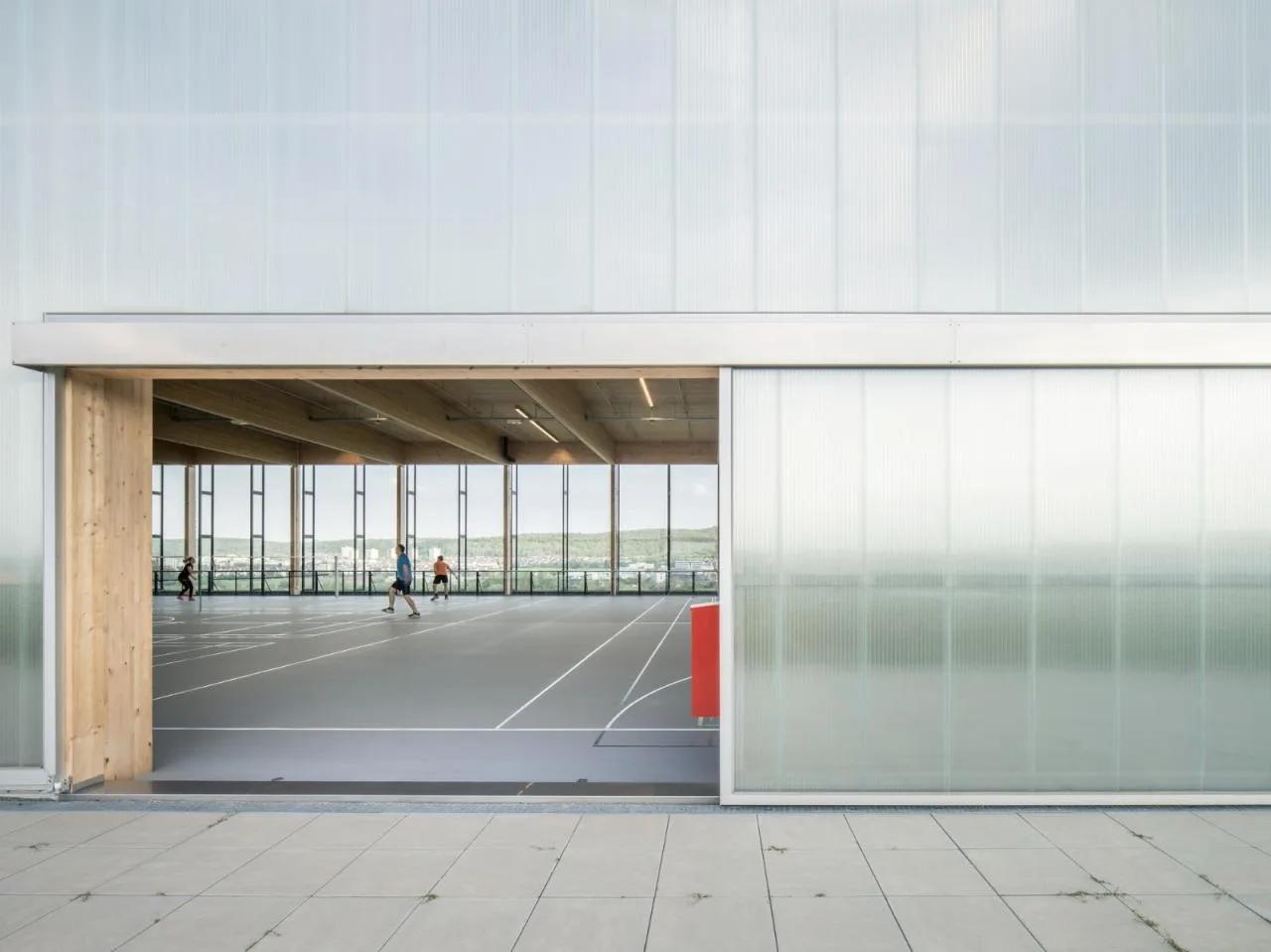
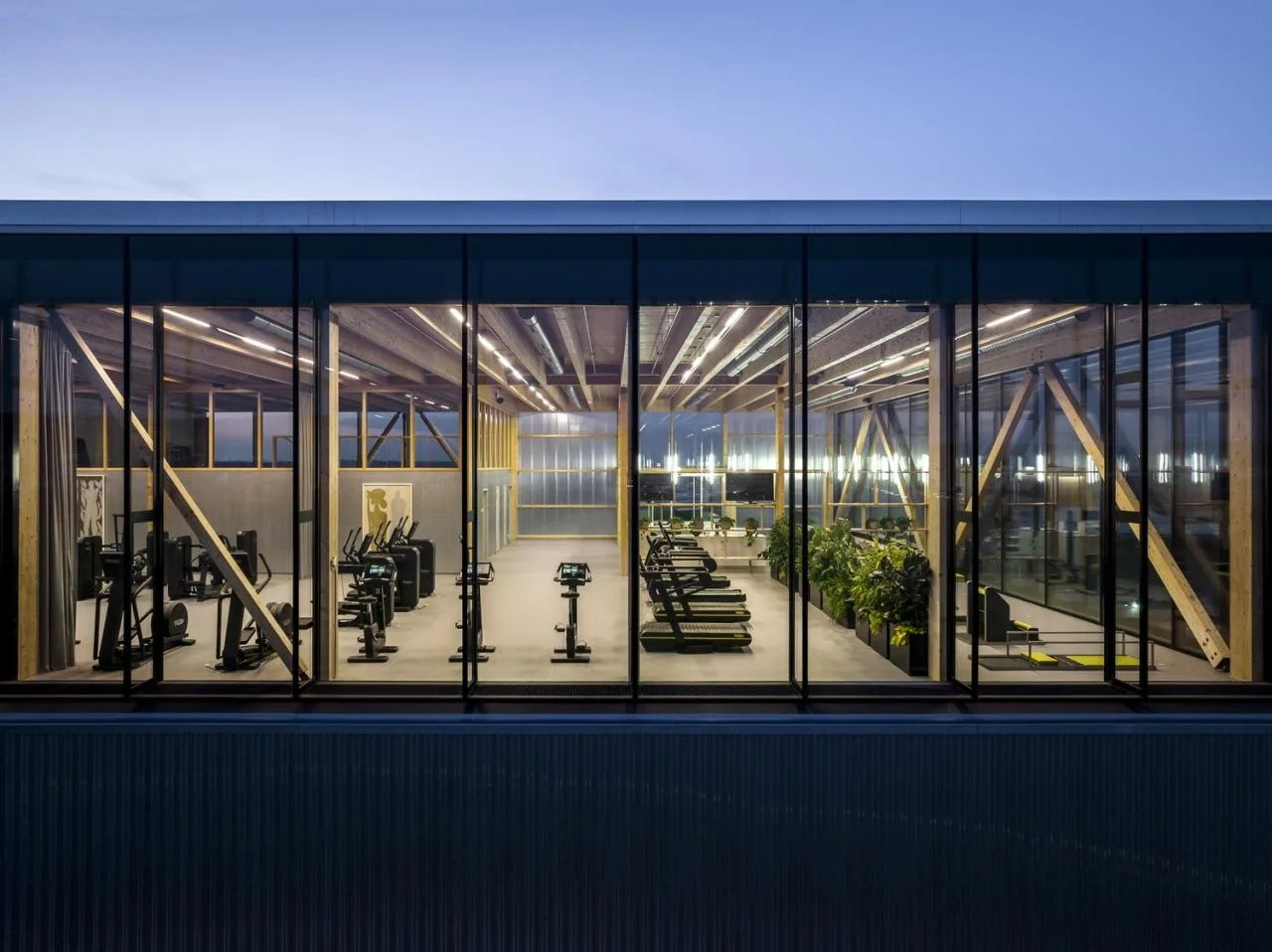
To minimize roof weight and reduce carbon emissions, the extension utilizes a prefabricated wooden structure made from simple, cost-effective laminated spruce. This creates a single-layer space with interlayers. The hall’s truss spans 23.5 meters with a height of 1.2 meters, while the fitness area’s span is roughly half that width. The building’s southern glass facade features a continuous double-layer design to shield against noise from the nearby highway. Additional insulated glass layers and windproof, sun-shielding devices were integrated into the fitness area.
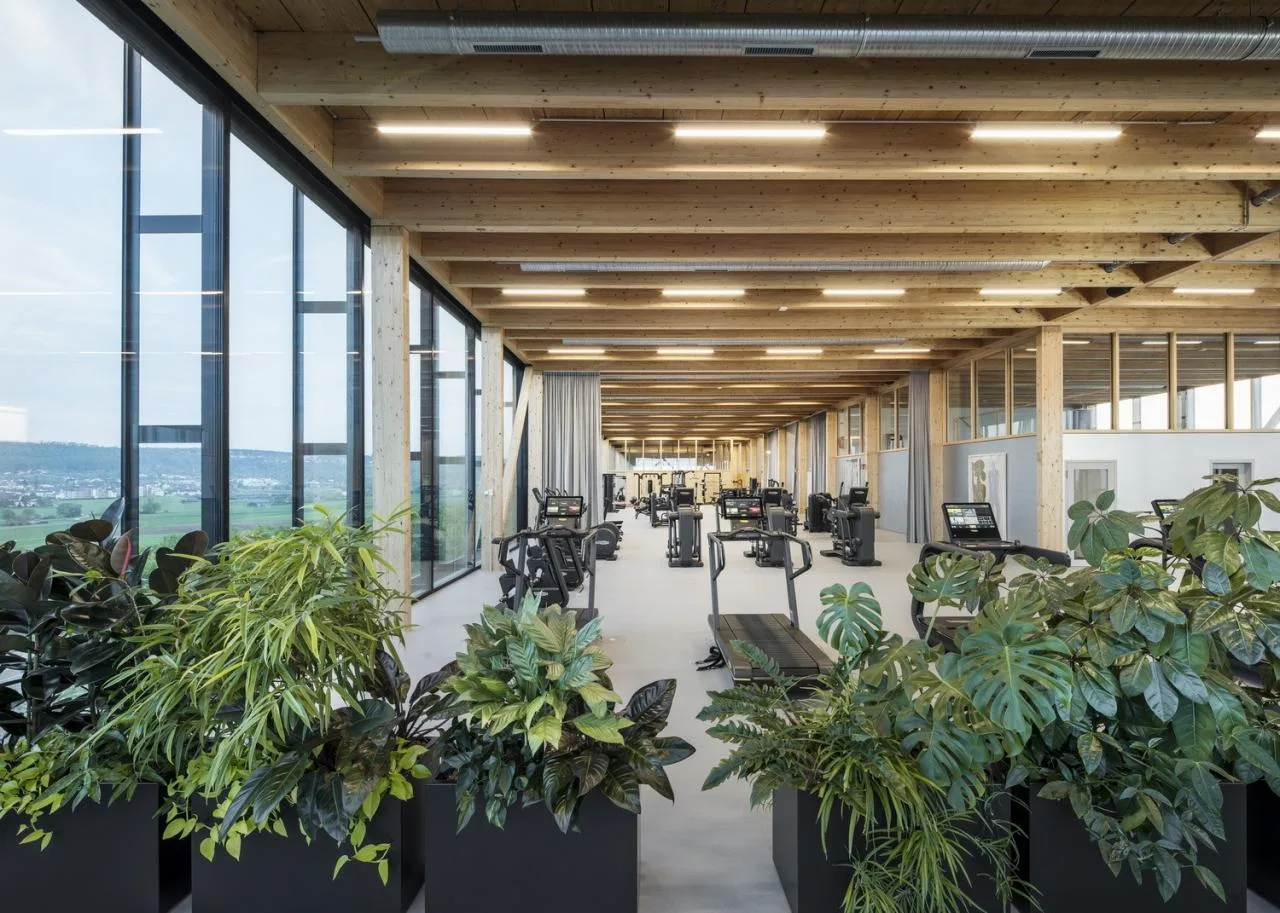
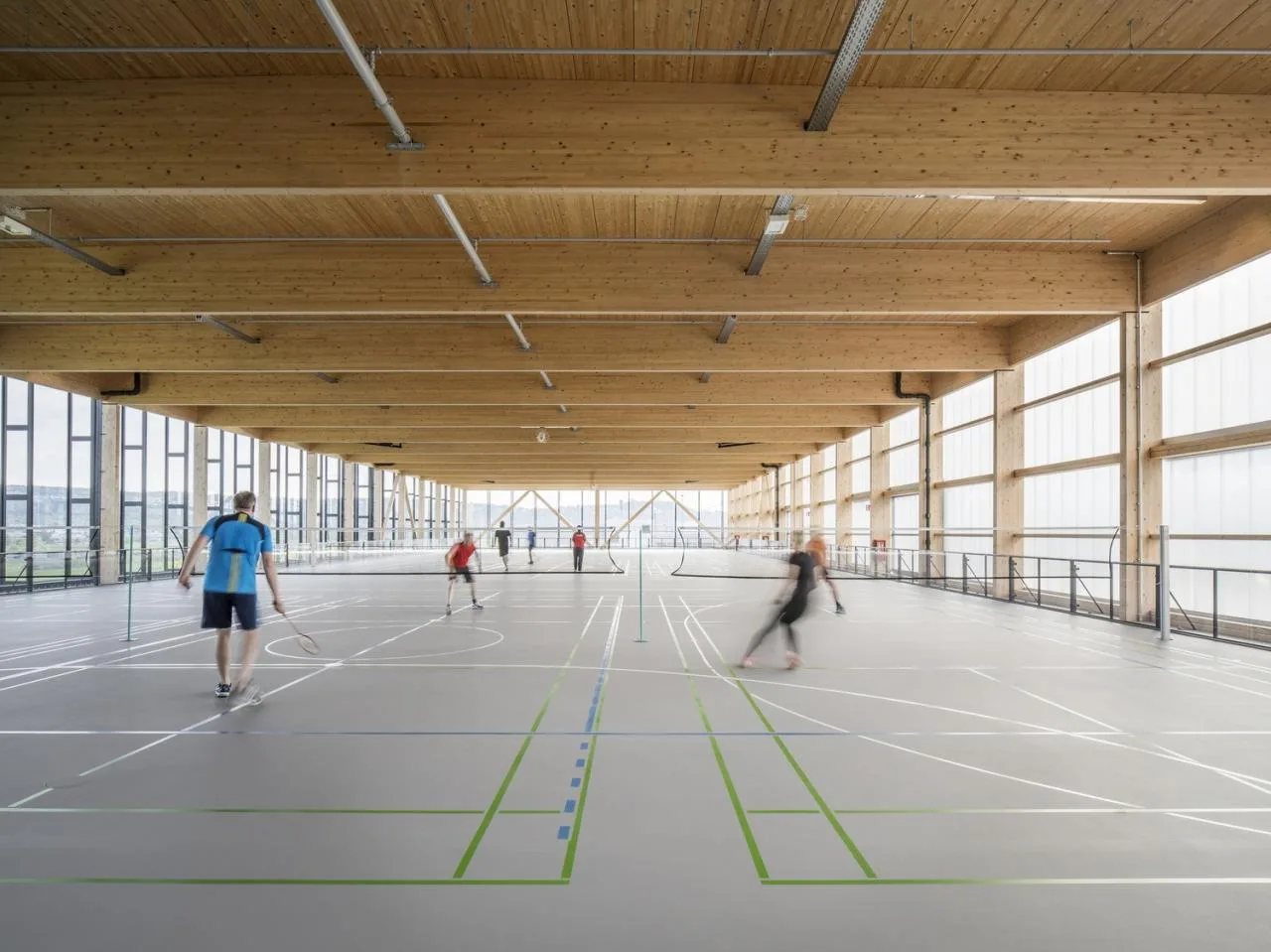
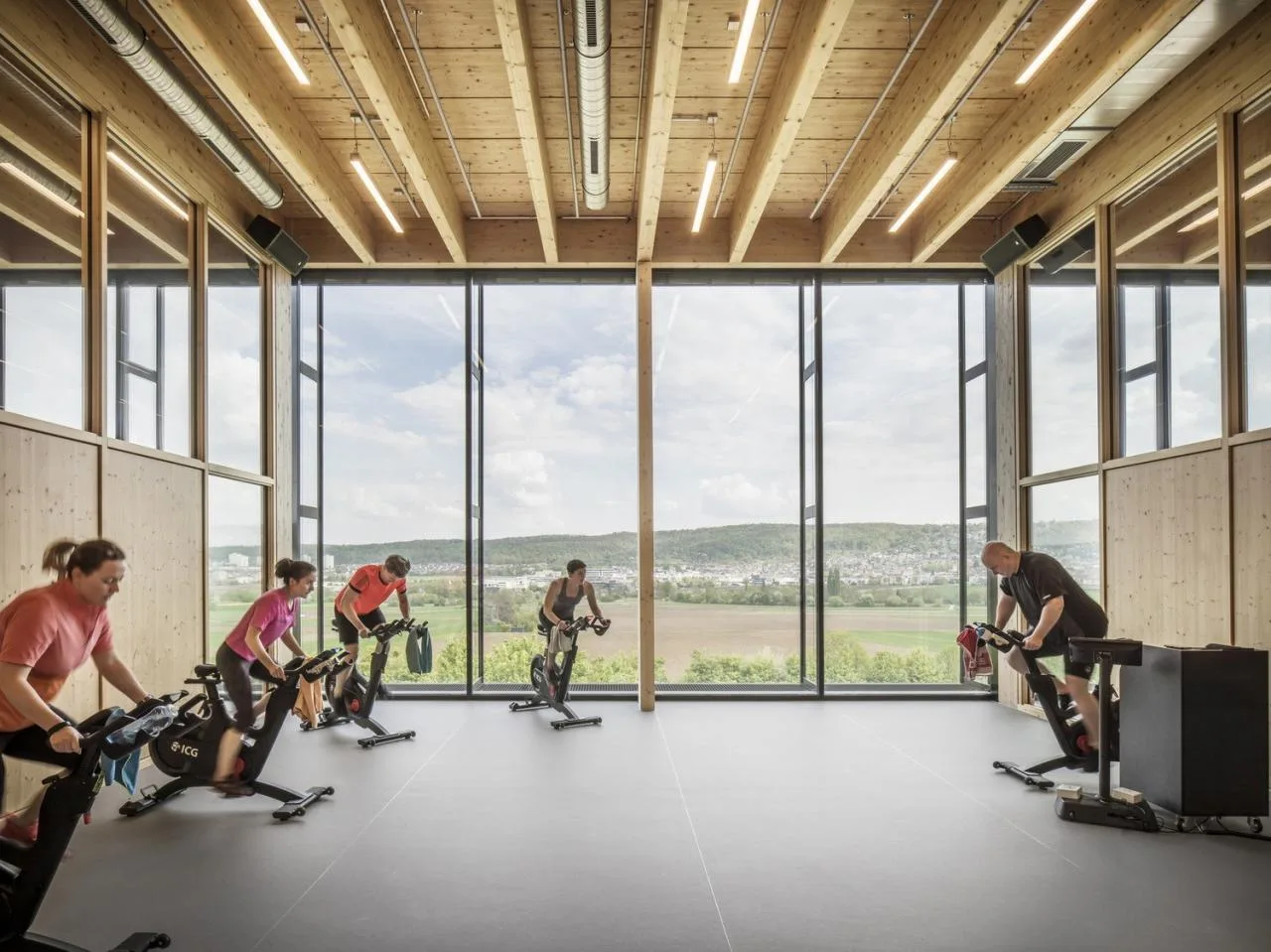
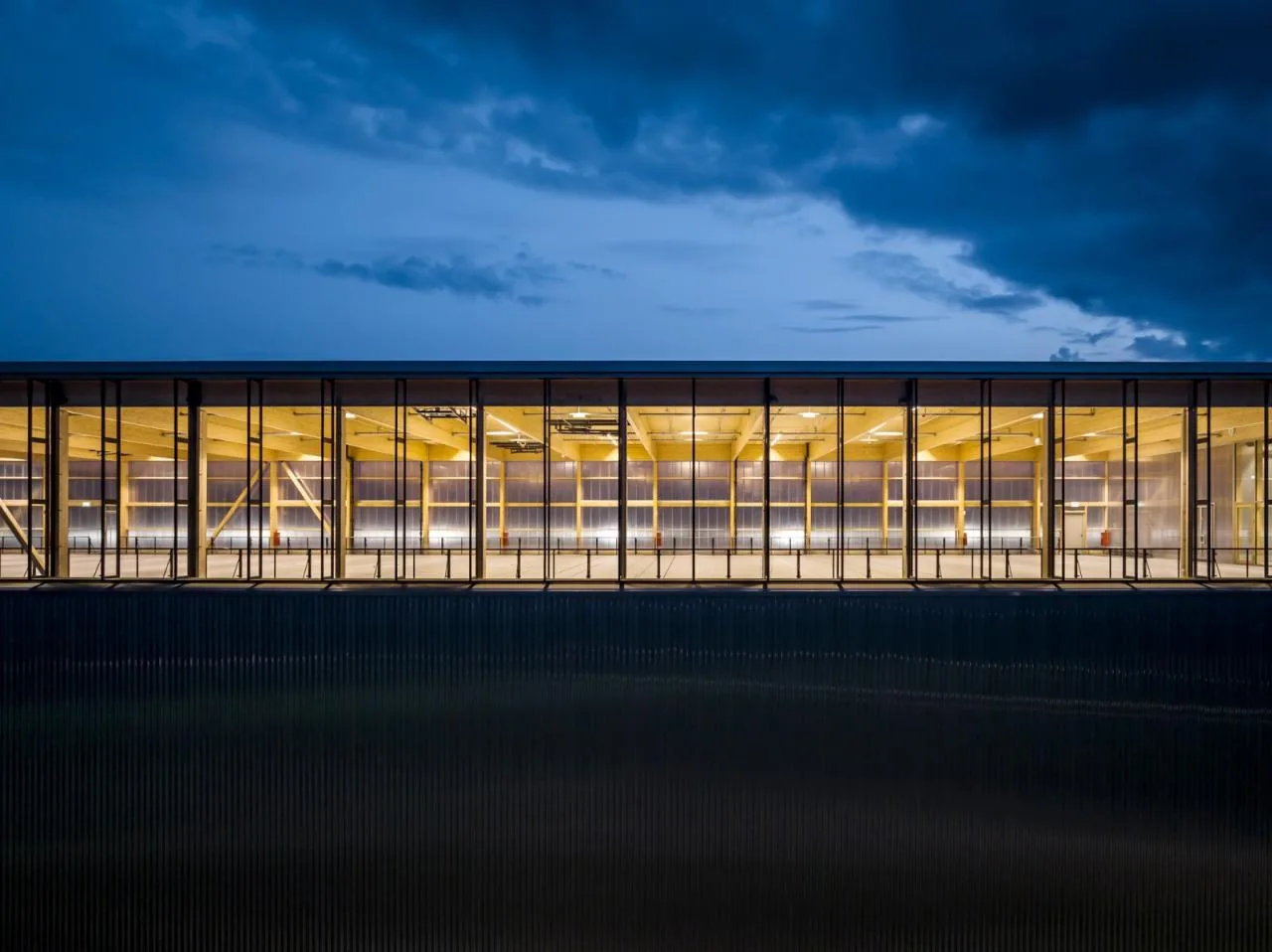
The central hall does not use insulated glass but is enclosed with protective nets instead. Semi-transparent polycarbonate panels enclose the northern section, while large sliding doors open onto the rooftop garden, allowing fresh air to circulate through the sports arena. At night, the center, hovering above highways and farmland, glows like a lantern.
Project Drawings
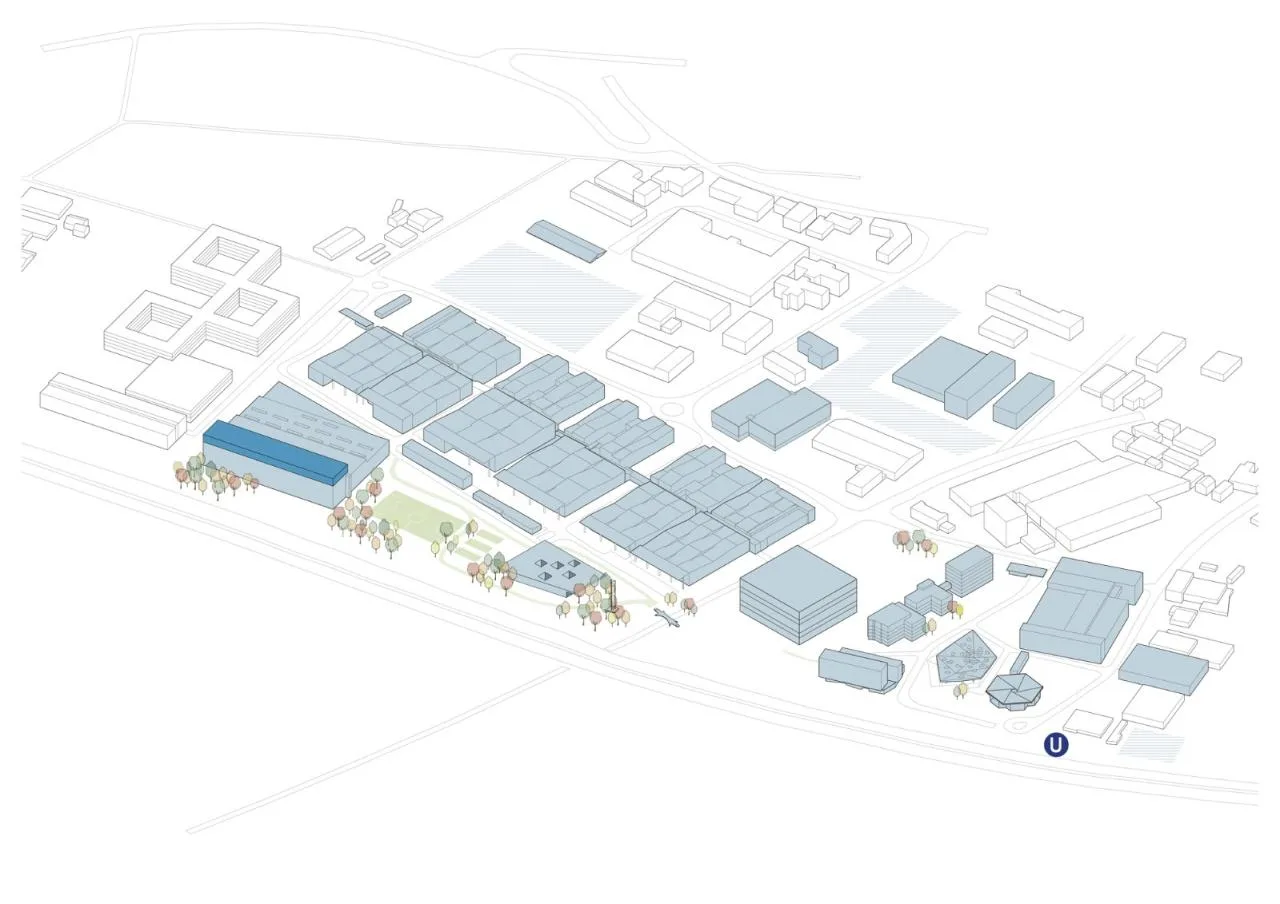
△ Base schematic diagram
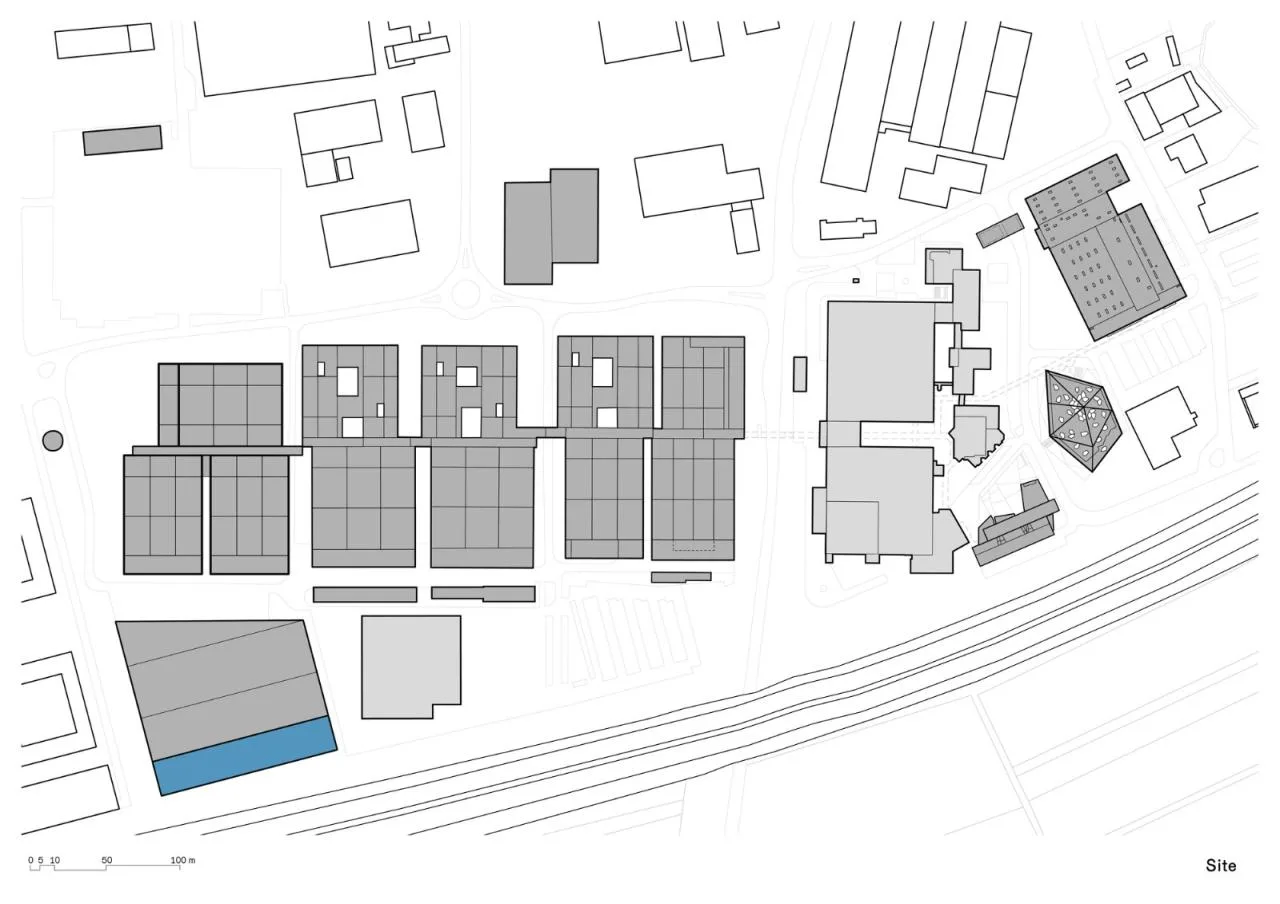
△ Base schematic diagram
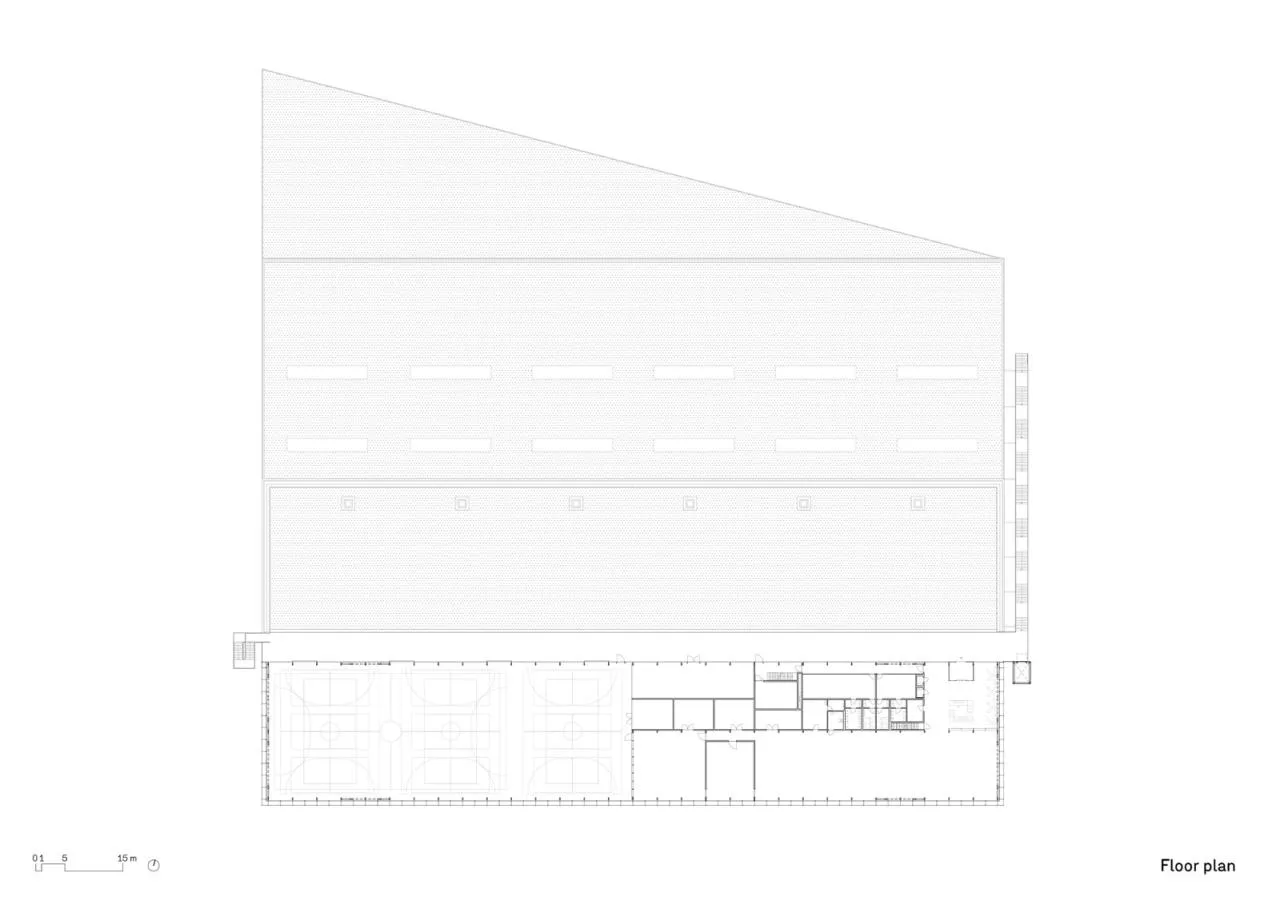
△ Plan view
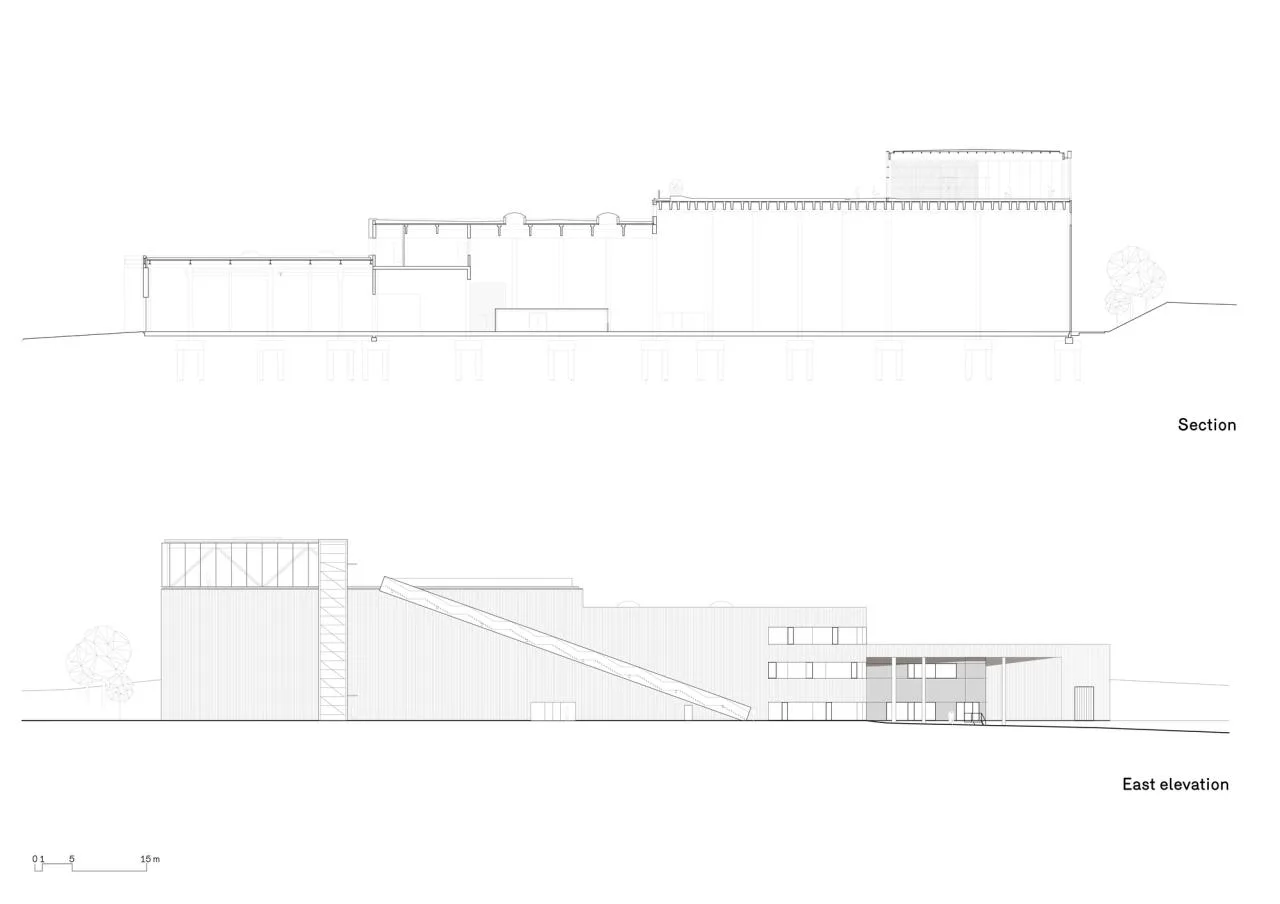
△ Section and elevation drawings
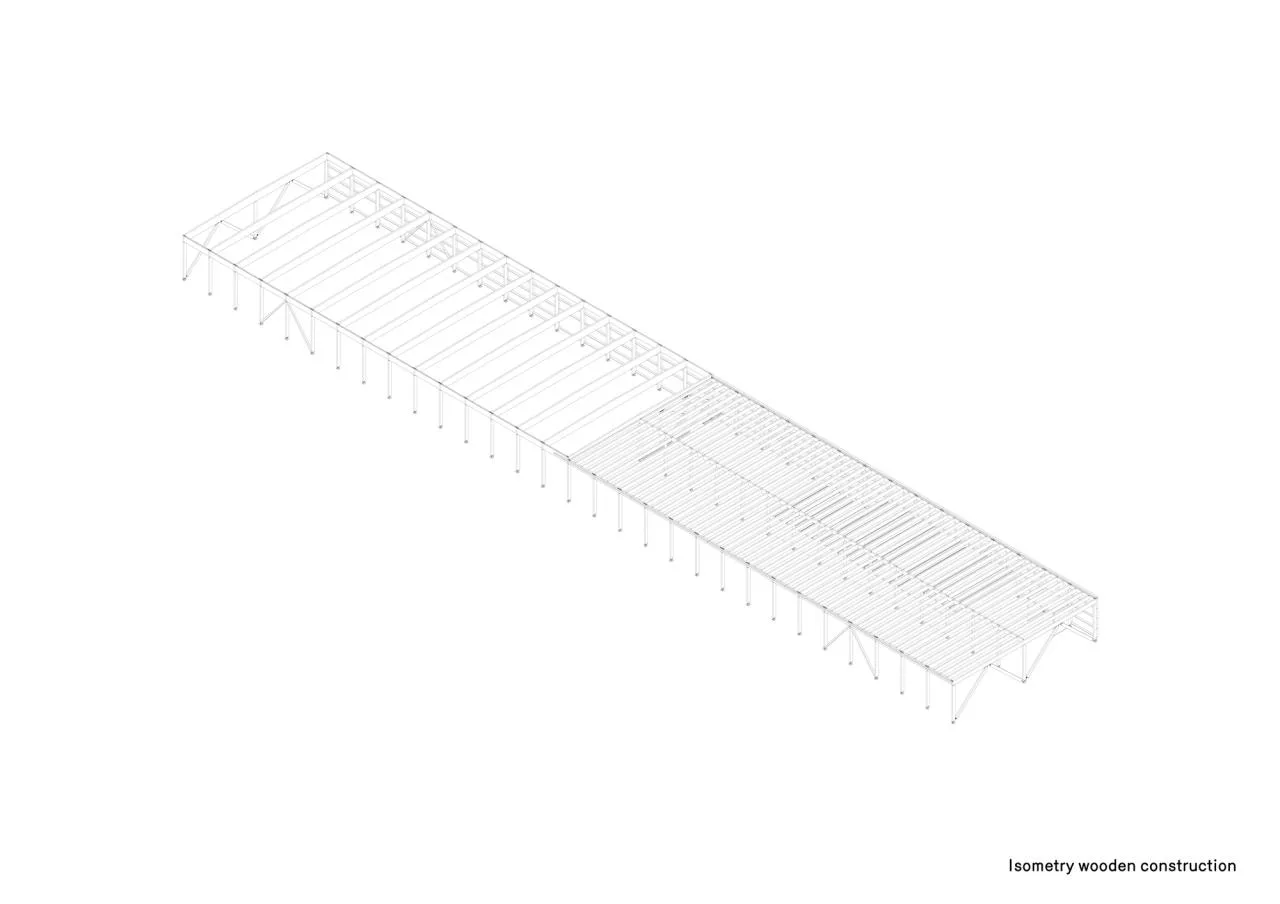
△ Structural schematic diagram
Project Information
Architect: Barkow Leibinger
Area: Approximately 7,404.3 square meters
Project Year: 2021
Photographer: David Franck
Manufacturer: RODECA GMBH
Lead Architects: Frank Barkow, Regine Leibinger
Design Director: Tobias Wenz
Project Architect: Alexander Lehmann
Project Model Team: Andreas Moling, Ina Reinecke, Jasmin Scheckenbach, Kevin Scheurer, Annette Wagner
Project Functions: Fitness area, gym, changing rooms
Structural Engineers: Breinlinger Ingenieure, Statix GmbH
HVAC: Krebs Ingenieure
Landscape Design: Capatti Staubach
Architectural Physics: Horstmann und Berger
Electrical Planning: Müller Bleher
Facade Planning: Priedemann Fassadenberatung
Location: Dechingen, Germany












Must log in before commenting!
Sign Up