
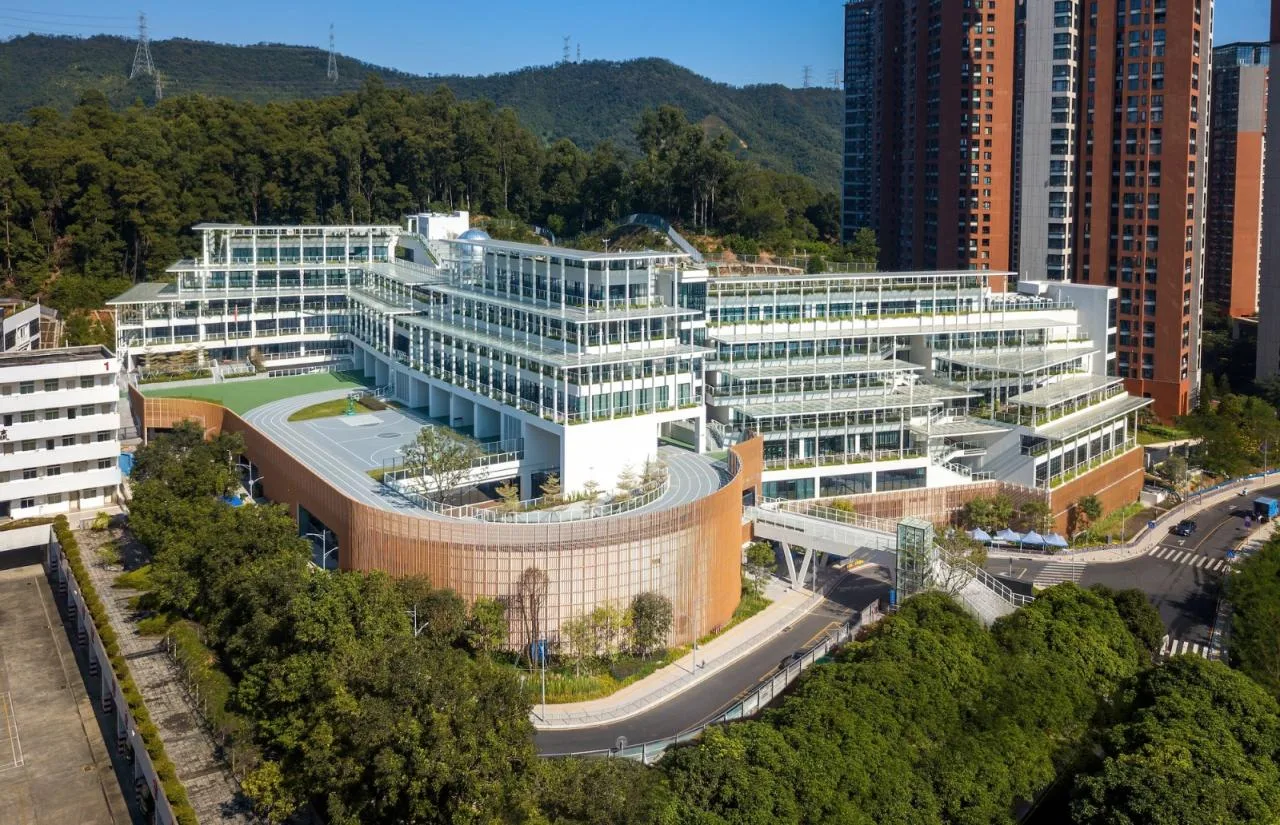
Located in Luohu District, Shenzhen, China, this newly constructed public primary and secondary school harmoniously integrates with the surrounding mountains and forests. Increasingly, new schools are embracing themes centered on “the future.” Before embarking on the design process, Hibino Design reflects on what “the future” truly means for children and what knowledge they need to prepare for it.
Our approach aligns with the goals of Education for Sustainable Development, aiming to build a sustainable social foundation. Modern education must guide students to understand themselves independently, engage with social issues, and participate in autonomous, dialogue-driven, and deep learning.
Regarding the school environment, “the future” does not imply relying solely on advanced technology. Instead, we believe a future-oriented school should promote sustainability, emphasize low-tech elements linked to everyday production foundations, and foster conscious awareness of factors impacting the Earth’s environment.
Our design philosophy centers on incorporating abundant natural elements into the school environment. With the concept of “diverse learning spaces focused on nature and communication,” we aim to create a sustainable school that encourages students’ independent thinking and active learning.
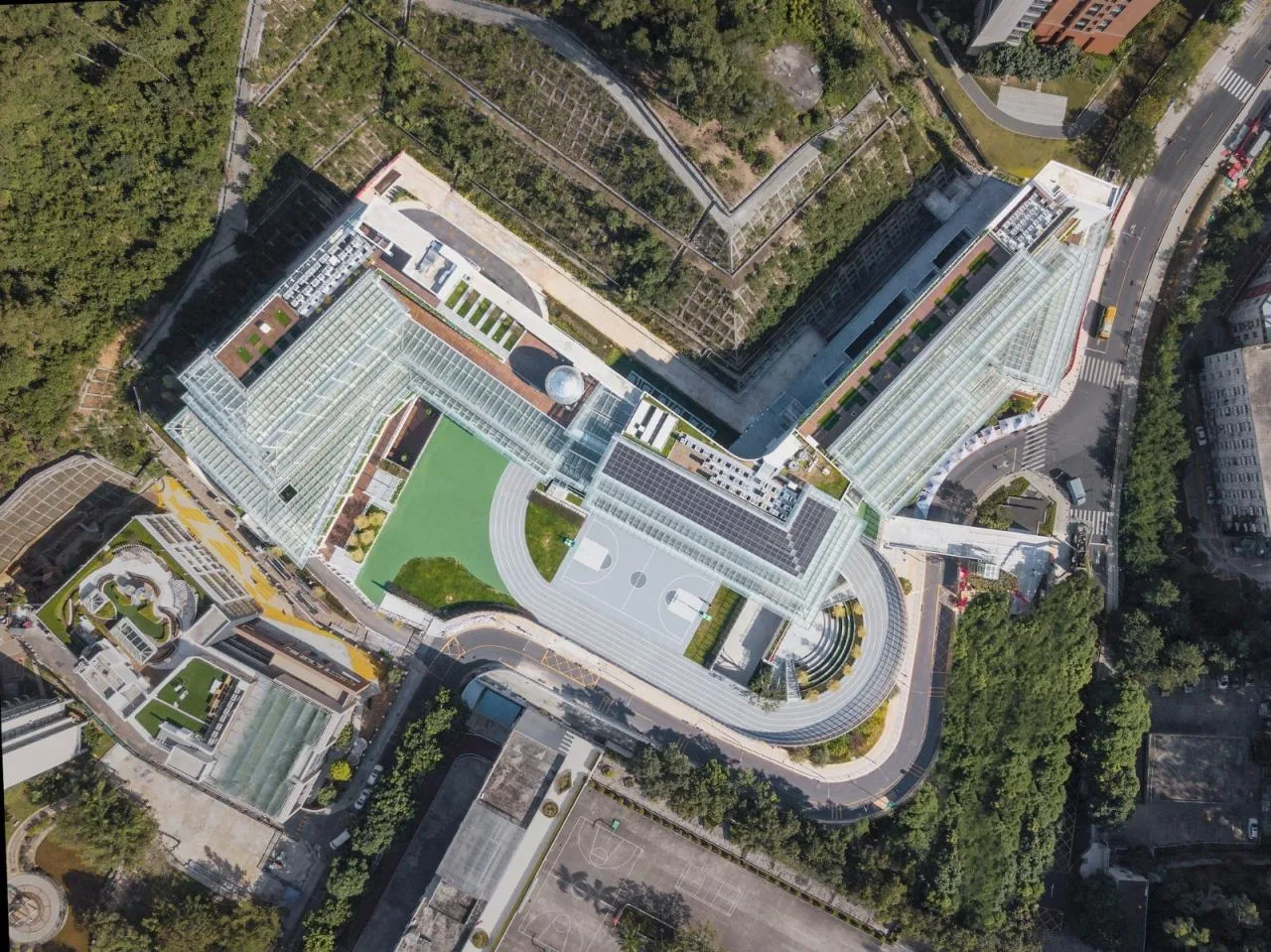
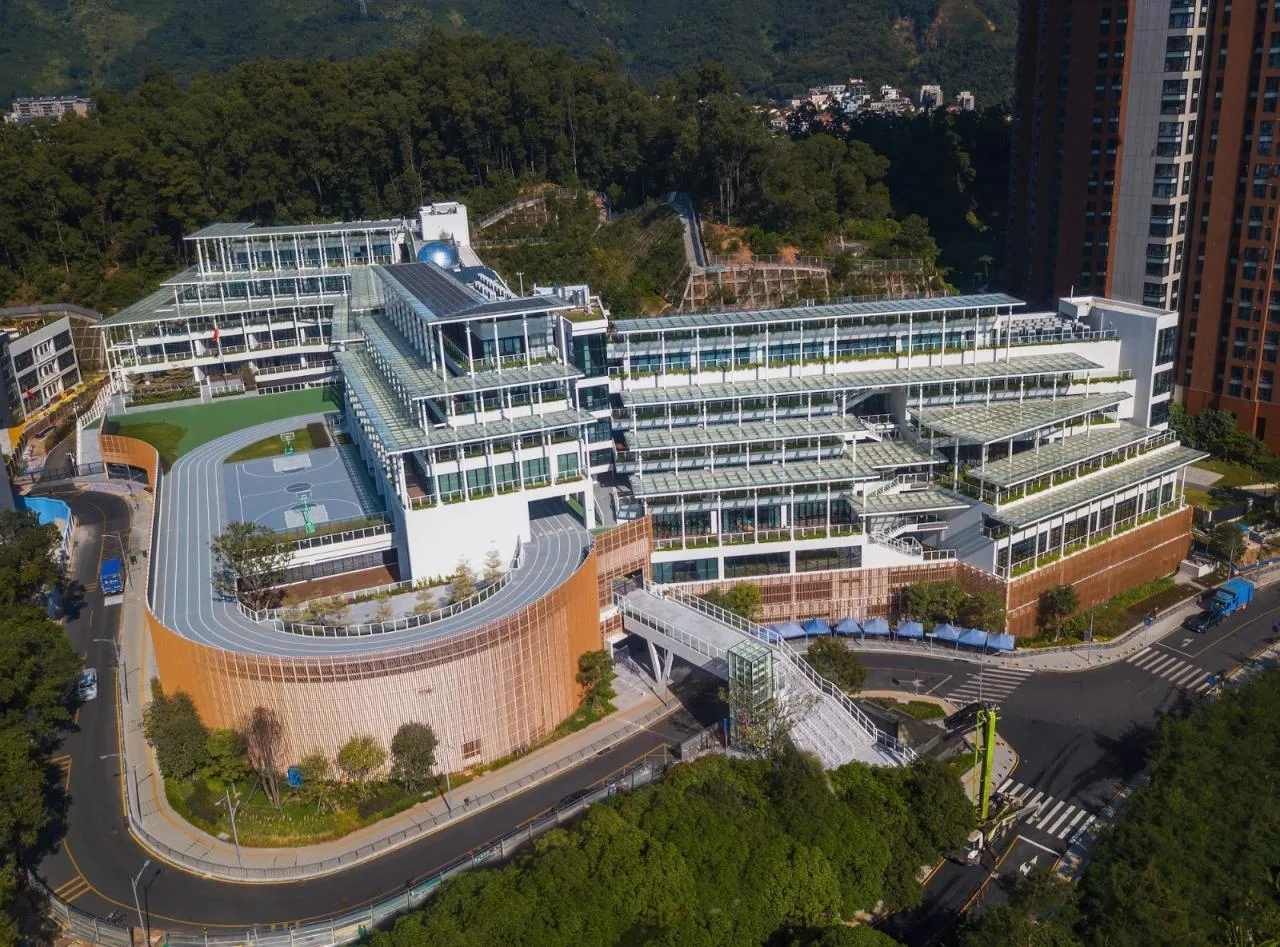
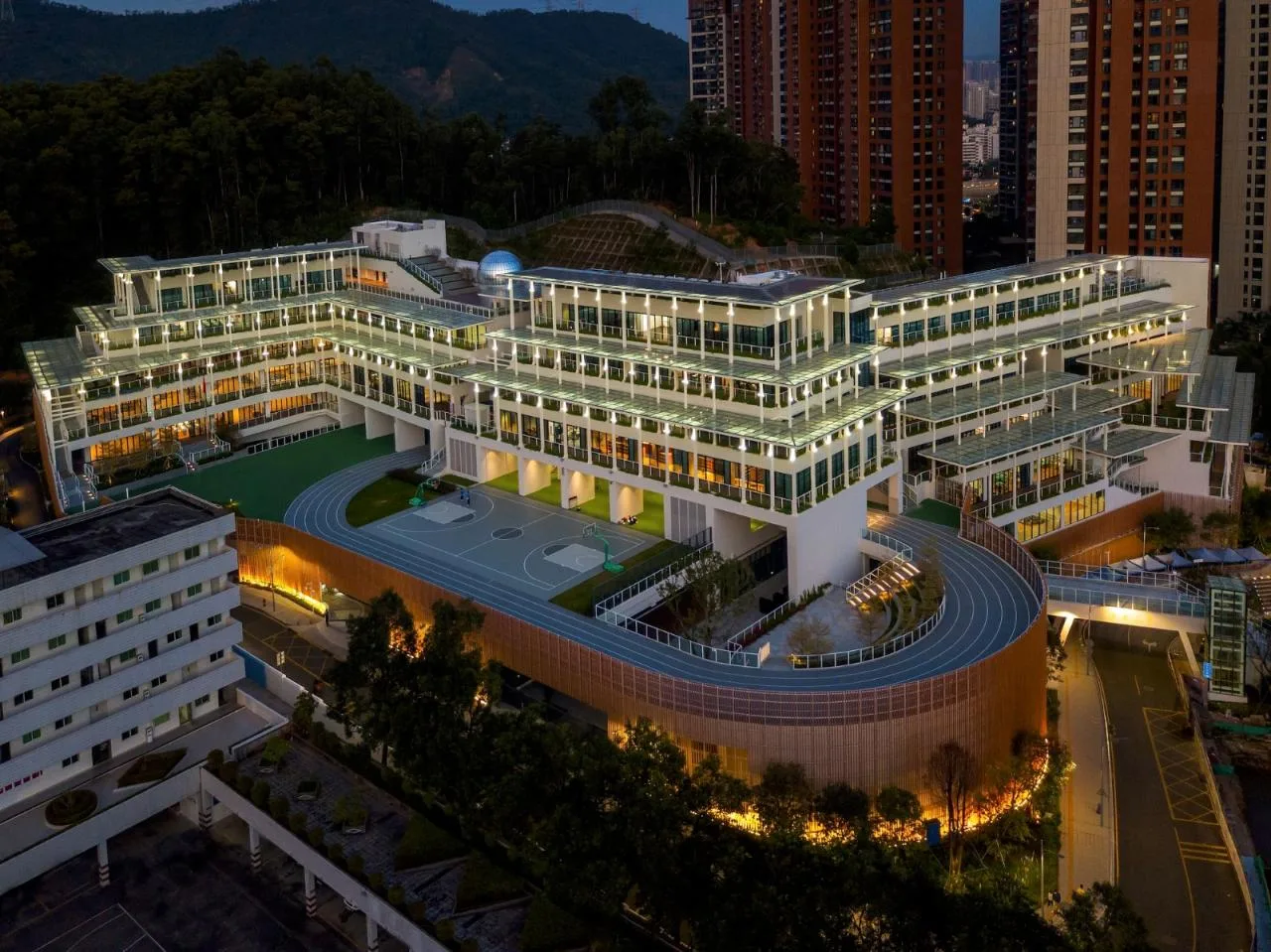
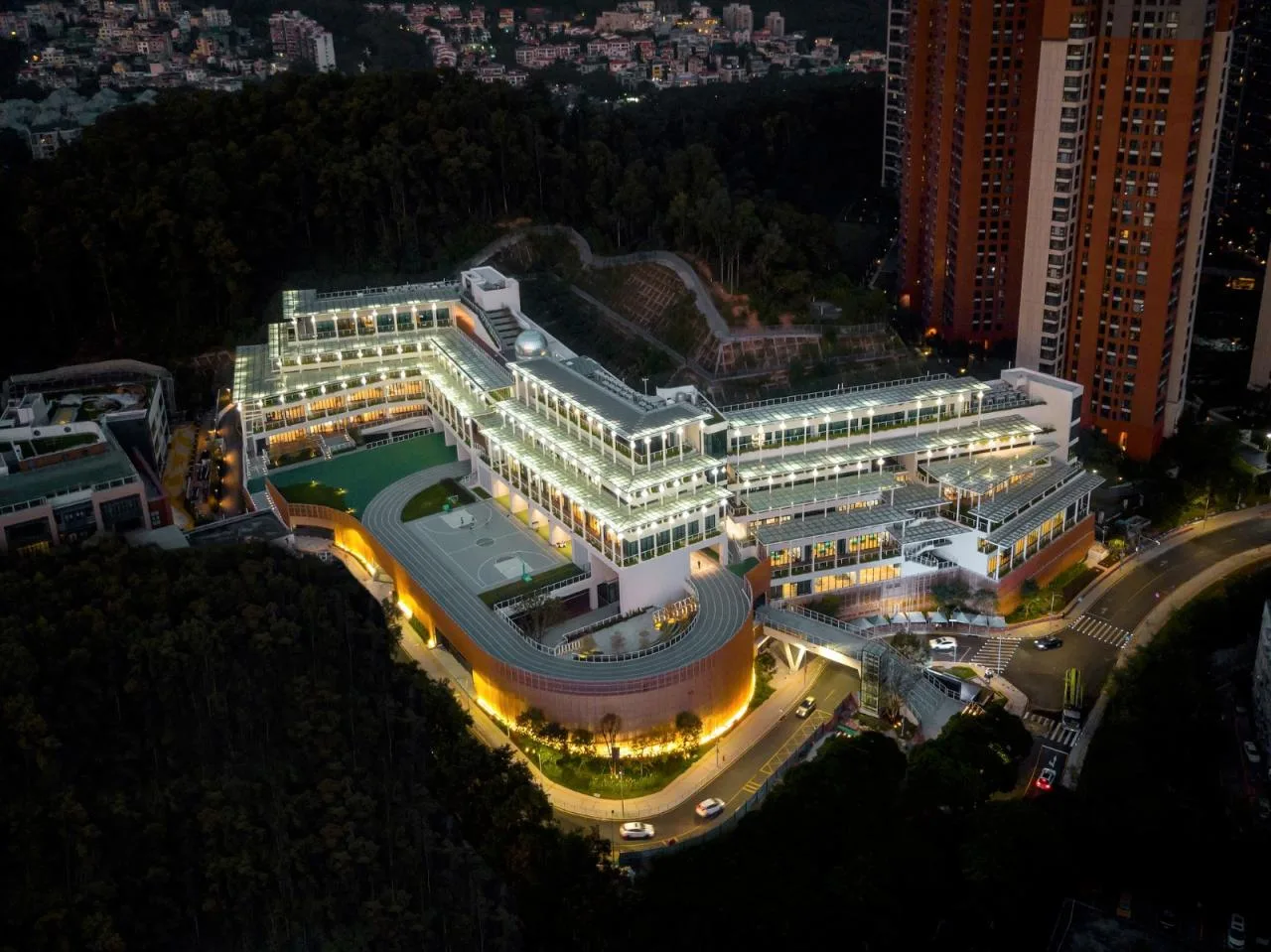
Due to land constraints, the building design required cutting into part of the mountain. However, rather than flattening the mountain, we chose to blend the school’s form with the mountain itself by recessing the platform. Large trees displaced by the cut were carefully transplanted onto planting belts on the ground floor and supplemented with new shrubs using an inclined stepped architectural design.
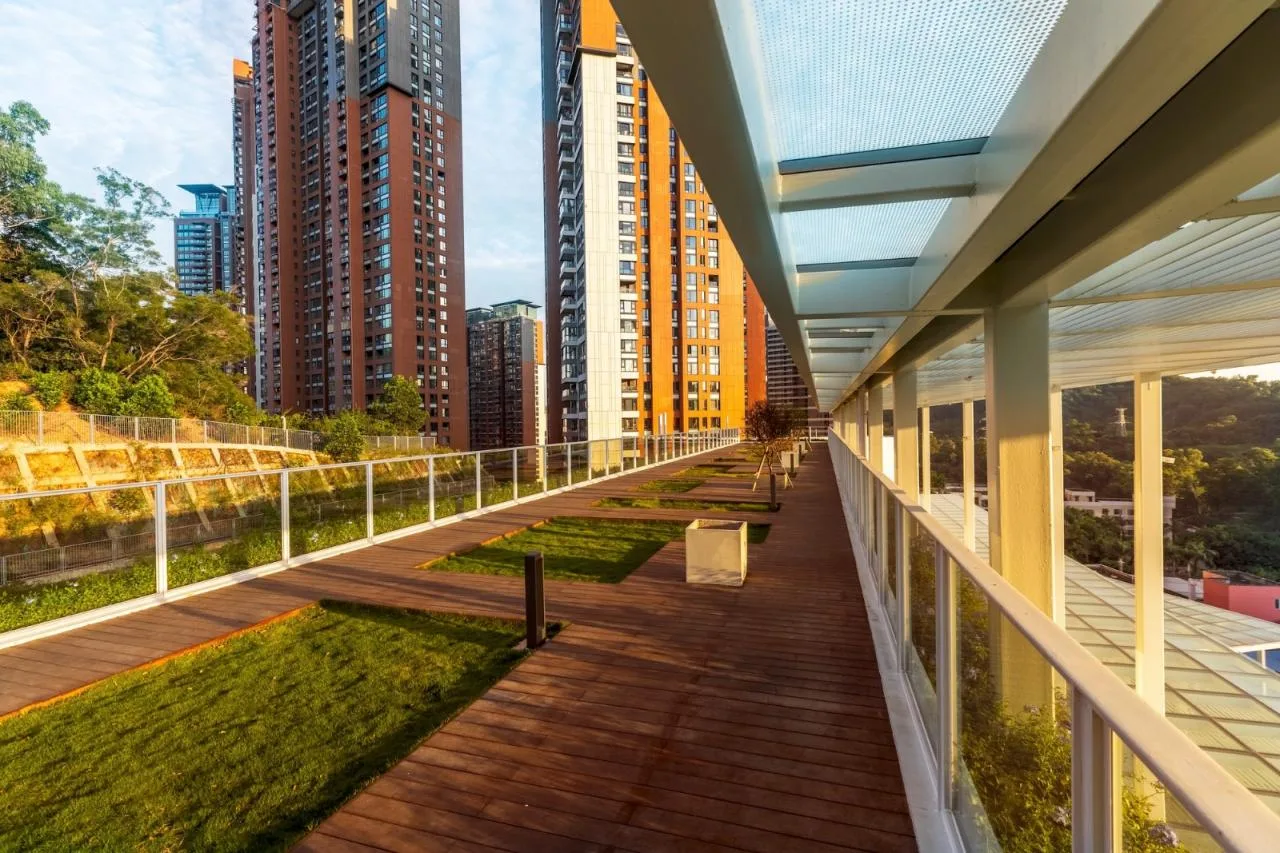
The slope design ensures each classroom receives ample sunlight and allows the creation of natural balconies, enhancing the learning environment.
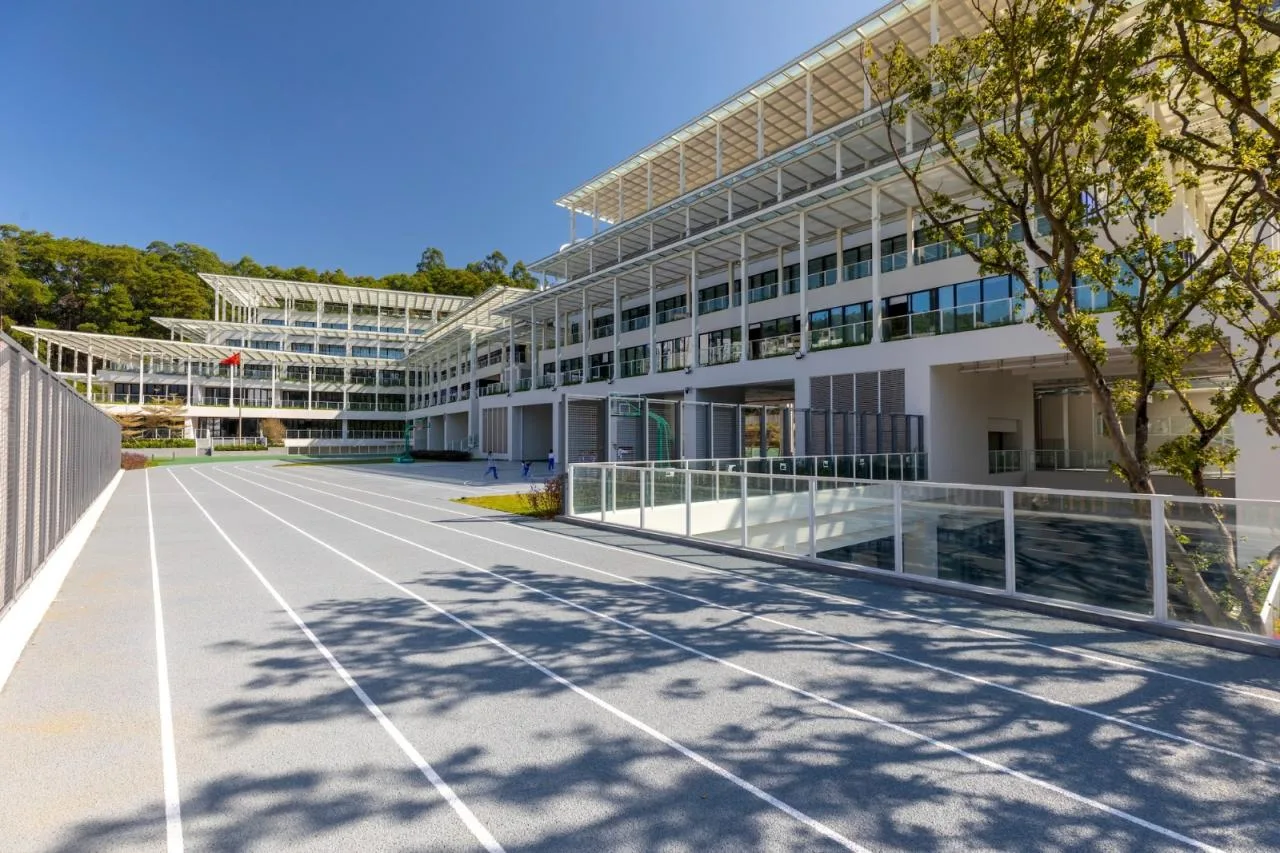
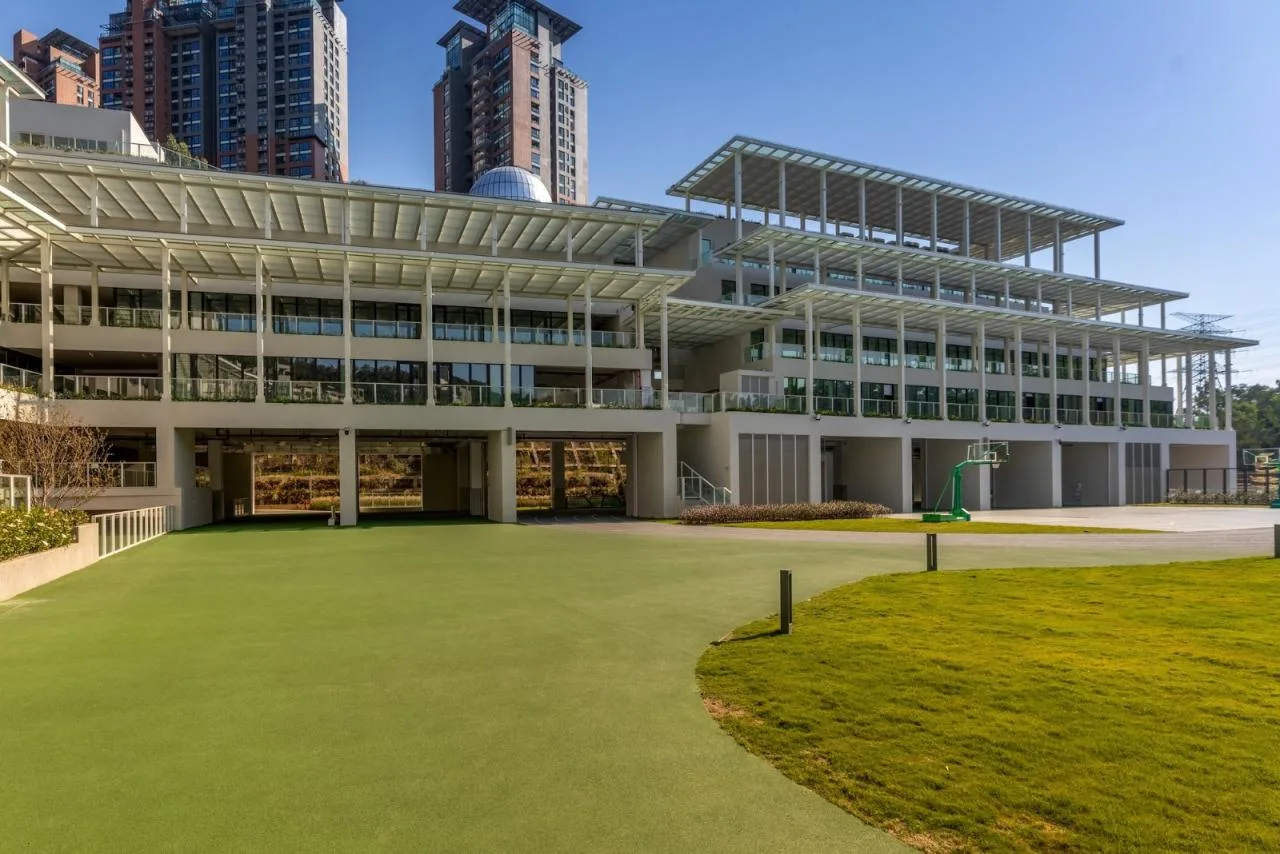
During breaks, students can tend to flowers and water plants on their classroom’s private balconies, socialize with peers in neighboring classes, and interact with students from other grades. The spacious open corridor breaks away from the traditional “corridor” concept by connecting directly with classrooms, transforming into a new learning space.
Flexible furniture and bookshelves, designed for easy rearrangement, span across classroom boundaries to encourage diverse learning activities and physical engagement.
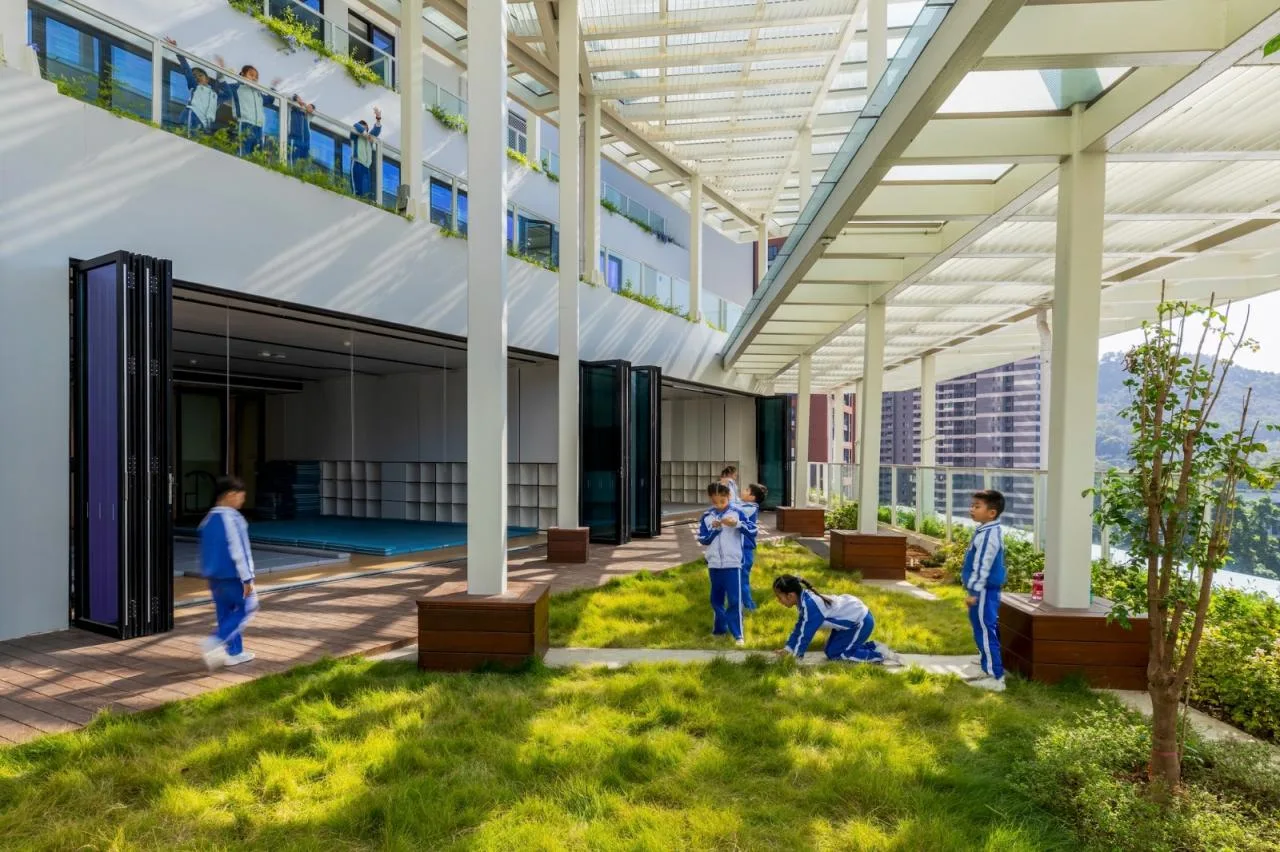
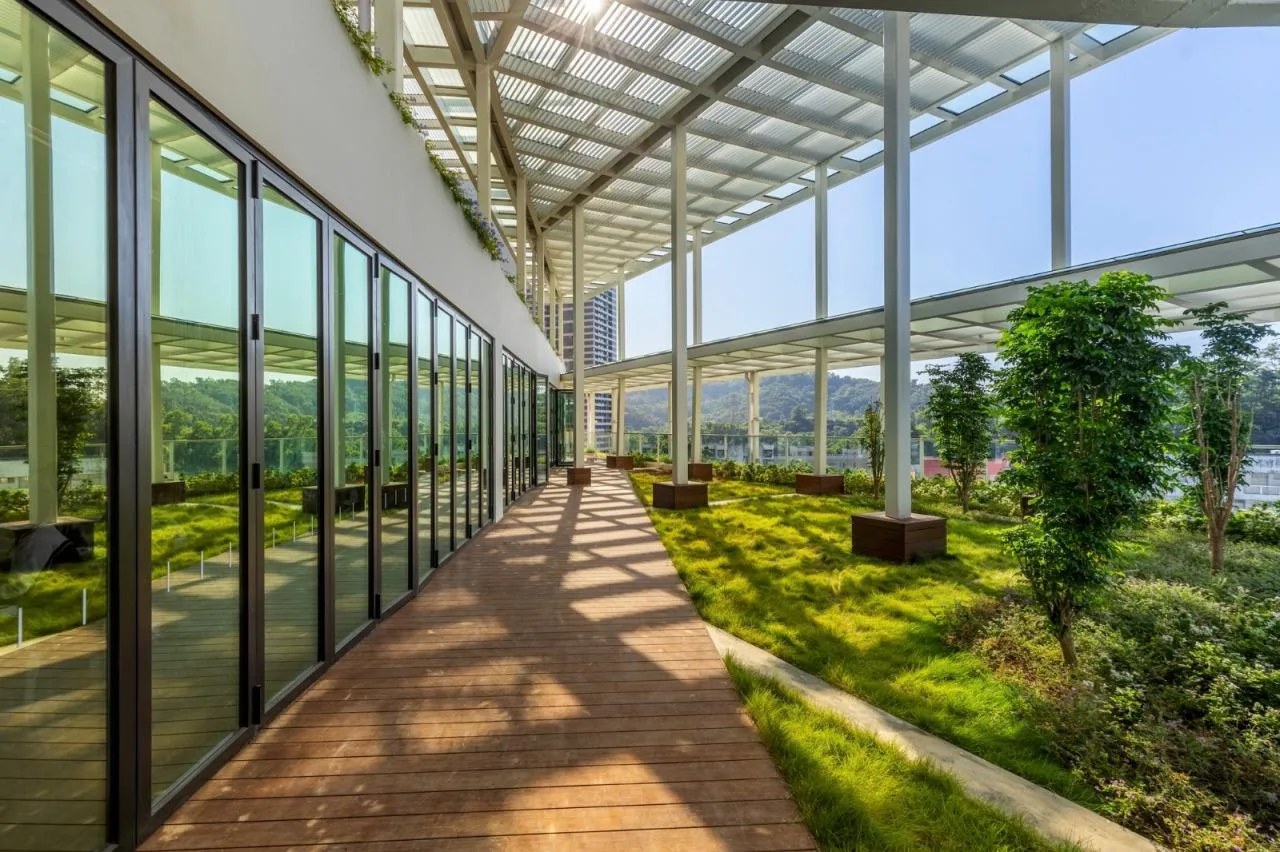
We leveraged the building’s stepped elevation to create a mini water feature that mimics the natural flow of water downhill. Shenzhen’s abundant rainfall inspired a unique playground design that integrates the running track partially under the building platform, providing shaded space for small outdoor activities even on rainy days.
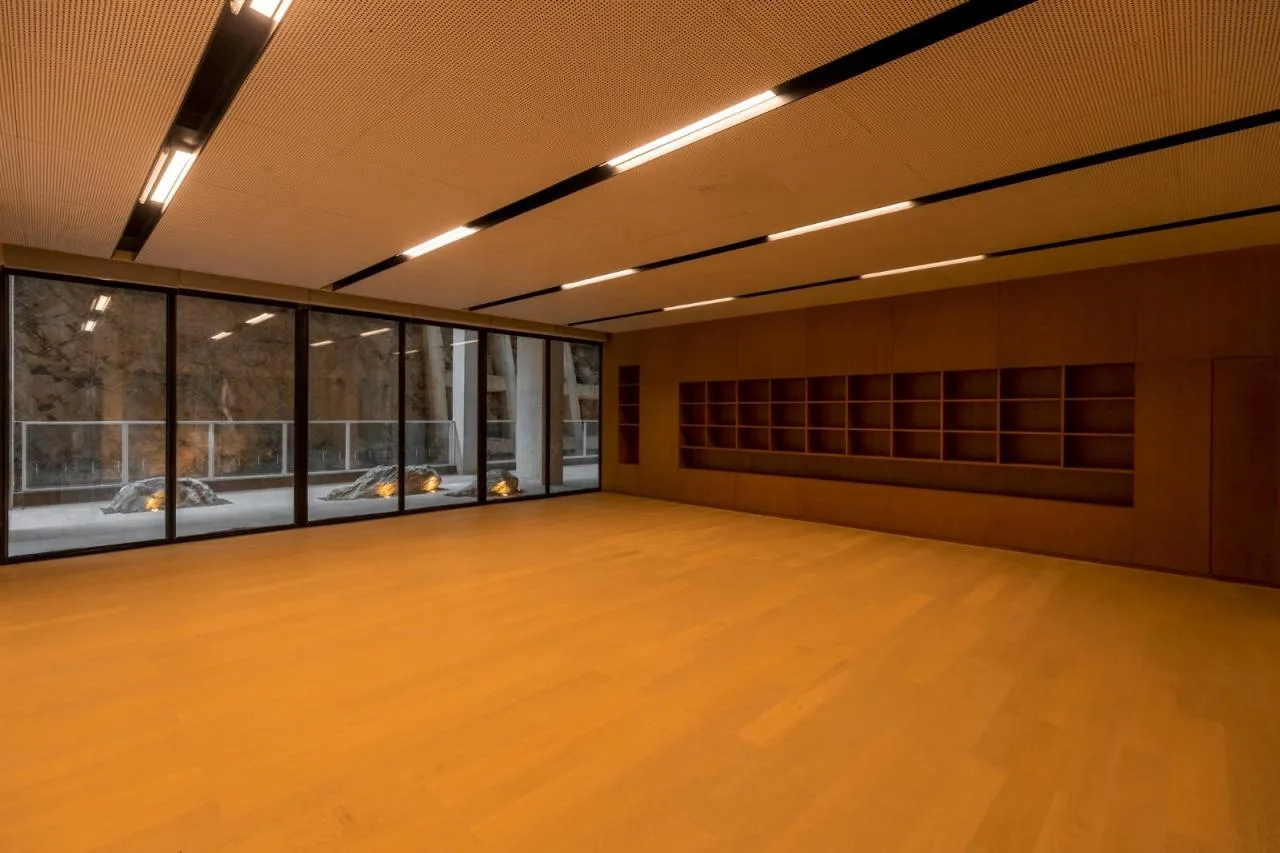
Rocks preserved from the mountain-cutting process are displayed on the school’s lower balcony, contributing to a natural atmosphere and sparking students’ interest in geological studies. The underground floors, thanks to the road’s elevation, receive adequate natural lighting.
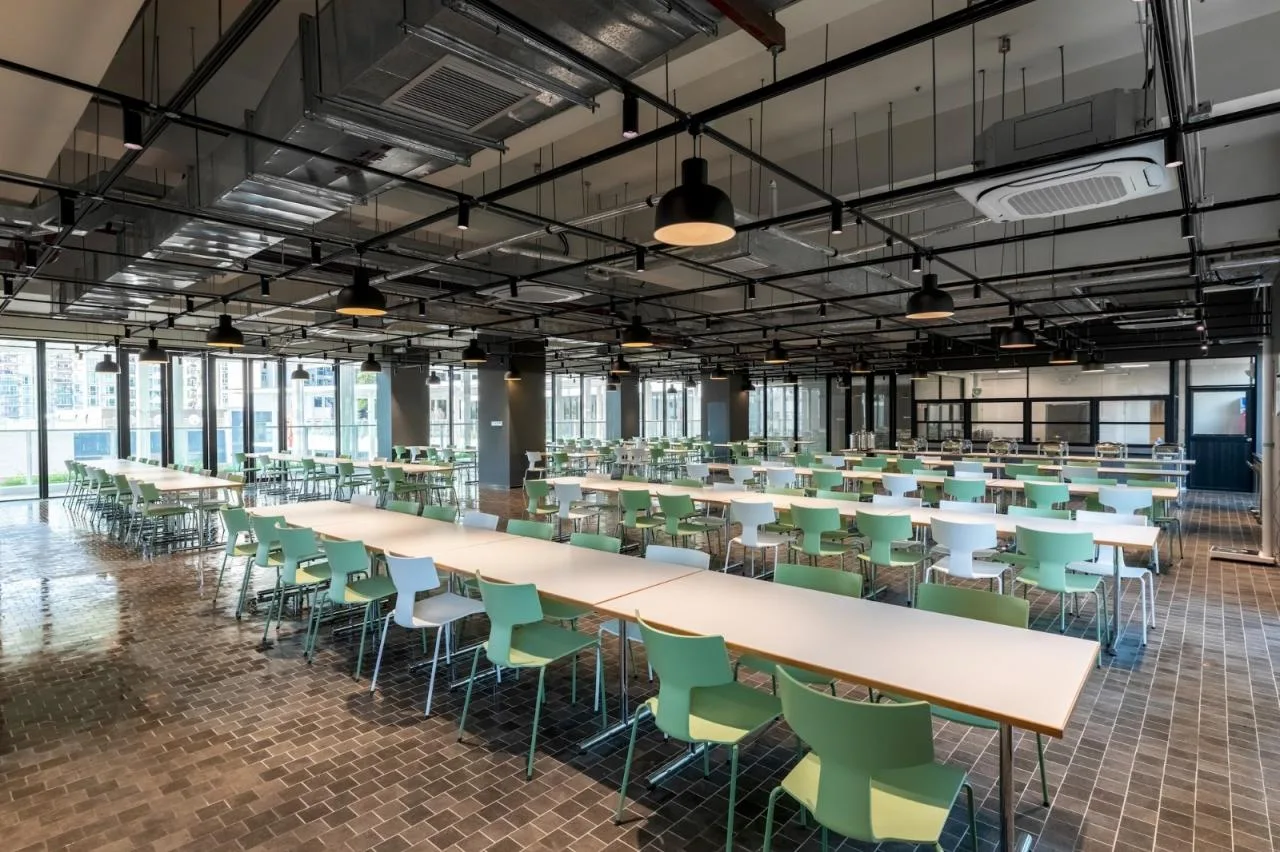
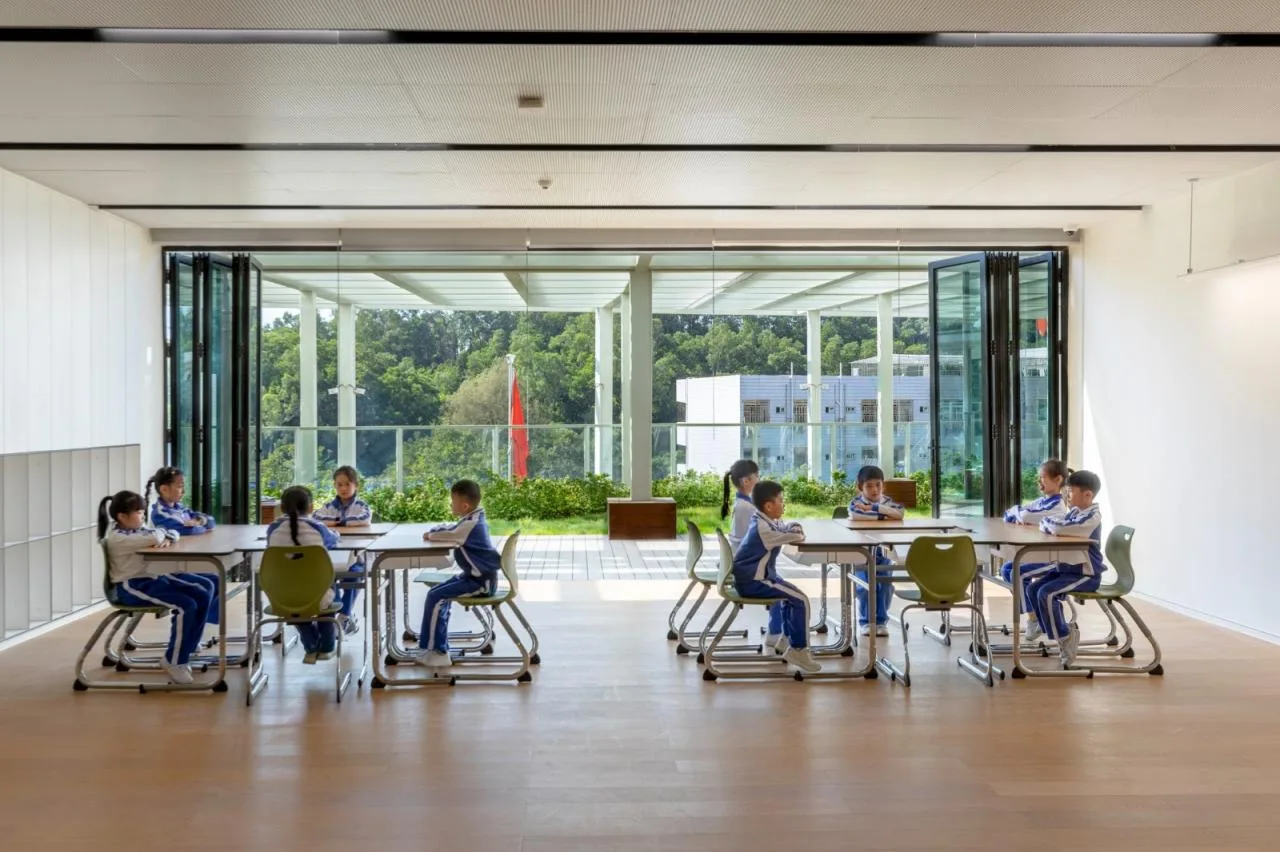
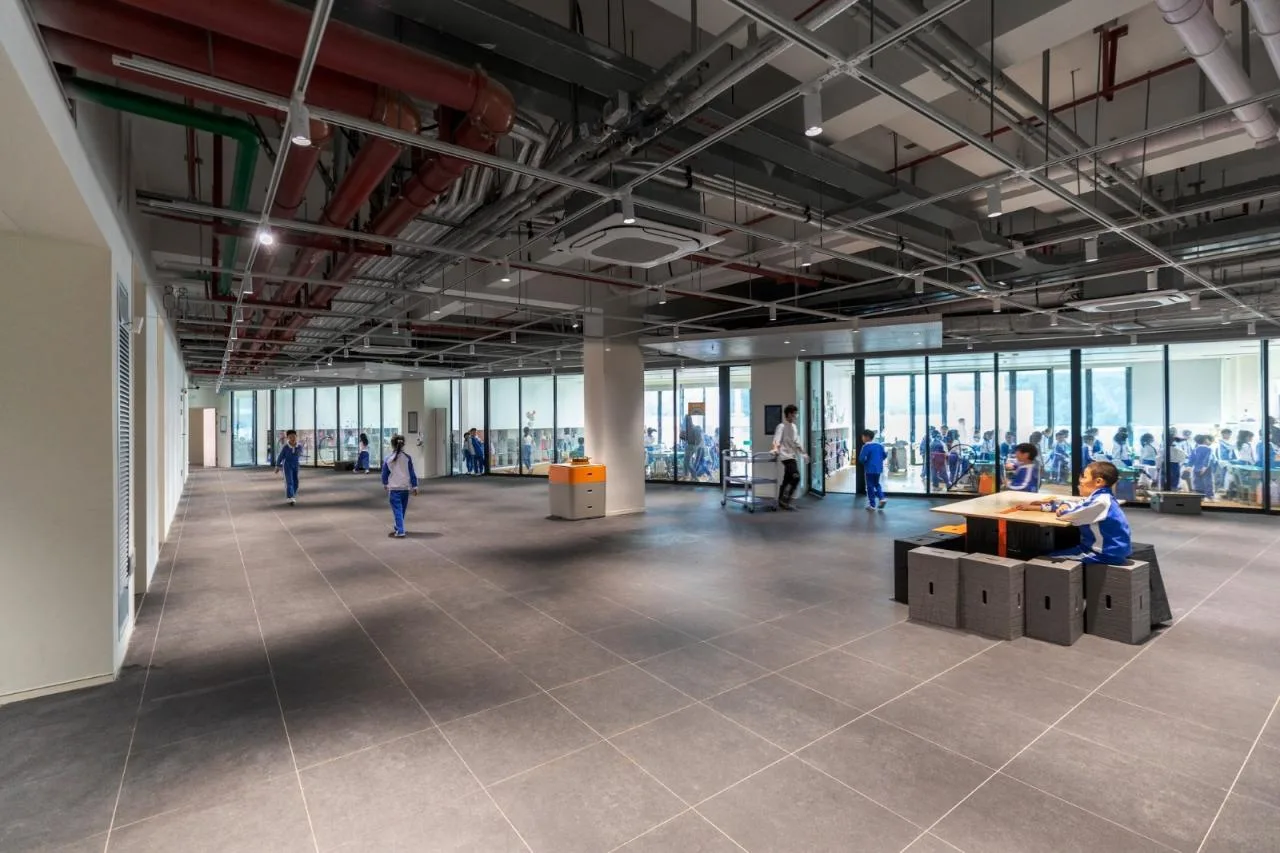
The design emphasizes flexible spaces that do not confine learning by place or form. Natural elements such as light, wind, water, stone, and plants are thoughtfully integrated throughout the campus. Every corner becomes a “learning field” for the new era, where educational activities naturally occur.
Within this future-focused school, children can extend their knowledge beyond the classroom, independently explore issues related to themselves and society, and develop practical skills simultaneously. The design fosters learning methods and inquiry processes that promote student agency, supporting the philosophy of sustainable development education.
Project Drawings
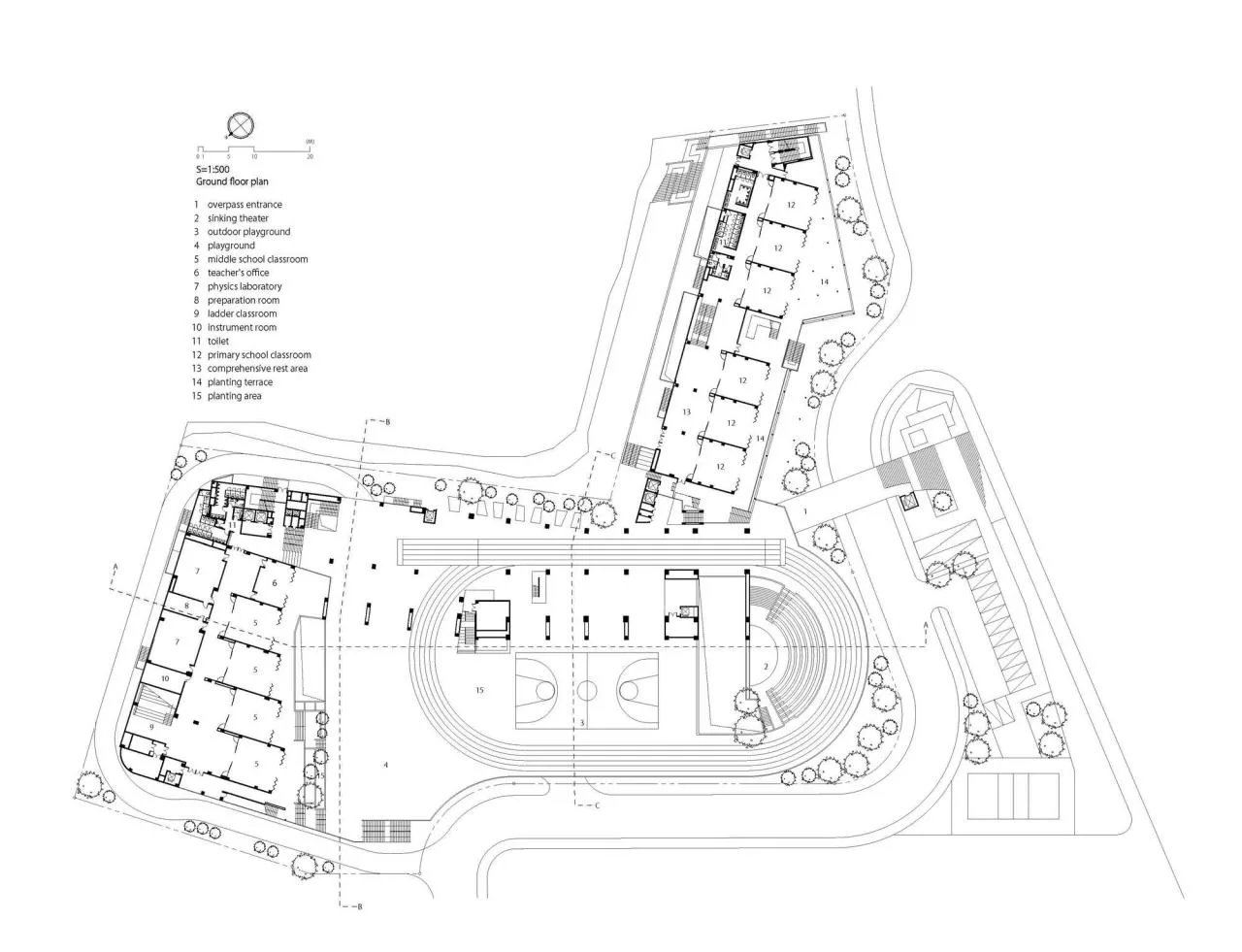
△ Plan View
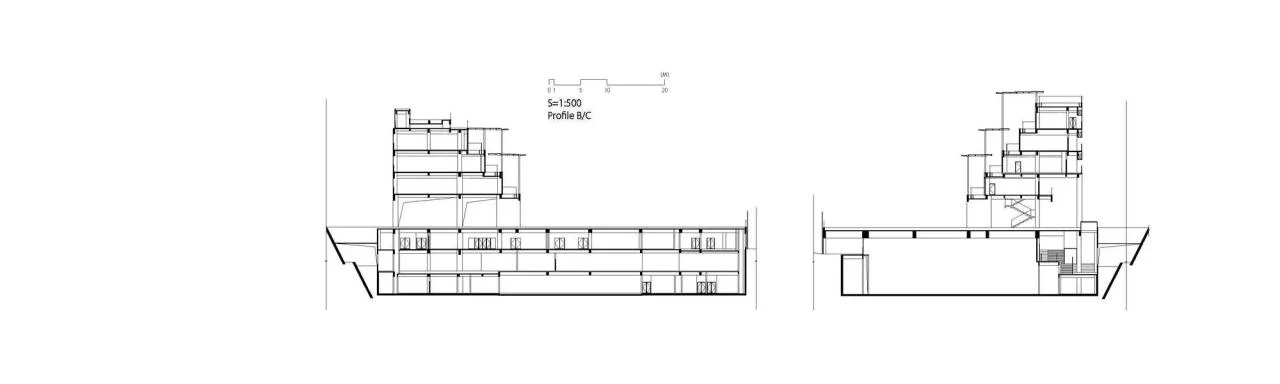
△ Section Diagram
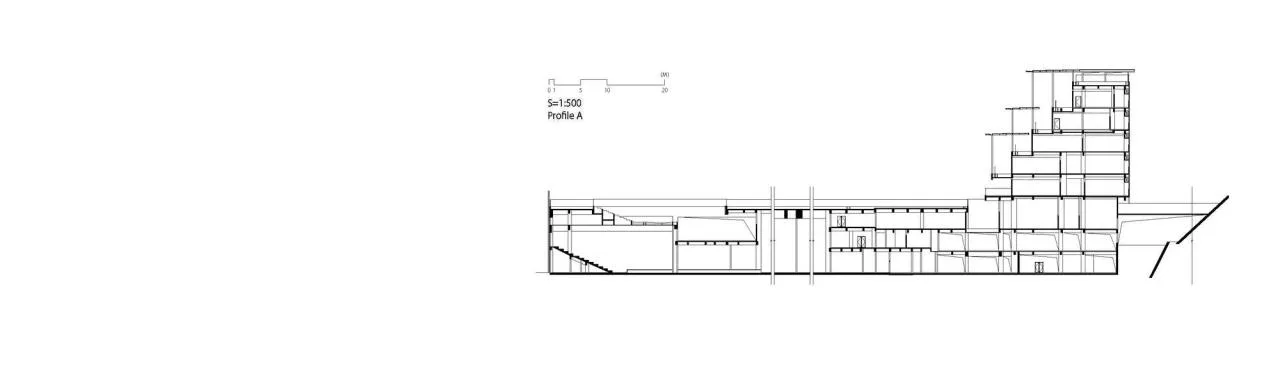
△ Section Diagram
Project Information
Architects: Hibino Design, Pure Practice, A City of Childhood
Area: 42,000 m²
Project Year: 2021
Photographer: Ivan Cho
Architectural Design: Hibino Design, Children’s City
EPC: YICHUANG
Construction Supervision: China Resources (Shenzhen) Co., Ltd
Location: Shenzhen, China















Must log in before commenting!
Sign Up