
The Application of BIM Technology in Tianjin Vanke East Home
1. Project Overview
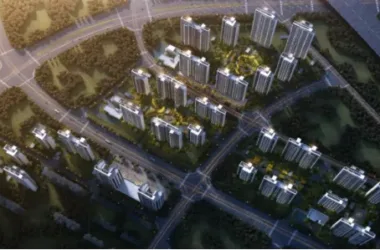
The first phase of the Tianjin Vanke East Home project is situated on the south side of Jiebao Channel and the east side of Changling Road in Xiqing District, Tianjin. This phase includes five mid-rise buildings (#2, #3, #5, #6, and #7) with 8 to 11 floors above ground and one underground level each. There are six high-rise buildings (#1, #4, and #27–30) ranging from 29 to 33 floors above ground, also with one underground floor. Additionally, six adjacent buildings are separated by deformation joints, featuring 1 to 2 floors above ground and one underground floor. The underground parking garage is located on the first basement level.
2. Key Challenges and Difficulties
This project faces a tight schedule coupled with a large workload. It demands high-quality standards and involves comprehensive subcontracting across multiple specialties. The basement structure is extensive and spans multiple building numbers, which complicates formwork support, quantity estimation, and loss control. Frequent quantity extractions are required, leading to a heavy workload for output value statistics and fund allocation. Moreover, post-construction maintenance for residential projects is complex; if not handled promptly, it may directly impact the company’s reputation. Therefore, effective management during the operation and maintenance phase is crucial.
3. Workstation Setup
The BIM sub-center assigns one business and one technical representative on-site to promote BIM technology. Tailored to the characteristics of residential projects, a BIM implementation plan is developed. The approach emphasizes “fixed BIM workstations as the primary tool, with mobile BIM workstations as a supplement.” Training and demonstration sessions are actively conducted, responsibilities are clearly assigned, and BIM integration is gradually extended throughout the entire project.
4. Application of BIM Technology
1. Application Highlights
Engineers approach residential buildings using a consistent logic based on operational models. Since each floor has a uniform layout, consistent functional heights, and a single-unit arrangement, a “standard floor” concept is established. Residential buildings consist of multiple standard floors stacked vertically, with construction focusing on addressing the individual challenges of repeated units. By resolving issues at the standard floor level, the entire project’s challenges can be effectively managed. Residential buildings serve as an ideal and straightforward entry point for implementing BIM combined with Project Management (BIM+PM).
For this 130,000 square meter residential project, there are four standard floor layouts. Engineers create detailed models for steel reinforcement, concrete, formwork, masonry, support frames, and external frames for each standard housing type. These models enable precise cutting, quantity calculations, and process simulations to ensure accurate quantities of steel and concrete. Applications include prefabricated formwork, BIM-assisted masonry layout, real-time quantity reporting, and 3D visualization of support and external frames.
2. Assistance in Drawing Review
Construction management personnel rapidly built the BIM models and generated reports highlighting issues found in the drawings, aiding the review process. A total of 181 major errors were identified, preventing costly rework caused by misinterpretations.
3. 3D Technology Visualization
Using 3D visual communication, original 2D plans can be transformed into immersive 3D presentations. This upgrade enhances the transmission of construction technology across time and space, clearly conveying construction arrangements and improving approval rates. By integrating VR technology through existing software, the experience is enhanced and the disclosure process is modernized.
4. Site Layout Planning
Through three-dimensional site planning, a more reasonable and clear layout is achieved. This approach generates quantity statistics tables for material procurement and standardizes construction management across the entire South China branch. It addresses previous challenges in measurement control and simplifies settlement procedures.
5. Process Standardization
Standardizing construction processes means establishing uniform procedures for each task, utilizing modular production lines. BIM engineers place strong emphasis on prefabrication, increasing its scope and leveraging BIM technology to transition traditional on-site cutting and other operations into prefabrication. This approach improves construction quality and accelerates progress.
(1) Detailed steel and concrete models are established. Concrete quantities are calculated based on construction progress, generating material reports and providing feedback for loss control on each floor.
(2) Using DYNAMO, the three-dimensional formwork layout for standard floors is parameterized, allowing rapid quantity extraction and efficient prefabrication planning.
(3) Steel reinforcement calculation models are imported into cloud-based cutting software. This enables automatic reuse of leftover materials from previous layers, significantly improving steel utilization.
(4) BIM technology guides masonry layout, material procurement, and on-site construction. Pre-cutting blocks in processing sheds reduces waste.
6. Material Management
To better control material consumption, the Guanglian Damonglong material management system is employed. Combined with the project department’s conditions, a management process is established: from the BIM model to on-site consumption and finally material management. This allows site personnel to focus solely on increasing quantities from the model, freeing them from manual quantity calculations.
Material data is input into the management system, providing real-time feedback on construction usage. Comparisons between planned and actual data ensure accurate tracking of all project quantities and material allocations at every location.
7. BIM 5D Platform Management
During construction, the BIM 5D platform integrates and manages project models and materials, including drawings, contracts, change orders, and approvals. Real-time photos documenting quality and safety issues, as well as visa-related matters, are linked to models and responsible personnel. This standardizes workflows and supports accurate data collection. The platform ensures all parties work systematically and traceably. By connecting cost information with the BIM model, real-time monitoring and reporting of output value are achieved.
At project completion, as-built drawings and data are directly incorporated into the BIM model, forming a comprehensive completion model that streamlines the settlement process.












Must log in before commenting!
Sign Up