
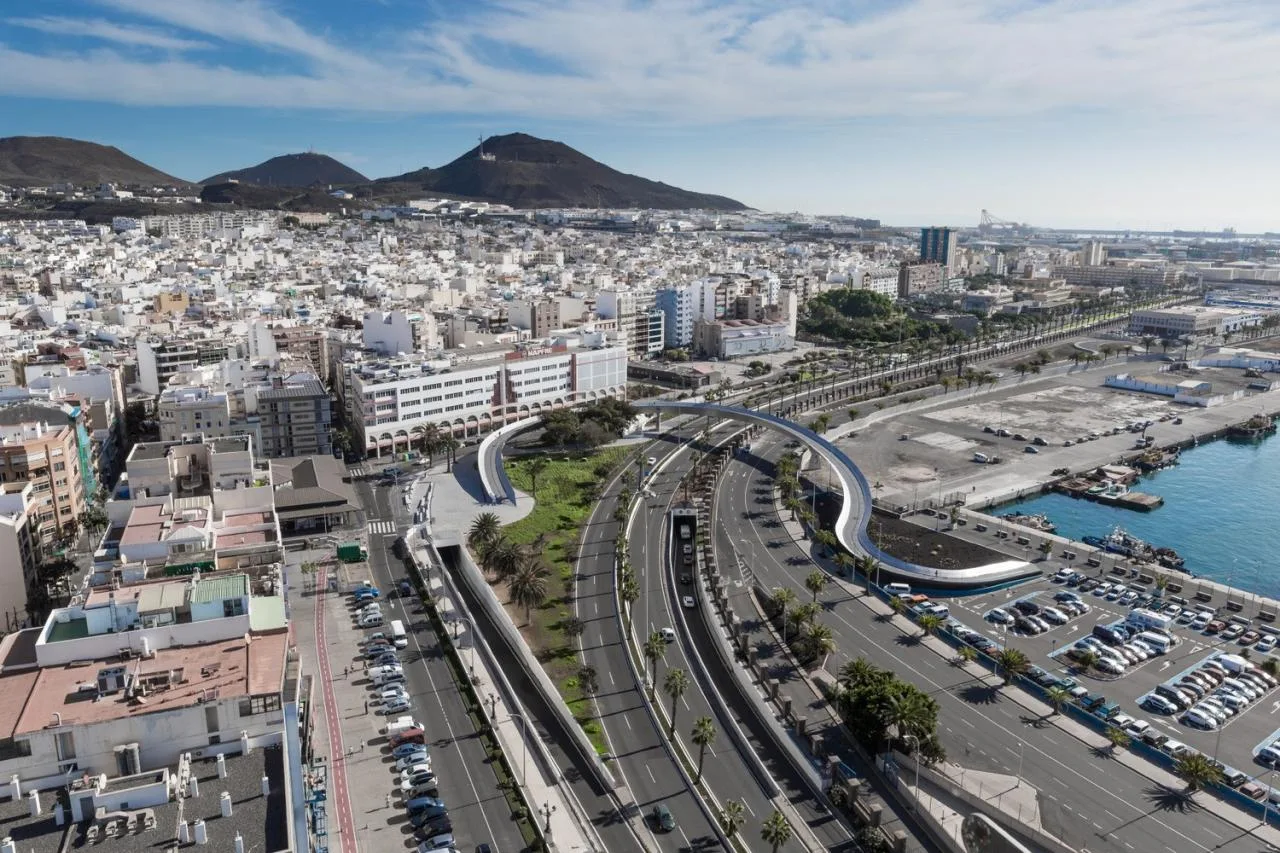
The city of Las Palmas de Gran Canaria, located on Gran Canaria Island, has developed an urban strategy to reconnect Las Canteras Beach with the Sanapu dock via a pedestrian overpass. This initiative aims to open up the waterfront and transform it into a vibrant area for entertainment and leisure.
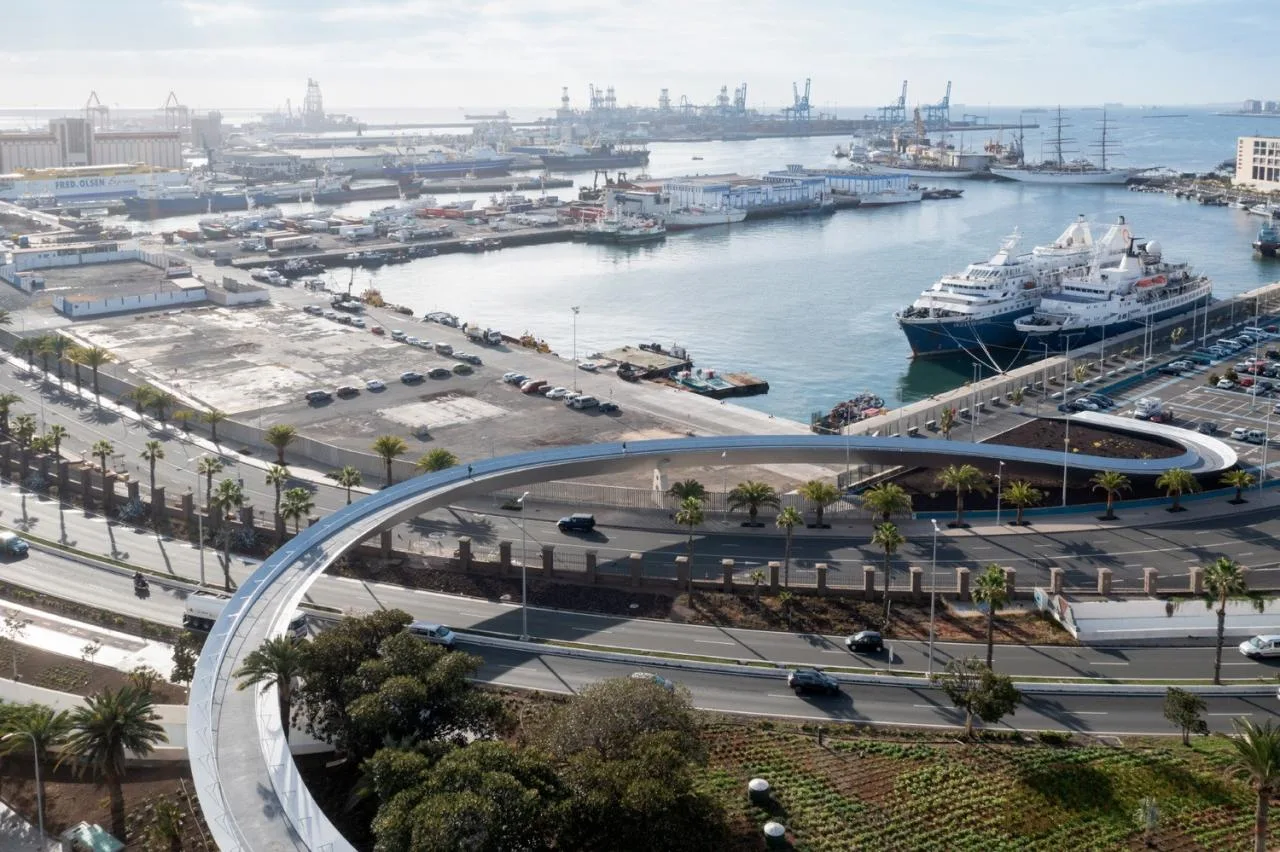
This new pedestrian bridge links the coasts at both ends of a narrow isthmus, which is occasionally submerged by tides. Over the years, land reclamation has widened the isthmus’s ends to support urban development. More recently, a highway created a physical barrier, clearly dividing these areas. Now, Las Palmas—a modern international city—has completed this ambitious urban plan with a striking architectural landmark: the Onda Atlántica Bridge.
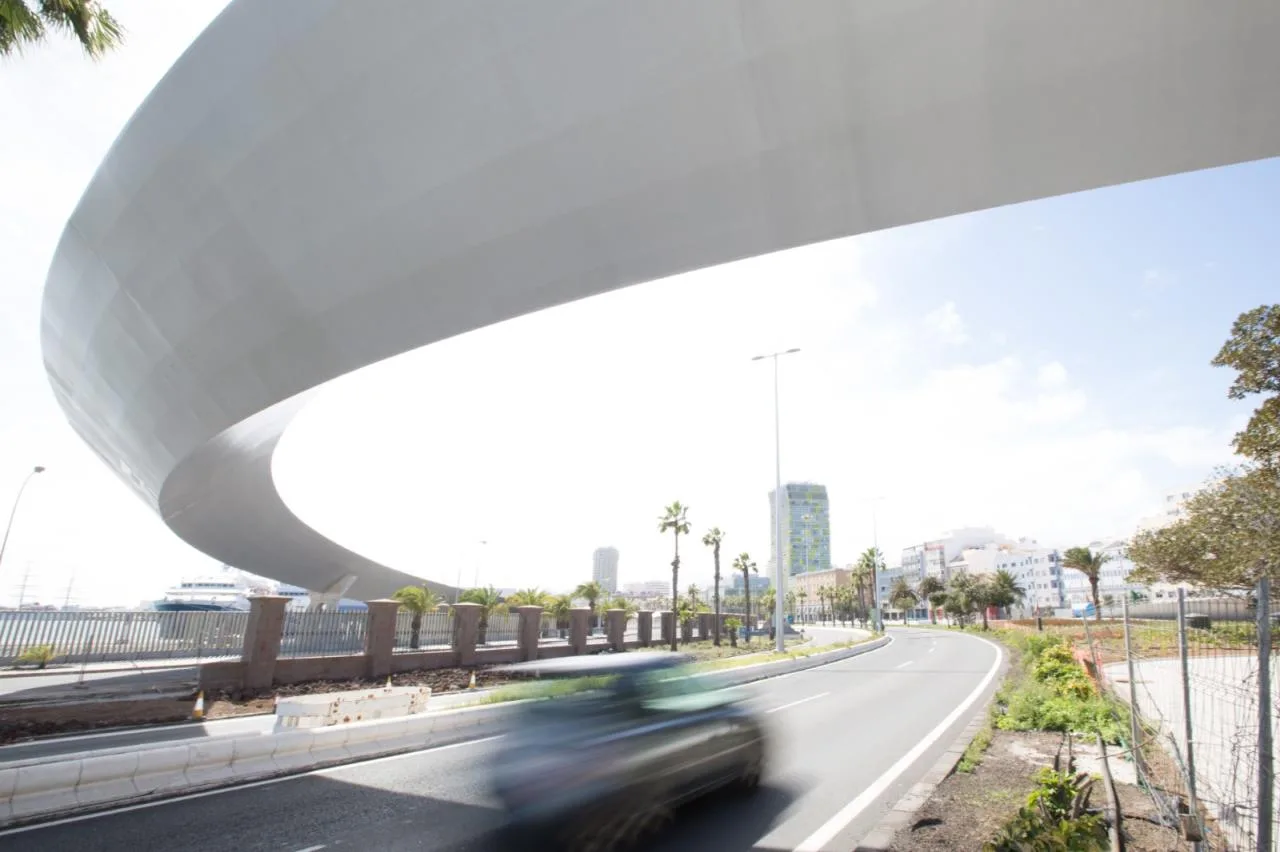
The bridge spans a total length of 283 meters, featuring three 63-meter sections without intermediate supports. Its undulating form, shaped by limited landing space, preserves existing trees and eliminates the need for expansion joints in the structure.
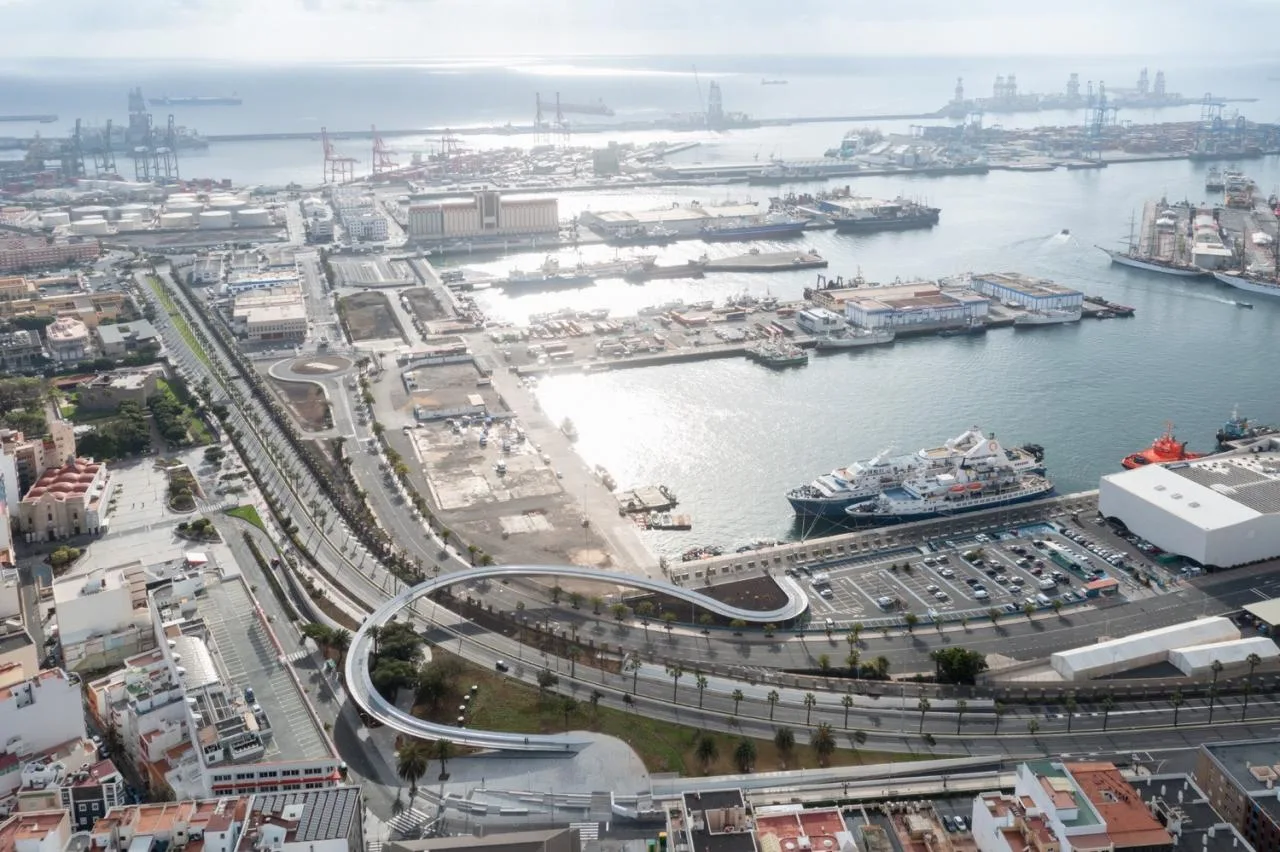
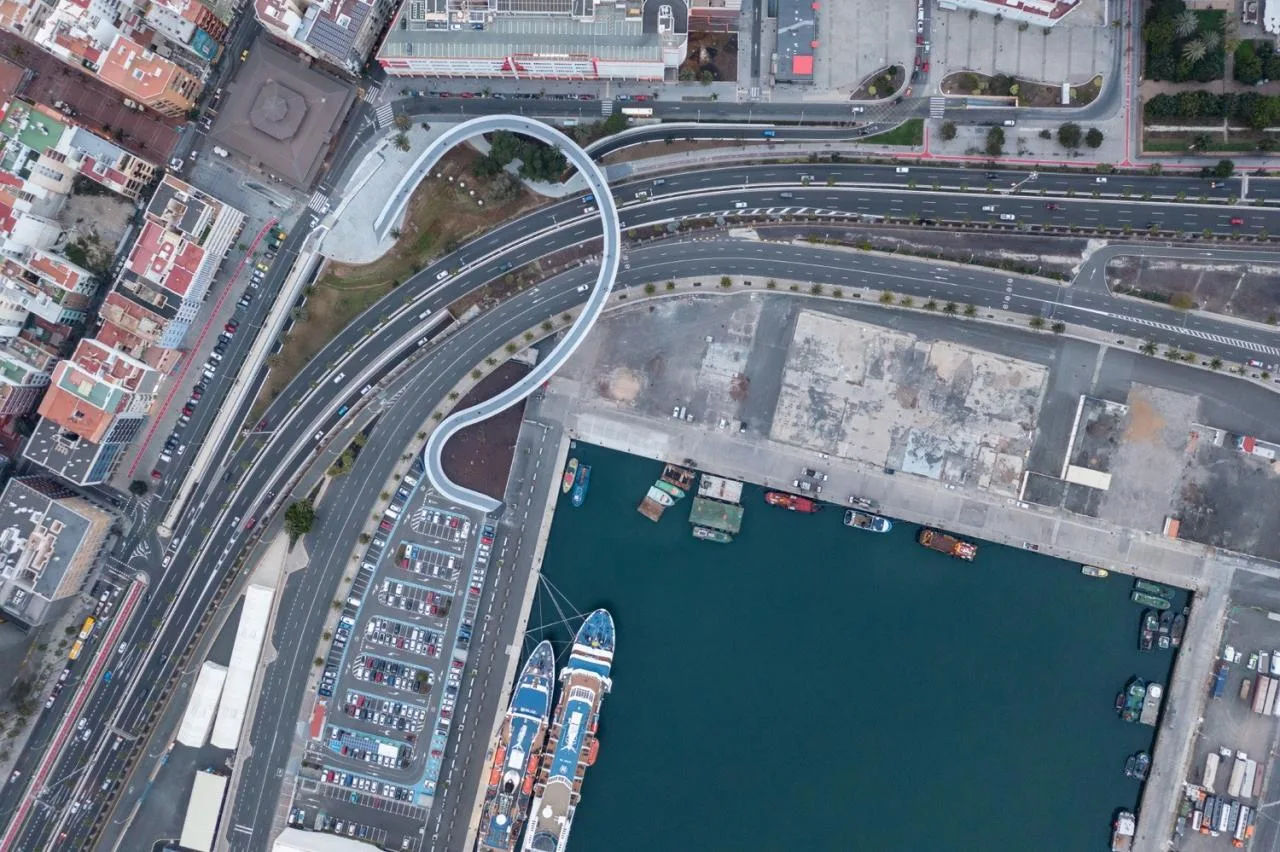
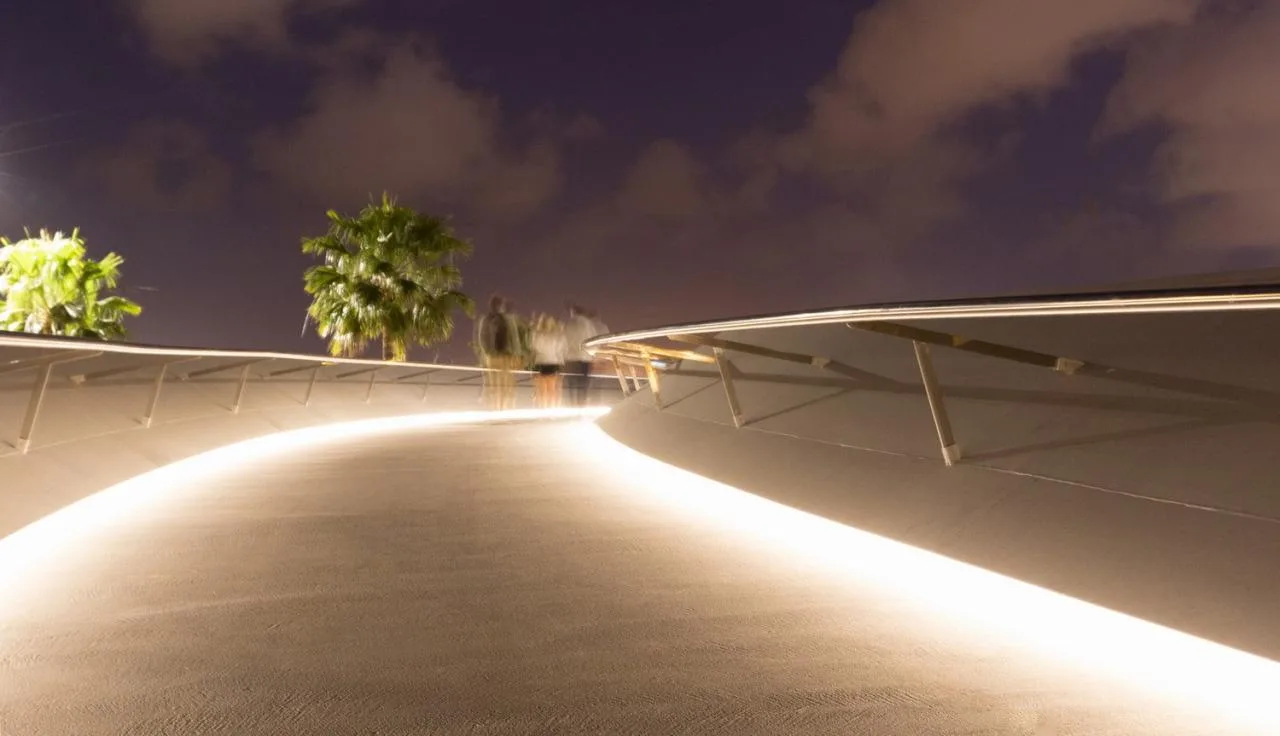
The bridge’s V-shaped profile gives it a two-dimensional appearance, resembling a curved sheet of paper. It conveys a remarkable sense of lightness as it spans public spaces without visible signs of construction. Its silhouette, reminiscent of a ship’s hull, is designed to reduce noise from the highway below while opening up views to the landscape and allowing natural light to illuminate the bridge.
Its distinctive form is based on an innovative structural system rarely seen in civil engineering. The design uses a clever triangular framework that combines efficient structural pathways with minimalist aesthetics, seamlessly bridging the curved span.
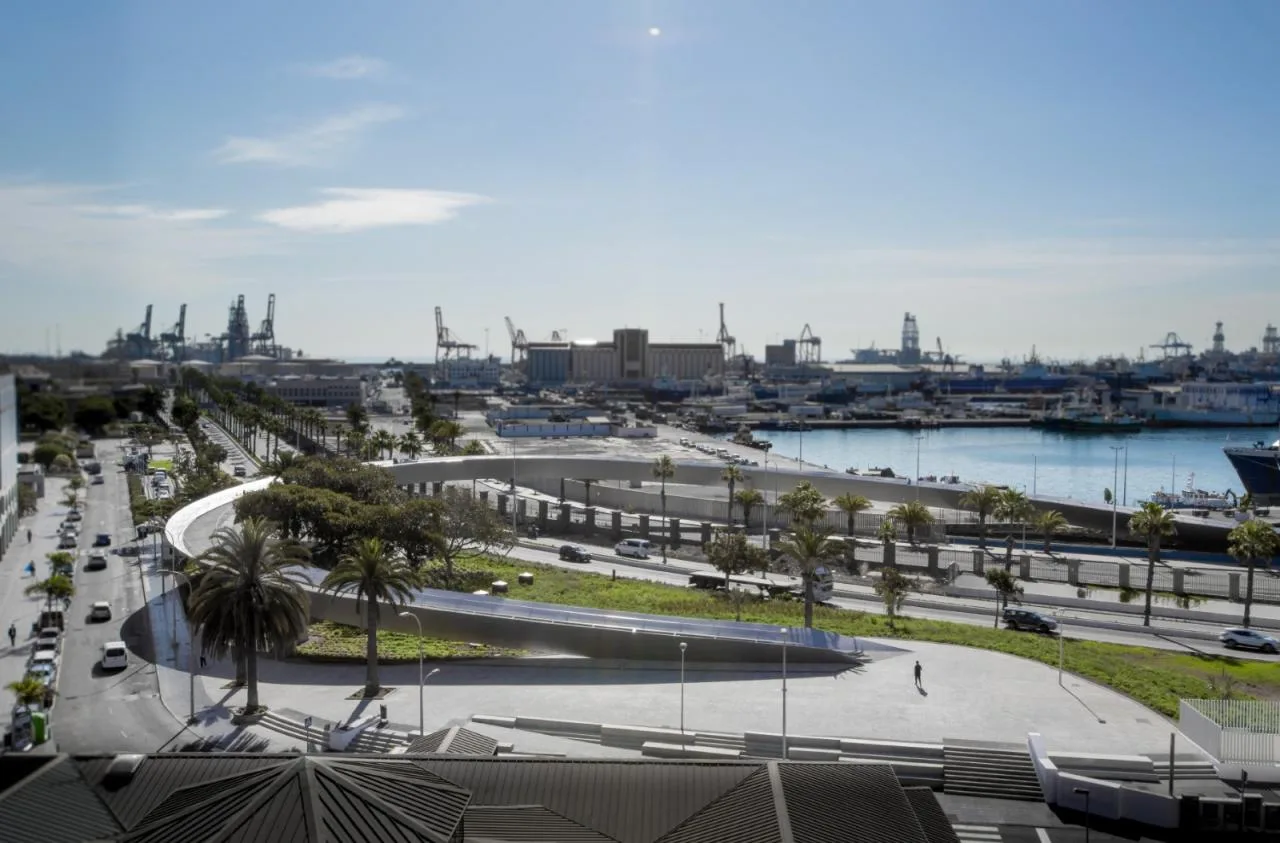
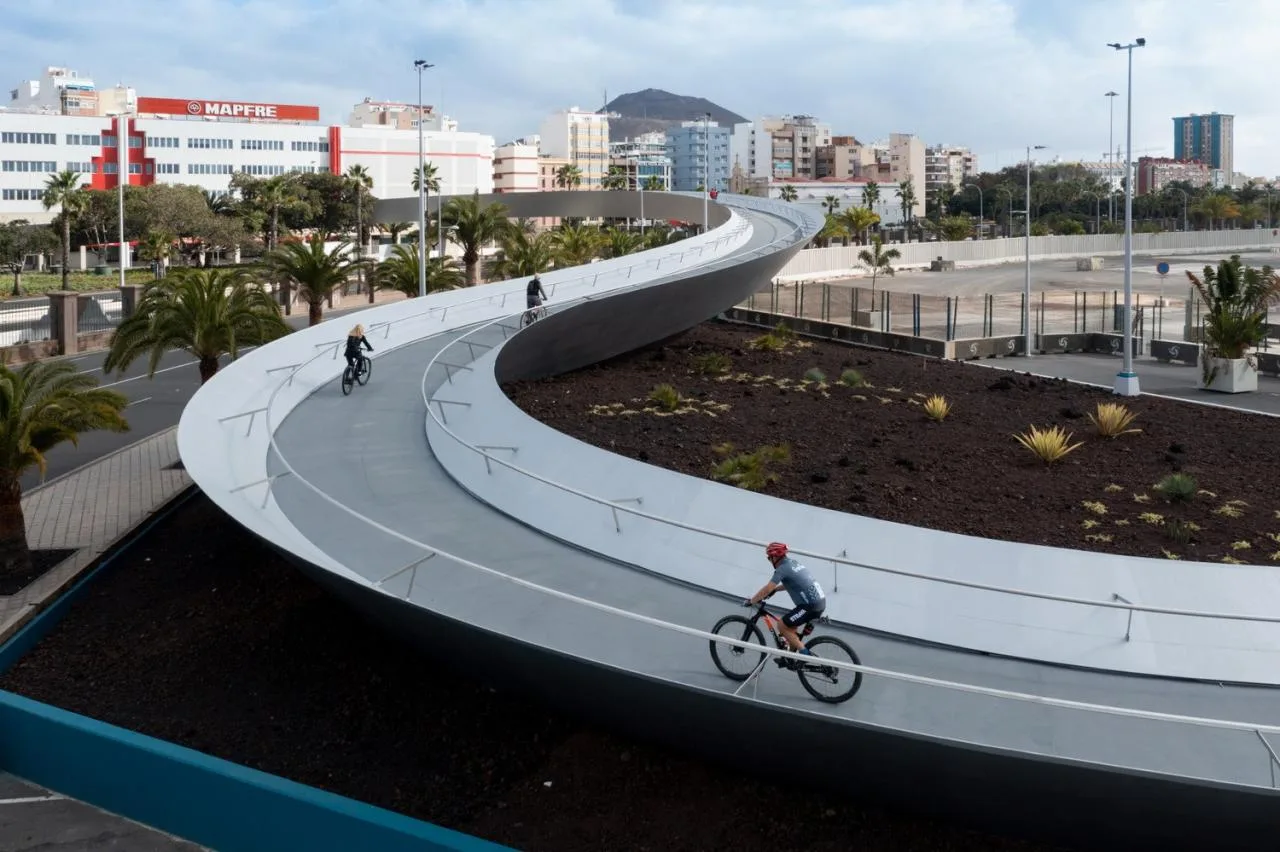
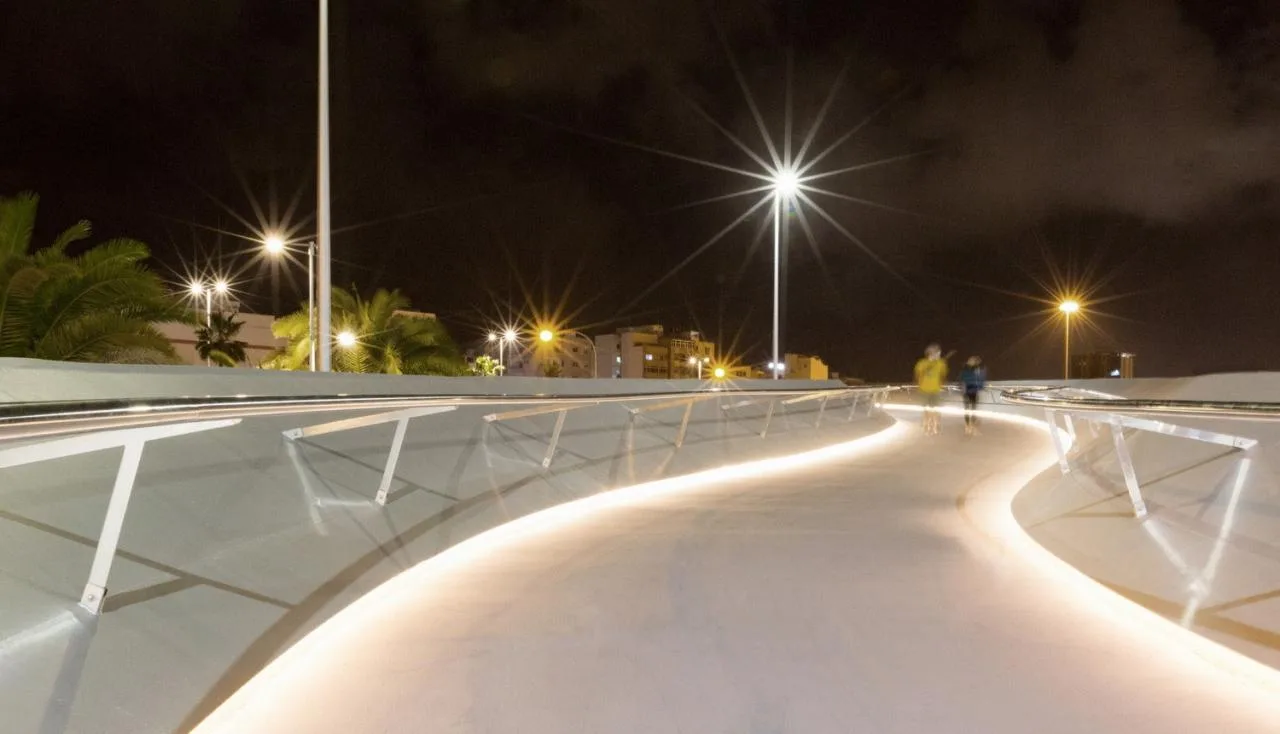
The pedestrian overpass is uniquely designed to accommodate all users, including pedestrians, cyclists, and people with disabilities, without requiring stairs or auxiliary elevators. Crossing the bridge offers visitors an immersive experience, akin to a moving film camera, revealing ever-changing perspectives of the city. The consistent elements of the bridge frame the urban landscape, showcasing the city’s imagery.
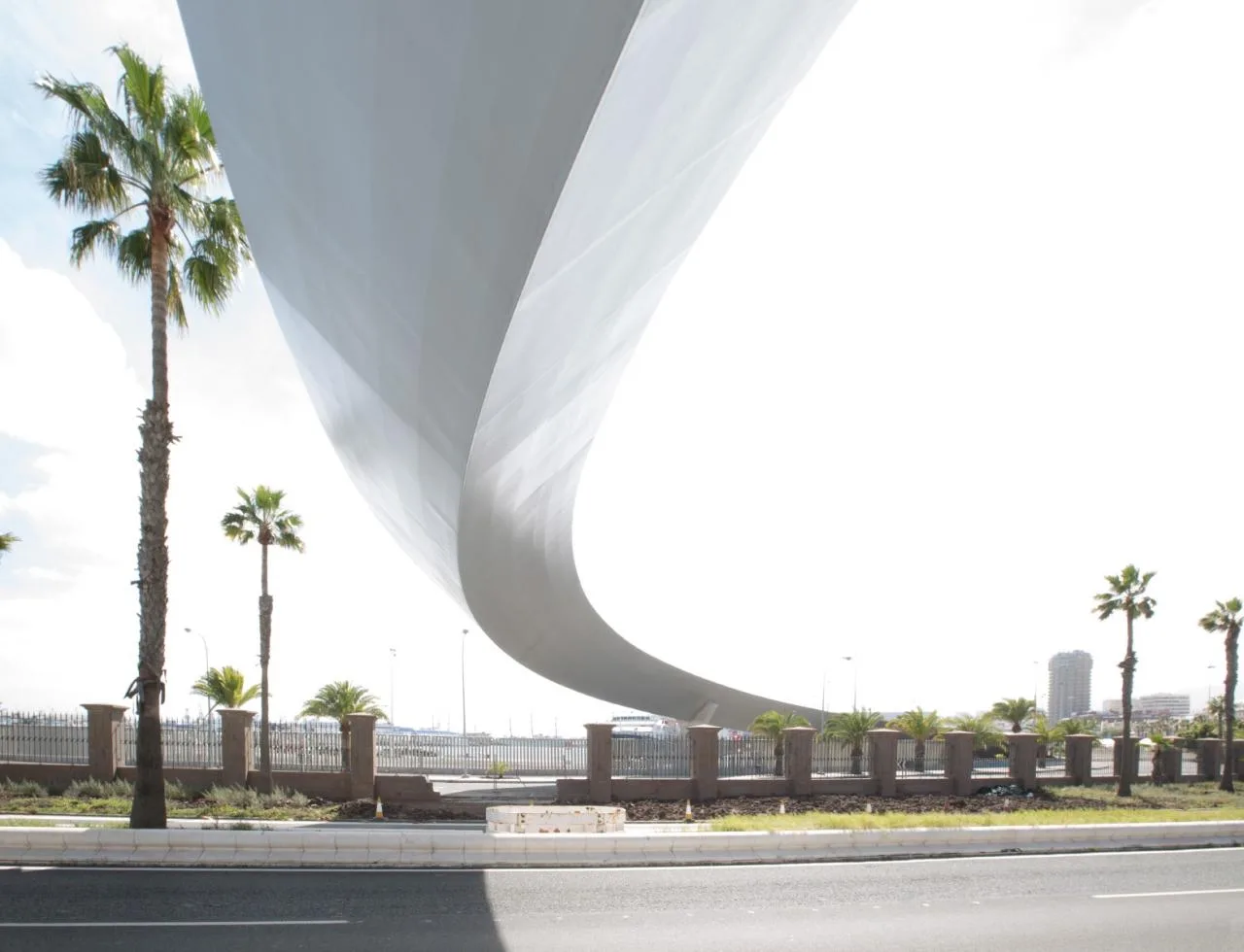
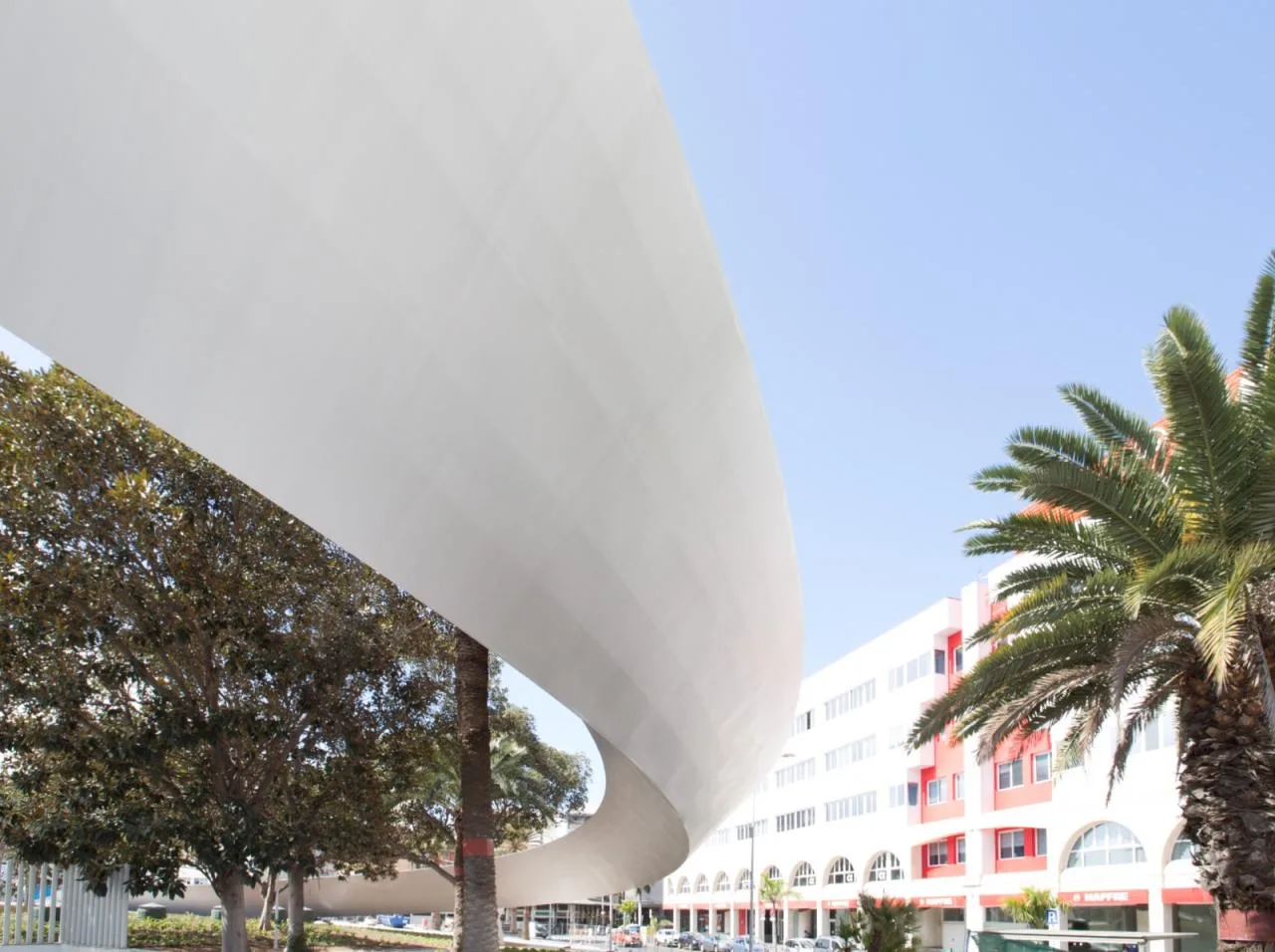
Serving as a large urban sculpture, the bridge blends harmoniously with the changing landscape, drawing inspiration from its surroundings. Viewed from afar, it appears to penetrate through two plazas and even connect below ground level. The two side wings fold like a metal origami airplane, with the arms seemingly inviting visitors to enter between them.
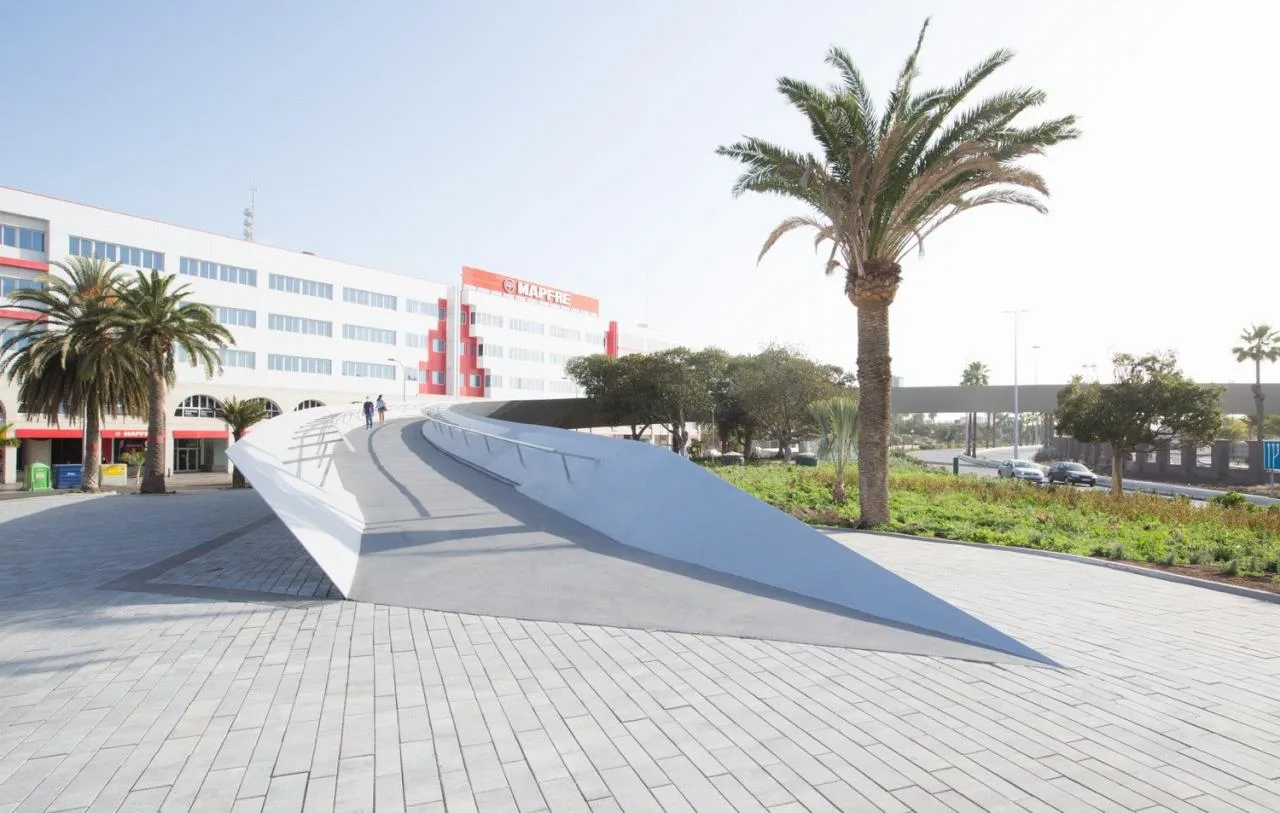
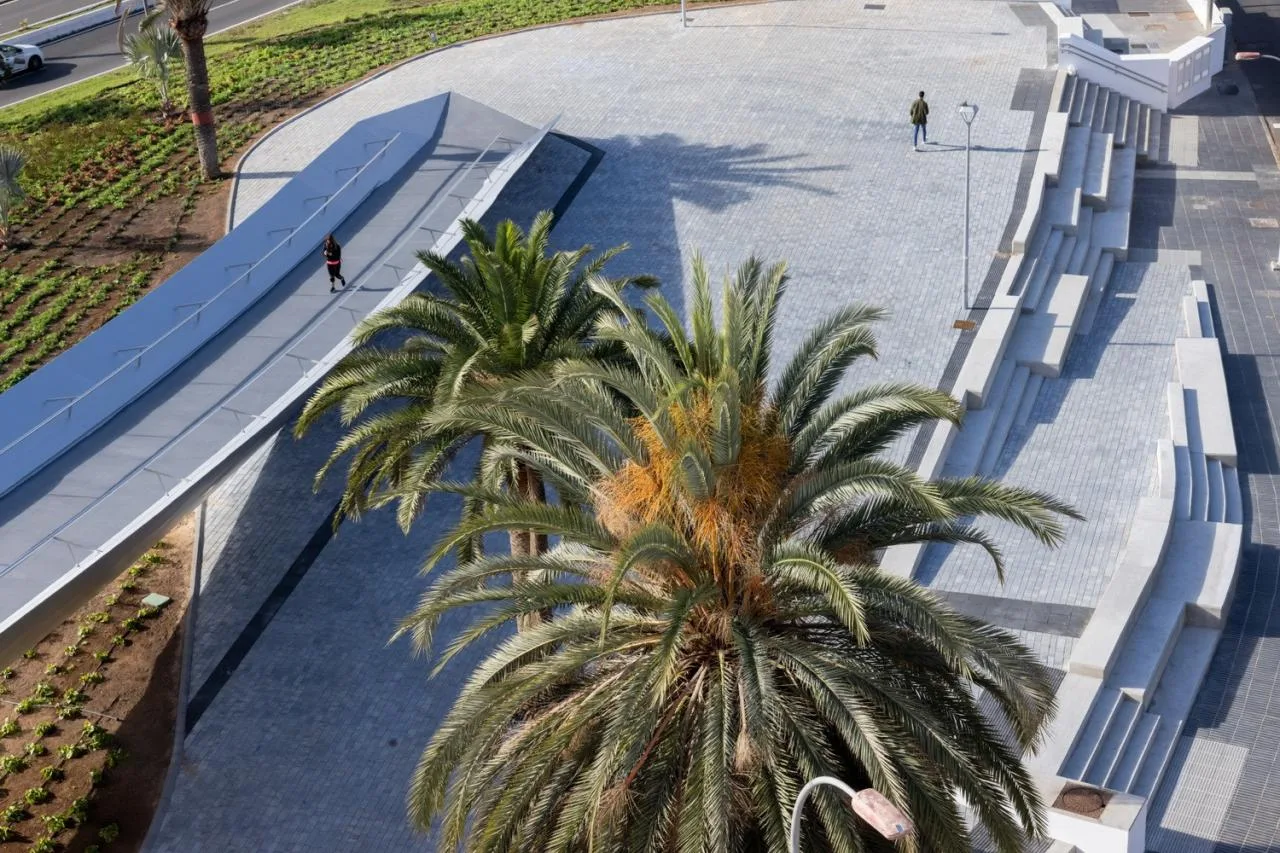
Two public plazas have been redesigned to welcome people exiting the bridge. On one side, a smoothly contoured square accommodates crowds, featuring a green undulating design that resembles a flat, unfolding plant painting when viewed from above. On the opposite end, the volcanic geological formations are recreated in a pedestrian-free landscape design using rocks sourced from nearby Isleta Mountain.
The pedestrian overpass is 3 meters wide, with a maximum slope of 6%. Its highest point reaches 7.60 meters, establishing itself as a new scenic landmark within the city. The bridge maintains a minimum clearance of 5.50 meters above the highway below, extending up to 6 meters in some areas.
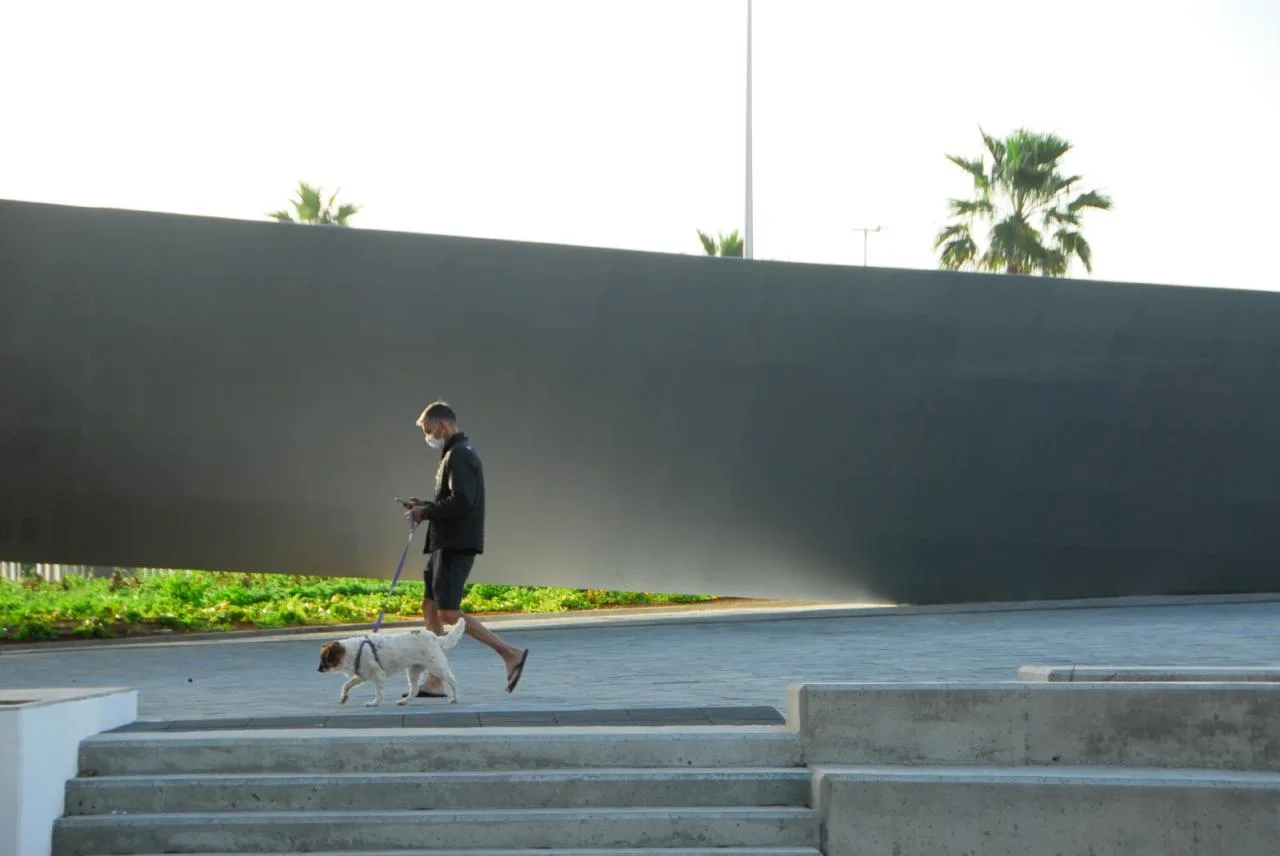
The architects drew inspiration from naval engineering, developing a structural system composed of ribs or frame elements spaced 3.2 meters apart, connected by 10-12 mm steel plates. The bridge consists of 18 components, each weighing 40 tons, which were assembled in a metallurgical workshop in Seville before being transported to the site.
Except for the handrails, every element contributes structurally to the pedestrian overpass, resulting in a robust and efficient design. Three layers of metallic decorative paint protect the bridge from sunlight and the highly corrosive marine environment.
Project Drawings
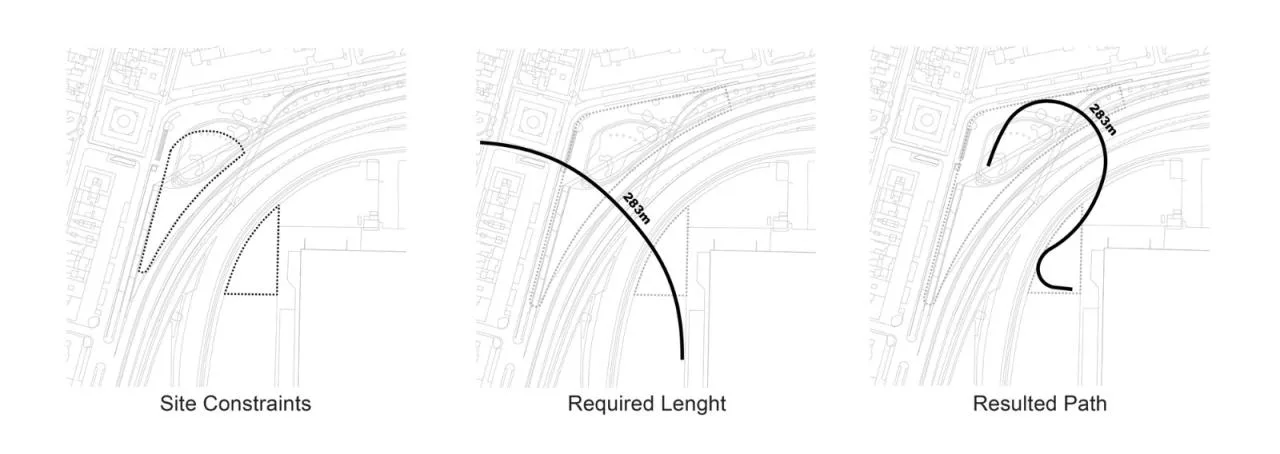
△ Generation diagram
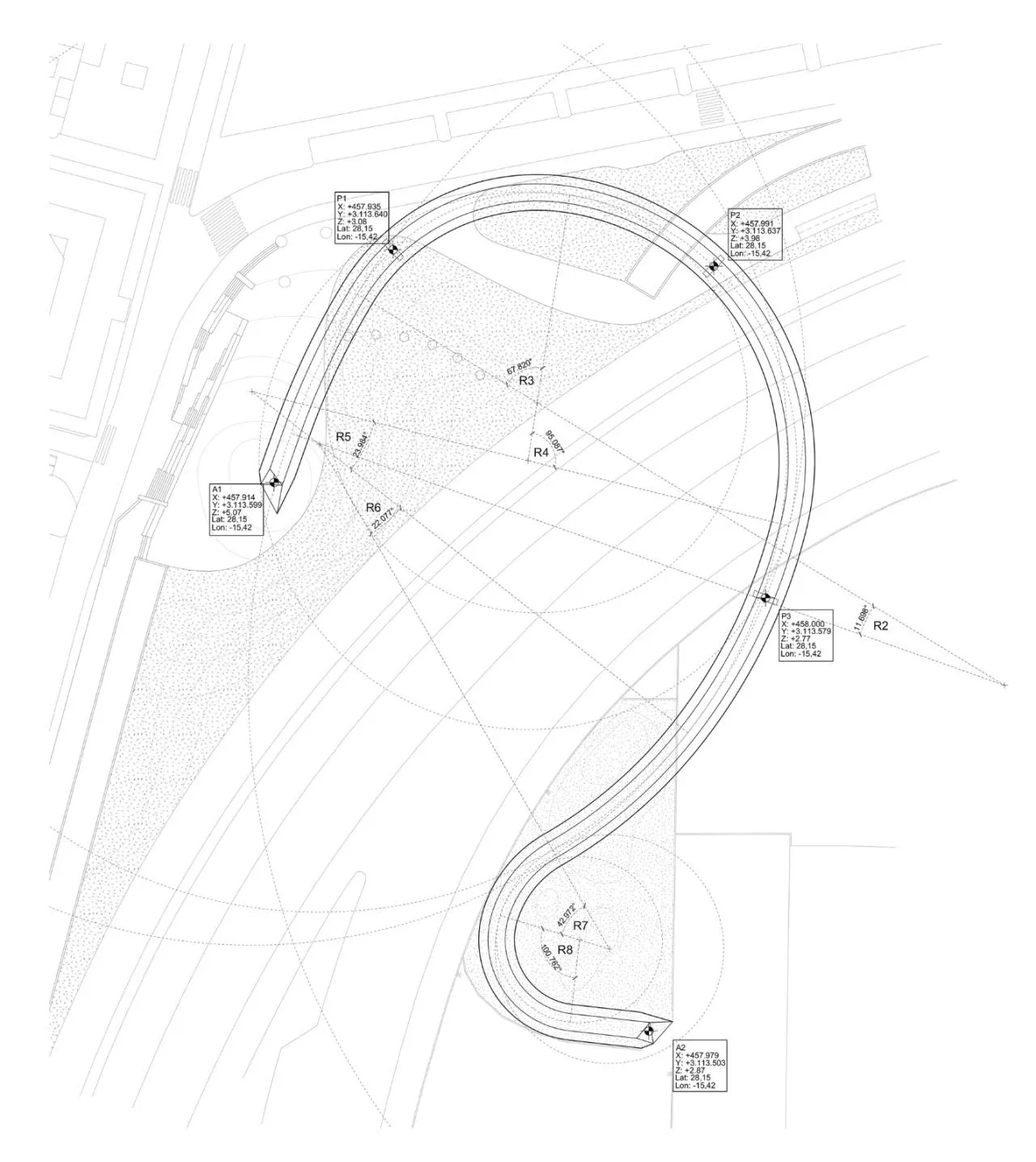
△ Plan schematic
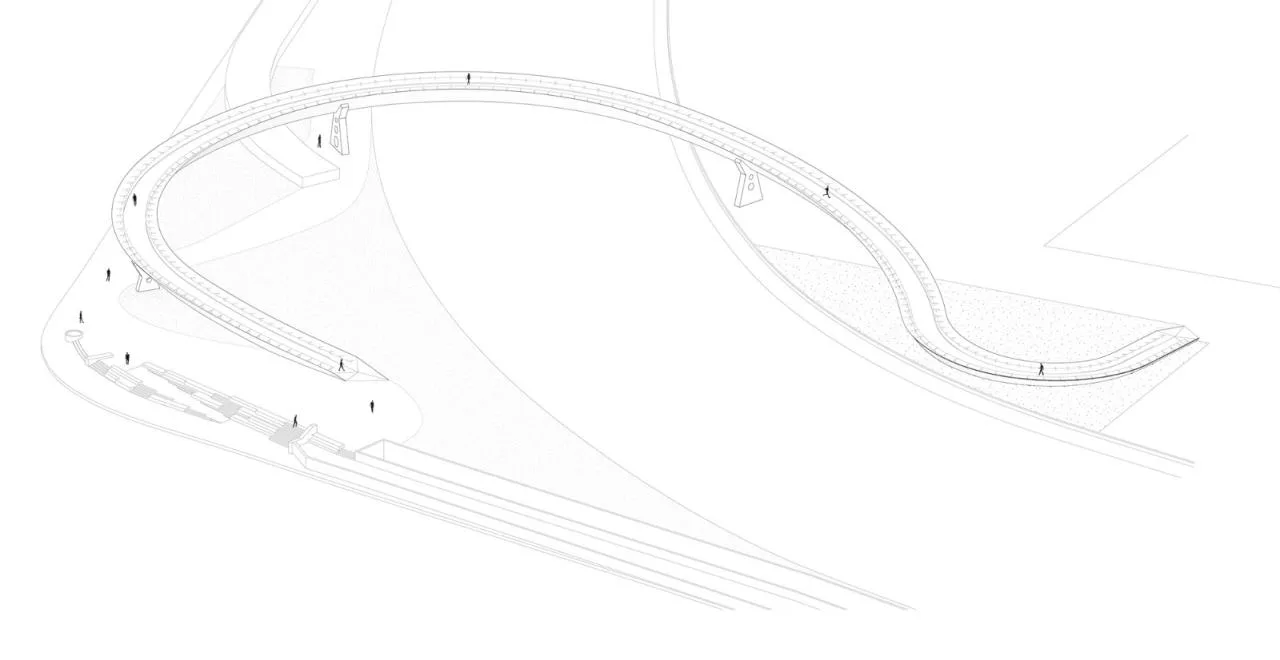
△ Axonometric diagram
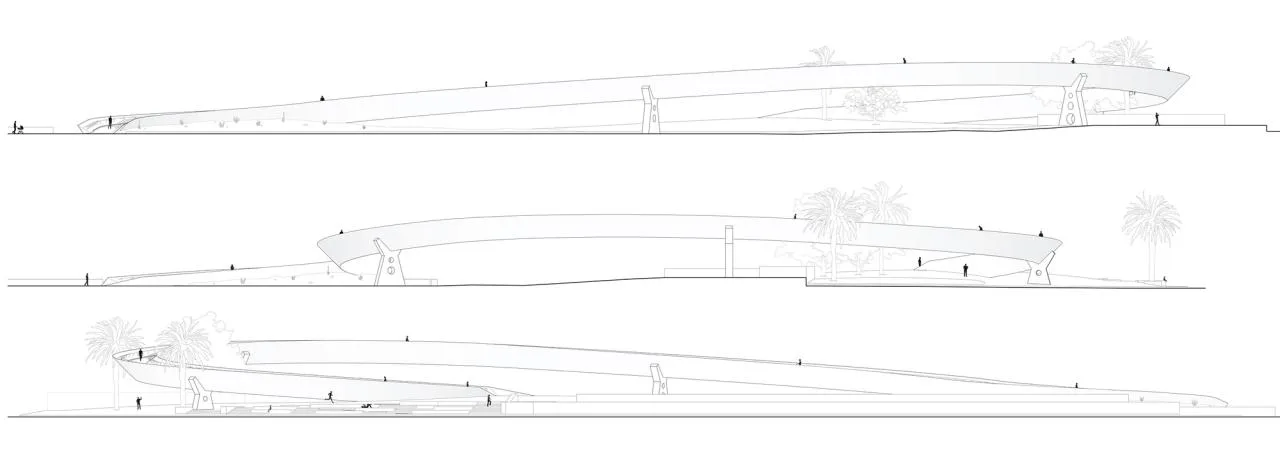
△ Elevation drawing
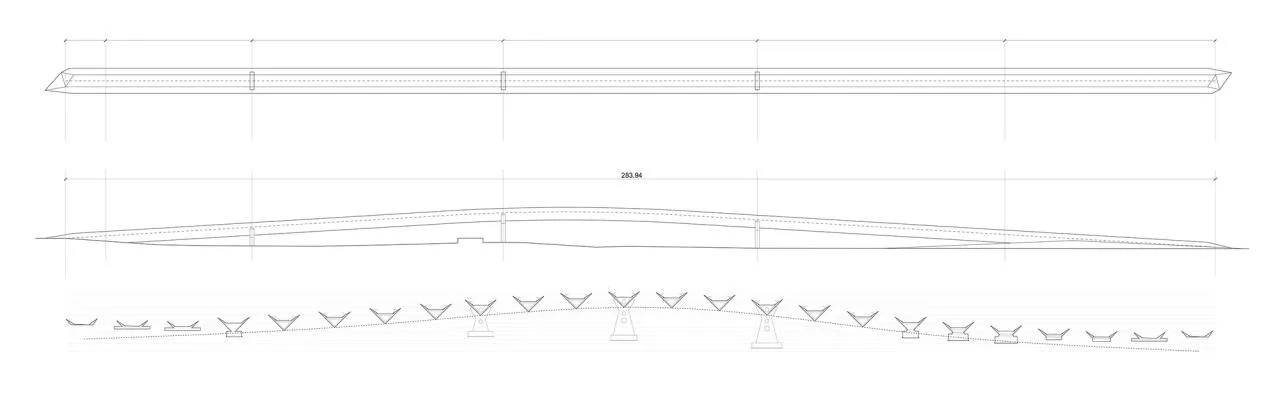
△ Structural schematic
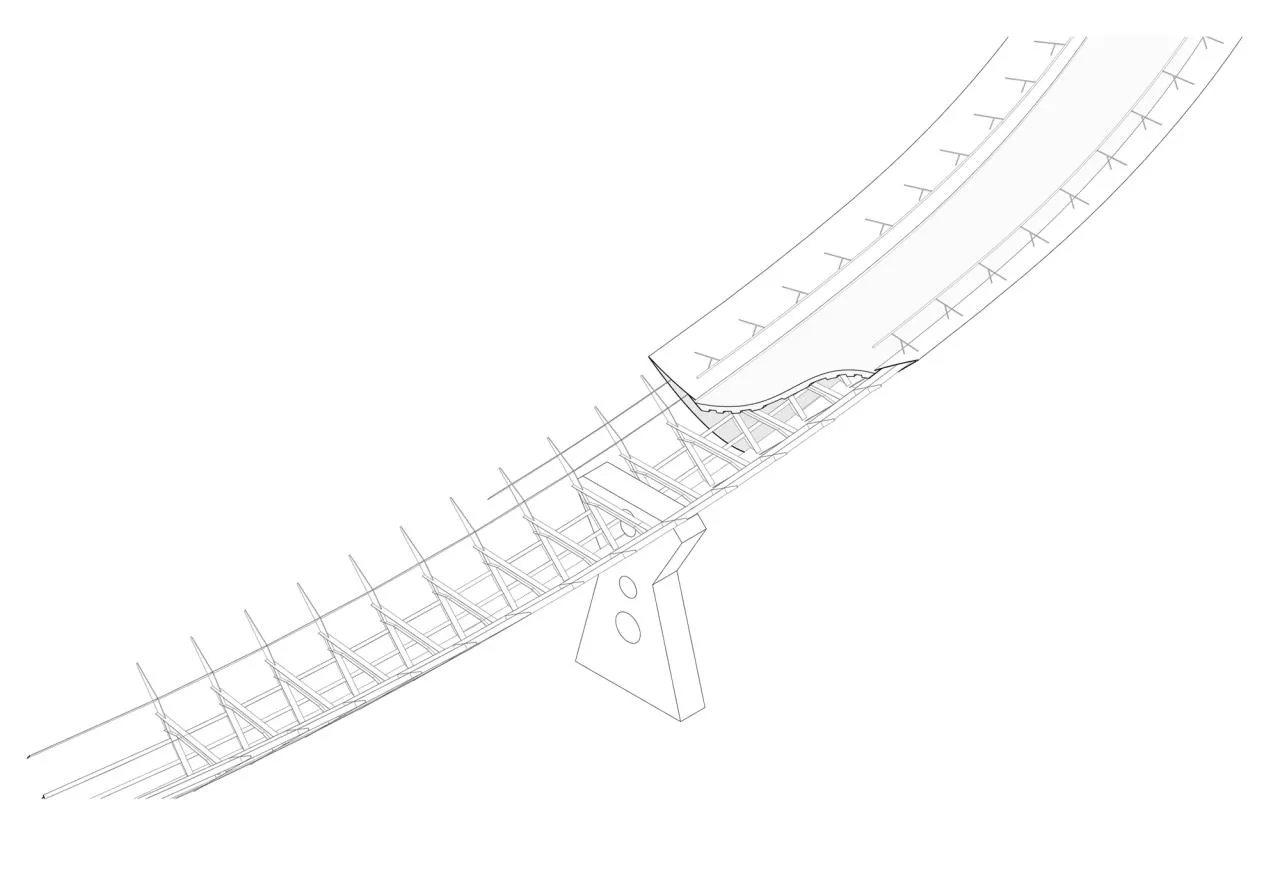
△ Structural schematic
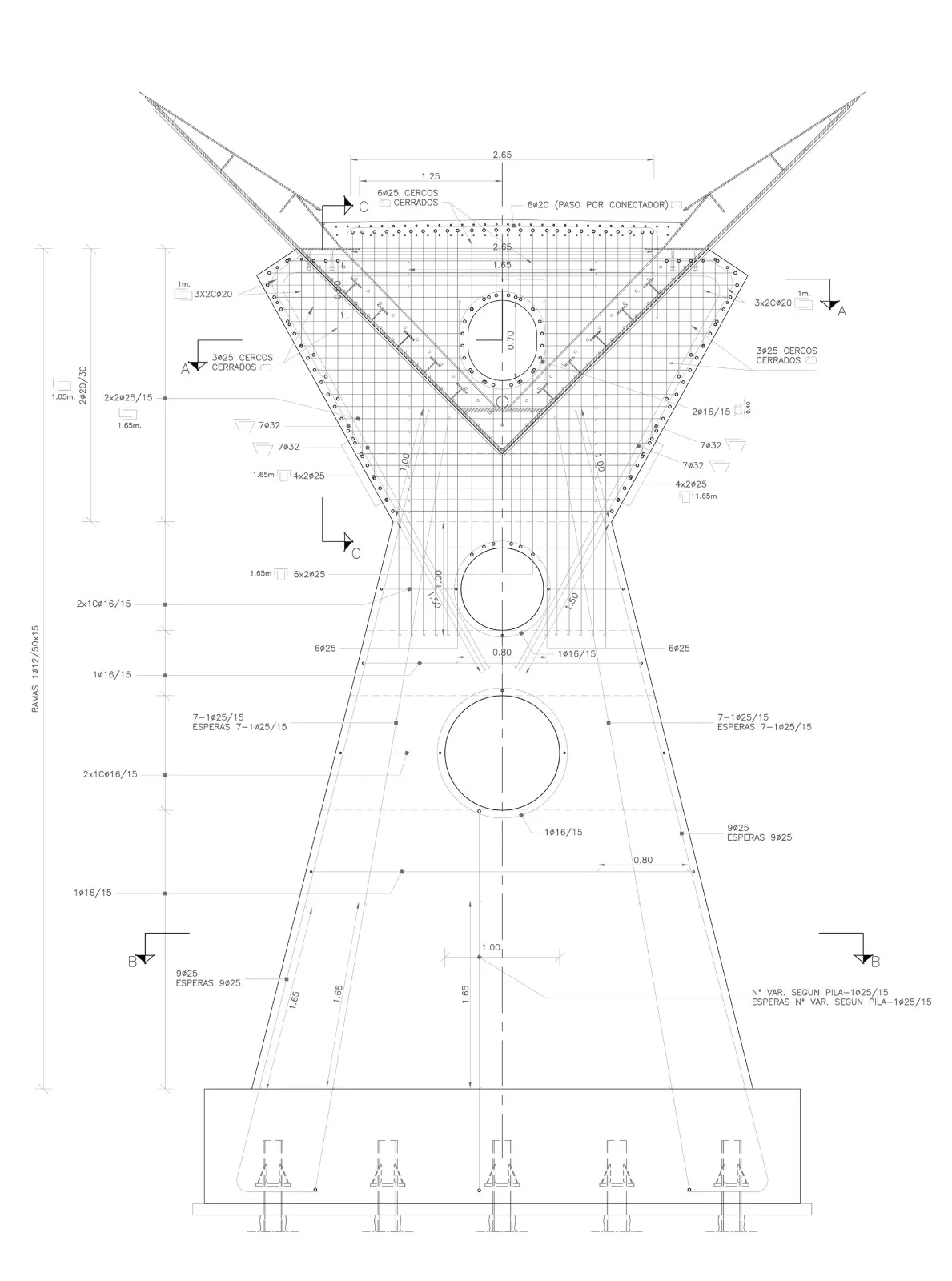
△ Structural schematic
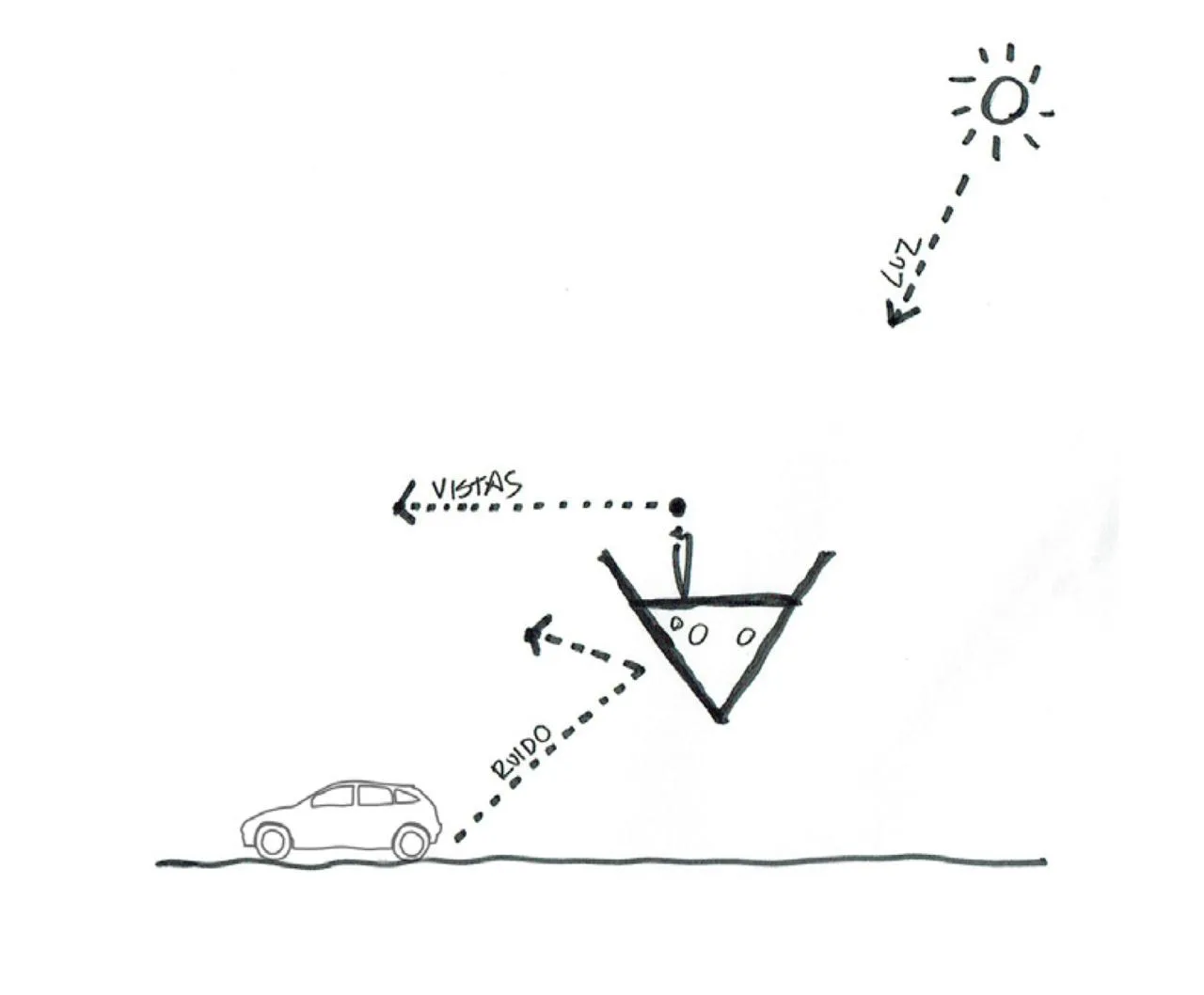
△ Hand-drawn analysis diagram
Project Information
Architectural Design: Checa Arquitectura, Onda Arquitectura
Project Year: 2021
Photographer: Iwan Baan
Manufacturer: Compsan, PPG Paints
Lead Architects: Ramón Checa Quevedo, Javier Haddad Conde
Design Team: Luis González, Carlos Fuente
Location: Spain












Must log in before commenting!
Sign Up