
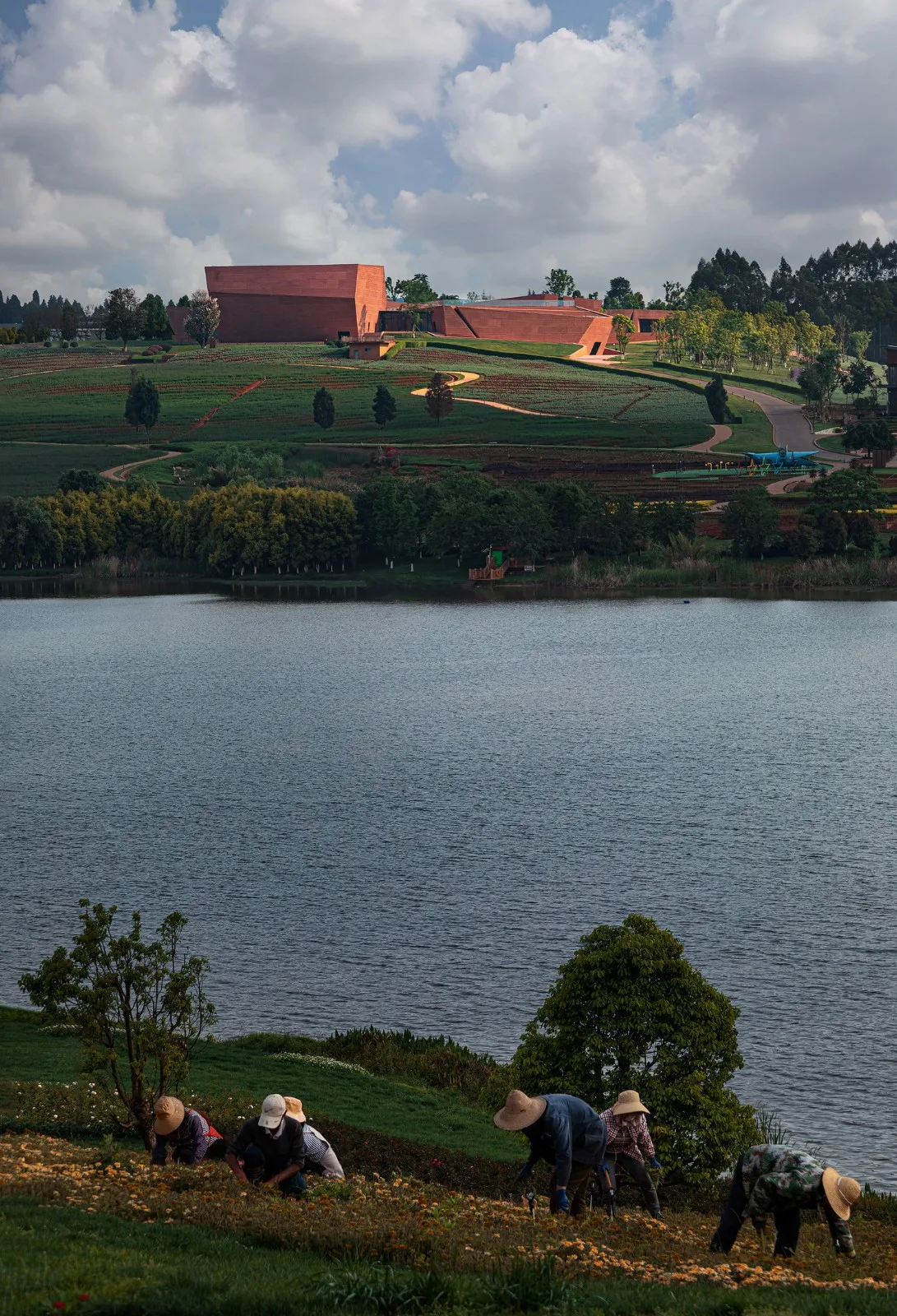
Facing an expansive landscape of red soil and a monumental sculptural architectural complex, the design of the Dongfeng Yun Art Center carefully respects the original order of the site. The “Red Stone Array,” formed by five otherworldly stones, is neither a blatant intrusion nor a mere landscape element. Rather, it employs an unconventional architectural language and contemporary industrial materials to reconnect with nature, engage in a dialogue with the site’s character, and revitalize the field. — Meng Fanhao
△ Photography: Ziran Architecture Photography
01. Art, Architecture Installation, and the Yungui Red Land
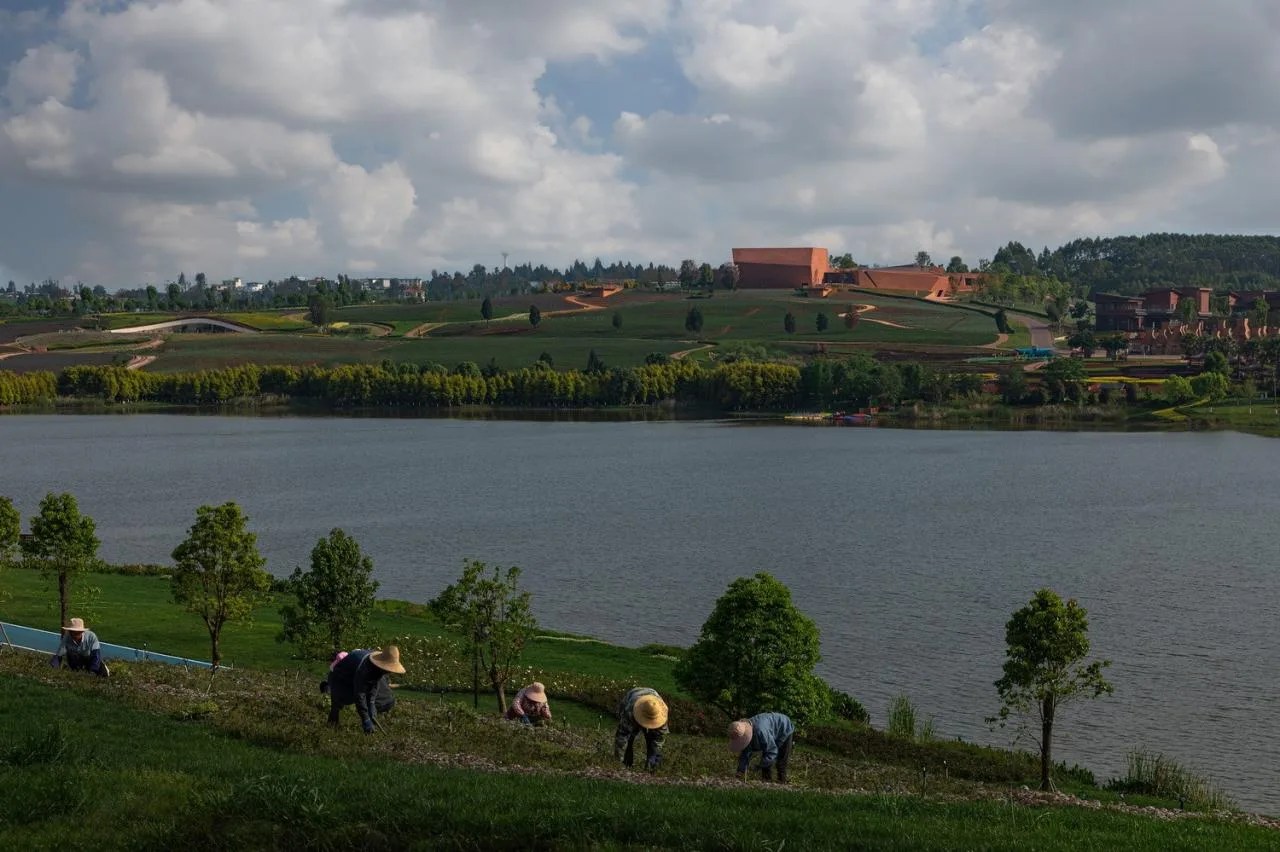
The Dongfeng Yun Art Town, home to the Art Center, is located on the outskirts of Mile City, Yunnan Province, roughly an hour’s drive from Kunming, the provincial capital. Since 2014, Yunnan artist Luo Xu has crafted a series of architectural clusters here, including sculptural installations like “Kaleidoscope” and “Half Cloud.” These tile kiln clusters, built with red bricks, harmonize with the vast red expanses of the Yunnan-Guizhou Plateau and rugged mountains, creating a unique world of sky and earth. Covering approximately 1.6 square kilometers, this art-centric town has become widely recognized.
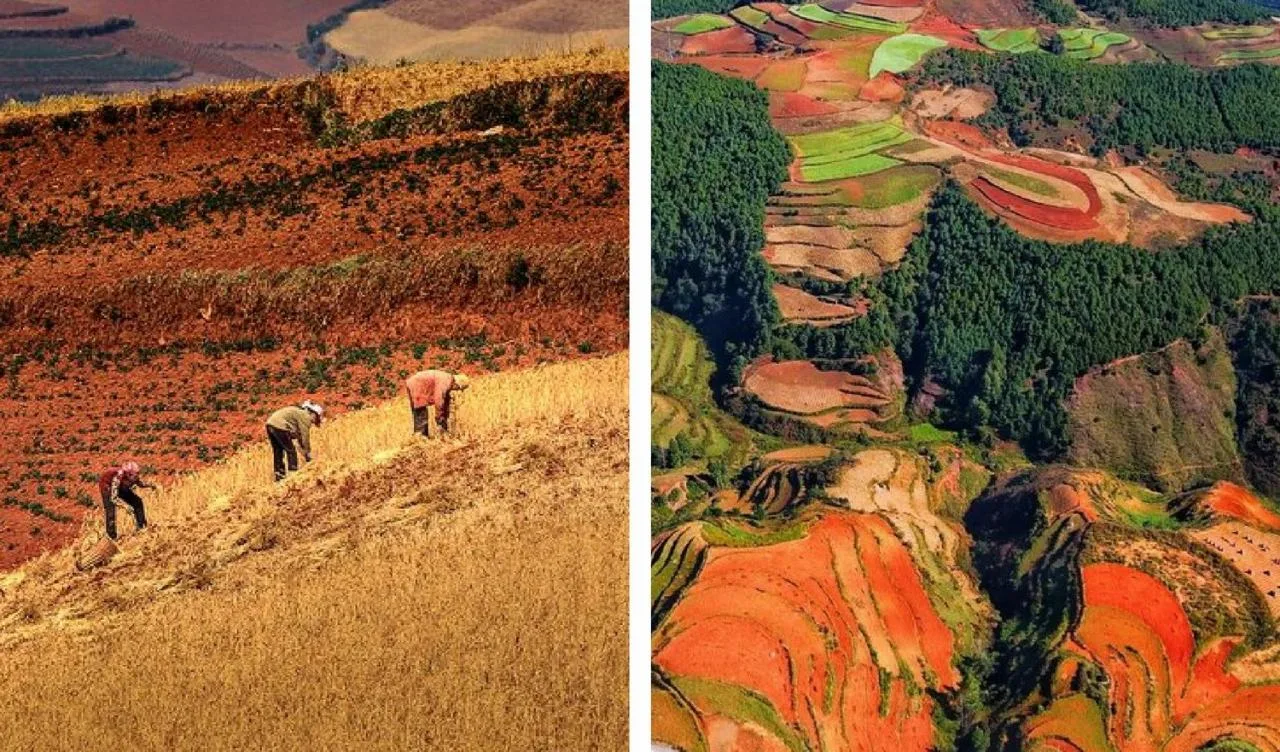
△ The Yunnan-Guizhou Plateau (image sourced from the Internet)
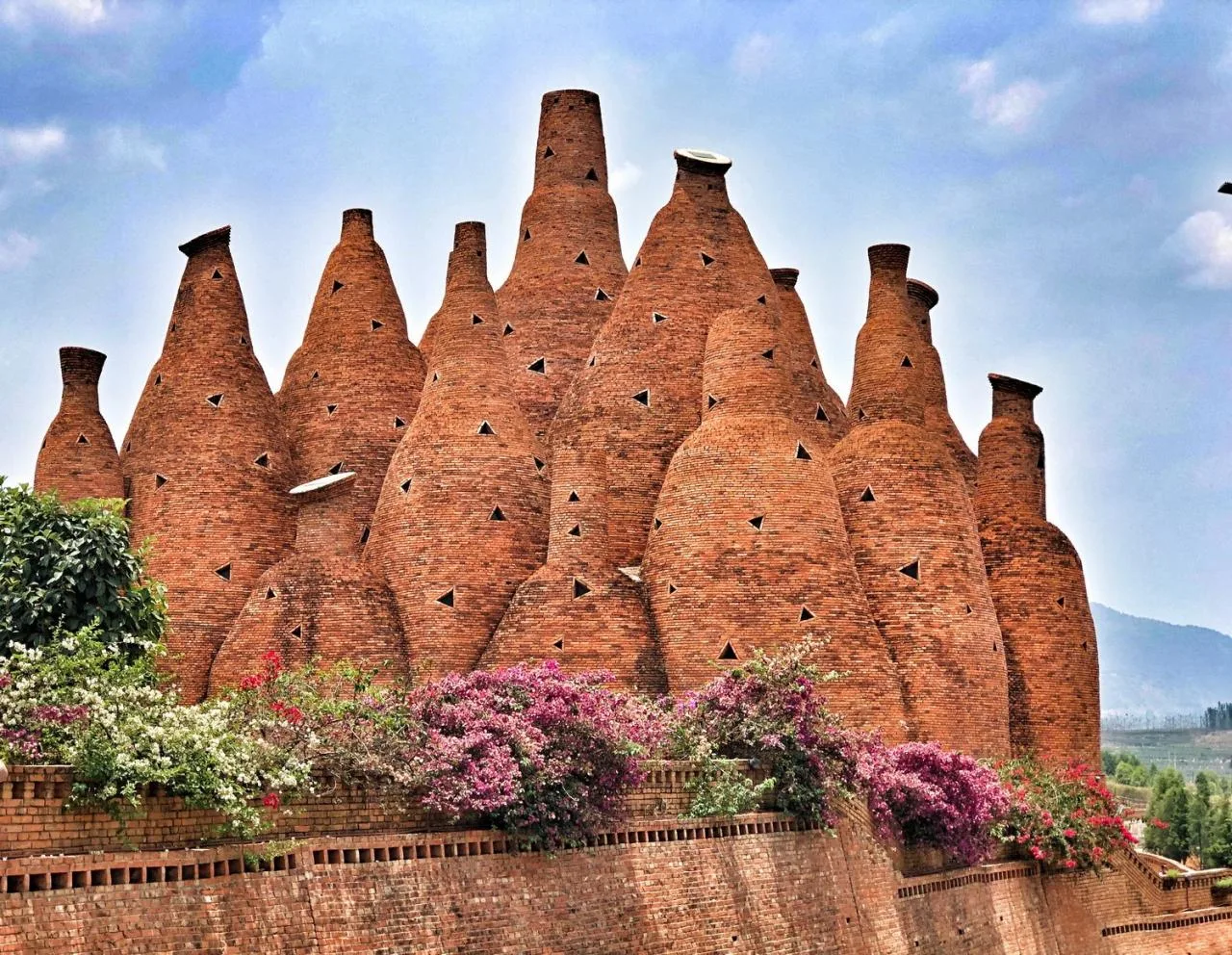
△ Art Sculpture Installation Group “Kaleidoscope”
02. Defining the Project: Certainties and Unknowns
△ Photography: Ziran Architecture Photography
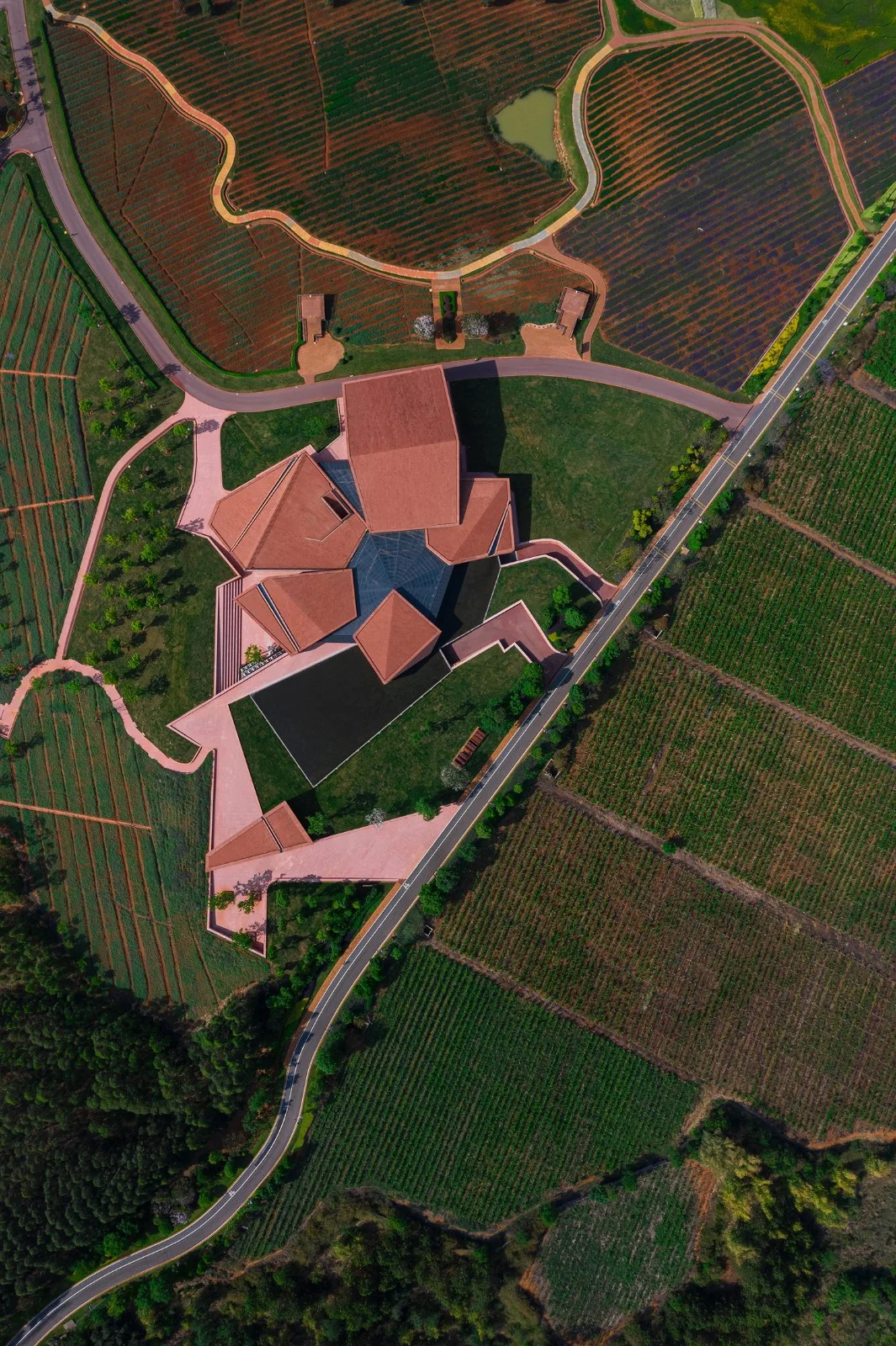
In 2018, we were invited by the owners to participate in the conceptual design competition for a new art center within the town. The initial plan proposed a 4,000 square meter building nestled in a small valley. The owners sought to enhance the town’s supporting facilities within a manageable budget, enabling small-scale art exhibitions and outdoor music concerts.
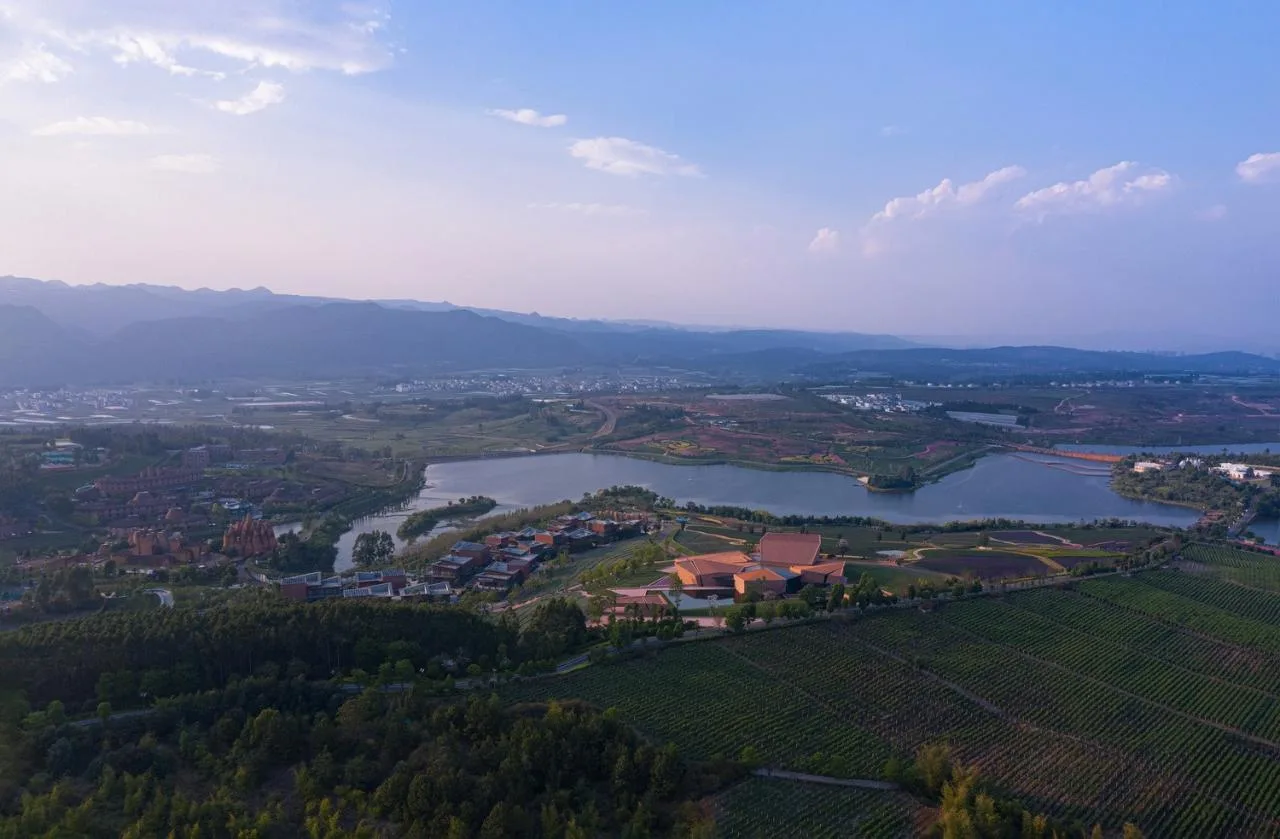
△ Photography: Ziran Architecture Photography
Unlike typical urban public cultural buildings, we abandoned a formal, symmetrical central axis in favor of a seamless blend between indoor and outdoor spaces that quietly integrates with nature. This approach creates a welcoming, relaxed atmosphere for the art center as a daily public space. Our concept gained recognition from both the owners and experts, securing the design rights and shaping our design direction.
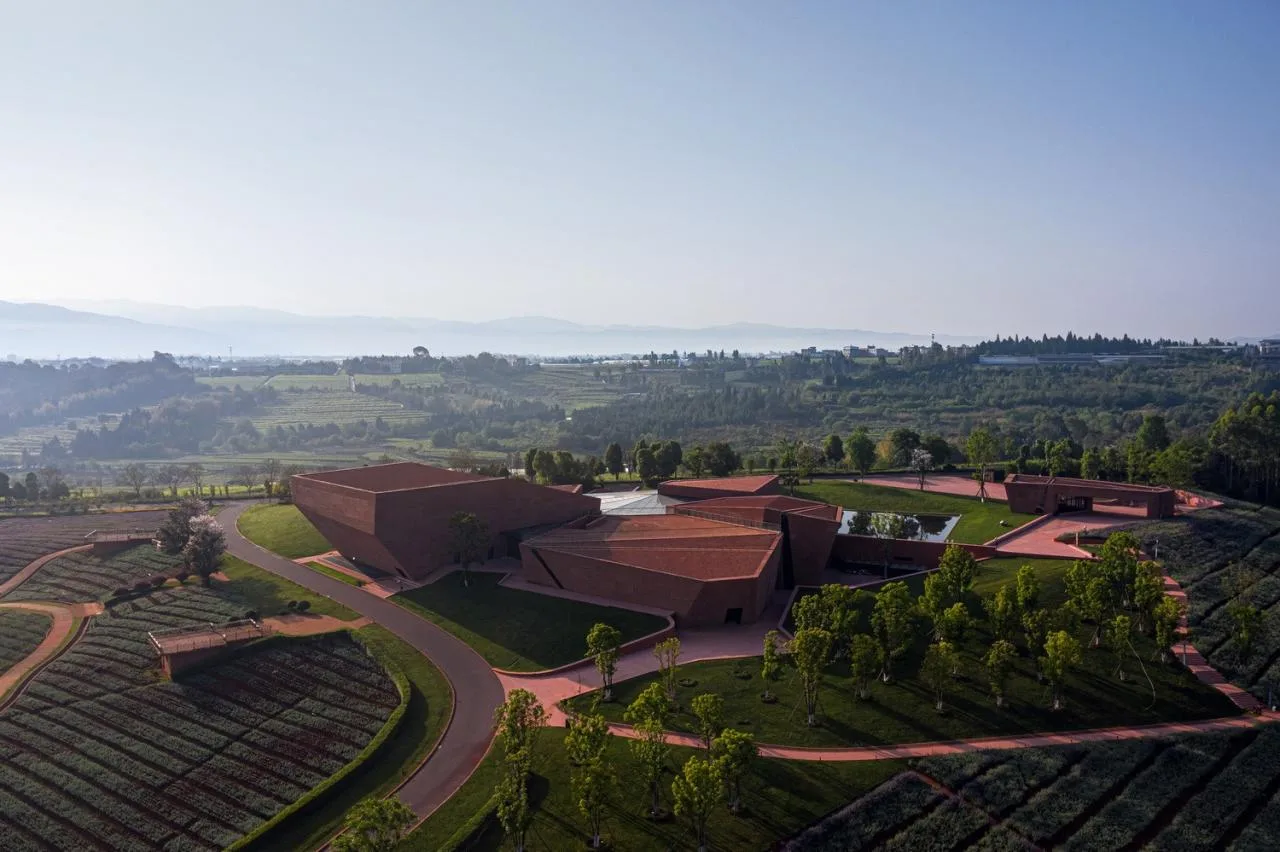
△ Photography: Ziran Architecture Photography
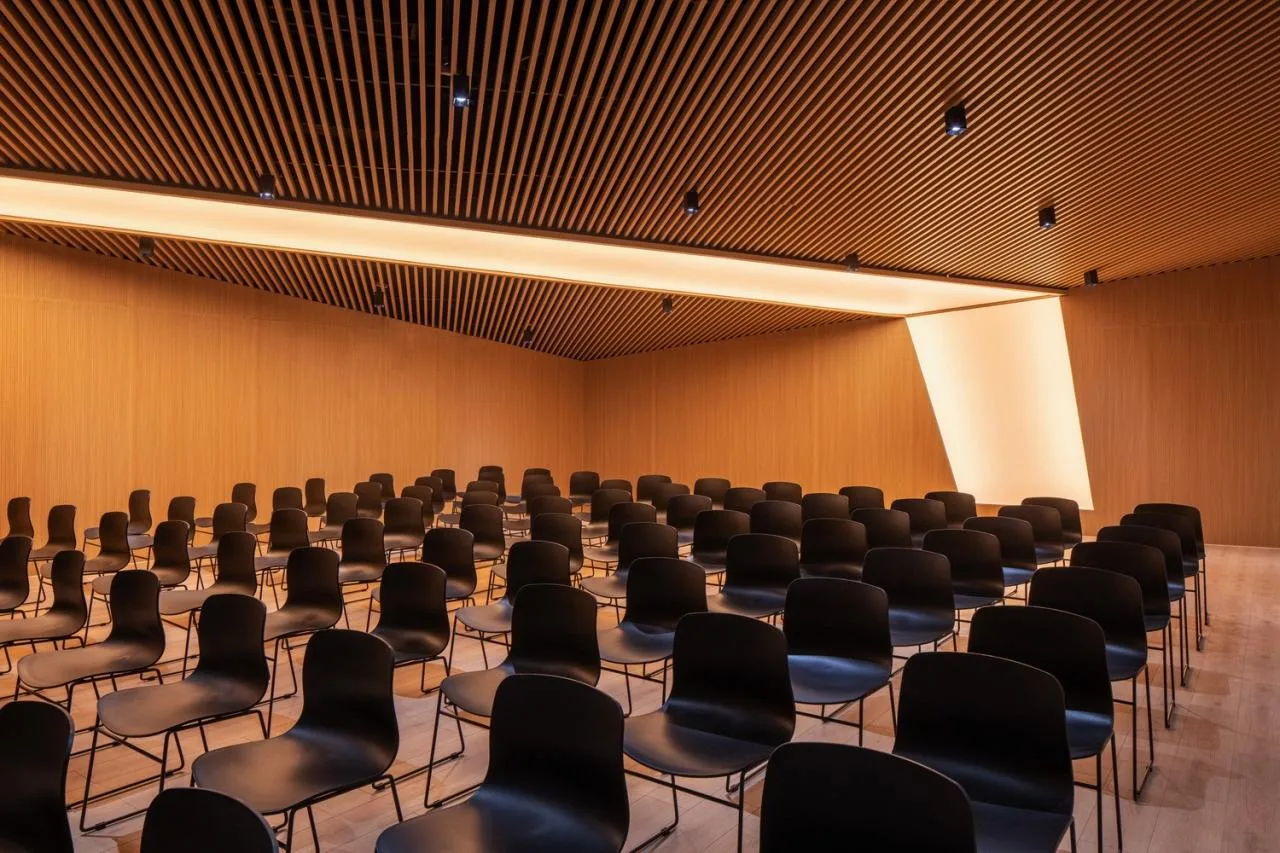
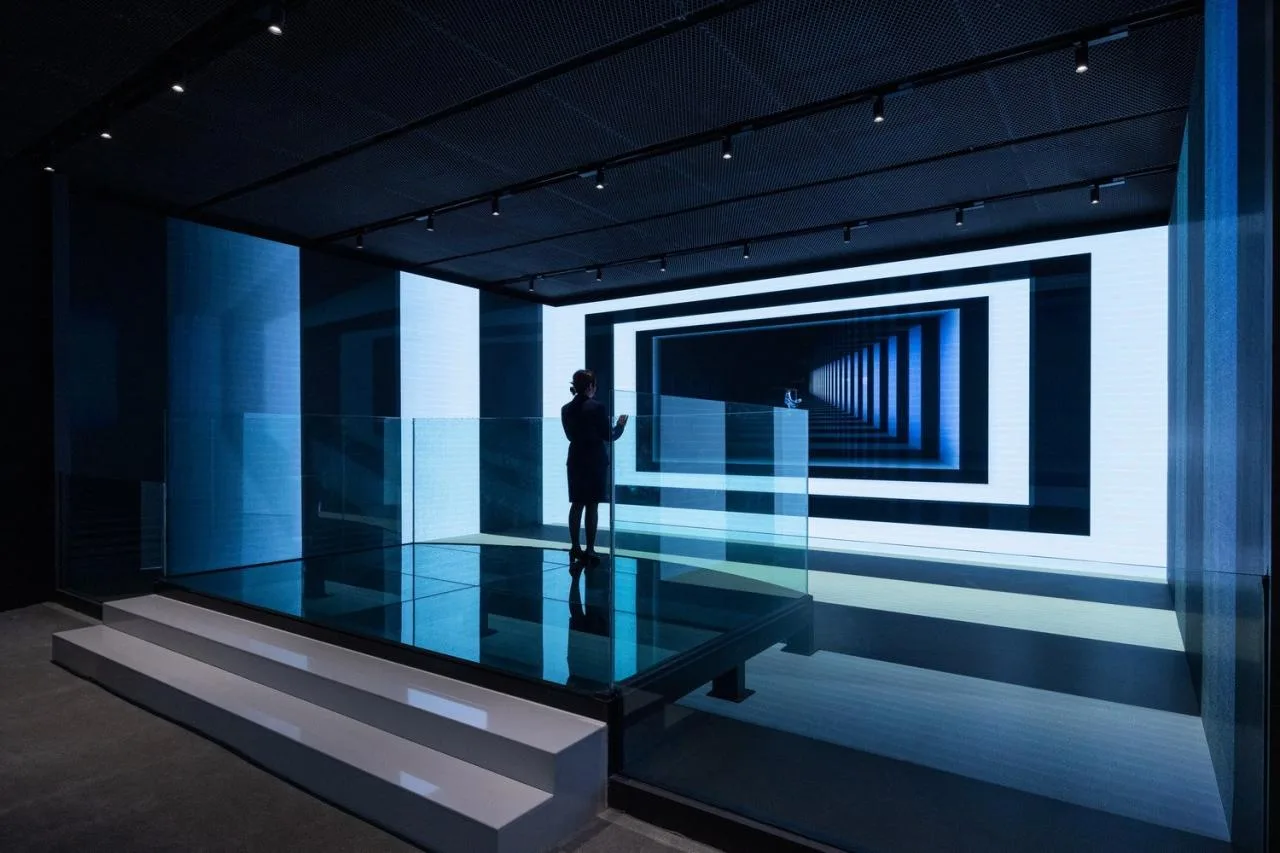
During the design development, the owners expanded their vision, transforming the initially lightweight art space into a large-scale comprehensive art center. The program grew to include art exhibitions, opera performances, press conferences, lecture halls, and more, expanding the building footprint to nearly 10,000 square meters. The site shifted to a vantage point on a hill overlooking the sculpture community, making the building more prominent and imposing stricter height restrictions. The owners aspired for the art center to become a new landmark that would boost visitor traffic and media attention. For us, the challenge was to balance iconic identity with harmonious integration into the natural environment.
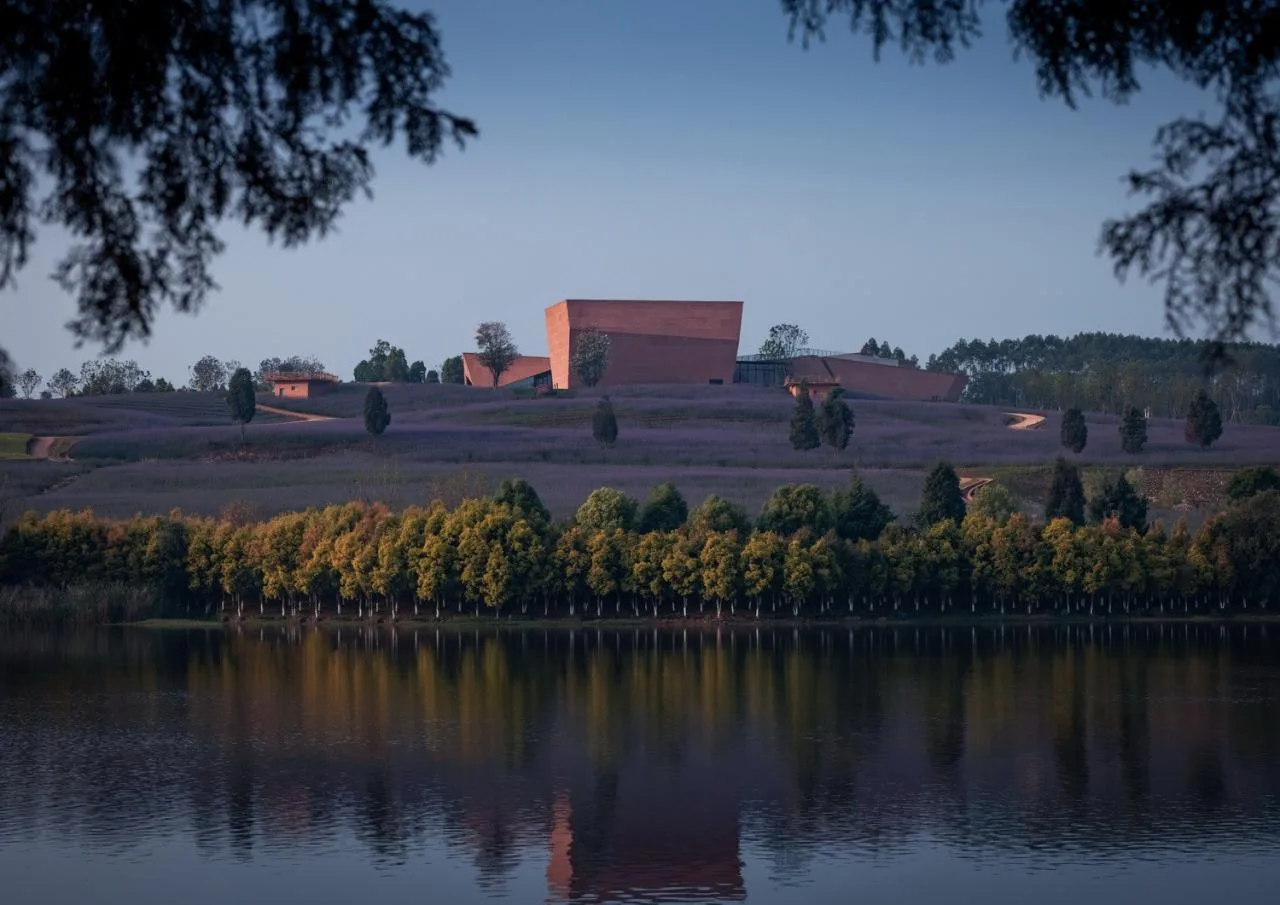
△ Photography: Wang Ce
03. Concept: The Natural Form of Stones
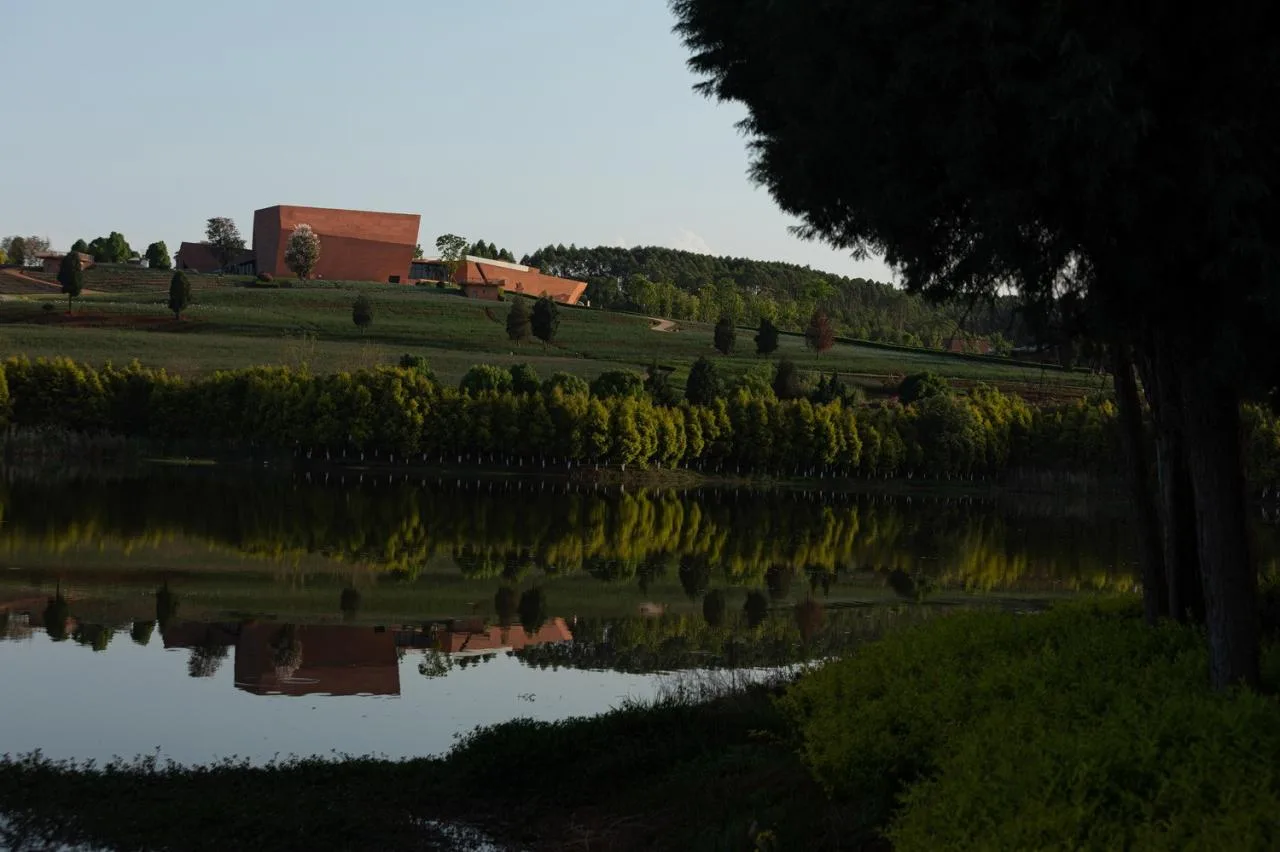
△ Photography: Ziran Architecture Photography
During early brainstorming, we explored various physical concepts but struggled to find one that fit the site’s character. Turning our attention back to the vast red soil, the image of “half-buried stones in the sand” emerged—primitive and timeless, embodying a reverence for nature. This concept echoes the Chinese idea of “great self-defeat,” reflecting dialectical humility and harmony.
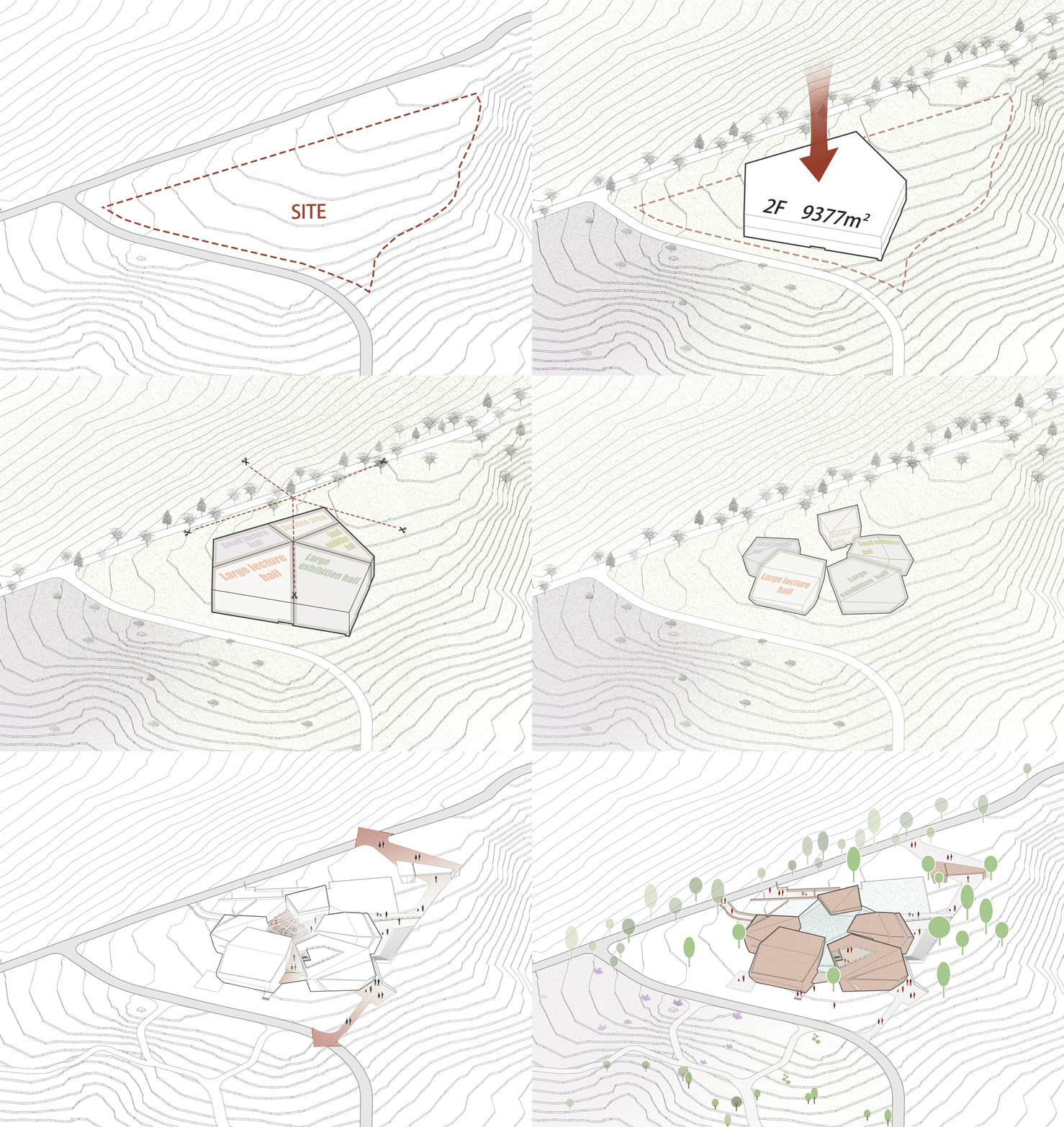
△ Generation analysis © line+
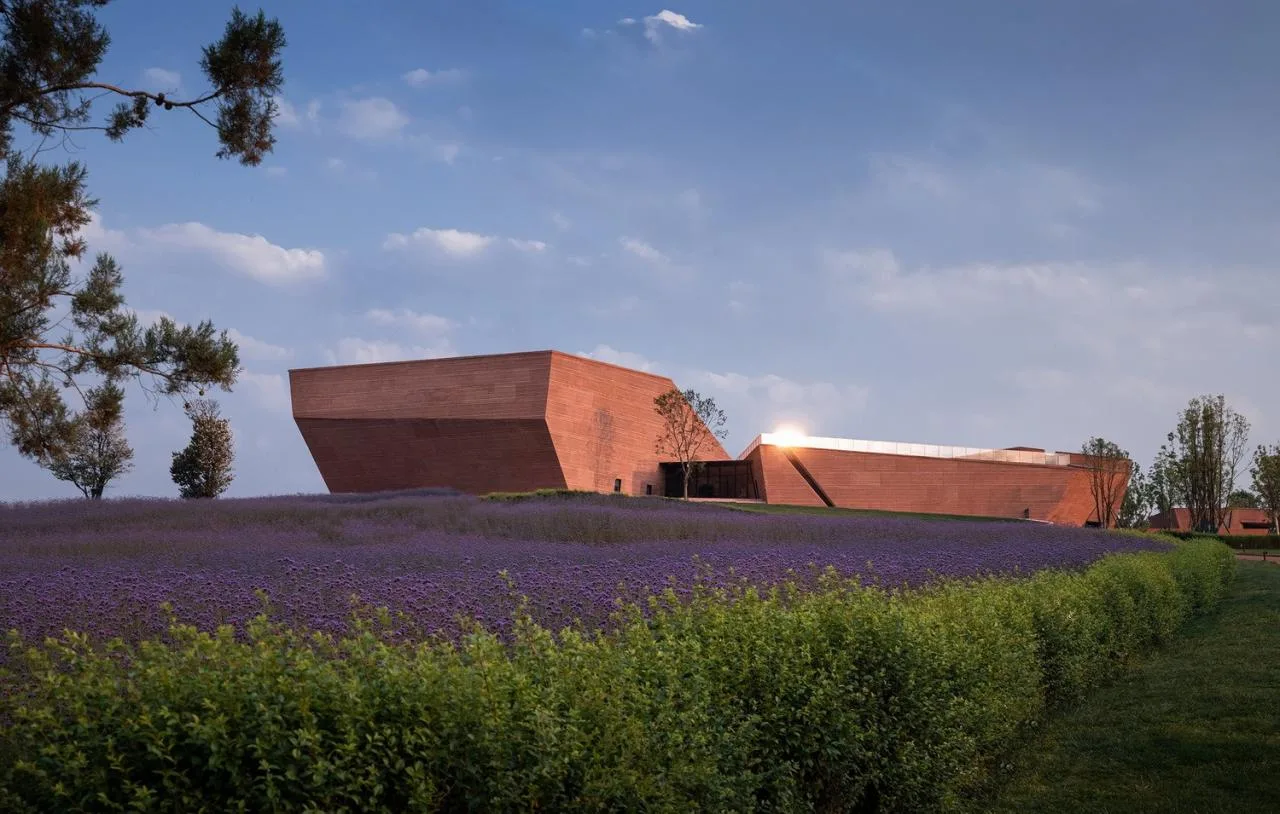
△ Photography: Wang Ce
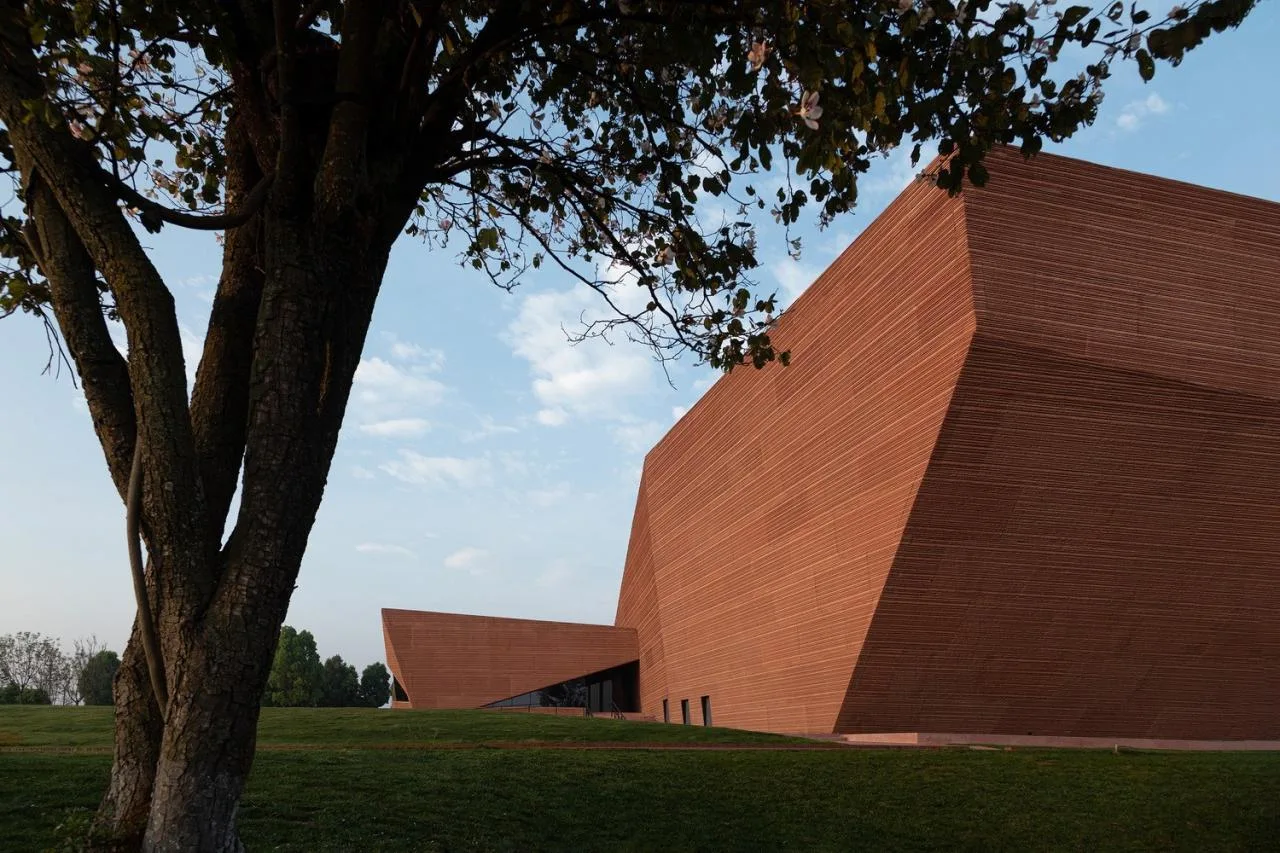
△ Photography: Ziran Architecture Photography
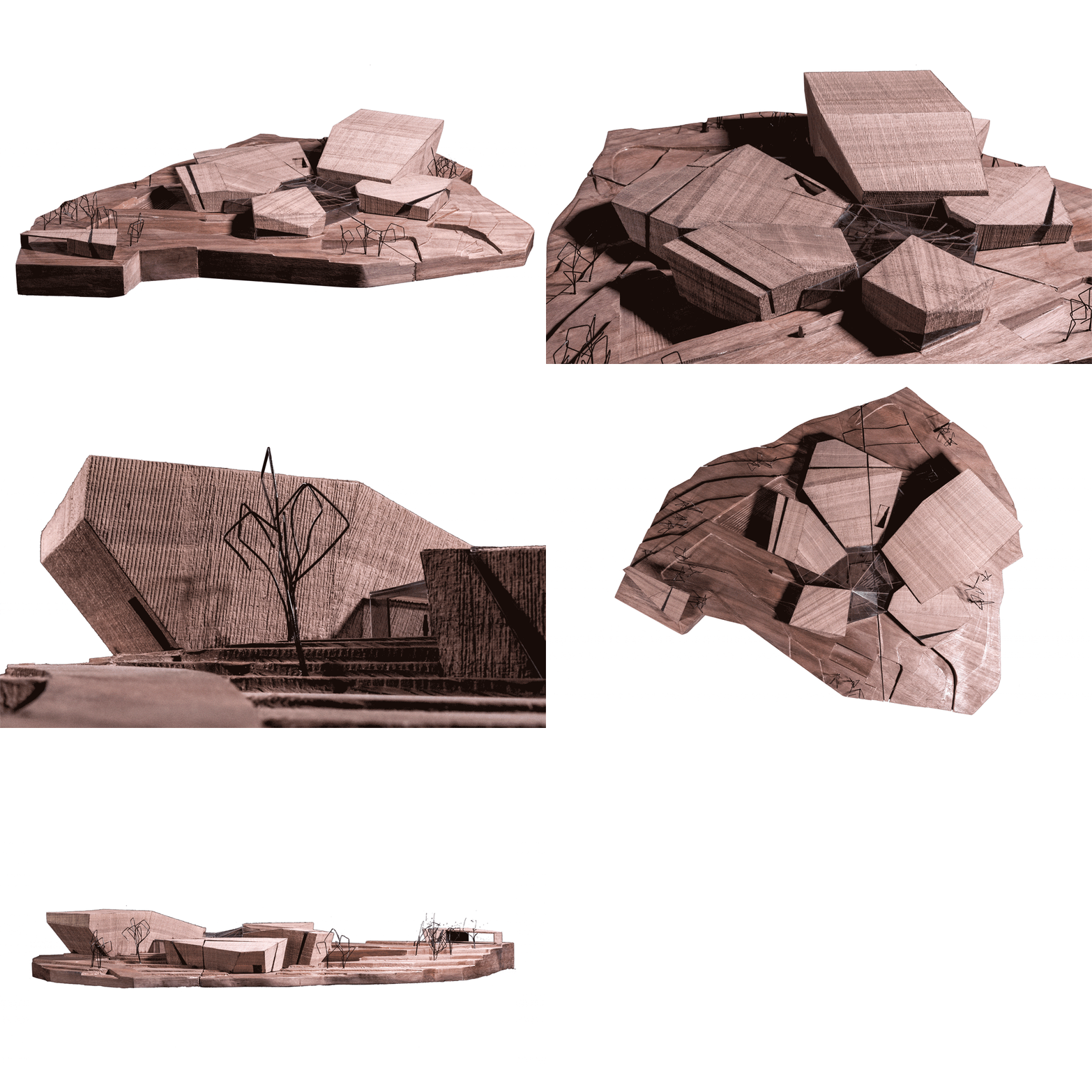
△ Model Photography: Chen Xi
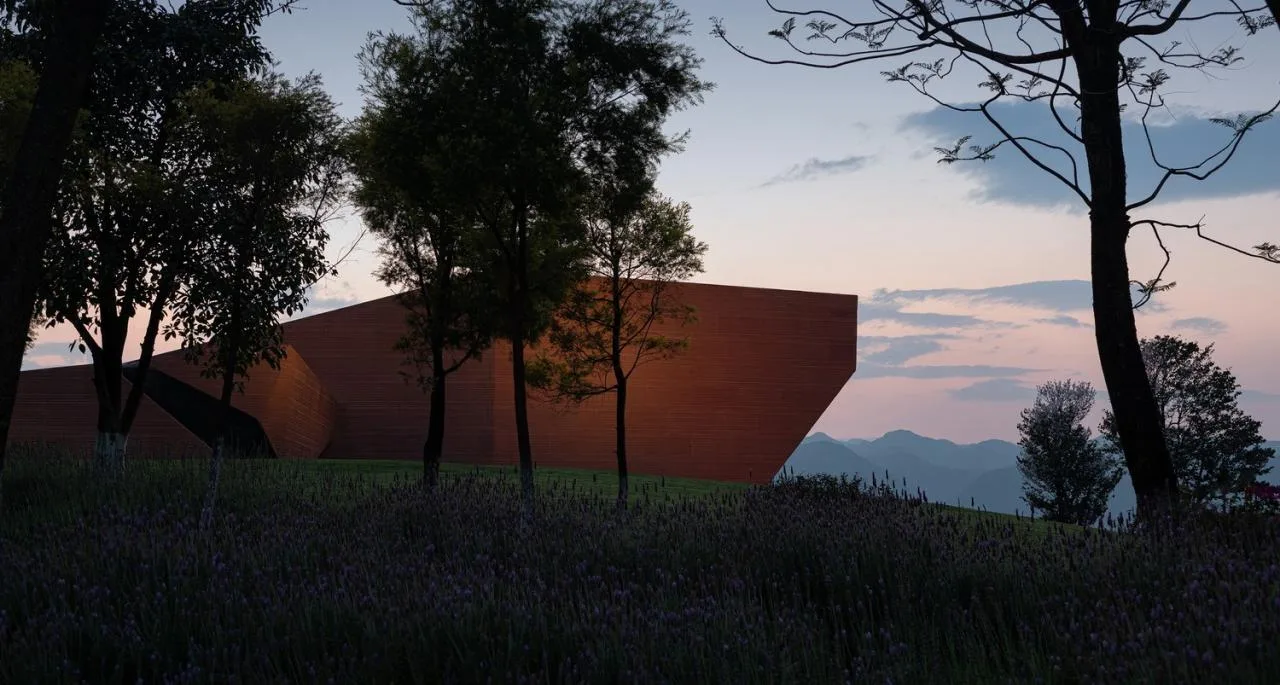
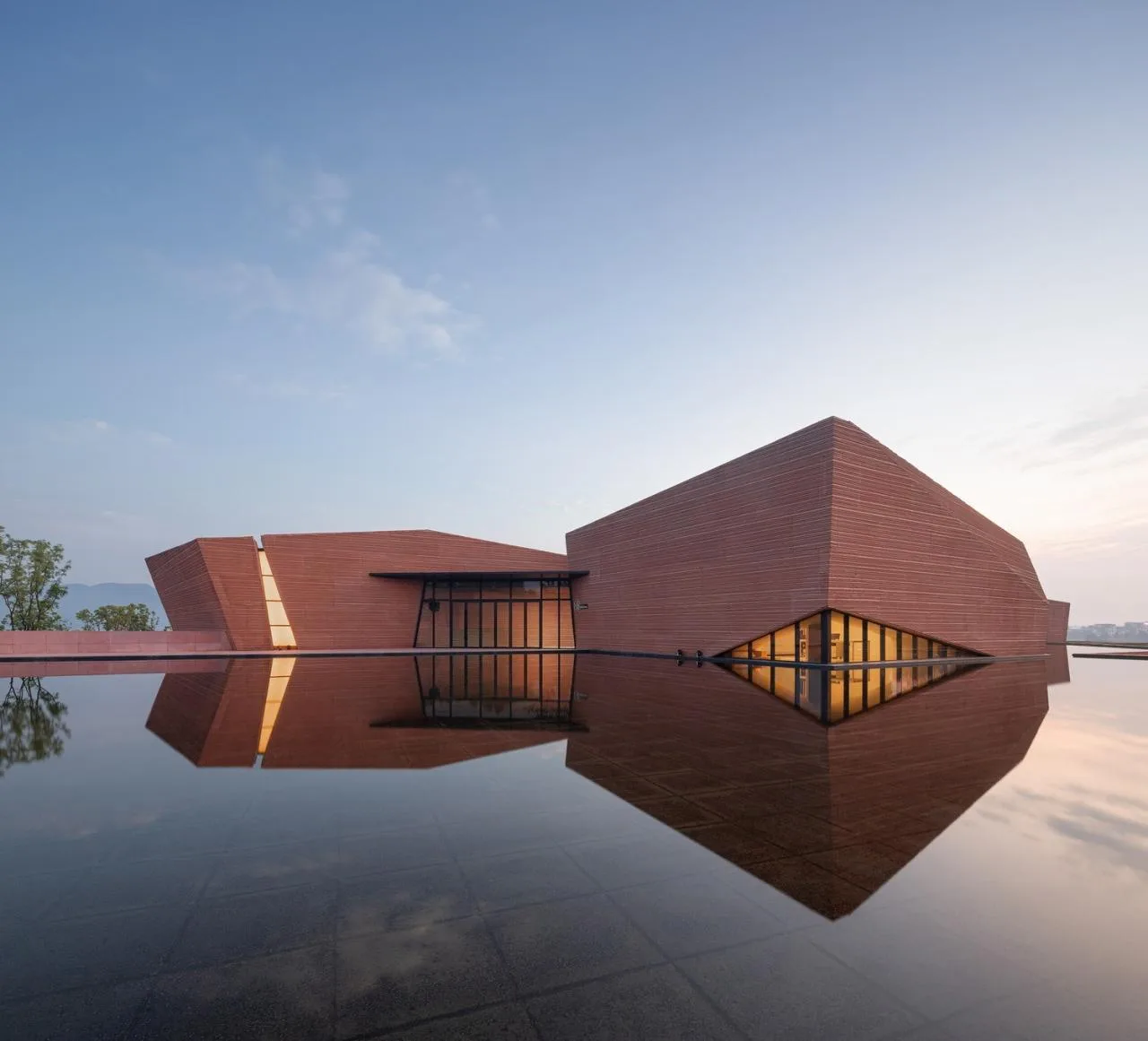
Inspired by this vision, we returned to nature by placing a series of growing “red stone arrays” on the sloping red earth. Their freeform cuts and rough textures reduce the building’s artificial feel, resembling five weathered stones standing still through time.
△ Photography: Ziran Architecture Photography
04. Spatial Experience: Canyon-like Tension and Form
△ Photography: Ziran Architecture Photography
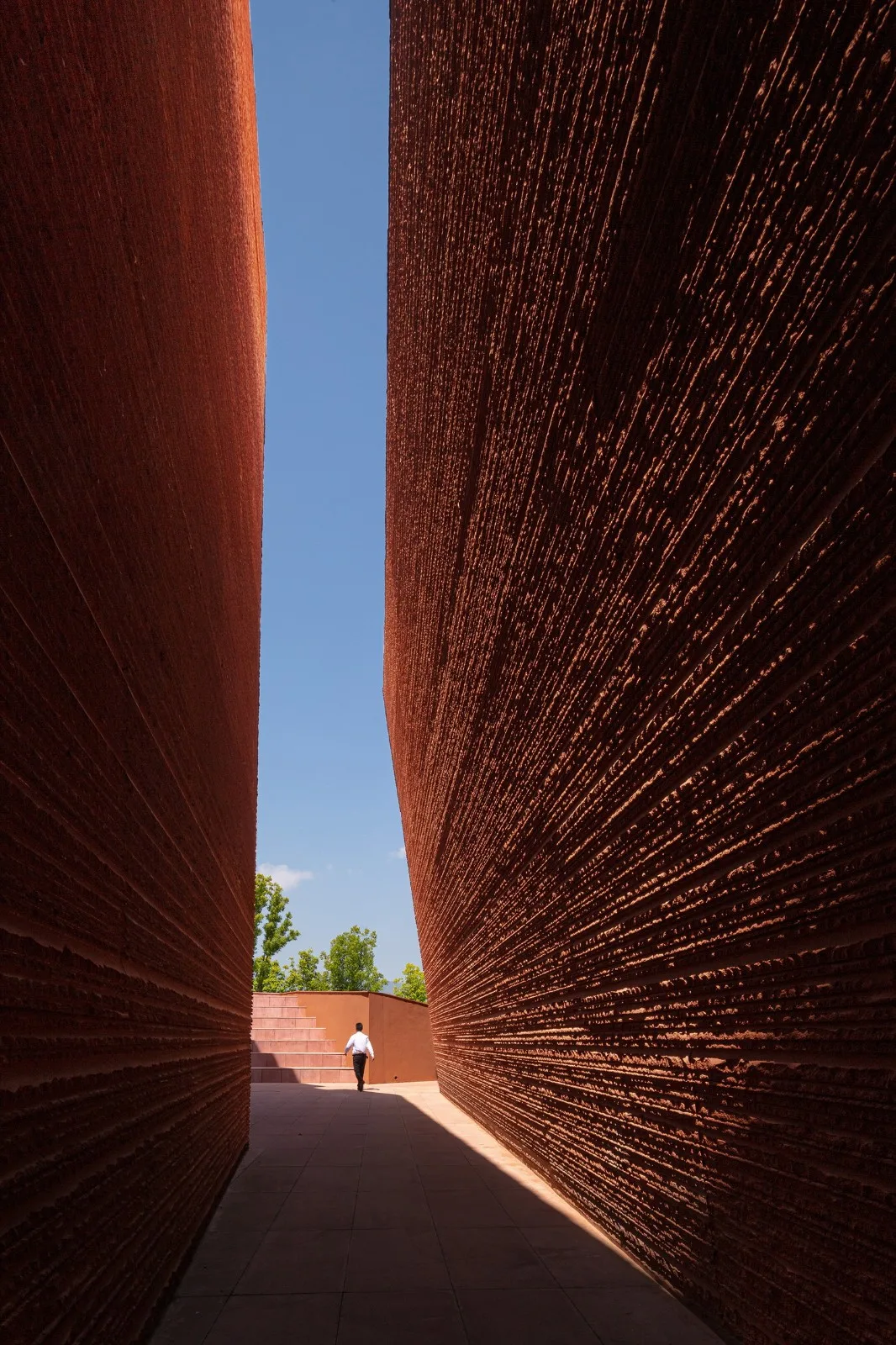
Visitor experience and the creation of scenic atmosphere were core considerations. We designed a path that guides visitors through fields of flowers, water features, and walls—gradually transitioning from natural to built environments. Approaching the sharp-edged “red stone array,” visitors encounter a sense of ceremony before entering the building.
△ Photography: Ziran Architecture Photography
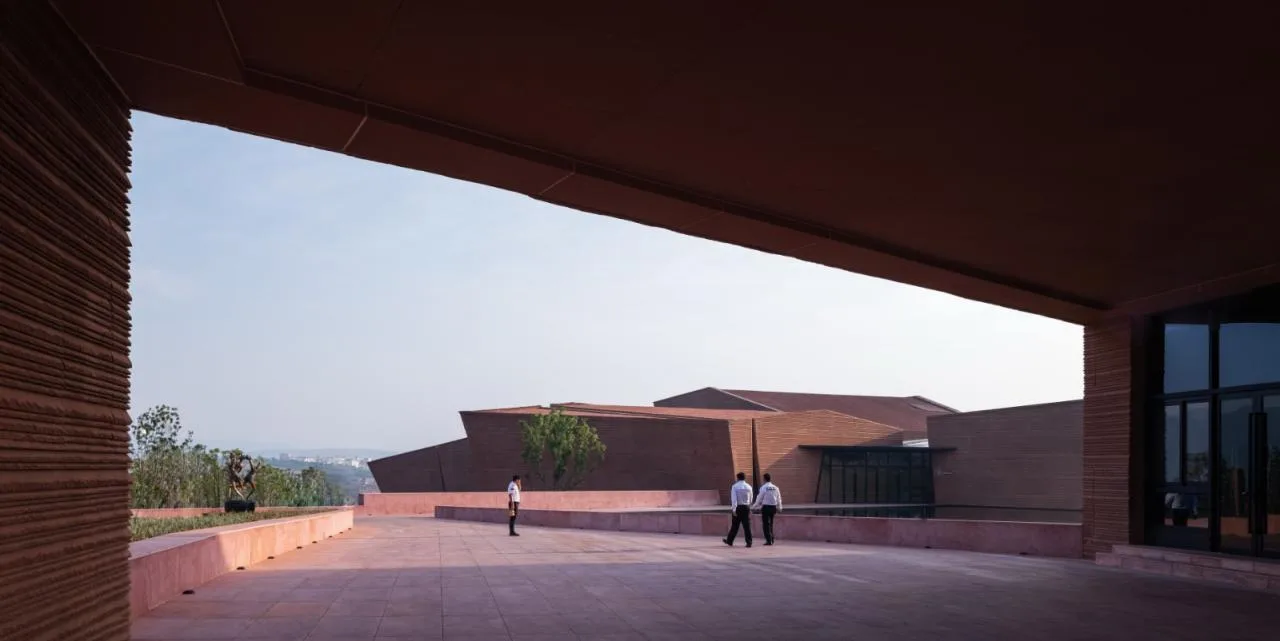
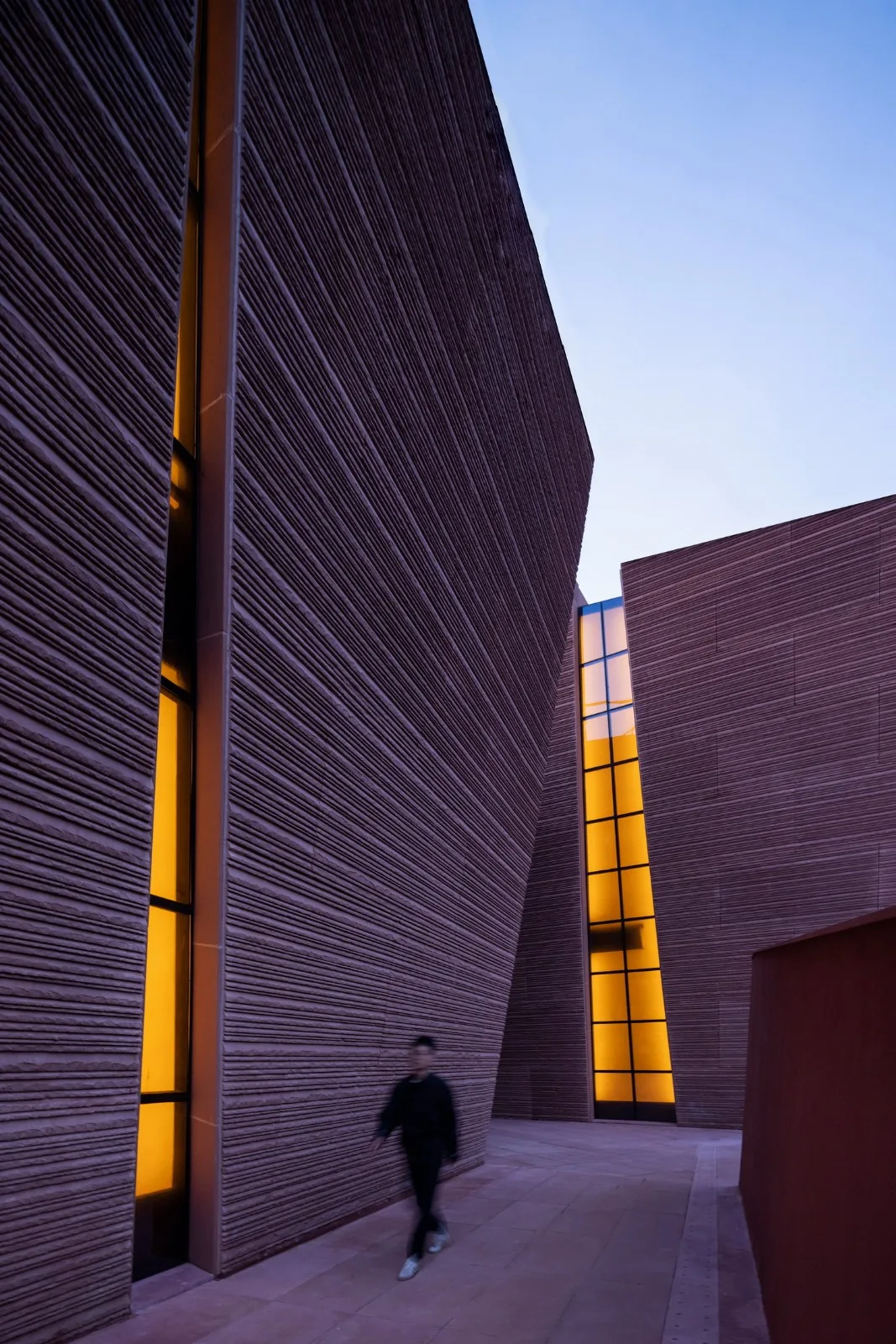
The use of non-orthogonal shapes and volumes creates a canyon-like spatial experience. Volume scale adjustments reshape visitor perspectives, framing views of the sky, fields, and mountains.
△ Photography: Wang Ce
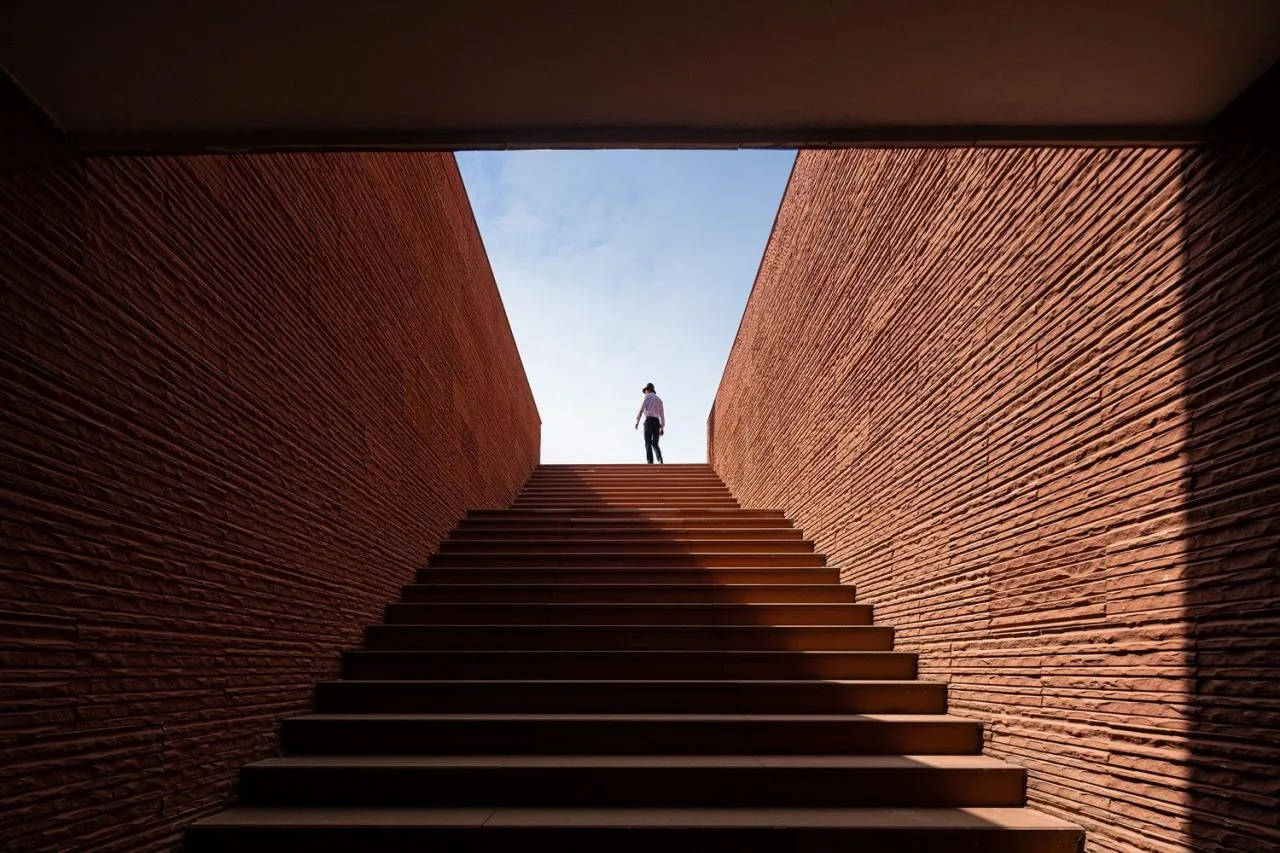
△ Photography: Ziran Architecture Photography
The “stone formation” strategy breaks the building’s functions into five staggered volumes, connected internally by a glass atrium that forms the architectural core. This central space anchors all activities, while individual volumes operate independently, achieving a unified but decentralized layout. Vertically, large courtyard steps bridge the site’s natural height difference, linking the first and basement floors. This space hosts public performances and a book bar where visitors can enjoy sunlight and a seamless indoor-outdoor connection.
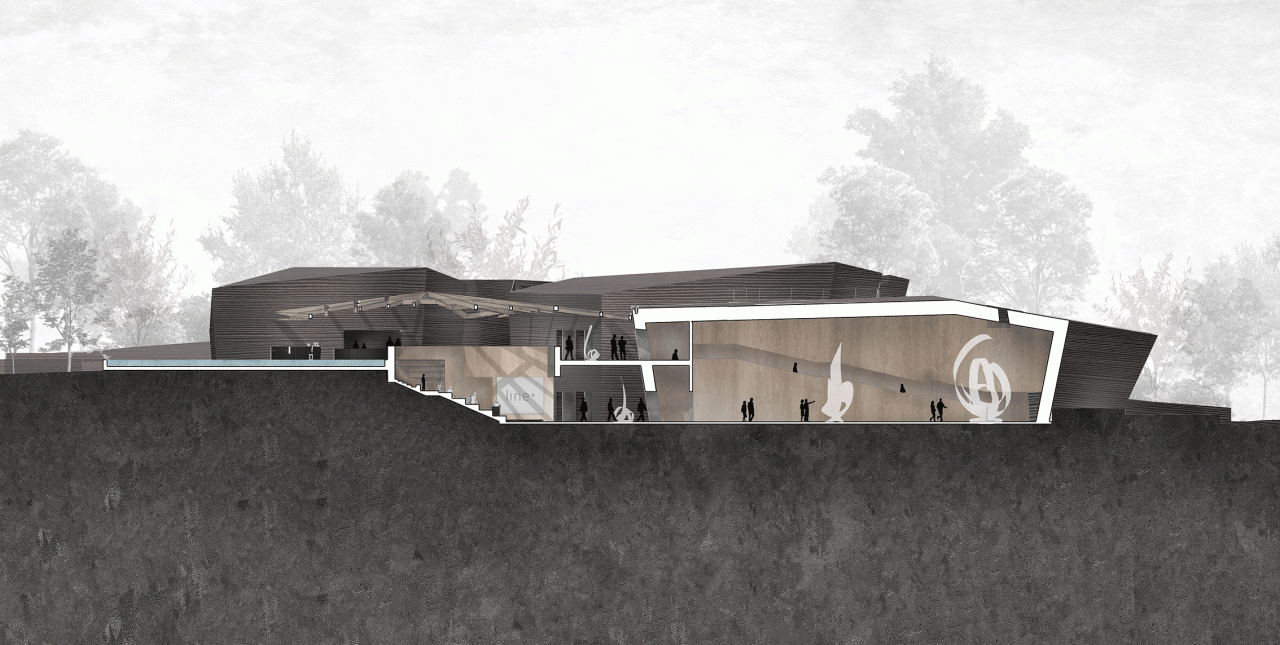
△ Courtyard section © line+
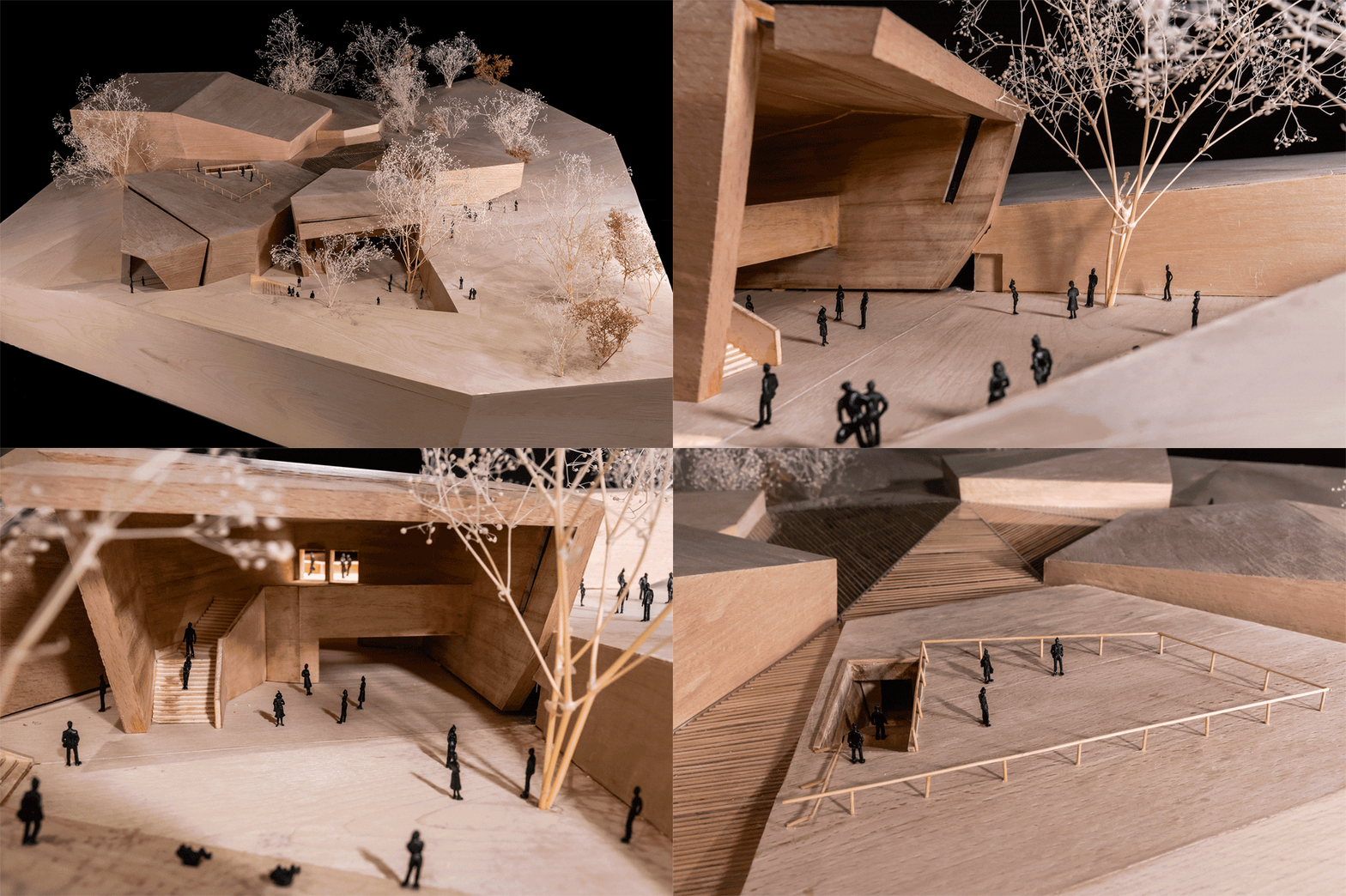
△ Model Photography: Chen Xi
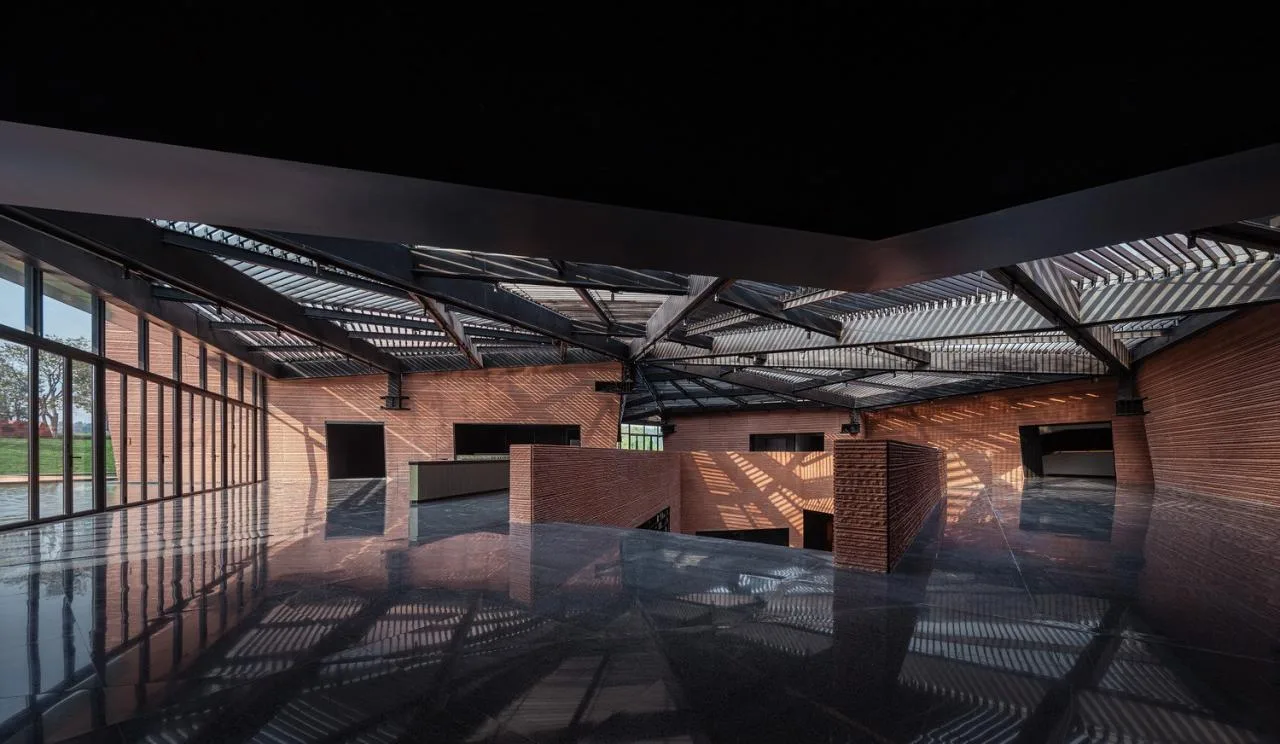
△ Photography: Ziran Architecture Photography
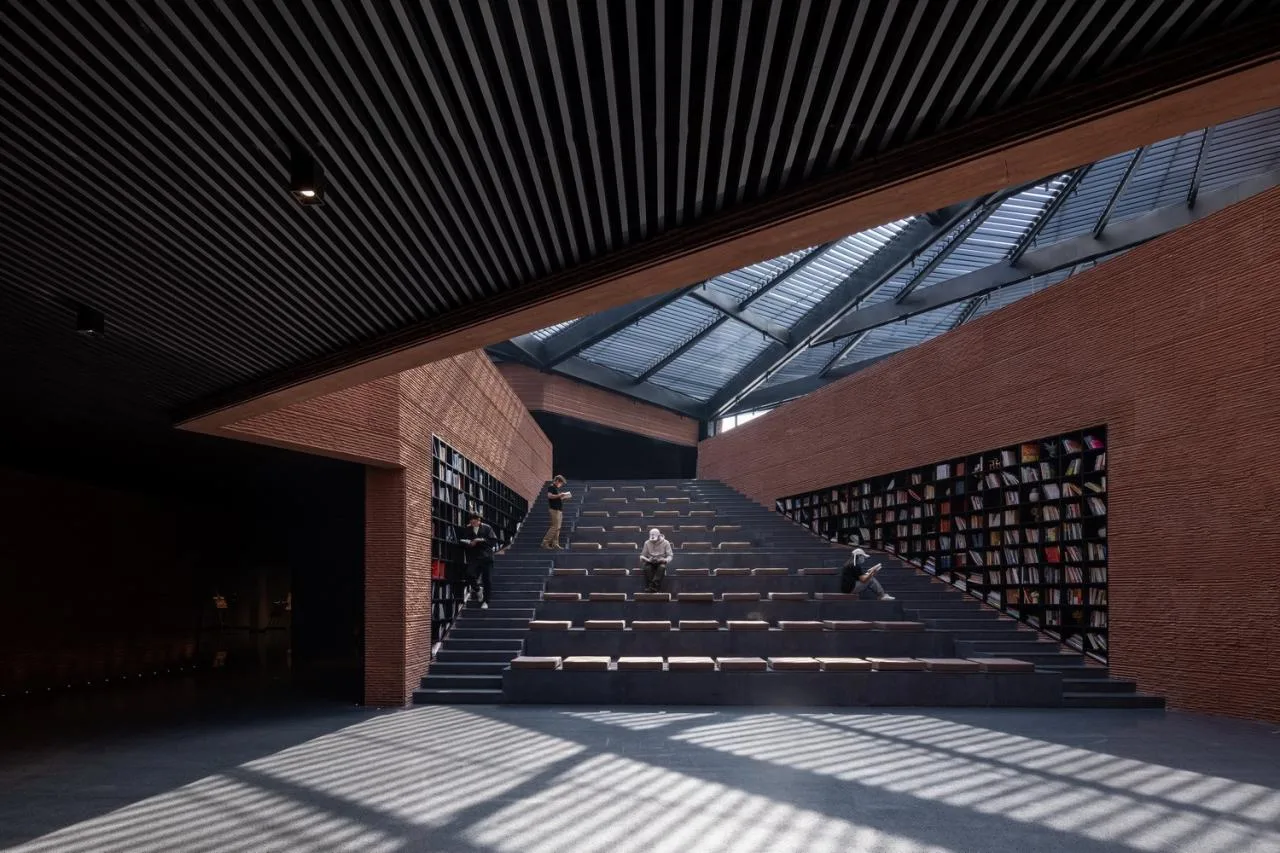
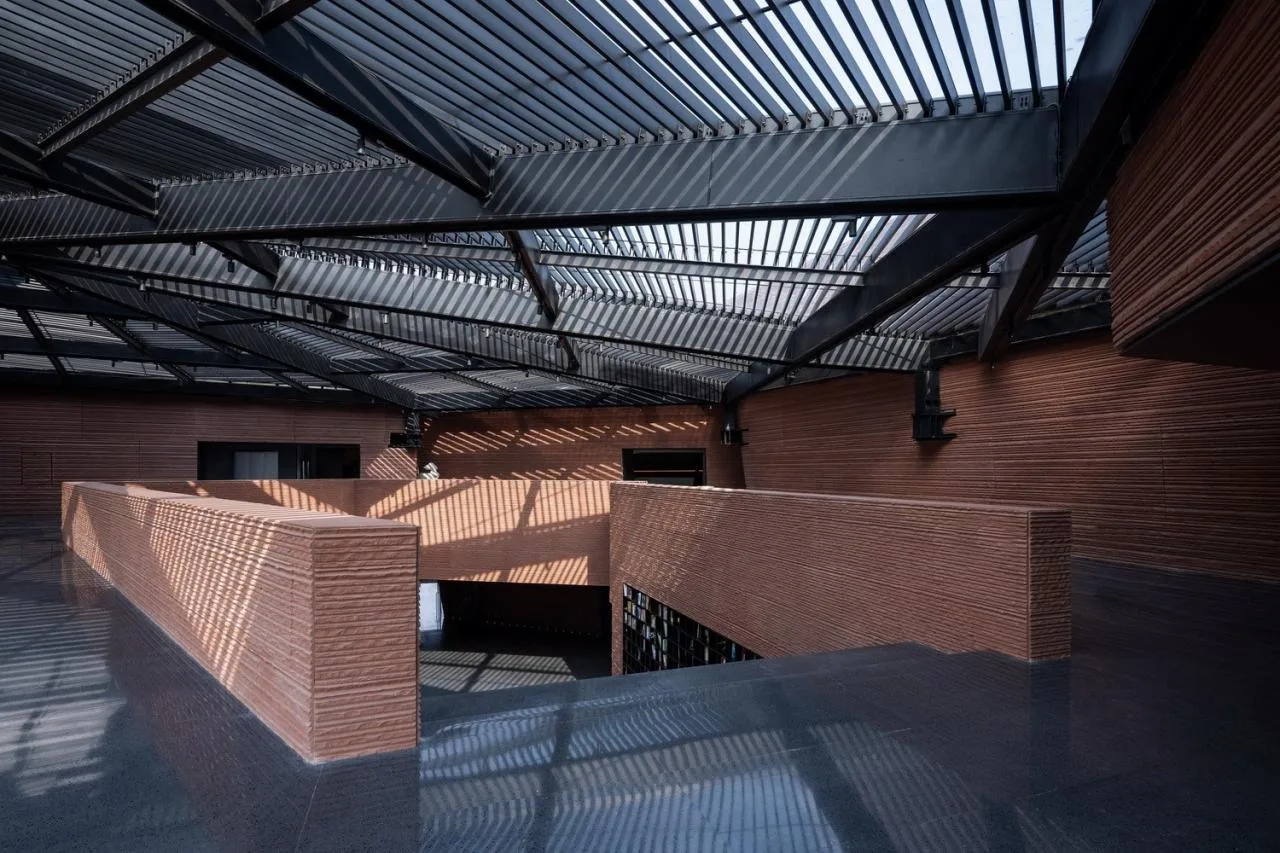
△ Photography: Wang Ce
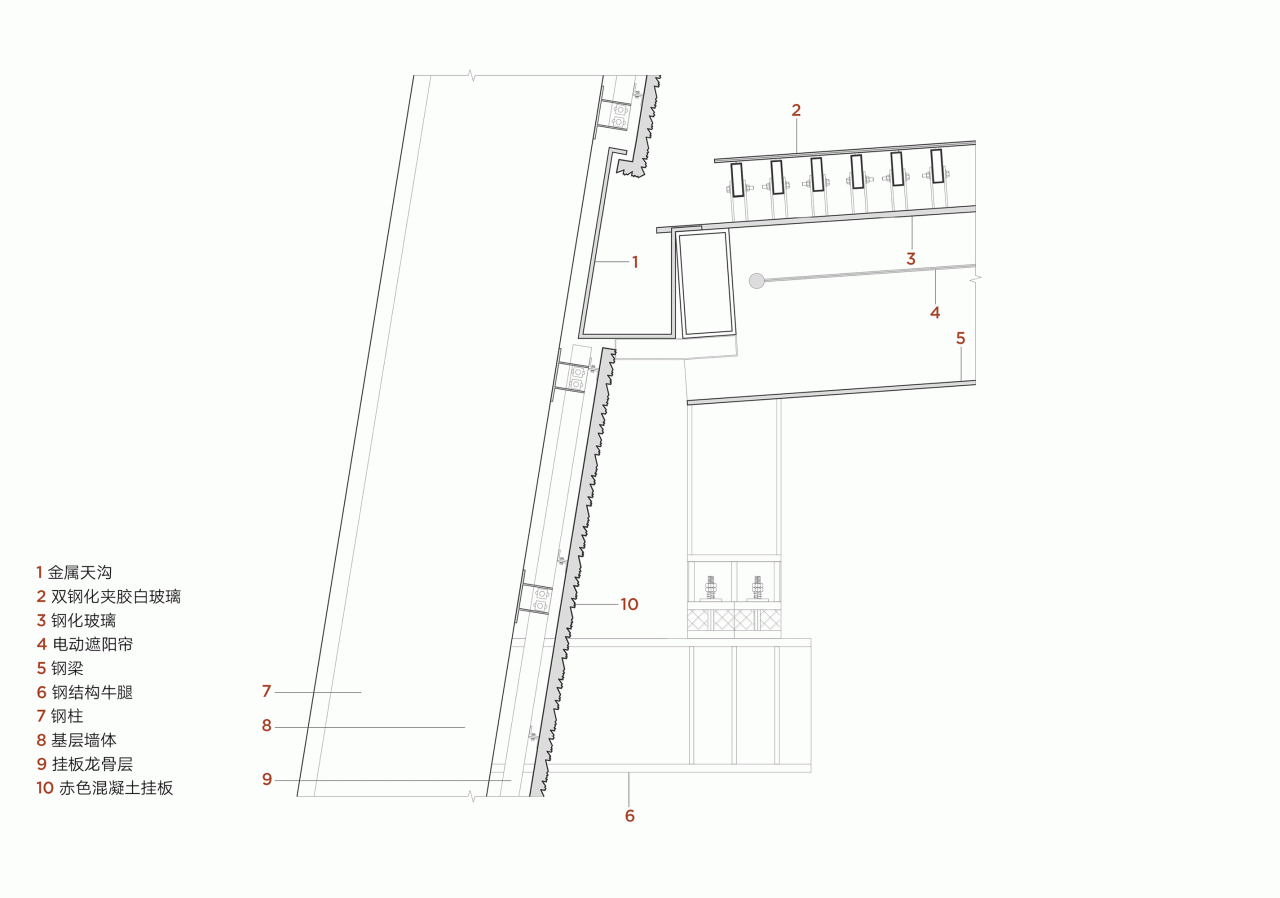
Detail of concrete curtain wall node in atrium
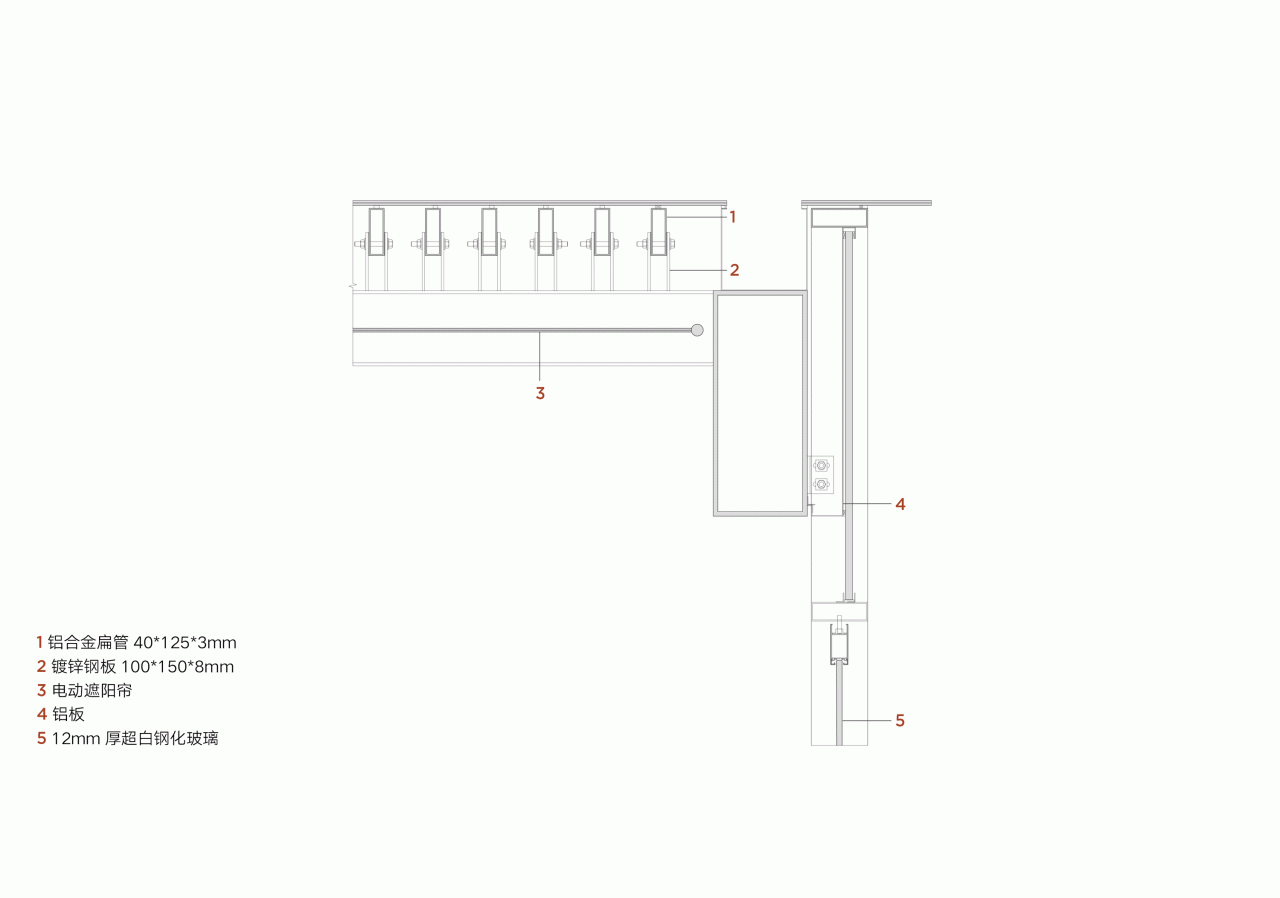
△ Atrium glass curtain wall joint detail
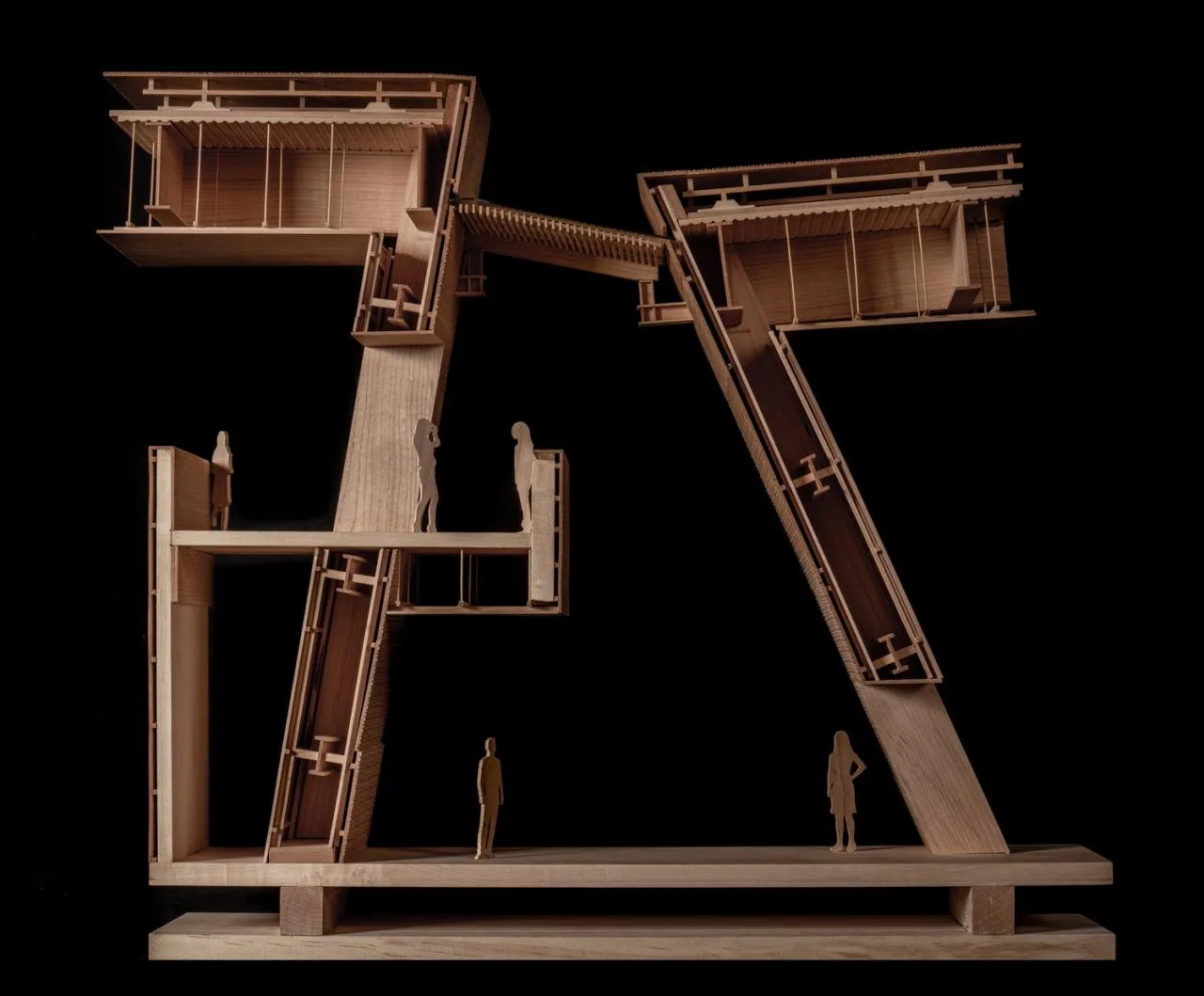
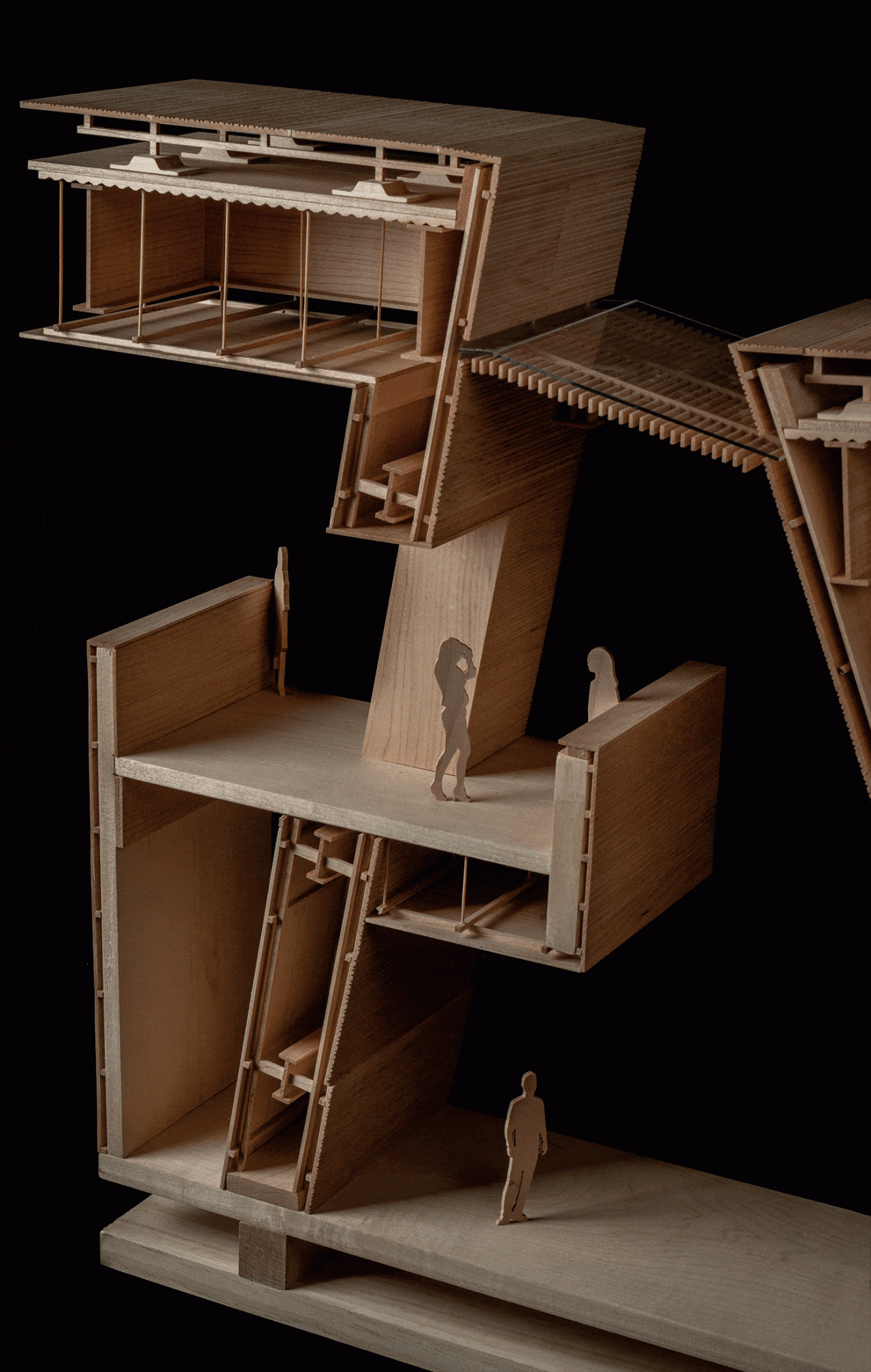
△ Cross-section model of atrium wall © Sun Lei
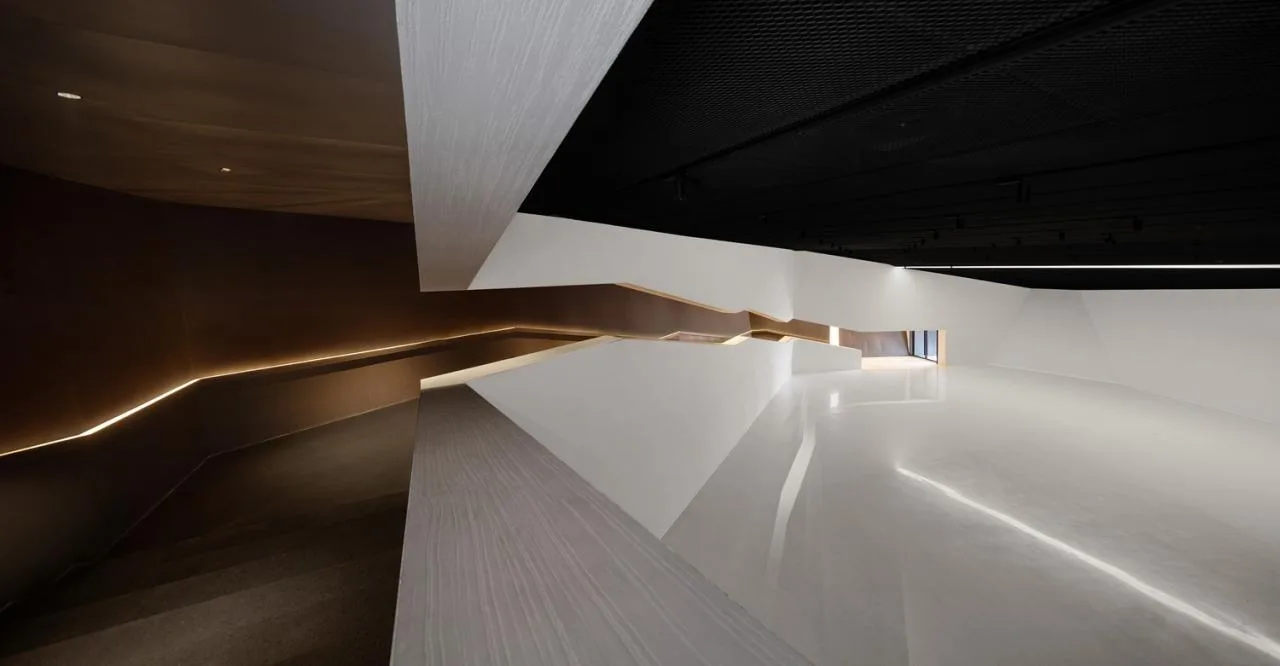
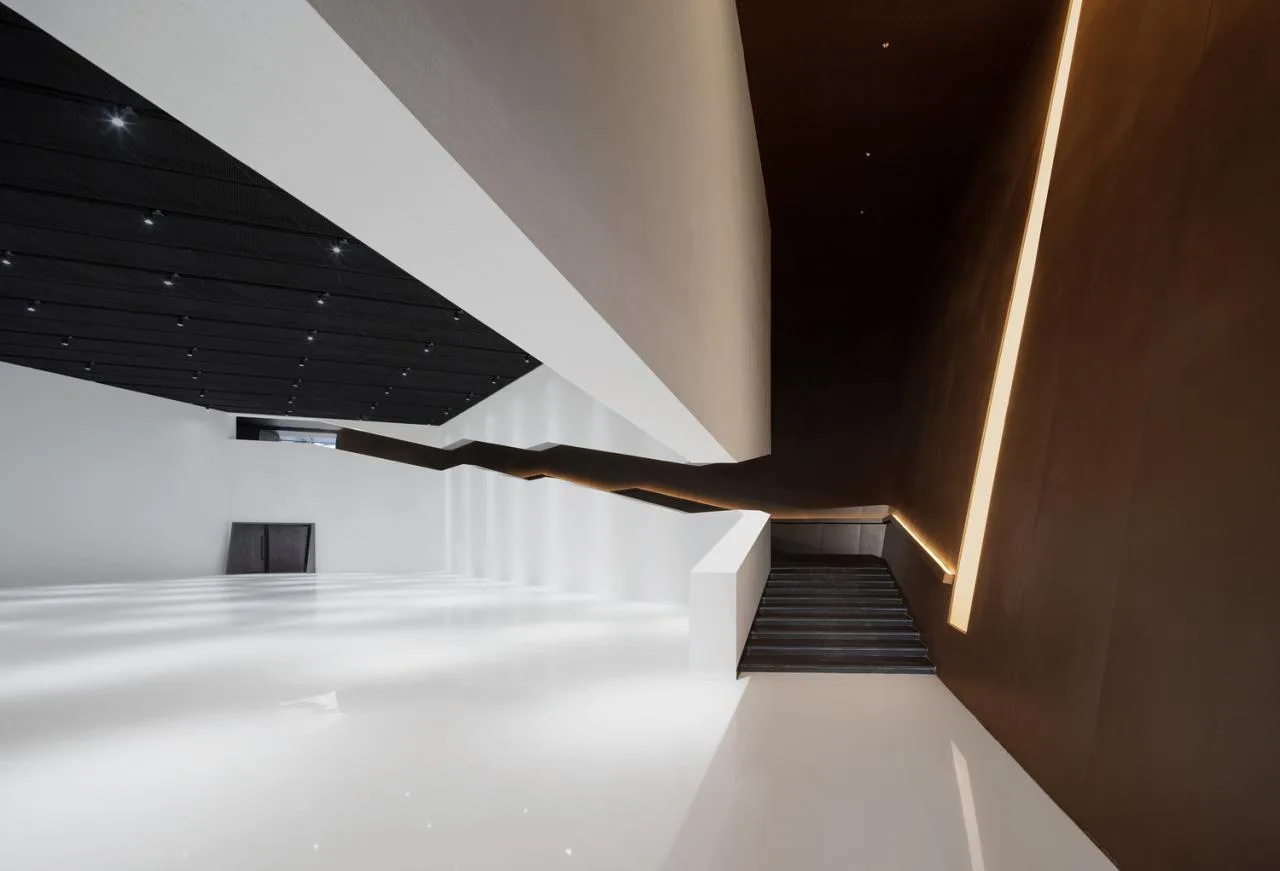
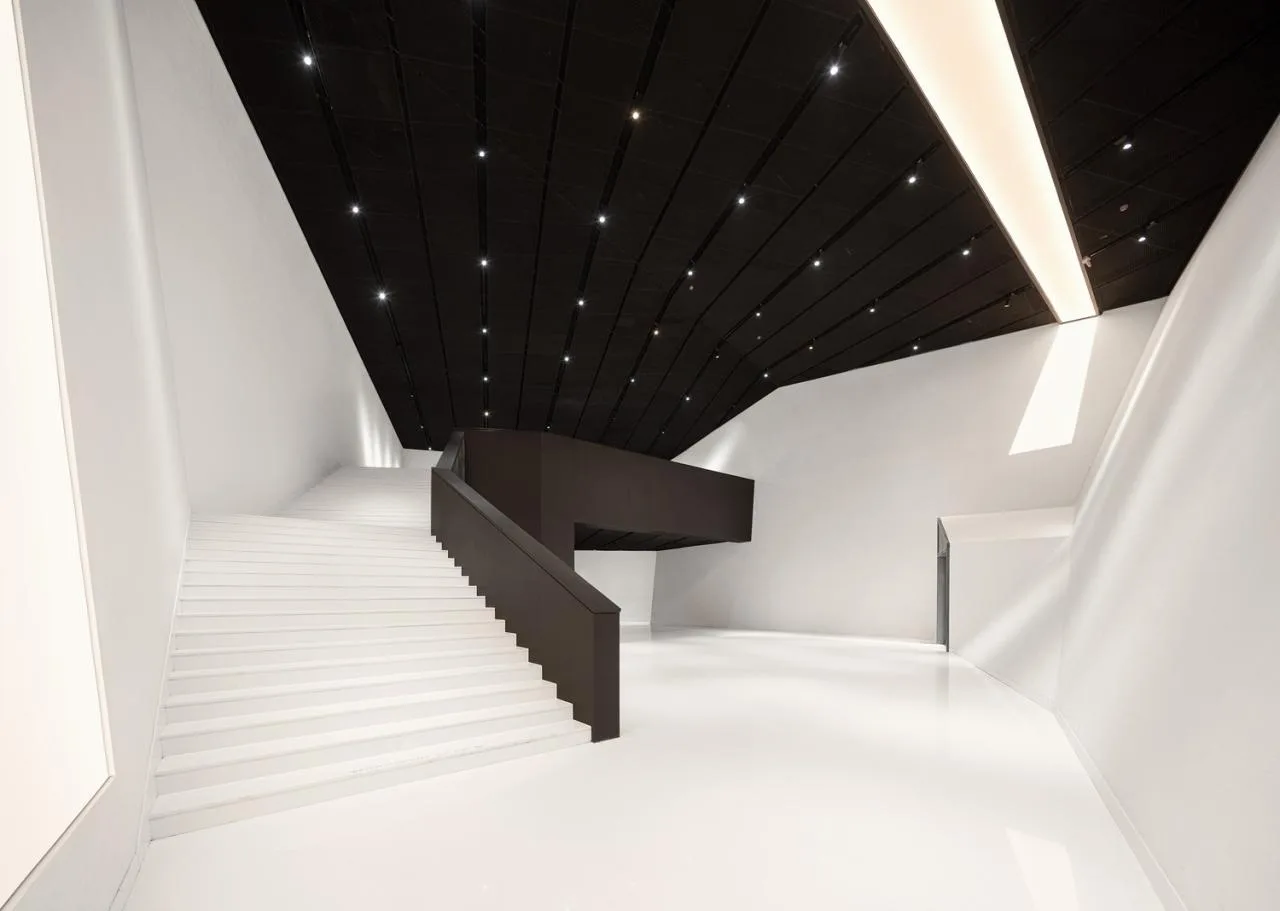
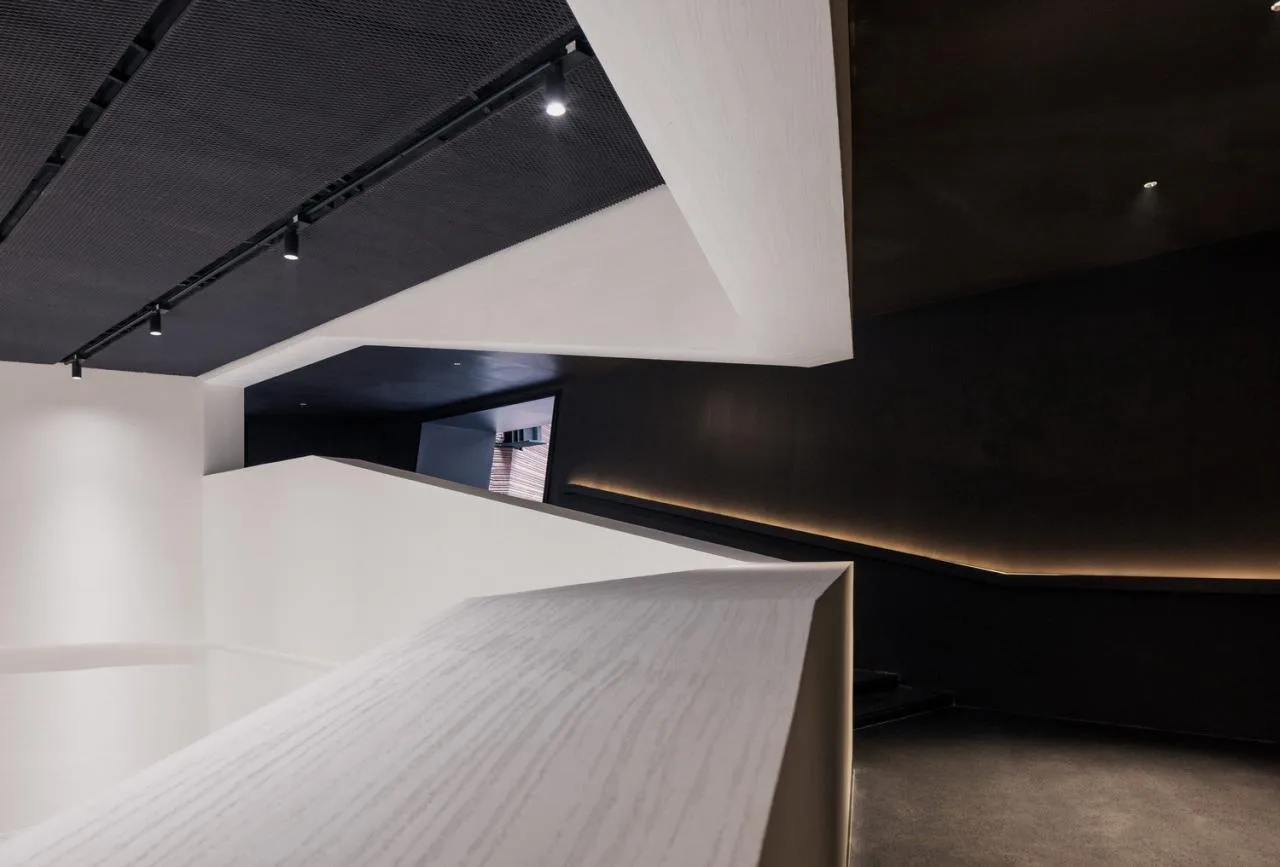
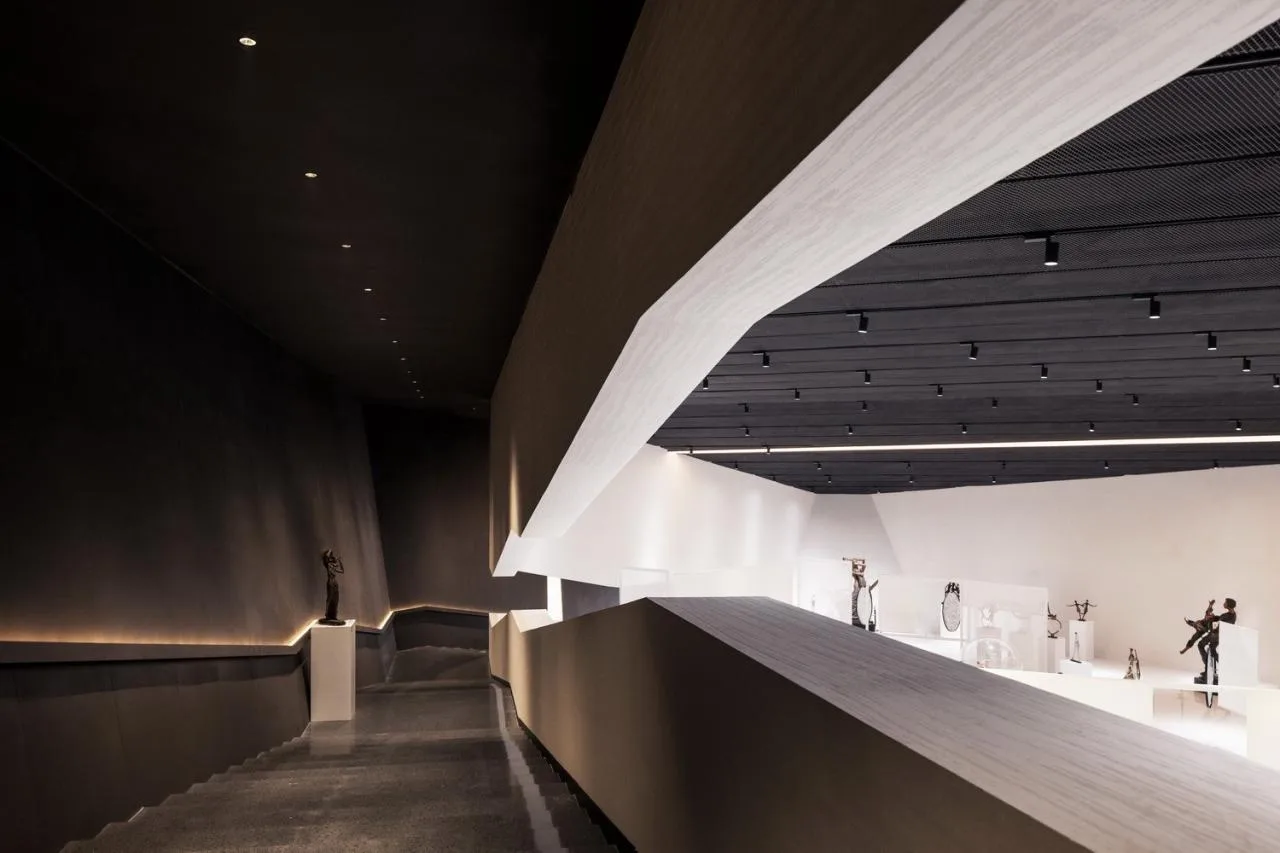
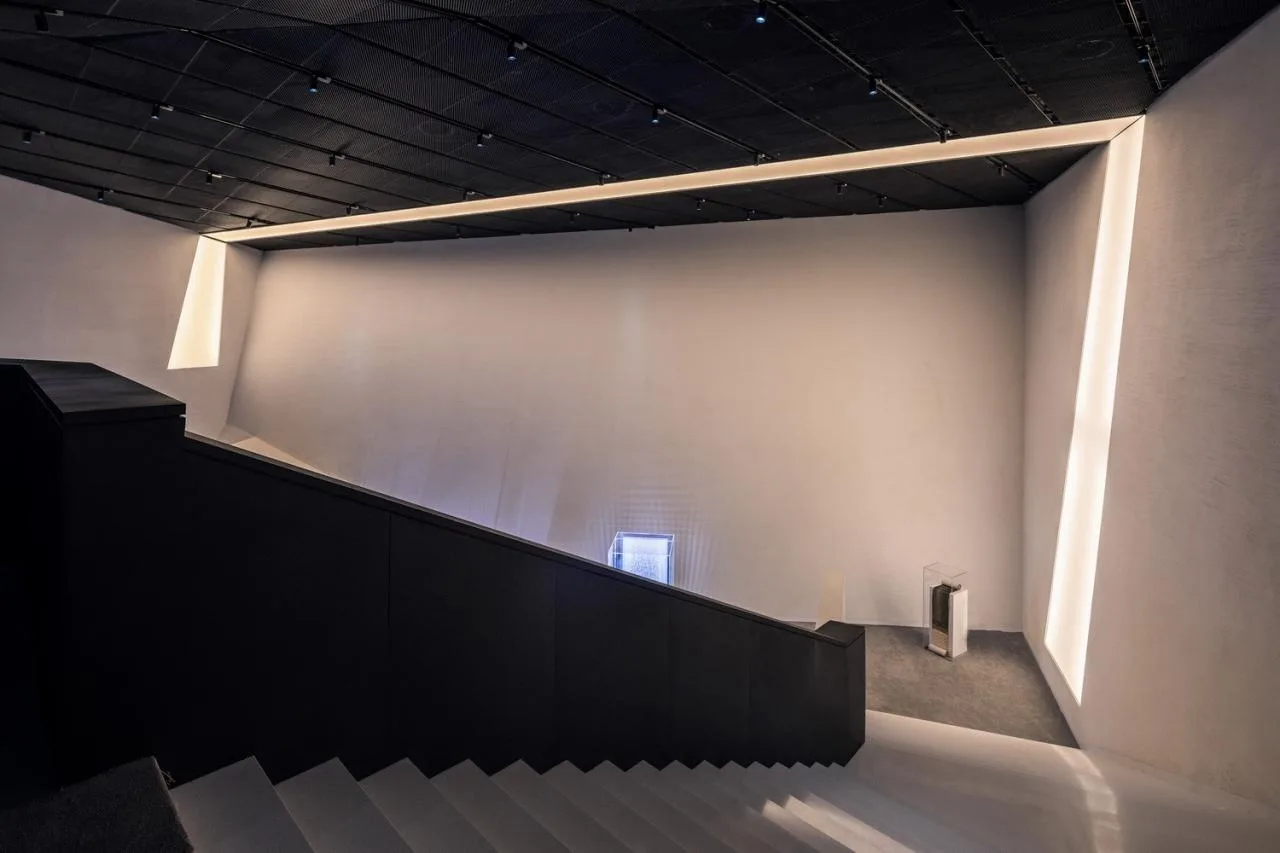
The five independent “stones,” housing exhibition halls and theaters of various sizes, are staggered at different heights. Inside, stairs ascend a 5-6 meter height difference, guiding visitors along a “mountain boardwalk” that ultimately opens to a bright, spacious atrium on the first floor. As one visitor described: “At first, the passage is extremely narrow, just wide enough to pass through. After walking dozens of steps, suddenly everything opens up and becomes clear.”
△ Photography: Ziran Architecture Photography
△ Photography: Wang Ce
The canyon imagery continues in architectural features like indoor light strips, narrow strip windows, and front square pathways, creating spatial tension that flows seamlessly between interior and exterior.
△ Photography: Wang Ce
05. Materials and Construction: Local Expression through Industrialized Materials
△ Photography: Ziran Architecture Photography
In considering the relationship between the architecture and its environment, we took into account the adjacent red brick sculpture complex. While traditional materials from the complex could have been used, technical requirements, construction precision, and structural safety led us to adopt industrialized modern materials that still express local cultural identity. This approach also provides insight into advancing local building industrialization and construction techniques in the region.
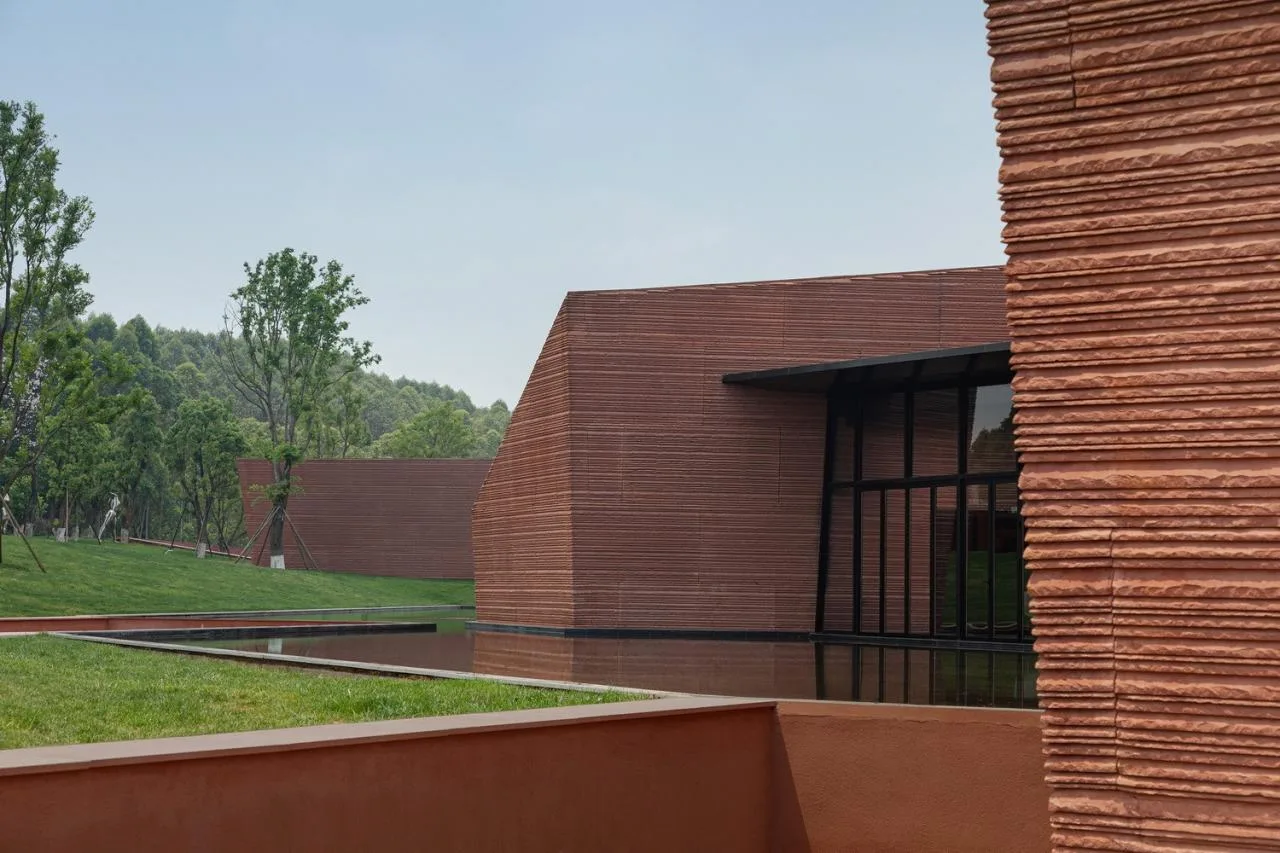
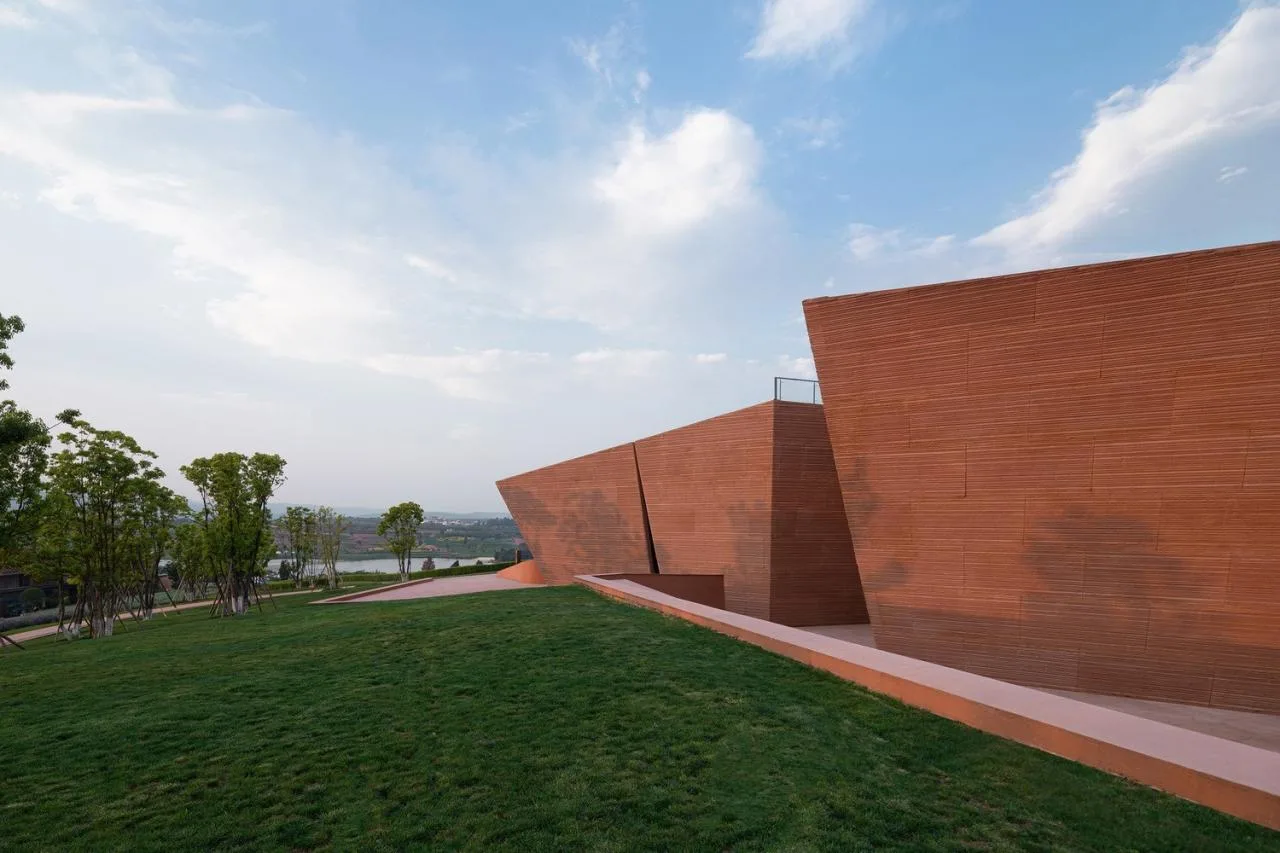
△ Photography: Ziran Architecture Photography
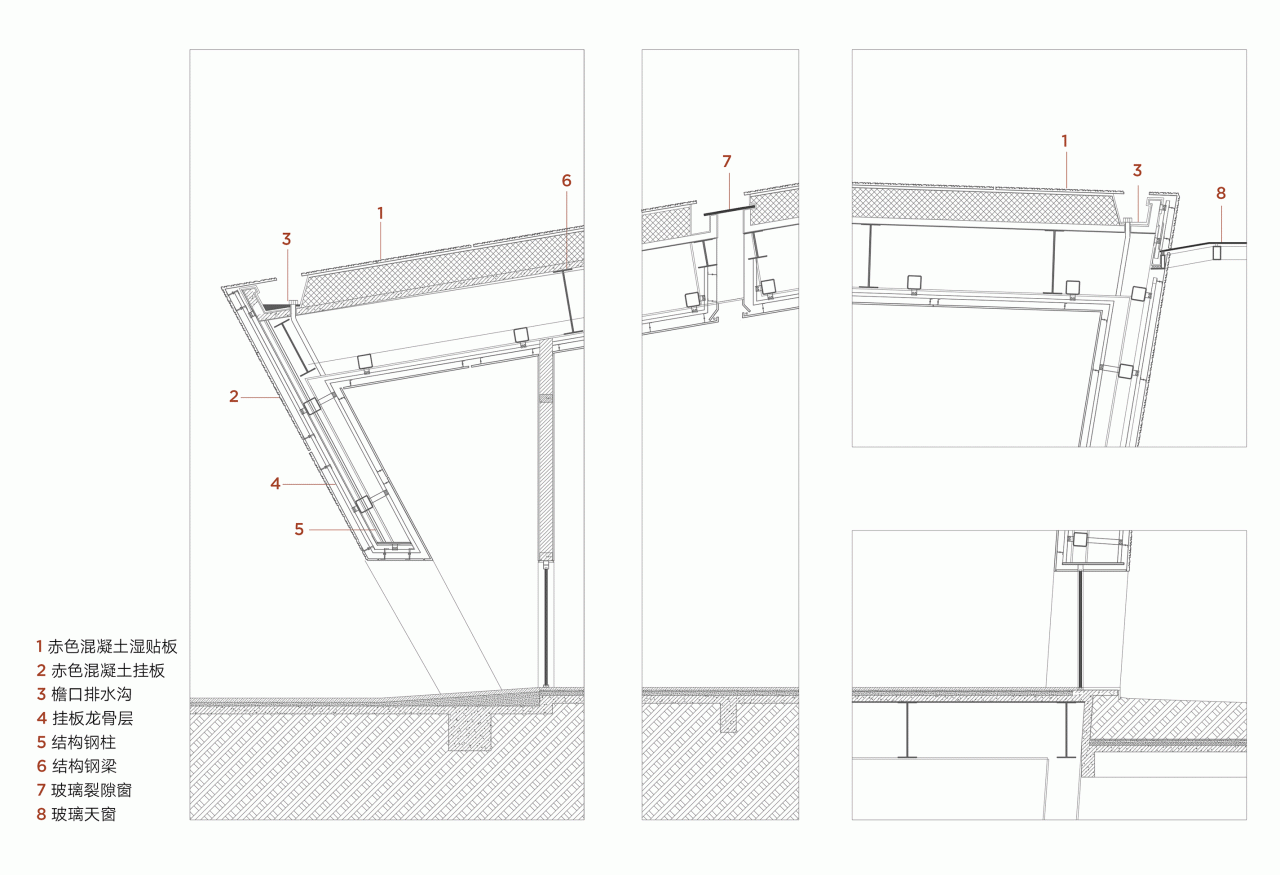
The art center’s main structure is steel, with an exterior formed by a red concrete dry-hanging curtain wall system. This creates sharp, simple textures reminiscent of natural red stone.
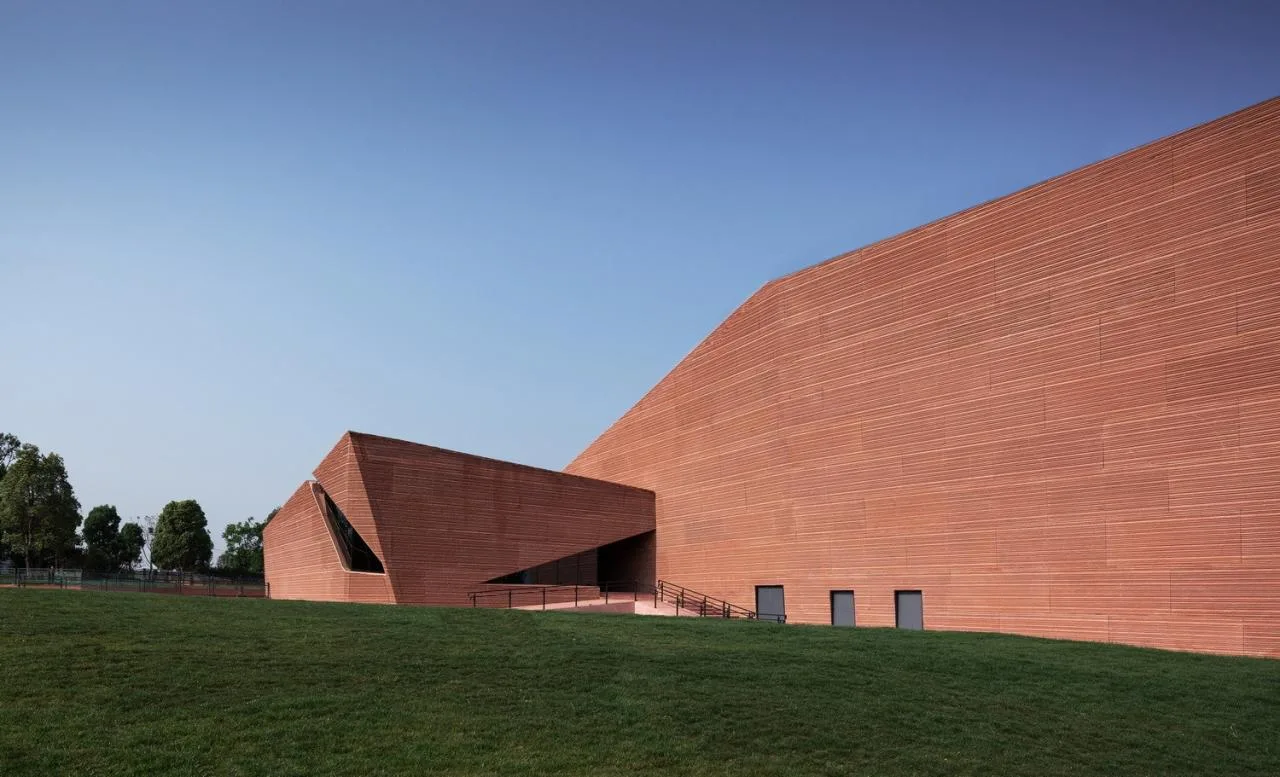
△ Photography: Wang Ce
1. Non-Orthogonal Structural Framework
The structure had to satisfy multiple conditions: support irregular volumes with angular cuts; deliver large column-free spans for theaters and exhibition halls (up to 35 meters east-west, and 24 meters for glass atriums); complete the civil construction in six months; and meet seismic and crack resistance standards of level 8 or higher. Steel framing was the optimal solution.
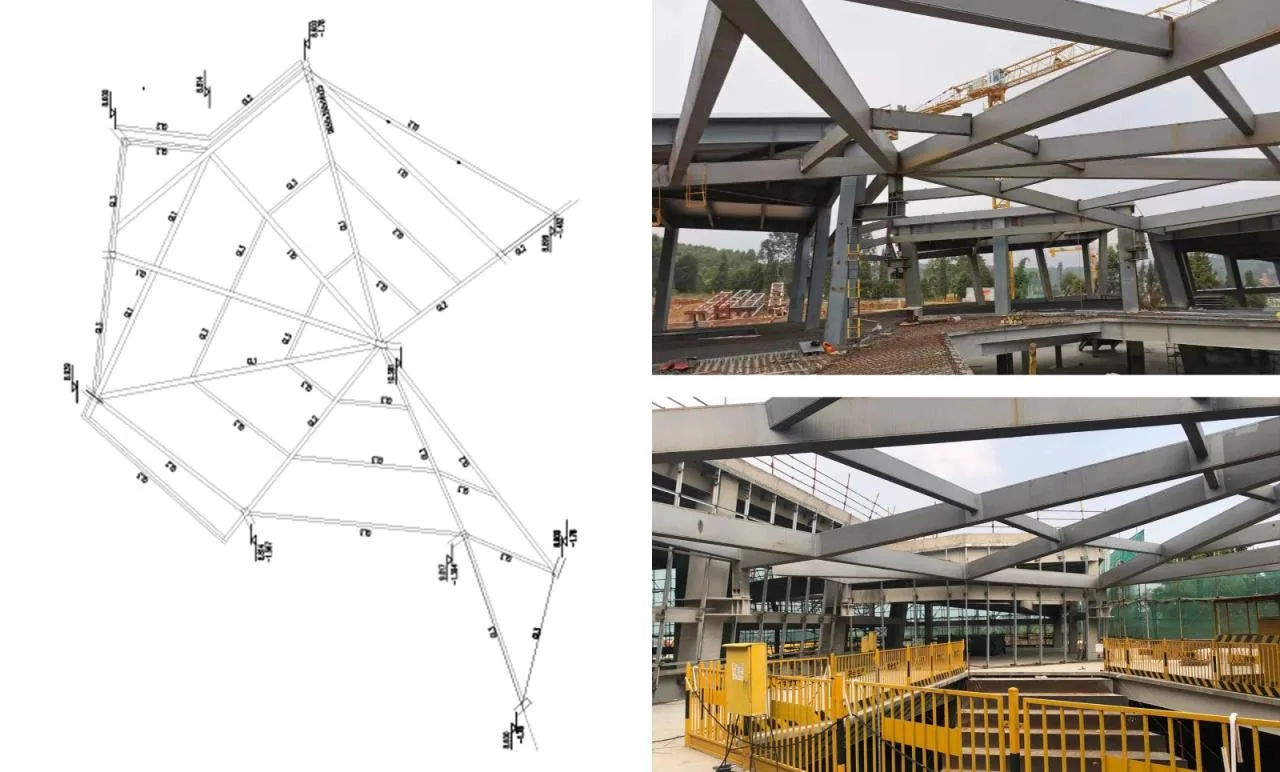
△ Steel structure of atrium © line+
2. Stone Curtain Wall
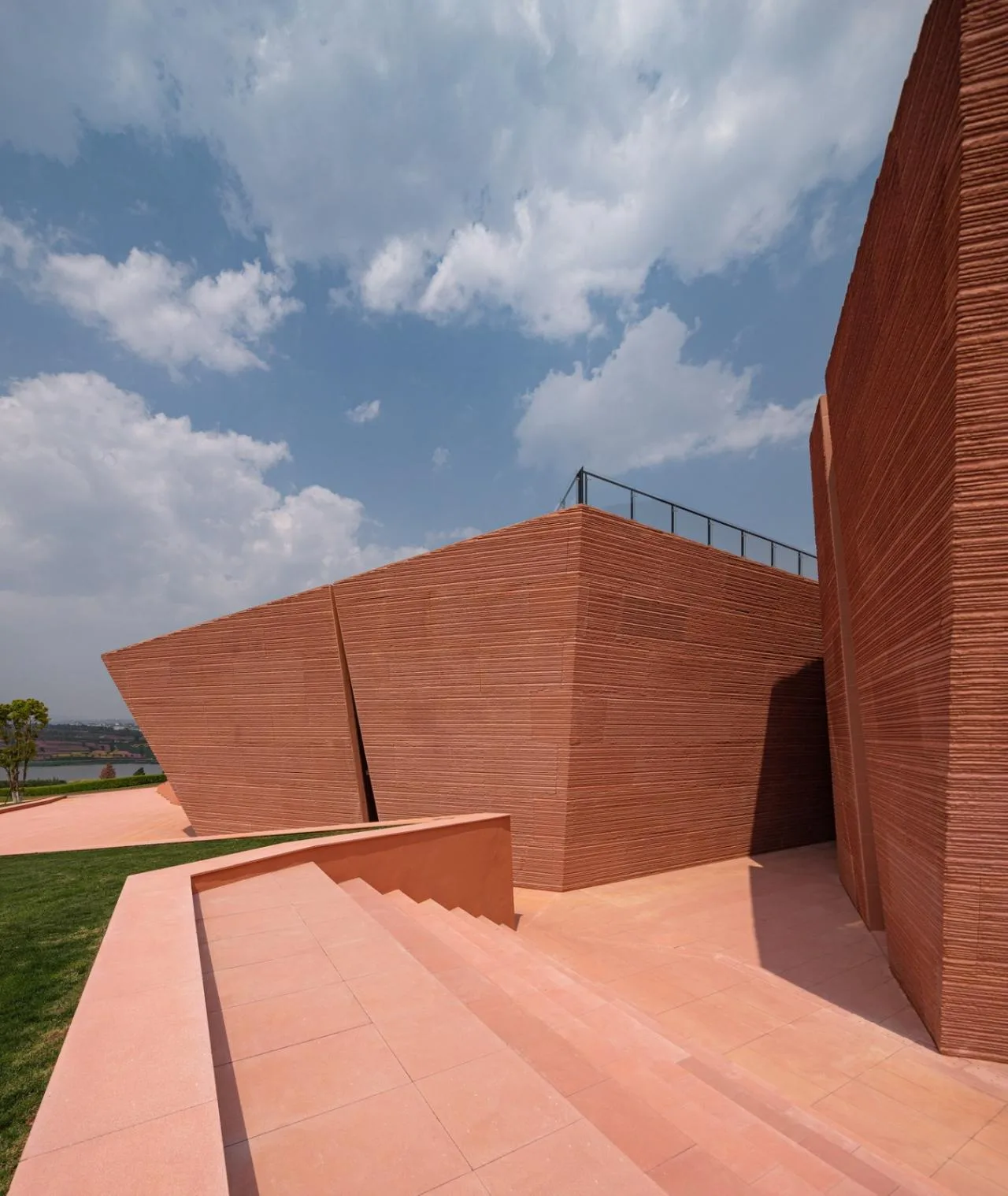
After evaluating various modern cladding systems, we selected a GRC (Glassfiber Reinforced Concrete) dry-hanging curtain wall system. Its natural surface texture and consistent color control mimic red sandstone. The 1.5 × 3 meter panels overcome Yunnan sandstone’s traditional size limitations, allowing versatile texture layouts. The system permits sharp angles through yin/yang detailing and can be installed as an open curtain wall to minimize visible construction marks.
△ Wall body sample © line+
△ Photography: Ziran Architecture Photography
2.1 Texture Design
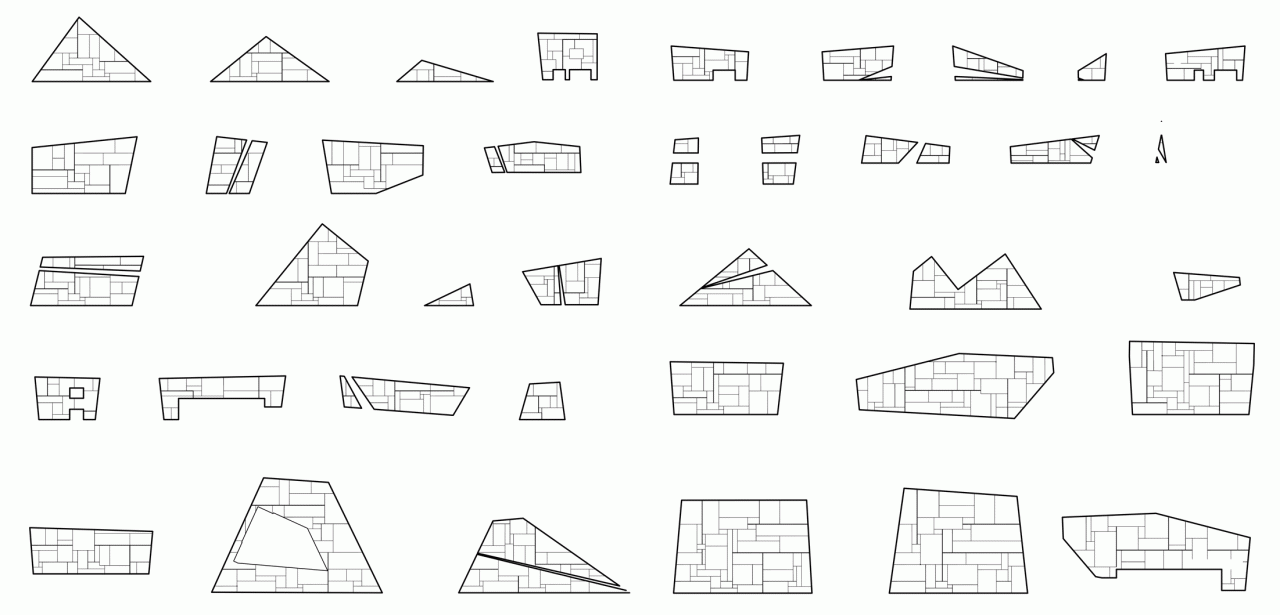
Initially, curtain wall joints were embraced as design elements, with uneven surface textures and structured joints creating rich facade variation.
△ Initial hanging board layout © line+
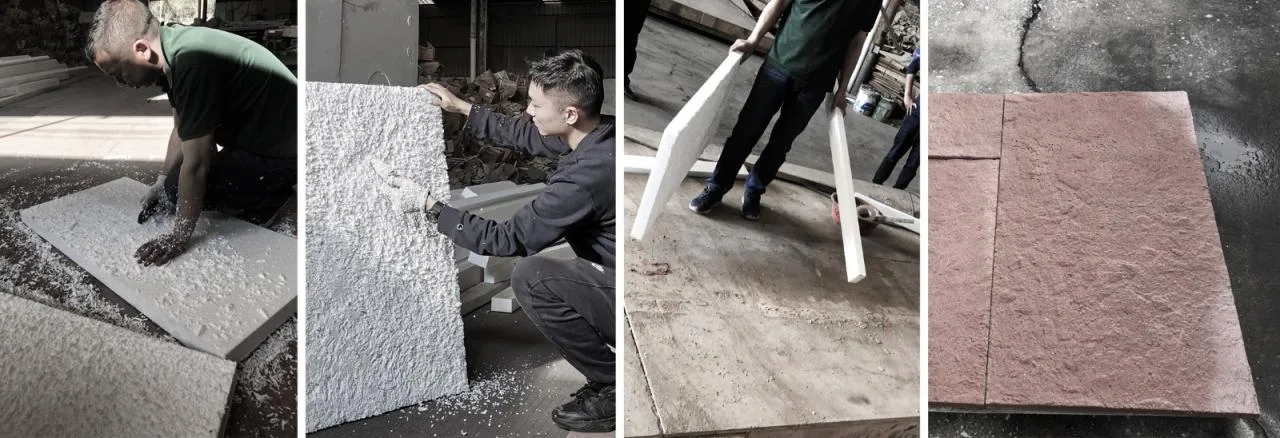
△ First production site © line+
After six months and over ten texture trials, on-site mockups revealed issues: irregular textures caused seams not to overlap fully, exposing base boards; distant views diminished the intended compositional seams; and handcrafted polystyrene molds were non-reusable, increasing costs and construction risks.
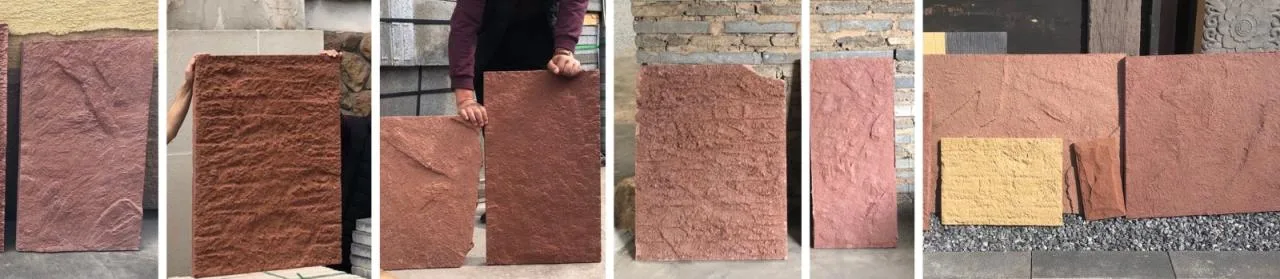
△ Multiple texture experiments © line+
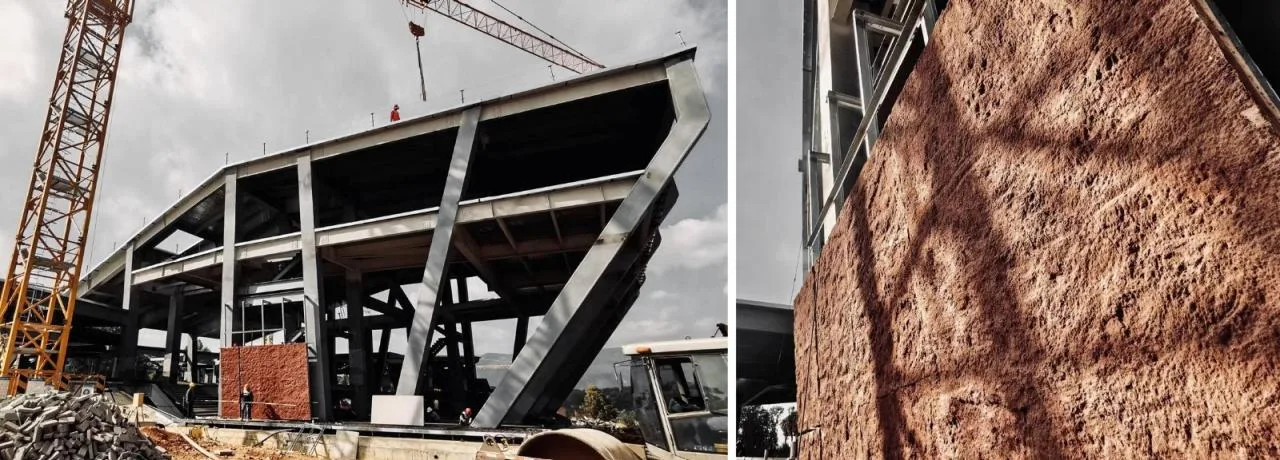
△ On-site mockup © line+
To address these, we revisited the core design question: how to achieve a rough, natural stone texture industrially while ensuring quality control?
We settled on strong horizontal lines assembled with tightly joined vertical seams. Upper and lower seams are concealed at internal rack corners, softening tongue-and-groove joints and enhancing the overall stone impression. Most panels are standardized except for custom corners, where hand-chiseled textures introduce randomness to mask any misalignments.
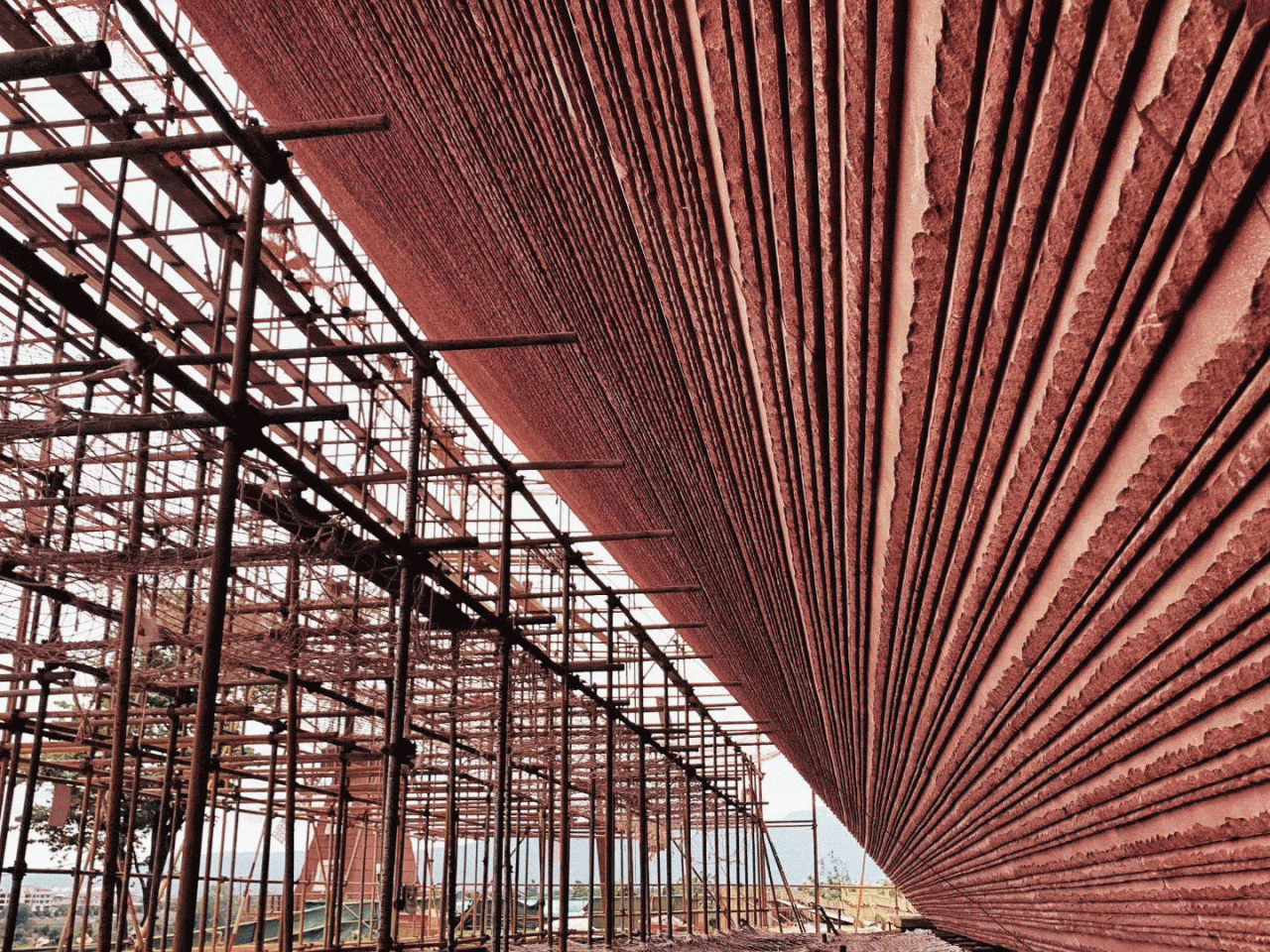
△ Horizontal line texture installation © line+
The final architectural texture, rich with depth and shadow, enhances the ruggedness of the monumental “giant stone array.”
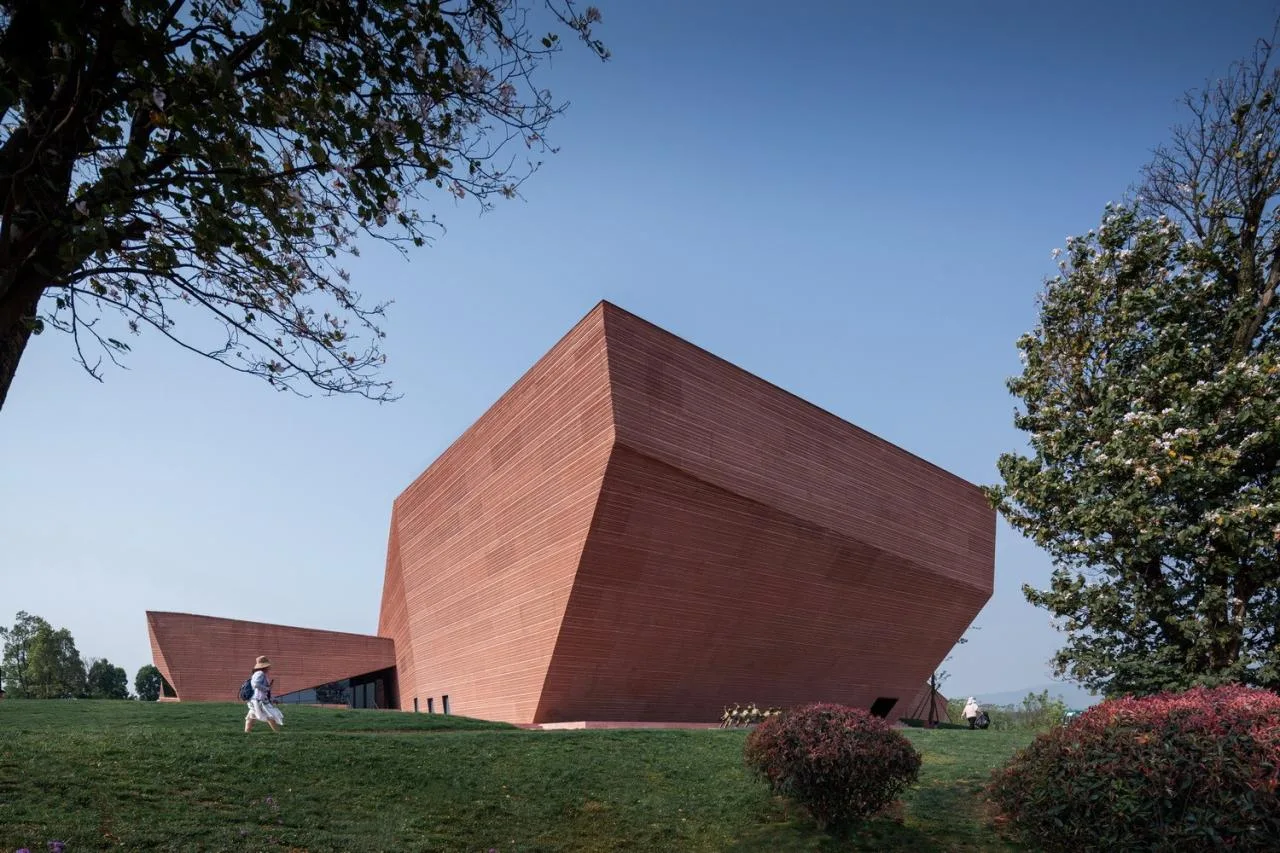
△ Photography: Wang Ce
2.2 Color Adjustment
The initial color scheme used industrial dyes, which faded over time and left artificial layering visible. To achieve a natural red akin to local Maitreya bricks, local red soil was integrated into the GRC panel mix, creating a deep, authentic red that permeates the material.
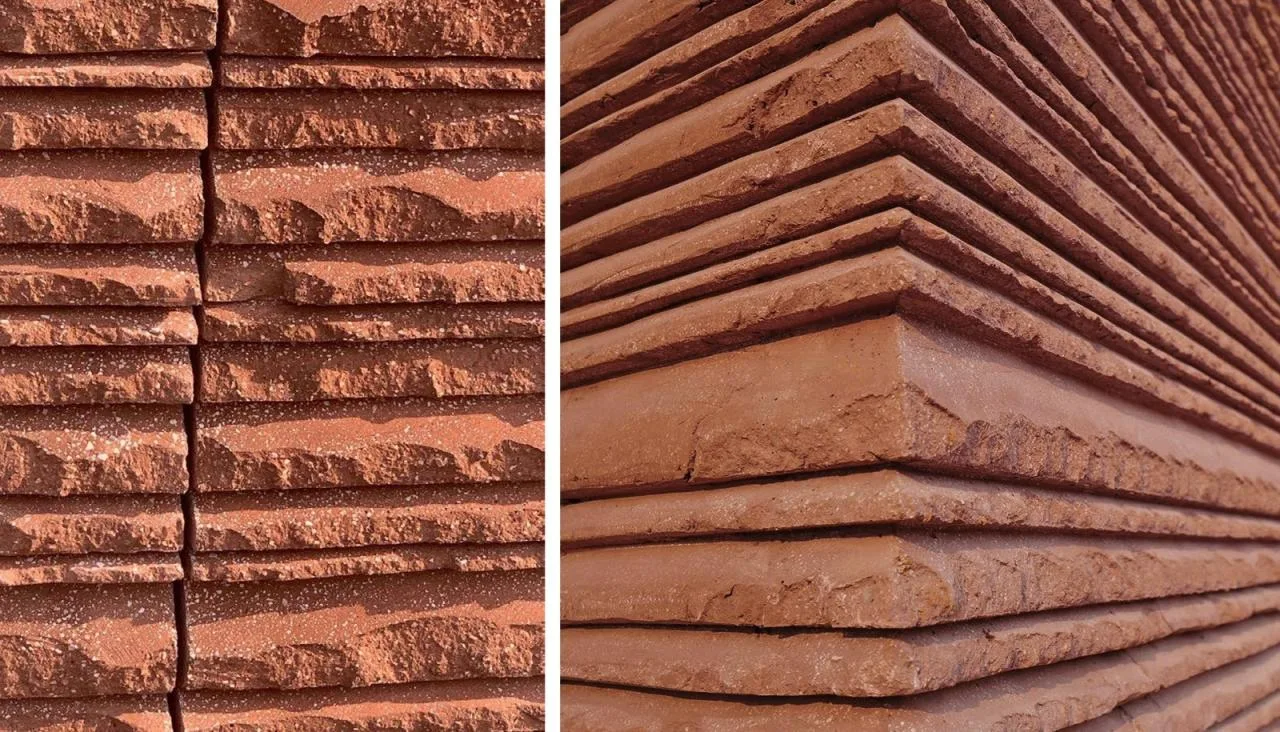
△ Hanging board detail © line+
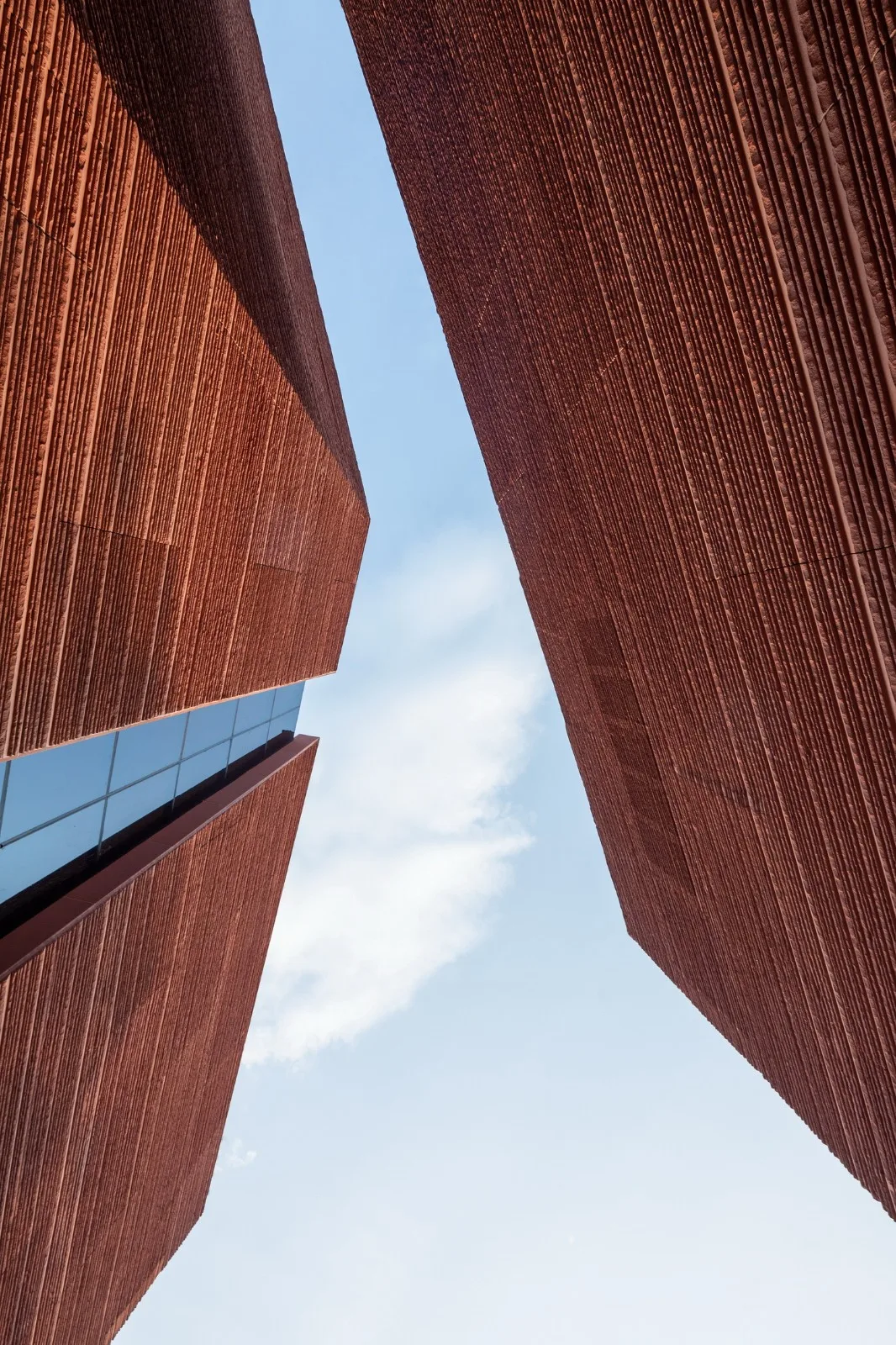
△ Photography: Wang Ce
2.3 Standardization Across Varied Facade Slopes
Each facade’s horizontal racks had to connect smoothly, yet the varying slopes altered rack widths at adjacent corners. Our challenge was to maintain standardized production and installation under these conditions.
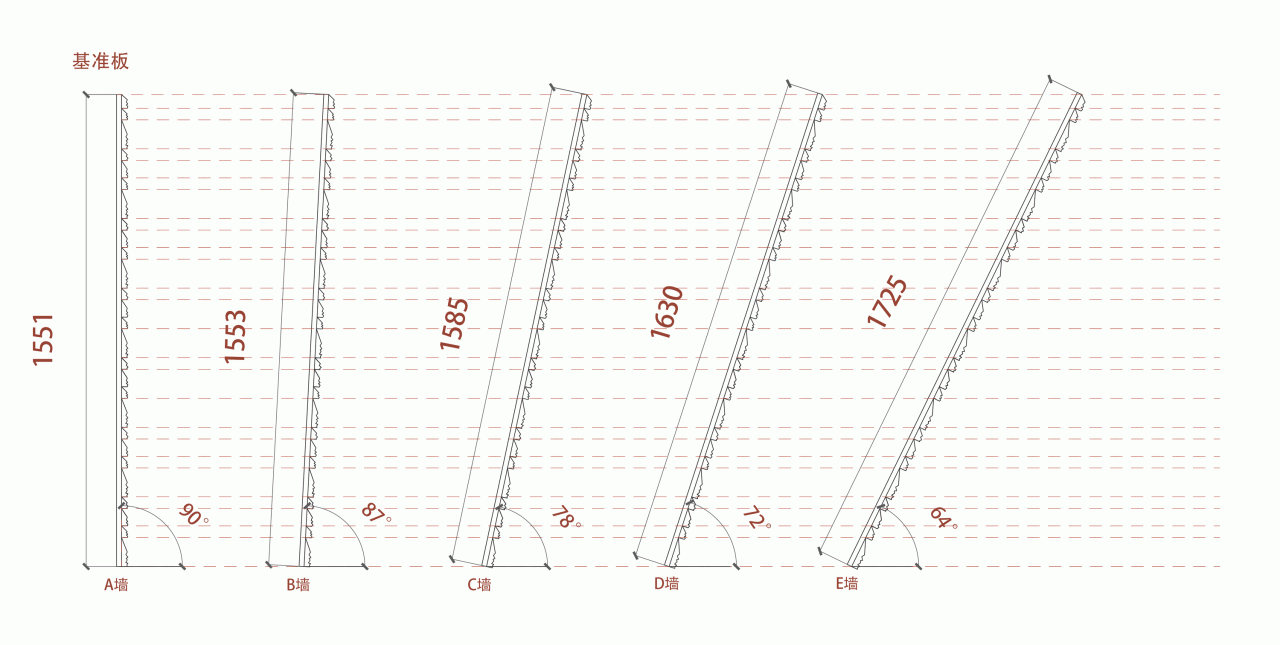
Effect of slope △ on gear rack width
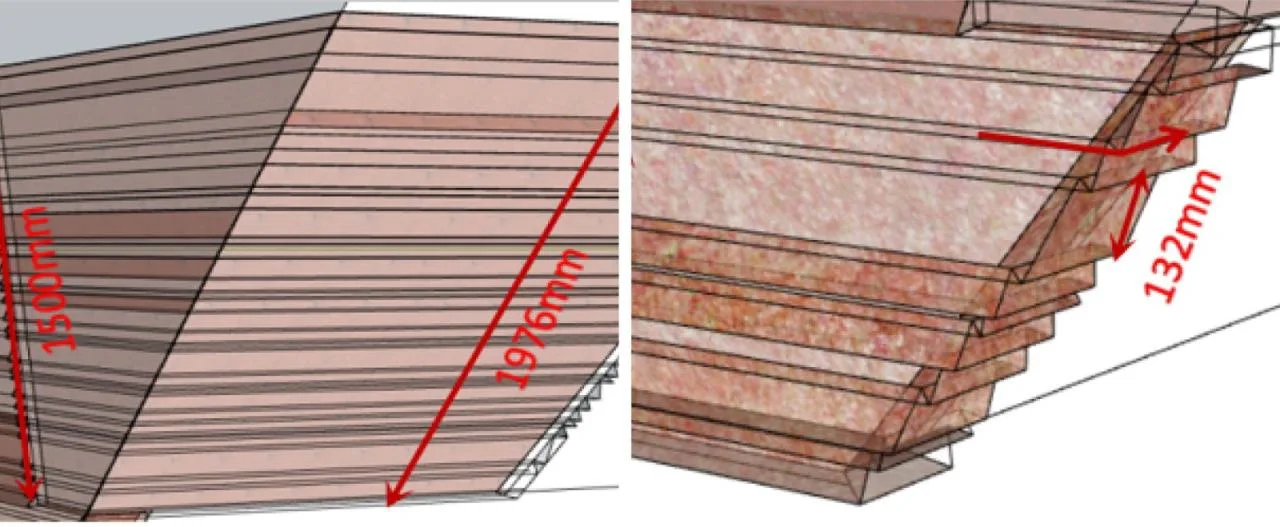
Rack width varies with facade slope © line+
The solution focused on the corner boards: through a revised projection method and computer simulations compared with physical models, we confirmed that adjacent racks with different slopes intersect with overlapping tooth bases. Only the tooth tips misalign, which can be manually chiseled to create the desired textured effect. This manual adjustment compensates for the loss of precision in standardized production and aligns with the concept’s simplicity.
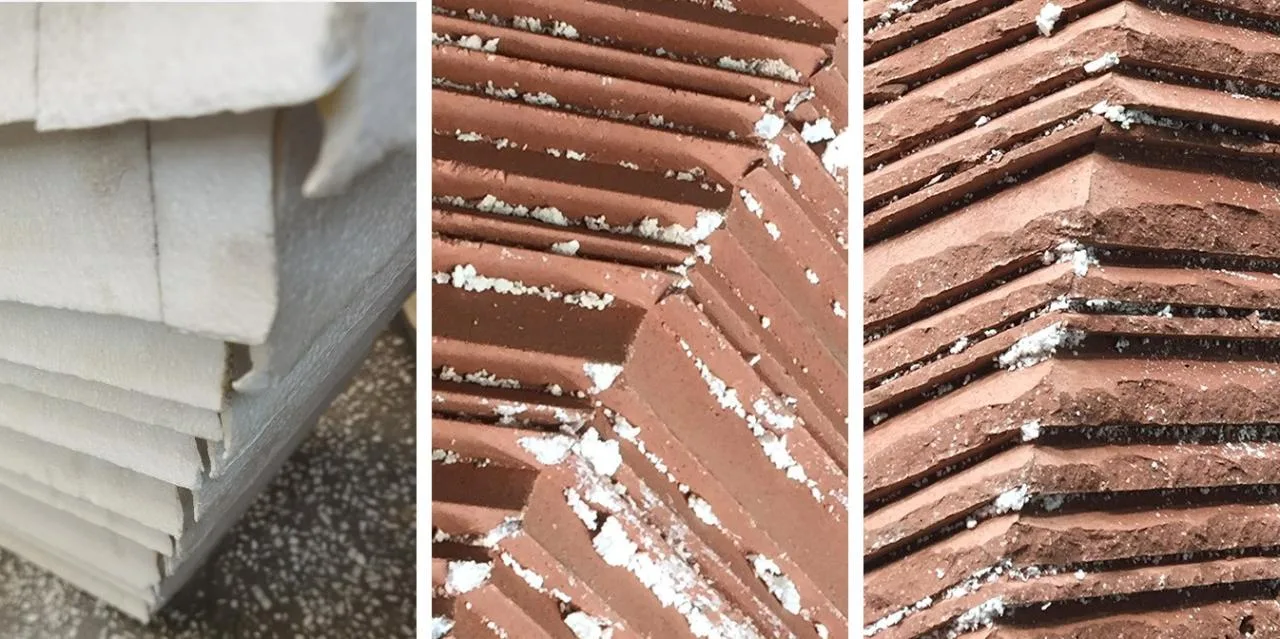
Model validation, physical testing, manual chiseling © line+
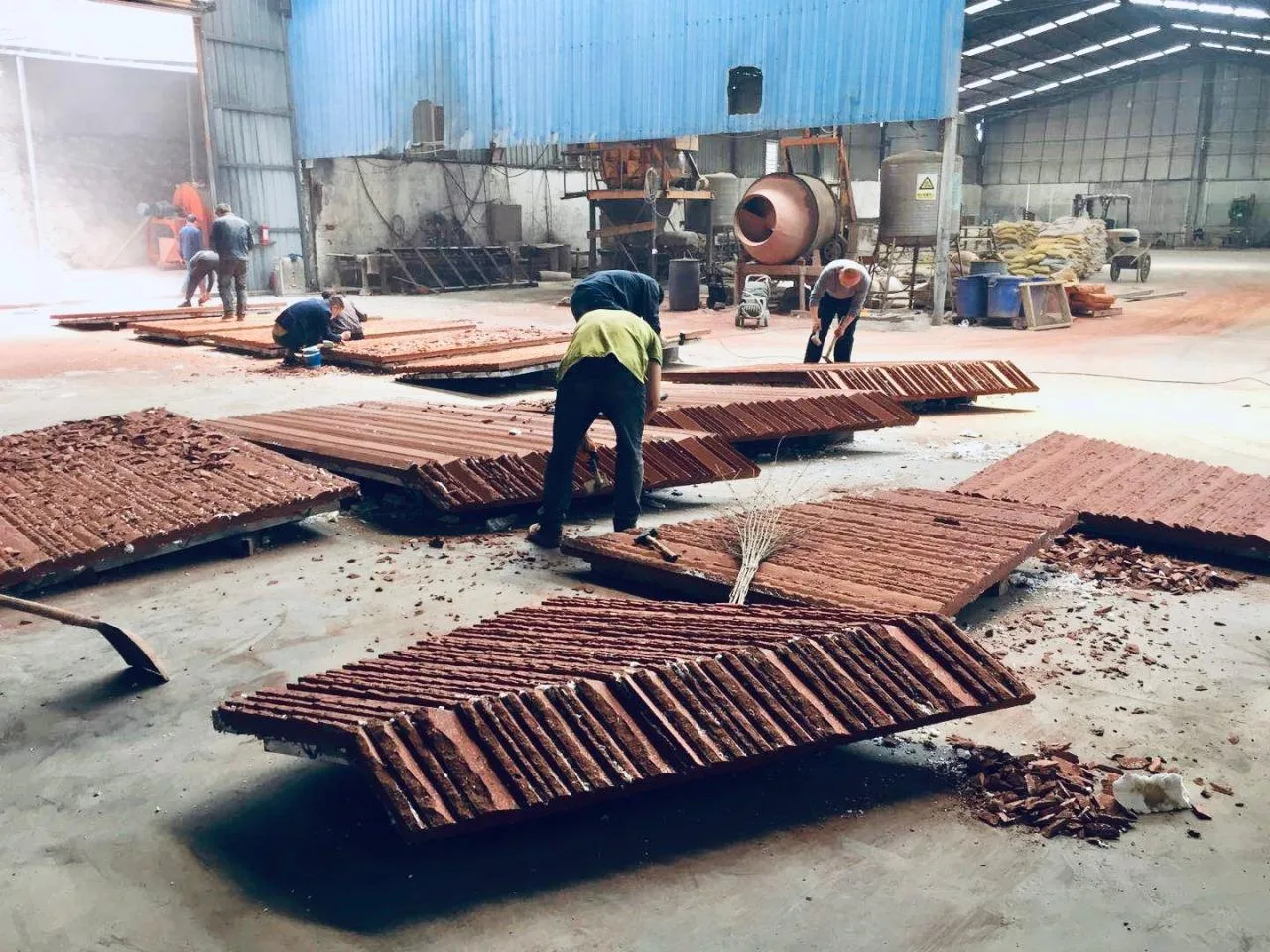
△ Custom non-standard corner panel © line+
Using precise architectural measurements, we produced over 1,600 manufacturing drawings. The facade was divided into standardized prefabricated panels at various scales, connected horizontally by racks. Vertically, adjacent panels were mirror-arranged, enabling standardization with slight facade variation.
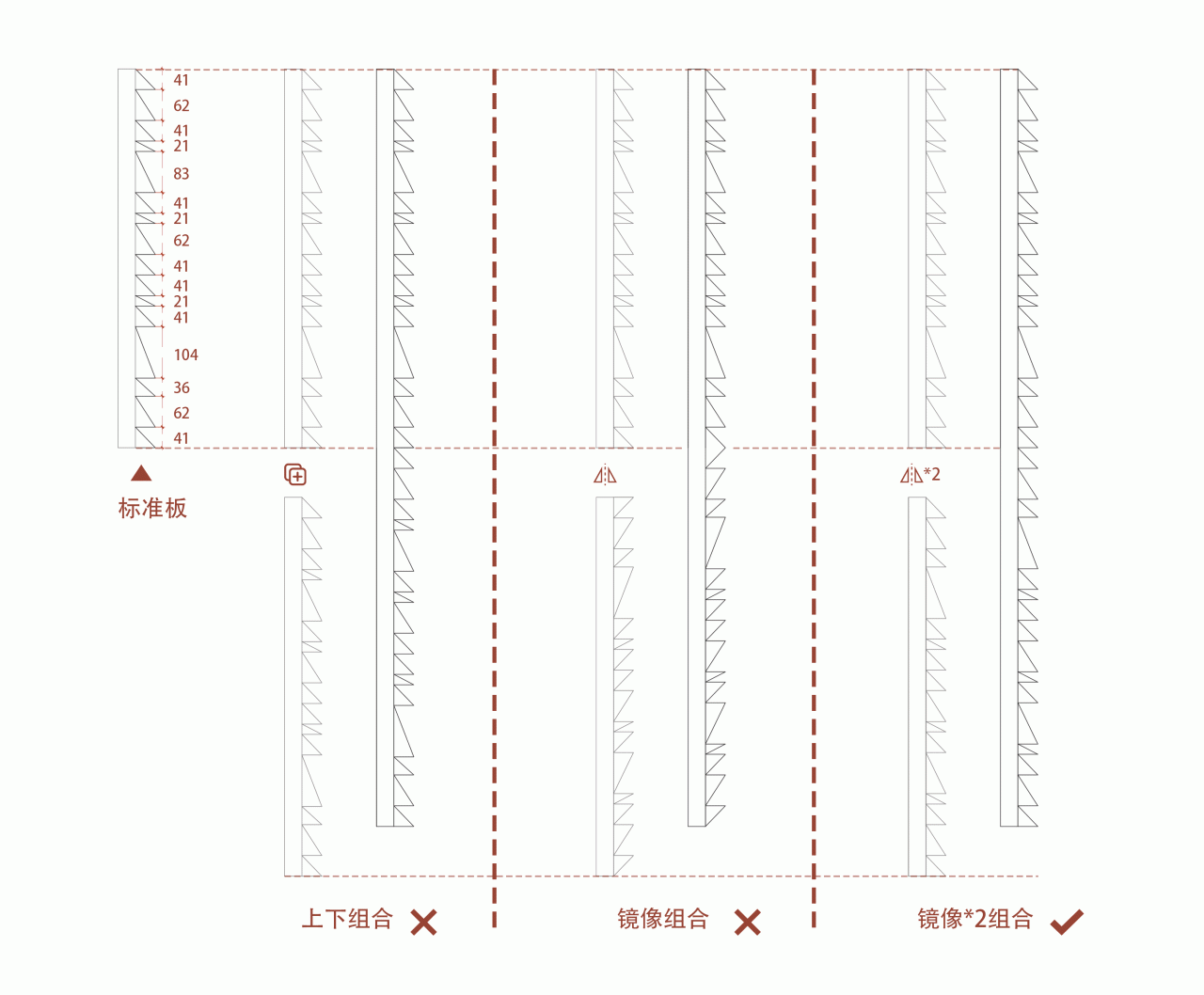
Attempt to integrate various rack widths
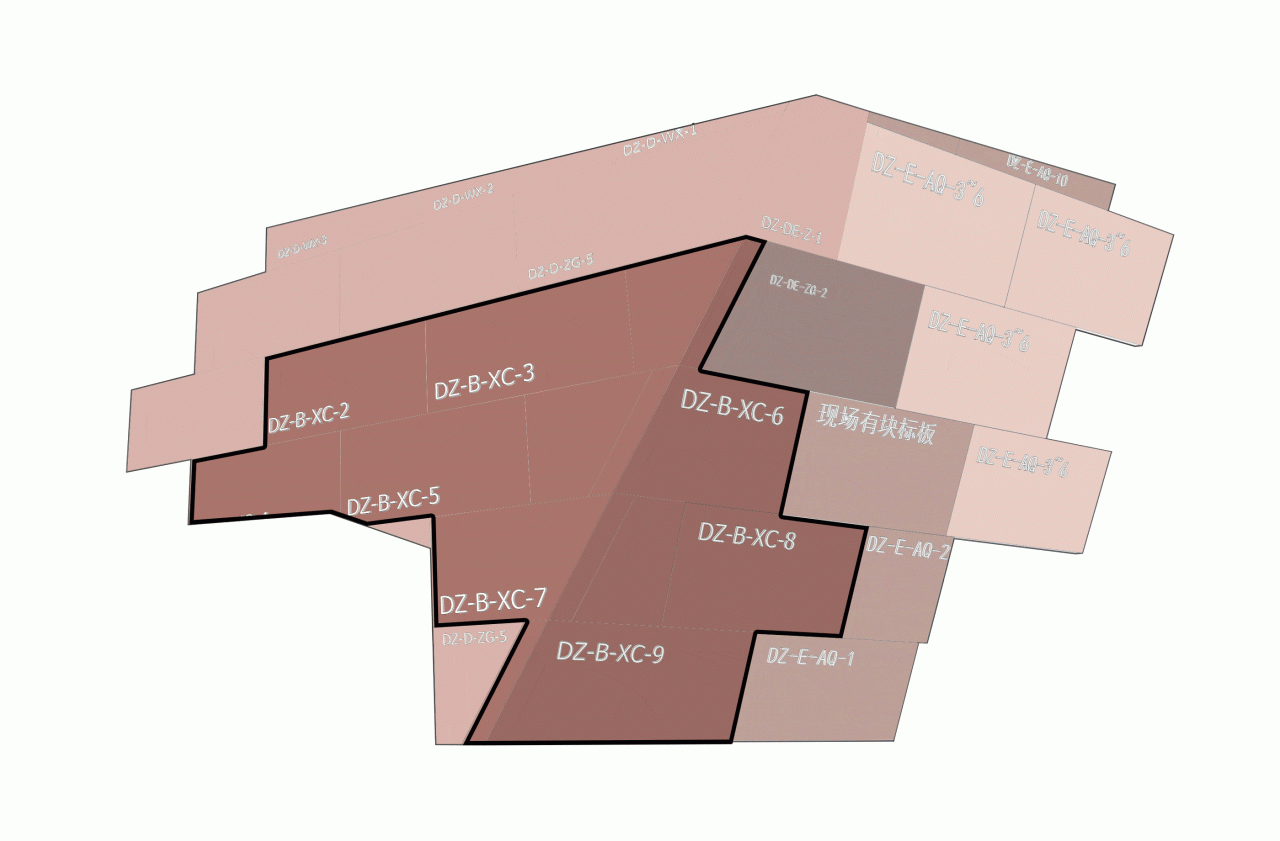
△ Facade model and curtain wall installation © line+
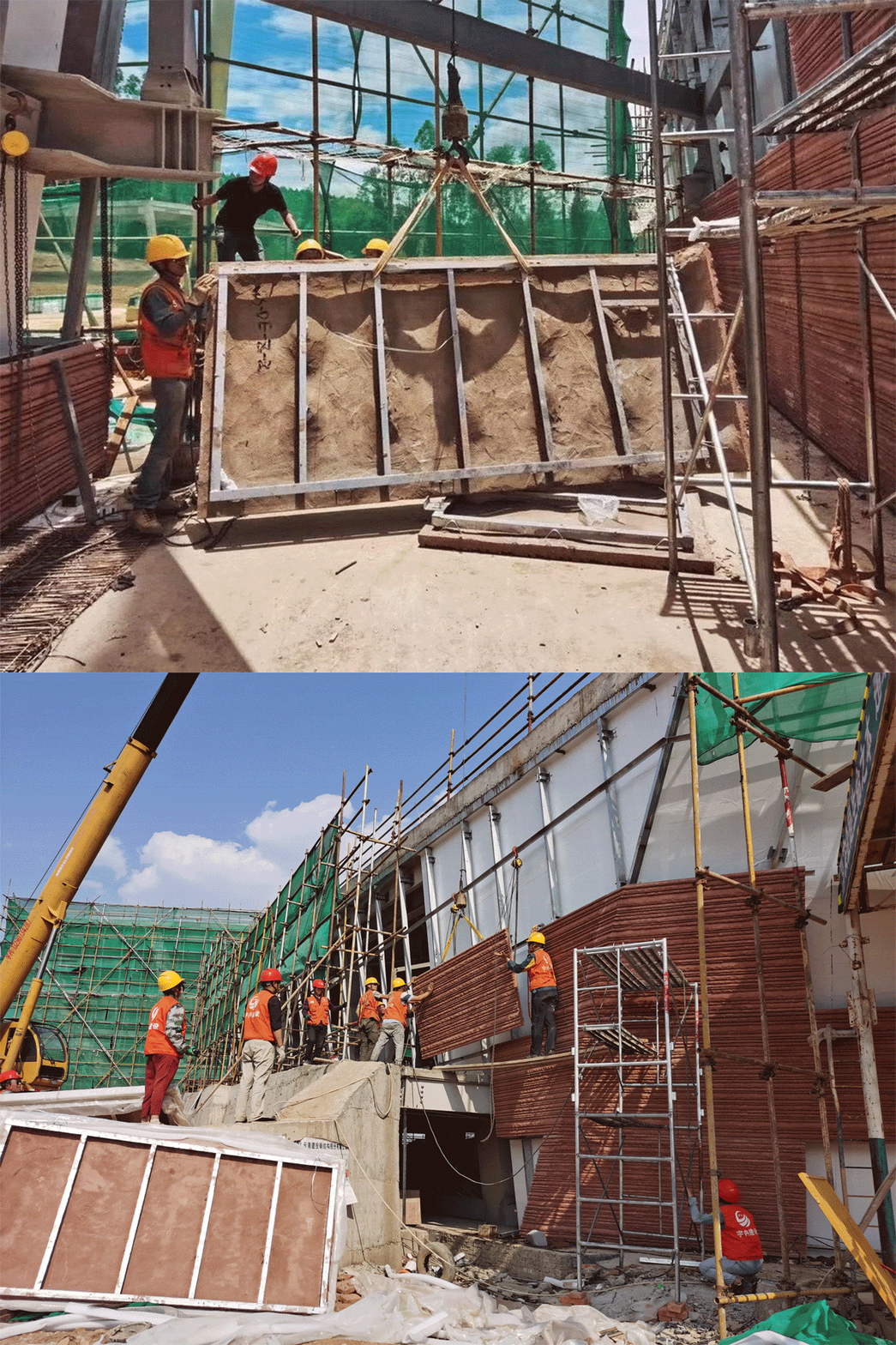
Large-scale hoisting construction © line+
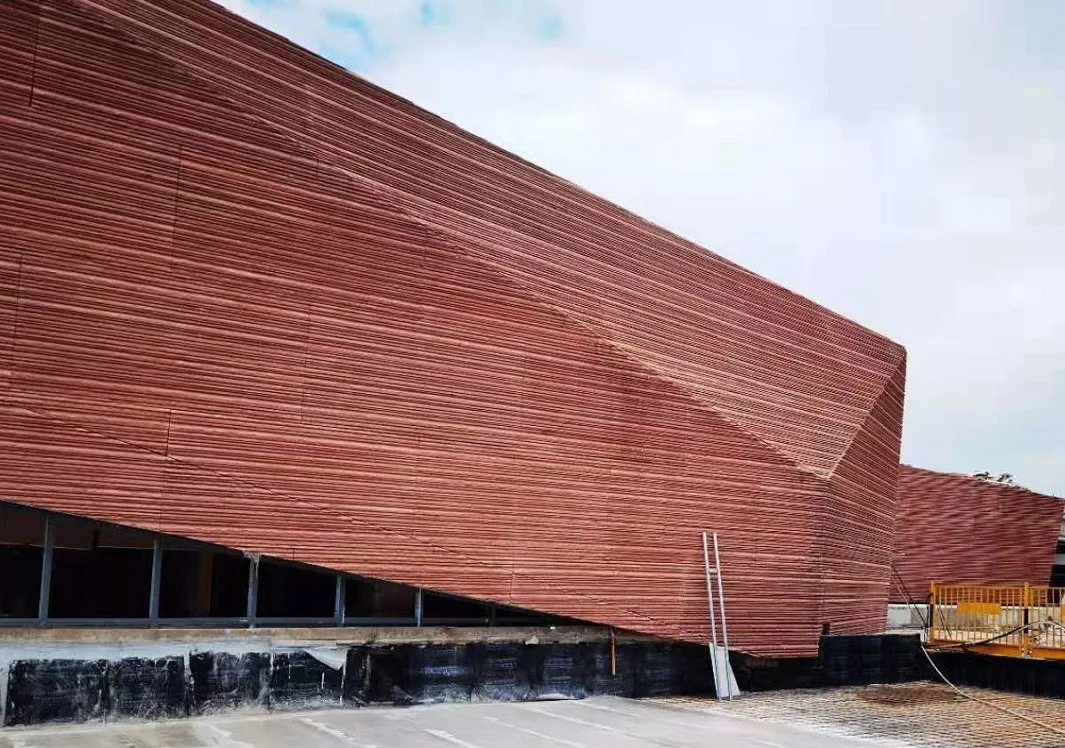
△ Corner of facade after hanging board installation © line+
To maintain the continuity of the original texture, the exterior wall’s texture needed to extend to interior walls and roofs. However, due to cost and structural complexity, the roof and interior walls were finished with wet plaster instead of panels. The panel thickness was reduced and the base layer’s finish was adjusted to achieve a seamless transition and texture continuity between interior and exterior surfaces, including ceilings and walls.
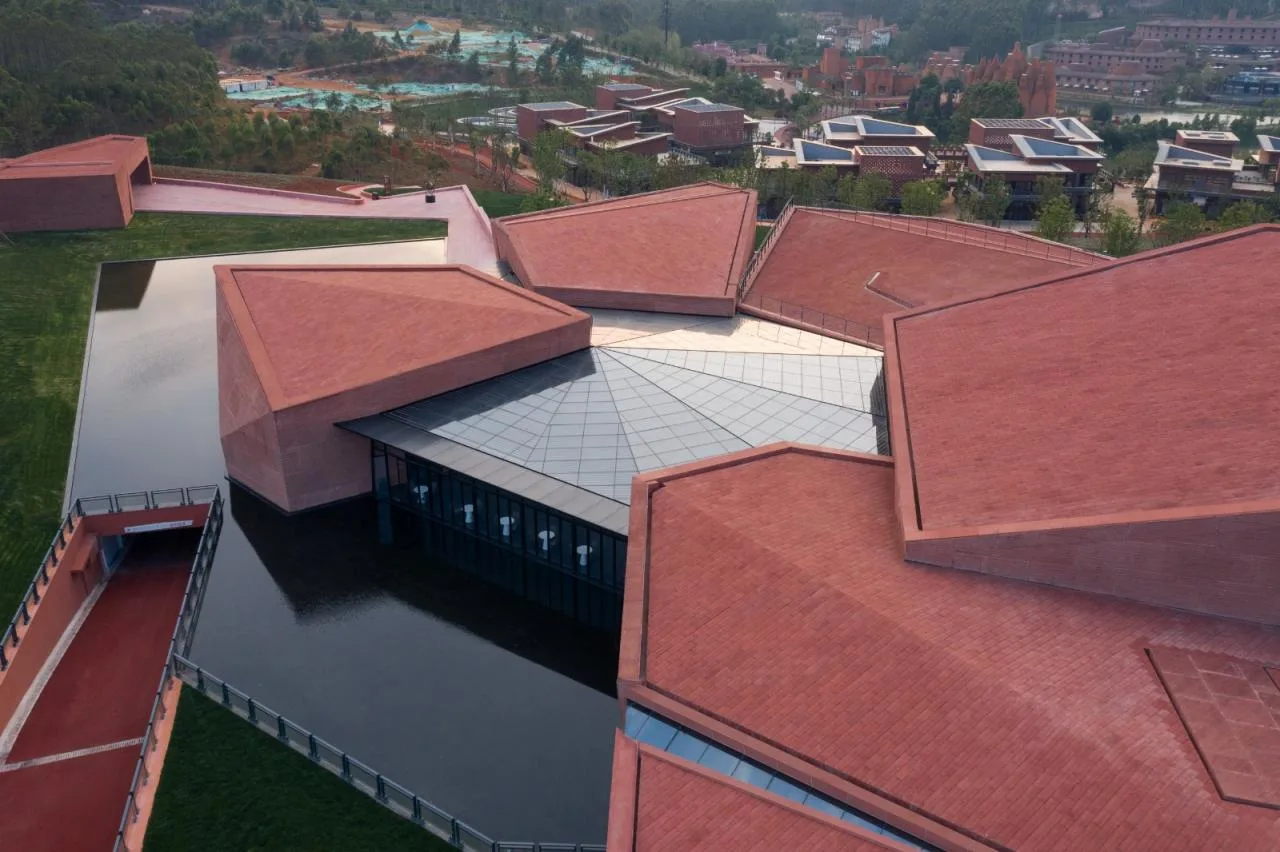
Continuation of roof texture | Photography by Wang Ce
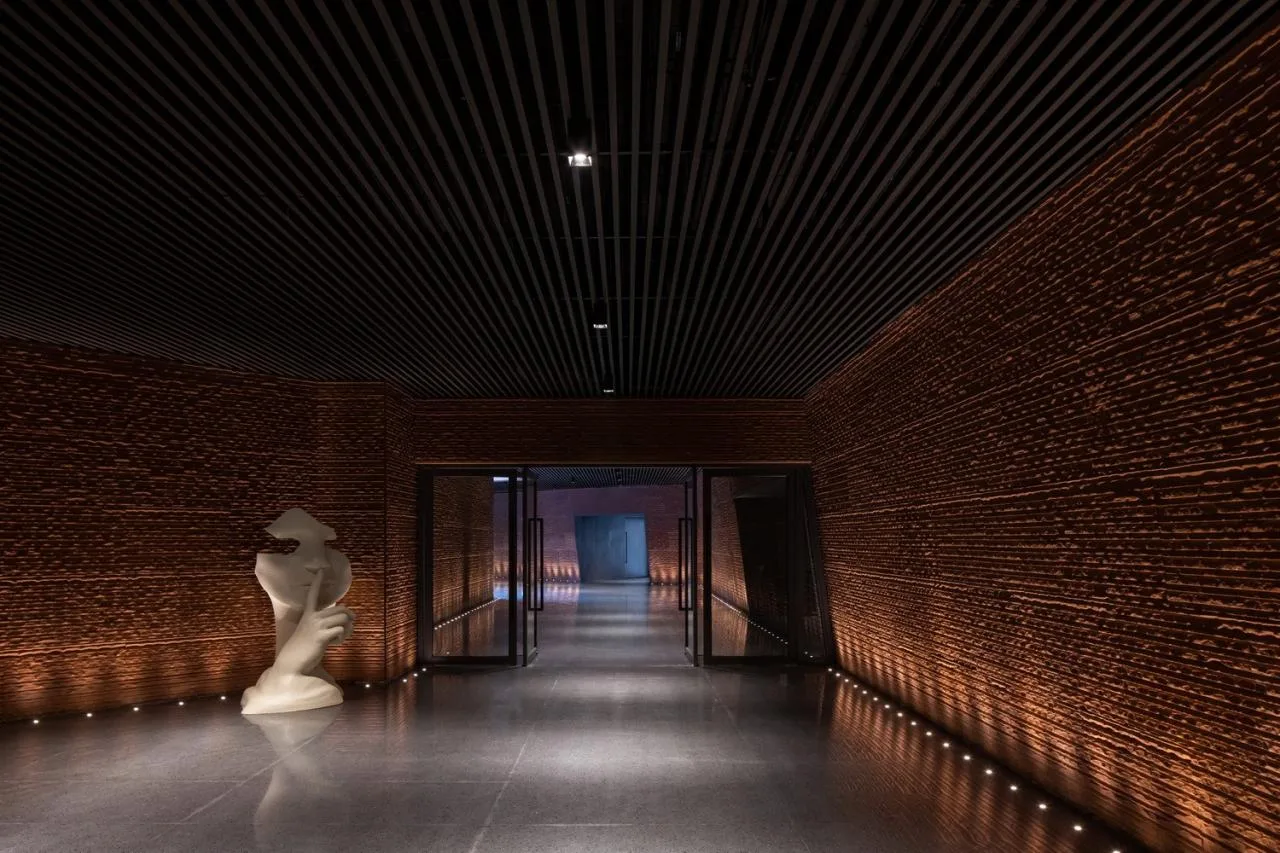
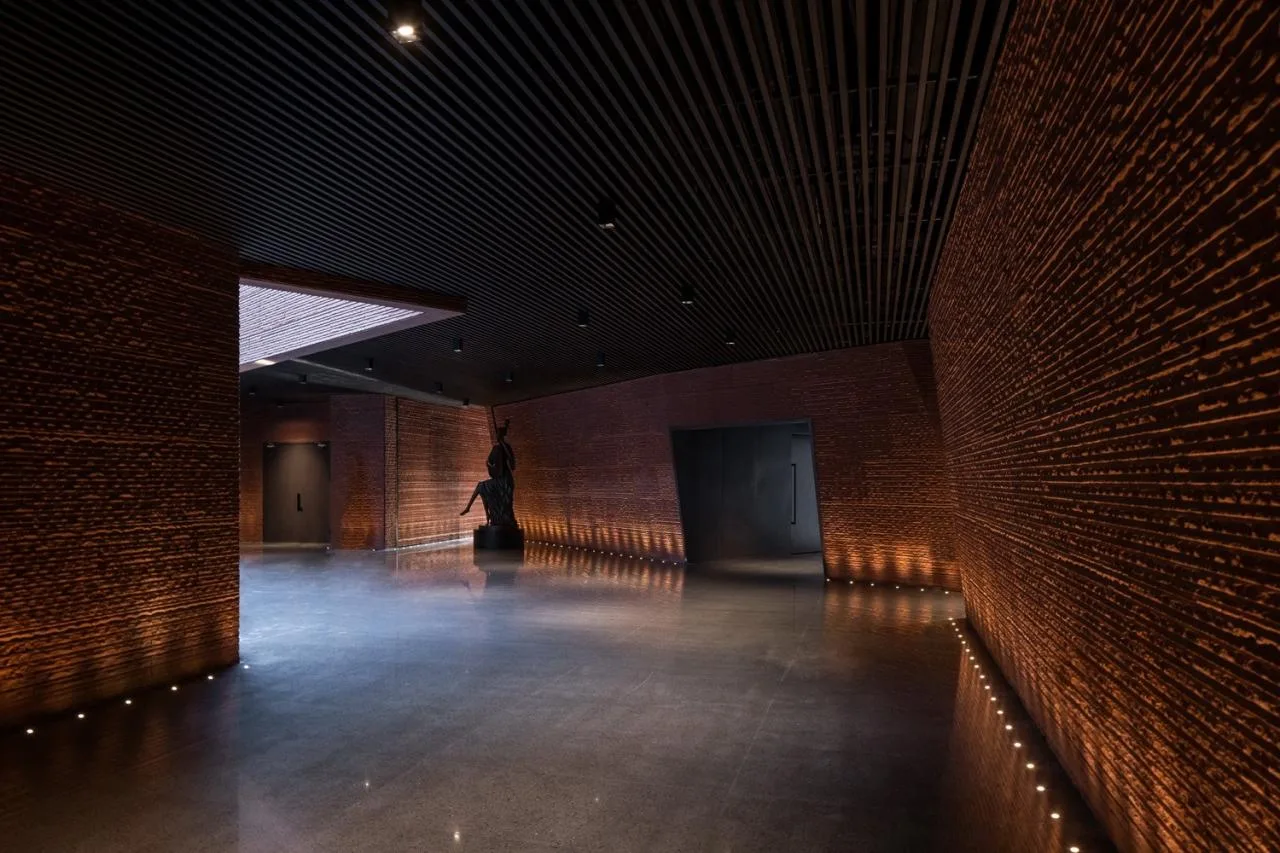
Continuation of interior texture | Photography by Wang Ce
06. Evolving Practice in Dialogue with the Site’s Character
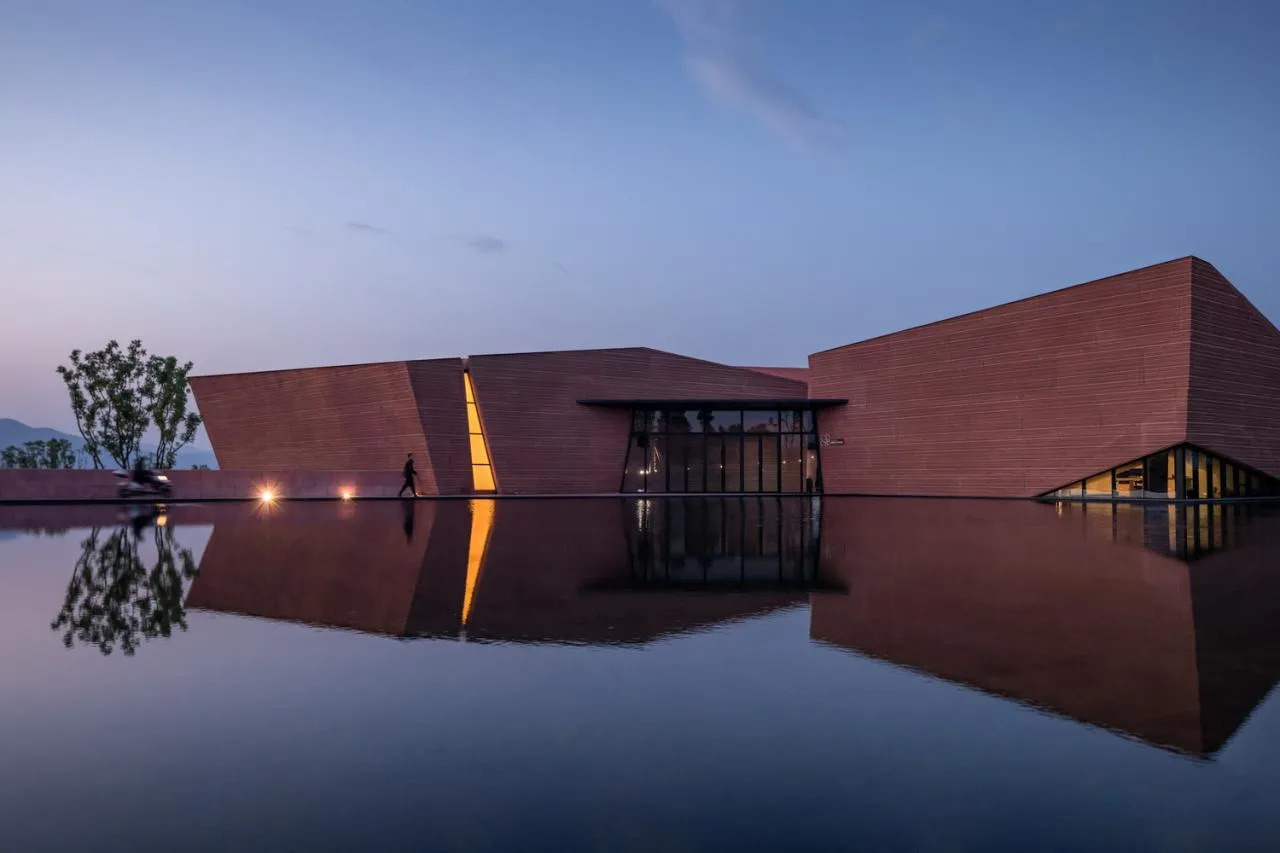
△ Photography: Wang Ce
The vast red soil of the Yungui Plateau imparts a raw, wild, calm, and timeless impression. We aimed for the architecture’s intervention to preserve the site’s original order and character. The primitive, rugged forms recall the millions of years of geological change, expressing multiple identities over time as both recorder and memorial.
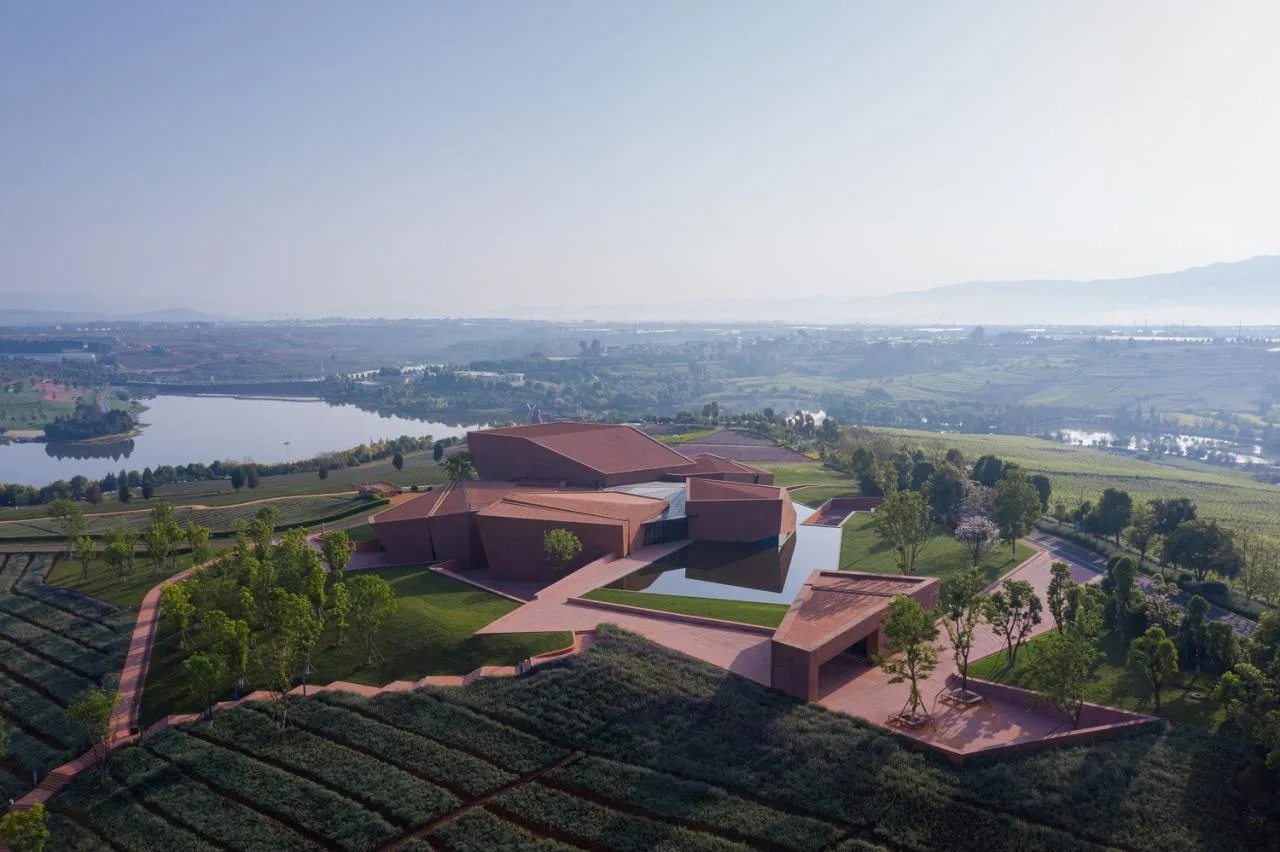
△ Photography: Ziran Architecture Photography
Beyond serving as a physical venue complementing cultural activities and leisure, the Dongfeng Yun Art Center symbolizes the town itself. It offers visitors unique spatial and material experiences and stands as the largest public space in the area. In doing so, it amplifies the town’s cultural voice, enhances artistic influence, and contributes to its future development.
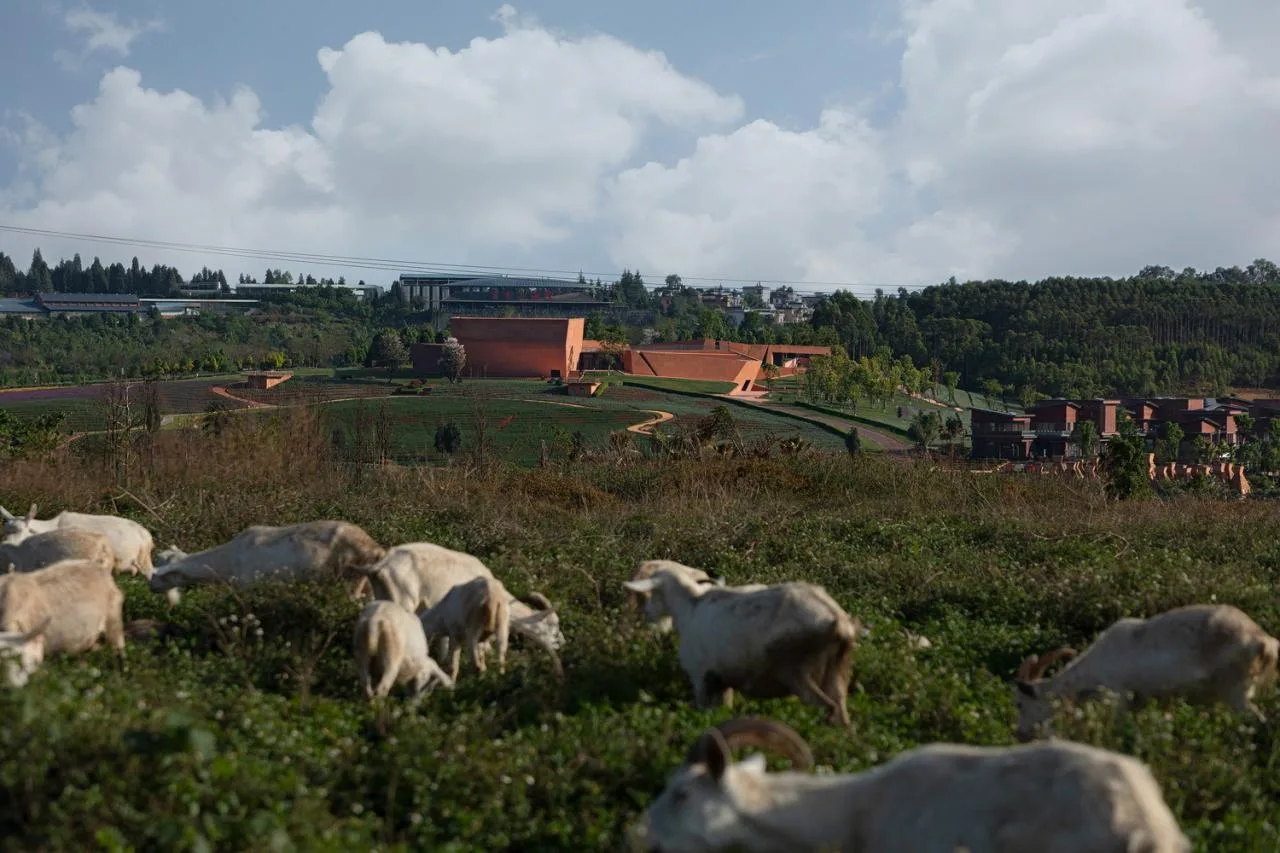
△ Photography: Ziran Architecture Photography
Technical Drawings
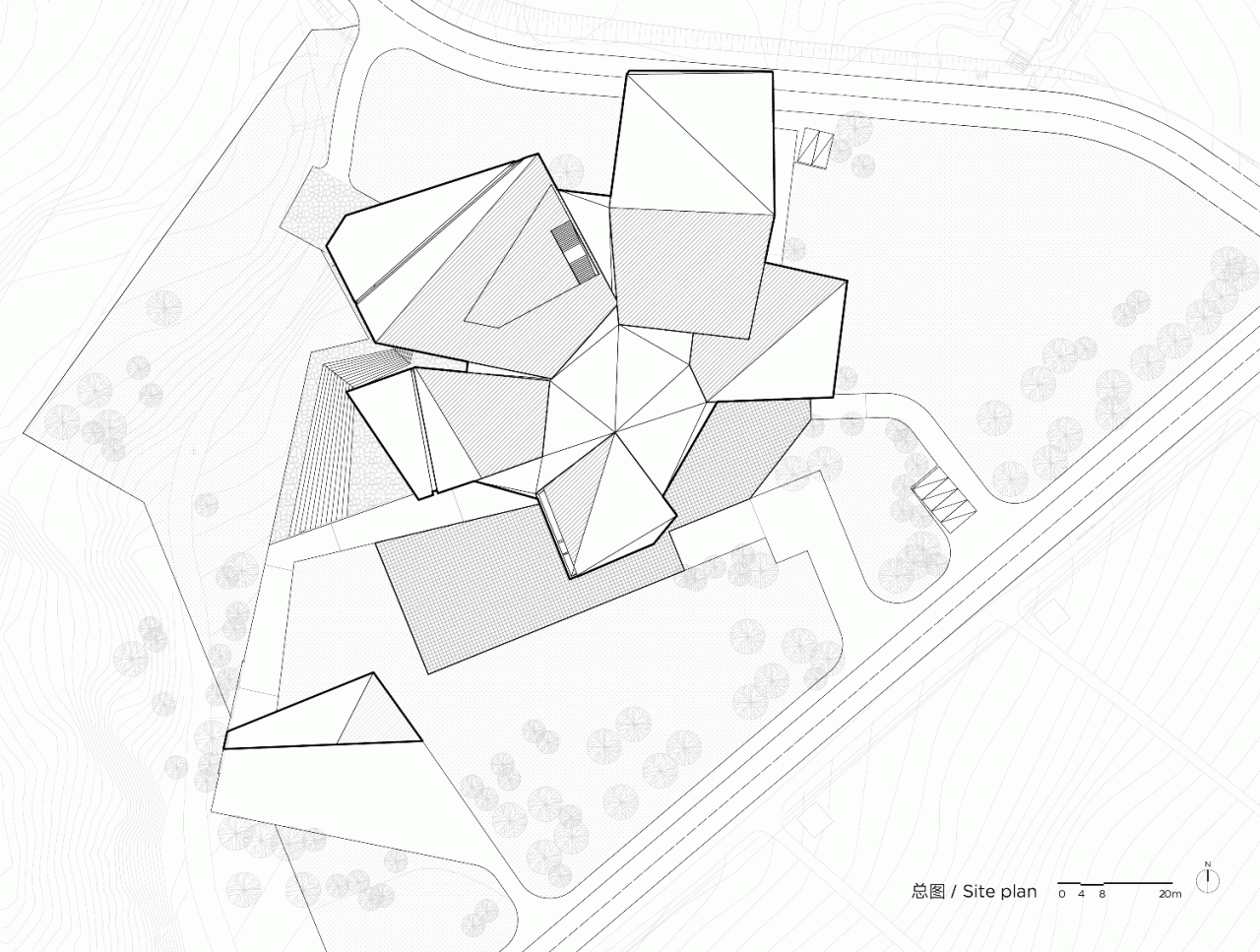
△ General layout plan
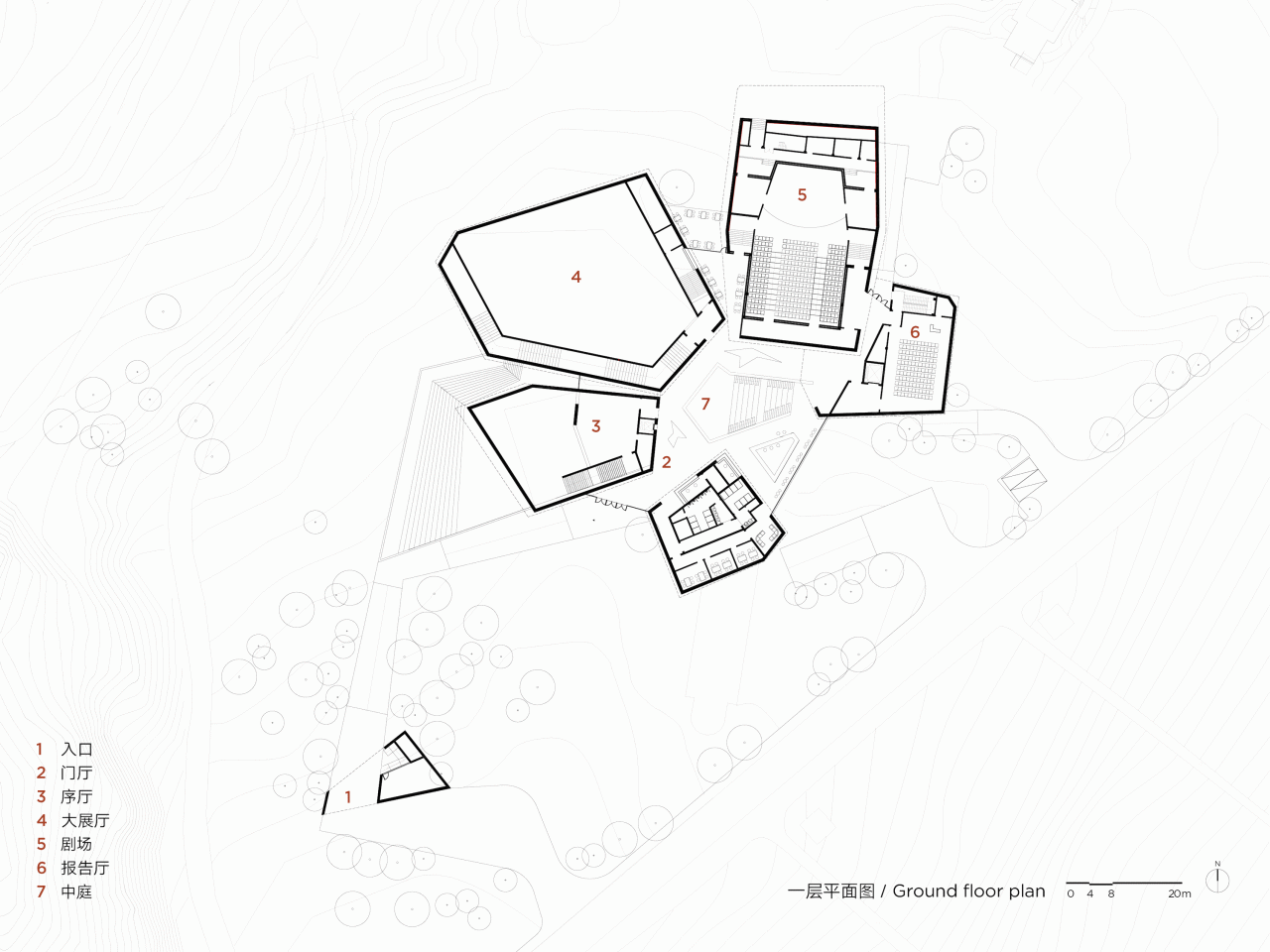
△ First Floor Plan
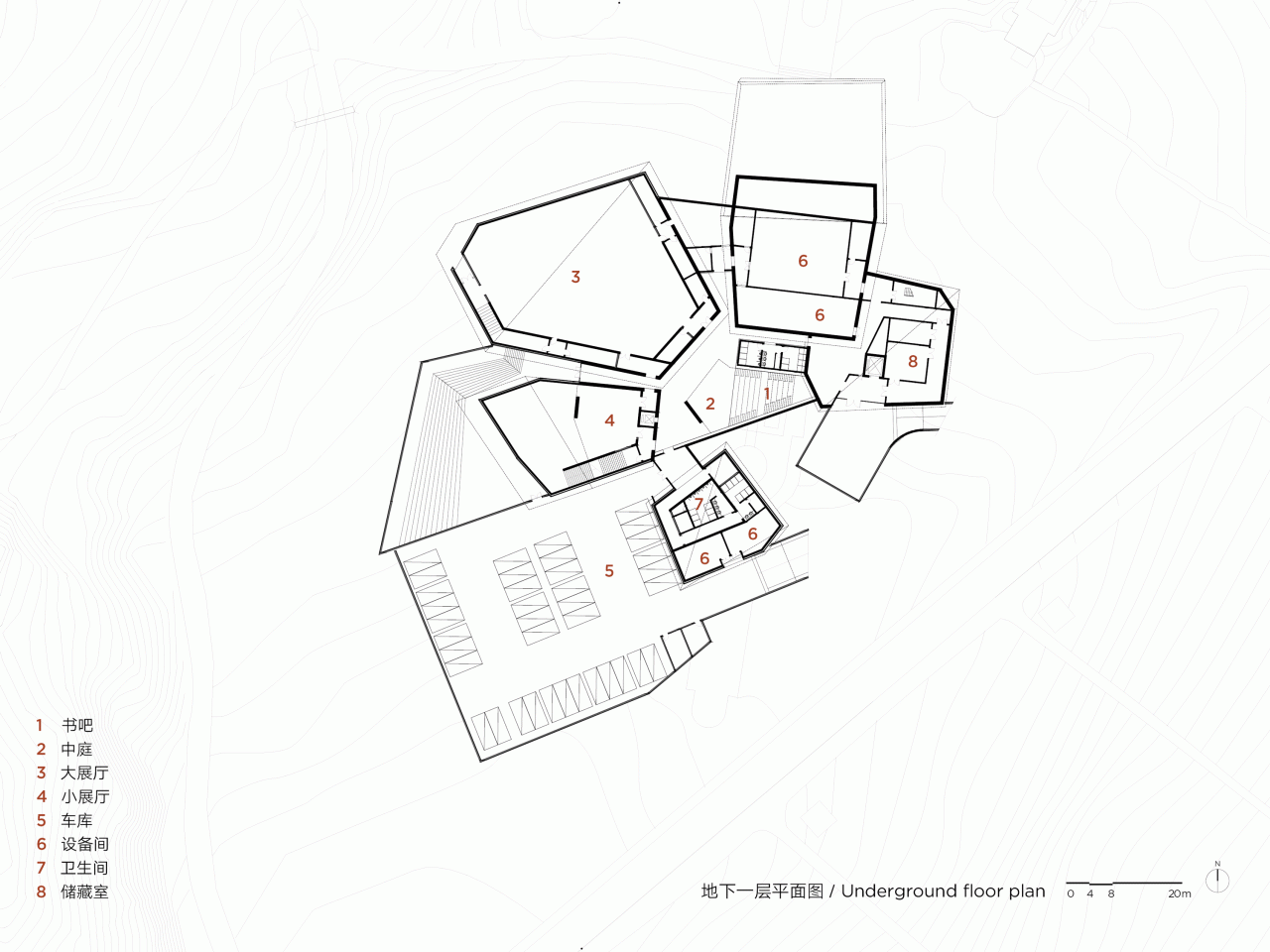
△ Basement Floor Plan
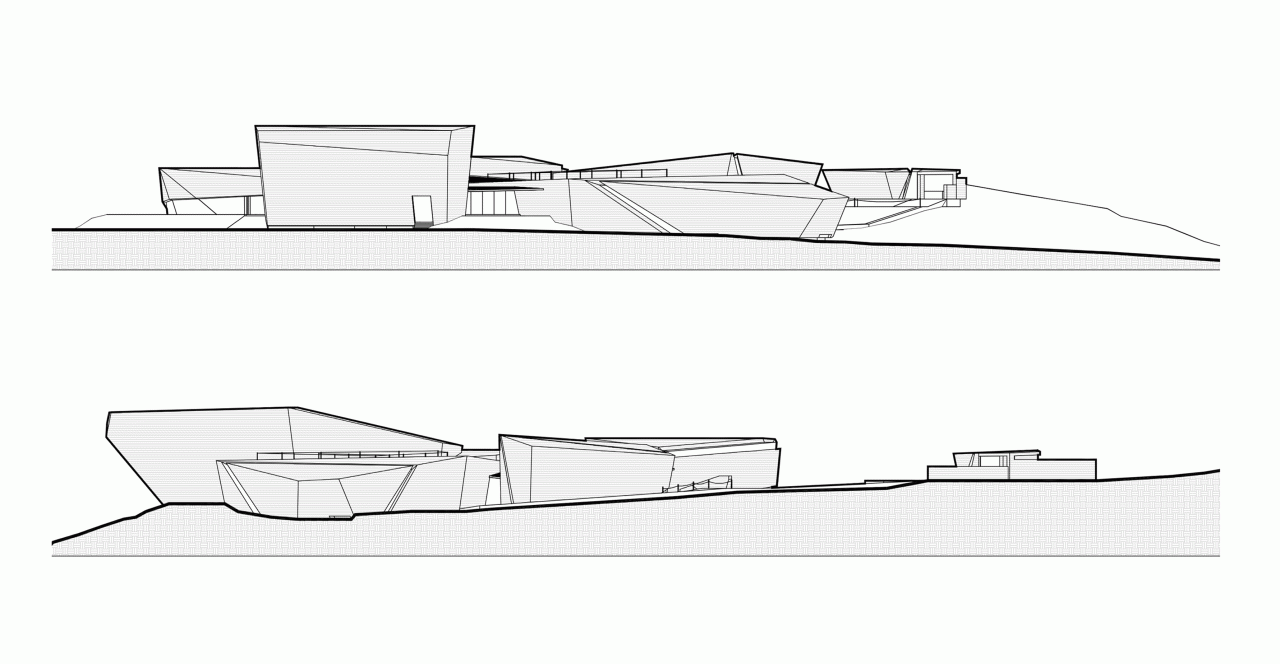
△ Elevation Drawing
Project Information
Project Name: Yunnan Dongfeng Yun Art Center
Location: Mile, Yunnan
Design Firm: Line+ Architectural Firm gad
Lead Architect / Project Creator: Meng Fanhao
Design Team: Xu Hao, Sun Xiaoyu, Wang Yubin, Jin Lingbing (Intern), Lin Weijun (Intern), Gao Junfeng (Intern) (Architecture); Jin Xin, Zhang Ding, Hu Jinwei, Tao Shuai (Interior)
Building Area: 9,937.44 square meters
Design Period: July 2018 – October 2019
Construction Period: October 2019 – March 2021
Owner: Yunnan Urban and Rural Construction Investment Co., Ltd
Construction Drawing Collaboration: Yunnan Daokai Urban Architectural Planning and Design Co., Ltd
Landscape Design: Chongqing Weitu Landscape Design Co., Ltd
Concrete Consultant and Construction: Prefabricated Buildings
Team Members: Du Jie, Zhang Wen, Zhang Xiang, Guo Hengrui, Song Hanrui, Li Linfeng, Xu Qin, Xu Jin, Pang Yan
Photography: Ziran Architecture Photography, Wang Ce
Model Photography: Chen Xi, Sun Lei















Must log in before commenting!
Sign Up