
Return and Prospect
“Leaves fall, turn green, turn green, fall… In summer, when cicadas chirp, my heart feels cool and full of hope.” Since its founding in 1950, the China Construction Southwest Institute has operated from three office locations in Chengdu. In 1957, it relocated to No. 168 Jinhua Street, Jinniu District; in 2010, to No. 866 North Tianfu Avenue, High-tech Zone; and in 2022, the new China Construction Binhu Design Headquarters in Tianfu New Area was completed and put into use. These moves not only mark the growth of the enterprise but also reflect the urban development of Chengdu.
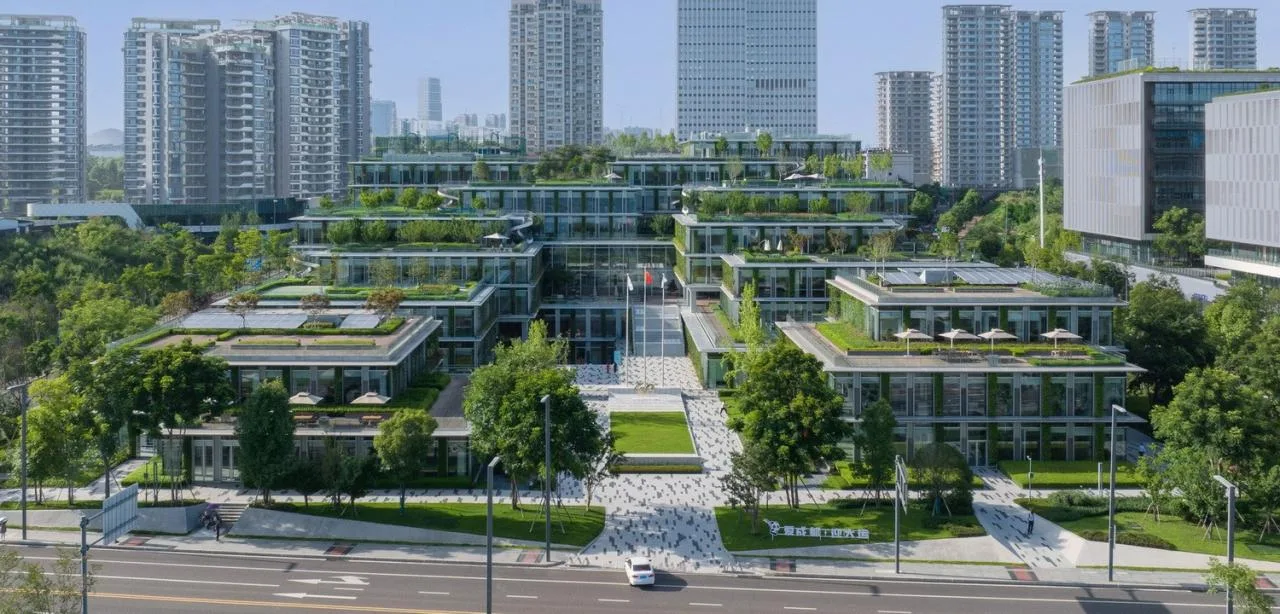
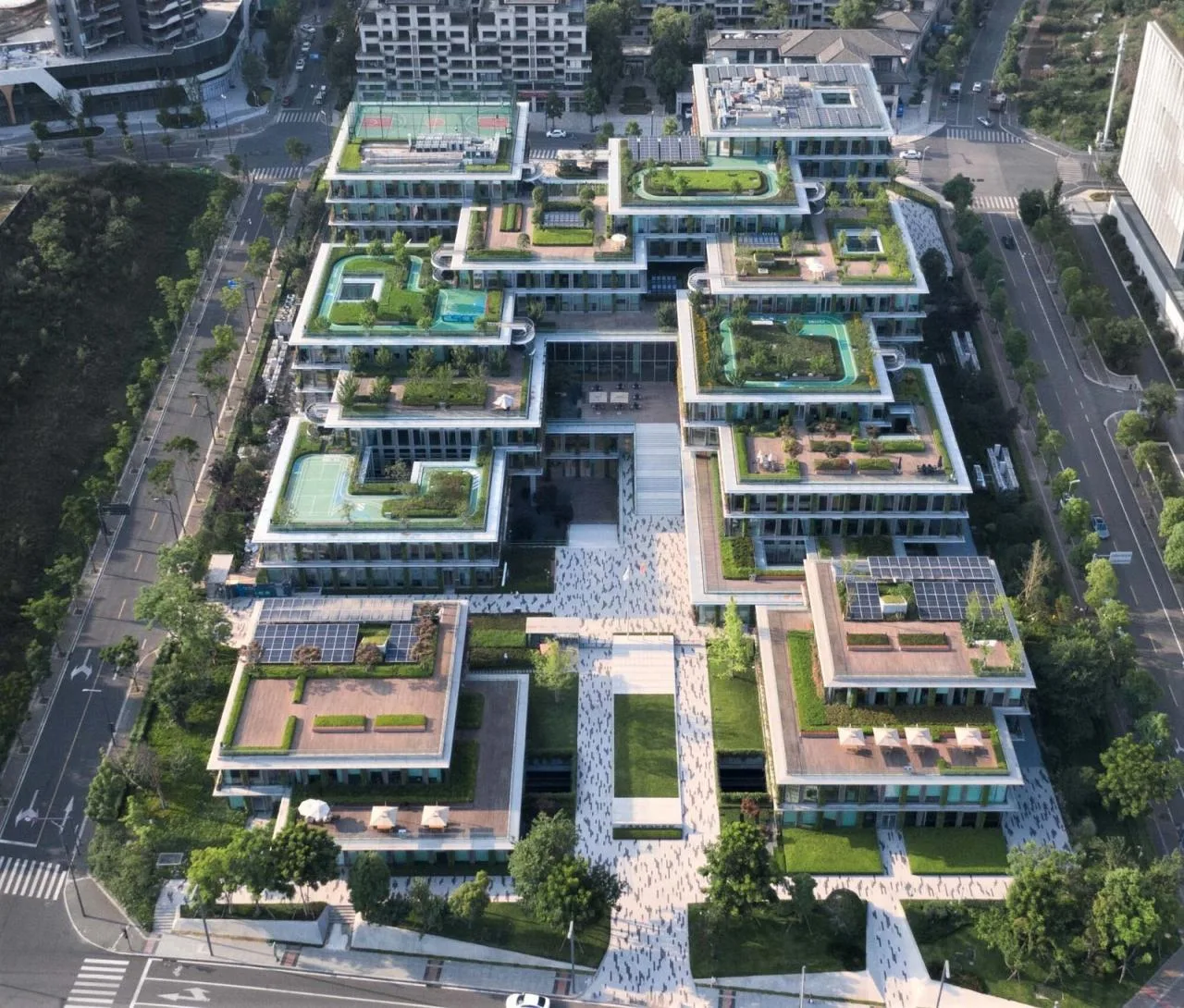
In 2015, the China Construction Binhu Design Headquarters was established on the north bank of Xinglong Lake in the Tianfu New Area, southern Chengdu. At that time, Xinglong Lake was still filling with water, and the shoreline was covered with yellow soil. The surrounding environment of Binhu had yet to take shape. This headquarters became a vital anchor in developing an ecological belt around the lake. From the lush greenery surrounding the office to the expansive lake views, the design embraces nature and opens new possibilities for future office environments.
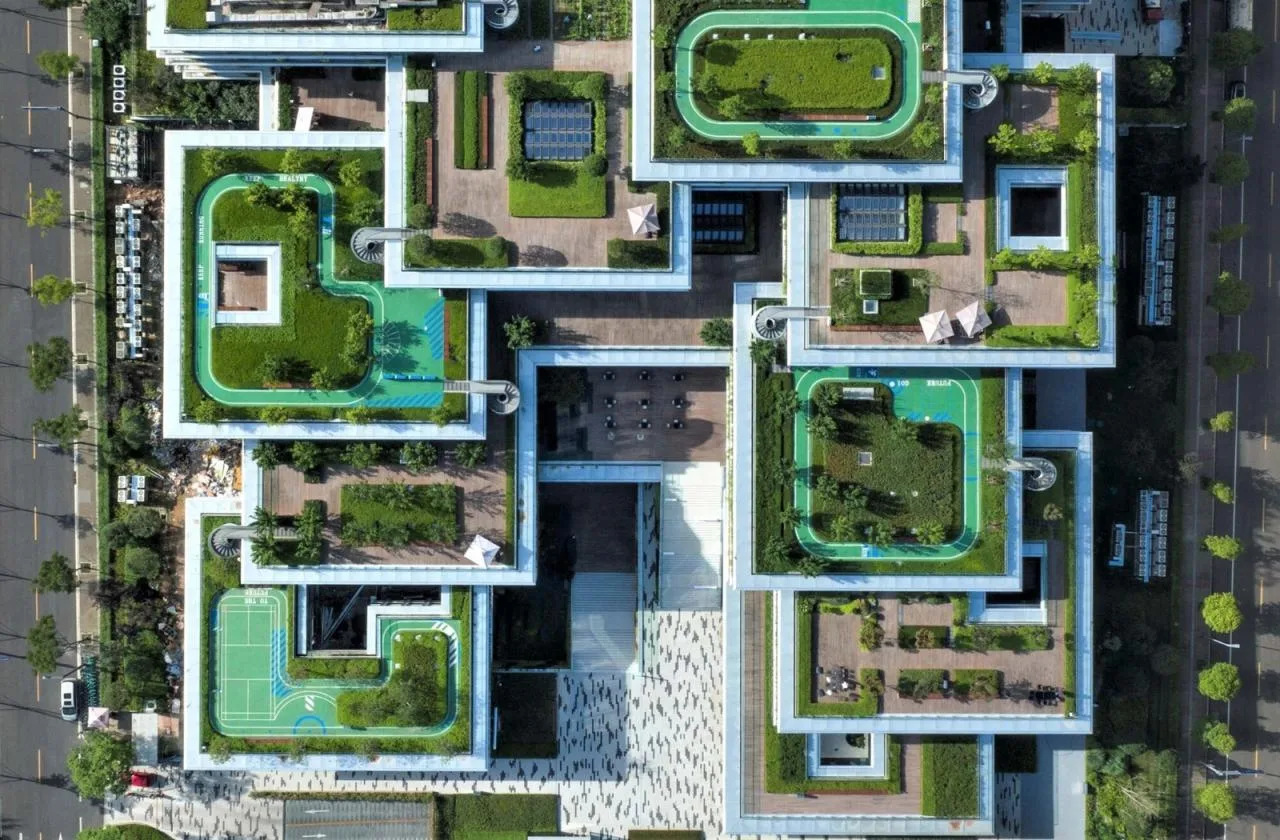
How many planets do humans need? At current consumption rates, humanity requires approximately three Earths to sustain itself, exceeding the natural environment’s capacity. — Brian Edwards, Green Building. Ecology plays a crucial role in this new context, guiding a positive relationship between architecture, the environment, and people. Office buildings, often located in dense urban areas with concentrated energy use, typically have spaces that continuously evolve over time, making them high ecological consumers.
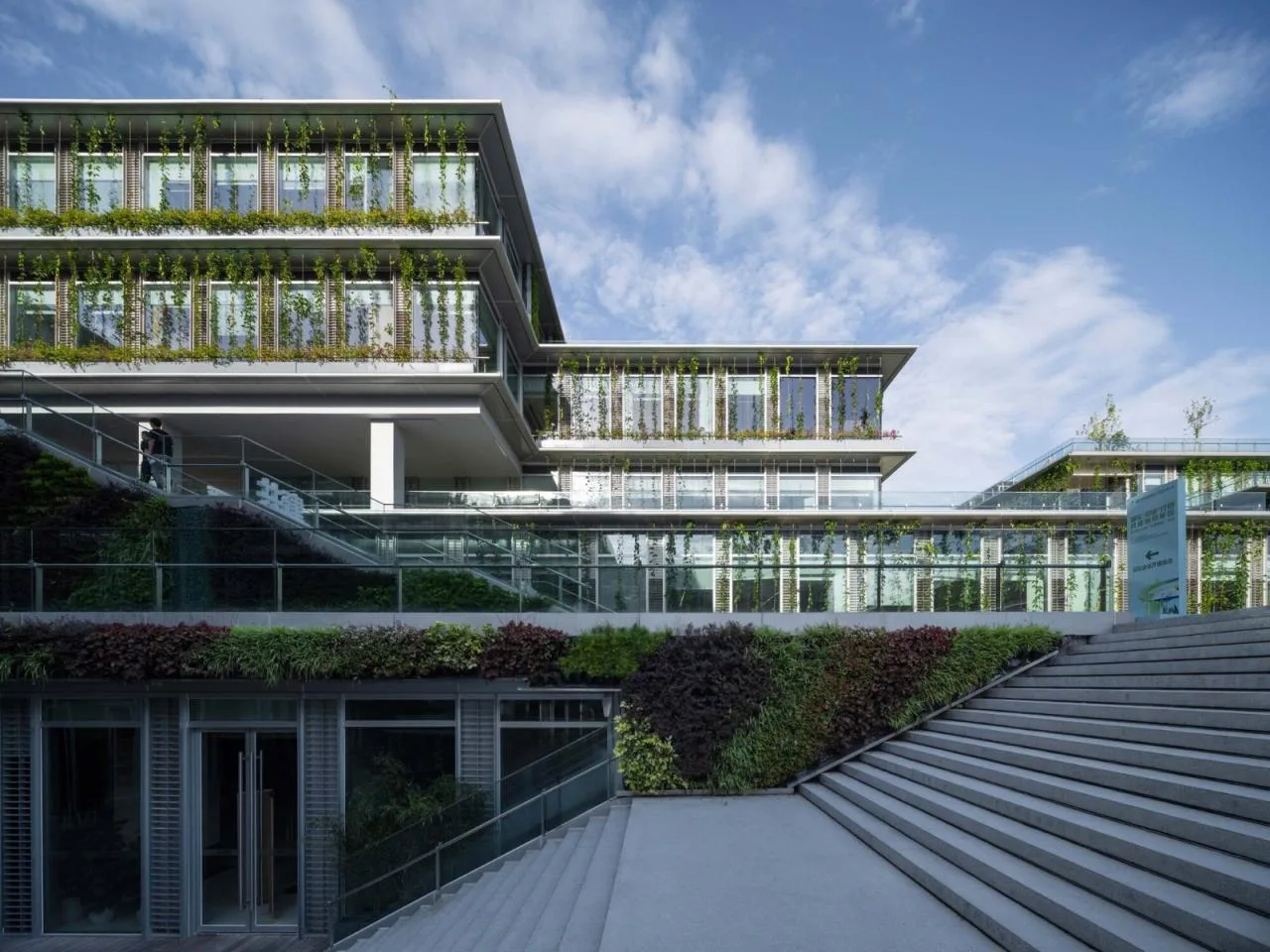
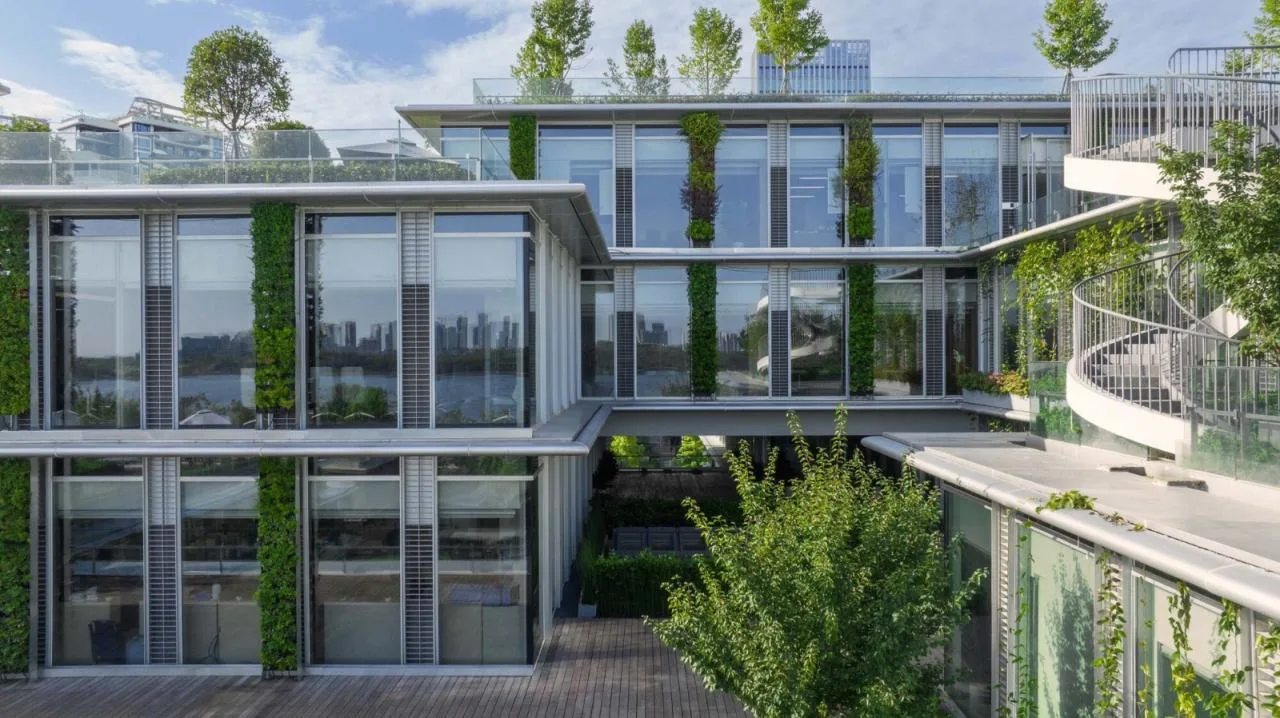
With the aim of designing a near-zero energy office in a hot summer and cold winter climate, the China Construction Binhu Design Headquarters features a flexible, human-centered workspace. Through thoughtful scale management, it balances passive design, active strategies, and renewable resource use to achieve low energy consumption while maintaining indoor comfort. The building responds to nature with appropriate technology, creating a low-carbon, eco-friendly environment. Calculations show summer energy consumption at approximately 42 kWh/m² and winter consumption between 4-8 kWh/m²—only one-quarter of conventional office buildings. This project pioneers new ecological design strategies suited for its climate zone.
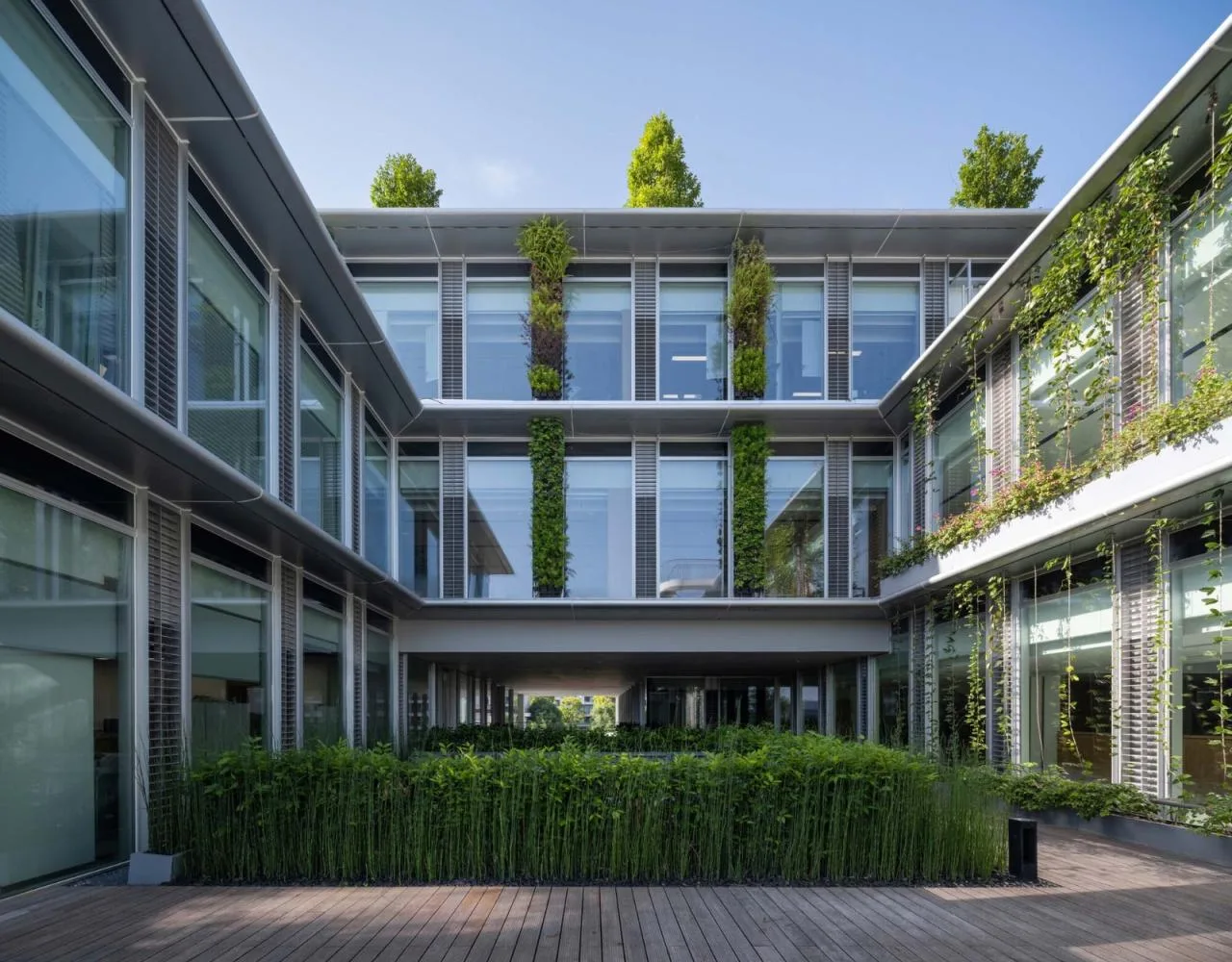
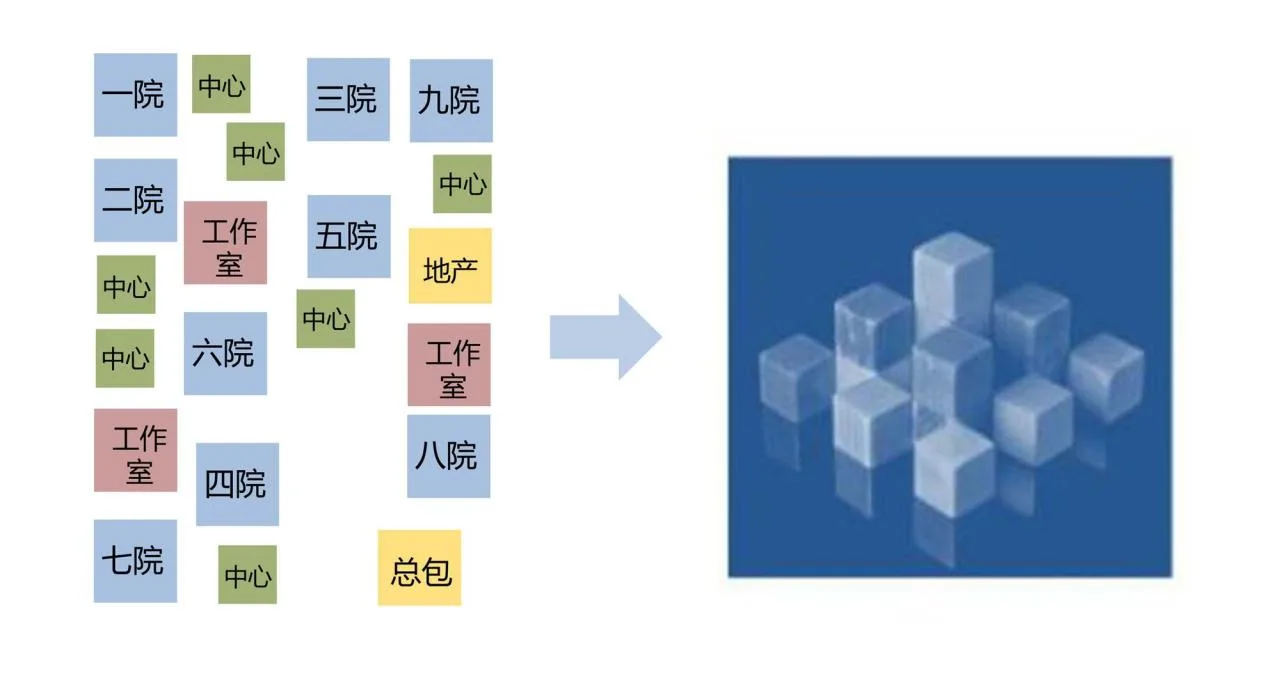
Today, the Southwest Institute of Architecture comprises 12 design institutes, more than 20 specialized centers and studios, and numerous subsidiaries and branches. As a large design enterprise headquarters, its expansion requires continuous departmental adjustments and restructuring. To accommodate future needs sustainably, a modular spatial model was developed. By analyzing staff size and work characteristics across departments, a standard unit module of 33.6m by 33.6m (approximately 1000 m²) was established with an axis grid of 8400mm by 8400mm. Multiple modules are combined and subdivided according to different requirements. The building’s core tube is positioned on one side of each module, separating “service spaces” from “served spaces.” The “served spaces” are spacious and continuous, enabling future flexible adaptations. This modular approach also lays the foundation for standardized electromechanical systems.
Responding to the climate of hot summers and cold winters, the China Construction Binhu Design Headquarters opts for an actively open architectural approach rather than sealing off the building for a constant indoor environment. Situated in an area originally a flood detention basin of the Luxi River, the site features terrain that slopes from high in the north to low in the south. The design honors this natural topography by creating a ground-to-ground growth form that extends toward the lake via dual entrances and a southward setback, thoughtfully responding to sunlight, rain, and lake winds.
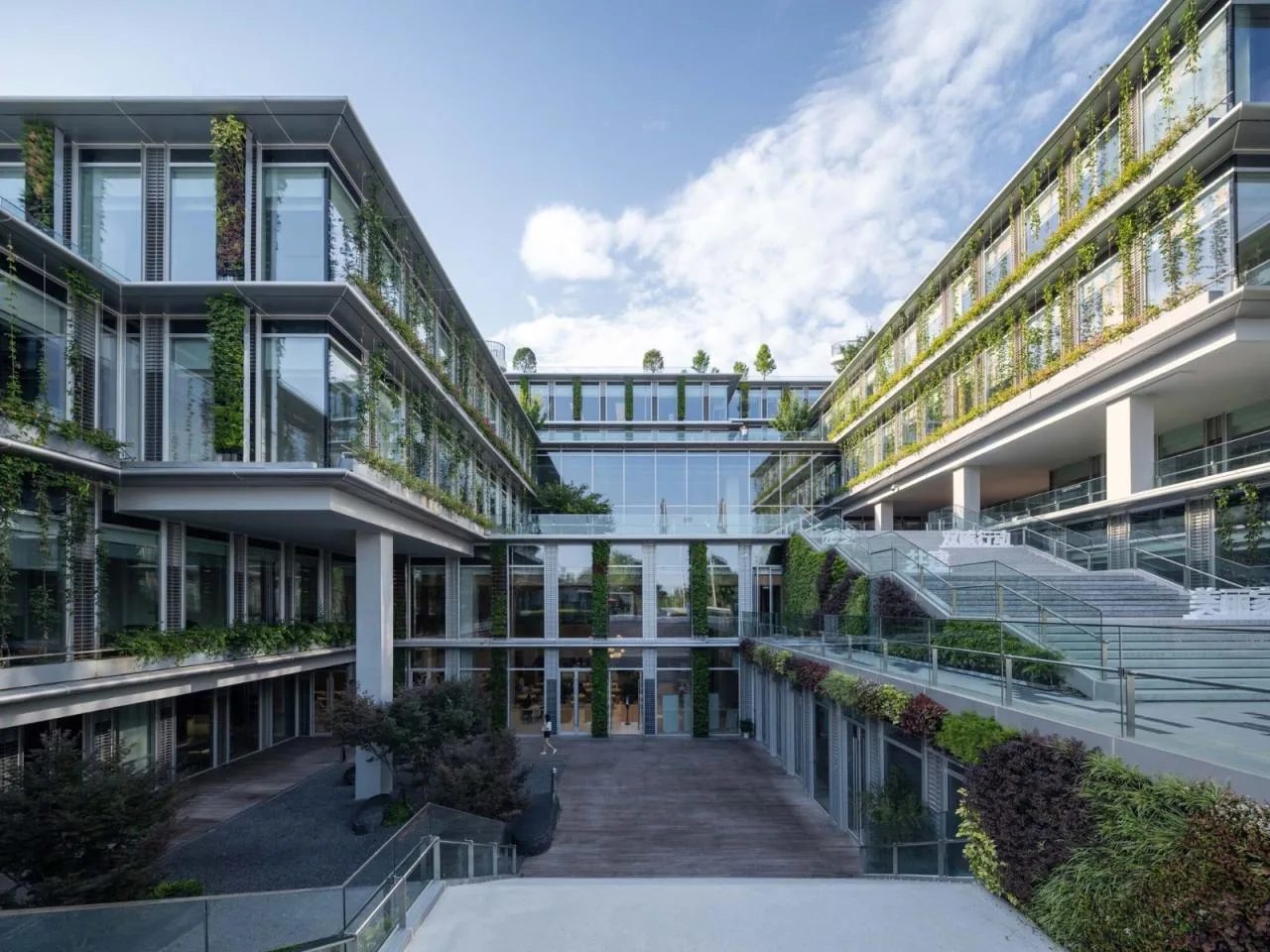
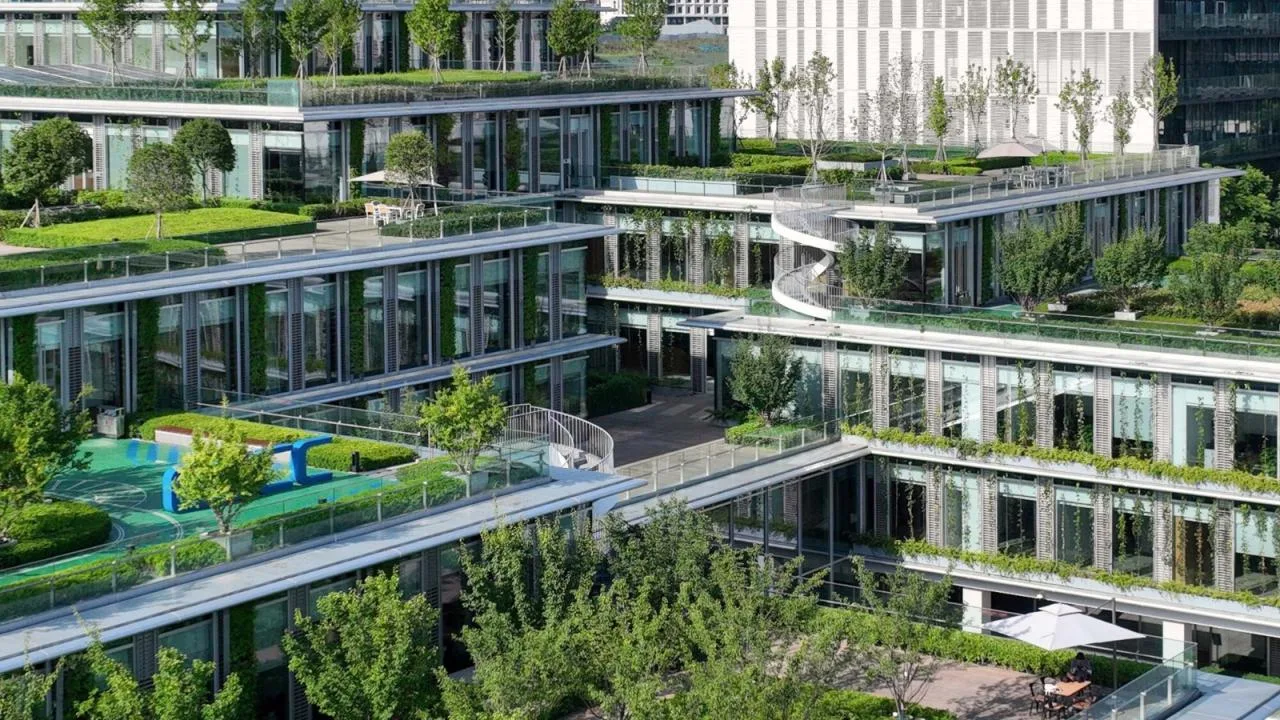
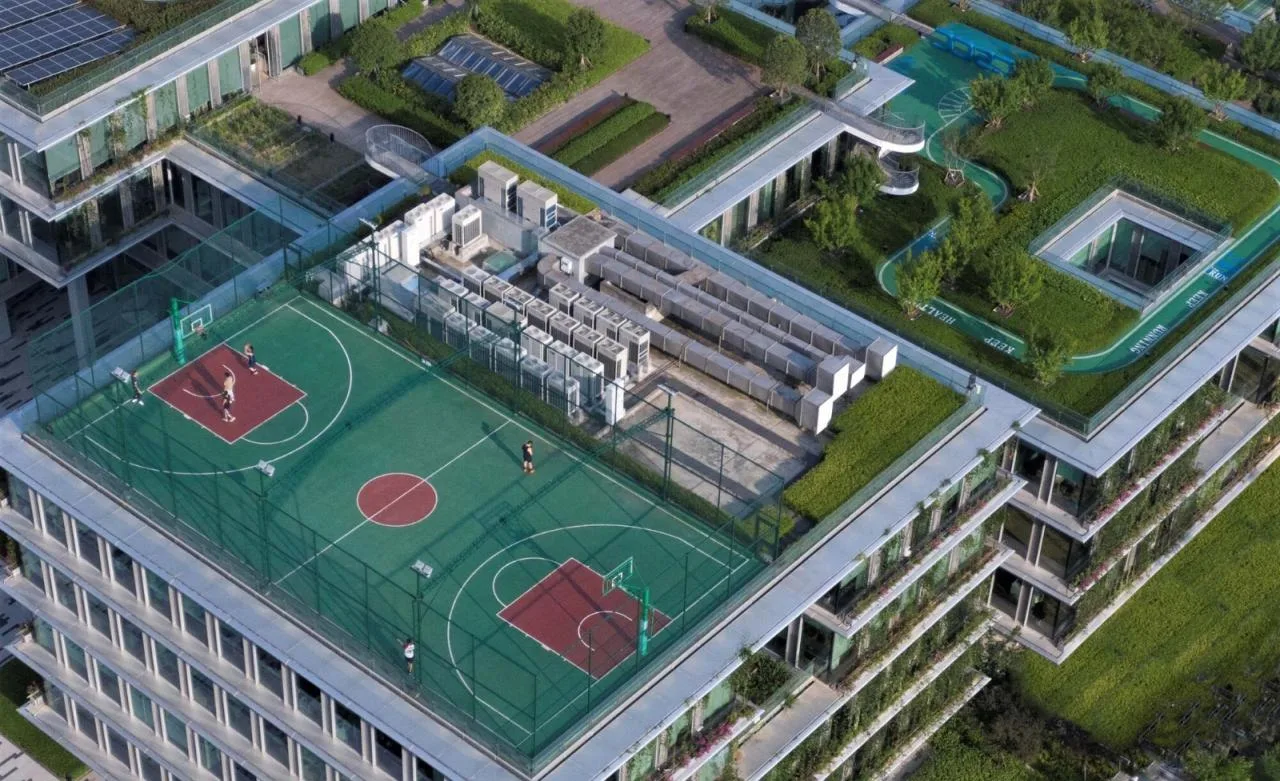
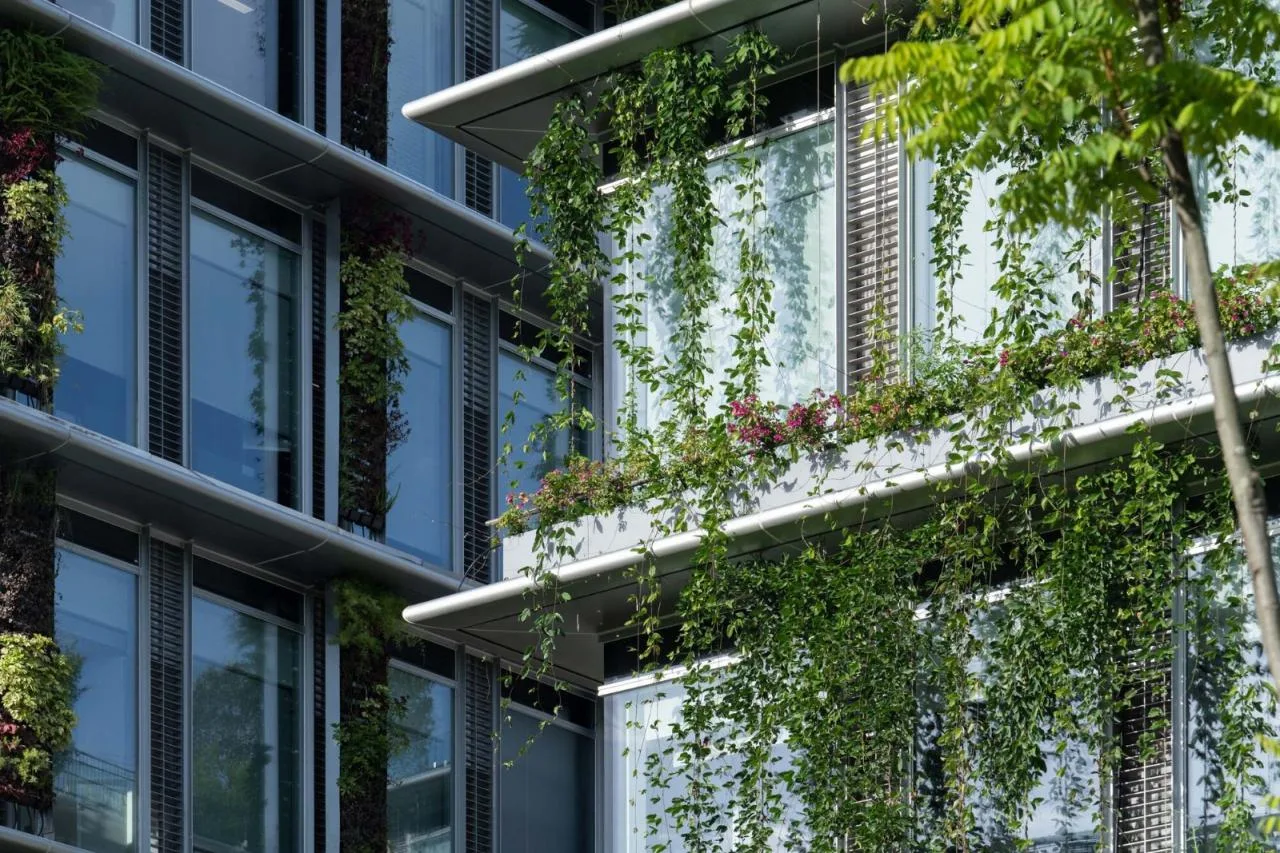
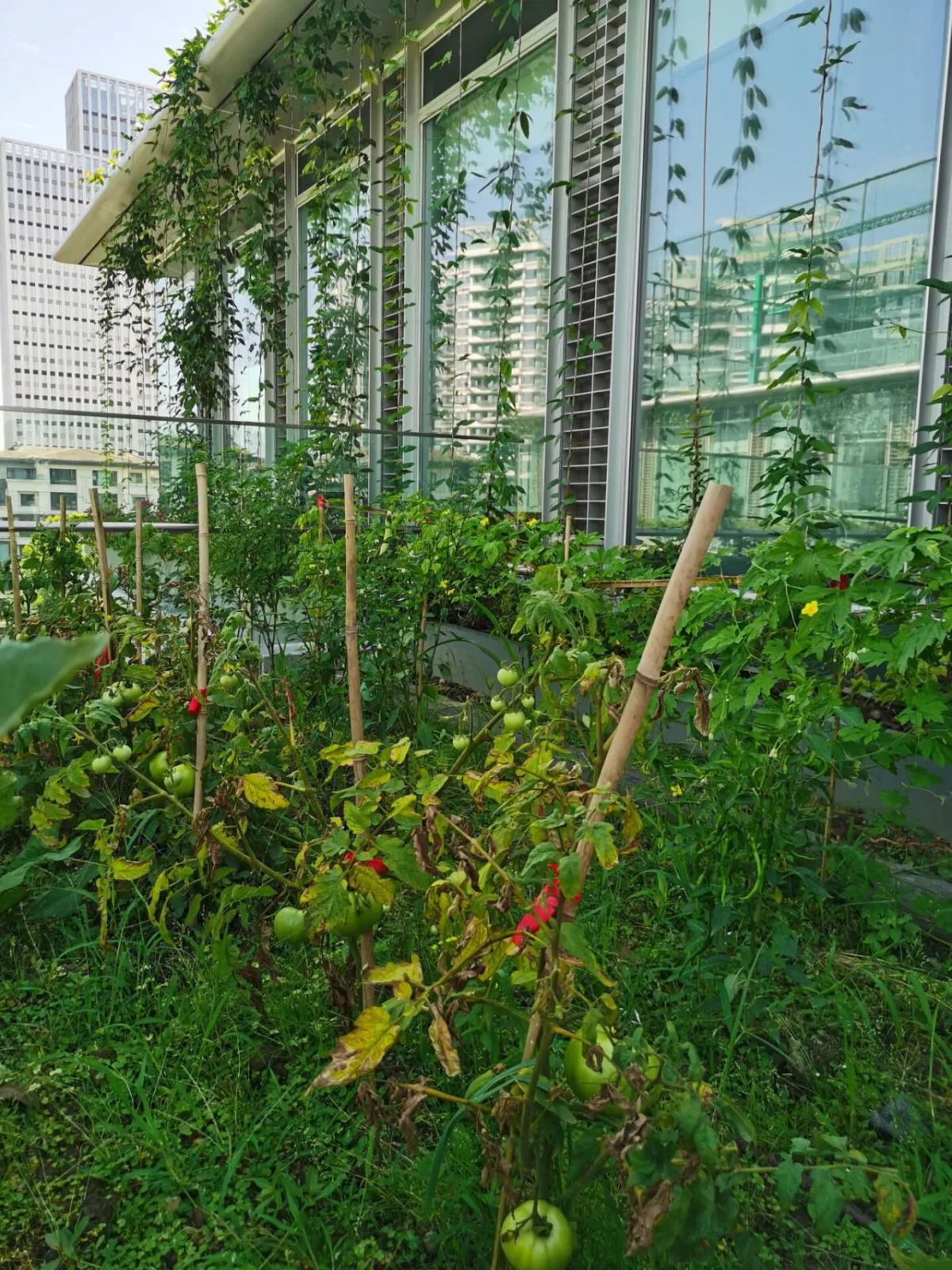
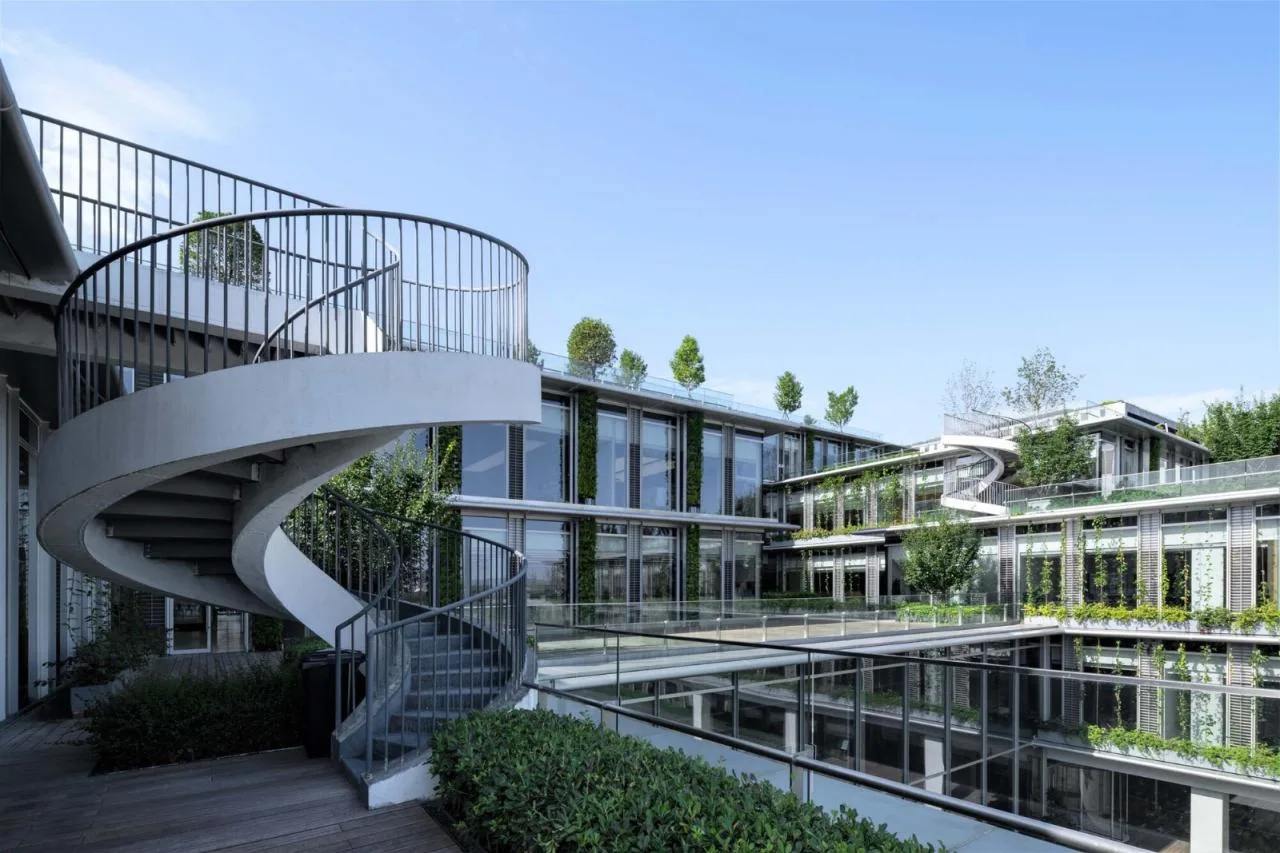
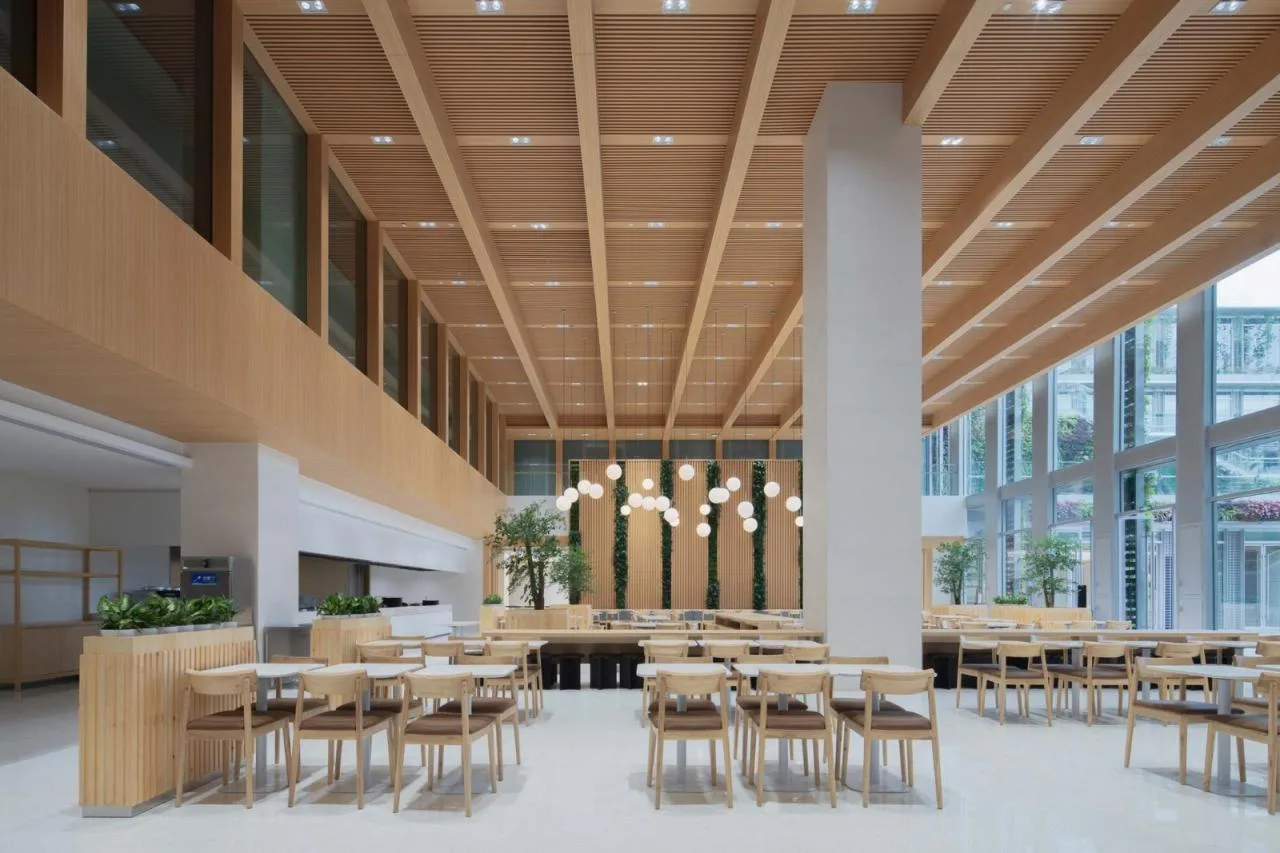
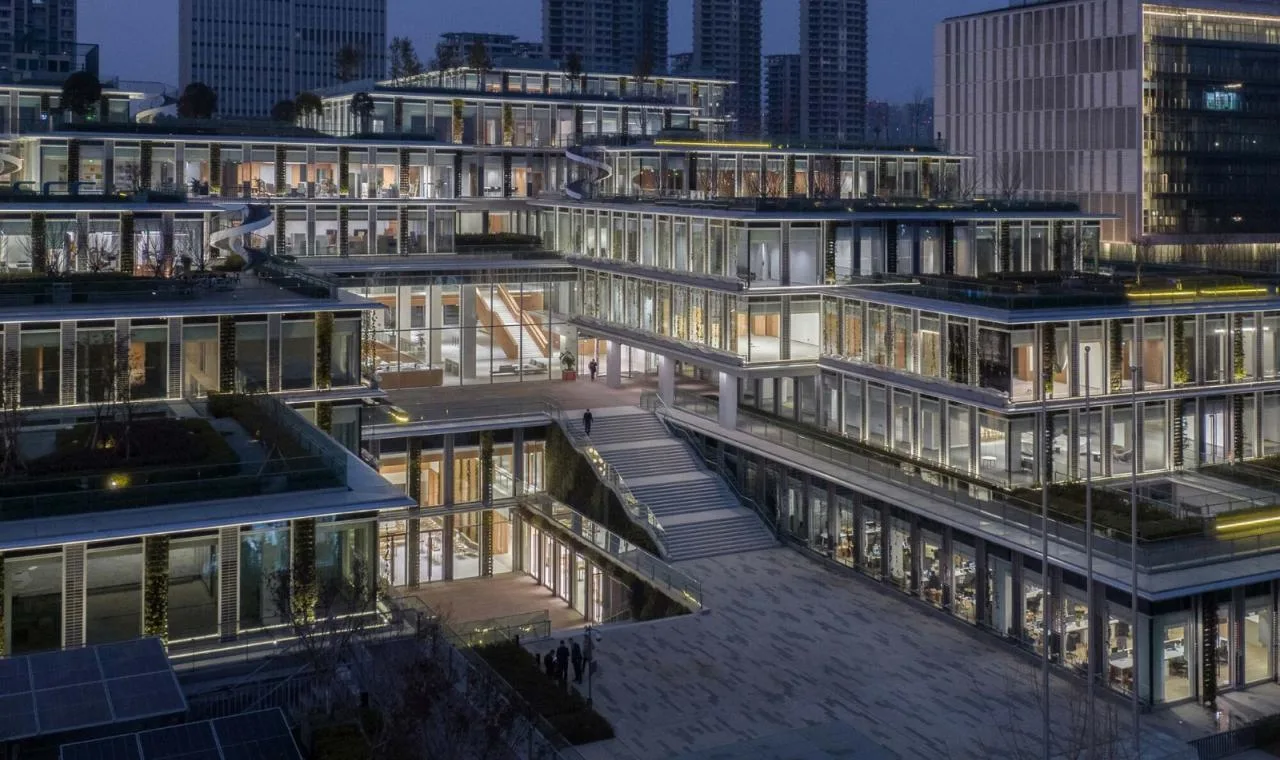
The arrangement of unit modules creates a dynamic, stepped building façade, increasing the interface between the structure and nature to promote environmental interaction. BIM models were used during design to simulate and analyze façade performance, optimizing lighting, insulation, and green transparency based on orientation. Horizontally, the lake-facing terrace forms an 8,000 m² rooftop garden featuring landscaping, a sky farm, and sports facilities, with layered vegetation resembling green hills by the lake. Vertically, the design team collaborated with glass manufacturers to develop a double-glazed, triple-silver insulated glass curtain wall. This first climate boundary maximizes natural light while blocking solar heat. A vertical greening system lines the exterior, including modular green wall units on the south side and full-length planting troughs with climbing cables on the east and west, creating a dynamic plant interface that changes seasonally.
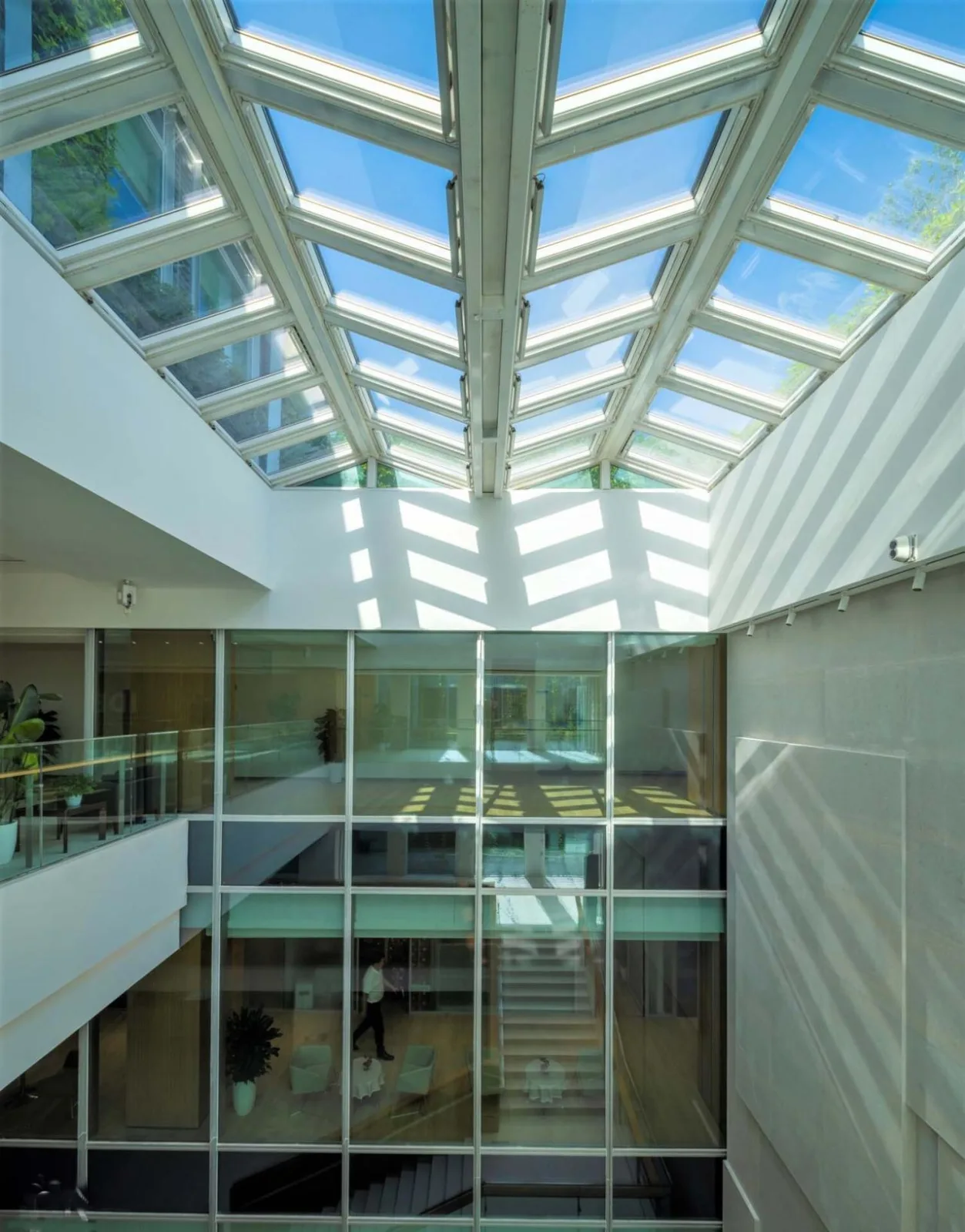
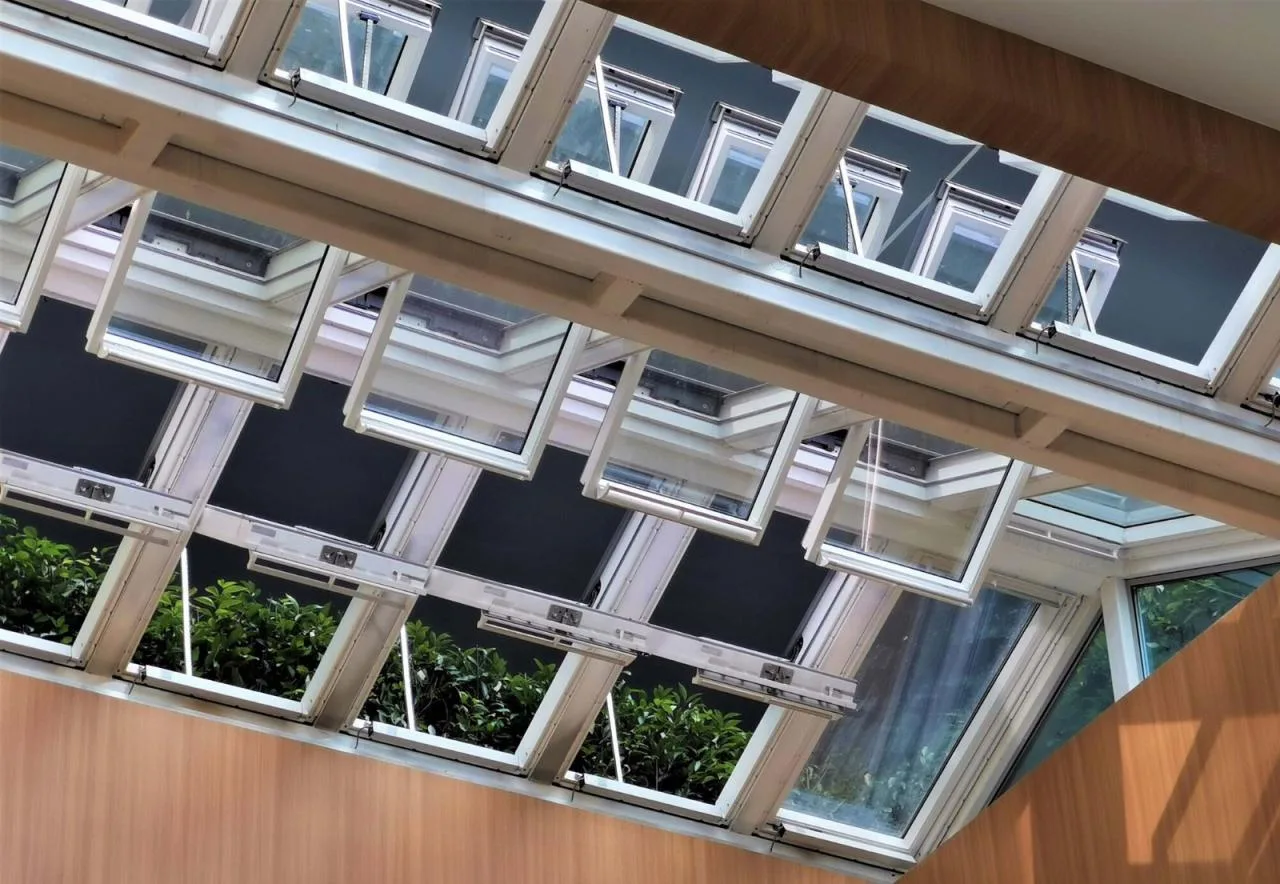
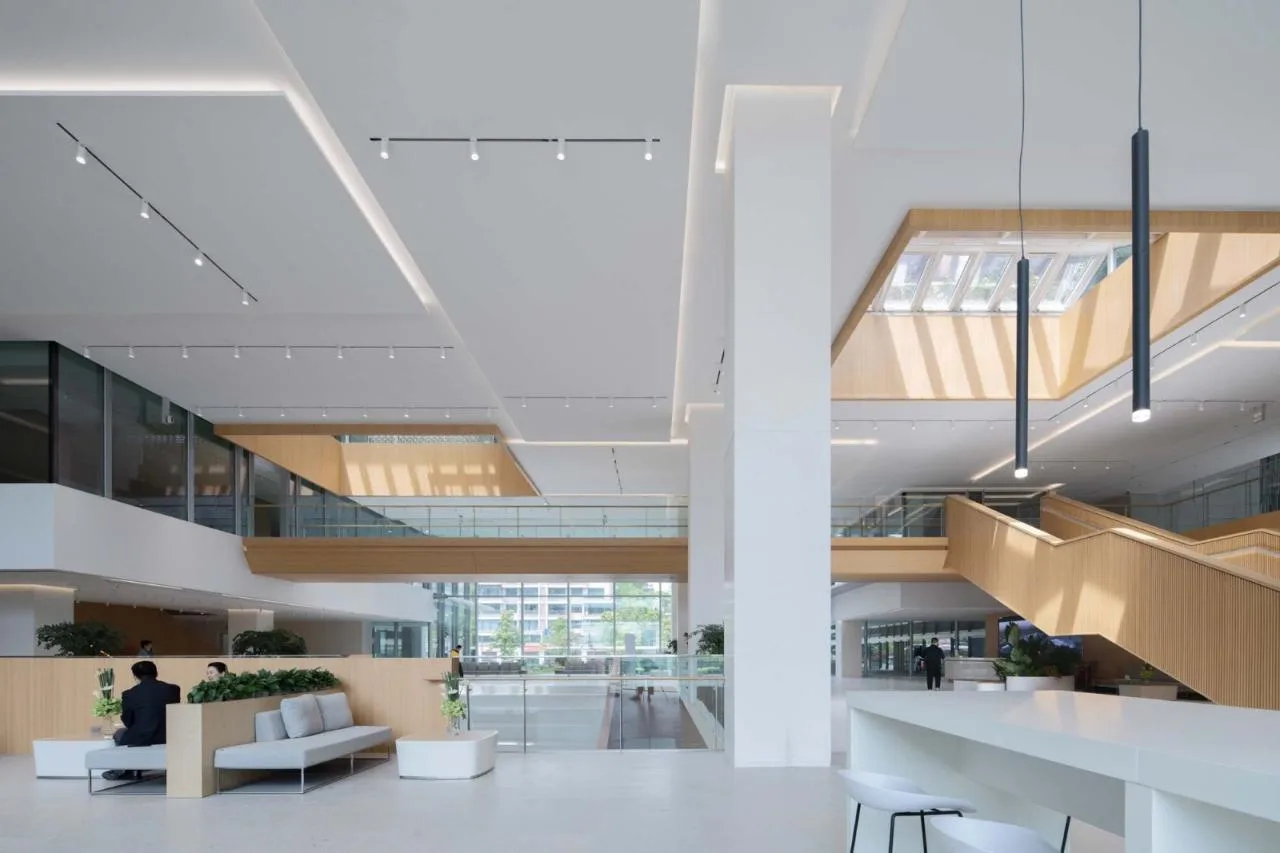
The staggered stacking of building modules forms diverse indoor and outdoor intermediate spaces—atriums, side courtyards, sunken courtyards, rooftop gardens, and elevated verandas. Integrated with self-regulating features such as electric sunroofs, intelligent light guides, operable windows, and green shading, the design creates a microenvironment facilitating effective light, heat, and airflow interaction. Aligned with the dominant lake shore wind direction, the building adopts an H-shaped plan optimized for outdoor wind flow with north-south wind tunnels. Interior ventilation occurs through atriums, with hot air expelled via three skylights, enabling natural ventilation during transitional seasons and reducing air conditioning demand.
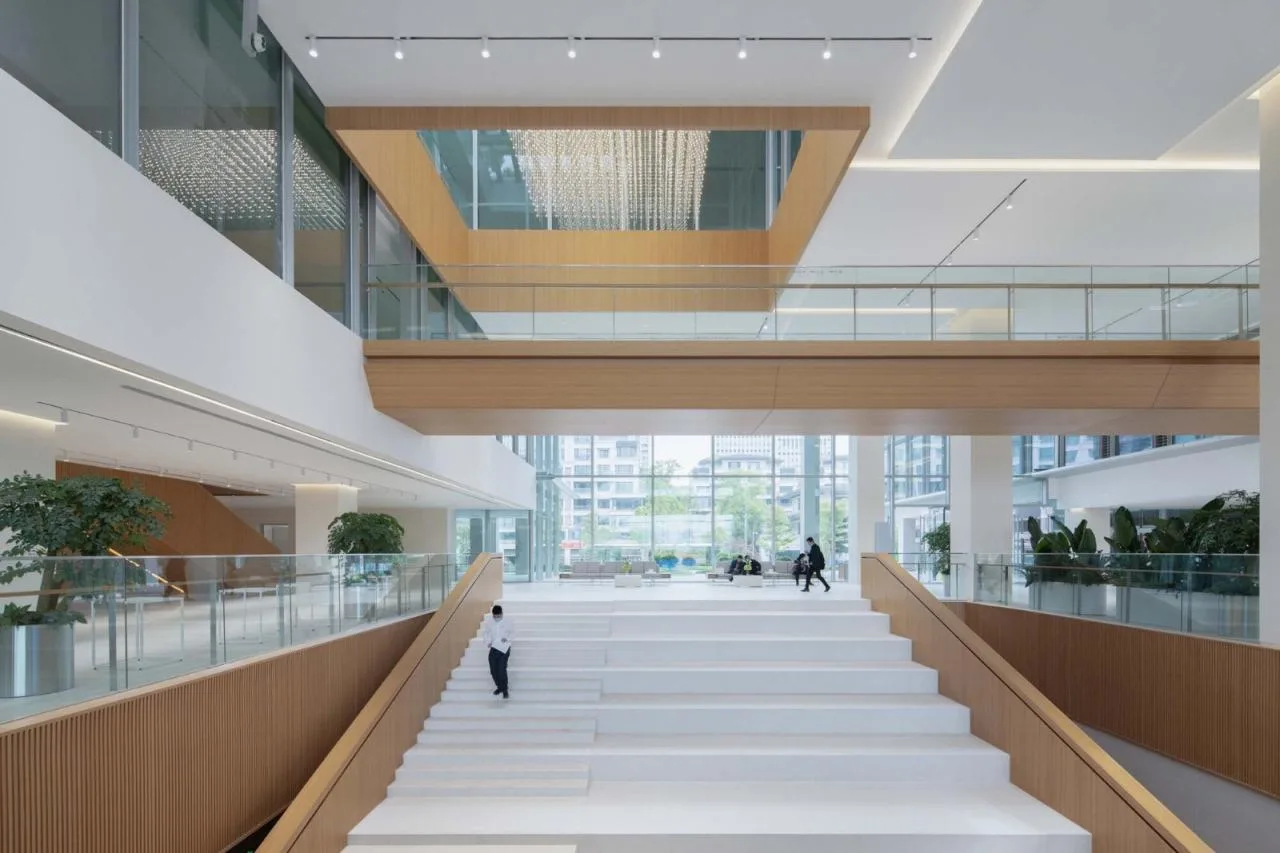
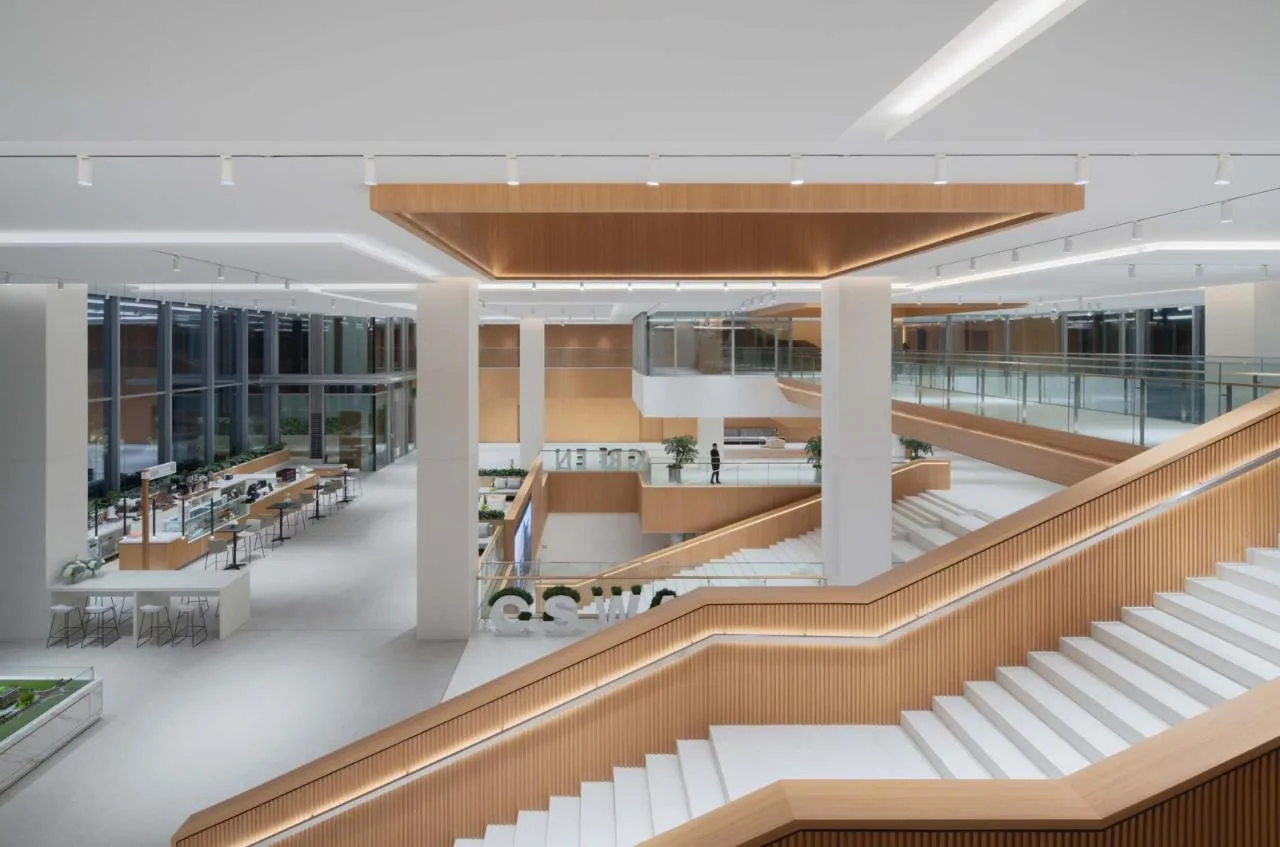
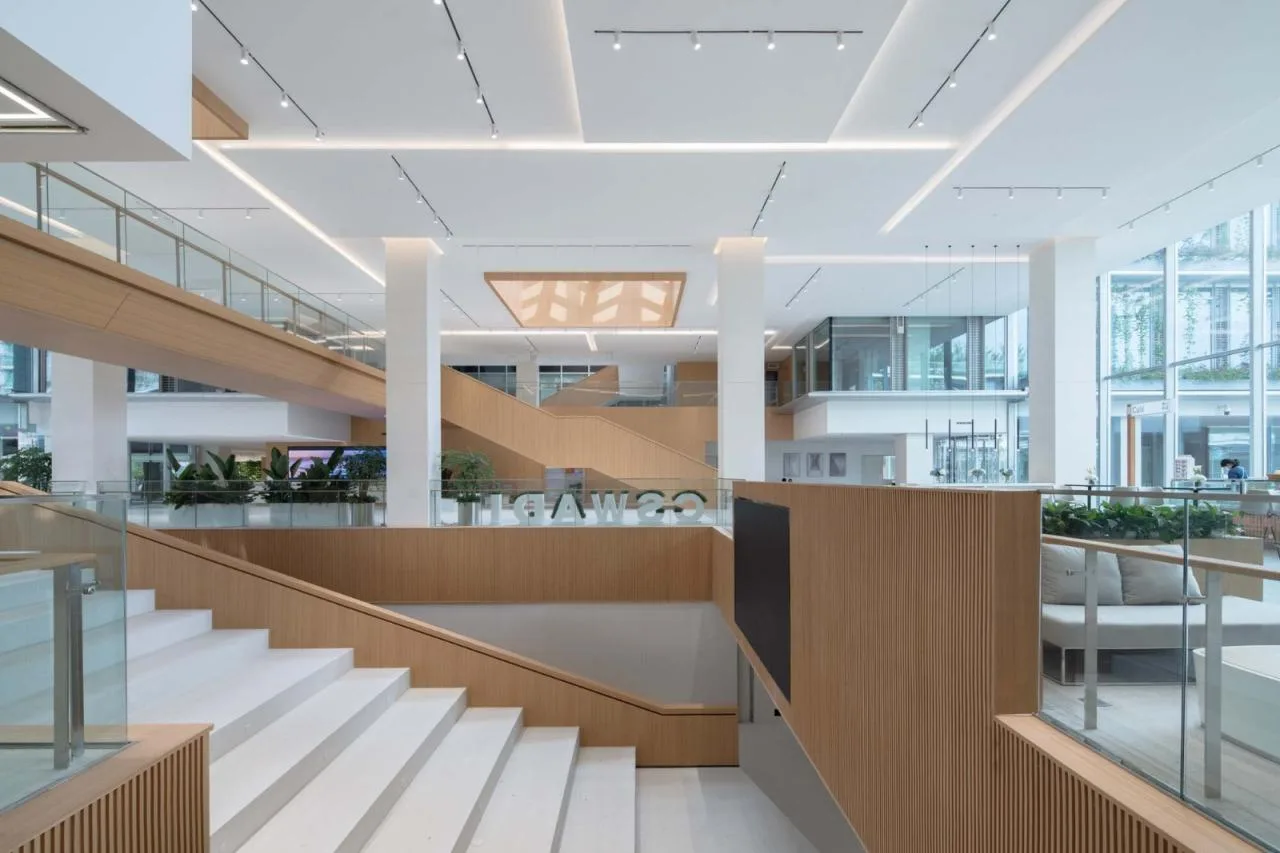
Unlike many industries, design firm employees often spend extended periods in office spaces due to the dynamic and vibrant nature of their work. An open, flowing workflow system not only enhances user experience but also reinforces green office principles, fosters social interaction, encourages dialogue with nature, and boosts employee cohesion and creativity. The circulation design encourages walking and reduces elevator use. The vertical pedestrian system, centered on landscaped staircases, covers 87% of the office area. This integrates the workspace into a human-centered environment rich with social opportunities. The entrance hall features steps over 9 meters wide, accommodating traffic and serving as a venue for lectures, roadshows, and gatherings. Connections between the lobby and upper floors are formed through landscaped stairs on both wings and corridors spanning the atrium, creating a continuous upward path that offers dynamic visual and spatial engagement.
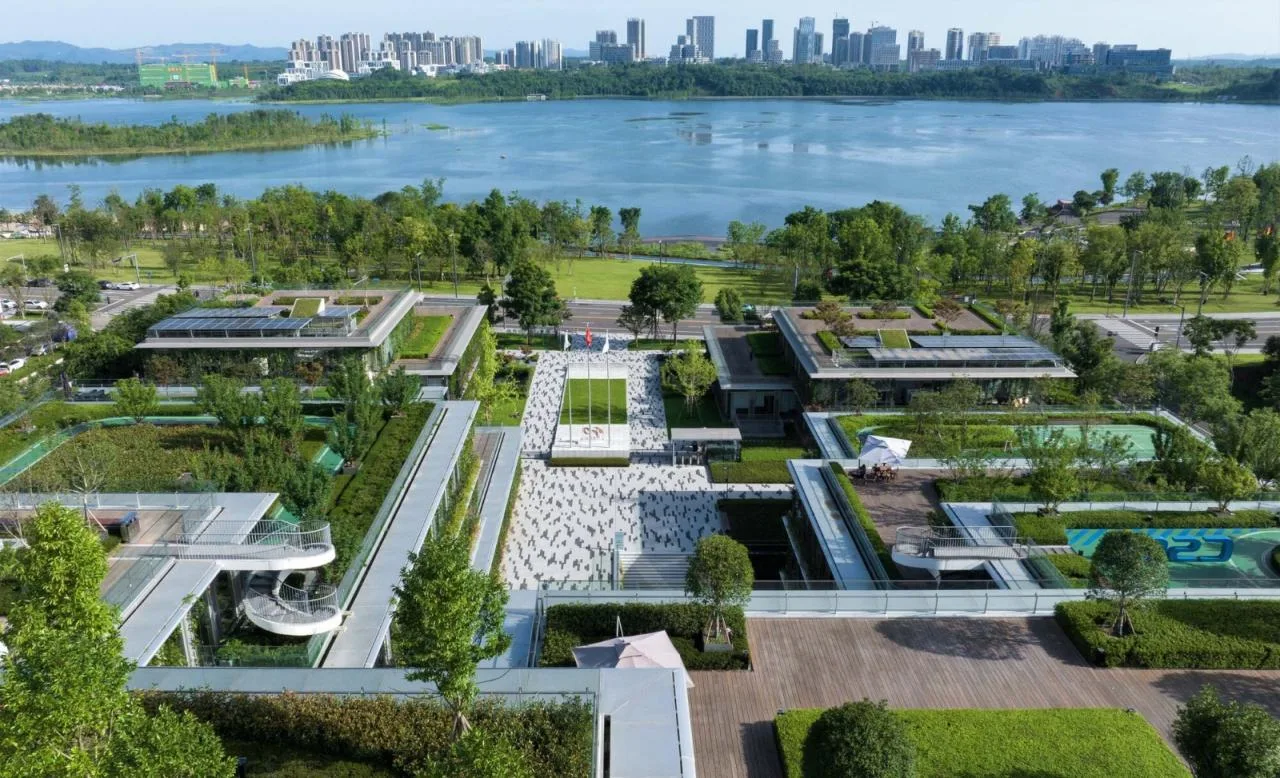
The outdoor pedestrian network on the roof connects various platforms and garden paths via spiral steel staircases, offering alternative routes. The rooftop includes a fruit and vegetable garden, 1,000 m² of solar panels, and recreational facilities such as a basketball court, badminton court, mini-track, and a three-dimensional micro-marathon loop that extends from ground level to the roof. These amenities blur the line between work and life, embodying the unique atmosphere of a creative design enterprise.
Case and Landmark
The Zhongjian Binhu Design Headquarters is more than poetic architecture; it represents a significant technical research and experimental milestone. As a near-zero energy collaboration between China and the United States, the project underwent multiple design, construction, and testing phases before its official launch. Led by a multidisciplinary team of architects, dozens of new technologies, materials, and equipment were optimized and integrated. Innovations include prefabricated hinged frame nodes, steel truss composite panels, buckling restrained supports, solar roof lighting and storage systems, natural ventilation and pre-cooling strategies, triple-silver double-insulated glass, vertical greening with intelligent drip irrigation, advanced HVAC humidity and temperature control, among others. This project transcends typical corporate headquarters expectations, serving as a forward-looking technological experiment and a platform for promoting future architectural ideas. It has garnered widespread industry and public attention and established itself as a landmark of green development leadership.
Project Information
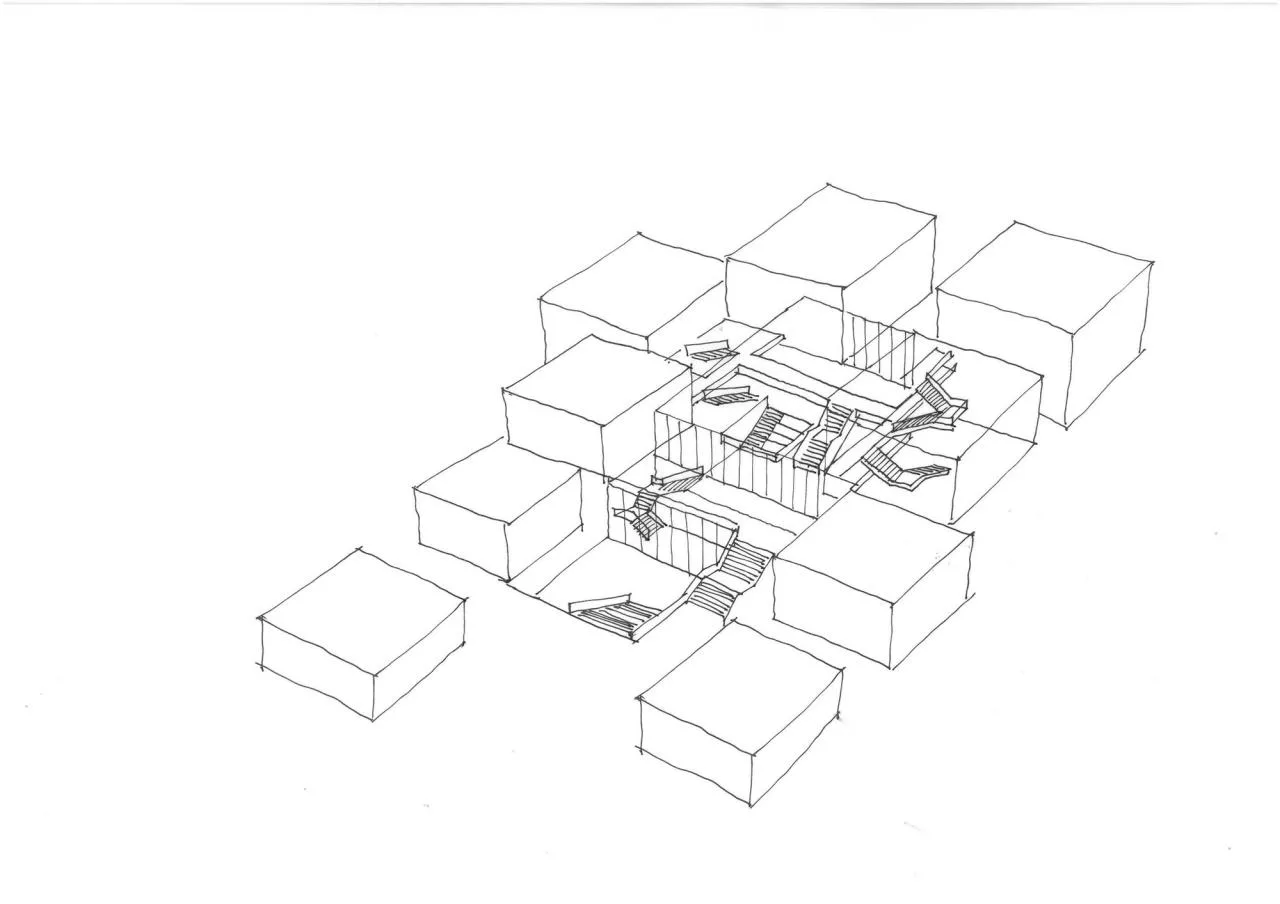
△ Hand-drawn drawing
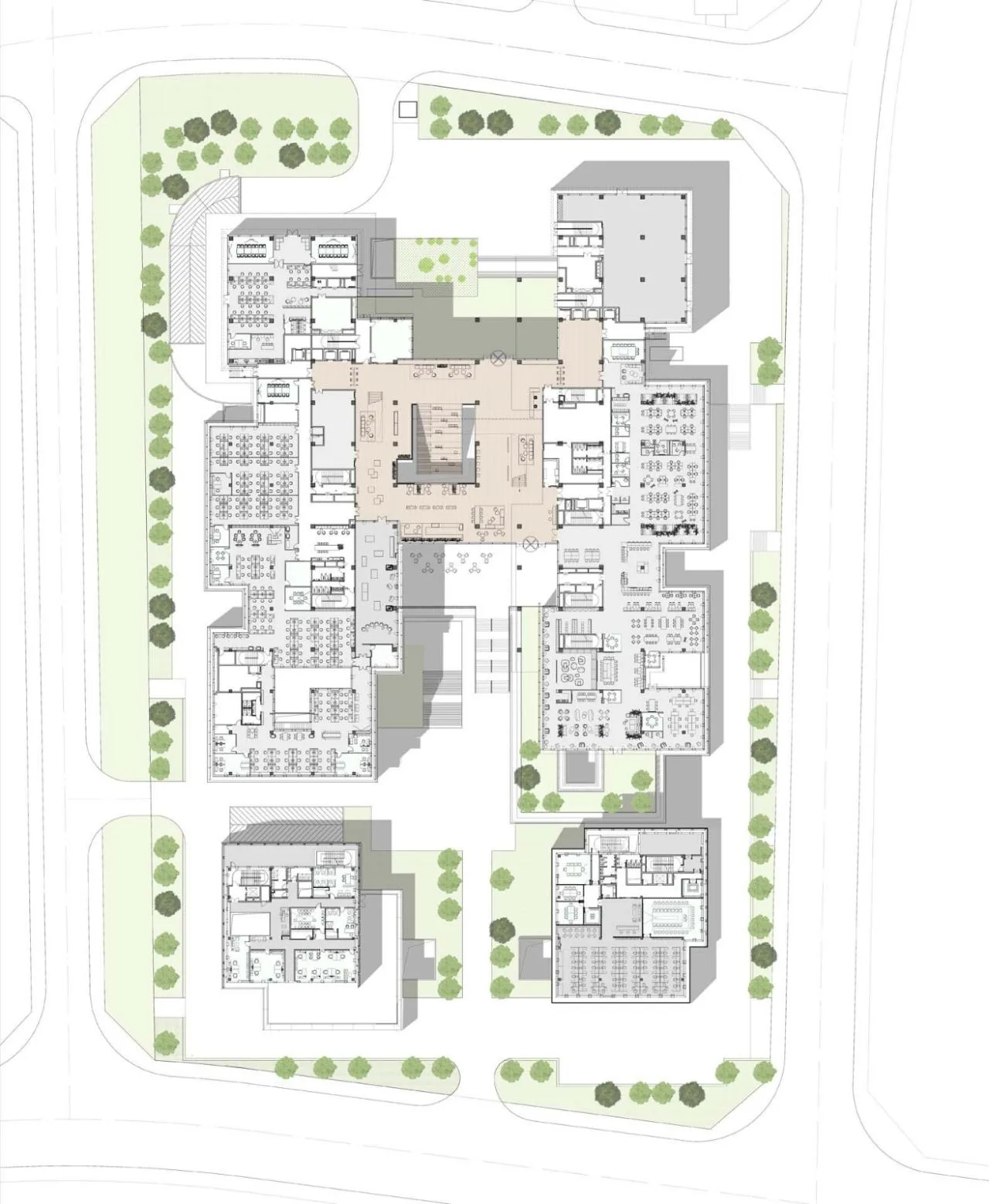
△ First floor plan
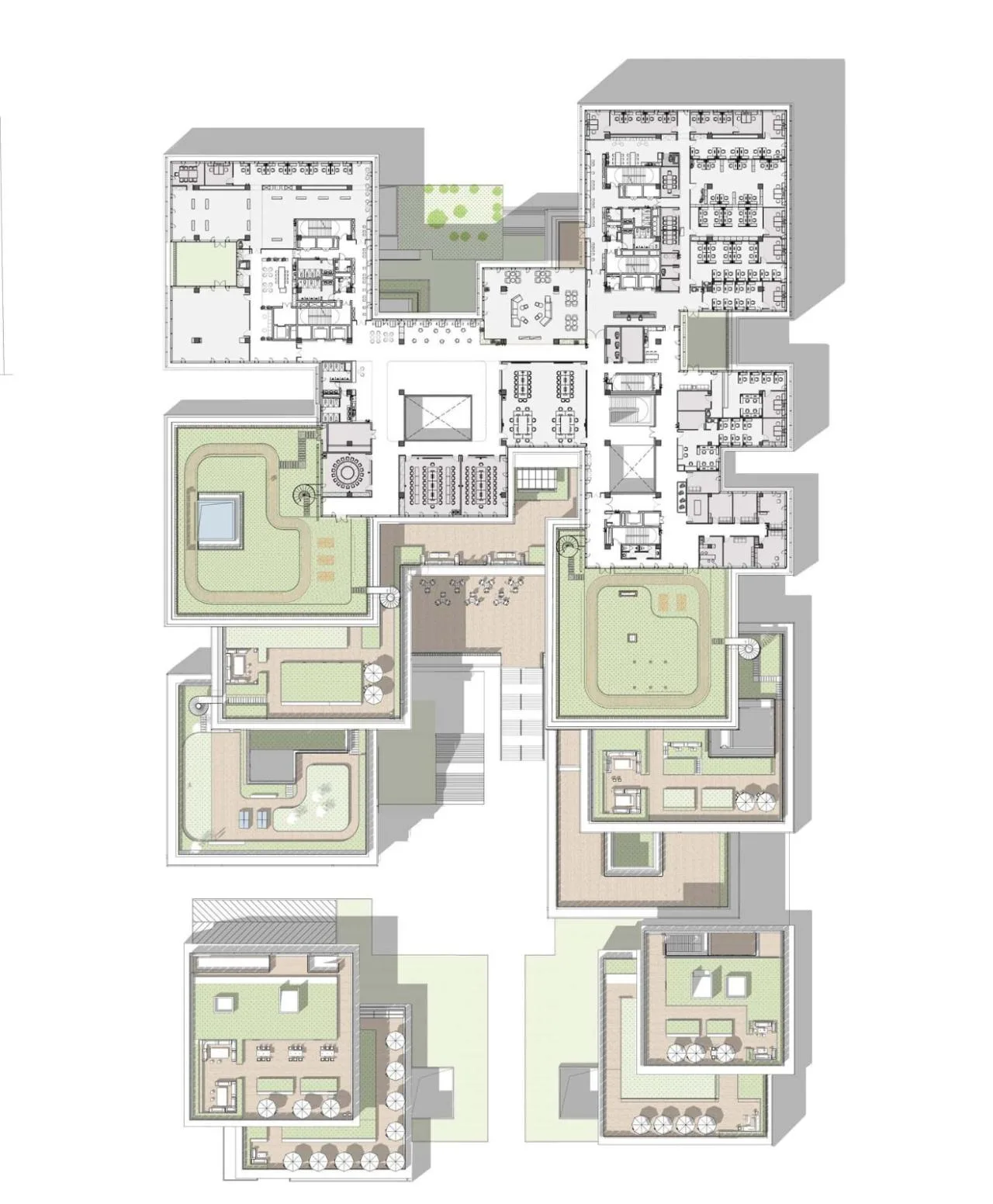
△ Second floor plan
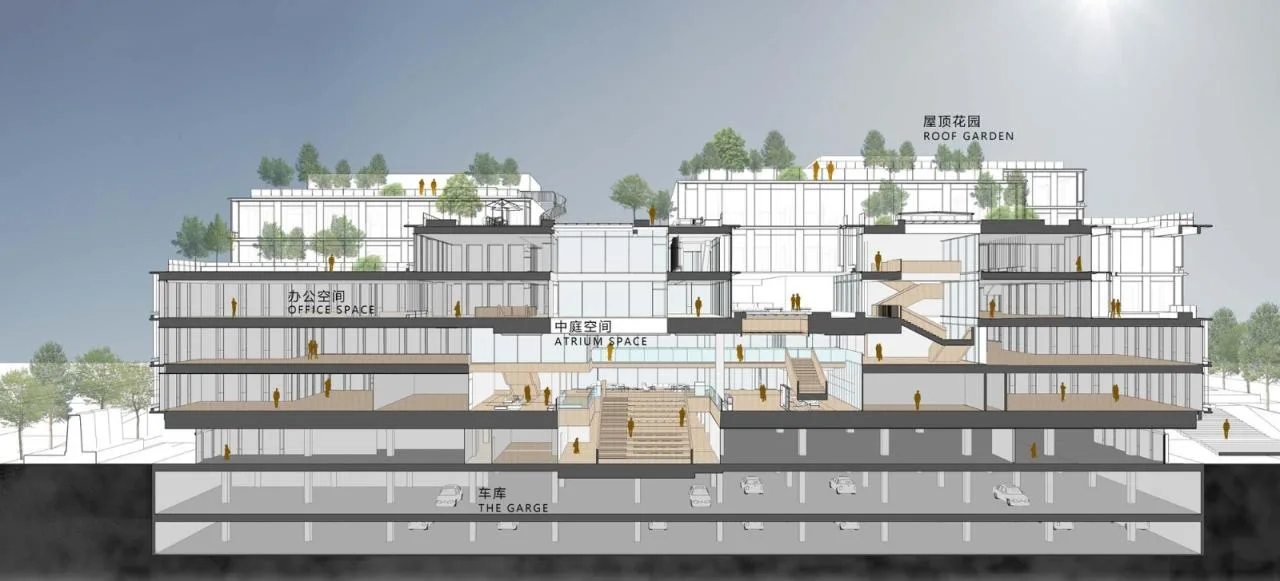
△ Section diagram
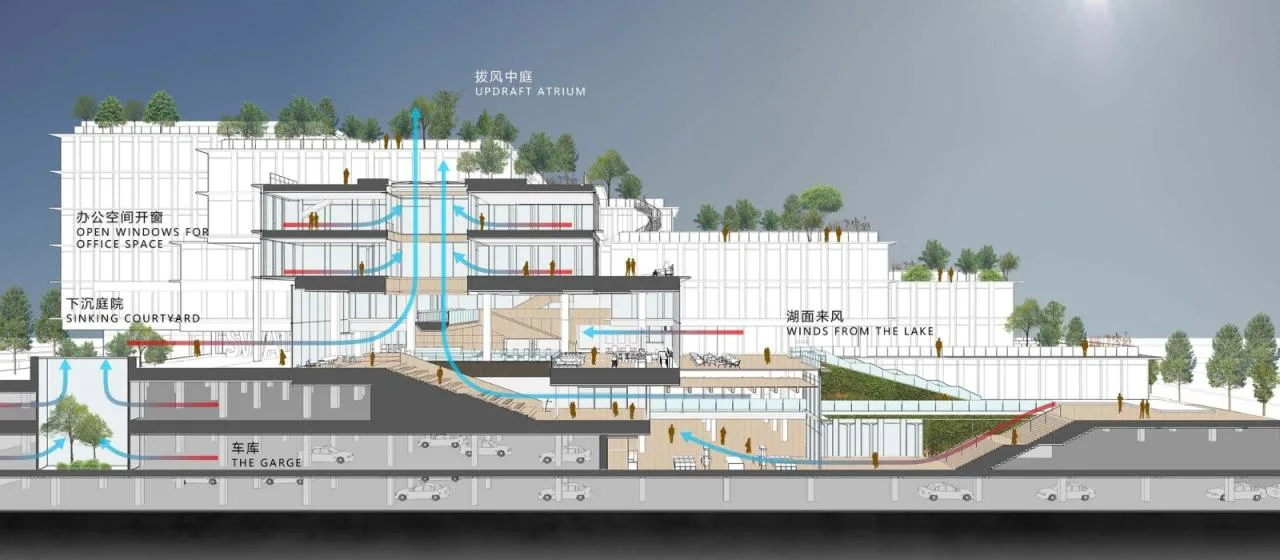
△ Analysis chart
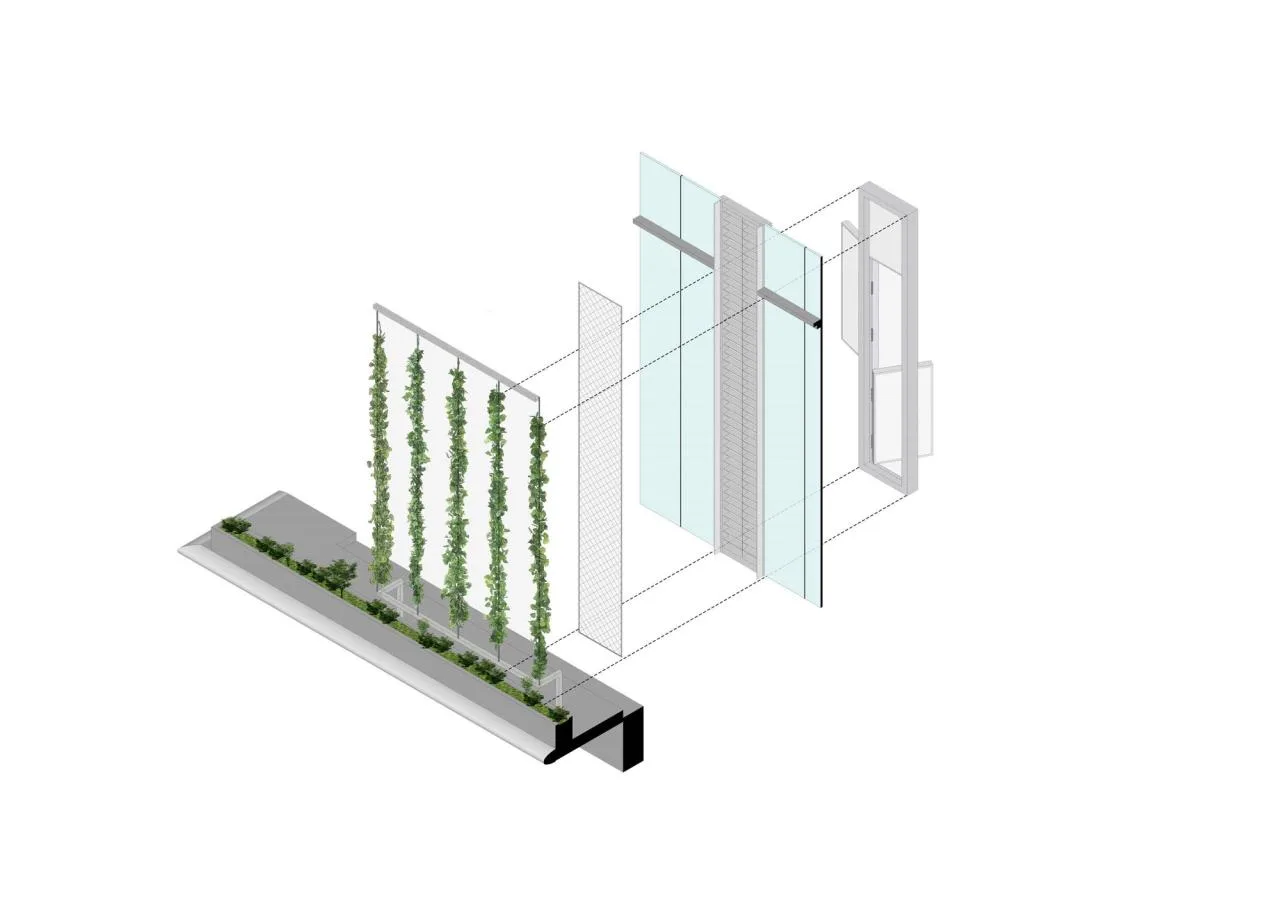
△ Analysis chart
Project Details
Architect: China Southwest Architectural Design and Research Institute
Area: 78,335 m²
Year: 2020
Photographer: Arch Exest
Lead Architect: Liu Yi
Design Team: Feng Ya, Bi Qiong, Fang Changjian, Wu Wei, Tang Haowen, Lu Yue, Zhu Bin, Liu Guangsheng, Lu Meng, Wen Junyi, Dong Biao, Chen Hongyu, Zhang Guoqiang, Deng Shibin, Ji Ruyan, Zhou Li, Wu Shi, Zhang Han, Dong Zhichao, Hou Wei, Wu Jing, Xu Zhang
Construction Drawing Design: China Southwest Architectural Design and Research Institute Co., Ltd
Construction Unit: Chengdu Huafu Jincheng Zhongjian Real Estate Development Co., Ltd
Location: Chengdu
















Must log in before commenting!
Sign Up