
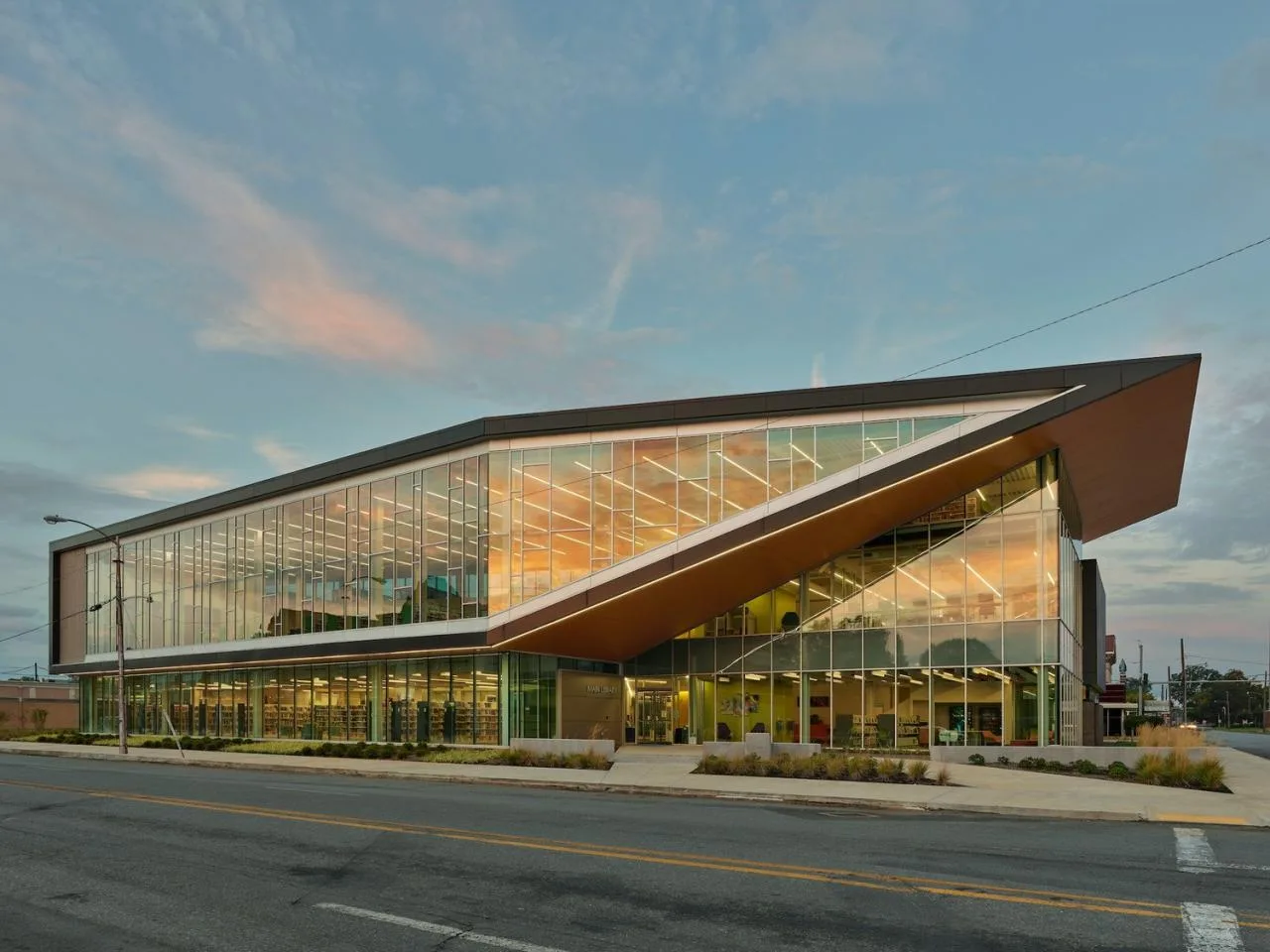
Situated where southern pine forests meet the expansive farmland of the Arkansas River, Pine Bluff was once a shining gem in the Mississippi Delta. Like many delta cities, it has faced decline due to the relocation of industry and the reduced importance of water transportation. The city’s population has fallen from 70,000 to 40,000, and it has gained a nationwide reputation for a high crime rate, which has further hindered its ability to attract industry and retain local talent.
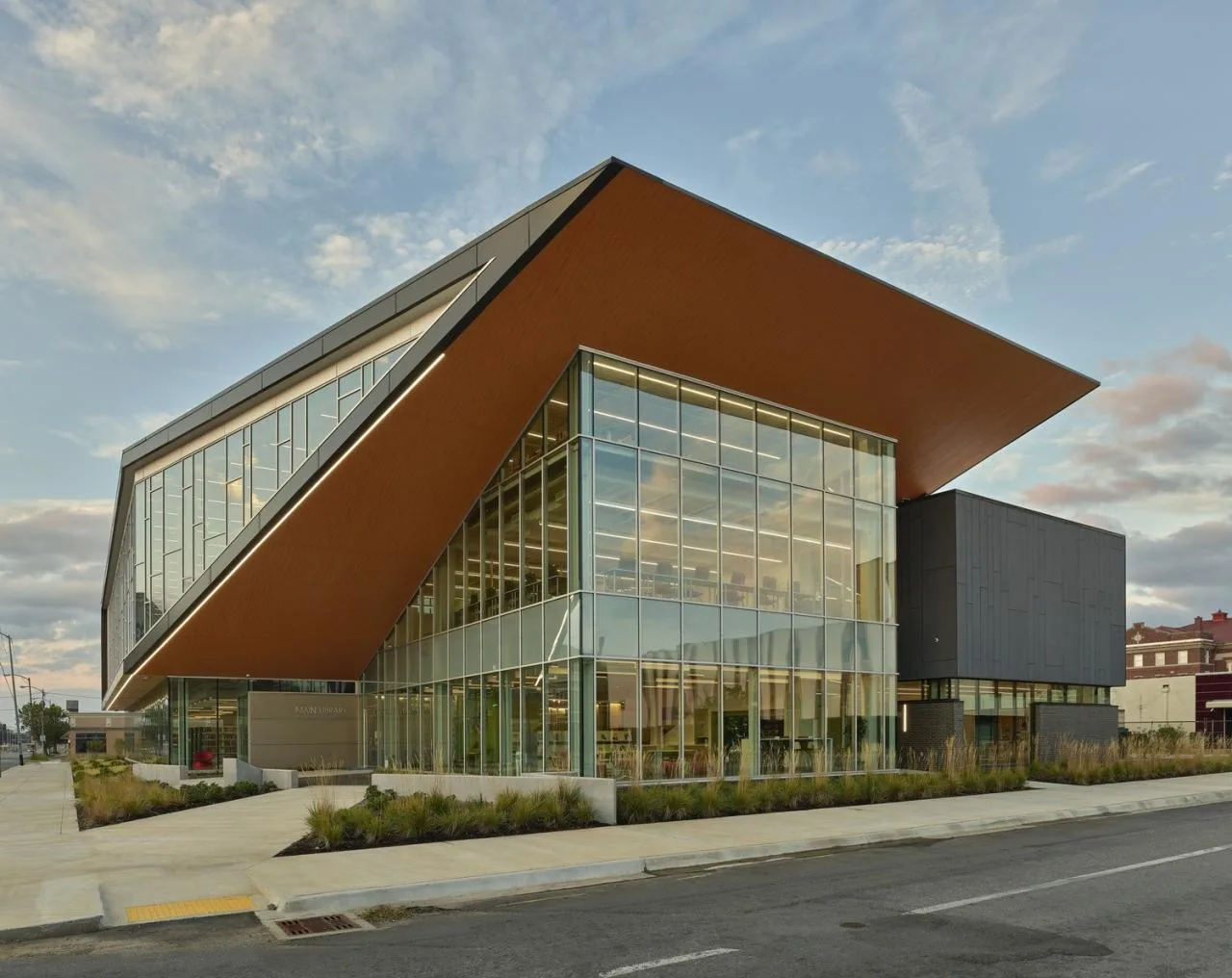
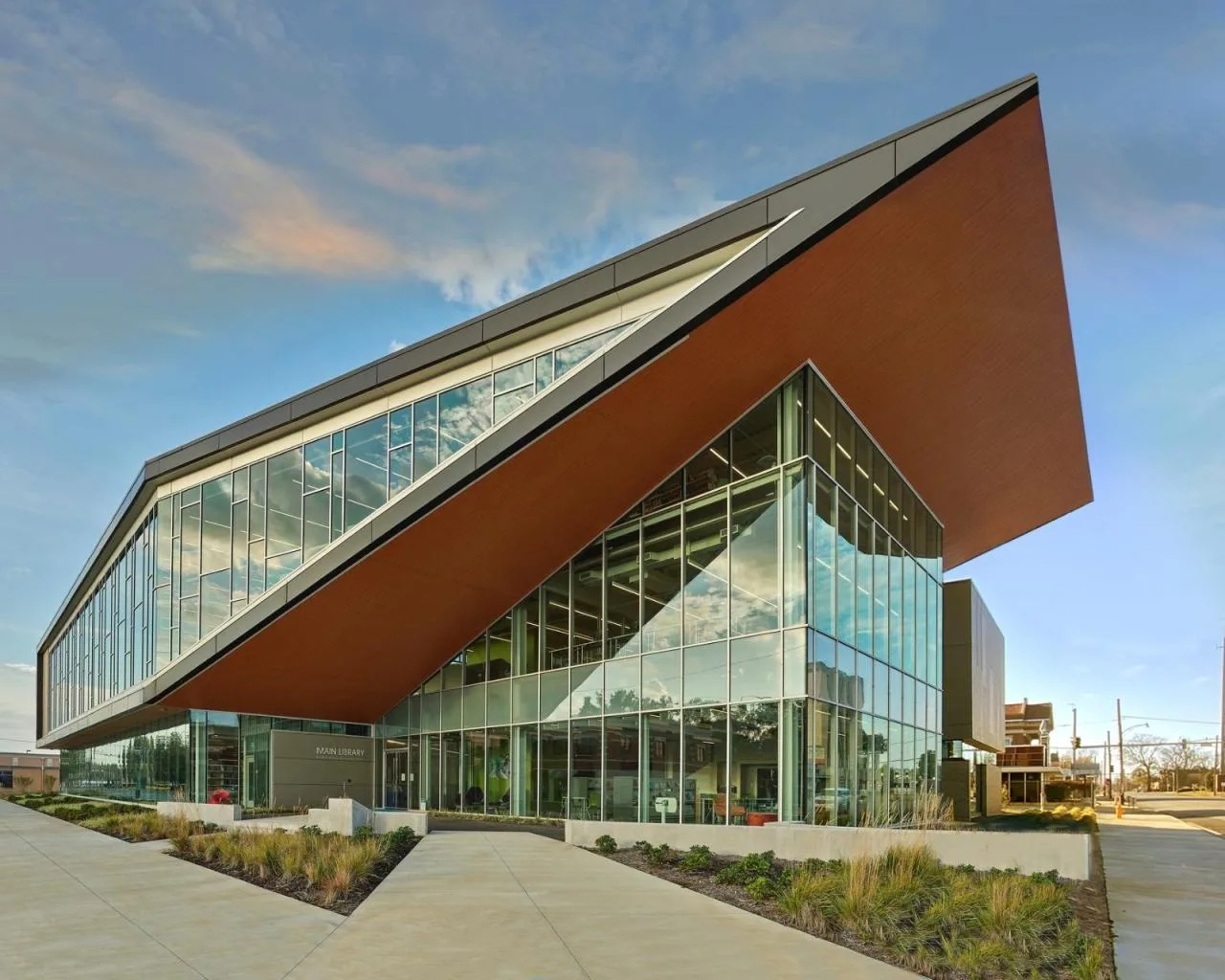
The largest theater in Arkansas is located on what was once a bustling main street, now lined with dilapidated and vacant storefronts. The city center feels deserted. When several buildings began to collapse, city leaders and residents came together to save the main street by establishing economic incentives aimed at reversing the city’s downward trajectory. One key initiative was to prioritize knowledge by constructing a new main library in a prominent location on the main street—where buildings had burned or fallen—to serve as a symbol of renewal for both the city center and Pine Bluff as a whole.
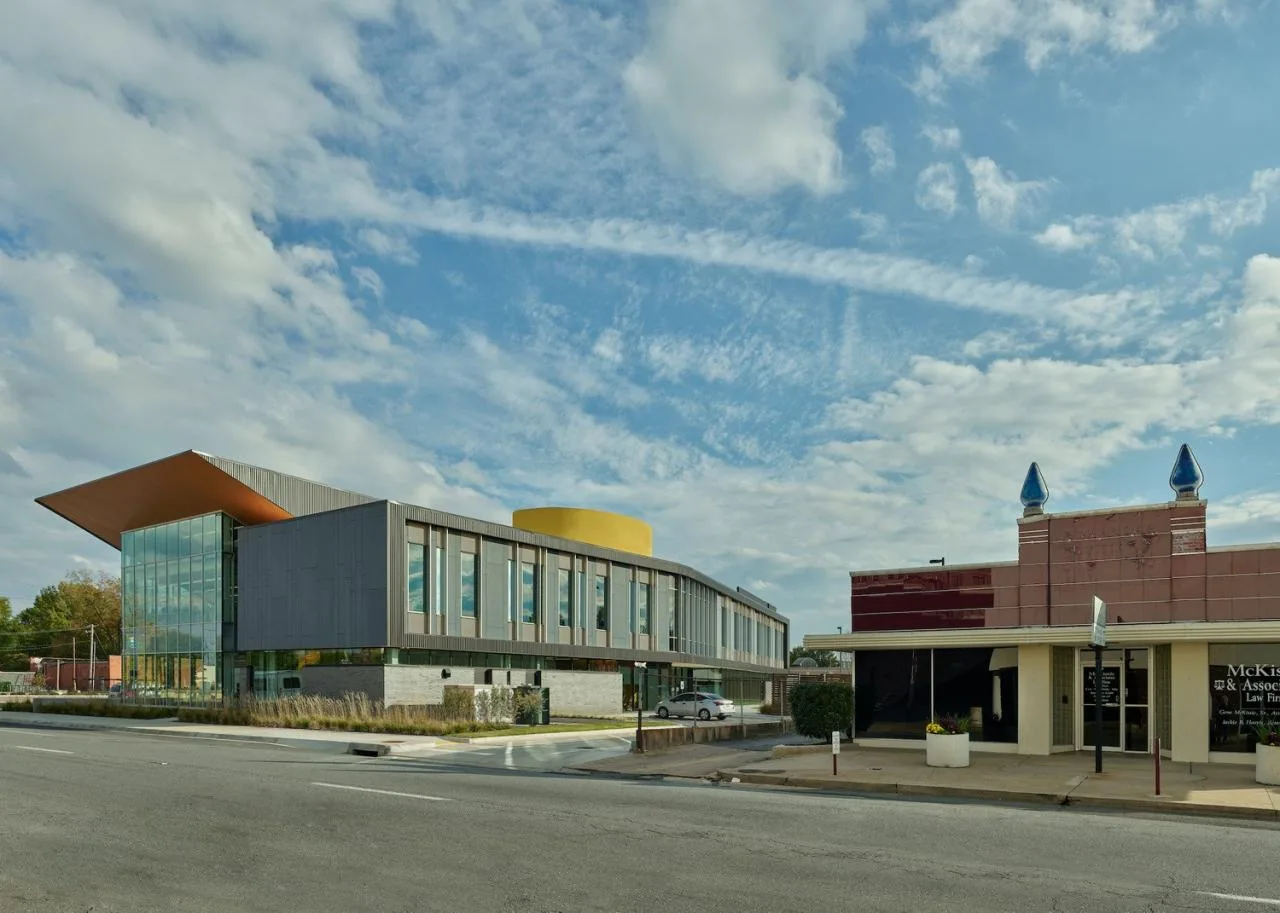
During a civic meeting, the community expressed a strong desire to create a “community reception room” focused on children and youth—offering hope, encouragement, and a thirst for knowledge. The goal was to inspire young people to stay, reinvest, and rebuild the city. Residents envisioned an inspiring and safe place filled with abundant natural light, symbolizing a hopeful future.
This vision led to the creation of an auxiliary learning center embedded with community functions. It goes beyond offering books, providing performance spaces, teaching kitchens, recording studios, cafes, and computer training programs for both adults and youth.
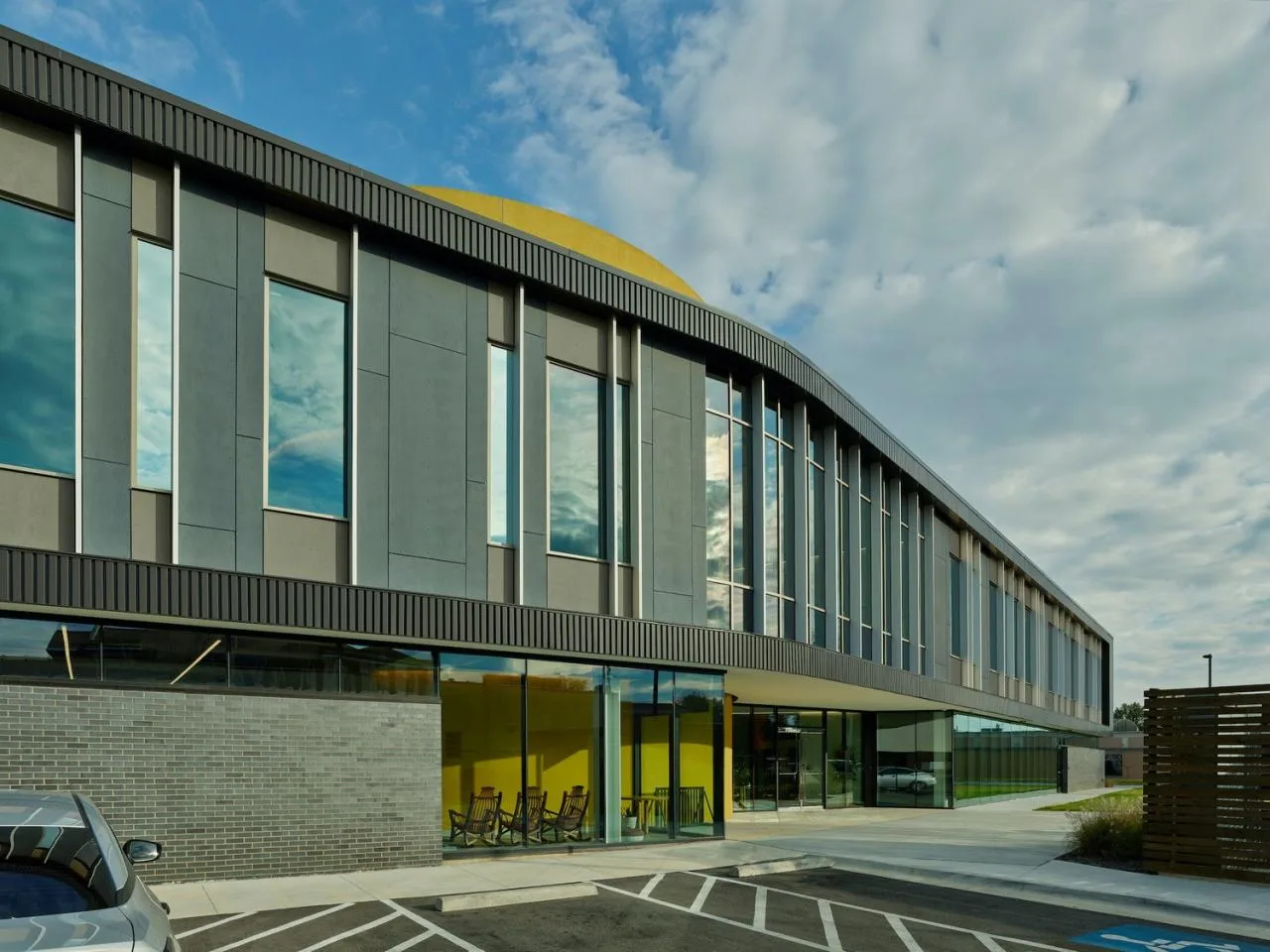
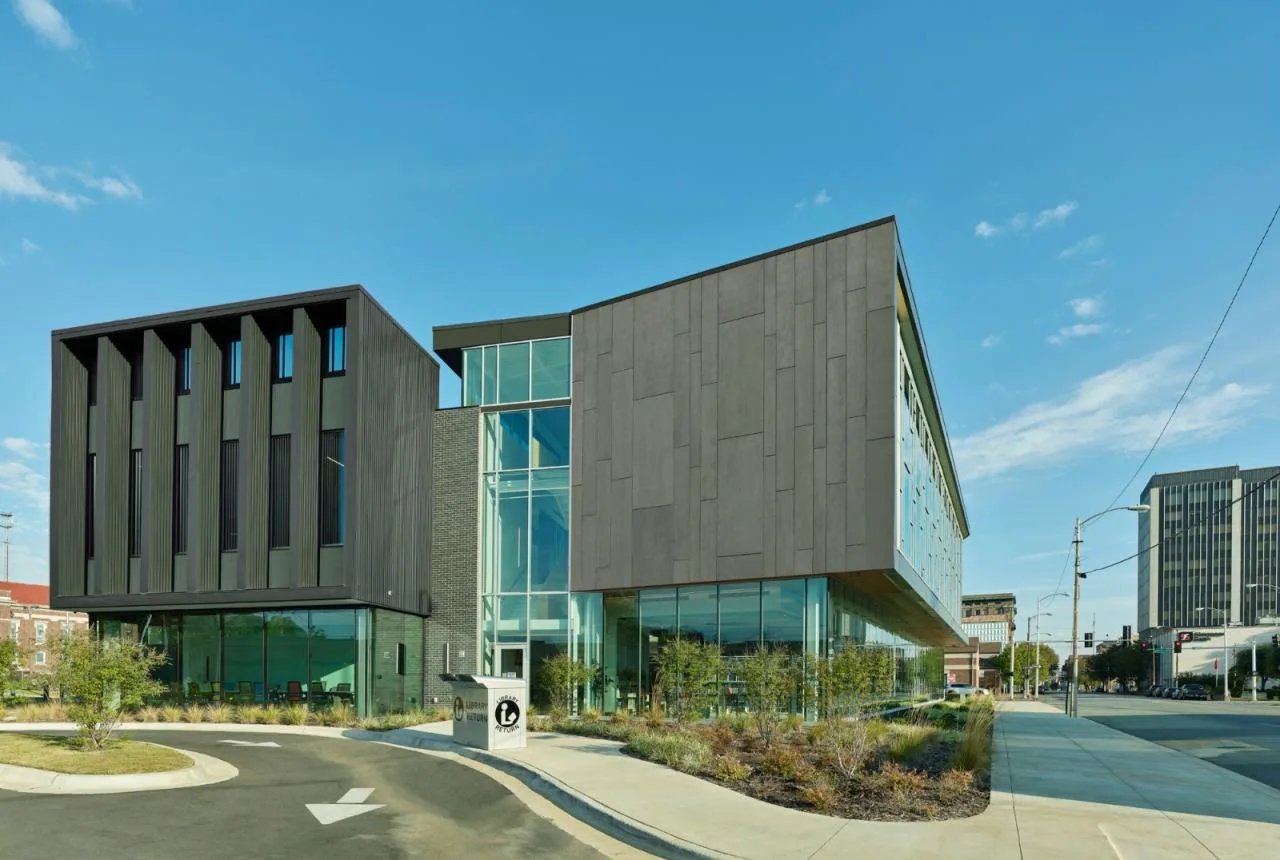
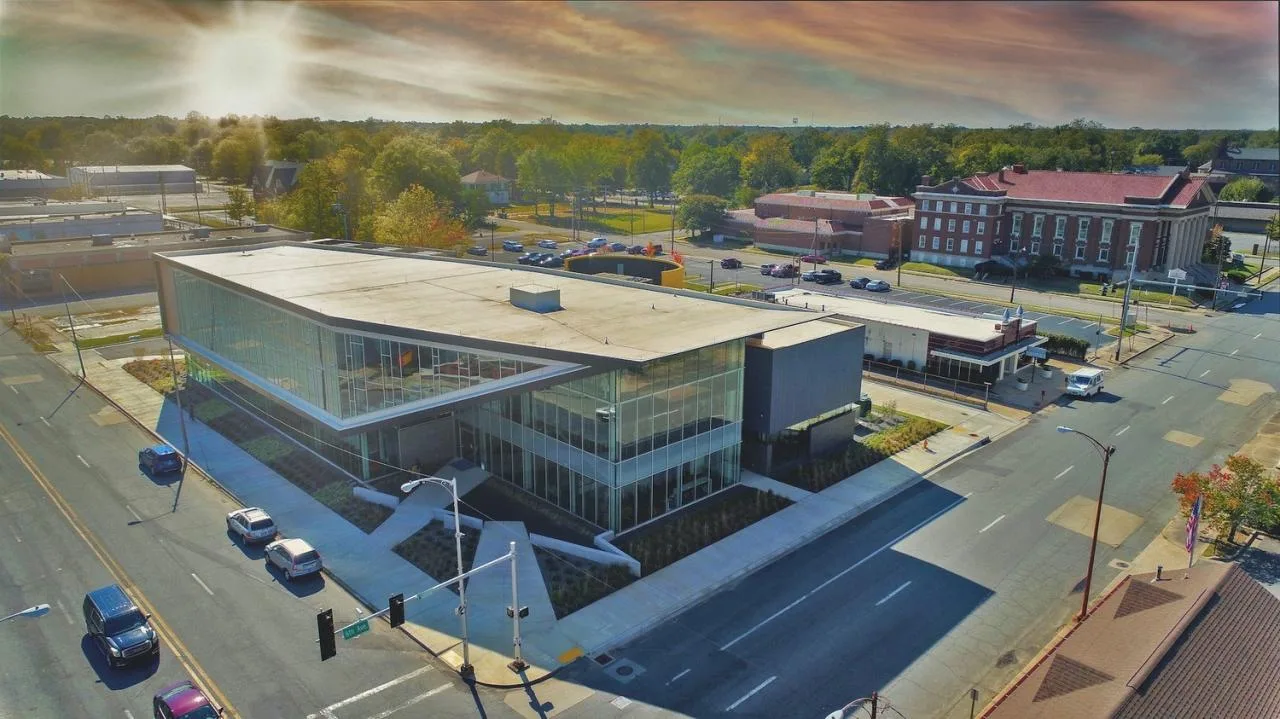
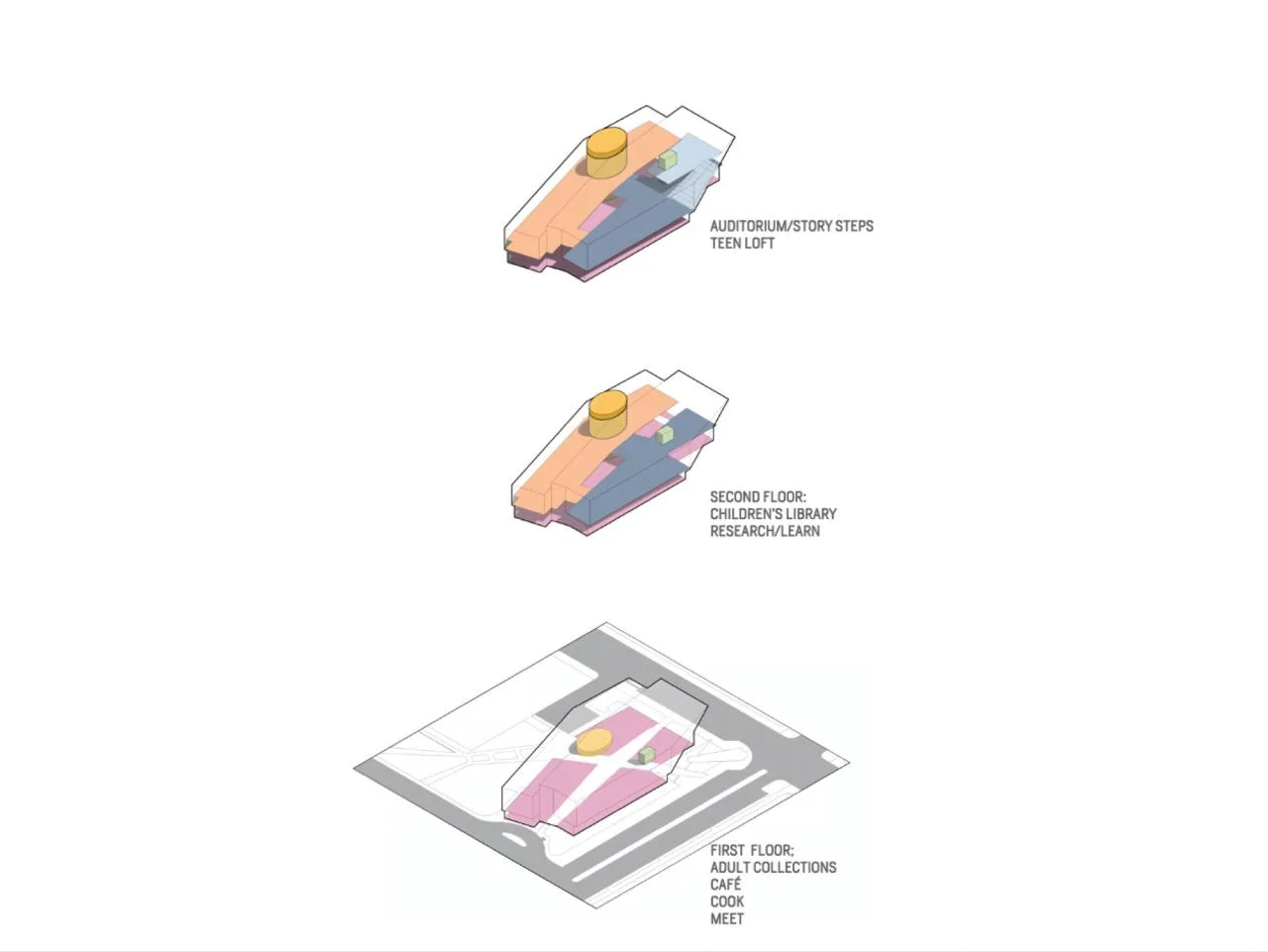
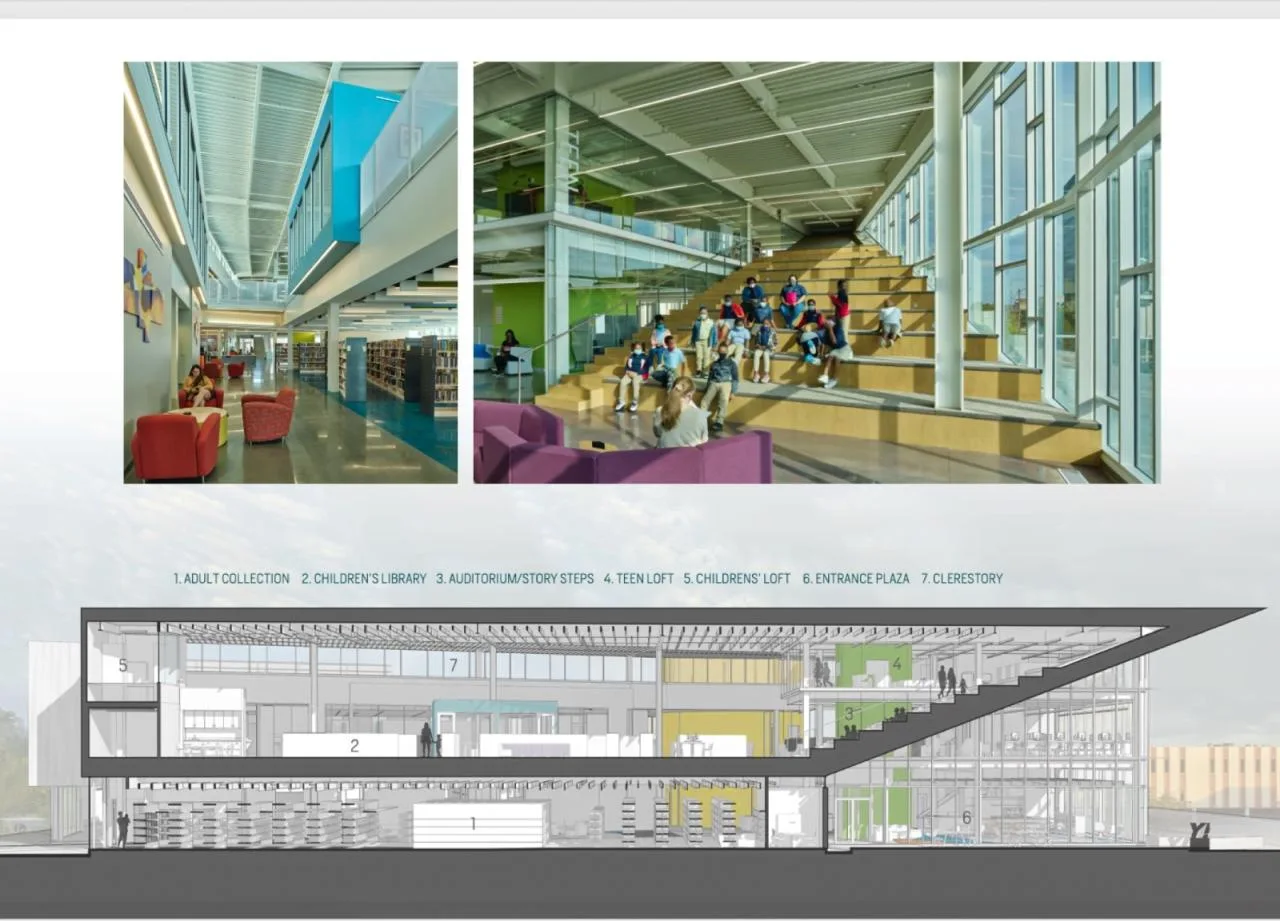
The spatial design balances books with larger educational and specialized spaces, forming two distinct but parallel zones. These lean towards openness and natural light, emphasized by the unique shapes of the functional areas. The public bookshelf faces the street, with the children’s library directly above it, showcasing the importance of knowledge.
A vibrant cantilevered open auditorium floats above the main entrance, extending northward as a bold, progressive symbol of hope. The auditorium’s tiered steps connect the children’s library with the youth mezzanine, overlooking the entire library and city center. This dynamic space highlights the significance of young people to the city. Interestingly, the open steps have also attracted local college students, who prefer studying and socializing here rather than on campus.
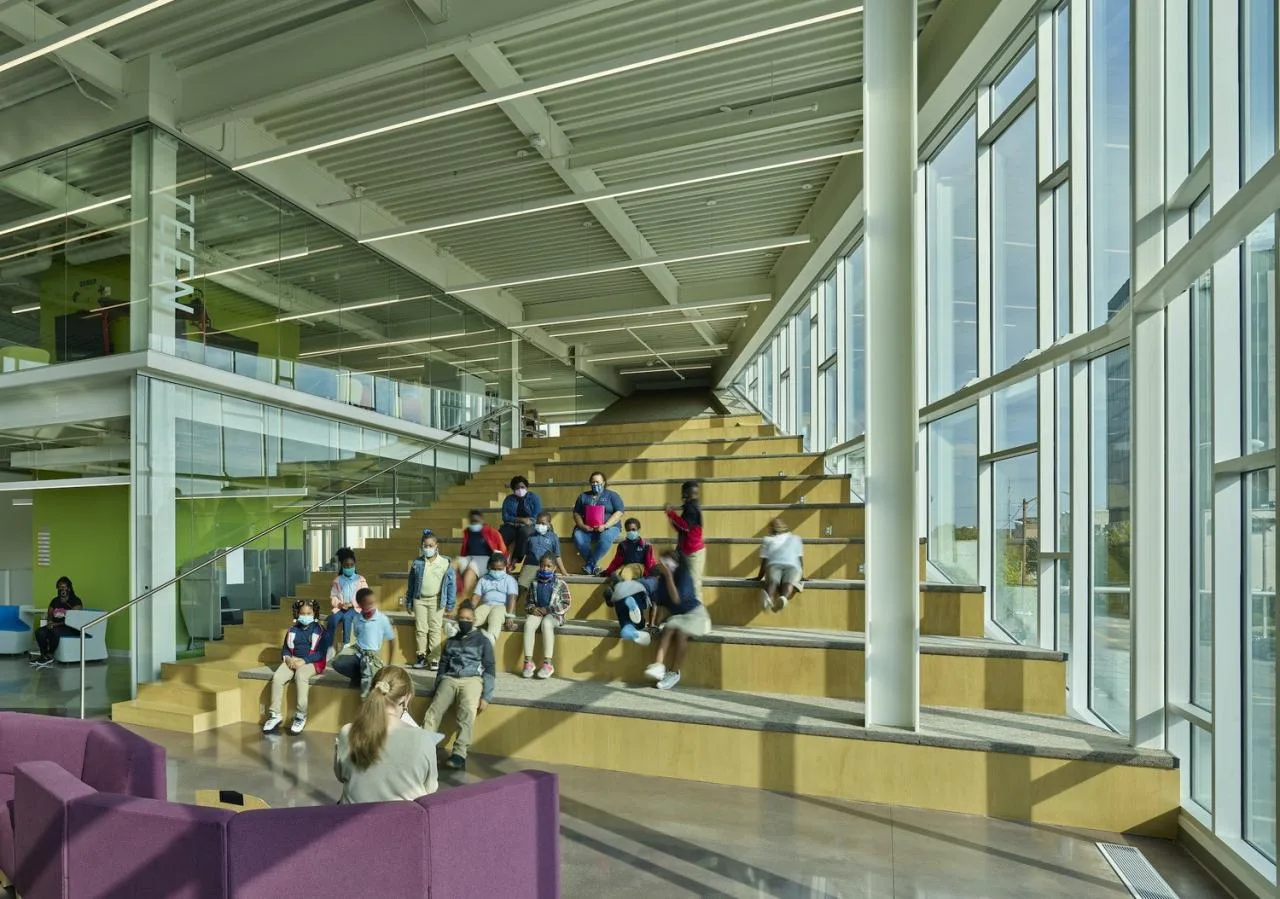
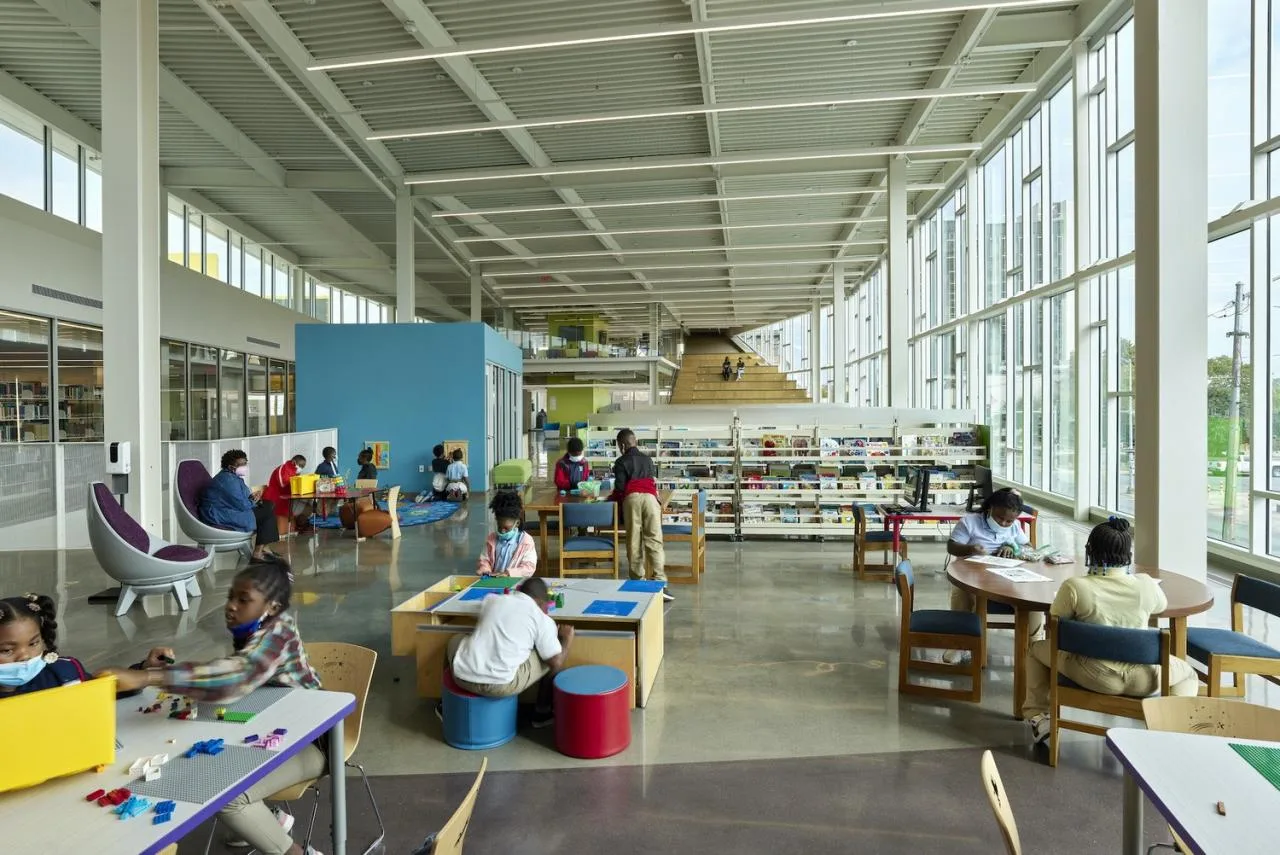
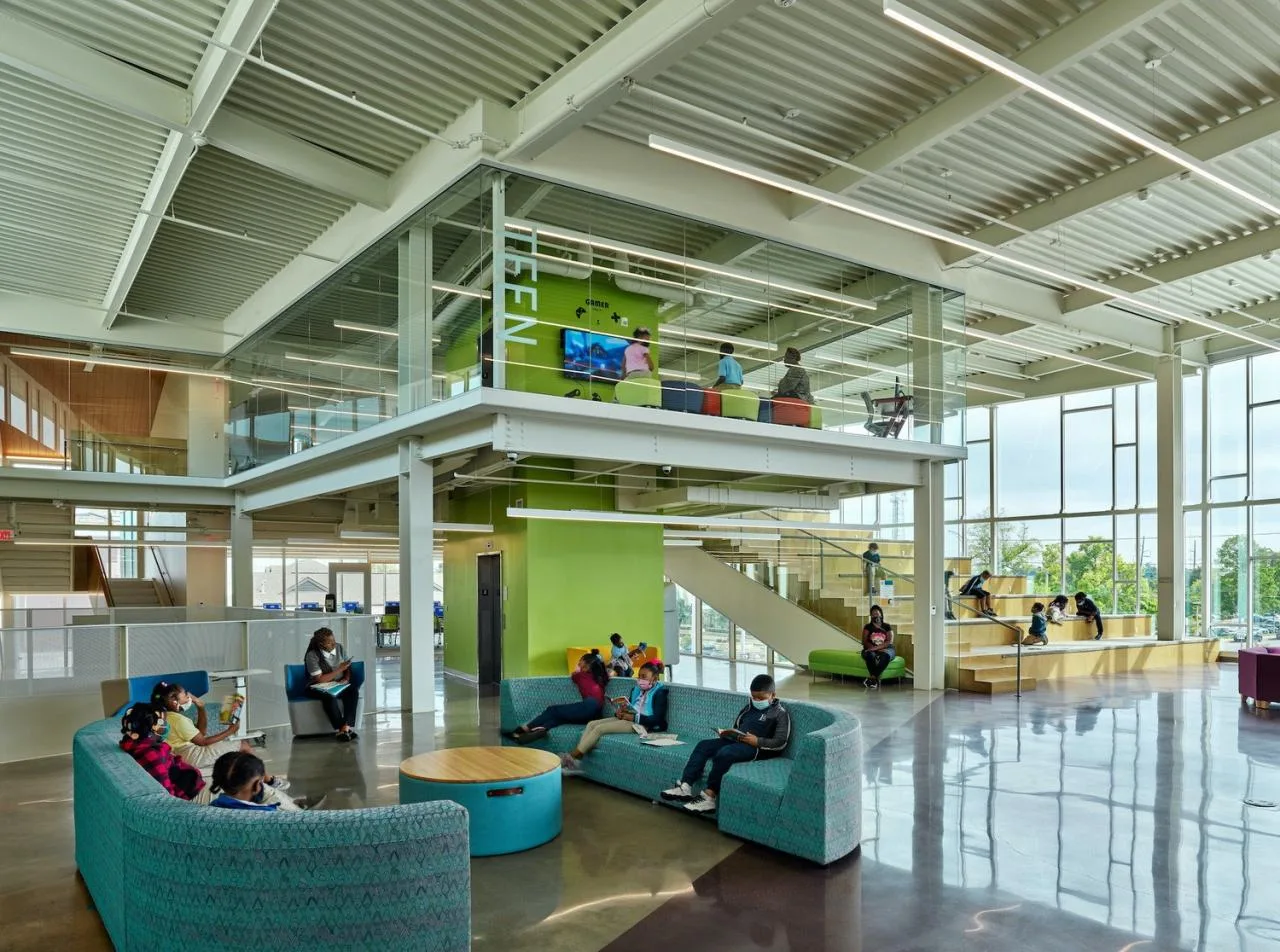
The library features two main entrances, connecting the main street intersection through the building to the west parking lot. The flat layout allows two pedestrian pathways to intersect at the book borrowing and return desk, forming an internal street illuminated by natural light from above. A continuous skylight creates a floating roof effect, flooding both floors with daylight.
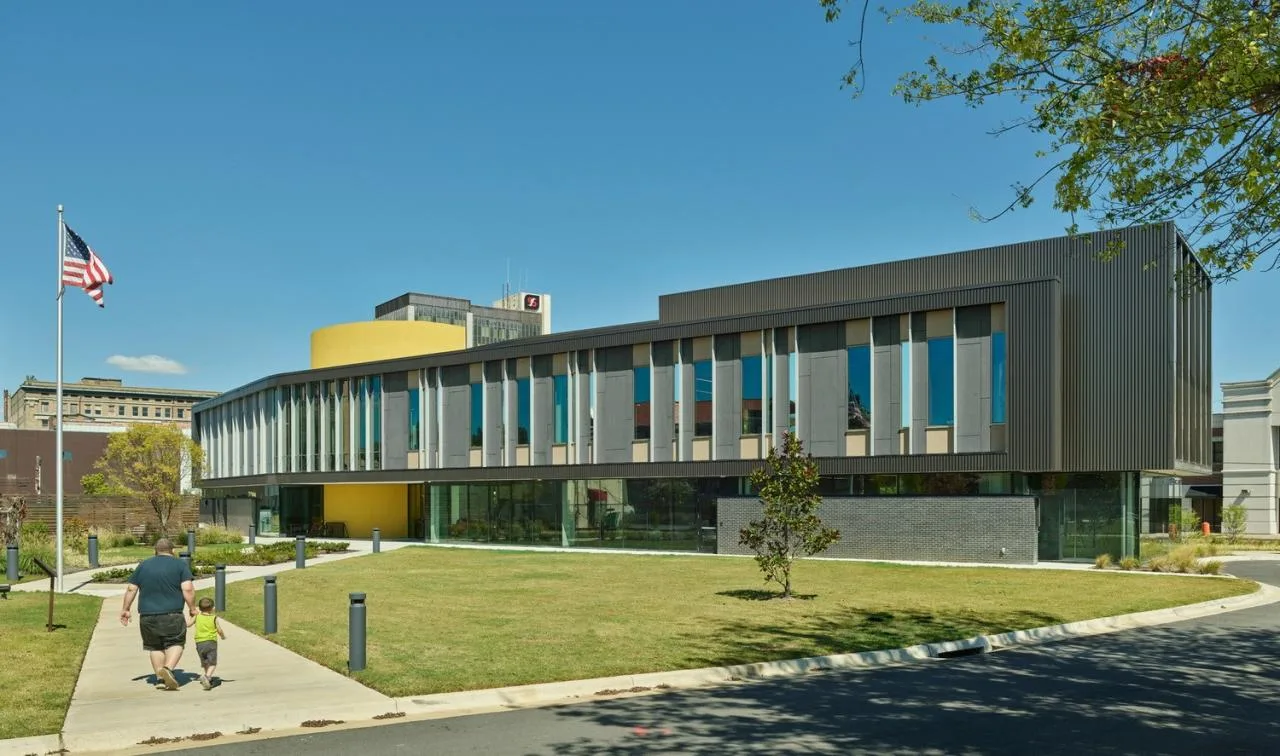
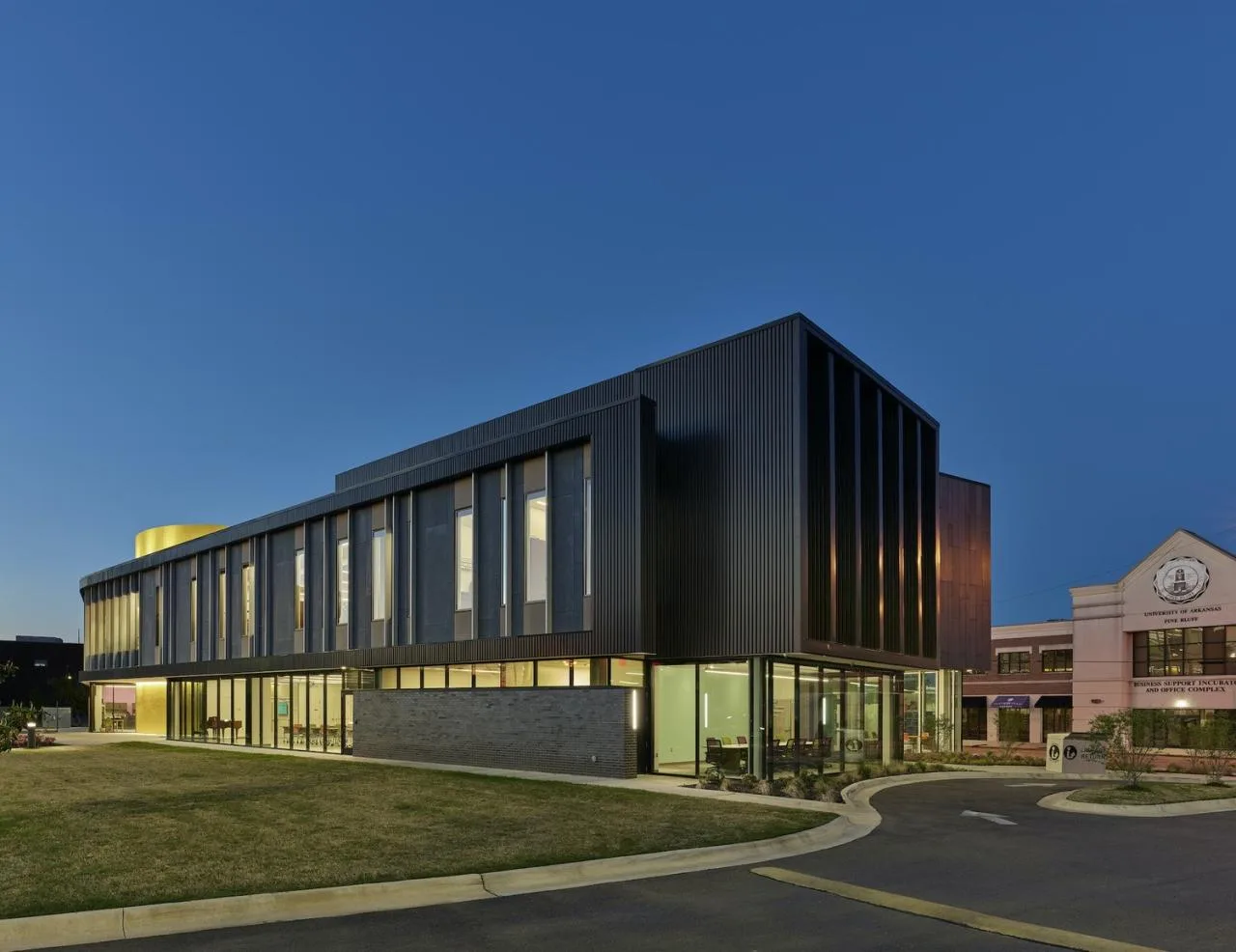
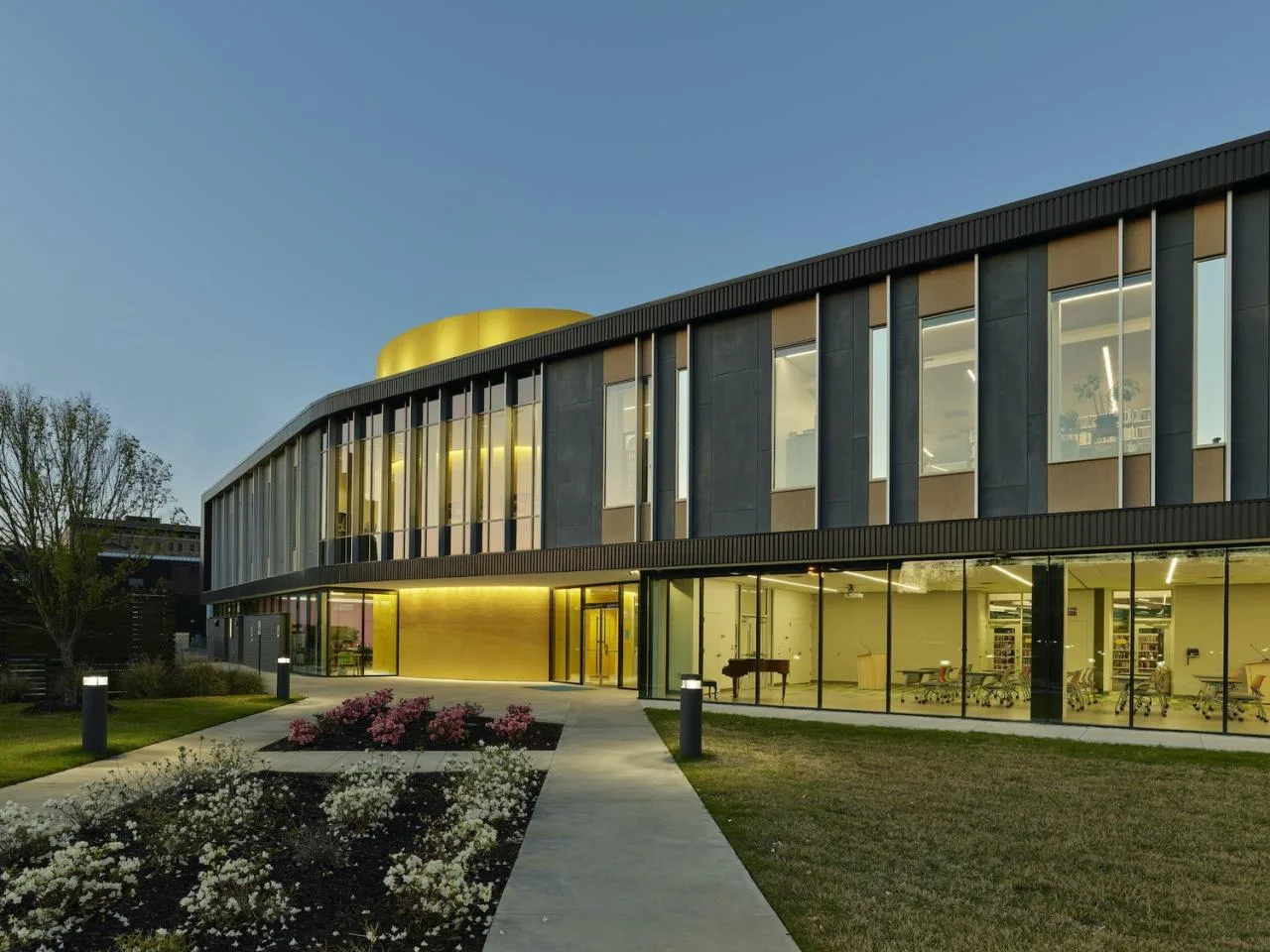
Due to an adjacent private property, the site has an irregular shape, causing the west facade to curve and connect to the parking lot via a movable lawn. A bold elliptical cylinder, housing practical functions, anchors this curved form and serves as a visual landmark for the surrounding parking and street entrances. The west facade evokes the image of books on a shelf, featuring slender windows of varying widths combined with vertical heat sinks to minimize heat absorption.
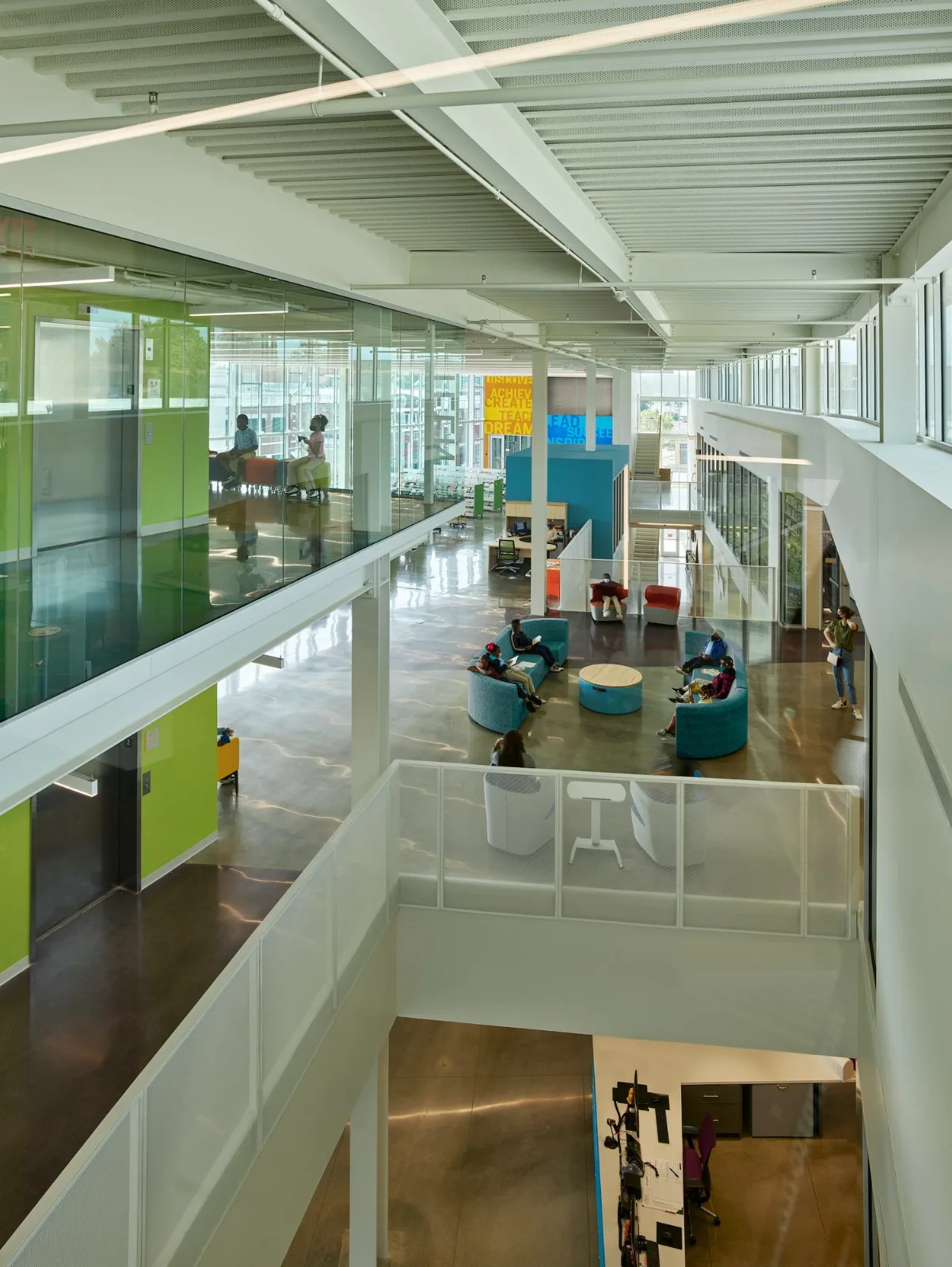
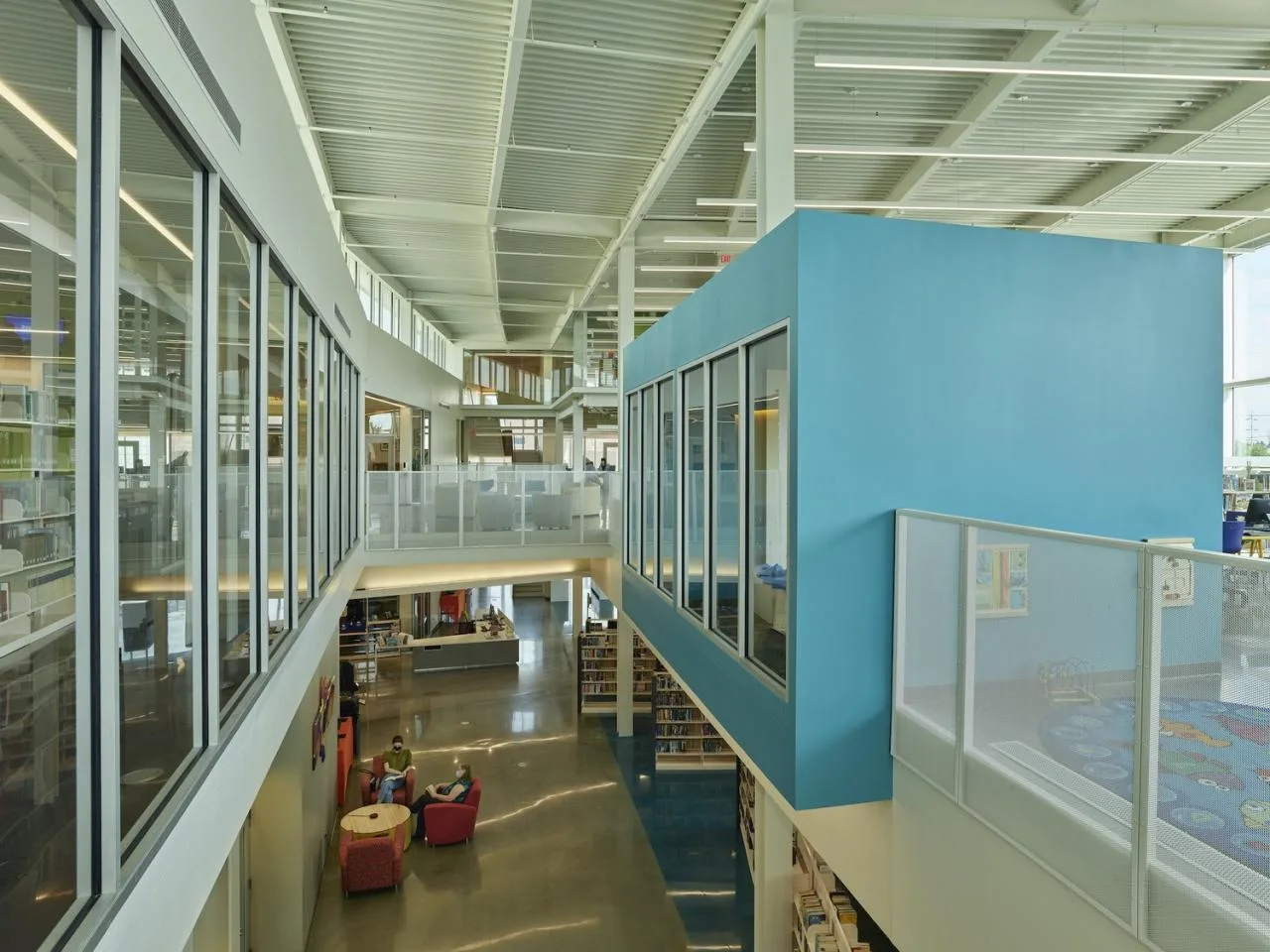
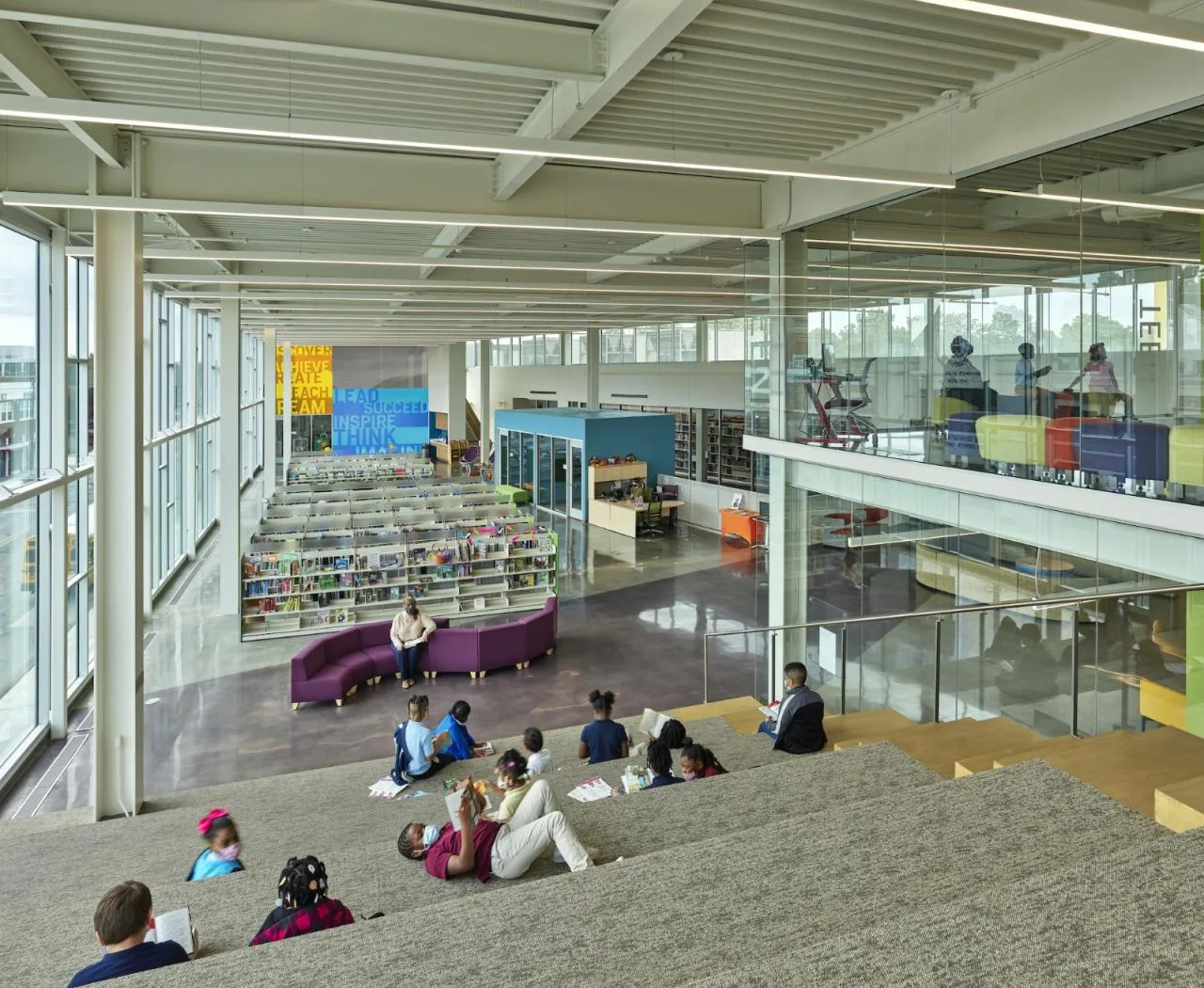
The Pine Bluff Library stands as a beacon, emphasizing the value of reinvesting in citizens through education and symbolizing the city’s hopeful future.
Project Drawings
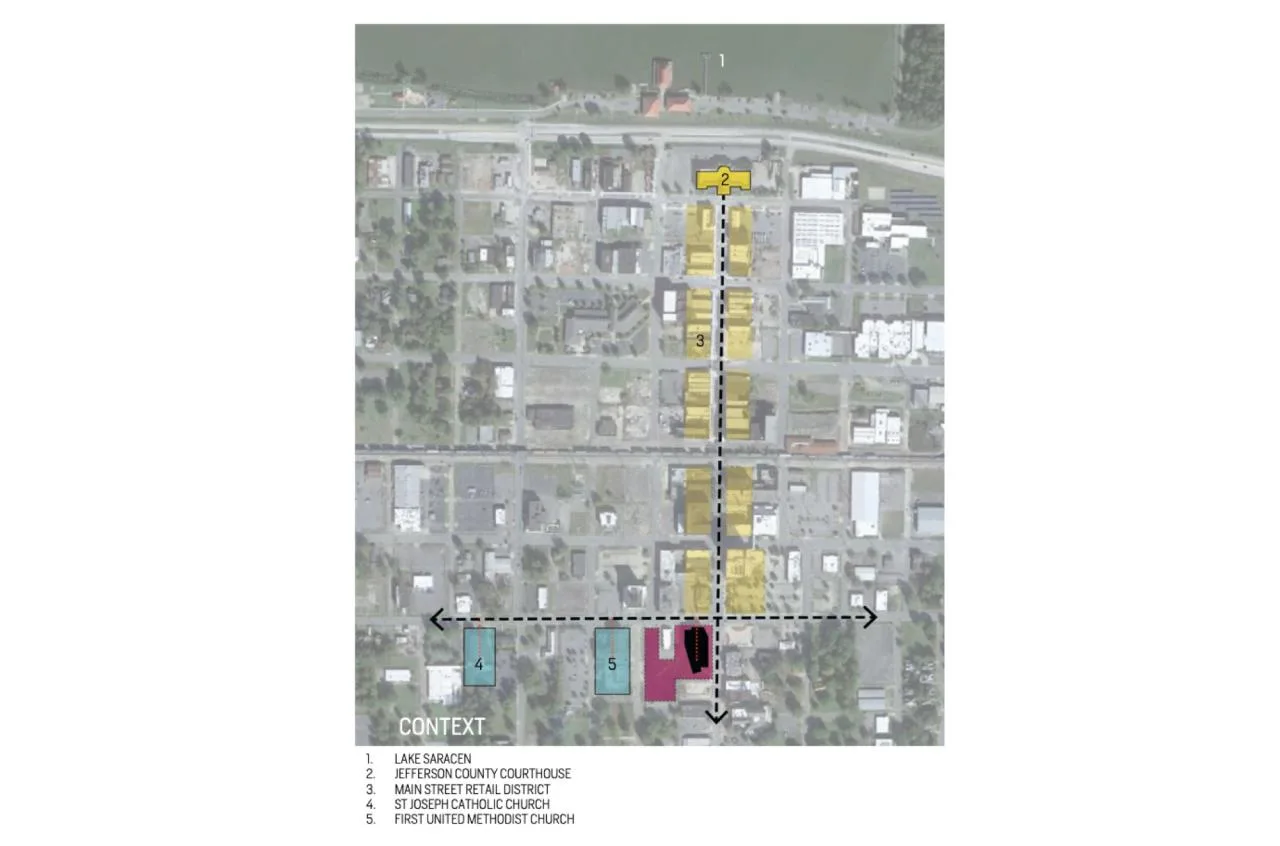
△ Location Analysis
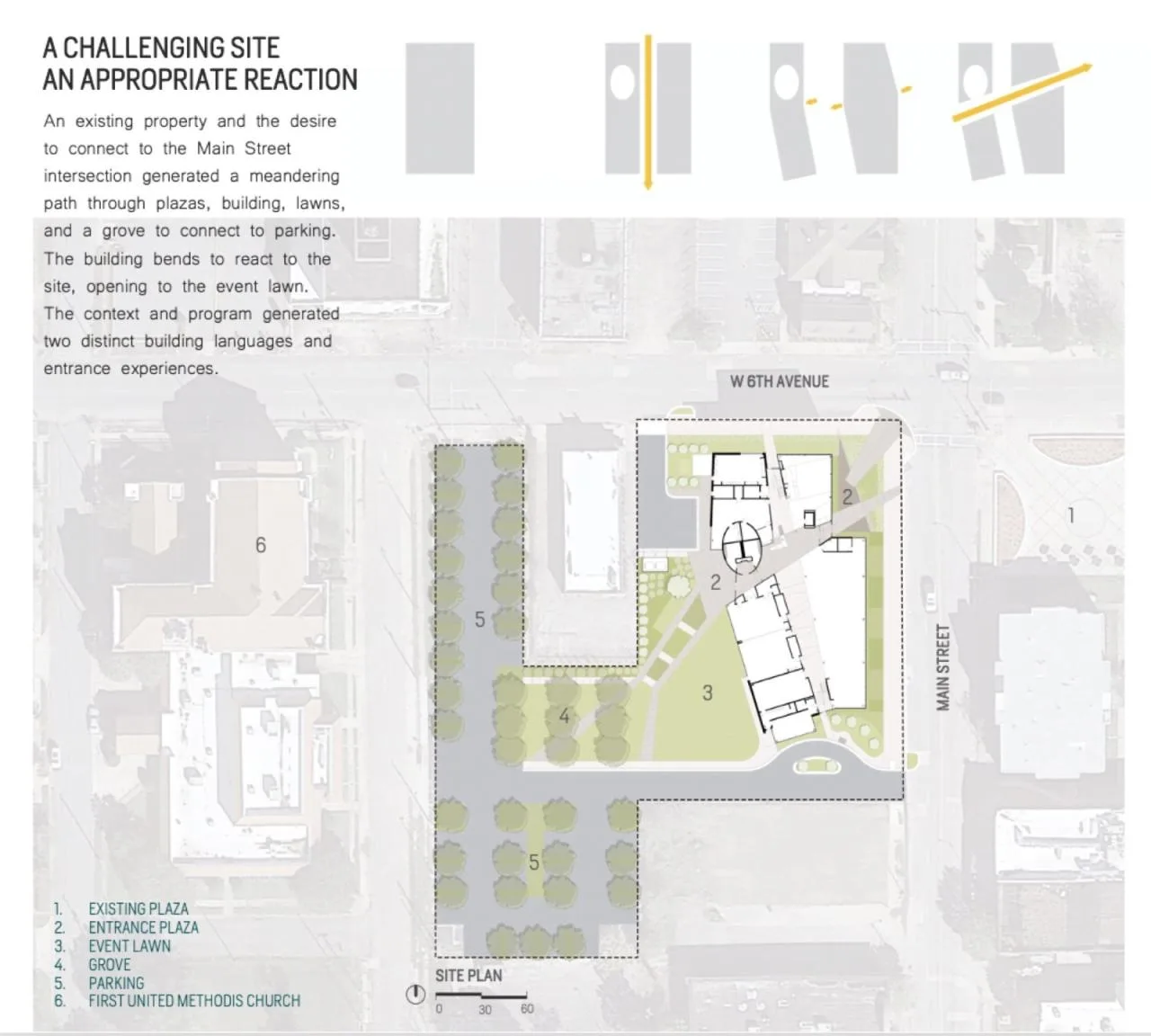
△ Overall Layout Plan
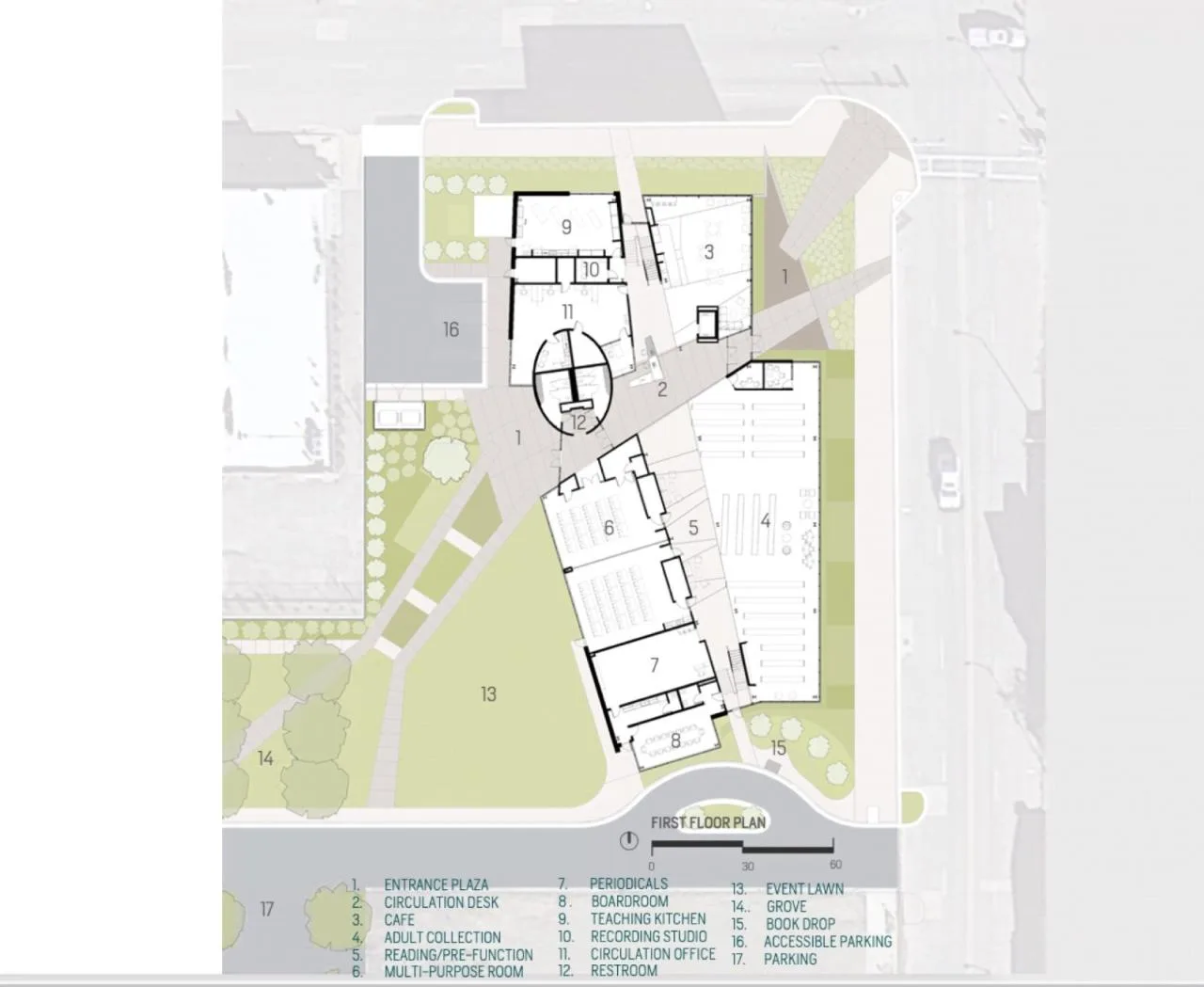
△ First Floor Plan
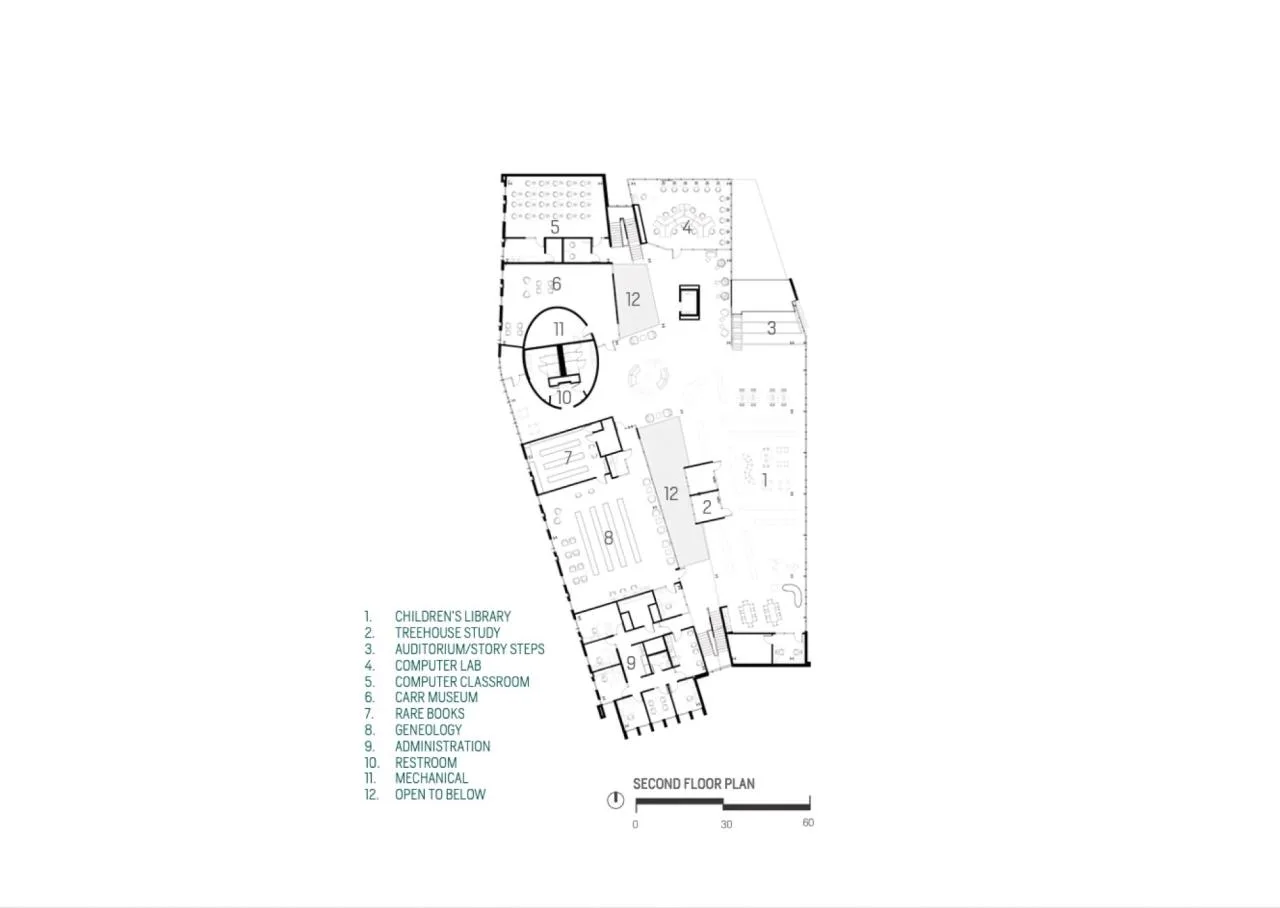
△ Second Floor Plan
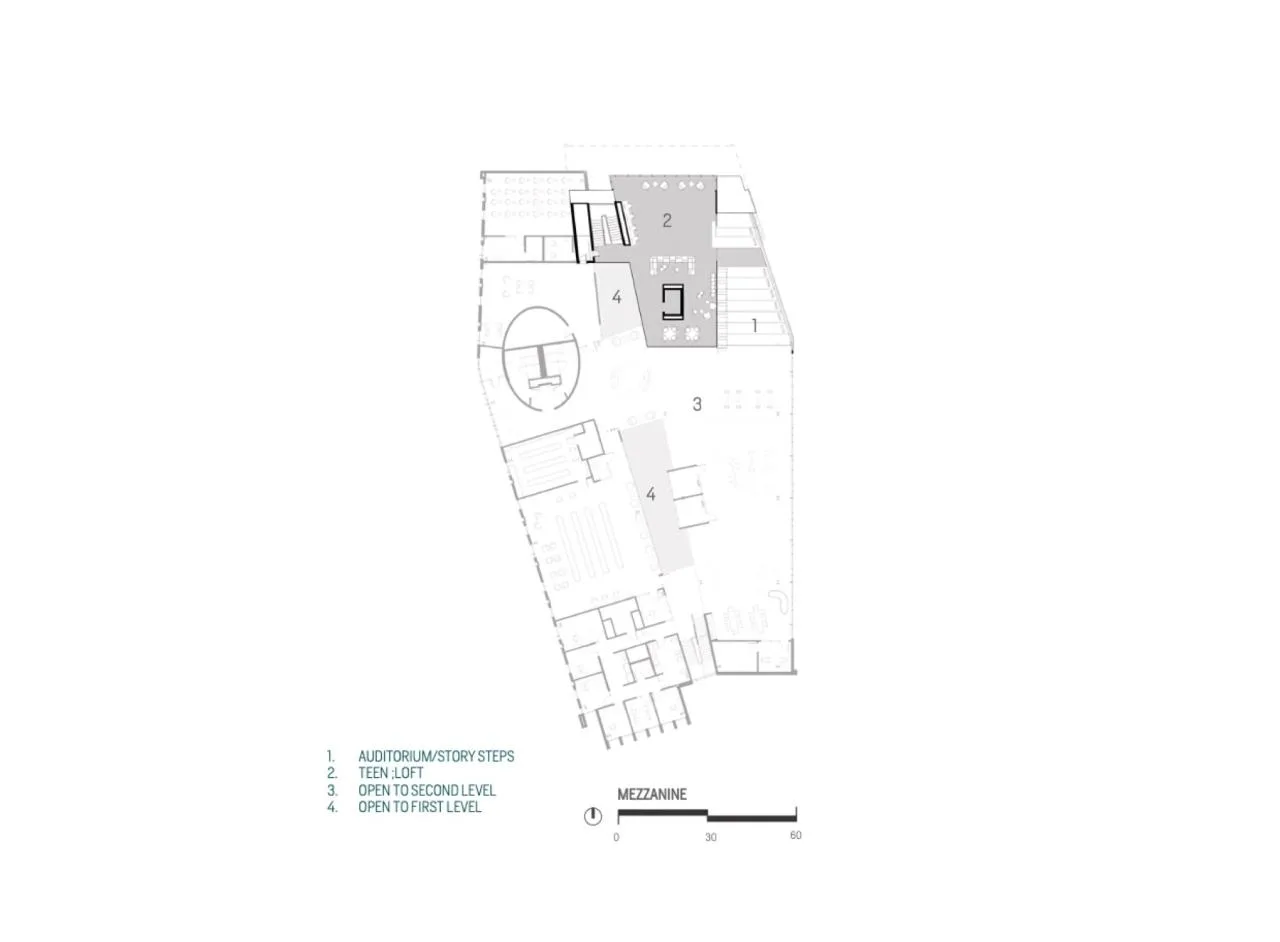
△ Mezzanine Plan
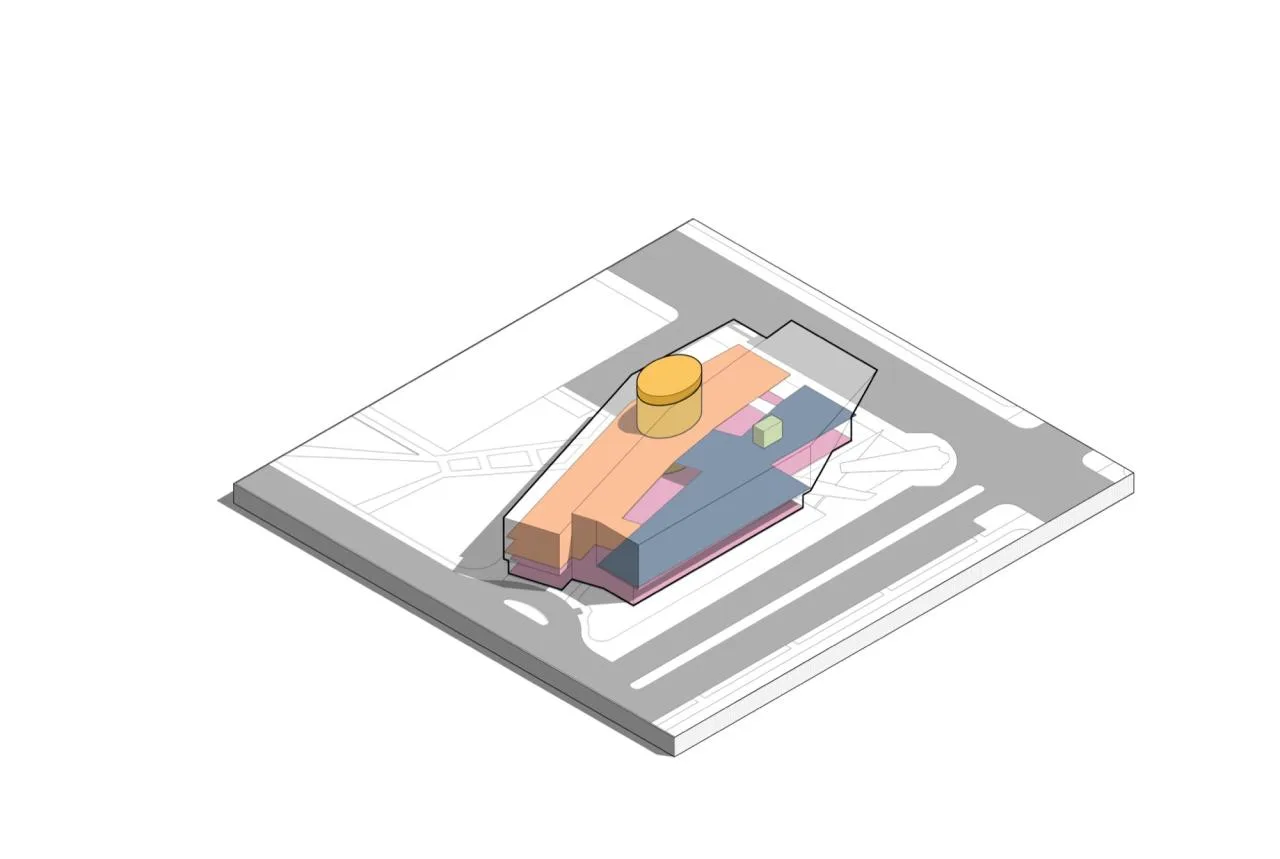
△ Analysis Charts
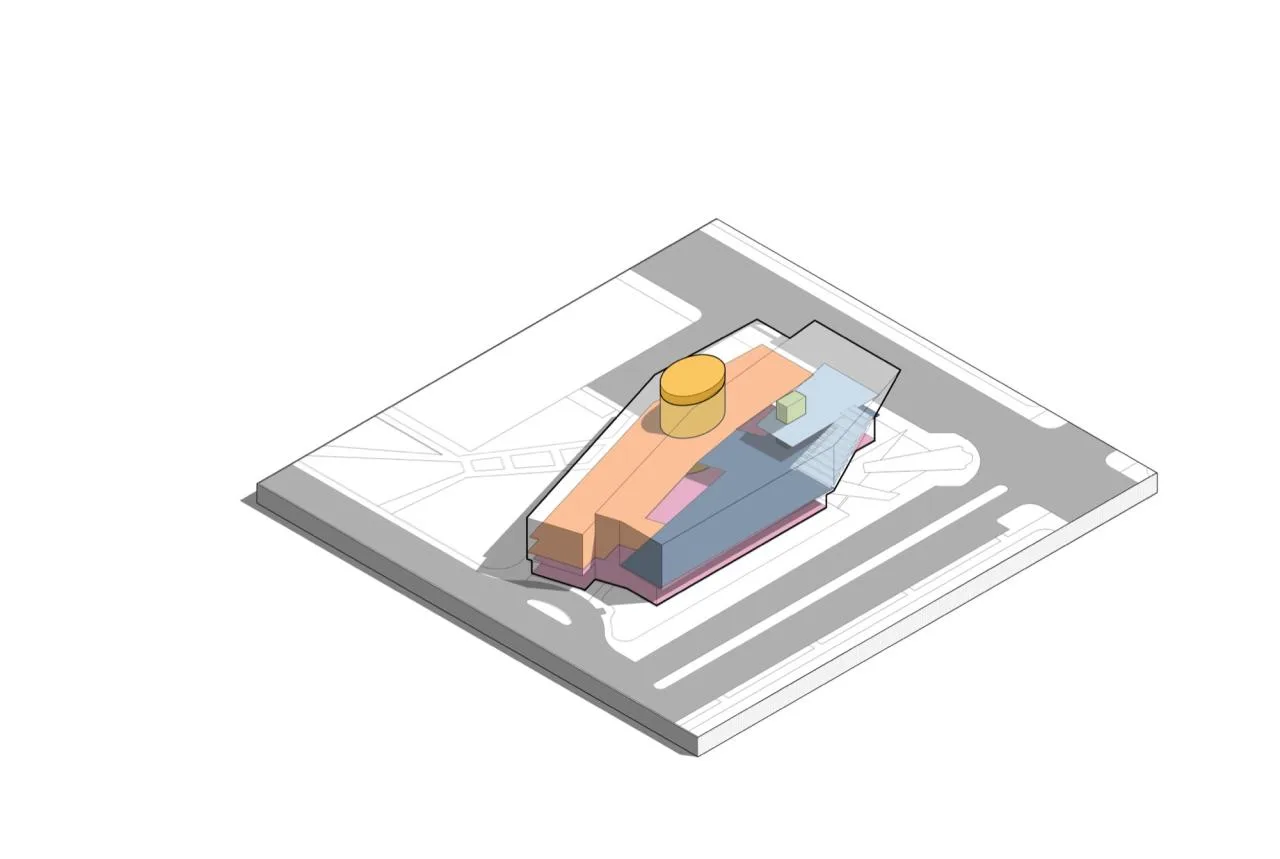
△ Analysis Charts
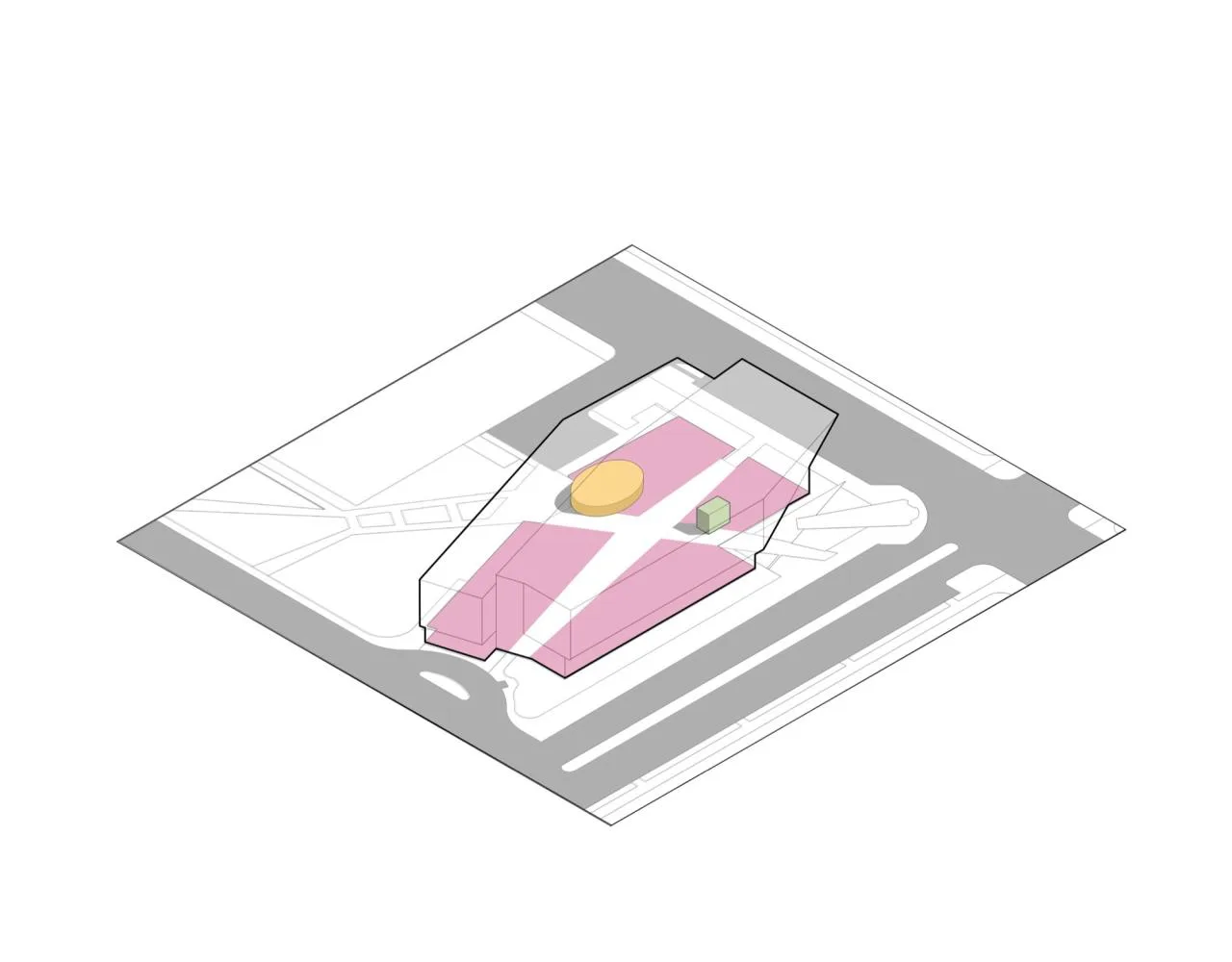
△ Analysis Charts
△ Analysis Charts
△ Analysis Charts
Project Information
Architect: Polk Stanley Wilcox Architects
Area: 35,000 ft²
Project Year: 2021
Photographer: Timothy Hursley
Manufacturers: Interface, AmeriPolish Surelock System, American Fiber Cement, American Standard, Bega, Endicott, Focal Point Lights, Gressco, Hubbell, Hunter Douglas Architectural, Johnson Manville TPO, KI, Kimball, Landscape Forms, Leland International, Longboard, Metal Sales Manufacturing Corp., Milliken, OFS Brands, Pinta Acoustics, plus 6 others
Lead Architect: Reese Rowland FAIA
Project Architect: Laura Stanley AIA
Interior Design: Alex Ward ASID
Architect: Greg Rose AIA
Design Specification Consultant: David Rogers AIA
Collaborative Architect: Reed Architectural Firm
MEP Engineer: Pettit and Pettit
Structural Engineering Team: Engineering Consultants
Landscape Architects: Landscape Architects Inc.
General Contractor: East Harding Construction
Location: Pine Bluff, United States












Must log in before commenting!
Sign Up