

To enhance construction management for the Shanghai International Financial Center project, the construction party partnered with Tsinghua University to implement BIM and 4D-CAD technologies in a construction-led approach throughout the project lifecycle. Addressing the specific requirements and characteristics of BIM usage by the construction party, a cross-platform, multi-participant collaborative 4D construction management technology was introduced. The “BIM-based Shanghai International Financial Center Project 4D Construction Management System” and the “BIM-based Shanghai International Financial Center Project Comprehensive Management System” were developed and applied in real engineering scenarios. By creating and managing BIM models across various stages and disciplines, a comprehensive BIM application from design through construction was successfully achieved. This study offers methods, technologies, systems, and application demonstrations for construction party-led BIM usage, significantly improving project management quality and efficiency.
1. Project Overview
To ensure efficient, high-quality, and smooth design, construction, and operation, the construction party, Shanghai Zhuyuan Engineering Management Co., Ltd., collaborated with Tsinghua University to apply Building Information Modeling (BIM) technology throughout the entire project lifecycle. Entrusted jointly by the Shanghai Stock Exchange, China Financial Futures Exchange, and China Securities Depository and Clearing Corporation Limited, the construction party is responsible for the construction and management of the Shanghai International Financial Center project.
The project covers a total area of 553,000 square meters, consisting of three high-rise towers with heights of 200m, 180m, and 160m, connected by underground floors. The total construction area is approximately 520,000 square meters, with 270,000 above ground and 250,000 underground. The Shanghai International Financial Center aims to establish a modern financial office park that is technologically advanced, intelligent, environmentally friendly, and energy efficient. Upon completion, it will stand as a symbol of China’s capital market growth and a new landmark in Shanghai.
Considering the unique management requirements of the construction party and the project’s characteristics, BIM and 4D-CAD technologies were comprehensively applied. The study explored multi-participant collaborative management methods led by the construction party, proposing a cross-platform 4D construction management technology integrating Client/Server (C/S) and Browser/Server (B/S) architectures.
Building upon Tsinghua University’s existing “BIM-based 4D Dynamic Management System for Engineering Projects” (4D-BIM system), a customized “BIM-based 4D Construction Management System for the Shanghai International Financial Center Project” was developed and applied throughout the construction management process. This enabled dynamic 4D integrated management of construction progress, manpower, materials, equipment, costs, and site layout, alongside 4D visual simulations of construction phases.
Additionally, a “BIM-based Shanghai International Financial Center Project Integrated Management System” was created using web technology. Given that project participants are geographically dispersed, this system supports internet-based collaborative management for multiple stakeholders. It offers tools for business management, real-time control, and decision support, catering to business personnel, managers, and decision makers alike.
Through establishing and applying BIM models for design and construction, this project achieved BIM-based building performance analysis, clash detection, and cross-platform multi-party collaborative 4D construction management. The outcomes provide valuable methodologies, technologies, systems, and application demonstrations for construction party-led BIM implementation.
This article elaborates on the research and application of BIM within this project, focusing on application modes, management technologies, system development, and implementation practices, serving as a technical reference and engineering demonstration to promote further extensive BIM adoption in large-scale projects.
BIM Application Mode Led by the Construction Party
BIM’s core value lies in addressing information exchange and sharing challenges among diverse stakeholders and disciplines in engineering projects. Establishing an application model that coordinates multiple participants is essential. Among all participants, only the construction party (owner) can guarantee direct or indirect contractual relationships with all involved parties.
Therefore, a BIM application model driven by the construction party aligns with BIM principles and facilitates its implementation. Moreover, the construction party is engaged in more project stages than others, especially in self-built, self-used projects, participating in planning, design, construction, and operation & maintenance phases. This makes the construction party-driven BIM application model ideal for end-to-end project lifecycle management.
This BIM application model can be categorized into three types based on the leading party: design-led, consulting-assisted, and owner-independent, each with distinct traits and suitable scenarios. Consulting-assisted and owner-autonomous modes fit large-scale projects requiring deep lifecycle applications. The owner-autonomous mode demands building an in-house BIM team, requiring substantial investment and yielding slower results, which may not be feasible for owners with limited construction projects. By contrast, the consulting-assisted mode leverages a professional BIM team working with the construction party, ensuring expertise and rich experience, facilitating effective application.
This project adopts Tsinghua University as the main BIM consultant, implementing a construction-led, consulting-assisted BIM application model. The organizational approach is illustrated in Figure 1: during the design phase, the BIM consultant creates BIM design models based on drawings from various design firms, conducts BIM simulations and performance analyses, recommends design optimizations, and assists in iterative design refinements. During construction, the construction party and contractors collaboratively use BIM-based 4D construction management and comprehensive project management systems developed by the consultant. These systems address the construction party’s management priorities while considering all stakeholders’ workflows and responsibilities, promoting collaborative BIM use for comprehensive project control.
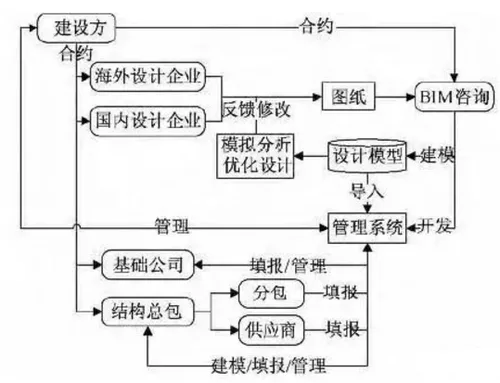
Figure 1. BIM Application Model Led by the Construction Party
At the project’s outset, a detailed BIM implementation plan was created, clearly defining application points, processes, and goals across the design, construction, and operation stages. Figure 2 outlines the multi-participant collaborative BIM application process during construction. It begins with the design party submitting design deliverables. The consultant then establishes a design-based BIM model, adding construction data such as schedules, budgets, and site layouts to form a 4D construction BIM model.
Using clash detection, simulation analyses, and dynamic construction simulations based on the BIM model, design outcomes and construction plans are iteratively refined and optimized. Once construction begins, the general contractor and subcontractors input progress and quality data into the BIM-based project comprehensive management system. This data is reviewed by supervisors and integrated into the 4D construction management system’s BIM model, providing real-time status updates accessible to the construction party for effective management and control.
3. BIM-Based Cross-Platform Collaborative 4D Construction Management
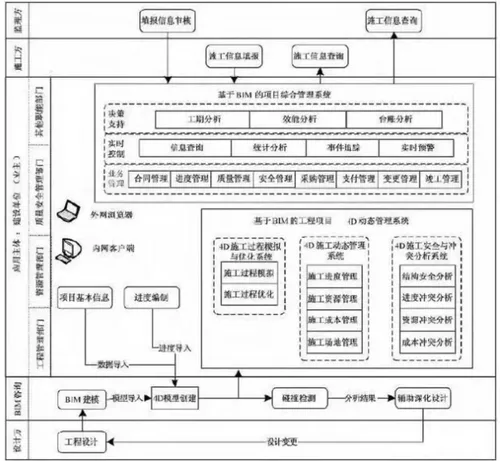
Figure 2. Multi-Party Collaborative Application Process
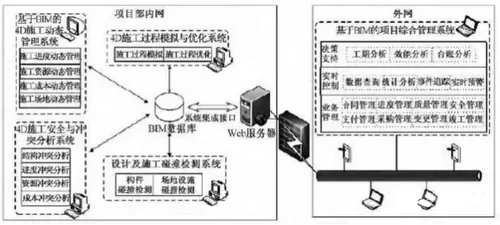
Figure 3. Architecture of Cross-Platform Collaborative 4D Construction Management System
This paper introduces a cross-platform collaborative 4D construction management technology developed in response to the specific management needs of the Shanghai International Financial Center project. The system integrates the Client/Server (C/S) architecture of the “BIM-based 4D construction management system” with the Browser/Server (B/S) architecture of the “BIM-based project comprehensive management system” during operations. This seamless interaction of business processes and data models between the two systems enhances user experience, expands data collection channels, and increases operational flexibility.
As illustrated in Figure 3, the system builds upon the 4D construction dynamic management system, 4D construction process simulation and optimization system, and 4D safety and clash analysis system—all based on the C/S architecture. Using web technology, a “BIM-based project comprehensive management system” tailored for the Shanghai International Financial Center’s construction party was developed on the B/S architecture. Server-side data and business interactions enable seamless integration between the comprehensive management system and the 4D construction management system.
The system defines clear business logic and data exchange relationships to emphasize collaborative project management. It supports comprehensive project management across three dimensions: business management, real-time control, and decision support. Business management covers the owner’s core project operations, linking business data and BIM data bidirectionally within the 4D management system to enable interrelated workflows. Functional modules are customized to meet the distinct needs of business personnel, managers, and decision makers (see Figure 4), providing tools for business operations, managerial control, and decision analysis. The system also facilitates internet-based remote collaborative management among multiple participants.
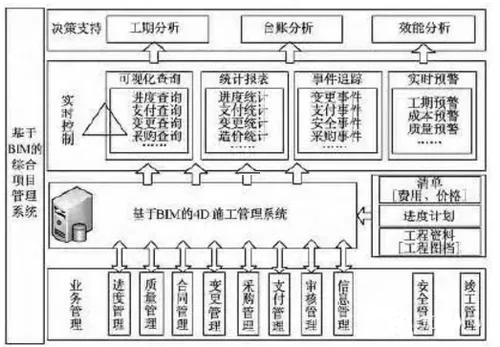
Figure 4. Functional Modules of the BIM-Based Comprehensive Management System for the Shanghai International Financial Center Project














Must log in before commenting!
Sign Up