
In recent years, our province has focused on project-driven development as the main engine for economic growth. Starting from a high baseline, we have made substantial investments and maintained rapid progress. Significant accomplishments in project construction have been achieved, with numerous major projects established in Shaanxi and several key initiatives actively advancing, injecting strong momentum into the province’s economic development.
This year marks the start of the 13th Five-Year Plan, a crucial phase for Shaanxi’s economic and social transformation and upgrading. This period presents new opportunities to accelerate the construction of essential projects. To better highlight new initiatives, progress, and achievements in building the “Three Shaanxi” across the province, and to promote leadership in projects, this newspaper is launching a new column titled “Chasing and Surpassing the New Shaanxi – Entering Construction Sites, Visiting Projects, Promoting Progress”. This series aims to showcase the accomplishments of major projects in our province and support Shaanxi’s efforts to achieve breakthroughs and rapid development.
Get ready to activate it—saving you the hassle of long drives.
Soon, high-speed rail will offer a more convenient alternative to flying.
One netizen on Sina Weibo’s “Shaanxi Side Events” expressed it perfectly at the start of the year: “In the morning, I enjoy pepper soup in Xi’an; at noon, spicy hot pot in Chengdu; and by evening, I’m back in Xi’an eating Qinzhen Liangpi and sleeping at home.”
The Xicheng Passenger Dedicated Line is a passenger-only railway running from Xi’an to Chengdu via Hanzhong, covering 343.6 kilometers within Shaanxi province. Designed to operate at speeds up to 250 km/h, it is expected to be completed and operational by 2017. Upon completion, travel time between Xi’an and Chengdu will be just three hours, and only one hour to Hanzhong.
The high expectations of the public serve as a powerful motivation for the engineers and builders involved in the project.
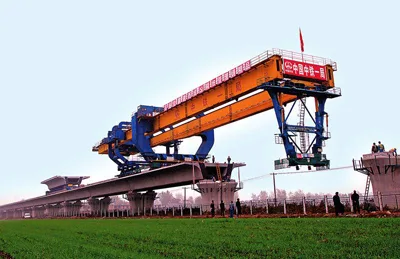
As spring arrives early and with vigor, on the afternoon of February 26th, under bright sunshine in the Year of the Monkey, our reporter visited the construction site of the 29.3-kilometer main line segment of the Xicheng Passenger Dedicated Line.
The towering 35-meter TLJ-450 gantry crane dominates the site, while the mixing station, beam yard, and other facilities are arranged in an organized manner. Bridge erection machines securely place box girders onto bridge piers, and road rollers continuously move back and forth, painting a dynamic scene of high-speed railway construction.
Zhao Honggang, chief engineer of the Xicheng Passenger Dedicated Line Project Department from China Railway First Bureau and manager of the first construction target, shared that as of February 26th, the project had achieved a cumulative output value of 2.17 billion yuan—83% of the total contract price. This year, the focus will shift fully to constructing the bridge deck system.
At the construction site, there was no harsh noise or dust—reflecting a new, standardized, factory-like, and mechanized construction approach. This method replaces the traditional “clumsy and inefficient” techniques with innovative railway construction management enabled by the “Internet+” concept.
Previously, the long construction distance made comprehensive on-site monitoring difficult. To address this challenge, the China Railway First Bureau’s Project Department introduced an innovative “Internet plus” approach to high-speed railway construction.
For example, in the subgrade filling project, traditional methods could not record or monitor the overall compaction level of the filling site in real time, leading to risks like leaks, overpressure, and eventual quality issues such as collapses or settlements. To overcome this, China Railway First Group developed a subgrade compaction system based on “Internet plus” technology.
In March last year, China’s first “Continuous Compaction Application Platform System for Roadbeds,” developed through collaboration with sister units, was applied along the entire route.
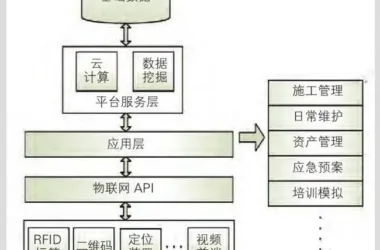
What makes this system unique? Construction machinery equipped with GPS satellite positioning tracks the exact location of rollers on the railway line. Vibration sensors on the rollers collect rolling data, which is transmitted via 3G modules to a server located 700 kilometers away in Chengdu. The server interprets this data in real time and sends quality analysis results to the online management platform. Drivers can view the quality metrics directly on computer screens in their cabs, while project staff access the data via mobile devices and online platforms.
This integration of Internet technology with railway management ensures that potential quality issues on the high-speed railway are quickly detected and addressed.
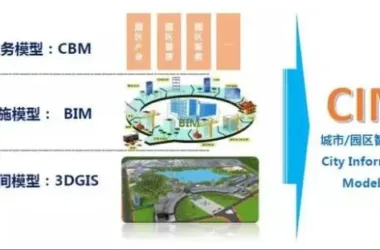
Additionally, the “Internet plus” concept has been applied to construction through Building Information Modeling (BIM) technology on the Xi’an-Chengdu Passenger Dedicated Line. BIM creates a “visual” digital building model using 3D design and engineering software, widely adopted in the construction industry. These 3D models simulate various concealed pipelines and structures, assisting site managers in coordinating construction processes.
China Railway First Group has used BIM technology to optimize engineering structures by identifying potential component conflicts before installation. During assembly, the 3D model serves as a reference, enabling precise positioning and installation, effectively preventing clashes and rework.
Moreover, “Internet plus” thinking extends to concrete production and material management. At mixing stations, every batch of concrete is monitored, and quality inspectors sign electronically. Any issues are immediately visible to project owners.
By combining Internet technology with high-speed railway construction, the Xi’an-Chengdu Passenger Dedicated Line has elevated China’s high-speed rail technology to the forefront of global standards, driving the project forward with unstoppable momentum.
On September 18th last year, after 29 months of relentless effort, a key milestone was reached: the completion of the Lao’anshan Tunnel, the first ultra-long high-speed railway tunnel to successfully cross the Qinling Mountains, finished four months ahead of schedule.
On December 1st, the first tunnel on the “Xicheng Passenger Dedicated Line” at the Shaanxi-Sichuan border—the Ningqiang Maomao Mountain Tunnel—was successfully completed.
Then, on February 3rd of this year, the Qipanguan Tunnel, located at the Sichuan-Shaanxi provincial border, was officially finished.
According to the staff at Xicheng Passenger Dedicated Line Shaanxi Company, as of now, 90.9% of tunnels in Shaanxi have completed design work, with 22 tunnels fully constructed; 82.9% of bridge designs are complete; 52.5% of roadbed earthwork designs are finished; and 17.2% of ballastless track bed designs have been completed.
Facing demanding construction tasks ahead, Ma Yonglin, work area manager coordinating activities at the 1st beam yard, said, “We are currently working around the clock to prefabricate box girders. No matter how tough or exhausting it gets, we will persevere until the day Xicheng opens for traffic.”












Must log in before commenting!
Sign Up