
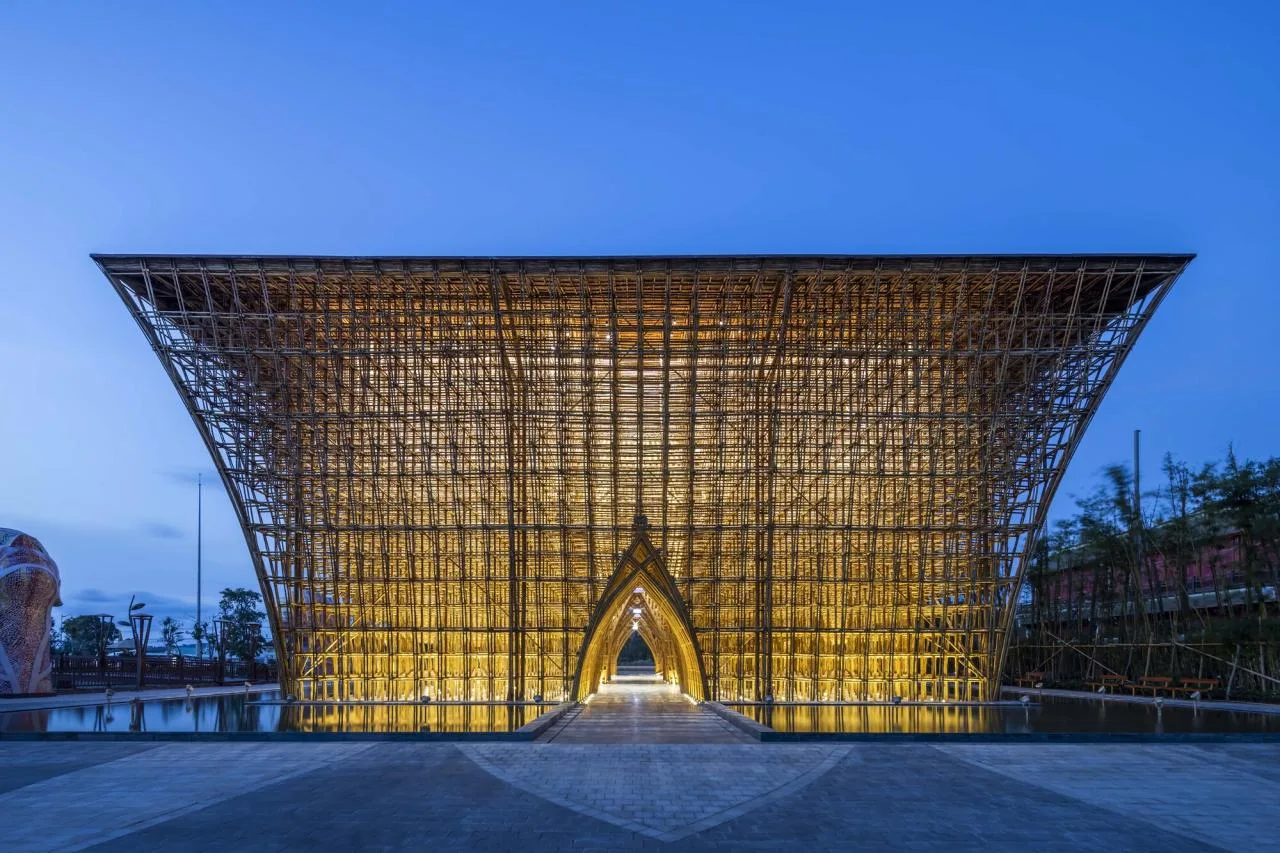
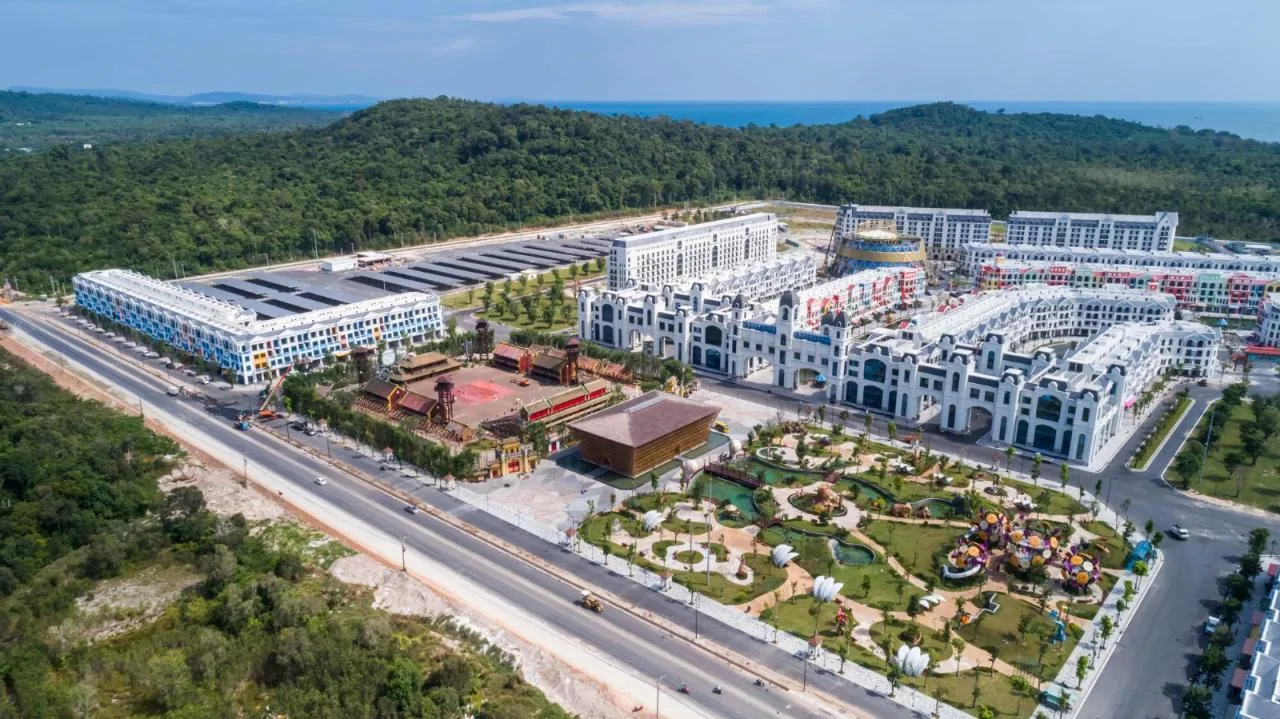
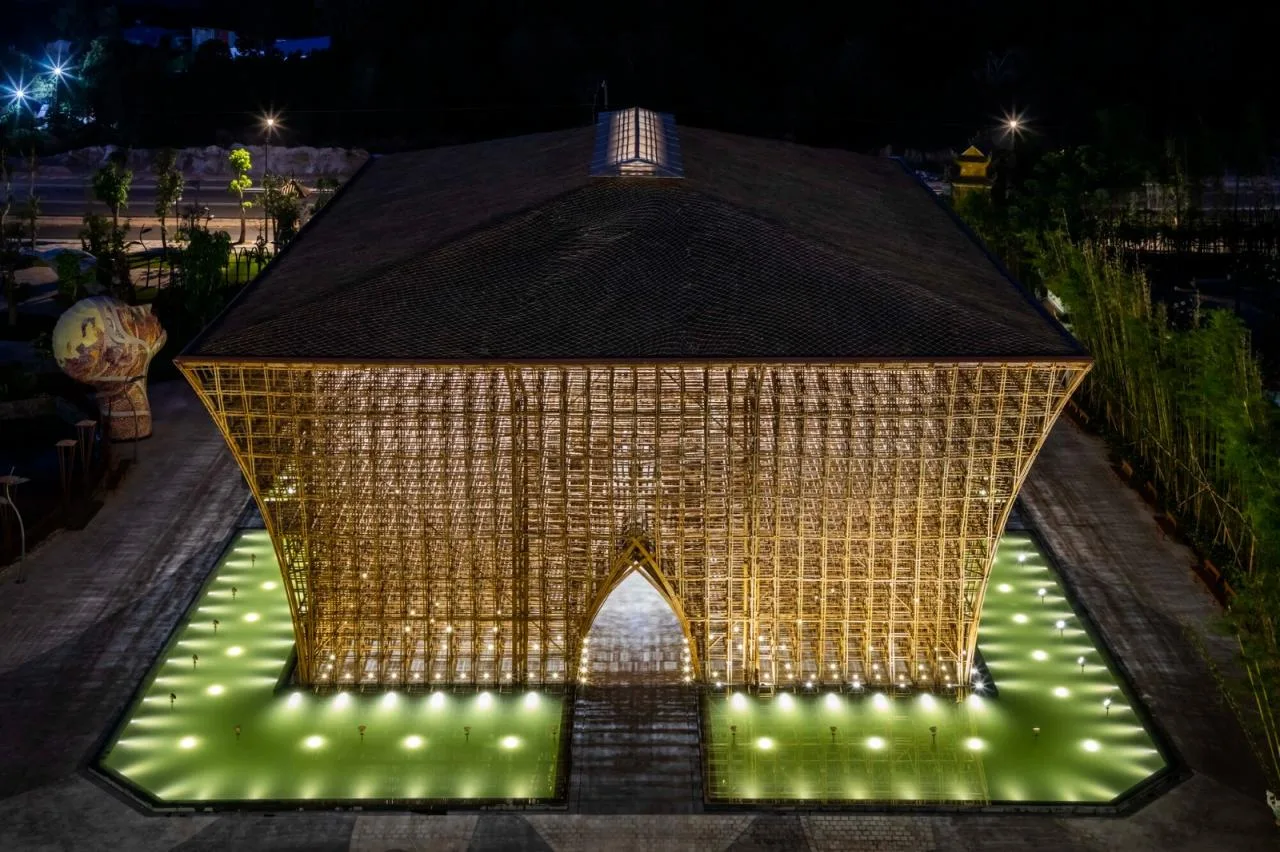
The Vinpearl project serves as the welcome center within the master plan of Fuguo Island World. Situated at the heart of the Fuguo Island Joint Center, the client commissioned an architect to design a bamboo structure that reflects Vietnamese culture and acts as a landmark for the entire development, drawing visitors to the island.
Covering an expansive 1,460 square meters, the architect successfully met the client’s vision by creating a distinctive bamboo structure that embodies Vietnamese heritage. The design incorporates two traditional Vietnamese symbols—the lotus flower and the bronze drum—meticulously carved into dense bamboo grids, symbolizing the richness of Vietnam’s cultural traditions.
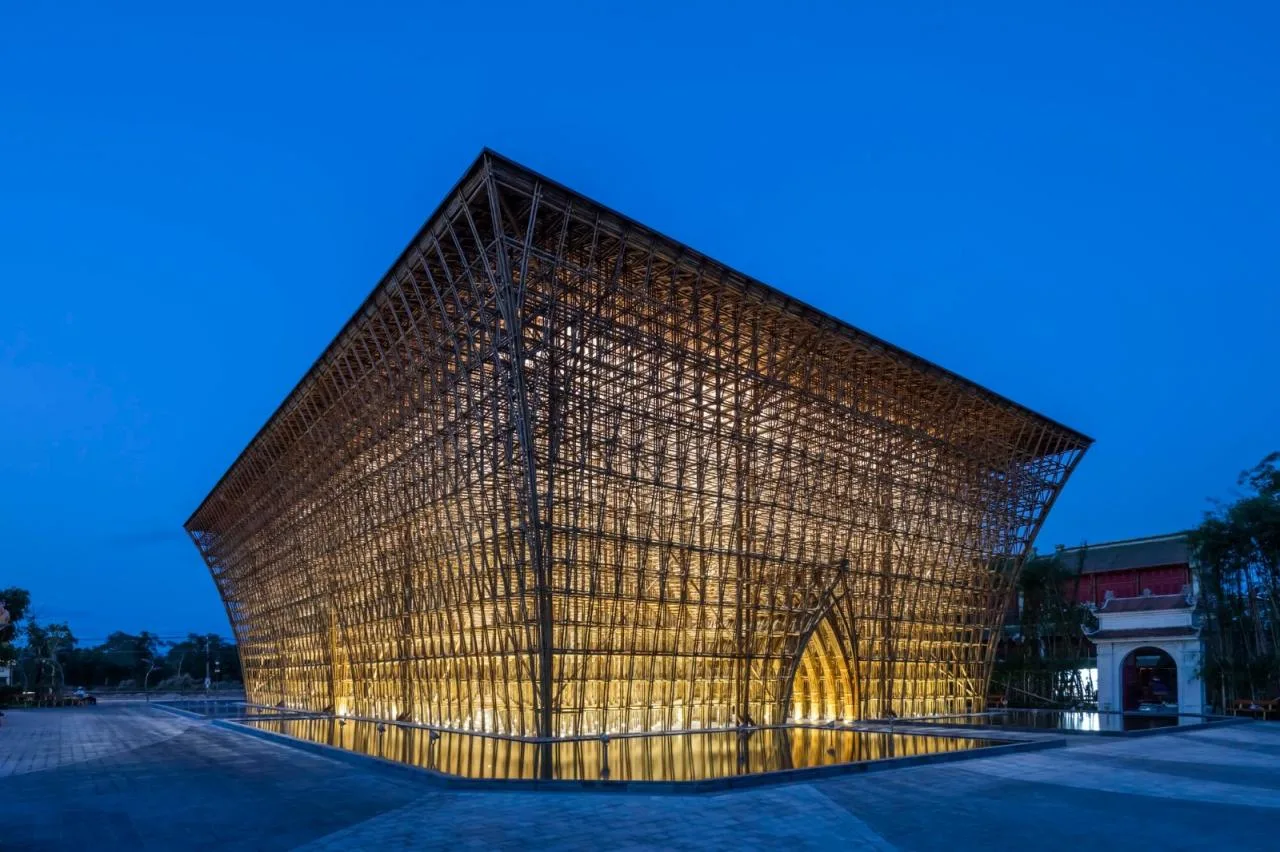
Designed with ecological sustainability in mind, the project utilizes natural, low-cost, and renewable materials throughout both its design and construction phases. Bamboo poles are connected exclusively using ropes and bamboo needles, avoiding artificial adhesives. The building operates without artificial air conditioning, relying solely on natural ventilation, while artificial lighting is minimized and only used during nighttime.
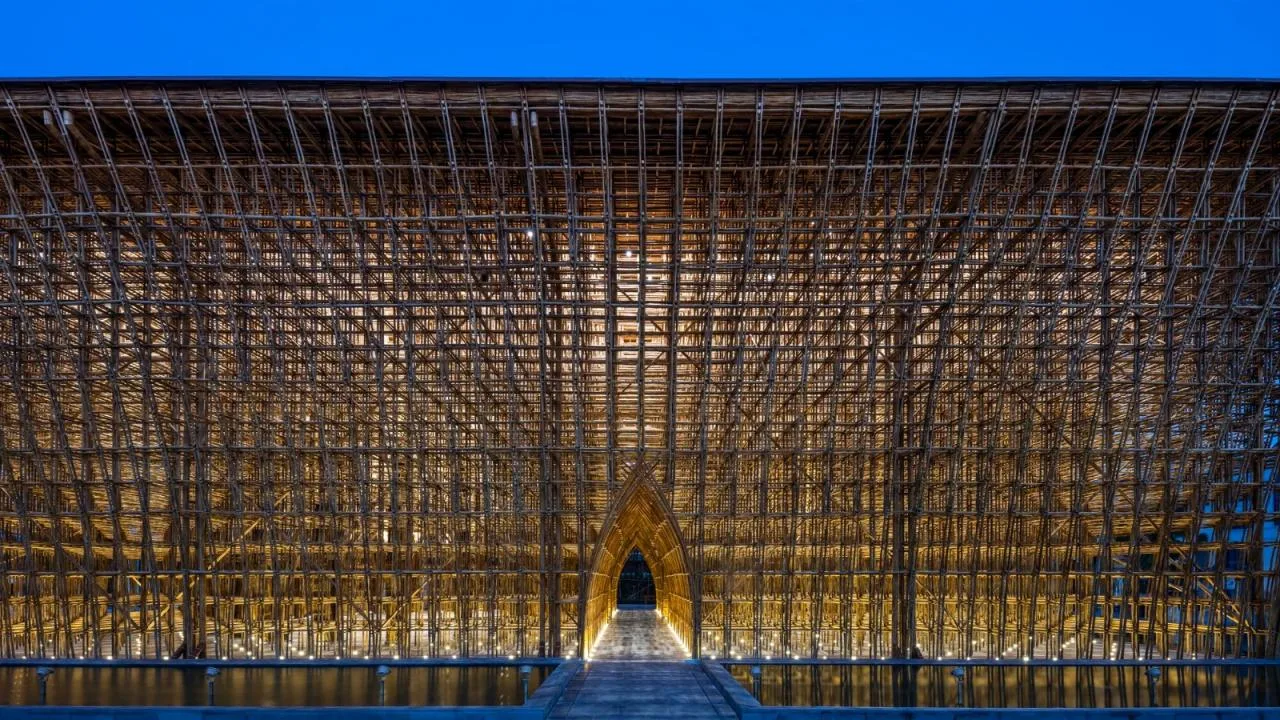
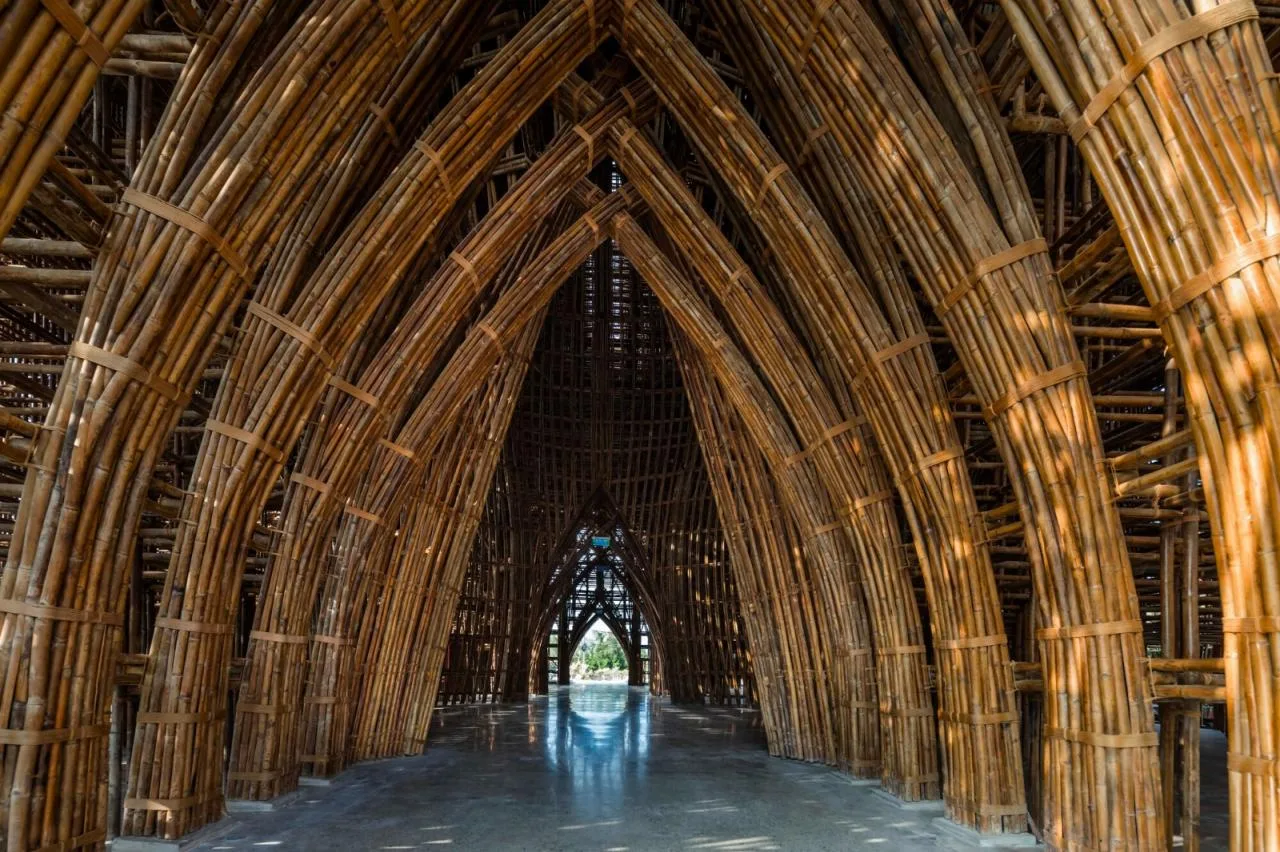
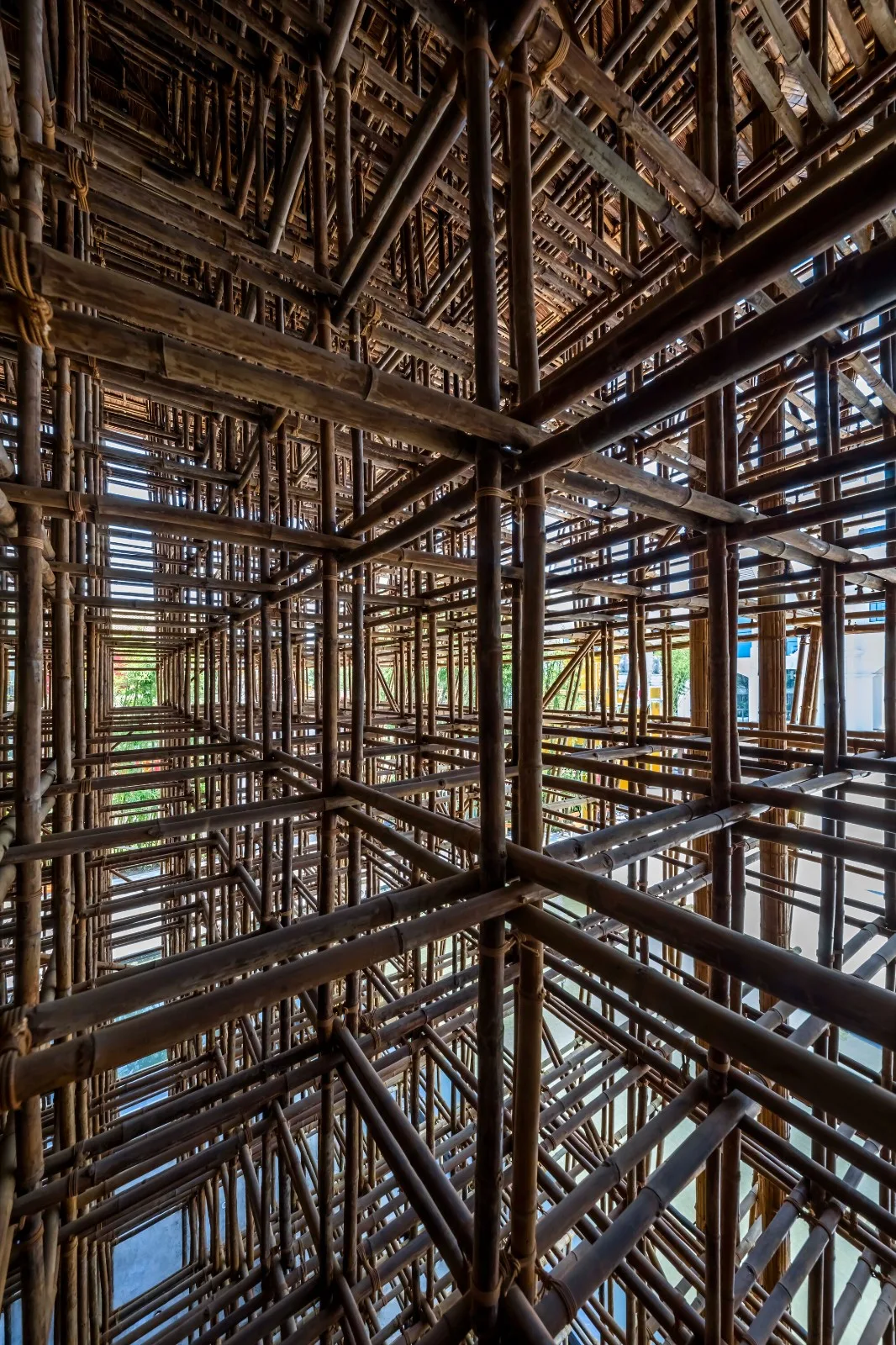
This project is a pure bamboo structure, utilizing an impressive total of 42,000 bamboo poles. The construction process was carefully refined by the architect to meet precise standards. Particularly challenging were the transportation logistics—bringing bamboo onto the island—and the exacting assembly of multiple structural systems, requiring exceptional precision. The architect’s use of various structural systems and joint nodes resulted in a highly complex overall connection system.
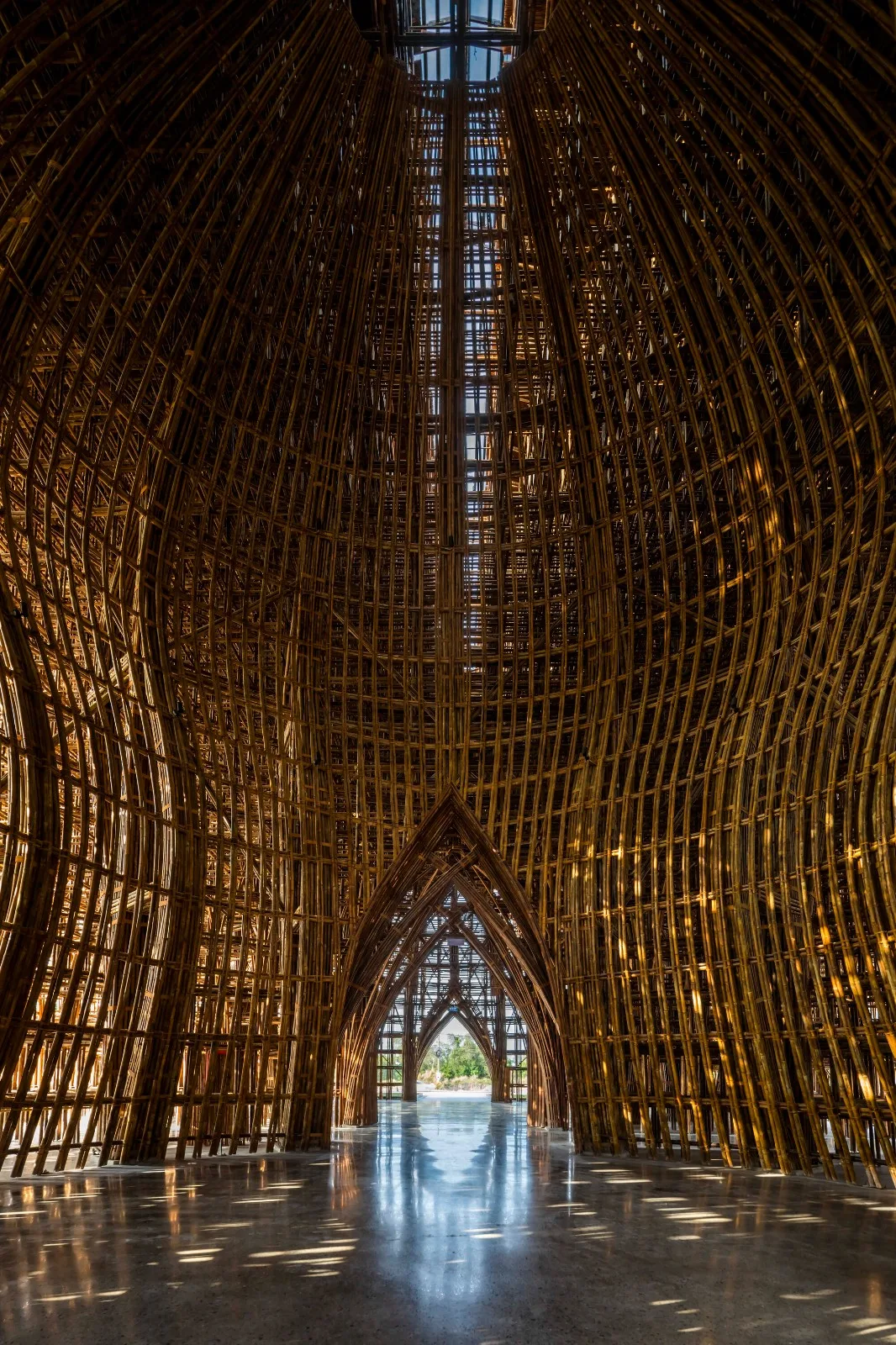
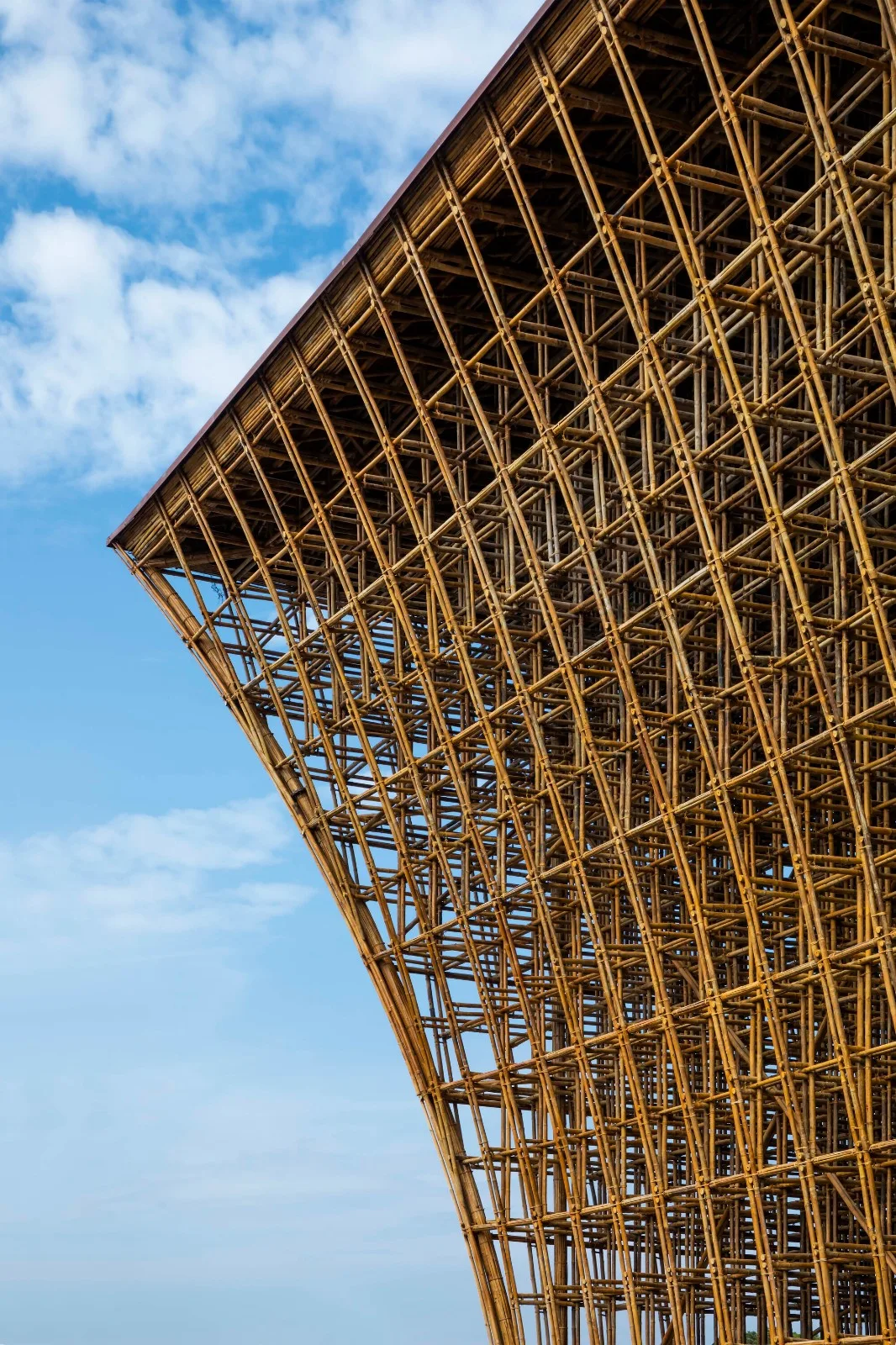
The structural system is diverse and integrated, featuring arches, domes, and grid systems. The architect combined knowledge of various bamboo structural forms into a single hybrid system, unifying multiple structural types to create a distinctive aesthetic. Additionally, the cantilevered edges incorporate cross supports as secondary structural elements to ensure stability.
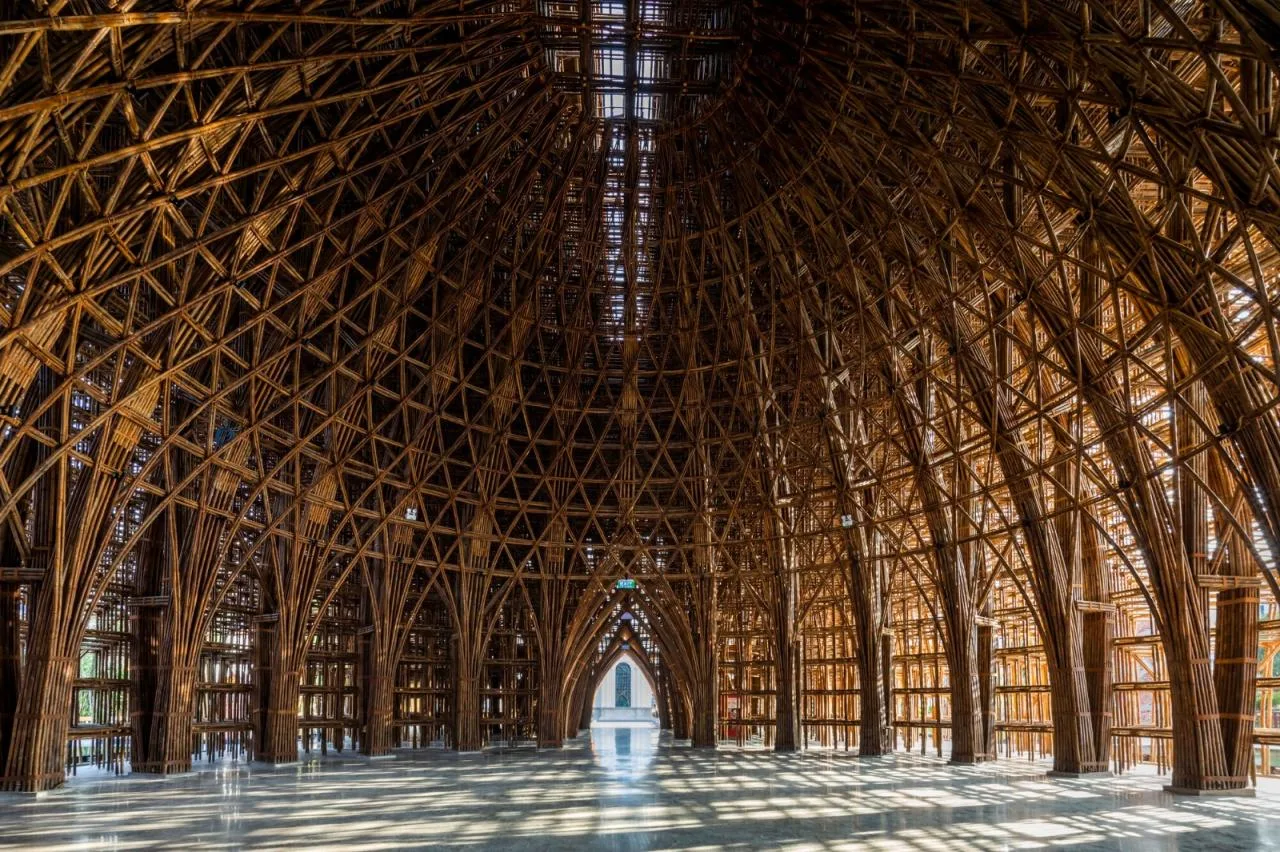
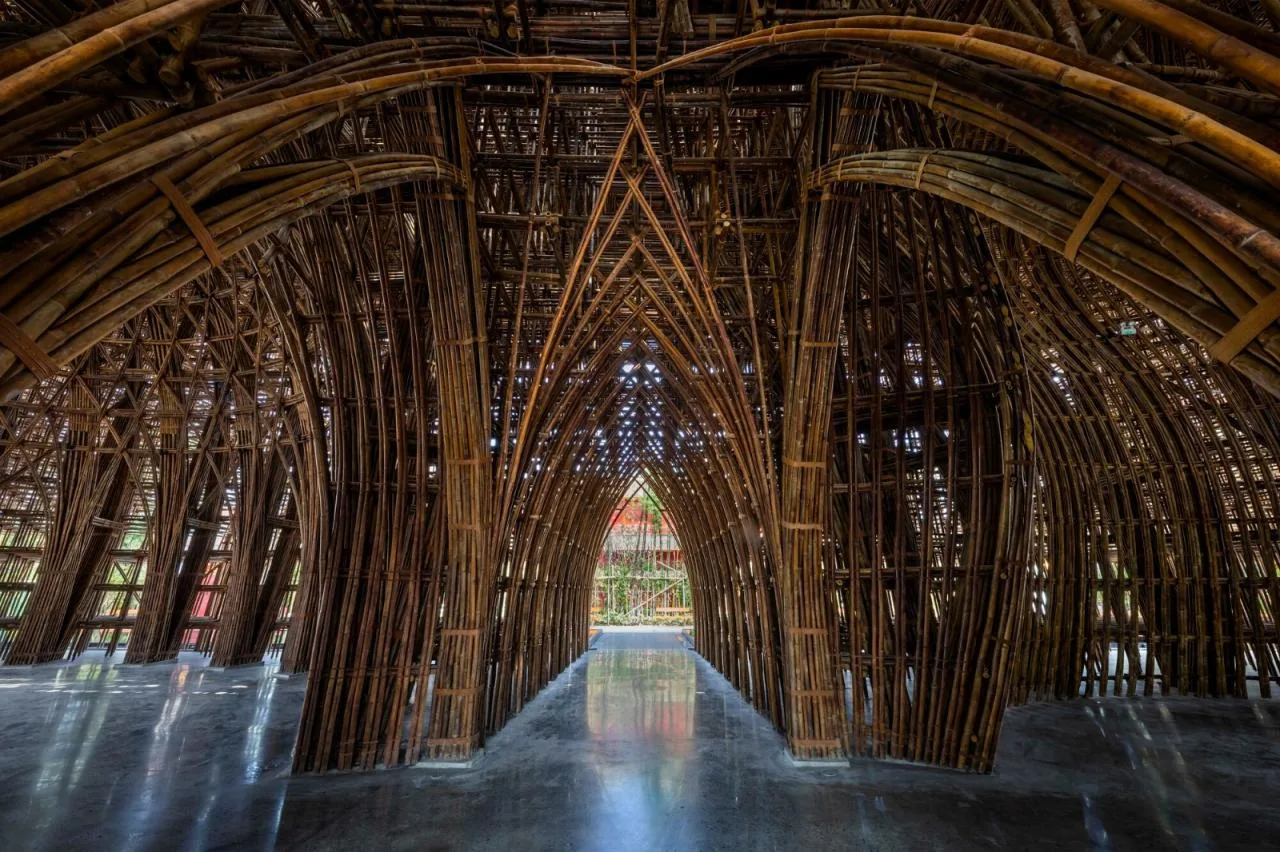
The hybrid structural system significantly influences the spatial quality of the project. Despite the complexity and close interconnection of the layers, the space feels open and transparent. This openness is achieved through the natural characteristics of the system and the architect’s simple node design, which uses ropes and low-cost fasteners to keep the space unobstructed. Furthermore, the modular framework enhances the structure’s transparency and support.
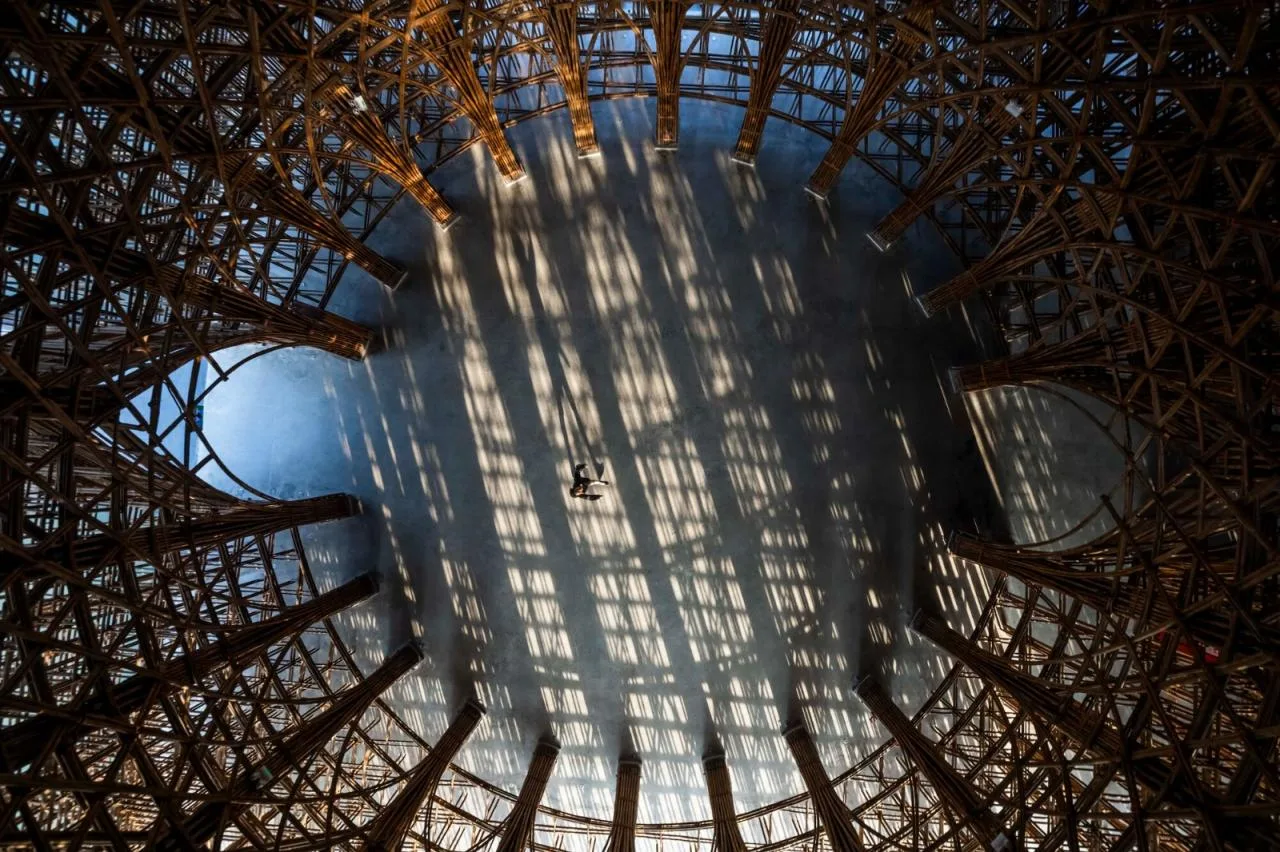
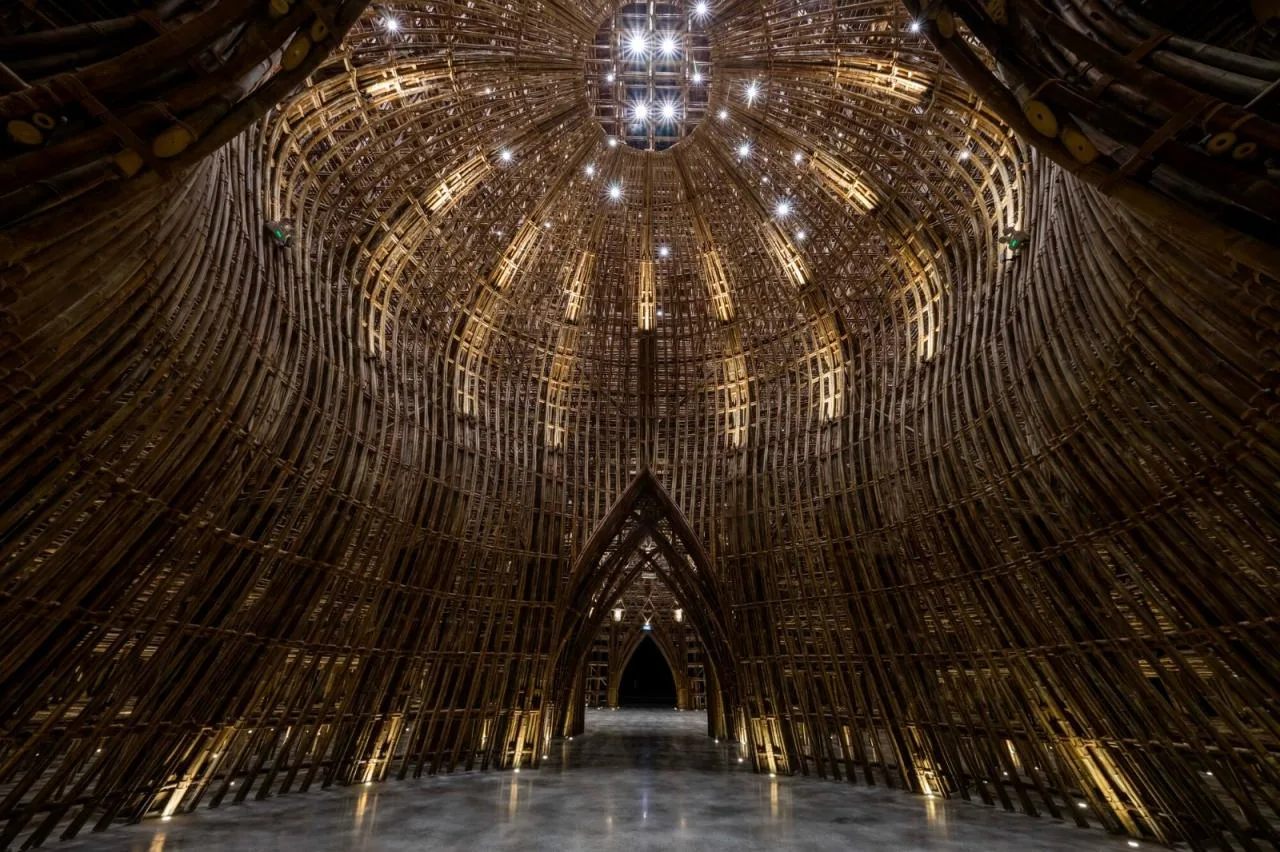
The grid system allows for natural ventilation throughout the building. The main structure, combined with the transparent grid and arched channels spanning the entire space, seamlessly connects the interior and exterior environments. Natural light filters in from the sides and through roof openings, bathing the interior in warm hues. Although the structure is open and transparent, the natural bamboo tones and lighting create an inviting, intimate atmosphere.
The space balances softness and strength; traditional cultural motifs like lotus flowers and bronze drums are intricately carved into the bamboo grid, blending precision with organic curves of arches and domes. Visitors are often captivated upon entering this harmonious environment.
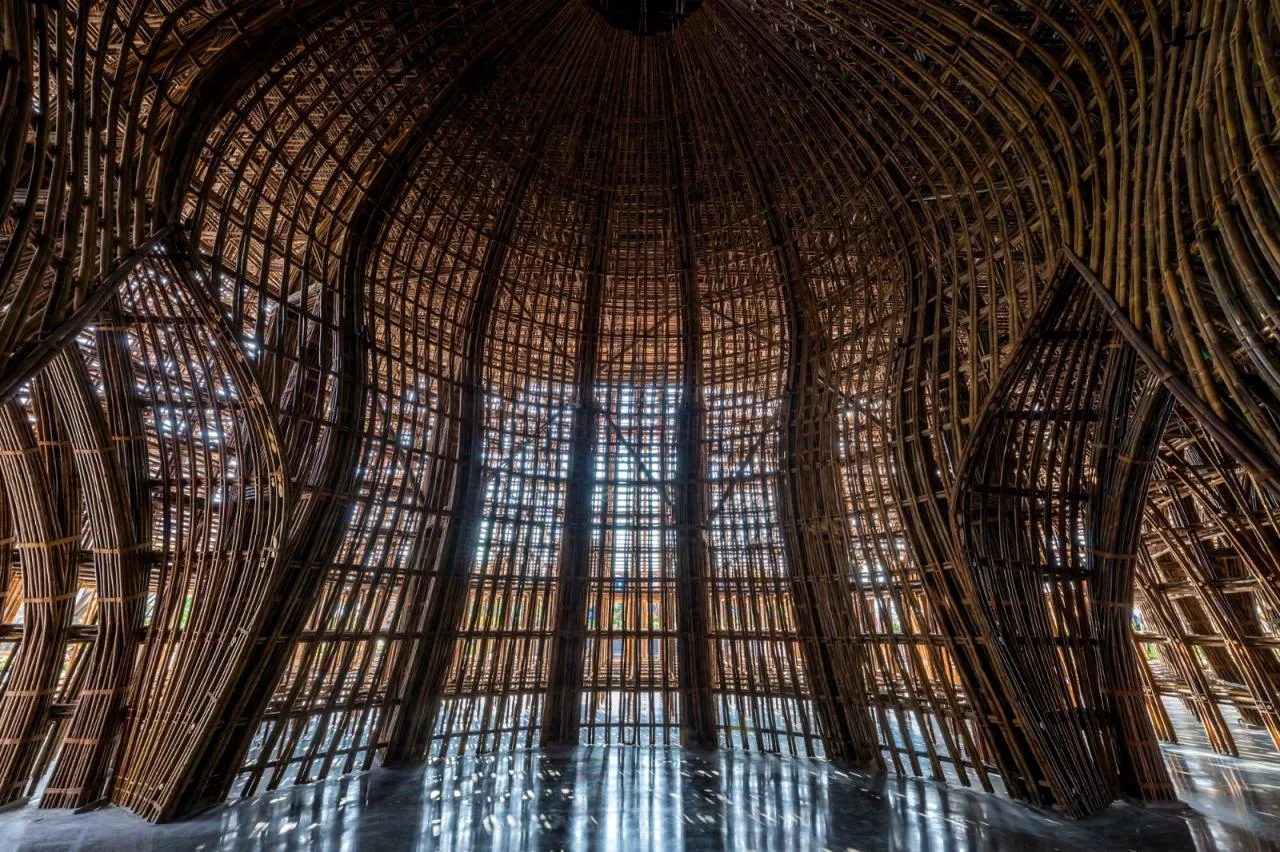
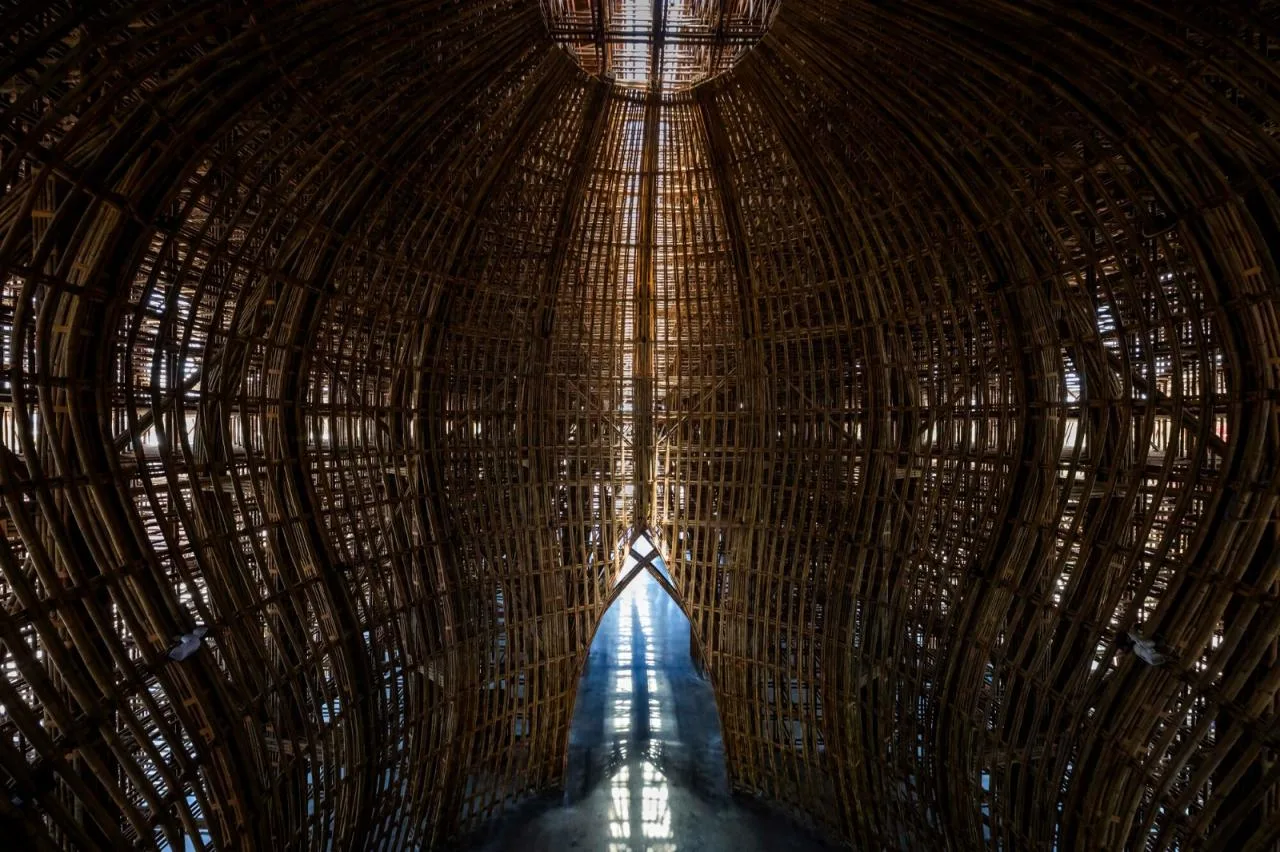
This project stands as an exemplary showcase of bamboo architecture’s significance and originality, featuring key highlights such as:
- Use of natural materials without any chemical treatment, totaling 42,000 bamboo poles;
- Pure bamboo structural system;
- Energy-efficient design employing sustainable, low-cost materials;
- Incorporation of traditional Vietnamese symbols and cultural expression.
Project Drawings
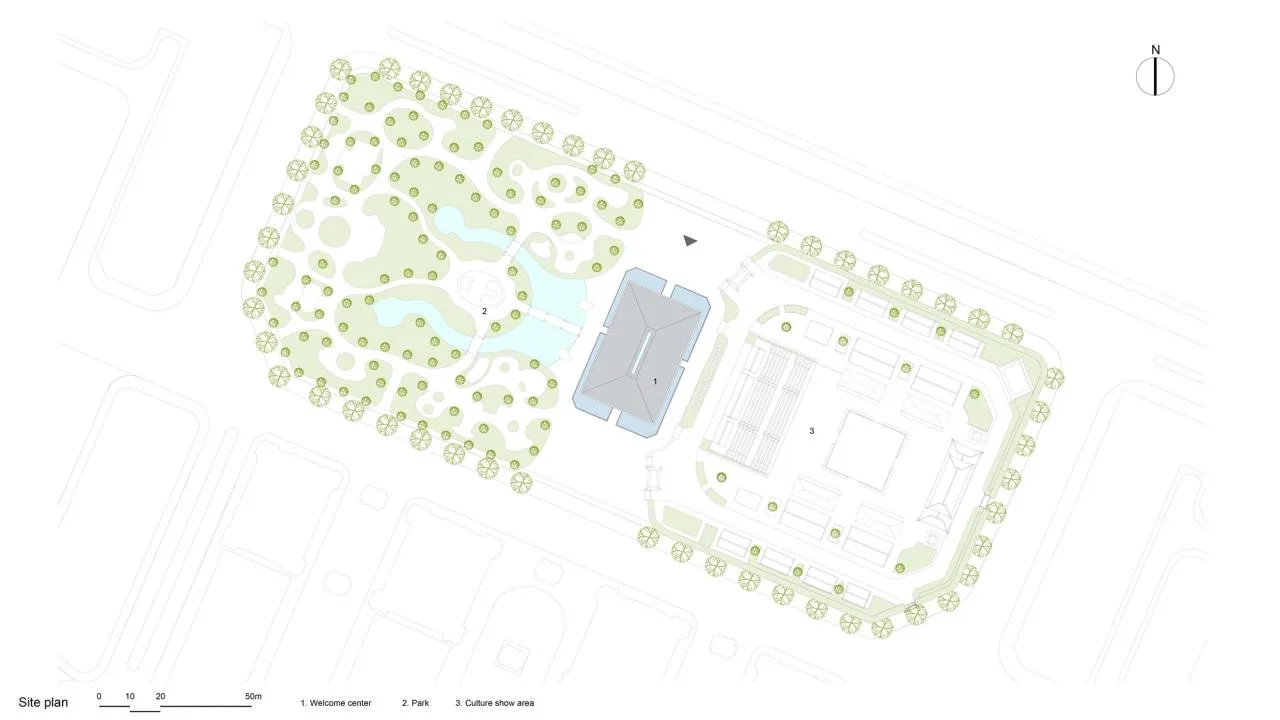
△ General Layout Plan
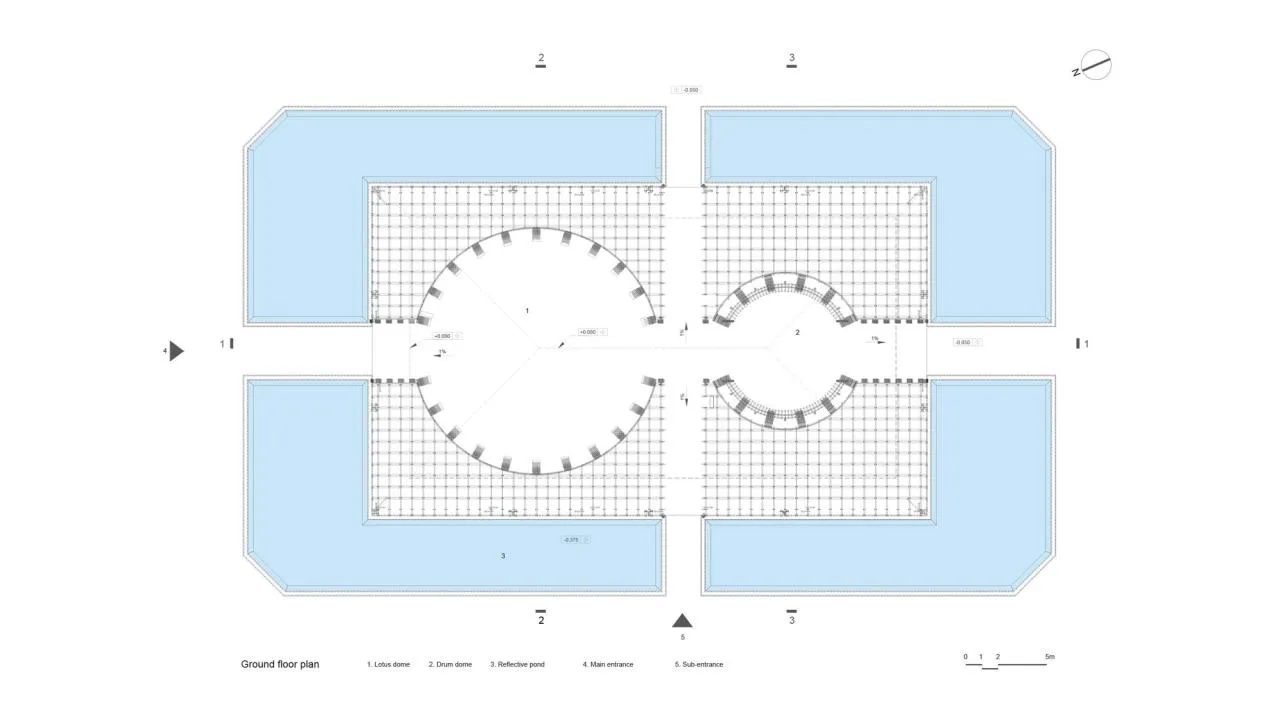
△ First Floor Plan
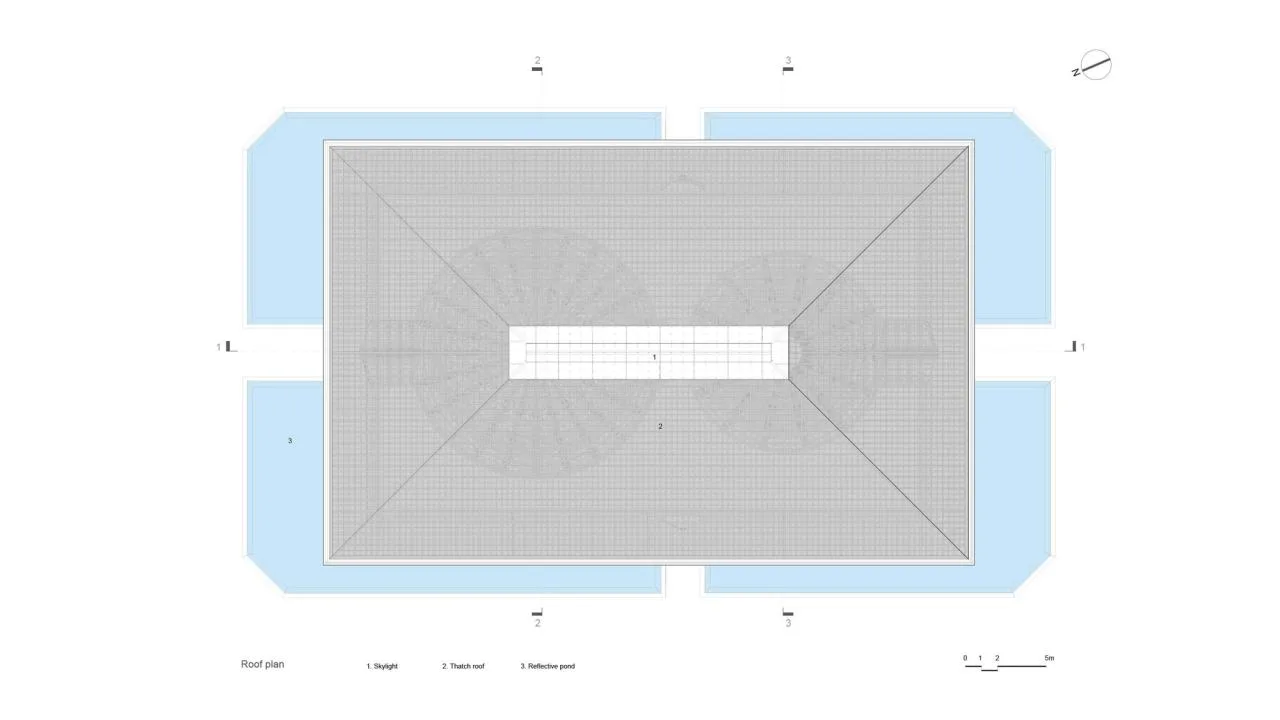
△ Roof Plan
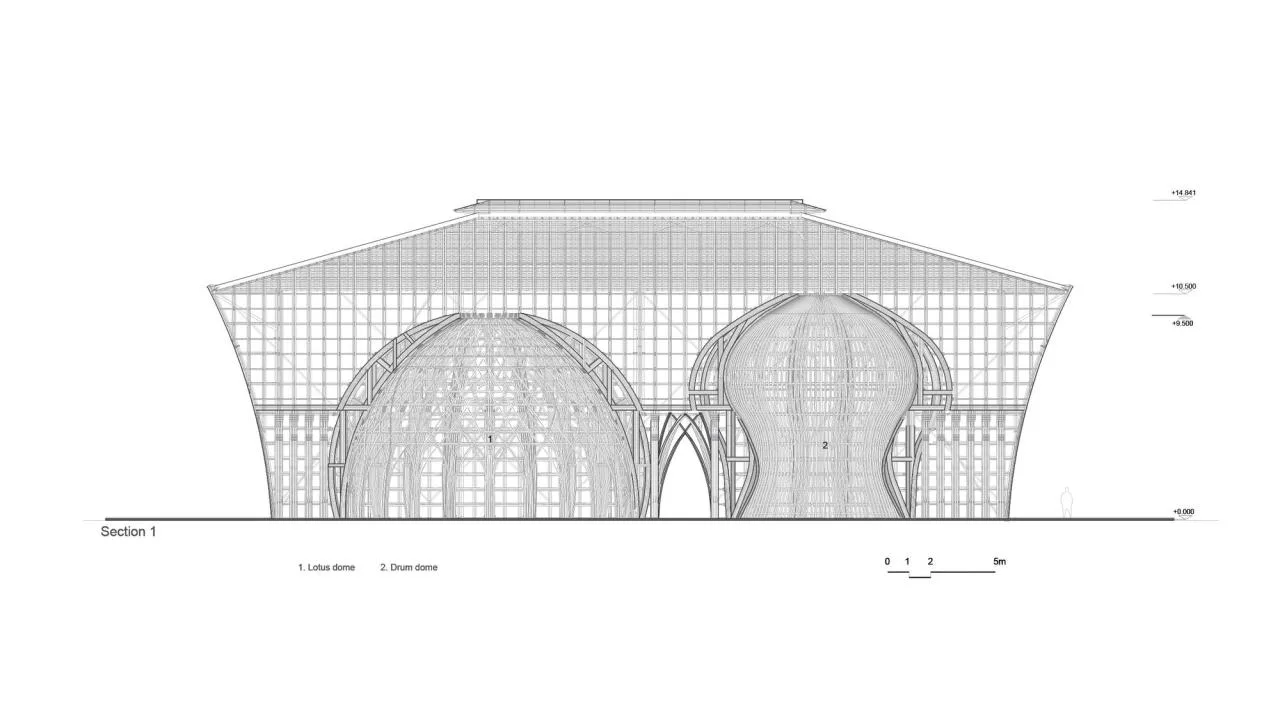
△ Section Diagram
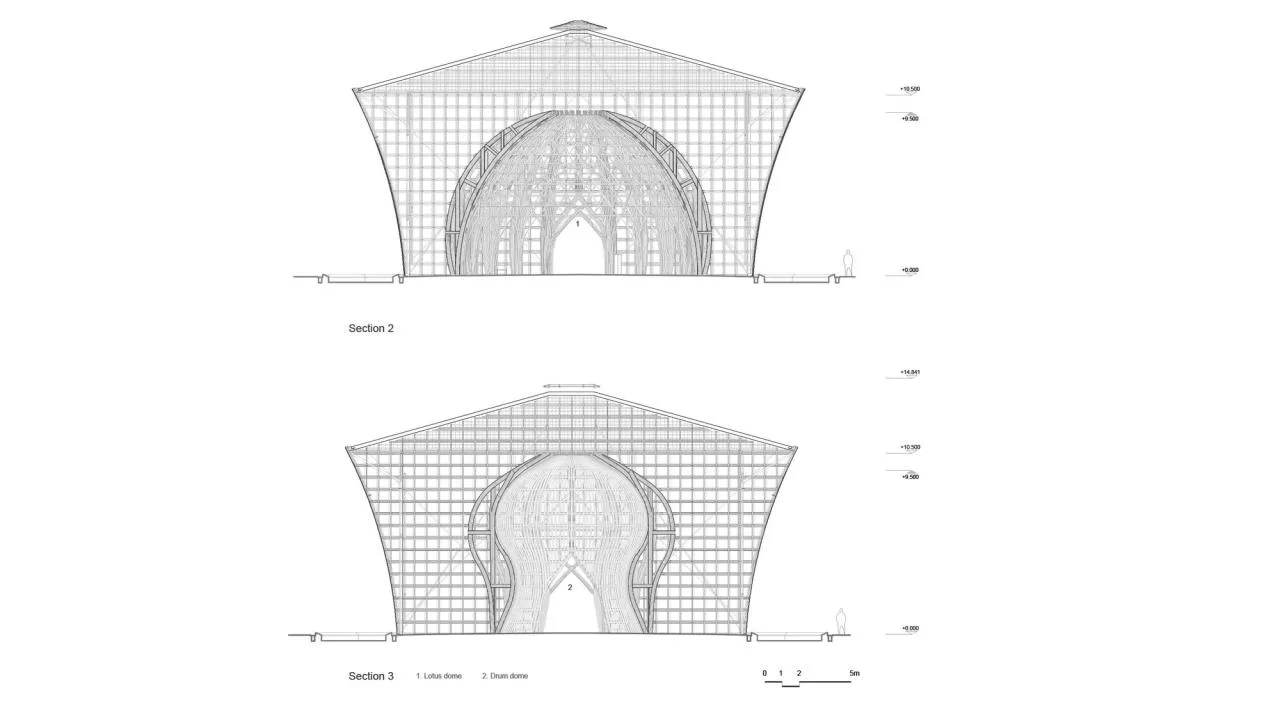
△ Section Diagram
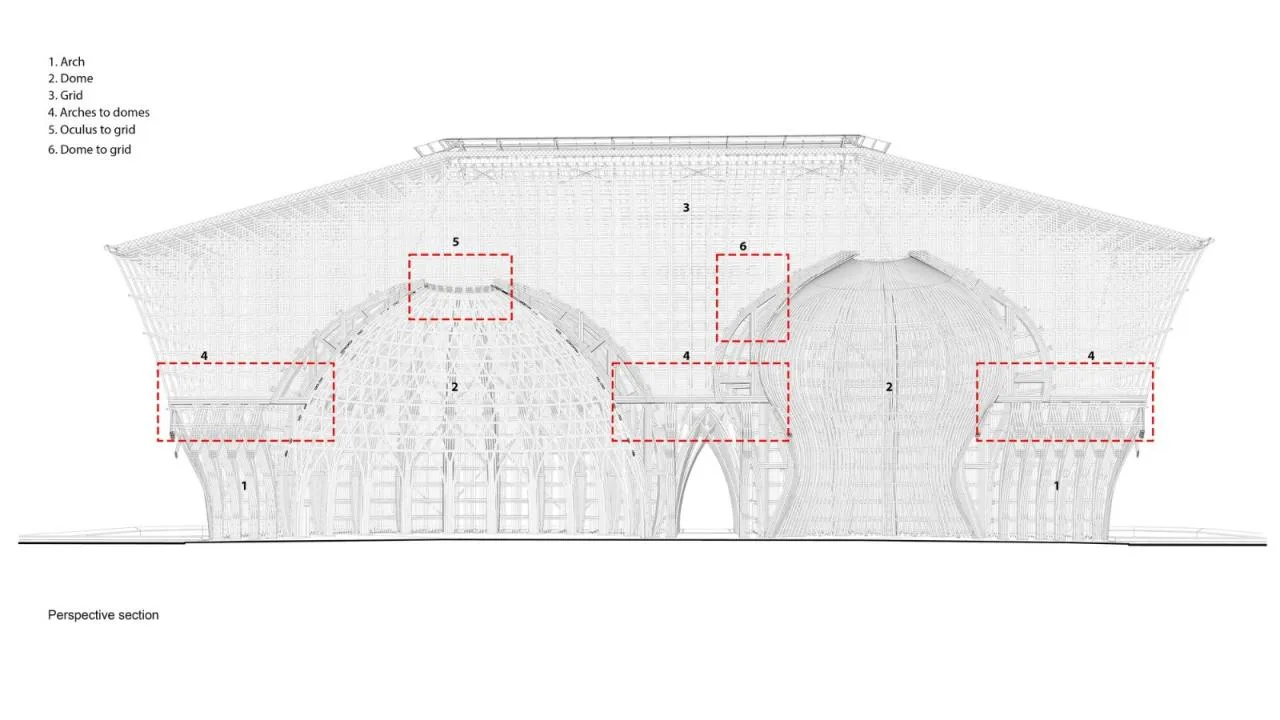
△ Section Diagram
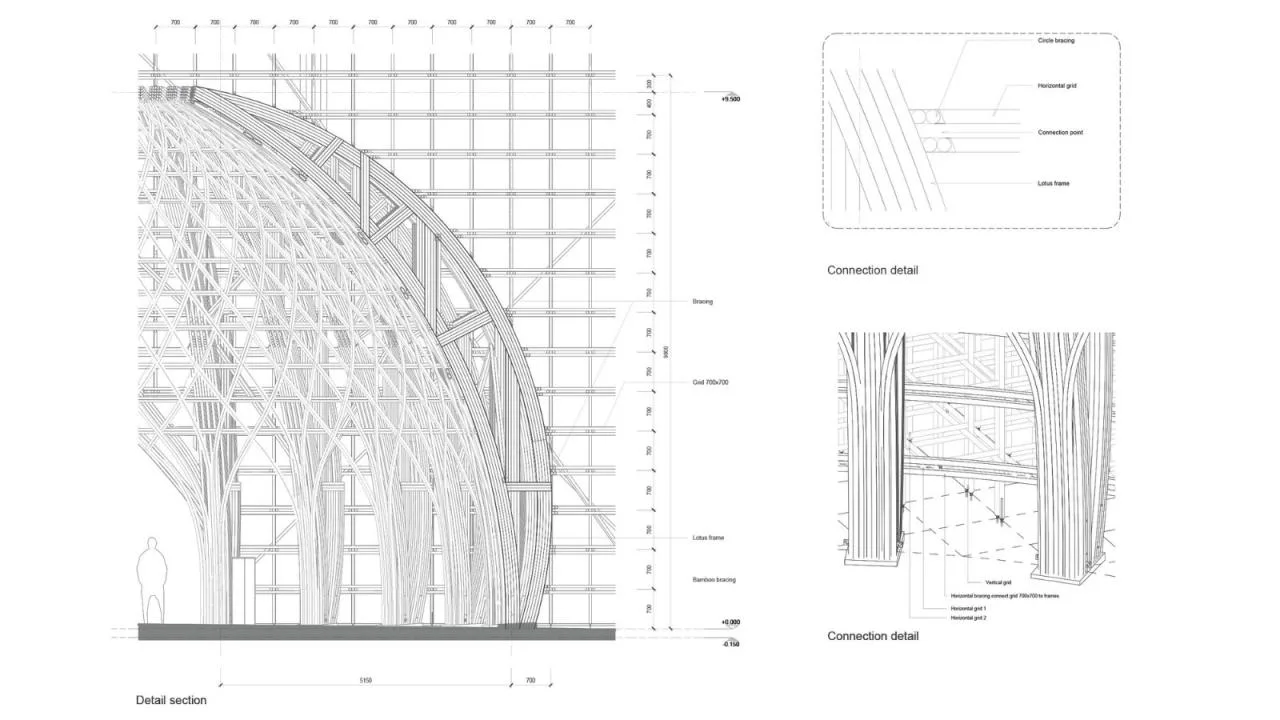
△ Detailed Sectional View
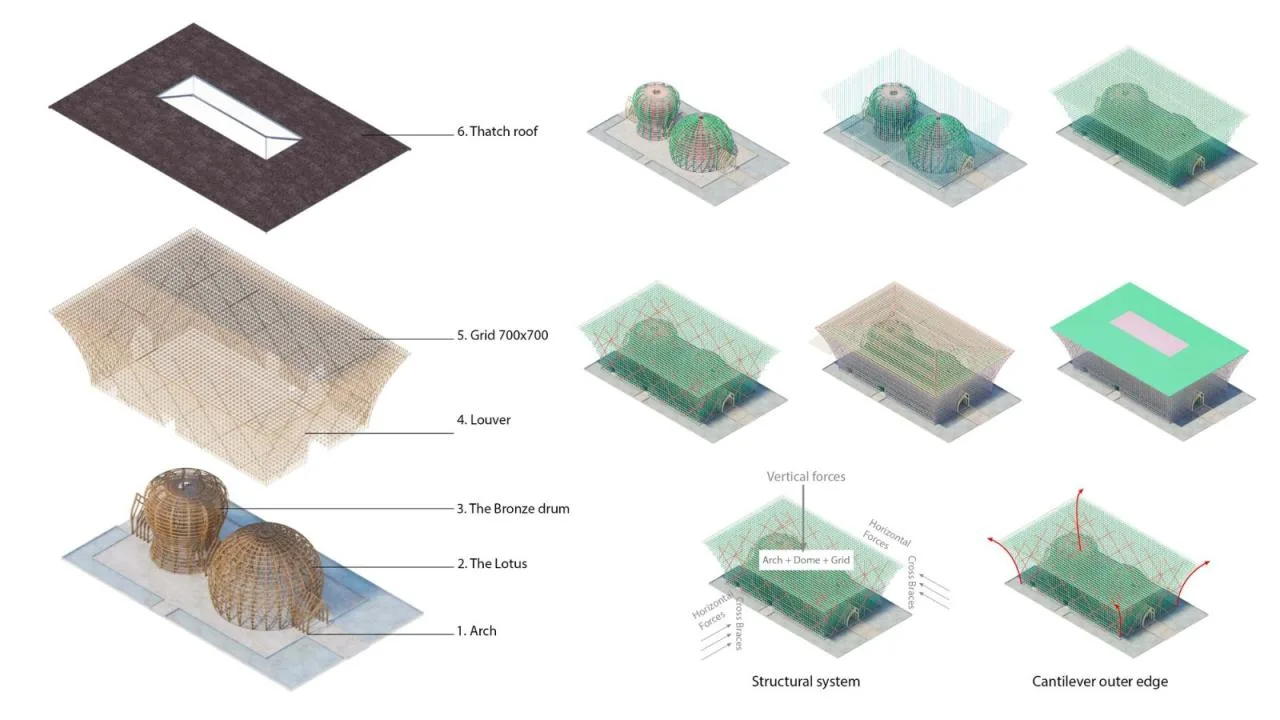
△ Analysis Chart
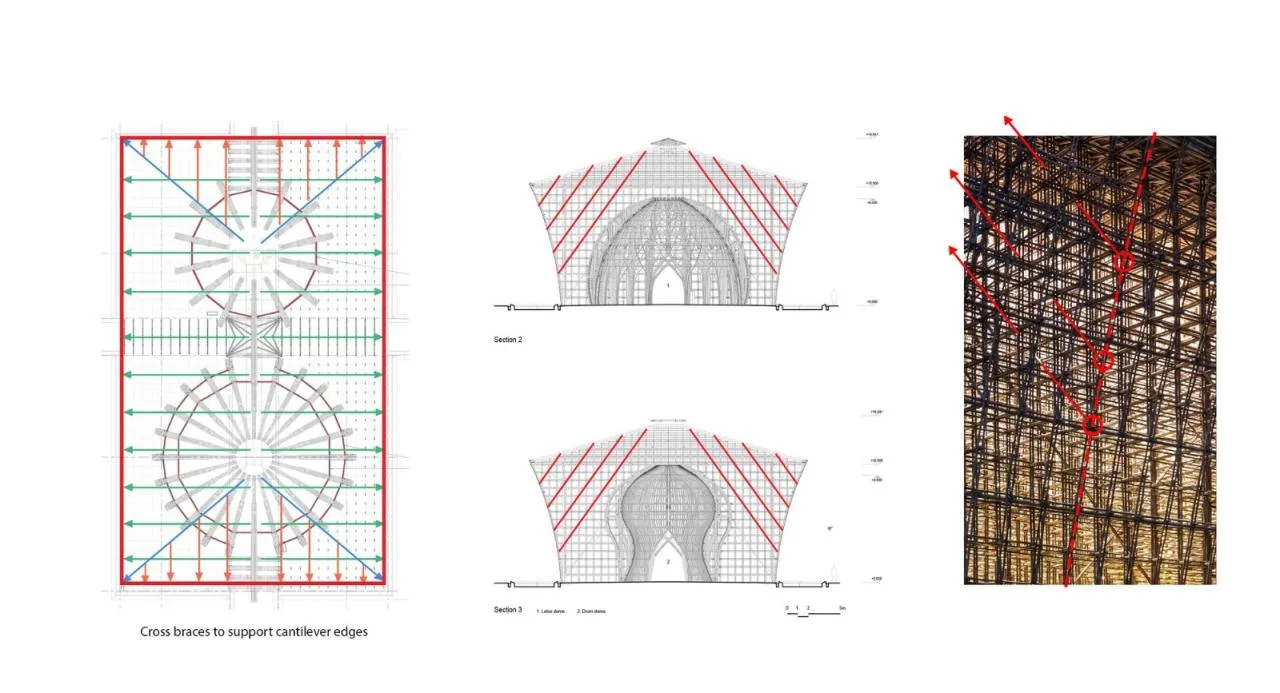
△ Analysis Chart
Project Information
Architectural Design: Wu Zhongyi Architectural Firm
Area: 1,460 square meters
Project Year: 2021
Photographer: Hiroyuki Oki
Lead Architects: Wu Zhongyi, Nguyen Tat Dat
Design Team: Nguyen Van An, Tu Minh Dong, Bui Quang Huy, Manh Trong Danh, Thai Khac Phuc
Architectural Design: VTN Architects
Location: Phu Quoc Island, Vietnam












Must log in before commenting!
Sign Up