
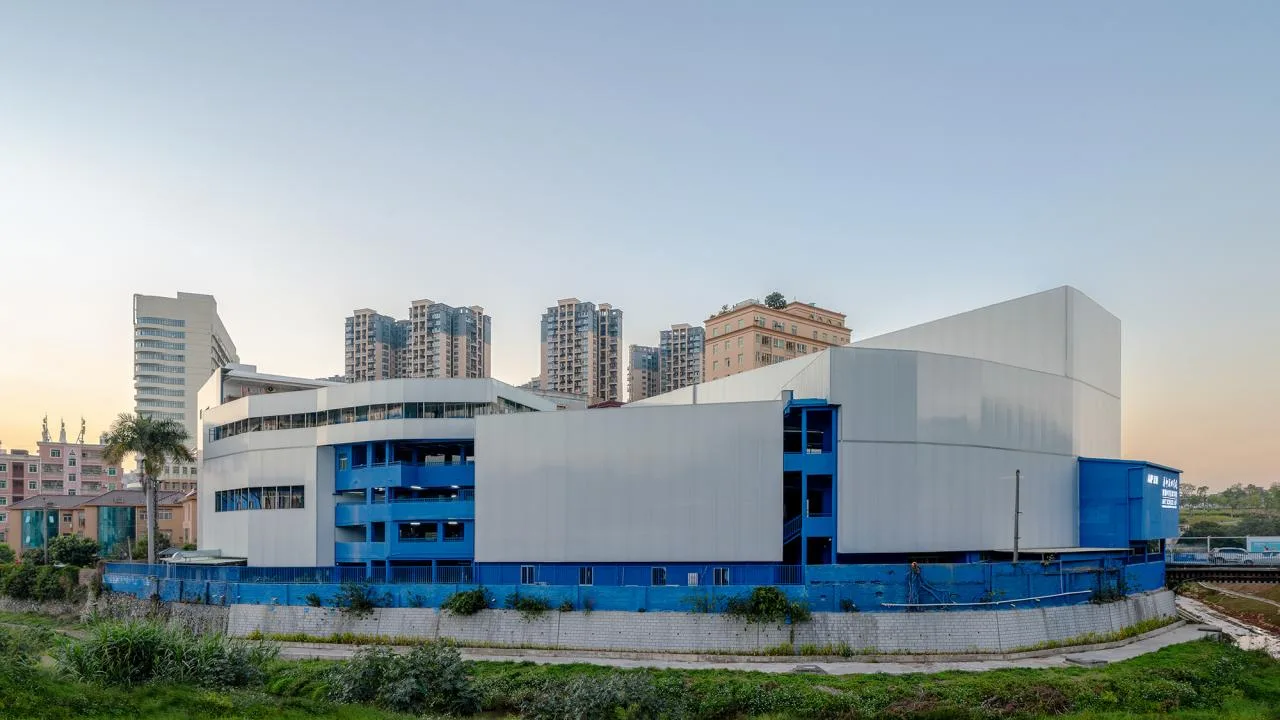
Invited by the AIP International Art High School of Guangmei Affiliated Middle School, Wanshe Design undertook the design and renovation of abandoned riverside buildings. The project encompasses several locally constructed structures along the river in urban villages. With a limited budget and a tight schedule, the university aimed to transform these spaces quickly while instilling an artistic atmosphere befitting an art institution. This renovation breathes new life into the school and its surrounding communities, creating a vibrant space that harmonizes art education with daily urban living.
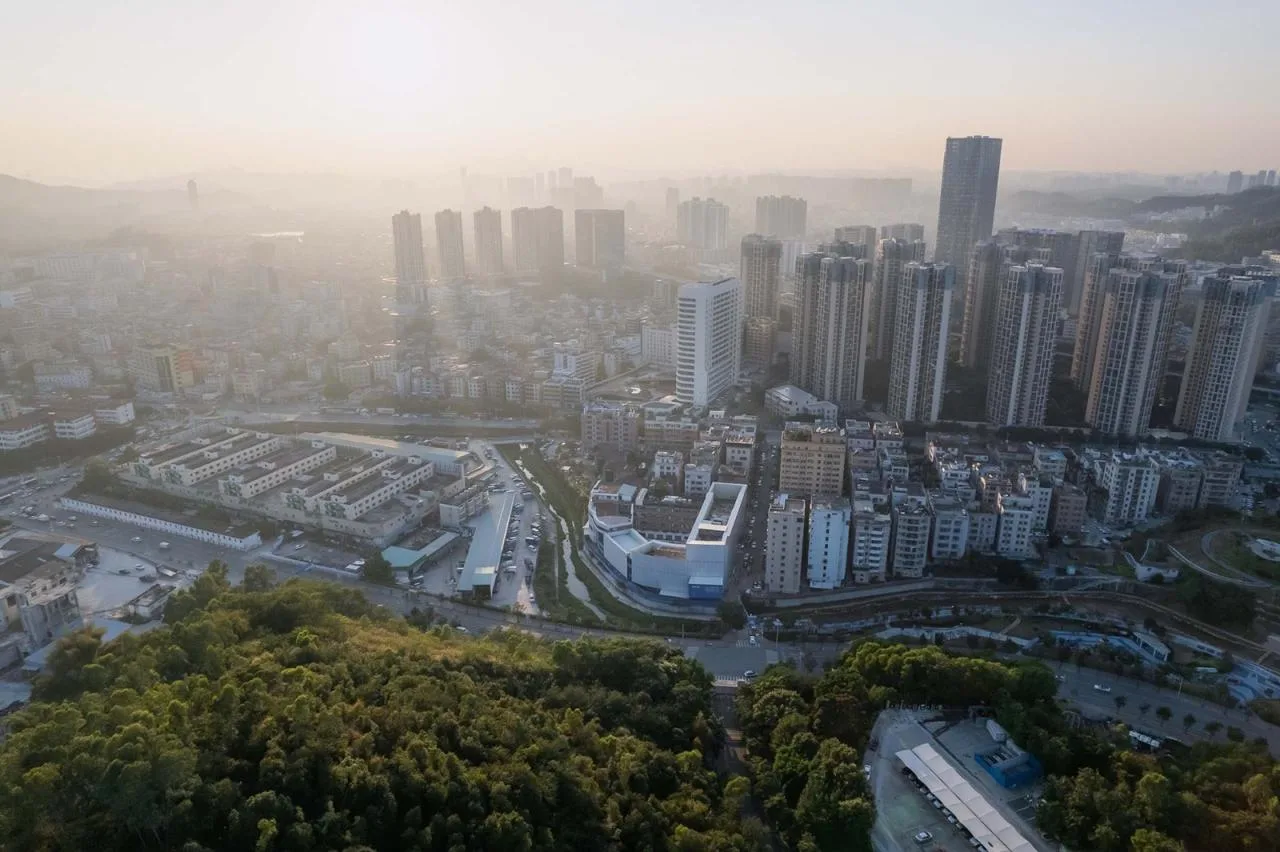
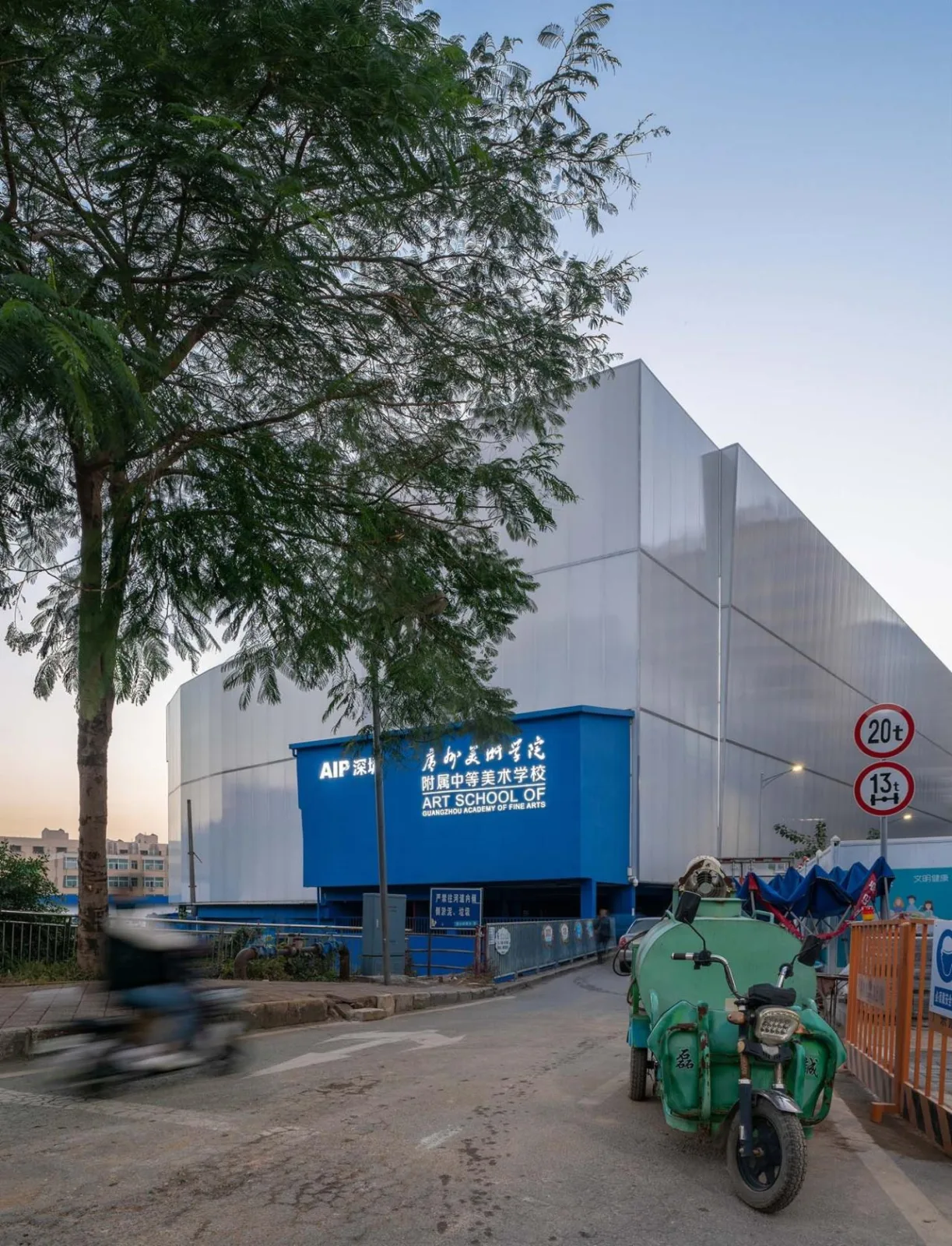
The primary objective was to address several pressing challenges efficiently: an ultra-low construction budget, the use of a designated local construction team, managing the impact on the village following facade renovations, and meeting the urgent deadline to open for the September school term. The Wanshe team aimed to fuse design innovation with practical problem-solving, integrating the freedom and creativity emblematic of art schools into the local village aesthetic. This approach injects youthful energy into the area, fostering coexistence and mutual inspiration with surrounding businesses, while establishing appropriately scaled regional signage.
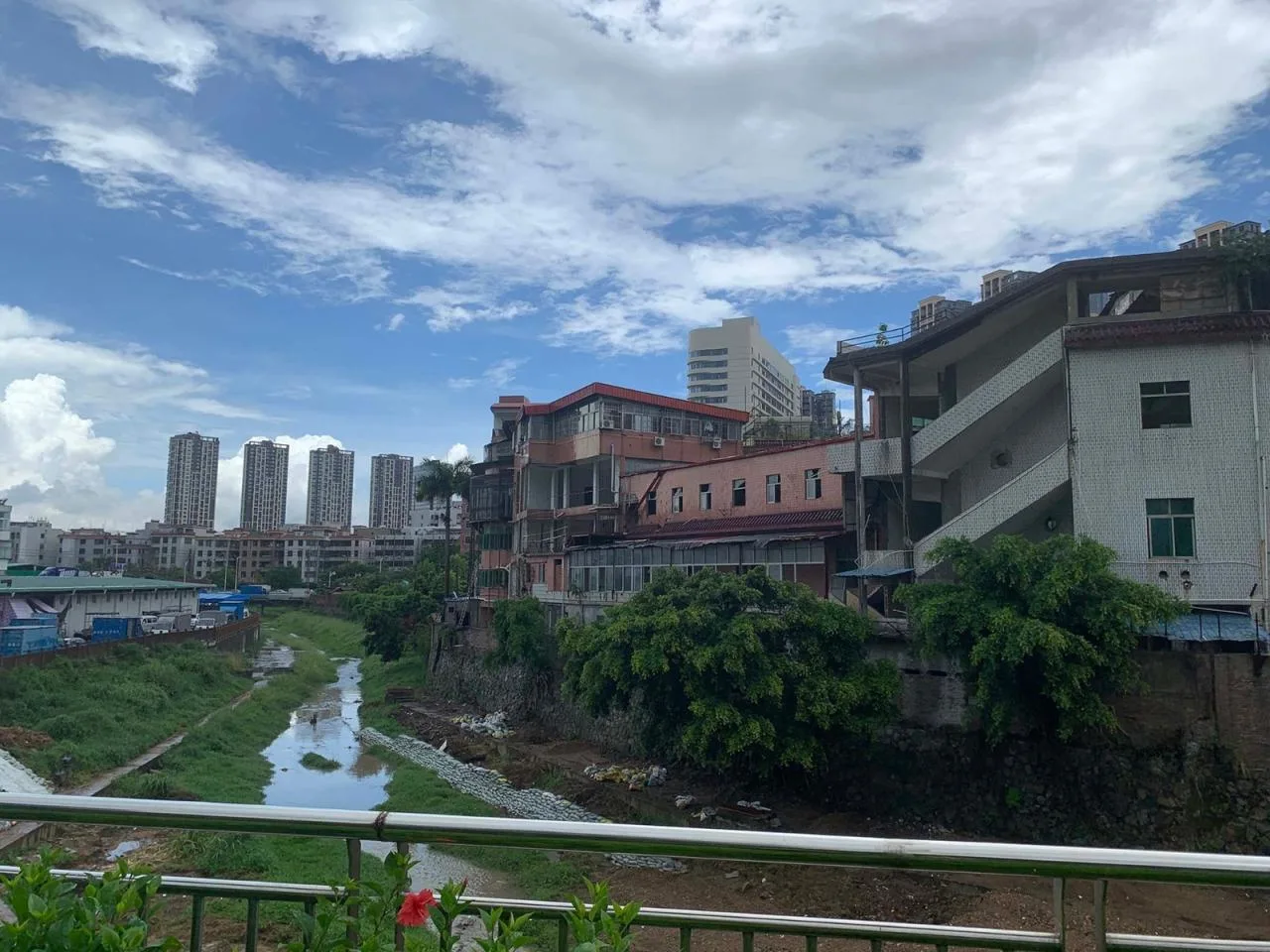
△ Original site
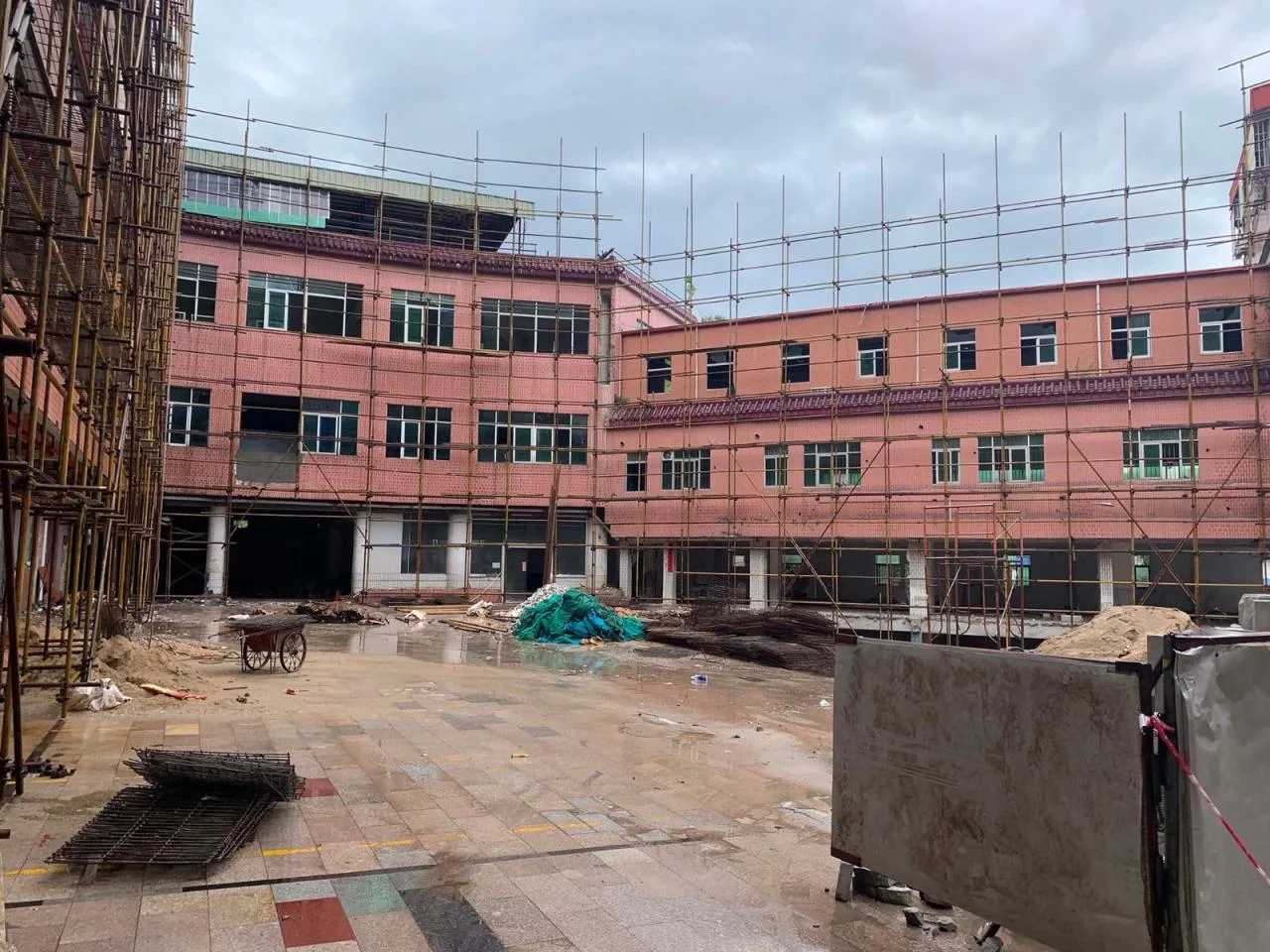
△ Original site
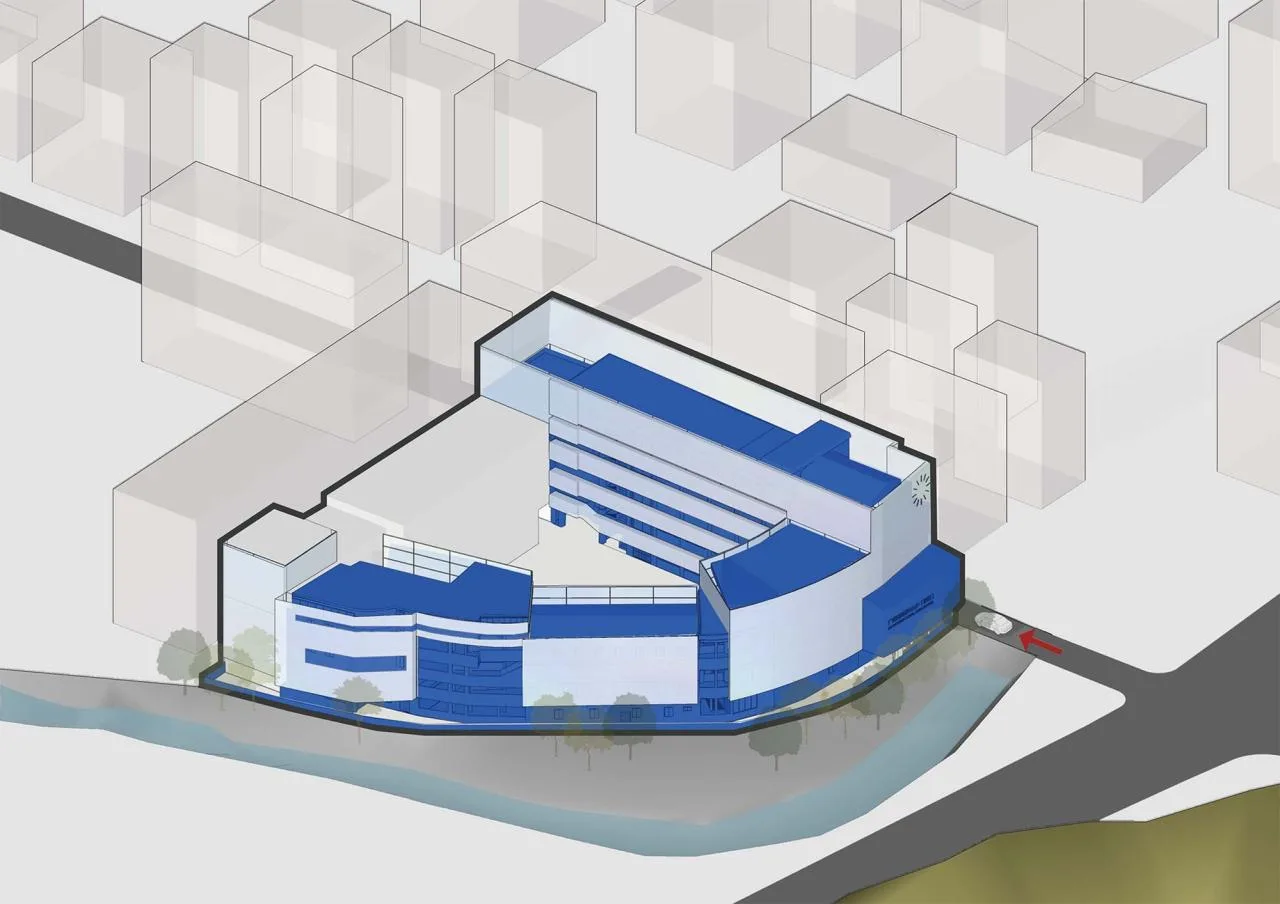
Situated at a river corner opposite a busy vehicular road, the design introduces a new architectural facade concept: wrapping the entire building cluster with a fresh color palette and simple translucent materials. According to the Wanshe design team, this revitalized village house now closely connects with its surrounding land, blending seamlessly with the urban fabric, context, and daily life.
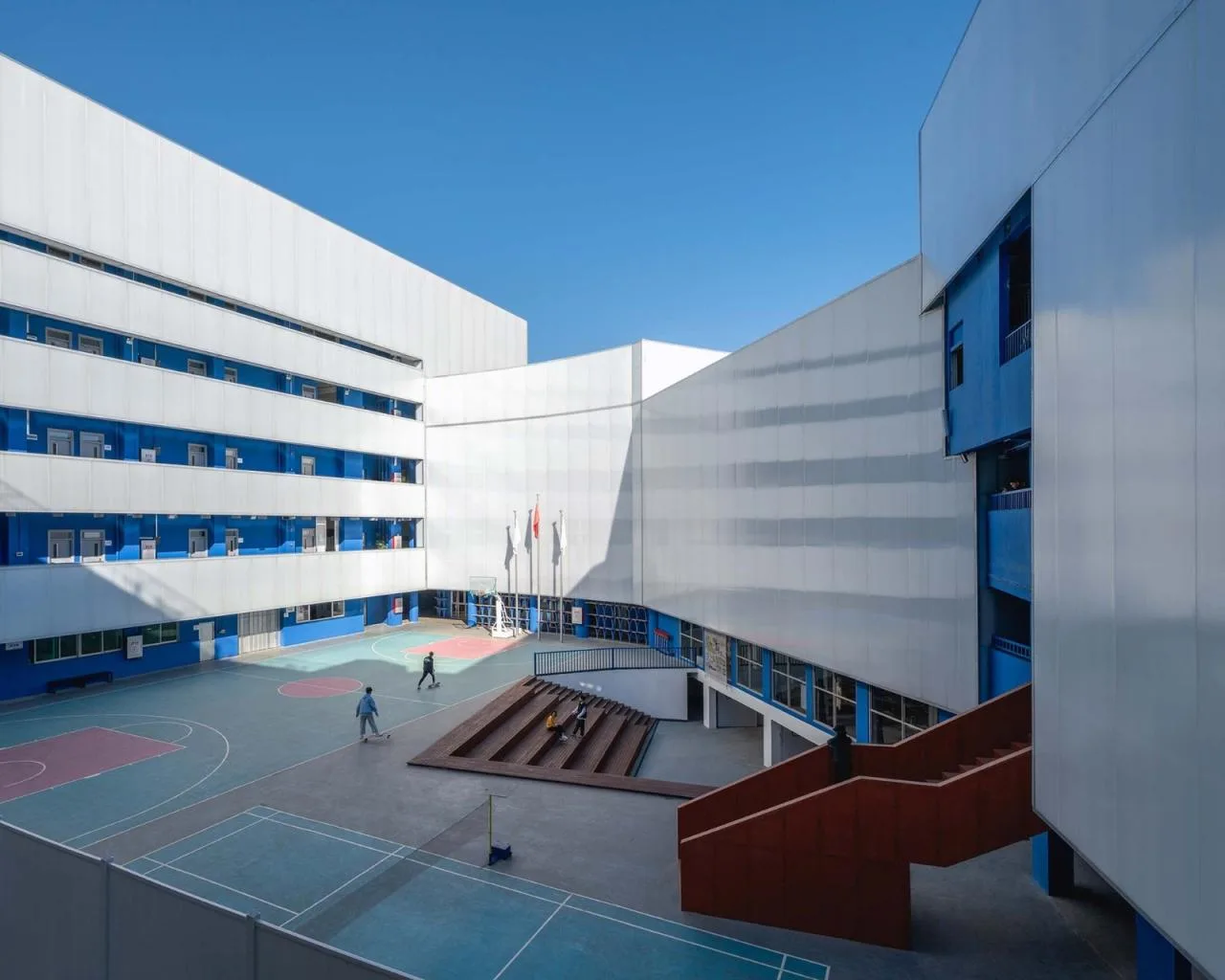
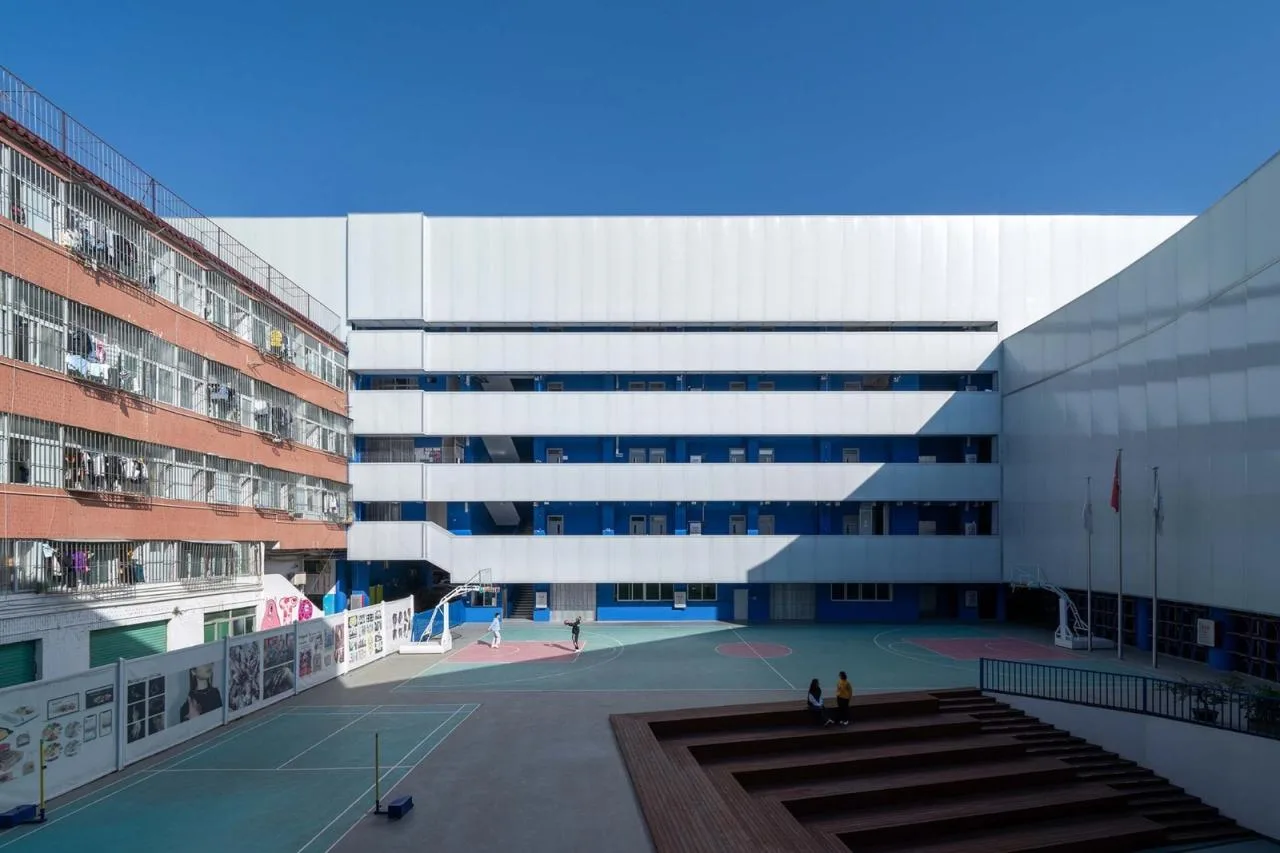
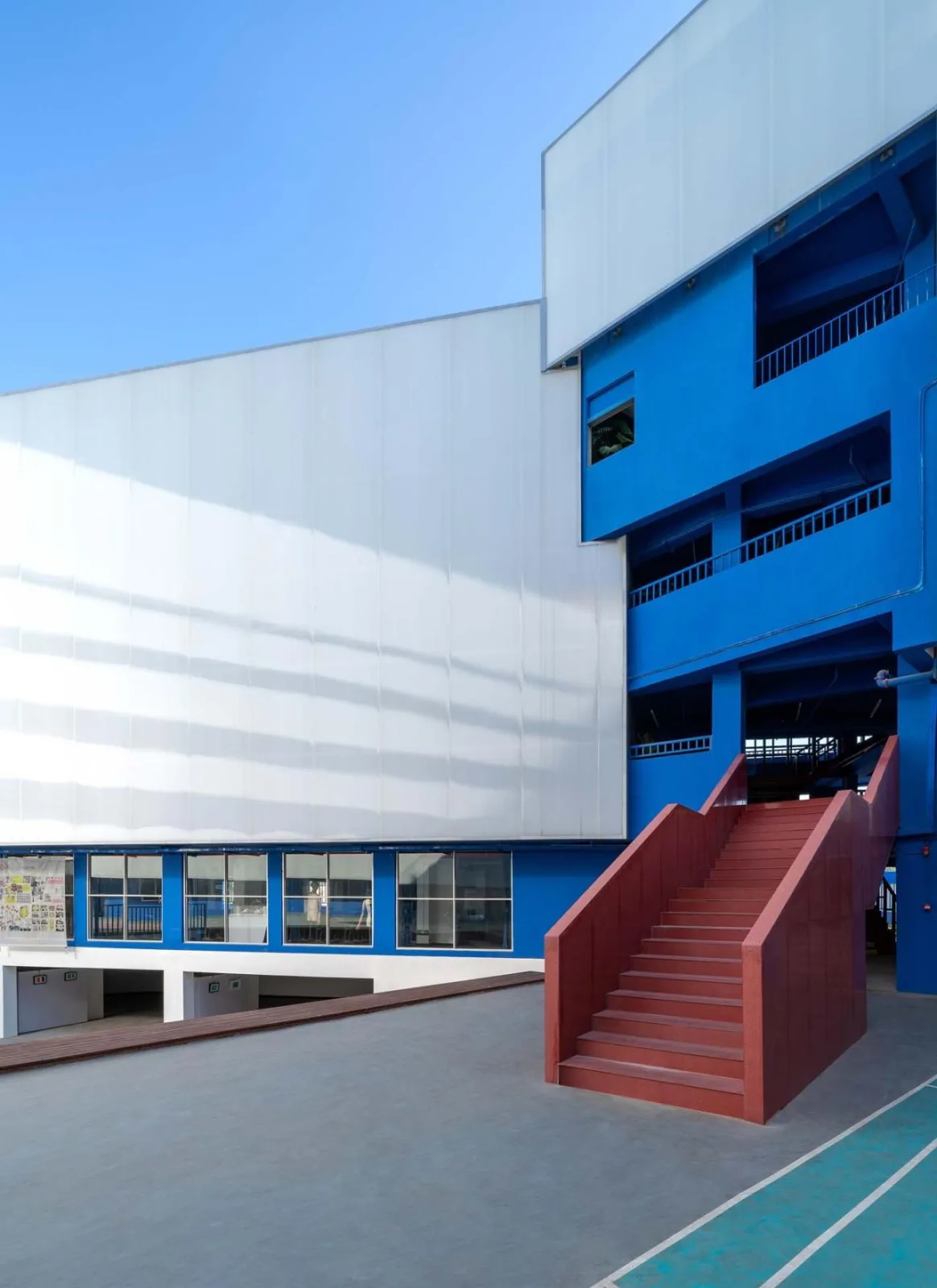
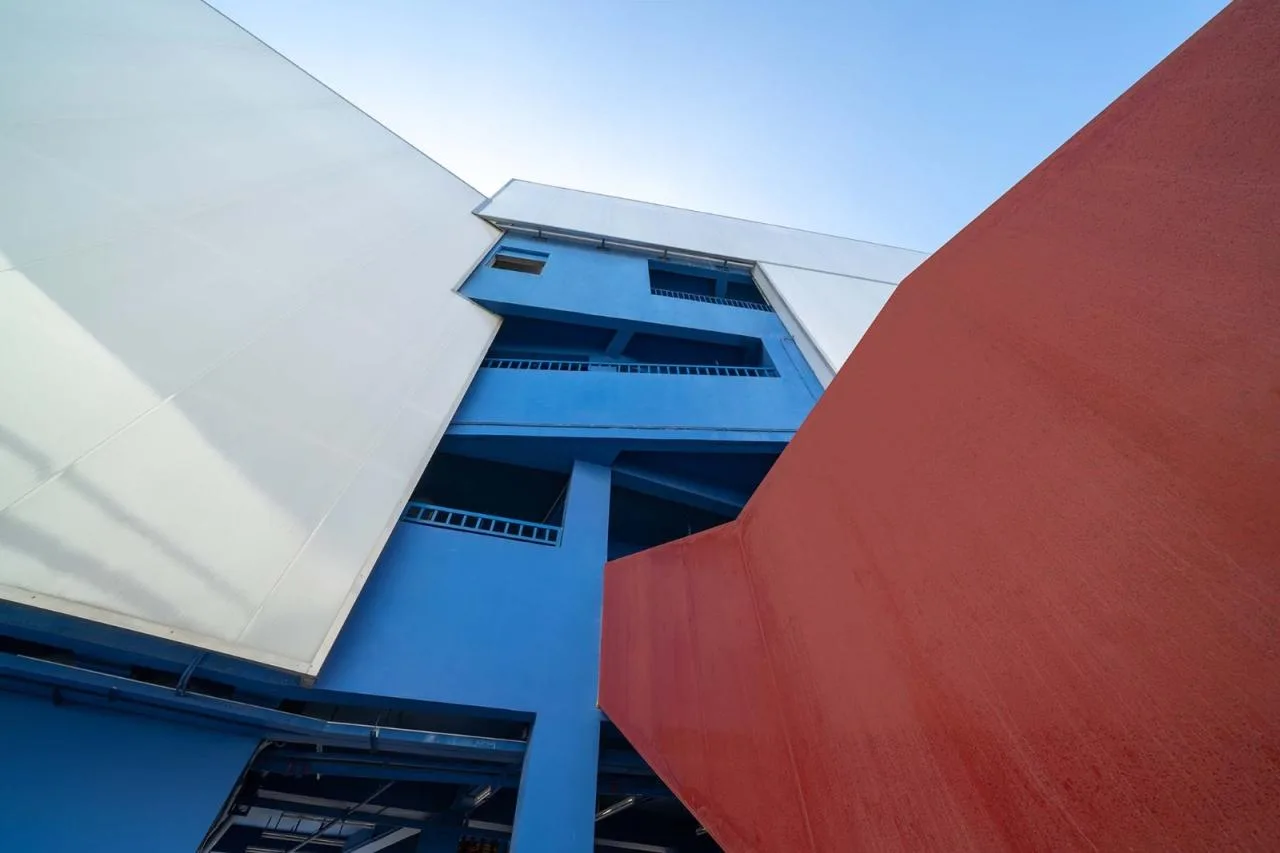
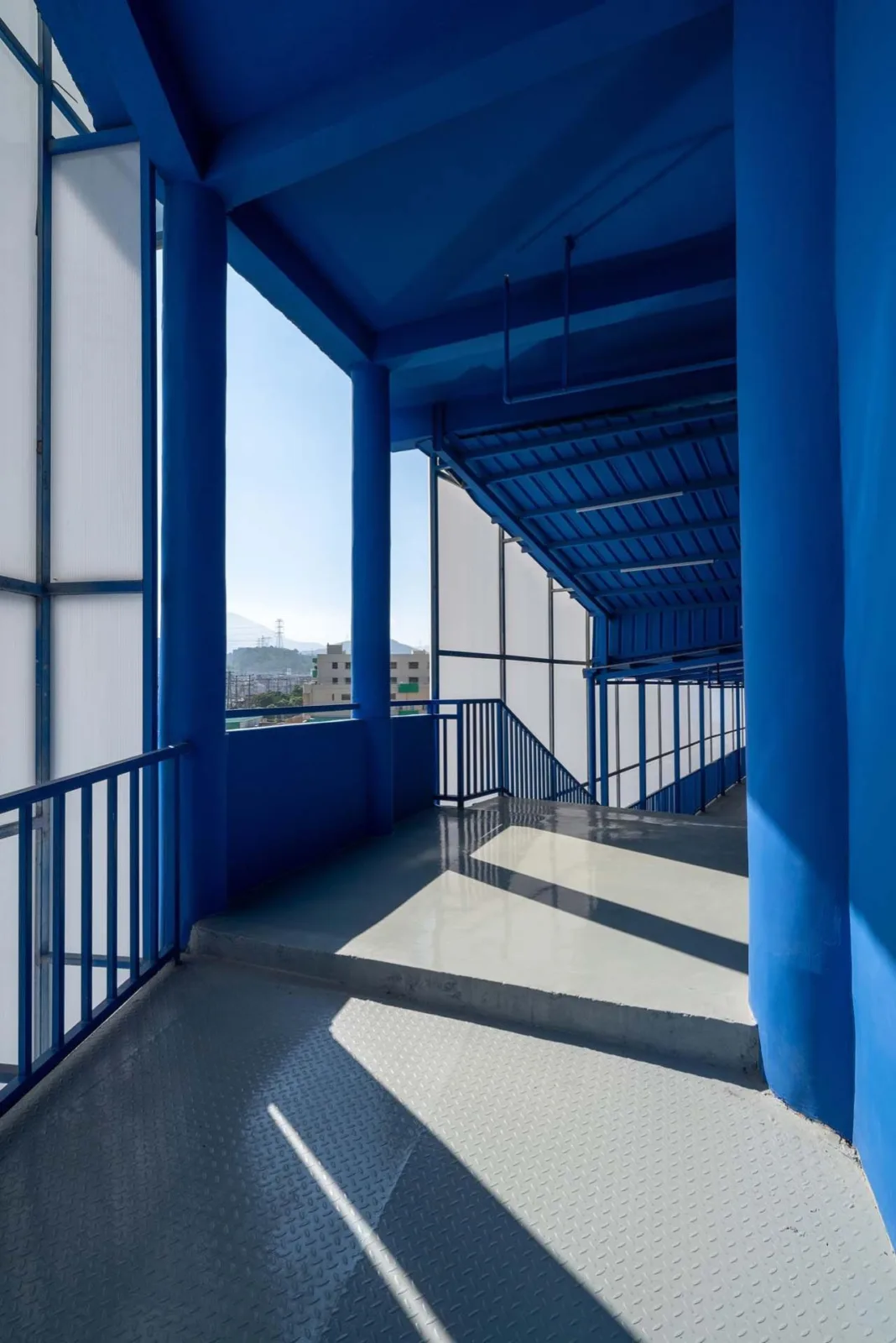
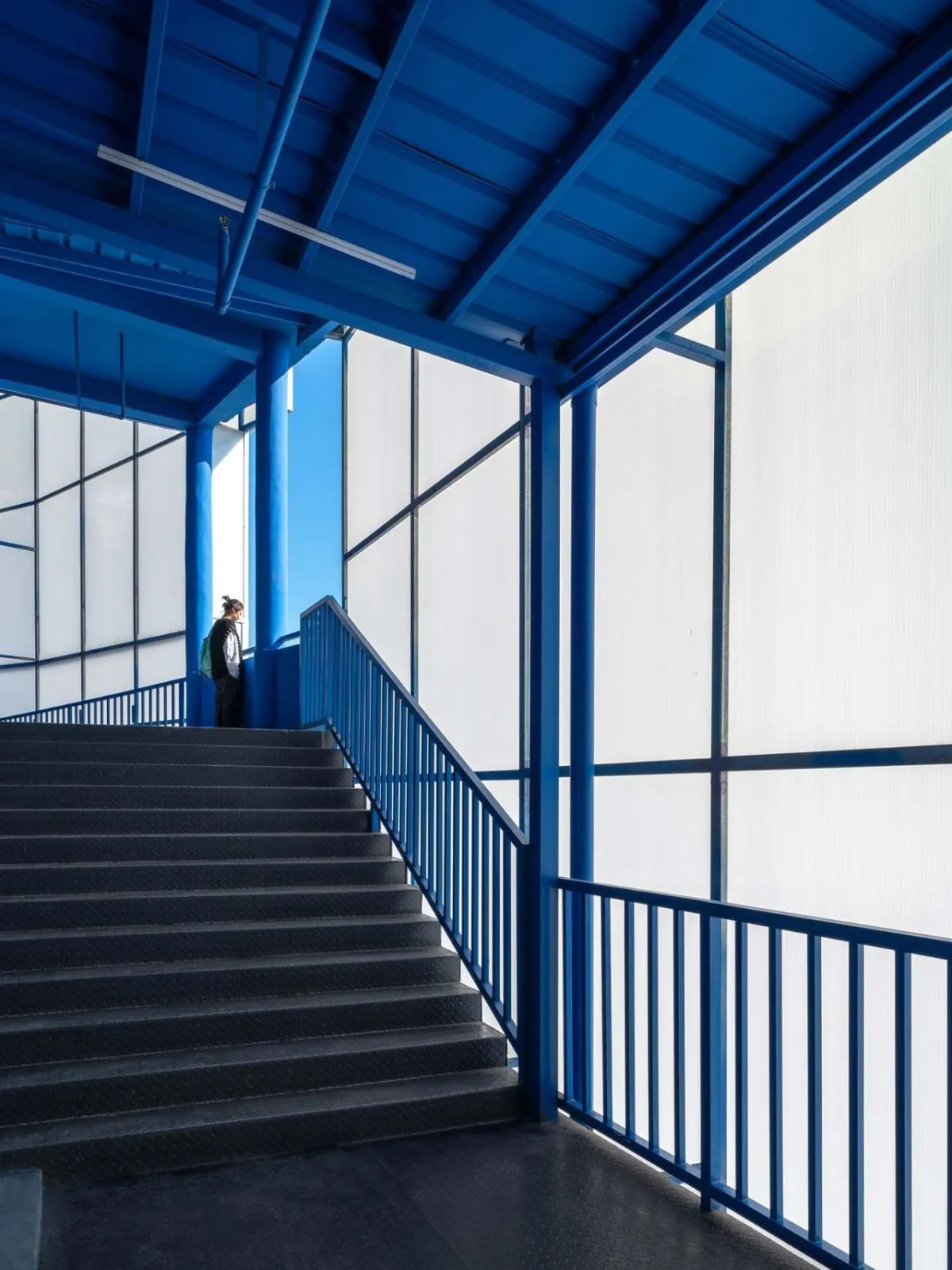
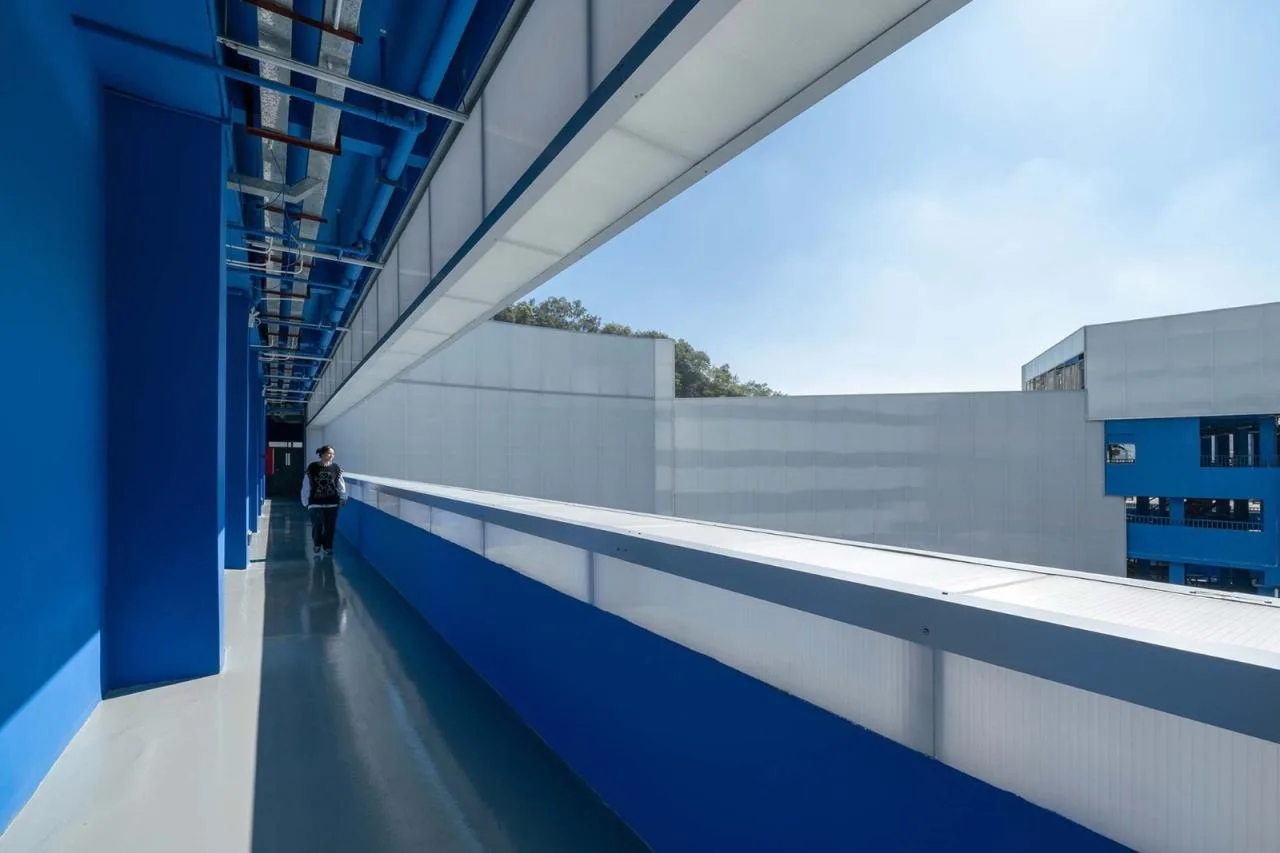
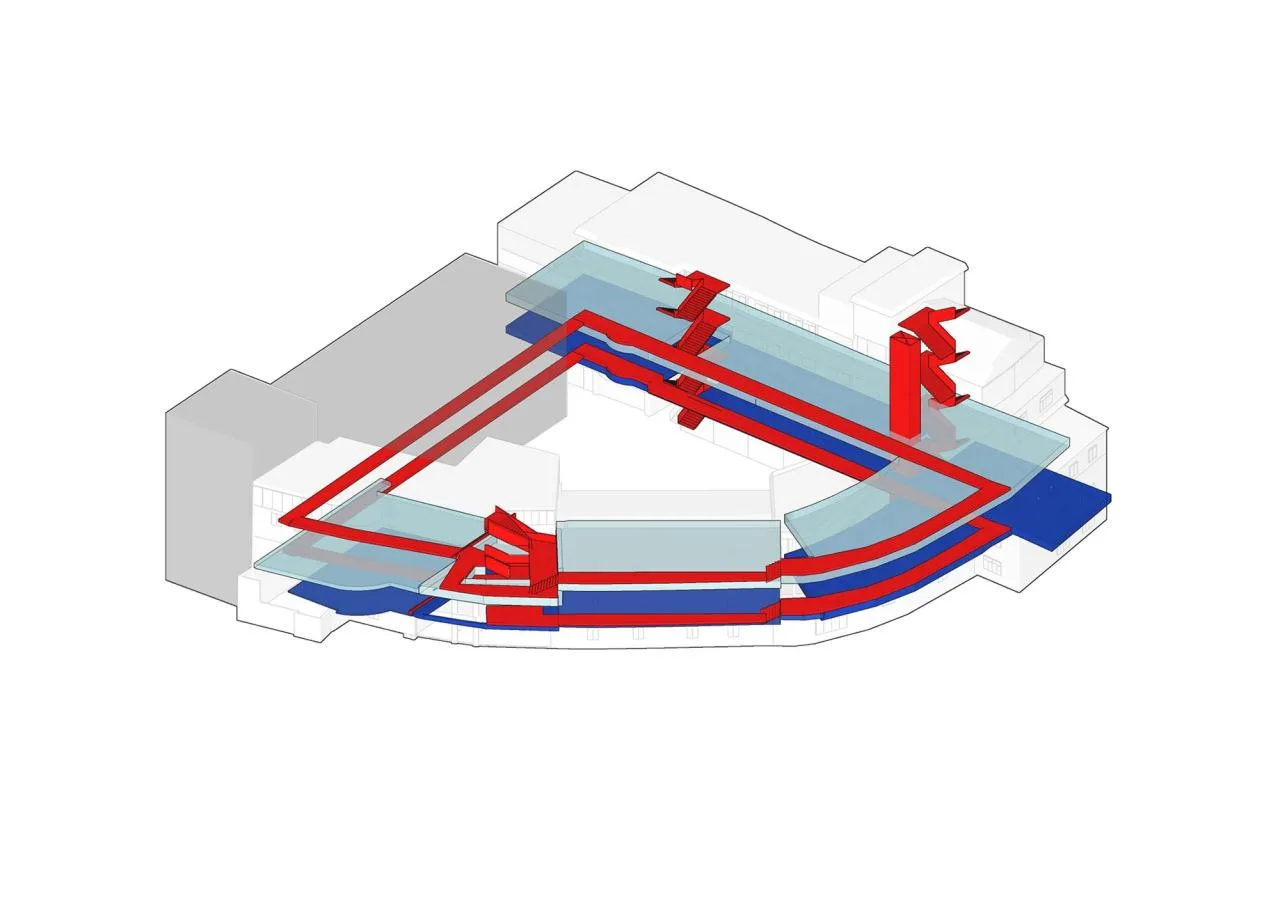
To accommodate new functional spaces, the design reorganized transport hubs between buildings and connected varying floor levels to establish a smooth spatial flow. The courtyard enclosed by the complex is divided into a sports field, while the original underground garage was transformed into a sunken auditorium. The newly added volumes are clad in expansive bright white materials on the original facades, accented by fresh blue wall elements. This contrast quickly establishes a clean, bright outline symbolic of the art school.
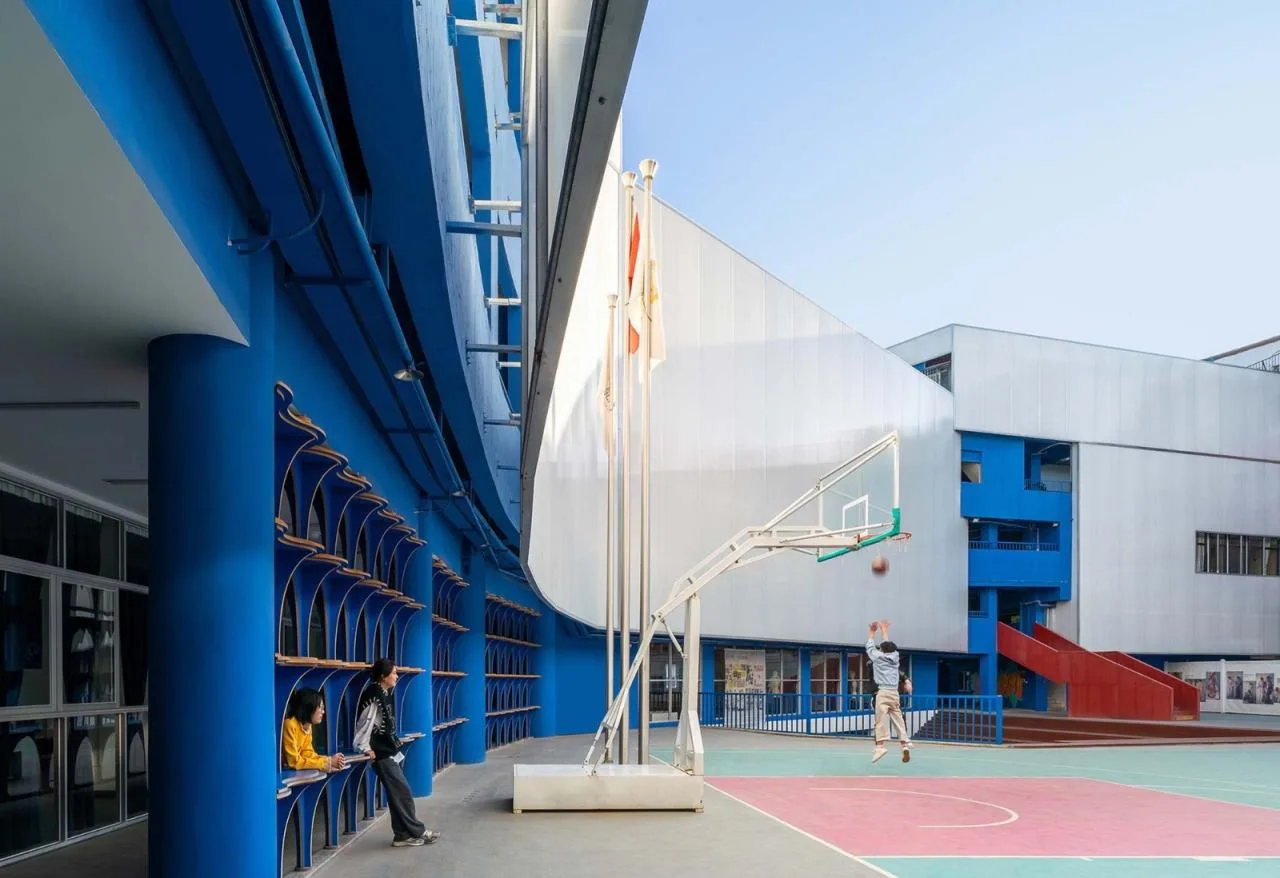
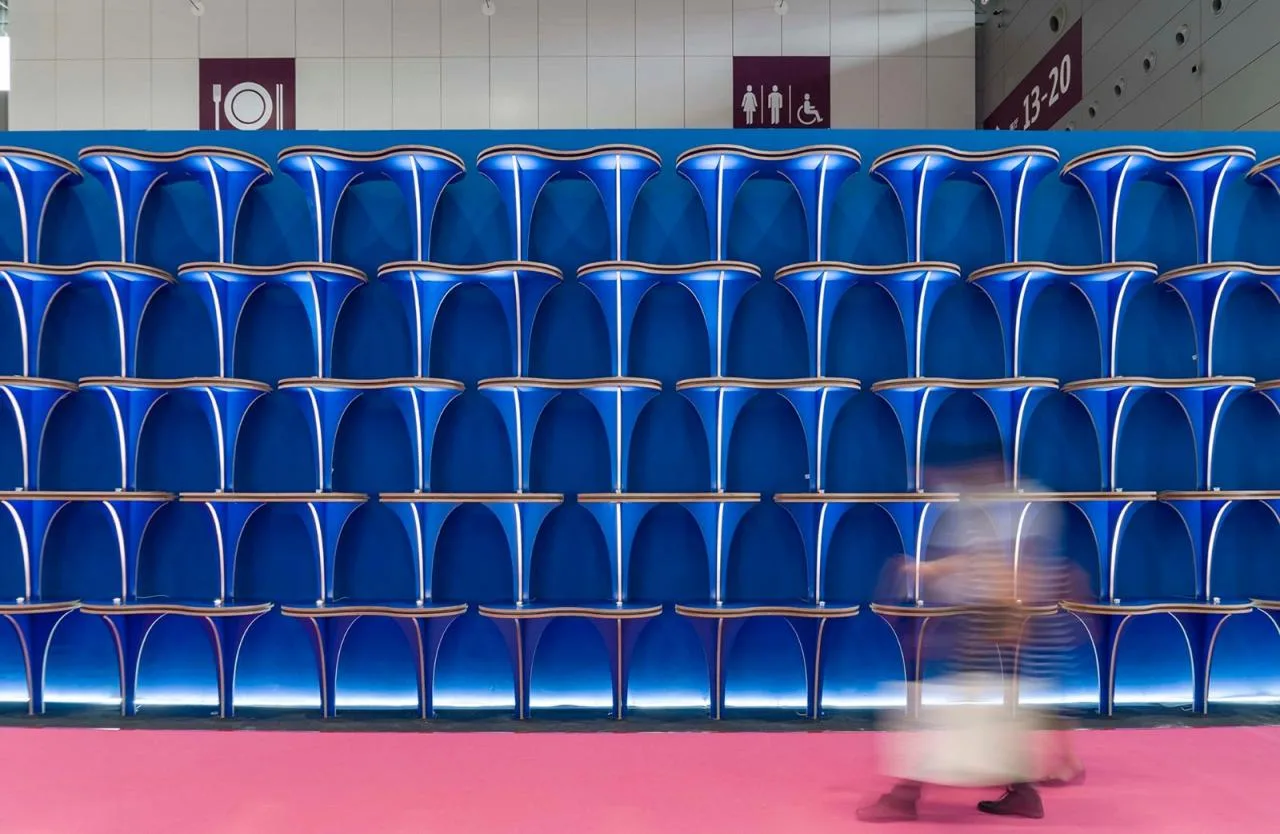
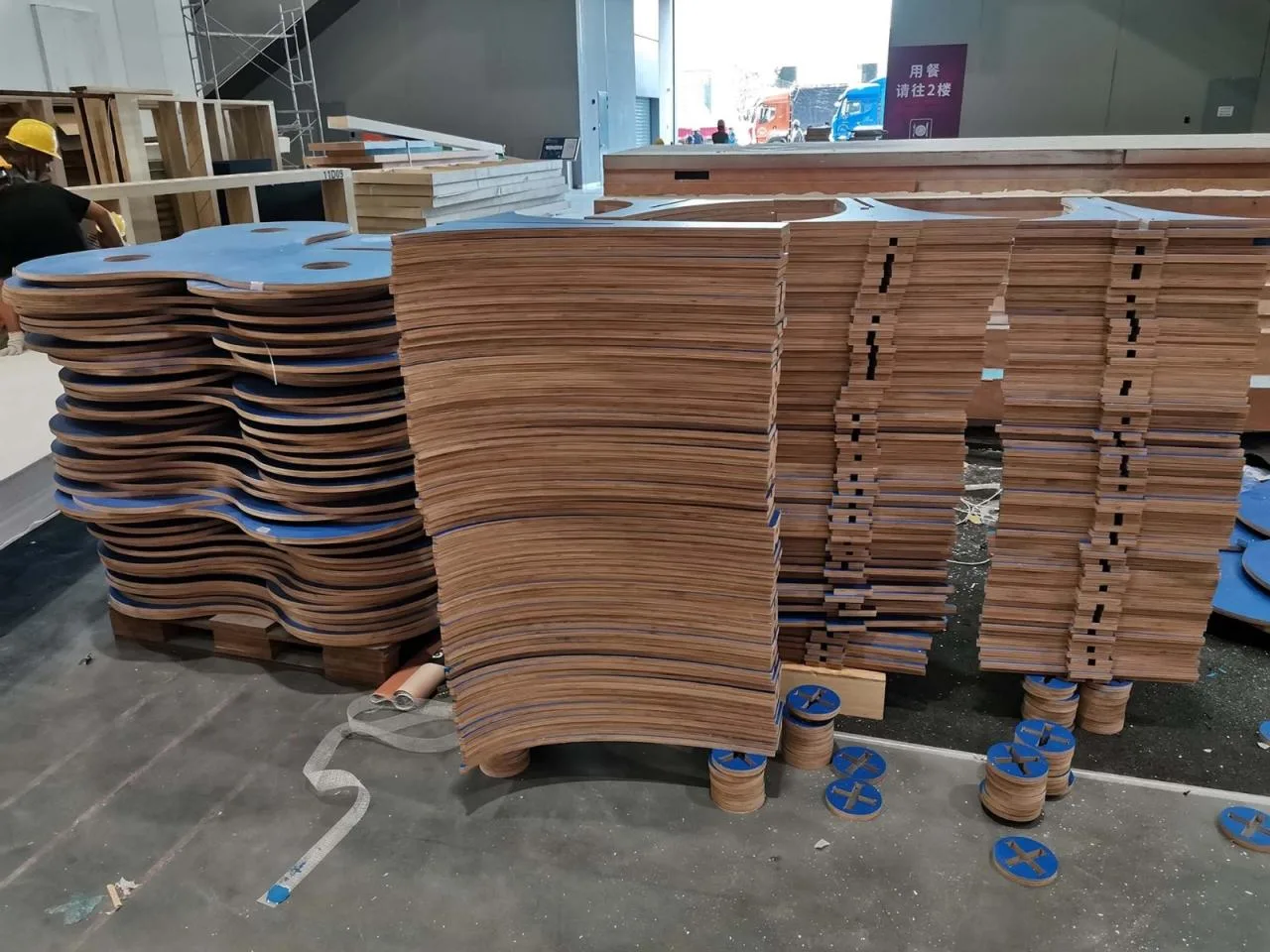
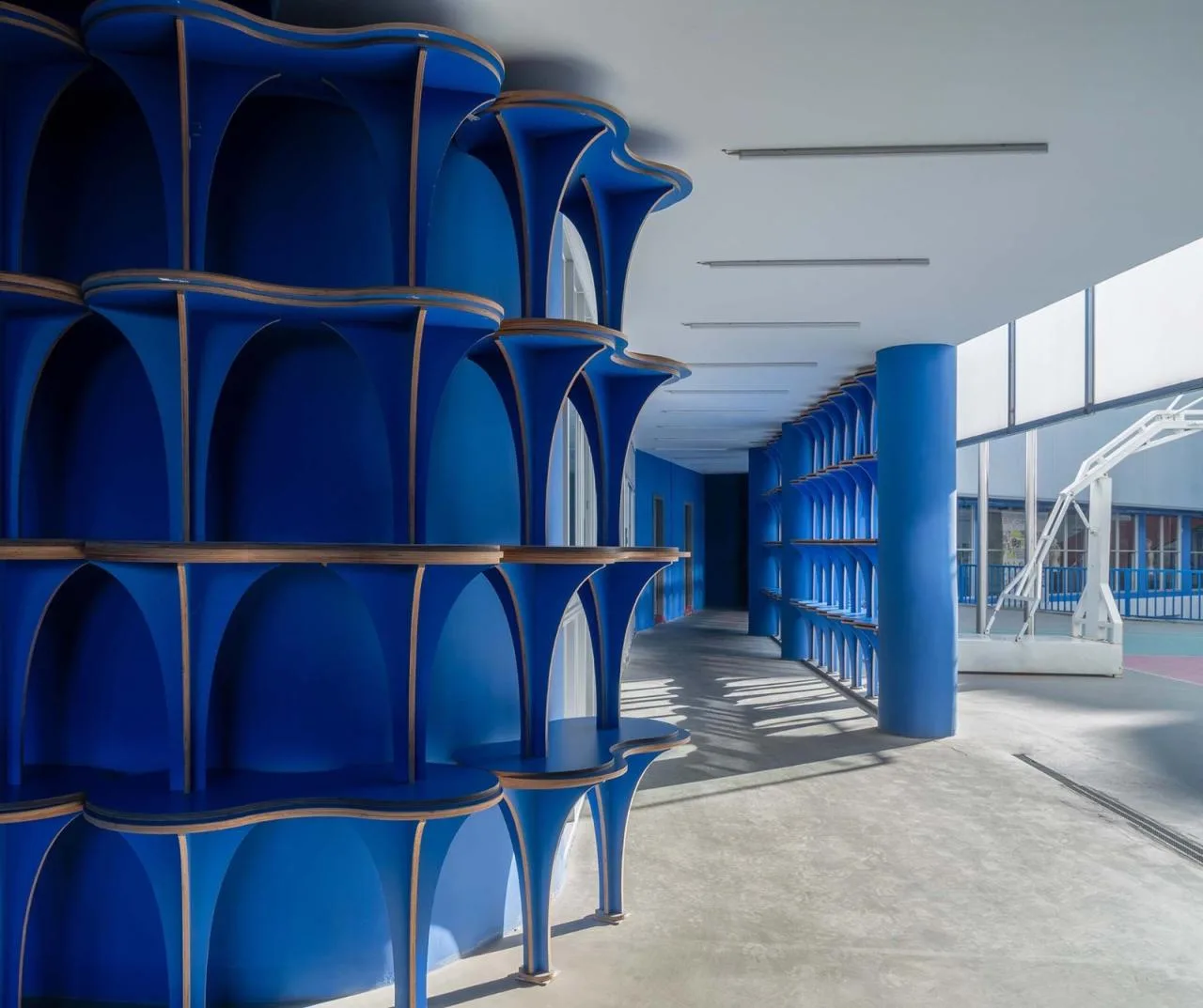
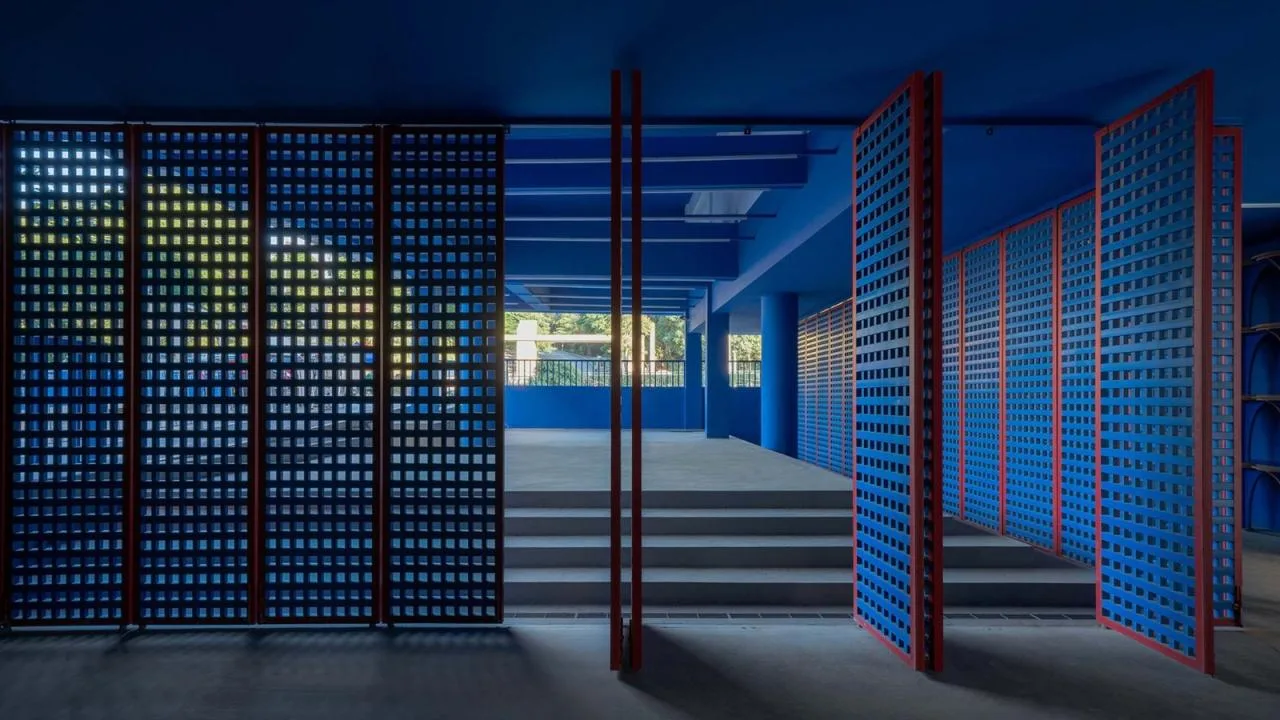
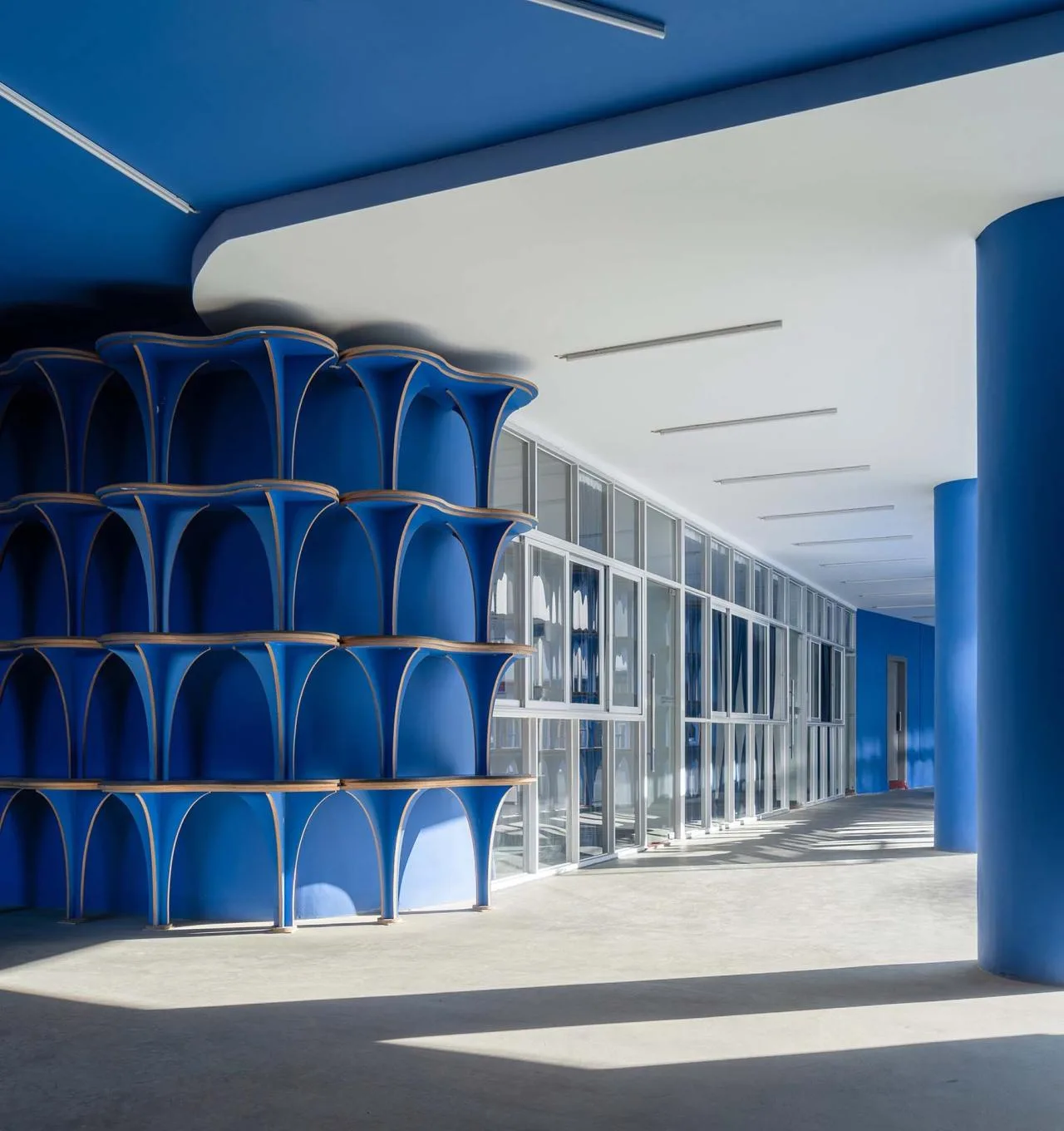
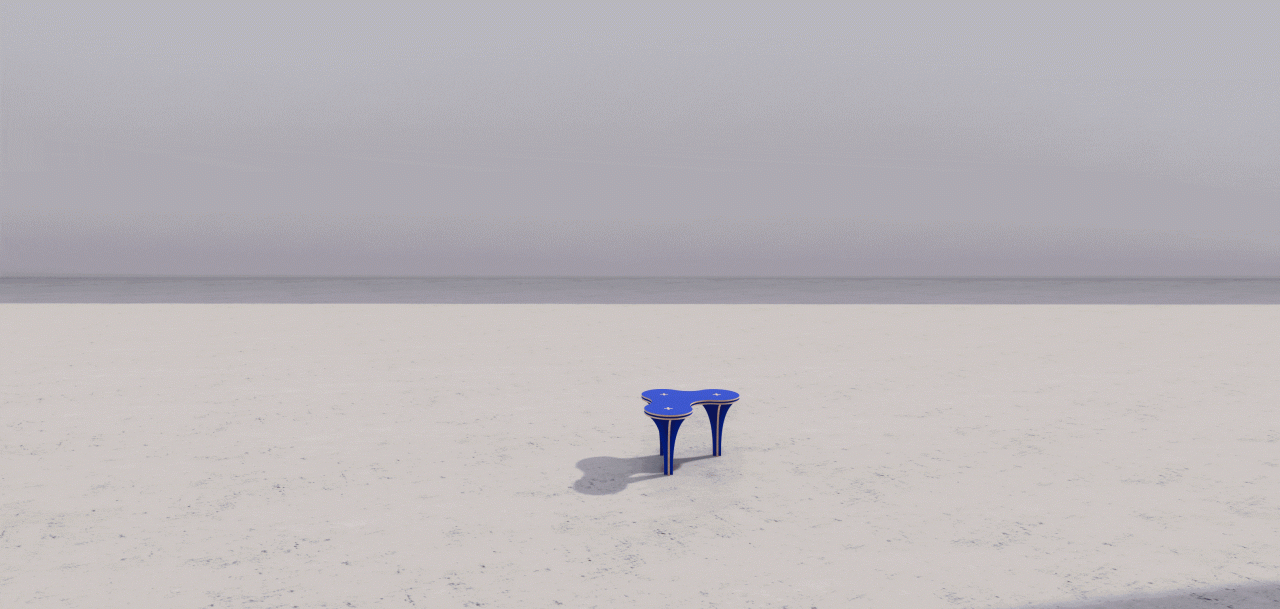
The “hollow grid wall” in the sustainable closed-loop playground stems from Wanshe Design’s 2019 “Wave” project, created as Shenzhen city’s representative under invitation from the Shenzhen Design Association. This design aimed to promote sustainability by constructing detachable, recyclable, and reusable exhibition halls to address waste issues. The “Wave” consists of modular tables that can be assembled and disassembled repeatedly using traditional mortise and tenon joinery, inspired by wooden furniture construction.
Recognized for its sustainable approach, the “Wave” was dismantled from the exhibition hall and reassembled within AIP to support daily university events, stimulating creativity and adapting to various needs. Wanshe Design then donated the construction costs on behalf of all involved parties to support school building projects in impoverished mountainous areas, contributing to public welfare and closing the sustainable development loop.
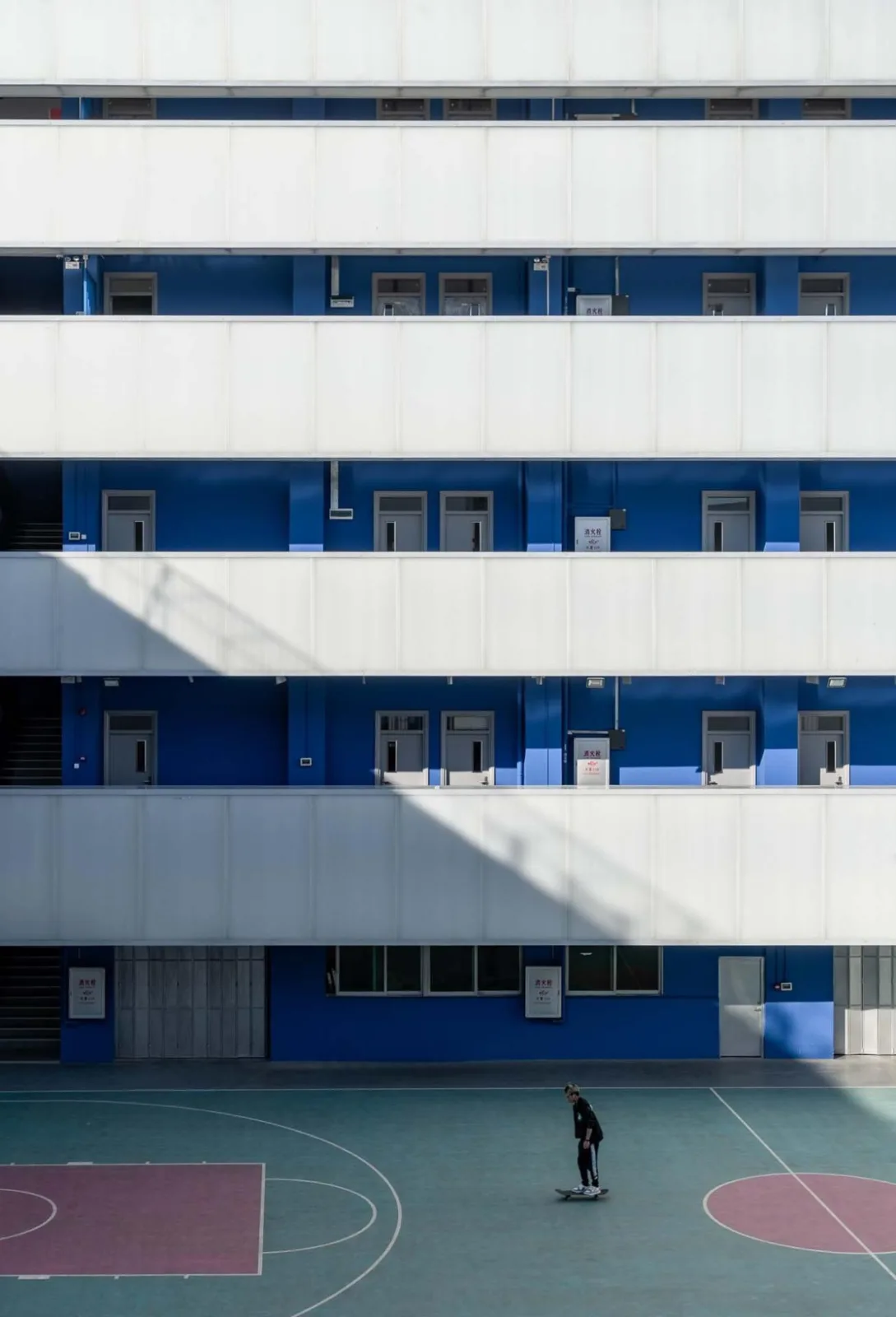
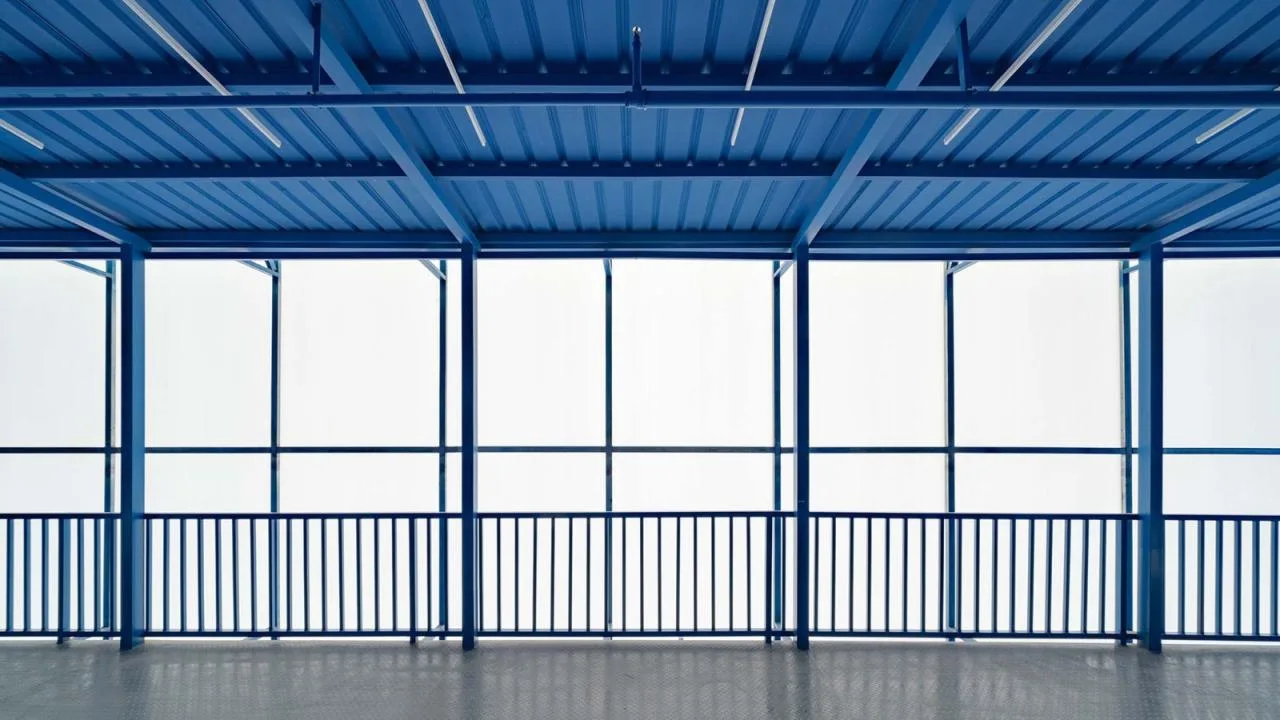
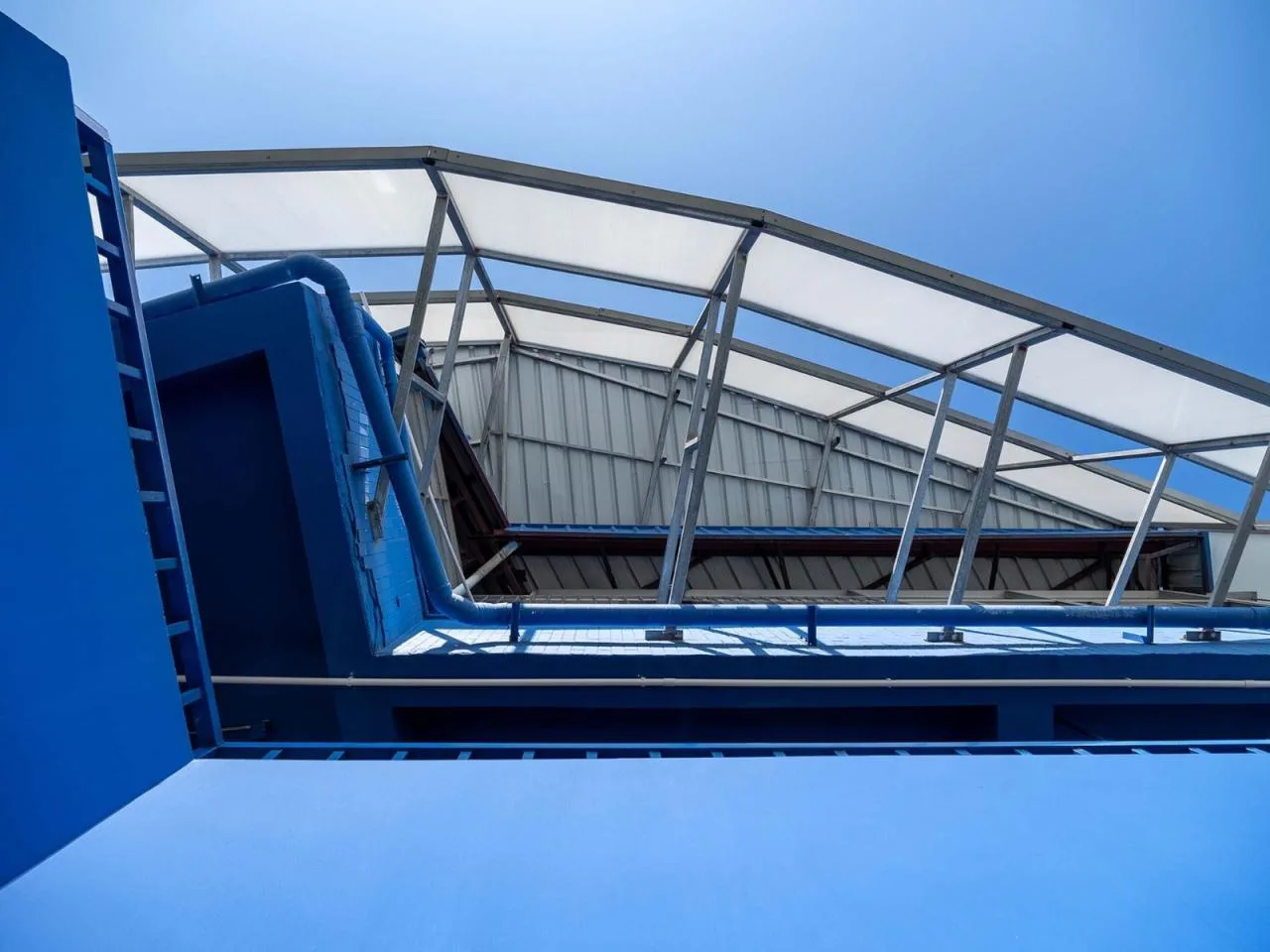
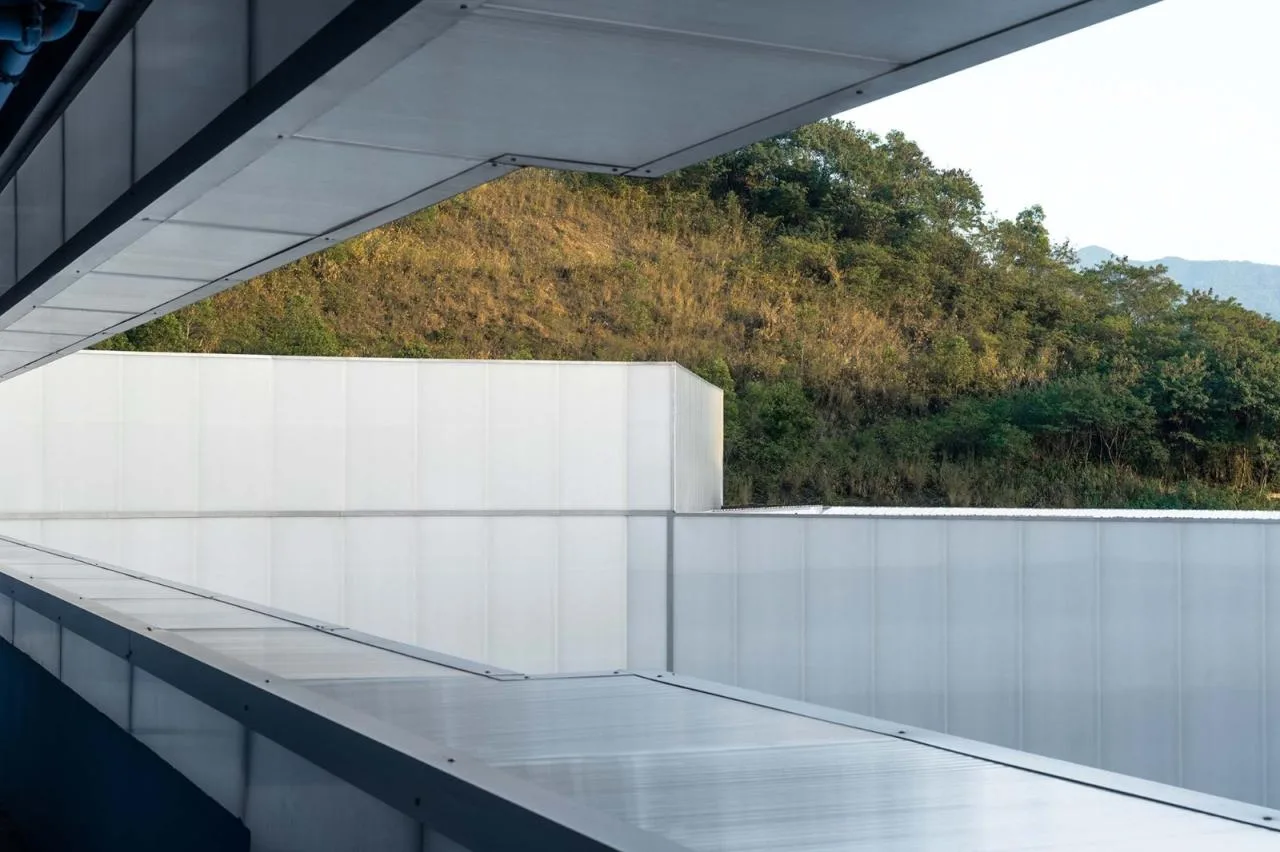
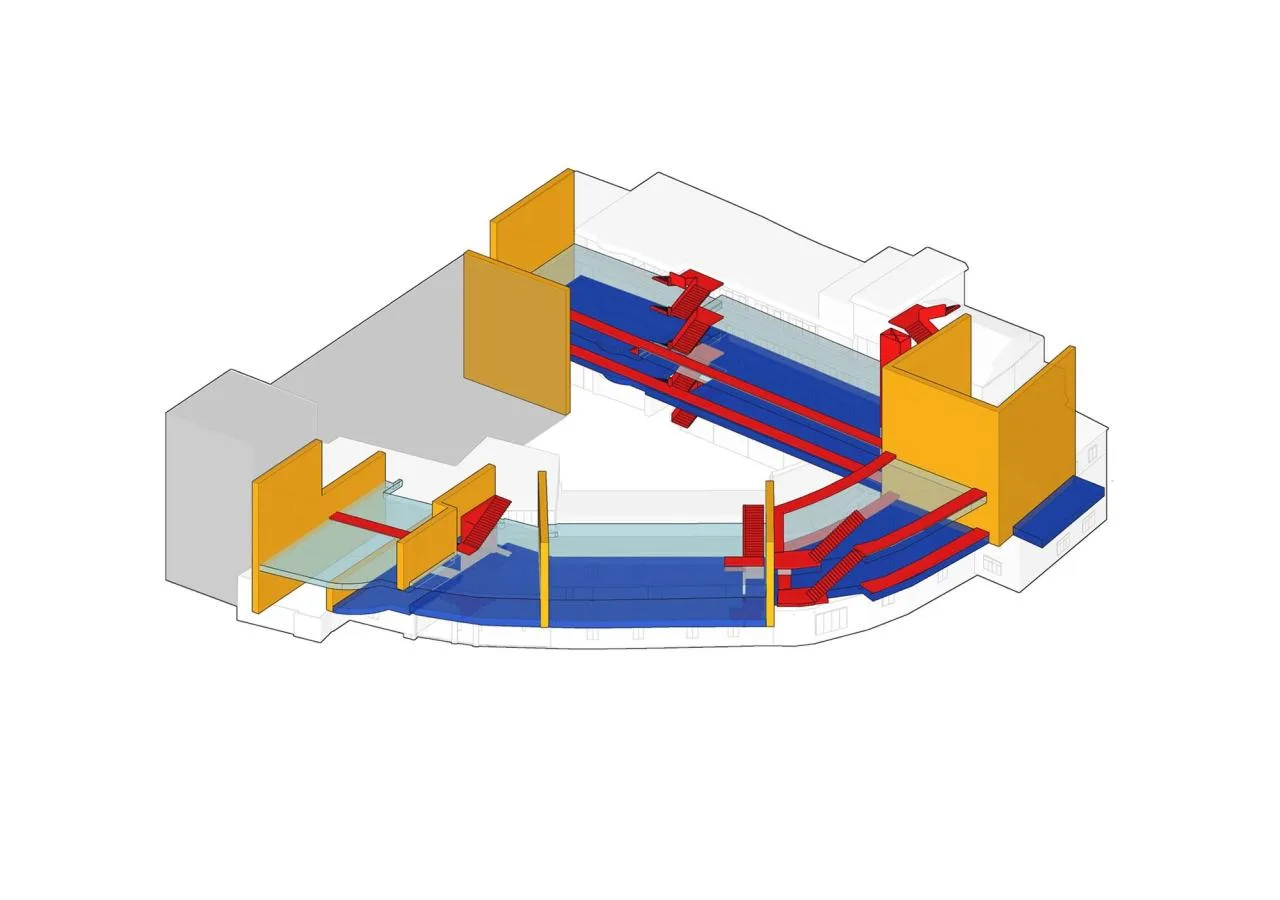
To manage circulation between independently standing buildings of varying heights, Wanshe connected them with a bright corridor linking different functional zones. The high transparency and pure facade wrapping unify multiple fronts into one, while the bright colors and light create a clean, pure atmosphere inside and out. Throughout the project, solar panels serve as the main material, enveloping the original irregular facades. This lightweight, fire-resistant, energy-efficient, and environmentally friendly material is prefabricated in factories and installed onsite, helping control costs and speed up construction.
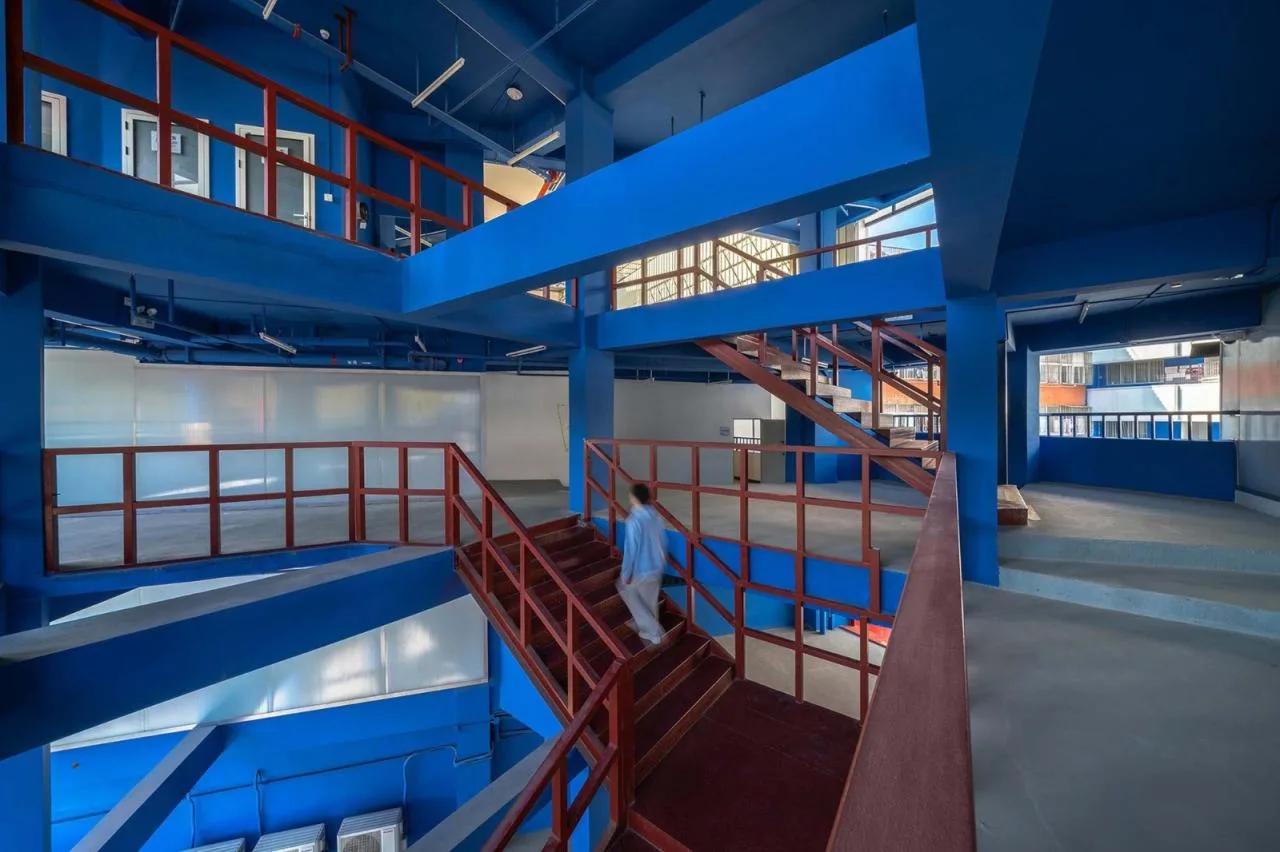
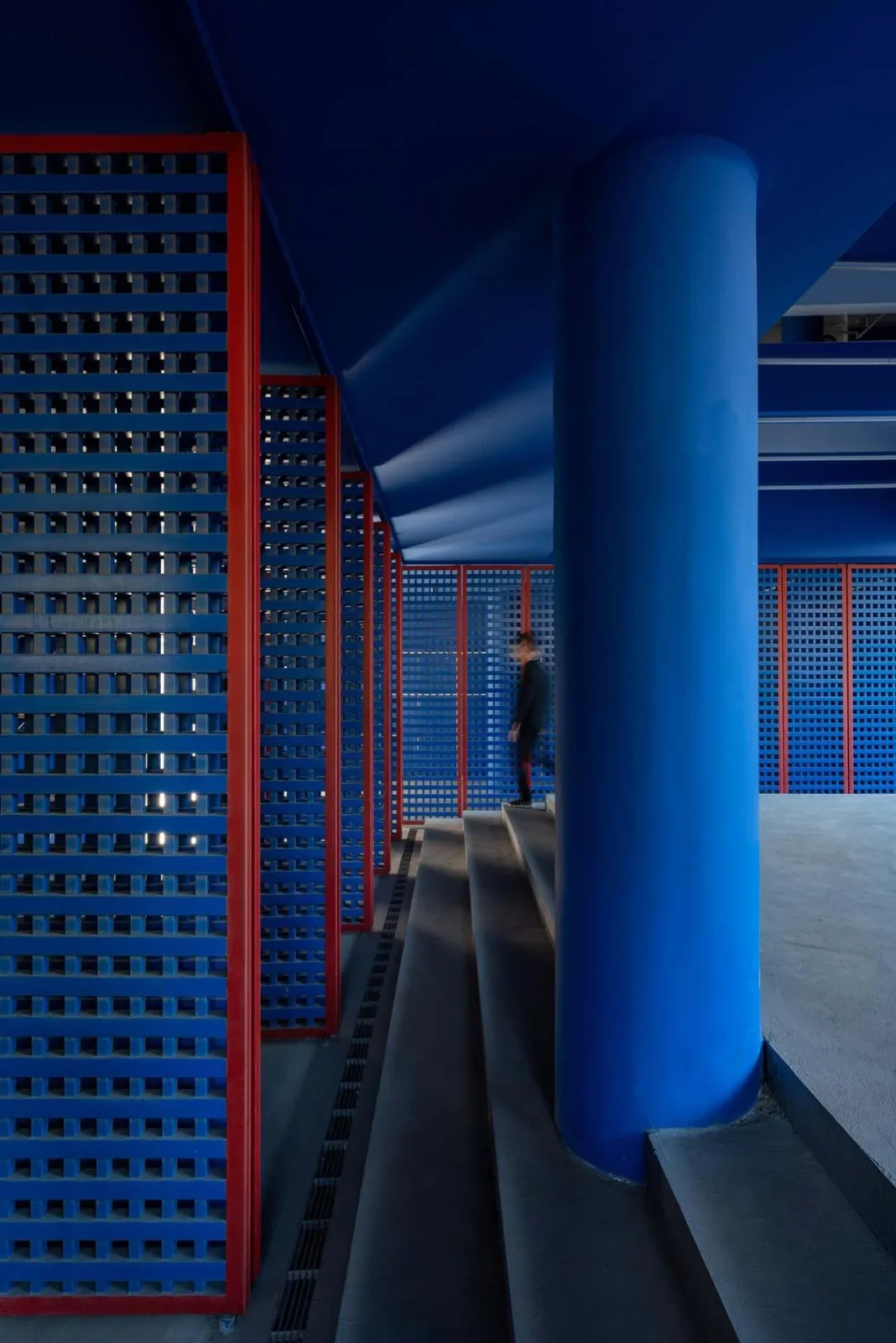
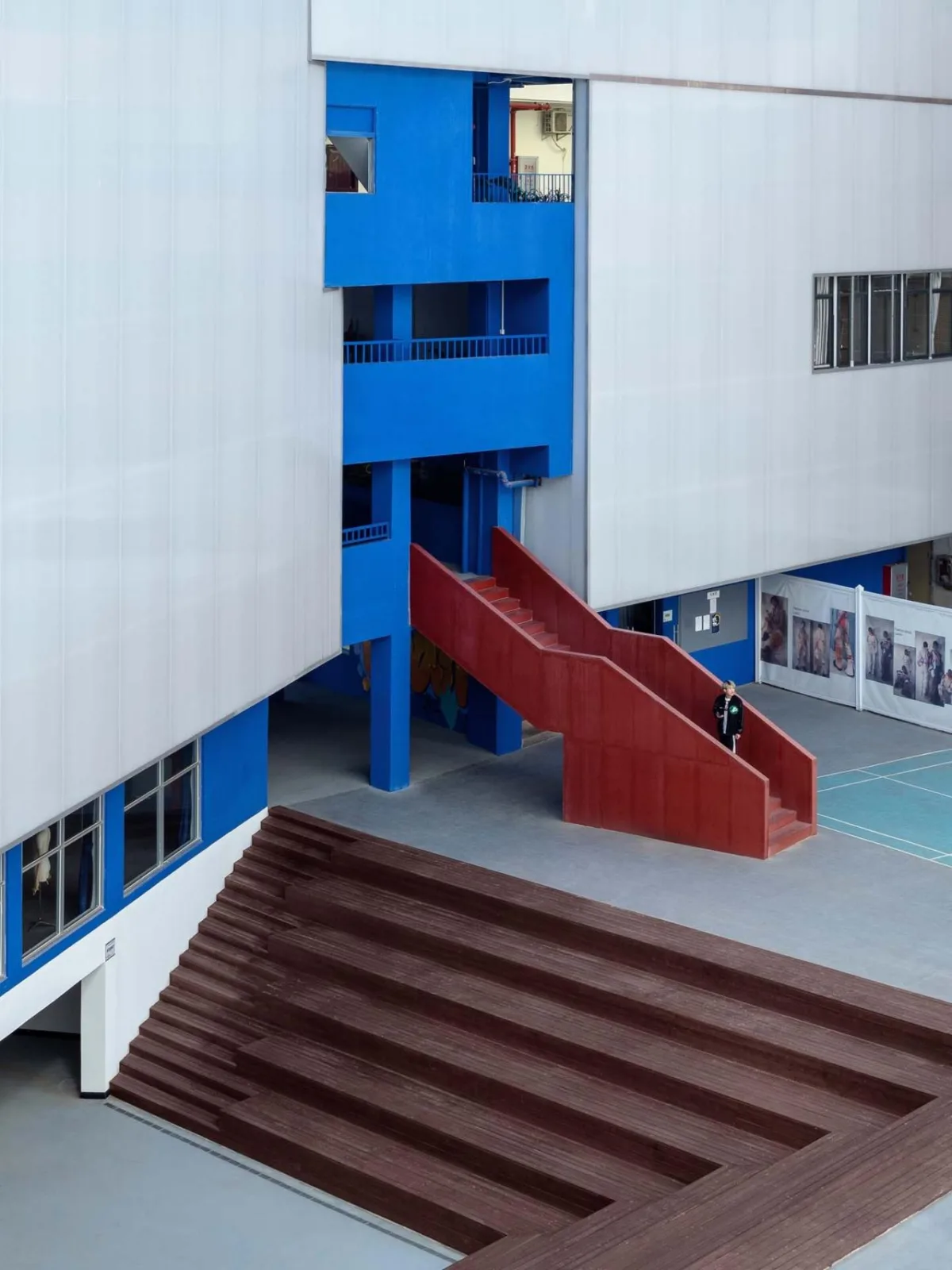
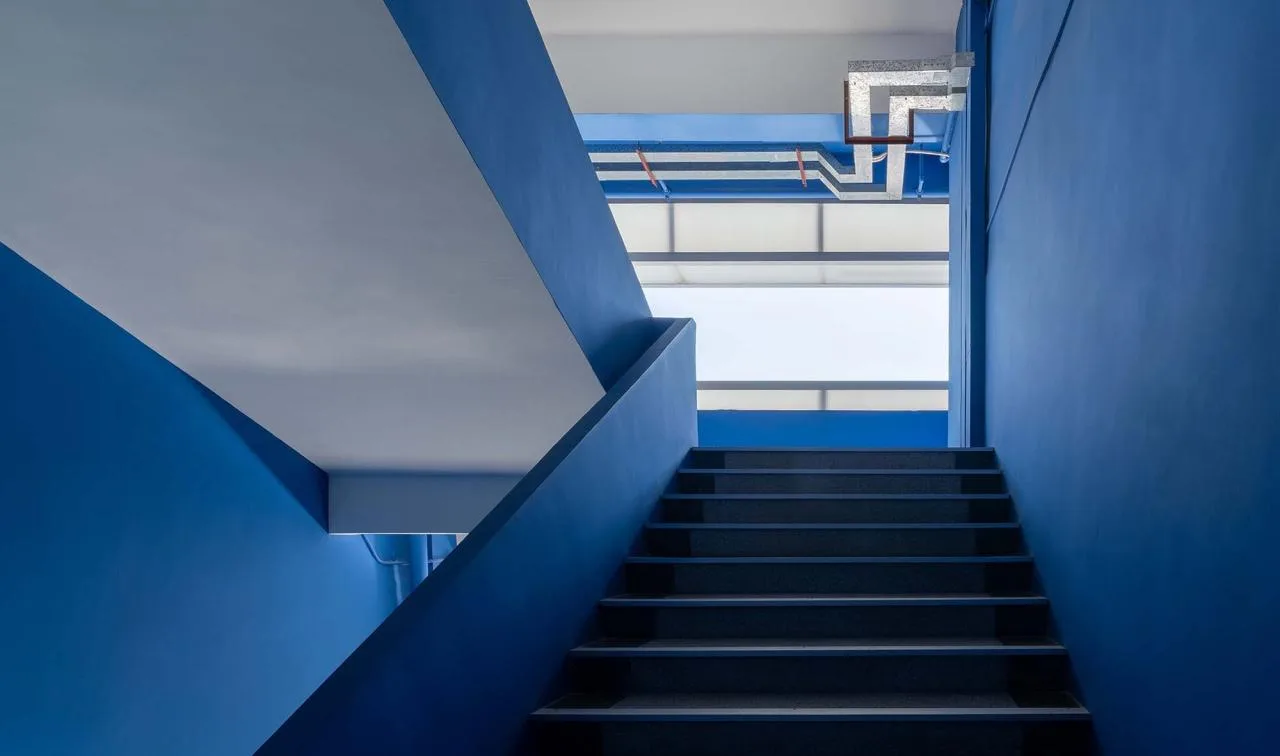
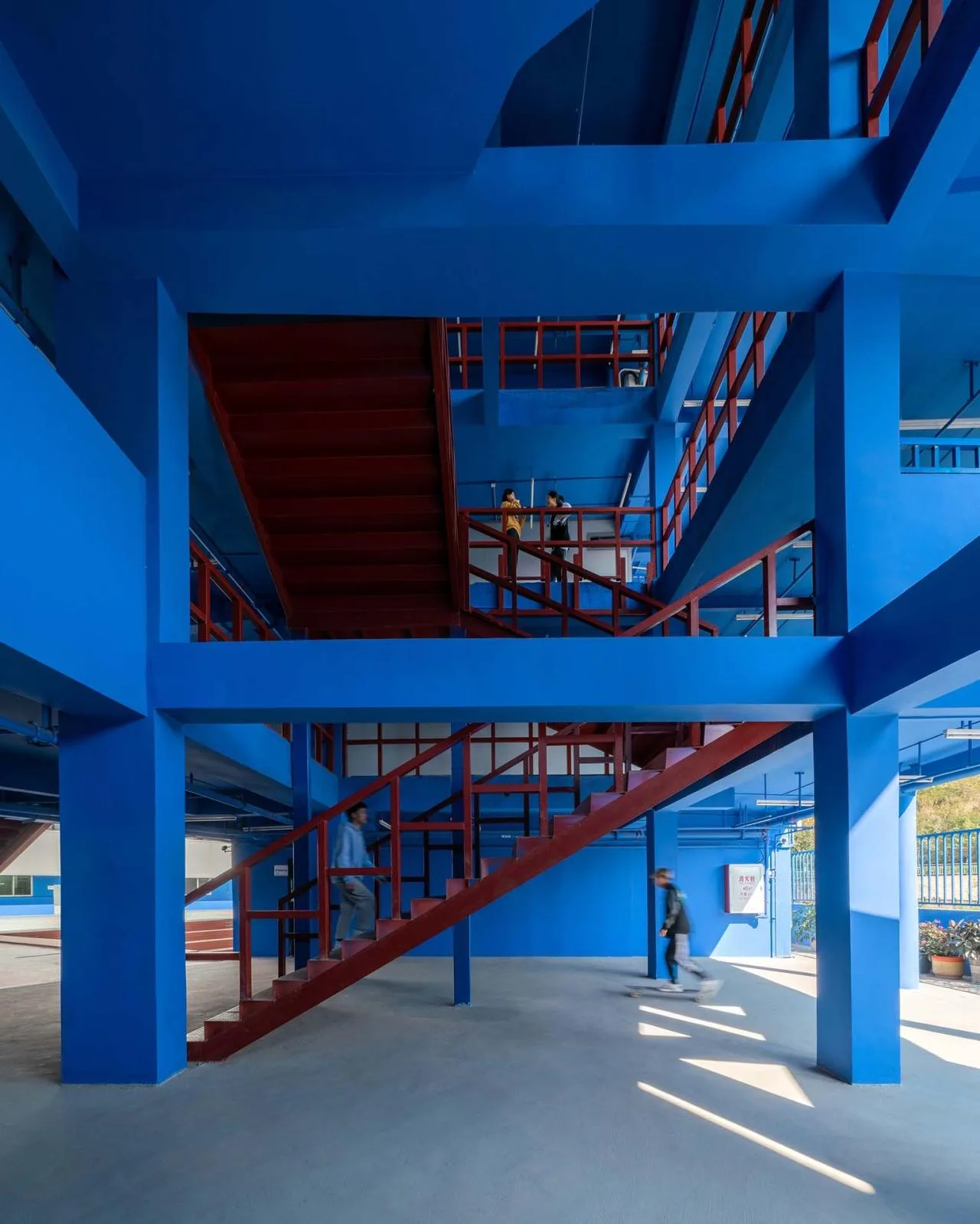
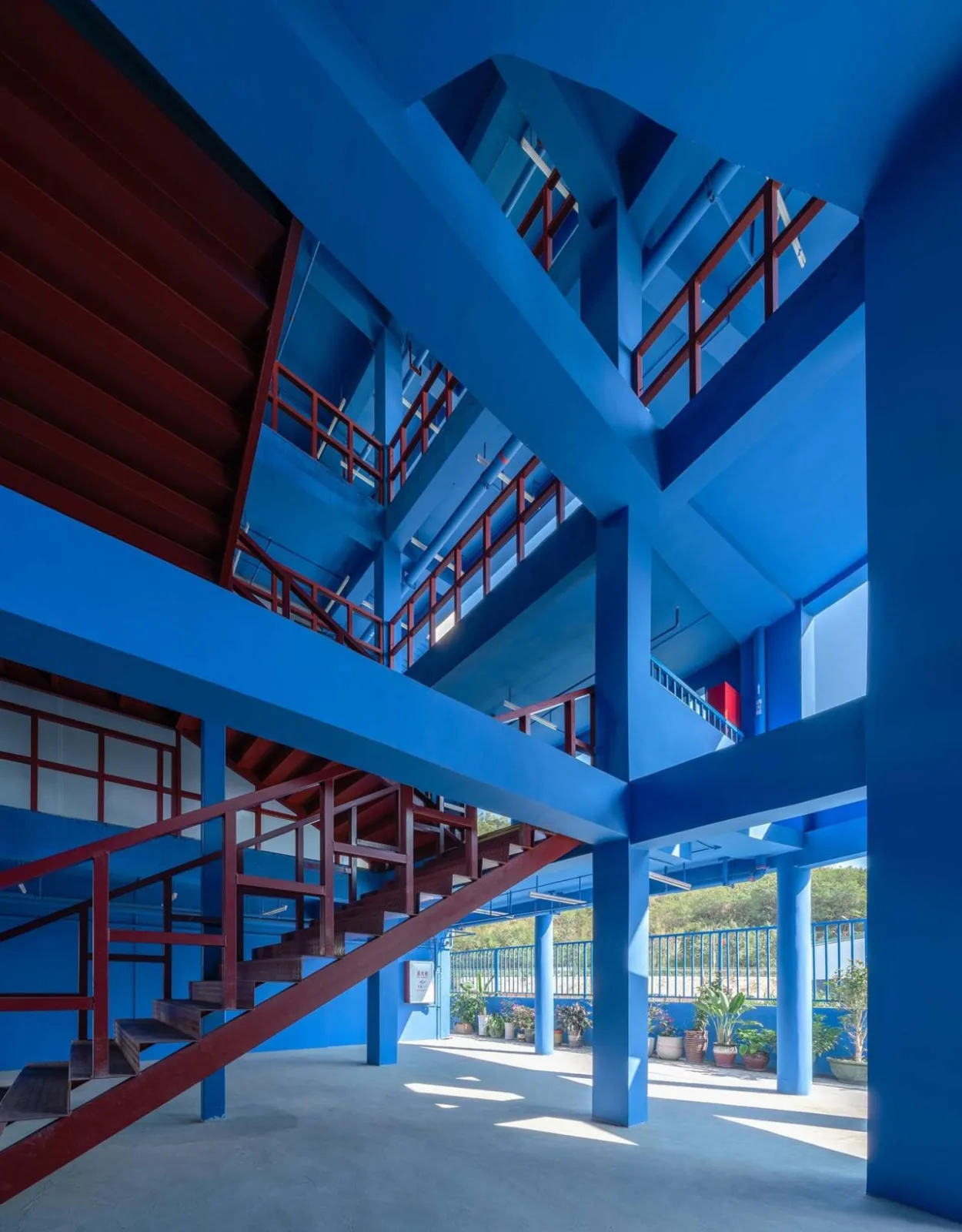
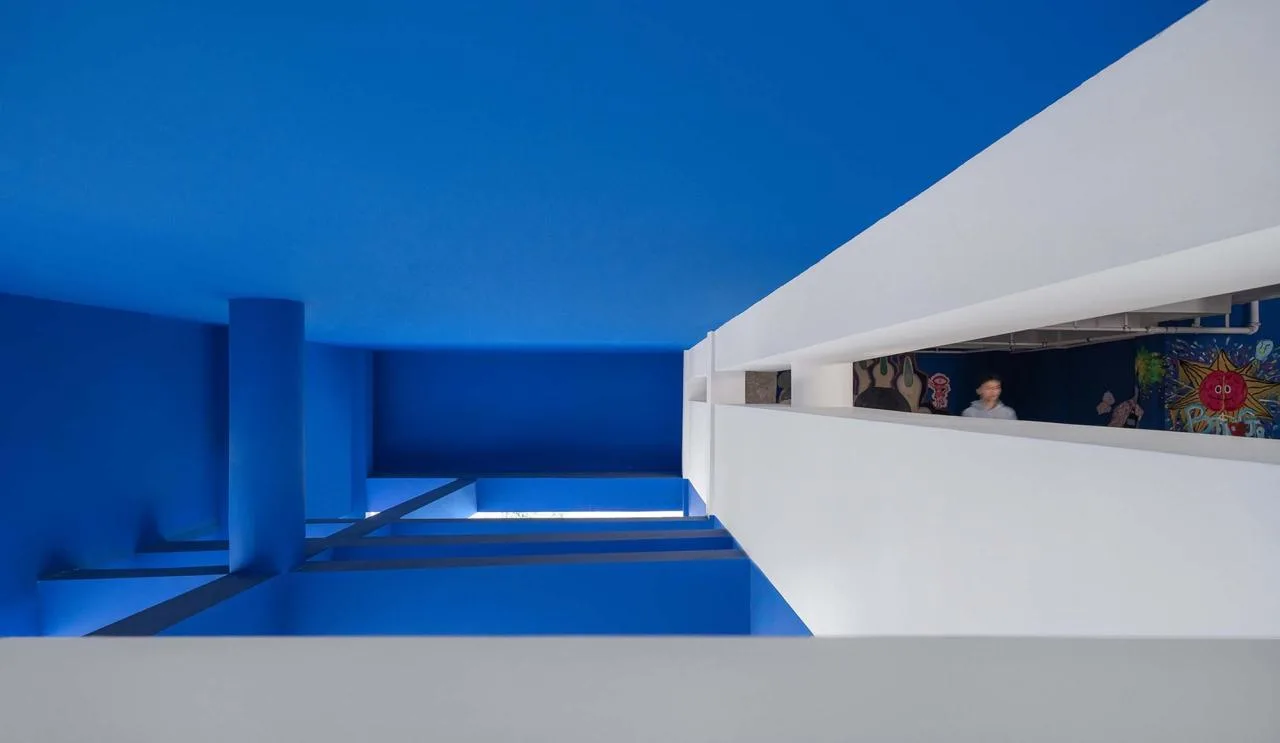
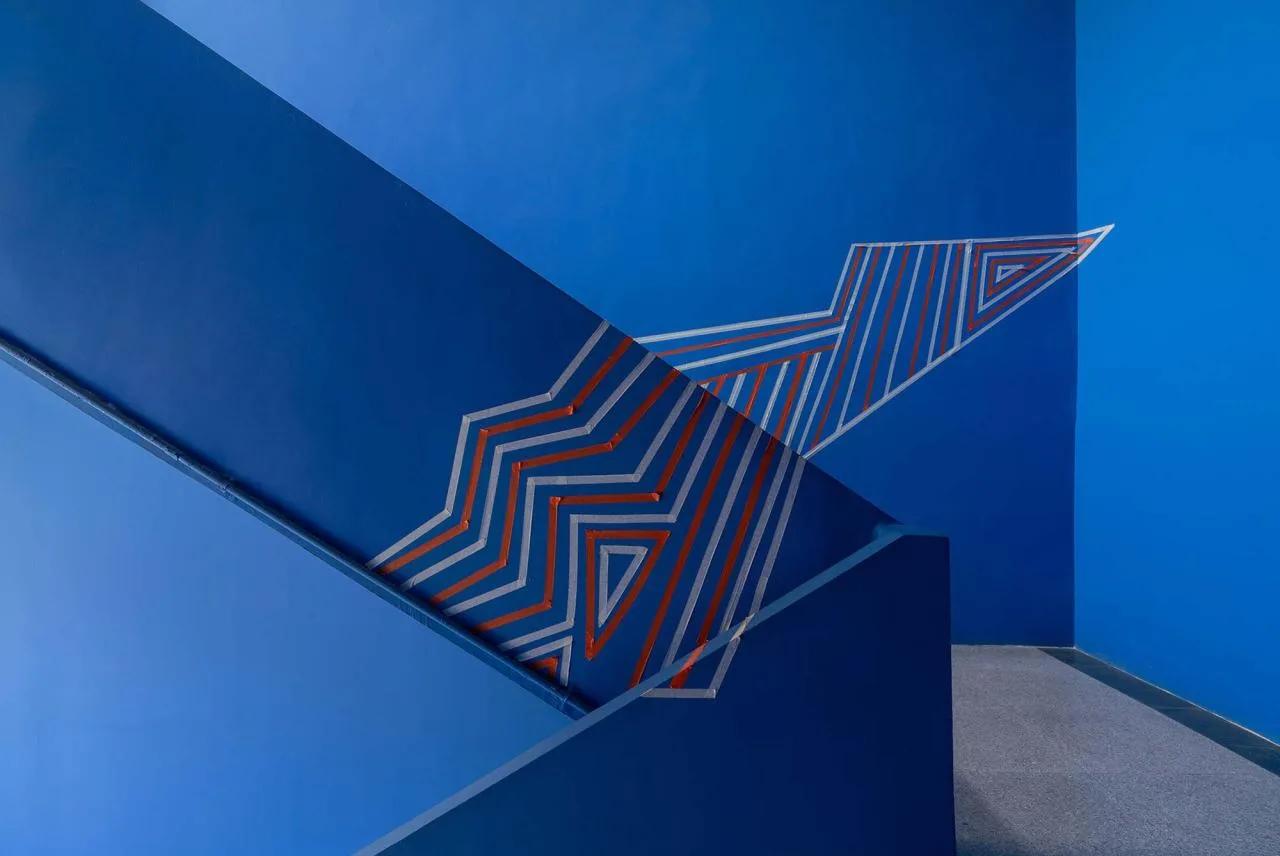
The interior’s bright blue and translucent white color scheme serves as the art high school’s identity. Flexible, multifunctional spaces flow naturally, extending the classroom experience. Blue dominates the interior structures, while the reddish-brown staircase outlines the clear vertical circulation between floors.
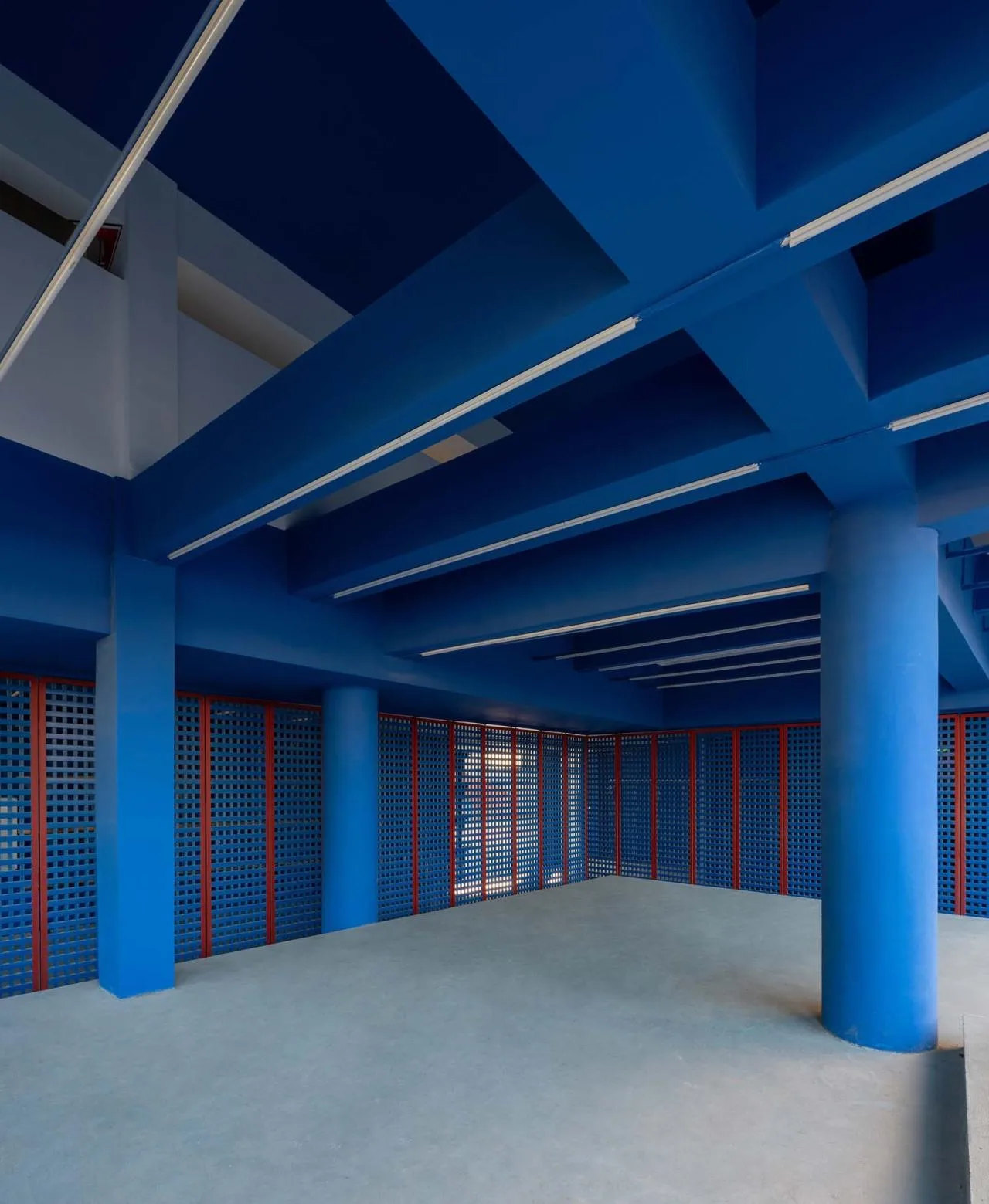
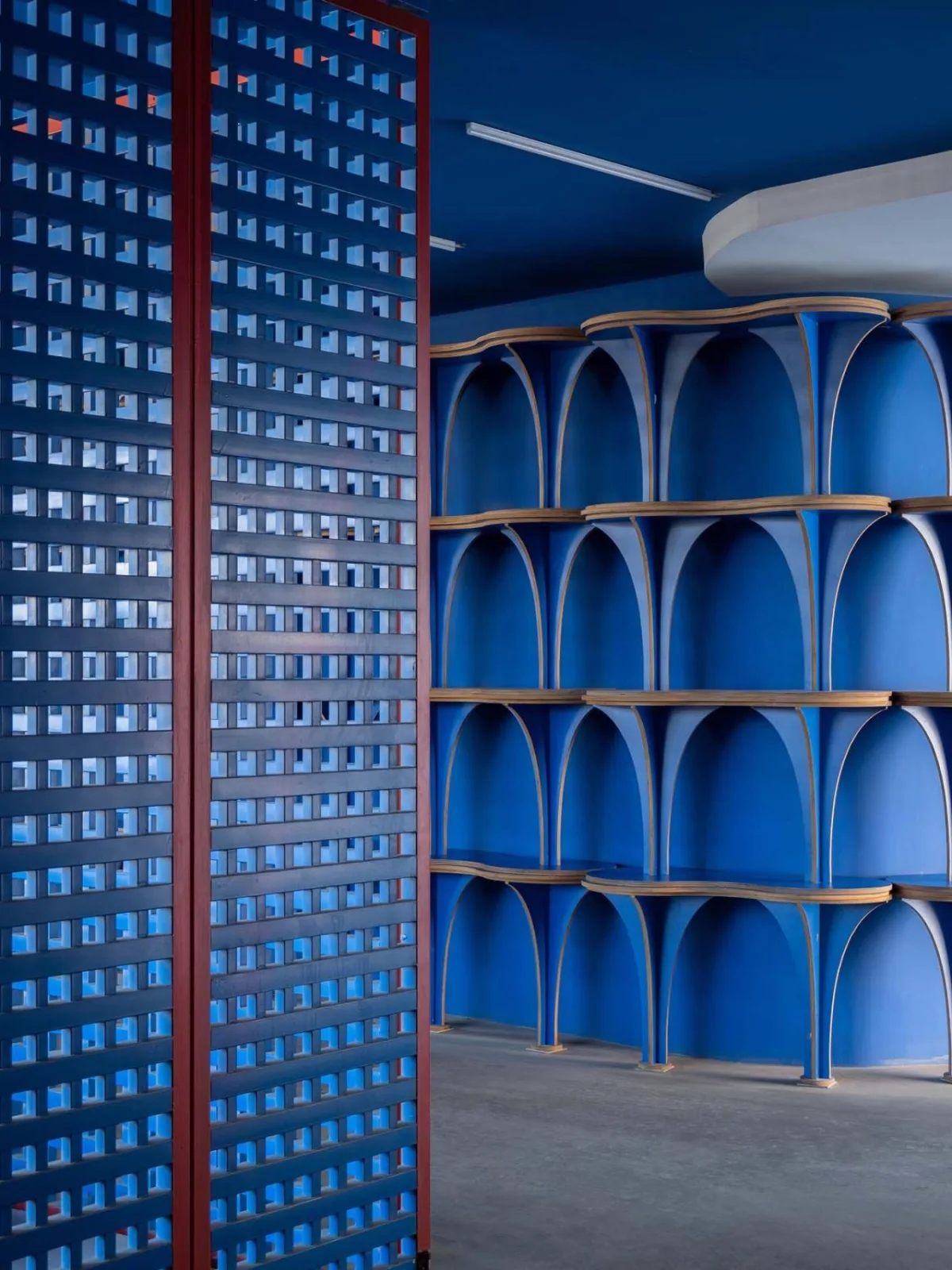
The public activity area is situated at the school’s entrance. To allow for temporary closures during weekday events, the design team incorporated traditional central-axis folding doors, enhancing spatial flexibility.
Project Drawings
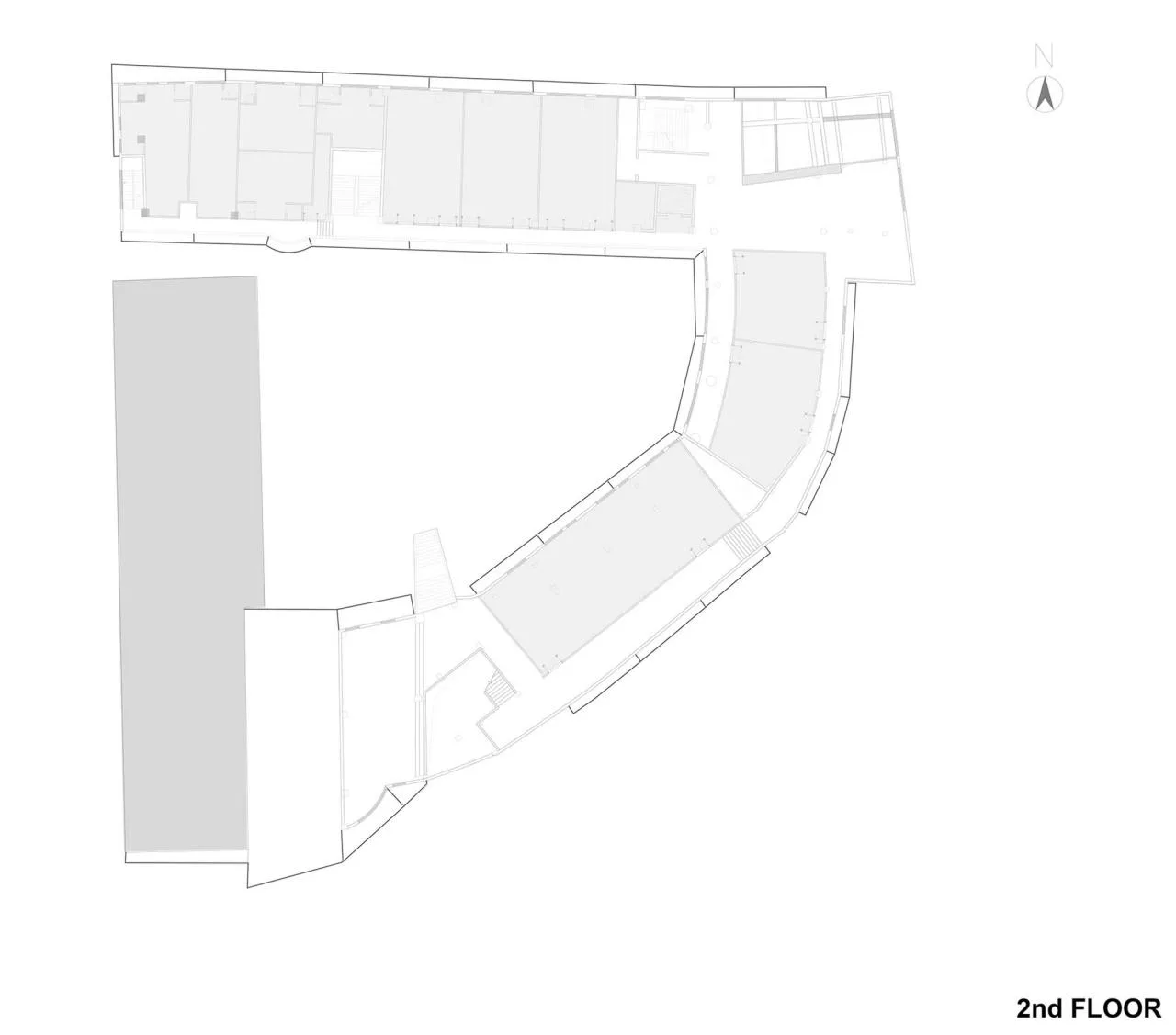
△ Second floor plan
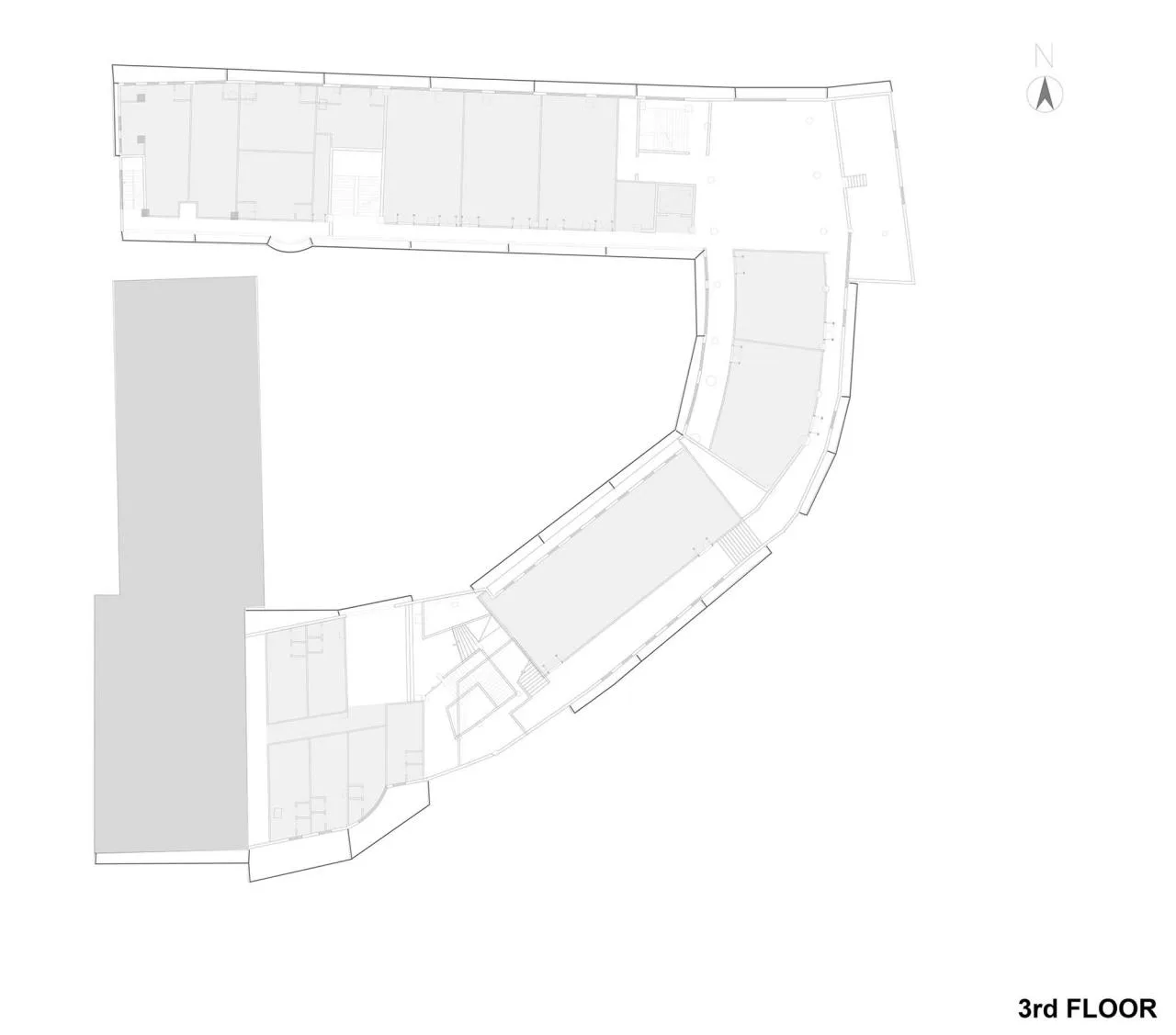
△ Third floor plan
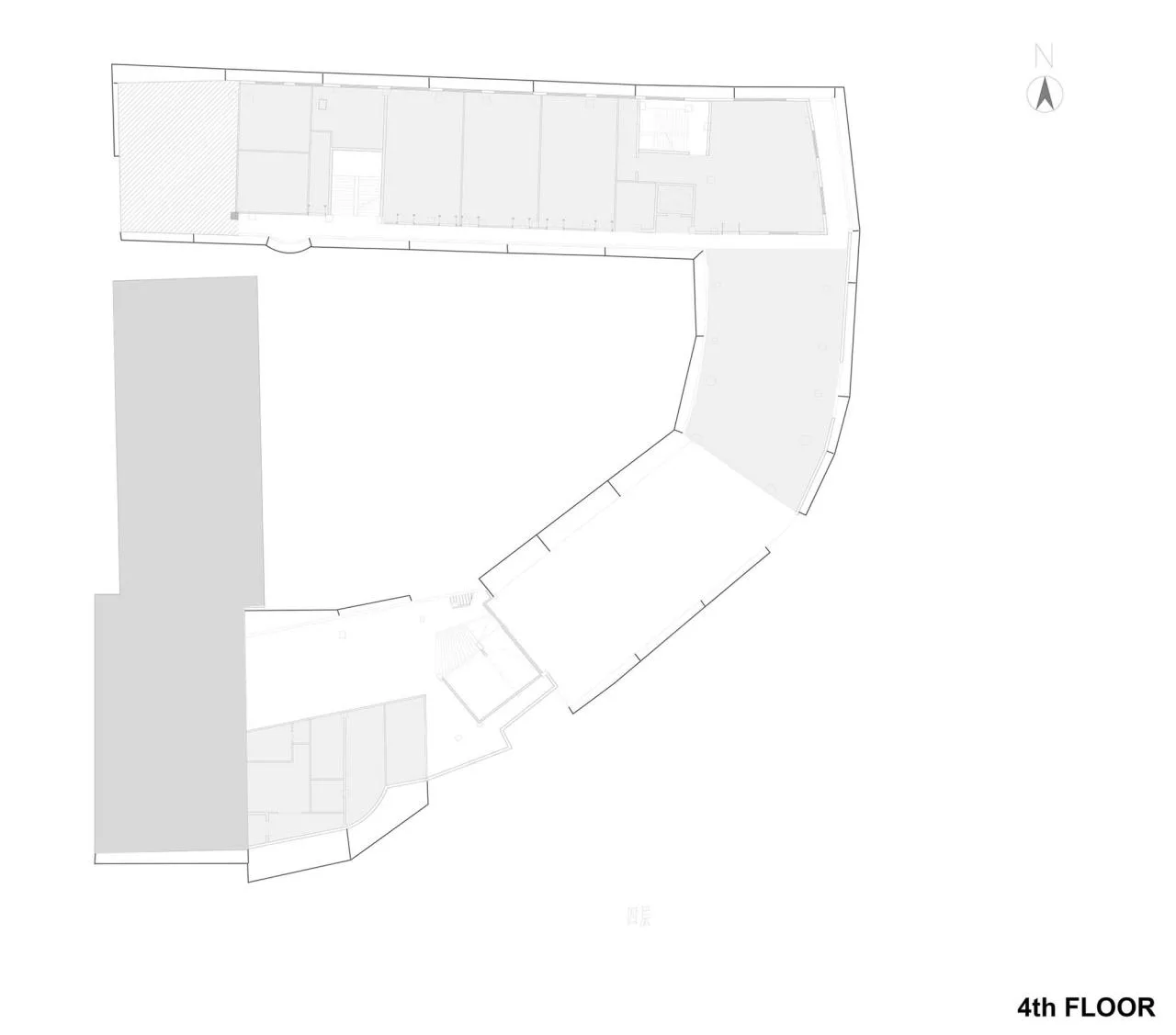
△ Fourth floor plan
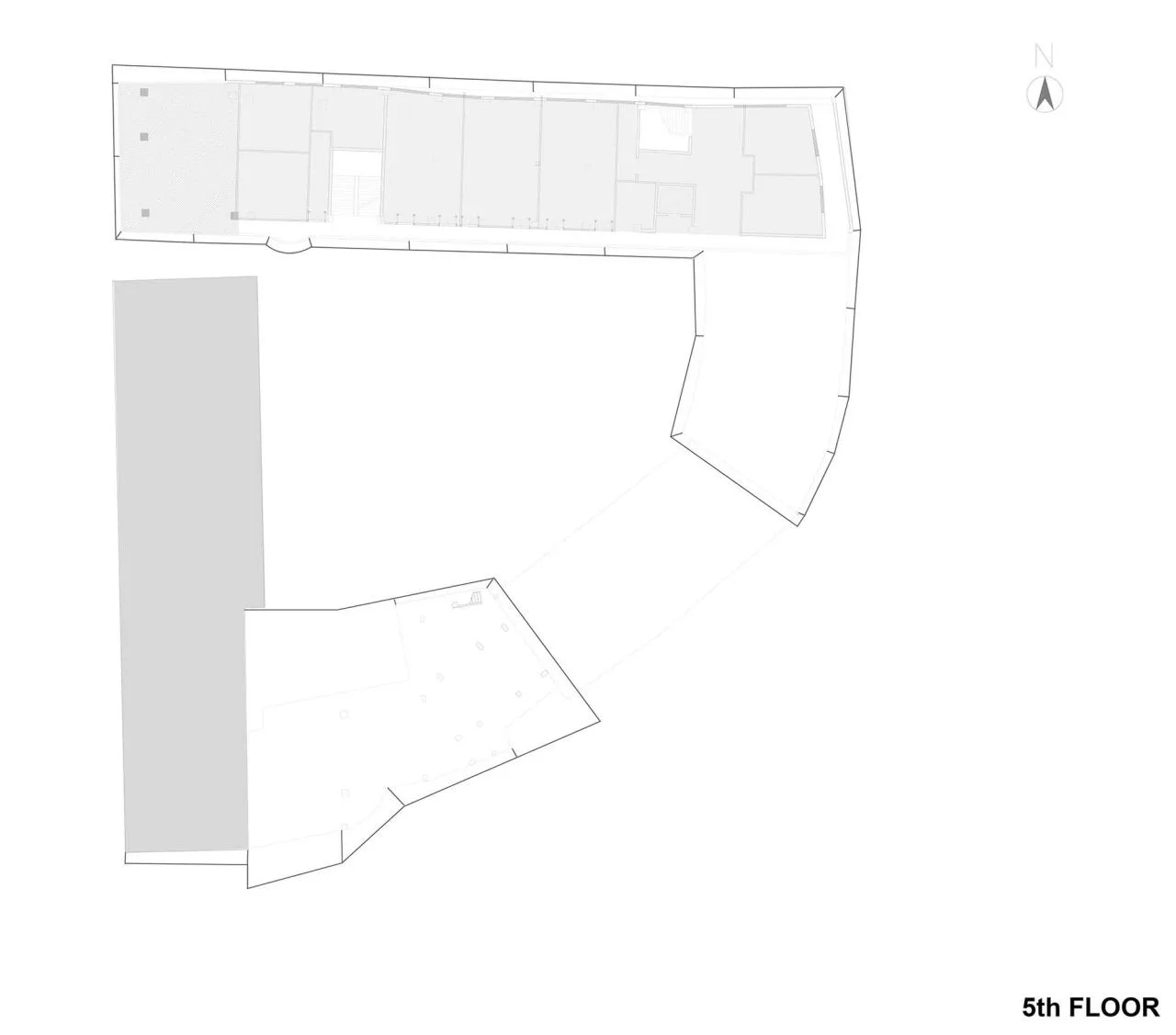
△ Fifth floor plan
△ Newly added solar panel facade
The original circulation paths were disconnected.
△ Integration of horizontal and vertical circulation
△ Wave transformation process
Project Information
Interior Design: Wanshe Design
Area: 9,000 m²
Project Year: 2020
Photography: Yongmao Li
Lead Designers: Lin Qianyi, Yang Dongzi
Design Team: Liu Jianpeng, Pan Baizhen, Li Zebing, Lin Zhichao
Location: Shenzhen, China












Must log in before commenting!
Sign Up