
Regional Symbolism + Humanistic Warmth + Technical Precision
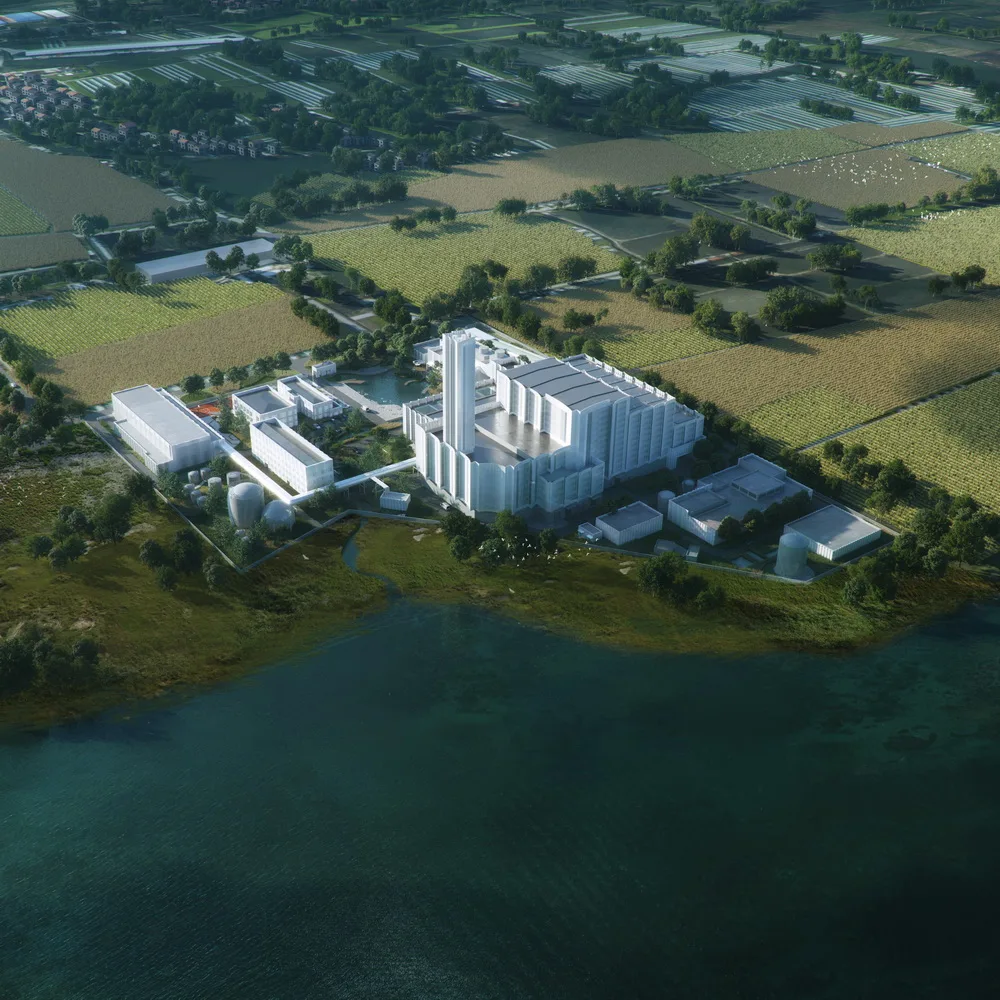
△ Aerial View of Jiashan Weiming Environmental Protection © UUA
1. Project Background
1.1 General Overview of the Yangtze River Delta Ecological Green Integration Demonstration Zone
The Weiming Environmental Protection Project is situated in the Xiangfudang area of Jiashan County, Jiaxing City, right at the heart of the Yangtze River Delta’s ecological and green integration region.
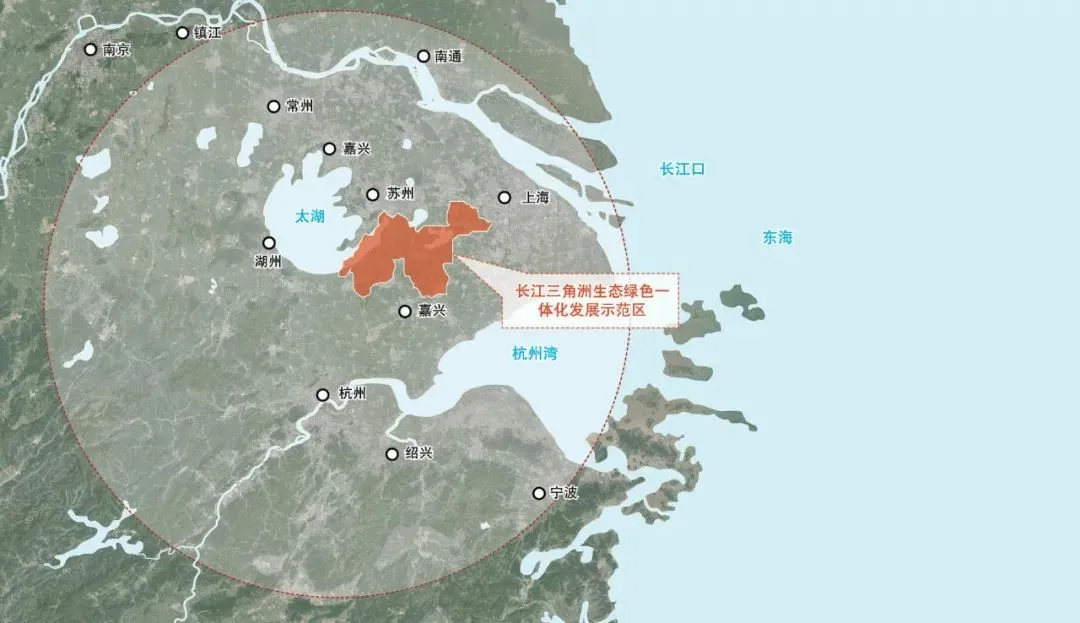
This prime location benefits from flat terrain, accessible water systems, vast fertile fields, and the lingering scent of rice, evoking the tranquil atmosphere of a Jiangnan water town.
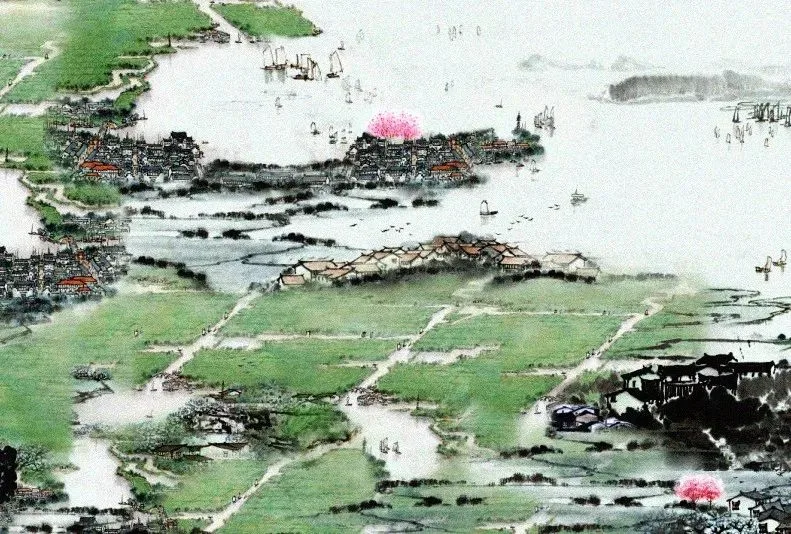
Jiaxing Cultural Impressions
The Weiming Environmental Protection Factory is located northeast of Xiangfudang’s core area. Throughout the design process, the renovation aims to enhance the site’s environment while harmonizing with the broader green ecological planning framework.
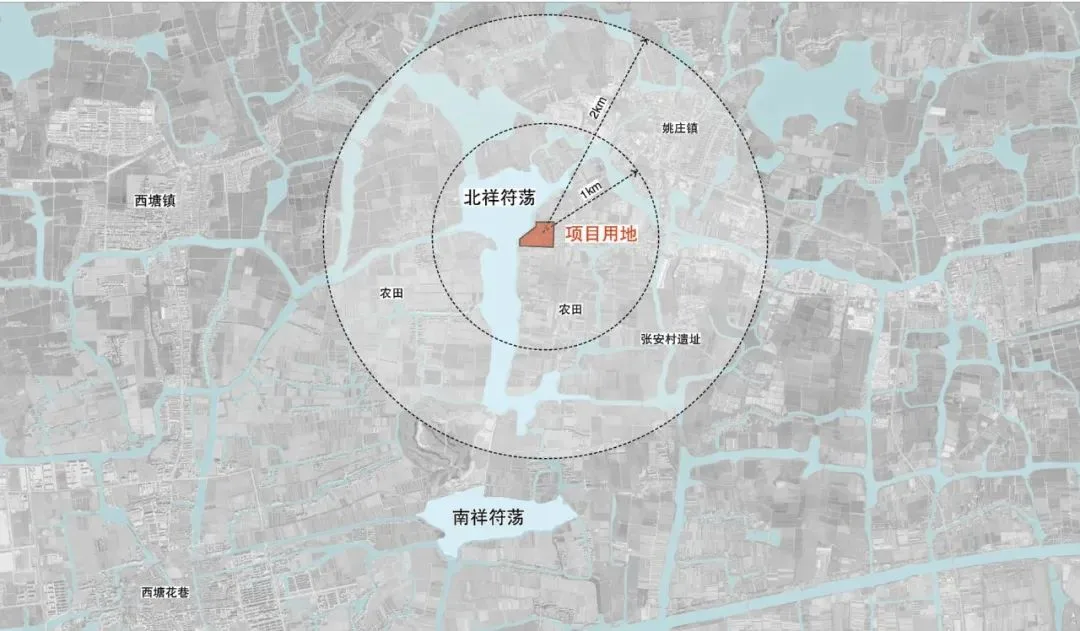
Location of Jiashan Weiming Ring in Jiashan District
The area’s comprehensive planning integrates golden ecological fields, golden rice waves, and accessible water systems, collectively forming a distinctive ecological agricultural landscape system.
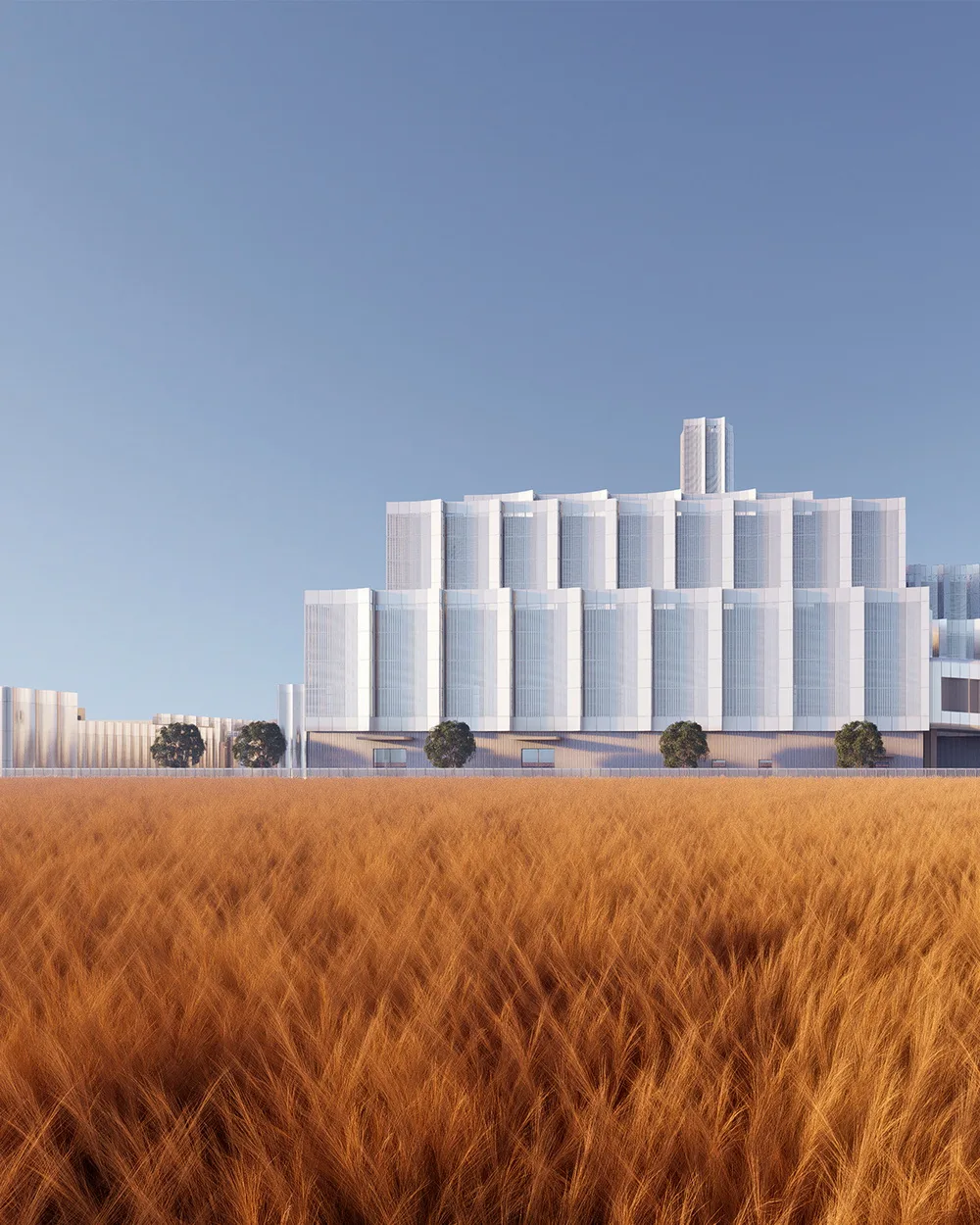
△ Weiming Environmental Protection Project Update in Golden Rice Waves
1.2 Industrial Building Upgrades in the Post-Industrial Era
Historically, domestic industrial projects prioritized functional processes over design, with minimal emphasis on the building environment. Recently, however, upgrading industrial buildings has become a growing trend, integrating parks and collaborative spaces. This has elevated the social image of industrial facilities.
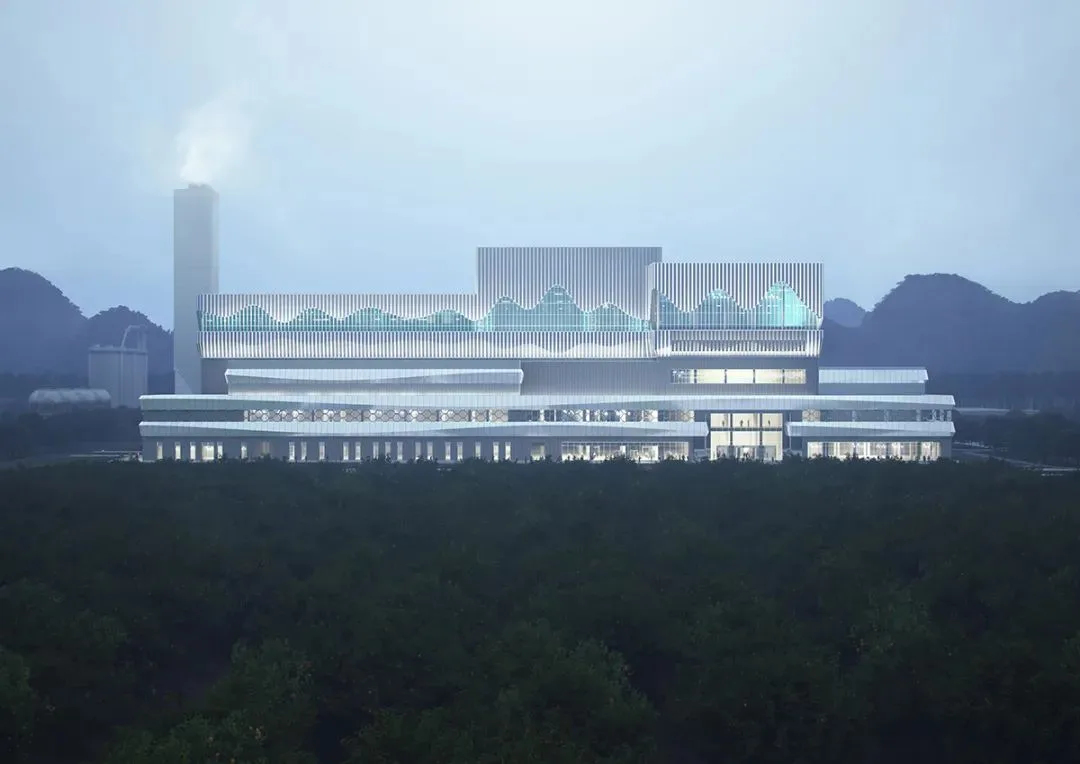
Reference: Integrated building and environment of Nanning Garbage Incineration Power Plant © UUA
1.3 Unique Challenges and Practicality of the Renovation
This project requires strict adherence to existing processes to meet construction and operational needs. For economic and safety reasons, the renovation must largely preserve the existing structure. Furthermore, production and operations must remain uninterrupted during construction. Thus, selecting a practical and feasible renovation strategy was essential, aligning design with the owner’s specific requirements, balancing sensitivity with rationality.
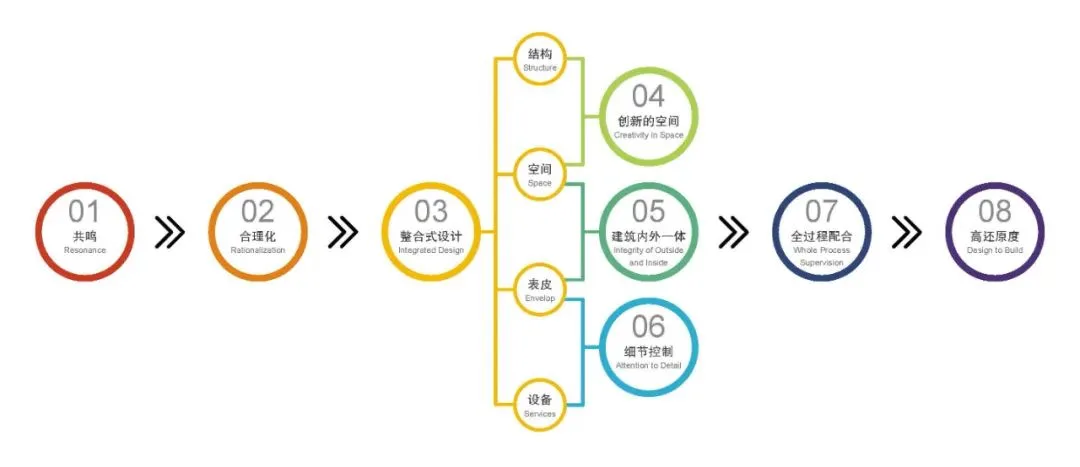
△ A rational design approach that begins with sensibility © UUA
2. Architectural Design
2.1 Cultural Resonance
The Sail of Energy
Garbage incineration power plants convert solid waste into electrical energy via incineration. Similarly, sails convert wind energy into kinetic power. Thus, the sail serves as an apt design symbol, metaphorically referred to as the “Sail of Energy.”
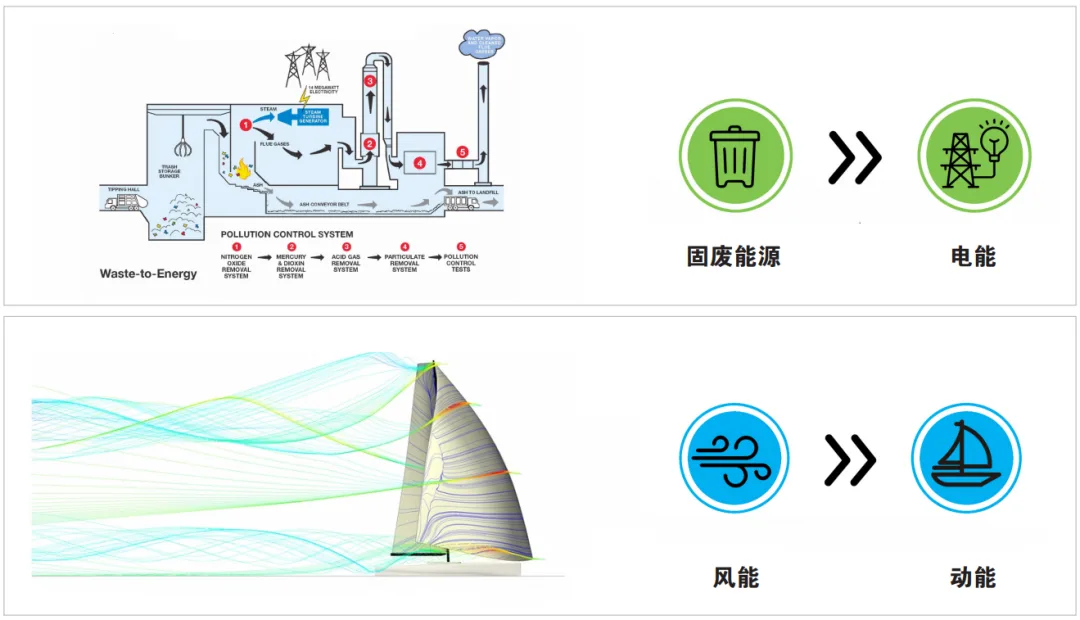
The spiritual harmony embodied by the Sail of Energy
The Sail of Humanity
Jiashan and Jiaxing are historically fishing and rice-farming towns. The image of thousands of sails passing along the Beijing-Hangzhou Grand Canal remains vivid, making sails a symbol of the region’s cultural heritage. Hence, the design also references the “Sail of Humanity.”
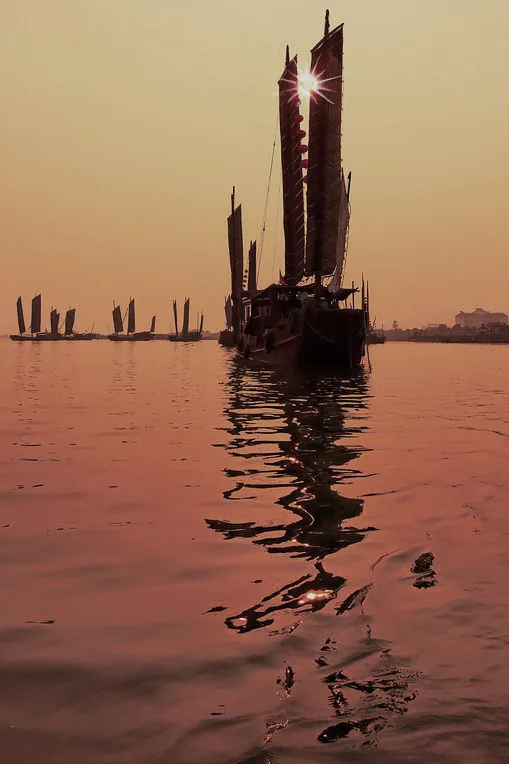
△ Sunset sailboat shadow © Network diagram
The Sail of the Times
Jiaxing exemplifies the spirit of contemporary China, with a heritage that carries forward the past while embracing the future. The sail symbolizes this spirit of the times, earning the metaphor “Sail of the Times.”
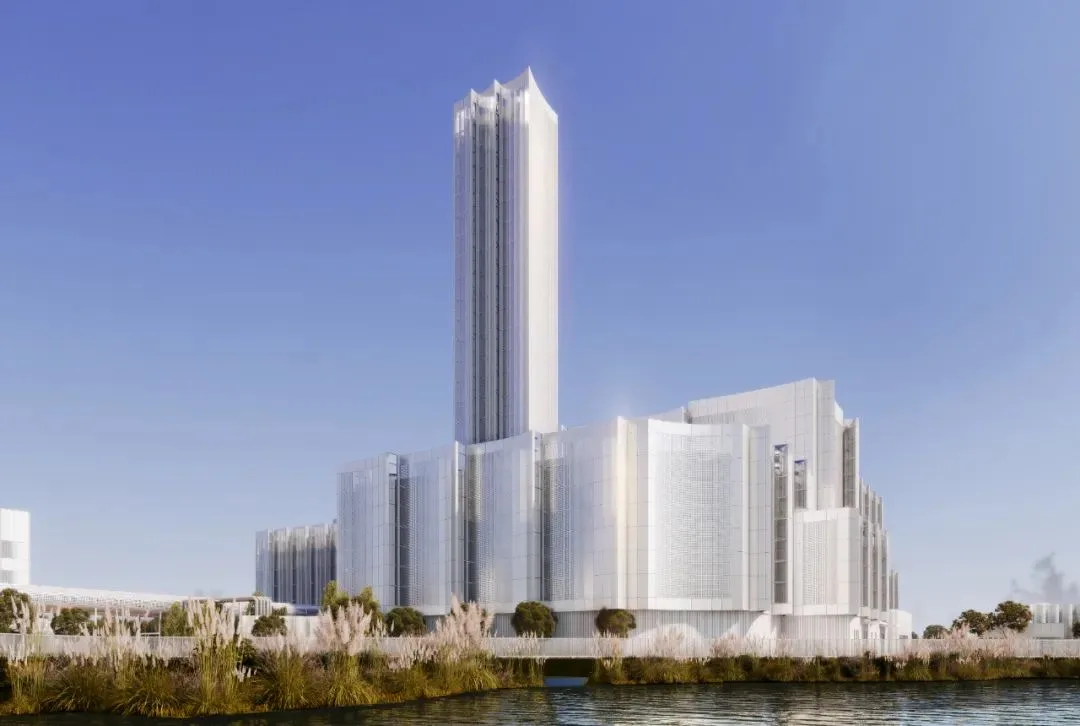
△ Waterfront sail © UUA
2.2 Thoughtful Material Selection + Lightweight Intervention + Subtle Skin
The main factory building of the Weiming Environmental Protection Project is a towering, highly recognizable structure on a fertile plain, commanding visual attention. Without altering its volume, UUA adopted a lightweight intervention approach using perforated aluminum panels—a highly industrialized material. These semi-transparent panels create a delicate white veil enveloping the existing building.
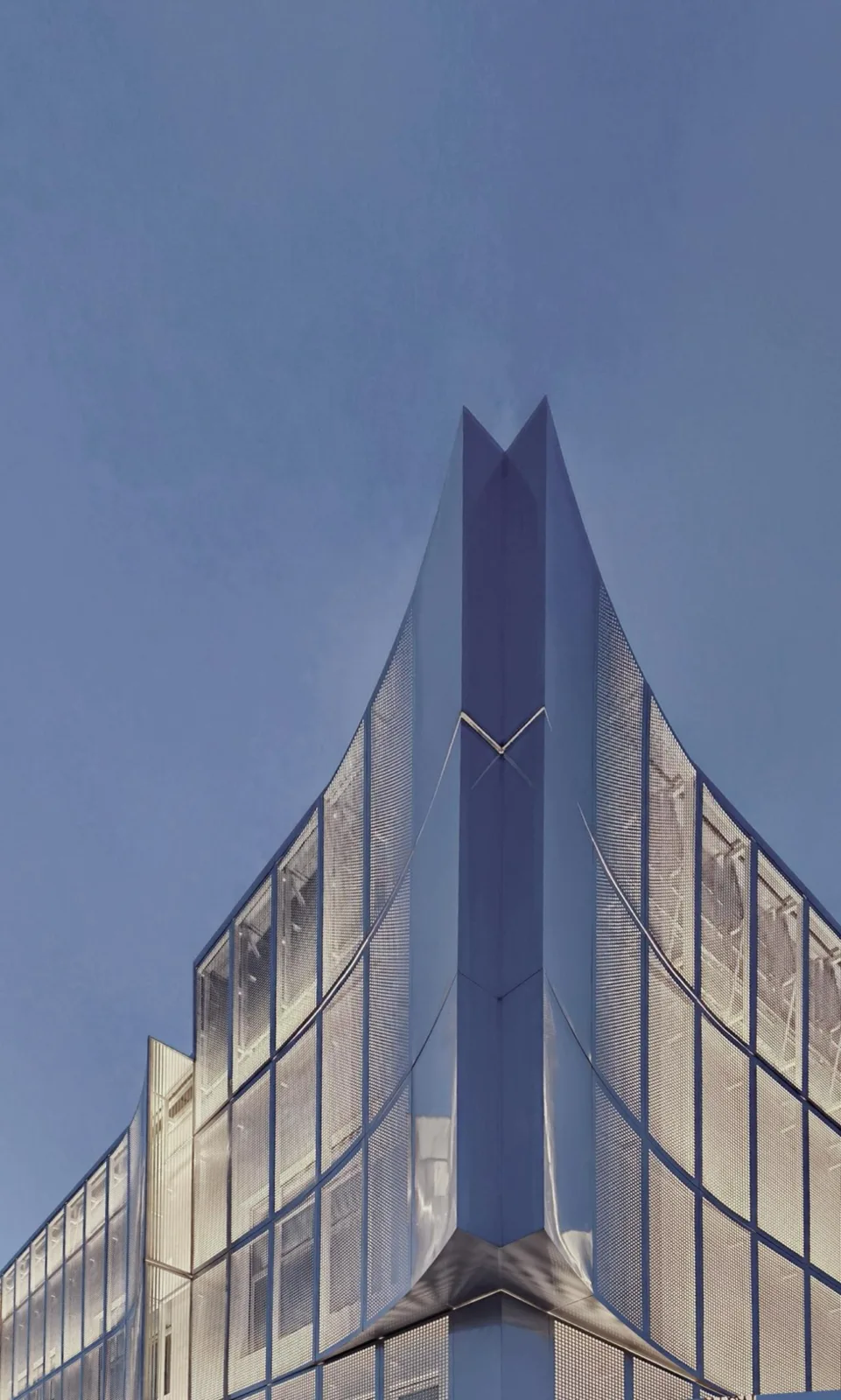
Reference: Lightweight effect achieved by combining perforated panels with lighting © UUA & 37 Phases
This light intervention visually diminishes the building’s imposing scale while maintaining lighting and ventilation. The “veil” unifies the architectural image within the park, with white gauze-like surfaces gently shimmering under sunlight against the blue sky and river.
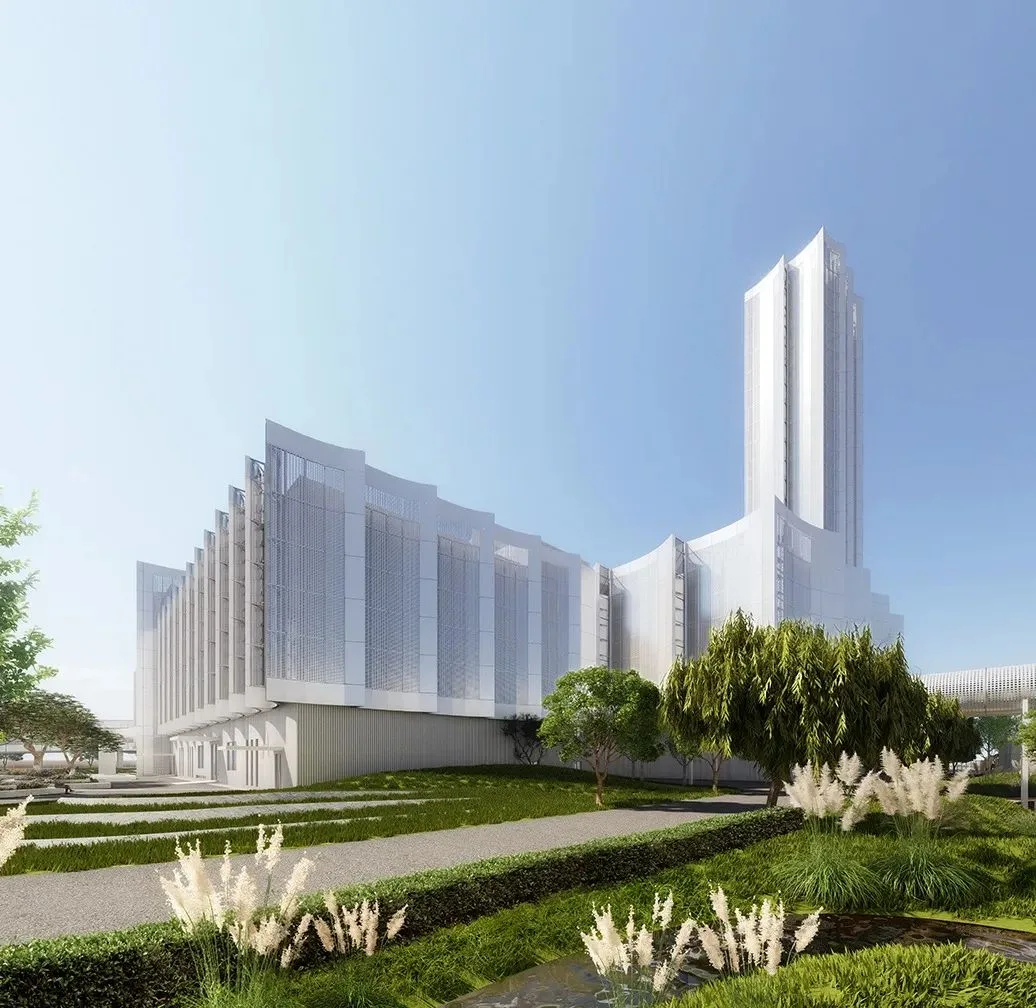
The silver-white color scheme creates a modernist, minimalist industrial aesthetic © UUA
2.3 Practical Construction Logic
The renovation strategy carefully considers project feasibility, enabling short-term construction without disrupting factory operations. The new curtain wall features a largely independent, self-supporting structure detached from the existing exterior walls, connected only partially for lateral support. This approach minimizes impact on existing buildings.
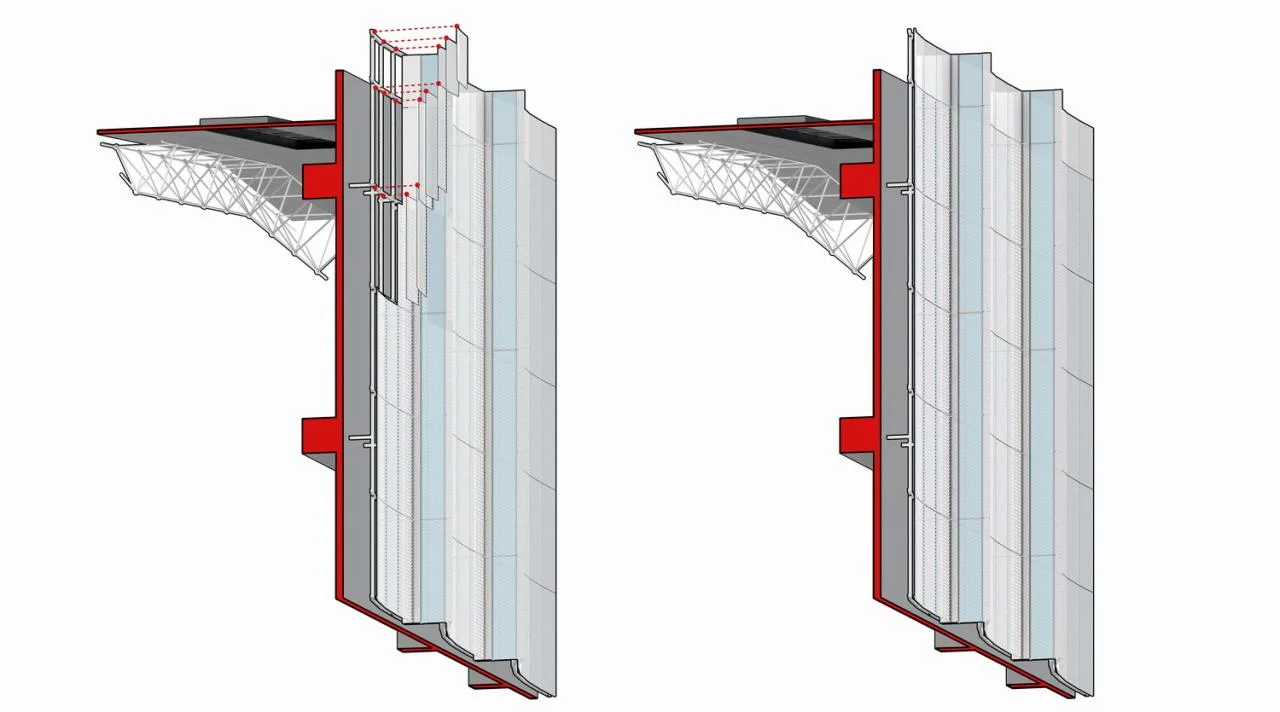
Schematic illustrating the curtain wall’s relation to the existing structure © UUA
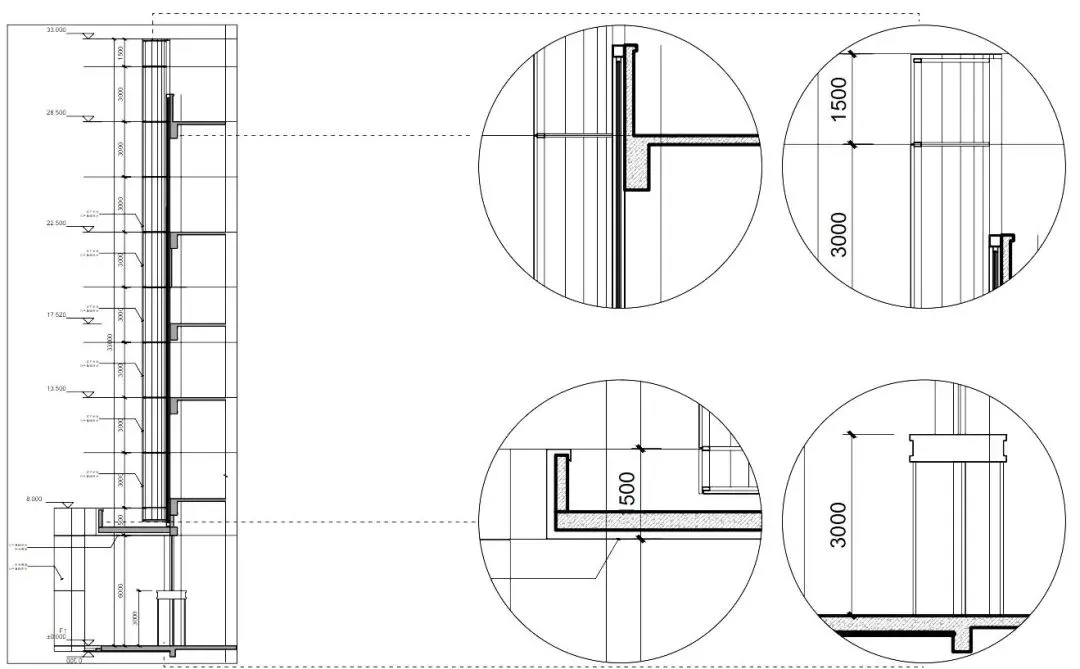
△ Wall sectional diagram © UUA
Moreover, the curtain wall system utilizes modular, standardized design to control structural elements, allowing for economical mass production and efficient onsite installation, significantly shortening the construction timeline.
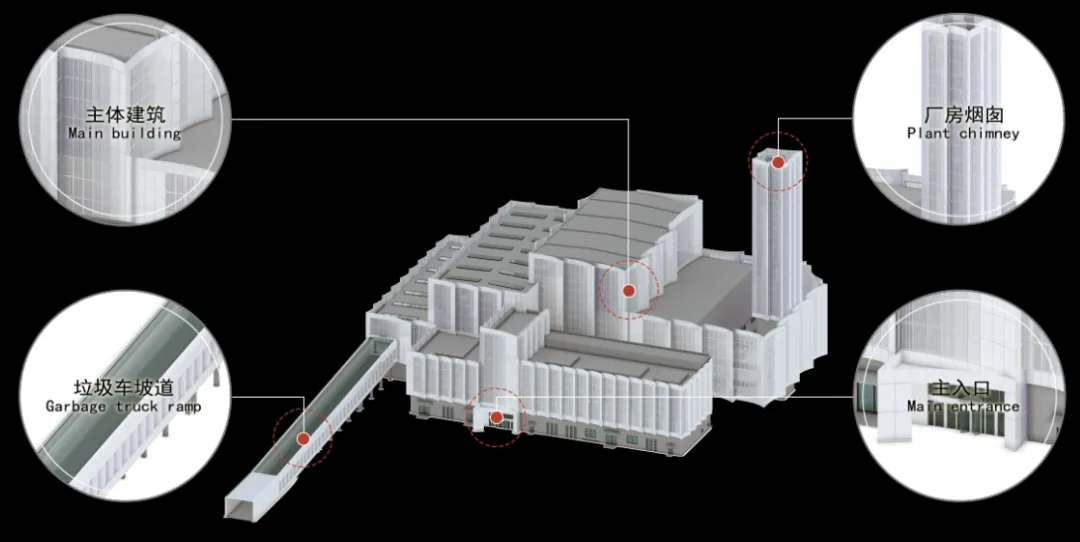
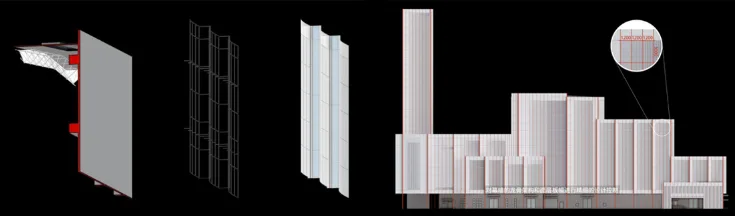
Overall Curtain Wall Renovation Strategy © UUA
2.4 Modularity + Standardization + Refinement
The building facade follows principles of modularity, standardization, and refinement. Based on the existing grid system, materials are economically modulated in increments of 1.5 meters and 0.8 meters.
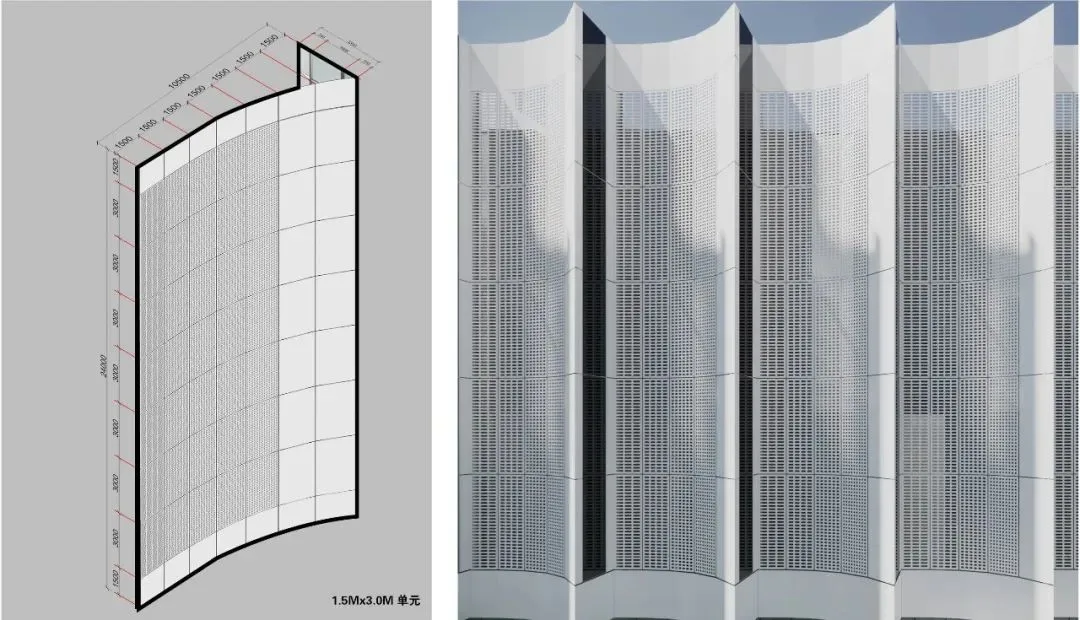
Five unit module types were developed:
- Small module: 4.8 meters
- Medium module: 7.5 meters
- Large module: 10.5 meters
- Ultra-large modules: 14.1 meters and 19.1 meters
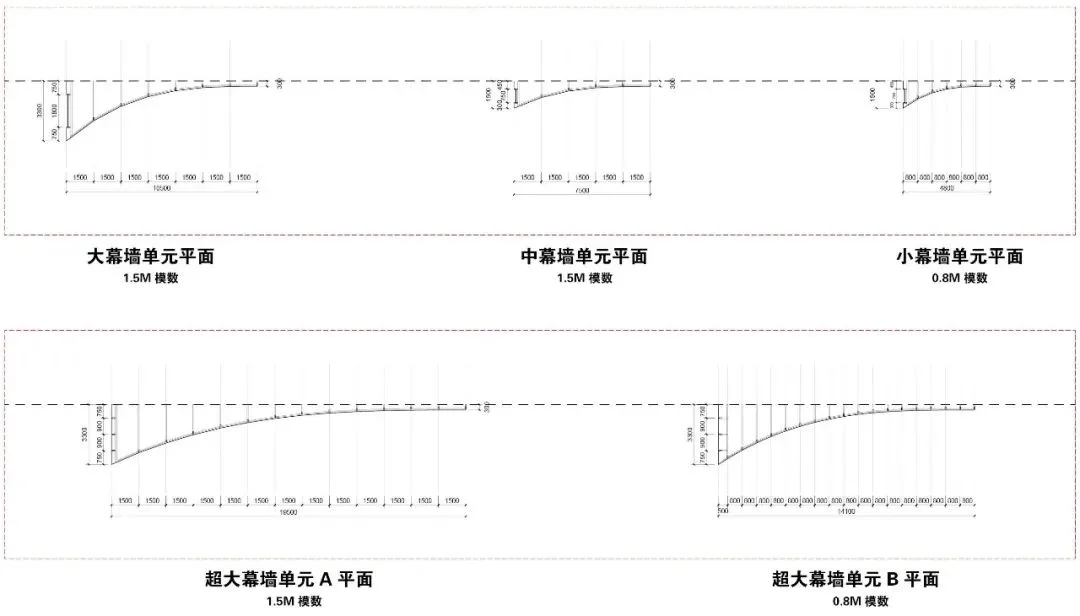
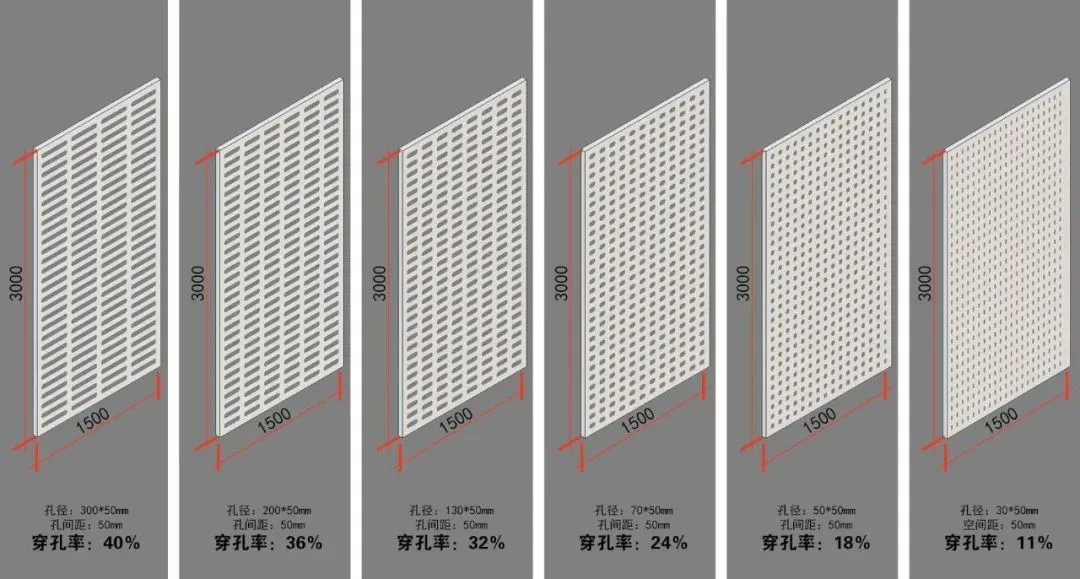
△ The combination of these standardized modules creates a rich architectural hierarchy based on the existing volume. Using six different perforation rates in the panels enhances texture and detail, ensuring precise and effective final construction.
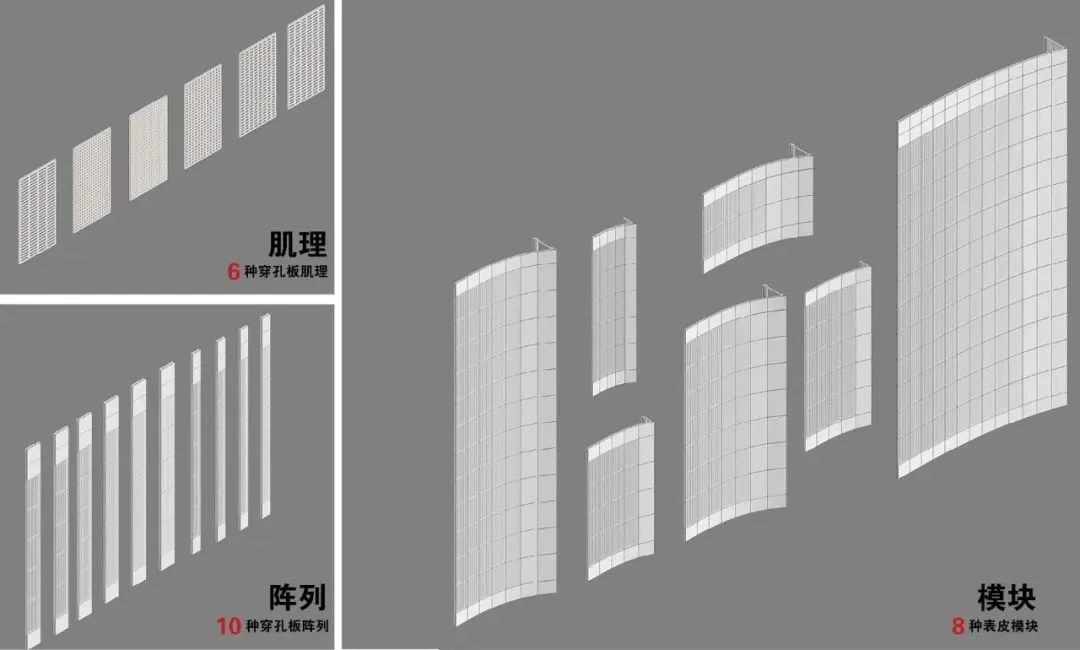
2.5 Ultra-High Prefabrication Assembly Rate
The renovation strategy emphasizes feasibility and rapid construction without disrupting factory work, necessitating large-scale factory prefabrication. UUA implemented an ultra-high prefabrication and assembly approach, with over 95% of aluminum panel modules prefabricated off-site and assembled on location. This greatly reduces onsite construction time and costs, while minimizing interference with waste processing operations.
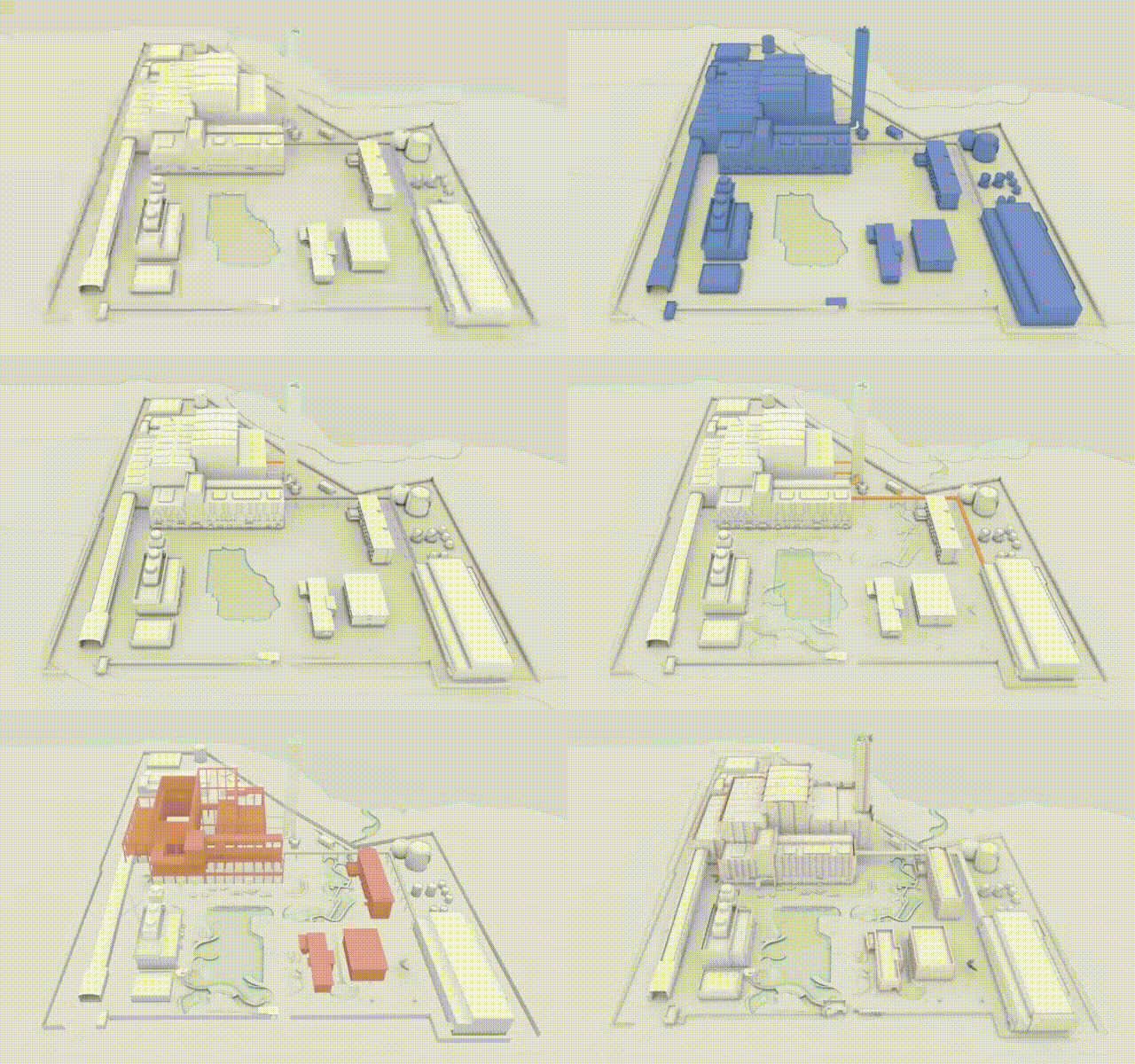
Design approach ensuring uninterrupted daily production © UUA
3. Landscape Design
Inspired by the “Sail of Energy” concept, the park’s landscape design centers on the ecological theme “Low Carbon Energy Storage Empowerment.” The micro-terrain is reshaped to connect wetlands inside and outside the park, enabling water flow, transformation, and energy storage within this environment. This results in a new low-carbon workplace that integrates regional culture and industrial metaphors, blending seamlessly with nature.
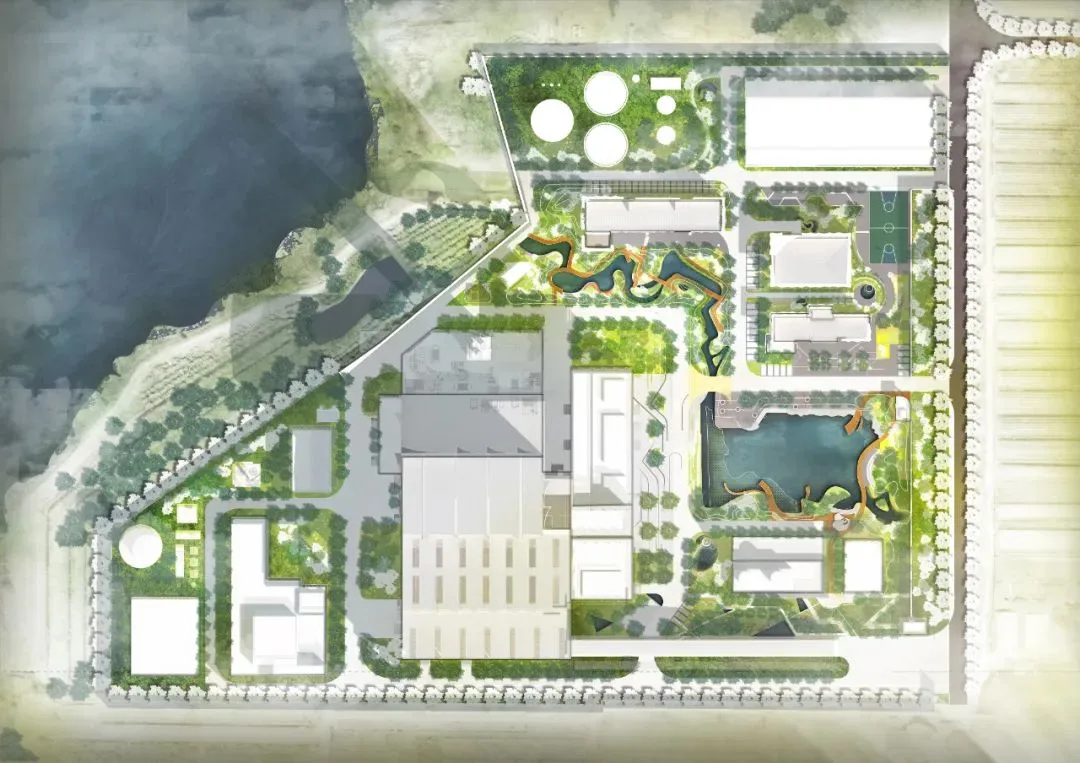
△ Overall Landscape Plan © UP+S
3.1 Terrain Shaping + Water System Empowerment + Combined Use + Vitality Stimulation
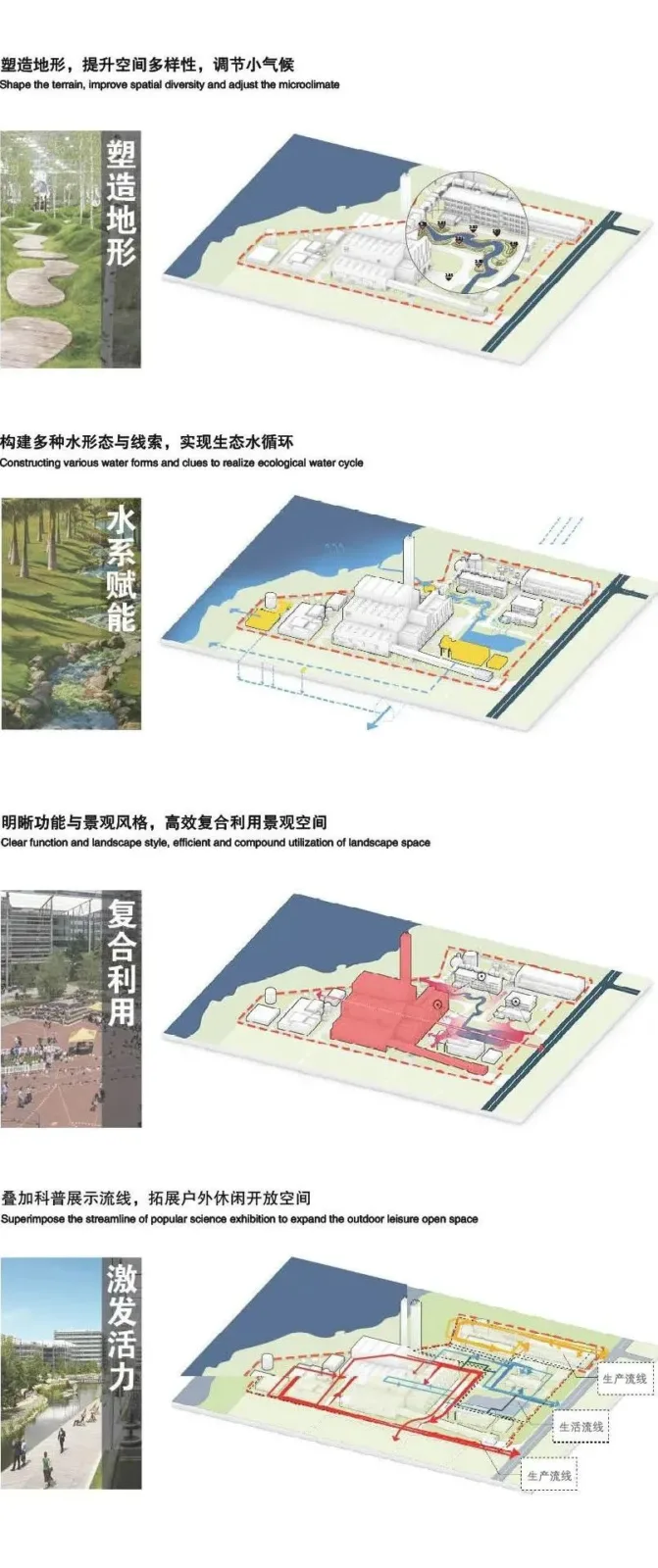
Landscape enhancement concept © UP+S
3.2 Link + Flow + Transformation + Energy Storage
Link: Connecting fragmented green spaces to create a multi-dimensional, nature-friendly park that blends production, living, and science education, harmonizing with the region’s fertile lands.
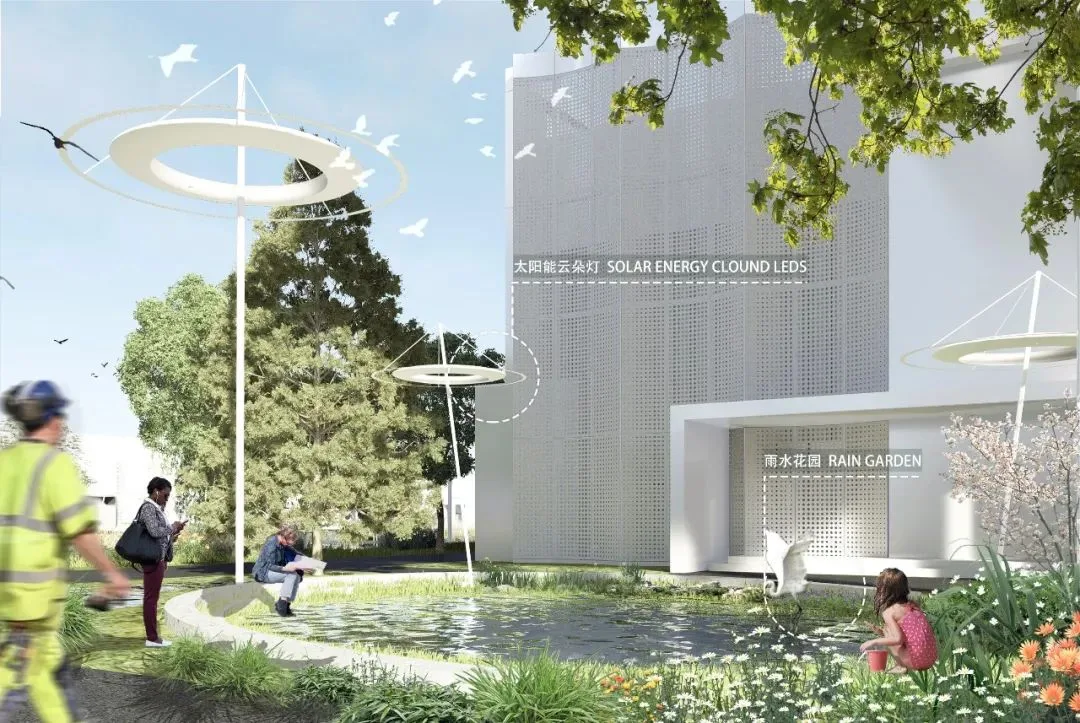
△ Landscape rendering © UP+S
Flow: The wetland water system links Xiangfudang wetlands with the park’s interior, creating a water chain that purifies rainwater and enhances carbon sequestration.
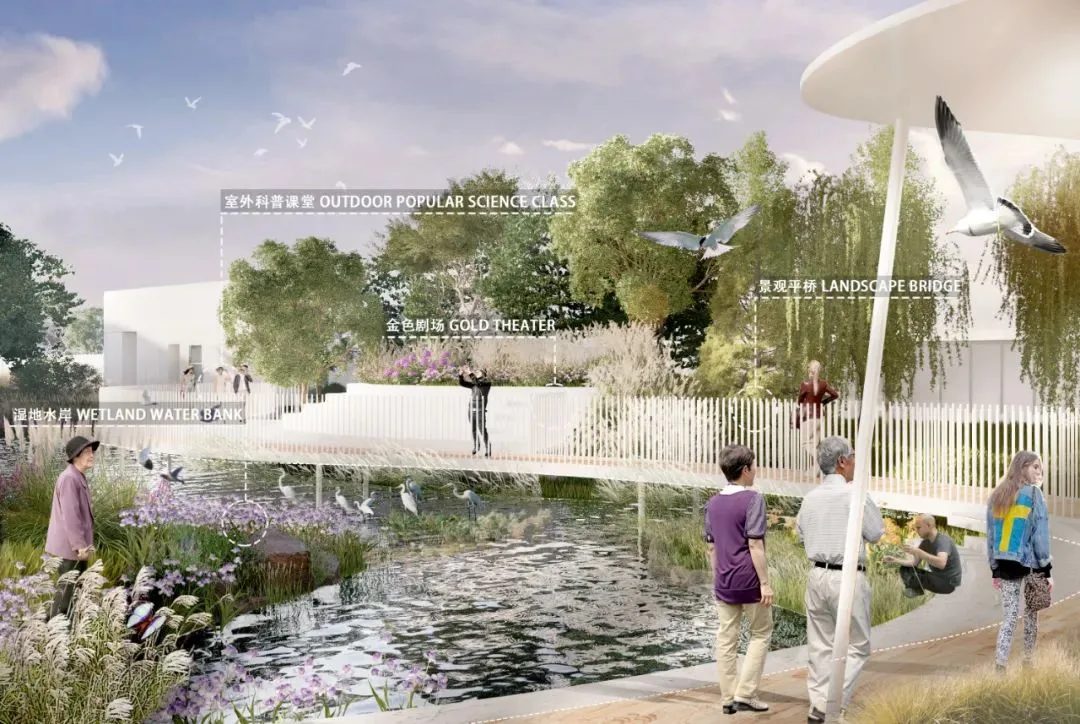
△ Landscape rendering © UP+S
Transformation: Designed to regulate the park’s microclimate and introduce natural ventilation. By recycling and utilizing natural materials, energy transformation is achieved.
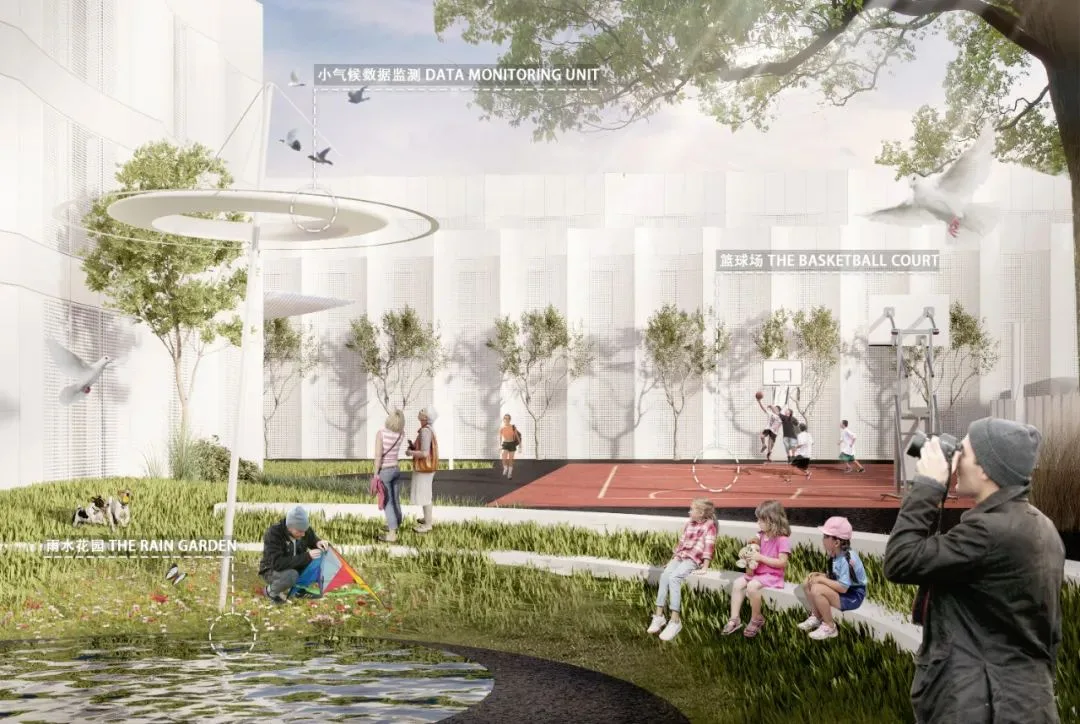
△ Landscape rendering © UP+S
Yunneng: Planting native species to create a rewilded natural environment, bird habitats, and other ecological landscapes, recreating the imagery of “emerald birds and red diamonds.”
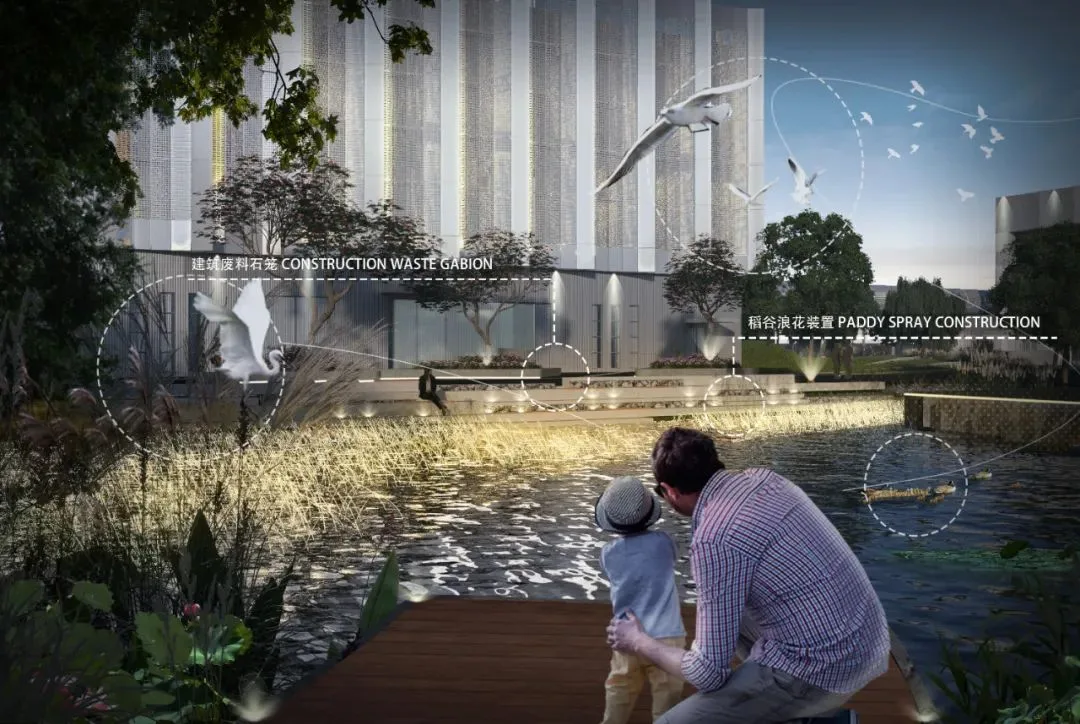
△ Landscape rendering © UP+S
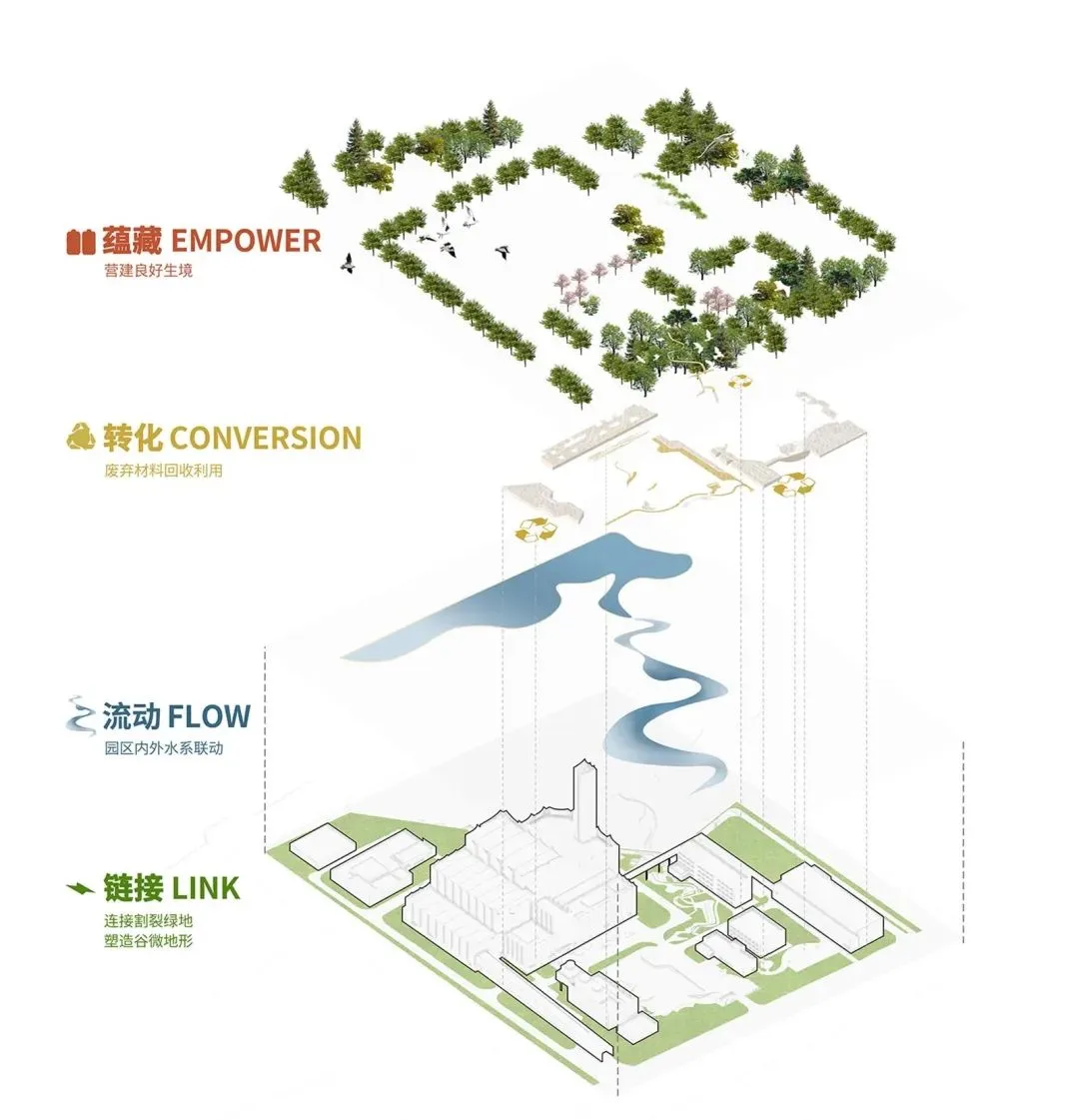
△ Overlay of Landscape Techniques © UP+S
4. Final Presentation
4.1 Architectural Community Integrity
From distant views of the architectural complex at key nodes, a refined and rich architectural “sail community” emerges in the Xiangfudang area, featuring an inviting ecological design that embraces de-industrialization. The design achieves flawless presentation from every angle.
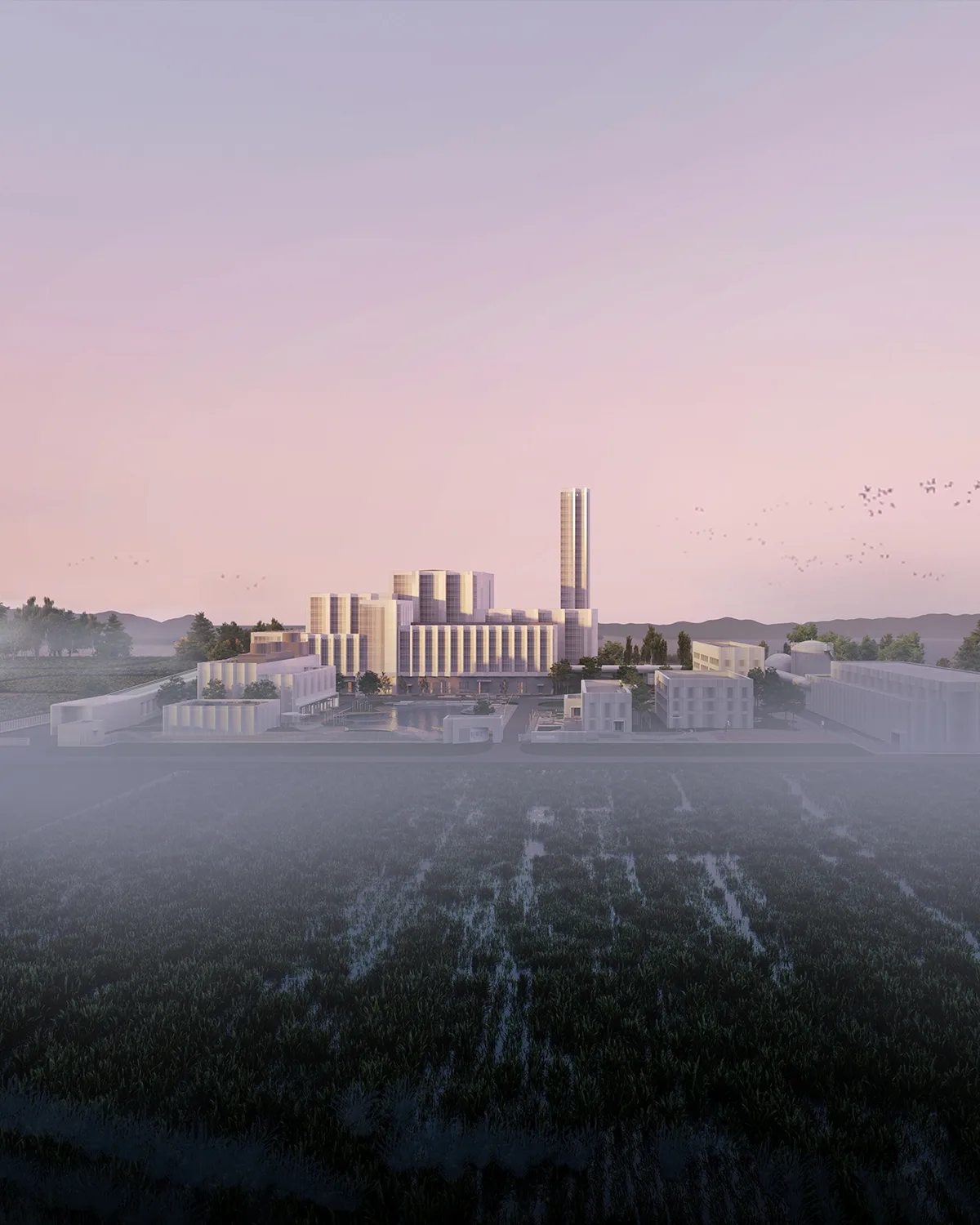
Overall bird’s-eye view © UUA
4.2 Lightness of Building Boundaries
The building’s lightness extends throughout the park. The internal landscape embraces natural forms, minimizing artificial traces and complementing the building’s delicate appearance. Water surfaces within the park create blurred, ethereal boundaries. Visitors strolling through are guided by an ecological landscape that highlights the refined main factory building alongside a cohesive group of structures, presenting a polished and textured environment.
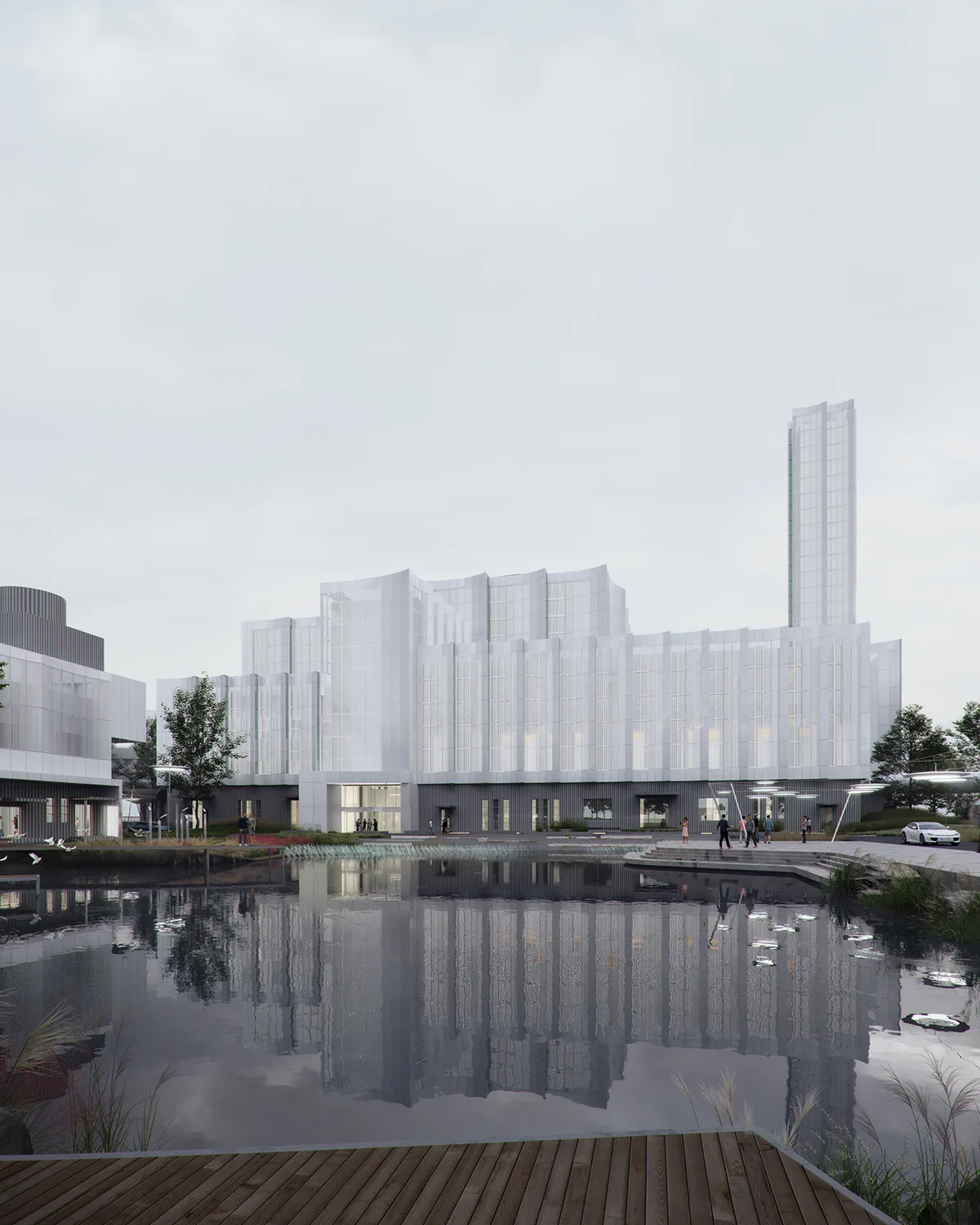
△ Night view and human perspective © UUA
4.3 Elegant Fortress Amid Golden Rice Waves
On the banks of Xiangfudang, surrounded by golden rice fields, a light, fresh, and soft green landscape architecture flourishes. The park’s rain garden and smart agricultural ecological landscapes integrate seamlessly into the Jiashan region’s fertile terrain, transforming the site into a living work of art.
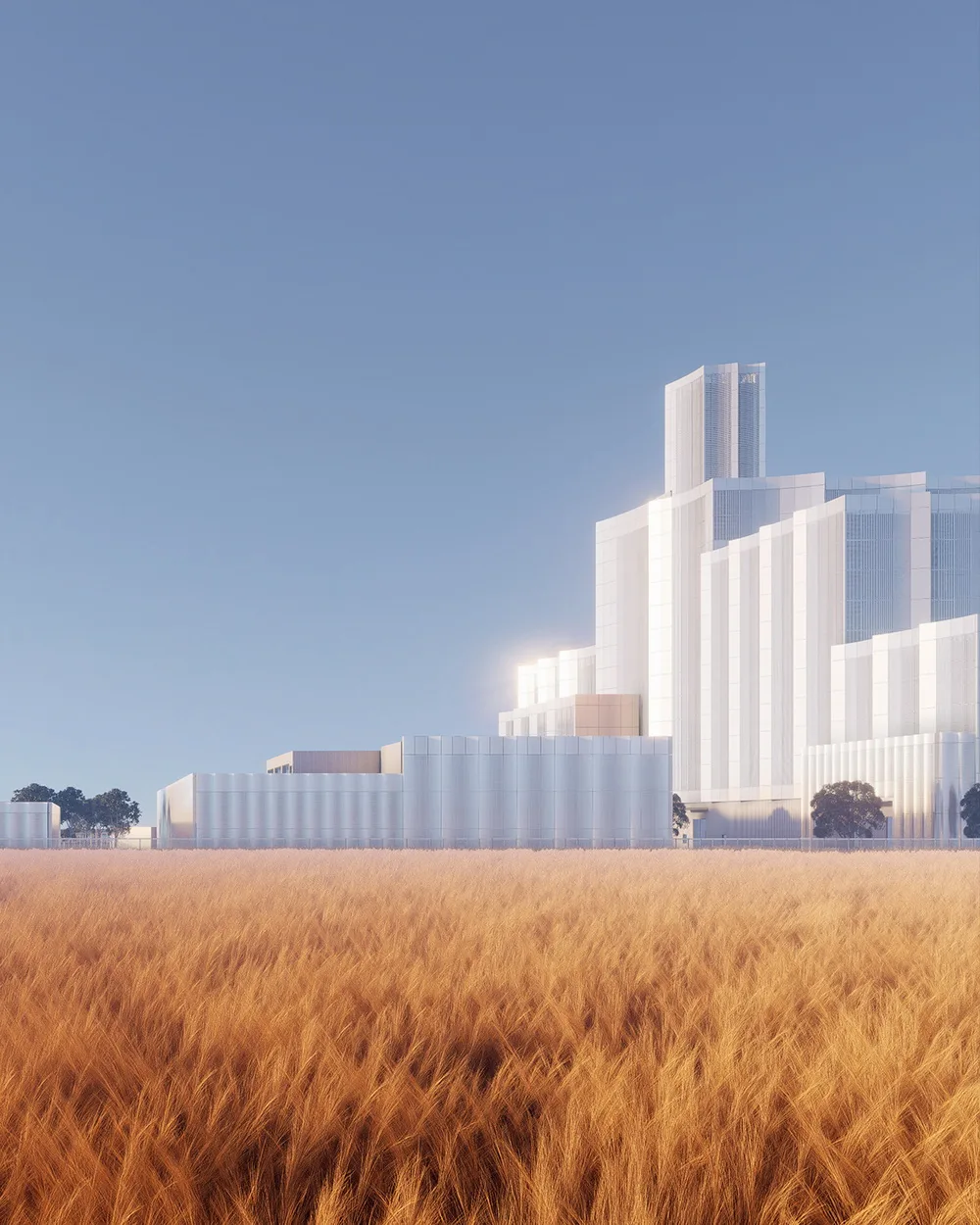
Golden rice waves and white buildings © UUA
4.4 Artistic Sail Shadows by Xiangfudang
The auspicious talismans and rippling blue waves set the scene in Jiaxing’s fertile water town. There, a misty white building rises elegantly, mirroring the water’s surface and creating a cluster of light sails within the green ecological zone.
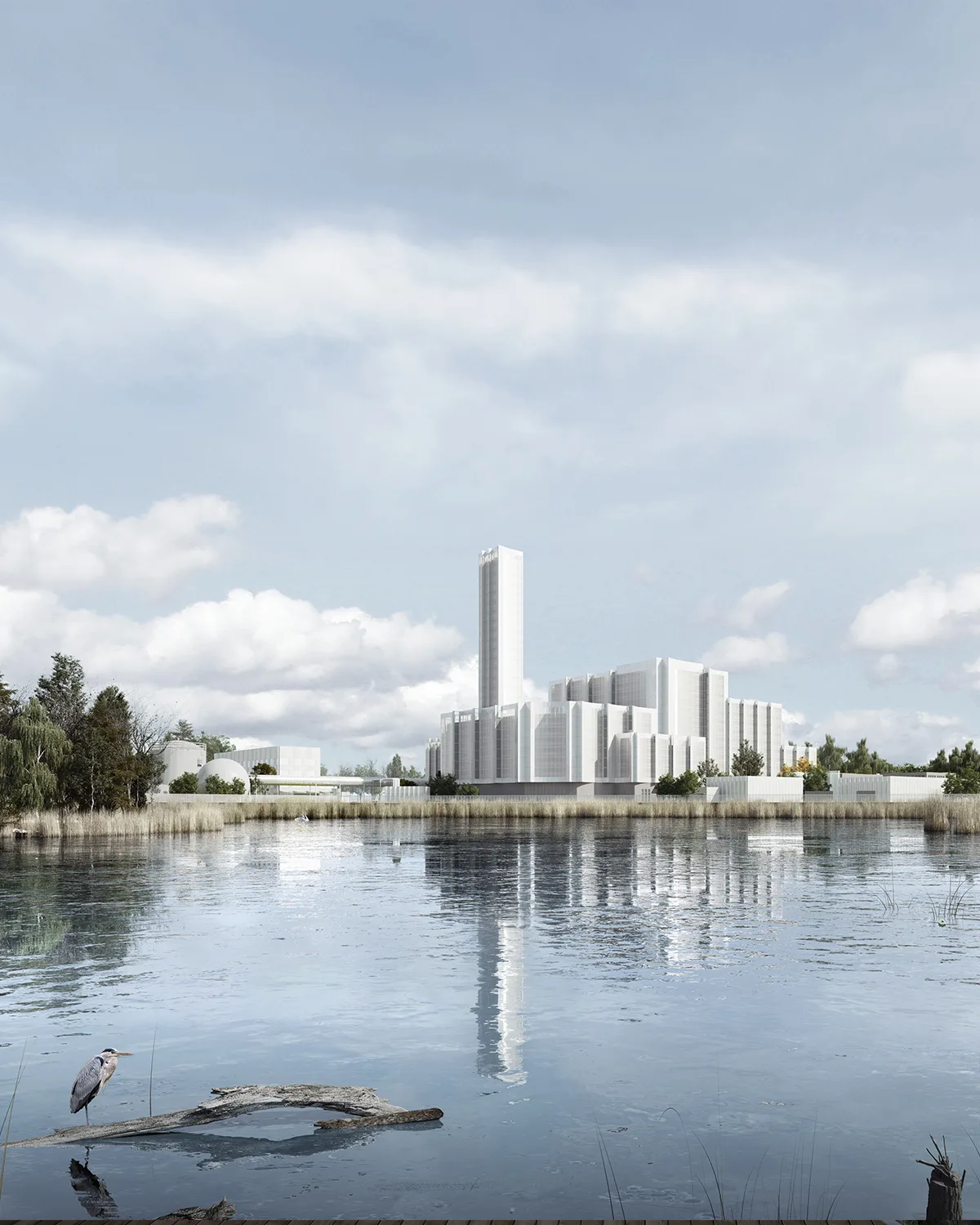
△ Xiangfu Sail Shadow © UUA
4.5 Transparent Lighthouse Between Water and Moonlight
At night, waterbirds return to their nests, sails settle, and a bright moon hangs overhead. Translucent lighthouses reflect on the shimmering waves, their smooth skin and advanced transparency glowing alongside the moonlit sky. This transforms the once cold, industrial incineration power plant into a poetic, picturesque landmark.
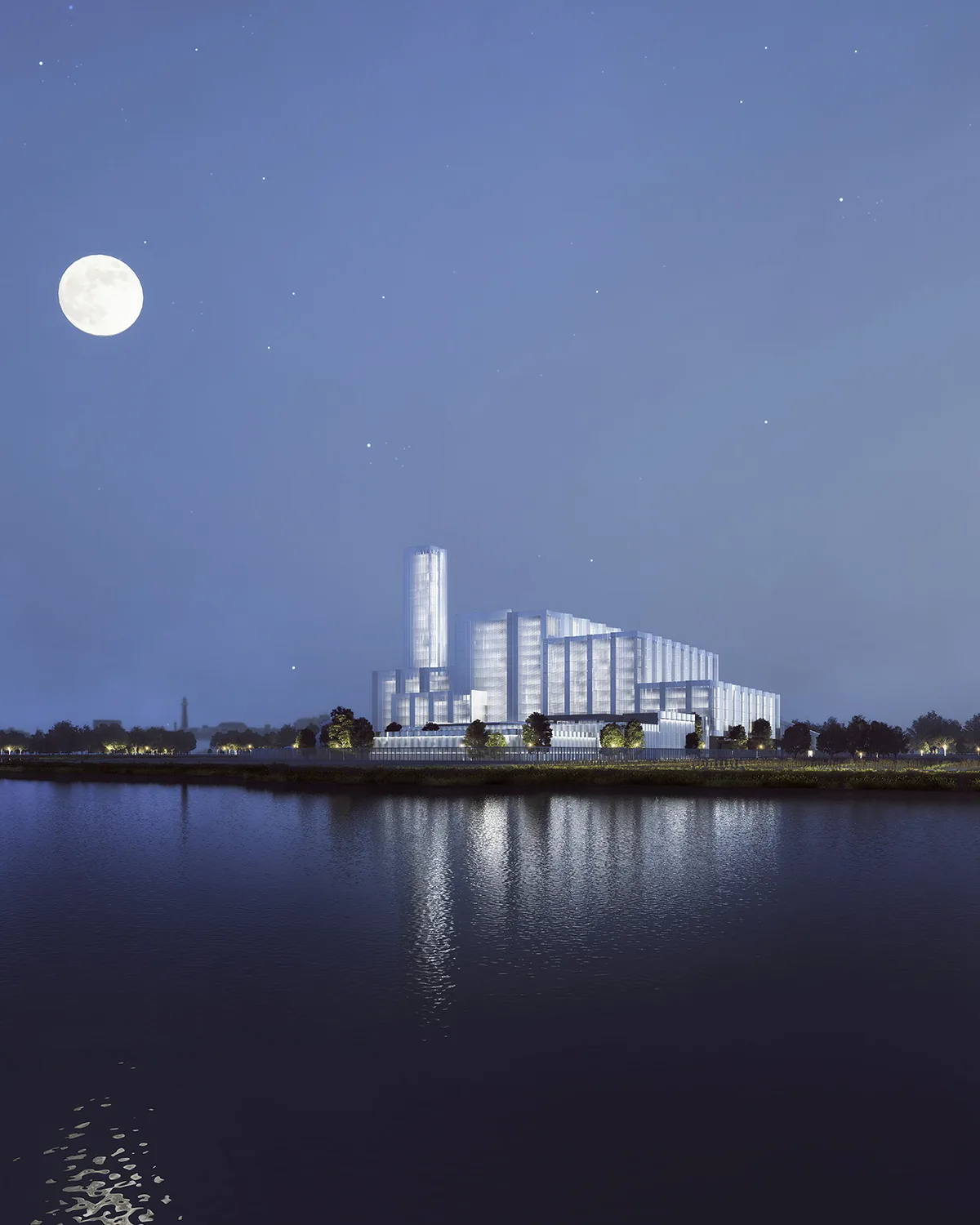
Gentle water, shimmering sails, and emotional shadows © UUA
4.6 Conclusion
The Weiming Environmental Protection Project update encapsulates thousands of sails passing through Xiangfudang from past to present. The facade’s light, sail-like appearance reflects the noble spirit of the architectural ensemble along the Xiangfu River. It listens to history, embraces humanity, transmits energy, and moves forward propelled by the wind.
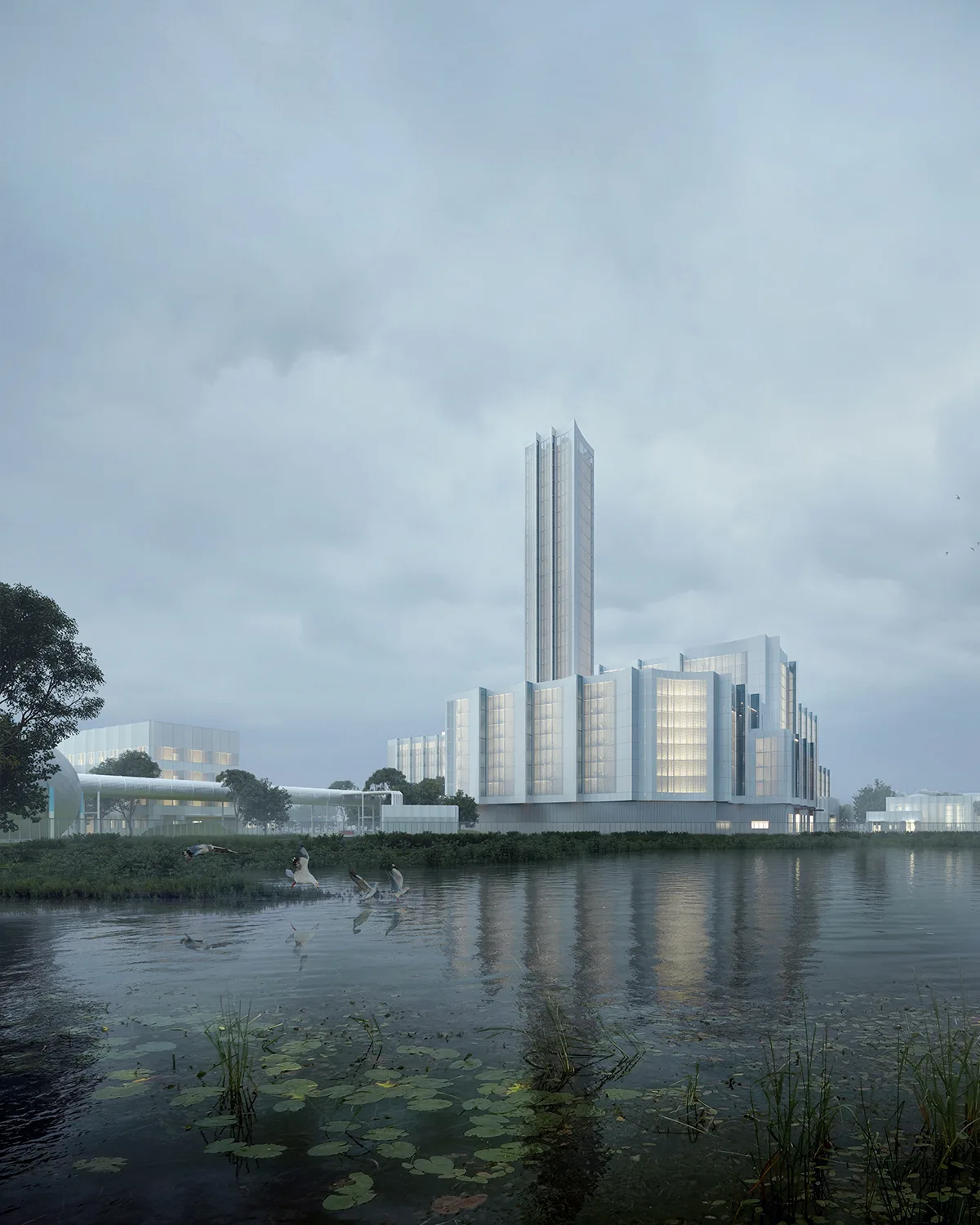
△ Gentle play of light and shadow on the building’s skin © UUA
The Weiming Environmental Protection Plan embodies a “geometric spirit” that harmonizes sensibility and rationality. The lightweight sail shadow results from the fusion of color, form, light, shadow, and material. It transforms the traditional image of industrial buildings from heavy and rigid to white, elegant, and light, demonstrating UUA’s profound interpretation of “humanistic warmth and technological precision.”
Project Information
- Architectural Design: UUA Architects
- Landscape Design: Apbeth Landscape Design + Wei Fang Team, Beijing Forestry University
- Project Technical Director: Professor Shen Lei (Chief Engineer, Yangtze River Delta Ecological Green Integration Demonstration Zone, Jiashan Area)
- Project Location: Jiashan County, Jiaxing City, Zhejiang Province
- Project Scale: 30,454 square meters
- Project Owner: Jiashan Weiming Environmental Protection
- Lead Partners: Li Yongzheng, Li Qizhi
- Architectural Design Team: Zhang Yihao, Wang Falu, Yang Bo, Lv Yanfeng, Deng Liang, He Wenbo, Liu Boyu, Ma Xinghua, Fang Hongbo, Zhao Shengli
- Curtain Wall Consultant: Shanghai Huayi Curtain Wall (Xu Jinfei, Wang Yibo, Li Haimin)
- CG Team: Borderless Vision
- Project Phase: Final shortlisted proposal












Must log in before commenting!
Sign Up