

Project Location:
The Qingdao Jiaodong International New Airport Terminal project is situated in the northwest of Qingdao, within the jurisdiction of Jiaodong Street Office in Jiaozhou City.
Main Economic and Technical Indicators:
Terminal building area: 477,000 square meters
Design and Construction Units:
China Southwest Architectural Design and Research Institute Co., Ltd
China Construction Eighth Engineering Division Group Co., Ltd
China Construction Third Engineering Group Co., Ltd
Functional Components:
The total investment for the new airport project is approximately 38.175 billion yuan. Of this, 30.045 billion yuan is allocated for constructing two parallel long-distance runways, each 3,600 meters in length and spaced 2,200 meters apart.
The terminal building covers an area of 450,000 square meters and is designed to support an annual passenger throughput of 35 million, cargo throughput of 500,000 tons, and 300,000 aircraft takeoffs and landings after completion.
The project owner anticipates several challenges during construction, including:
- Coordination difficulties due to numerous professional parties and subcontractors involved.
- Long construction duration, making progress and cost control challenging.
- Harsh winter weather conditions along the coastal location, plus large-scale procurement and material quantities.
- Complex engineering systems, high technical standards, and construction difficulties.
…
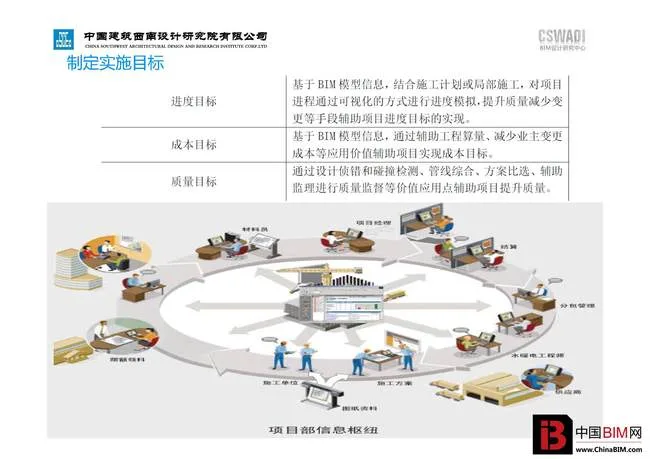
To address these challenges, the Southwest Institute and the project owner agreed to implement Building Information Modeling (BIM) technology, aiming to solve the following issues:
Design Phase:
BIM models serve as a platform to integrate 3D models from the design team and various subcontractors. This enables collaborative 3D design across disciplines such as architecture, structure, electromechanical, curtain wall, steel structure, and luggage systems. Issues are identified promptly and design results are optimized to enhance quality and accuracy.
Construction Phase:
Based on the BIM model, the construction team receives detailed information including subcontractor material quantities, construction progress simulations, mechanical and electrical installation processes, equipment lifting simulations, and optimized sequencing for various trades.
Using BIM technology facilitates efficient collection, processing, storage, and communication of engineering information throughout construction and supervision. This supports the general contractor in coordinating, planning, and controlling the project in an organized and effective manner.
Operation Phase:
BIM models provide input for equipment information, comparisons between trial operation data and design data, material lists, and maintenance plans for operators.
This information aids facility maintenance, operator tasks, and asset management throughout the building’s lifecycle, eliminating information overload during handover and acceptance, and boosting information productivity.













Must log in before commenting!
Sign Up