
Many regions now require directors to hold at least a bachelor’s degree.
01 Nanchang, Jiangxi
On July 22, 2021, the Housing and Urban-Rural Development Bureau of Nanchang City issued a notice aimed at enhancing the qualifications for construction drawing review and engineering supervision personnel involved in new social investment projects classified as simple and low-risk. The notice specifies that the chief supervising engineer must be a nationally registered supervising engineer with a bachelor’s degree or higher.
02 Beijing
In March 2019, Beijing’s “Regulations on the Management of Supervision Personnel for Housing Construction and Municipal Infrastructure Projects” required that chief supervision engineers hold a bachelor’s degree or higher in engineering-related fields, along with at least three years of supervision experience.
03 Shanghai
On March 27, 2019, the Shanghai Municipal Commission of Housing and Urban-Rural Development issued a notice stipulating that the Chief Supervising Engineer must be a registered supervising engineer with a minimum number of years of experience, as well as holding a bachelor’s degree or above.
04 Guangzhou
As of January 2020, to serve as Chief Supervising Engineer, candidates must hold the “Registered Supervising Engineer” qualification and at least a bachelor’s degree. Similarly, construction site supervision engineers for small-scale projects are required to have the same qualifications.
05 Chongqing
In January 2020, the “Notice on Further Optimizing the Business Environment and Improving the Quality and Safety Control Level of Construction Projects” clarified that the Chief Supervising Engineer should meet existing qualifications under the “Code for Construction Project Supervision” (GB/T50319), and also have a bachelor’s degree or higher in architecture, engineering, or construction project management.
06 Tianjin
In April 2020, the Housing and Urban-Rural Development Commission, along with twelve other departments, jointly issued a notice requiring that project design leaders and chief supervising engineers involved in housing and municipal projects possess national registration as architects or supervising engineers, relevant work experience, and a bachelor’s degree or above.
07 Hezhou, Guangxi
On May 25, 2020, the Housing and Urban-Rural Development Bureau of Hezhou City, Guangxi Province, released a notice to standardize the qualifications for construction drawing review, engineering supervision, and construction management personnel. The chief supervising engineer must hold a state-issued professional qualification certificate and a bachelor’s degree or higher.
Jinan Issues New Talent Enhancement Policy
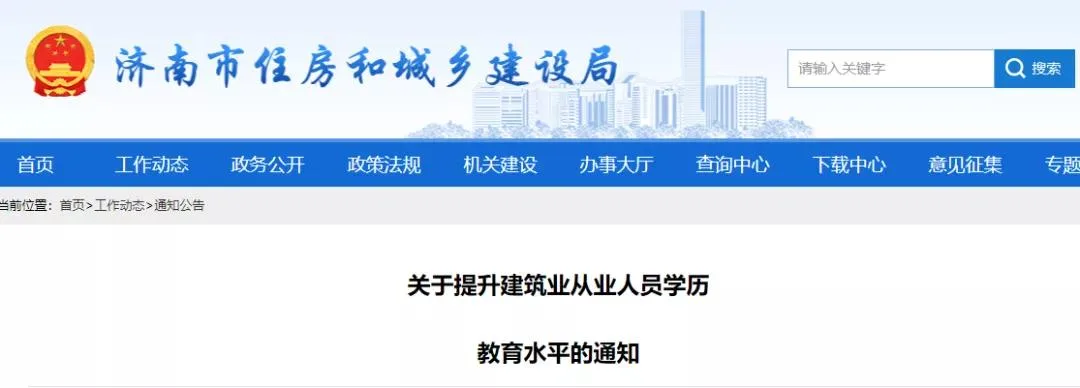
1. Encouraging current construction workers to enhance their education:
Construction professionals in the city are encouraged to engage in nationally accredited on-the-job education and professional certification exams. This aims to broaden their knowledge, improve their expertise, solidify their skills, and further elevate the quality and safety management of local construction projects.
2. Promoting recruitment of bachelor’s degree holders and above:
Construction companies are urged to intensify efforts in attracting talent with bachelor’s degrees or higher. They are encouraged to recruit outstanding business managers and technical experts with proven achievements in management, construction, and market development by offering better salaries, benefits, and career advancement opportunities. This will help build a highly skilled workforce aligned with the city’s construction industry development goals.
3. Fostering collaboration between enterprises and applied undergraduate universities:
Backbone construction companies and applied undergraduate universities, both locally and from other provinces, are encouraged to collaborate through campus recruitment, enterprise visits, and joint training initiatives. By aligning with industry needs, strengthening practical teaching, and sharing training resources, they aim to cultivate applied talents proficient in both theory and practice.
Issued by the Jinan Housing and Urban-Rural Development Bureau on August 20, 2021.
Rising Educational Standards for Directors and Professionals
What’s the Future of Supervision Reform?
Changing Role Requirements for Directors
In 2020, the China Construction Supervision Association published the “Personnel Configuration Standards for Project Supervision Institutions” (Trial) for housing construction. This document broadened eligibility for the Chief Supervision Engineer role, recognizing first and second-level registration certificates.
Article 2.0.6 states that the Chief Supervising Engineer must be a registered supervising engineer appointed by the legal representative of the supervision unit, responsible for fulfilling the supervision contract and leading project supervision, or other registered engineering technical and economic personnel who meet the standards.
This marks a shift from earlier rules, clarifying that other registered engineering and economic personnel may also serve as chief supervising engineers.
Article 2.03 further specifies:
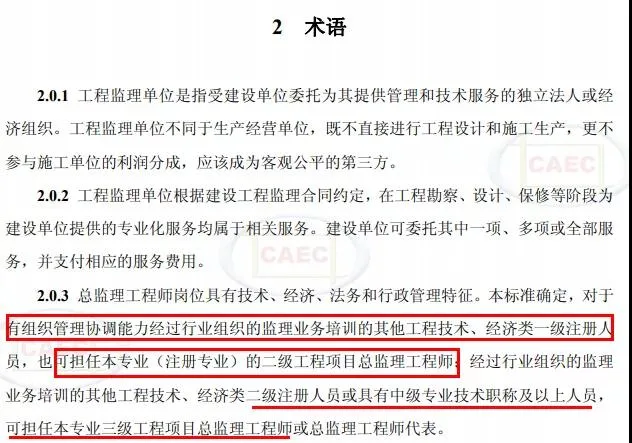
First-level registered personnel in engineering technology and economics with management and coordination skills, who have completed industry-supervised training, may serve as chief supervising engineers for second-level projects in their registered fields.
Second-level registered personnel or those holding intermediate technical titles, after receiving supervision training, may serve as chief supervising engineers or representatives for third-level projects.
This expanded recognition increases competition and may lead to greater interoperability of registration certificates in the future.
Supervision No Longer Mandatory in Many Areas
In 2018, the Ministry of Housing and Urban-Rural Development revised the “Management Measures for Construction Permits of Building Projects,” removing the requirement that projects must be entrusted to supervision.
Following this, several provinces and cities explicitly stated that supervision is no longer mandatory for small- and medium-sized projects.
Shanxi: In April 2020, the provincial department allowed projects—except national key projects and large or medium public utilities—to forgo mandatory supervision. Construction units assume legal responsibility for supervision. Small-scale projects are encouraged to pilot architect-led construction quality management.
Construction units may also entrust qualified engineering consulting agencies for project management or full-process consulting services, replacing traditional supervision where permitted.
Similarly, Guangzhou, Beijing, Chengdu, Tianjin, Shanghai, and Xiamen have issued policies removing mandatory supervision for some engineering projects.
Alternative Supervision Methods
1. Self-management and Commissioned Consulting:
- Shanghai: Construction units may choose supervision or full-process consulting, with encouragement for self-management.
- Guangzhou: Units can hire professional engineers (bachelor’s degree or above) as internal supervisors.
- Xiamen: Construction units have the freedom to select supervision or full-process consulting.
- Chengdu: Encourages self-management or full-process consulting.
- Tianjin: Promotes full-process engineering consulting services.
The 2017 national policy encourages the development of full-process engineering consulting through partnerships and mergers among various consulting firms.
In 2018, Hebei Province issued guidance promoting transformation and innovation in supervision enterprises by expanding service scopes to include project consulting, bidding agency, cost consulting, project management, and on-site supervision. Projects contracting full-process consulting firms do not need separate supervision.
2. Replacing Supervision with Insurance:
Beijing: Projects without mandatory supervision may be managed through engineering quality potential defect insurance combined with risk management agencies.
Xiong’an New District: Since 2019, gradually implementing engineering quality insurance systems supported by BIM and CIM technologies as alternatives to supervision.
Government Procurement of Supervision and Inspection Services
On June 1, 2020, the Ministry of Housing and Urban-Rural Development released a draft for public feedback on piloting government procurement of supervision and inspection services.
Key points include:
- Exploring transformation of supervision services by developing enterprises capable of inspection.
- Focusing on controlling major engineering risks via aerial and patrol inspections, monitoring critical components, verifying legality and contract validity, and providing recommendations.
Expanded Practice Scope for Registered Supervising Engineers
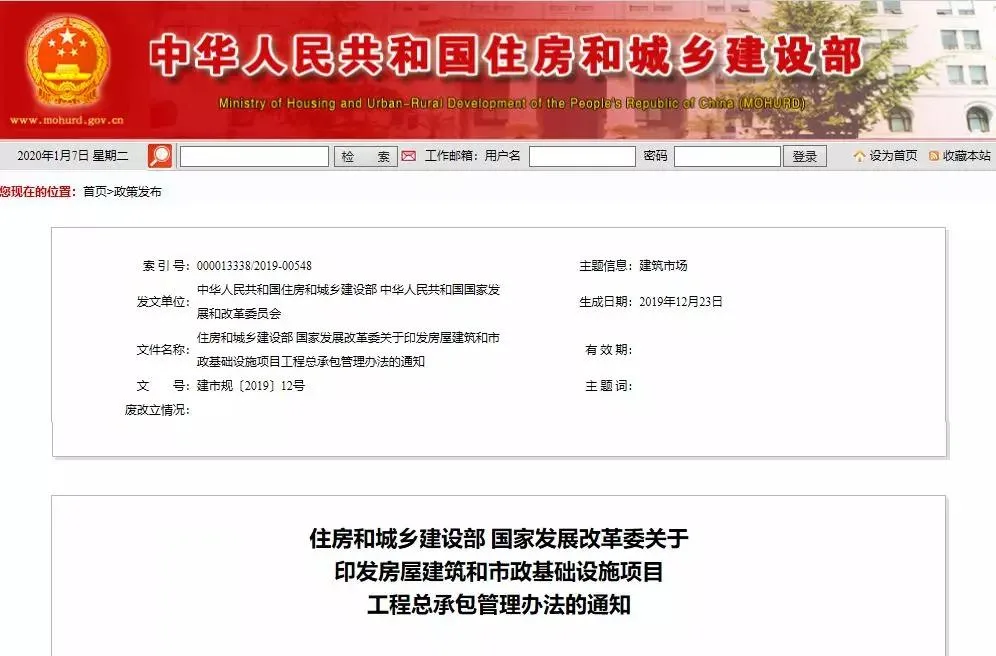
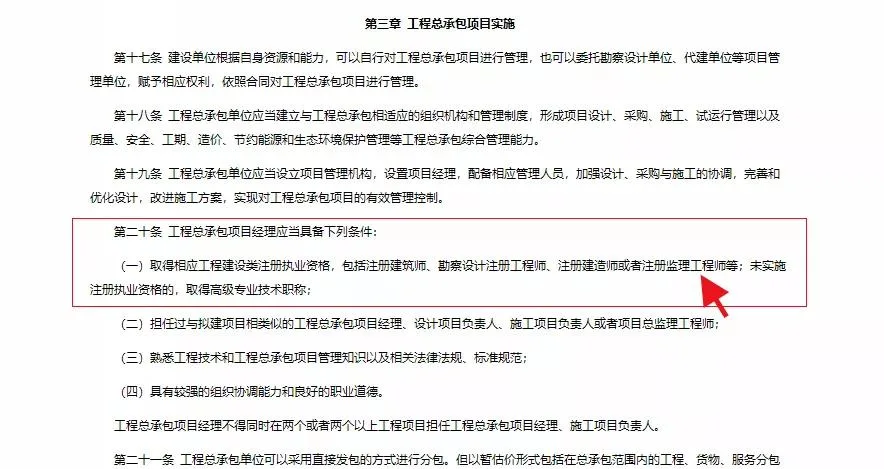
In December 2019, the Ministry of Housing and Urban-Rural Development and the National Development and Reform Commission jointly issued measures allowing registered supervising engineers to serve as project managers for housing construction and municipal infrastructure general contracting projects starting March 1, 2020.
It is important to note the distinction between engineering general contracting and construction general contracting:
- Engineering General Contracting: Enterprises undertake the full or partial contract scope covering feasibility, survey, design, procurement, construction, trial operation, and acceptance. They bear full responsibility for quality, safety, schedule, and cost.
- Construction General Contracting: Enterprises handle all construction tasks contracted by the owner, fulfilling obligations per the contract.
This development is a positive step forward.
Lowering Qualification Thresholds
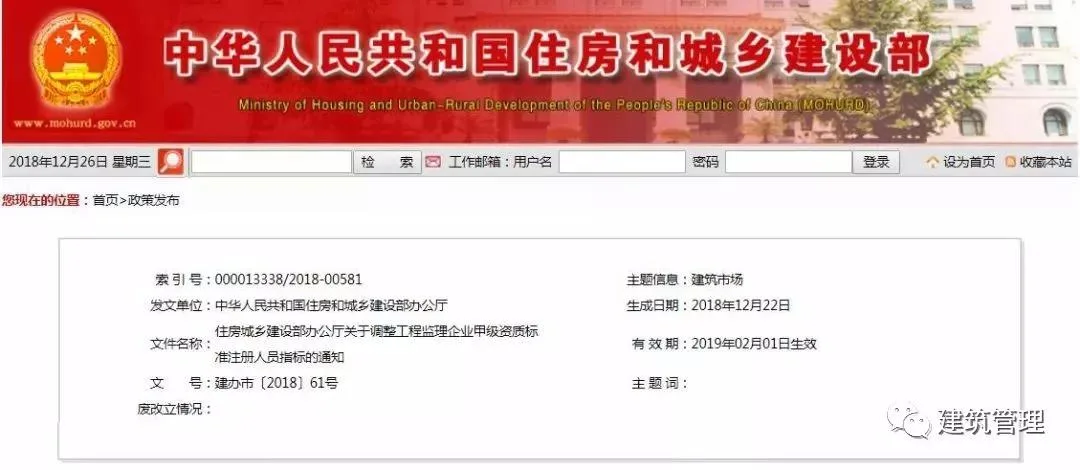
In December 2018, the Ministry of Housing and Urban-Rural Development adjusted the registration personnel indicators for Class A engineering supervision qualifications. Starting February 1, 2019, personnel requirements for Class A qualification applications (including upgrades, extensions, and changes) align with Class B standards.
Previously, the “Qualification Standards for Engineering Supervision Enterprises” required:
- Grade A: At least 25 registered professionals including supervising engineers, cost engineers, first-level constructors, architects, structural engineers, or survey and design engineers; with specified minimum counts for supervising and cost engineers.
- Grade B: At least 15 registered professionals as above, with lower minimum counts for supervising and cost engineers.
While the number of required registered personnel has decreased, on-site performance inspections have been significantly strengthened.
Eased Application Requirements for Supervising Engineers
Starting in 2020, the intermediate professional title requirement was removed for supervising engineer exam applicants.
Eligible candidates must meet one of the following:
- College diploma or higher in engineering disciplines, with at least 6 years in construction, supervision, or design-related fields.
- Bachelor’s degree or diploma in engineering or management, with at least 4 years of relevant experience.
- Master’s or professional degree in engineering or management, with at least 2 years of experience.
- Doctorate in engineering or management at a first-level discipline.
In pilot areas, only candidates with bachelor’s degrees or higher may apply.
Previously, applicants needed a college degree or higher and either intermediate or senior professional technical titles in engineering technology or economics with minimum years of experience.
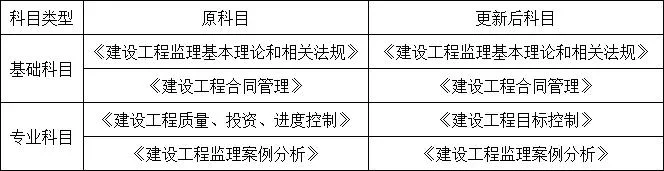
Exam Updates
- The exam follows a rolling four-year passing window; candidates must pass all subjects within four consecutive years.
- It uses a unified national syllabus, questions, and organization.
- Subjects are grouped into civil engineering, transportation engineering, and water conservancy engineering.
- Candidates already certified in one profession can be exempt from basic subjects when registering in other professions.
- The exam spans four half-day sessions.
When asked if supervision will be abolished, the evidence from recent policy changes suggests the answer is no. Instead, the industry is undergoing a significant transformation that must be faced head-on.















Must log in before commenting!
Sign Up