
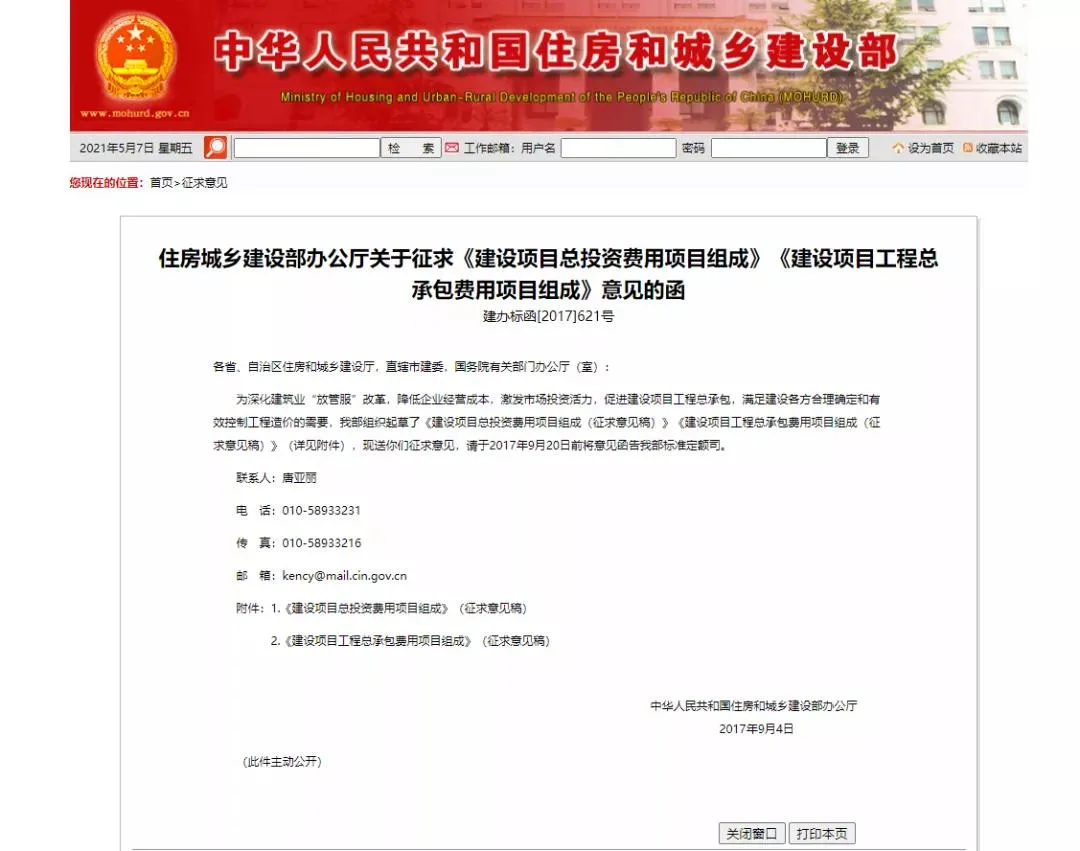
In September 2017, the Ministry of Housing and Urban-Rural Development issued a document clarifying that BIM costs originate from system integration expenses included within the general contracting fees for construction projects.
BIM Fee Standards Across Various Provinces and Cities
1. Shanghai Municipality
Shanghai has defined the application of BIM technology specifically for affordable housing projects. Additional costs incurred during implementation are incorporated into the project budget based on the application phase, content, and scale.
These fees primarily cover consulting services and the supporting software and hardware necessary for BIM implementation, as well as extra expenses related to design, construction modeling, analysis, and simulation. The fees are allocated as follows:
- For design and construction stages (including component processing), fees are calculated at 15 yuan per square meter of building area.
- For construction phase applications (including component processing), fees are calculated at 10 yuan per square meter.
- Implementing a component information model for factory prefabrication production adds 5 yuan per square meter.
- Applying a BIM-based operation management system adds another 5 yuan per square meter.
Projects with a building area under 100,000 square meters are calculated as if they were 100,000 square meters, while projects exceeding 300,000 square meters are capped at 300,000 square meters for fee calculation.
2. China Survey and Design Association
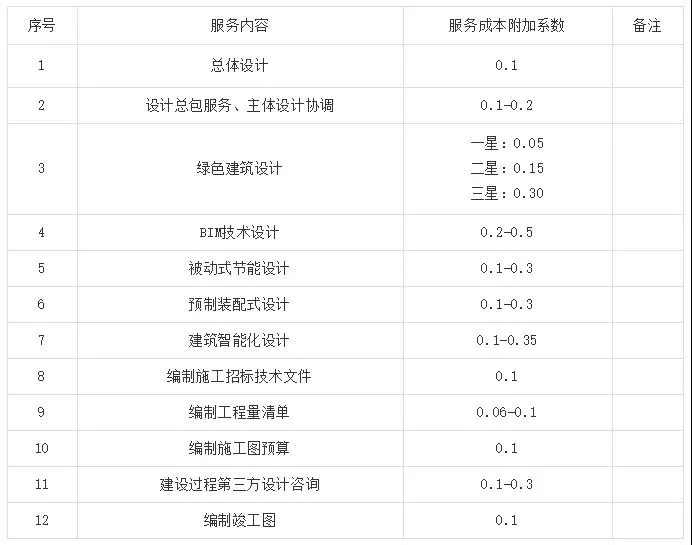
When the client requests services listed in Appendix 3, design service costs increase accordingly. The “service cost additional coefficient” reflects the proportional increase relative to the basic design service cost, based on the variety, depth, and complexity of requested services.
“Overall design” refers to comprehensive planning required before preliminary design for projects constructed in phases. This does not include general layout or overall design of a construction project.
“Design general contracting service” means the designer takes full responsibility for design management, including subcontracting. “Main design coordination” applies when multiple designers are involved, with one designated to coordinate design rationality and integration.
3. Zhejiang Province
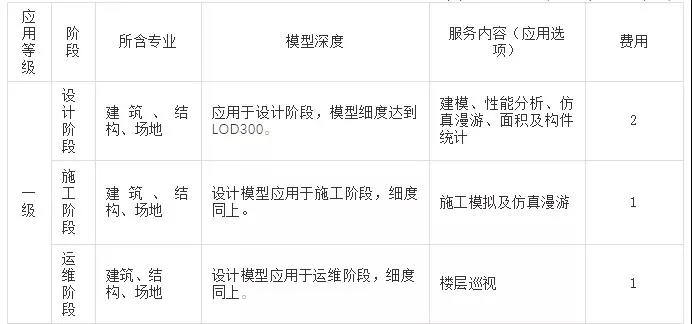
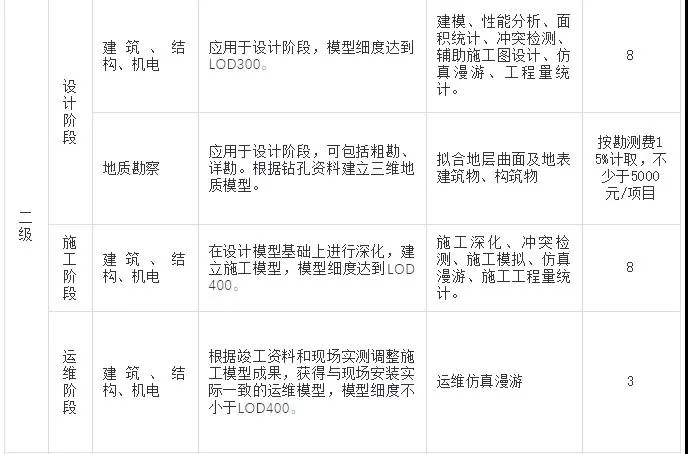
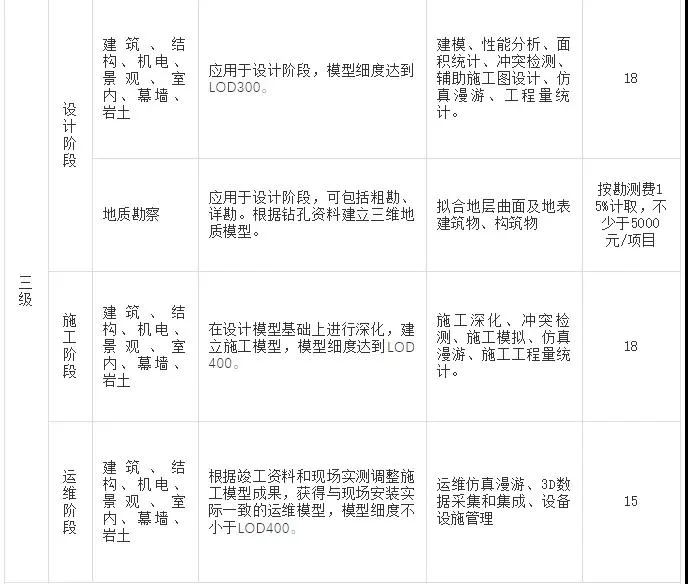
The fees above apply per modeling application. If significant design adjustments occur during implementation, additional fees will be negotiated based on the increased workload.
For residential communities, fees for above-ground buildings are multiplied by a coefficient of 0.8. Complex buildings such as steel structures, super high-rises, cultural and sports venues, large transportation hubs, and hospitals have fees adjusted by a factor of 1.5 to 2.0, subject to negotiation.
BIM applications during construction and operation phases must be based on BIM implementation results from the previous phase.
If the same BIM technology provider offers services throughout design, construction, and operation phases, the total cost is discounted by a coefficient of 0.85 based on the cumulative cost of each stage.
Other BIM applications will be determined through mutual agreement, based on actual content and service depth.
4. Guangxi Zhuang Autonomous Region
The BIM technology application cost is calculated as follows:
BIM technology application cost = base price × (A: application stage adjustment factor) × (B: engineering complexity adjustment factor) × (C: cost consulting adjustment factor)
The cost base price is set according to the full stage and full professional application standard.
Note:
- If the building area is less than 30,000 square meters, it is calculated as 30,000 square meters.
- If the building area is between 30,000 and 300,000 square meters, the actual building area is used.
- If the building area exceeds 300,000 square meters, it is capped at 300,000 square meters.
- When BIM is applied to certain specialties, the base price is calculated based on the cost of that specific specialty.
Application Stage Adjustment Coefficient (A):

Notes:
- If BIM is applied throughout all stages, coefficient A is set to 1.
- If applied only in a single stage, adjust according to the coefficients in the table above.
- If applied in two consecutive stages, calculate 90% of the sum of the individual stage coefficients.
- If applied in three consecutive stages, calculate 80% of the sum of the individual stage coefficients.
Engineering Complexity Adjustment Coefficient (B):
This coefficient varies from 0.8 to 1.5 depending on the project’s complexity as outlined in design fee standards and is subject to negotiation.
Cost Consulting Adjustment Coefficient (C):
When cost consulting is involved, this coefficient is set at 1.1.
Additional Notes:
- BIM application at each stage must build upon the BIM implementation results of the previous stage.
- Any issues encountered during execution should be promptly reported to the Guangxi Zhuang Autonomous Region Construction Engineering Cost Management Station.
5. Guangdong Province
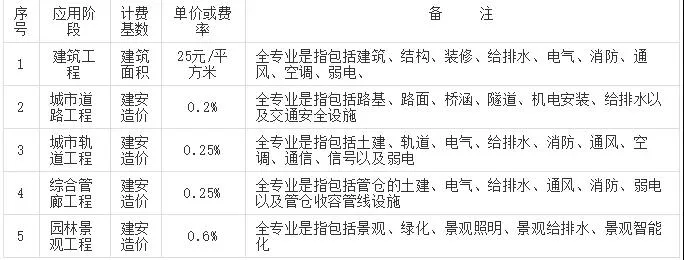
In 2018, Guangdong Province published the “Reference Basis for Valuation of Building Information Modeling (BIM) Technology Application Costs,” applicable to new industrial and civil construction projects, municipal road projects, rail transit, underground comprehensive pipe galleries, and landscape engineering.
The regulations specify the base fee according to professional categories. Except for industrial and civil construction projects, which use a unit price per square meter, other specialties are calculated based on rates.
Cost Pricing Explanation:
- BIM Technology Application Cost = Pricing Basis × Unit Price or Rate.
- For industrial and civil construction projects with a building area under 20,000 square meters, the cost is calculated using 20,000 square meters as the pricing basis. For municipal road, rail transit, and underground pipe gallery projects costing less than 100 million yuan, the pricing basis is 100 million yuan. For landscape engineering under 10 million yuan, 10 million yuan is used as the pricing basis.
- The BIM application cost excludes hiring consultants for BIM services. If consultants are hired, an additional 10% consulting fee can be added.
- Due to variations in project complexity, scale, and material and equipment standards, the cost of BIM application may fluctuate by up to 20%.
















Must log in before commenting!
Sign Up