
Abstract – Application of Building Information Modeling in the China Communications Construction Southern Headquarters Building Project
Building Information Modeling (BIM) offers a computable representation of the physical and functional characteristics of facilities, along with related lifecycle project information, all based on open industry standards. This technology supports informed decision-making and maximizes project value. BIM has not only introduced new operational tools to China’s construction industry but has also significantly improved work efficiency. It represents the integration of technology, management, and methodology—a comprehensive revolution in industry operations and a leading force in the digitization and informatization of China’s construction sector.
Aligned with corporate strategy, BIM is more than just a technology or tool; it aims to enhance traditional business value and extend full lifecycle service benefits. To achieve these objectives, the company’s R&D team has adopted a two-stage approach. The first stage establishes future development directions by studying multiple large-scale construction and design organizations. It customizes BIM standards and 3D collaborative design processes tailored to the company’s design and project characteristics. Simultaneously, it integrates information modeling and multidisciplinary 3D collaboration based on actual construction drawing designs. The second stage builds upon this foundation, applying BIM technology throughout the entire design process and incorporating simulation analyses to realize BIM’s comprehensive lifecycle application.
The application of BIM in the China Communications Construction Southern Headquarters Building project represents the core work of the first implementation stage. This article summarizes and reflects on that phase.
Project Overview
The proposed headquarters for CCCC Southern Group is located in Haizhu District, Guangzhou City. The building comprises 43 floors above ground and 3 underground levels. The above-ground structure includes a high-rise office tower and an annex. The main building is a super B-level high-rise office tower, approximately 95,385 square meters in construction area and 198.9 meters in height. Its floor plan measures 47.5 by 47.5 meters, featuring a reinforced concrete frame core tube structure with composite steel tube concrete frame columns. The core tube’s dimensions are 22.4 by 22.6 meters. Figure 1 shows a perspective view of the building facing the river.

Figure 1: Perspective view of the building along the river
Implementation Process of BIM
The project team utilized Bentley software to perform information modeling and multidisciplinary 3D collaboration based on the construction drawing design of the China Communications Construction Group Southern Headquarters Project. The information model helped identify and resolve issues difficult to address during early construction stages. Efforts included generating construction drawings, performing CFD simulation analyses, and conducting construction simulations using the model platform.
2.1 3D Model Construction, Modification, and Visualization
With rapid urban development and increasing demands for innovative building functions and forms, many new and distinctive buildings challenge traditional two-dimensional design methods. BIM’s three-dimensional visualization capabilities have become essential.
3D visualization serves as an effective communication medium, enabling owners, designers, supervisors, and constructors to understand, communicate, and coordinate within a shared model environment. This approach enhances efficiency and reduces unnecessary rework and waste. Additionally, 3D models create virtual reality spaces that allow dynamic observation and refinement of spatial structures, accommodating diverse commercial requirements and meeting the owner’s high standards for construction drawings.
The design team continuously updated the 3D model of the CCCC Southern Headquarters building in real time, integrating construction drawings and modification plans, as illustrated in Figure 2.
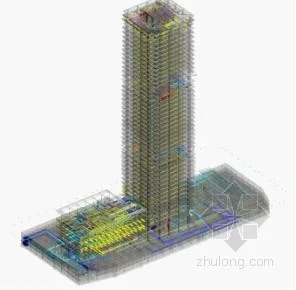
Figure 2: Three-dimensional final assembly model of the CCCC Southern Headquarters building
2.2 Three-Dimensional Collaborative Work
Previously, design relied heavily on 2D CAD drawings, which resulted in “information silos” and lacked bidirectional information flow. BIM technology overcomes this by consolidating scattered 2D CAD drawings and data tables into a unified, information-rich building model.
Our BIM team initiated multidisciplinary 3D collaboration early in the project using Bentley’s ProjectWise (PW) platform. We customized the project’s spatial configuration and established a 3D collaborative management structure within PW, shown in Figure 3. Using a parameterized change engine, the system automatically maintains associations between various models and documents. This ensures all BIM participants work within a real-time unified project environment, referencing updated 3D models of their respective disciplines. Even sectional drawings update synchronously, reducing repetitive checks, workflows, and coordination efforts, thereby enhancing design efficiency and quality.
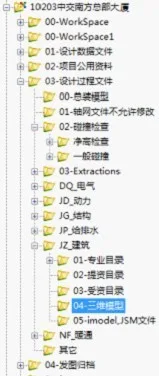
Figure 3: 3D Collaborative Management Catalog on the ProjectWise Platform
2.3 Three-Dimensional Collision Detection and Pipeline Integration
In complex construction projects, equipment pipeline layouts often face clashes—either between different pipelines or between pipelines and structural elements—due to system complexity and spatial constraints. These conflicts complicate construction, reduce interior net height, cause rework, waste resources, and even create safety hazards.
Traditionally, pipeline coordination relied on 2D comprehensive designs, overlaying pipeline layouts from various disciplines and determining elevations and critical sectional views. However, for large projects, BIM-based 3D pipeline integration offers clear advantages. BIM modeling acts as a full-scale “design rehearsal,” enabling comprehensive 3D reviews that uncover hidden issues related to interdisciplinary coordination and spatial conflicts—problems often missed in traditional single-discipline reviews.
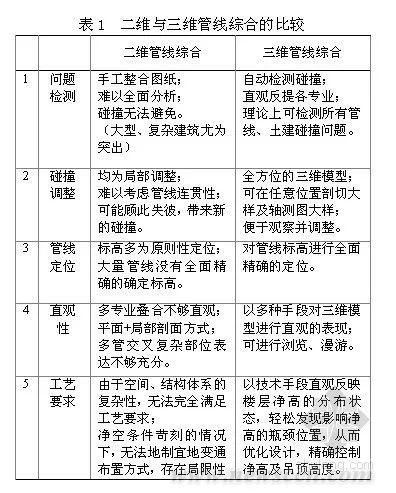
Table 1: Comparison between Traditional 2D Pipeline Synthesis and 3D Pipeline Synthesis
As a key achievement in the initial BIM application phase, 3D pipeline integration supported design, construction, and installation phases. Using Bentley’s module self-check functions and Navigator’s collision detection tools, conflicts between disciplines were identified and reported back to designers for model adjustments. This iterative process continued until all pipeline collisions were resolved layer by layer.
2.4 3D Rendering
Due to the limitations of 2D drawings in conveying spatial information, designers often rely on mental visualization. BIM’s 3D modeling capabilities greatly improve spatial understanding. However, industry standards and drafting rules still predominantly require 2D drawings. Therefore, 3D BIM results must be translated into 2D construction drawings.
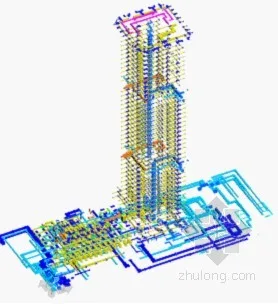
Figure 4: General assembly drawing of warm ventilation pipe
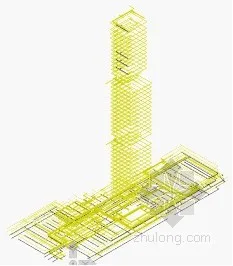
Figure 5: General assembly drawing of cable tray
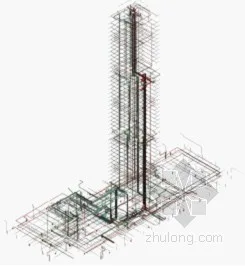
Figure 6: General assembly drawing of water supply and drainage systems
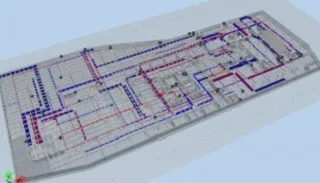
Figure 7: Comprehensive pipeline collision inspection results
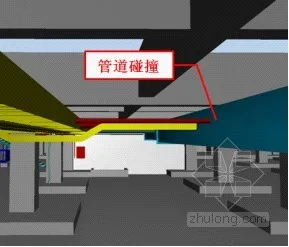
Figure 8: 3D visualization of collision points
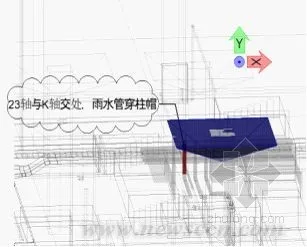
Figure 9: Design review document
Redrawing 2D construction drawings after design completion is time-consuming and wastes the value of existing 3D models. The most effective solution is to directly extract 2D drawings from the 3D model. Through pre-customization and Bentley’s DynamicView feature, we successfully generated comprehensive 2D pipeline profiles from 3D models, as shown in Figure 10. Moreover, annotations are linked to the 3D model settings, so any changes in the 3D model automatically update the 2D drawings. This frees designers from tedious drafting tasks, allowing them to focus on design quality.
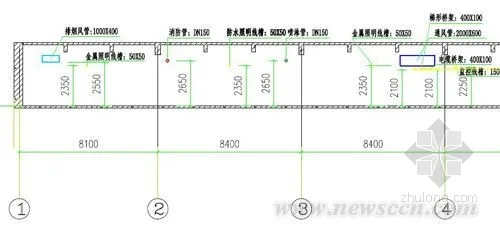
Figure 10: Comprehensive 2D pipeline sectional view generated by slicing the 3D model
2.5 Airflow Organization (CFD) Analysis
As energy becomes scarcer and human activities increasingly impact the environment through greenhouse gas emissions and pollution, the construction industry has turned to green building design. Green buildings focus on minimizing their environmental footprint throughout their lifecycle by conserving water and energy, reducing material consumption, and lowering carbon emissions.
Assessing green buildings traditionally requires specialized instruments and scale models, which can be costly and time-consuming. BIM technology offers a new approach by integrating real-world dimensions, materials, spaces, and equipment vents into a model that supports simulation and real-time analysis at a low cost, enabling designers to make informed adjustments early on.
Using the BIM model, we extracted the lobby and air outlet locations of the main CCCC building and imported them into a grid partitioning tool before running airflow simulations in AnsysFluent, as shown in Figures 11 and 12. Boundary conditions were set for HVAC nozzles, return air vents, curtain walls, and interior walls. The analysis included horizontal and vertical temperature distribution, human height temperature, and velocity profiles. Figure 13 displays the horizontal temperature distribution results.
Similarly, BIM models can be used to evaluate indoor thermal comfort (temperature, humidity, wind speed), pollutant diffusion and ventilation efficiency, high-rise space air conditioning performance, outdoor wind field simulations, fire scene airflow, and more.
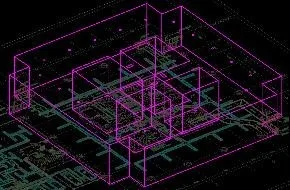
Figure 11: BIM model of the lobby
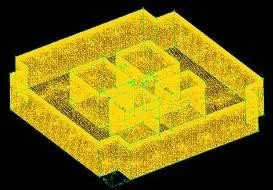
Figure 12: AnsysFluent model
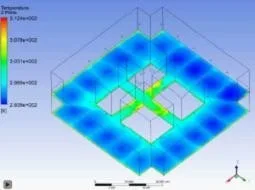
Figure 13: Horizontal temperature distribution results
2.6 Construction Simulation
Modern construction projects, especially those involving innovative building shapes, present increasing complexity that traditional construction methods struggle to address. Virtual Construction (VC), a key BIM application, simulates real-world construction processes digitally. It leverages parametric design, virtual reality, structural simulation, and CAD technologies, supported by 3D simulation software and high-performance computing.
VC simulates the flow of personnel, materials, finances, and information in a realistic environment, offering a controllable, non-destructive, low-cost, risk-free, and repeatable method for all stakeholders. This enhances construction quality, prevents hazards and accidents, reduces costs and duration, and improves decision-making, optimization, and control throughout construction, thereby strengthening project competitiveness.
By building a BIM model, construction teams can familiarize themselves with drawings, anticipate potential issues, and optimize construction plans proactively. Reliable BIM data supports production and preparation, while technologies like laser scanning, GPS, mobile communication, RFID, and the Internet enable real-time site tracking.
Currently, our team is integrating the completed 3D BIM model with construction progress data to develop a 4D construction resource information model, as shown in Figure 14. Future plans include combining this with construction resource and cost information to evolve into a 5D cost control system. This will facilitate BIM’s application across the entire design process—from collaborative 3D design and analysis to construction simulation and operational management—maximizing lifecycle service value for owners and contractors.
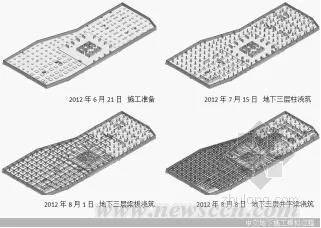
Figure 14: Construction simulation of the third underground floor
3. Conclusion
Our R&D team has established a dedicated BIM team, developed workflows, and built collaborative platforms through research and practical application. We have explored BIM applications across multiple fields. Moving forward, we will deepen BIM system research, create localized databases and enterprise standards tailored to our needs, and collaborate across architectural disciplines. Our goal is to fully integrate BIM technology throughout the entire design process and, combined with simulation analyses, progressively realize BIM’s application across the entire project lifecycle.
References:
__The Position, Evaluation System, and Possible Applications of BIM in the Construction Industry. Civil and Architectural Engineering Information Technology, 2010, 2 (1): 109-116
__He Xueshan, Li Liang. Application of 3D Design Technology in the Hefei Binhu International Convention and Exhibition Center Project. Civil and Architectural Engineering Information Technology, 2010, 2 (3): 76-79
__Yang Yuanfeng, Cai Xiaobao. Practice and Technical Exploration of Three-Dimensional Pipeline Comprehensive Design. Building Structure, 2011, 41 (1): I0023-I0025
__Murakami Wednesday. CFD and Architectural Environment Design. Zhu Qingyu et al. (translators). Beijing: China Architecture & Building Press, 2007
__Zhang Li, Shi Yi, Zhang Xiqian. Application Practice and Research Development Prospects of Virtual Construction Technology. Industrial Architecture, 2003 (11), 33-49
Author affiliation: China Shipbuilding Ninth Design and Research Institute Engineering Co., Ltd., Shanghai
Author biographies:
Hu Kai (b. 1984), male, engineer, master’s degree, specializing in performance-based analysis of high-rise building structures and BIM technology applications. E-mail: whocannet@163.com
Gu Qianyan (b. 1964), female, researcher and professor, specializing in hydraulic structure design, analysis of deep foundation pits for super high-rise buildings, and BIM technology applications. E-mail: guqianyan_cssc@sina.com














Must log in before commenting!
Sign Up