
Abstract How does BIM technology evolve from surface-level application to detailed point-level data? How can BIM technology be transformed into tangible value for a project? How can comprehensive value-added services be delivered to homeowners through BIM? Dongfeng Design and Research Institute provides clear answers to these questions in their “CAP – Sewage Treatment Plant General Contracting Project”.
1. Project Background
Project Name: CAP – Sewage Treatment Plant General Contracting Project
Design Unit: Dongfeng Design and Research Institute Co., Ltd.
Founded in Shiyan, Hubei in September 1973, Dongfeng Design and Research Institute Co., Ltd. (formerly the Dongfeng Design and Research Institute of the Ministry of Machinery Industry) relocated to the Wuhan Economic and Technological Development Zone on April 18, 2000. It was restructured on April 28, 2005, into a diversified company with 23.46% state-owned shares and 76.54% employee ownership.
The company holds Class A engineering design qualifications across multiple disciplines including mechanical, construction, general contracting, consulting, cost estimation, surveying, environmental pollution control (especially wastewater), and fire protection engineering. It was among the first design firms certified under GB/T9001 by the China Han Certification Center in 1997, and in April 2008, it achieved certification across quality, environmental, and occupational health and safety management systems. Recognized as a high-tech enterprise in Hubei Province, Dongfeng Institute has delivered internationally advanced automotive projects for clients such as Dongfeng Motor, Guangzhou Toyota, Guangzhou Honda, Dongfeng Honda, Dongfeng Nissan, and others. Nicknamed the “cradle of China’s automotive industry,” the company offers comprehensive technical services including project planning, engineering survey and design, general contracting, project management, and supervision.
Over years of development, Dongfeng Design Institute has grown into a group company with four main sectors: engineering technology, industrial investment, equipment manufacturing, and real estate.
Related Software Applications:
- Autodesk Revit Architecture
- Autodesk Revit Structure
- Autodesk Revit MEP
- Autodesk Navisworks
- Autodesk Inventor
- Autodesk Ecotect
- Autodesk 3ds Max
BIM Application Evaluation and Feedback:
The business chain at Dongfeng Design and Research Institute covers the entire lifecycle of construction projects. BIM models provide a unified data platform for design, construction, and operational management, ensuring production efficiency and quality while offering advanced strategies for overall project management.
— Qin Xiqing, Dean of the Architectural Design Institute, Dongfeng Design and Research Institute Co., Ltd.
We have developed a comprehensive Autodesk Inventor parametric model within our environmental equipment database, facilitating equipment selection and offering valuable references for equipment development. Complete equipment material data is accessible from the early design stages, and seamless integration with Autodesk Revit and Navisworks eliminates redundant modeling and reduces human resource waste.
— Qin Xiqing, Dean of the Architectural Design Institute, Dongfeng Design and Research Institute Co., Ltd.
The multi-disciplinary centralized collaboration mode in Autodesk Revit eliminates conflicts between complex pipelines during the design process, efficiently generating 2D construction drawings and material lists, significantly enhancing design quality and efficiency.
— Ji Wen, Director and Senior Engineer, BIM Technology Center, Dongfeng Design and Research Institute Co., Ltd.
2. Main Text
Comprehensive BIM Solution for Dongfeng Design and Research Institute’s General Contracting Project
CAP – Sewage Treatment Plant General Contracting Project
Project Overview
The CAP sewage treatment plant is located in Shenzhen, China. As a key environmental protection initiative, it aims to enhance local ecological balance and support sustainable development. Covering an area of 4,846.89 square meters, the plant has a primary treatment capacity of 2,000 m³/day and a secondary treatment capacity of 1,600 m³/day. It primarily processes wastewater from painting, engine production, and domestic sources.
After treatment, miscellaneous water quality meets relevant standards suitable for greening within the factory area. Production water, once meeting standards, can be reused in manufacturing processes. Treated water discharged from the plant complies with local discharge standards and is directed to artificial wetlands for further treatment.
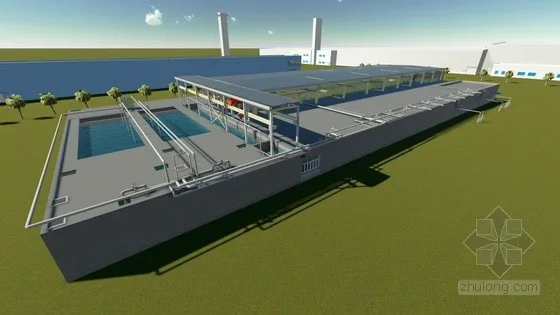
Figure 1: Overall View of the Sewage Treatment Plant
Technological Innovation
Dongfeng Institute has promoted BIM technology for six years. During this journey, BIM has expanded from point applications to surface-wide integration, cultivating numerous BIM professionals, establishing complete BIM workflows, and building extensive project experience. The challenge remains: how to move from broad surface applications back to detailed point-level value? How to convert BIM into measurable project benefits? How to deliver comprehensive value-added services to homeowners? Dongfeng Institute addressed these questions effectively in the CAP Sewage Treatment Plant project.
Collaborative Design Starting from the Planning Phase – Enhancing Design Quality
Design quality transcends aesthetics; it must fulfill construction functionality and cost control requirements. The best design arises from the most efficient use of space.
The CAP project faced a tight site with numerous process equipment, complex structures, frequent process changes, and extremely compact spatial requirements. Ensuring or even improving design quality under these constraints posed a significant challenge.
Traditionally, design relied heavily on the designer’s spatial imagination, which was often abstract and vague. General design models could only display appearance, limiting communication between owners and designers. When owners demand high internal space efficiency and layouts undergo continuous revisions, spatial occupation becomes difficult to visualize, resulting in increased modifications and coordination workload. Consequently, designers have less time to optimize quality, leading to a decline in design quality over time. This is a common industry issue rooted in traditional design processes.
The BIM collaborative design approach effectively addresses this problem. With synchronous participation of designers from various disciplines at all design stages, even the conceptual phase benefits from integrated input. Designers initially propose approximate volumes and frameworks based on process requirements, while downstream equipment and structural specialists evaluate and design according to their needs. This collaboration, integrated with process requirements, completes architectural schemes more efficiently, optimizing spatial utilization.
In detailed engineering design, each discipline refines the scheme using BIM’s 3D collaborative mode, reducing communication, coordination, and modification time. This allows designers to focus on higher quality solutions. The entire collaborative process is documented in the BIM central model, enabling Dongfeng Institute to provide value-added services such as 3D BIM model walkthroughs and design optimization reports to owners remotely.
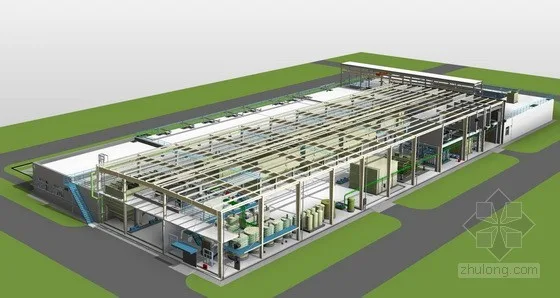
Figure 2: Multidisciplinary Collaborative Design Model
BIM-Centric Project Participation – Optimizing the Project Lifecycle
BIM design outputs extend beyond traditional drawings to include comprehensive models containing drawings, quantities, 3D visualizations, construction sequences, and equipment manufacturer details. This maximizes design consistency and rationality while facilitating intuitive, real-time queries of design schemes. Communication between designers and owners is smoother, significantly increasing owner engagement, especially for those less familiar with technical drawings.
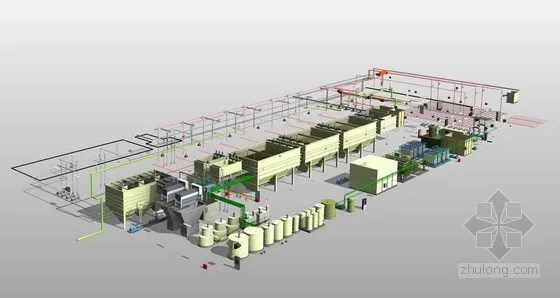
Figure 3: Real-Time Searchable Process Model
BIM models have also greatly streamlined communication with process equipment manufacturers, enabling more reliable non-standard designs. Using Autodesk Inventor for non-standard equipment design, BOM tables and detailed three-view drawings can be directly generated and seamlessly integrated with Autodesk Revit. Equipment installation diagrams are clearly visible, improving accuracy and reducing the need for on-site decisions, thus expanding BIM’s workflow capabilities.
Dongfeng Institute has developed a comprehensive Autodesk Inventor parametric equipment model database, allowing manufacturers to participate during engineering design and conduct equipment prefabrication. During equipment bidding, manufacturers must provide complete digital product models that integrate into the BIM workflow. This ensures detailed equipment and material data are available early, supporting subsequent design phases and simplifying interactions among owners, designers, manufacturers, and installation teams, ultimately shortening the project timeline.
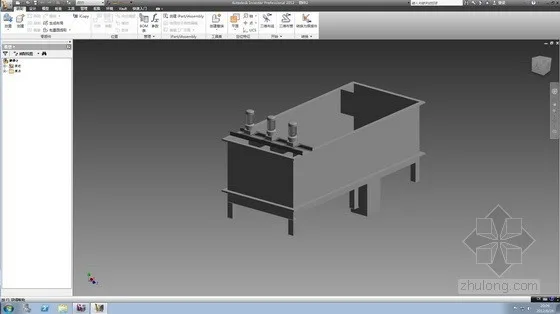
Figure 4: Manufacturer-Supplied Equipment Model
Sustainable BIM Value – Project Construction Management
In later design stages, the general contracting and economic departments join the project. Using the BIM model, they prepare construction plans and integrate practical construction and financial information. Autodesk Revit enriches the model components with construction phases, implementation costs, and other data, generating a detailed BIM model for construction management.
Once design is complete, the BIM model synchronizes with project management software such as Microsoft Project. By importing Project’s Gantt charts into Autodesk Navisworks, construction phase data links with model information to enable real-time 4D construction progress simulations. This technology allows owners to rehearse construction plans before breaking ground, clearly visualize milestone events, monitor progress on-site, identify issues proactively, and coordinate effectively. It also helps owners and design teams verify contractors’ understanding of design and overall scheduling.
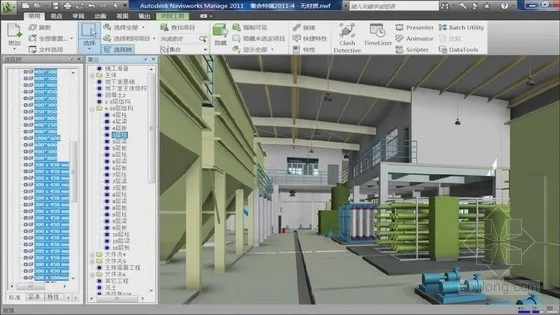
Figure 5: 4D Construction Progress Simulation
The construction team can further input data on workforce, materials, equipment, costs, and site layout into the 4D BIM model, creating a 5D virtual construction simulation. This facilitates more effective construction planning and resource allocation, enables real-time monitoring of planned versus actual progress, reduces redundant data entry, improves data utilization, and minimizes errors caused by manual handling.
Real-time construction simulations enable early detection of potential problems and support more efficient resource management throughout the construction phase.
Value-Added Services for Homeowners – BIM Operation and Maintenance Data Management
The BIM model is refined and updated continuously during construction, culminating in an as-built BIM model rich with accurate construction data, material and equipment details including suppliers, costs, and maintenance contacts. Through specific development, this information can integrate with operation and maintenance management systems, providing reliable, practical data to assist owners and facility managers with real-time queries and management.
While construction lasts a few years, operation and maintenance may span decades or even centuries. BIM technology ensures the wealth of engineering data generated during construction supports long-term facility management. However, over time, changes in environment, functionality, and layout will occur. Thus, BIM is not static; it must be regularly updated and maintained to maximize its ongoing value. Dongfeng Institute offers BIM operation and maintenance training, long-term data updates, renovation recommendations, performance analysis, and environmental and sustainability evaluations to support this lifecycle approach.
This project received the third prize in the Best Industrial Engineering BIM Application category at the 2012 “Innovation Cup” BIM Design Competition, organized by the China Association for Surveying and Mapping and Autodesk.














Must log in before commenting!
Sign Up