
Abstract
The high-speed railway project in western China is designed for a speed of 250 km/h, stretching across three provinces and eleven counties. The main line spans approximately 515 km, featuring 14 super-large bridges and 180 extra-long tunnels. The combined length of bridges and tunnels is about 405 km, accounting for 81% of the route. The railway navigates the steep, rugged mountains of southwestern China, where complex terrain and geological conditions present significant challenges to both design and construction.
1. Project Background
Project Name: 3D Design of a High-Speed Railway in Western China
Design Unit: China Railway Eryuan Engineering Group Co., Ltd.
China Railway Eryuan Engineering Group Co., Ltd. (formerly Railway Second Survey and Design Institute) was established in September 1952. It is currently part of China Railway Engineering Group Co., Ltd., a Fortune 500 company. As a large-scale comprehensive enterprise in survey, design, and consulting, China Railway Eryuan holds over 40 qualification certificates spanning survey, design, consulting, supervision, environmental assessment, and external business operations. It was one of the first eight units in China to receive comprehensive Class A design qualifications and the first outside the highway system to obtain the “Class IV” highway qualification.
The company covers over forty specializations, including railway lines, tracks, geology, subgrade, bridges, tunnels, stations, construction, environmental protection, communication, signaling, electricity, and aerial surveying. While rooted in railways, its expertise extends to highways, urban rail transit, municipal engineering, regional comprehensive planning, ferry terminals, engineering general contracting, supervision, geotechnical construction, real estate, product industrialization, metallurgy, and mining.
Related Software Applications:
- Autodesk Revit Architecture
- Autodesk Revit Structure
- Autodesk Revit MEP
- Autodesk Navisworks
- Autodesk Ecotect
- Autodesk 3dsMax Design
- AutoCAD Civil 3D
BIM Application Evaluation and Feedback:
“Autodesk Revit, as a key technical platform for BIM, enables three-dimensional interaction of design results across plans, elevations, and sections. It offers powerful multitasking capabilities, revolutionizing railway station building design concepts and methods.”
— Dong Fengxiang, Chief Engineer, Information Center, China Railway Eryuan Engineering Group Co., Ltd.
“Using Autodesk’s 3D design software, owners gain a clearer and more vivid understanding of the final design. Communication barriers during reporting have significantly decreased, earning high praise from project owners.”
— Dong Fengxiang
“AutoCAD Civil 3D impressed me with its robust parameterized railway subgrade modeling and dynamic updating. It greatly enhances efficiency for line and subgrade professionals.”
— Hu Guangchang, Deputy Chief Engineer, Traffic Planning Institute, China Railway Eryuan Engineering Group Co., Ltd.
“By creating customized 3D bridge structure families in Autodesk Revit Structure and exposing structural parameters for flexible modification, we introduced a new, intuitive, and efficient approach to bridge 3D modeling and design changes.”
— Yang Yongyi, Bridge Engineer, China Railway Eryuan Engineering Group Co., Ltd.
2. Main Text
Application of BIM Technology in High-Speed Railway Design
3D Design of a High-Speed Railway in Western China
Project Overview
The project involves a high-speed railway designed for 250 km/h, crossing three provinces and eleven counties with a main line length of about 515 km. It includes 14 super-large bridges and 180 extra-long tunnels, with the total length of bridges and tunnels reaching approximately 405 km—81% of the entire route. Navigating the steep mountainous terrain of southwestern China, the project faces complex geological and topographical challenges that complicate design and construction.
China Railway Eryuan Engineering Group Co., Ltd. implemented BIM technology to enable multidisciplinary collaborative design for the station front area, completing the 3D design cycle between January and June 2012.
Project Challenges and Solutions
The project’s extensive route length and numerous influencing factors in route selection and cross-sectional design posed a considerable workload. Additionally, the design cycle was compressed to approximately six months—only half the time typical for projects of similar scale. A key challenge was to evaluate and select multiple design alternatives within this limited time while producing high-quality cross-sectional drawings. The owner also expected a more intuitive representation of the final design.
To meet these challenges, China Railway Eryuan formed a dedicated BIM design team. This team utilized BIM technology to facilitate data collaboration and sharing among various disciplines, enhancing design quality and providing a clearer, more intuitive deliverable for the owner.
Collaborative Design of Railway Lines and Subgrade Using BIM
The design process began with a spatial route selection system based on a 3D GIS platform to plan railway corridors, laying the groundwork for detailed design studies. This system integrated terrain elevation data, imagery, and geographic information to directly support route planning and design, displaying comprehensive plans and constructing a 3D railway scene along the route to enable comparison and selection of alignment options.
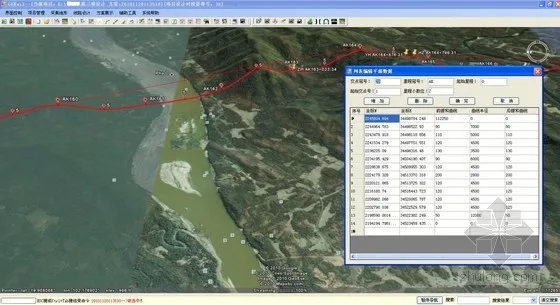
Figure 1: Interactive Route Alignment
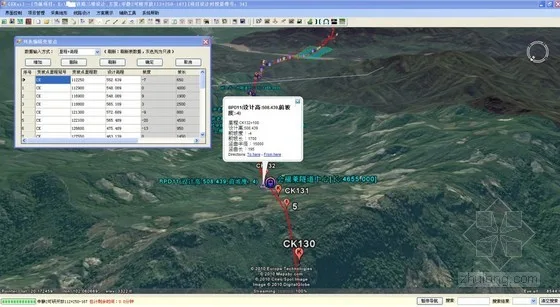
Figure 2: Setting Vertical Slope Change Points
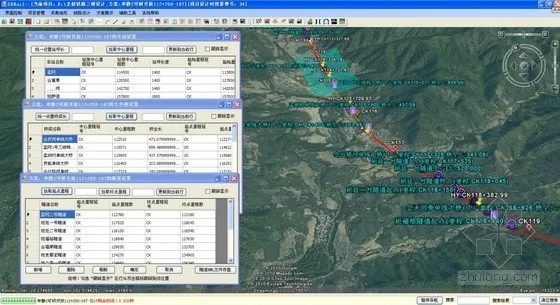
Figure 3: Locations of Planned Stations, Bridges, and Tunnels
Following route planning, designers imported the horizontal and vertical alignment data directly into AutoCAD Civil 3D, rapidly generating a 3D railway subgrade model based on preliminary assemblies. The parameterized subgrade modeling and dynamic updating features of AutoCAD Civil 3D enabled line and subgrade specialists to efficiently complete their work. Adjustments to horizontal and vertical alignments instantly updated the subgrade model and earthwork volumes in real time.
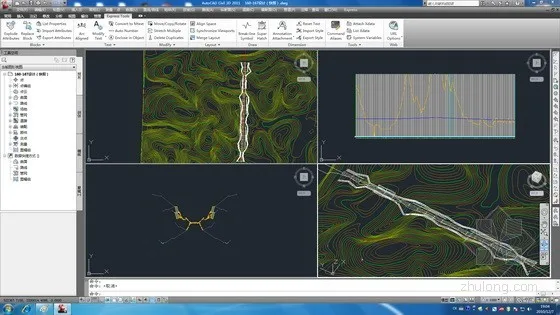
Figure 4: Adding a Roadbed Model to Generate a 3D Roadbed
The railway traverses mountainous terrain with significant elevation changes, resulting in frequent cross-sectional adjustments. Traditionally, designing a 10 km stretch of subgrade cross-section would take about five days due to the manual workload. Using intelligent roadbed cross-section components and condition-based assemblies in AutoCAD Civil 3D, designers easily managed these cross-sectional changes. The cross-sectional drawings and 3D roadbed model remain dynamically linked, so any changes to the horizontal and vertical alignments or roadbed assemblies are instantly reflected in the cross-sectional drawings.
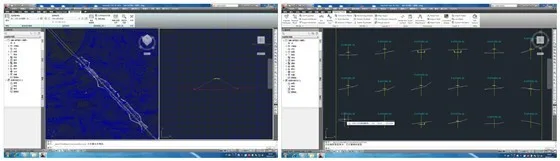
Figure 5: Correspondence Between 3D Roadbed Model and Cross-Sectional View
Figure 6: Automatic Generation of 2D Cross-Sectional Views from 3D Roadbed Model
This streamlined process allowed designers to focus on design quality. For the 160 km railway subgrade, detailed studies on cross-sectional slopes, retaining walls, and drainage ditches took approximately 10 days, with minimal time spent on drawing revisions.
Application of BIM Technology in Bridge Design
For railway bridge design, designers built extensive parameterized bridge structure family libraries in Autodesk Revit Structure, customizing relevant view and schedule templates. Using surveying, geological, and route data, they assembled 3D bridge models rapidly and generated 2D drawings and concrete volume calculations efficiently.
Additionally, leveraging Autodesk Revit’s API, engineers developed a parameterized steel reinforcement configuration module for bridge substructures, enabling quick placement of solid steel reinforcements for various bridge piers and abutments. This facilitated the production of reinforcement drawings and accurate quantity takeoffs.
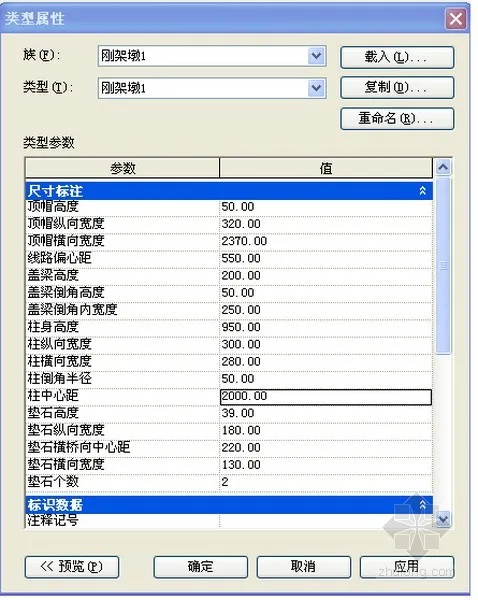
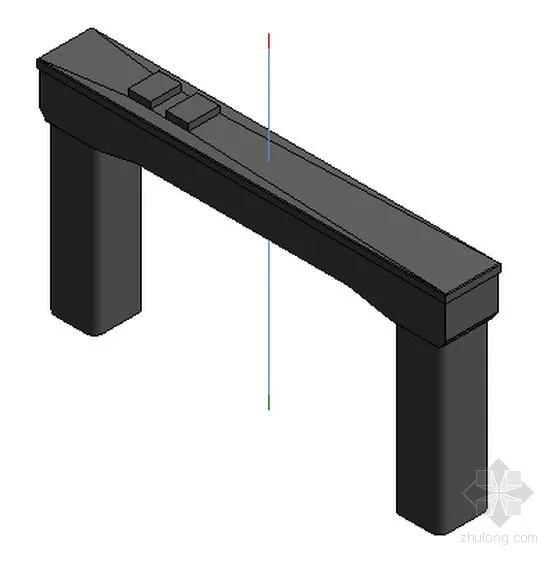
Figure 7: 3D Rigid Frame Pier Model (Parameter Set)
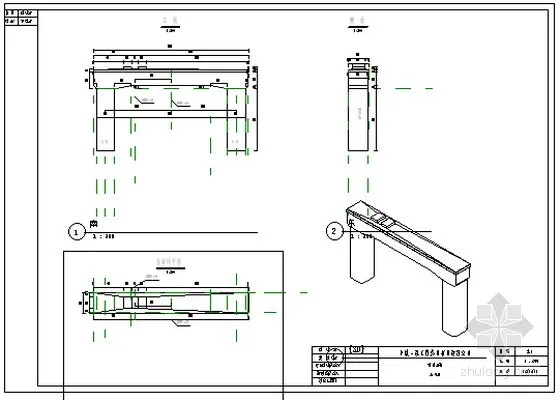
Figure 8: 3D Model of Steel Frame Pier 2
Application of BIM Technology in Station Design
In station design, Autodesk Revit software was applied based on BIM principles. Traditional workflows rely on 2D plans for communication across disciplines, which are often unintuitive and hinder coordination. Minor design clashes can lead to costly construction changes.
Using Revit’s working set and link management features, designers integrated and detected conflicts across multiple professional models. For one station, five collisions were identified between pipeline systems and structural components. Addressing these collisions in advance allowed for revised pipeline layouts, preventing errors during construction and providing the owner with a more intuitive visualization of the final design.
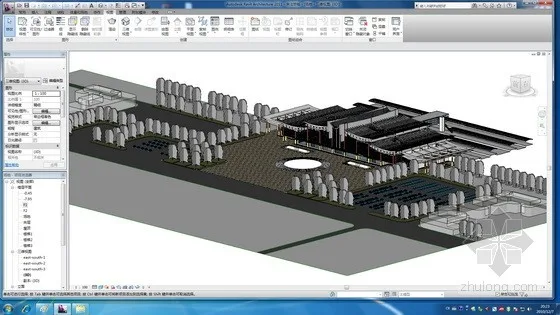
Figure 9: 3D Station Model Designed Using Autodesk Revit
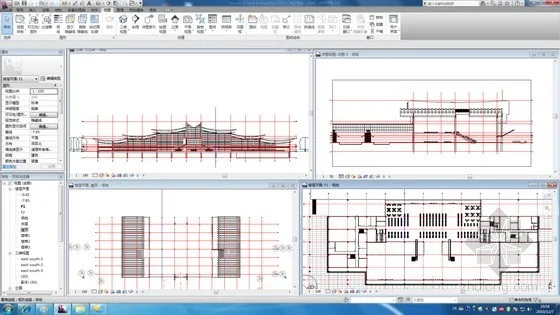
Figure 10: 3D Model Sections from Different Perspectives
After design completion, the entire station model was imported into Autodesk Navisworks for 4D construction simulation. This enabled the construction project manager and owner to better understand the construction process and monitor progress effectively.
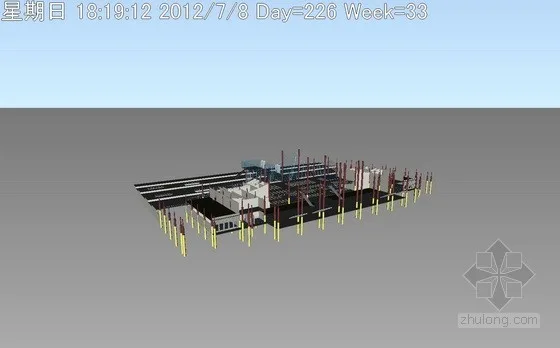
Figure 11: 4D Construction Simulation I
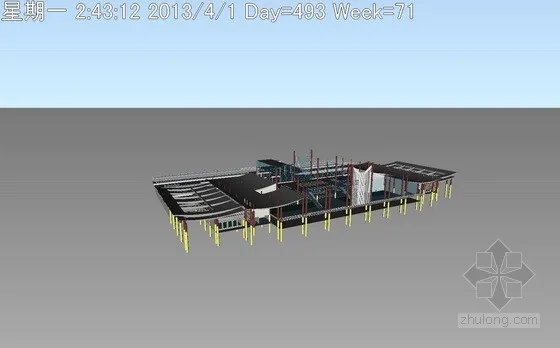
Figure 12: 4D Construction Simulation II
BIM Technology and Project Achievements
For visualization and communication, designers imported the 3D railway subgrade and terrain models created in AutoCAD Civil 3D into Autodesk 3dsMax Design via AutoCAD Civil View. This enabled realistic visualization of railway track routes to facilitate solution discussions. Previously, modeling in 3dsMax was time-consuming and often lacked accuracy, especially for stepped slopes and retaining walls. Now, accurate 3D models from AutoCAD Civil 3D are seamlessly imported into 3dsMax Design, maintaining live updates between both platforms. This not only reflects the project more precisely but also saves time on repetitive modeling, allowing multimedia producers to focus on rendering and animation.
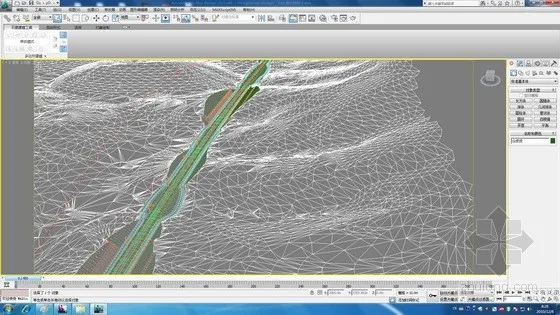
Figure 13: Local Road Model Imported into Autodesk 3dsMax
After project completion, the multimedia team imports roadbed, bridge, and station data generated by Autodesk software into a proprietary visualization system. Combined with survey and geological data, this system displays and reports the entire railway line and manages corresponding design data effectively.
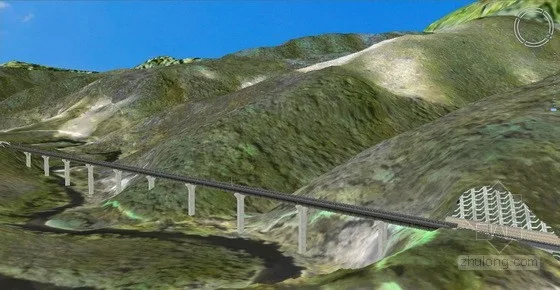
Figure 14: High-Precision 3D Virtual Terrain Scene
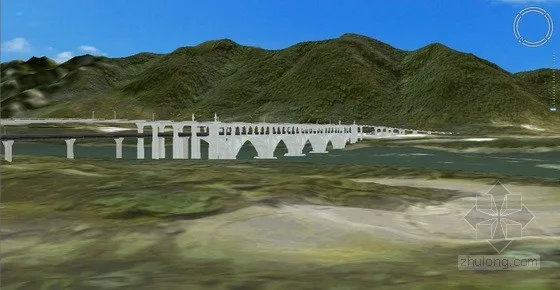
Figure 15: Detailed 3D Bridge Model
Throughout this high-speed railway project, the team utilized most mainstream software within the Autodesk engineering and construction ecosystem. They addressed design challenges across all phases and delivered high-quality designs within a compressed timeline. Crucially, BIM technology ensured that design data was effectively transferred and preserved at every stage, providing valuable information for subsequent construction and operational maintenance.













Must log in before commenting!
Sign Up