
You stand on the bridge, taking in the breathtaking scenery.
Above you, someone watches the view, observing you in return.
The bright moon gently illuminates your window.
You have adorned someone else’s dream.
——From “Breaking Chapters” by Bian Zhilin
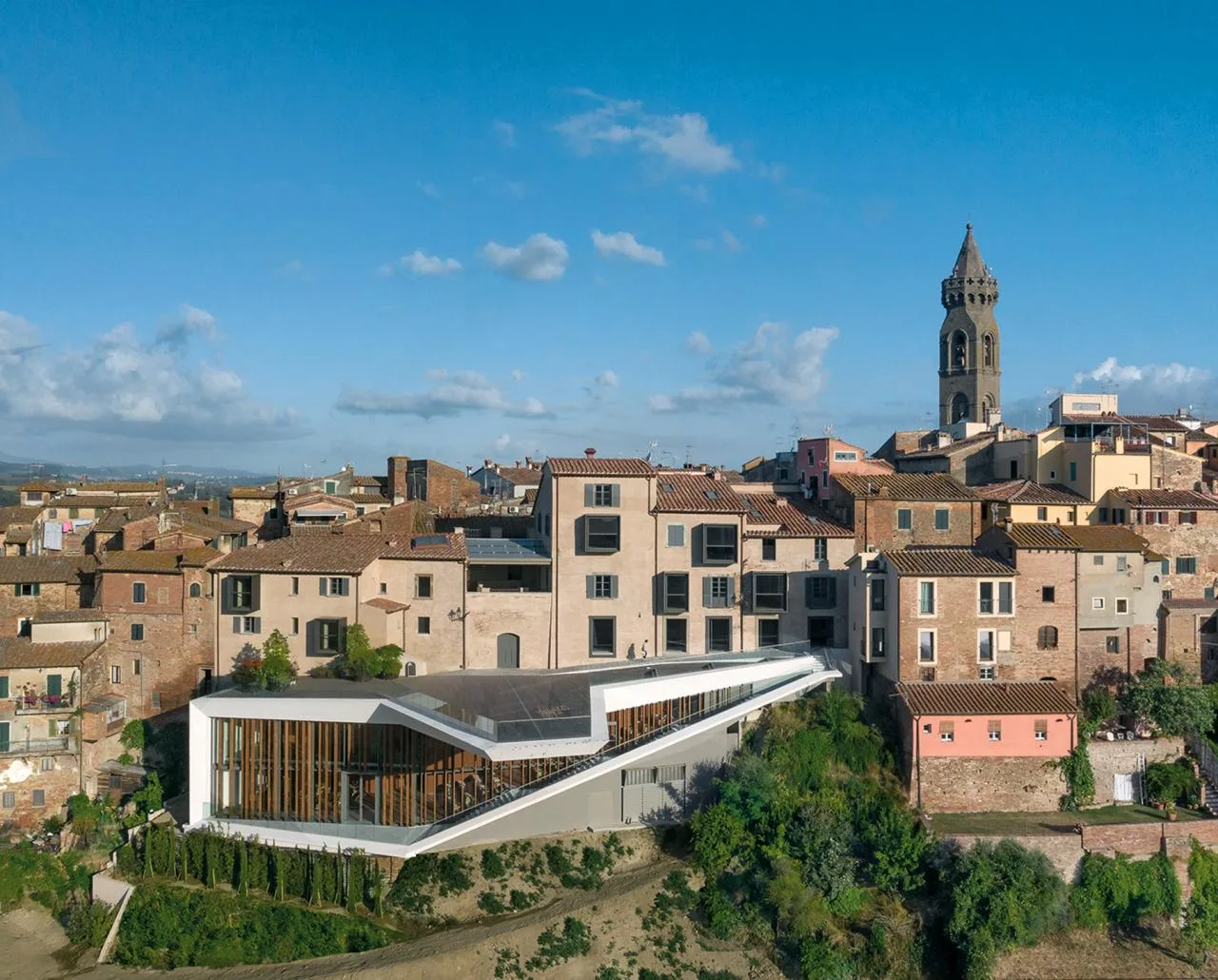
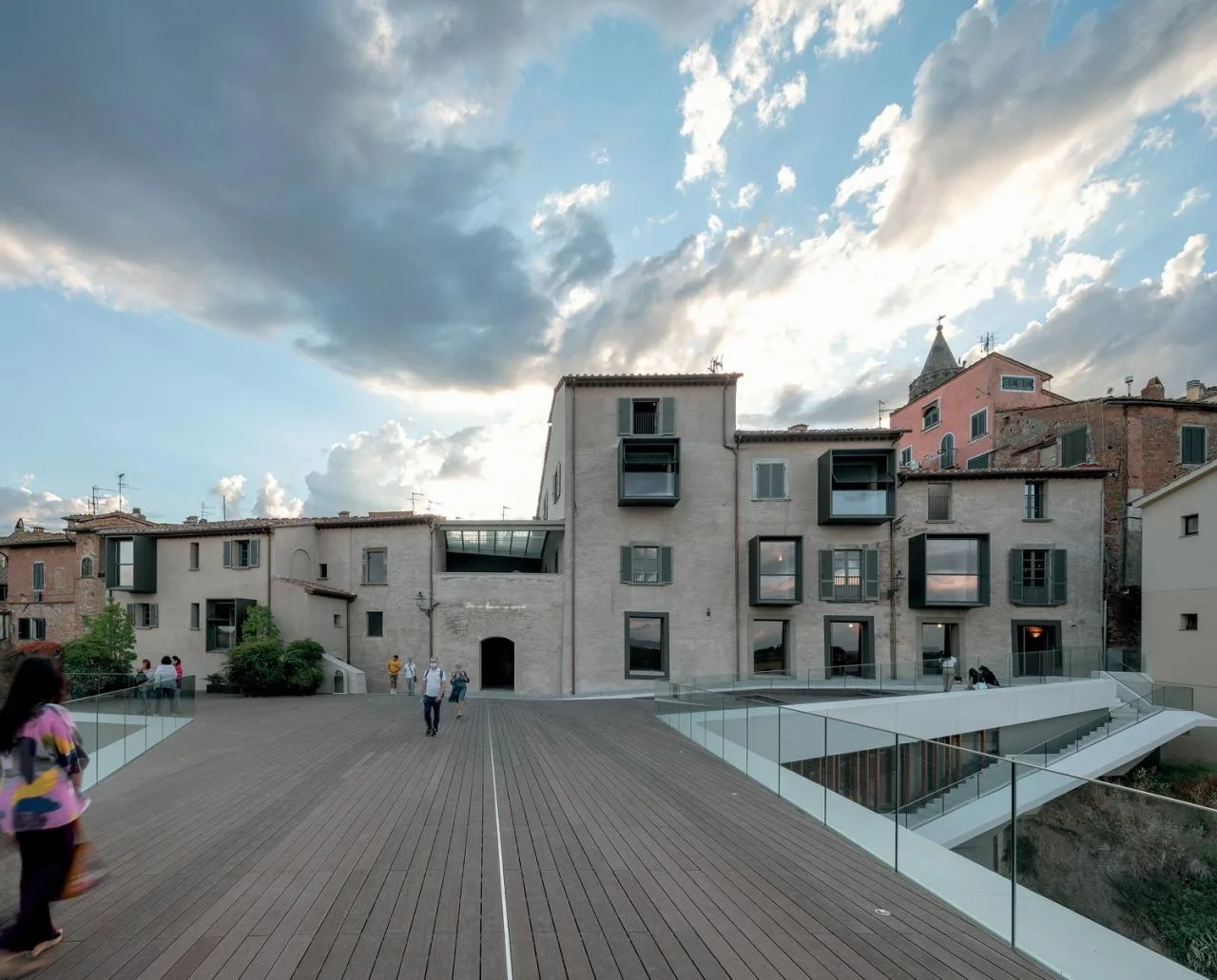
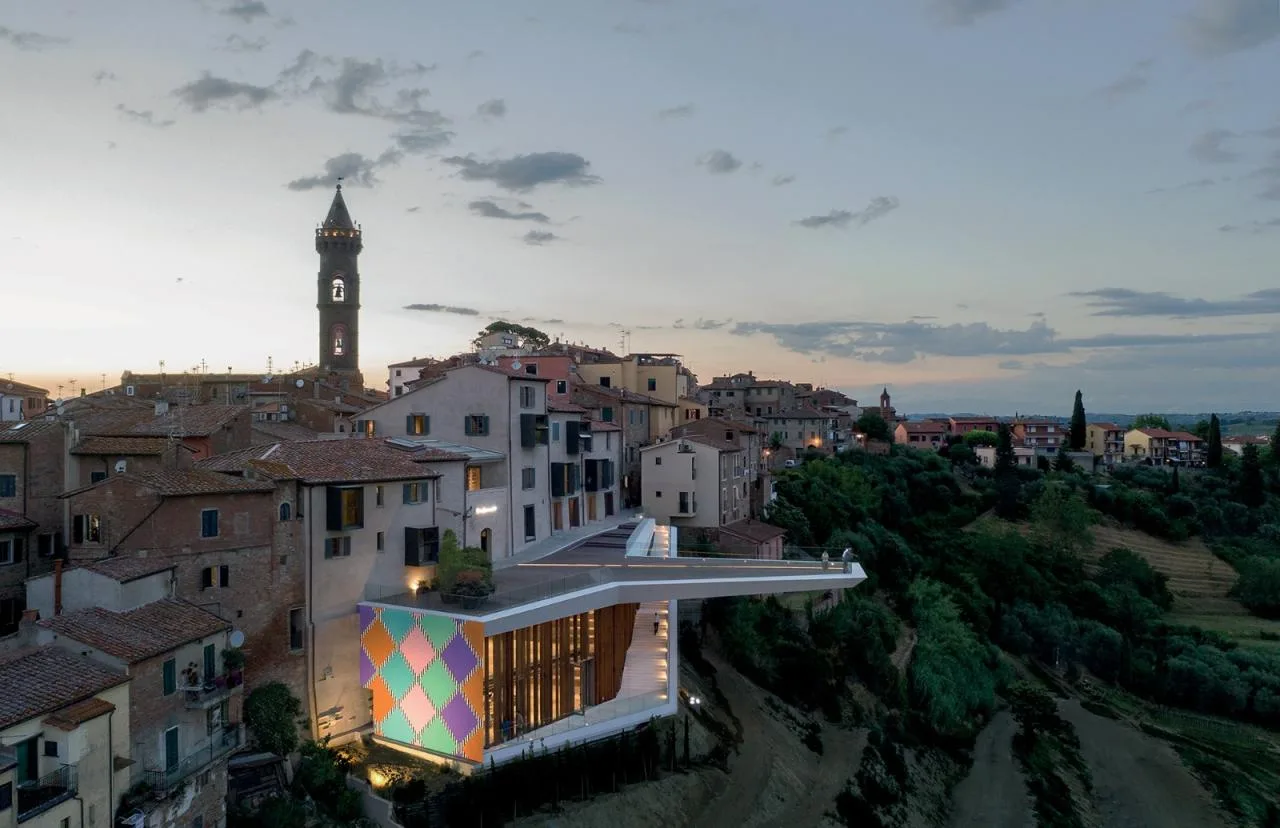
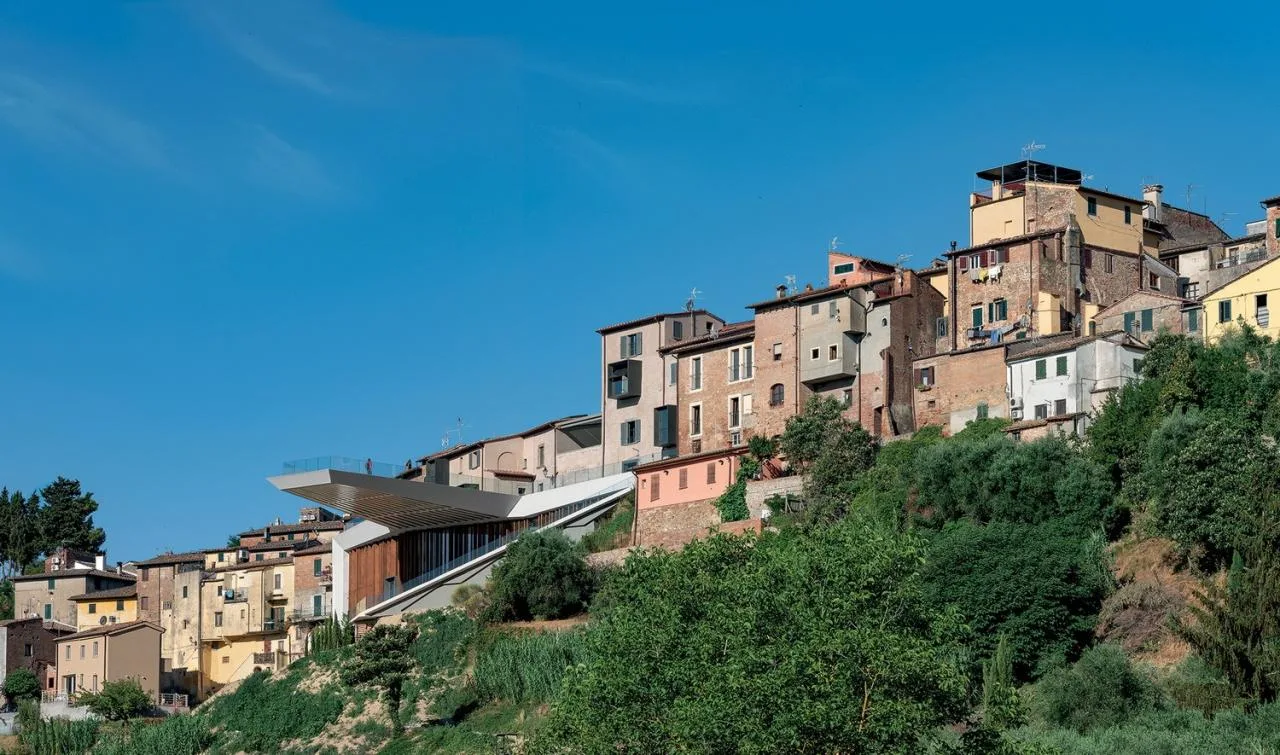
Rising proudly, this ‘floating bridge’ extends into the valley, with a medieval ancient city as its backdrop, immersed in the stunning landscapes of the Tuscan foothills.
This is the Peccioli Creative and Cultural Center, known as the “Eternal Palace” — a new bridge that connects history and future, city and nature within this timeless small town.
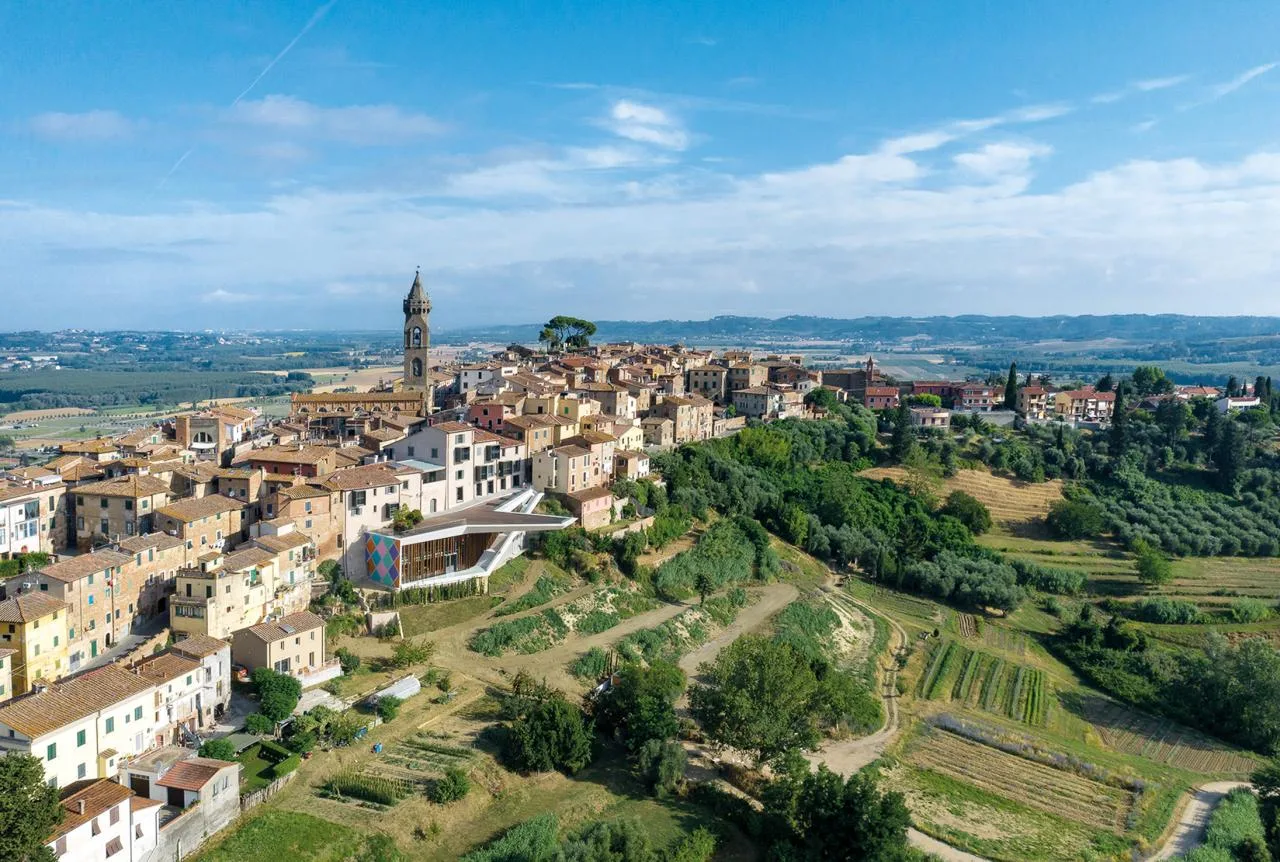
Peccioli, located in Tuscany, Italy, is celebrated for its stunning pastoral scenery and rich history. This medieval city, perched atop a mountain, features charming staircases and unique alleys weaving through the old town. The ancient buildings scattered across the mountaintop overlook the valley, preserving the medieval character and narrating a millennium of prosperity and change.
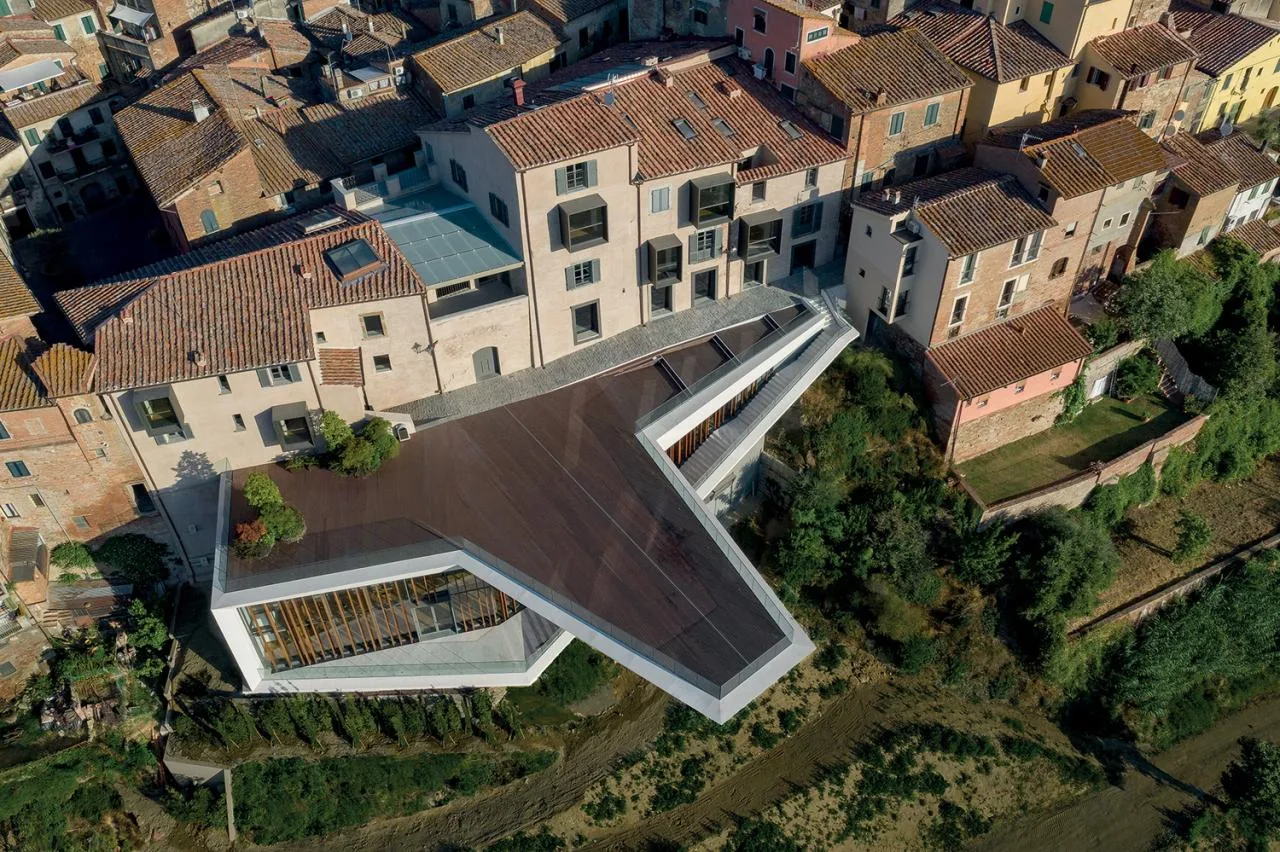
The “Palace of Eternity” Creative Cultural Center is a flagship project supported by the Peccioli municipal government to foster new cultural initiatives and commercial activities aimed at revitalizing this mountain city. It explores how architecture can concretely promote sustainable development, enhance the value of architectural heritage, address the challenges of depopulated small towns, and invigorate urban life.
The design by MC A Architecture Firm emphasizes respect for the site’s original ecological environment, maximizing connection with nature, integrating urban cultural heritage, and creating a “living museum.” This approach models a new path for the revival of historic cities, using public buildings as drivers for urban growth and sustainable social progress.
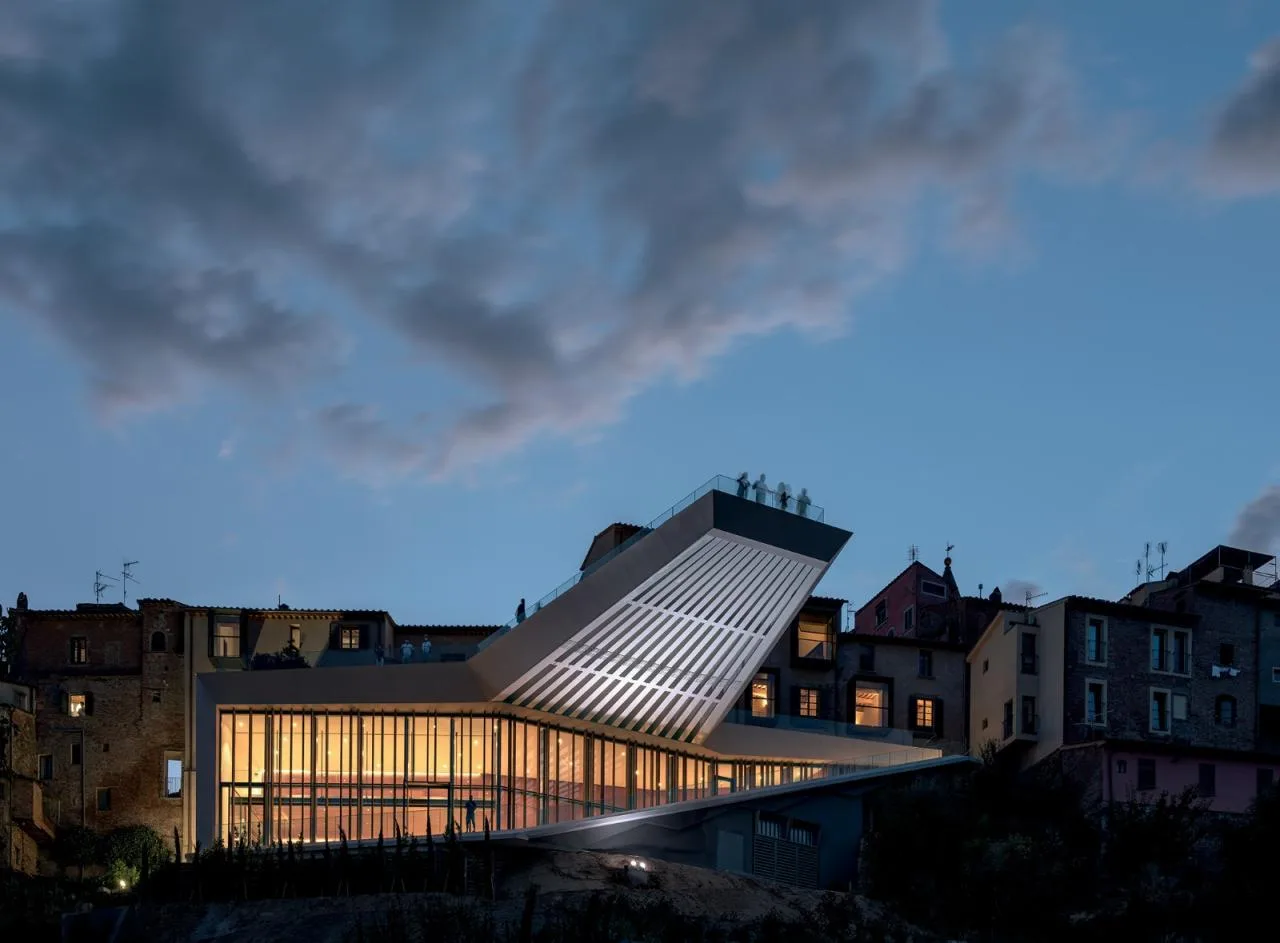
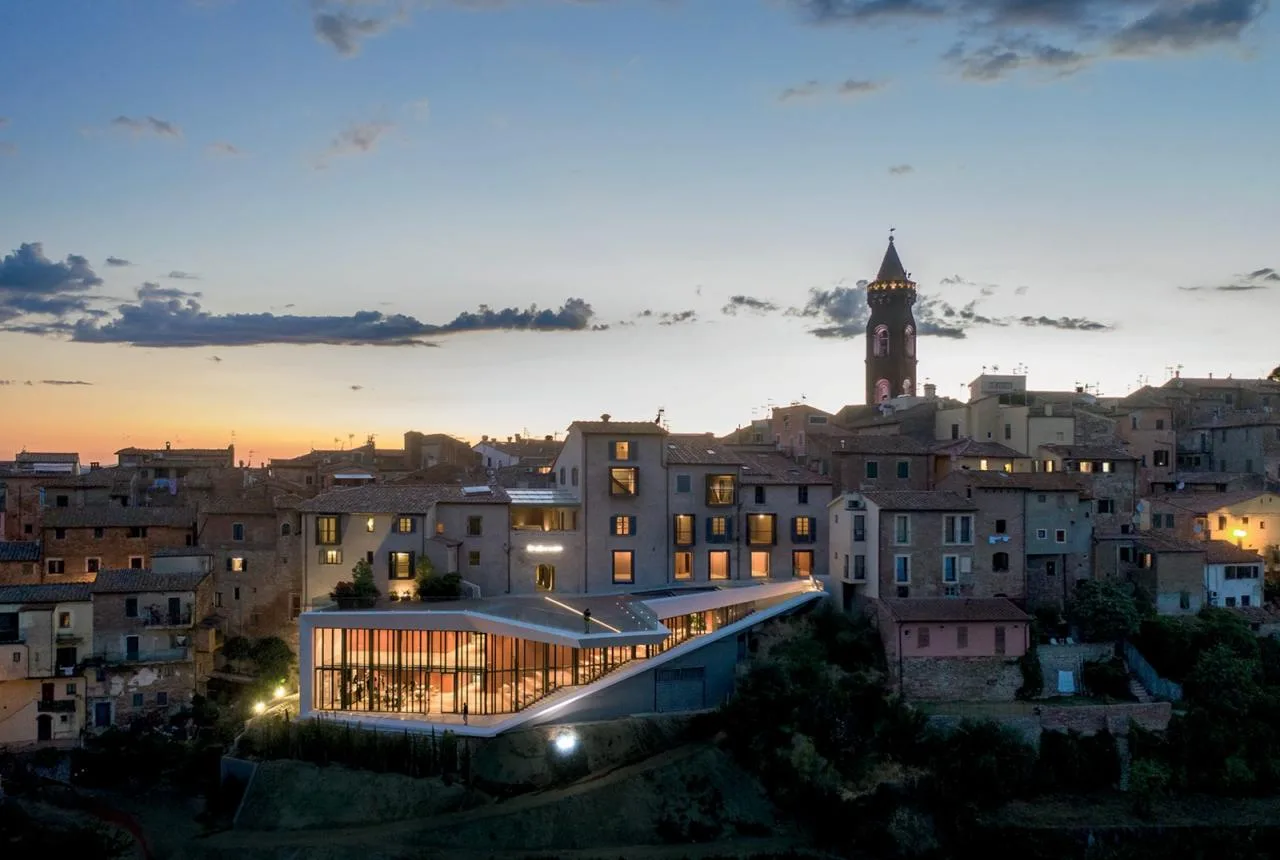
Located on Carraiada Street in the heart of the old city, the project includes a renovated 14th-century palace complex alongside a new two-story building. Carraiada Street serves as the main artery linking Peccioli’s historic and modern districts, connecting key sites such as the cathedral and city hall. The complex organically integrates old and new functions across multiple floors, including apartments, exhibition halls, co-working spaces, multimedia libraries, public meeting rooms, cafes, and restaurants. A striking 600-square-meter cantilevered observation deck seamlessly blends into the valley landscape.
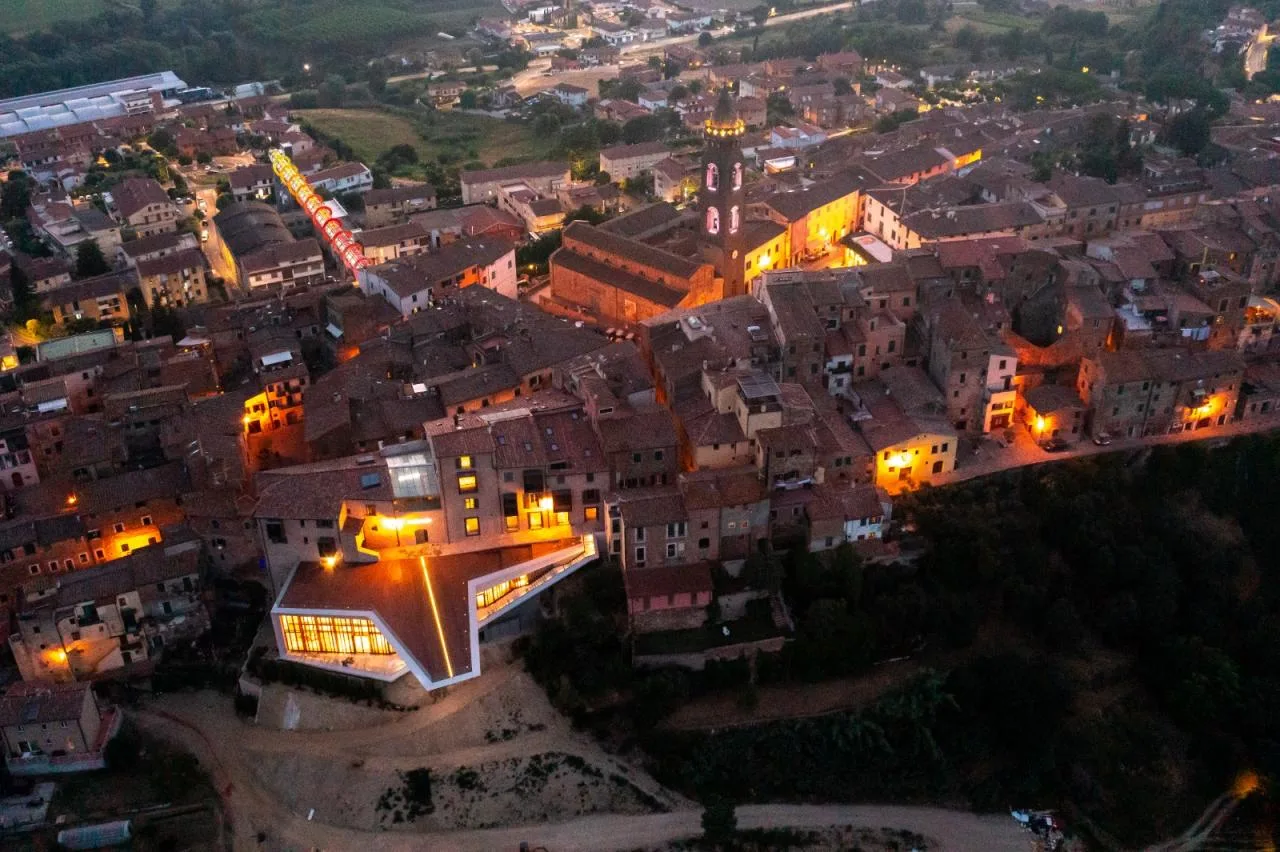
Revitalizing the Ancient City
Peccioli serves as a true urban laboratory. This project continues that tradition by breathing new life into the historic center with contemporary elements, rather than merely preserving the past.
Rooted deeply in local culture, the design aims to create a vibrant new urban living space and stimulate city revitalization. Here, history and future, architecture and nature, intersect in a dialogue across time and space, sustaining the enduring vitality of this historic town.
The restoration carefully preserves well-maintained sections of the original buildings. Following the original layout and spatial characteristics, residential areas are located on the southeast side of the site, away from public spaces, ensuring a peaceful living environment.
On the north side, the design creates dynamic flow spaces that connect different nodes, blending cultural memories with spatial experiences. This area supports multiple uses such as commercial offices and cultural exhibitions, enriching the creative center’s offerings and boosting economic vitality.
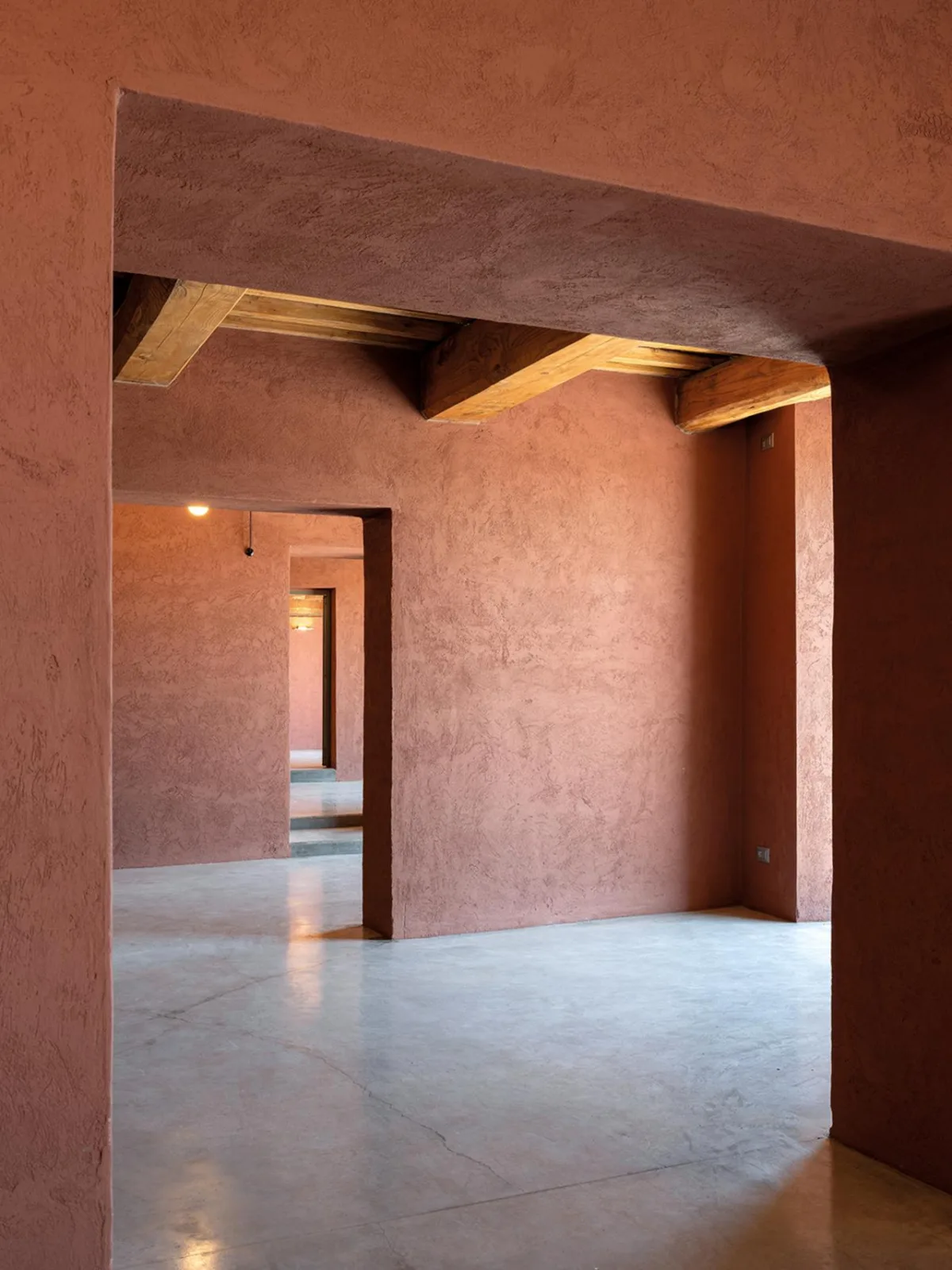
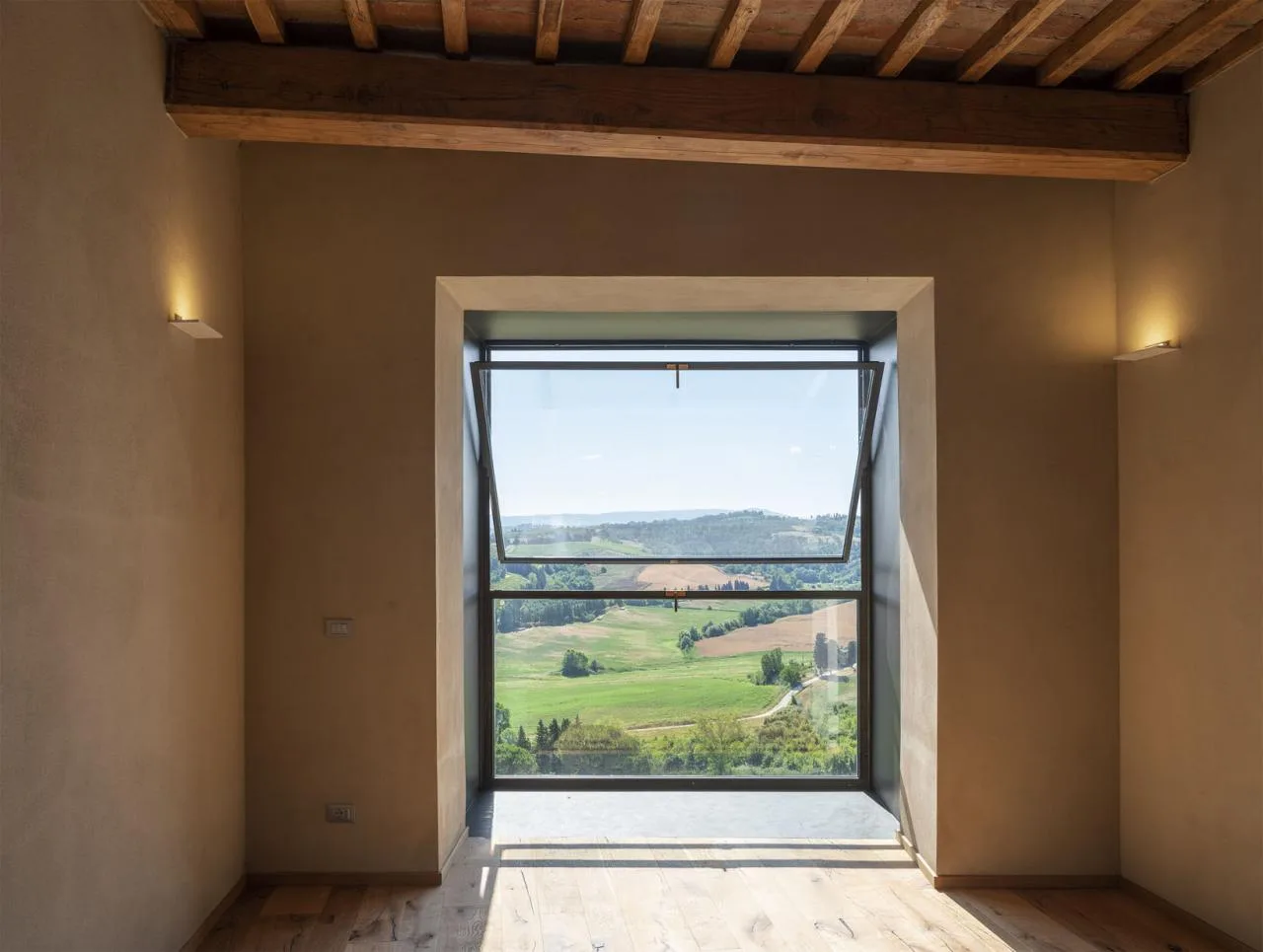
The design translates traditional architectural elements through modern techniques. The ancient wooden beam ceilings are retained, while skylights and protruding windows on the roof and façade invite abundant natural light inside.
Windows that extend outward like frames bring views of the valley directly into the interior, creating a seamless interaction between building and nature.
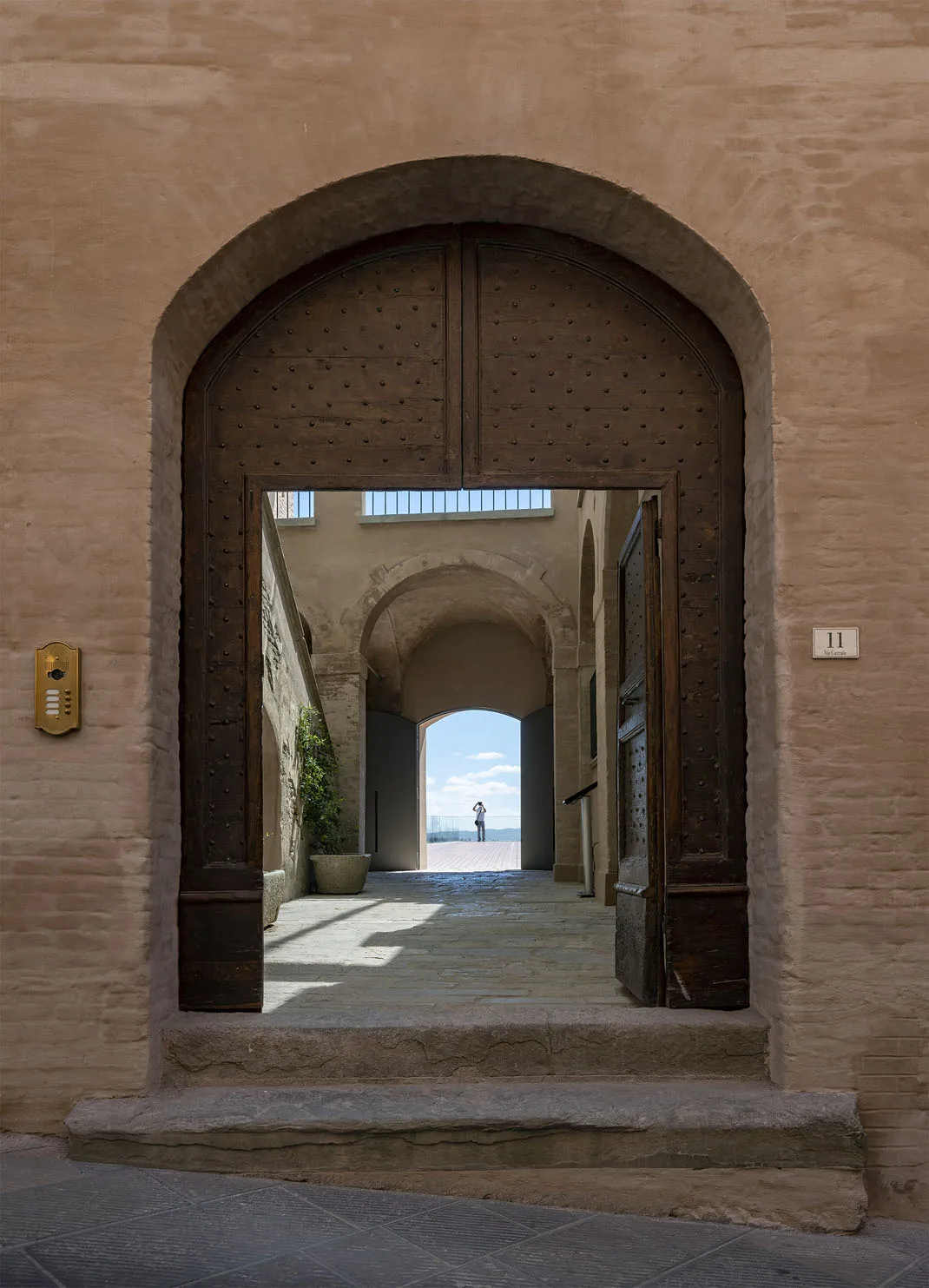
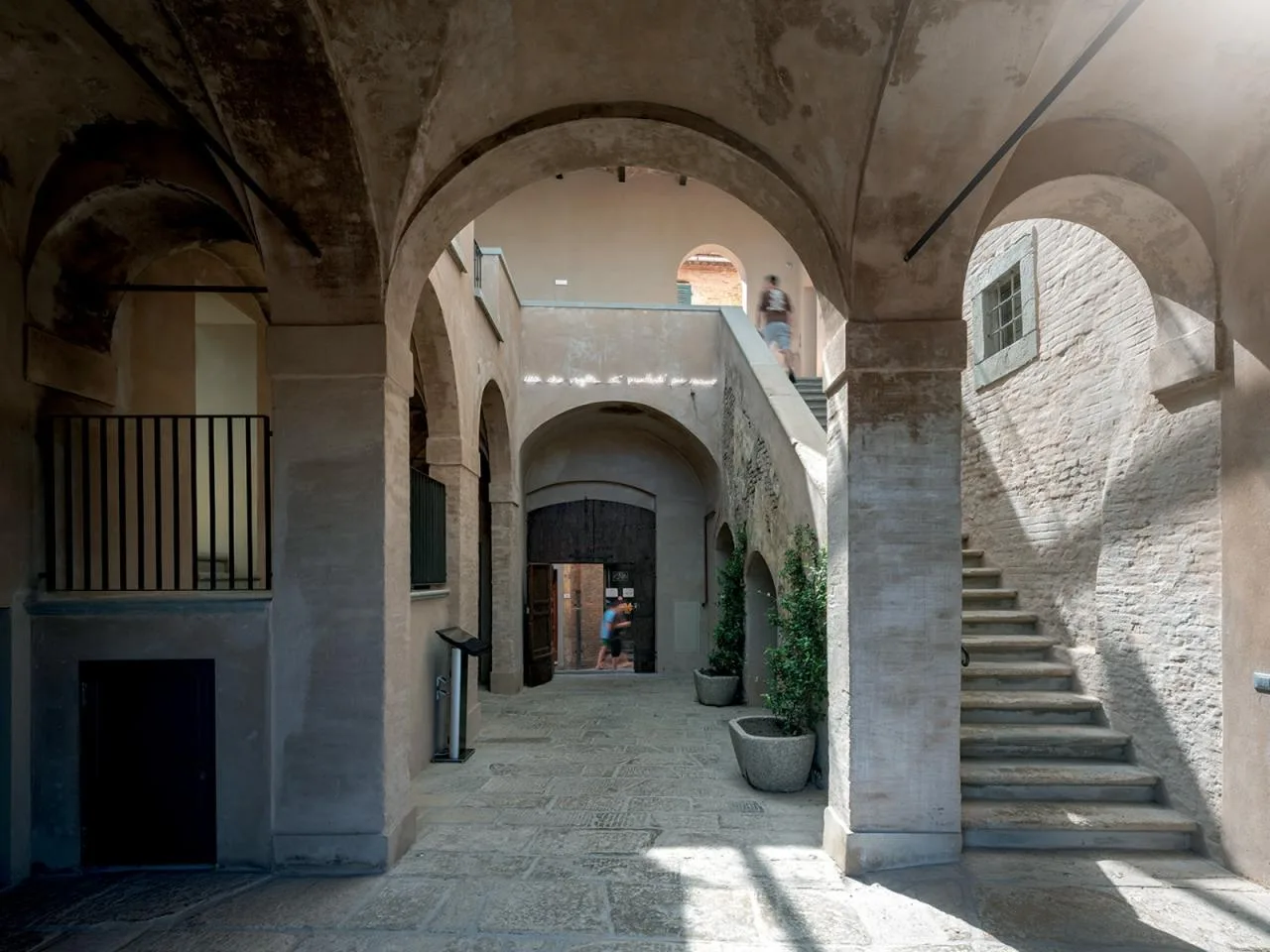
The main entrance courtyard links the street to the ‘floating bridge’, featuring arched doorways that gradually reveal the distant valley landscape—offering a first glimpse before entering.
A glass roof above the courtyard provides shade, reducing rain impact indoors and enhancing the transparency of the interior space.
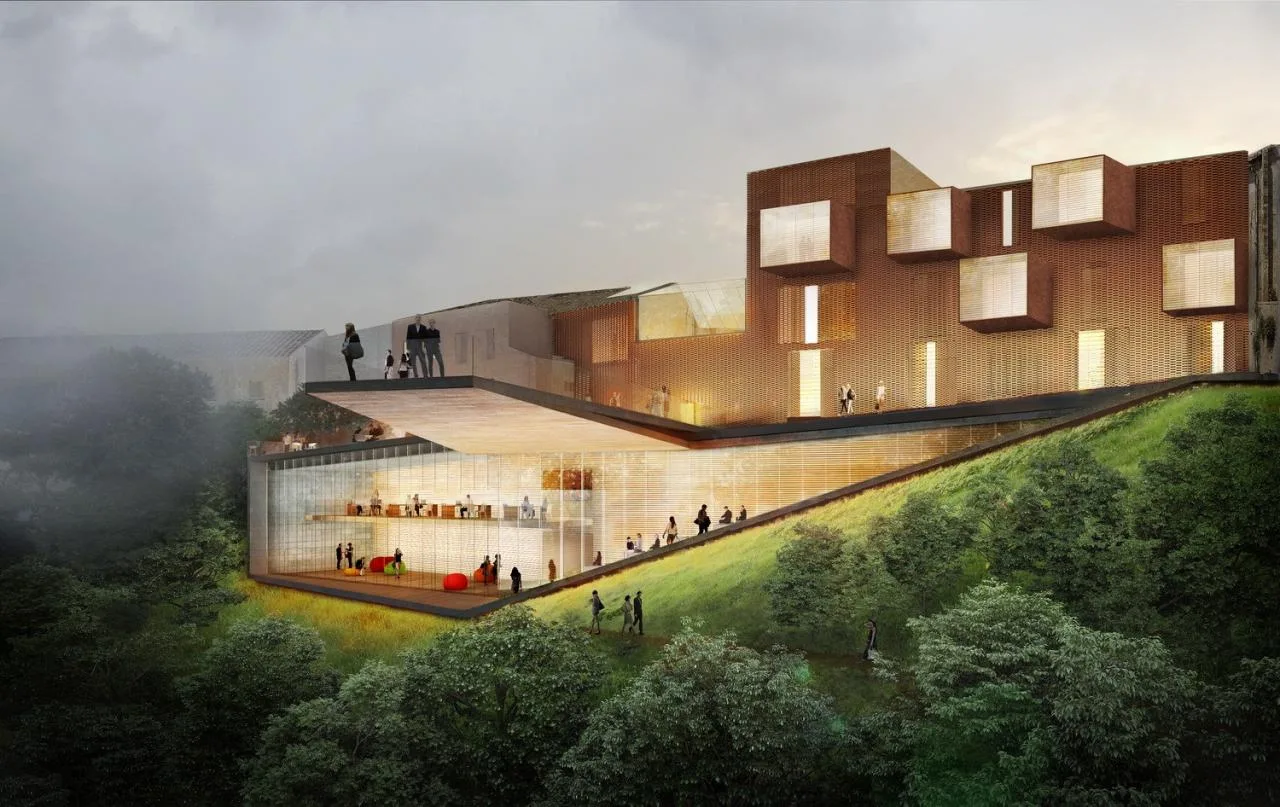
The building damaged by an earthquake on the mountain valley side was dismantled and replaced with a two-story modern structure that connects organically with the palace complex’s underground areas.
To minimize environmental impact on the hillside, the new construction employs lightweight structures with minimal excavation, reducing foundation work as well as material, transport, and labor costs.
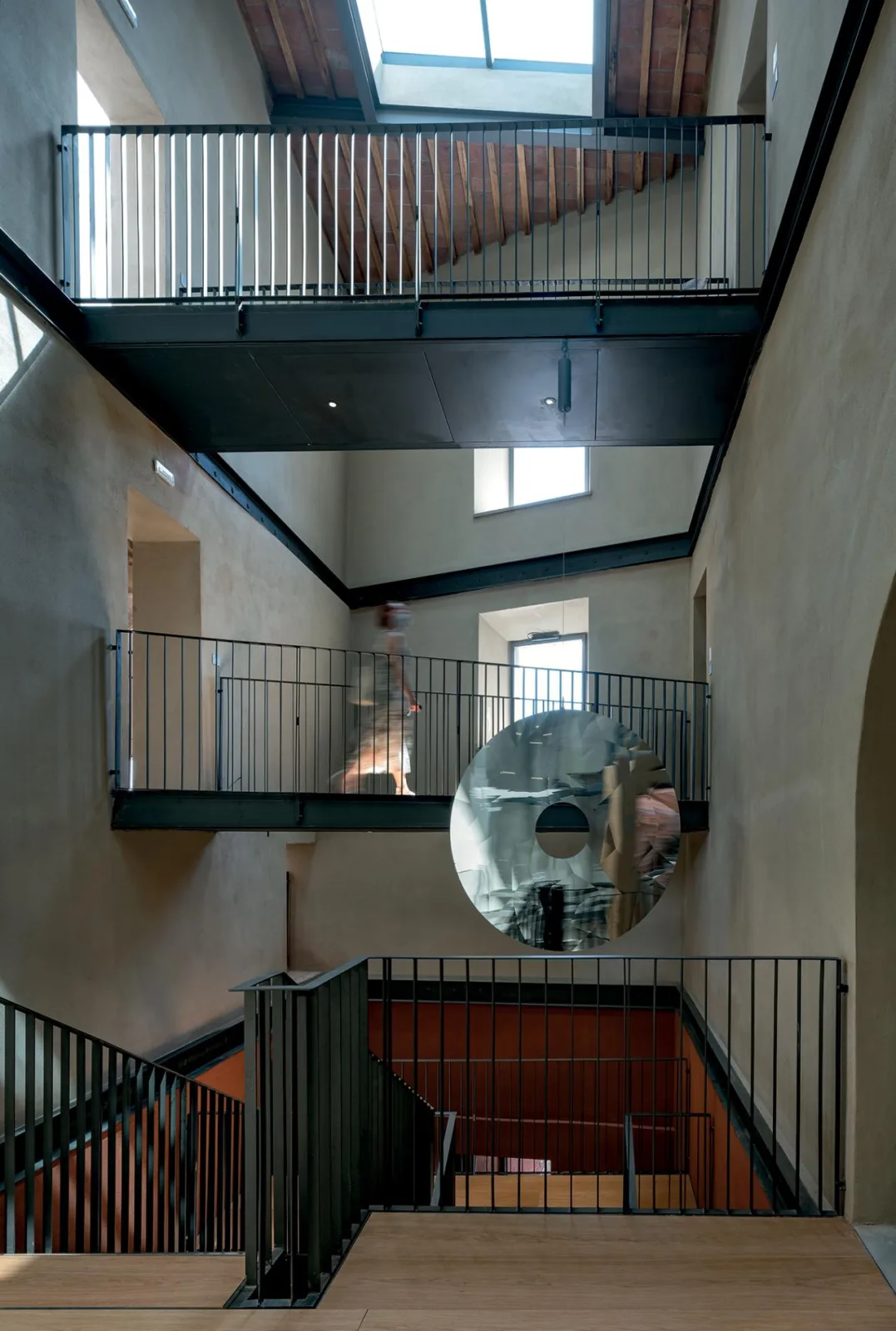
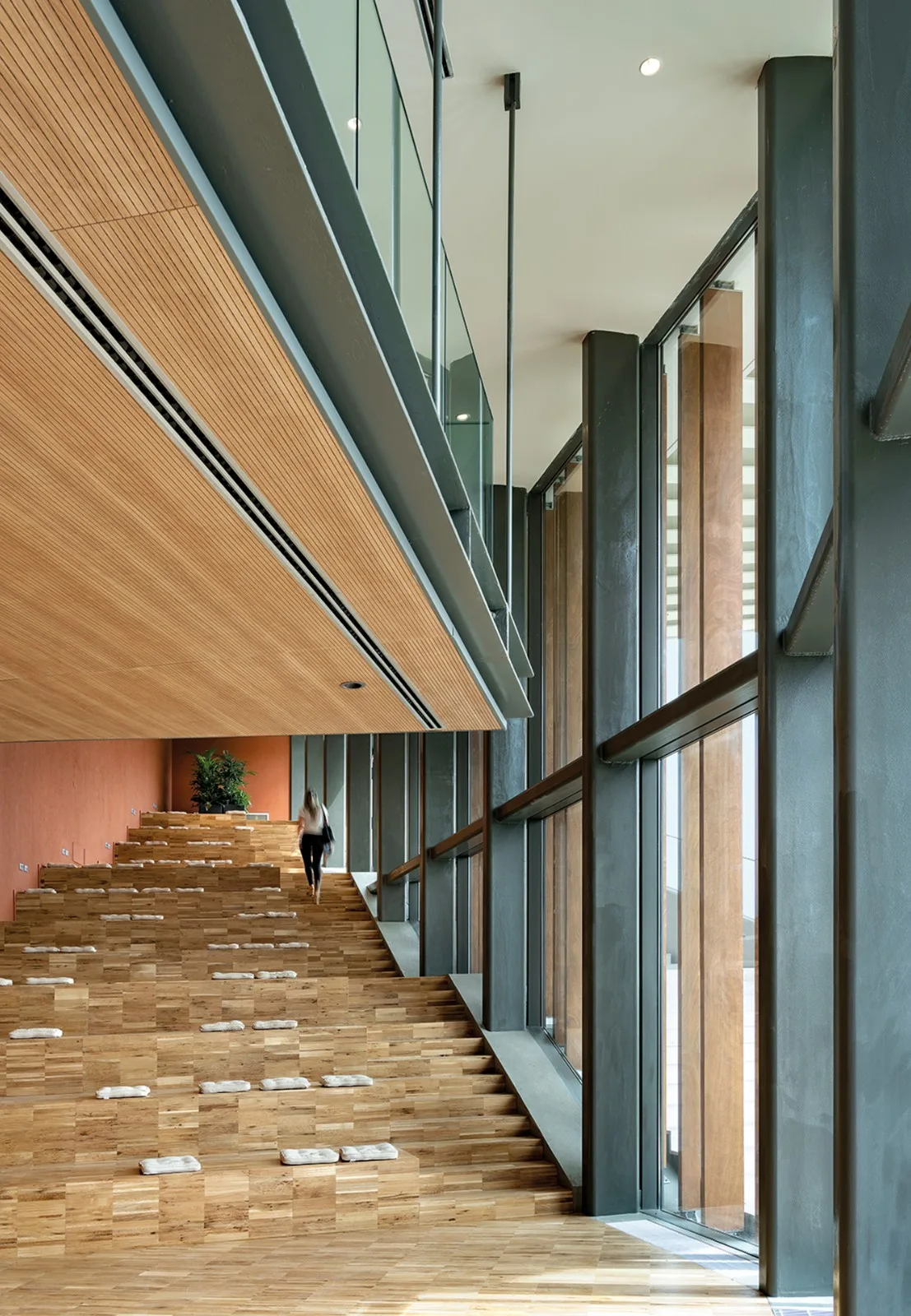
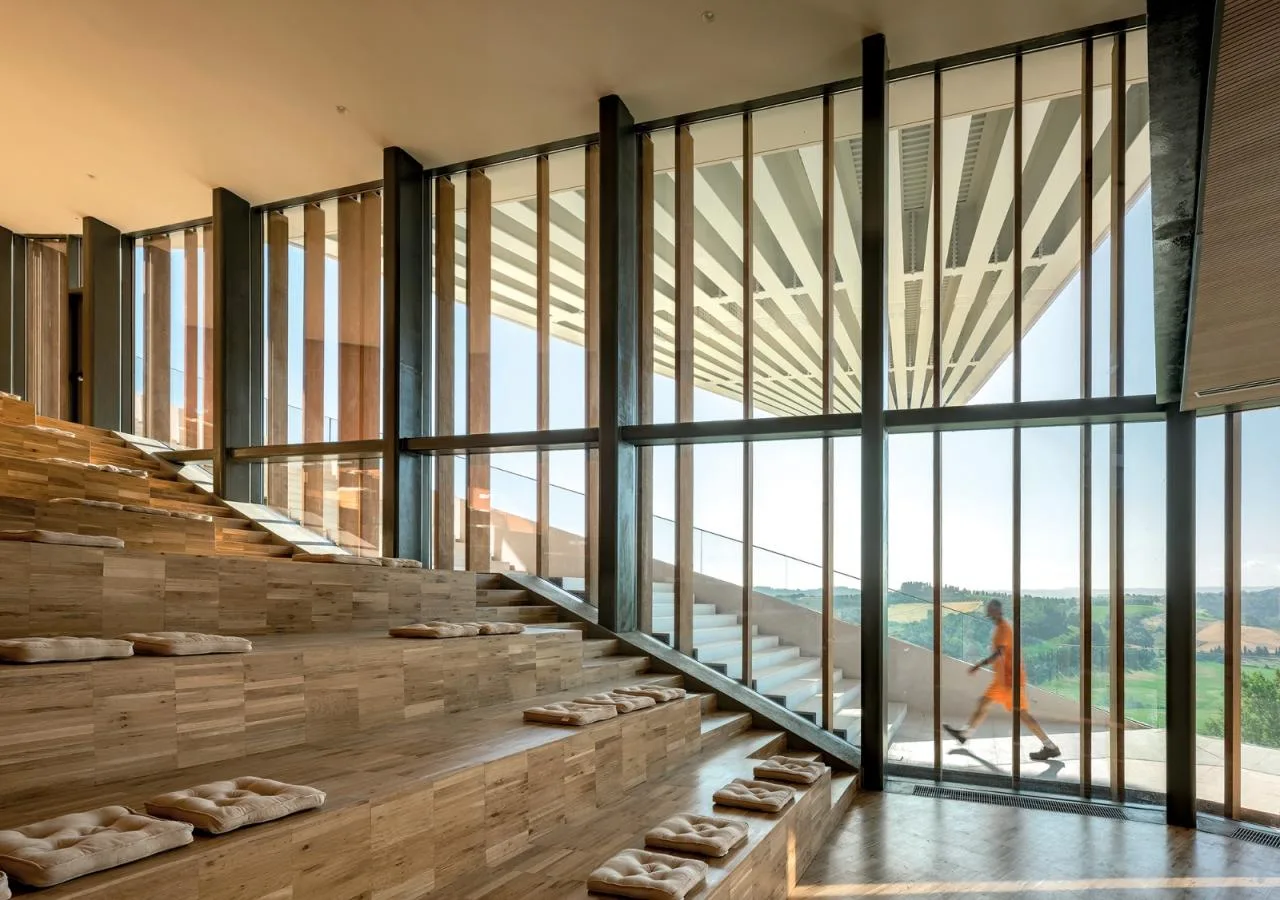
Glass curtain walls surround the building on three sides, creating framed views that showcase panoramic countryside and hillside vistas. The wooden interiors and harmonious color schemes unify the old and new structures, preserving Peccioli’s historical context and natural environment.
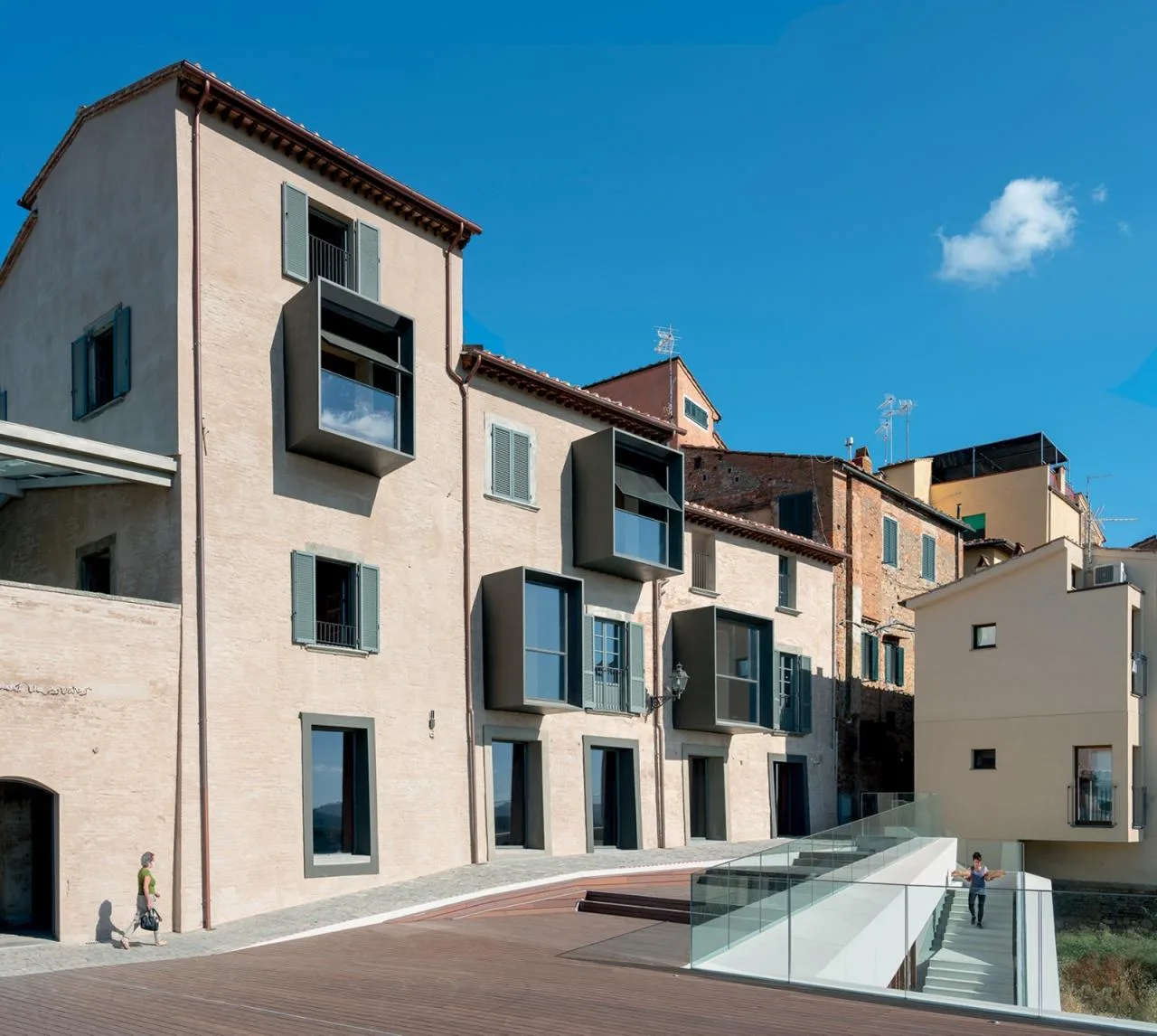
Inside, an open staircase follows the hillside, serving as a space for conferences, social interaction, and exhibitions. A café and restaurant occupy the lower levels, facing the valley and offering panoramic views of the stunning mountain foothills.
The architecture reflects the unique character of Italian mountain towns, where narrow alleys suddenly open into wide, open urban spaces, creating moments of visual surprise and delight.
Valley Floating Bridge
The new observation deck acts like a bridge, linking 16th-century landscape paintings with the modern era. With the opening of the Palace of Eternity, Peccioli addresses an important theme: community and urban public spaces.
This project honors history while embracing innovation.
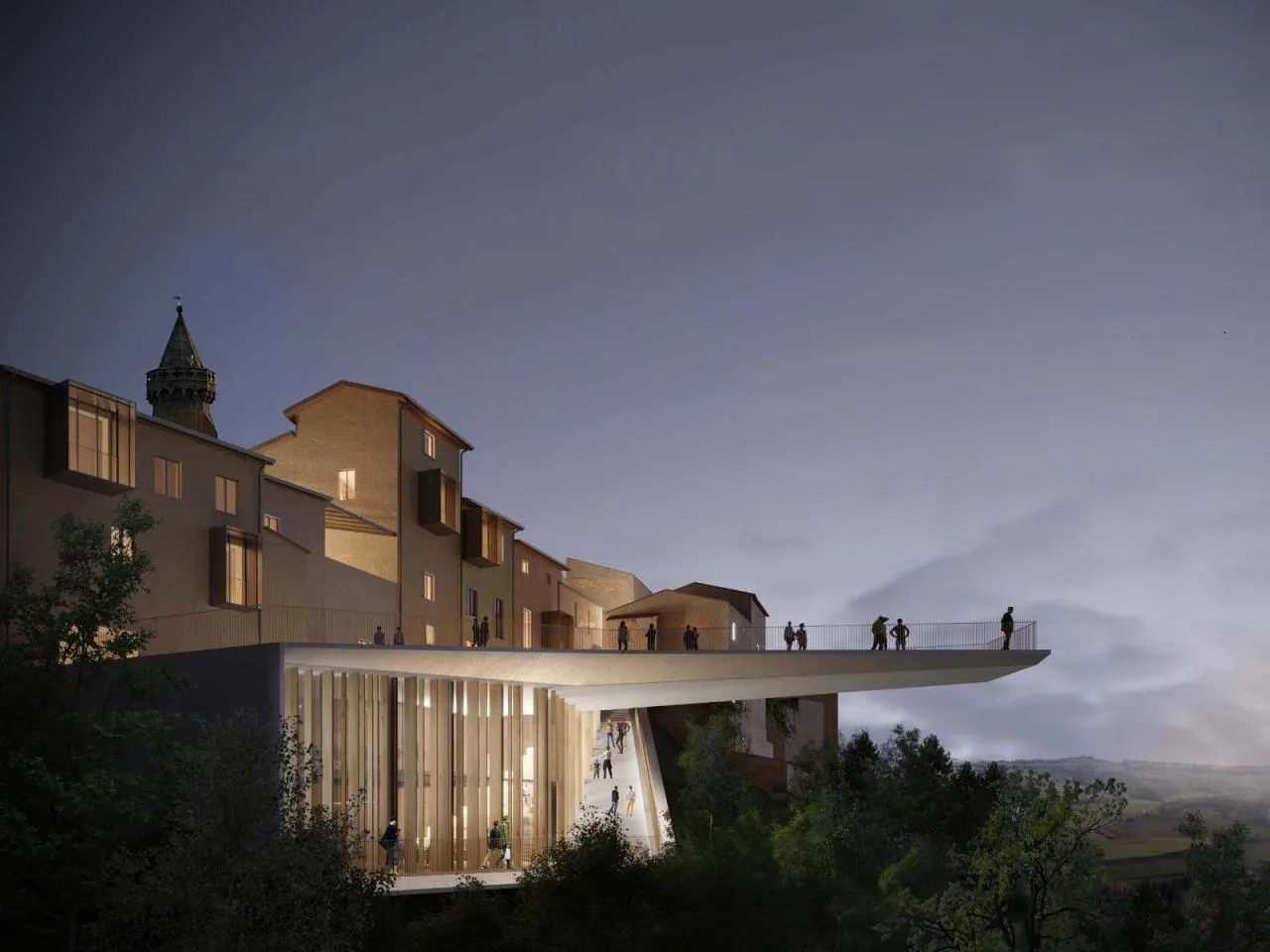
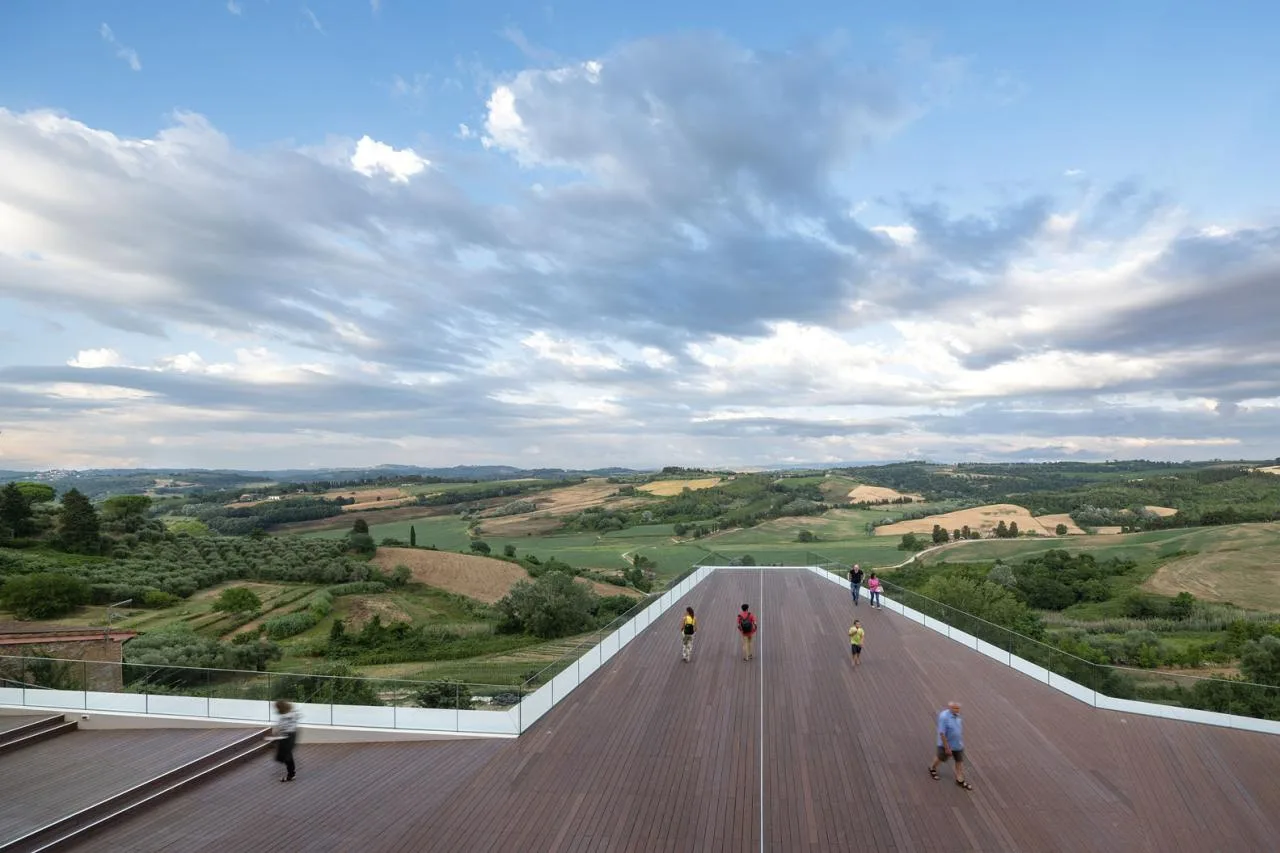
The suspended “valley floating bridge” is the centerpiece of the “Eternal Palace” Creative Cultural Center and serves as the city’s public observation deck. From here, visitors can enjoy views of the “Fonte Mazzola” open-air theater and the renowned “Le Serre” valley, experiencing the iconic pastoral landscapes of Tuscany and sweeping views of the foothills.
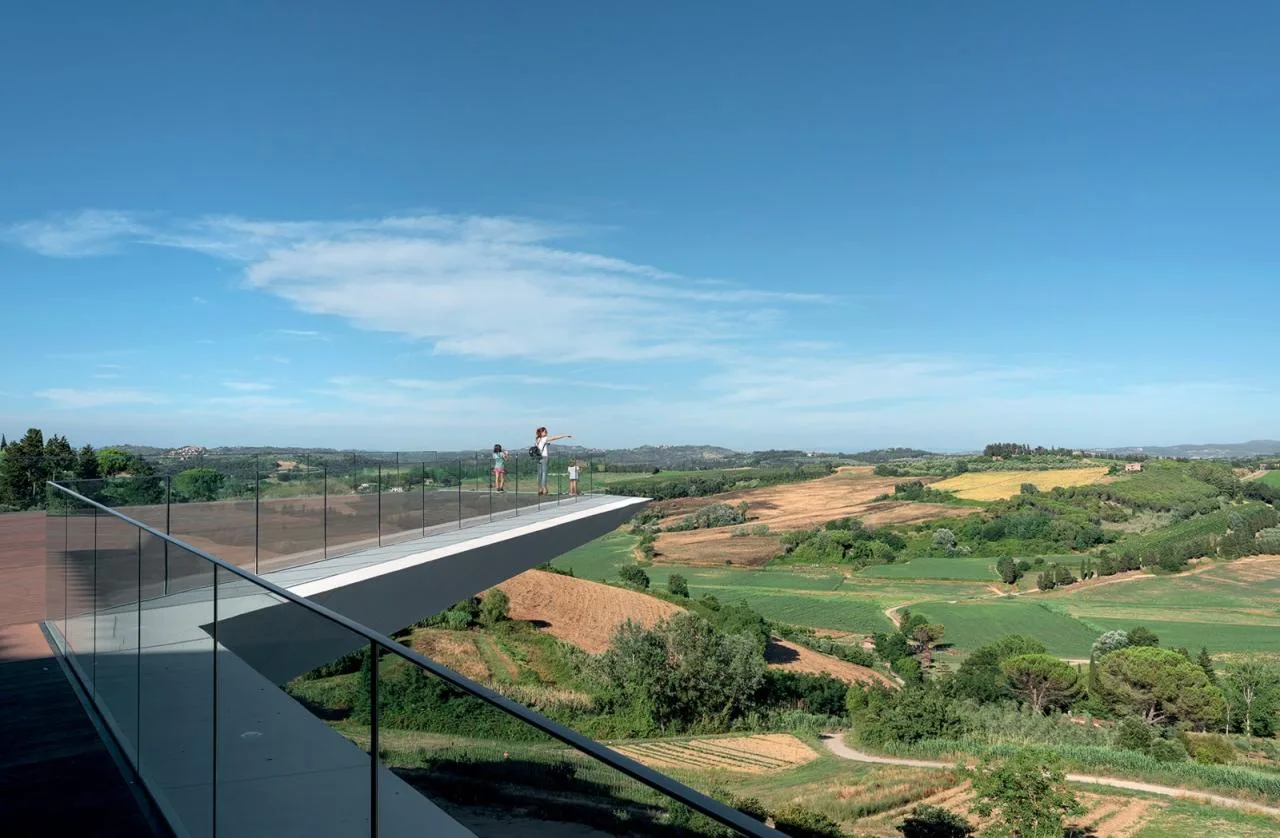
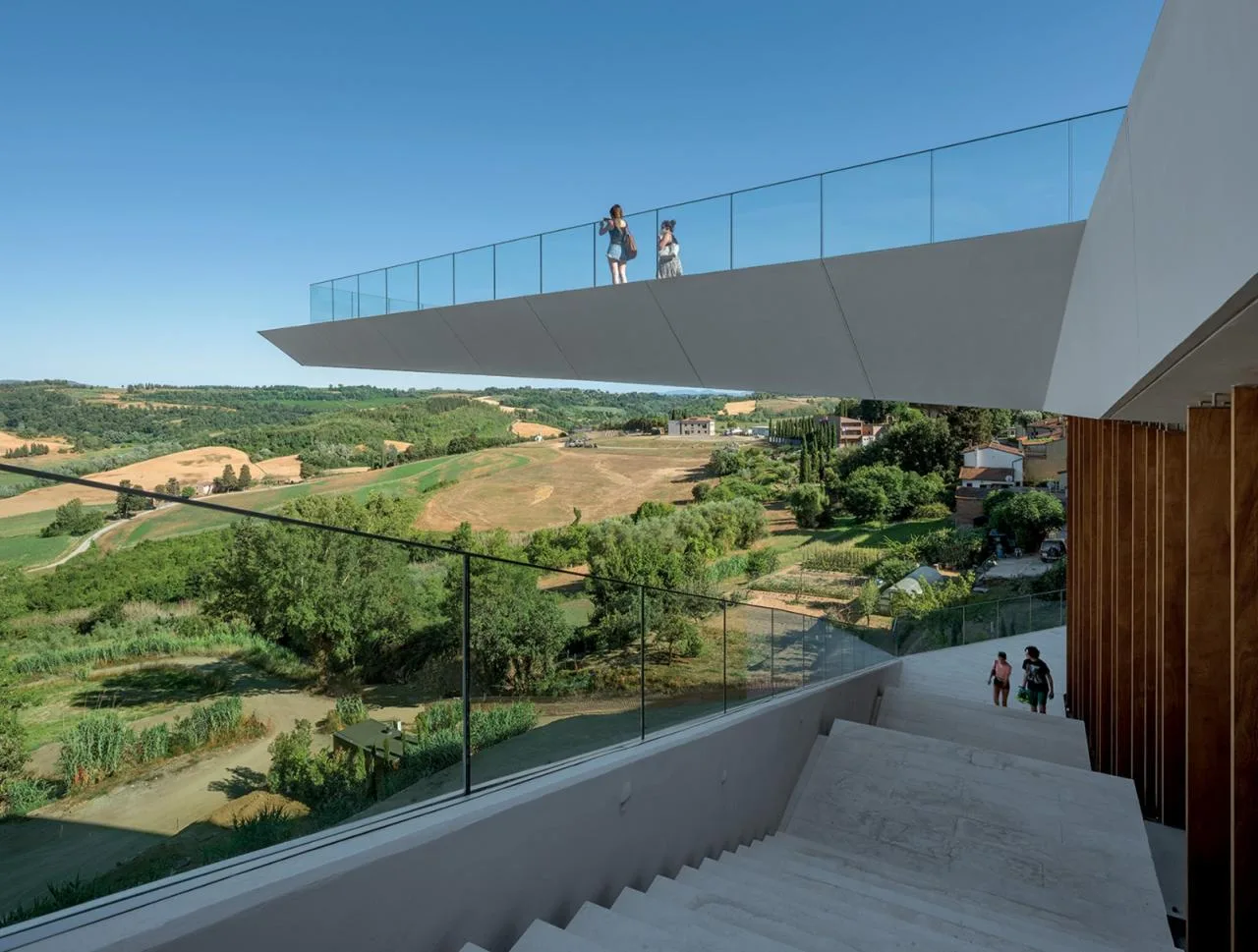
Suspended 20 meters above the valley floor, the ‘floating bridge’ is accessible directly from the street, enriching the urban fabric and offering diverse experiences to both residents and visitors.
The design breaks away from the traditional medieval town layout, as if opening a pathway through the defensive city walls toward the valley below. This platform creates a meaningful dialogue between architecture and nature, strengthening the bond between buildings, people, and the environment.
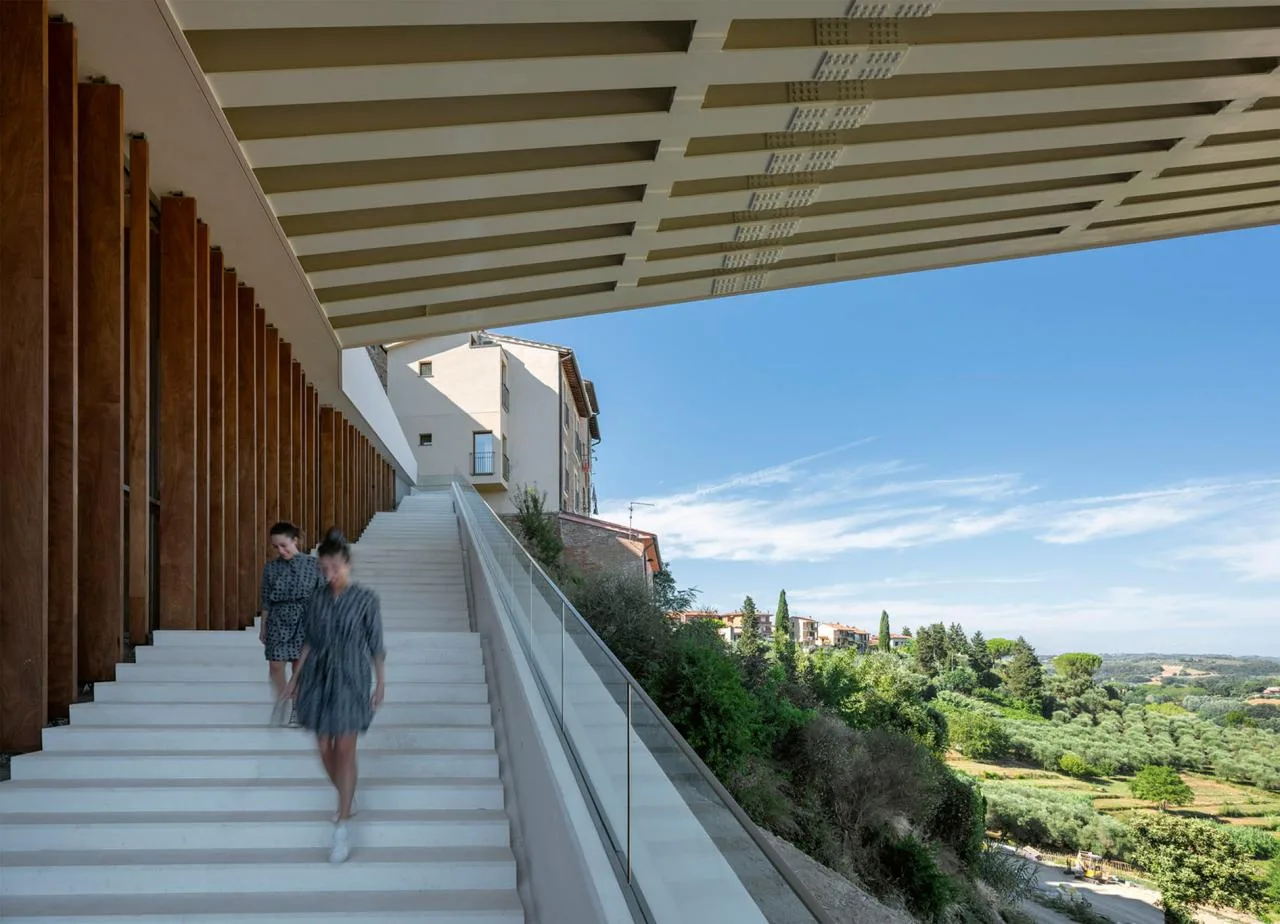
This versatile space can host various public events, cultural and artistic performances, concerts, and open-air cinemas. Here, history, culture, and nature intertwine, showcasing how contemporary architecture can seamlessly blend into the Italian mountain town, creating a “living museum” for the future and supporting sustainable urban development.
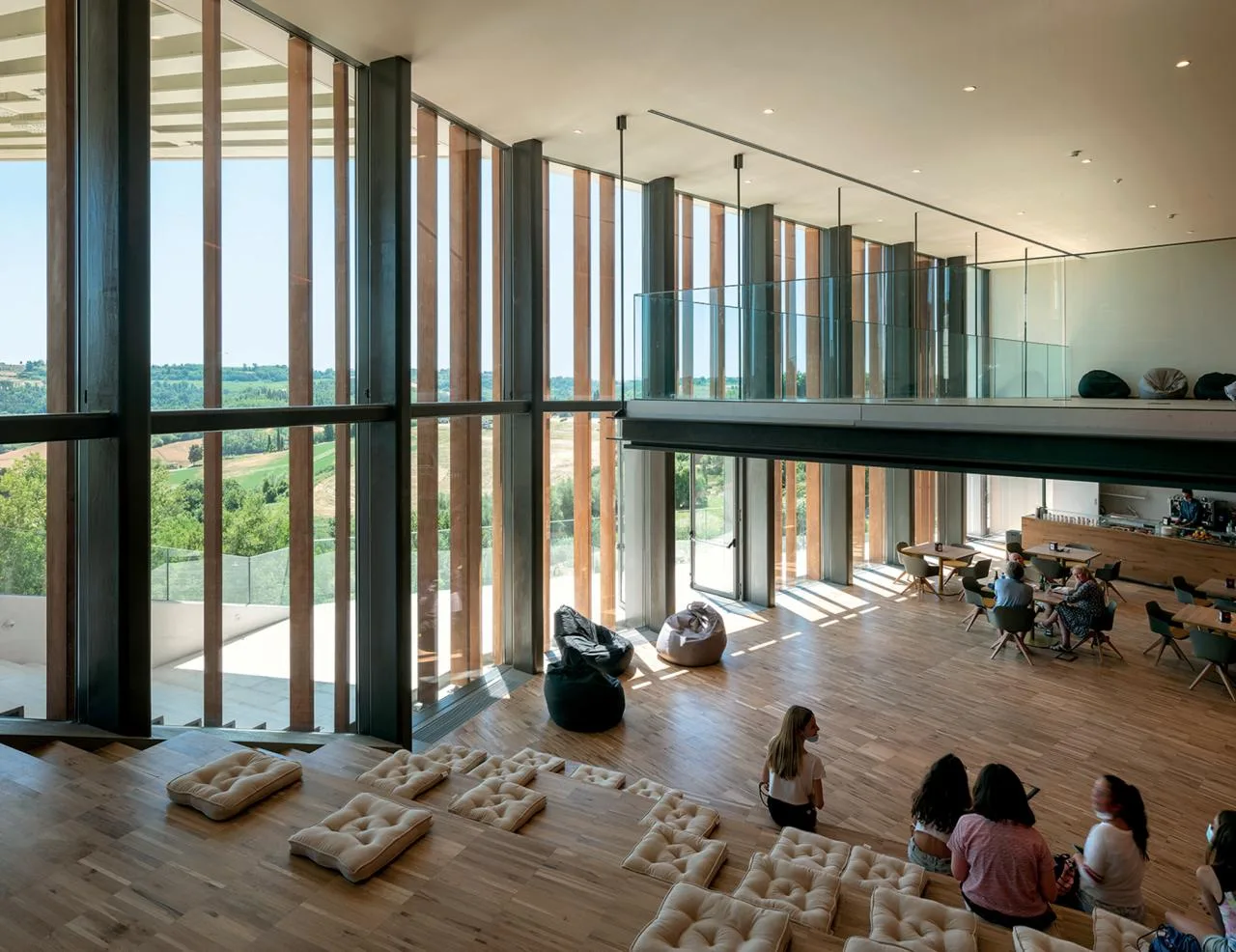
This bold yet balanced project marks a milestone in the innovative reuse of historic buildings.
The “Eternal Palace” Creative Cultural Center preserves the solemn grandeur of the original palace architecture while employing modern design language to reshape urban public spaces.
It builds bridges between city and nature, embeds history and future, and unlocks the latent vitality of the mountain town.
Welcoming all with open arms, it invites you to begin a new chapter in this ancient city.
Project Drawings
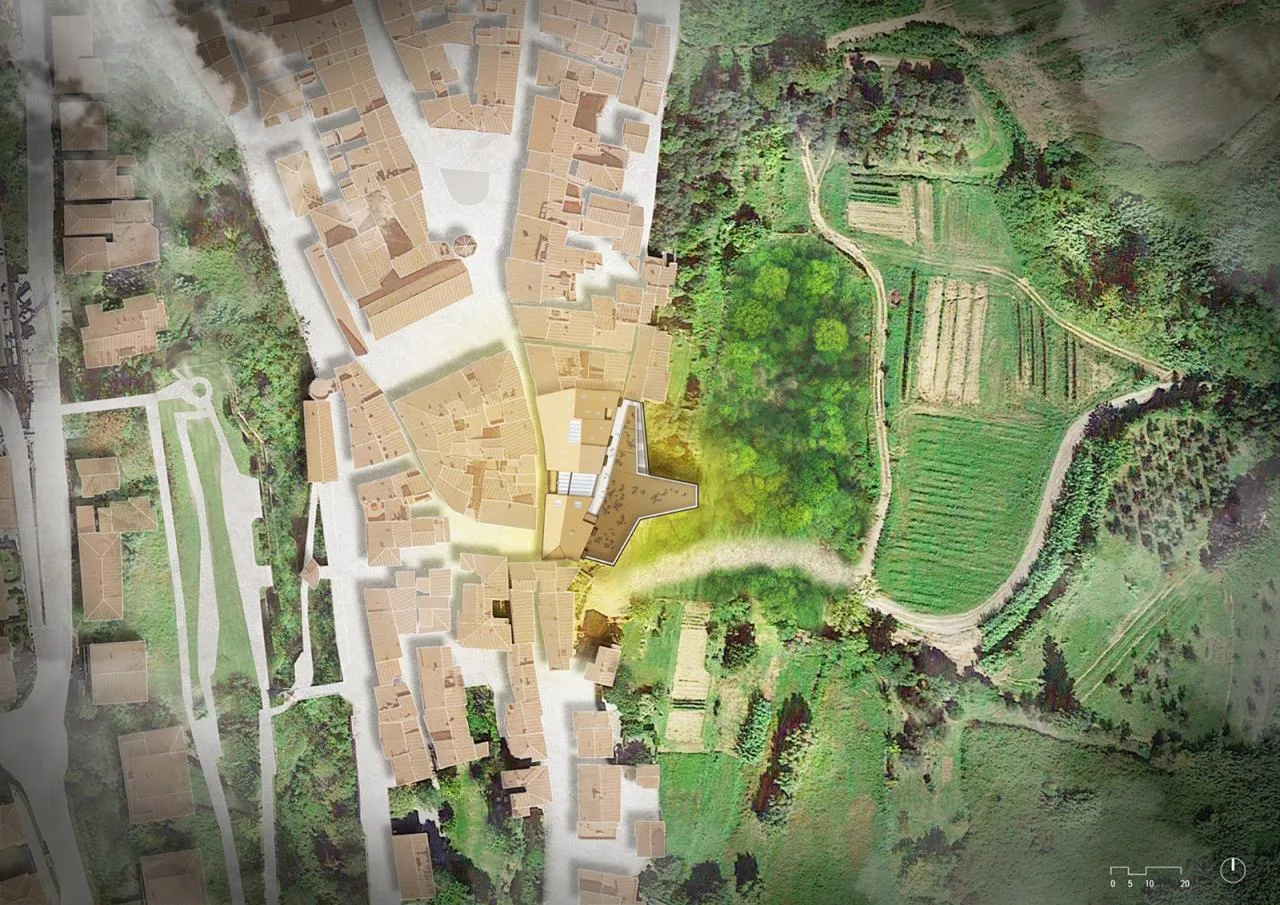
△ General Layout Plan
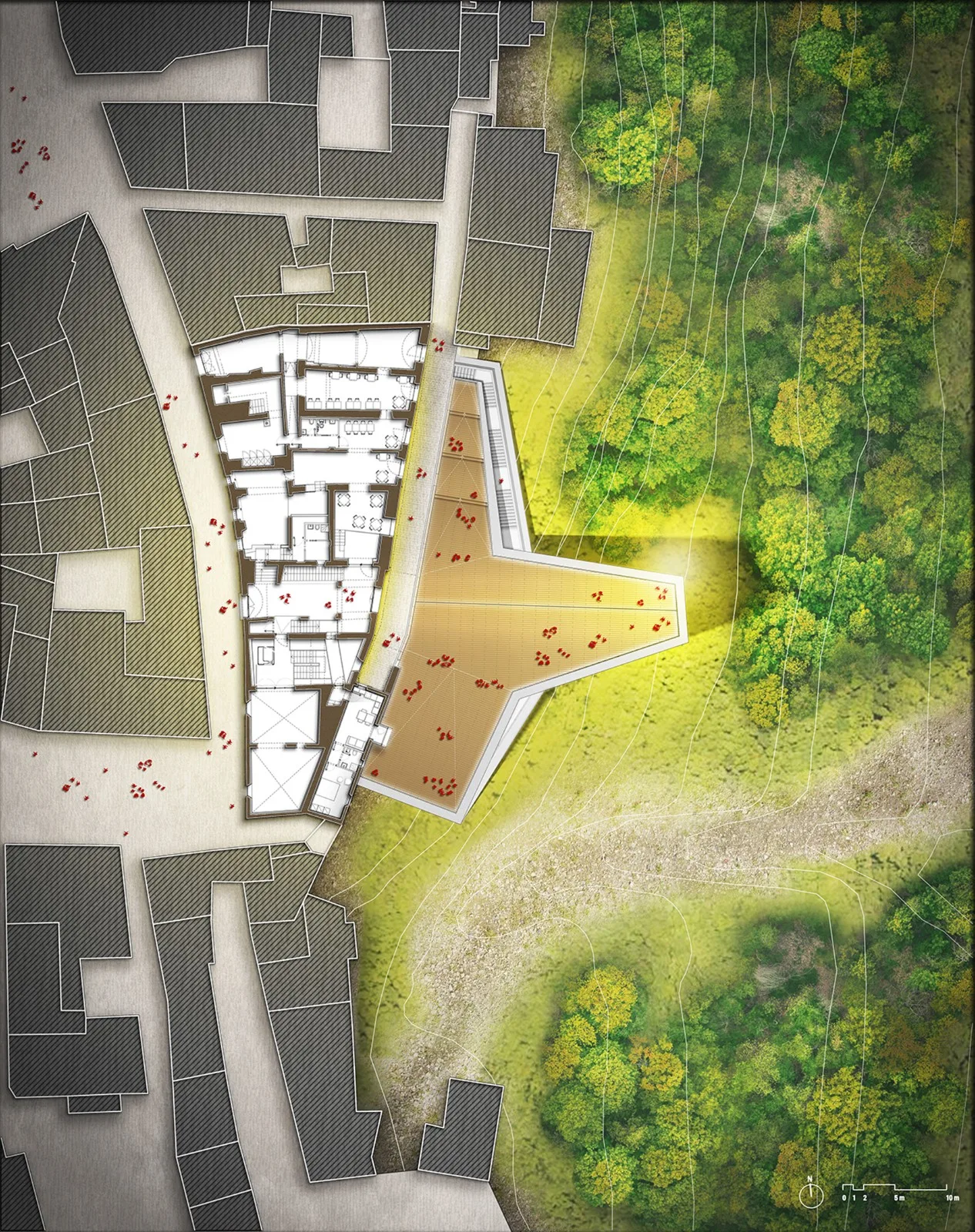
△ First Floor Plan
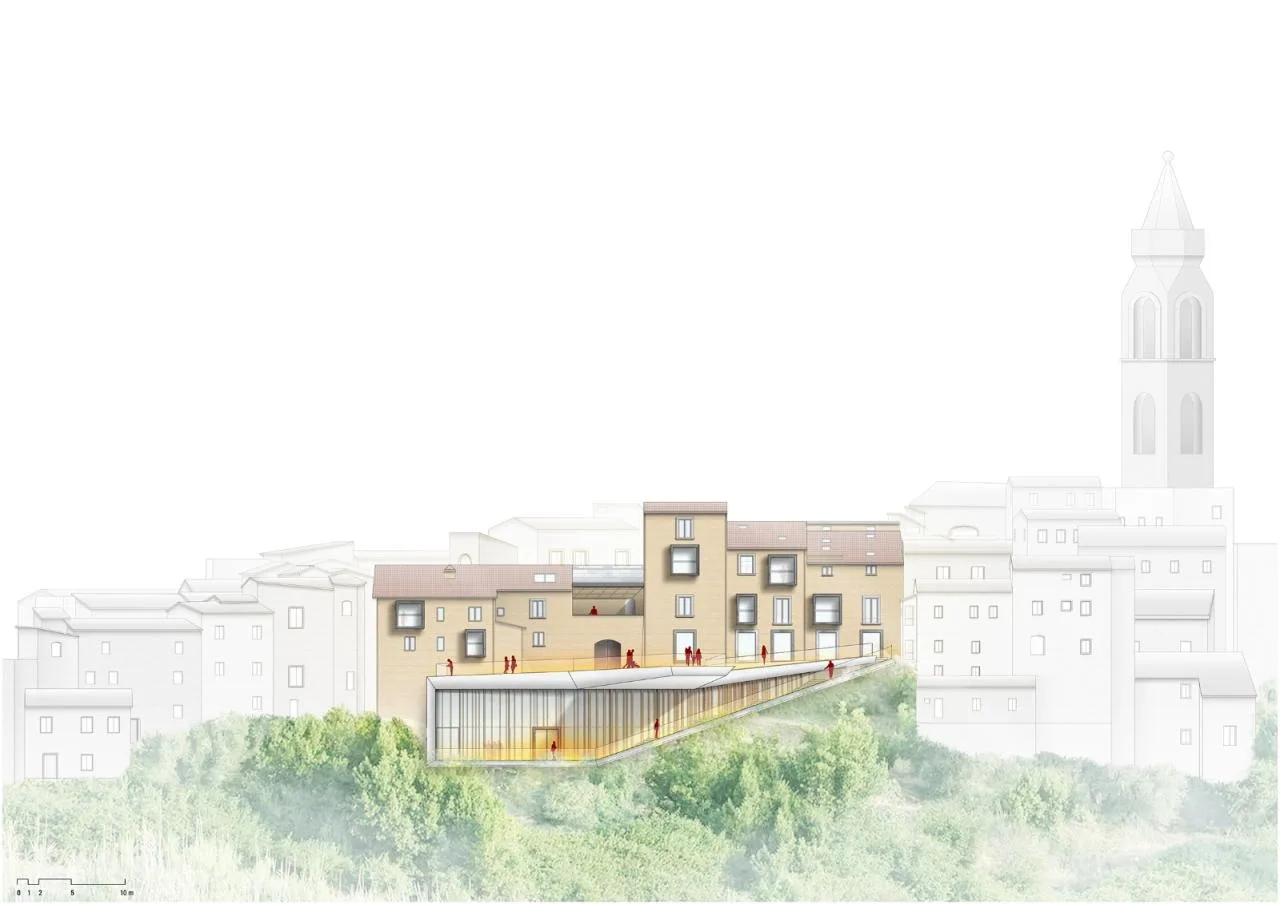
△ Elevation Drawing
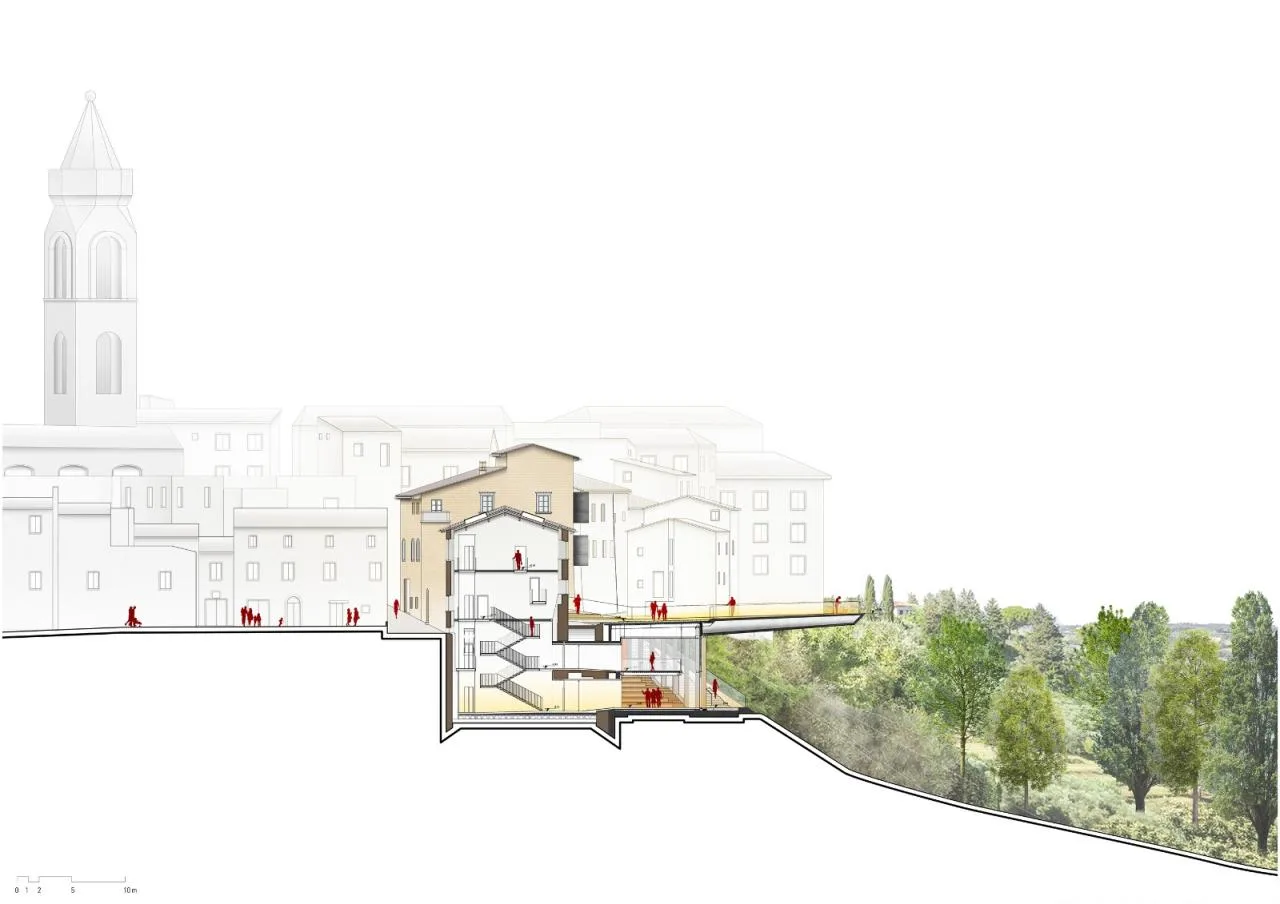
△ Section Diagram
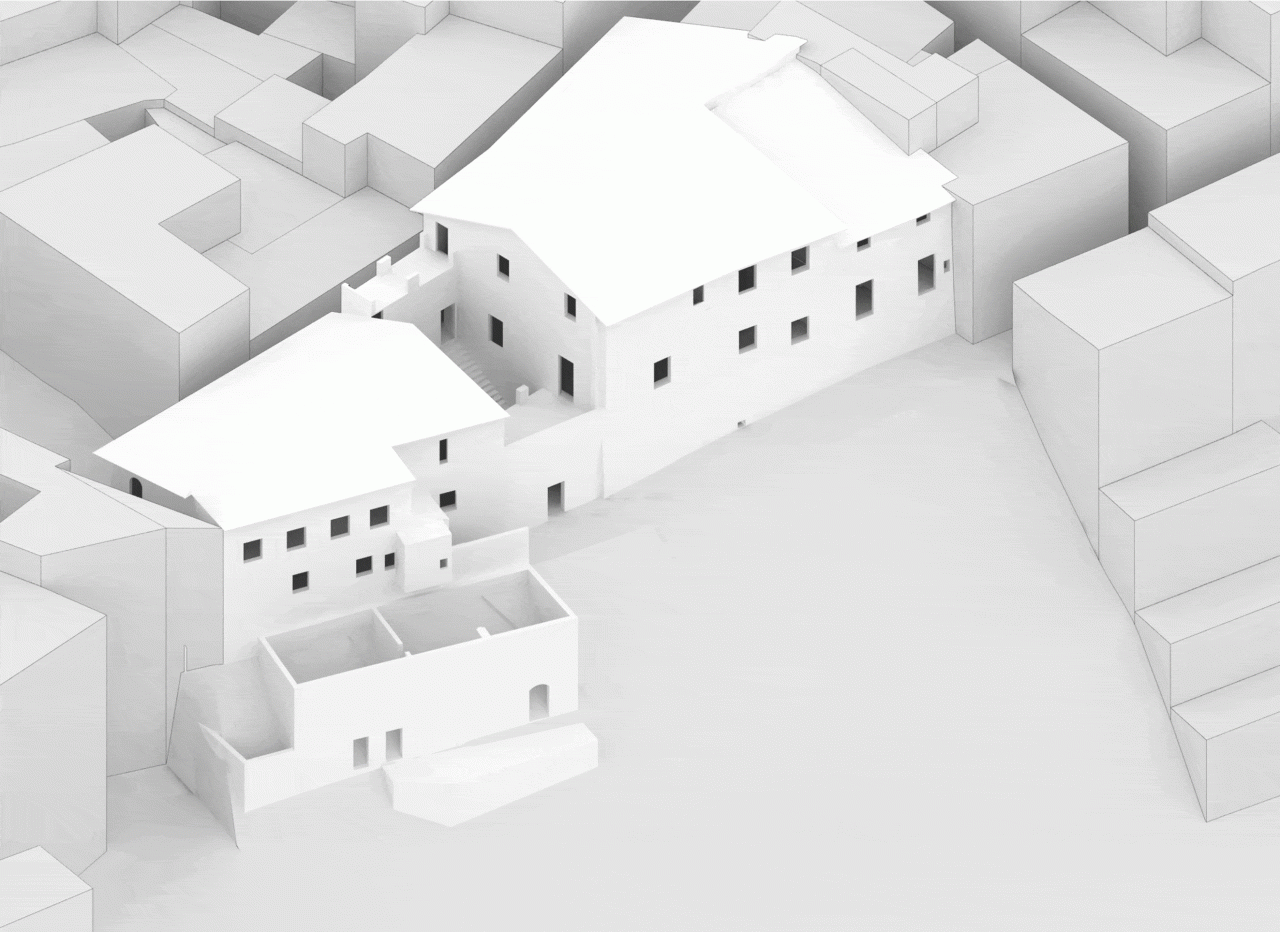
△ Conceptual Schematic Diagram
Project Information
Location: Peccioli, Italy
Date: 2021
Client: Belvedere SpA
Team: Mario Cucinella, Marco Dell’Agli, Tommaso Bettini, Emanuele Dionigi, Biagio Amodio, Stefano Bastia, Paolo Greco, Alberto Menozzi, Marta Torsello, Augusta Zanzillo
Rendering: MC A
Model: MC A
Photography: Duccio Malagamba, Andrea Testi
Structural Engineering: Ing. Augusto Bottai
Plumbing and Electrical Engineering: Ing. Luca Sani
Engineering Director: Geom. Andrea Falchi
Contractors: Cemes SpA, Bottai Group












Must log in before commenting!
Sign Up