
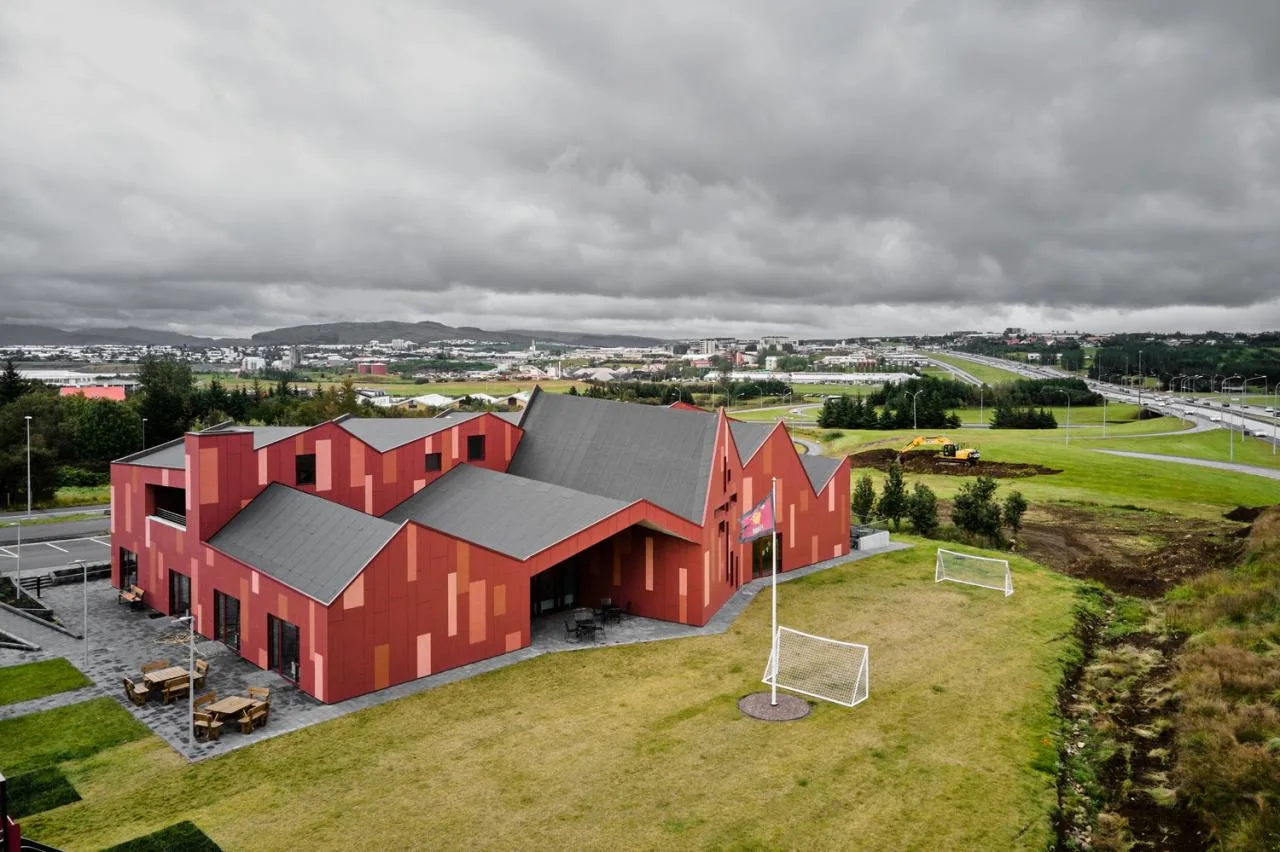
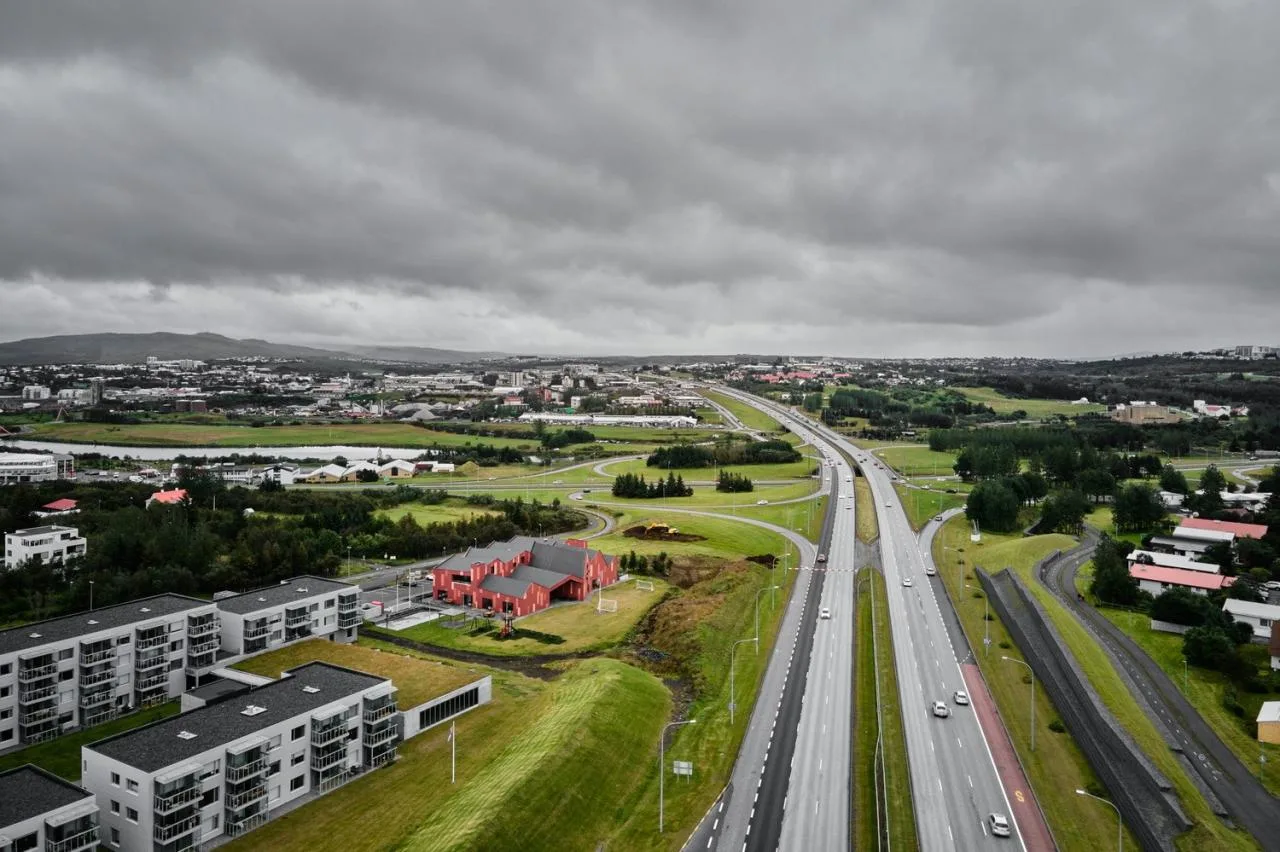
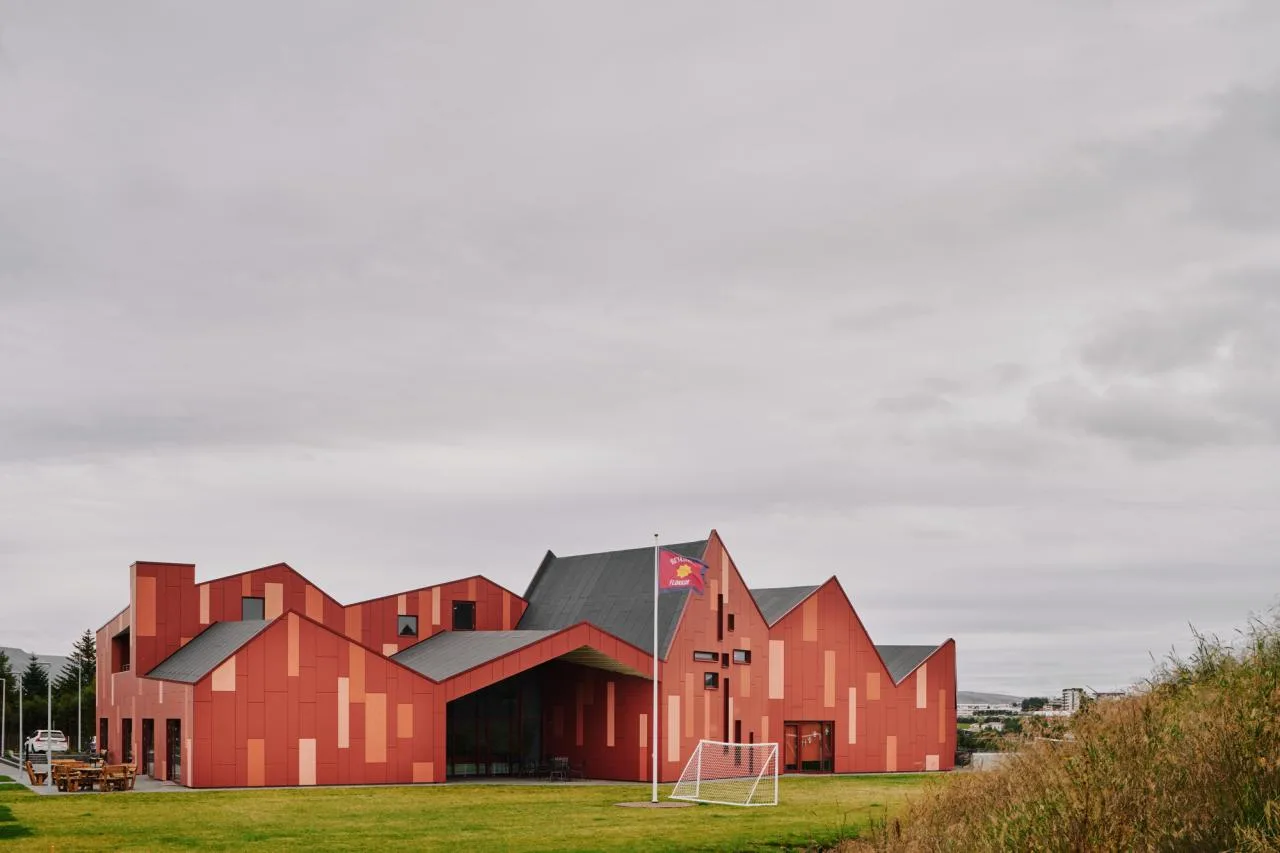
The Salvation Army Iceland headquarters is situated in the suburbs near Reykjavik’s city center, close to the main eastern thoroughfare. Its distinctive sectional shape, unique roofline, and vibrant color palette set it apart from the surrounding environment, making it a prominent local landmark.
This building functions as the headquarters for the Salvation Army in Iceland while also serving as a church and a new community center.
The design features two floors of varying scale. The building offers a range of activity and service spaces for both the public and Salvation Army clients, including meeting rooms, concert venues, welfare service areas, canteens/cafés, and offices.
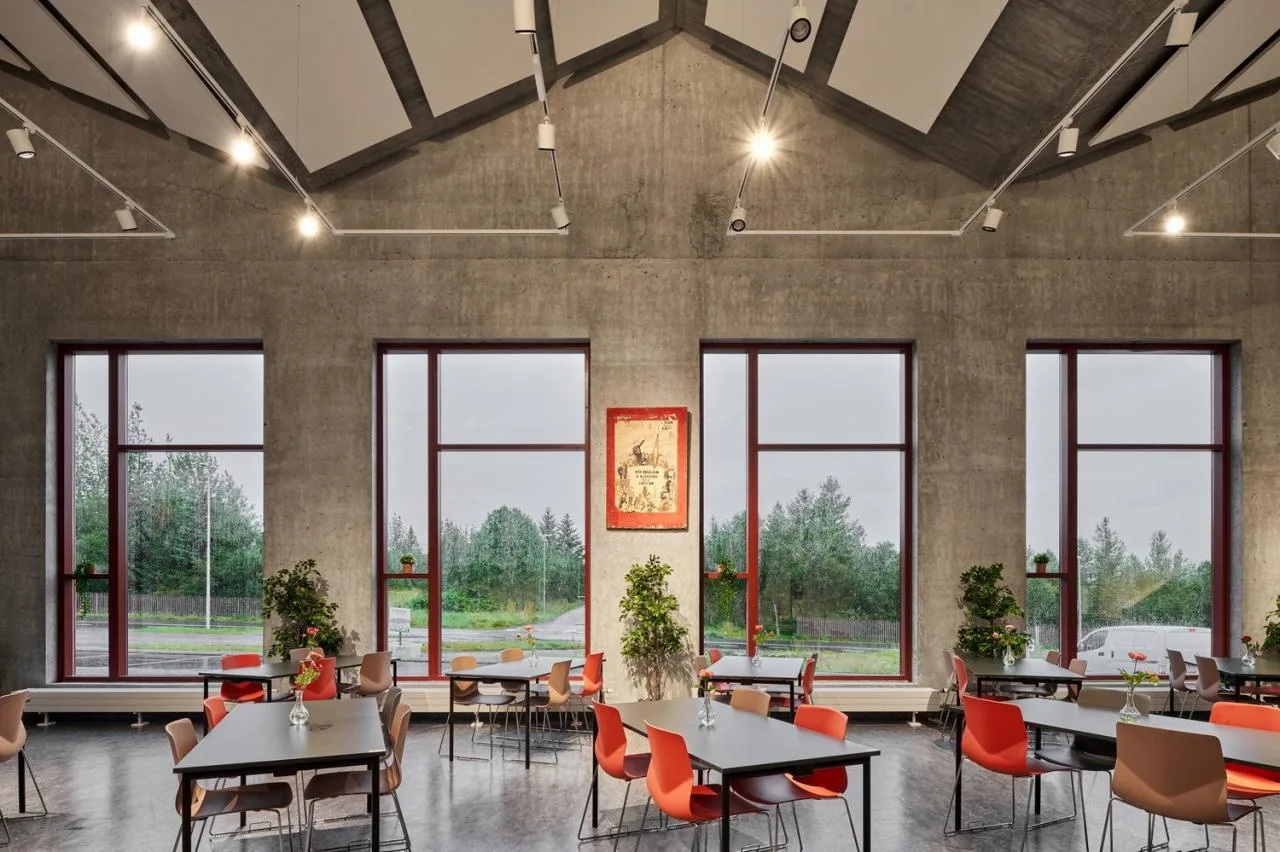
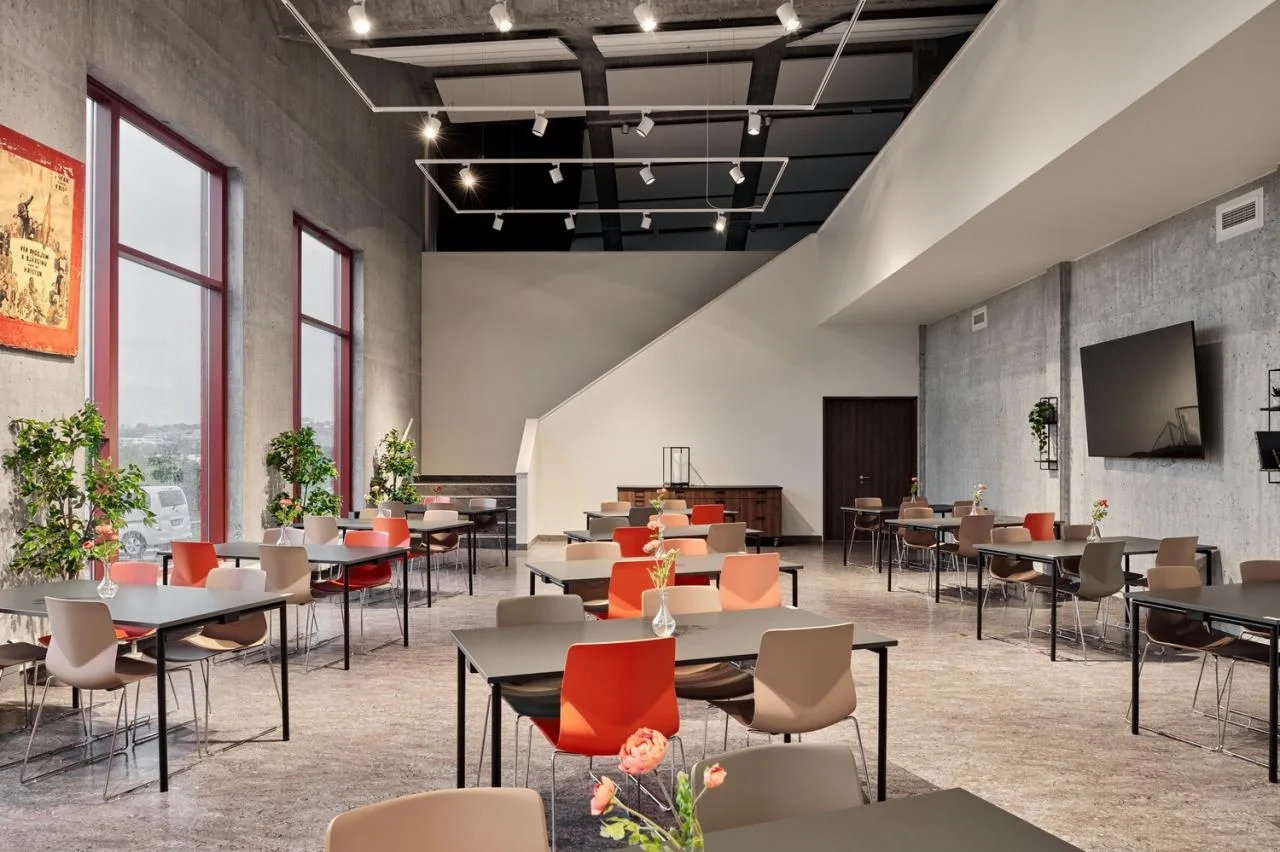
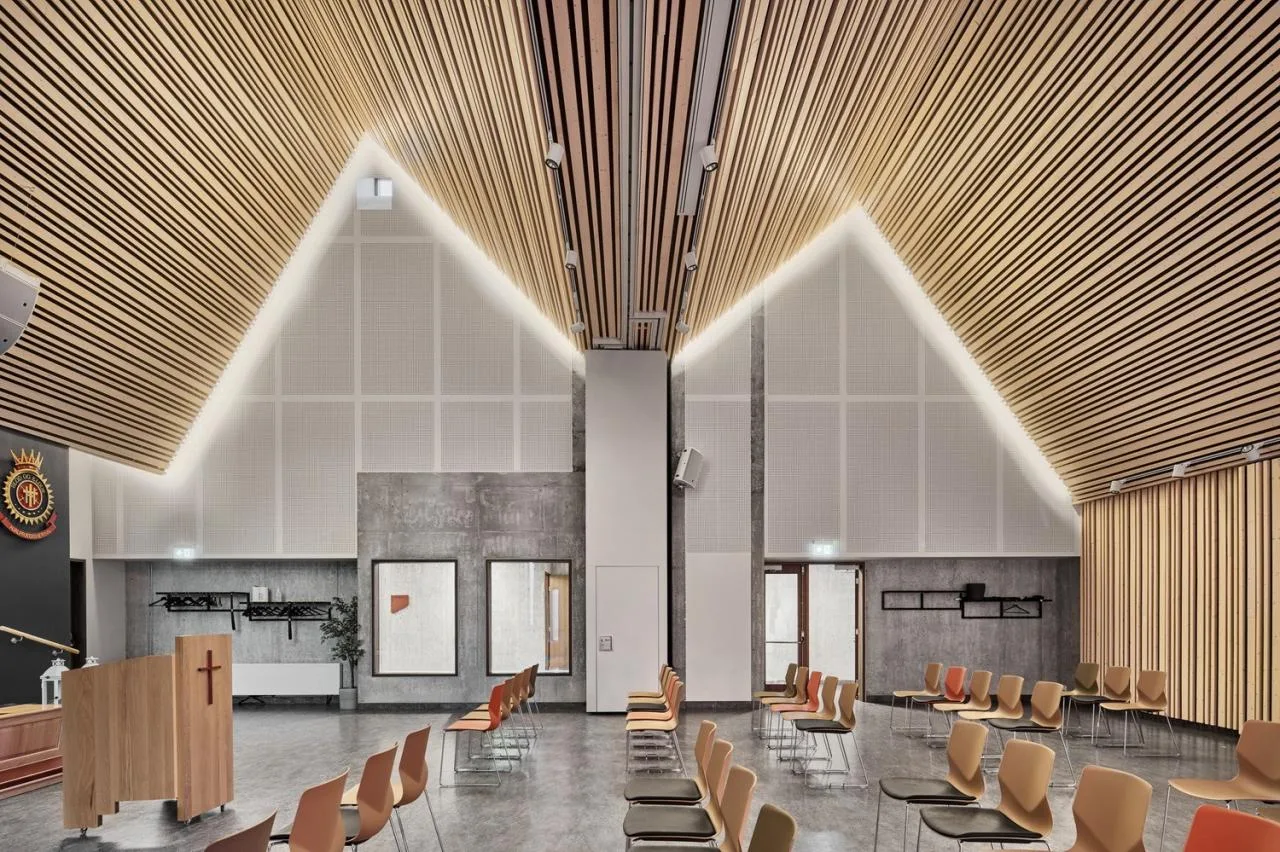
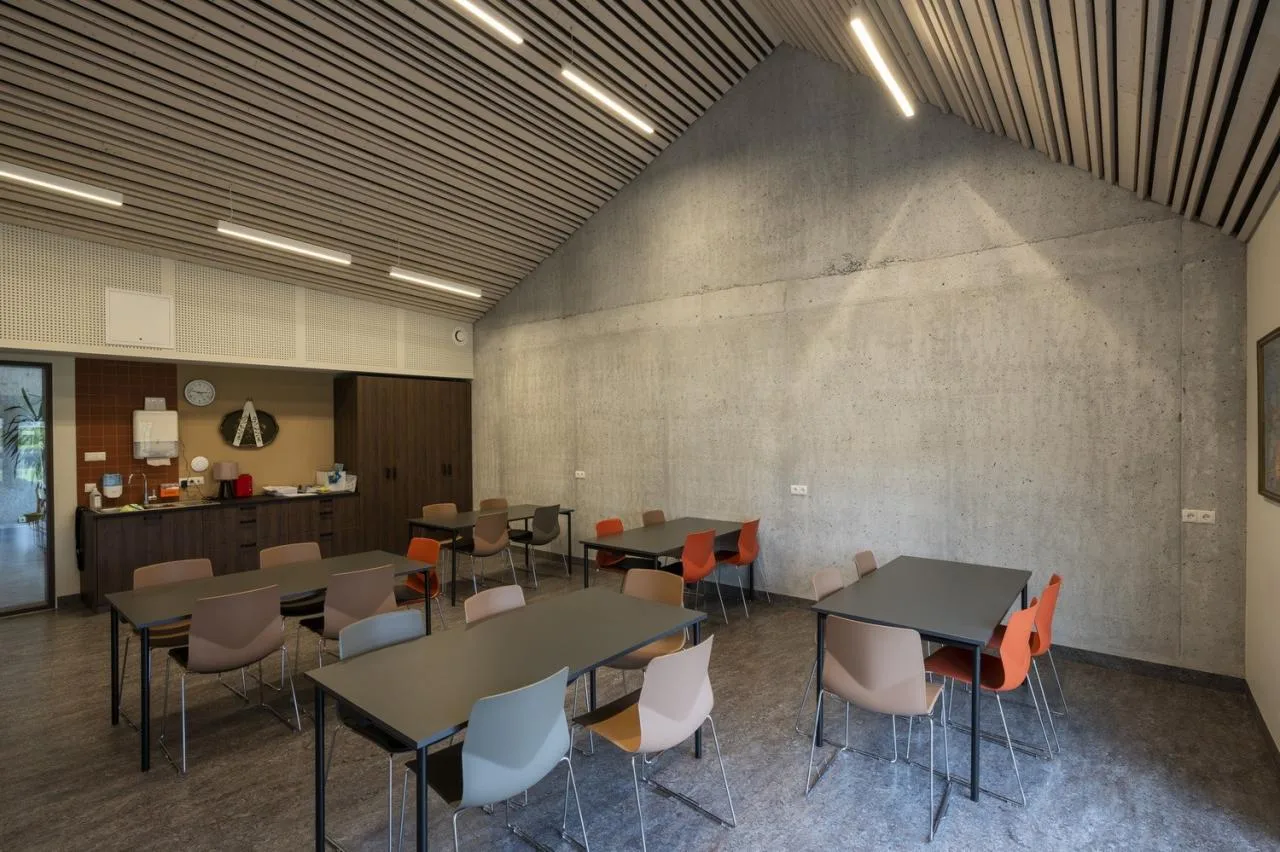
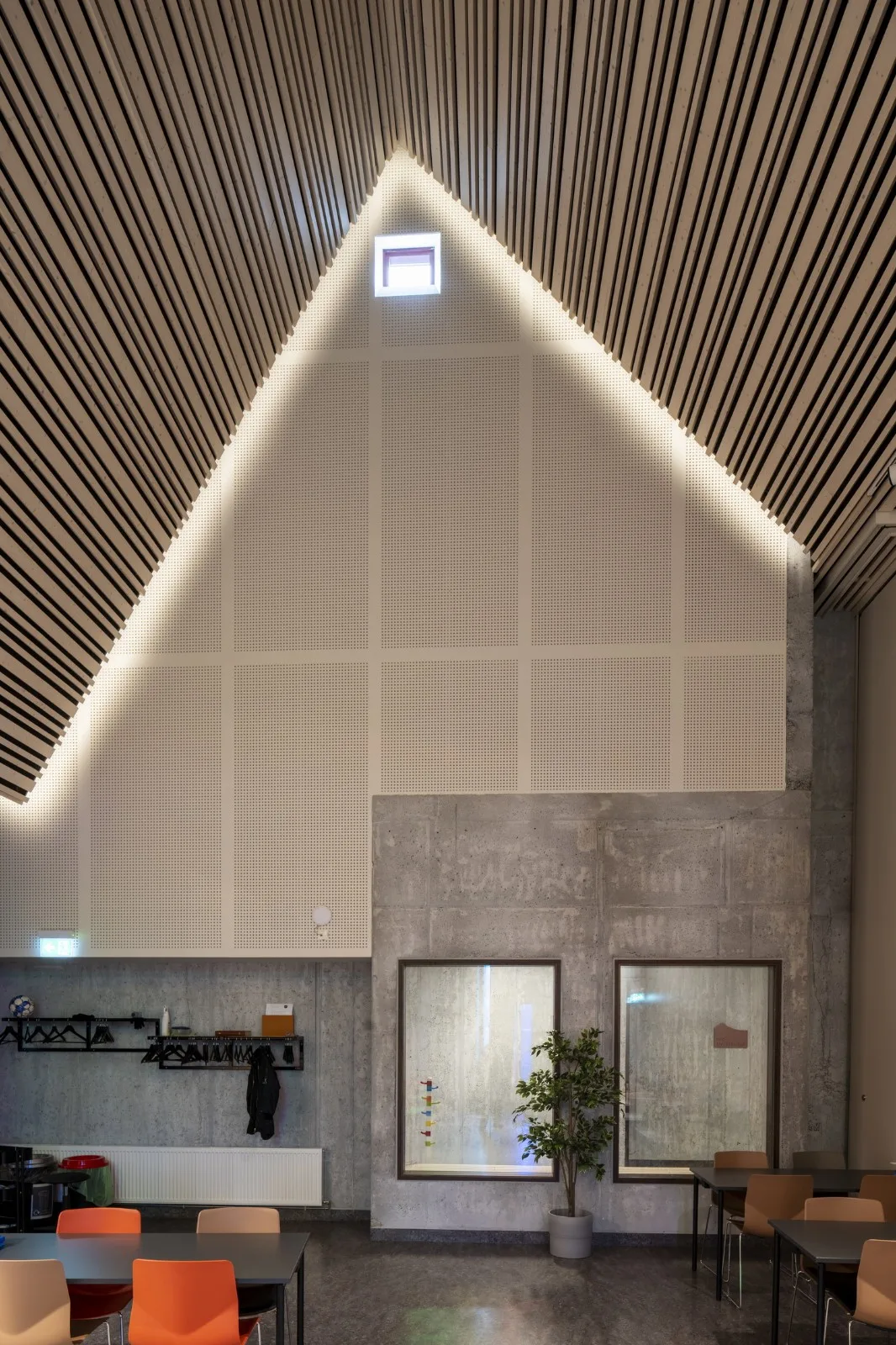
The structure boasts spacious interiors with high ceilings in the church and main hall on the first floor. The sloping roof is visible from inside, creating varied ceiling heights. Acoustic design has been carefully considered to ensure each space maintains an optimal sound environment.
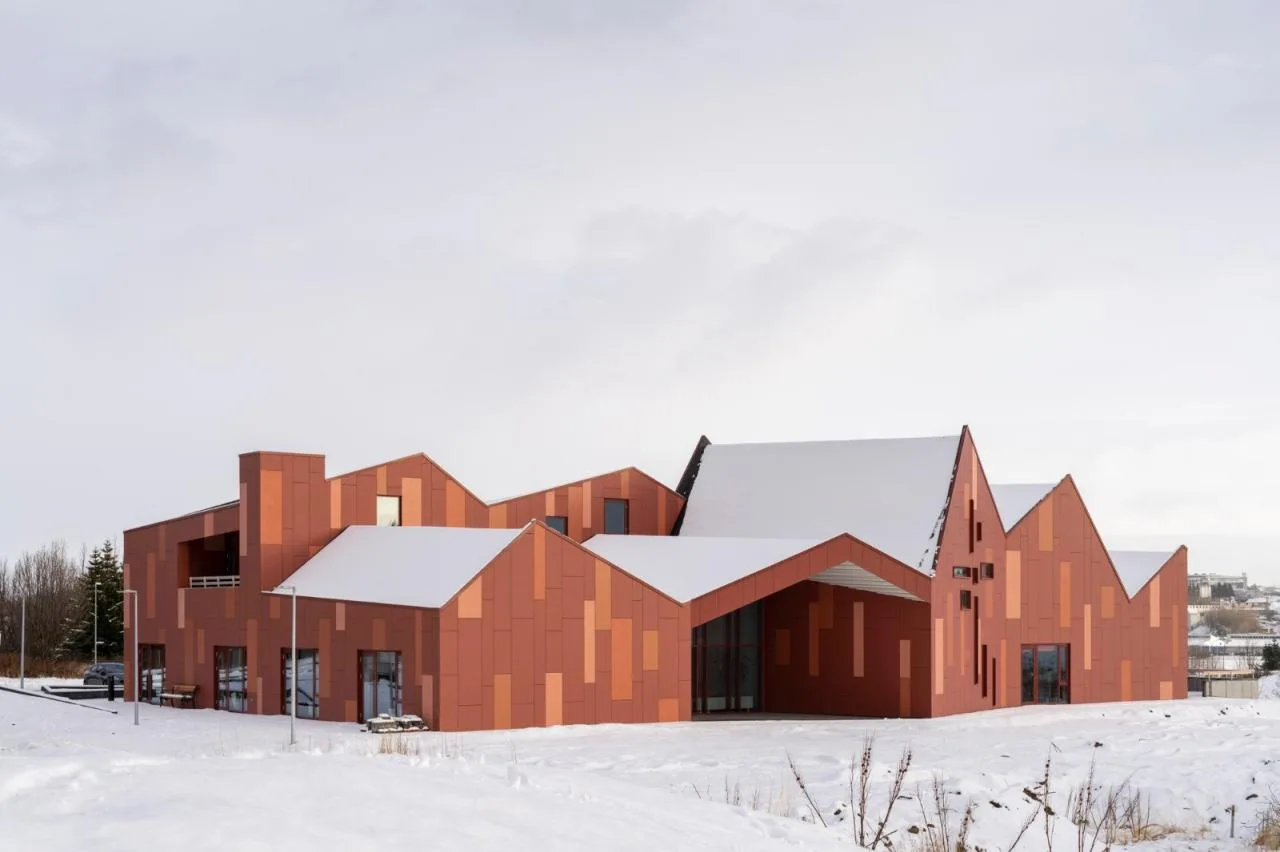
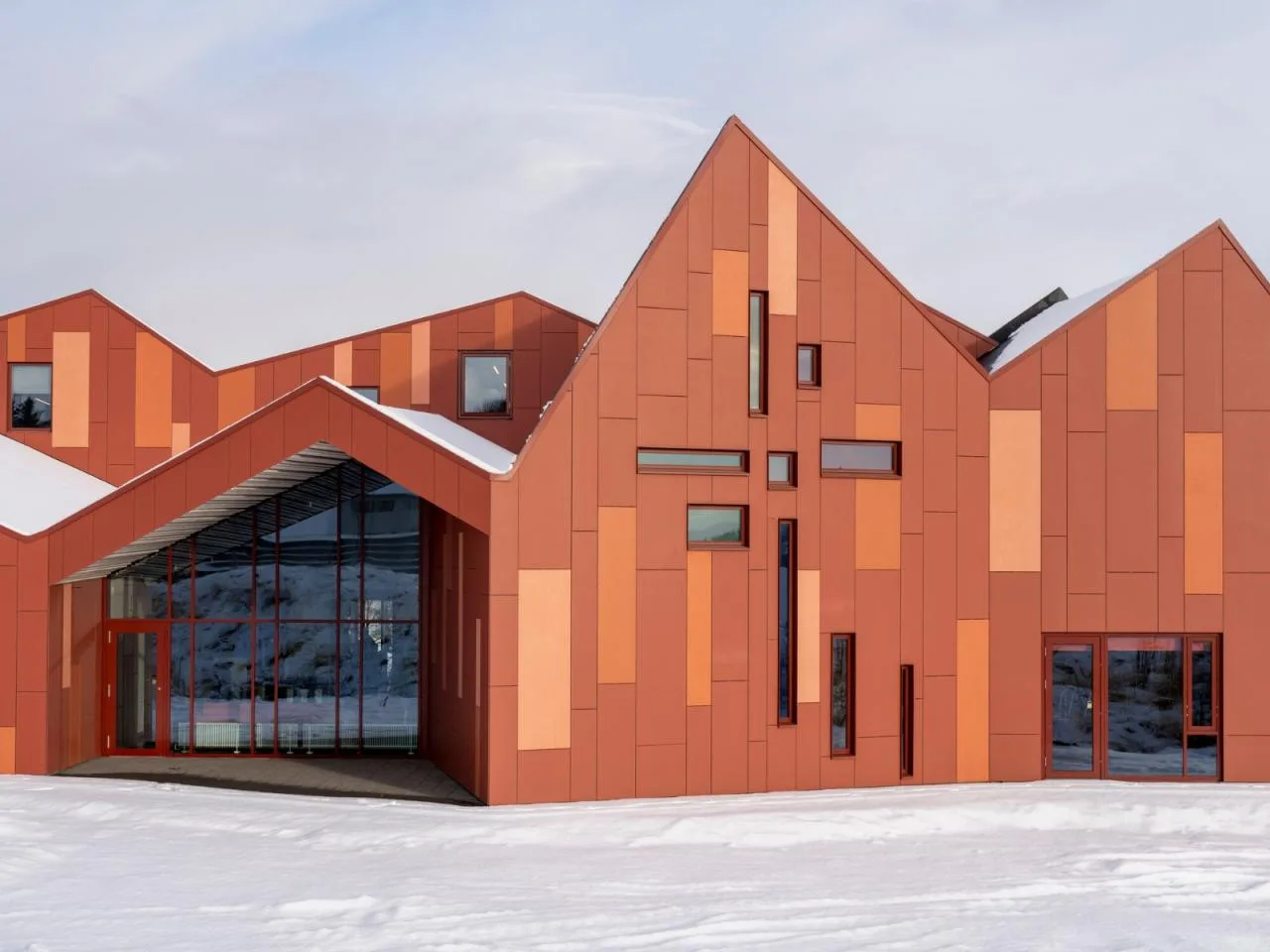
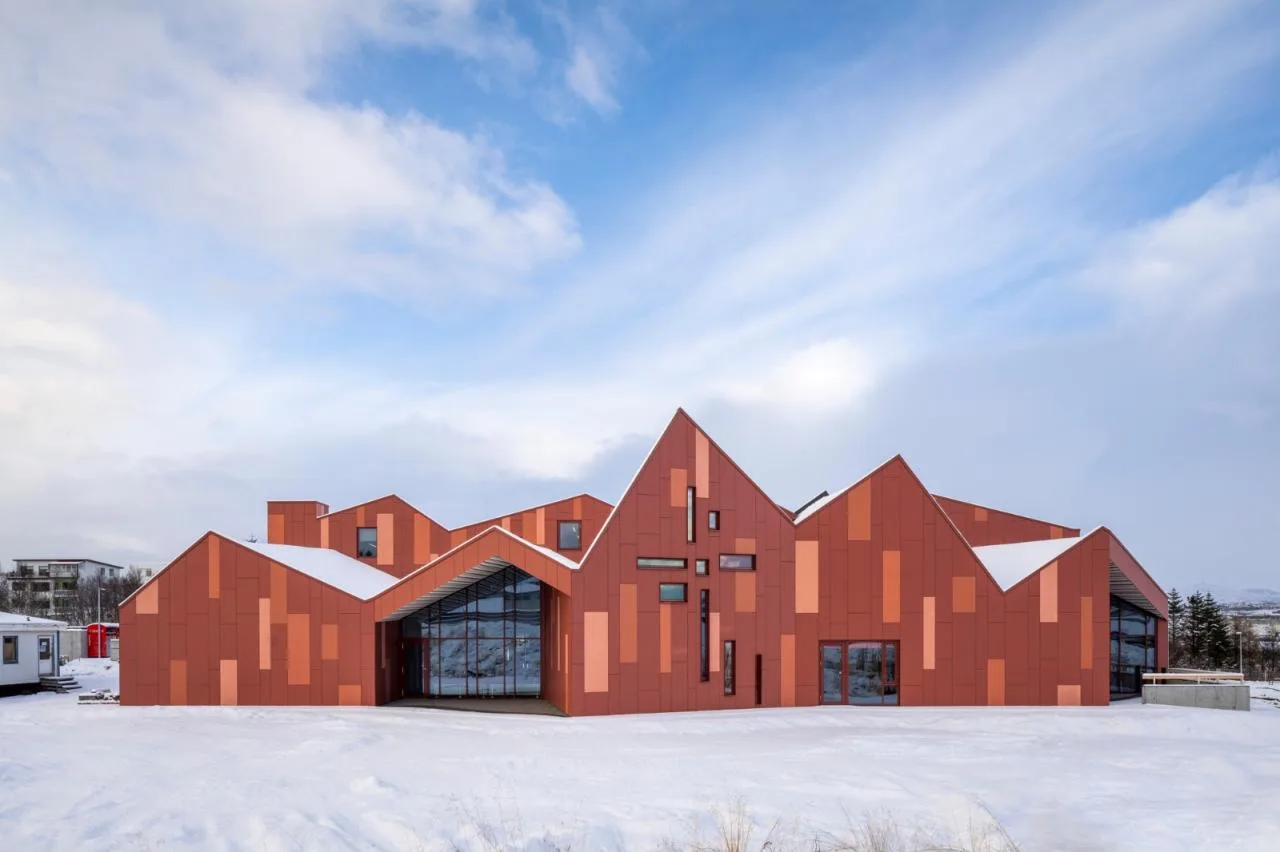
Visitors enter through the main entrance on the north side. Most of the ground floor is open to the public, while the upper floor houses offices, technical rooms, and storage areas.
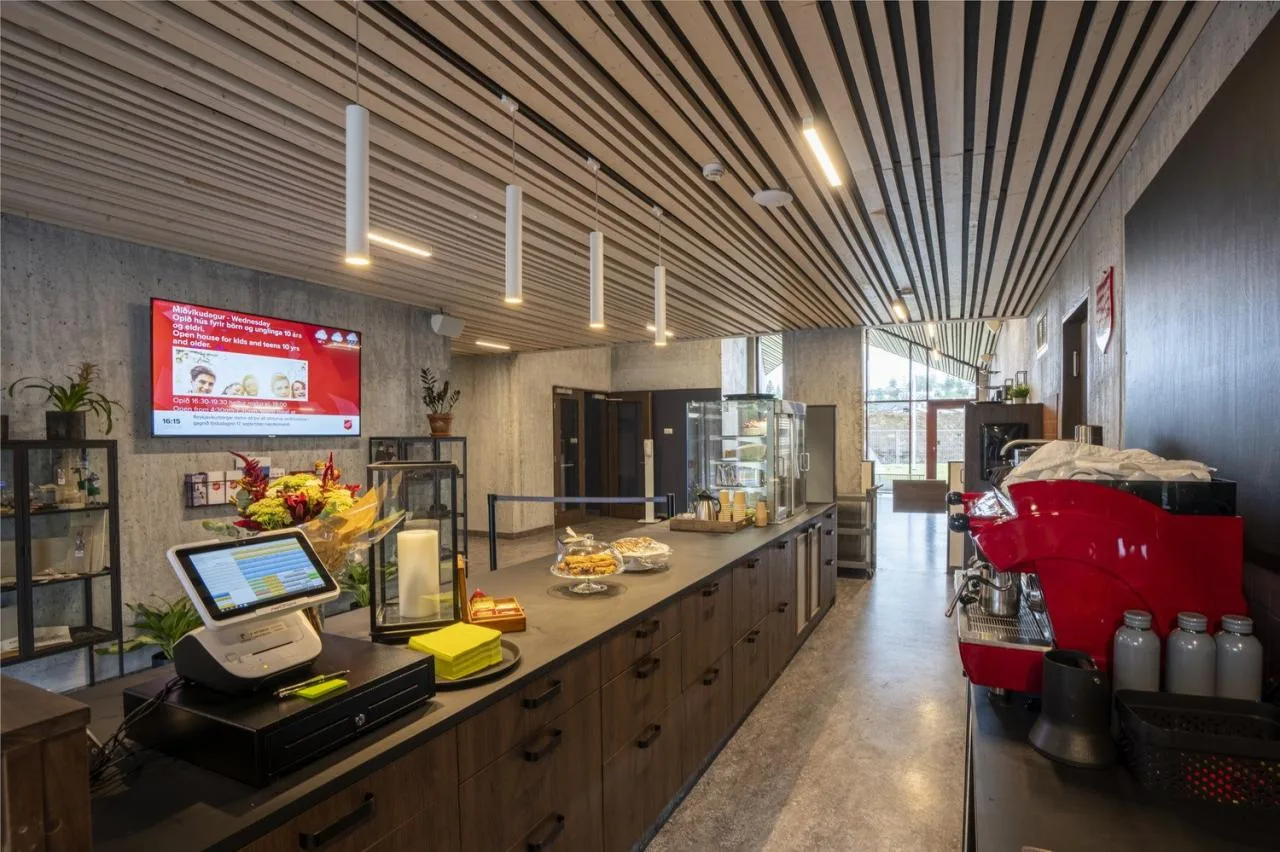
The coffee shop/cafeteria warmly welcomes guests. Seating areas with balconies are located on both the north and south sides. Adjacent to the coffee shop on the west side are two woodworking and handicraft workshops.
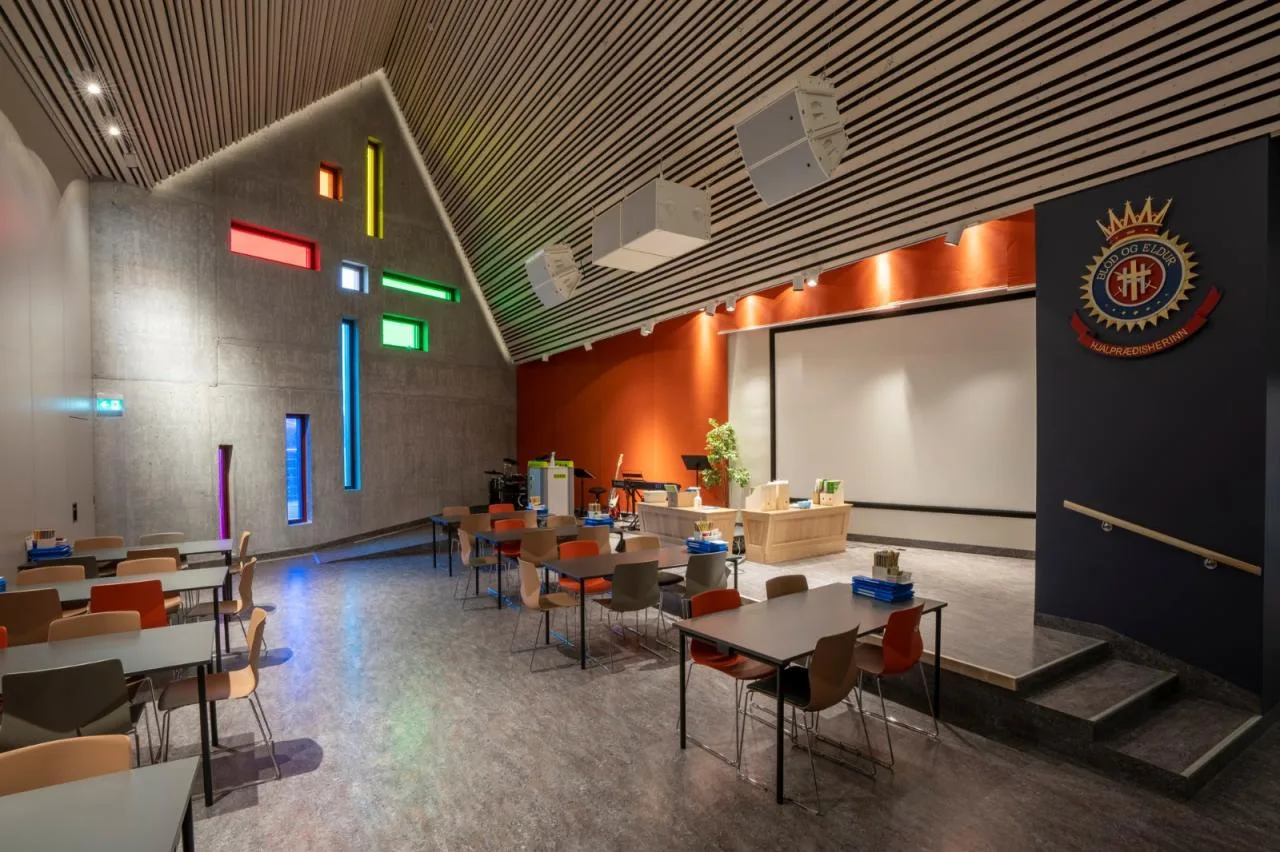
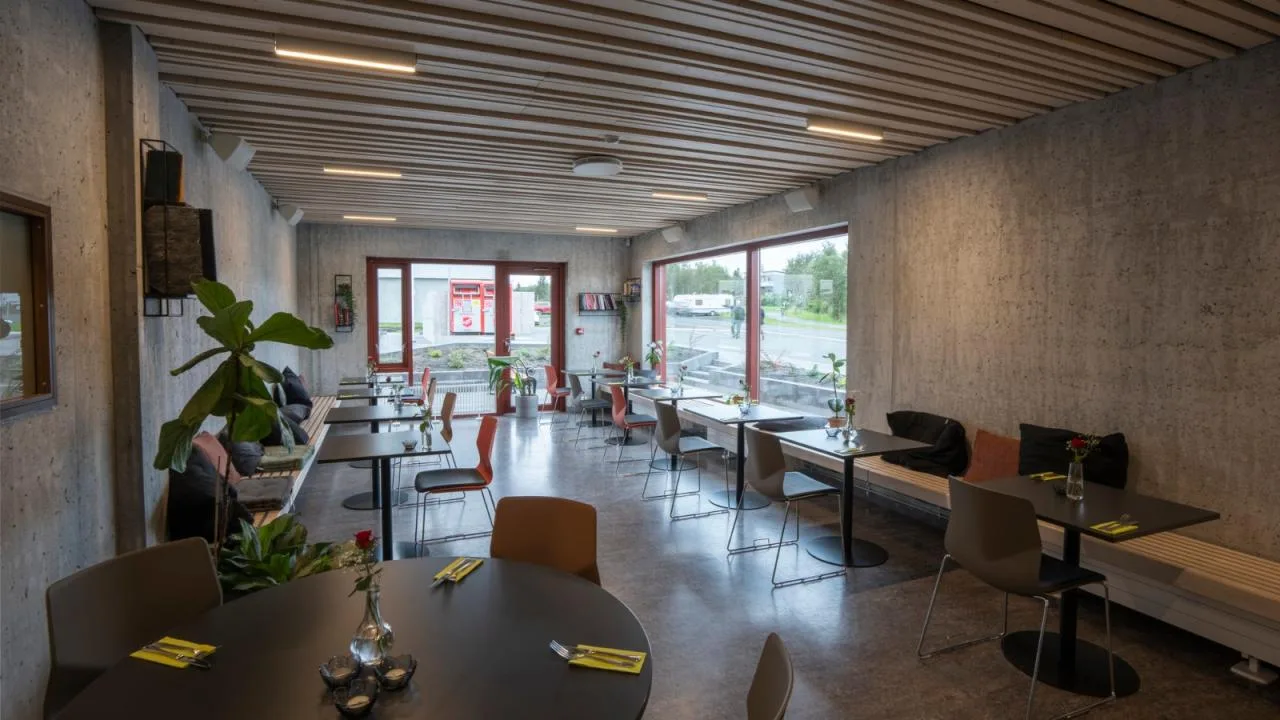
At the heart of the building is a church and a gathering hall featuring a stage. A multifunctional hall sits adjacent, separated by a folding wall that allows for flexible space arrangements during larger events.
On the east side, a more private entrance leads directly to the consultant’s office and rest area, designed for smaller group meetings.
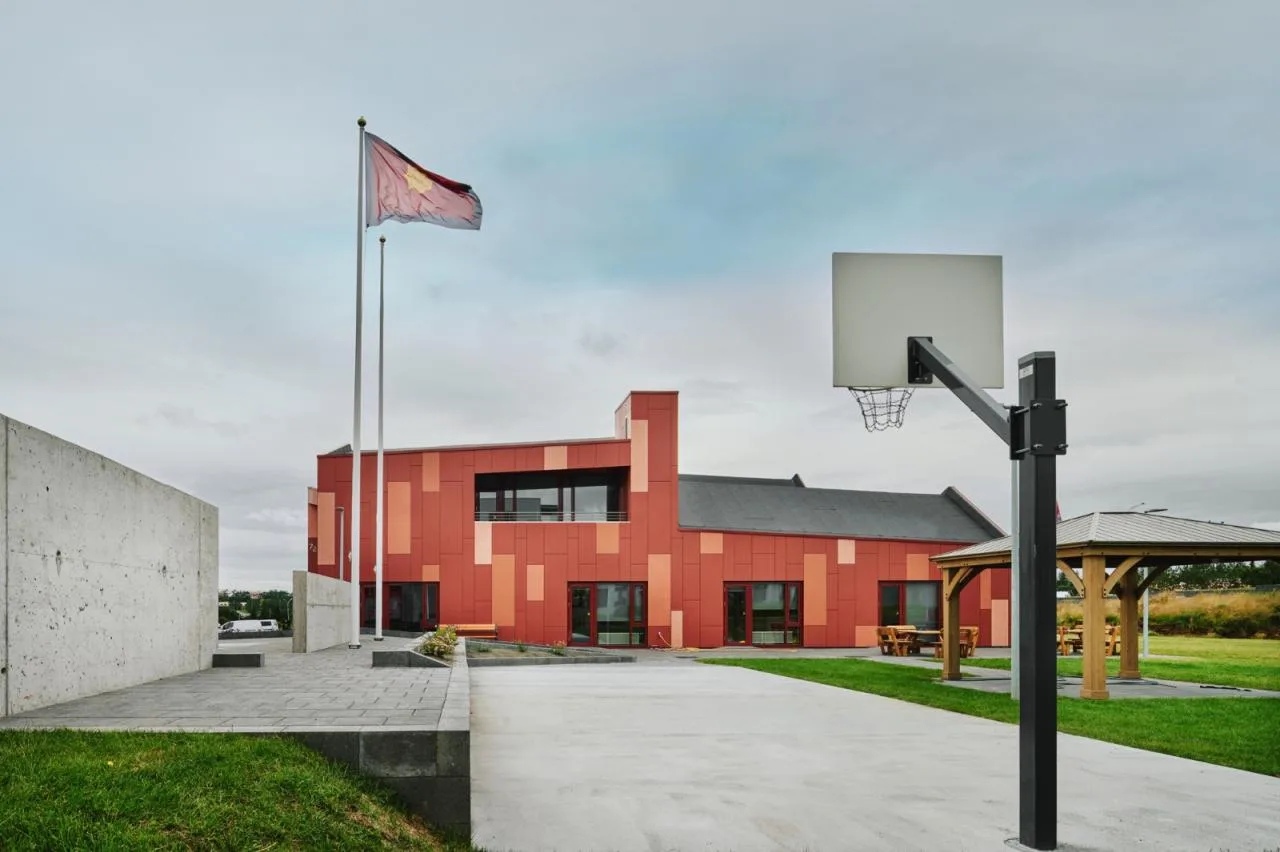
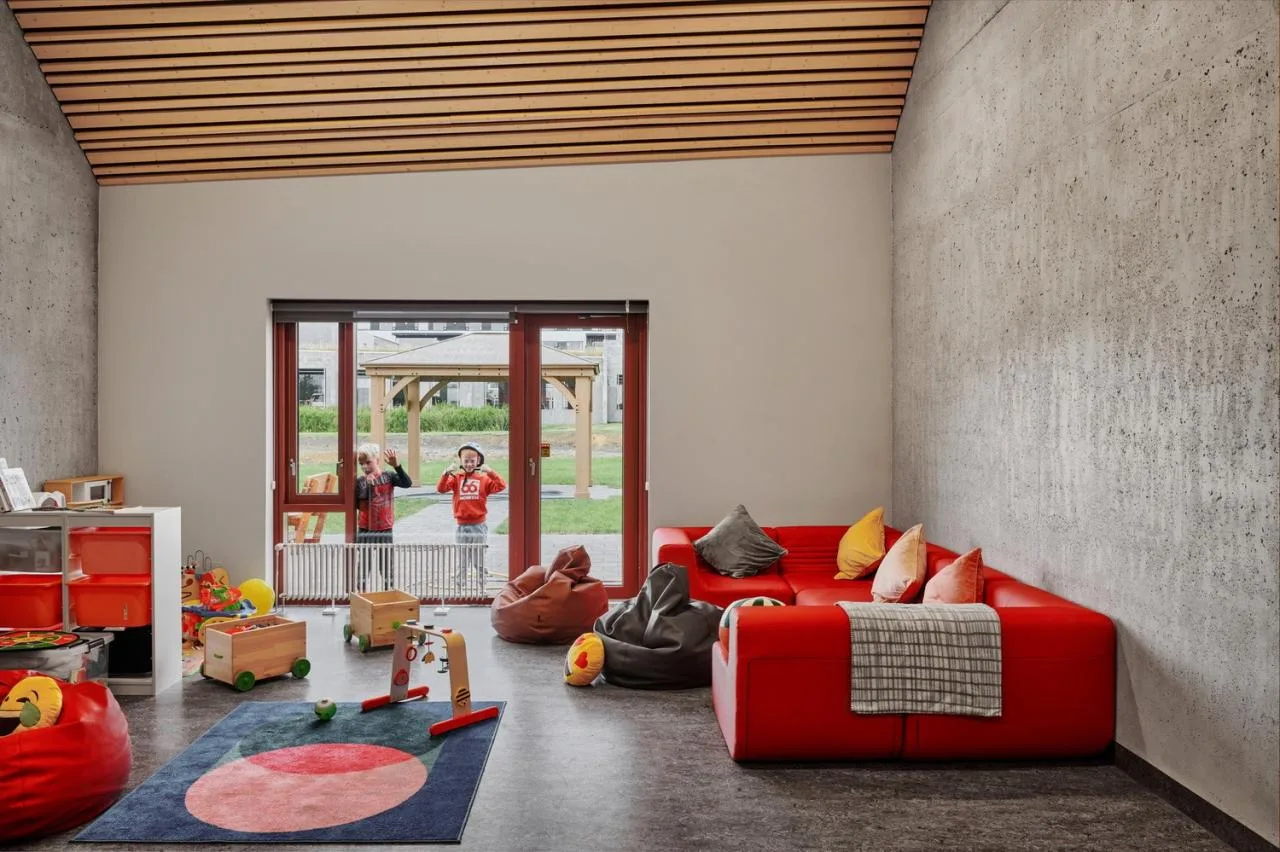
Surrounding the building is a large outdoor play area and a vegetable garden. Various balconies with suspended roofs encircle the structure, providing sheltered outdoor spaces.
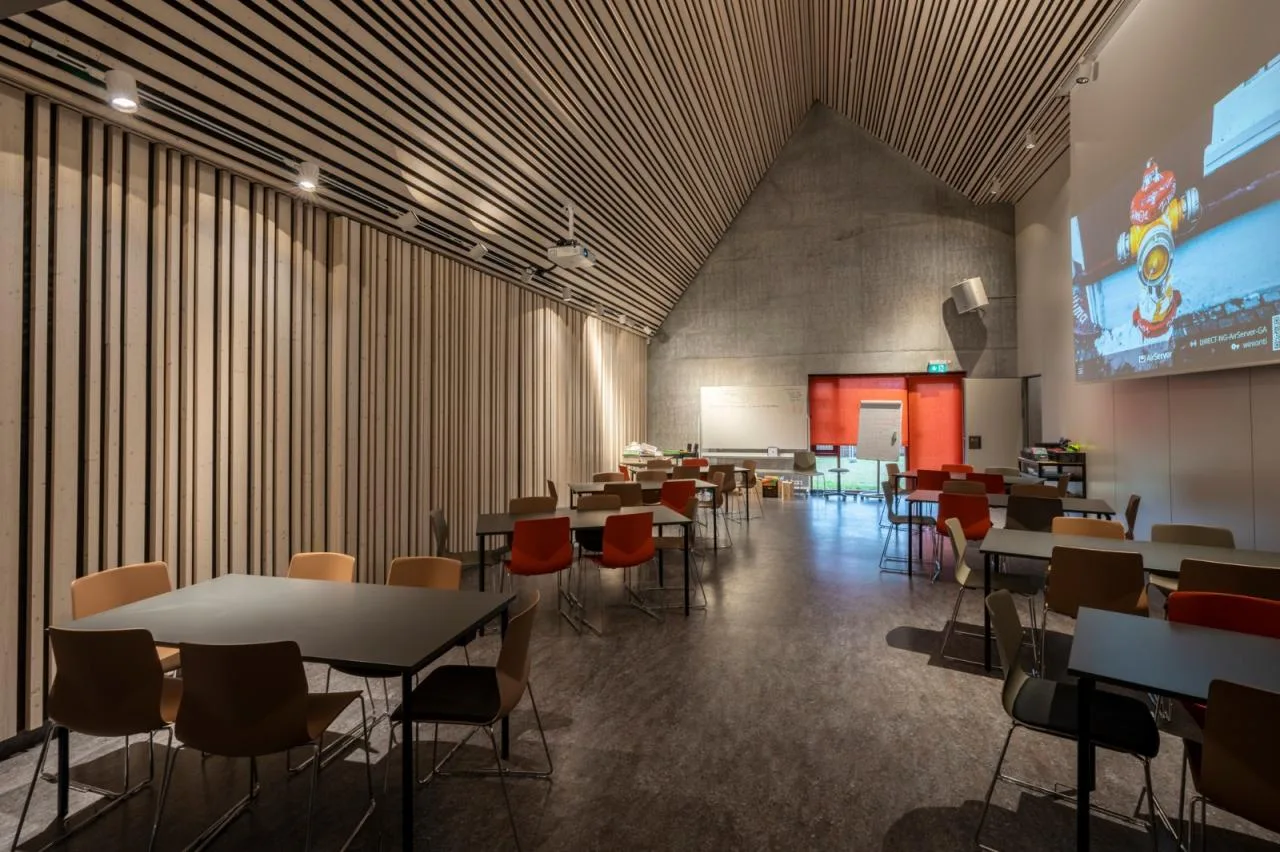
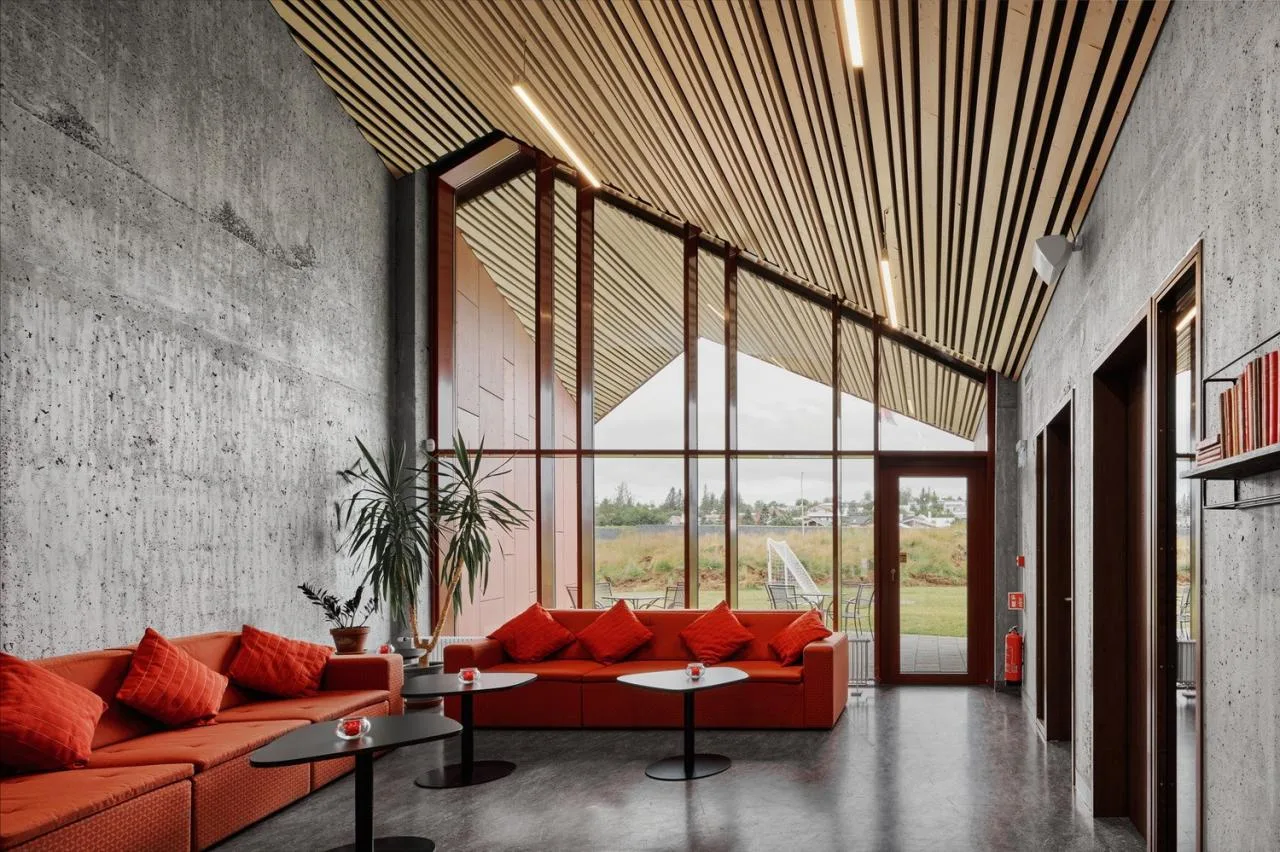
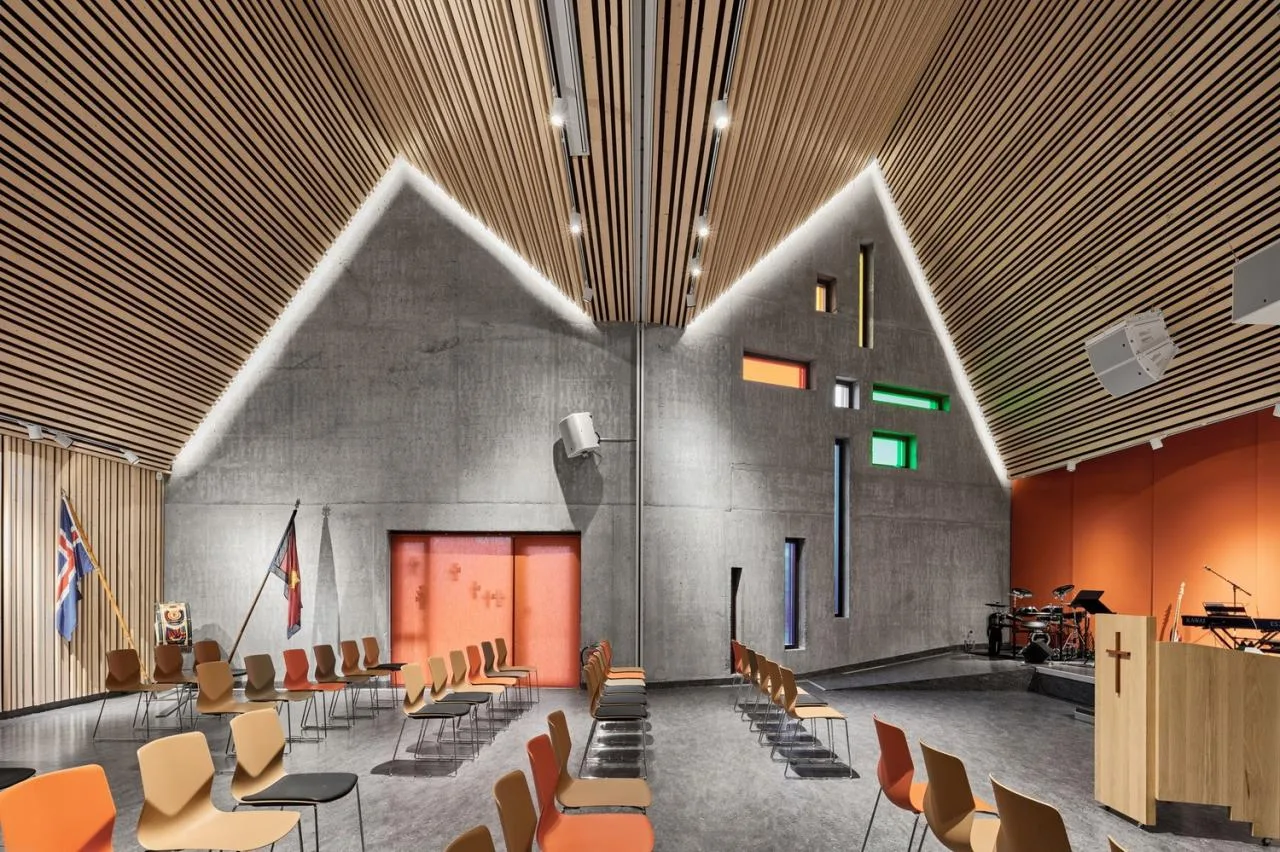
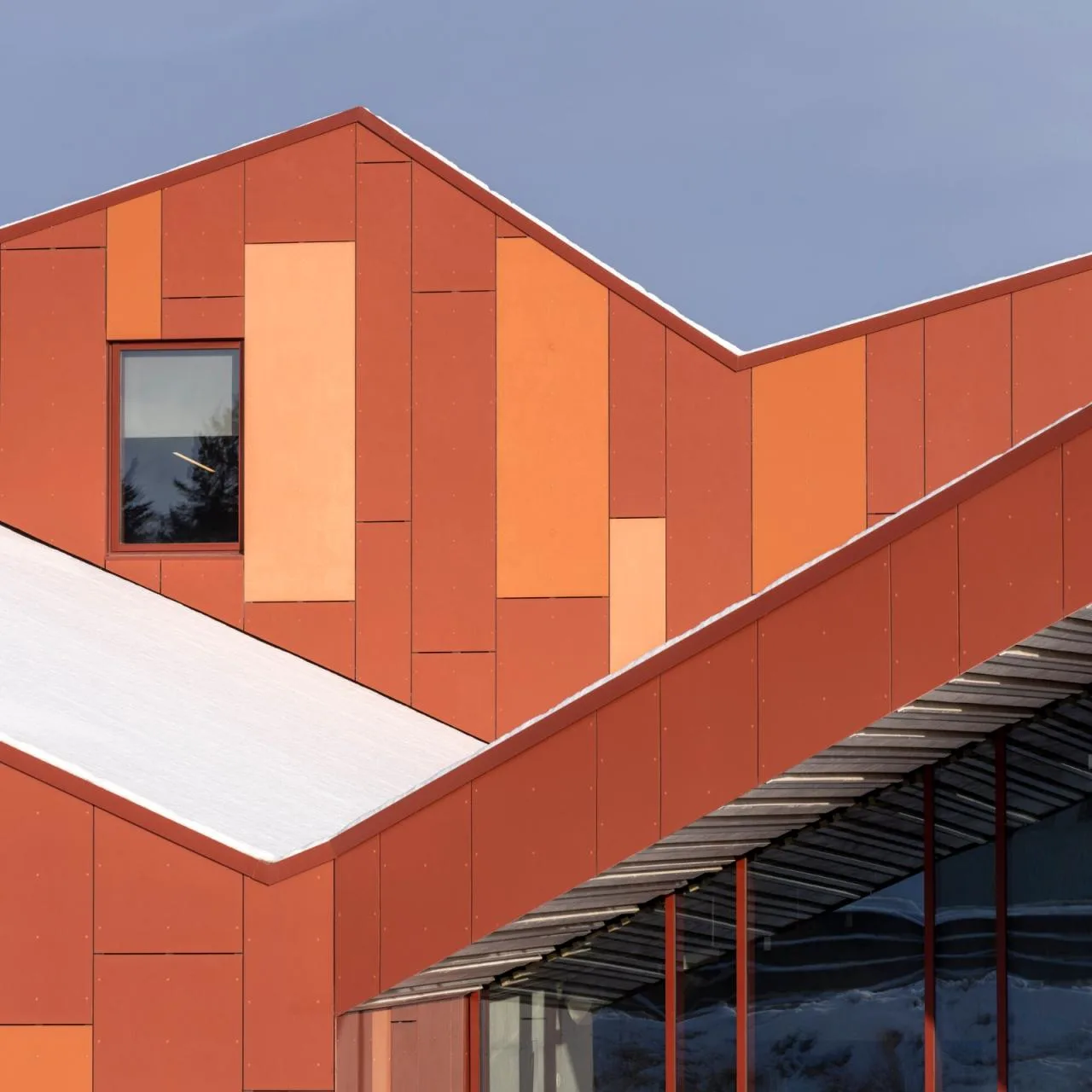
The main structure is constructed from cast-in-place concrete, with exterior walls insulated to meet local standards. The facade is clad with red fiber cement boards in varying shades, adding texture and depth.
Inside, the concrete surfaces are visible and coated with a transparent finish. Flooring is made from oil felt, and most ceilings are crafted from custom-designed, fire-resistant spruce wood.
Heating is provided through underfloor water heating systems as well as radiator-based underfloor heating.
Project Drawings
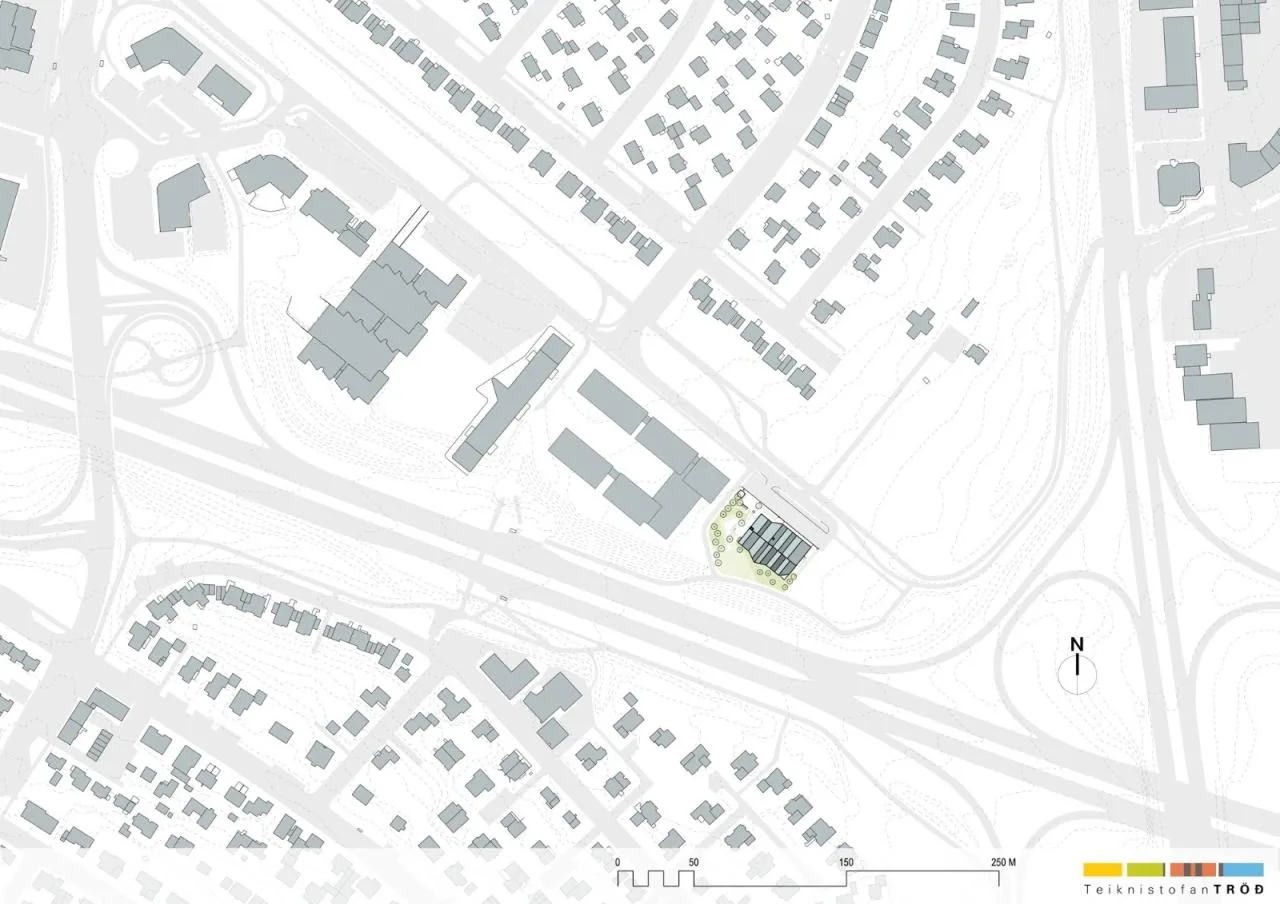
△ Base schematic diagram
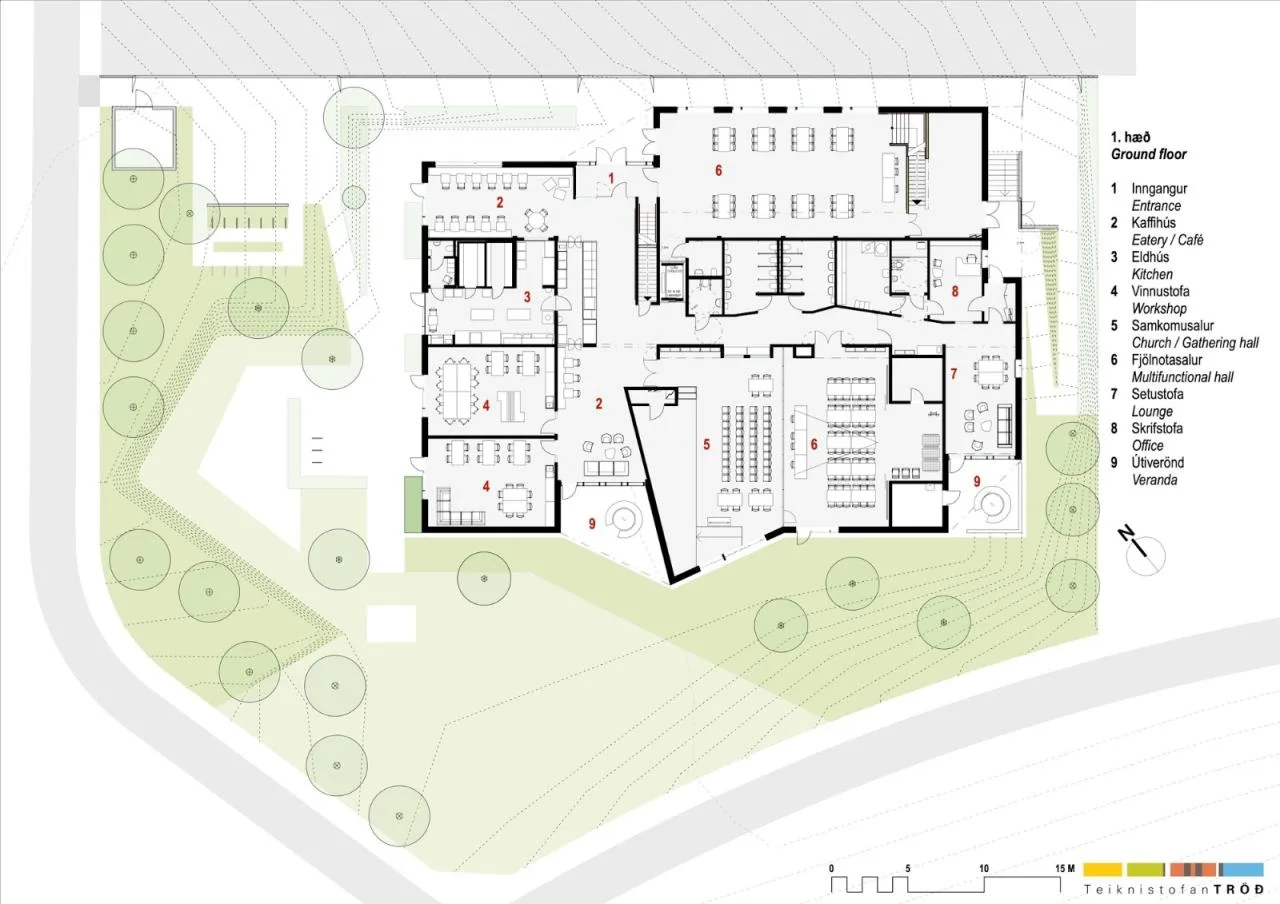
△ First floor plan
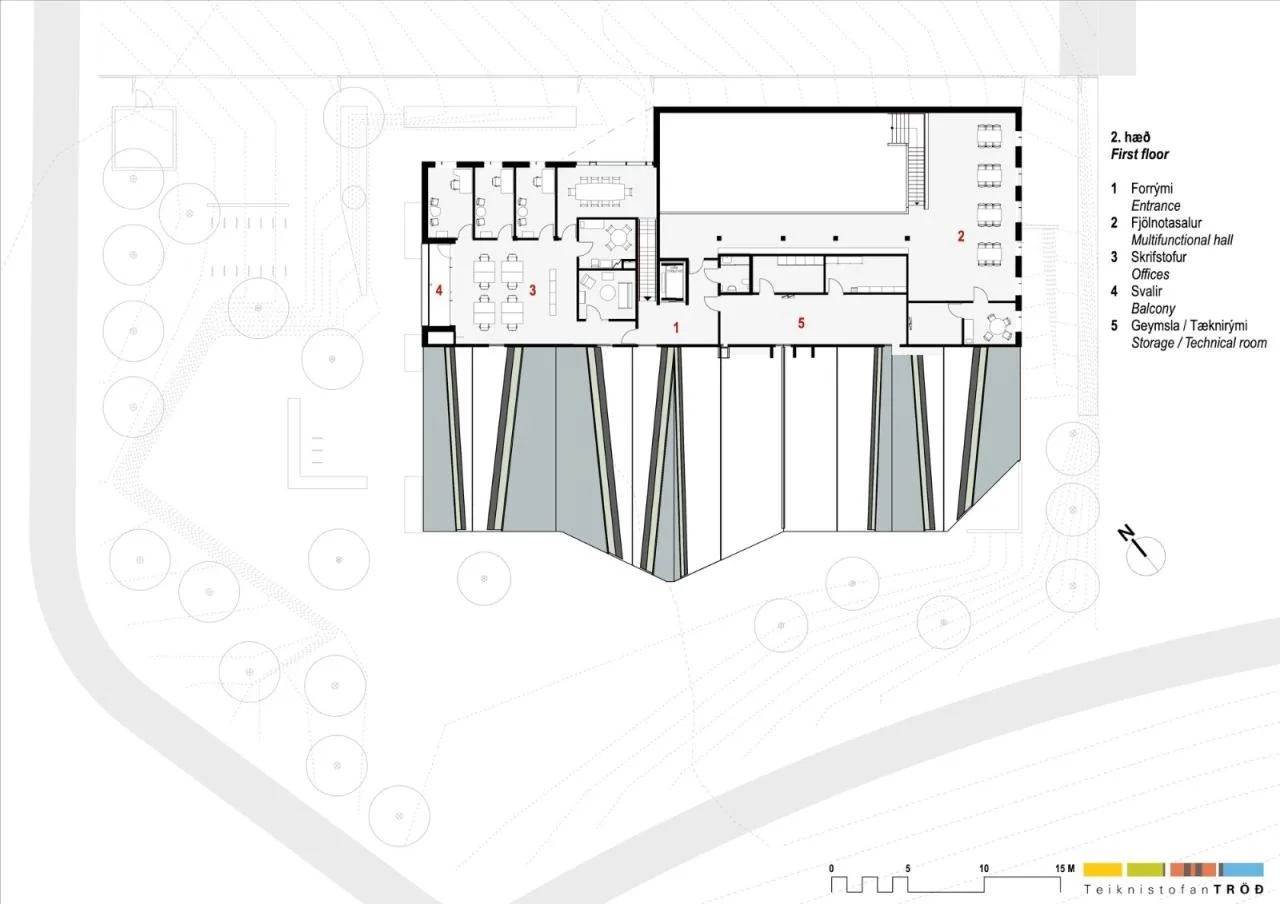
△ Second floor plan
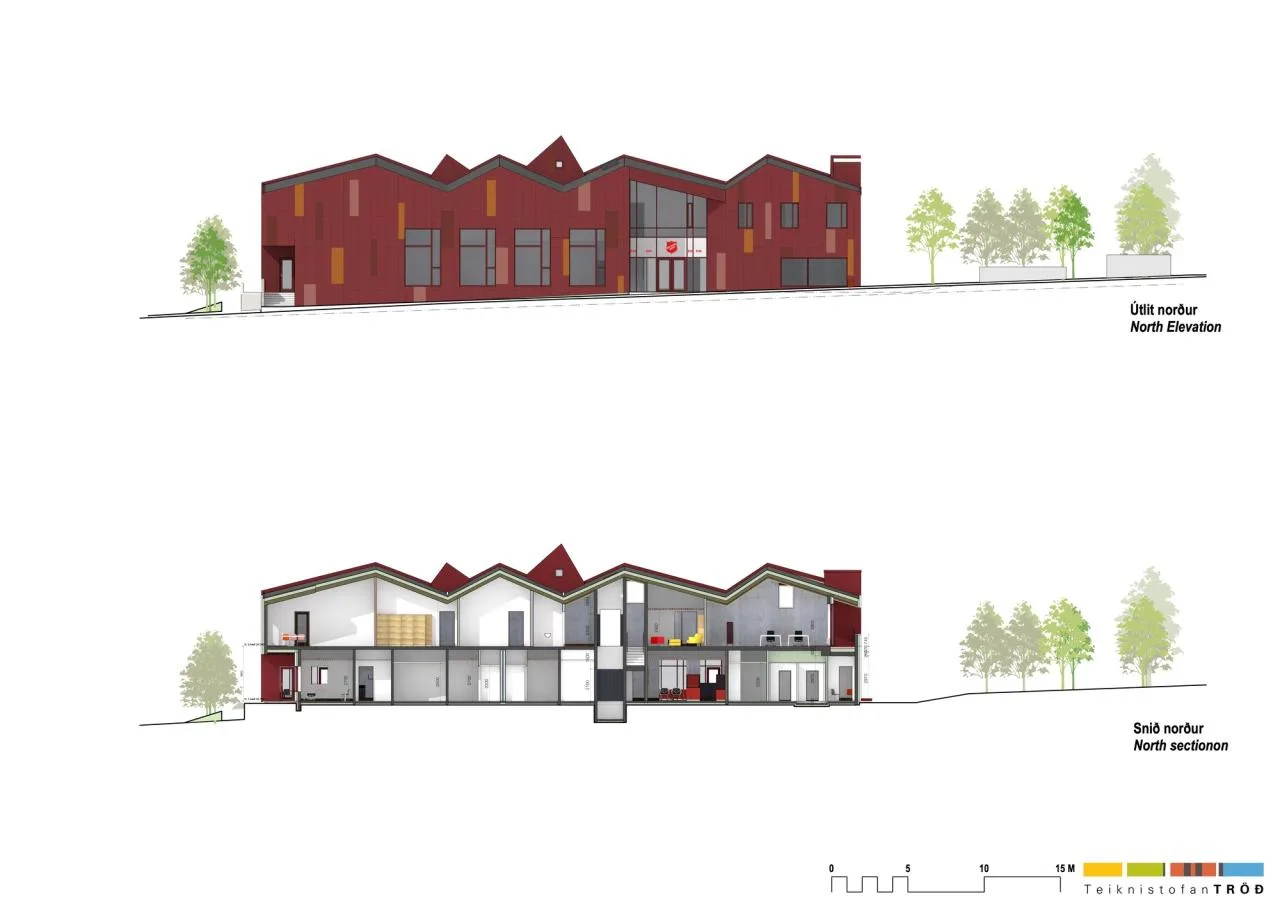
△ Elevation and section views
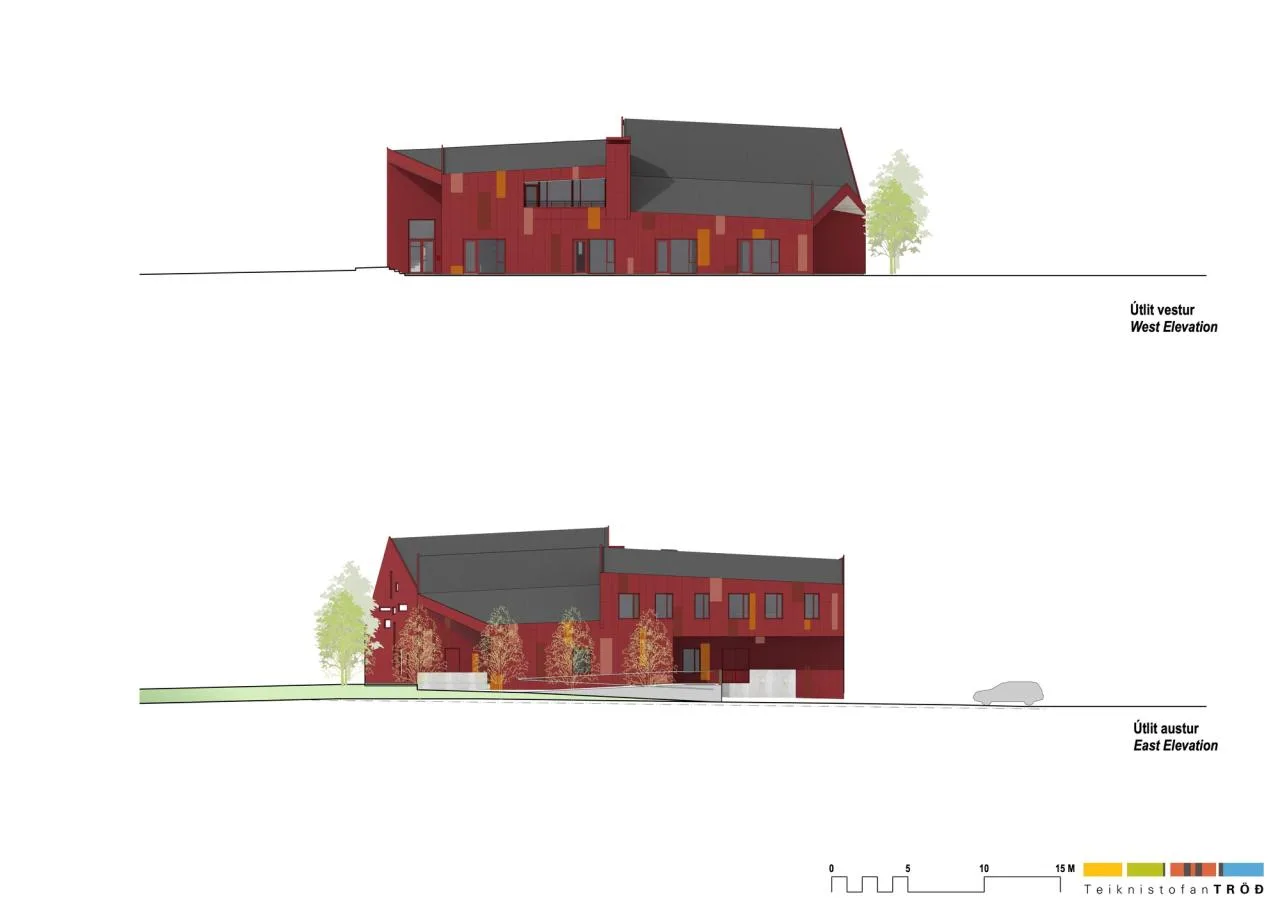
△ Elevation drawing
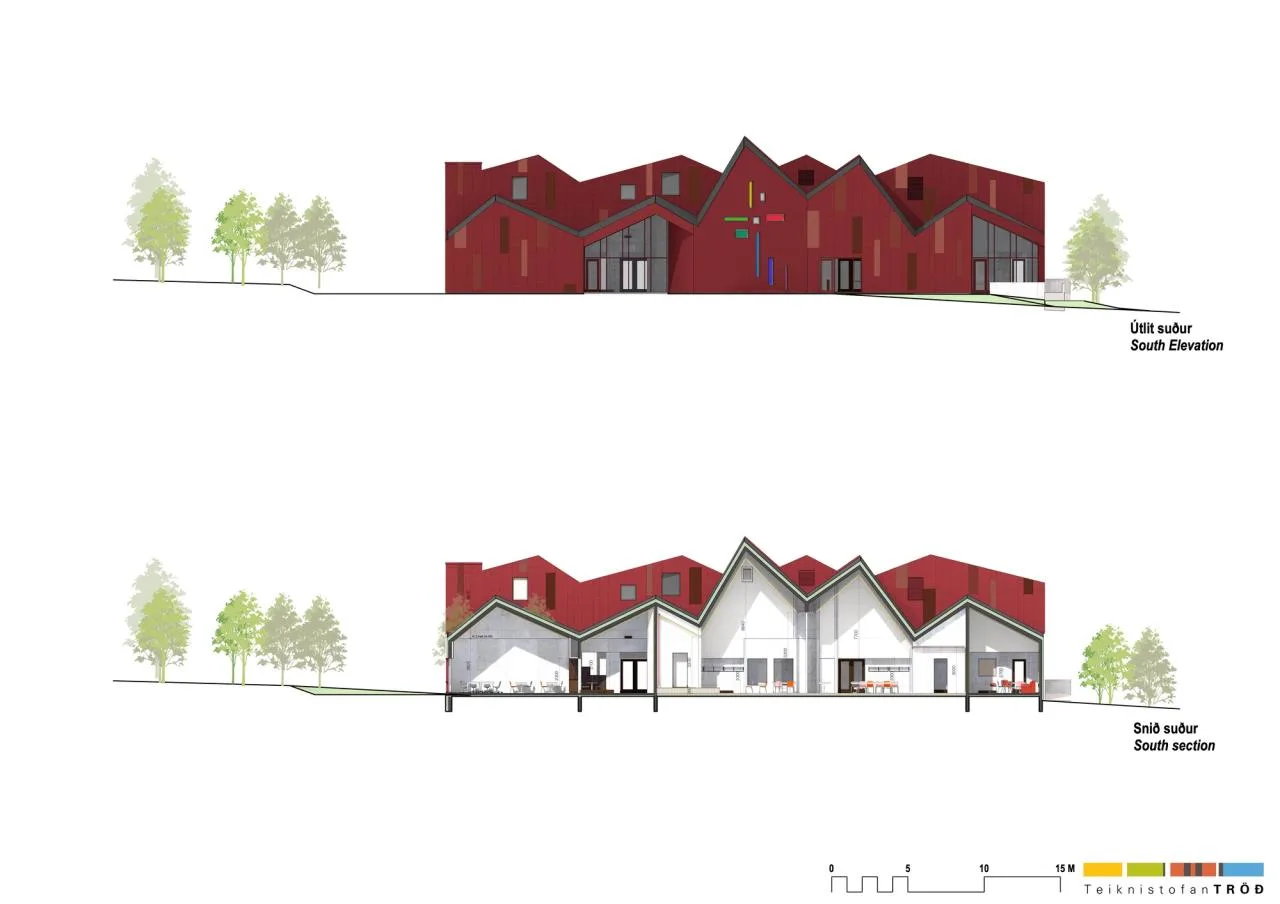
△ Elevation and section views
Project Information
Architectural Design: Teiknistofan Tr ö o
Area: 1,442 m²
Project Year: 2021
Photographers: Claudio Parada Nunes, Chris Lund












Must log in before commenting!
Sign Up