
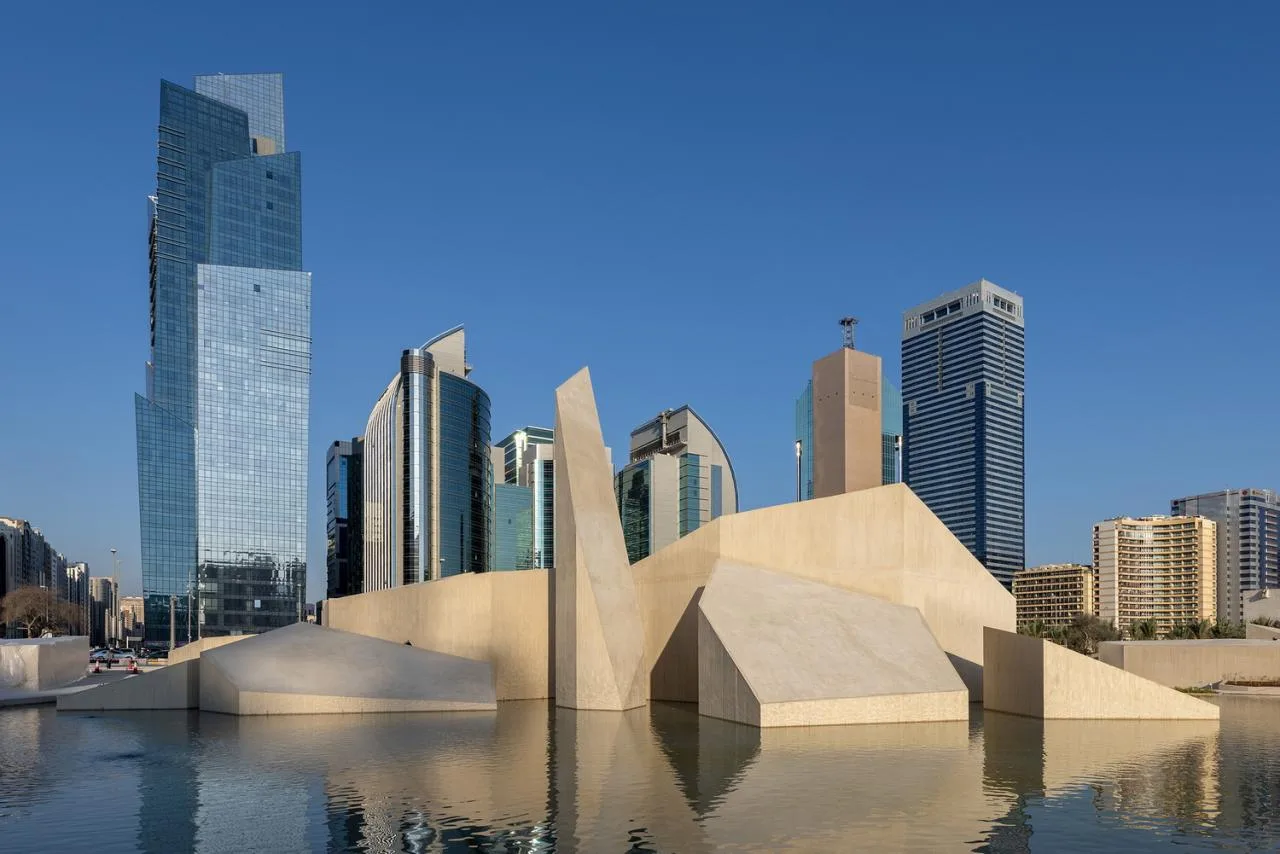
As part of the comprehensive master plan for the renowned attractions surrounding Qasr Al Hosn fortress in central Abu Dhabi, the Abu Dhabi Department of Culture and Tourism (DCT) collaborated with the architectural firm CEBRA to complete the new Al Musallah Chapel.
Located at the heart of Abu Dhabi’s modern metropolis, Qasr Al Hosn Fort stands as the city’s oldest and most significant building. Originally constructed in the 18th century to safeguard Abu Dhabi’s sole freshwater well, it later served as a royal residence and government building. Before the island’s urban development, this fortress was the first stop for visitors arriving from the desert to the coast. Rising majestically from the desert, the fort symbolizes the birthplace of Abu Dhabi.
The restoration of Qasr Al Hosn includes a 140,000-square-meter cultural park that encircles the fortress, alongside a cultural foundation known as a celebrated cultural center from the 1980s. Together, these two structures form a block representing Abu Dhabi’s historical and modern heritage.
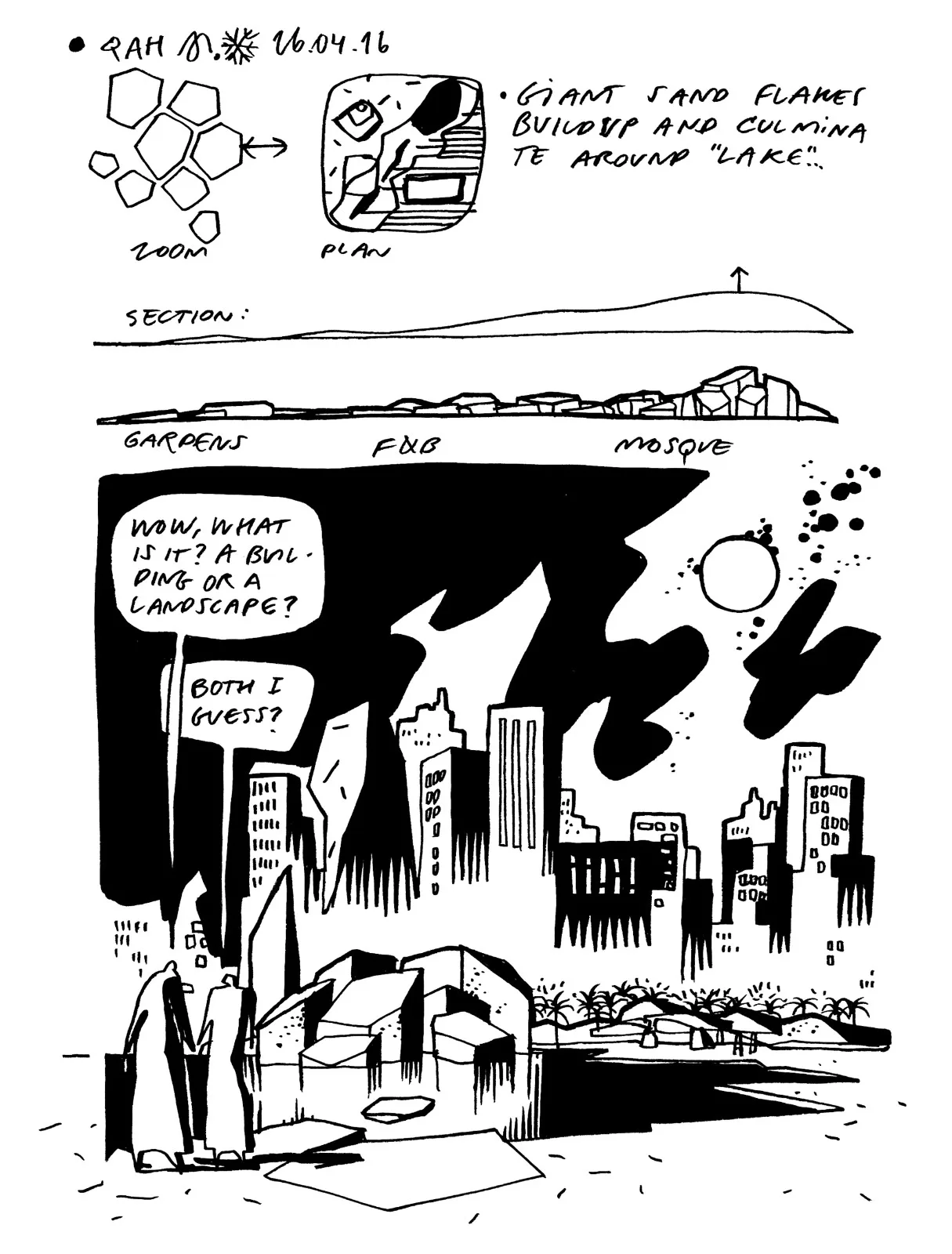
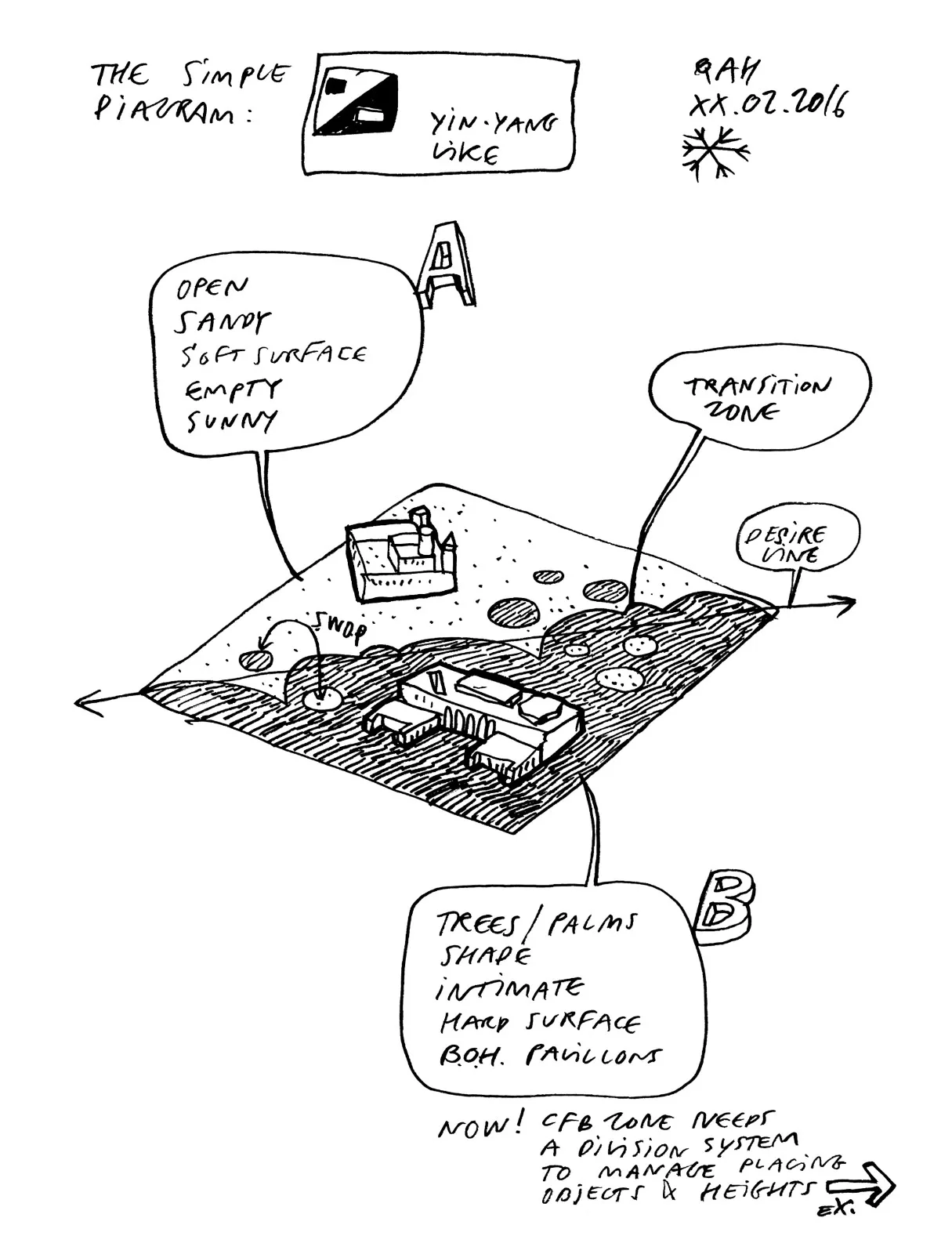
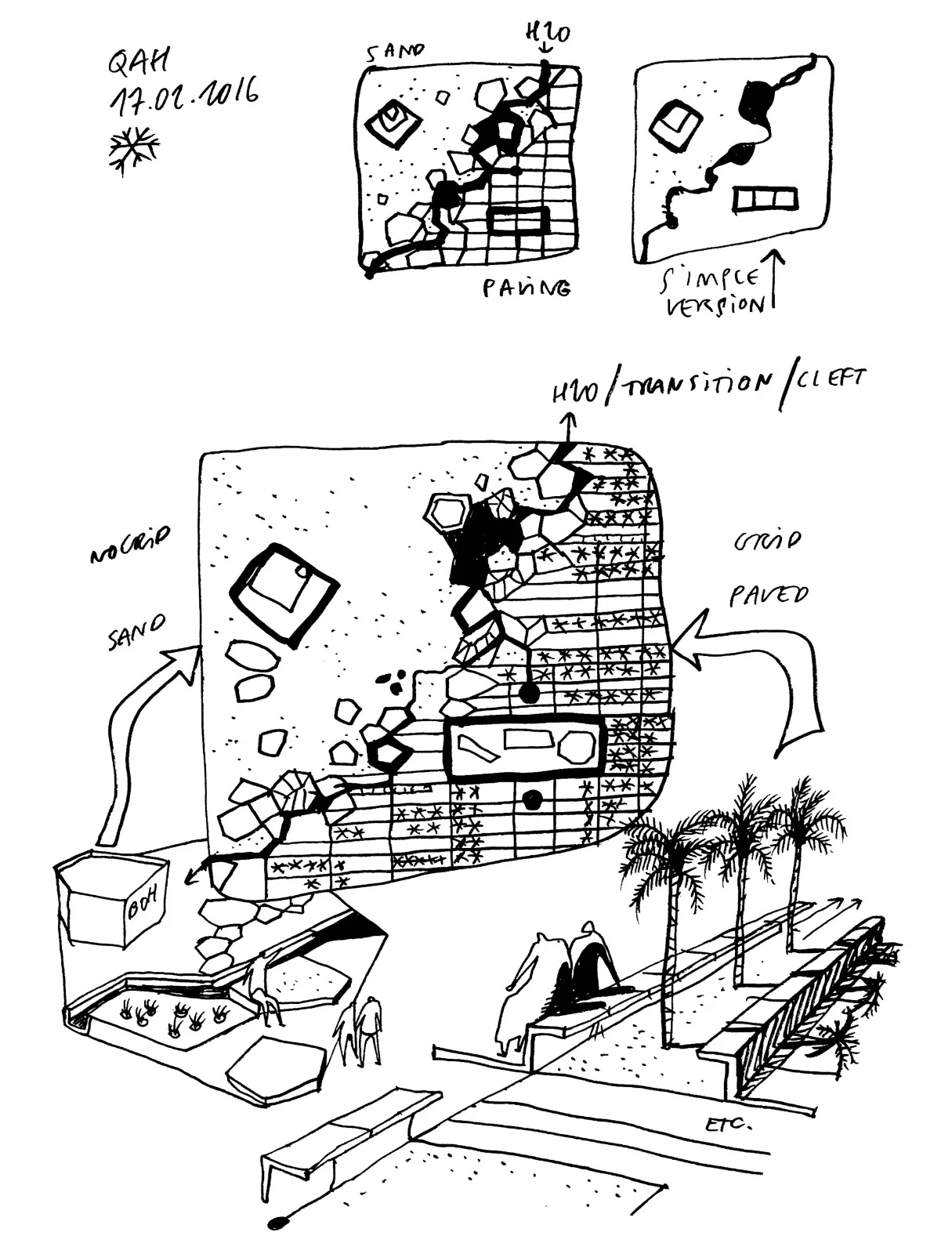
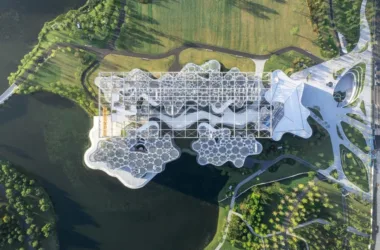
The master plan for restoring the coastal desert landscape highlights this duality by diagonally dividing the site into two contrasting zones. On one side, the plains surrounding the fortress and the soft, open desert landscape shape the buildings into distinct landmarks, reminiscent of the pre-urban era. On the other, the area around the cultural foundation features paved surfaces and functional planning that blend desert landscapes with modern urban grid patterns.
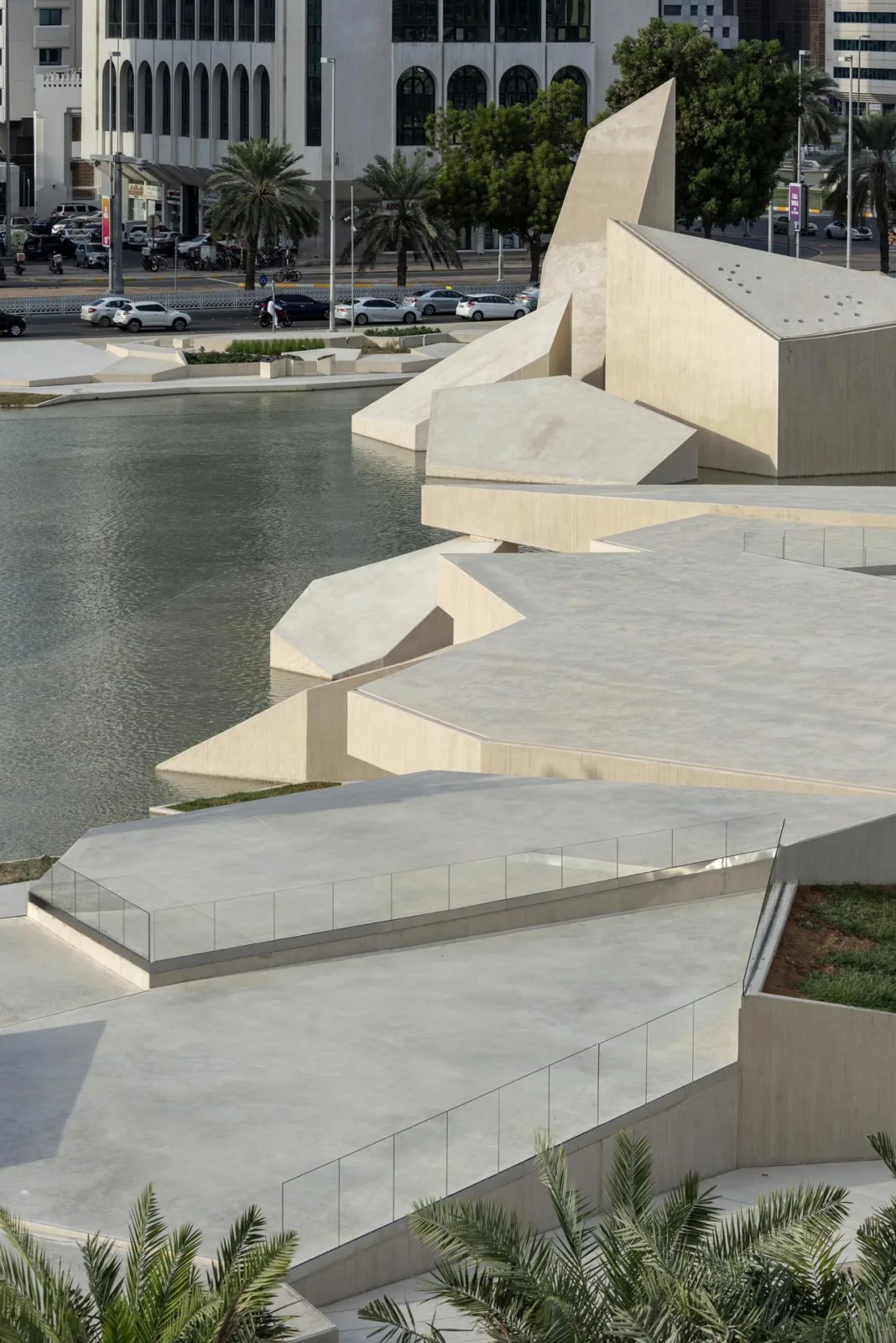
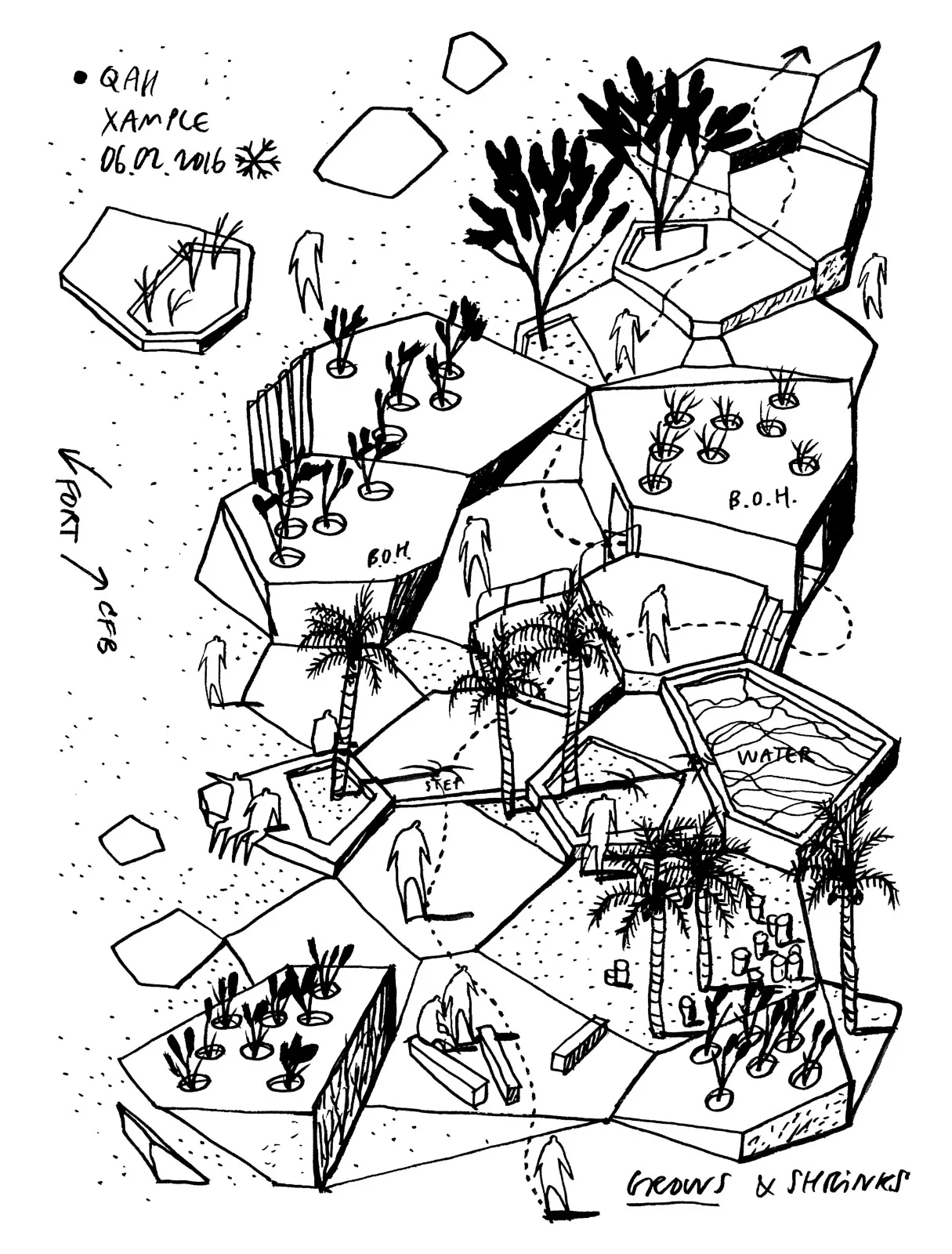
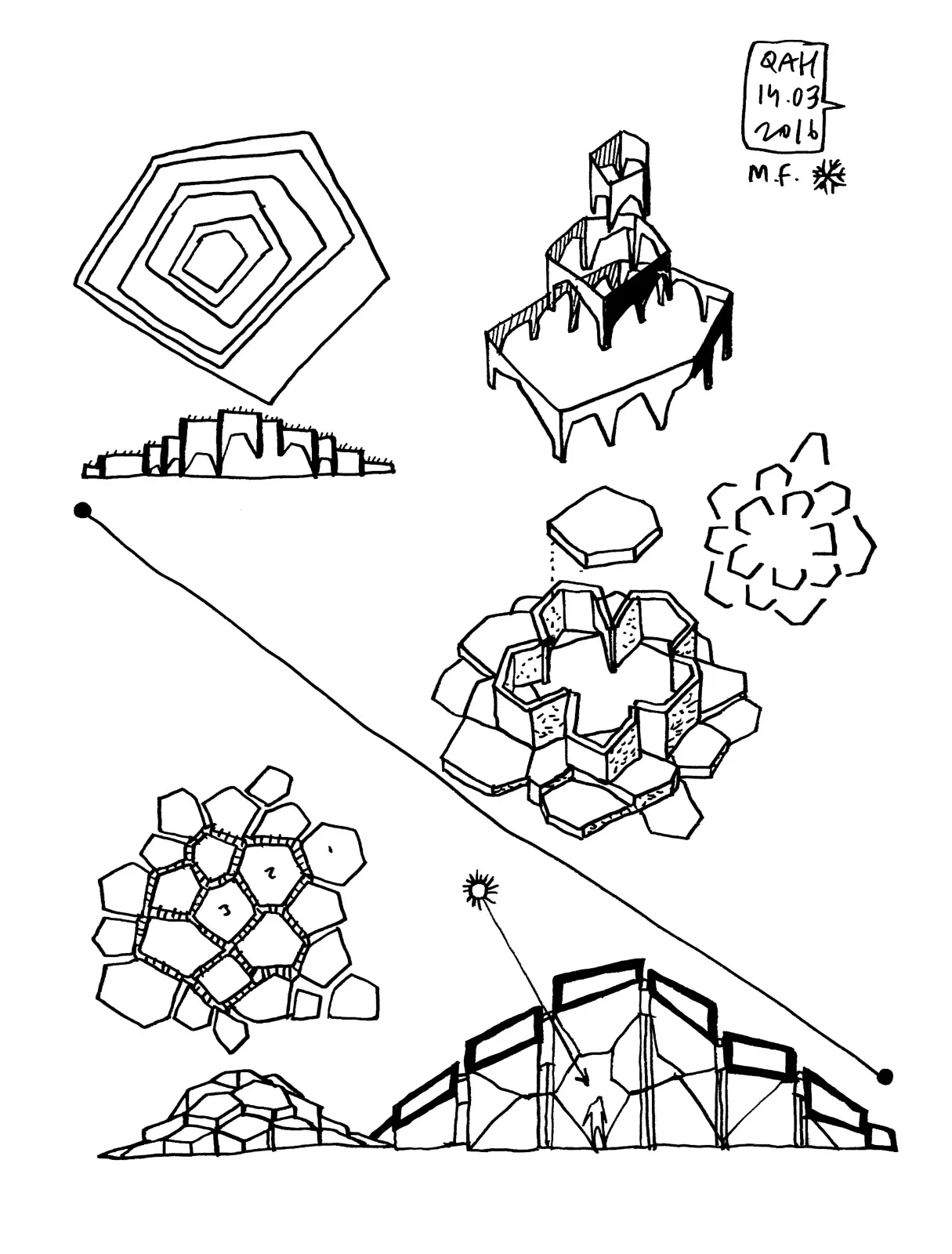
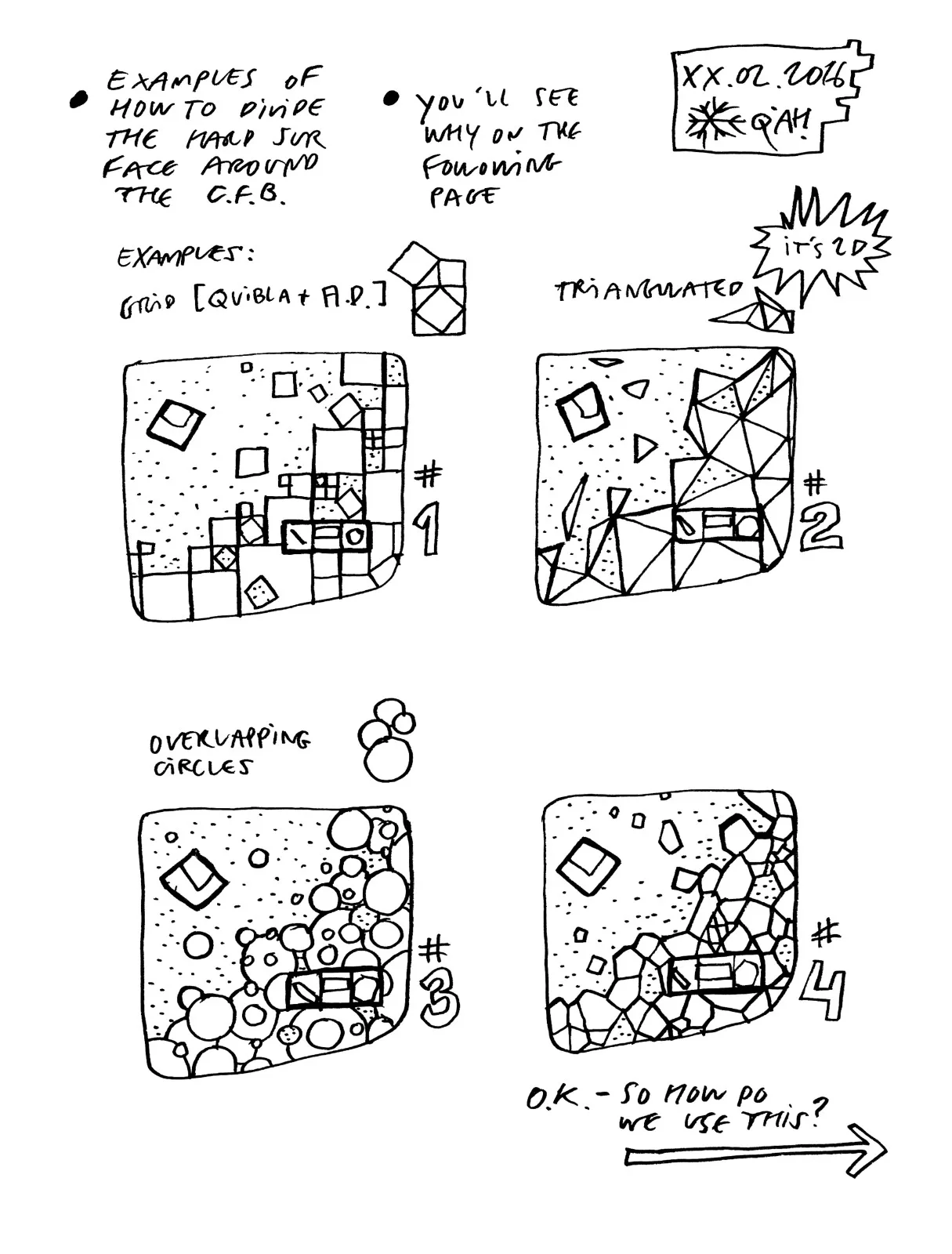
The master plan connects these two landscape types through diverse public urban spaces. These spaces are characterized by the formation of cracks and irregular geometric shapes, inspired by the unique mud crack patterns found in Abu Dhabi’s coastal desert landscapes and salt flats. These forms represent the transition between natural beaches and paved walkways, serving as key design elements that create a powerful, scalable narrative rooted in the original landscape.
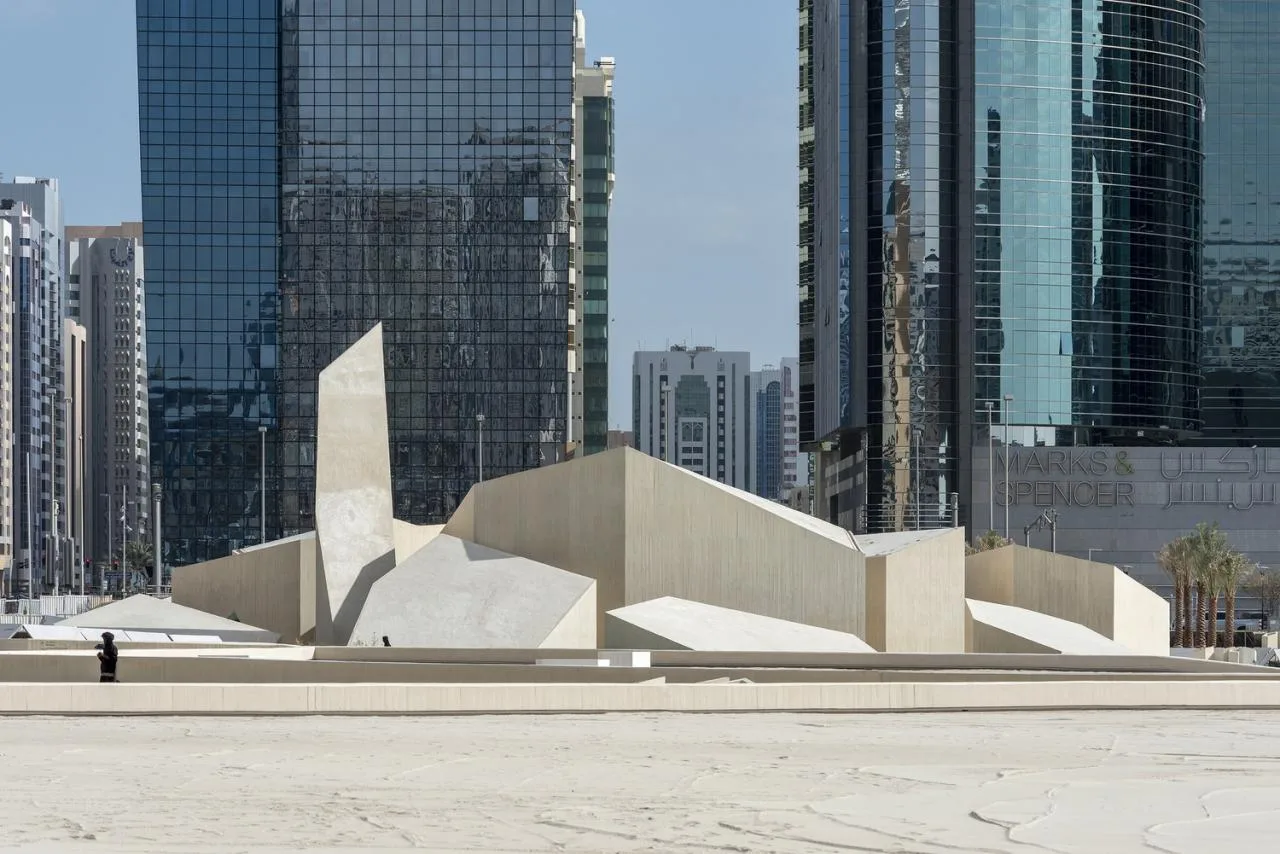
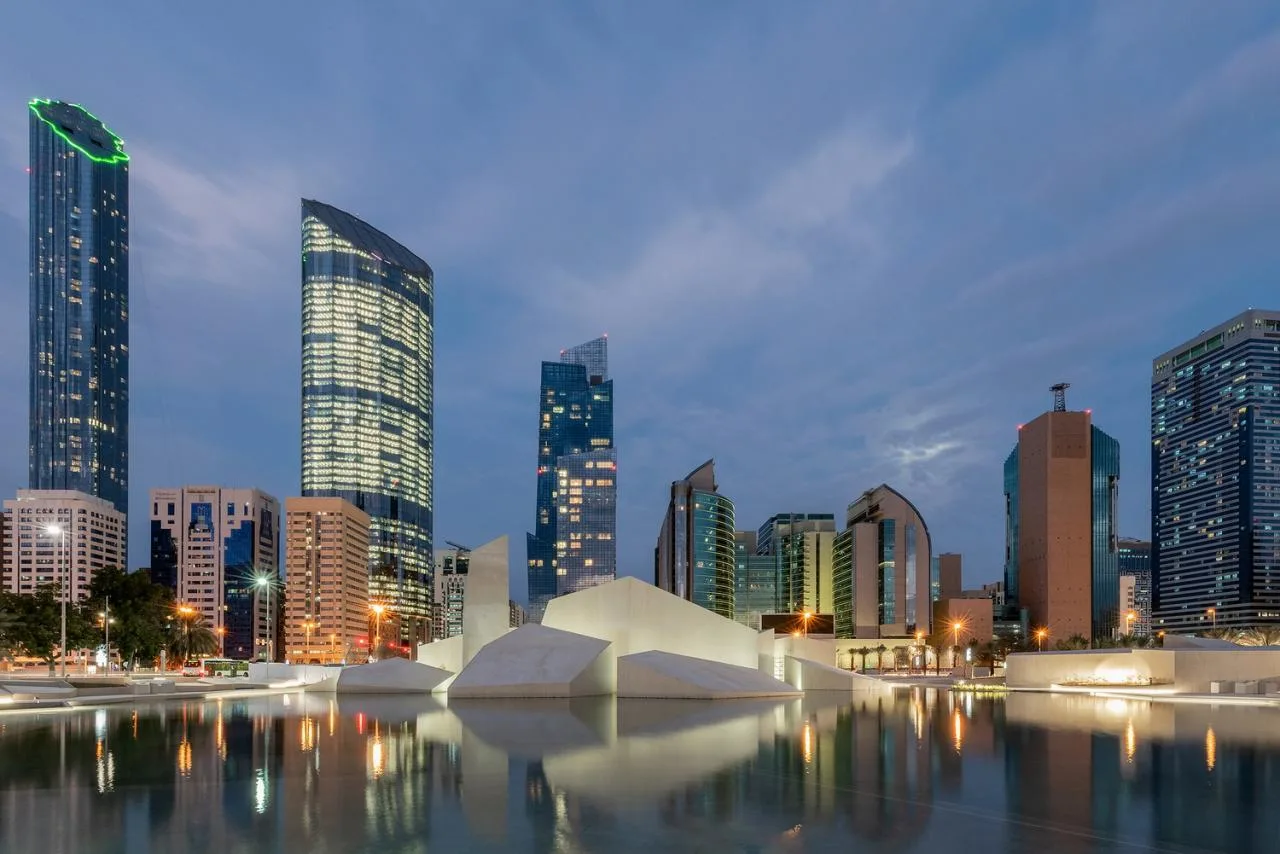
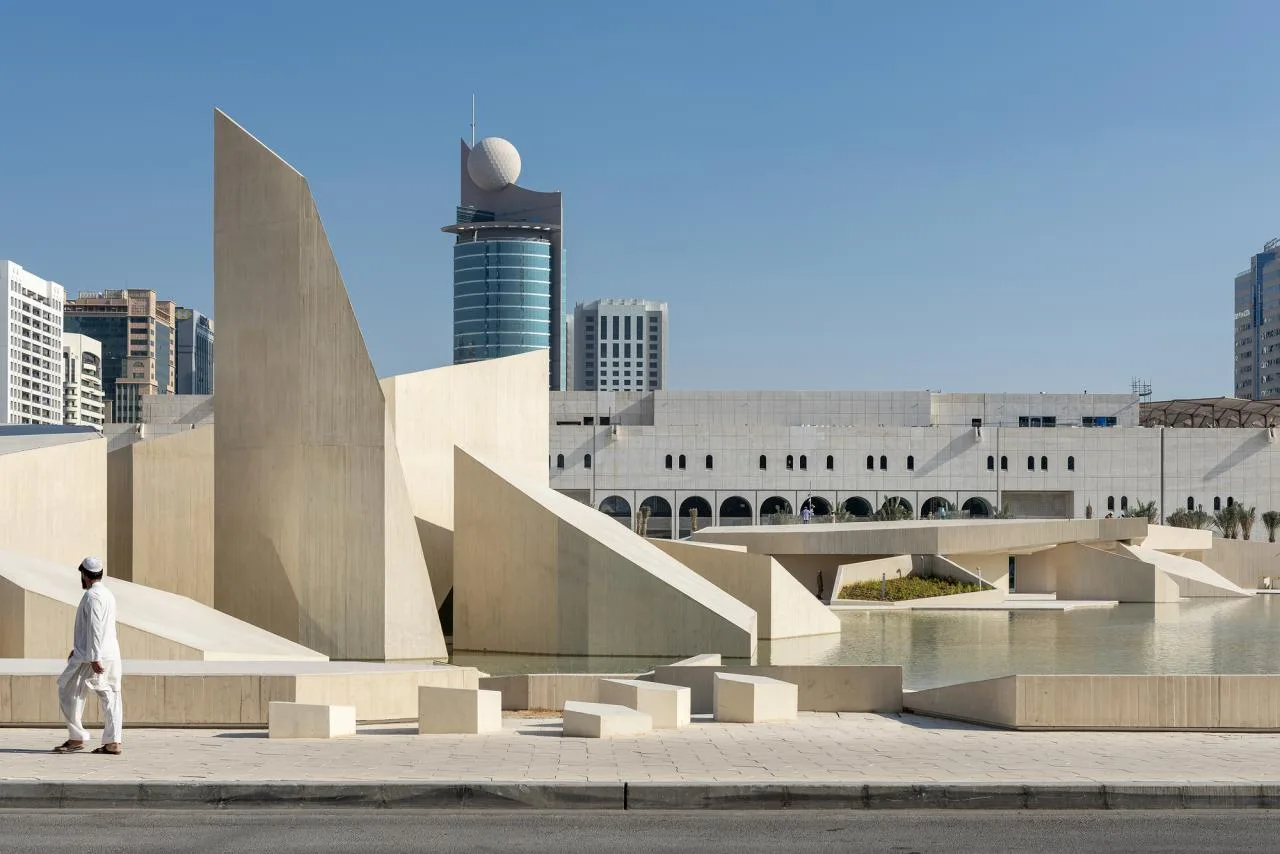
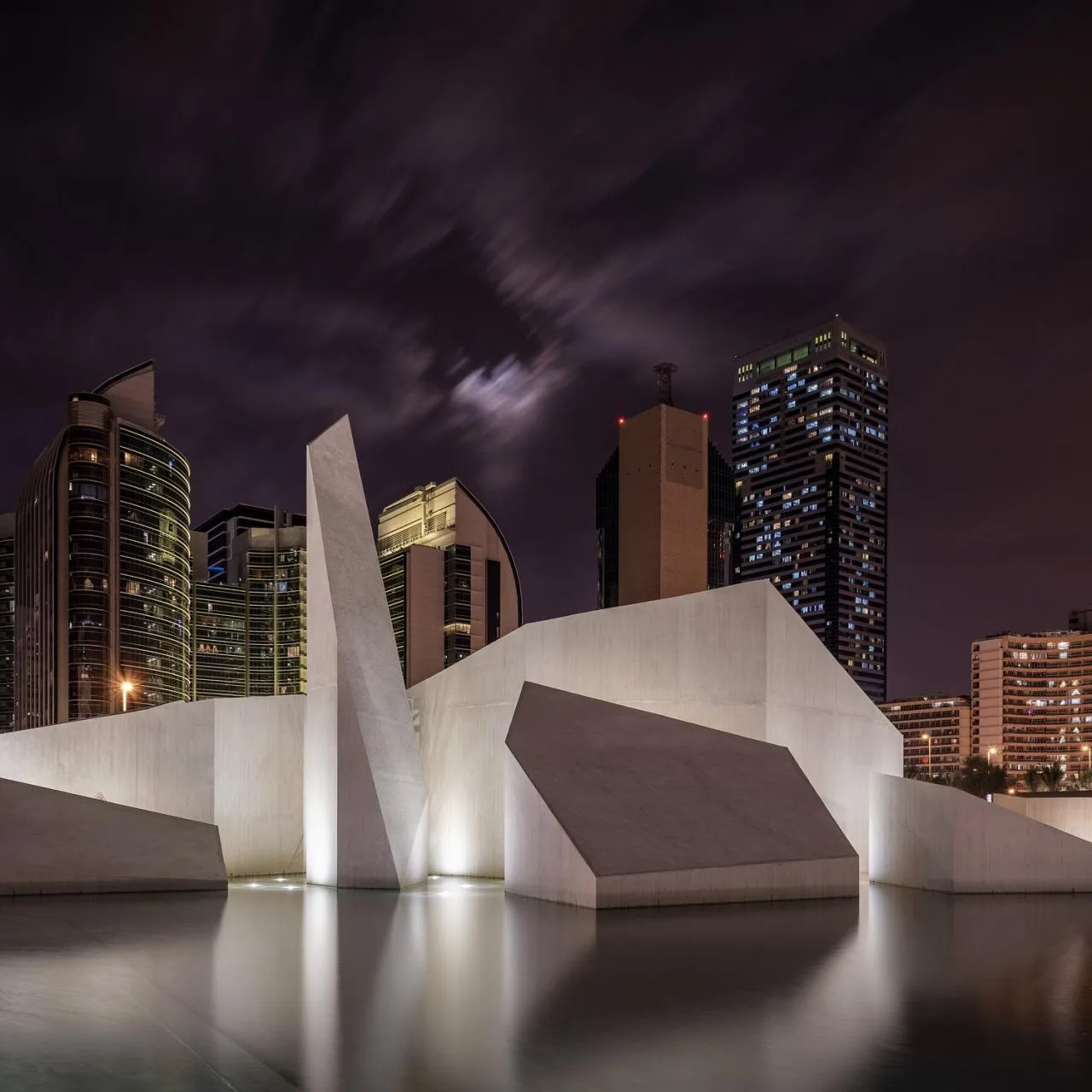
These geometric shapes deliberately intervene between architecture and landscape. Along the transition zone, the terrain shifts from flat to sloping and gradually evolves into actual architecture, culminating in the Al Musallah Chapel. From its pillars to the overall volume, the building integrates seamlessly with the park, becoming a natural landscape element alongside the fortress and cultural foundation — the two main visual anchors of the site.
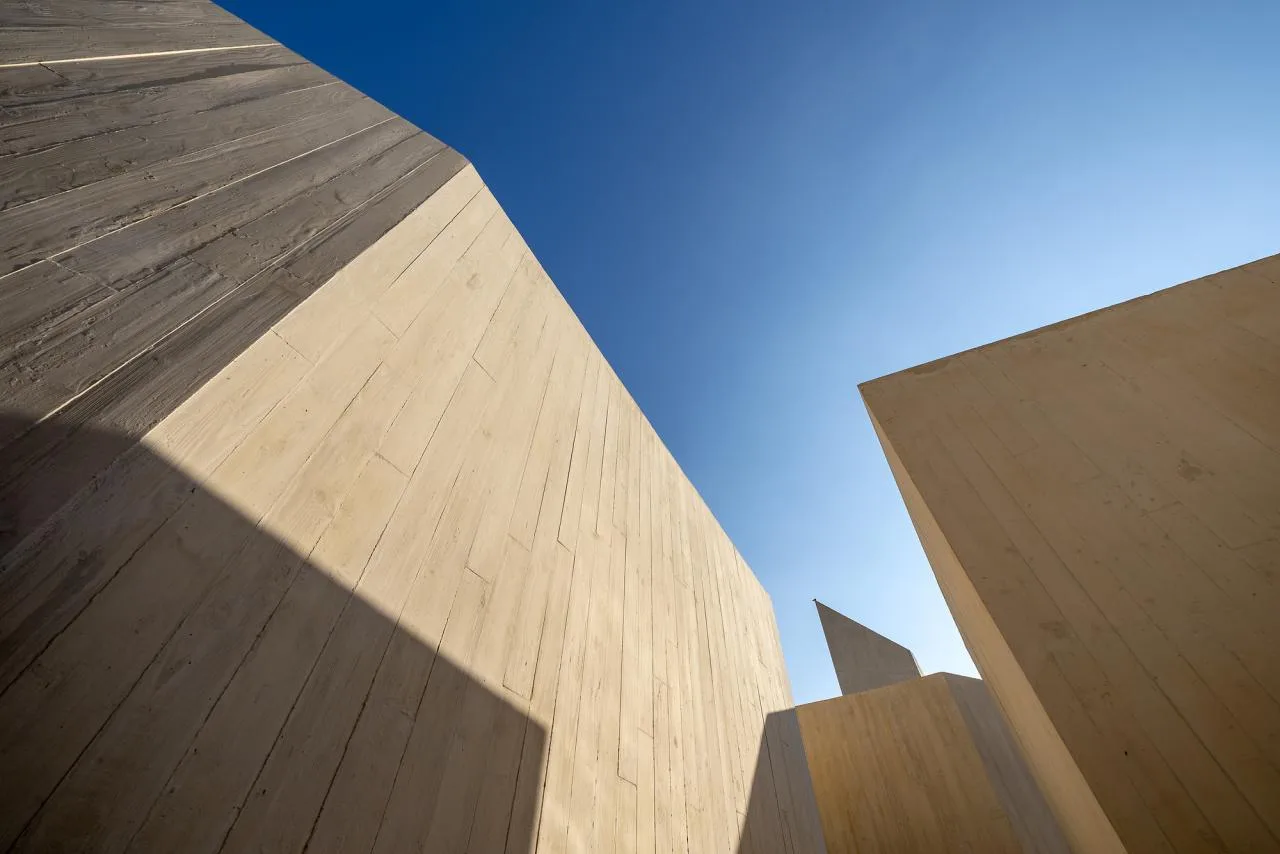
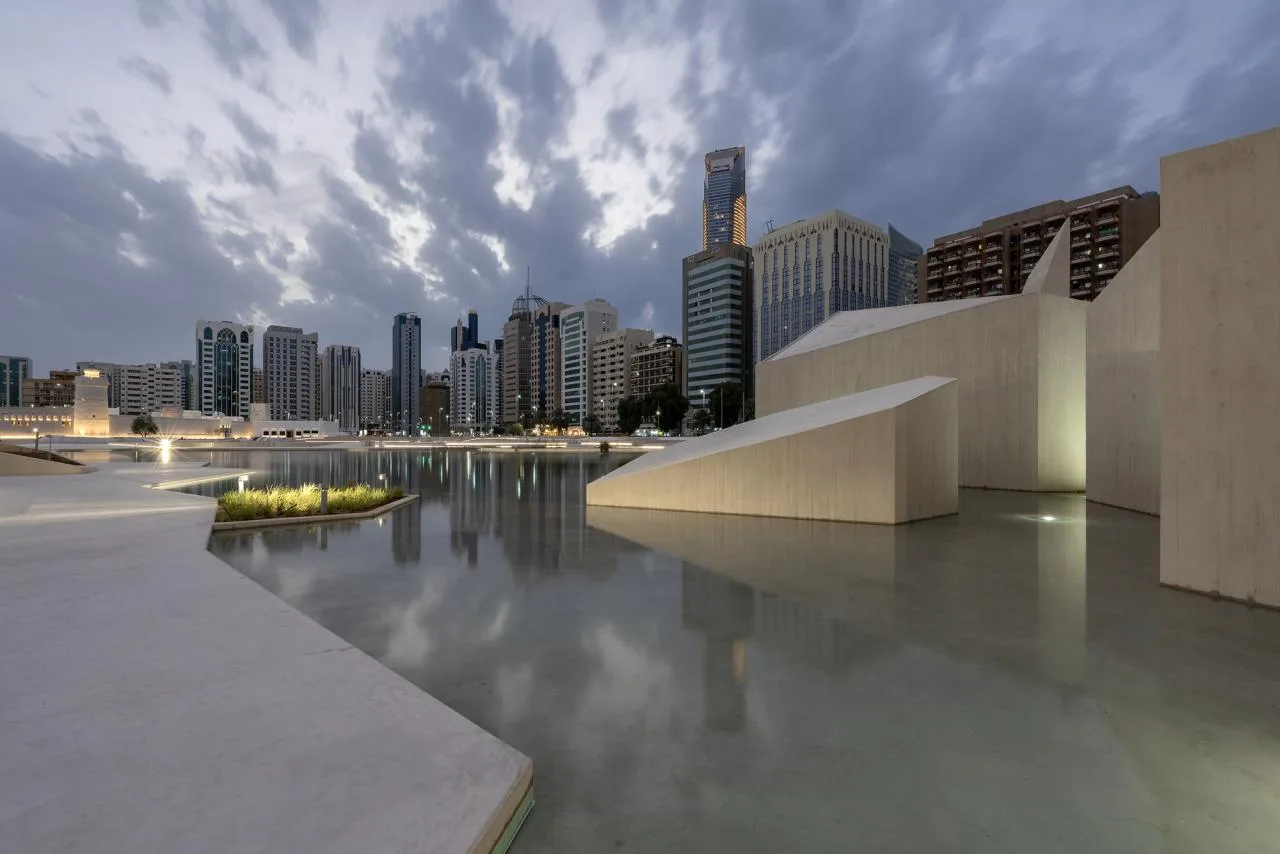
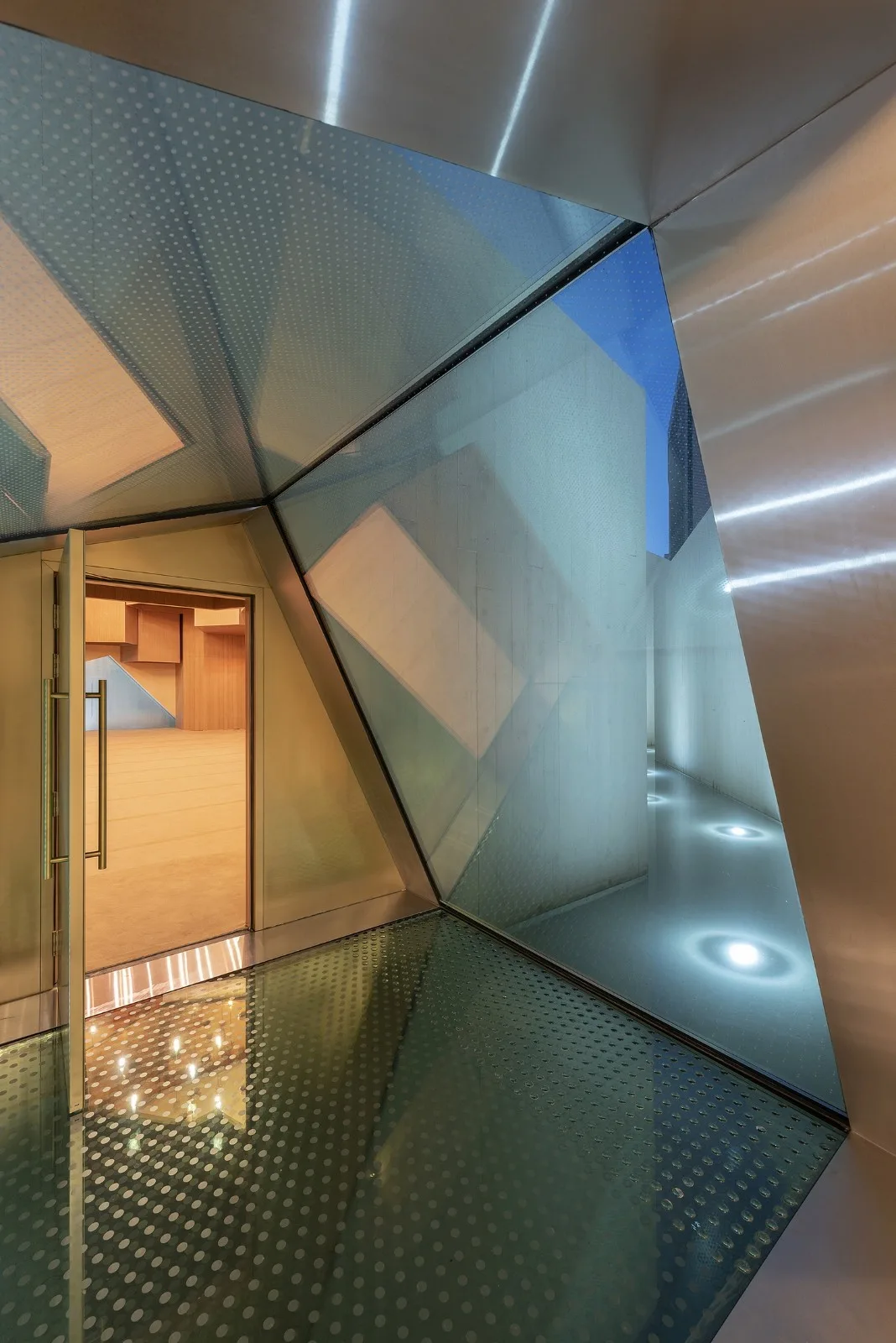
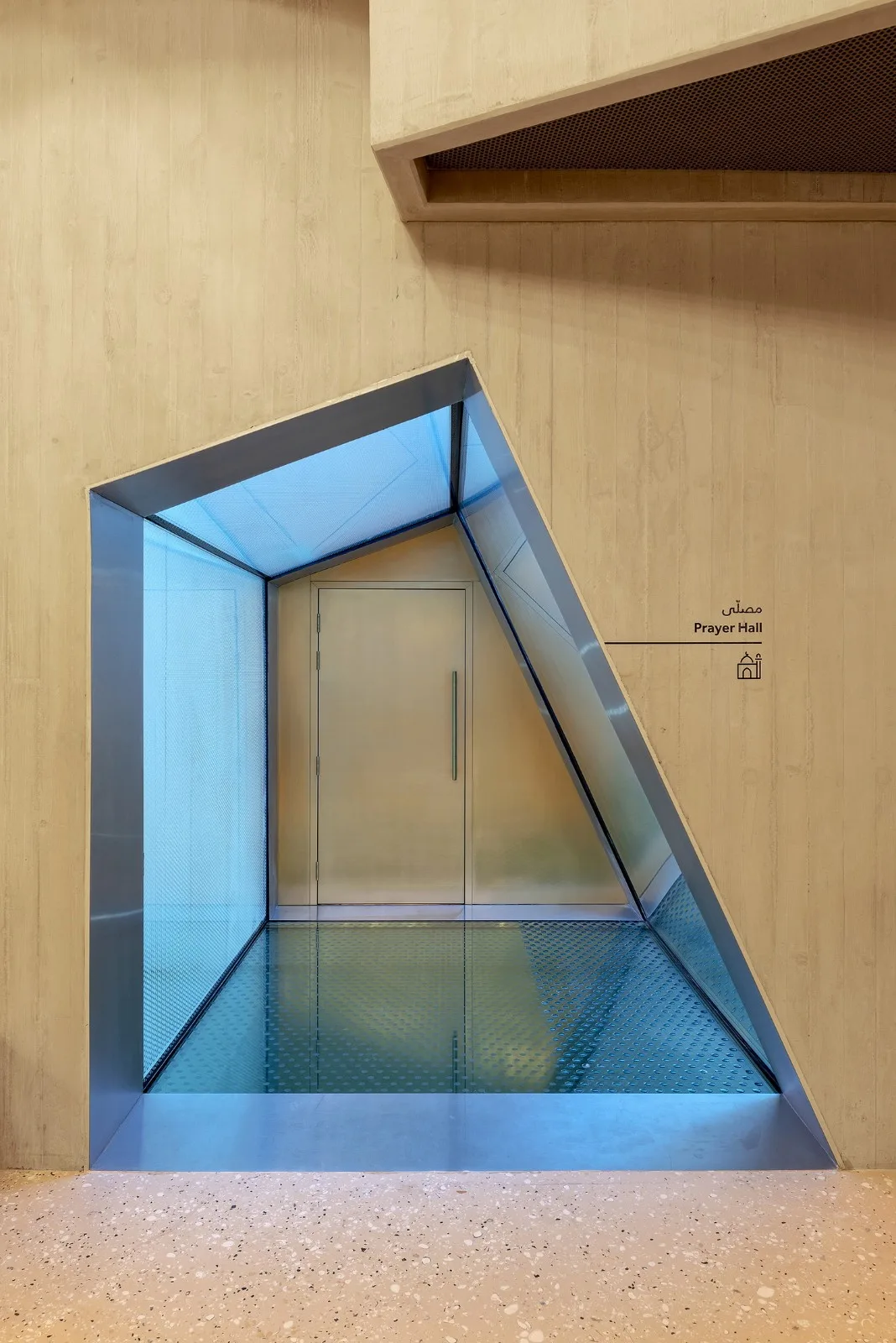
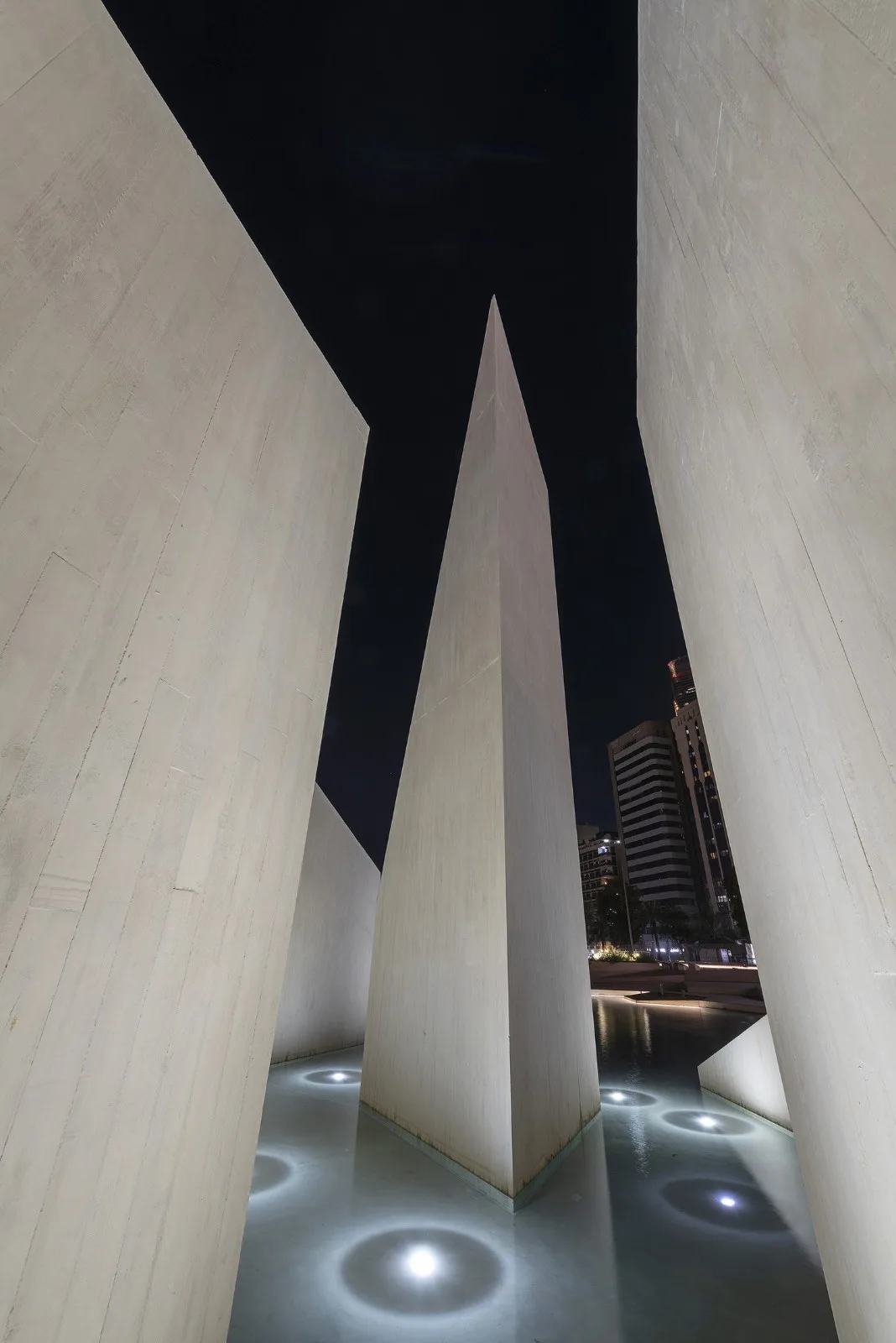
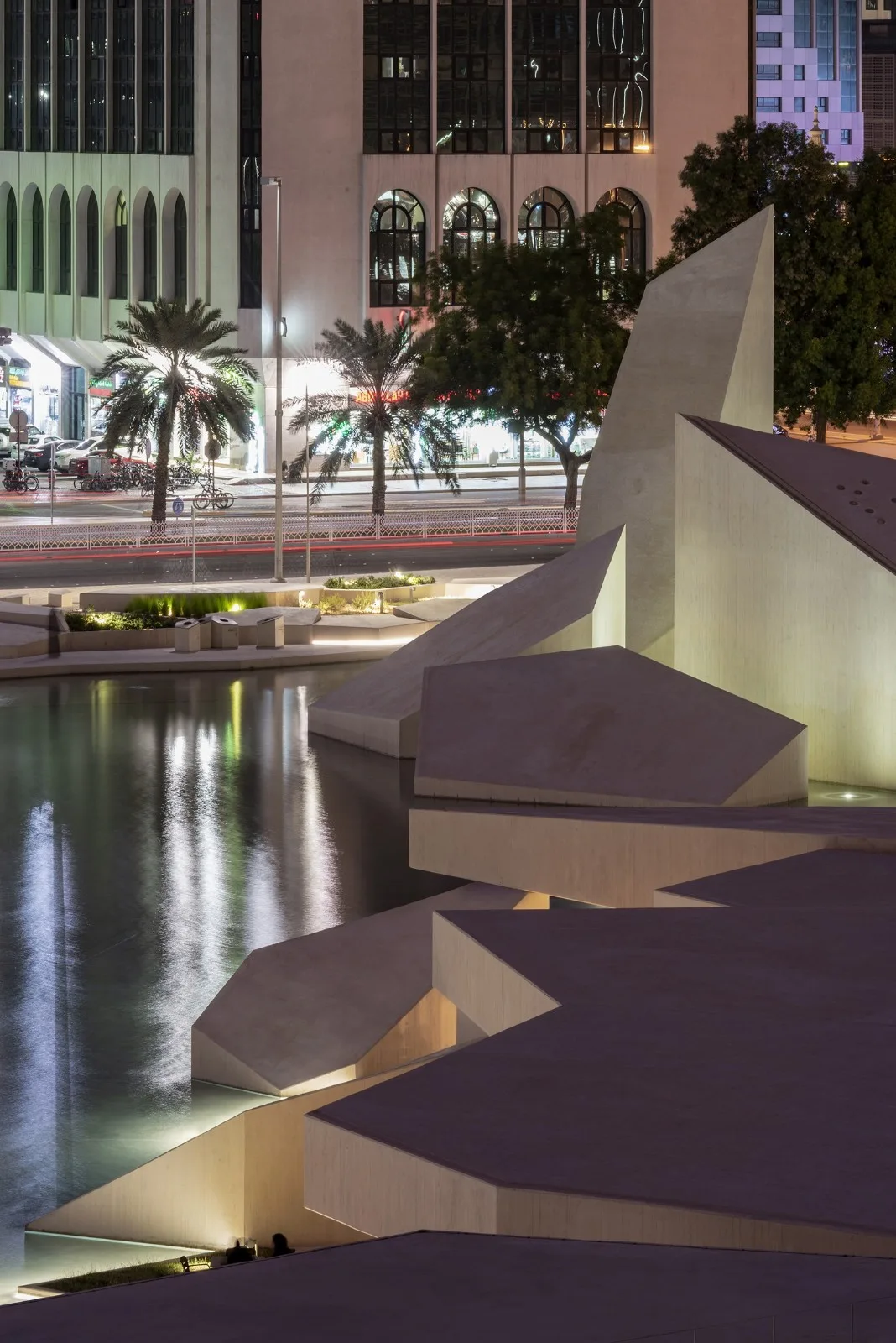
The Al Musallah Chapel, a key feature of the cultural park, is situated at the northeast corner of the site. It consists of a series of interconnected small buildings forming a cave-like structure within a vast water feature. Positioned at the heart of the water, the chapel creates a subtle barrier of privacy without walls, offering a tranquil, secluded space for worship free from visual distractions. Water, symbolizing spiritual purification, flows through the building. The various spaces are connected by glass volumes over the water, and moving through these well-lit channels symbolizes the purification of the soul.
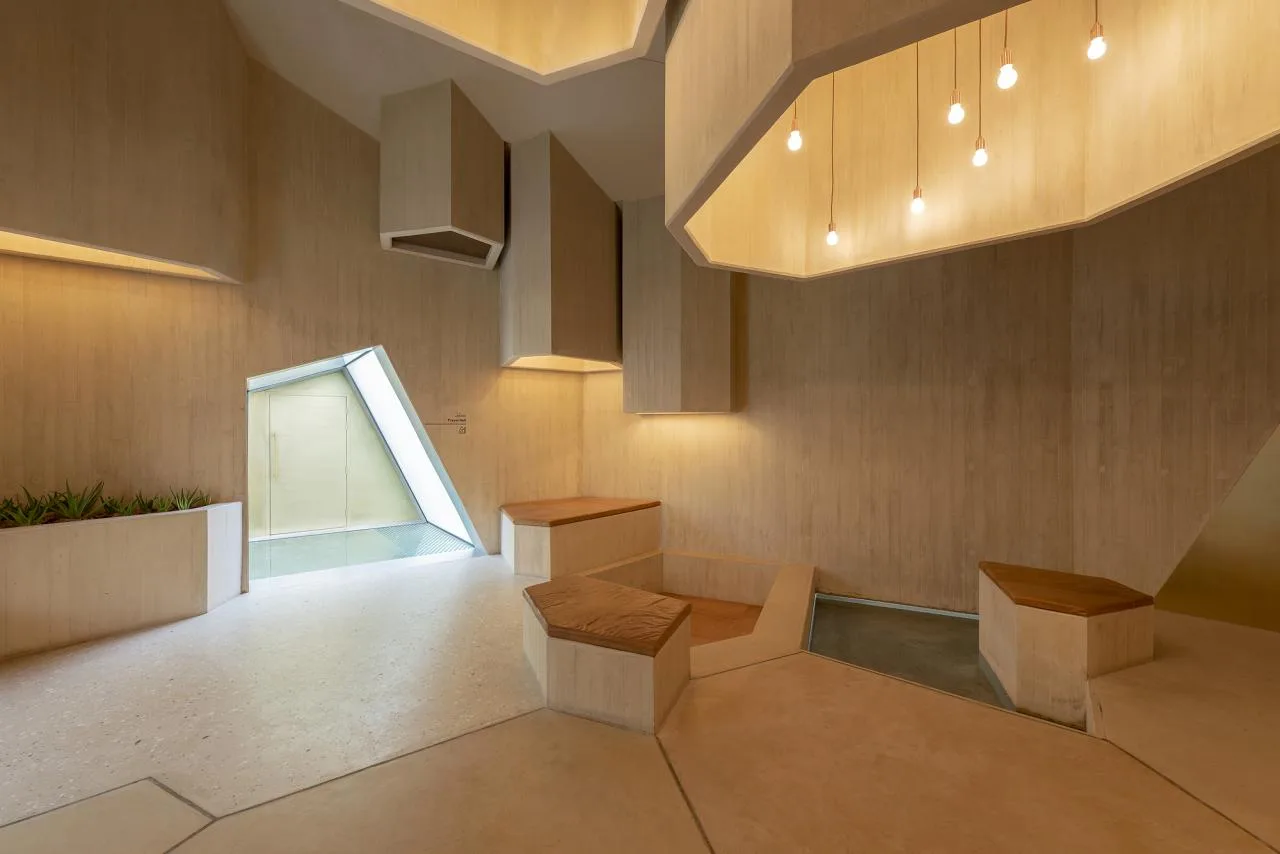
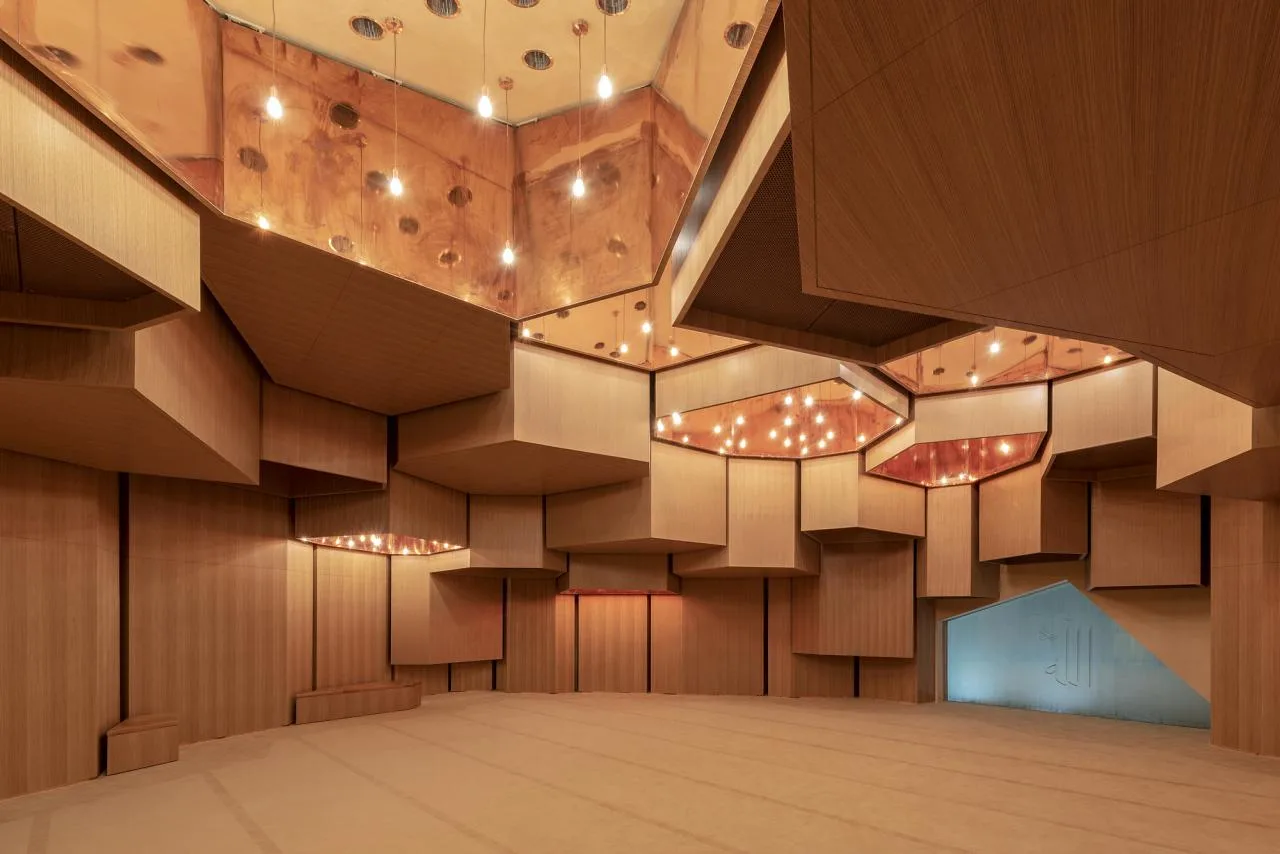
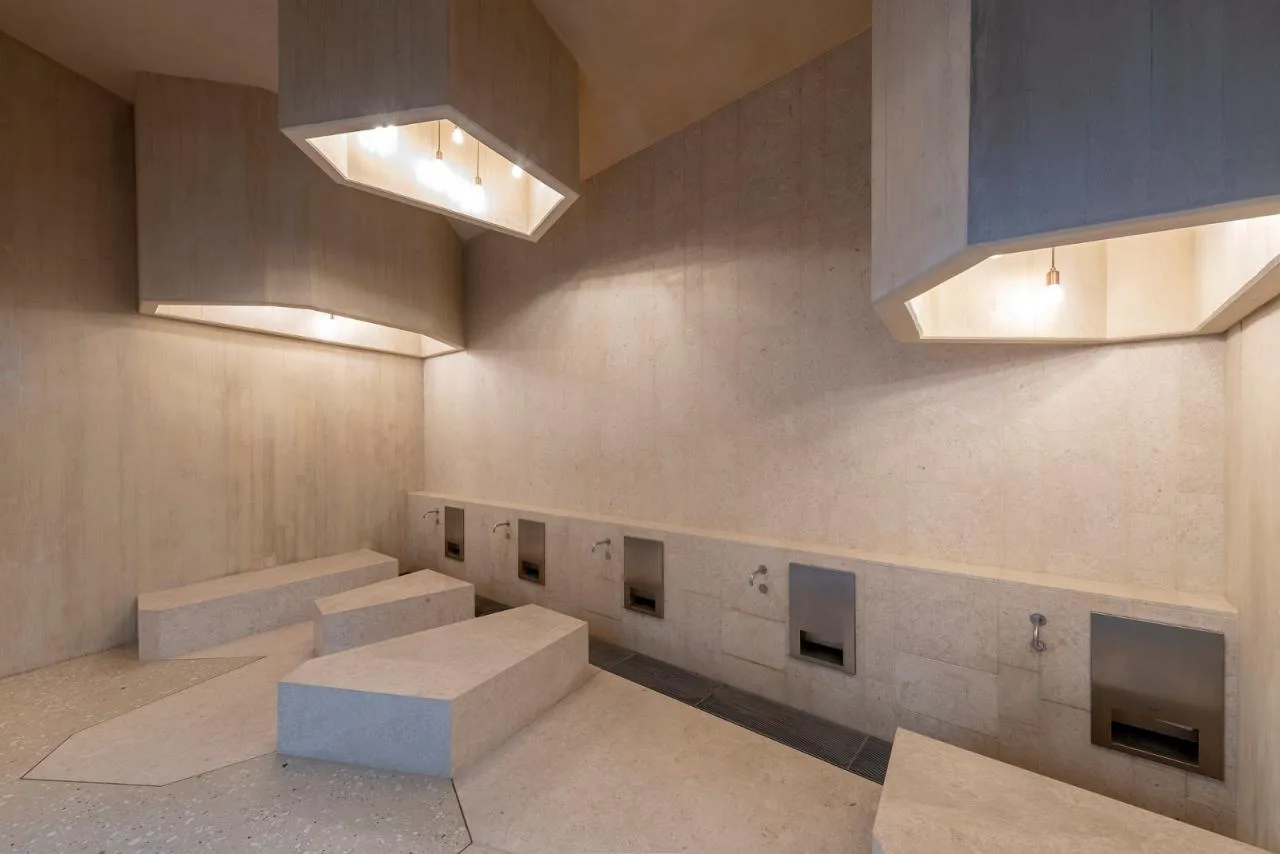
Each building volume serves a specific function, with the floor plan designed around two mirrored pathways for female and male worshippers. These paths guide visitors through a sequence of spaces that follow traditional worship rituals, providing a spiritual journey from the surrounding environment inward. Walking along narrow passages between the “rocks” in the open park area, the noise of the city gradually fades away. Visitors enter a cave-like entrance hall where they can rest and converse before worship.
The first significant space references the cave of Hilah, where Prophet Muhammad is said to have had an epiphany. From here, visitors proceed to the bathing area for ritual cleansing and spiritual preparation, finally arriving at the spacious chapel itself. The chapel faces Qibla, and through a concealed window, visitors can glimpse a concrete relief inscribed on one of the rocks.
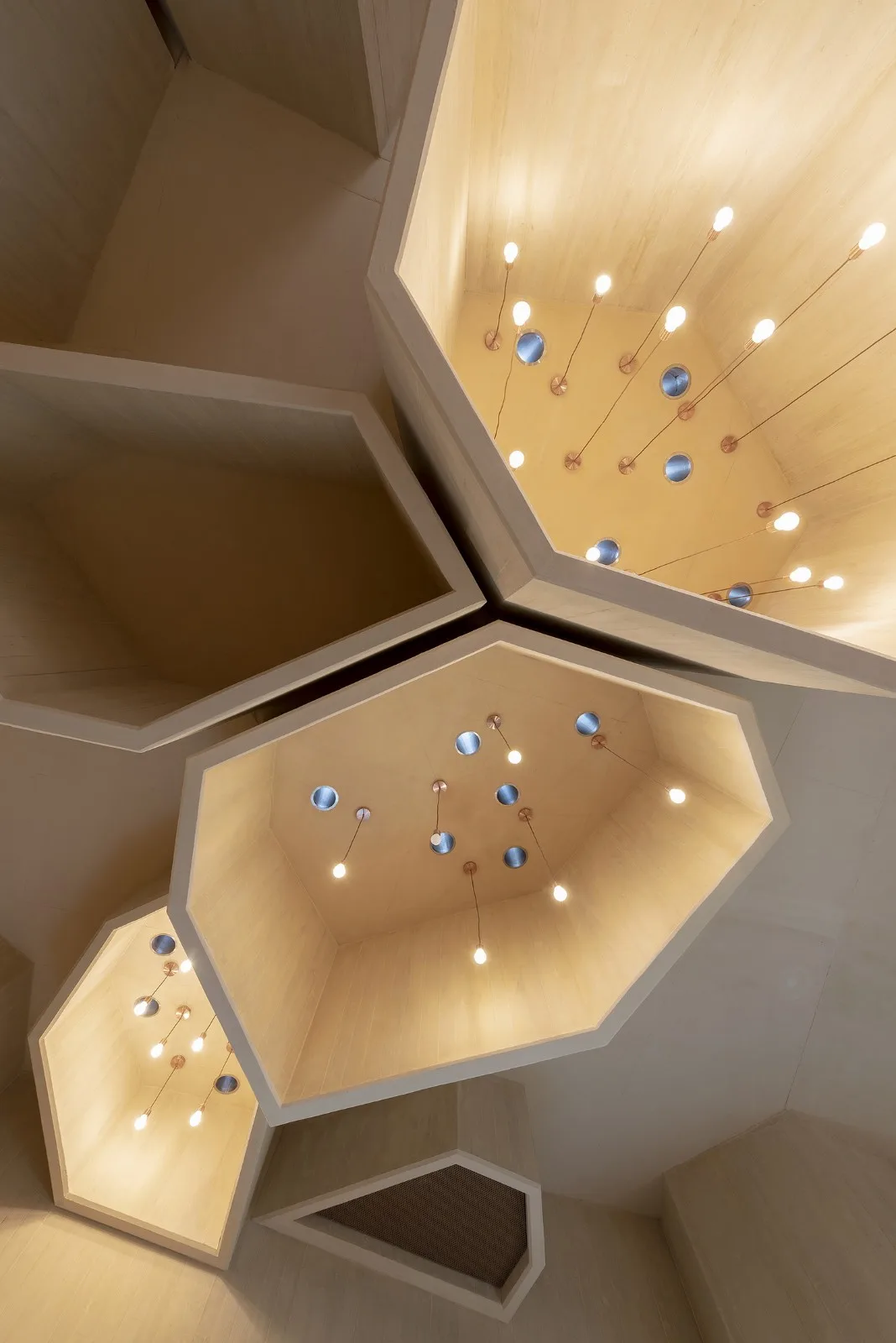
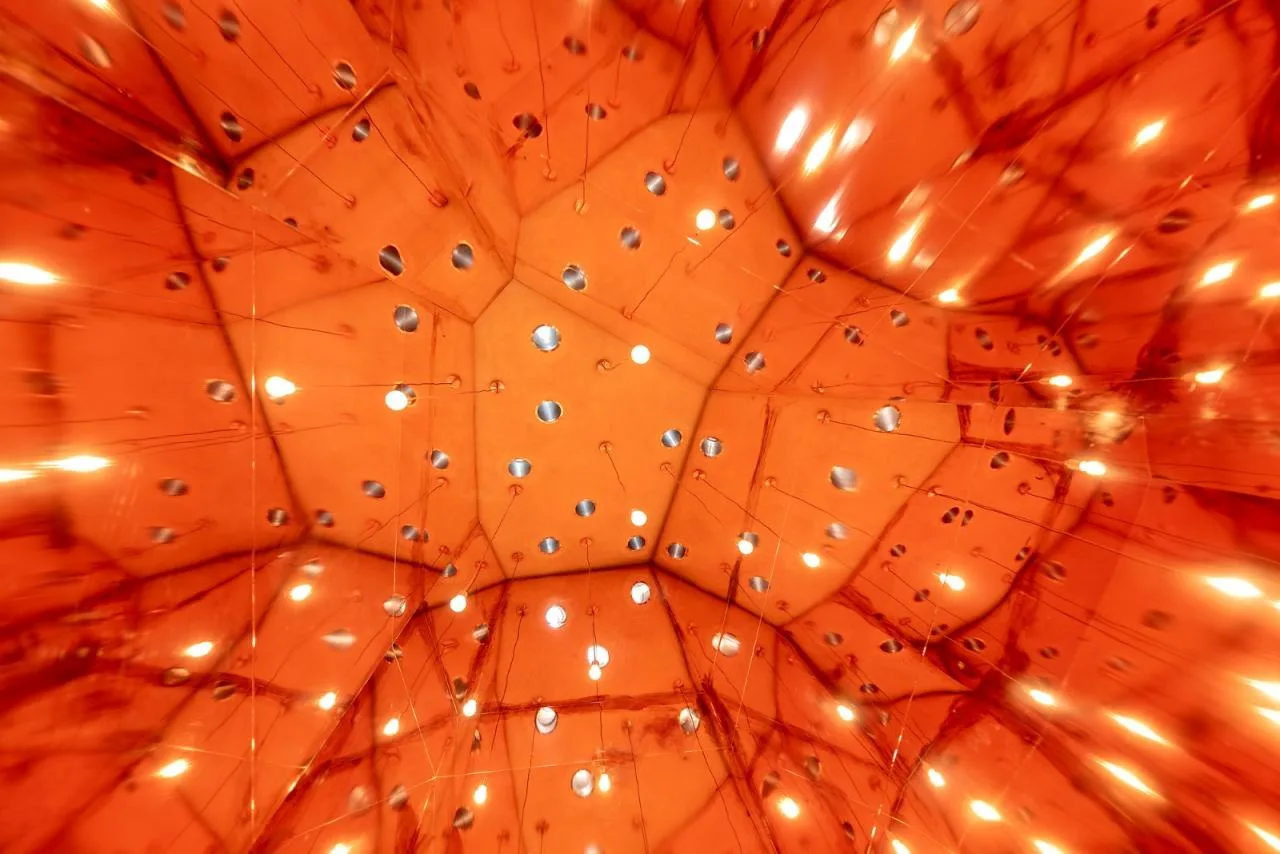
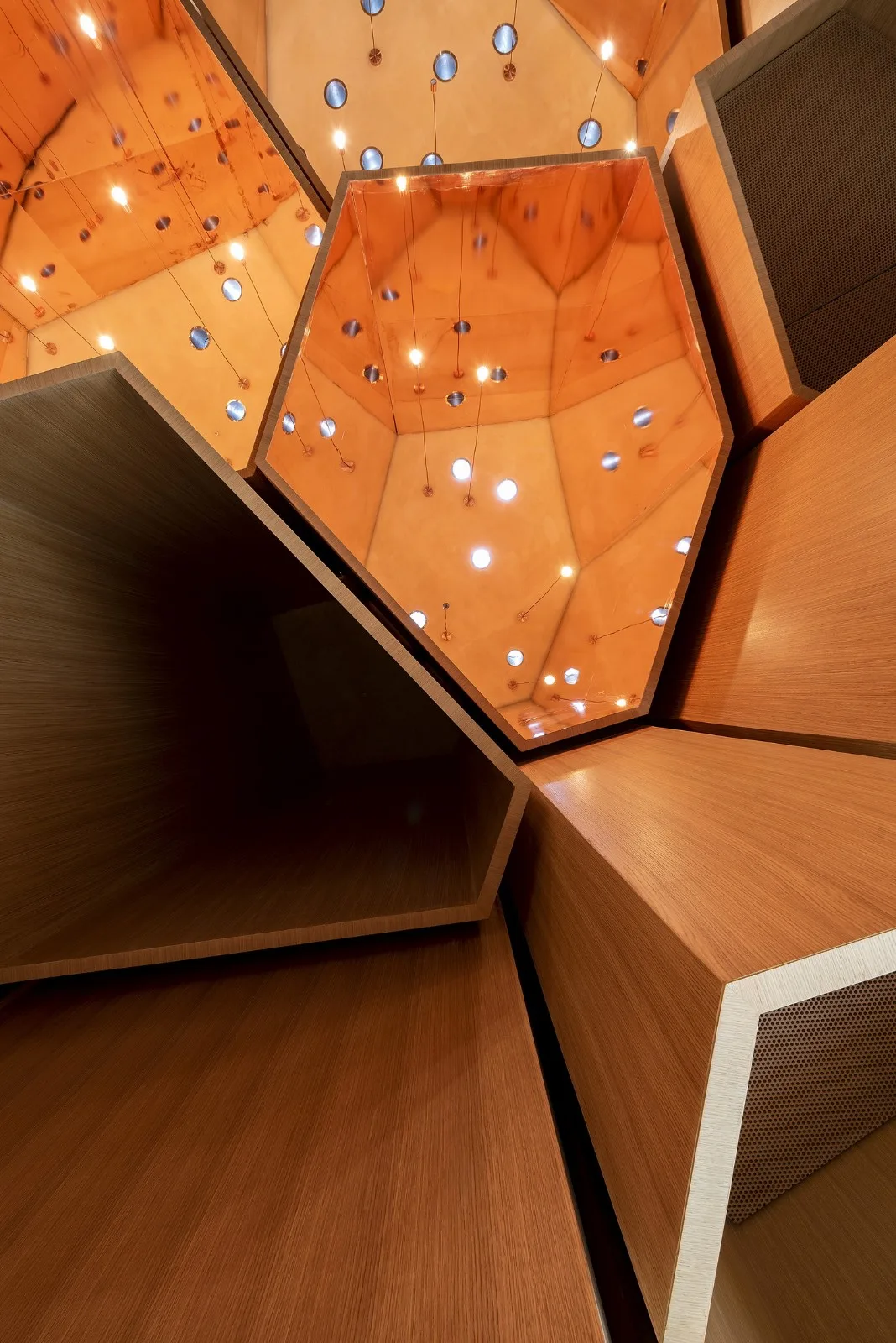
Inside, the geometric pattern of the landscape and architecture is reflected as a suspended ceiling with the same mud crack motif. This ceiling functions as a skylight, punctuated by small circular openings that reveal other enclosed ceilings. These circular apertures introduce sunlight and are paired with hanging pendants, together evoking abstract stellar forms. This design references traditional Bedouin navigation stars, connecting spiritual belief and cultural heritage.
The entrance hall and bathing space are illuminated by concrete skylights, while the chapel’s interior is clad in copper. This material creates infinite light reflections, symbolizing the universe and linking fractal-like ceiling details to the overall master plan. Simultaneously, this design expresses humanity’s contemplation of the sky and existence.
Project Drawings
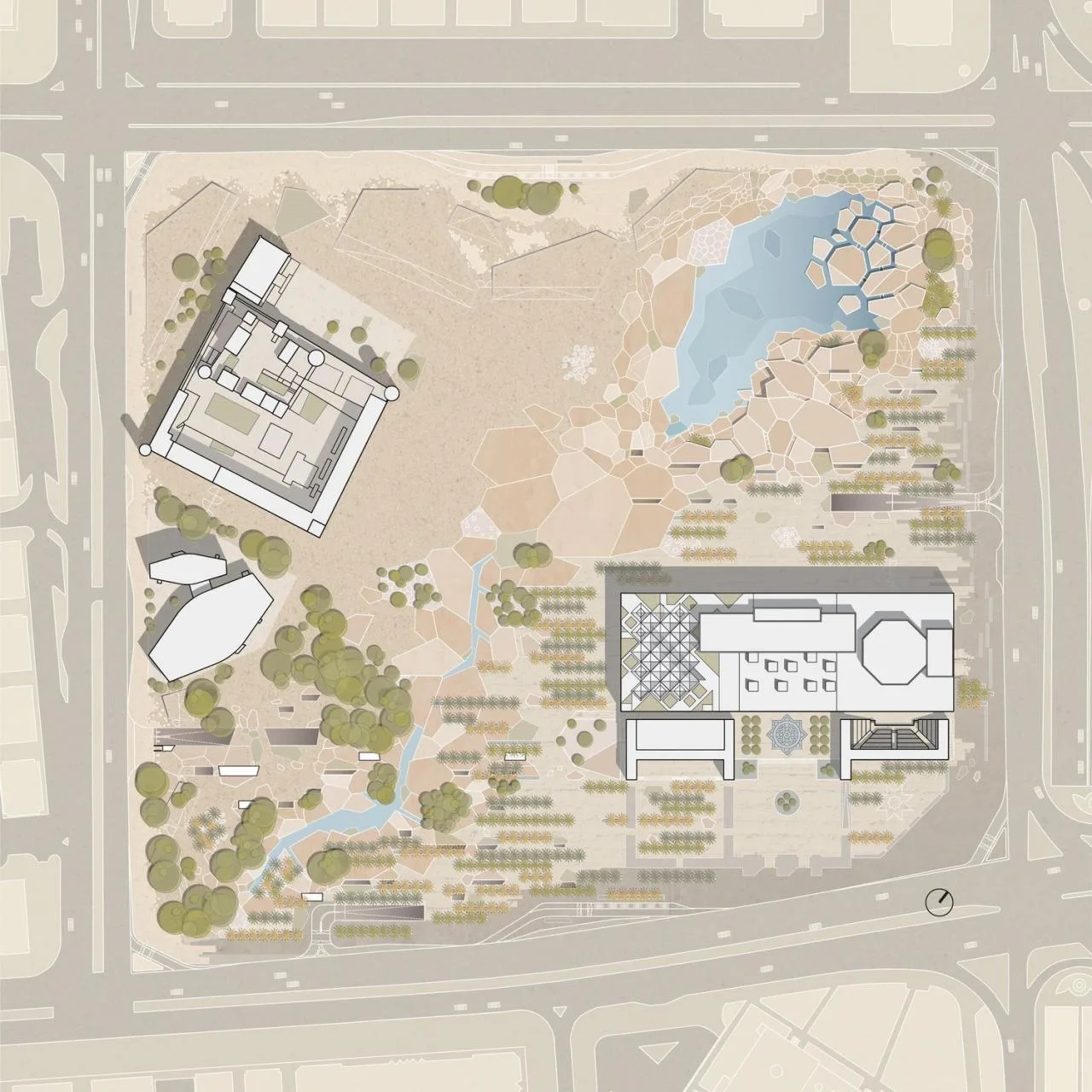
△ Base Plan
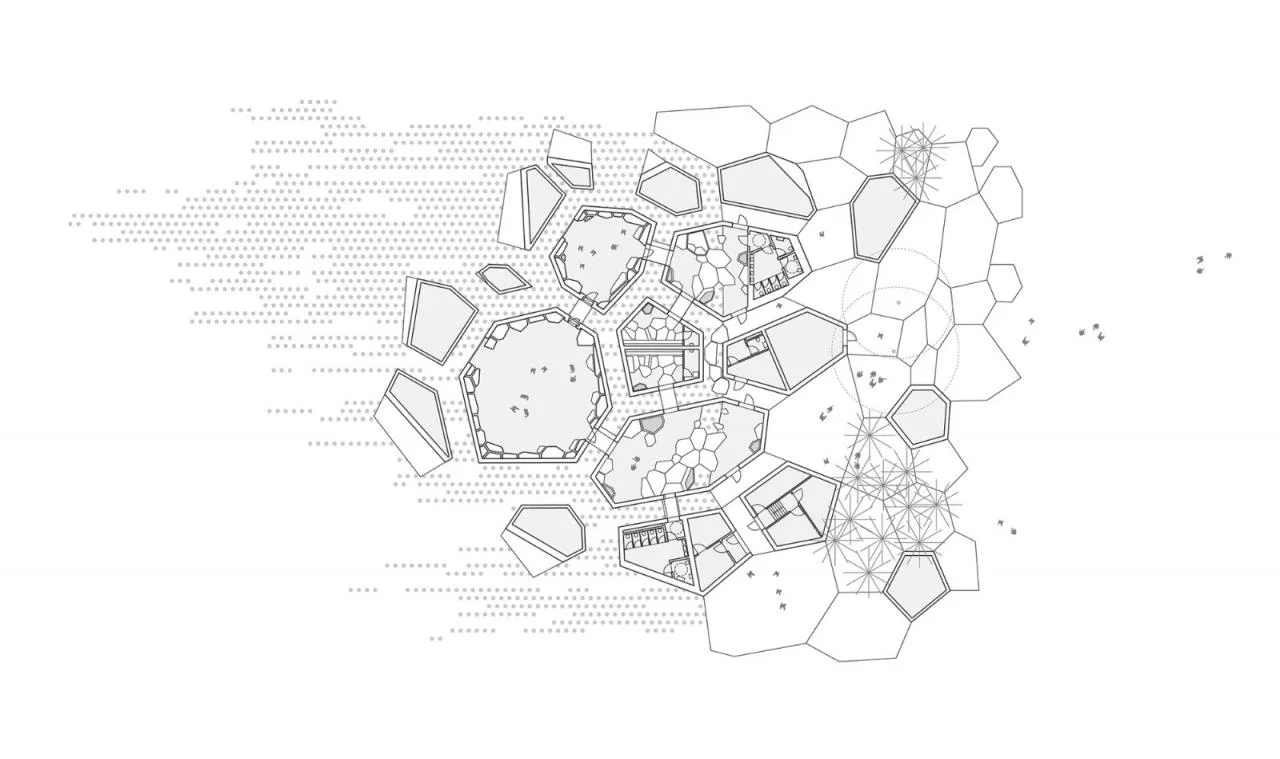
△ General Layout Plan
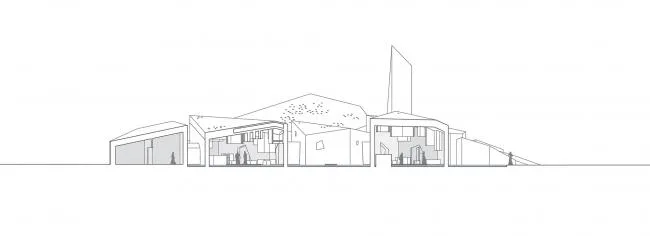
△ Section Diagram
Project Information
- Architect: CEBRA
- Area: 1100 m²
- Project Year: 2019
- Photographer: Mikkel Frost
- Client: Department of Culture and Tourism Abu Dhabi (DCT)
- Landscape Design: CEBRA Architecture
- Engineer: GHD
- Historic Preservation Plan: ProDenkmal
- Vegetation Consultant: SLA Architects
- Logo Design: Kossmann.dejong
- Location: Abu Dhabi, United Arab Emirates













Must log in before commenting!
Sign Up