
1.0 Project Background
When I first received the commission for a factory renovation project, a series of preconceived notions immediately came to mind. However, upon arriving at the site, the reality was quite different from what I had imagined. The factory was formerly the heat treatment center of Tongxiang Yifeng Machinery Factory, a village-run enterprise. After being dispersed and consolidated, it is now preserved as an industrial stock factory. The total building area spans approximately 900 square meters and consists of a single-story prefabricated structure with a steel roof. During the site survey, some workers were still operating within the factory building.
The factory’s construction dates back to the late 1990s, but there are no original drawings or data available for reference. From the materials and structure, the building shows signs of age, but its character is very much contemporary, which contrasts sharply with the historic and timeless atmosphere I had initially envisioned. Aside from a row of flourishing camphor trees along the river, the site and space felt neither particularly old nor new, which shattered many of my expectations and left me somewhat bewildered.
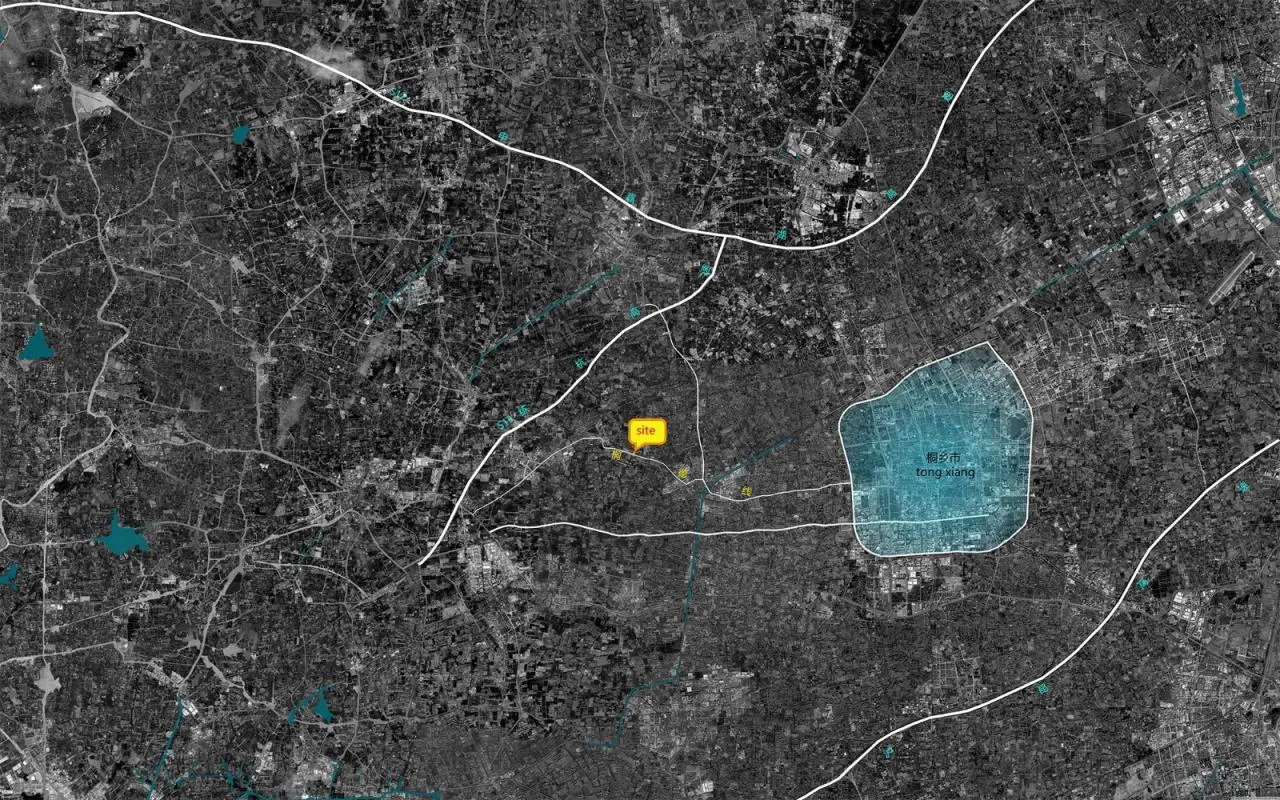
▲ Project location © y.ad studio
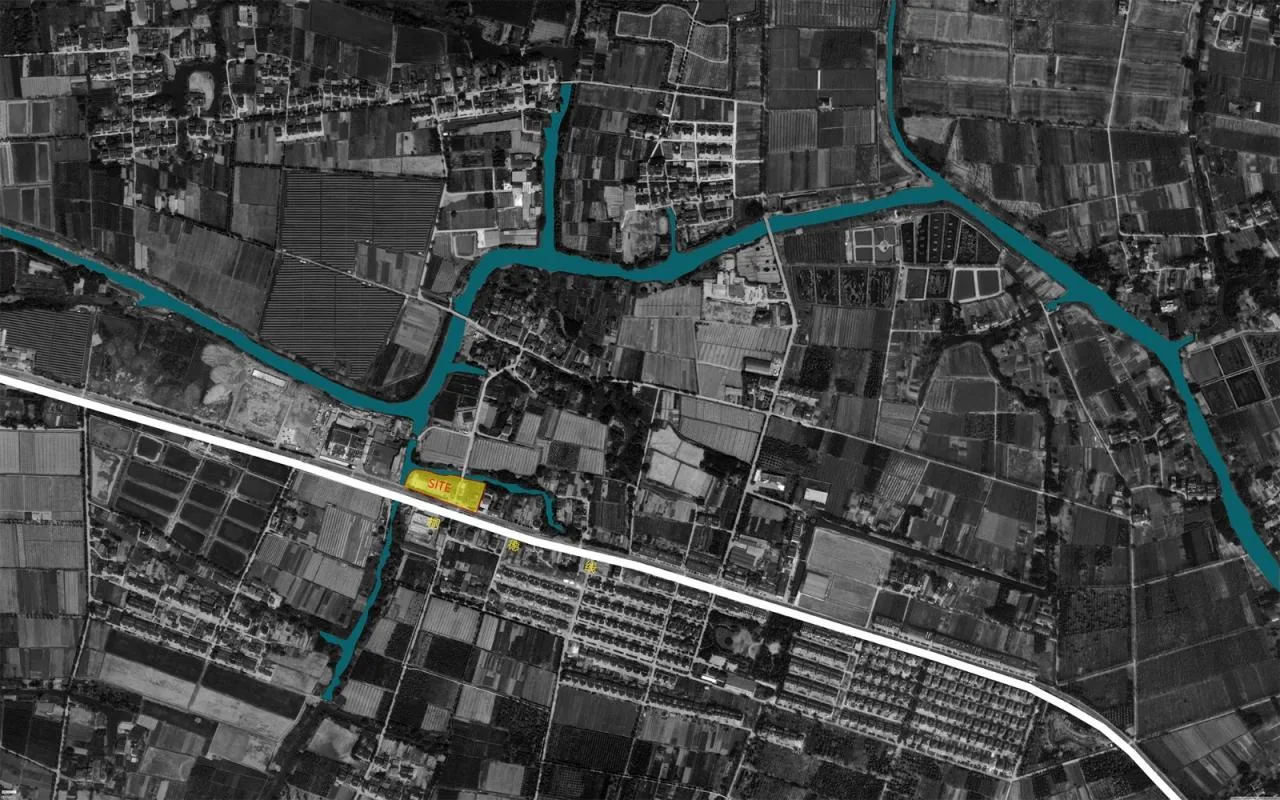
▲ Venue location © y.ad studio
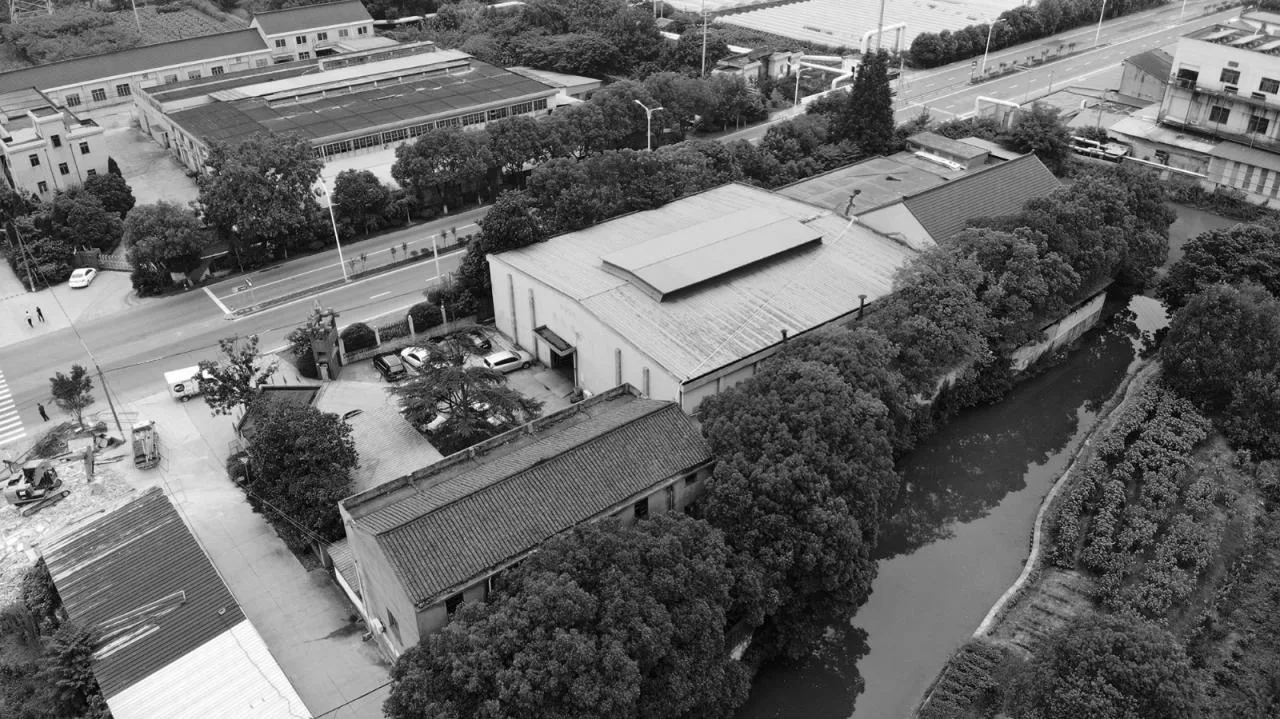
▲ Aerial view before renovation © y.ad studio
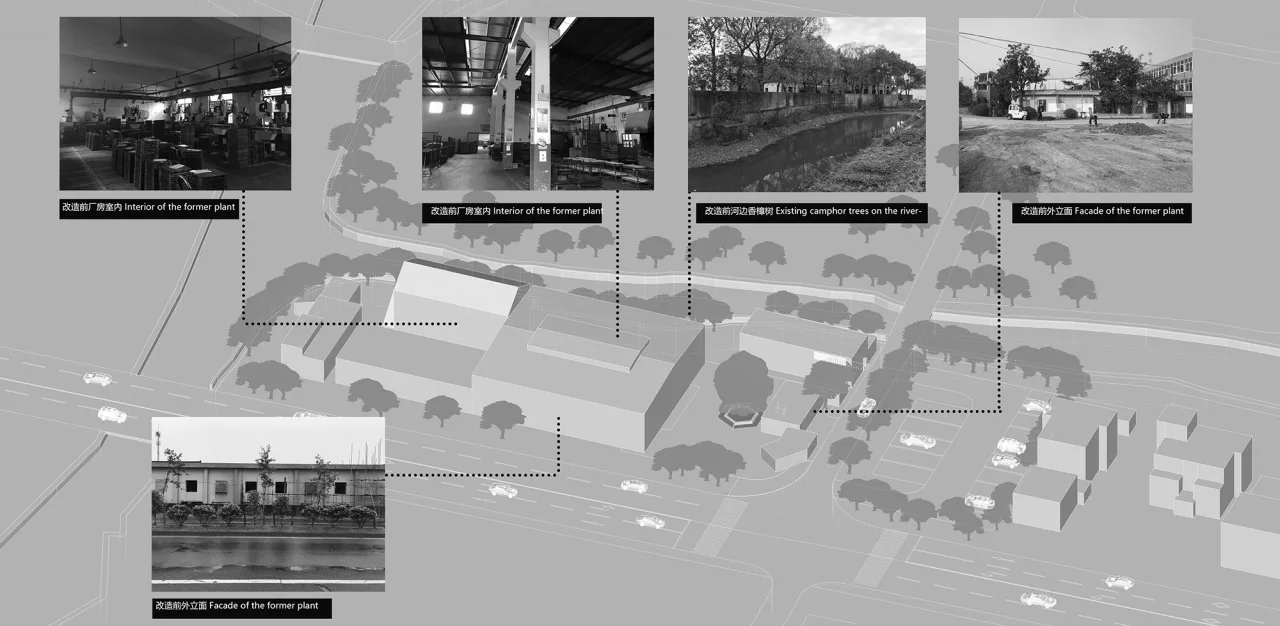
▲ Original condition of the site © y.ad studio
The project is situated in Dongbantou Village, Heshan Town, which was once an industrial village. Since the reform and opening up, the area has developed various factories including hardware standard parts manufacturers, Yifeng Machinery Factory, and Dongbao Silk Printing and Dyeing Factory. More recently, it has fostered a cluster of high-tech enterprises with independent brands and high added value.
With the introduction of Huashengbang Ideal Village, Dongbantou Village has seen shifts in its rural service model and industrial structure. It has transitioned from relying primarily on traditional collective industrial economy to evolving into a future-oriented rural community that balances industry and culture equally. This renovation transforms the old factory buildings into a dual-innovation center, serving as a vital venue for community gatherings and cultural activities. Once operational, it will offer a multifunctional space incorporating exhibitions, cultural and creative industries, leisure, dining, and office spaces. The project aims to encourage local elites and makers to return to the countryside, inspire tourists to appreciate their hometown, and promote rural revitalization and development.
2.0 Function and Flow
After thoroughly assessing the existing structure, buildings with lower structural integrity were demolished, while those meeting safety standards were retained for reinforcement and renovation. Functions were reassigned according to demand, with new spaces constructed partially to fulfill spatial needs. These functional areas are connected by corridors, creating diverse entry routes and a harmonious blend of old and new.
An enclosed public activity square was created at the front of the site to serve residents, while a waterfront outdoor leisure area was developed along the river.
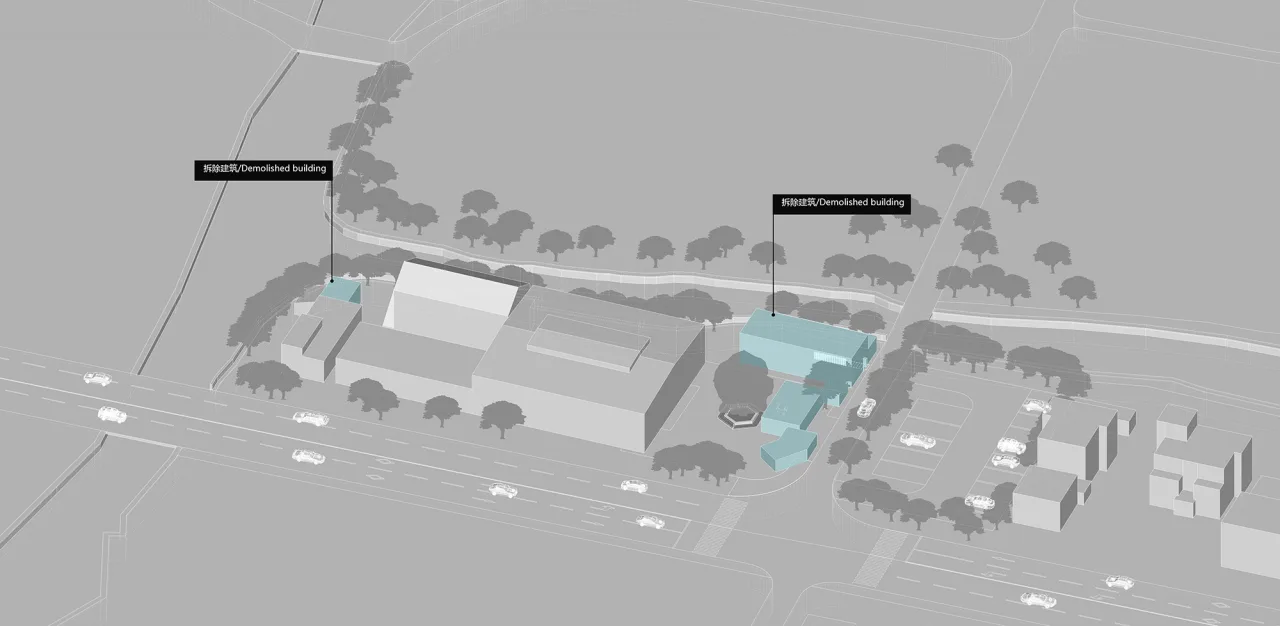
▲ Demolition and new construction analysis © y.ad studio
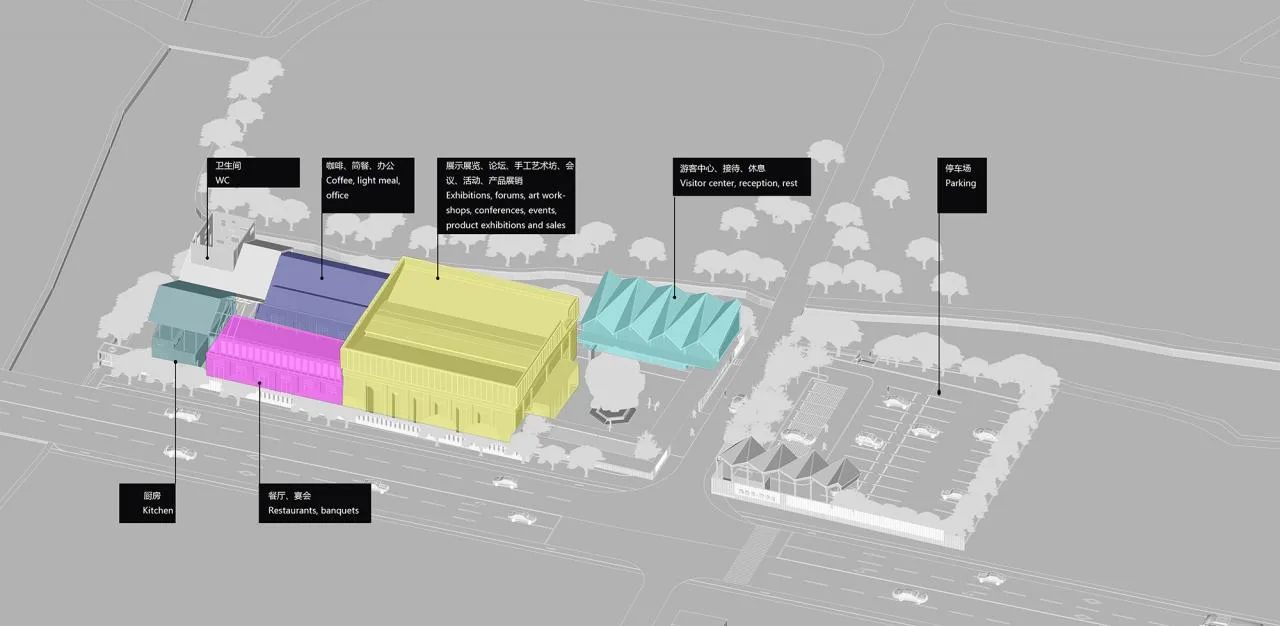
▲ Functional redistribution diagram © y.ad studio
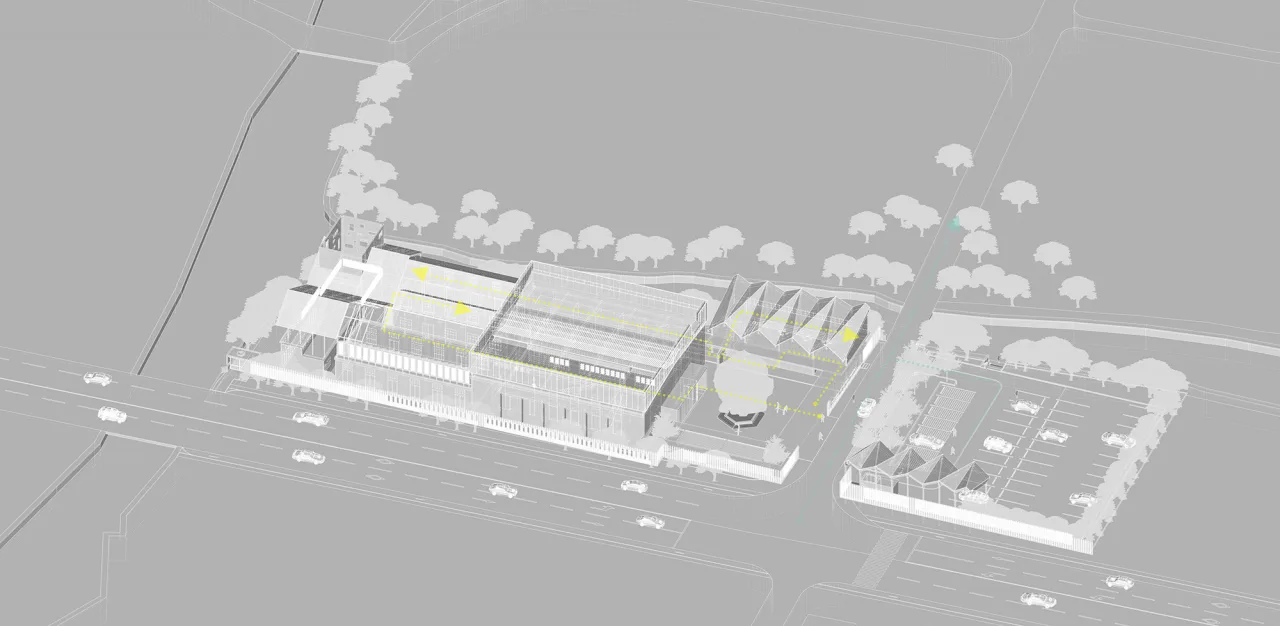
▲ Flow line analysis © y.ad studio
3.0 Integration and Restructuring of Old and New
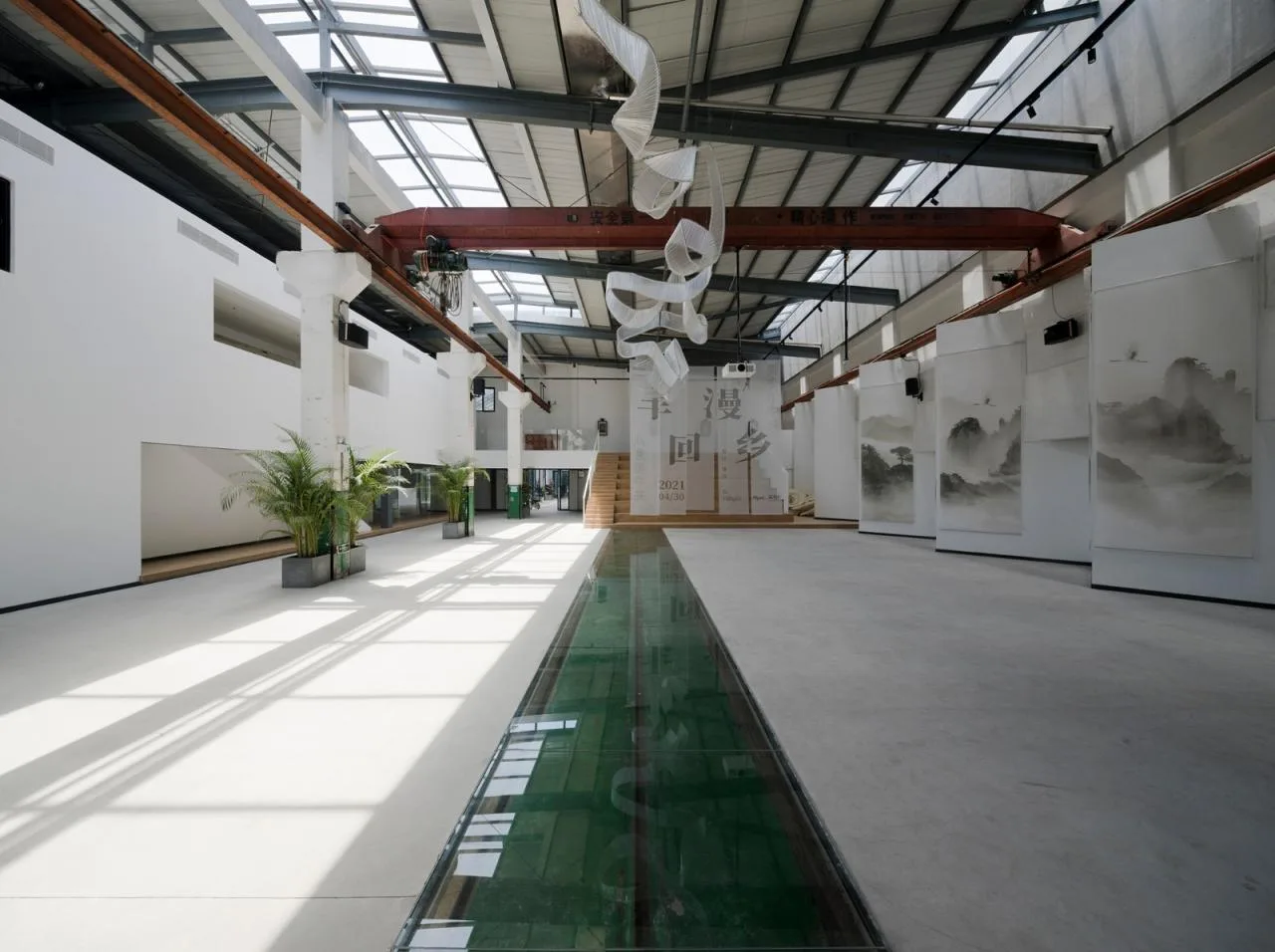
Following demolition, the remaining buildings varied in height, making it challenging to create a cohesive whole. The solution was to stack the main factory building and enclose it with polycarbonate sheet walls, raising the overall height to align with the roof of the building behind it. Meanwhile, the newly constructed public restrooms and existing kitchen, restaurant, and coffee shop were unified under a continuous sloping roof.
The newly built tourist center and parking area outside the site continue the triangular sloping roof motif, echoing and harmonizing with the old structures, fostering a dialogue and unity between the past and present.
The old, aging roof was dismantled and combined with the raised polycarbonate walls. Both sides were elevated, and a skylight was introduced at the intersection of the walls to bring in natural light. The original ventilated roof was replaced with a glass skylight, maximizing daylight within the space.
Additionally, two folded walls were embedded on either side of the factory area to expand the exhibition space for the future hall.
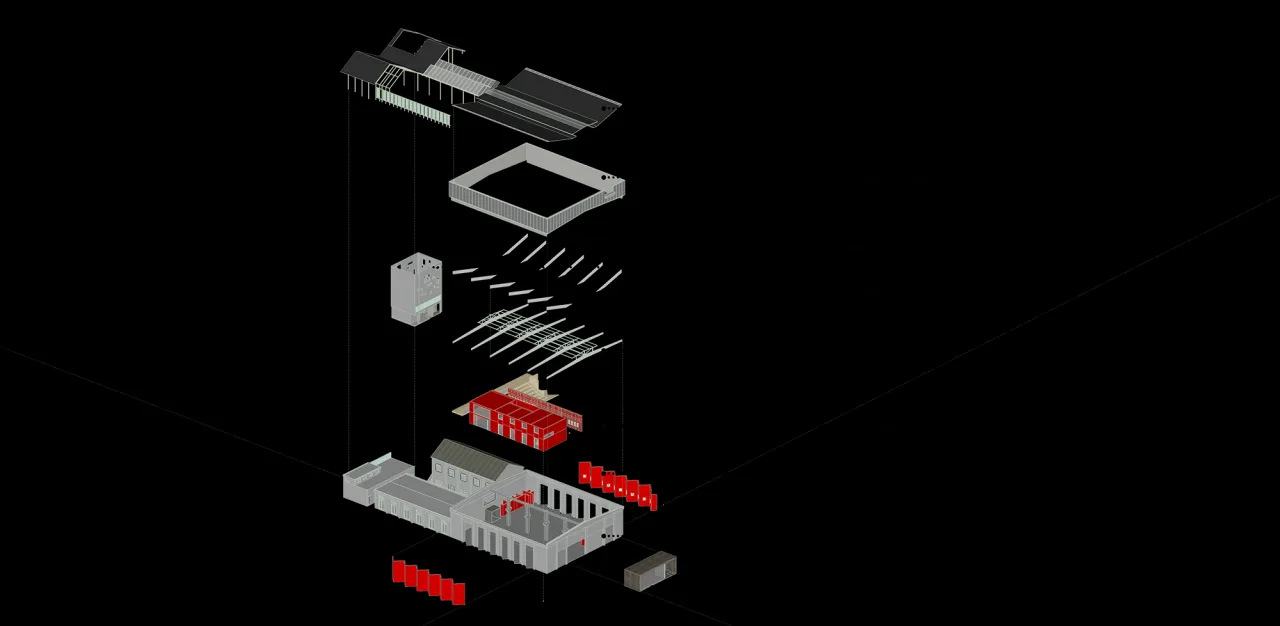
▲ Concept development axis measurement © y.ad studio
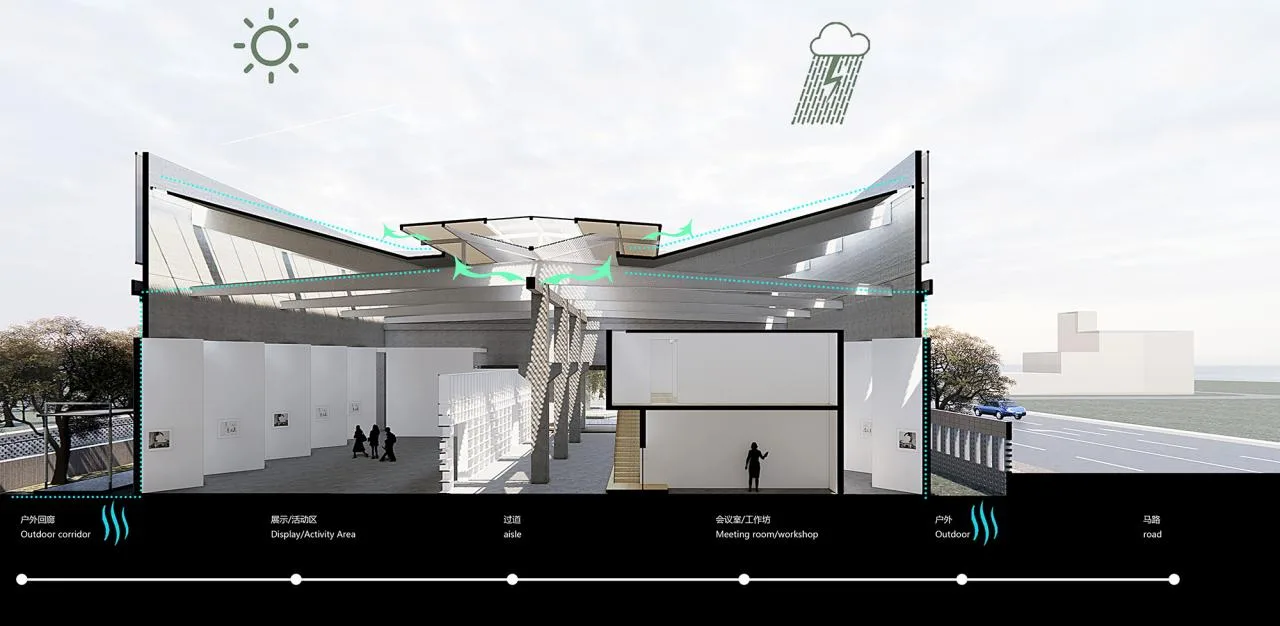
▲ Architectural section diagram © y.ad studio
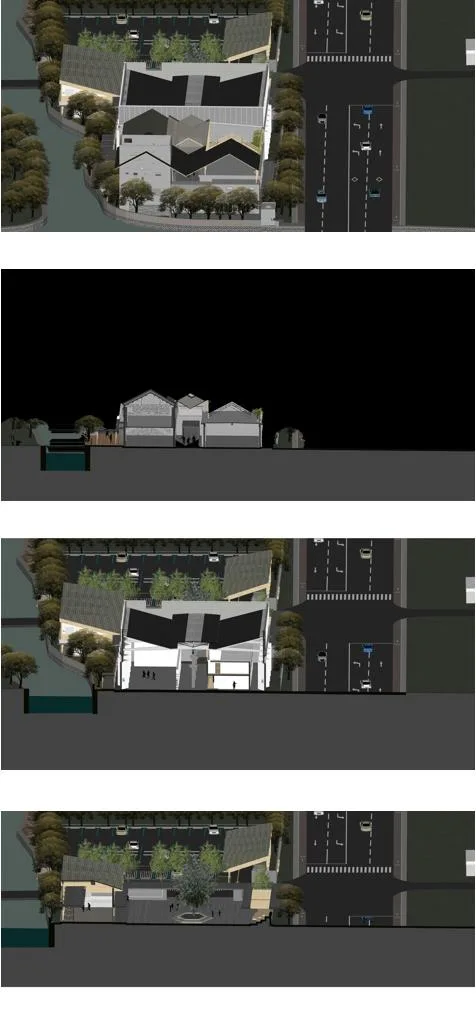
▲ Dynamic cross-section demonstration © y.ad studio
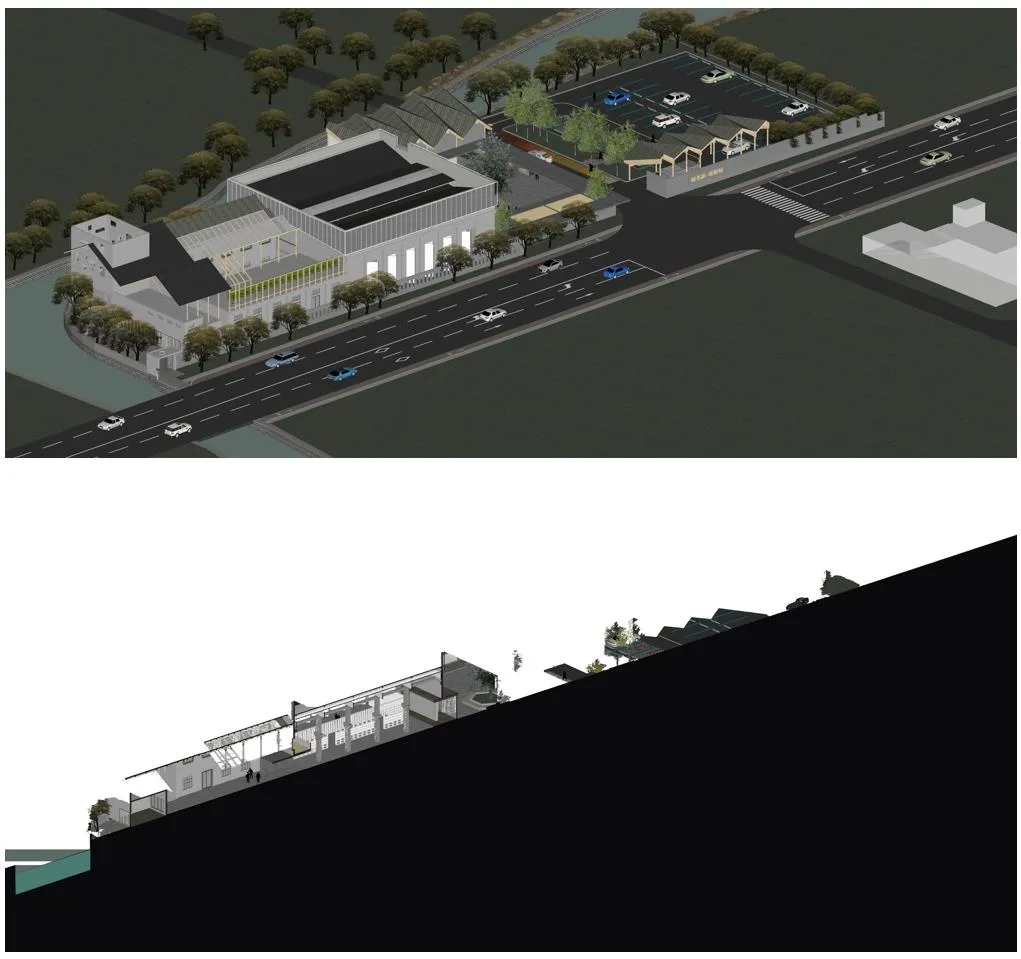
▲ Dynamic cross-section demonstration © y.ad studio
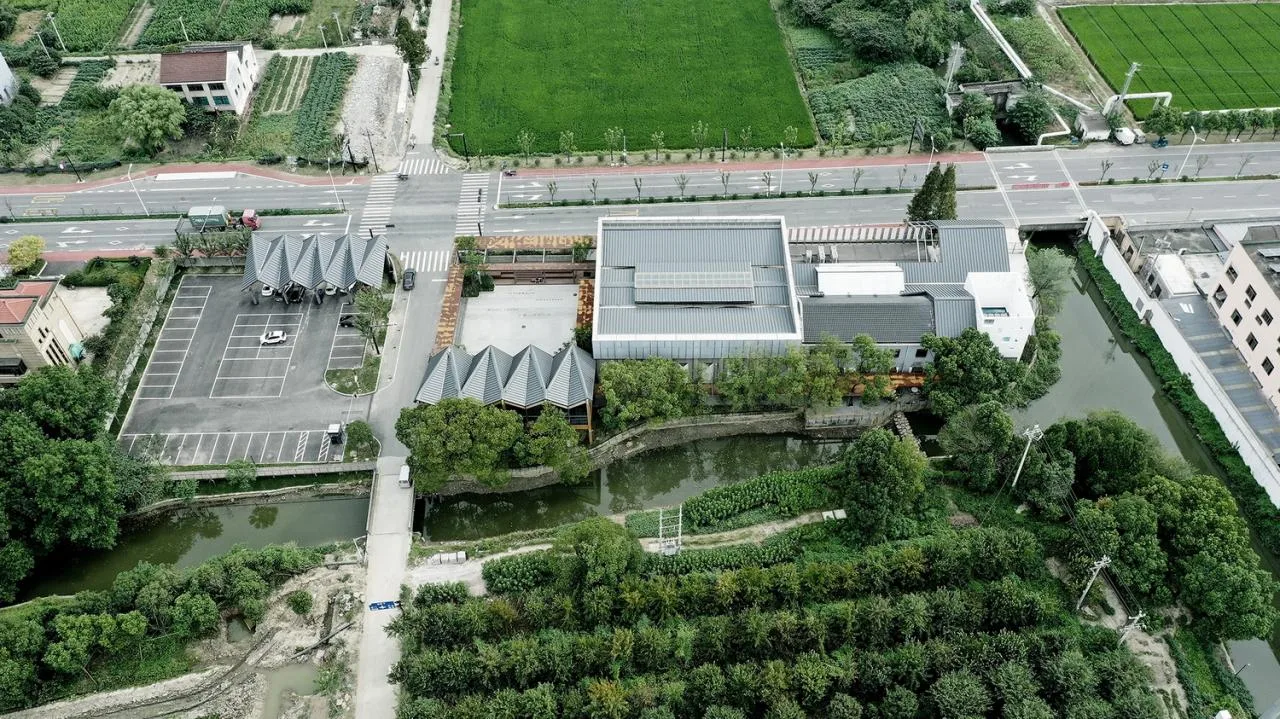
▲ Project overview © Yan Yang
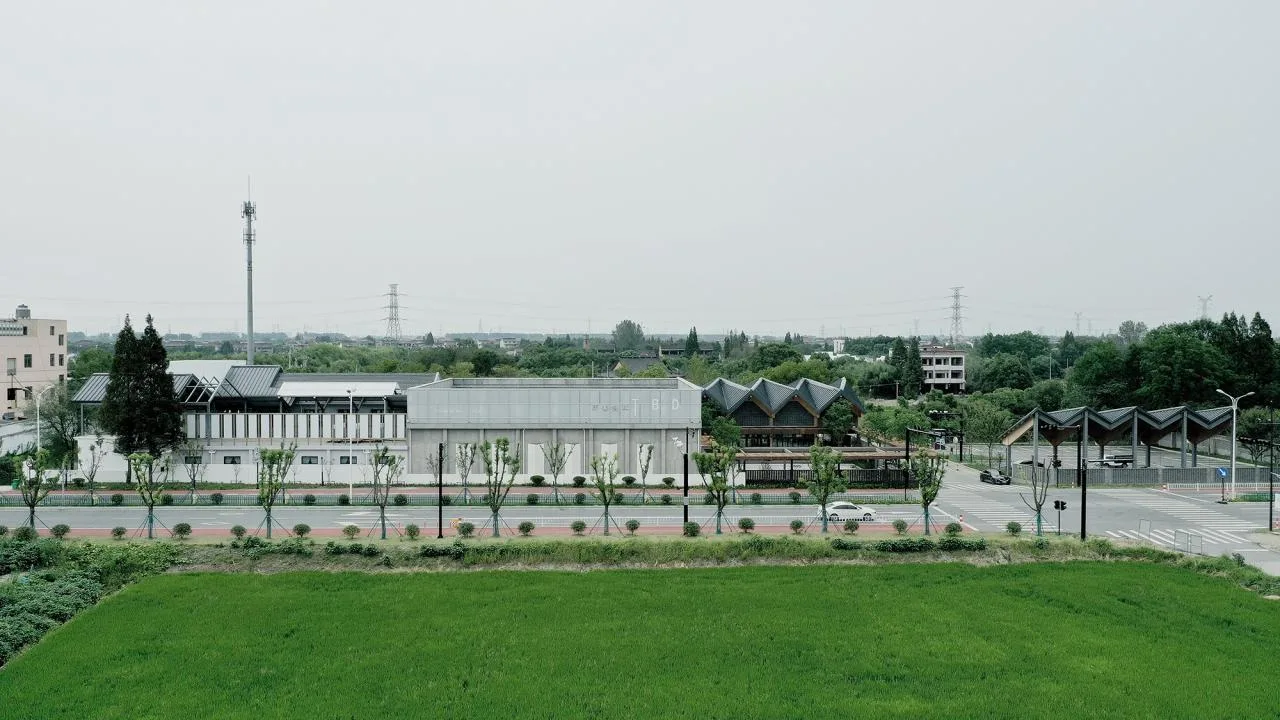
▲ South facade panoramic view © Yan Yang
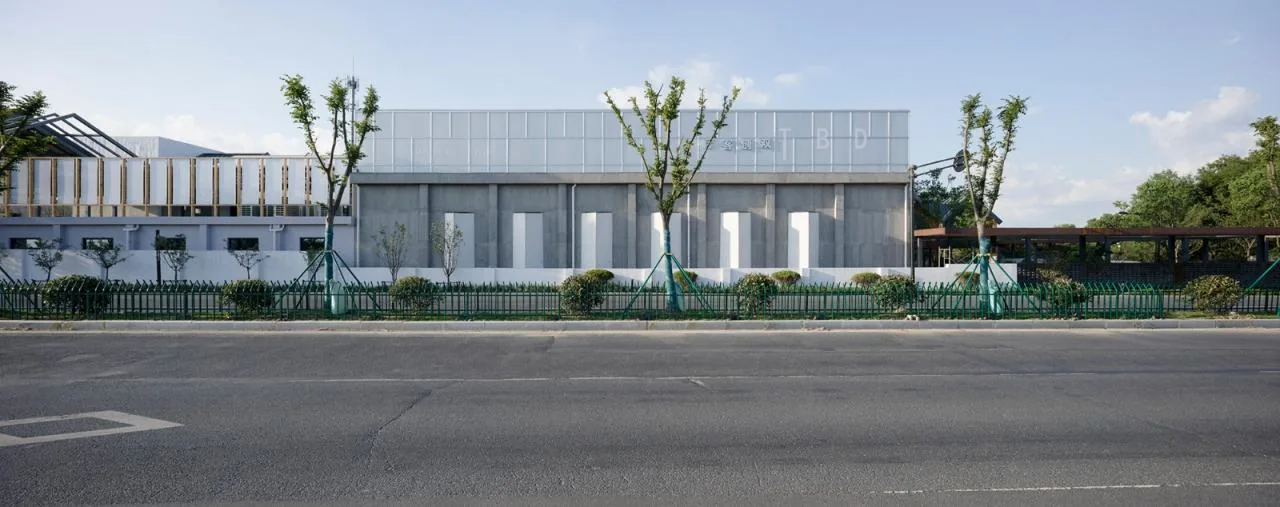
▲ South facade after overlay of old and new © Peter Dixie / Lotan Architectural Photography
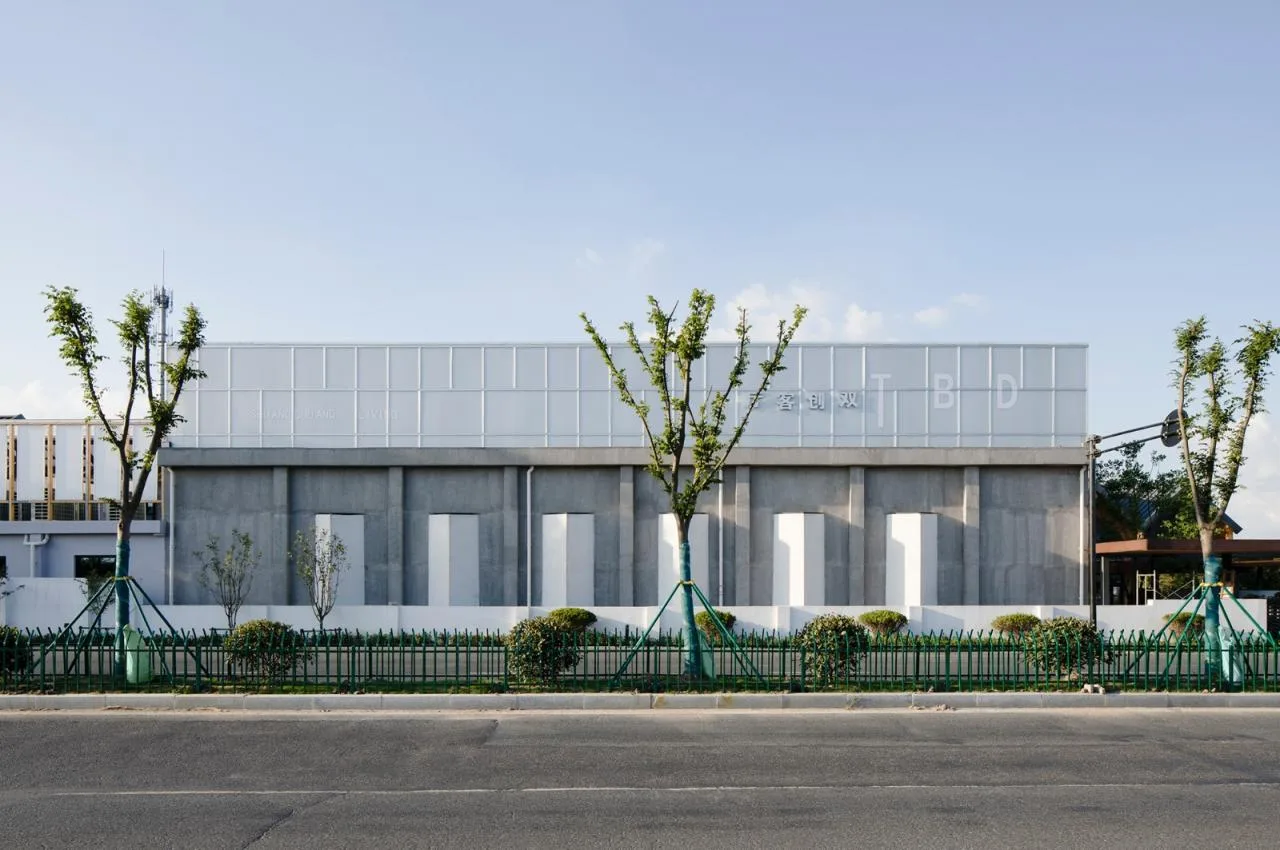
▲ South facade after overlay of old and new © Peter Dixie / Lotan Architectural Photography
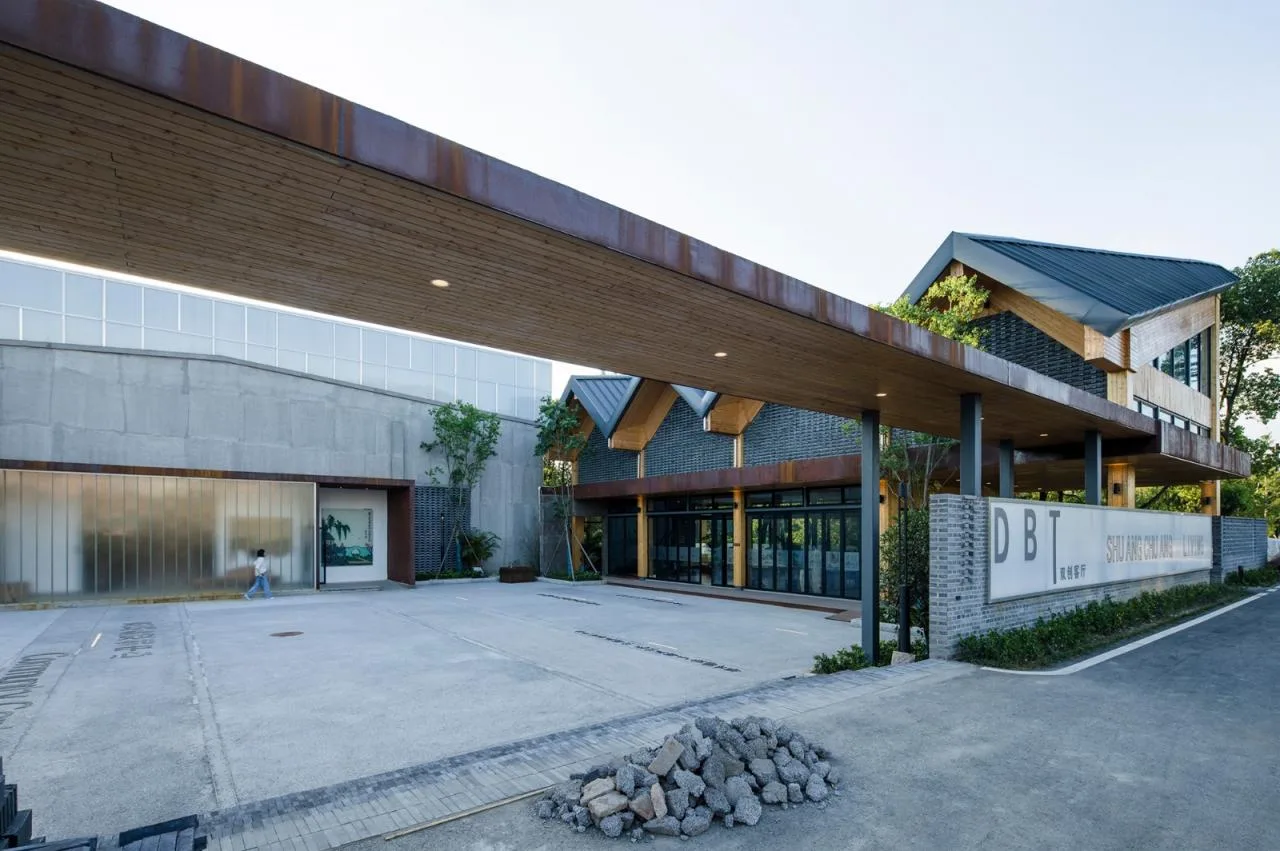
▲ Activity square © Peter Dixie / Lotan Architectural Photography
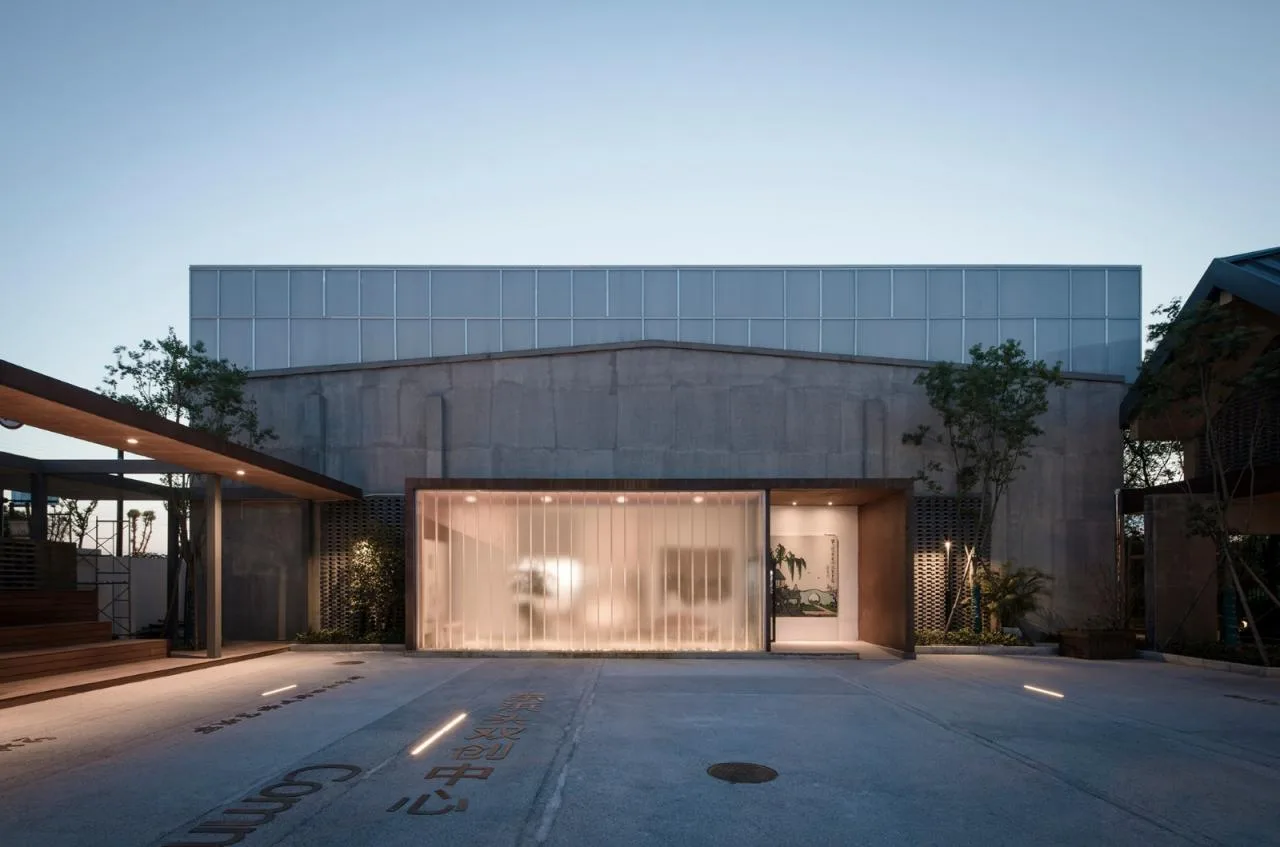
▲ Entrance to the Innovation and Entrepreneurship Center © Peter Dixie / Lotan Architectural Photography
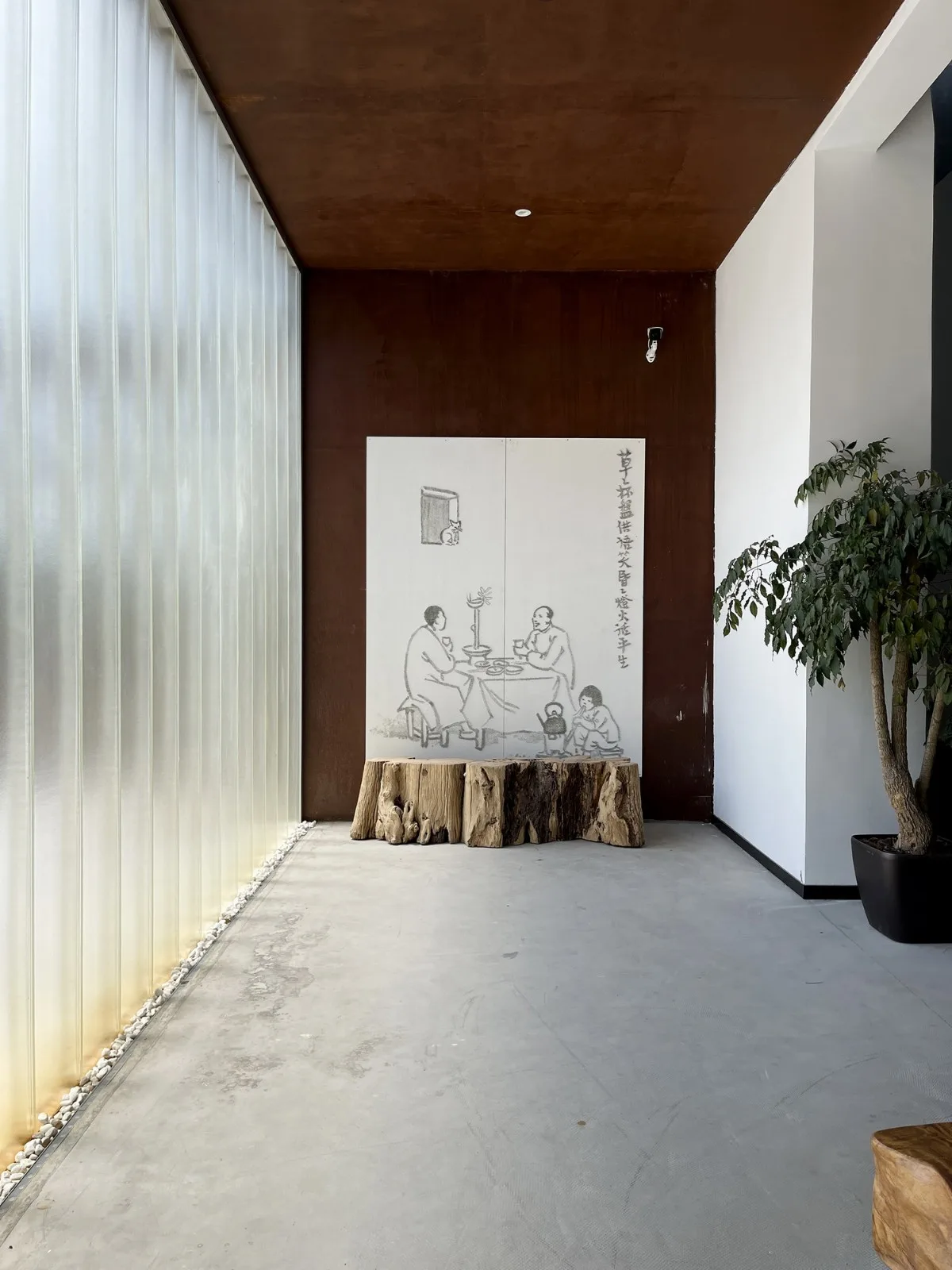
▲ Entrance to the Innovation and Entrepreneurship Center © Yan Yang
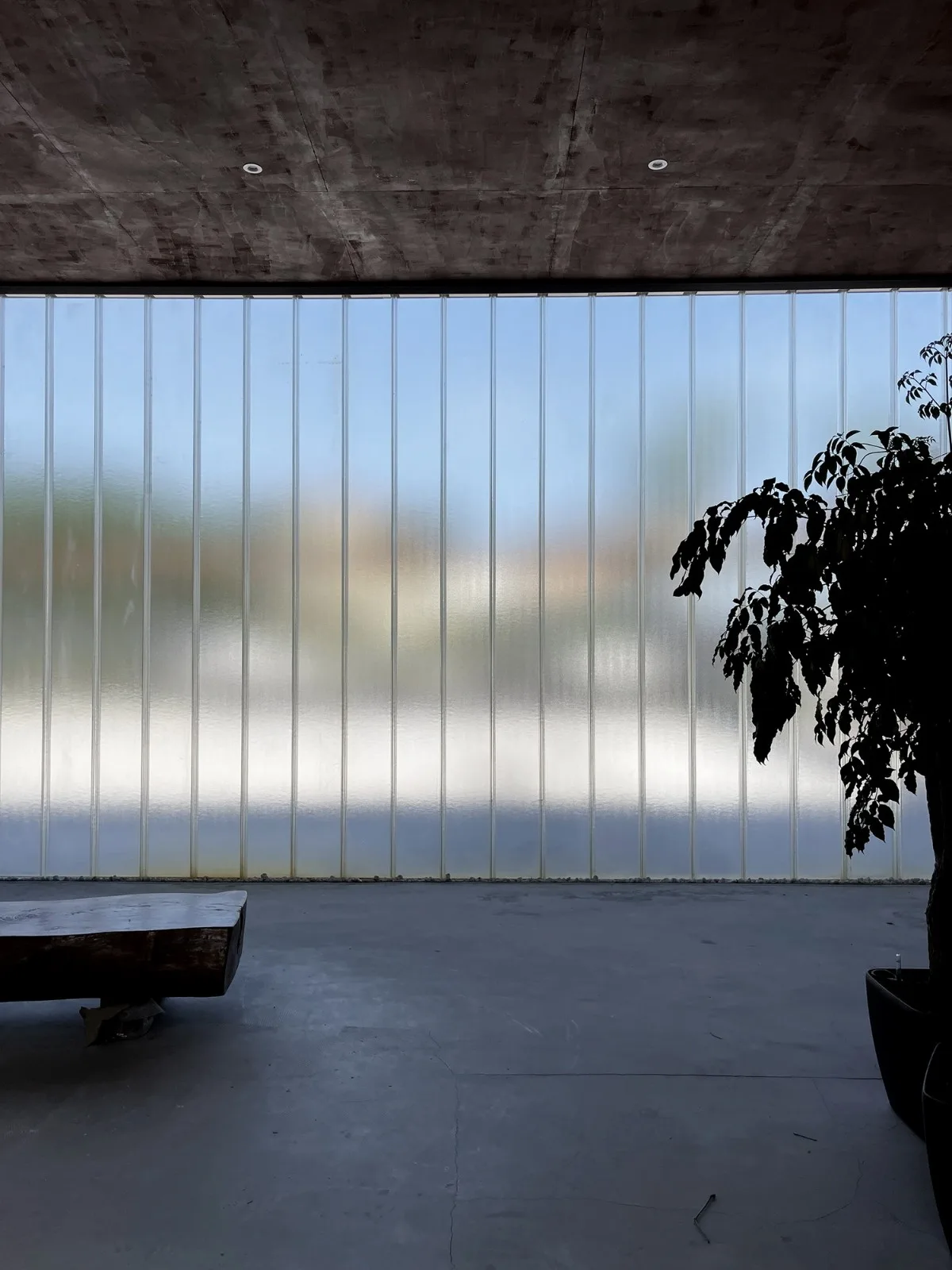
▲ Entrance hall for Innovation and Entrepreneurship © Yan Yang
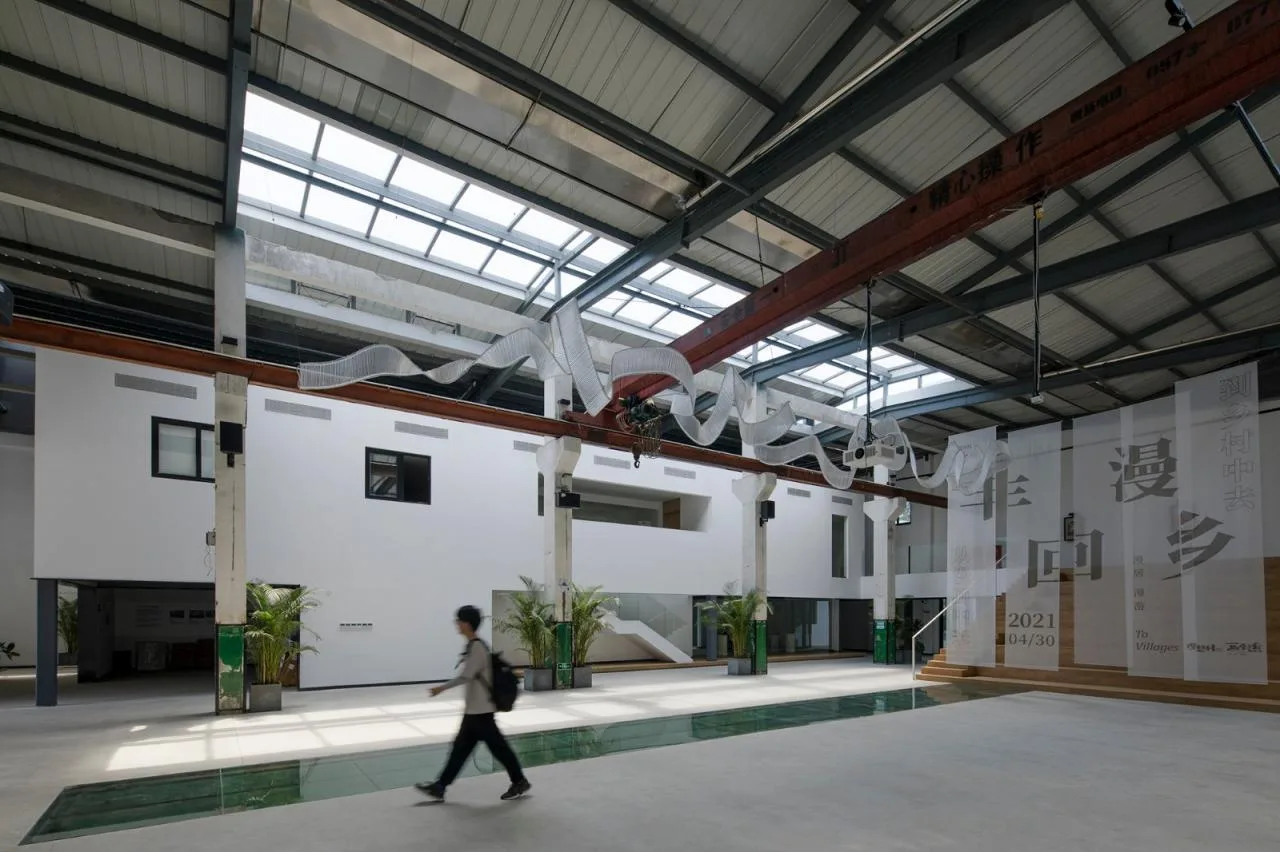
▲ Multi-functional exhibition hall for Innovation and Entrepreneurship © Peter Dixie / Lotan Architectural Photography
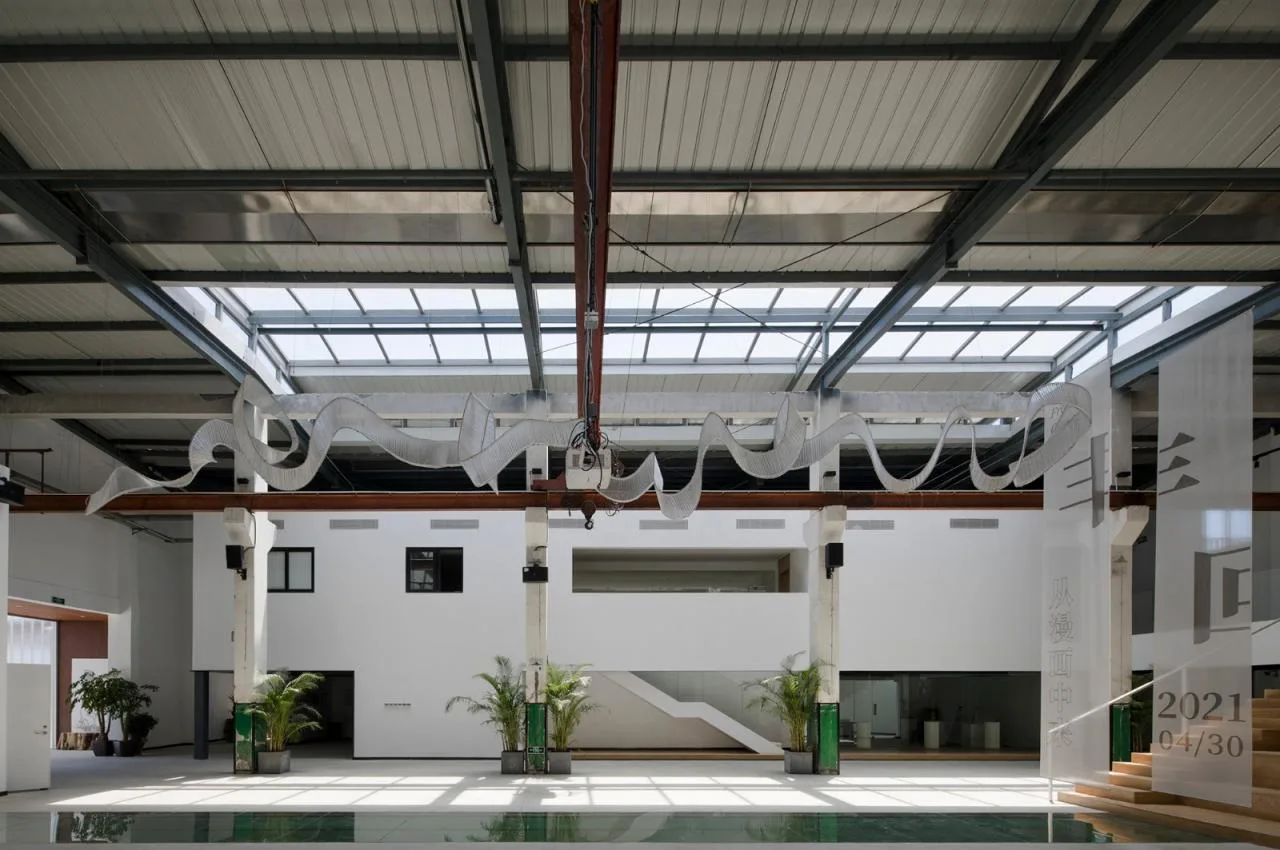
▲ Multi-functional exhibition hall for Innovation and Entrepreneurship © Peter Dixie / Lotan Architectural Photography
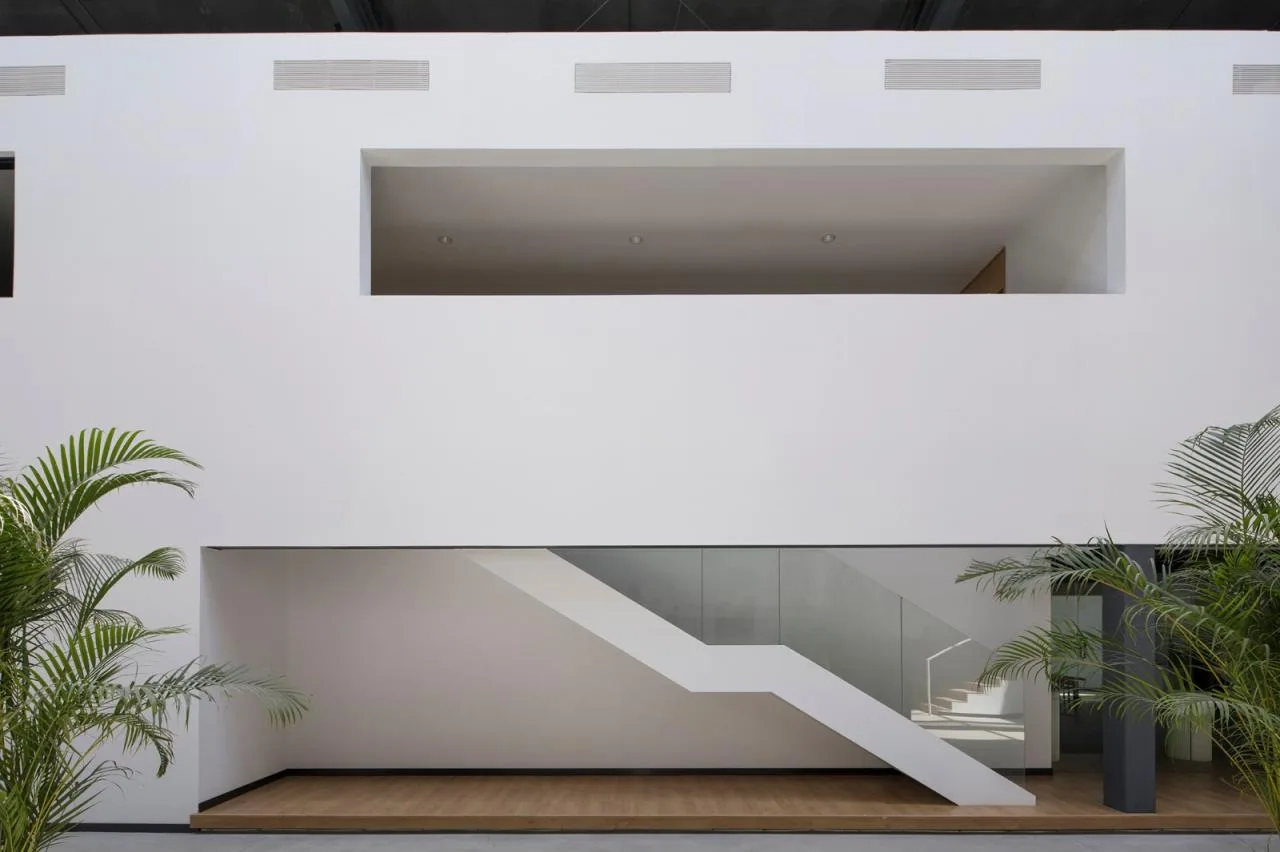
▲ Multi-functional exhibition hall for Innovation and Entrepreneurship © Peter Dixie / Lotan Architectural Photography
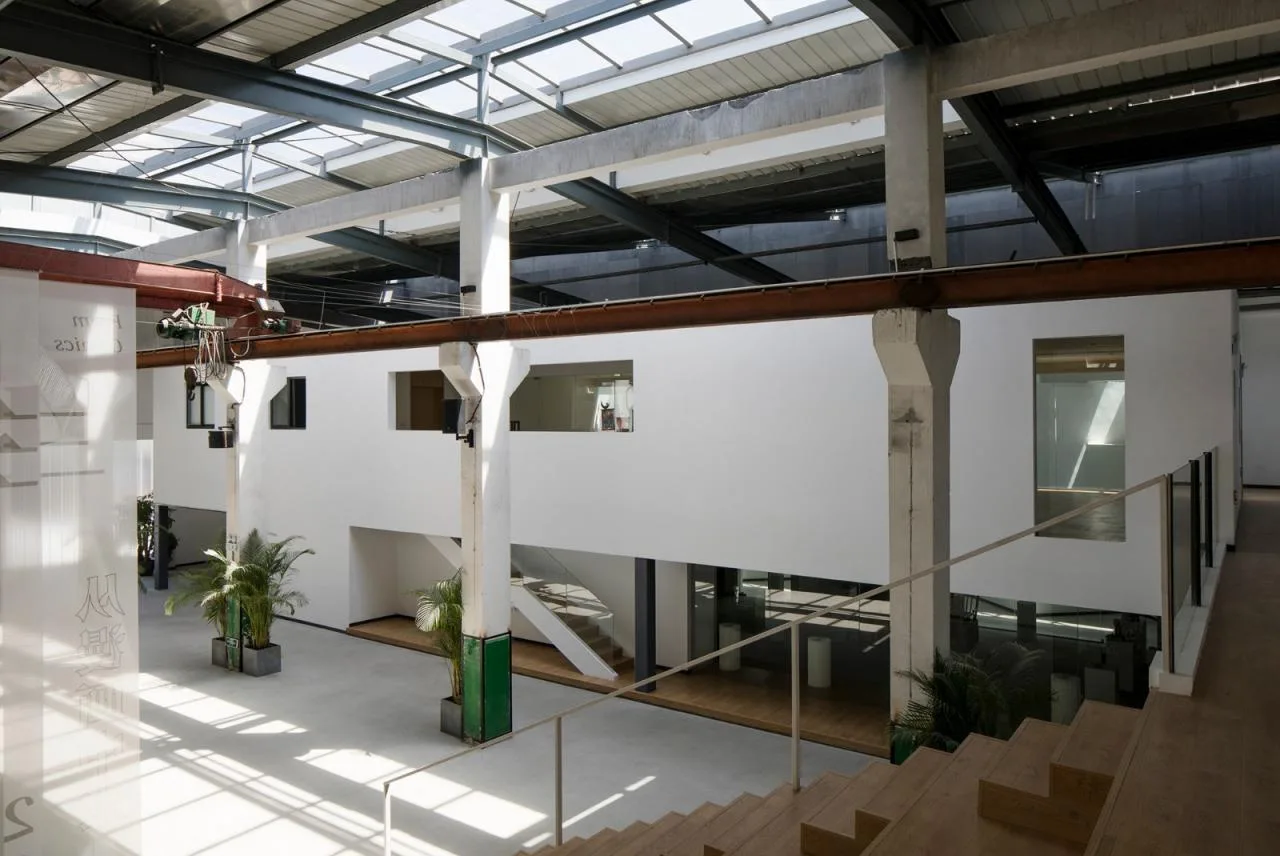
▲ Multi-functional exhibition hall for Innovation and Entrepreneurship © Peter Dixie / Lotan Architectural Photography
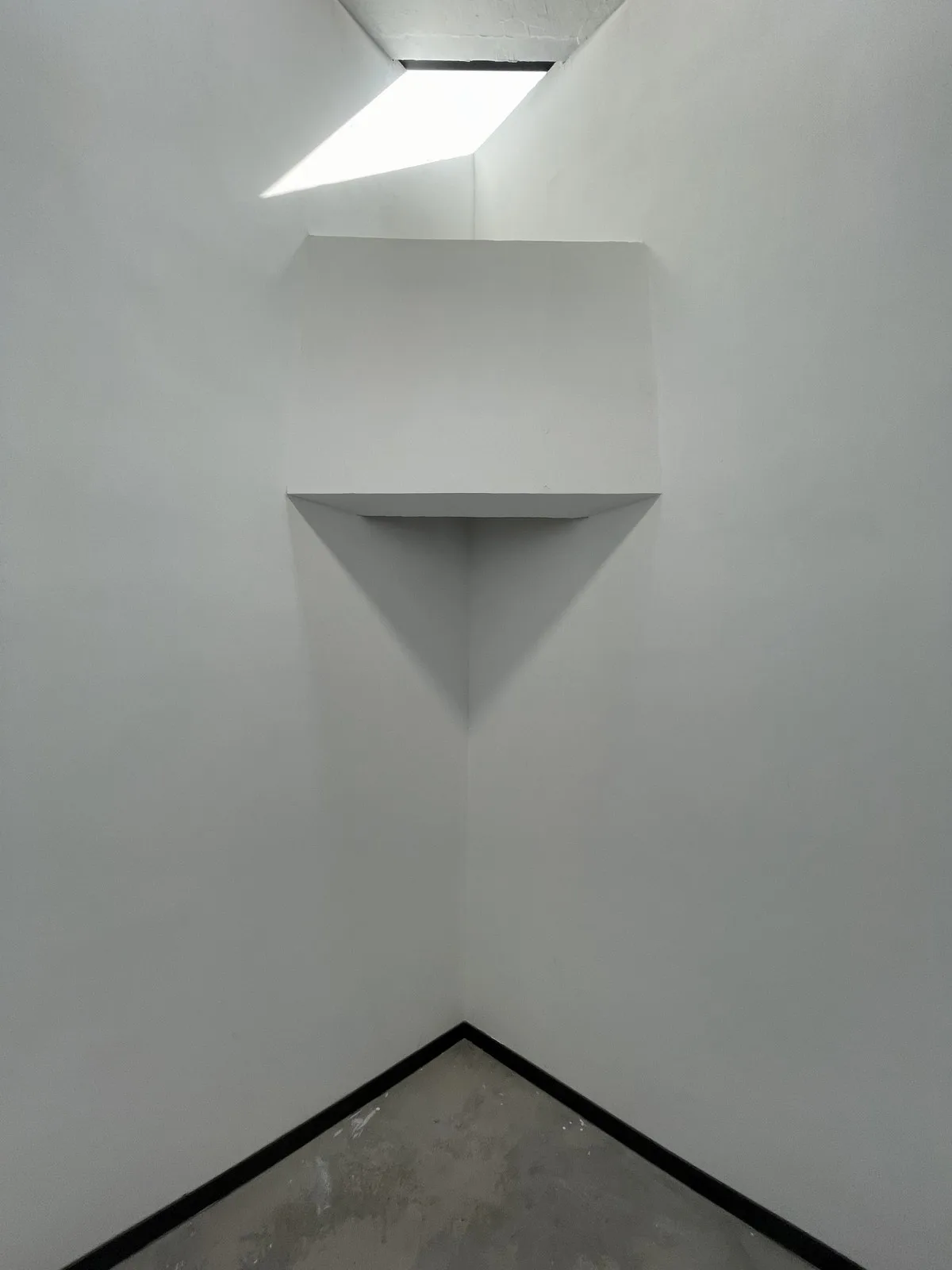
▲ Folding display wall © Yan Yang
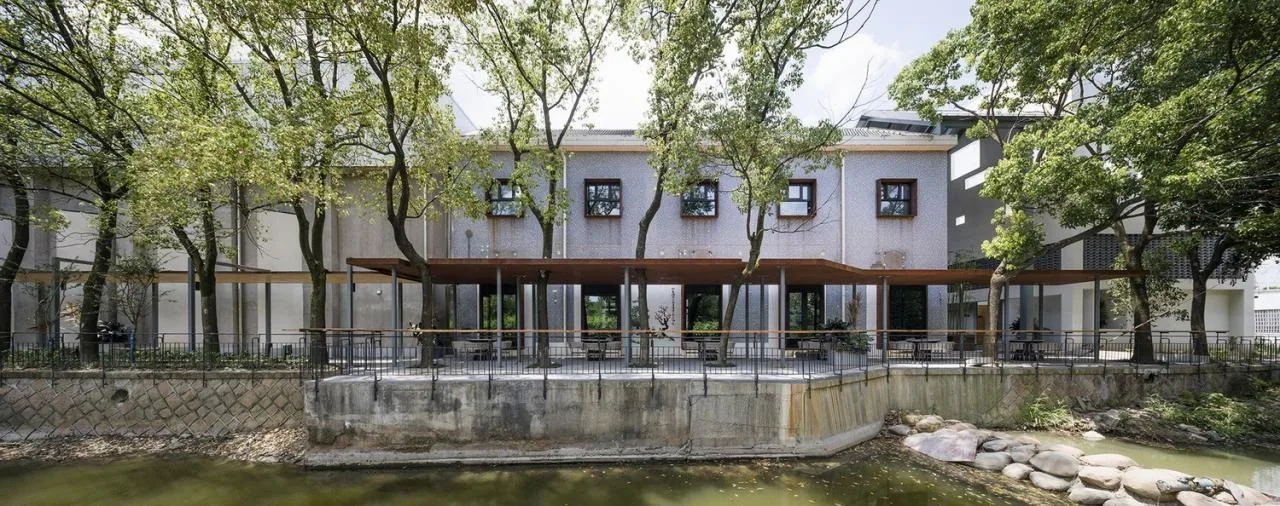
▲ Café & North facade of Jian Restaurant © Peter Dixie / Lotan Architectural Photography
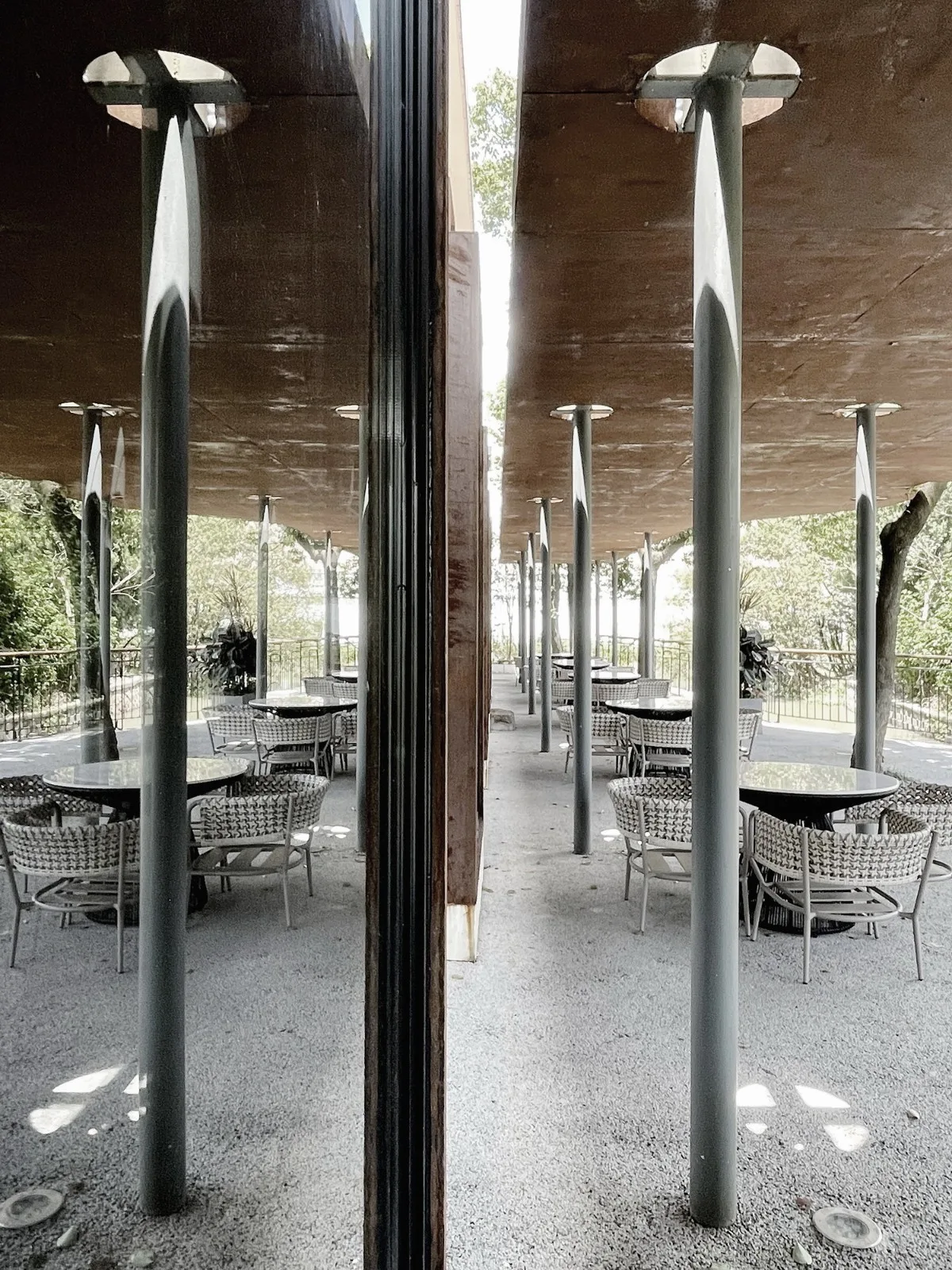
▲ Outdoor leisure area of coffee shop © Yan Yang
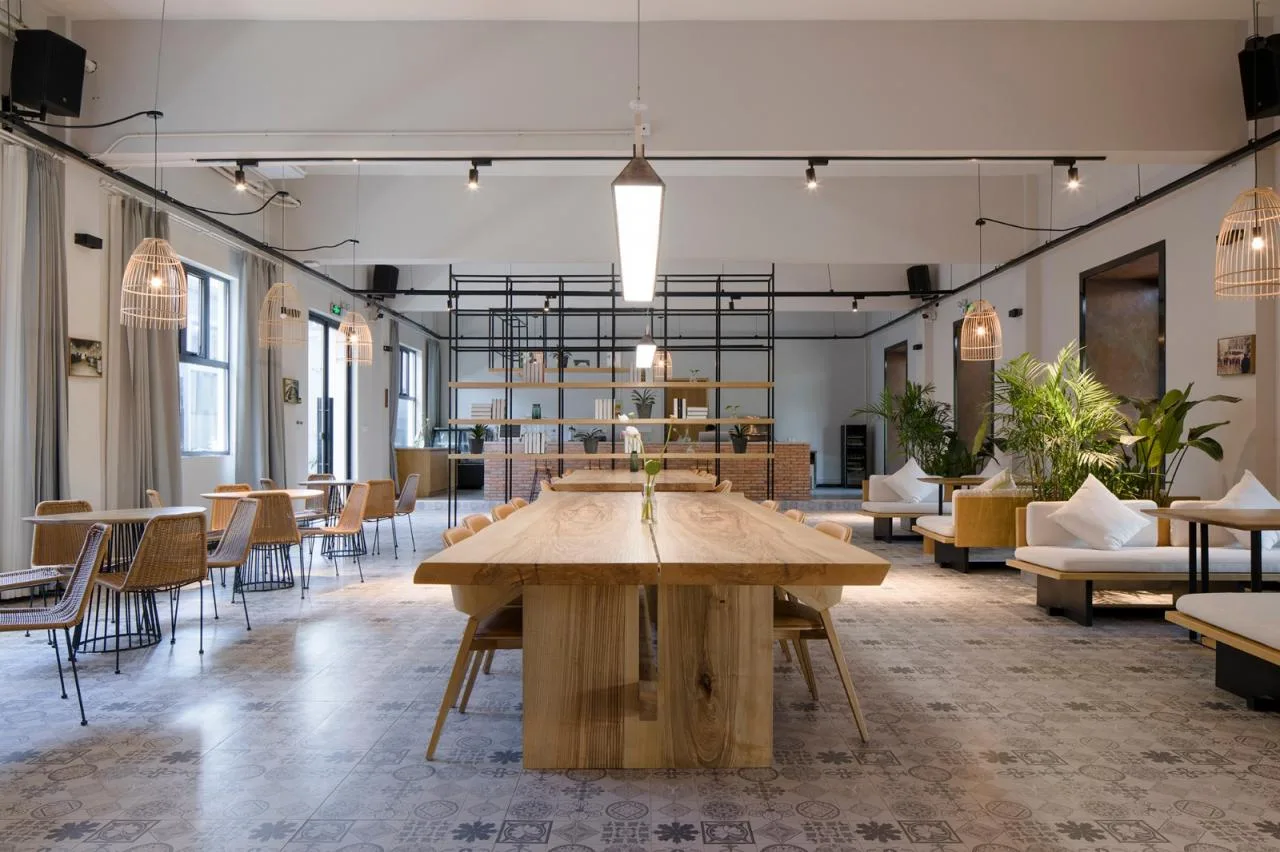
▲ Renovated Coffee & Jian Restaurant © Peter Dixie / Lotan Architectural Photography
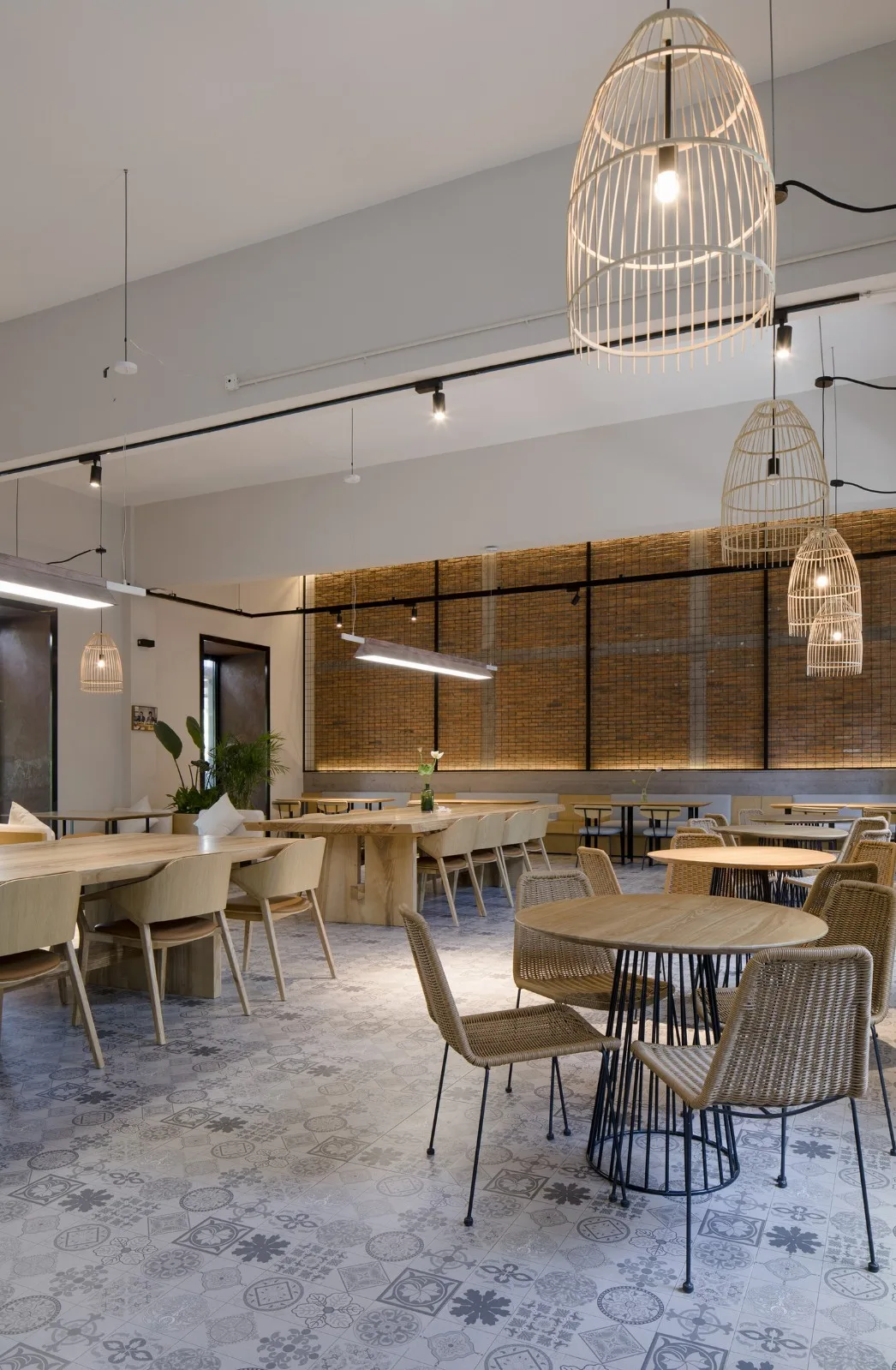
▲ Renovated Coffee & Jian Restaurant © Peter Dixie / Lotan Architectural Photography
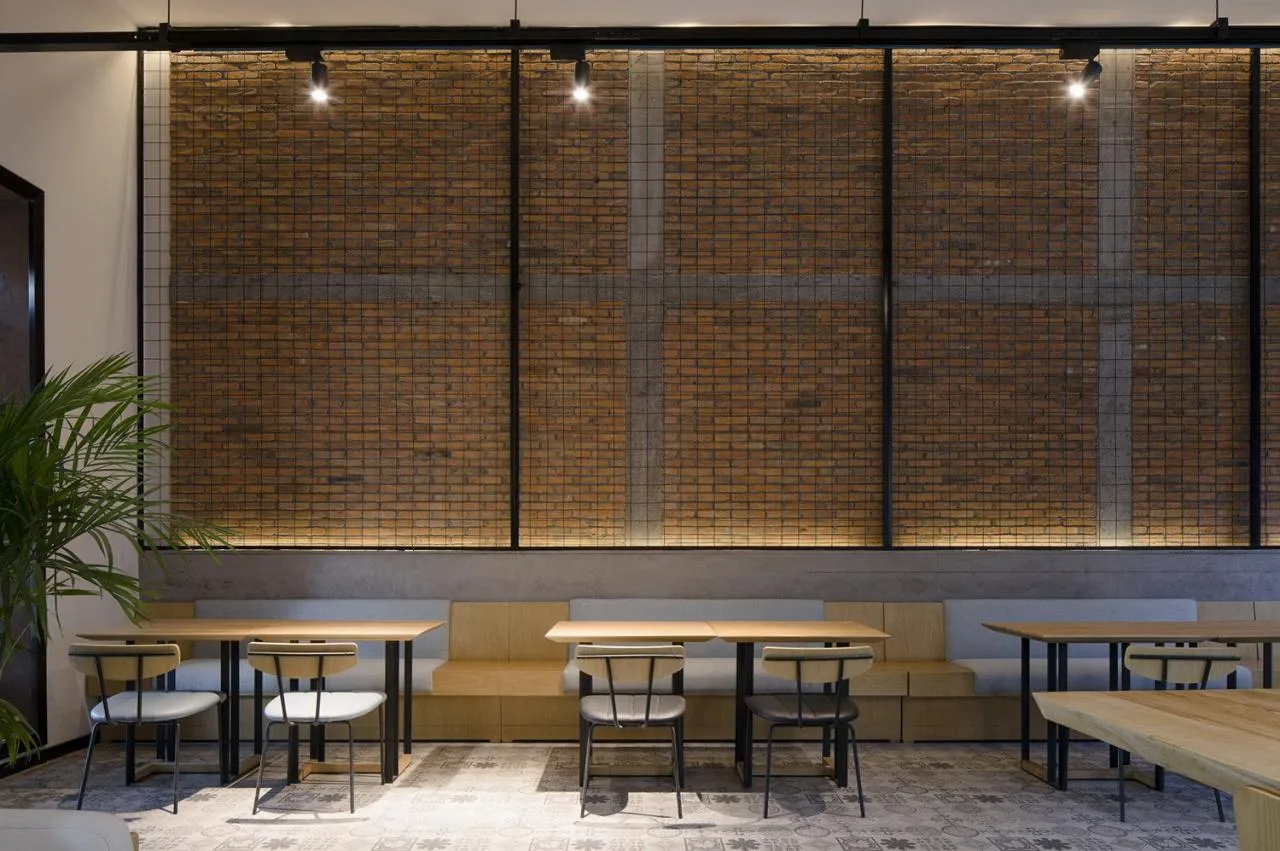
▲ Renovated Coffee & Jian Restaurant © Peter Dixie / Lotan Architectural Photography
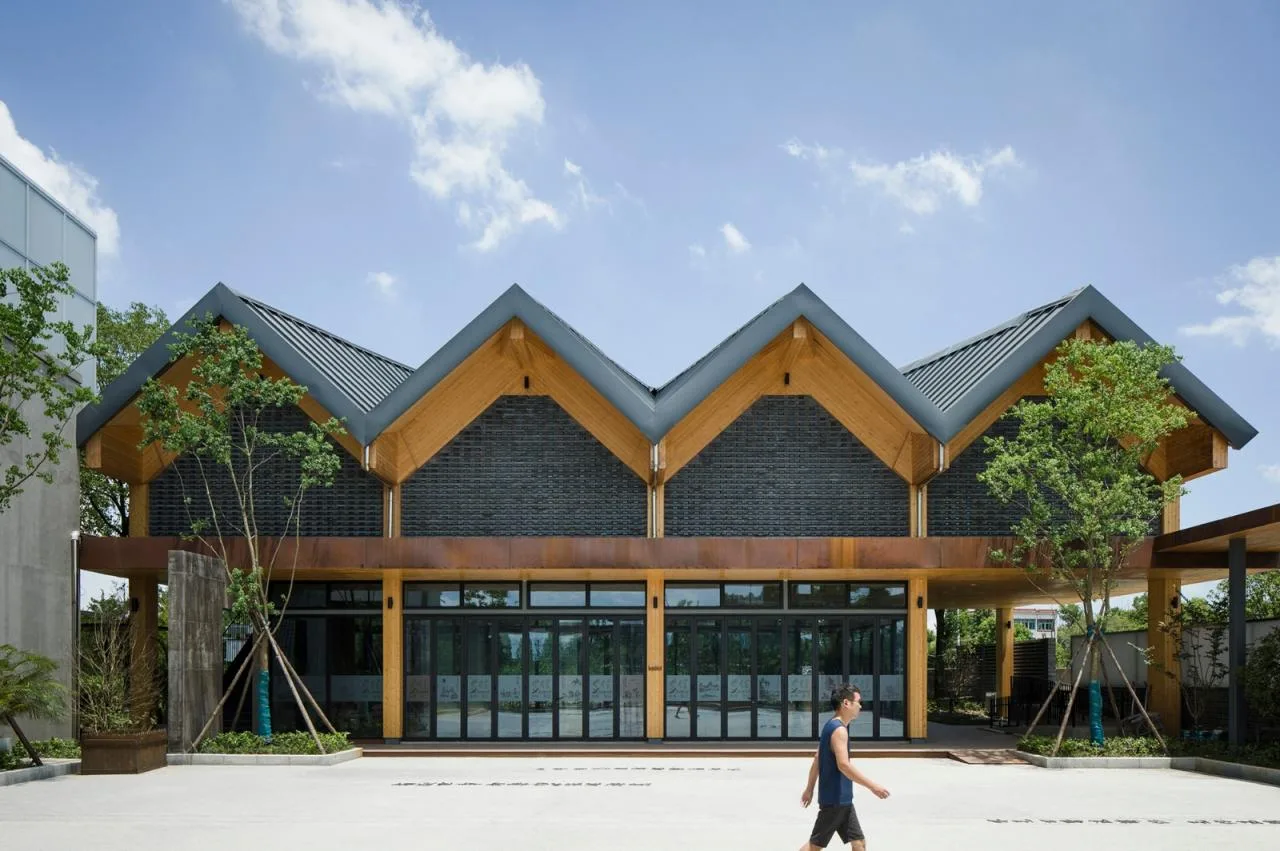
▲ Newly constructed south facade of tourist center © Peter Dixie / Lotan Architectural Photography
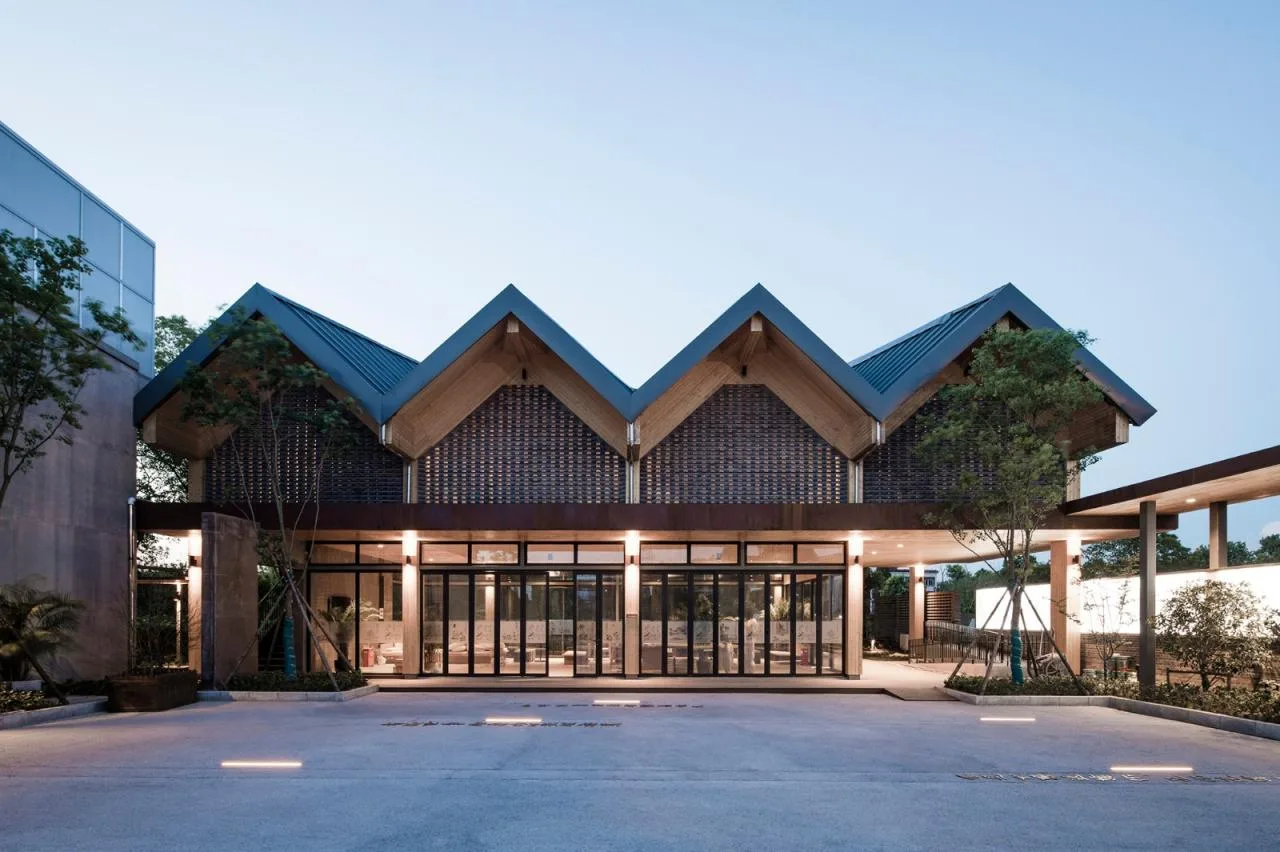
▲ Newly constructed south facade of tourist center © Peter Dixie / Lotan Architectural Photography
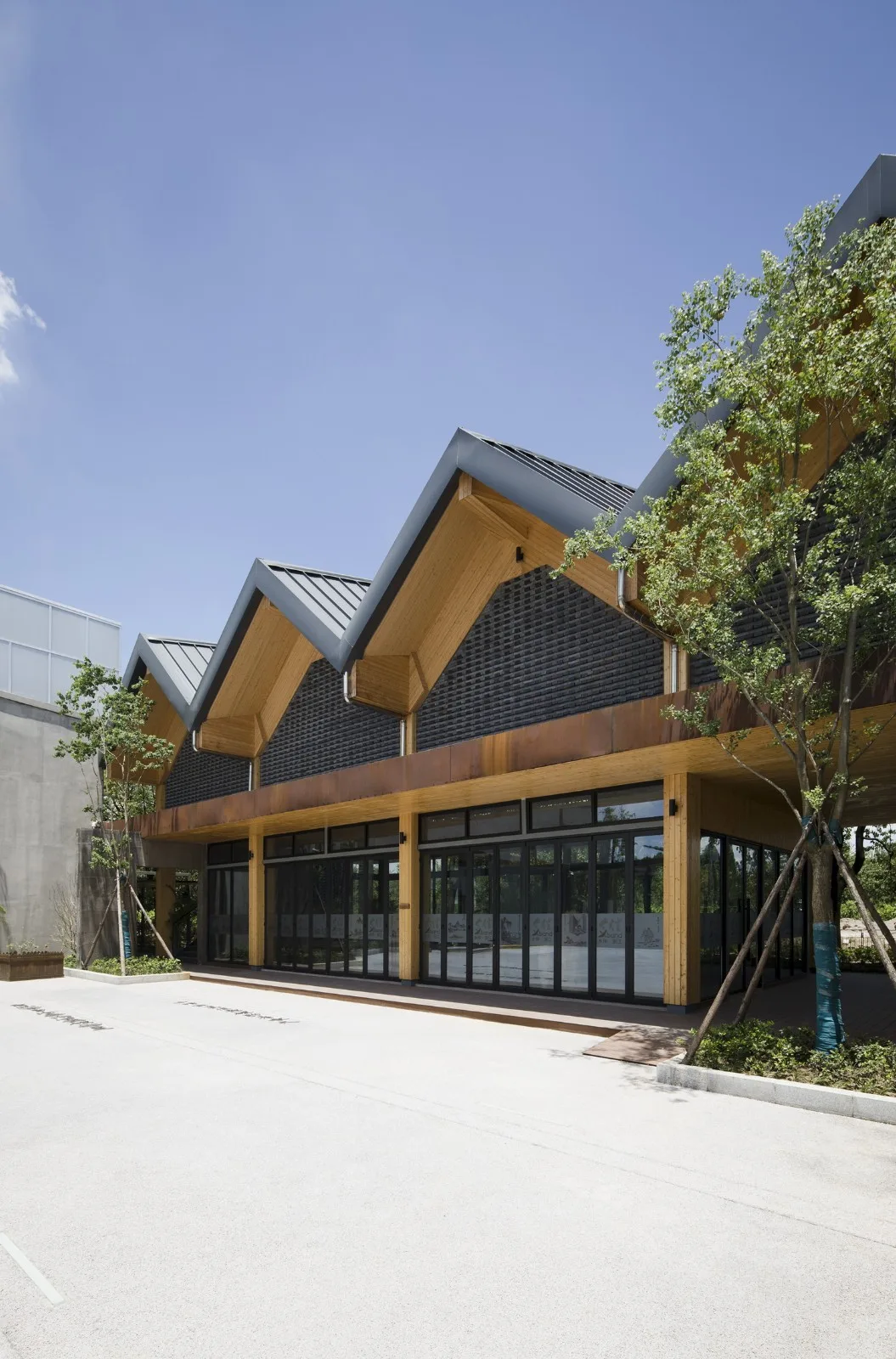
▲ Newly constructed south facade of tourist center © Peter Dixie / Lotan Architectural Photography
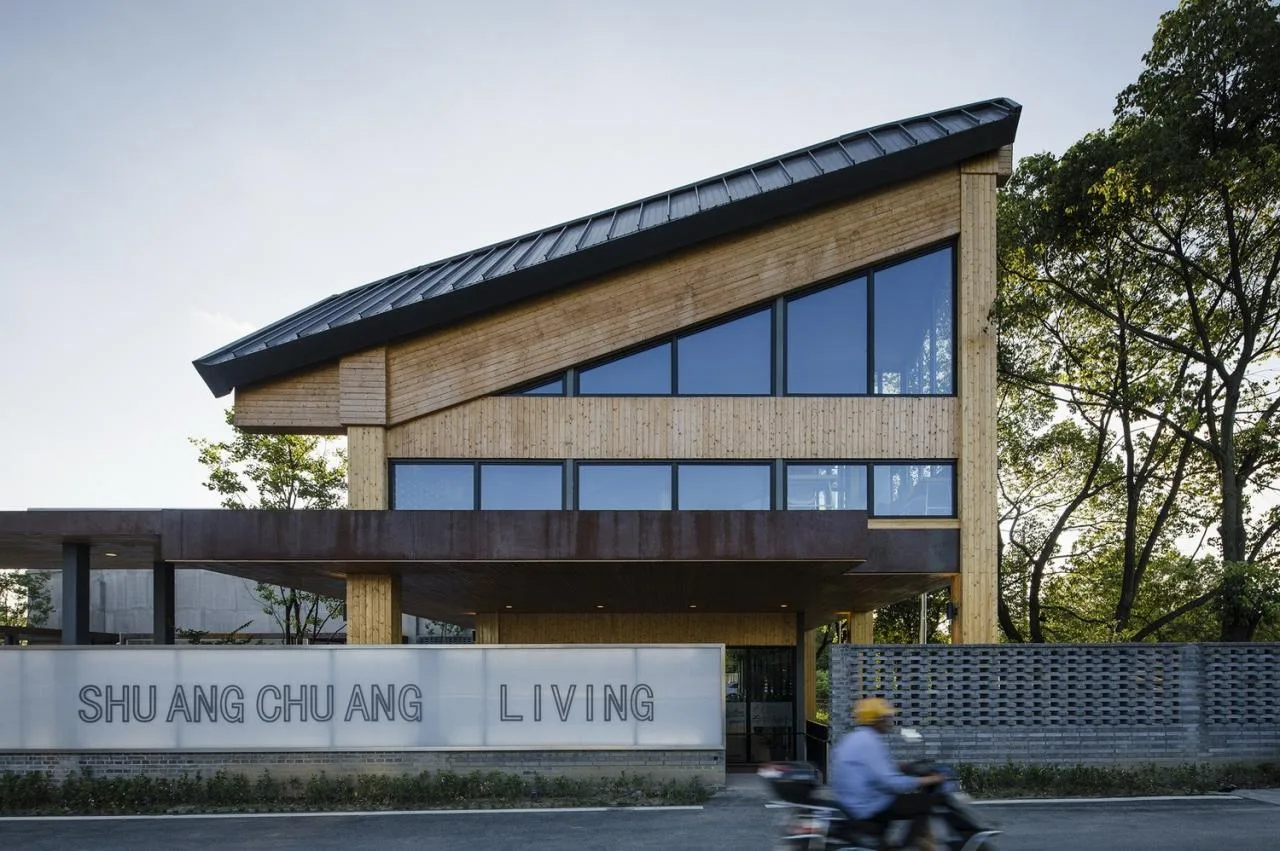
▲ New east facade of tourist center © Peter Dixie / Lotan Architectural Photography
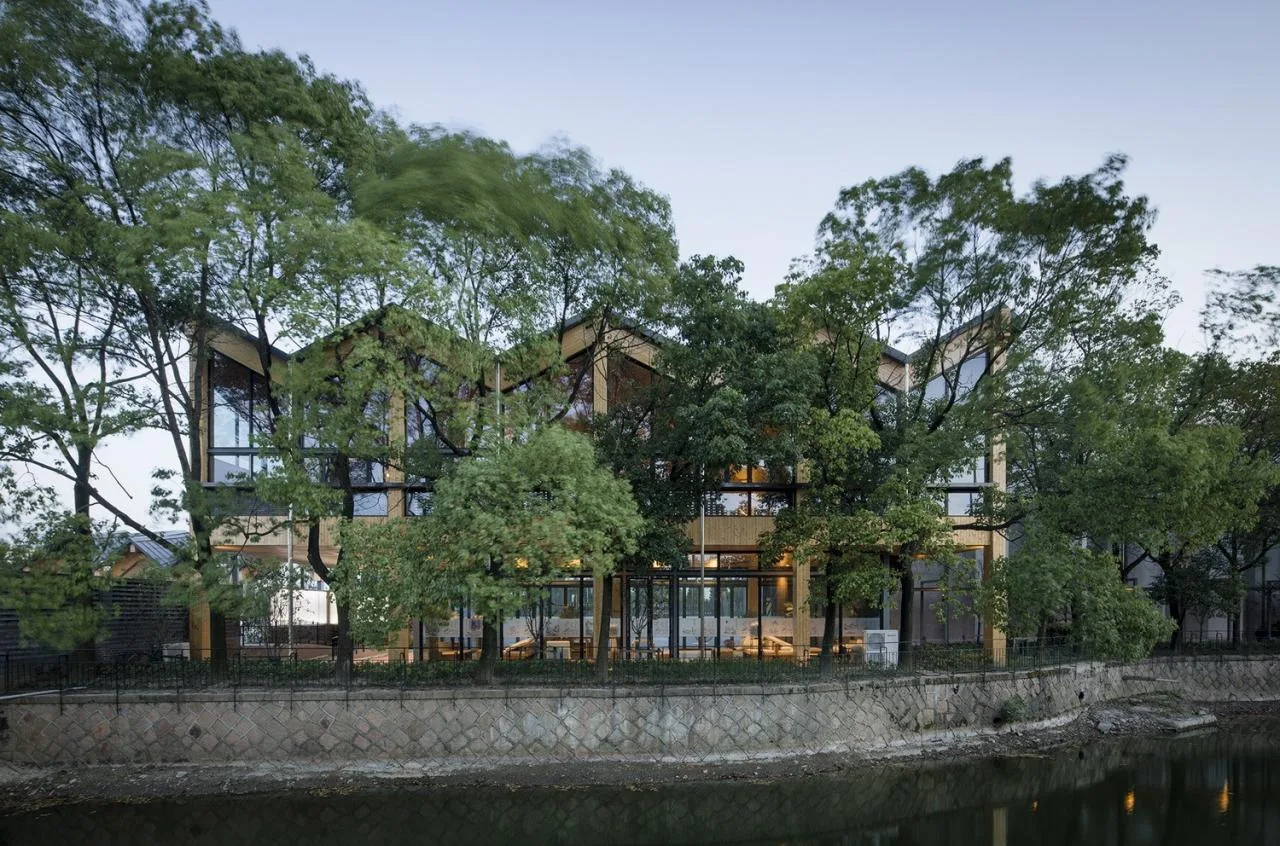
▲ New north facade of tourist center © Peter Dixie / Lotan Architectural Photography
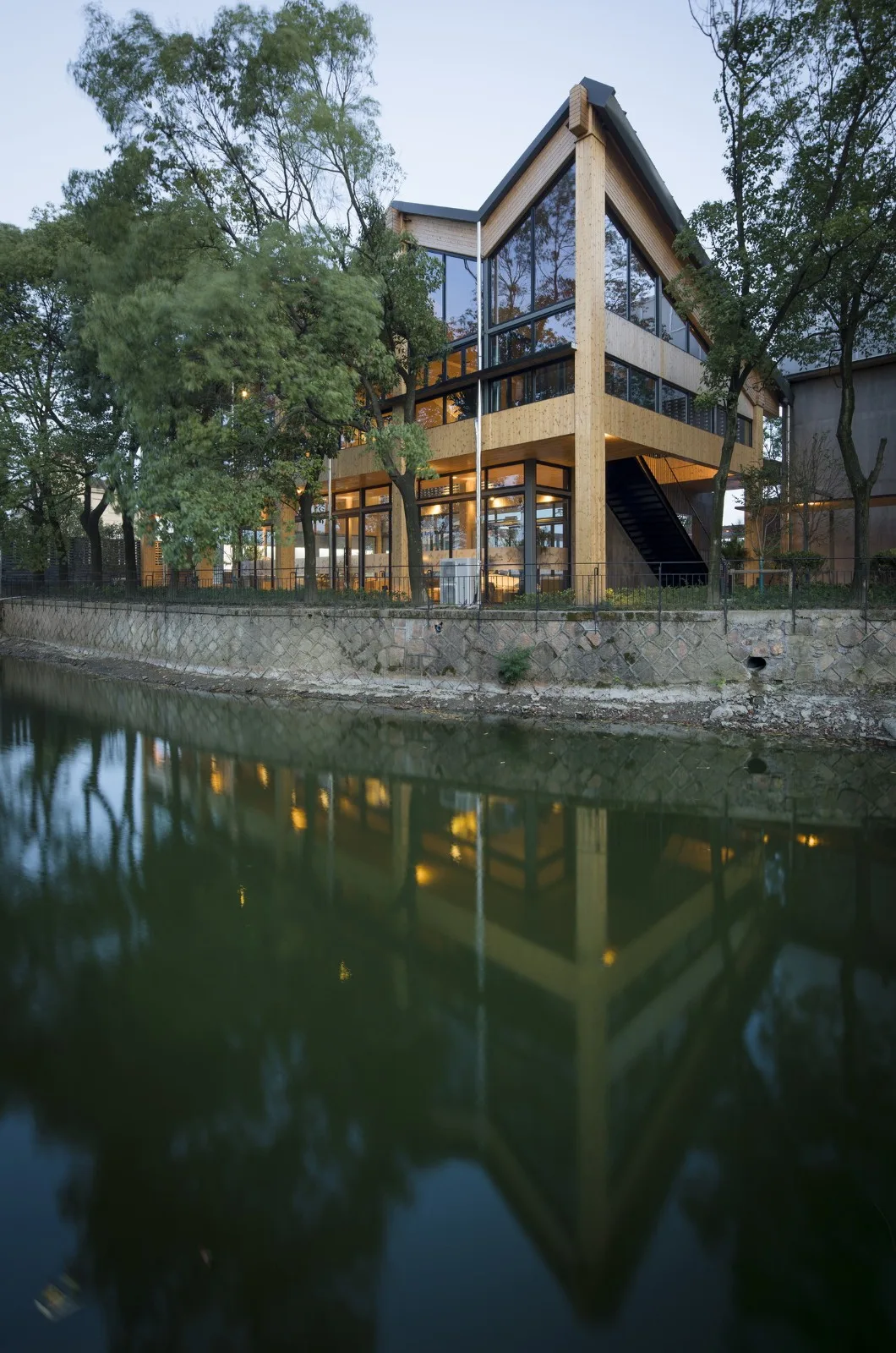
▲ New north facade of tourist center © Peter Dixie / Lotan Architectural Photography
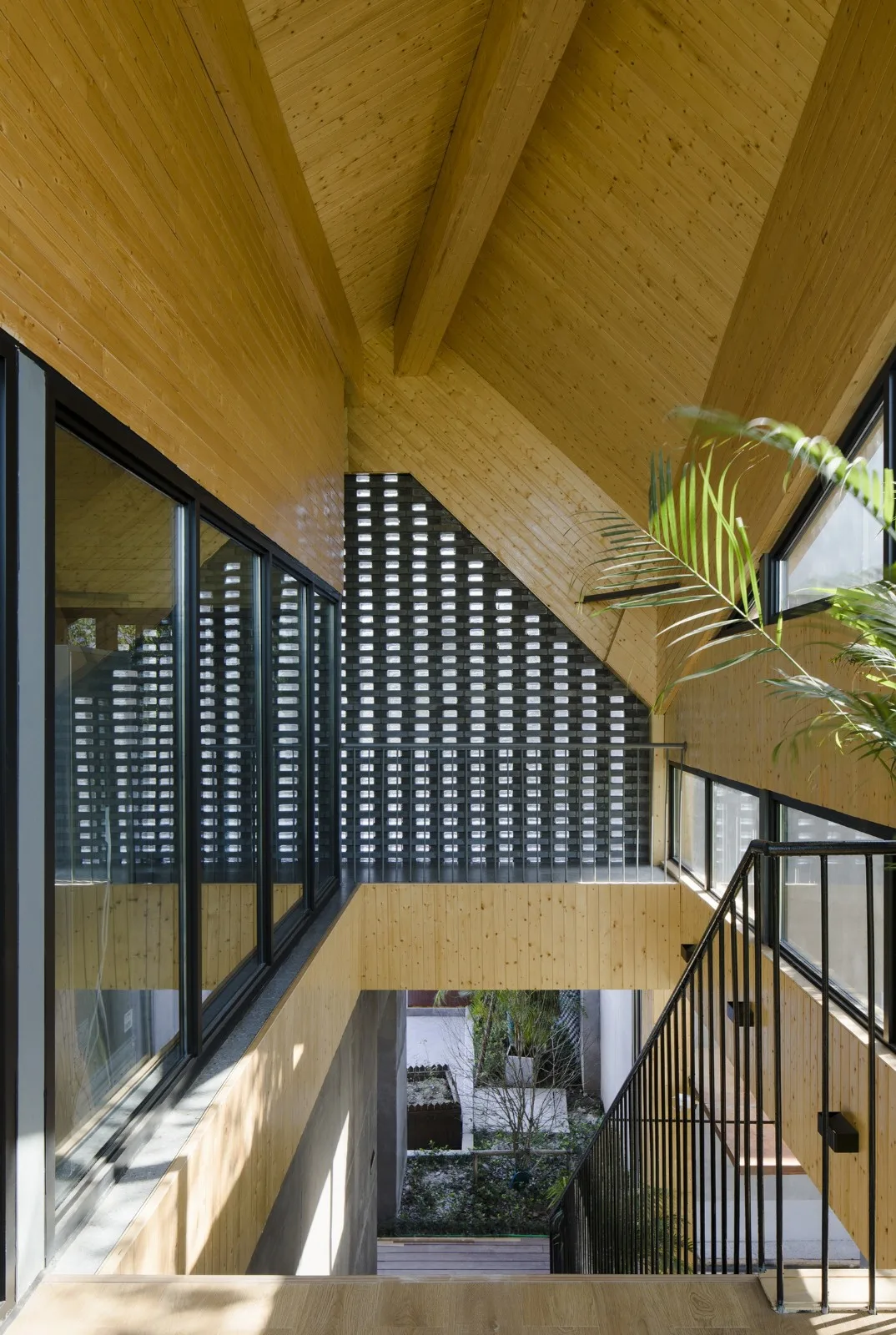
▲ Newly constructed staircase in the tourist center © Peter Dixie / Lotan Architectural Photography
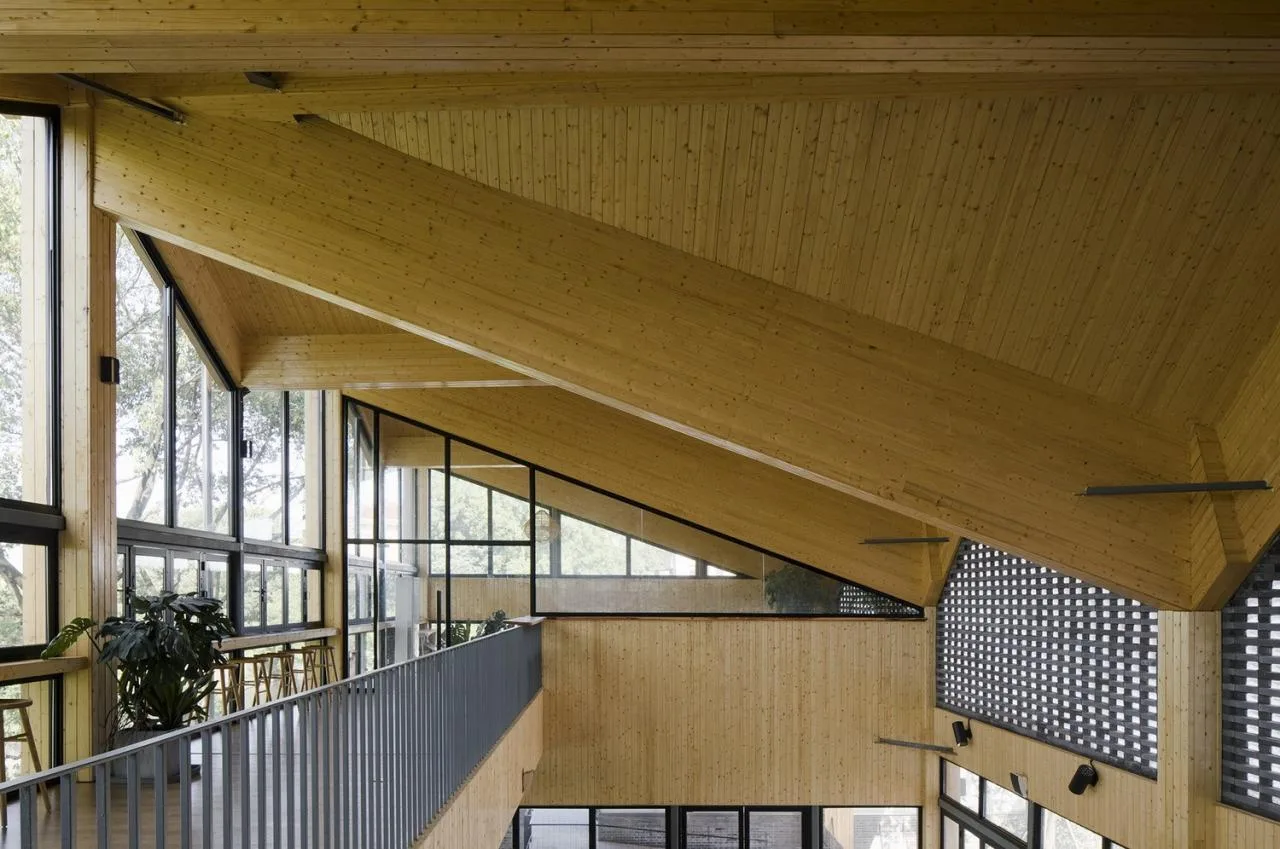
▲ Newly built visitor center open space © Peter Dixie / Lotan Architectural Photography
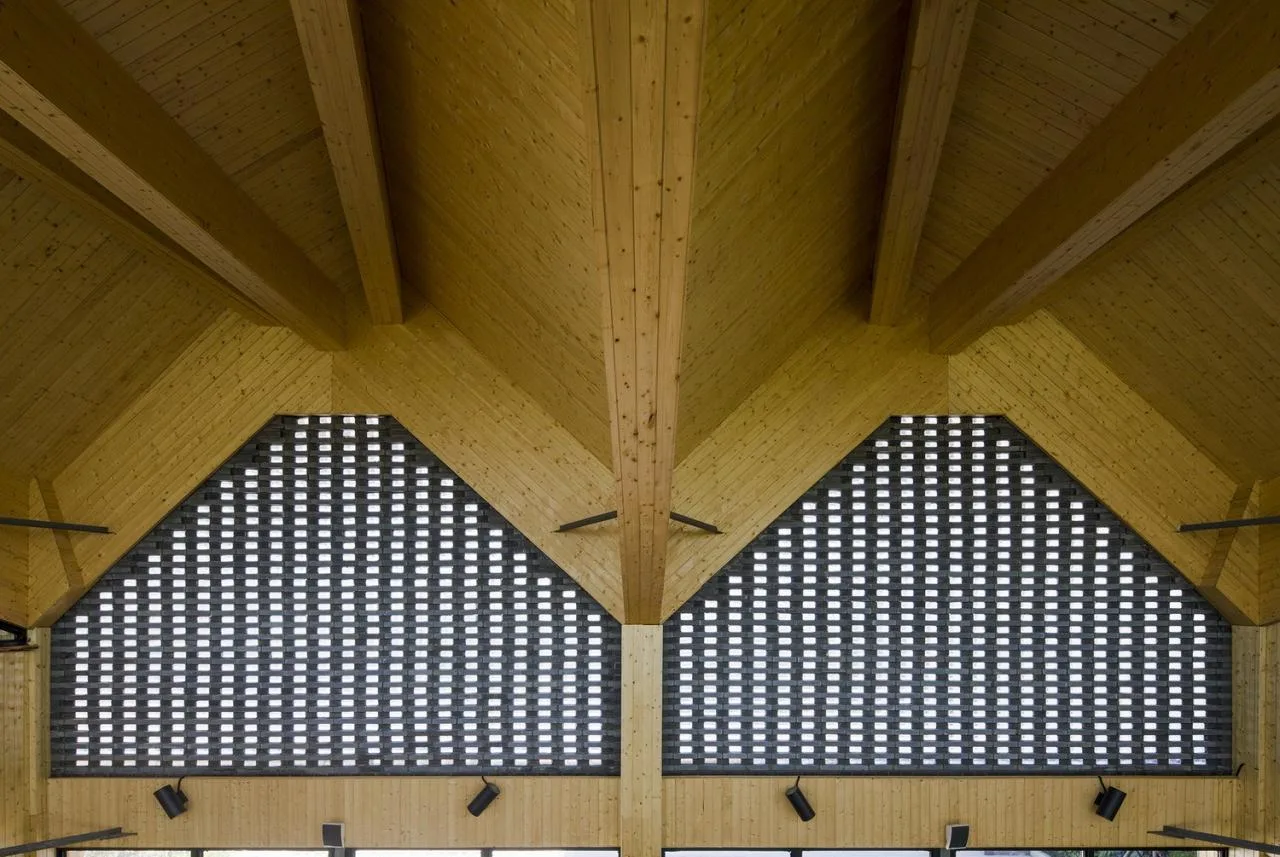
▲ Newly built visitor center open space © Peter Dixie / Lotan Architectural Photography
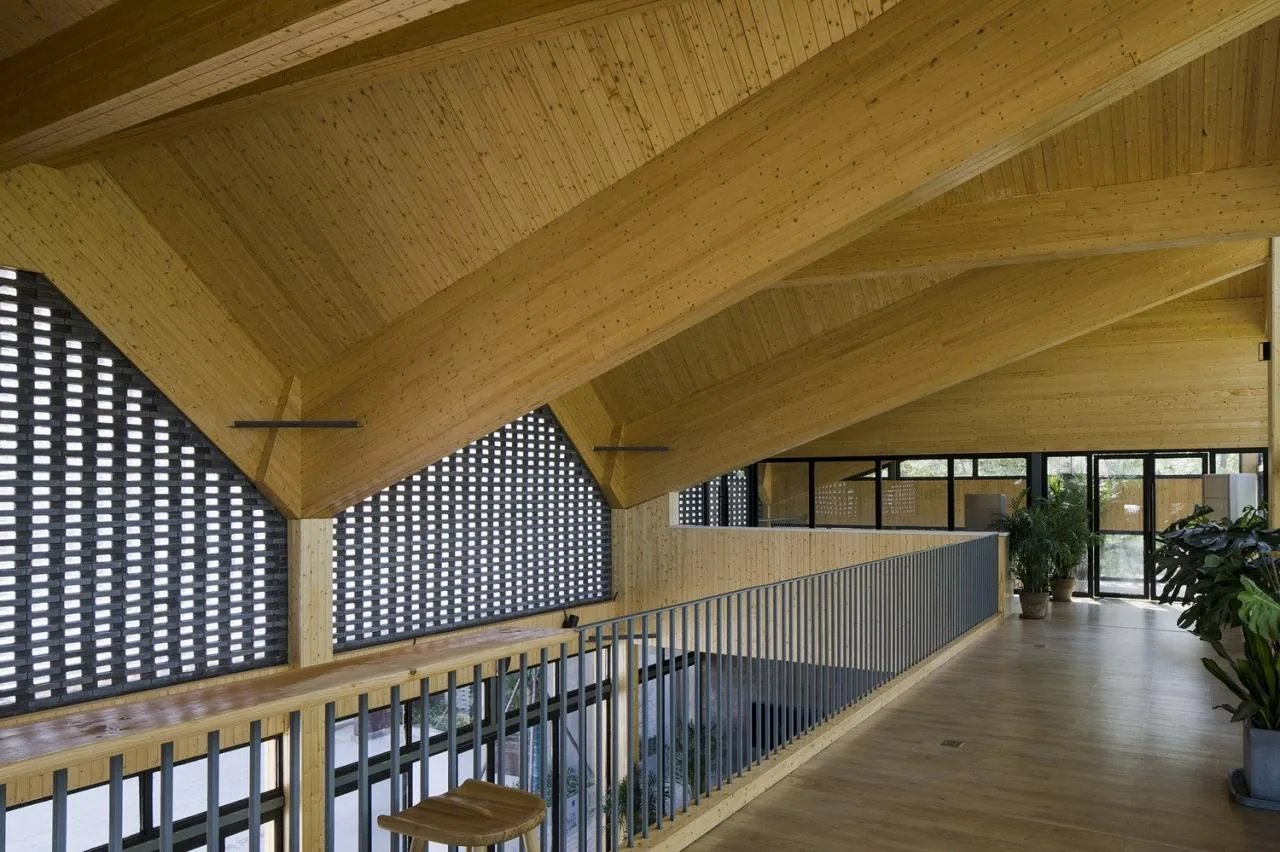
▲ Newly built visitor center open space © Peter Dixie / Lotan Architectural Photography
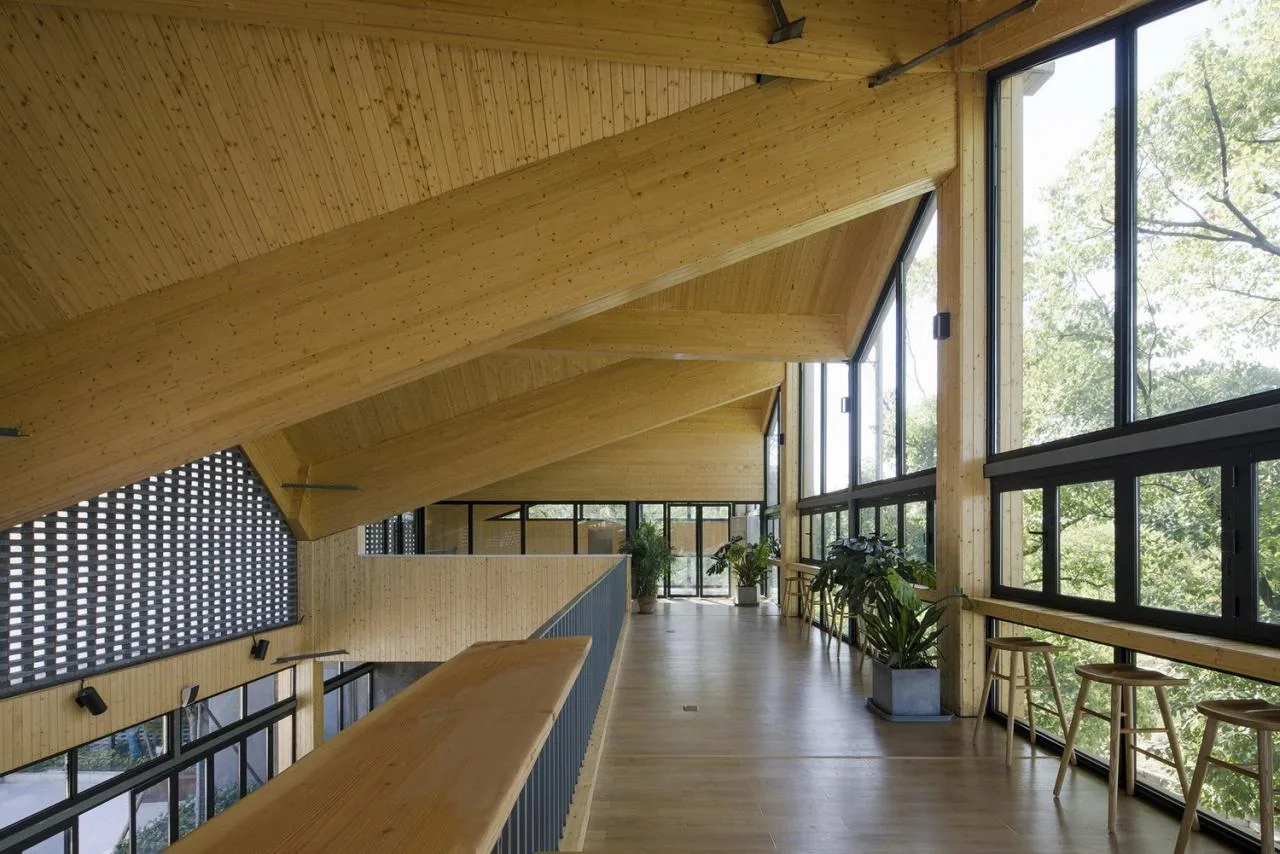
▲ Newly built tourist center 2nd floor leisure area © Peter Dixie / Lotan Architectural Photography
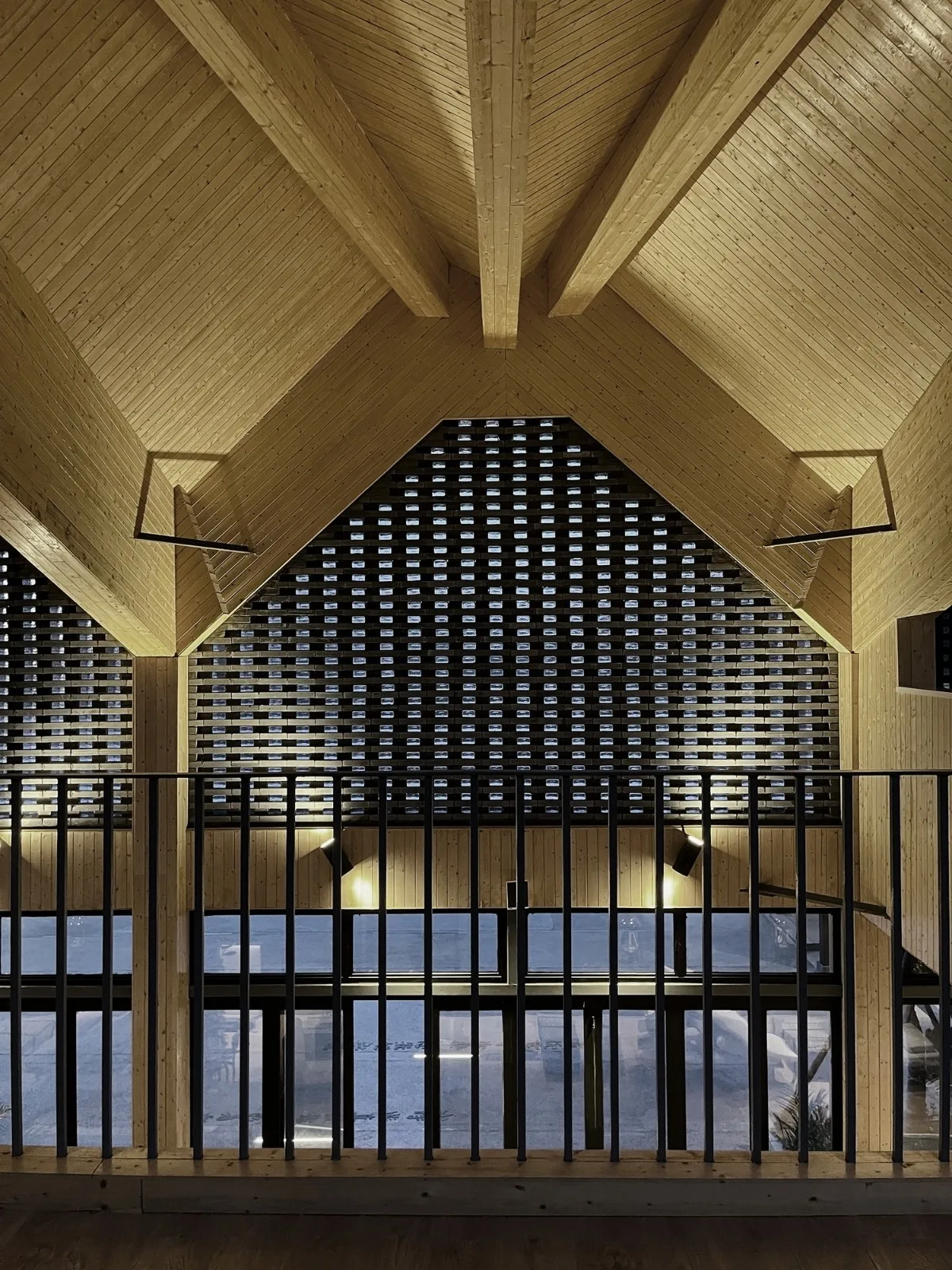
▲ Newly built tourist center 2nd floor open space © Yan Yang
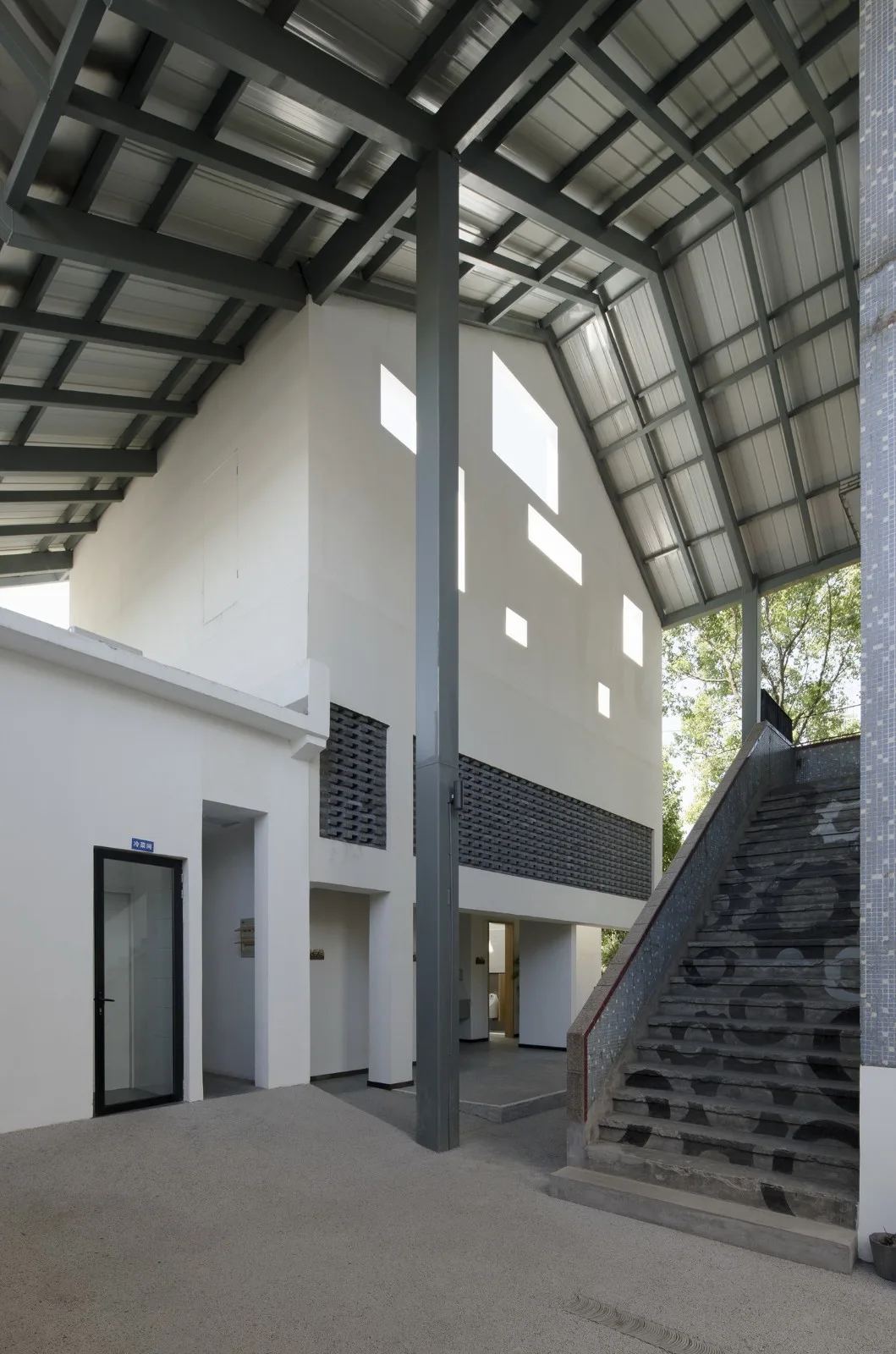
▲ Newly built bathroom © Peter Dixie / Lotan Architectural Photography
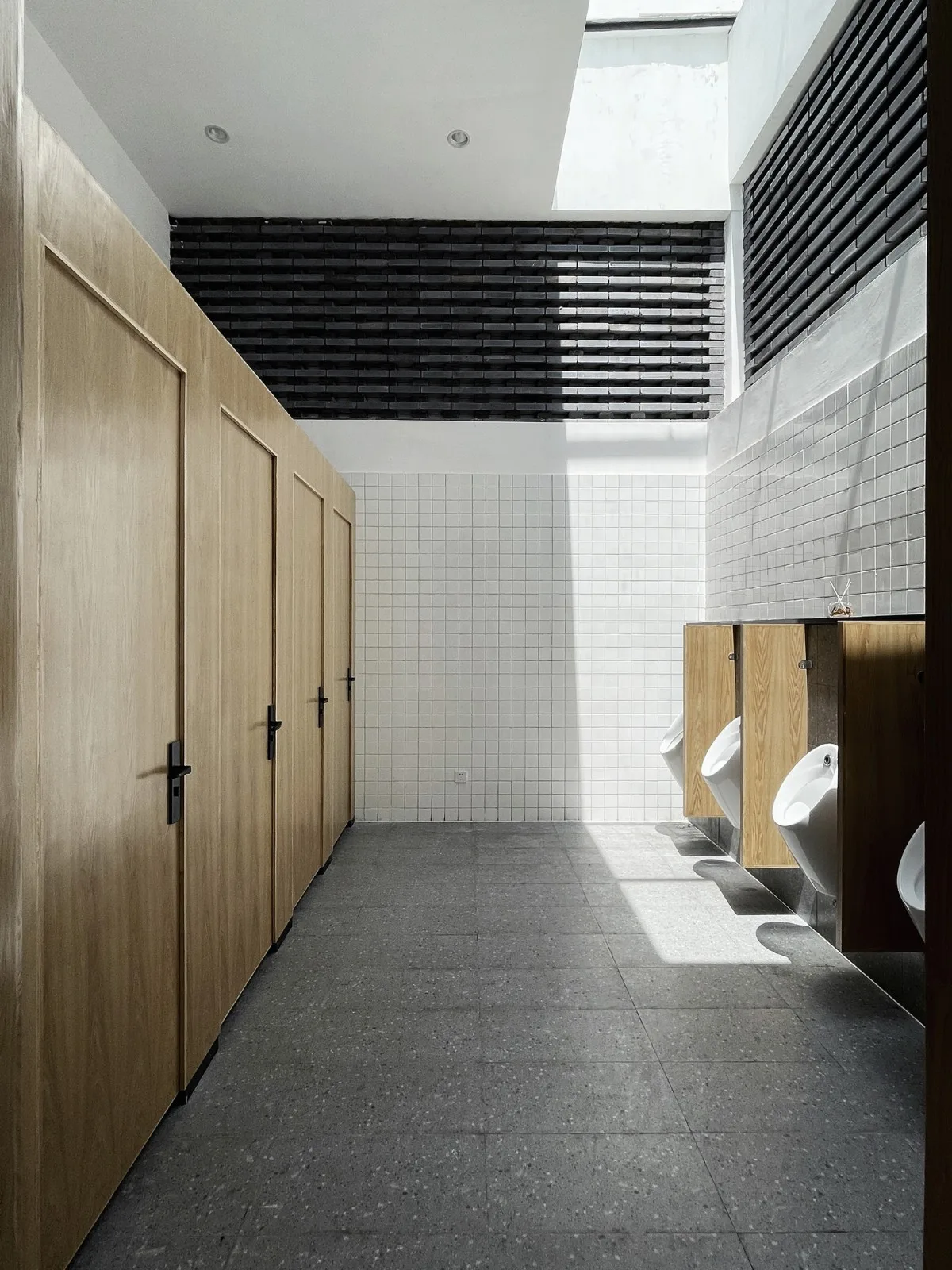
▲ Newly built bathroom interior © Yan Yang
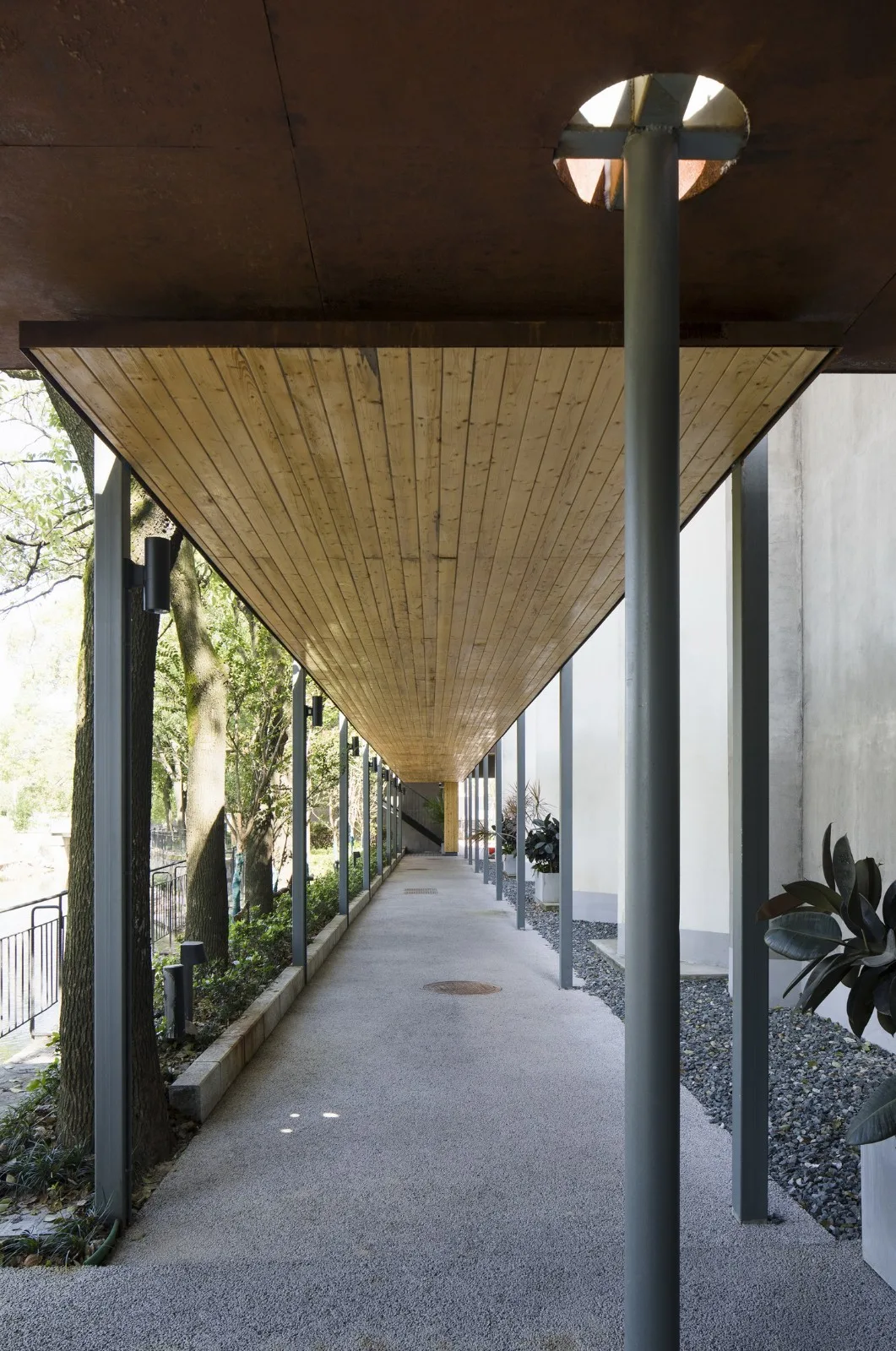
▲ Newly built outdoor corridor © Peter Dixie / Lotan Architectural Photography
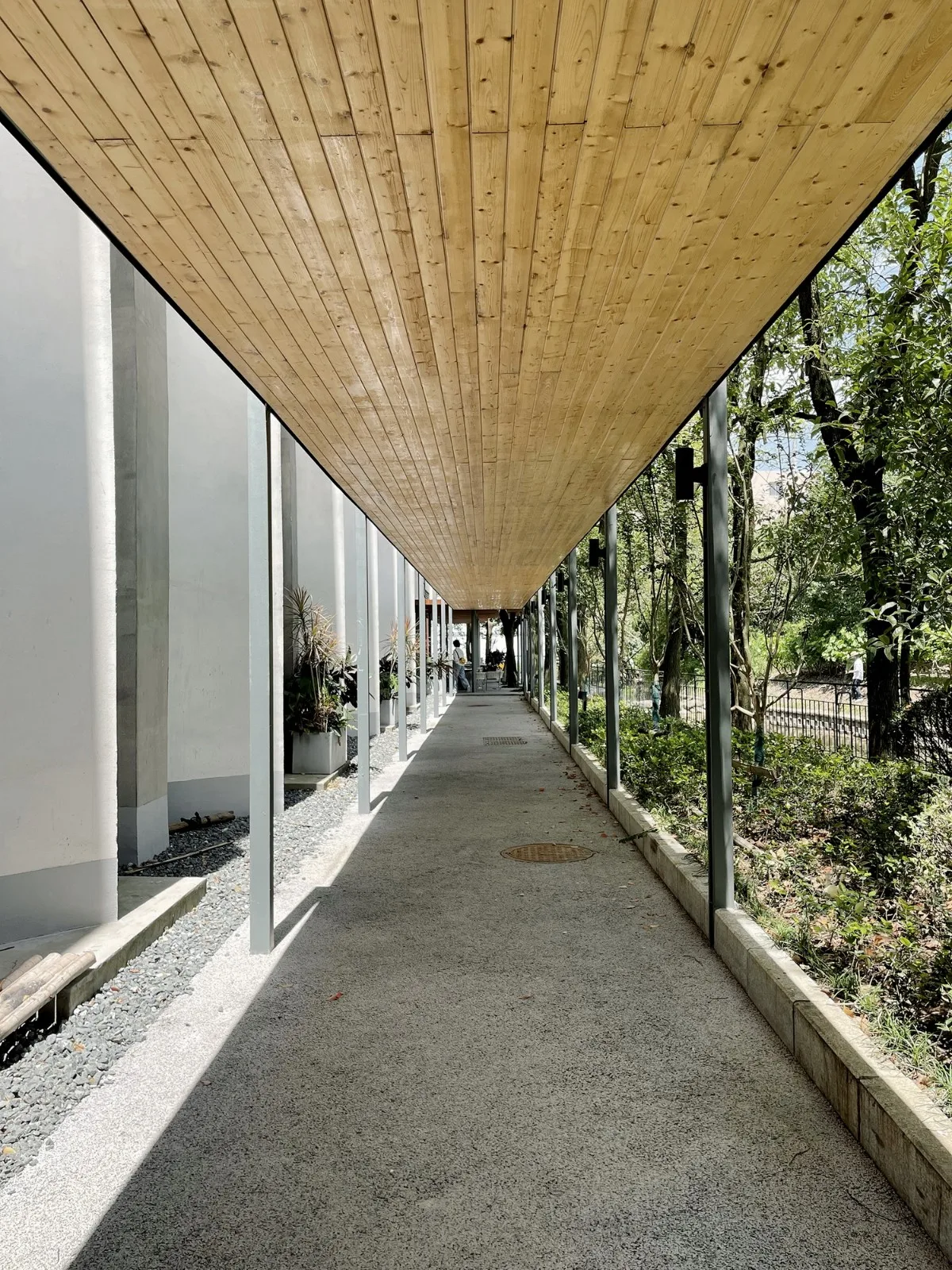
▲ Newly built outdoor corridor © Yan Yang
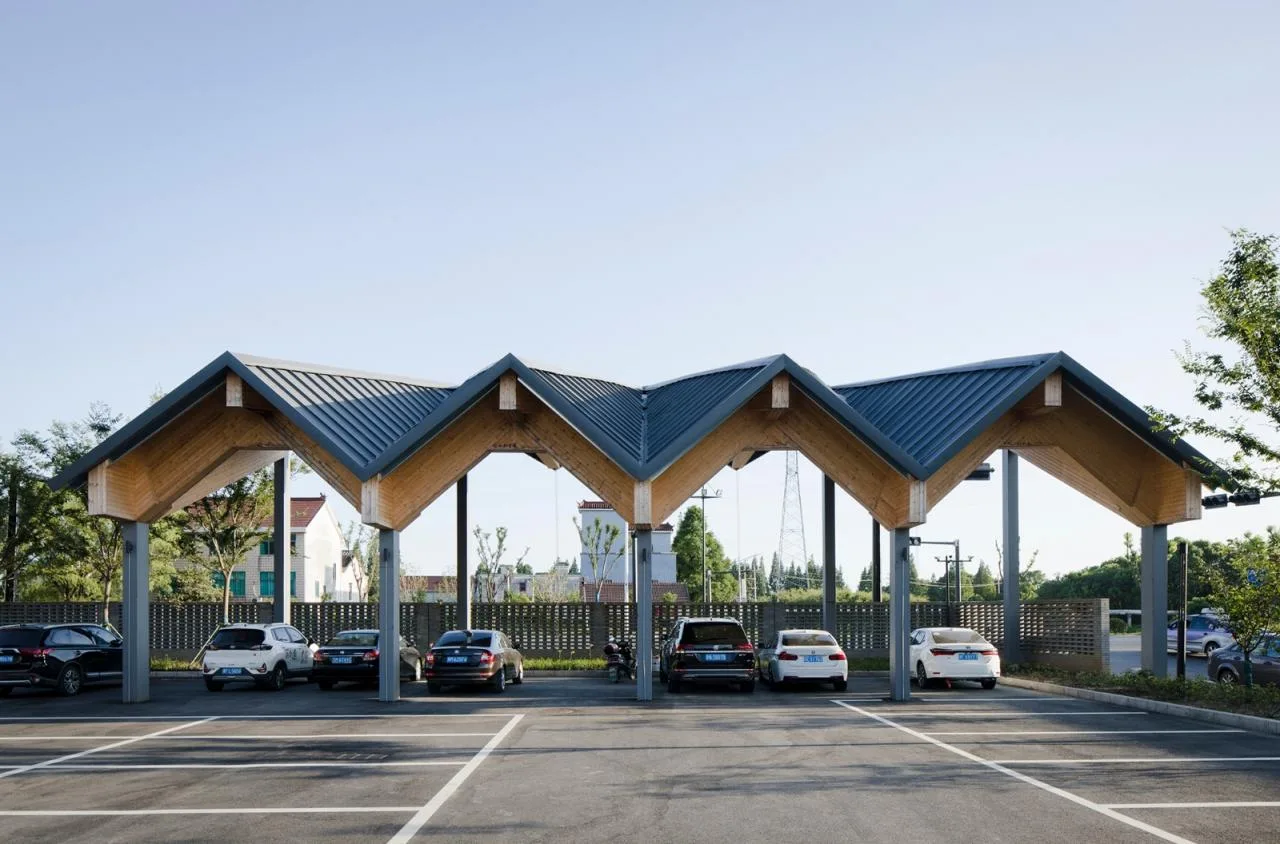
▲ New parking lot area © Peter Dixie / Lotan Architectural Photography
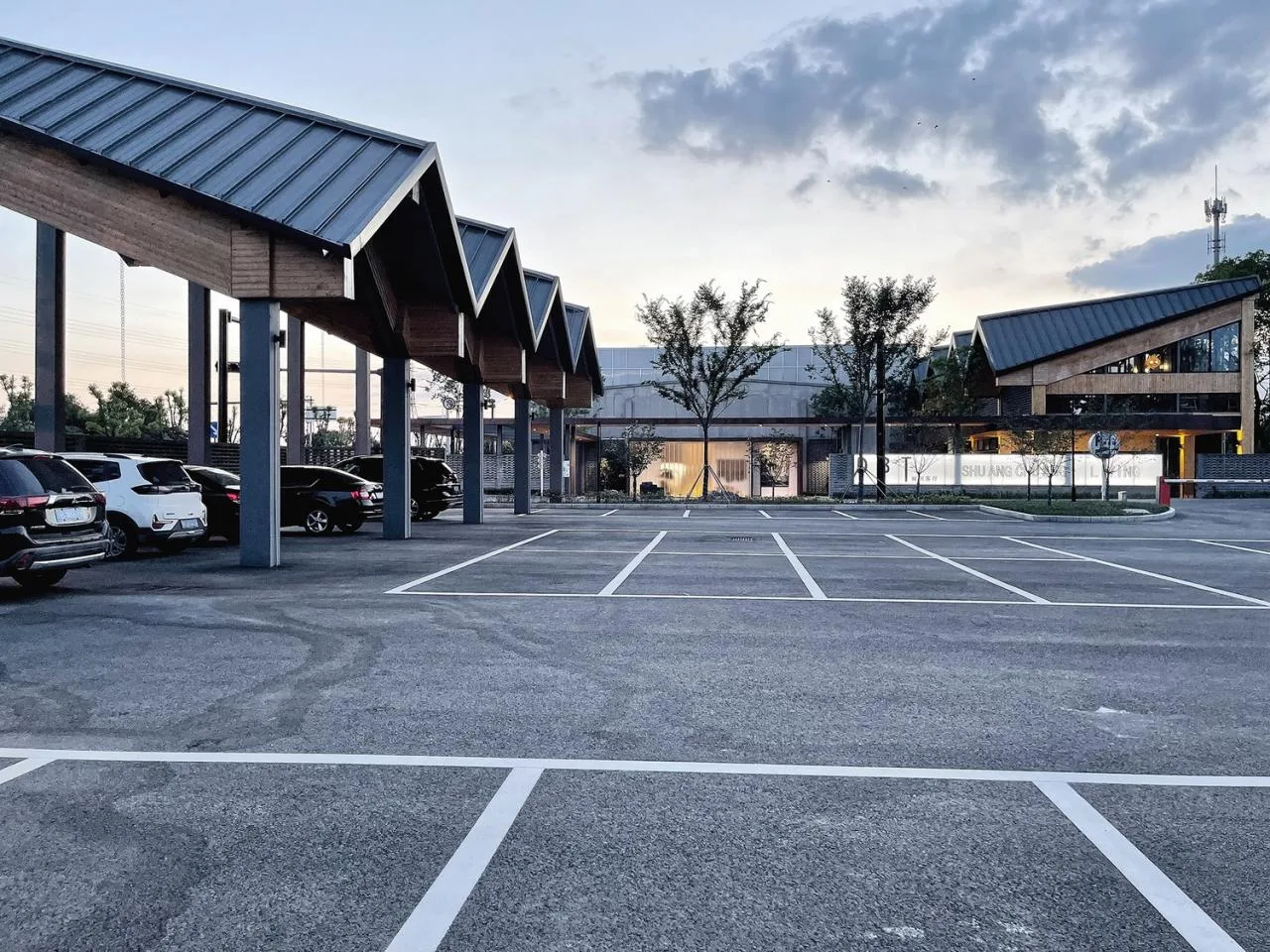
▲ New parking lot area © Yan Yang
4.0 Material Impressions and Memory of Time
By preserving the old while overlaying the new, we aim for visitors to sense the history and memories embedded in the building. Elements such as the green paint, blue mosaic, and even the railway tracks originally found in the 1990s workshop evoke a strong sense of era-specific nostalgia. These features were carefully preserved alongside the renovations and new additions.
To better integrate the site with its environment, weather-resistant steel materials with a mottled texture were extensively used for the new corridors and window frames, while the existing camphor trees along the riverbank were left intact.
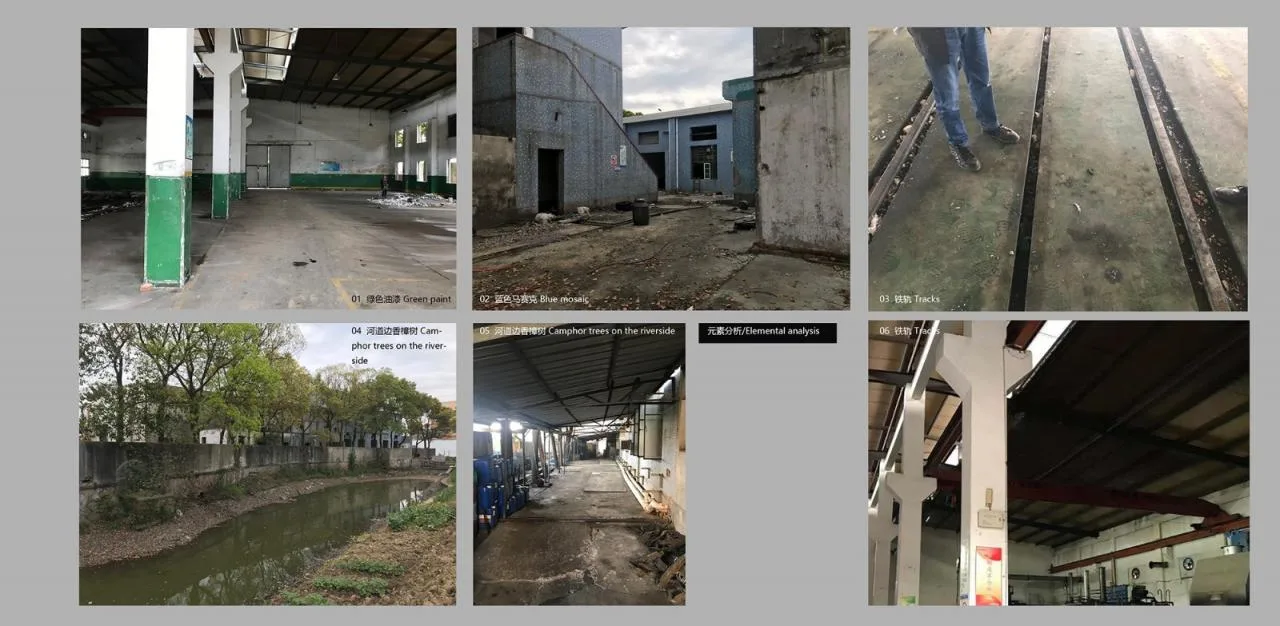
▲ Elemental analysis © y.ad studio
▲ Preserved railway tracks © Peter Dixie / Lotan Architectural Photography
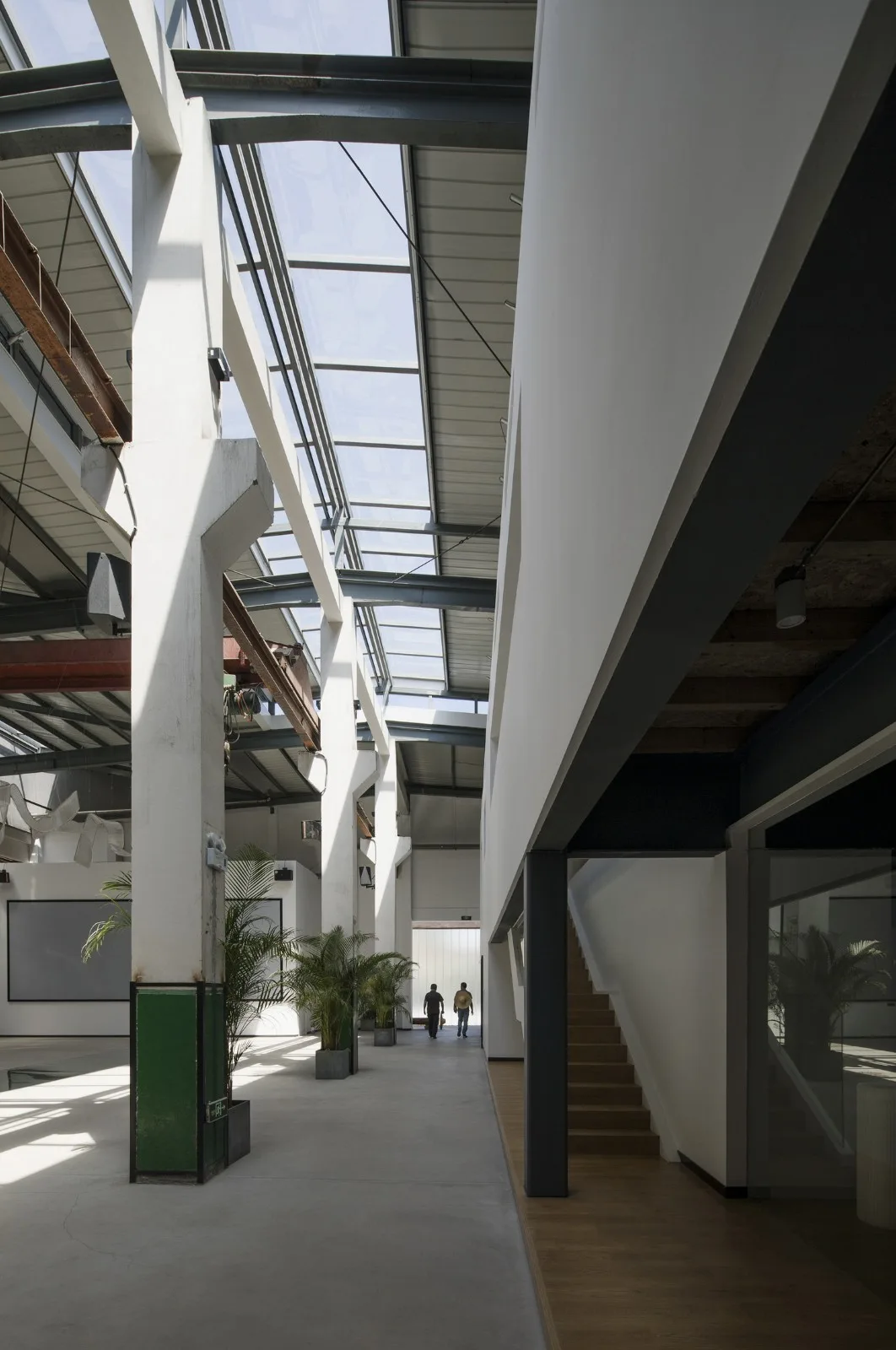
▲ Retained green paint © Peter Dixie / Lotan Architectural Photography
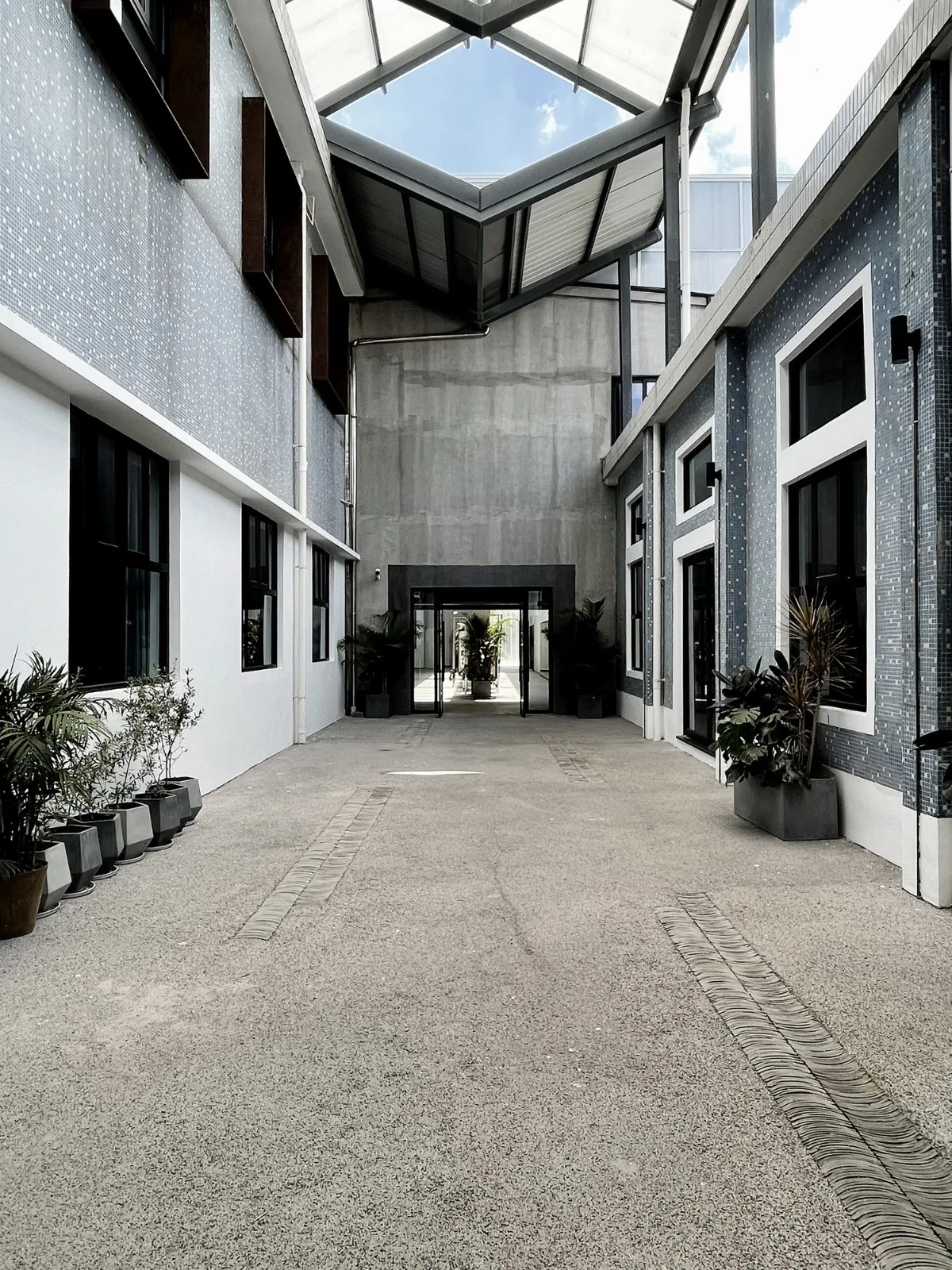
▲ Preserved blue mosaic © Yan Yang
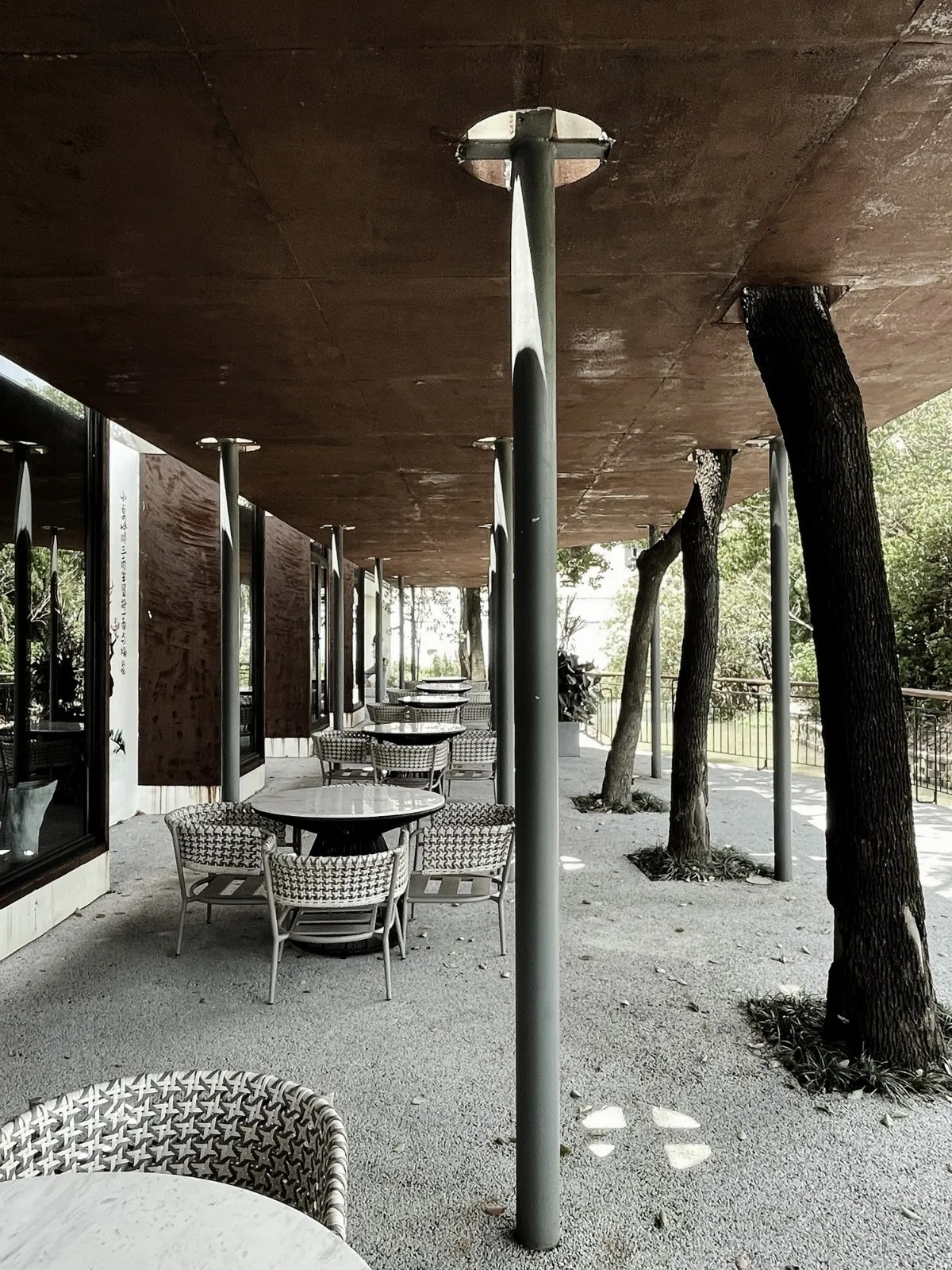
▲ Preserved riverbank camphor trees © Yan Yang
5.0 Construction Process
Structural Reinforcement of Old Buildings
Renovating the old buildings posed challenges due to aging walls and irregular original structures. Structural safety was a frequent concern, especially where local additions and wall junctions were involved, which required significantly more effort and cost compared to new construction.
The simple elevation using polycarbonate sheet walls in the main factory area also presented difficulties. After demolition and thorough inspection, it was discovered that the original building’s wall foundations were only 50 centimeters deep, lacking concrete ground beams. This made it impossible to support the added steel roof structures based on wind load and wall bearing capacity.
Steel columns had to be independently founded, as they could not rest directly on existing walls. After discussion, the most economical solution was to raise the columns without altering the original structure, given that the original wall settlement was already established. Reinforcements were planted and concrete was poured onto the original brick columns to form integrated concrete columns, effectively raising them and achieving the desired structural framework.
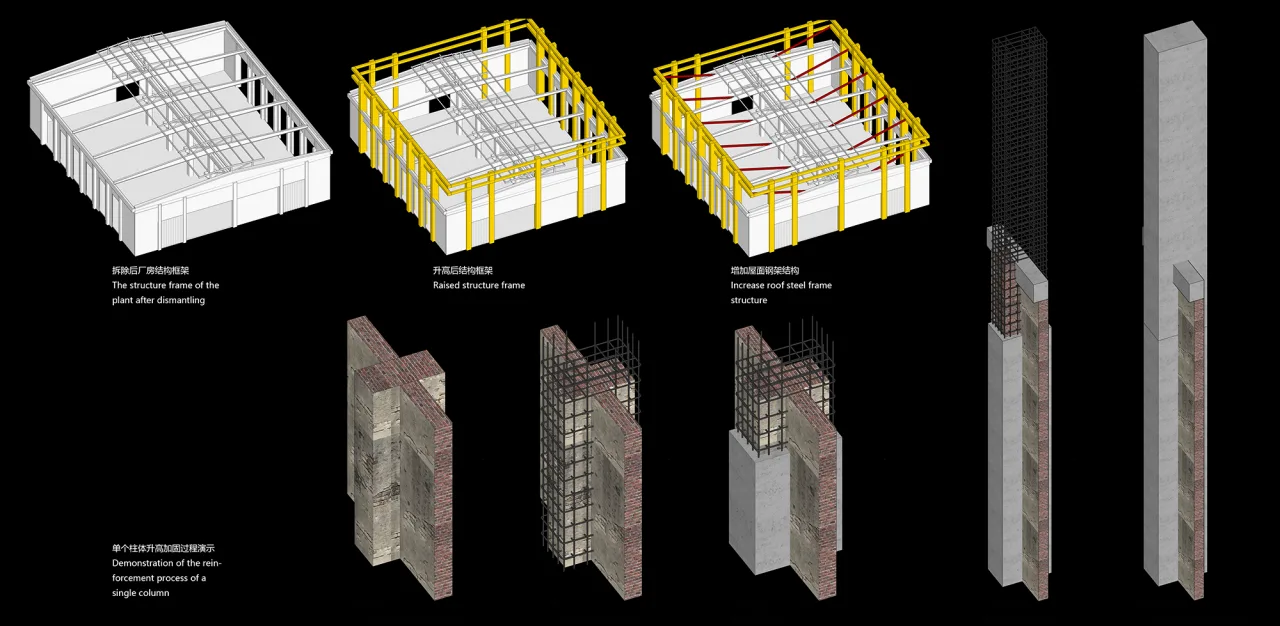
▲ Column elevation reinforcement evolution © y.ad studio
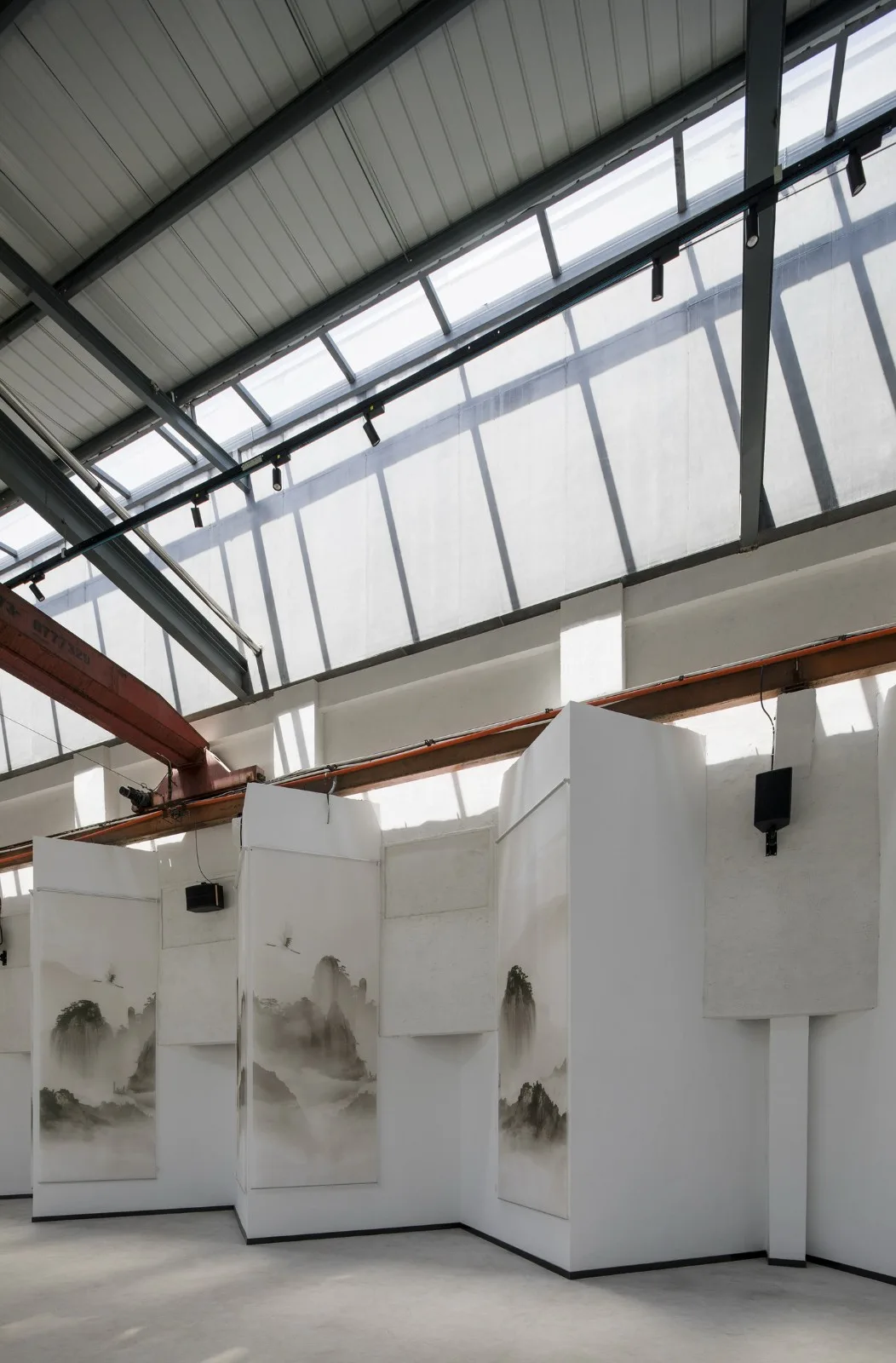
▲ Elevated wall and folded display wall © Peter Dixie / Lotan Architectural Photography
Preservation and Aesthetic of Old Materials
In the past, rapid construction often favored new materials and sophisticated decorative techniques. Workers and laypeople alike typically equate renovation with fresh materials and refined finishes. Preserving mottled wall textures or maintaining rough surfaces often causes uncertainty among builders, who may question if this approach is acceptable or if it feels incomplete.
I intended to preserve the worn textures on the folded wall to create a strong contrast with the newly constructed folded exhibition wall. However, at the request of all parties involved, it was ultimately painted with textured paint. Long-standing perceptions of decoration and refinement have solidified aesthetic expectations, making it difficult for people to embrace the coexistence of old and new.
Yet, preserving some original architectural textures fosters a sense of continuity, memory, and even imperfect beauty by layering and contrasting the old with the new.
Project Drawings
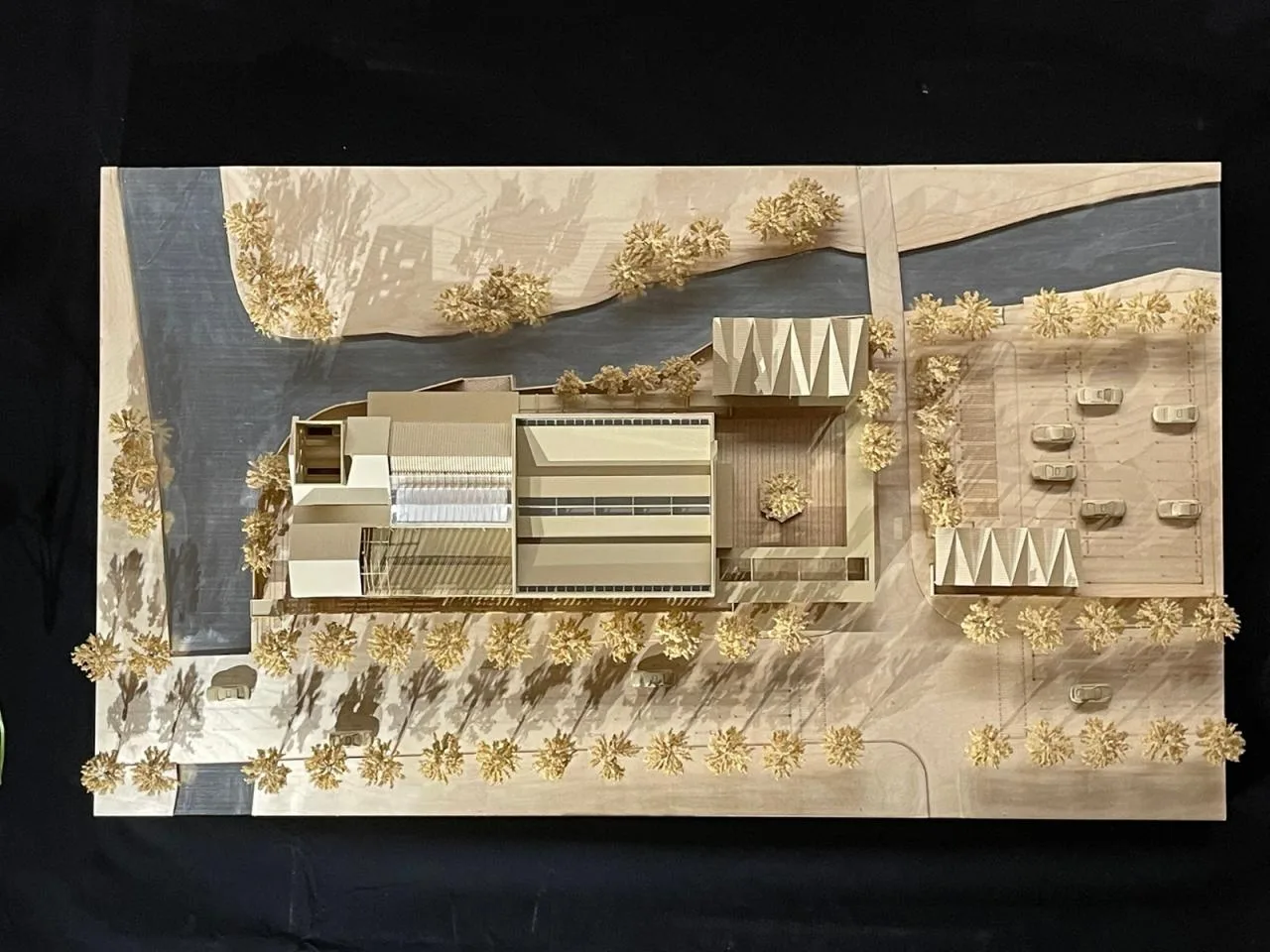
▲ Architectural model © y.ad studio
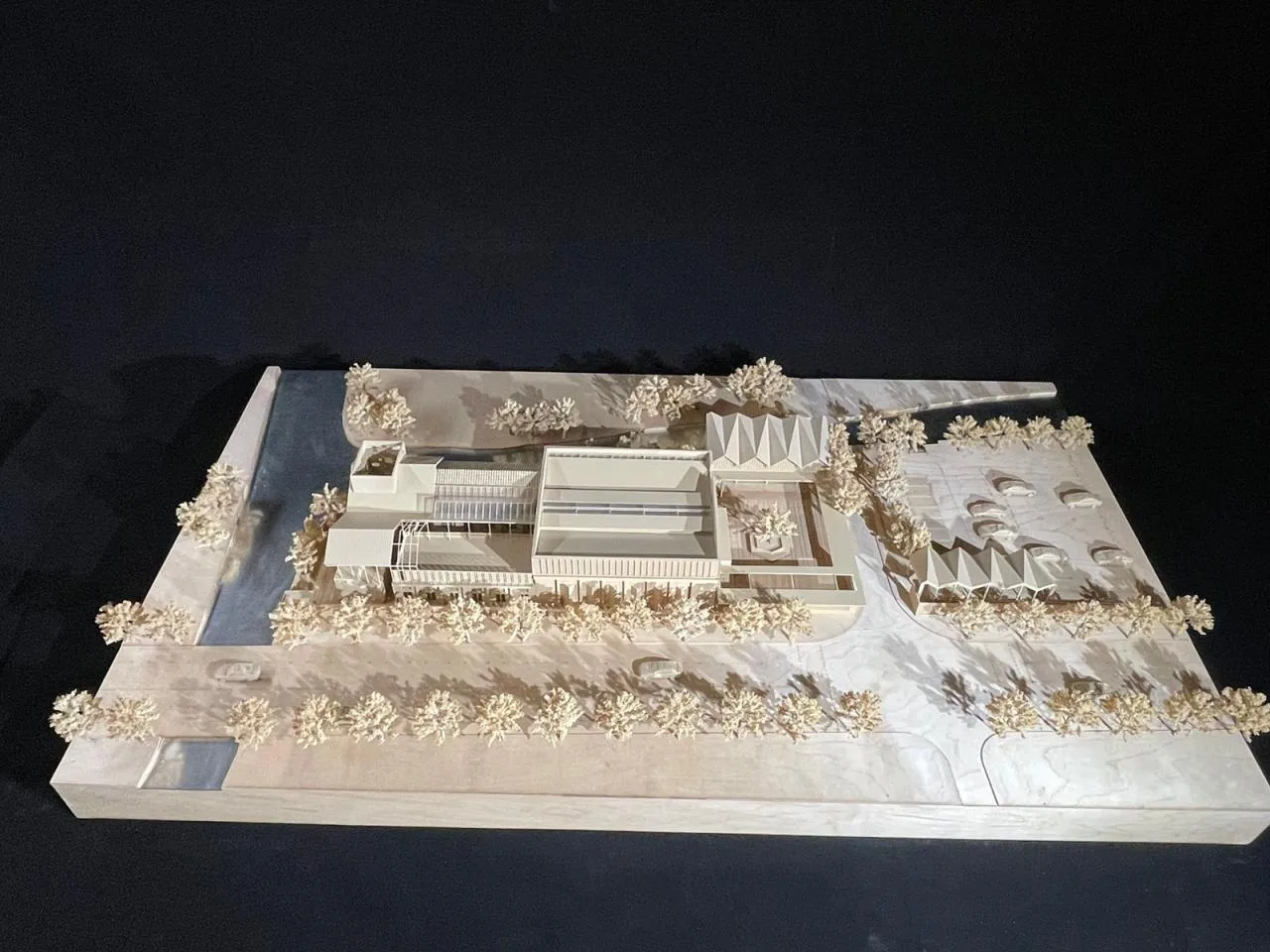
▲ Architectural model © y.ad studio
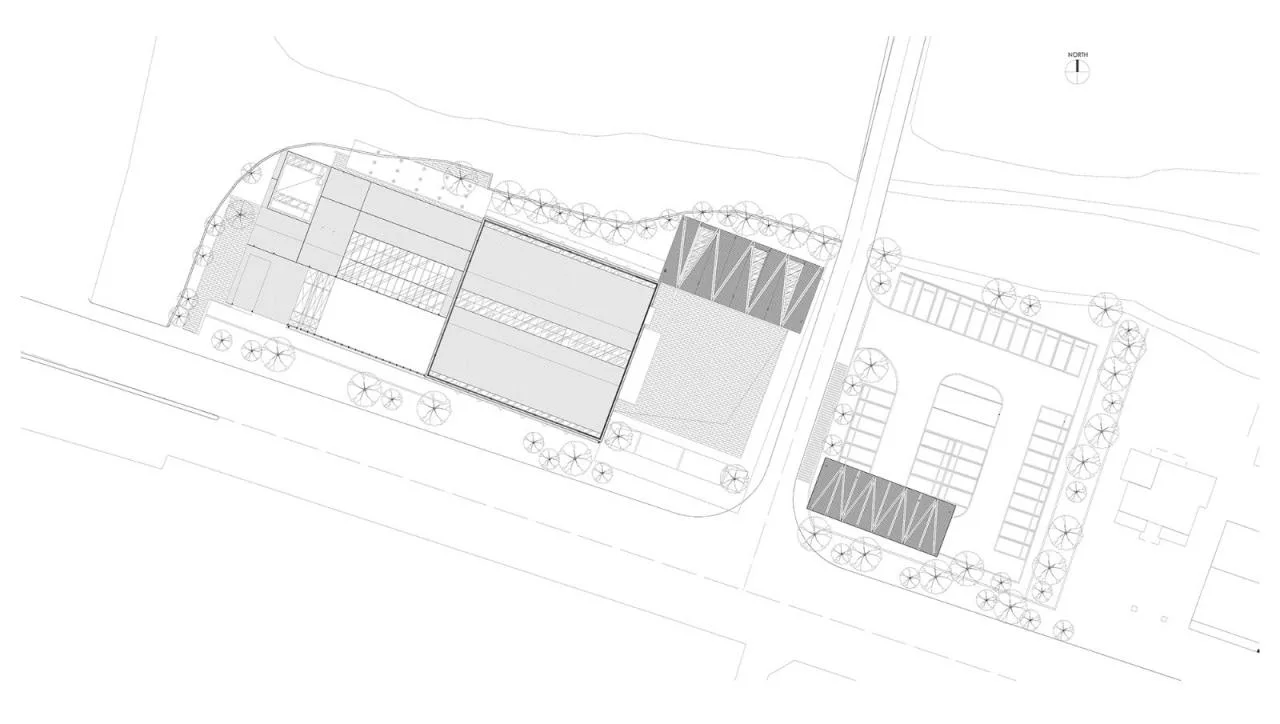
▲ General layout plan © y.ad studio
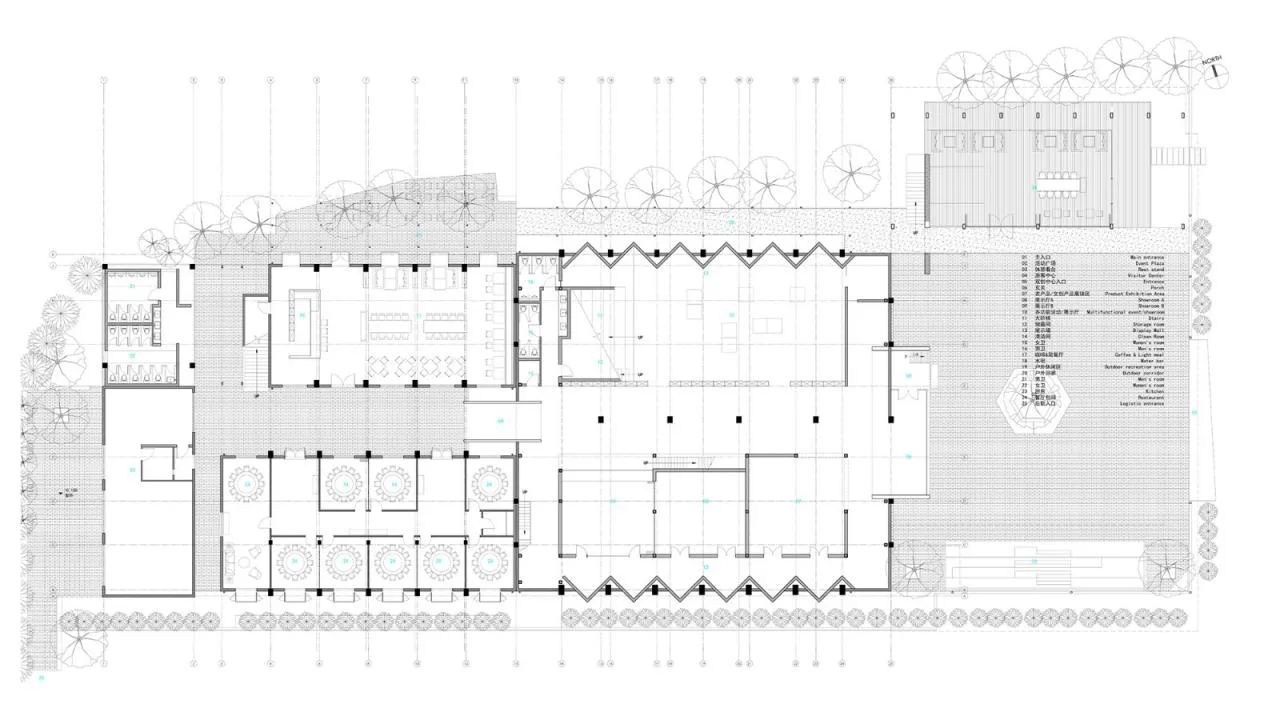
▲ First floor plan © y.ad studio
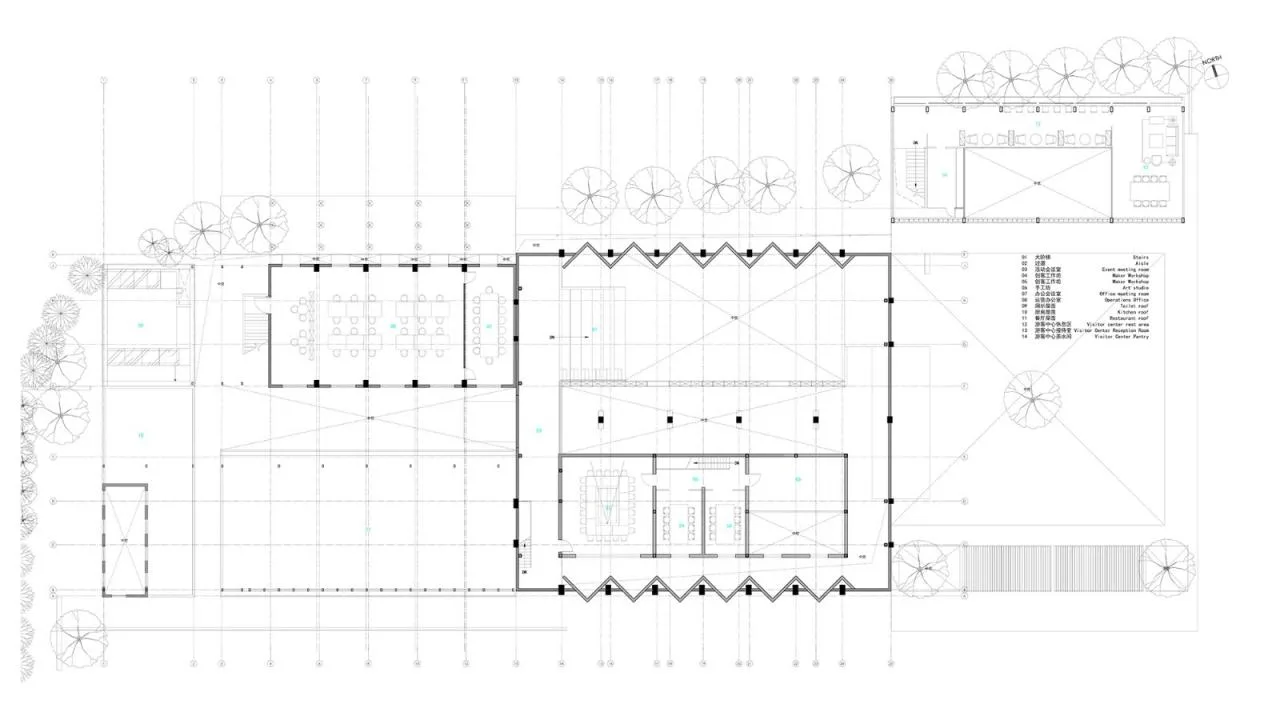
▲ Second floor plan © y.ad studio
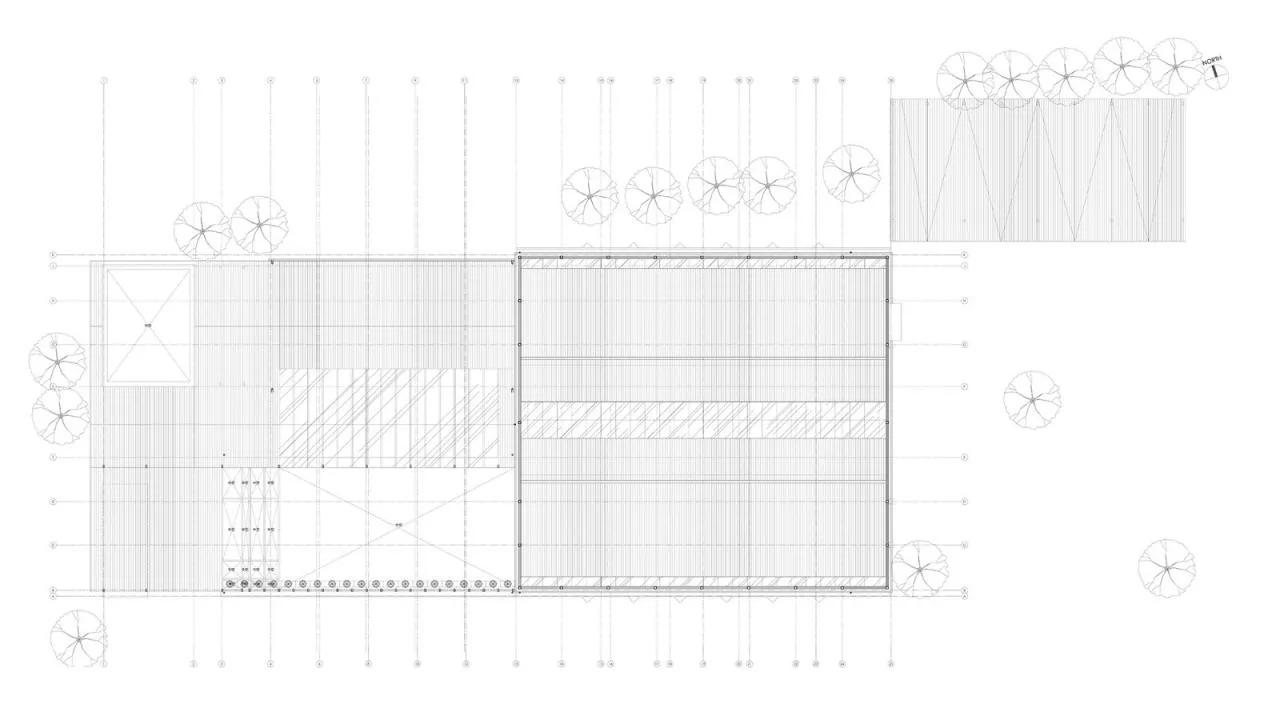
▲ Roof plan © y.ad studio
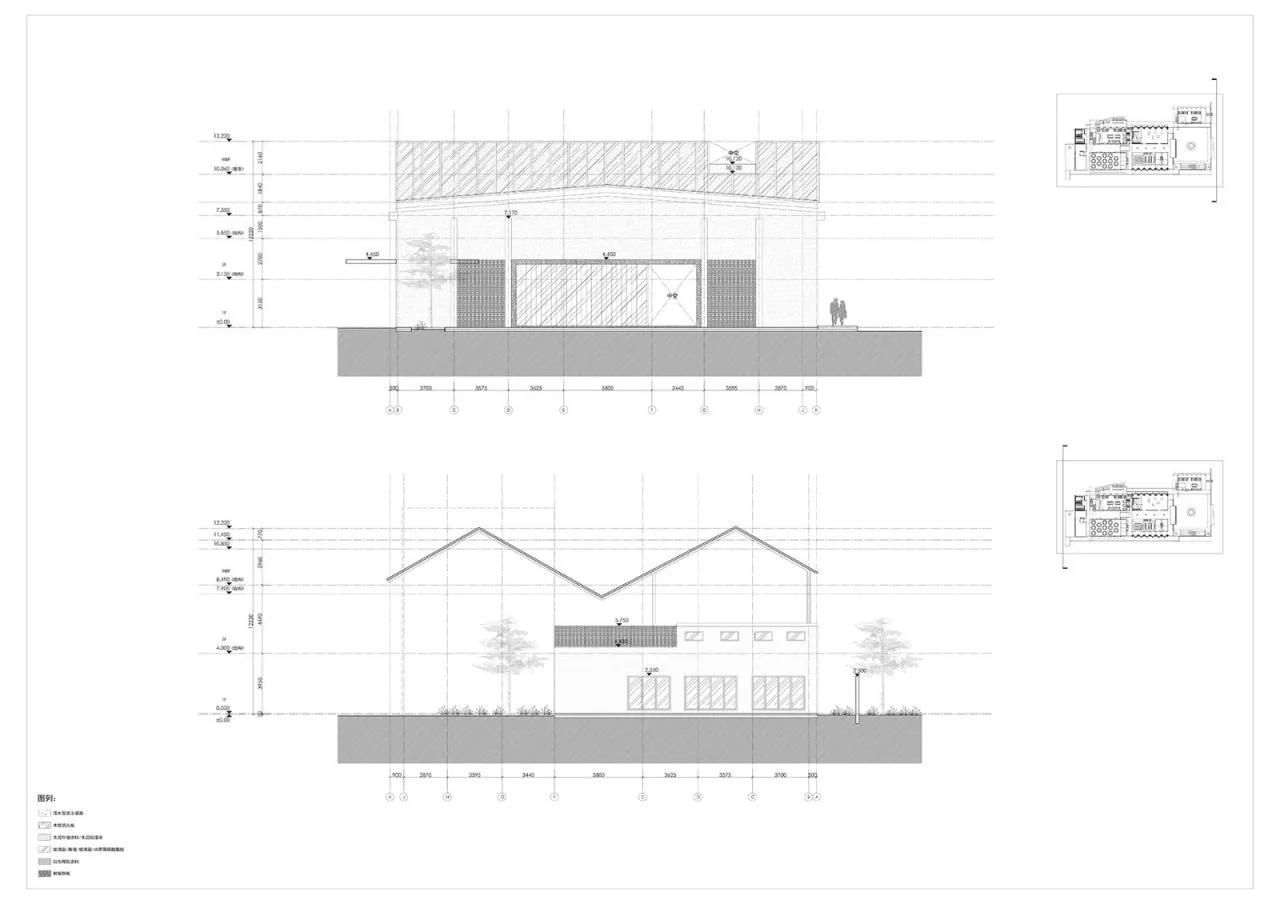
▲ Building elevation drawings © y.ad studio
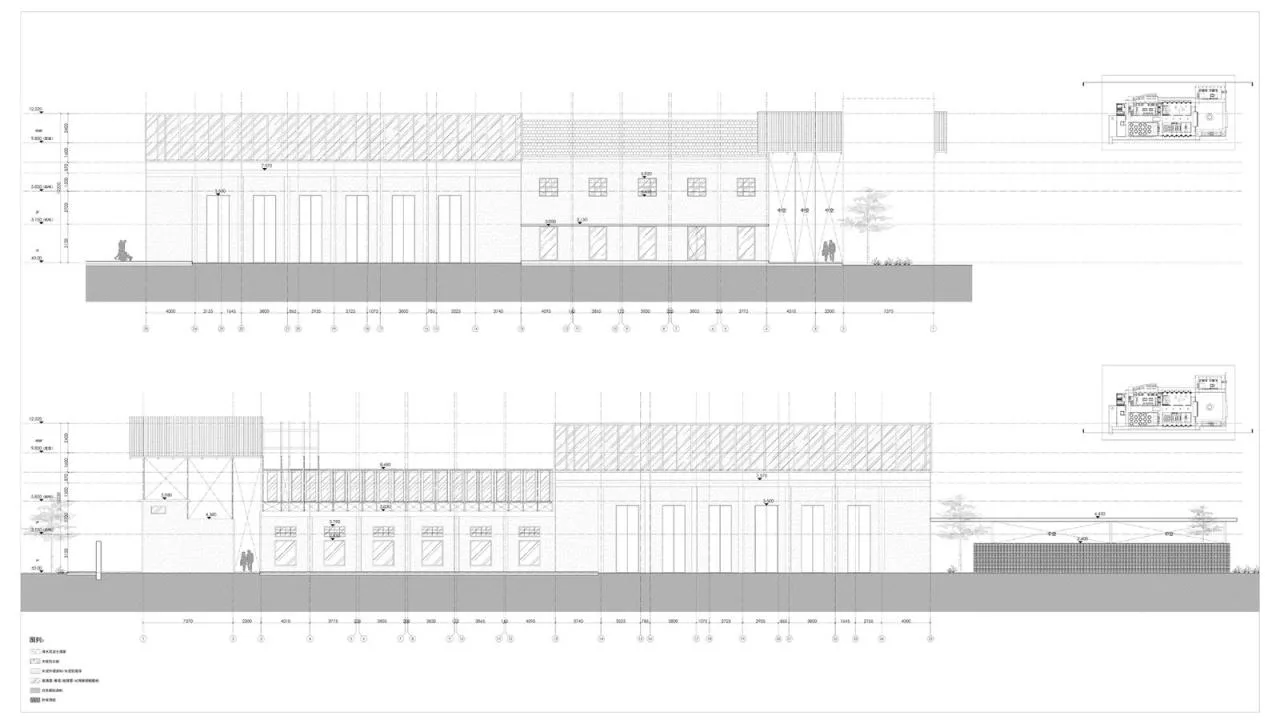
▲ Building elevation drawings © y.ad studio
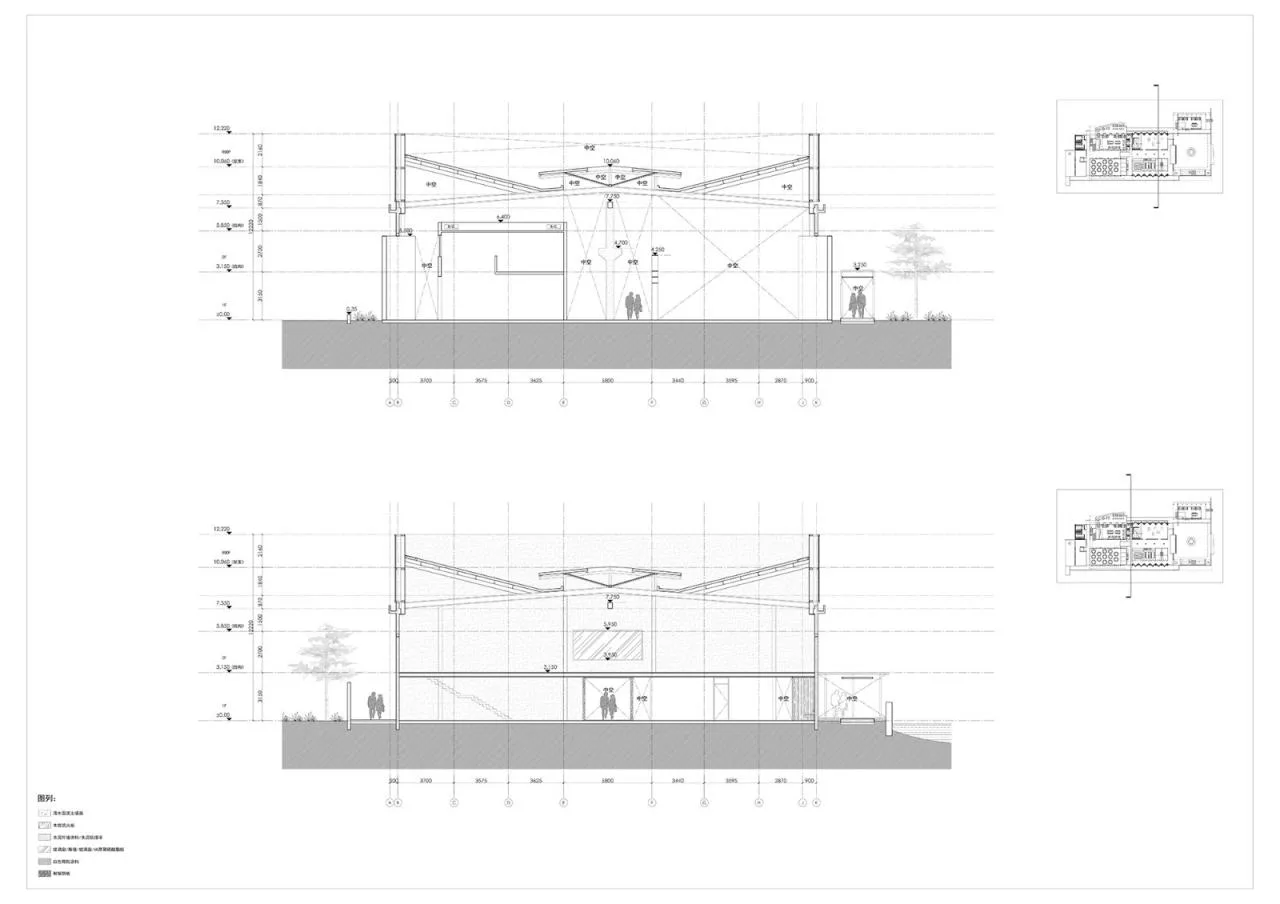
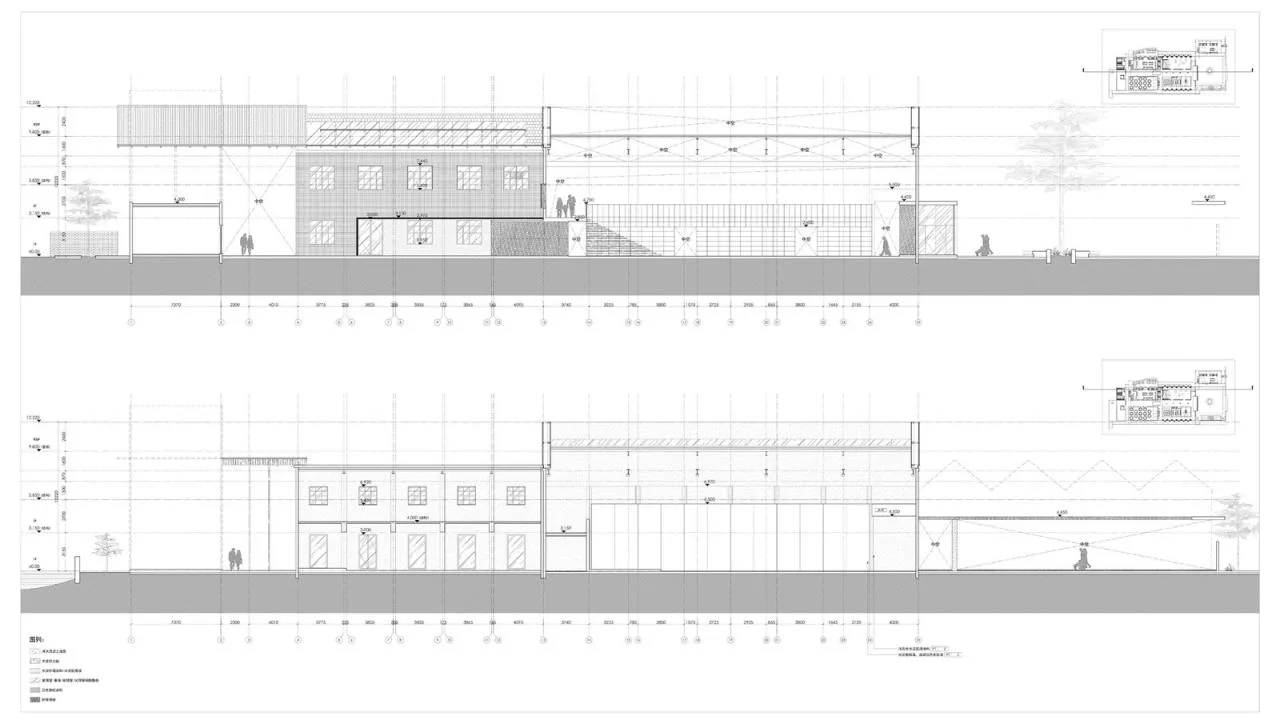
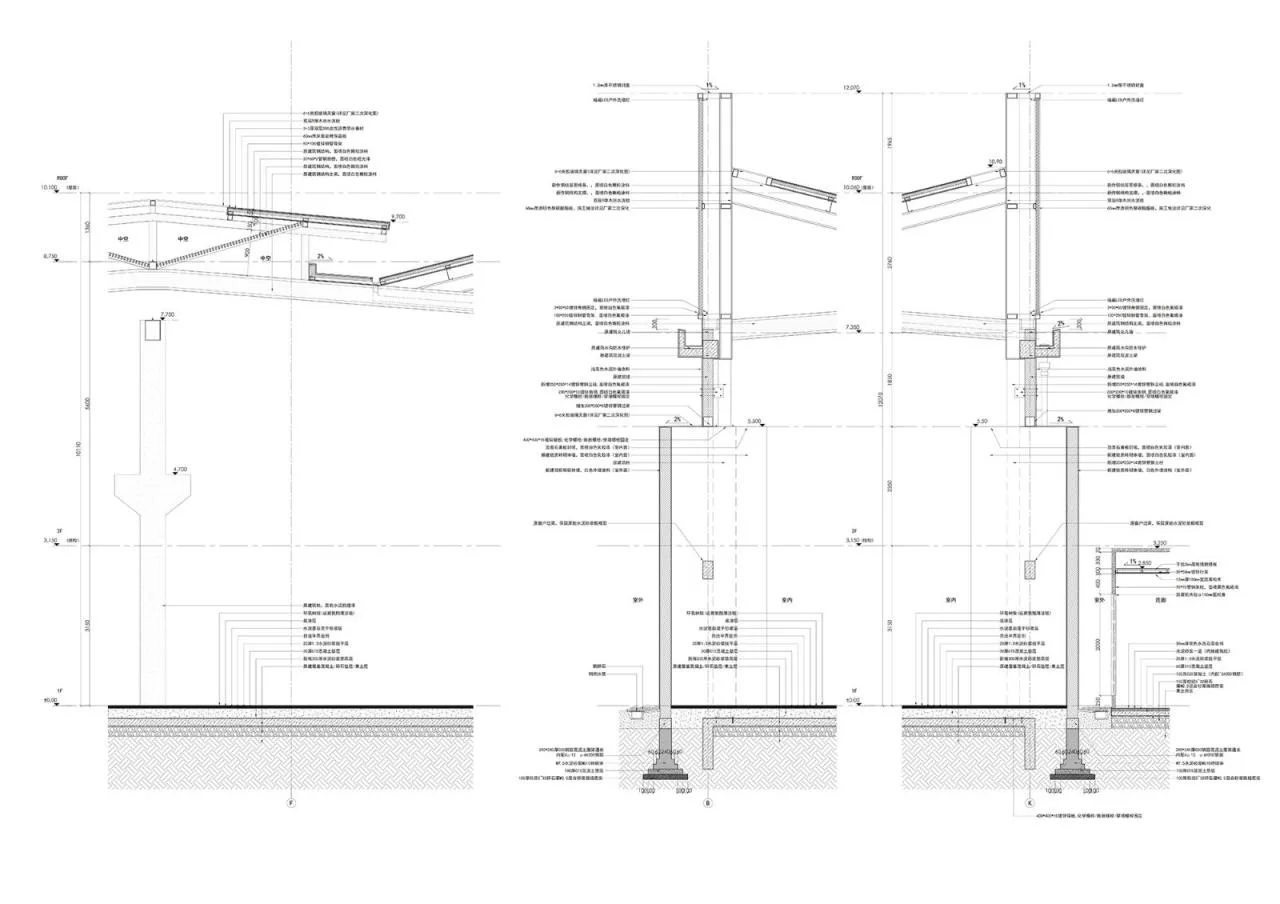
▲ Architectural section diagrams © y.ad studio
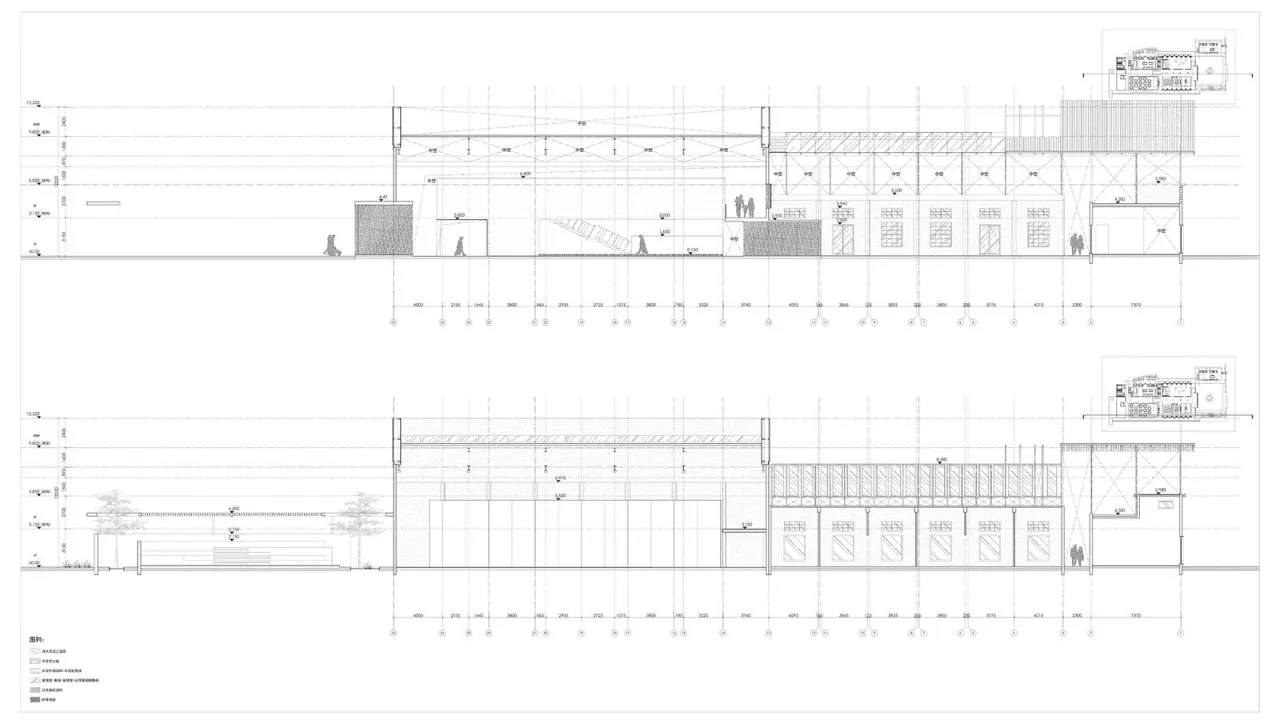
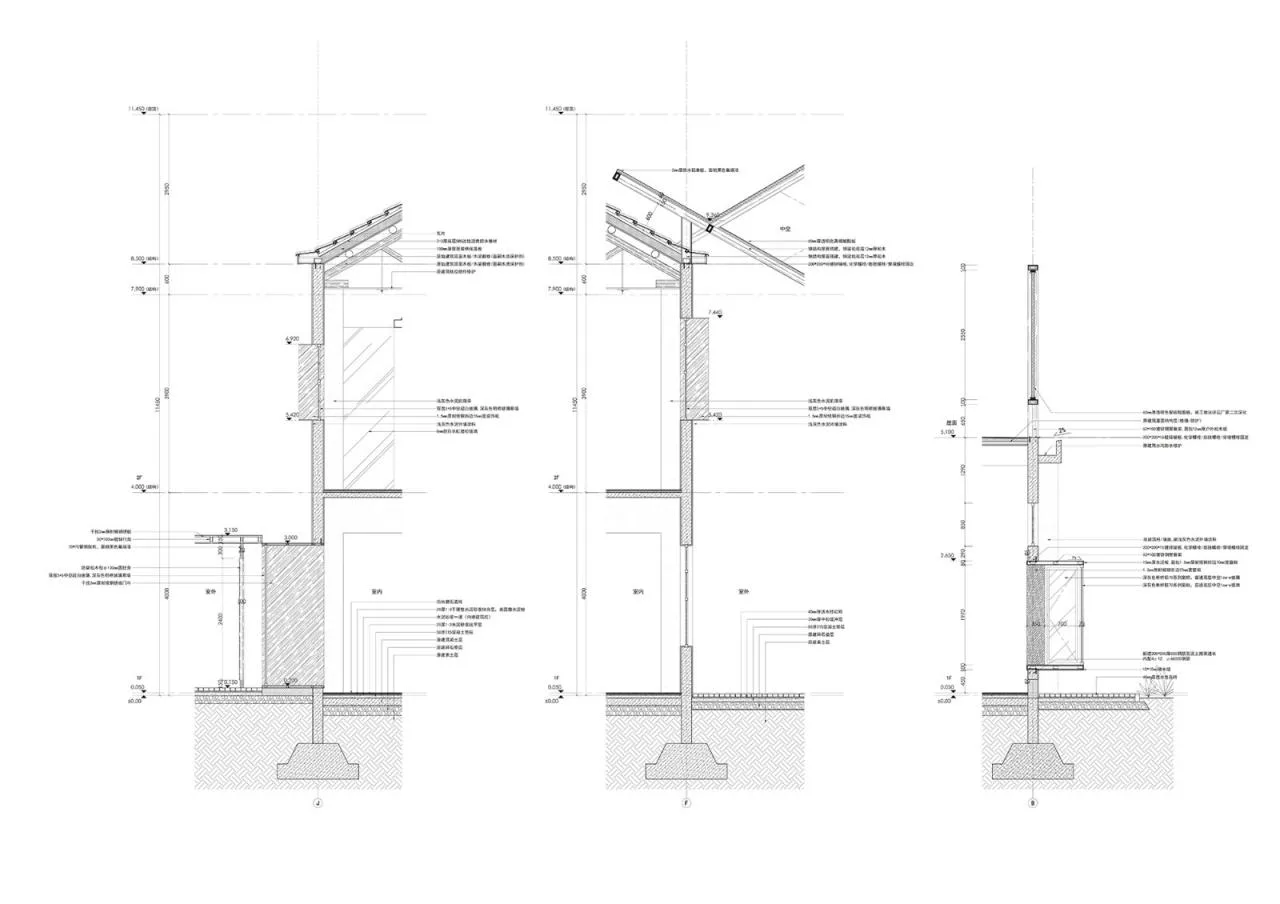
▲ Architectural section diagrams © y.ad studio
▲ Architectural section diagrams © y.ad studio
▲ Architectural section diagrams © y.ad studio
▲ Architectural section diagrams © y.ad studio
Project Information
Project Name: Jiaxing Tongxiang Dongbantou Village Double Creation Living Room Renovation
Construction Unit: Dongbantou Stock Economic Cooperative, Heshan Town, Tongxiang City
Design Commission: Zhu Shengxuan (Shanghai) Architectural Landscape Design Co., Ltd
Design Unit: y.ad studio | Shanghai Yan Yang Architectural Design Studio (www.sh-yad.com)
Architectural Design Institute: Shanghai Times Architectural Design Institute
Structural Design: Huo Zhenzhong
Construction Unit: Shanghai Jingyu Landscape Construction Development Co., Ltd
Project Team: Yan Yang, Yan Yu
Building Area: 2405.5 square meters
Main Materials: Weather-resistant steel, pine board, polycarbonate board, U-shaped glass, blue brick, glass brick, exterior wall coating
Design Period: October 2019 to March 2020
Construction Period: December 2019 to May 2021
Photography Credits: Peter Dixie (UK) / Luo Tang Architectural Photography, Yan Yang














Must log in before commenting!
Sign Up