
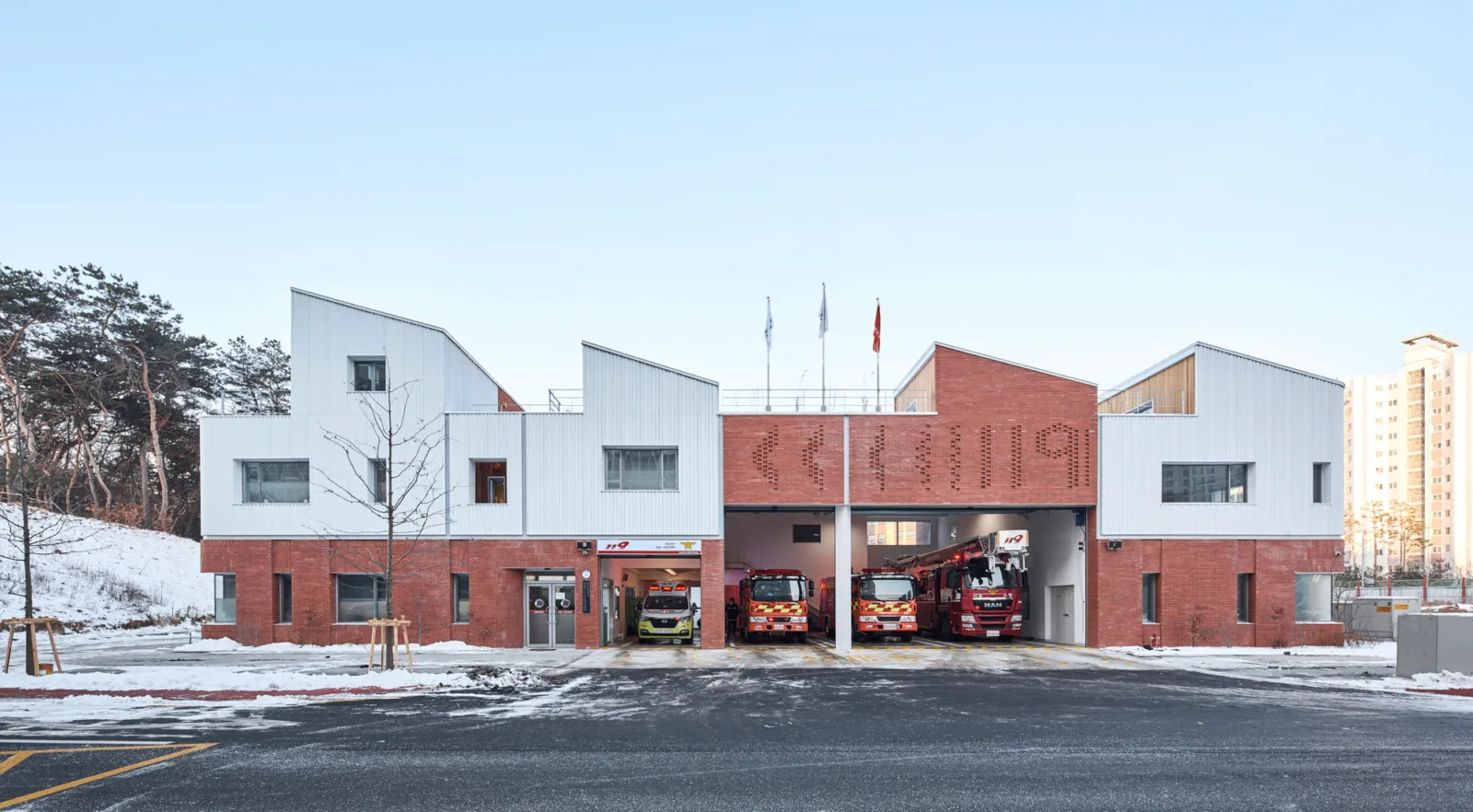
From Car-Centric to People-Oriented Design
The “Gangyidong 119 Fire Station” is a newly constructed facility in the Gangyidong area, a developing zone on the southeastern edge of Seoul in line with the Seoul Metropolitan City (SMC) Urban Design Area Plan. Our design approach redefines the fire station’s role in modern times by prioritizing the quality of work and living conditions for firefighters.
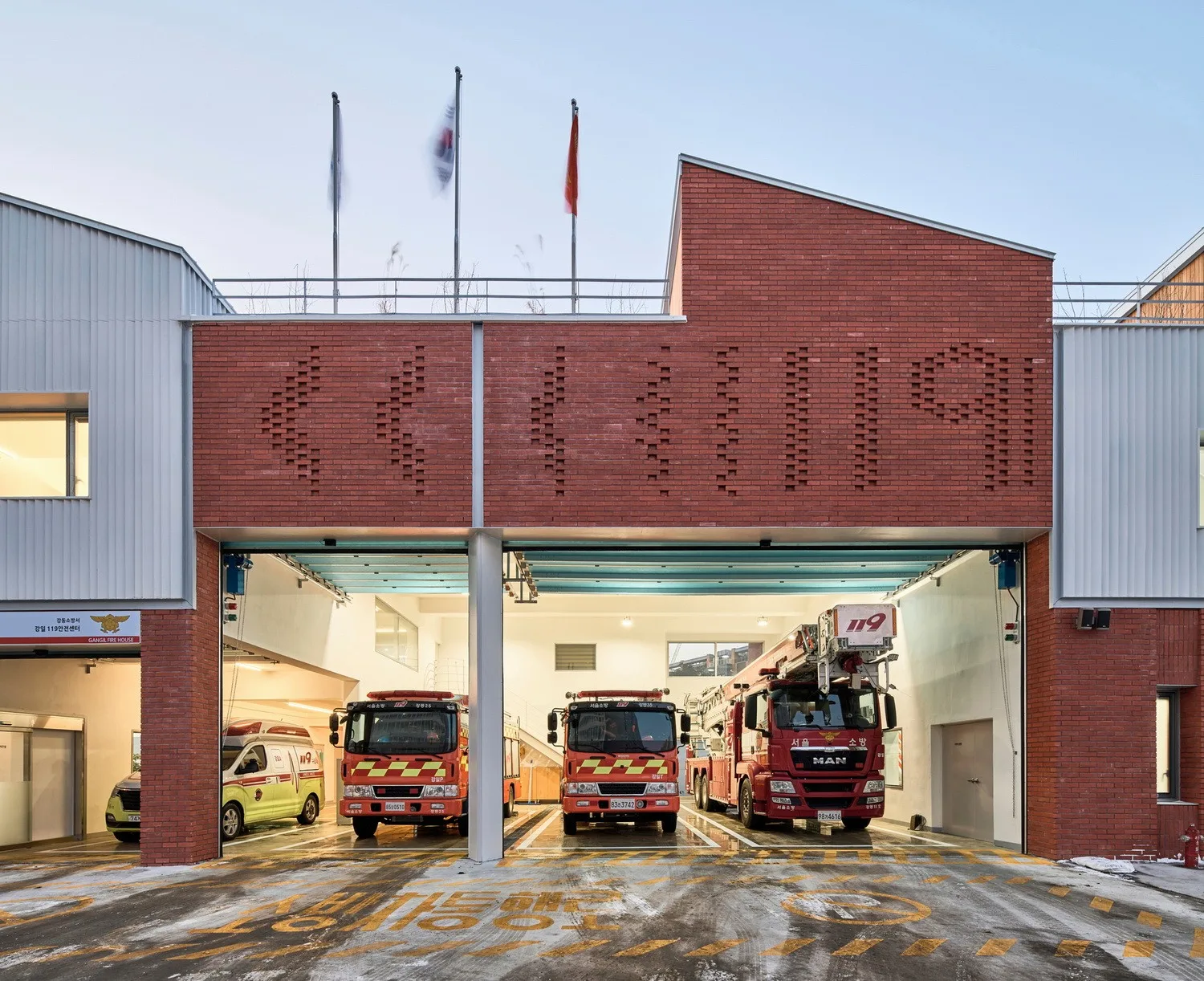
After reviewing existing fire stations in Seoul that follow the same building codes, we observed that fire station designs have traditionally centered around garages accommodating numerous fire trucks. As a result, spaces for firefighters—such as offices and rest areas—are often treated as secondary or peripheral. Our goal was to challenge this conventional model and transform the fire station into a people-focused building, while ensuring all core functions operate flawlessly.
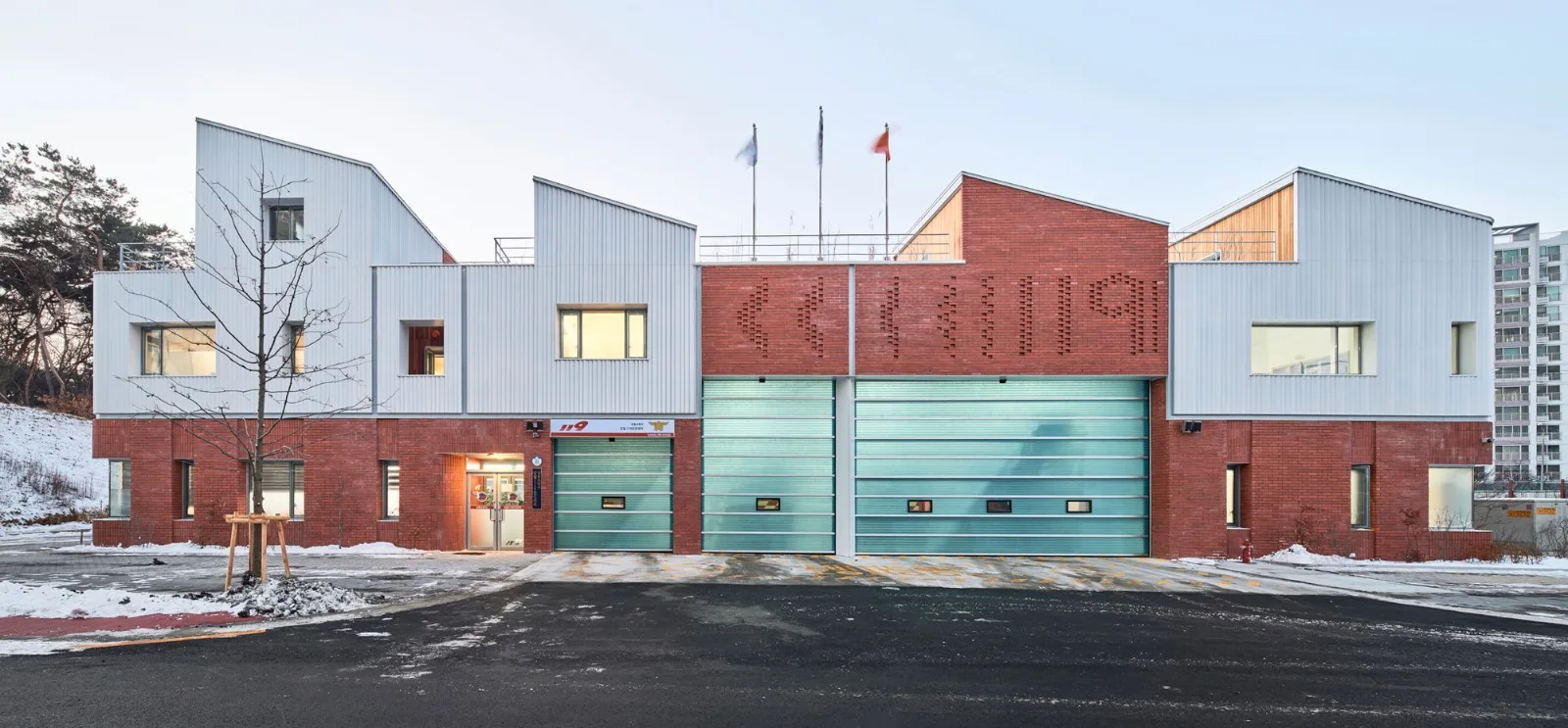
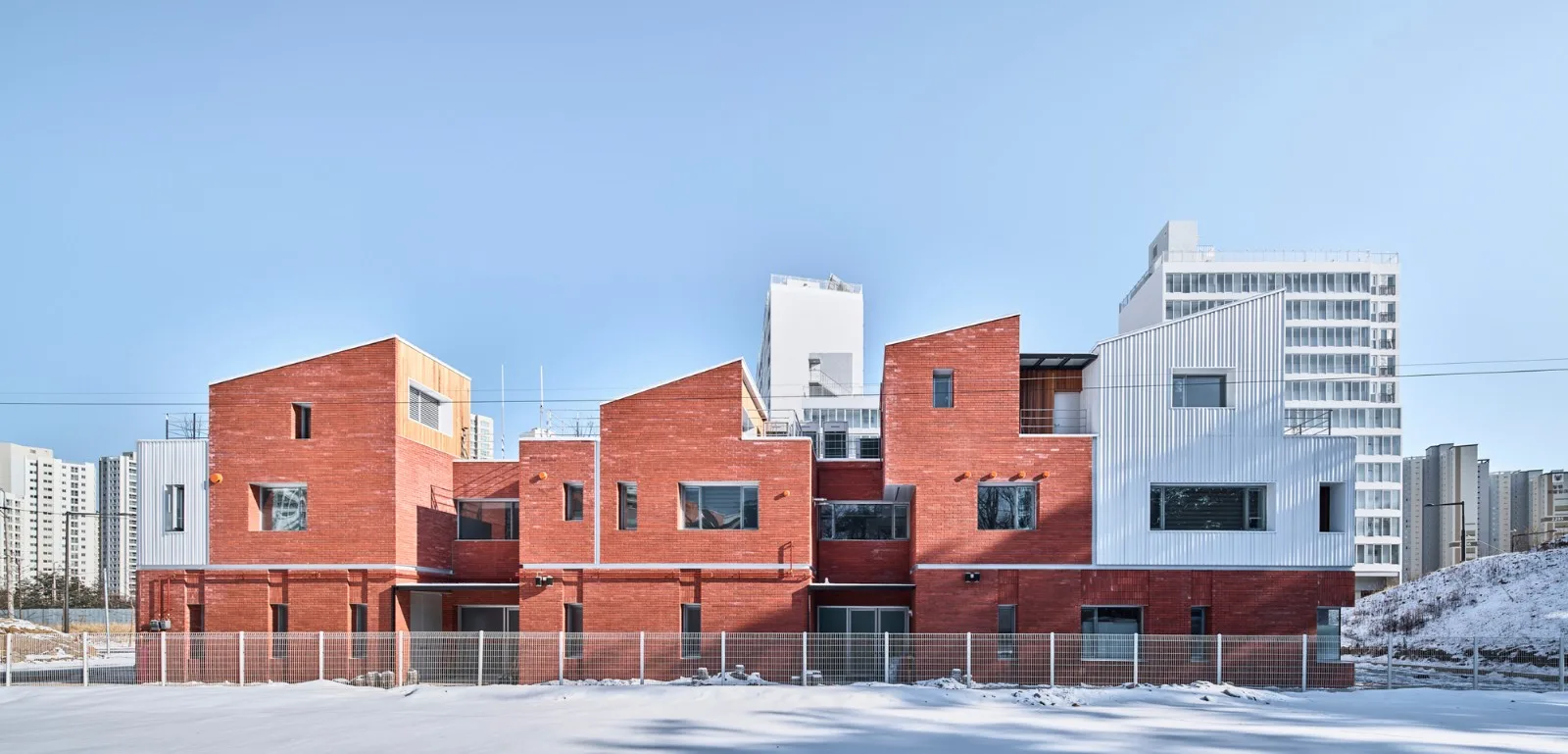
119 Fire Station: A Second Home for Firefighters
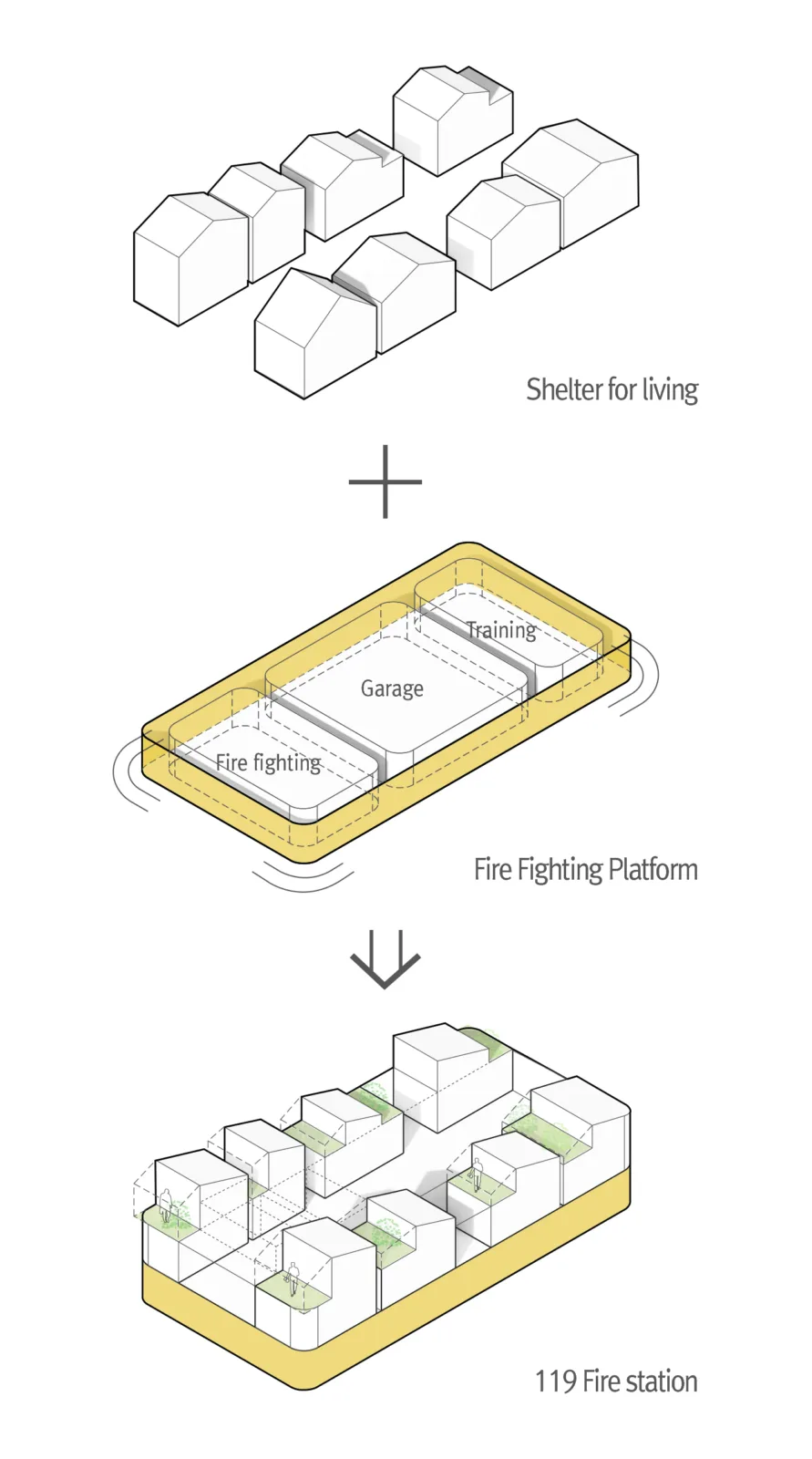
Examining the fire station’s program reveals that beyond the garage and fire equipment, a significant portion of space is dedicated to firefighters’ daily living needs—including dining, exercise, sleep, and rest areas. According to the plans, roughly 35% of the Gangyidong 119 Fire Station is allocated to fire trucks and related facilities, while over 65% serves as living and working spaces for firefighters. These include private rest rooms, dining areas, bathrooms, offices, and communal spaces.
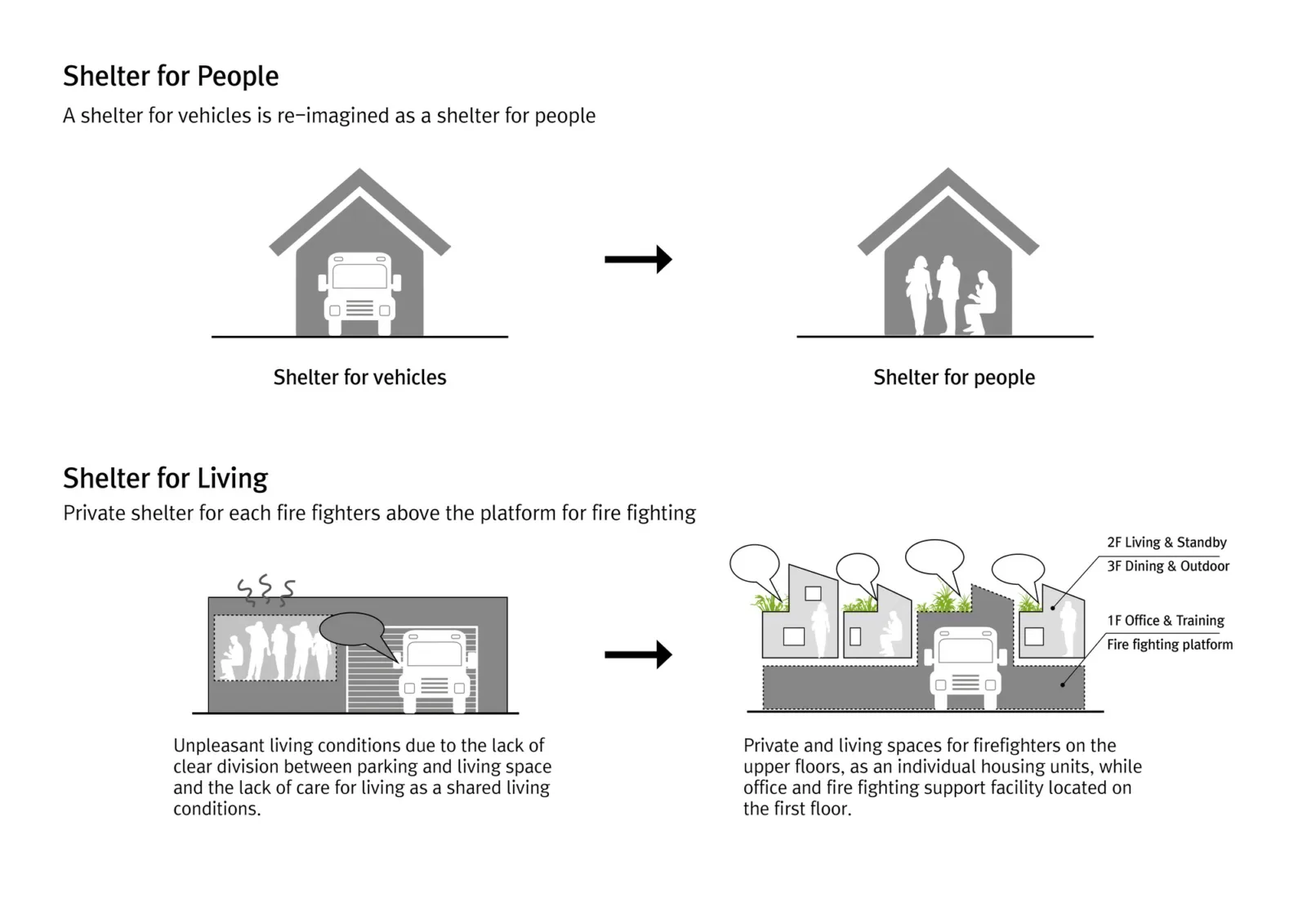
This highlights the fact that the living spaces inside a fire station effectively serve as a second home for firefighters. Feedback from active firefighters, gathered through surveys and meetings, emphasized concerns such as poor ventilation and exhaust fumes caused by living areas adjoining the garage. Recognizing the growing importance of residential spaces within fire stations, we reimagined the typology of the fire station and sought to redefine the “Jiangyidong 119 Fire Station” as a people-centered facility, giving it a fresh identity.
Living Spaces Built Around a Courtyard
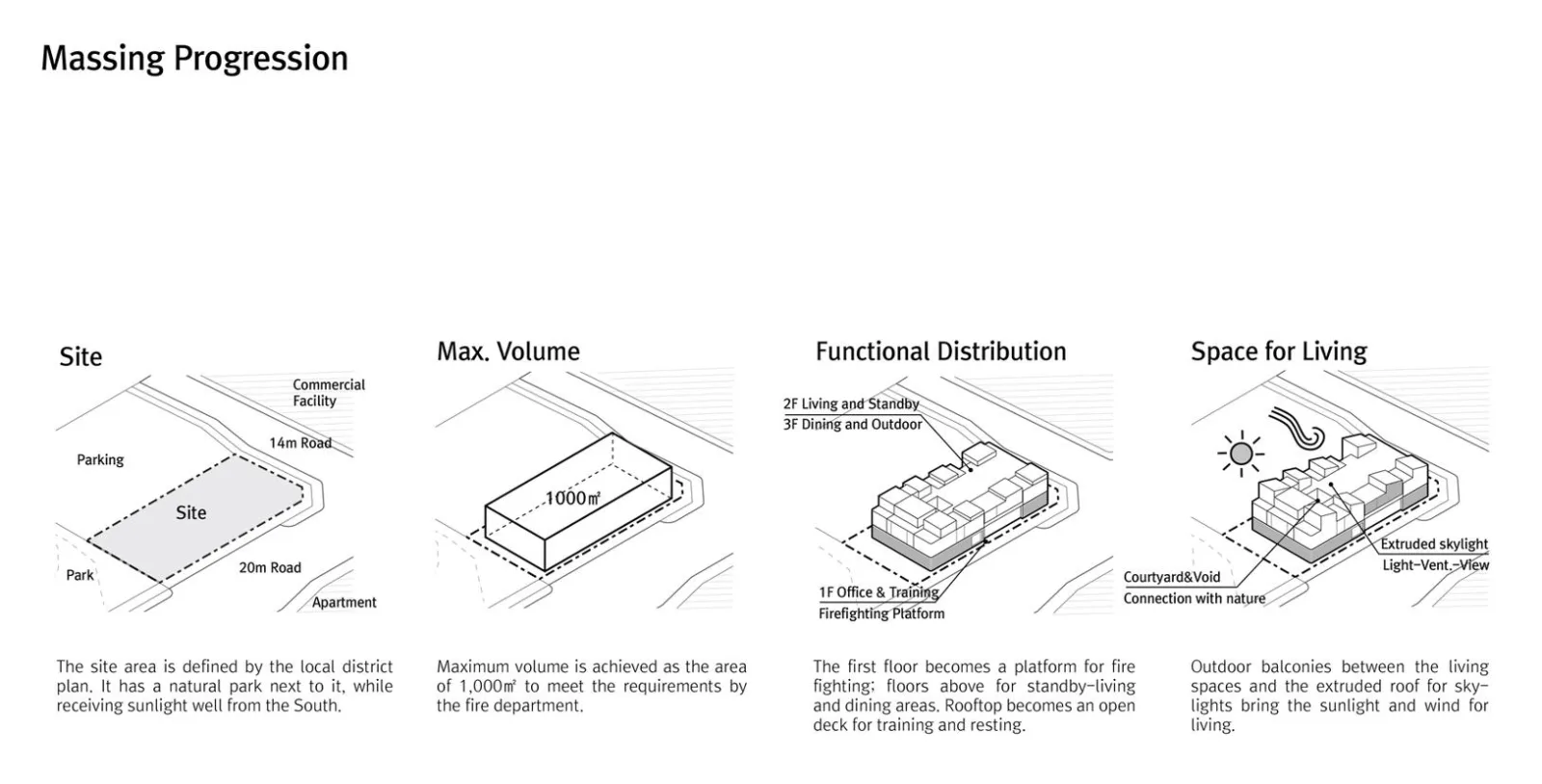
At the “Jiangyidong 119 Fire Station,” a courtyard that welcomes sunlight and fresh air forms the central space, surrounded by fire truck garages and living areas. Although budget and practical constraints have reduced its size, the courtyard remains an essential feature. It acts as a transitional zone between vehicle and human spaces, bringing natural outdoor air into daily life.
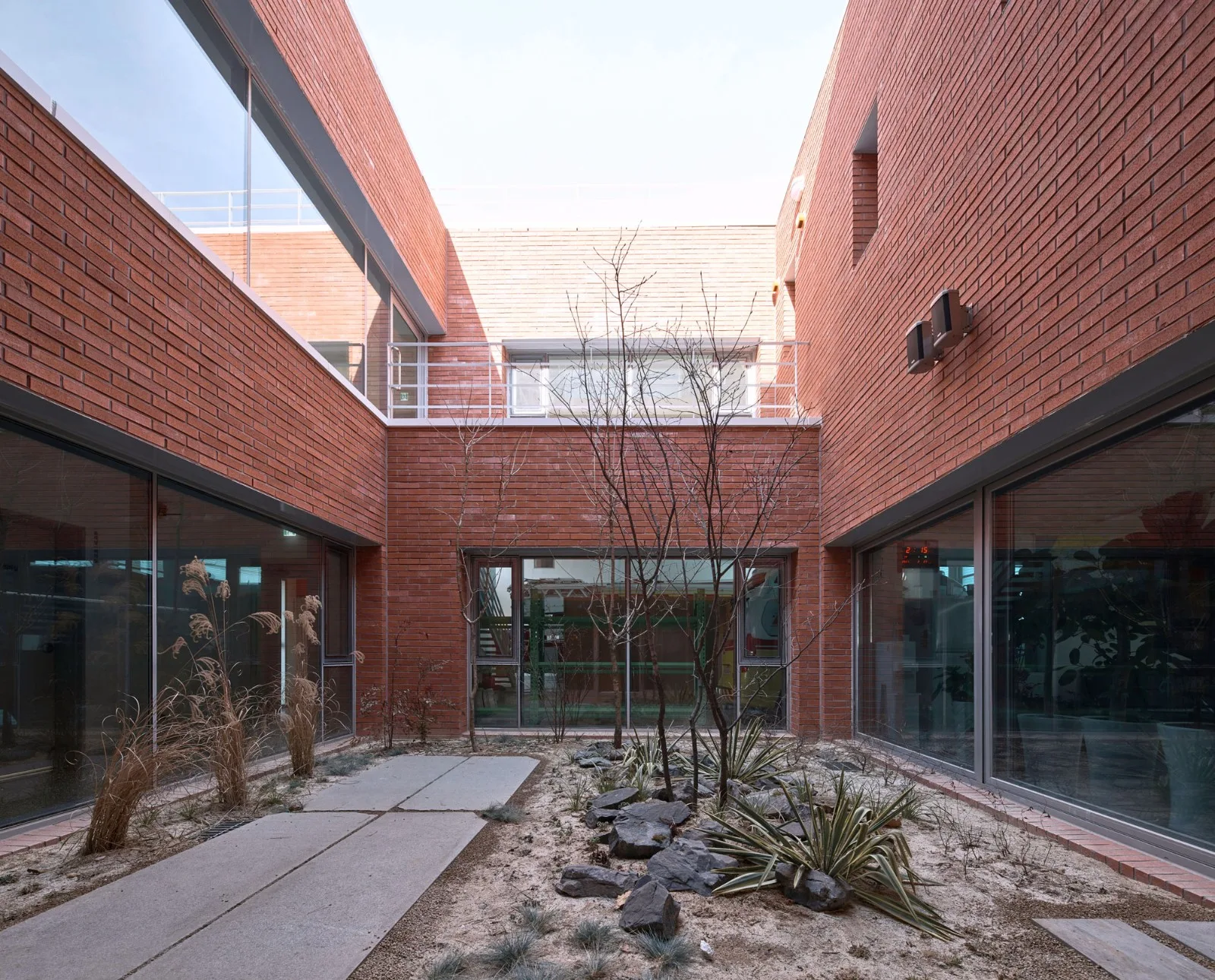
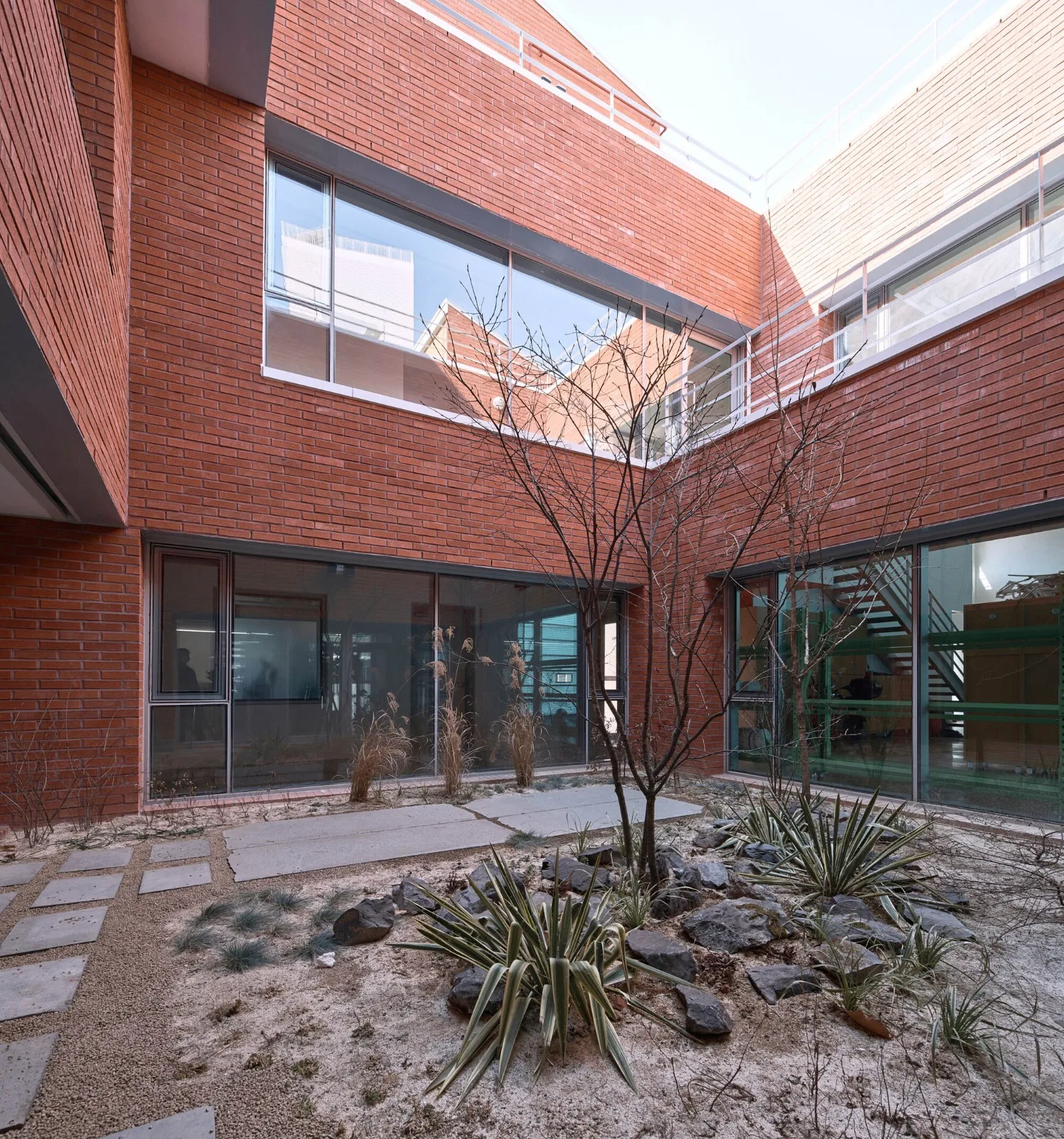
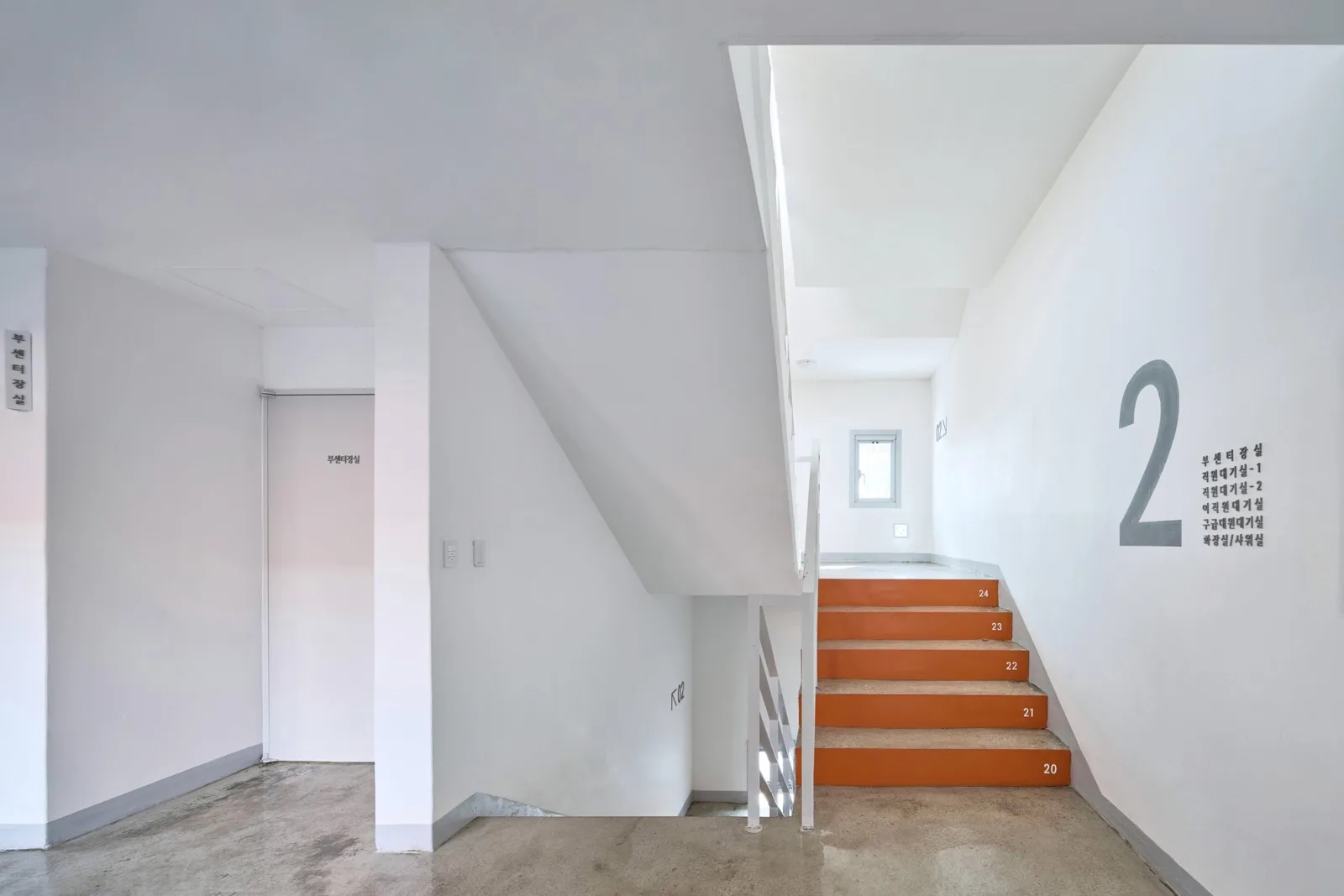
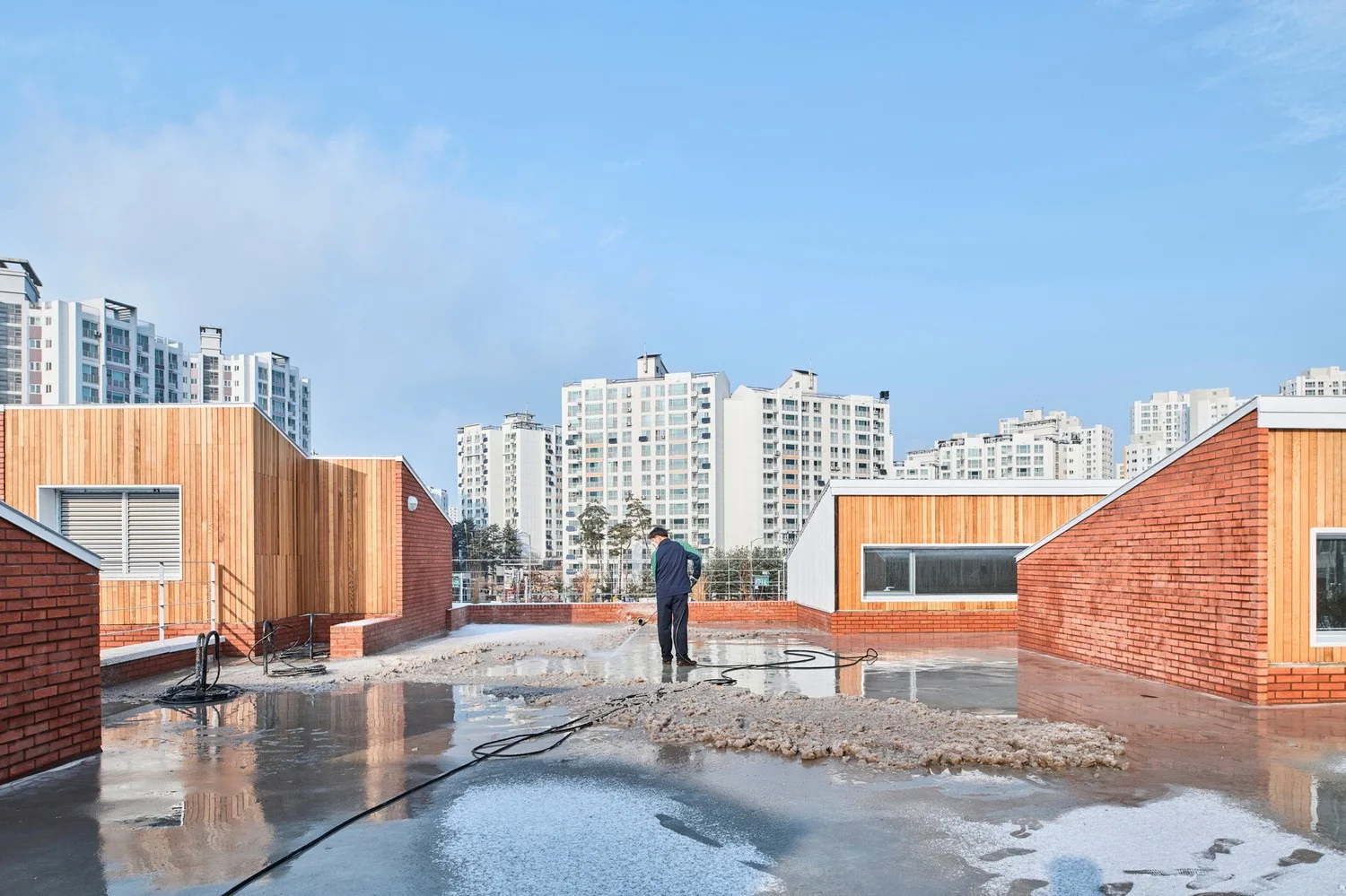
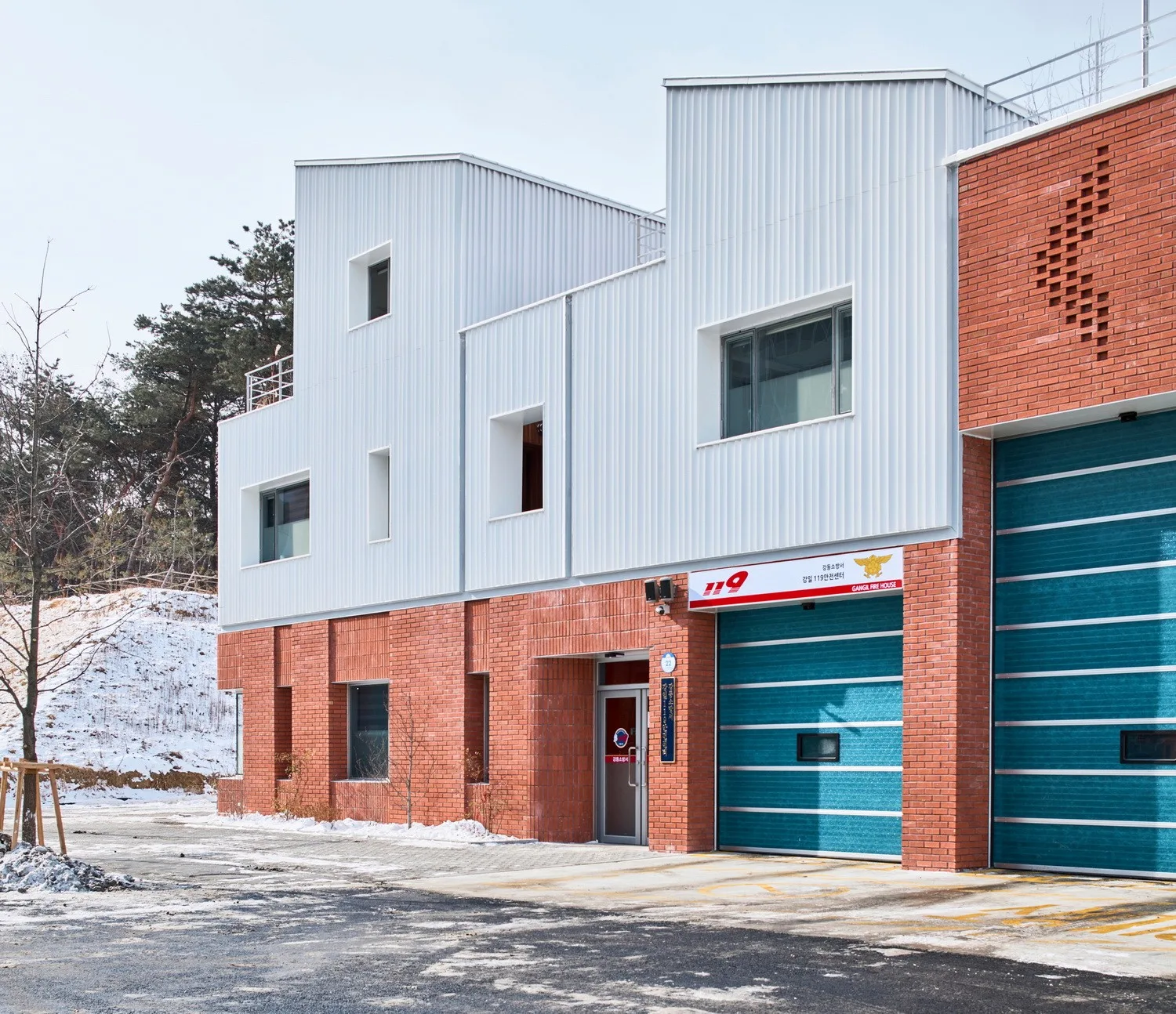
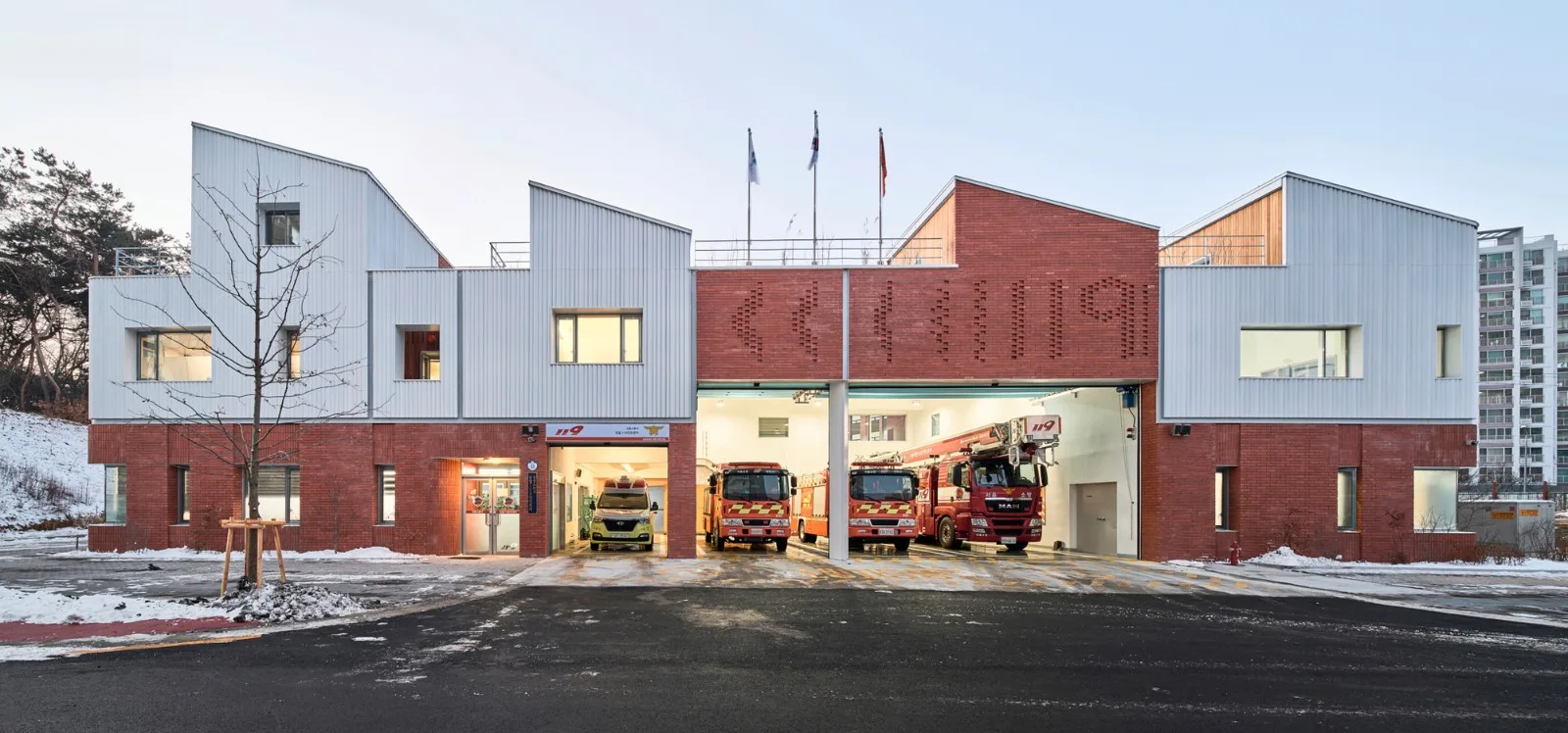
The first floor, adjacent to the garage and centered on the courtyard, houses rapid dispatch training and operational functions, serving as the fire platform. The second floor is dedicated to living spaces, providing a second home for firefighters on 24-hour standby. The third floor contains kitchen, dining, and laundry facilities to support daily life, alongside outdoor training and relaxation areas on the rooftop.
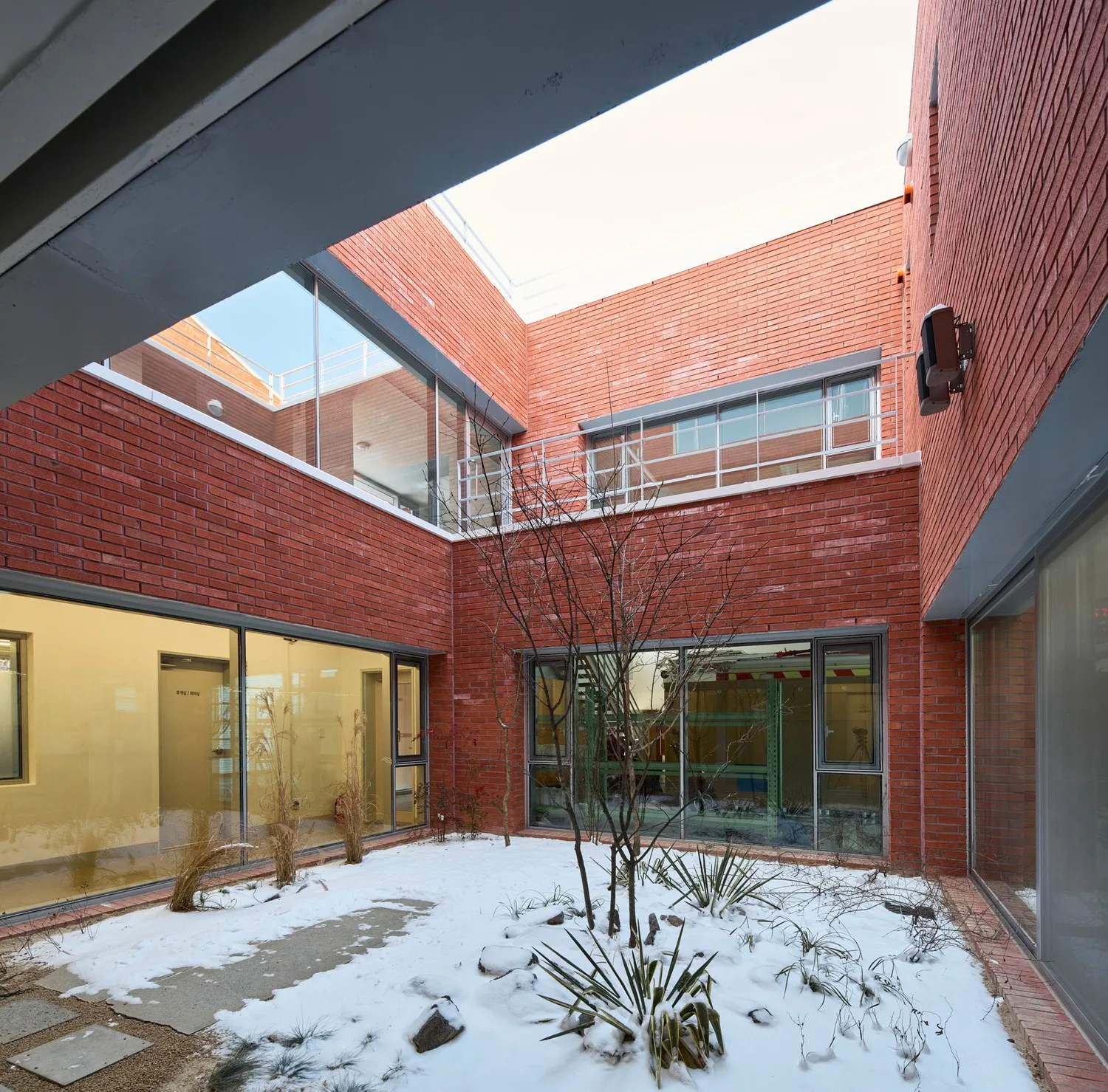
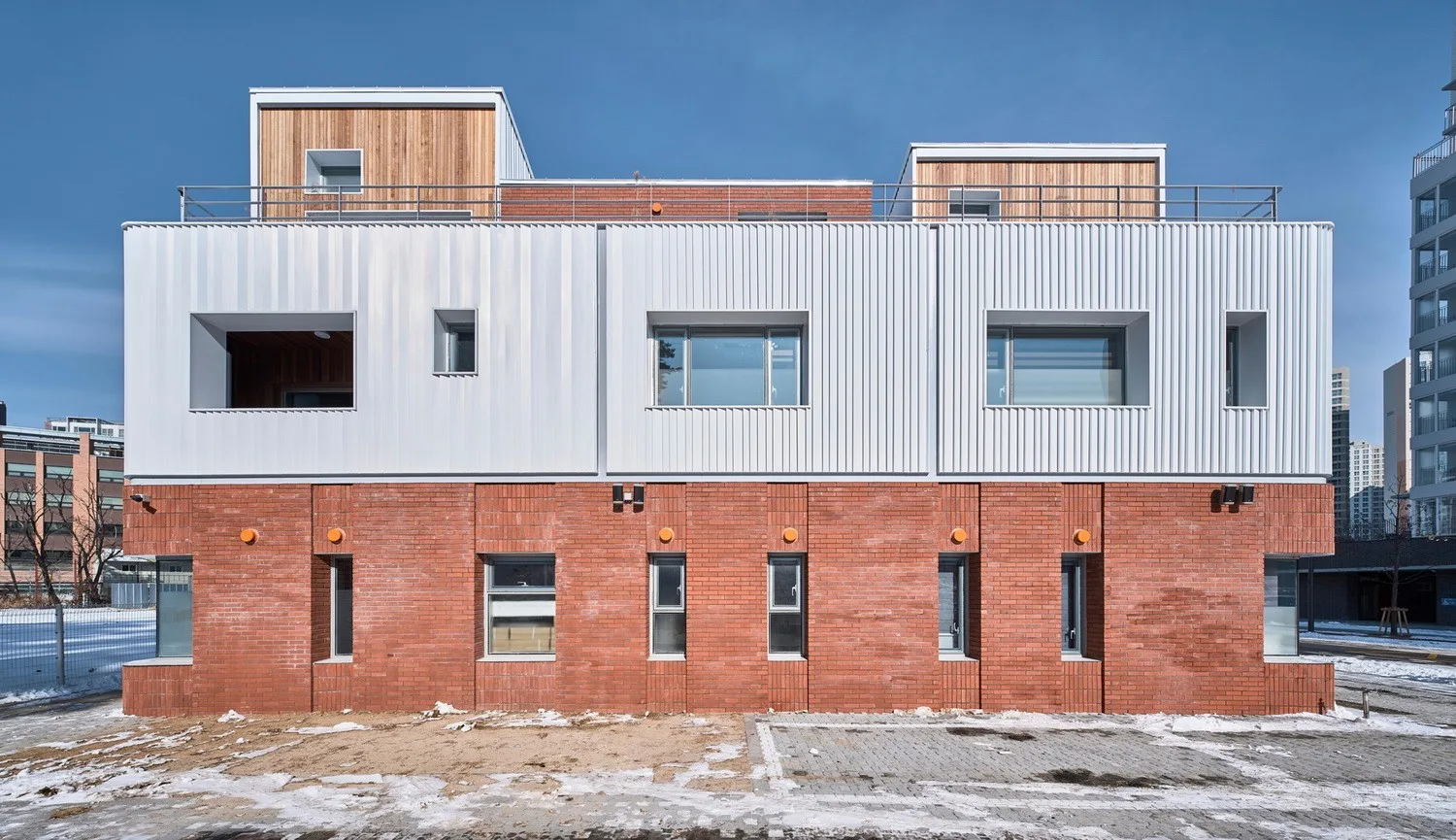
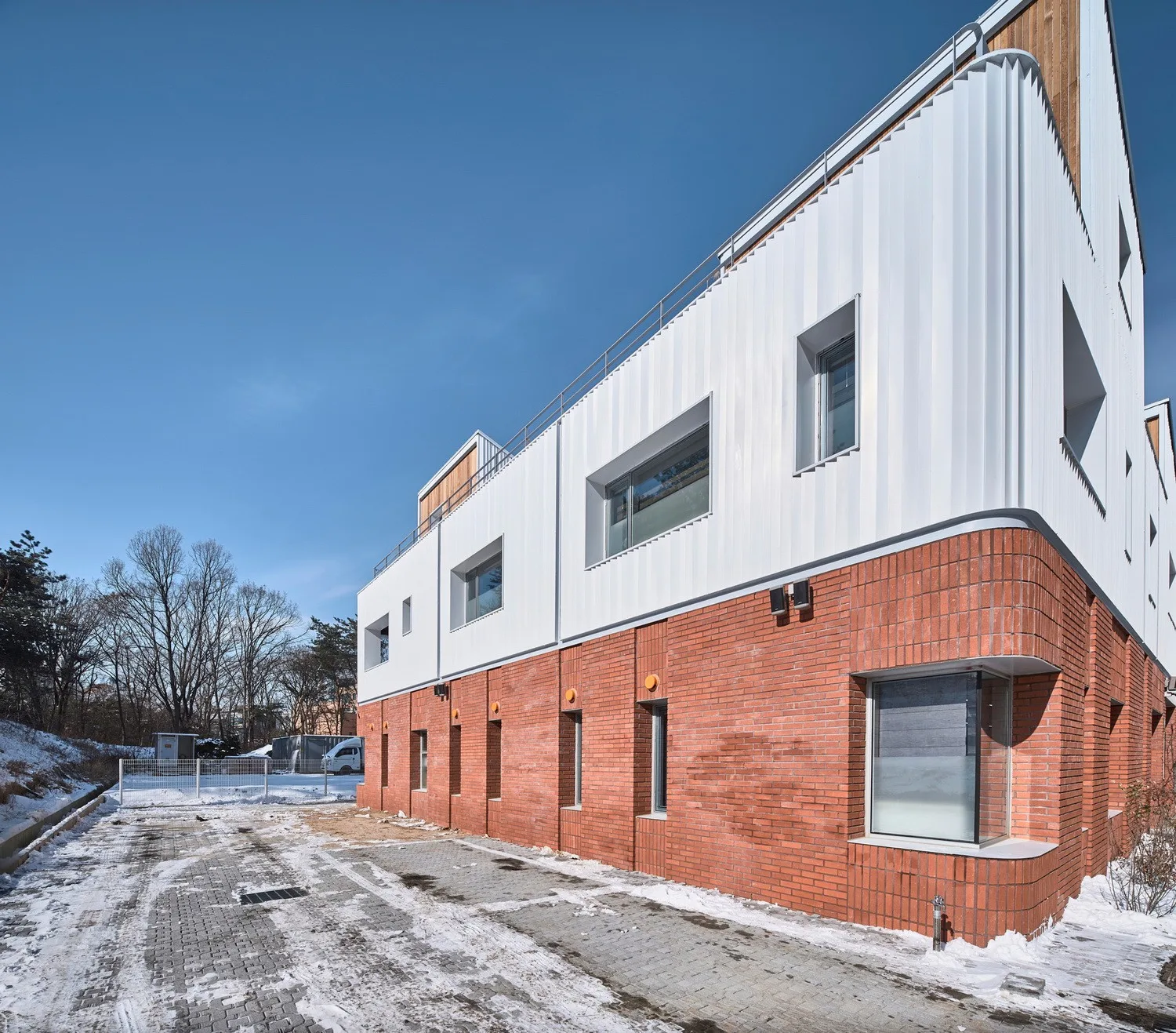
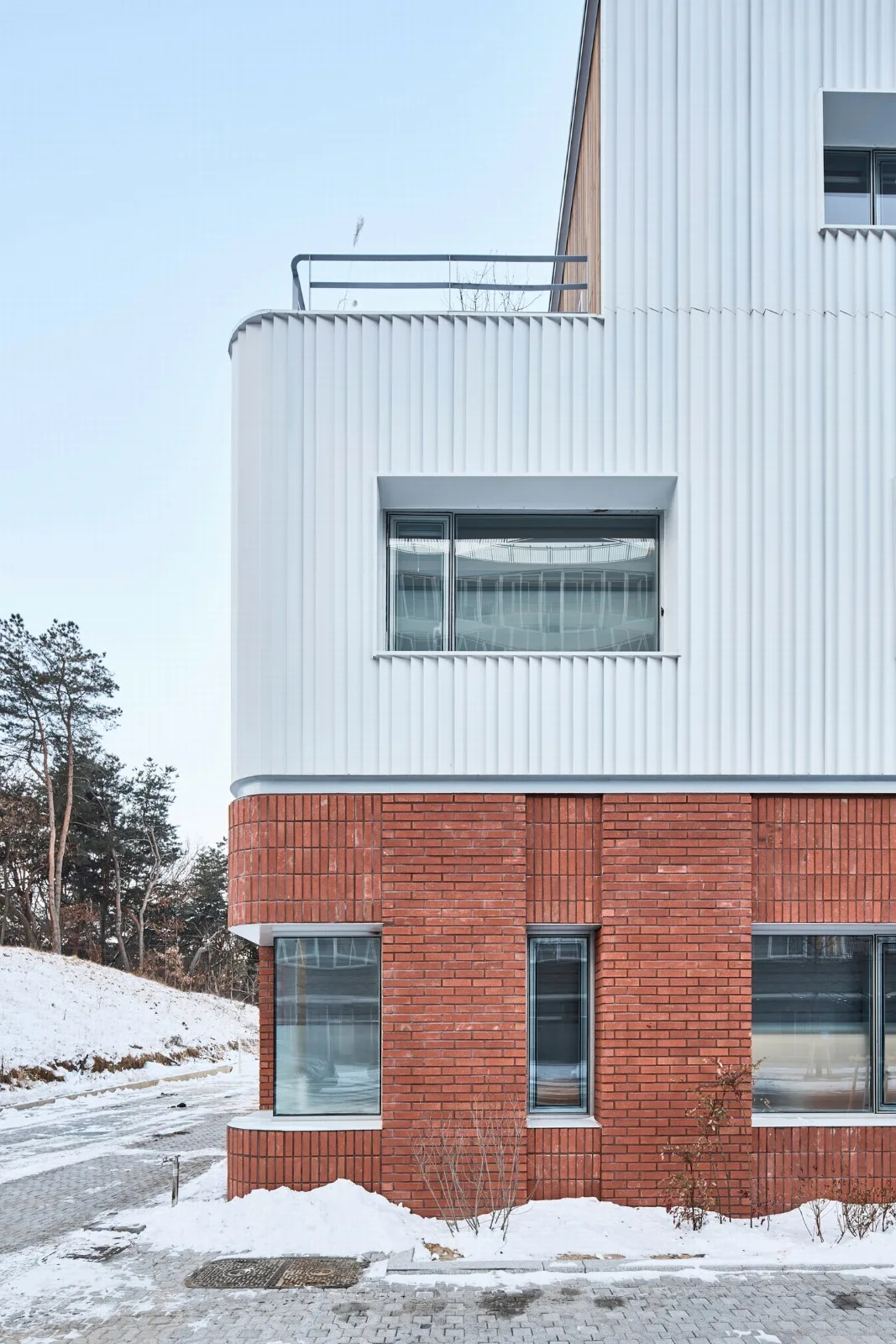
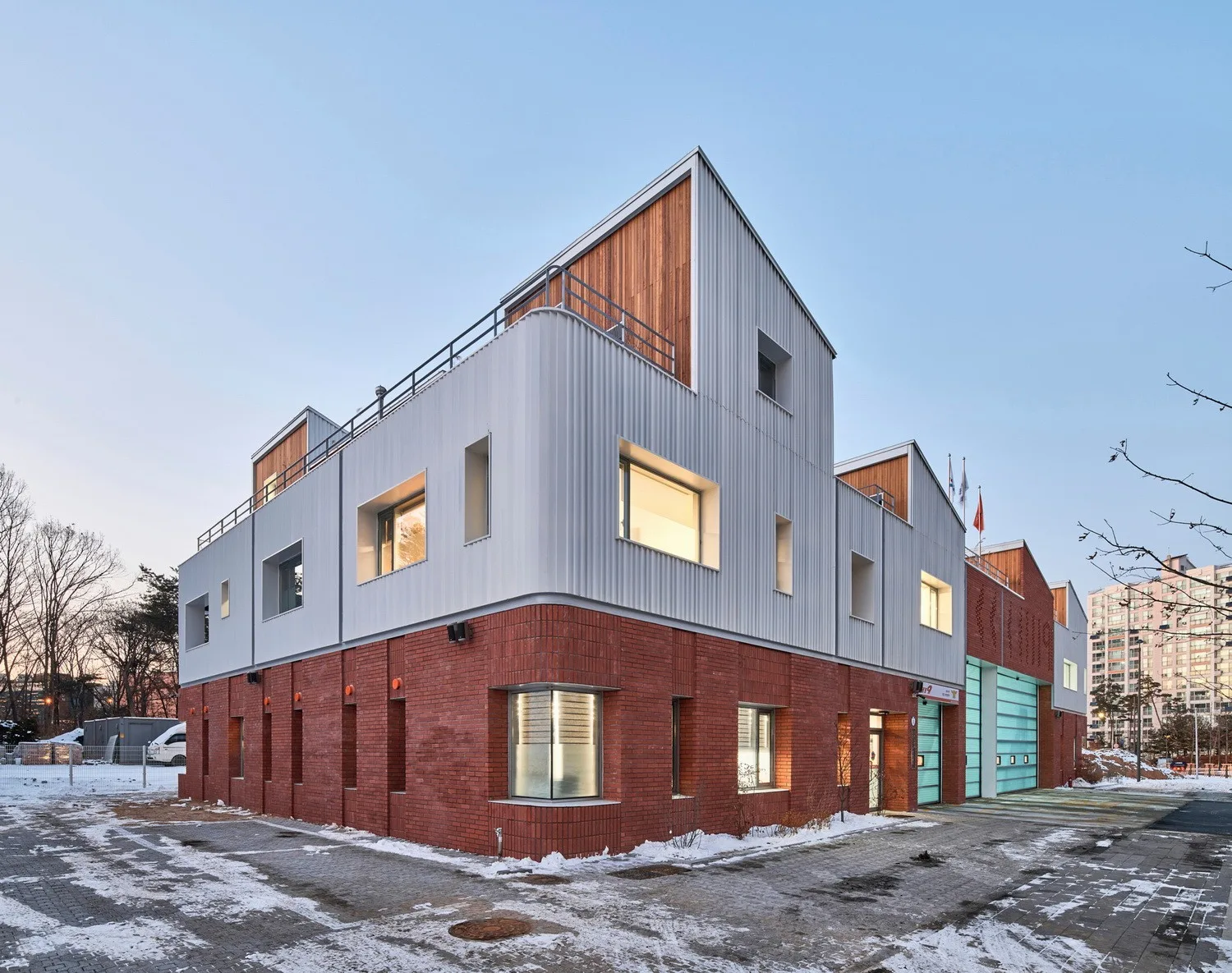
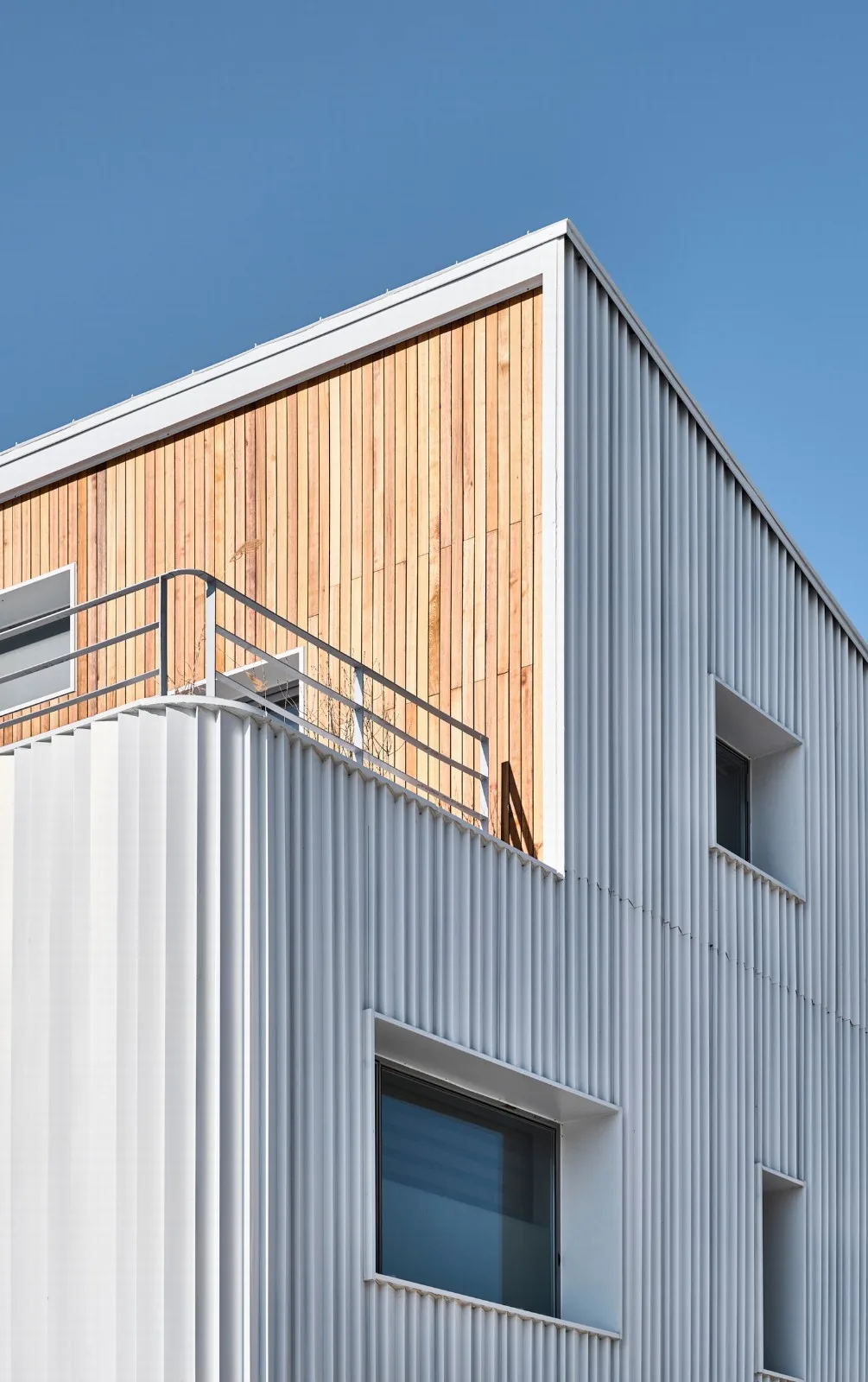
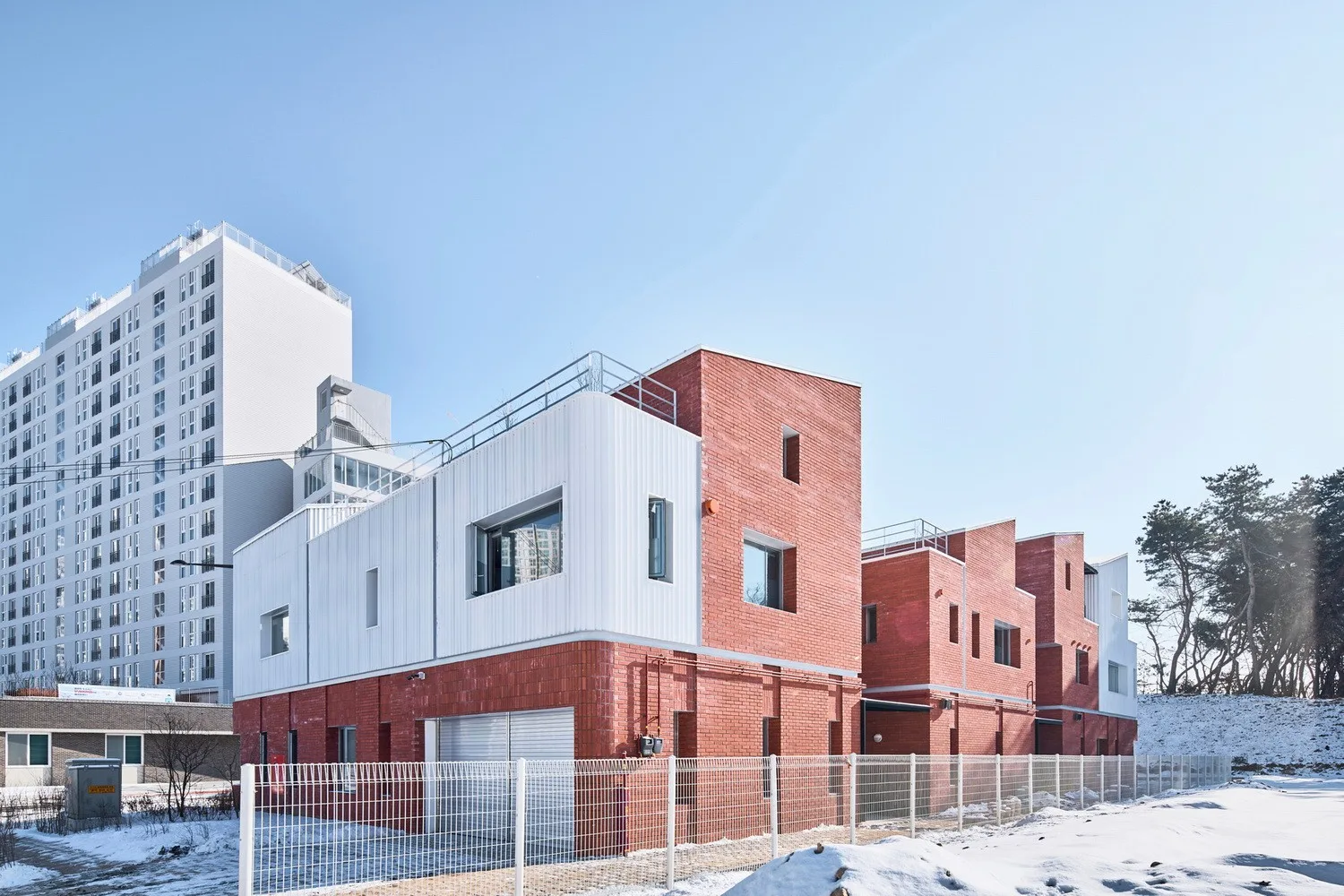
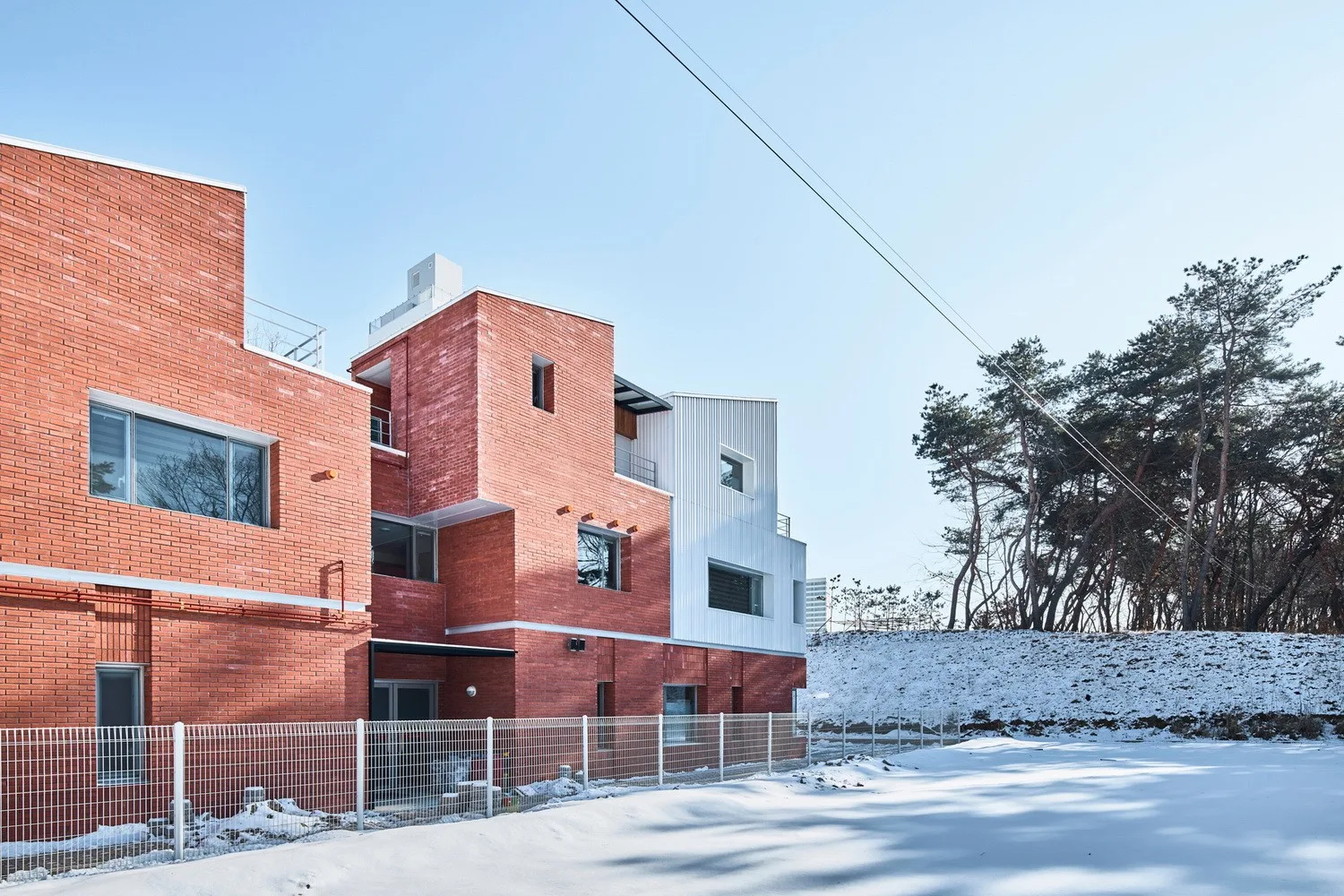
Similar to the concept of the 119 Fire Station as a Breathing Shelter, the “Jiangyidong 119 Fire Station” reinterprets fire station architecture through the lens of human living spaces. The personal quarters on the second floor are crafted from white galvanized steel plates, forming independent volumes reminiscent of small houses perched atop the red brick platform of the first floor, which serves as the fire drill and scheduling area. This design balances the creation of private living spaces with a collective identity for the fire station as a unified building.
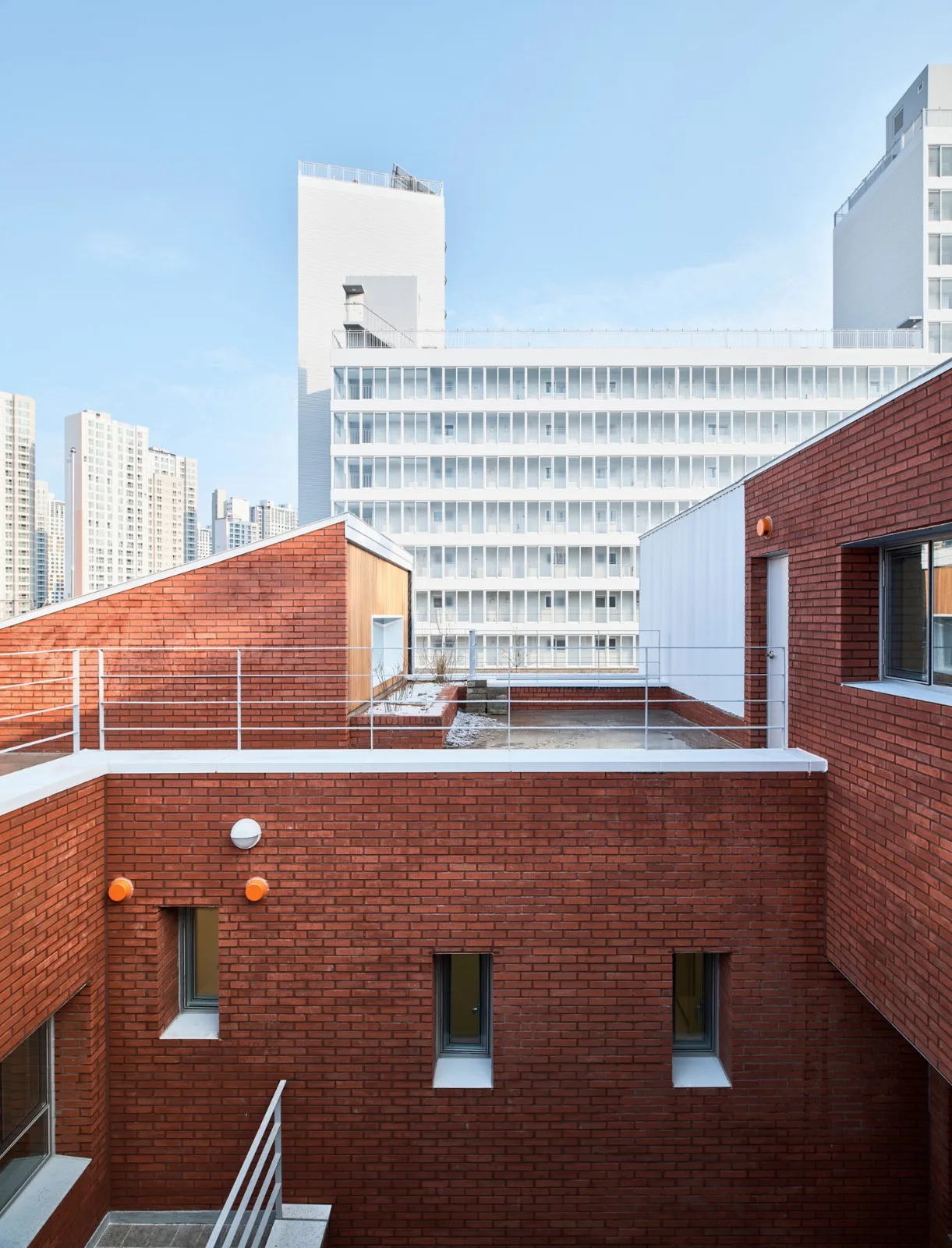
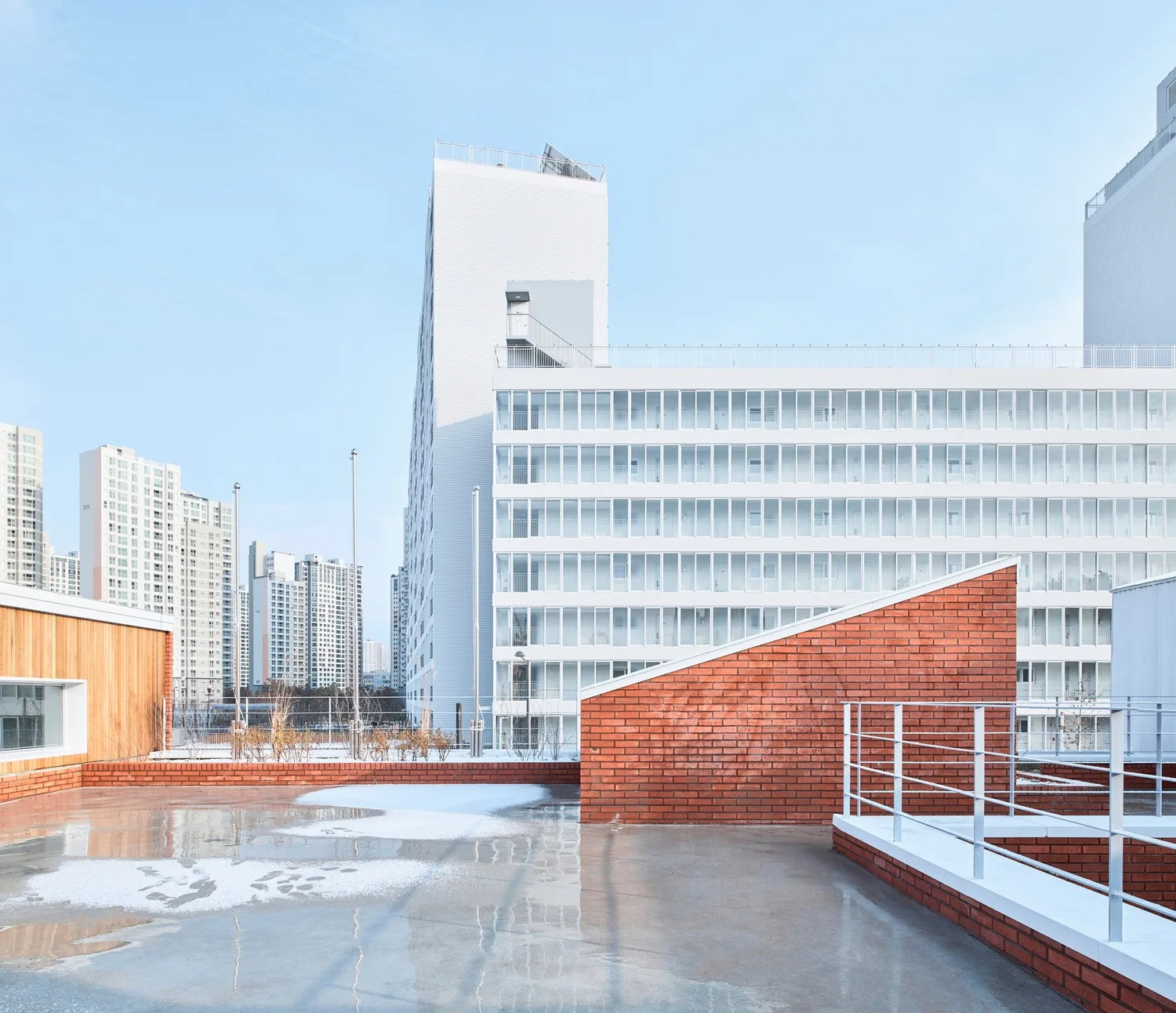
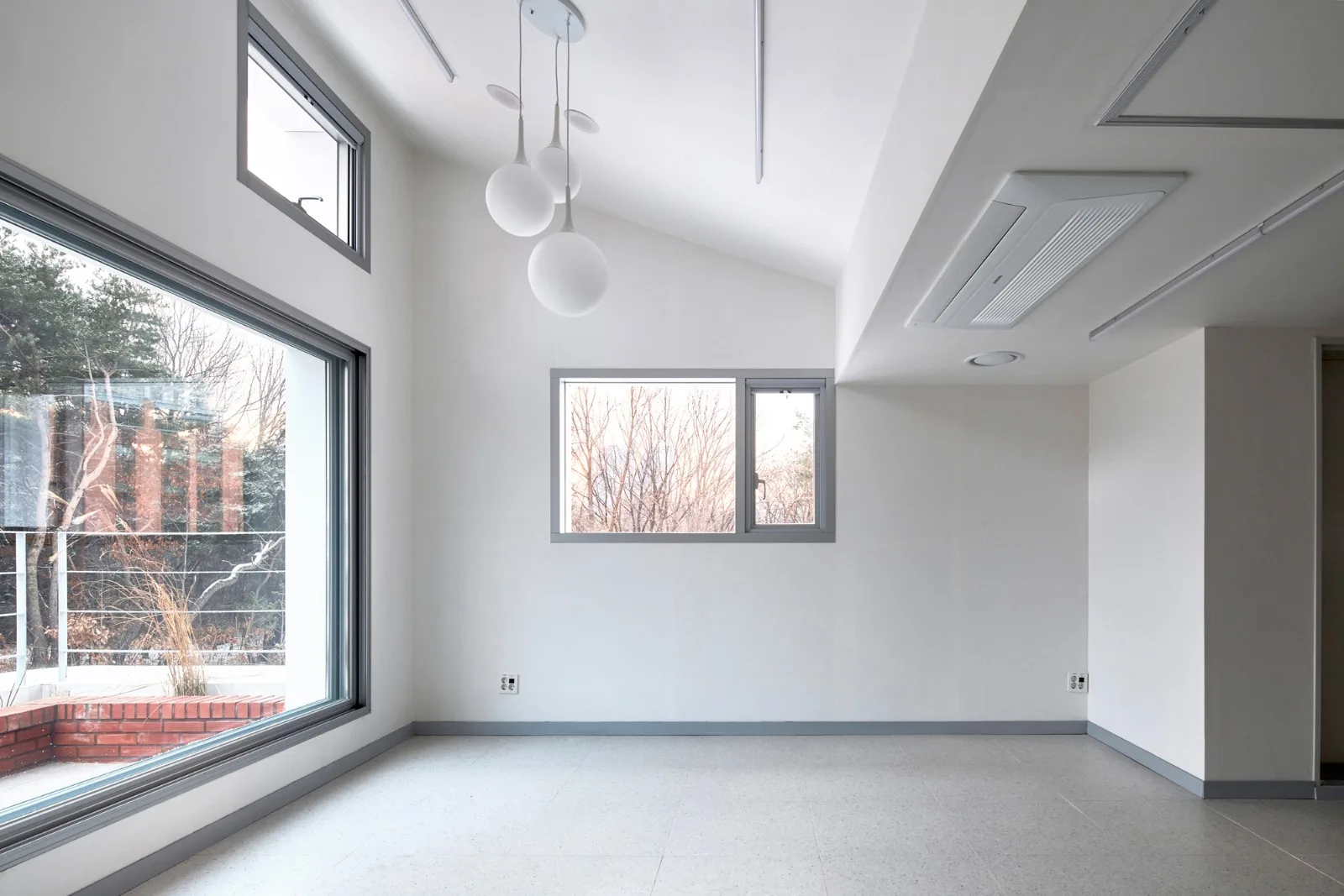
Outdoor spaces such as balconies are integrated between personal living areas like rest rooms to promote essential living conditions, including natural light and ventilation. The standby room is no longer just a functional waiting area but a true second home for firefighters. Its high ceilings and skylights provide ample daylight and fresh air. This approach redefines the fire station as a building centered around the people who inhabit it, where both fire trucks and resident firefighters can thrive in a natural environment, giving Seoul’s 119 Fire Department a renewed identity.
Prioritizing Living Spaces over Vehicle Facilities within Budget Constraints
The “Gangyidong 119 Fire Station,” developed after many challenges, aims to address fundamental limitations of fire stations, though some shortcomings remain. The government’s classification of fire stations as public facilities plays a role in budget constraints. According to Seoul Metropolitan Government construction cost guidelines, fire stations are budgeted at 2.19 million Korean won per square meter, significantly lower than other public buildings such as general public facilities (2.99 million KRW/m²), office buildings (2.7 million KRW/m²), community centers (2.63 million KRW/m²), and libraries (2.73 million KRW/m²). In fact, fire station construction costs are comparable to public parking lots and vehicle transfer centers (1.39 million KRW/m²).
This disparity reflects differing priorities on funding for human versus vehicle facilities. Despite the efforts of all involved, many recently built 119 fire stations still suffer from issues such as water leakage and poor finishes. If fire stations are to be envisioned as human-centered buildings, the current low construction budgets—tied to their vehicle function—are regrettably insufficient. To ensure public buildings deliver high quality and design, becoming vital social infrastructure, it is essential to establish strong design standards and social guidelines alongside good architectural design.
Project Drawings
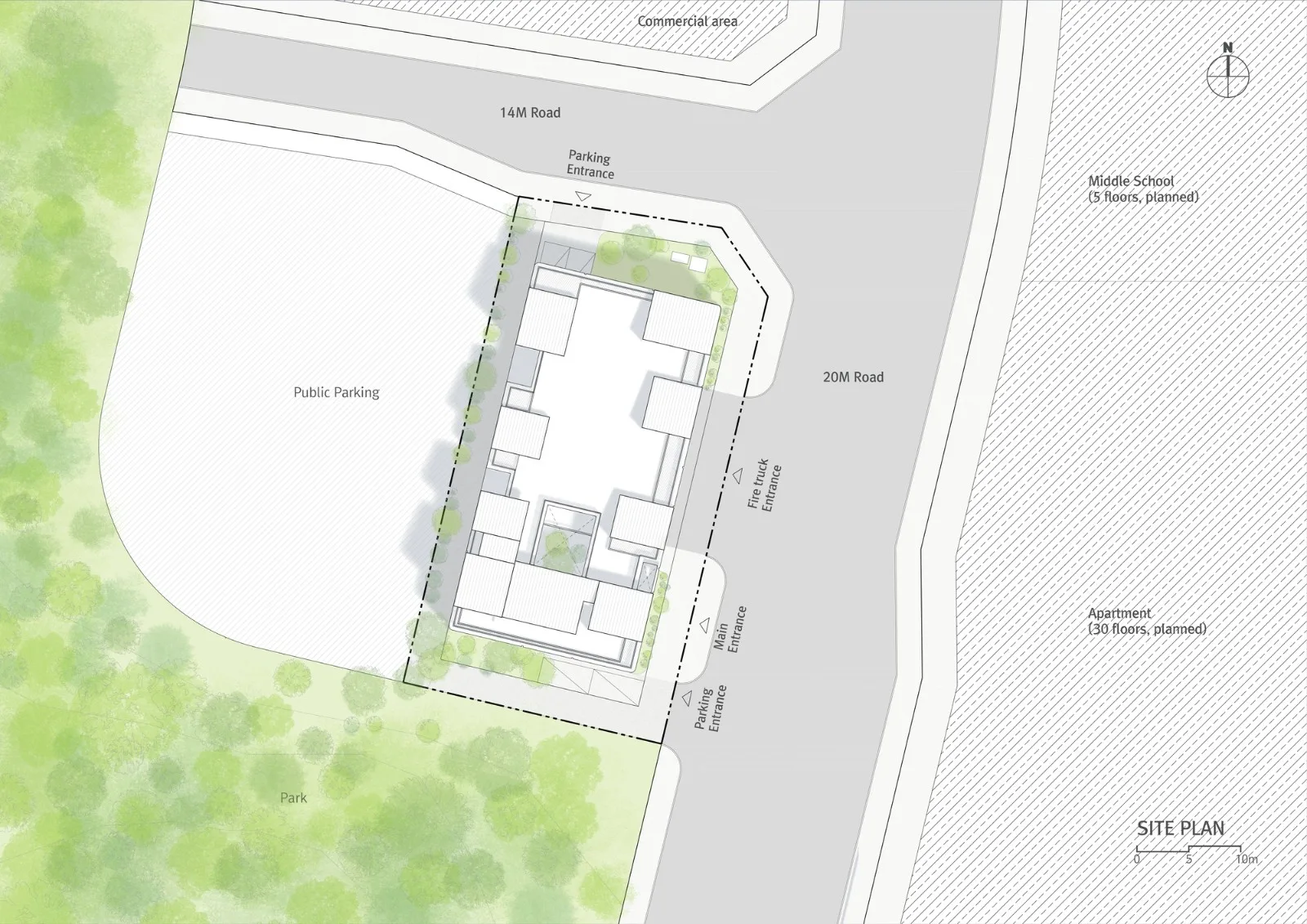
△ Location Map
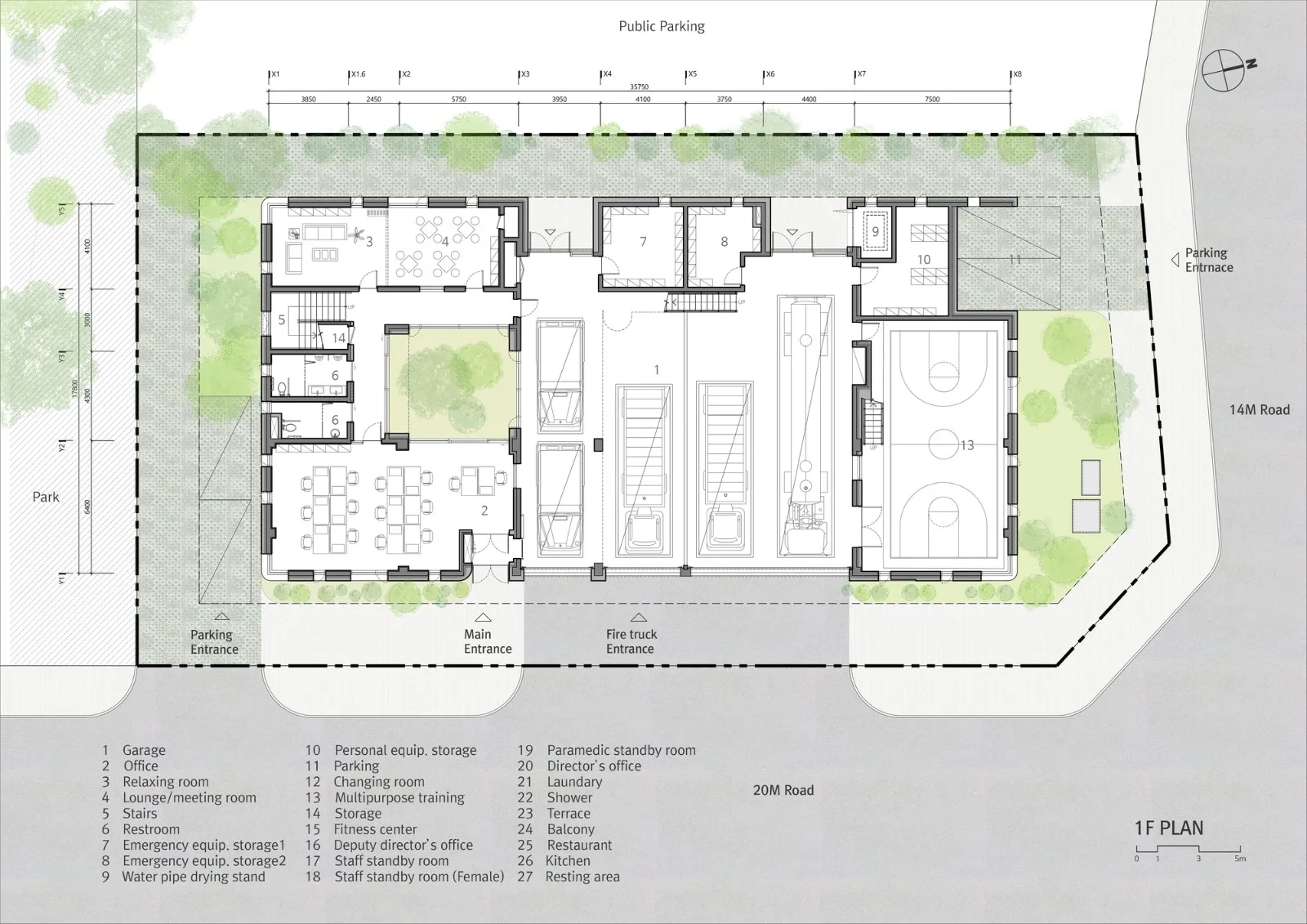
△ First Floor Plan
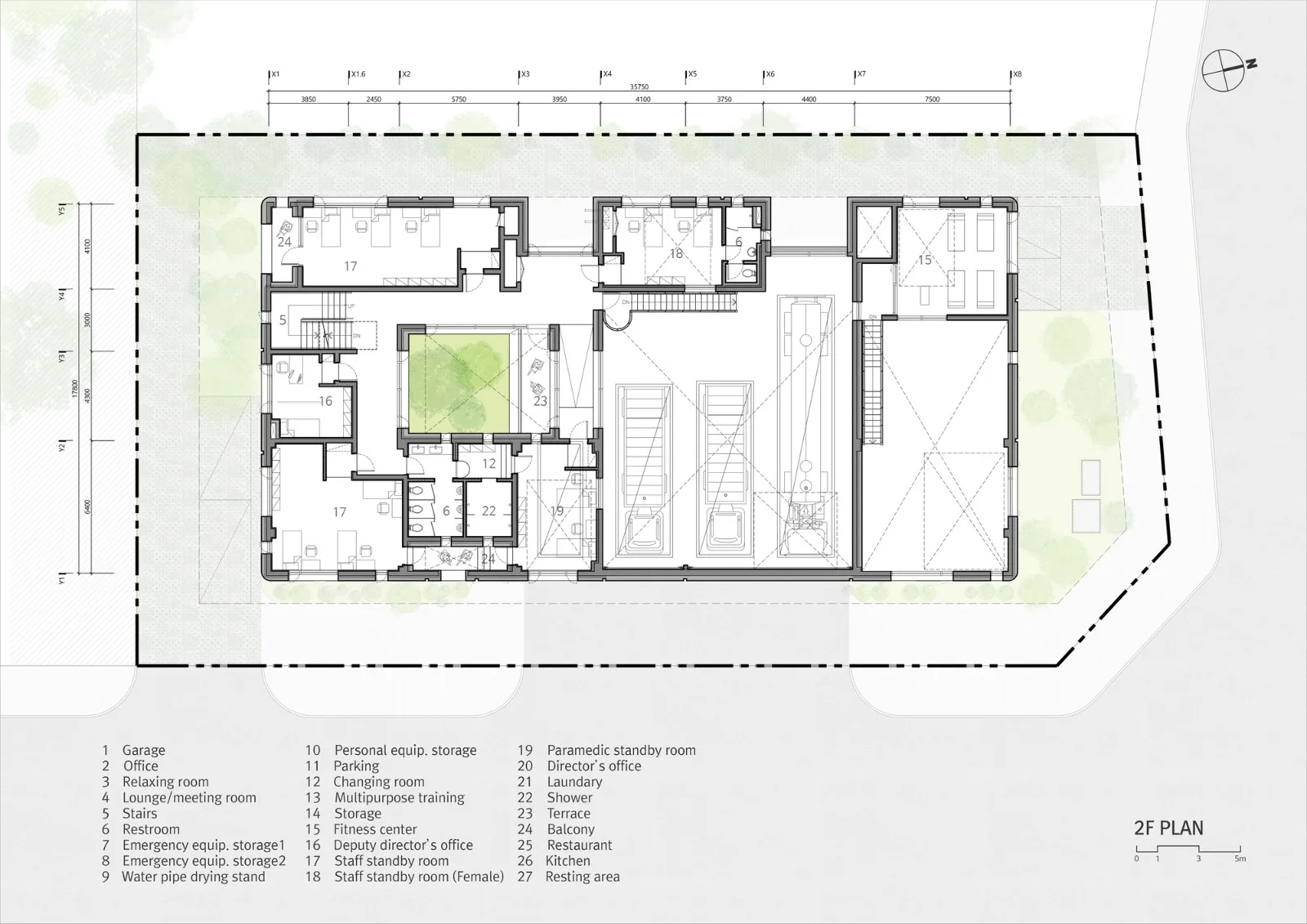
△ Second Floor Plan
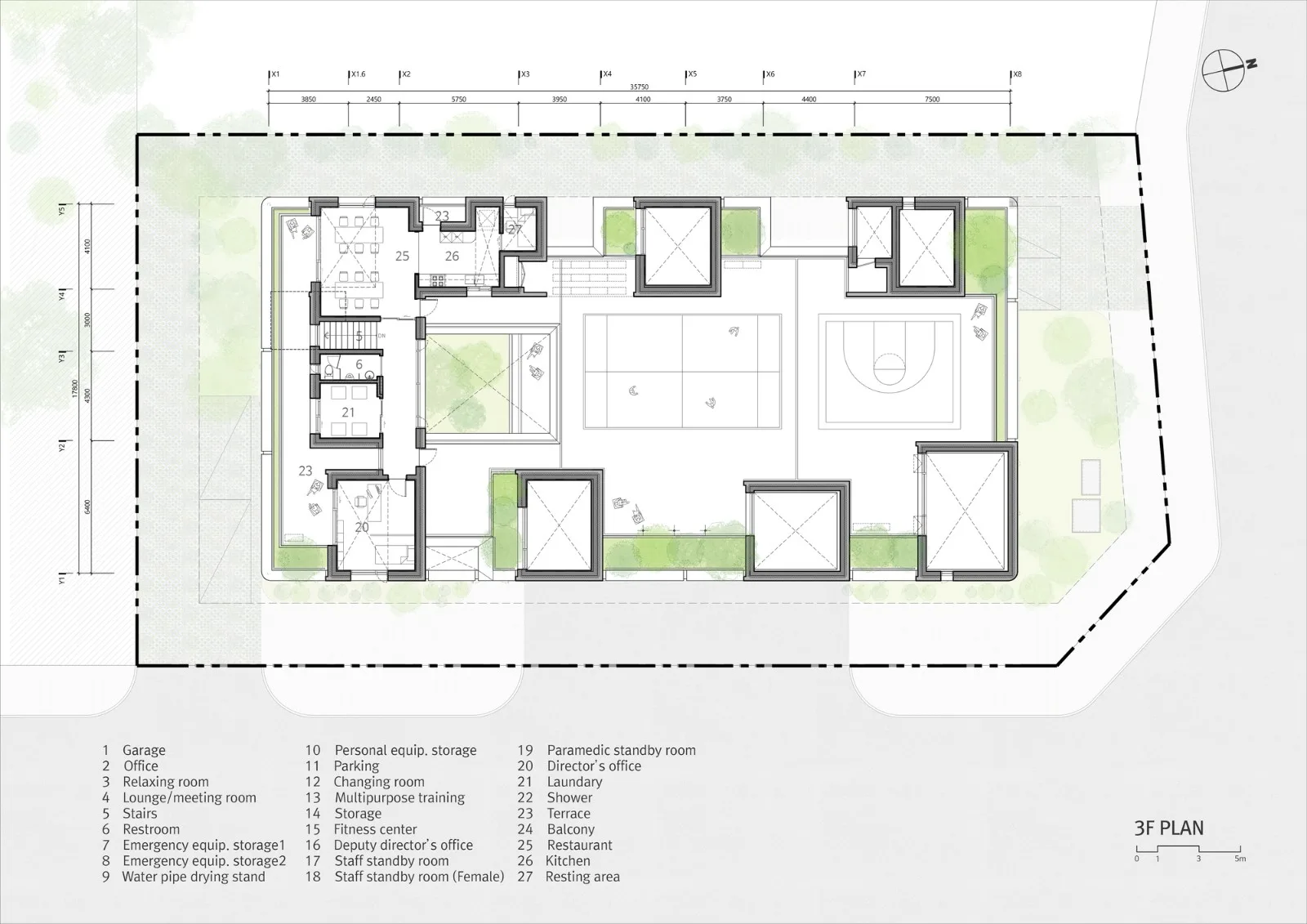
△ Third Floor Plan
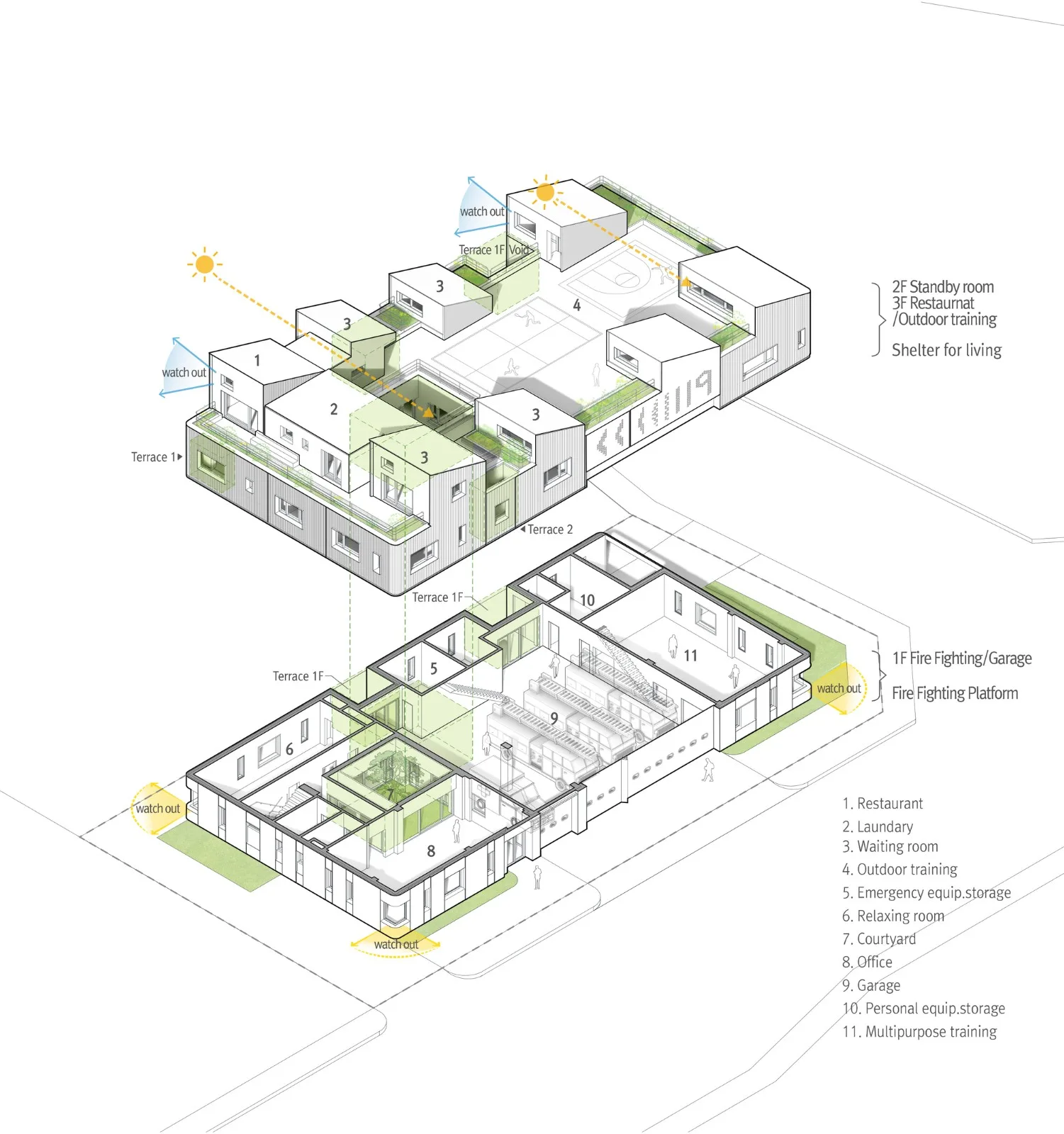
△ Axonometric Diagram
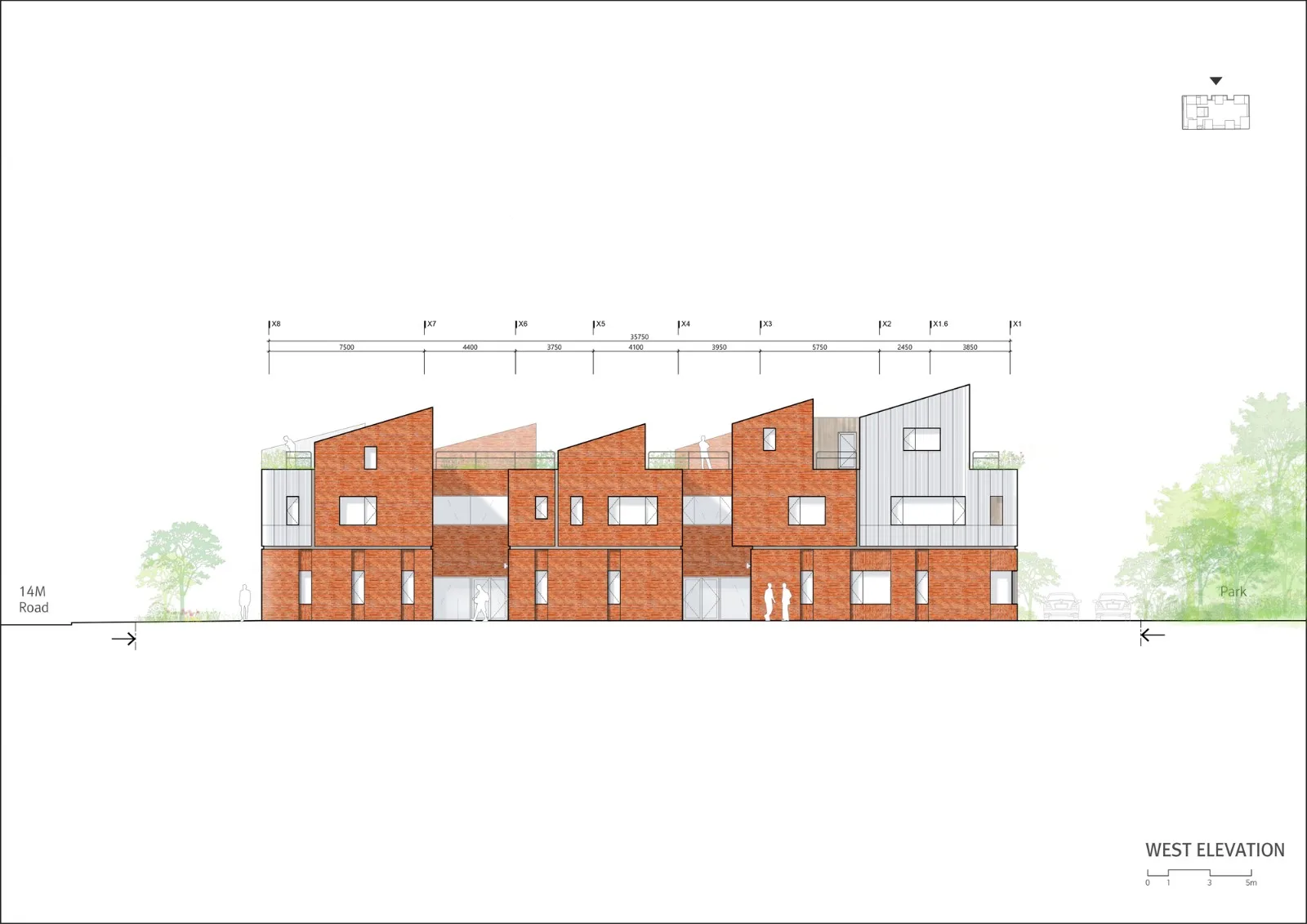
△ West Elevation View
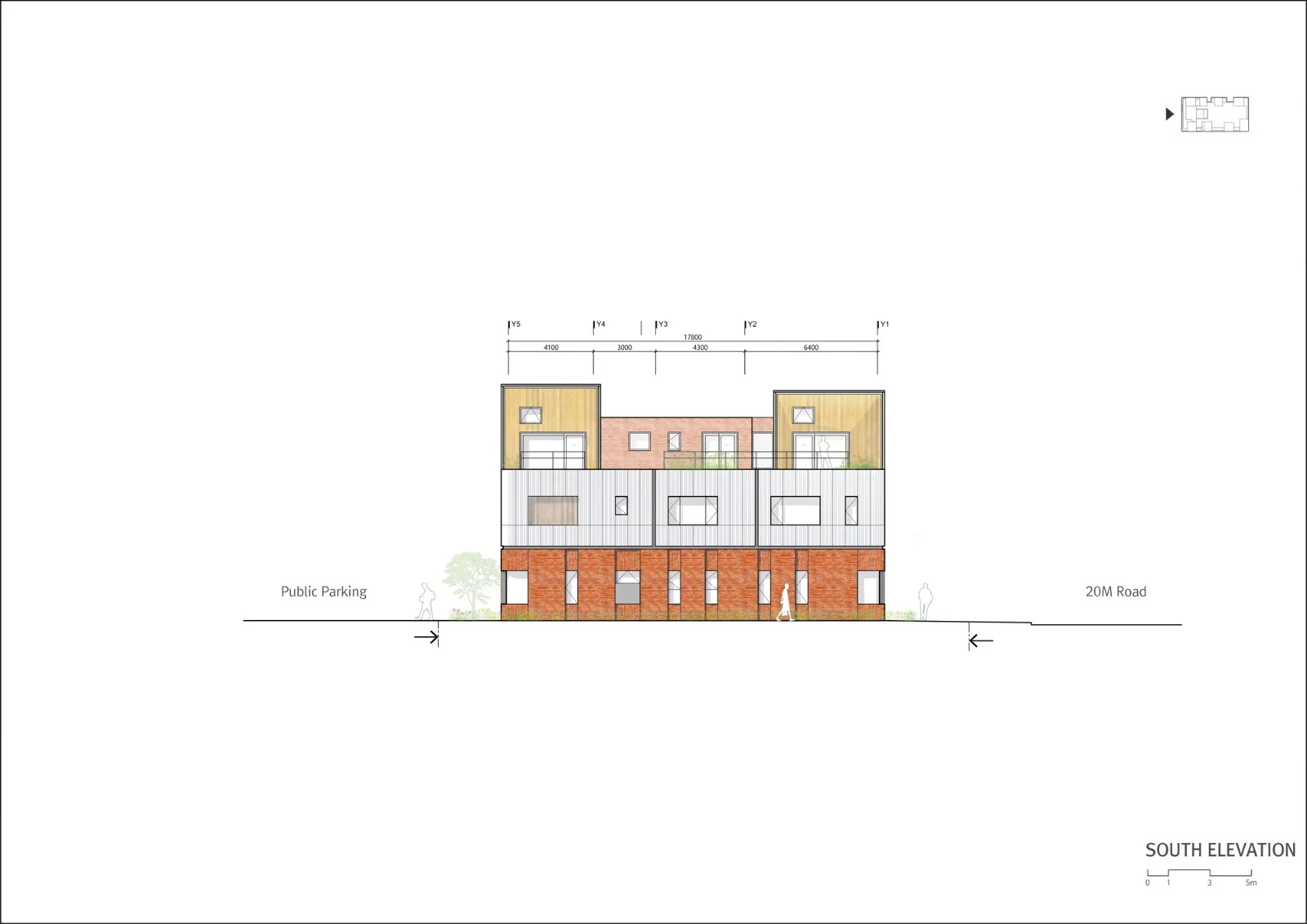
△ South Elevation View
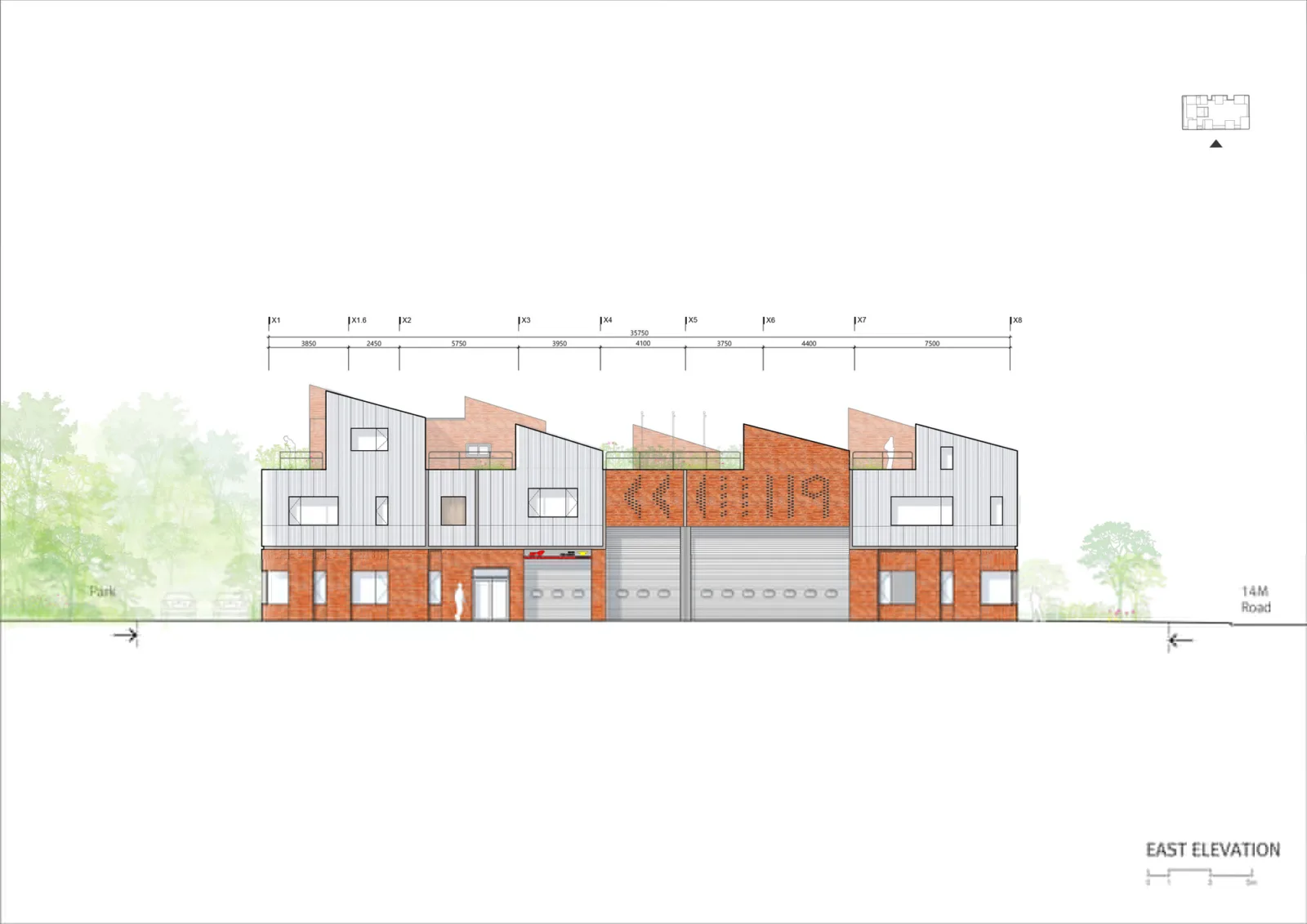
△ East Elevation View
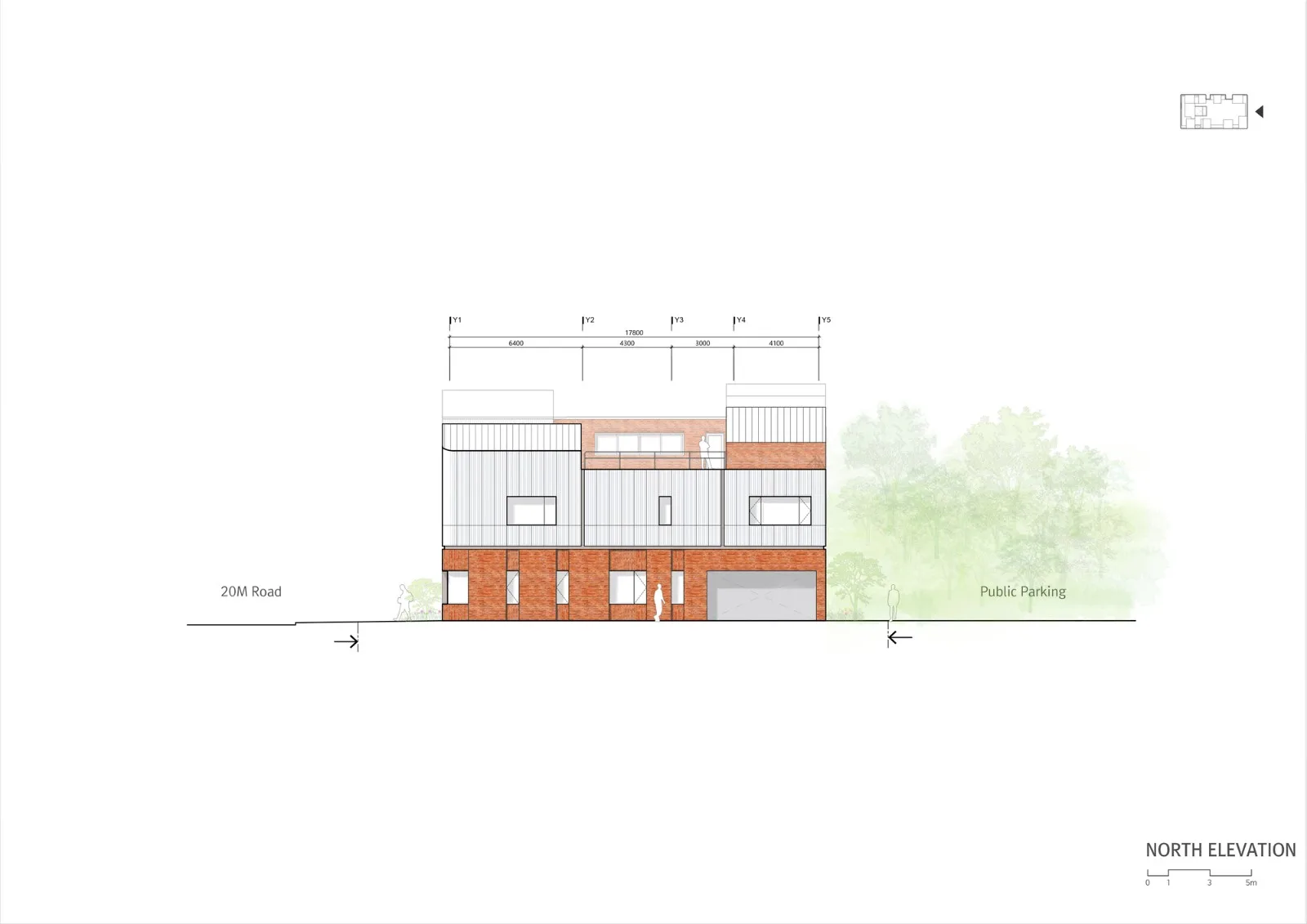
△ North Elevation View
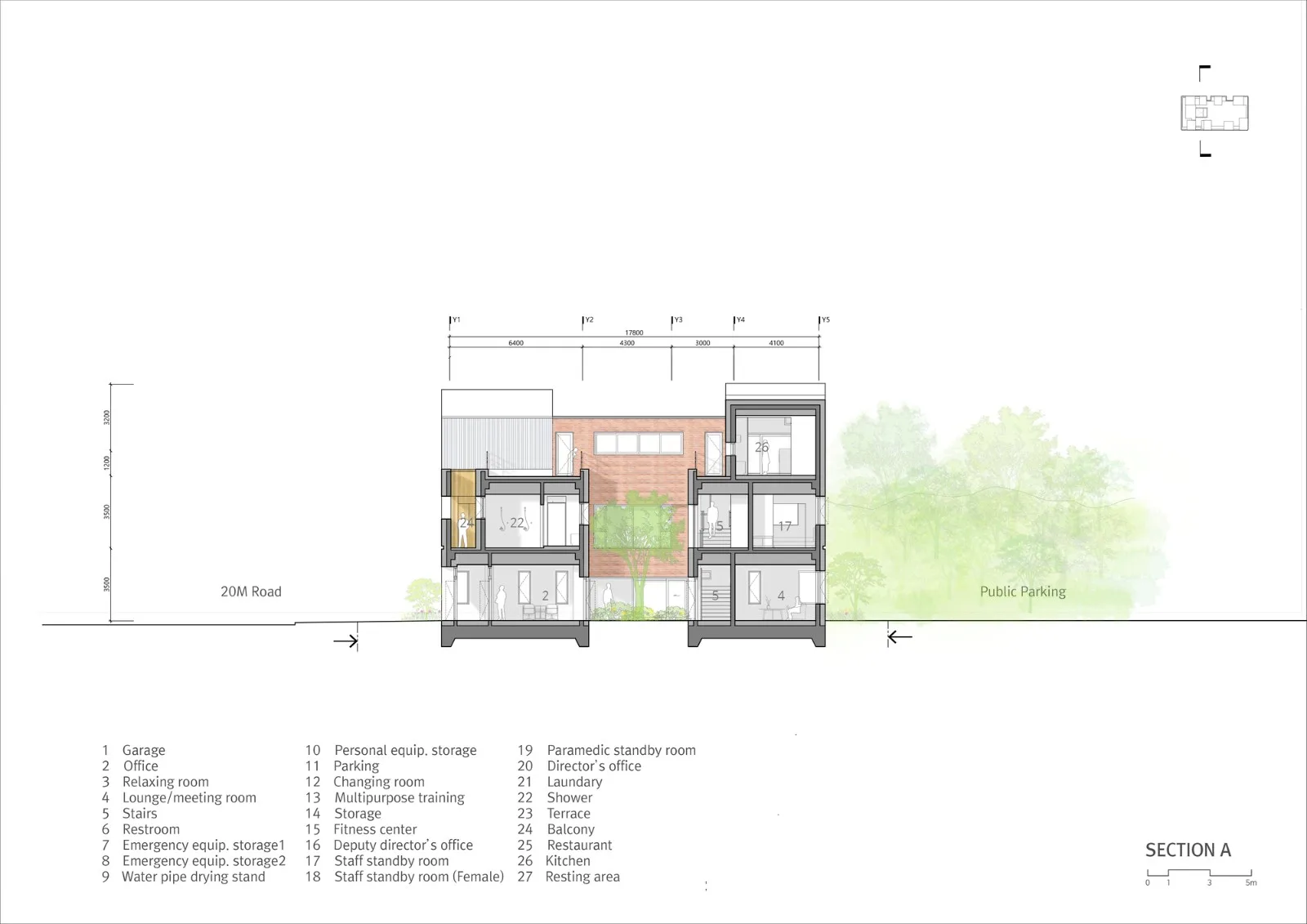
△ Section Diagram
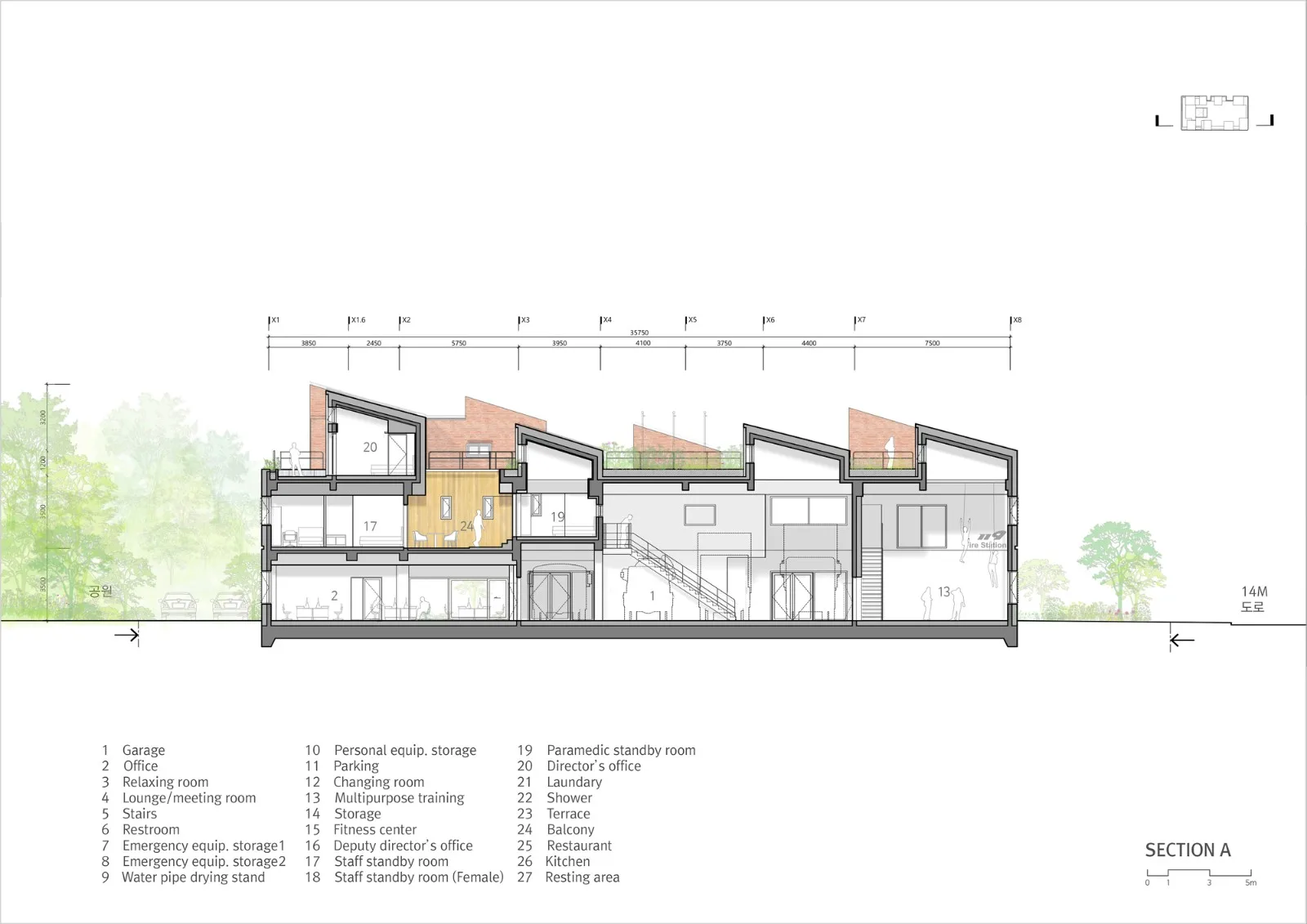
△ Section Diagram
Project Information
Architectural Design: OA Lab
Area: 974 m²
Project Year: 2020
Photographer: Jinbo Choi
Manufacturer: Vision Ceramics
Lead Architect: Jungmin Nam
Drawing by: Hongryang Lim
Design Assistant: Kyungho Lee
Architect: Kyungyong Lee
Location: Gangdong-gu, South Korea













Must log in before commenting!
Sign Up