
Jingning
Jingning is situated in the mountainous southwest region of Lishui City, Zhejiang Province, and is notable for being the only She Autonomous County in China. The She ethnic group migrated from Luoyuan, Fujian to Jingning, Zhejiang during the second year of Yongtai in the Tang Dynasty (766). They are recognized as a southern Chinese nomadic farming ethnic group.
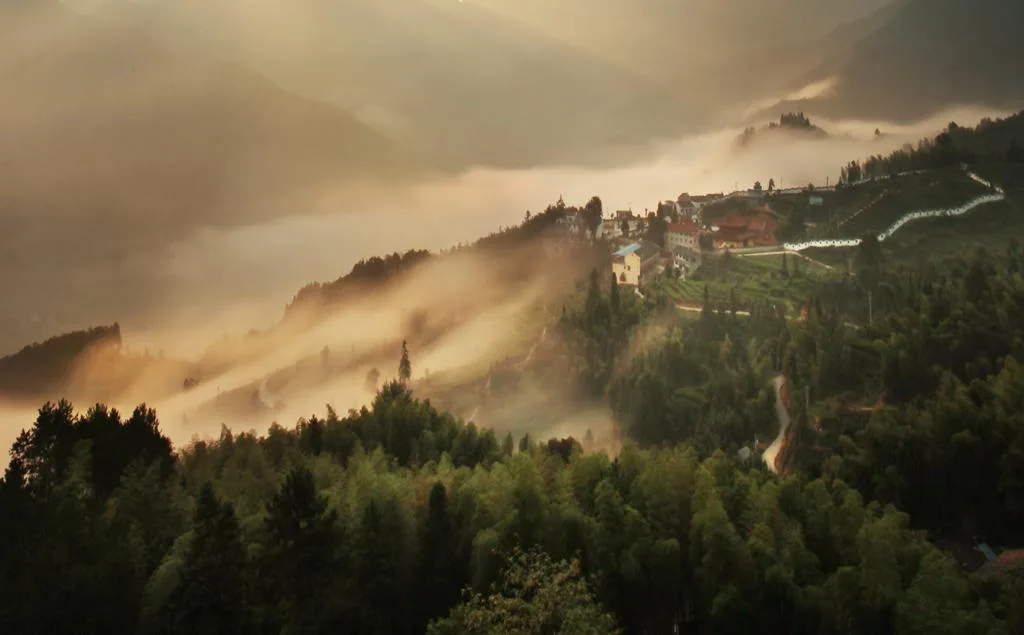
Gengmu Mountain & Huiming Tea
Chimu Mountain lies ten miles southeast of Jingning County and forms part of the Donggong Mountain Range. It features scenic spots such as Chiluan Jixue, Shiludong, Shijing, Shikan, and Xiaoshijie. Enveloped in clouds and mist year-round, the area has a humid and mild climate with abundant rainfall. The local She people regard it as a sacred mountain.
The northeast side of Chimu Mountain experiences warm winters and cool summers, with mist and dew that create ideal conditions for tea tree cultivation. During the Tang Dynasty, Monk Huiming established a temple here and, alongside the She community, began cultivating tea around it. This tea, named Chimushan Huiming, has a history exceeding a thousand years and carries deep cultural significance.
In the mid to late 1970s, several villages near Huiming Temple were reorganized to establish a new tea garden halfway up the mountain. This marked the beginning of large-scale tea garden bases and standardized production processes for Huiming tea.
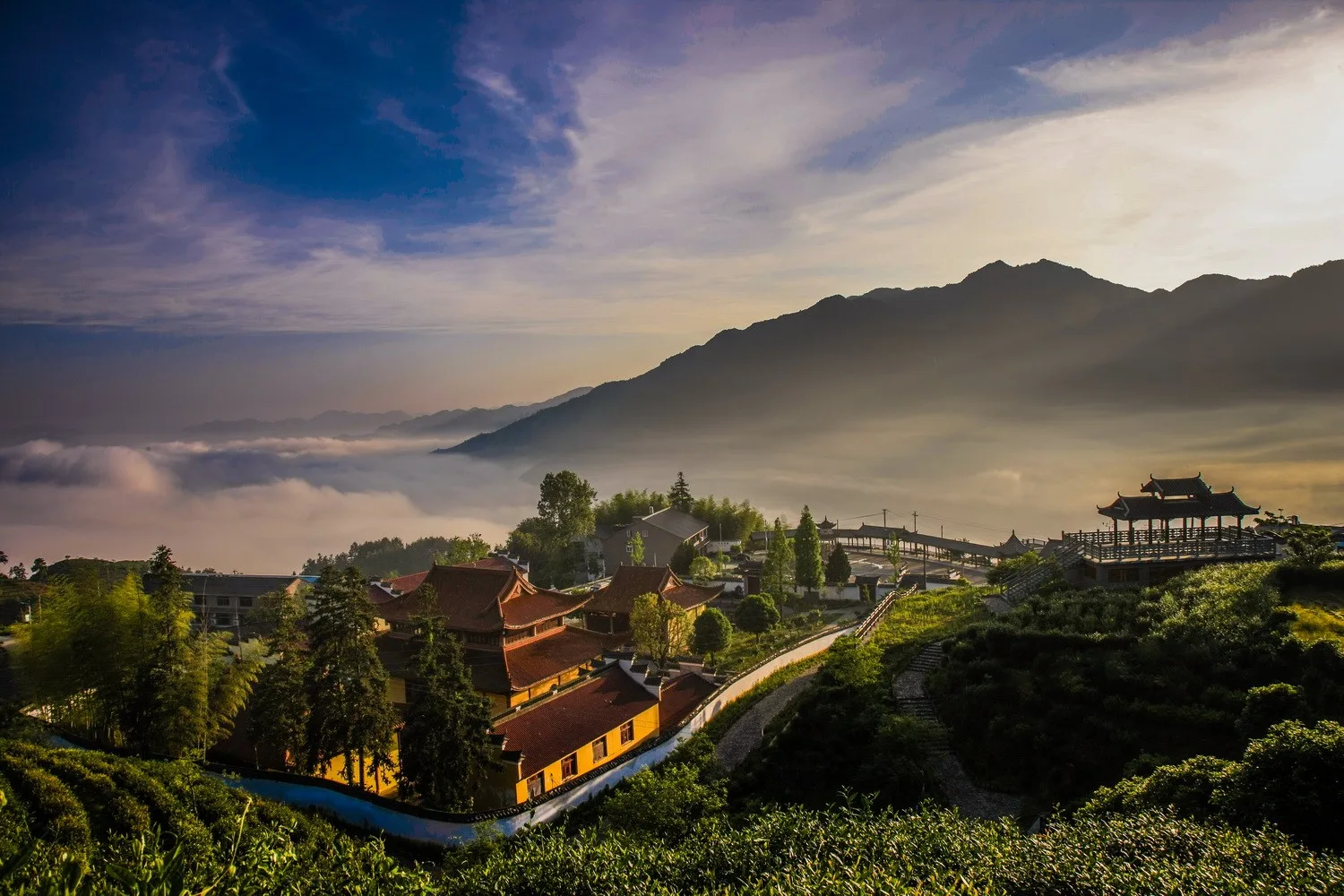
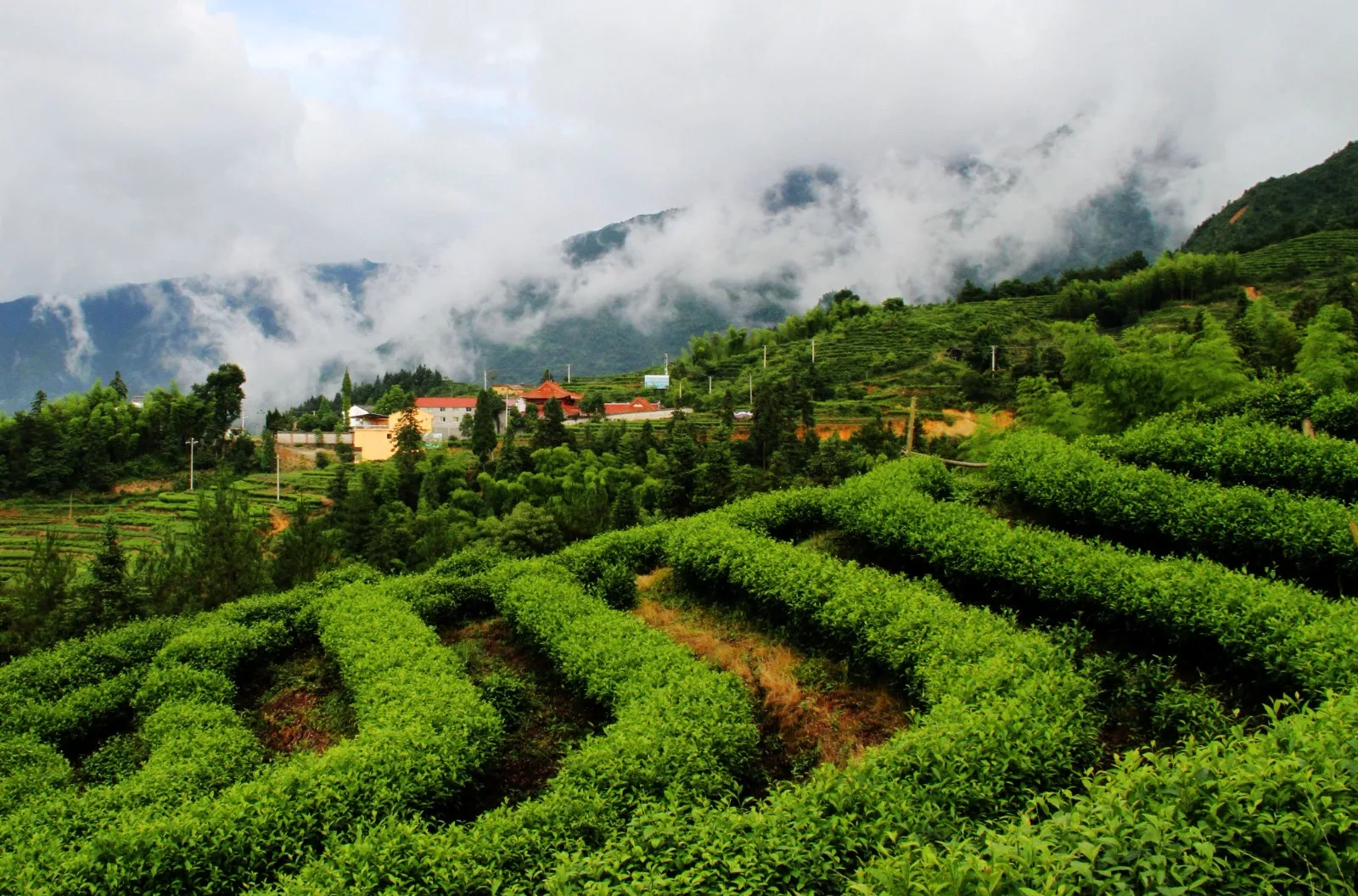
Huiming Tea Workshop
Managed by the Jimushan Scenic Area Management Committee, the Huiming Tea Workshop functions as a support facility for tourists and a daily activity center for local villagers. It highlights traditional Huiming tea-making techniques while blending local She culture with Zen tea culture. In the future, the workshop is planned to serve as a Zen tea workshop space as the Huiming Temple expands.
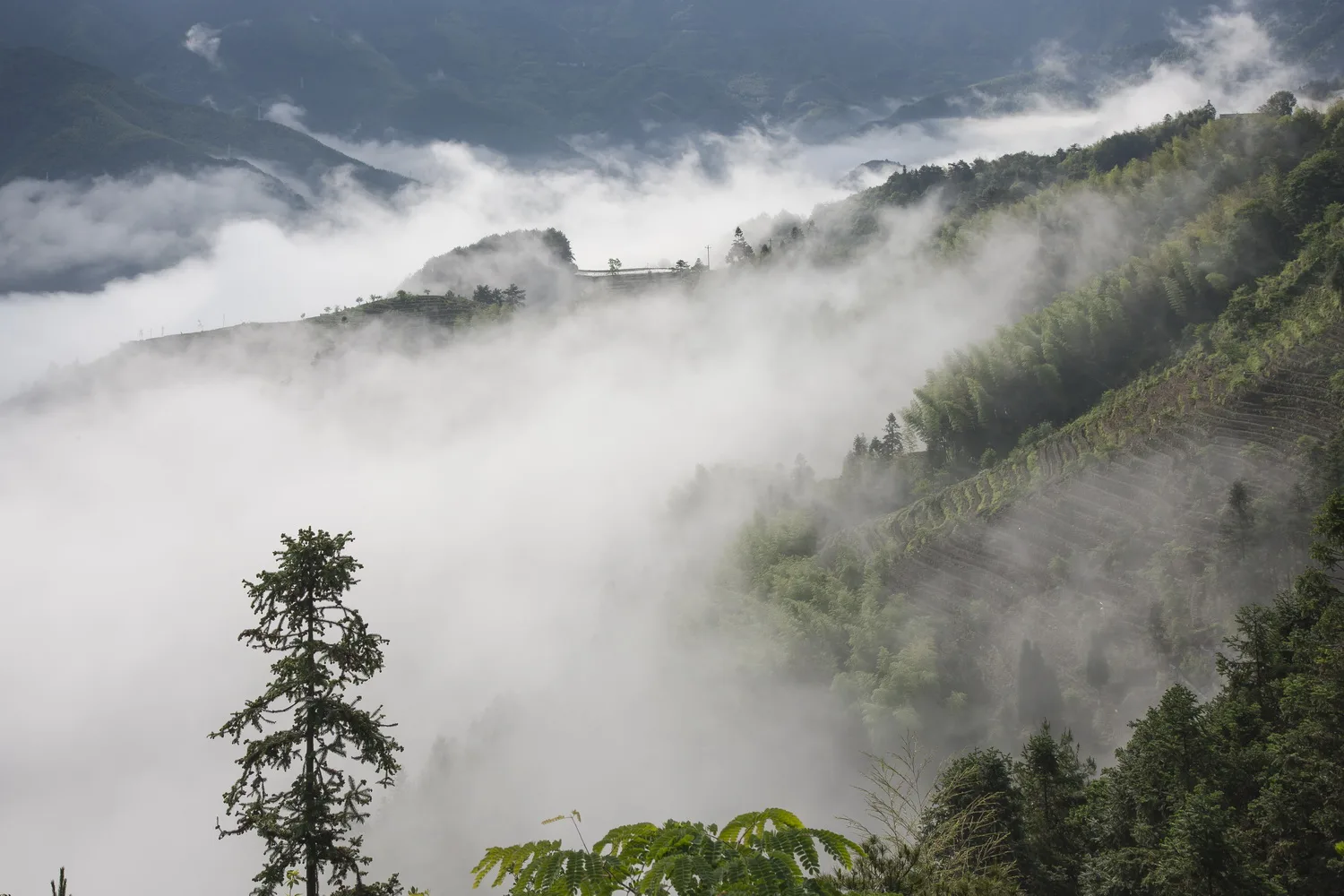
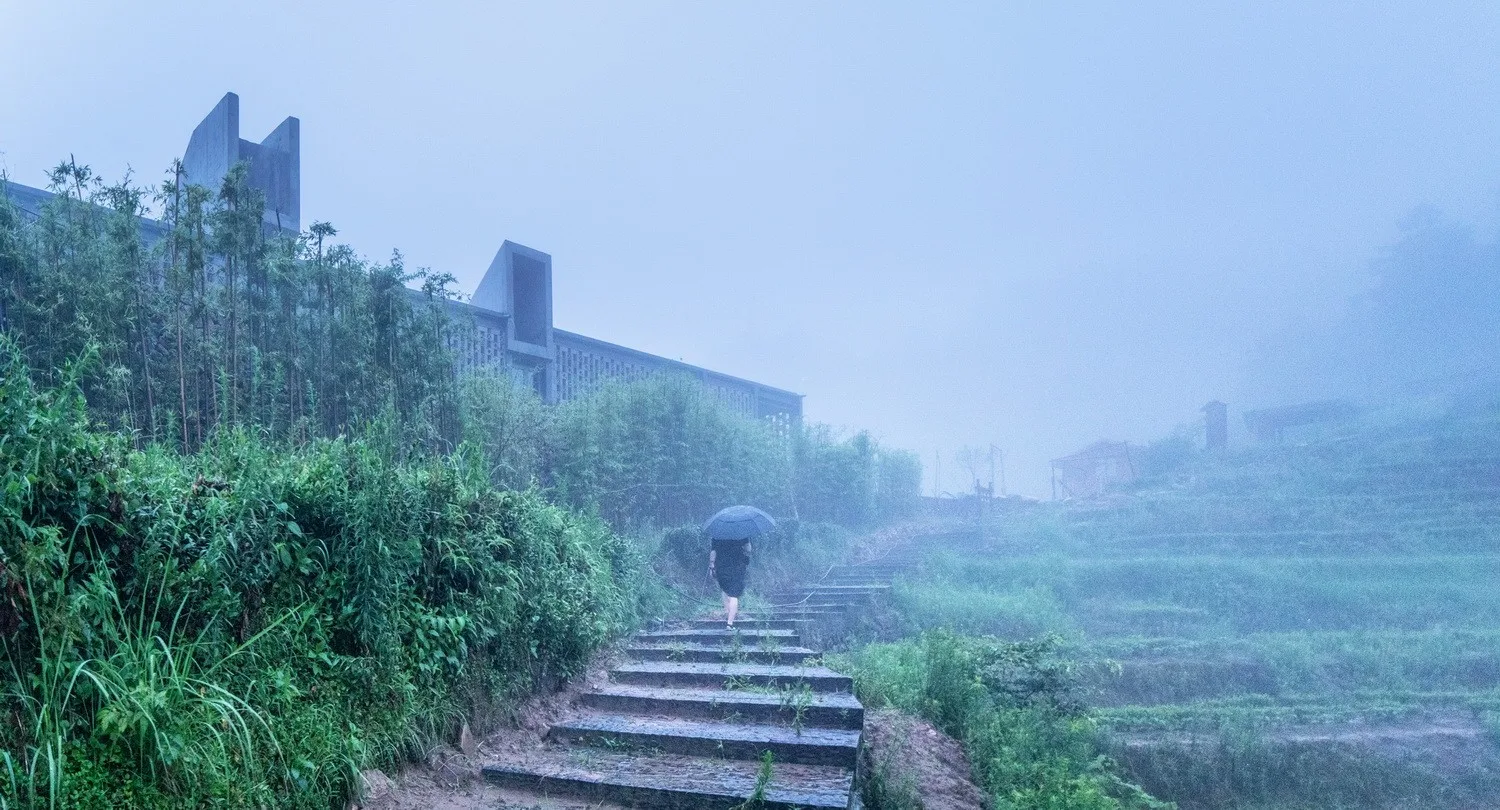
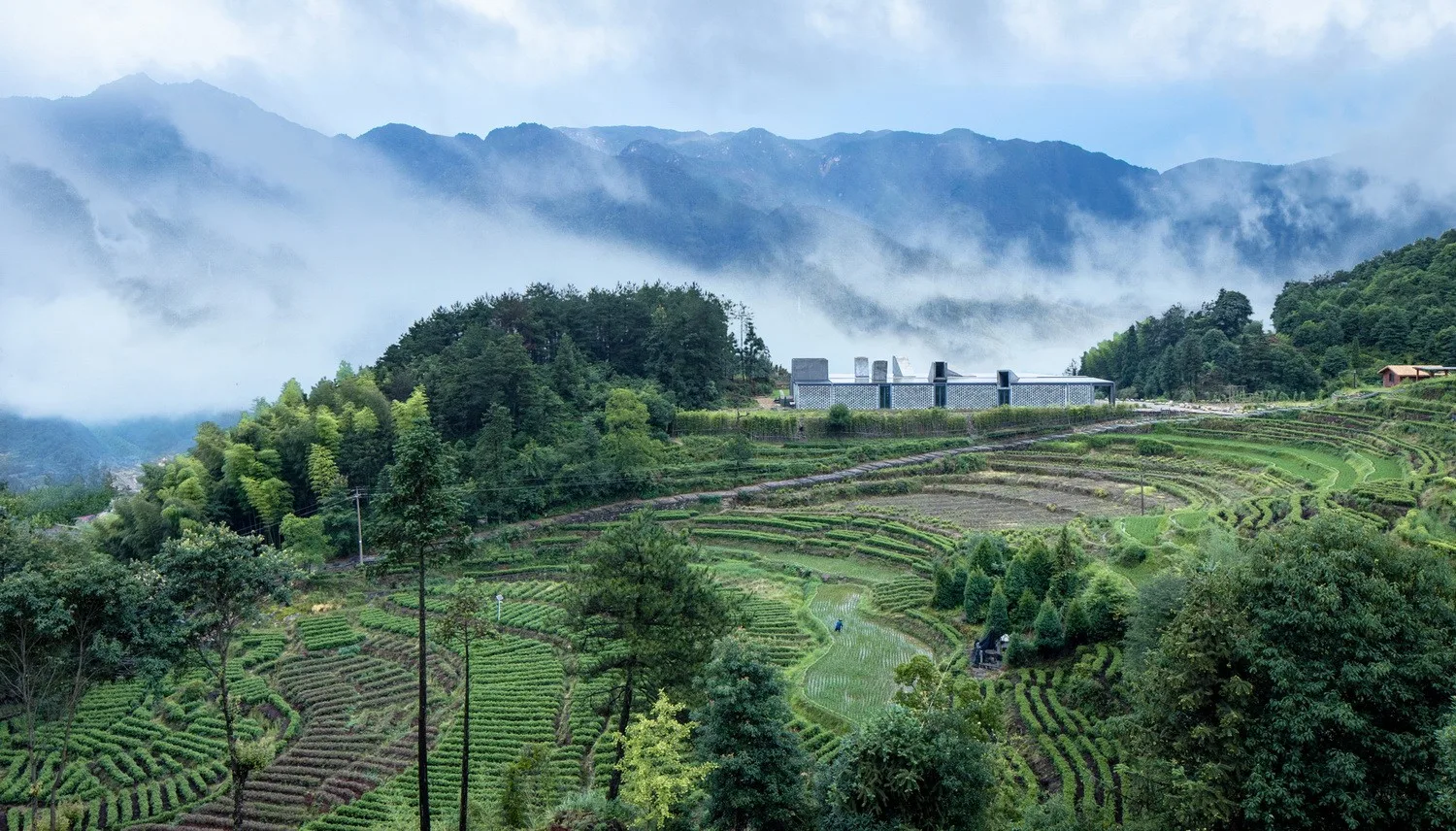
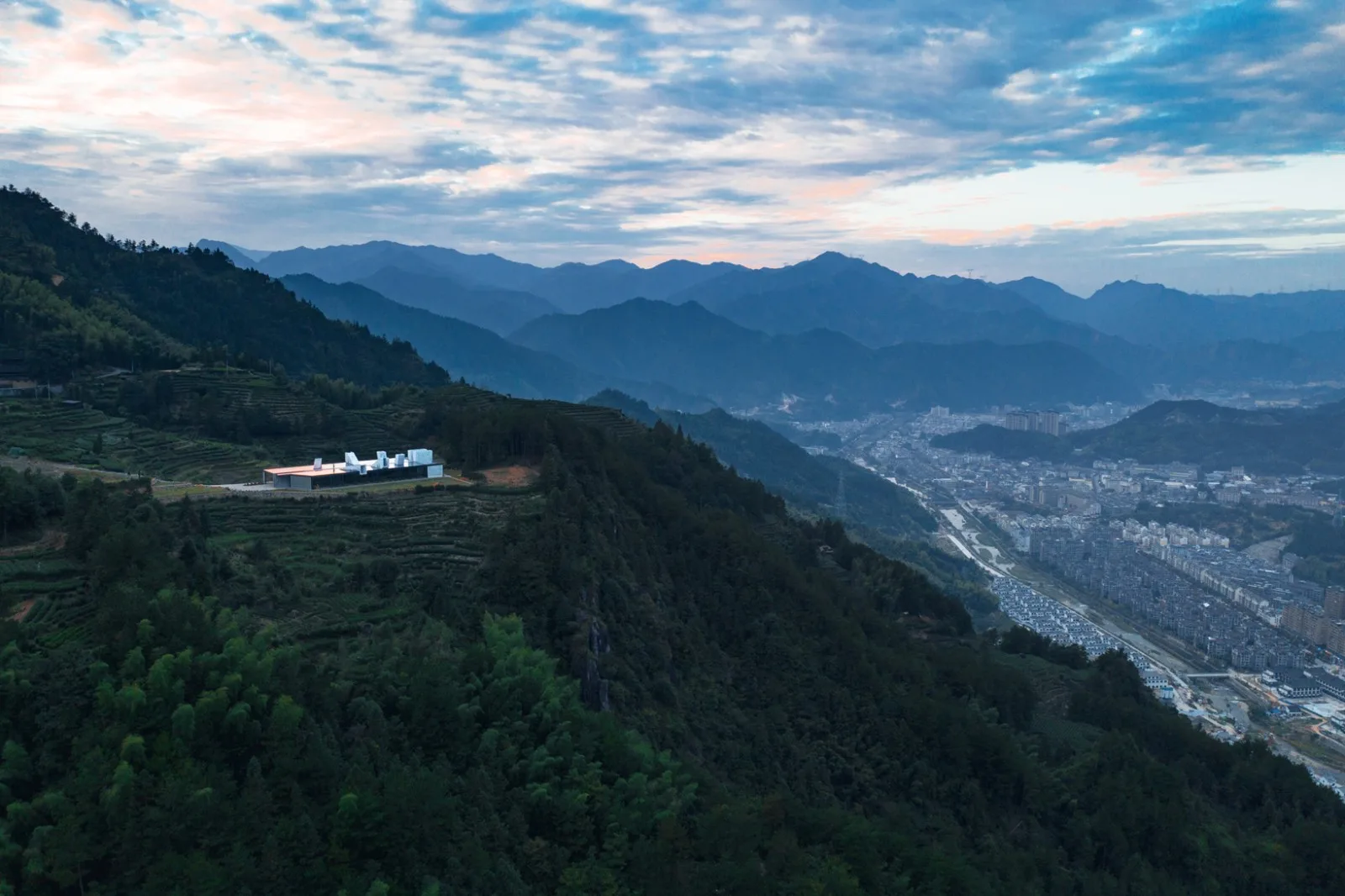
The project is located in the Banshan Tea Garden, just north of Huiming Temple. The site is flat and stretches north to south, bordered by a pine forest on the northern mountain top and the temple gate to the south. Surrounding areas have been terraced into tea gardens, with a gentle slope to the west and a steep drop to the east. From the northeast, visitors can overlook the county town at the mountain’s base.
The unique terrain, topography, and the surrounding natural and cultural environment offer the project opportunities that extend beyond its functional purpose.
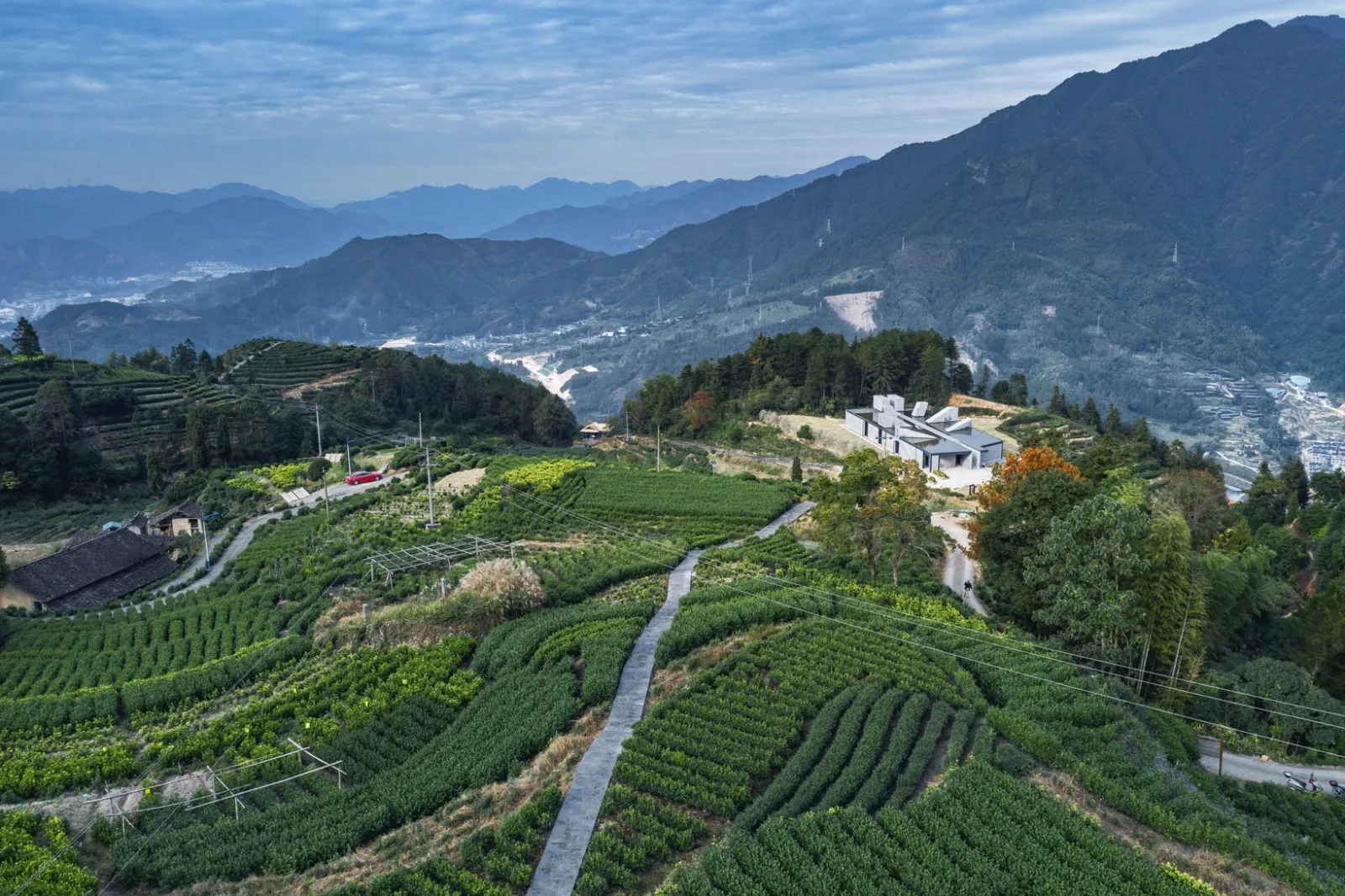
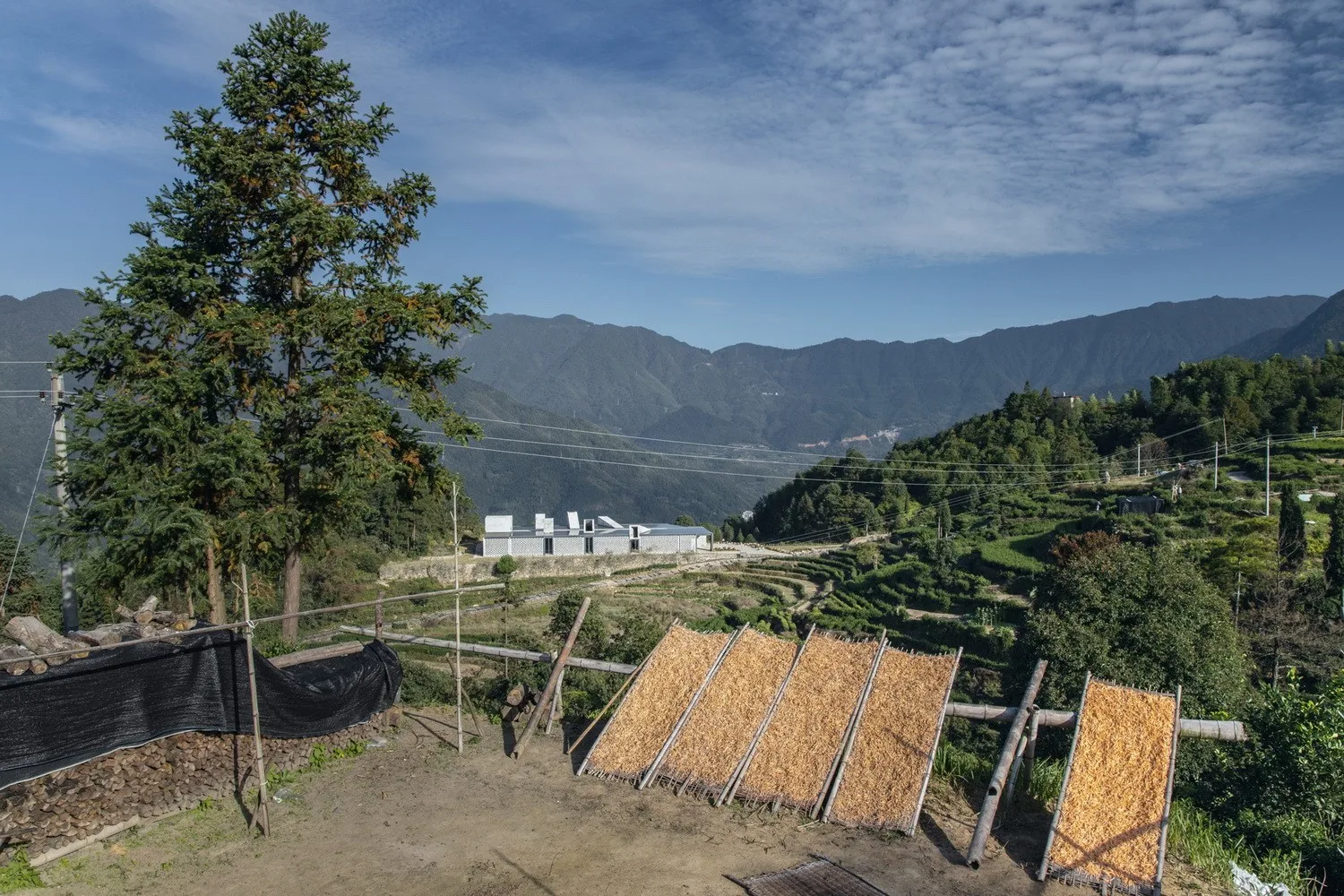
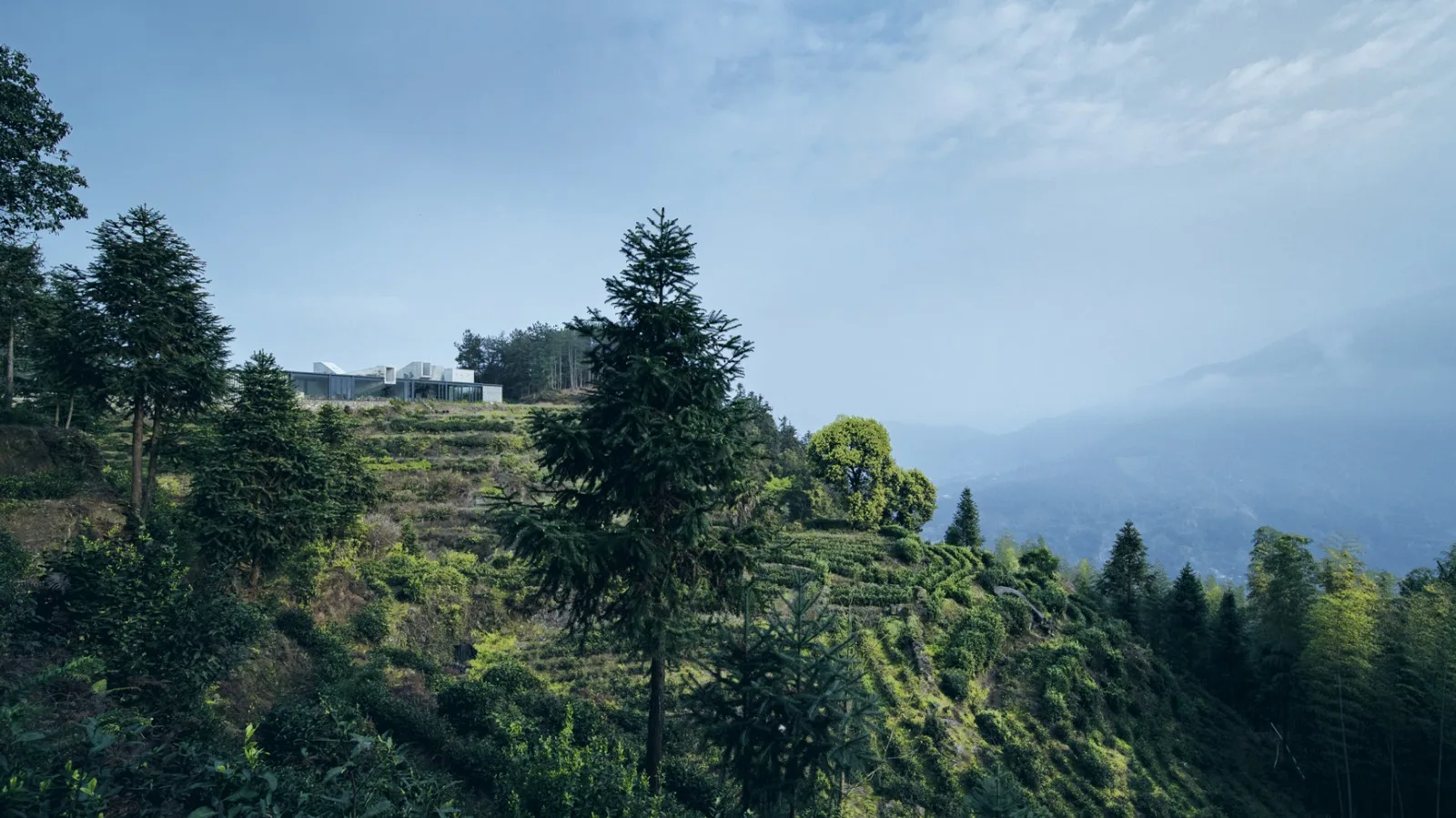
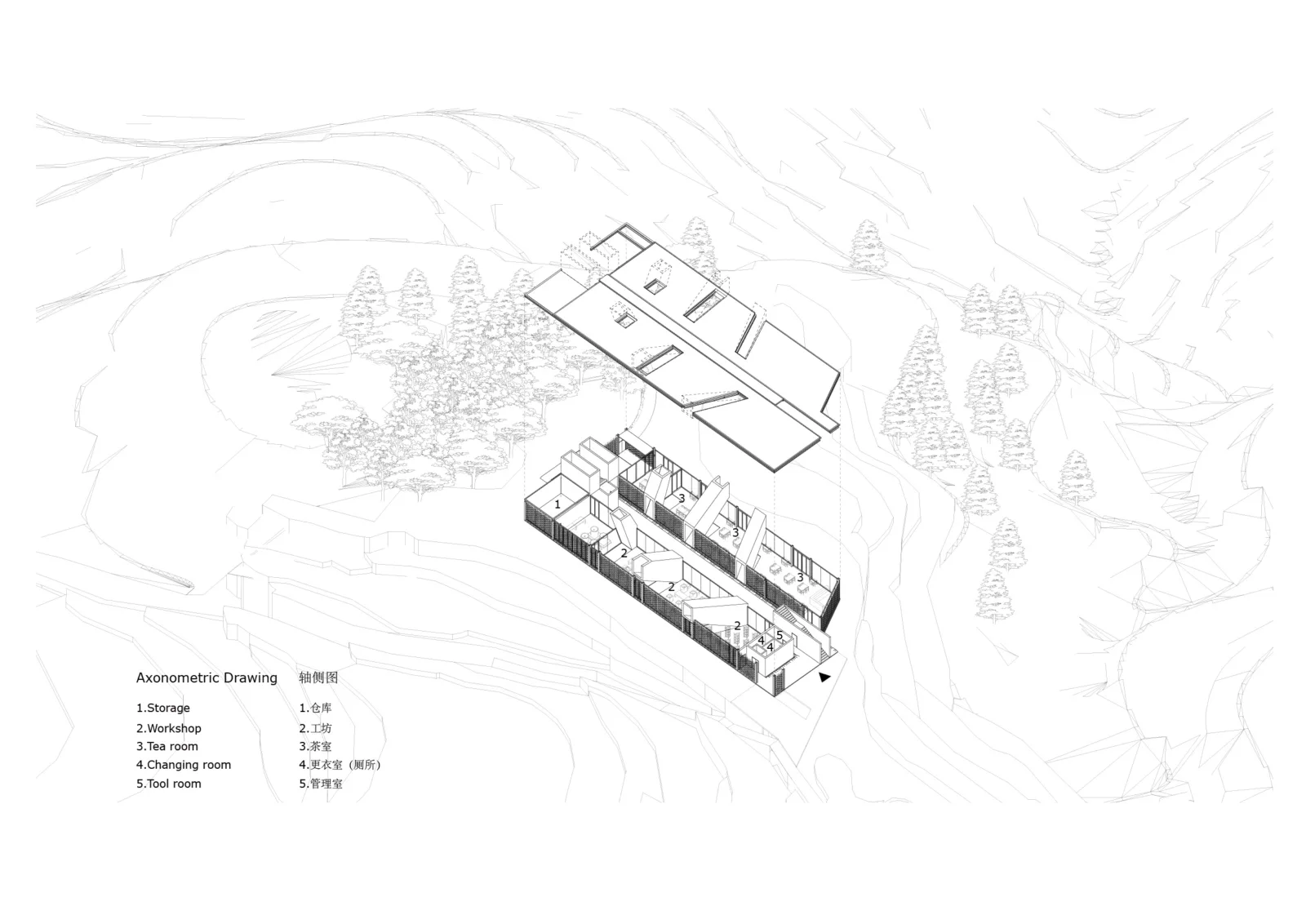
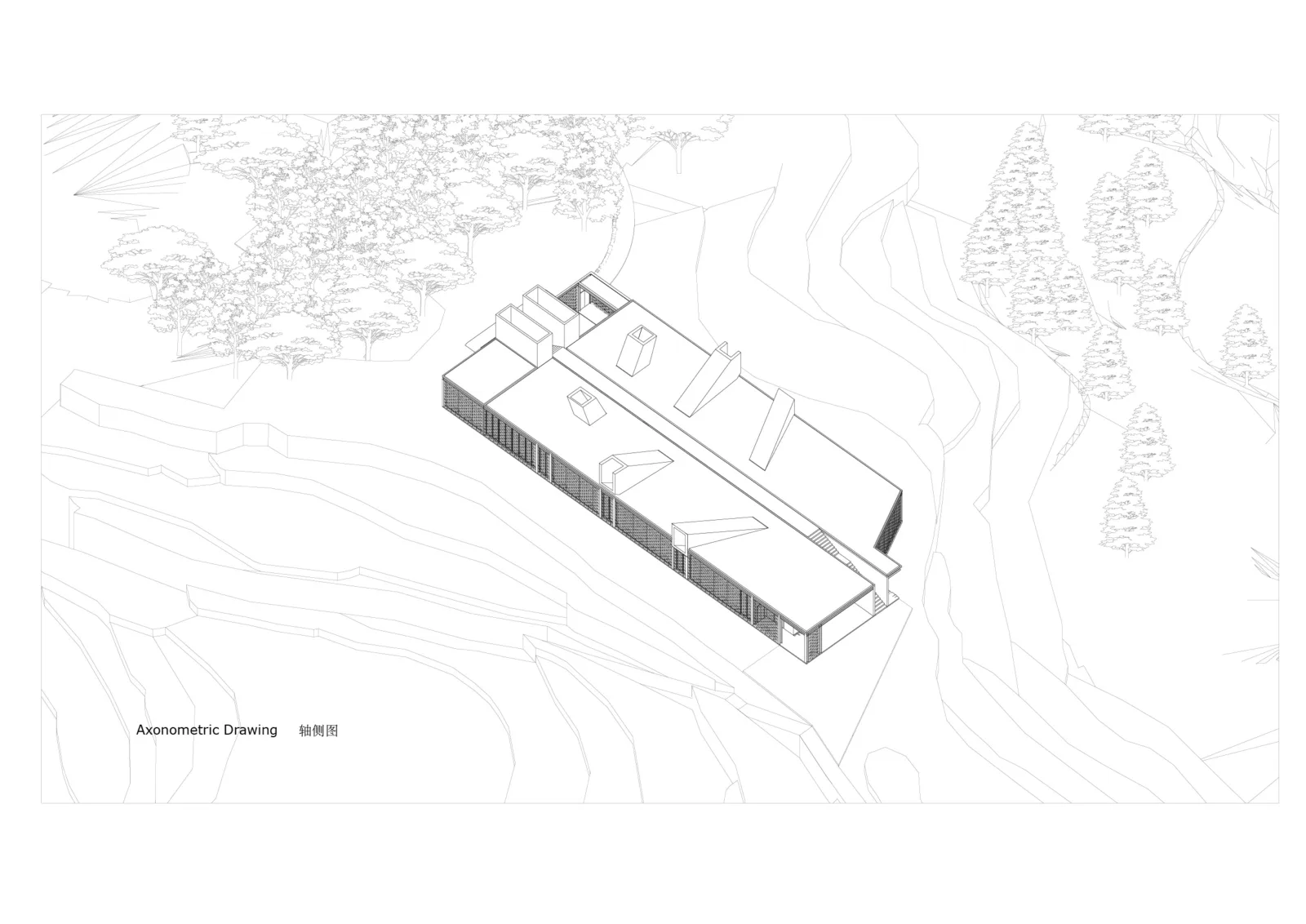
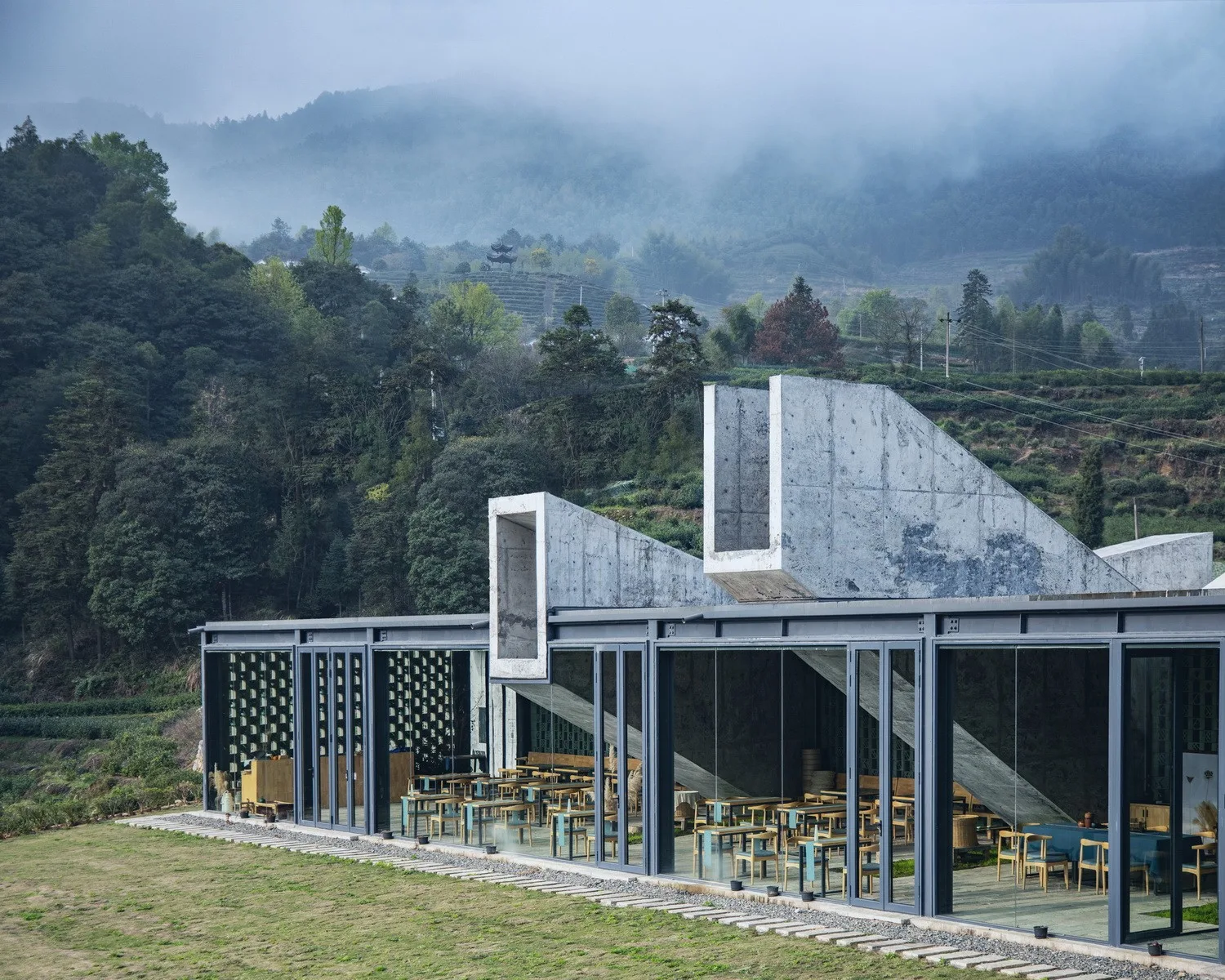
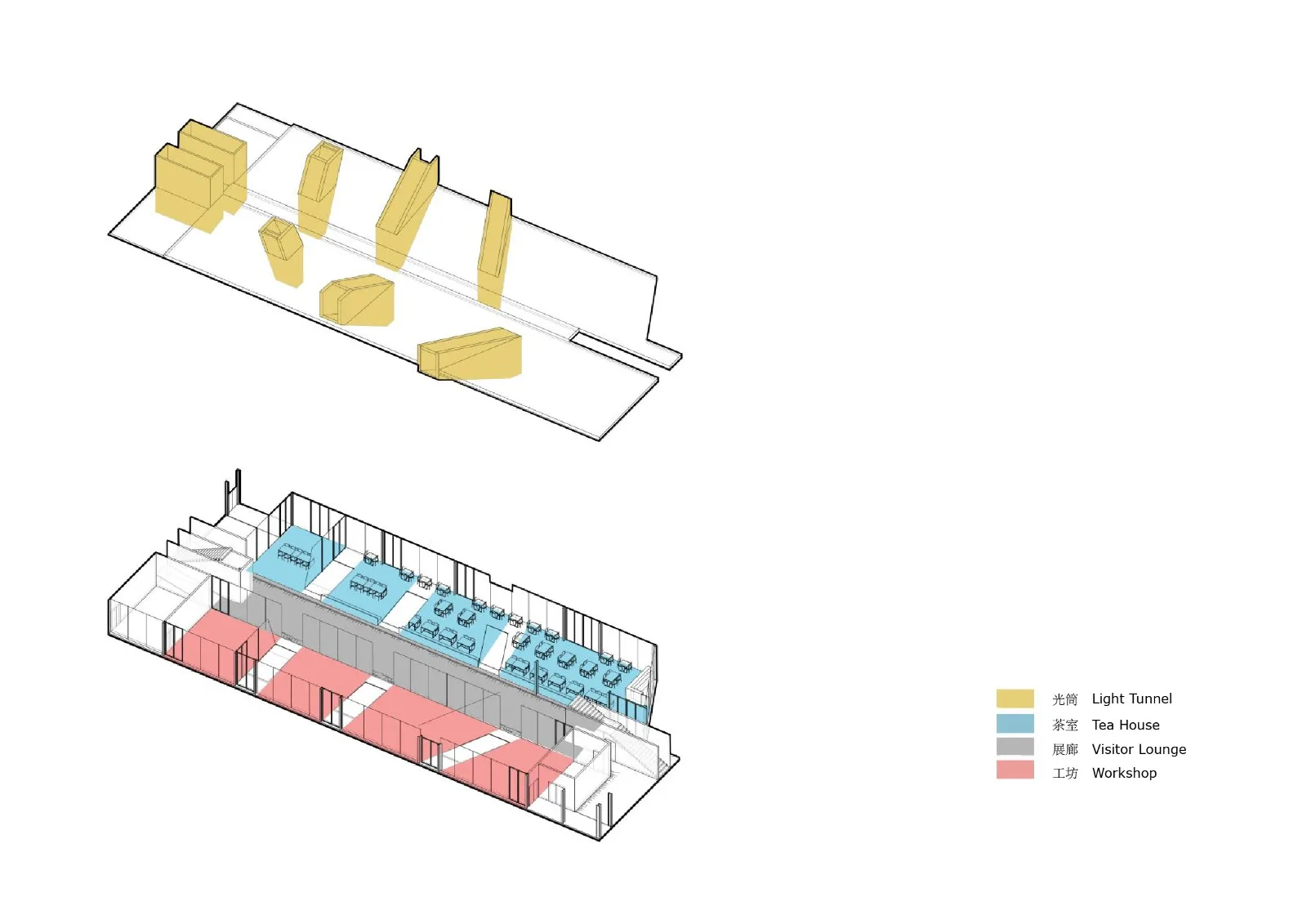
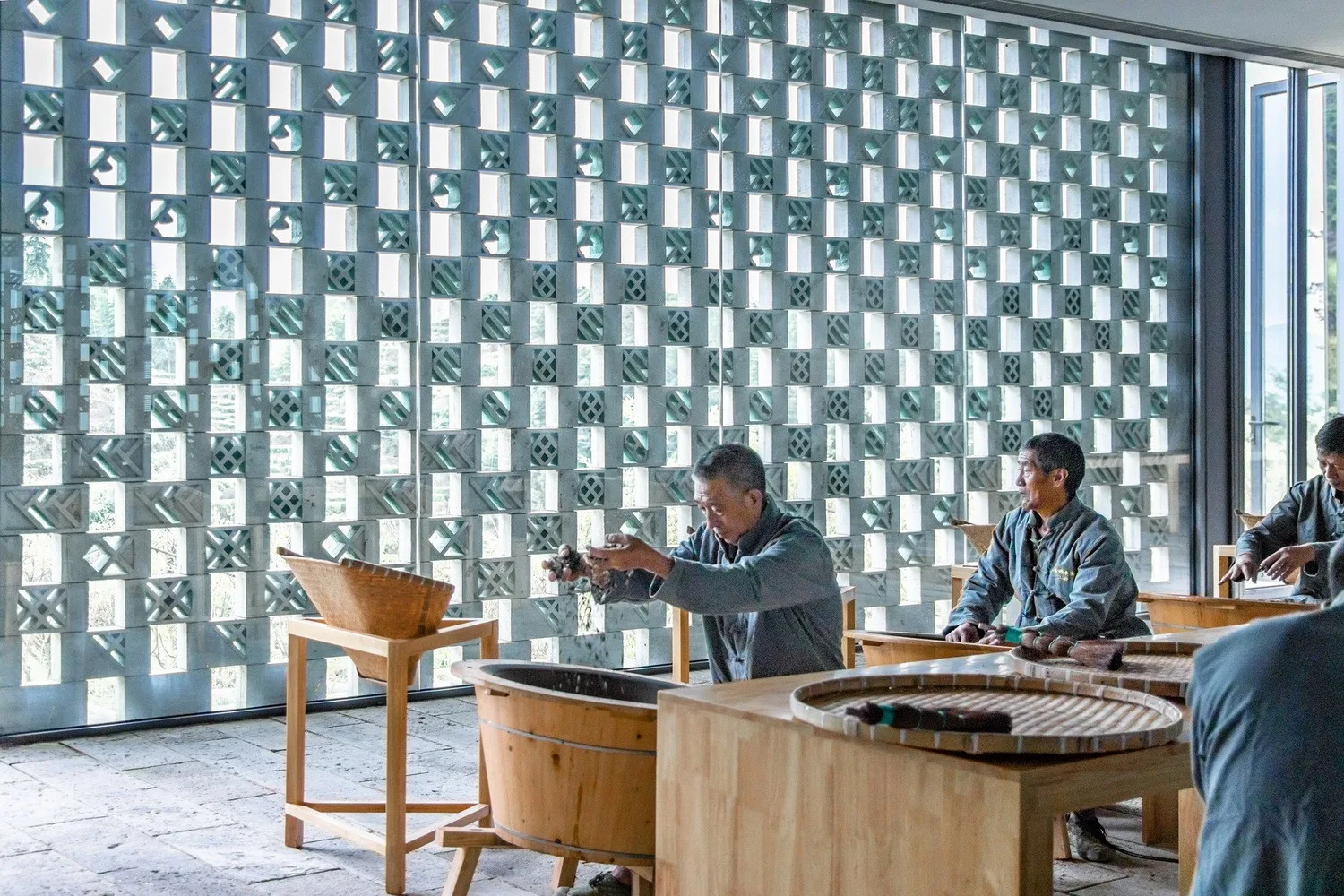
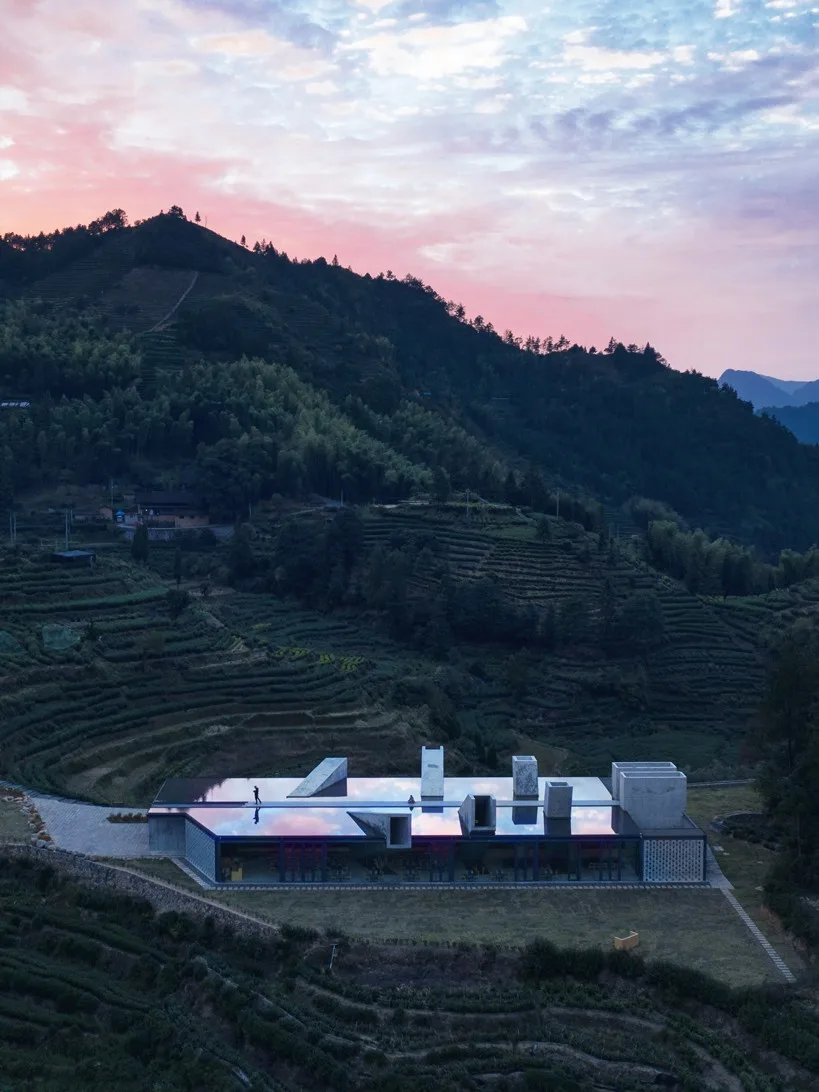
The architectural design consists of a single-story horizontal structure that aligns with the tiered tea garden terraces. Acting as a guiding element on the site, it comprises three parallel north-south spaces: a traditional Huiming tea-making workshop facing the tea gardens; a tea tasting and viewing area oriented towards distant mountains in the east; and an open leisure corridor in the center allowing visitors to observe the tea-making process.
This design creates a complete cultural loop of tea production and tasting. The central corridor is open to the public, offering a resting space for both locals and tourists to freely enter and exit. The traditional Huiming tea-making process, especially during the tea picking and production seasons, is showcased as a live demonstration of labor.
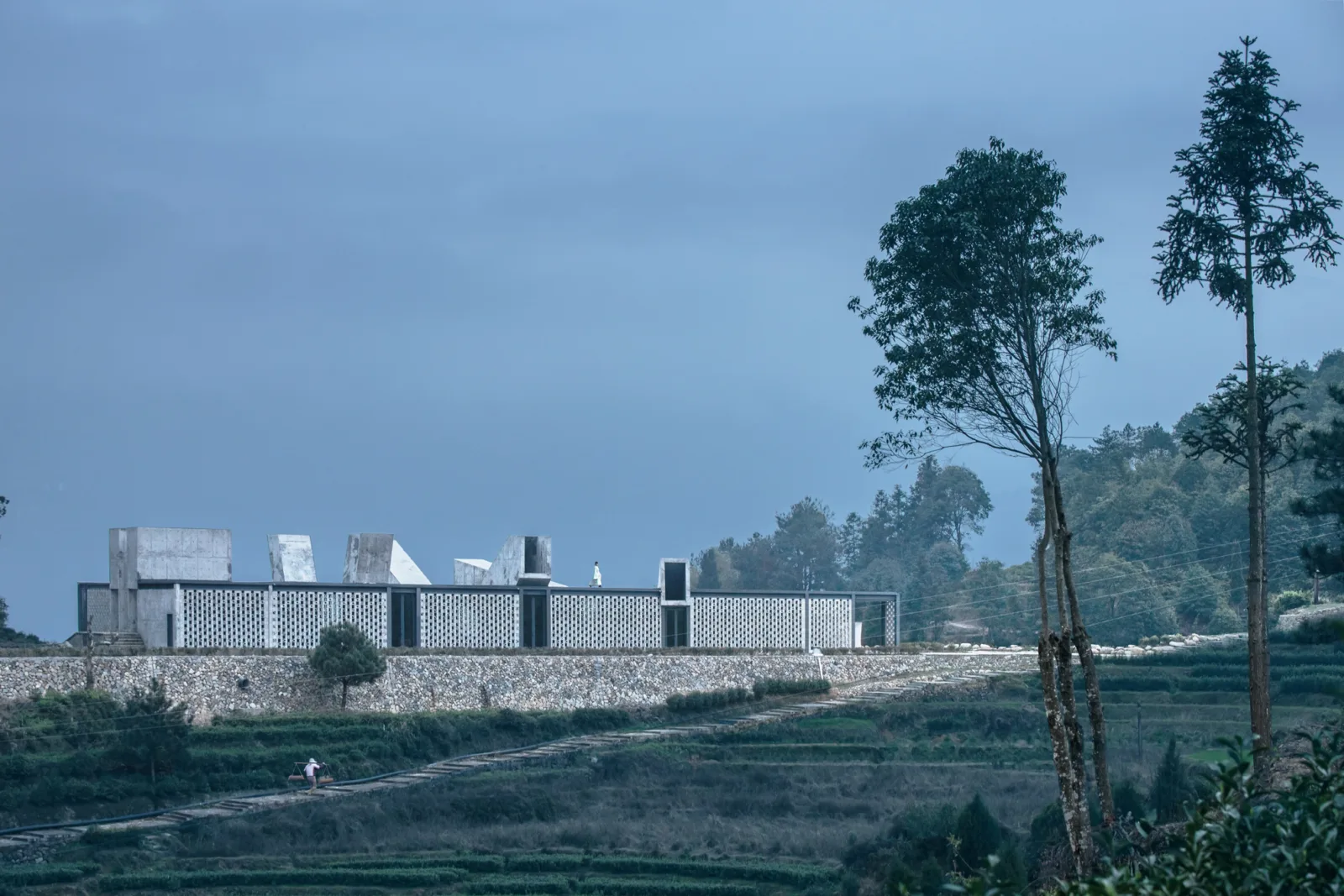
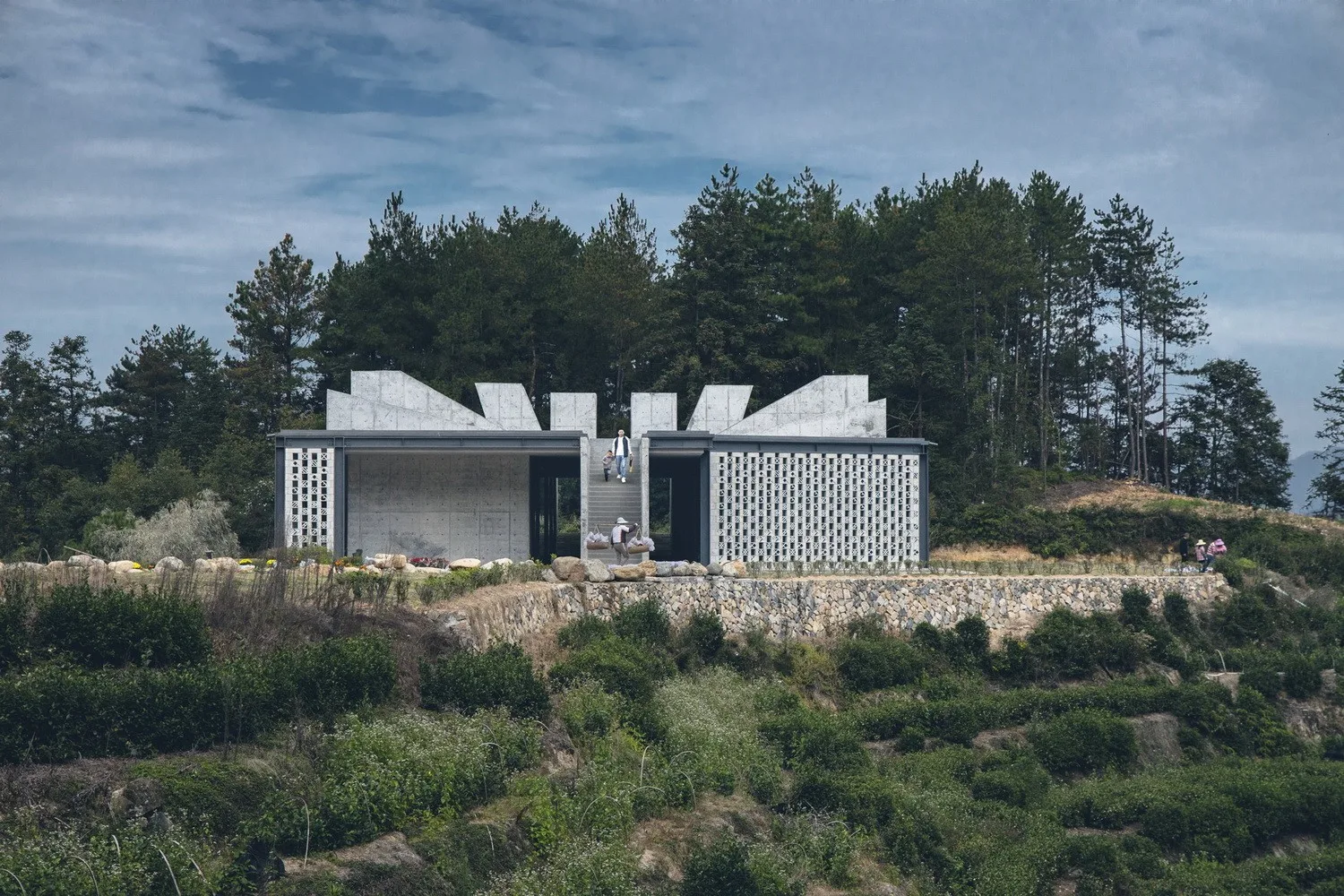
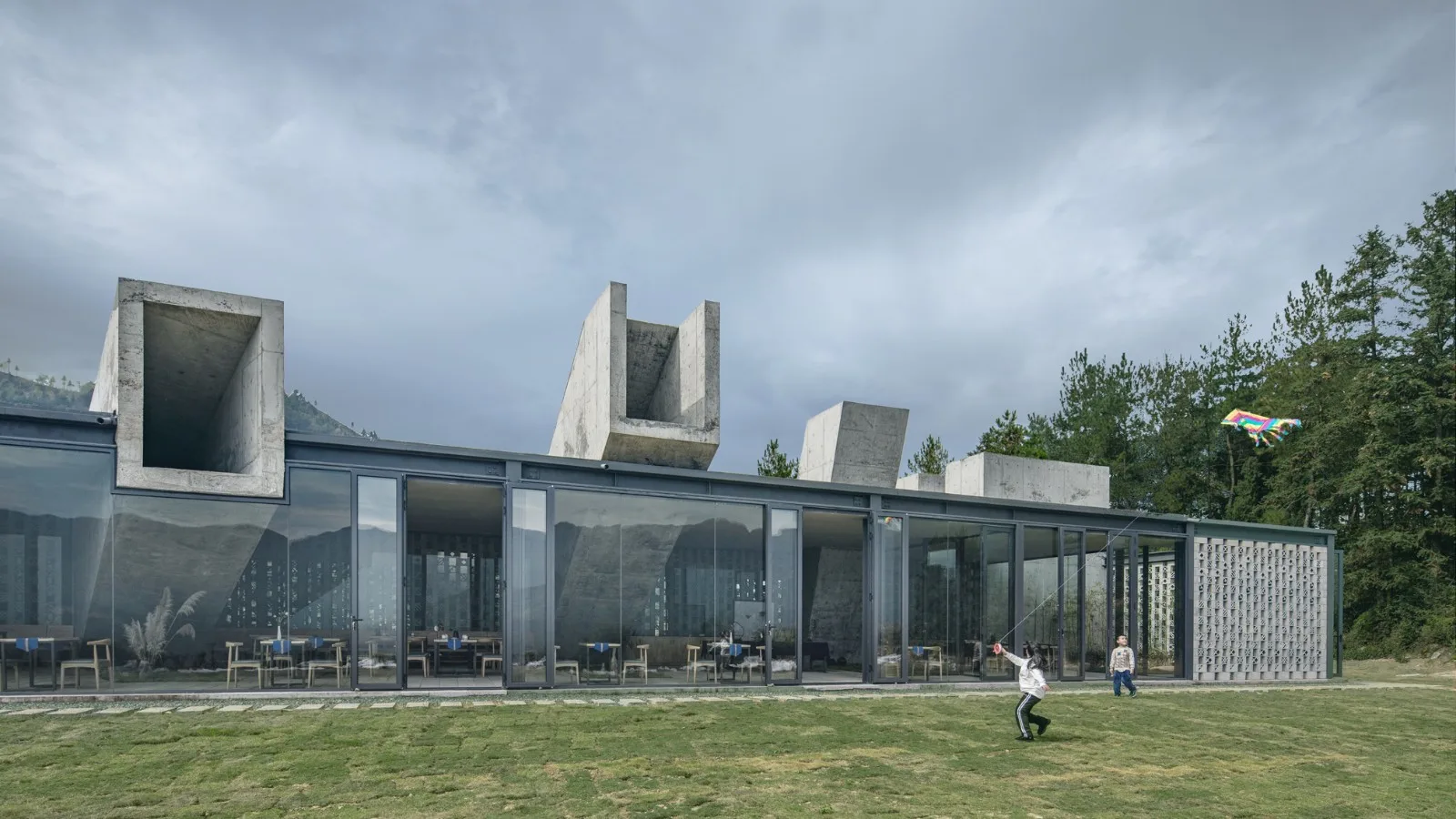
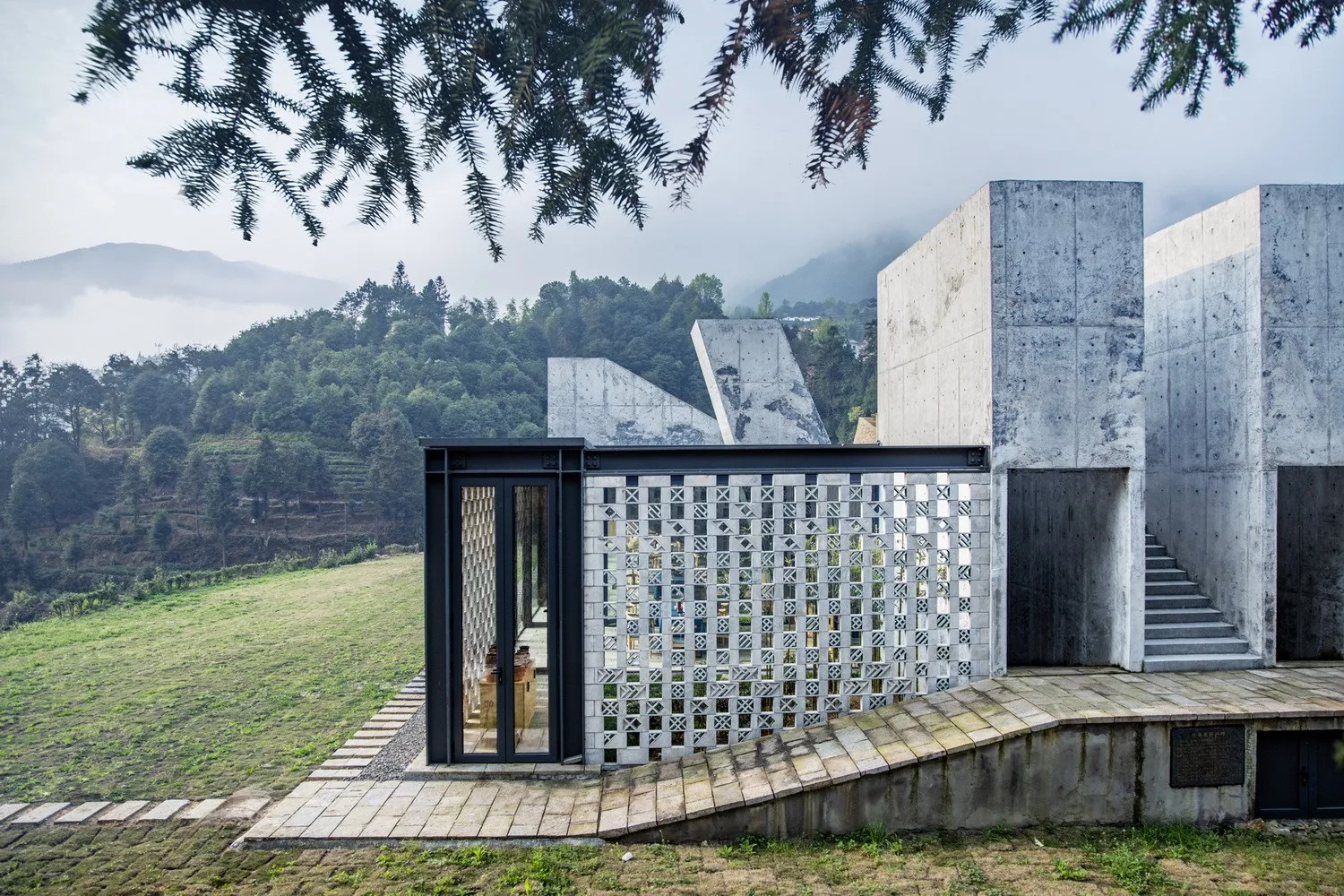
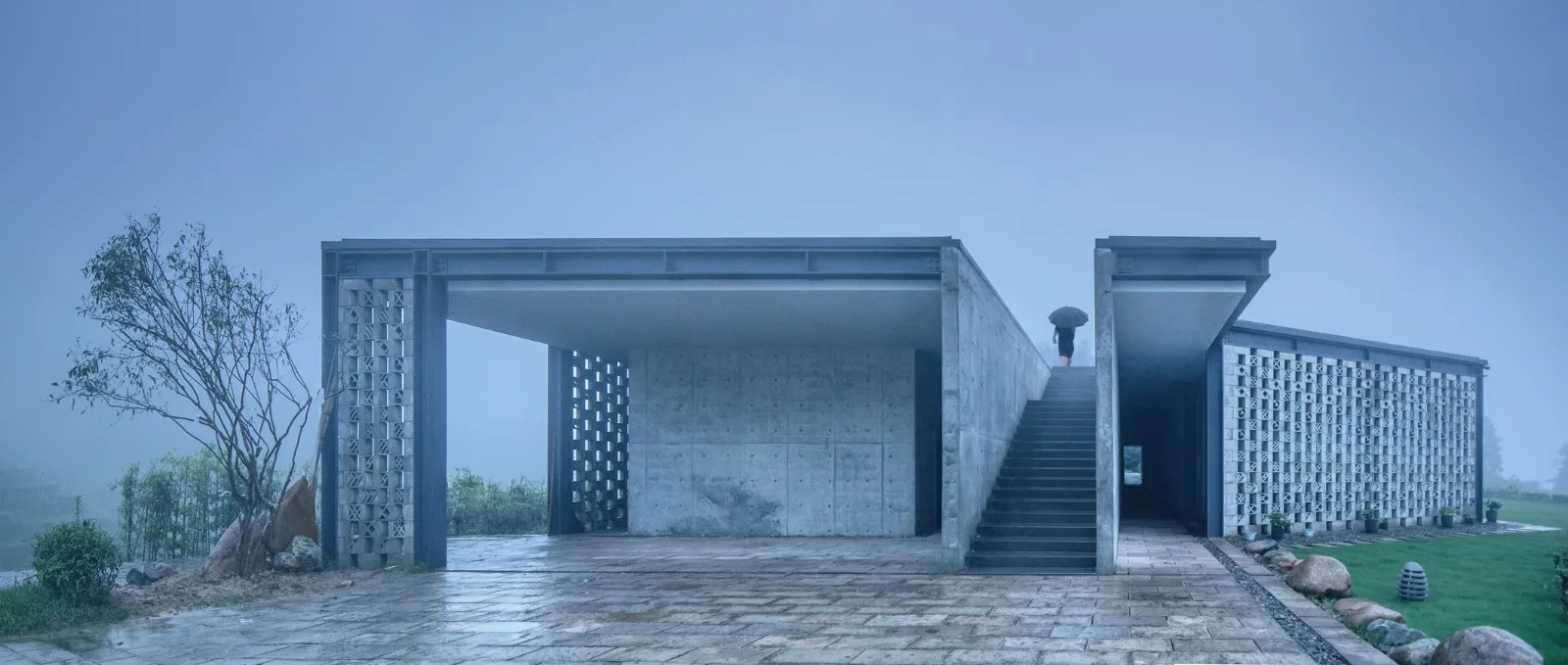
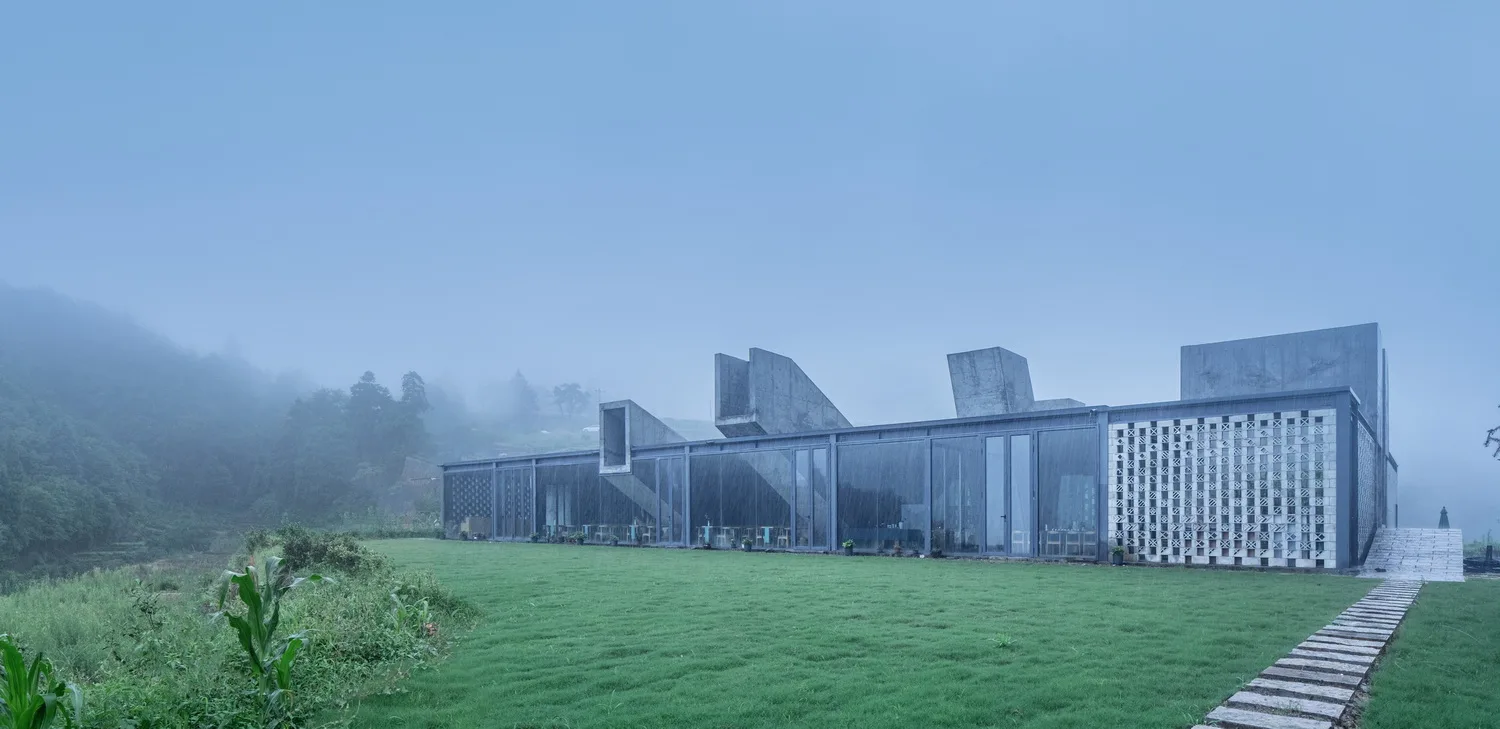
The workshop’s east walls and tea room walls are constructed from hollow block walls that provide sun protection and separate the tea room from the exhibition hall. These blocks feature prefabricated patterns inspired by the pictographic symbols of the She ethnic group.
The She people have a history rooted in hunting and slash-and-burn farming, and though they lack a formal writing system, they developed ideographic patterns through long-term labor that convey simple meanings. The pictographic blocks are arranged vertically on the walls, symbolizing the transition from land at the bottom to the sun above, recreating scenes of mountain farming and hunting—a second cultural layer within the space.
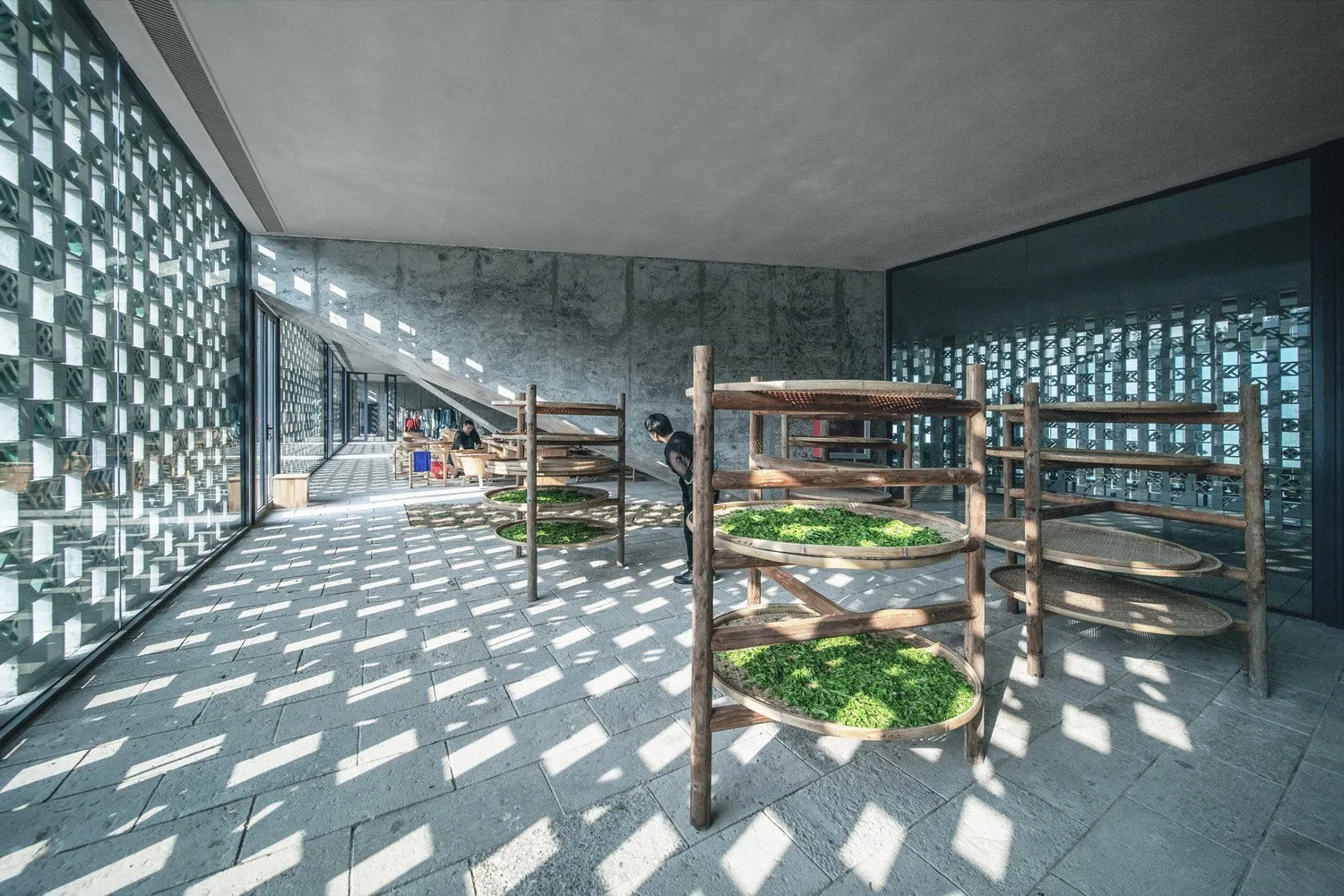
The central corridor, nearly 50 meters deep, is illuminated by eight skylights along with entrances at both ends. The natural light streaming through these skylights not only brightens the space but also symbolizes the essence of agricultural labor and the growth of all living things, highlighting the natural rhythms of direct sunlight within the space.
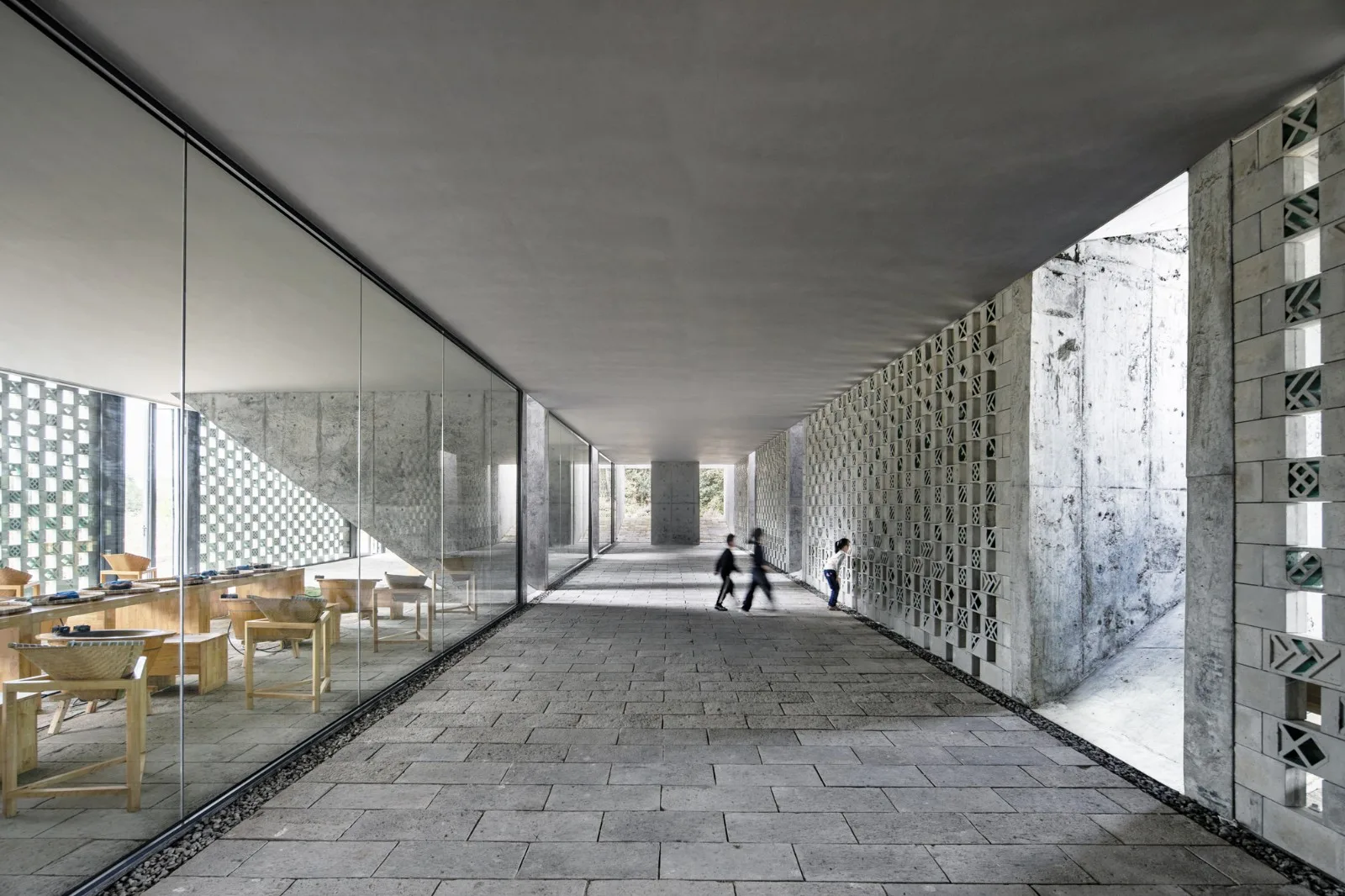
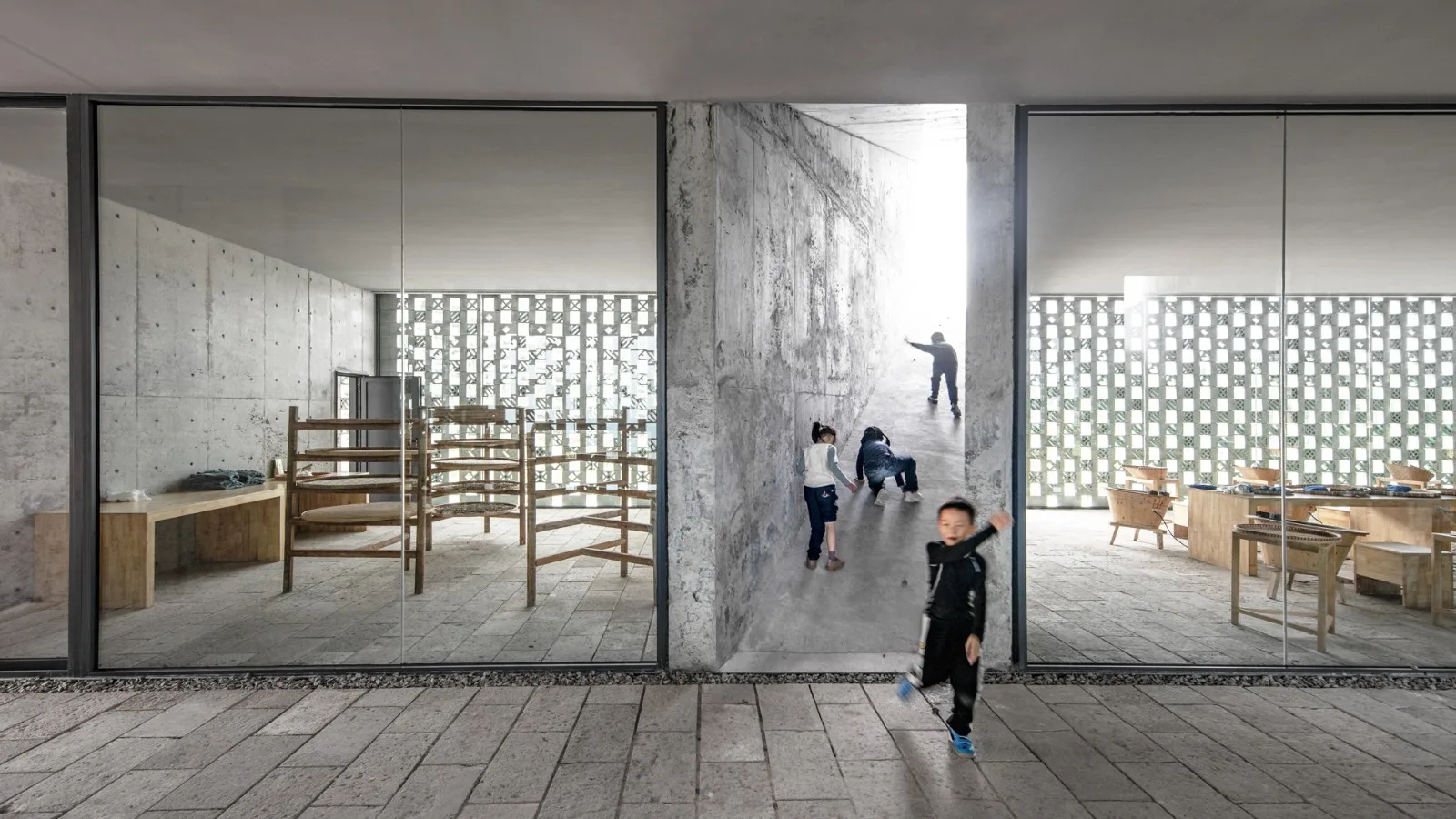
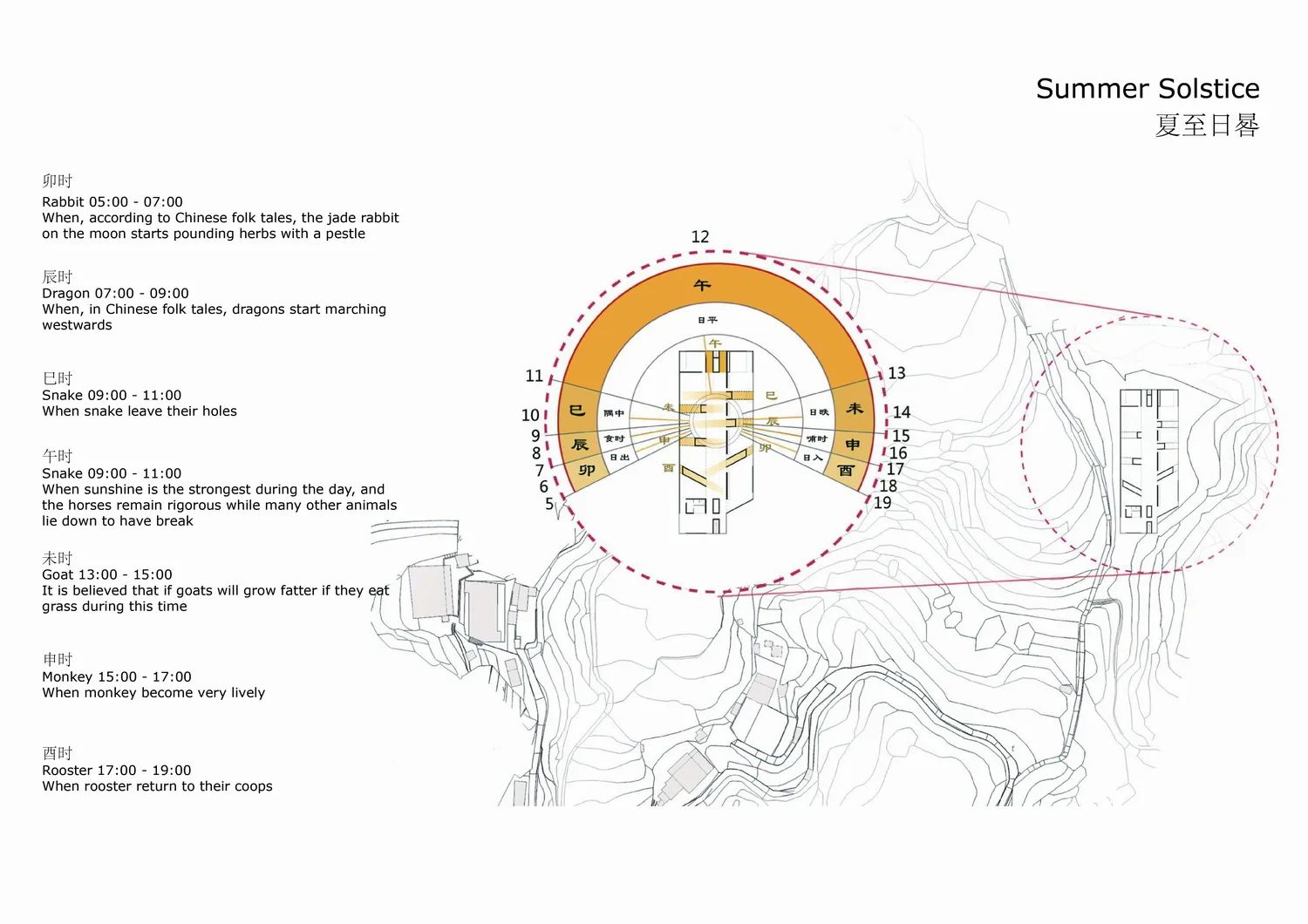
The summer solstice, marked by the longest duration of sunlight and the highest sun angle, is the earliest solar term recognized among the 24 traditional solar terms. The skylights are aligned to follow the path of sunlight on the summer solstice, tracing light rays and capturing the passage of time.
The angles and orientations of the eight skylights are based on the sun’s position during the seven hours from sunrise (Mao) to sunset (You) on the summer solstice:
- Morning: During the hours of Mao, Chen, and Si, three skylights penetrate the eastern tea room and exhibition hall, dividing the tea room into four tasting areas stretching from the south public entrance to the north private tea room.
- Noon: Two parallel skylights at the northern end of the exhibition hall mark the change in the sun’s path.
- Afternoon: During the hours of Shen and You, three skylights from the western tea workshop create four stages of the local tea-making process: spreading, killing, rolling, and drying.
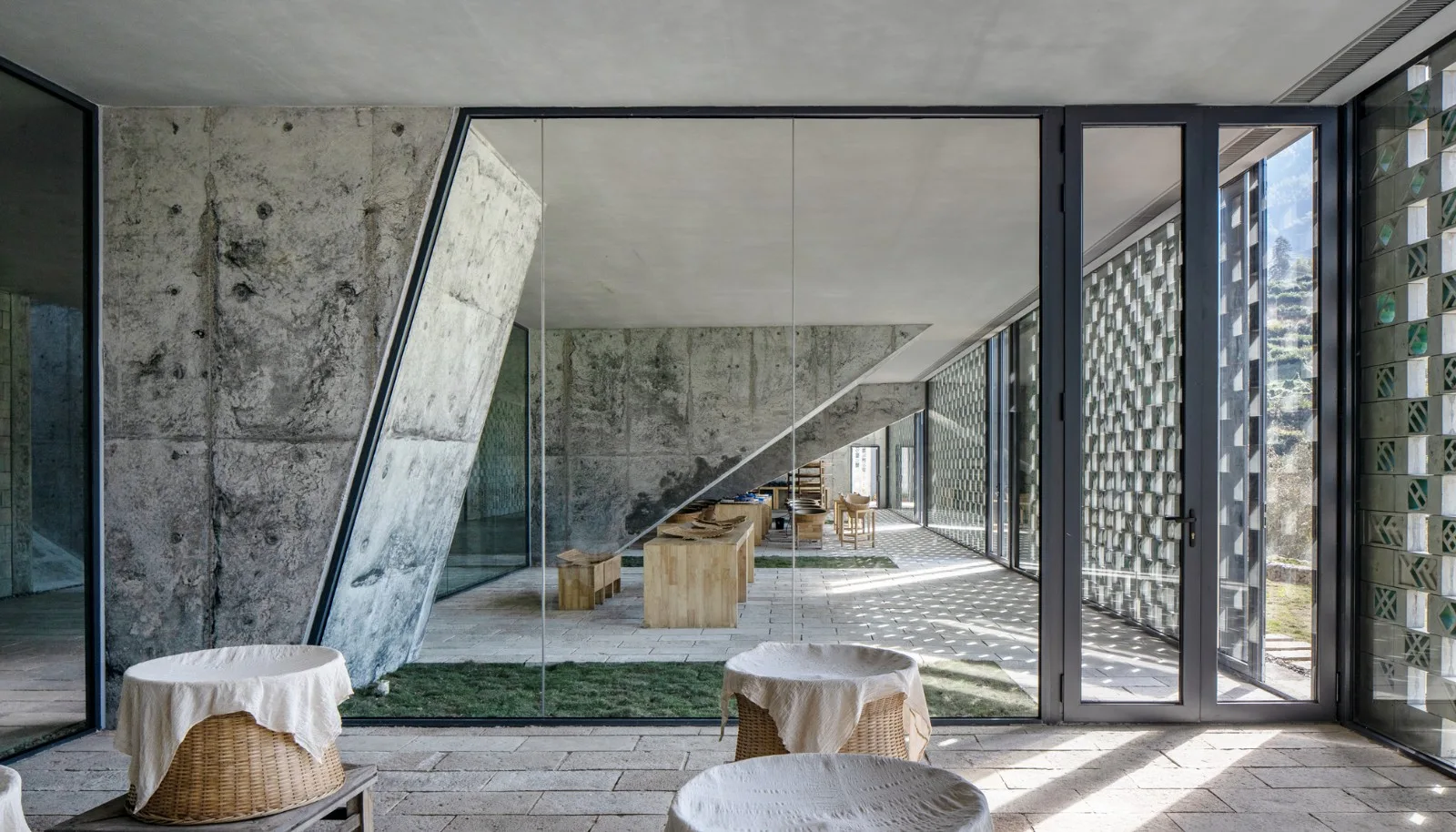
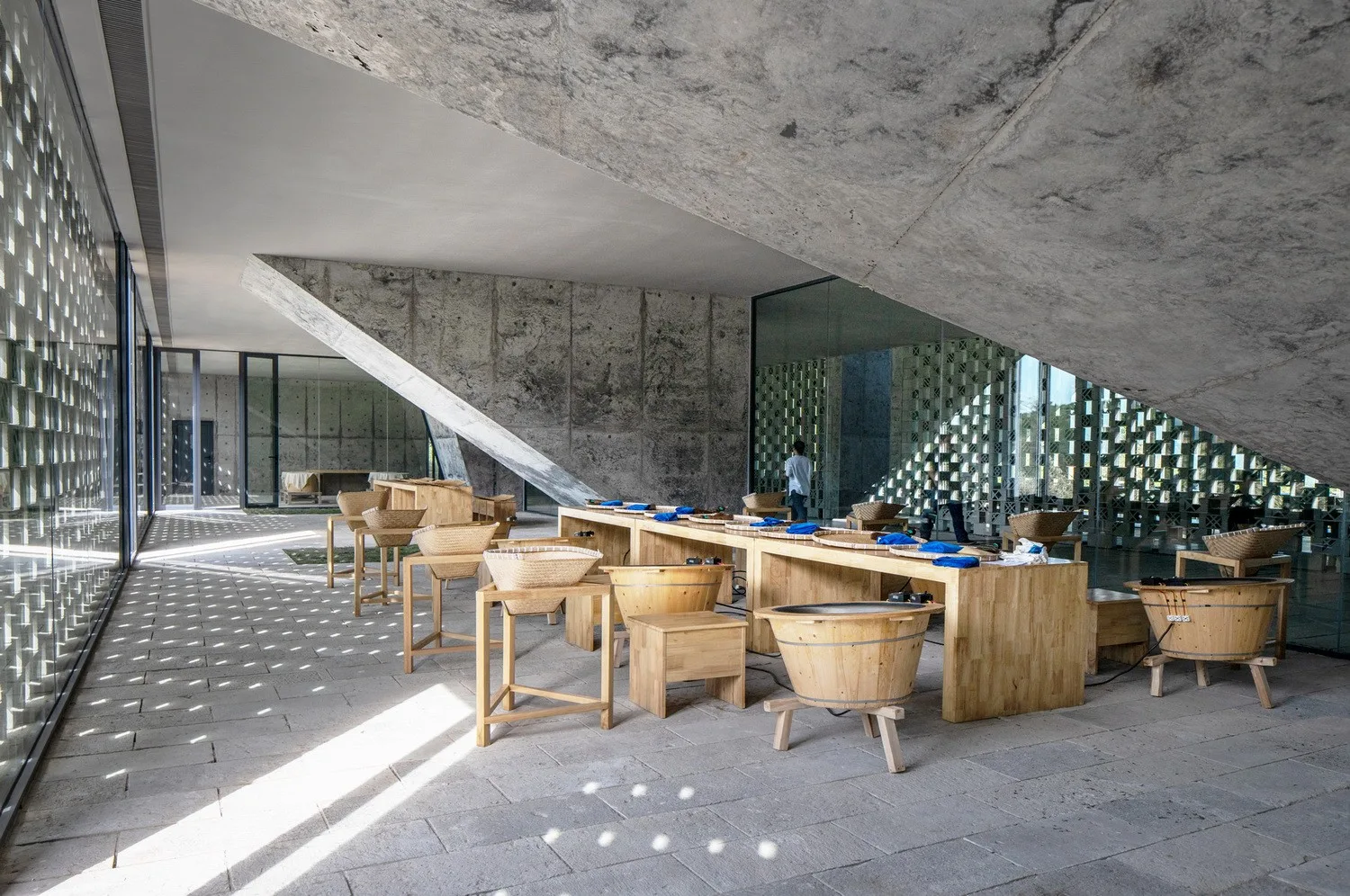
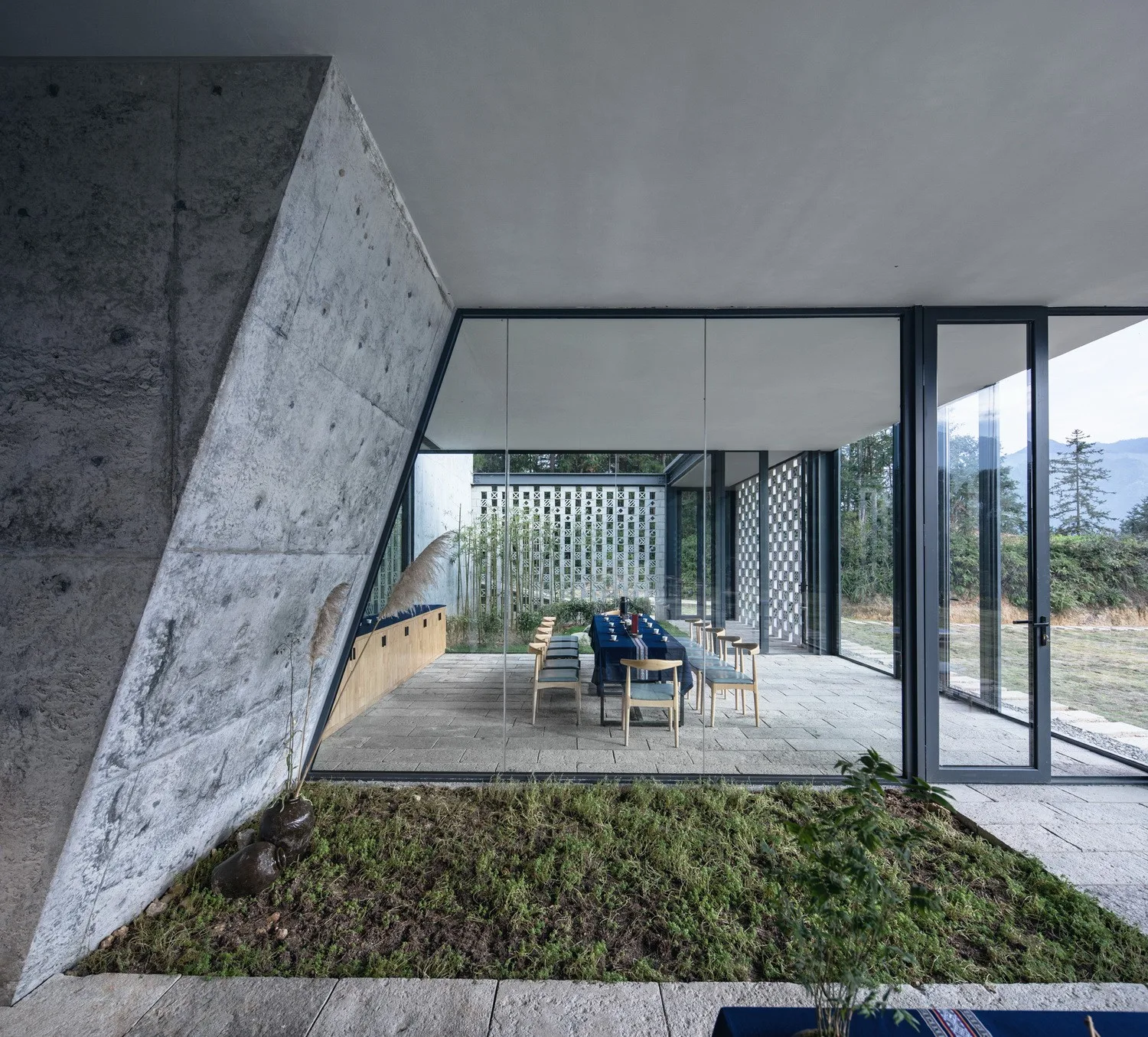
Before and after the summer solstice, direct sunlight at each hour enters the exhibition space only through the corresponding skylight. From sunrise to sunset, the direct light flows through the various skylights, tracing a path through the space as a measure of time.
The rising and setting sun governs agricultural production and daily life, just as it does for all plants and animals, following natural laws.
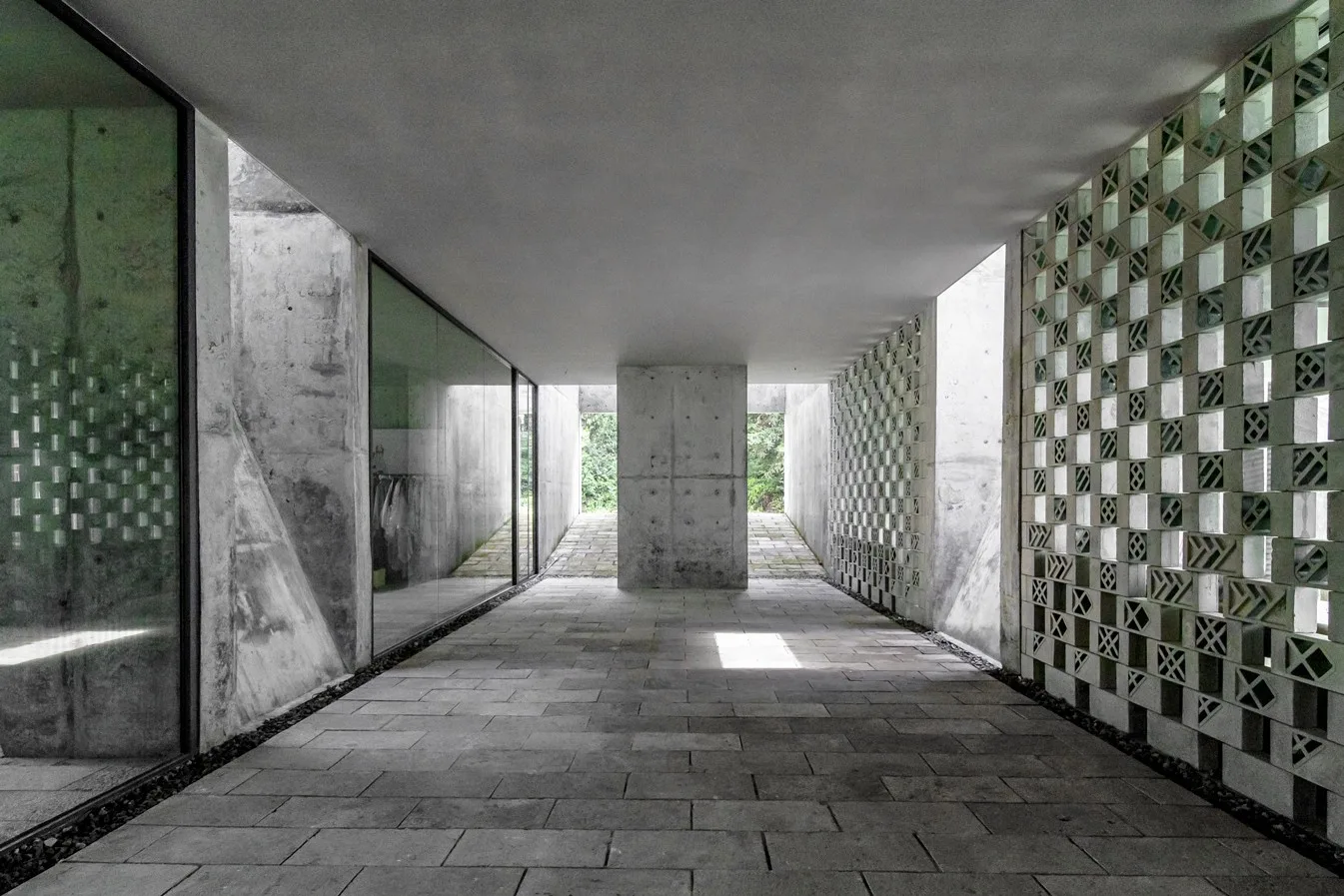
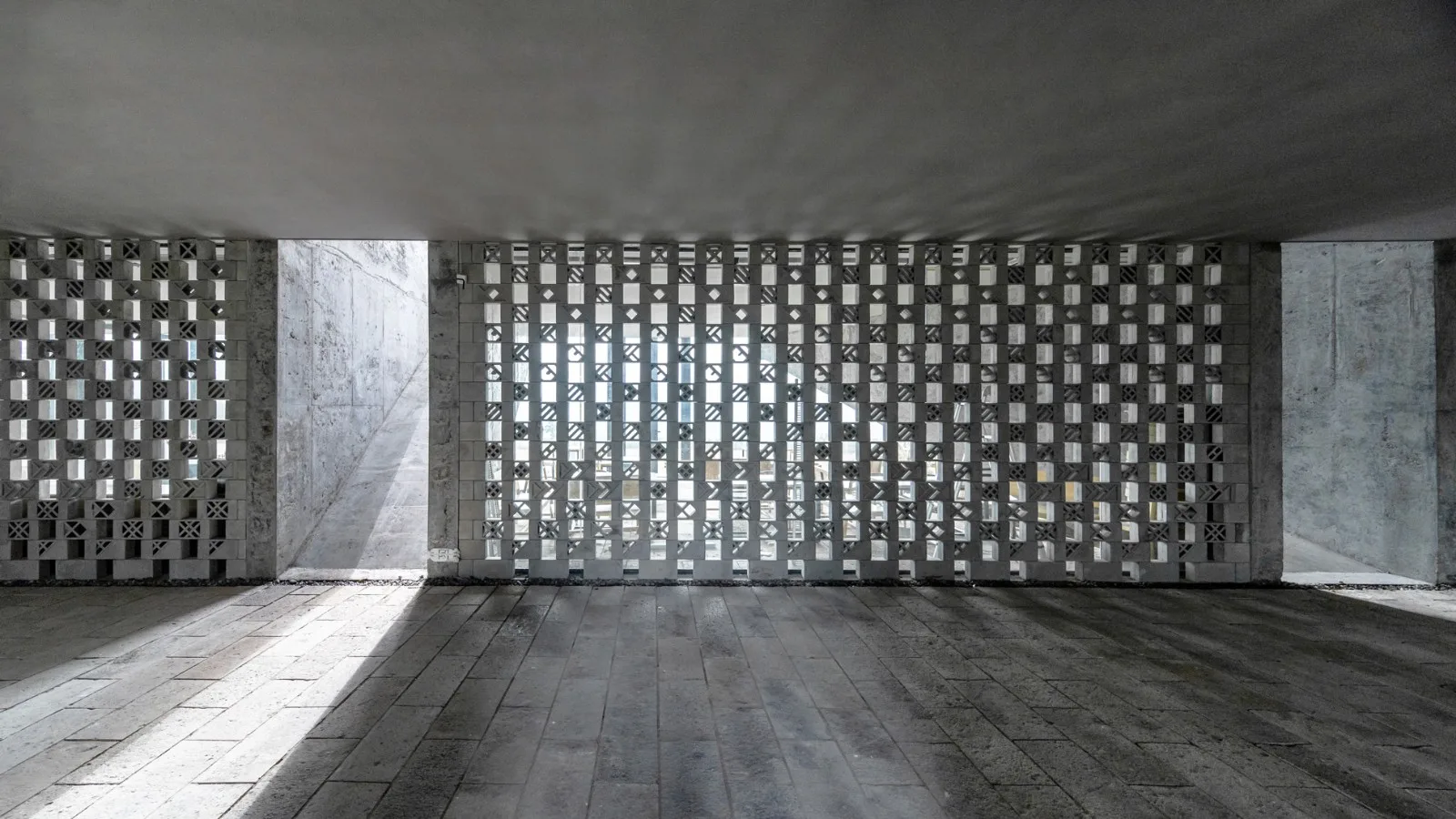
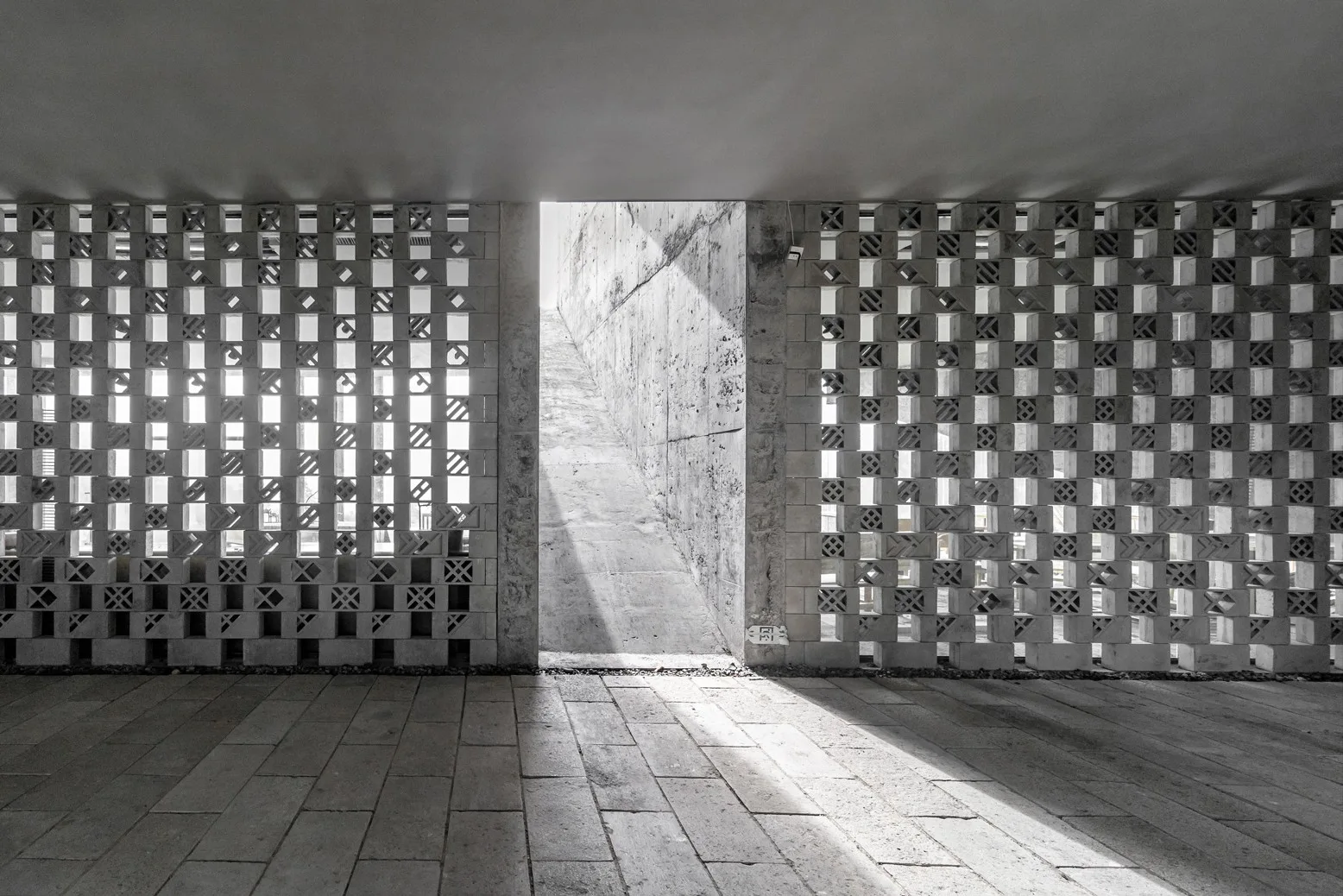
The Zen tea sundial integrates production and activity within a single space, blending time and place. This feature represents the third cultural layer of the exhibition hall.
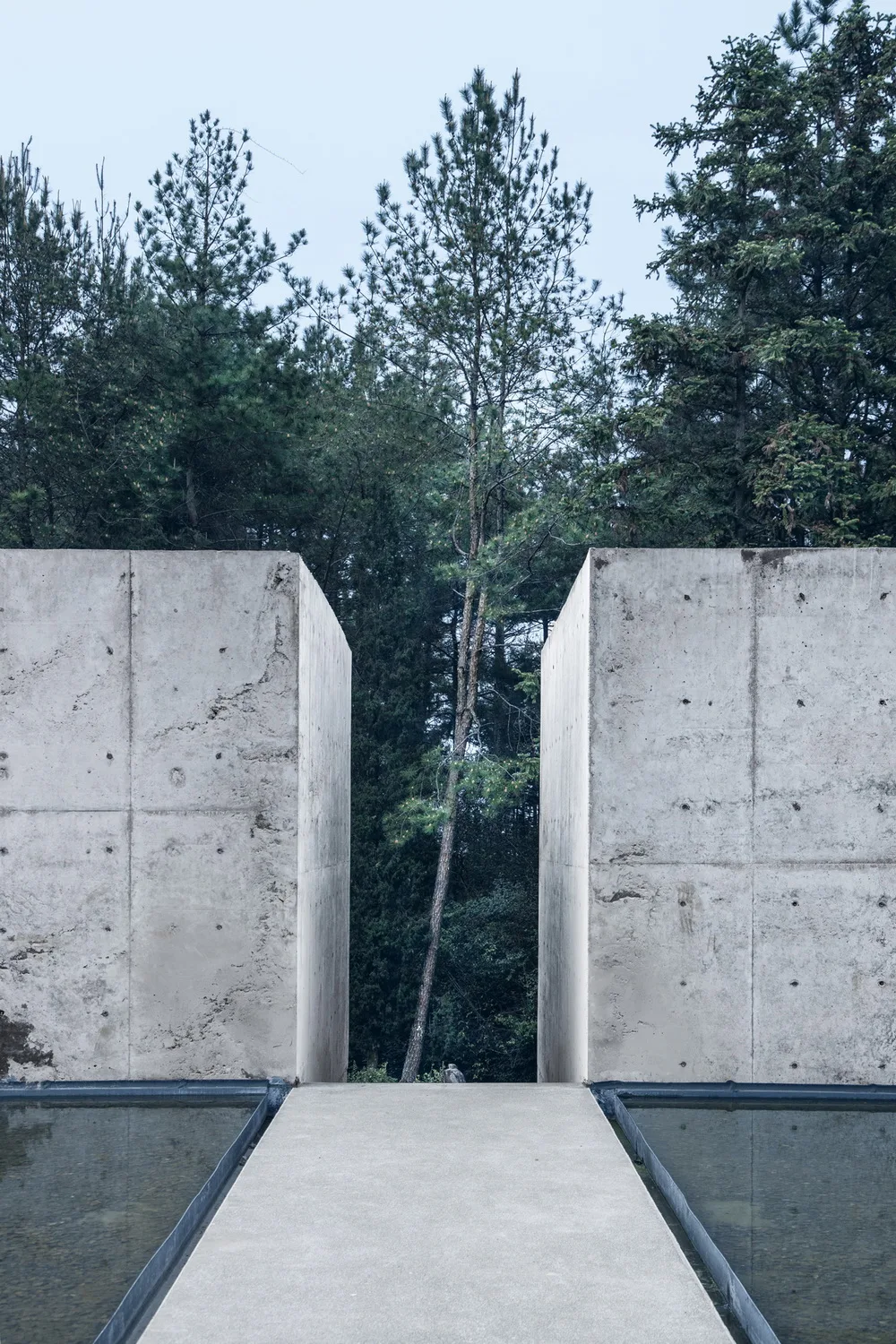
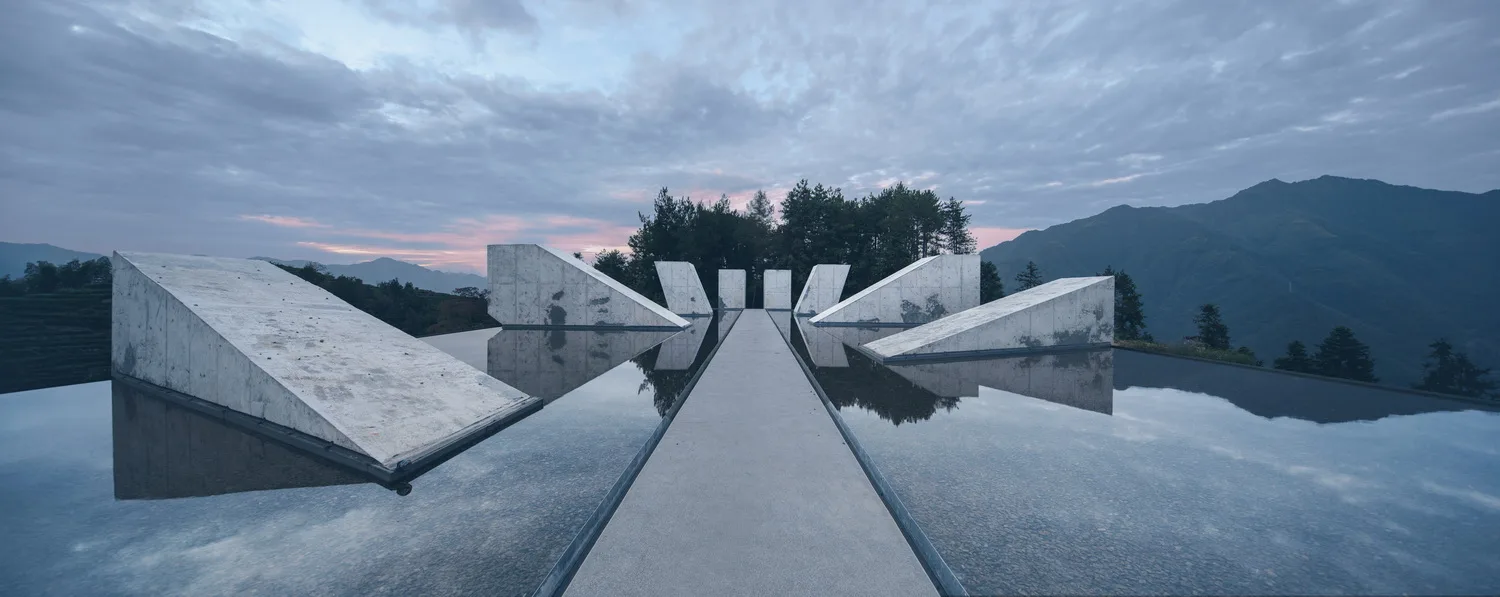
The heights and volumes of the eight skylights correspond to the sun’s elevation at different times during the summer solstice. These skylights extend above the roof at varying angles and heights, reflecting the sun’s position throughout the day.
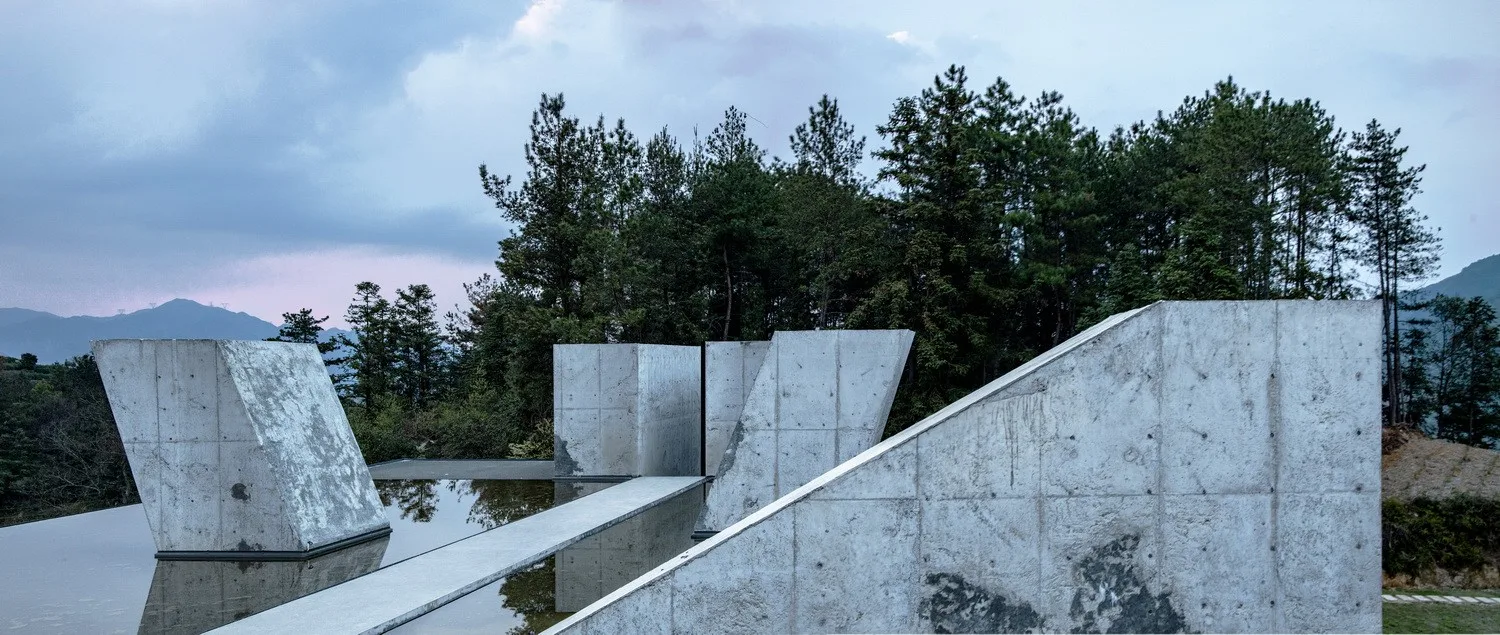
The roof incorporates a shallow water pool designed for summer heat dissipation, leaving only a central north-south pathway. This creates a loop with the indoor exhibition gallery and enhances the contrast between light and shadow inside and outside the building. Viewed from the mountain, the water reflects the natural sky and clouds, concealing the building volume and revealing only a series of sculptural columns marked by sunlight tracks, harmonizing with nature.
Project Drawings
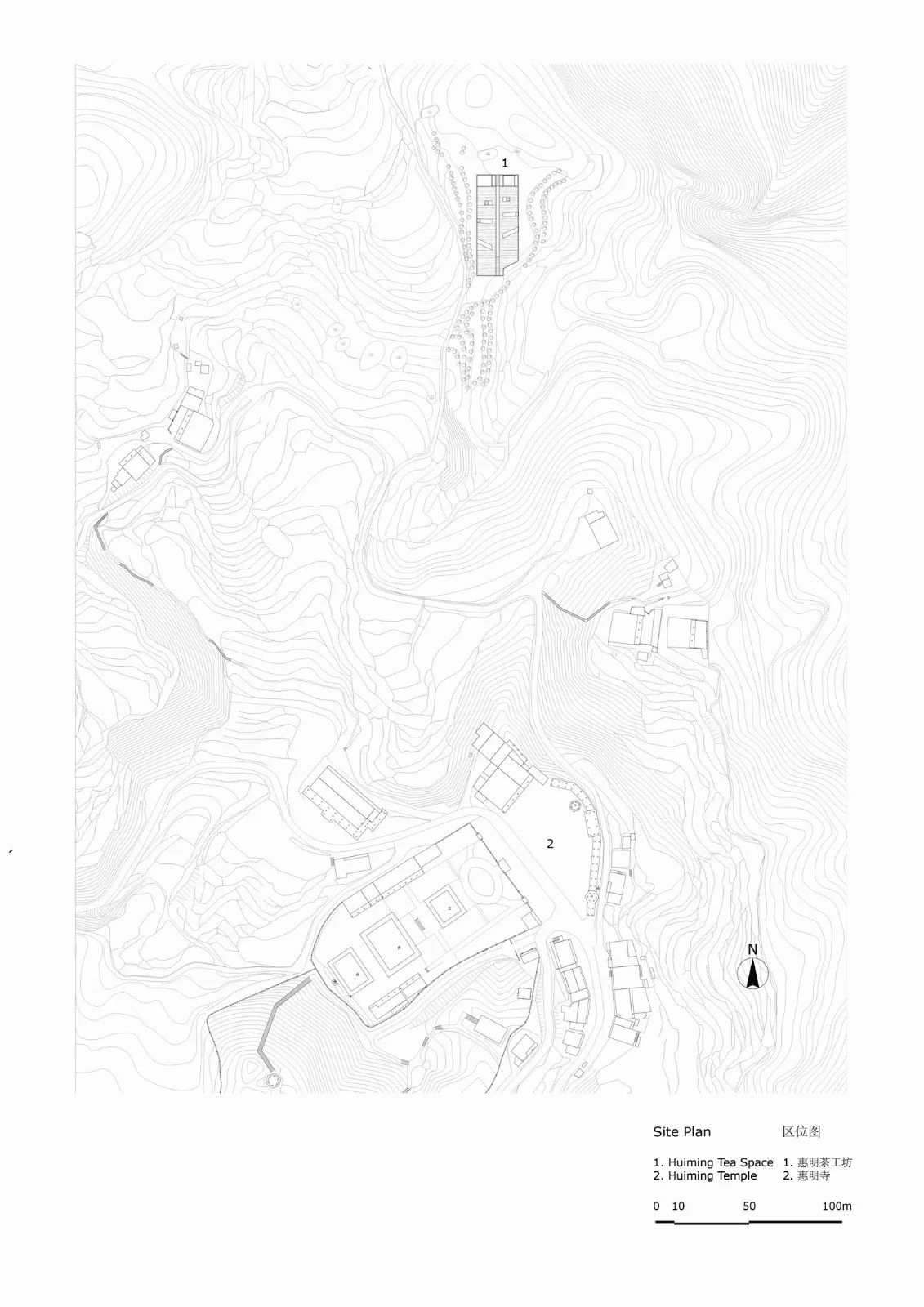
△ Location Map
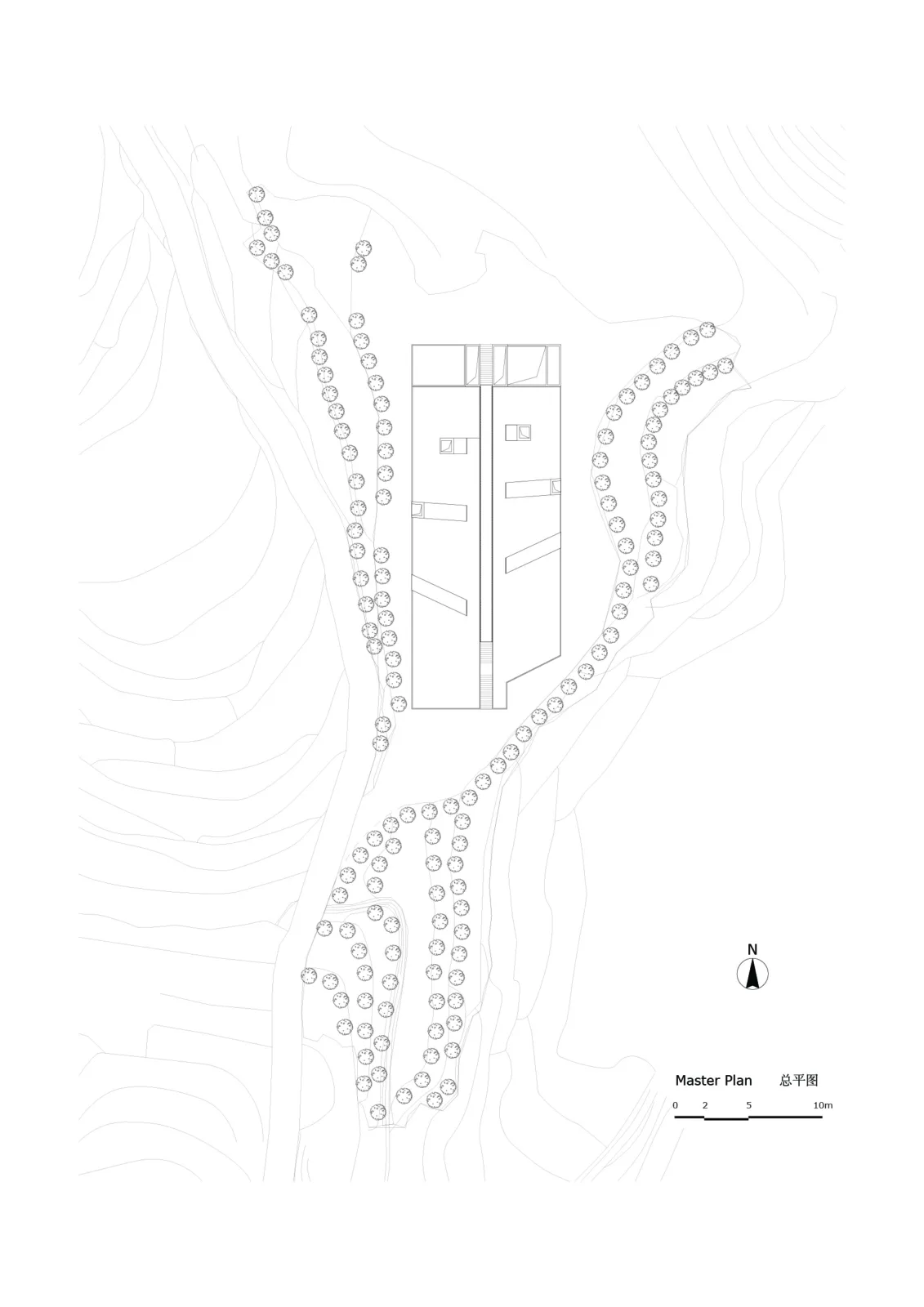
△ Overall Plan
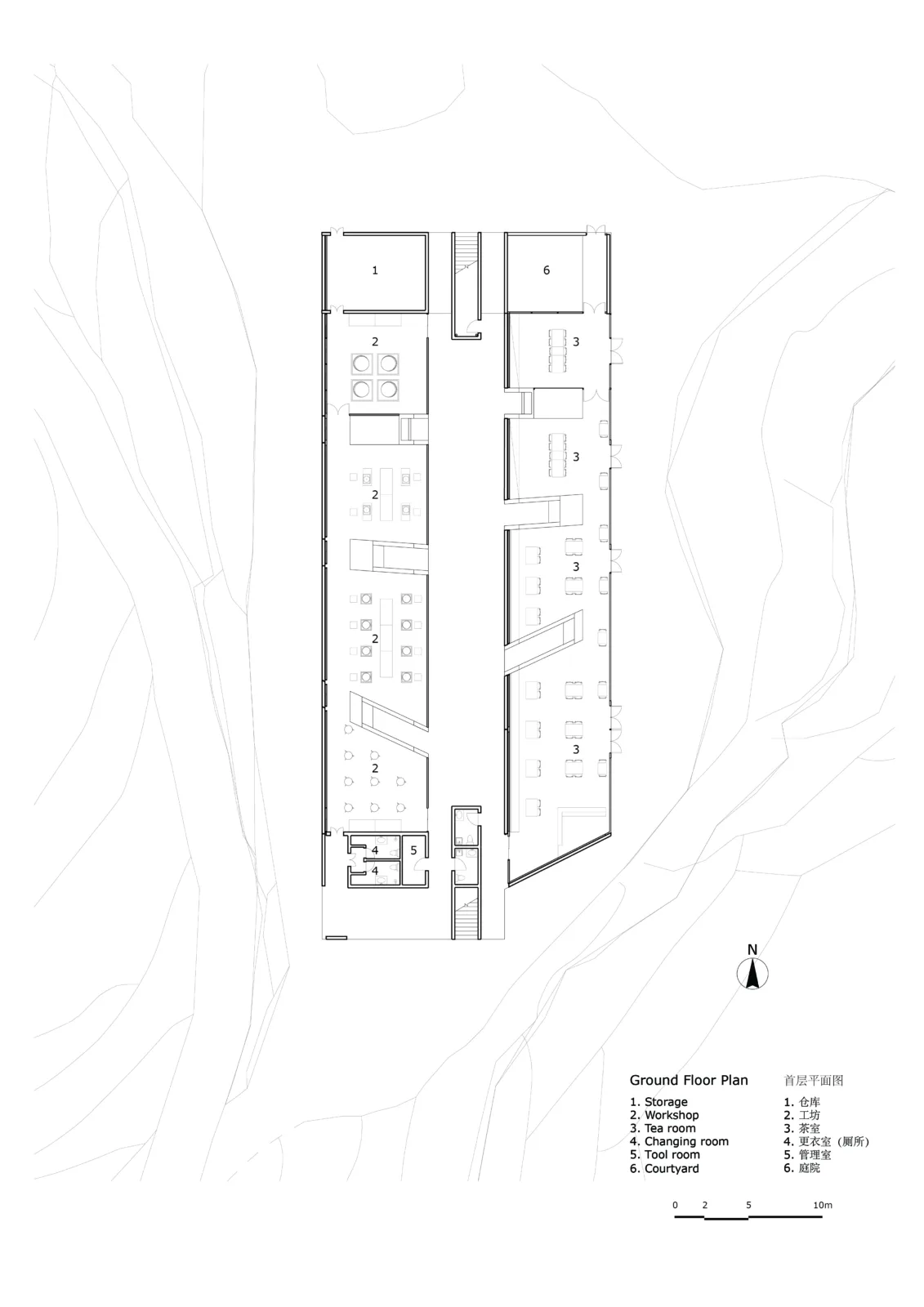
△ First Floor Plan
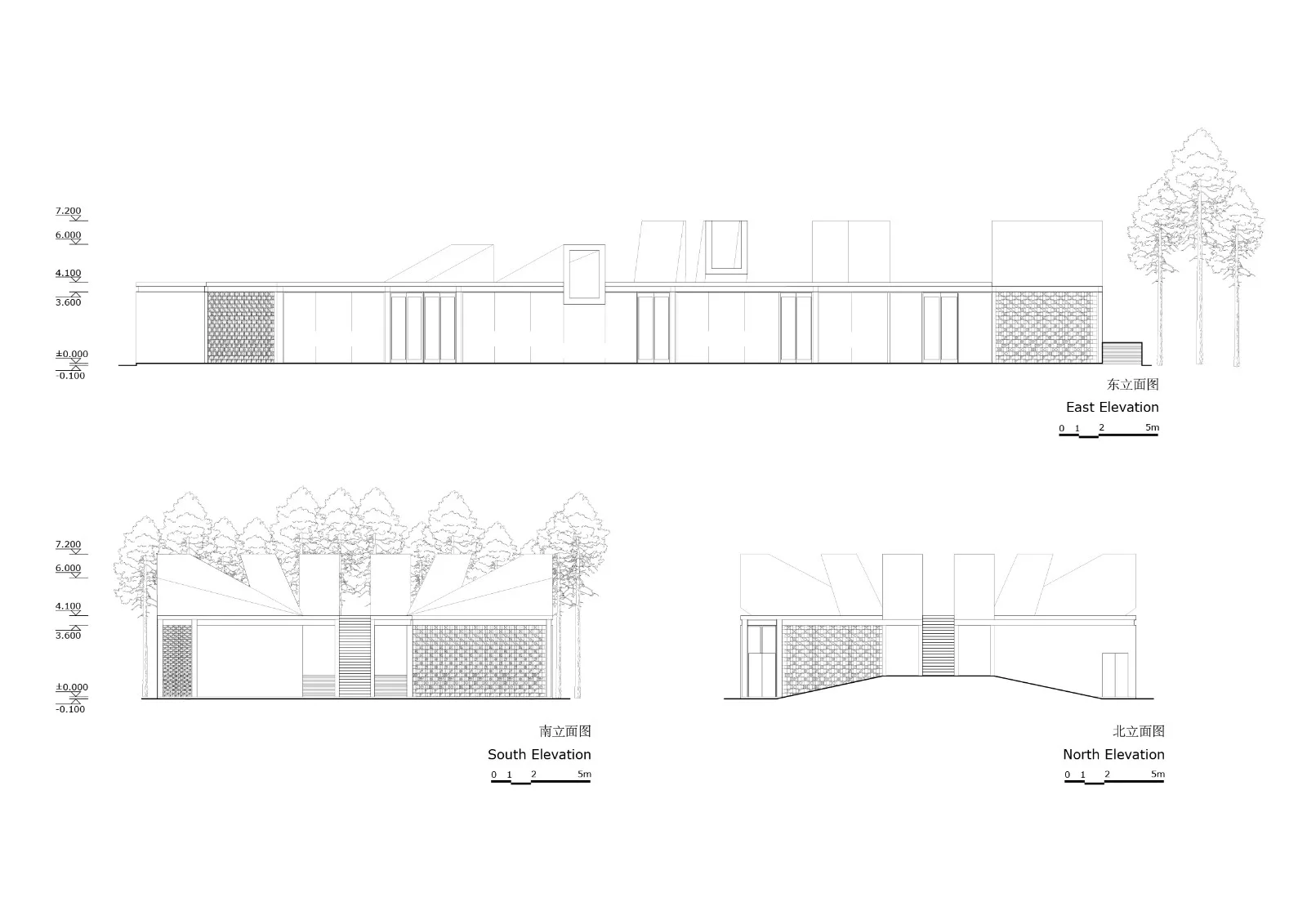
△ Elevation Drawing
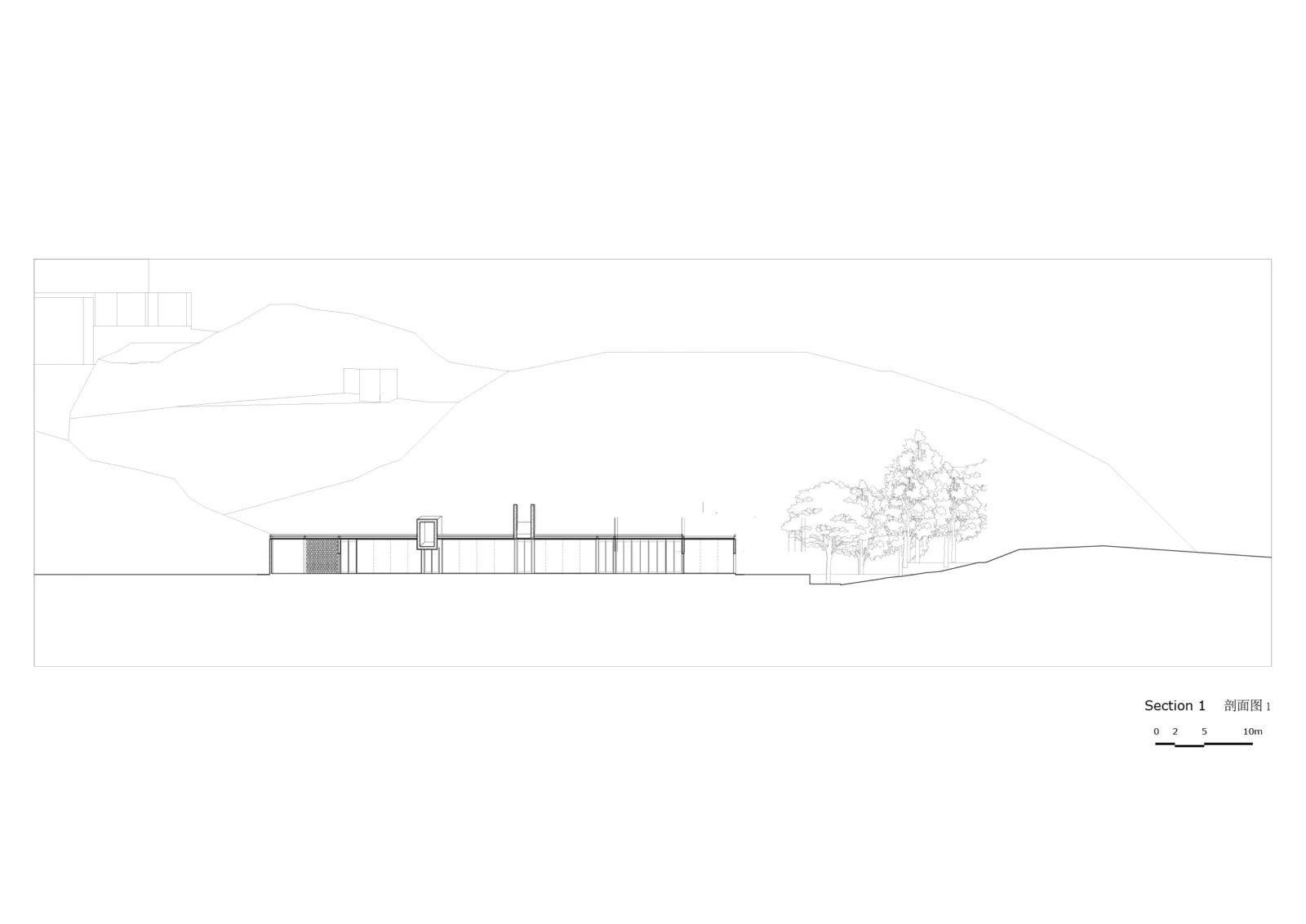
△ Section Diagram
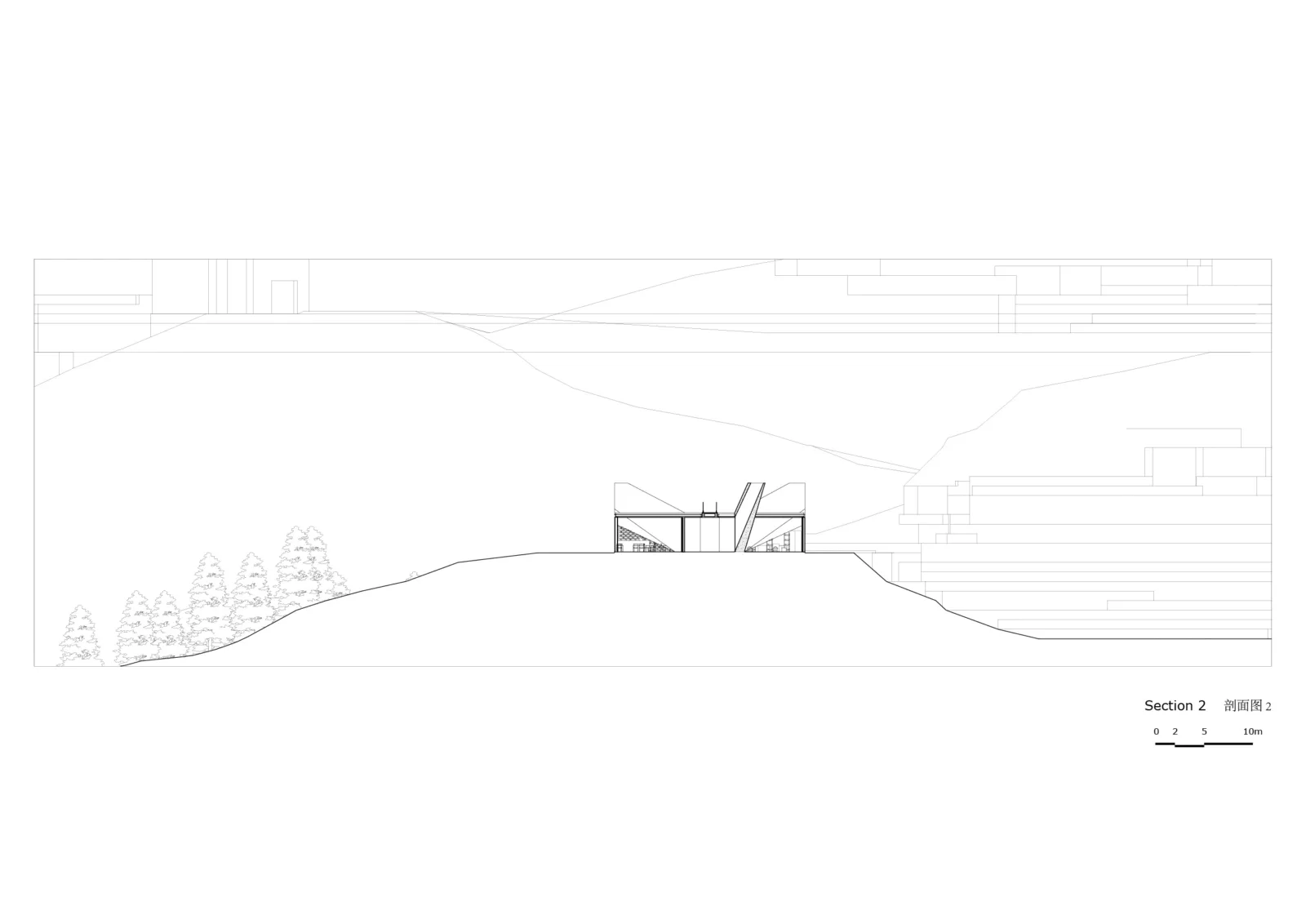
△ Section Diagram
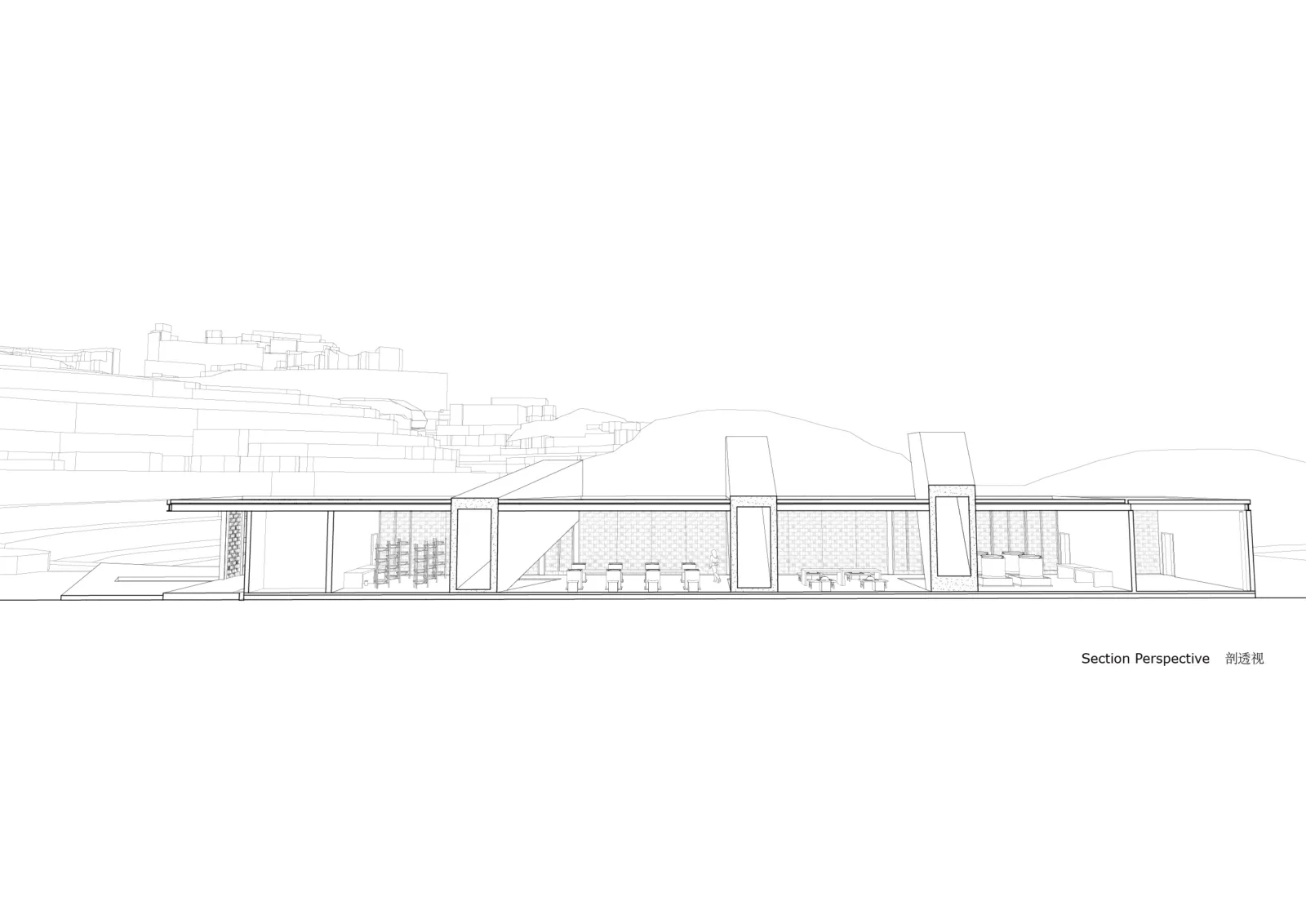
△ Sectional Perspective View
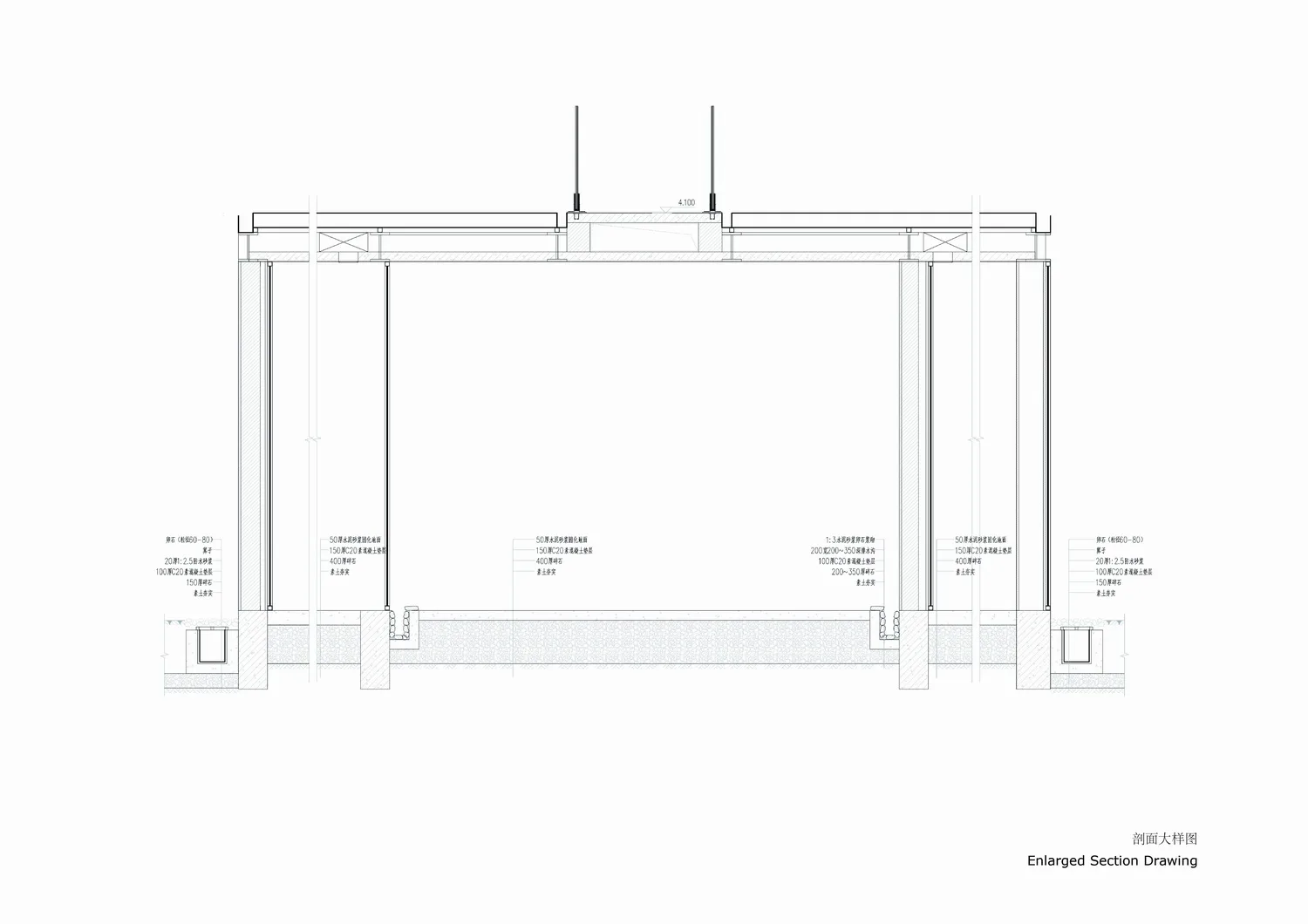
△ Profile Sample
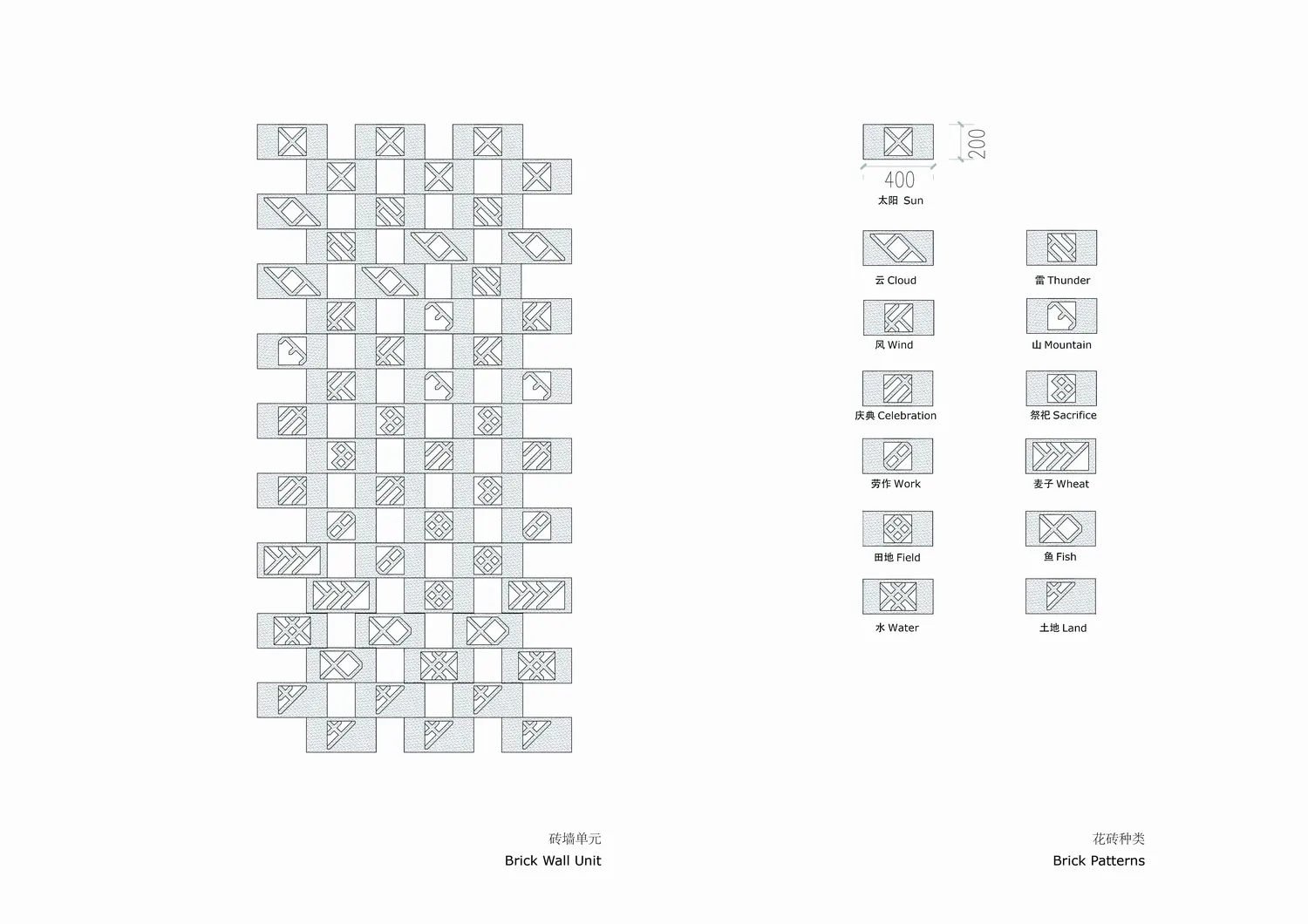
△ Brick Wall Unit
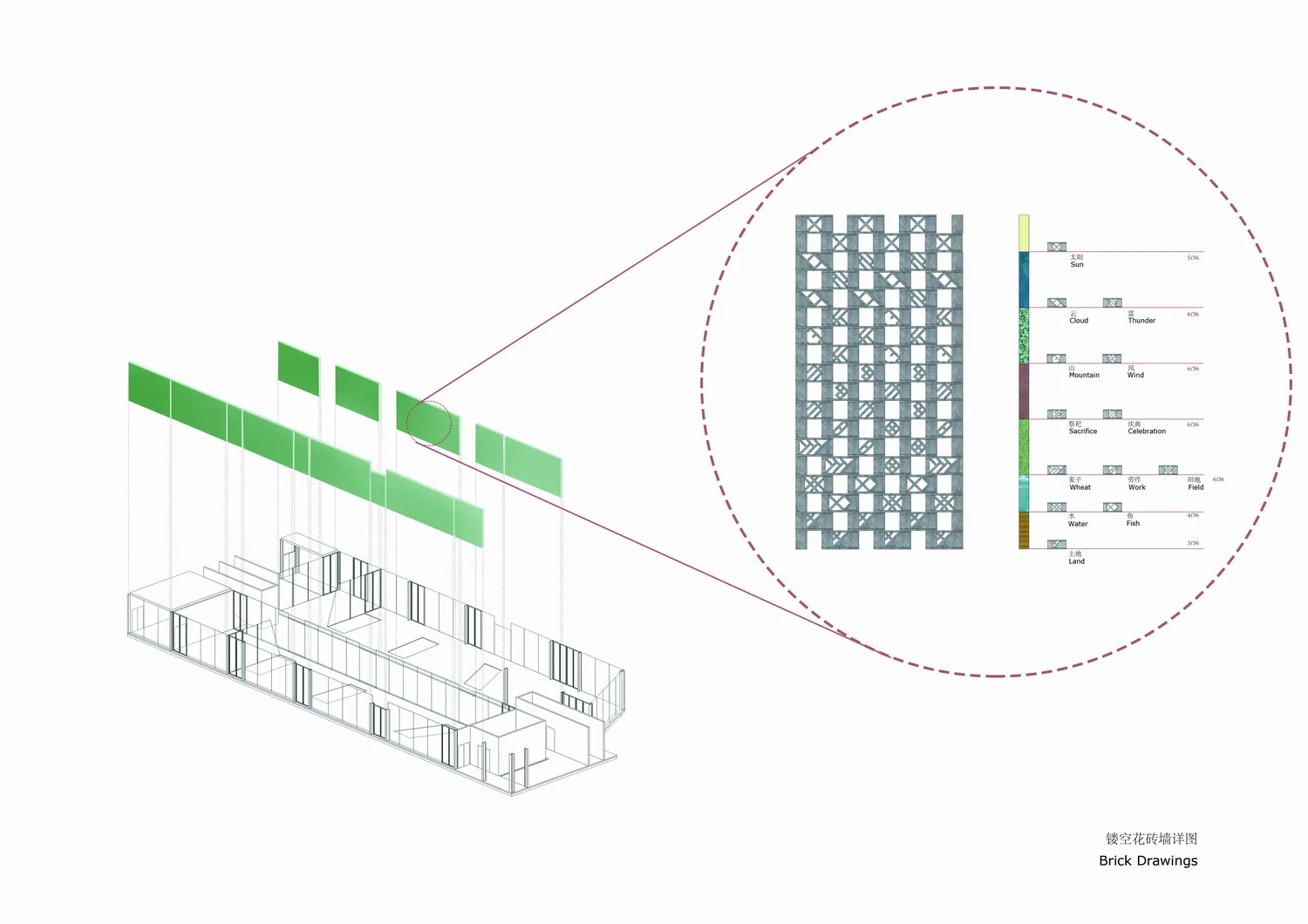
△ Brick Wall Analysis
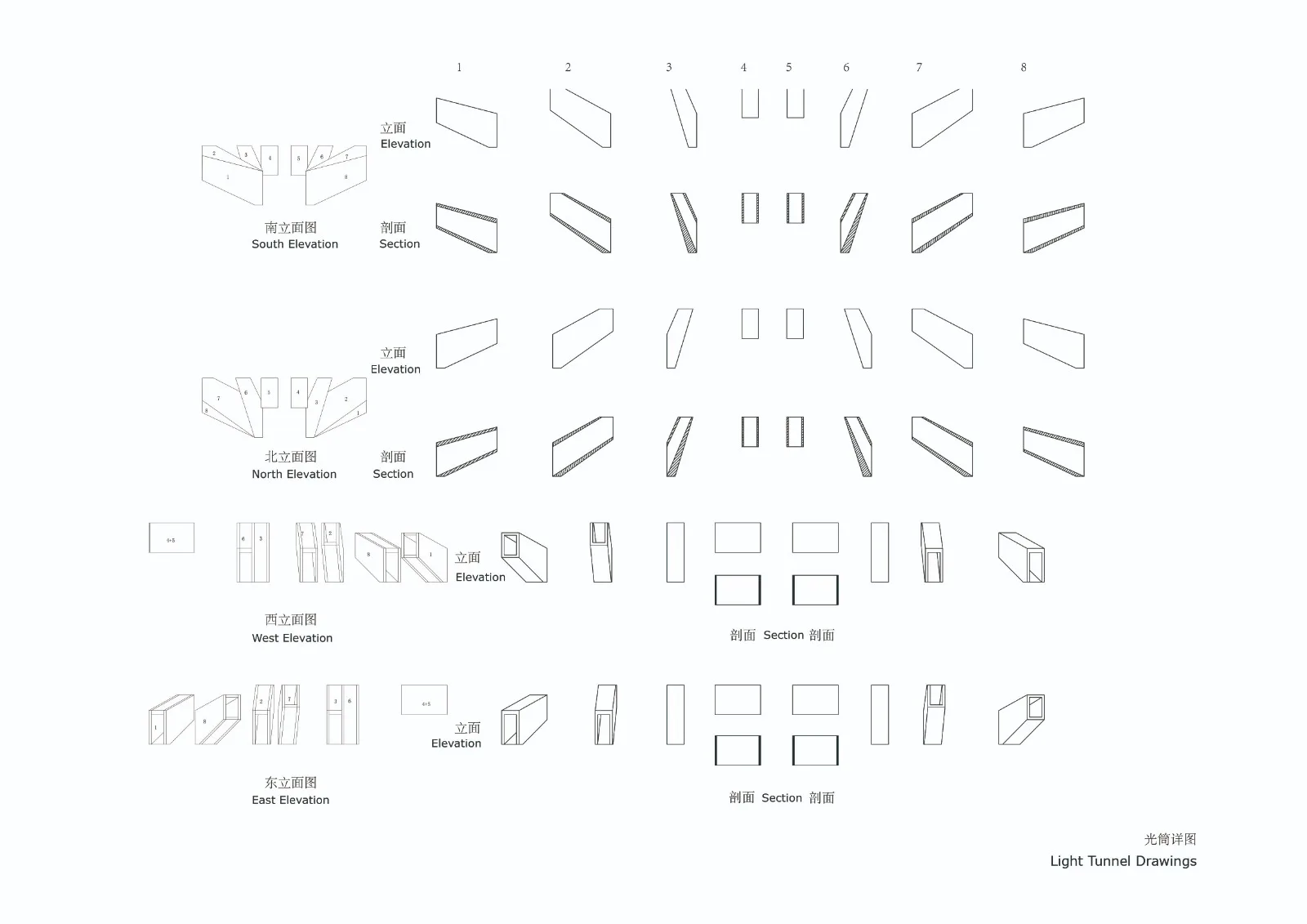
△ Detailed Drawing of Light Tube
Project Information
Project Name: Huiming Tea Workshop
Location: Jingning She Autonomous County, Lishui City, Zhejiang Province
Function: Workshop / Exhibition / Tea Room
Owner: Jingning She Autonomous County Huanchimushan Construction Investment Co., Ltd
Design Unit: XU TIAANTIAN / DnA_Design and Architecture
Lead Architect: Xu Tiantian
Lighting Design: Zhang Xin Studio, School of Architecture, Tsinghua University
Building Area: 933.70 square meters
Photographer: Wang Ziling
Design Period: June 2018 to March 2019
Construction Period: June 2019 to October 2020
















Must log in before commenting!
Sign Up