
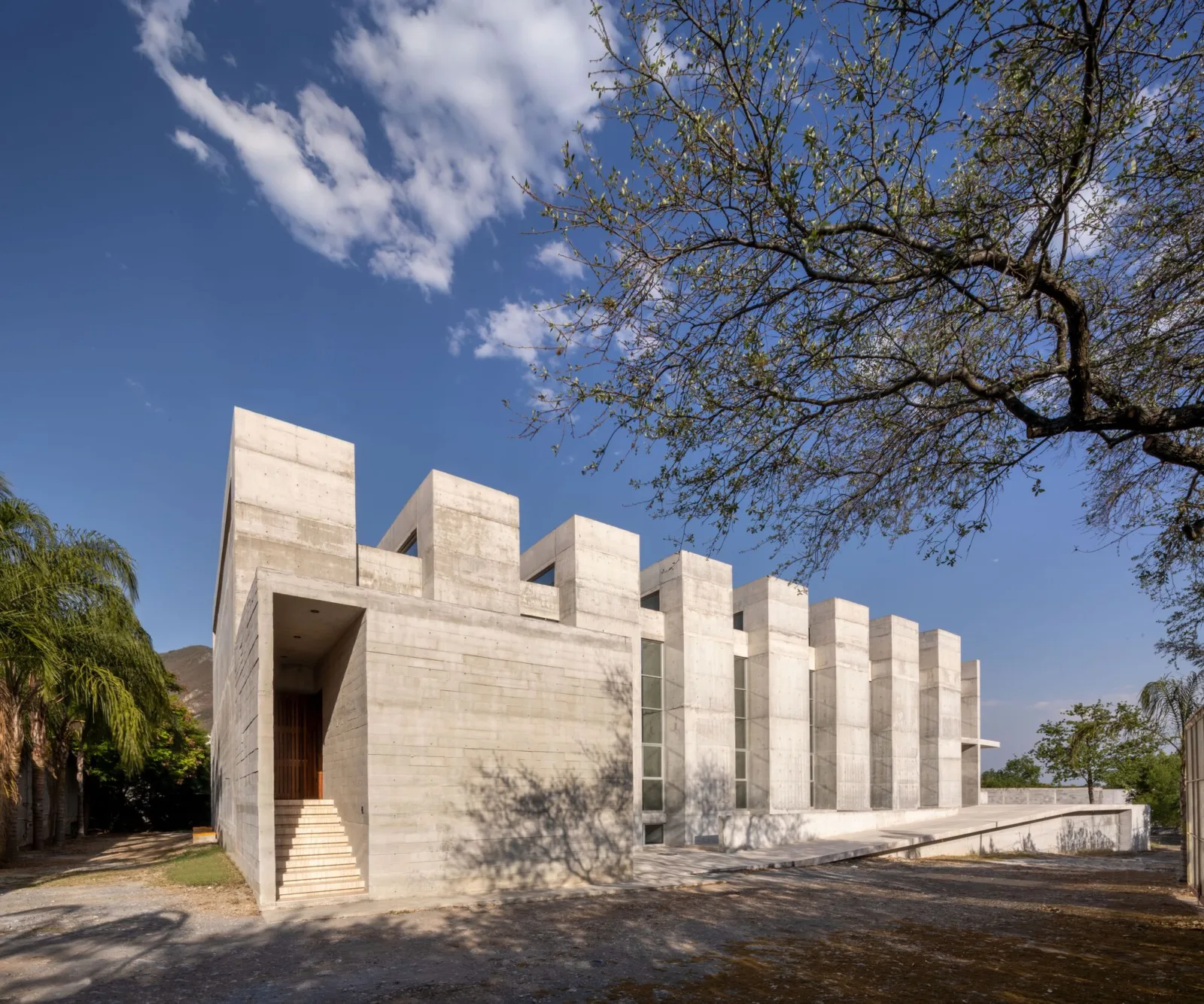
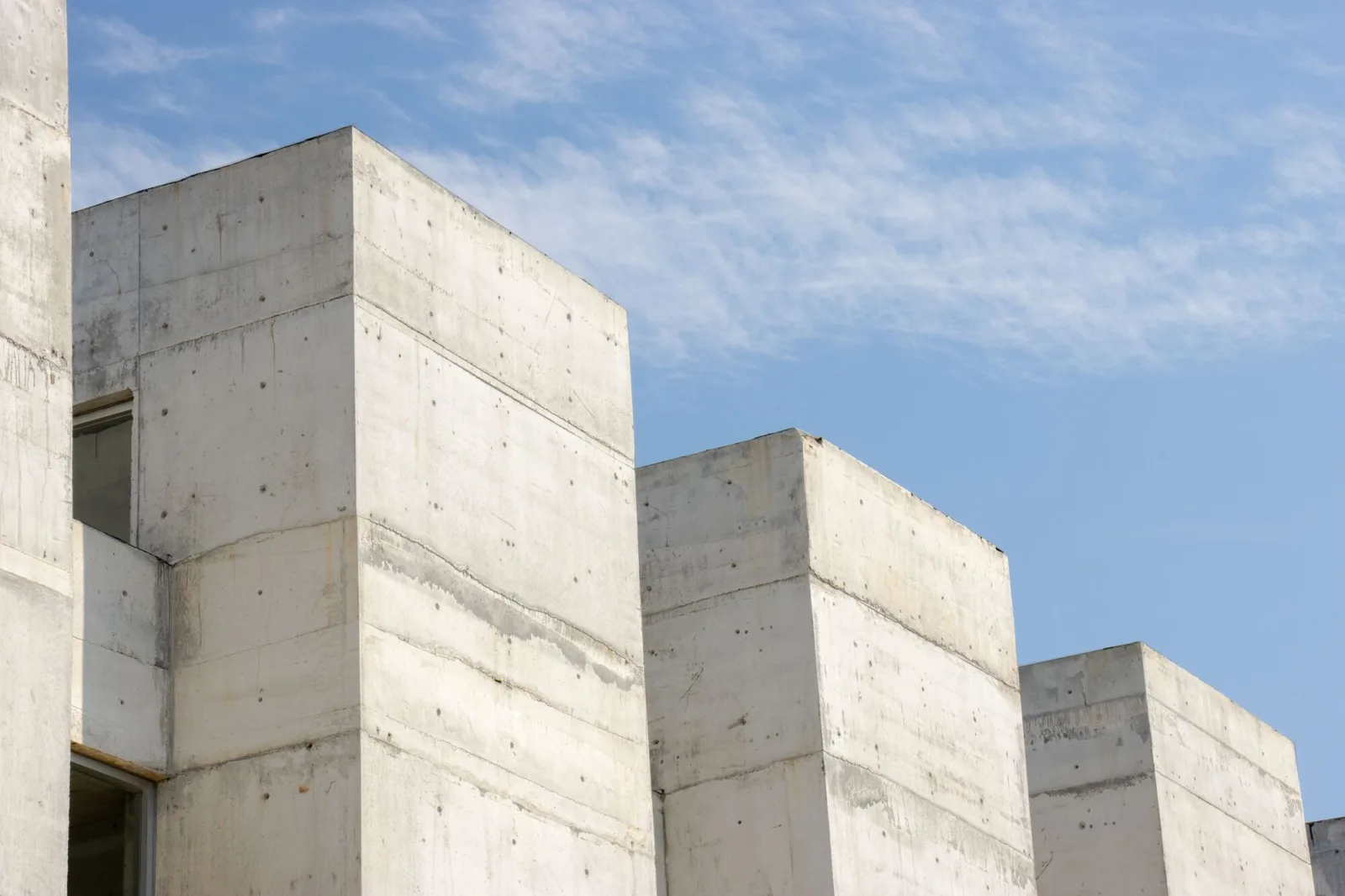
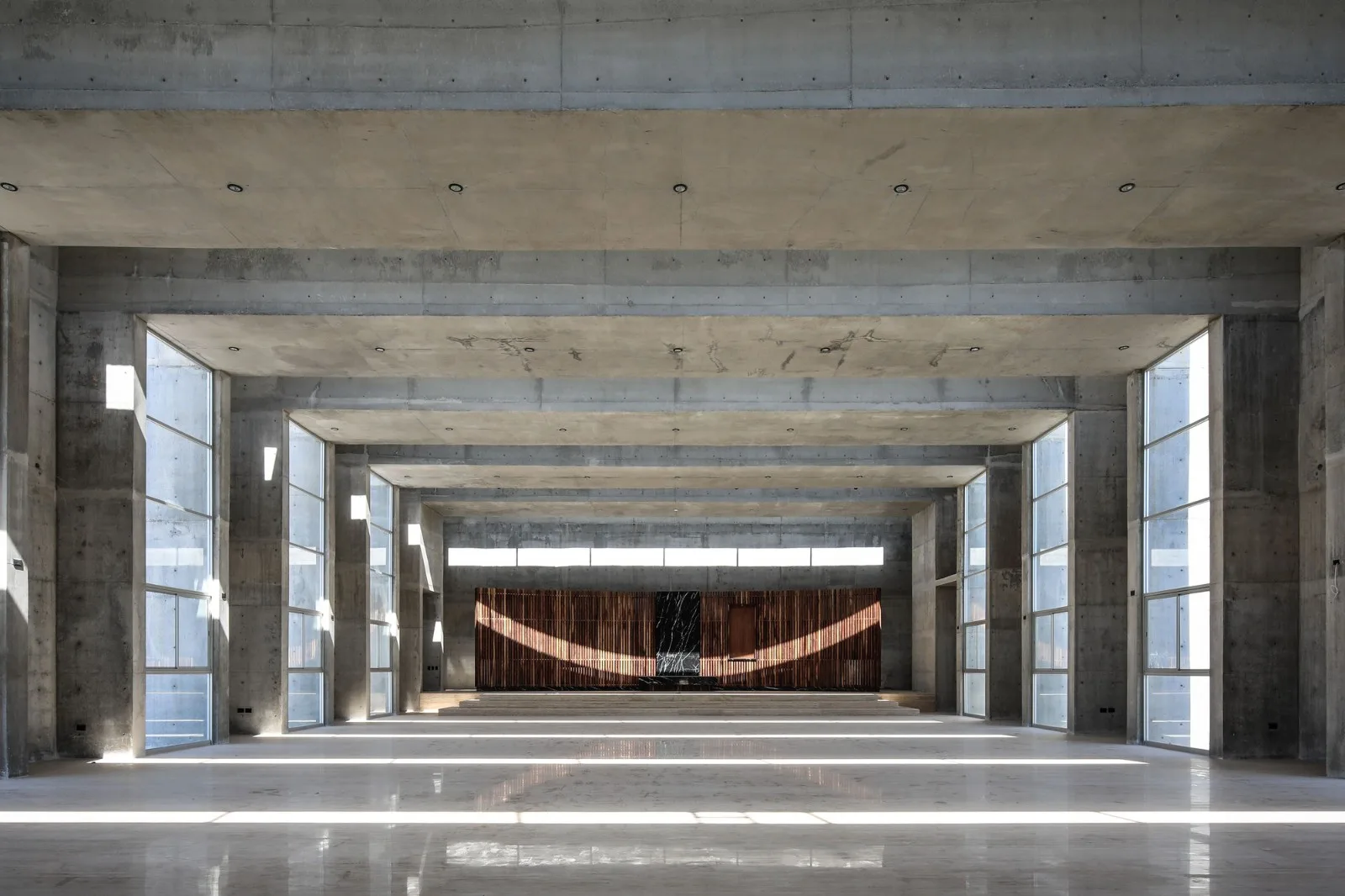
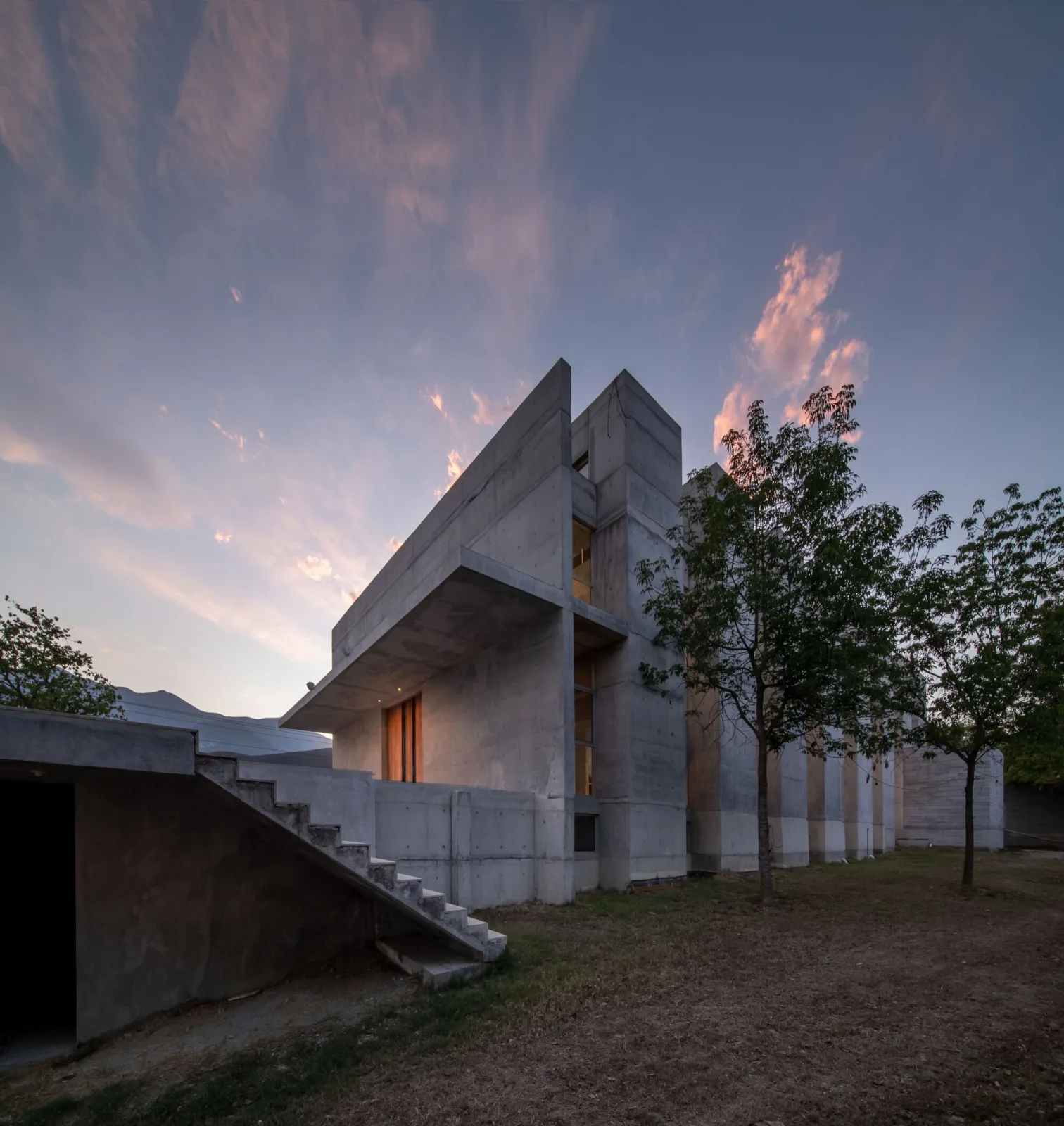
The design of this new Fire Ceremony Church thoughtfully incorporates natural light as a crucial element. Structural components such as columns, walls, beams, and slabs are integrated not only for support but also as visual elements that alternate between solid and void. This interplay creates a rhythmic spatial experience, allowing natural light to take center stage throughout the building.
The architect was tasked with designing a church that addresses the unique needs of the congregation under the guidance of their priest. The project was highly praised during the proposal phase. Given that most of the funding comes from donations by local parishioners and foundations, special attention was given to selecting materials that are durable and easy to maintain, allowing the building to age gracefully.
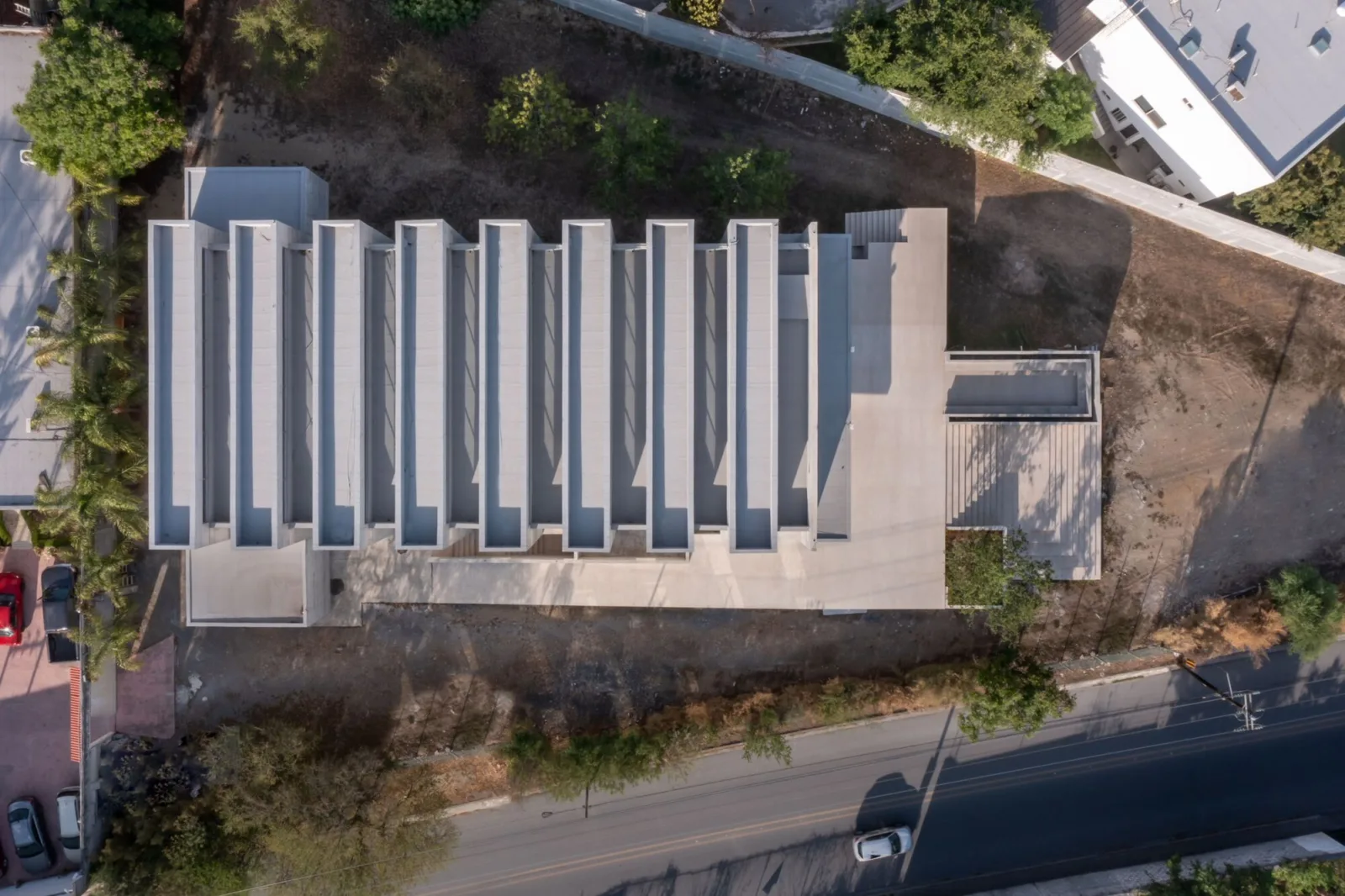
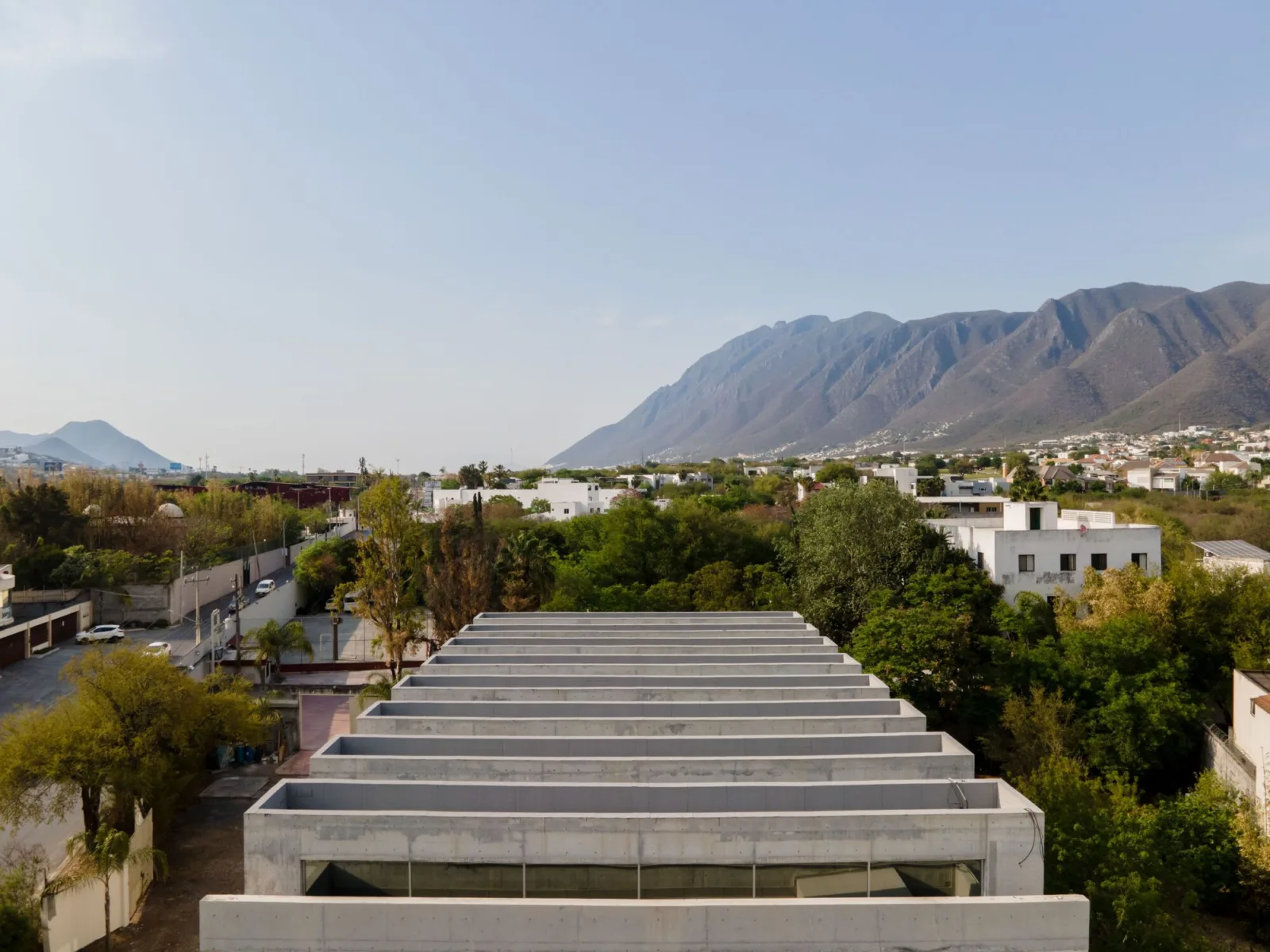
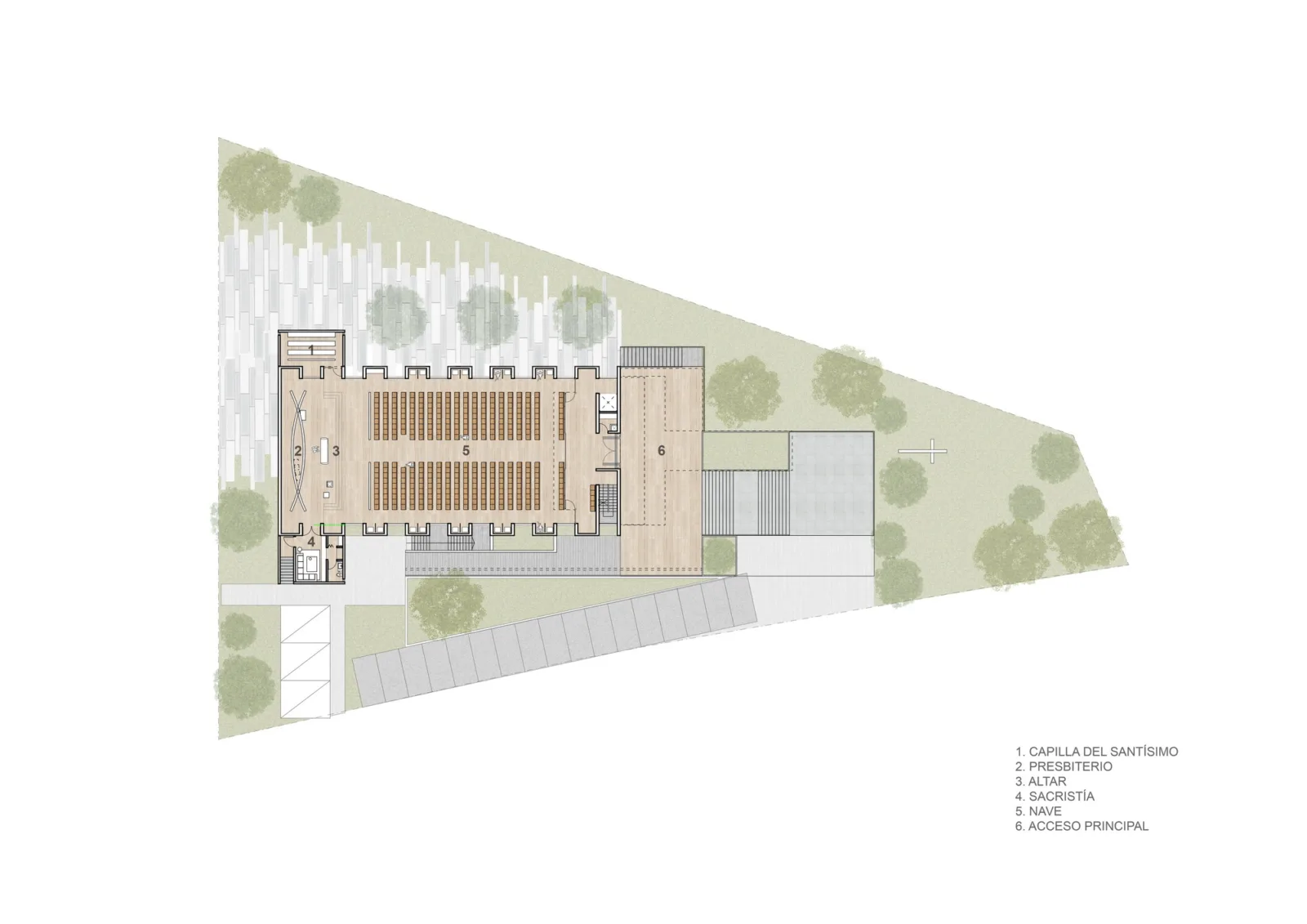
The project site covers approximately 3,200 square meters with an irregular shape and connects to existing church buildings on the northern side. The church slopes gently to the south, with its largest facade facing a main road that links to residential neighborhoods nearby. The building consists of three floors, totaling 1,265 square meters of construction.
The semi-underground level houses a multifunctional room, a funeral ceremony space, and vertical circulation systems. It also contains the church’s most private area, the urn room, which is intentionally designed without natural light to provide a quiet space for visitors to reflect and connect with their departed loved ones.
The ground floor serves as the main hall, accommodating up to 360 parishioners and is accessible from the north-facing slope. This slope extends along most of the street-facing facade, defining the basement section and serving as the pathway to the entrance platform. Upon entry, visitors experience the rhythmic facade patterns of the building.
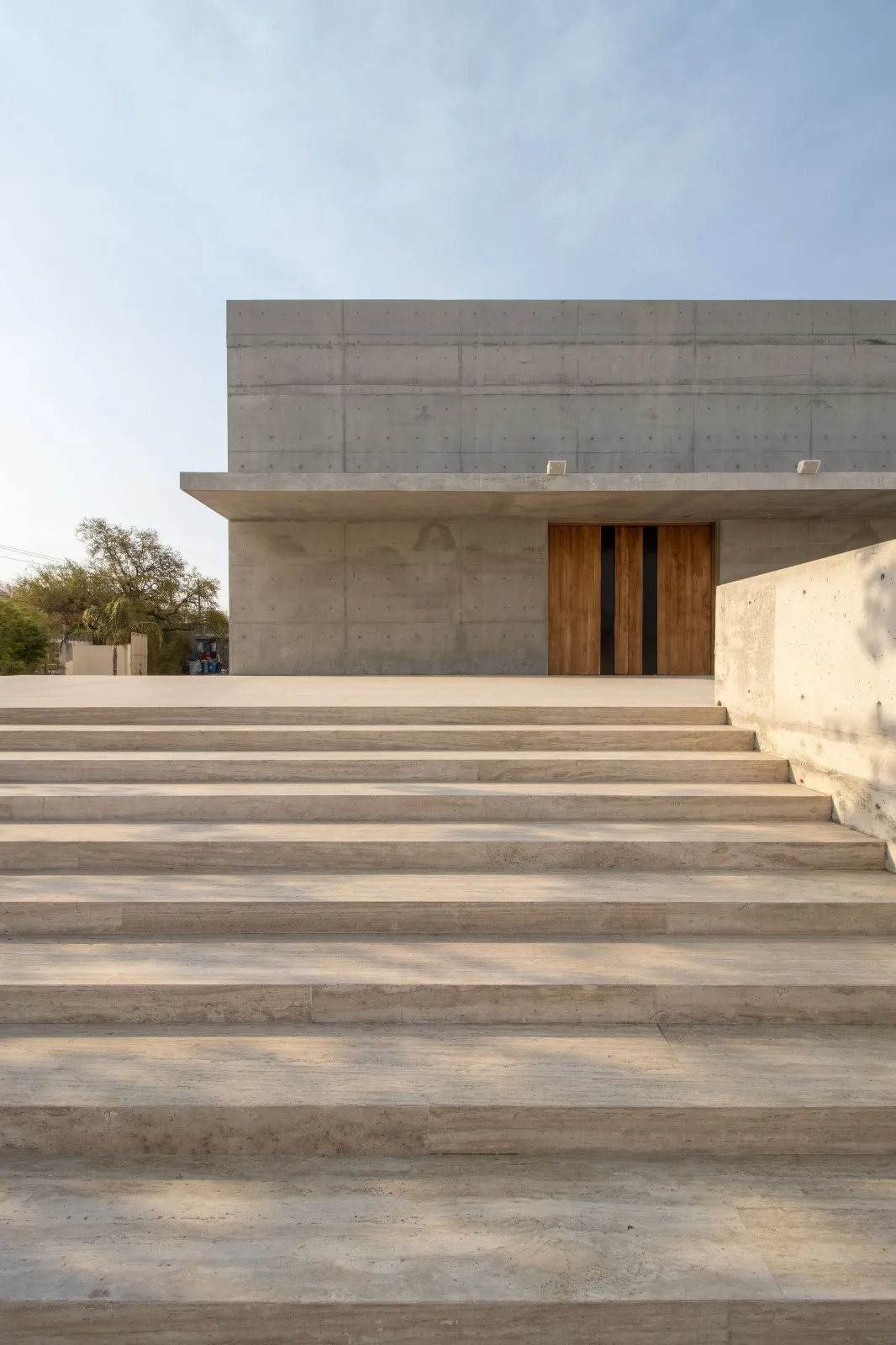
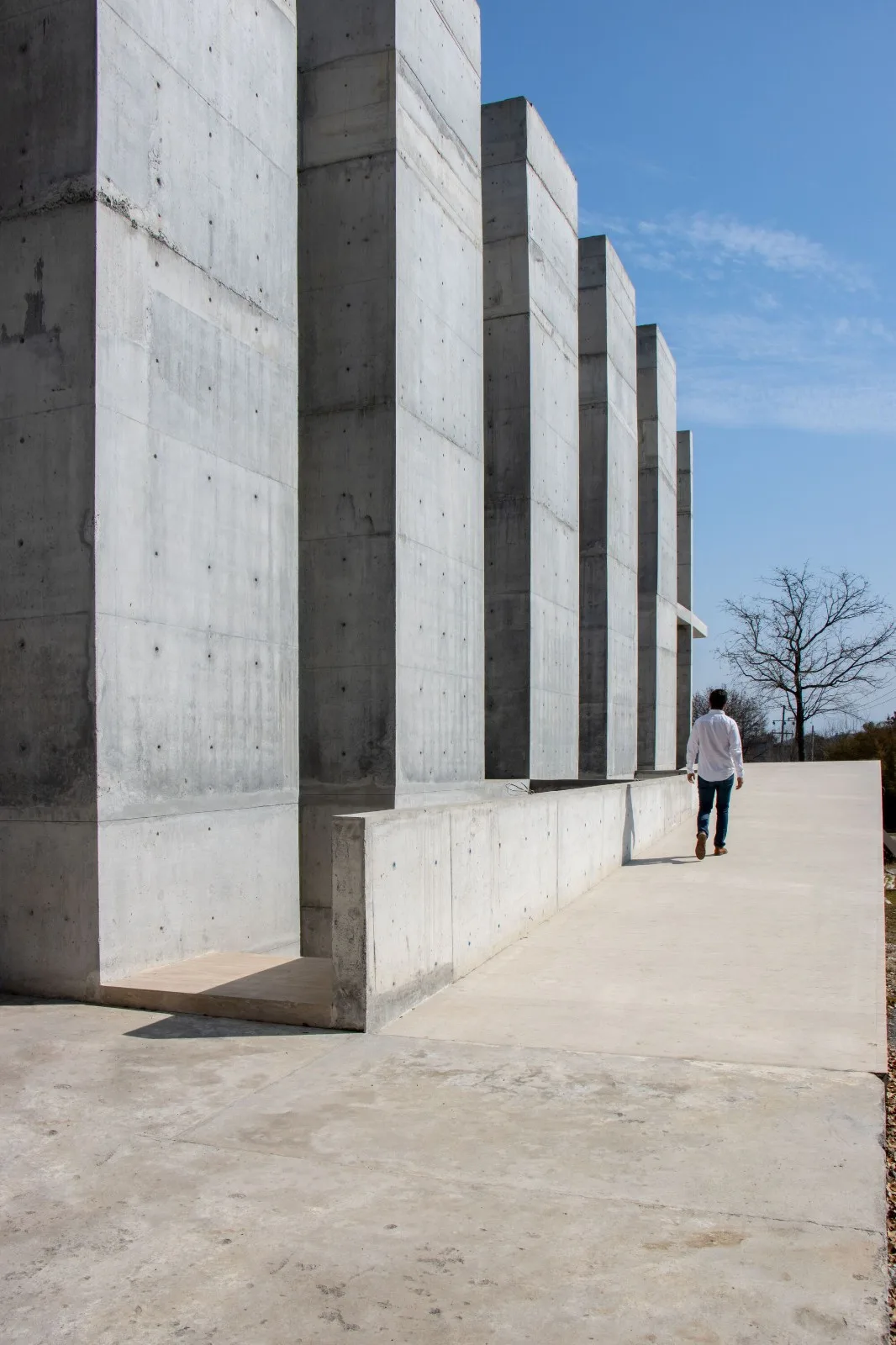
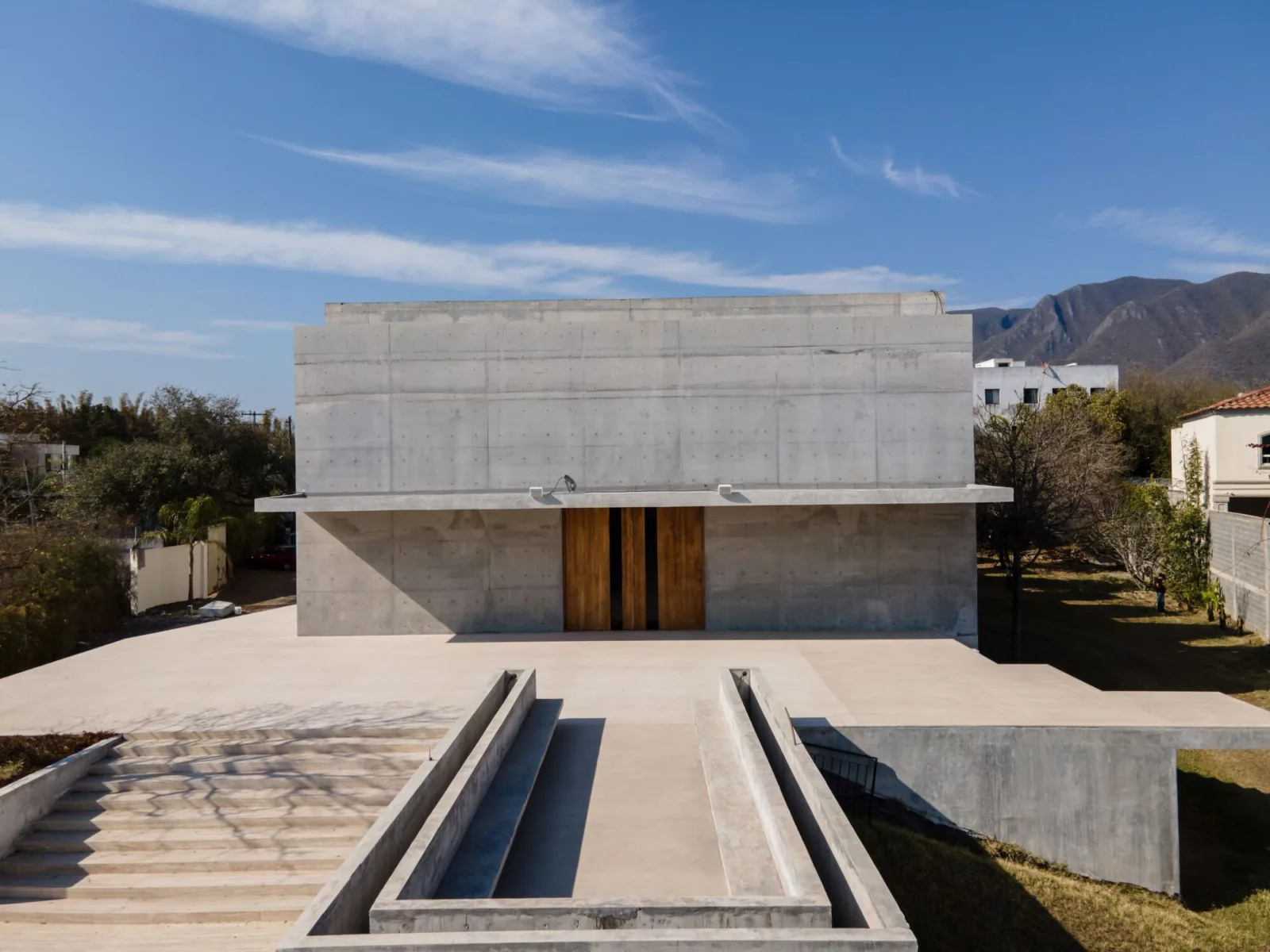
Evergreen oak trees, generously donated by the community, are planted around the site. Visitors can access this area from the street via the main staircase, which is flanked by projecting blocks from the basement and an oak pond. The main passage is situated on this entrance platform, featuring a fully enclosed facade and a prominent main door framed elegantly.
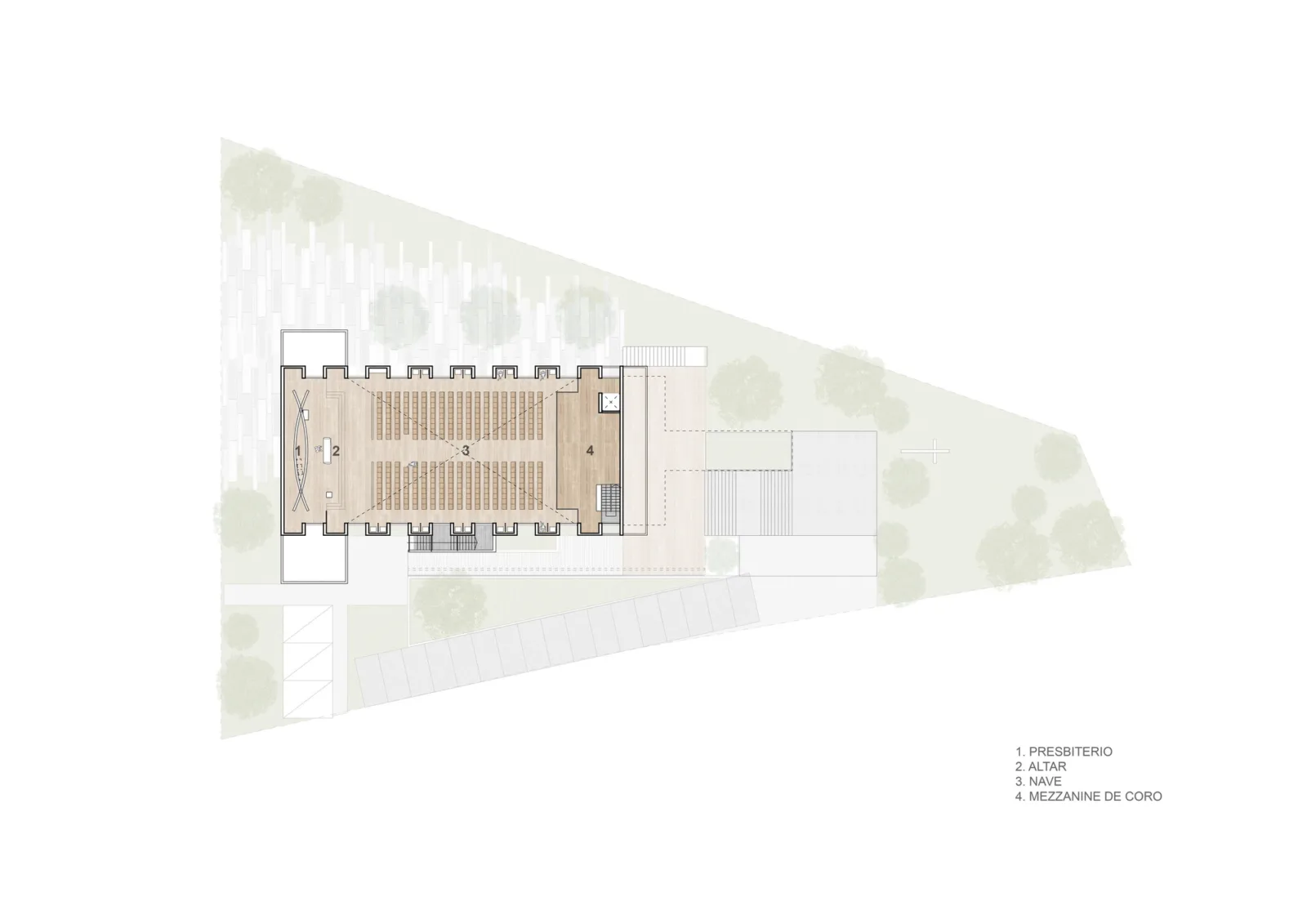
The lower external overhang stretches to the edge of the mezzanine floor, where the choir is located, subtly forming a cross on the facade. Above this mezzanine, a double-height space with contrasting light and shadow dominates the visual impact of the facade. The Presbyterian Church and altar stand out as the most prominent elements. Two black Monterey marble blocks serve as the altar and the priest’s armchair.
The altar and associated wooden furnishings were designed and crafted in collaboration with Alfredo Zertuche, using Monterey marble and walnut wood as the primary materials and color palette. Both materials are sourced locally from the state of Nuevo León, Mexico, giving them a special significance within the project.
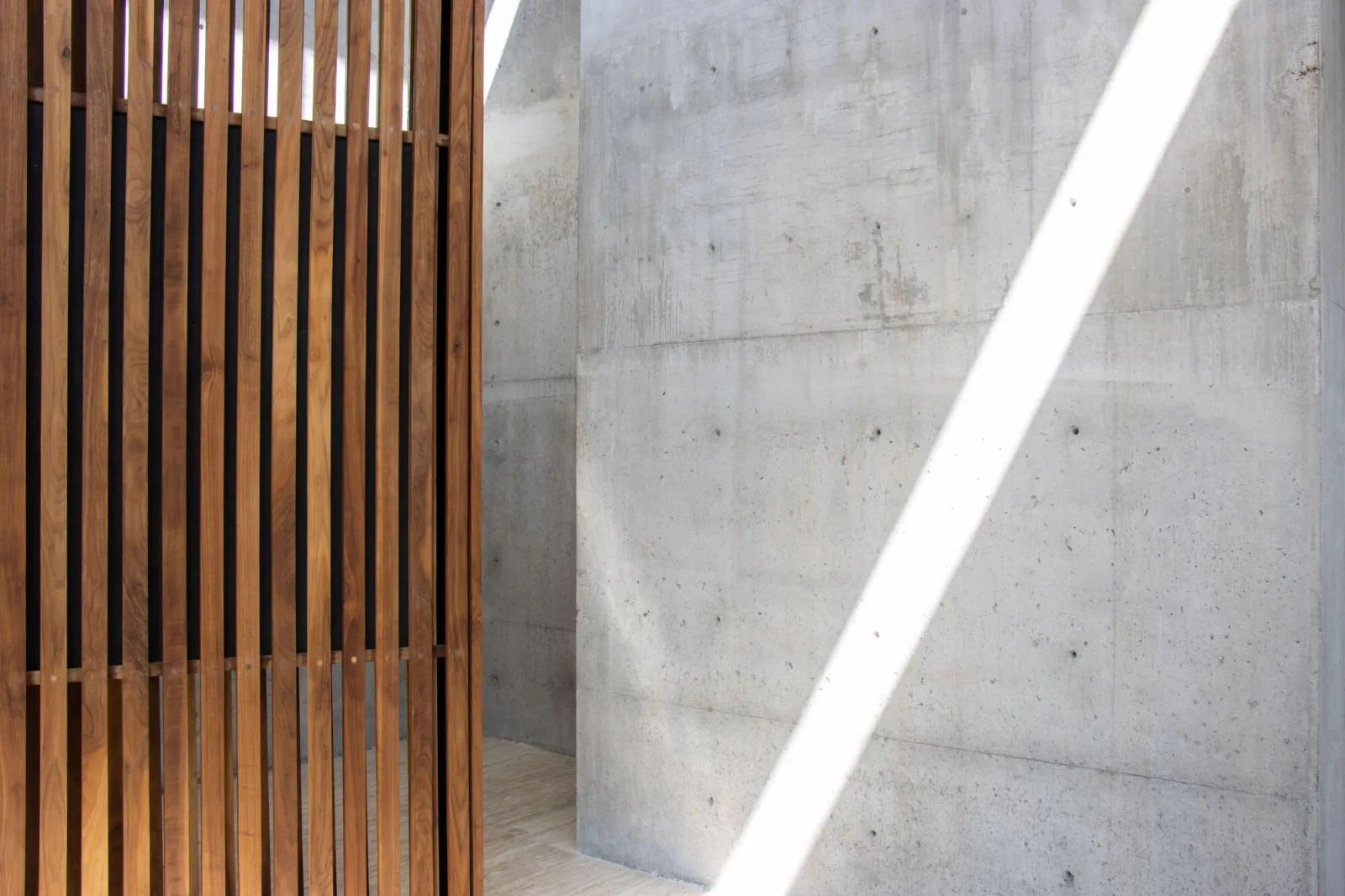
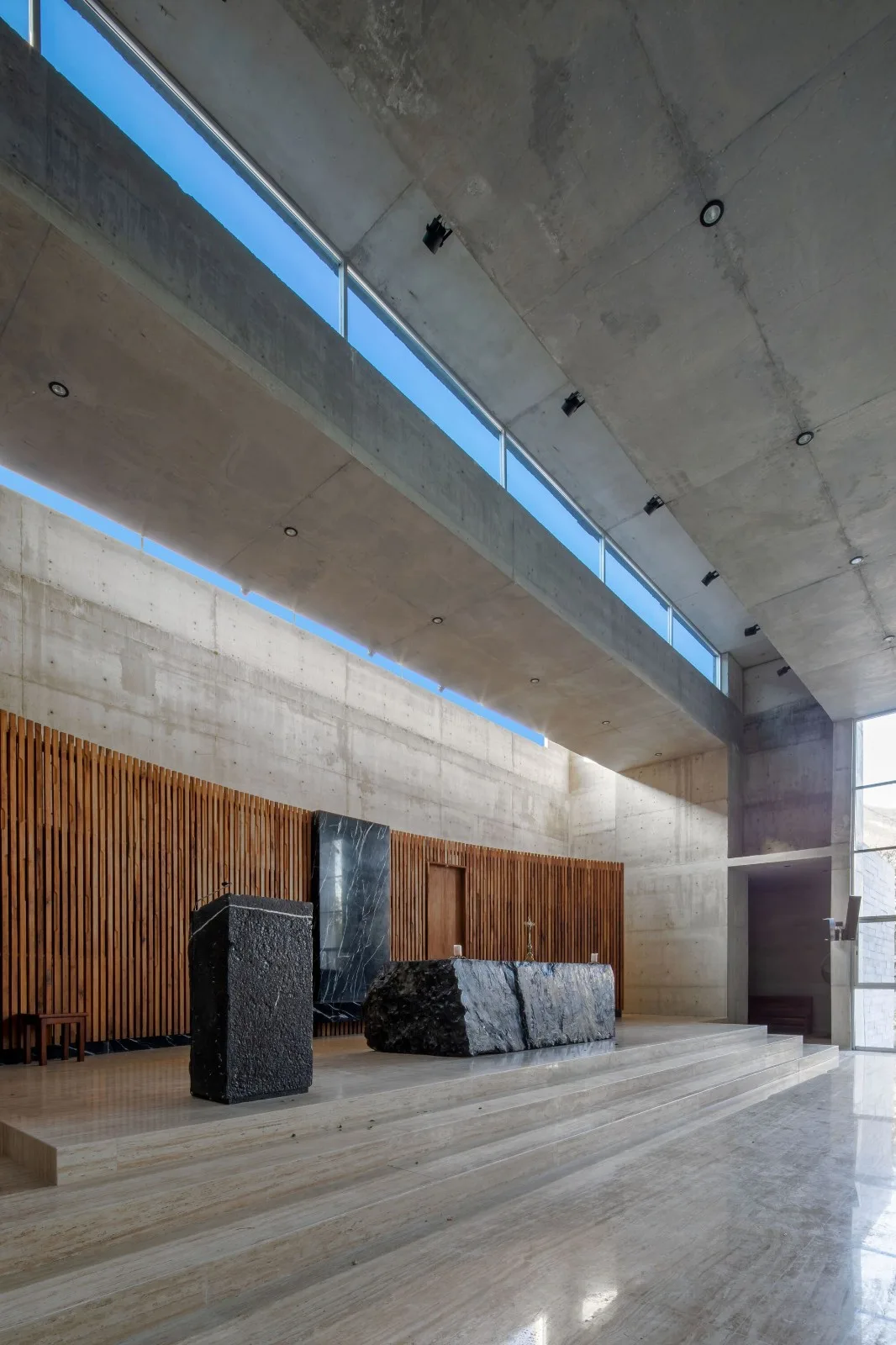
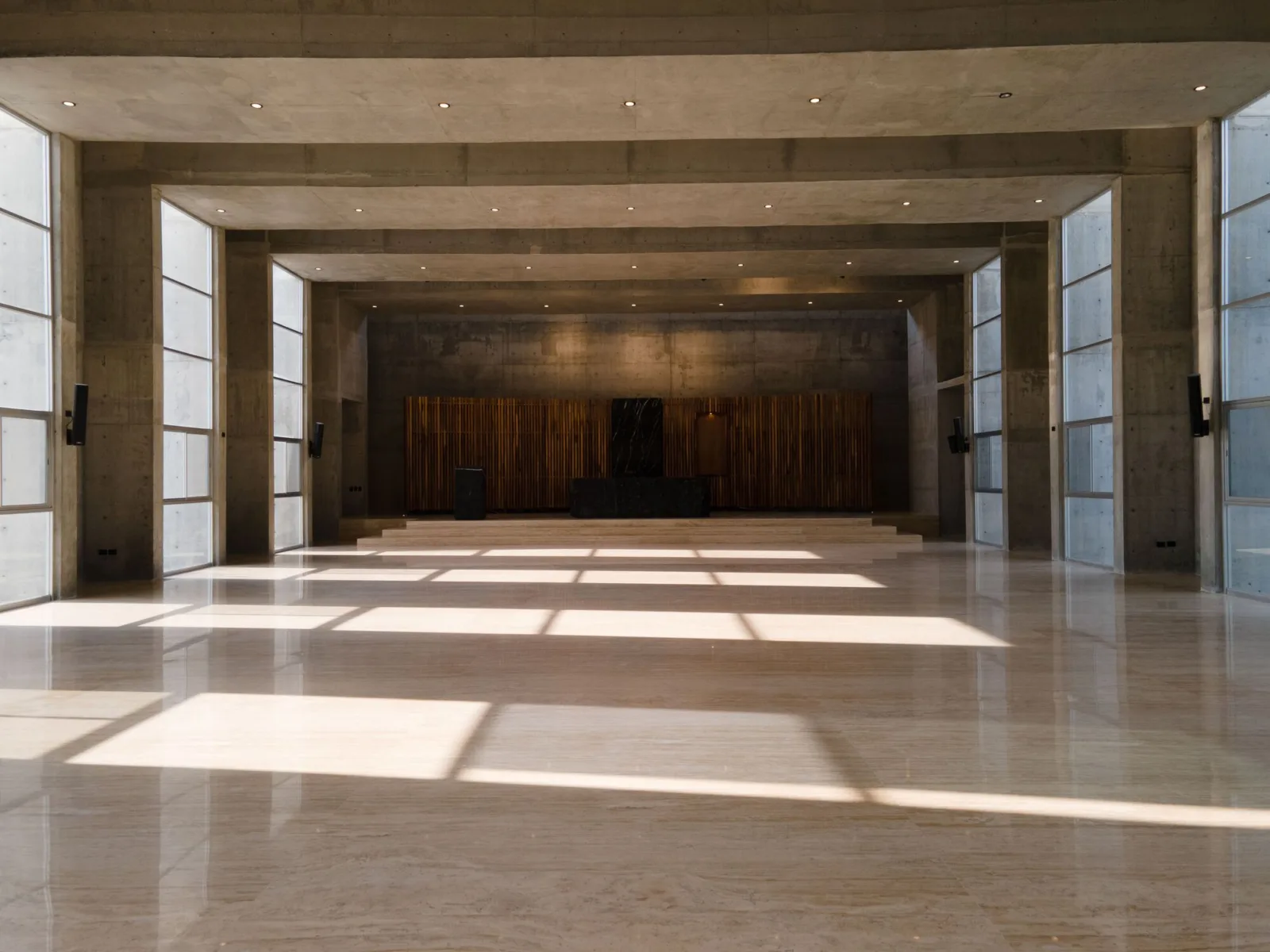
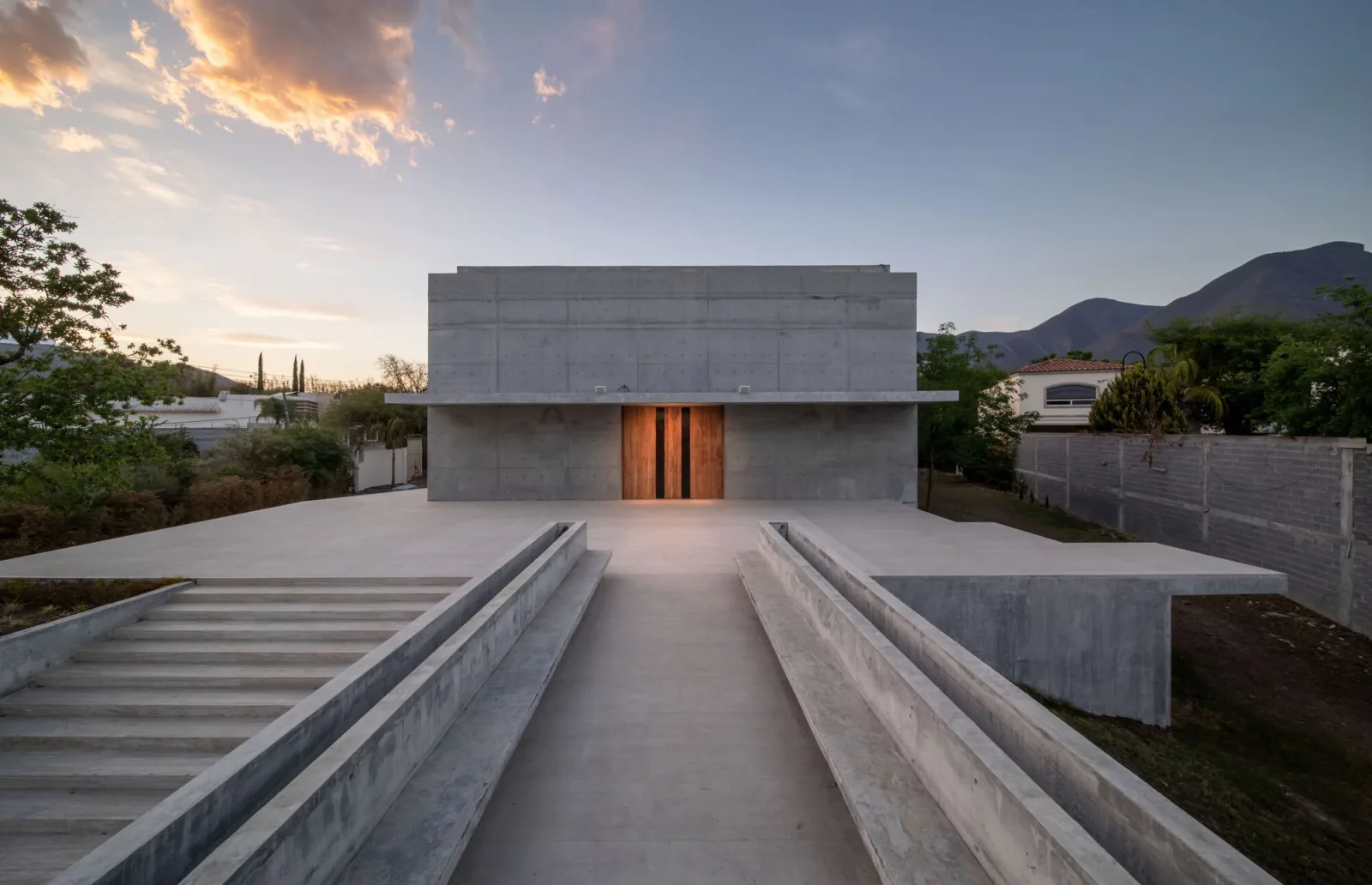
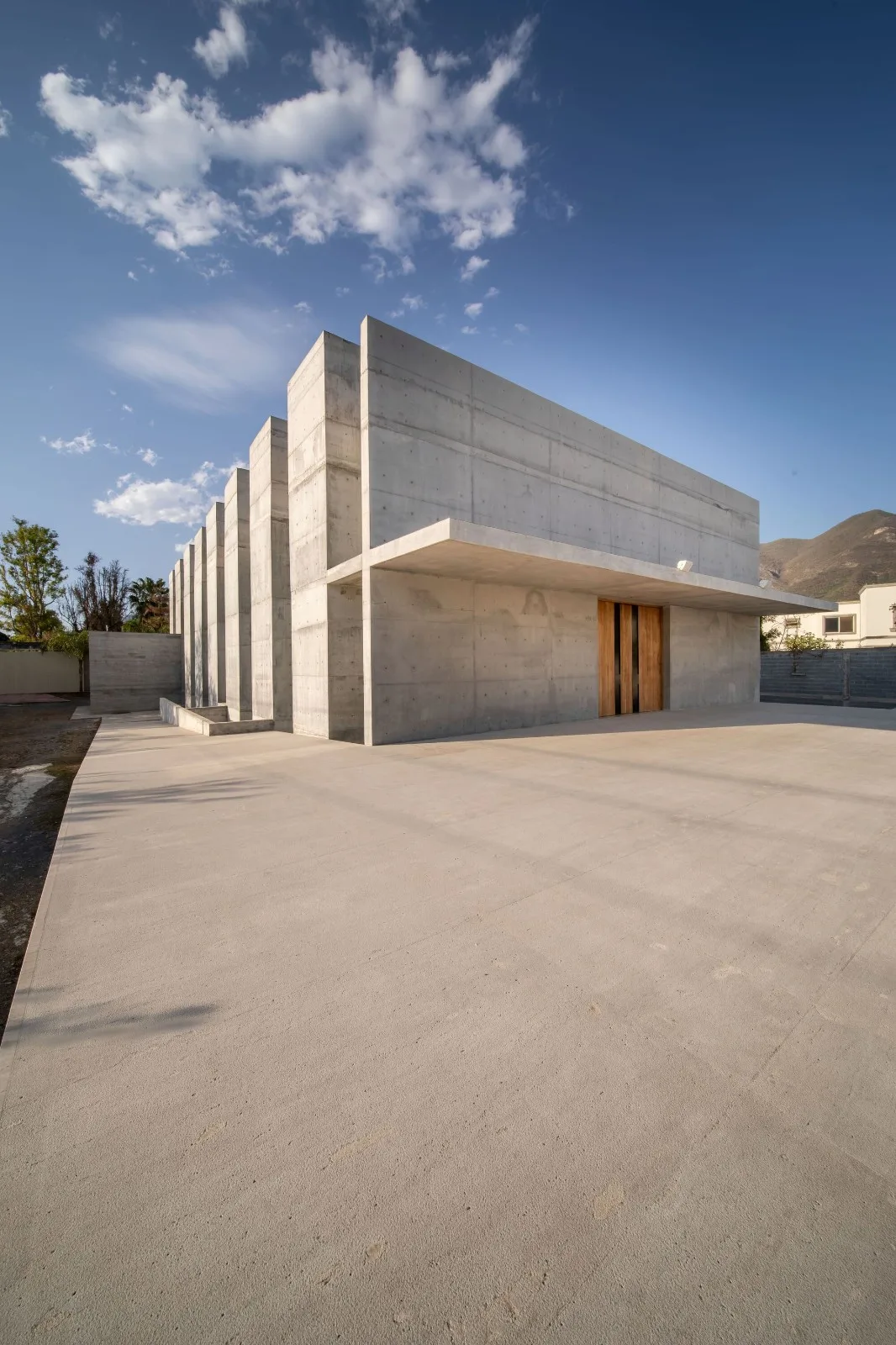
The foundation of the church is constructed from concrete, with extensive glass surfaces allowing natural light to flood the interior. The limestone marble used on the floors originates from Puebla, Mexico, while the black Monterey marble is quarried from the Cerro del Topo Chico mountain range in the San Nicolás region.
Project Drawings
△ General Site Plan
△ First Floor Plan
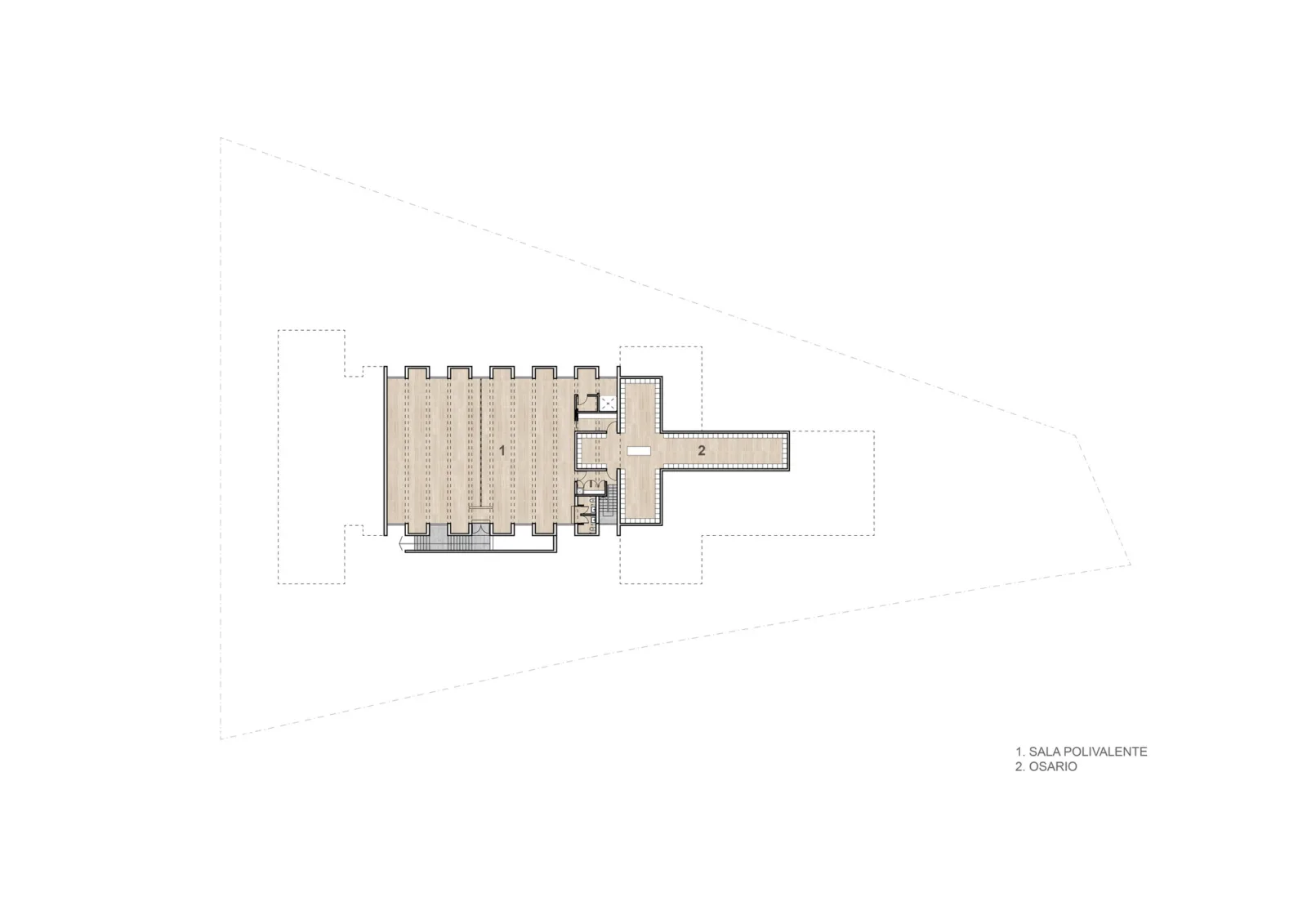
△ Second Floor Plan
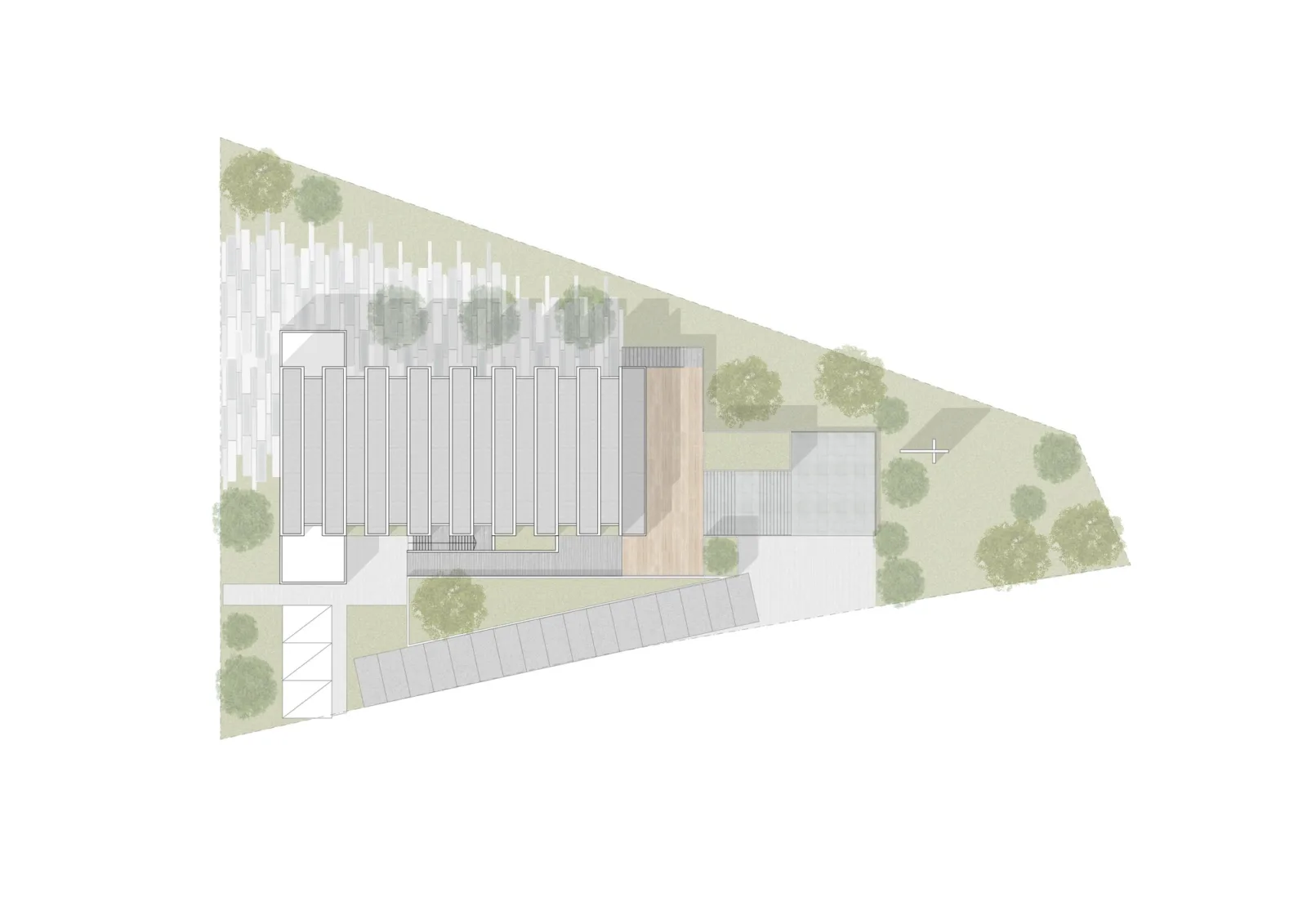
△ Roof Plan
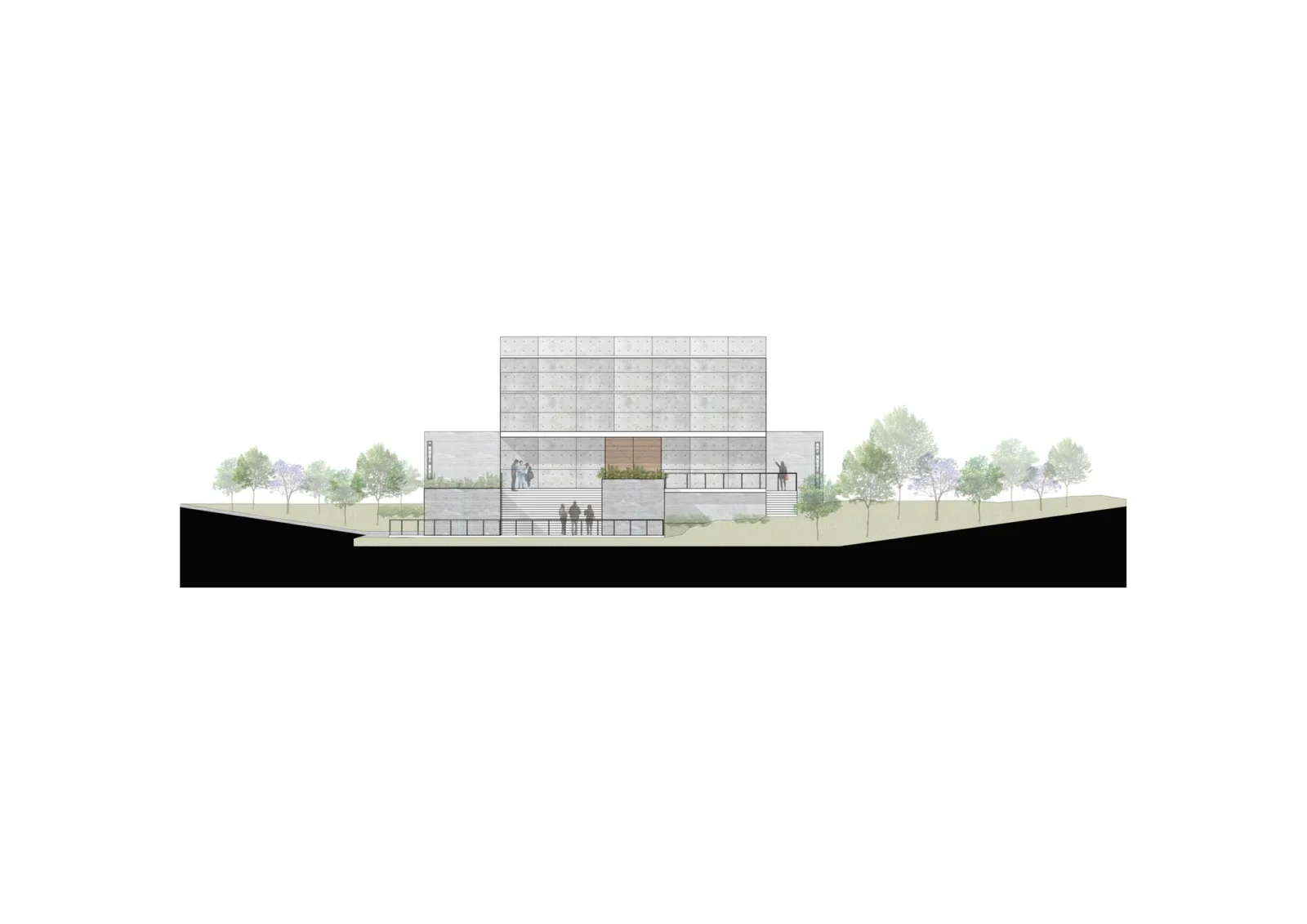
△ Elevation Drawing
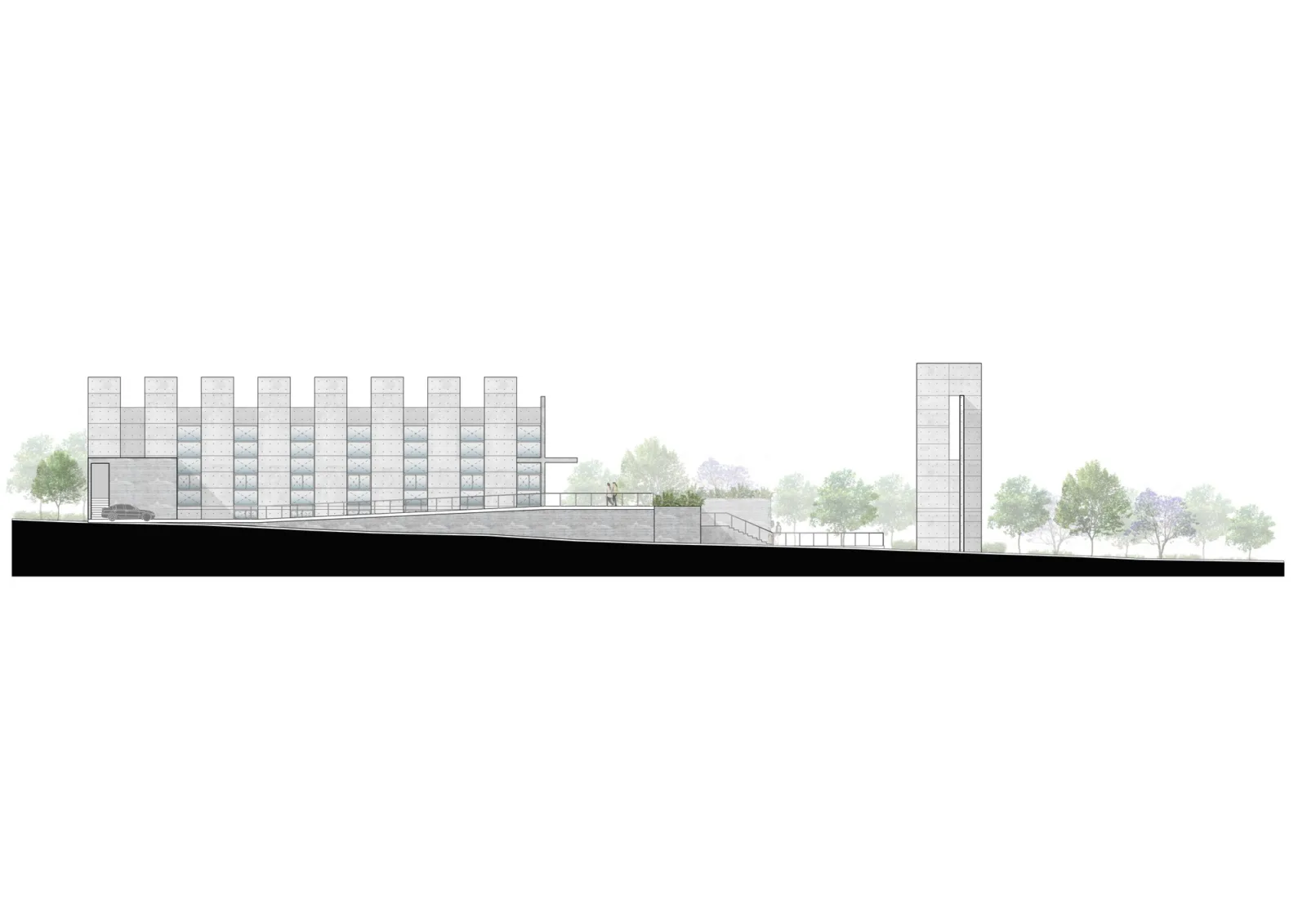
△ Elevation Drawing
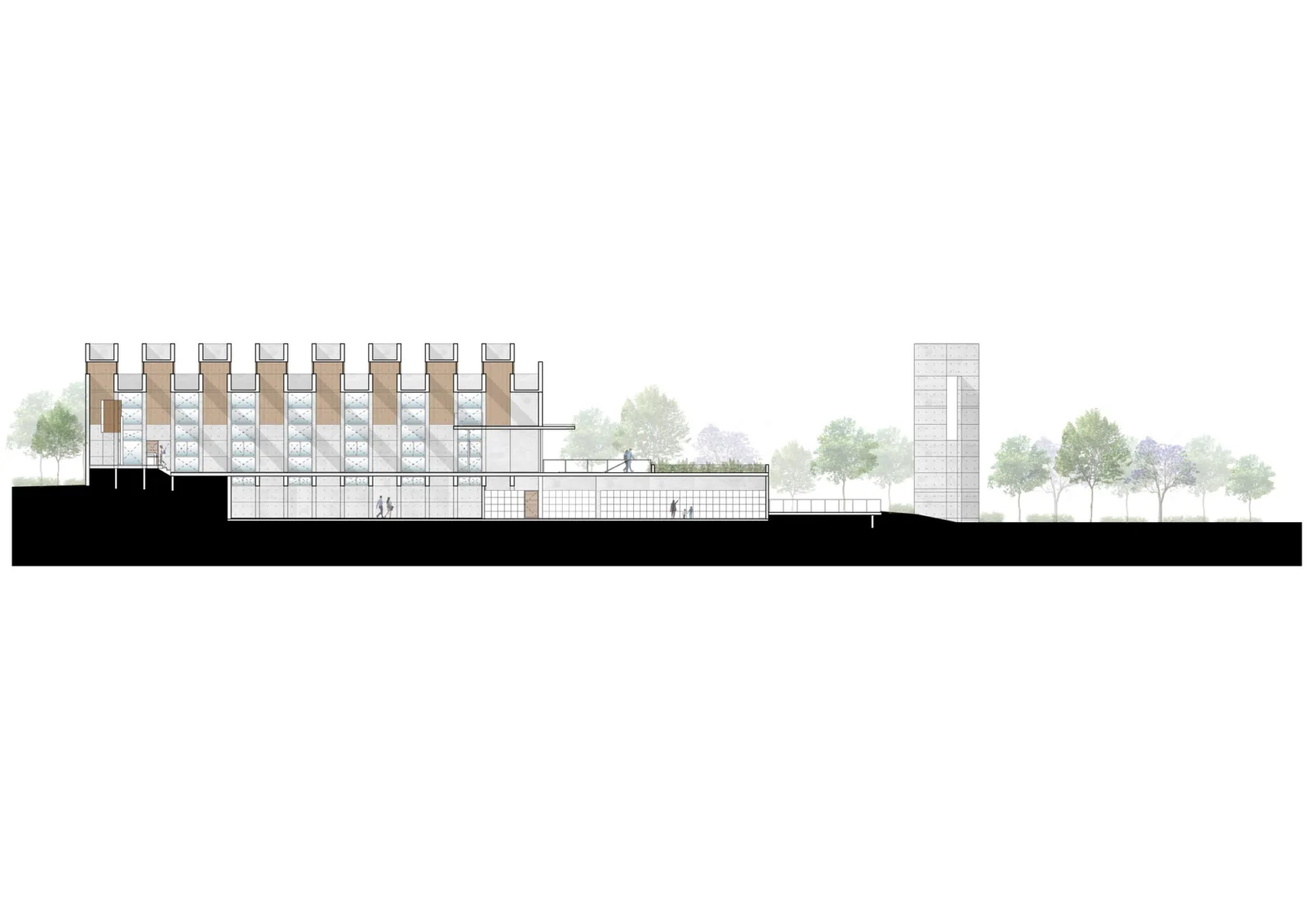
△ Section Diagram
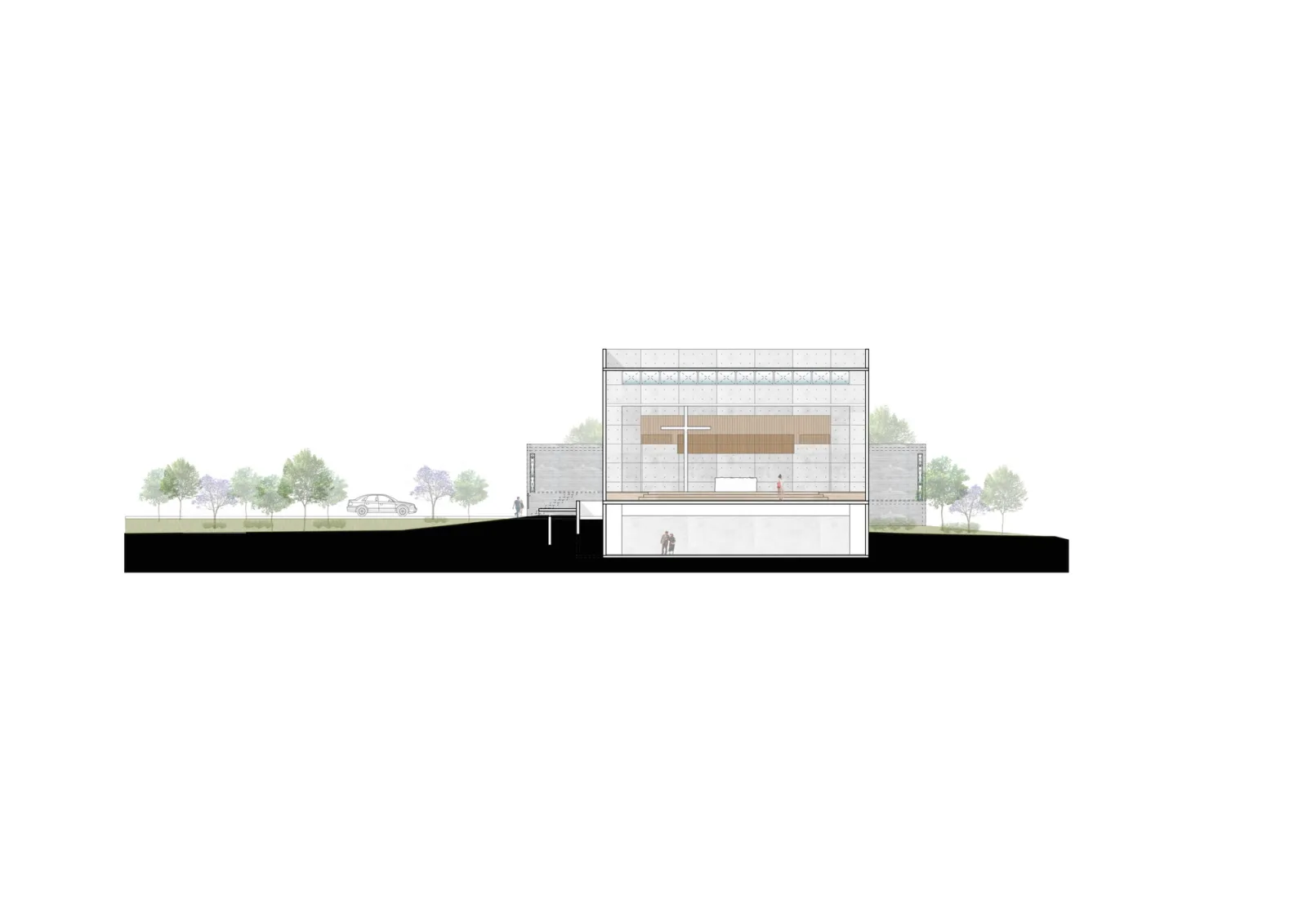
△ Section Diagram
Project Information
Architectural Design: WRKSHP arquitectura | urbanismo
Project Year: 2021
Photographers: Jorge Taboada, Pentapisma, WRKSHP
Manufacturers: Adobe, AutoDesk, Cemex
Lead Architect: Rigoberto Almaguer
Design Team: Ana Paula Treviño, Wendy López, Laura Gómez, Eduardo Guerrero
Engineering Design: Joaquín Sánchez Becerra
Builder: Reynaldo Castillo
Location: Monterrey, Mexico












Must log in before commenting!
Sign Up