
Updated Heart
This project by Naked Building focuses on rural renewal. We believe the key element that differentiates a renovation from new construction is the ability to “embrace the moment.” Identifying the dusty yet vibrant “momentum” and harnessing it forms the essence of every renovation. Like clearing the clouds to reveal the moon, the first step is to understand the direction and intensity of effort. This approach has defined our bare building renovations in recent years.
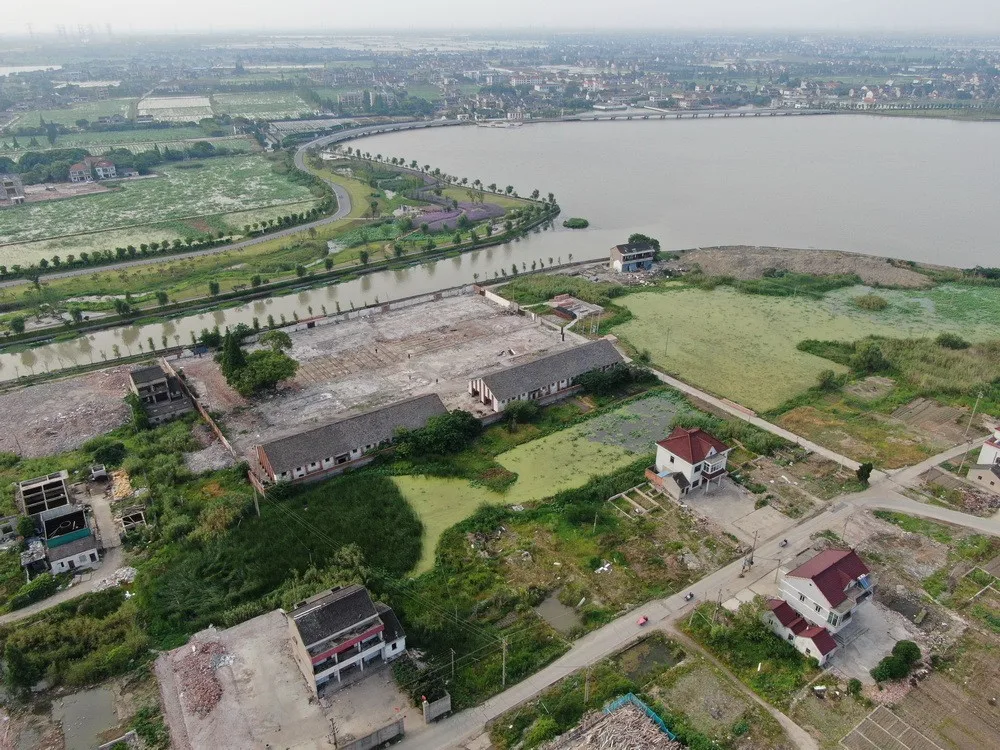
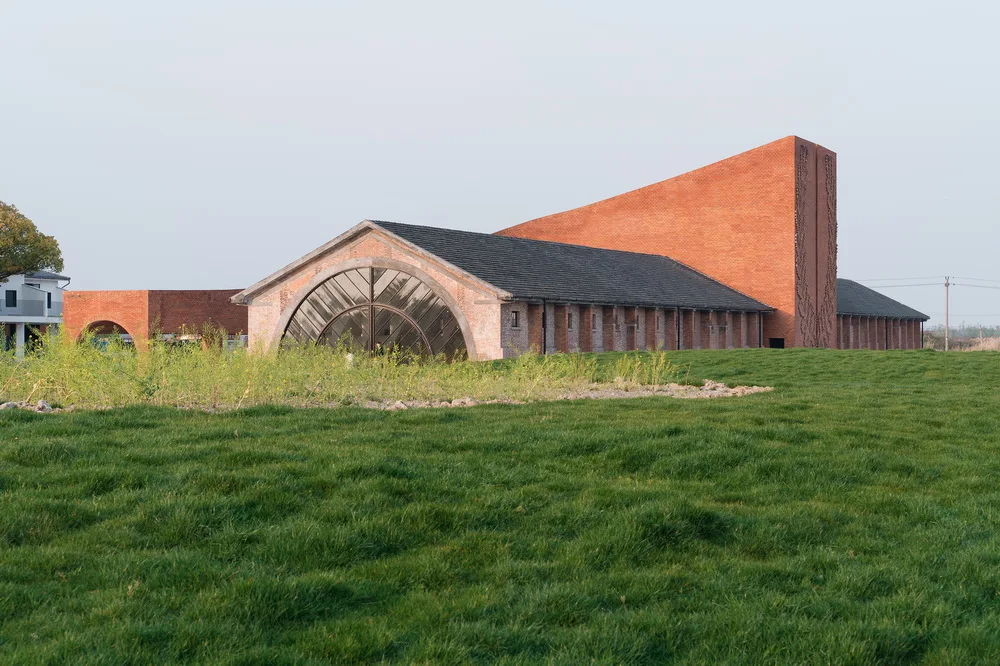
The pottery warehouse and lotus pond complement each other © Zhen Xiaolong
Liancang Alias
Located in Jiaxing’s Wangjiangjing Town near the Taocang Canal and the Hundred Mu Lianhuadang area, two old grain warehouses stand as landmarks. Built in the 1950s and 1960s, these granaries were originally used by locals to store rice. However, after a fire, they were abandoned for several years.
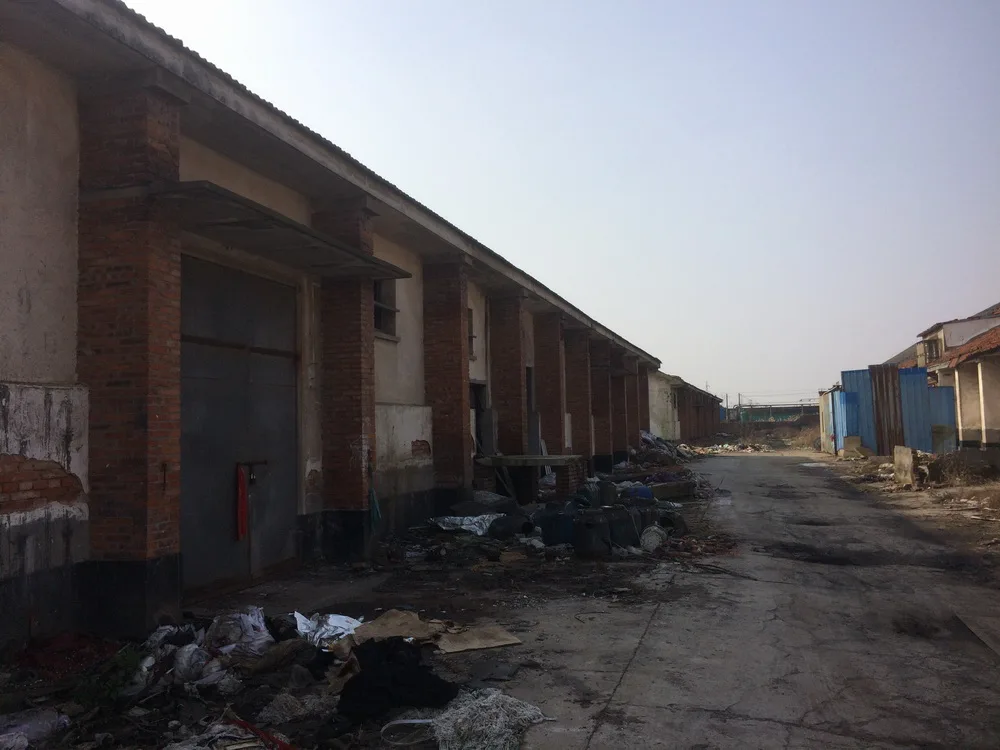
Two old grain warehouses built in the mid-20th century, later damaged by fire and left abandoned
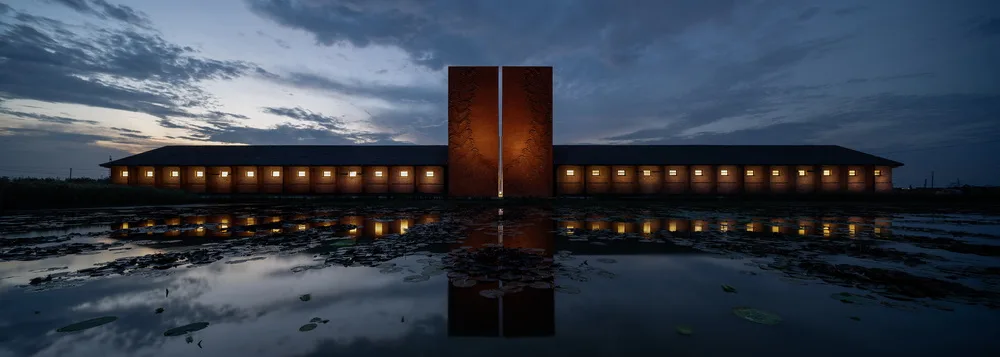
The elegant lotus pond in front of the warehouse likely served for water intake and fire prevention historically. The pottery warehouse and lotus pond form a harmonious pair, giving rise to the nickname “Lotus Warehouse.”
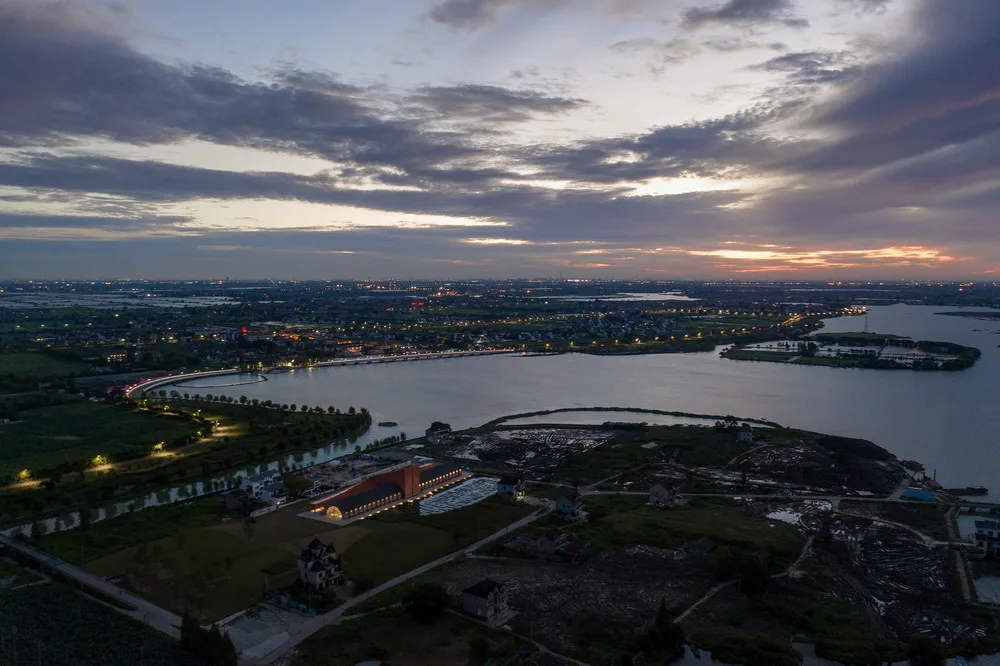
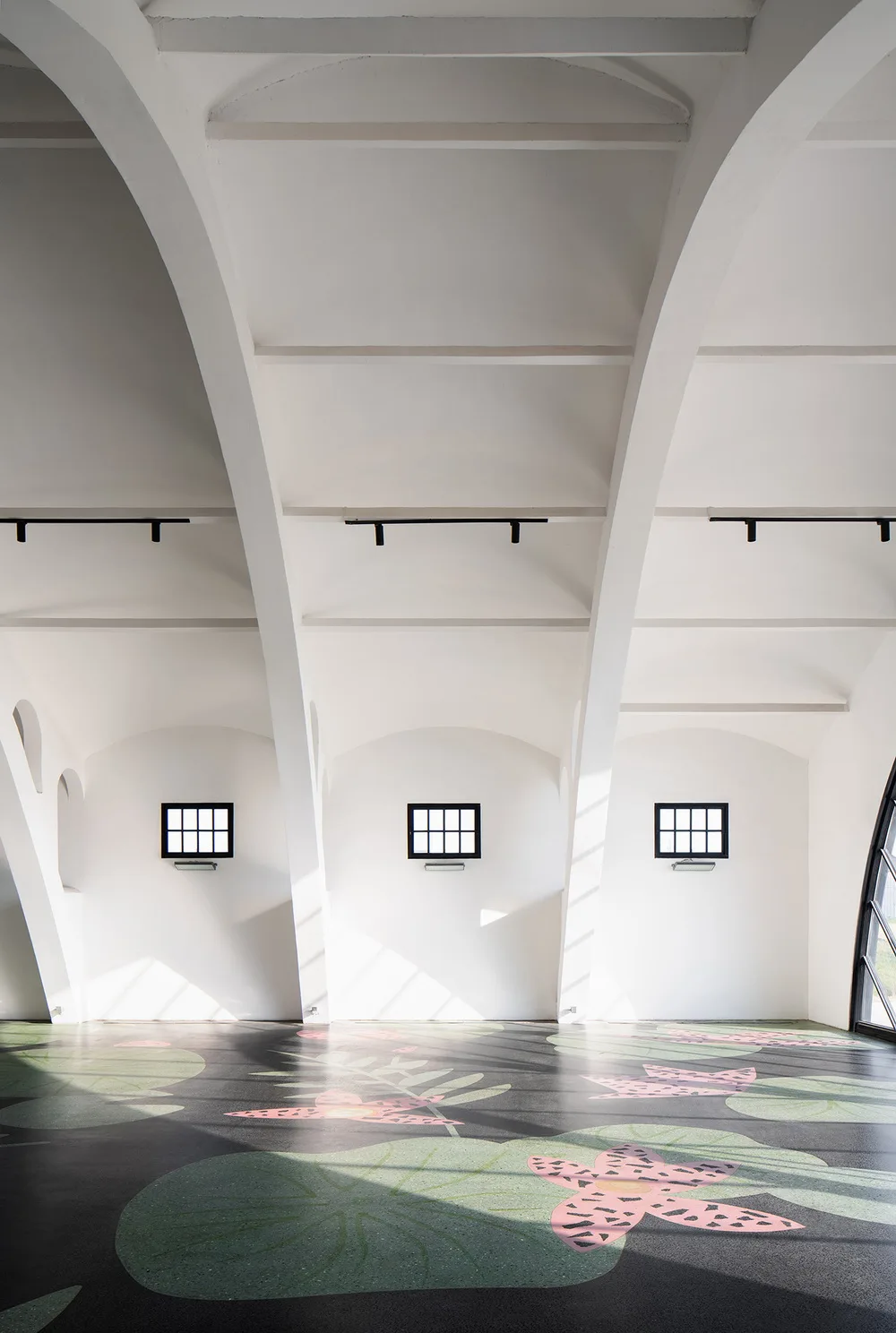
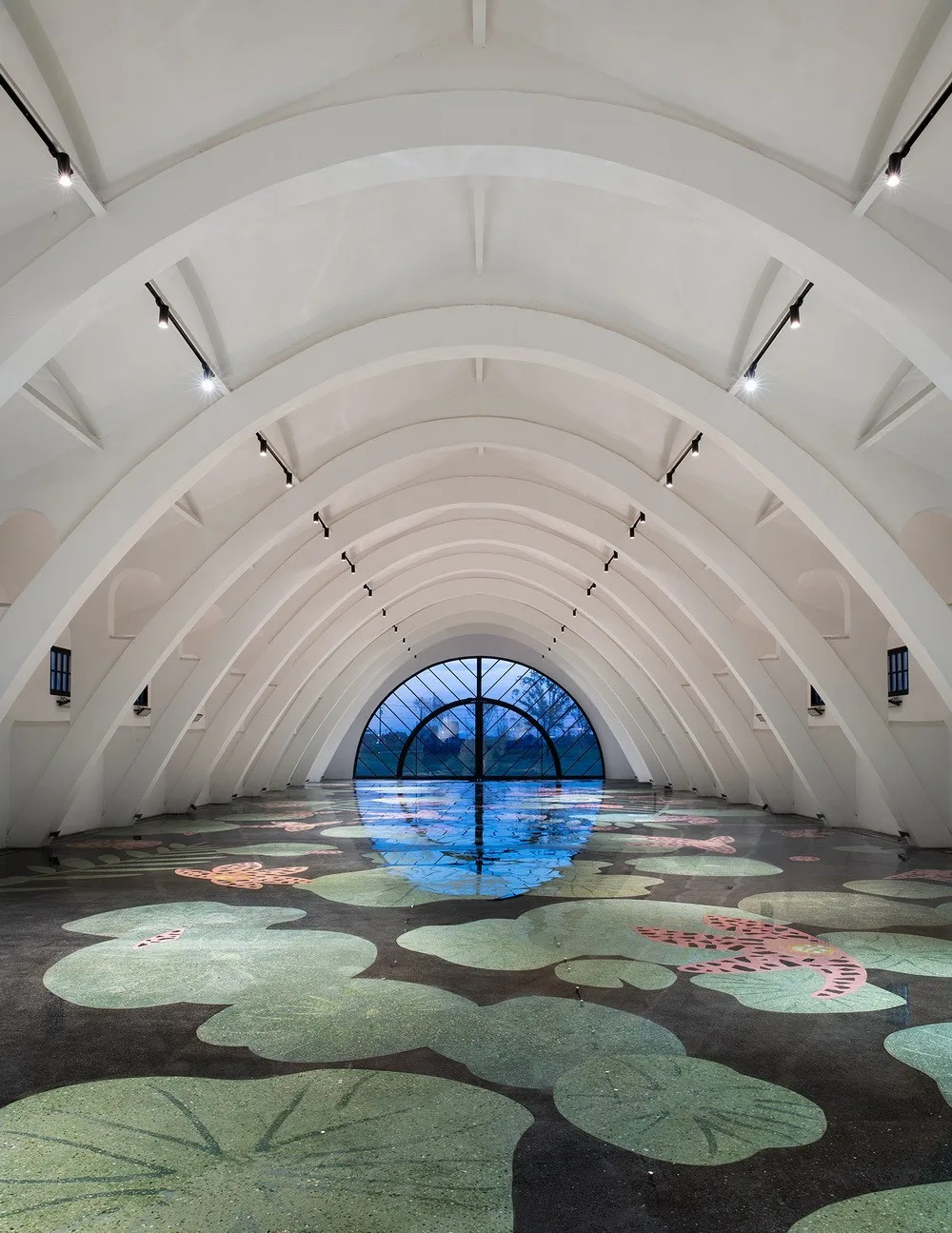
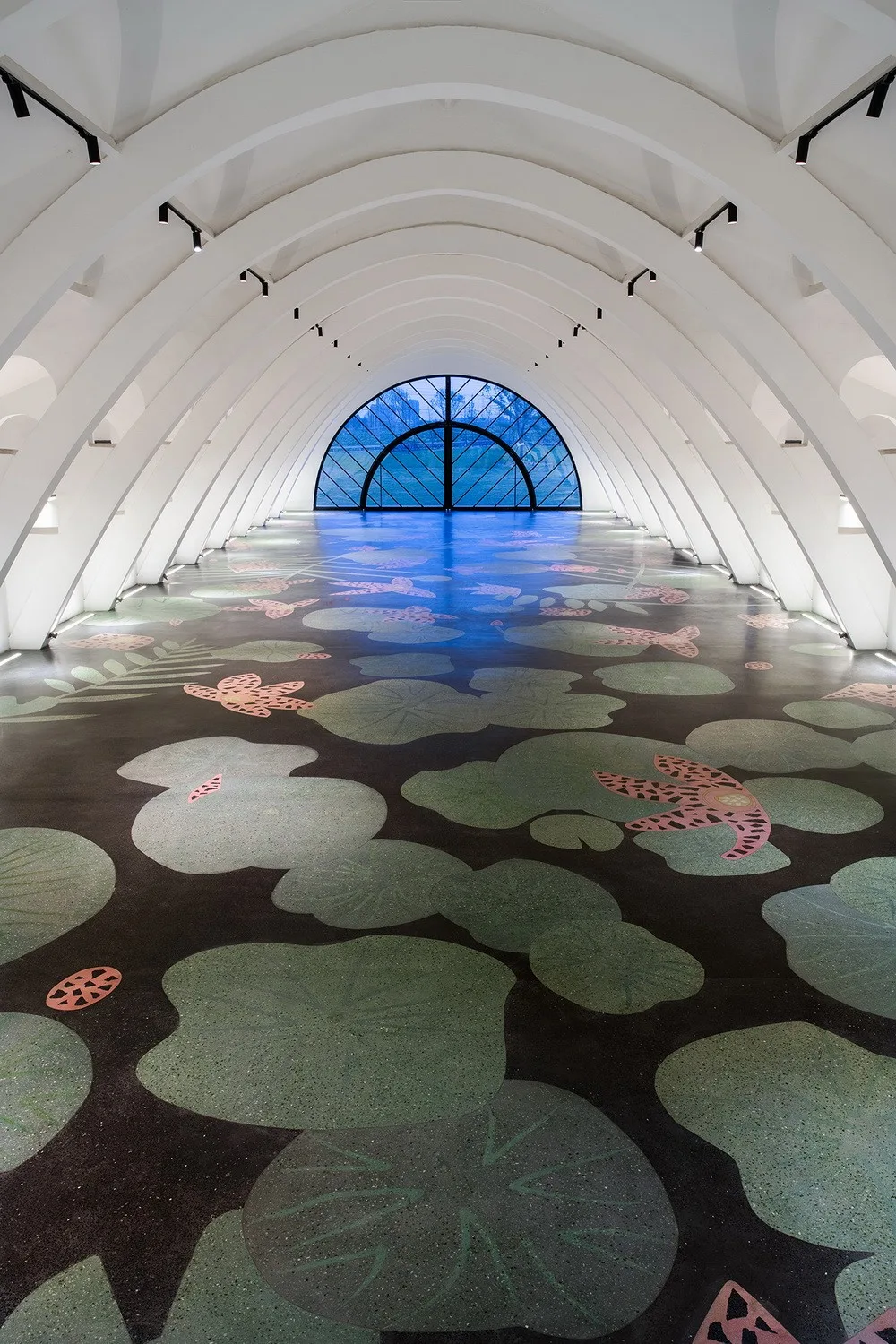
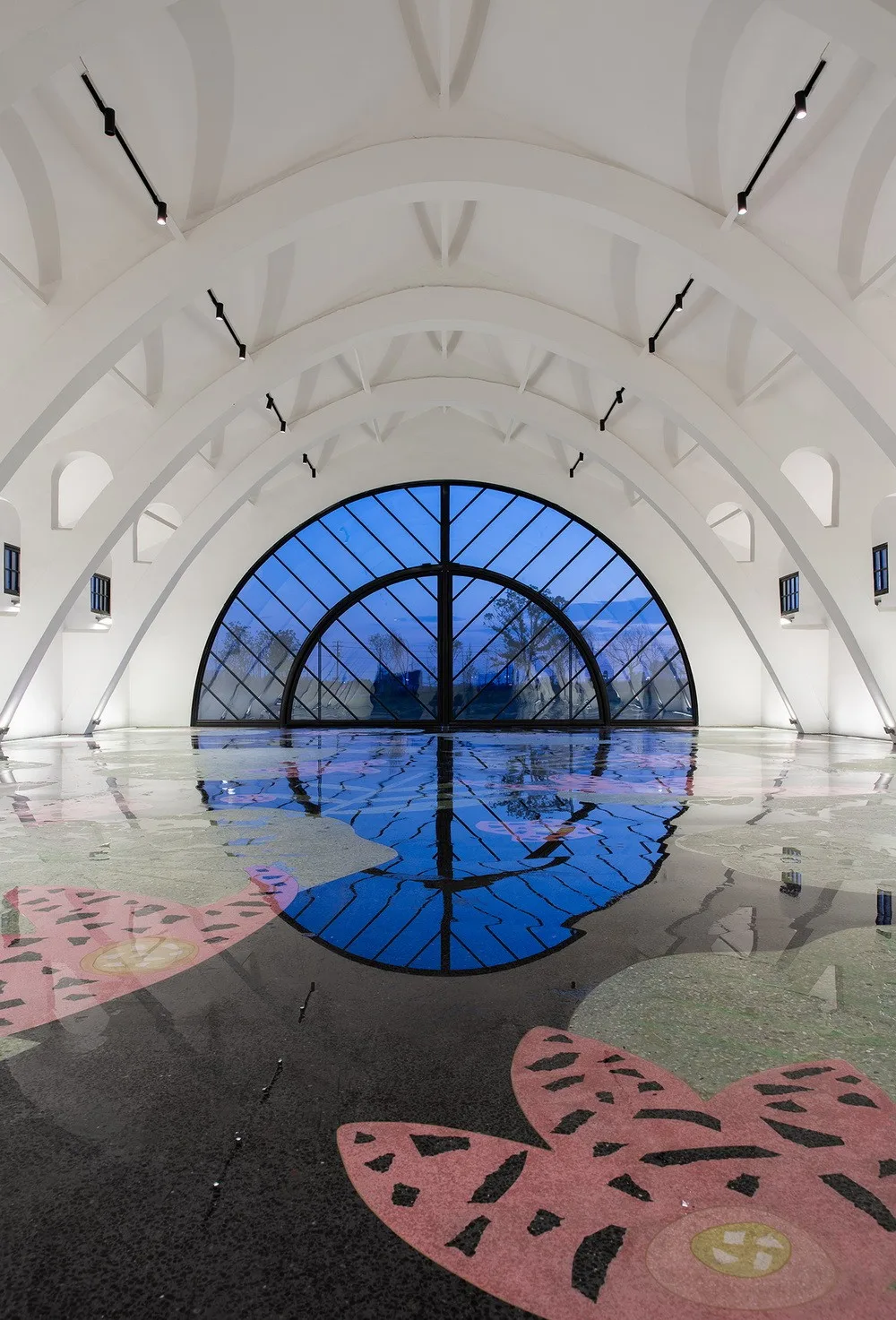
Following renovation, the terrazzo lotus pattern inside the warehouse echoes the structural arches of the granary. The owner entrusted us with the task of renewing the bare building, aiming for it to become the area’s “business card,” respecting the architectural features and historical significance of the granary itself.
Potential Energy: Following and Transcending Function
Exploring potential:
The owners define the future of the old granary as an art center. The West Granary will house a commercial exhibition hall, while the East Granary will serve as an art exhibition hall. Thanks to the unique concrete arch support system, the granaries’ internal visual system is complete, with the arch order creating a cohesive spatial experience. This inherent momentum is unbreakable.
Given the age of the granary, any additions that do not belong to its original structure become burdensome.
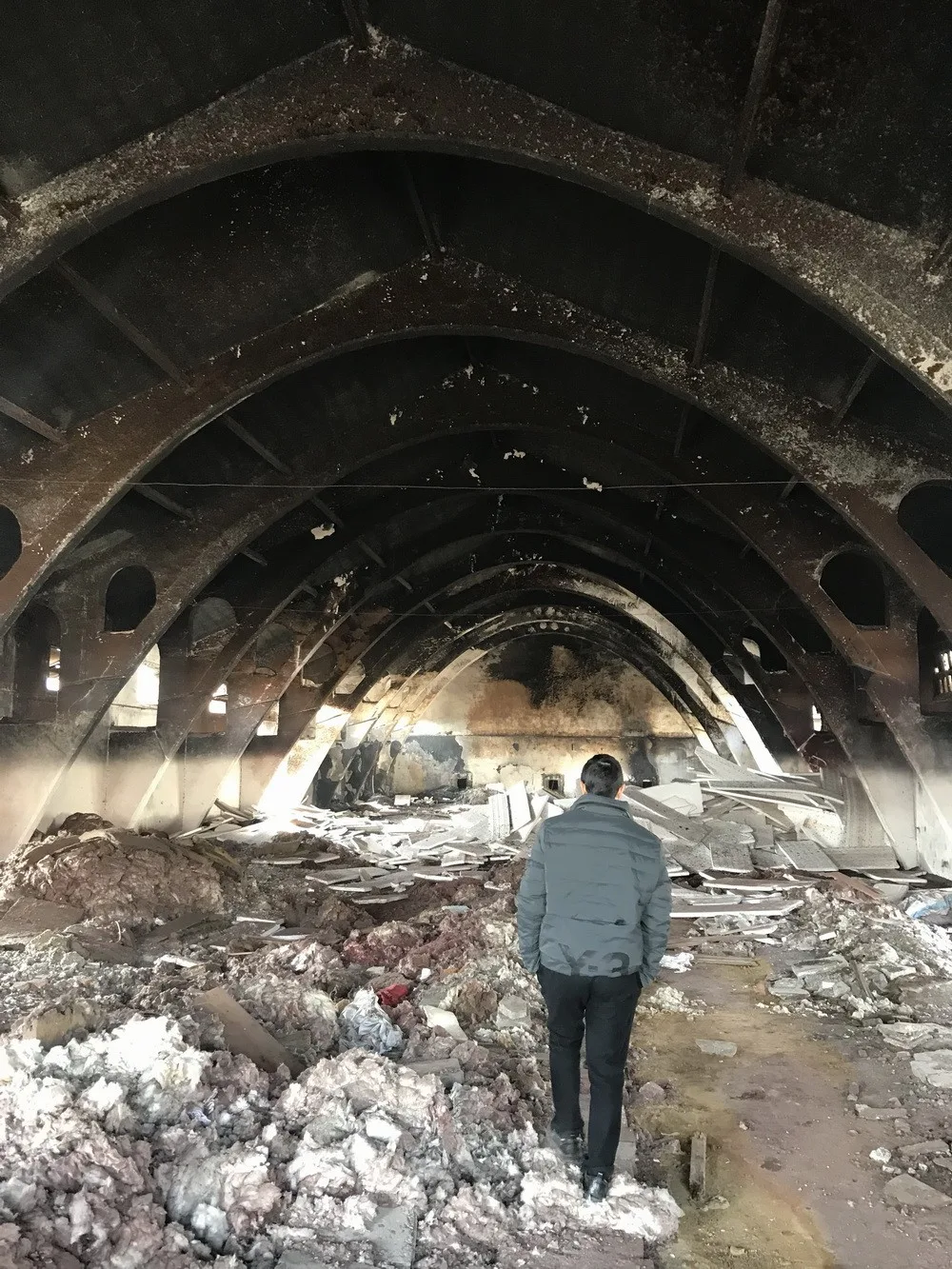
The grain silo’s internal structural system remains intact despite fire damage
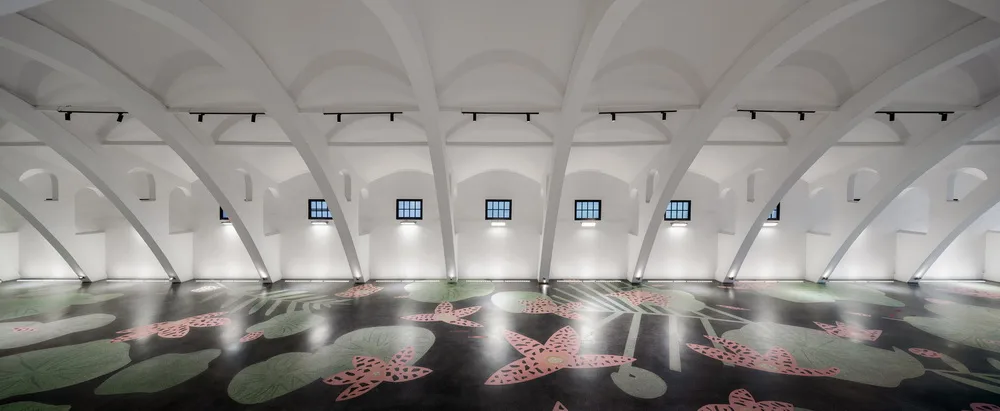
△ The East Granary will function as an art exhibition hall
Therefore, we concluded that both granaries should remain “pure exhibition spaces,” while the auxiliary functions of the art center should be housed externally. Introducing structural elements inside the granaries would disrupt their integrity.
Externally:
After demolishing the surrounding abandoned textile warehouses, the two old granaries stand side by side, facing north towards the canal, with a vast expanse to the south and a pond nearby. The warehouses align east-west, making the best solution to add external volume by creating a complementary structure that forms a new “plot” with the old granaries.
This concept materialized through the design of a connecting corridor.
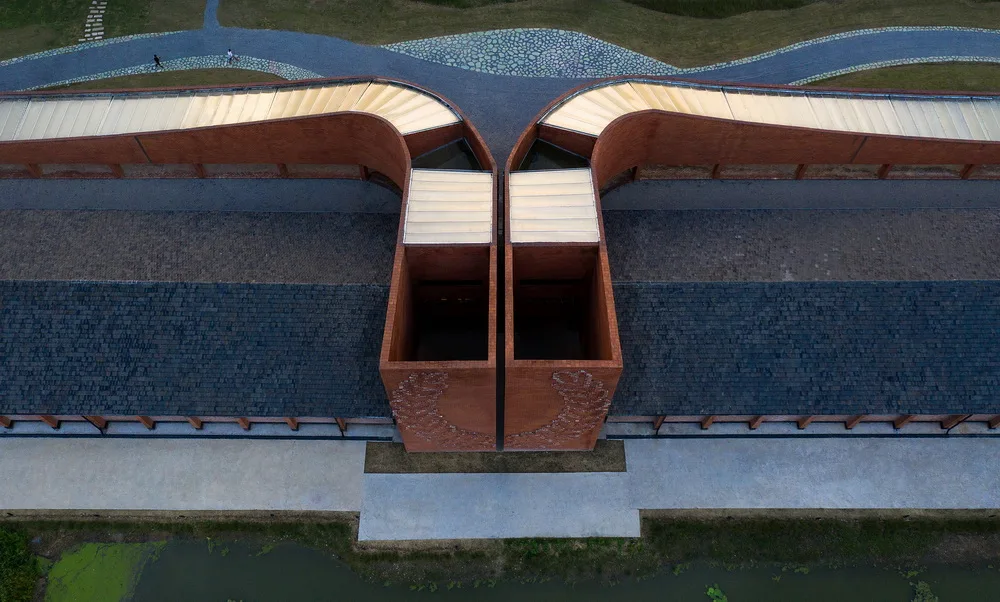
Architecturally, the accompanying corridor redefines access and spatial layout, becoming a commercial and social hub. It supports the art center’s auxiliary needs while allowing the granary exhibition halls to preserve their internal focus. This architectural choice expresses our deep respect for the granaries’ historical experience.
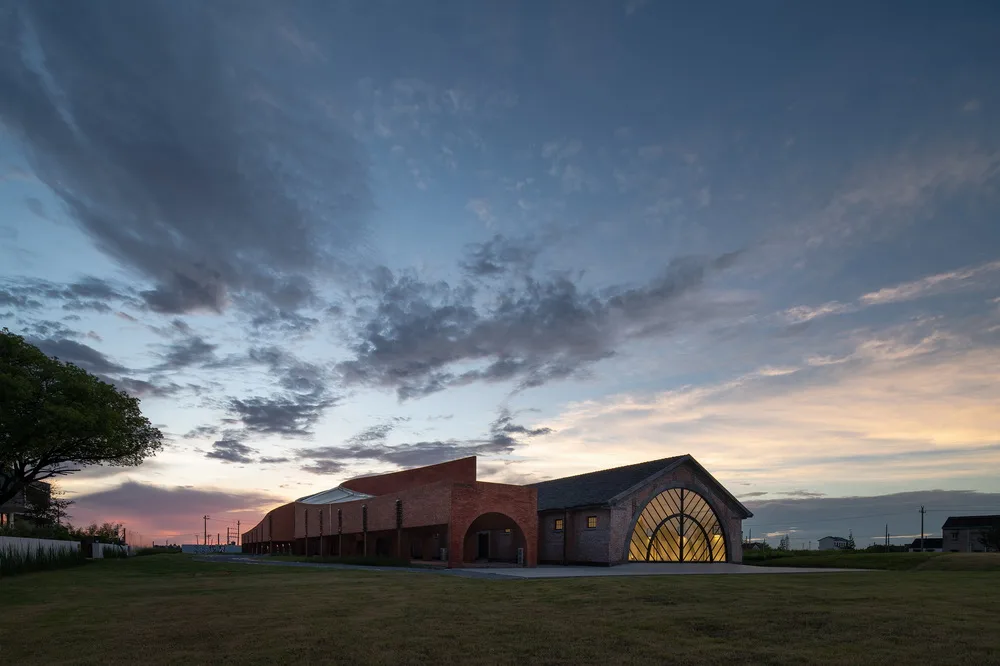
Redefining Entrance A
The main exhibition hall features four entrances. With the addition of the connecting corridor, all visitor flows converge centrally at a human-scale entry point. East and west sides serve as freight entrances, with doors opened to separate pedestrian and goods traffic efficiently.
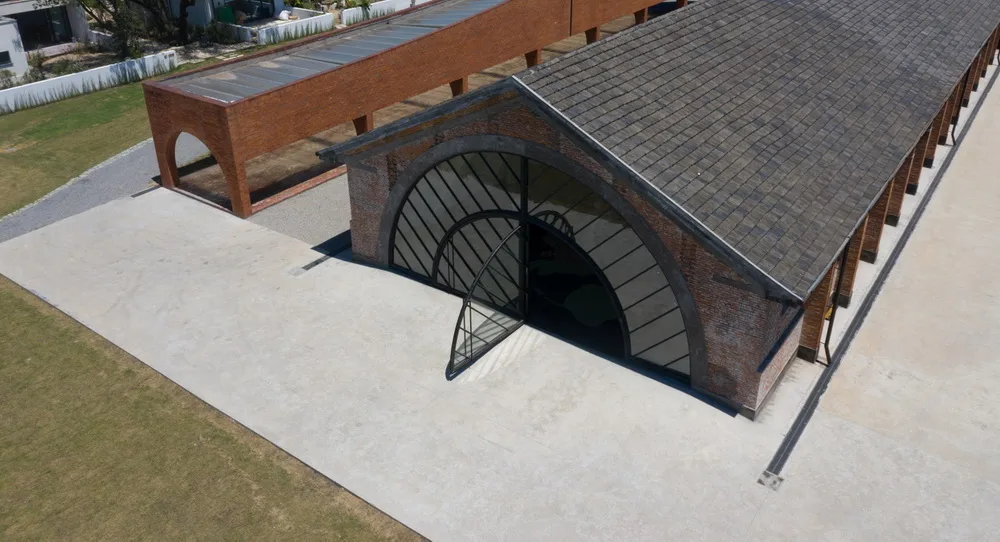
East and west sides function as freight entrances
B Business and Social Space
As mentioned earlier, every renewal project ultimately revolves around economic viability. Along the corridor, facilities like simple dining, coffee shops, and souvenir stores support the art center’s operations. Initially, the corridor was designed with floor-to-ceiling glass and provisions for electrical and mechanical installations to create an indoor space. However, due to operational constraints, it remains an open grey corridor upon completion.
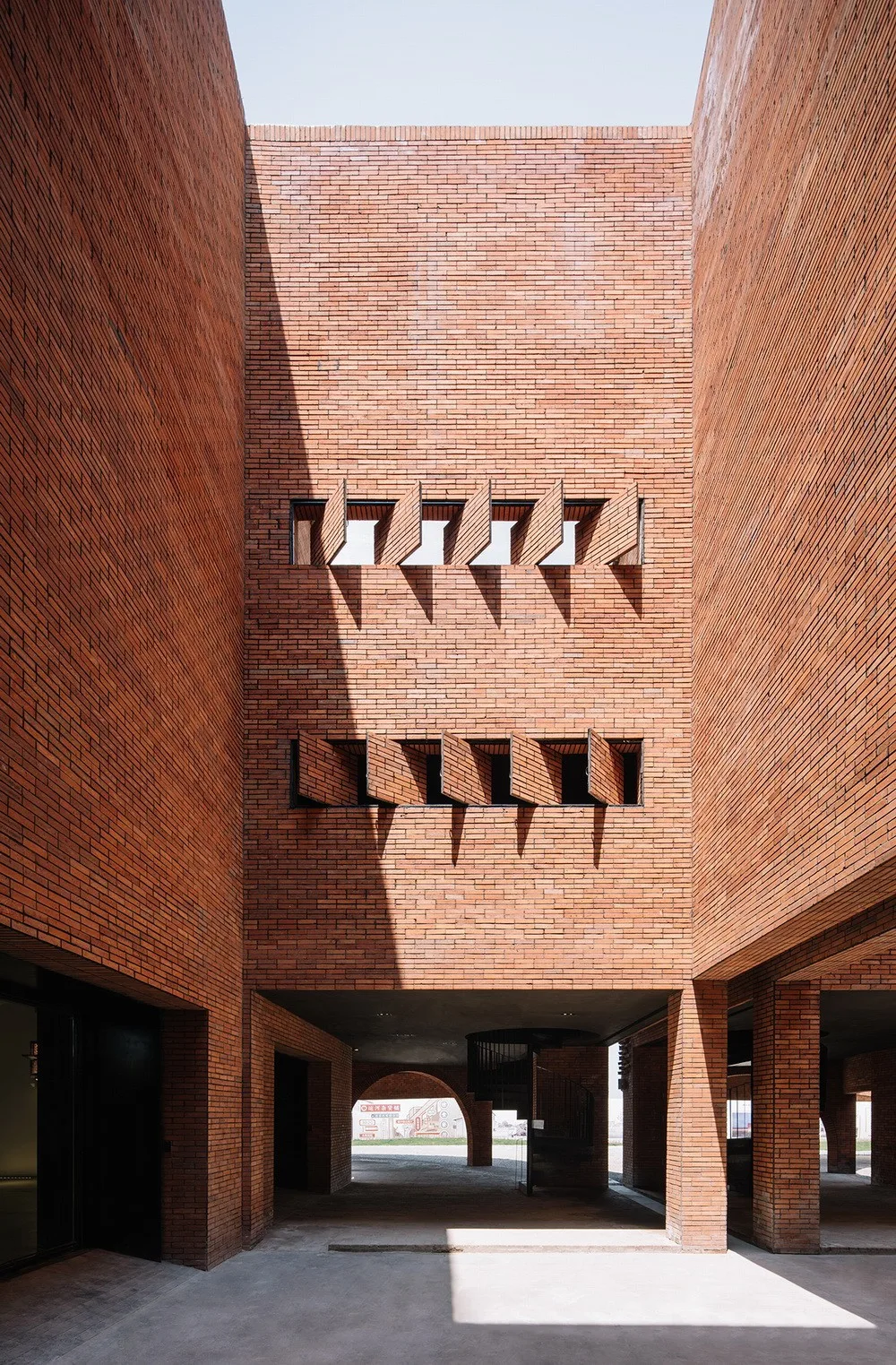
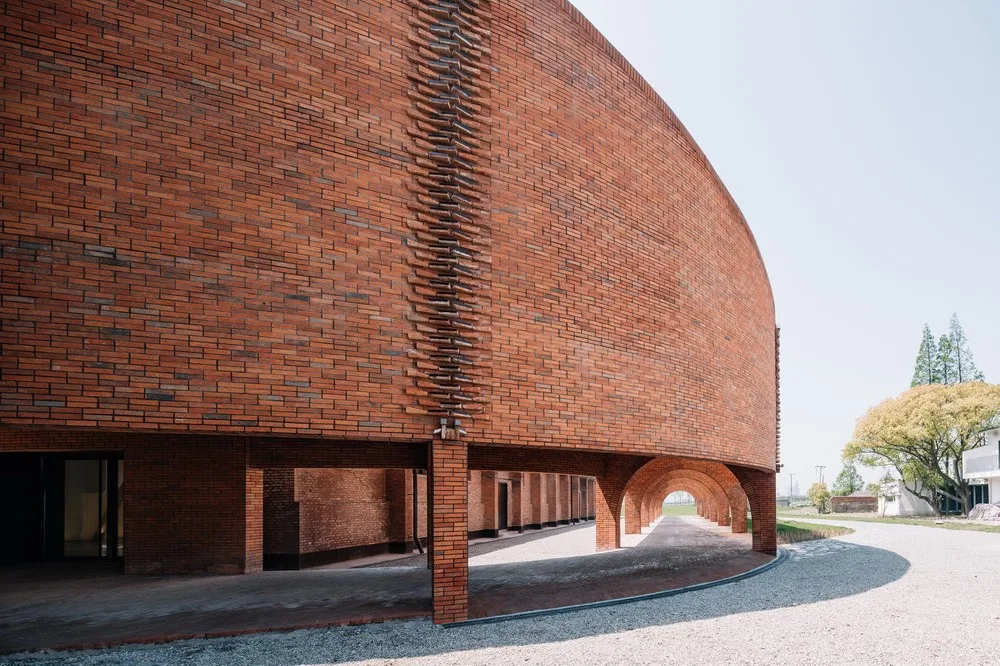
Potential: Architectural Directionality
The east-west orientation of the main granaries introduces a strong directional quality. When a building conveys spatial direction, it naturally establishes its presence or “field.” The corridor not only extends this parallel momentum but also rises vertically as it converges toward the central entrance, creating a dynamic vertical thrust.
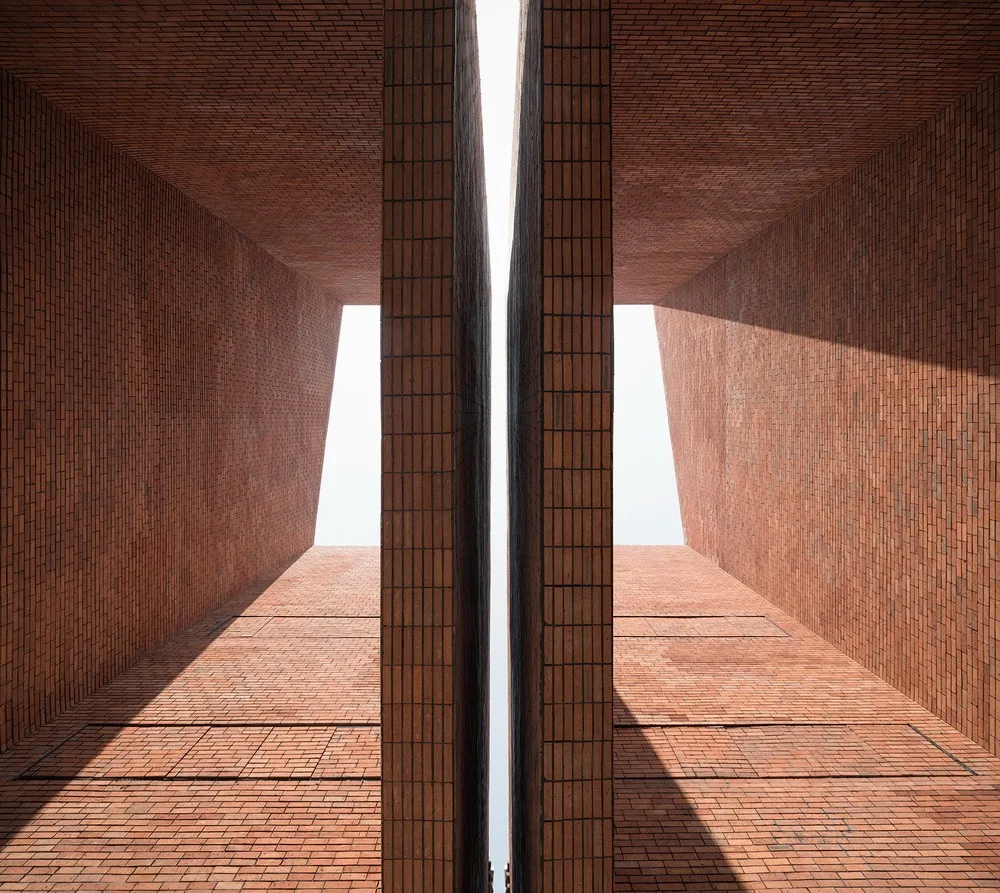
These two directional “forces” form the soul of the renovation: one follows the granaries’ parallelism, and the other points upward toward the sky.
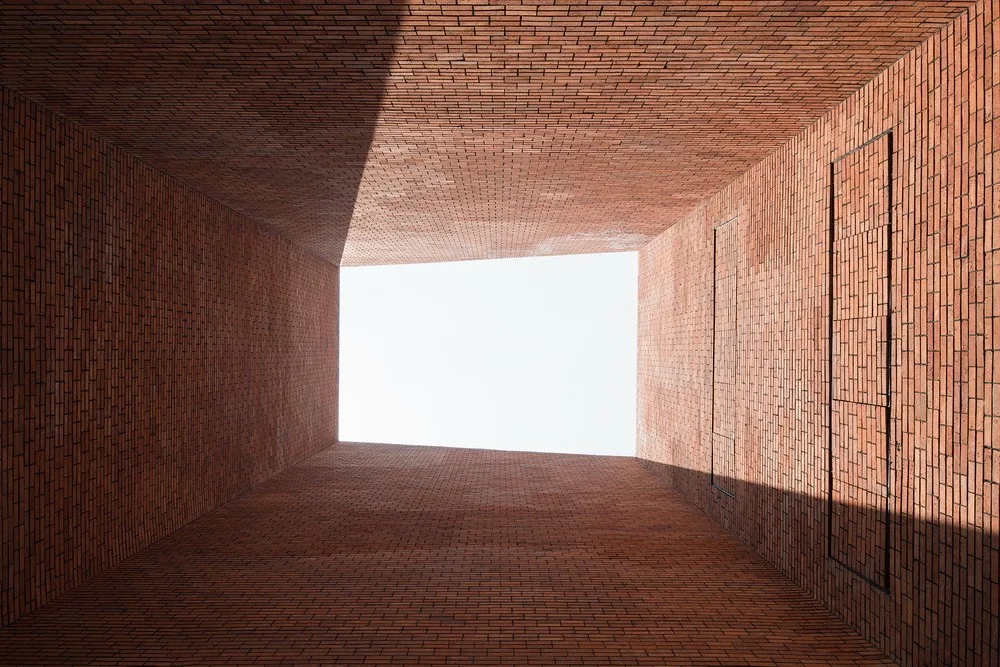
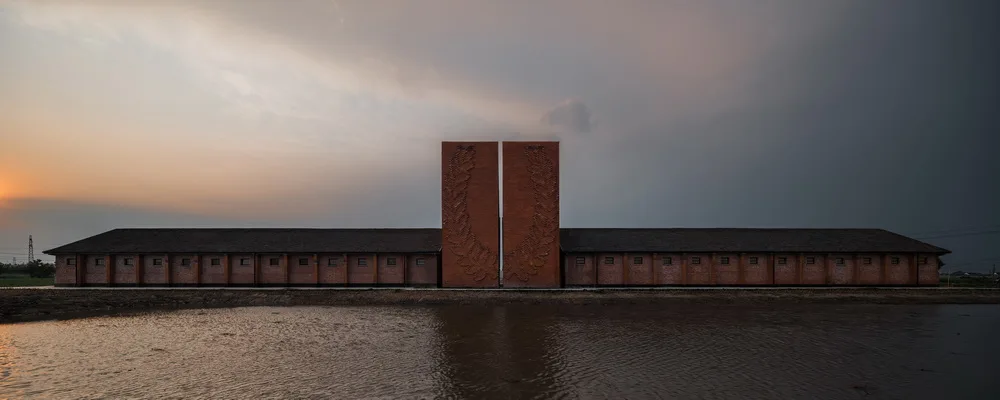
Formally, the corridor acts as an accompanying structure, with the two granaries converging at the center to create the main entrance. Spatially, the corridor’s height gradually increases toward the center, producing a quiet and elevated atmosphere, culminating in a powerful architectural climax.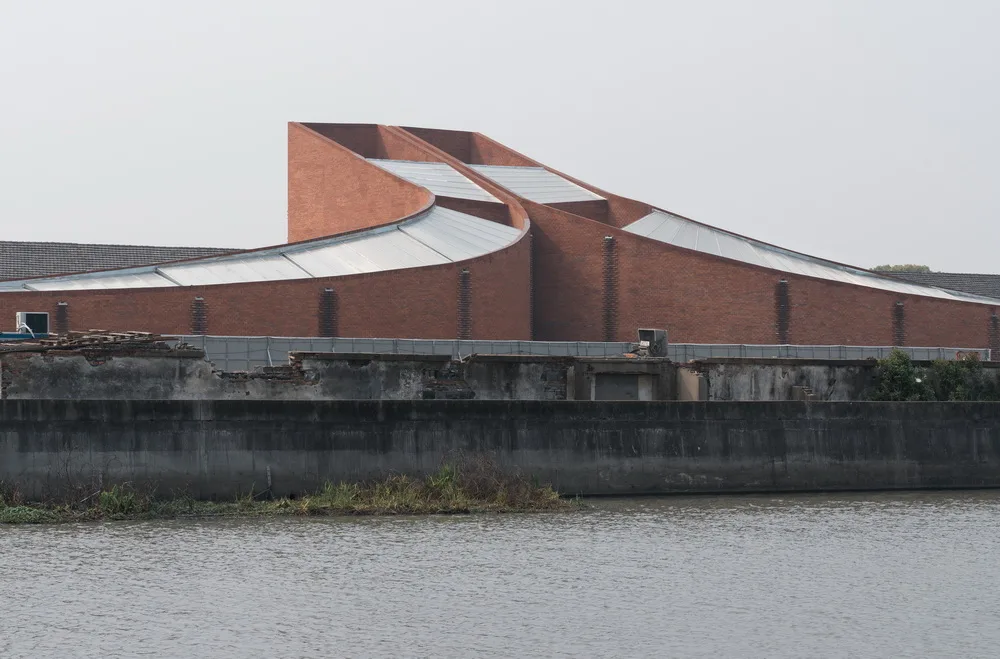
Power: Poetic Companionship
The connecting corridor symbolizes the enduring affection of bare architecture toward the granaries.
We often anthropomorphize architecture, reflecting its nature as a product of abstract human thought. Although geometry itself lacks emotion, humans perceive relationships and feelings through it. This is a core meaning of the ancient architect’s profession.
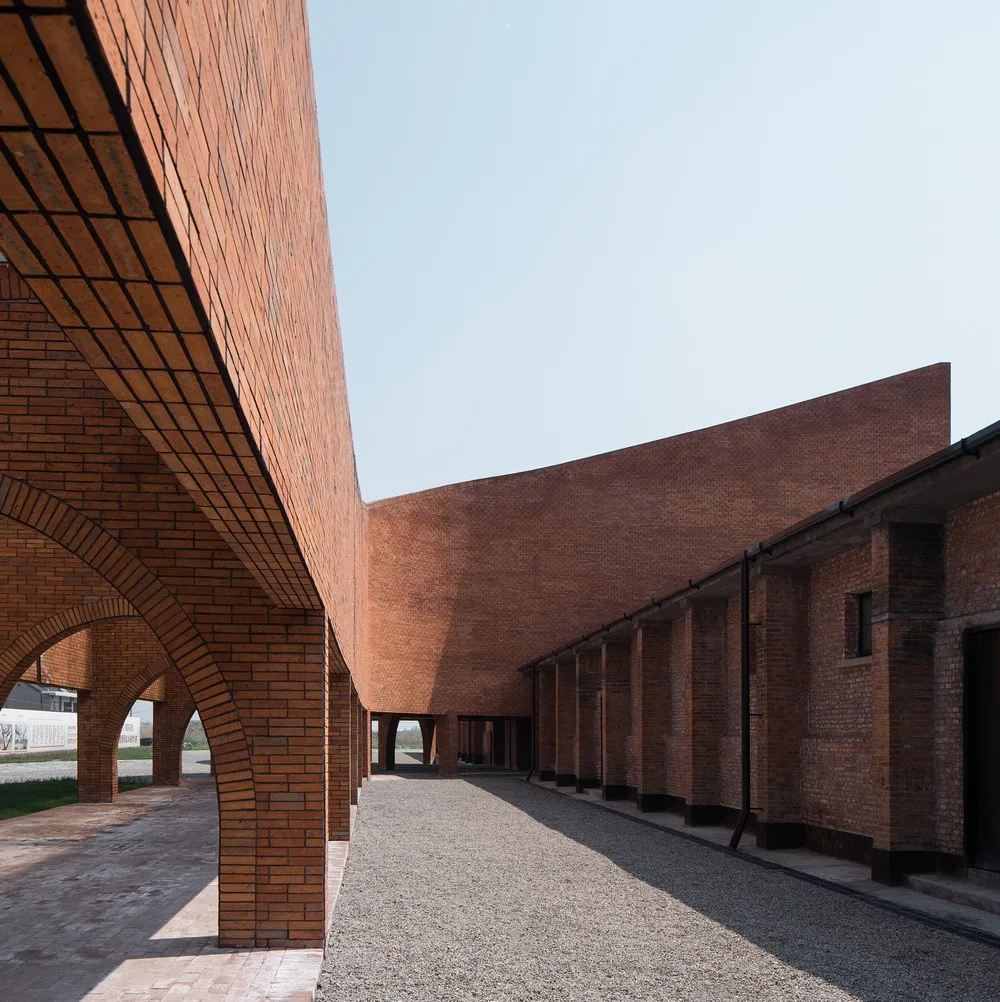
Architecture is human, and naked architecture emphasizes empathy in design. While landmark buildings historically symbolized power and authority, here, amidst the hundred-acre lotus pond, we hope these two granaries—after 60 years of history—can offer companionship and endure for many years to come.
Drainage
The brick undulations, water collection, and drainage systems—vital architectural decorations—are consistently expressed through brickwork language.
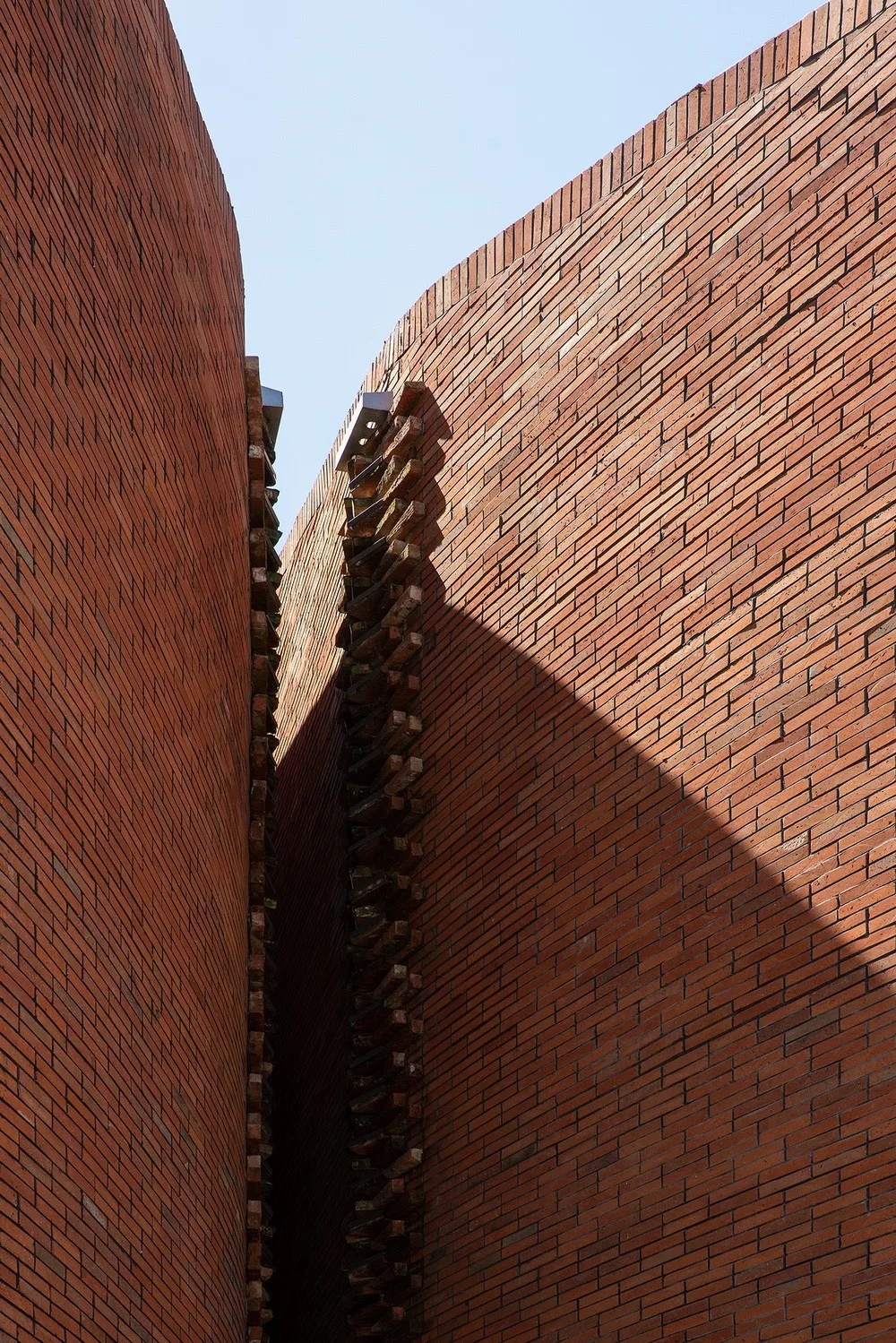
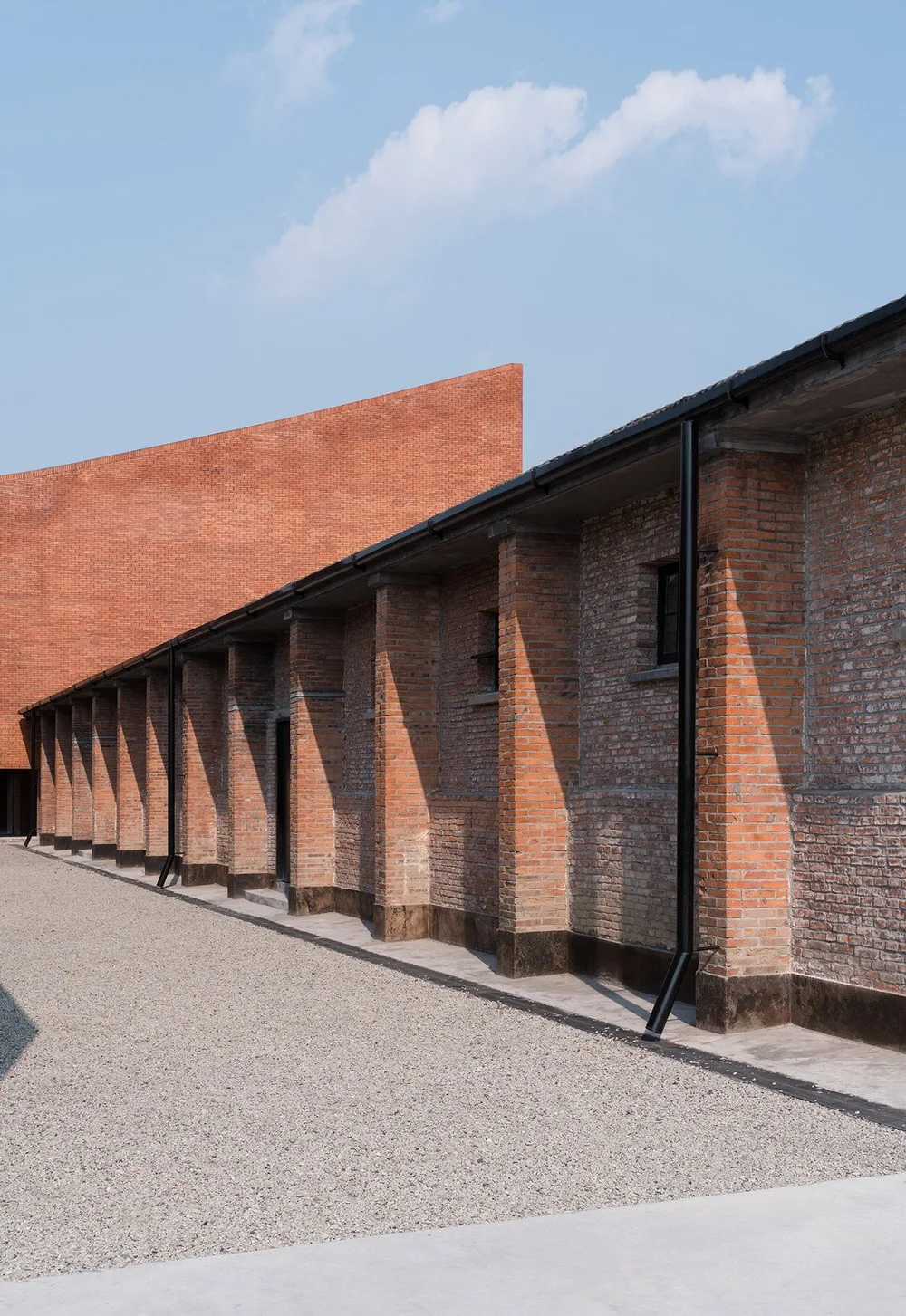
△ Scattered water drainage installations
Maisui Mountain Wall
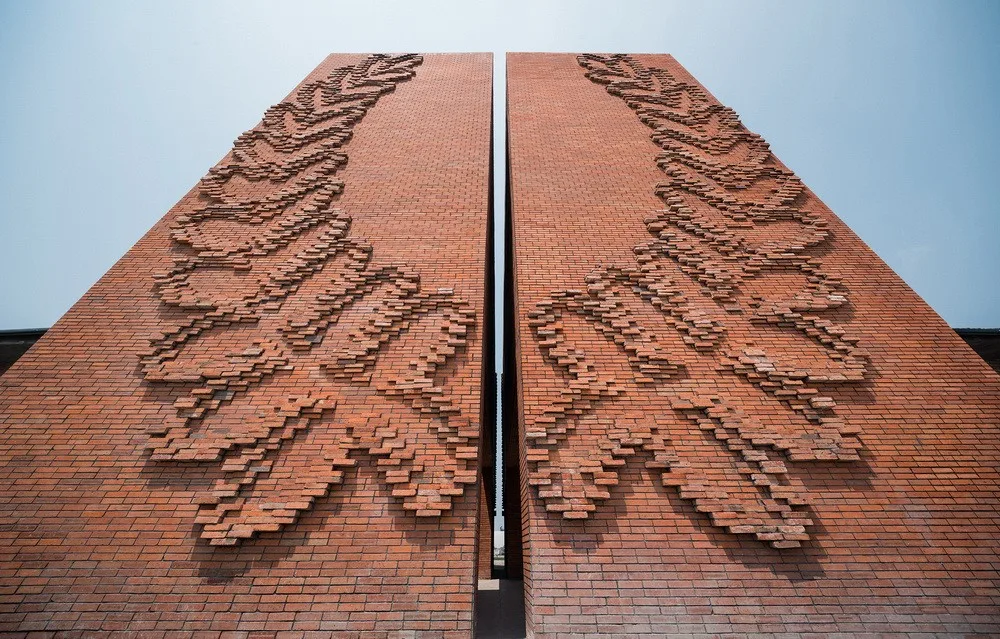
The wheat motifs symbolize the granary’s past. This monumental brick masonry creates a dialogue between the old granary and the world, echoing the drainage design. The wheat shapes are formed by stacking three types of bricks with varied modules. The contrast between the new corridor bricks and the old granary bricks further reflects the dialogue between past and present.
Structural Contrast
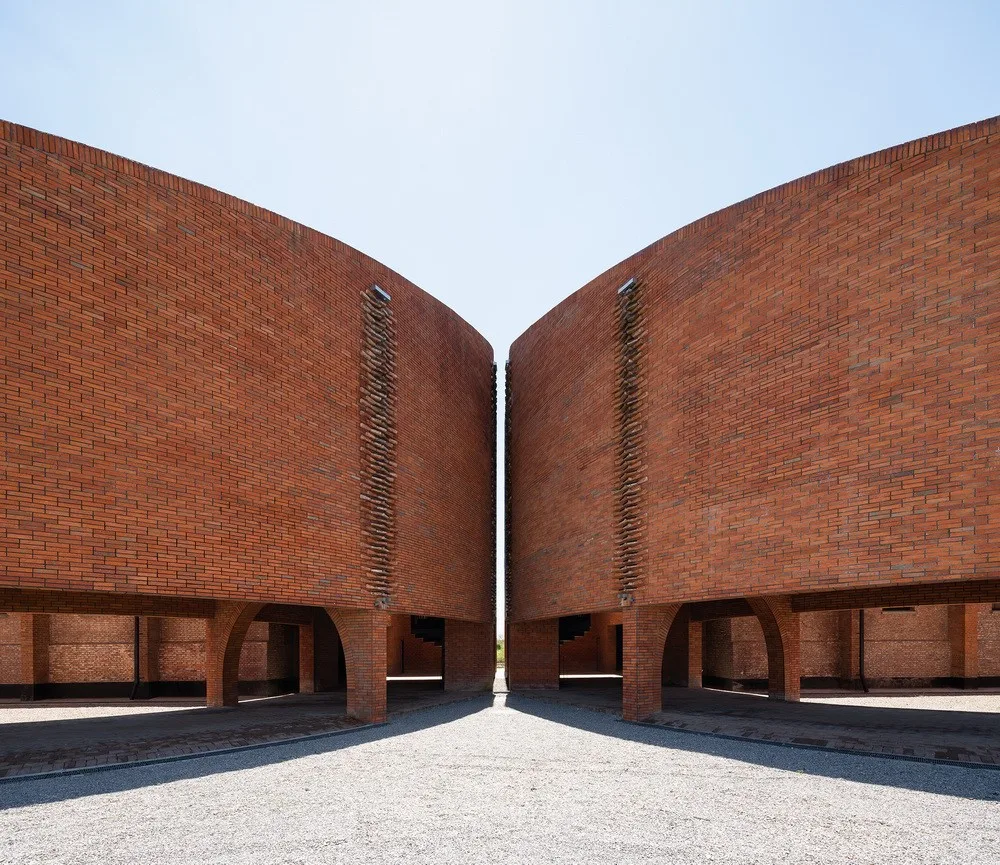
The old granary’s structure relies on concrete arches supporting a hyperbolic roof with brick panels, producing dramatic architectural effect.
For the corridor, the design employs arches with clear structural logic to counterbalance the granary’s architecture, proceeding in an orderly fashion.
The Pond’s Edge and Warehouse Floors Bloom with Flowers
If Liancang’s architecture embodies empathy, then the interior of the Lotus Warehouse explains why it bears that name. As a granary, it stored grain before renovation. Lotus, a defining geographical feature of this area, has been intertwined with locals’ livelihoods for generations—through flowers, roots, stems, and leaves, across seasons.
For generations, lotus has been commerce, and grain has been sustenance.
Postscript
A hundred acres of swaying lotus flowers cradle an ancient, rare grain storage—also known as Liancang.
This land of twin granaries stands as the heart of the territory and the spirit of the place.
From afar, it rises tall and watches quietly, hiding divinity, speaking softly, recalling the past.
The auxiliary corridor follows the main structure, flat in form, completing its momentum. Here, one can drink and reflect.
The brick corridors maintain the integrity of the main structure, the order of the architecture, and pursue aesthetic beauty. The twin corridors converge centrally, rising to frame the sky, resting upon the ground, echoing the rhythm of time.
Protecting the inner arches, carrying memories, brick observation boards, and black tiles that hold water—the pond’s edges bloom with flowers, and the warehouse floors are full of blossoms.
The exhibition spaces are open and grand, yet business thrives vibrantly.
Technical Drawings
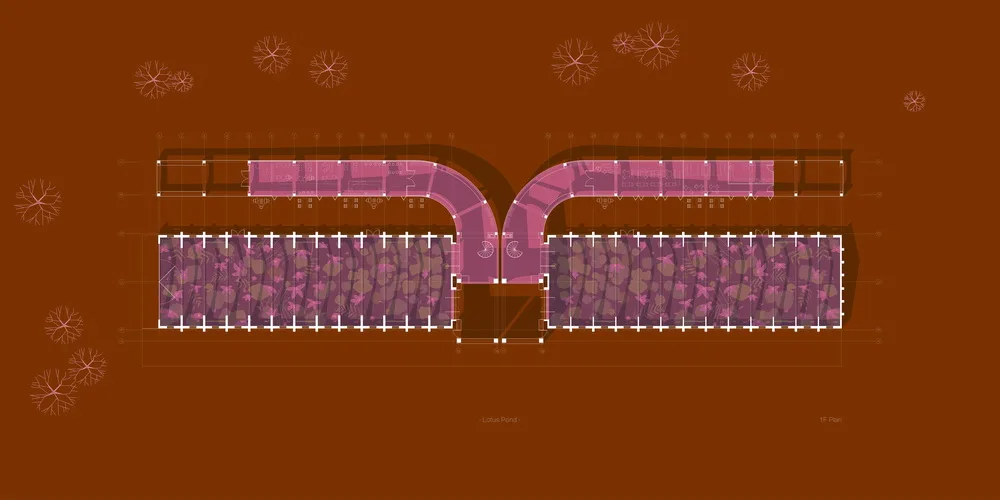
△ First floor plan
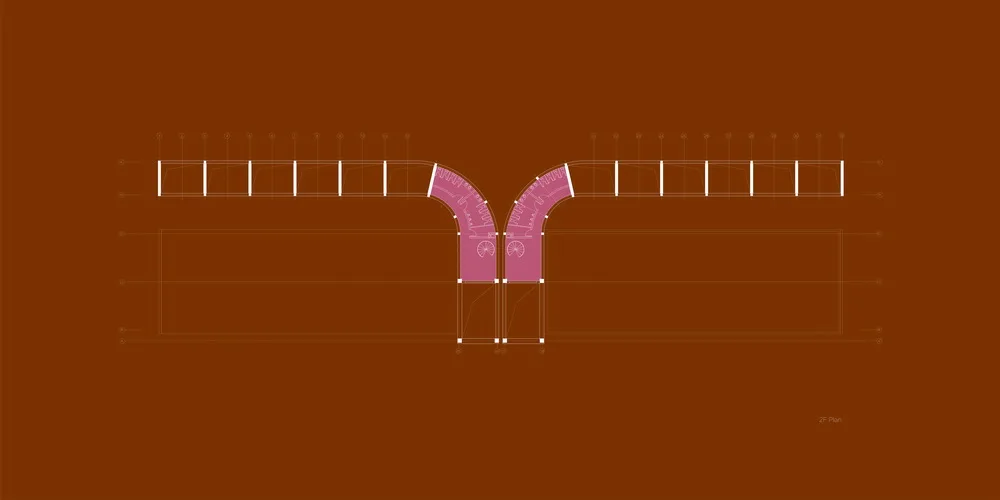
△ Second floor plan
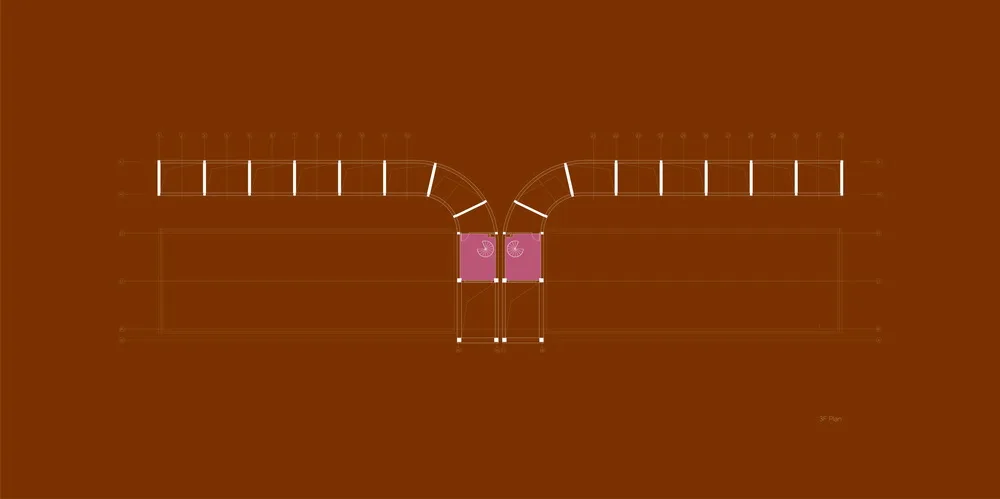
△ Third floor plan
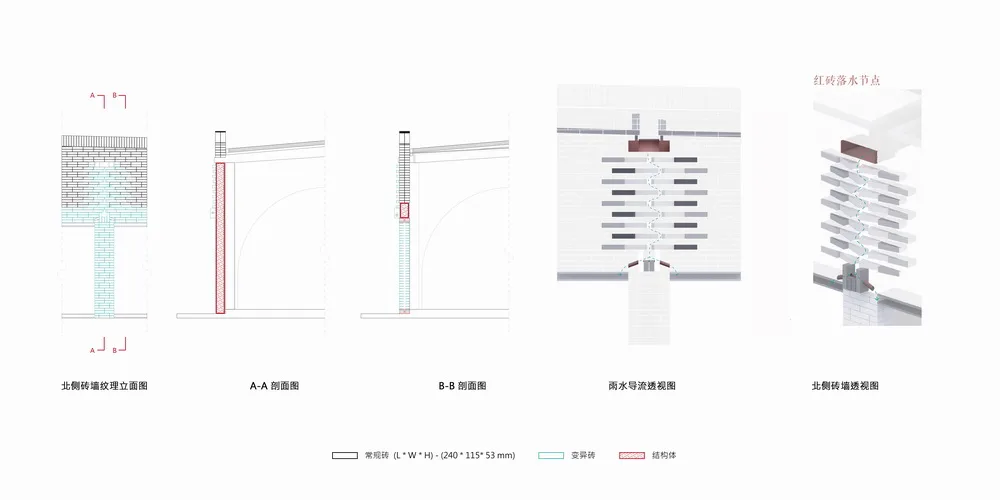
Analysis of rainwater diversion on the north brick wall
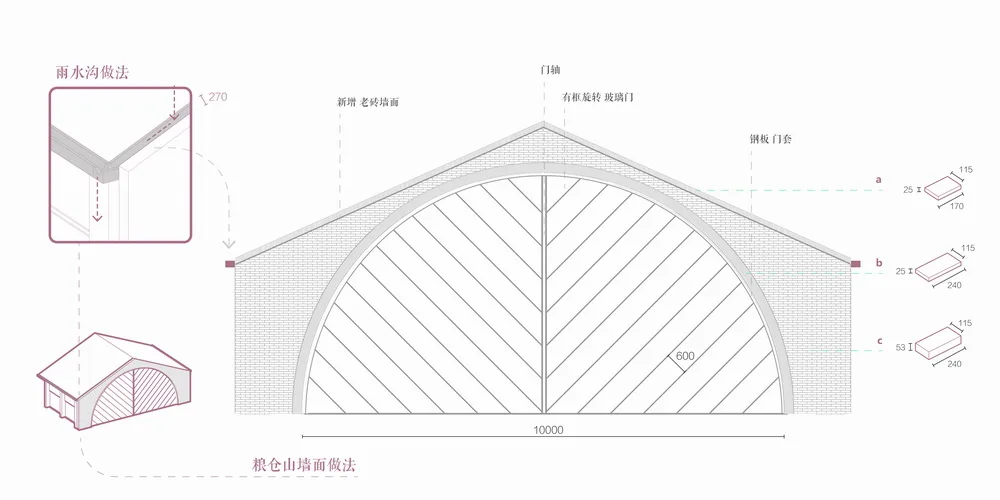
Construction details of the granary’s mountain wall and rainwater ditch
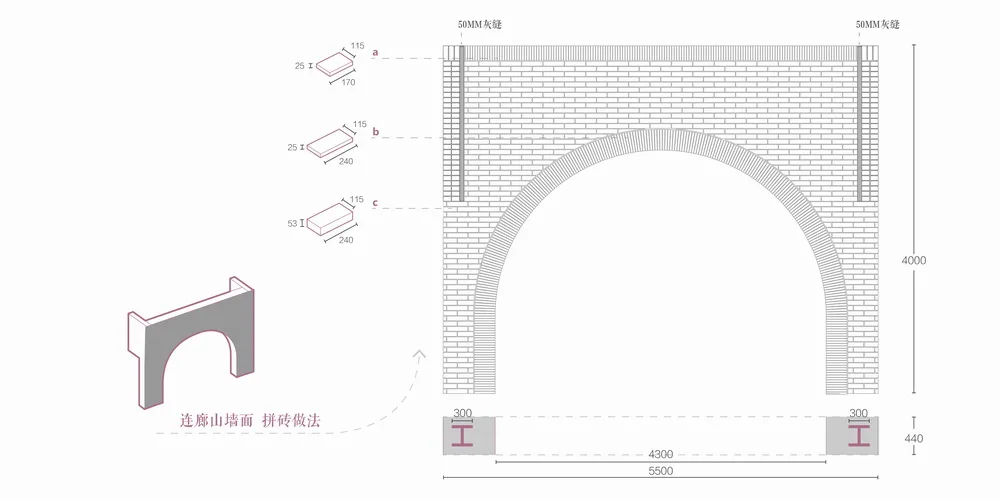
△ Bricklaying technique for Lianlang Mountain wall
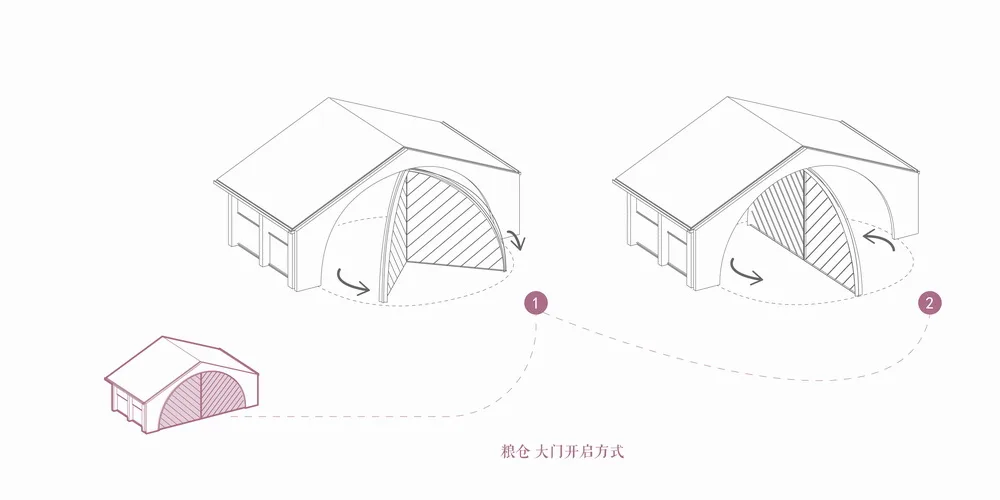
Granary gate opening method
Project Information
Project Name: Taocang Art Center
Location: Jiaxing, China
Address: Fengchan Bridge, Xiuzhou District, Jiaxing City, Zhejiang Province
Building Area: 2,448 square meters
Design Firm: ROARC.cn, a bare building renewal architectural design company
Lead Architect: Bai Zhenqi
Project Architects: Sheng Mengxuan, Xue Leqian
Design Team: Liang Xiaoyi, Wu Yejing, Lu Huiqin, Gu Qian, Yang Jun, Lin Youzheng
Terrazzo Floor Mosaic Design: Gu Qiansheng, Sheng Mengxuan
Lighting Design: Zhuying Lighting Design
Lighting Design Team: Hong Shenglin, Chen Guyu, Liu Zhenyun
Construction Consultant: Zhang Chenghua, Jielu Decoration
Terrazzo Floor Contractor: Jielu Terrazzo / Shanghai Jielu Decoration Design Engineering Co., Ltd.
Photography: Wen Studio
Owner: Xiangban Tourism and Cultural Development Co., Ltd.
Project Participants from Owner: Zhu Shengxuan, Dong Tianshu, Zhen Xiaolong, Yu Hong
Main Building Materials: Red brick and cement
Design Period: June 2019 to August 2019
Construction Period: September 2019 to March 2020












Must log in before commenting!
Sign Up