
Editor’s note: This is the second project we’ve recently featured from the Korean architectural firm KYWC Architects in collaboration with Seoul National University. Their designs consistently evoke early modern abstract paintings, characterized by a strong sense of geometry and three-dimensionality.
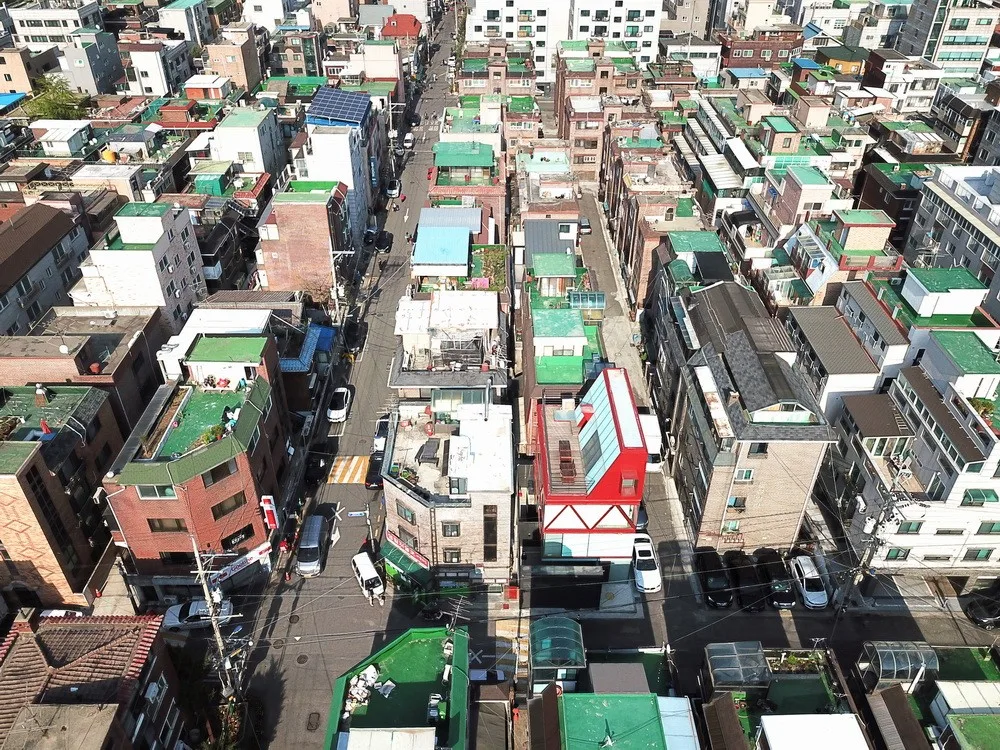
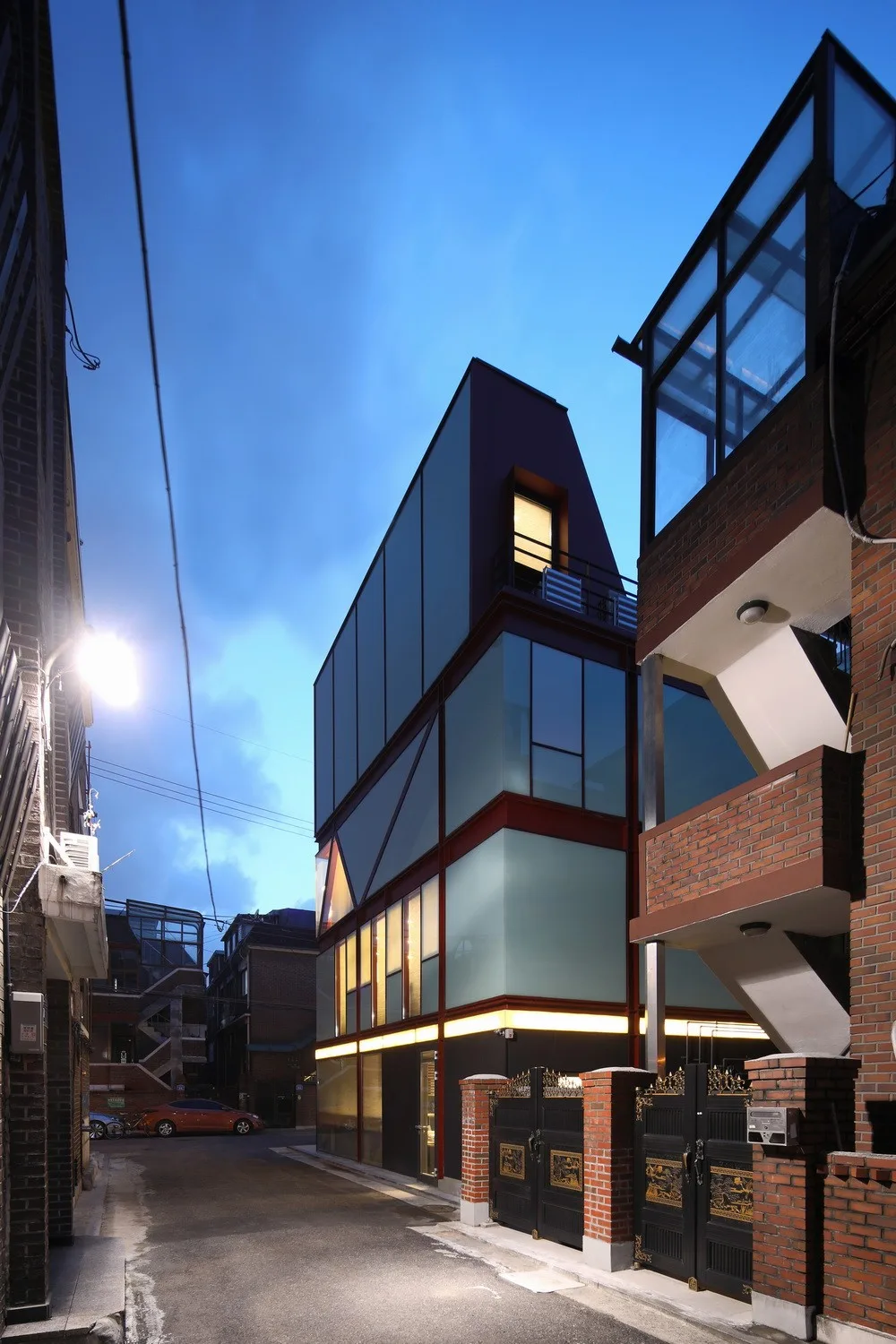
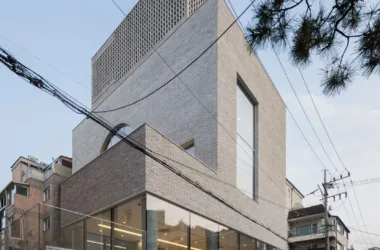
The design begins with a fundamental question: What does it mean for a building to coexist harmoniously with its neighbors and the surrounding alleys? This compact structure, comprising four floors and a basement, interacts with its urban environment in multiple, thoughtful ways.
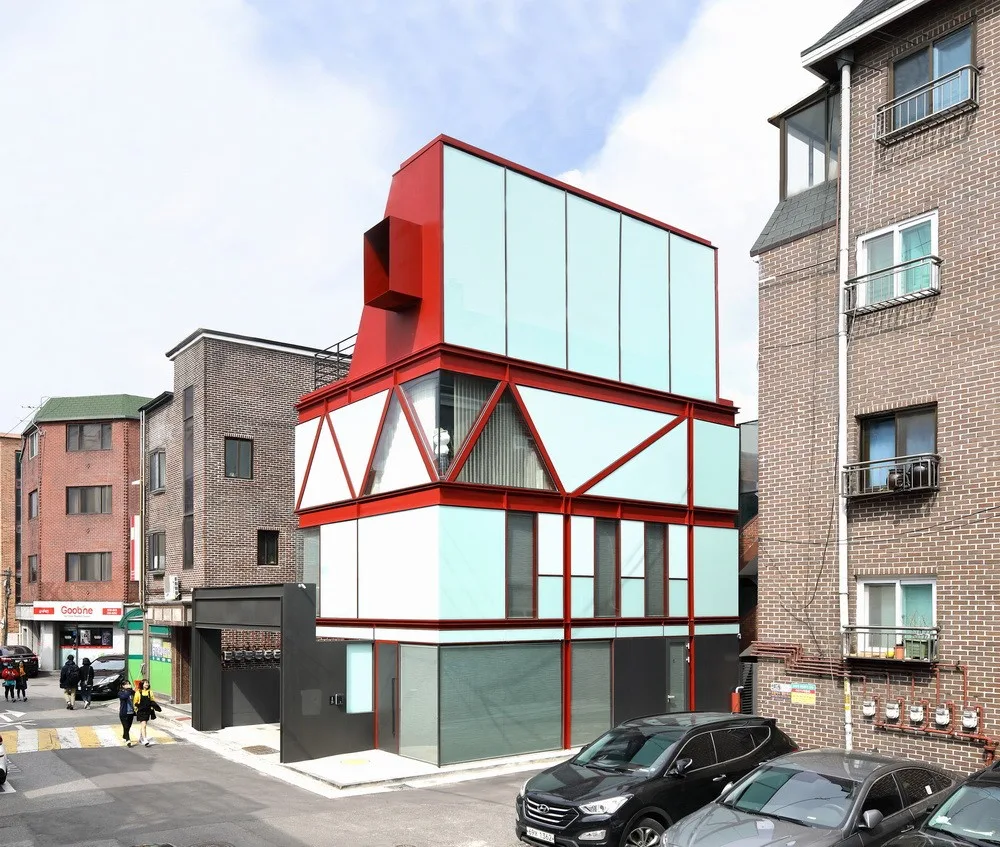
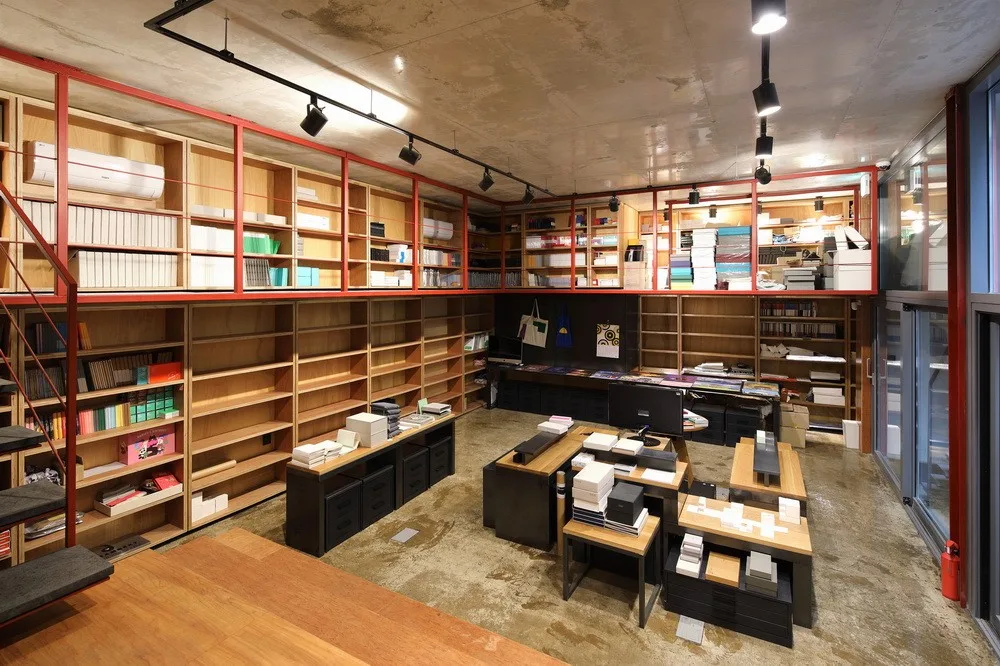
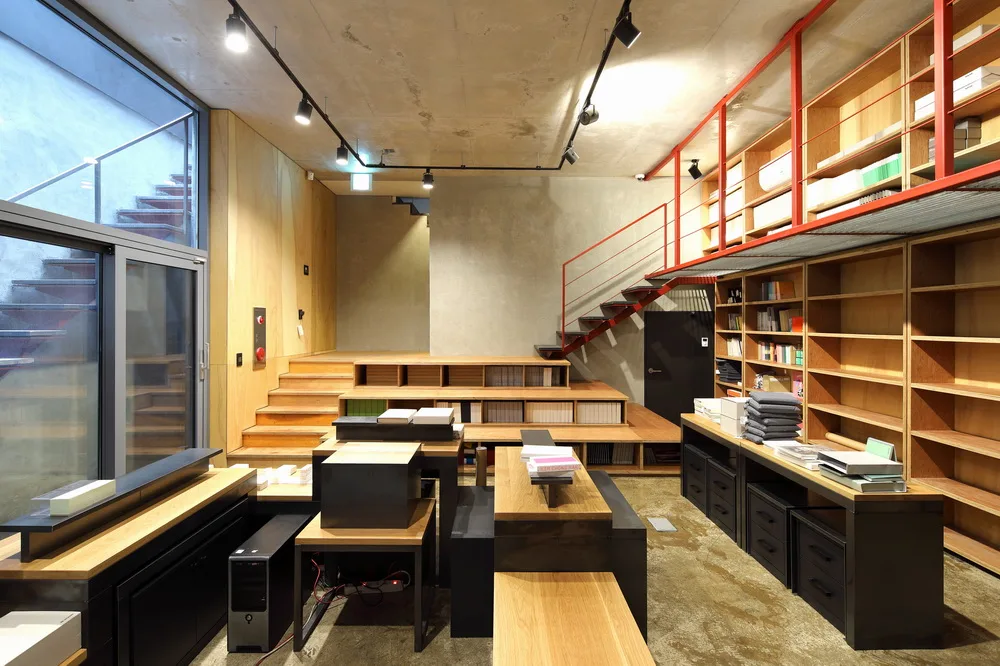
The ground floor functions as a display area for Dreamnext’s design products and doubles as a letterpress studio. This combined studio and exhibition space creates a striking presence within the neighborhood.
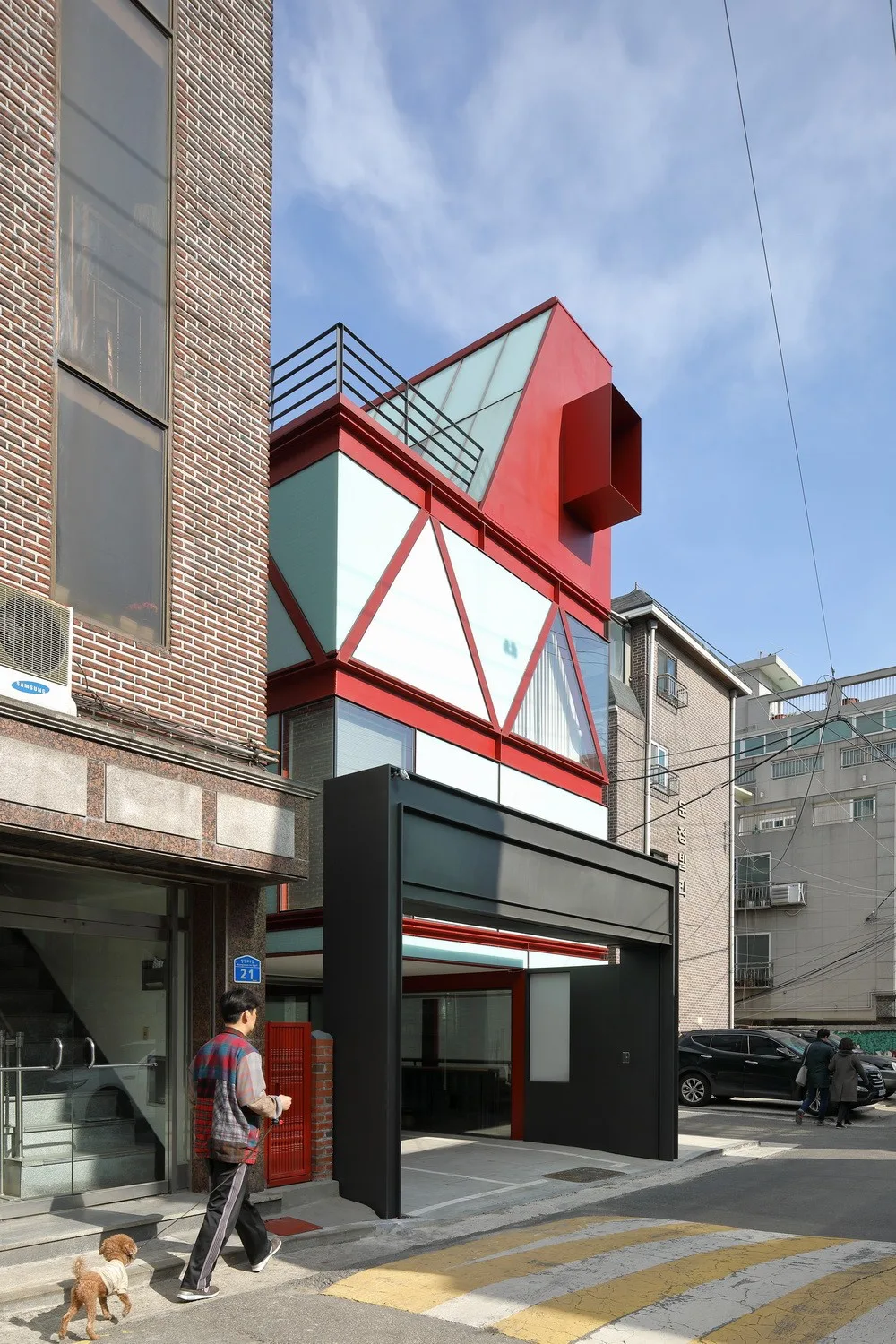
The building’s identity is defined by its activity rather than its form. The main entrance, designed as a gate, invites pedestrians to engage with the space. When fully opened, it blurs the boundary between interior and street, making the interior an extension of the public pathway.
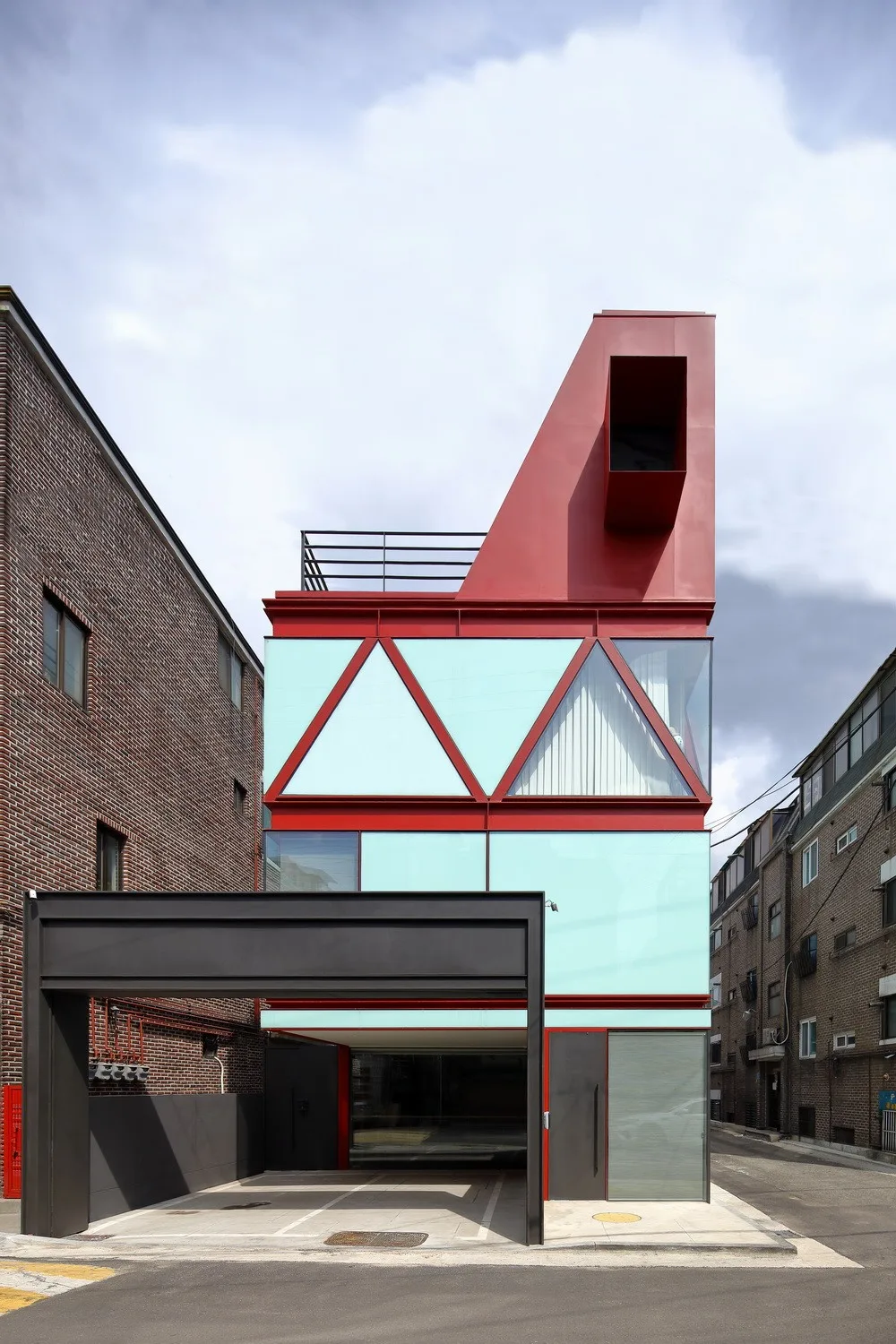
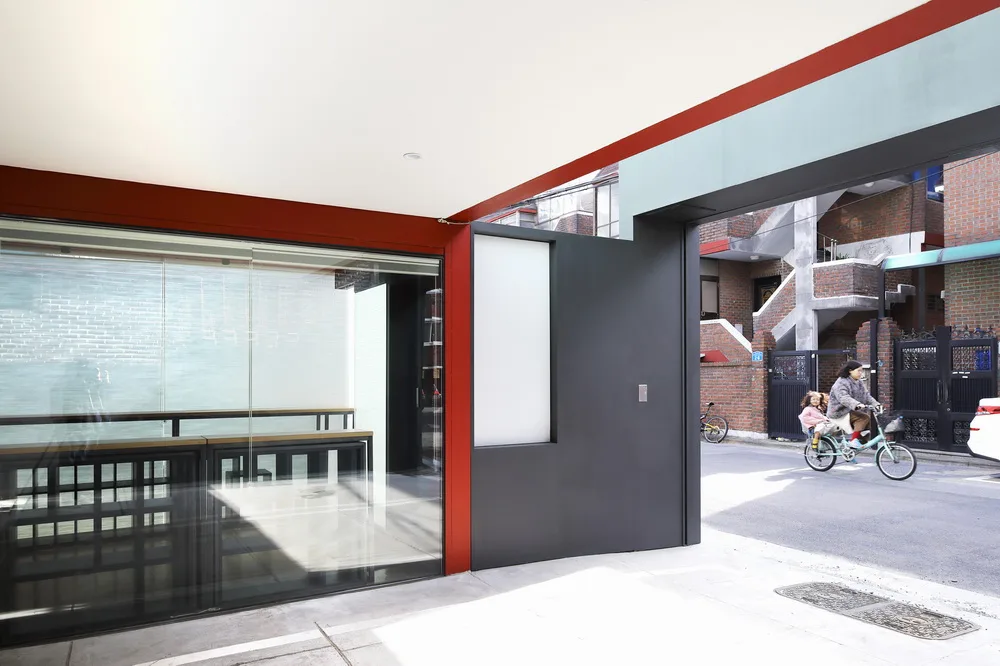
The basement offers a versatile space with high ceilings, suitable for lectures and exhibitions. Each corner is thoughtfully equipped with storage for Dreamnext’s products. A sunken area with outdoor stairs connects the basement to the street level, ensuring fresh air and natural light permeate the space.
The second and third floors serve as Dreamnext’s workspace. Although compact, the design maximizes spatial efficiency through strategic planning.
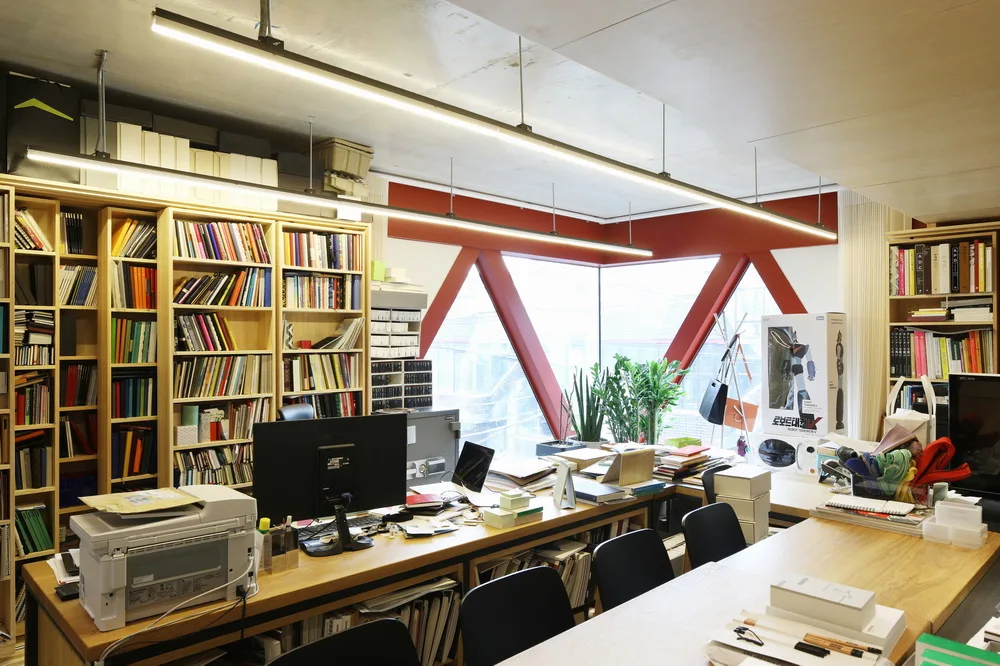
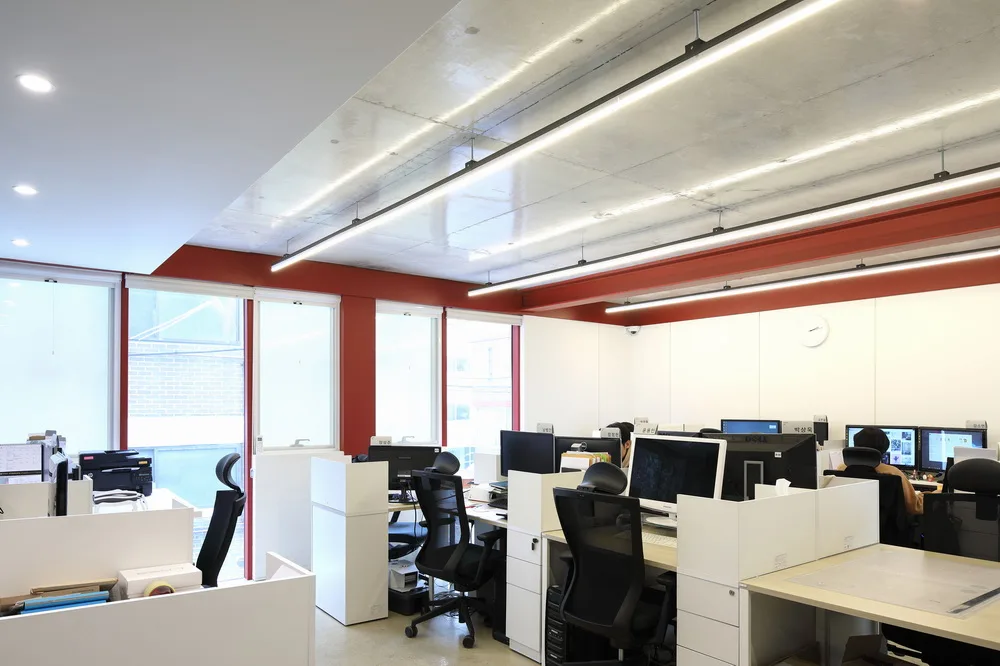
Storage spaces are integrated directly into the walls, and structural elements are minimized to maximize usable area.
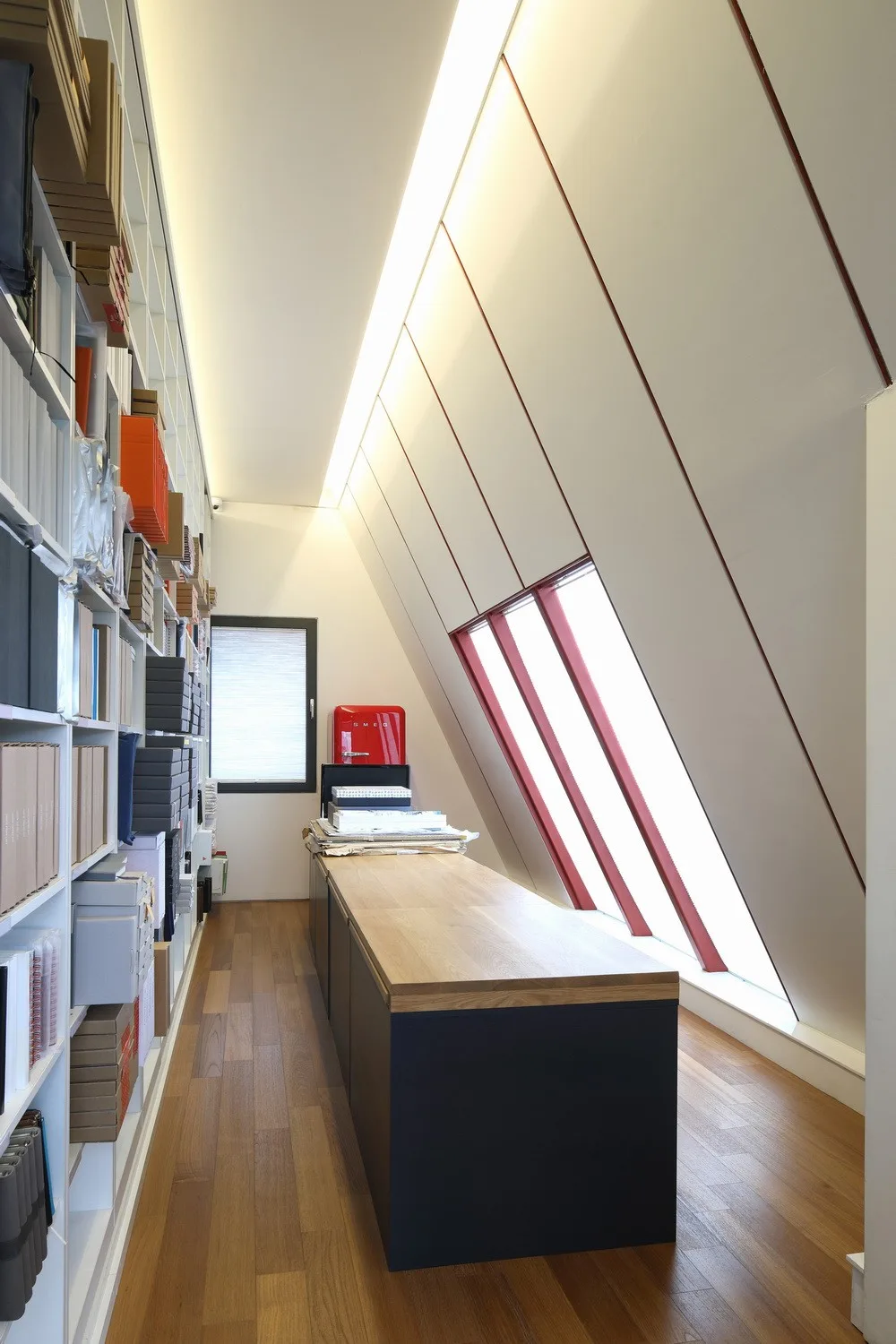
The conference room on the fourth floor opens onto a rooftop garden, the building’s most spacious and inviting area. Despite its modest size, the high ceiling and expansive views extend toward the cityscape, while the wooden deck offers a relaxing outdoor retreat for employees.
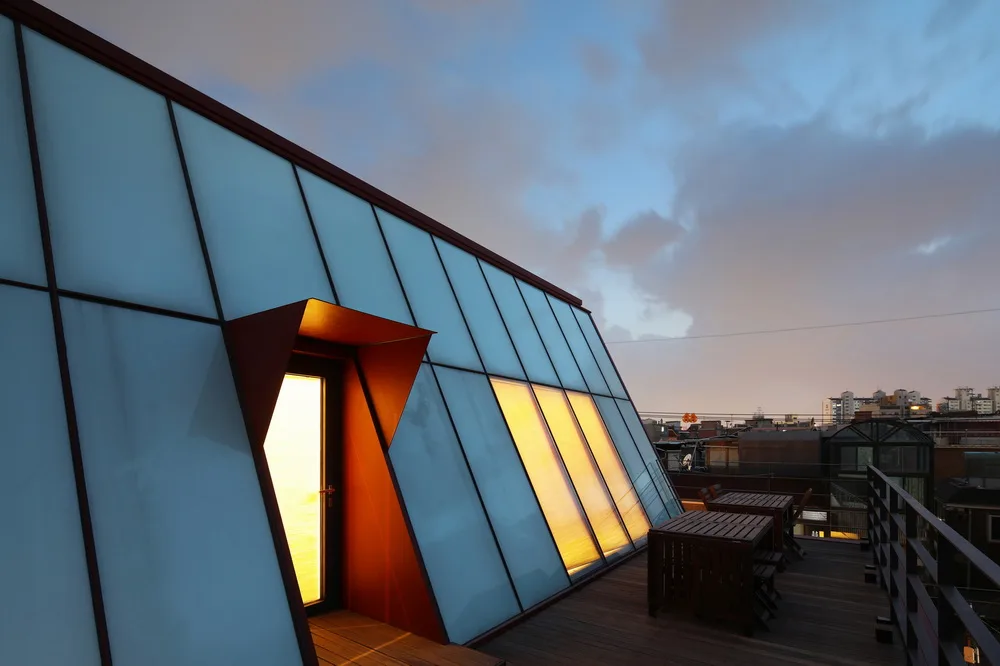
This building sits on a small plot but showcases innovative structural systems essential for creating functional spaces.
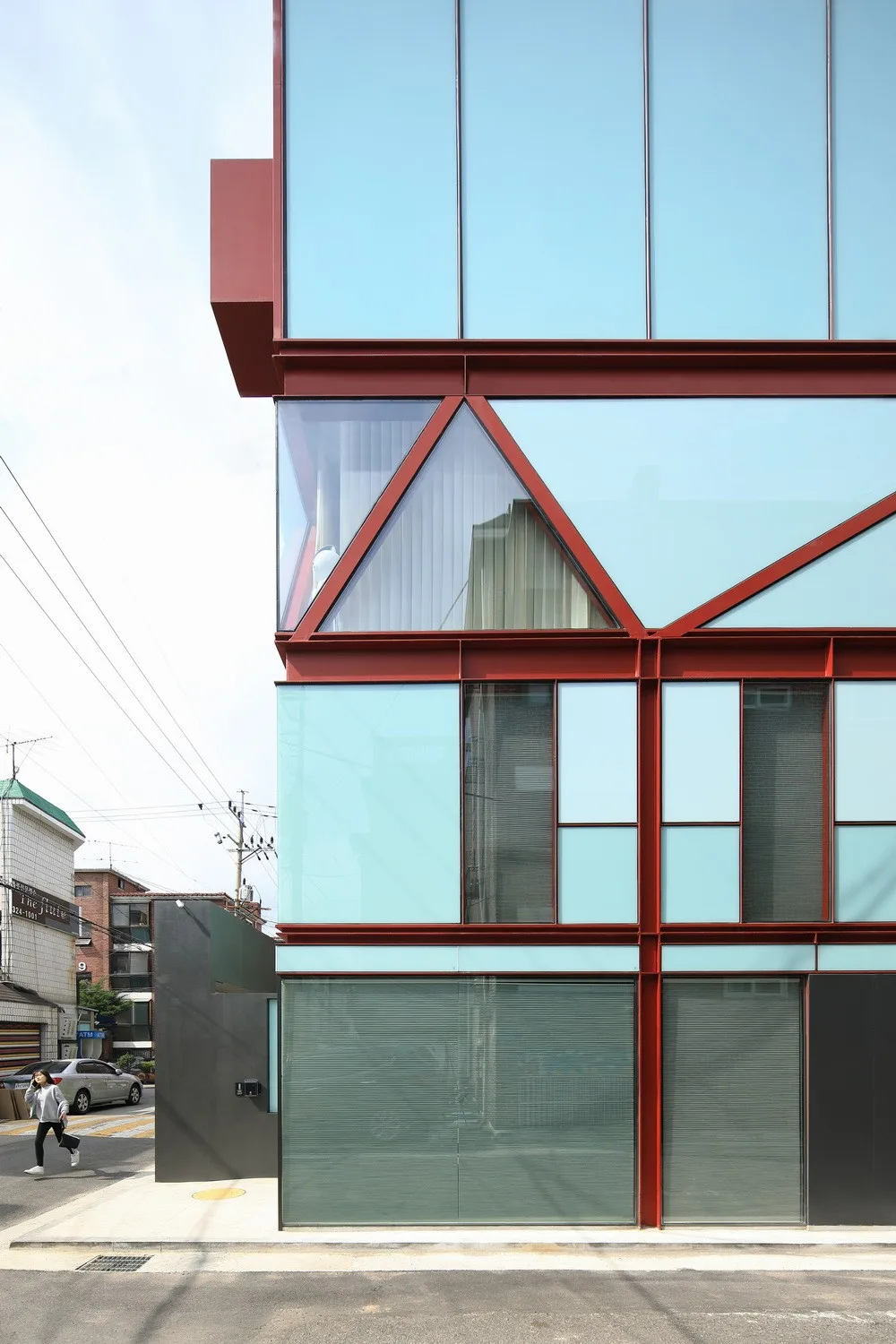
The second floor is suspended beneath the third using a truss system, allowing the lower level to remain open to the urban environment with minimal structural intrusion. Here, structure serves not only its engineering purpose but also fosters a dynamic relationship between the building’s interior activity and its external expression.
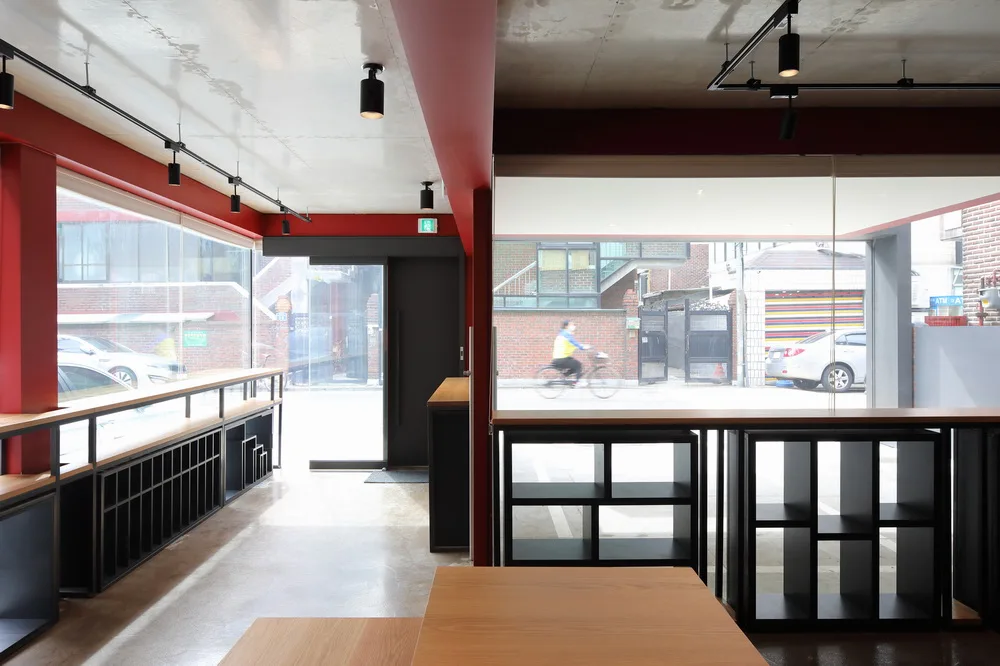
Architecture is a way of life, and design embodies this philosophy. Dreamnext’s building in Mangyuan Cave reflects the “process of construction” as an integral part of architecture. Designing a lifestyle is a daily practice embraced by the Dreamnext team.
Technical Drawings
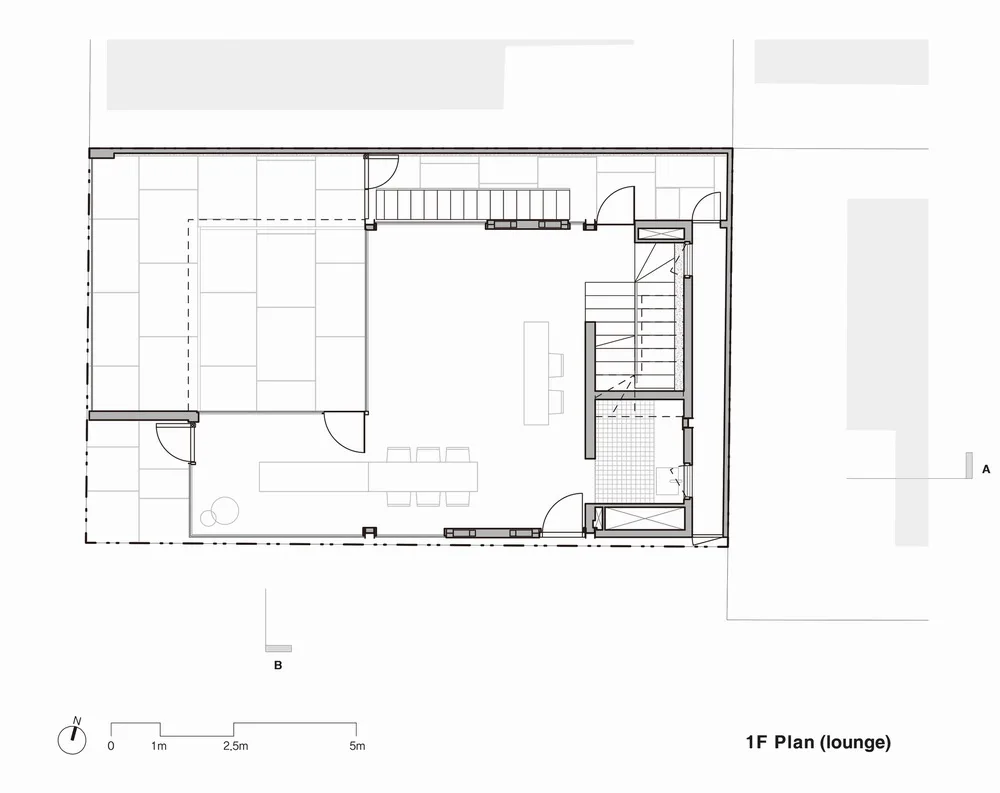
△ First floor plan
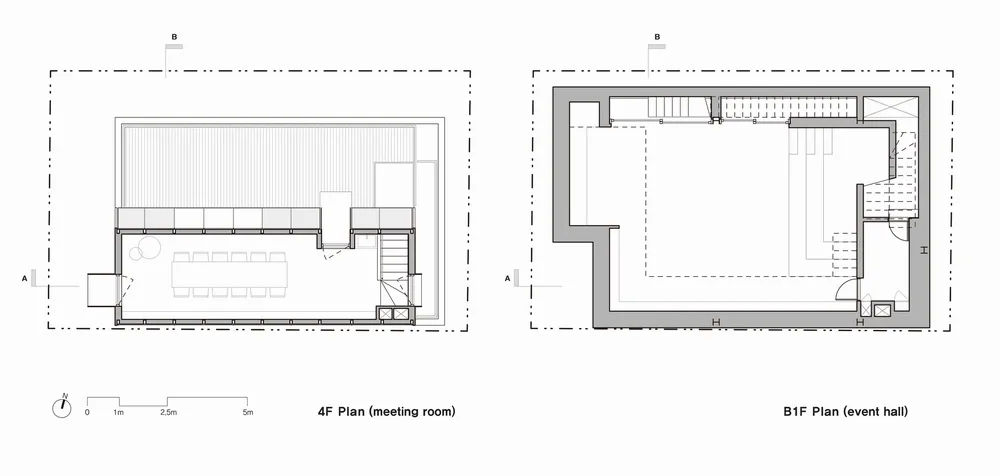
△ Plan view
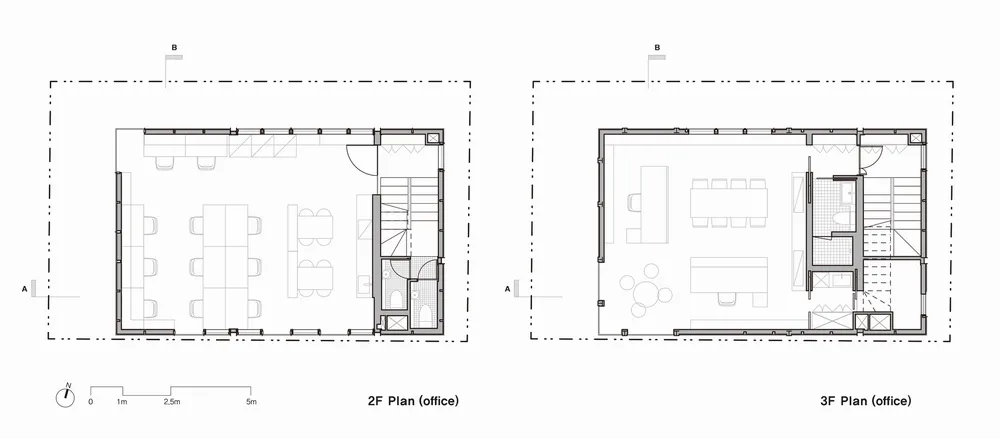
△ Plan view
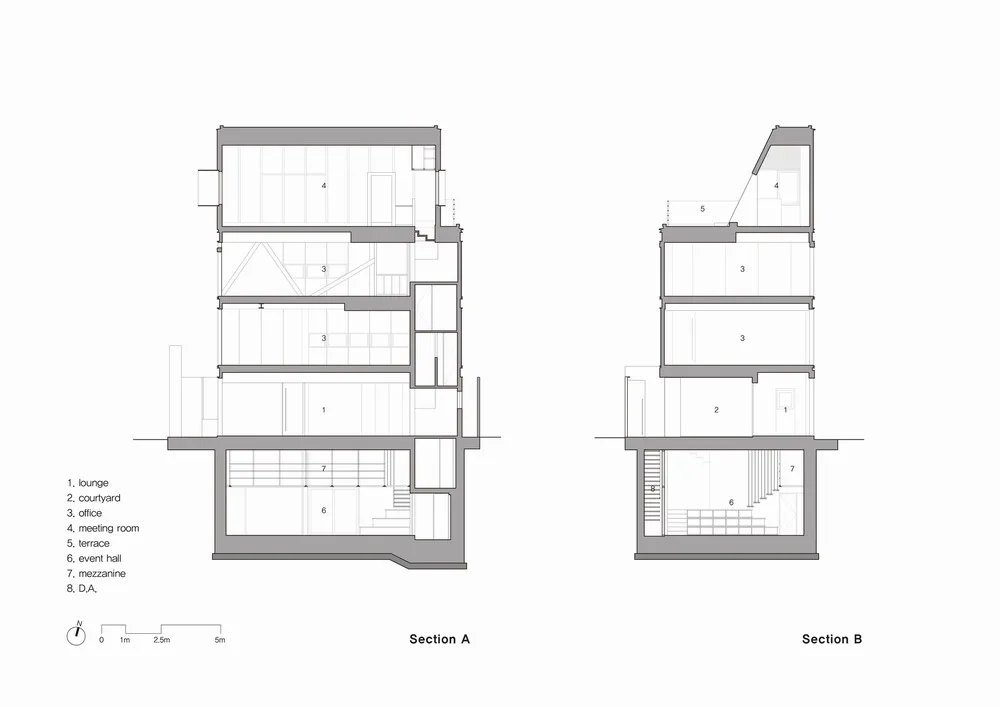
△ Section diagram
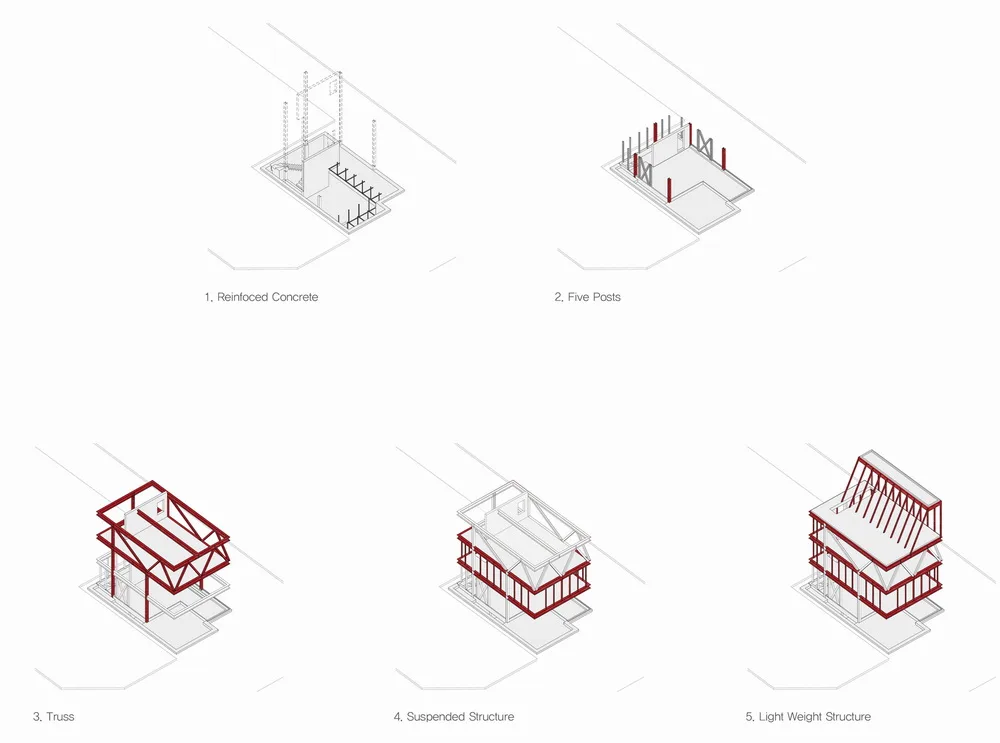
△ Structural axonometric drawing
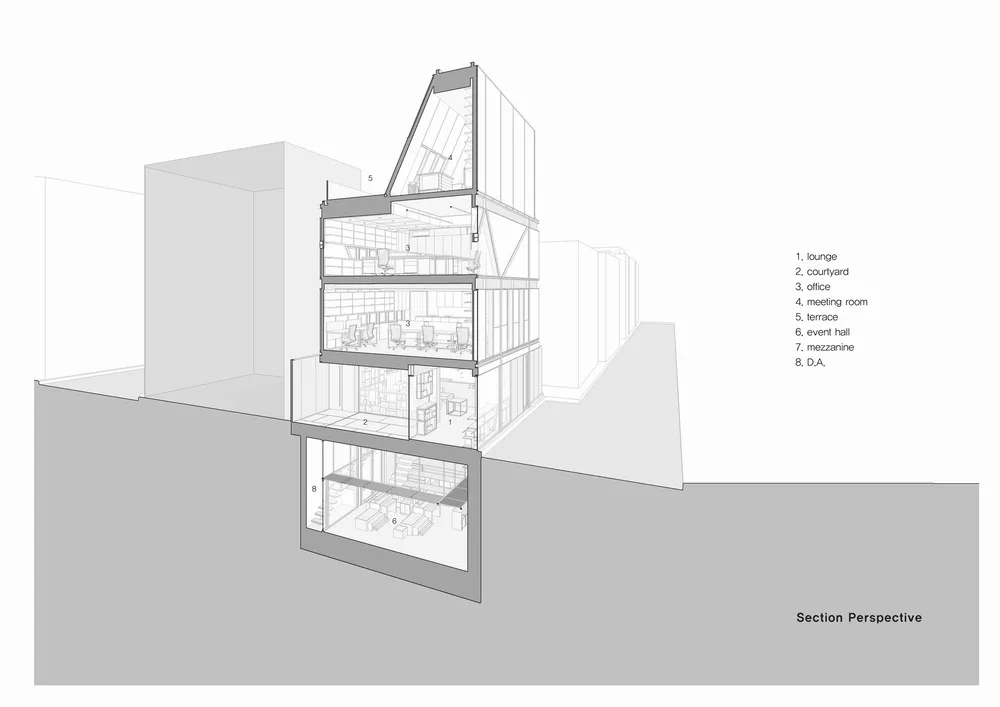
△ Sectional axonometric drawing
Project Information
Architect: KYWC Architects, Kim Seunghoy (Seoul National University)
Area: 284 m²
Project Year: 2017
Photographer: Kim Jaekyeong
Lead Architect: Kim Seunghoy
Design Team: Kim Jeongyun, Kyong Yeonseong
Client: Dreamnext
Engineer: Yoon Koojo Structural Engineering Co
Construction: Coaz












Must log in before commenting!
Sign Up