
“Rural architecture is born to meet the needs of its land and is built accordingly. Locals understand best how to achieve livability through their sense of place.” — Wright
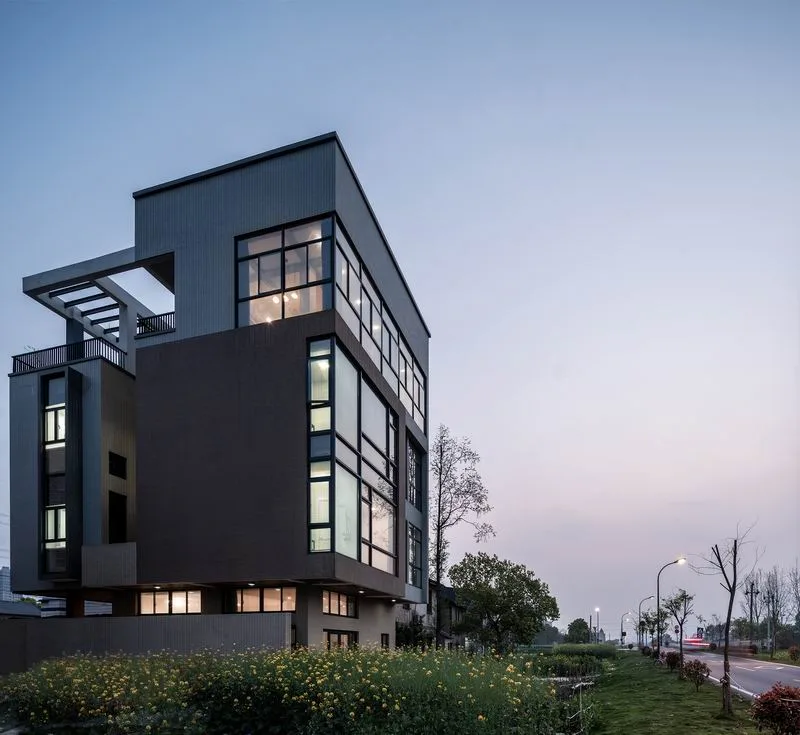
Terraced House on the Plain © Chen Xi
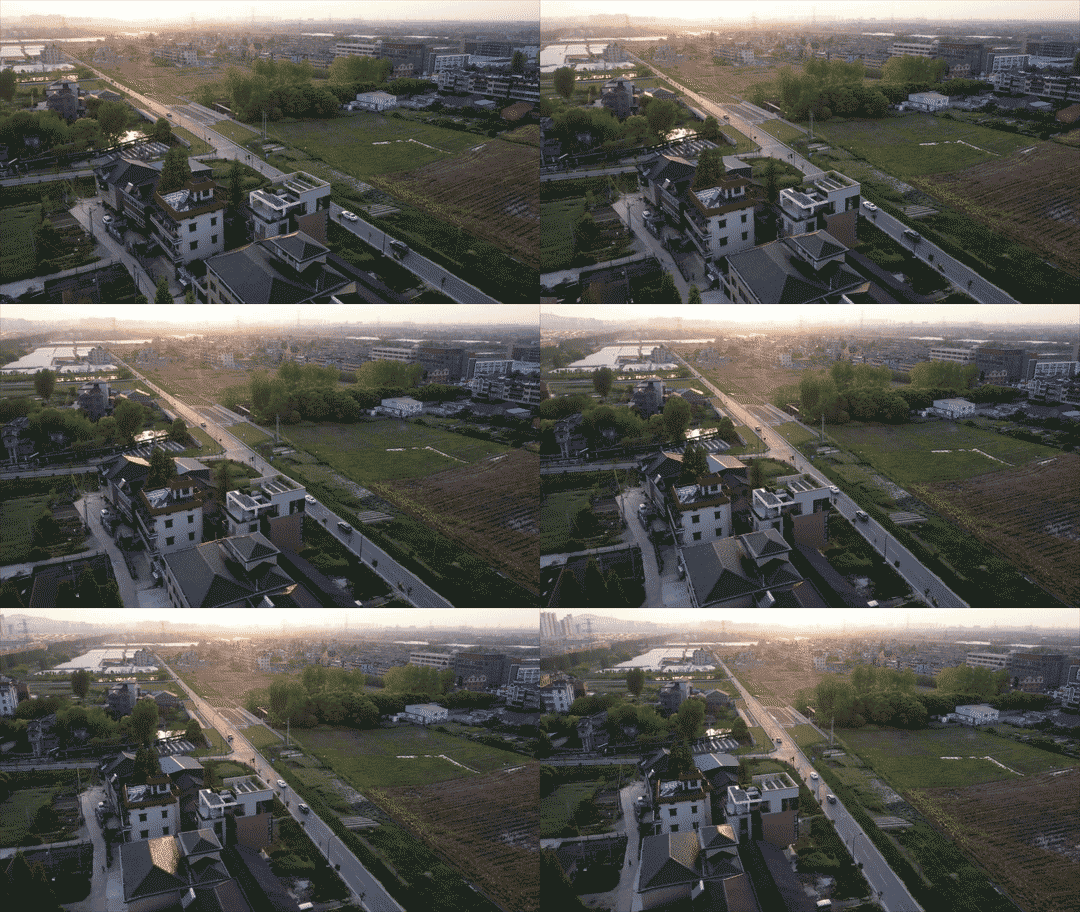
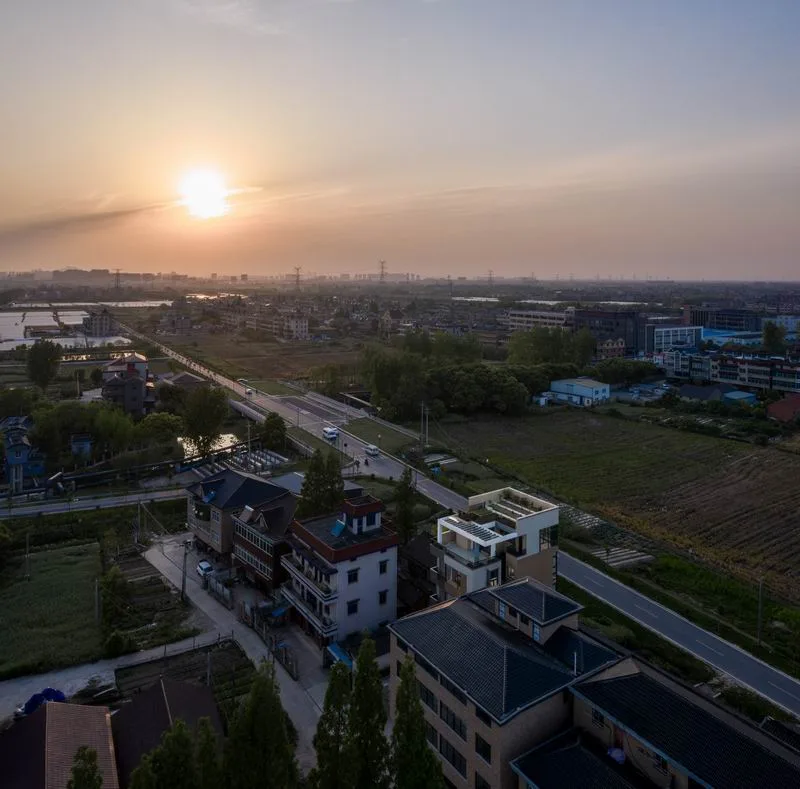
Aerial View of Terraced House © Chen Xi
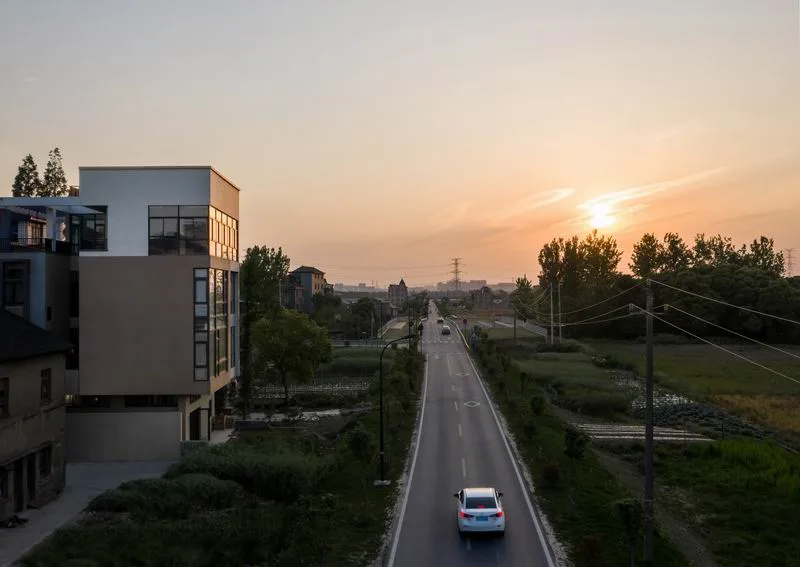
The Terraced Fields Home is situated in Haining City, Zhejiang Province, on the Hangjiahu Plain within the Yangtze River Delta. This project is set in a typical rural Zhejiang environment: a small town well-known for its textile industry, where fertile farmland and factories coexist, illustrating a blend of tradition and modernity.
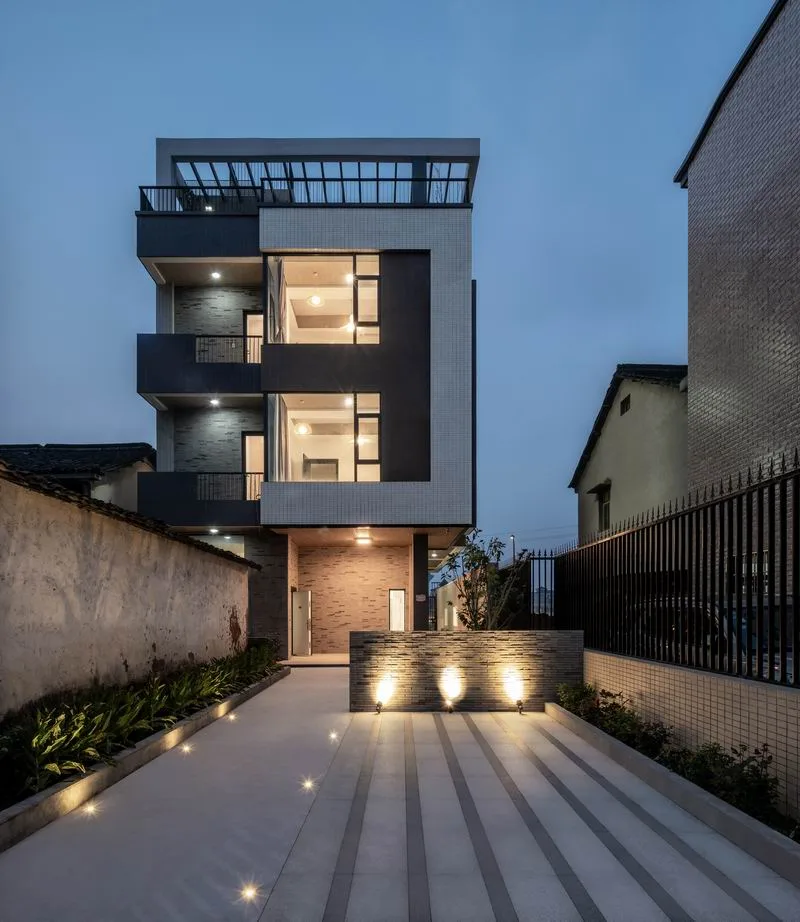
△ North elevation of the terraced house’s south facade © Chen Xi
Our goal was to design living spaces and architectural forms that cater to local needs at minimal cost within the complex rural environment. We sought to continue the spatial traditions of local residential buildings in this project. By enhancing the quality of living, we aim to encourage urban workers to return home more frequently, gradually revitalizing aging rural communities.
Exploring Construction Principles of Rural Housing
The original building was a traditional courtyard-style residence with an “L”-shaped homestead. After demolishing the old house, the new structure was designed to accommodate a family spanning four generations who would return occasionally, with some rooms intended for rental during periods of vacancy.
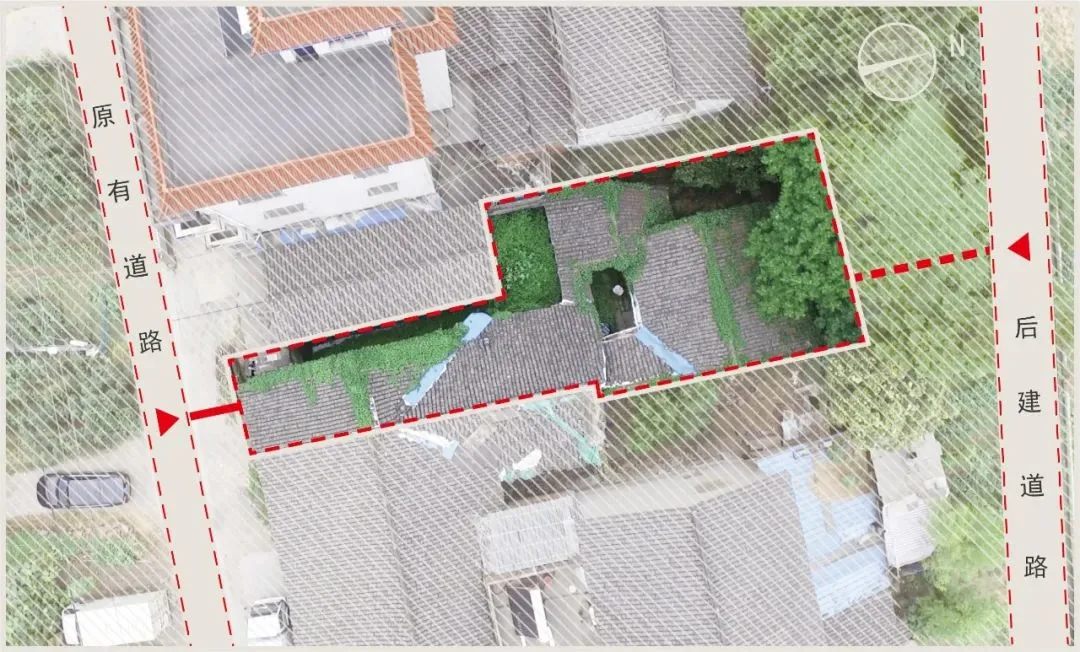
△ Site analysis of the base’s current situation © Fengjian Architecture
The site’s surroundings include agriculture, industry, and service businesses, which combine to shape a unique modern rural lifestyle. Residents grow various vegetables around their homes, achieving year-round self-sufficiency. They rent out extra rooms to small businesses, individual factories, or migrant workers. For elderly residents remaining in the area, stable rental income supports their livelihoods.
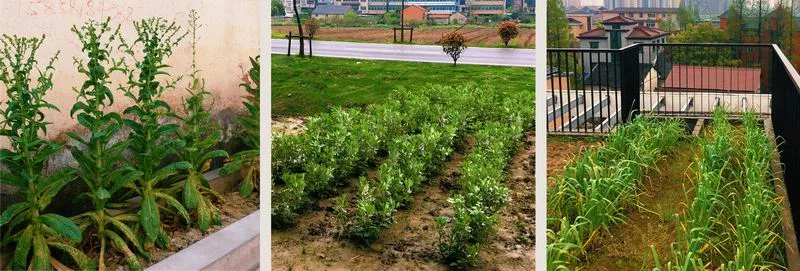
Construction constraints for the terraced houses stem from three main factors: local government regulations limit the homestead area to 85 square meters and eave height to 11.4 meters; traditional feng shui principles influence orientation, favoring south-facing entrances, east-facing kitchens, and no beams above beds; and owner preferences include maximizing the number of rooms for rental potential, ensuring durable and easy-to-clean exterior facades, and preserving as much planting space as possible.
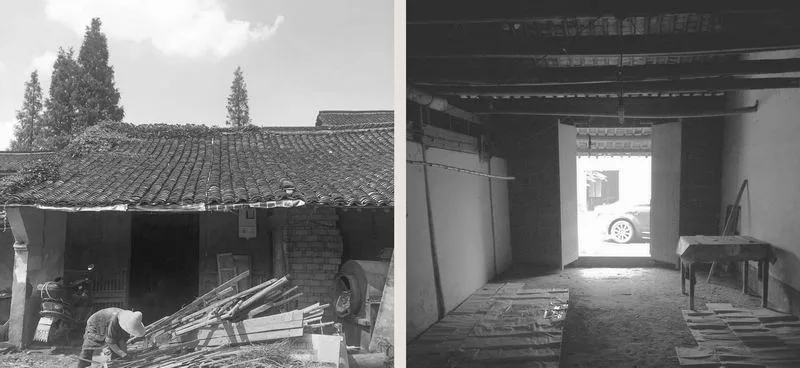
Appearance of the old house © Fengjian Architecture
Bridging the Past and Future of ‘Home’
Rural residents aesthetically prefer the popular “European” dystopian style but prioritize basic functional needs. They desire taller residential buildings with larger usable areas. However, the fading of traditional residential culture and abandonment of classical elements reflect a trend towards indifference and conformity.
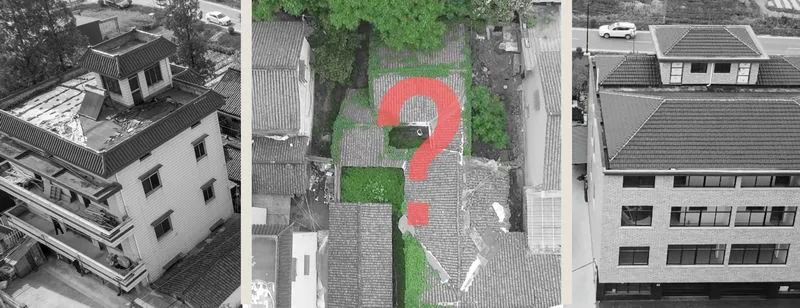
The west side of the site features a single-story house with a glazed roof, while neighboring houses to the east have been built as simple European-style single-story homes.
In our design, we reintroduced the traditional “courtyard courtyard” spatial framework into the new building. The terraces and courtyards gently ascend, symbolizing steady growth. A “front yard and back room” layout consolidates scattered spaces into a 9m × 15m block on the northern part of the site, with the first-floor elevated to reduce footprint and comply with local regulations.
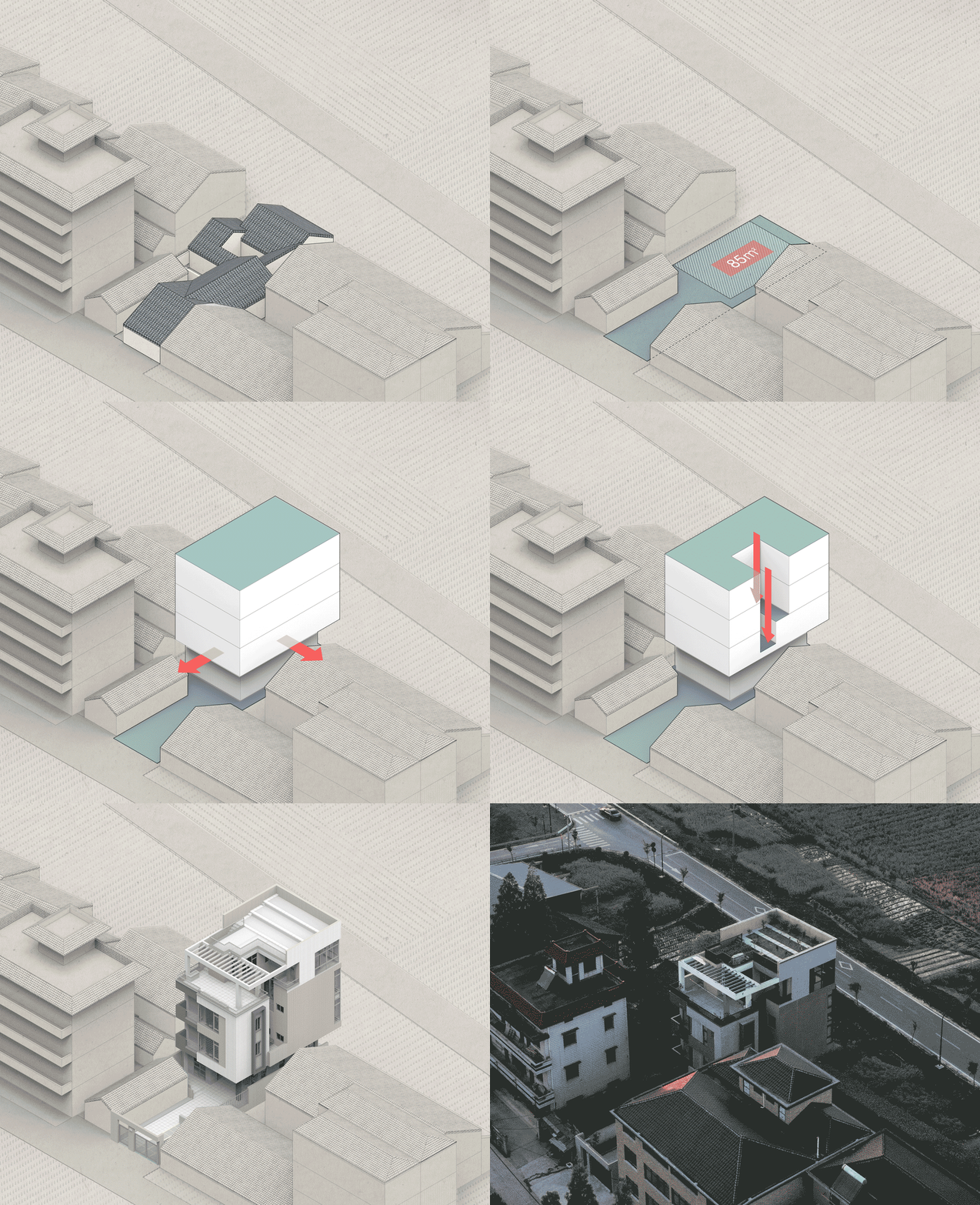
△ Form generation © Fengjian Architecture
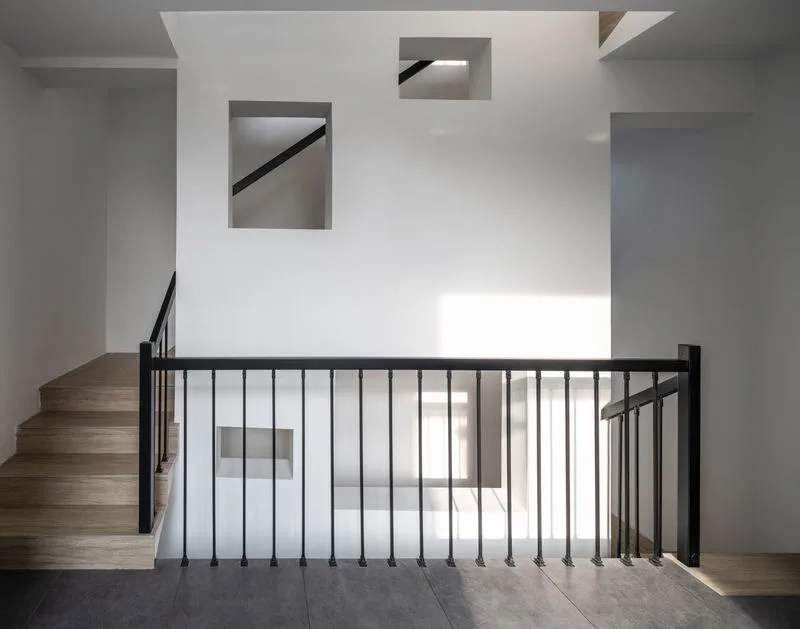
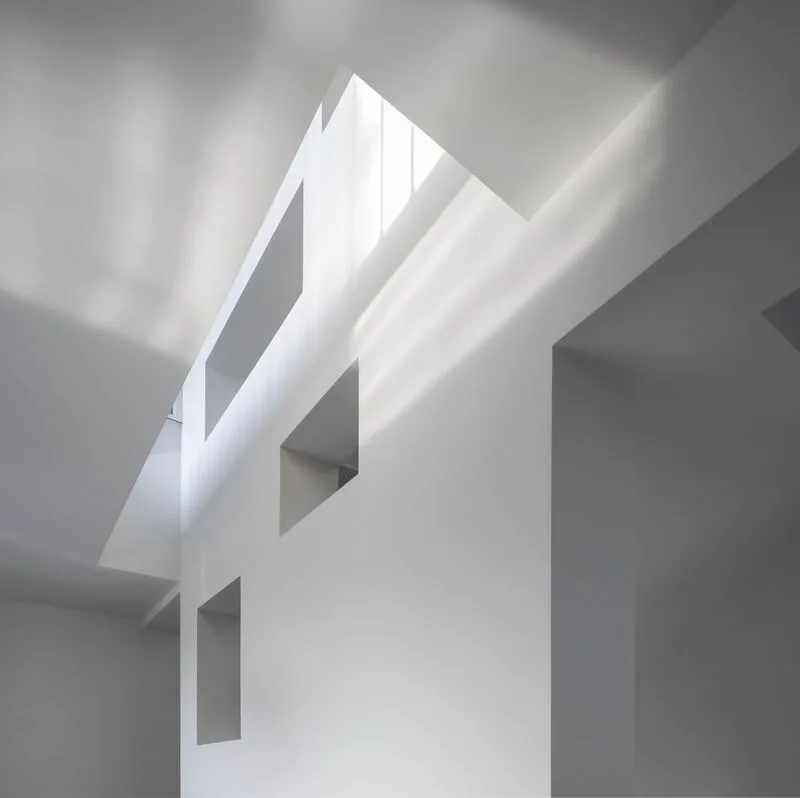
Vertical ladder well © Chen Xi
Reintroducing the “courtyard courtyard” concept might seem counterintuitive locally, as it reduces room sizes and affects demolition-related building area. However, the courtyard doubles the number of rooms receiving natural light. By minimizing courtyard space on each floor, this small courtyard serves multiple functions such as ventilation, lighting, drying, and housing air conditioning equipment. Ultimately, the Terraced Fields Home succeeds by balancing user needs and interests through thoughtful design.
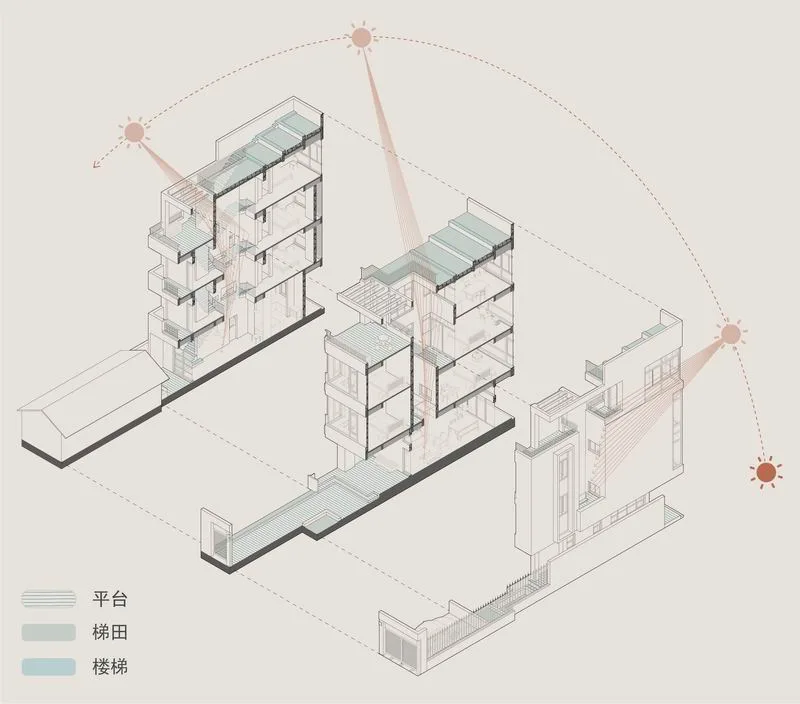
Spatial arrangement of courtyards and terraces © Fengjian Architecture
The building incorporates multiple courtyard layers. The vertical courtyard intersects with the horizontal courtyard in the first-floor hall, allowing natural light to penetrate and compensate for the hall’s lack of daylight, while emphasizing its role as the building’s central space.
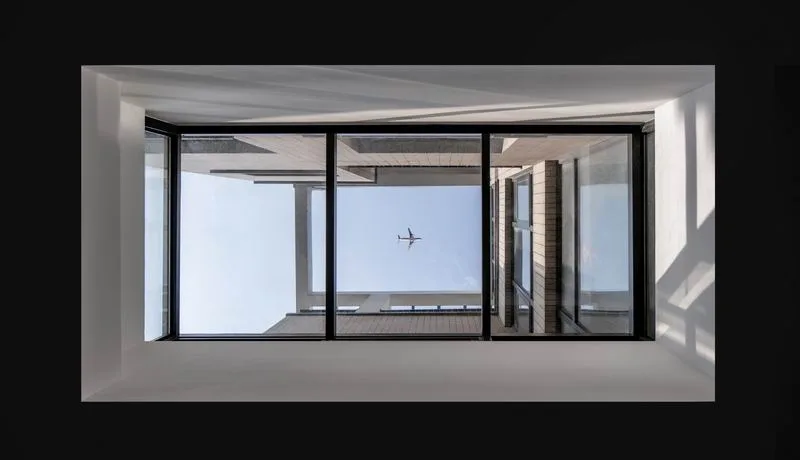
△ Patio above the hall © Chen Xi
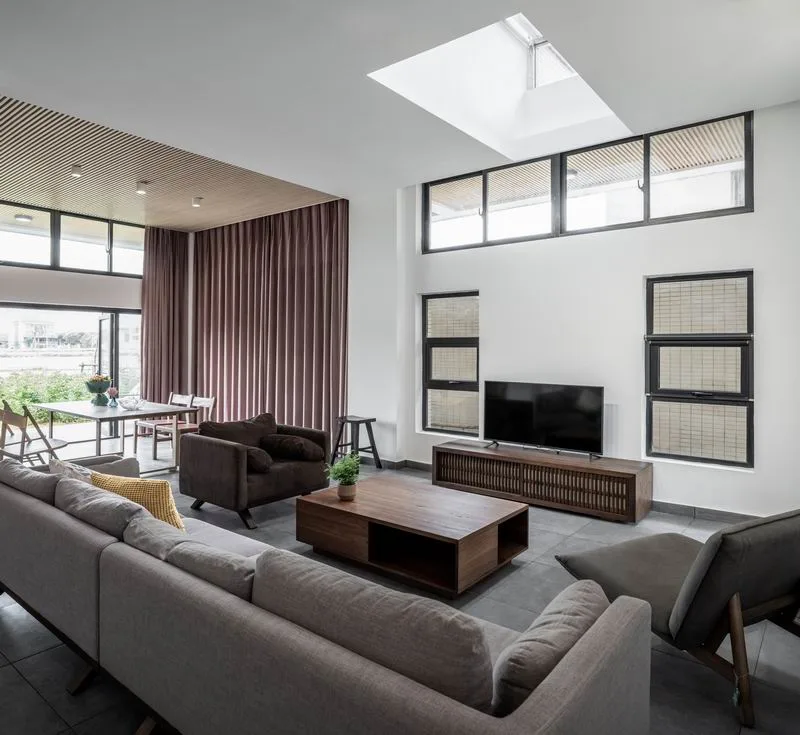
Main hall integrated with reception area © Chen Xi
What Do Local Villagers Want in Their Homes?
While planning the physical spaces, we addressed diverse user needs through design. With limited homestead area, owners wished to have as much planting space as possible. To meet this, we innovatively incorporated a “terraced field” on the building’s rooftop.
Terraced farming scene © Chen Xi
The stepped roof terrace design is based on several core factors: “A farmer has his own land”—the ability to cultivate half an acre within one’s home carries unique cultural significance; the elevated terraces offer expansive views of rice fields to the north and a private courtyard to the south; the shape promotes rapid roof drainage, reducing leak risk during heavy rains; and the soil-covered green roof provides excellent summer insulation and heat protection.
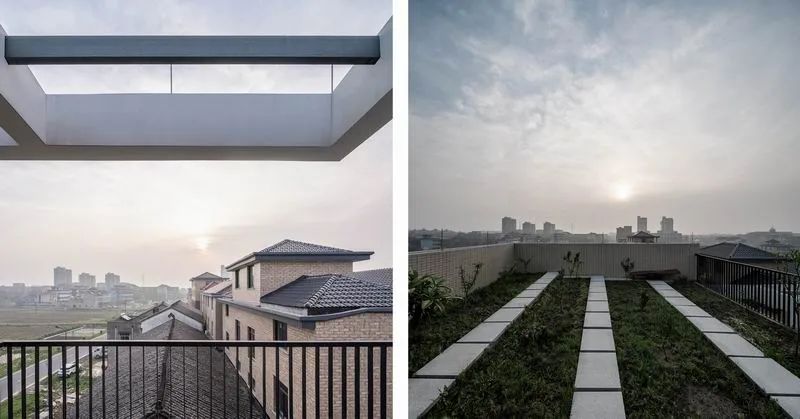
A roof abundant with vegetables and orange trees © Chen Xi
To realize this design affordably, we implemented a stepped planting roof where floor slabs are set at different heights. Porous bricks form drainage channels beneath granite slabs, with spacing left between each slab to facilitate drainage. This method balances construction ease with functional effectiveness.
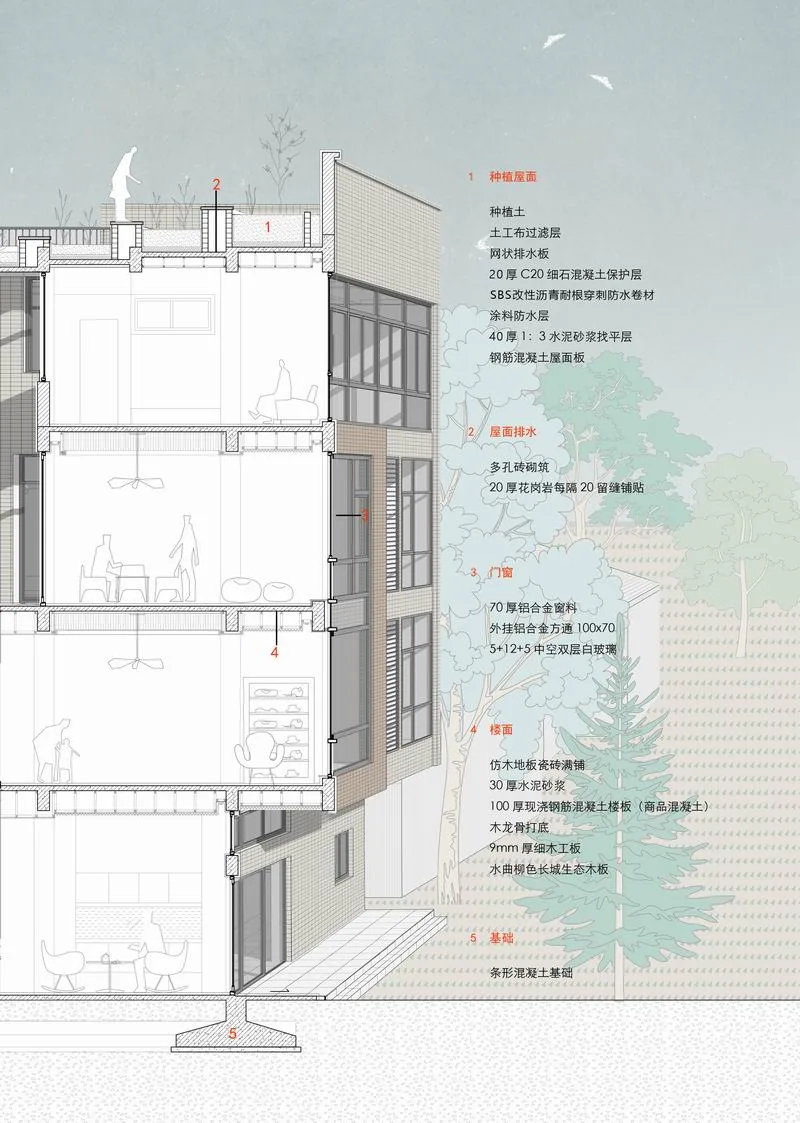
Roof and wall details © Fengjian Architecture
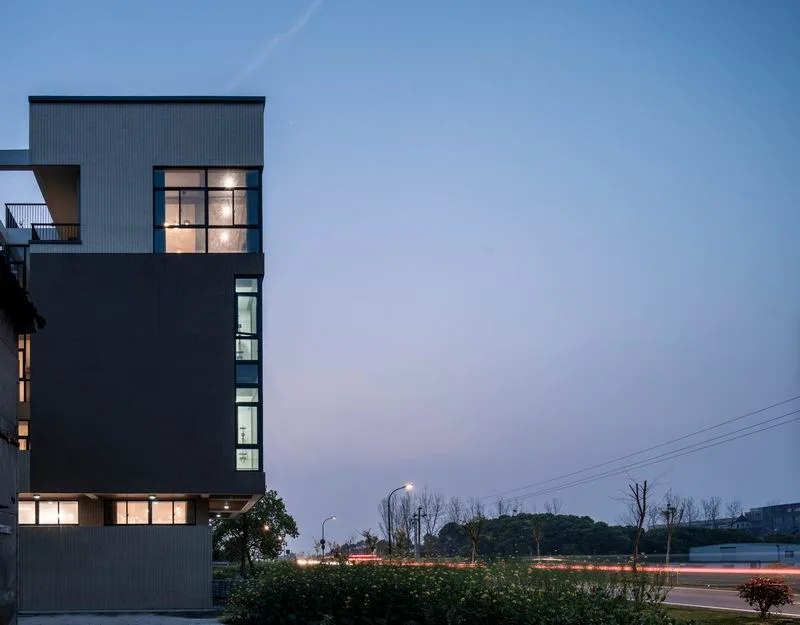
East elevation of the terraced house © Chen Xi
Exterior wall tiles express a common “obsession” among villagers—only houses with tiles (or porcelain tiles) are considered new. Initially, two facade options were proposed: white concrete protectant or blue brick veneer. Residents found white inauspicious, and green bricks were costlier. Ultimately, following the owner’s suggestion, we used solid-colored bricks from our inventory for the facade.
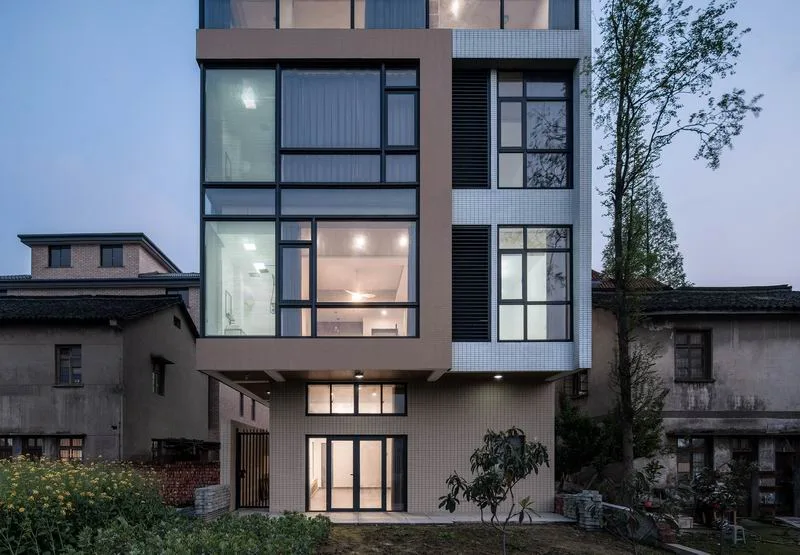
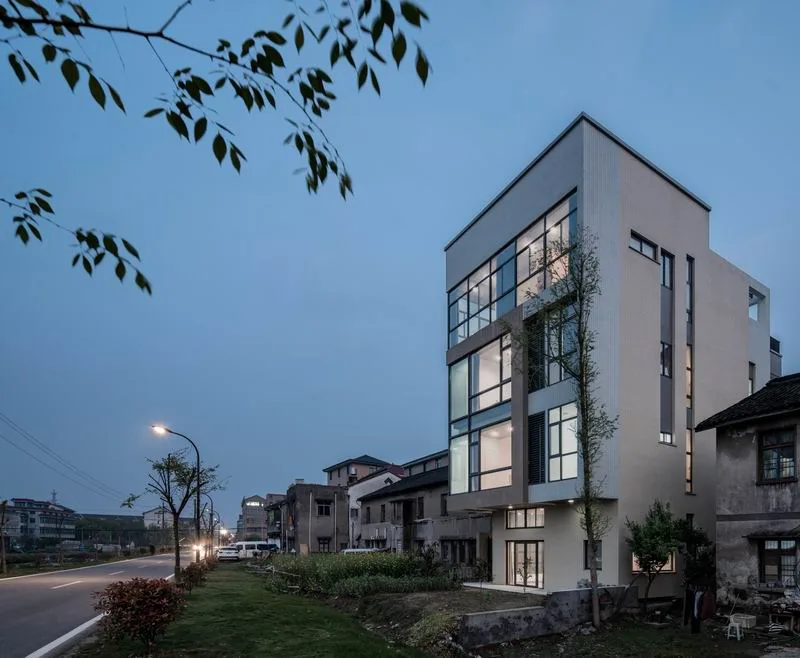
North elevation of the terraced house © Chen Xi
Solid color tiles offer functional advantages in rural settings: they have better water absorption rates and are lighter than commonly used local porcelain tiles. They resist dirt and are easy to clean. Two brick sizes—9mm × 13mm and 9mm × 28mm—are used to emphasize facade logic through orderly tiling. The patched face bricks and French windows create a “familiar strangeness” by blending virtual and real elements, reflecting the complex diversity of modern rural life.
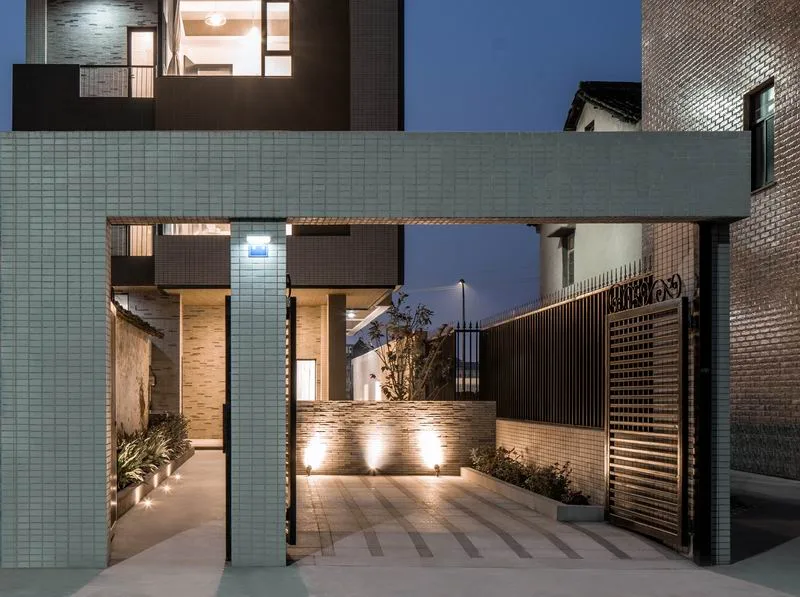
Four Generations Living Together in the Countryside
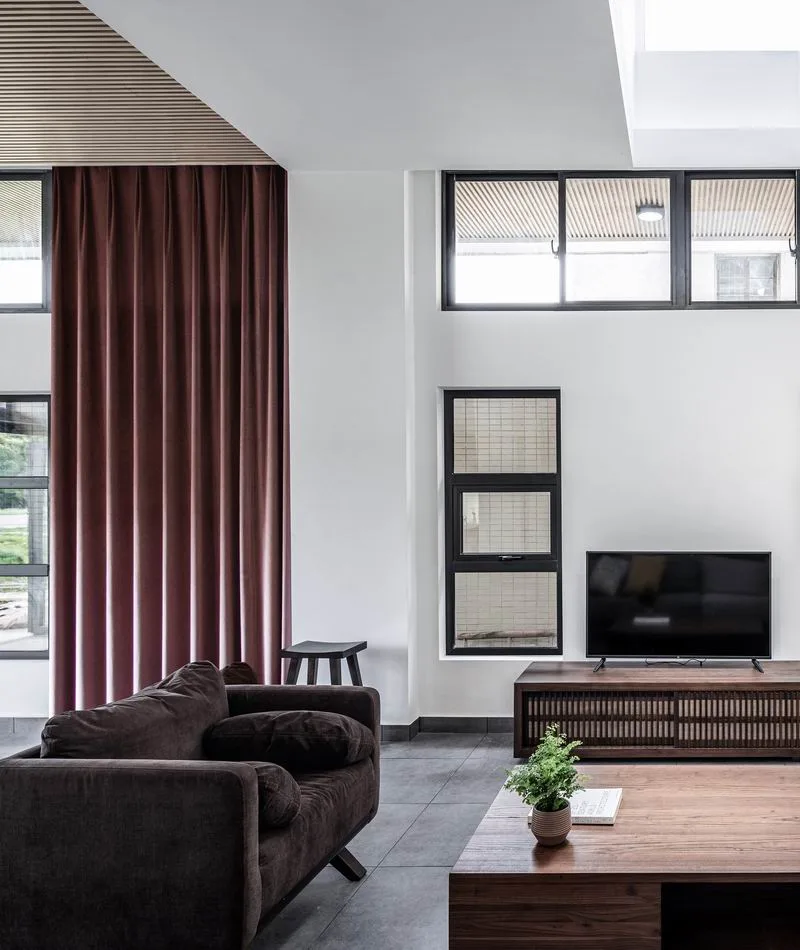
Living room on the first floor © Chen Xi
Unlike urban flats with open floor plans, rural housing combines openness and privacy. Though four generations share the home, distinct “zones” exist. Semi-open spaces serve for worship, gatherings, and community events, while private family areas remain shielded from outside interference. Moreover, each generation’s indoor habits differ, requiring independent living areas.
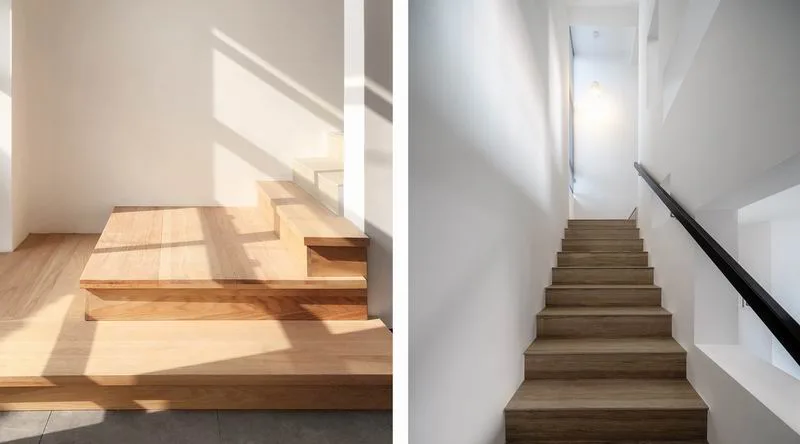
Curved staircase at the entrance © Fengjian Architecture
The first floor includes an entrance hall, kitchen, dining room, and multifunctional hall used for receptions, worship, and festive banquets. The north side features a large swing door directly accessing the outside; partitions can later convert this area into a small shop. The private south entrance leads through the inner courtyard, connecting to the second-floor living space via a curved staircase.
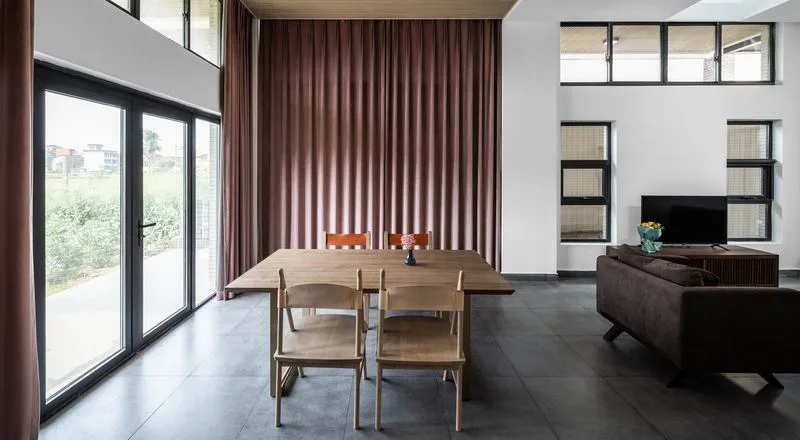
Dining room on the first floor © Chen Xi
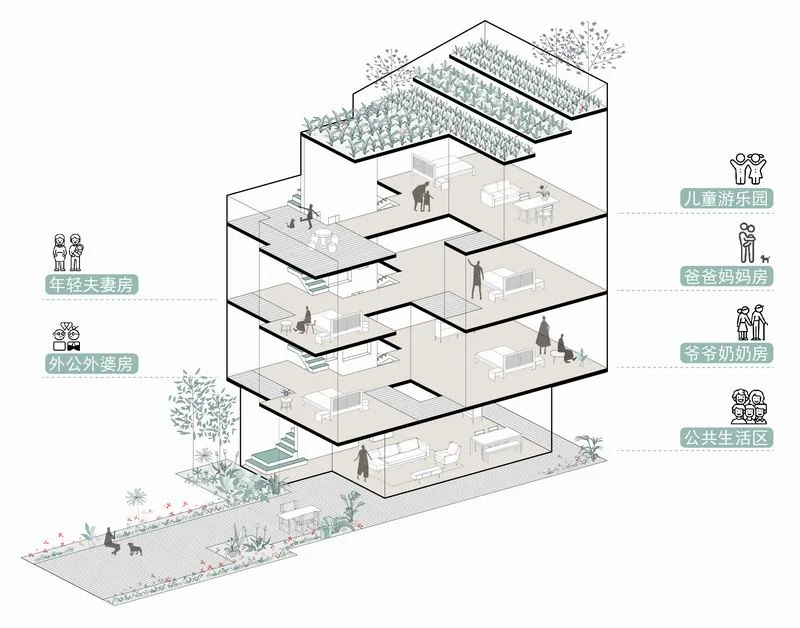
Functional layout of different floors © Fengjian Architecture
The second and third floors share the same layout: a master suite on the south side and two bedrooms of varying sizes on the north. Each room has its own bathroom and kitchen, creating independent living units. This facilitates room rental and ensures comfortable living for a multigenerational family.
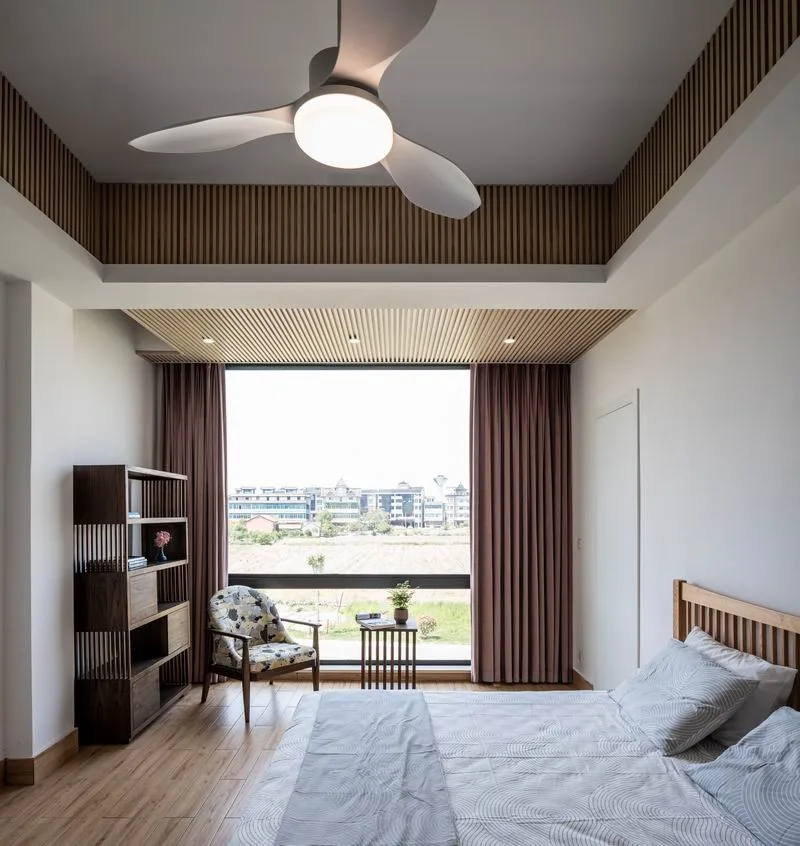
△ North bedroom on the second floor © Chen Xi
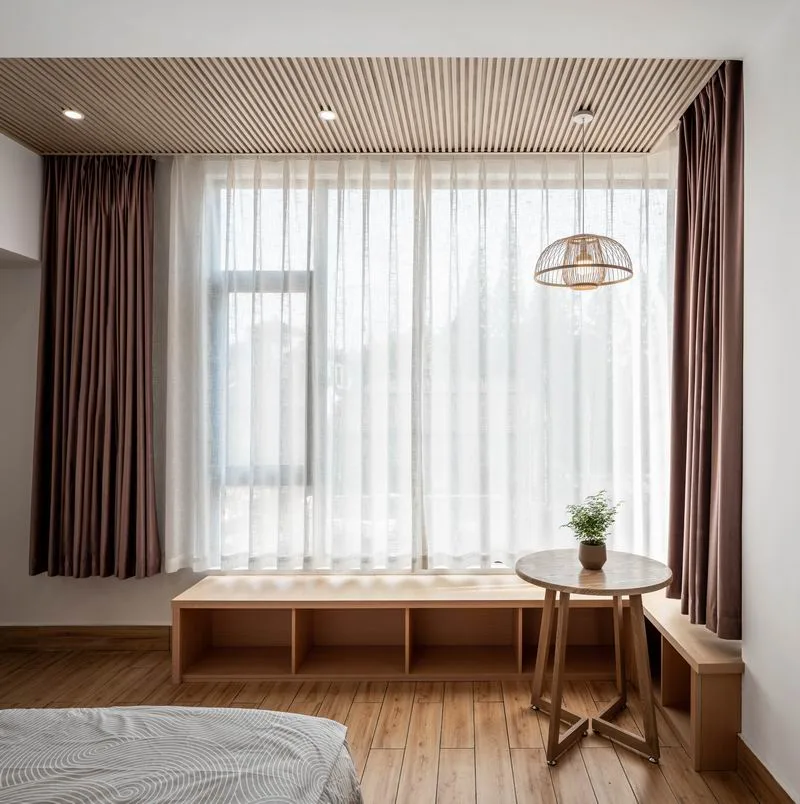
△ South bedroom on the second floor © Chen Xi
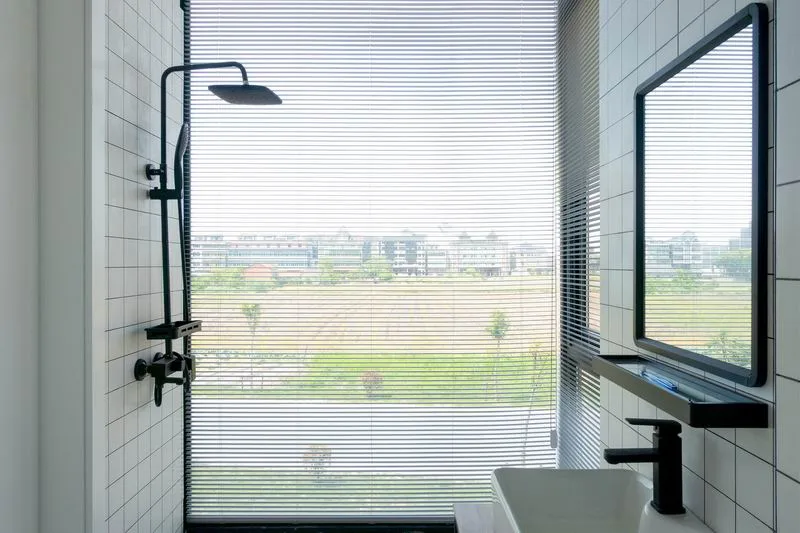
△ Bathroom in the north bedroom © Fengjian Architecture
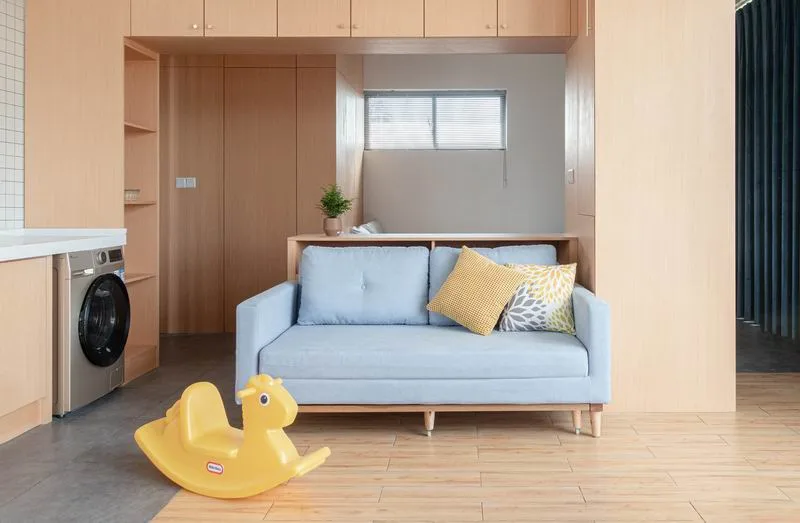
The fourth floor features a suite on the north side, integrating a sofa bed, kitchen, living room, and compact dining area into one open space. Large French windows frame expansive views of the surrounding paddy fields. This open-plan design is ideal for young family members who return home during holidays, providing a perfect space for gatherings and children’s play.
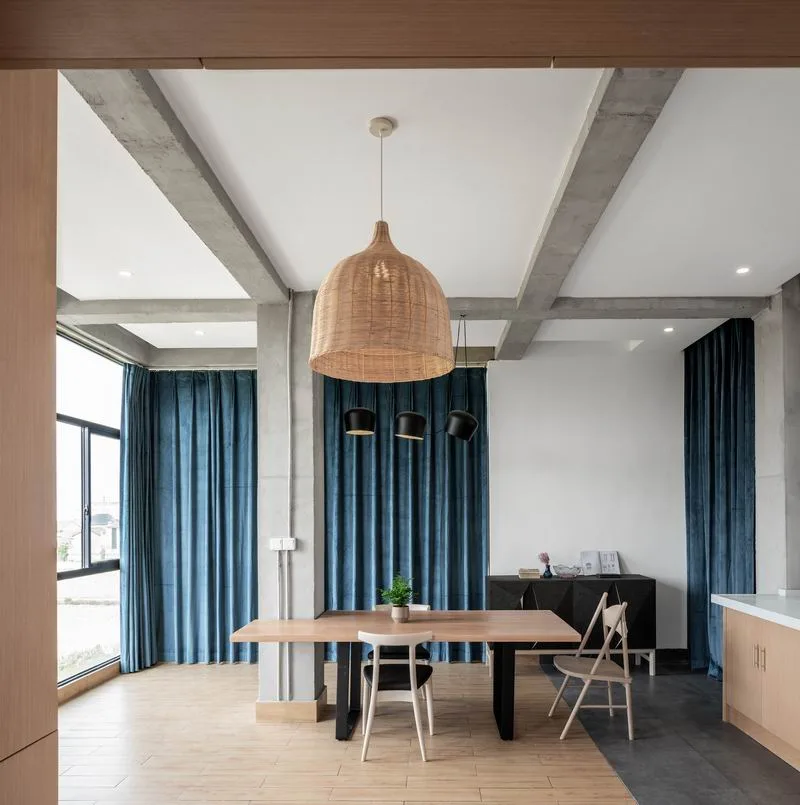
Dining room on the fourth floor © Chen Xi
A Replicable Model
Residential buildings are the largest and most significant entities in rural areas and are key to rural revitalization. We envision Terraced Fields Home as a typological model, embodying five key features: three-dimensional courtyards, rooftop farmland, collage facades, multifunctional halls, and independent living units. Modern rural homes should express unique personality, with spatial structure, cultural identity, and spiritual core that can be replicated and expanded.
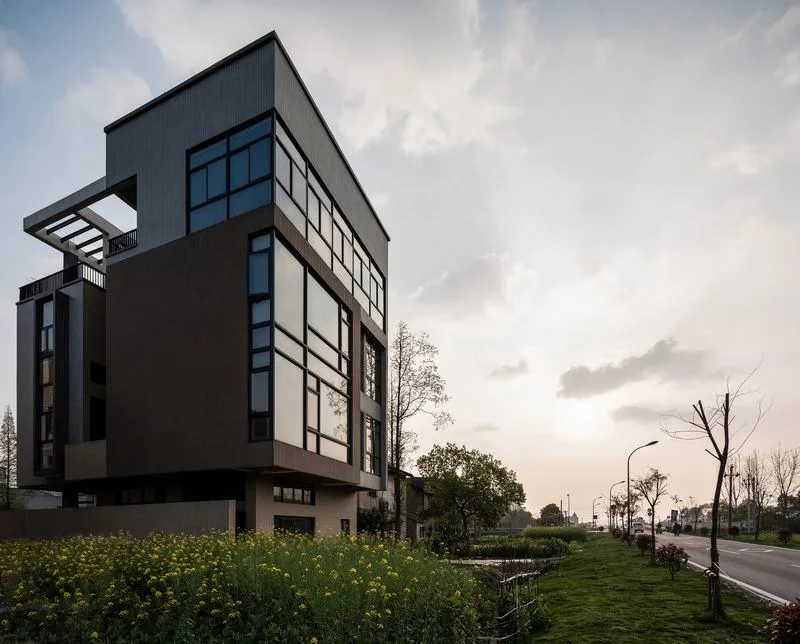
Evening view of the terraced house © Chen Xi
Throughout the project, the owner prioritized not only construction but future use, neighbors’ opinions, and environmental impact. The final design of Terraced Fields Home addresses these concerns, balancing cost, functionality, and form to meet local users’ needs. This balance paves the way for a new model to emerge in rural construction.
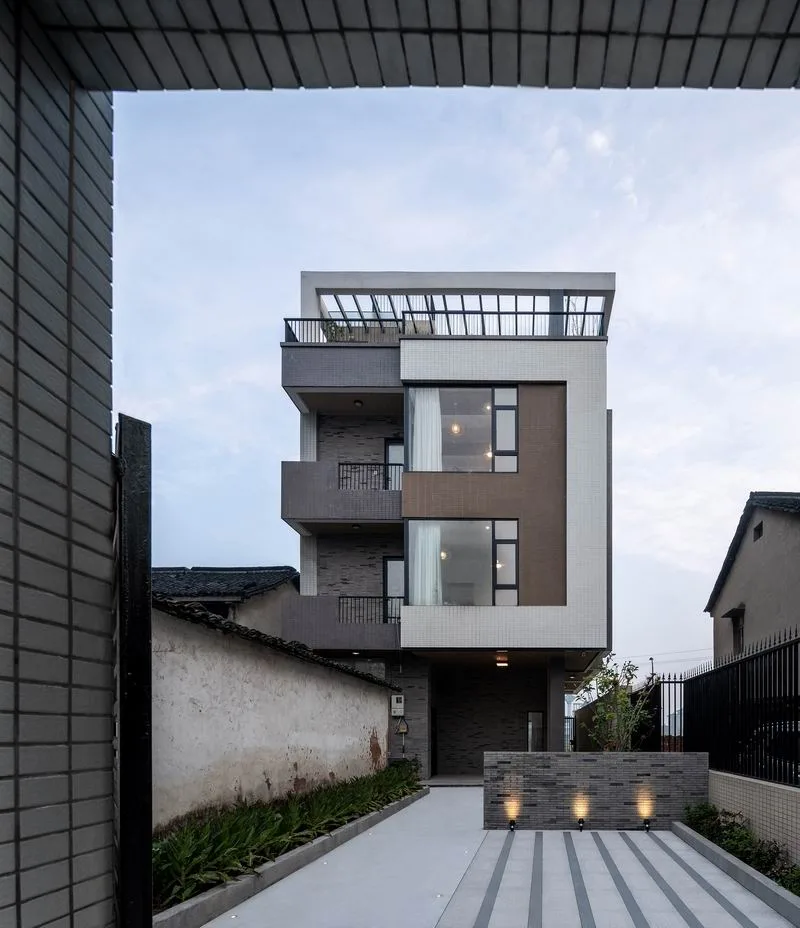
△ Forecourt © Chen Xi
Today’s countryside is a complex mix of tradition and modernity. Our efforts aim to explore the rich spiritual world of rural residents, creating modern emotional spaces that make rural living truly meaningful. As architects engage more deeply with rural environments and everyday life, such projects gain increasing value and significance.
Technical Drawings
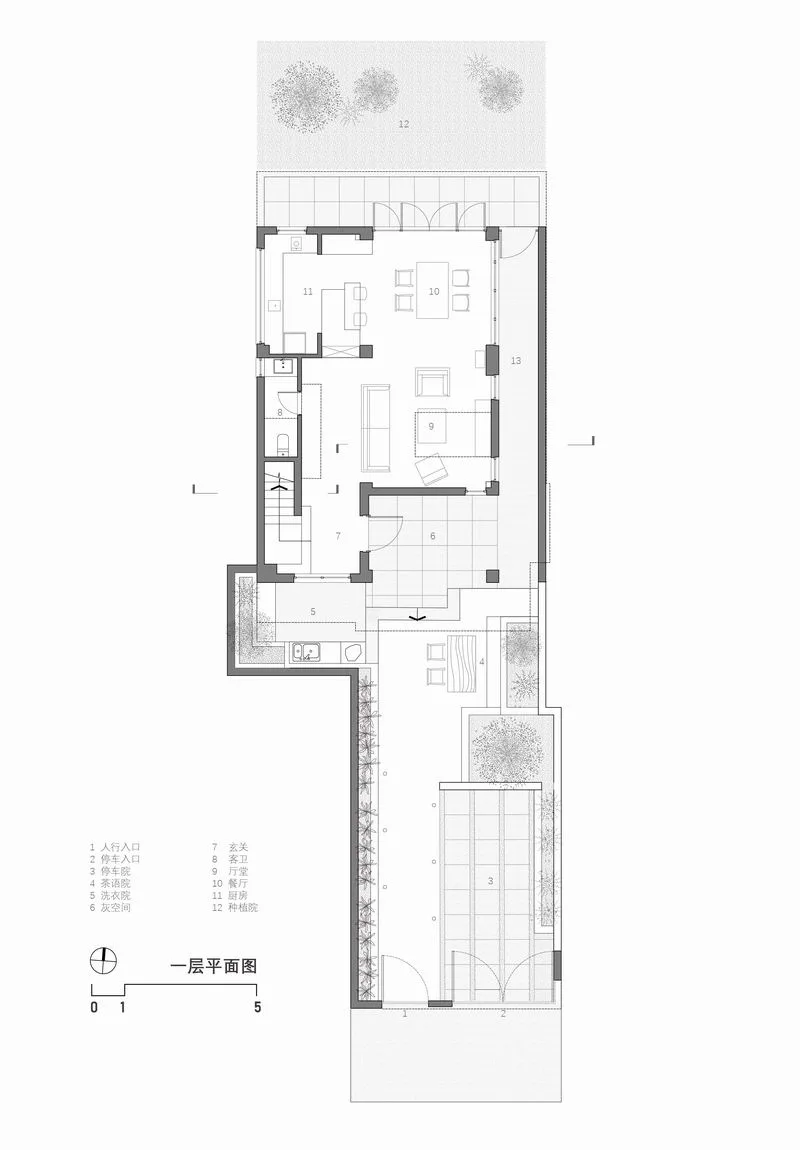
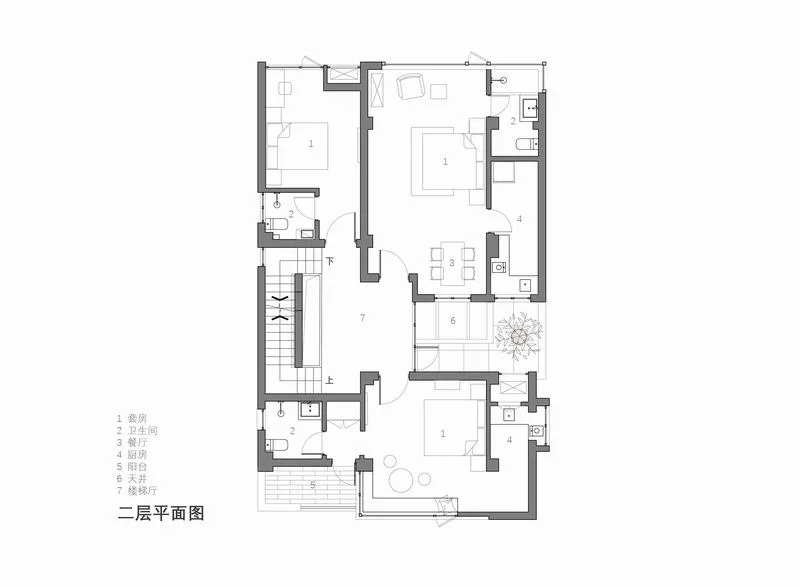
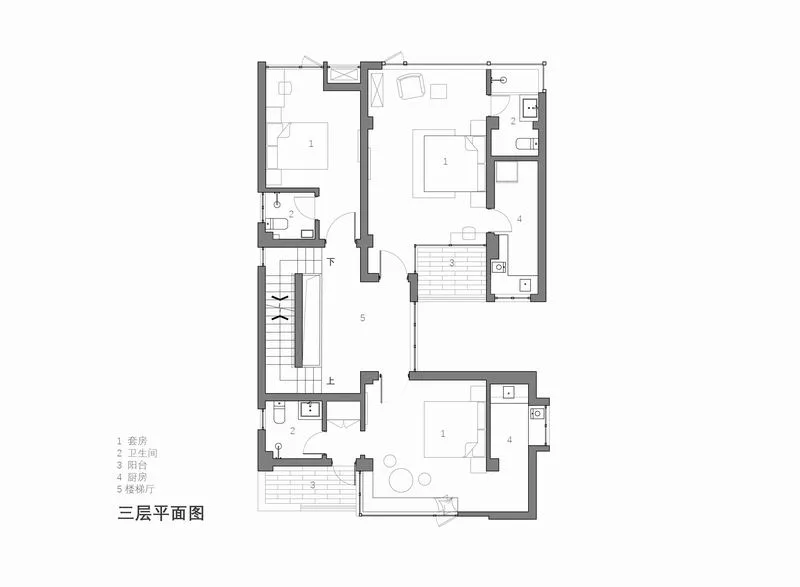
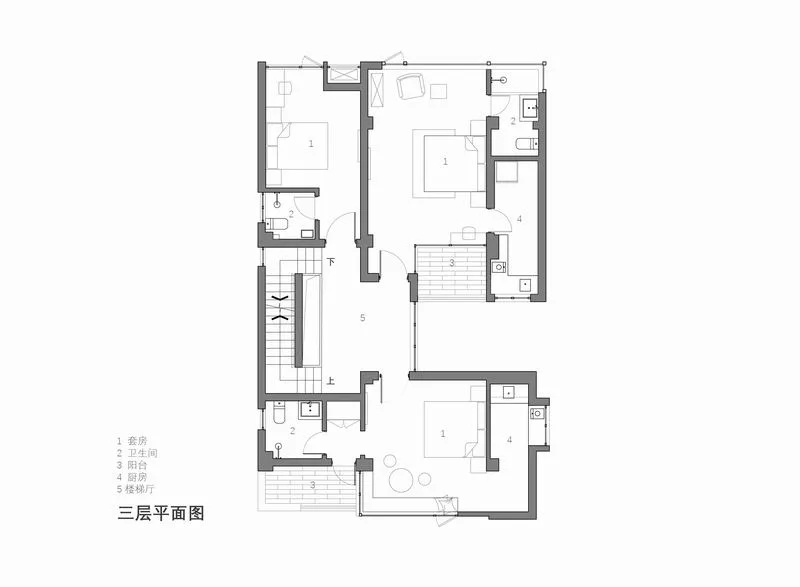
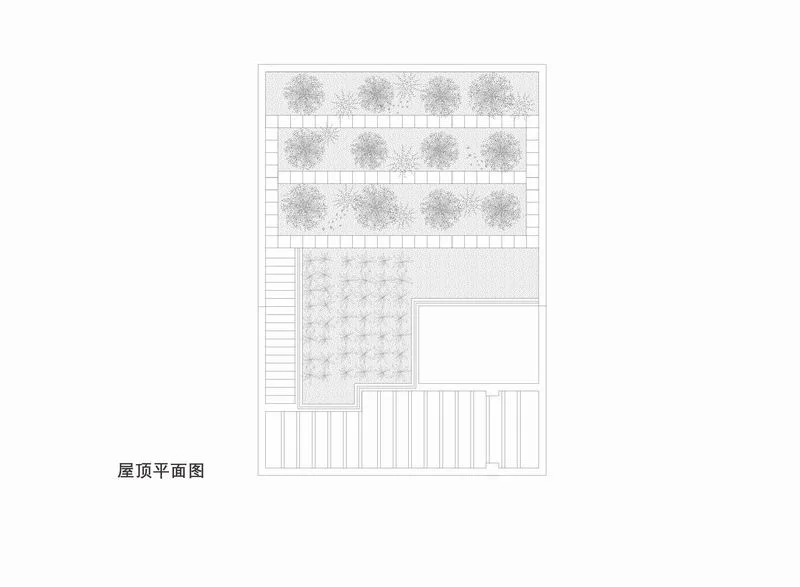
△ Floor plan © Fengjian Architecture
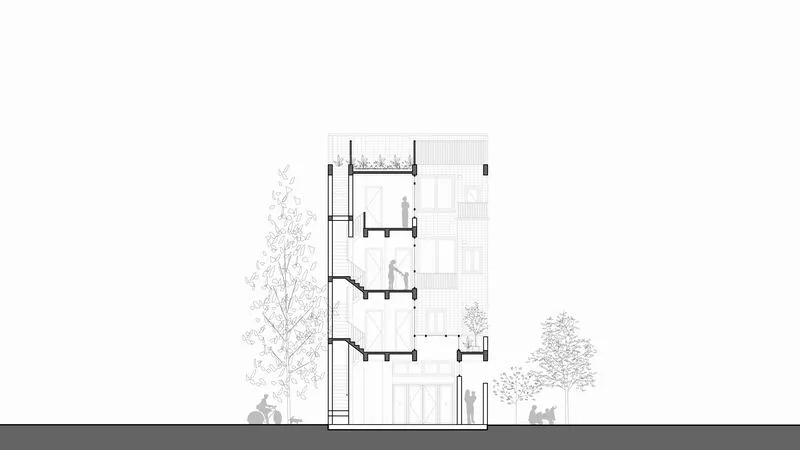
△ Section diagram © Fengjian Architecture
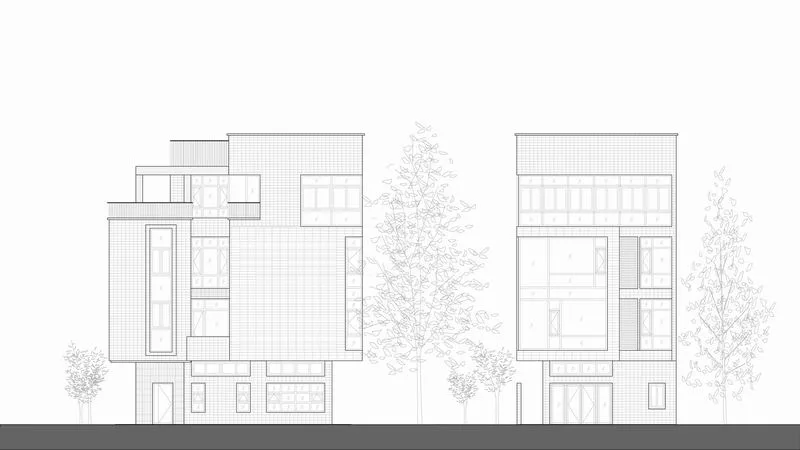
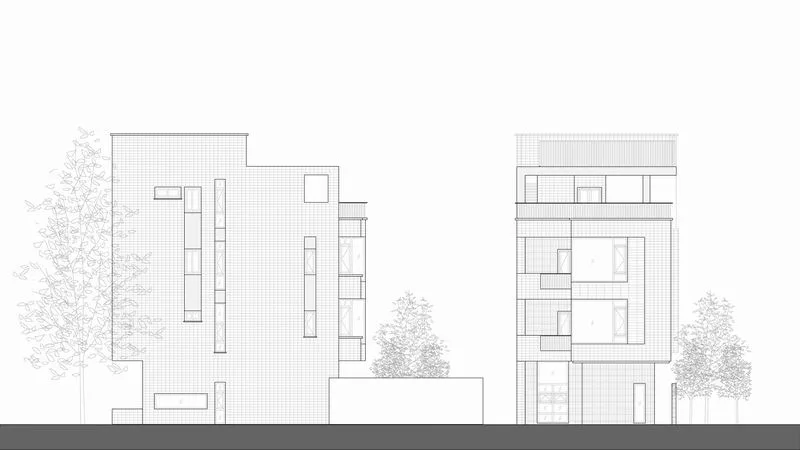
Elevation views © Fengjian Architecture
Project Information:
Project Name: Terraced Fields Home
Design Firm: Fengjian Architectural Firm
Location: Haining, China
Design Date: September 2017
Construction Completed: November 2019
Land Area: 208 square meters
Building Area: 385 square meters
Project Leads: Chen Chen, Zhu Feng
Company Website: www.vonacch.com
Contact Email: info@vonarch.com
Furniture Brand: Maria Yee
Photography: Chen Xi
Author: Zhu Feng












Must log in before commenting!
Sign Up