
CAA LAB, founded by CAA Architecture Firm, is driven by the core philosophy of “designing only for tomorrow.” It is a research and development organization that approaches architectural fundamentals from multiple perspectives. CAA LAB has created an augmented reality (AR) app tailored for designers and focuses on innovation and research in four key areas: sustainability, digitization, the intersection of virtual and reality, and future human habitation. Their findings aim to provide strategic, forward-thinking theoretical support and practical solutions to meet the evolving demands of urban development and human living environments.
Introducing CAA LAB’s series of studies: “Future Human Habitat” – Survival on Mars.
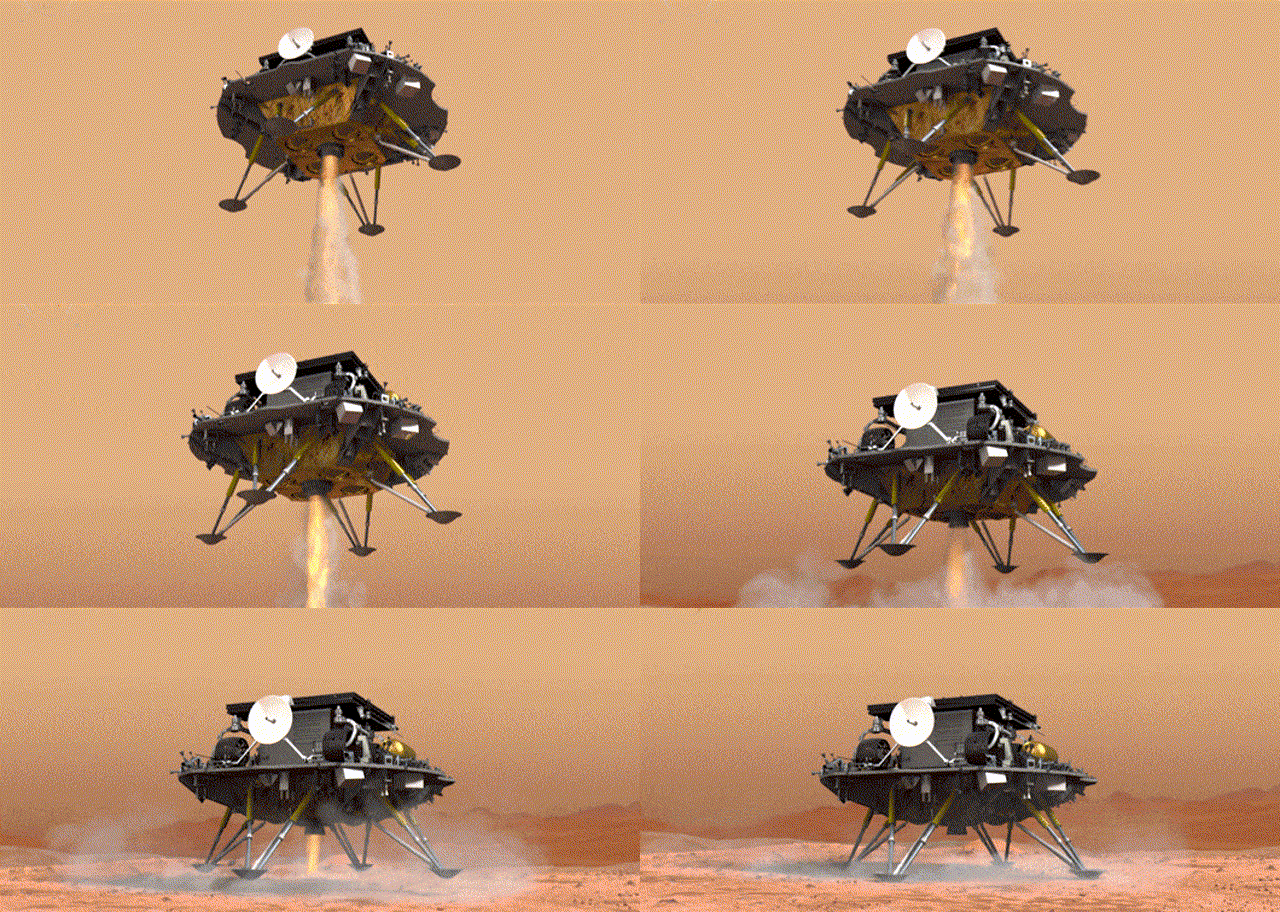
△ Tianwen-1 rover soft landing schematic © China Aerospace Science and Technology Corporation Fifth Academy
On May 15, 2021, the Tianwen-1 mission successfully landed on Mars, marking China’s inaugural Mars exploration achievement. China became the first country to complete Mars orbiting, landing, inspection, and exploration in a single mission, and only the second nation after the United States to land a probe on Mars.
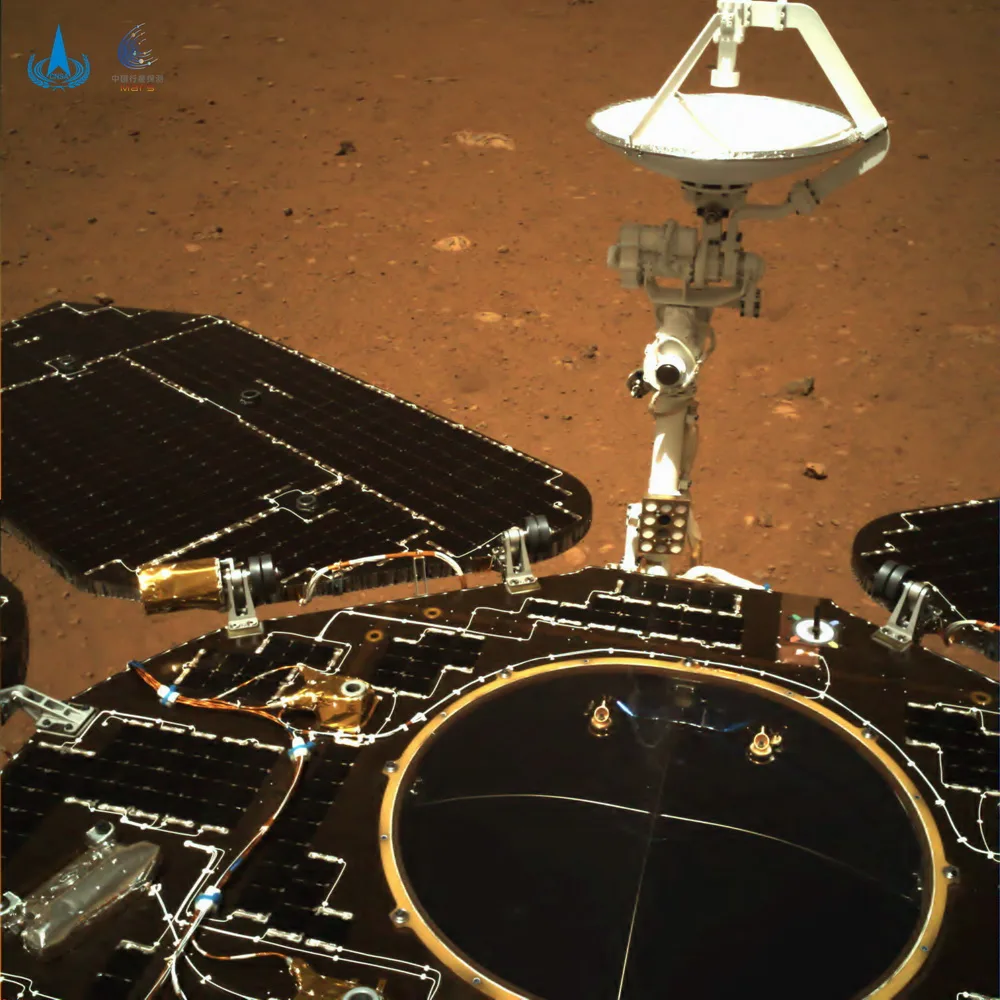
Captured on May 19, 2021, Tianwen-1’s navigation camera points toward the rear of the Zhurong rover © China National Space Administration
Mars, often called Earth’s twin due to its similarities, has been the subject of human exploration for over 50 years. Despite numerous challenges, humanity’s curiosity persists: from the launch of the first Mars probe in 1960, to the first Martian surface photo transmitted in 1964, and recently with successful landings by the US “Perseverance” and China’s “Zhurong” rovers.
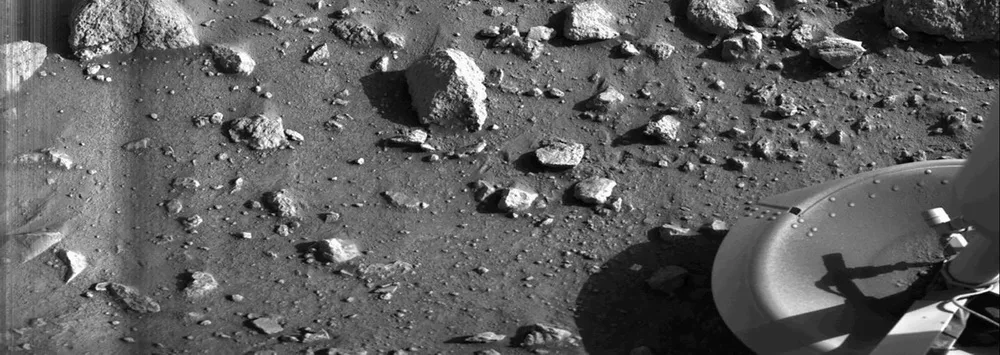
The first Martian surface photo transmitted by Viking 1 on July 20, 1976 © NASA
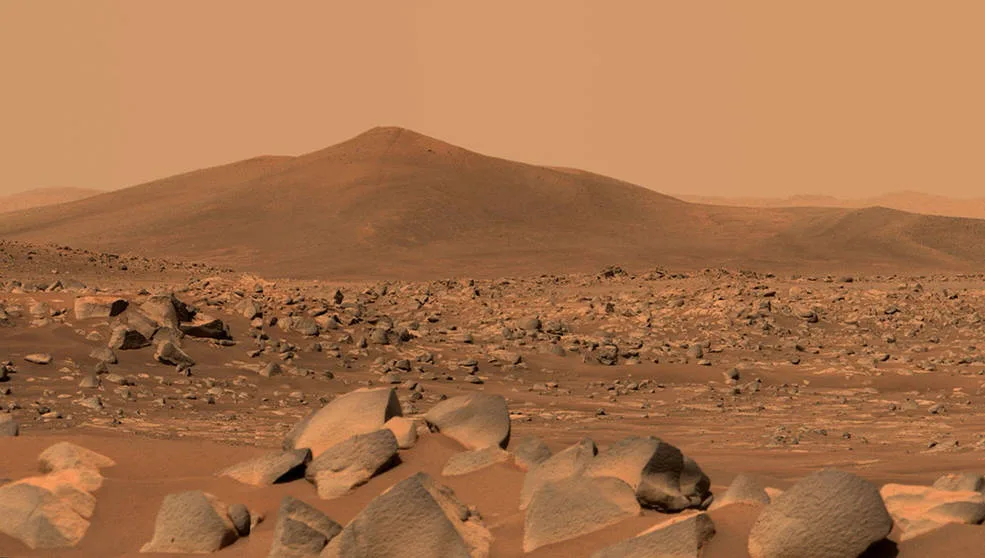
The Perseverance Mars Rover’s Mastcam-Z captured “Santa Cruz,” a small hill inside Jezero Crater, on April 29, 2021 (Sol 68) © NASA
As human technology rapidly advances, Earth’s resources are being depleted. Our home planet, where humanity has thrived for countless generations, is nearing its limits. This drives the pursuit to explore deep space, seeking answers about Earth’s future and humanity’s next steps.
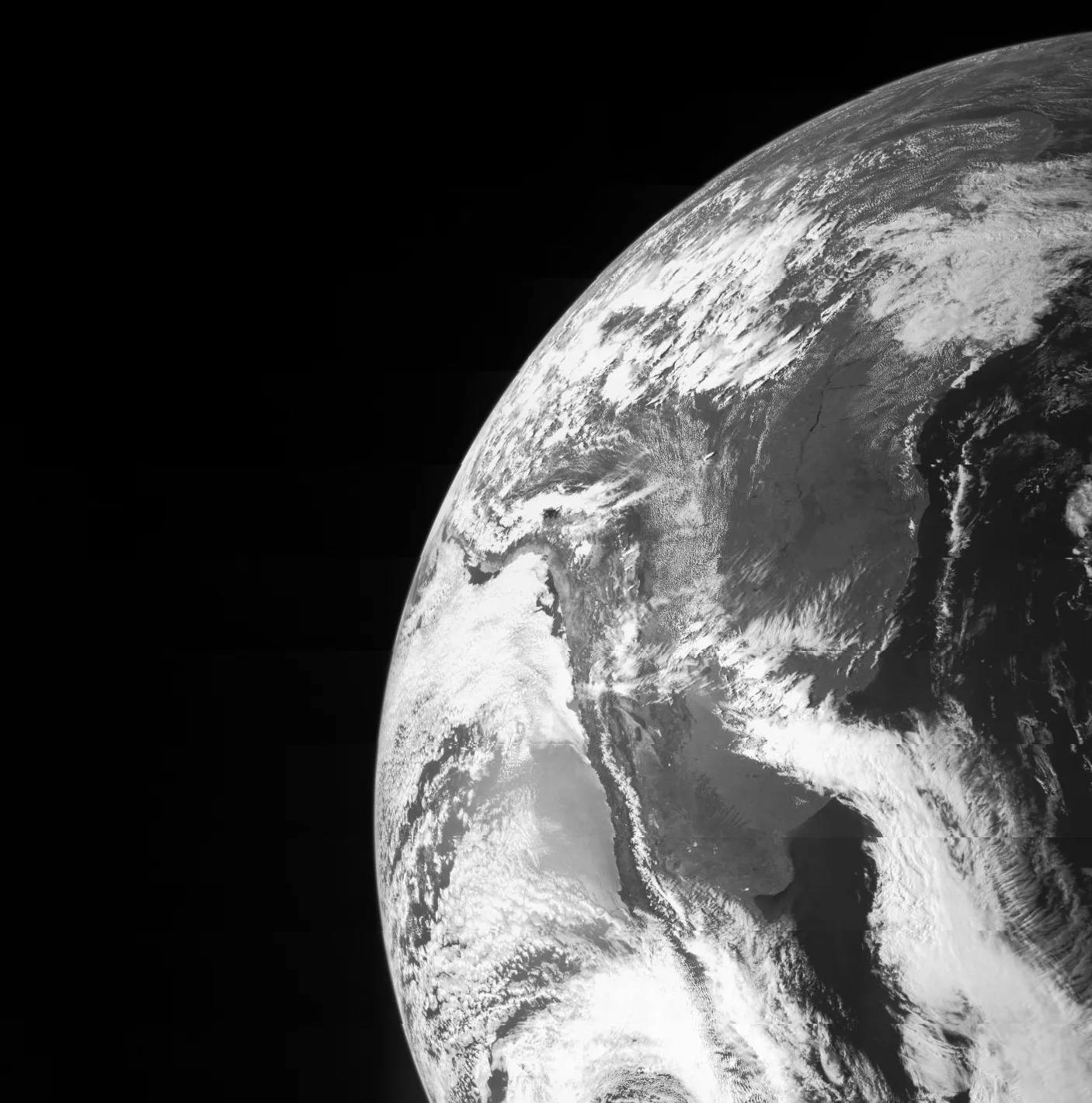
Earth as seen by the Juno spacecraft on October 9, 2020 © NASA
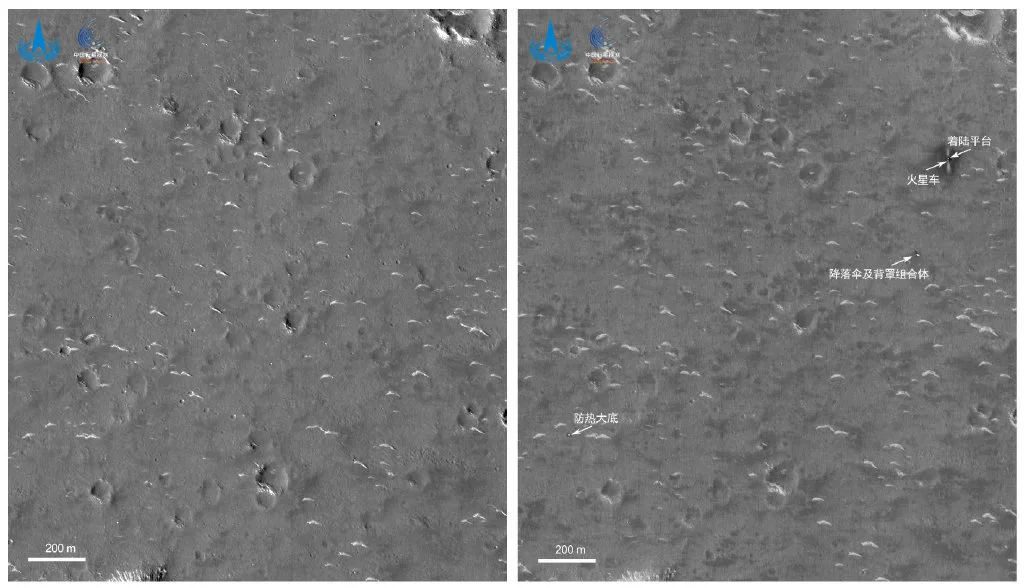
High-resolution images of Tianwen-1’s Mars landing site captured by its orbiter on June 2, 2021: left before landing, right after landing © China National Space Administration
Could Mars become humanity’s next habitable planet? Is migration to Mars achievable? This article reviews the possibilities of Mars colonization while reflecting on the future of human habitation beyond Earth.
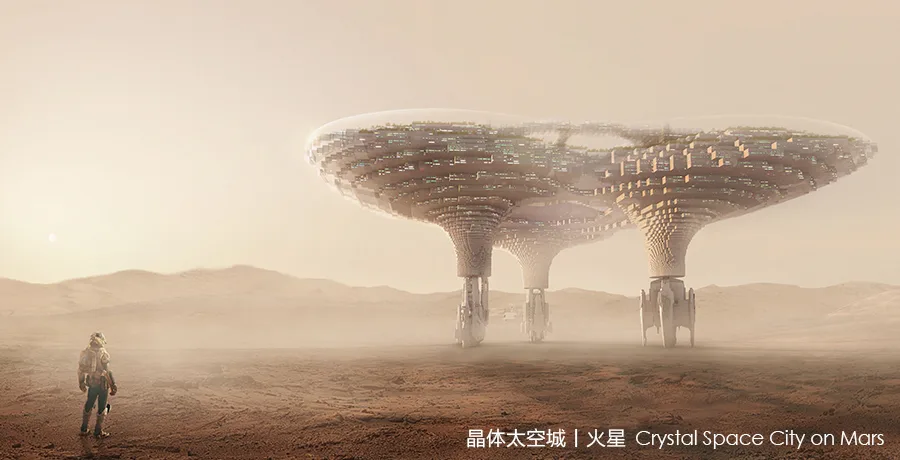
© CAA architects
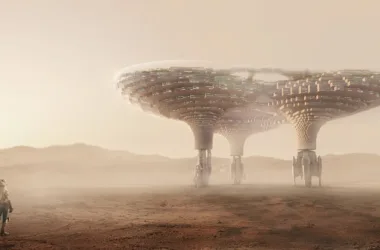
“Crystal Space City” represents CAA LAB’s vision for a future city designed for human survival in outer space. Centered on artificial intelligence data, regulated by AI control, it harnesses gravitational accretion to capture surrounding material and energy, converting energy to matter to facilitate matrix growth. This modular city concept presents a promising blueprint for human habitats in the future.
Keywords: Gravitational accretion, energy-to-matter conversion, matrix growth, modularity
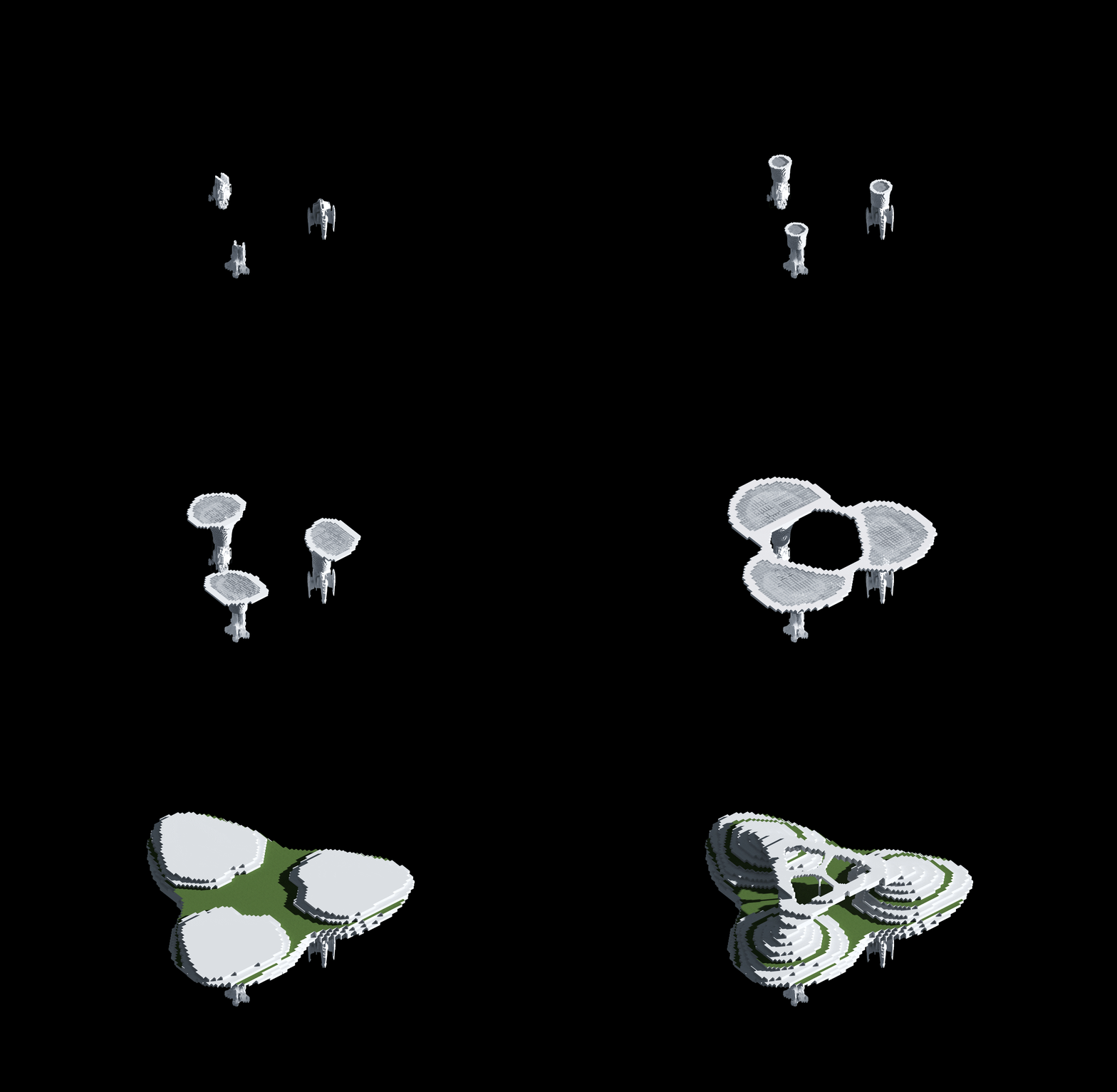
© CAA architects
Exploring the vast universe is an ongoing journey for humanity. Beyond aerospace research, numerous international architectural firms and research institutions are actively investigating the future of livable spaces in extraterrestrial environments.
Nüwa, Nuwa City, Mars
Design agency: ABIBOO Architecture Studio
Keywords: City, Architecture, Sustainable Development
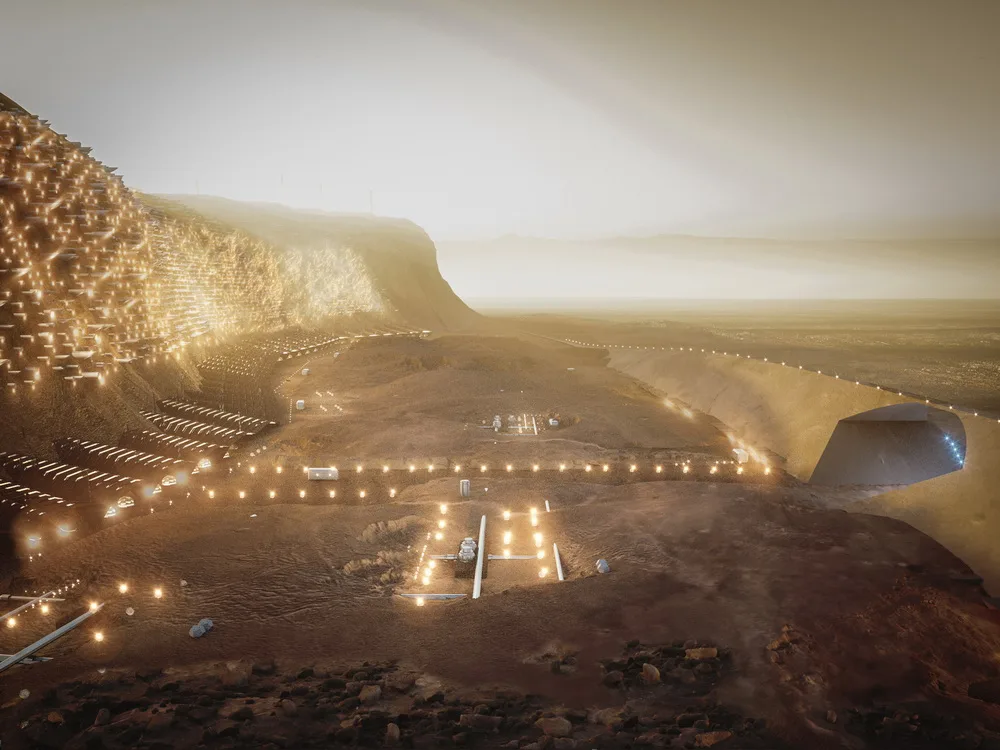
© ABIBOO STUDIO
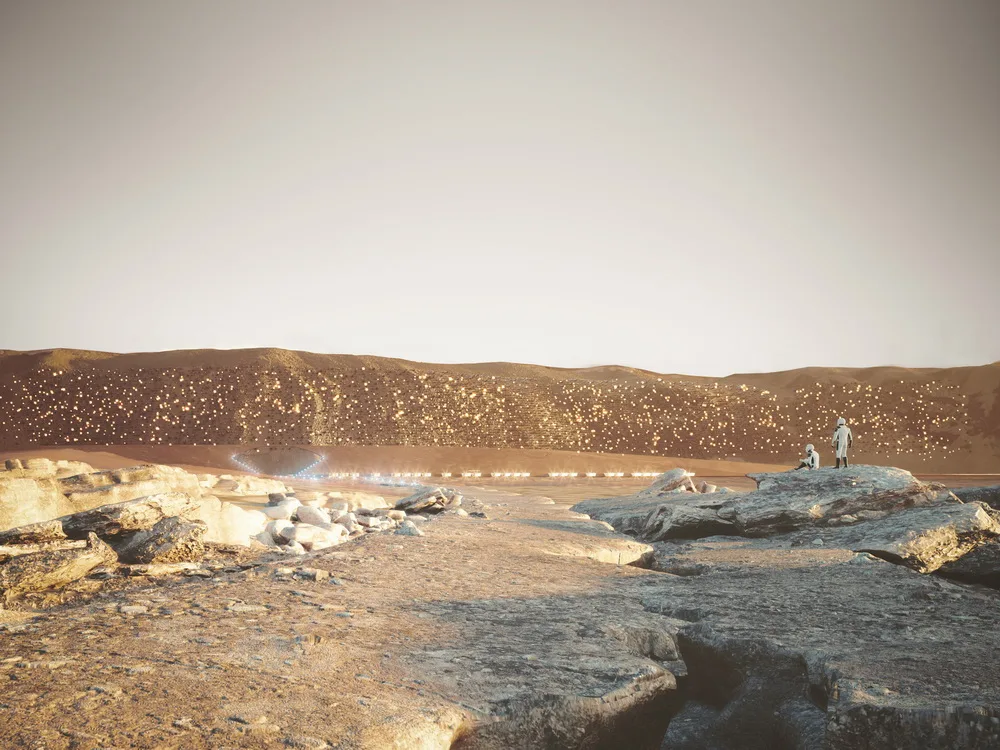
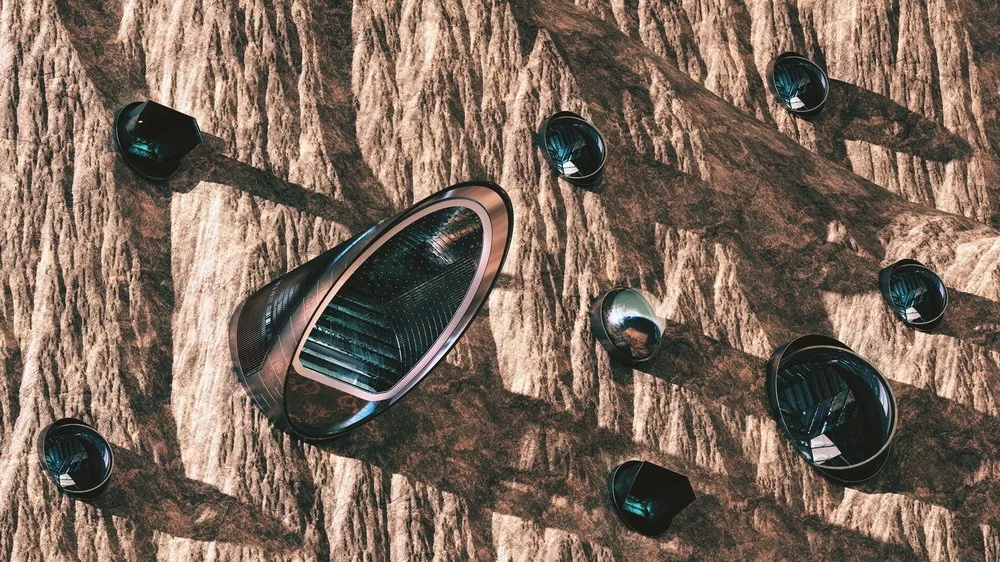
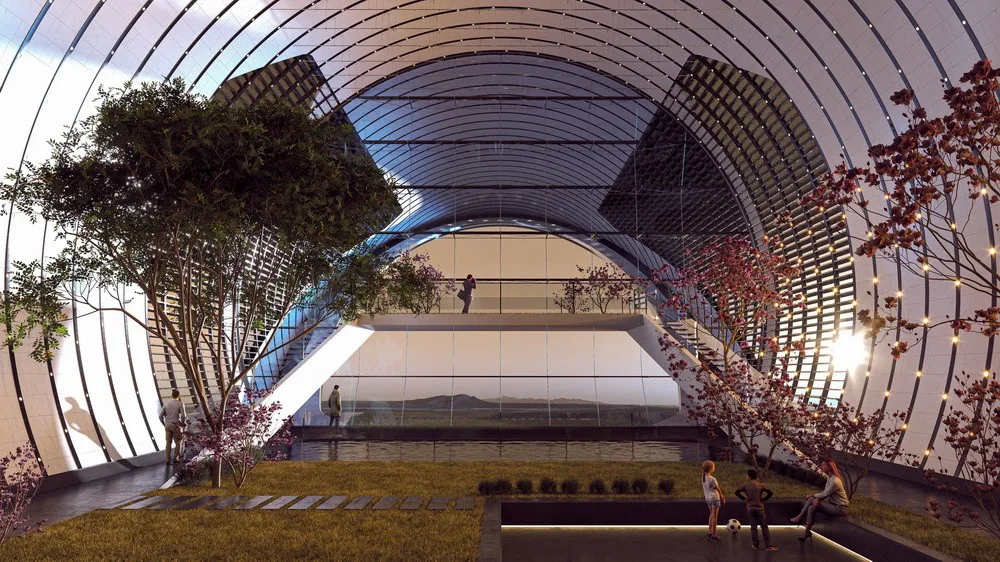
ABIBOO STUDIO has designed Nüwa, a self-sufficient vertical city on a Martian cliff’s hillside. This sustainable development resists radiation and meteorite impacts while maximizing indirect sunlight exposure.
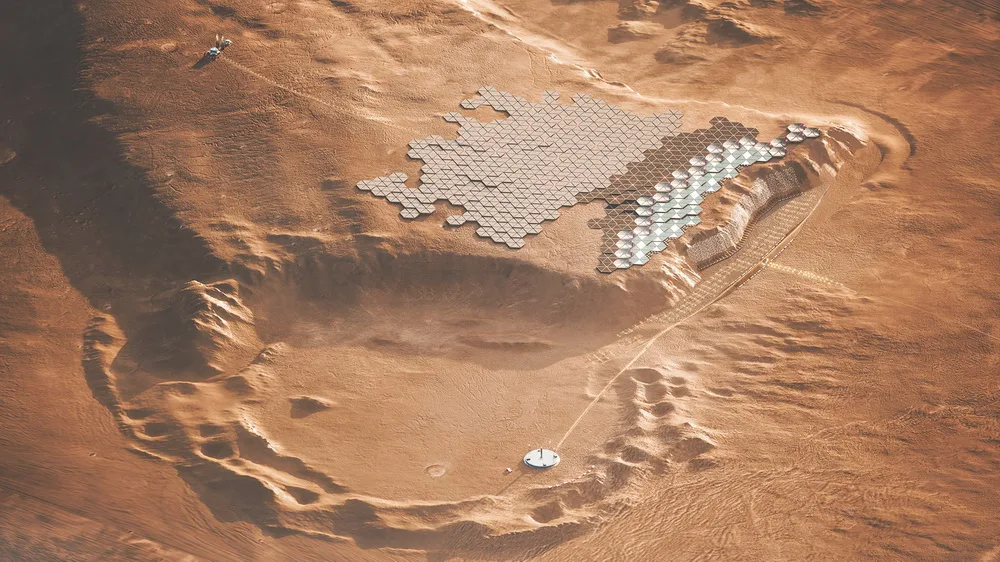
© ABIBOO STUDIO
© ABIBOO STUDIO
They have created residential, social, and cultural spaces ensuring food, energy, building materials, and transportation needs are met in Mars’s extreme environment—offering a comprehensive urban and architectural solution.
© ABIBOO STUDIO
© ABIBOO STUDIO
Marsha Marsha
Design agency: AI Space Architecture Company
Keywords: Martian polymer, vertical orientation, habitat
© AI Space Factory
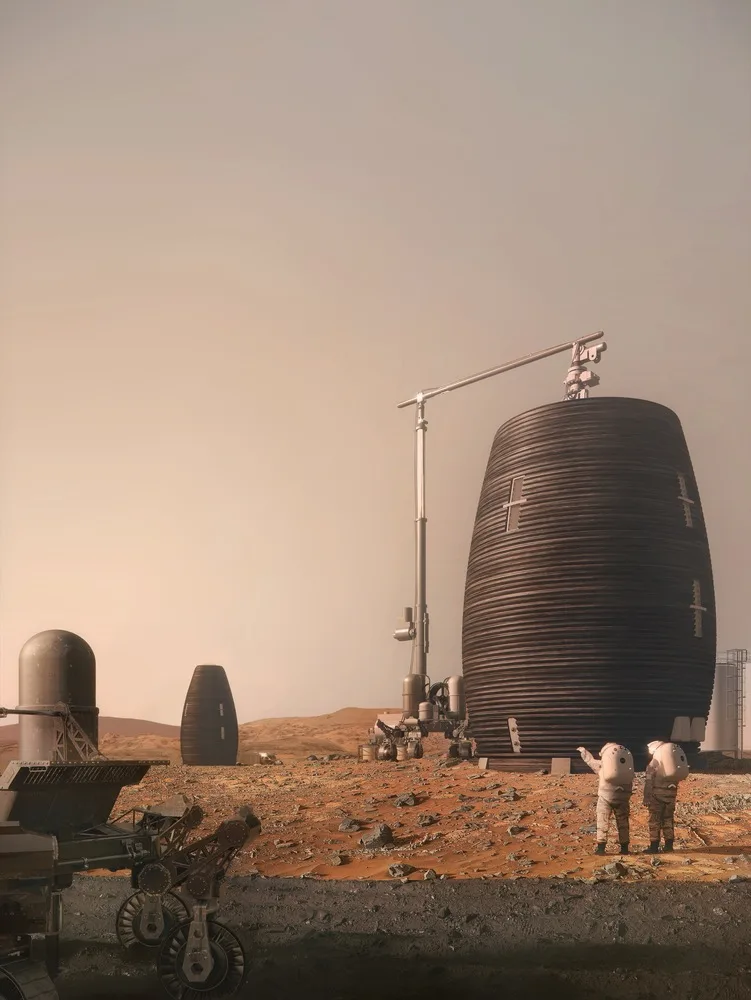
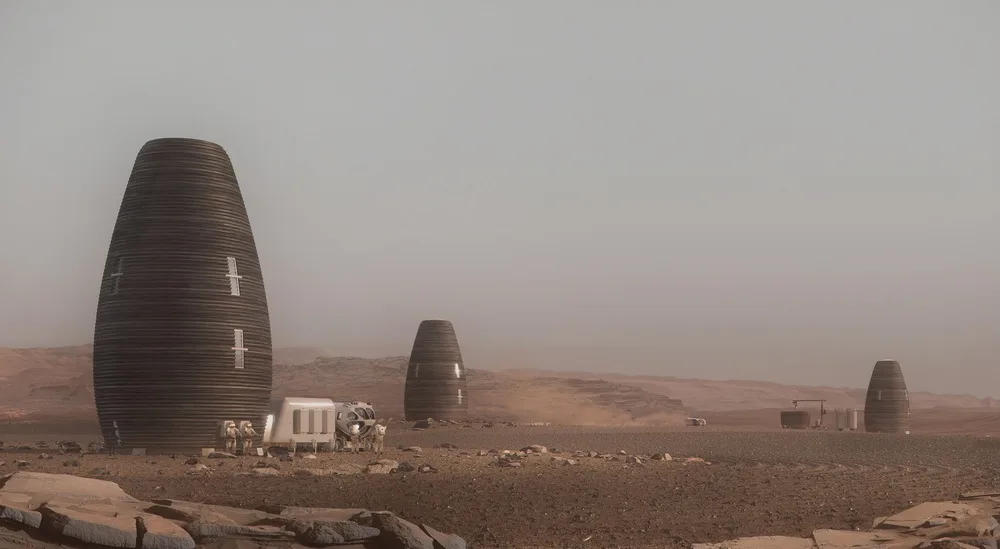
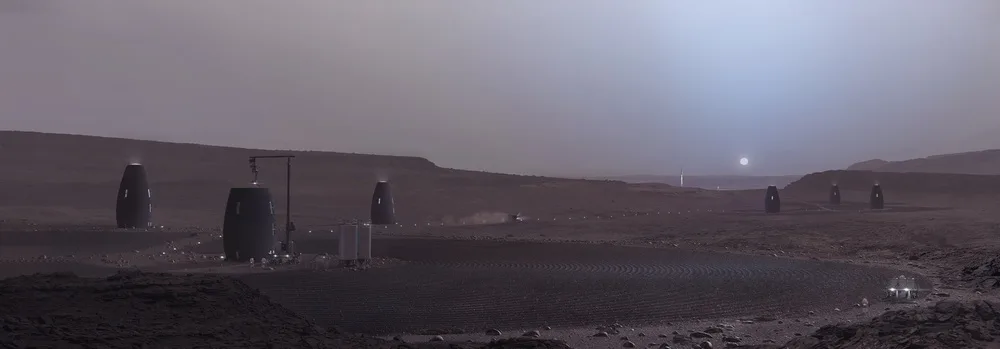
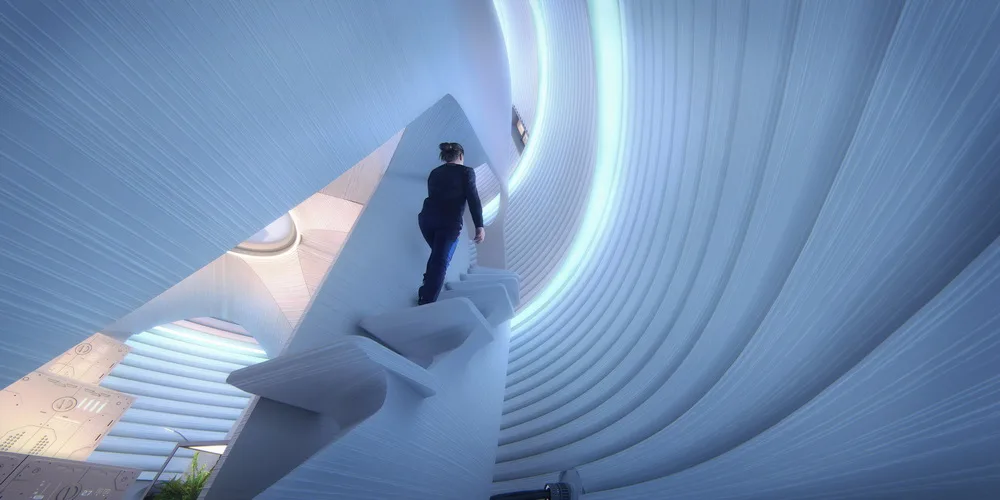
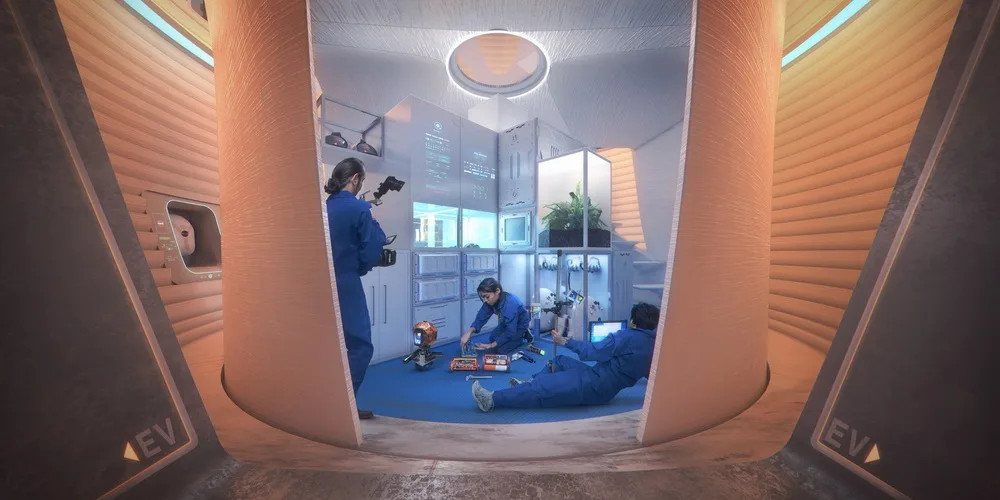
MARSHA is a habitat designed by AI SPACE FACTORY for four astronauts on a Mars mission. It is constructed using a proprietary “Martian polymer.”
© AI Space Factory
Departing from traditional dome or semi-buried habitats, MARSHA uses vertically oriented cylinders to maximize usable space with enhanced ventilation and diffused natural light, creating comfortable, multi-level living environments.
© AI Space Factory
© AI Space Factory
© AI Space Factory
Mars Science City
Design agencies: BIG Architects and Mohammed bin Rashid Space Center
Keywords: Simulated cities, experimental buildings, life strategies
© Bjarke Ingels Group
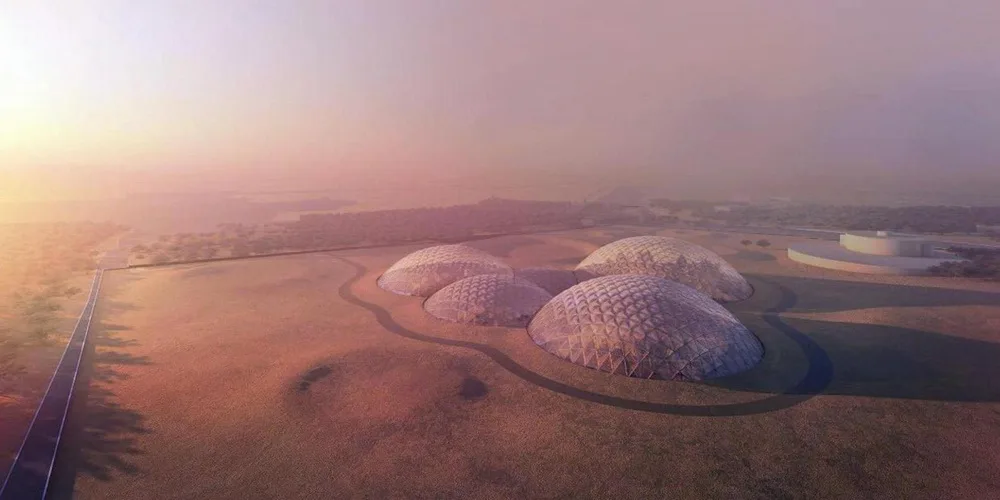
The “Mars Science City” project is a collaboration between the Mohammed bin Rashid Space Center (UAE) and BIG Architects. It is designed as a realistic model to simulate human habitation on Mars.
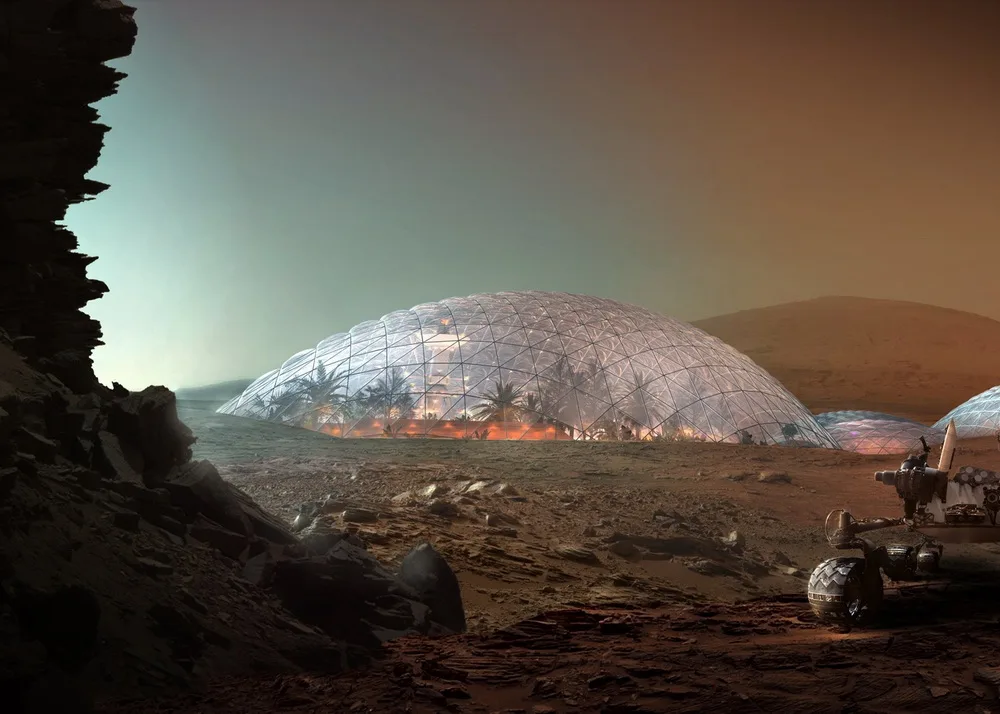
© Bjarke Ingels Group
The city’s design includes an experimental living scenario where a team will live in the built environment for an entire year. Mars Science City will also host facilities for researchers and tourists, equipped with advanced labs to test buildings and living strategies under Mars-like heat and radiation conditions.
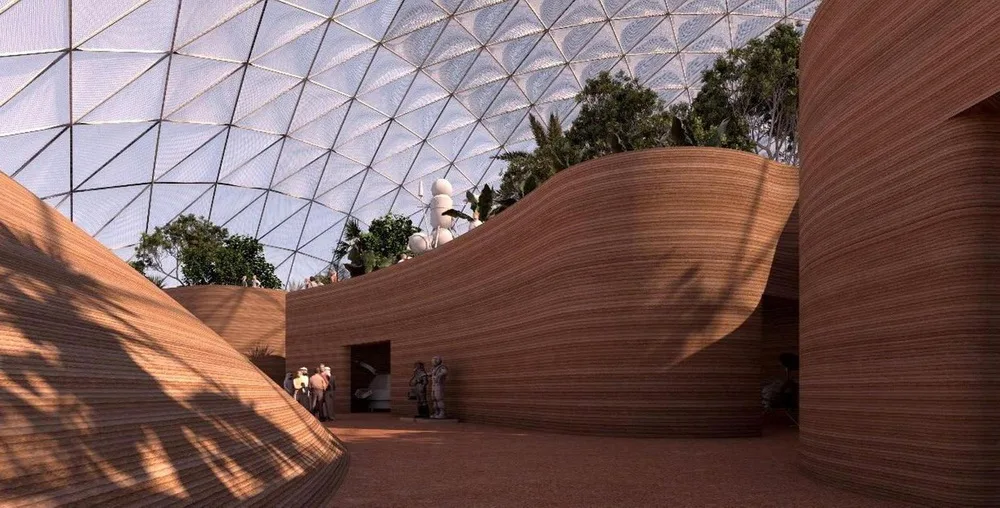
© Bjarke Ingels Group
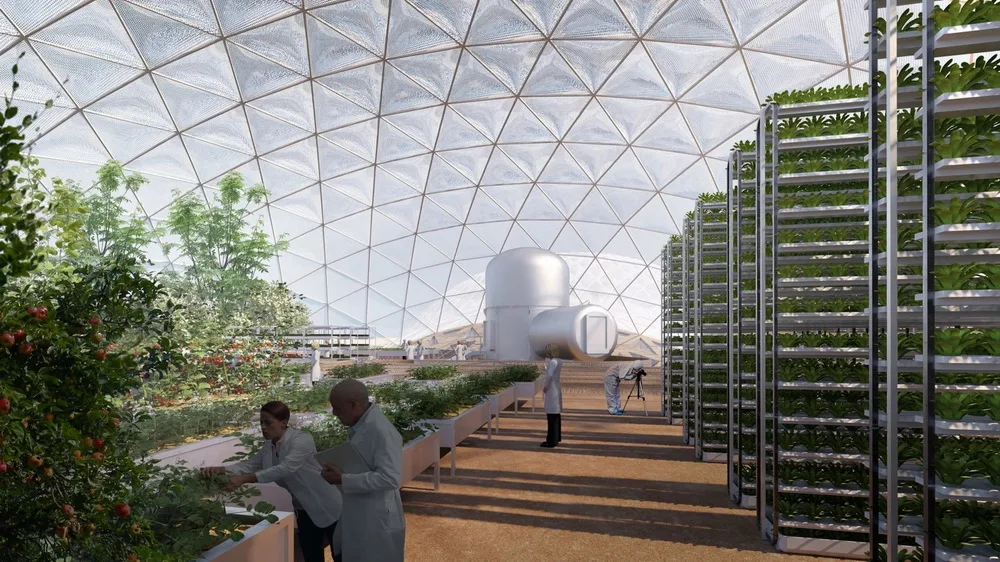
© Bjarke Ingels Group
Ice House
Design agencies: Clouds AO Architecture Office and SEArch Architecture Firm
Keywords: Water sourcing, underground ice layer, vertical ice shell
© Clouds AO and SEArch
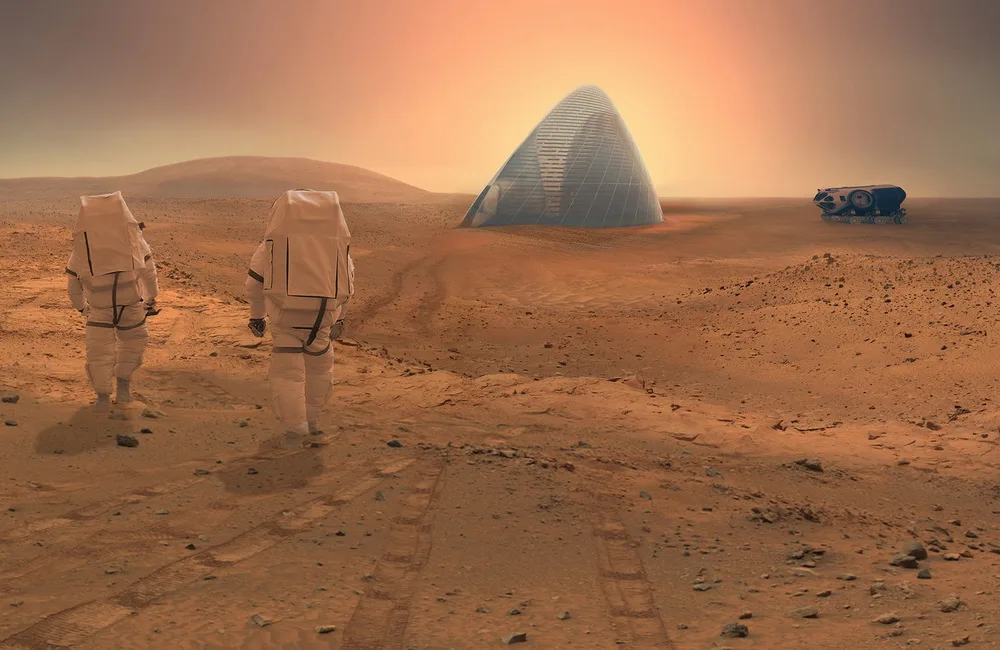
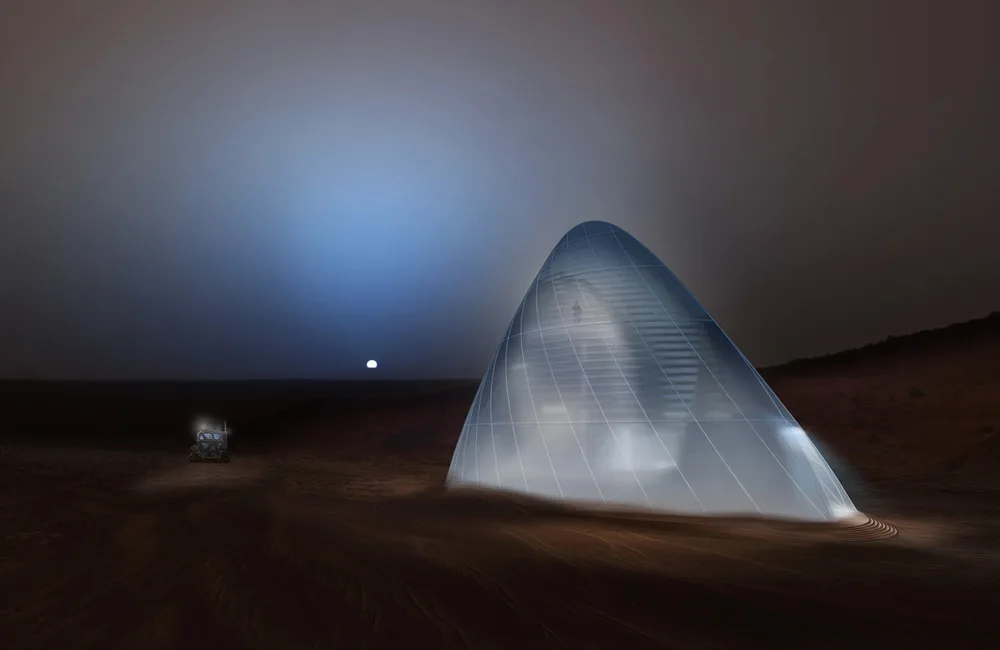
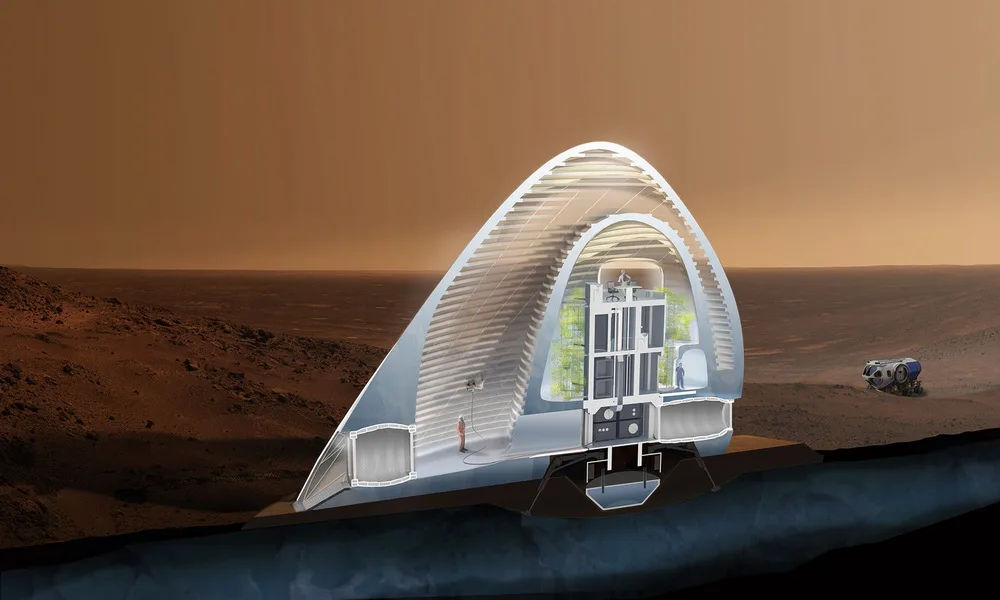
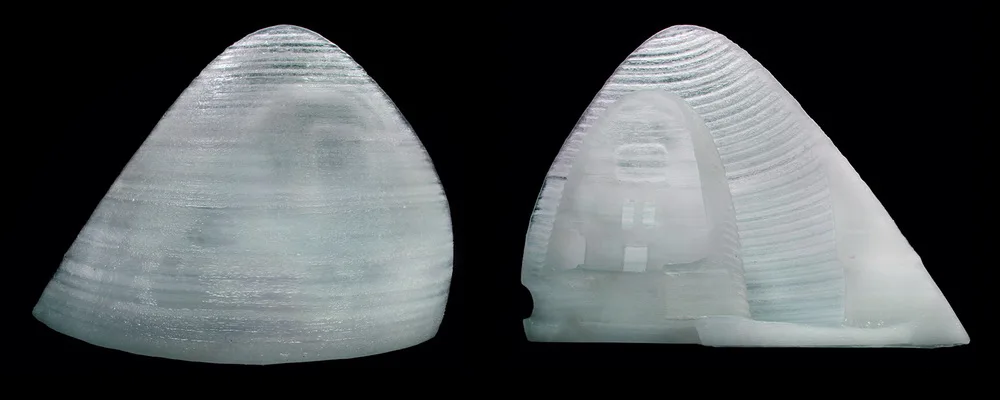
Following NASA’s confirmation of flowing water on Mars, SEArch and Clouds AO designed the “Ice House,” a 3D-printed autonomous habitat for four astronauts. It leverages underground ice deposits to supply water and shield against radiation.
© Clouds AO and SEArch
© Clouds AO and SEArch
By mining the underground ice layer, SEArch and Clouds AO create thin vertical ice shells that act as radiation shields. The double-layered, semi-transparent ice walls also provide comfort and a sense of well-being to the inhabitants.
© Clouds AO and SEArch
Compact and Sustainable Design for Earth and Outer Space
Design agency: Space Craft Architecture Firm
Keywords: Sustainable design, spatial solutions, interactive research
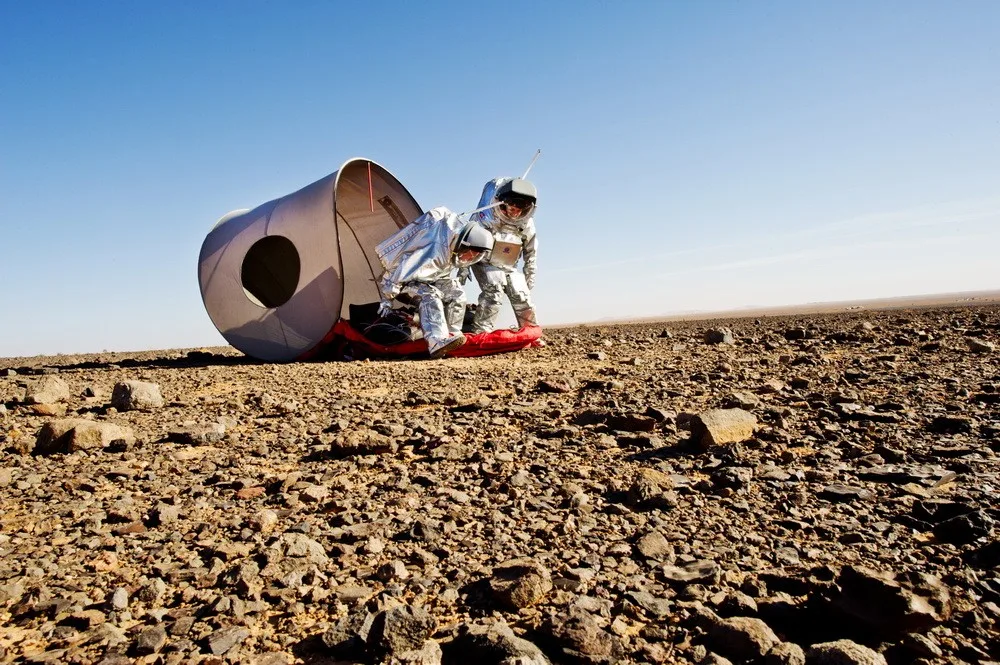
△ Simulation testing for emergency shelters on Mars © Tu Wien, HB2
Space Craft Architecture Firm specializes in planning and researching compact, sustainable design solutions for both Earth and extraterrestrial environments. They focus on designing minimalist, functional habitats and exploring the dynamics among humans, plants, objects, and space in extreme conditions.
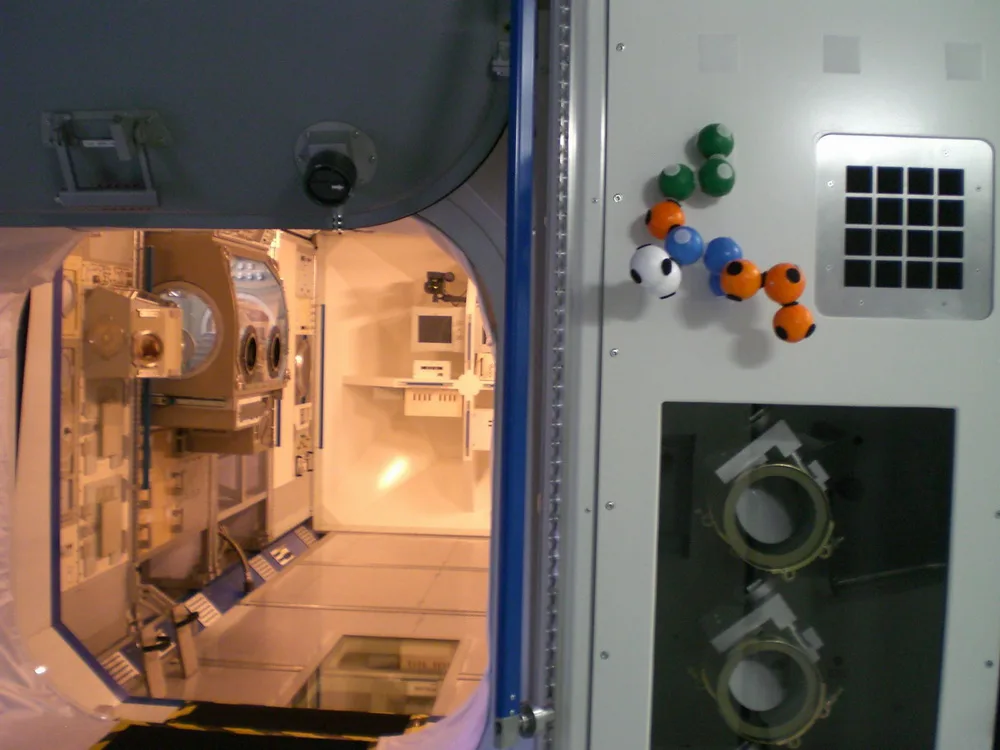
△ Interactive games developed for astronauts © Space-craft Architecture
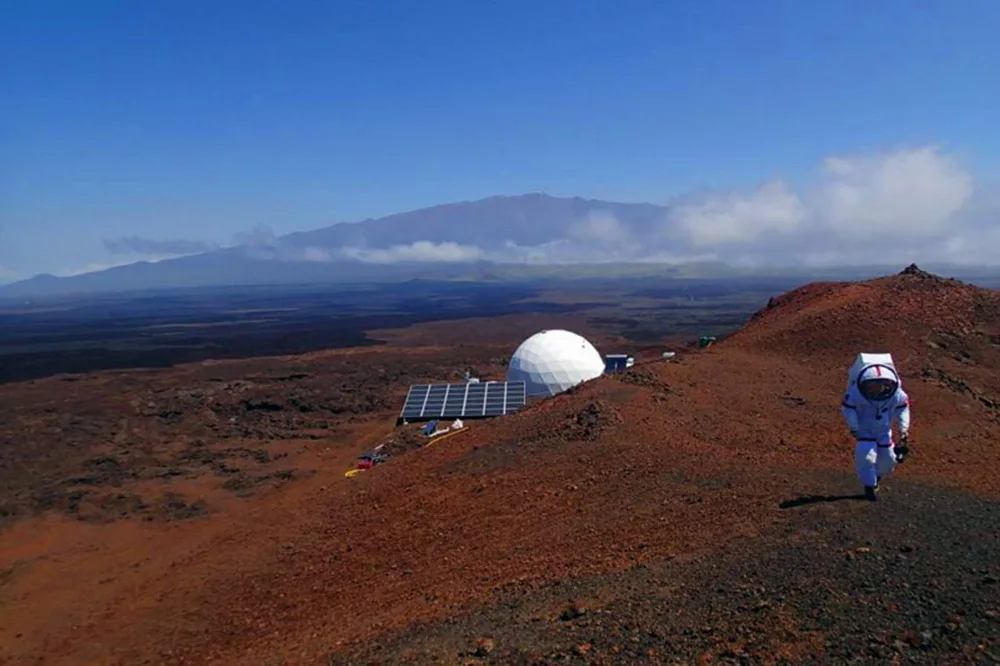
Research on livability © HI-SEAS, University of Hawaii
Space Craft Architecture emphasizes functionality, efficient use of space, and adaptable environments for future activities. Their designs aim to create pleasant, suitable spaces that reflect the unique identities of their inhabitants. They prioritize high-quality, reliable, and sustainable materials and processes.
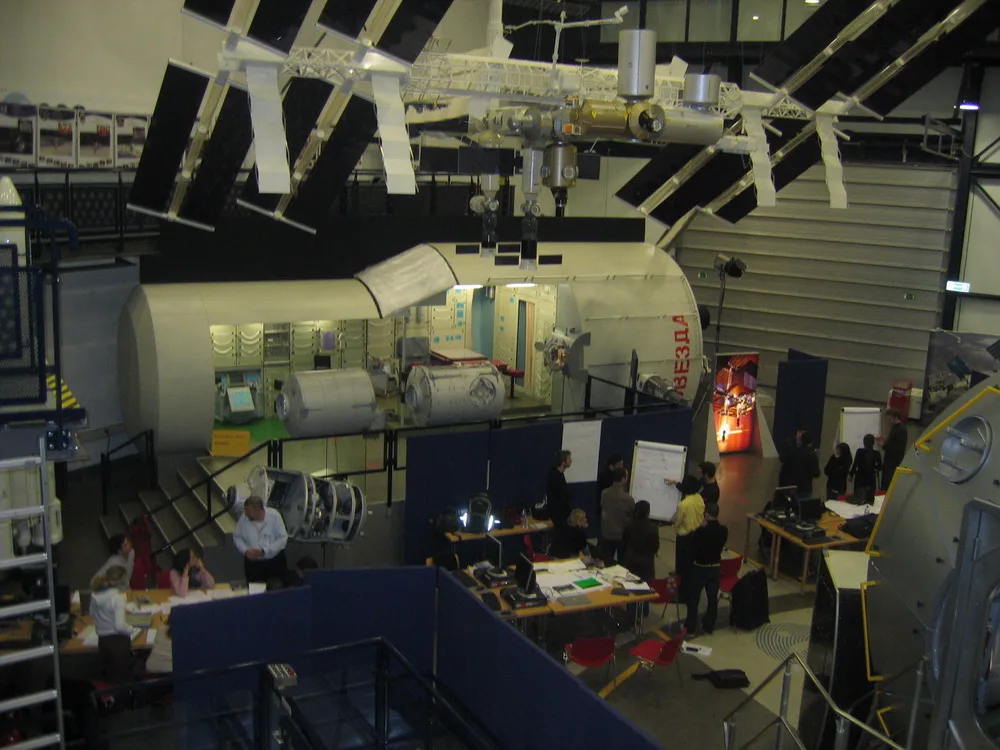
△ Model-making between space stations and architectural models © MoonMarsWorkshop2005
Mars Laboratory
Design agency: SAGA Space Architecture Firm
Keywords: Simulation lab, membrane structure
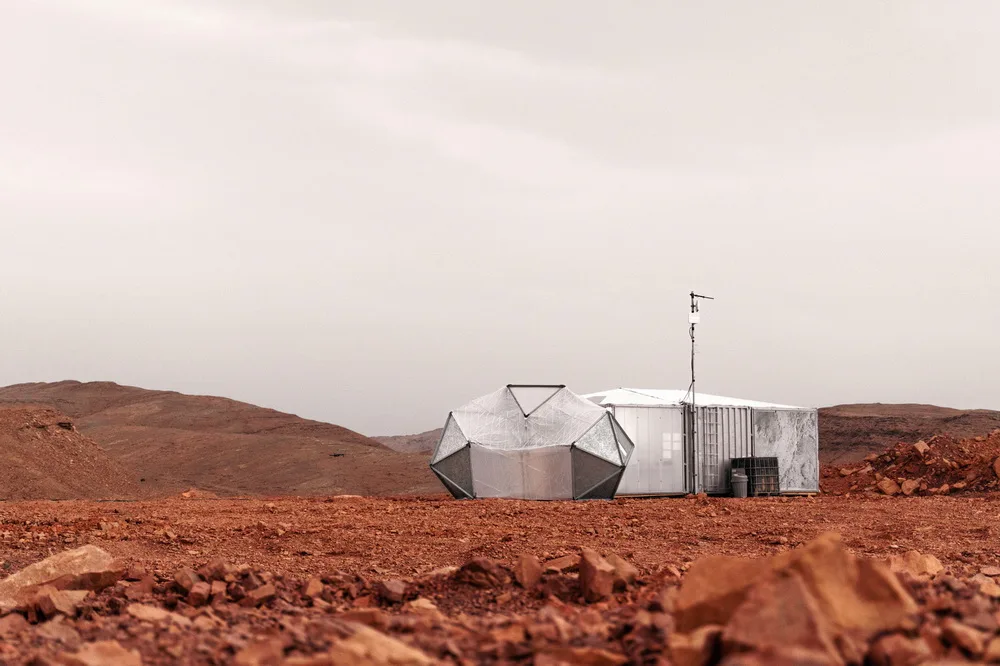
© SAGA Space Architects
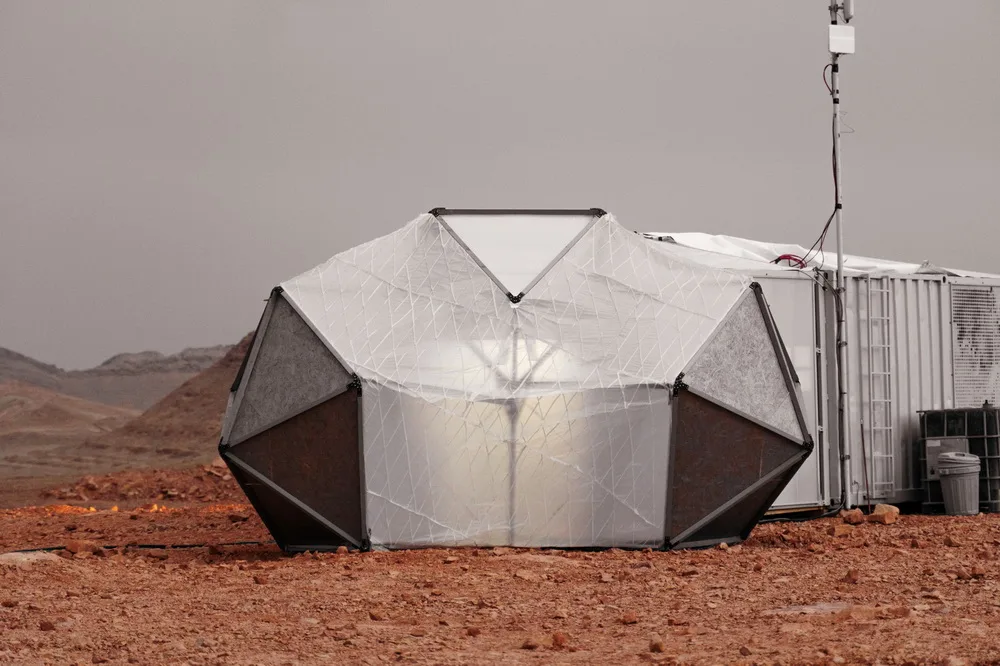
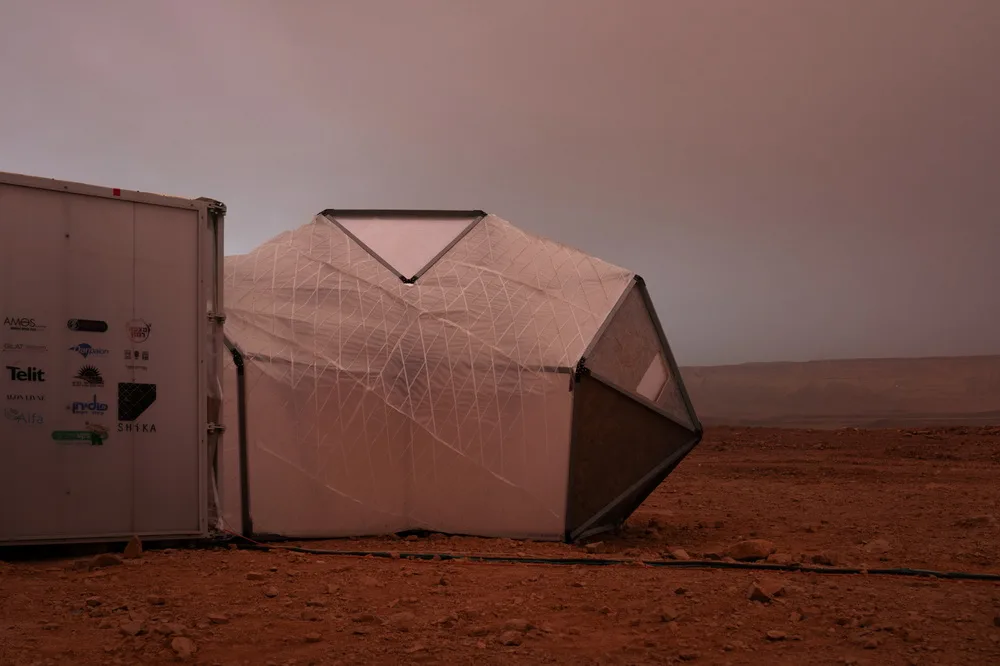
SAGA Space Architects collaborates with D-MARS to simulate a Martian habitat laboratory in Israel’s Negev Desert, replicating confined living conditions on Mars. Their goal is to help astronauts not only survive but truly live like explorers on the Red Planet.
© SAGA Space Architects
© SAGA Space Architects
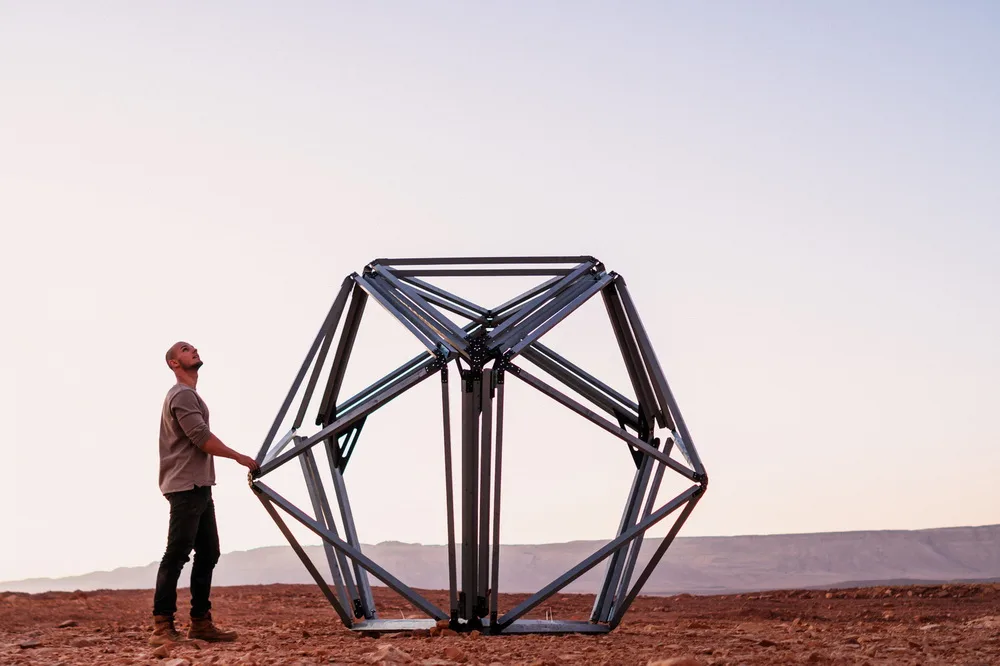
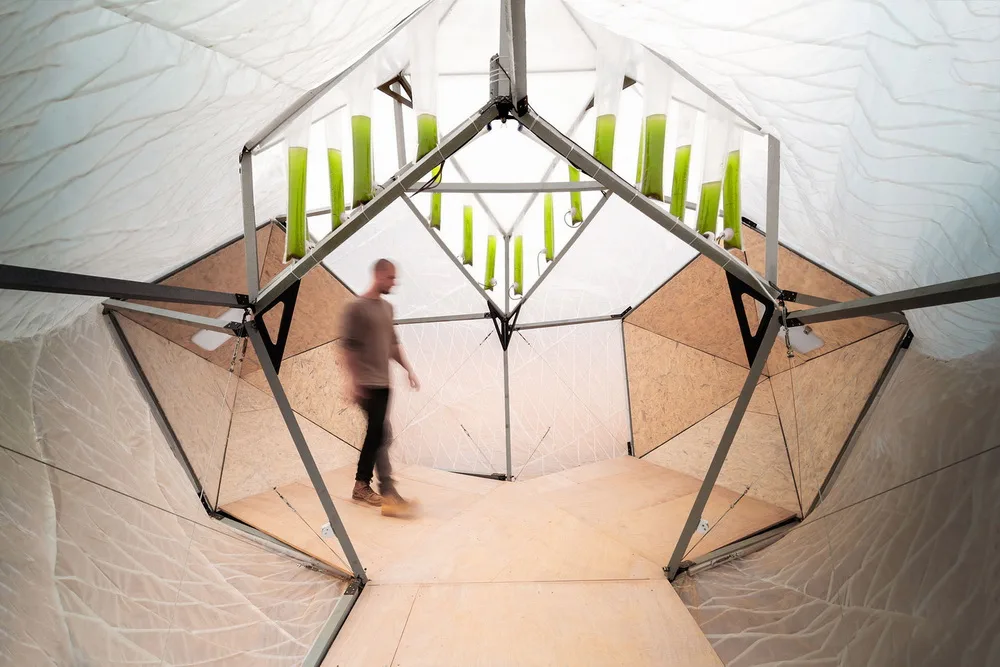
The Mars Laboratory architecture is lightweight to minimize transport fuel needs. Its flexible membrane structure can be folded and expanded, ensuring astronaut safety indoors. Additionally, the membrane supports oxygen generation essential for human activity.
© SAGA Space Architects
© SAGA Space Architects
Mars Habitat
Design agency: Foster & Partners Architects
Keywords: Modular housing, pre-programmed construction
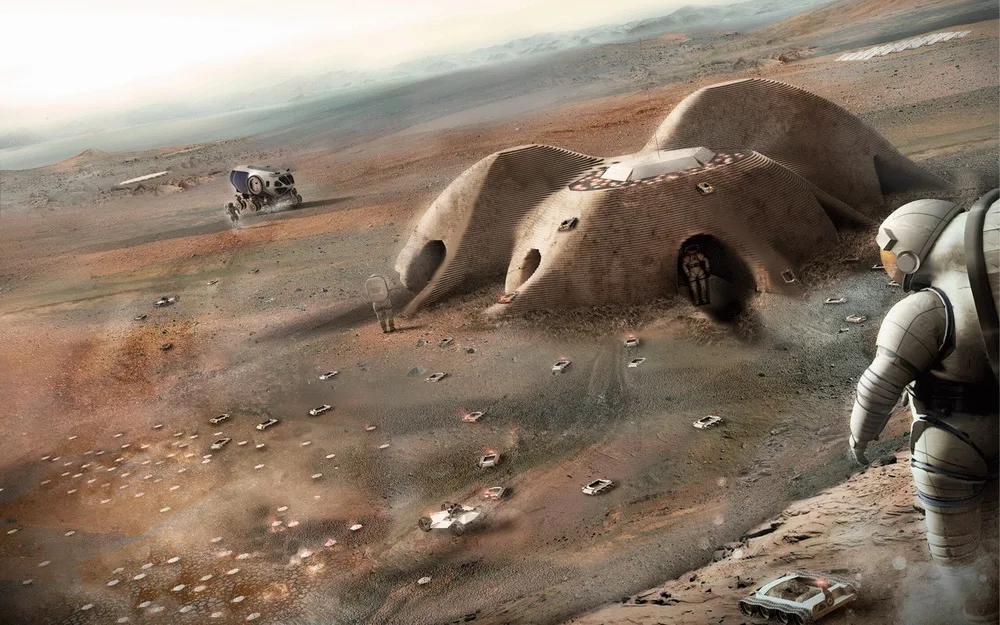
© Foster & Partners
Foster & Partners propose modular homes on Mars, built by pre-programmed semi-autonomous robots to complete settlements ahead of human arrival.
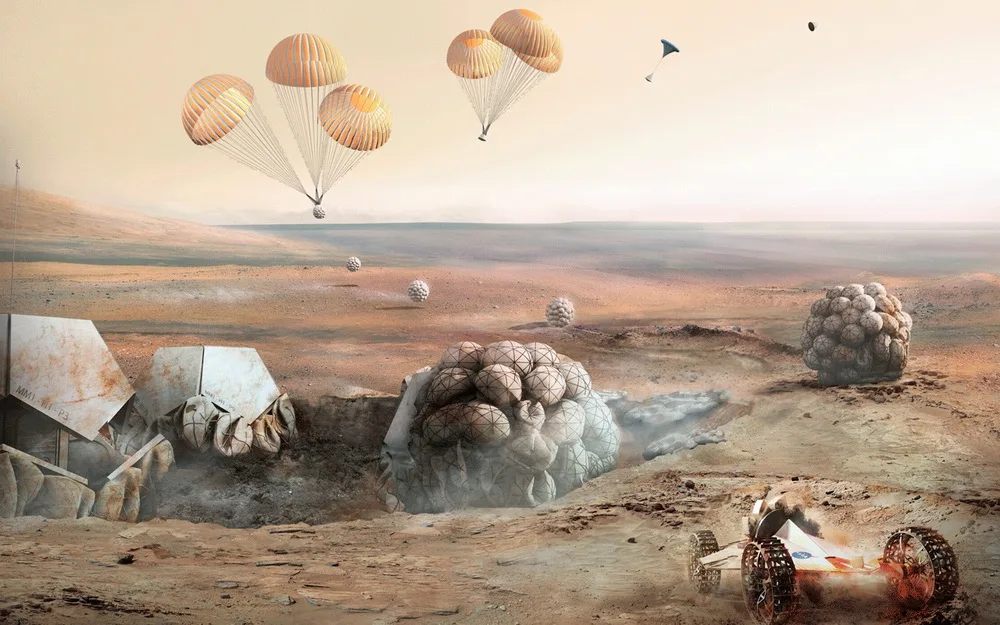
© Foster & Partners
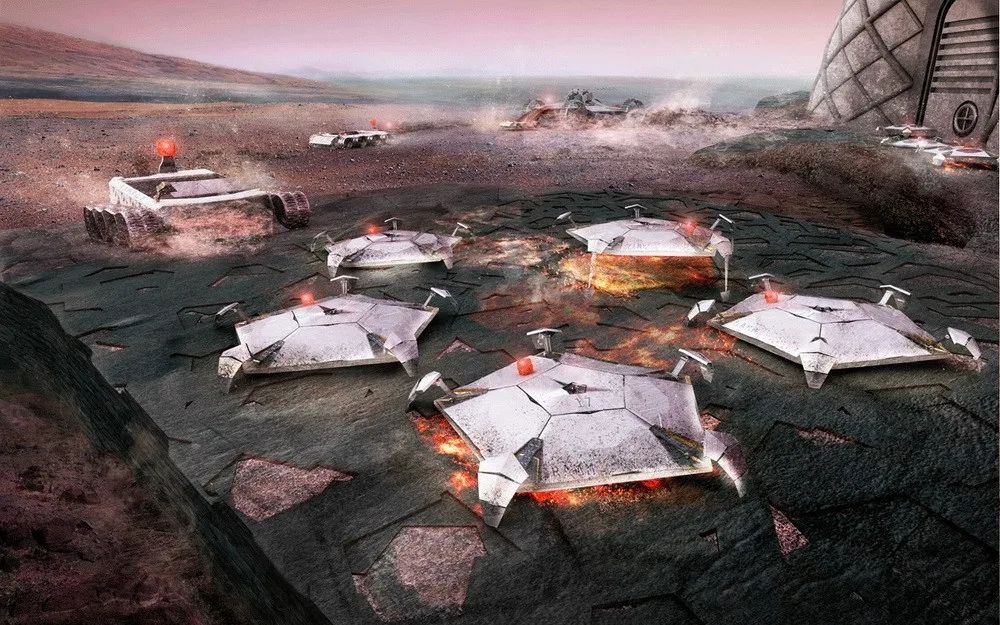
© Foster & Partners
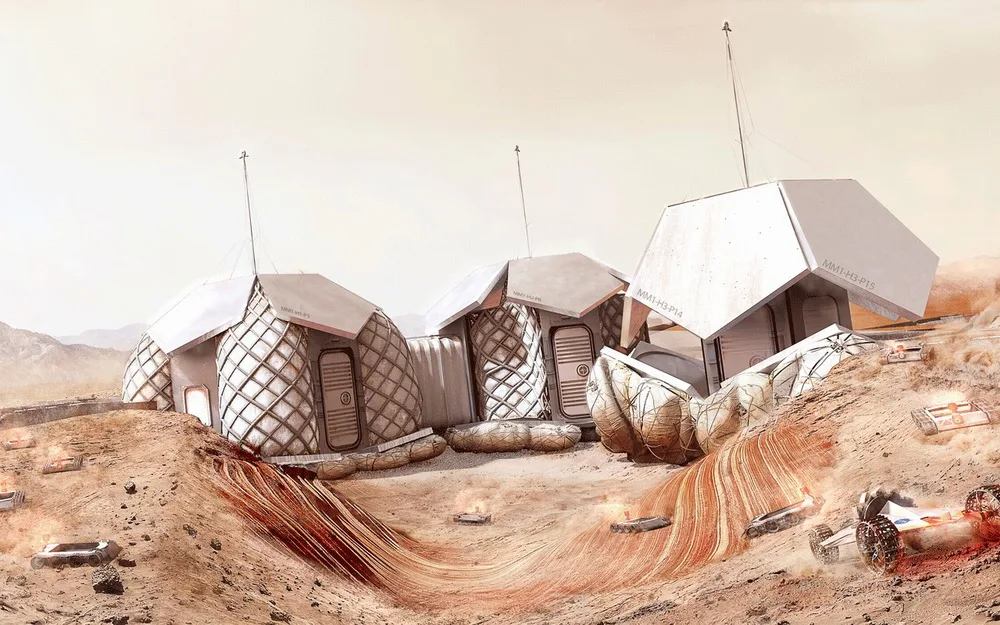
© Foster & Partners
This modular habitat is constructed using Martian regolith (surface soil and rocks), designed to accommodate four astronauts for living, scientific research, exercise, and daily life.
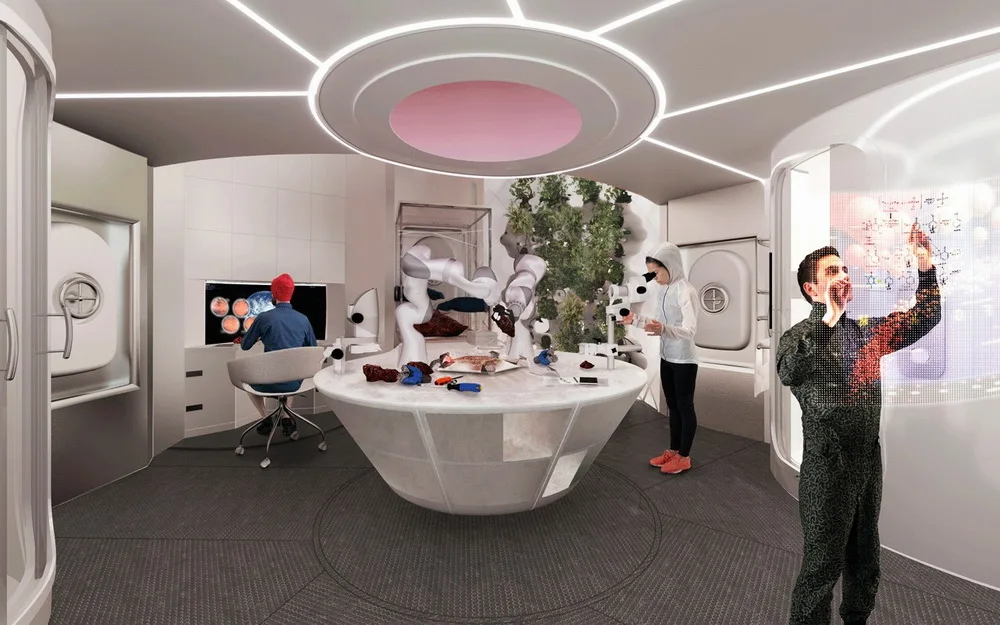
© Foster & Partners
Exploring and peacefully utilizing outer space is a shared dream and goal for humanity. China, along with other nations, is fostering a community with a shared future for mankind by deepening international cooperation in space exploration and advancing sustainable development for human society.
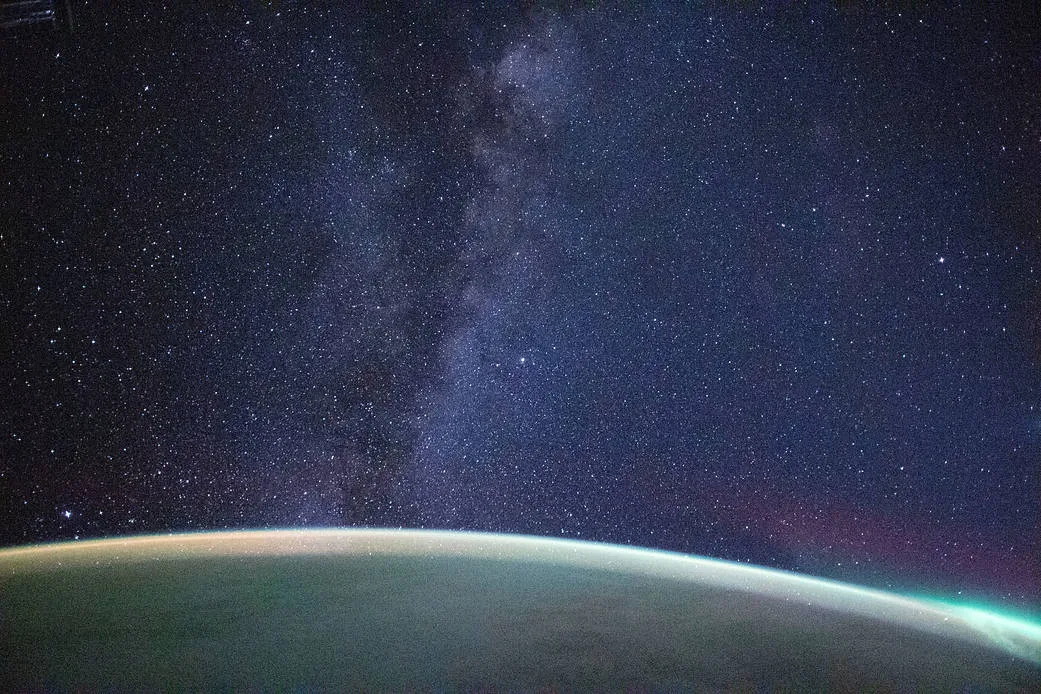
Night view from the International Space Station orbiting 271 miles above the Indian Ocean. The Milky Way stretches above the airglow along Earth’s horizon, with an aurora visible in the bottom right corner, April 8, 2021 © NASA
CAA LAB, as the research and development wing of a Chinese architectural firm, envisions habitable spaces on extraterrestrial planets. Collaborating with innovative firms worldwide, the team explores and pioneers the development of humanity’s “second home,” advancing our journey toward the universe and beyond.
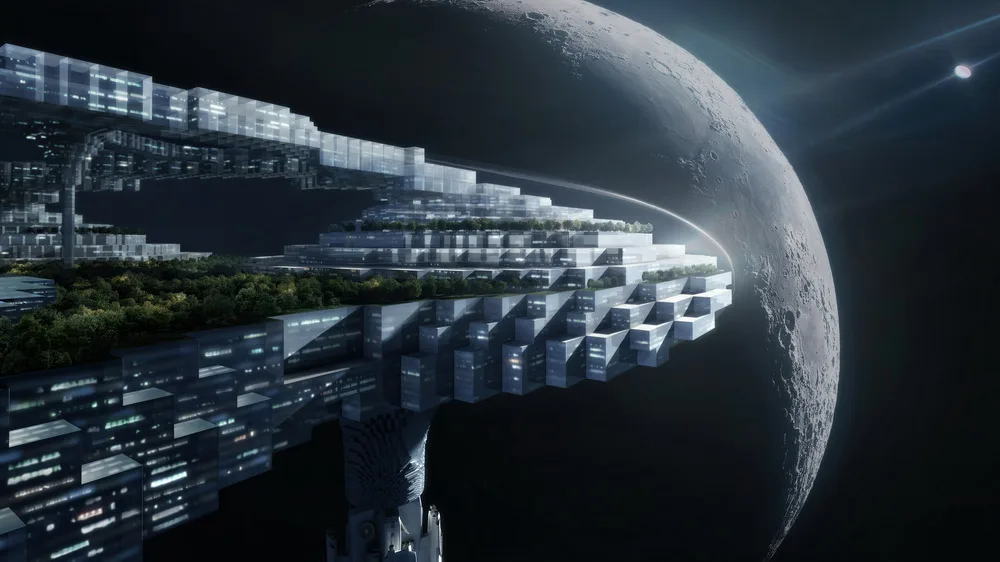
© CAA architects
CAA LAB TEAM
Research Strategy: Liu Haowei Edward Ednilao
Research Team: Wang Yimeng, Li Jinze, Ye Wenjie, Joseph Kahaya












Must log in before commenting!
Sign Up