
Cainiao Network, a subsidiary of Alibaba, is committed to establishing the “China Intelligent Logistics Backbone Network.” The Jinyi E-commerce Industrial Park stands as the first e-commerce park operated by Cainiao Network and the pioneering professional industrial park specifically designed for e-commerce in China.
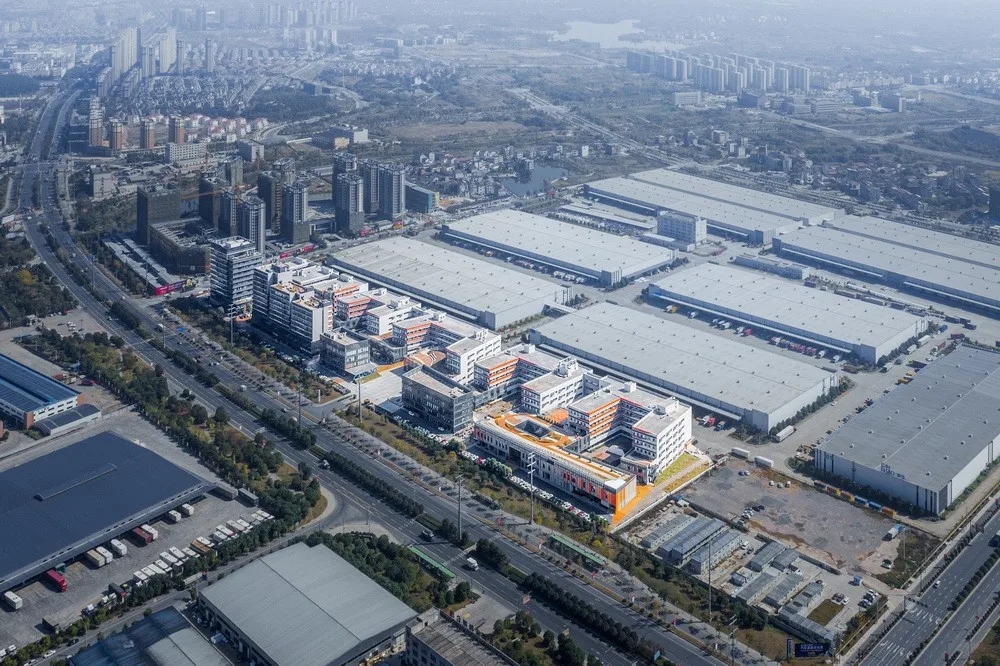
To ensure the park effectively meets e-commerce needs, the industrial R&D team from Zhubo Design Beijing collaborated closely with the client. After three years of development, they initiated research, feasibility studies, and task documentation in early 2014. Architectural and landscape designs commenced in 2015, culminating in the official opening and occupancy of the park in 2017. The project achieved a high standard of design completion, successfully creating a new comprehensive e-commerce logistics platform aimed at local key industries. Notably, the Second Global Cross-border E-commerce Conference was hosted at the park in late 2016.
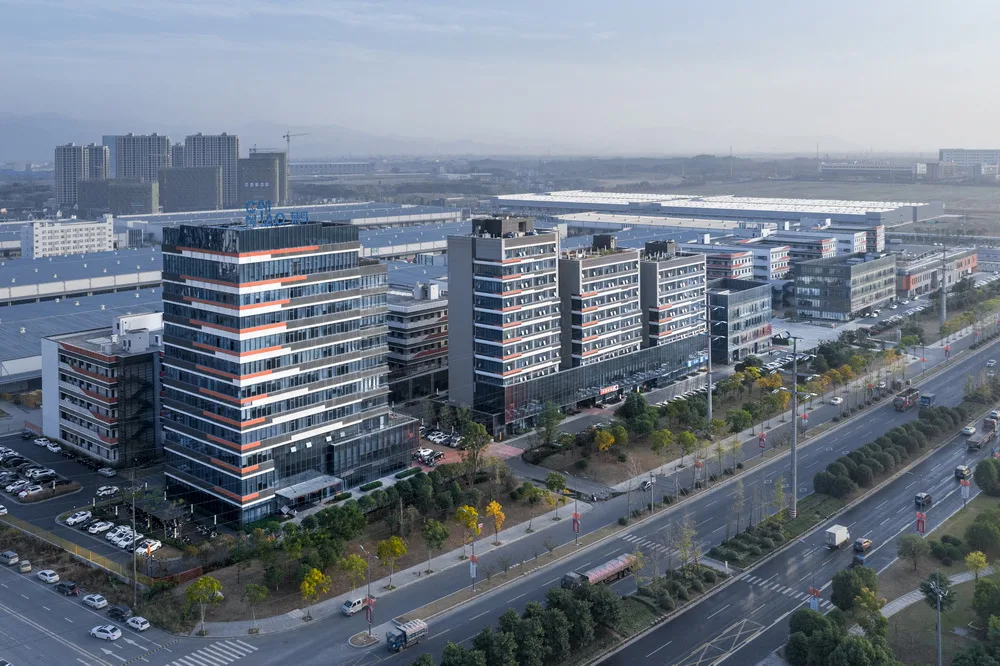
Jinyi E-commerce Industrial Park integrates diverse functions including logistics, warehousing, e-commerce, office R&D, and commercial services. It proudly holds the distinction of being the first 5A-level e-commerce industrial park in Zhejiang Province. The project is characterized by three major design principles: dynamic timeline planning, four-dimensional design, and integrated architectural landscape design.
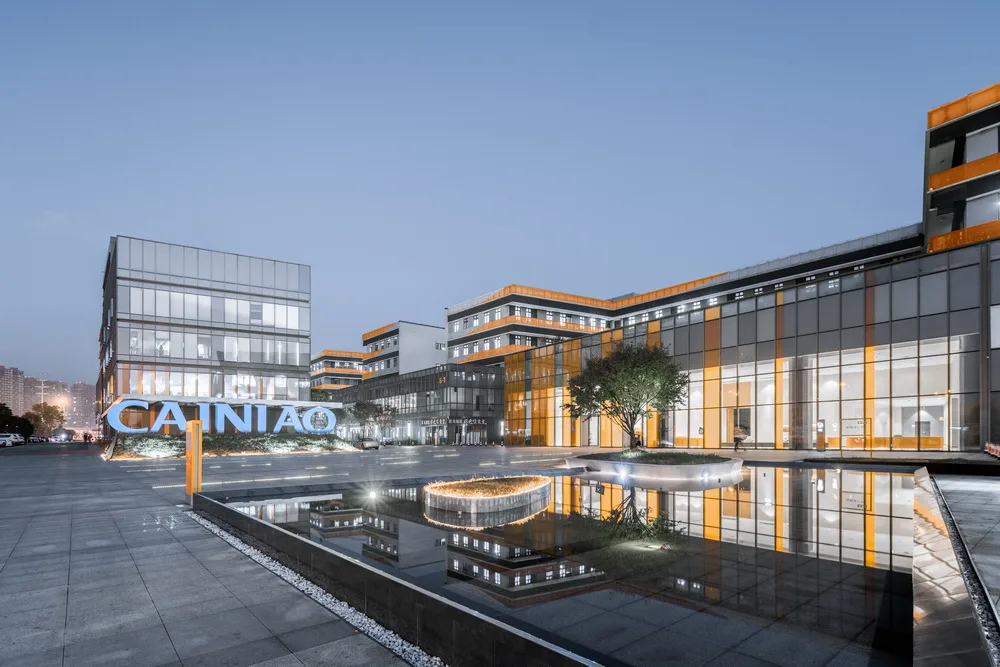
1. Dynamic Timeline Planning
Strategically located within the Jinyi Urban New Area, Cainiao Jinyi E-commerce Industrial Park serves as a catalyst for regional development and a growth hub for the city. The phased project layout is designed to adapt to evolving regional changes, accommodate future product adjustments, and maintain a comprehensive planning framework that supports long-term development scenarios.
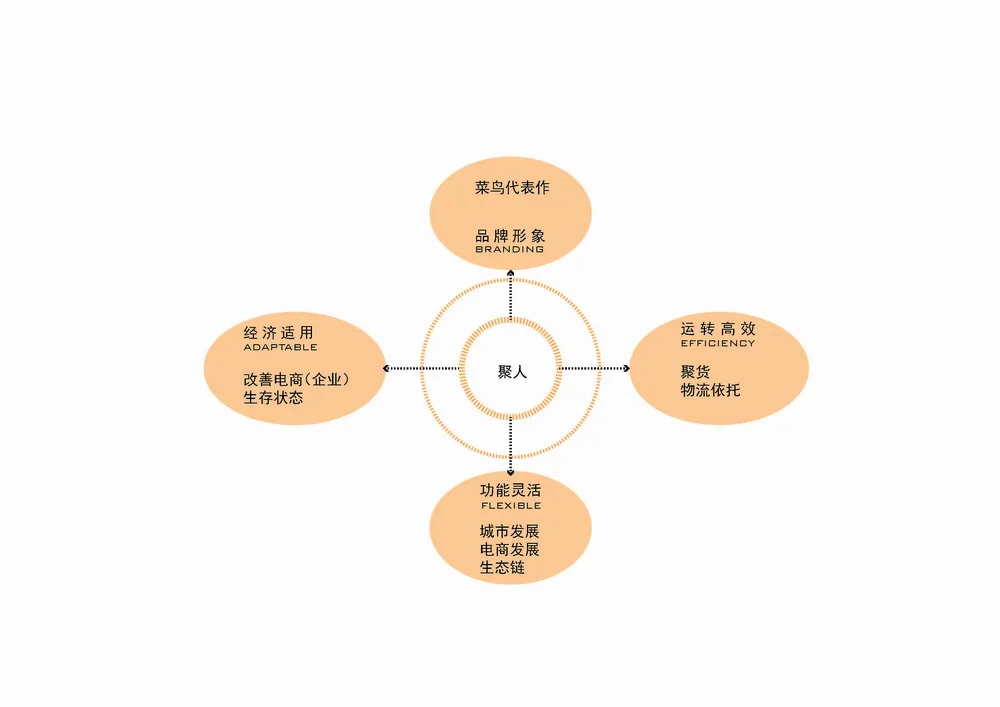
Design Principles
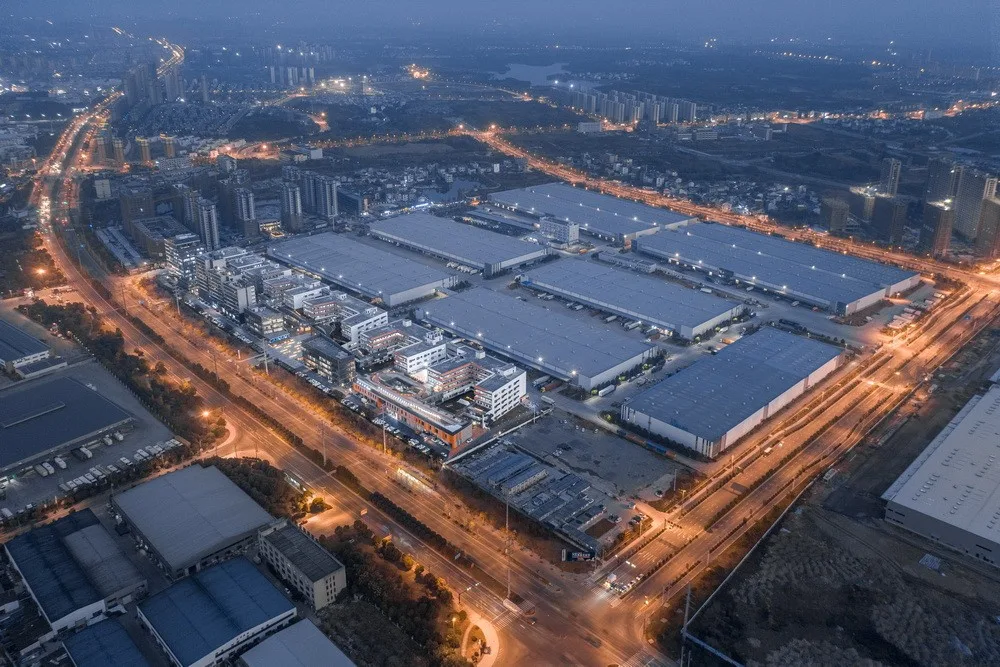
2. Four-Dimensional Design: Brand Image, Operational Efficiency, Functional Flexibility, and Economic Viability
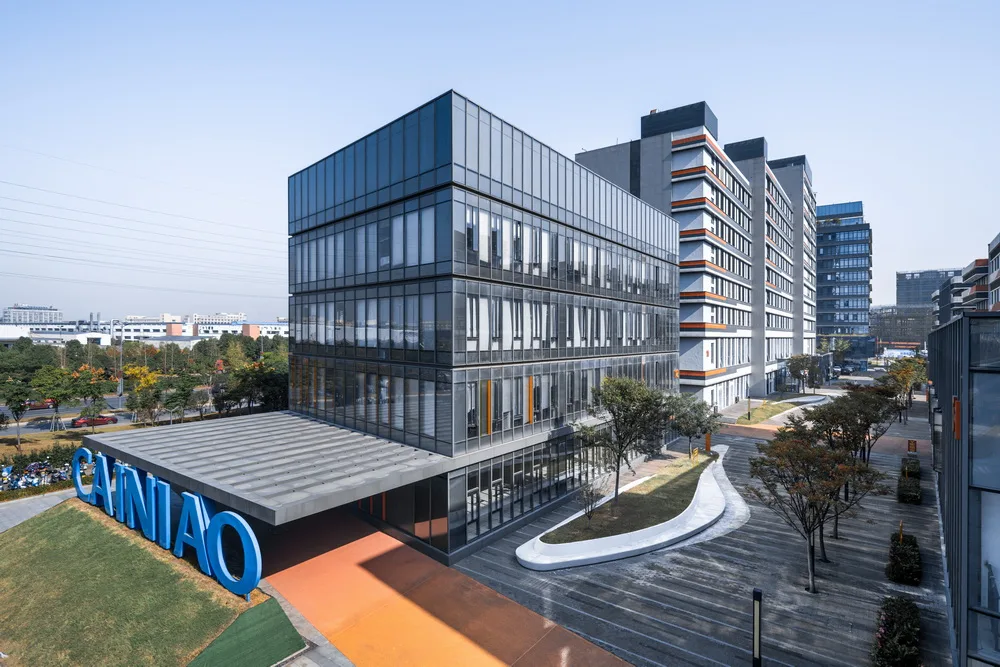
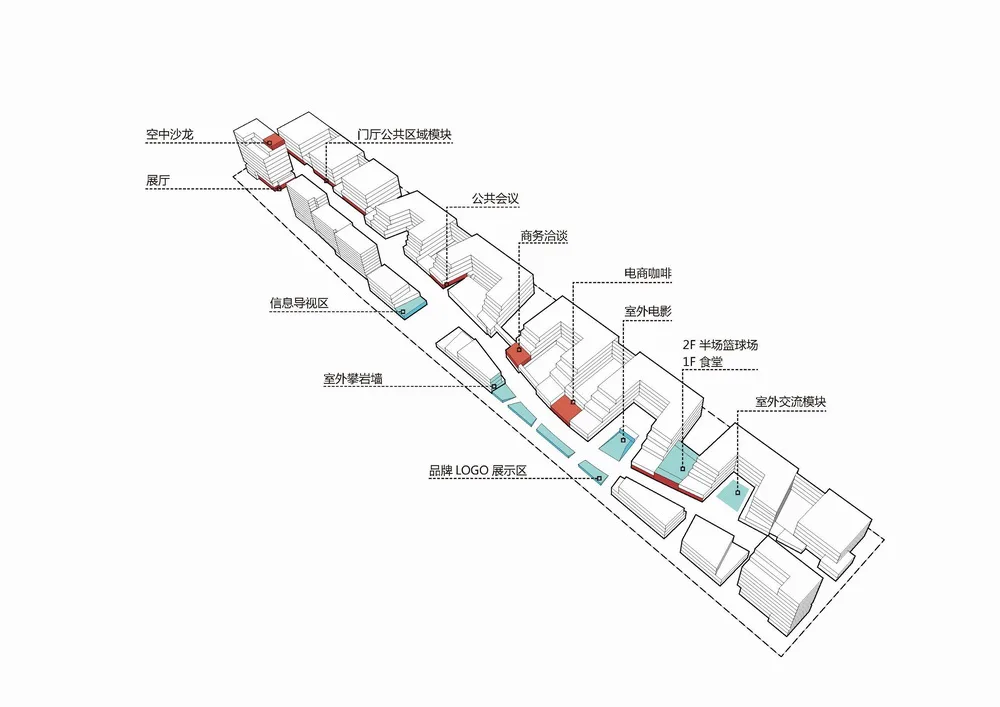
Brand Image: The design process shaped four distinct themed spaces, optimized for narrow land use, connected by an internal street to enhance cohesion. These spaces fully embody the brand identities of Cainiao and Alibaba, serving multiple purposes such as events, distribution, exhibitions, commercial support, e-commerce networking, and leisure activities. The layout reflects the open and efficient corporate culture of Cainiao and Alibaba, with dynamic areas facing the urban interface to create an inviting and transparent environment.
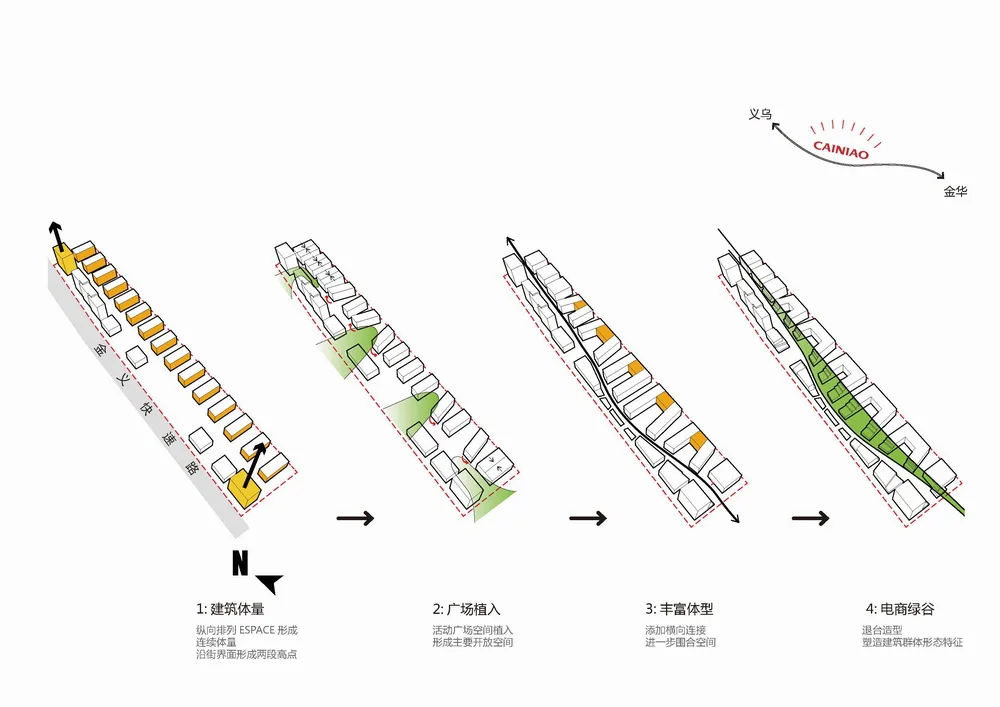
A concise and impactful planning framework with distinctive architectural features
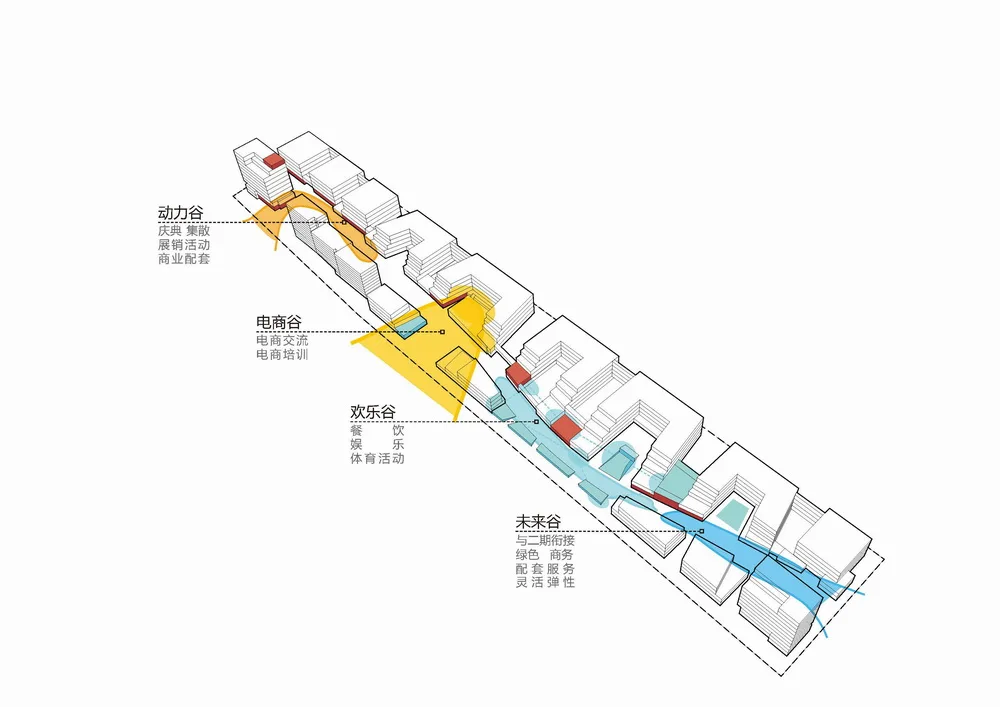
Public spaces with clear themes and integrated functional zones
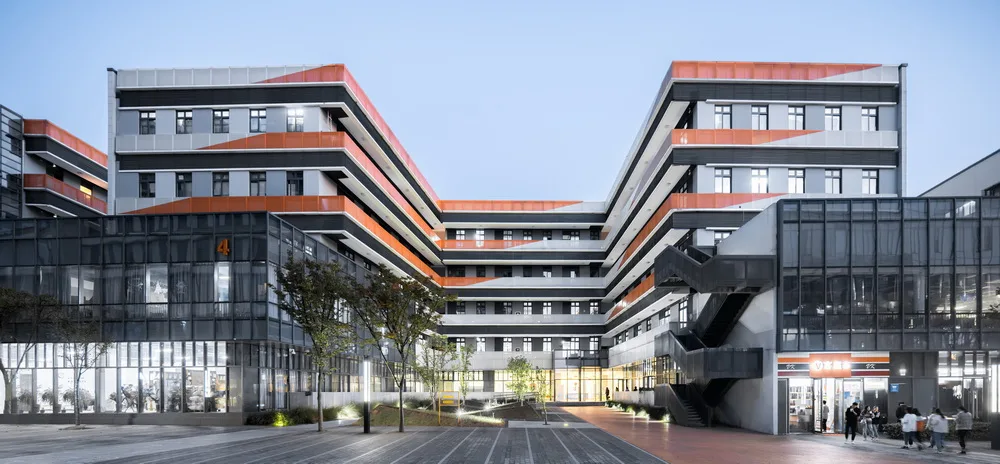
Functional Flexibility: As a self-operated industrial park, the design addresses rapid growth, significant shifts, and evolving future demands. Emphasis was placed on flexible operations, including adjustable functions and modular spatial divisions that can be separated or combined to accommodate future adaptability. The design approach ensures the park’s long-term versatility and has been approved by the client for operational use.
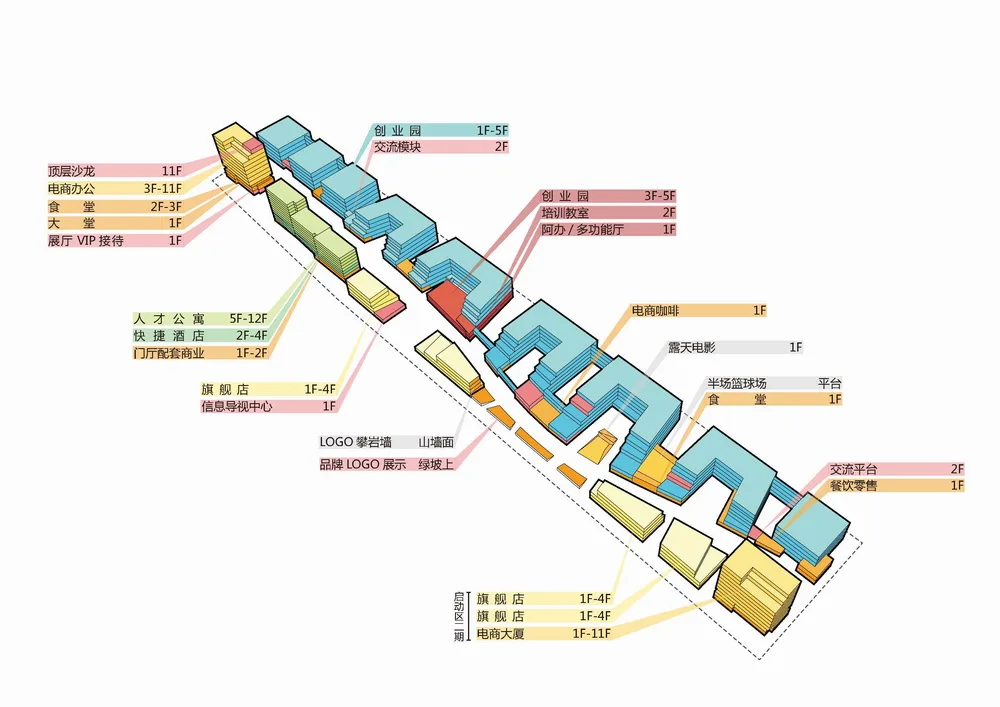
△ Functional distribution diagram
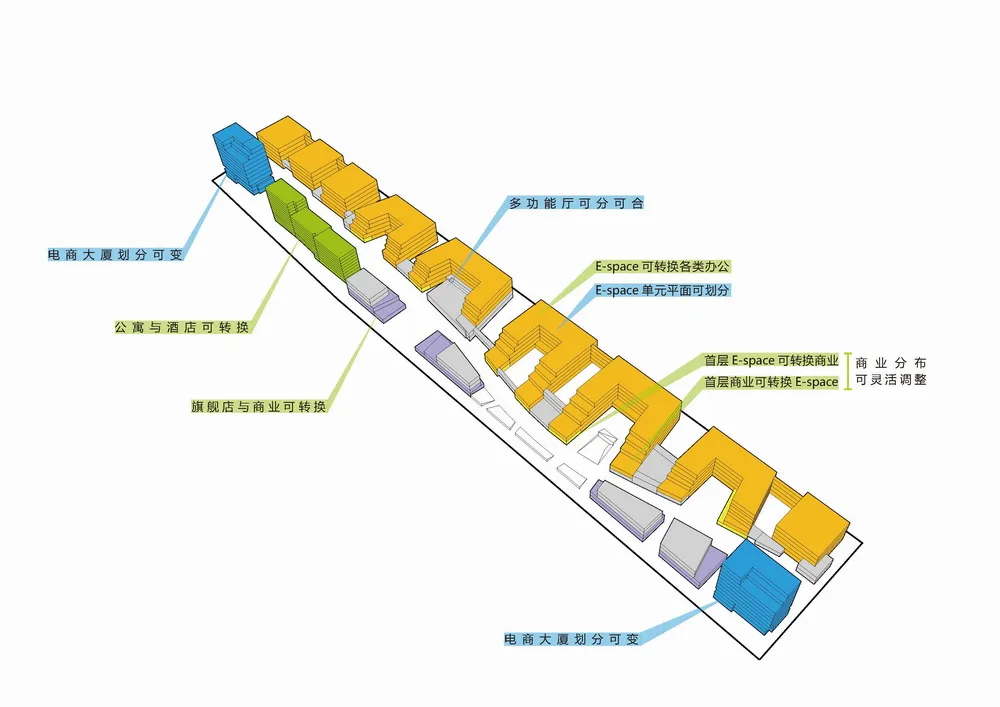
△ Function conversion diagram
Operational Efficiency: Efficiency is a core focus in product design, transportation, and process workflows. The design anticipates future upgrades, such as conveyor belt enhancements. From the outset, cargo flow, process logistics, and equipment scalability were considered, establishing a linked flow line to the logistics park distribution center. This minimizes cargo traffic impact on the park environment.
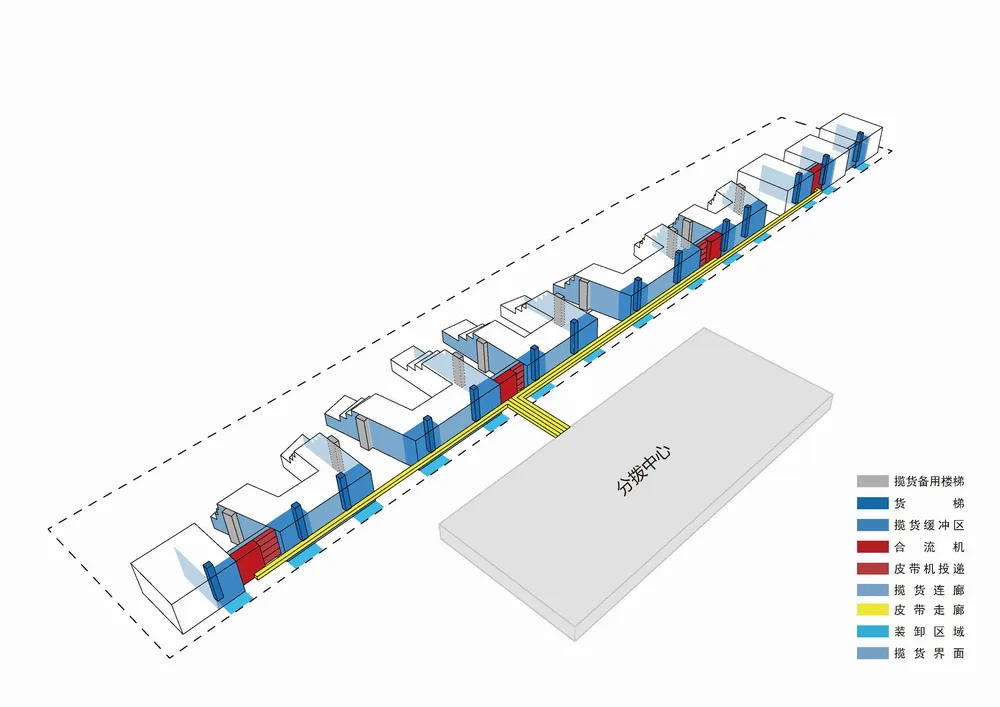
△ Mixed mode: human-machine collaboration, streamlined for large orders
Economic Viability: The design refines key public spaces, emphasizing tailored solutions that enhance functionality and convenience. By considering usage scenarios from the demand perspective, space utilization is optimized for practical and cost-effective outcomes.
△ Refined design details
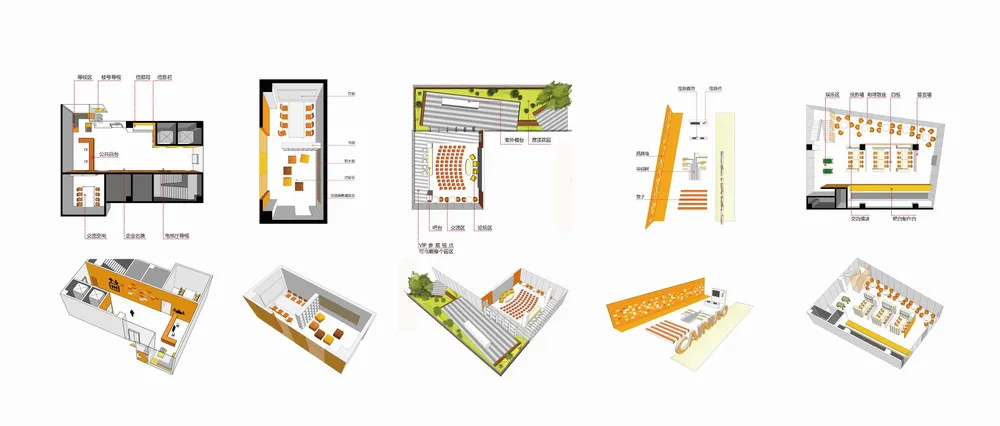
△ Detailed design of key functional modules
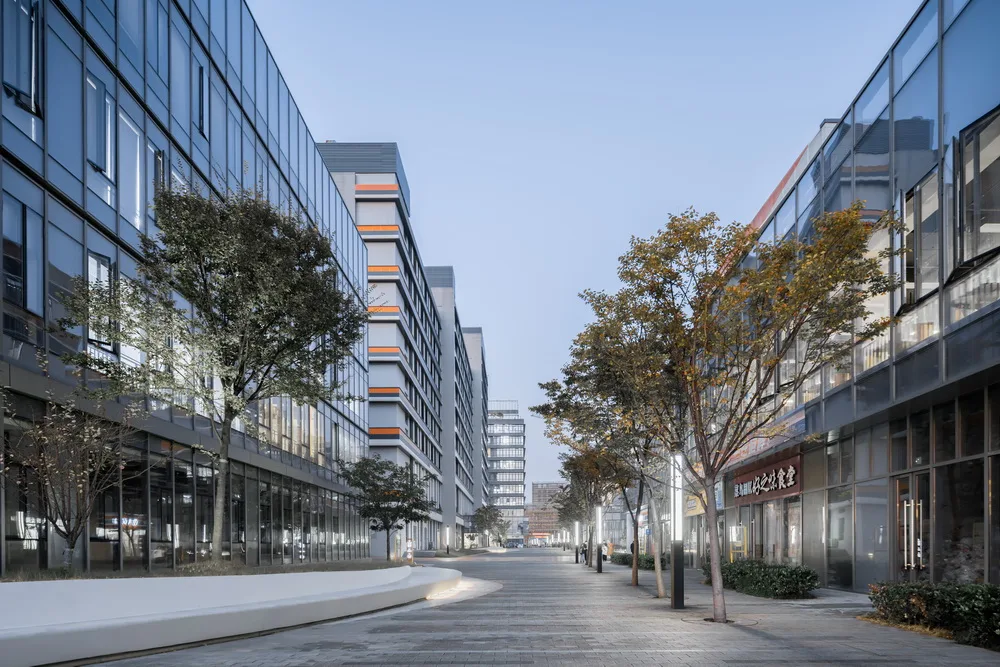
The building is divided into zones, with materials and structural elements classified accordingly. For example, flagship storefronts along the street feature full glass curtain walls to enhance quality. The pedestrian-facing inner street incorporates partial glass curtain walls to complement commercial spaces and increase visual appeal. The freight areas prioritize clear guidance and strict cost control.
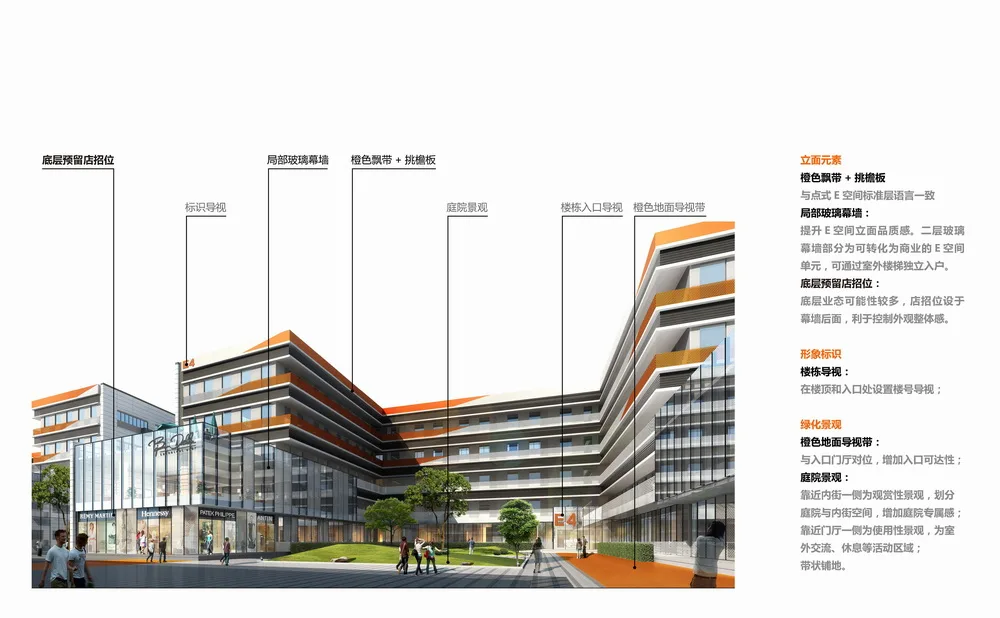
△ Industrial park exterior interface
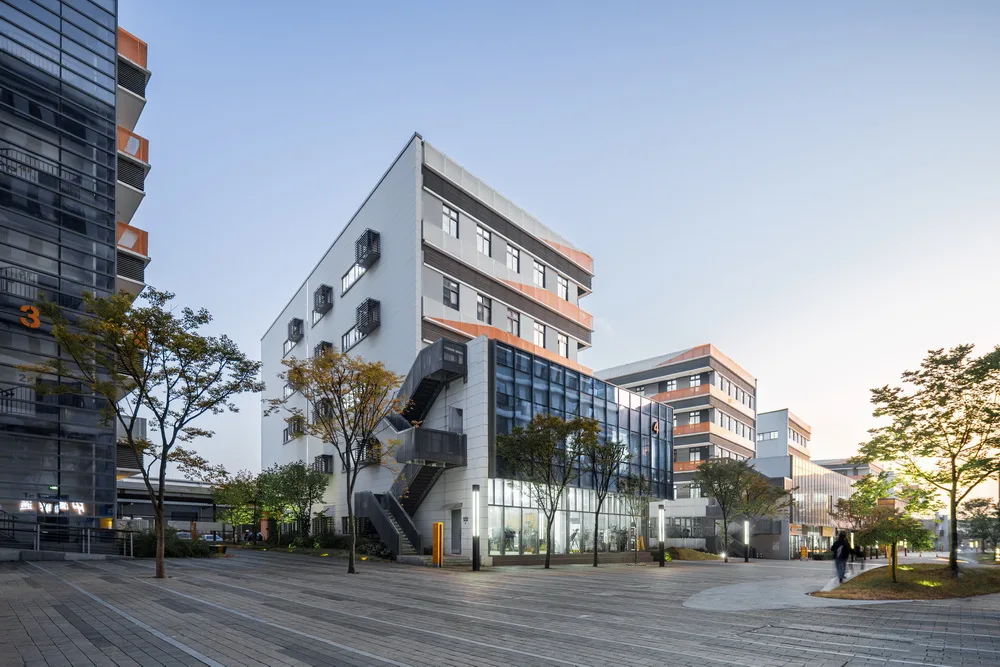
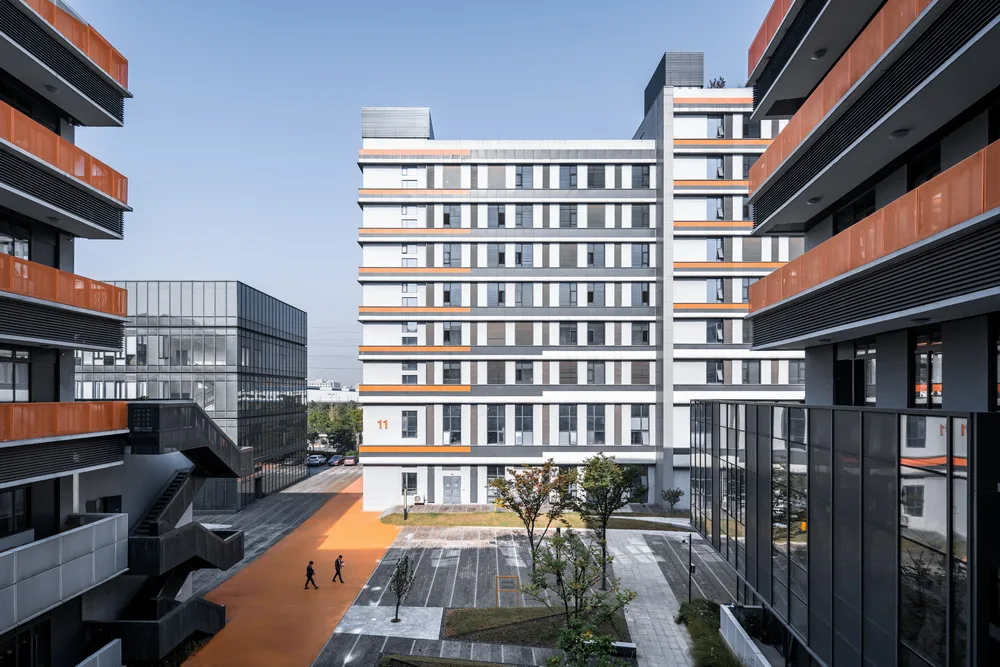
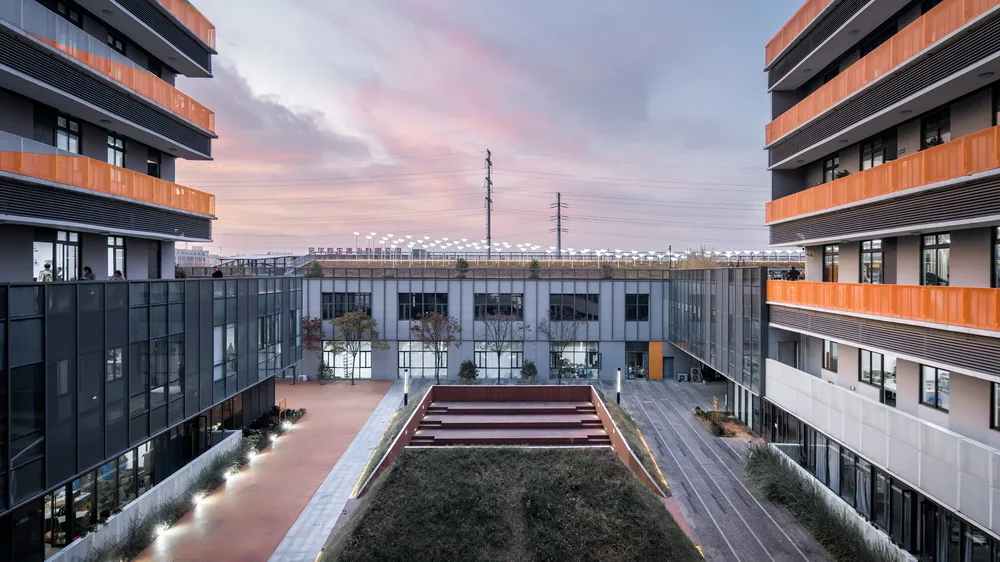
The distinctive wall patterns and overhanging eaves of the external corridors promote passive energy savings through self-shading. The horizontal design paired with strategically placed split air conditioning units simplifies installation and maintenance. The ground floor uses glass curtain walls to elevate the park’s aesthetic, while the three-story corridors connect directly to outdoor terraces, with each building featuring shared rooftop spaces.
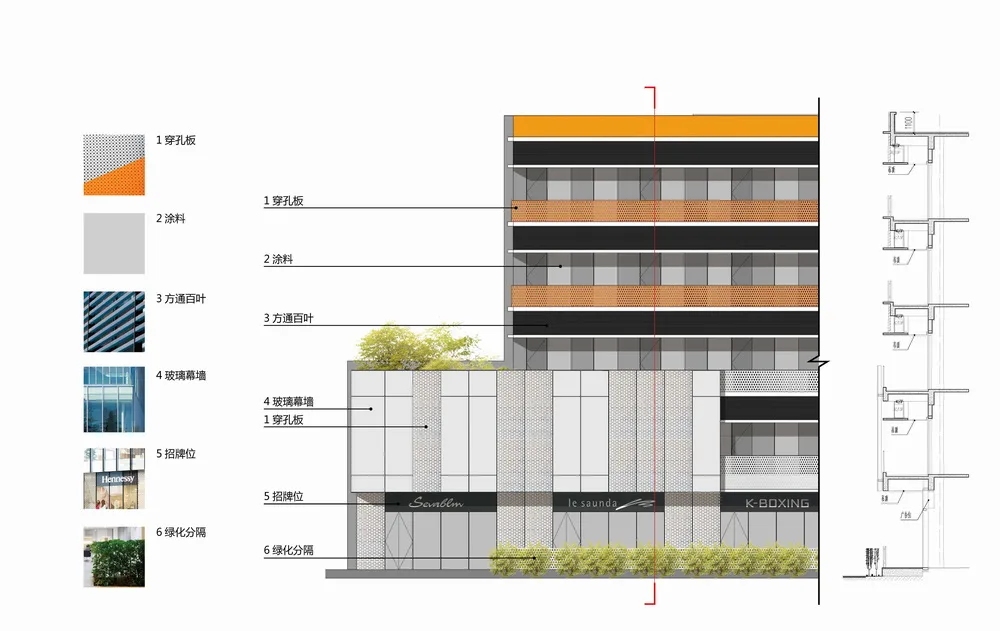
△ Space pedestrian interface and facade sectional standard
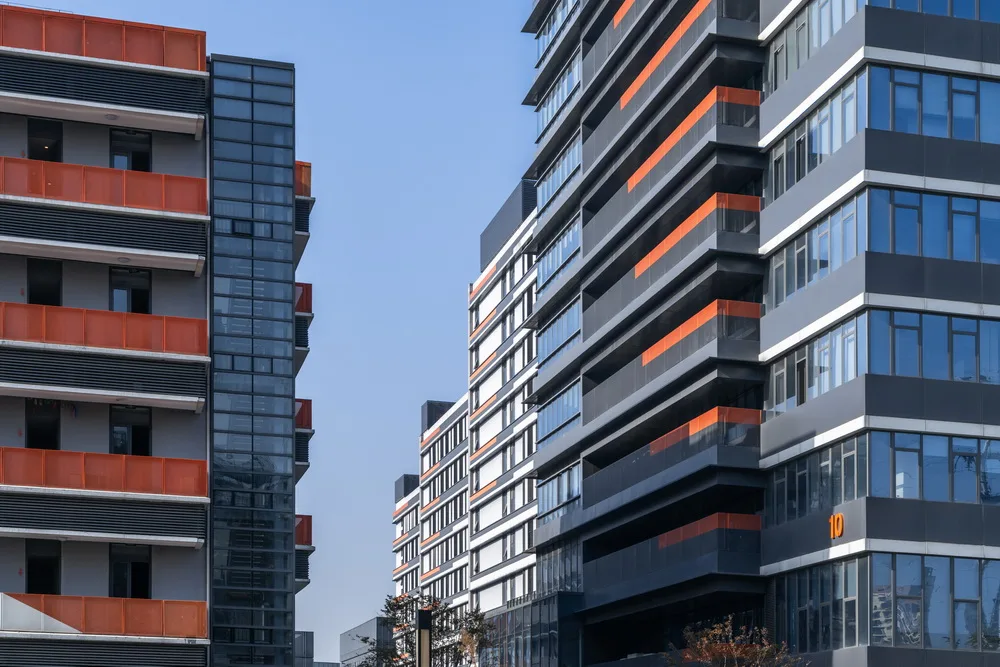
3. Integrated Architectural and Landscape Design
By merging architectural and landscape design, the project significantly enhances communication and activity spaces, maximizing value for cost-conscious e-commerce tenants. The design seamlessly blends architecture with landscaping, incorporating vertical circulation and flow guidance both indoors and outdoors. Landscapes are categorized and allocated according to specific criteria to maintain spatial quality while controlling costs effectively. The use of GRC and similar technologies facilitates the creation of non-linear seating areas, adding flexibility and flow to the space.
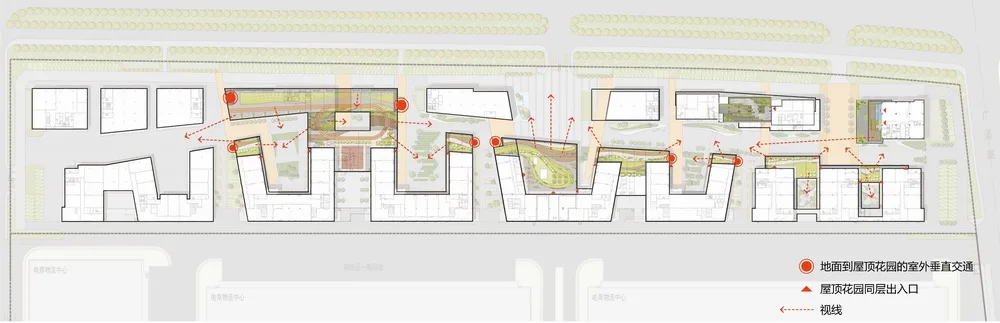
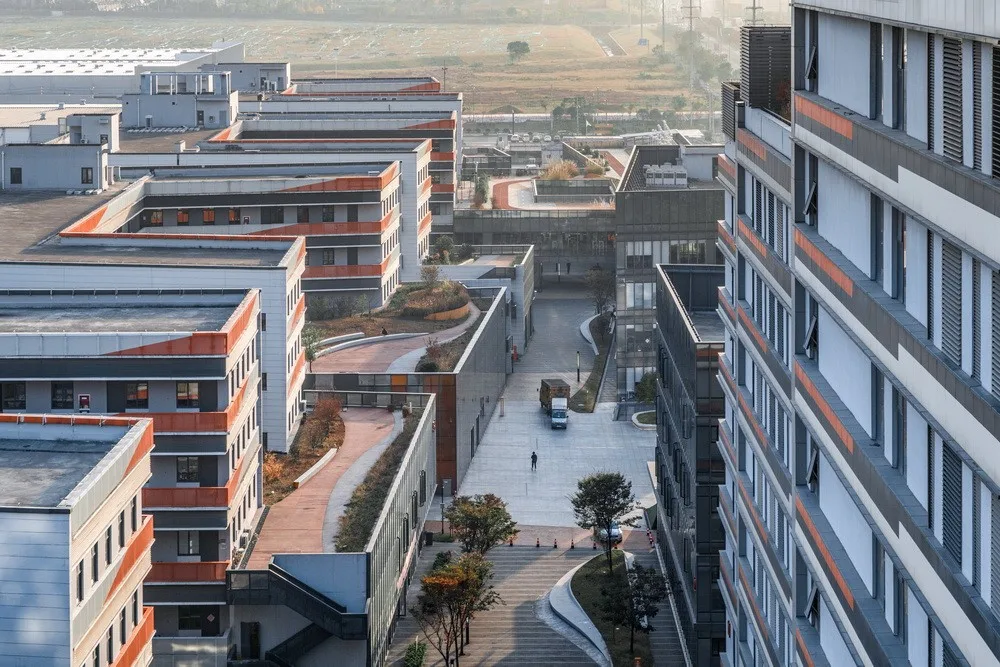
△ Vertical interactive three-dimensional landscape
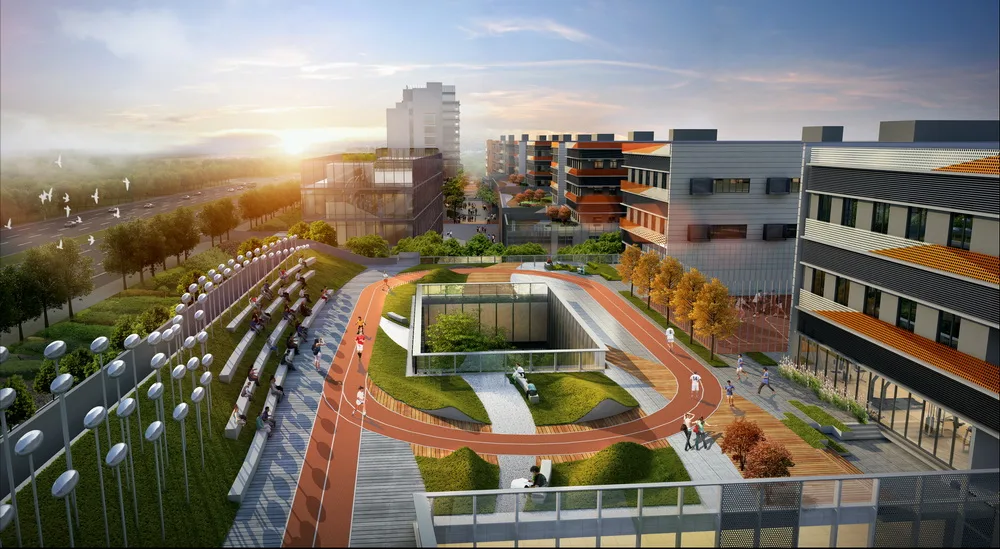
From the earliest architectural design stages, landscape elements were incorporated, including a rooftop activity space and an outdoor staircase connecting to the rooftop garden. This fosters a dynamic, three-dimensional interactive environment within the park, effectively enhancing communication areas through thoughtful landscape design.
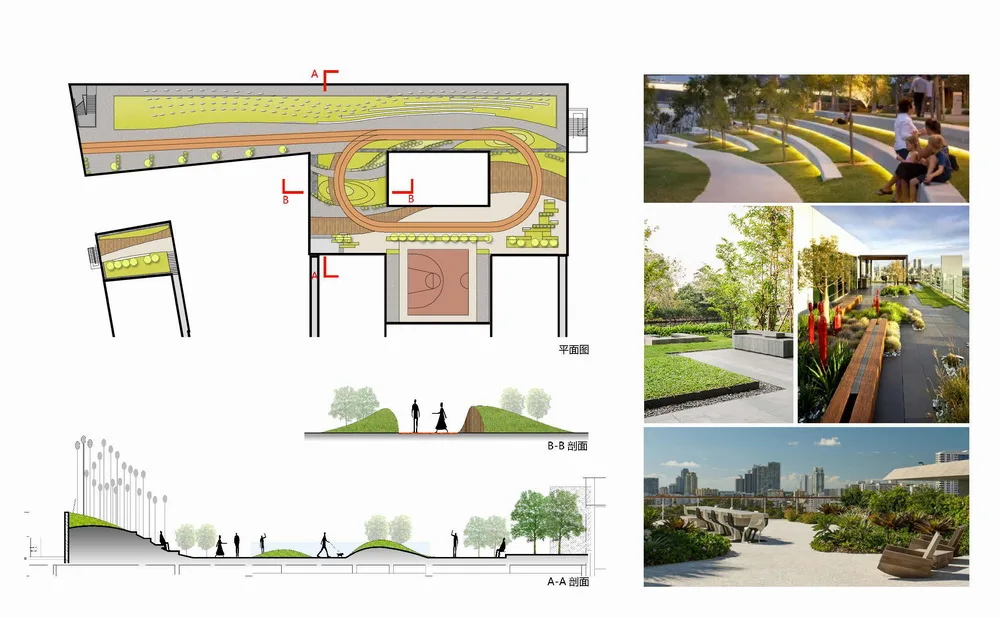
△ Rooftop comprehensive activity area
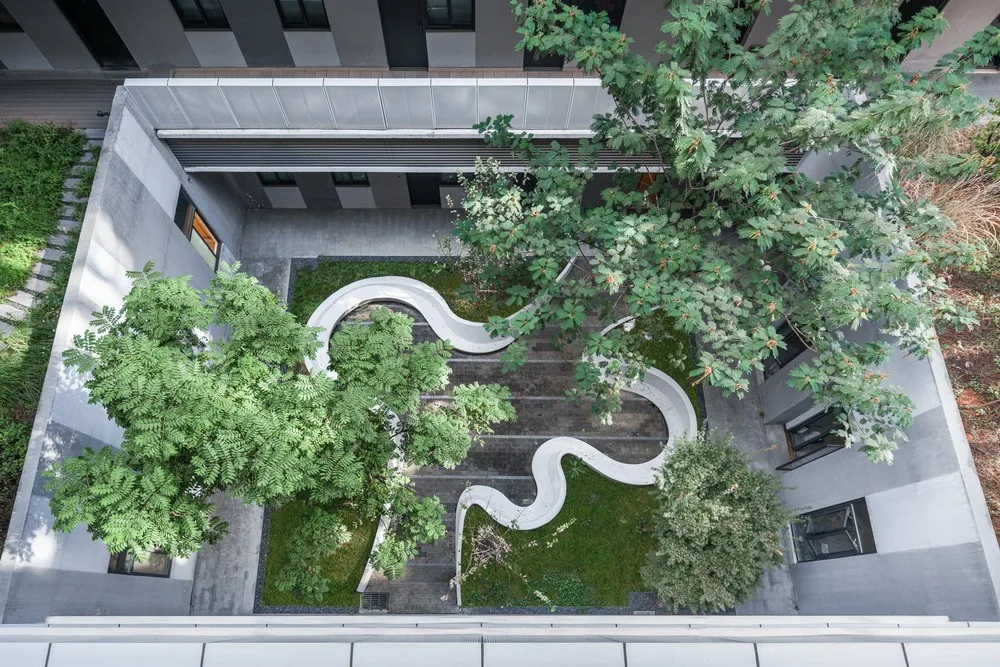
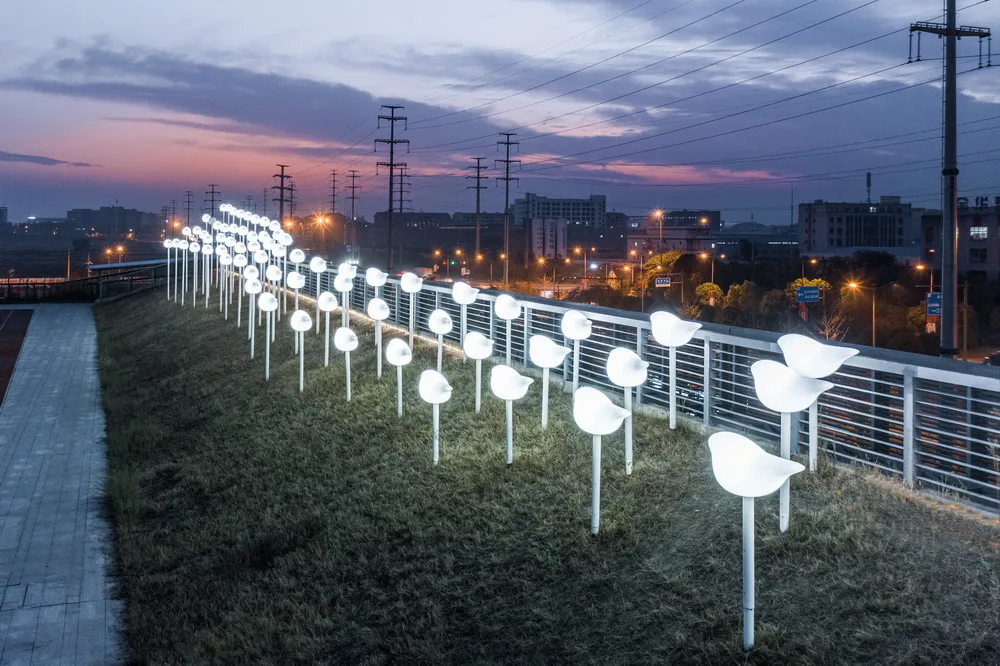
The landscape paving integrates guiding elements, with an orange guide strip on the ground that improves accessibility to the rear building entrance. This guiding feature also transforms into a distinctive landscape element, reinforcing the industrial park’s unique identity through the use of vibrant orange ground coloring.
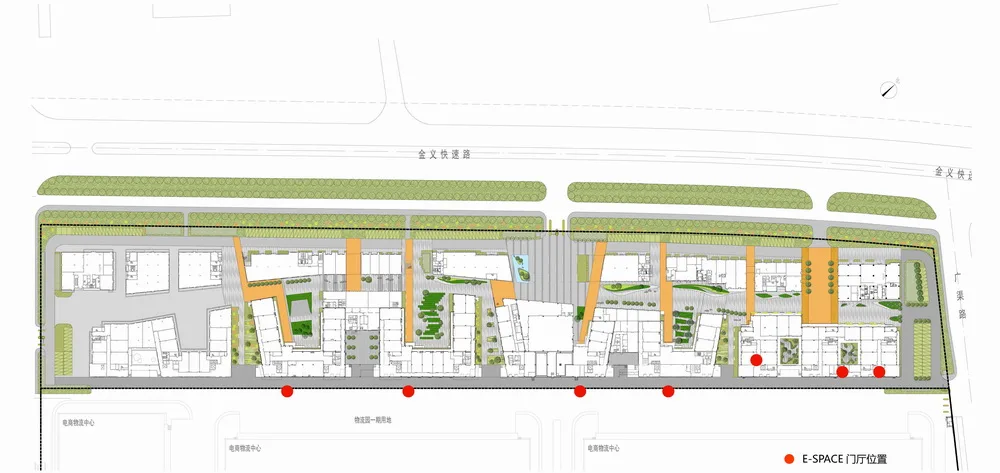
Ground guidance strip
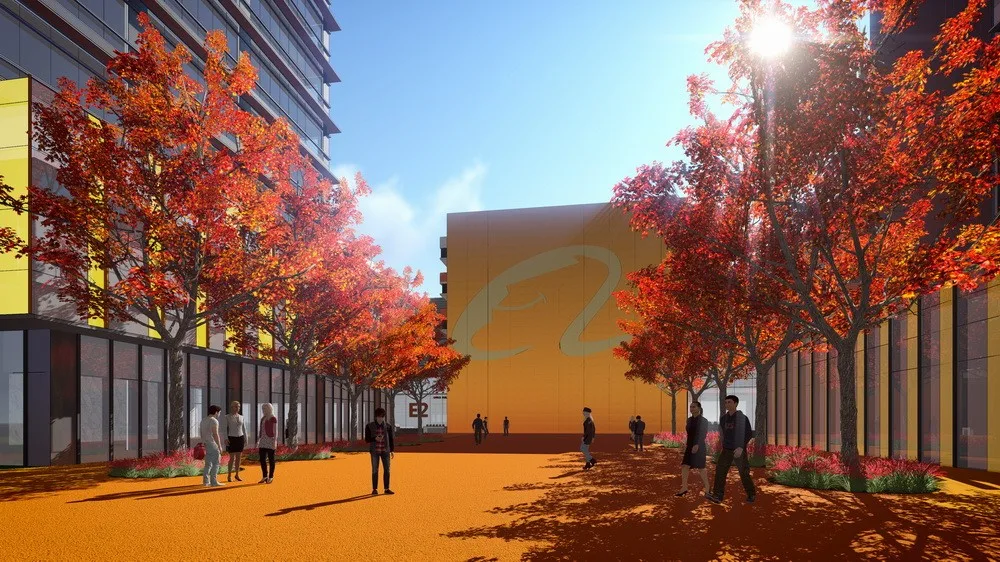
Having been operational for over three years, studies and observations confirm that park users and operators actively utilize the various spaces and host diverse activities as originally intended. This successful enhancement of the work and living environment for e-commerce professionals stands as a testament to the design team’s efforts.
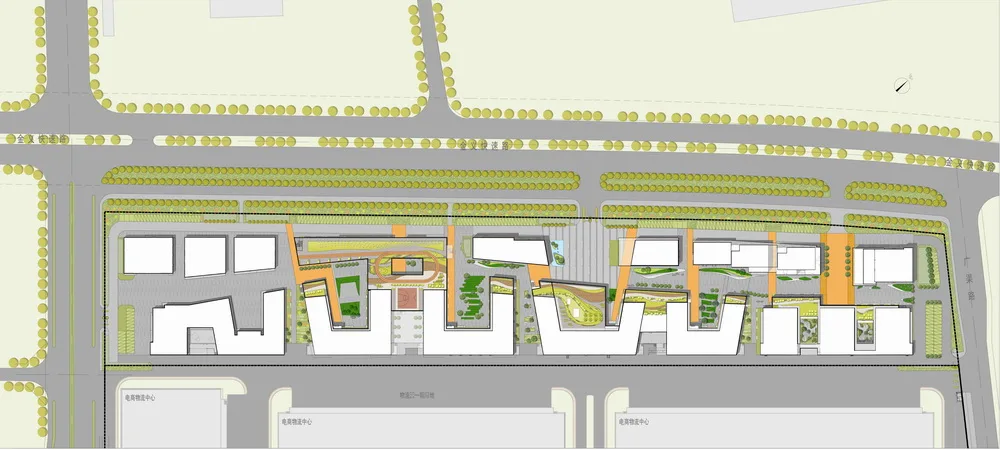
△ General layout plan
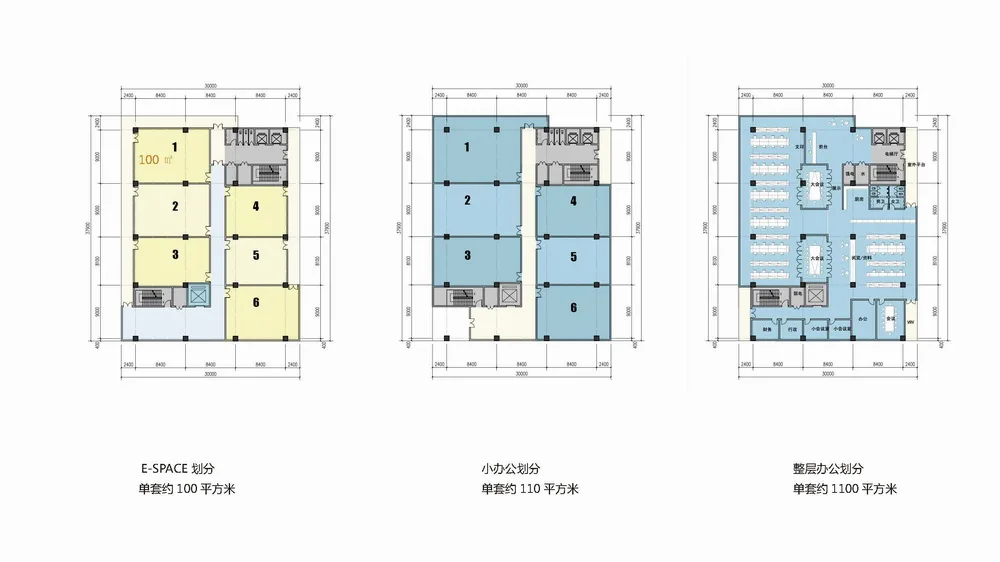
△ Transition from E-SPACE to office mode
Project Information
Project Name: China Smart Logistics Backbone Network (CSN) Jinyi Industrial Park
Location: Jinhua City, Zhejiang Province
Function: E-commerce incubation and support services
Total Construction Area: 140,000 square meters
Design Period: 2015–2016
Completion Year: 2017
Status: Completed and operational
Design Firm: Zhubo Design · Beijing Company
Project Directors: Mao Xiaobing, Wang Xudong
Project Manager: Zhang Xiaoyi
Architectural Designers: Ming Ye, Sun Yuzhe, Yan Bingliang, Liu Rongting, Ma Yibing, Wang Minyuan, Wang Fang, Duan Chenxiao
Structural Engineers: Chen Lei, Xing Ningbo, Liang Chen, Zhang Junping
HVAC Engineers: Yan Tianpeng, Lu Yun, Yu Zhengong, Sun Kai
Water Supply and Drainage Engineers: Pan Jun, Zhu Xu, Xia Dan
Electrical Engineers: Sun Lin, Qin Lijiang, Feng Xiaoyan
Developer: Jinhua Chuanyun IoT Technology Co., Ltd.
Awards: 2017–2018 China Architecture Design Second Prize (Industrial Building Category)
Photography Credit: CreatAR Images












Must log in before commenting!
Sign Up