
The Playscape Children’s Growth Center Camera © Studio FF
Base
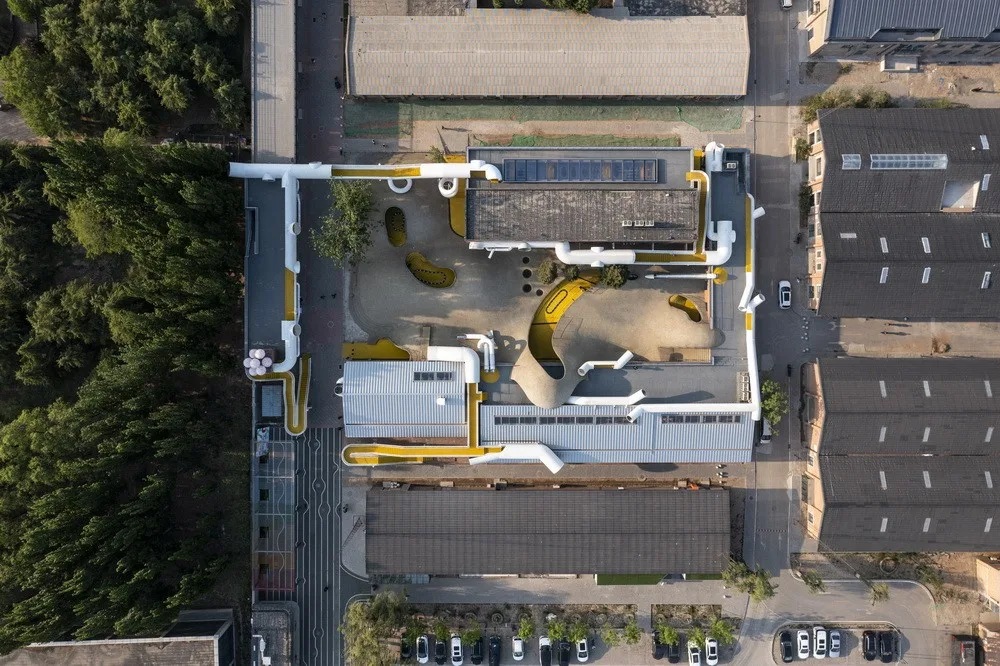
This project is situated in a warehouse within the former textile factory district of Beijing. Five old buildings enclose a circular site in the new urban area. Adhering to the principle of preserving the original site, the main outlines of the buildings have been maintained, while new construction and restoration align with the site’s updated functional use.
© Tian Fangfang
Demand
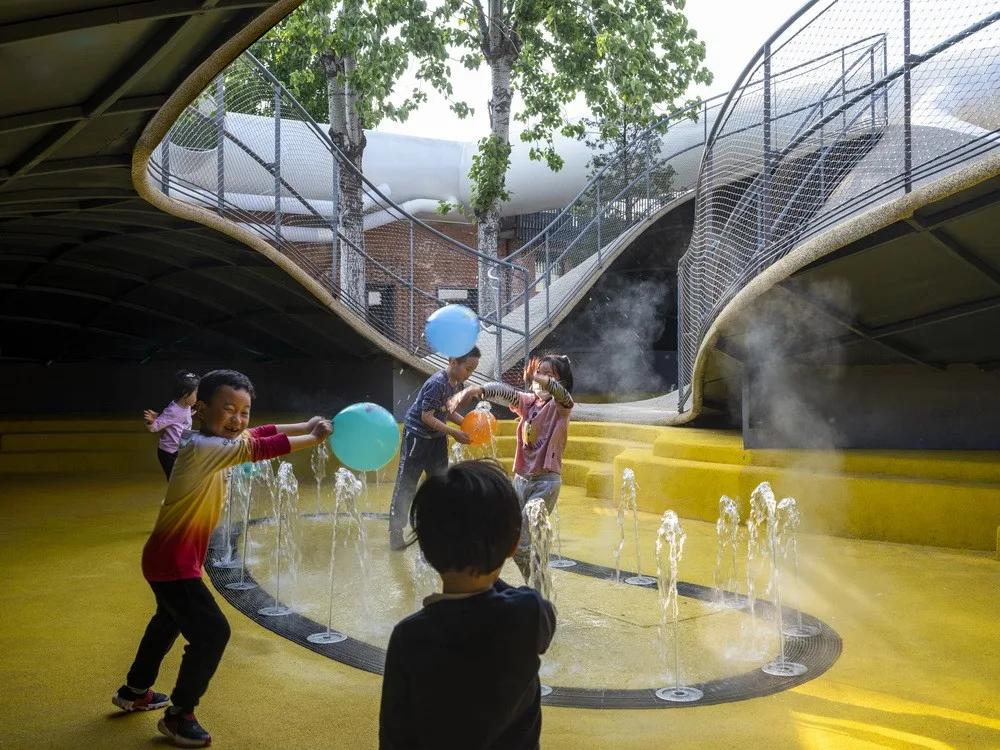
The property owners initially emphasized the importance of sensory integration training for early childhood development. This design responds by focusing on integrating children’s sensory inputs—such as sight, hearing, smell, taste, and touch—with motor coordination.
© Tian Fangfang
Concept
Back to the Neighborhood
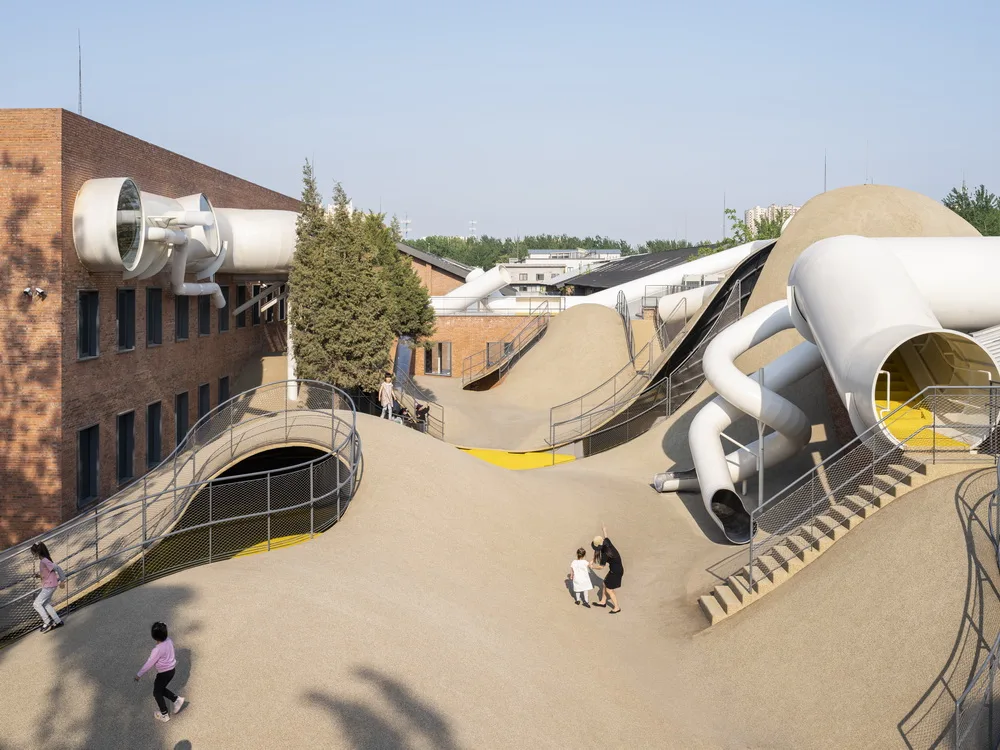
Today’s urban children often lack access to spaces that connect with their natural instincts. Reflecting on childhood memories from the 1980s and 1990s, we recall cement pipes stacked on street corners, courtyards where kids played hide and seek, and even the excitement of bungalow rooftops and neighbors’ yards. These authentic community environments allowed children to initiate their own activities freely.
△ The Playscape Children’s Growth Center Construction Process Camera © Waa unaware architecture
© Tian Fangfang
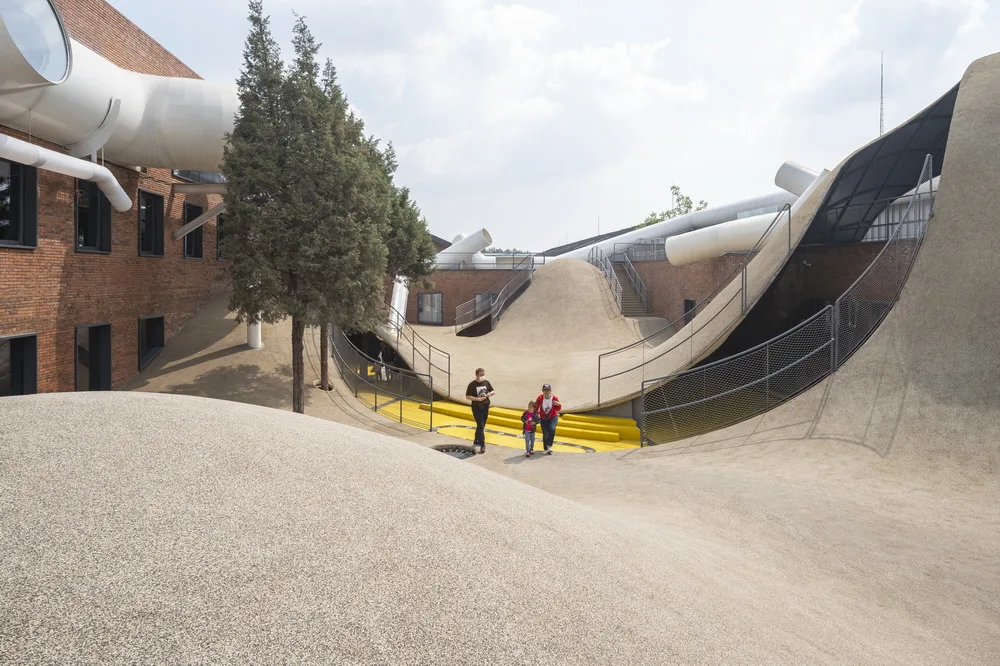
We introduce the concept of “Back to the Neighborhood” because we believe a fully functional neighborhood environment encourages children to explore independently with their minds, bodies, and senses. This approach serves as an organic supplement to the growth of urban children today.
© Tian Fangfang
We have extracted five signature games from childhood neighborhood memories to create a space where children can play freely. These activities help children gradually understand and master their limbs and senses through independent play, fostering interest and inspiration in coordinating and integrating their bodies:
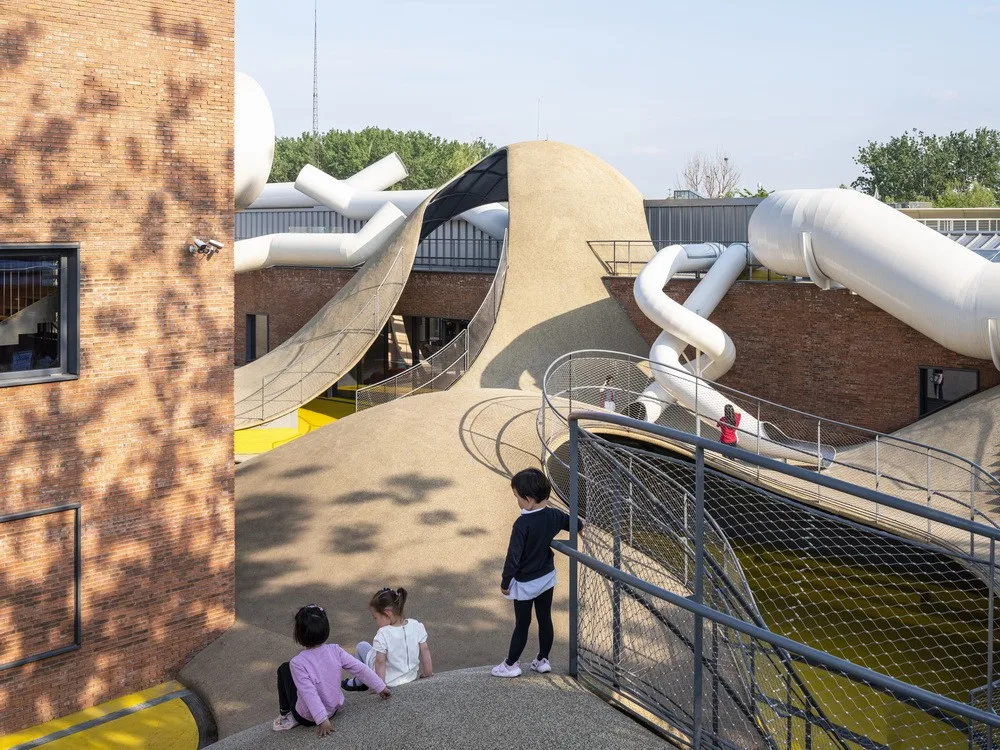
© Tian Fangfang
1. Hide and Seek – Encourages team interaction to develop body and language skills, while stimulating children’s sensory and cognitive abilities.
2. Adventure Playground – Focuses on body coordination and balance, allowing children to process sensory information and independently determine their movements.
3. Nook and Cranny – Enhances spatial awareness through personal physical scale and sensory perception.
4. Maze – Invites exploration beyond visible boundaries, demonstrating that the richest sensory experiences may come through indirect paths.
5. Fantasy – Sparks imagination and free will, enabling children to create or control their desired scenes within the limits of physical space.
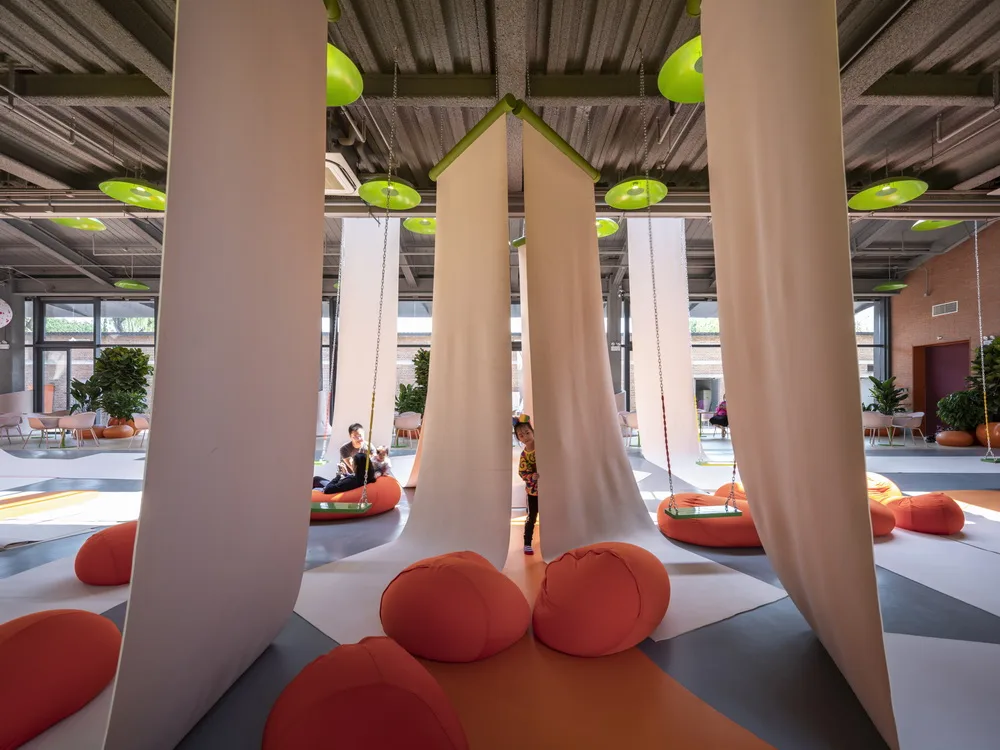
△ Hide and Seek © Tian Fangfang
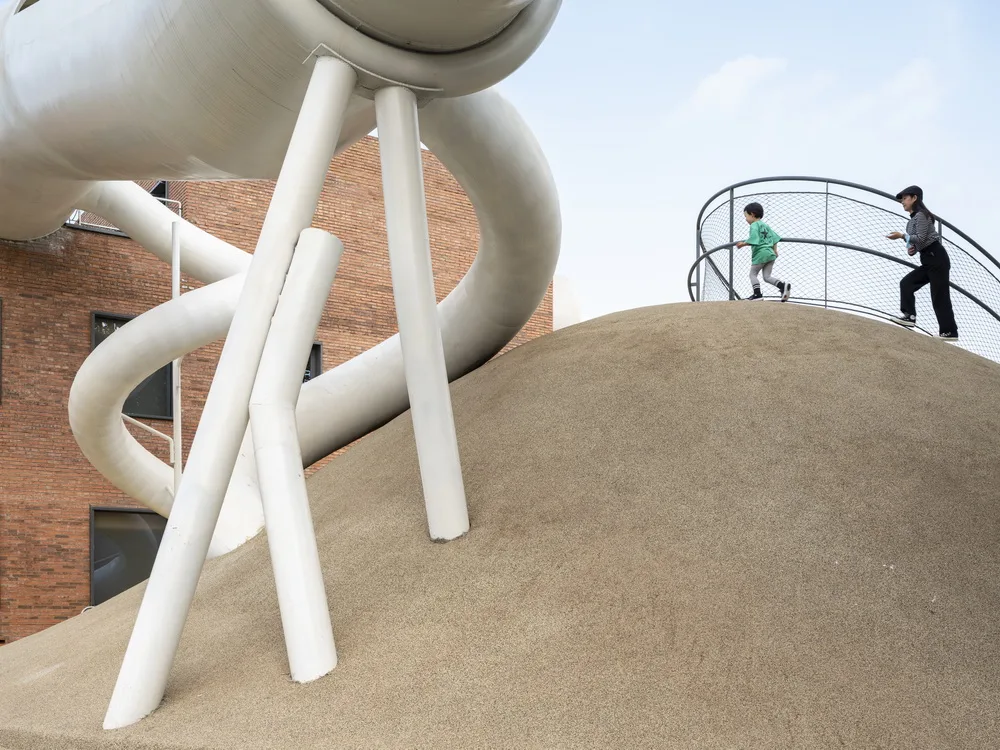
△ Adventure Park © Tian Fangfang
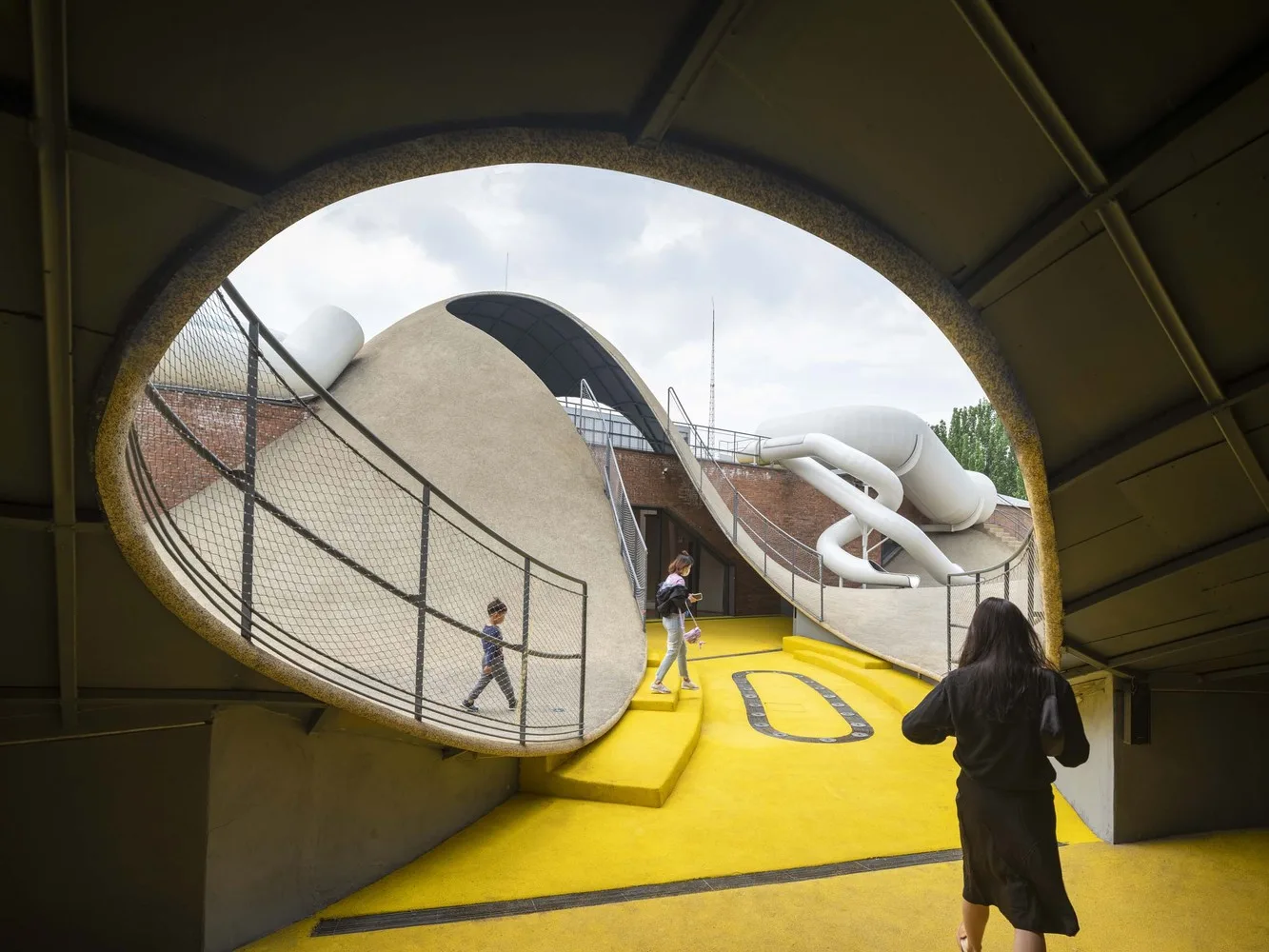
△ Corner and Small Nest © Tian Fangfang
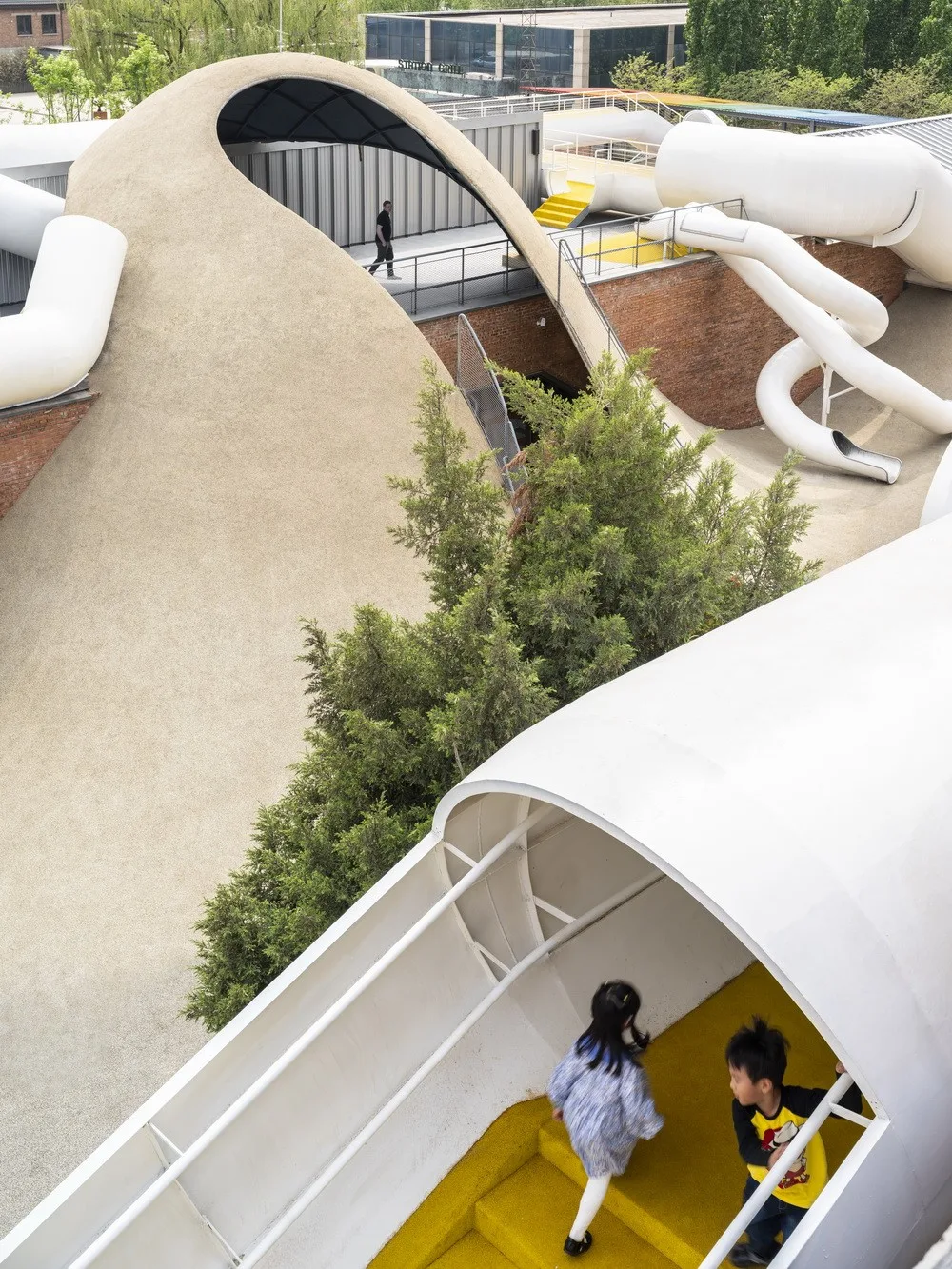
△ Maze © Tian Fangfang
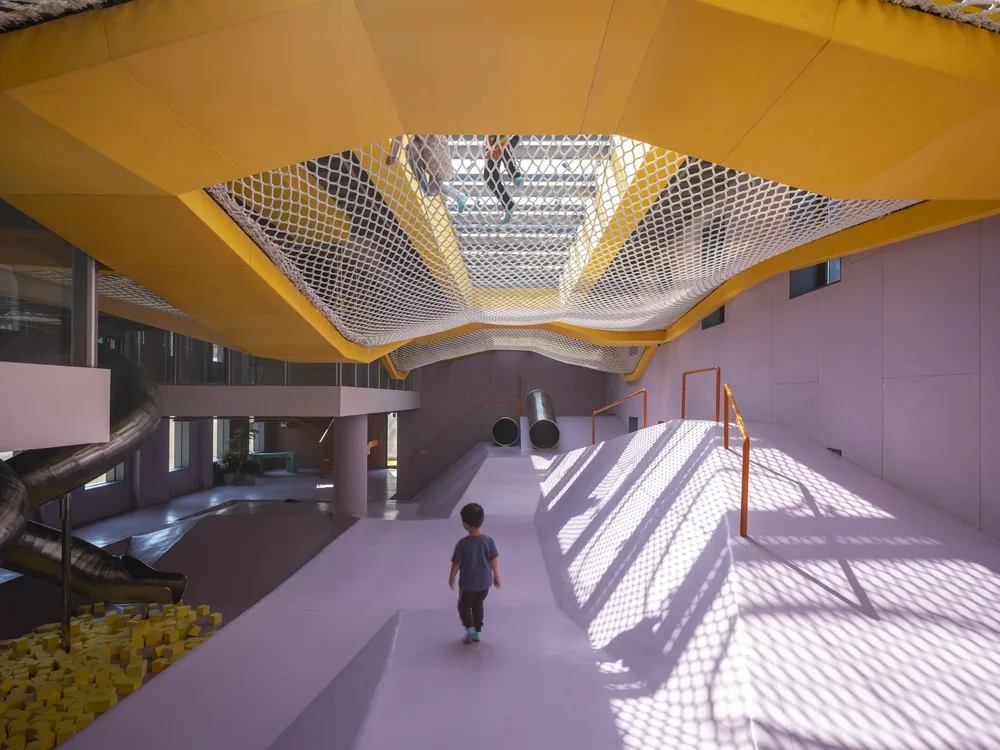
△ Dreamy © Tian Fangfang
This multifunctional space is filled with imagination and encourages children’s active awareness to control their environment. It supports exploration of their senses and motor skills while promoting balance and coordination.
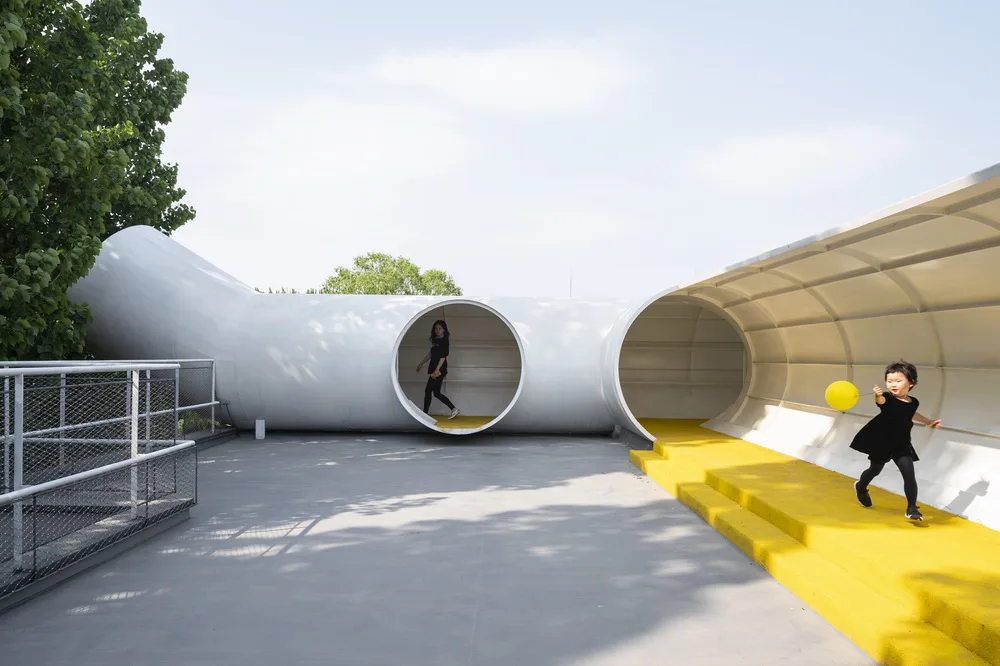
© Tian Fangfang
True sensory awareness often begins when our physical balance and coordination are challenged. This project aims to stimulate children’s sensory responses, thereby enhancing emotional expression, physical coordination, and supporting early childhood development.
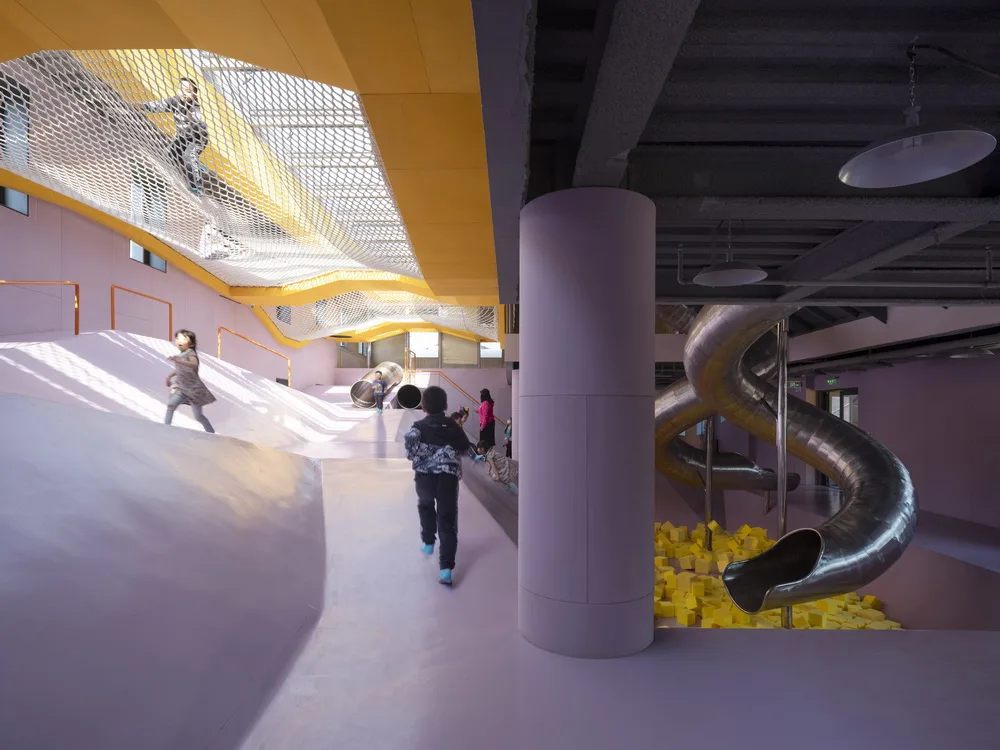
© Tian Fangfang
Design Focus
The design creates a composite space by integrating three architectural elements:
1. Pipeline (PIPE)
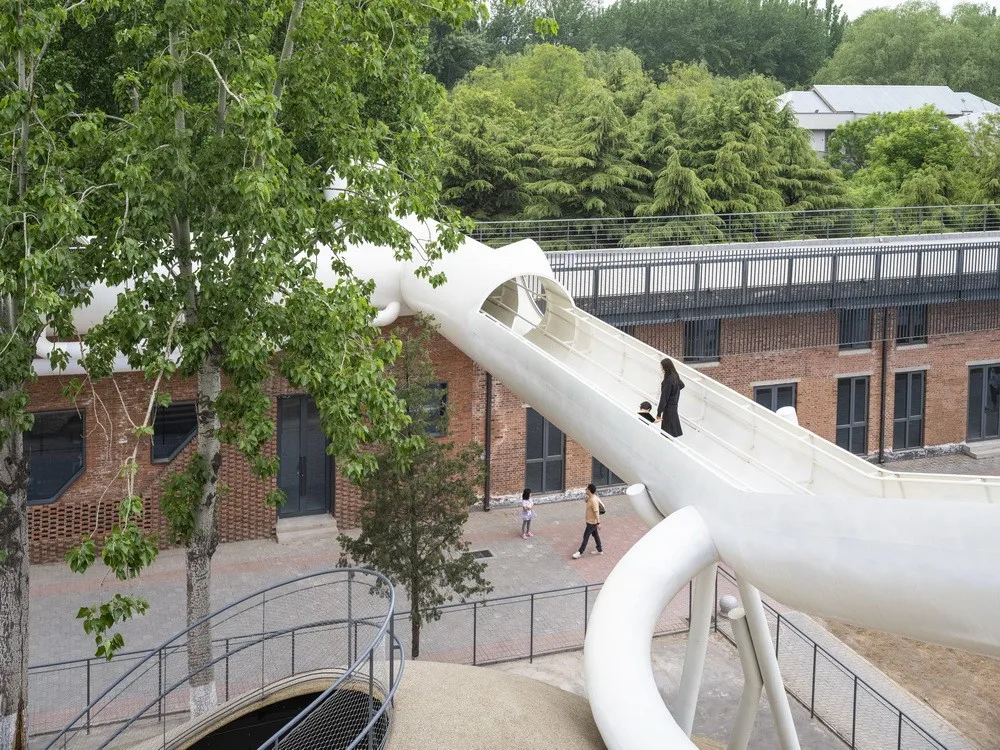
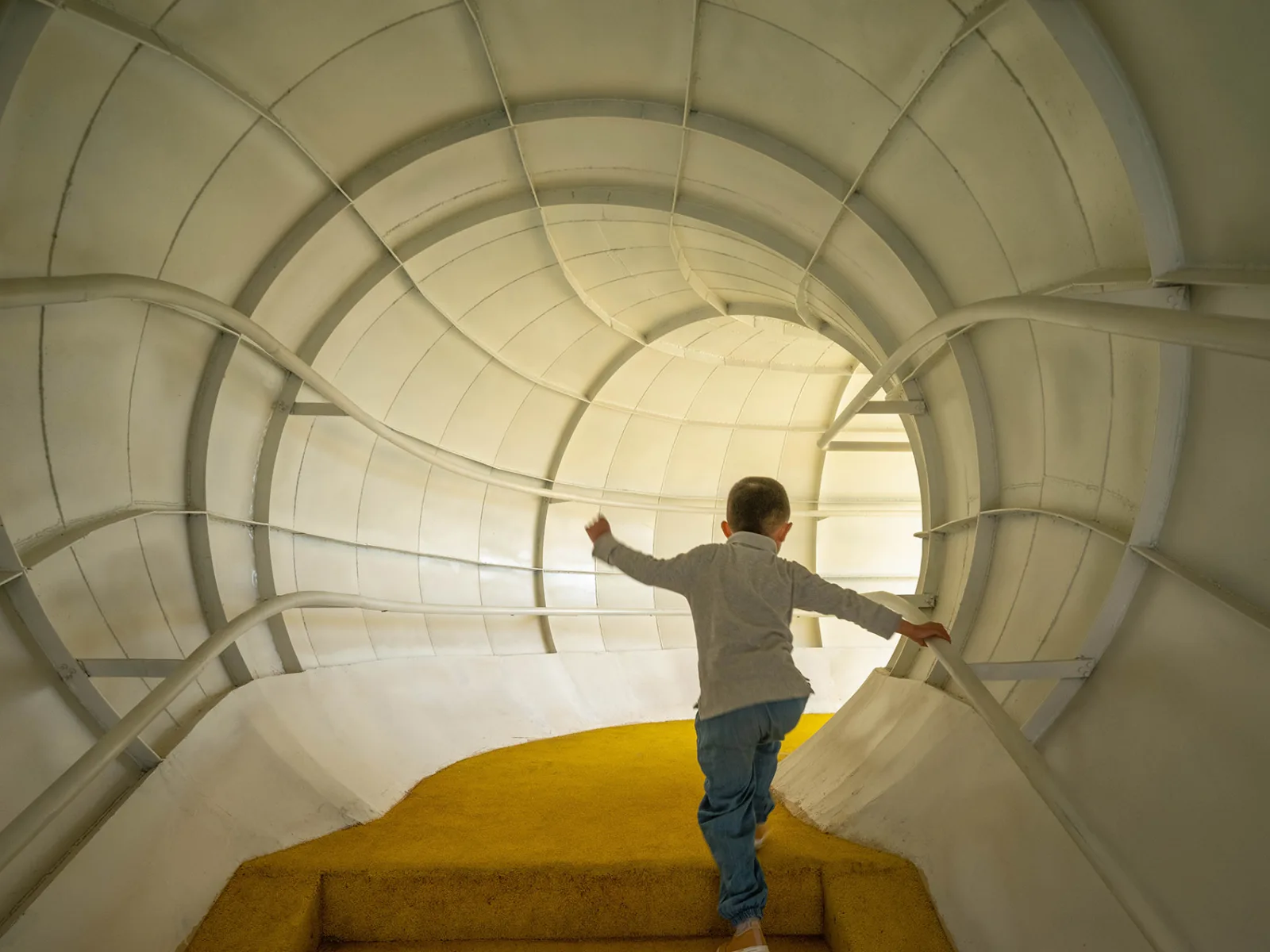
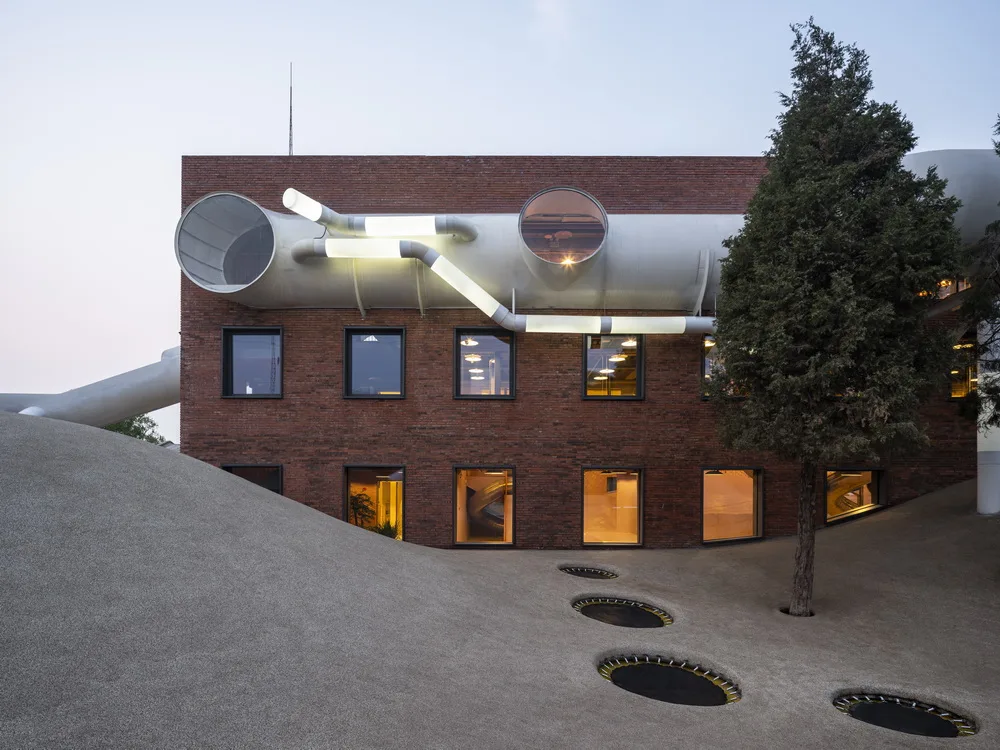
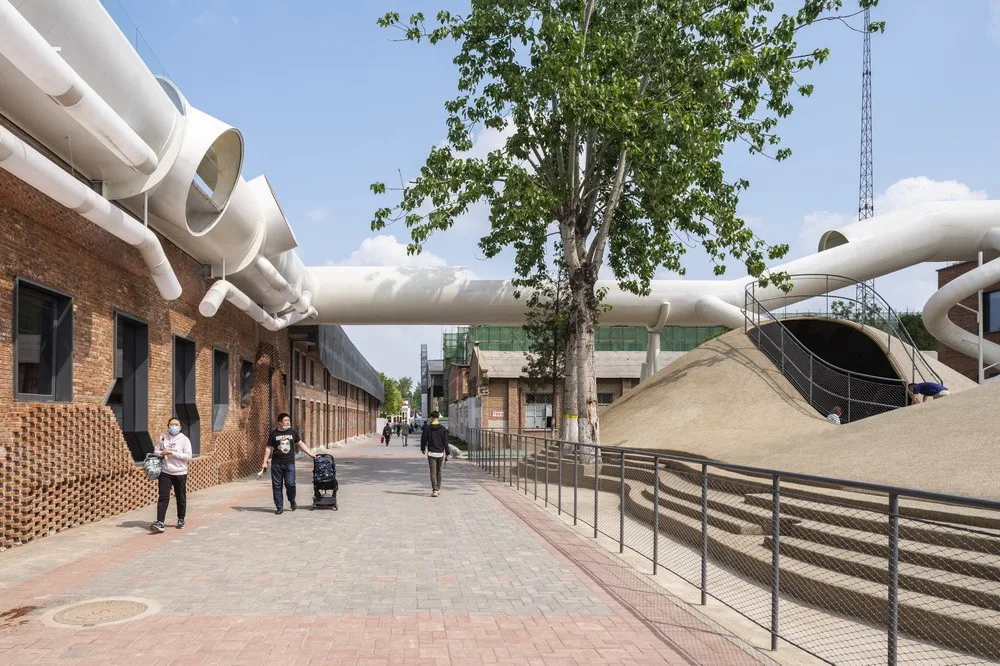
The pipeline design emphasizes narrow spaces that encourage children to perceive and make decisions using their bodies. It exercises physical coordination and sensory movement. The steel pipe network acts as a series of bridges and steps, linking the site into an adventure park. These pipes hover above the field or crawl beneath the hill-shaped terrain, with various inclinations tailored to children’s exploratory movements.
© Tian Fangfang
© Tian Fangfang
Five pipeline sizes were designed: 2.3 meters for the main transport corridor; 1.7 meters for evacuation stairs; 1.3 meters for safety fencing; 0.8 meters for sliding tubes; and 0.4 meters for outdoor lighting. These varying scales connect and stack to form a complex structural system.
© Tian Fangfang
2. Roof (ROOF)
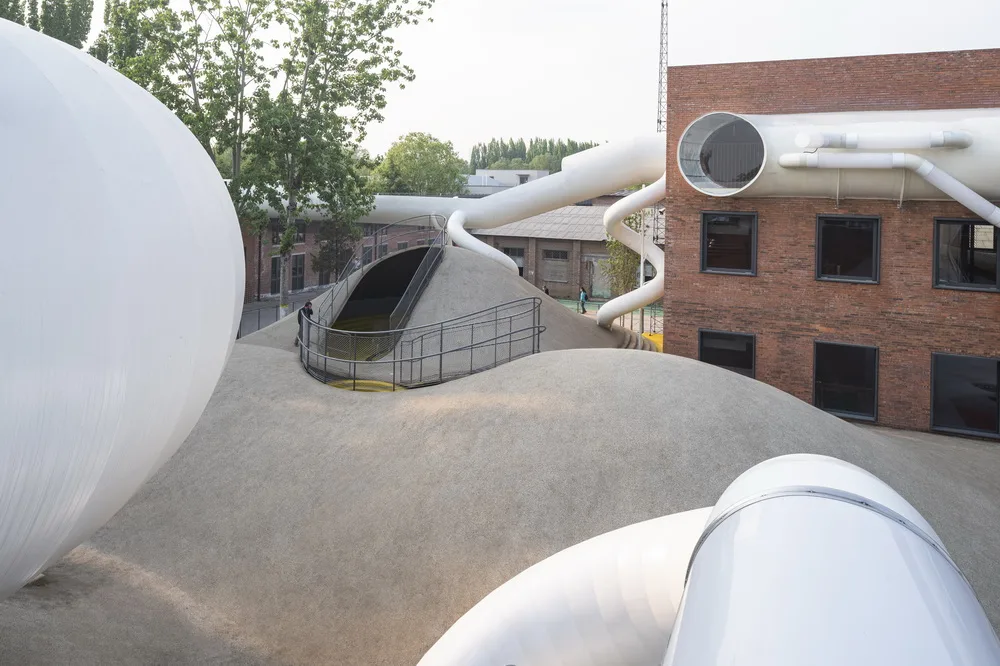
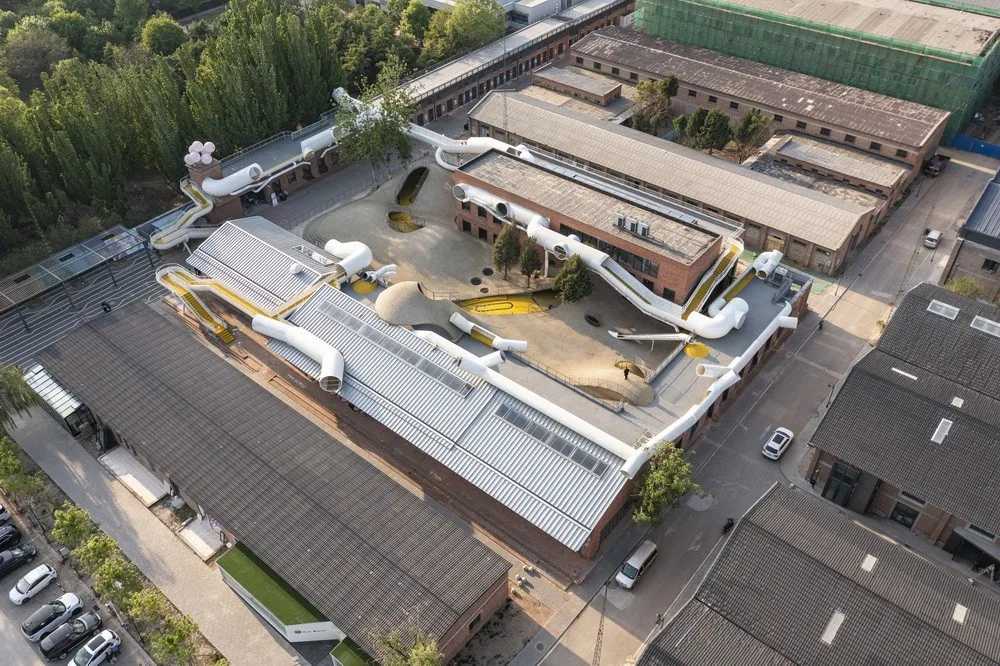
The site consists of five buildings forming a semi-enclosed block, with all roof platforms linked in series by pipelines. This circular flow allows the roofs to function independently from the indoor activities.
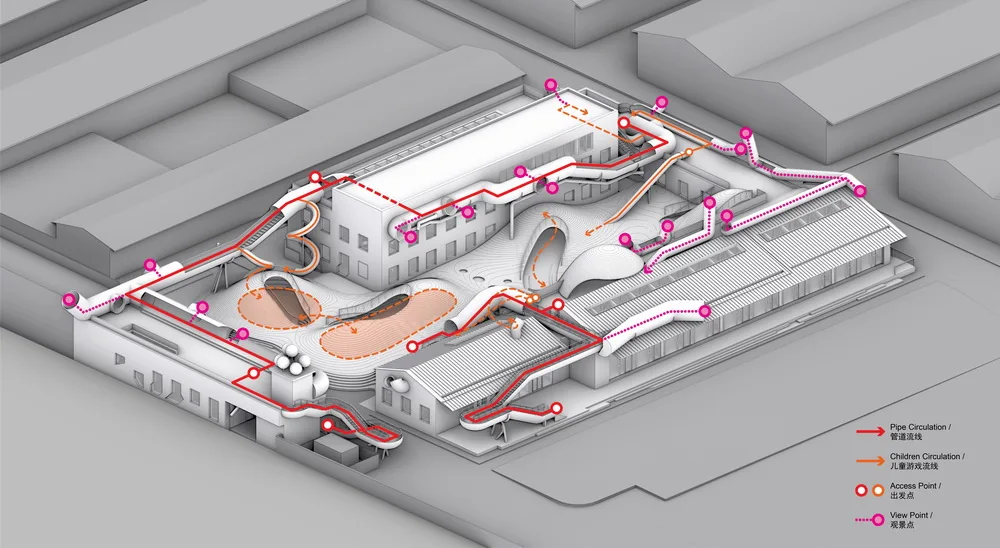
△ Flow diagram
The roof offers a high vantage point with panoramic views. Children can explore from the roof down to the hill terrain via a slide, spanning a height difference from 7 meters to 4.3 meters. The roof features multiple paths encouraging exploration, including unconventional routes like the second shortest path, which can be more engaging than the shortest one.
© Tian Fangfang
3. Mound Terrain
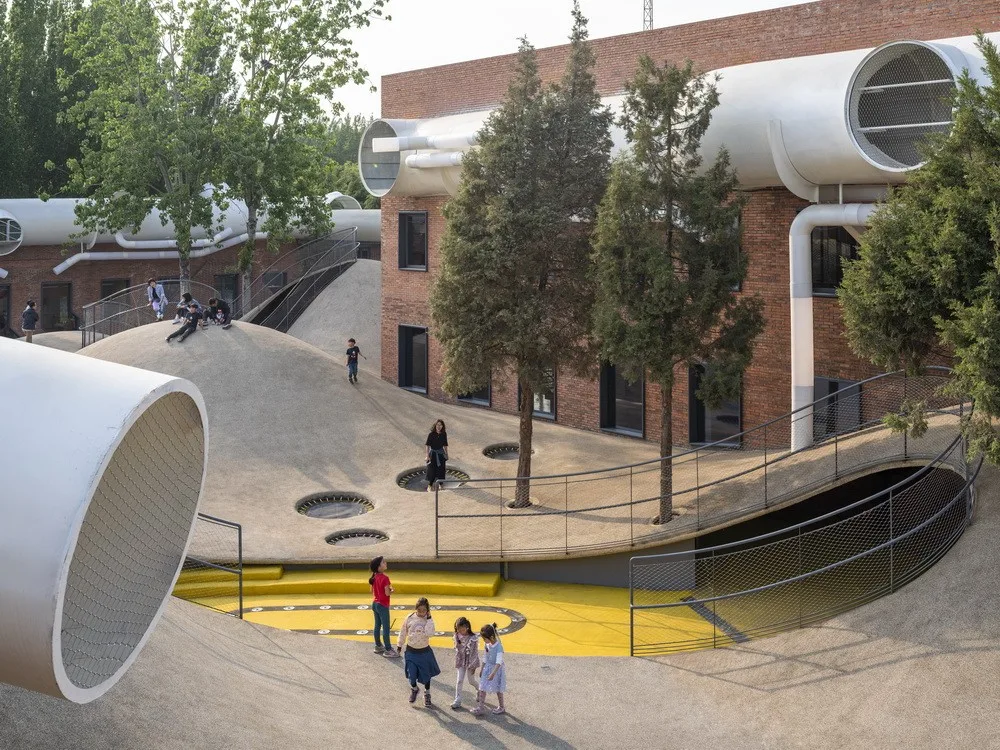
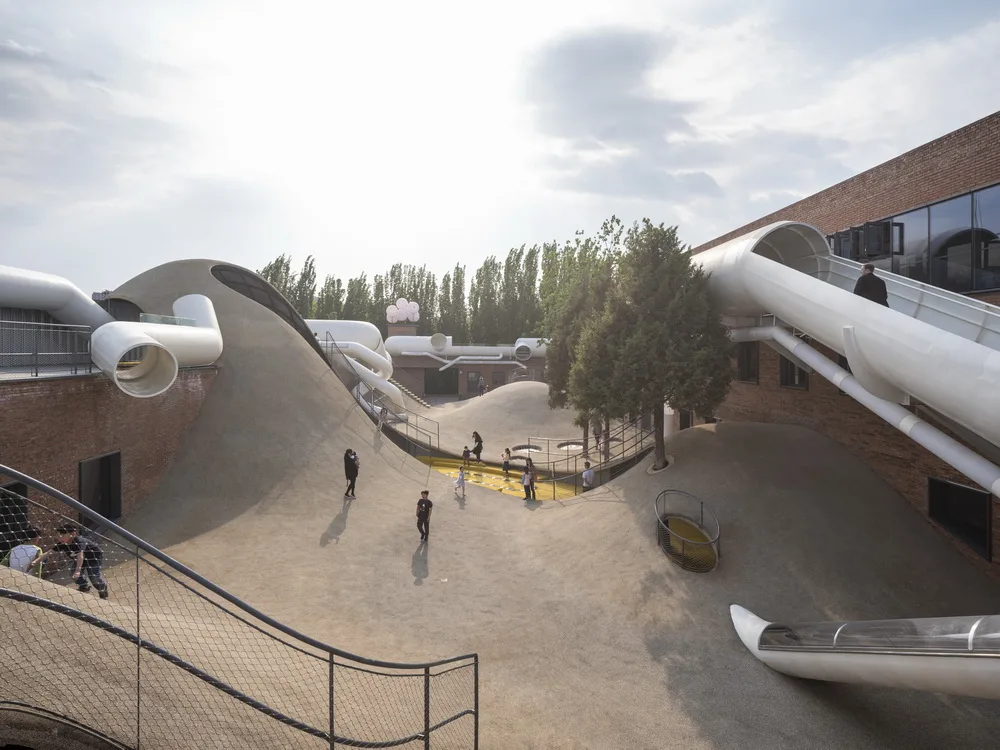
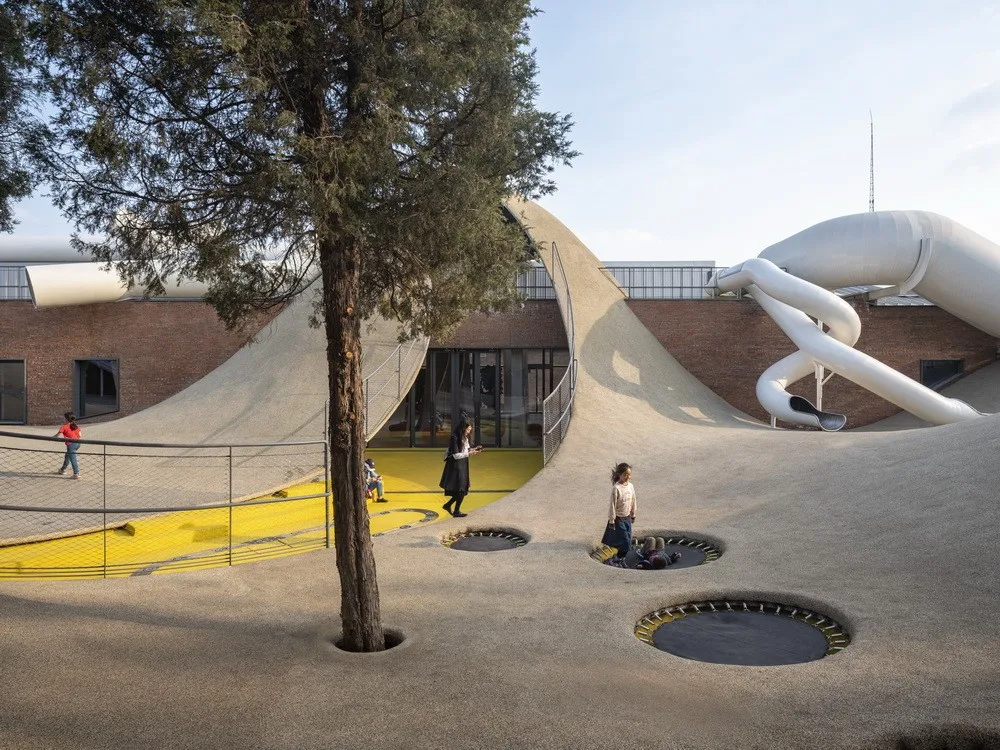
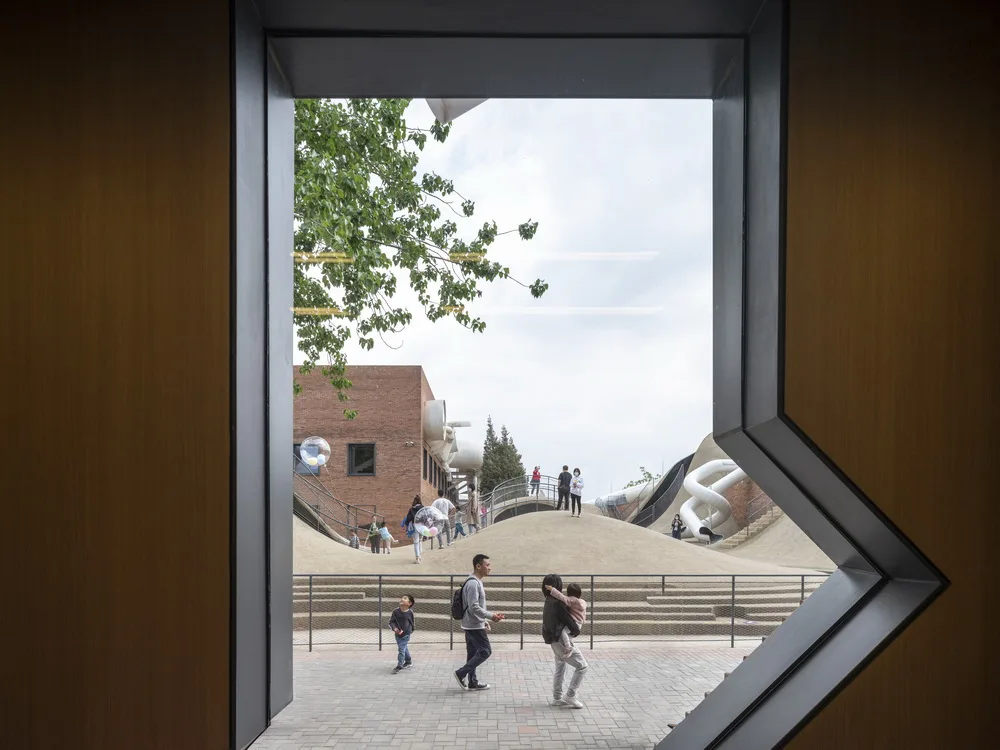
The hill system, designed using geomorphological principles, stands independent from the main building structures and covers the site with undulating forms. This design allows children to move freely, experience changes in speed and terrain, and develop sensory and integrative skills.
© Tian Fangfang
The hill connects major entrances and exits of each building and acts as a multifunctional foyer for public access. Additionally, two semi-outdoor circular theaters are located at the base of the hill.
© Tian Fangfang
Functional Content
The original five-warehouse site forms an enclosed area, divided into two clusters by park pathways. One cluster backs onto the park and features an entrance and exit. The building’s main structure is entirely steel, with the external piping system playing a key role structurally and functionally, supporting roof evacuation, circulation, and play activities.
© Tian Fangfang
The exterior façade preserves the original window placement and quantity, reflecting the body movements and sightlines of children, which are abstractly represented in the window shapes.
© Tian Fangfang
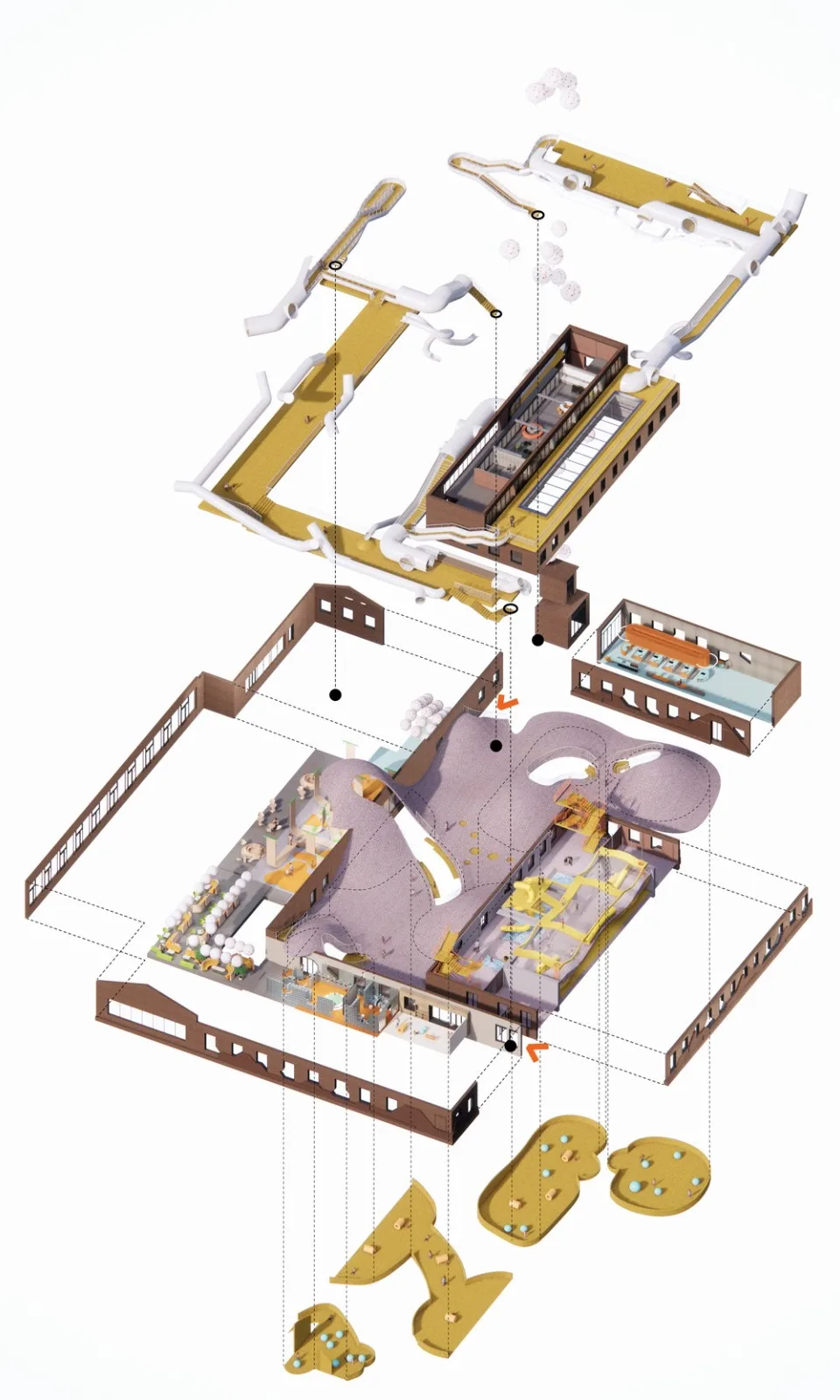
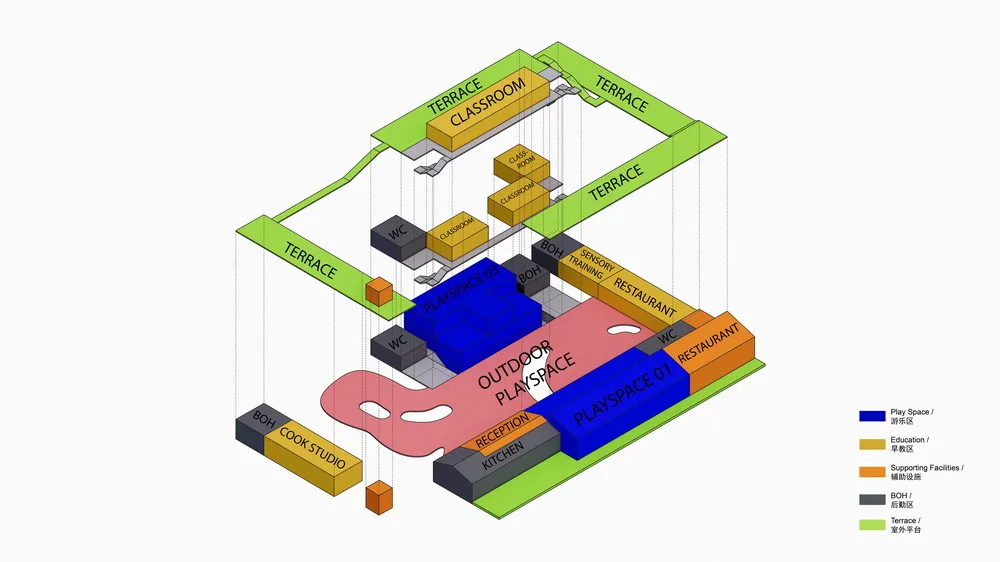
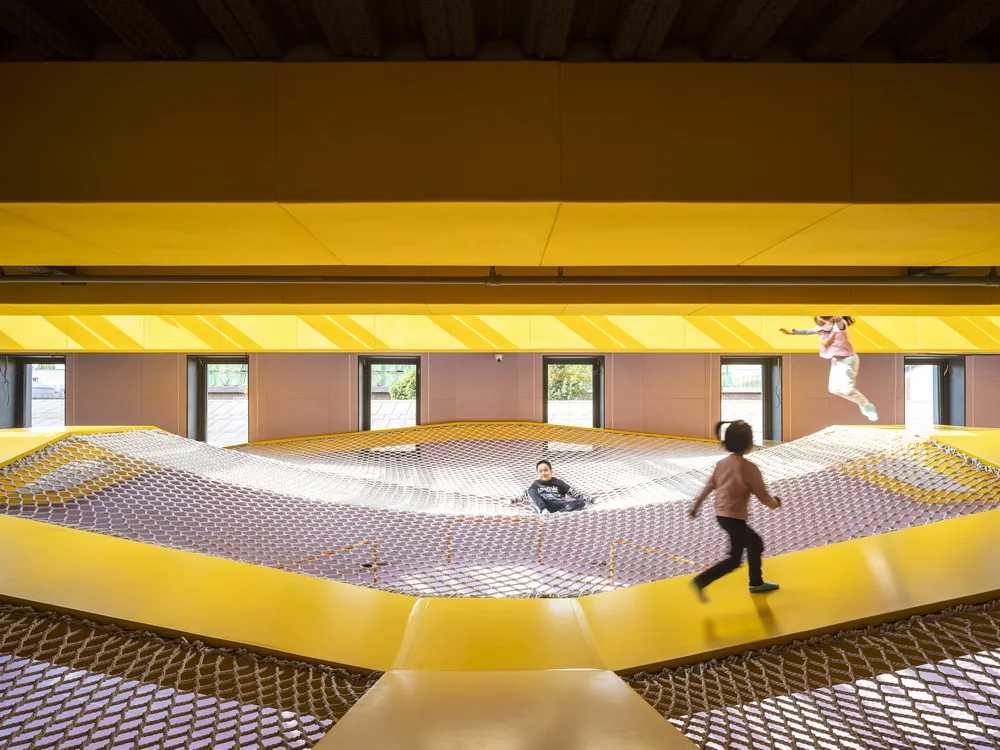
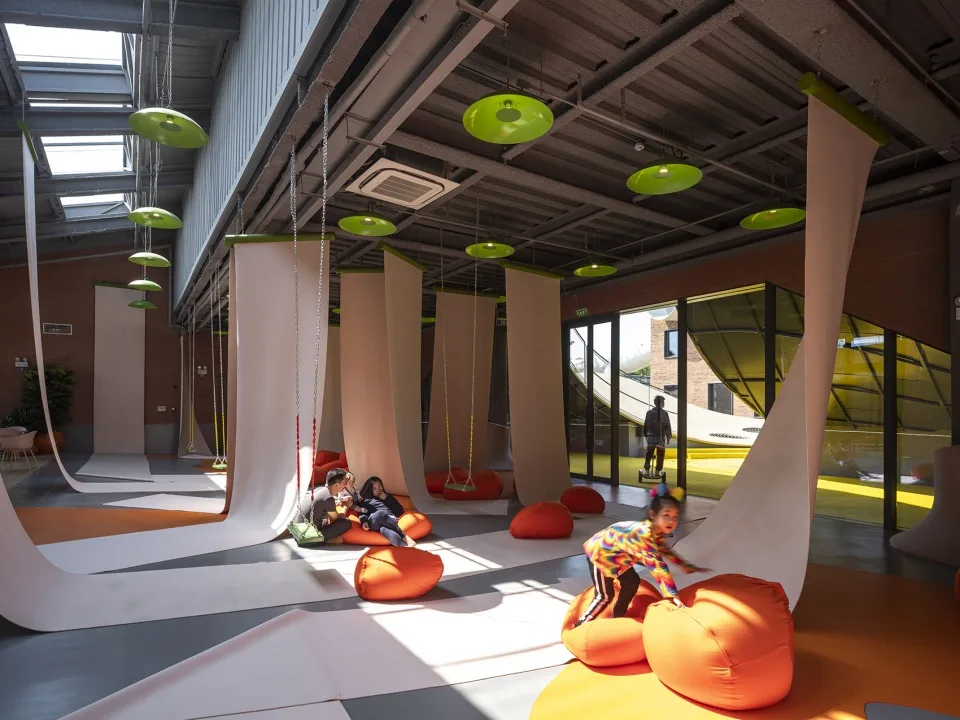
The original building complex is transformed into three children’s zones. Zone 1 is a single-story, 6-meter-high building designed mainly for young children (ages 2-4). It features large-scale elastic sports curtains suspended within, and exposed columns are specially designed to ensure safety.
△ Axonometric diagram
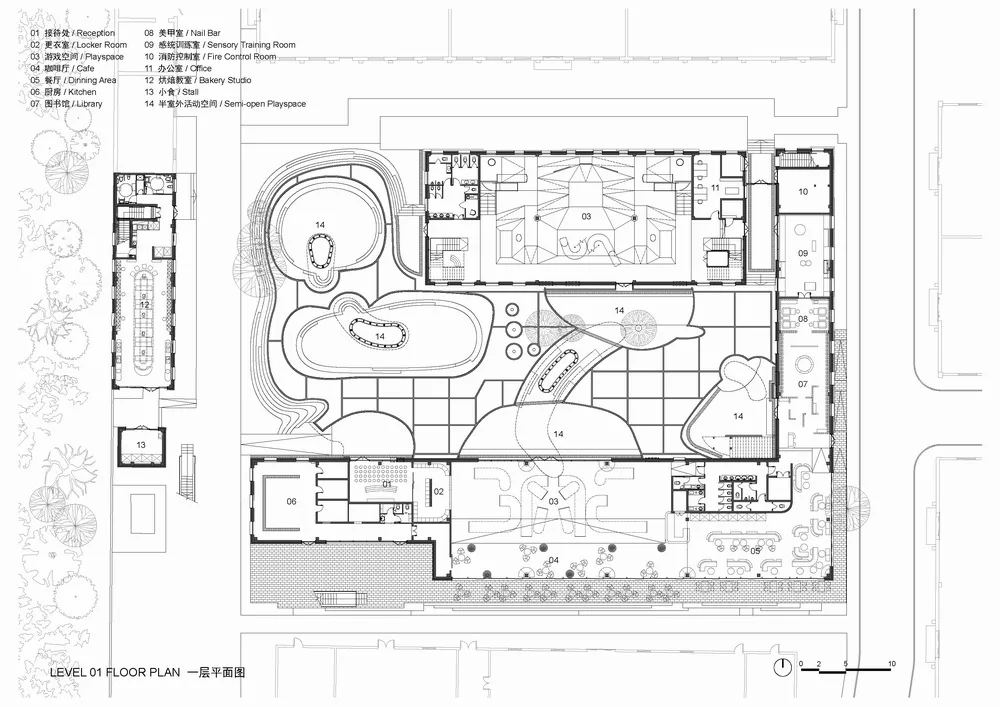
Facilities connecting Zone 1 to Zone 2 include a café, restaurant, and library. Zone 2 transforms the original three-story building into a partially double-layered play area designed for children aged 4 and above. The abstract hill terrain provides a natural climbing surface and ball pool. The terrain’s base houses an interactive screening hall. A horizontal crawl space simulates the terrain void, overlooking the ball pool. Eight classrooms are located between the second and third floors, and all connections from the learning area to the play area are via slides. Zone 3 is a single-story building mainly dedicated to baking classrooms. The roof platforms of the five buildings are connected in a circular system through pipelines.
△ Functional zoning diagram
Conclusion
Children often become lively and energetic in real-life environments, and play may be the only activity they fully control. Play shapes personality, yet urban life offers very few places where children can play freely and stimulate their imagination; such spaces are nearly disappearing.
© Tian Fangfang
This project emphasizes children’s exploration of their senses, bodies, and surroundings. Providing them with environments that include manageable risks effectively sparks creativity in confronting challenges and deepens their understanding of physical capabilities.
© Tian Fangfang
As artist Richard Serra once said, “In play, the outcome is unpredictable, making it difficult to draw conclusions easily. Solving one problem often triggers a series of others… In this real architectural environment, you are surrounded by various connections and cannot see the whole picture. The only way forward is to explore slowly with your body.”
© Tian Fangfang
© Tian Fangfang
Technical Drawings
△ First floor plan
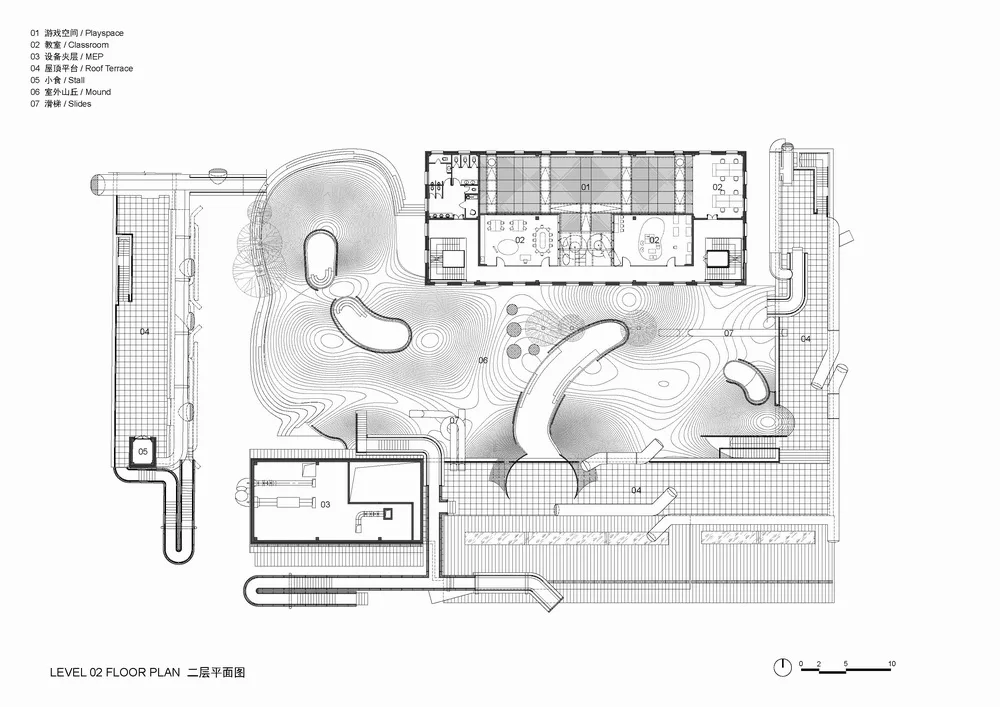
△ Second floor plan
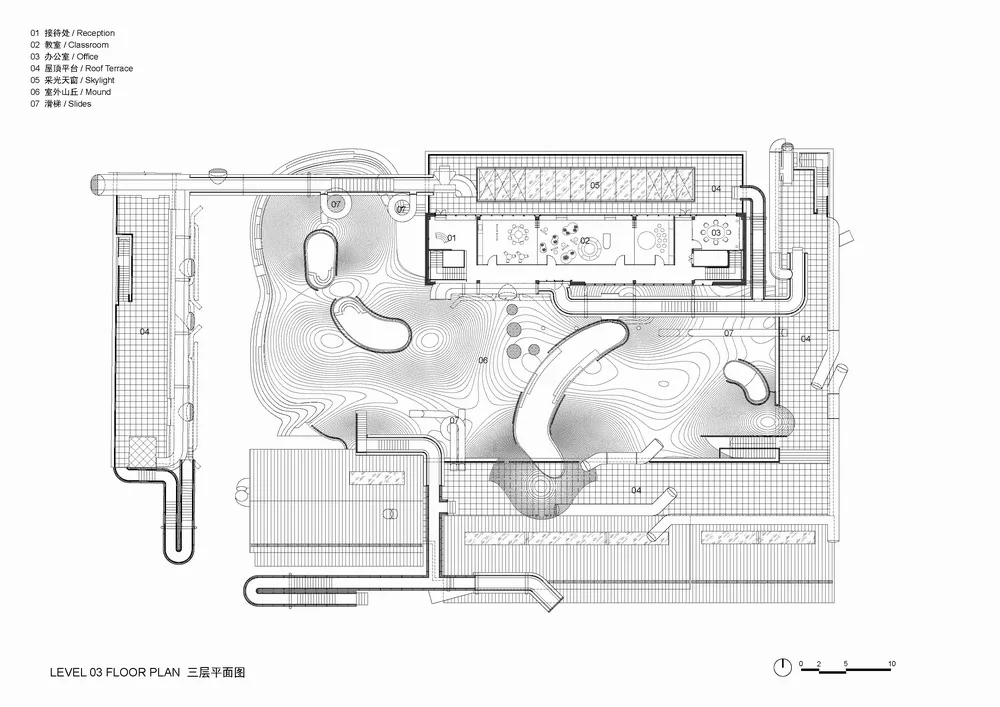
△ Third floor plan
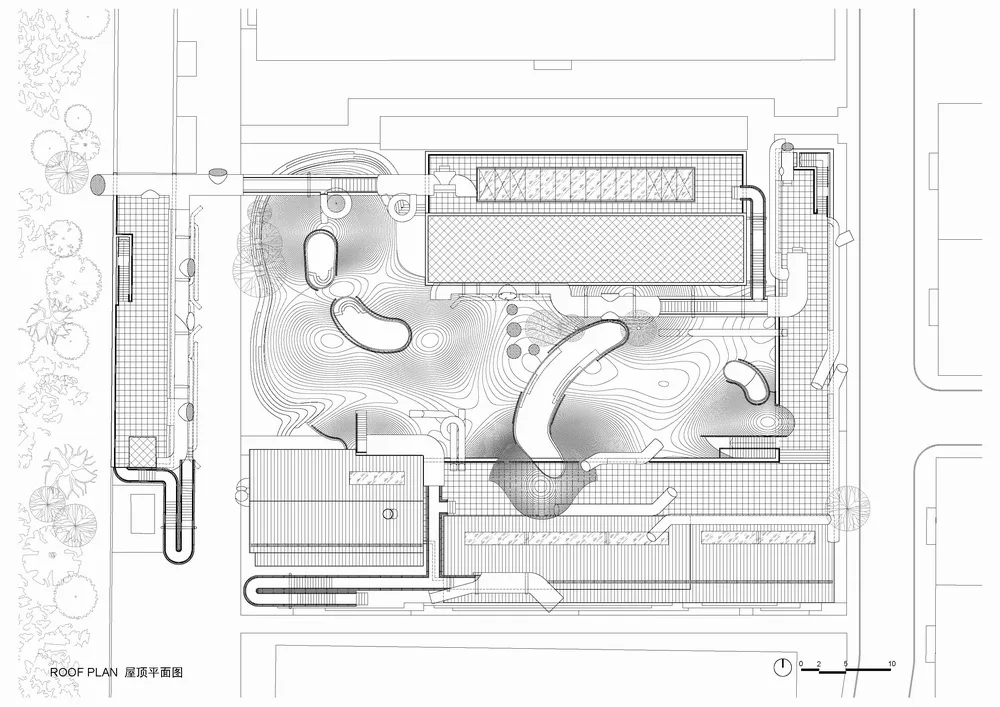
△ Roof plan
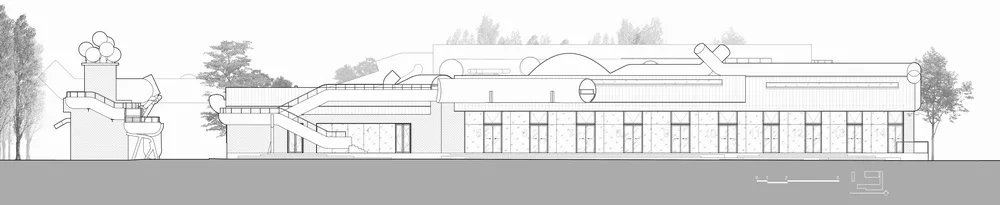
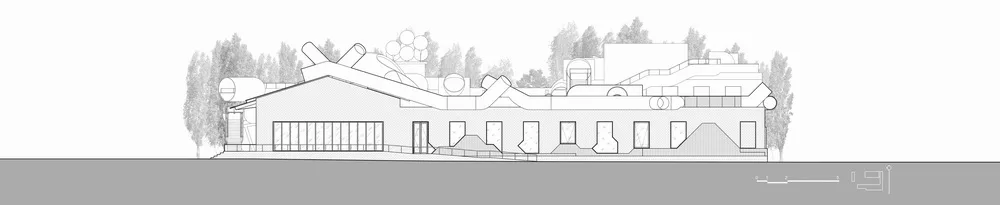
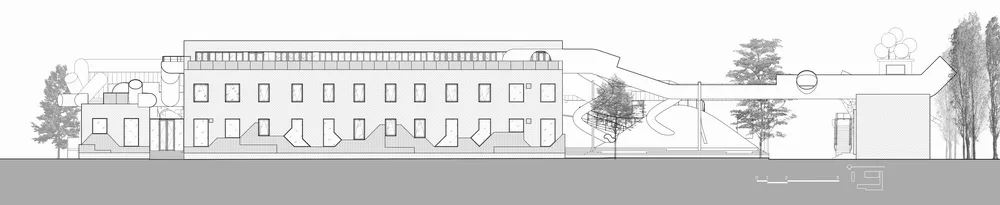

△ Elevation drawing
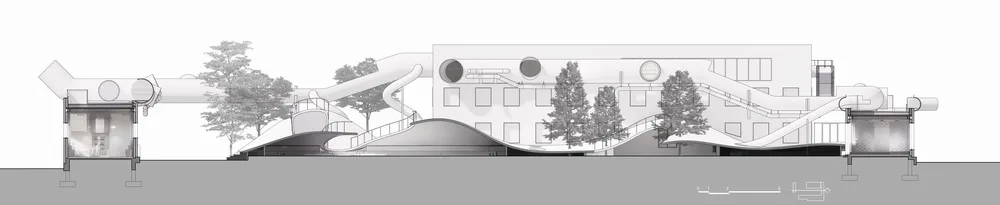
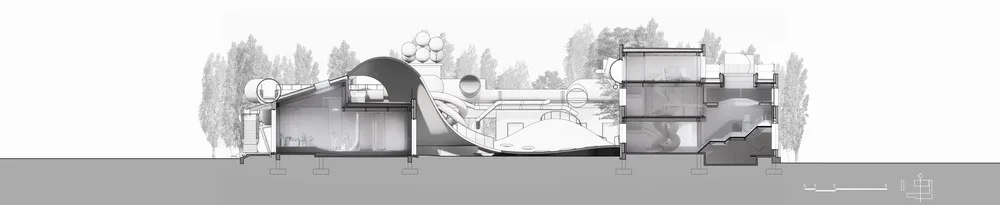
△ Section diagram
Project Information
Owner: Beijing Nuanqin Health Technology Co., Ltd
Architectural Design: Waa Unaware Architecture
Interior Design: Unaware Architecture
Structural Consultant: Luwa Architectural Structural Design Firm
Construction Unit: Yijiang Construction (Beijing) Construction Engineering Co., Ltd
Lead Designers: Zhang Di, Yang Jieke
Design Team: Huo Minghui, Feng Yuqing, Wang Cong, Zhu Jing, Cao Mengbo, Yang Hualin, Cao Qiwen, Li Weiya, Jinhe Yifan
Structural Engineers: Zhang Jinbin, Tang Lida
Photography/Videography: Tian Fangfang
Site Area: 3921.26 square meters
Building Area: 2657.47 square meters
Location: Dongba Langyuan Station, Chaoyang District, Beijing, China
Architectural Design: May 2018 – December 2019
Interior Design: June 2018 – February 2020
Construction Period: December 2019 – May 2021












Must log in before commenting!
Sign Up