
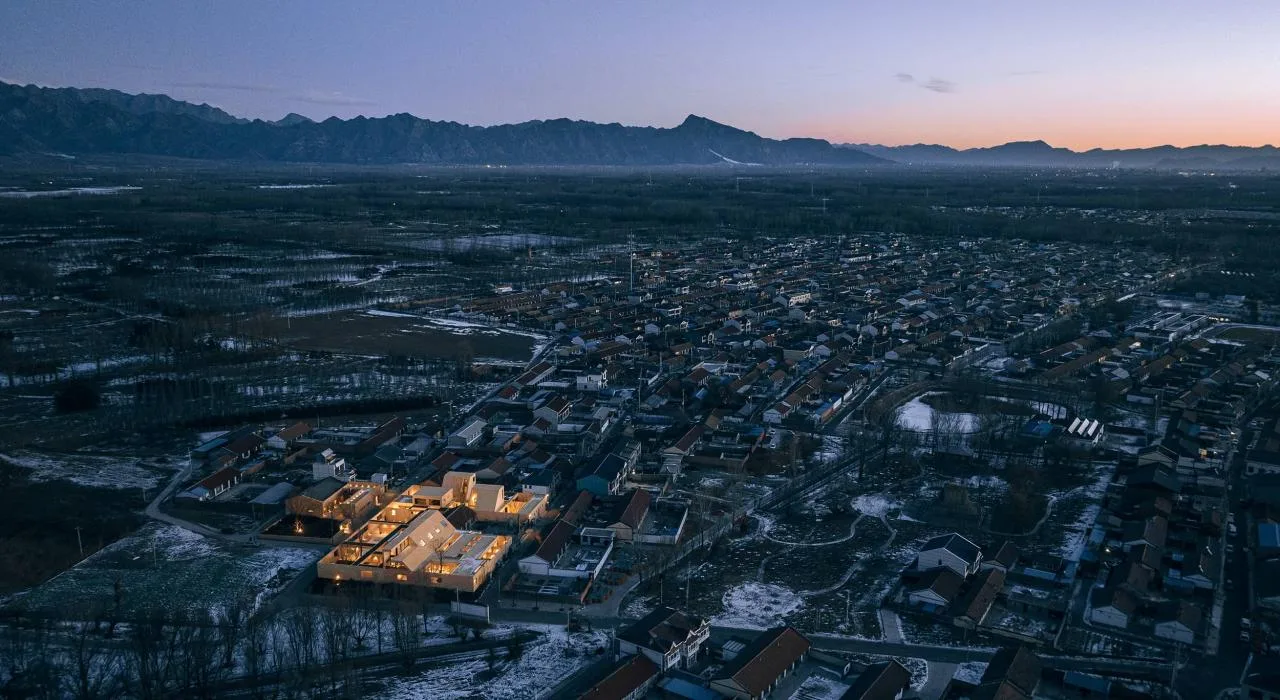
Maying Village, situated in Beijing’s Yanqing District, derives its name from the historic Maying Castle. Originally constructed during the Ming Dynasty’s Jiajing era, the castle featured a rectangular layout with sturdy rammed earth walls. It once served as a key military stronghold and a resting station along the Yulin Road, connecting Yanqing and Yulin Fort. Today, the castle’s man-made traces have largely been eroded by time, making its original square form challenging to discern. The rammed earth walls have naturally blended into the landscape, nestled alongside willow forests that have flourished on the cliffs for over seventy years.
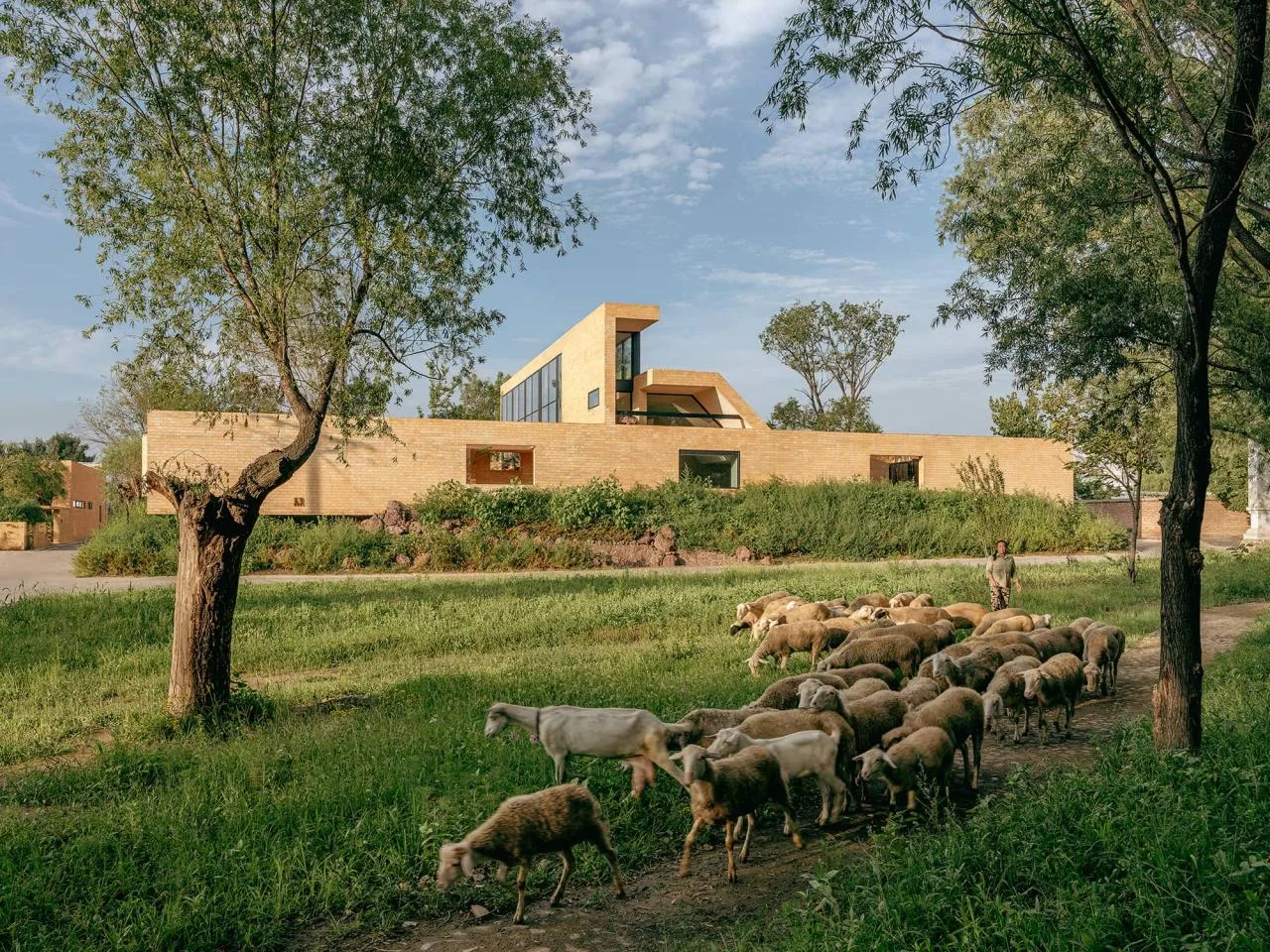
▲ 16:30 Hotel Castle © Zhu Yumeng
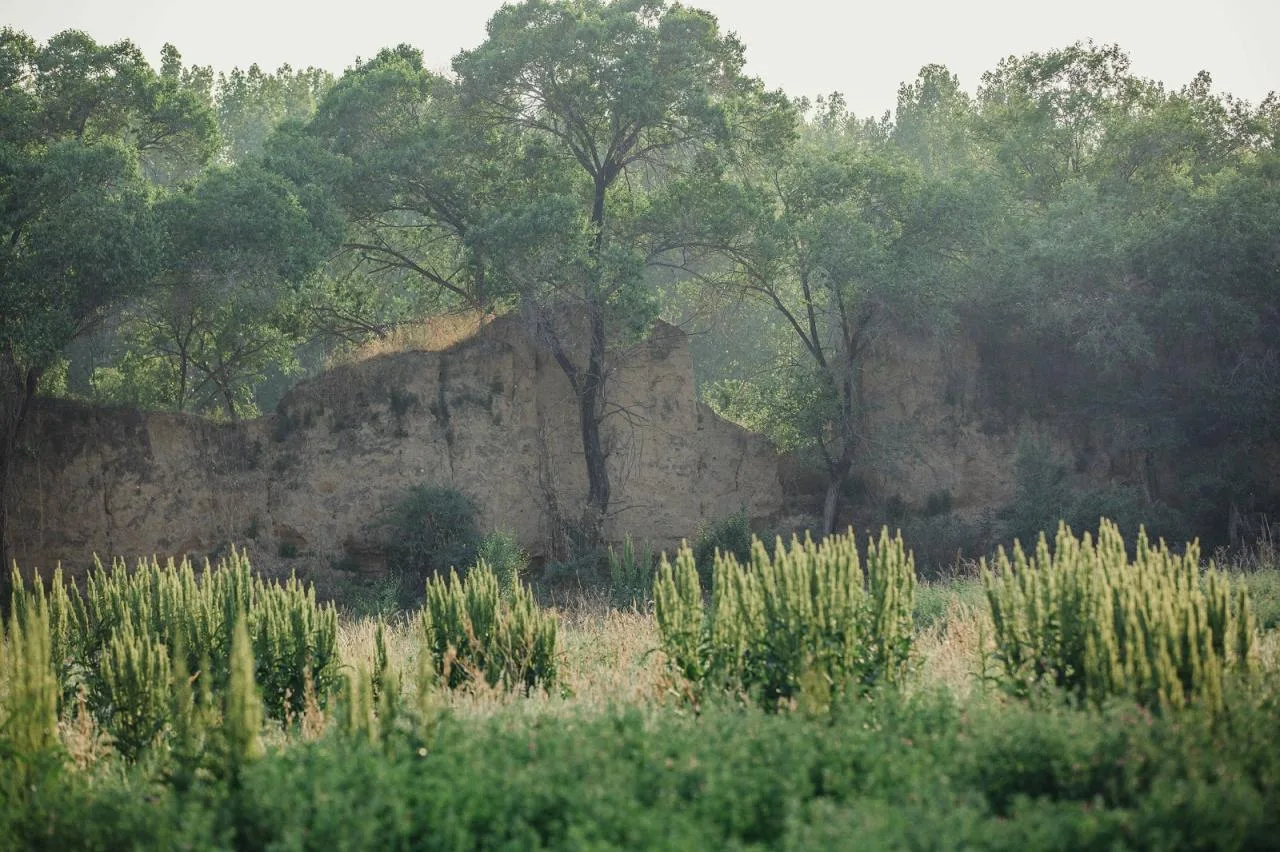
▲ Weathered Horse Camp Castle © Xi Youji
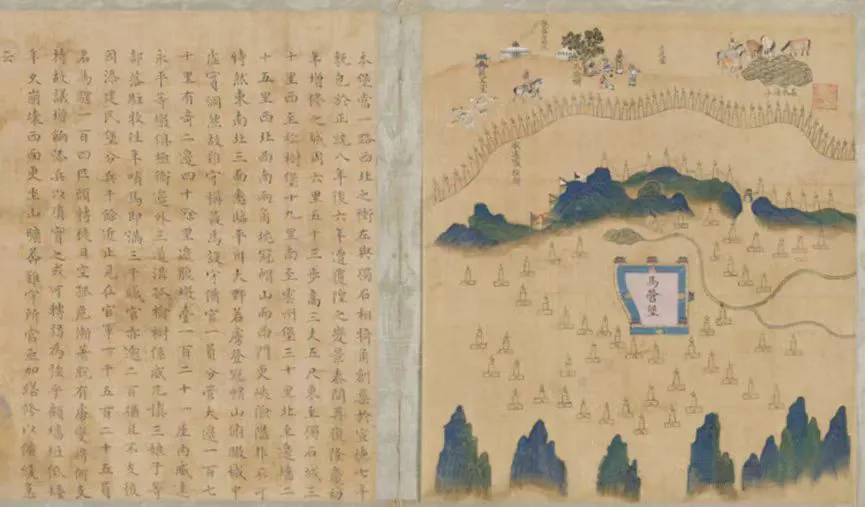
▲ Map of Mayingbao Plan © network
Throughout the village, old corn is either drying or neatly stacked, evoking the characteristic ambiance of northern Chinese rural life. To the northwest lies the Wild Duck Lake Wetland, offering unobstructed views across open, expansive fields without any buildings blocking the horizon.
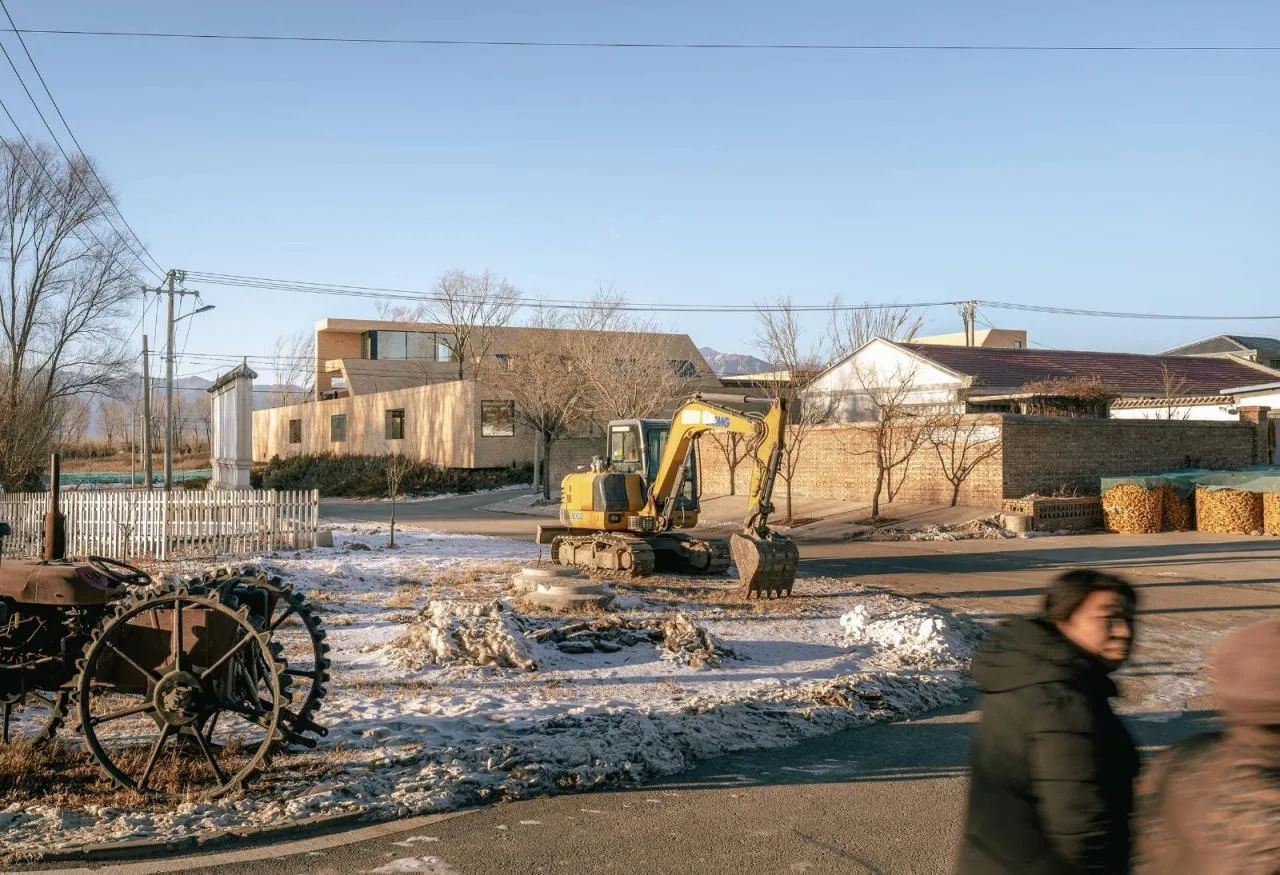
▲ Typical northern Chinese village atmosphere © Zhu Yumeng
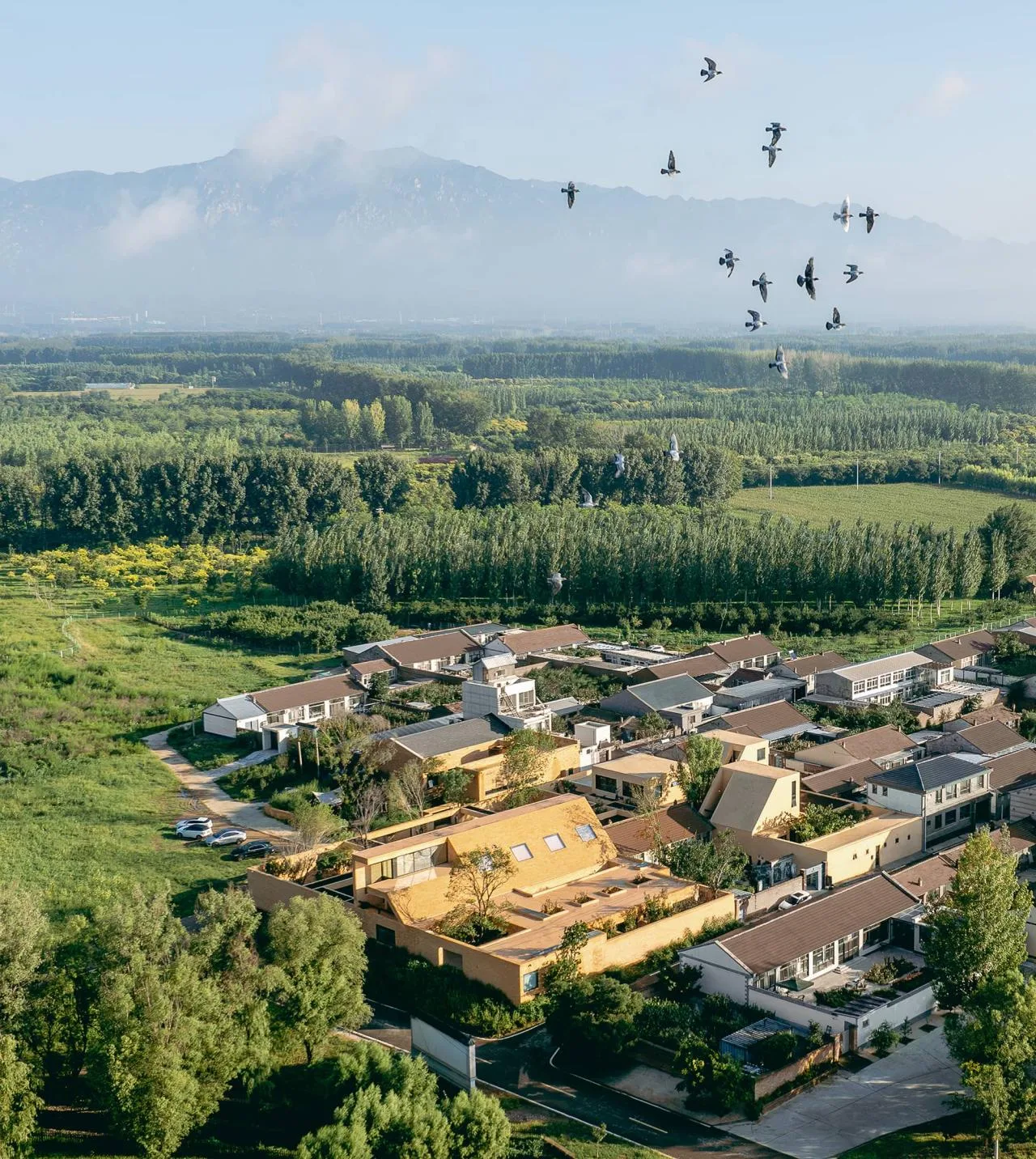
▲ Vast and far-reaching fields © Zhu Yumeng
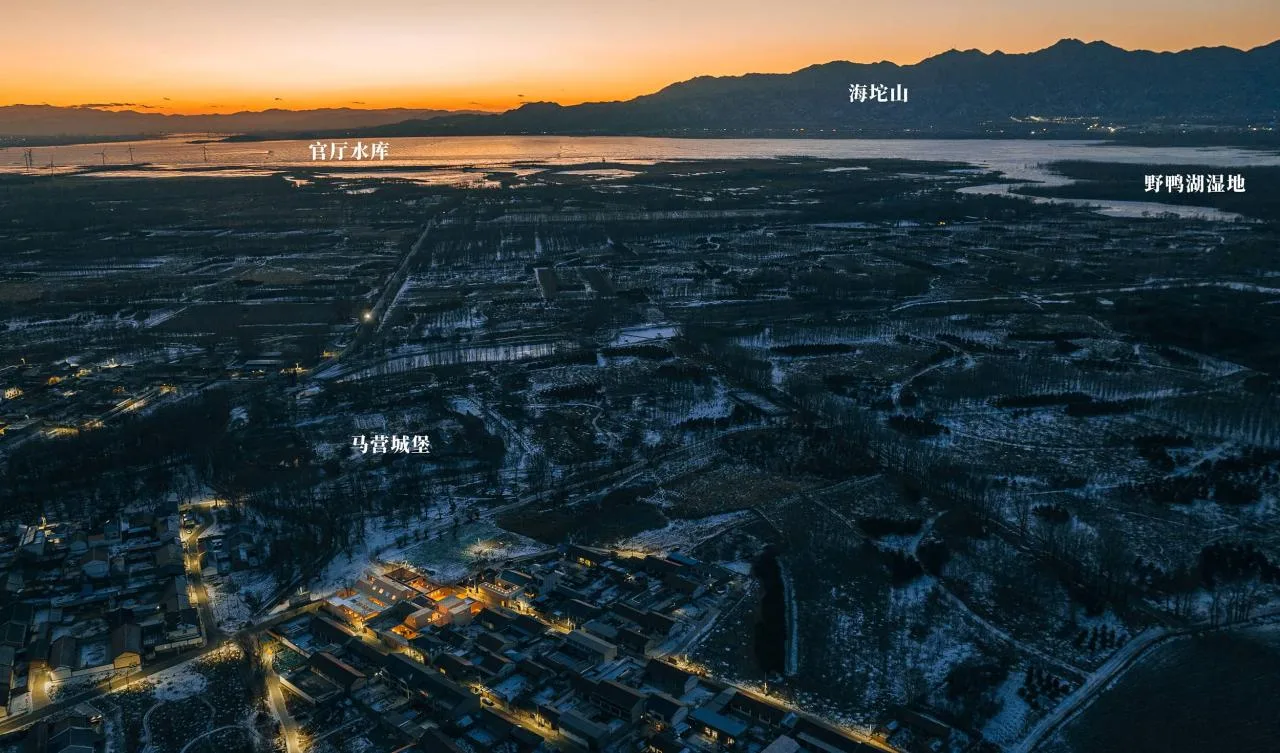
▲ Surrounding environment of the venue © Zhu Yumeng
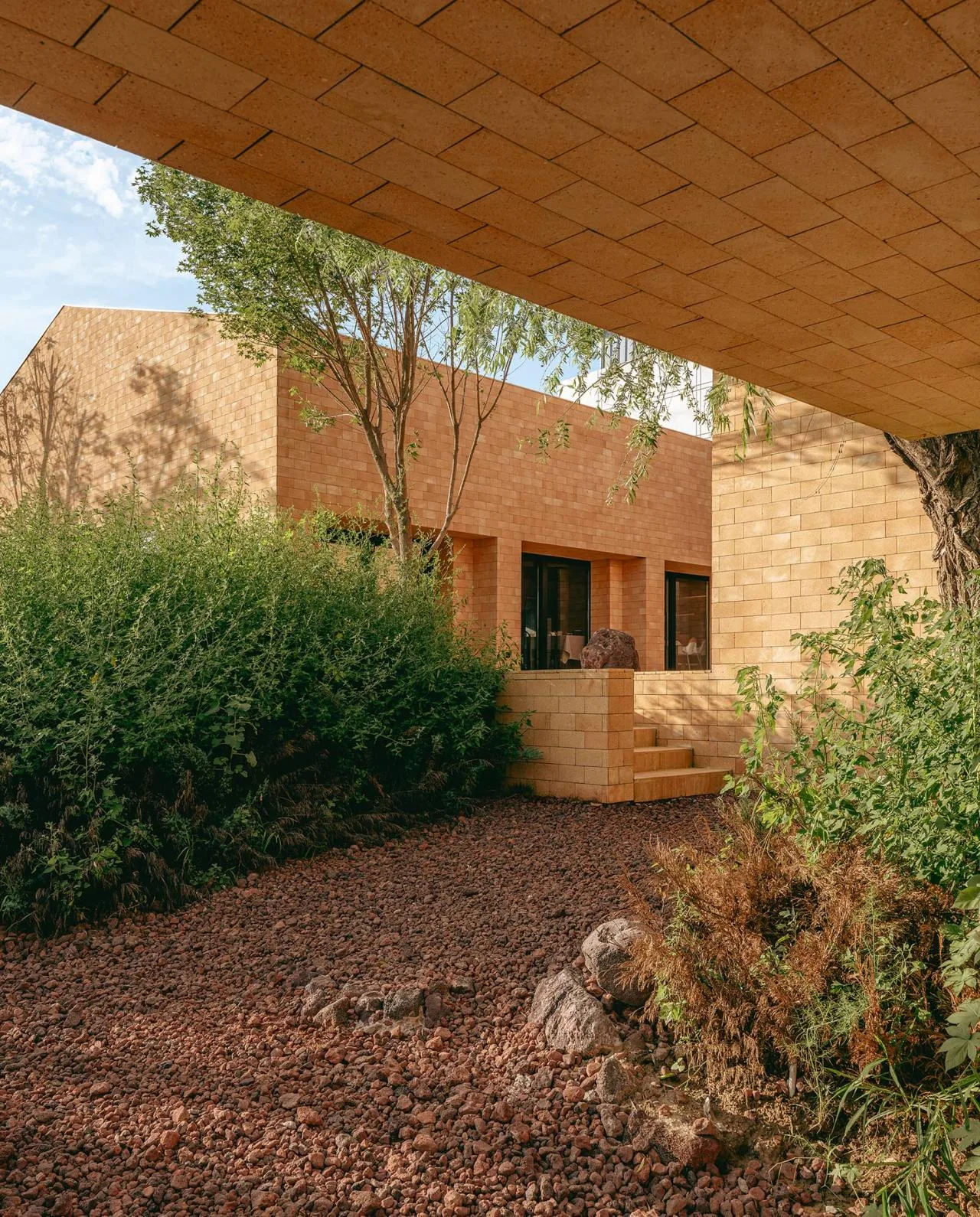
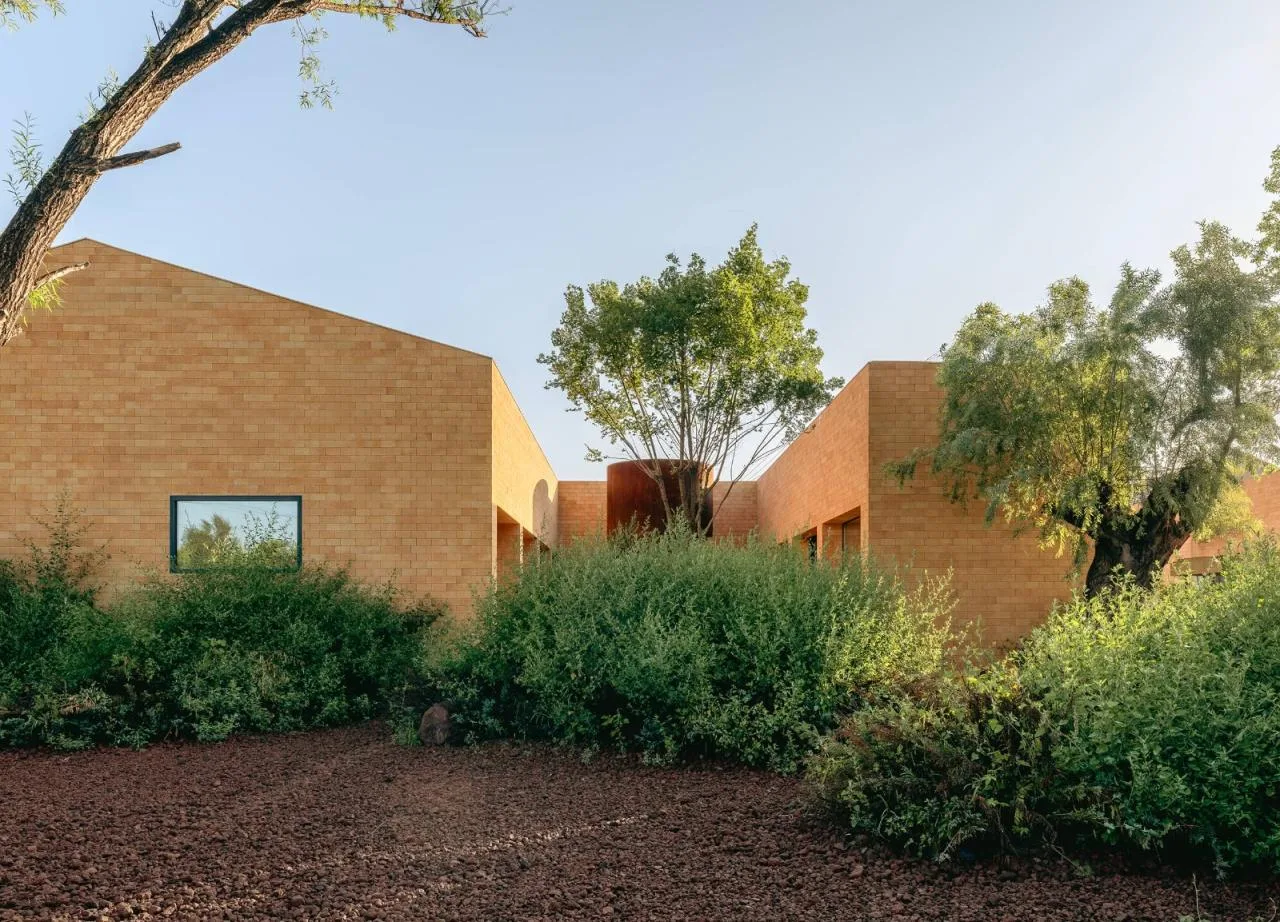
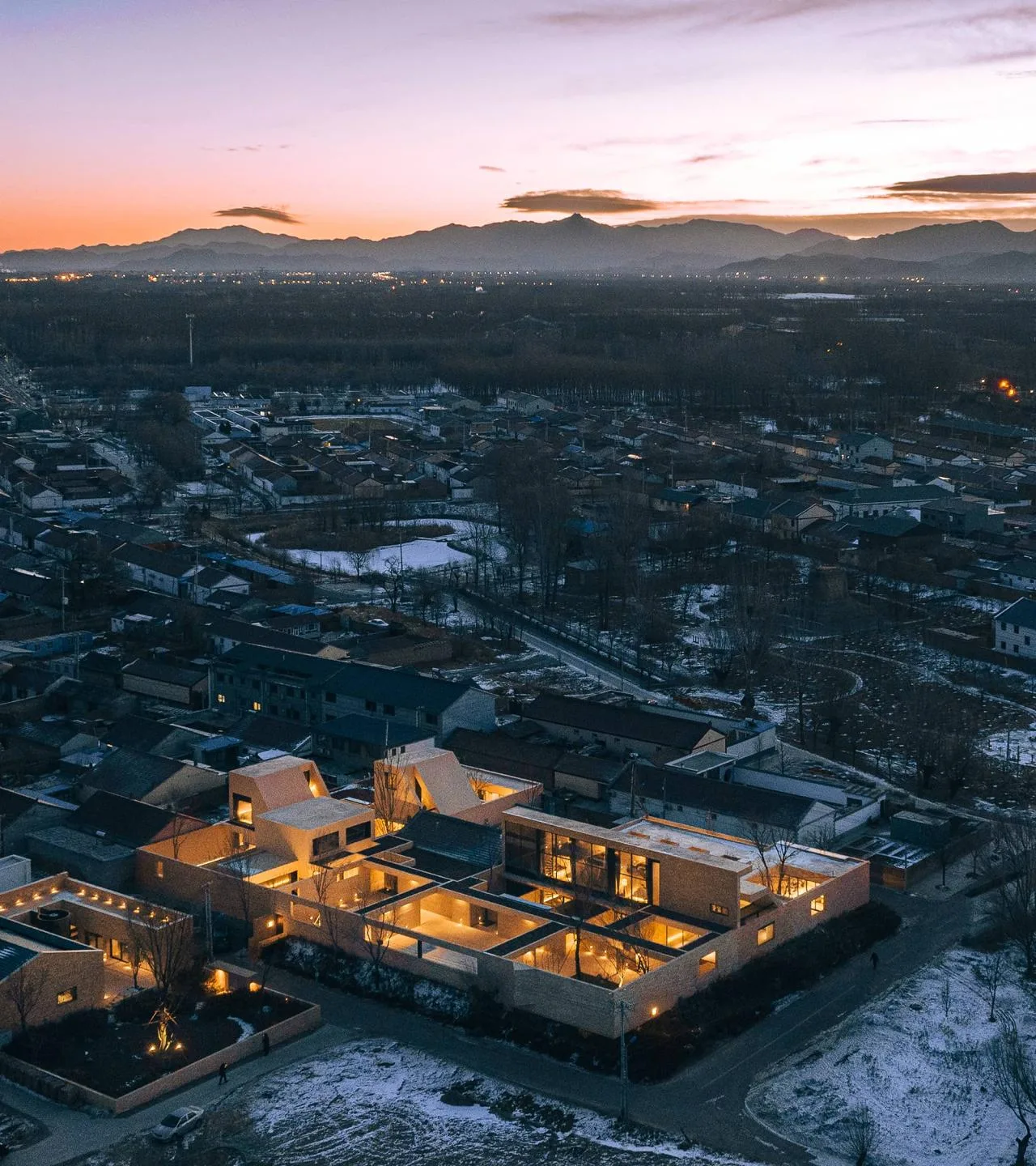
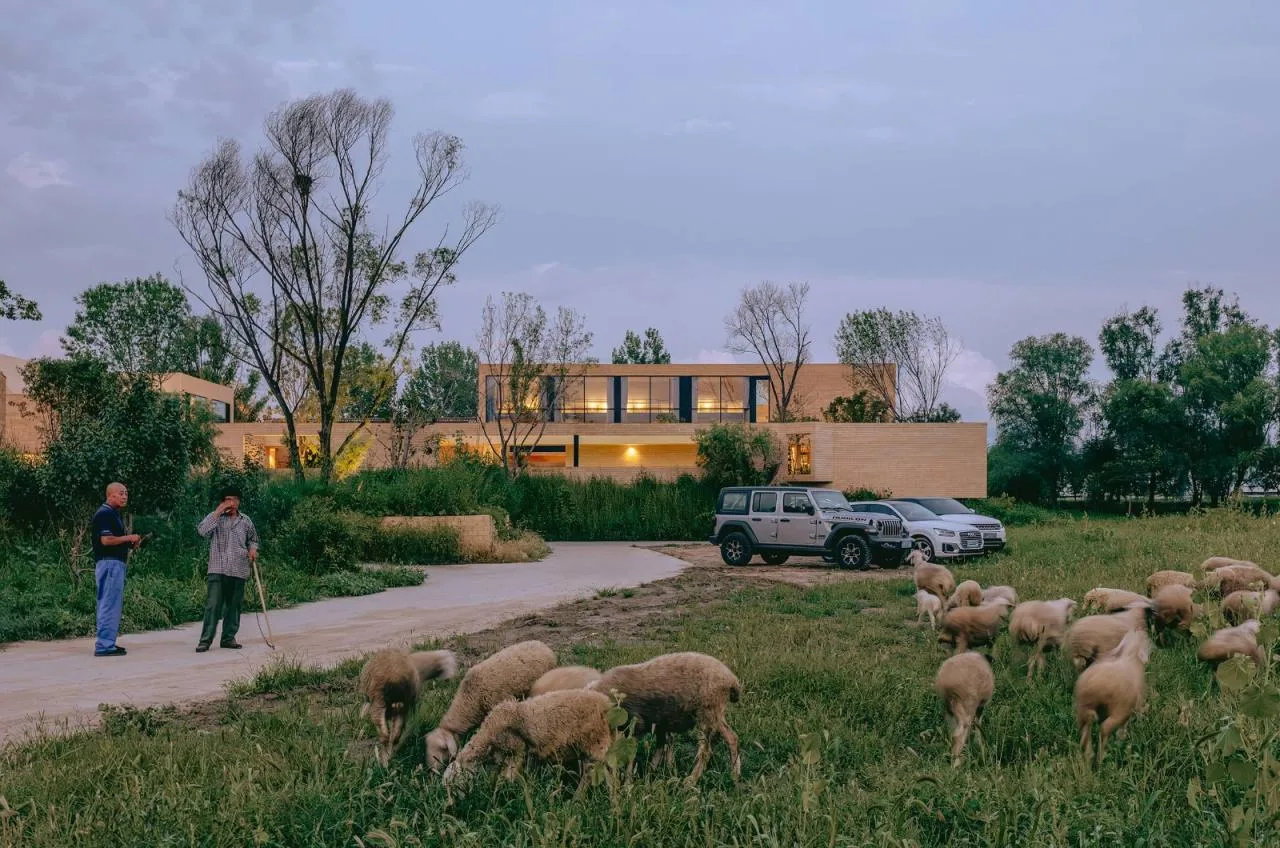
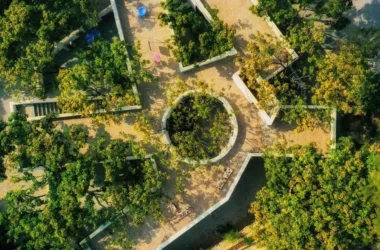
The ARVO 16:30 hotel is positioned at the northwest edge of Maying Village, separated from the adjacent mountains. Departing from our previous design approaches, we refrained from inserting futuristic elements or large-scale ground markings. Instead, we drew inspiration from the discreet nature of the horse camp castle, consolidating multiple village courtyards into a single complex featuring a castle that embraces trees growing through its walls. From the outside, the structure seamlessly integrates into the village landscape. The soft yellow hues of the buildings harmonize with the medium yellow of the drying corn and the earthy tones of the rammed earth castle walls, blending naturally with the village’s original living environment.
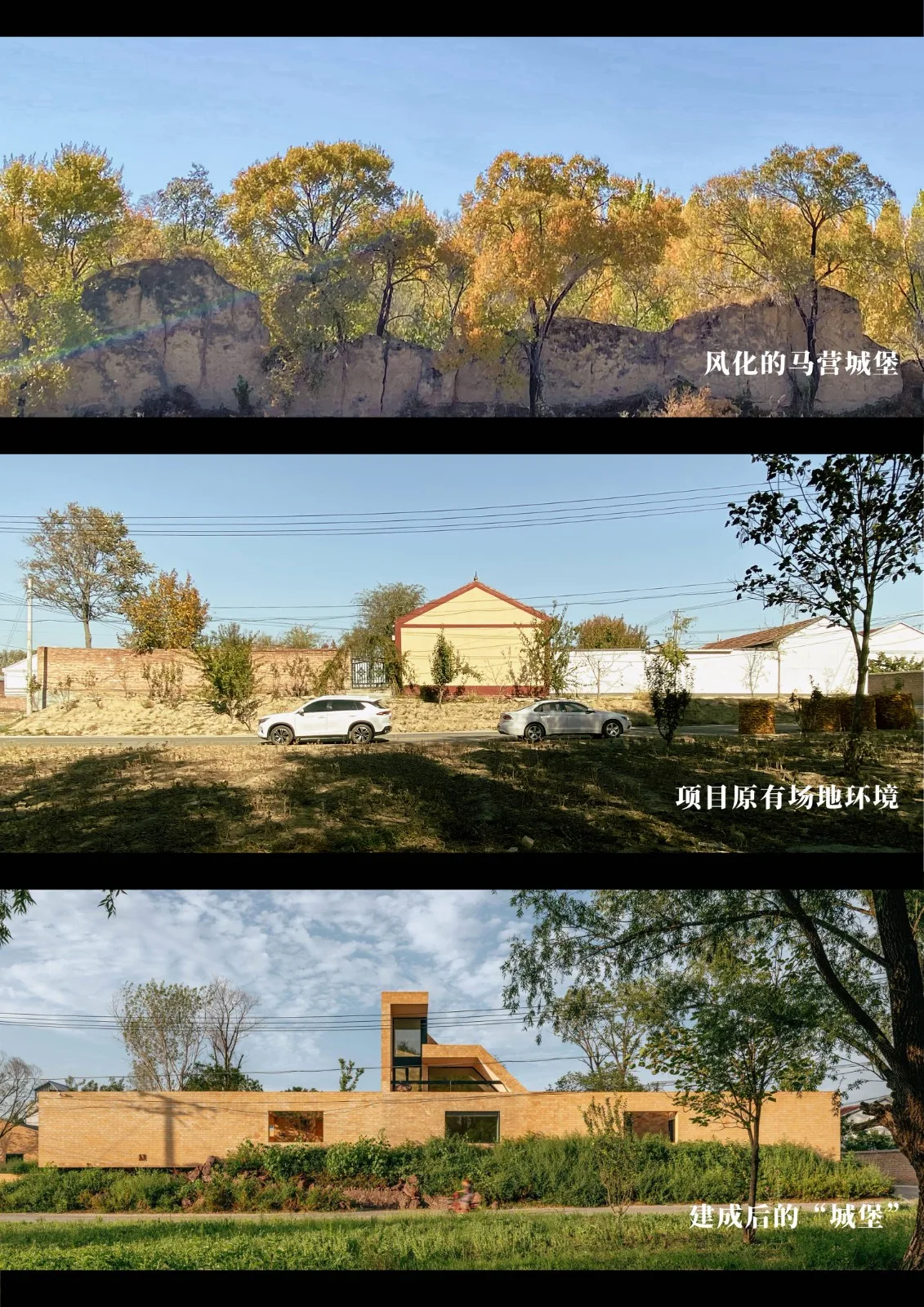
▲ The Evolution of the Castle © Large scale building, Zhu Yumeng
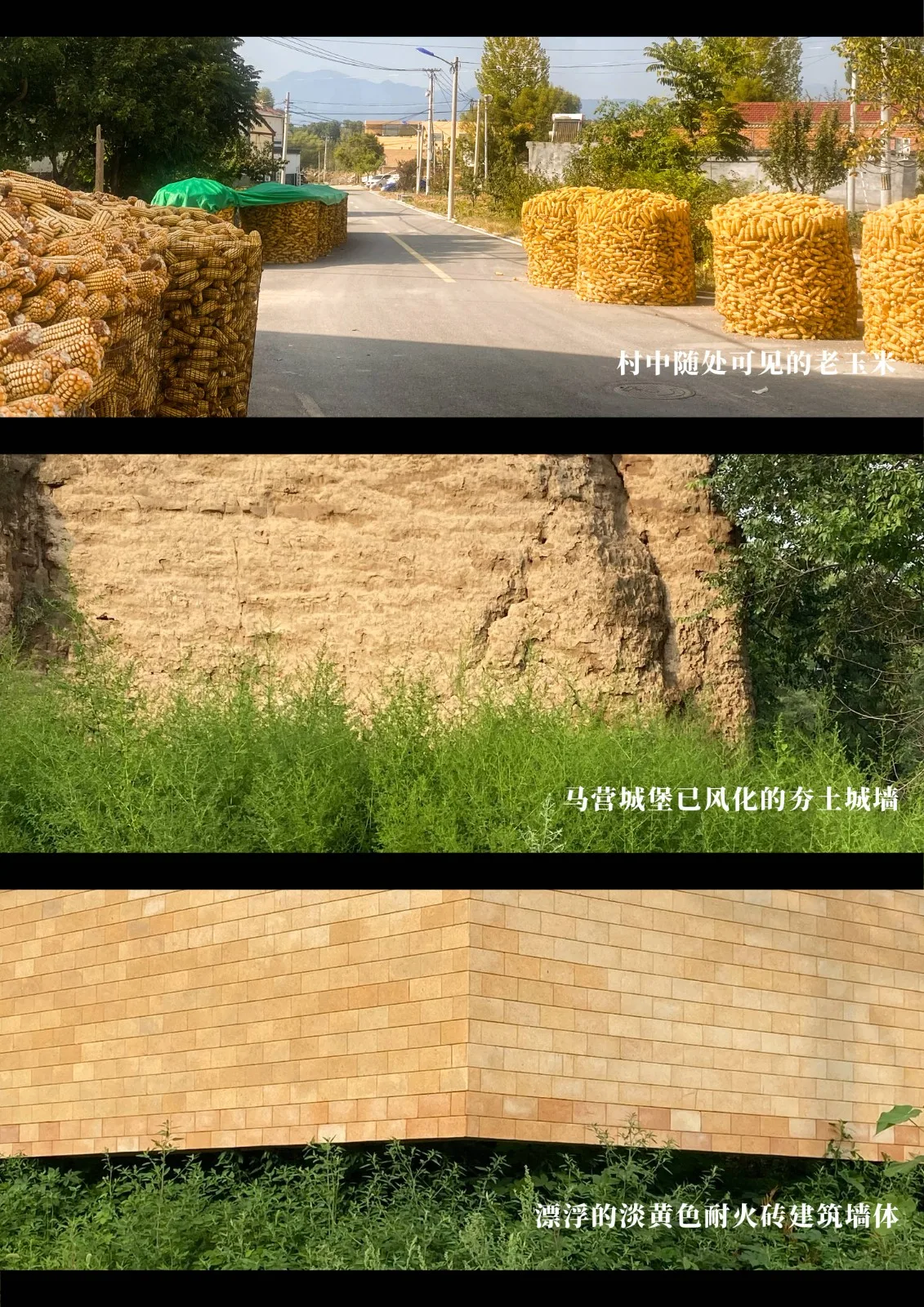
▲ Rich and subtle yellow tones © Large scale building, Zhu Yumeng
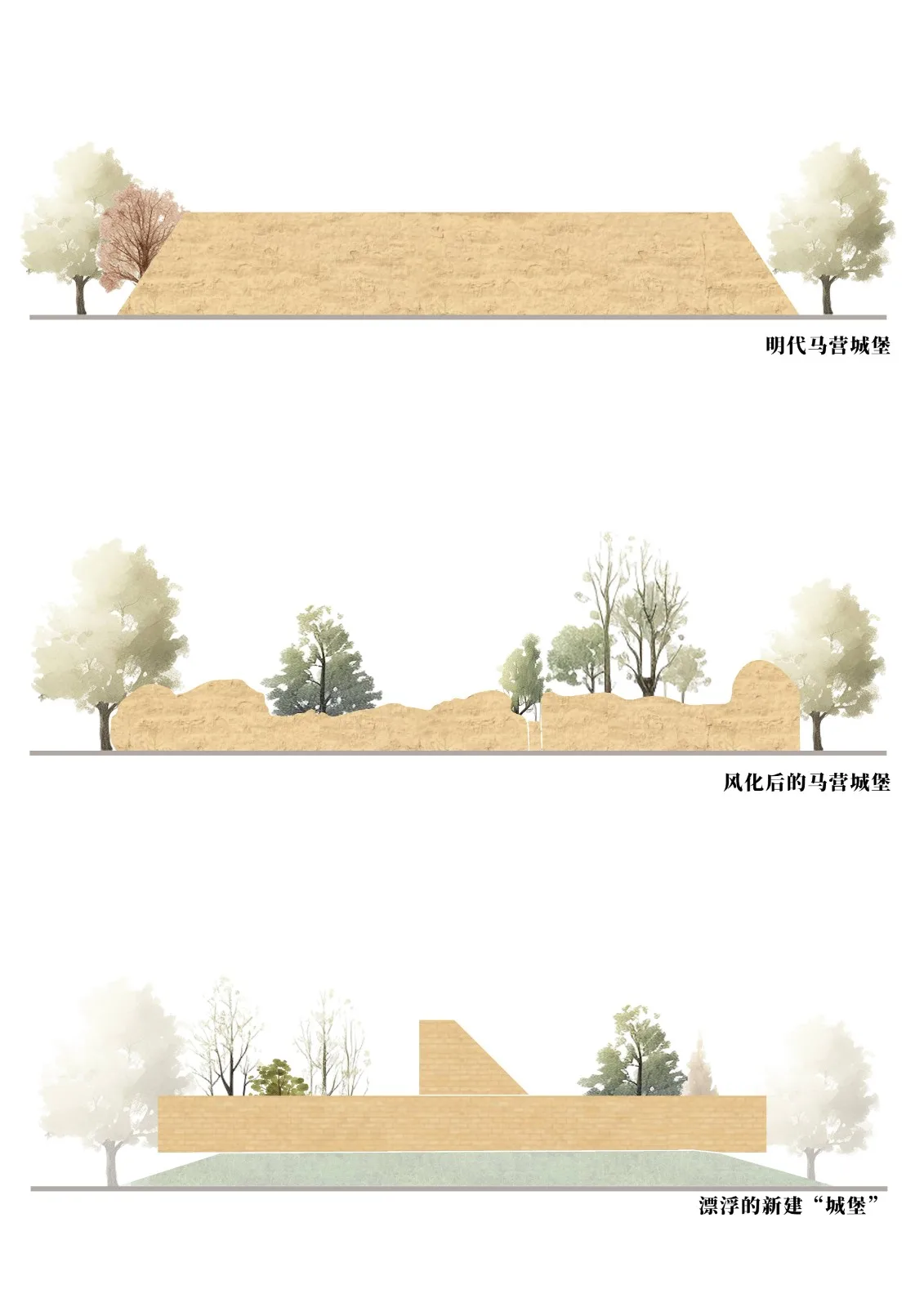
▲ Conceptual “Castle” Evolution © Large scale construction
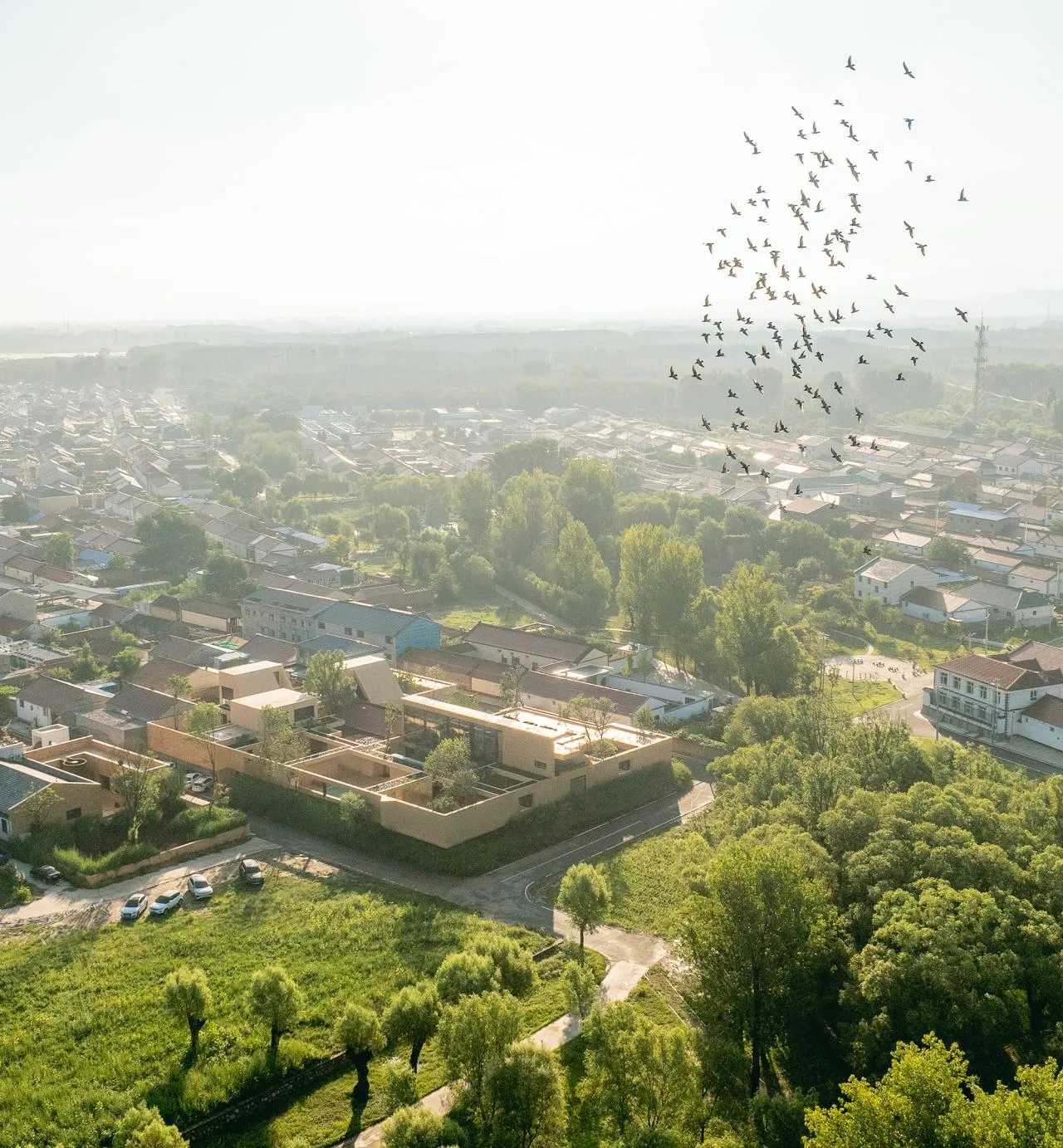
▲ Hotel seamlessly integrated into the village scene © Zhu Yumeng
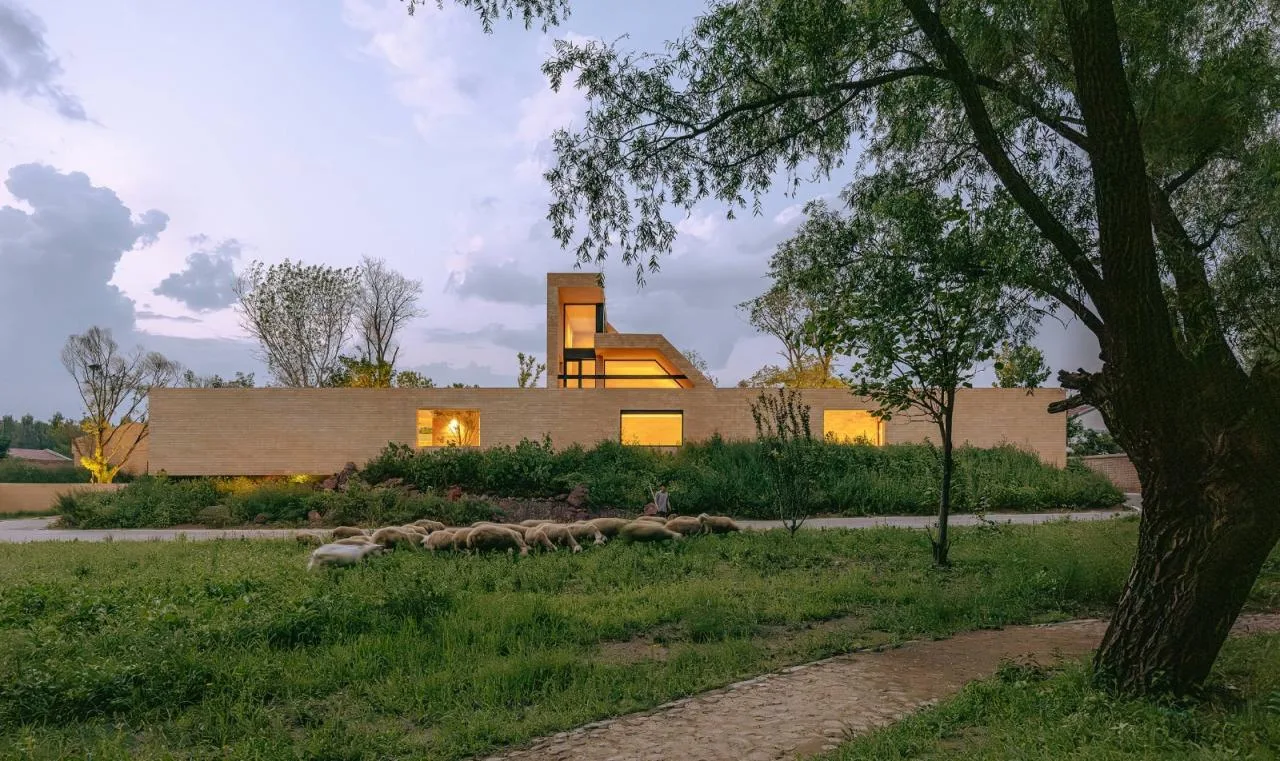
During my initial visit to the site, the afternoon sunlight at 4:00 PM bathed the southeast-facing plot evenly, while the northwest side’s willow forest cast intricate shadows that infused the project with a romantic ambiance. This inspired us to erect a long, solid wall along the western boundary adjacent to the village road, serving as a “curtain” for light and shadow play. Within a courtyard bathed in natural light, sunlight filters through these “curtains,” creating a delicate dance of light and shadow across the walls, generating a tranquil, lazy atmosphere within the hotel immersed in this interplay.
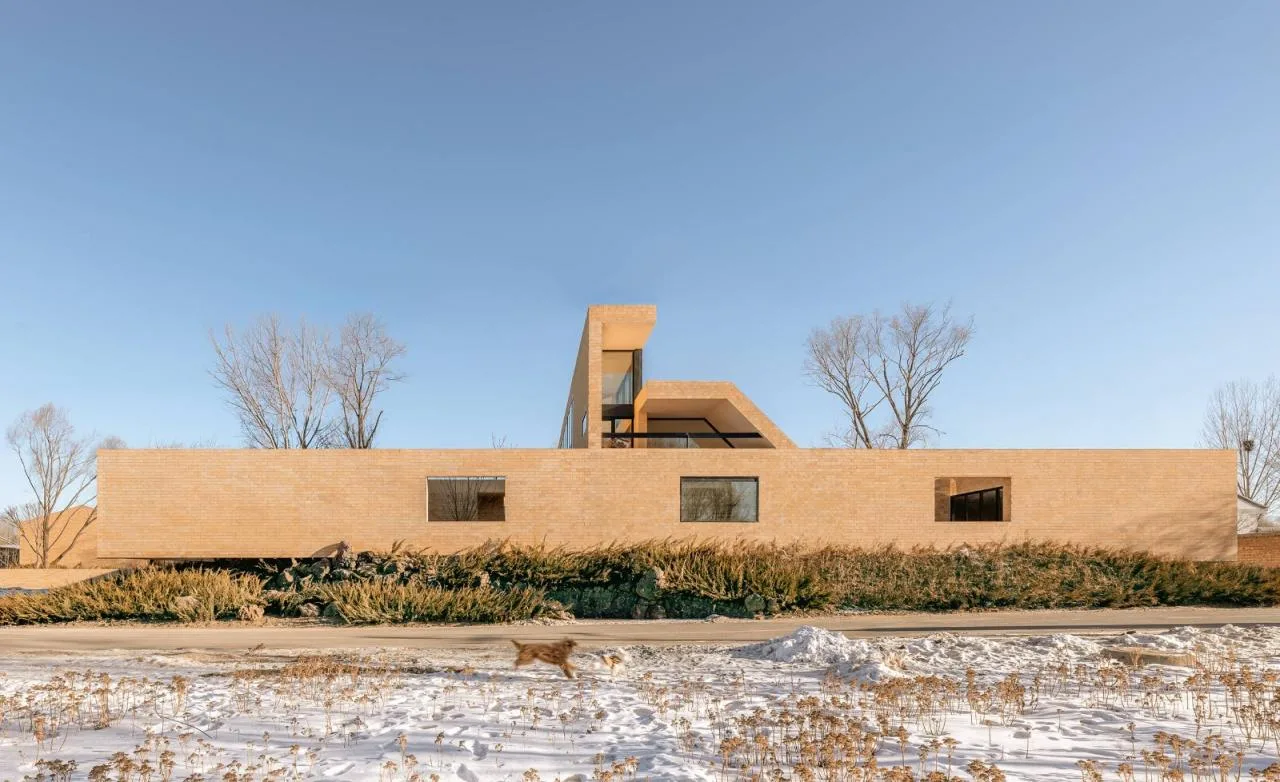
▲ Long solid wall © Zhu Yumeng
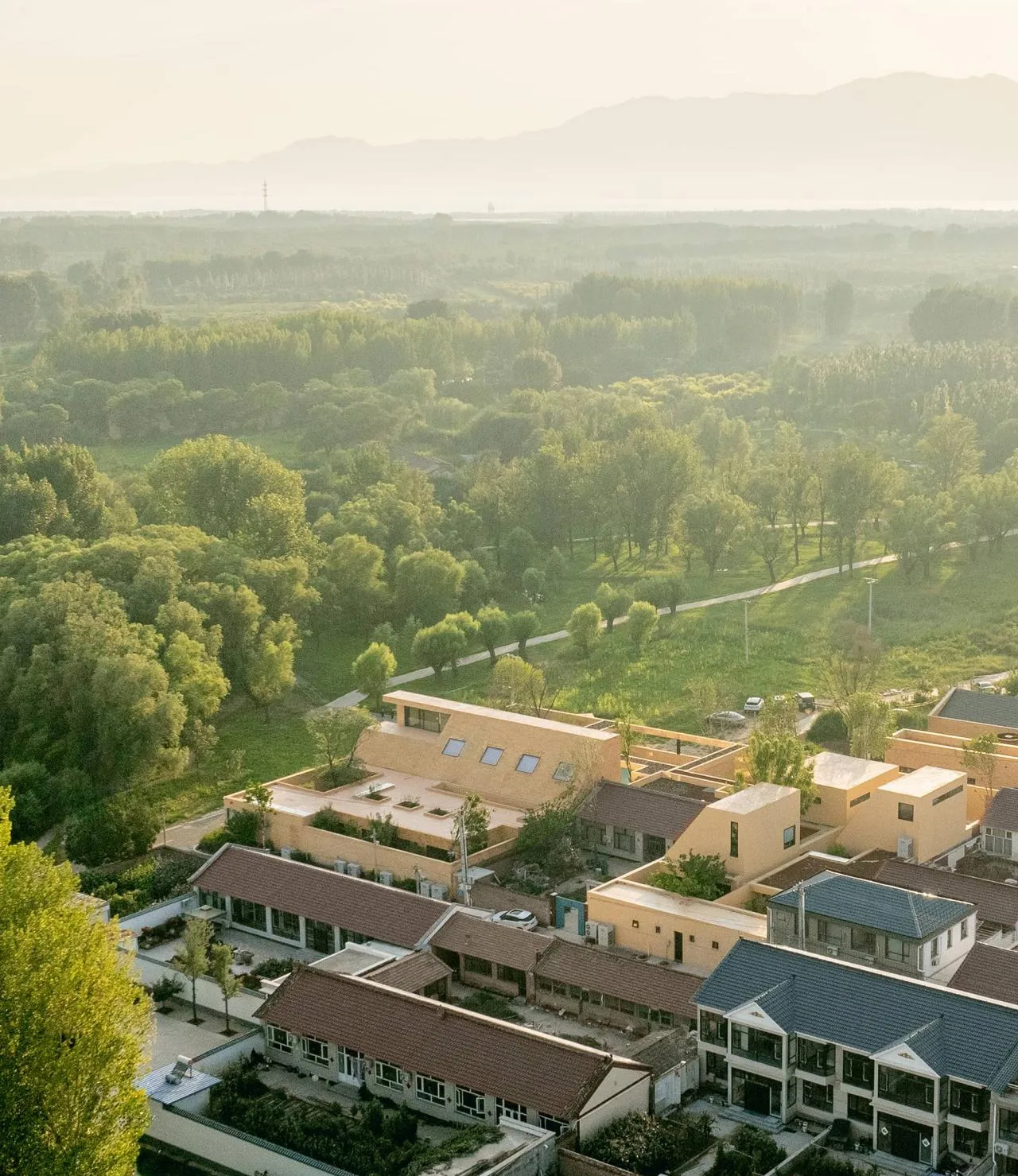
▲ Willow grove on the northwest side of the site © Zhu Yumeng
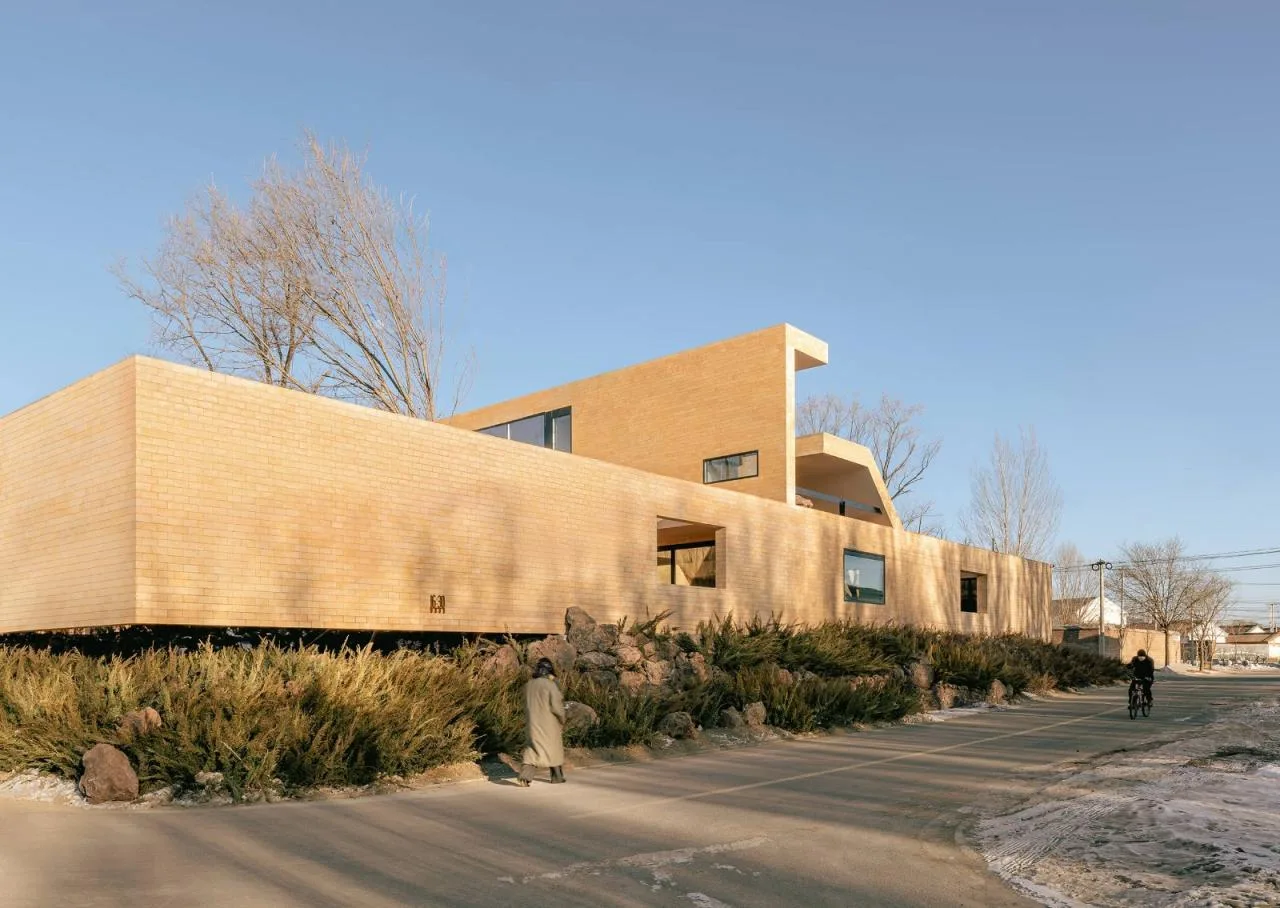
The wall acts as a ‘curtain’ for light and shadow © Zhu Yumeng
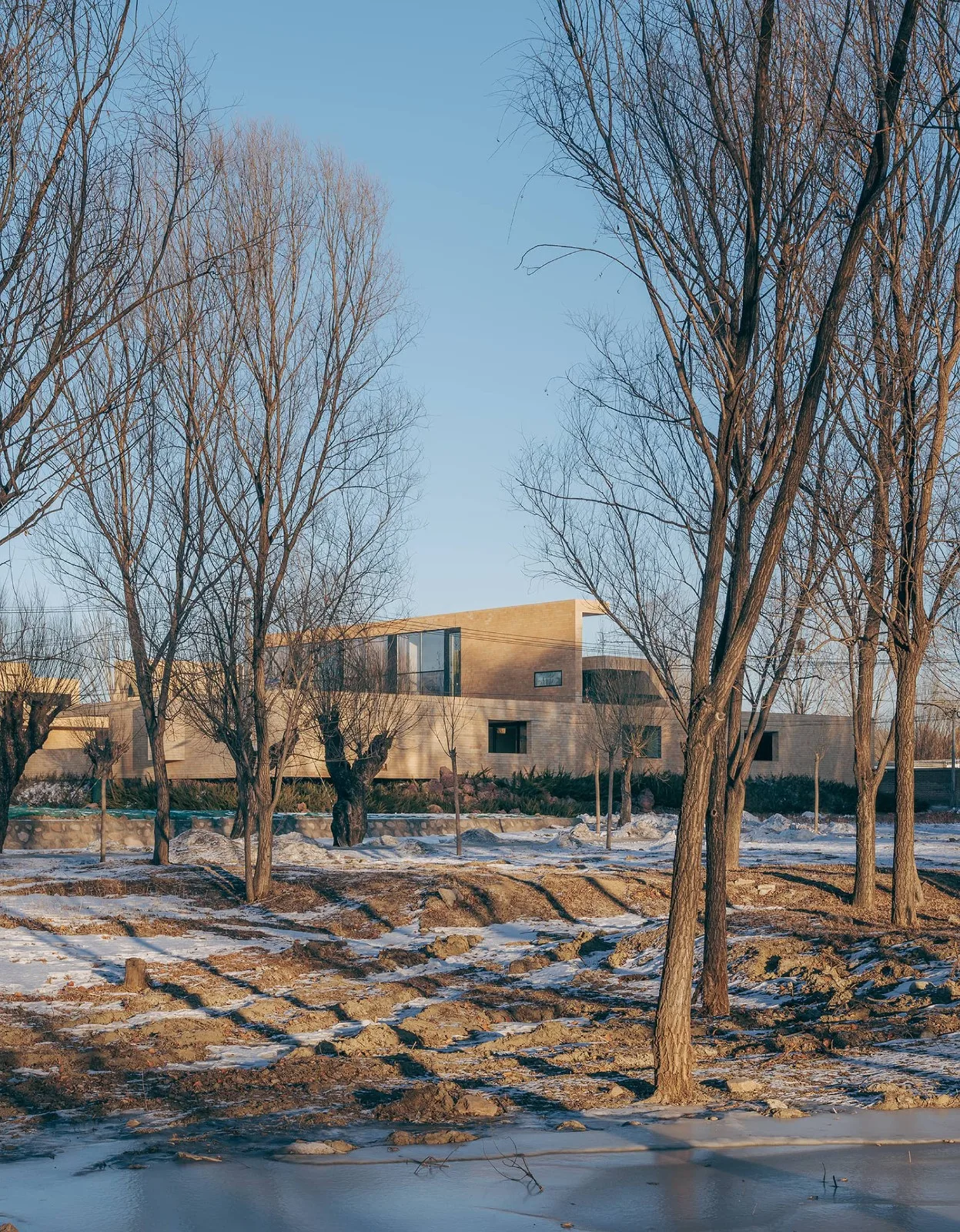
16:30 Hotel bathed in light and shadow © Zhu Yumeng
Thanks to the site’s elevation being nearly two meters above the village road, we lifted the continuous exterior wall off the ground. While the wall descends to meet the site level, it floats above the village road, creating a gap tall enough for a person to pass through, which serves as the hotel’s main entrance. This elevated wall forms a natural transitional space between the hotel’s interior and the surrounding environment. Guests approach the hotel by walking through the woods, entering the courtyard from nature, and ascending a ramp to reach the lobby.
Relation between hotel entrance and walls © Zhu Yumeng
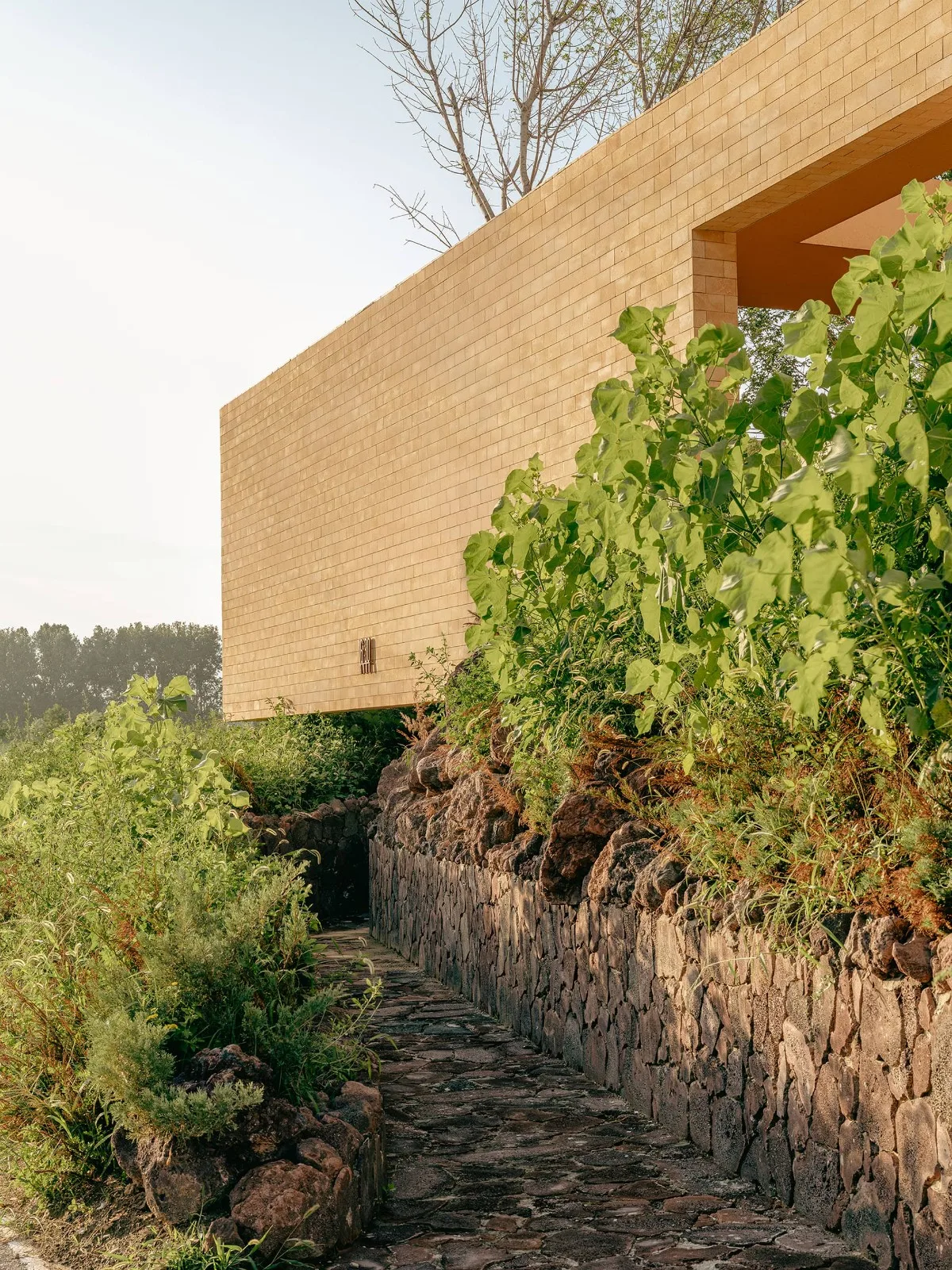
▲ Raised wall forming the hotel entrance © Zhu Yumeng
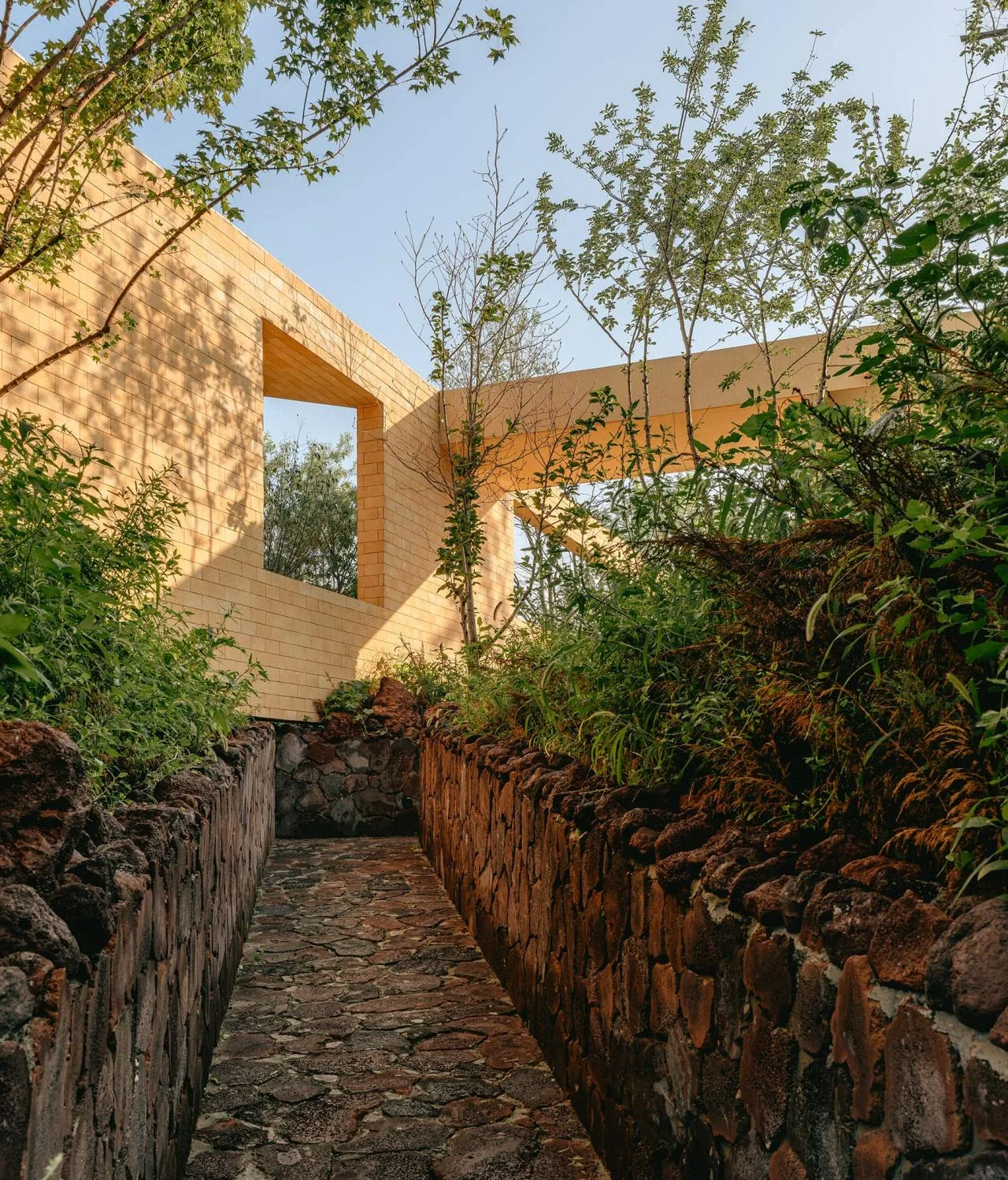
▲ Hotel entrance ramp © Zhu Yumeng
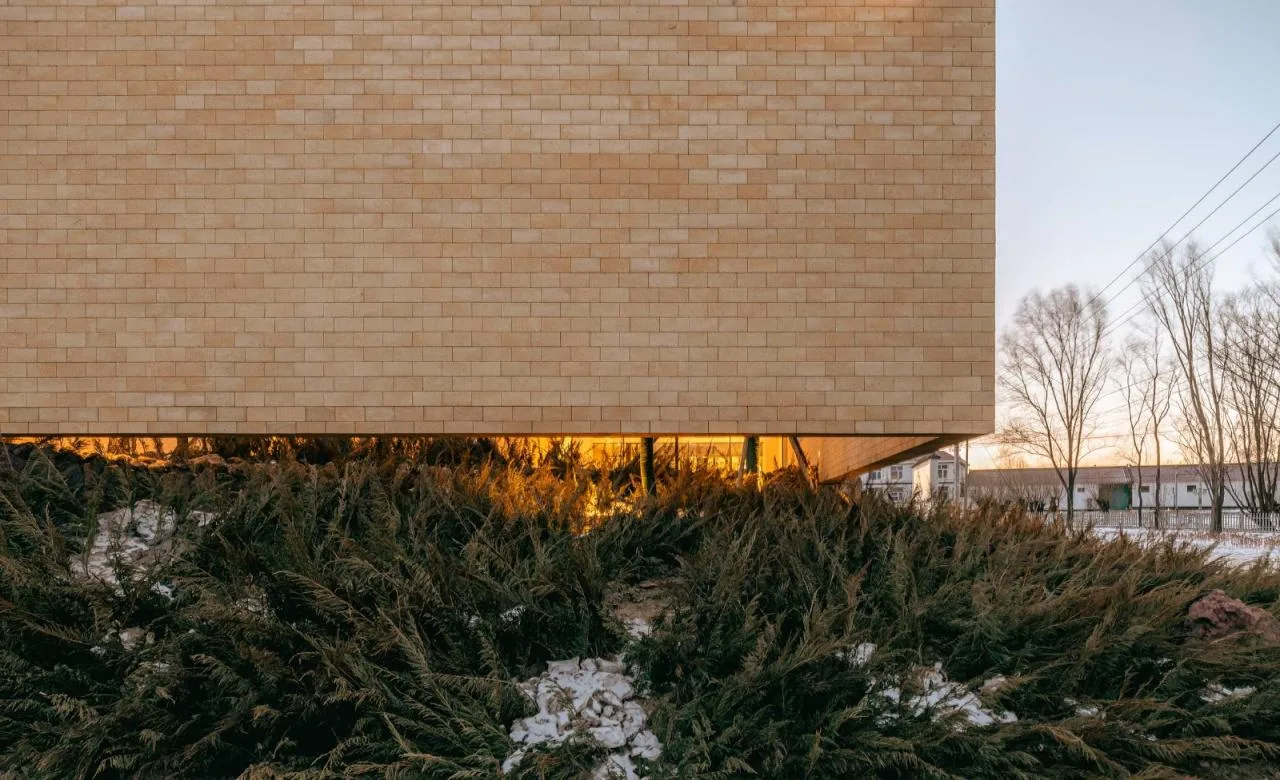
Wall suspended above ground © Zhu Yumeng
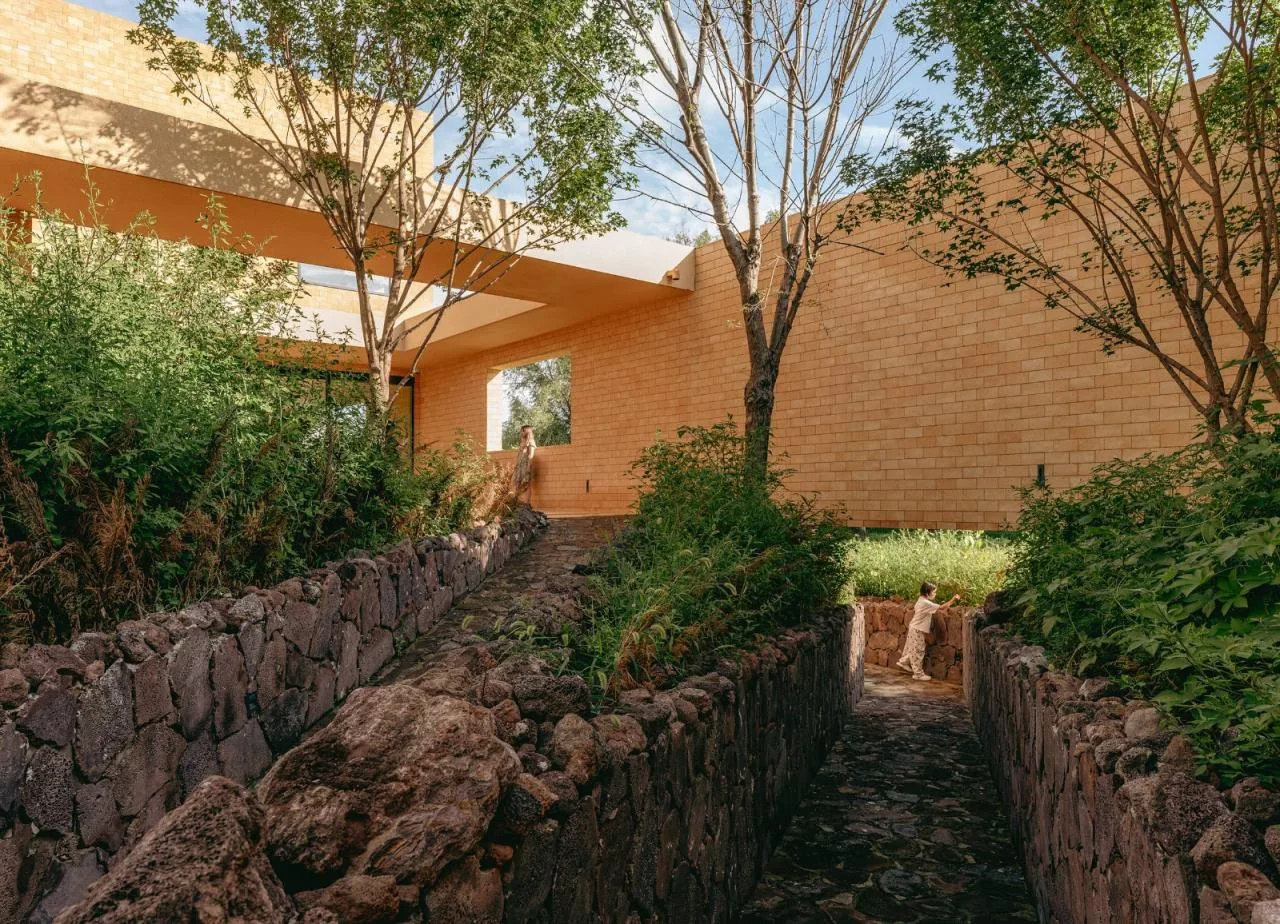
▲ Winding ramp leading from nature into the courtyard © Zhu Yumeng
The hotel’s spatial layout is intimate and enclosed, divided into three main zones: the entrance reception, guest rooms, and supporting activity areas.
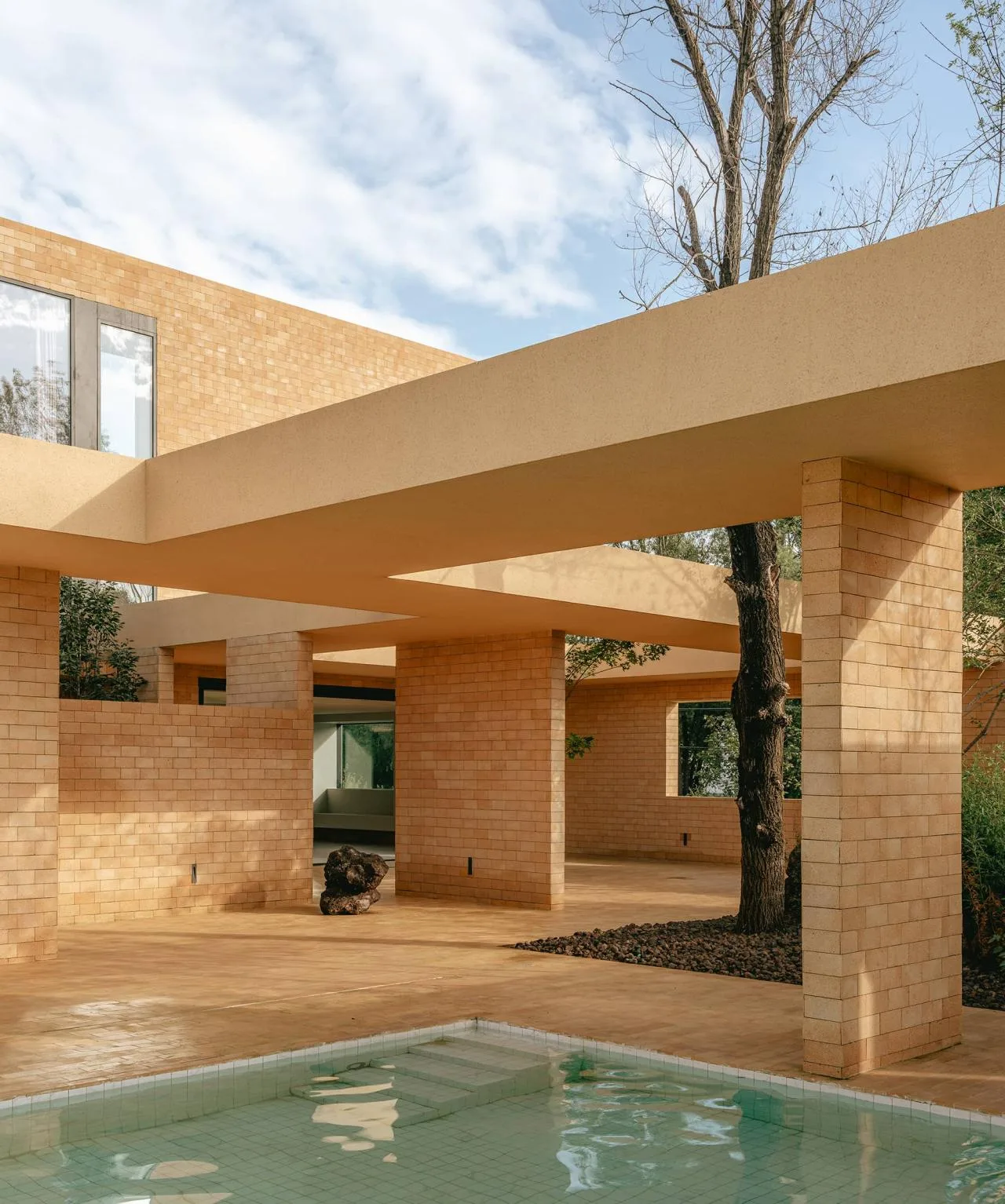
▲ Entrance Reception Courtyard © Zhu Yumeng
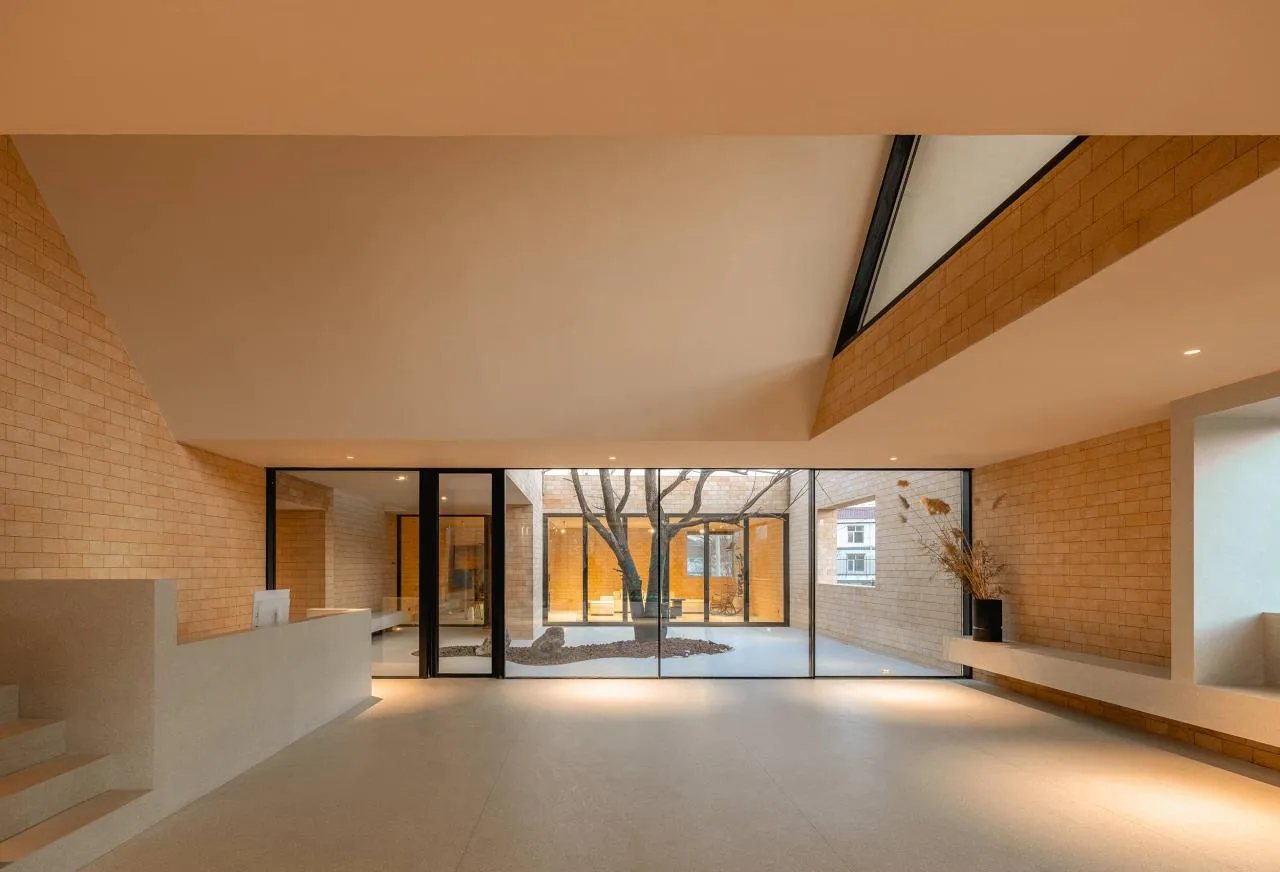
▲ Entrance Reception Area © Zhu Yumeng
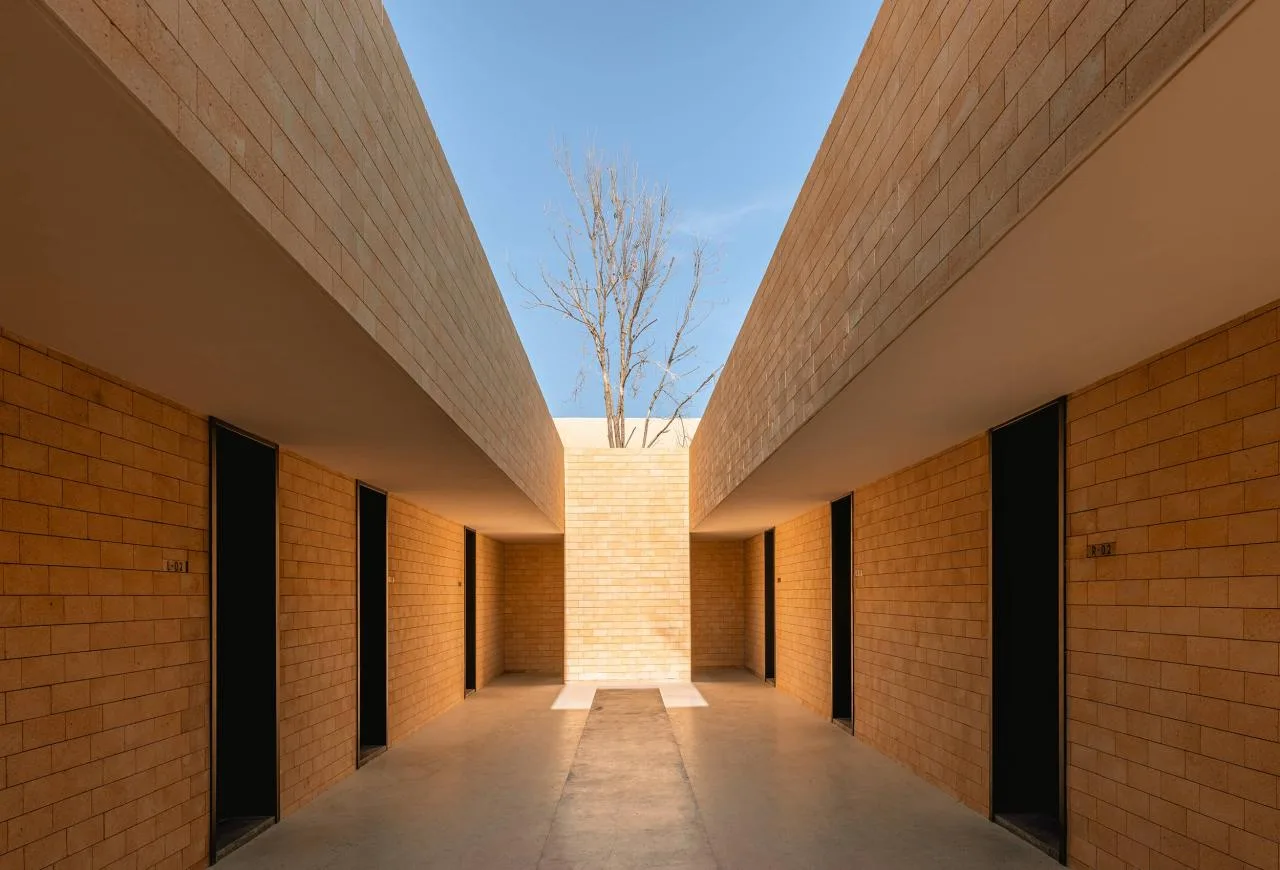
▲ Guest Room Area © Zhu Yumeng
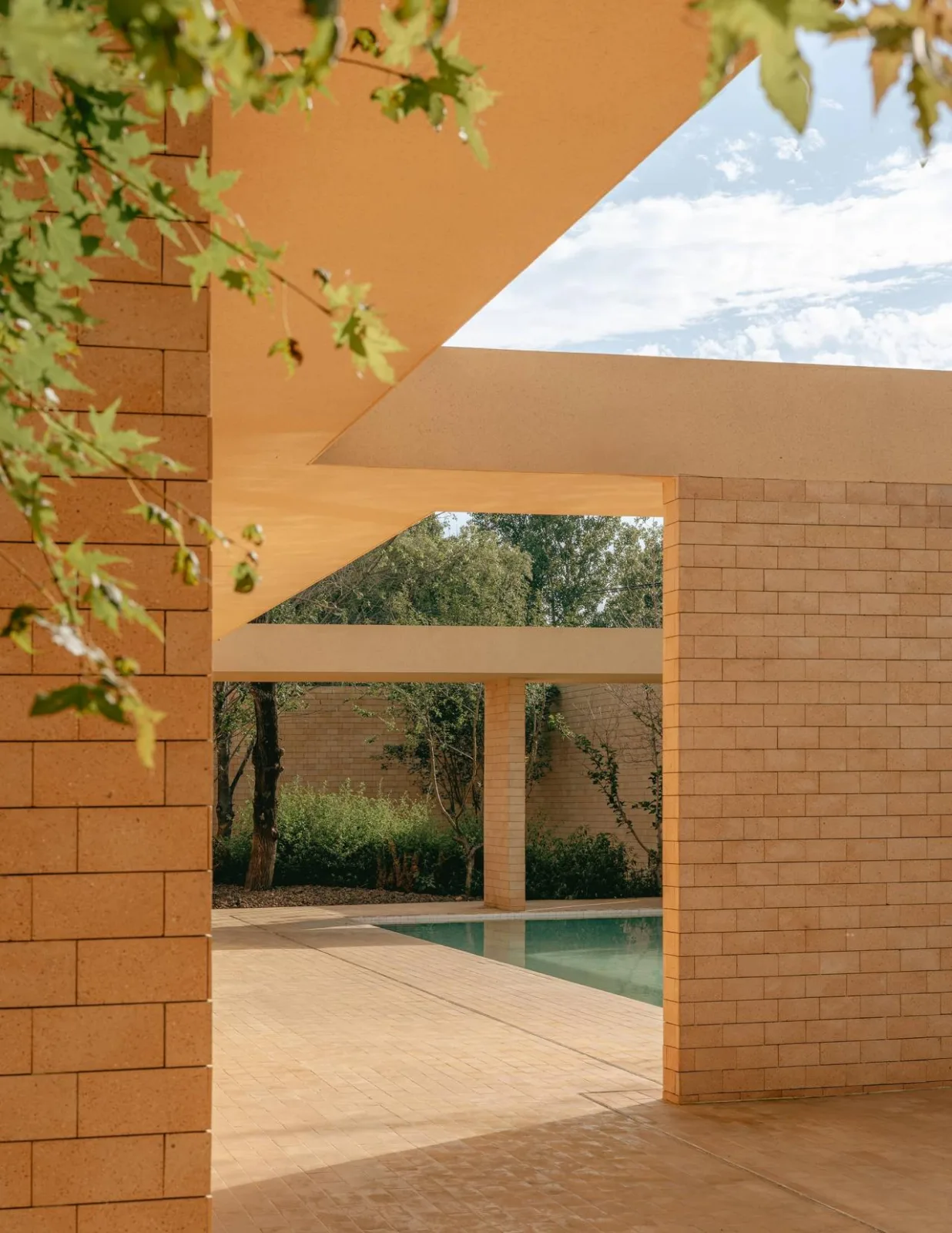
▲ Supporting Activity Areas © Zhu Yumeng
Within the entrance reception area, spaces like the hotel lobby, lounge, and other functional rooms are arranged along the courtyard’s axis adjacent to the walls. Using consistent wall finishes inside and out, combined with expansive glass sliding doors, creates a layered transition between interior areas and the courtyard, blurring the lines between indoors and outdoors and encouraging a seamless flow for visitors.
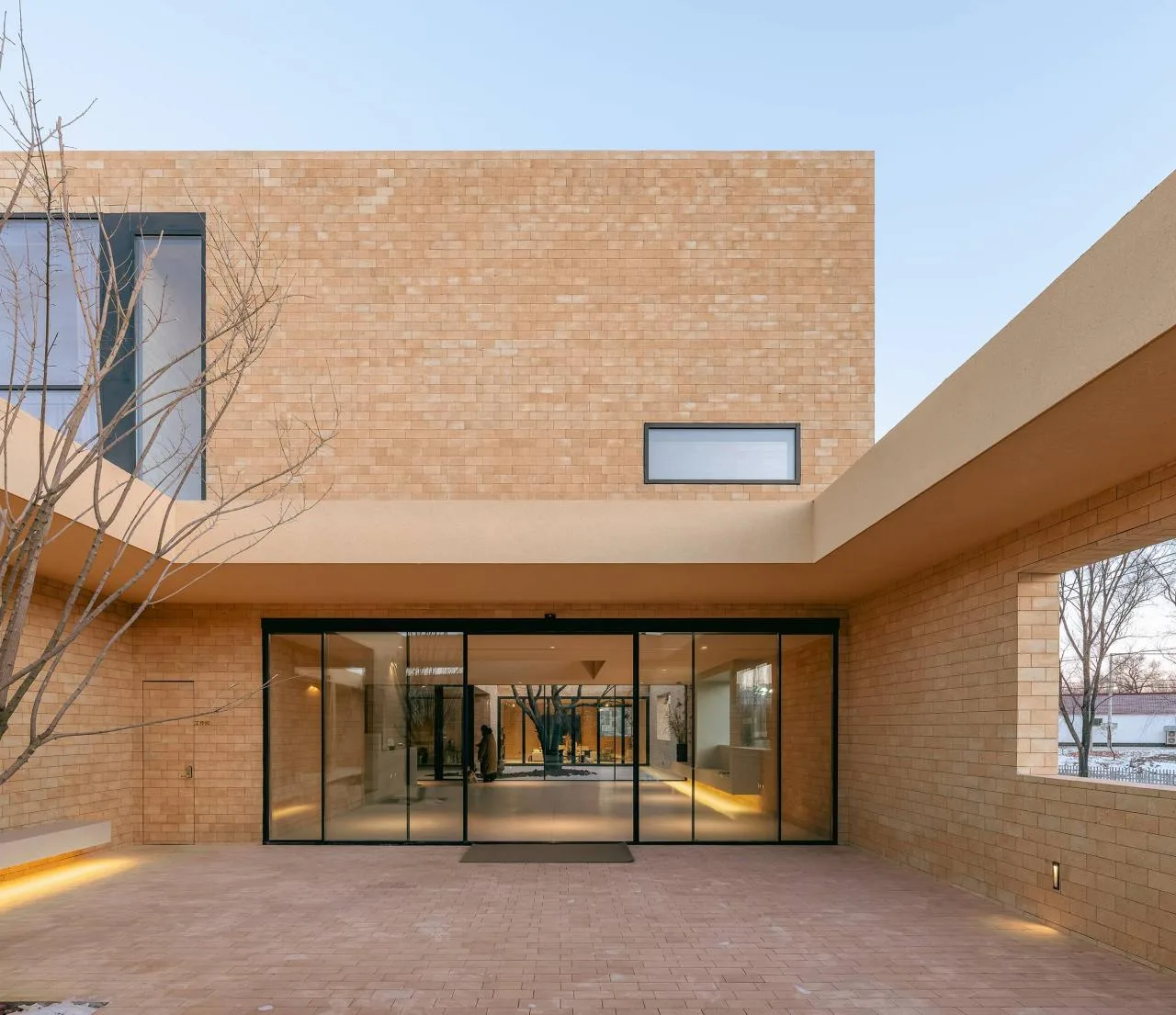
▲ Gradual transition from indoor spaces to courtyards © Zhu Yumeng
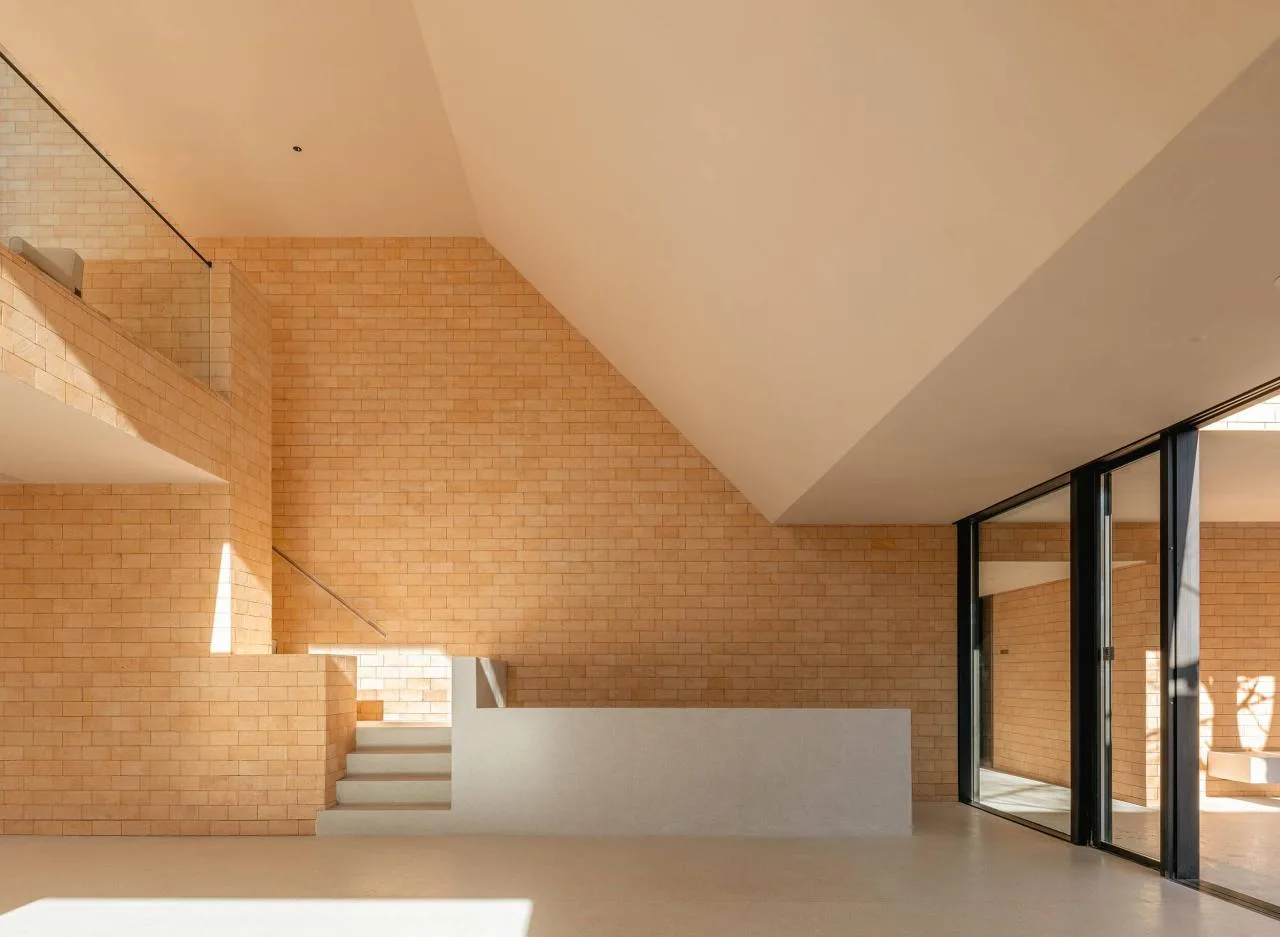
▲ Hotel lobby © Zhu Yumeng
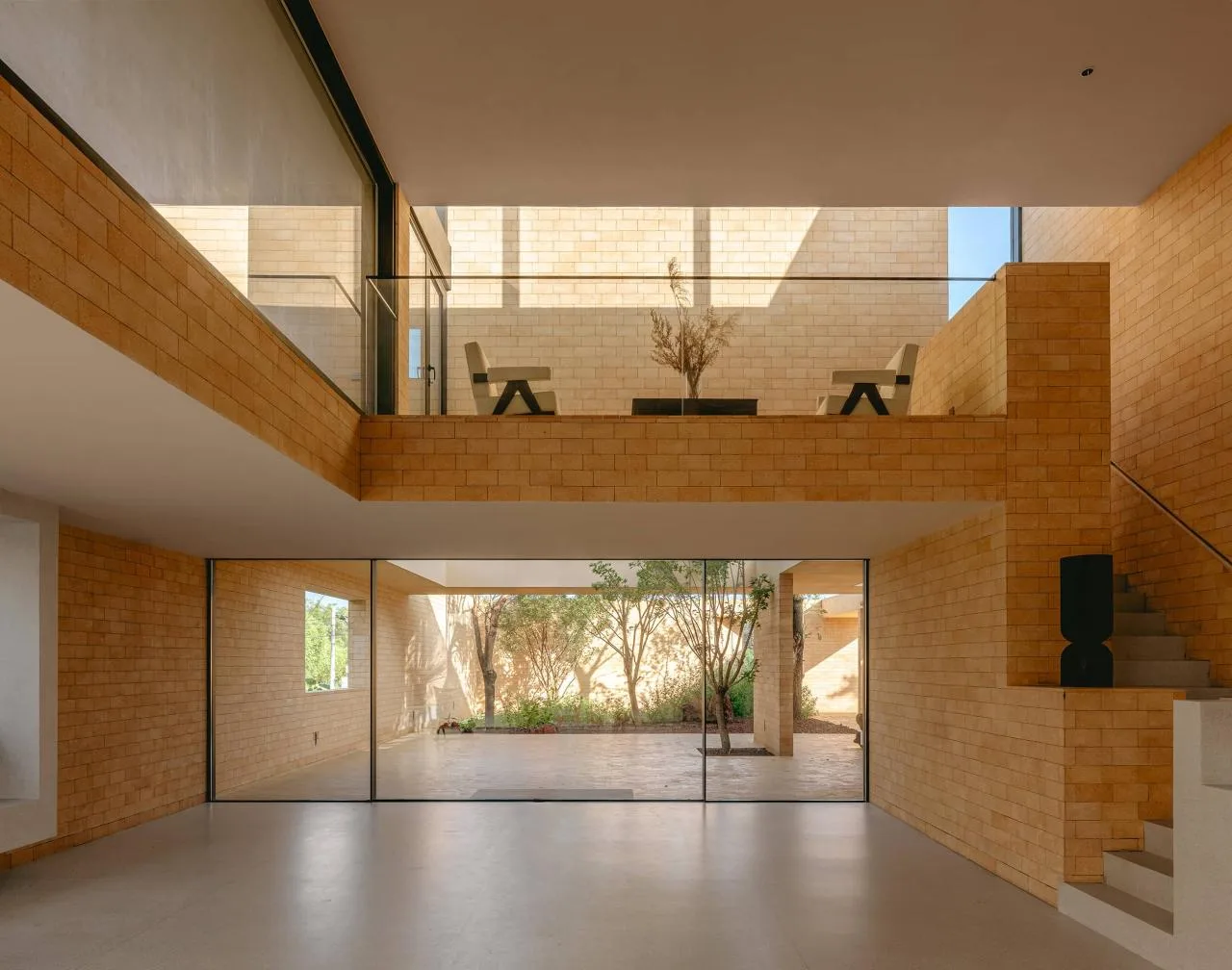
▲ Matching interior and exterior wall finishes with oversized sliding doors © Zhu Yumeng
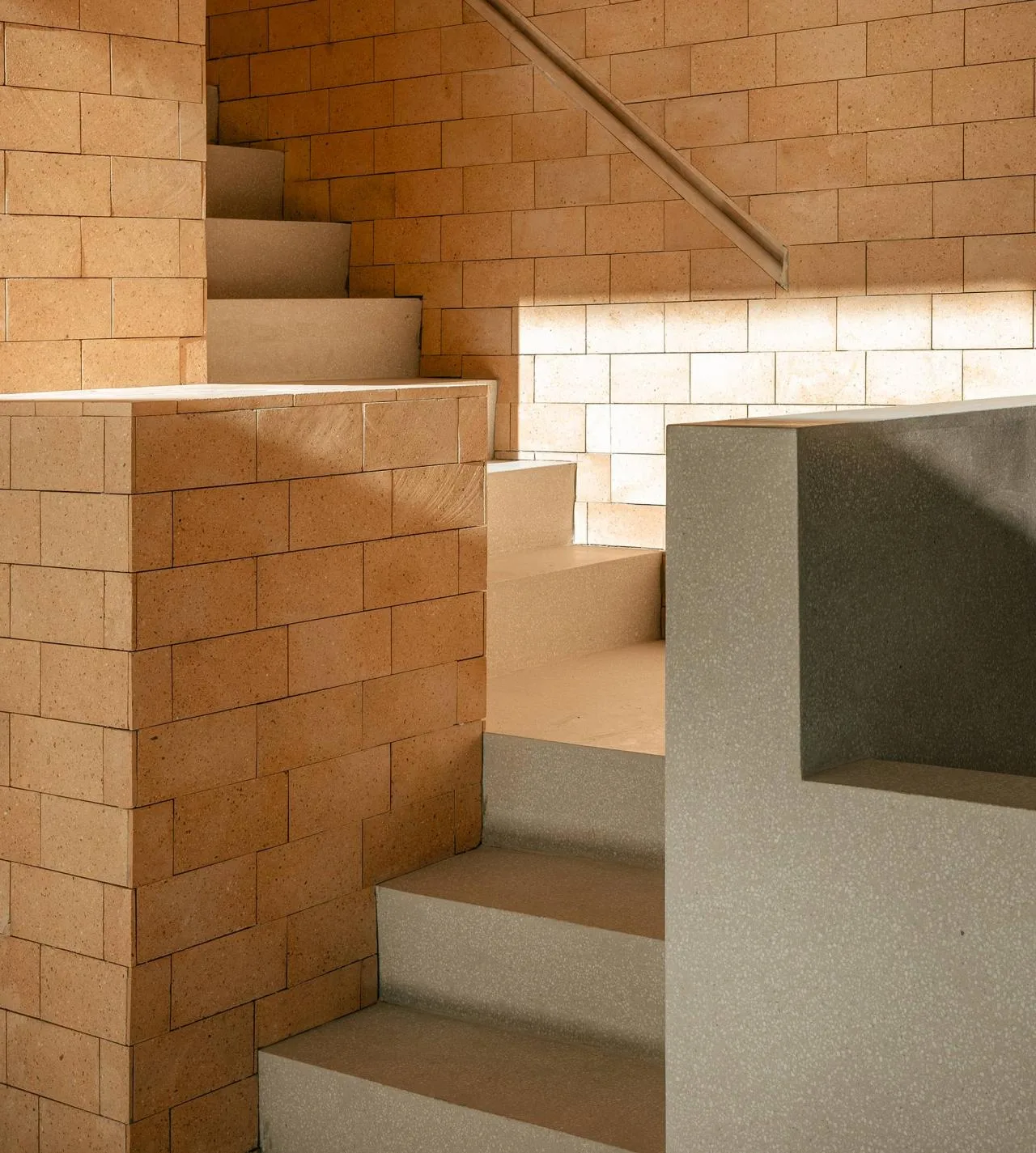
▲ Wall finish details © Zhu Yumeng
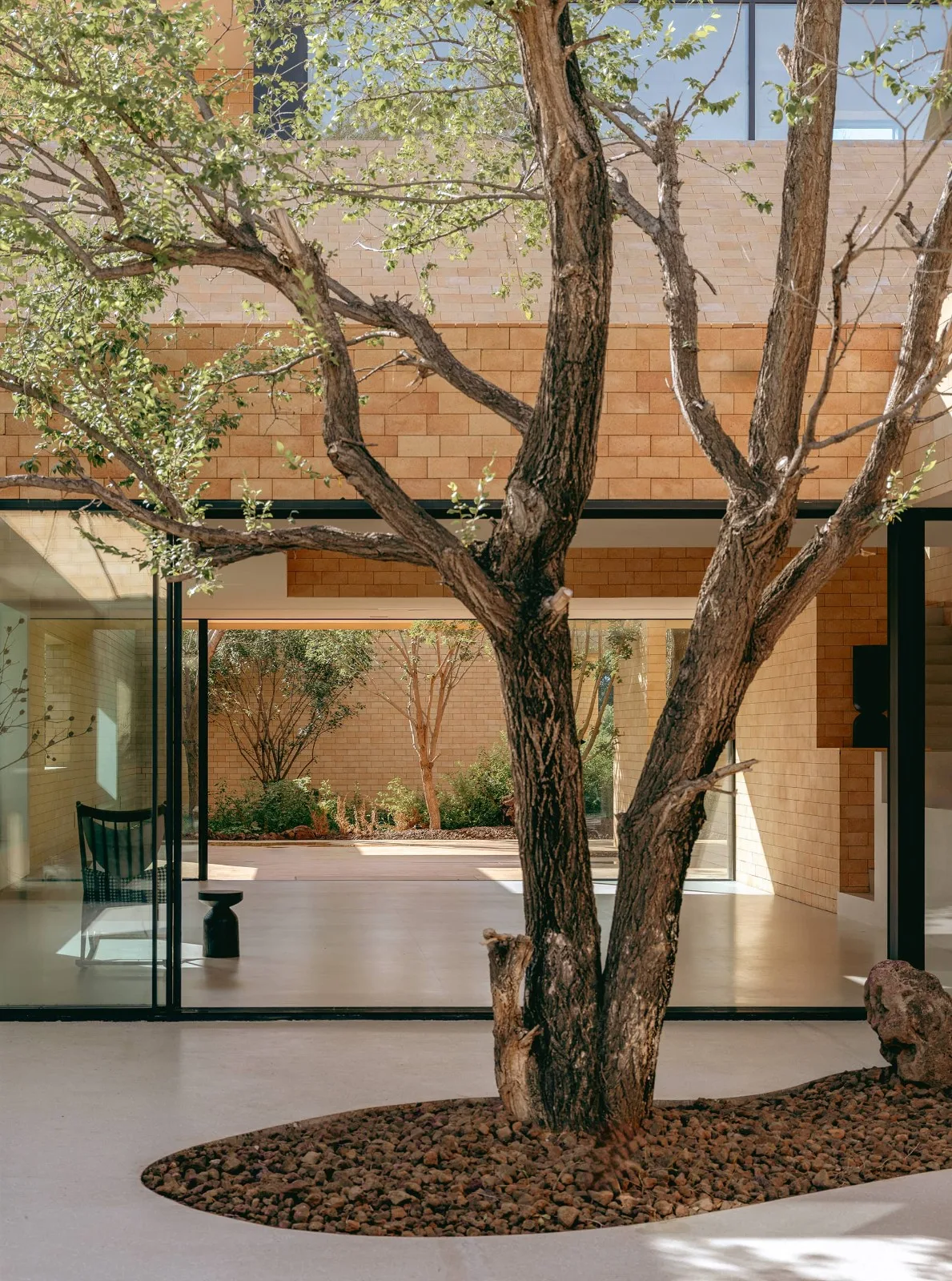
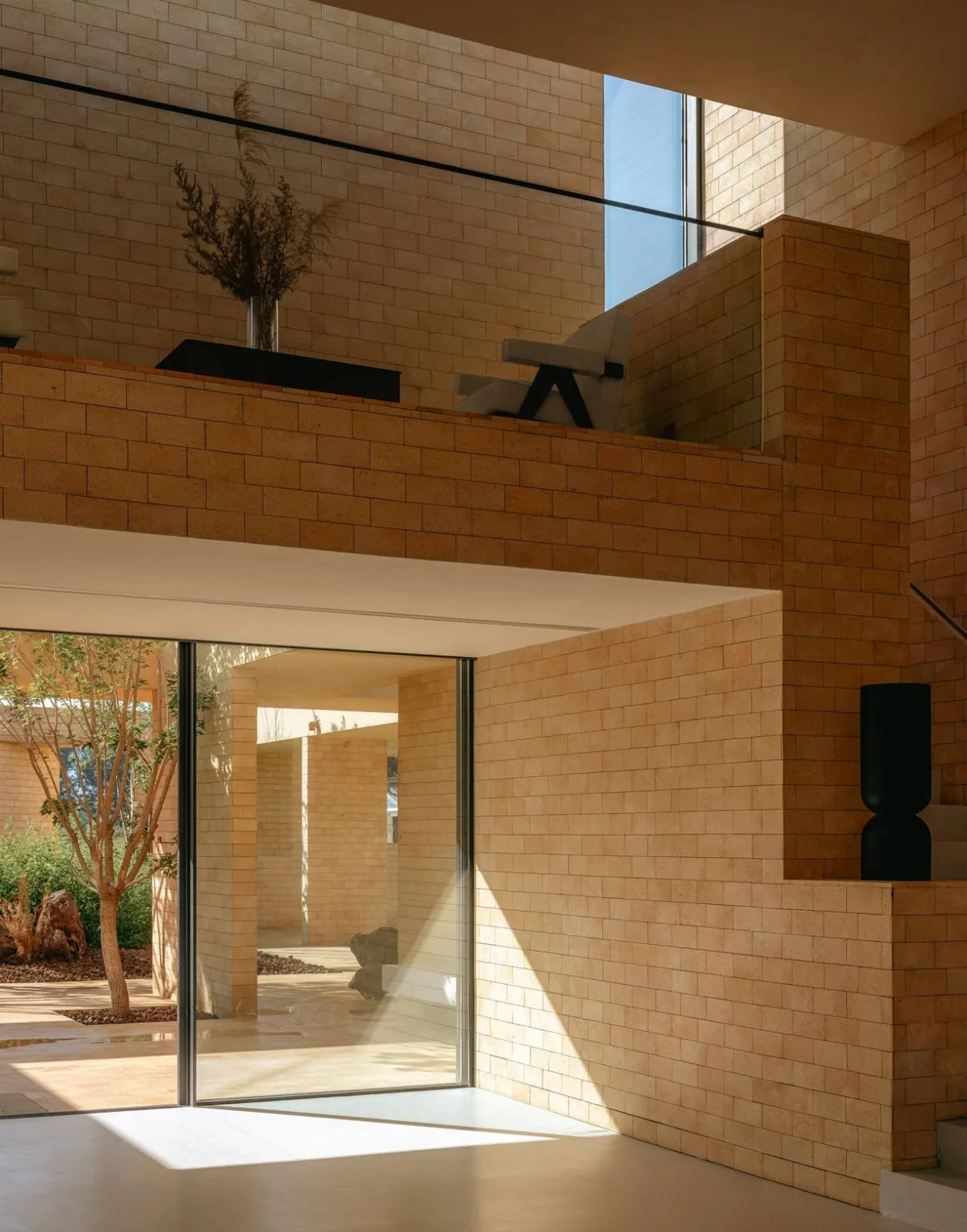
▲ Seamless transition between indoor and outdoor spaces © Zhu Yumeng
On the hotel lobby’s second floor, an outdoor terrace overlooks the willow forest and Wild Duck Lake to the west, offering panoramic views of lush greenery. This landscaped courtyard extends the rural scenery, framing sunsets and tree branches through square windows in the walls. By preserving the original tree positions and replanting vegetation, the courtyard revives the gentle rustling of leaves and wind, creating serene, rhythmic resting points within the space.
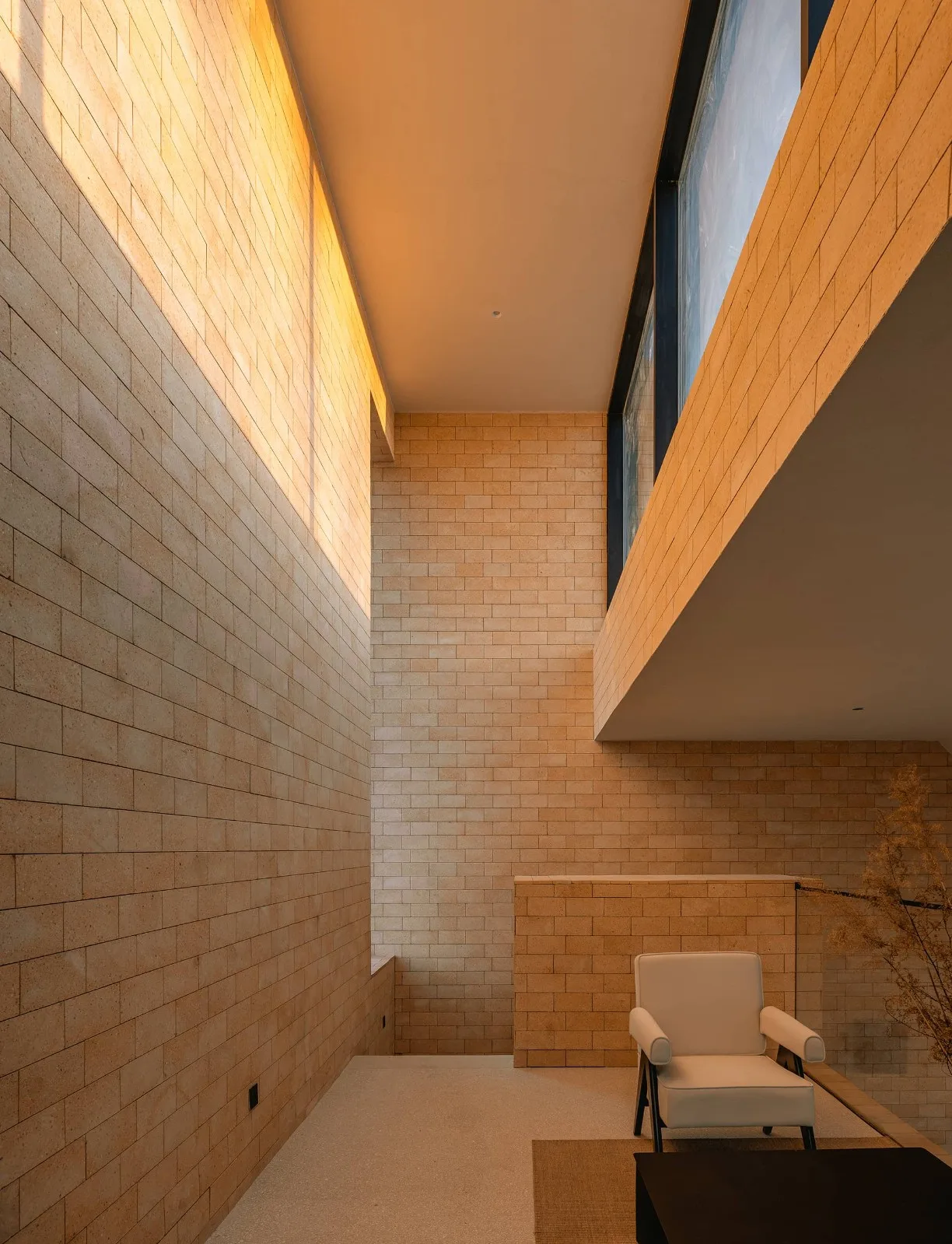
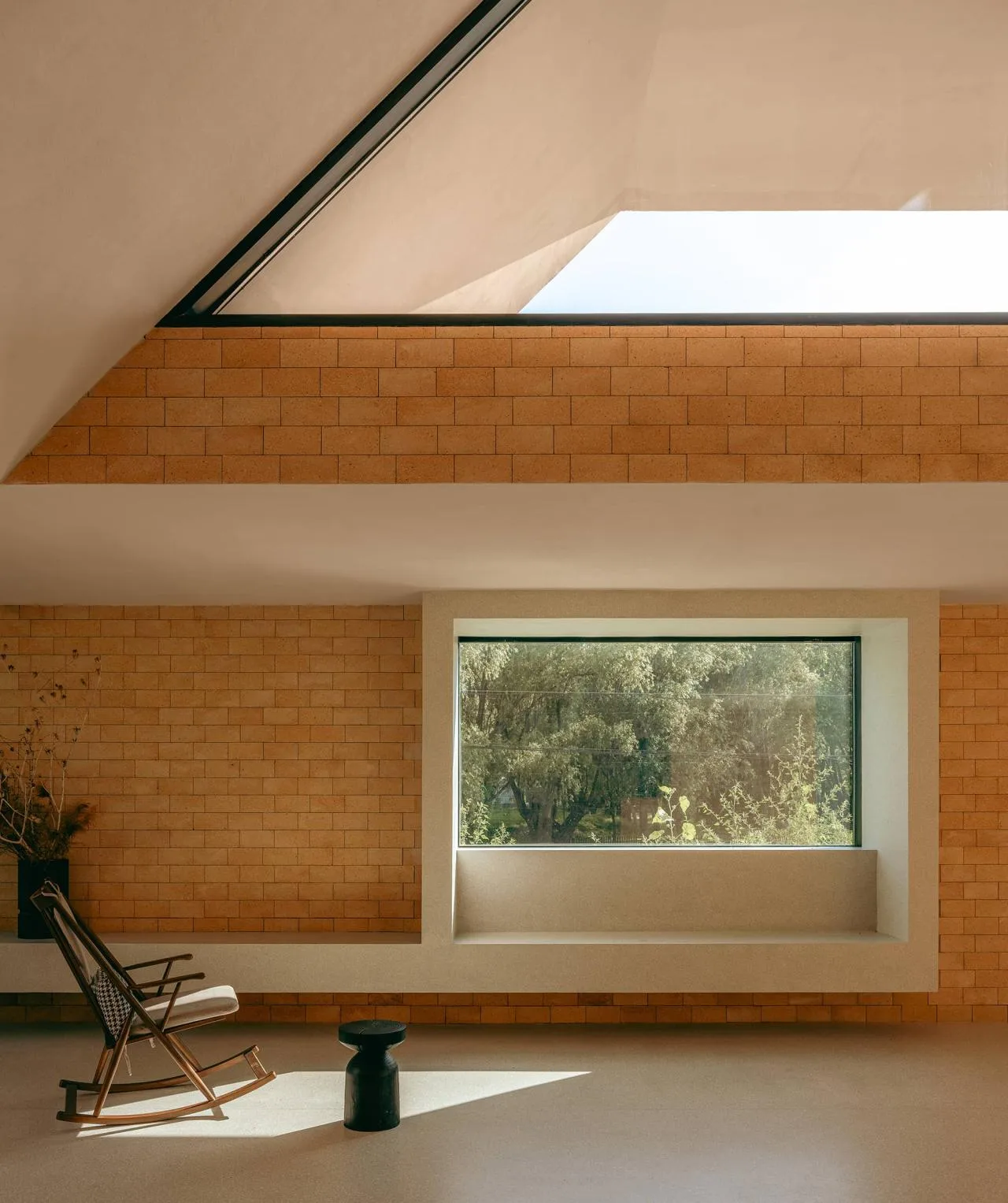
▲ Second floor and outdoor terrace © Zhu Yumeng
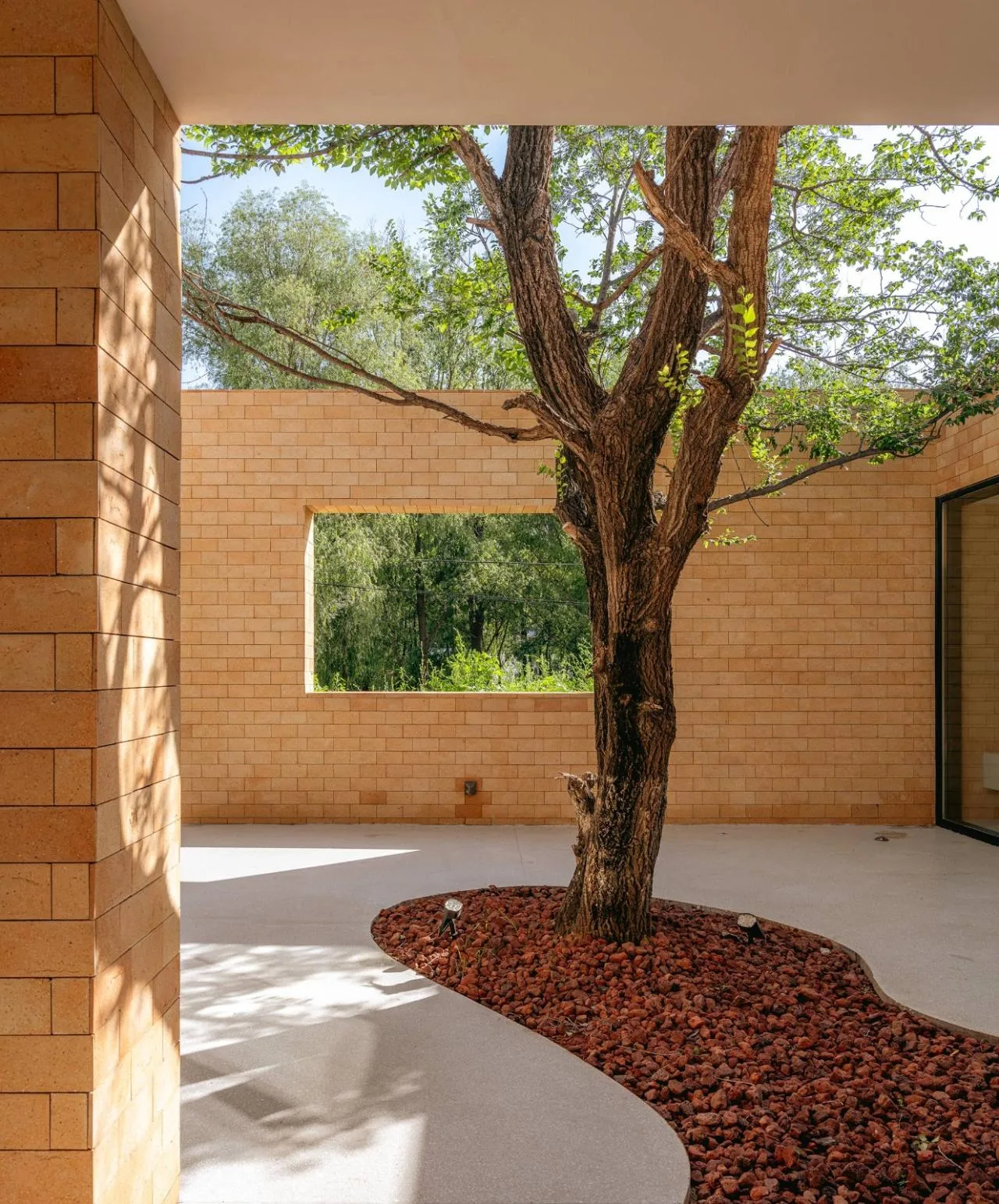
▲ Landscape courtyard wall with square window © Zhu Yumeng
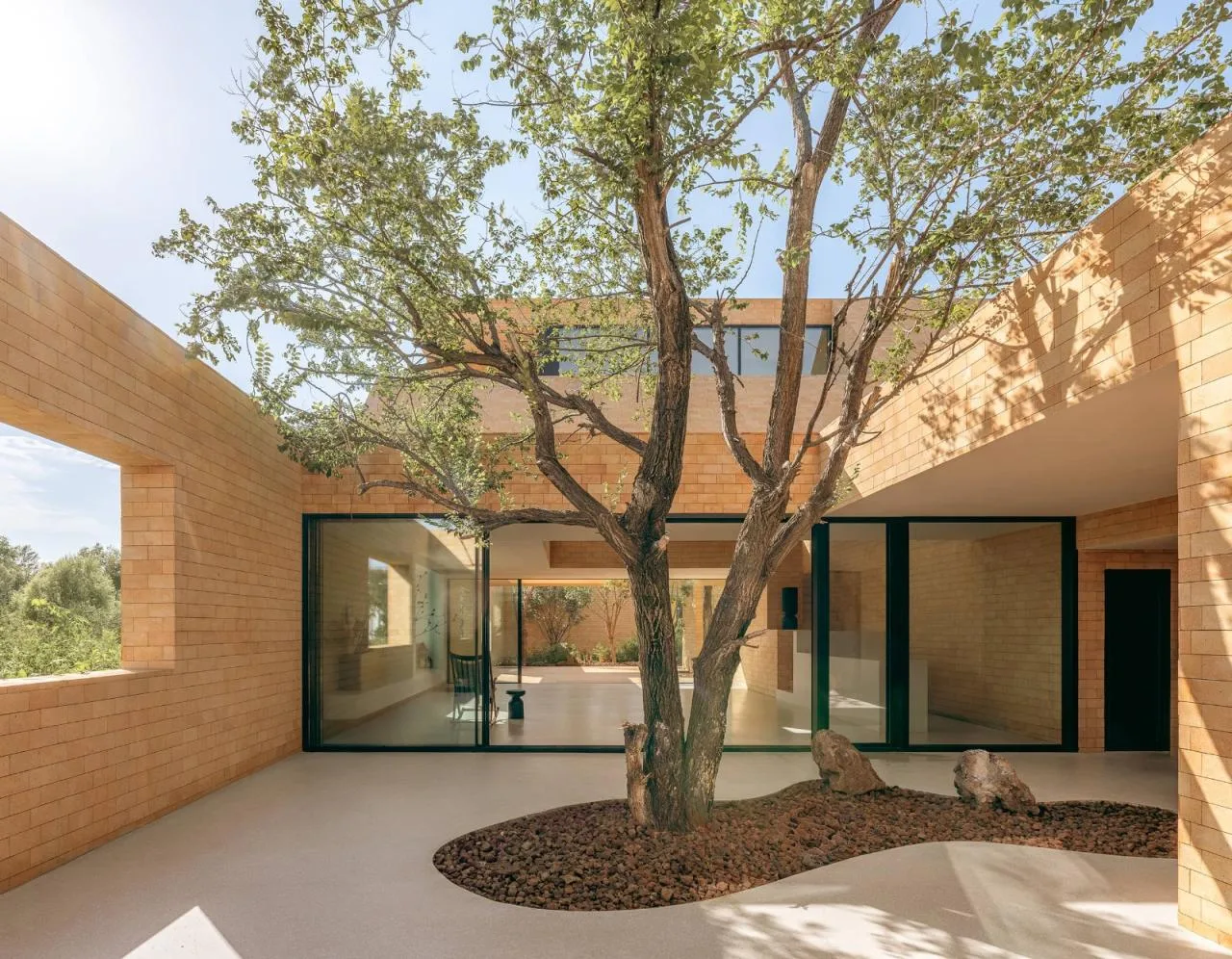
▲ Reinstated site vegetation © Zhu Yumeng
Guest rooms are categorized into three types based on capacity: standard rooms, suites, and courtyard-style rooms. Courtyards and alleys guide guests along secluded paths, creating clusters that feel private yet connected. Each room features a private bath and courtyard, balancing openness with tranquility, offering panoramic views while maintaining privacy.
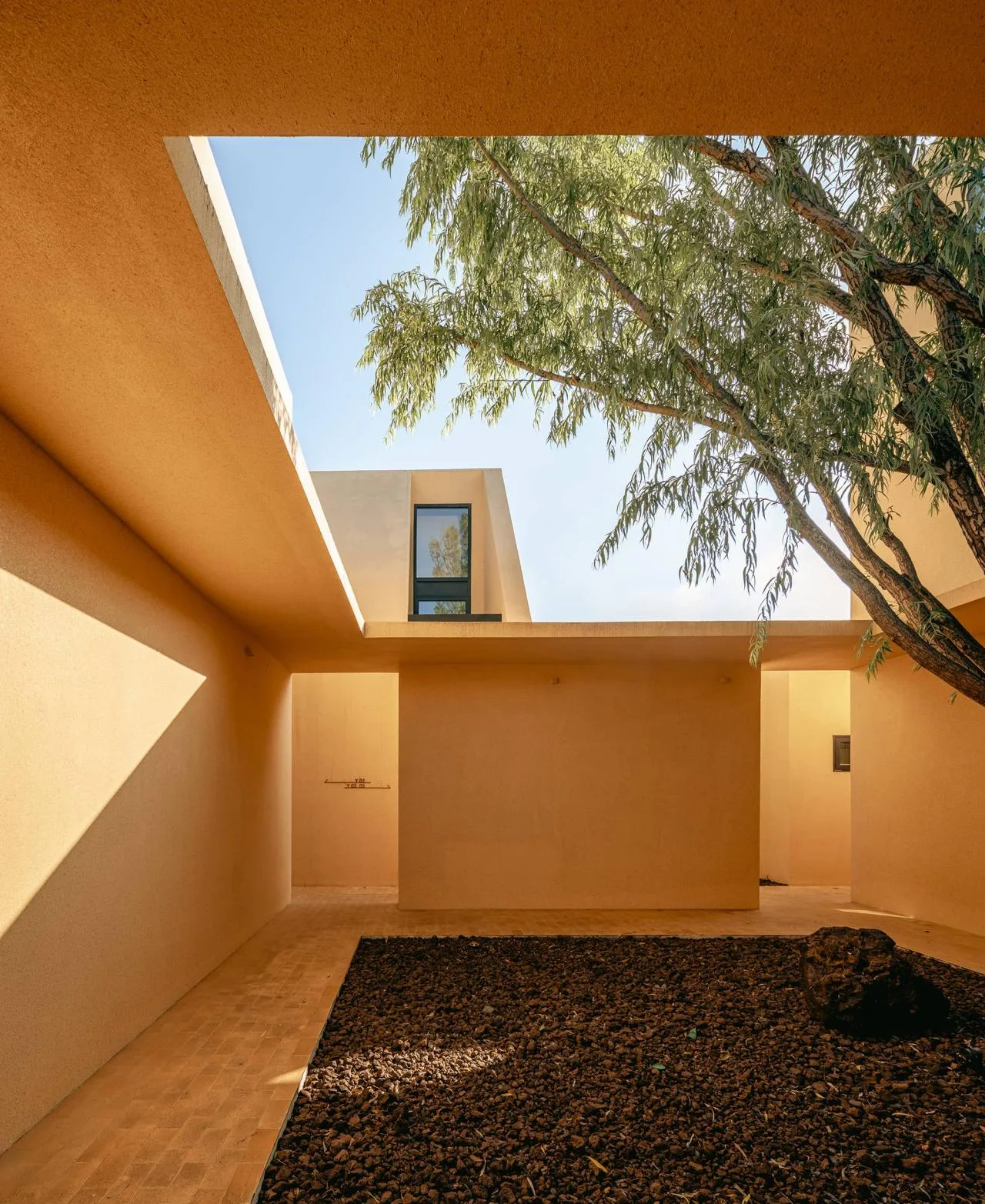
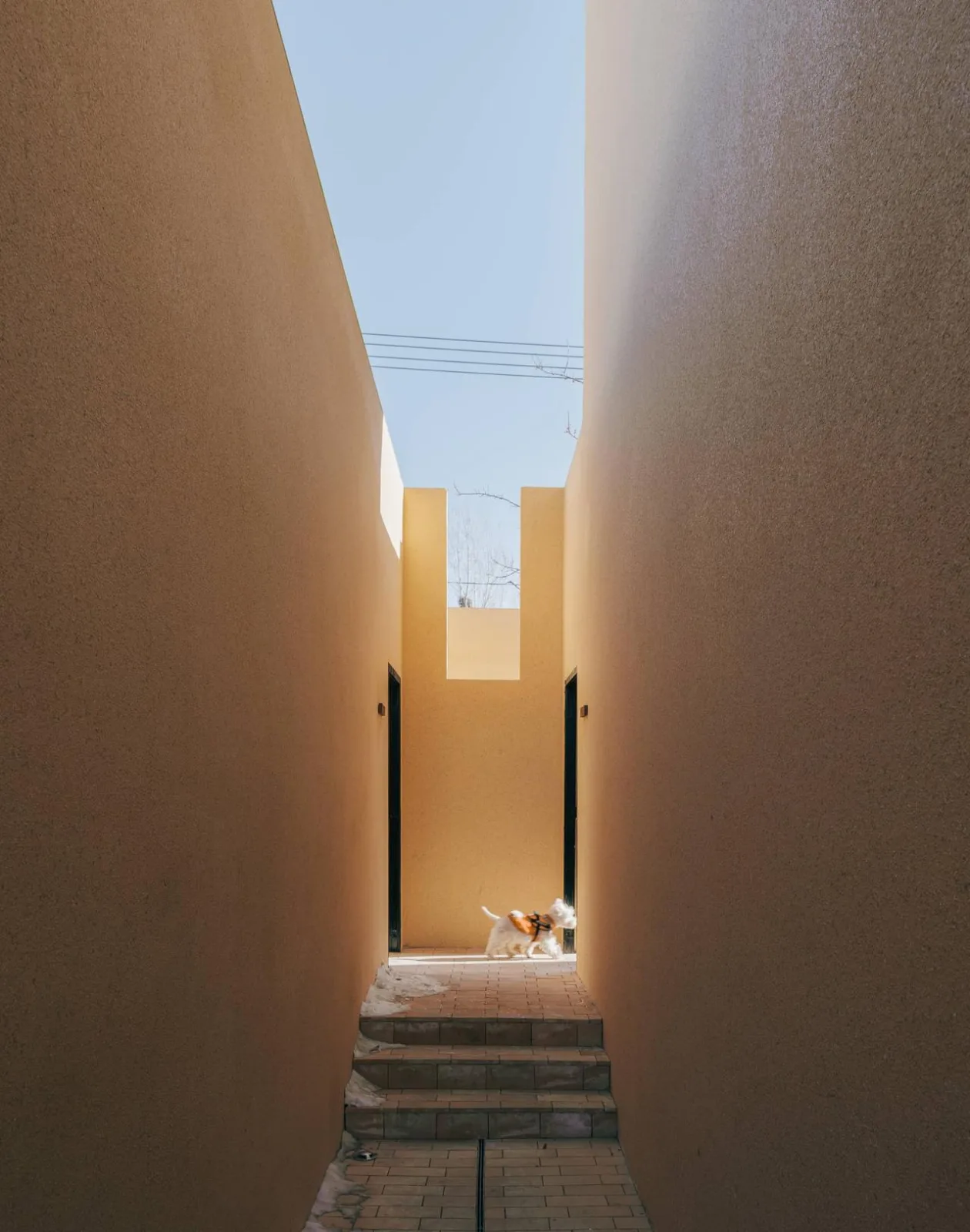
▲ Courtyards and alleys among guest room clusters © Zhu Yumeng
All guest rooms feature custom-designed furniture that balances steel and wood, combining material thickness and color in a sleek, floating design that complements the building’s overall texture.
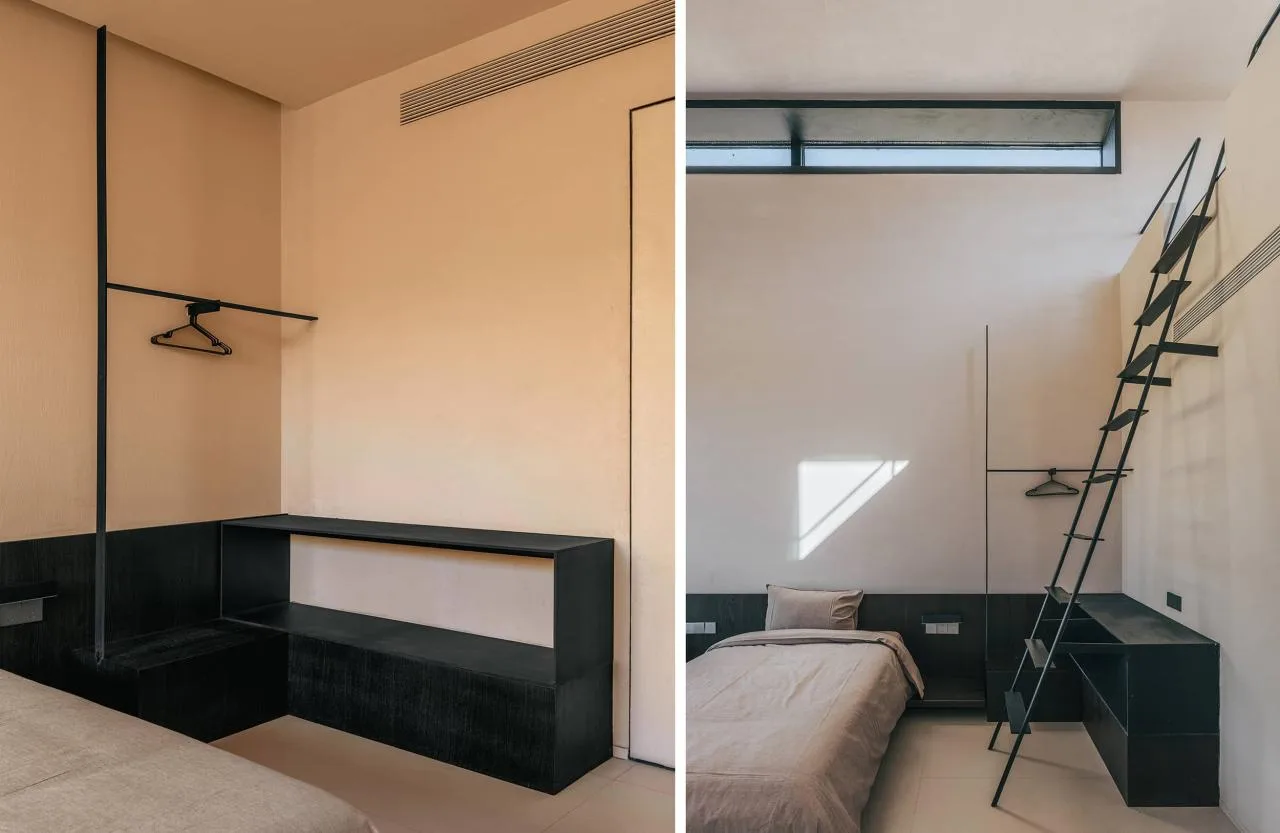
▲ Elegant, floating custom furniture in guest rooms © Zhu Yumeng
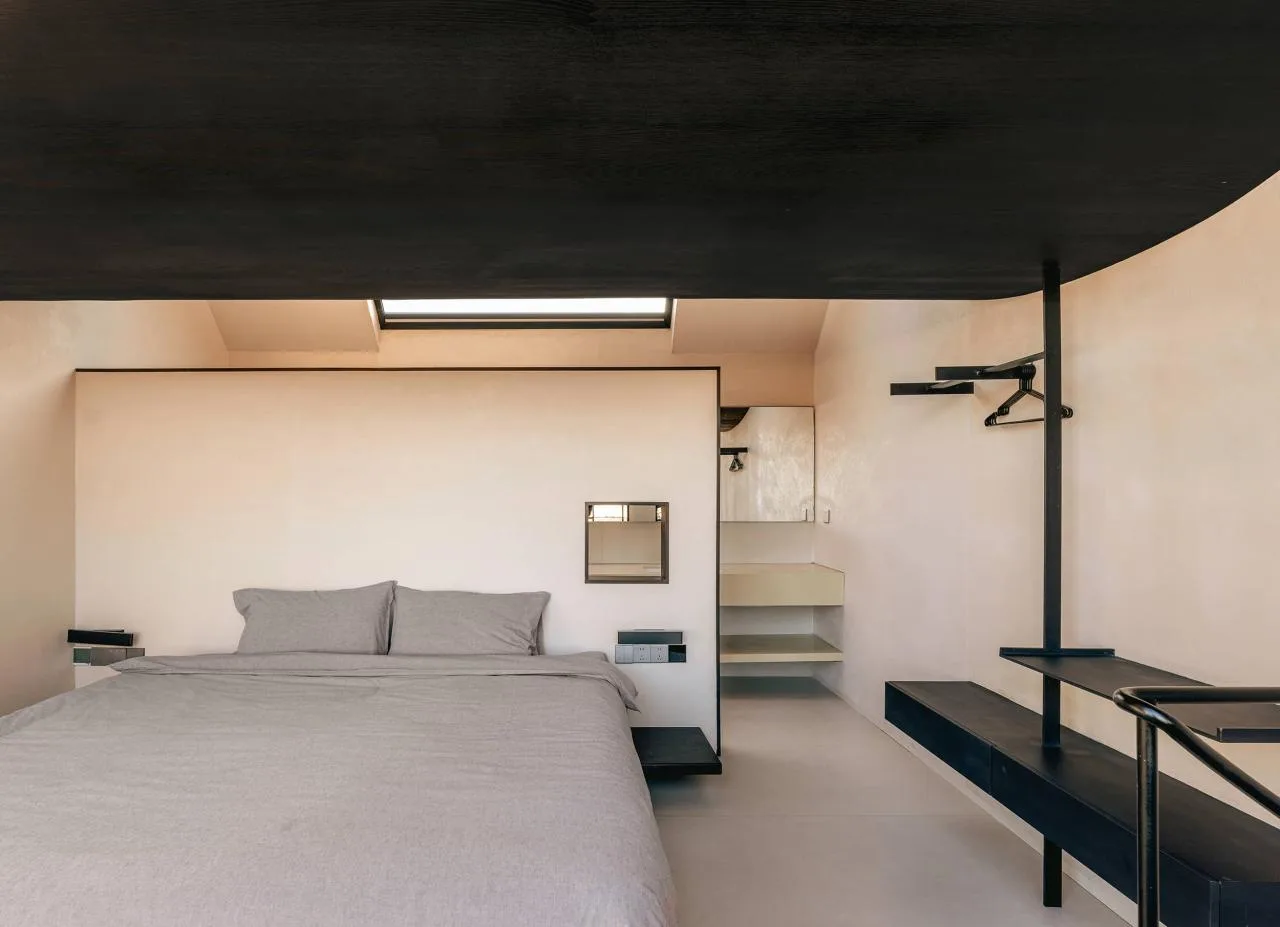
▲ Elegant, floating custom furniture in guest rooms © Zhu Yumeng
Standard rooms include two courtyards—one small and one large. A small courtyard, roughly 3 square meters, is recessed inside the room, separating the bathroom from the bedroom. Floor-to-ceiling transparent glass offers a view of crabapple blossoms at dawn. The larger courtyard at the room’s end features a bathing pool and trees, dividing the space, with falling leaves creating gentle ripples on the water.
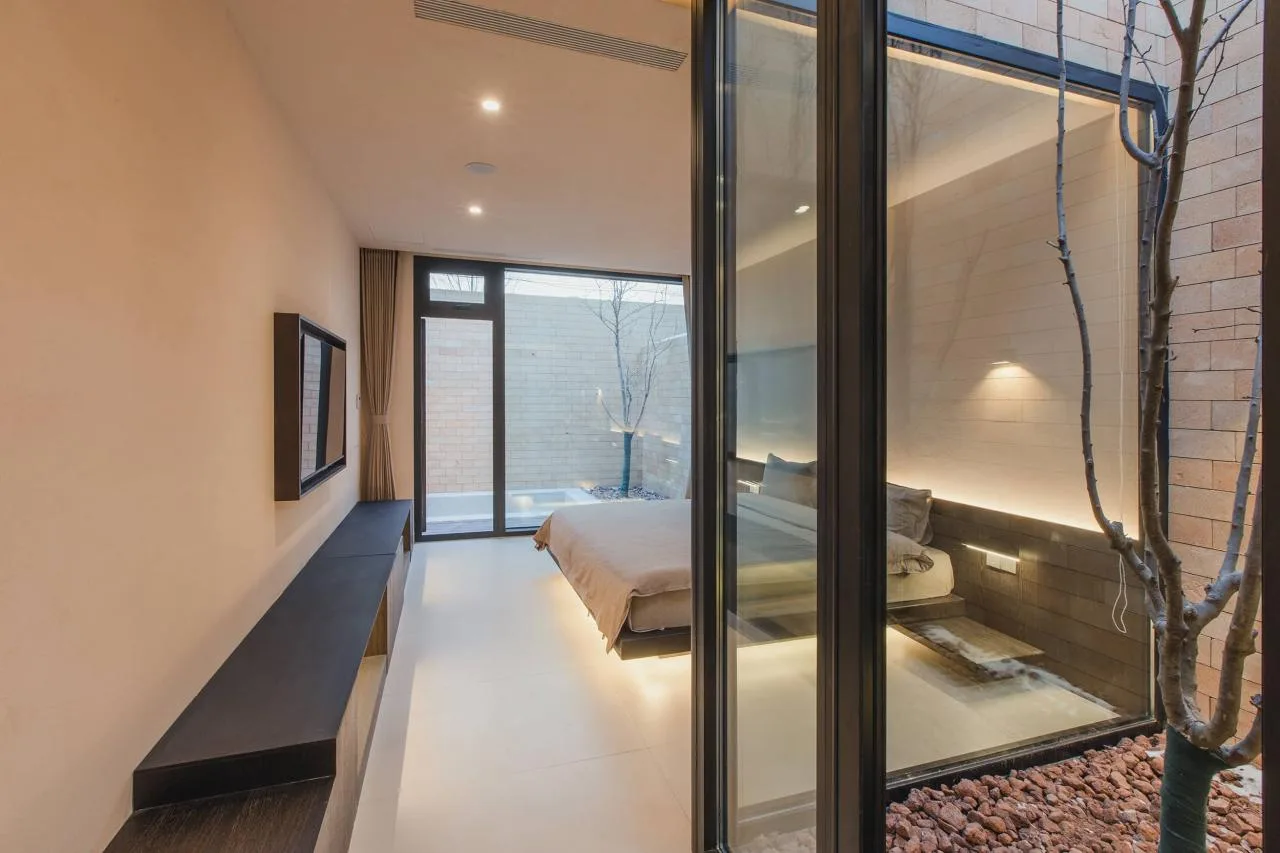
▲ Standard Room © Xi Youji
Suites span three floors connected by a spiral staircase. The first floor houses the living room, which opens onto a private courtyard and connects to the hotel’s public activity area. The top-floor bathing pool, positioned by a window, resembles a floating boat. Its curved ceiling forms the bedroom’s middle floor ceiling, sharing a vertical open window. Beyond, the village’s greenery and shadowed fields stretch out.
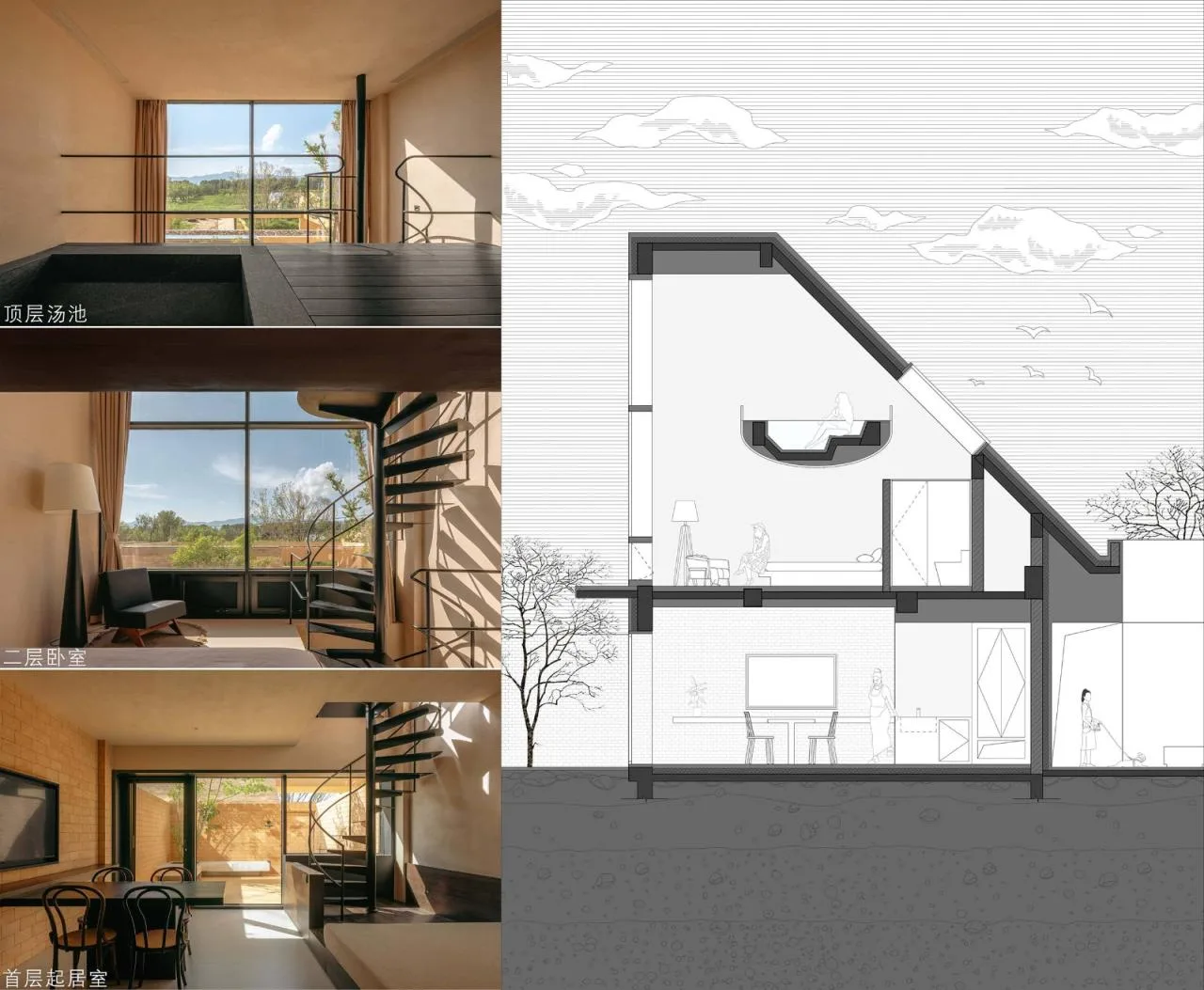
▲ Left: Suite © Zhu Yumeng; Right: Suite sectional perspective © Large scale construction
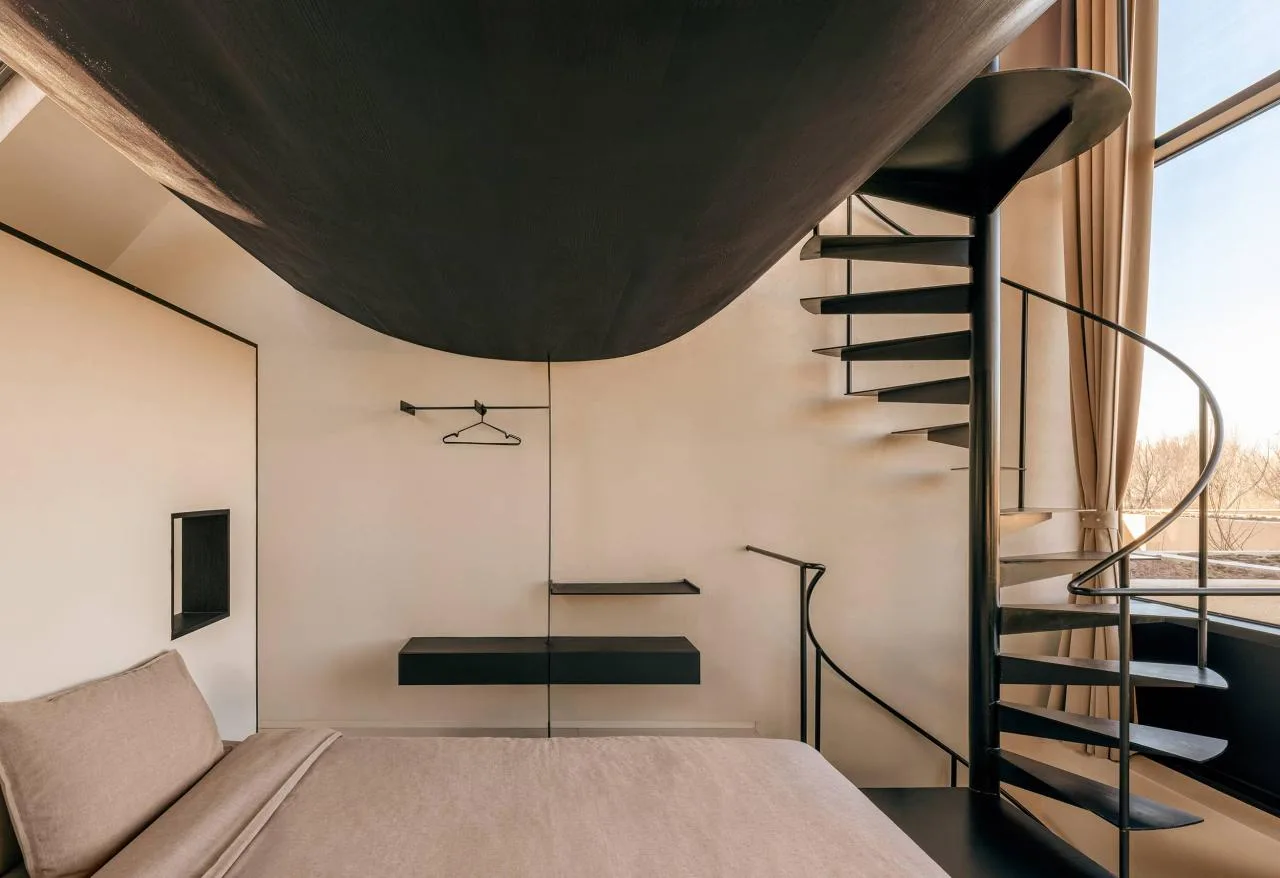
▲ Curved ceiling detail © Zhu Yumeng
At the hotel’s core are courtyard-style rooms, ideal for families or small groups. Two to three rooms share a courtyard where private baths and plants serve as focal points, offering guests a communal island for gathering and relaxation.
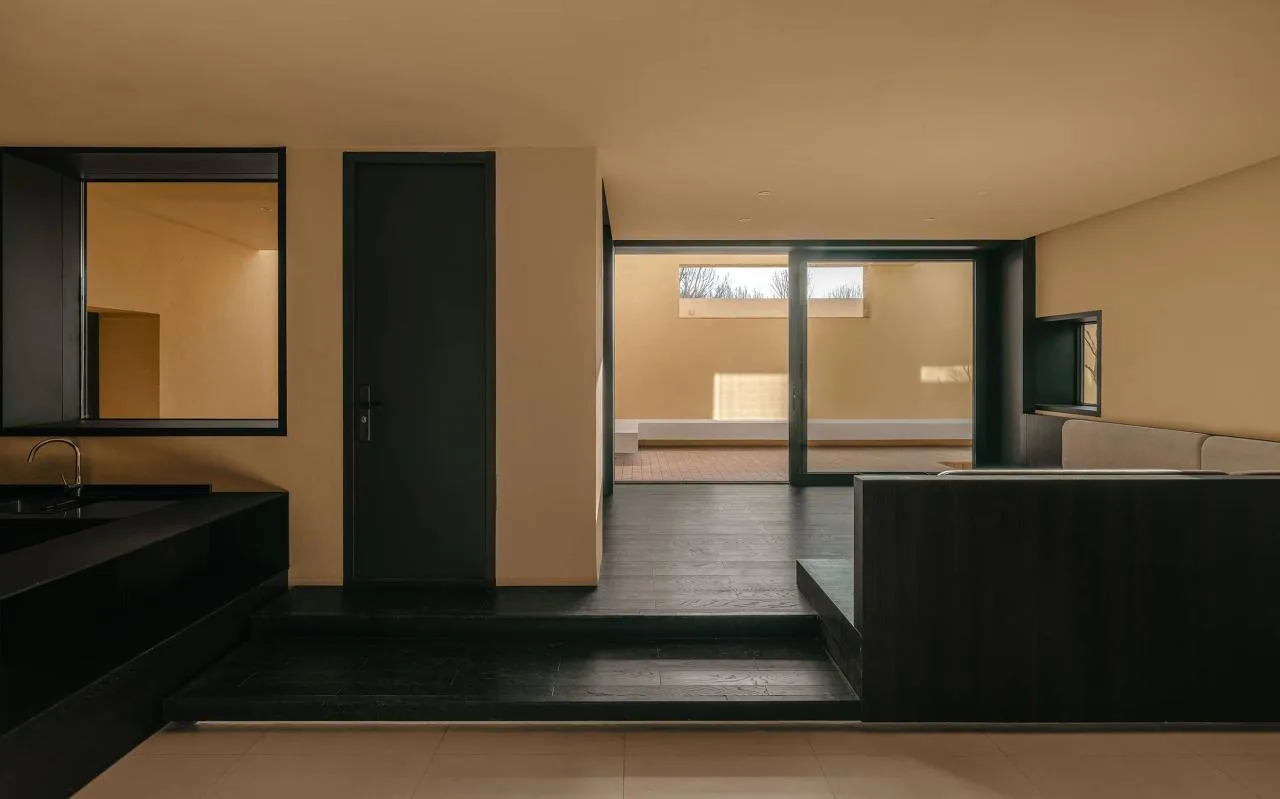
▲ Indoor courtyard-style guest rooms © Zhu Yumeng
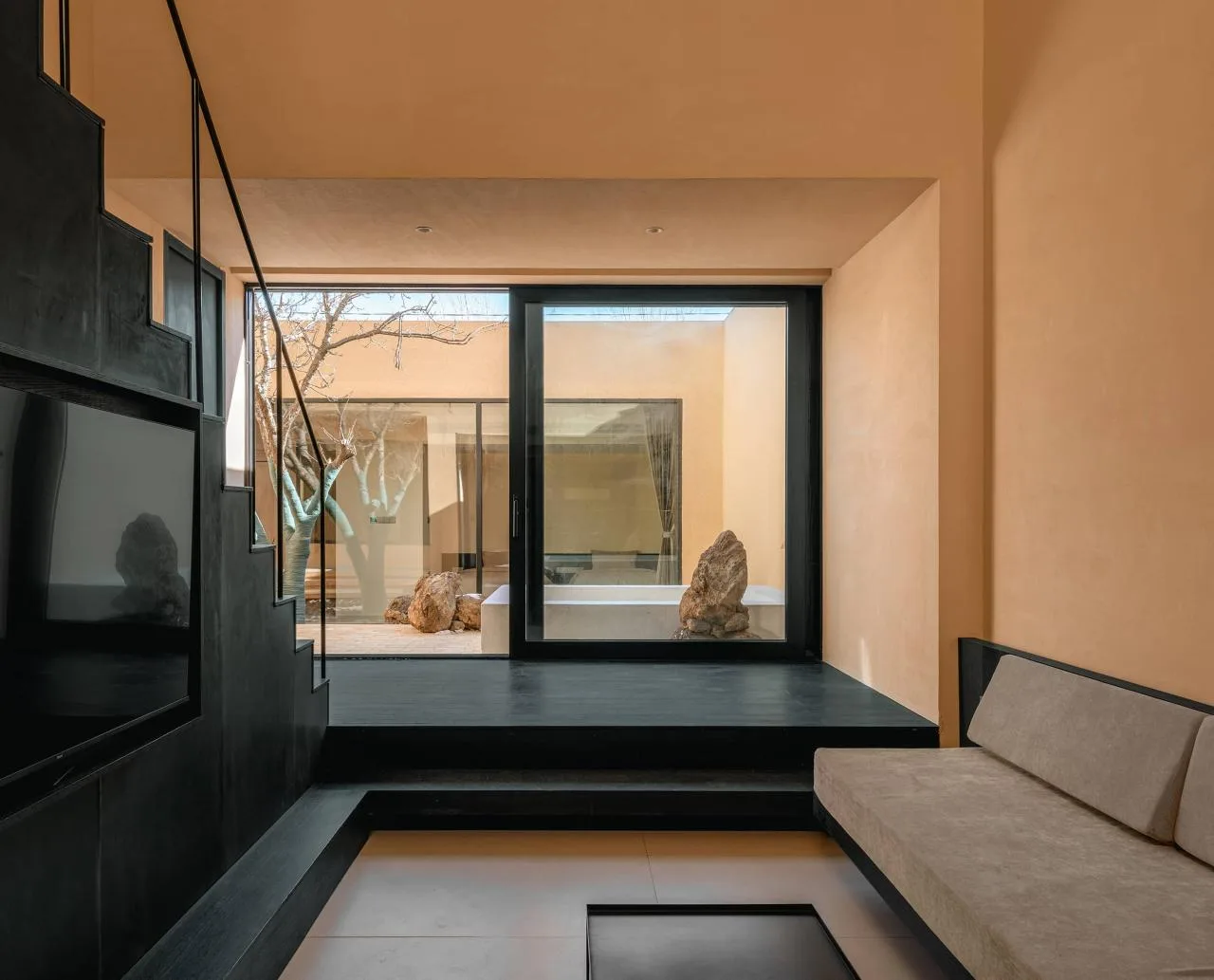
▲ Private bath courtyard within a courtyard cluster © Zhu Yumeng
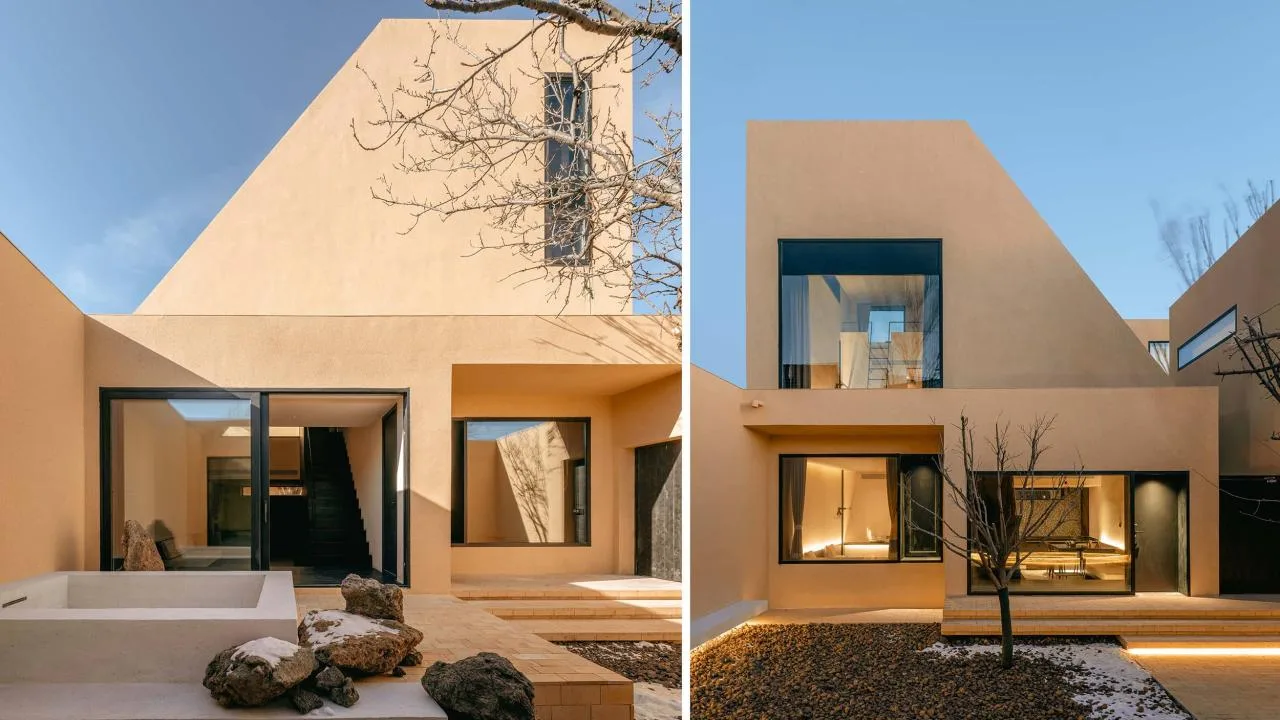
▲ Courtyard-style guest room courtyard © Zhu Yumeng
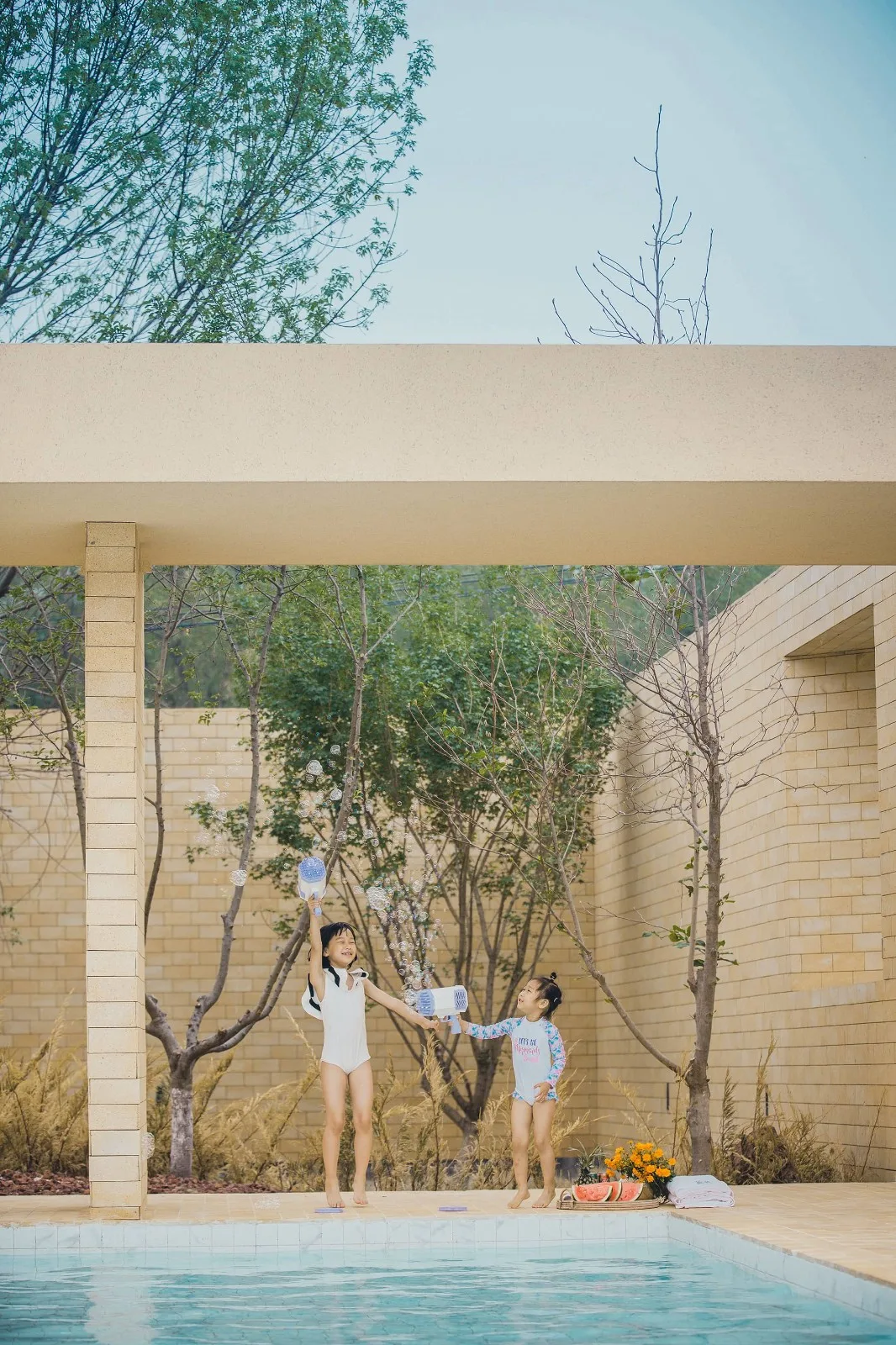
To enrich the rural experience, the hotel incorporates various public amenities including restaurants, swimming pools, barbecue areas, camping spots, and outdoor event spaces, interwoven with the supporting facilities.
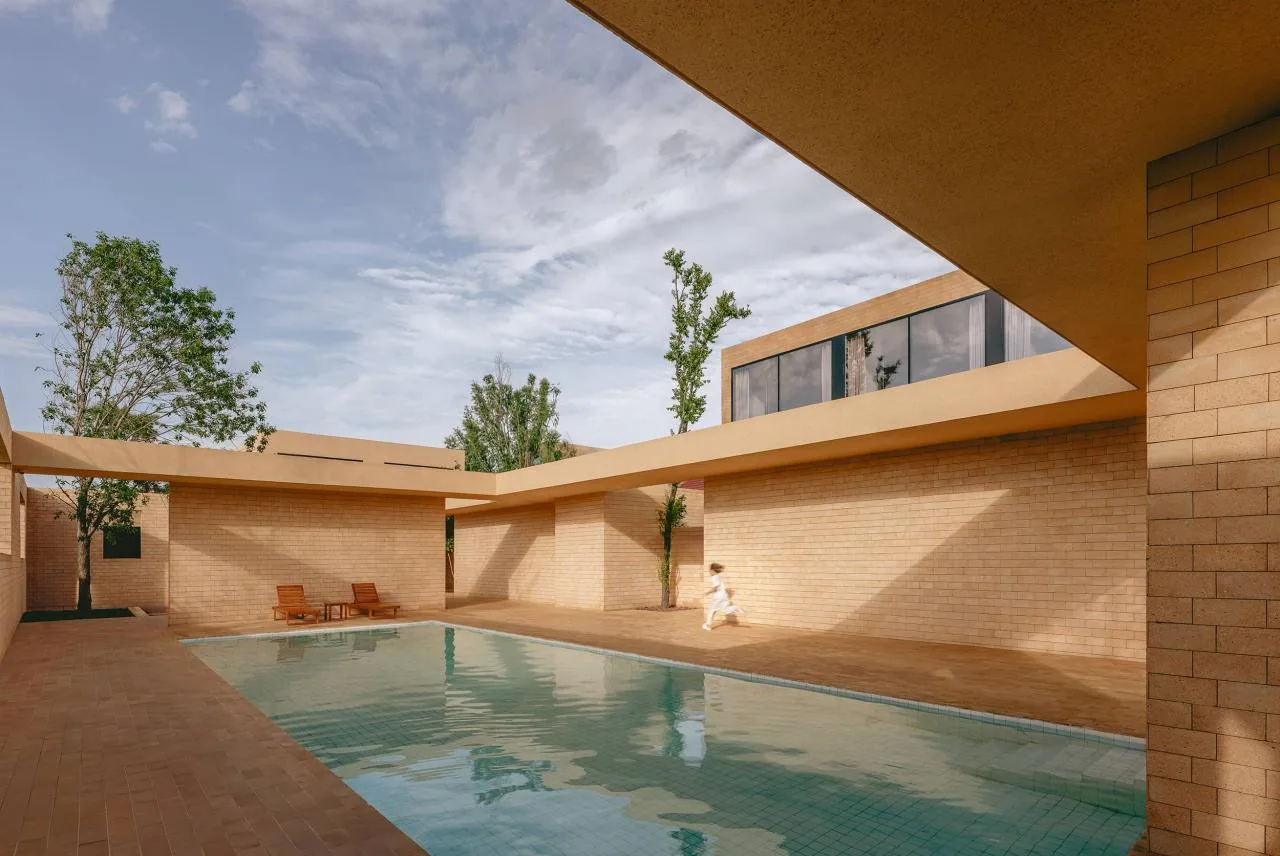
▲ Swimming Pool © Zhu Yumeng
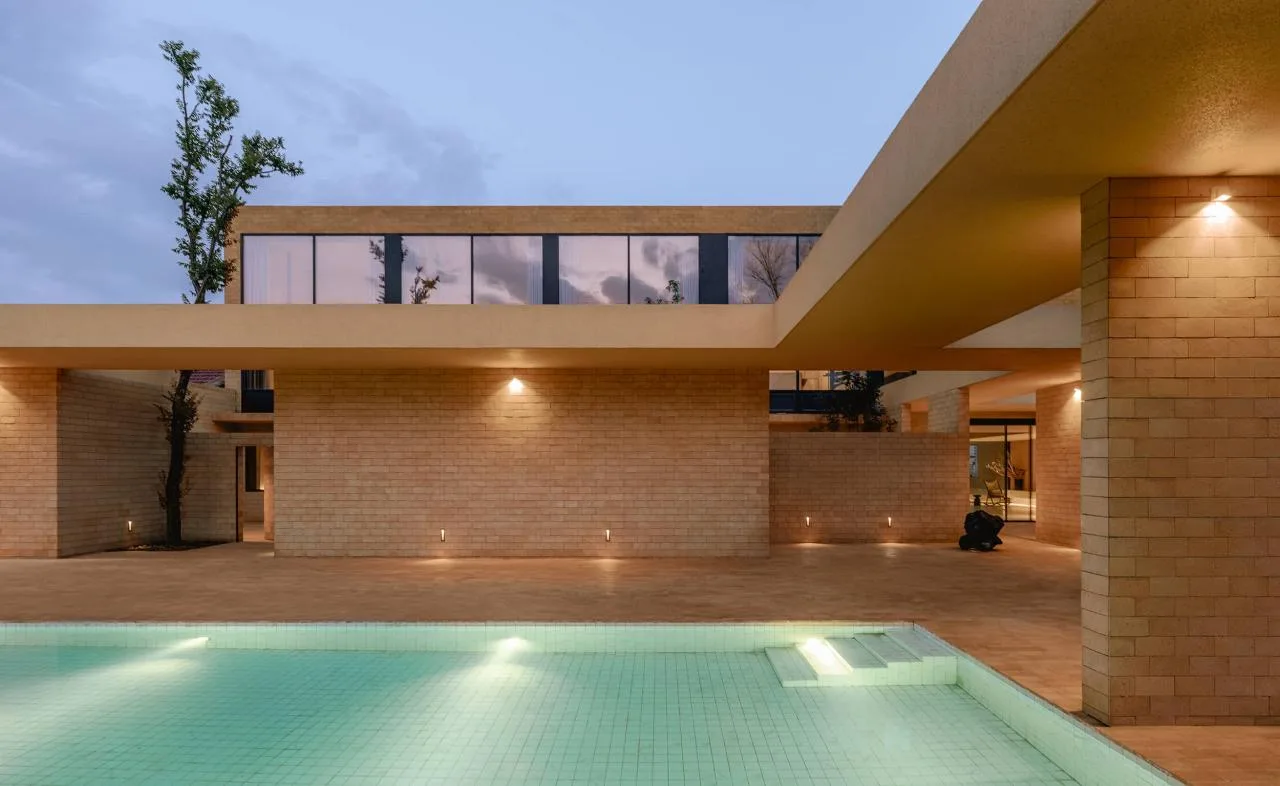
▲ Swimming Pool © Zhu Yumeng
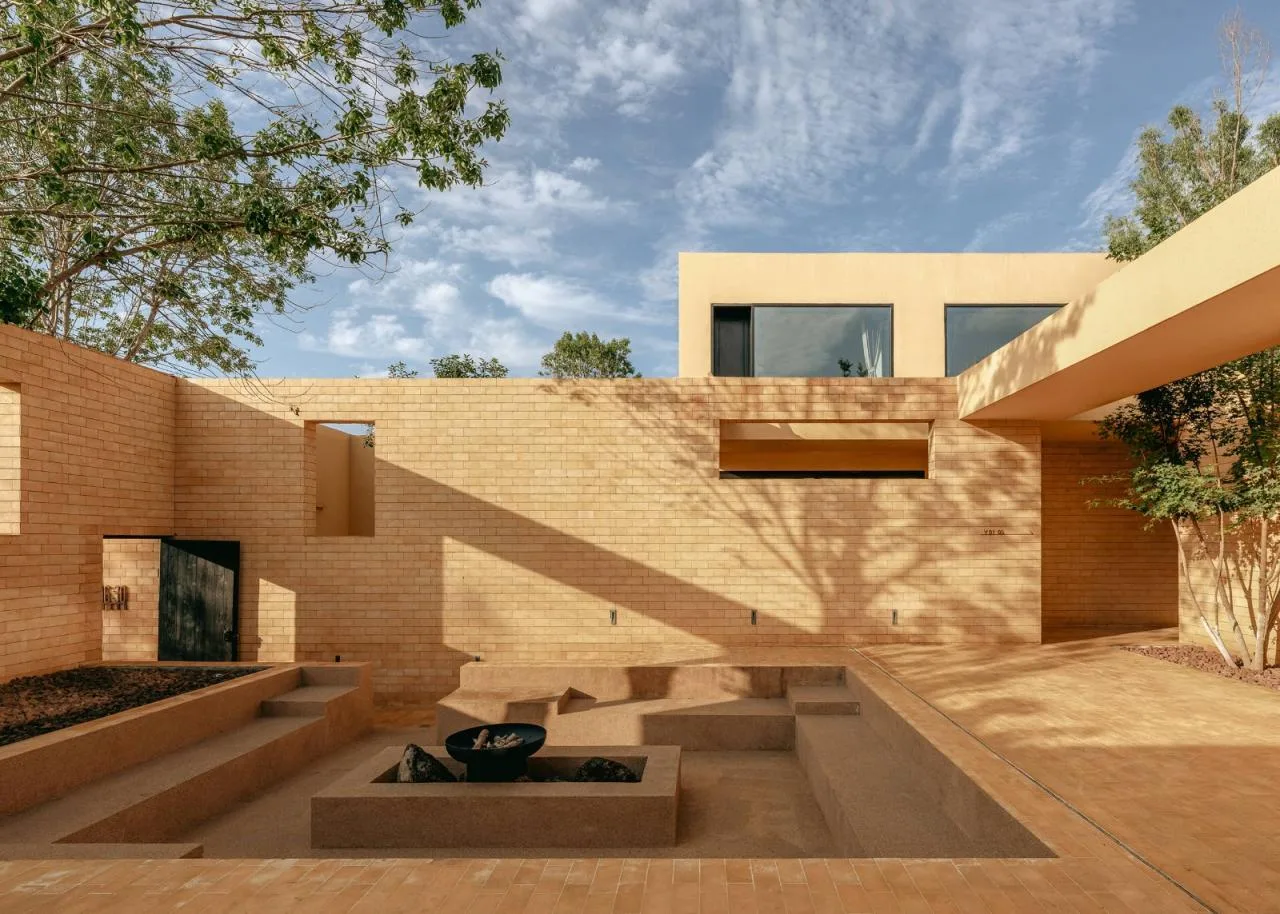
▲ Sunken bonfire space © Zhu Yumeng
The restaurant is located north of the hotel, separated from guest rooms by a swimming pool, sunken courtyard, several steps, and a village road. The U-shaped structure links the restaurant with an entertainment room, enclosing a shallow pool that reflects a metal spiral staircase.
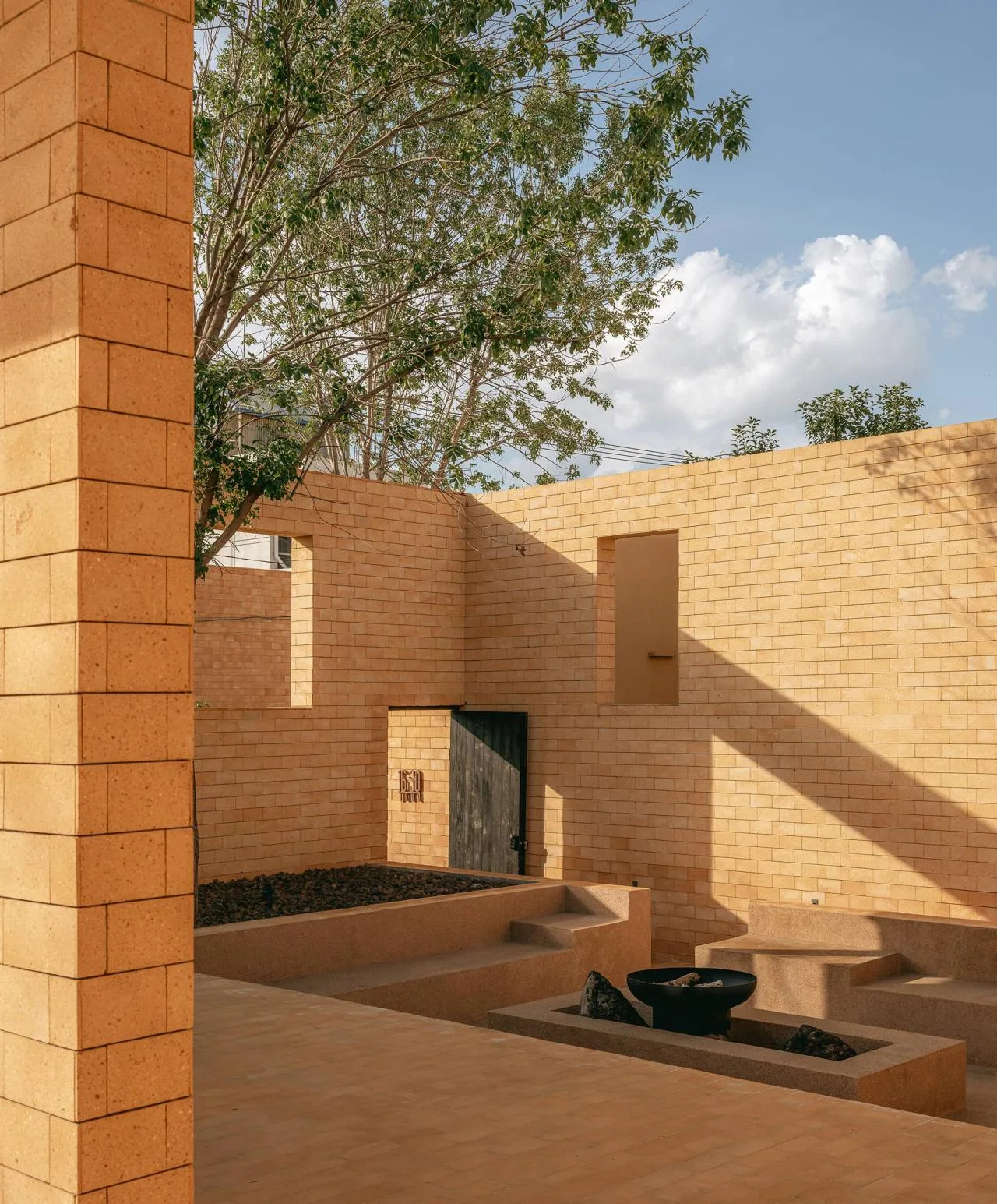
▲ Sunken bonfire space separating guest rooms and restaurant © Zhu Yumeng
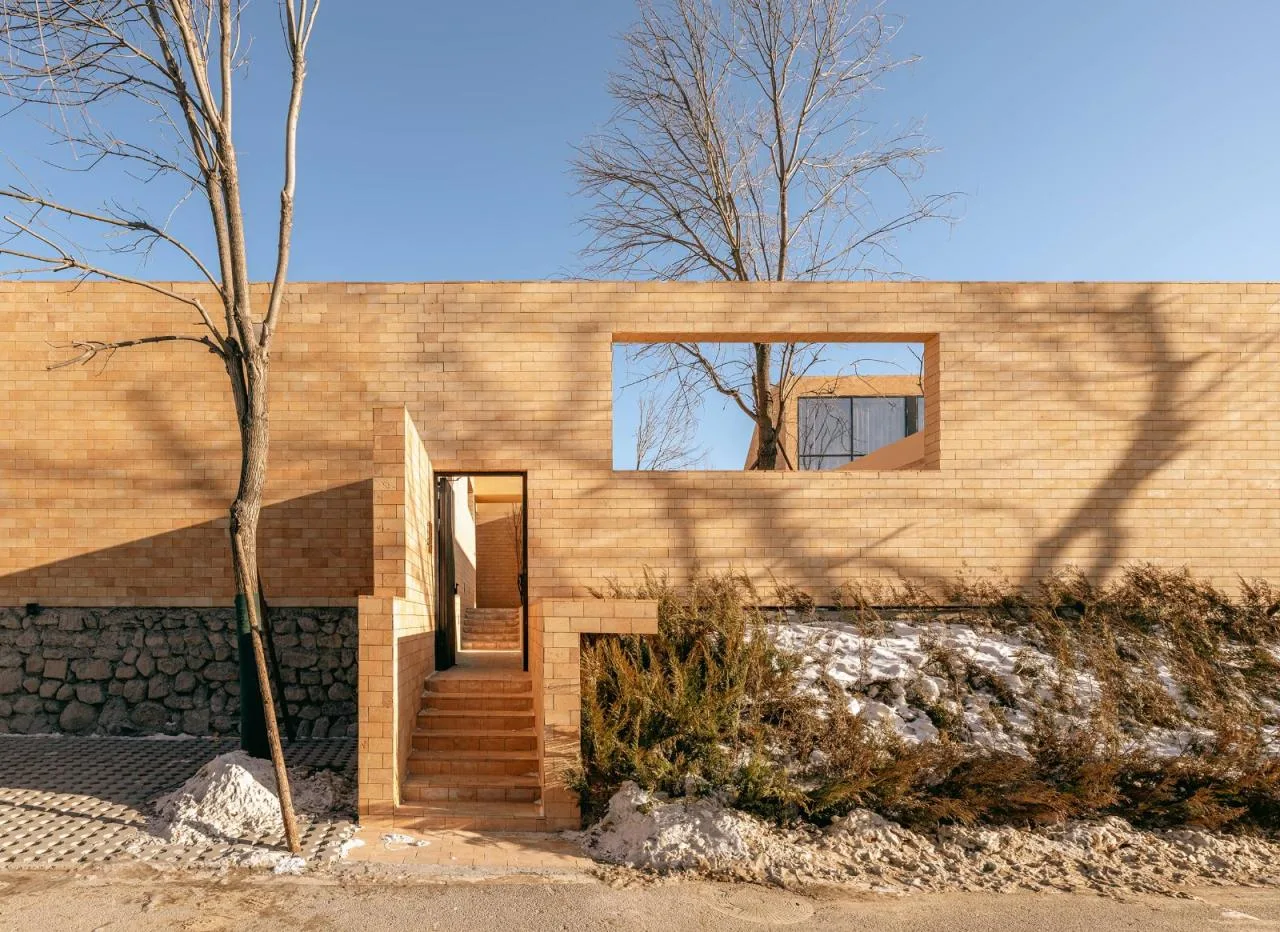
▲ Secondary hotel entrance connecting guest rooms and restaurant © Zhu Yumeng
▲ Entrance to restaurant area © Zhu Yumeng
▲ The restaurant and entertainment facilities form a U-shaped building © Zhu Yumeng
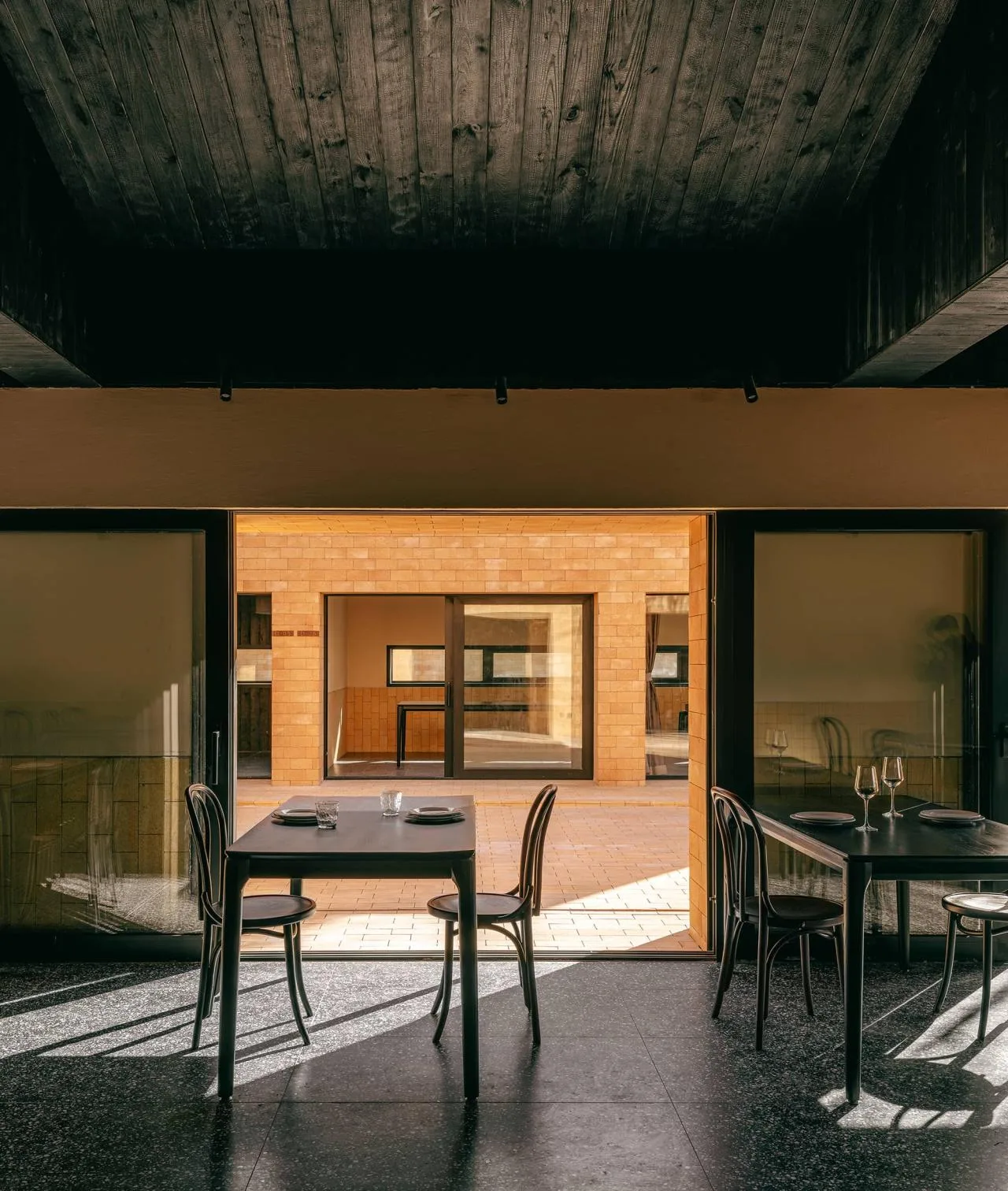
▲ View from restaurant towards entertainment room © Zhu Yumeng
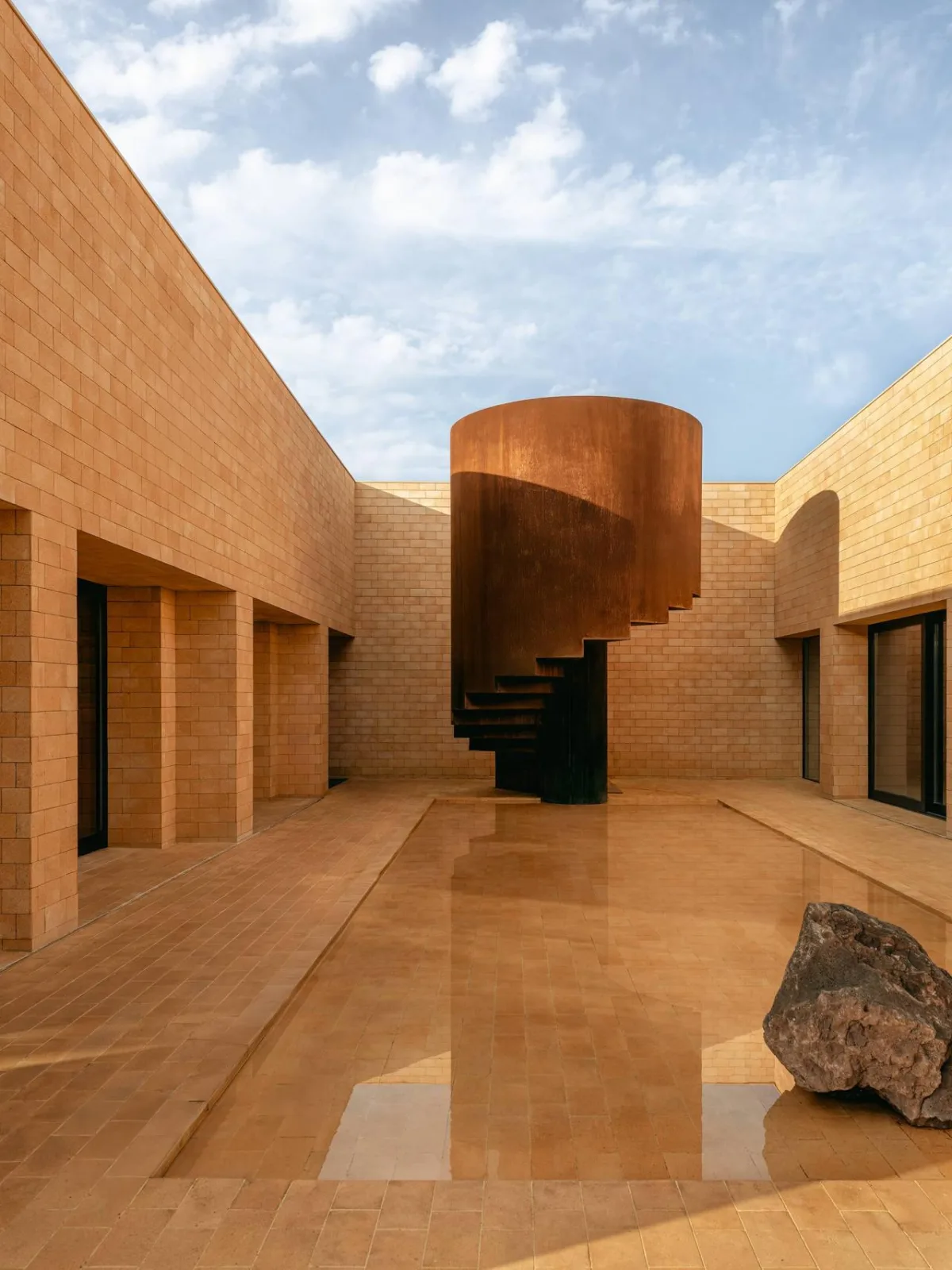
▲ Shallow pool and metal spiral staircase © Zhu Yumeng
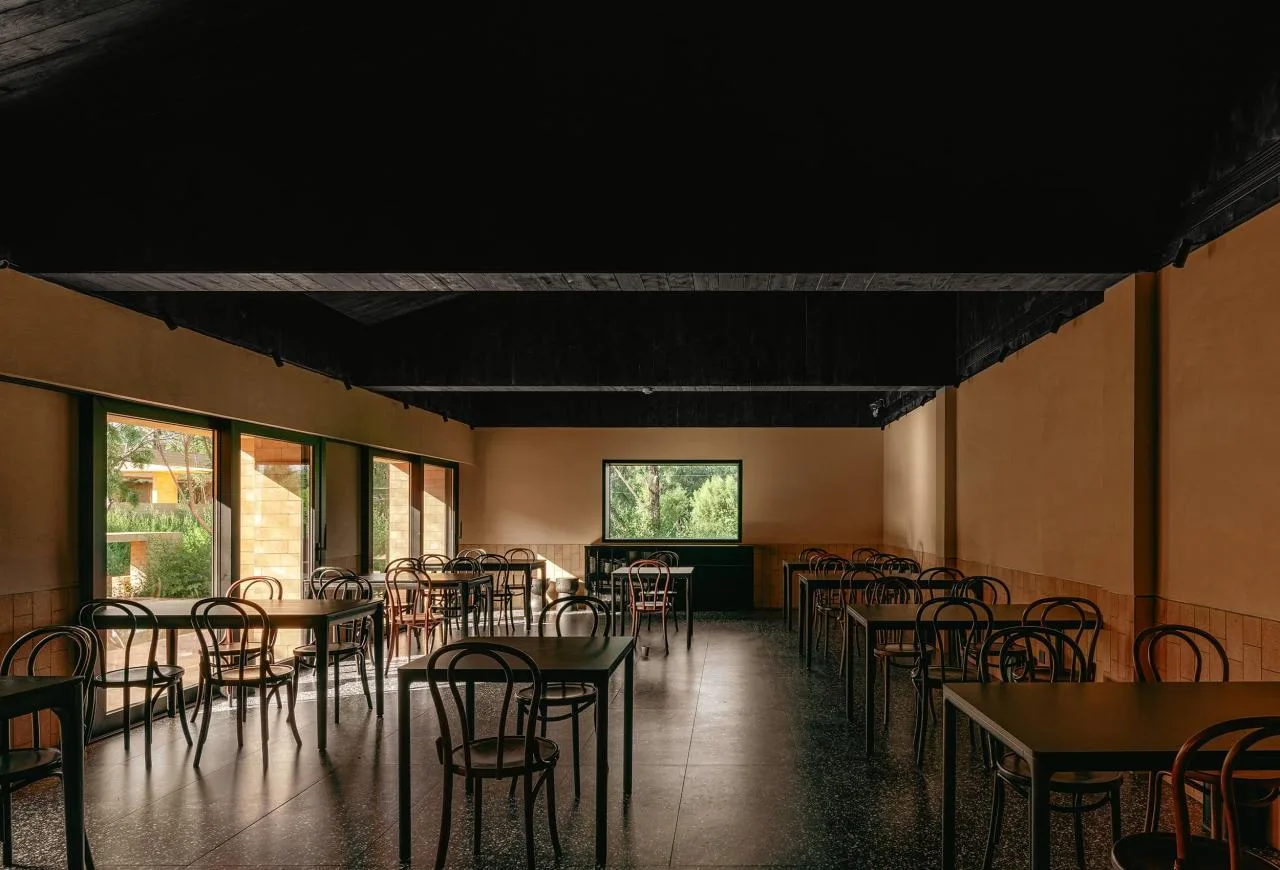
▲ Indoor restaurant © Zhu Yumeng
While brick houses represent everyday rural life, the hotel’s pure geometric form and light yellow tones distinguish it from typical village residences. If rural inns offer a simple retreat from urban life, this “suburban theme park” amplifies the living experience with a fashionable twist. The client aimed to create an internet-famous hotel, and we believe that amid all design elements, the 16:30 sunlight remains the true connection between guests’ everyday needs and dreams. It not only provides the perfect lighting for photos but also transforms this castle into a captivating icon of light and nature.
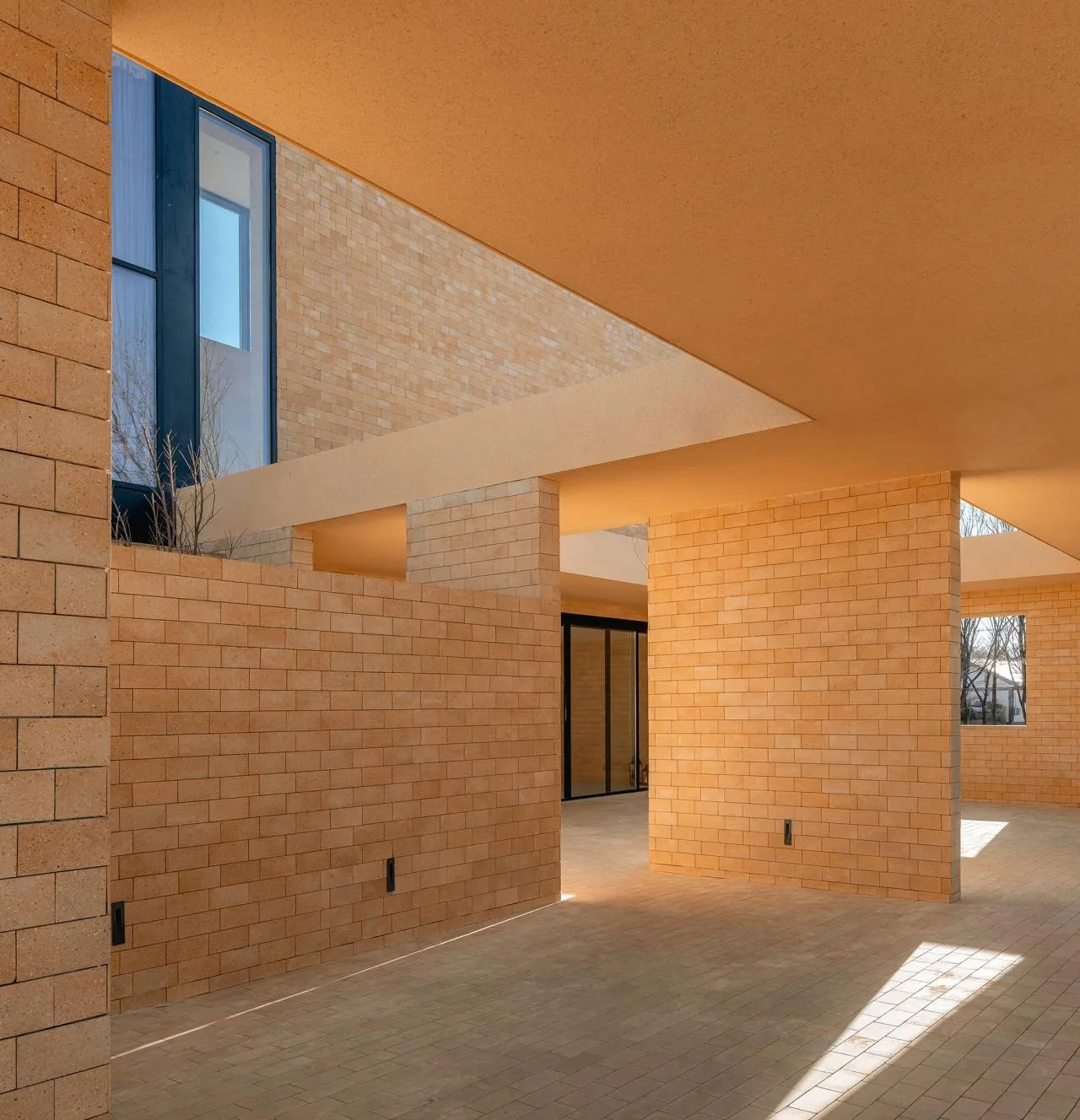
Pure and unified geometric form © Zhu Yumeng
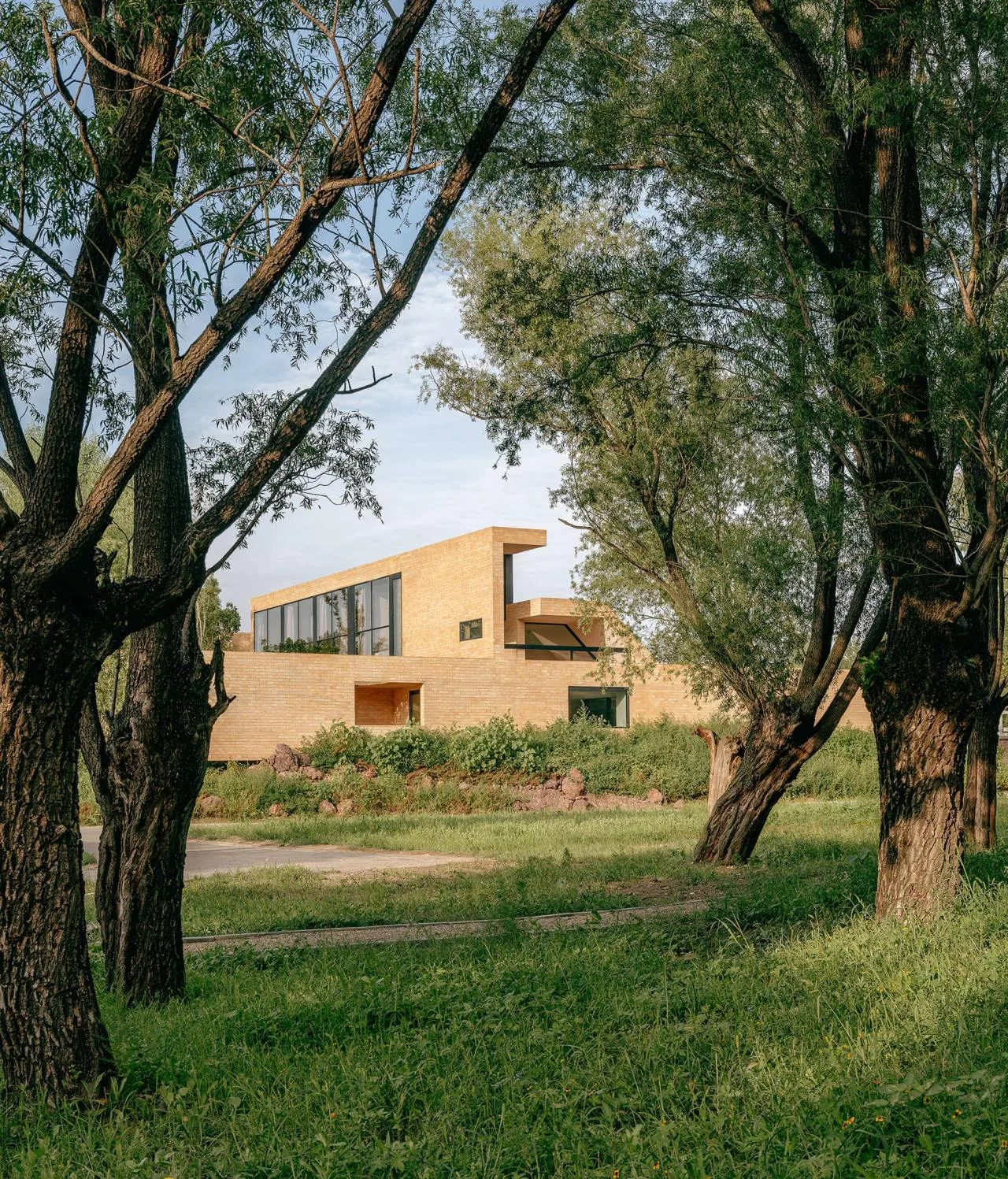
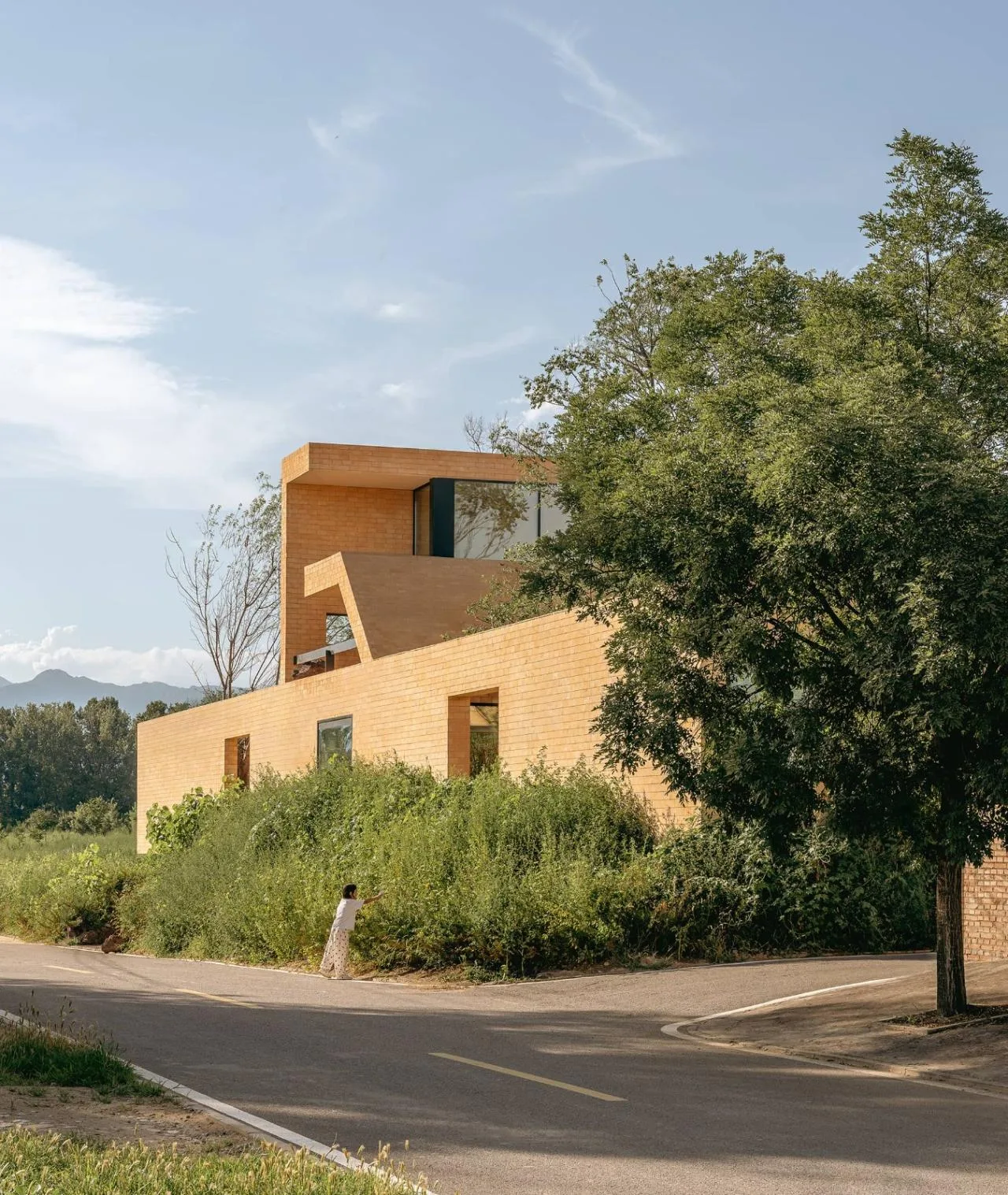
▲ The pale yellow “castle” in the village © Zhu Yumeng
▲ “Rural Inn” © Zhu Yumeng
▲ “Rural Inn” © Zhu Yumeng
▲ Suburban theme park © Zhu Yumeng
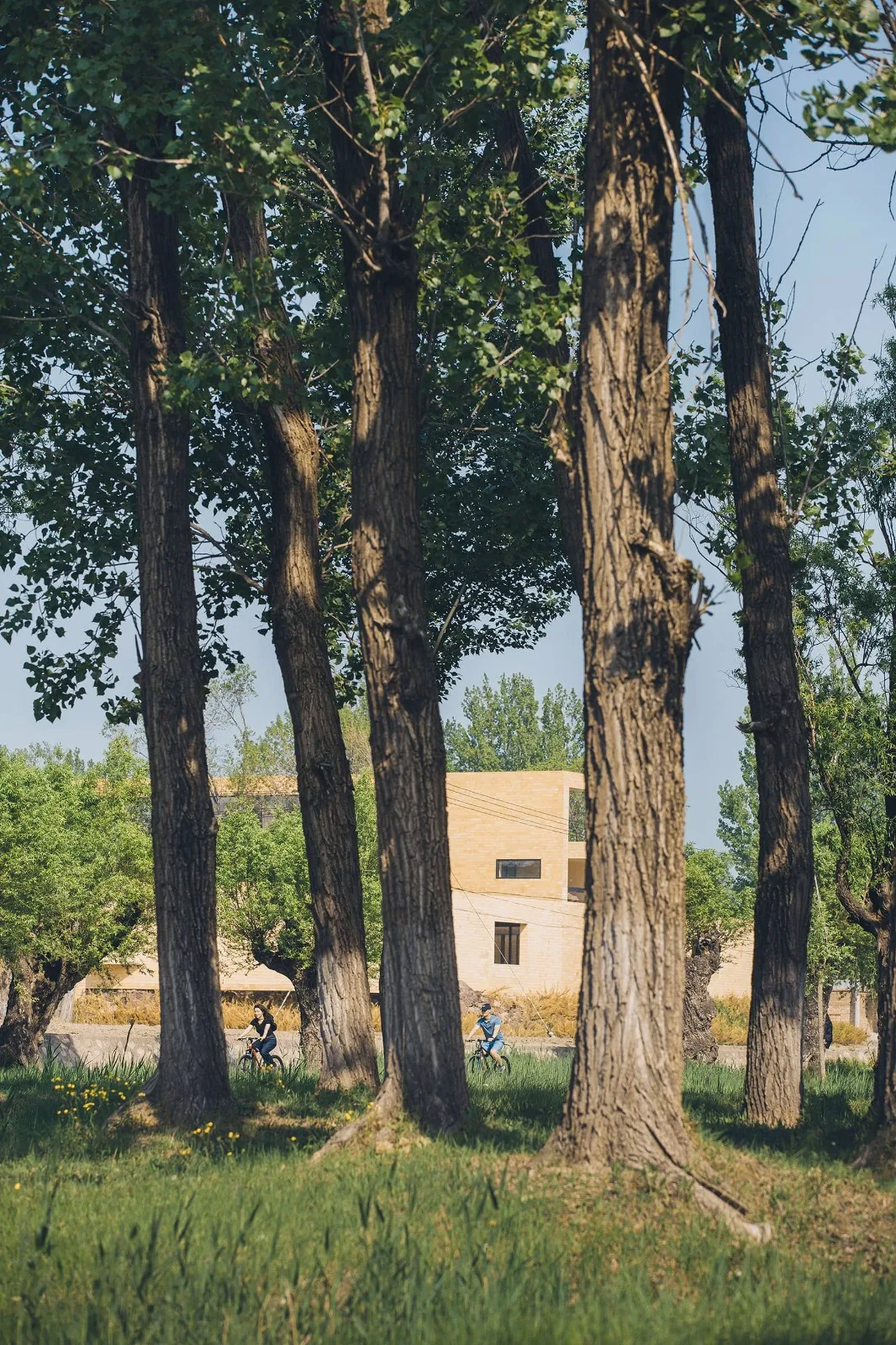
▲ “Fashionable version” of the living experience © Xi Youji
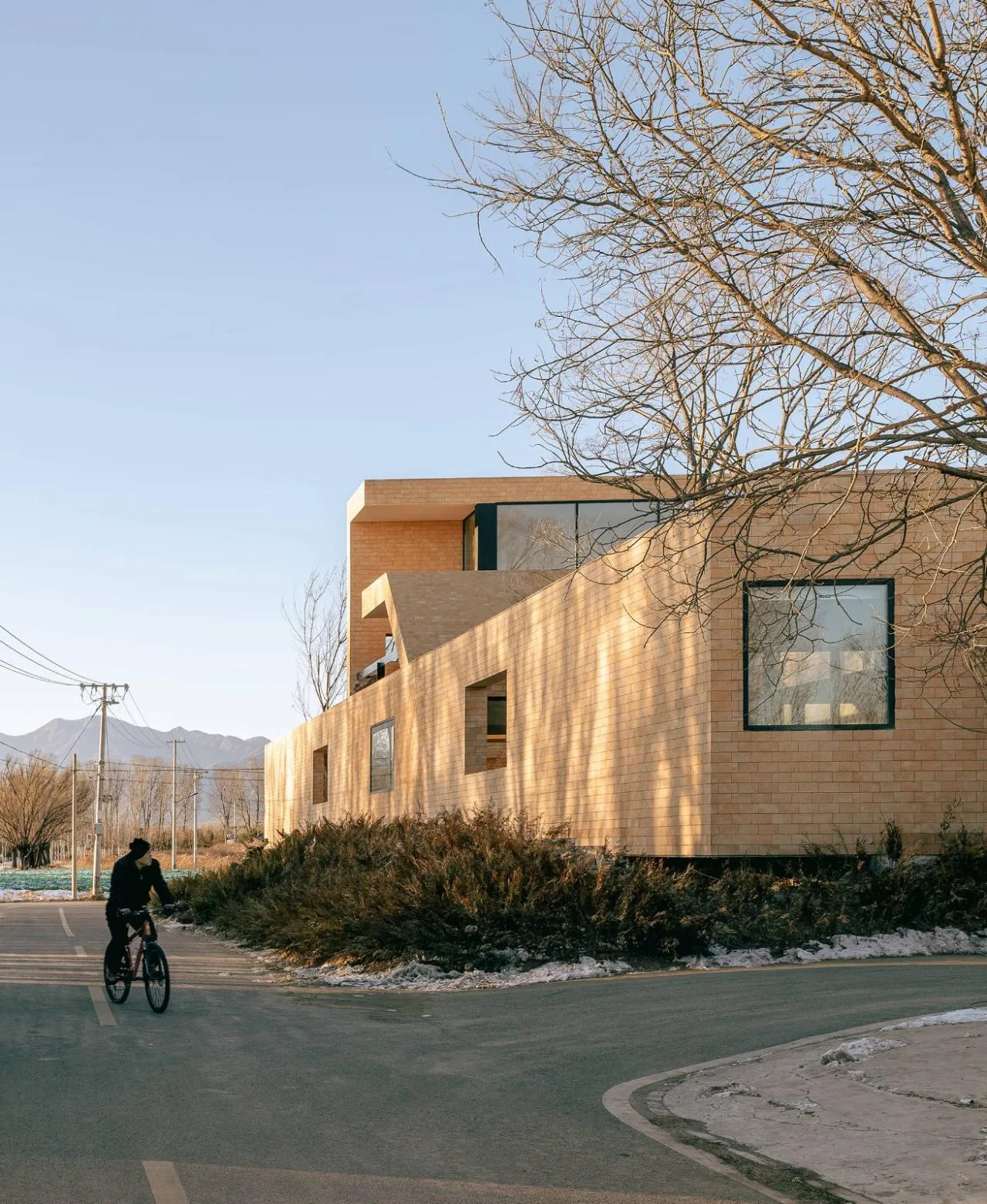
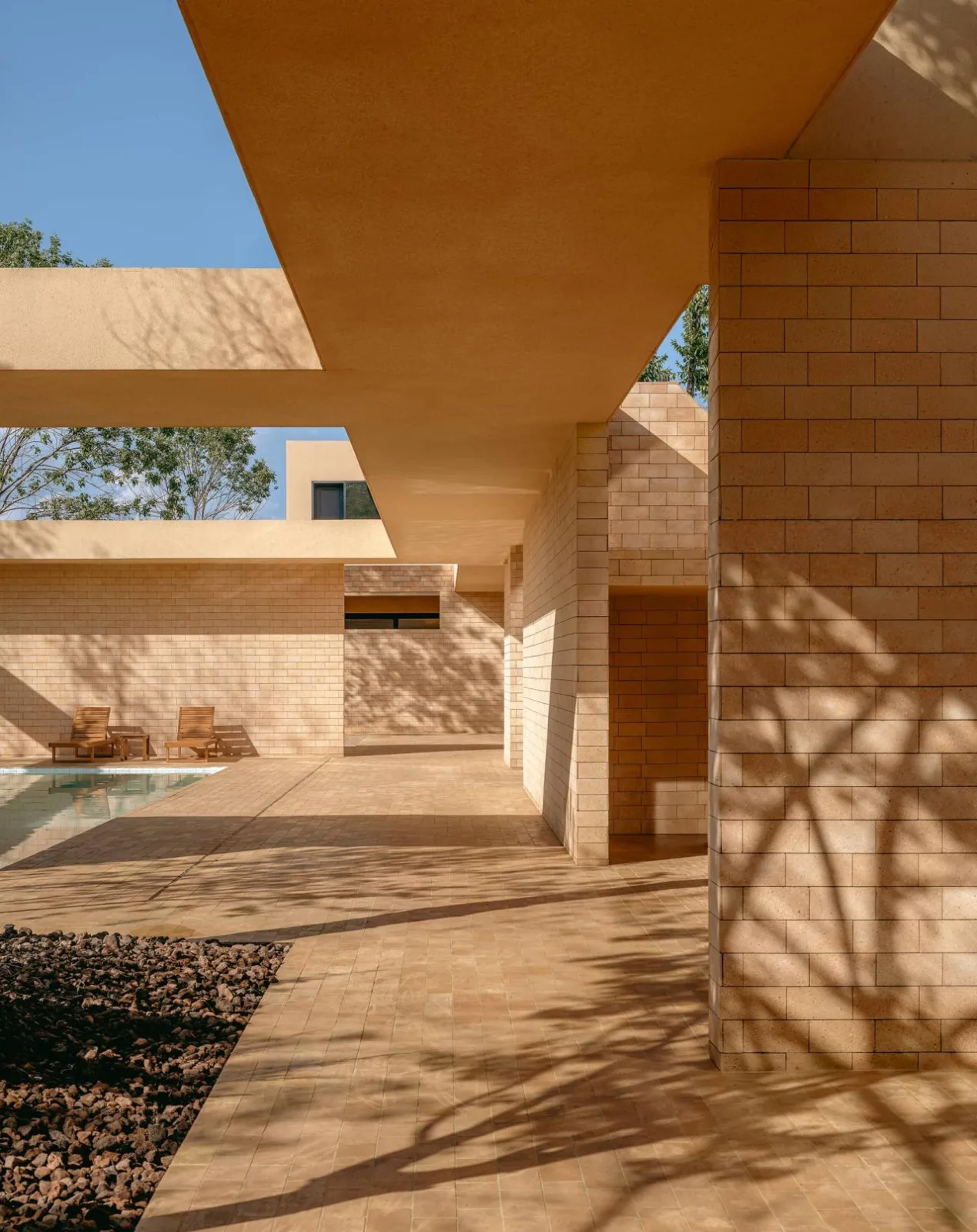
▲ 16:30 Sunshine © Zhu Yumeng
Project Drawings
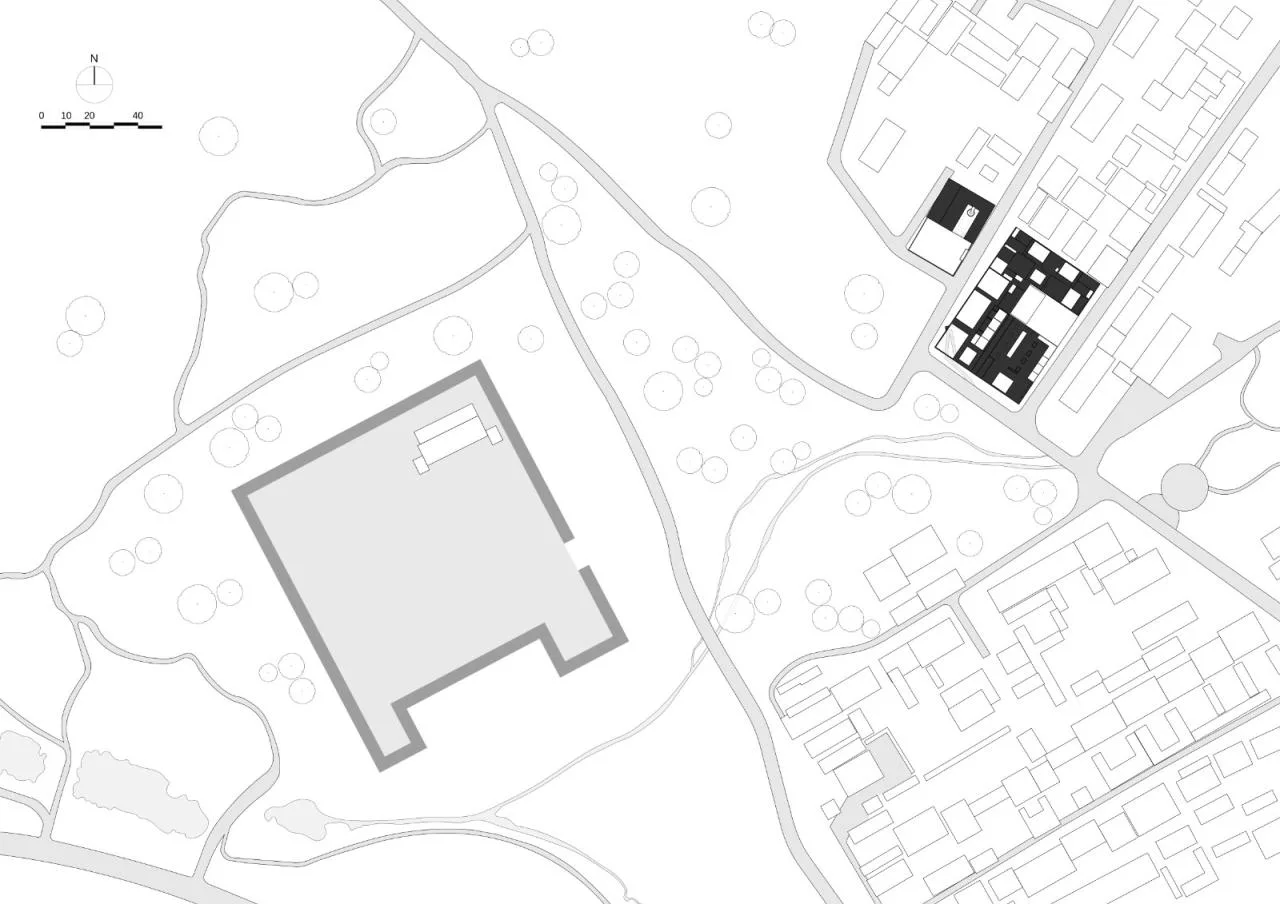
▲ General layout plan © Large scale construction
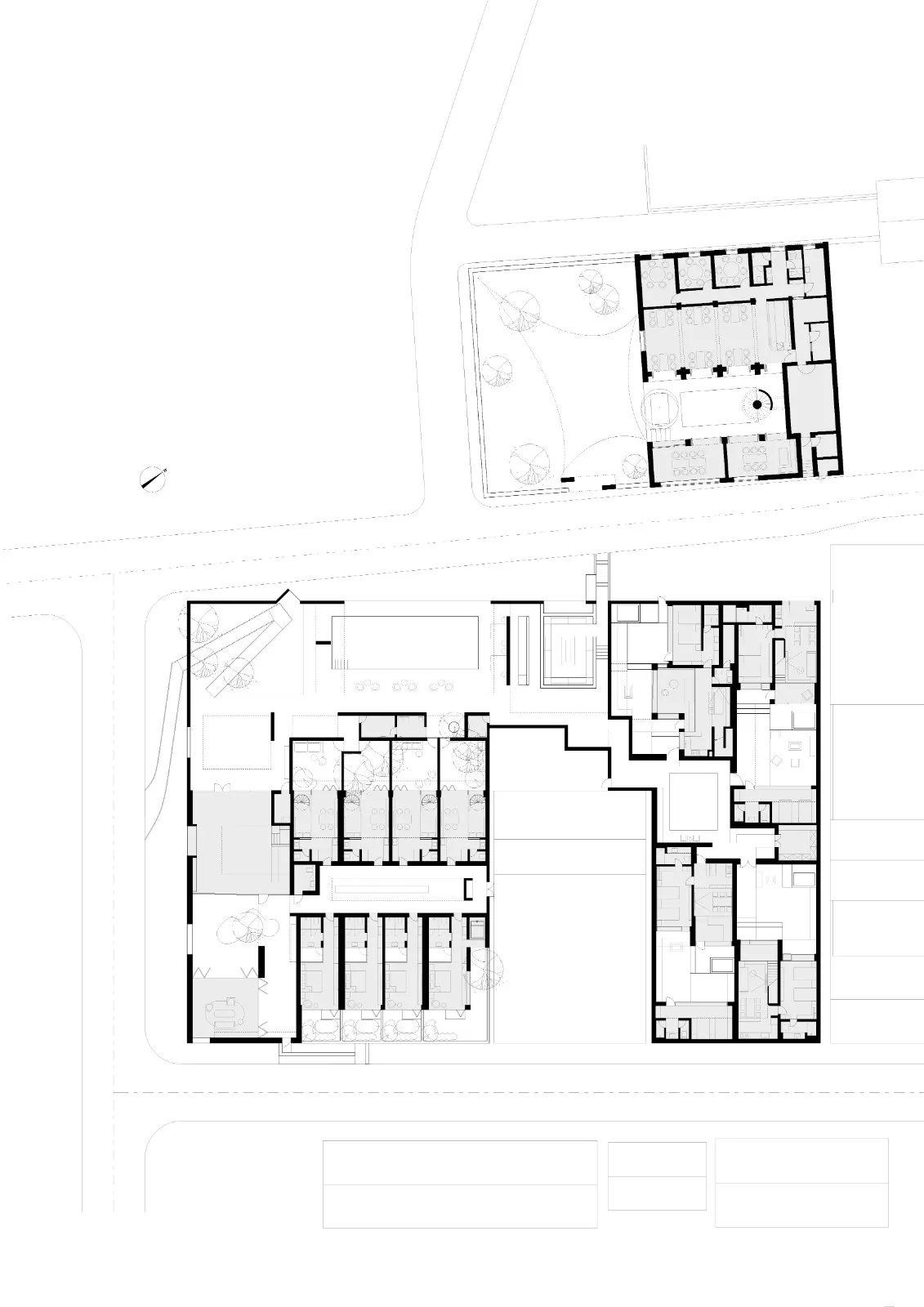
▲ First floor plan © Large scale construction
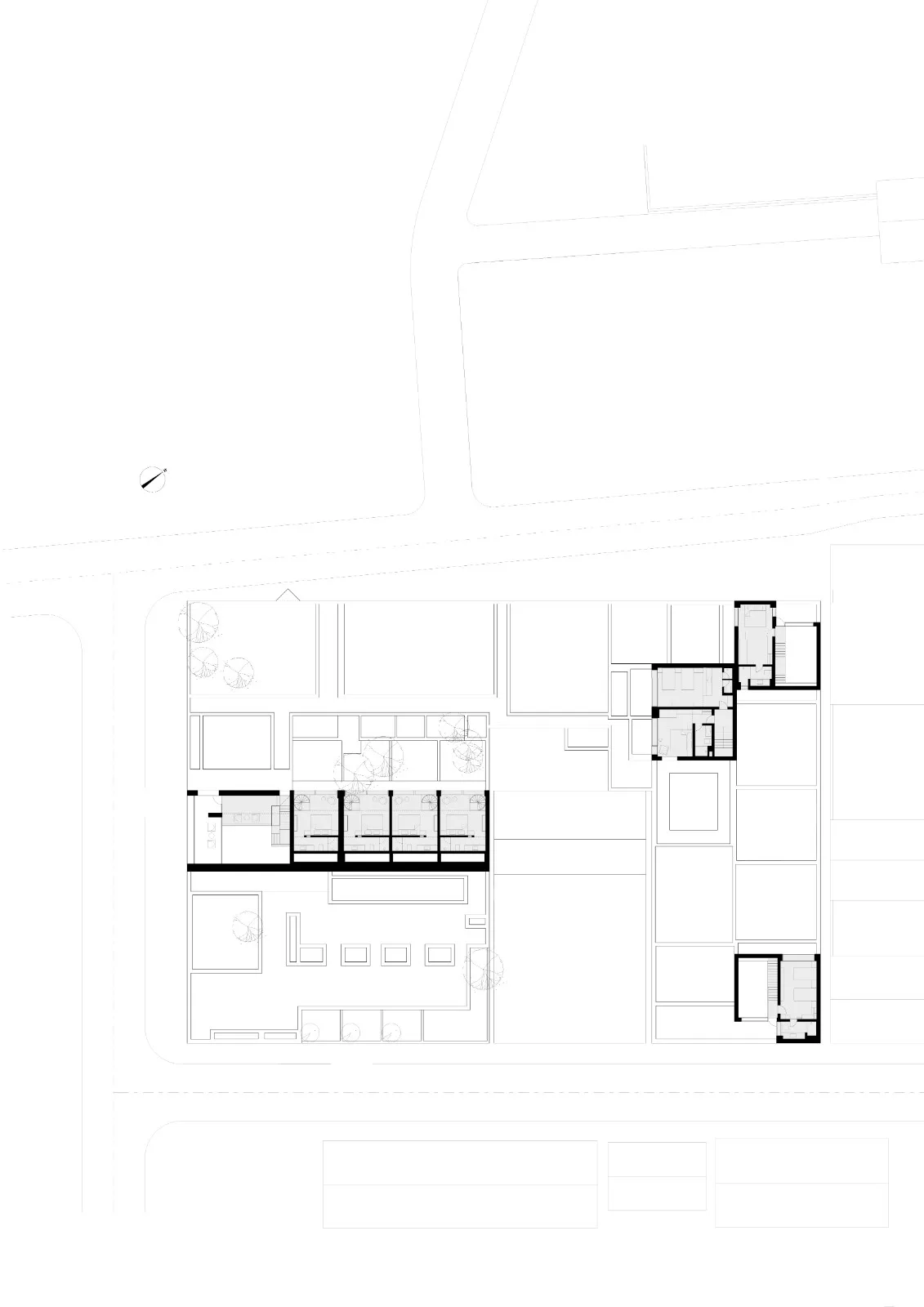
▲ Second floor plan © Large scale construction
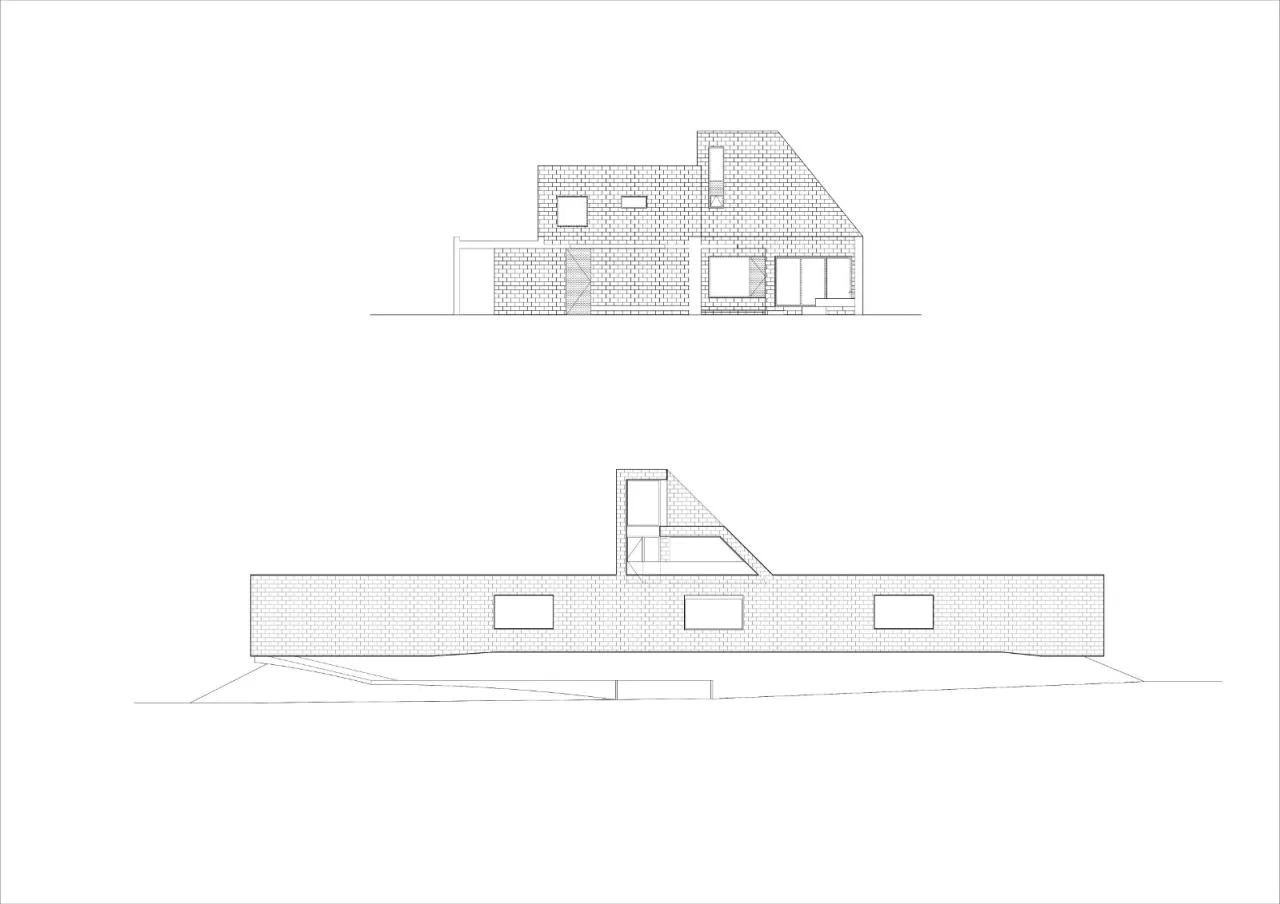
▲ Hotel (lobby and guest rooms) elevation © Large scale construction
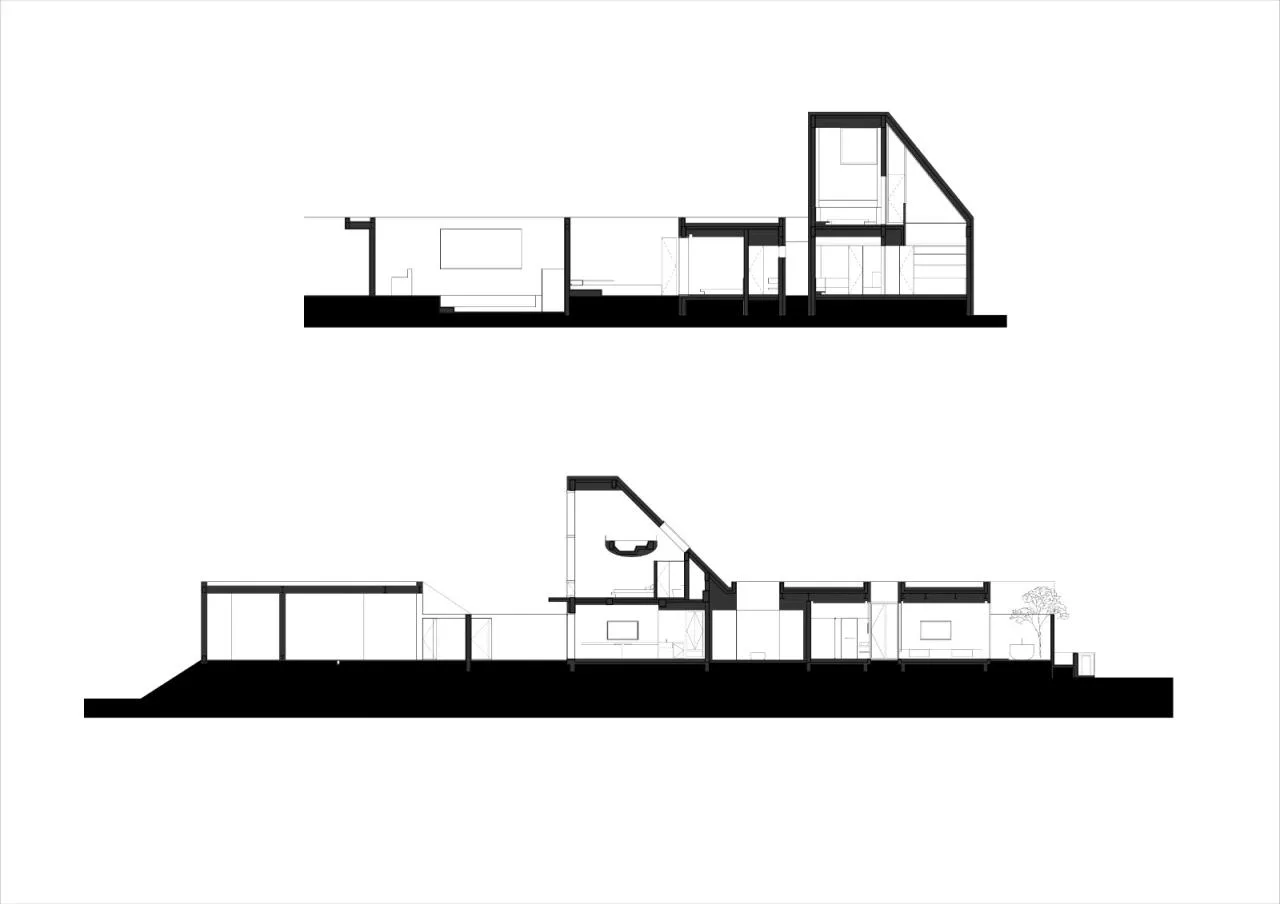
▲ Hotel (lobby and guest rooms) sectional view © Large scale construction
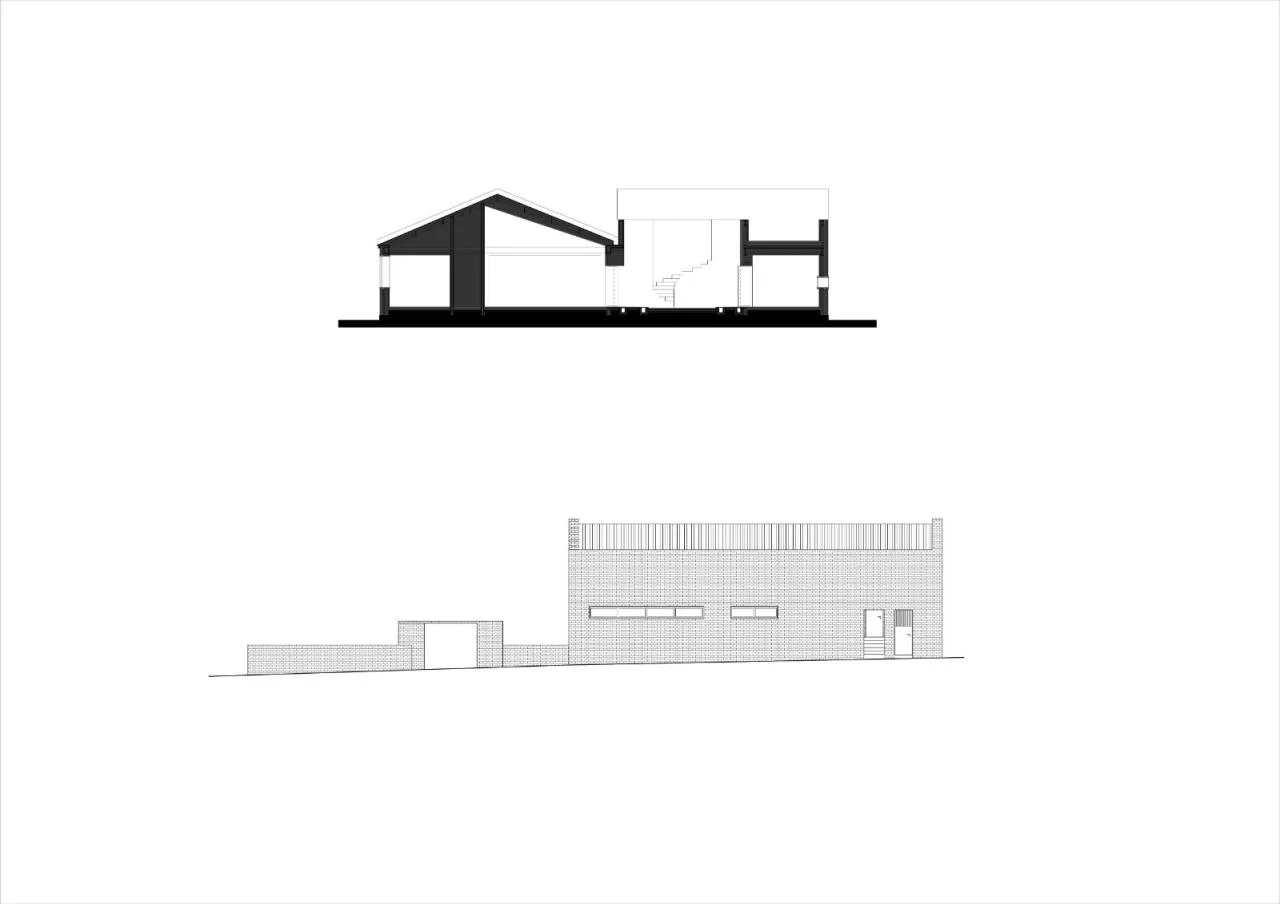
▲ Restaurant elevation and sectional view © Large scale construction
Project Details
Location: Yanqing, Beijing, China
Timeline: 2022–2023
Area: 2,000 square meters
Owner: Beijing Jijing Cultural Tourism Co., Ltd.
Architecture/Interior/Landscape Design: Large scale buildings
Lead Architect: Liu Yang
Architects: Sun Xinye, Ding Yue, Wen Shi, Wei Wei, Cai Zhuoqun
Structural Engineers: Gao Xuemei, Lang Yulong
Electrical Engineer: Wang Liu
Water Heating Engineer: Guohaifeng
Construction: Beijing Xinnansen Wooden Structure Engineering Co., Ltd.
Photography: Zhu Yumeng, Xiyouji Studio, Dayao Architecture












Must log in before commenting!
Sign Up