
Before starting the ‘Lushan Era’ project, the design team had already worked on several plots in the surrounding area. This continuous engagement shifted their focus from individual buildings to the broader urban context.
Interview video of Lushan Era
The Beginning of a New City
First Impressions of City Landmarks
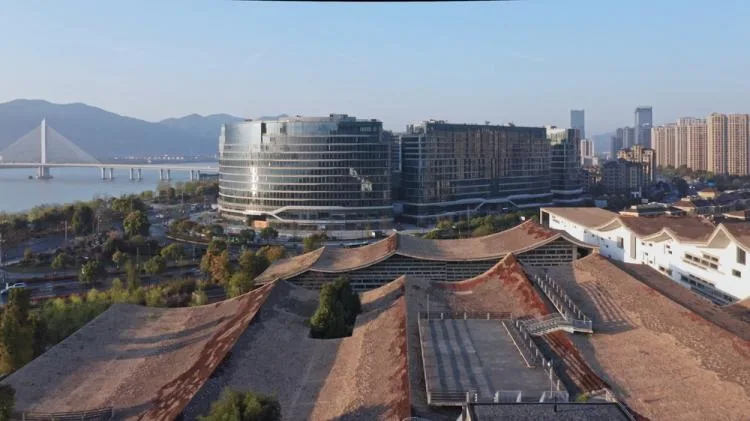
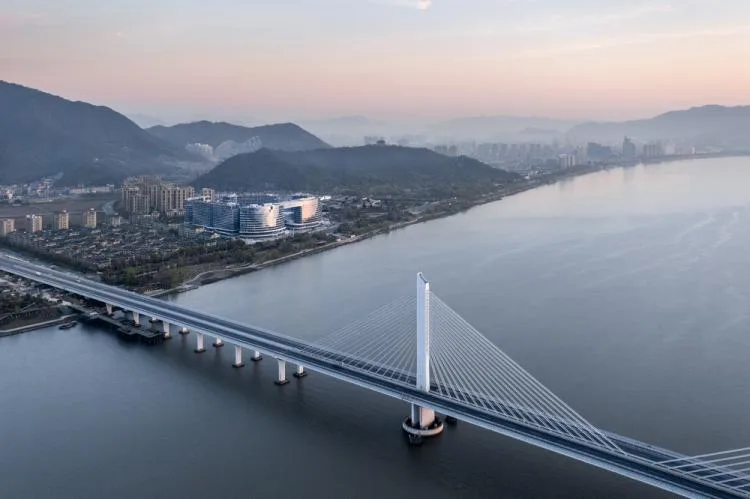
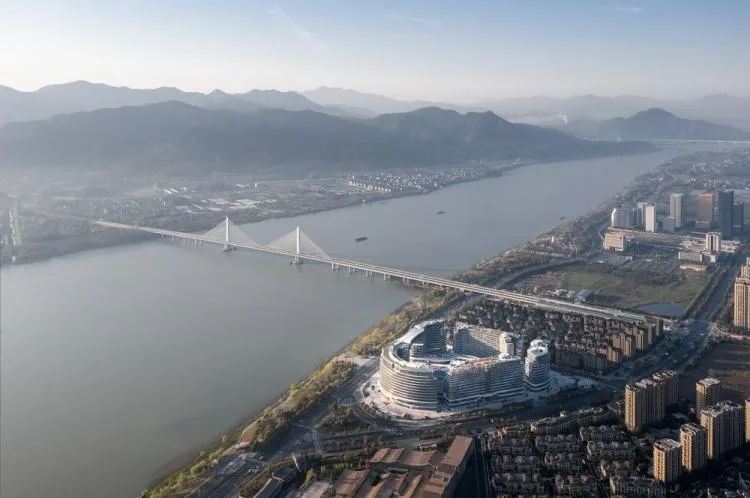
The Lushan Era site was launched in 2012 as a comprehensive complex with urban-level energy capacity. It stands as a notable milestone in Goa Elephant Design’s ongoing work in this region and a significant step in the development of the new city. The site enjoys a prime location—backed by Lushan Mountain, overlooking the scenic Fuchun River, bordered by a long bridge on one side, and adjacent to Fuyang’s cultural hub, the “Three in One” project by Wang Shu.
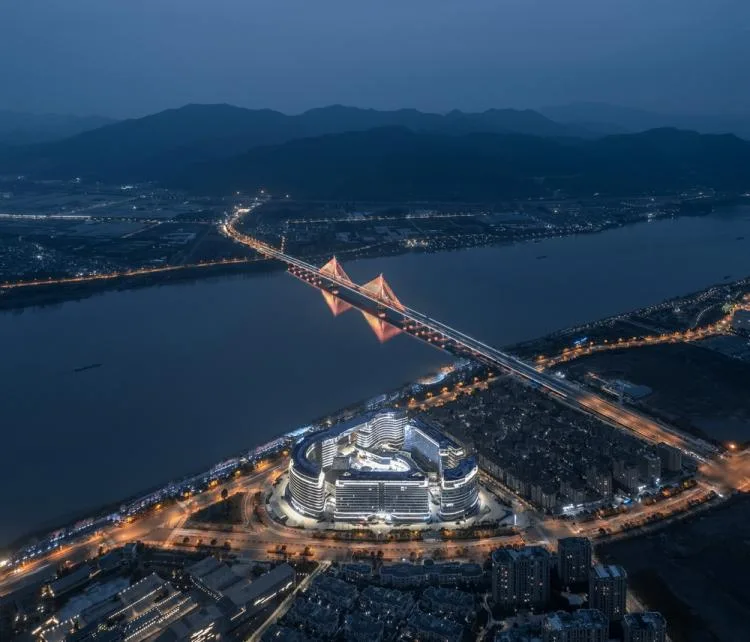
From certain vantage points, the architecture will be the sole prominent man-made feature within the landscape, embodying the city’s cultural investment and blending seamlessly into this natural setting.
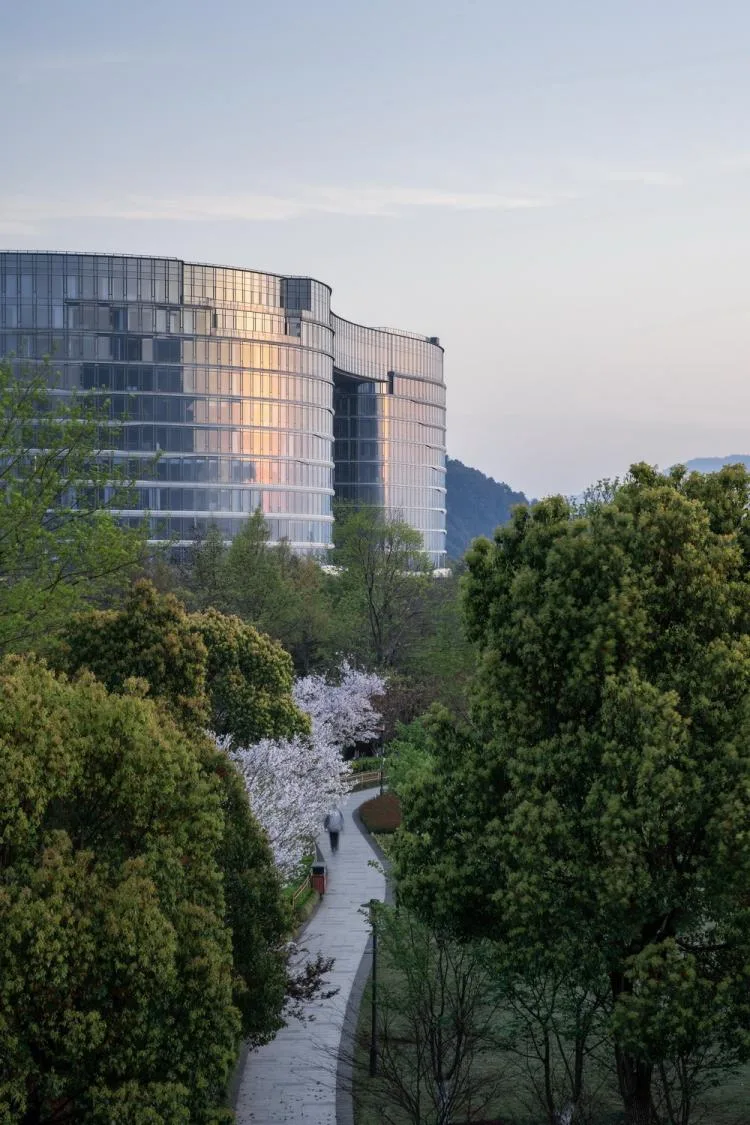
A key design consideration was the dual relationship of visibility: how the building is perceived from the opposite bank and the bridge, and how occupants enjoy views of the river from inside. Both perspectives shaped the architectural concept.
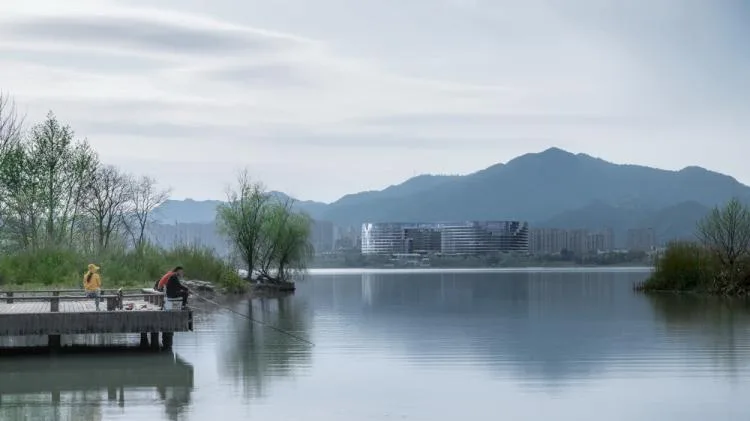
Guided by this dual vision, the architect’s initial sketch positioned the building volumes along the site perimeter, creating a central square for public activities and a cohesive external form.
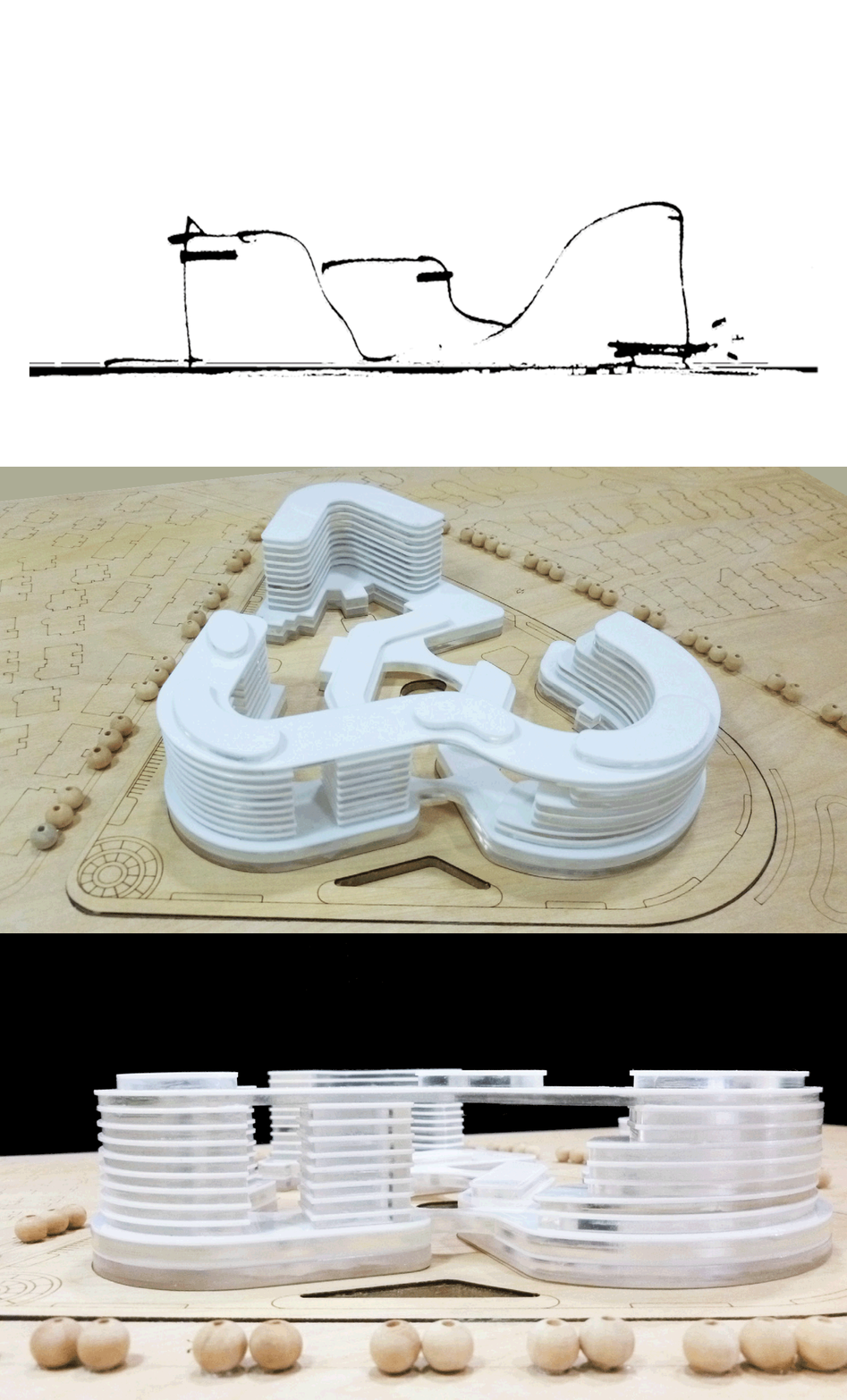
Initial sketch and process model
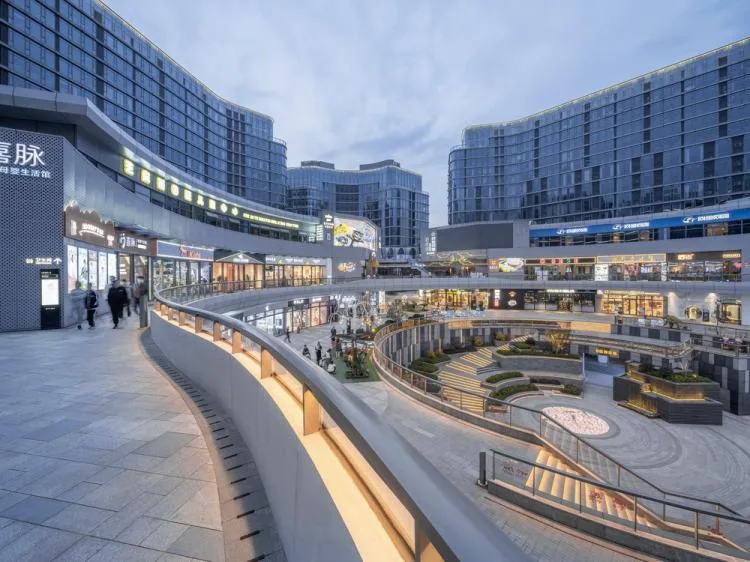
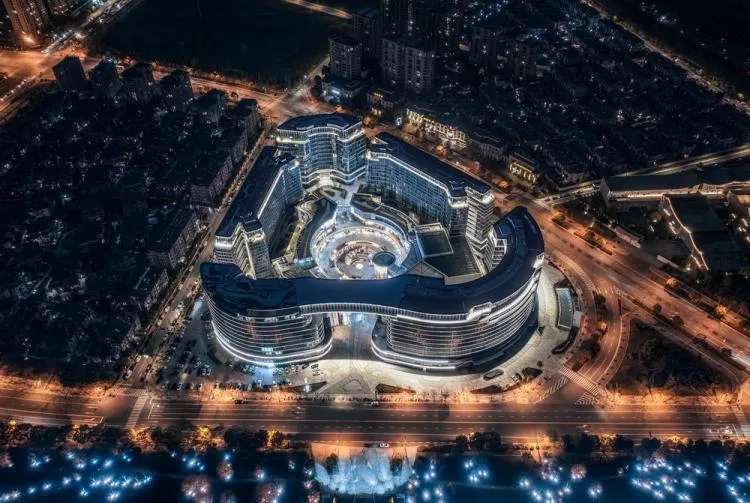
Building on this concept, the final design features a double-ring structure: an inner circular plaza nested within an outer curved triangular outline. Between these two rings lie multiple side courtyards, each with its own unique atmosphere. Several elongated high-rise volumes extend from the outer base, connected to form a dynamic composition.
The river’s narrow, winding path offers a rich and varied viewing experience from multiple angles. The design strategy maximizes this diversity by integrating the perimeter with the landscape, ensuring a pure and elegant architectural image. Throughout the design development, the team continuously refined sightlines from different directions, culminating in a harmonious blend of formal beauty and visual value.
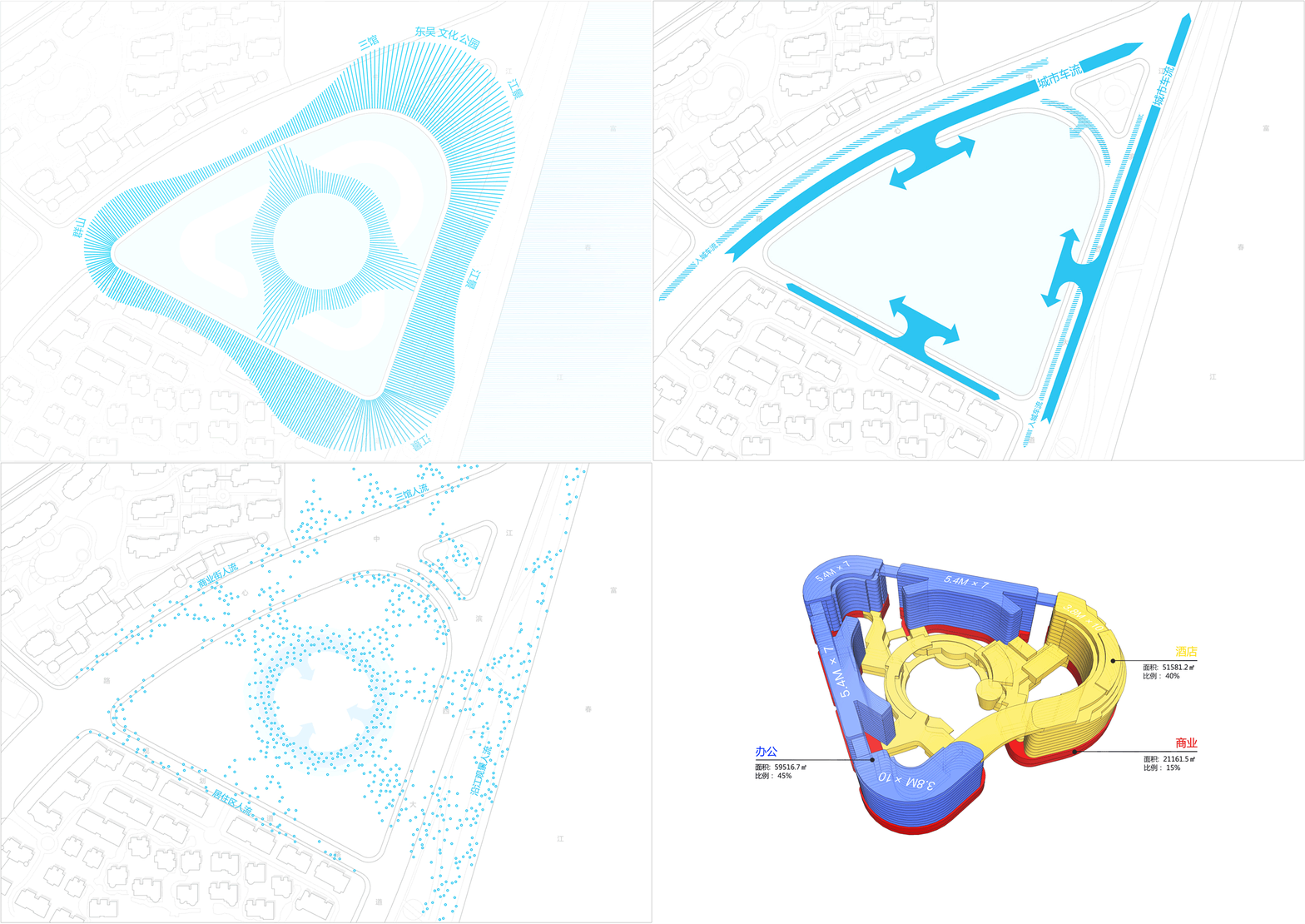
△ Distribution of pedestrian, vehicular, and functional flows
“Utilization”
Public vitality beyond commercial interests
Creating vibrant urban public spaces is a crucial challenge in new city development. High-quality public spaces provide venues for organized activities, truly energizing urban life. This is especially important in Fuyang’s Lushan New District, where public spaces remain limited.
As the first urban complex in the new city, Lushan Era neighbors the cultural center “Three in One.” Together, they form the heart of public urban life and play a vital role in shaping the new city’s public spaces. The architect introduced the concept of a “new city reception room,” emphasizing spatial aggregation to maximize the impact of limited building volume and public activities on the urban scale.
The lower commercial area gradually extends upward through layered outdoor terraces, bringing street-level vitality to upper levels. These platforms also create diverse river views, offering a continuously changing landscape experience while walking. On the river-facing side, a setback forms a recessed urban plaza. Toward the northeast corner near the “Three in One” cultural cluster, a welcoming boundary is created by further setbacks.
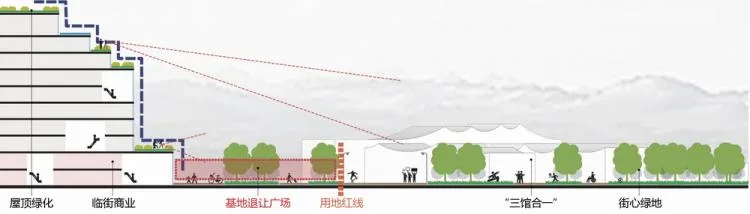
△ Northeast side setback platform
The 60-meter-long cantilevered opening offers river views for rear apartments and guides foot traffic through commercial spaces. The elevated hotel lobby becomes a scenic destination, providing an unparalleled river view experience. By carefully exploring the value of each functional area, the complex achieves genuine vitality through the synergy of its mixed uses.
Responding to the Region
Human-scale design within large-scale buildings
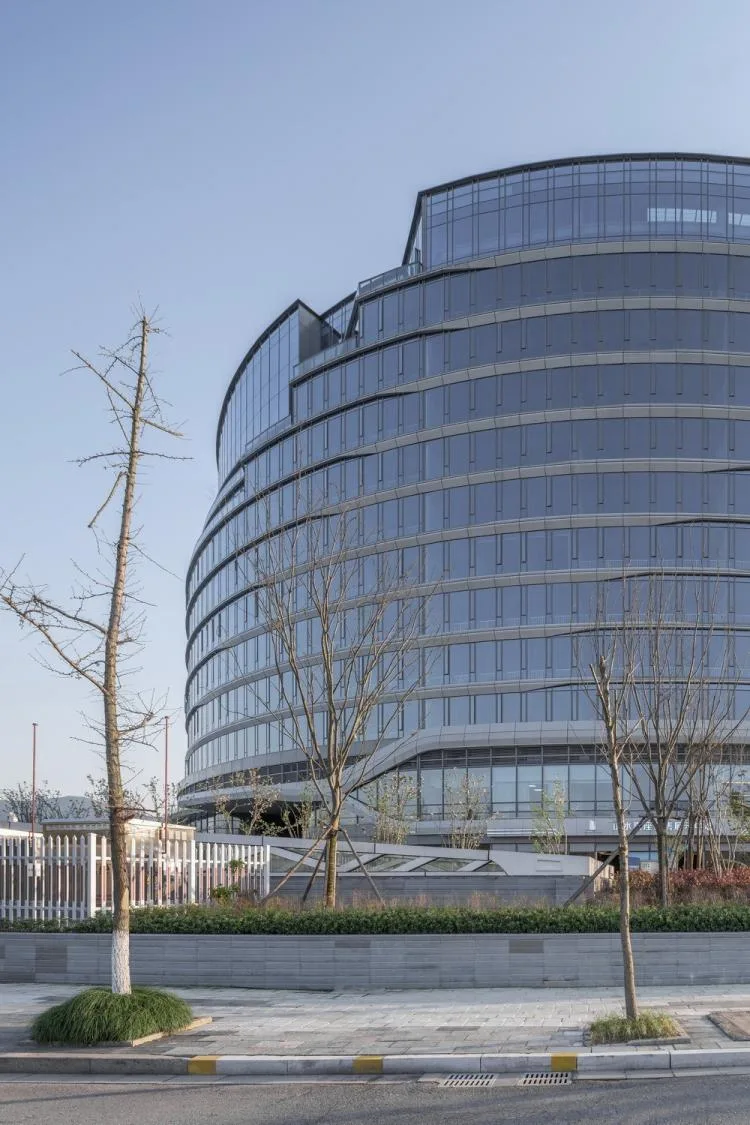
Large-scale complexes often face the challenge of reconciling grand concepts with appropriate architectural details. To avoid an overwhelming or fragmented presence, the architects focused on how the buildings are perceived, especially from the bridge and the opposite riverbank.
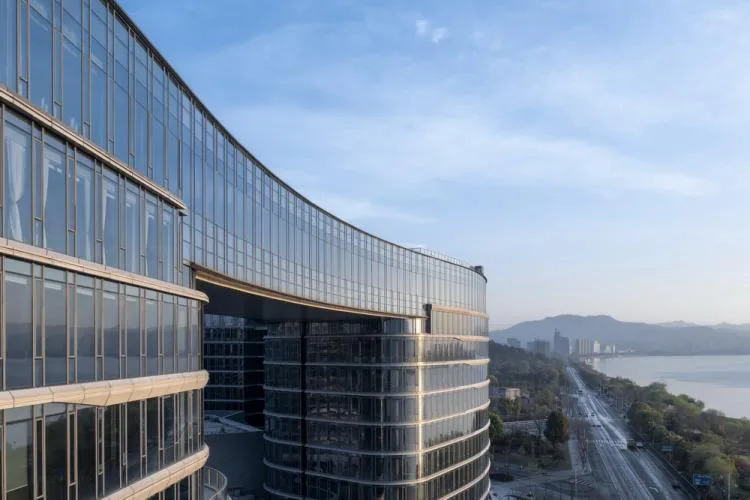
The facade features horizontal lines of varying widths, creating a rhythmic flow along the curved surfaces. From different distances, the curved aluminum alloy panels subtly reflect light and shadow, evoking the contours of surrounding mountains.
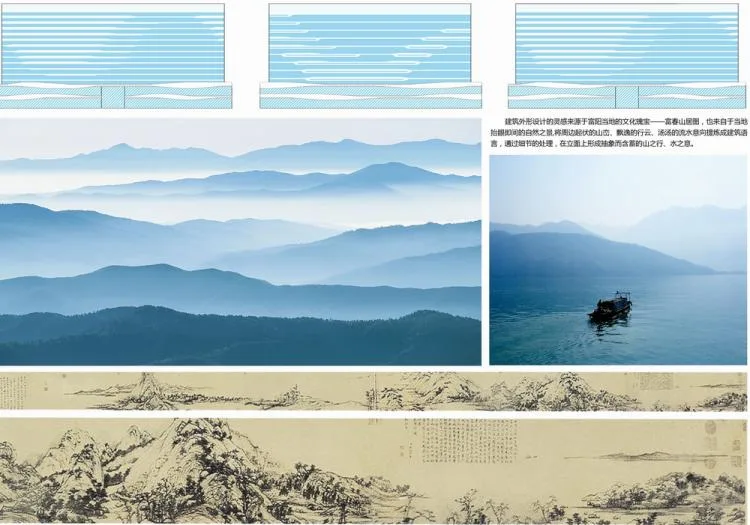
△ Facade Concept
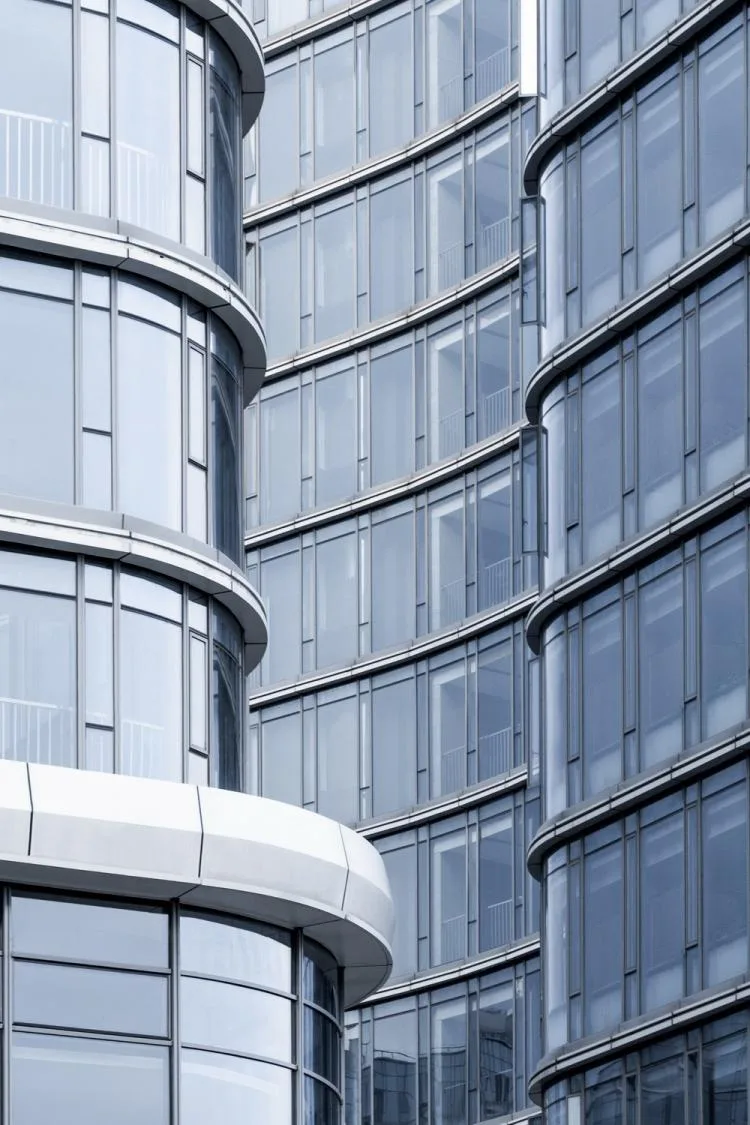
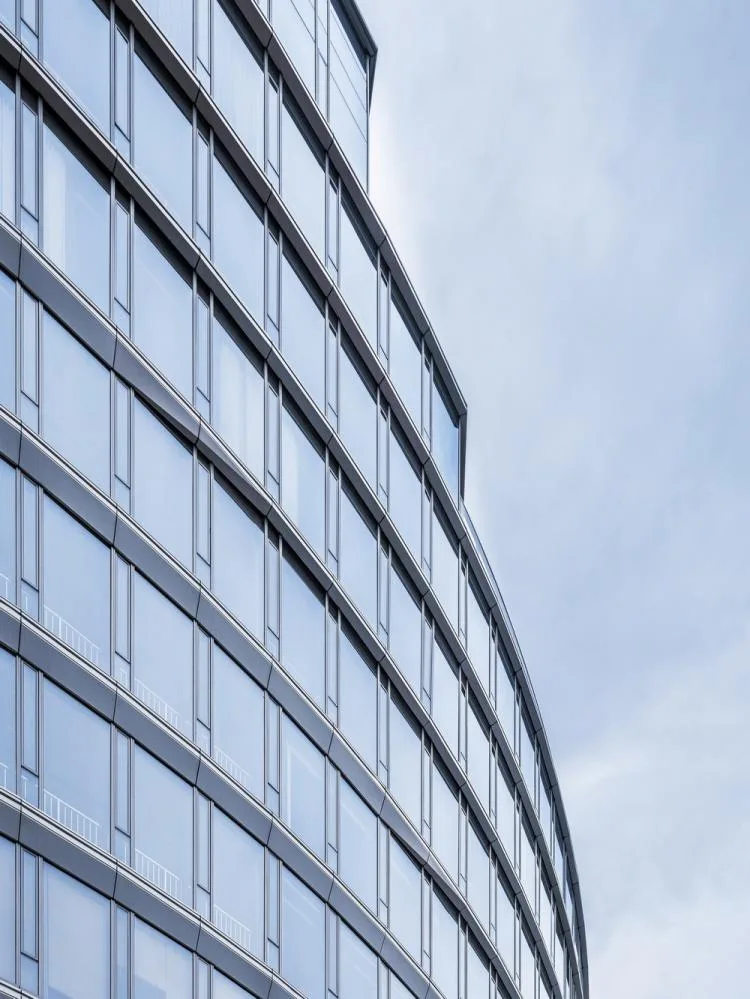
The abundance of curved surfaces presented technical challenges; even minor misalignments could lead to significant errors. To ensure precision, the architect employed a “divide and conquer” approach, using a single center point to guide all curves. This allowed all facade components to be produced as standardized units, guaranteeing design accuracy throughout construction.
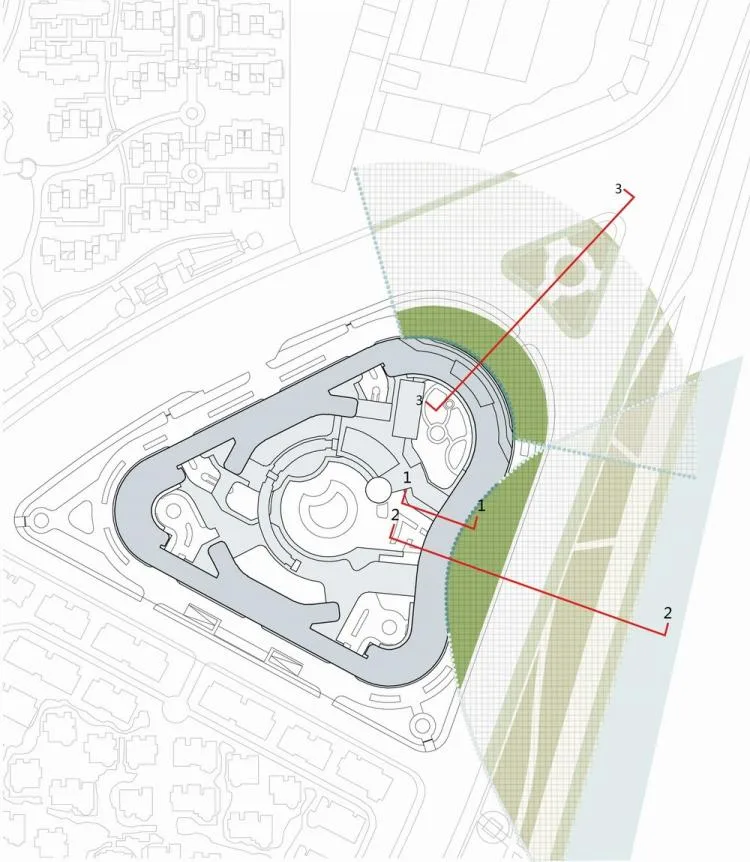
△ The concave plaza facing the river and the northeast setback platform
“Coexisting Diversity”
Fostering a rich urban lifestyle
At the outset of the Lushan Era design, the integration of the three adjacent buildings was still evolving. During the design process, the architects simulated views of pairs of buildings from varying distances to analyze the street-level form and consider what constitutes a complete and ideal urban interface within the new city cluster.
Following the completion of two buildings, a dynamic “juxtaposition and opposition” relationship emerged along the waterfront, adding rich layers of meaning and identity to the new cityscape.
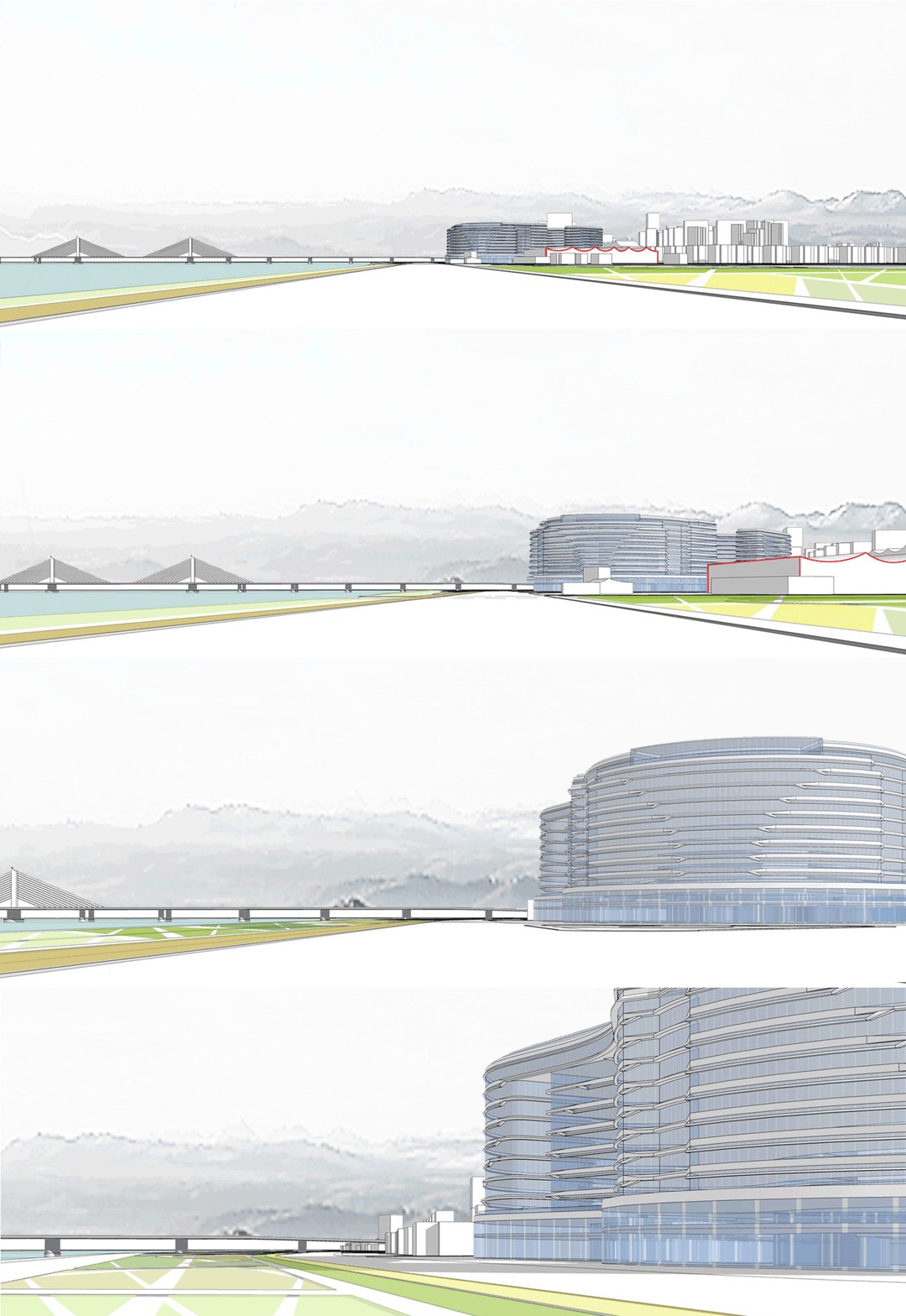
△ City interface refinement
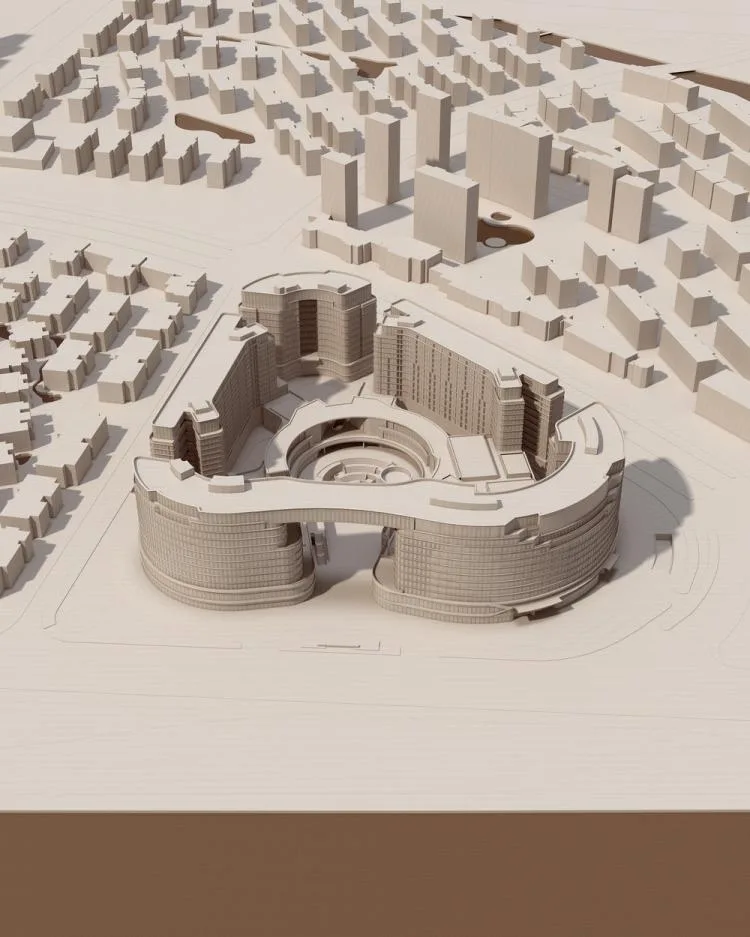
△ Final draft model
Since its inception, the Lushan Era project has realized its vision for functionality, activity, and visibility, bringing new life to the citizens of Fuyang New City. As the architect noted, “Working on a project in a region over time has shifted the focus from individual buildings to the overall urban relationship.”
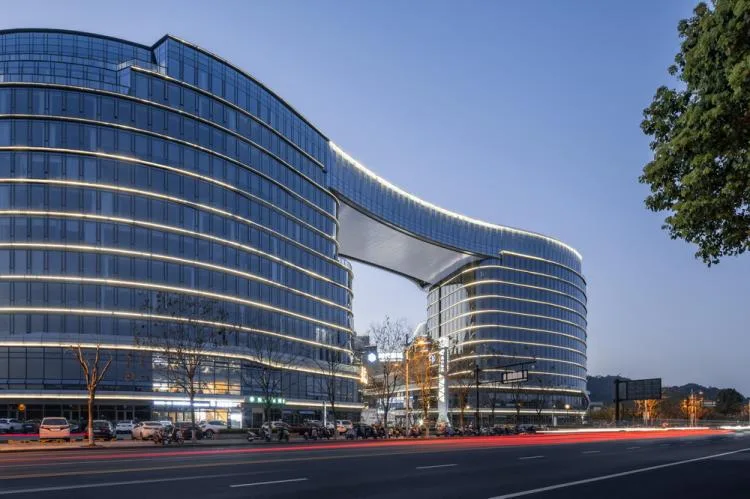
The project’s comprehensive urban design approach has provided valuable lessons for the team and ensured the successful realization of its concept. With long-term operational goals, the future of this urban landmark is only beginning.
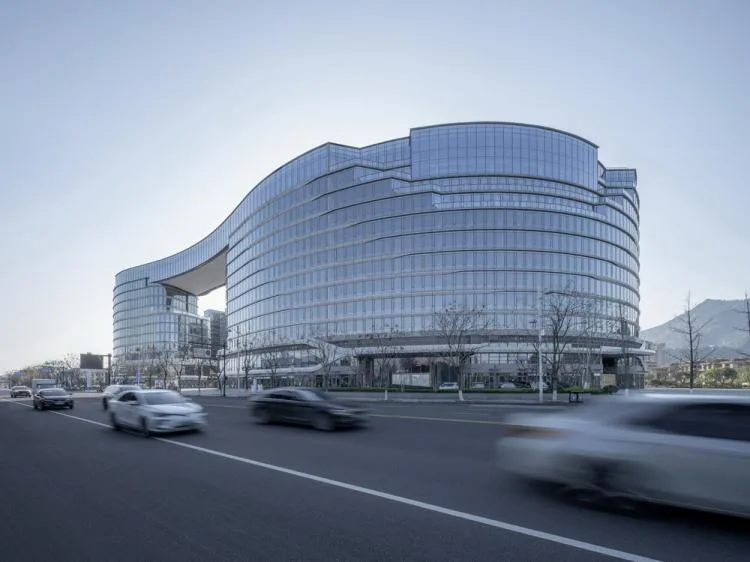
Project Information
Architectural Design: Goa Elephant Design
Area: 173,000 m²
Project Year: 2020
Photographer: CreatAR Images
City: Hangzhou
Country: China












Must log in before commenting!
Sign Up