
In the wake of the global pandemic, our living environments have undergone significant changes—“isolation” has become the new social norm. People not only maintain physical distance from one another but also experience a semi-isolated relationship with their surroundings due to prolonged home confinement.
The innate human desire to connect with nature remains strong. As we navigate the post-pandemic era, design must respond to human psychology and anticipate future lifestyles within communities. Especially when external threats to health and safety are prevalent, our yearning to step outside and engage with nature intensifies. Nature is not merely an external backdrop; it symbolizes life, vitality, and resilience.
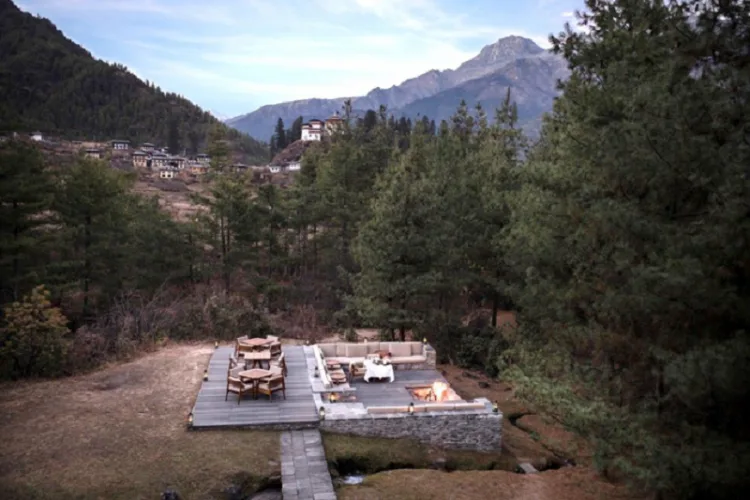
01. Natural Scenes and Micro Vertical Cities – Exploring Human Settlement Models
During the pandemic, when many residents remain confined within apartment buildings, shared spaces transform into communal homes—places to meet and interact. The youth shared spaces we focus on are essentially micro vertical urban communities shaped by architectural and urban design. These spaces, defined by their unique social attributes, open the door to fascinating new possibilities.
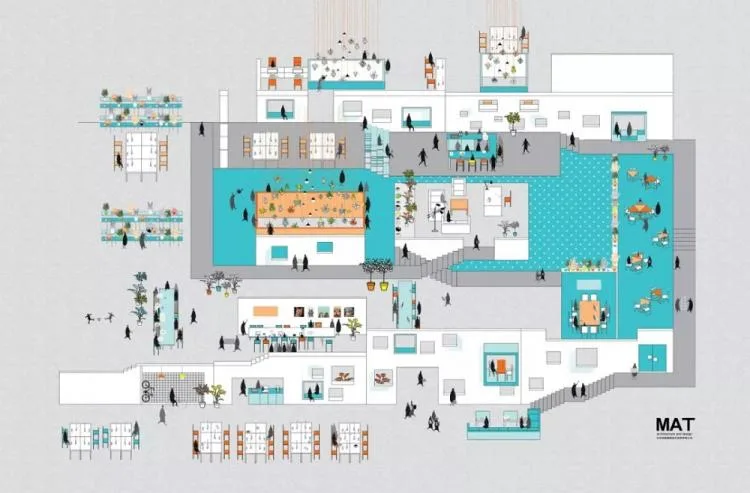
Since going outside is restricted, why not bring nature inside the apartment?
— Design Director Gao Fei
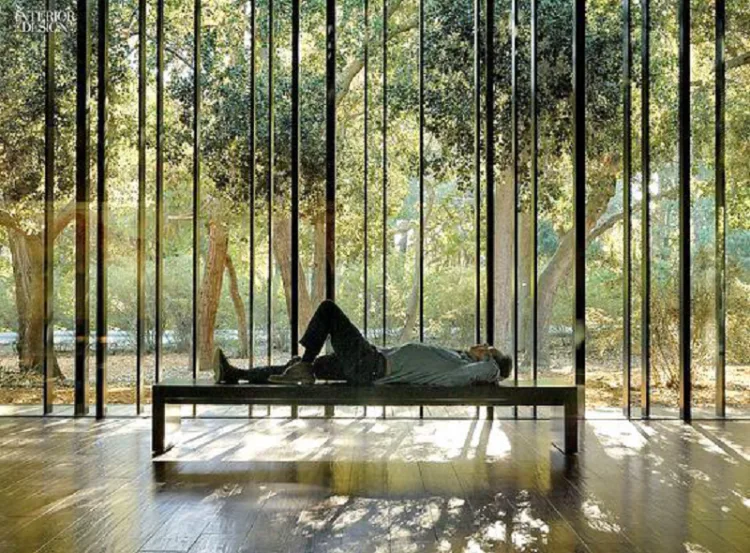
We envision this “home” not as a structure of steel and concrete but as a sanctuary nestled in nature—from lush forests to starlit skies—creating a space that heals and rejuvenates the soul.
Our concept involves applying a natural-themed mural or glass spray painting on the largest shared space wall, introducing a vivid natural image that resonates deeply. Surrounding it with glowing frosted glass on the other three walls creates a transparent, ethereal atmosphere that feels both realistic and immersive.
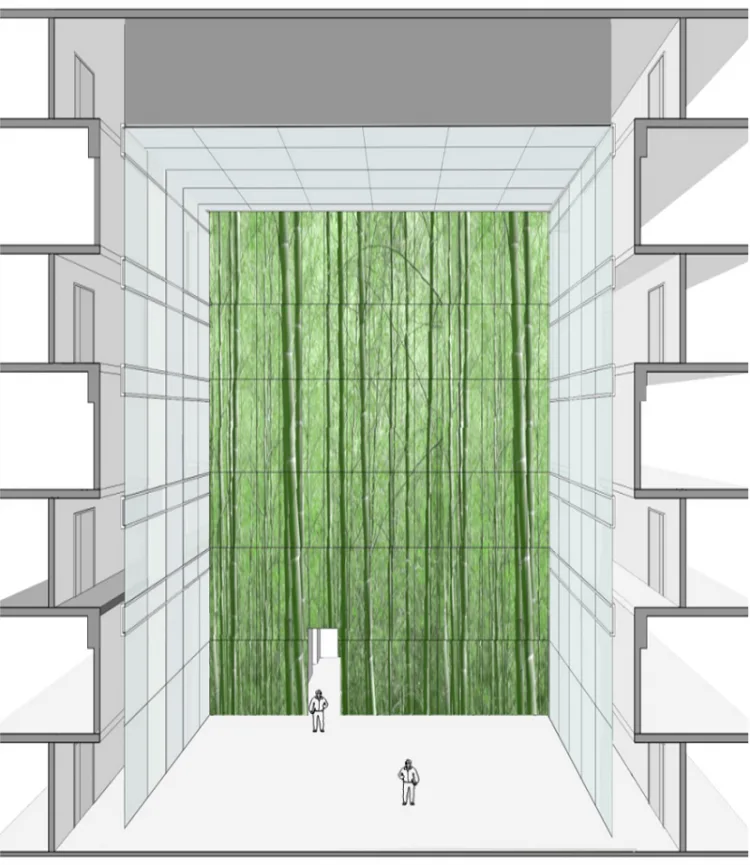
The atrium has been transformed into a balcony without railings, creating a unique sensation of hanging outdoors. This design not only improves natural lighting in the shared space but also alleviates the oppressive feeling typically associated with high-rise interiors, offering an immersive and inviting environment.
02. Project Overview
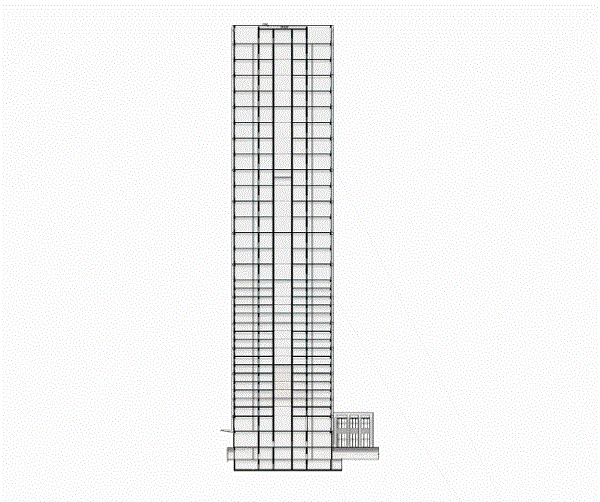
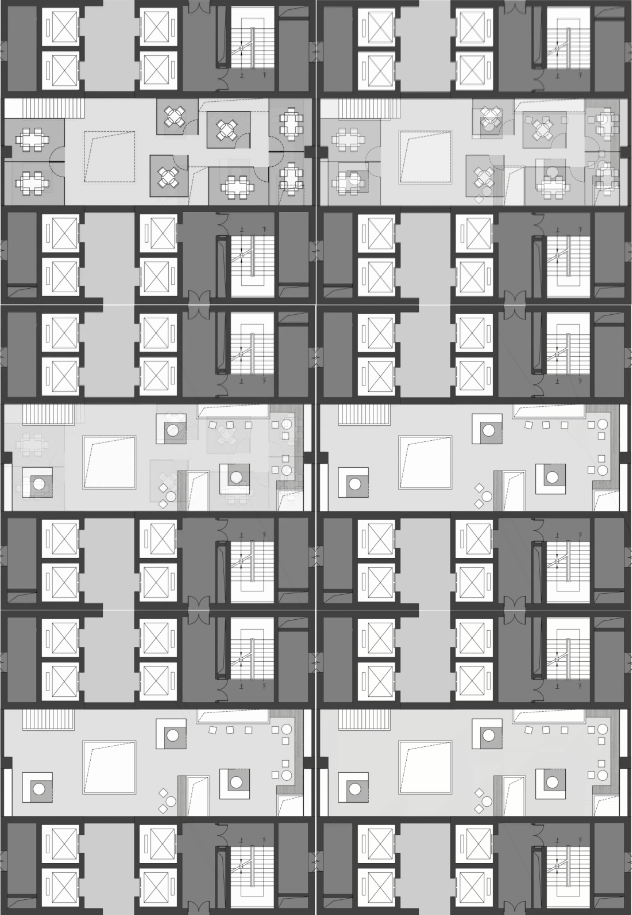
This project focuses on a 33-floor youth apartment building, aiming to optimize the functional layout and aesthetic design of its interior atrium spaces. Each floor’s atrium is enclosed by two core tubes and corridors, resulting in seven distinct atrium spaces throughout the building, each approximately 4–5 floors in height.
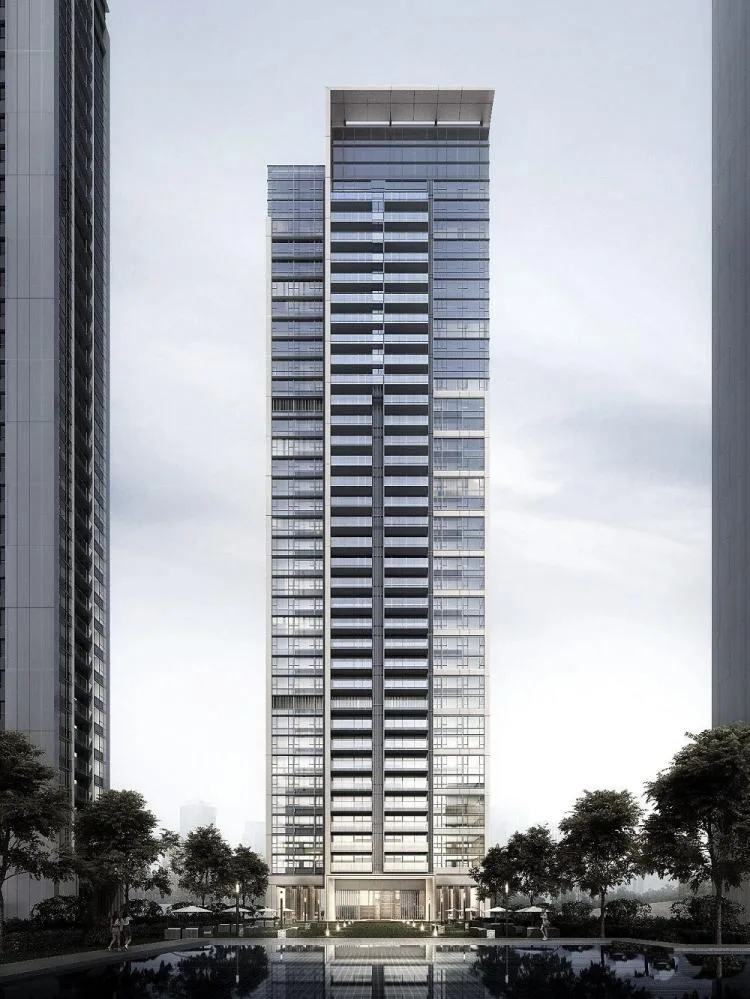
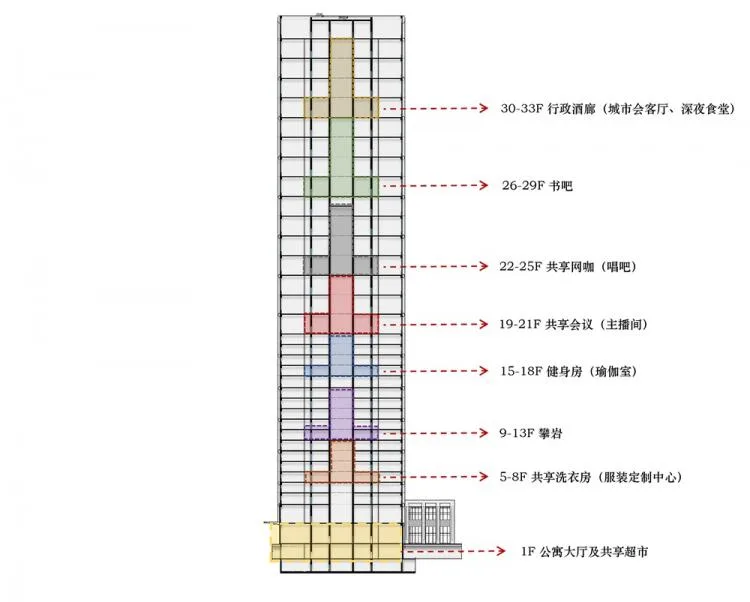
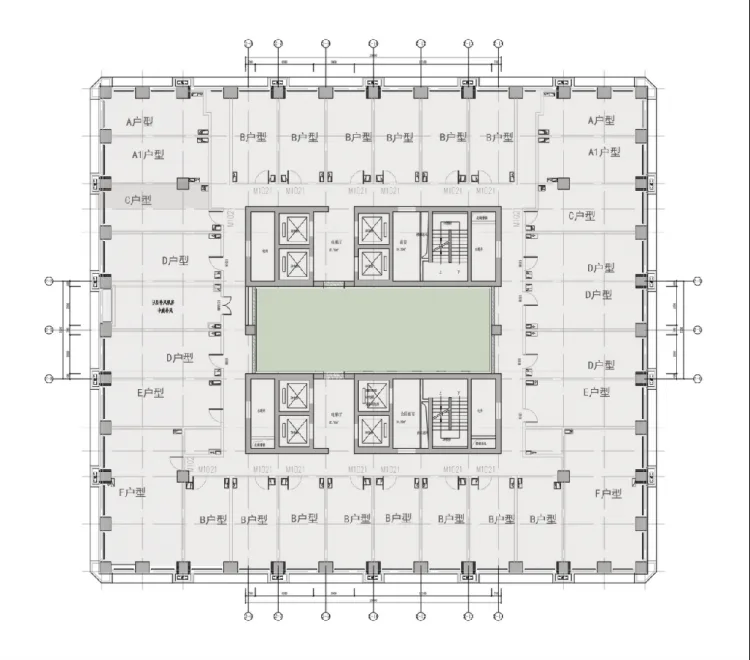
The atrium acts as a unique courtyard within the building, shaped as an external square. It serves as a bridge between the building’s interior and exterior, creating a space that balances isolation and integration. Functionally, this atrium becomes a shared area where residents can gather, socialize, and enjoy recreational activities. It fosters a diverse and vibrant community life among young residents.
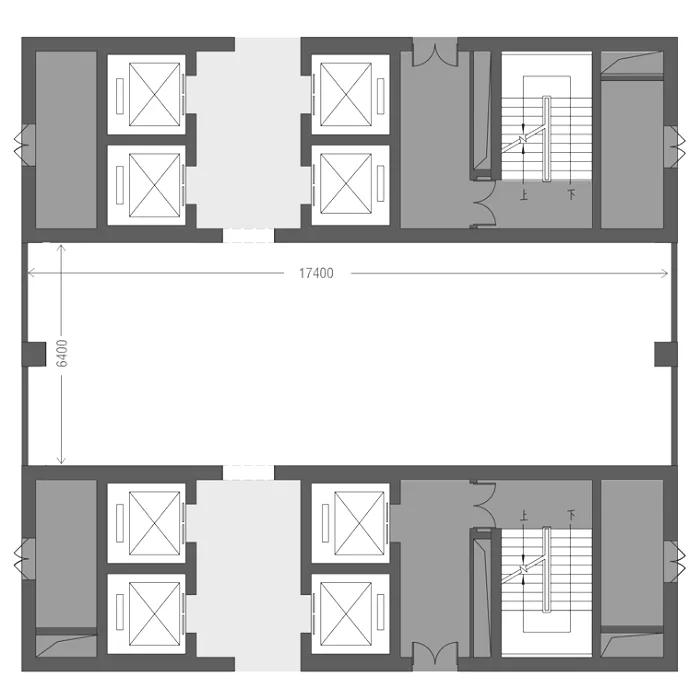
The seven courtyards form seven shared spaces, categorized into two types based on ceiling height:
1. Shared spaces on regular apartment floors, approximately 12 meters high.
2. Shared spaces on loft apartment floors, with a height of about 23 meters.
Currently, these shared spaces are only 6.4 meters wide and enclosed by shear walls on both sides, leading to poor natural light. Additionally, the very high ceilings can feel psychologically overwhelming.
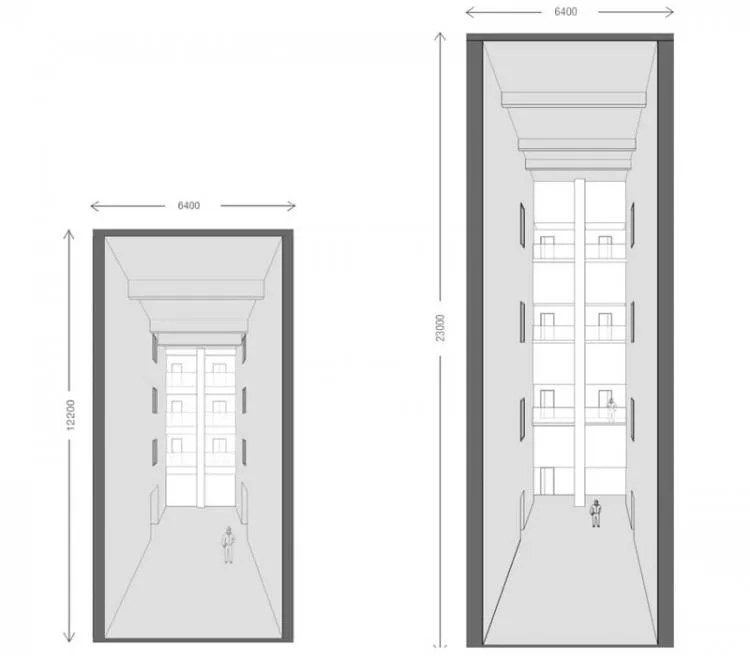
Addressing these challenges is the core goal of this atrium design: how to maximize the utility of these enclosed, opaque shared spaces while harmonizing functionality and aesthetics.
03. Functional Layout
We divided the seven shared spaces based on two main considerations: the physical conditions of each space and the daily social and living needs of residents. As such, the shared spaces fall into two primary categories: 1. Basic community facilities; 2. Entertainment, social interaction, and cultural expression.
Visual lines from corridor vantage points guide the functional placement within these areas.
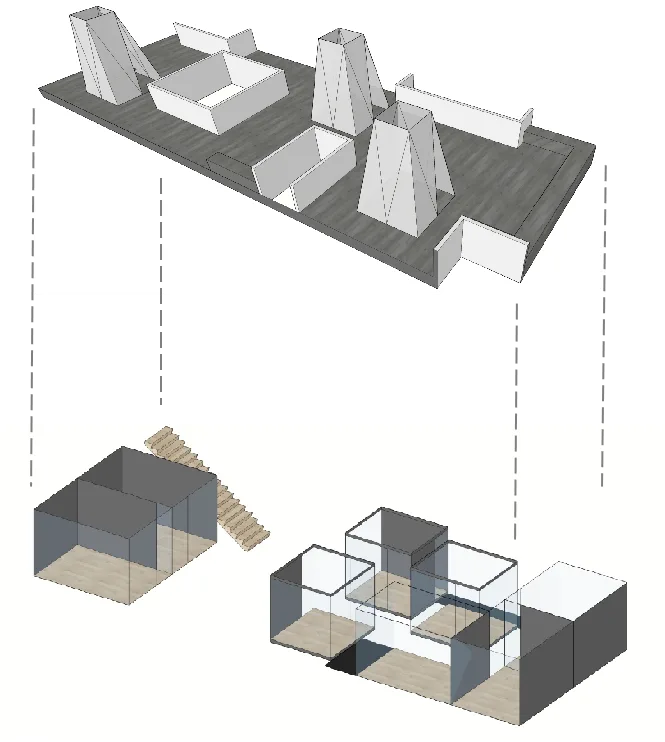
Given the differing ceiling heights, the line of sight from corridors varies across floors. Visual analysis suggests that adding intermediate floors on regular apartment levels might compromise privacy due to intersecting sight lines. Therefore, no additional floors are planned for these levels. However, for the loft floors with significantly higher ceilings, installing intermediate slabs enhances spatial function and privacy by minimizing visual contact with corridor traffic.
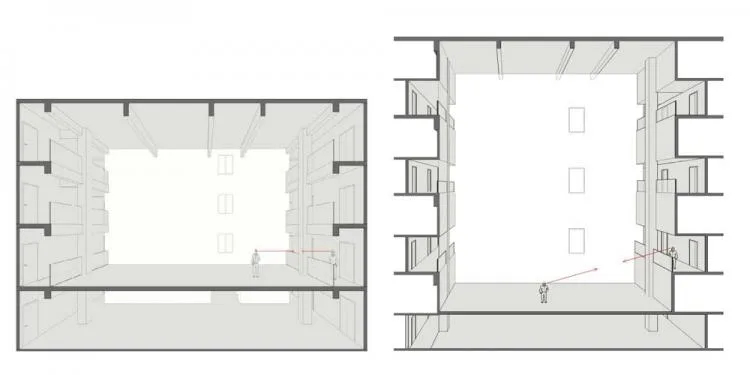
The design process began by addressing the existing conditions and aiming to alleviate the oppressive atmosphere through balanced functional and aesthetic solutions.
04. Courtyard Scene Designs
Floors 5-8
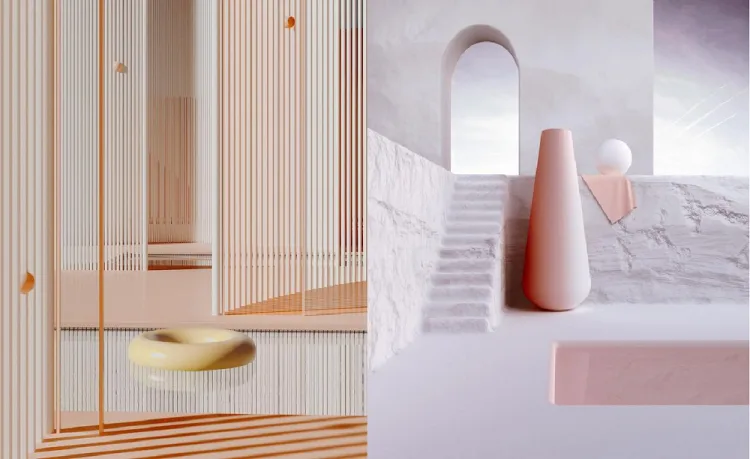
Shared Laundry Room – Dreamy Macaron Theme
▽
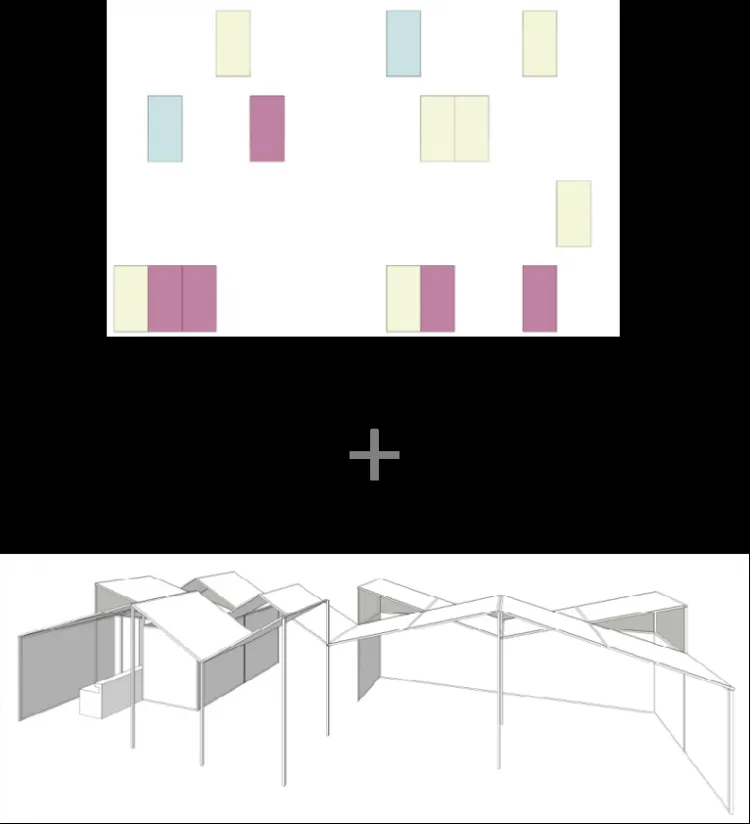
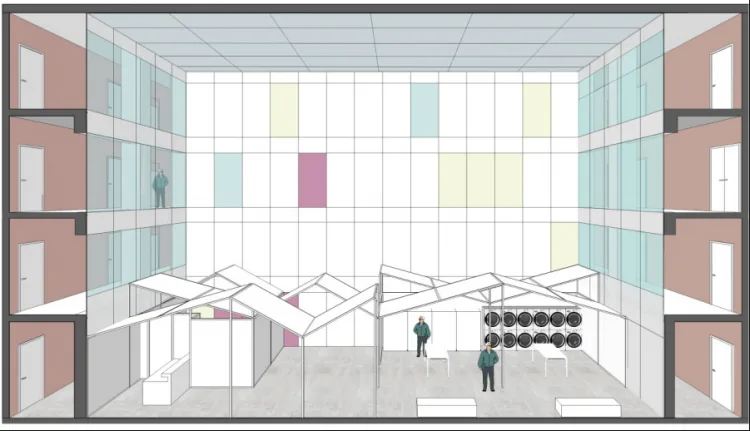
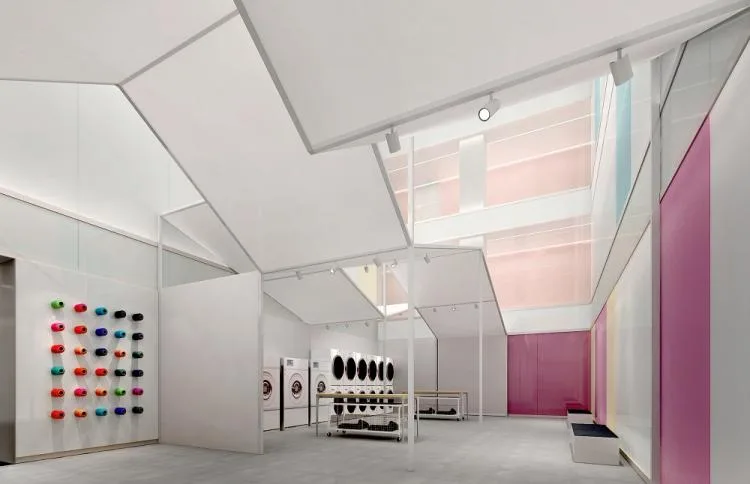
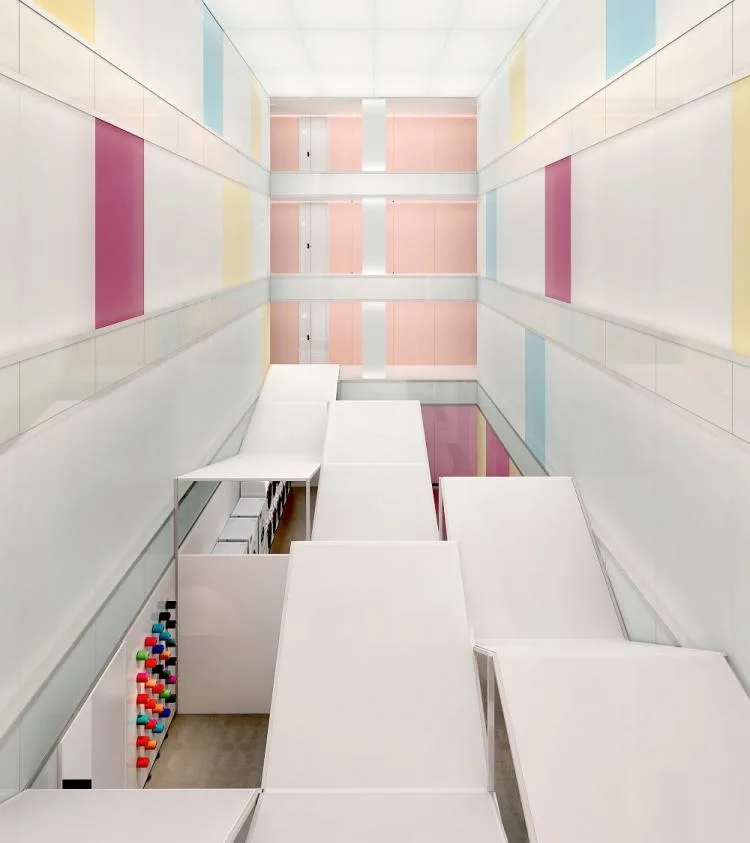
△ Rendering of the shared laundry room
Floors 15-18
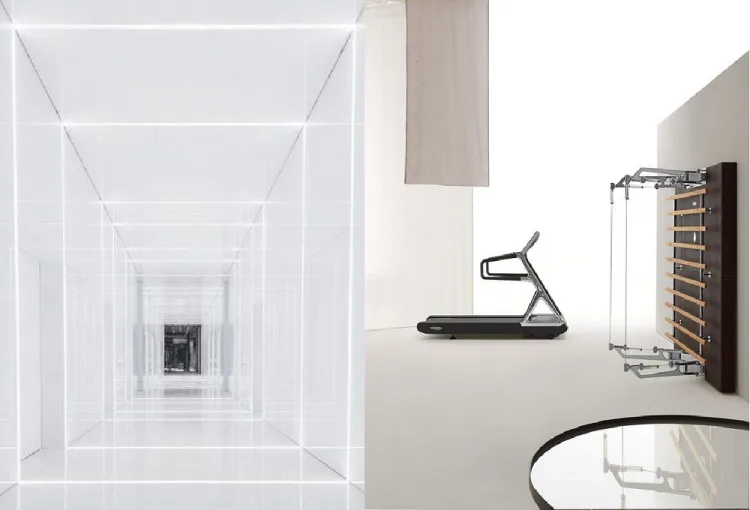
Gym – Futuristic Intelligent Environment
▽
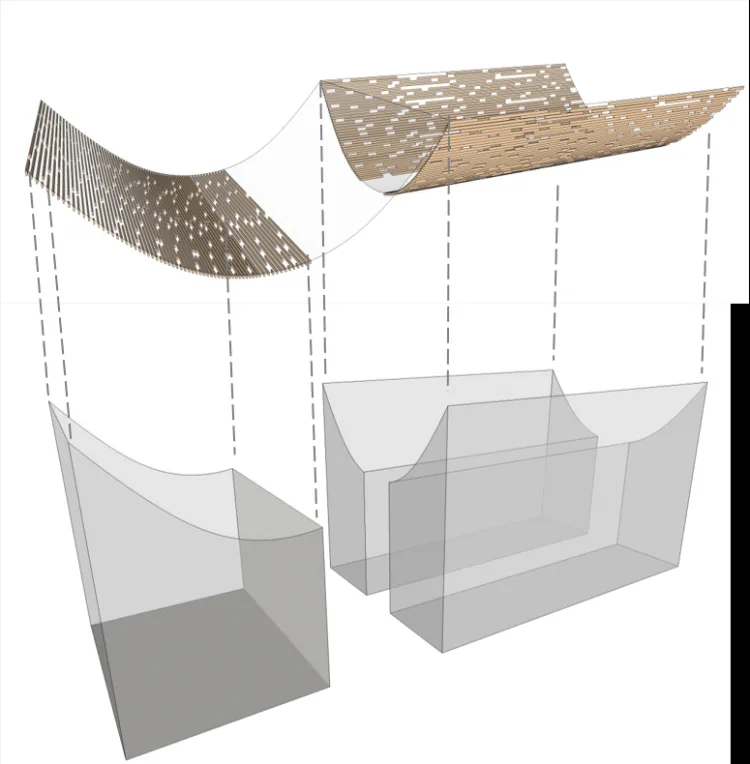
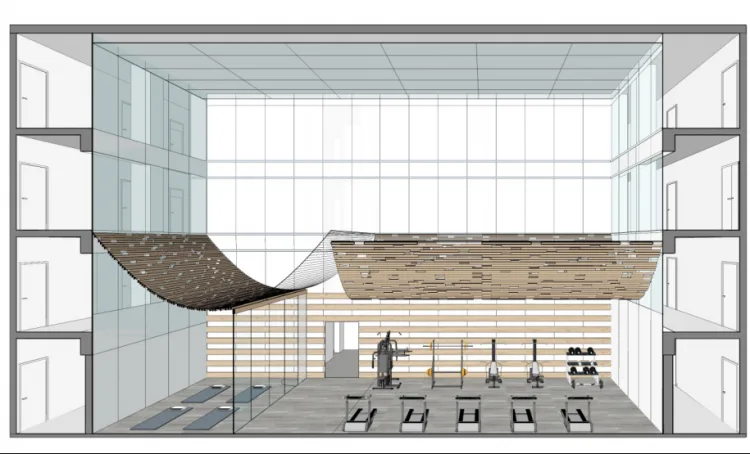
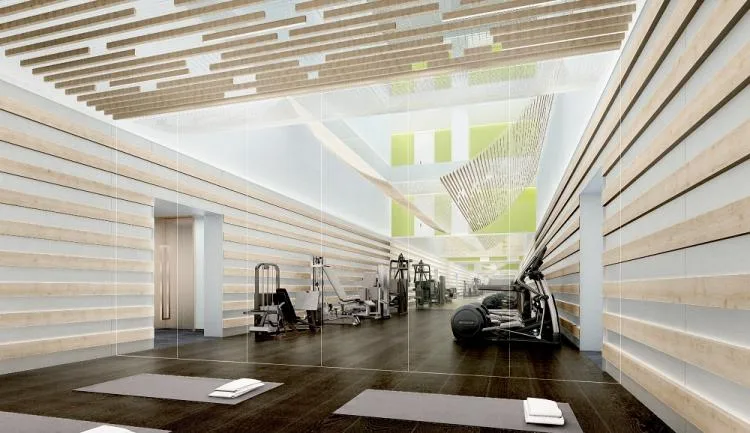
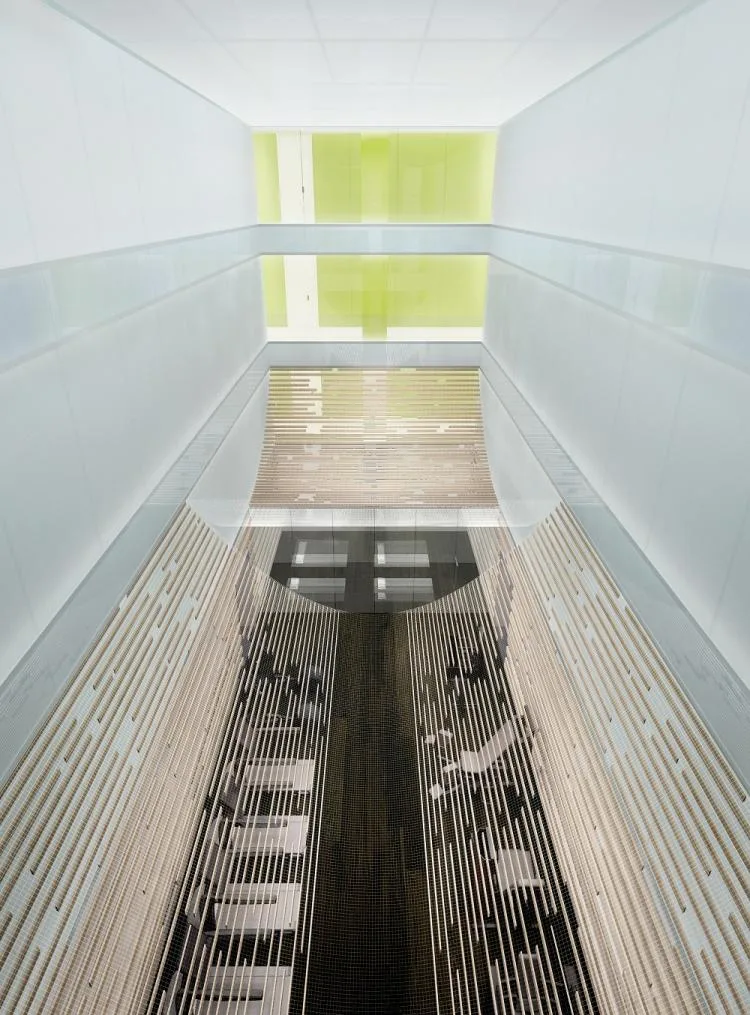
△ Rendering of the intelligent gym
Floors 19-21
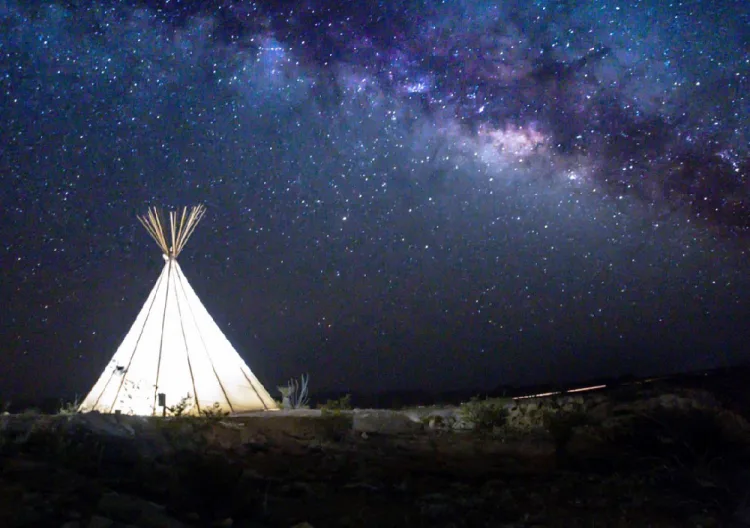
Shared Meeting and Live Streaming Room – Starry Sky Tent Theme
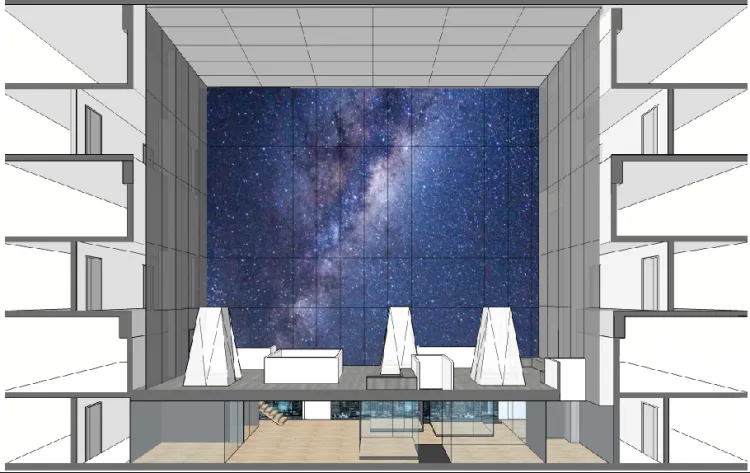
▽
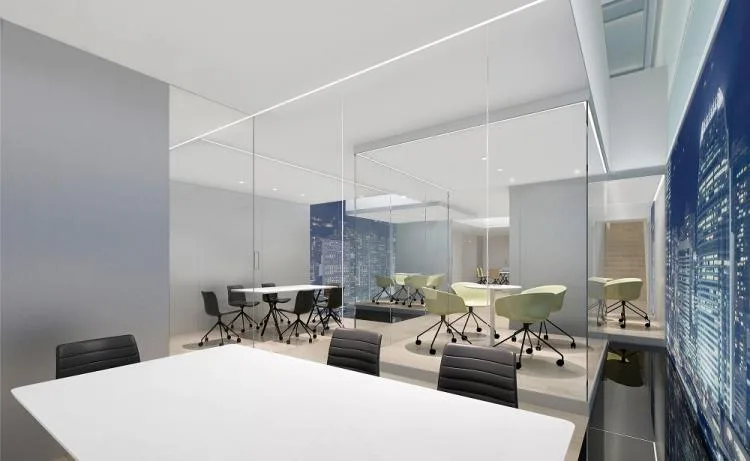
△ Rendering of the shared conference room on the loft’s first floor
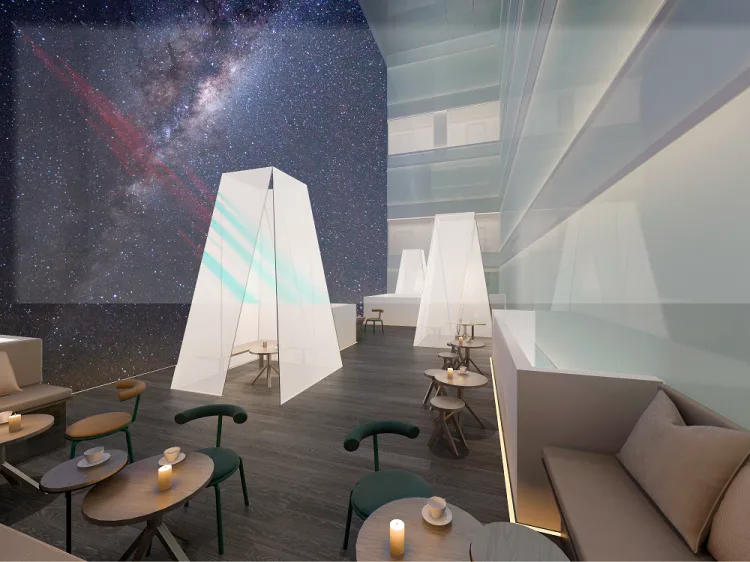
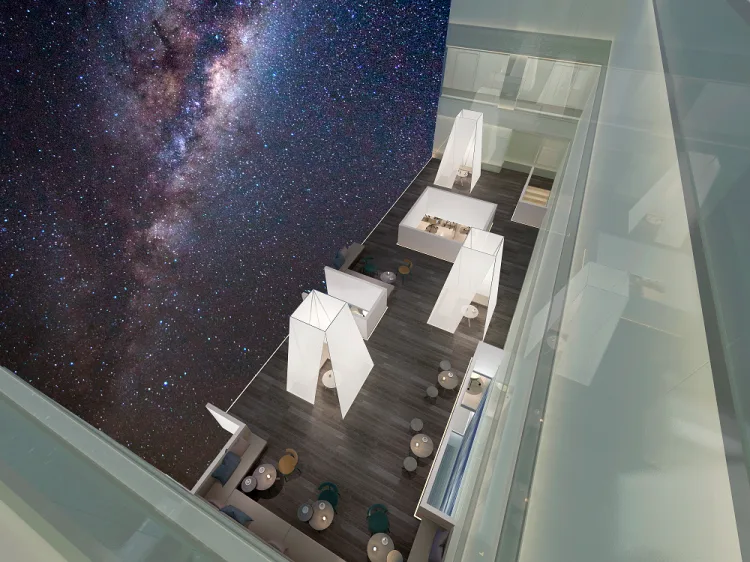
△ Rendering of the loft’s second floor rooftop garden
Floors 22-25
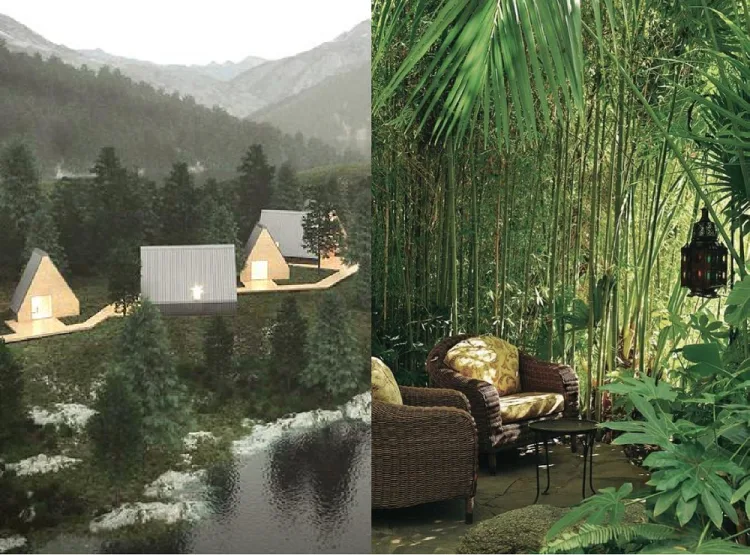
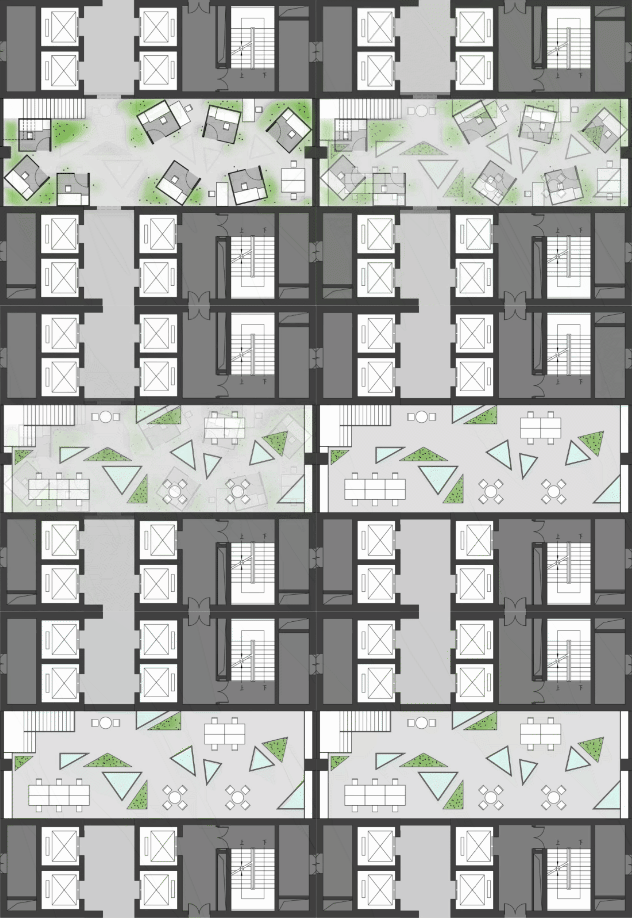
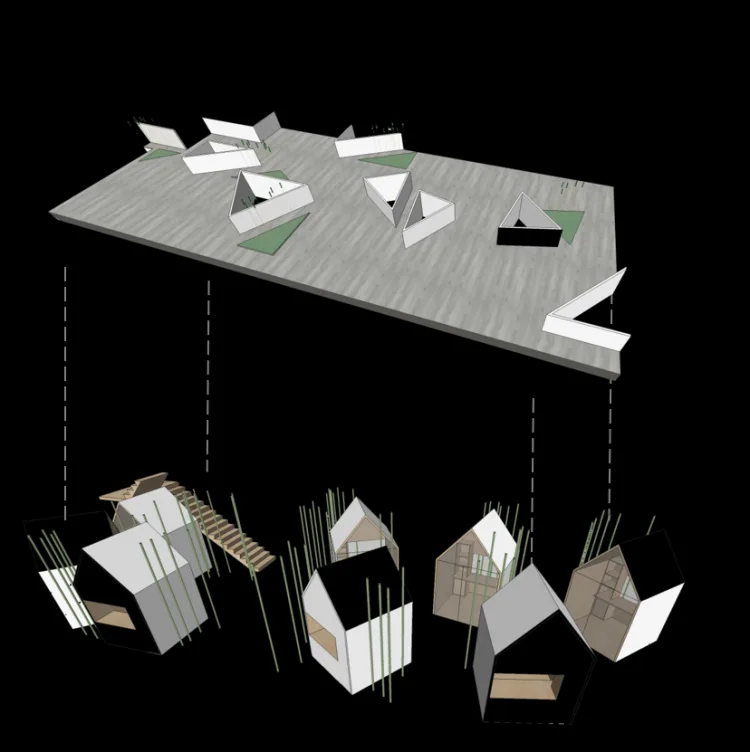
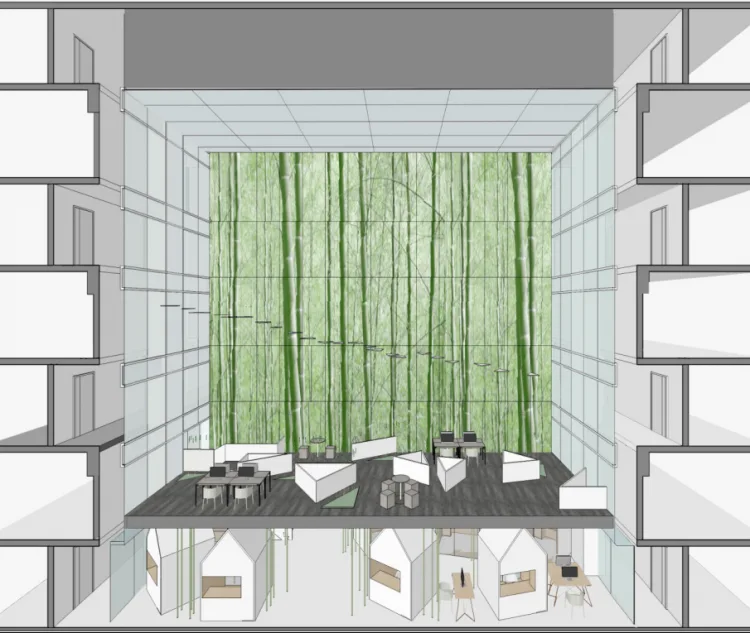
Shared Internet Cafe and Karaoke Bar – Bamboo Grove Wooden House Ambiance
▽
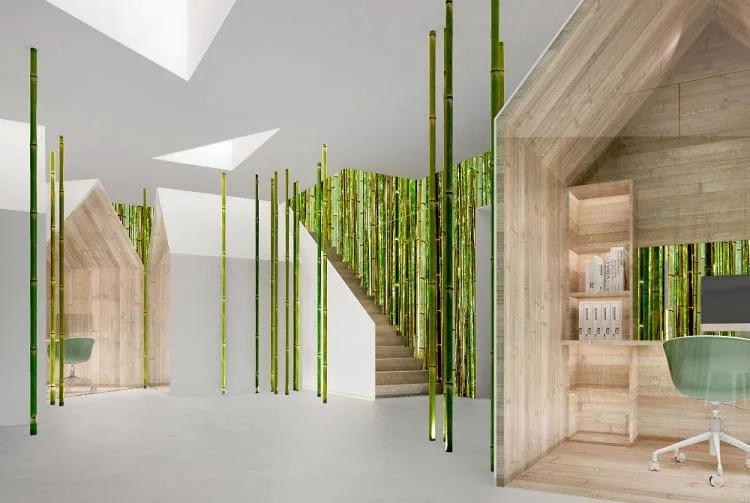
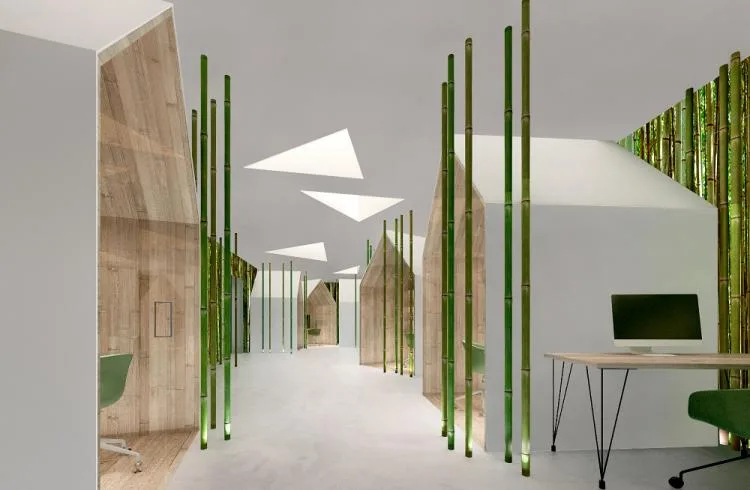
△ Rendering of the loft’s first floor internet cafe
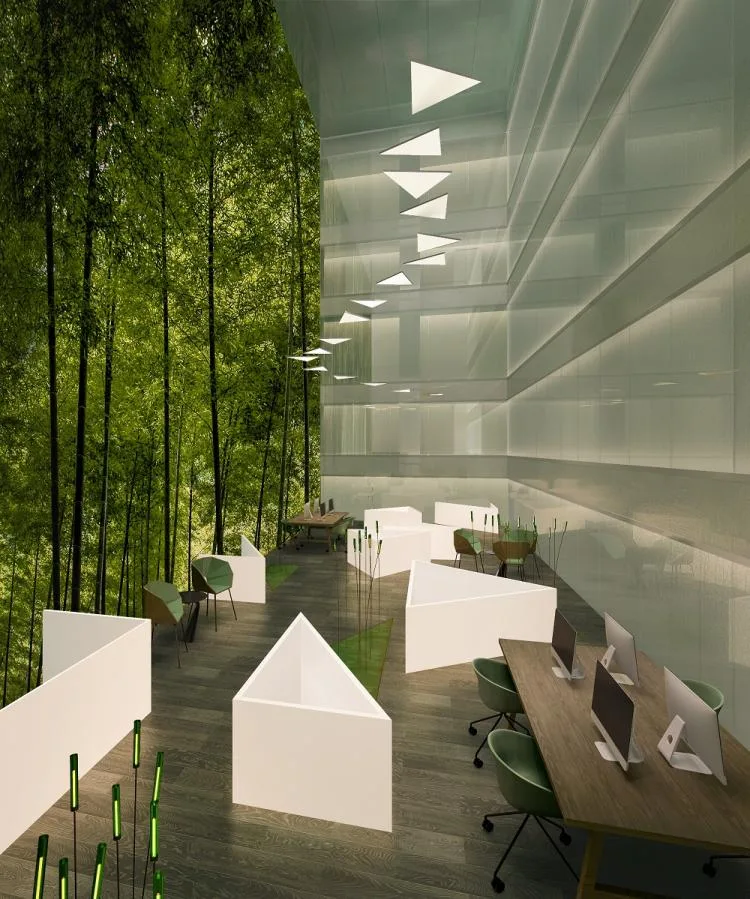
△ Rendering of the loft’s second floor rooftop garden
Floors 26-29
Book Bar – Forest Theme
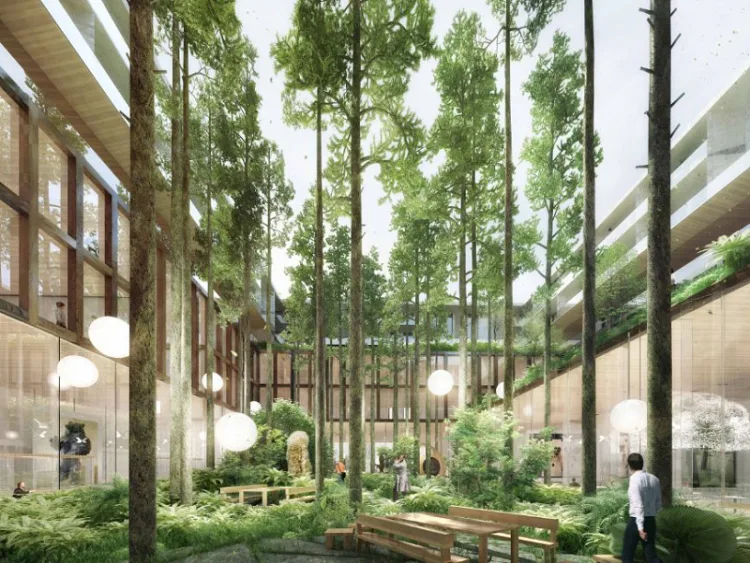
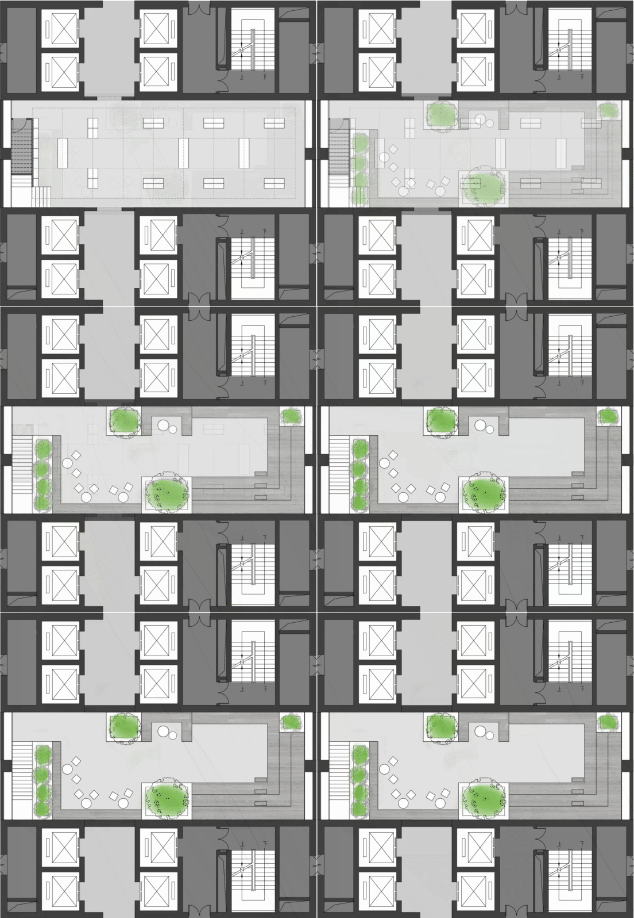
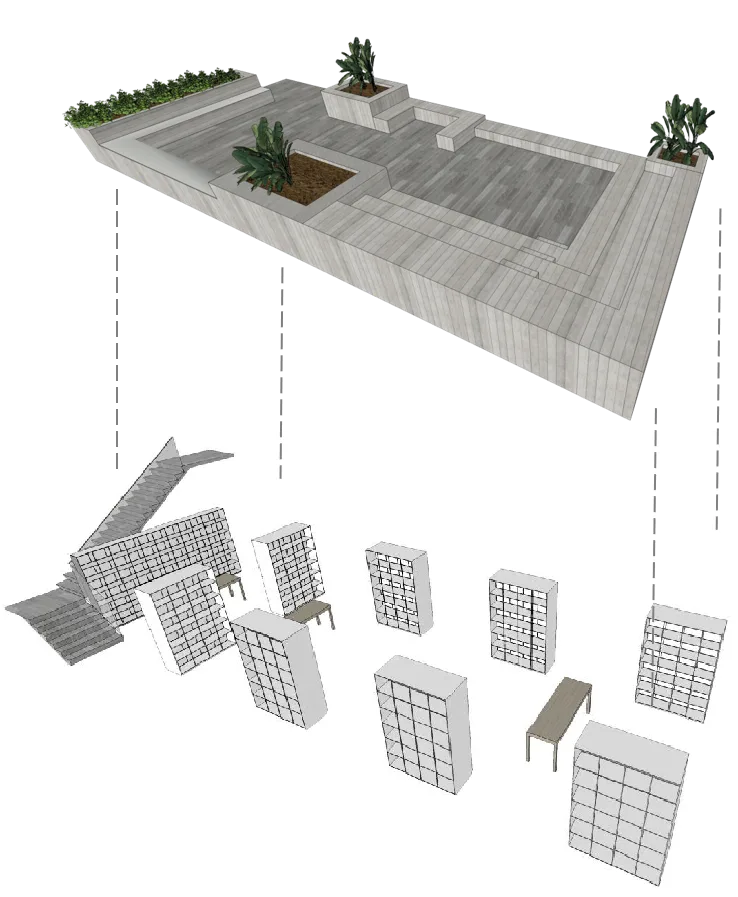
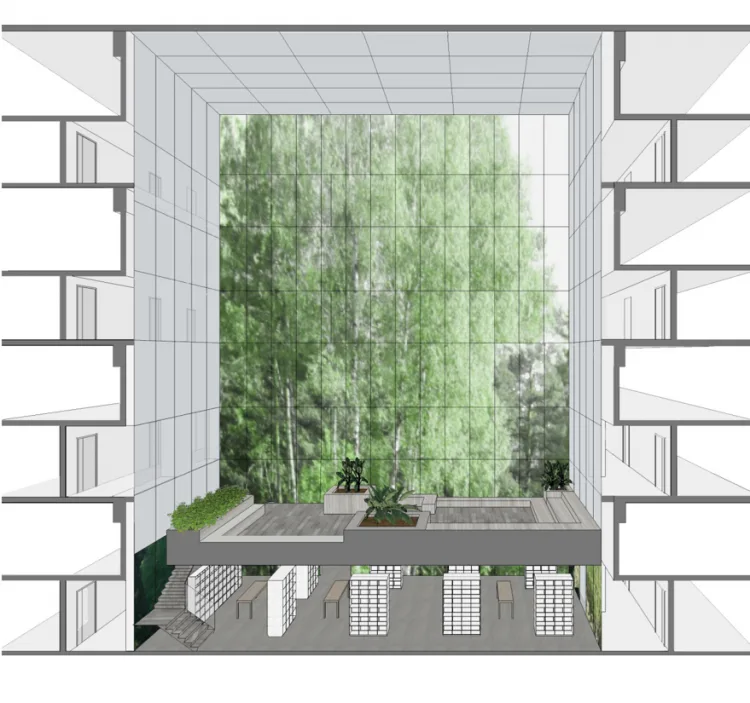
▽
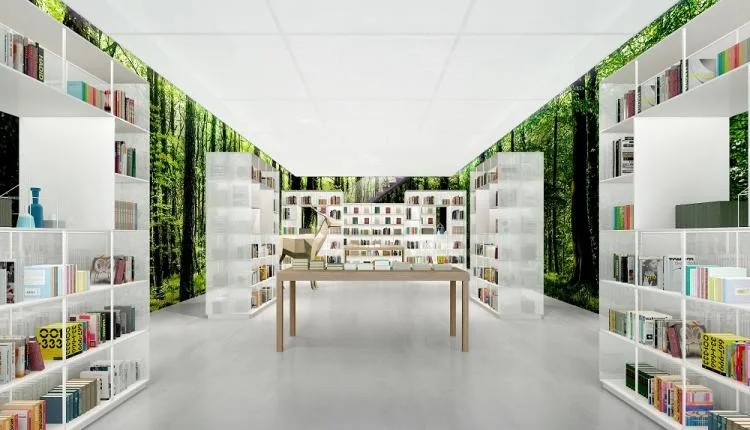
△ Rendering of the loft’s first floor book bar
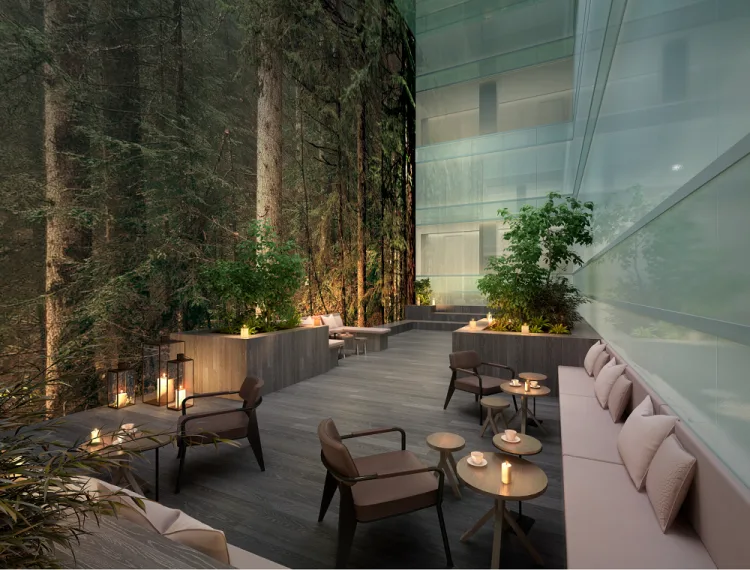
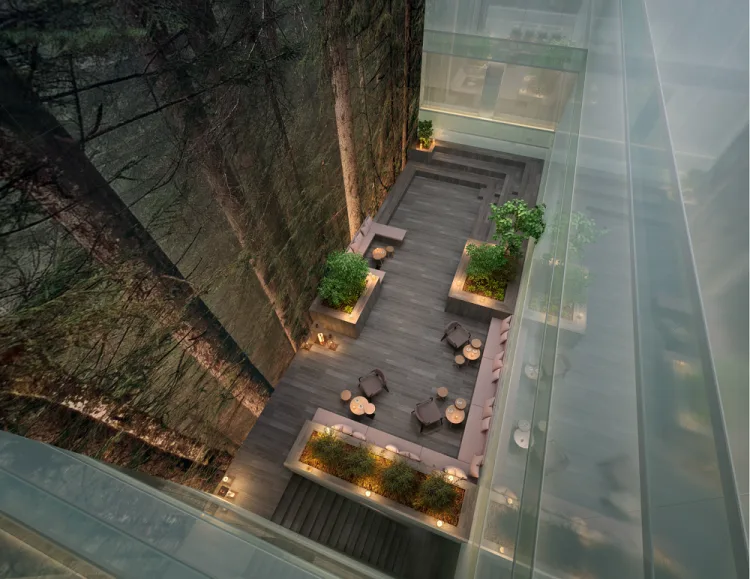
△ Rendering of the loft’s second floor rooftop garden
05. Top-Level Space – Spiritual Essence
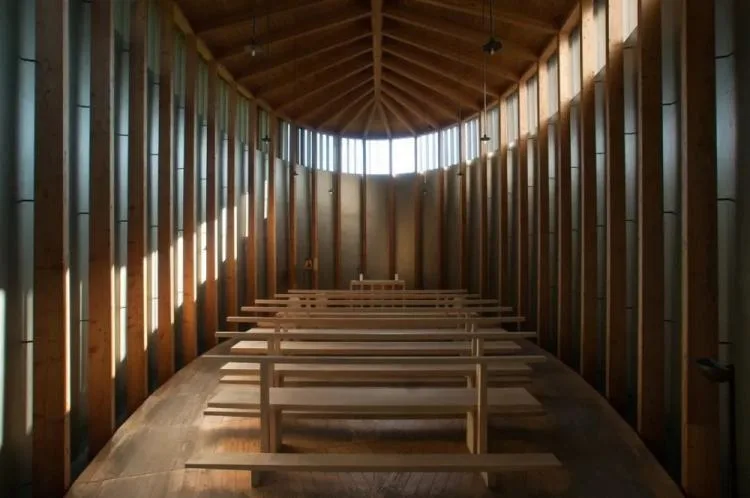
The allure of the top floors is intrinsically tied to their proximity to the sky. The slanting sunlight imbues the elevated space with a unique spiritual quality, making it a standout feature of the executive lounge.
The interior is conceived as an inward extension of the architectural volume.
Design-wise, unnecessary decorations have been eliminated to emphasize the space’s distinct spiritual character. Laminated glass walls combined with modular wooden slats visually elongate the vertical space, creating an ordered aesthetic. The cohesive color palette and lighting further enhance the modern and sophisticated atmosphere.
Floors 30-33
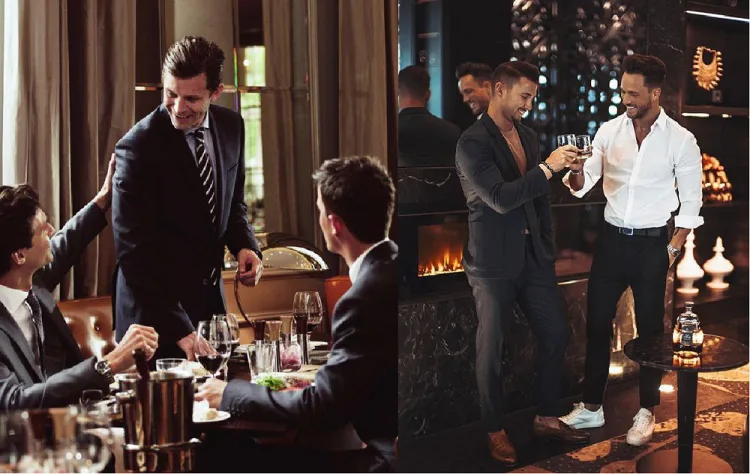
Executive Lounge (City Reception Room + Late Night Dining Hall)
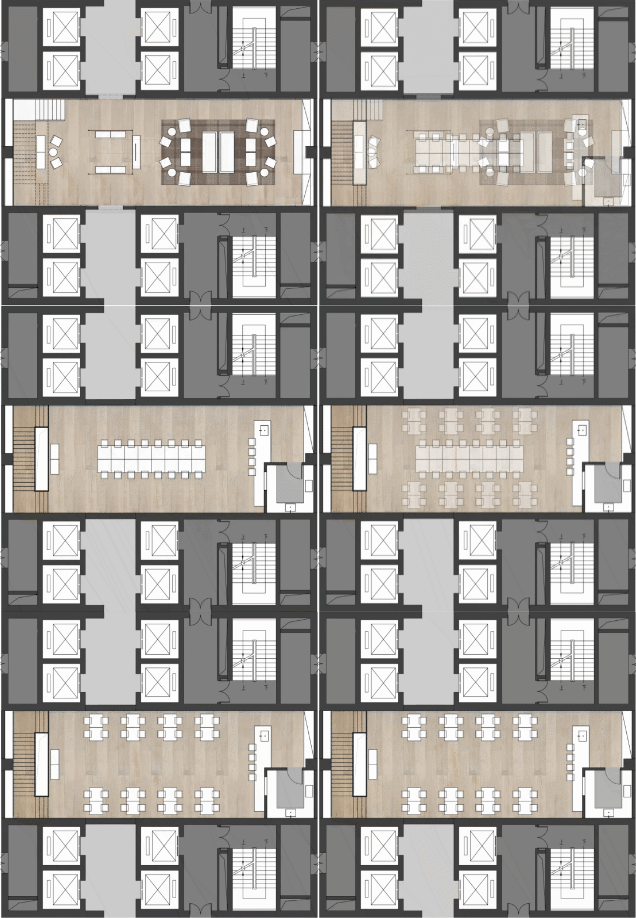
▽
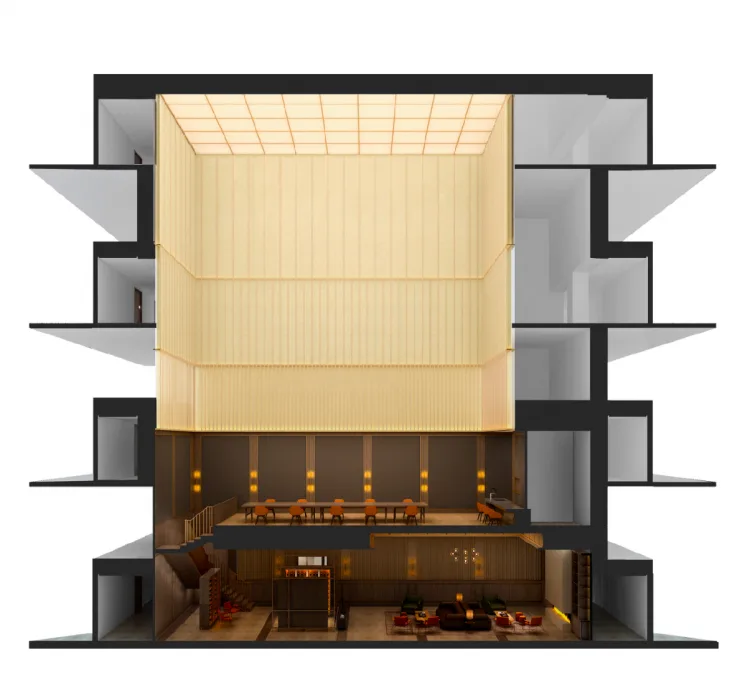
△ Section rendering of the apartment’s top-floor urban living room
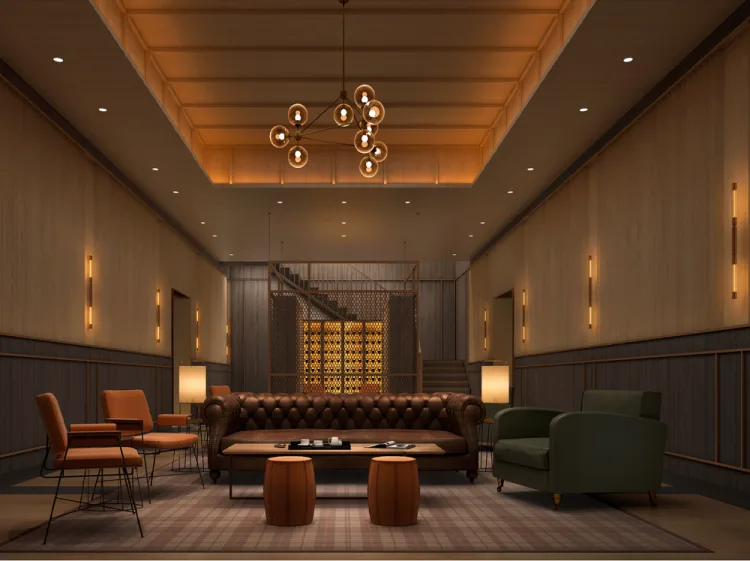
△ Loft first floor urban living room rendering
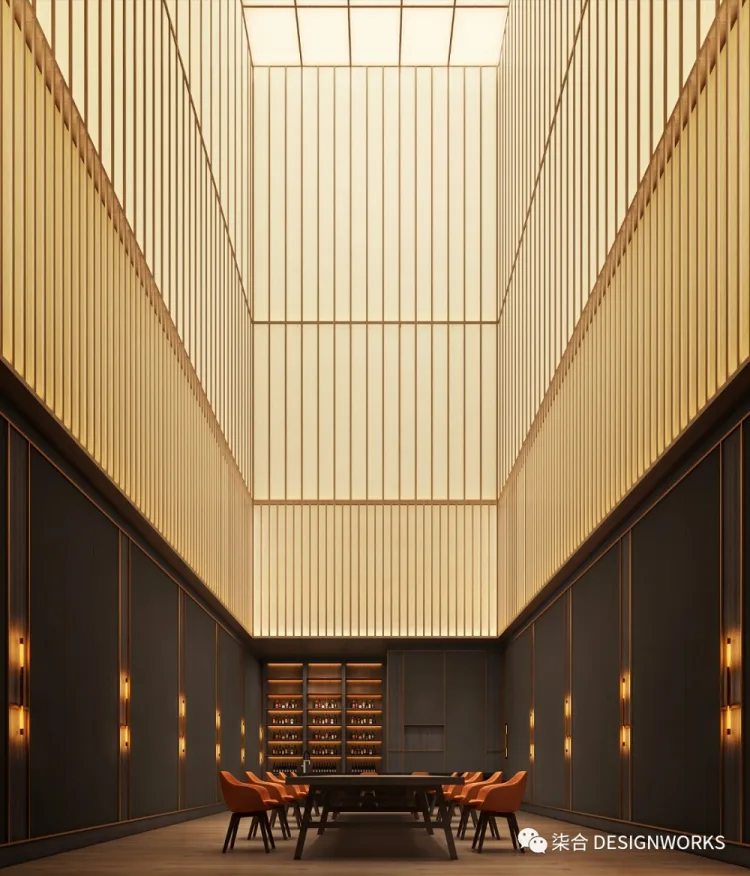
△ Loft second floor late-night cafeteria rendering
This shared atrium design follows a clear, logical framework, integrating the concept throughout the entire project. As a pioneering spatial model, shared spaces are beginning to emerge as the foundation of communal living in domestic projects. Ultimately, design is about solving problems and shaping lifestyles. Transforming design into practical solutions that respond to current needs and envision future urban living is where its true value lies.
Project Information
Project Name: Seven Small Houses · High Rise Youth Apartment Shared Courtyard Renovation Design – Micro Vertical Urban Practice
Building Renovation: Qihe (Beijing) Architectural Design Co., Ltd
Interior Design: Qihe (Beijing) Architectural Design Co., Ltd
Design Director: soar
Project Team: Li Ruiqi, Li Dachao, Liu Guiping, Zhao Jie, Xing Yadong
Brand Planning: Gong Shi












Must log in before commenting!
Sign Up