
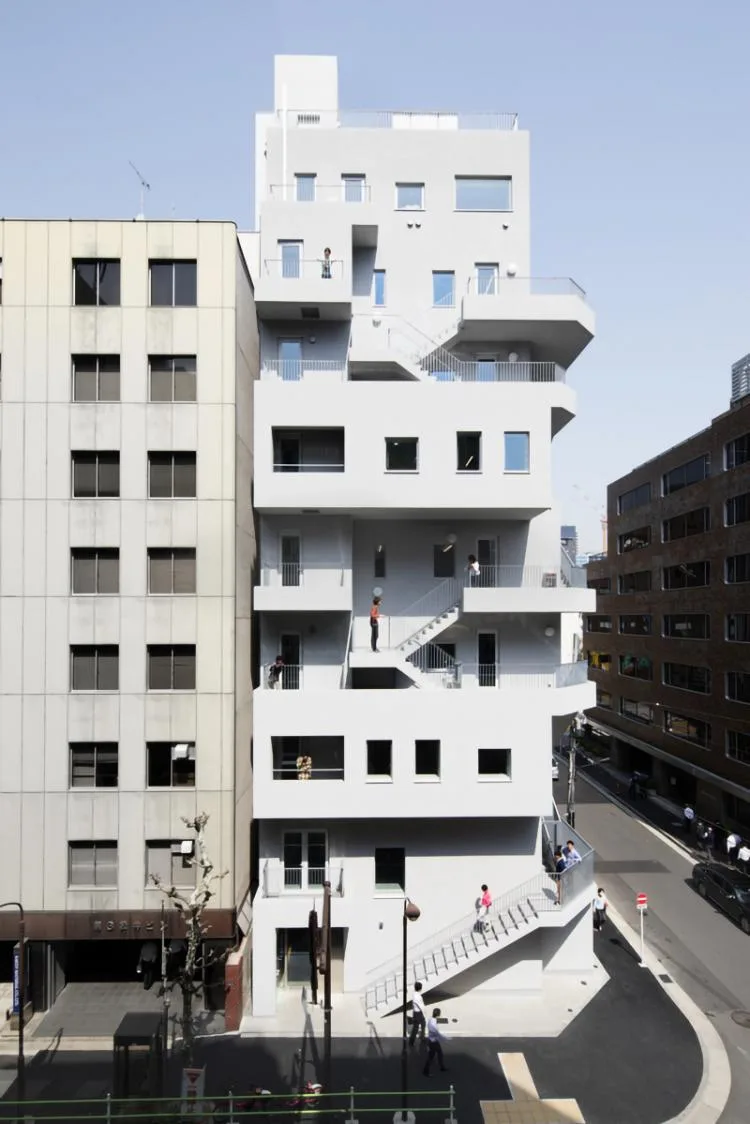
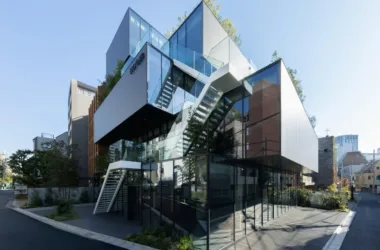
This project involves the reconstruction of a combined office, residence, and rental office space, located on a street corner in Nishi Shinbashi, Minato-ku, a historic commercial district in Tokyo. Many mid-rise rental buildings that dominate Tokyo’s commercial and business districts are now due for redevelopment.
While large-scale developments like Bird Gate Mountain are underway on the main road near this site, similar-sized buildings line the adjacent streets. The Arakawa Building has long contributed to the local urban landscape through its owners’ business activities. During reconstruction, the architectural potential was revisited with a focus on shaping an attractive urban environment for the future.
Enhancing Urban Appeal
In many buildings, interaction with the city is limited to the ground floor, usually housing commercial facilities. Floors above the second level are often sealed off by traditional rigid facades, isolating interior spaces from the external environment and resulting in a cityscape lacking distinctive character.
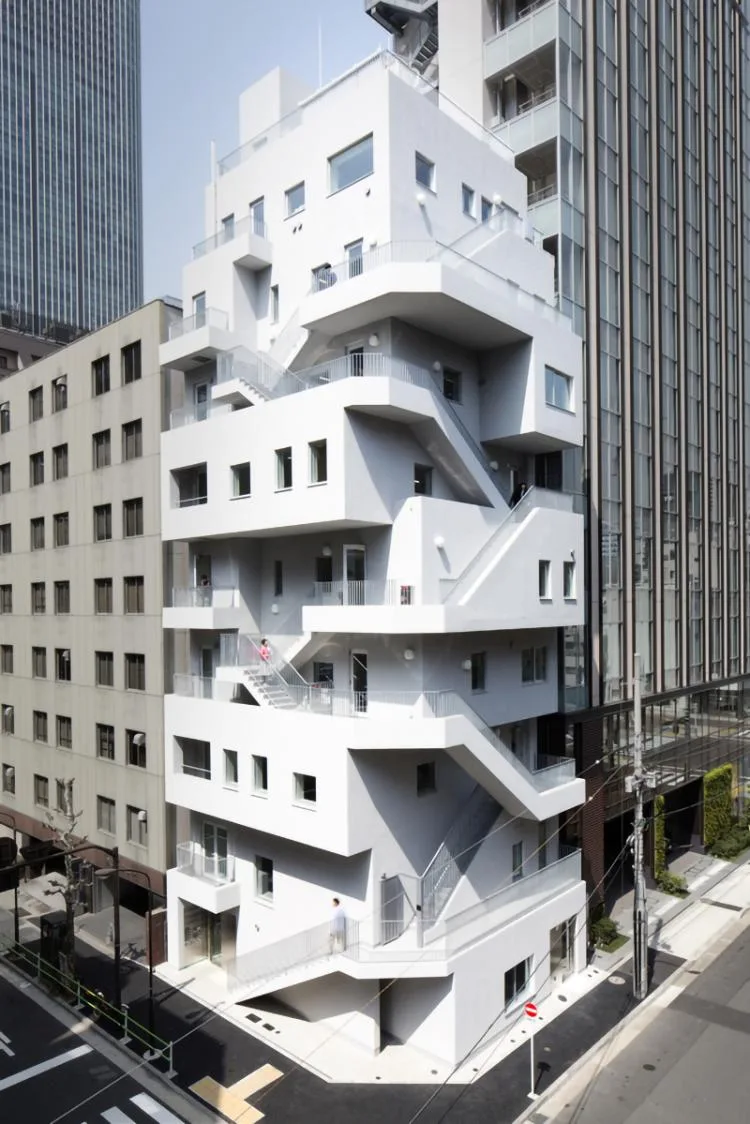
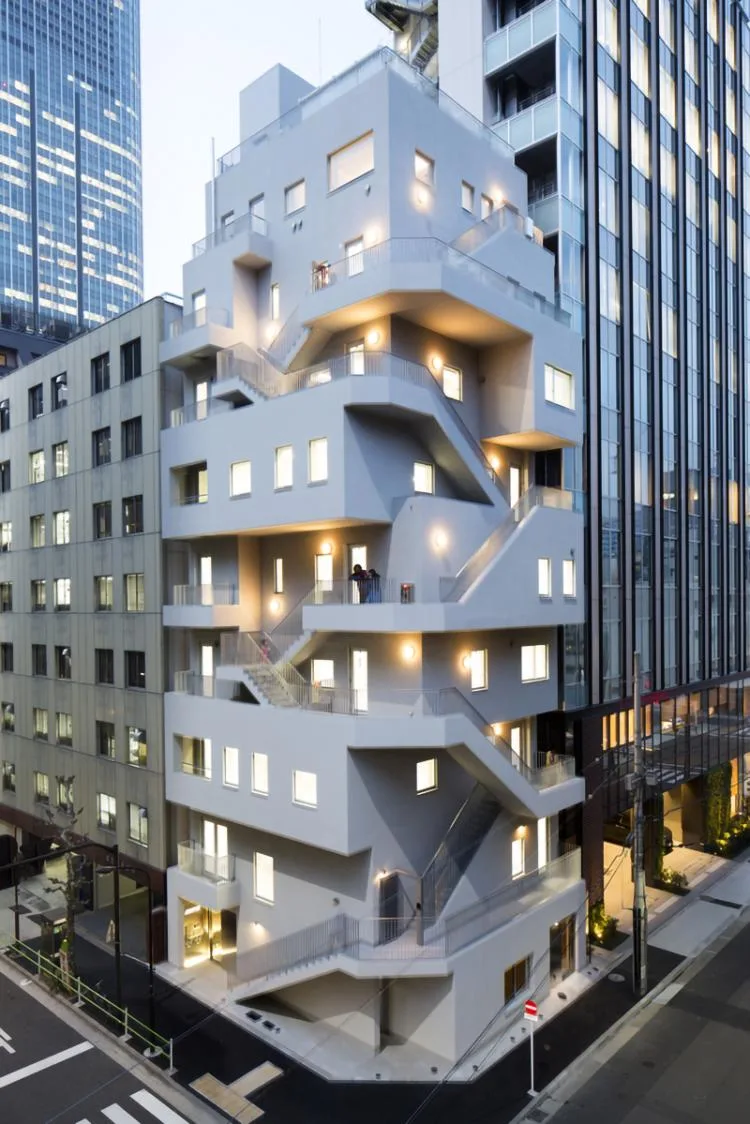
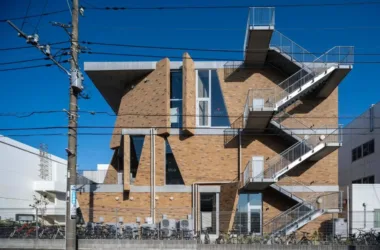
To address this, all floors of the Arakawa Building are wrapped by emergency staircases. These staircases not only serve critical safety functions but also act as transitional spaces akin to balconies (“Ogawa” spaces), creating a new architectural presence that reveals occupants’ activities. This design enhances the city’s appeal by fostering a relaxed visual connection with the surrounding environment.
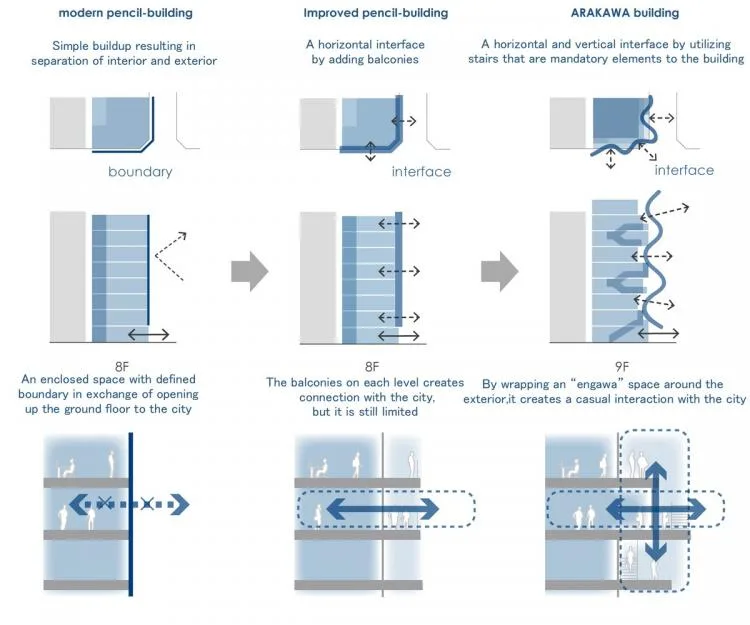
△ Analysis Chart
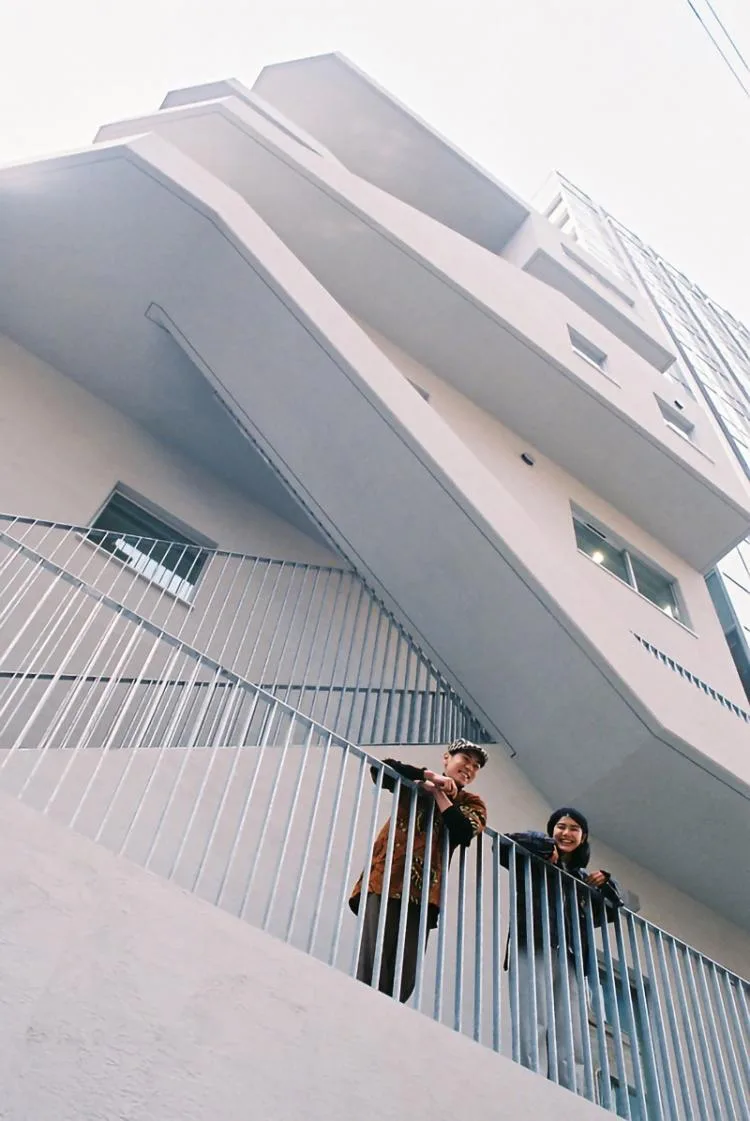
The building maximizes volume by combining sculptural, uneven surfaces with human-centered, regularly shaped office spaces. Height restrictions limit the south and east sides to eight floors, requiring setbacks to ensure sunlight reaches the narrow streets. However, the sculptural form created by the emergency staircases allows for sufficient natural light, enabling an increase to nine floors and maximizing usable space.
This design may seem inefficient externally but effectively maximizes available space, which is crucial for office tenants.
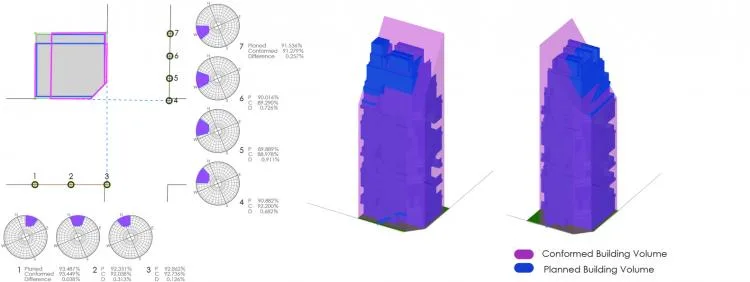
△ Analysis Chart
Typically, about 25% of a mid-rise office building’s interior floor plan is occupied by the building core. Placing emergency staircases in one location creates larger floor areas but often results in irregularly shaped, less usable spaces. By exposing emergency staircases on the south and east facades, the design achieves regular, user-friendly interior layouts within an irregular exterior form.
Maximizing Space Through Structural Innovation
To build efficiently on a site with many constraints, every architectural element functions structurally. Because floor layouts vary, a flat beam system spans the long axis to avoid dividing space with structural components. The flat beams’ positions change per floor, causing columns at the southeast corner to shift shape accordingly, optimizing interior space and reducing floor-to-floor height.
These columns are exposed externally and appear differently on each floor, earning the nickname “totem poles.” Unlike typical buildings where partition walls and stairs are non-structural, here they contribute to seismic support, enhancing usable, regular indoor spaces while creating dynamic corridor areas.
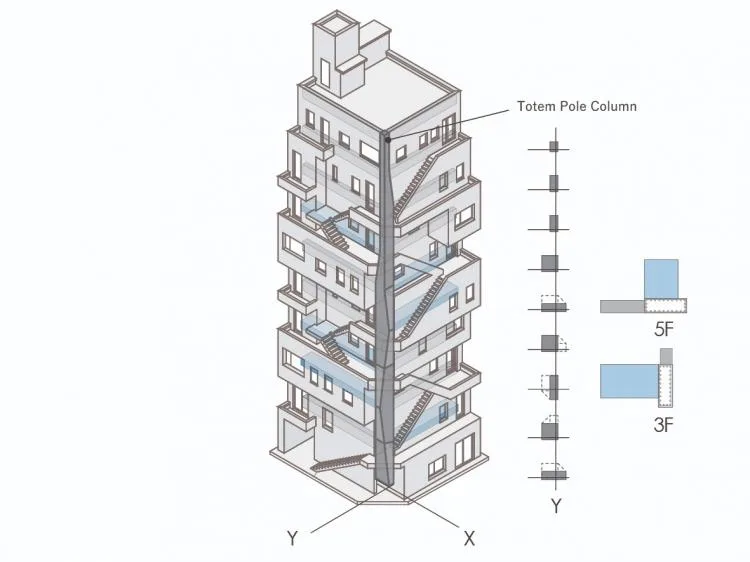
△ Analysis Chart
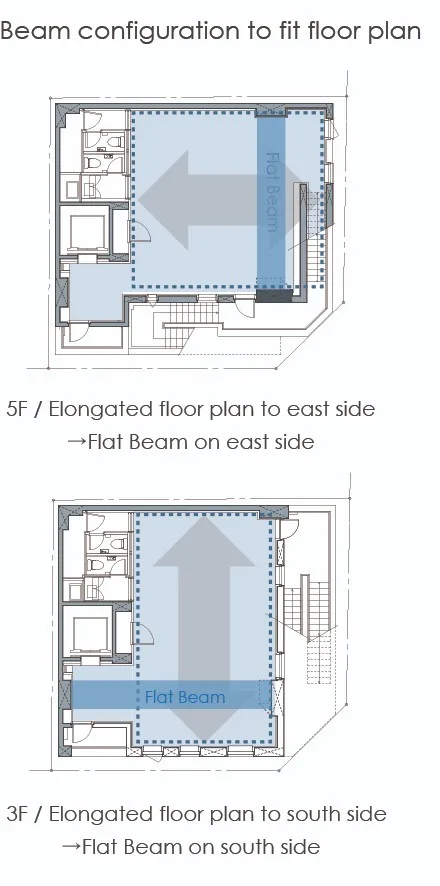
△ Analysis Chart
Lighting Design Expands Interior Space
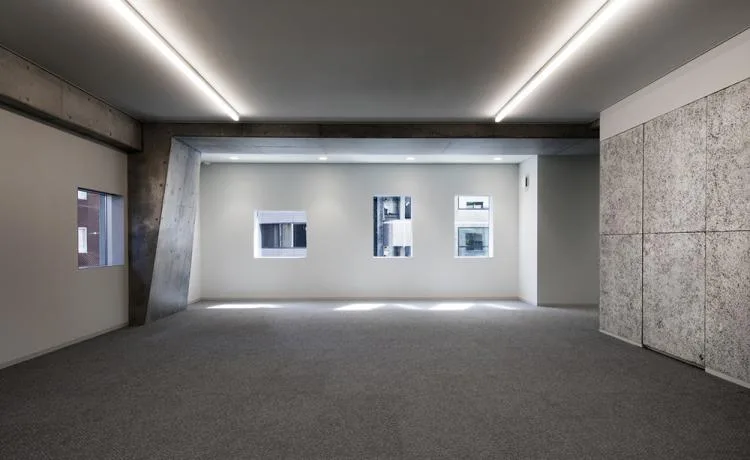
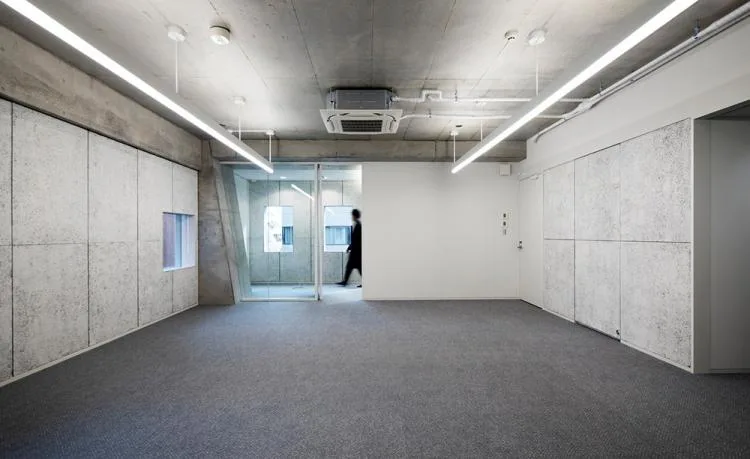
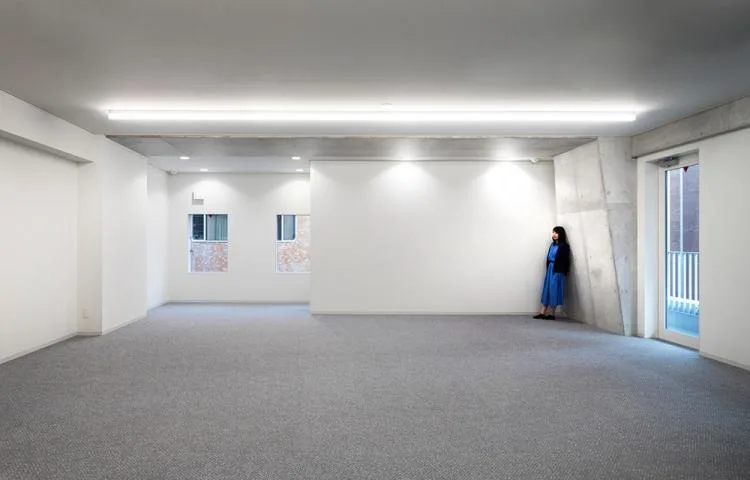
To enhance the sense of spaciousness, the owner’s offices on floors 6 to 8 use a new linear lighting system combining standard upper and lower light components that illuminate the clear concrete ceiling, brightening the entire ceiling surface. By using off-the-shelf lighting parts rather than custom fixtures, maintenance is simplified by replacing only faulty components.
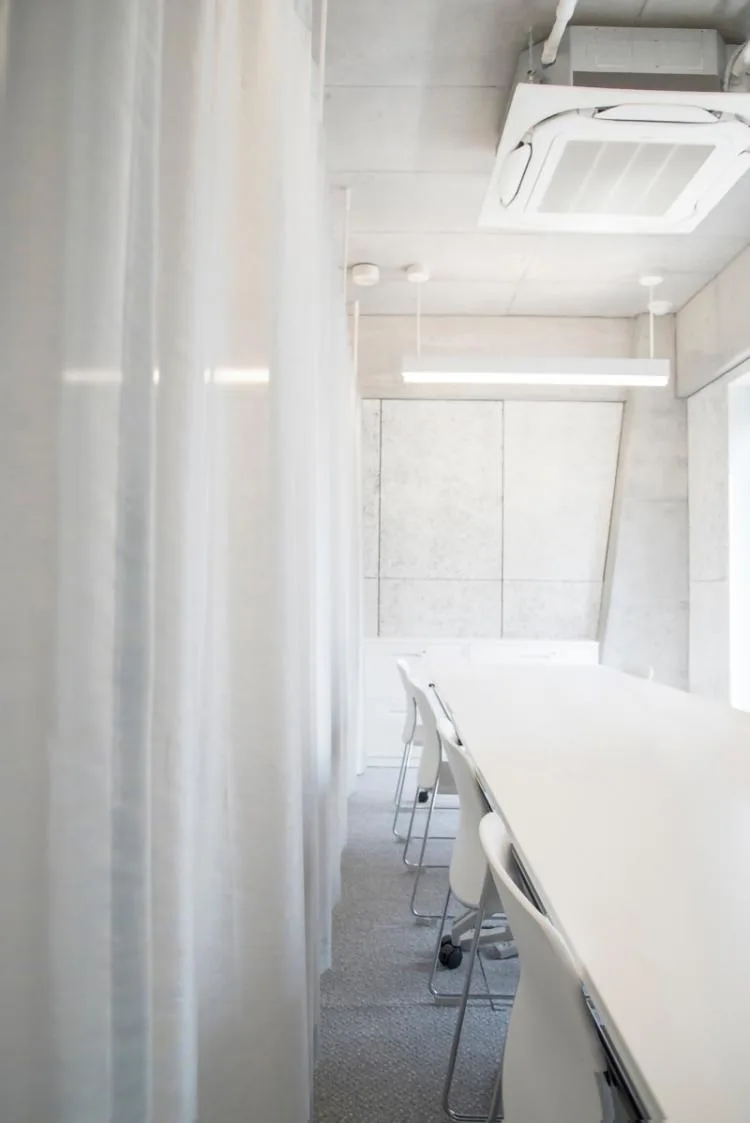
Rental office floors (2 to 5) feature suspended ceilings with linear lighting fixtures installed directly on the ceiling, delivering a bright, consistent surface similar to that of the upper floors.
Interface Between City and Surroundings
The dynamic volume created by the emergency staircases and balconies acts as a screen for lower-floor openings, allowing indirect natural light through small windows without the need for blinds. These small framed views invite anticipation of the outside world, akin to observing a piece of art.
Each floor offers a unique cityscape and varying degrees of connection to the urban environment, fostering integration with the surrounding landscape. According to Japan’s Building Standards Act, fire-resistant fixed windows up to 1 square meter are allowed within a 2-meter radius of emergency staircases. Considering rescue access and structural load-bearing restrictions, the design maximizes the number of effective, usable windows.
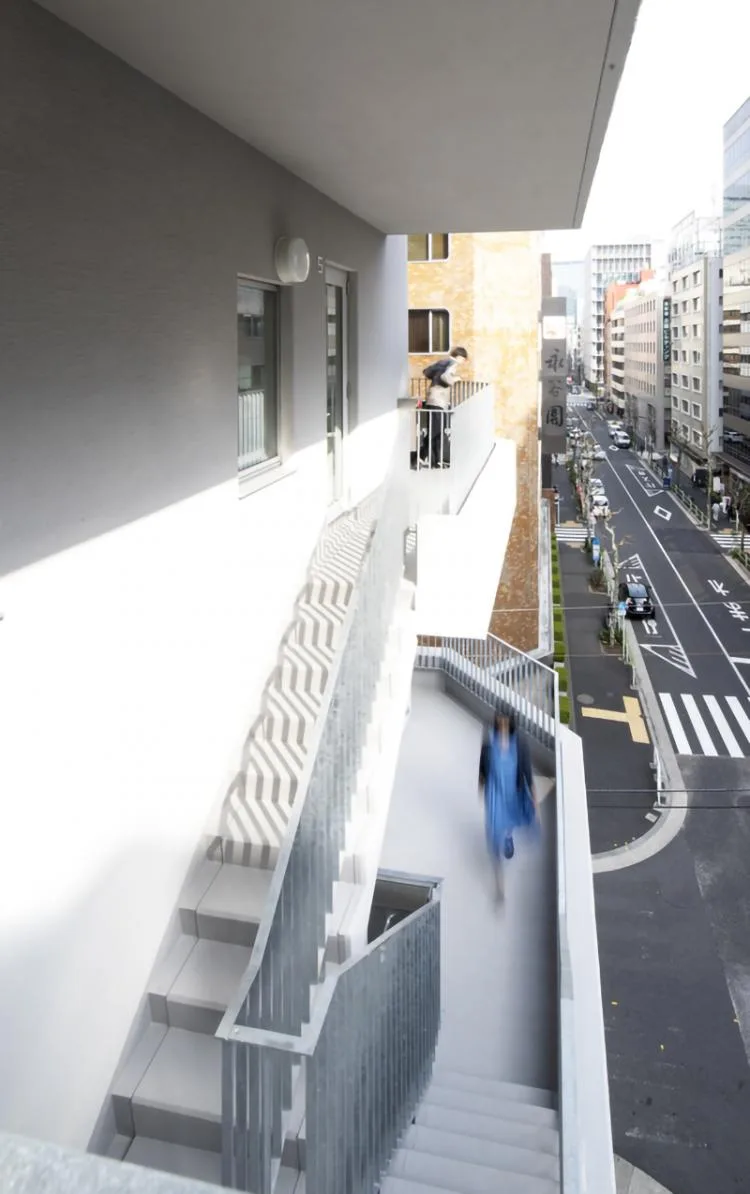
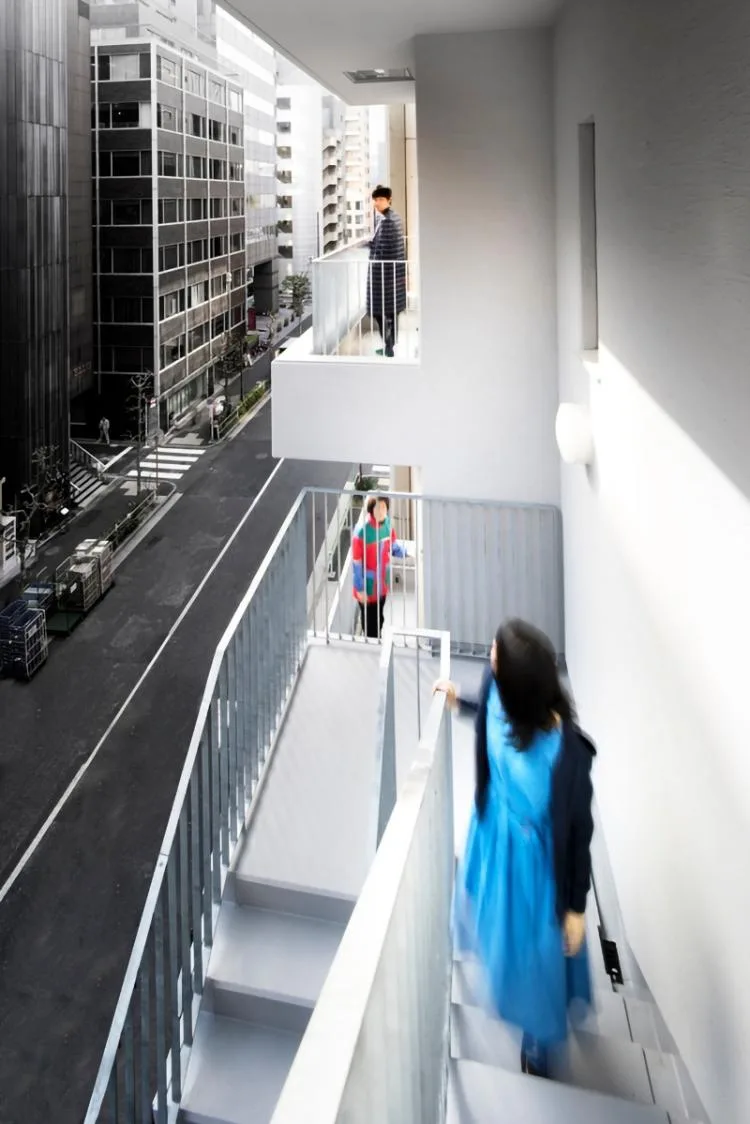
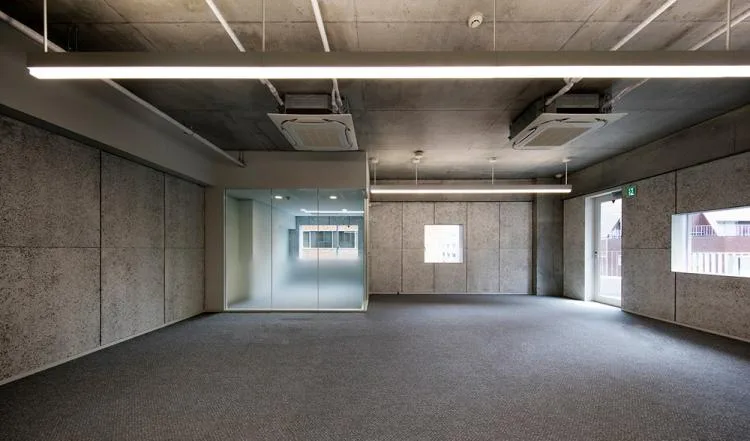
In Tokyo, many buildings are reaching the end of their commercial lifespan and require redevelopment. We believe that if every building considers its relationship with its surroundings, the city will become more vibrant and attractive. Regardless of size, buildings must balance maximizing rentable space with ensuring safety and emergency accessibility.
They should also integrate harmoniously with the urban fabric, contributing uniquely to the local community.
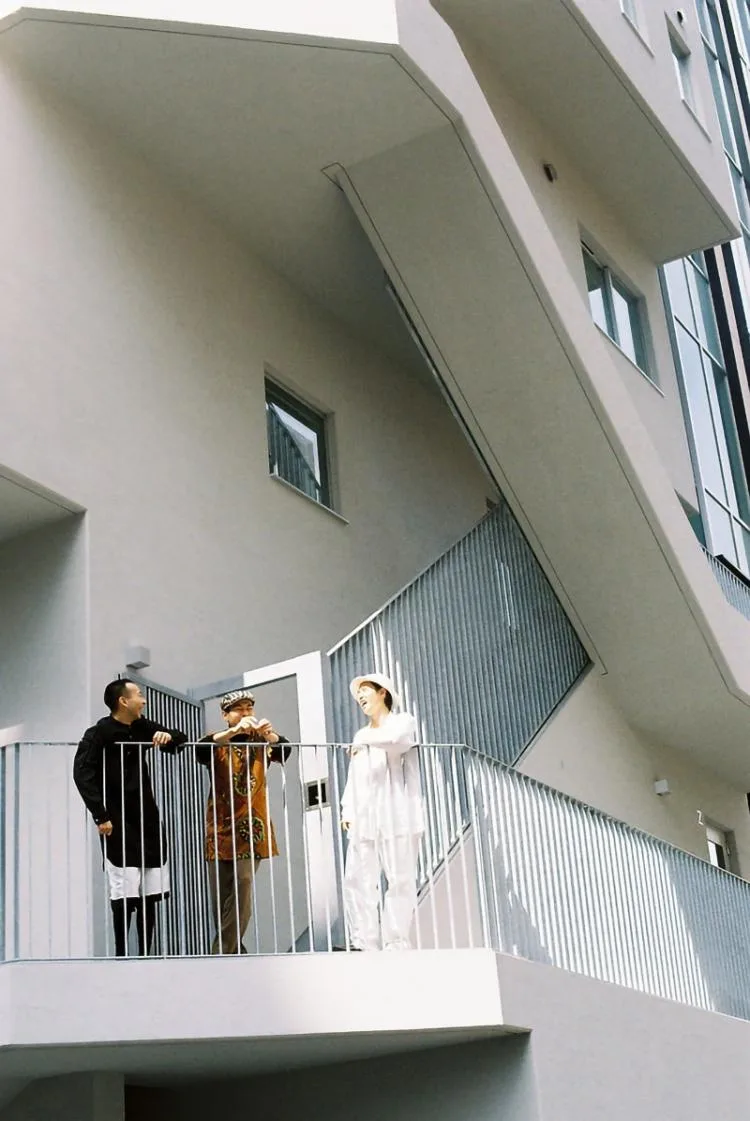
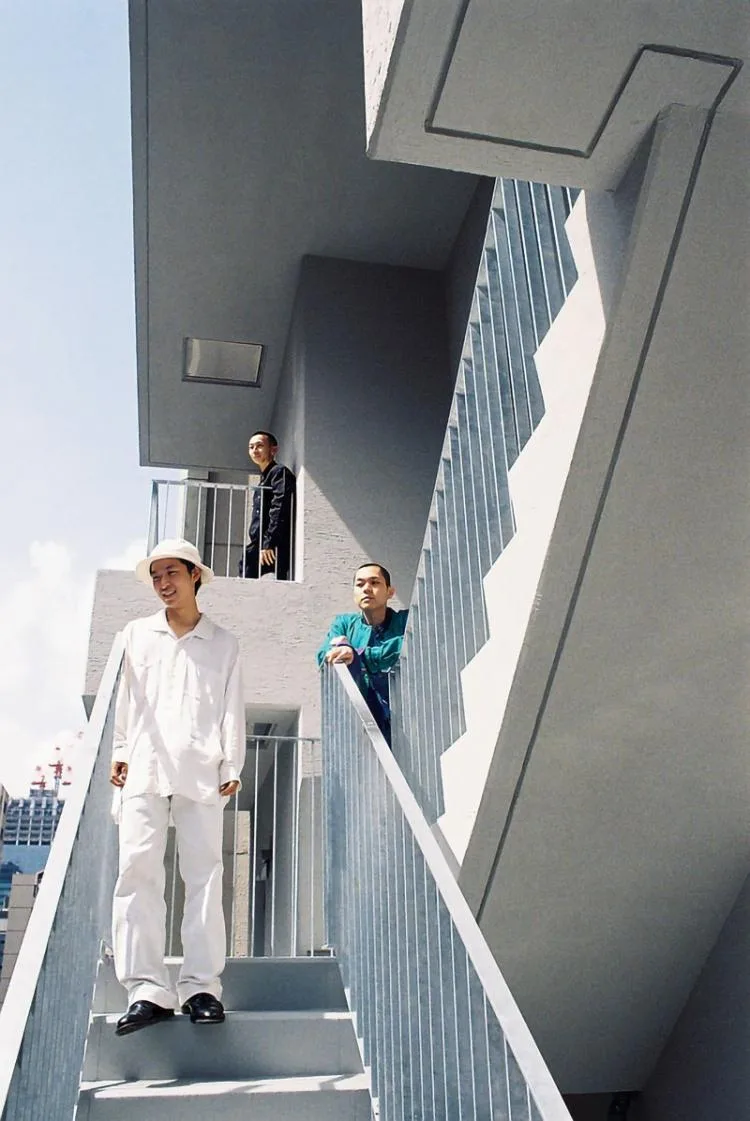
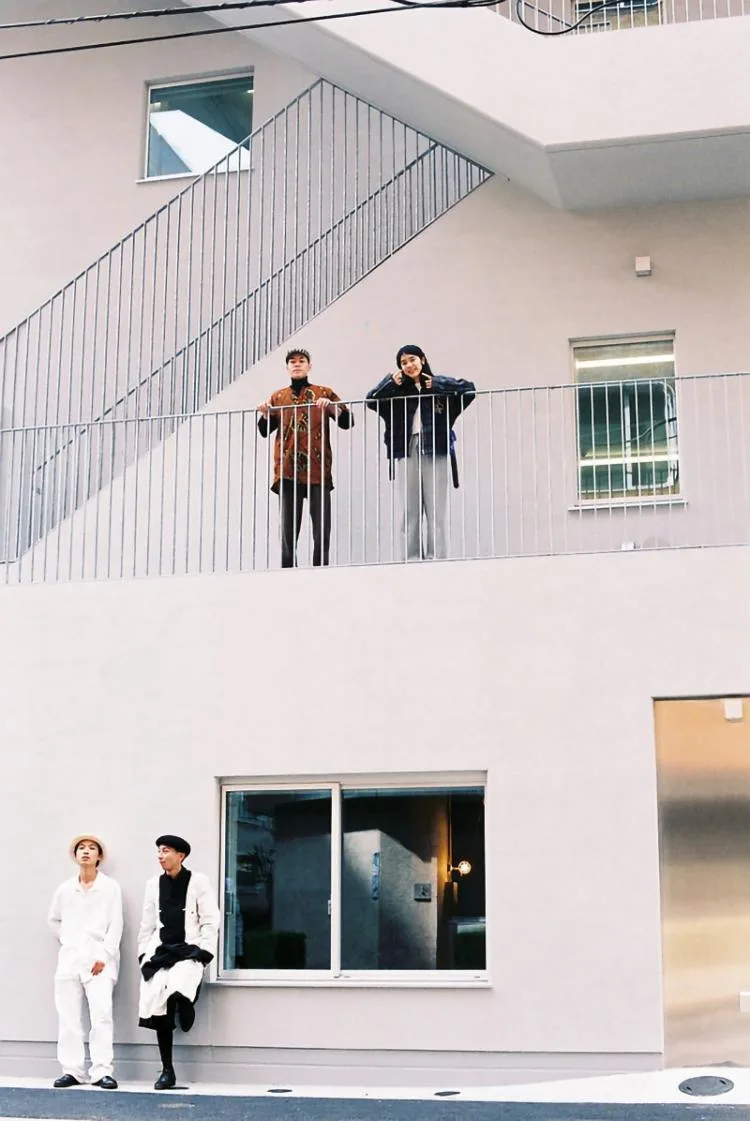
The Arakawa Building addresses these challenges with innovative architectural forms and structural techniques. The exposed staircases serve as leisure spaces and redefine the building’s interface with the city. By fully leveraging each architectural element, the building facade dynamically reflects the activities of its occupants, offering a new expression for the urban landscape.
Design Drawings
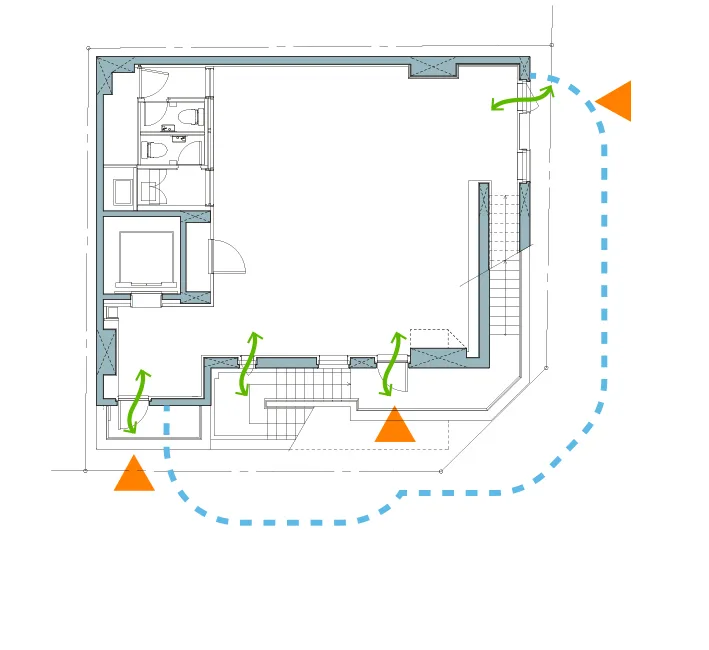
△ Entrance Floor Plan
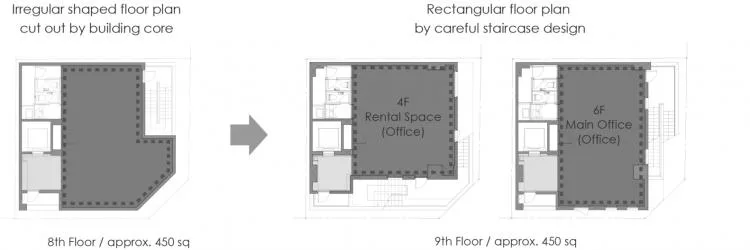
△ Plan View
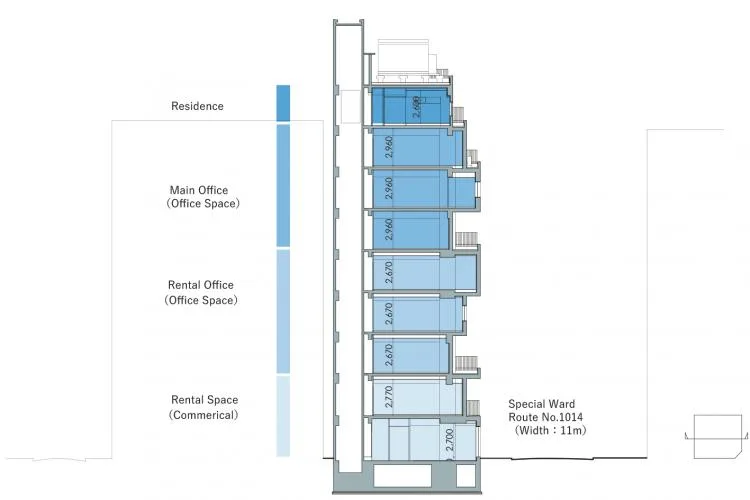
△ Section Diagram
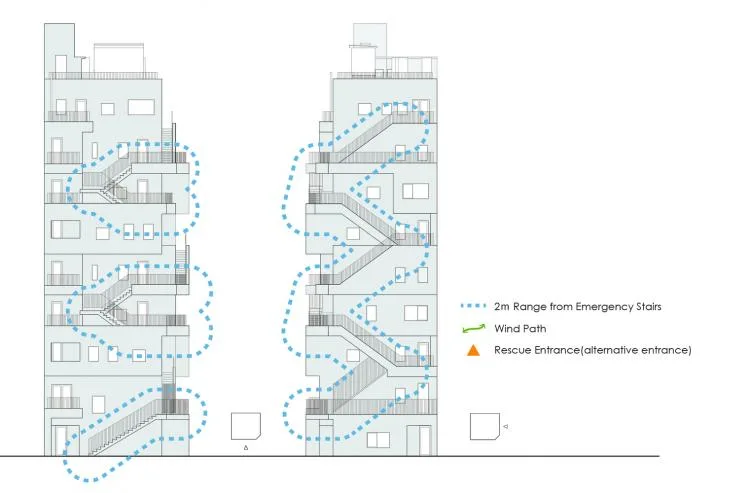
△ Staircase Analysis
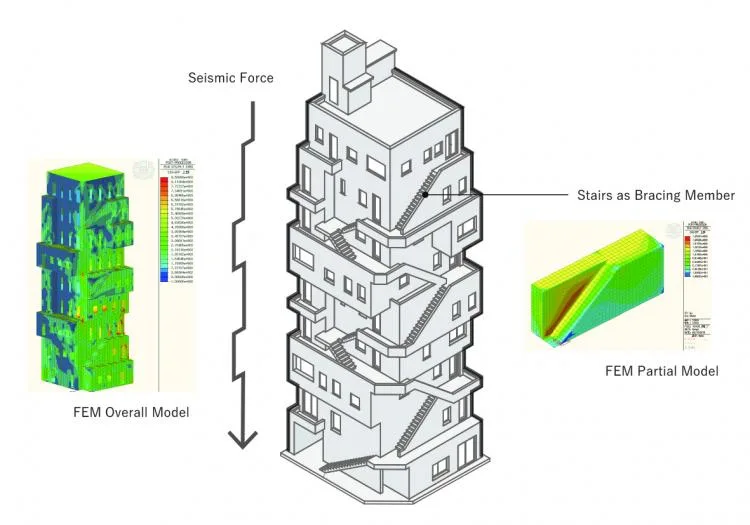
△ Thermal Analysis
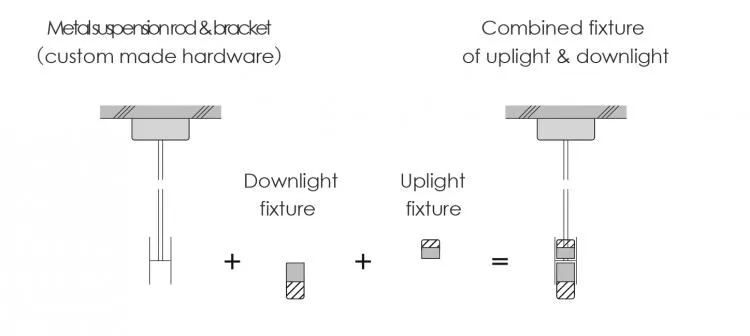
△ Detailed Analysis
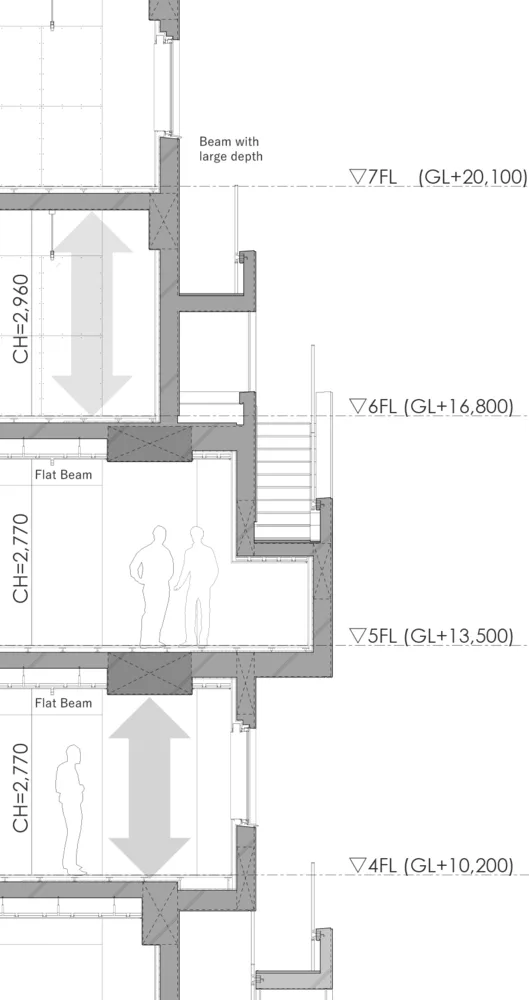
△ Detailed Section
Project Information
Project Type: Mixed-use building, office facilities, residential building
Location: Minato City, Japan
Architectural Design: Ri Jian Design
Area: 824 m²
Project Year: 2018
Photographers: Harunori Noda, Mariko Kobayashi
Client: Araun Company Limited












Must log in before commenting!
Sign Up