
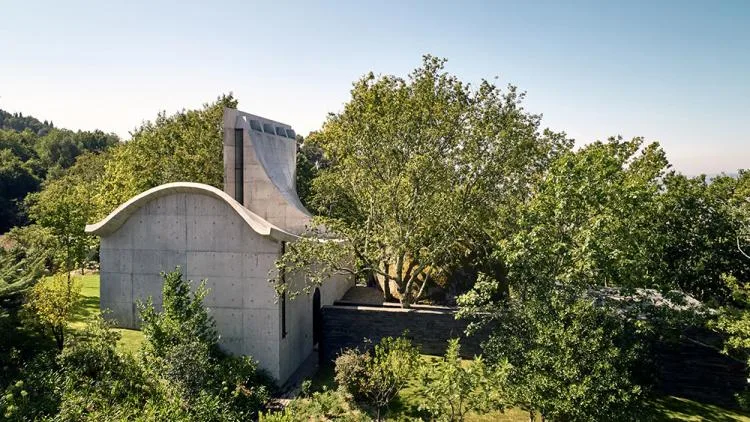
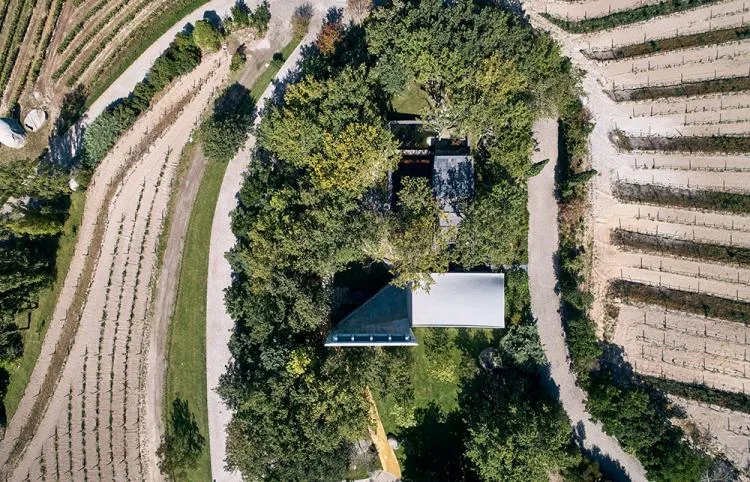
Architect Nicholas Burns has designed a concrete chapel located on a large private estate in northern Portugal. The chapel is quietly nestled among the woods and granite gravel, creating a serene and natural atmosphere.
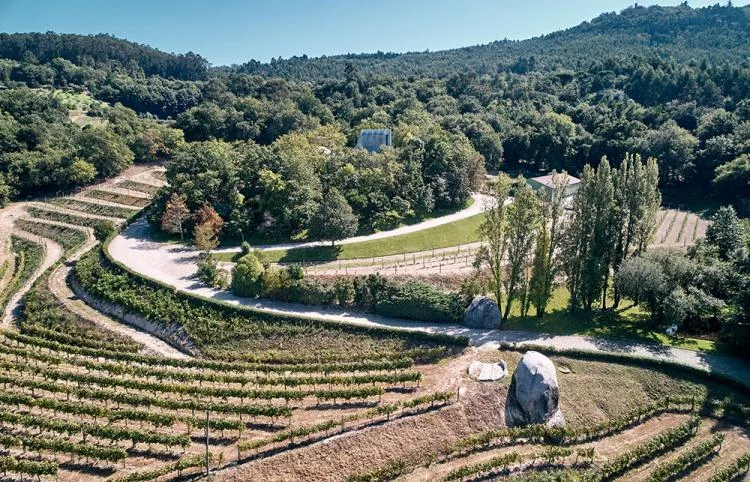
The project, named “Chapel and Meditation Room,” was commissioned by the estate owner to create a private space for both individual and group meditation on their land.
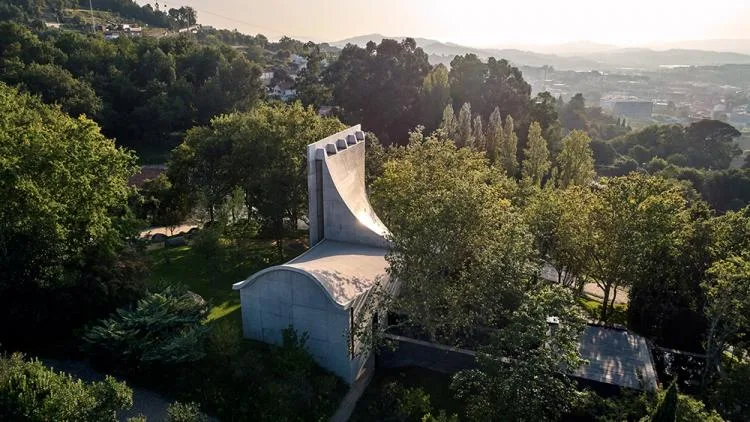
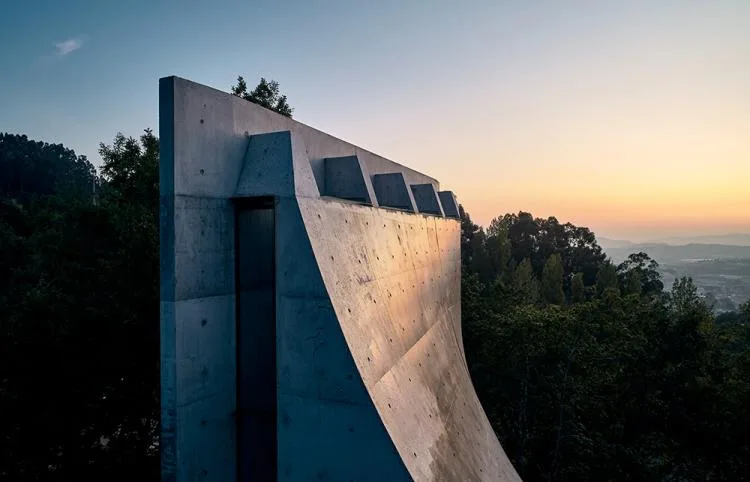
Nicholas Burns, originally from Australia and now based in Bali, had full authority over the chapel’s location and design on this expansive 30-hectare site.
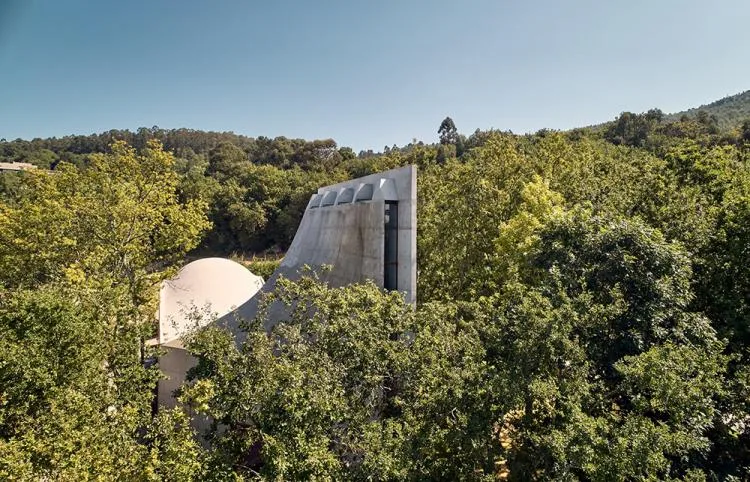
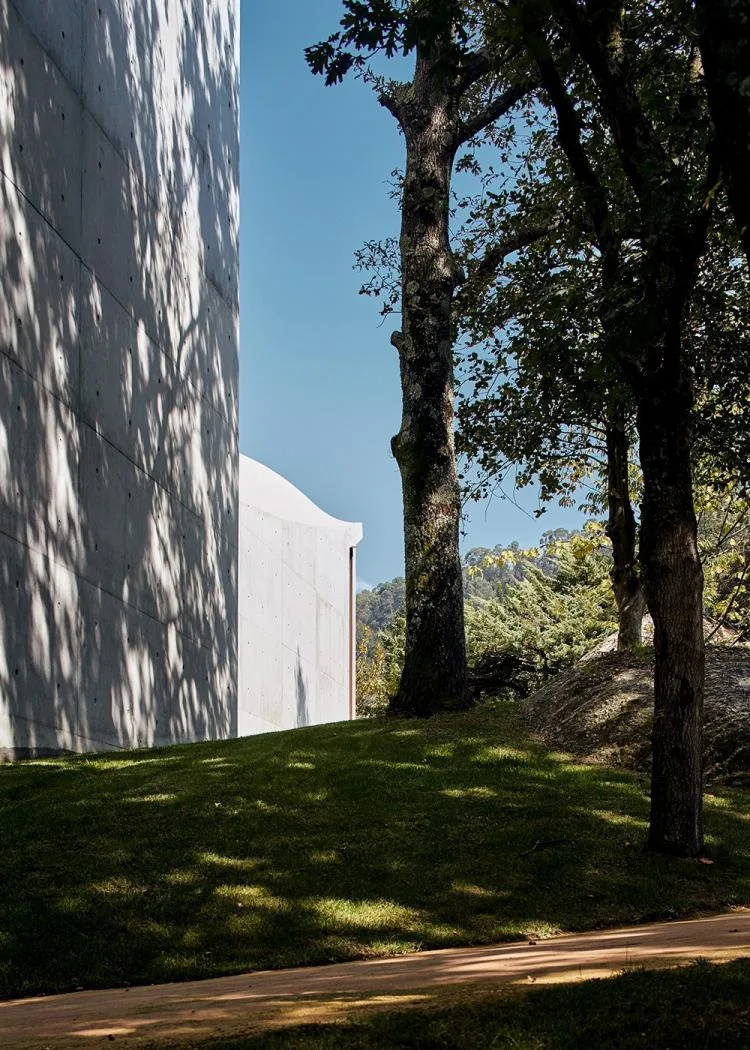
He chose to position the chapel on a small hill surrounded by ravines, where rocks and dense foliage conceal it, providing a sense of shelter and seclusion.
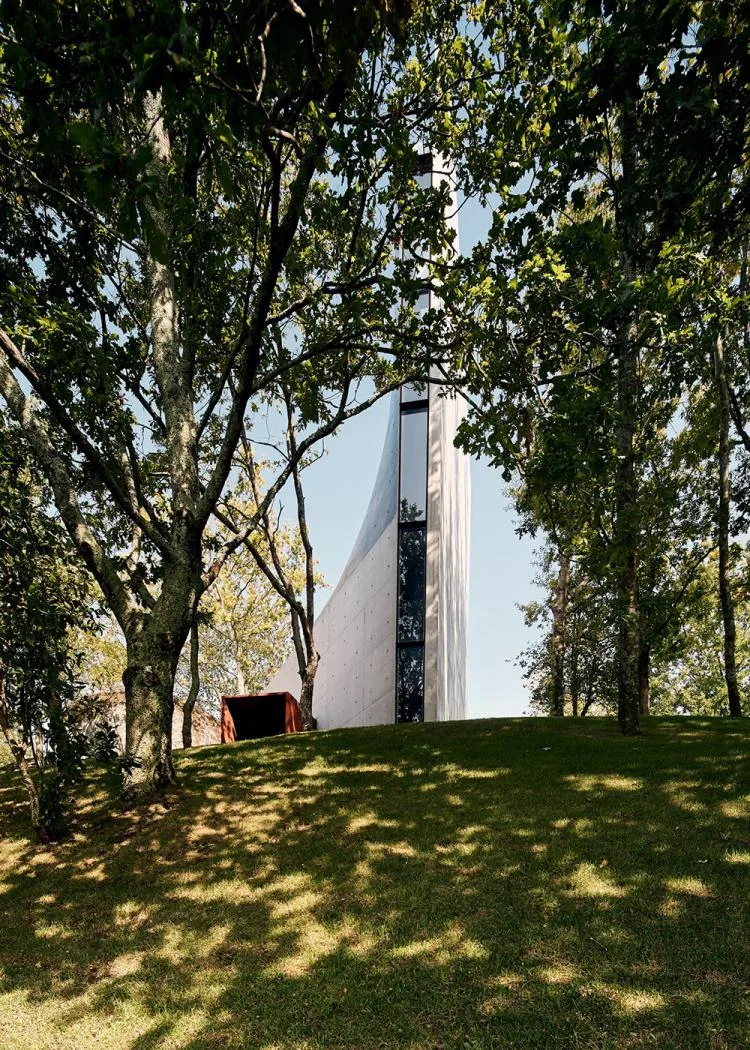
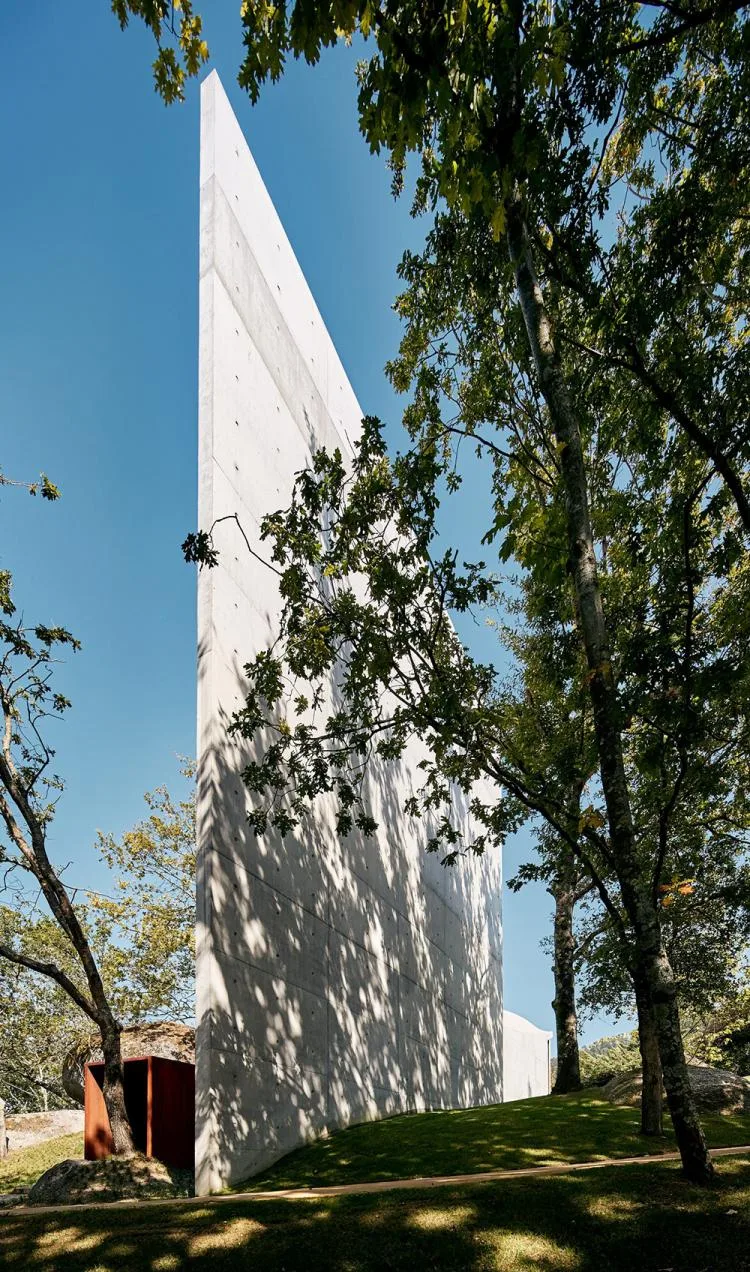
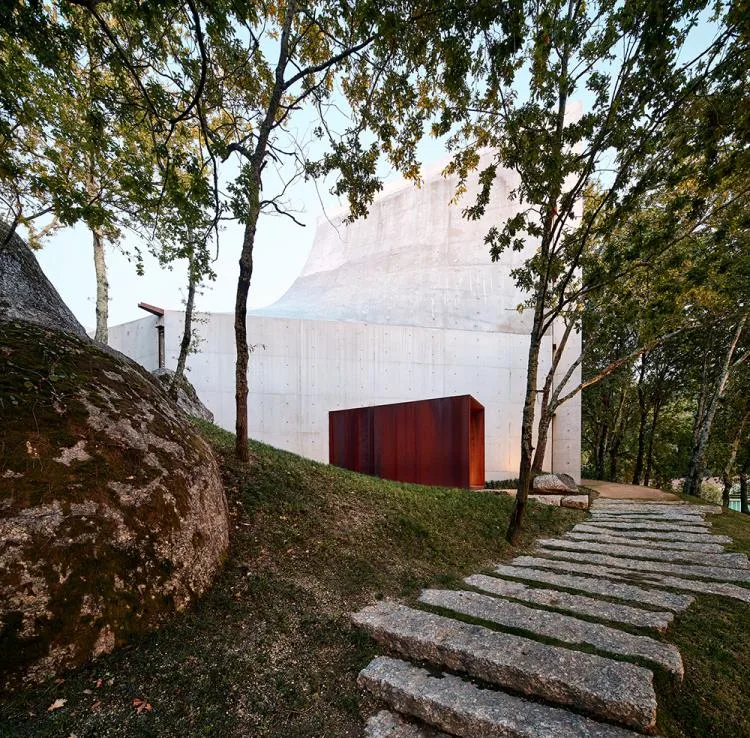
The chapel’s curved form directly reflects its surroundings, blending harmoniously among gravel and tree trunks. The design aims to integrate the building with the landscape while minimizing environmental impact.
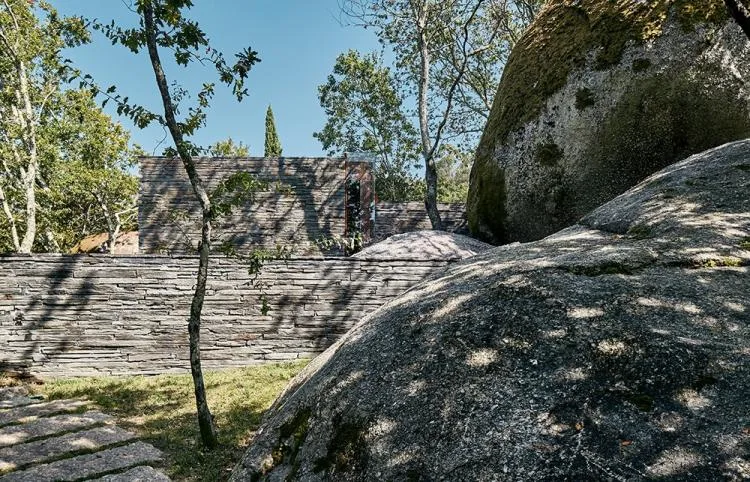
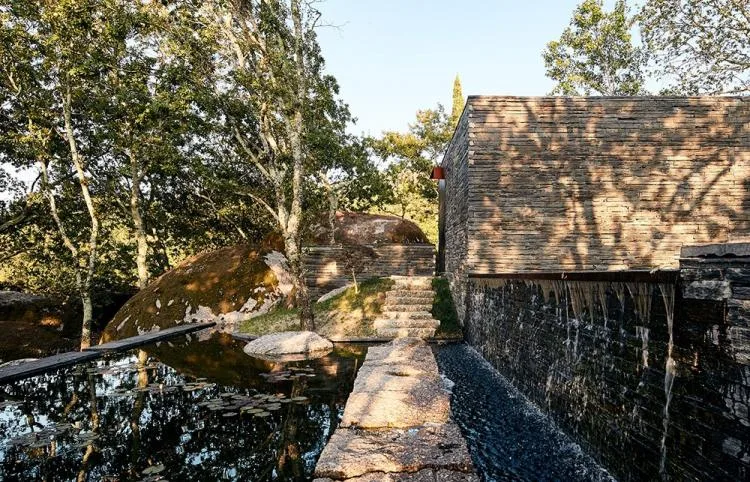
“As time passes, the landscape will grow around the chapel and become part of it,” Burns explains. The placement of gravel and trees defines the spatial boundaries, while the chapel’s height is set to correspond with the future growth of surrounding trees, which will eventually tower above and cloak the building’s highest points.
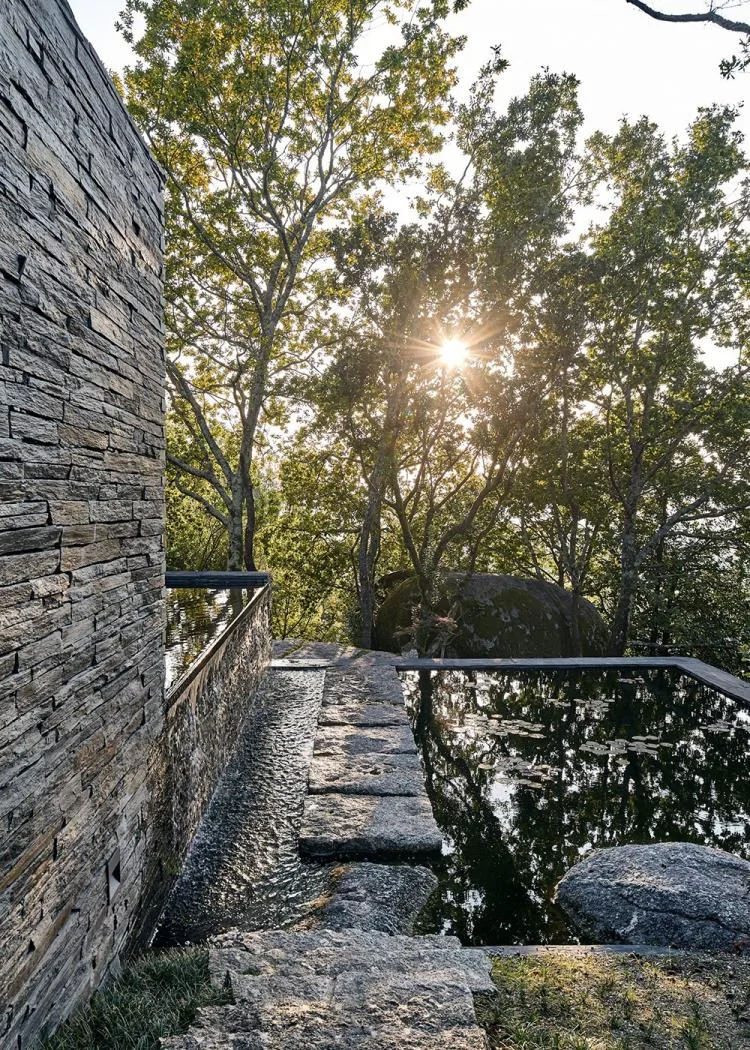
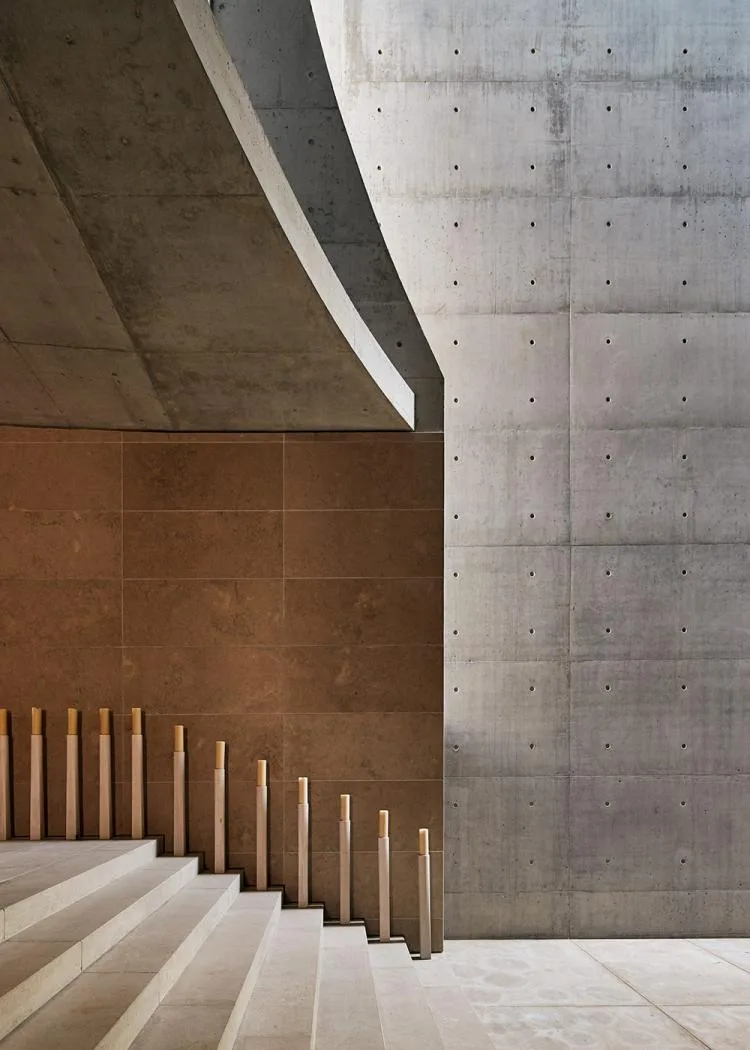
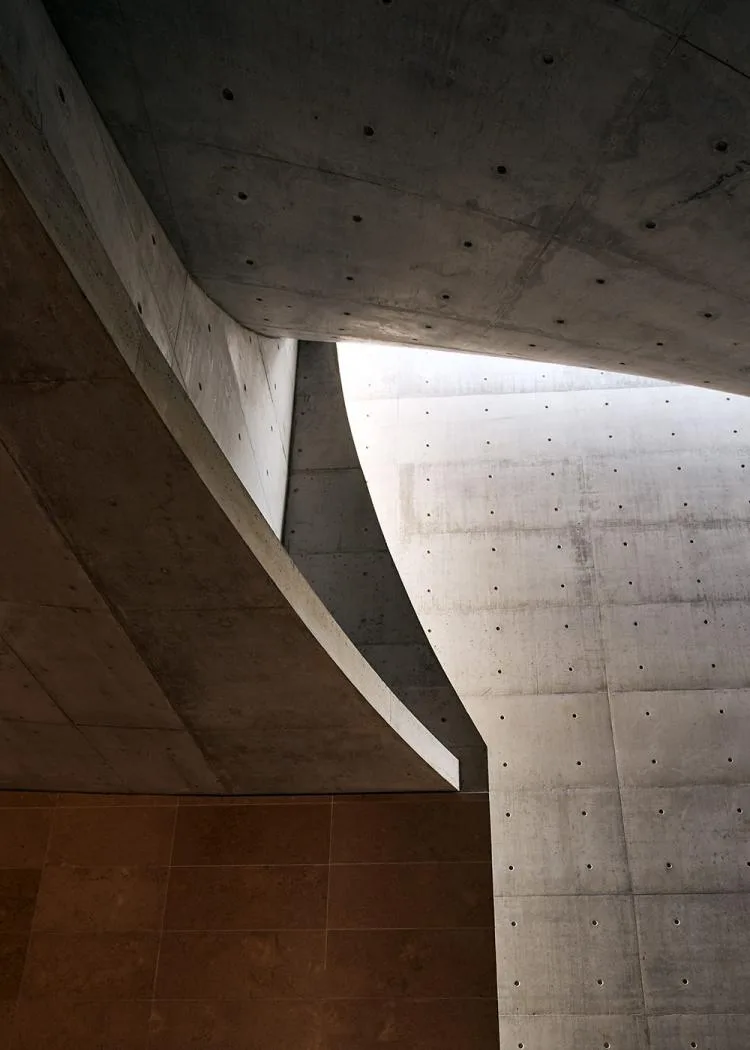
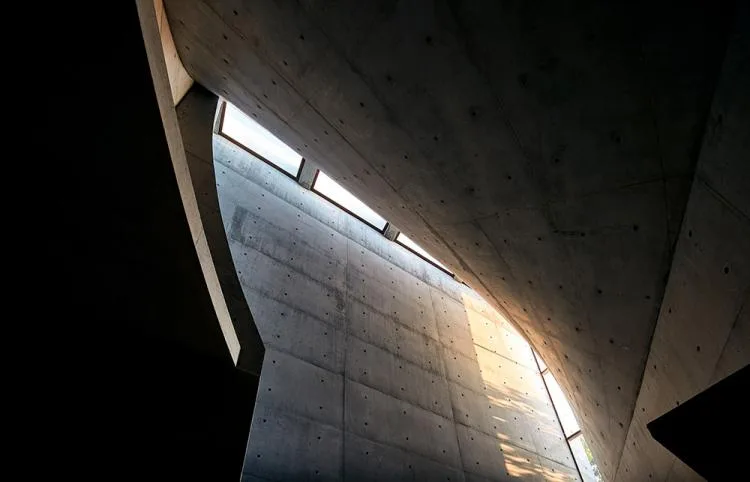
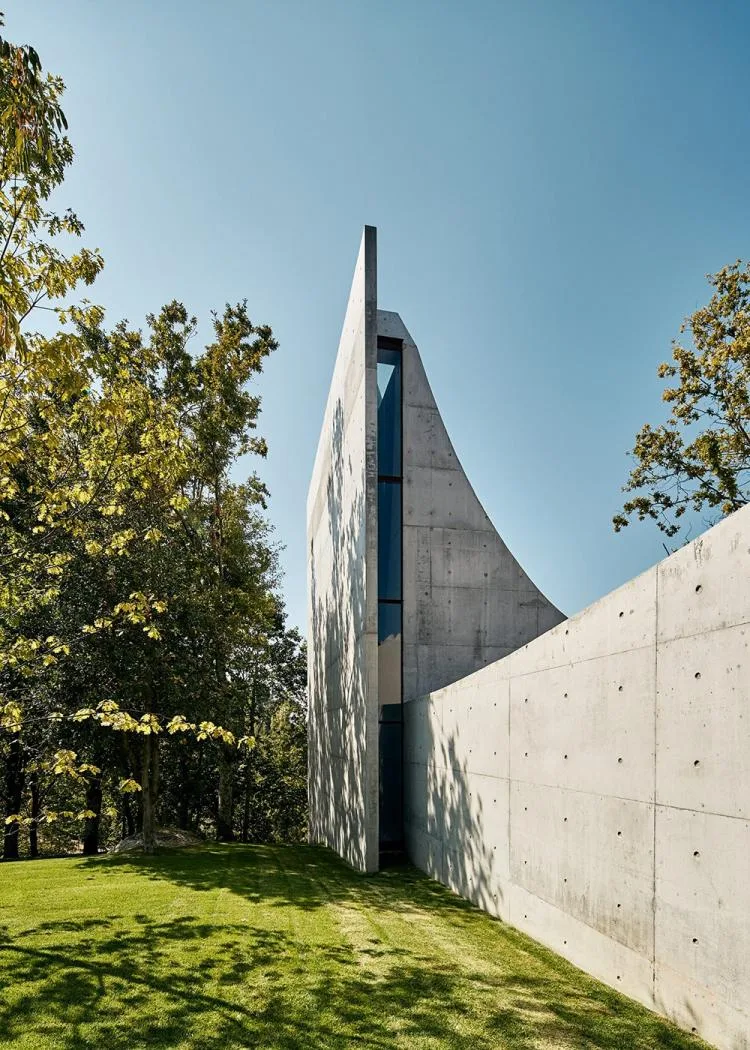
Concrete was selected as the primary material for its strong plasticity, allowing Burns to create a continuous, flowing curved form for the chapel and meditation room. The material’s neutral tone, consistent both inside and out, helps the building resonate with the natural surroundings.
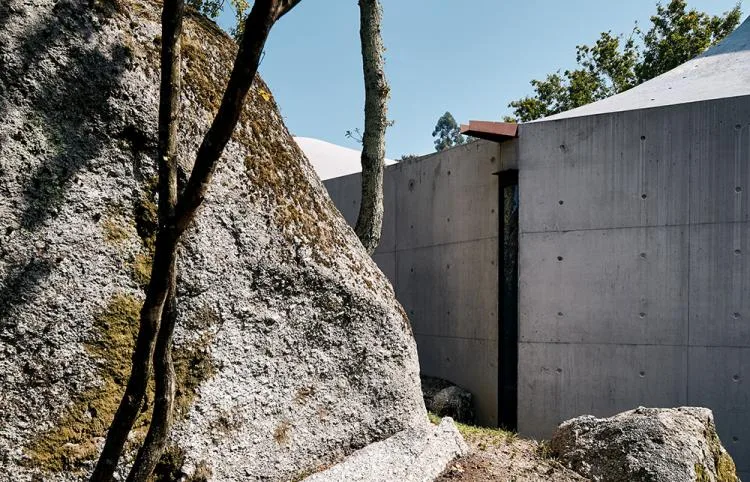
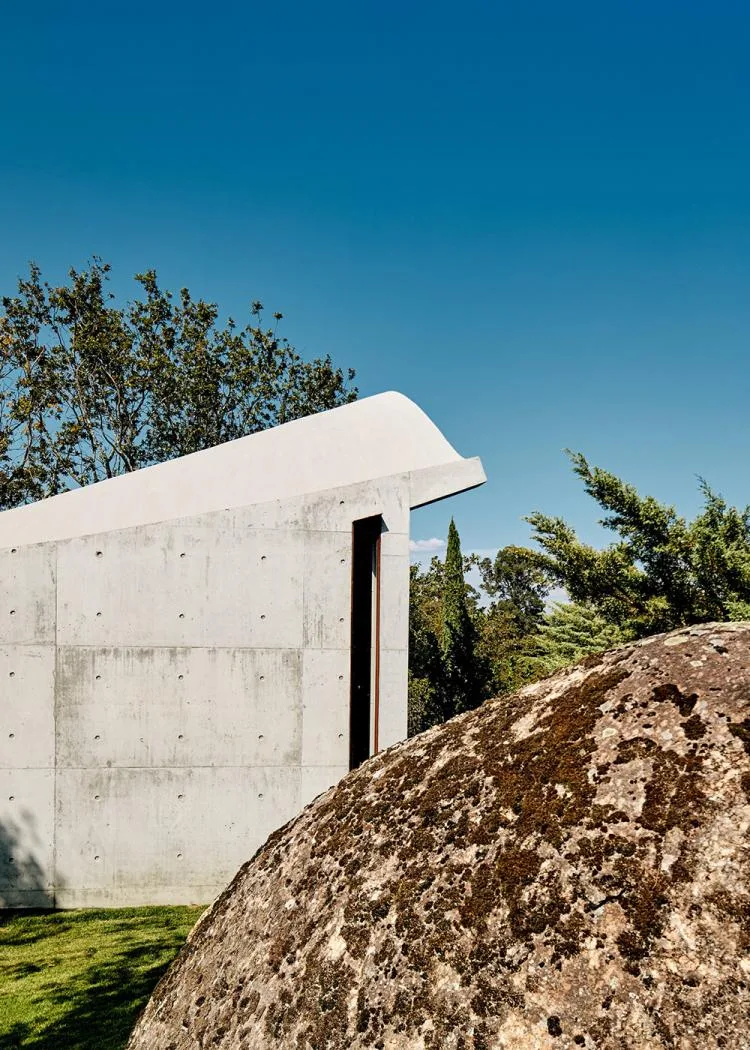
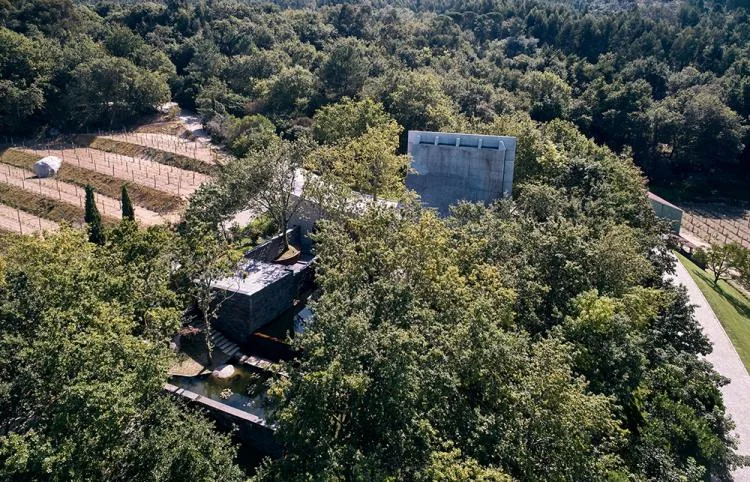
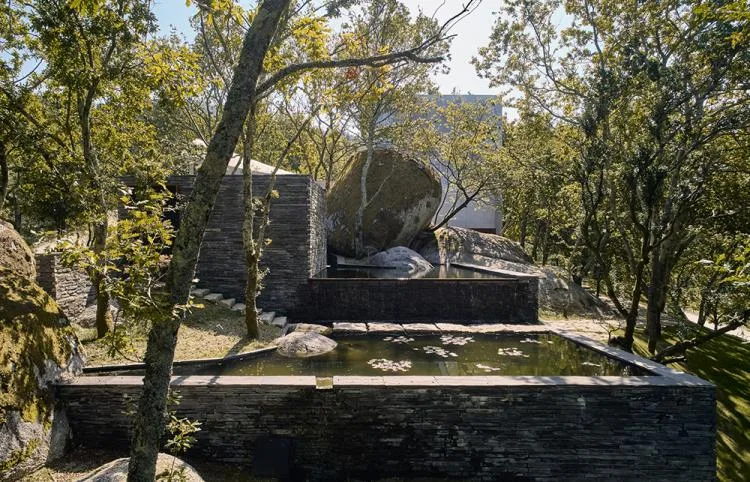
On the chapel’s northeast side, a wall made from local stone slabs has been retained within the concrete structure. This surface encourages the growth of moss and lichen, further blending the building into its environment.
These stone walls enclose a small meditation room, a courtyard, and a series of reflective pools that cast shimmering light and shadows across the site.
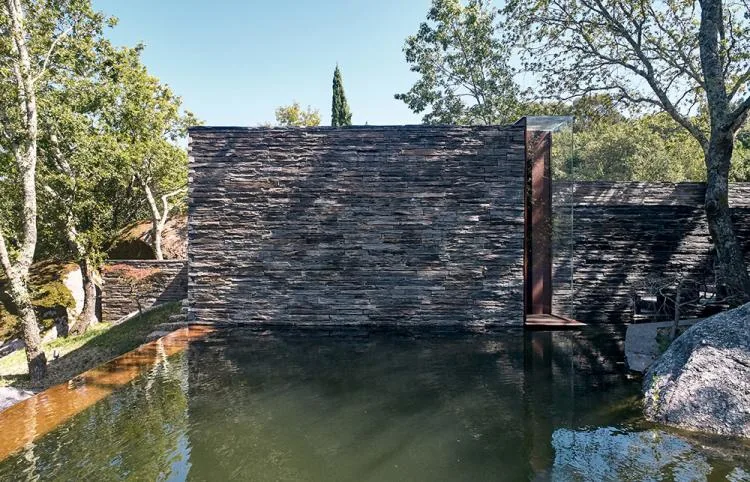
The chapel’s entrance features a weathered steel box that contrasts with the natural materials, gently rising from the ground and leading to a triangular porch.
From this point, a series of steep steps ascend to the nave, which serves as the main gathering hall.
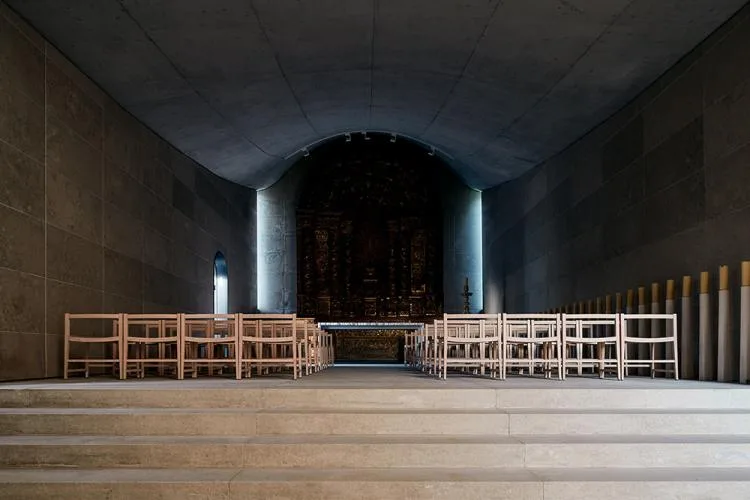
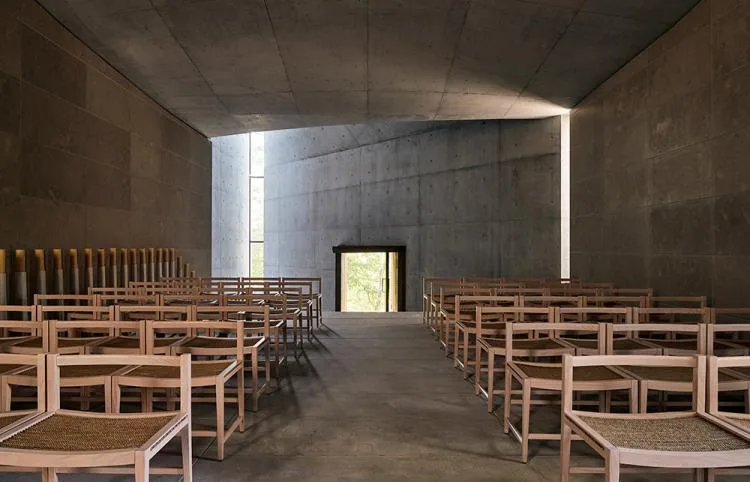
The chapel accommodates 60 seated guests and additional standing room. Natural light filters softly through slender windows, mimicking the gentle glow of candlelight inside. The interior is warmed by Portuguese limestone panels that tile the walls and floors.
The chapel’s sole decorative feature is an 18th-century altar, originally owned by the estate owner and central to Burns’ design concept. Positioned beneath the curved ceiling, this historic element includes intricately carved wood and gold-plated altar screens that elegantly frame the sacred space.
On the nave’s left side, an arched porch leads to the courtyard enclosed by stone walls and the meditation room located above. The meditation room contrasts with the main chapel through its rougher texture, constructed entirely from dark wooden panels. Both spaces have very few windows, enhancing a sense of introspection and imagination for visitors.
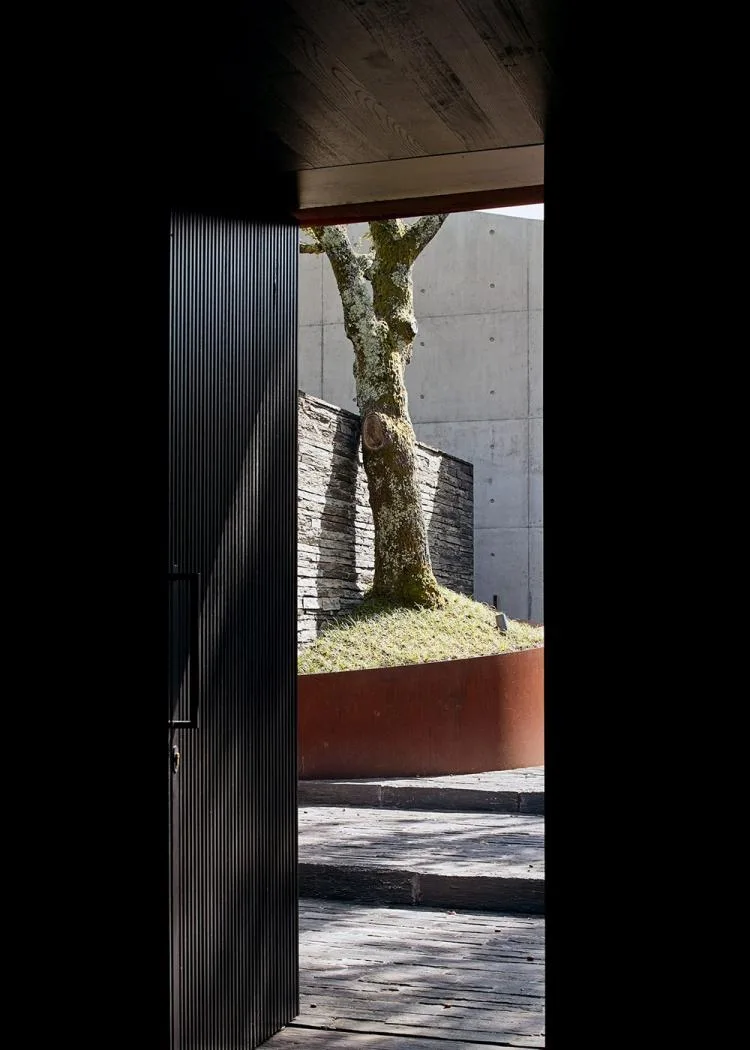
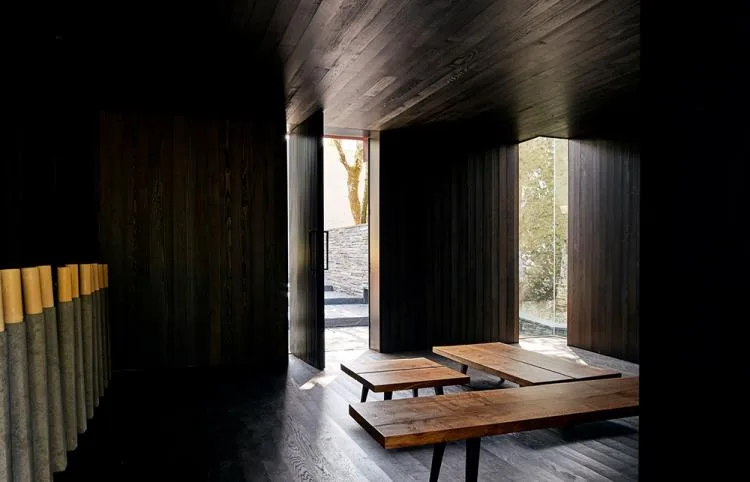
The entire chapel and meditation room feature only tall, narrow windows, allowing morning and evening sunlight to filter in. These windows create unique framed views of the surrounding natural environment from within.
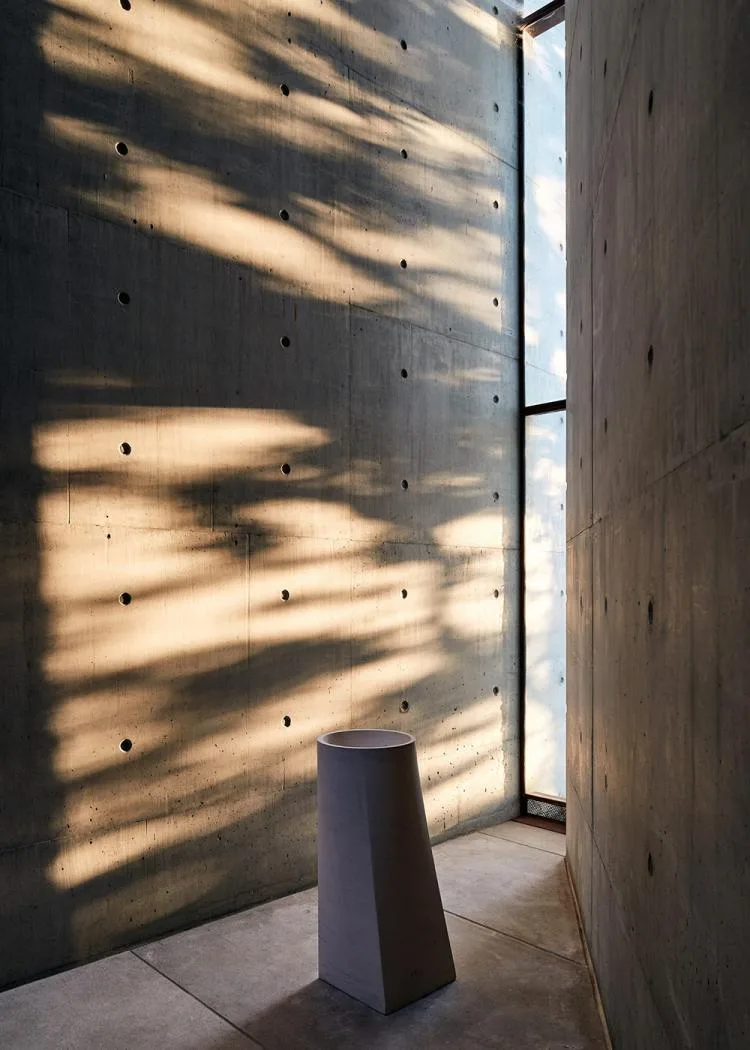
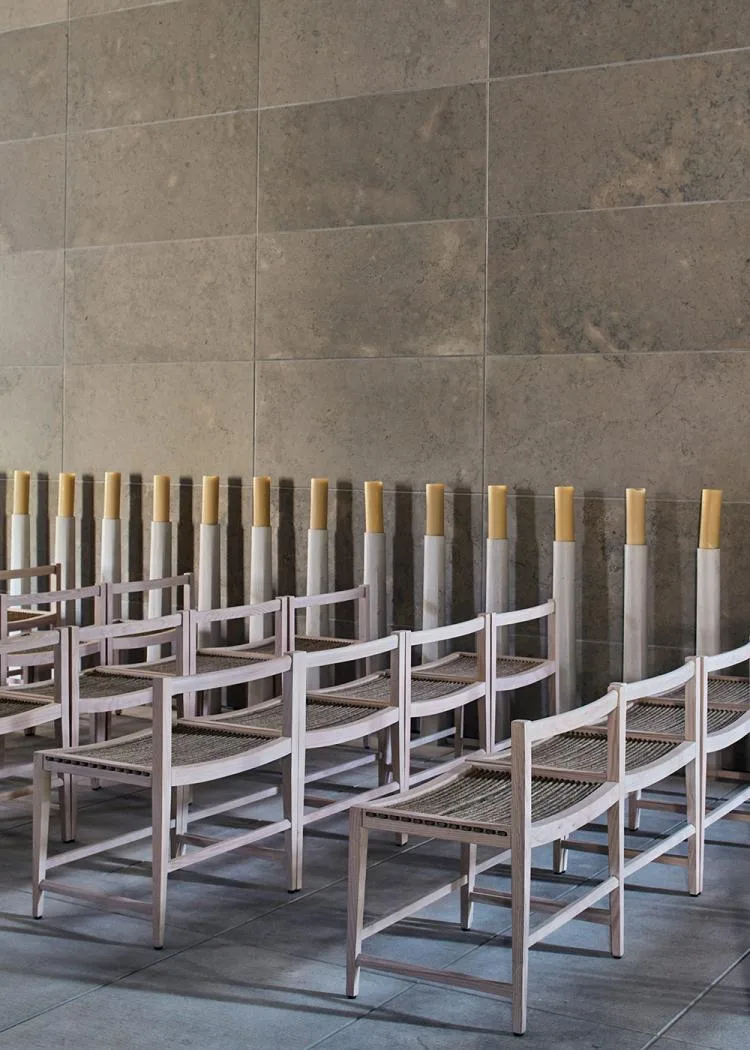
The interior is furnished minimally, featuring lightweight wooden chairs designed by Burns’ studio and stone candle holders in the nave, hand-polished by his son.
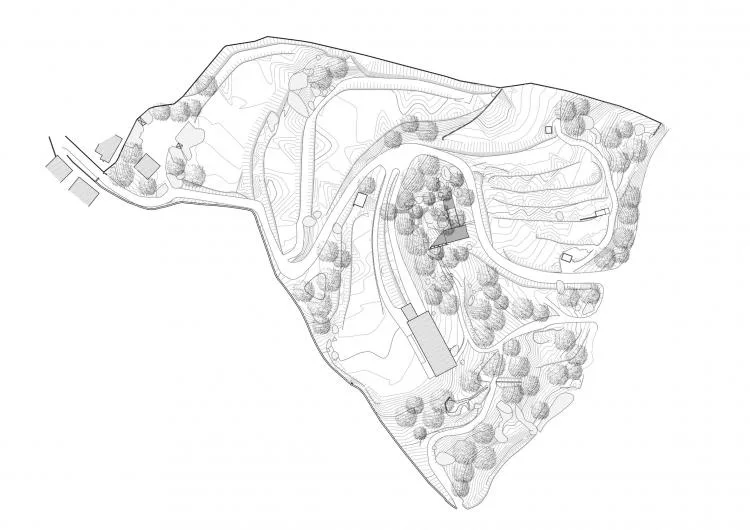
△ General layout plan
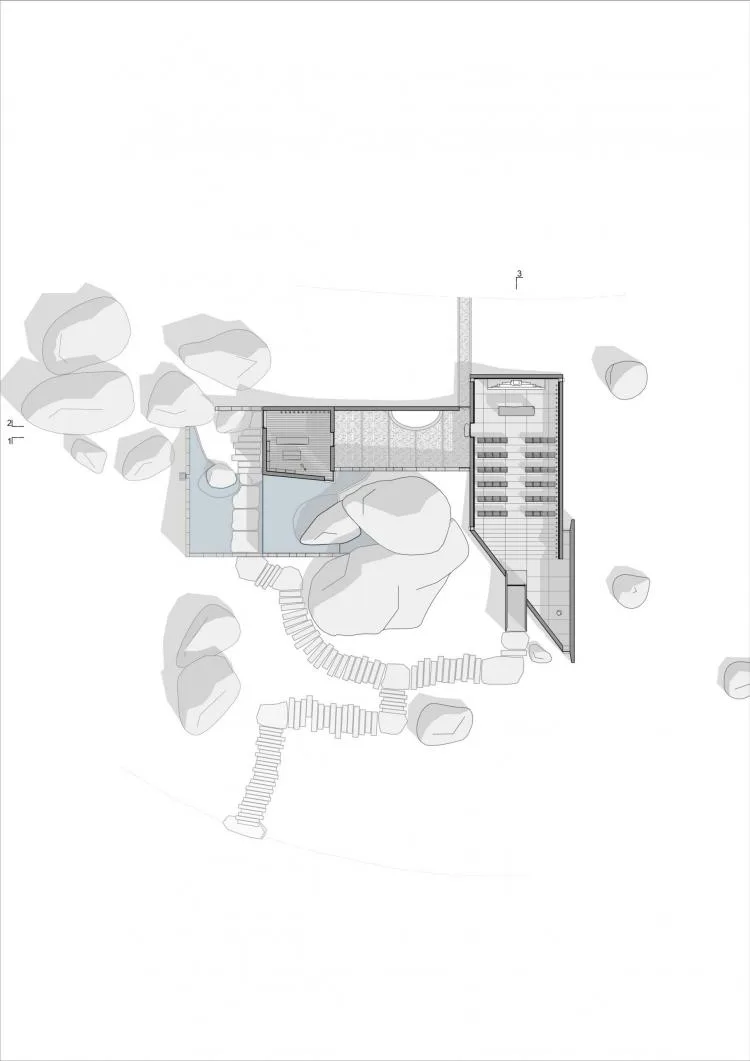
△ Plan view
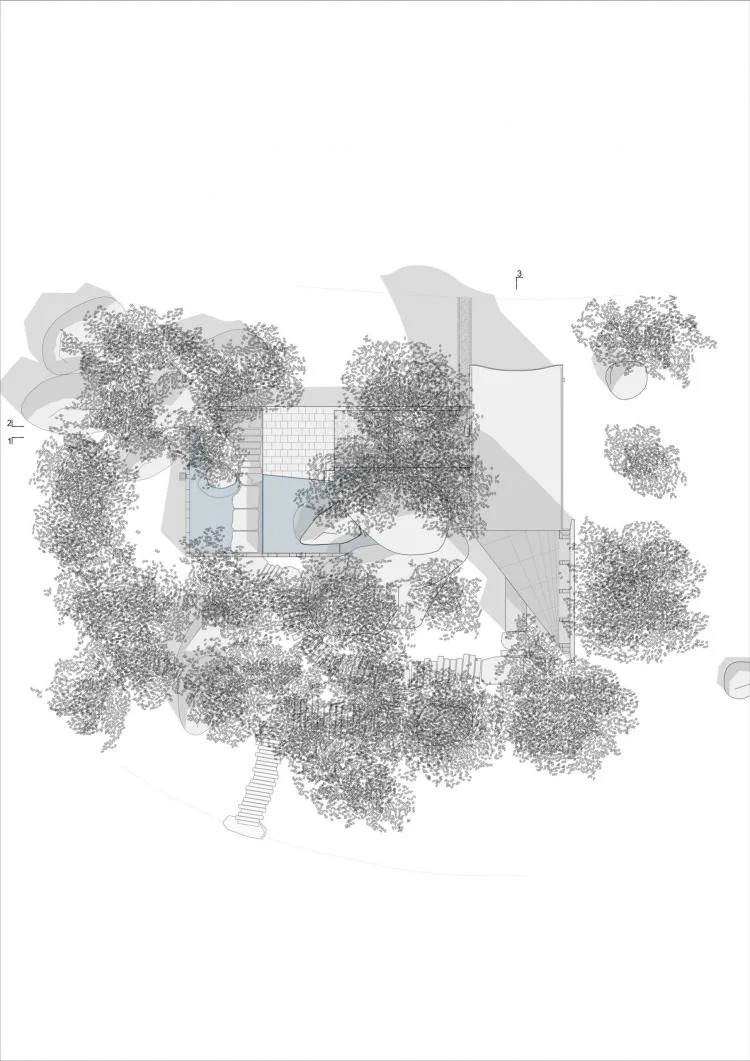
△ Roof Plan












Must log in before commenting!
Sign Up