
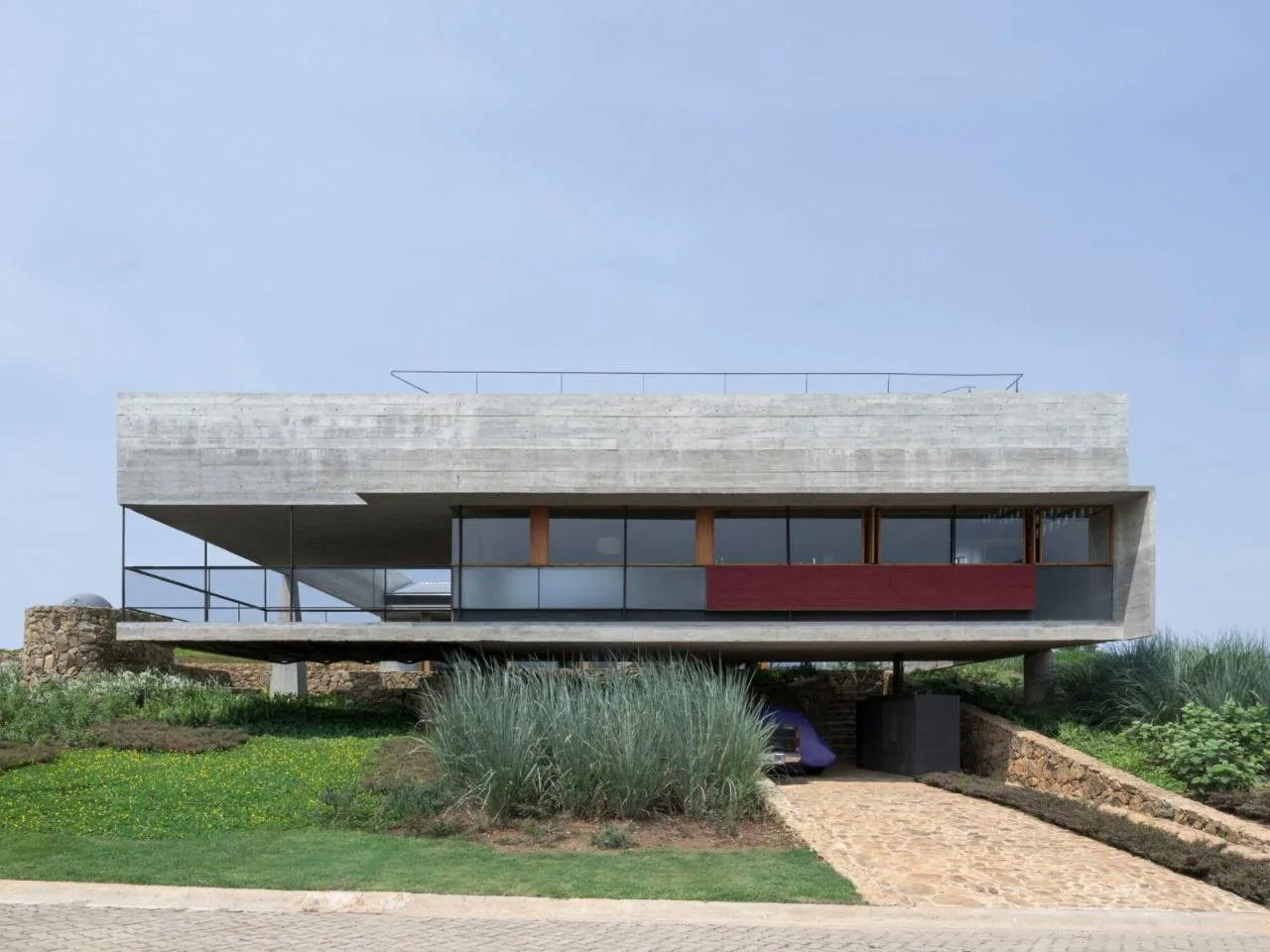
Situated on the edge of the Yaguari Dam, the Arnopolis Cottage enjoys a close relationship with the surrounding landscape, offering distant views of the Lopo Mountains. However, the nearby built environment, including neighboring houses, contrasts sharply with this natural setting. To address this contradiction, the design team conceived a dual-core layout: one core connects with the external world, while the other anchors the private space.
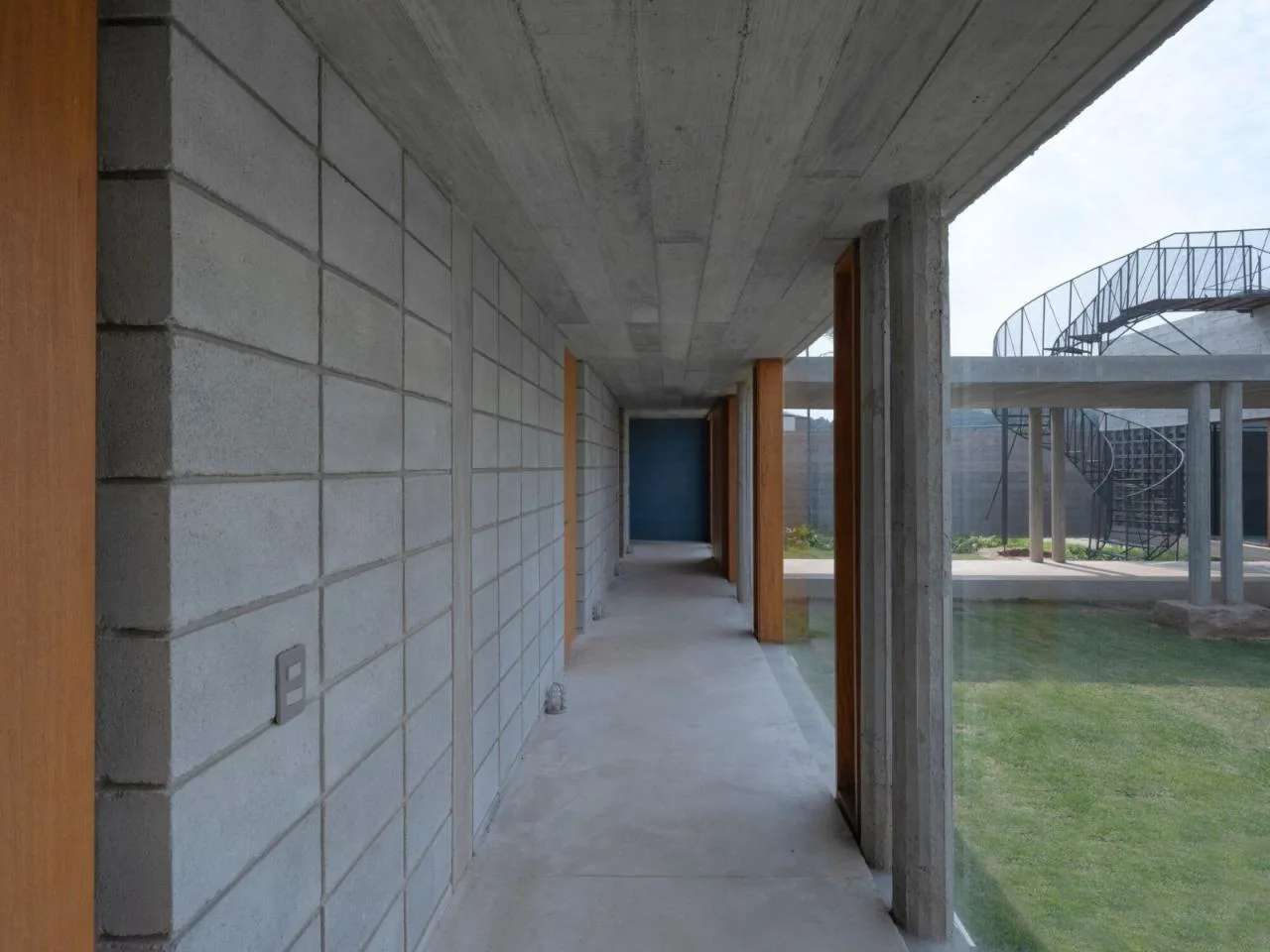
The design prioritizes creating an internal courtyard that remains detached from the surrounding environment. This was achieved by selecting a medium height for the main structure, effectively deciding what not to build. The two cores then surround and protect this secluded space, naturally defining the overall form of the cottage.
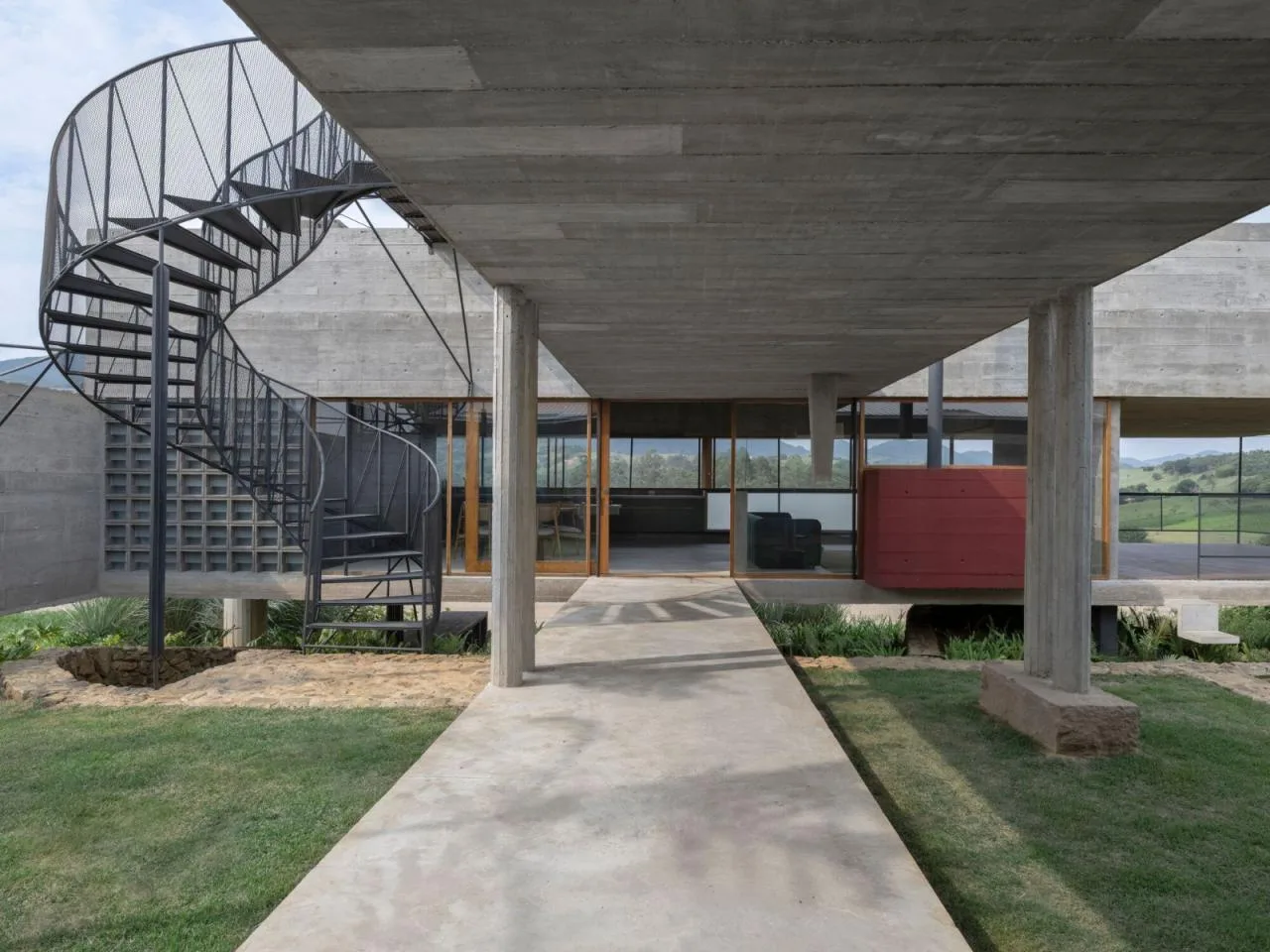
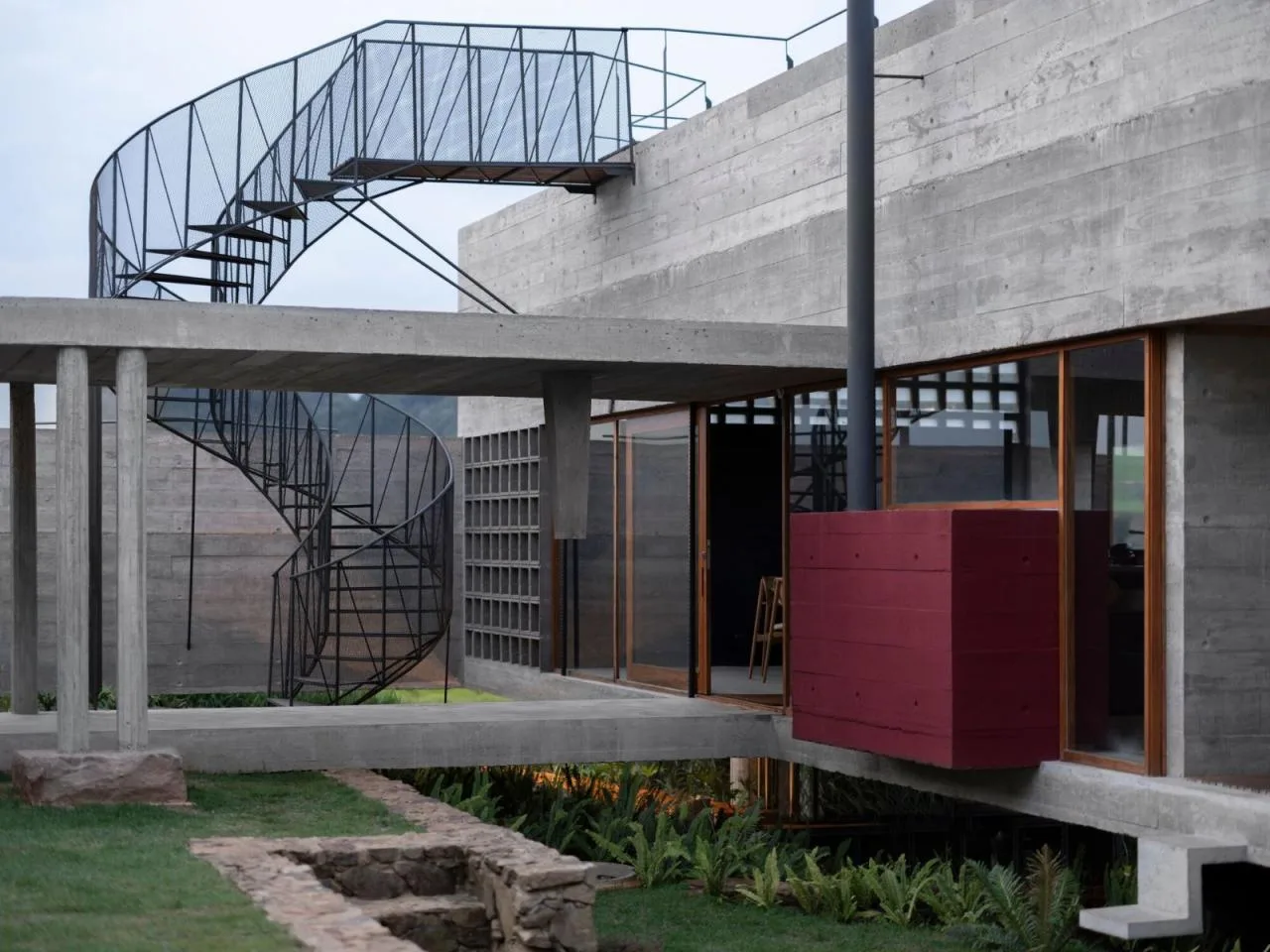
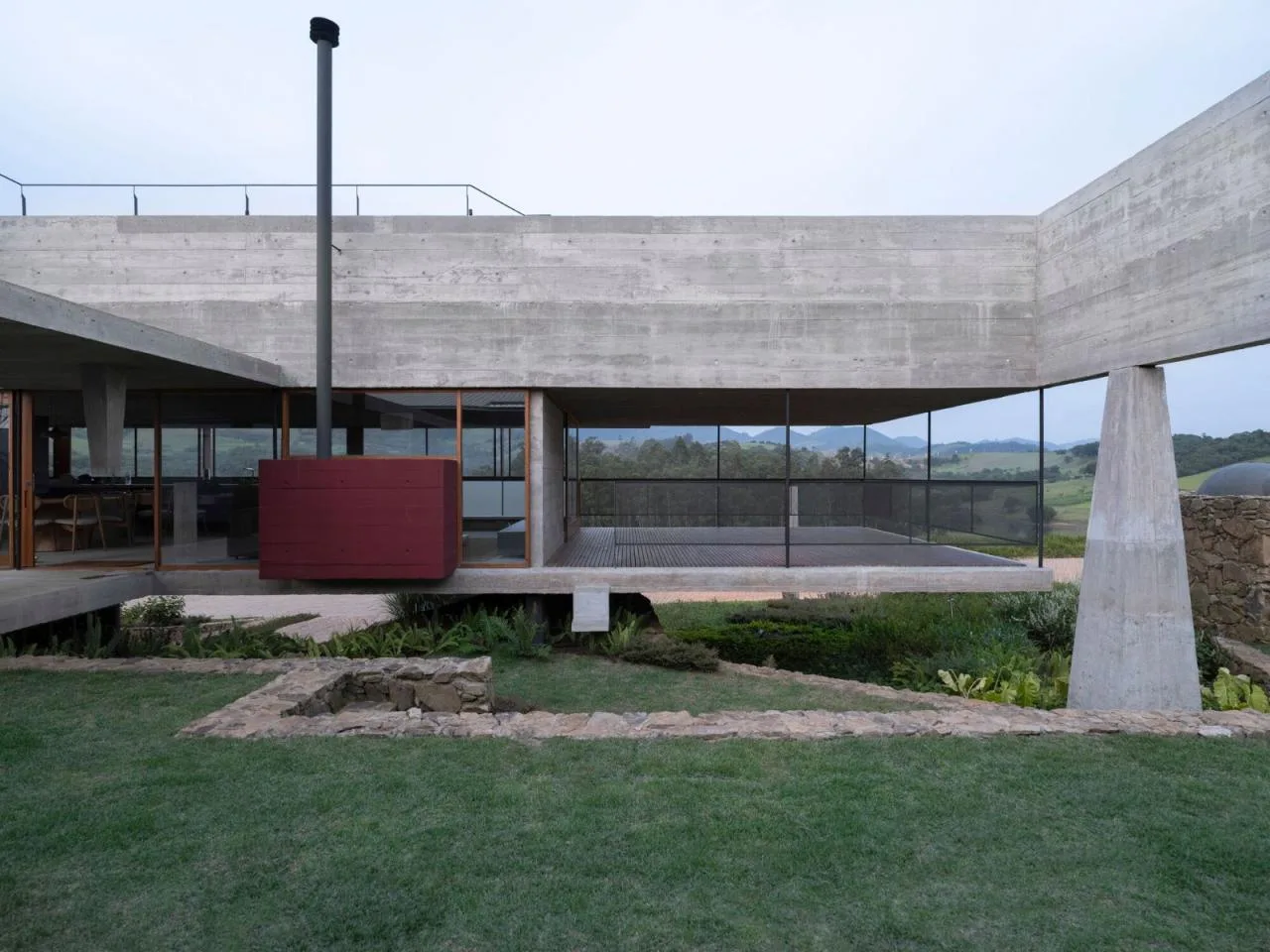
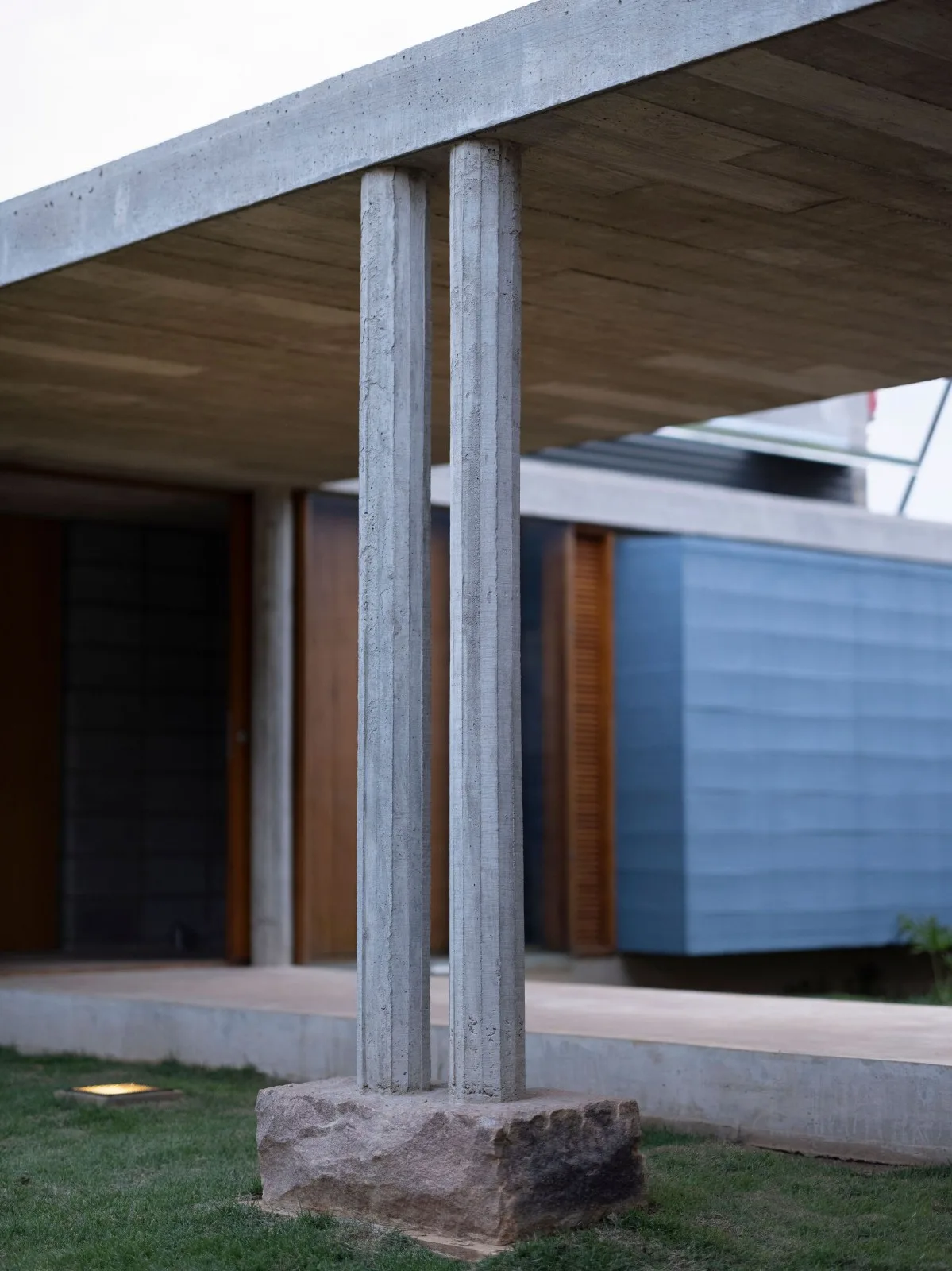
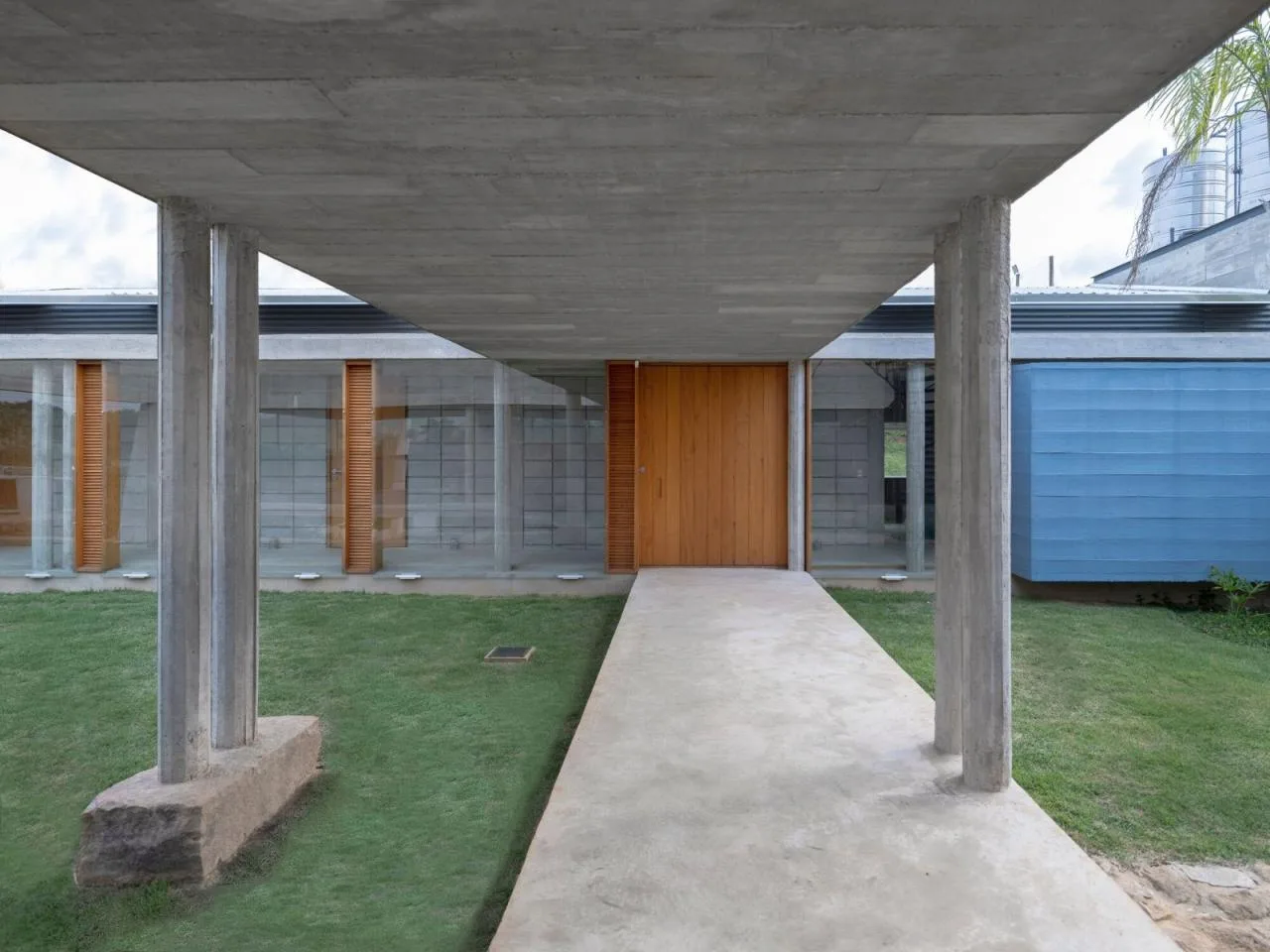
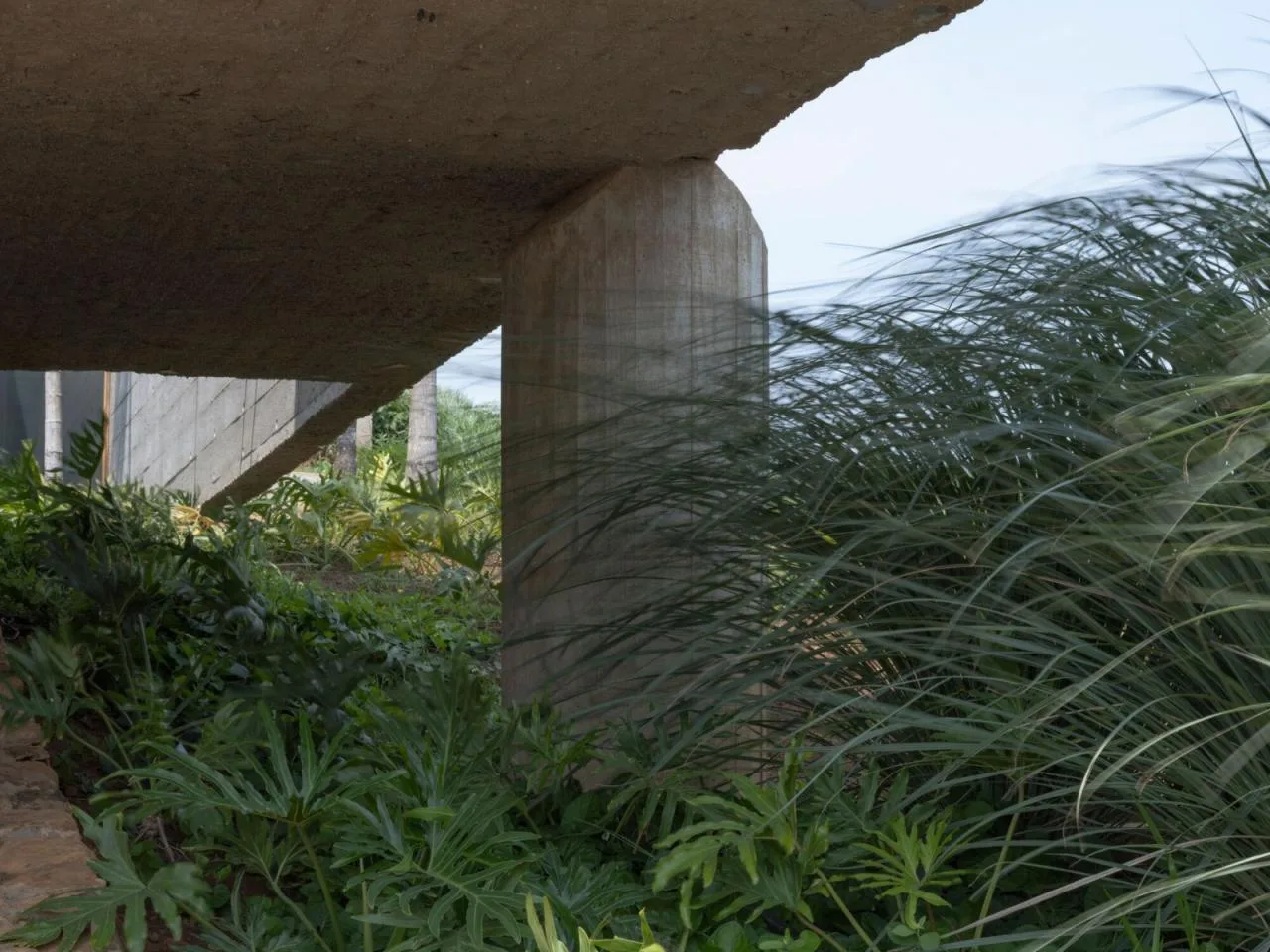
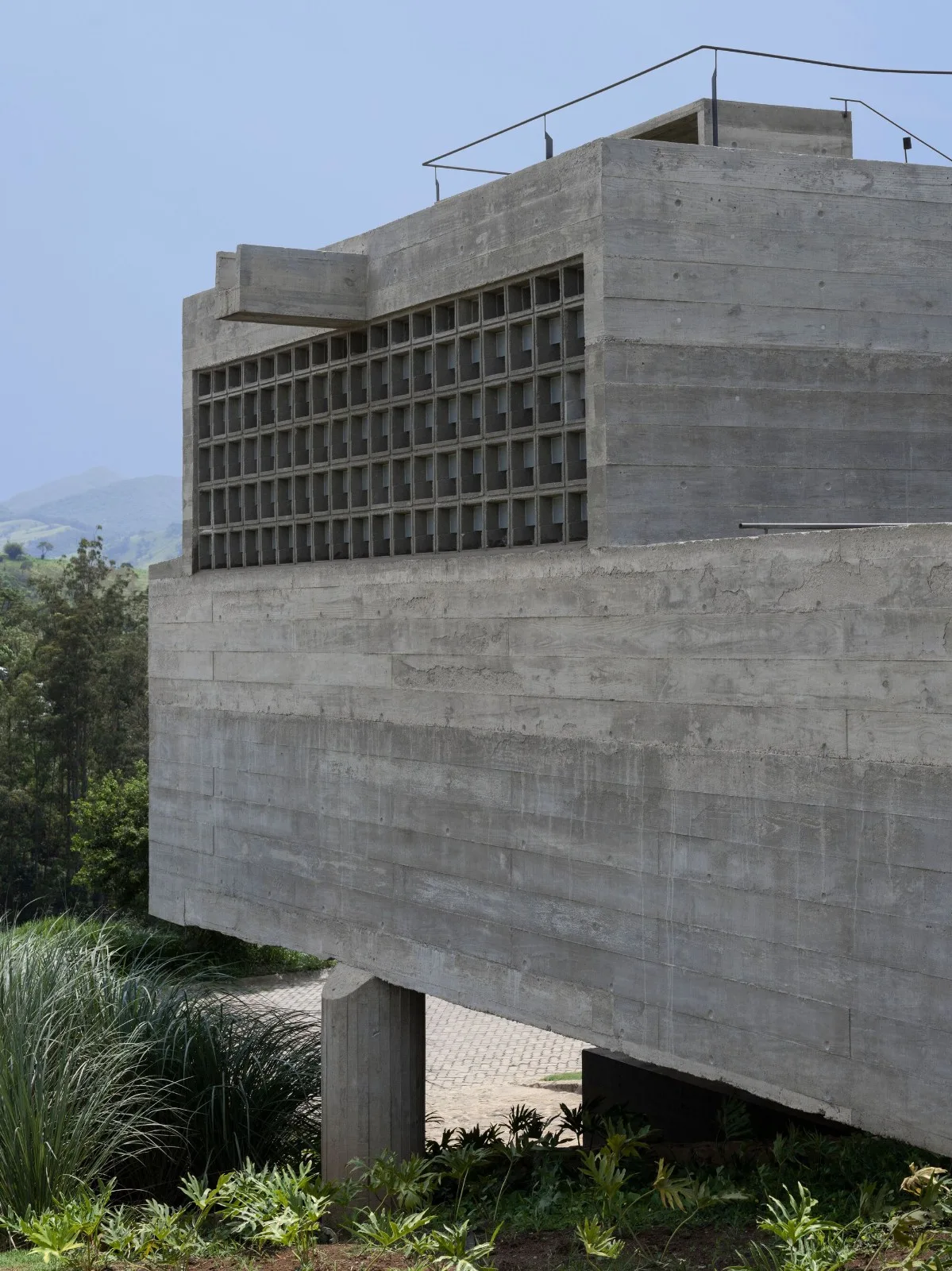
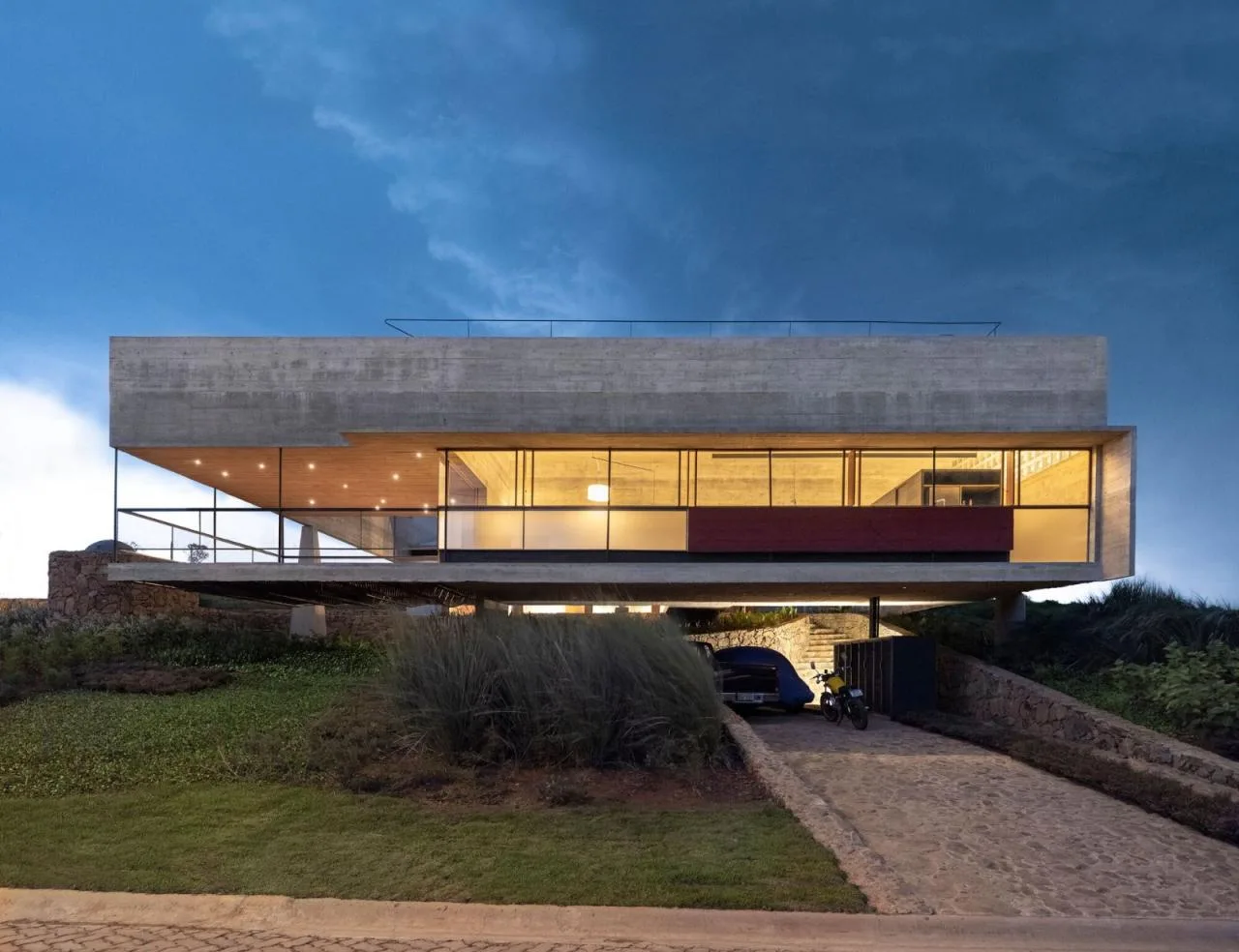
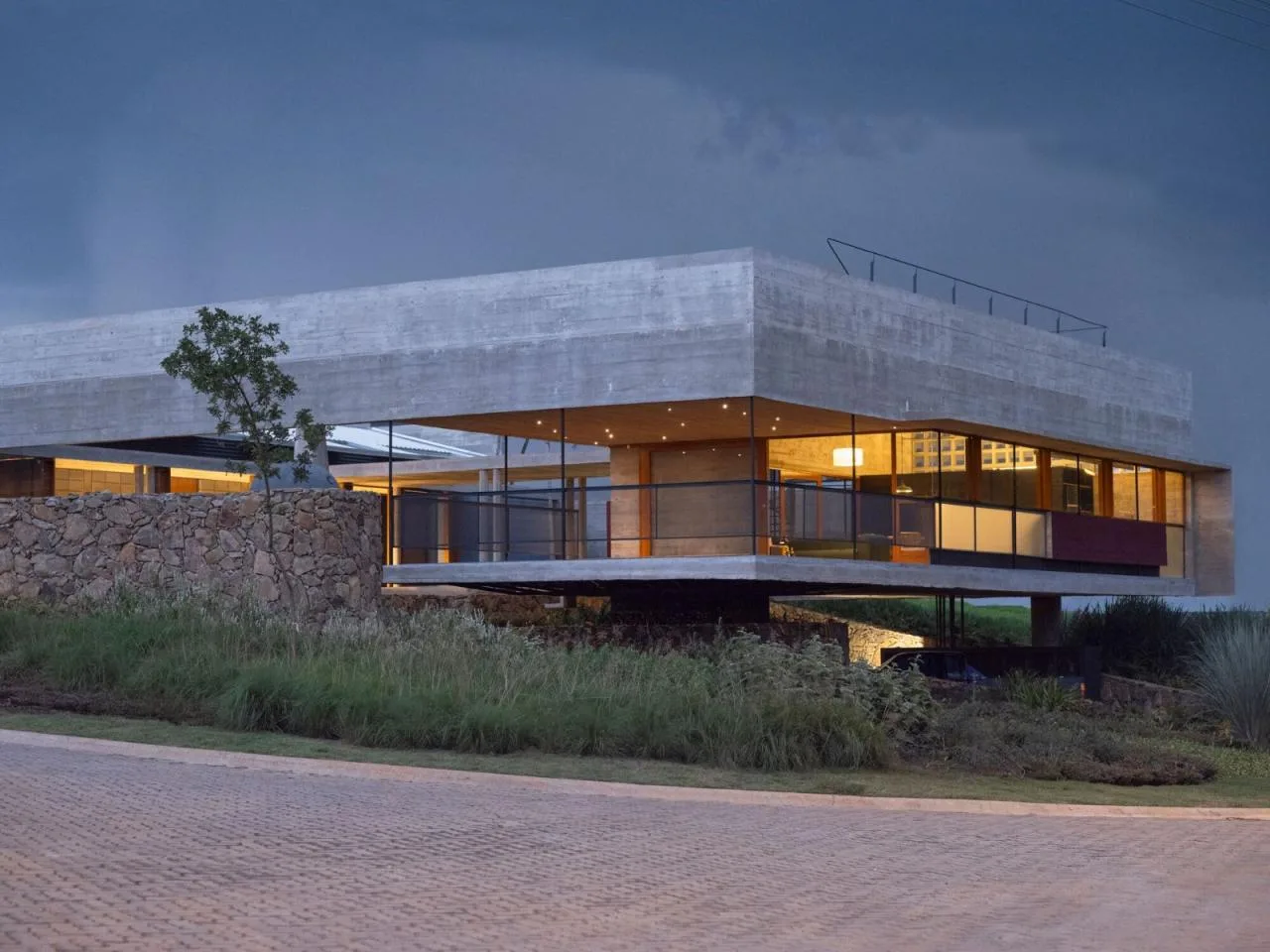
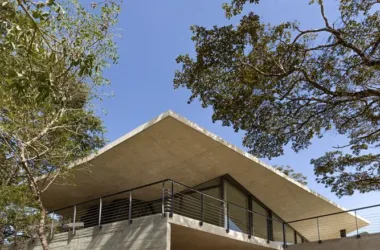
The rear core is firmly grounded, partially buried one meter below grade to create a level base. In contrast, the front core is suspended, cleverly utilizing the natural terrain as part of the construction process. Its lower layer is directly poured into the soil without additional supports or wooden formwork. Only after the upper layer solidifies is the soil excavated with machinery to form voids beneath.
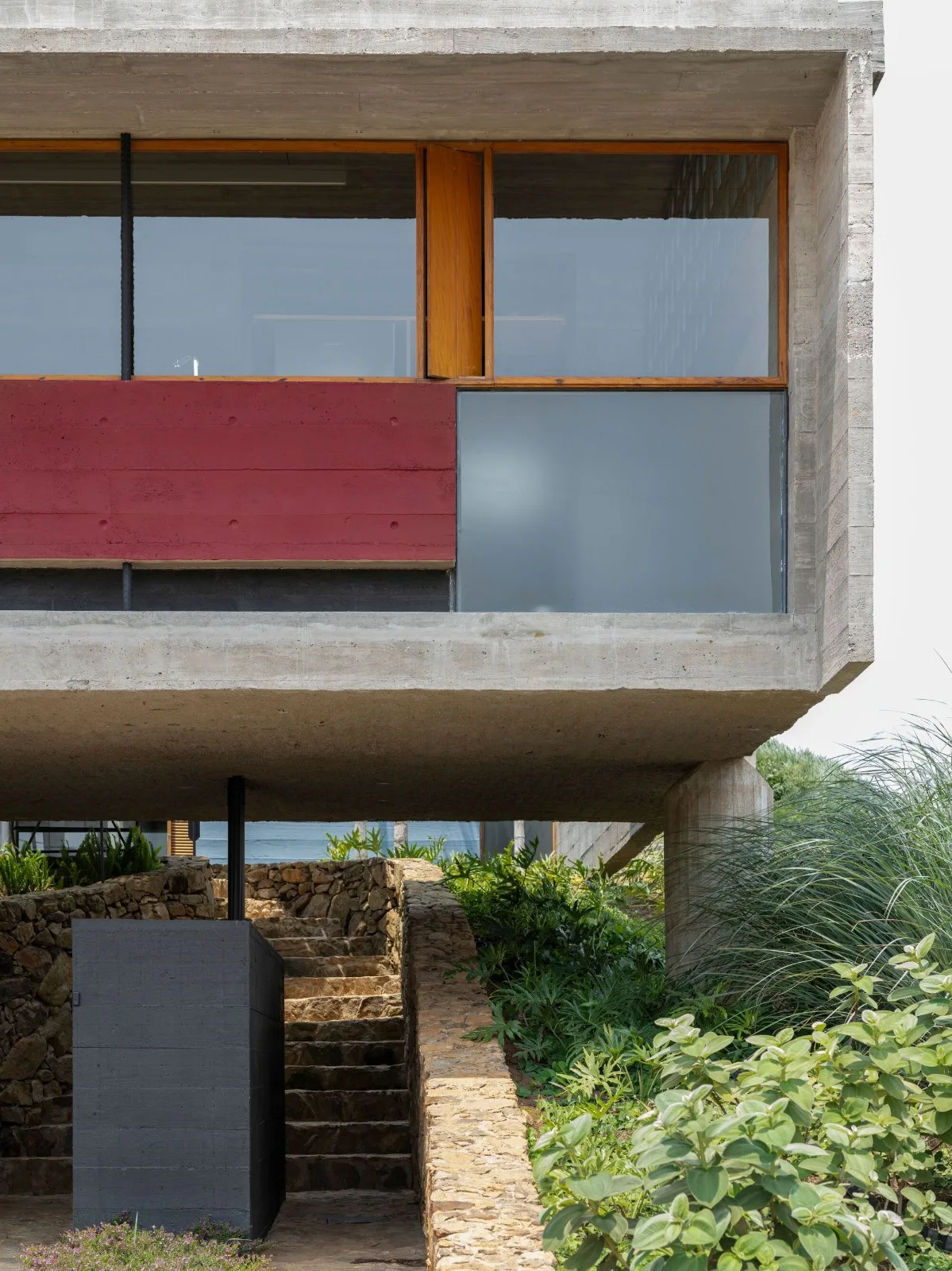
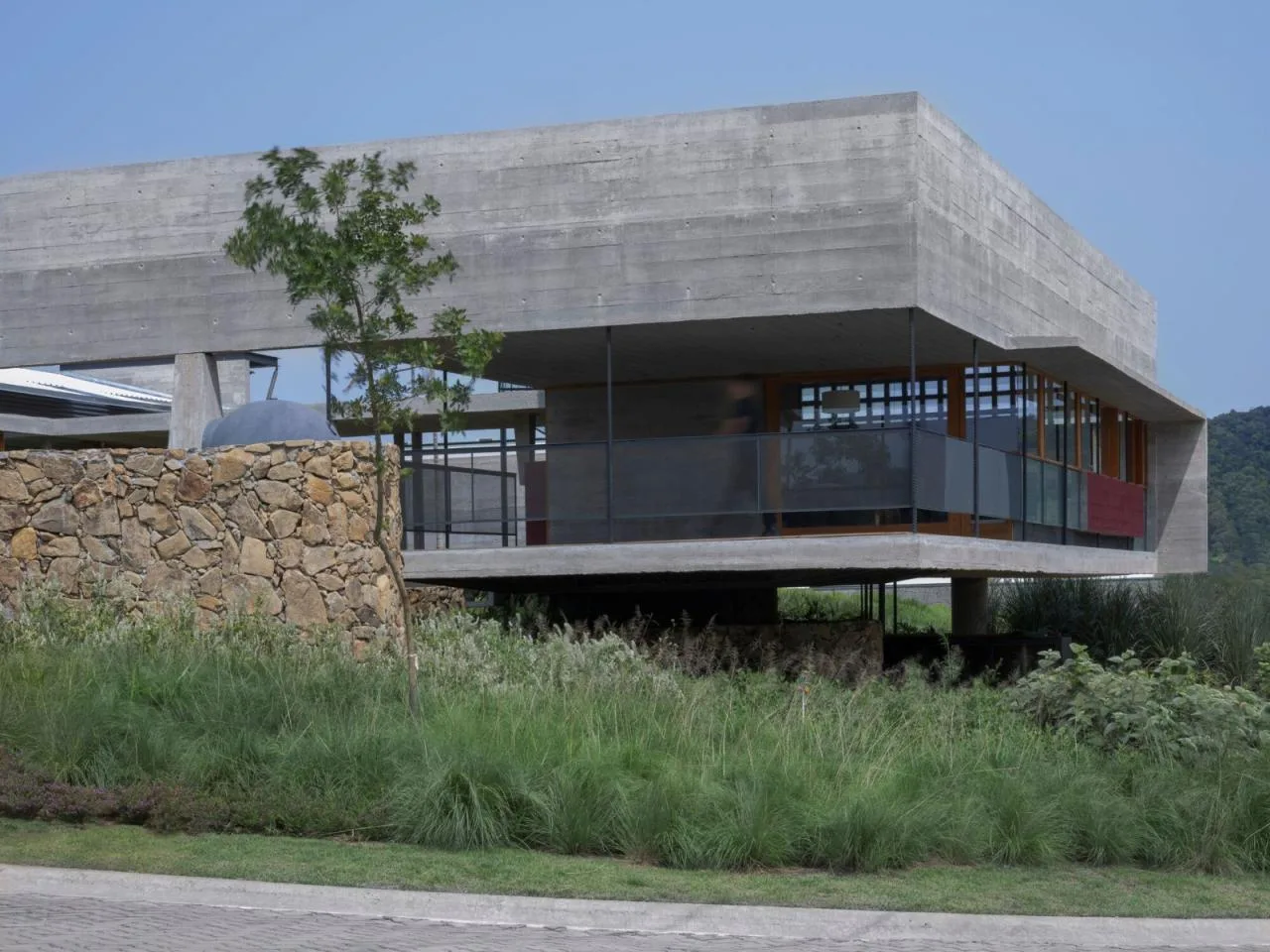
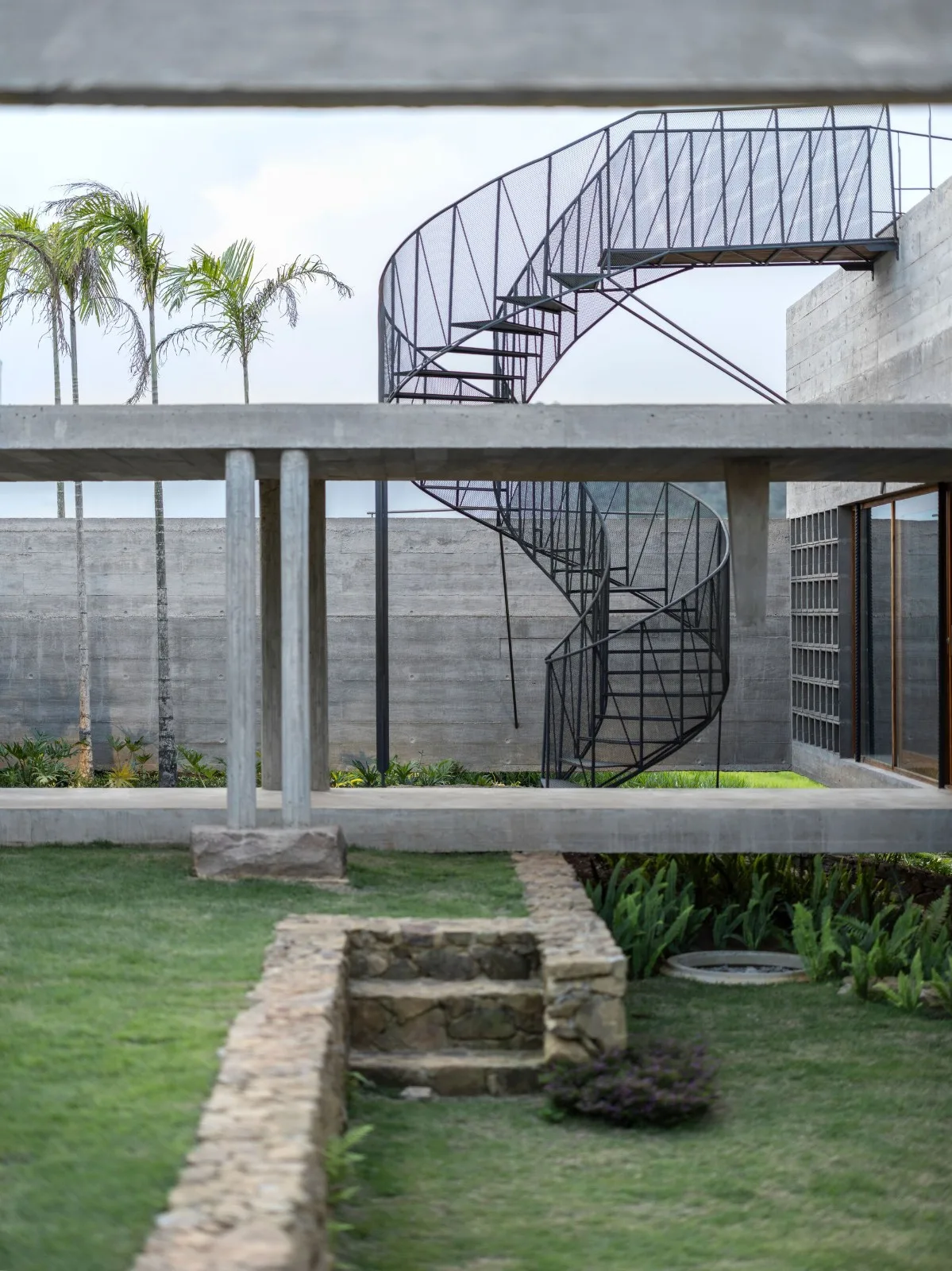
Another significant intervention on the site is the construction of stone structures that organize the central highlands, serving as retaining walls and visual barriers. These stones are designed organically and run continuously throughout the project, providing a natural contrast to the geometric rigidity of the concrete forms.
Underneath the suspended span, the stone structures form the pathway from the street to the main entrance. Initially, two straight, parallel lines gently curve and converge, eventually becoming a staircase that leads up to the courtyard at the rear.
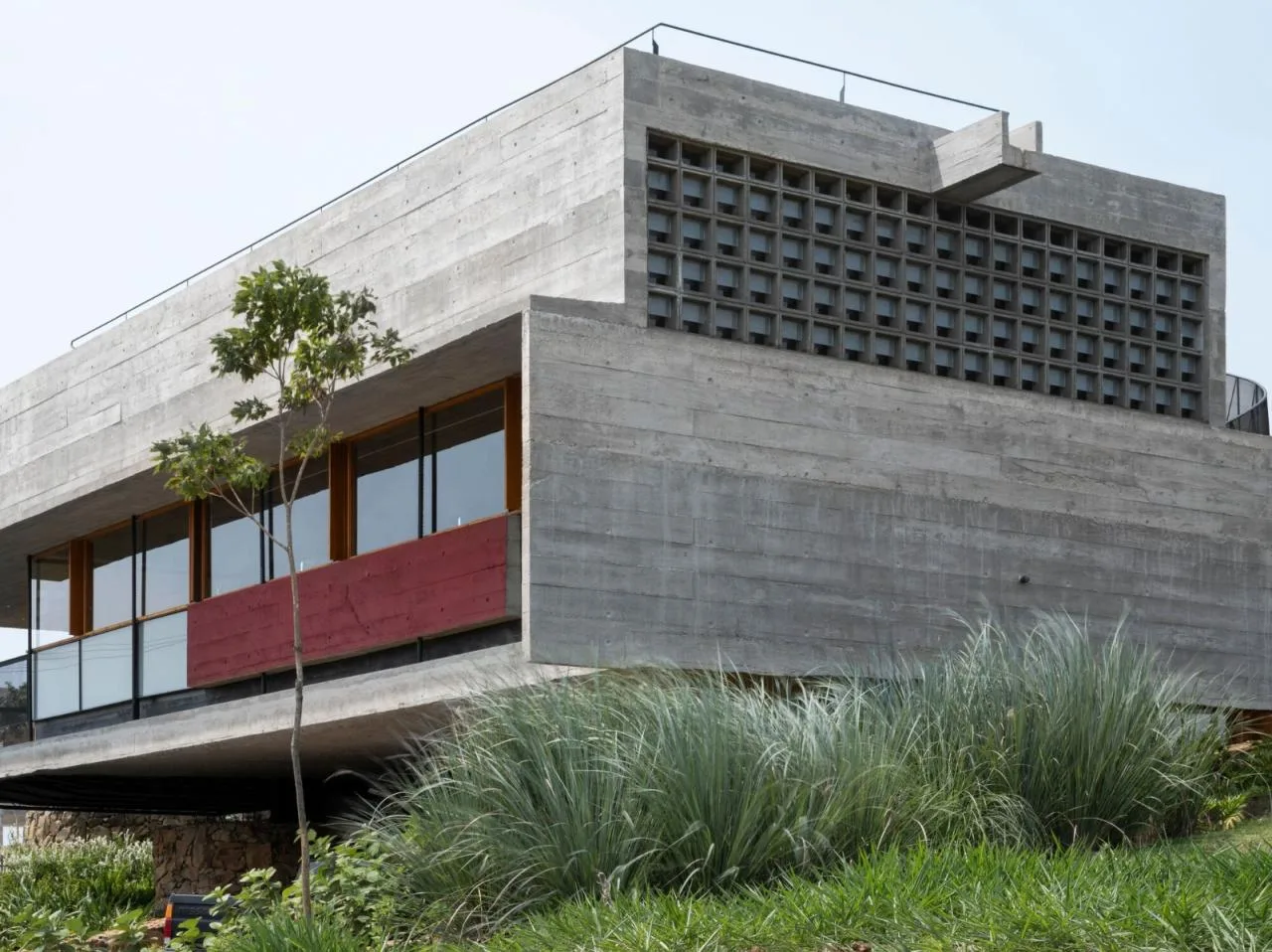
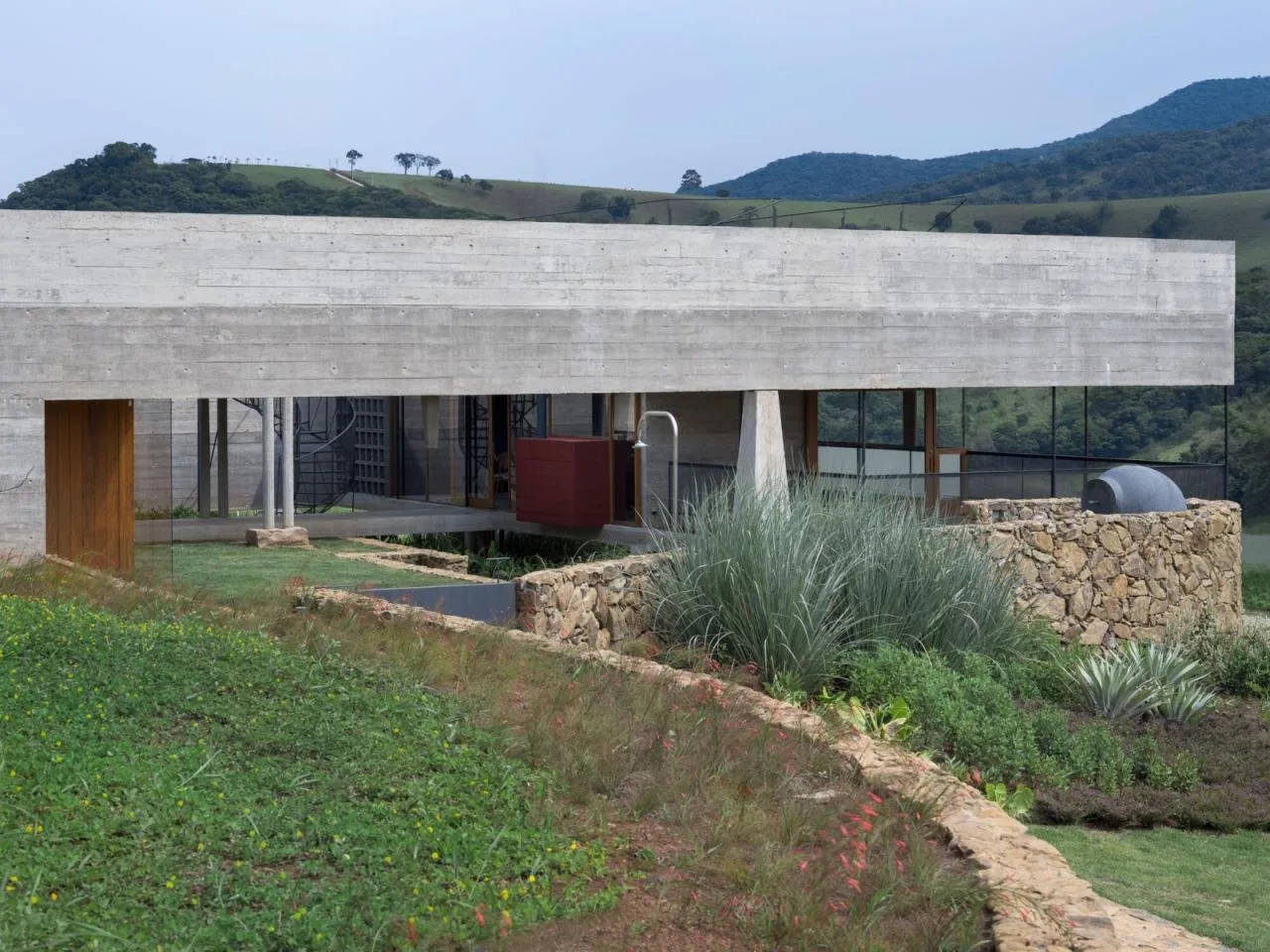
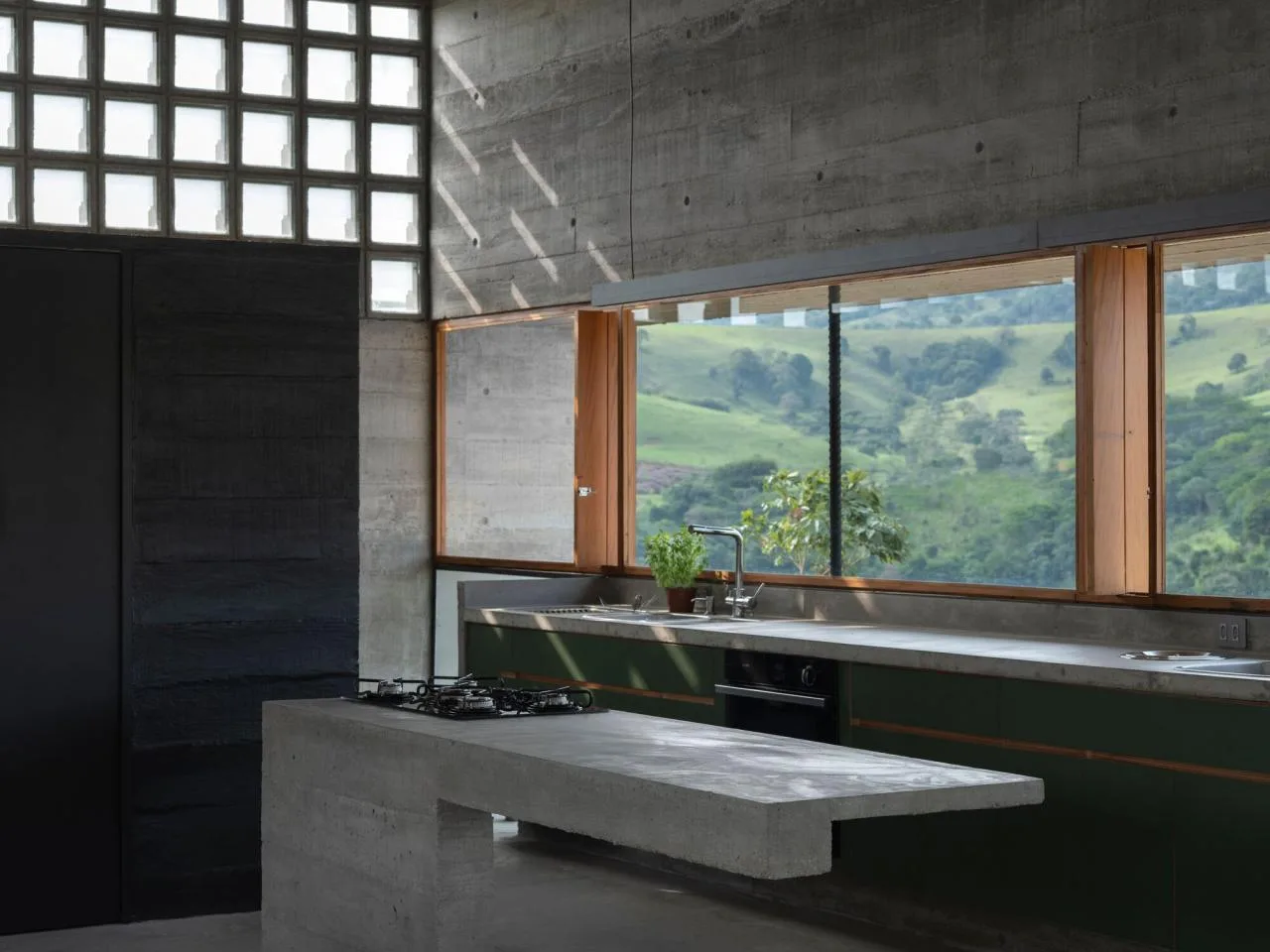
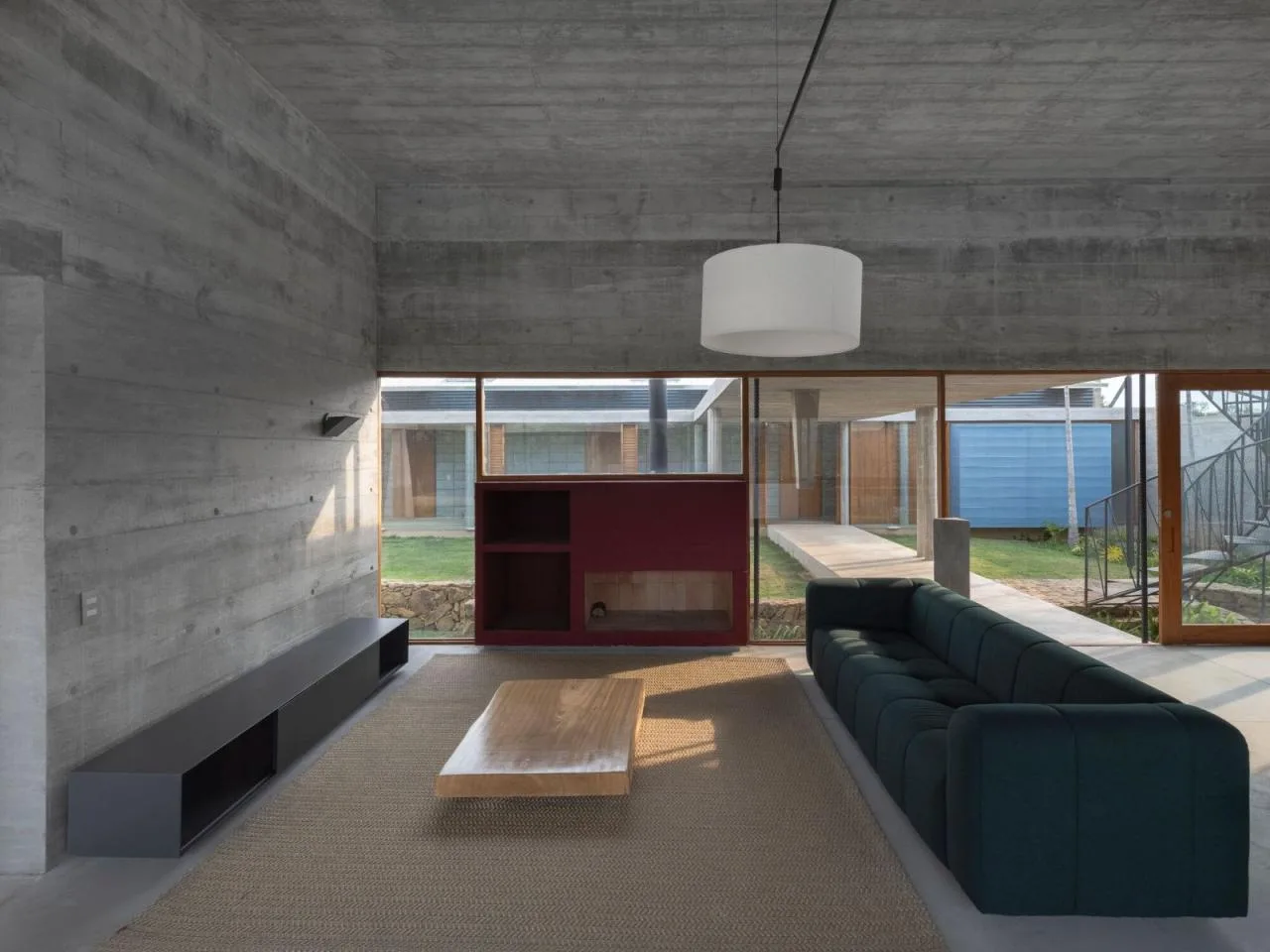
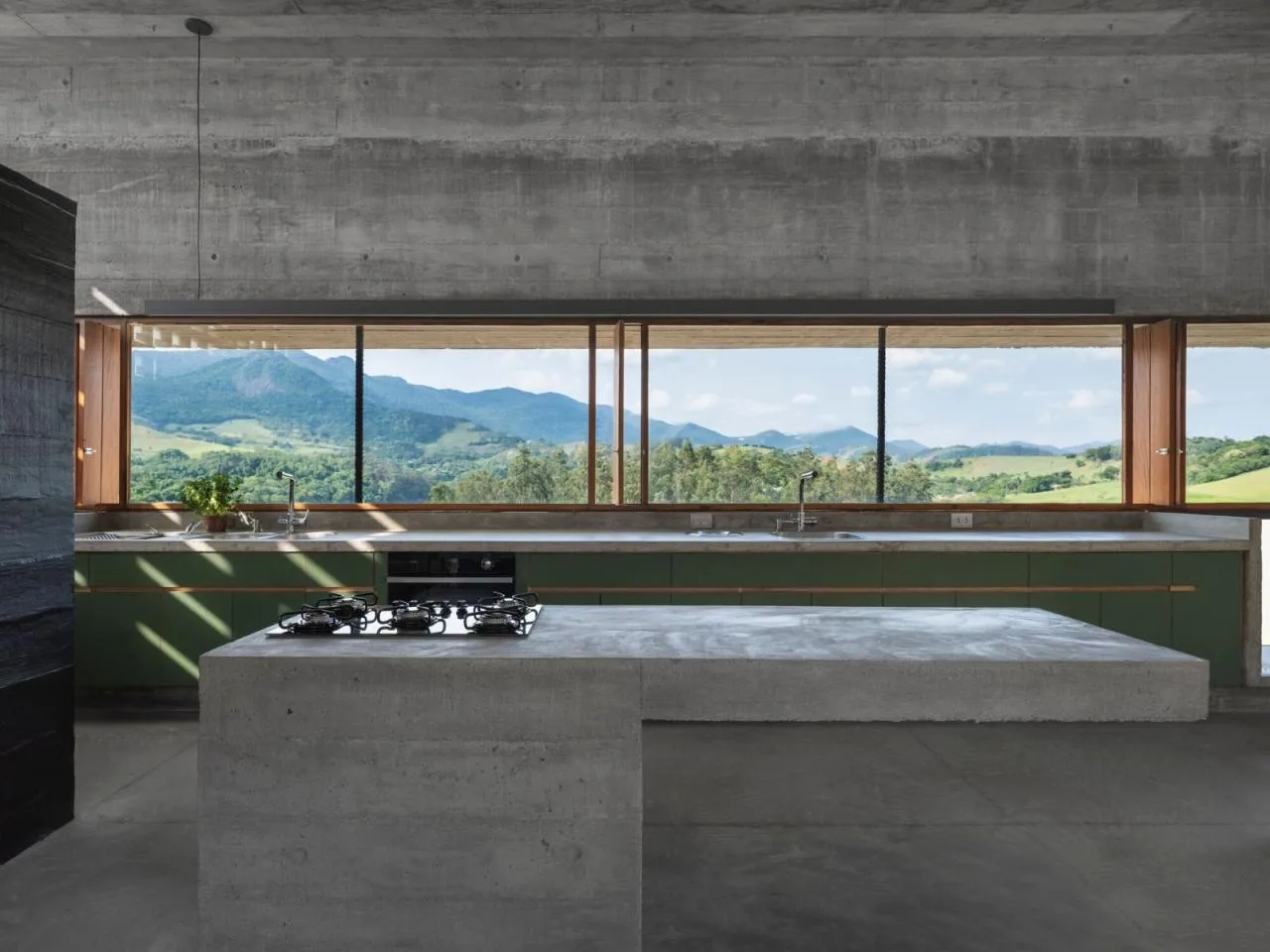
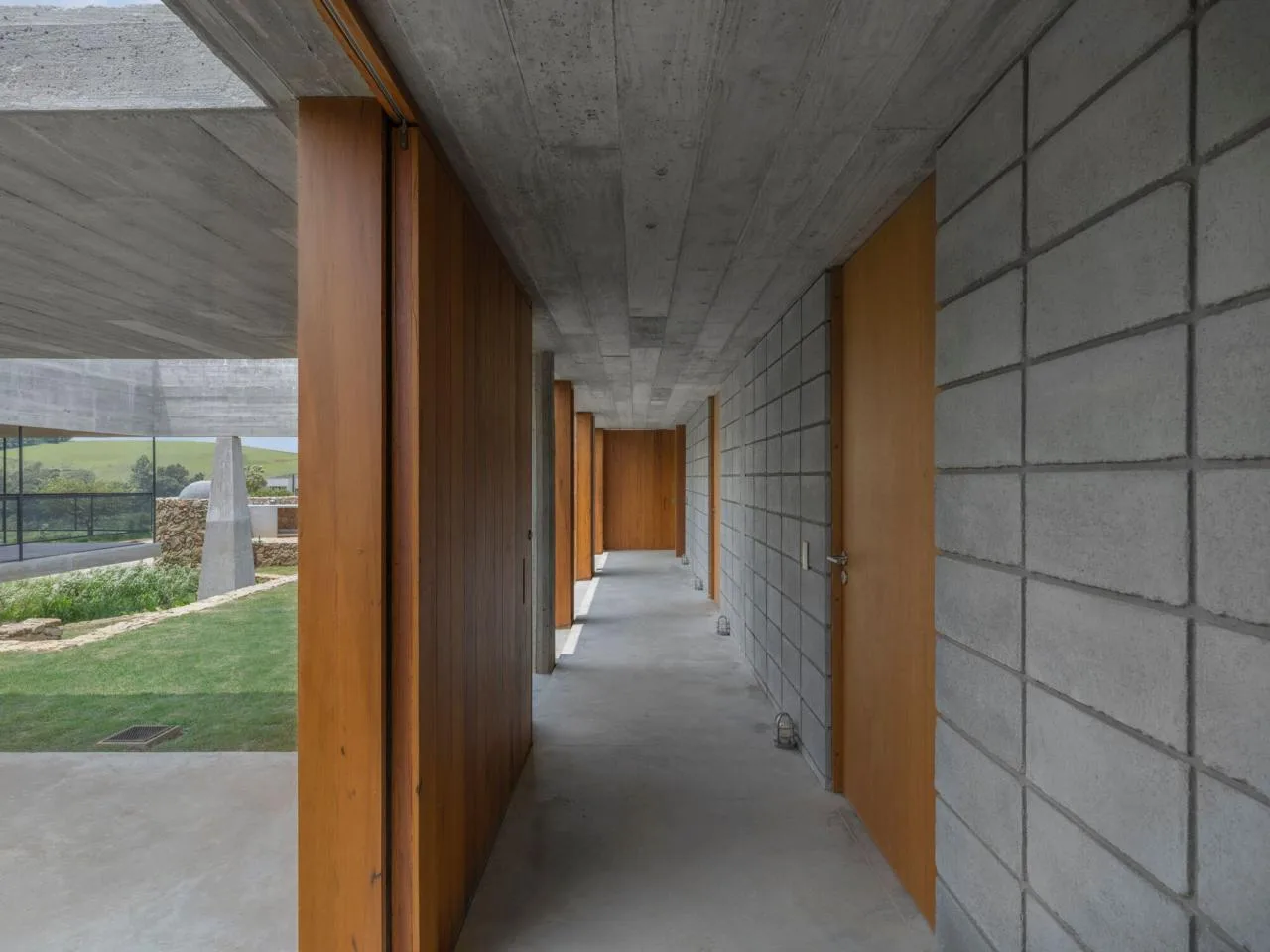
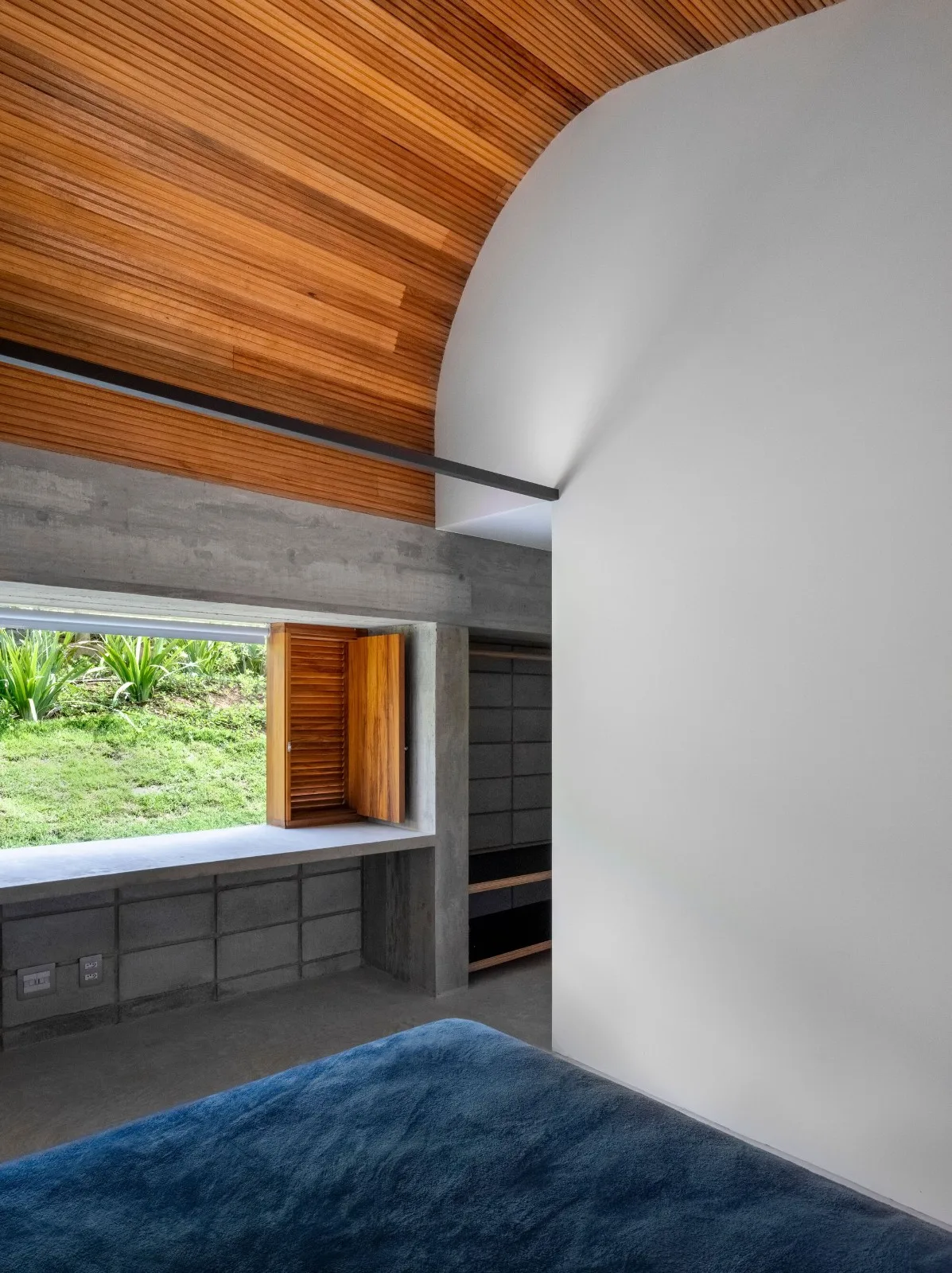
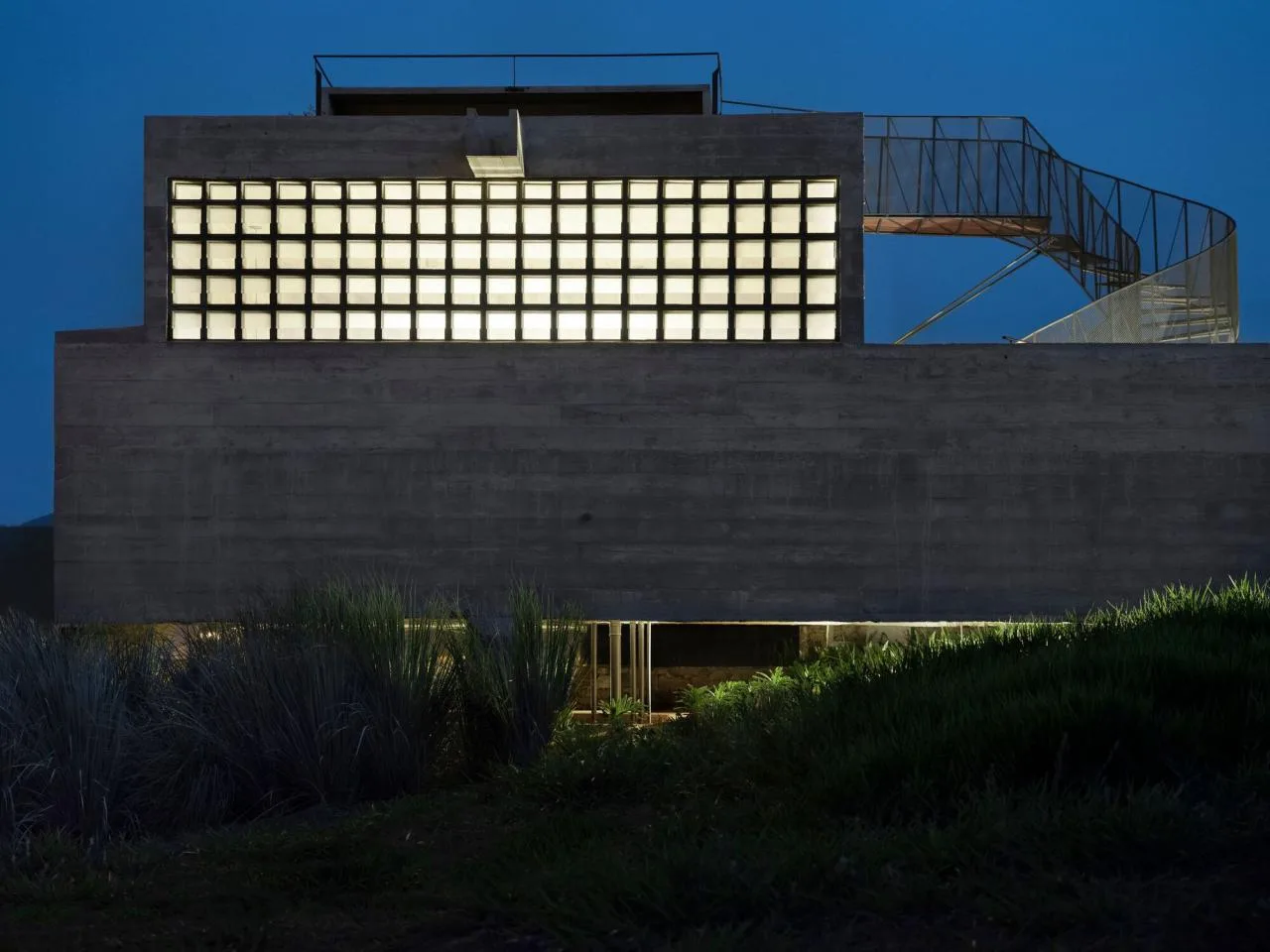
The forward, elevated core houses the social spaces. A continuous opening extends from one end to the other, inviting framed views into the interior and overlooking Mount Pedradukume, which rises above 1700 meters. The balcony, positioned at an open corner on the site’s edge, amplifies this sense of openness and offers direct interaction with the street below.
At the opposite end, a more private bedroom area is located. Although these two cores are spatially separate, they are structurally interconnected. A main beam linking them allows the grounded rear core to support and suspend the front core, functioning much like a lever.
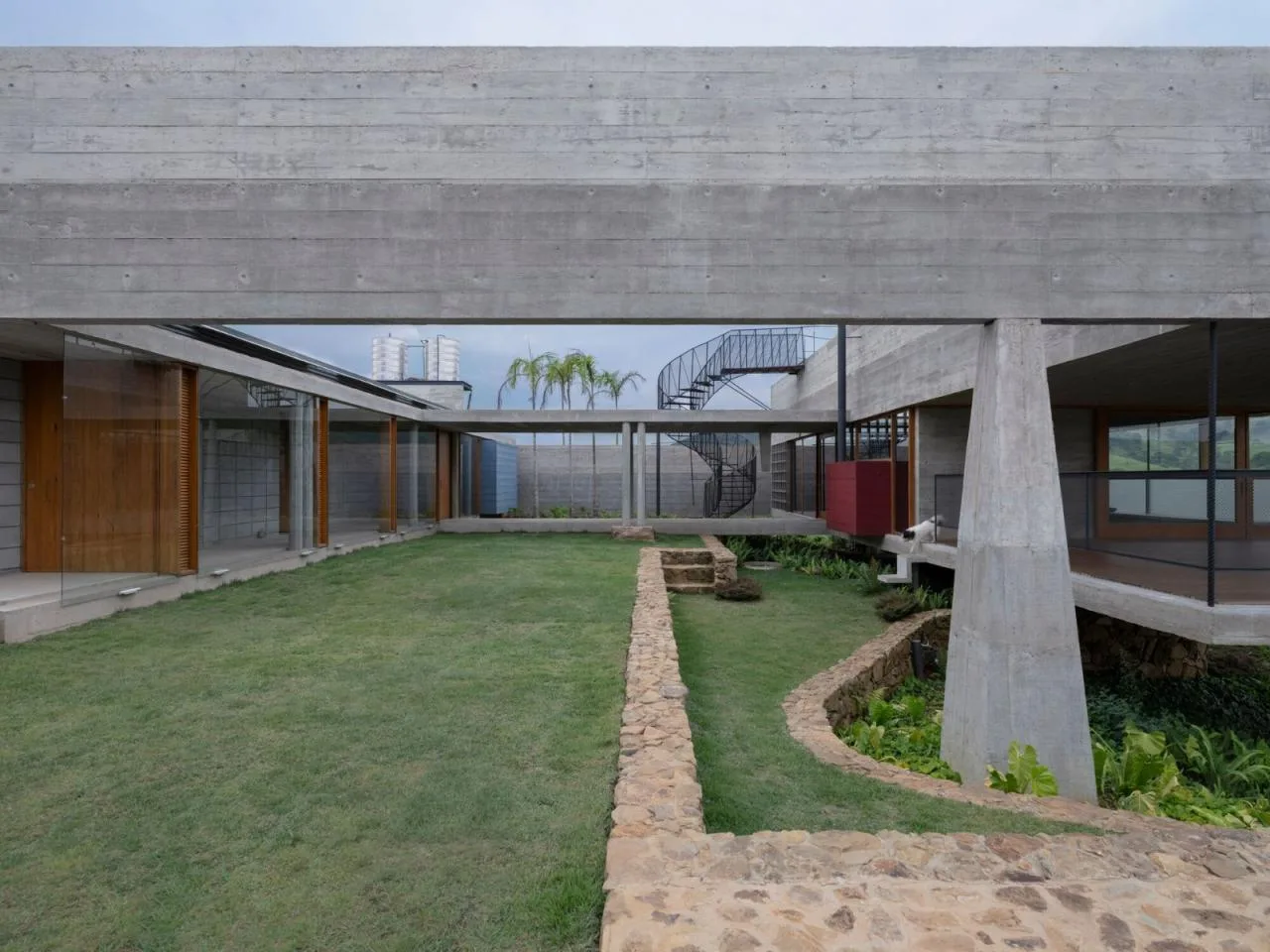
The height of the concrete beam in the front core also relates to an additional space accessed via a spiral staircase. This area includes a garden, sunroom, and swimming pool positioned above the balcony projection.
By placing the weight of the water at the cantilever’s end, the design intentionally breaks structural symmetry. This results in a unique support arrangement that not only strengthens the structure but also maximizes sunlight exposure and panoramic views.
Project Drawings
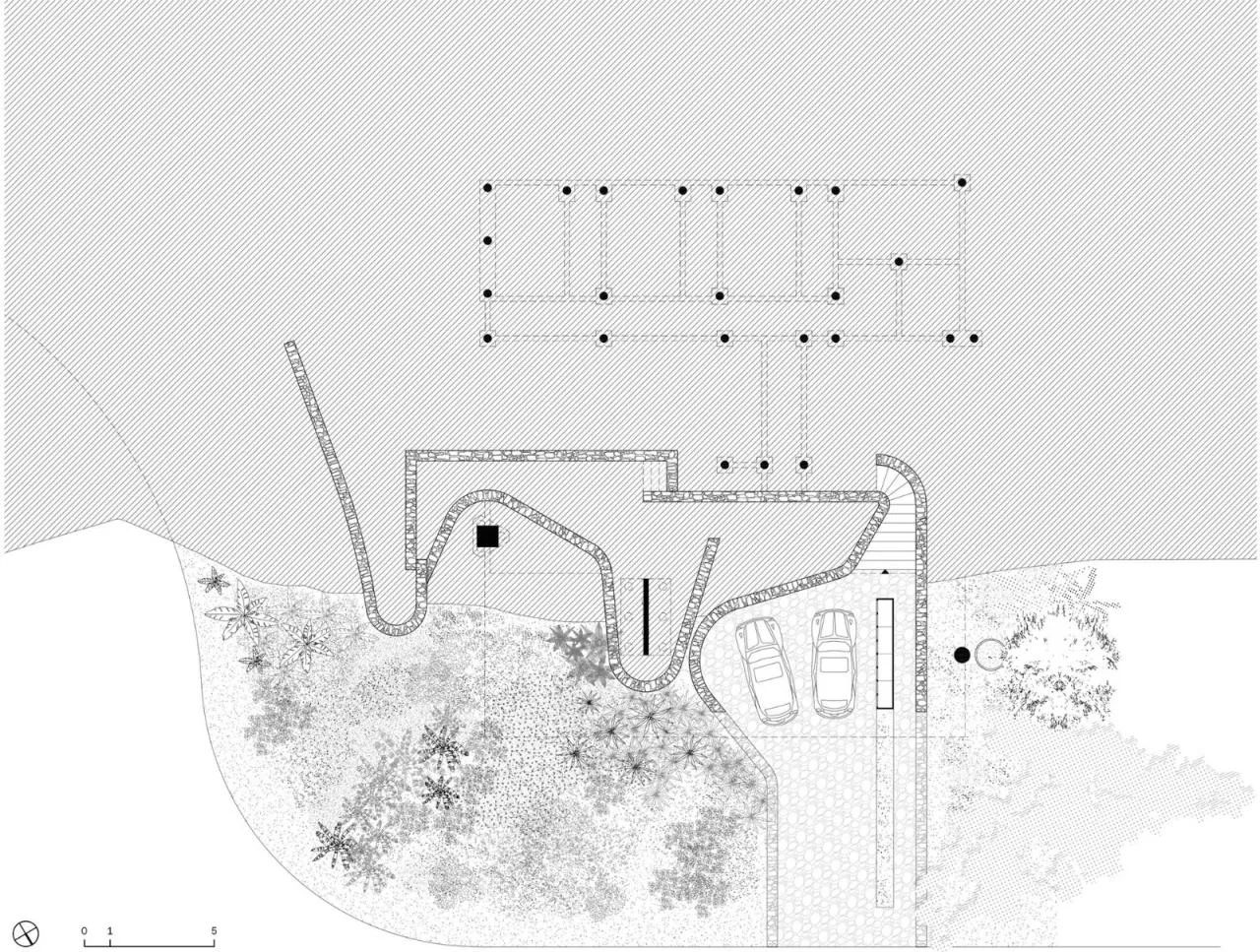
▲ First Floor Plan
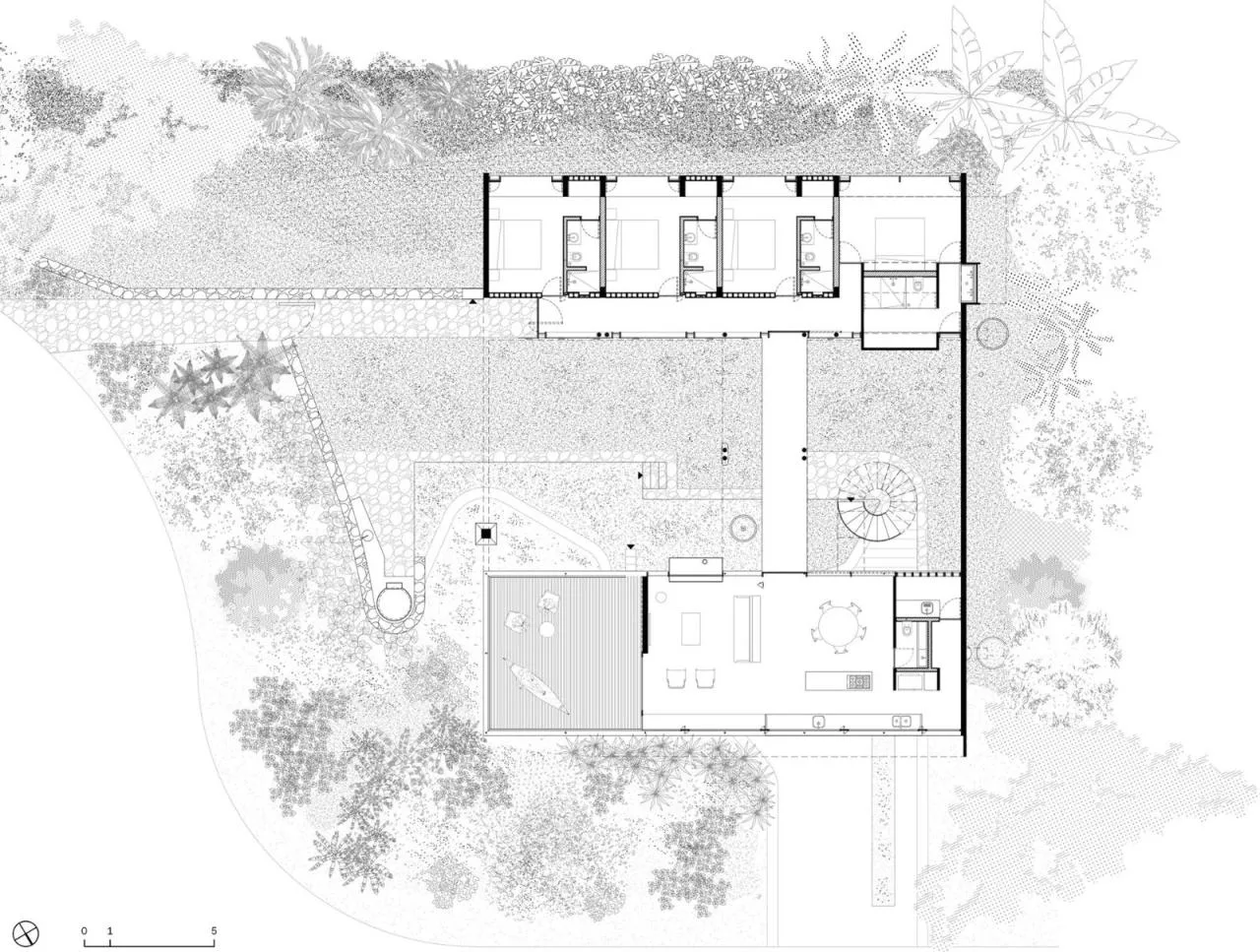
▲ Second Floor Plan
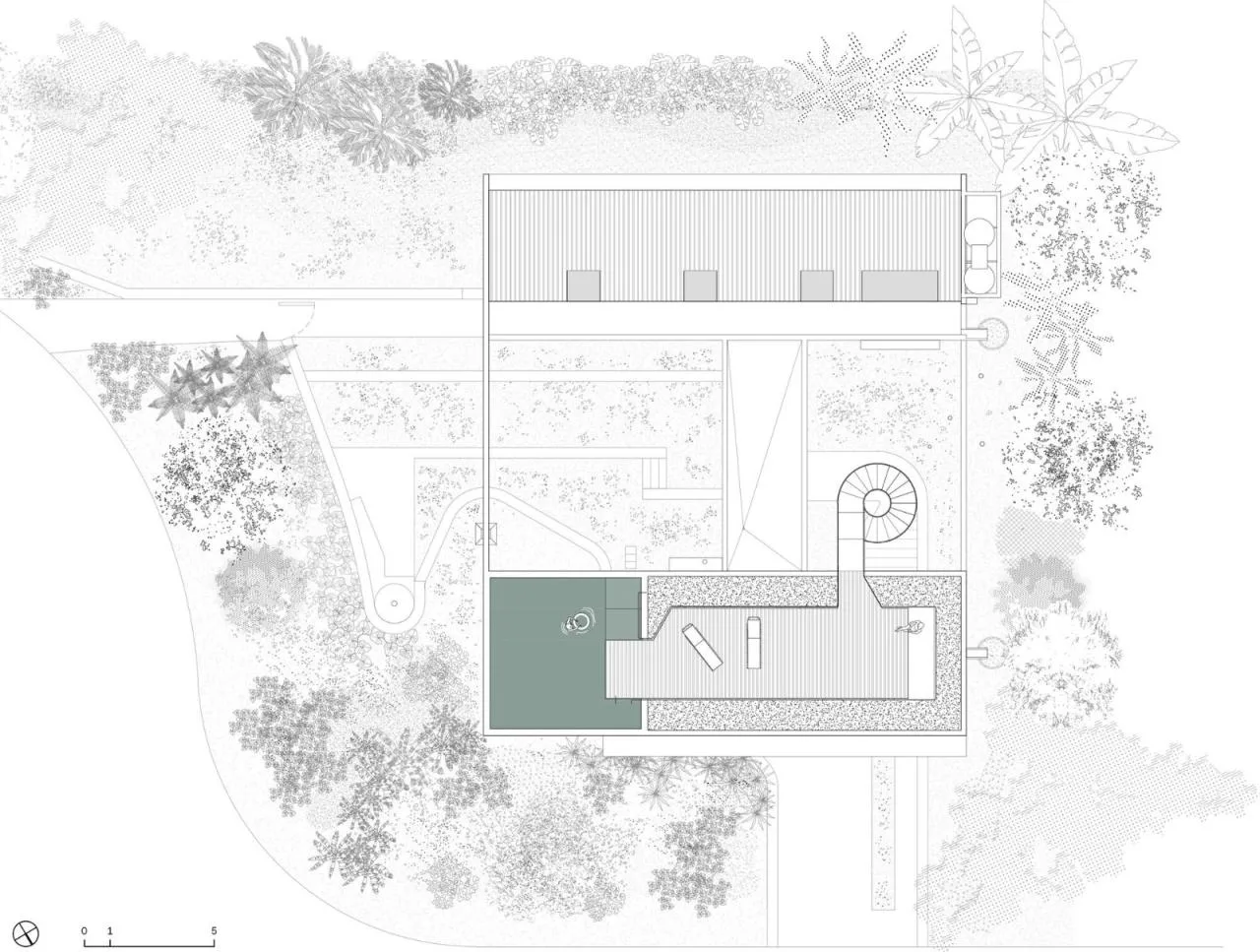
▲ Roof Plan
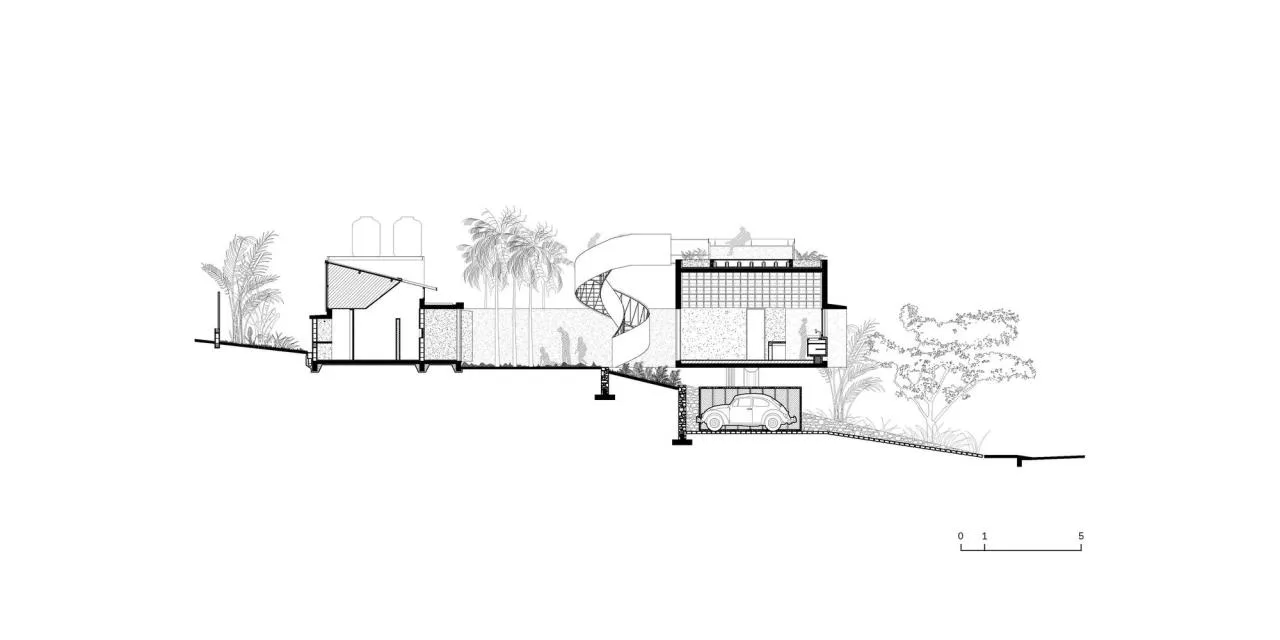
▲ Sectional View
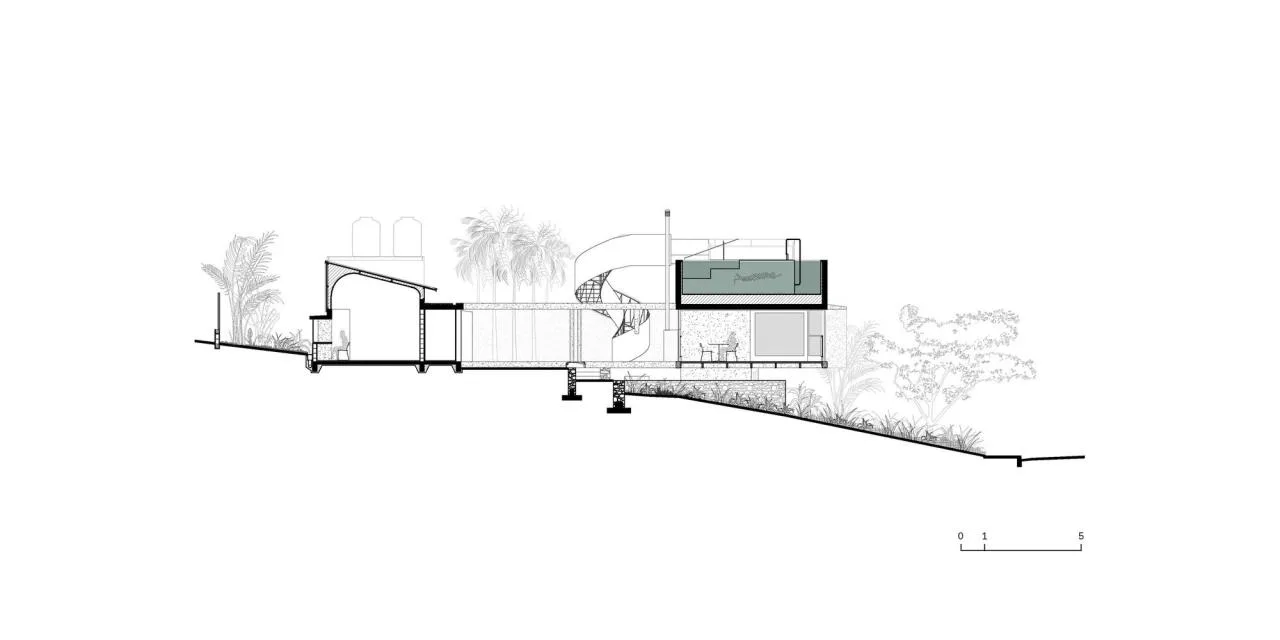
▲ Sectional View
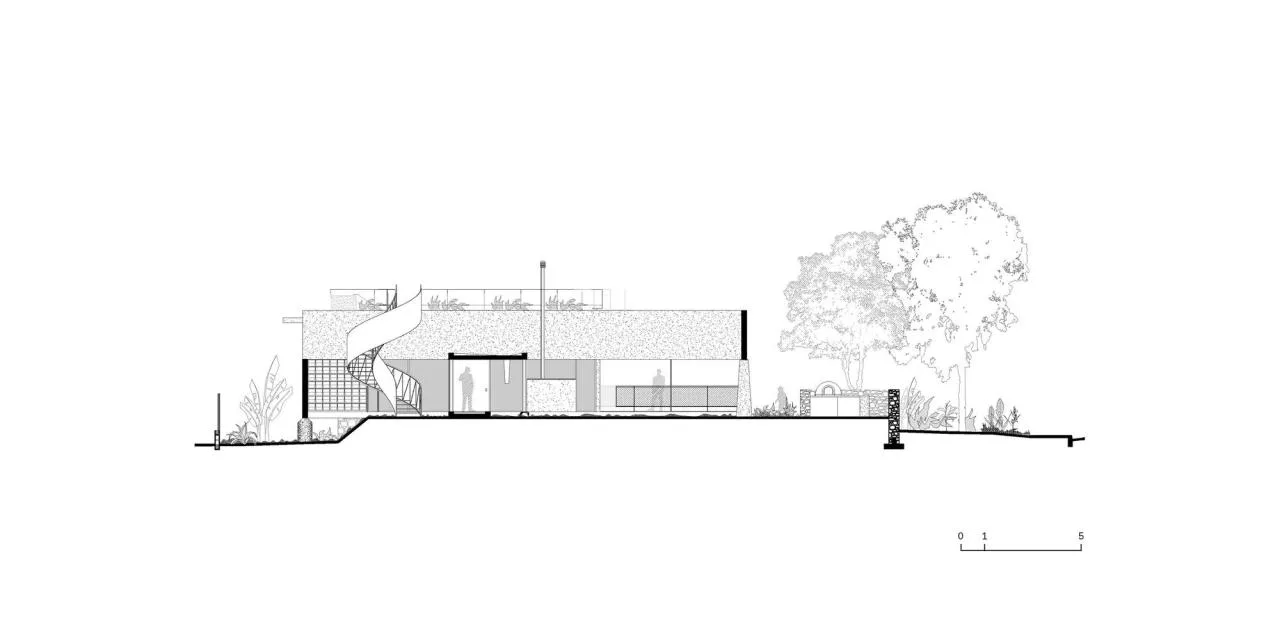
▲ Sectional View
Project Information
Architect: V ã o
Project Year: 2023
Photographer: Marina Lima
Project Directors: Anna Juni, Enk te Winkel, Gustavo Delonero
Lead Architects: Fernanda Carlovich, Luiza Souza
Interns: Luisa Barone, Maria Vizeu
Structural Engineer: ARS Brasil Engenharia
Hydraulic and Electrical Engineering: JPD Projetos de Instalações Elétricas e Hidráulicas
Construction Unit: Reginaldo Francisco Ramos & Reginael Francisco Ramos
Construction Team: Adeiuson Fernandes, Domingos Miranda, Elias Miranda de Sá, Flávio Francisco da Silva, Gilson Caitano, Gilson da Cruz, José Carlos Francisco, Jailton Borges, Juarez Dias da Rocha, Mauri Miranda de Sá, and Rangel Oliveira
Carpentry: Zé Woodworking and Demolitions
Locksmith: Ildeu Cordeiro dos Santos
Glass Manufacturer: Raul Teixeira
Landscape Design: SEIVA Arquitetura e Paisagismo
Location: Juanopolis, Brazil













Must log in before commenting!
Sign Up