
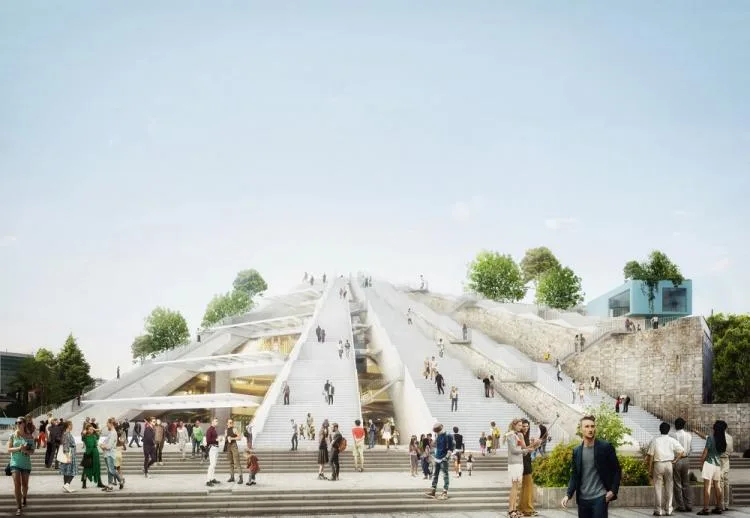
△ Rendering
Construction of MVRDV’s “Tirana Pyramid” project in Albania officially began on February 4, 2021. This initiative aims to revitalize the abandoned communist monument by transforming it into a vibrant cultural hub for the city of Tirana. While preserving the iconic concrete shell, the renovation will open up the atrium and its surroundings, introducing a village-like community featuring cafes, studios, workshops, and classrooms throughout the site.
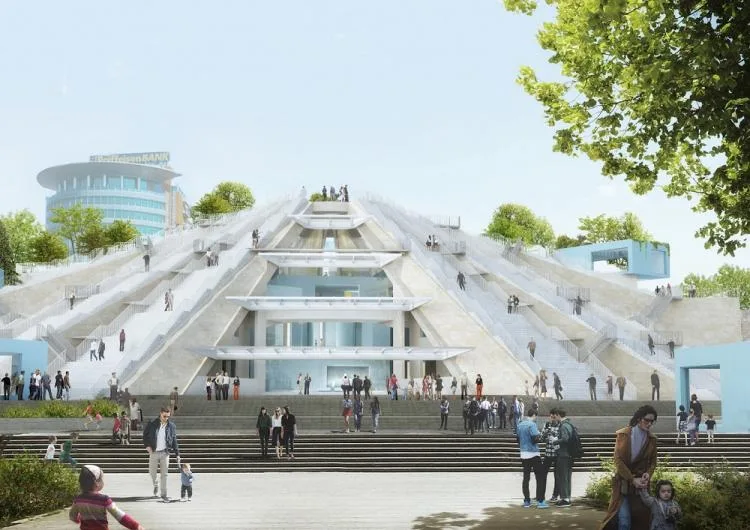
△ Rendering
Located in the heart of Albania’s capital, the Tirana Pyramid spans 11,835 square meters. Originally constructed as a museum to honor Enver Hoxha, the building has served various roles over time—including a NATO base during the Kosovo War, as well as a nightclub and event venue.
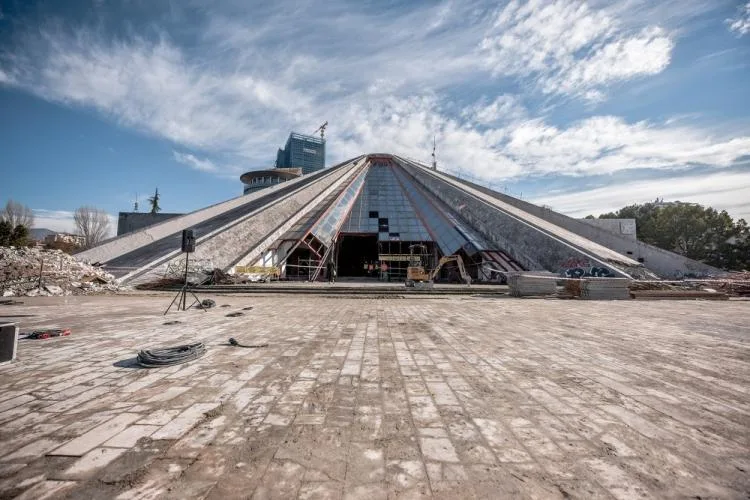
△ Construction process
As the building deteriorated, local youth transformed the site into a canvas for graffiti and a community gathering spot. MVRDV’s design will revitalize this significant structure by fully opening up its interior and removing previous additions, revealing the dynamic potential of the original space.
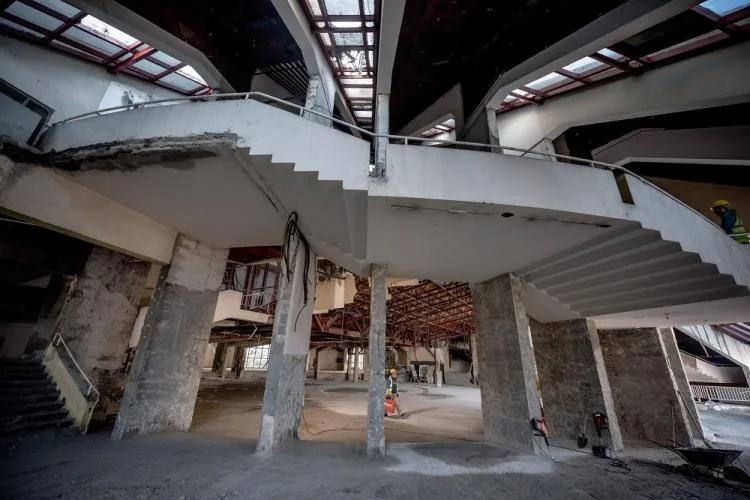
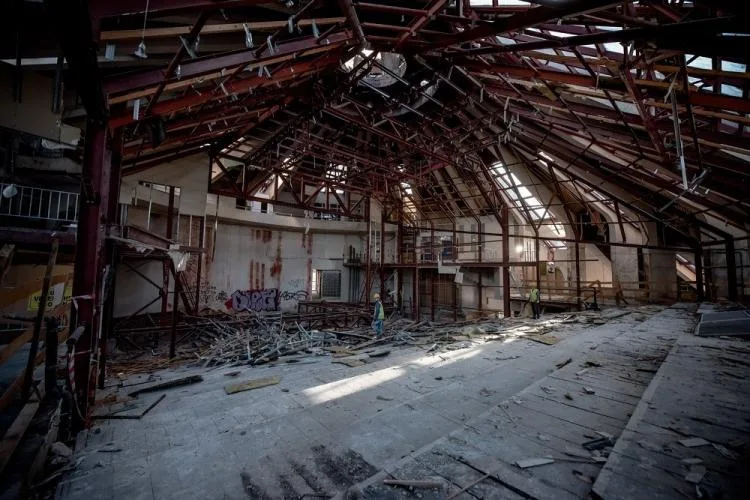
△ Construction process
The renovation includes installing independent modular units inside, on top of, and around the existing structure, creating a village settlement composed of classrooms, studios, cafes, and restaurants. The pyramid is set to become a new cultural center and a hub for Tirana’s youth. The project is primarily overseen by the non-profit educational organization TUMOTiran, which will offer free extracurricular programs focused on new technologies such as software development, robotics, animation, music, and film.
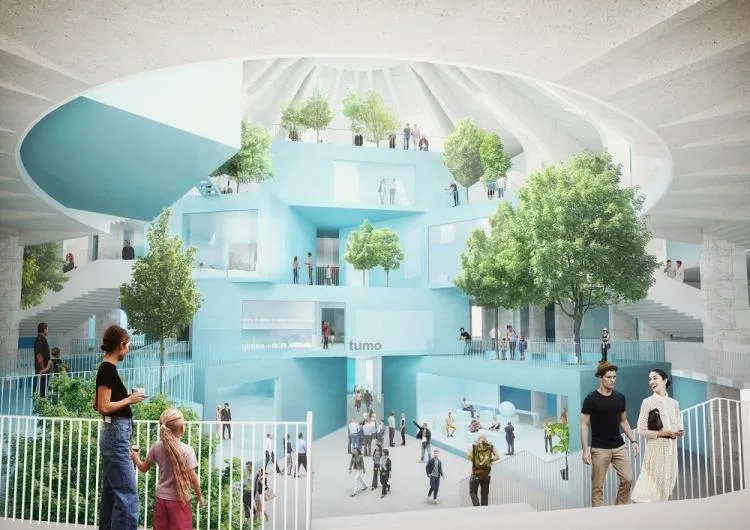
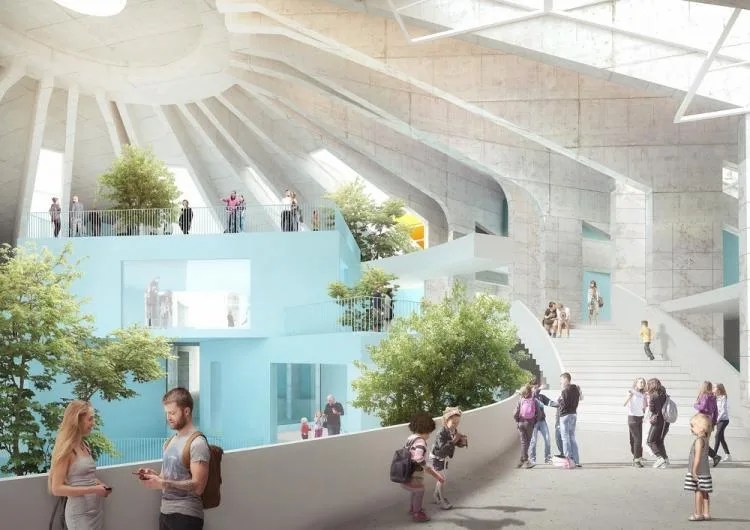
△ Interior spaces
“Working on a brutalist monument like the pyramid is an architect’s dream. It’s fascinating to witness how Albania is embracing the future of architecture. This building represents a complex chapter of the country’s history, yet parts of it have already been reclaimed by the people of Tirana. I immediately saw its unlimited potential—not as a ruin to be demolished, but as a ‘monument for the people.’ The greatest challenge is to create new connections between the architecture and its surroundings. I believe our design achieves this. I look forward to seeing young people—and even elders—climb onto the rooftops for the first time.”
——Winy Maas, Founding Partner of MVRDV
Focusing on social sustainability, the educational modules will be equipped with air conditioning to minimize energy use, while the majority of the project remains open to the surrounding environment for most of the year. To meet the United Nations’ sustainable development goals, the project avoids demolishing the structural concrete shell, instead adapting it with existing materials following circular economy principles. For example, the original stone bricks from the facade will be recycled as aggregate in new concrete for the external steps.
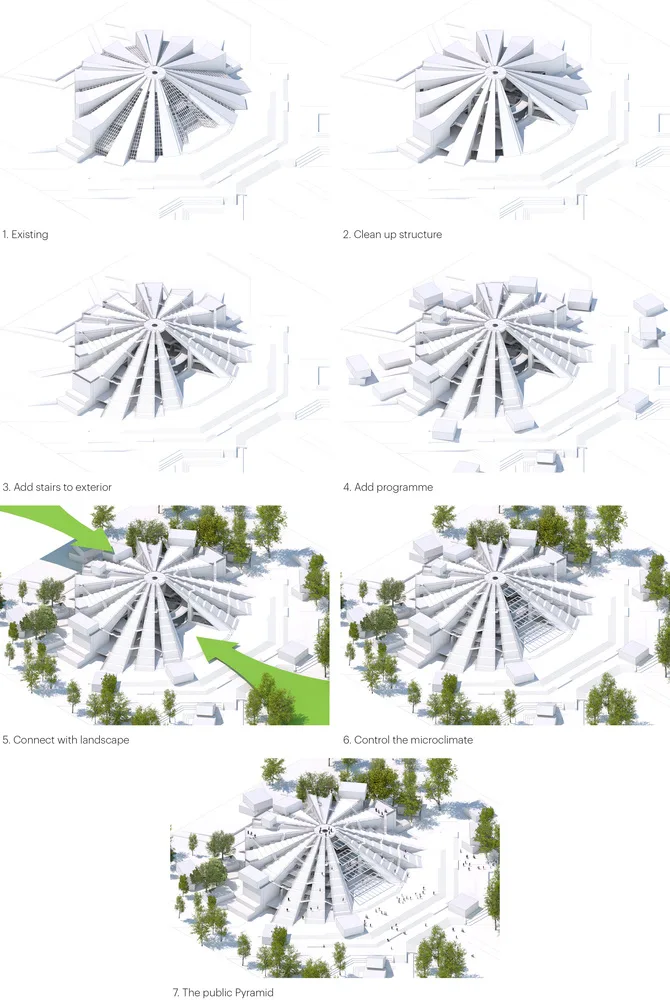
△ Analysis diagram
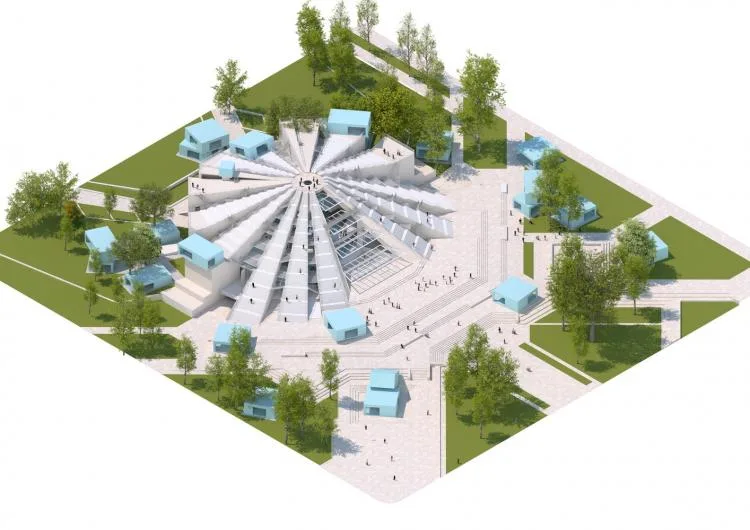
△ Aerial view
The slanted concrete beams will be reinforced to preserve the spaces initially used by Tirana’s residents. Safe access to the pyramid’s summit will be provided, with the steps also serving as seating for sightseeing and temporary events. This will restore the pyramid and surrounding squares as a lively cultural focal point in Tirana.
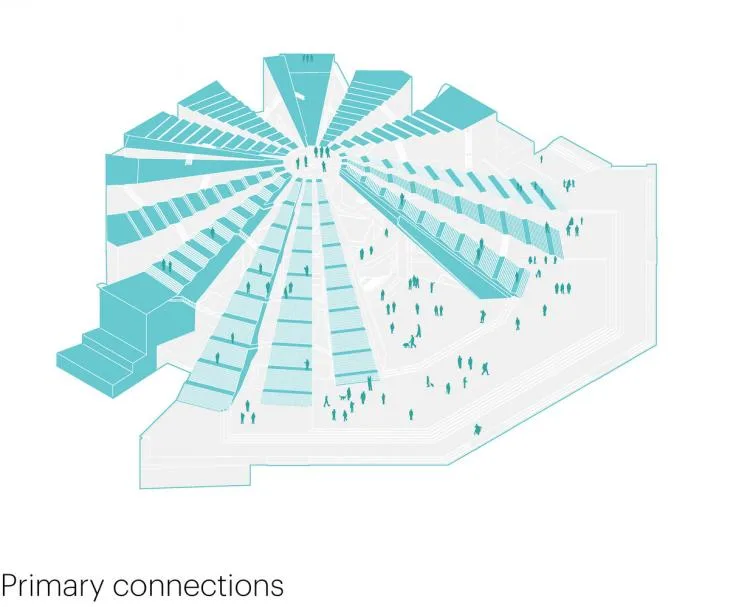
△ Analysis diagram
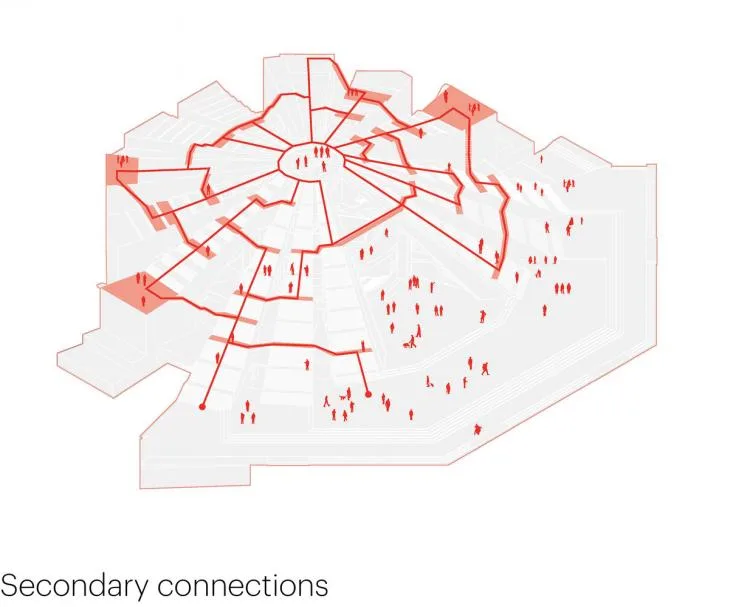
△ Analysis diagram
The transformation of the Tirana Pyramid exemplifies how architecture can evolve to meet contemporary needs while honoring its complex past. It also proves that traditional brutalist architecture offers a promising foundation for adaptive reuse.
——MVRDV
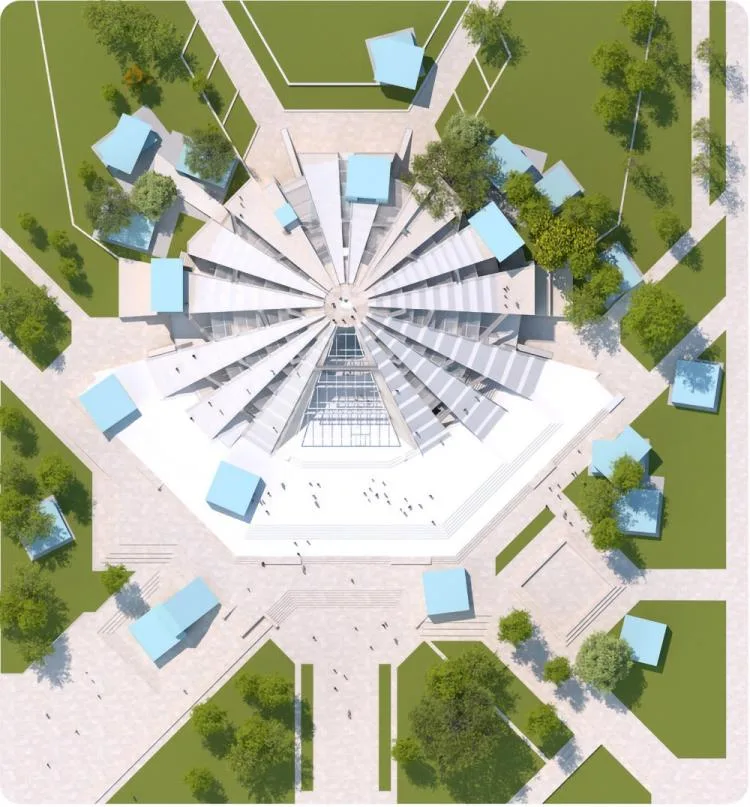
△ Top view
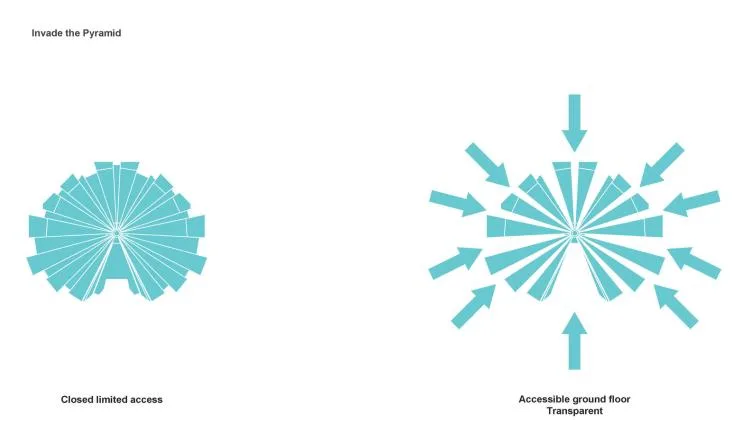
△ Analysis diagram
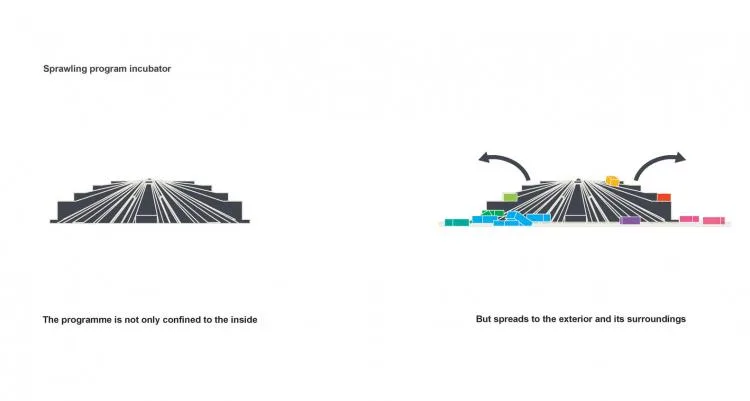
△ Analysis diagram












Must log in before commenting!
Sign Up