
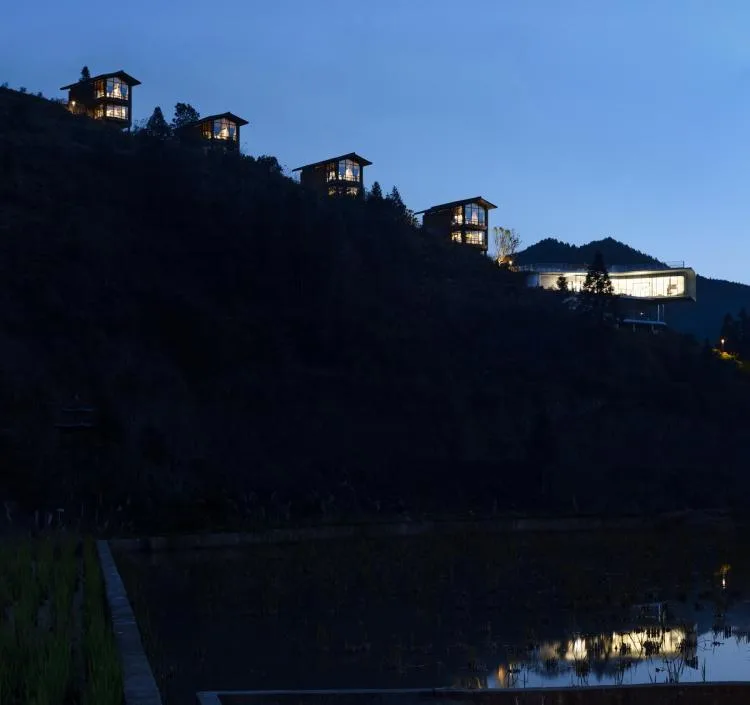
△ Photography: Existence of Architecture – Architectural Photography
Protecting traditional villages is essential for their sustainable development, and development itself is the true form of protection. We aim to set a model for renovating Miao village dwellings amidst evolving construction systems and building materials, striving for a balance between modern living needs and harmonious architectural style. Simultaneously, we seek to harness external resources to explore cultural heritage, revive craftsmanship, introduce industries, and build platforms for Longtang. This approach will help the village regain its intrinsic vitality, ensuring it thrives sustainably even after external support recedes, achieving genuine and lasting poverty alleviation.
— Meng Fanhao
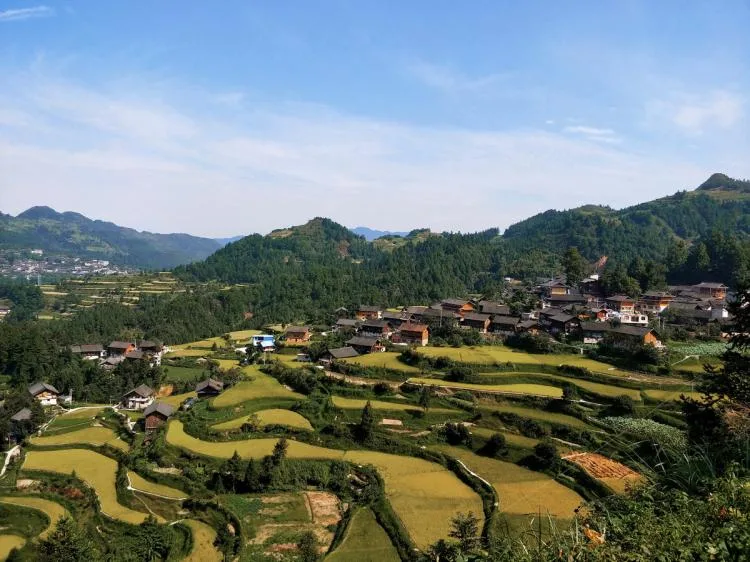
△ Terraced fields in Longtang Miao Village
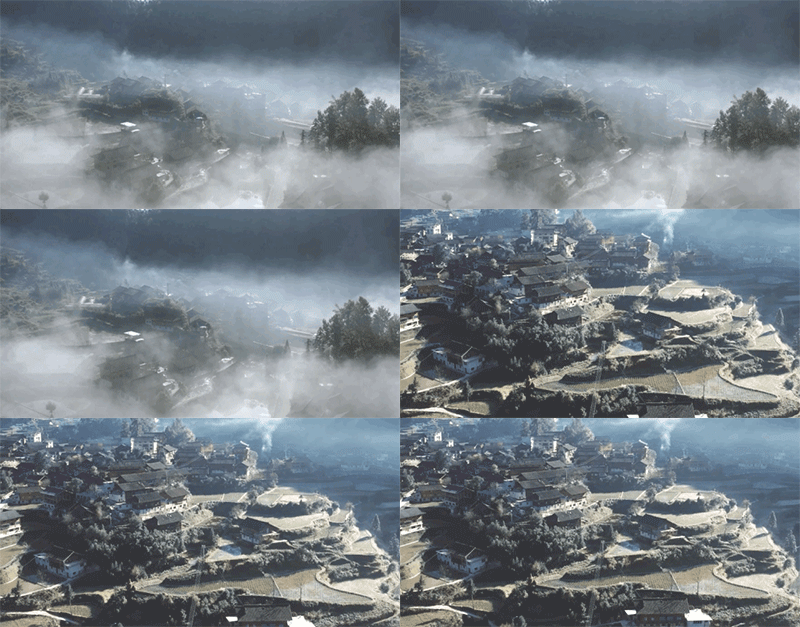
The Dragon Pond, veiled in clouds and mist
Longtang Village, located in Leishan County, Qiandongnan, Guizhou, is renowned for its terraced tea forests cloaked in mist and its traditional wooden stilt houses perched along cliffs. The humble Miao people have lived here for generations, embracing a simple and natural way of life. Despite being listed among China’s traditional villages, Longtang has experienced decline due to a fragile industrial base and population loss.
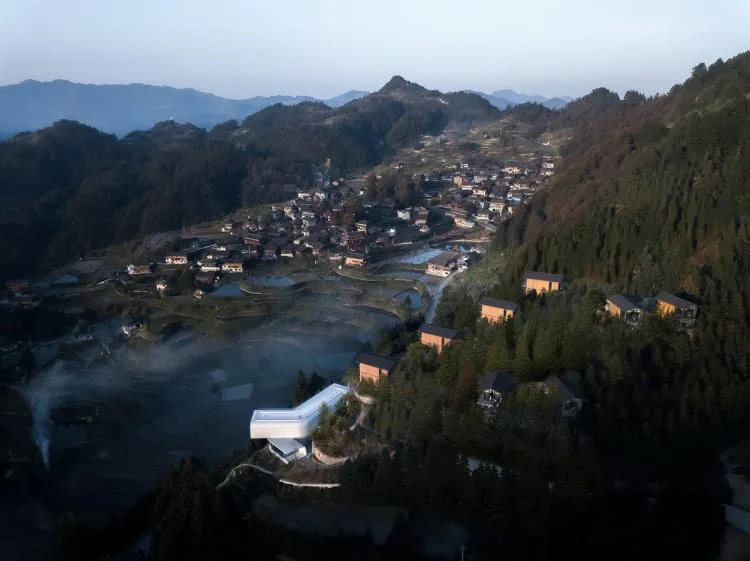
△ Photography: Existence of Architecture – Architectural Photography
In November 2013, China introduced the critical strategy of “targeted poverty alleviation,” which has since guided ongoing efforts nationwide. The Longtang Mountain House project in Miaozhai, Guizhou, marks Rongchuang’s inaugural participation in rural revitalization and poverty alleviation initiatives. Leveraging Line+’s extensive rural revitalization experience, Rongchuang China and the Youcheng Foundation of the State Council Poverty Alleviation Office jointly commissioned Line+ to deeply engage with Longtang and reimagine the village.
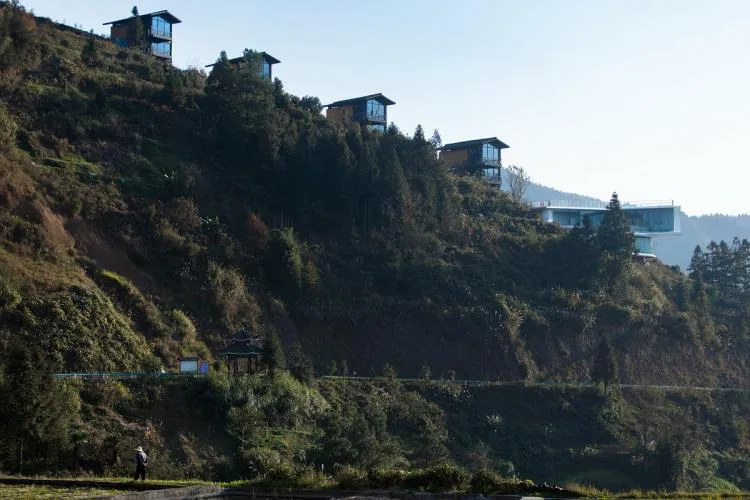
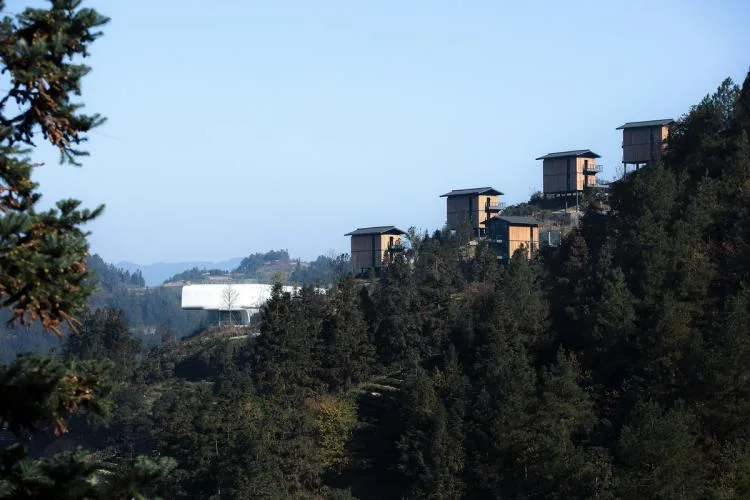
The project covers 2,400 square meters, including 1,650 square meters of new construction and 750 square meters of renovation. The new build features eight individual guest rooms, restaurants, cliffside theaters, infinity pools, and other public areas, alongside hiking trail development and partial landscape restoration. These efforts aim to invigorate village life and production, fostering sustainable growth in cultural tourism.
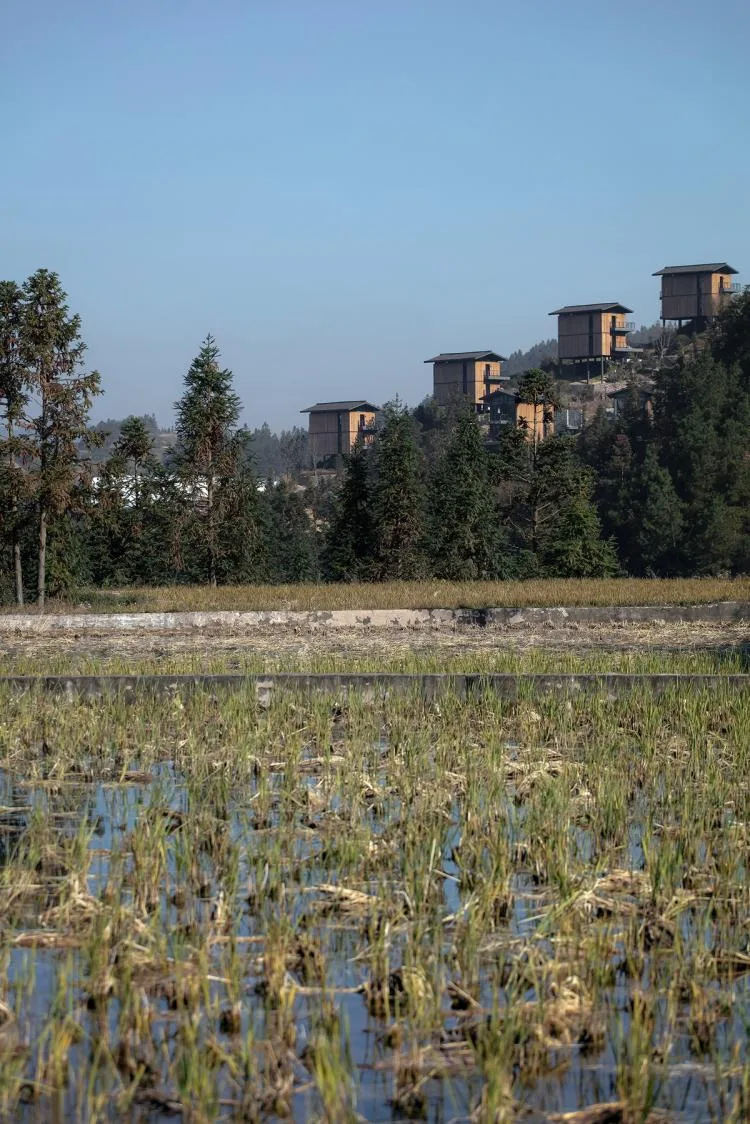
△ Photography: Existence of Architecture – Architectural Photography
01
Addressing the evolving needs of traditional rural life
During their research in Longtang, the Line+ team encountered a widespread challenge in traditional villages: spontaneous renovations by villagers. Many have replaced traditional features with aluminum alloy doors and windows to better withstand the climate. Elevated storage areas originally meant for agricultural tools have been expanded using modern materials like cement and bricks to create living spaces and bathrooms. The village secretary noted, “With the new road, basic modern building materials have become easily accessible. Villagers are renovating their homes, but some experts say these changes are destructive.”
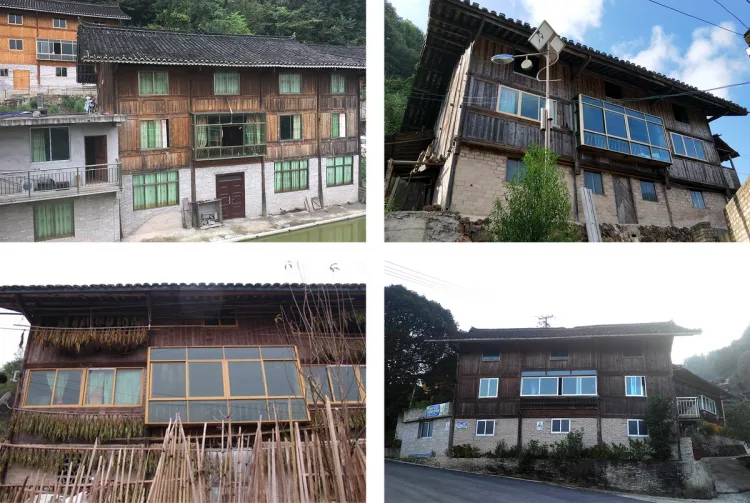
△ Villagers’ self-renovated houses before design intervention © gad·line+studio
While these renovations disrupt traditional architectural styles, they reflect villagers’ genuine needs. The traditional agricultural lifestyle, combining production and residence in local wooden stilt houses, no longer meets modern demands for comfort and convenience.
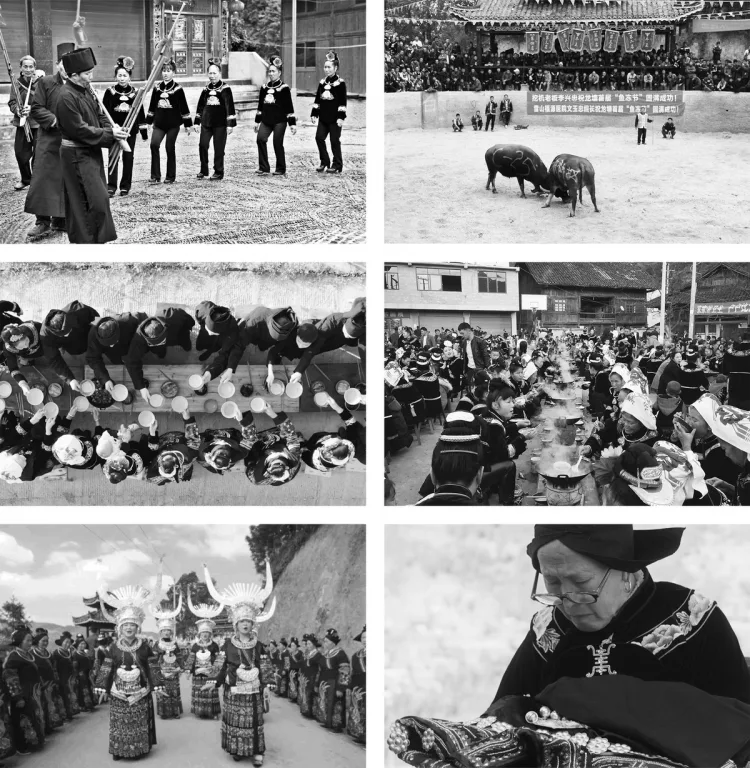
Life in Miao Village
The project seeks to blend traditional dwellings with modern living requirements, combining traditional styles with new industrial materials, and revitalizing traditional craftsmanship alongside emerging industries. This approach balances the pastoral ideal with practical development needs, all within a constrained budget—a significant design challenge. Line+ embraces these complexities, responding architecturally to the decline of this traditional Miao village.
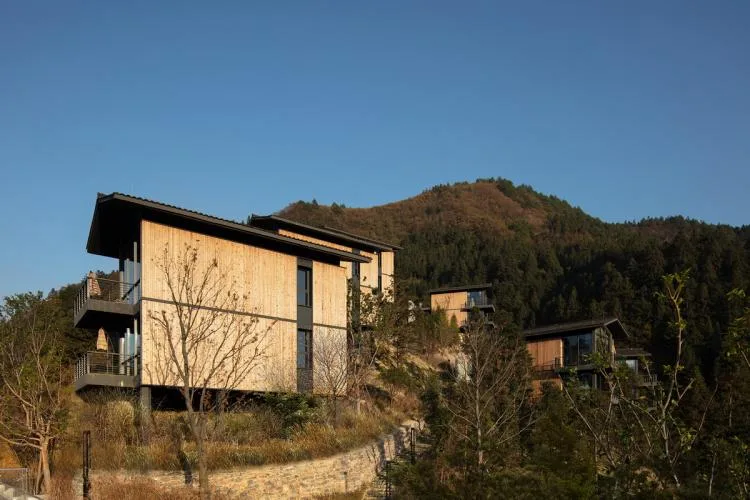
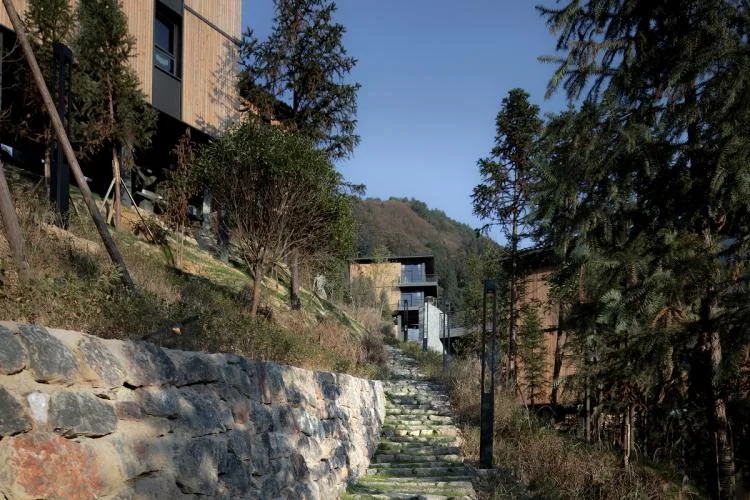
△ Photography: Existence of Architecture – Architectural Photography
Respecting history while embracing the future, Line+ demonstrates residential renovations within the protected area and introduces boutique homestays with contemporary and futuristic elements outside this zone. These designs mimic traditional stilt houses, creating a parallel between existing structures and new additions. The goal is to improve villagers’ quality of life while understanding the cultural context, enhancing accessibility, and revitalizing this secluded community to foster self-sufficiency.
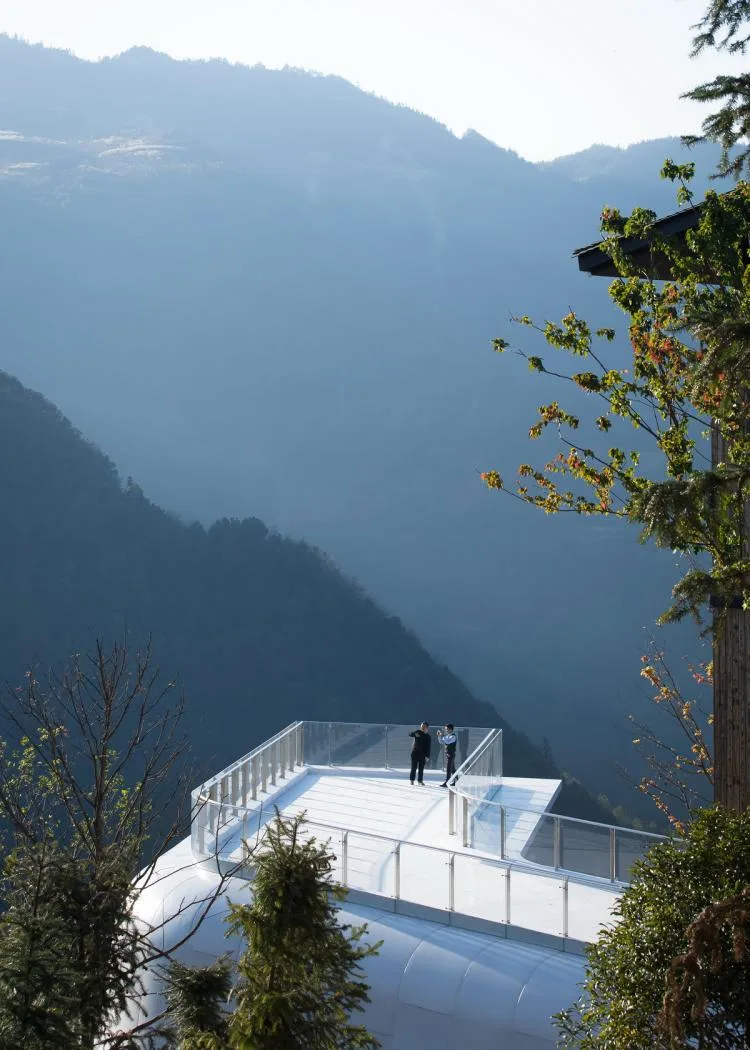
△ Photography: Existence of Architecture – Architectural Photography
02
Adaptive renovation: stock transformation
Through detailed study of traditional Miao stilt houses, the stock renovation approach addresses villagers’ lifestyles and needs at a cost comparable to spontaneous renovations. The design team hopes this model will inspire villagers to renovate their homes in ways that preserve traditional styles while preventing disorderly changes.
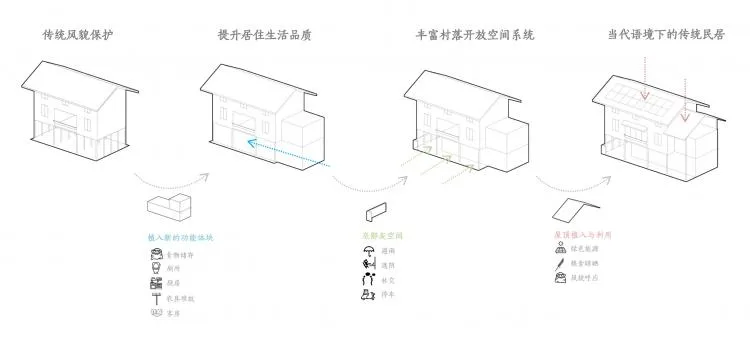
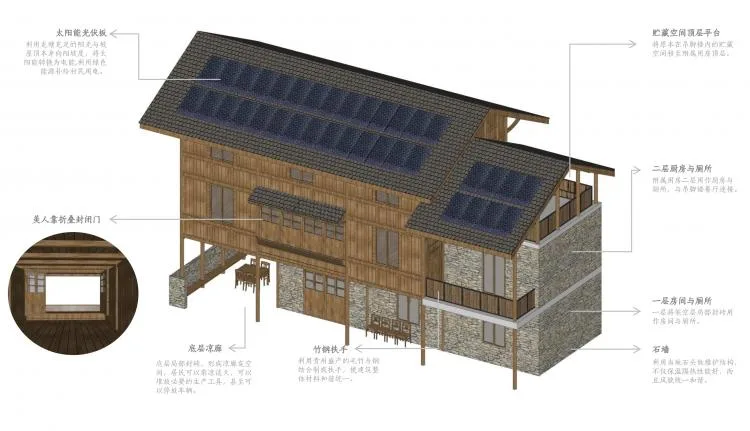
△ Stock transformation strategy
The design prioritizes balancing traditional architecture with modern demands while minimizing the visual impact of new materials. Renovations preserve the original building structure and facade, integrating essential modern amenities—such as kitchens, bathrooms, and tool storage—into elevated layers and sides of the existing structures. Some elevated areas remain open for daily needs like shelter, socializing, and parking. Sloped roofs maintain village style while providing ventilated, sheltered drying spaces. Solar panels are added to introduce green energy.
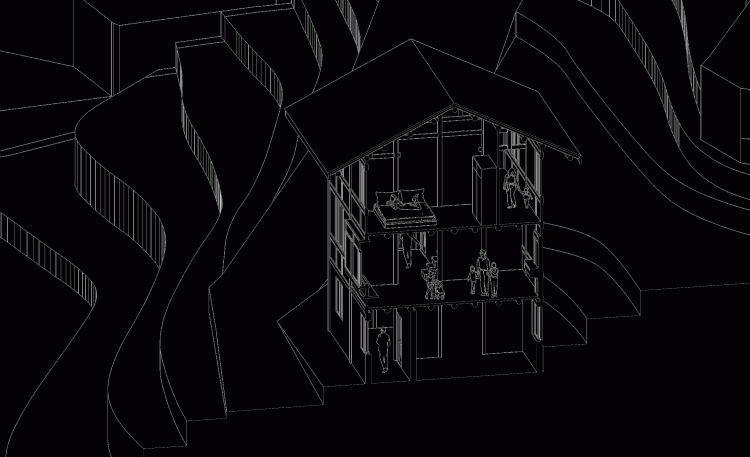
Before renovation
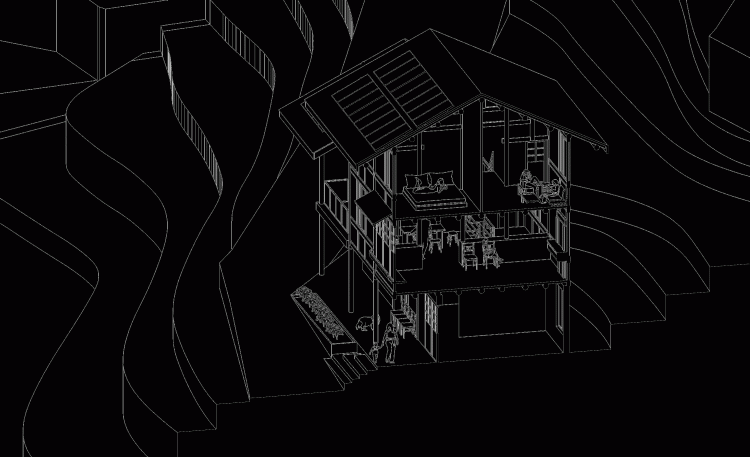
△ After renovation
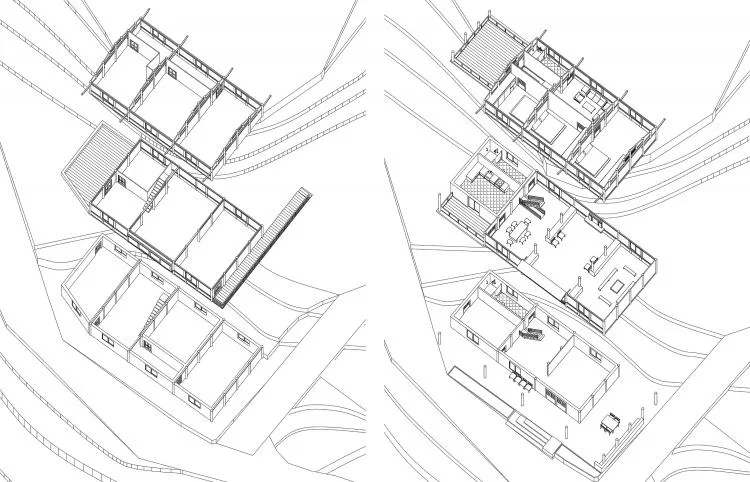
△ Axonometric drawings before and after renovation
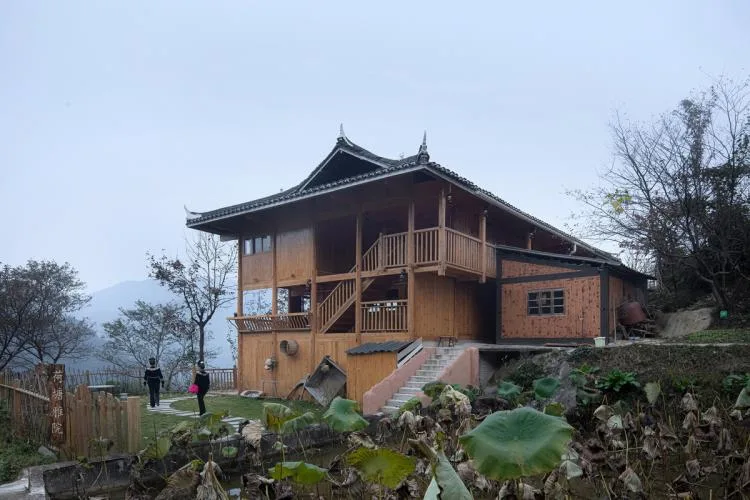
△ Demonstration renovation photography: Existence of Architecture – Architectural Photography
The use of local materials and simplified construction methods kept renovation costs on par with villagers’ own efforts. The results have been well received and replicated, with 15 local families adopting this model to renovate their homes. This approach promotes a positive cycle of restoration and self-renewal.
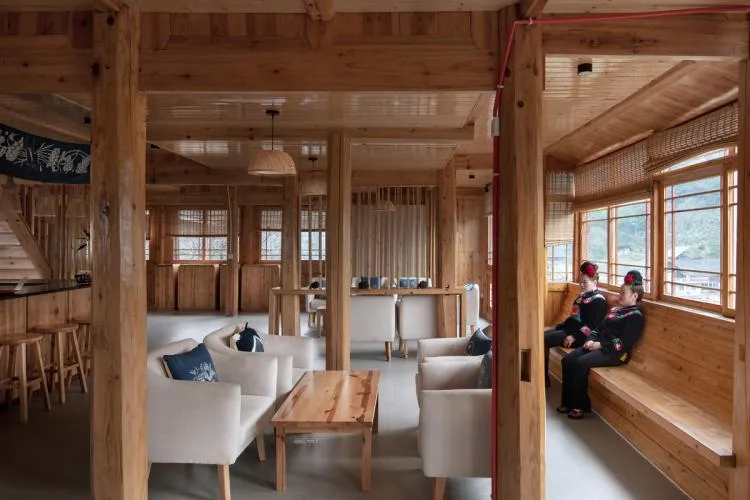
△ Interior space of renovated homes © Existence of Architecture – Architectural Photography
03
Growth and Dialogue: Incremental Additions
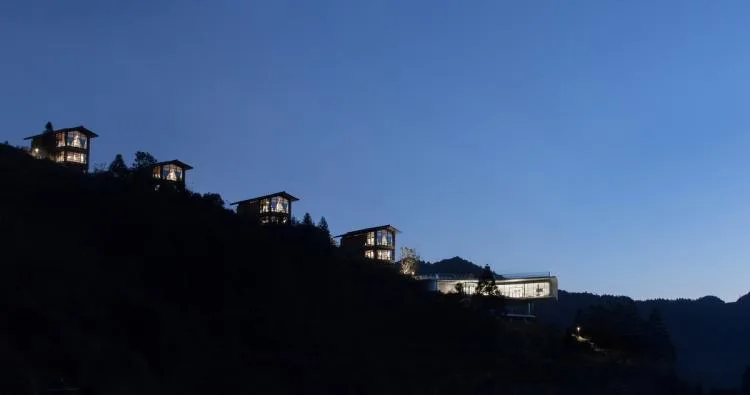
“Longtang Mountain House” follows the traditional stilt house typology, built along mountain ridges with staggered heights that preserve views and address terrain differences. Situated outside the protected scenic area yet maintaining visual connection, the project creates a dialogue between the village’s past and its future.
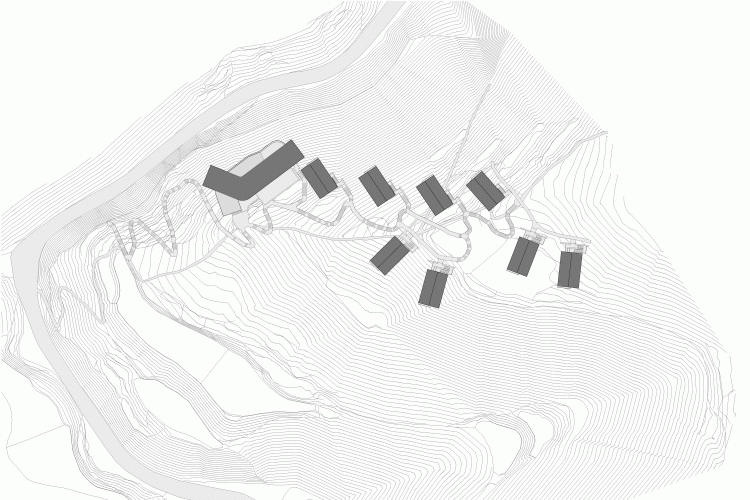
△ General plan of “Longtang Mountain House”
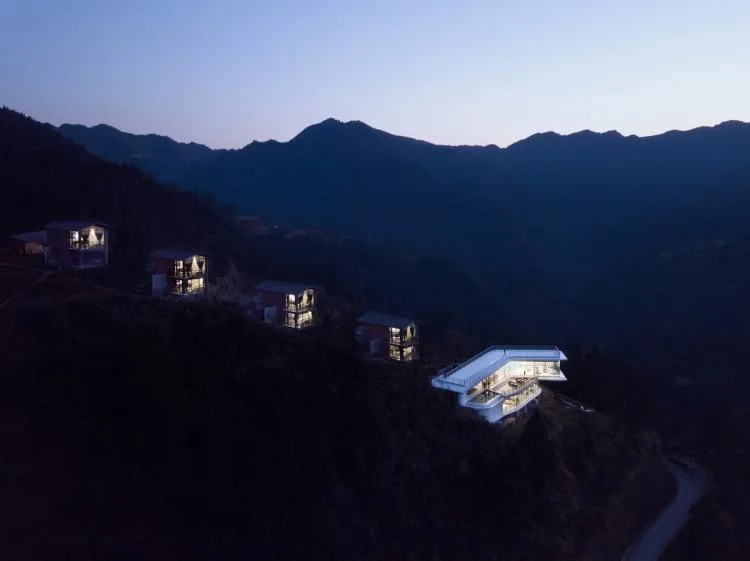
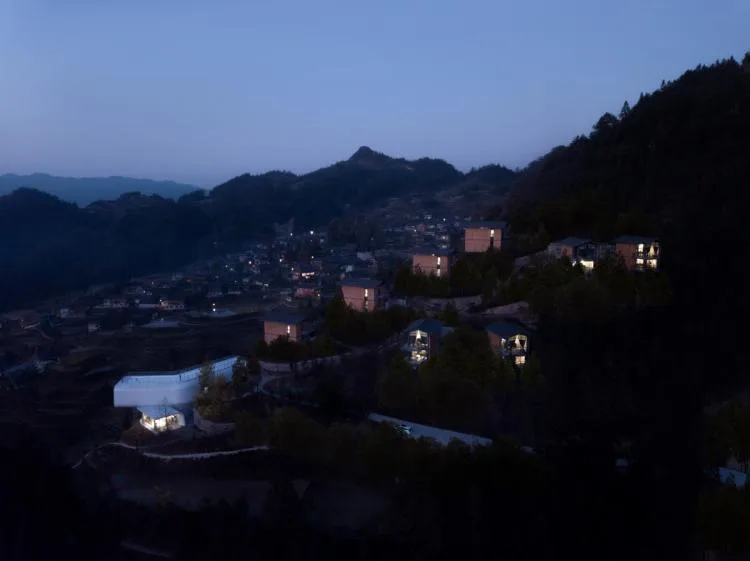
△ Photography: Existence of Architecture – Architectural Photography
The guest rooms draw inspiration from traditional Miao stilt houses, elevated above the ground to ensure ventilation and moisture protection, with equipment concealed beneath. The structures appear suspended on the mountain slope, blending into the landscape when viewed up close or from a distance. Entrances are cleverly positioned where the building meets the mountain, creating a vertical spatial relationship with the terrain.
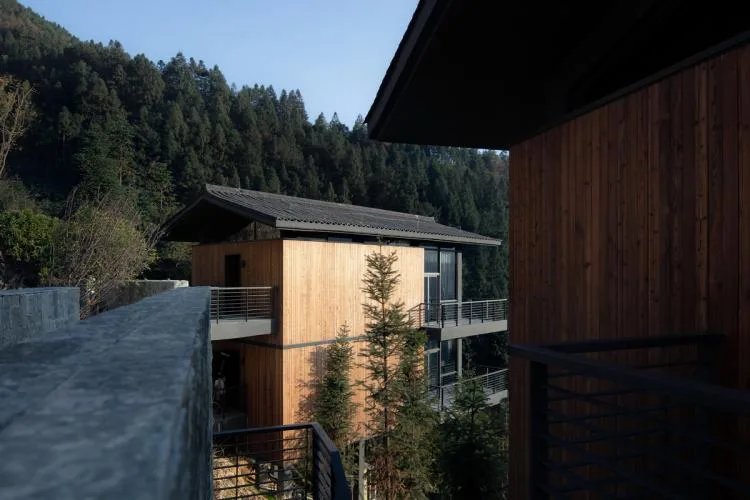
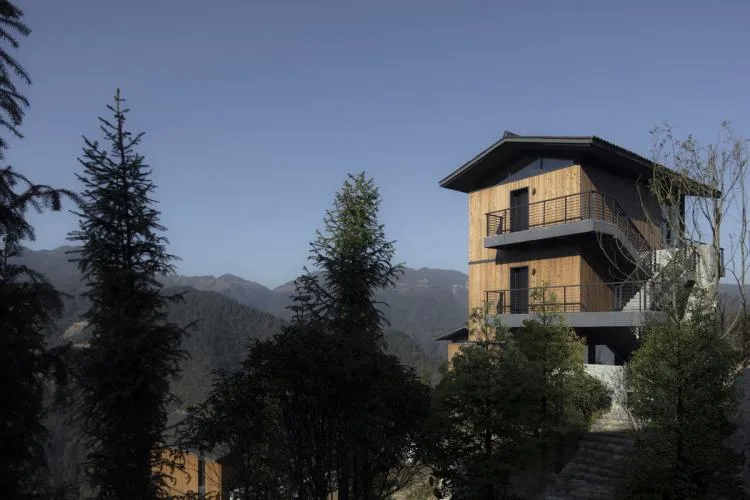
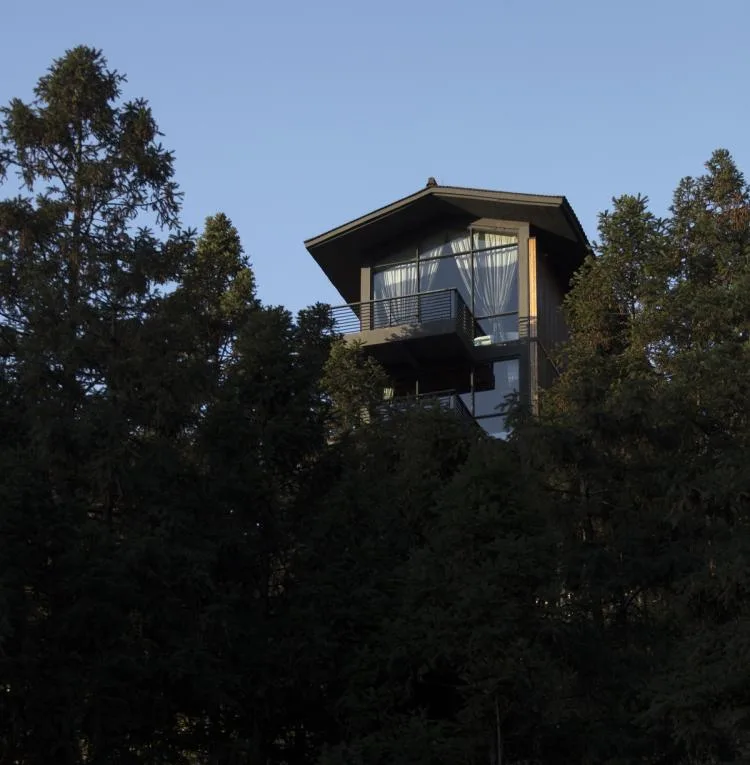
△ Photography: Existence of Architecture – Architectural Photography
During construction, the design balances lightness and structural integrity. Initially planned as lightweight prefabricated steel structures for a futuristic aesthetic, the design shifted to cost-effective, sturdier reinforced concrete after consultations with local builders.
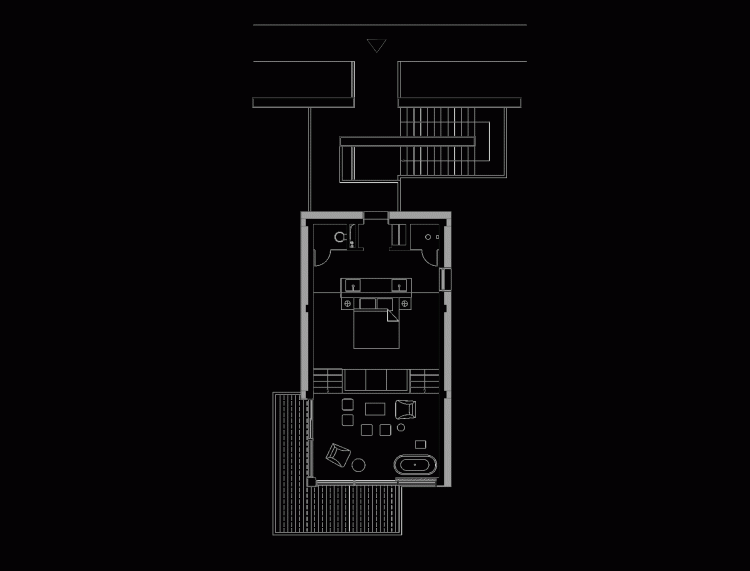
△ Second floor plan of guest rooms
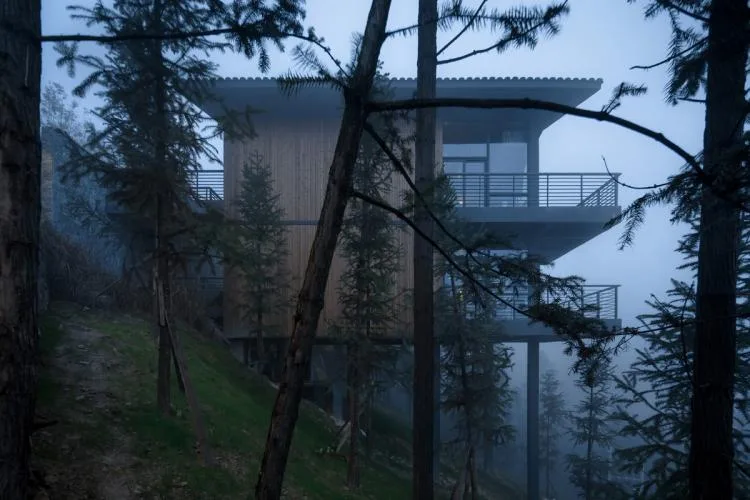
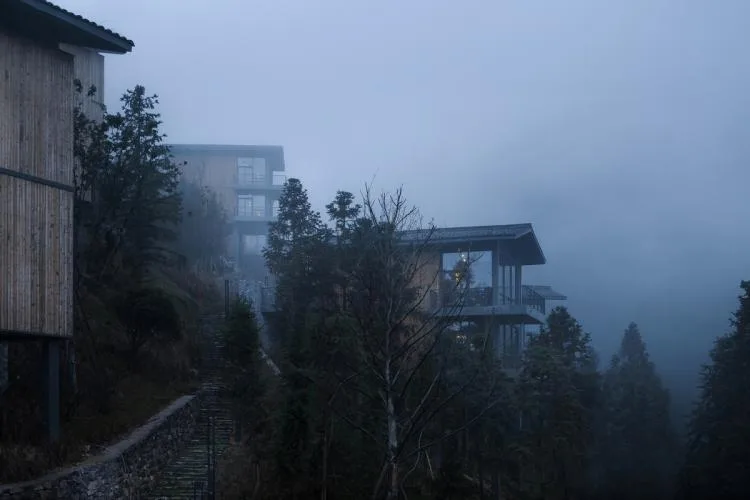
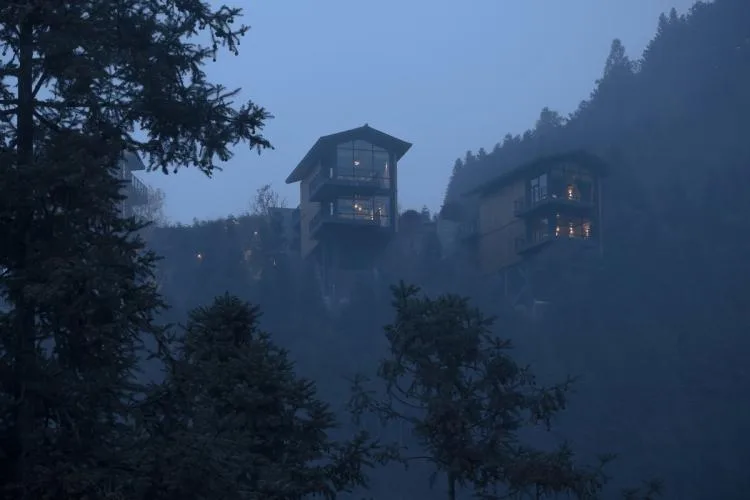
△ Photography: Existence of Architecture – Architectural Photography
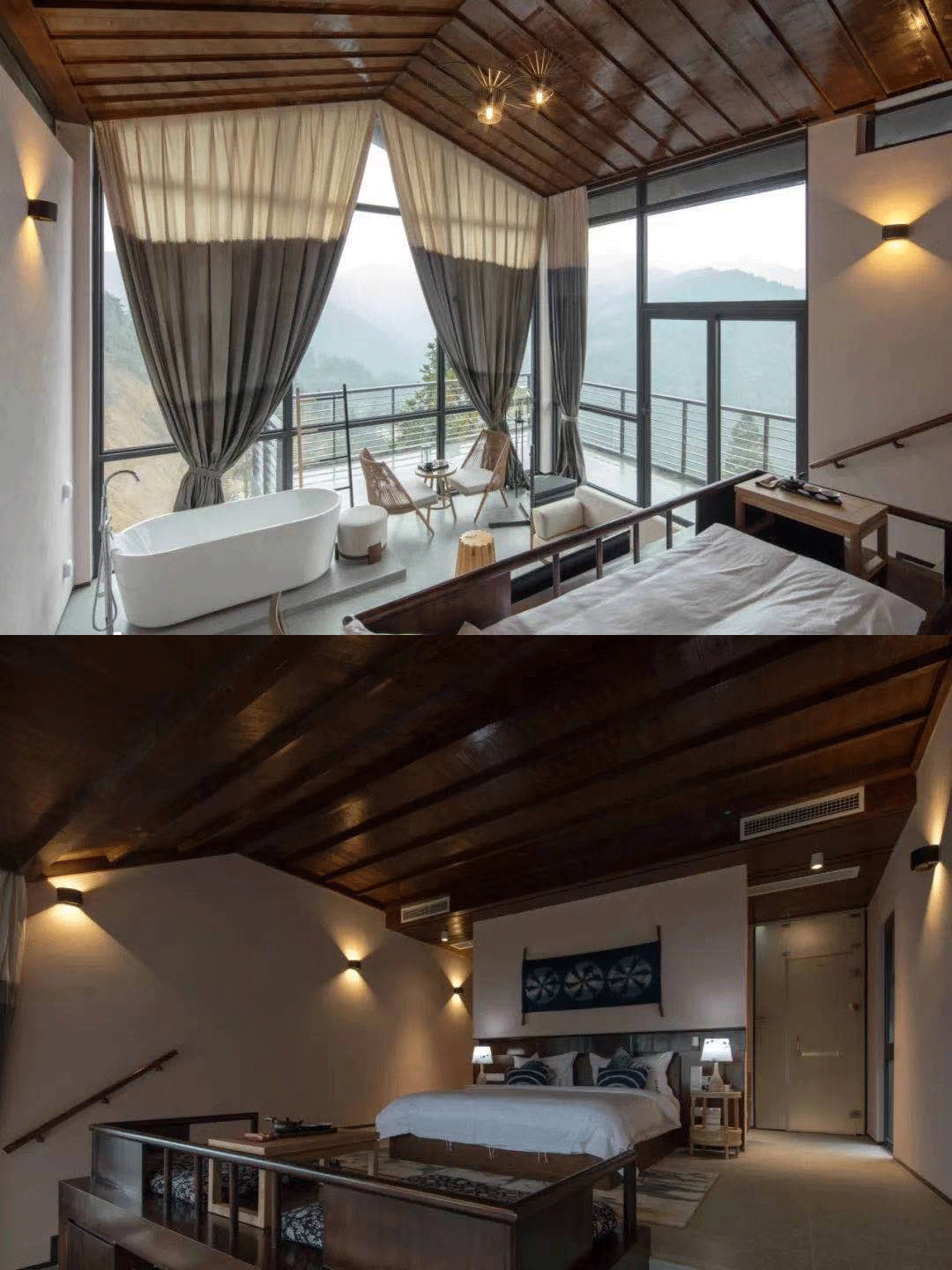
△ Interior space of guest rooms
Floating on a near 45-degree mountain slope, the buildings blend contemporary materials like glass and metal panels with local stone, green tiles, and wood. This mix softens the building’s visual weight, integrating it seamlessly into the forested landscape. The design respects local conditions, using modern construction techniques to reinterpret traditional stilt house features adapted to mountainous terrain.
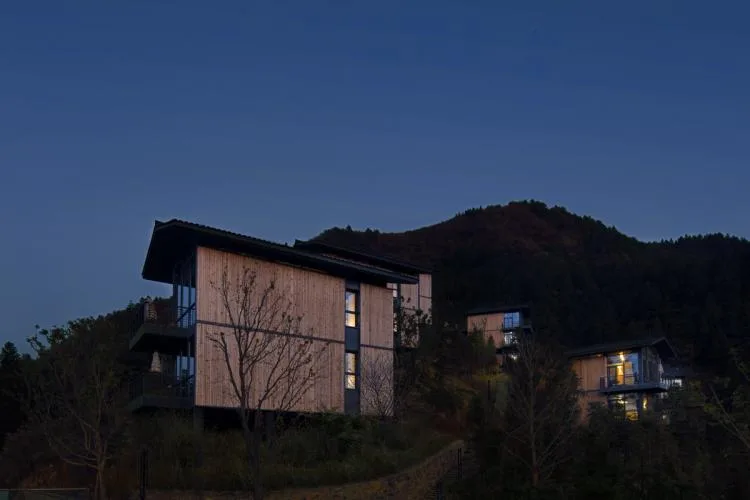
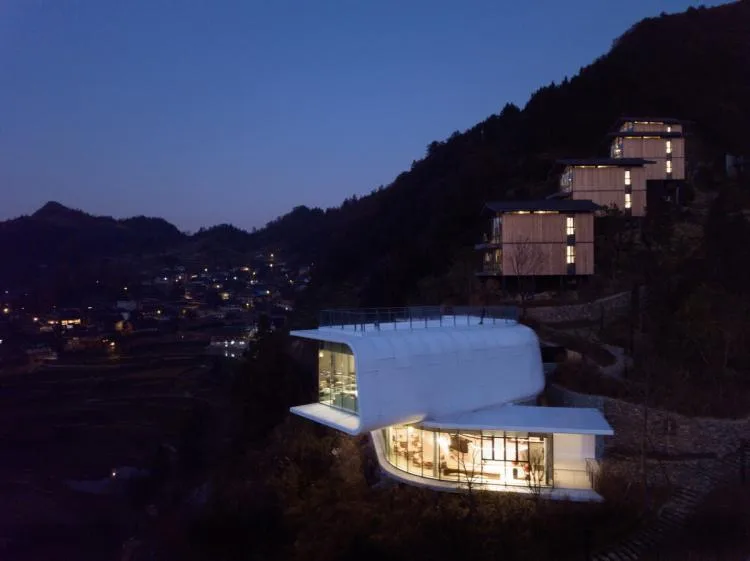
△ Photography: Existence of Architecture – Architectural Photography
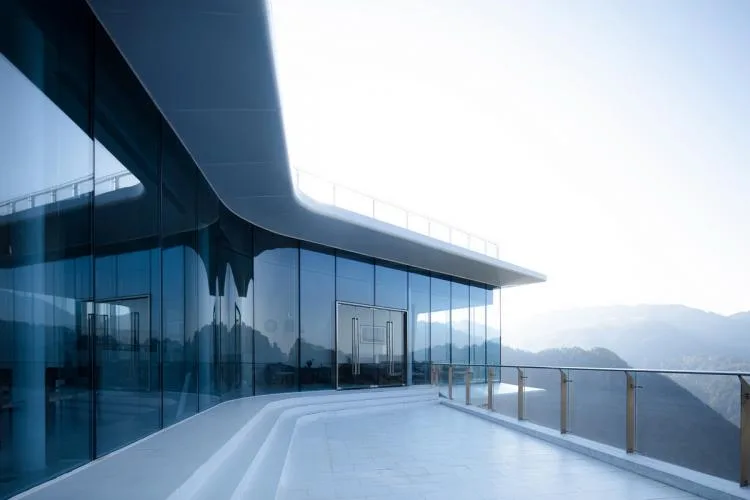
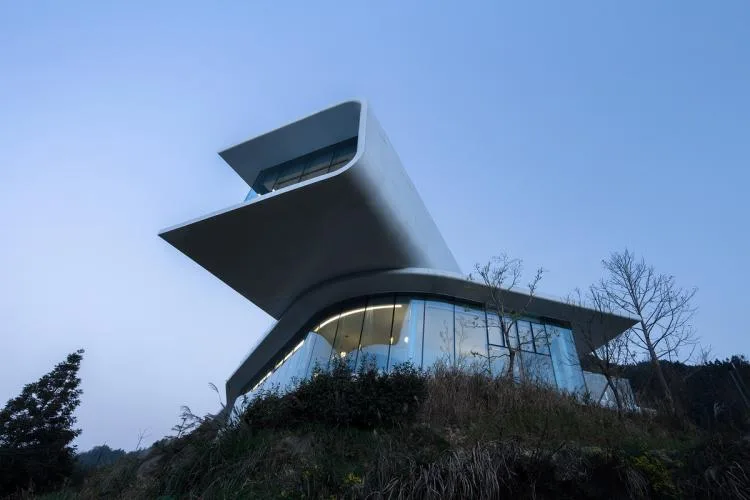
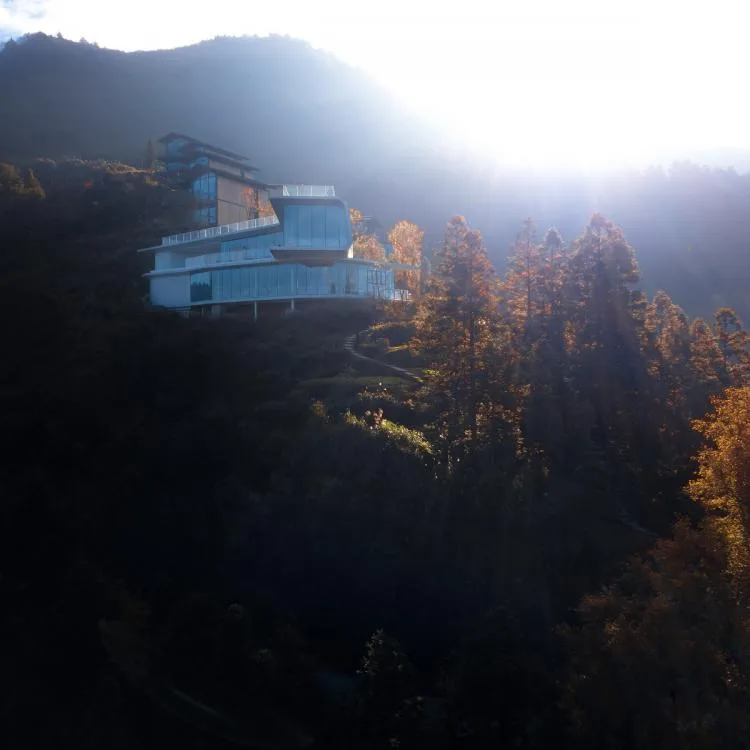
The public area of Longtang Mountain House breaks from traditional rural architecture, creating a refined, modern dialogue with the surrounding mountains and wilderness. The building is divided into two interlocking “L” shapes following the mountain’s height variation. The upper section extends toward distant peaks, while the lower section nestles into a hillside, creating flowing boundaries embedded in the landscape. This abstract form converses with the traditional Longtang Miao Village.
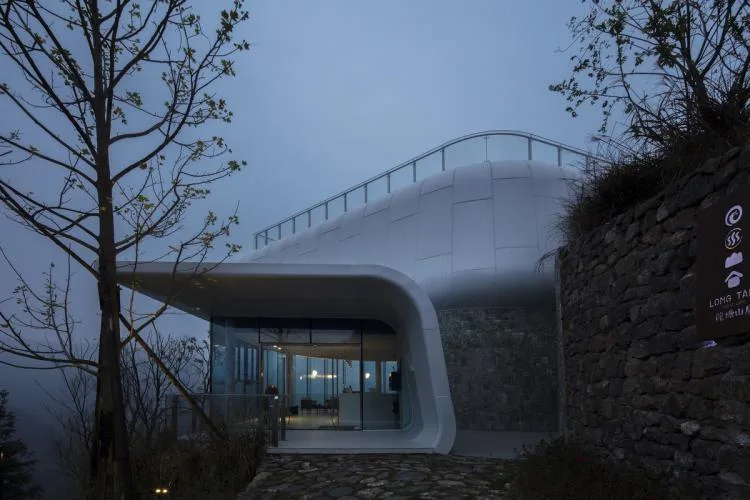
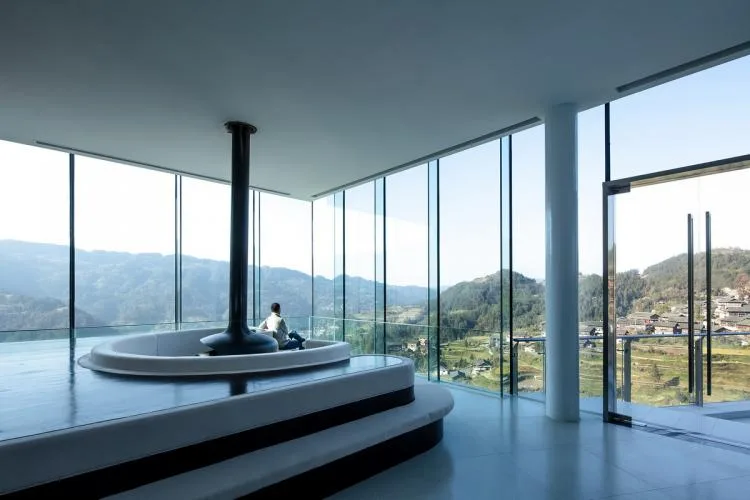
△ Photography: Existence of Architecture – Architectural Photography
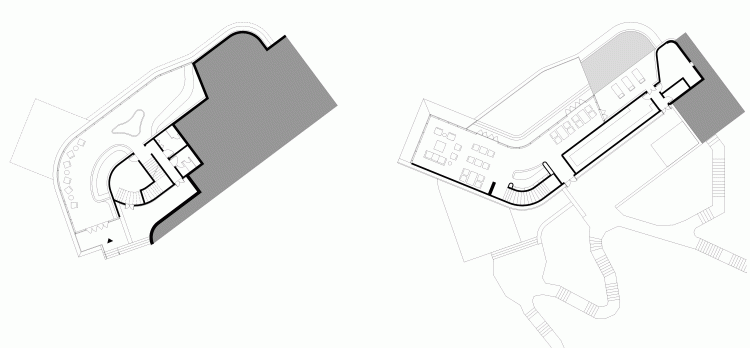
△ Plans of the public area’s first and second floors
The interlocking “L” shapes maximize outdoor space, creating two terraces at different elevations. The upper roof offers expansive views of the village and surrounding natural and cultural landscapes, while the lower roof serves as an outdoor theater and infinity pool, blending function with scenic beauty.
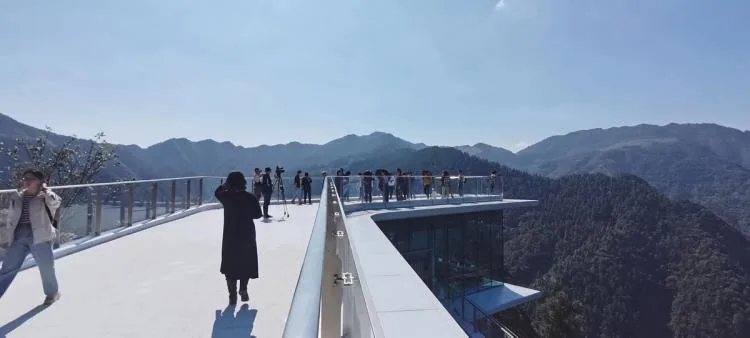
Tourists enjoy mountain views from the rooftop
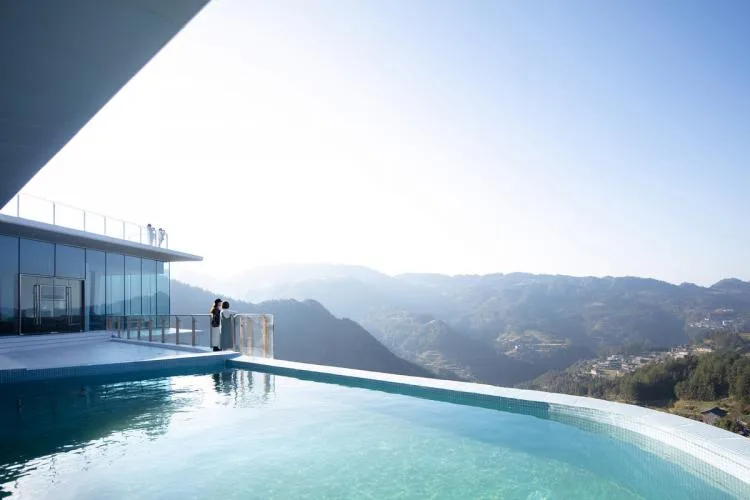
△ Dialogue with Miao Village’s infinity pool © Existence of Architecture – Architectural Photography
Due to the complexity of mountainous construction, the main building employs a steel structural system wrapped in metal aluminum panels. Lightweight insulation and waterproof materials fill the cavities between interior and exterior layers. Components are prefabricated offsite and assembled onsite, ensuring quick, safe construction that overcomes the challenges of rural terrain and limited construction precision.
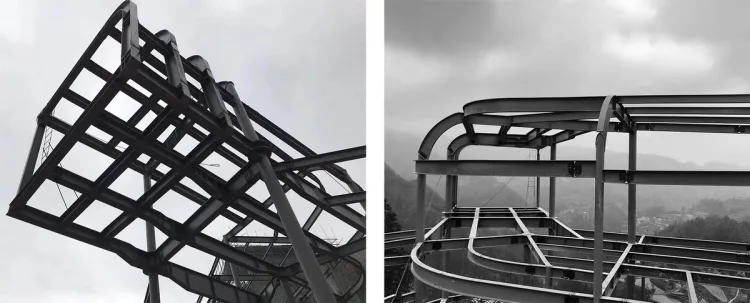
△ Steel structure frame of the public area
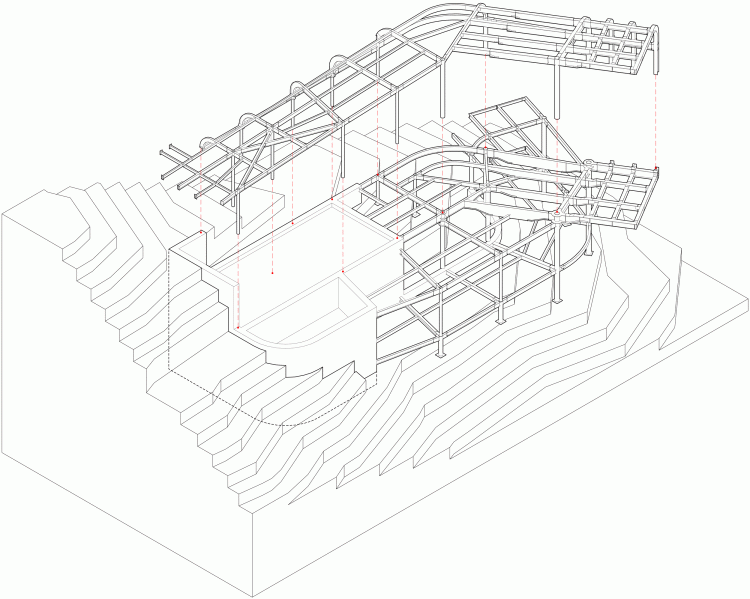
△ Main structure of the public area
04
Targeted poverty alleviation through value spillover
Today, Longtang is revitalizing its rural vitality and making comprehensive progress from daily life to production. Over the past two years, Rongchuang and the Youcheng Entrepreneur Poverty Alleviation Foundation have combined their resources and industries to establish a sustainable mechanism ensuring poverty does not return. Through cultural tourism, industrial development, cultural activation, and educational assistance, they protect the village’s ethnic culture and traditional lifestyle. The Longzhitang Rural Tourism Professional Cooperative has been founded, while the Yin Theme Hotel Management Company provides professional operations, helps revive traditional crafts, manages restaurants, cultural products, and intangible heritage workshops—offering ongoing, healthy growth for the rural area.
△ Photography: Existence of Architecture – Architectural Photography
Longtang’s transition from poverty alleviation to revitalization has attracted broad societal attention. Major media outlets including CCTV, Xinhua News Agency, China News Network, Global Times, China National Radio, and Beijing Business Daily have reported on its progress. The online platform “Yitiao” has garnered over 100,000 views on Longtang’s story. By leveraging architecture’s social influence, Longtang has achieved stable poverty alleviation, sustained income growth, and gradual prosperity, transforming into a model demonstration village.
CCTV’s report on Longtang’s targeted poverty alleviation achievements
△ “Yitiao” report on Longtang’s poverty alleviation success (Source: Yitiao video)
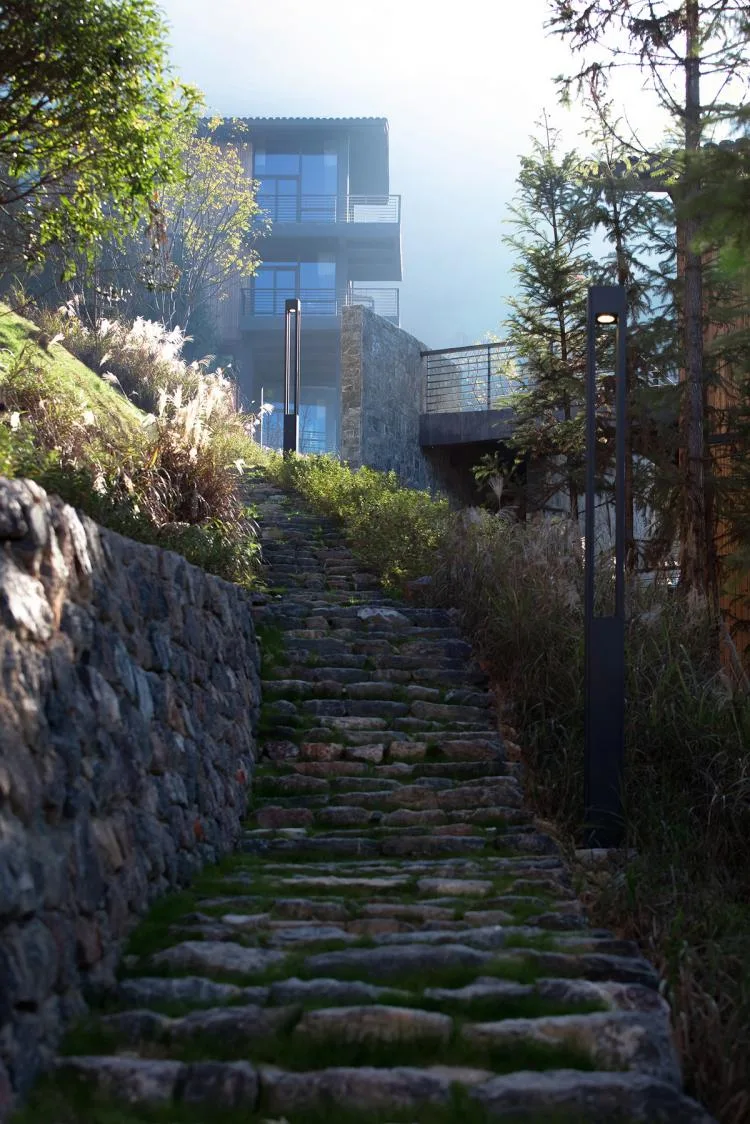
Construction and rural revitalization are long-term processes that require multi-party collaboration. Line+ plays the architect’s role on the front lines of poverty alleviation, addressing the real challenges traditional Miao villages face during development and displacement. Through demonstration renovations and incremental development, the project meets immediate needs within geographic and economic constraints, injecting new life into rural areas and enabling orderly self-renewal amidst modern lifestyle transitions.
△ Photography: Existence of Architecture – Architectural Photography
Project Information
Project Name: Precision Poverty Alleviation Design Practice in Longtang, Guizhou
Location: Longtang Village, Leishan County, Guizhou
Planning and Architectural Design: gad · line+ studio
Website: www.lineplus.studio
Lead Architect / Project Creator: Meng Fanhao
Design Team: Liang Xi, Zhu Mingsong, Zhang Hanqi, Tu Dan, Shi Shangliu, Dai Shengxuan (Architecture), Jin Xin, Zhang Zhendong, Li Chonghao (Interior), Li Shangyang, Jin Jianbo, Chen Xiaorong, Zhang Wenjie (Landscape)
Floor Area: 2,400 m² (1,650 m² new construction, 750 m² renovation)
Design Period: August 2018 – August 2019
Construction Period: August 2019 – October 2020
Structural and Electromechanical Design: Zhejiang Greentown Architectural Design Co., Ltd
Structural Design Team: Ren Guangyong, Li Gen, Tang Xuchao
Water Design: Wu Wenjian, Li Xiang
Heating Design: Cui Daliang, Zhong Tianli
Electrical Design: Lu Baiqing, Cao Jun
Owners: Rongchuang China, Youcheng Entrepreneur Poverty Alleviation Foundation, Longtang Village Committee Cooperative
Operator: Yin Theme Hotel Management Company
Photography: Existence of Architecture – Architectural Photography
Contact Email: [email protected]













Must log in before commenting!
Sign Up