
– THEME
The uncertainty of population mobility contributed to the rapid spread and uncontrollability of the global pandemic in 2020. In response to this epidemic, the world entered a ‘pause mode’. Reflecting on humanity’s brief history, what truly protects and supports us? Epidemic experts emphasize that “staying at home” is the most direct and effective way to block virus transmission. When our range of activities suddenly shrinks, what critical challenges do architects face?
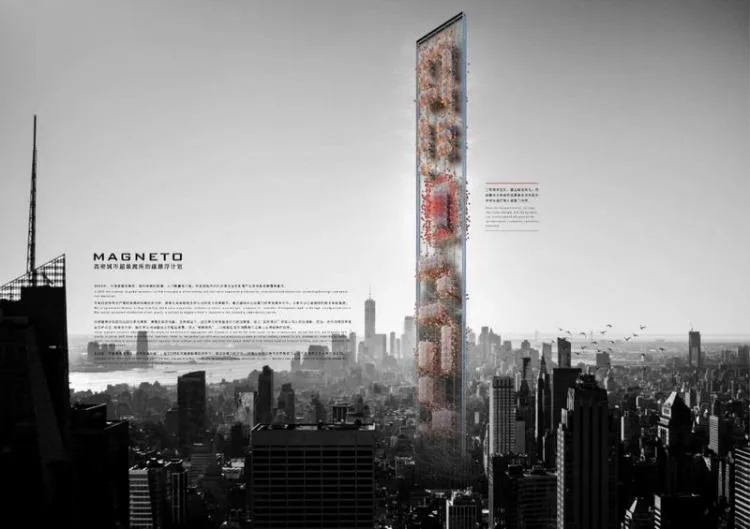
The design concept of Super Residence aims to swiftly transition into this “pause mode,” serving as both a barrier and a connection to the outside world. Once the ‘pause mode’ is lifted, it should evolve into a free community that fulfills people’s aspirations for a better life. The plan includes a dedicated ‘Super Unit’ within the ‘Super Residence’—a “homestead” where residents can live independently for extended periods in a ‘super living unit’.
– Award-Winning Work
– AWARD

– Inspiration Source
– INTRO
Magneto is a supervillain from Marvel Comics in the United States, known for his ability to manipulate magnetic fields and levitate objects.
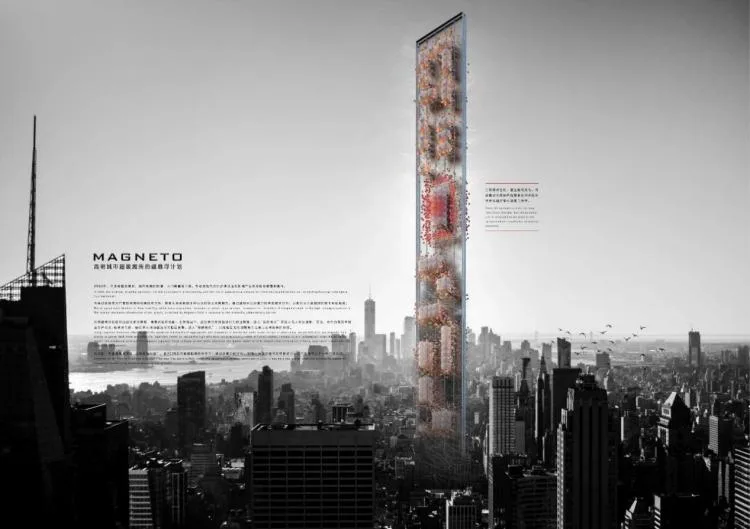
The unique physical traits of Magneto closely align with the core design concept of this project, centered on magnetism. This synergy inspired the name MAGNETO – Maglev Program for High Density City Super Residences.

Magneto controlling objects through magnetic force © X-Men
– Design Concept
– CONCEPT
This design is inspired by The Meissner Effect, a physical phenomenon where an object transitions from a normal state to a superconducting state, causing it to repel magnetic fields. This principle is fundamental to maglev technology, which the design leverages.
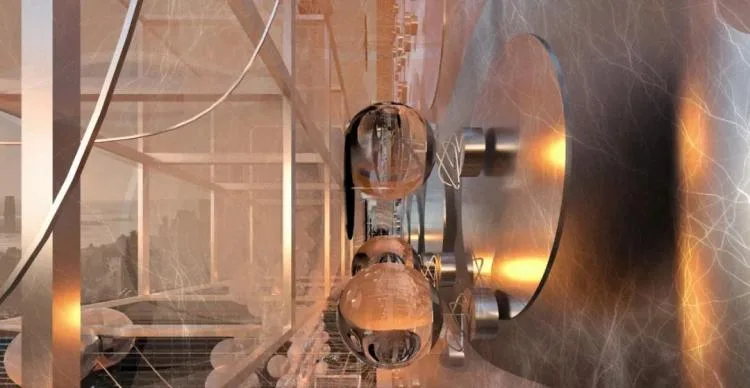
Architectural form inspired by the Meissner effect
In the early stages, the author conducted a simulation experiment exploring magnetic principles to verify the concept’s feasibility. The experiment studied how the Meissner effect could operate under magnetic fields and explored new modes of human living.
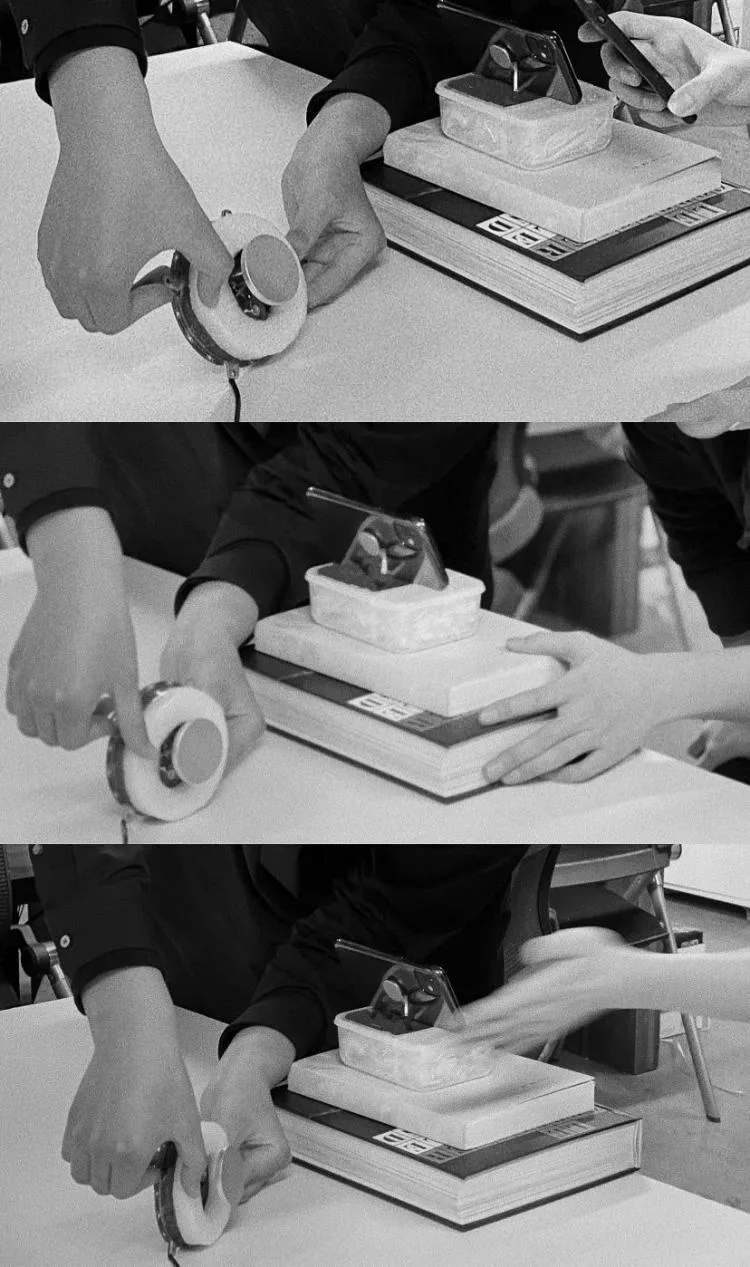
Simulation of the magnetic principle
– Key Questions
– QUESTION
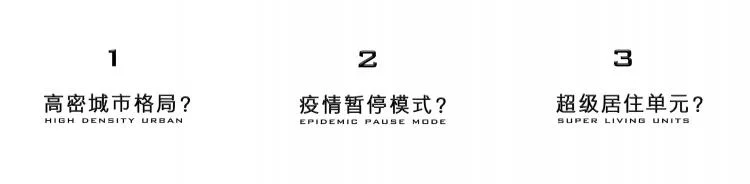
At the start of the design process, three core issues were identified:
- How to address the rapid growth of high-density urban patterns? Is it necessary to update traditional residential models?
- How to implement a quick, safe, and orderly transition into an epidemic suspension mode when needed?
- How to create a Super Residential Unit that meets the high-frequency demands of current residential needs?
– Design Solutions
– ANSWER
How to manage the challenges of current high-density urban patterns?
Since the Industrial Revolution, cities have functioned as horizontal, flat networks, efficiently integrating public resources and concentrating people to foster social production.
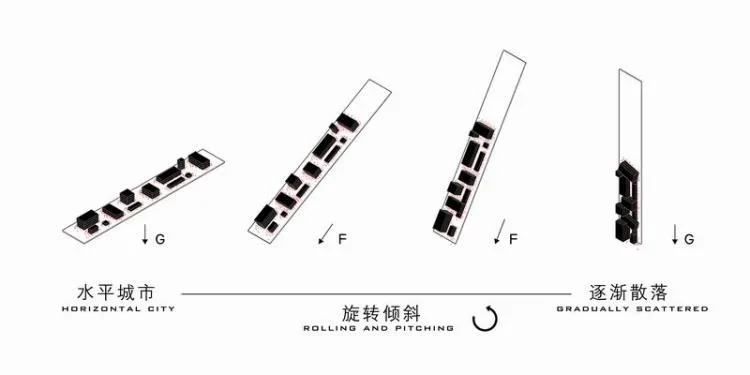
Experiment demonstrating failed rotation and tilt due to gravity
Facing land scarcity, this project attempts to transform the horizontal city into a rotating tilted vertical urban pattern. However, gravity imposes significant constraints, making this vision difficult to realize.
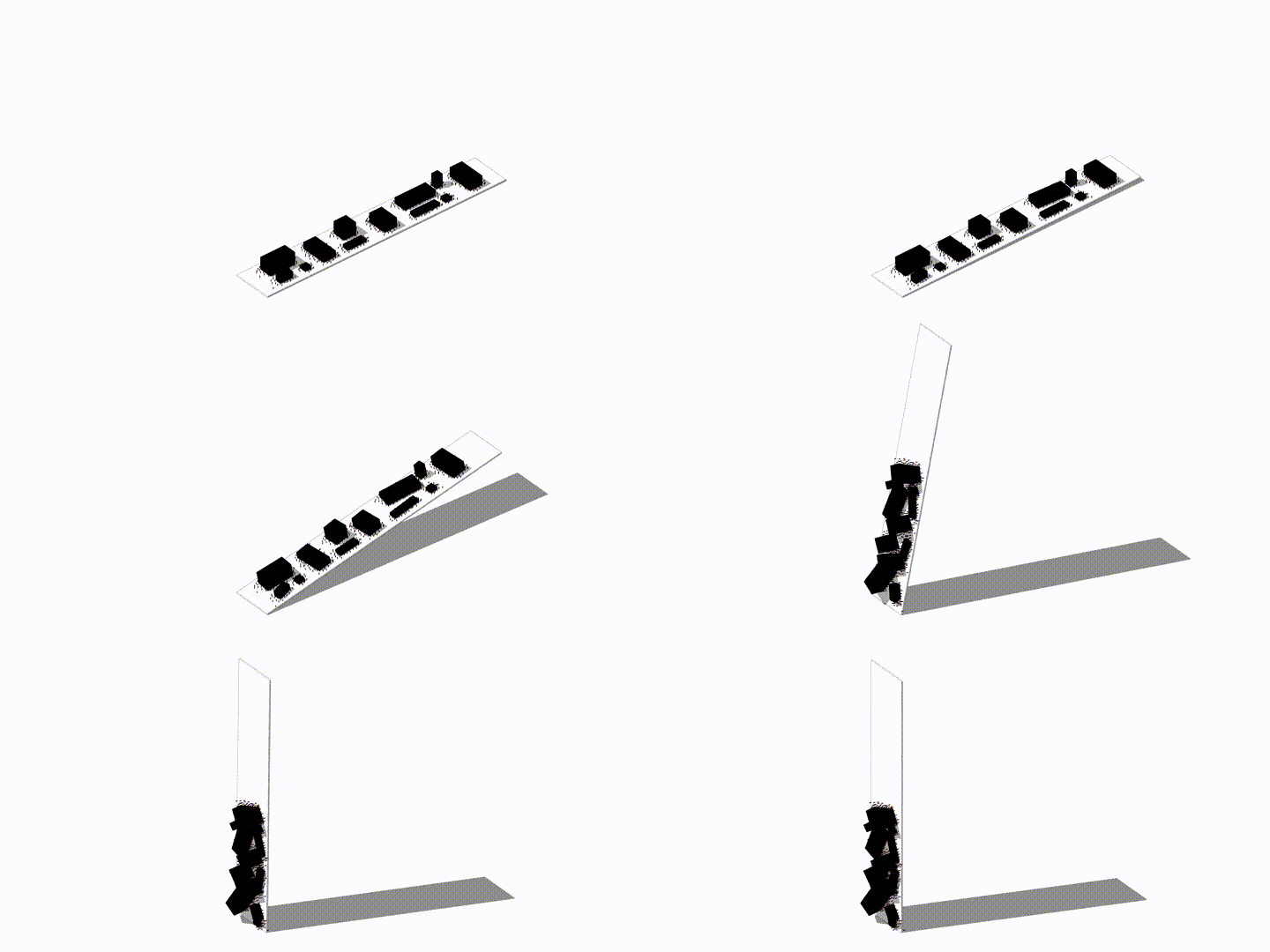
Gravity causes the horizontal urban pattern to spread out
The Meissner effect offers a solution for this bold idea. By magnetizing the vertically rotated ‘ground’ into a magnetic plate, a magnetic field is generated to counteract gravity. This transforms the horizontal city into a vertical settlement through maglev technology. Additionally, this foundation supports effective epidemic prevention and flexible management of residential units.
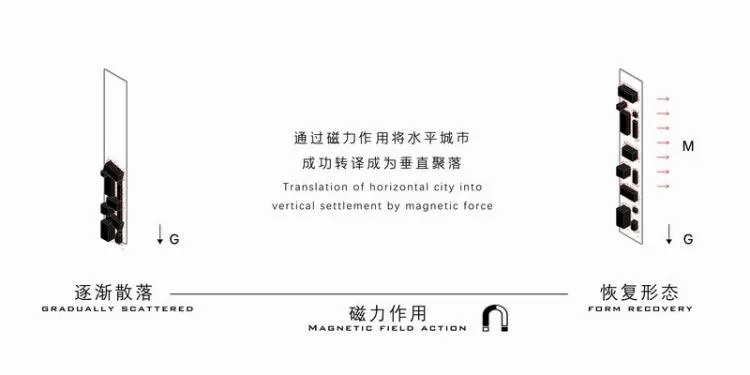
Successful rotation and tilt achieved through magnetic force
How to correctly activate the epidemic pause mode?
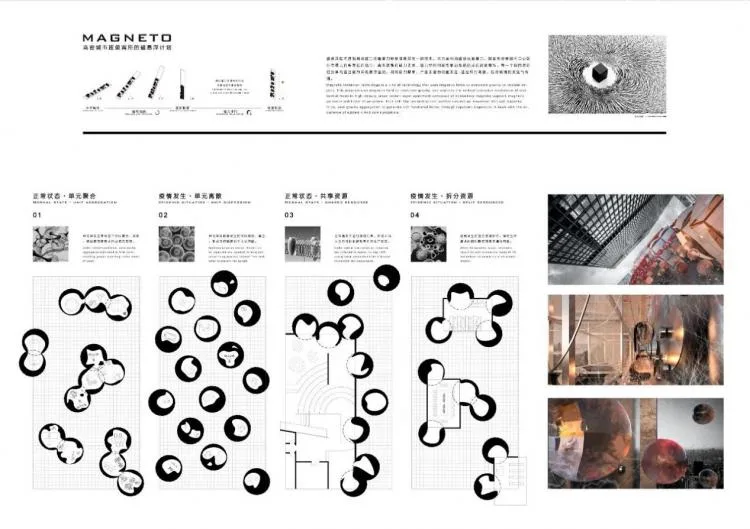
This plan explores multiple scenarios for implementing the epidemic suspension mode. The spheres below represent individual residential units, while the squares symbolize urban public resources. Under normal conditions, these units gather within integrated public spaces—offices, commercial areas, educational and entertainment facilities—during the day to facilitate efficient social interaction and cooperation.
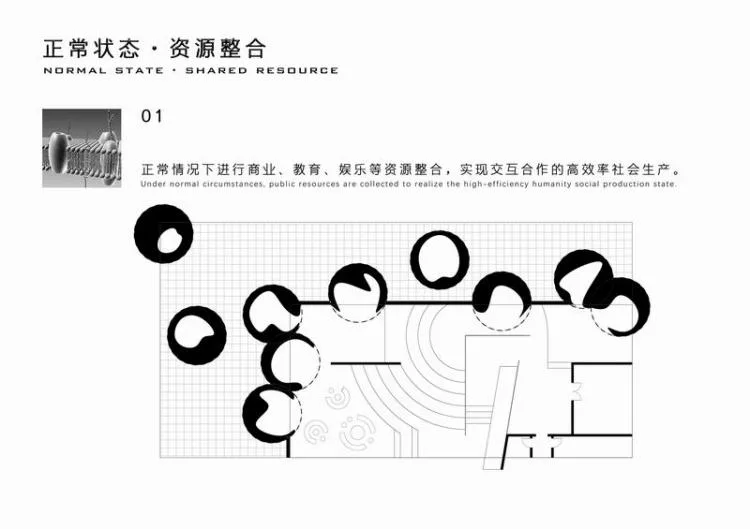
Resource integration under normal conditions
At night, outside of work hours, units detach from public resources and float freely on the magnetic plate. They can also aggregate and connect based on demand, forming residential clusters aligned with social structures such as families, friends, or partners.
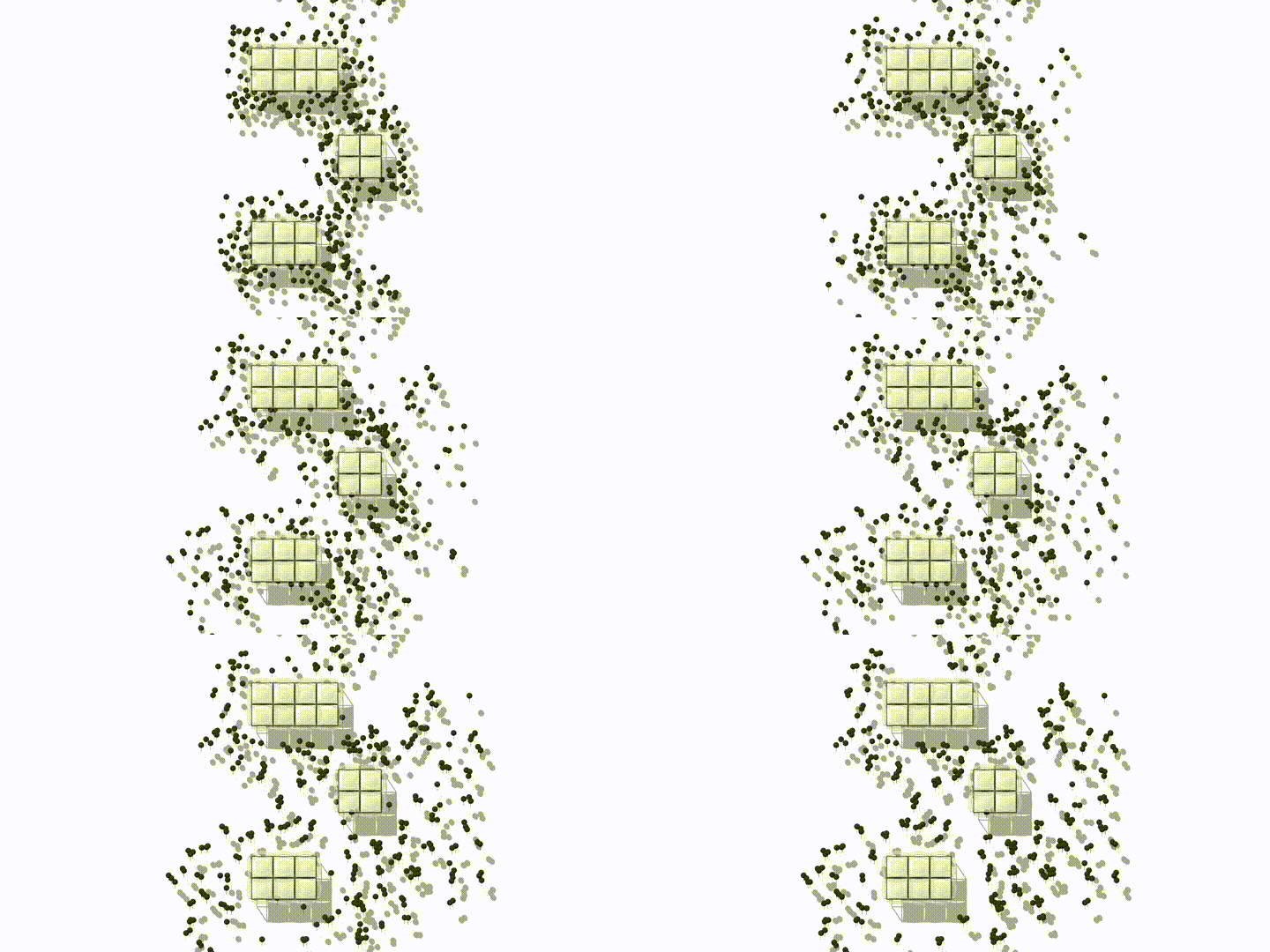
Units gather in public resources during the day and freely float at night, forming residential clusters
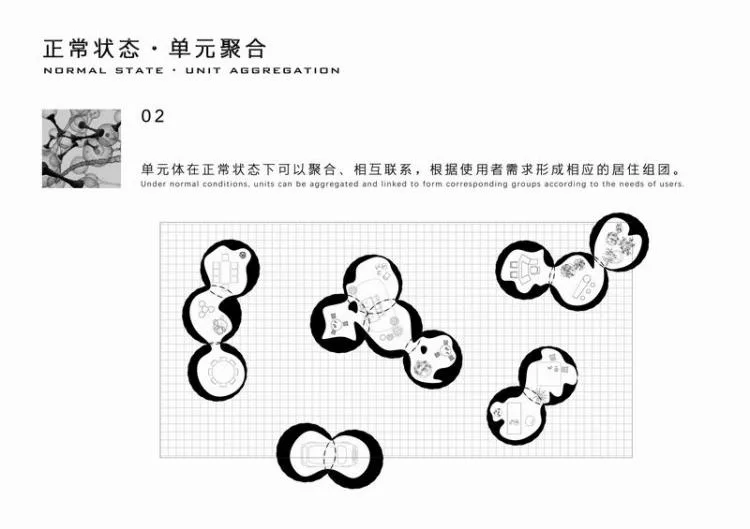
Clustered unit aggregation during normal conditions
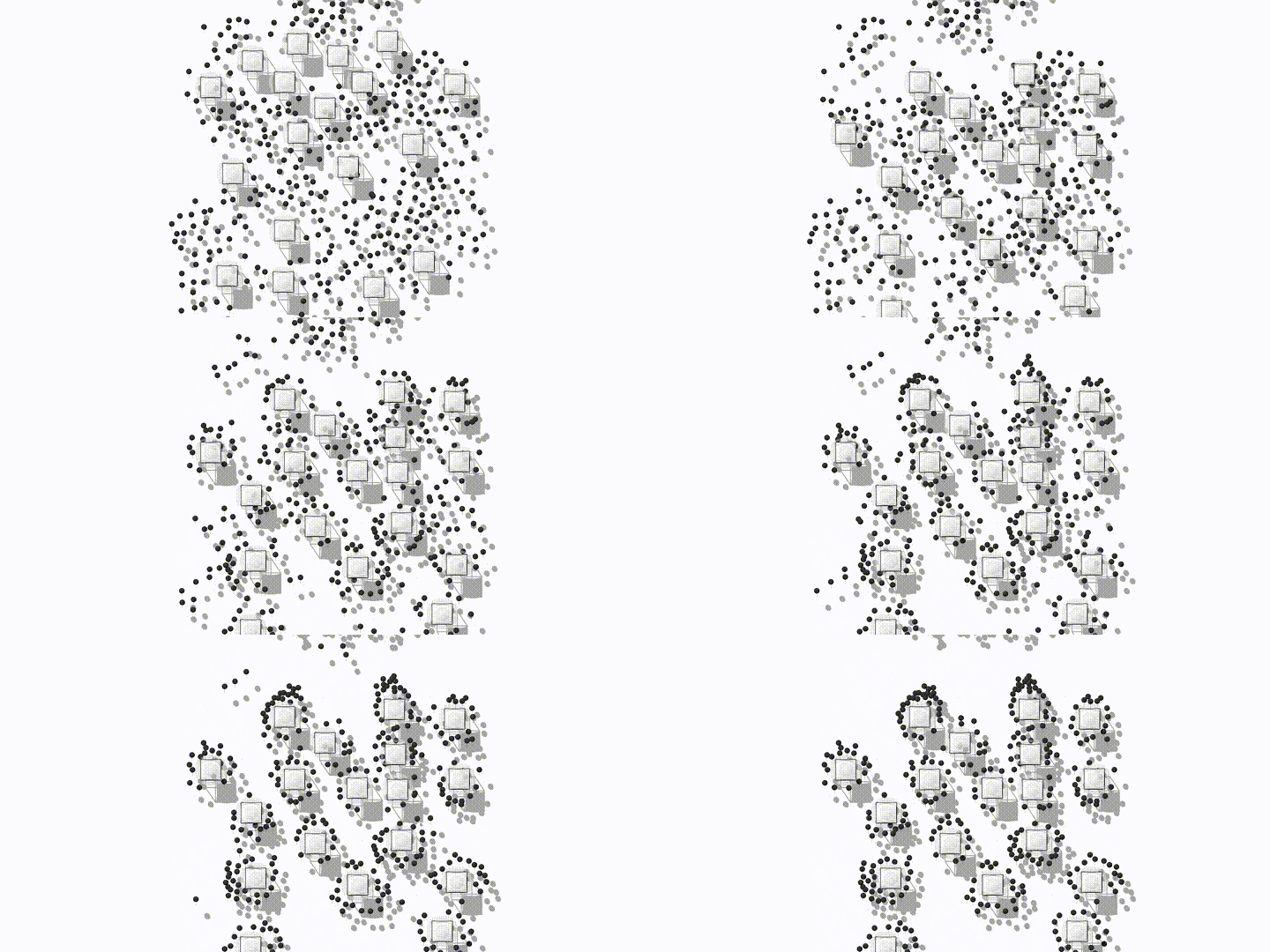
During an epidemic outbreak, these units quickly generate mutually repulsive magnetic forces, transitioning from an aggregated to a dispersed state. This separation forms isolated compartments that prevent virus spread, allowing each unit to support independent living.
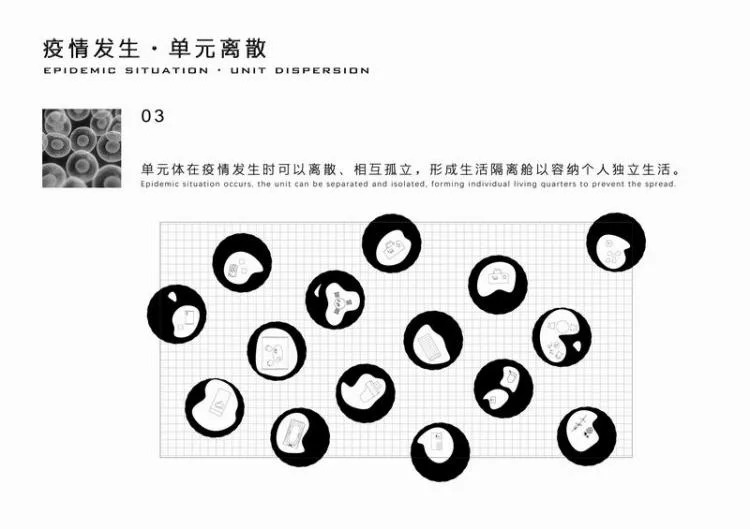
Unit dispersion during epidemic outbreak
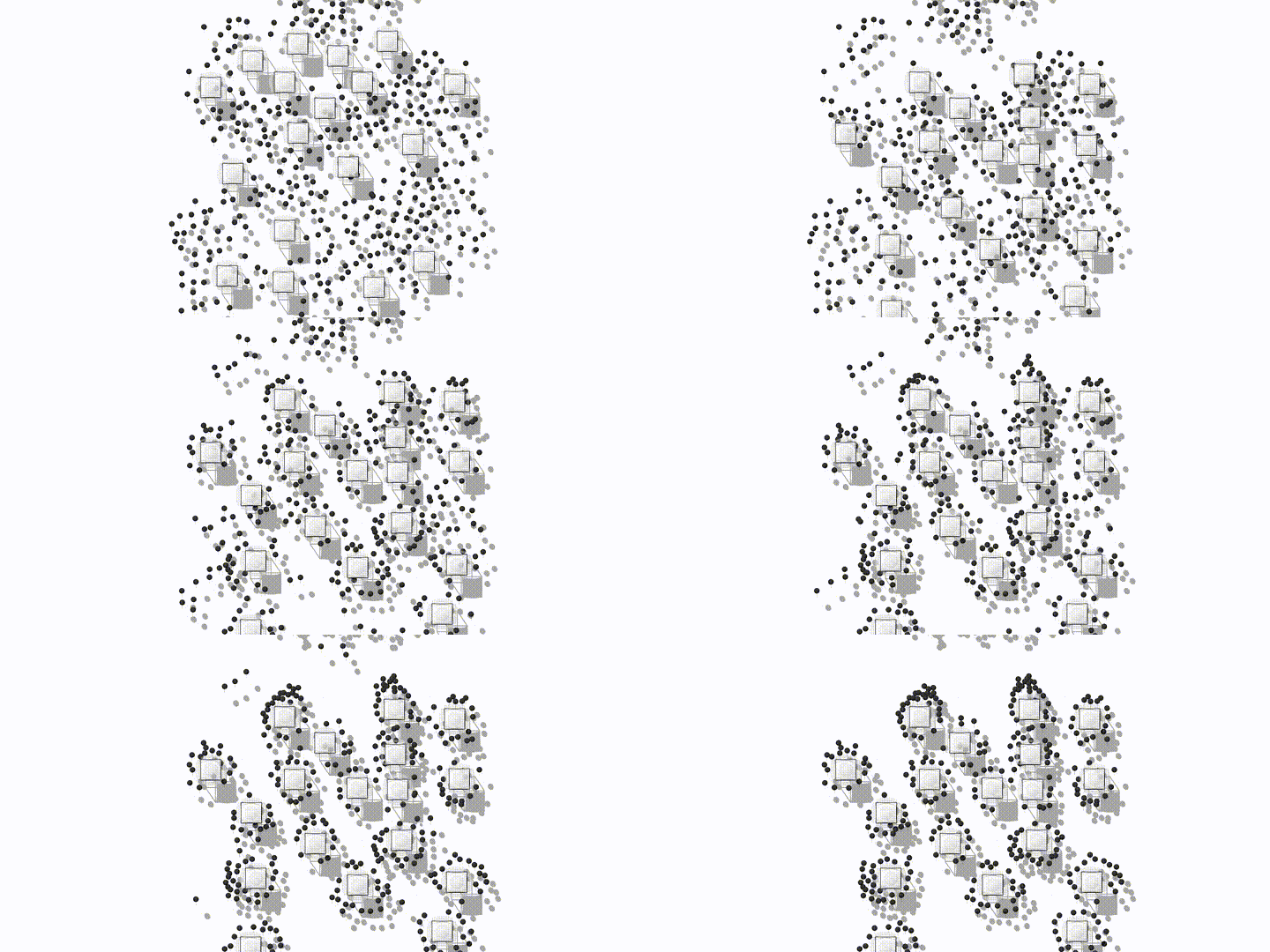
During an epidemic, unit cells repel and isolate themselves
Simultaneously, public resources are subdivided to minimize virus transmission risk. For example, shopping centers split into individual retail stores, office buildings into smaller offices, and campuses into multiple classrooms. This may reduce operational efficiency but ensures minimal essential functions remain active.
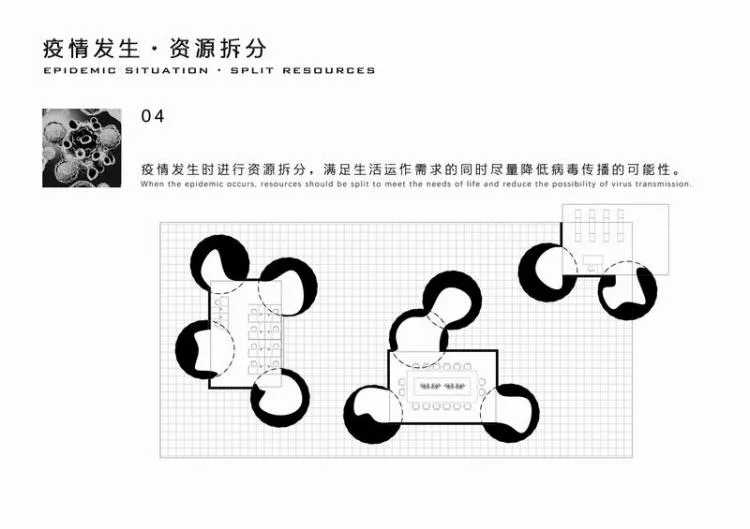
Resource allocation during epidemic outbreak
Subdivision of public resources reduces epidemic transmission risk
In severe epidemic cases, if infection occurs within a unit cell, it triggers a warning red light and a unique magnetic signal. This magnetic change enables the infected unit to be filtered and directed to a medical complex for isolation and treatment.
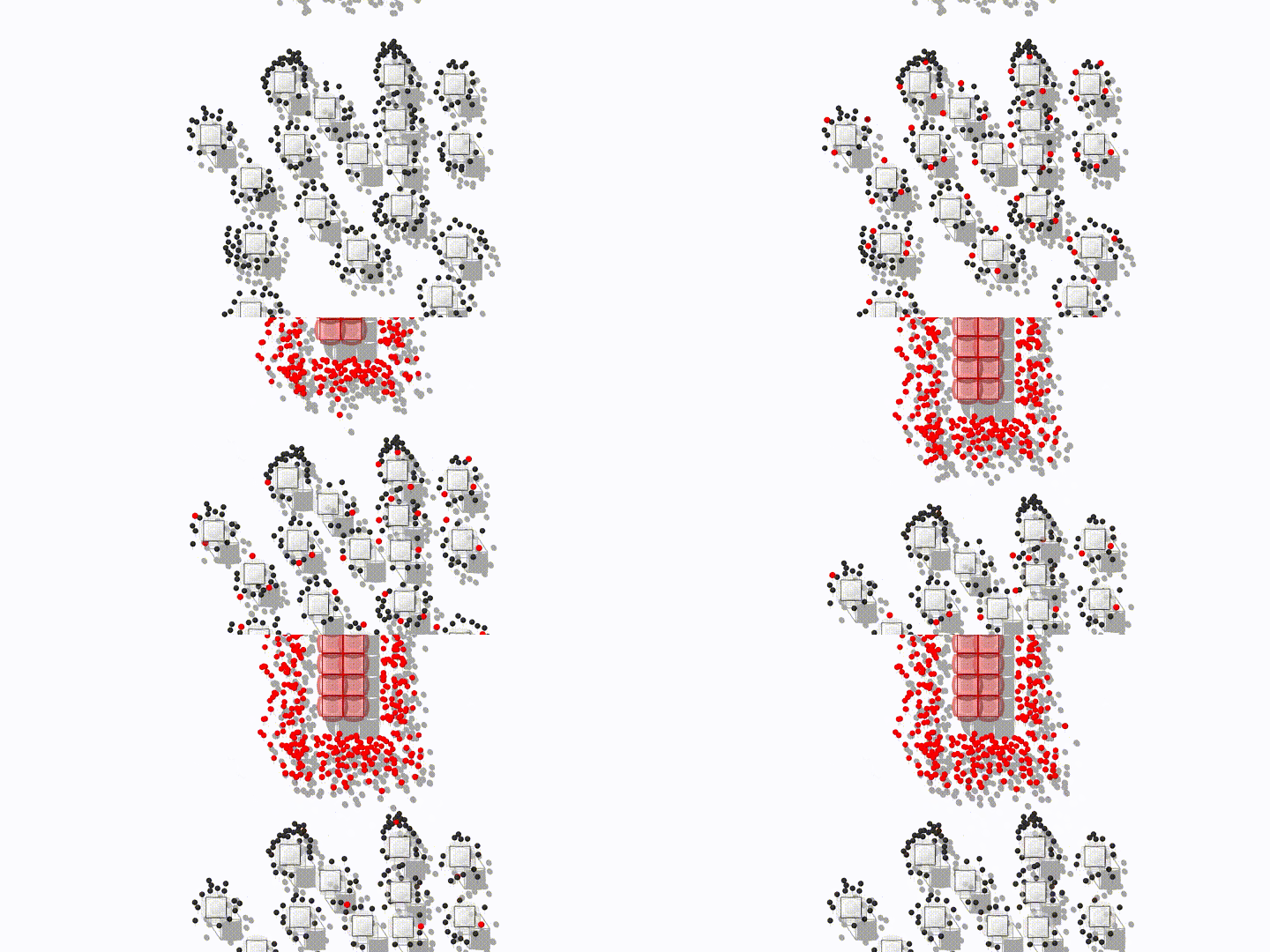
Infected units are identified and concentrated in medical complexes for centralized care
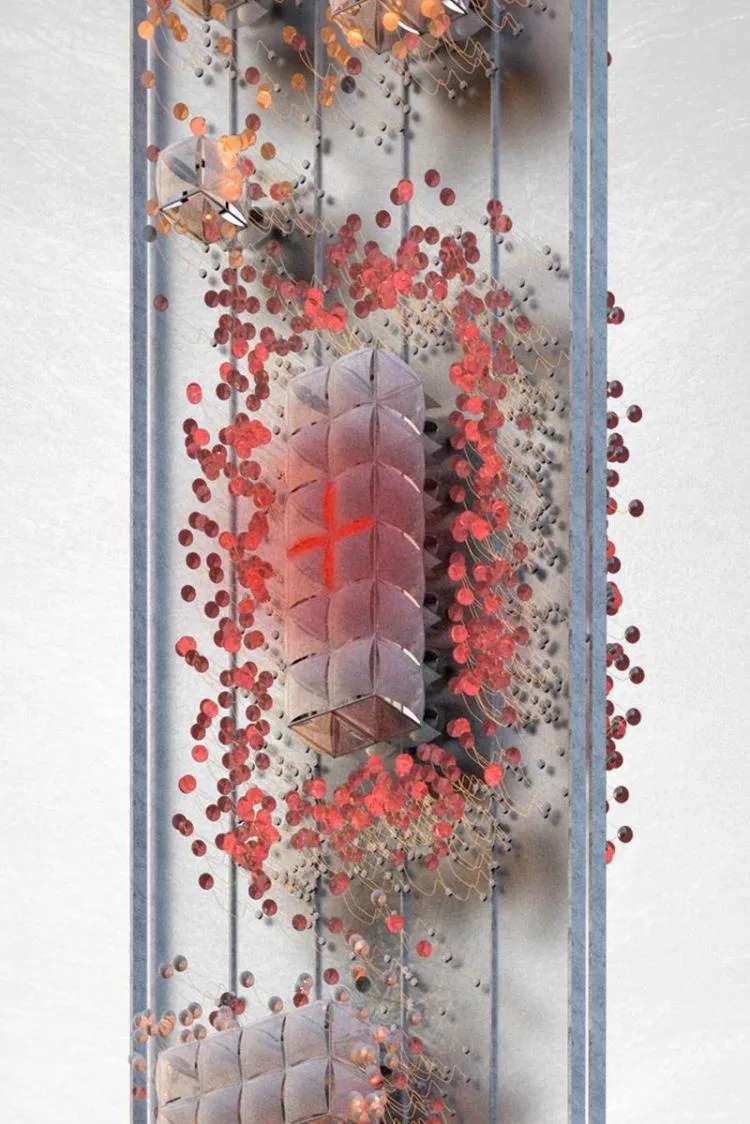
Centralized treatment of infected units within medical complexes
03. What defines a ‘Super Residential Unit’?
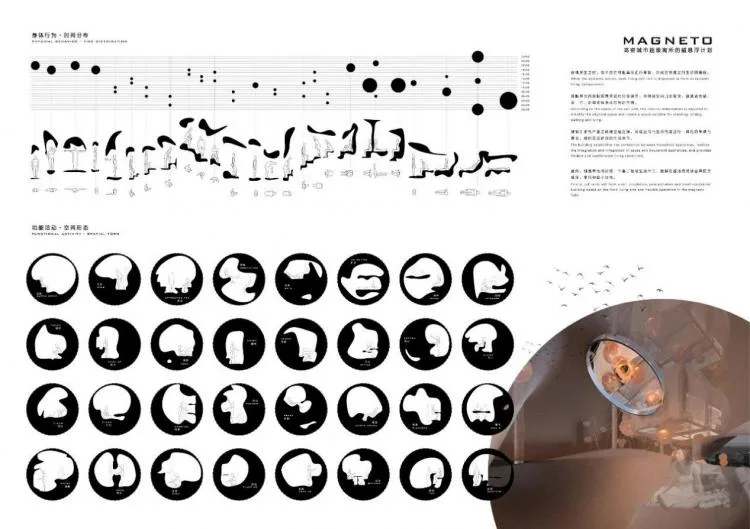
During an epidemic, each spherical unit disperses to form a self-isolating super living unit. Its internal design considers human activity scales and can adapt its shape according to needs, simplifying living space to the essentials. This creates a space suitable for various physical activities such as standing, sitting, walking, and lying down.
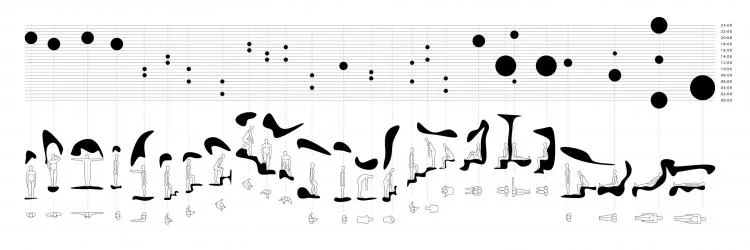
Spatial forms adapting to physical activities
The super residential unit employs magnetic fluid as its core medium. Magnetic fluid is a novel functional material combining liquid fluidity with solid plasticity. It can form diverse physical shapes in response to magnetic fields, adapt to various living conditions, and enable internal space connectivity.
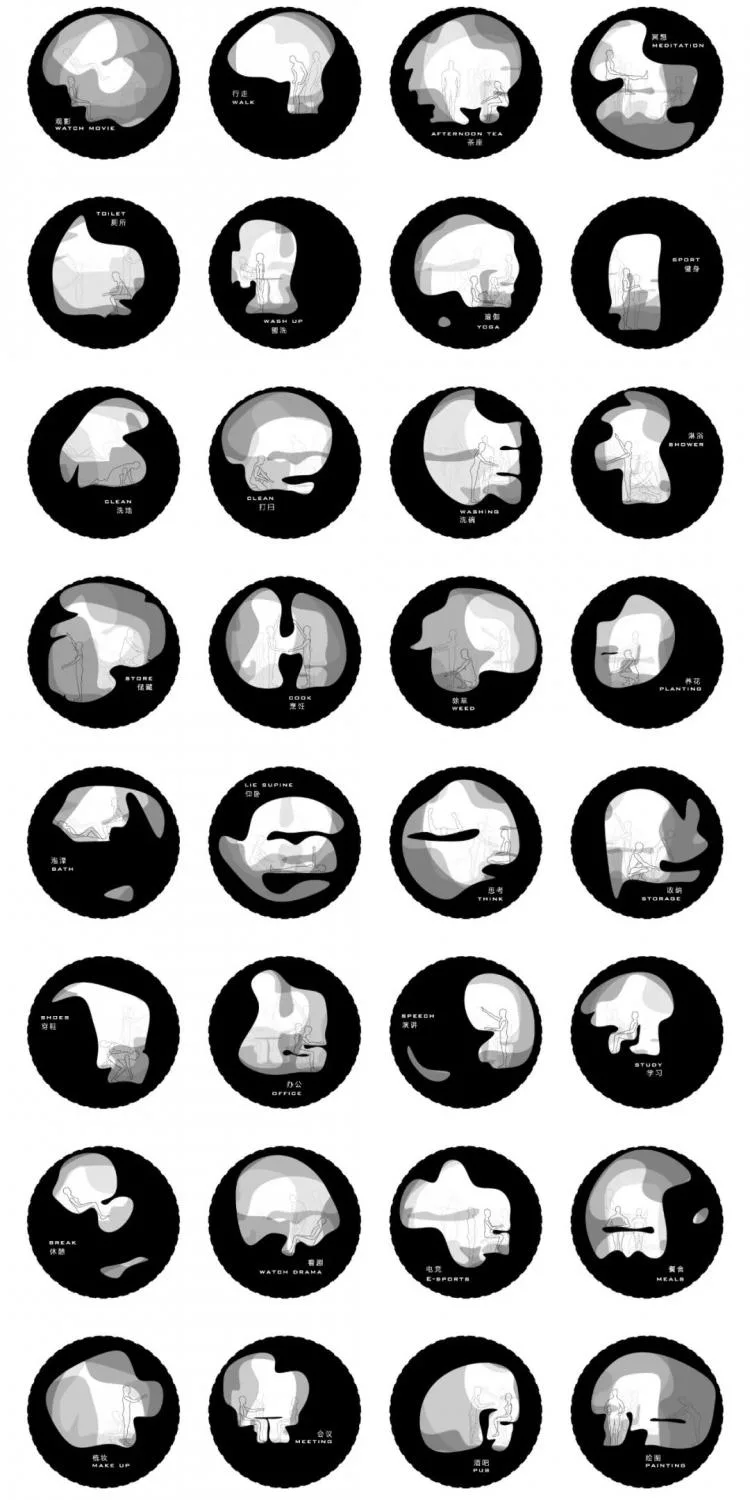
Various living arrangements within the unit
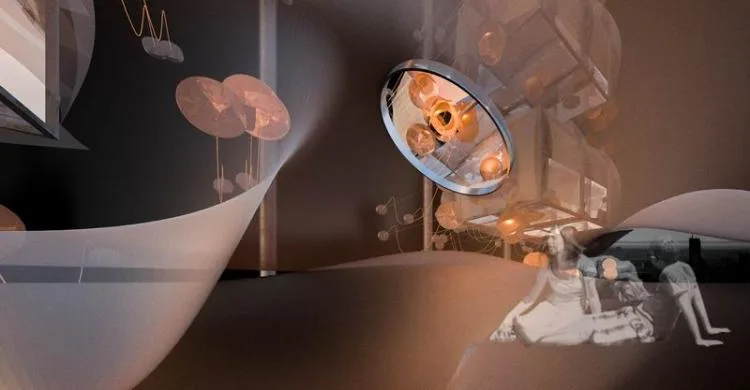
△ Internal rendering of the super residential unit
– Design Summary
– SUMMARY
To conclude, this proposal presents several innovations:
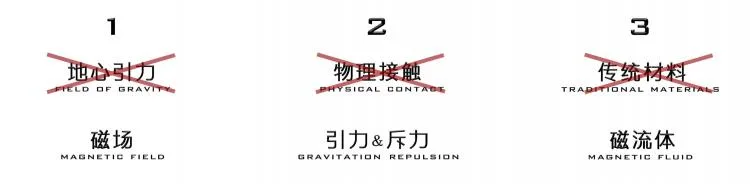
First, it creates a magnetic field via the Meissner effect to achieve magnetic levitation, overcoming gravity and enabling vertical operation of residential units to address increasing urban density.
Second, it avoids physical contact between traditional modular units by using magnetic attraction and repulsion, enabling two distinct modes—aggregation for normal times and dispersion for epidemic conditions.
Finally, it employs magnetic fluid to shape a flexible super residential unit that attaches externally to magnetic plates and internally adapts spatially to functional needs, making it an ideal model for epidemic isolation.
Alongside the design, Unity software was used to program and simulate this operation mode.

△ Unity simulation of the solution’s magnetic force operation
As three-time Pulitzer Prize winner Thomas Friedman once noted, “Hot, Flat, and Crowded”—under the catastrophic conditions of 2020, reimagining human habitation through anti-gravity technologies could offer new paths forward.
[Acknowledgements]
Special thanks to Teacher Xin Shanchao for competition guidance, Student Ren Rui for programming support, and Student Lin Wanjing for assistance.
[References]
[1] X-Men movie series
[2] Rosensweig R E. Heating magnetic fluid with alternating magnetic field. Journal of Magnetism & Magnetic Materials, 2002, 252:370-374.
[3] Odenbach, S. Recent progress in magnetic fluid research. Journal of Physics Condensed Matter, 2004, 16(32):1135-1150.
[4] Zahn M. Magnetic Fluid and Nanoparticle Applications to Nanotechnology. Journal of Nanoparticle Research, 2001, 3(1):73-78.
[5] Geim A K, Dubonos S V, Lok J G S, et al. Paramagnetic Meissner effect in small superconductors. Nature, 1998, 396(6707):144-146.
[6] Braunisch W, Knauf N, Bauer G, et al. Paramagnetic Meissner effect in Bi high-temperature superconductors. Physical Review Letters, 1992, 68(6):1908.
(Except for the X-Men movie content, all images and text were created by the author.)
For more in-depth interpretations of outstanding competition entries, please stay tuned.
Archcollege is recruiting authors long-term.
Manuscript fees range from 300 to 1000 RMB per article, with annual best-work bonuses up to 10,000 RMB.
To learn more, please leave a message on the website backend or add WeChat: JZXY-YZ.














Must log in before commenting!
Sign Up