
1. Background – Strategic Guidance for Rural Revitalization
Guhe Middle School, established in July 1957, was the second junior high school founded in Quanjiao County. In 1983, it received approval from the Provincial Department of Education to become a six-year general middle school. Situated on Longshan Road in Guhe Town, Quanjiao County, Chuzhou City, Anhui Province, the school spans 54.3 acres.
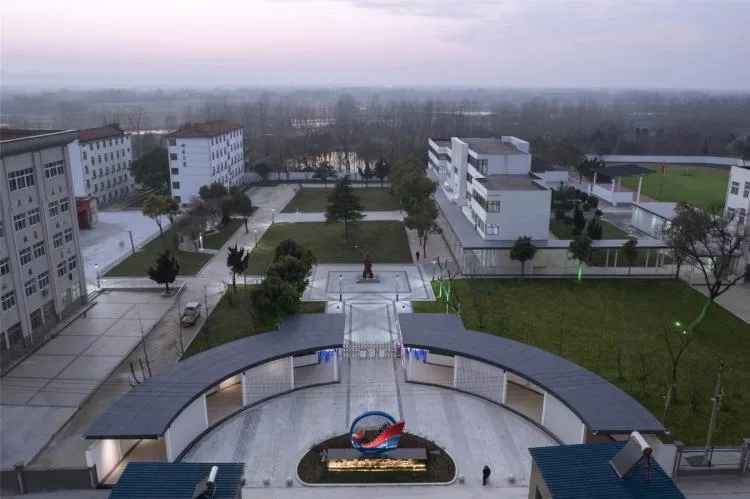
△ Aerial overview of Guhe Middle School
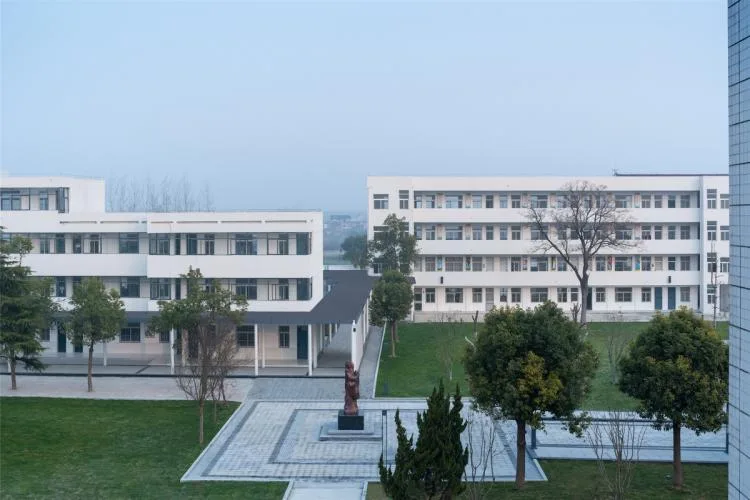
△ Partial aerial view of the campus
On January 2, 2018, the State Council issued the 2018 No. 1 Central Document, titled “Opinions of the CPC Central Committee and the State Council on Implementing the Rural Revitalization Strategy.” This document emphasizes prioritizing rural education development and strengthening talent support to drive rural revitalization. The focus is on enhancing compulsory education in rural areas by establishing mechanisms that integrate urban and rural education, promoting balanced and comprehensive development. Efforts are made to improve the basic educational infrastructure of under-resourced schools and to standardize high-quality schools as models radiating support to weaker rural schools.
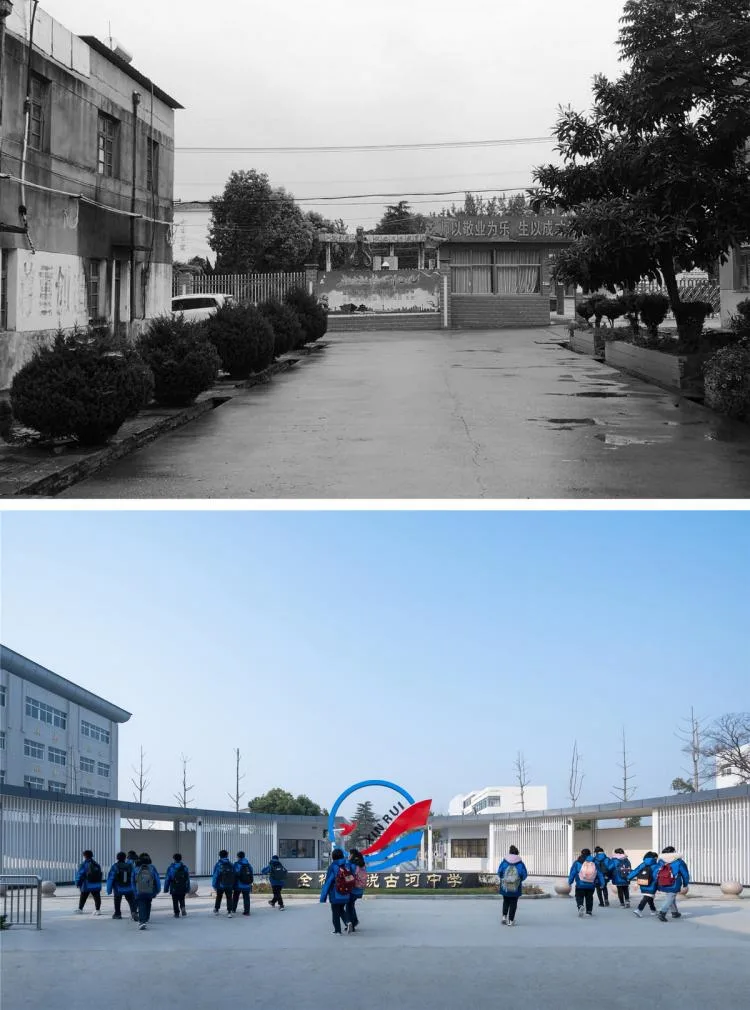
Before and after renovation of the school’s main entrance
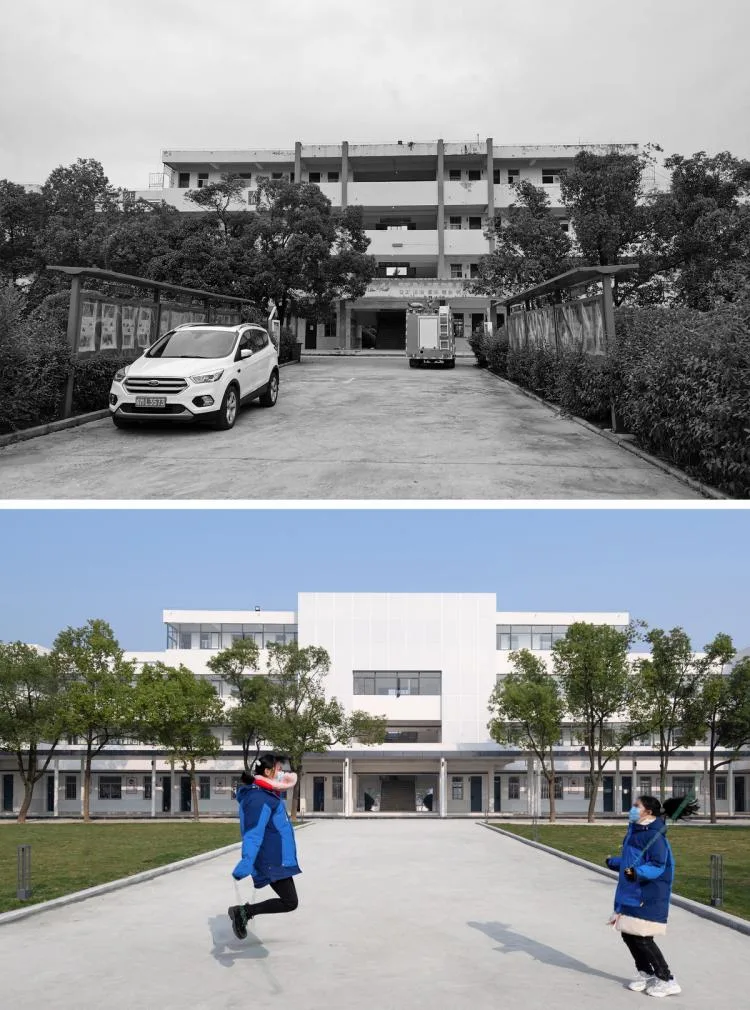
Before and after renovation of the main school building
2. Current Challenges – Hollowed-Out Towns and Abandoned Campuses
Guhe Middle School is bordered on the northwest by Quanjiao County Second People’s Hospital, and its southern main entrance is tightly enclosed by nearby community facilities. The campus includes two teaching buildings, an office building, a cafeteria, separate male and female dormitories, and a playground.
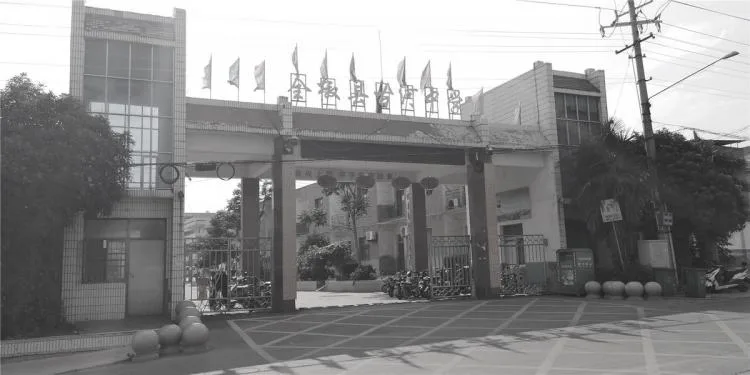
△ Guhe Middle School’s original condition
The school buildings, dating back to the 1950s, suffer from several planning and design flaws: inadequate basic functions, disorganized building layout, and poor connectivity between structures. The campus axis lacks ceremonial presence, sequence, and cohesion, resulting in weak spatial guidance. The environment feels lifeless, with insufficient shaded areas and resting spots. Student living facilities, recreational areas, and sports amenities are underdeveloped. Additionally, the teaching buildings’ facades appear old, damaged, and inconsistent, lacking emphasis. Road dimensions are unplanned, and vehicle management is inadequate.
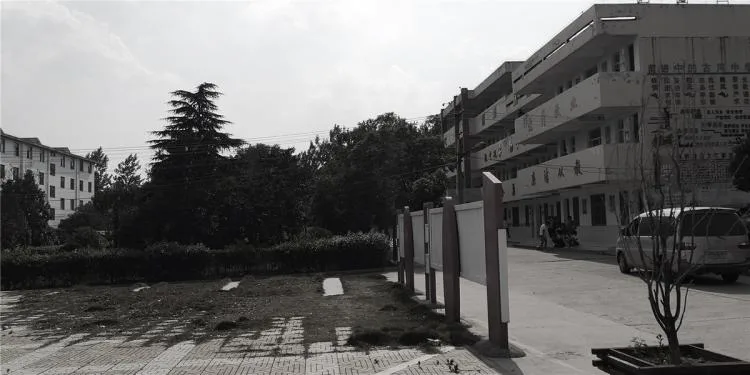
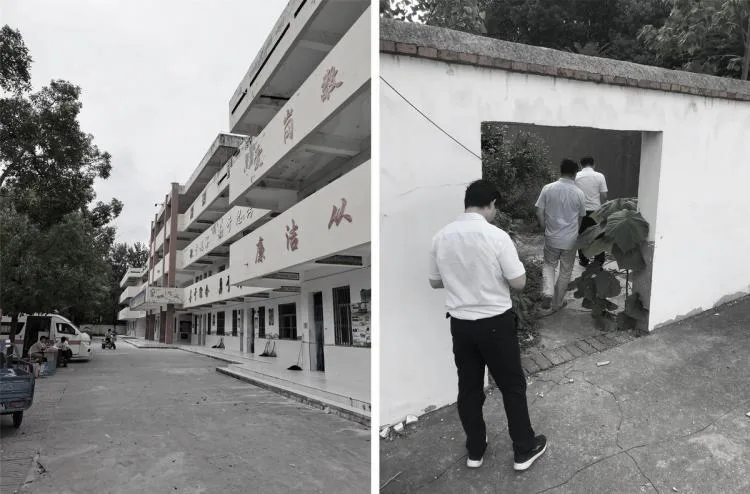
△ Original campus condition
3. Opportunity – A New Model for Innovation
The pressing challenge for rural schools is to address current issues and demands by establishing new mechanisms that stimulate fresh resources. This project is a collaborative educational initiative between Anhui Xinrui Holdings Group and the People’s Government of Quanjiao County, following the principles of “government support, enterprise investment, and brand leadership.” Anhui Xinrui Holdings Group is investing in upgrading and transforming the existing public township high school.
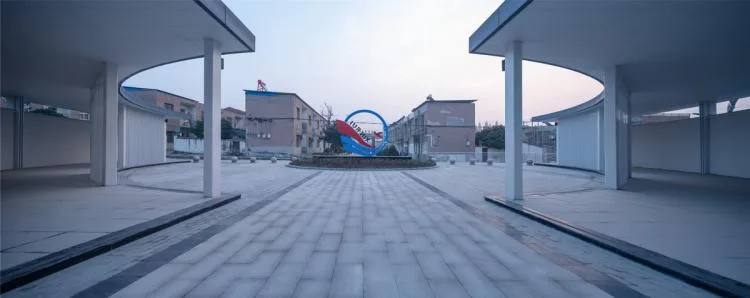
△ Ceremonial entrance after renovation
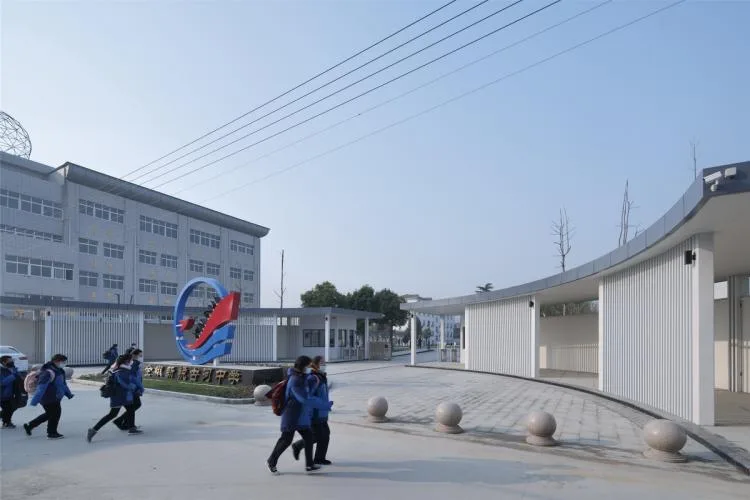
Students arriving early in the morning
Anhui Xinrui Holdings Group, dedicated to education, brings together numerous education experts and renowned principals domestically and internationally. Their mission is to “provide high-quality education services and lay the foundation for students’ lifelong development.” The renovation project continues this educational mission by promoting emerging elite education, emphasizing regional cultural characteristics, and integrating innovative ideas in technology, ecology, and smart solutions. The aim is to revitalize township culture, establish a strong brand identity, create a flagship educational institution, and pioneer a new 2.0 model for township schools.
4. Requirements – A Modern Campus for Rural and Urban Children
Unlike many rural schools designed primarily to serve urban visitors or tourists, this renovation targets retaining children and young talent within the town. The goal is to provide a modern, well-equipped campus for both rural and urban students.
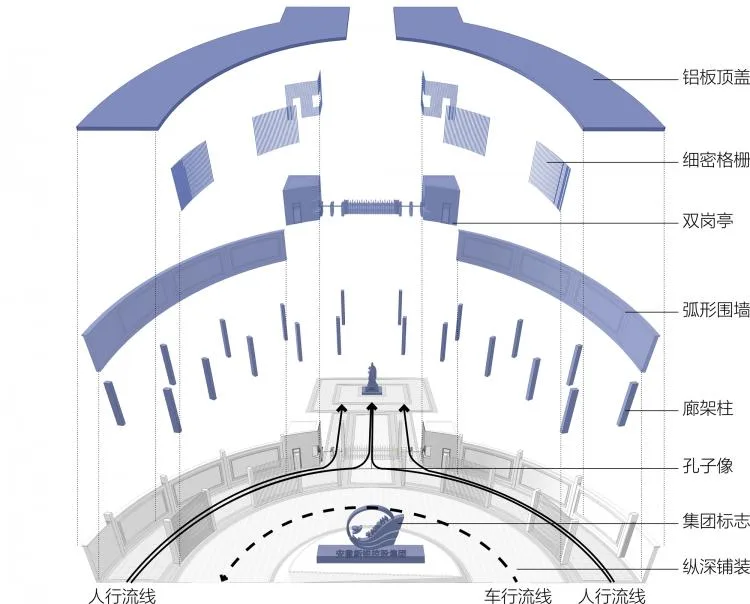
Analysis of the entrance design emphasizing ceremonial presence
The design team conducted a thorough analysis of the current site and identified key upgrade priorities. The transformation strategy focused on minimal structural changes while optimizing function, flow, spatial sequence, and atmosphere. Strict cost control, quality balance, and scheduling ensured efficient progress. The design empowered the campus by efficiently enhancing the overall environment and school spirit with low investment.
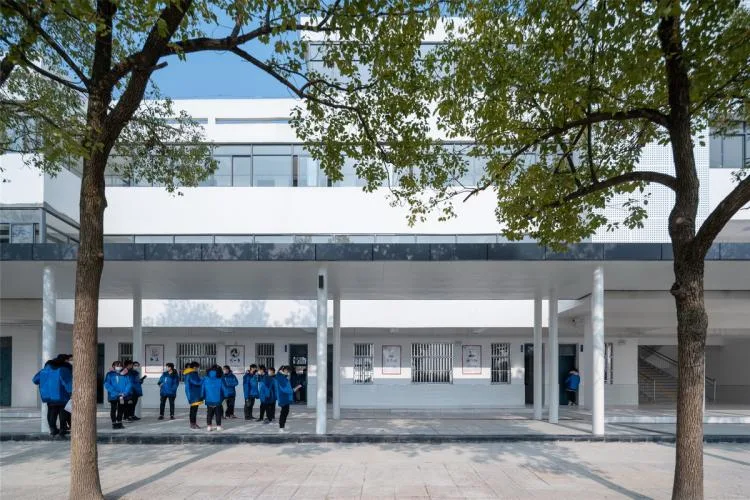
△ Newly renovated campus
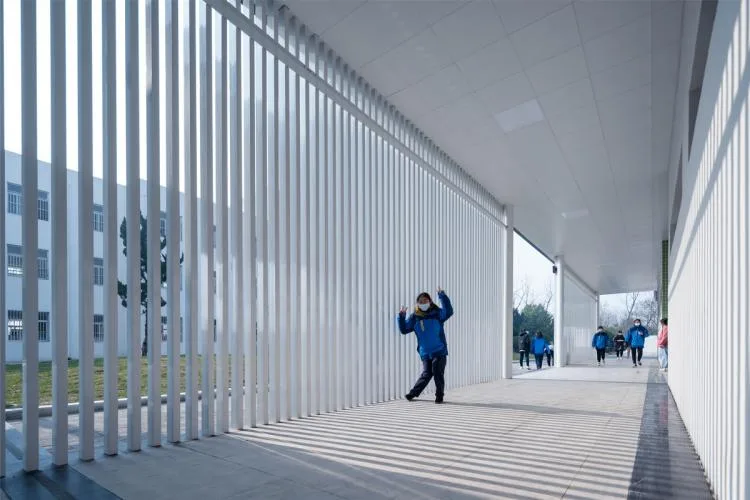
Returning to a familiar yet renewed campus, the children express delight
Since its founding in 1957, Guhe Middle School has witnessed the growth of multiple generations. The Confucius statue and the campus’s annual ring sculptures, which have stood since the school’s inception, testify to its rich history.
The design places the Confucius statue at the visual focal point along the central axis, fostering a profound “dialogue” with the school’s history and surroundings. This reflects teachers’ and students’ aspirations, highlights traditional cultural symbols, preserves site memory, and seeks answers through design exploration.
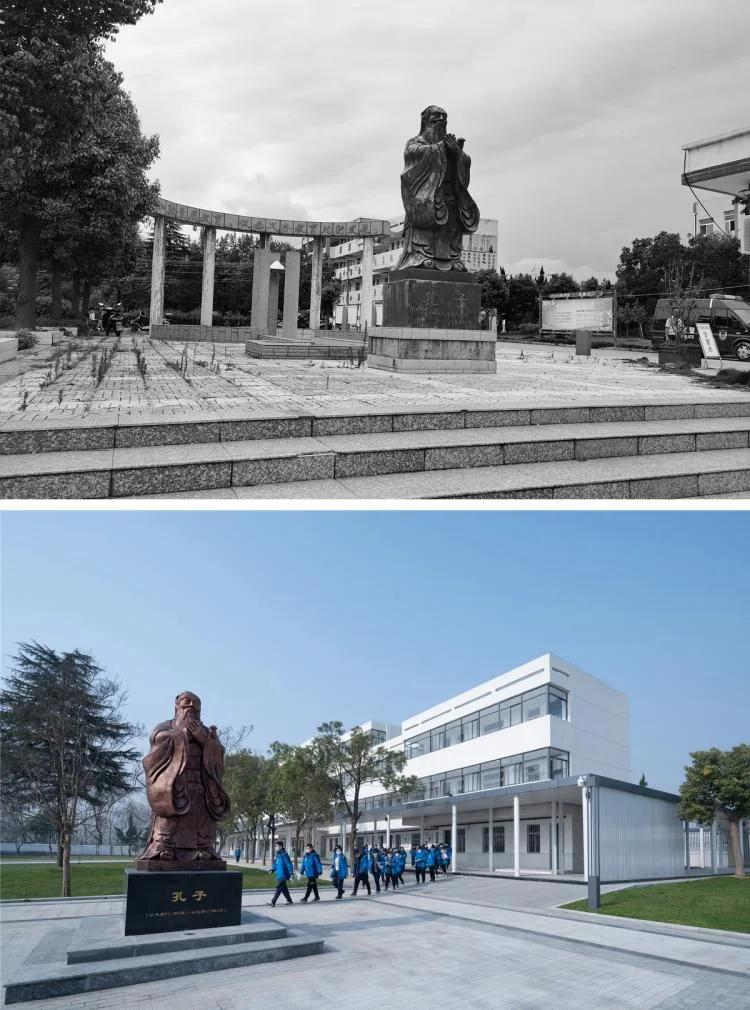
Before and after comparison of the Confucius statue on campus
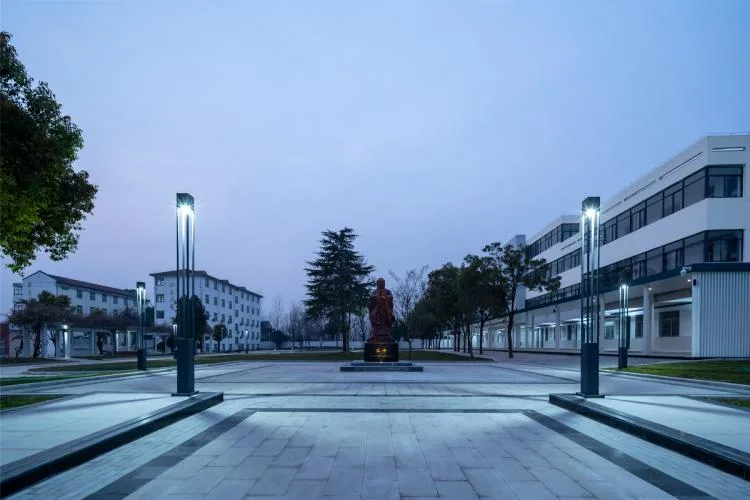
The Confucius statue remains a key landmark within the school
5. Empowerment – Lightweight Design Transformation Strategy
Spatial Redesign: Starting at the ceremonial entrance, deep linear paving creates an open plaza. The use of symmetrical pavilions enhances the sense of formality, while a curved corridor echoes the ground pattern, adding spatial depth.
The campus greenery and plazas have been reorganized into a symmetrical layout anchored by two vertical and horizontal axes and a central axis. This central axis order forms the core of the outdoor landscape renovation, fostering a rhythm of openness, closure, brightness, and a grand atmosphere.
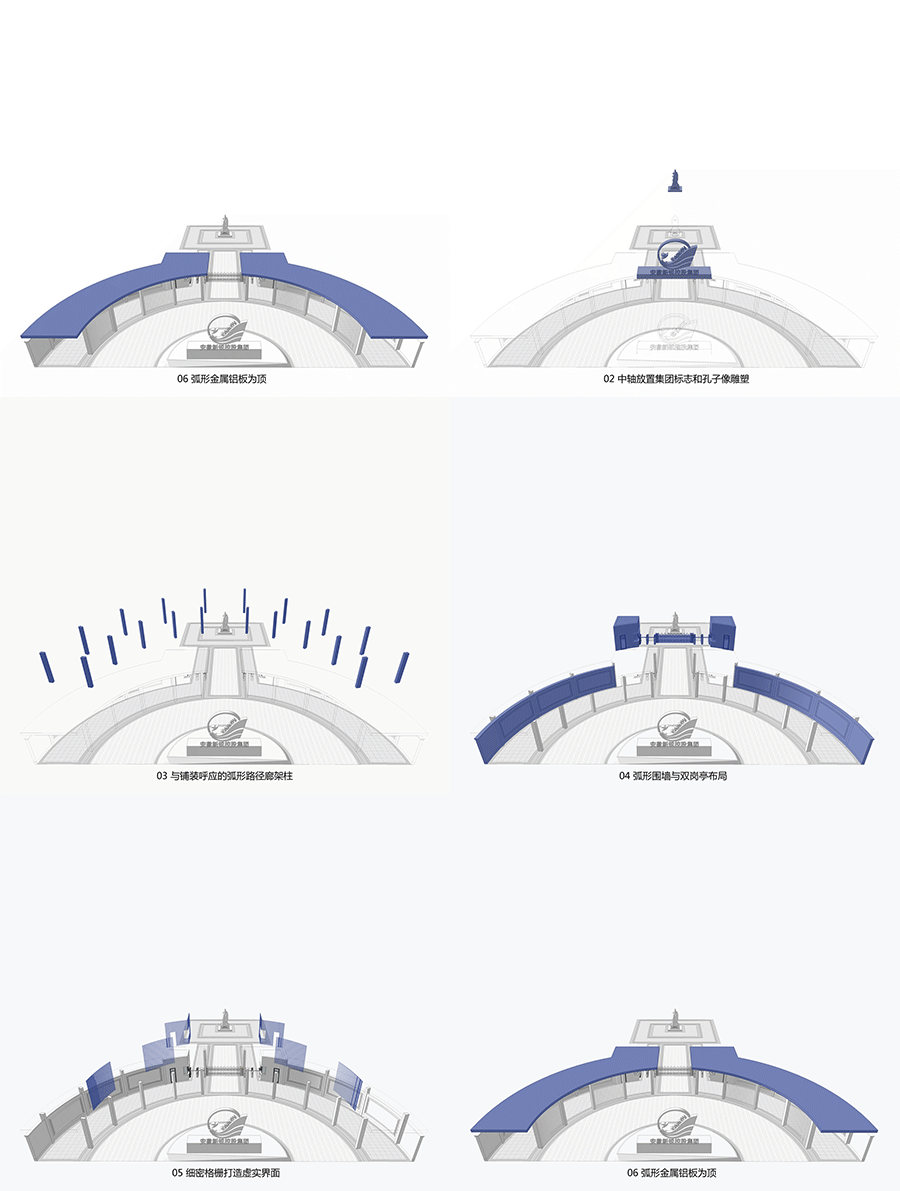
△ Dynamic analysis of the ceremonial entrance design
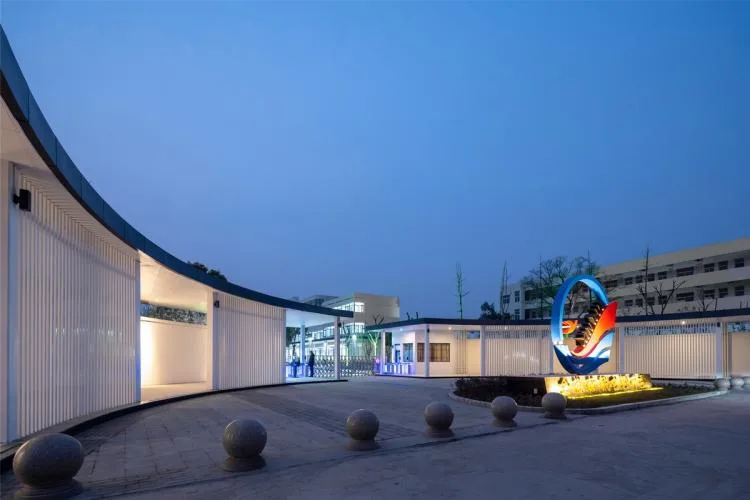
△ Night view perspective of the entrance
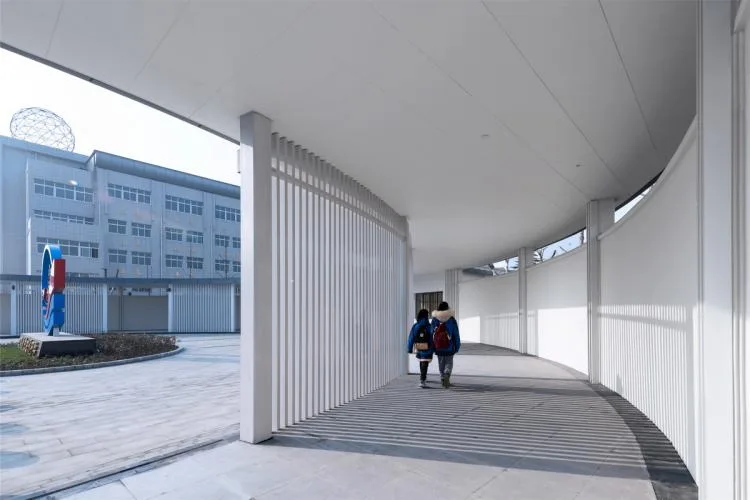
△ Light and shadow details at the main entrance
Functional Improvements: The renovation reorganizes campus facilities, adding more sports fields distributed throughout the site. The public restroom has been relocated to the west side of the North Teaching Building, improving accessibility for teachers and students in both teaching buildings. A small convenience store is planned between the male and female dormitories to support students’ daily needs. These upgrades foster a modern campus environment that supports the all-around development of students and staff. The convenience store will be implemented in the project’s second phase.
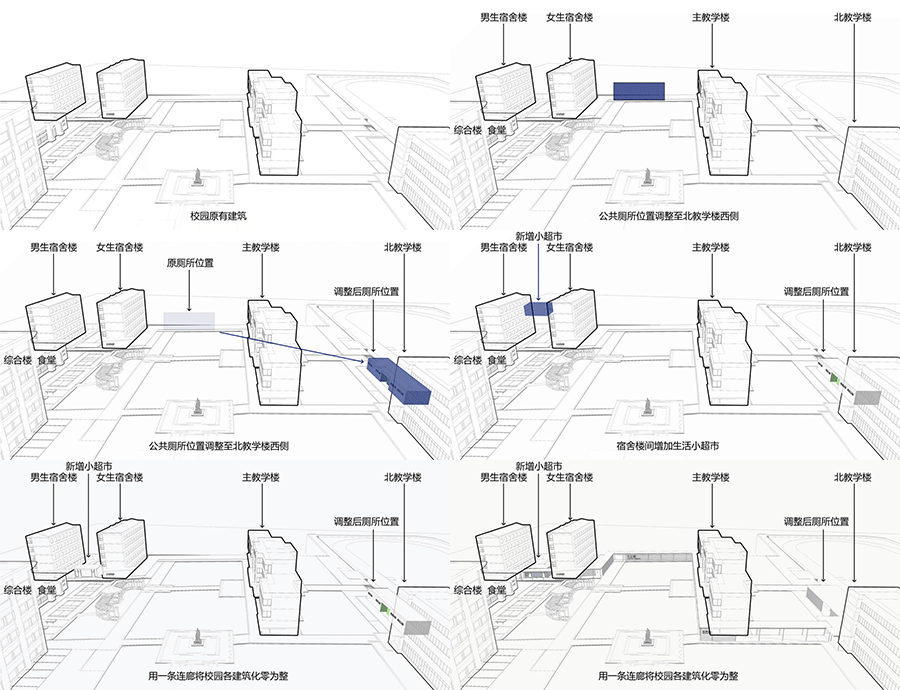
△ Functional layout dynamic analysis
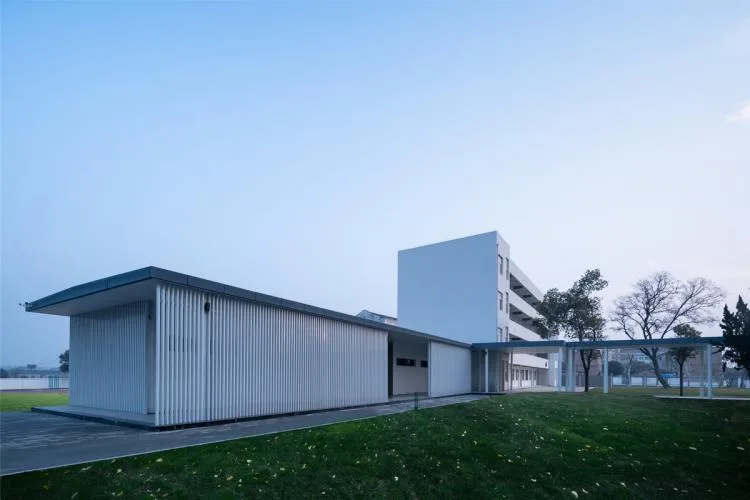
△ Public restroom relocated west of the North Teaching Building
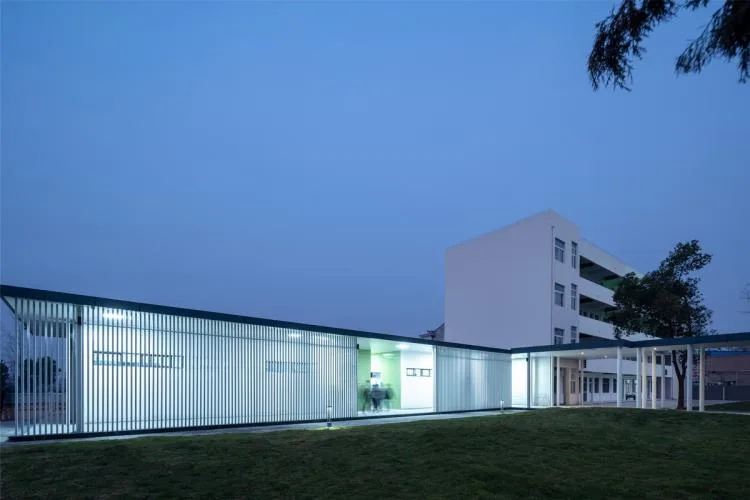
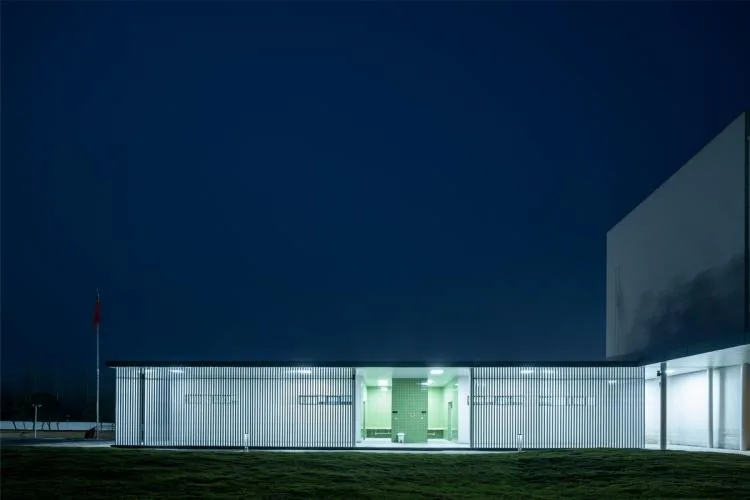
△ Night perspective of the public restroom
Cultural Corridor: The design links various buildings with a cultural corridor, integrating teaching and dormitory buildings into a cohesive whole. This arrangement naturally forms multiple courtyard spaces, blending with the central courtyard. The boundary between enclosed and open spaces is adorned with intricate lattice work, reflecting seasonal changes, flowing light, and the passage of time.
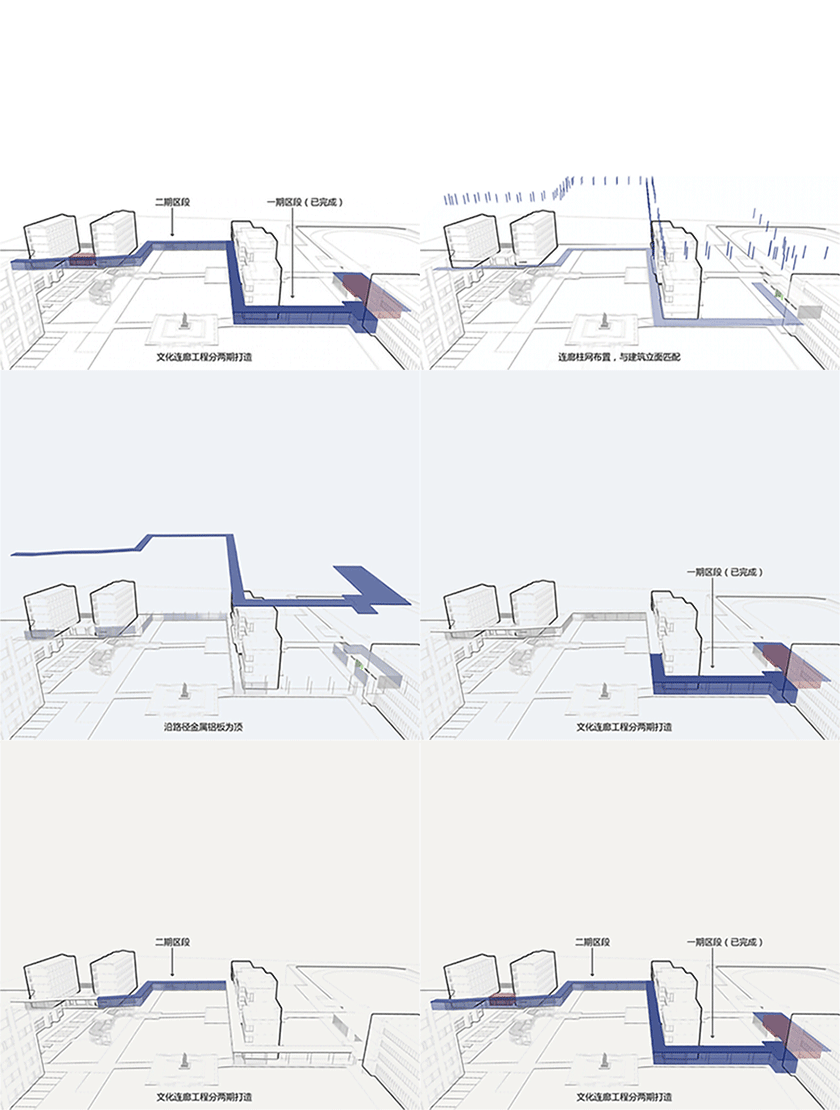
Dynamic analysis of the cultural corridor design
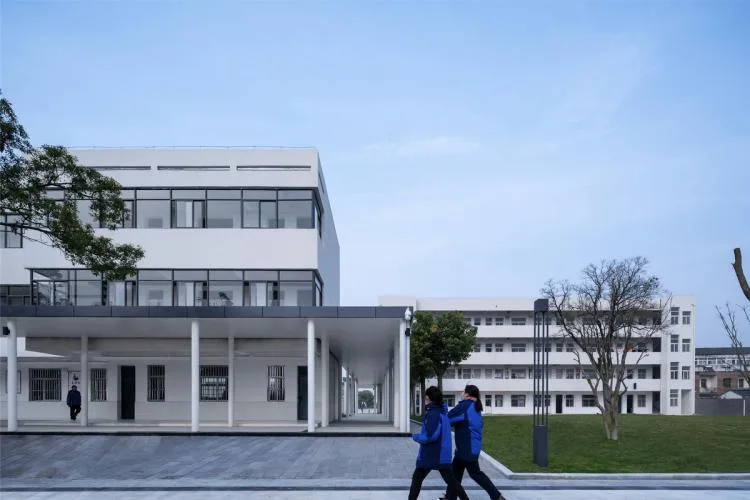
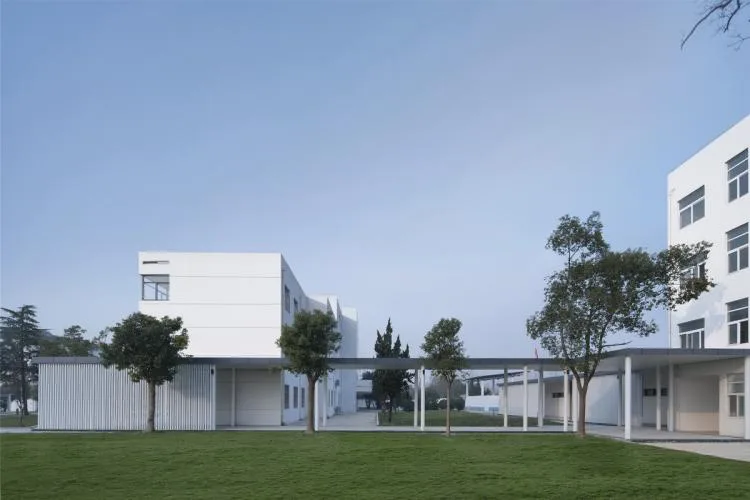
The corridor connects campus buildings into a unified whole
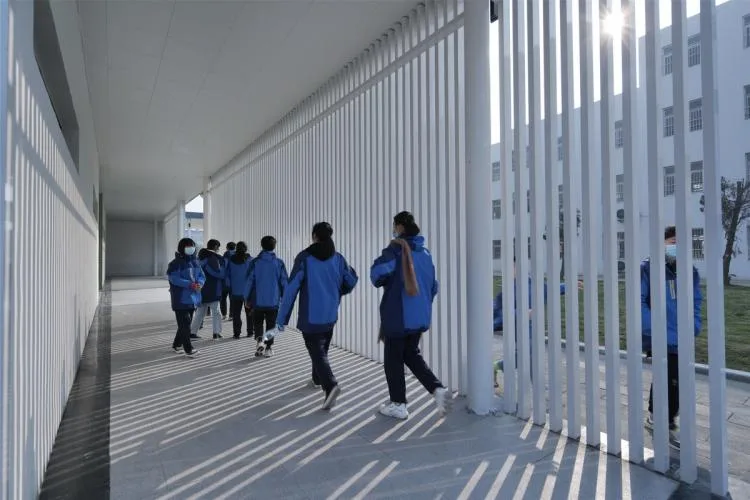
△ Light and shadow details of the cultural corridor
Facade Optimization: The building facades are predominantly white, maintaining the original staggered concrete pouring texture and emphasizing horizontal lines for a more spacious appearance. Previously disjointed vertical elements are unified and enhanced with white perforated aluminum panels, creating a continuous, clean, and rhythmic facade. Public corridors were also renovated with fresh white paint and simplification, giving the structures a modern aesthetic.
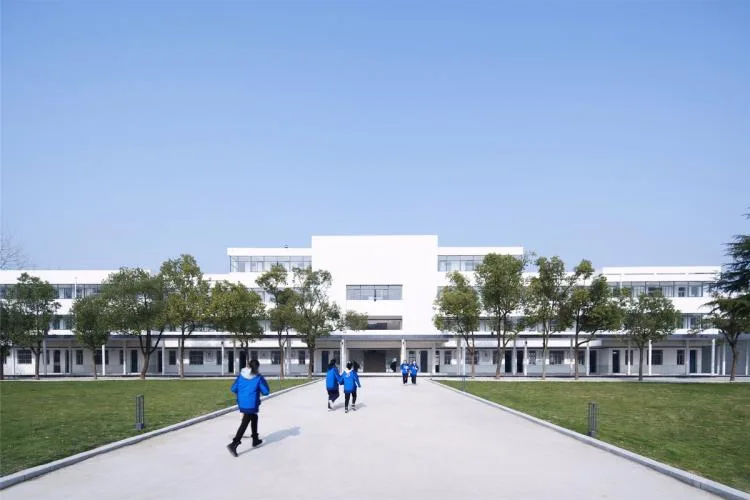
△ Renovated facade of the main teaching building
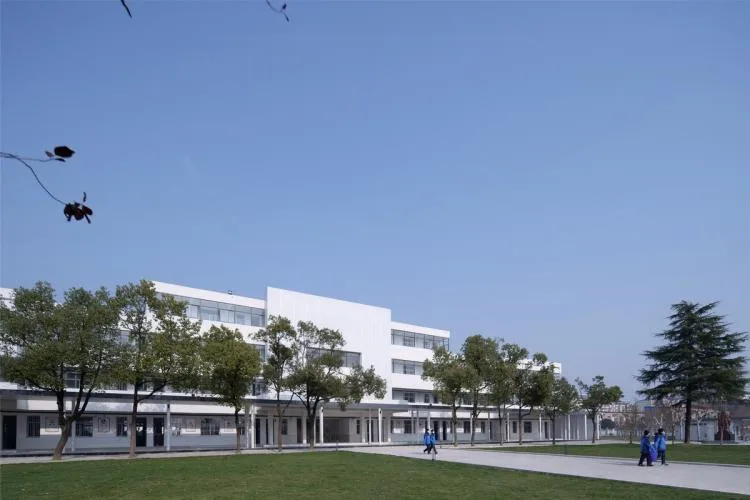
△ Clean and rhythmic facade design
The main school building’s first floor is partially elevated, combined with outdoor staircases to create multiple activity platforms. These open spaces help relieve study pressure, encourage communication, and blend education with leisure to provide unique experiences.
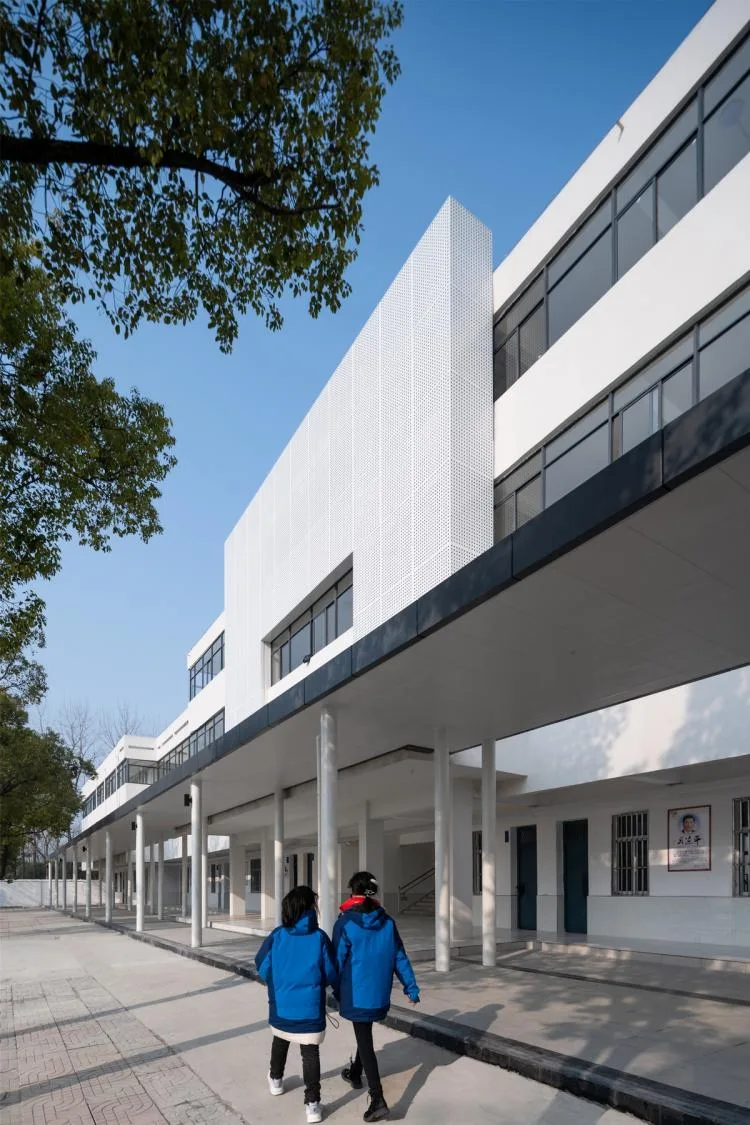
△ Facade details of the main school building
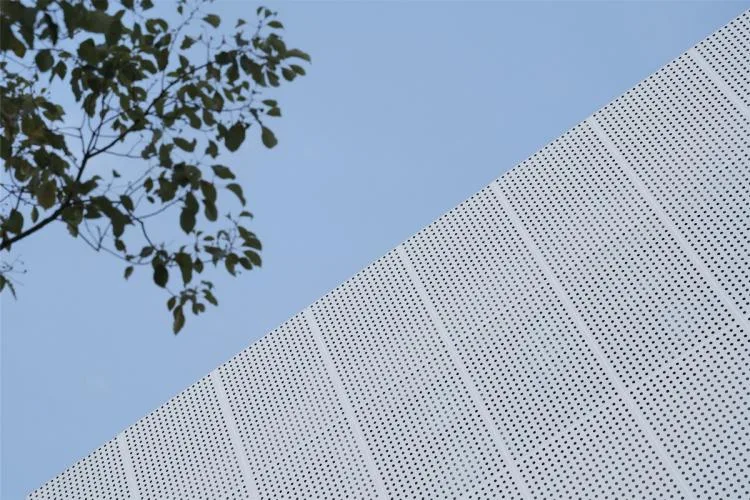
Details of perforated white aluminum panels
6. Growth – Activated Campus and Future Developments
After nearly six months from design to construction, the first phase of the Quanjiao Xinrui Guhe Middle School renovation has been completed.
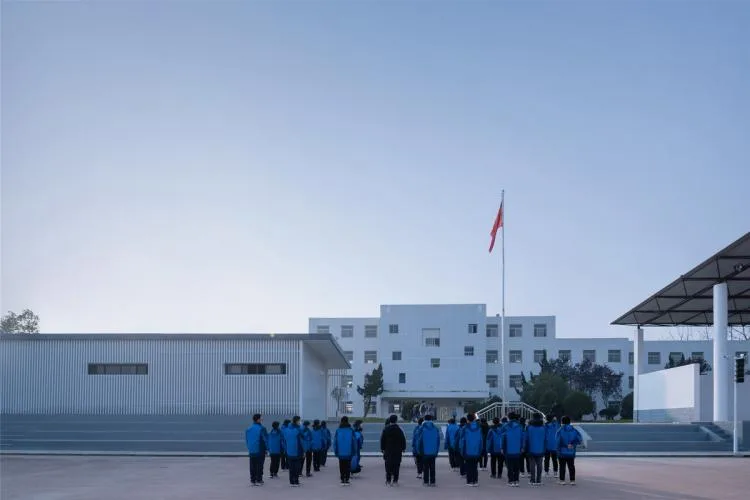
Students participating in a flag-raising ceremony
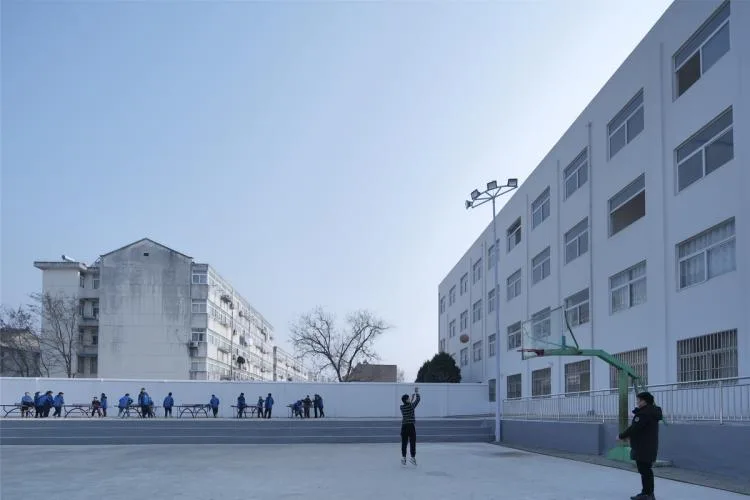
Students enjoying activities on the sports field
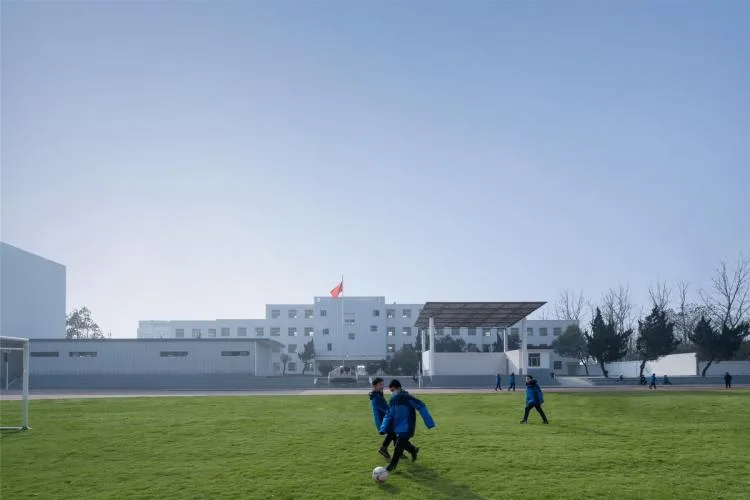
Students playing football on the playground
The design builds upon the school’s original architectural and cultural foundation, adding layers such as spatial sequencing, additional functions, cultural experiences, and social gathering spaces. Xinrui Education Group, Guhe Middle School, and various partners cooperated closely, achieving a high rate of renovation completion and revitalizing the school.
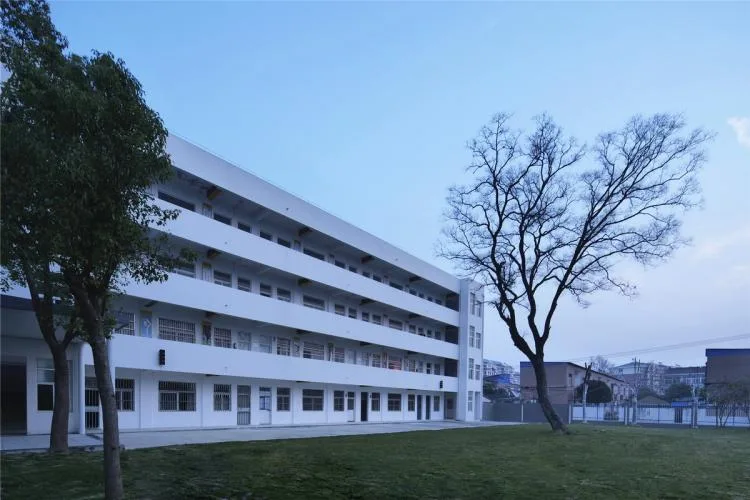
△ North Teaching Building – Phase II construction planned
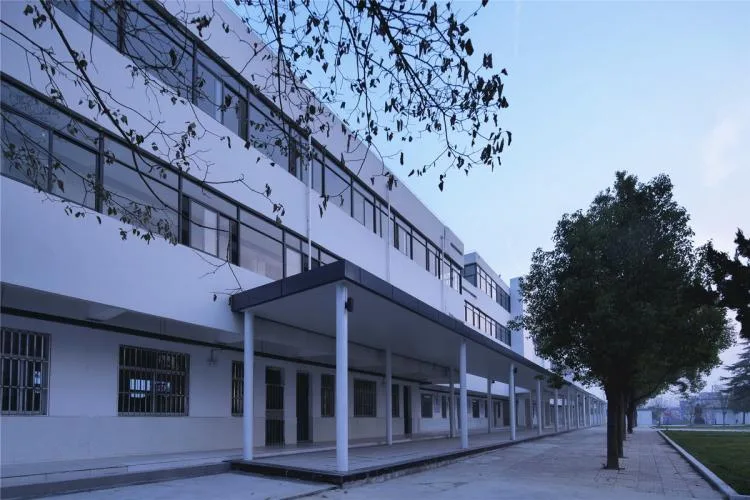
△ Cultural Corridor – Phase II construction planned
The second phase of construction is underway. We anticipate a more fully developed and vibrant campus upon completion, supporting the revitalization of rural education, ecological environment, and local culture, and promoting positive, sustainable growth.
7. Conclusion – Reflections on the Xinxiang Village Campus
After the summer break, students returned to a campus that felt both familiar and new, with joy evident on their faces.
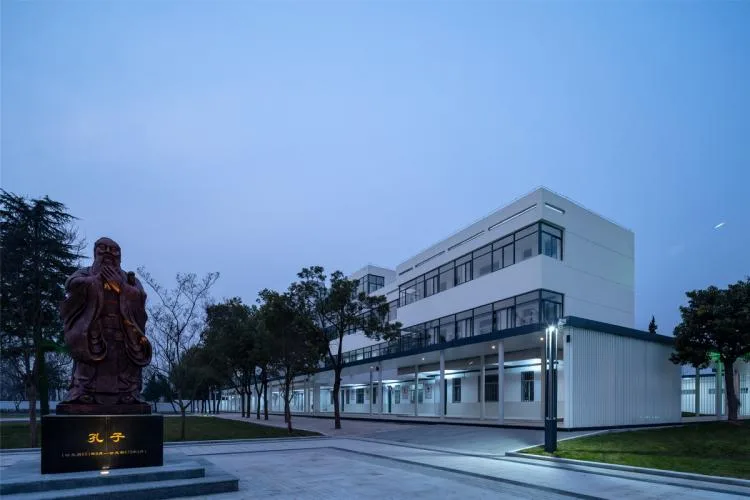
△ Night view of the campus
Projects focused on township renewal carry special significance. Revitalizing township campuses acts as a positive catalyst for village and town rejuvenation. Through design empowerment, we explore new rural renewal models, using educational building renovation as a beacon to illuminate and infuse towns with new vitality.
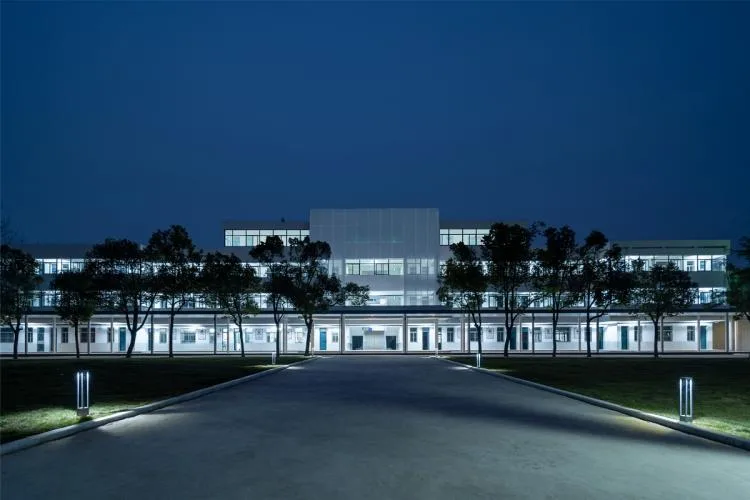
△ Campus night view
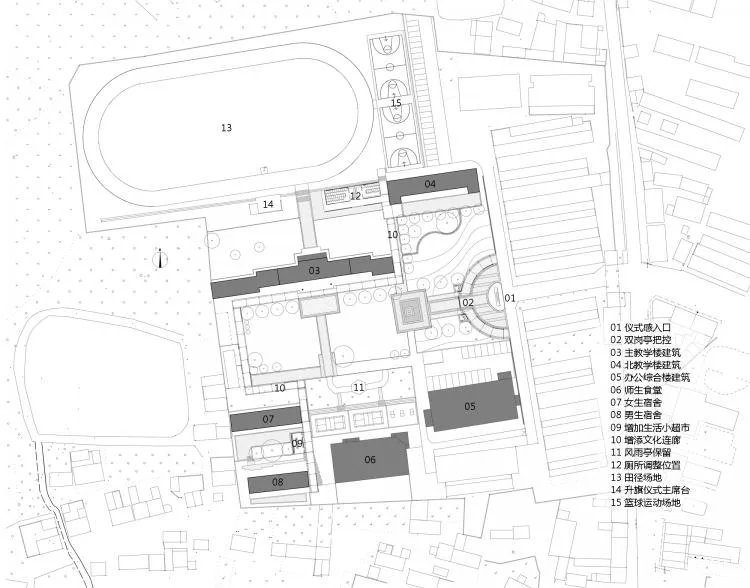
△ Overall campus plan after renovation
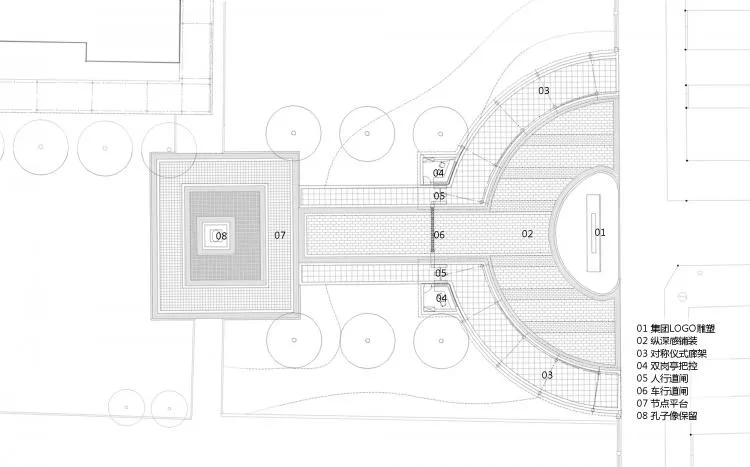
△ Ceremonial entrance plan
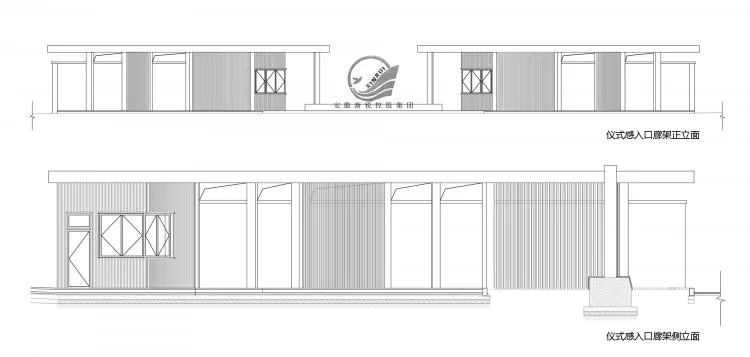
Project Details
Project Name: Renovation of Xinrui Guhe Middle School in Quanjiao County
Project Type: Campus Renovation for Urban Renewal
Location: Quanjiao County, Chuzhou City, Anhui Province
Class Size: 36 high school classes
Campus Area: 15,000 square meters
Design Date: June 2020
Completion Date: November 2020 (Phase I Renovation)
Design Firm: Shanghai Sixu Architectural Planning and Design Co., Ltd. (Facade and Campus Environment Renovation)
Firm Website: http://www.thinkinglogic.cn/
Lead Architect: Wang Tao
Design Team: Chen Lifeng, Li Yan, Lu Qin, Gong Yuhua, Luo Jun, Xiang Yujing, Cong Xiaotang, Li Changshuai, Du Yupeng, Chen Xiaomeng
Owner: Anhui Xinrui Holdings Group Co., Ltd. & Quanjiao County Xinrui Guhe Middle School
Construction Contractor: Anhui Zhongyuan Construction Engineering Co., Ltd.
Cost Consulting: Anhui Ruixin Engineering Project Management Co., Ltd.
Photographer: Dai Xichun • Zhizhu Image












Must log in before commenting!
Sign Up