
Preface
In ancient Chinese architectural philosophy, buildings have always harmonized closely with nature. Their spatial layouts and material choices continuously evolve alongside natural changes and transformations. From this perspective, rural architecture serves as a “native model” nurtured by nature—an organic form shaped over time, naturally emerging from the vast landscape.
Project Background
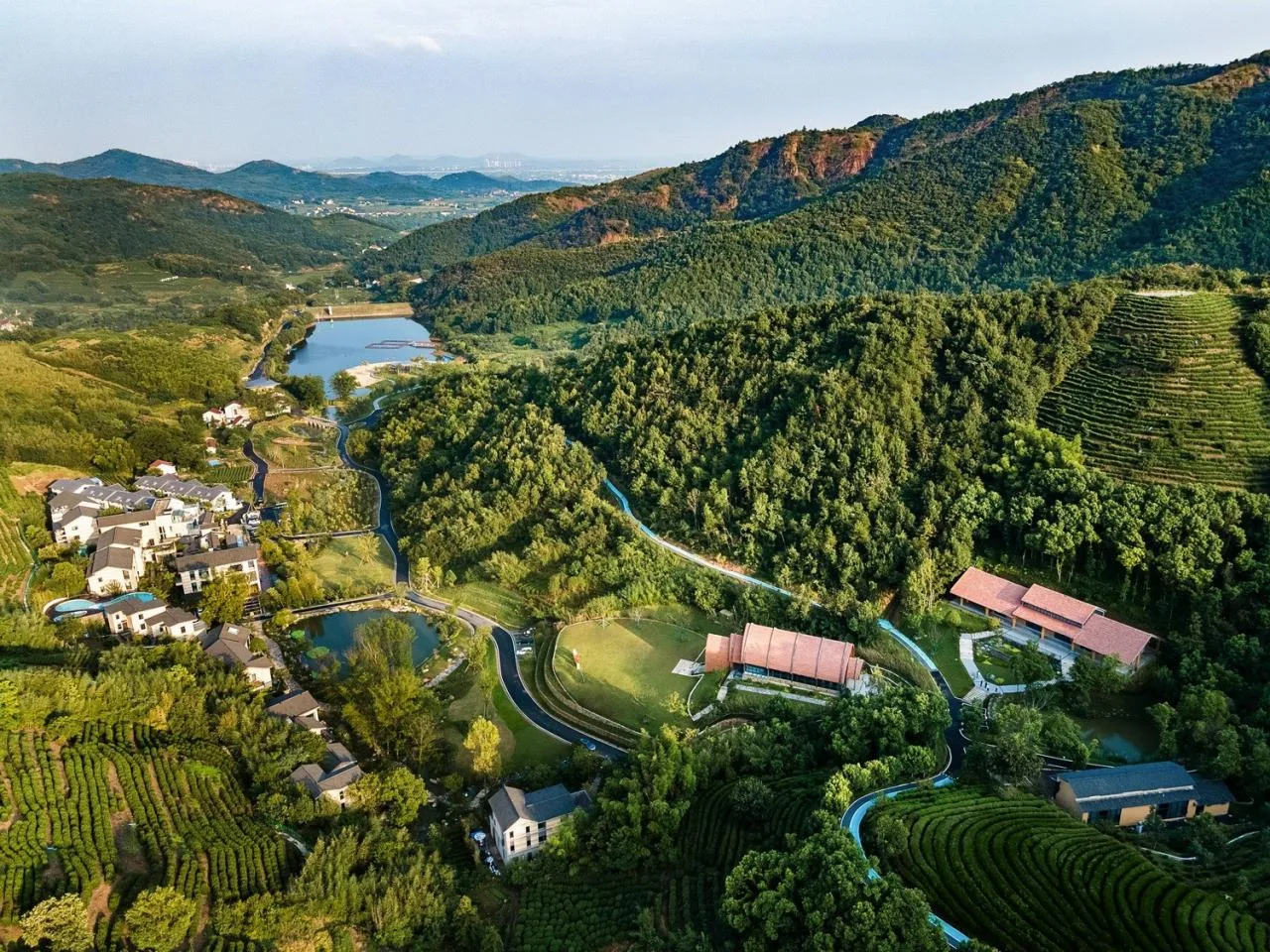
Huwa Happy Tea Valley, located among the mountains of Ketan Town, Lujiang County, is surrounded by lush green hills, clear waters, and beautiful tea gardens. The serene environment creates a picturesque setting perfect for relaxation and tourism.
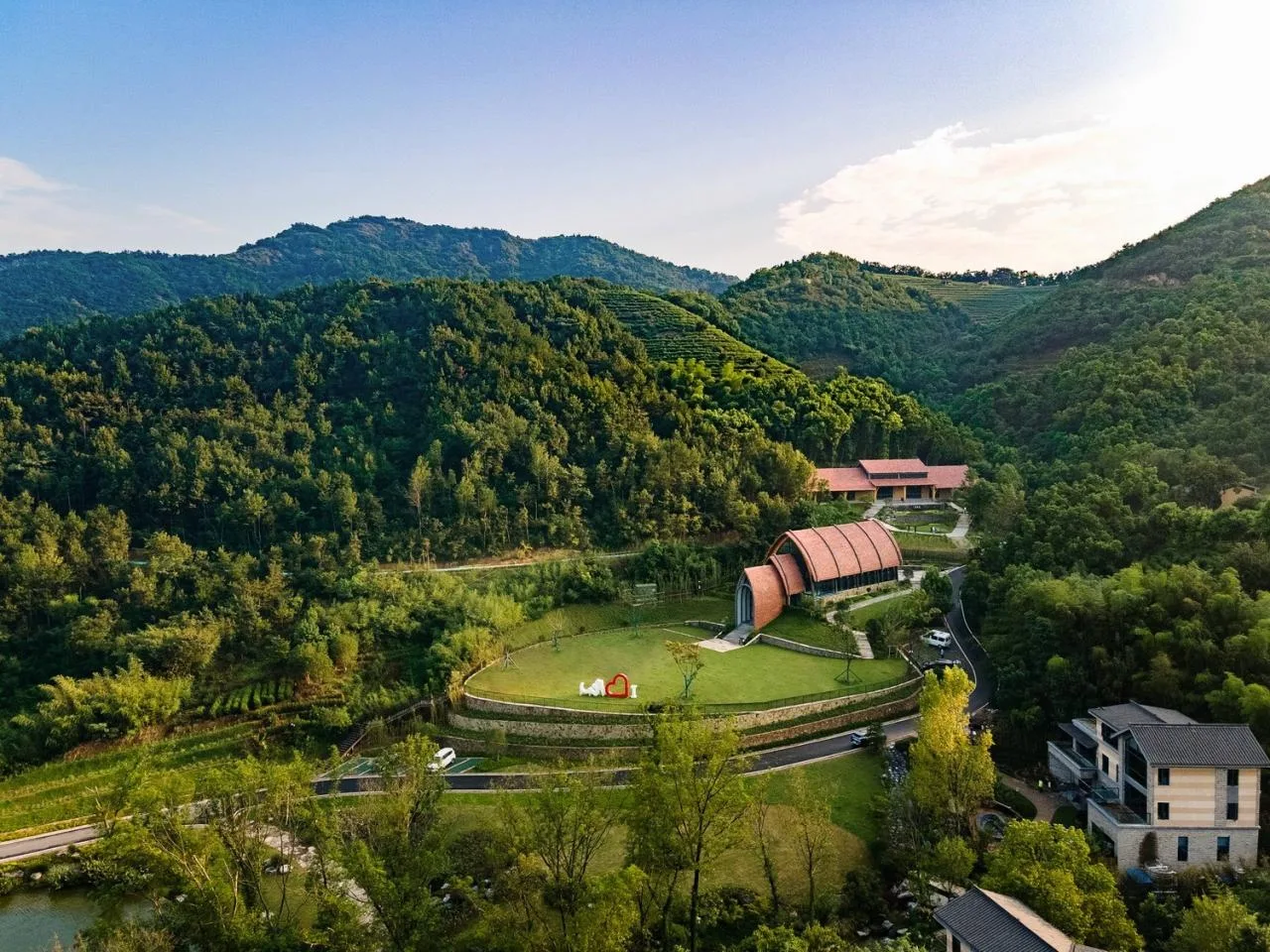
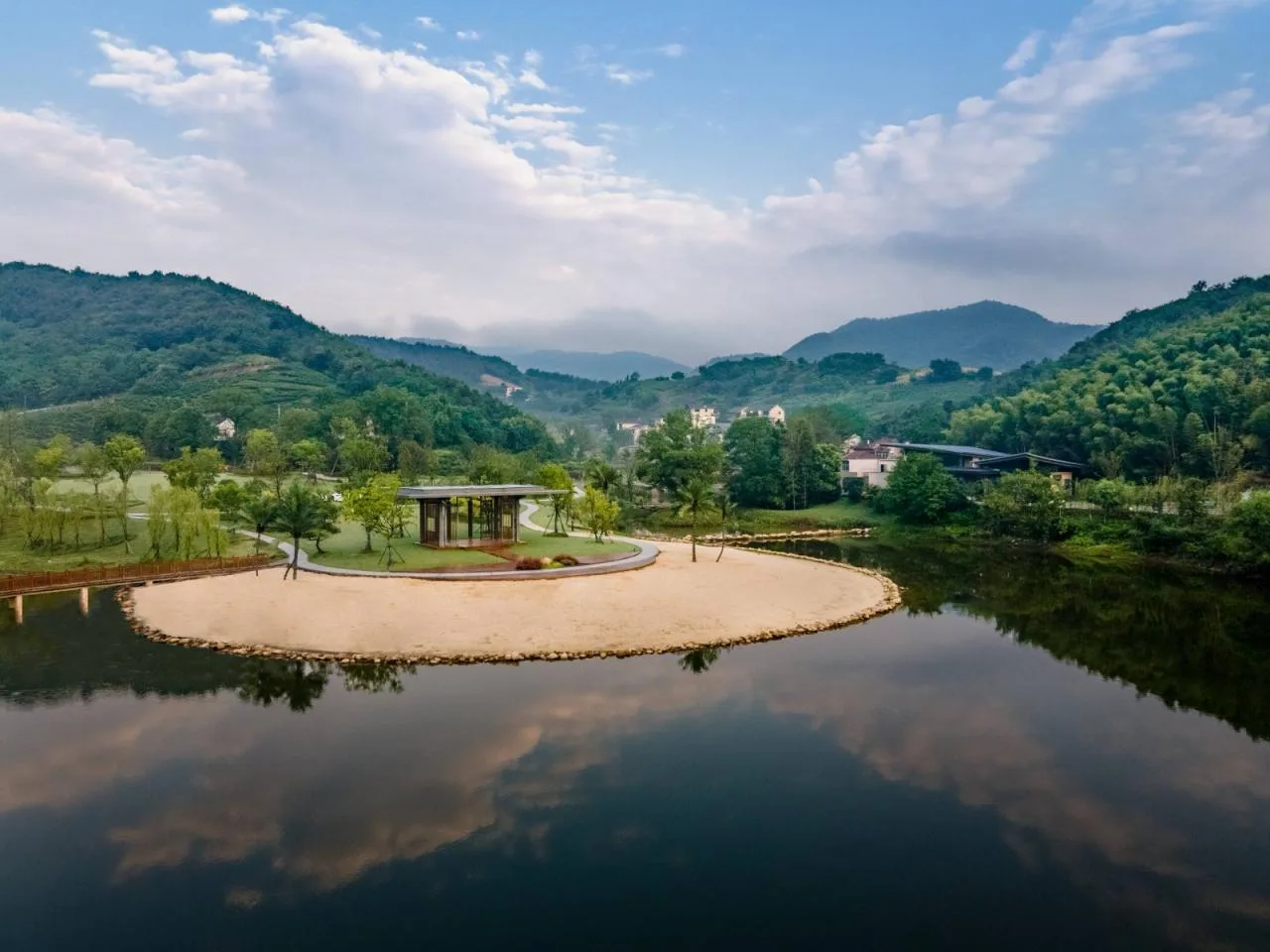
The Tea Valley is thoughtfully designed to follow the mountain’s contours and water flow. By renovating existing rural houses, it creates distinctive zones such as a joyful center, homestays, restaurants, and RV campsites. This rural micro-vacation destination integrates tea field scenery, water-based entertainment, team-building and conference facilities, wellness services, and children’s exploration activities.
Site Interpretation
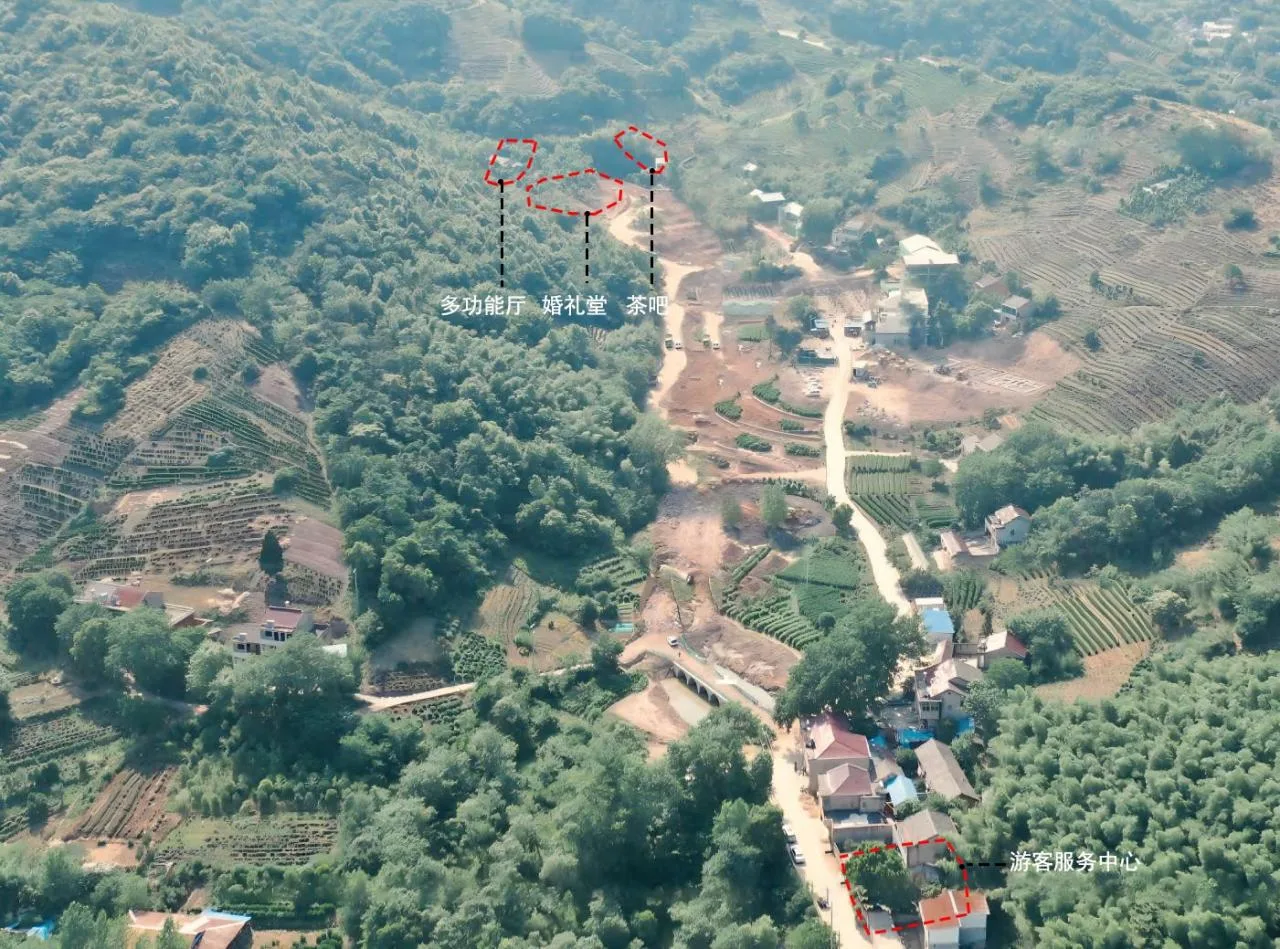
Huwa Happy Tea Valley is situated in Fenshui Village within Ketan Town. Nestled in the valley’s hinterland, the local government aims to revitalize this ancient village by developing Happy Tea Valley. This project leverages Lujiang County’s tourism resources and capitalizes on local environmental advantages.
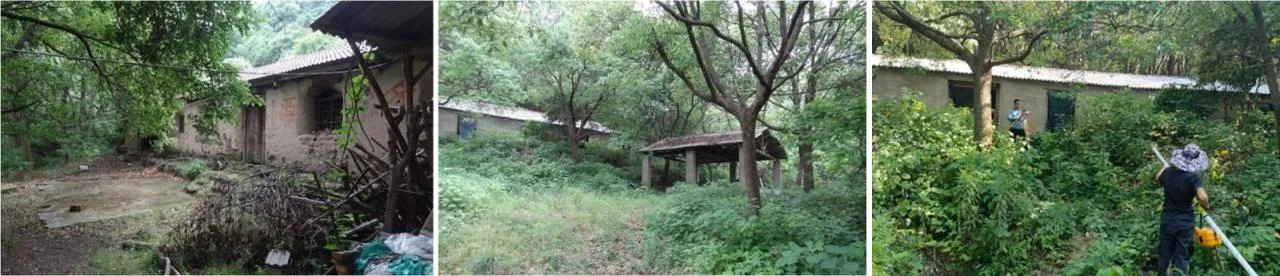
The original site featured residential buildings made of rammed earth walls and solid bricks, alongside livestock shelters constructed from concrete and asbestos tiles. These structures have long been abandoned, bearing the heavy marks of time. The rammed earth walls, once painstakingly built shovel by shovel by villagers, carry the sweat and dreams of countless generations. Now, like the wrinkled skin of an elderly person, they reveal deep cracks and stories of forgotten times, seemingly inviting a gentle touch to revive their memories.
Cha Yan Yue She – Tea Bar
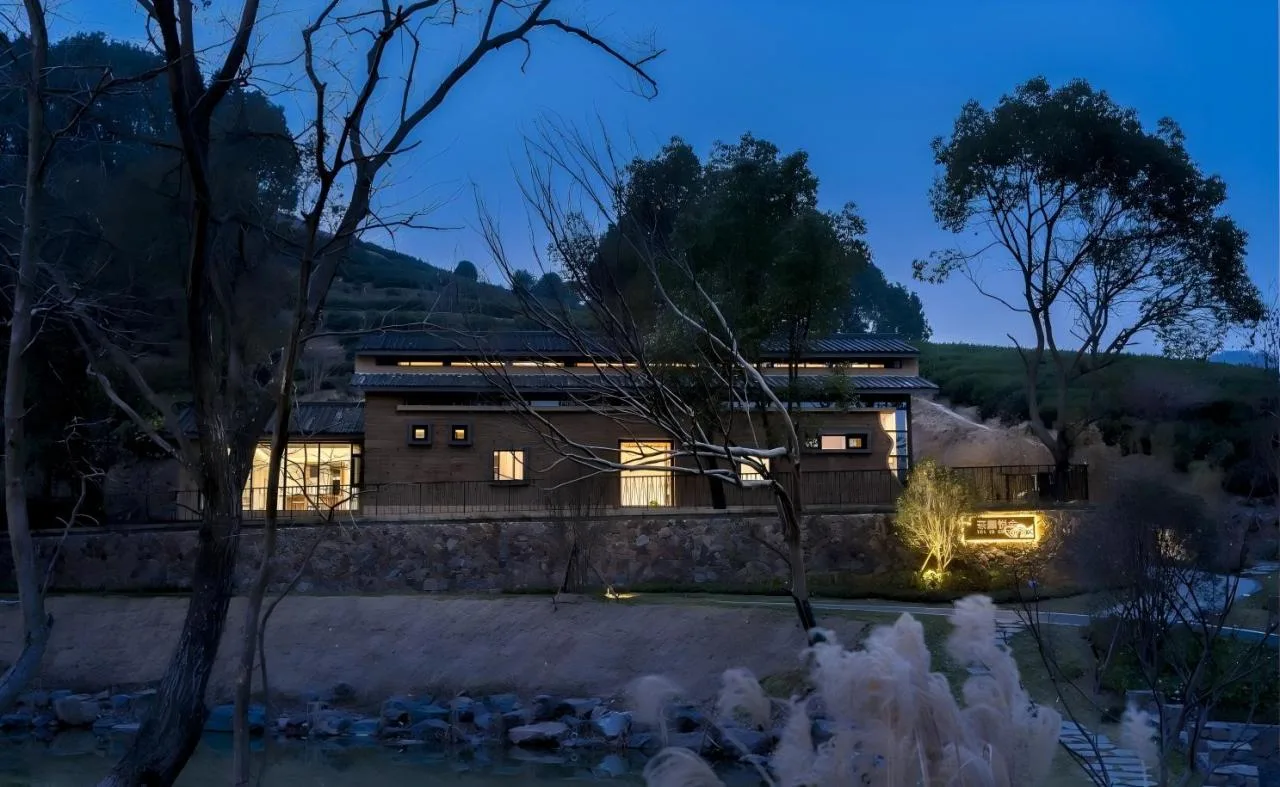
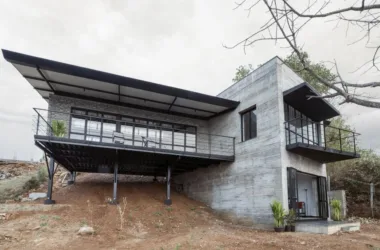
The tea bar is perched on a raised platform, sitting two meters above the adjacent winding road. A stepped trail on the north side gently resolves this height difference. Each step feels like a cleansing journey for the soul, gradually freeing visitors from worldly concerns and preparing them to savor the forthcoming aroma and tranquility of tea.
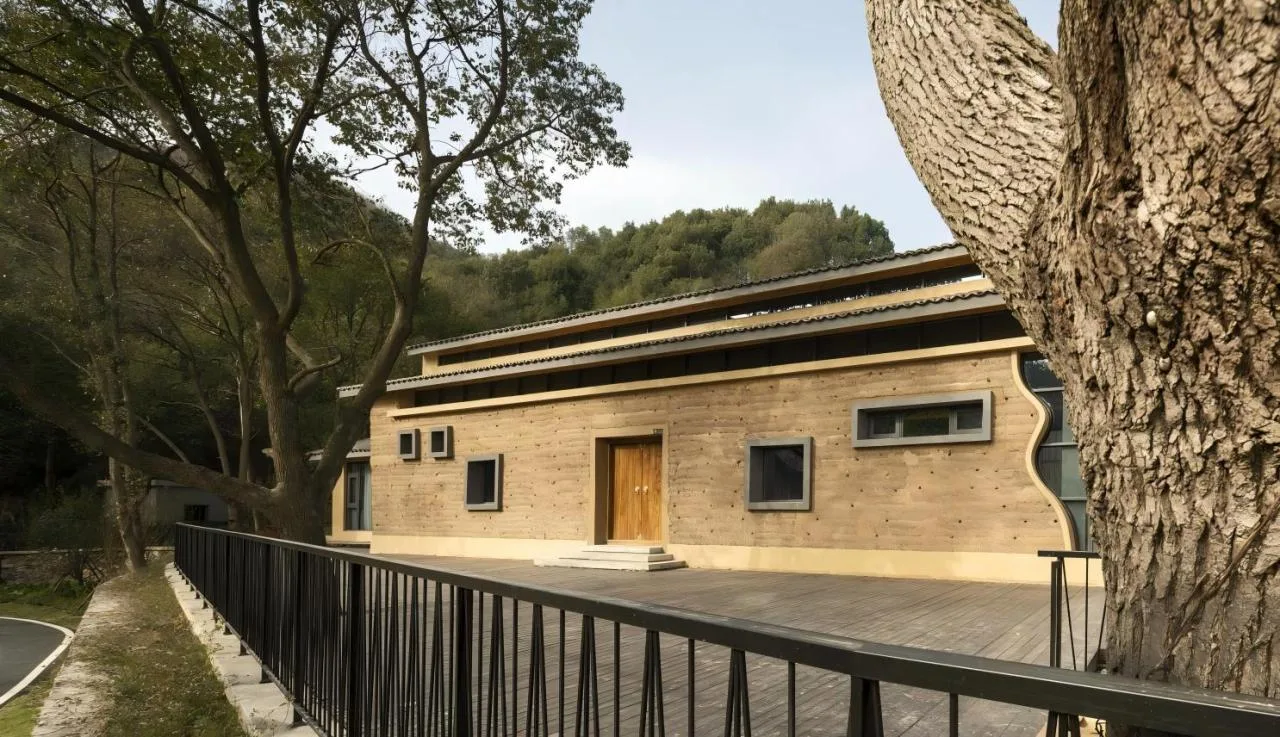
The structure combines adobe walls, steel frameworks, and glass, bridging traditional and modern materials. This blend allows tea lovers to enjoy the tea’s fragrance while maintaining an unobstructed connection with the natural surroundings, enhancing the elegant atmosphere and closeness to nature.
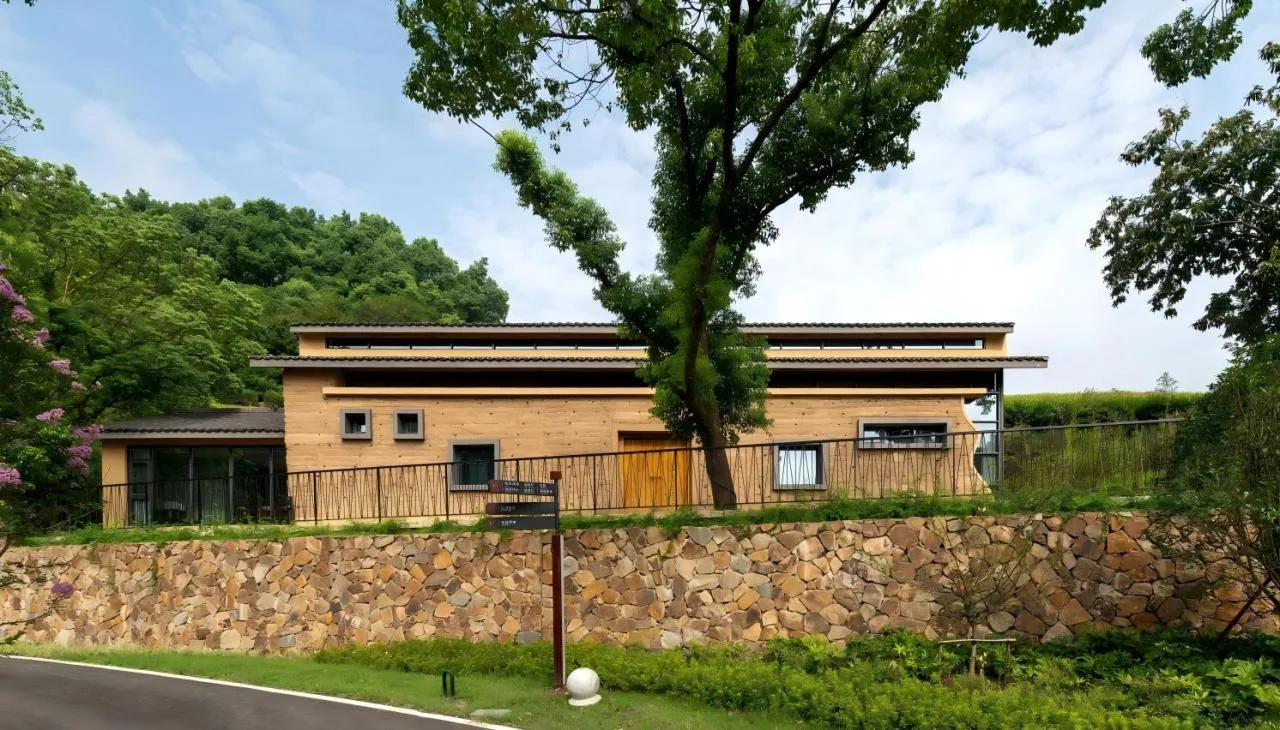
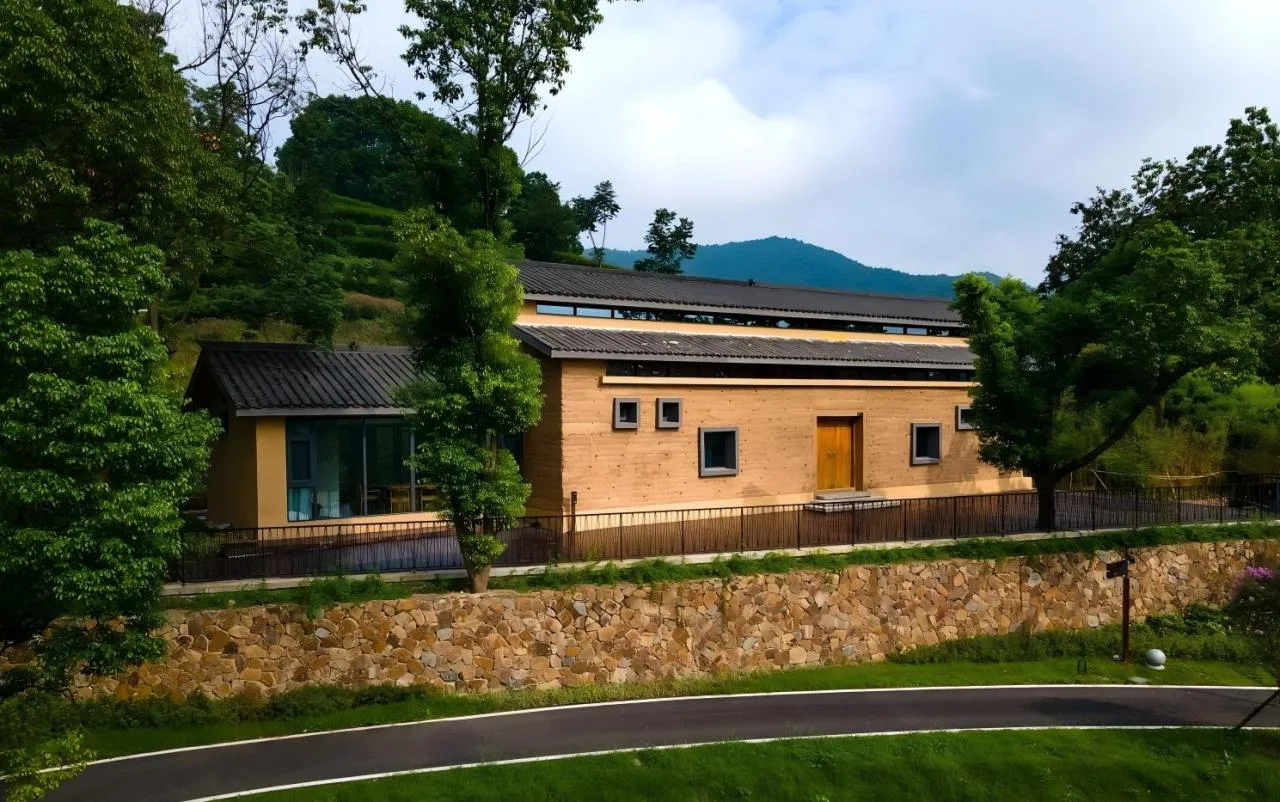
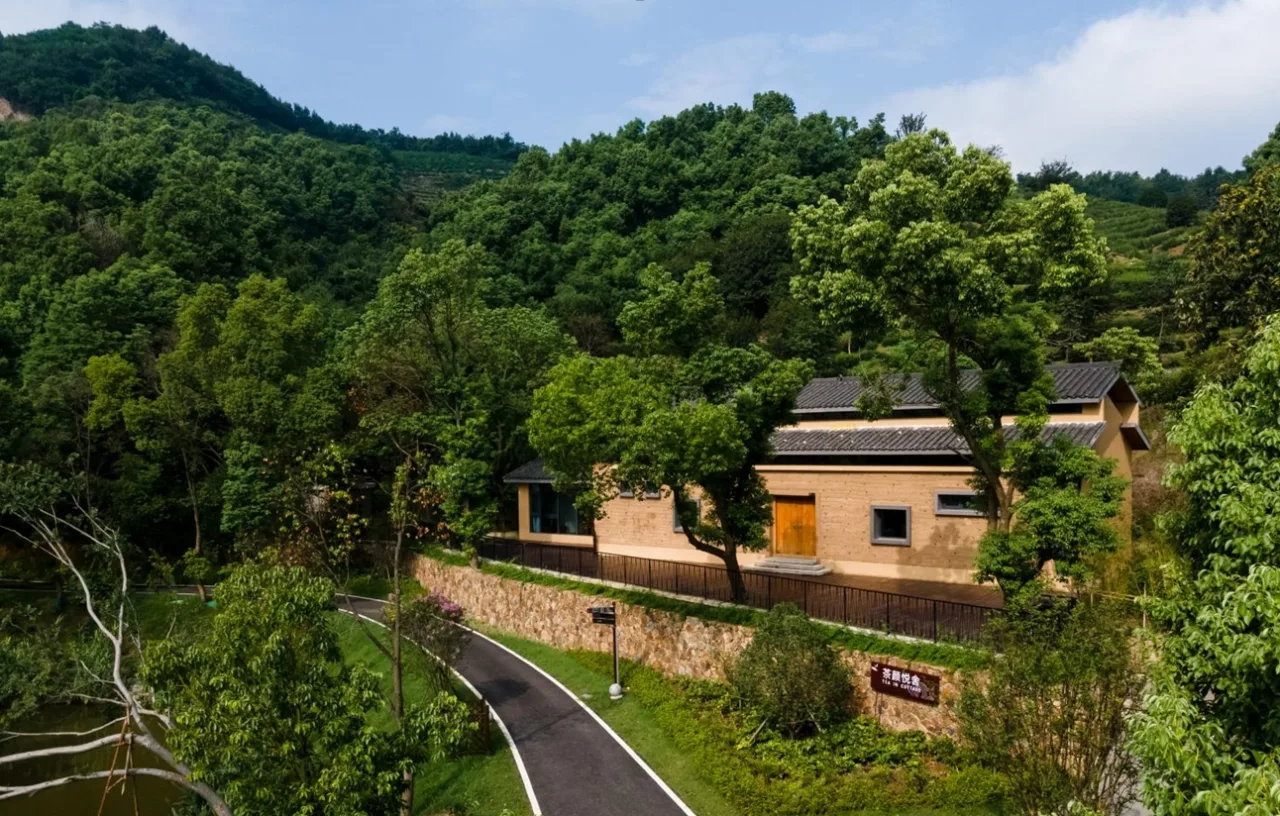
The combination of adobe, steel, and glass not only fosters a dialogue between old and new materials but also invites visitors to experience tea with a panoramic view of the natural environment, creating an elegant and intimate atmosphere.
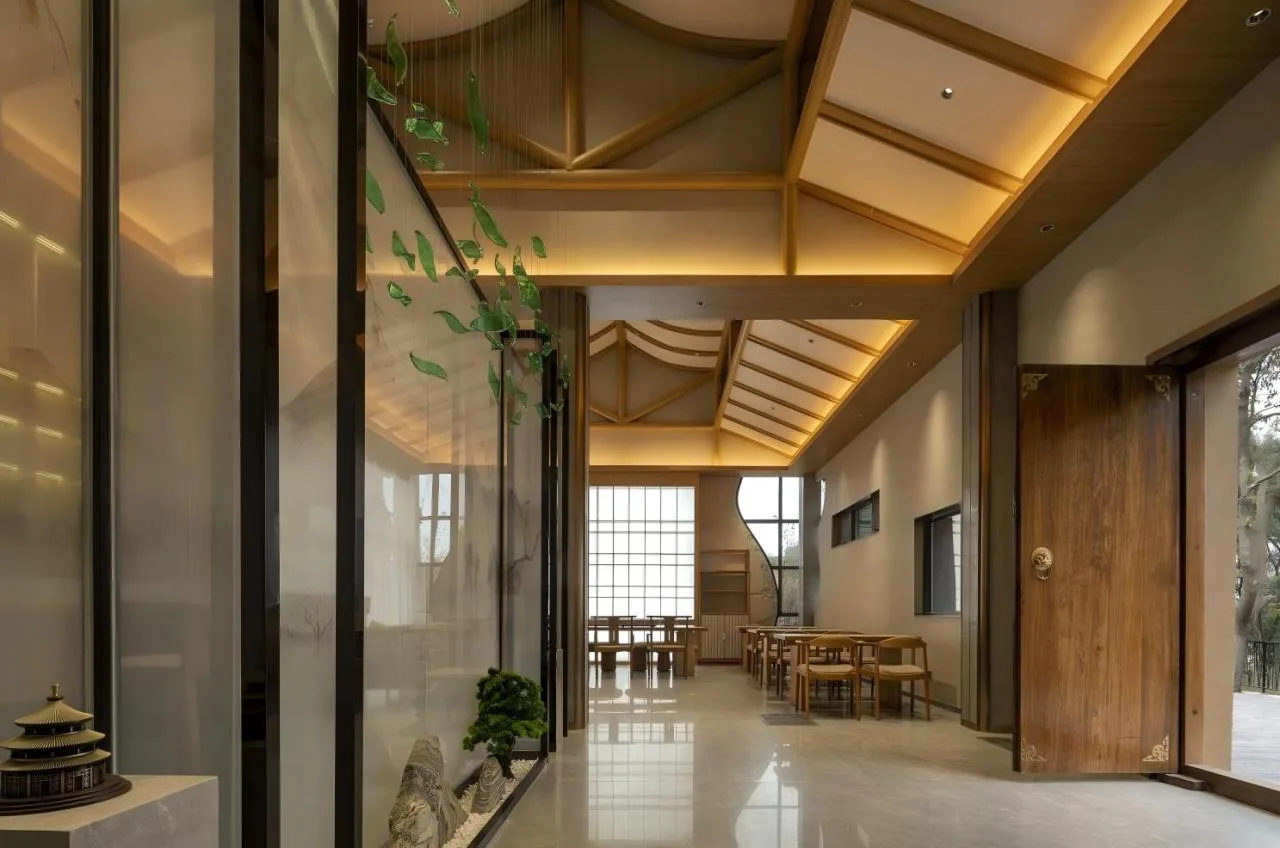
The tea bar’s interior embraces an antique wooden style, transporting visitors back to an ancient era while offering a peaceful, elegant refuge from modern life’s hustle and bustle.
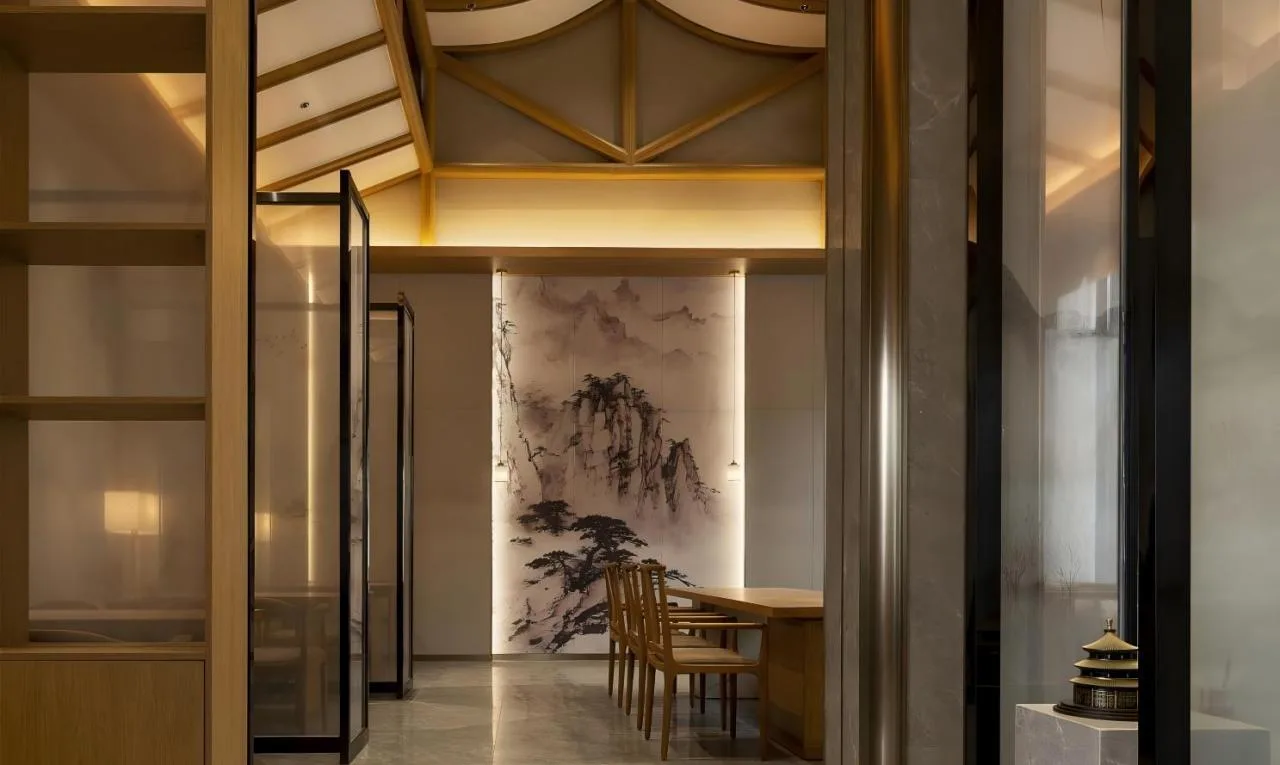
Almost all the furniture—tables, chairs, counters, and screens—is crafted from solid wood, contributing to an atmosphere rich in cultural heritage and artistic ambiance.
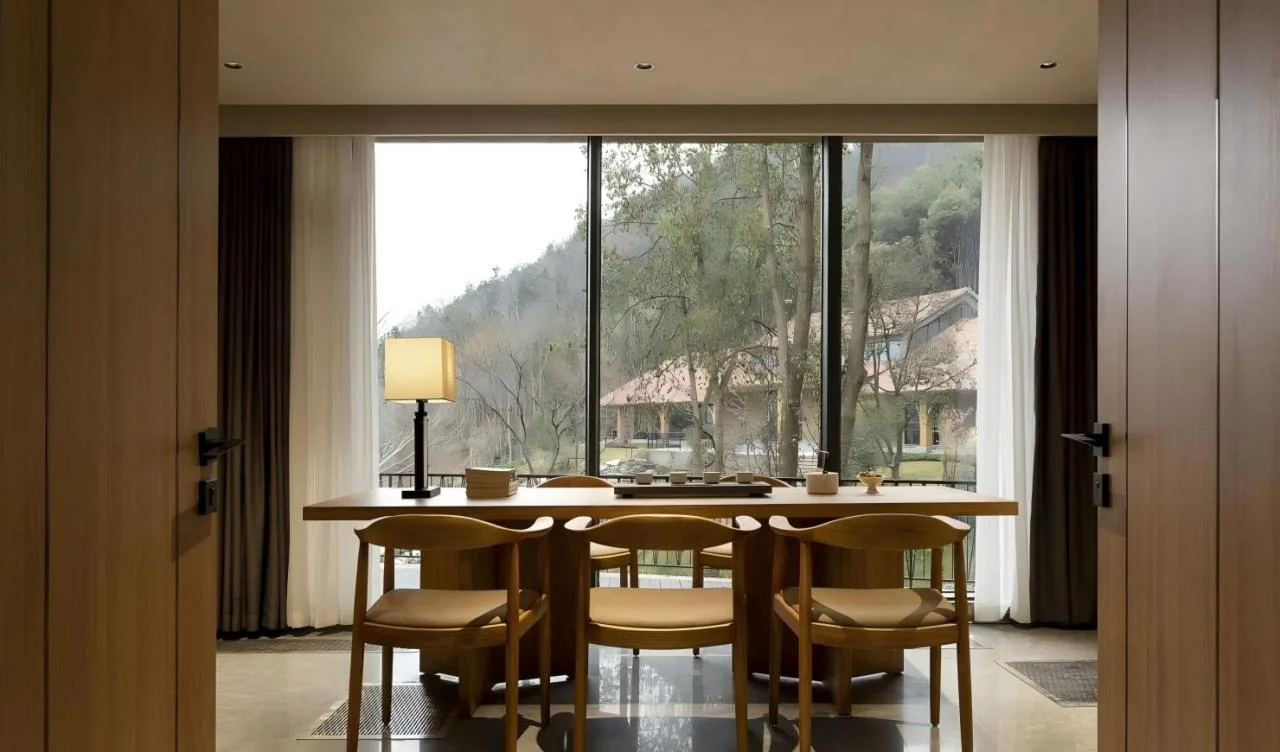
The private rooms blend natural beauty with ancient elegance seamlessly. Large glass windows act like frames, offering panoramic views of the surrounding mountain landscape, enriching the tea experience with both visual and spiritual delight.
Yunqi Hall – Multifunctional Hall
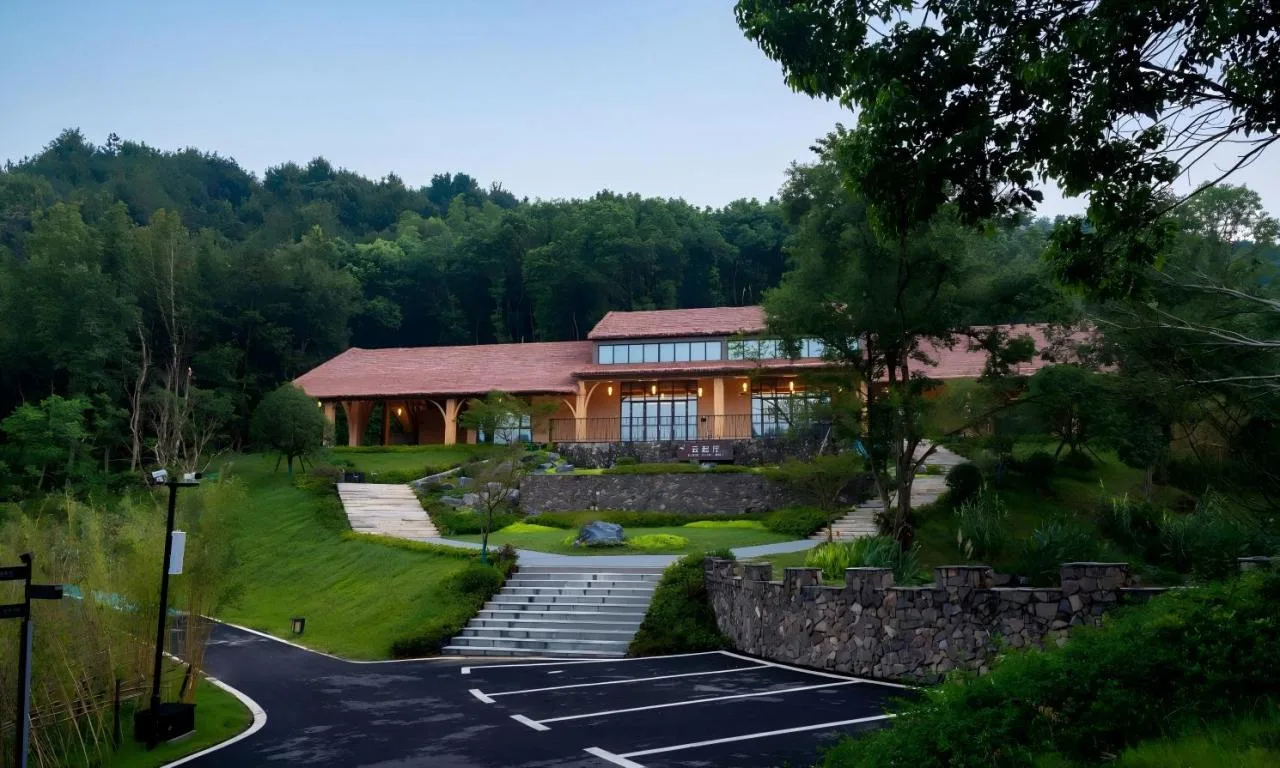
Also located on a raised platform, the multifunctional hall’s unique geography and thoughtful design create a distinctive space that balances function with beauty. Two elegantly curved stair trails, resembling embracing arms, gently wrap around the lush greenery below, adding poetry and romance to the approach.
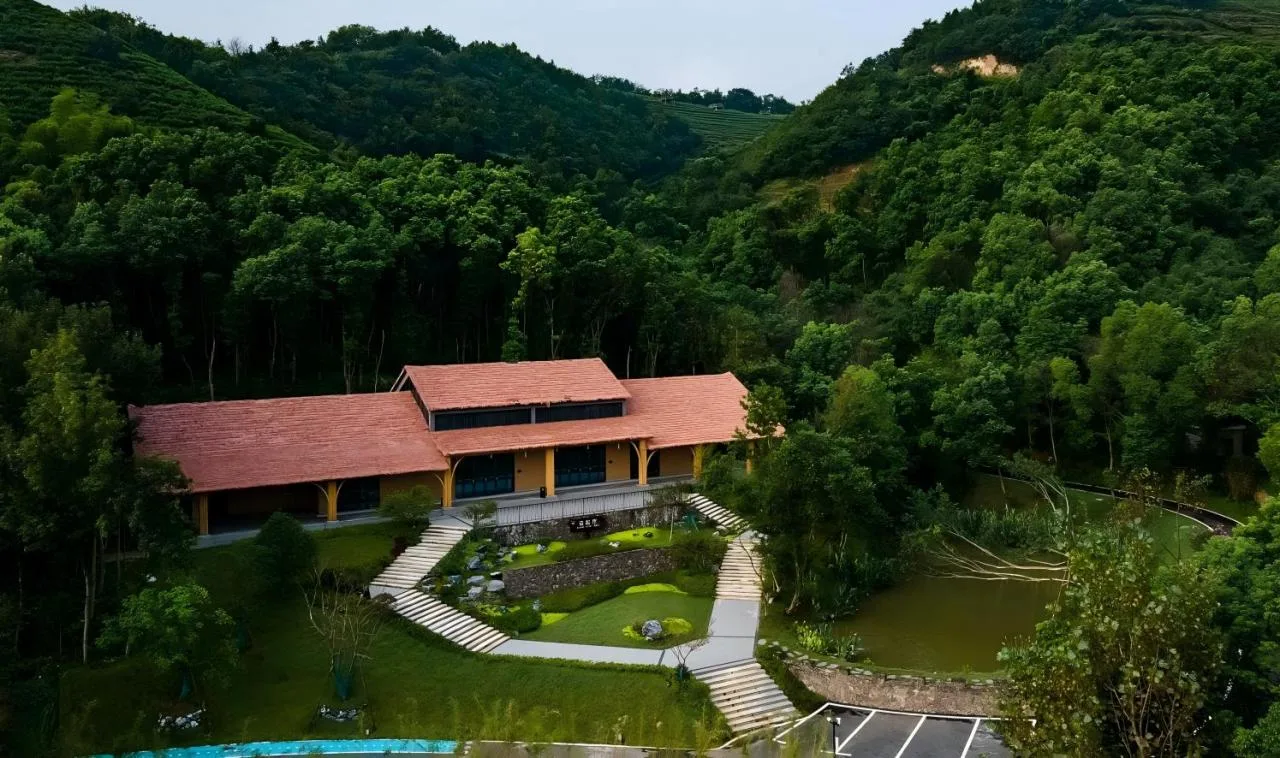
From this elevated vantage point, the hall seems gently embraced by nature, surrounded on three sides by mountains that provide a natural barrier and rare privacy.
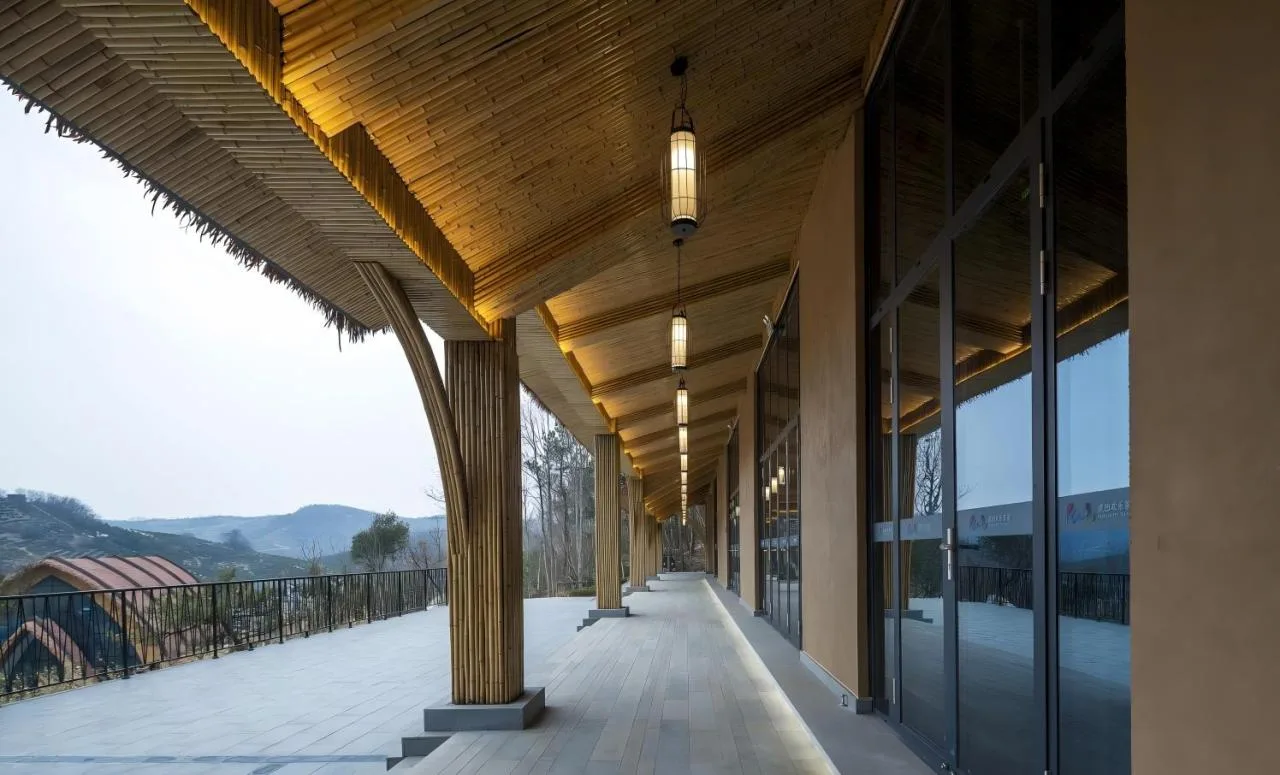
The outdoor design features bamboo-wrapped columns, combining natural robustness and texture with a warm, simple luster under light. This design choice enhances the hall’s visual appeal and ensures harmonious integration with the natural environment.
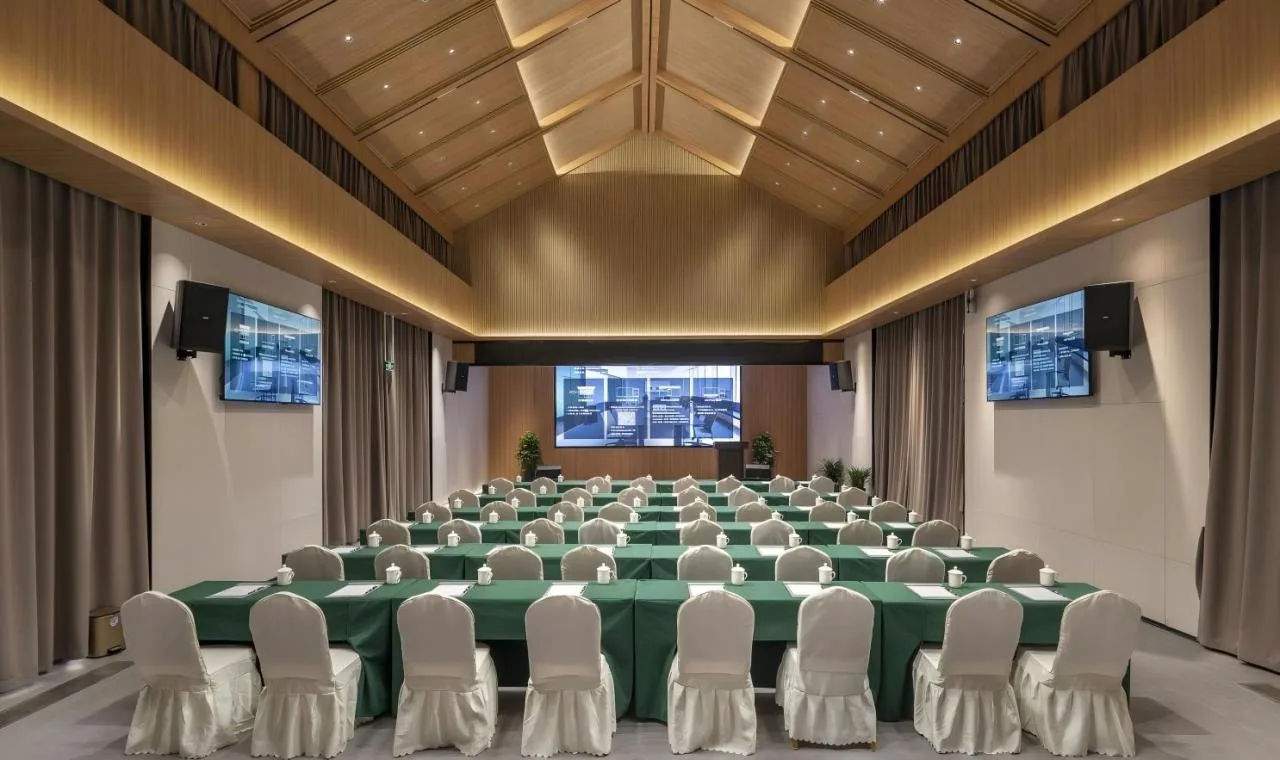
Inside, wooden materials dominate the décor, filling the space with natural warmth. Warm-colored curtains complement the wood’s tones, and ambient lighting enhances the hall’s spacious and inviting atmosphere.
Yuanming Hall – Wedding Hall
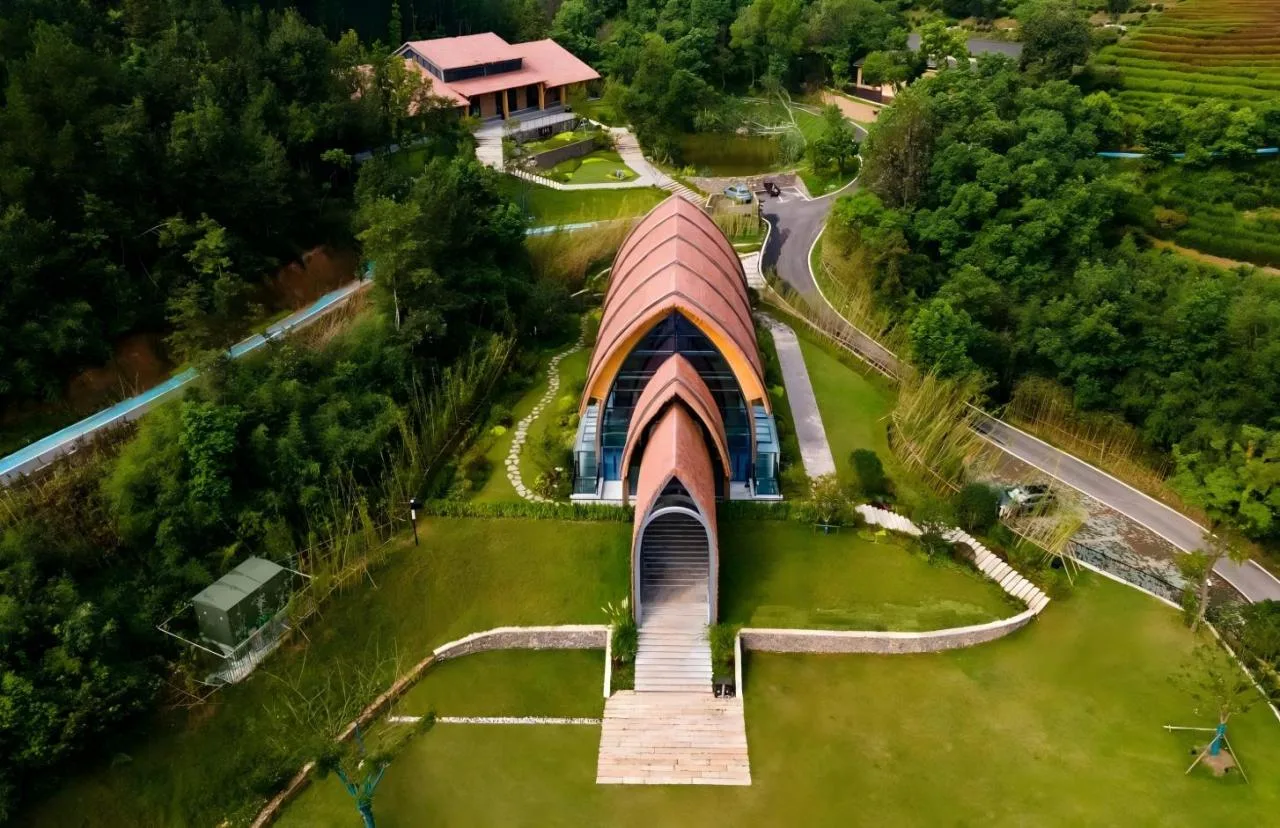
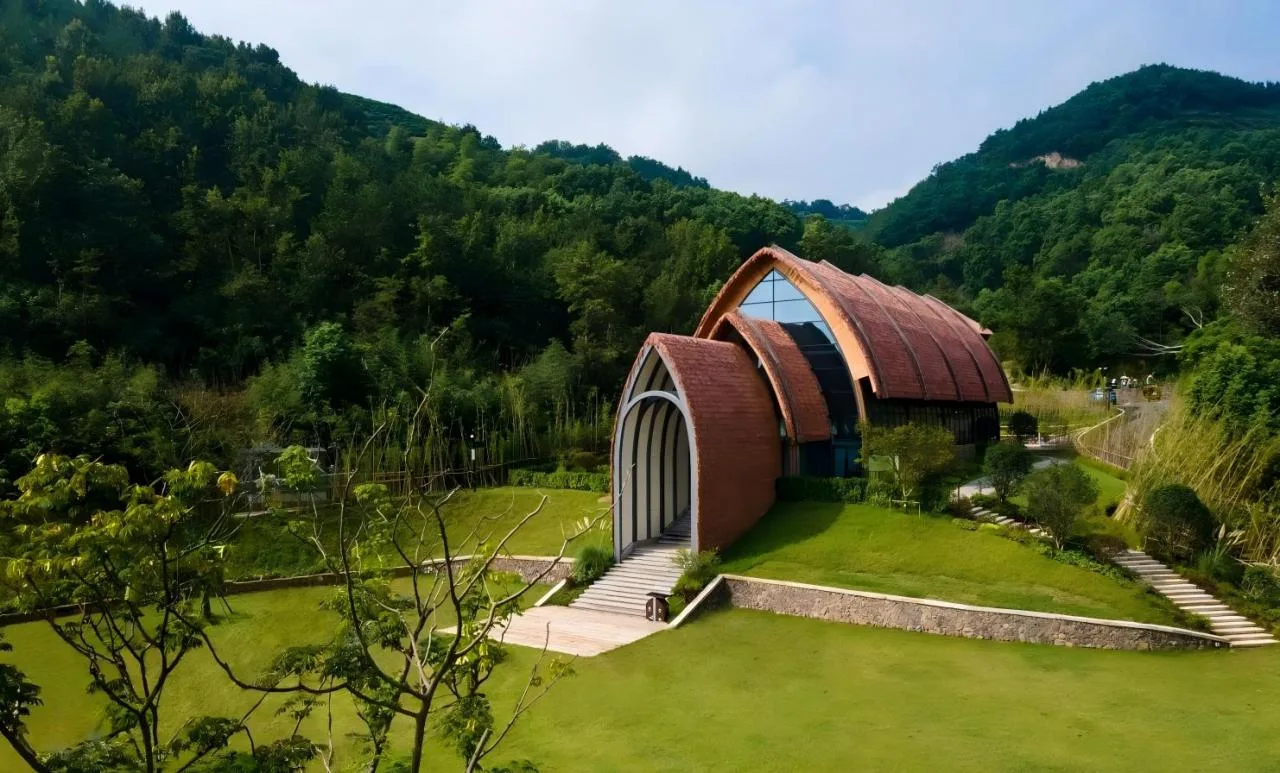
The wedding hall’s pointed arches gleam in the sunlight, symbolizing a gateway to happiness and eternity. These arches not only create a symmetrical and harmonious design but also provide structural stability.
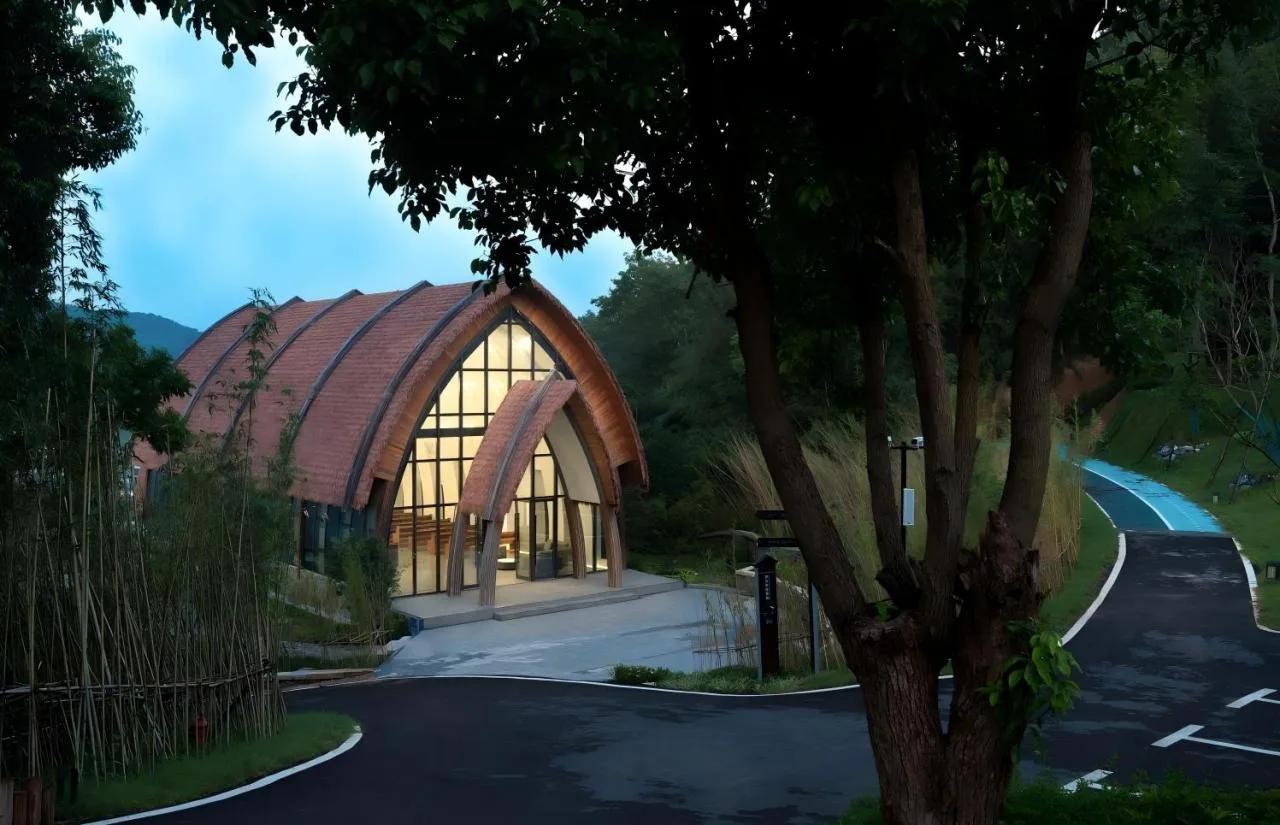
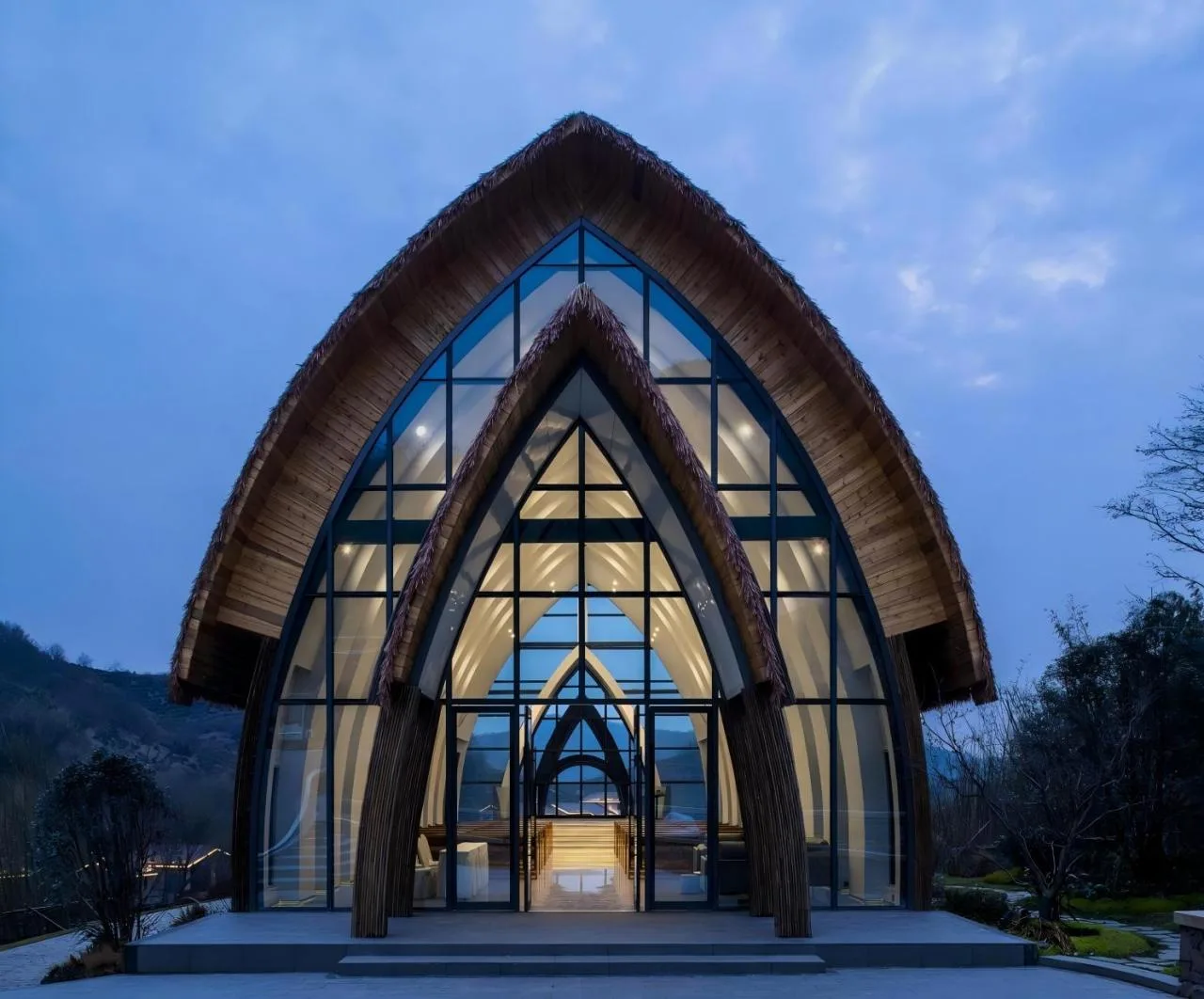
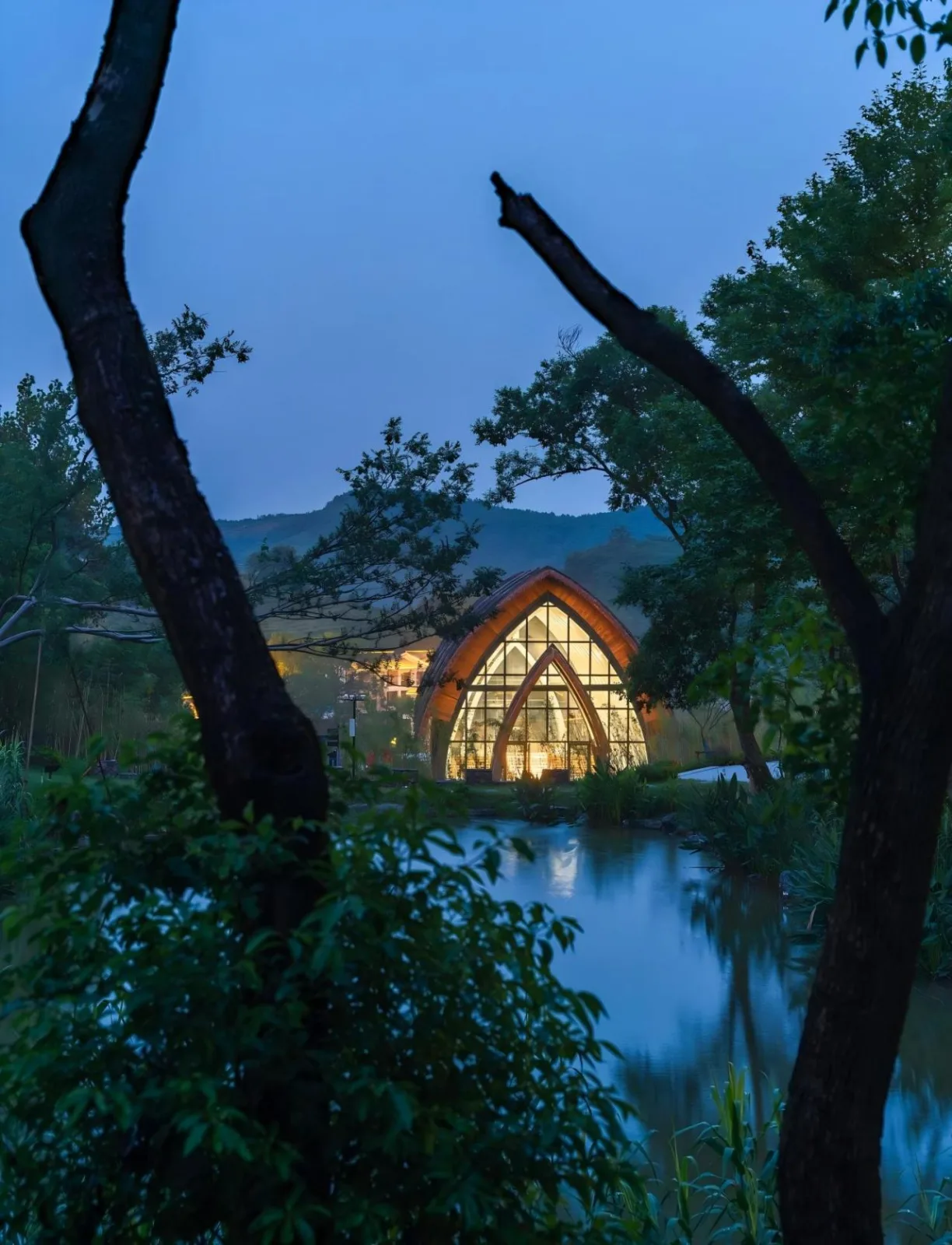
At night, the hall glows like a crystal palace under the deepening blue sky, creating a solemn and sacred atmosphere. The sky acts as a vast canvas, highlighting the hall’s outline and enhancing its majestic presence in the darkness.
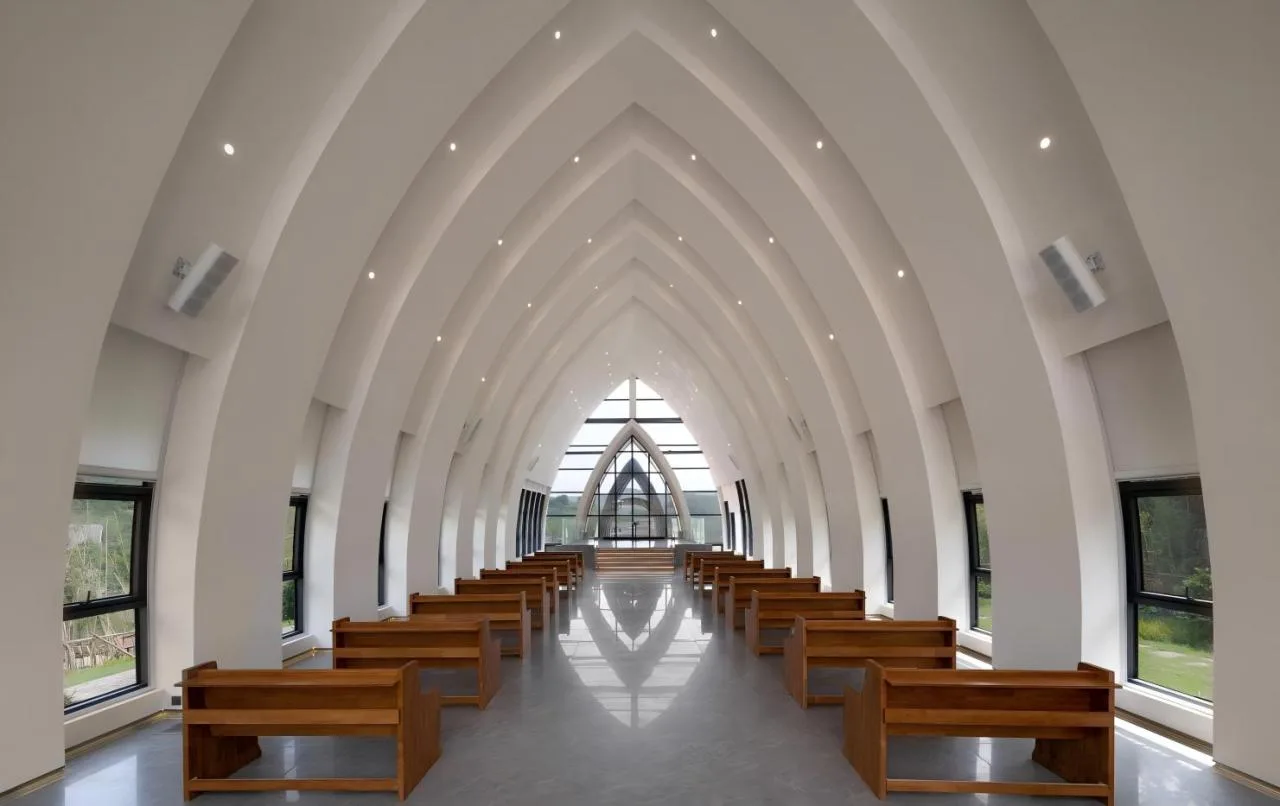
Inside, the wedding hall features pure white latex-painted walls that create a flawless, sacred ambiance. The pristine white wedding dress and spotless auditorium together embody the hall’s nobility and purity, evoking a profound sense of sanctity and beauty.
Welcome Center – Tourist Service Center
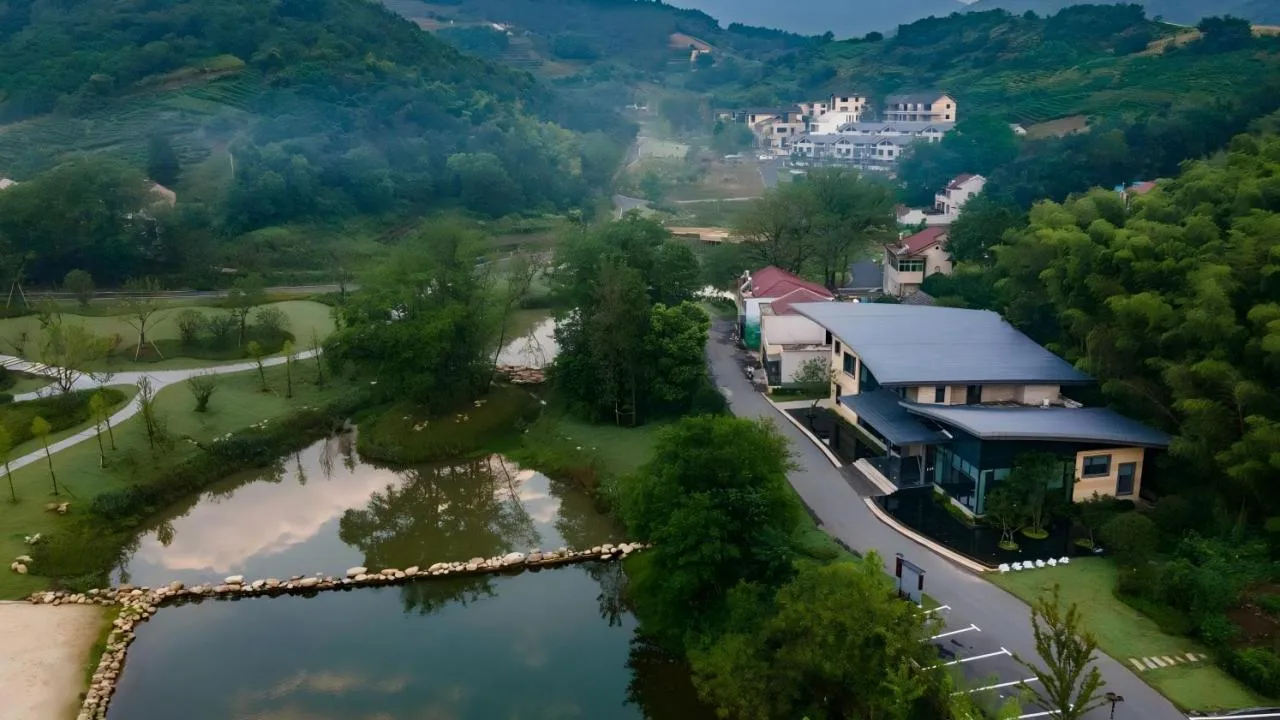
Situated at the entrance of the scenic Tea Valley, the tourist service center artfully blends modern architectural aesthetics with natural surroundings. The roof features three independent single eaves, giving the building a light, elegant appearance reminiscent of wings gently spreading in nature. This design complements the nearby lush trees, flowing streams, and distant mountains, creating a harmonious and beautiful landscape.
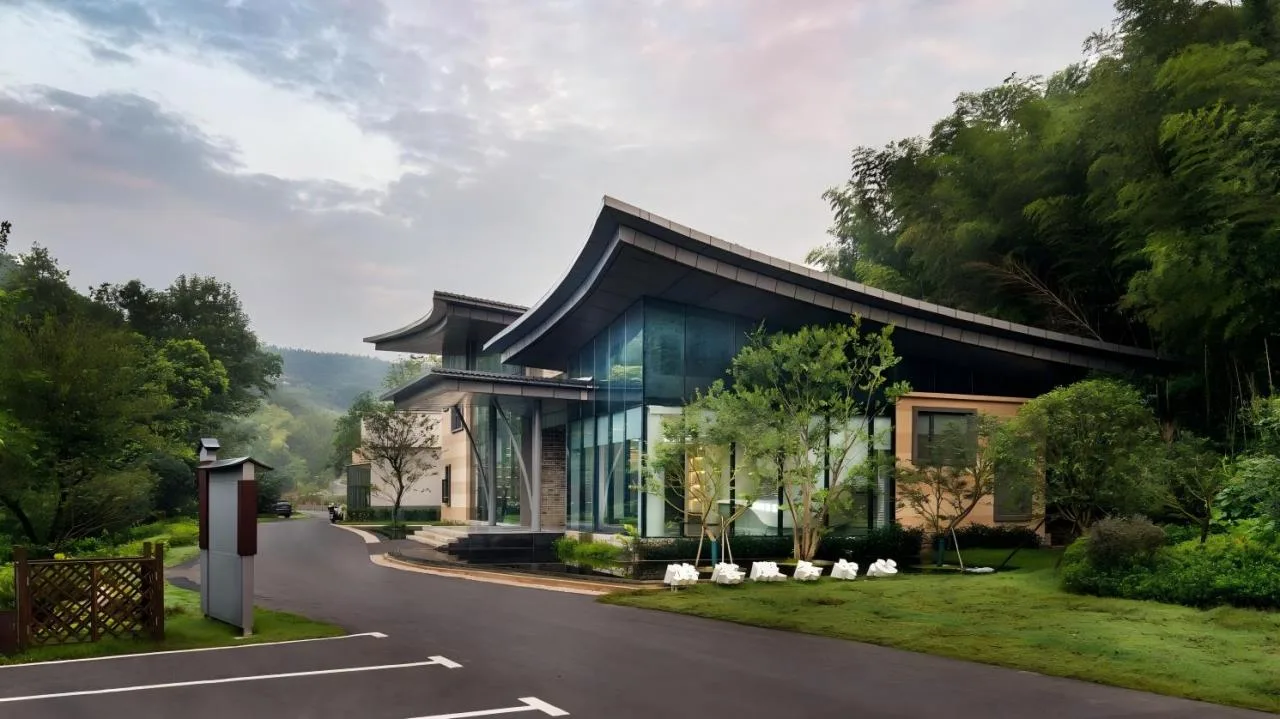
The three eaves symbolize openness and inclusiveness, reflecting the center’s role as a welcoming hub for visitors worldwide. Each eave acts like an open arm, warmly greeting travelers—whether visitors from afar or locals returning home—with a sense of warmth and care.
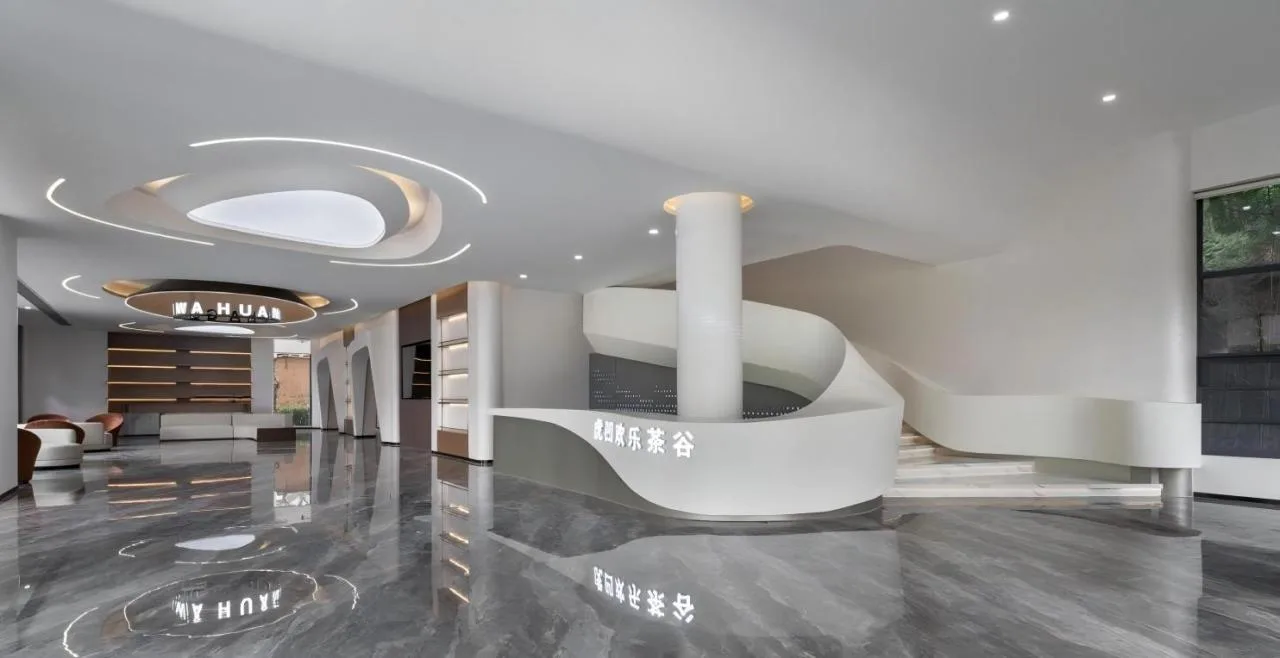
The interior is predominantly white, evoking an elegant and pure atmosphere.
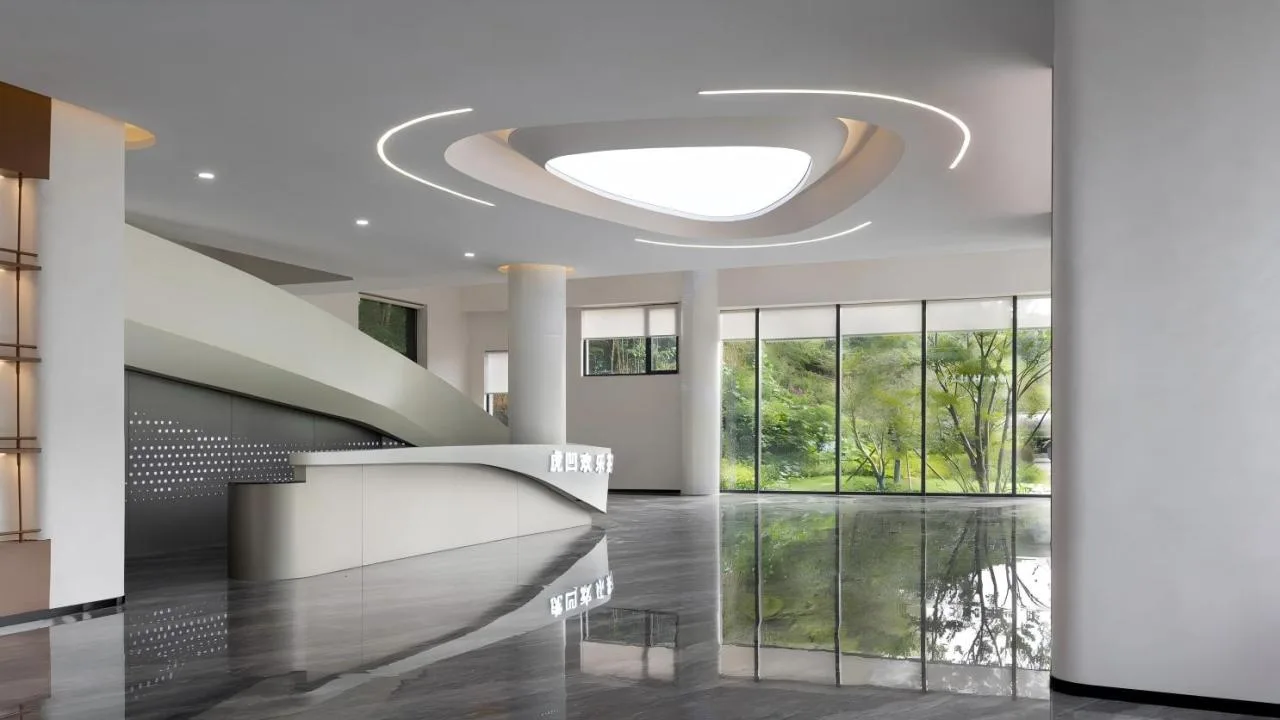
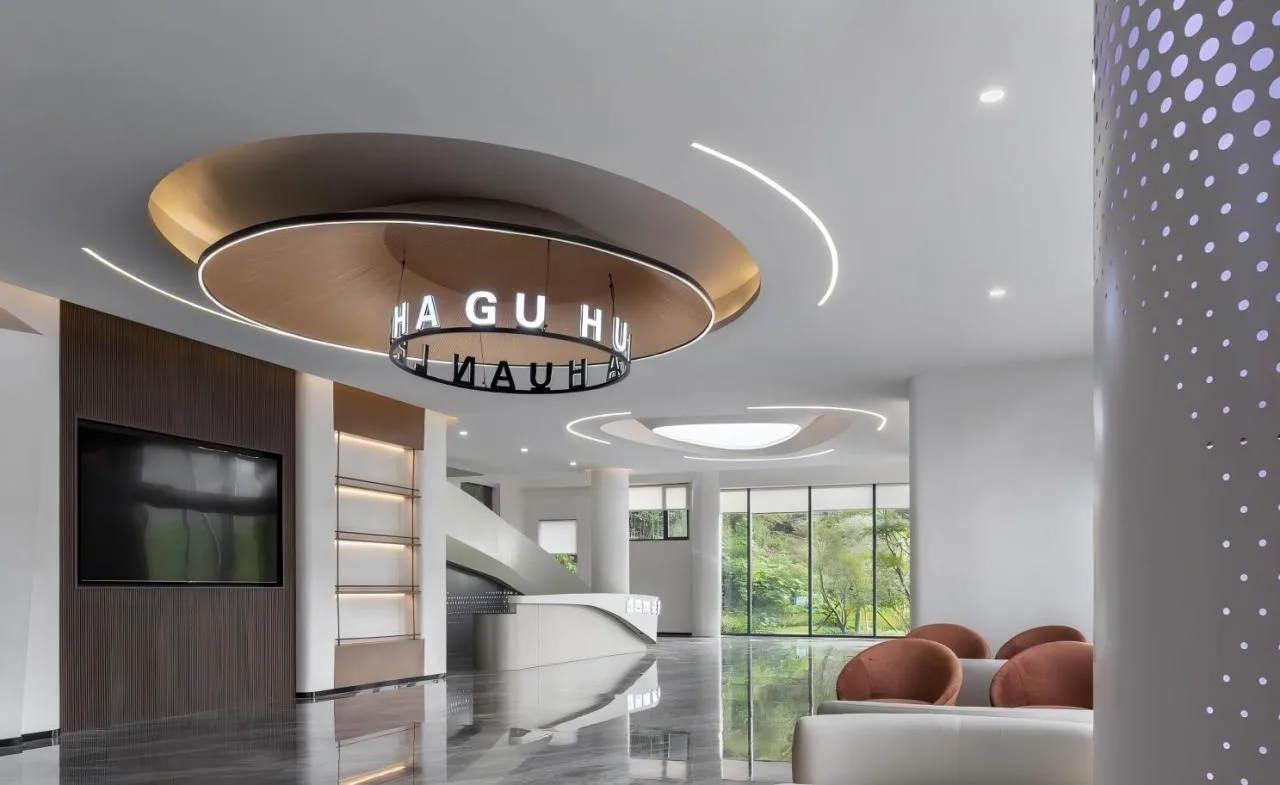
The interior’s streamlined design is another highlight. From the reception desk to the rest, consultation, and exhibition areas, elegant, flowing lines create a smooth, harmonious environment that visually unifies the entire space.
Conclusion
Rural revitalization should not mean destructive reconstruction or rigid imitation. Instead, it requires a profound understanding and respect for historical evolution. This approach not only honors the past but also pays a noble tribute to cultural heritage.
Project Drawings
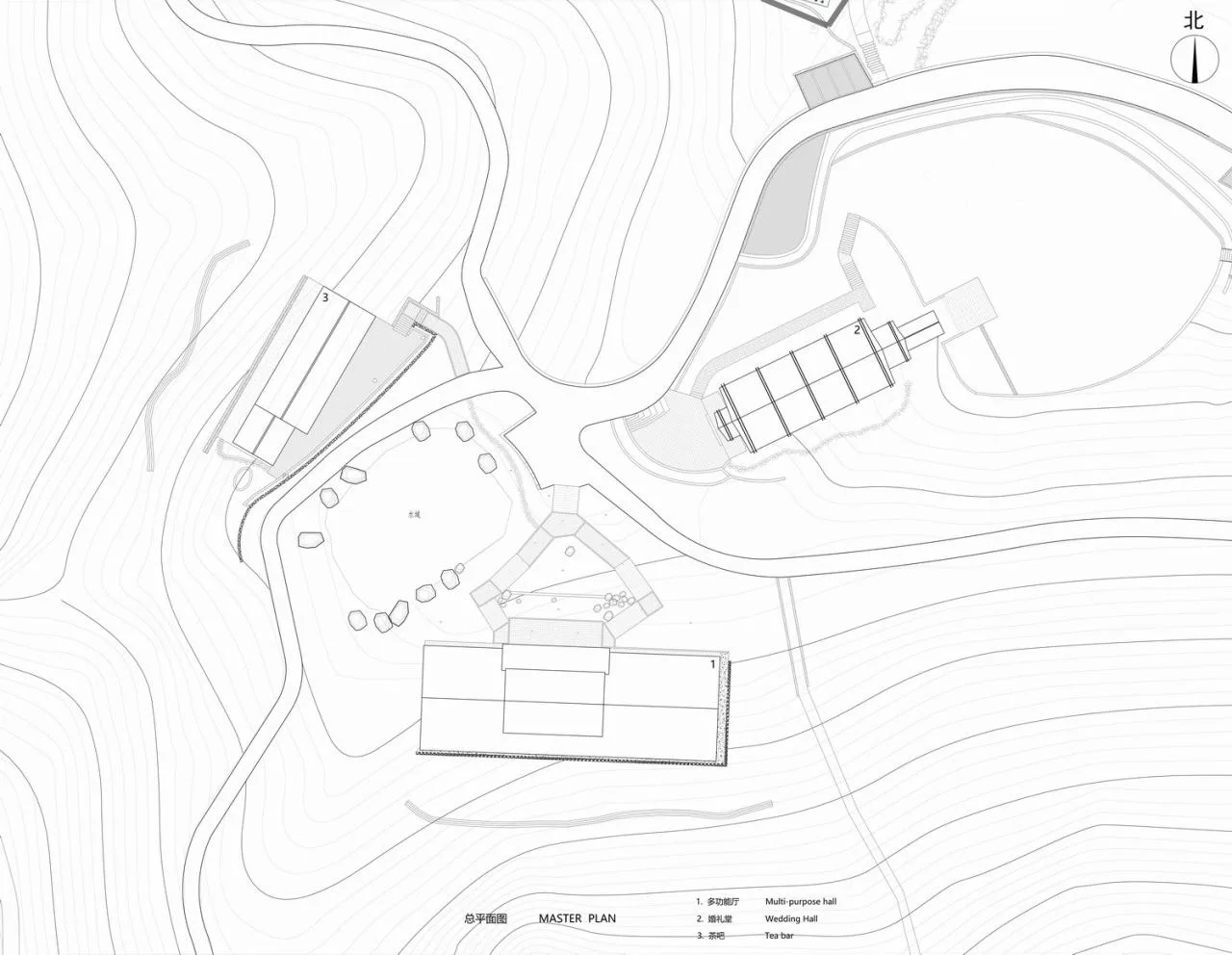
▲ General layout (Tea Bar, Multifunctional Hall, Wedding Hall)
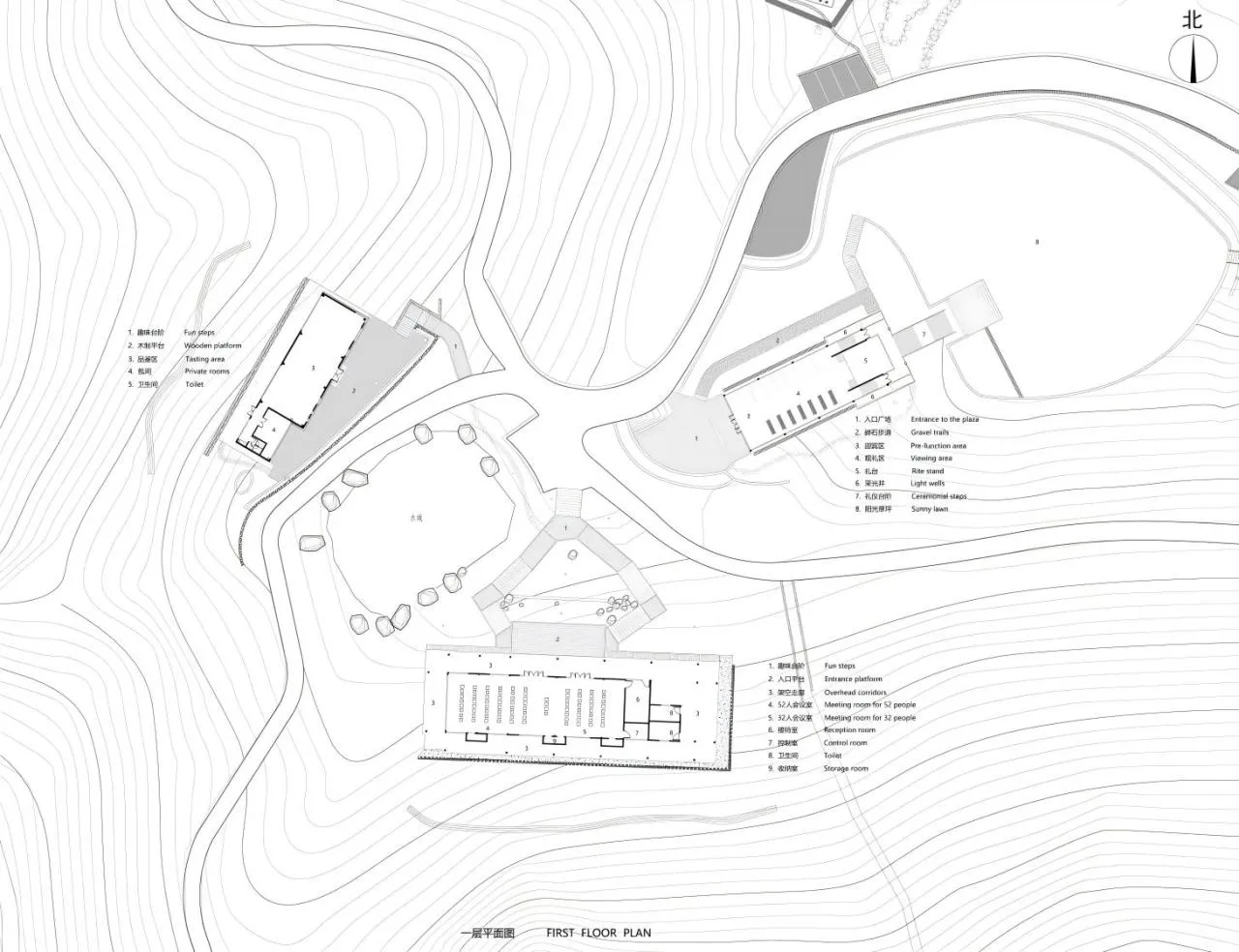
▲ First floor plan (Tea Bar, Multifunctional Hall, Wedding Hall)
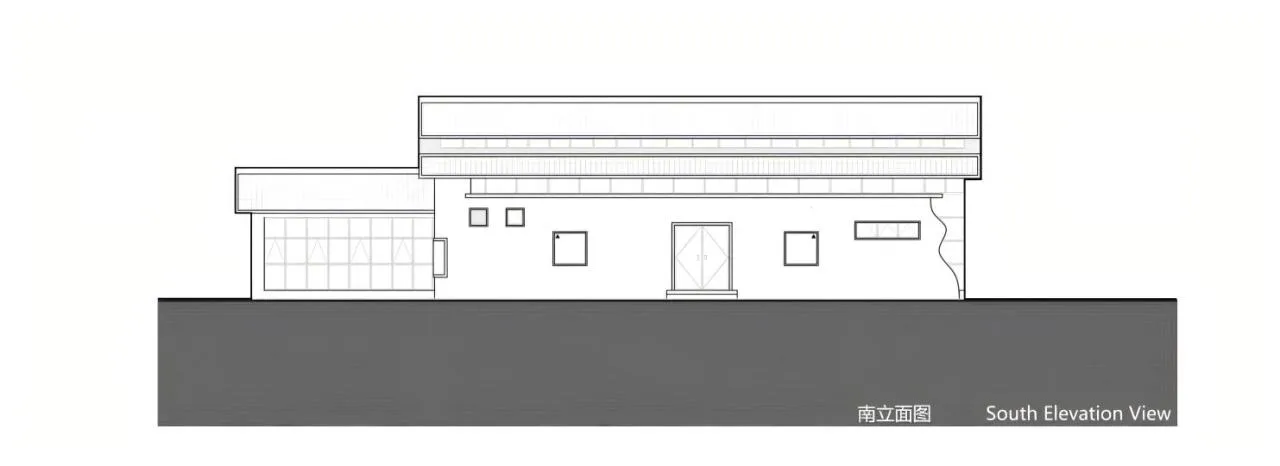
▲ Front view of Tea Bar
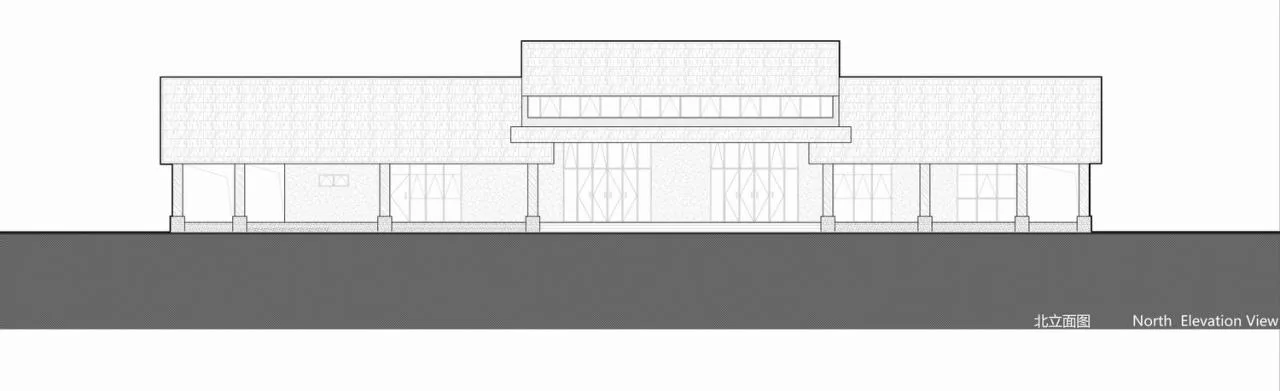
▲ Front view of Multifunctional Hall
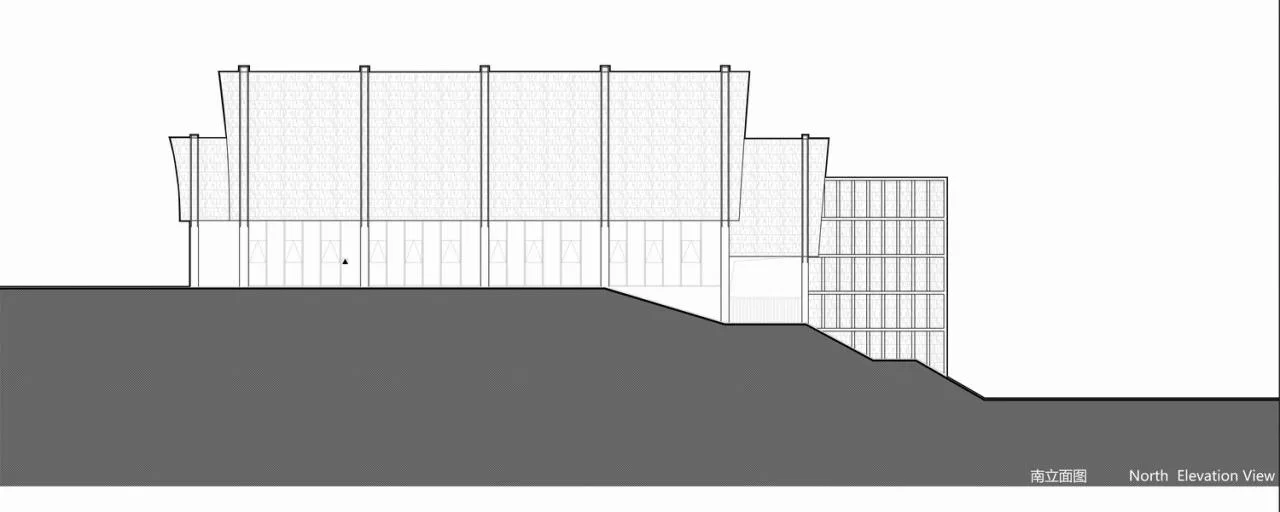
▲ Front view of Multifunctional Hall
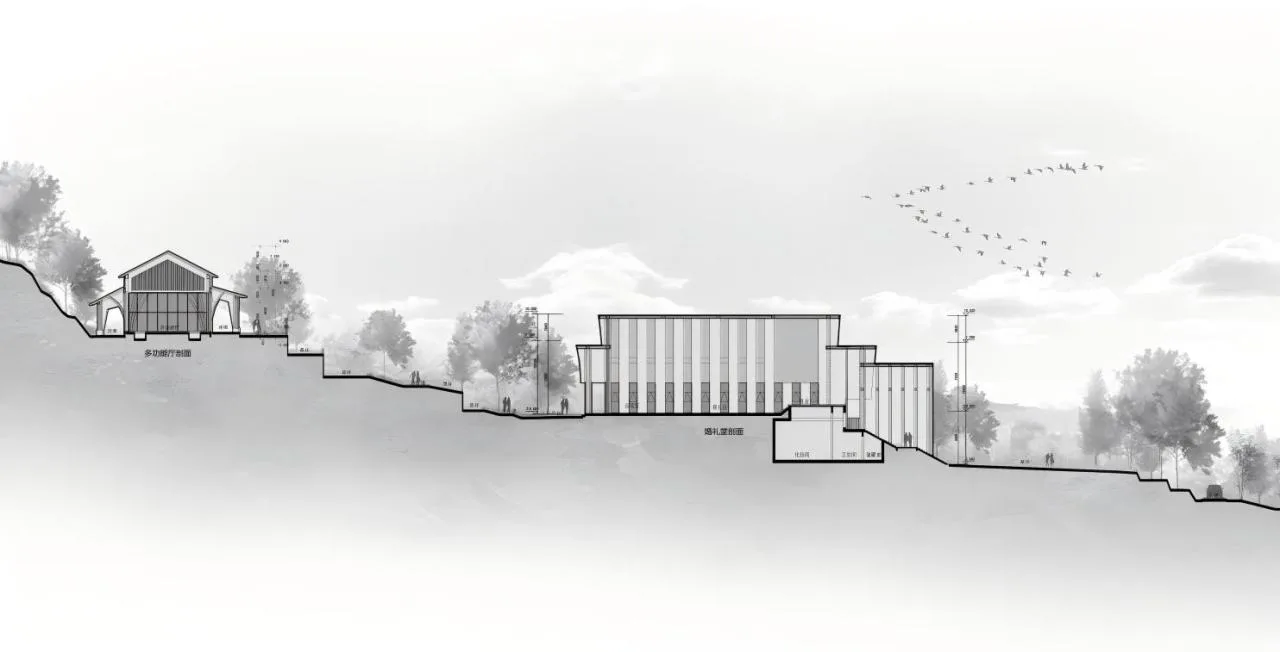
▲ Site profile map I
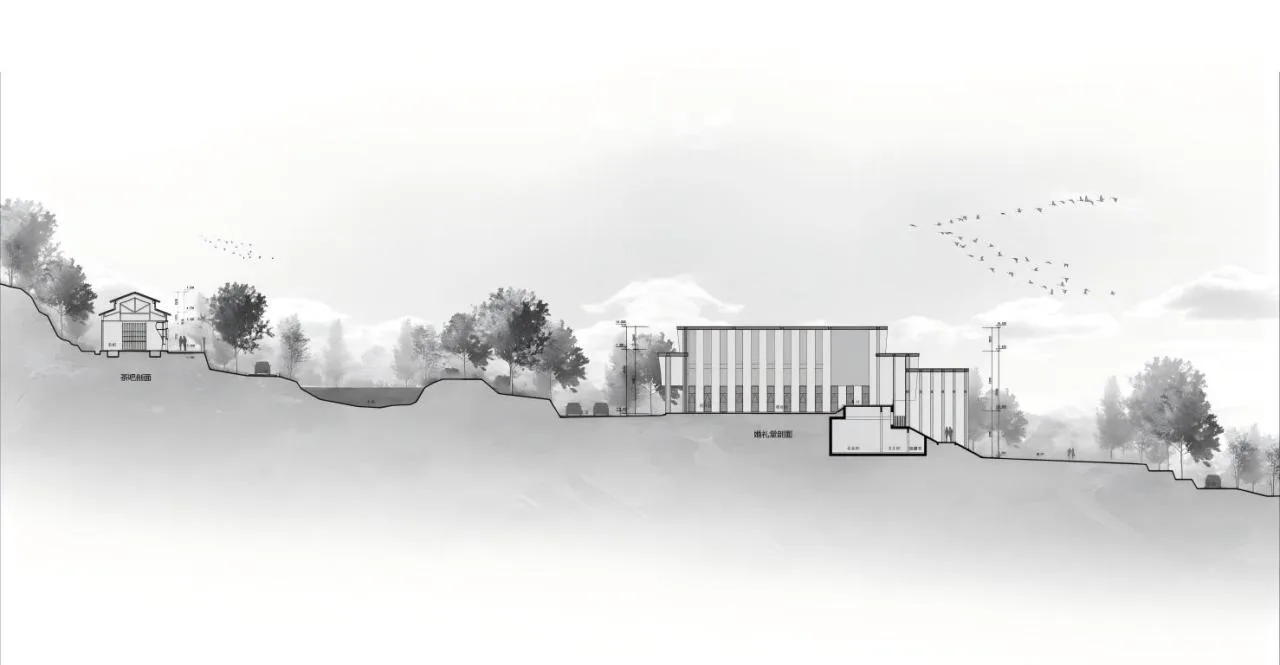
▲ Site profile map II
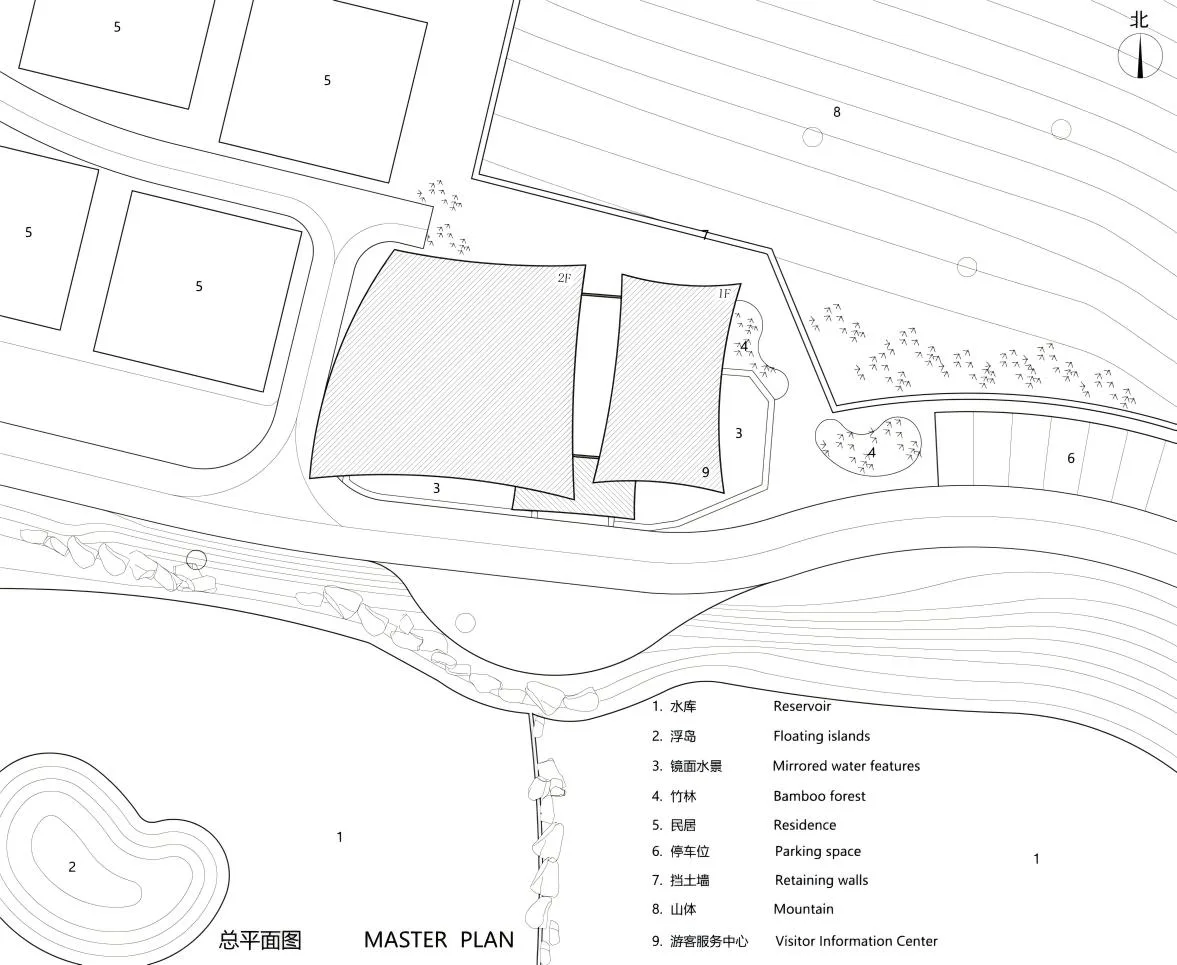
▲ General layout (Tourist Service Center)
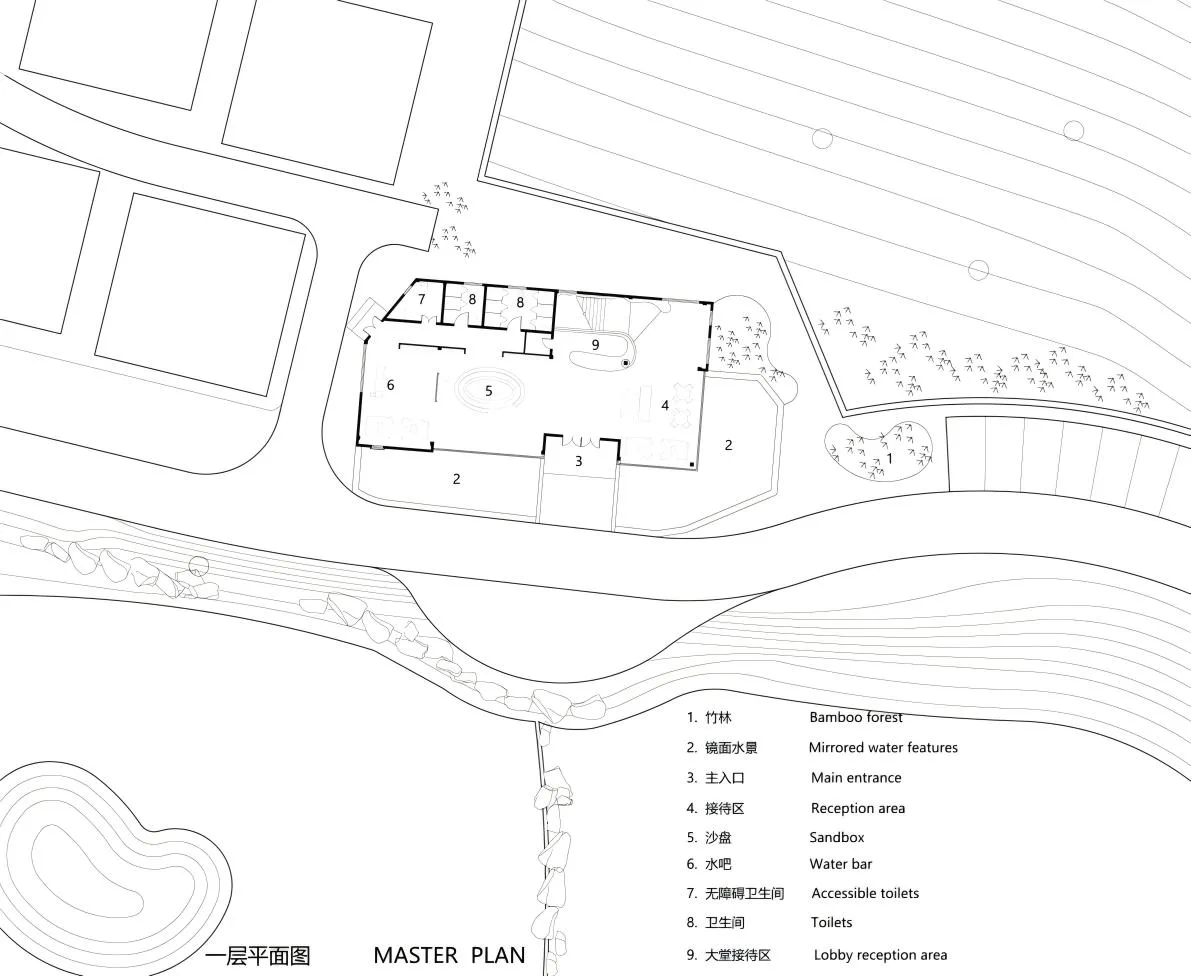
▲ Floor plan (Tourist Service Center)
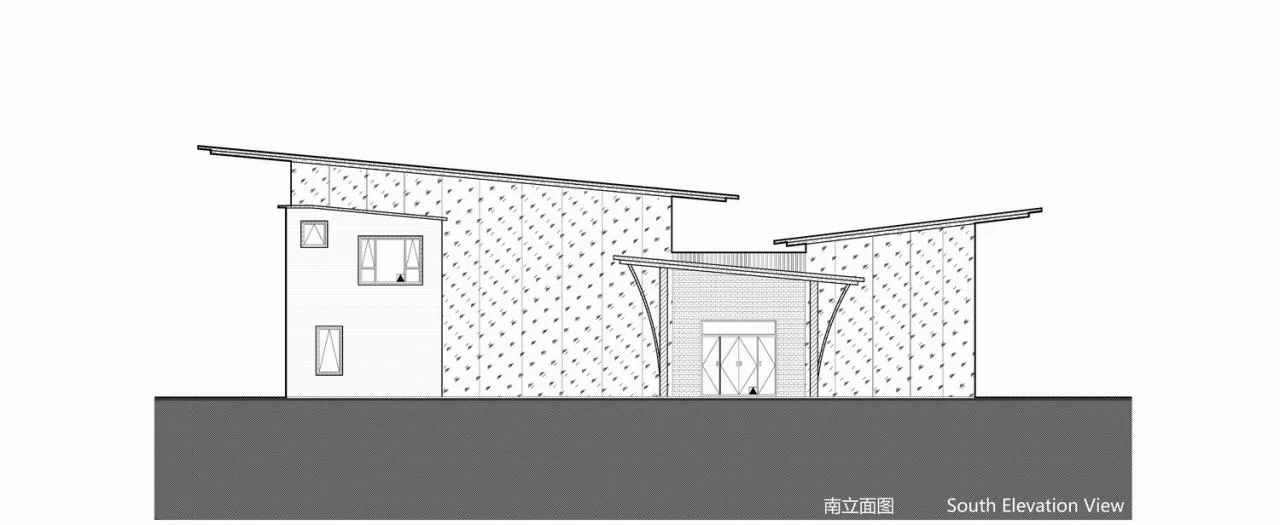
▲ Front view (Tourist Service Center)
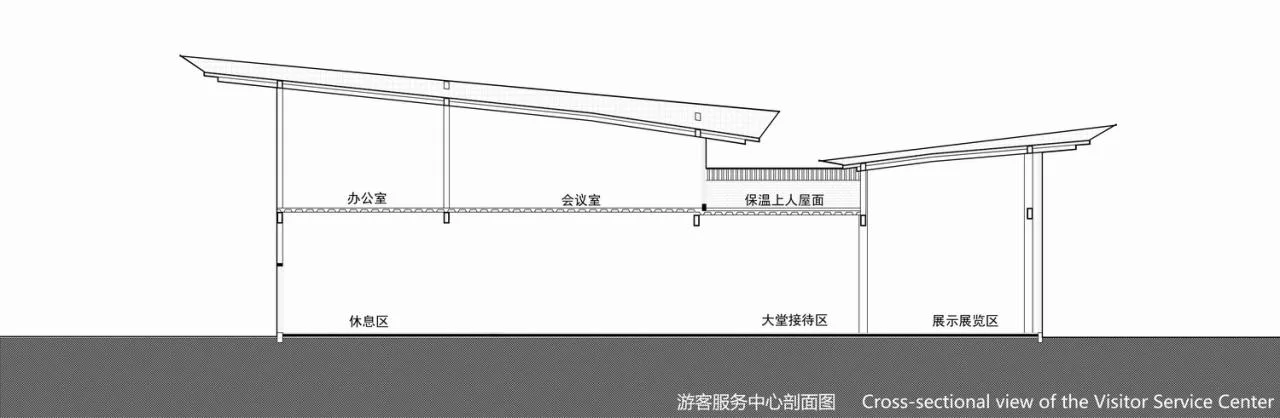
Project Information
Project Name: EPC of Huwa Happy Tea Valley (Phase II) in Ketan Town, Lujiang County
Project Type: Architecture
Owner: Lujiang County Rural Revitalization Investment Co., Ltd
Location: Ketan Town, Lujiang County
Status: Completed
Design Period: June 2022 – February 2023
Construction Period: March 2023 – April 2024
Design Unit: China Railway Hefei Architectural and Municipal Engineering Design and Research Institute Co., Ltd
Construction Unit: Zhong’an Huali Construction Group Co., Ltd
Lead Architect: Liu Guoyuan
Design Team: Wang Cheng, Xu Shijia, Liu Hao, Lei Hongjian, Li Zhengyue, Peng Yan, Jia Qiongyang, Wang Cong
Structural Engineers: Jia Yusheng, Huang Yang, Du Jiaxing
Water Supply & Drainage Engineers: Li Qinghua, Zhu Bowei, Shen Huan
HVAC Engineers: Ma Yuanliang, Li Jialin, Deng Tenglong
Electrical Engineers: Cao Longxian, Luo Yuanyuan, Li Zhaosheng
Curtain Wall Unit: Anhui Xichu Engineering Technology Co., Ltd
Decoration Unit: Hefei Zhongxuan Design Co., Ltd
Photography: Huabin Architectural Space Photography














Must log in before commenting!
Sign Up