
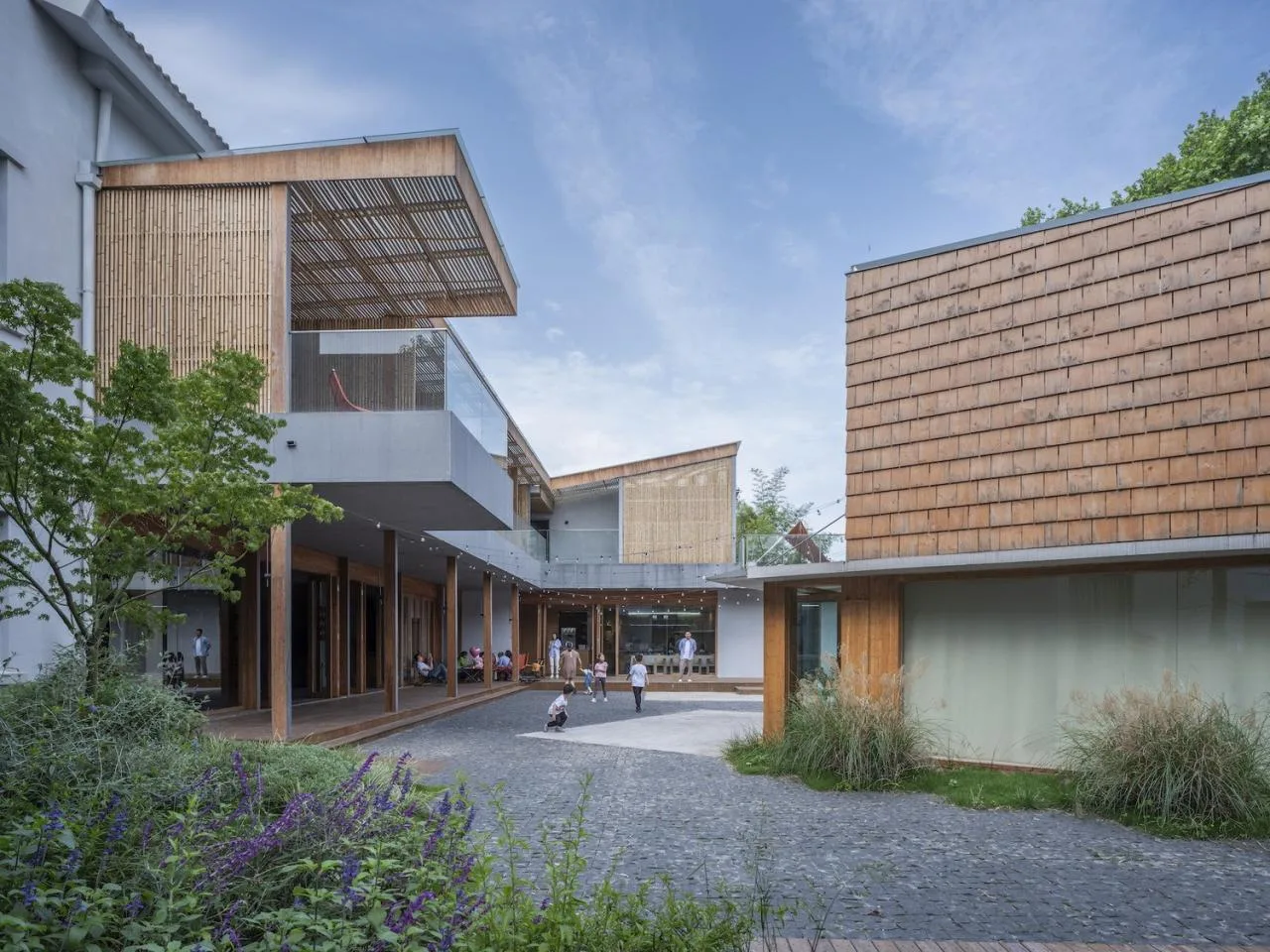
The ‘Mixed Community’ is situated in Gaoshan Village, Wenjiang District, Chengdu City. Originally the site of the village committee courtyard, it became vacant following the merger of administrative villages. The township aims to revitalize this courtyard through a rural revitalization project, transforming it into an agricultural exhibition and learning center. This initiative provides a space encouraging young people to return home and start businesses, while also offering cultural and leisure activities for the surrounding suburban communities.
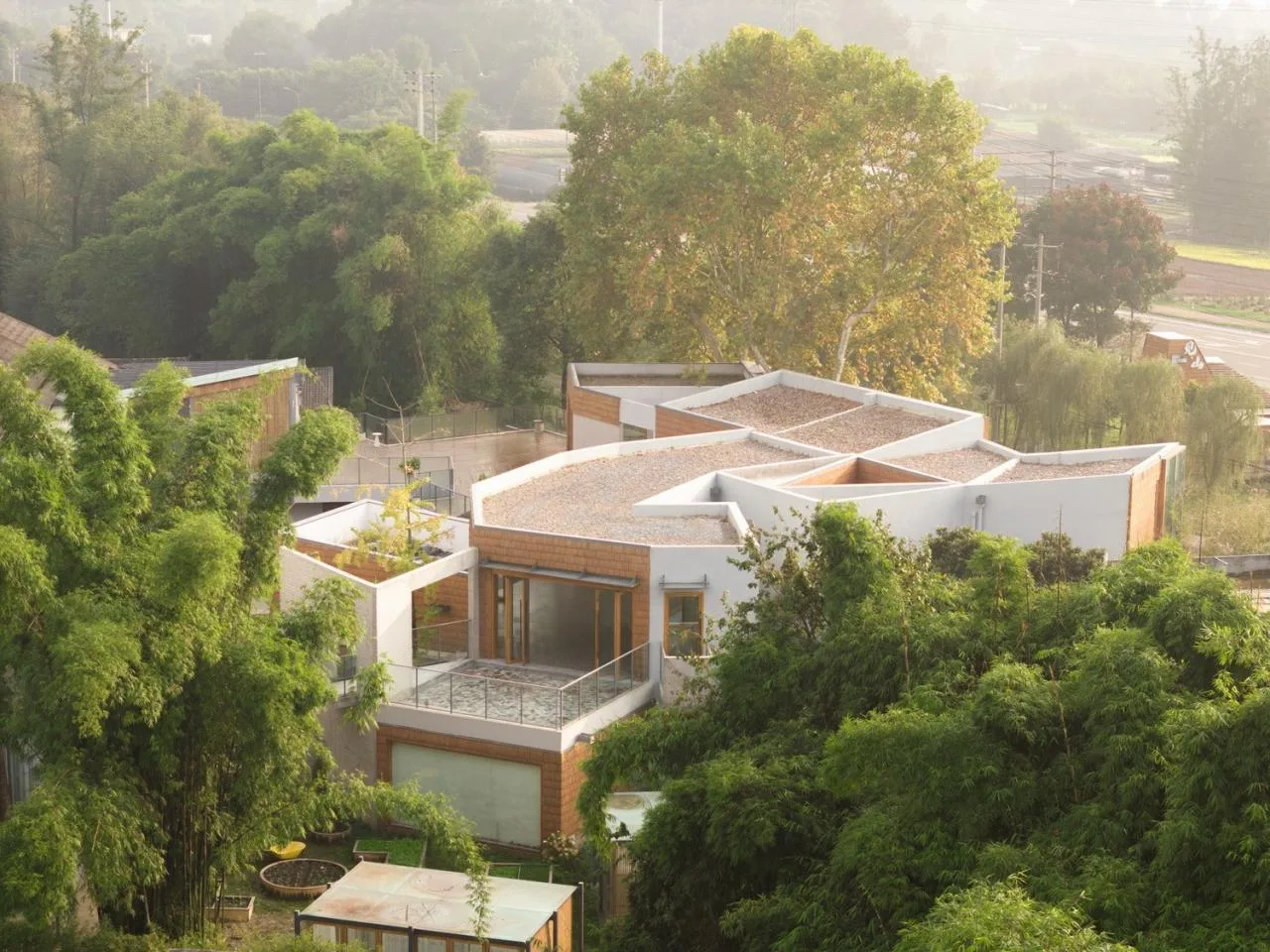
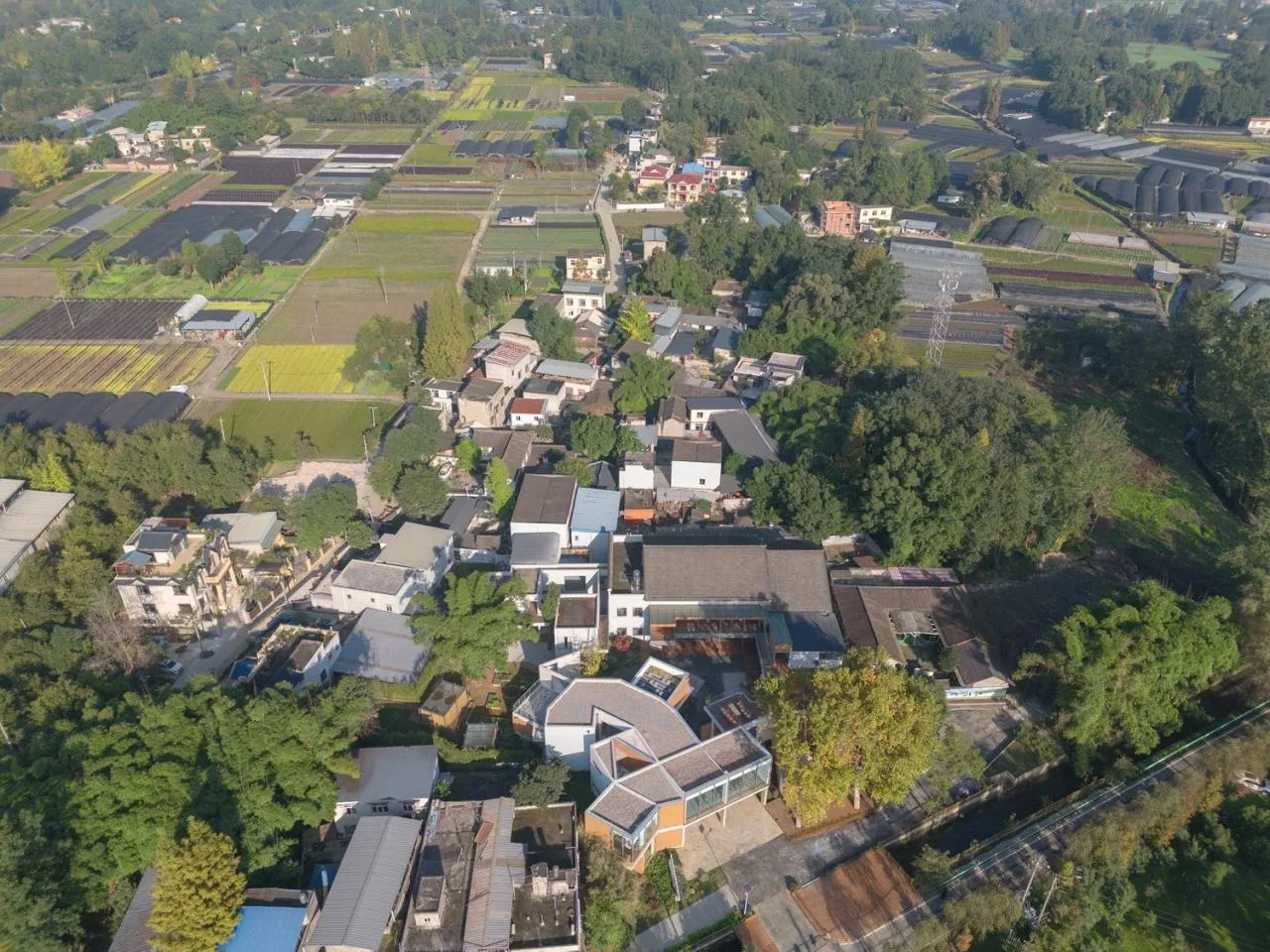
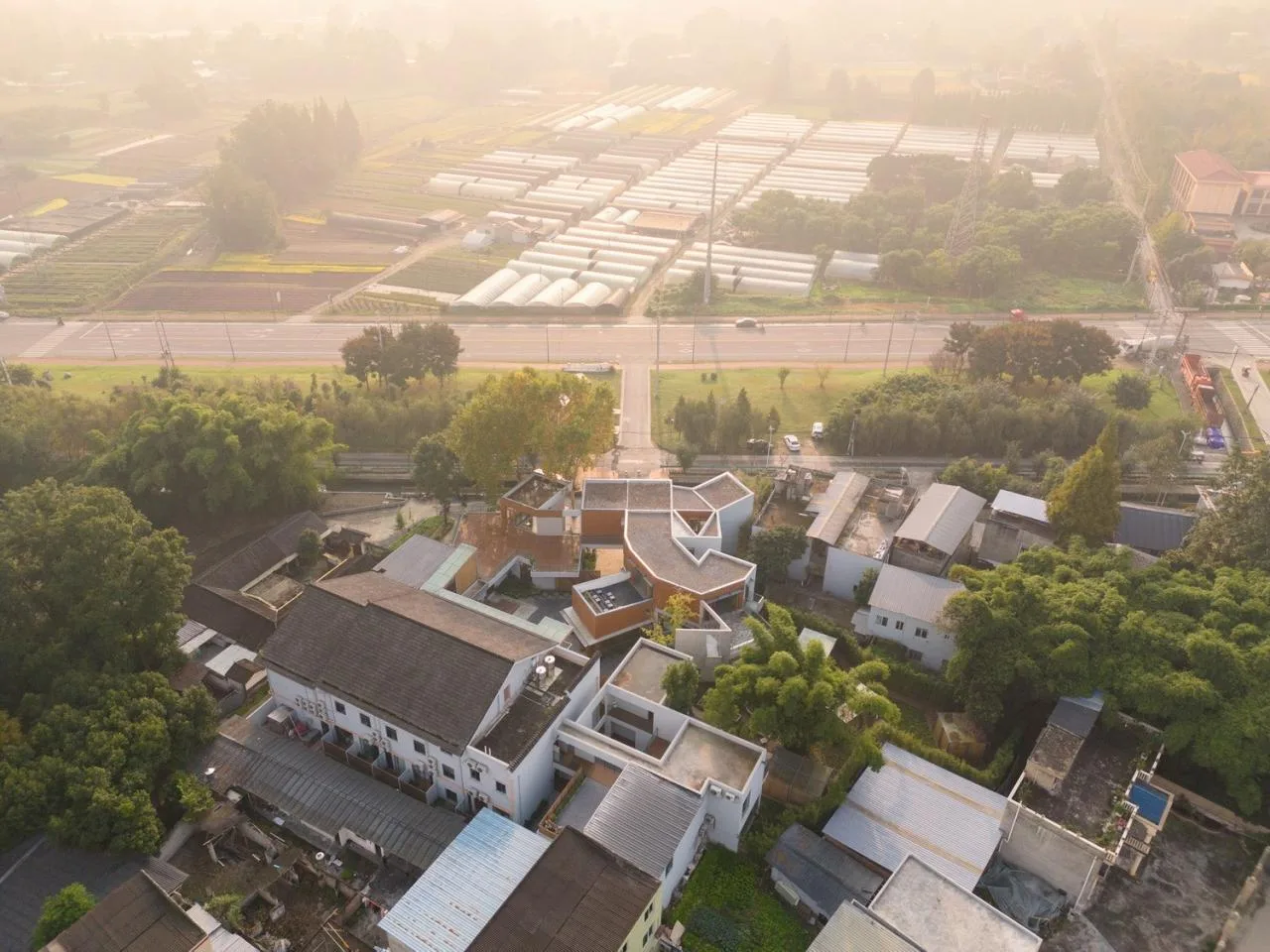
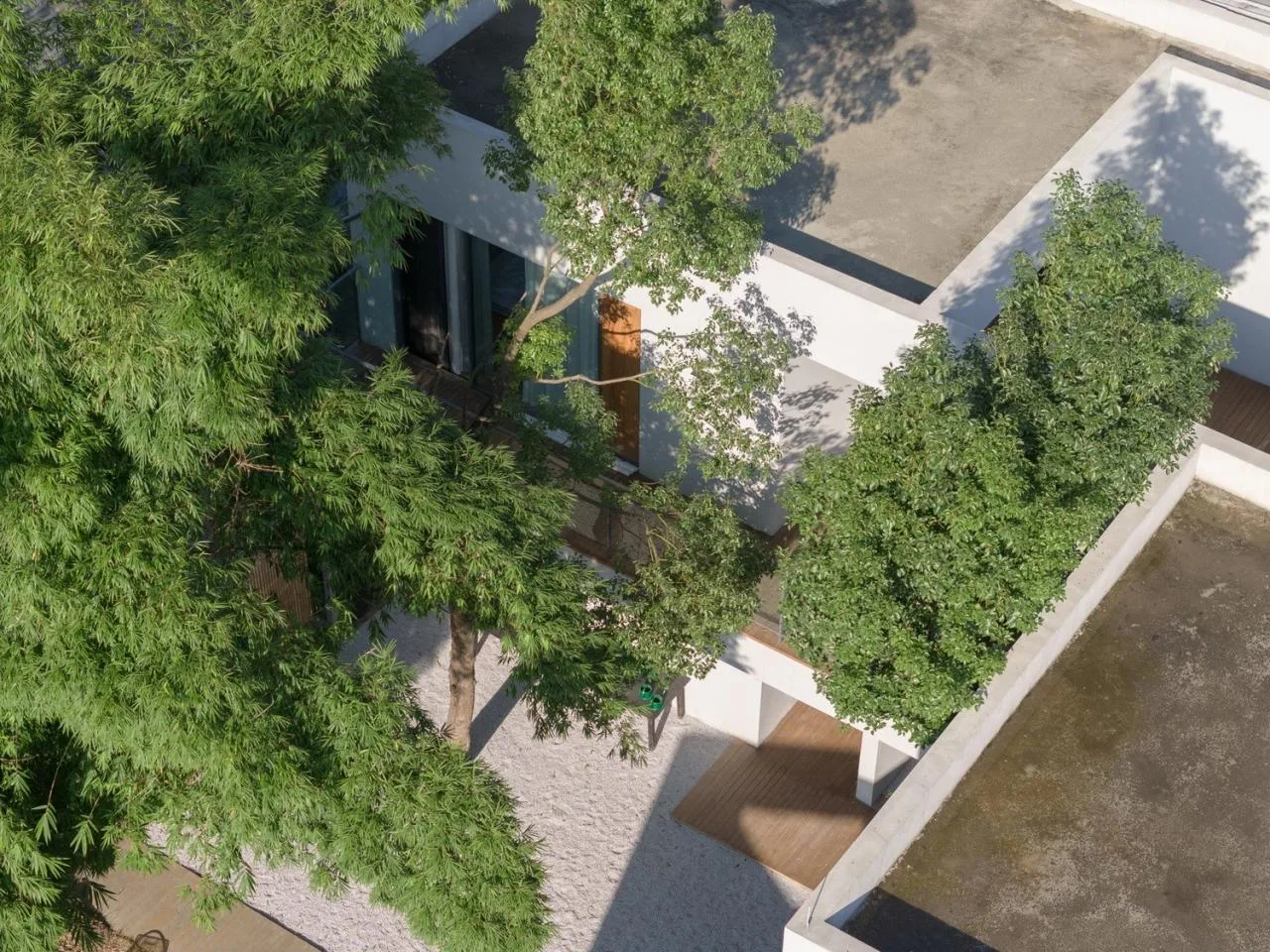
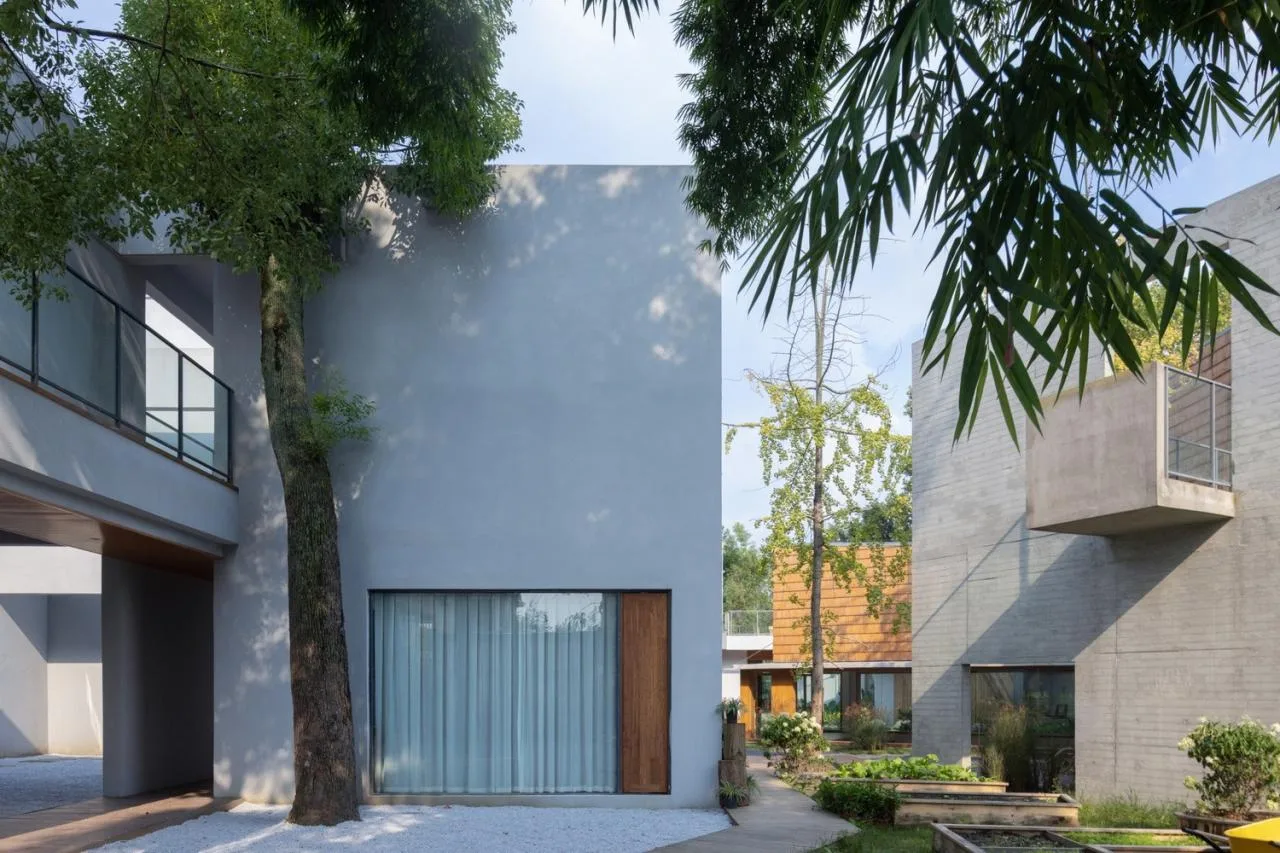
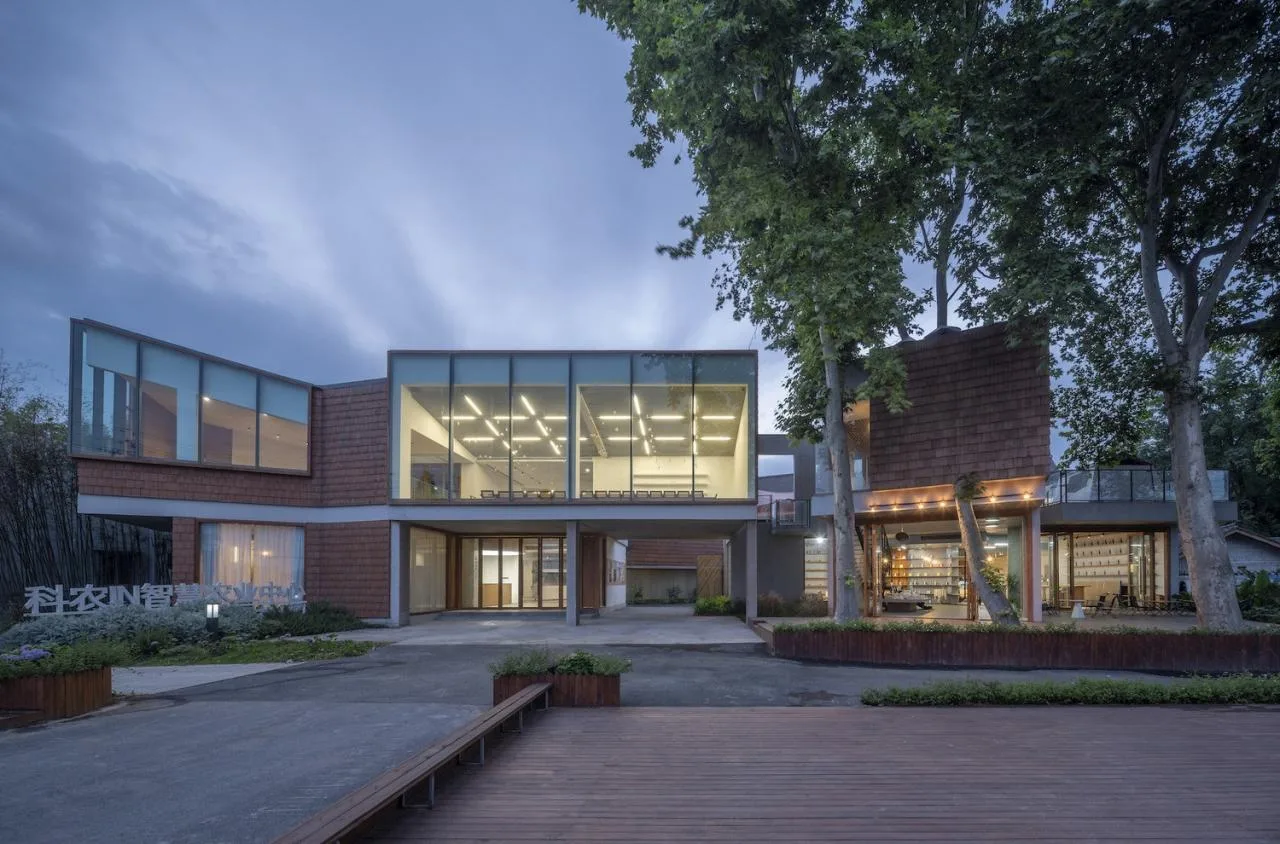
The original courtyard housed a two-story office building, with several tall wutong trees at its entrance and bamboo forests to the west. To harmonize with the rural surroundings, the design embraces the concept of a small-scale settlement, creating a new architectural community that weaves through and around the existing trees. This approach gives the impression that the structures have naturally grown from the original buildings and bamboo groves.
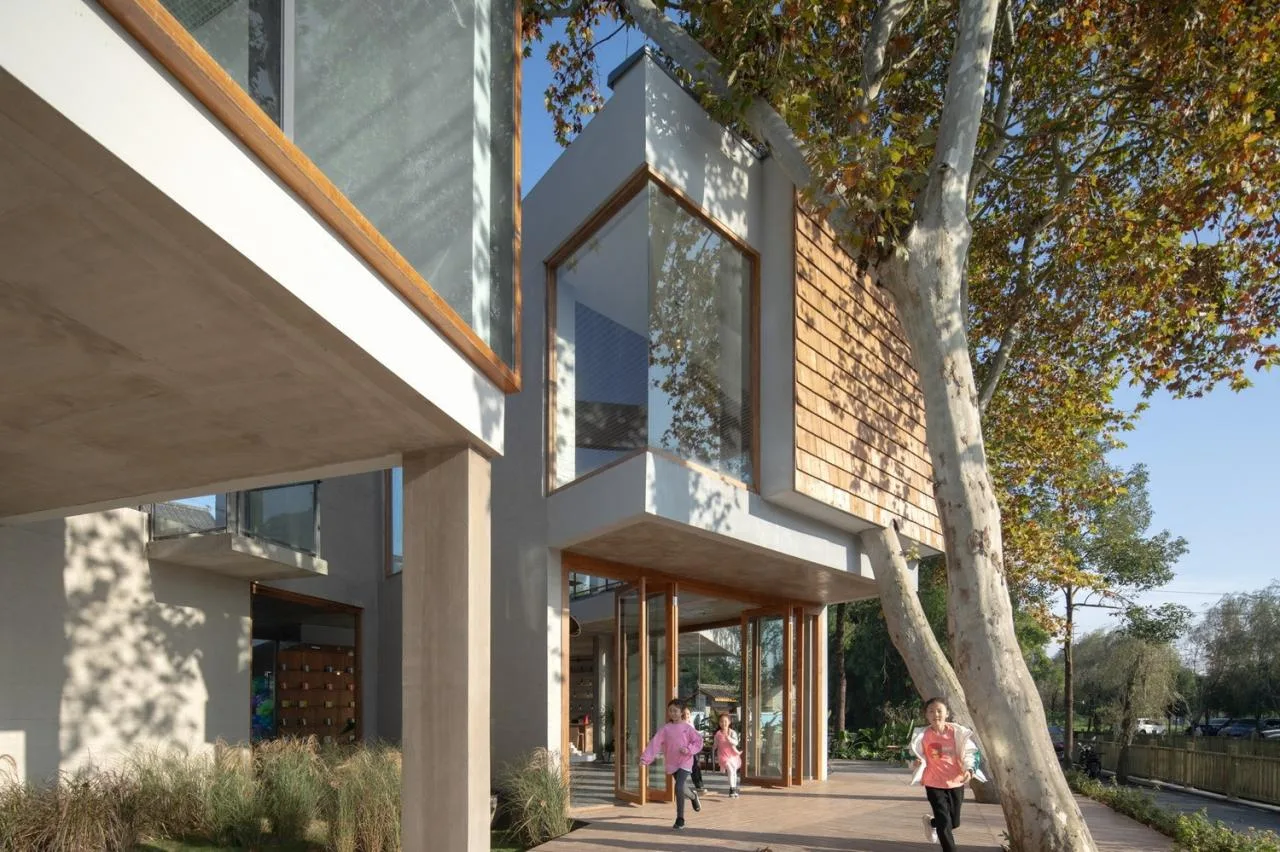
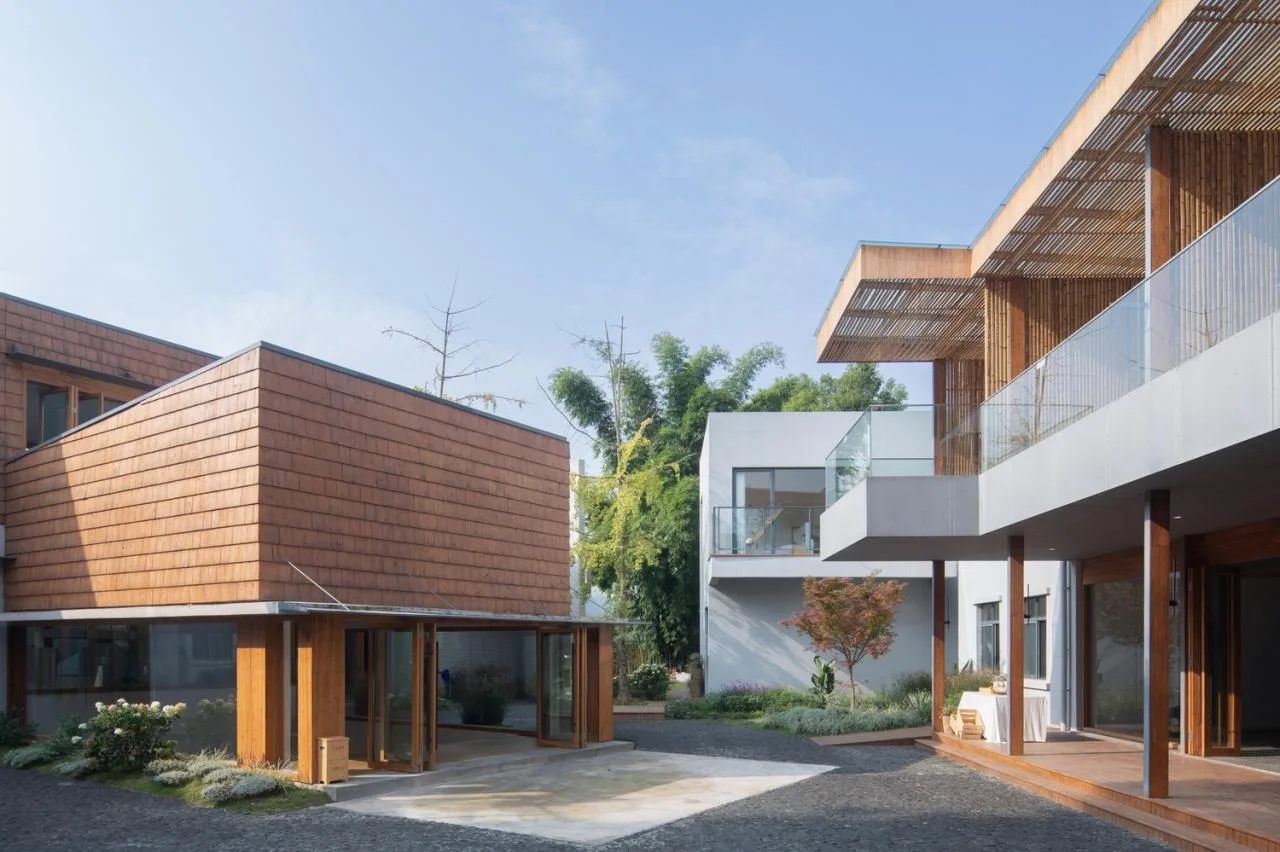
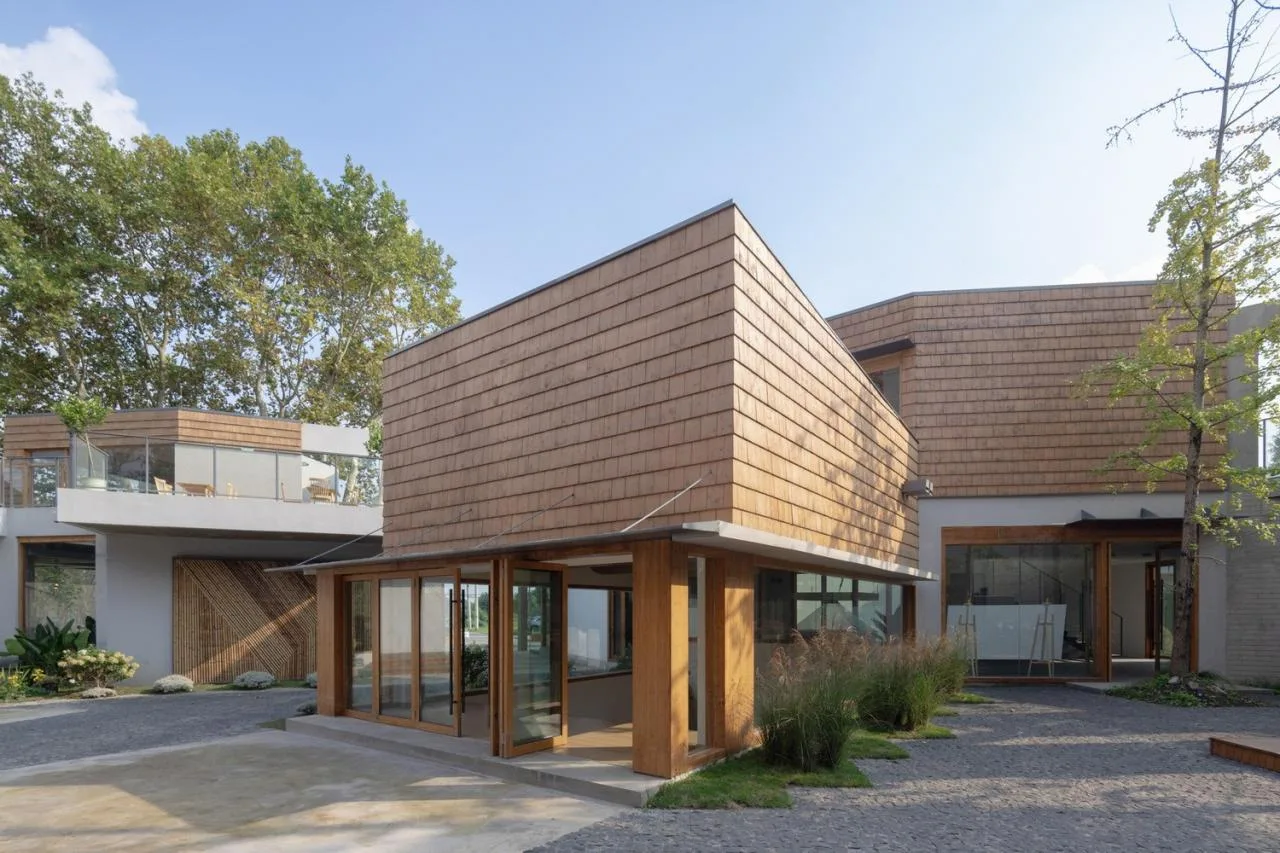
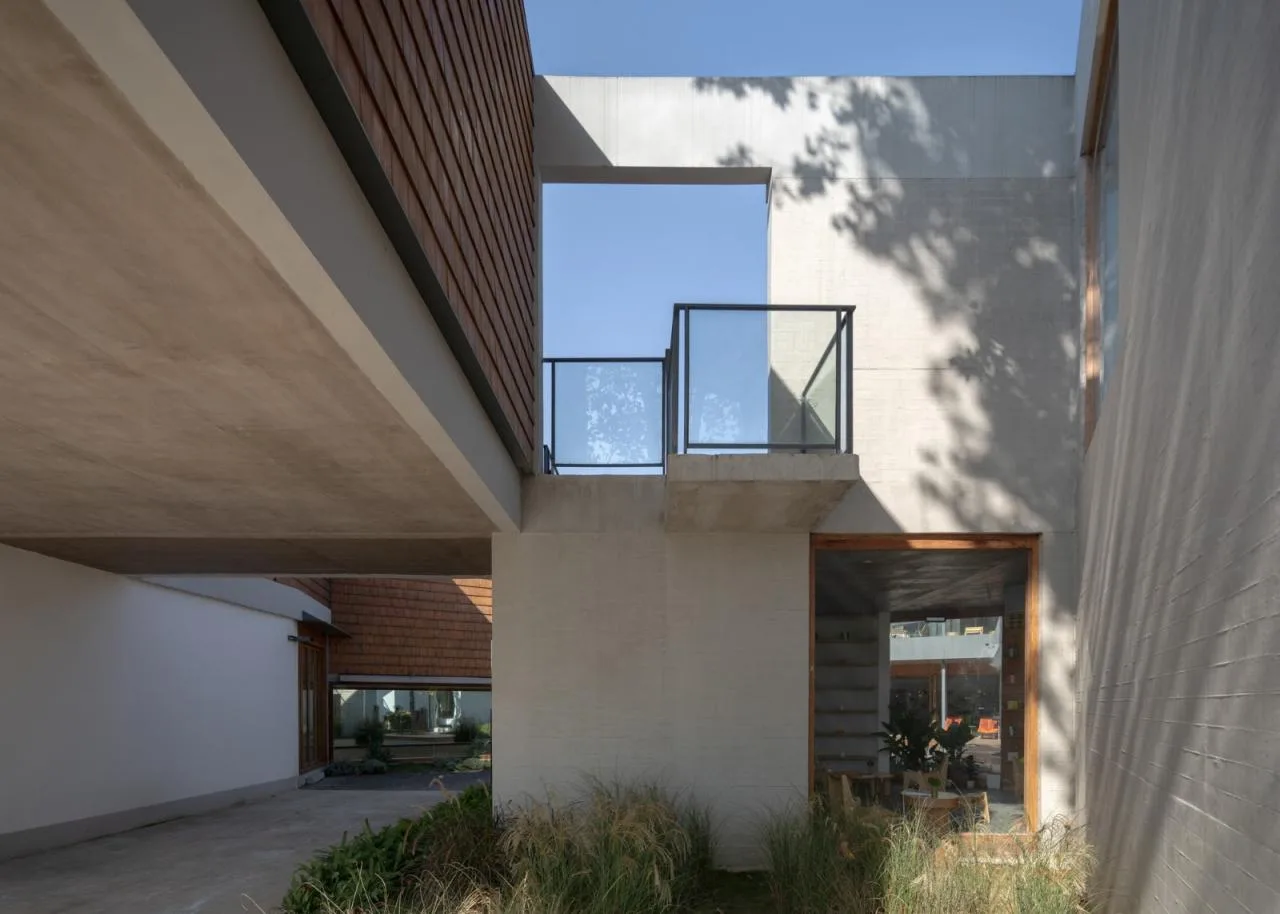
The new structures are based on a 6×6 meter module, forming settlement units shaped as blocks extending from the original house. These units connect in groups, rotated in various directions to create dynamic spatial relationships. The overall layout follows two sets of orthogonal column grids intersecting at approximately 60 degrees.
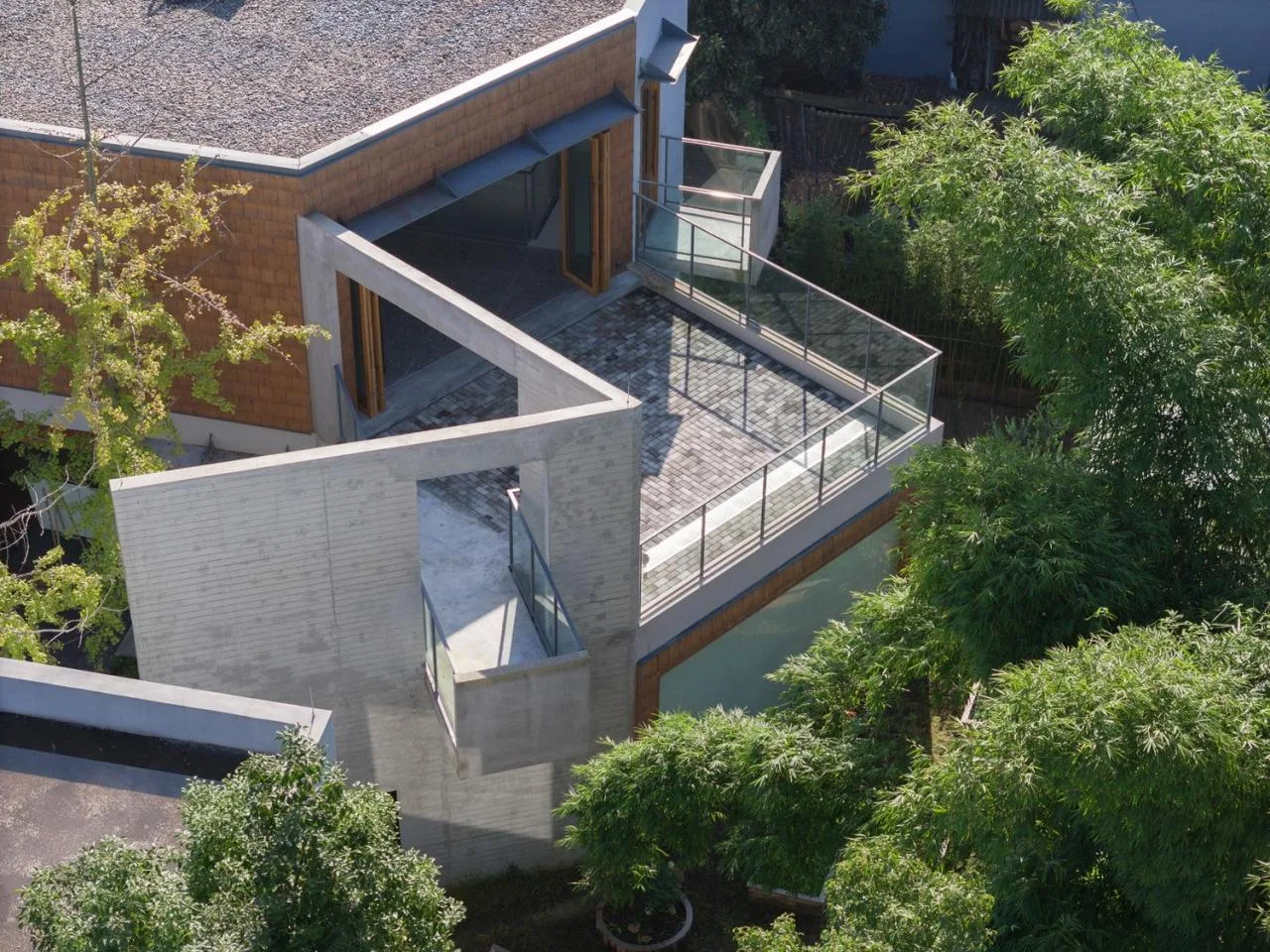
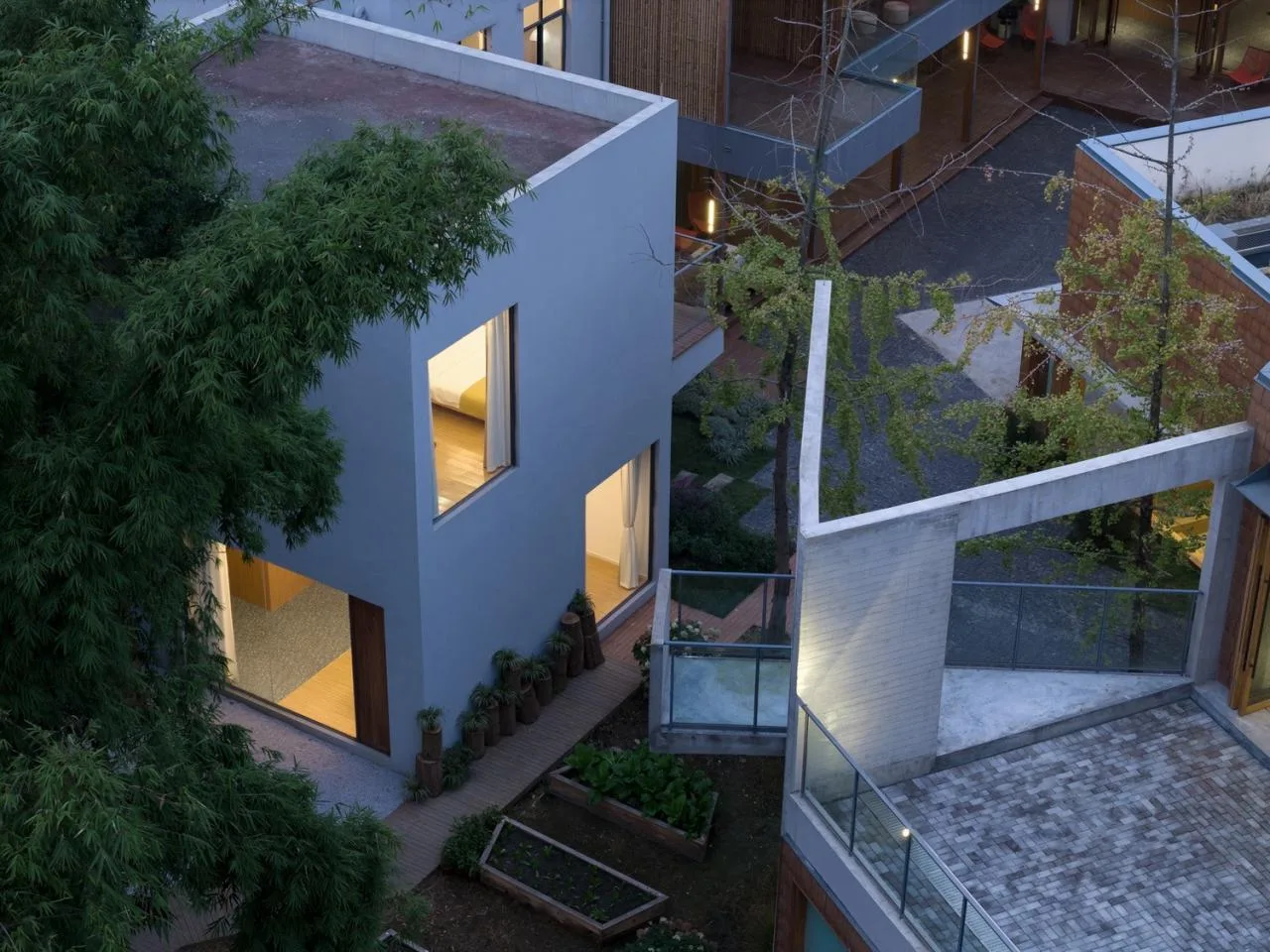
To simplify the internal space and avoid hidden structural elements, numerous irregular columns connect walls, beams, and columns into a continuous 200mm thick structure. Triangular shear walls are strategically placed at cantilevered sections and courtyards to ensure structural stability. Four triangular concrete walls combined with surrounding irregular columns form a comprehensive structural system, enabling diverse spatial experiences such as indoor, outdoor, cantilevered, and enclosed areas. This creates multi-level open spaces with blurred boundaries between interior and exterior.
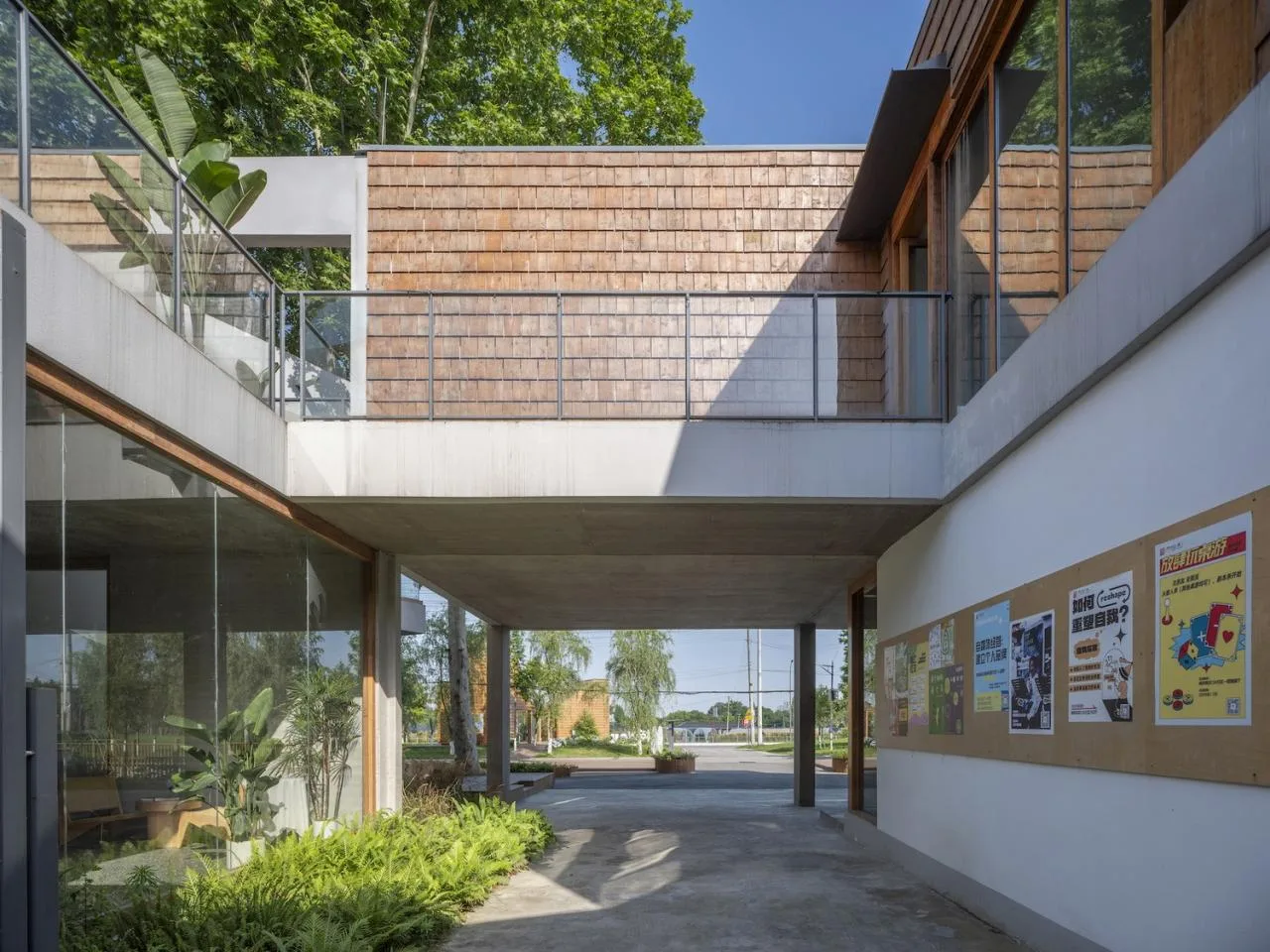
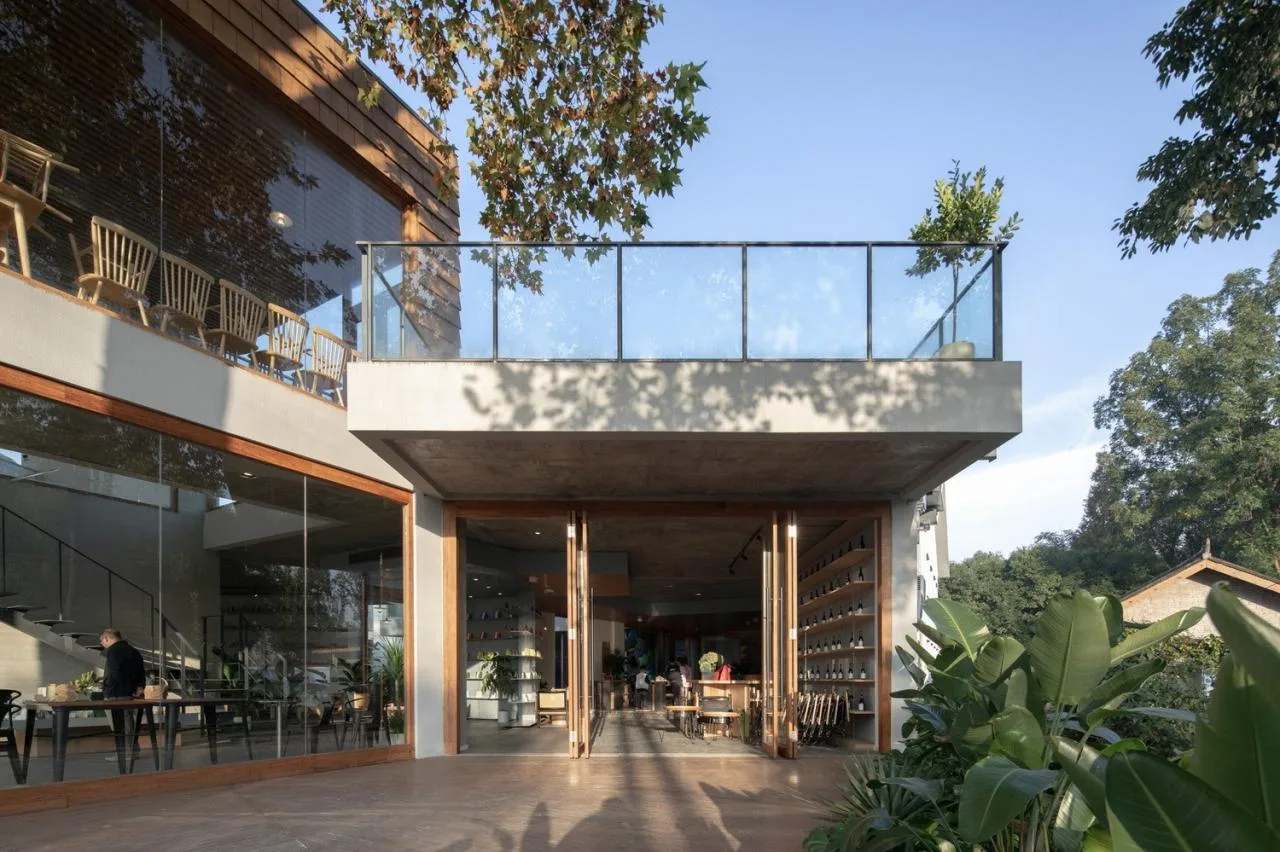
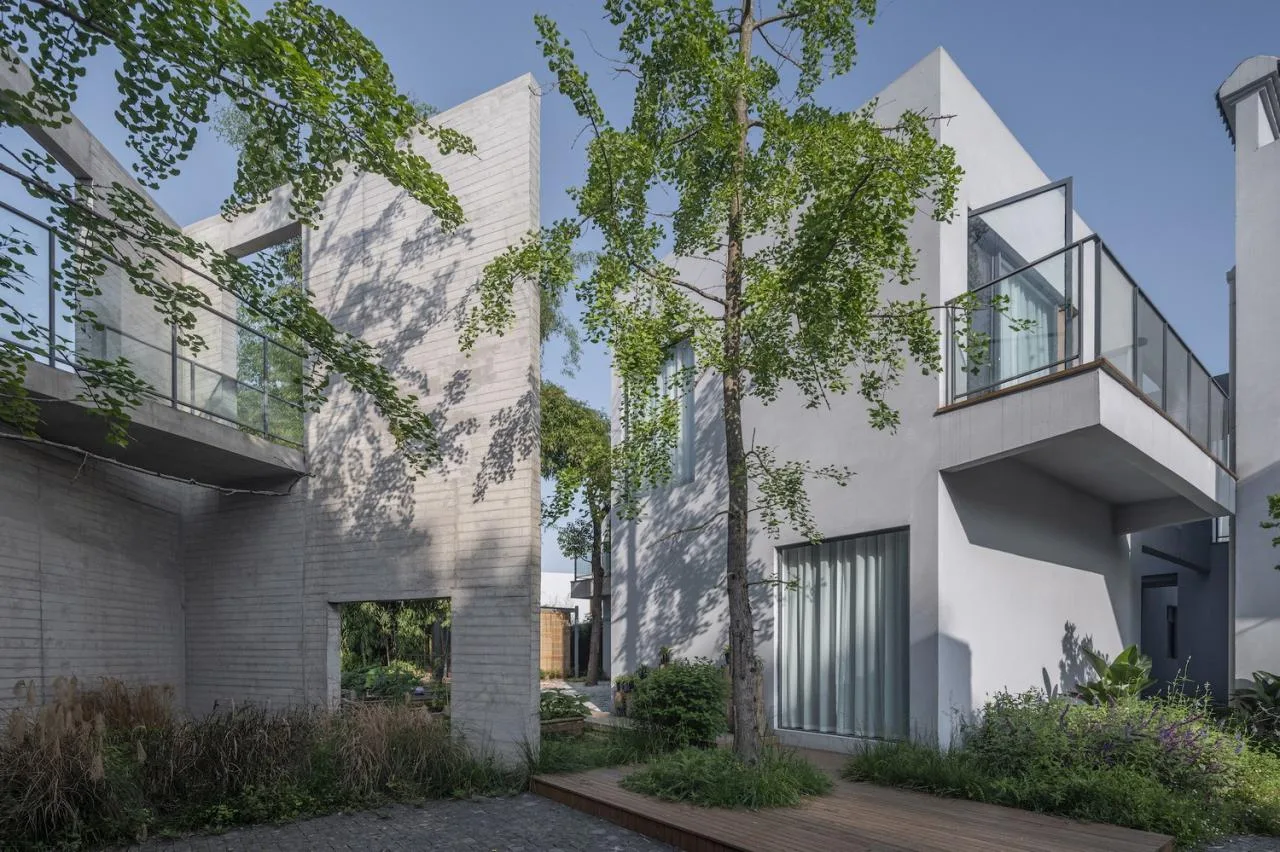
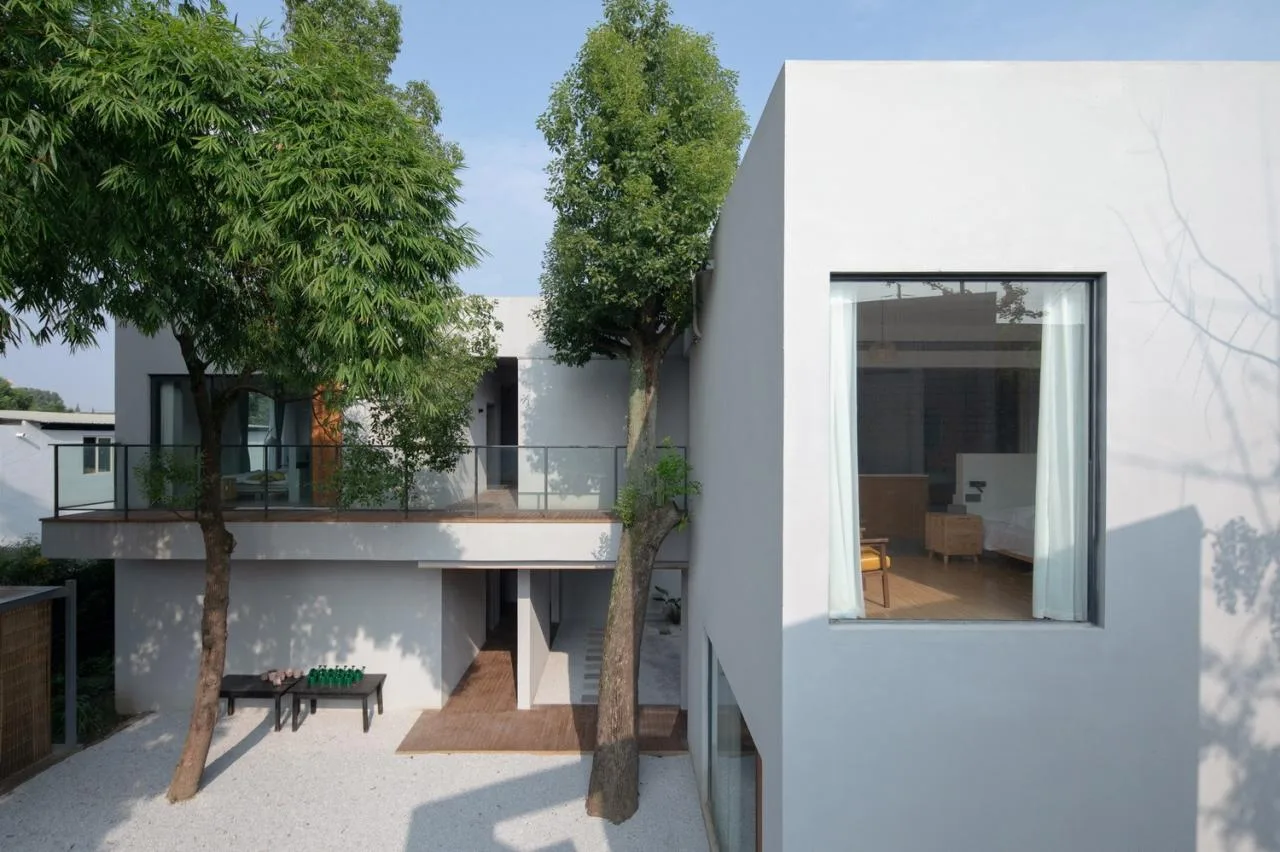
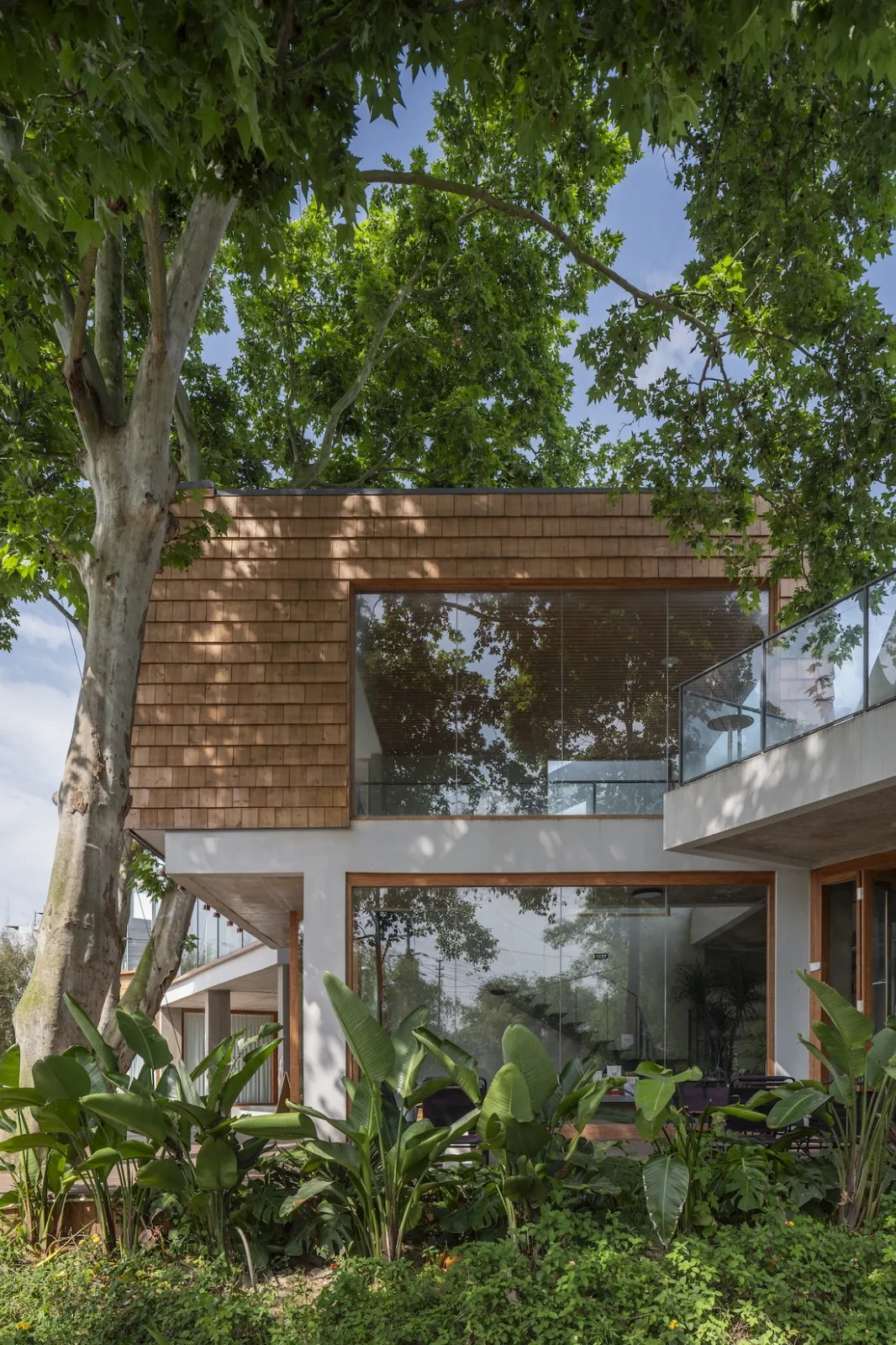
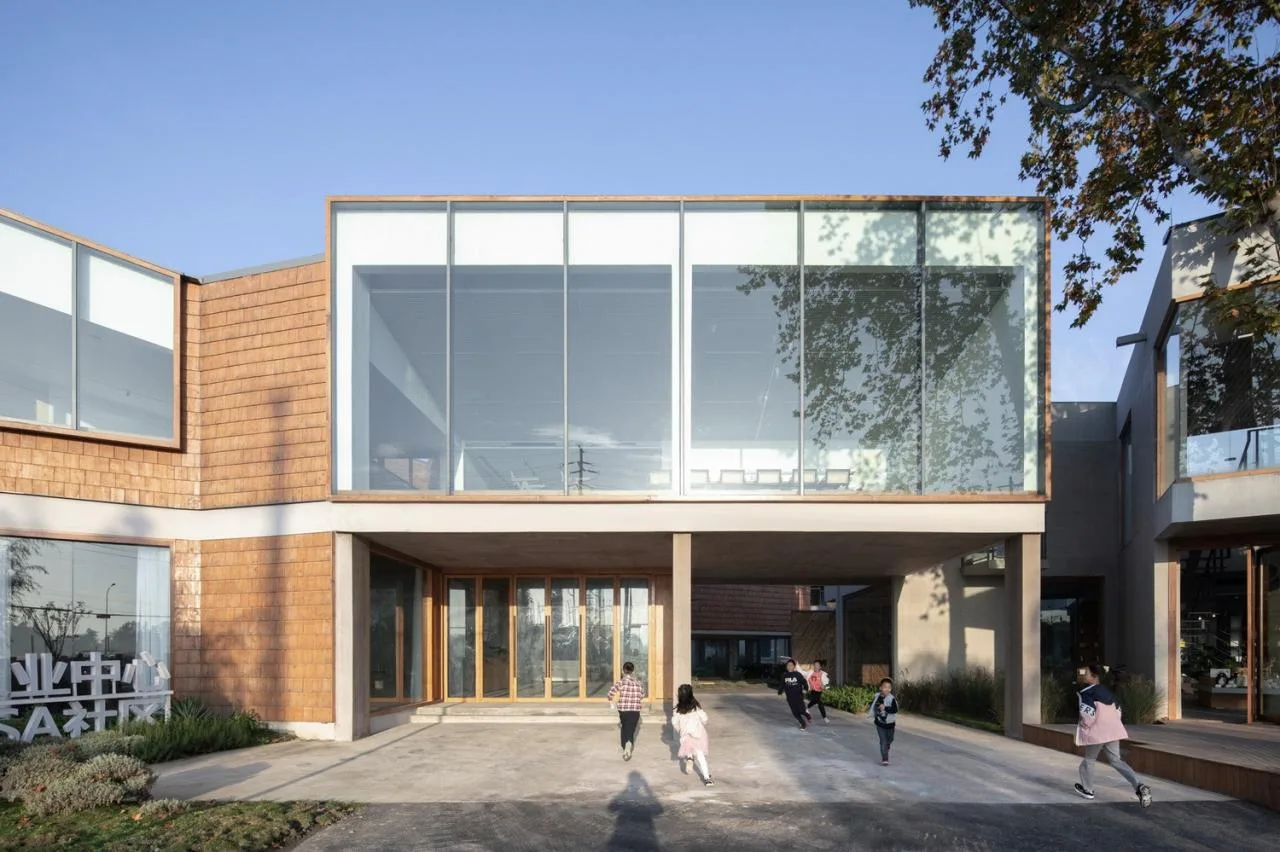
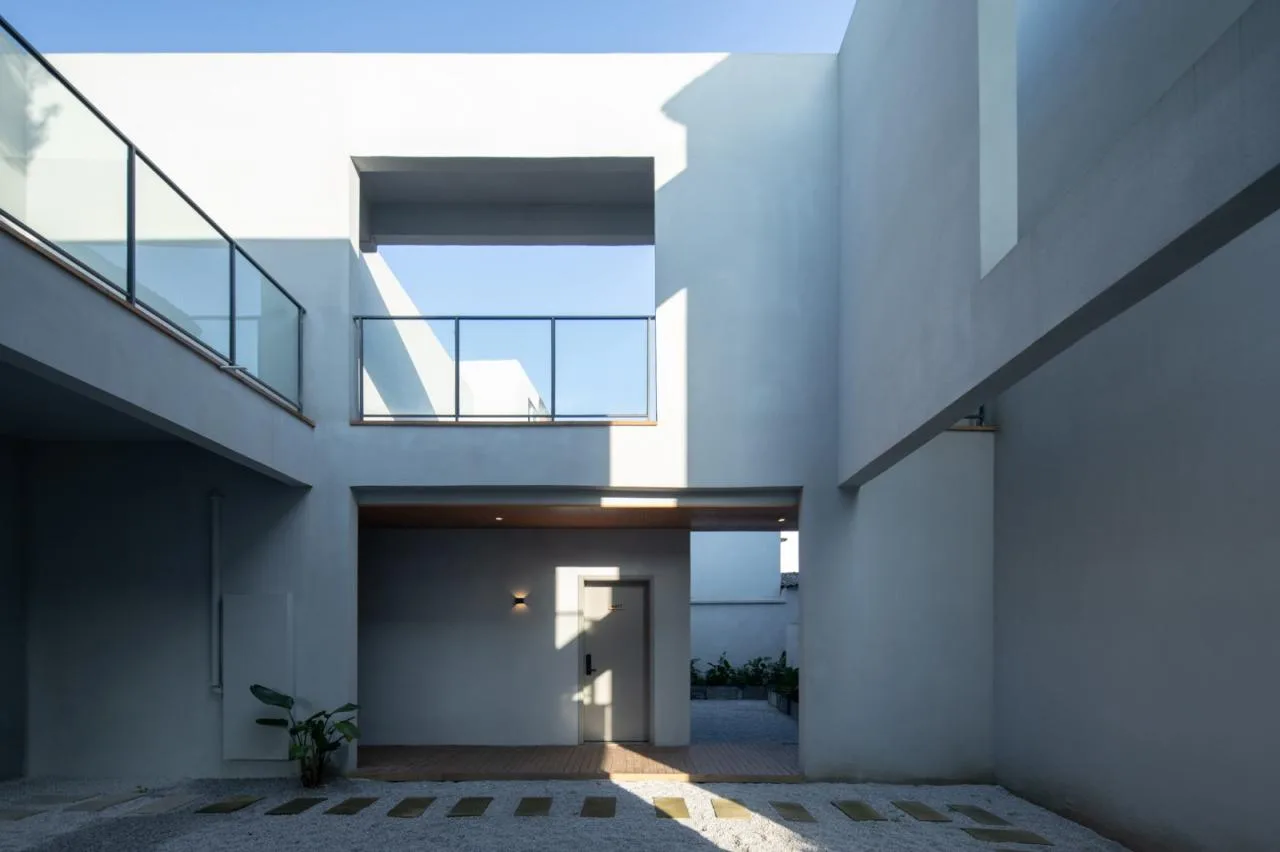
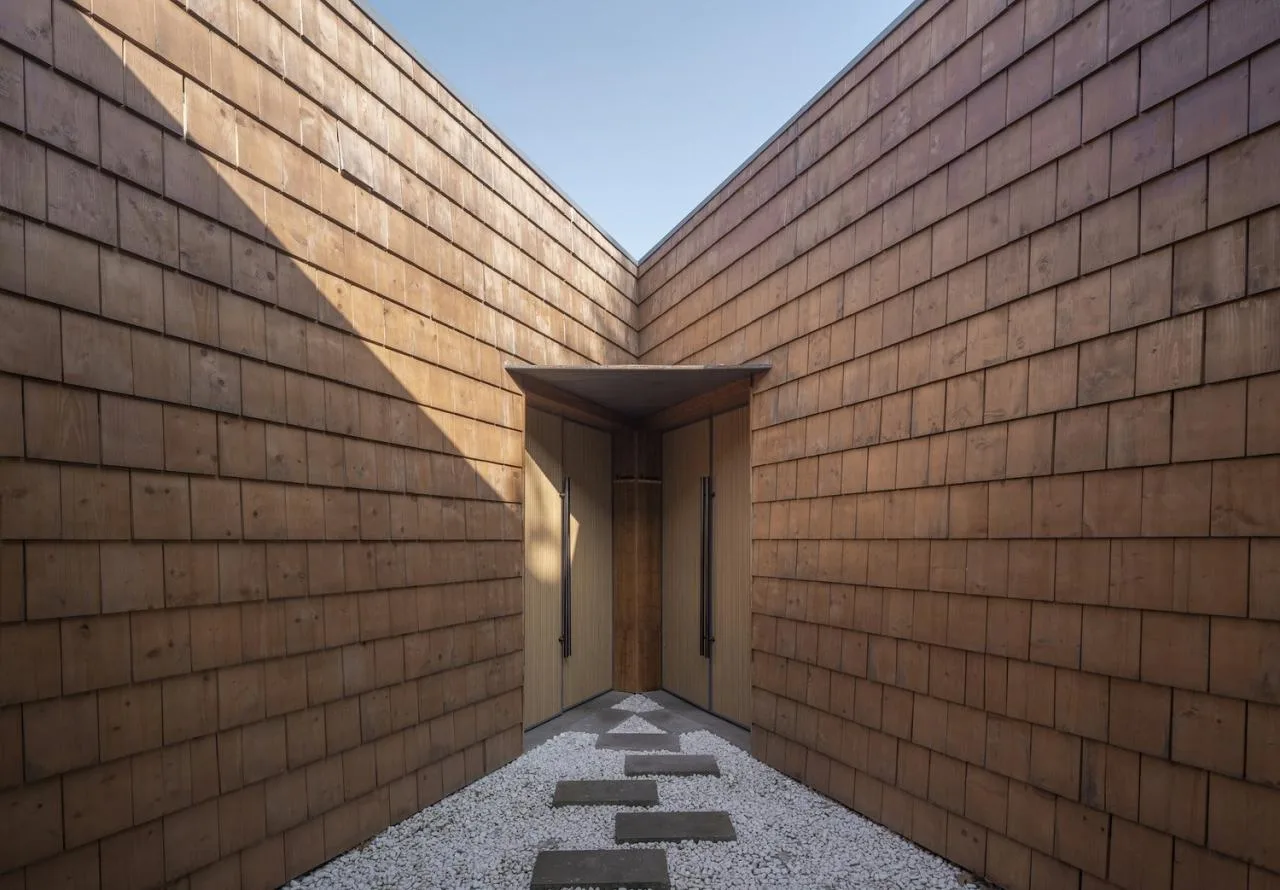
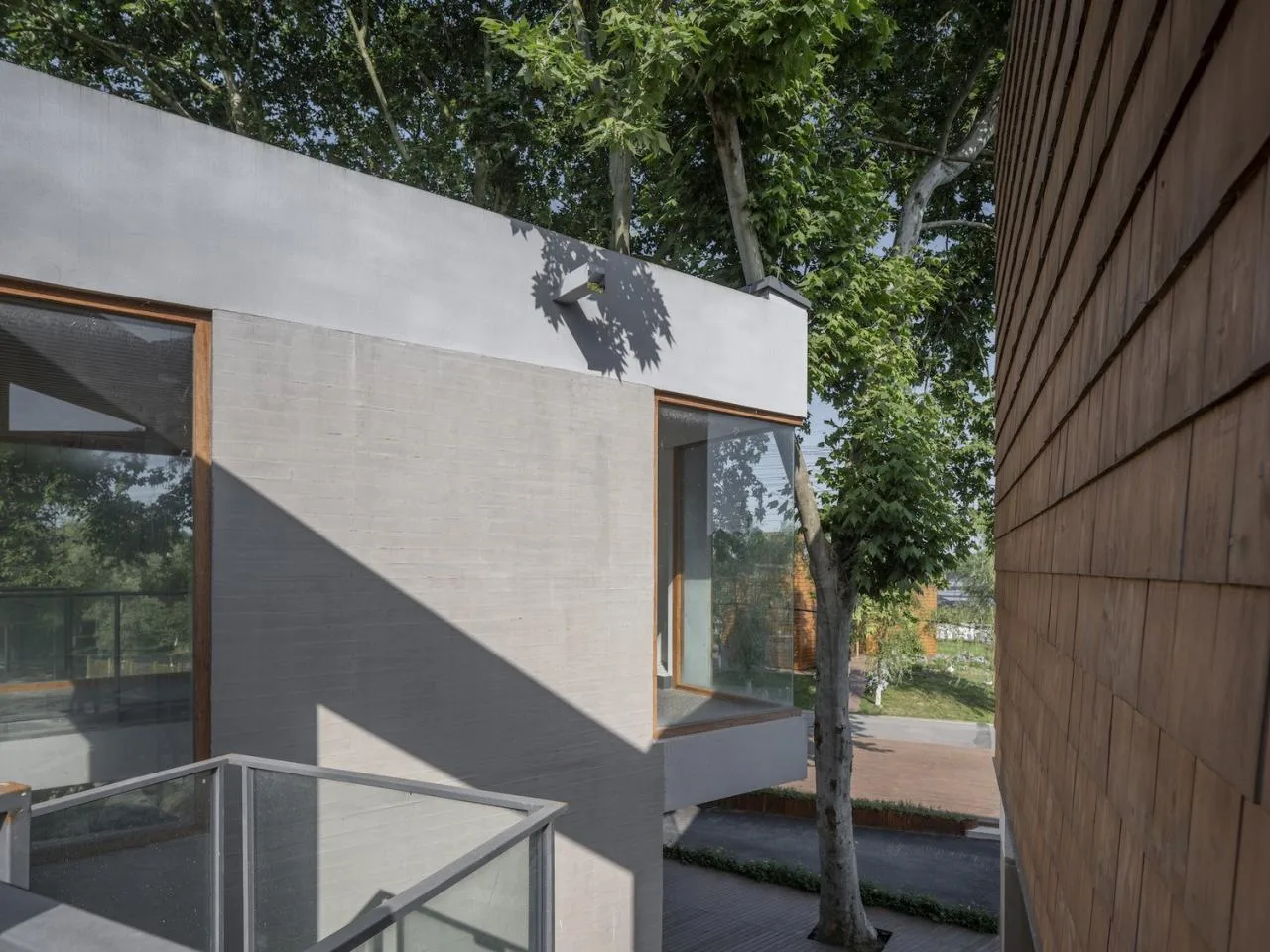
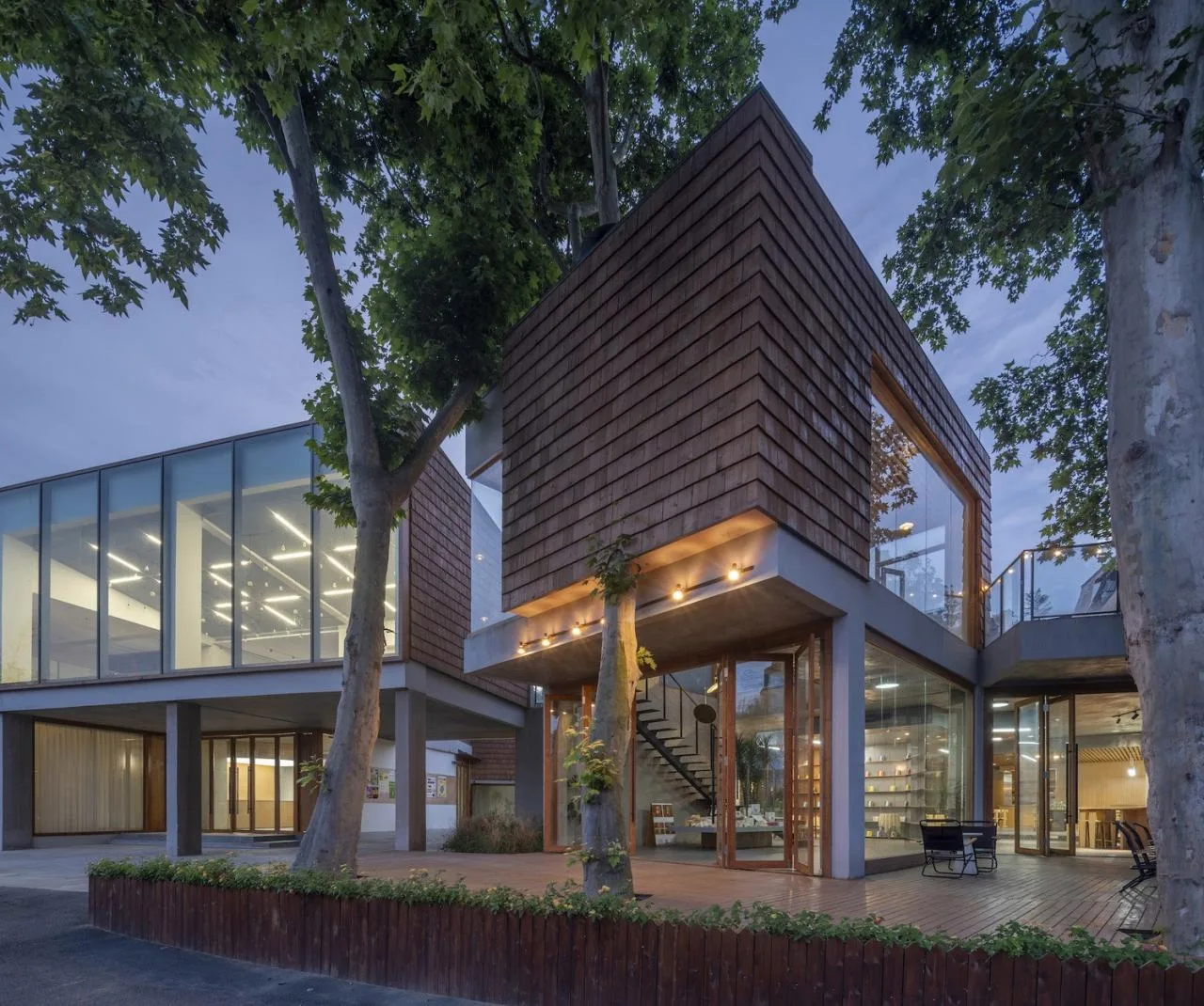
Given that the ‘Mixed Community’ serves diverse groups, the material language and spatial atmosphere vary across functional areas. Public spaces such as the exhibition hall, coffee shop, and small bookstores prominently feature wooden tile walls and handcrafted bamboo and wood doors and windows, contrasting with the concrete backdrop. The renovated outdoor terrace uses dense bamboo strips for shading and separation, while the newly built study base and homestay in the backyard consist of white cottages arranged around courtyards.
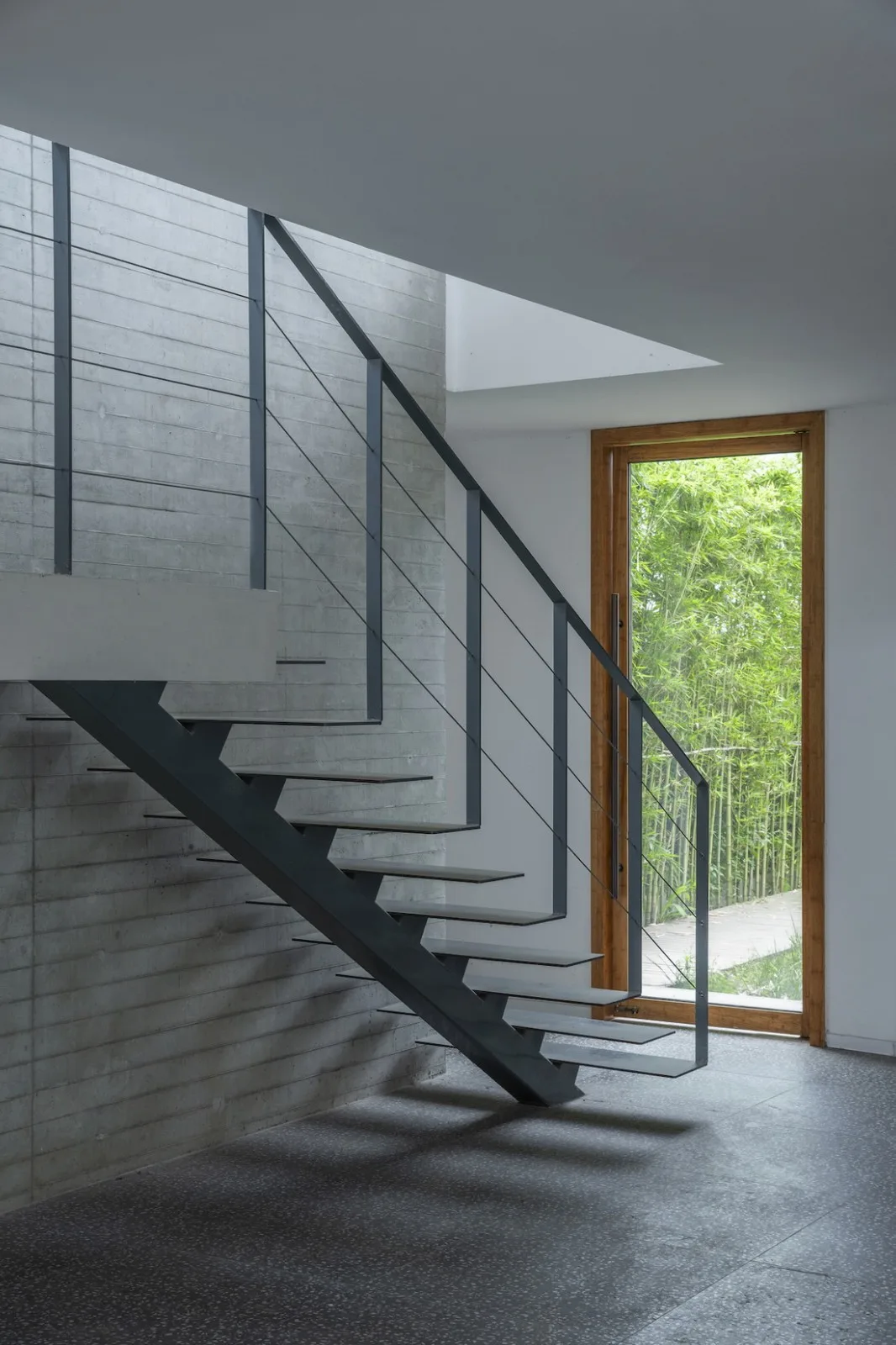
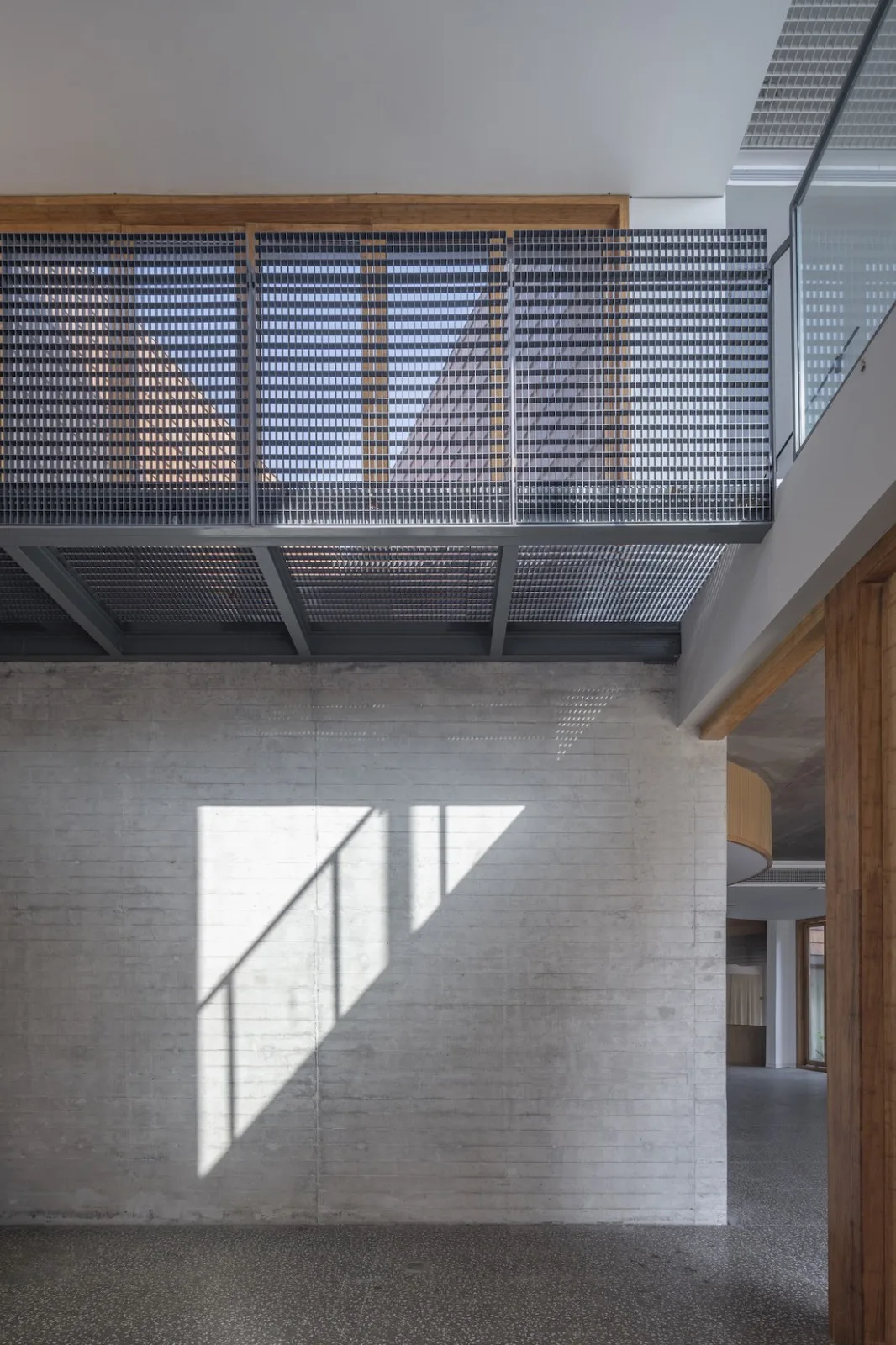
These local materials impart warmth and familiarity, while their rugged texture complements the suburban rural setting. Steel plates and grating are used in indoor staircases, aerial bridges, and rooftop terraces, introducing a light and minimalist aesthetic. This metal framework harmonizes with the exposed concrete walls and floors, enhancing the overall spatial character.
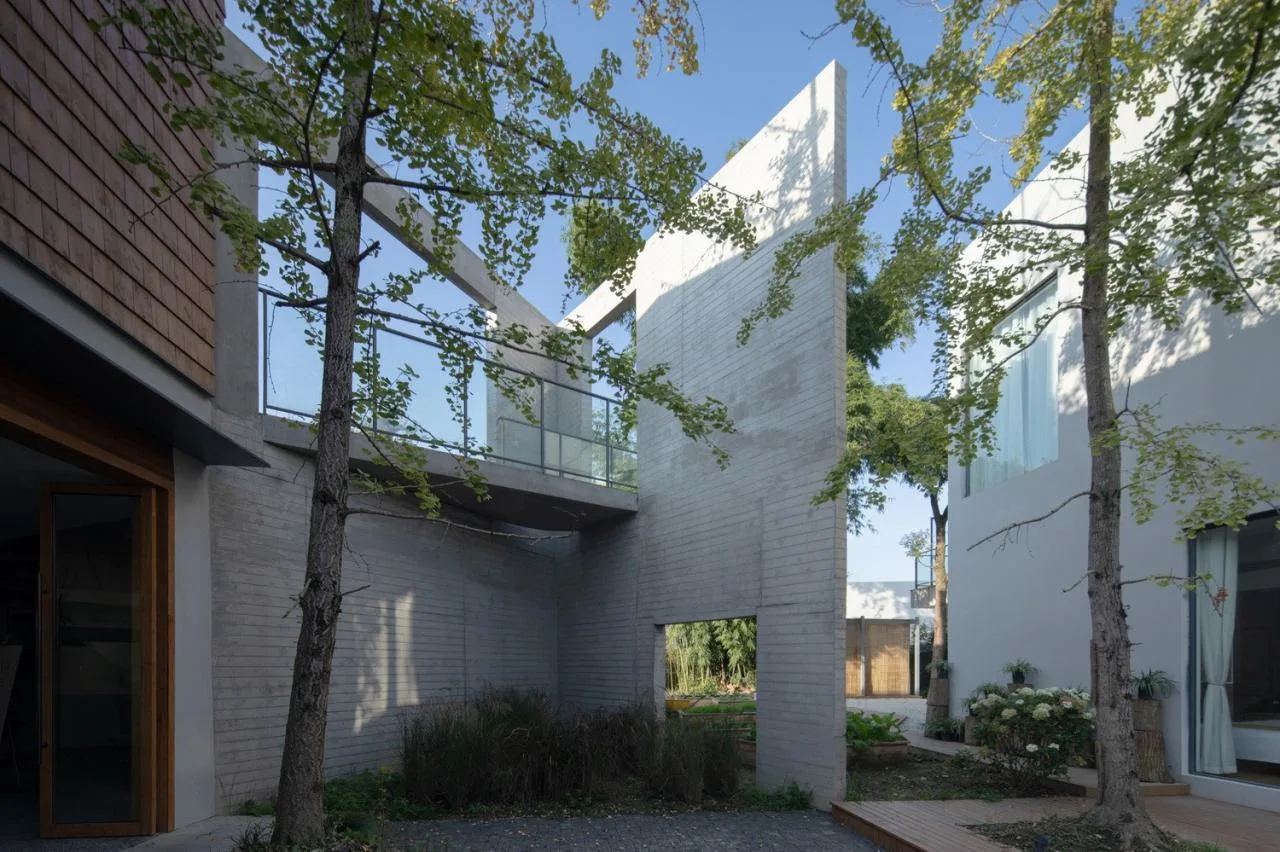
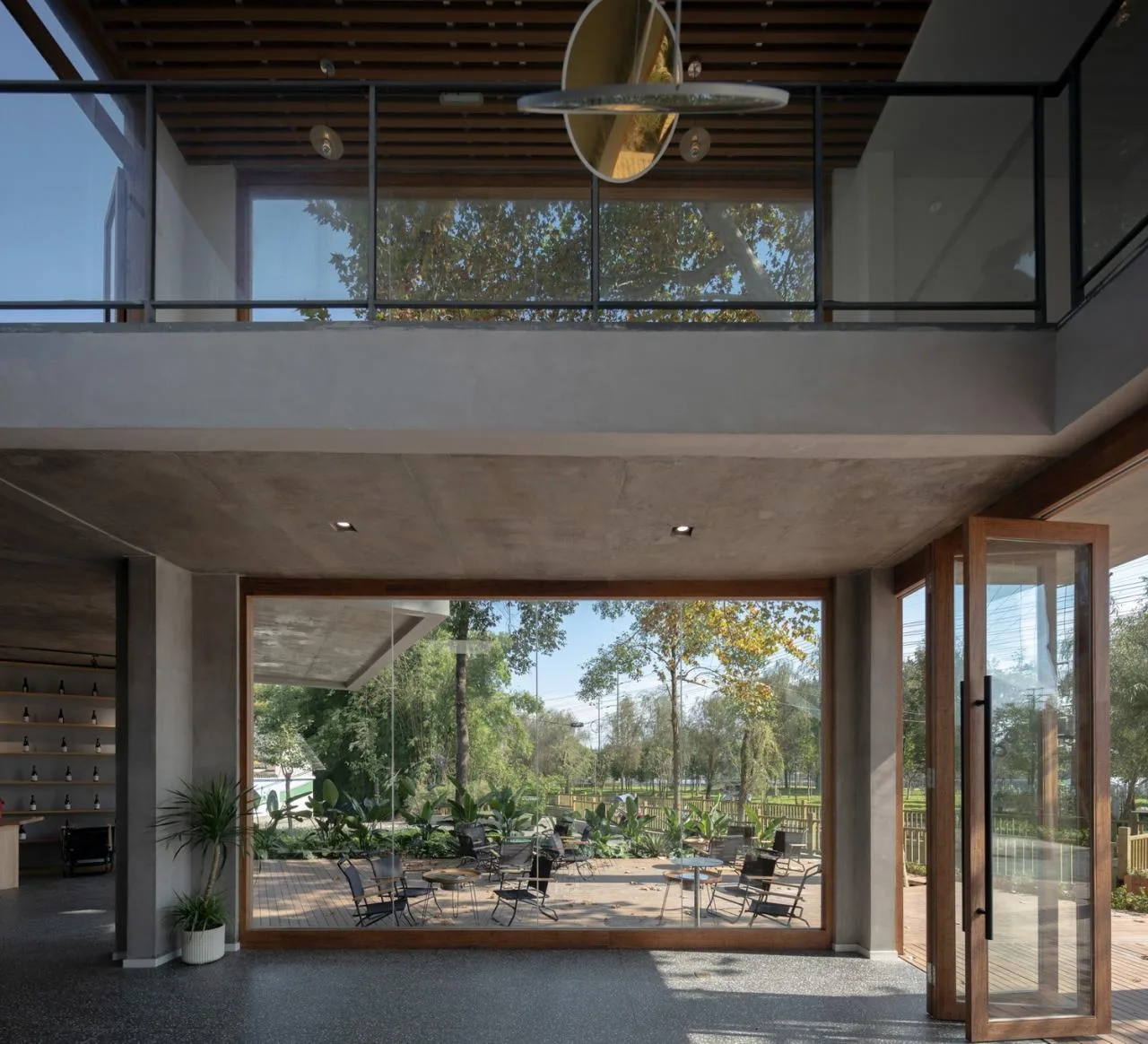
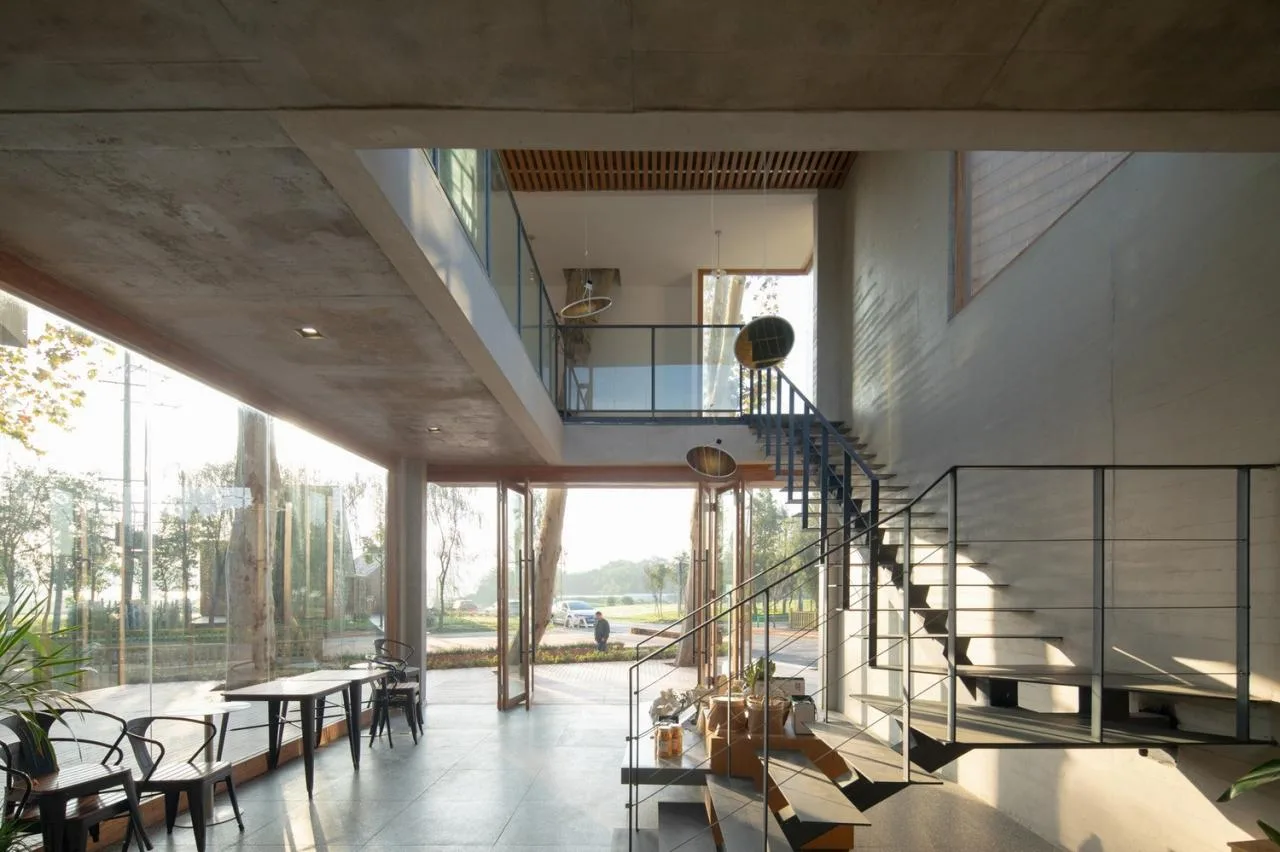
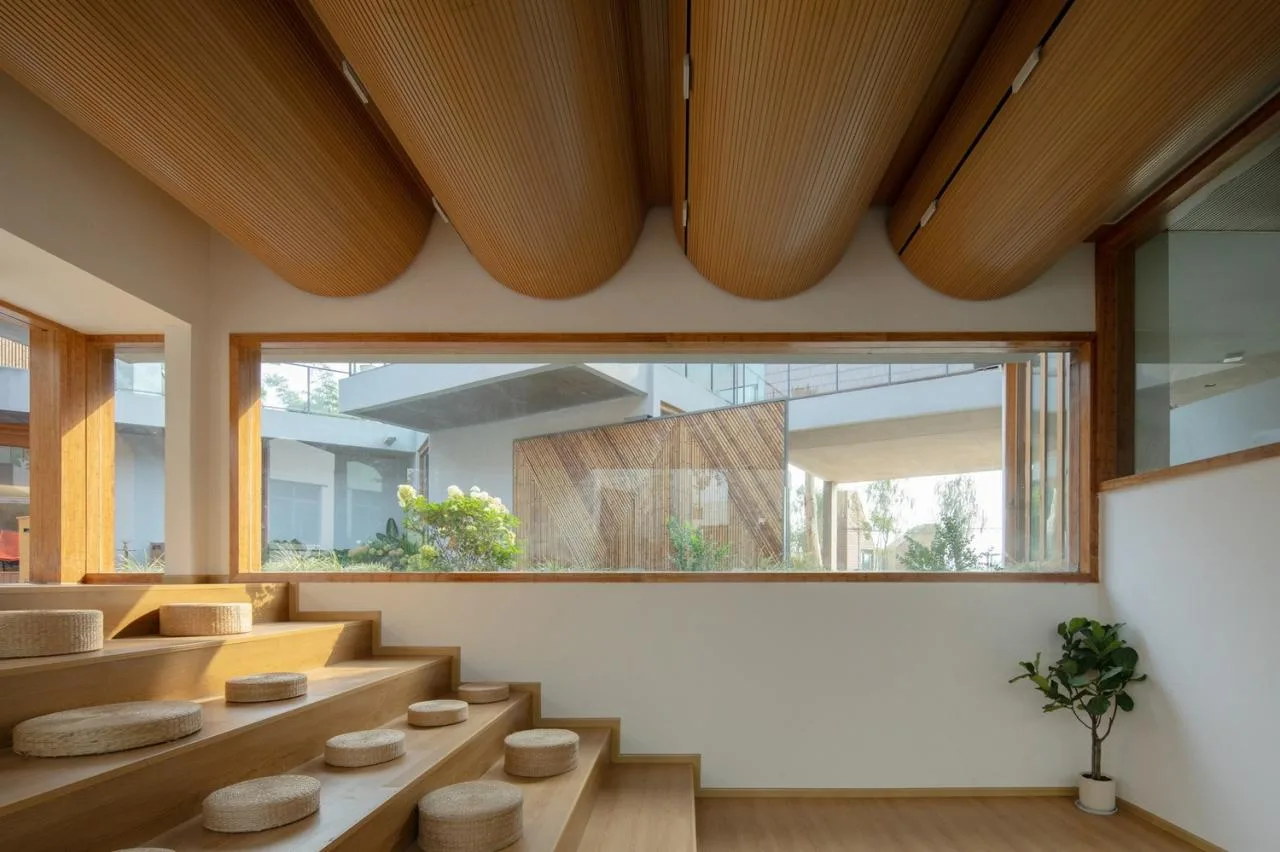
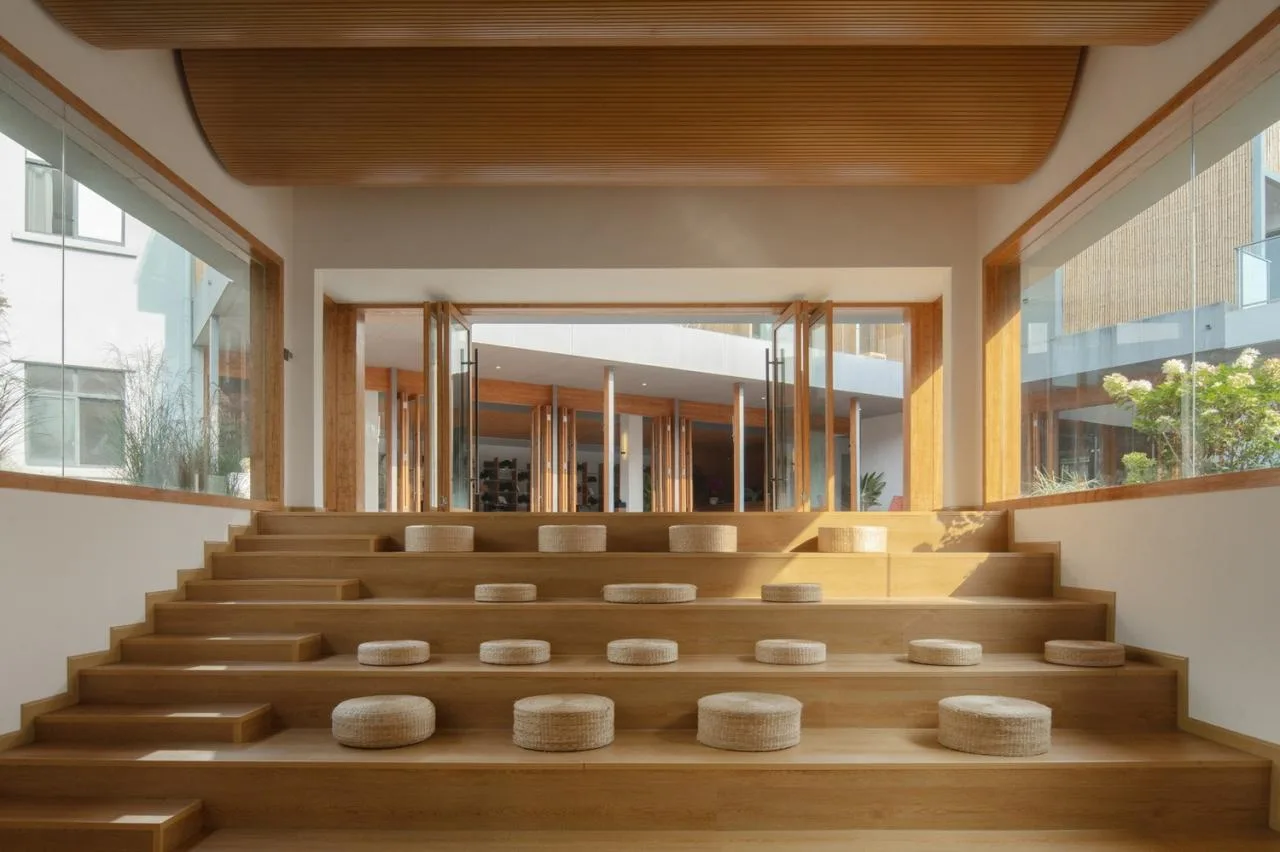
This project’s community integrates diverse functions including accommodation, exhibition, study, theater, coffee, and leisure. It aims to explore new possibilities for rural public buildings. “Garlic Coffee” is the first brand incubated within this community. Its ongoing activities have attracted many young students to return during holidays and engage in localized events. The operations team hopes this model will serve as a positive example for similar initiatives.
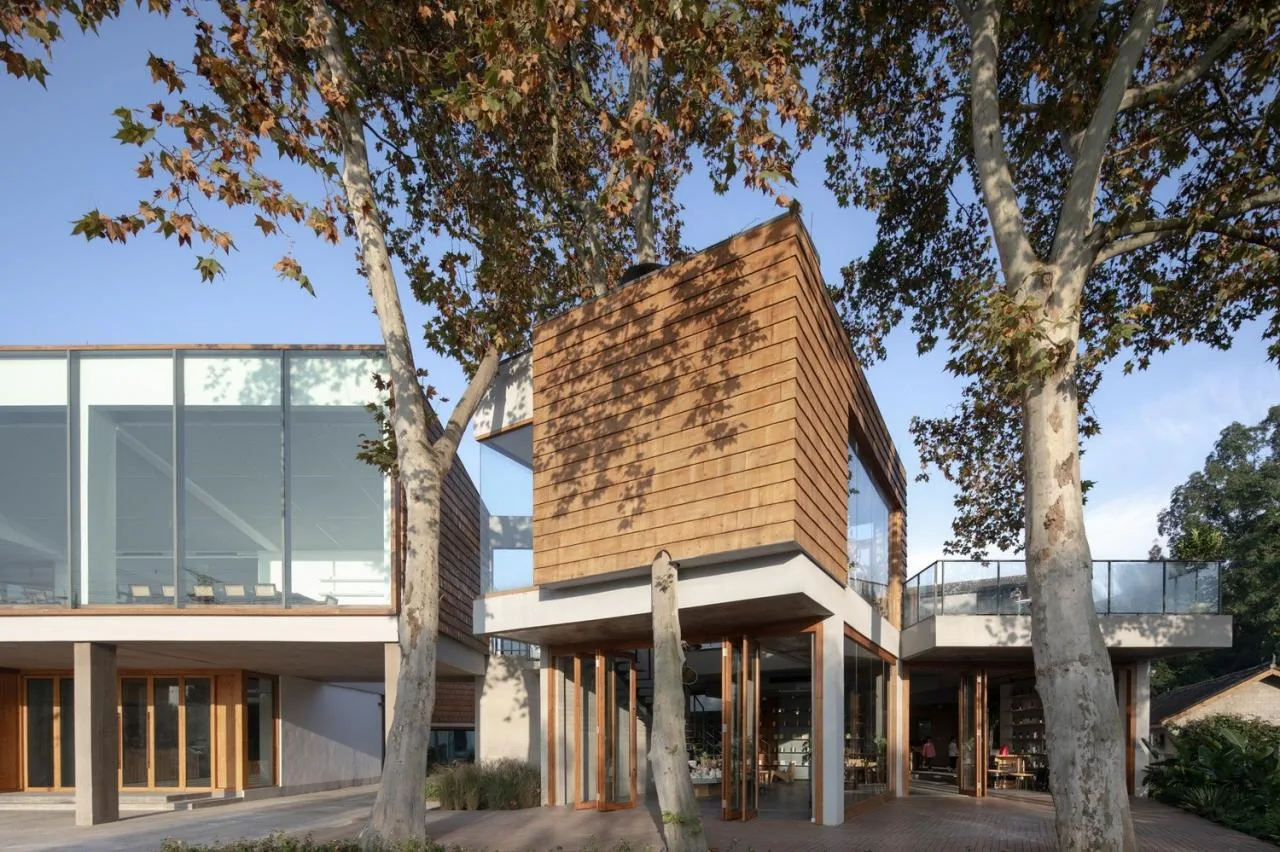
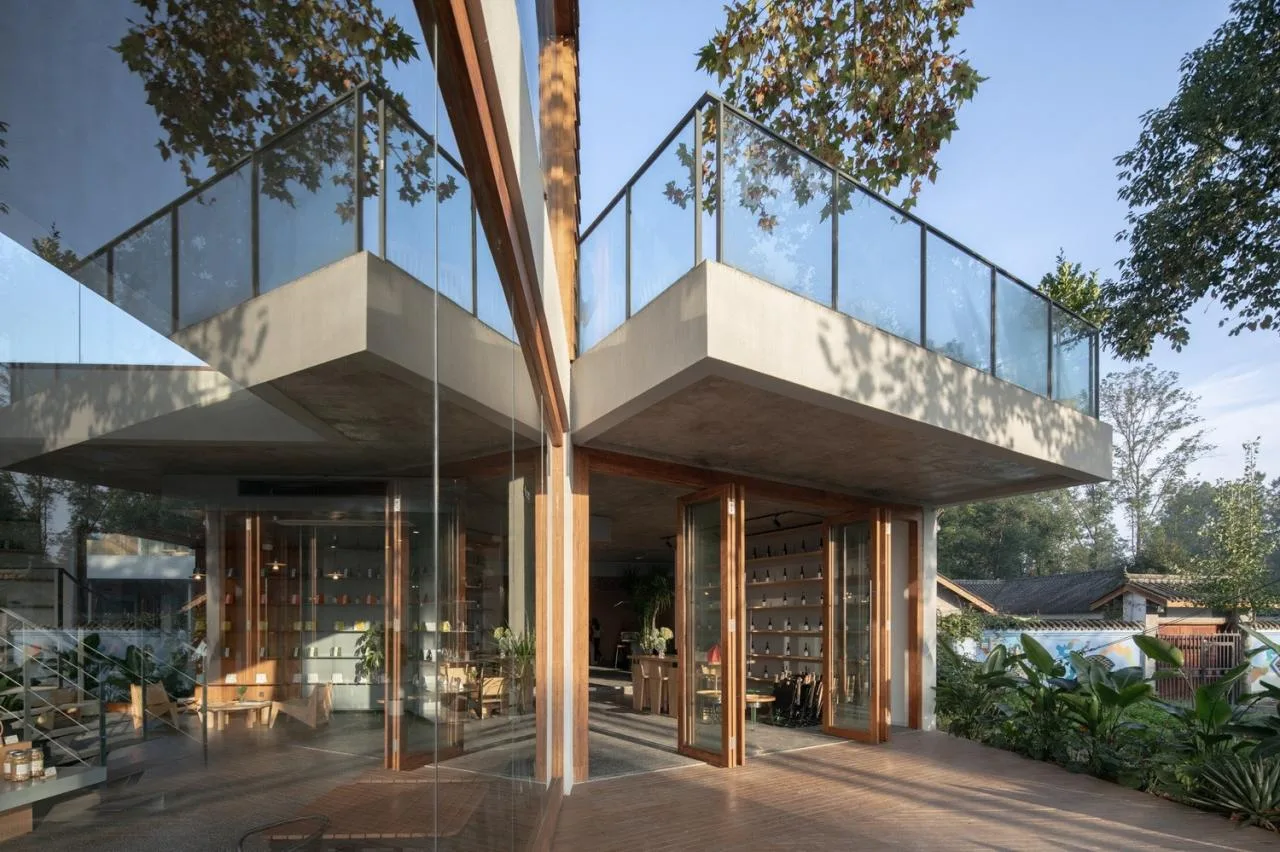
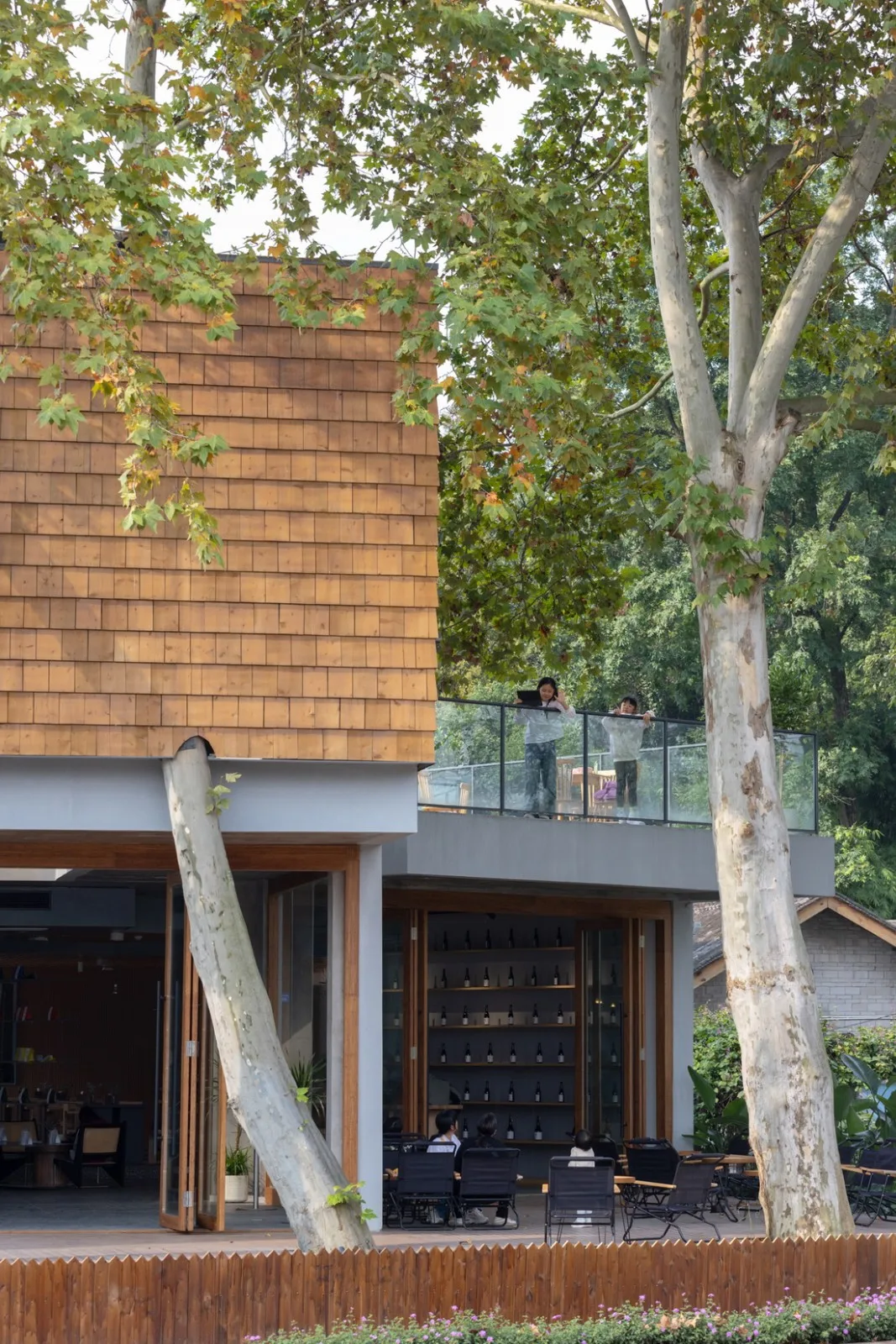
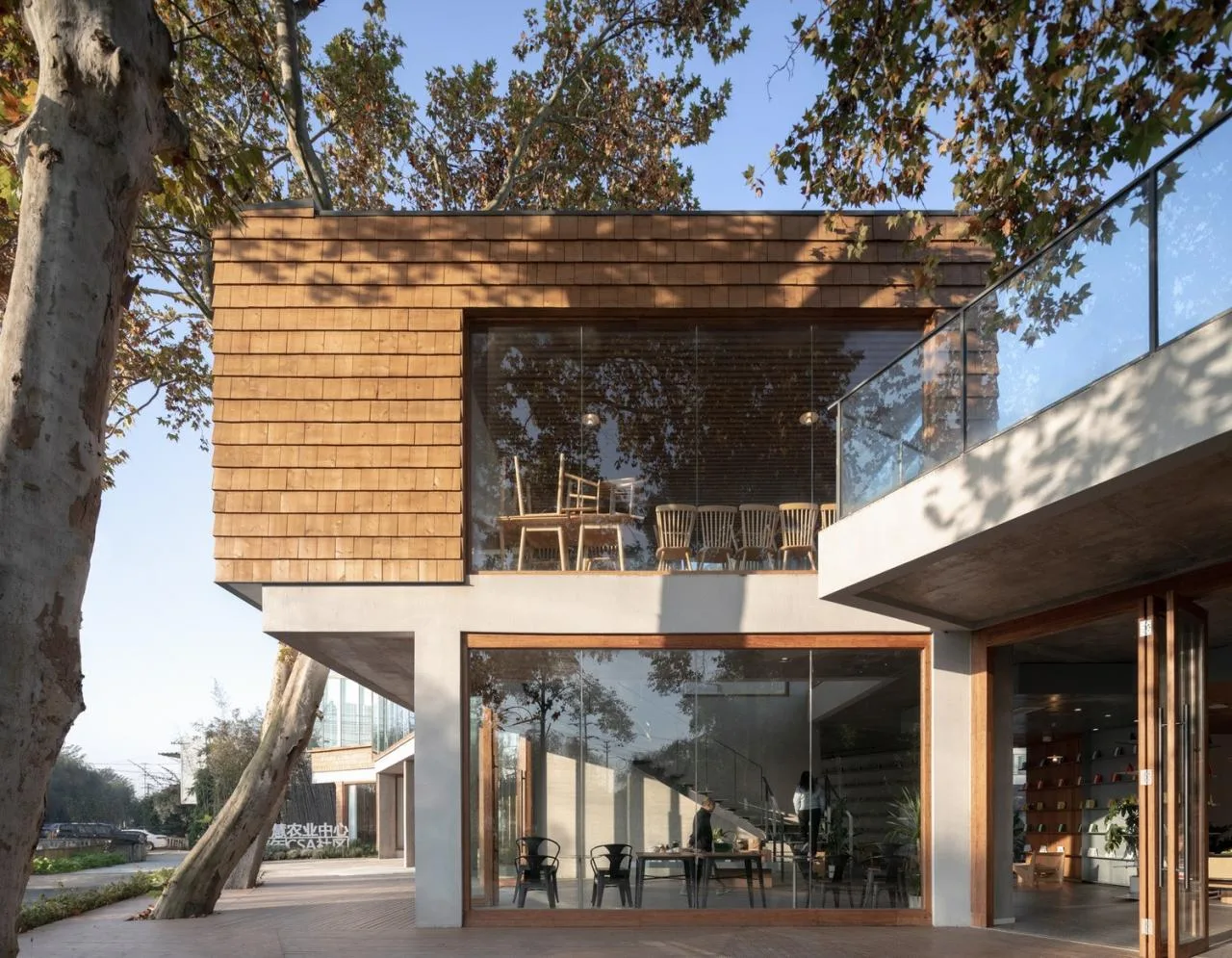
The original wutong tree in the courtyard extends through the roof of the coffee shop, creating a charming “treehouse” effect. A tent is set up on the spacious second-floor terrace, while glasshouses nestled in the bamboo forest are furnished with tea tables and mahjong sets. Children playing joyfully fill the spaces both inside and outside the courtyard.
The construction is carefully controlled yet embraces a sense of spontaneity. Materials such as concrete, bamboo, steel, wooden tiles, and white walls collide and blend, enhancing the vibrant atmosphere of this rural community venue. After more than six months of operation, a summer revisit revealed lush, swaying trees inside and outside the courtyard, as if the site itself had grown into a lively, thriving place full of vitality.
Project Drawings
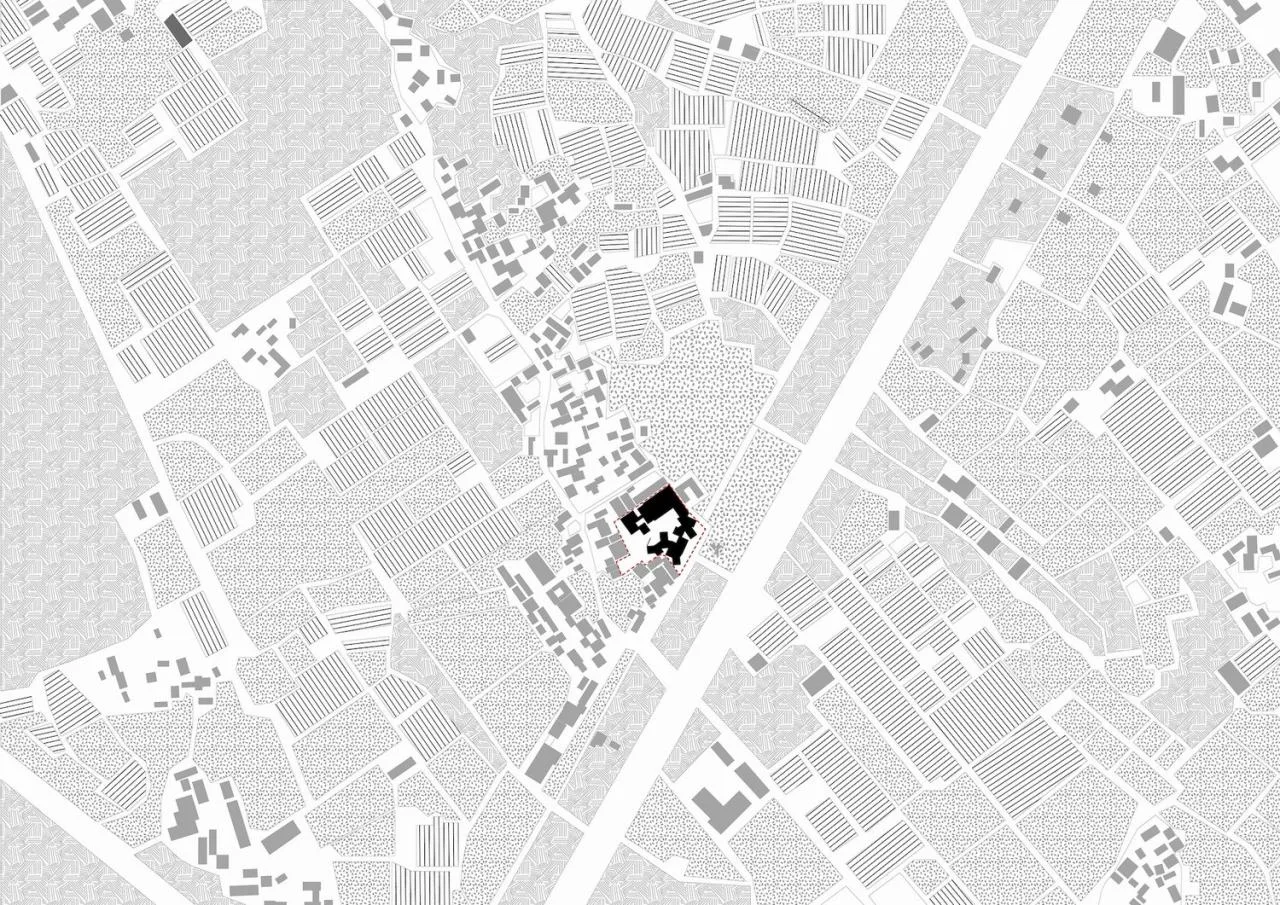
△ Base Schematic Diagram
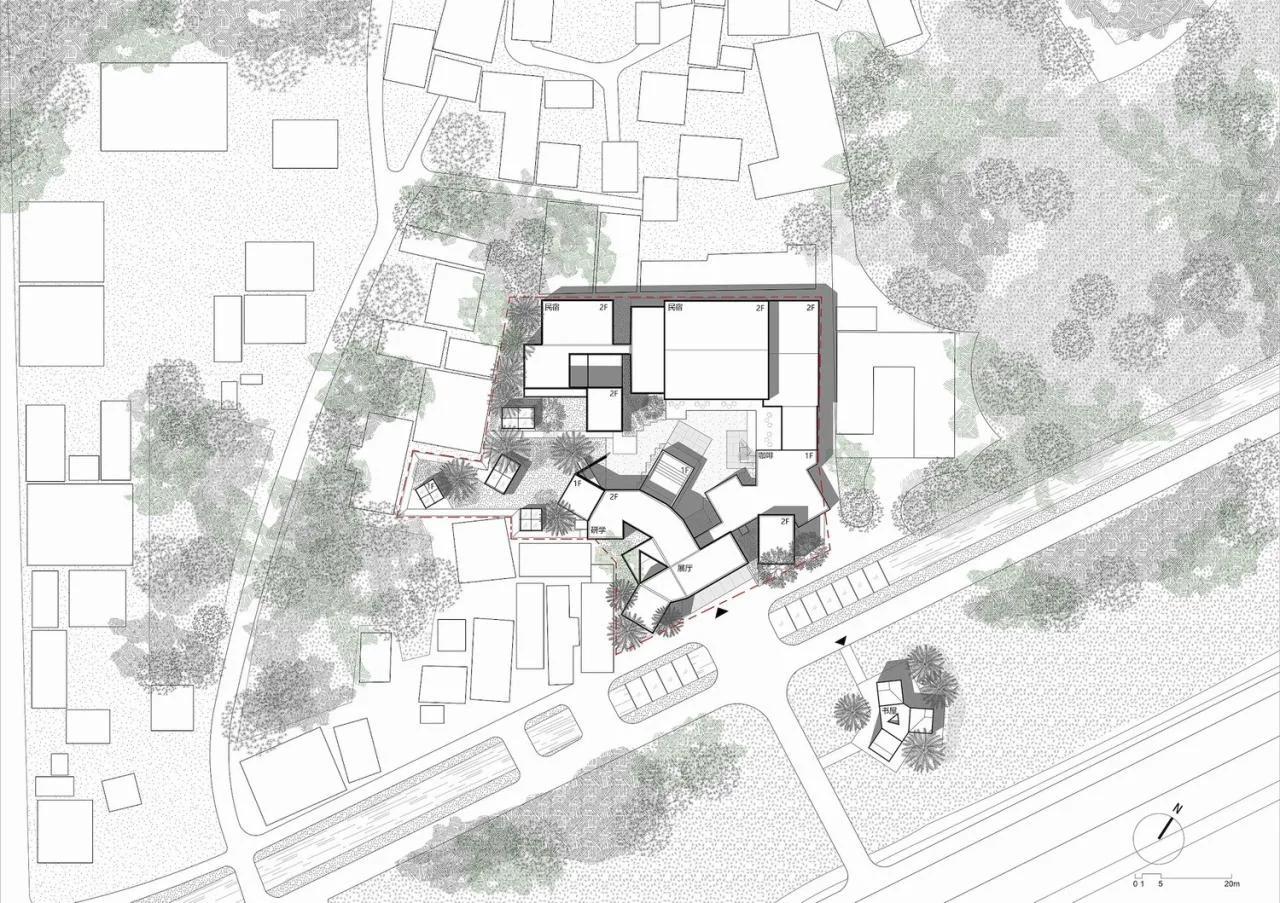
△ General Layout Plan
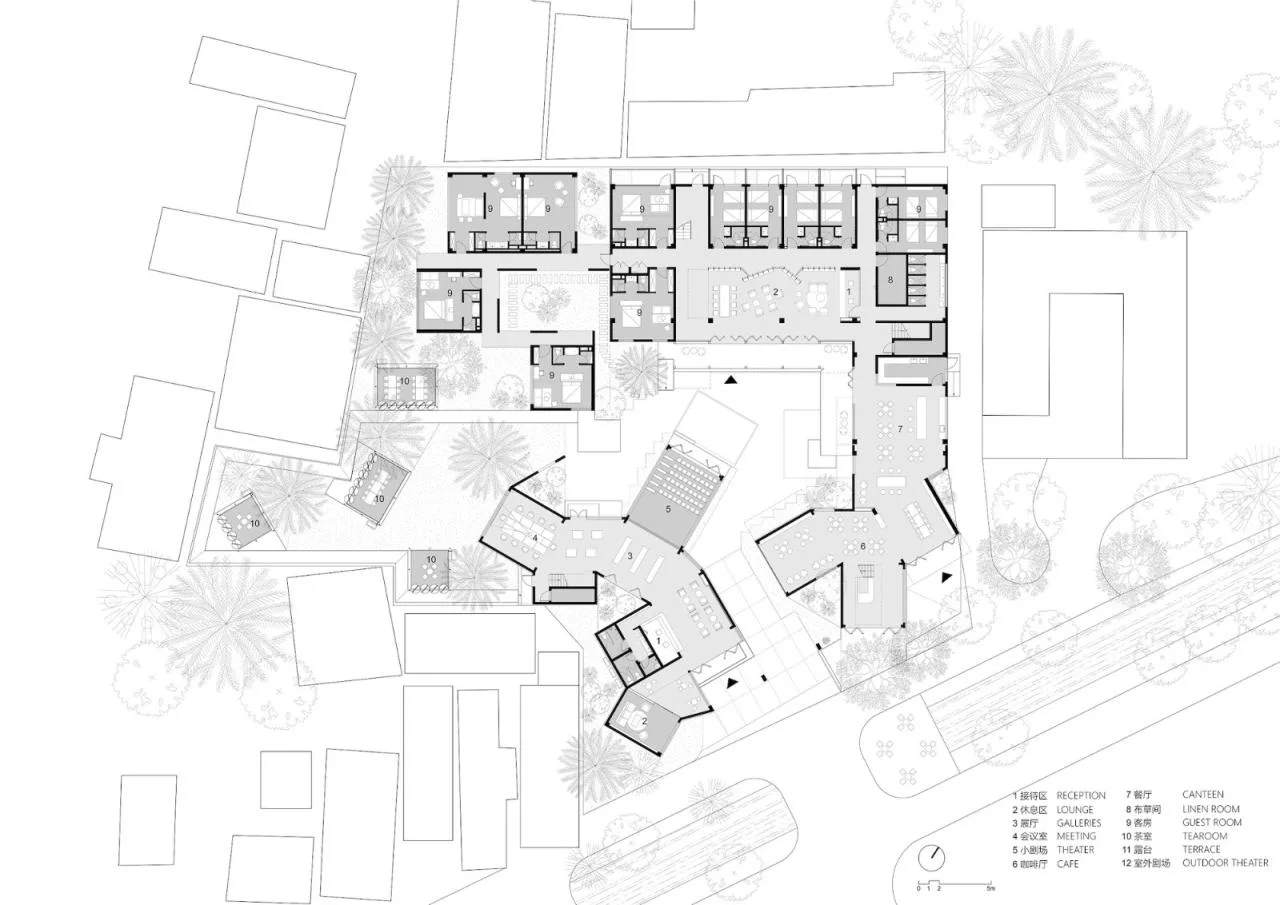
△ First Floor Plan
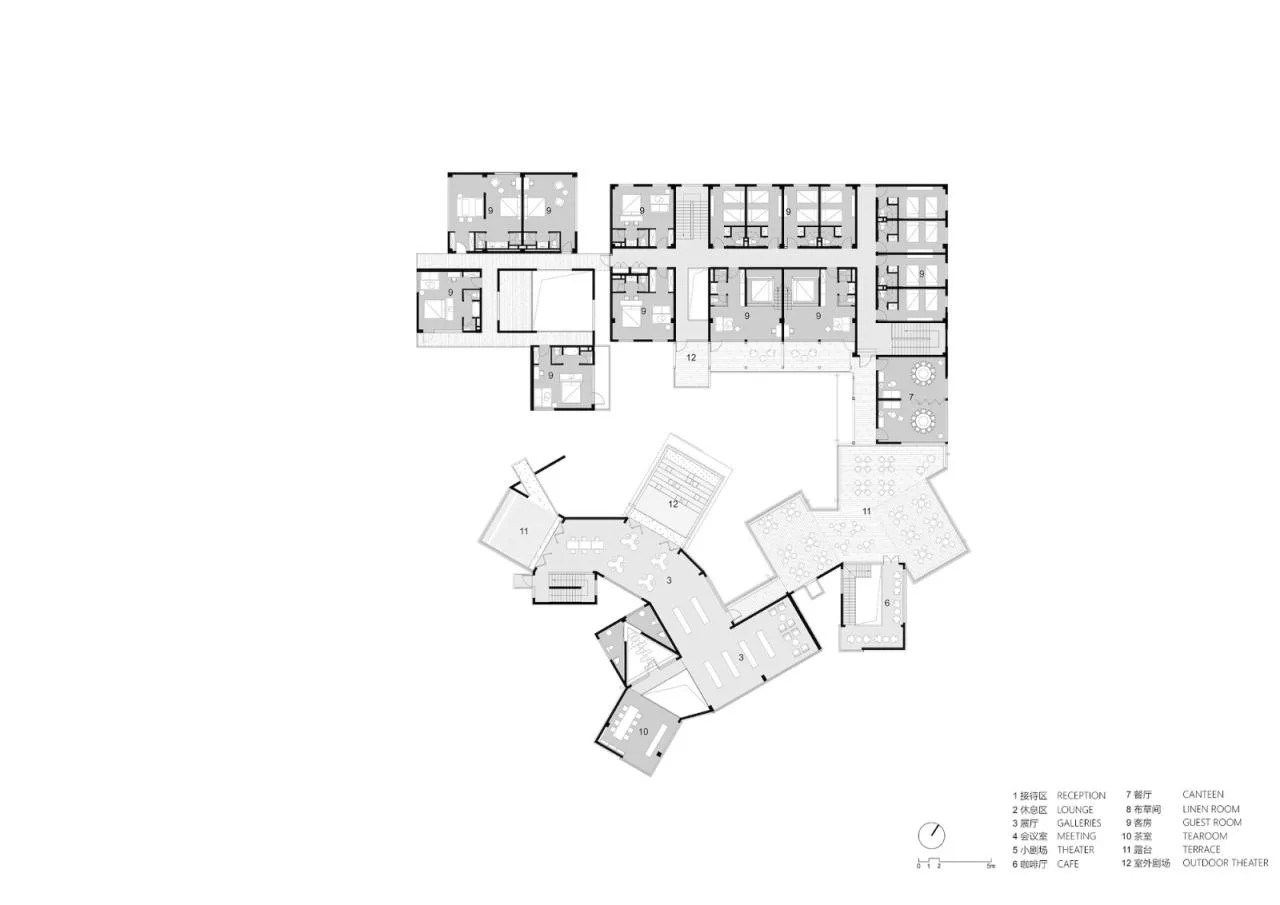
△ Second Floor Plan
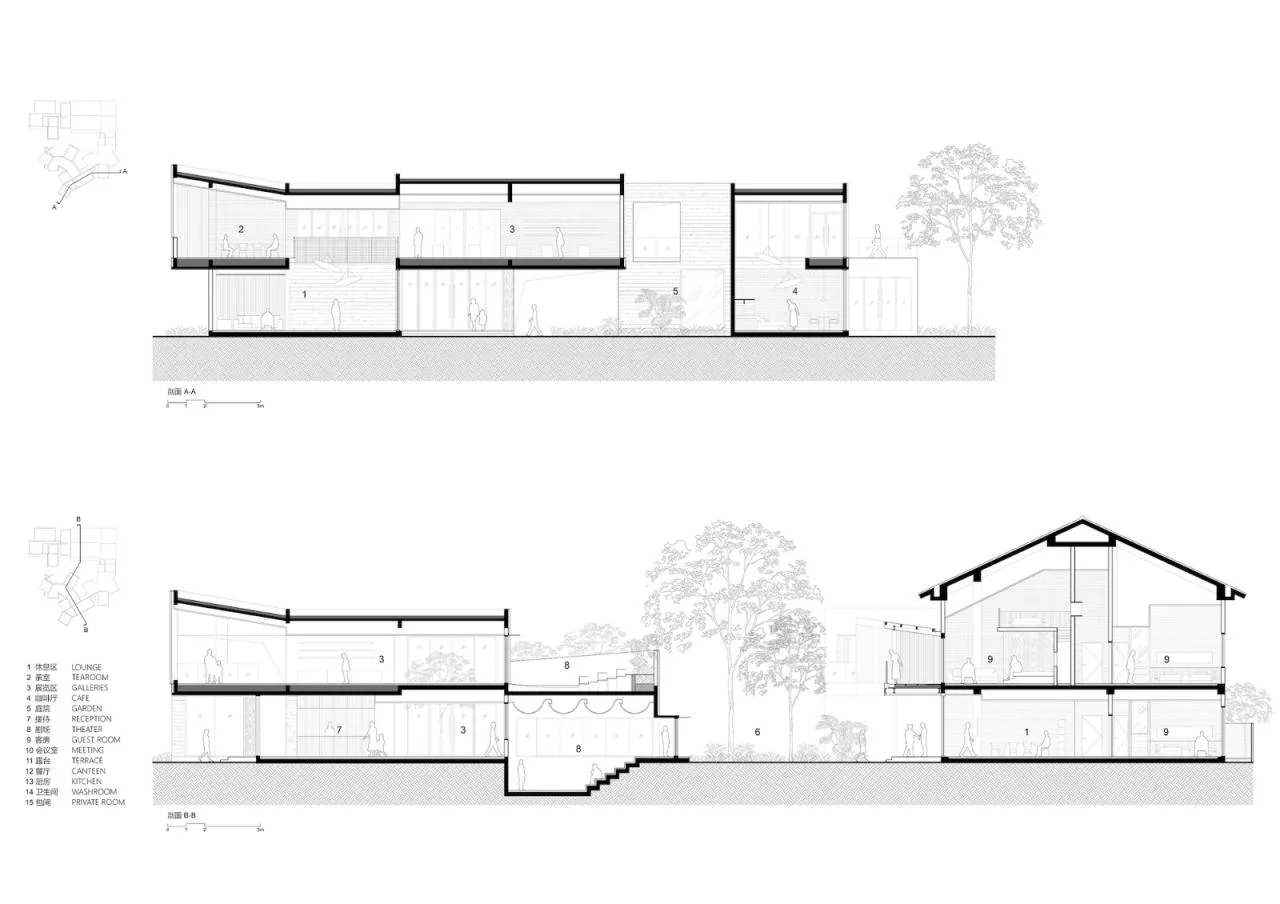
△ Section Diagram
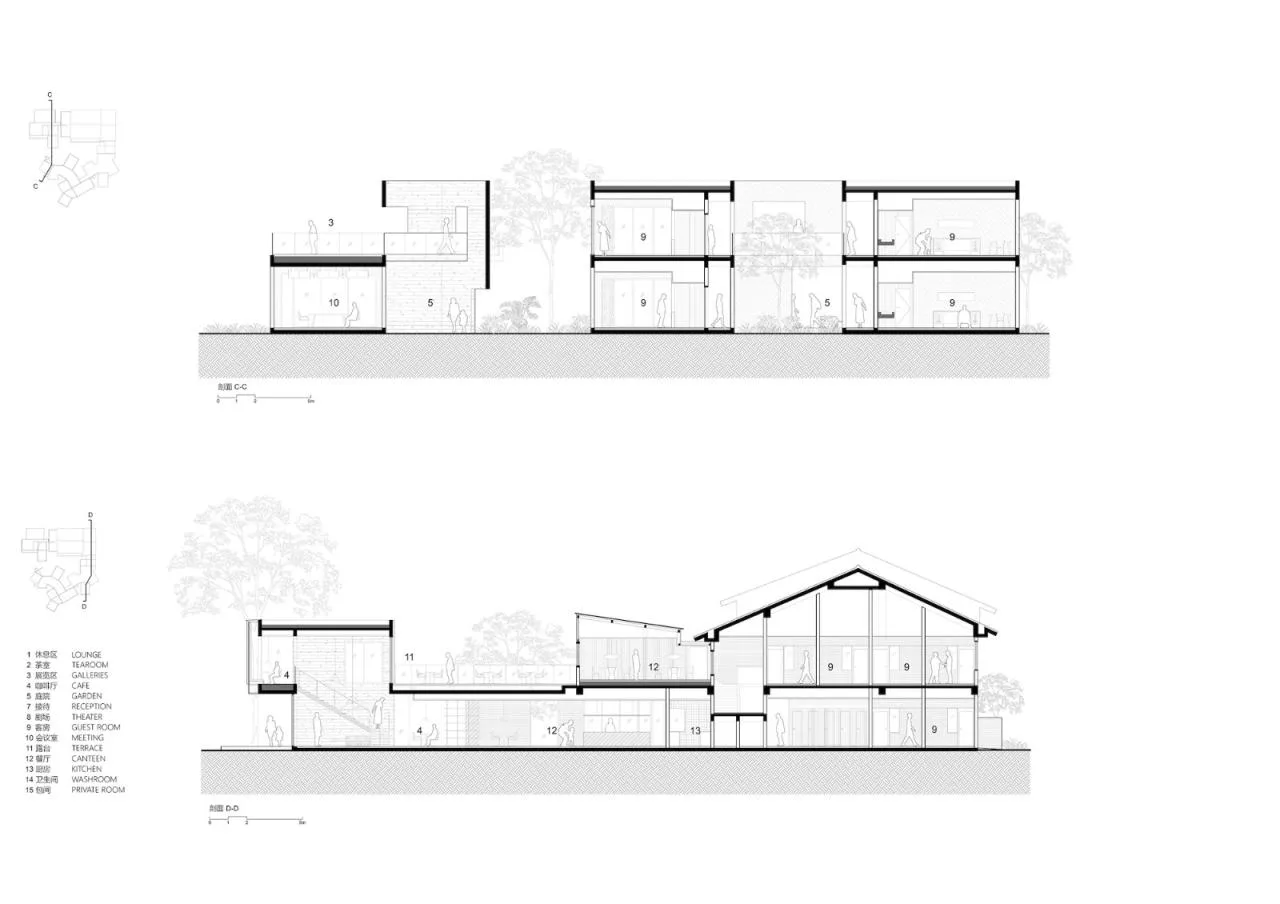
△ Section Diagram
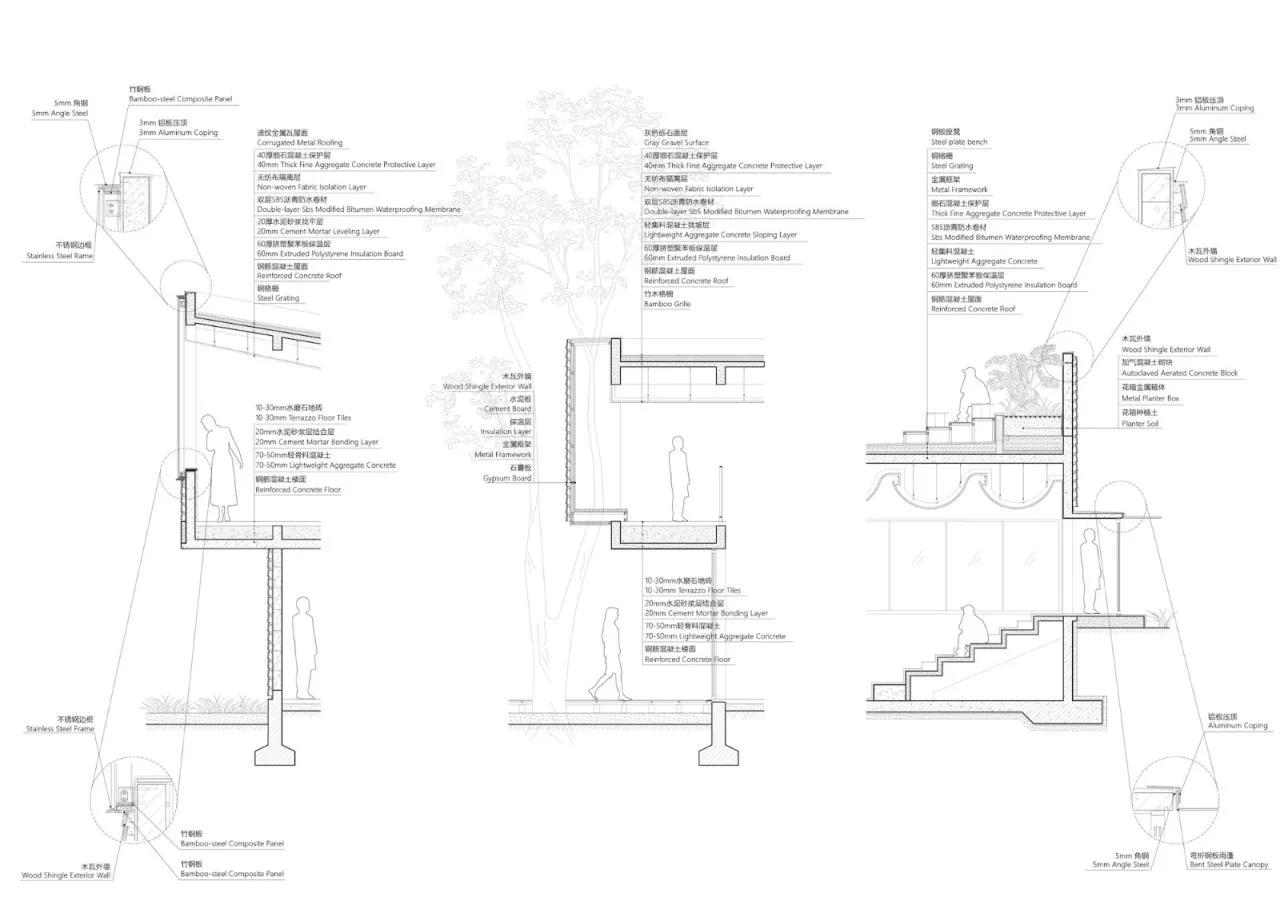
△ Detailed Structural Drawing
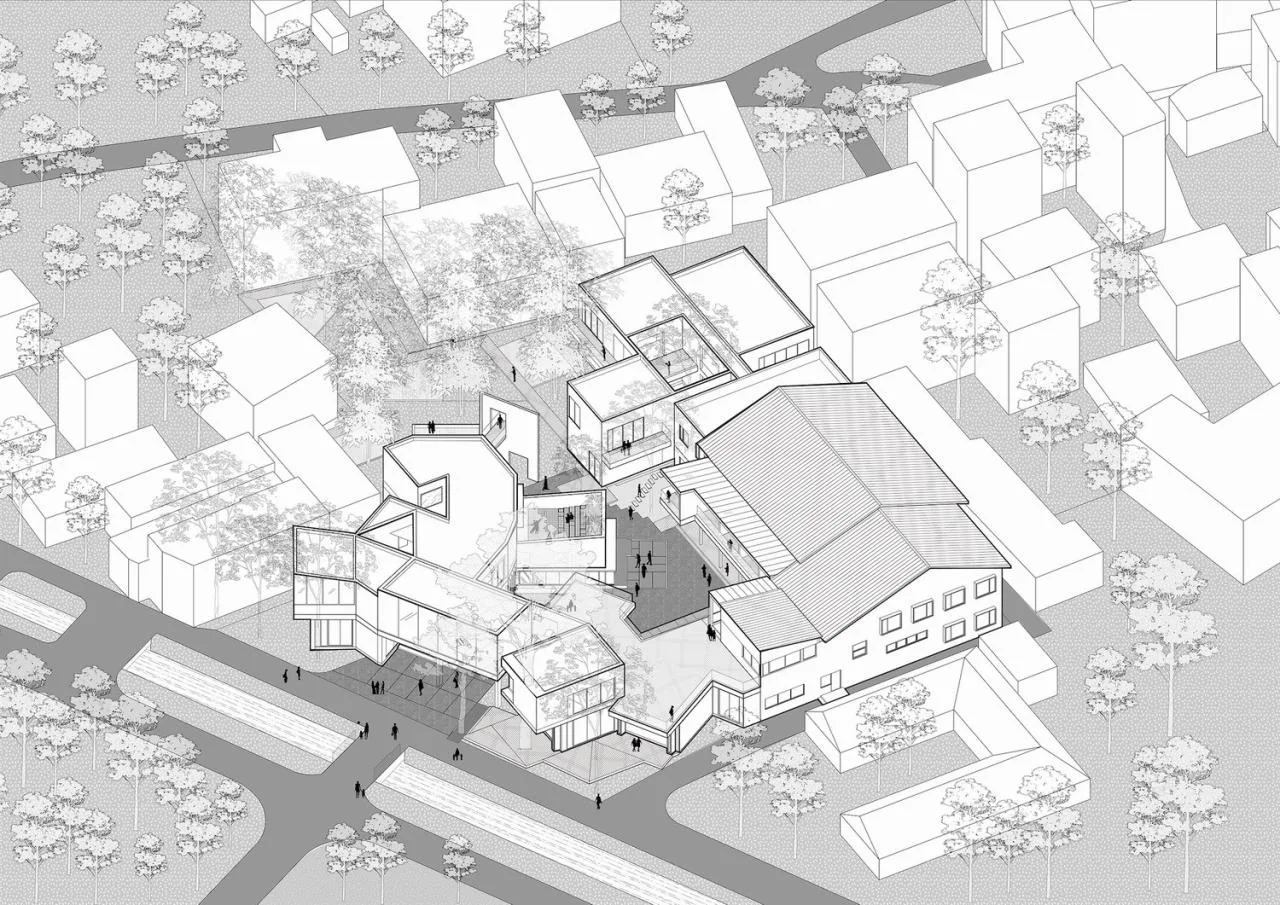
△ Axonometric Diagram
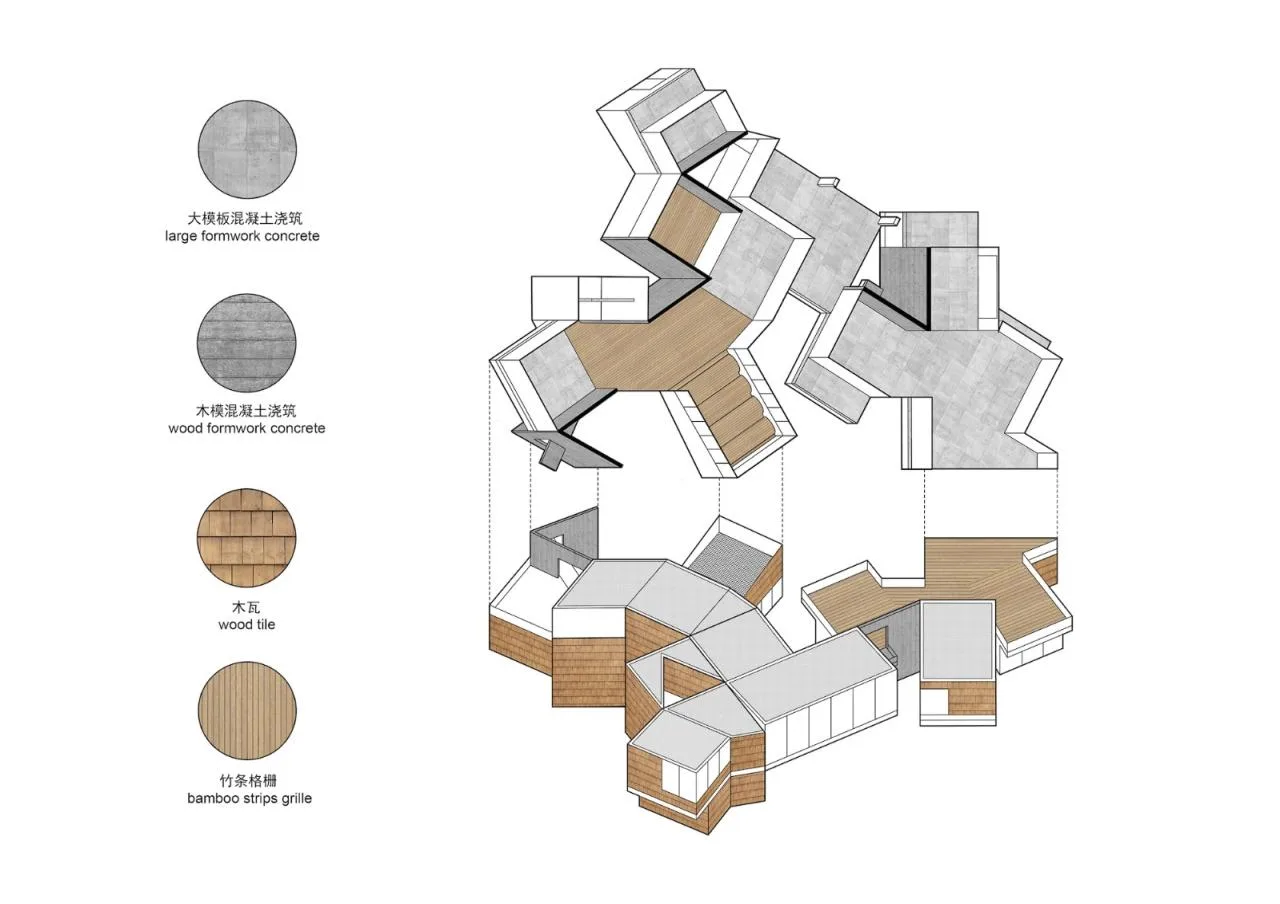
△ Material Analysis Diagram
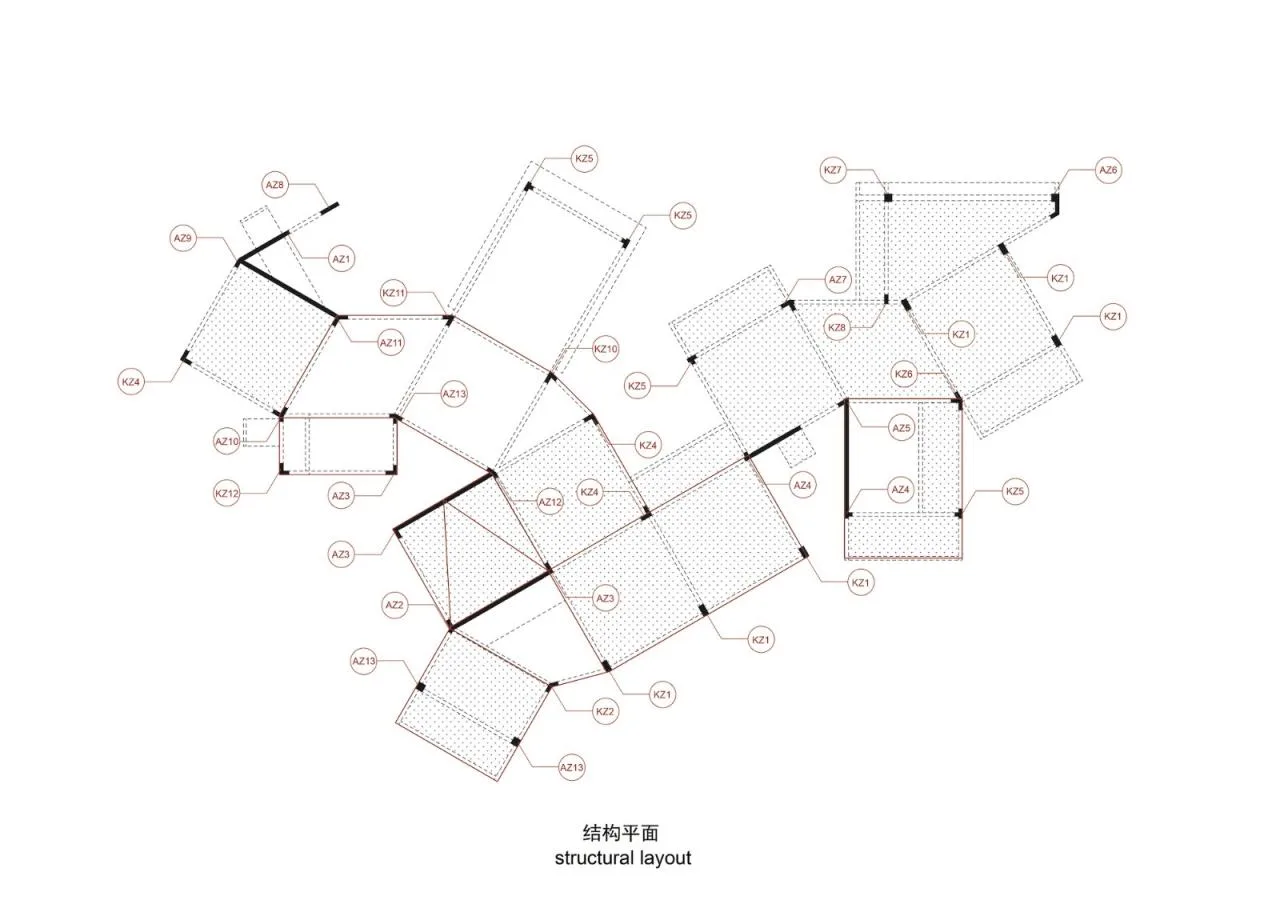
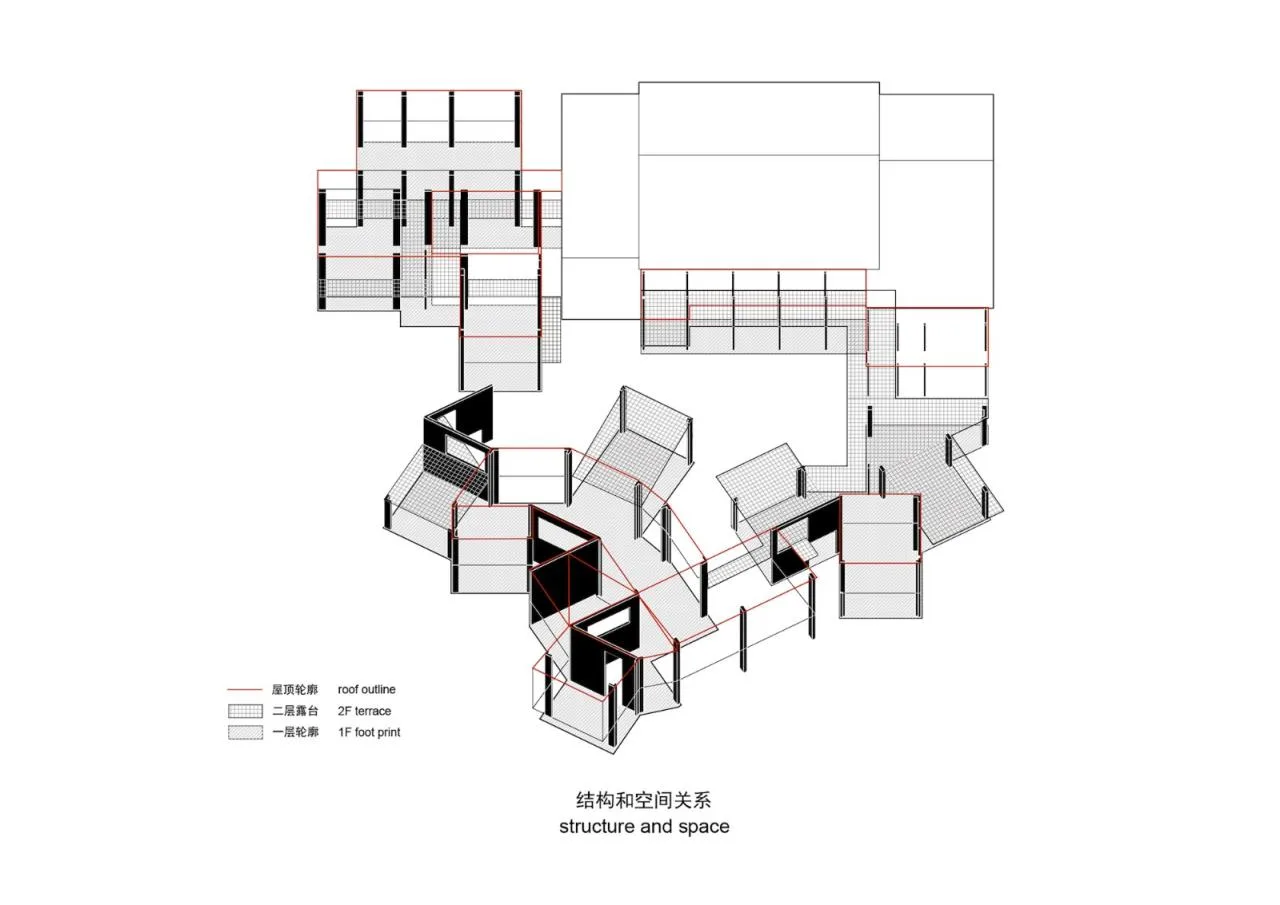
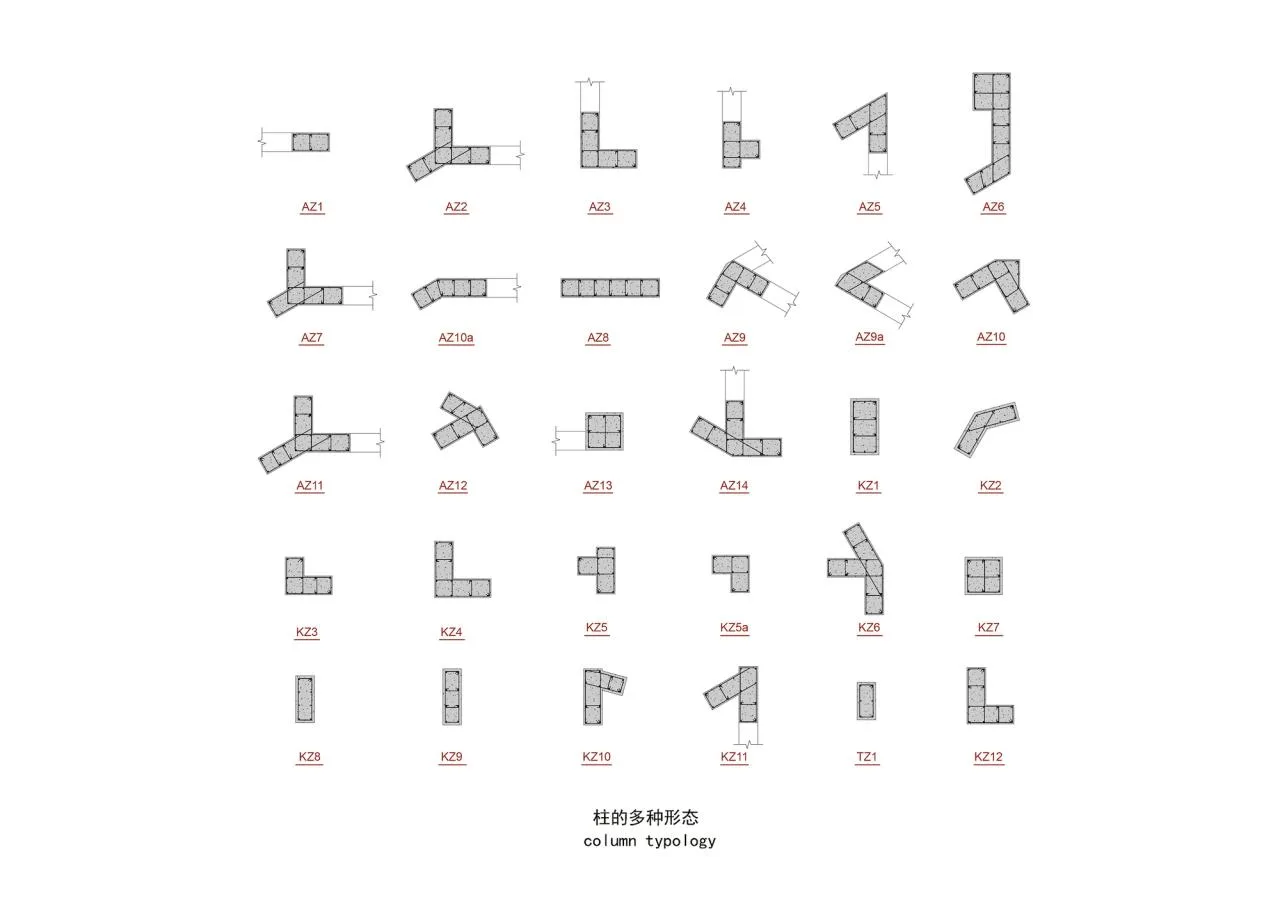
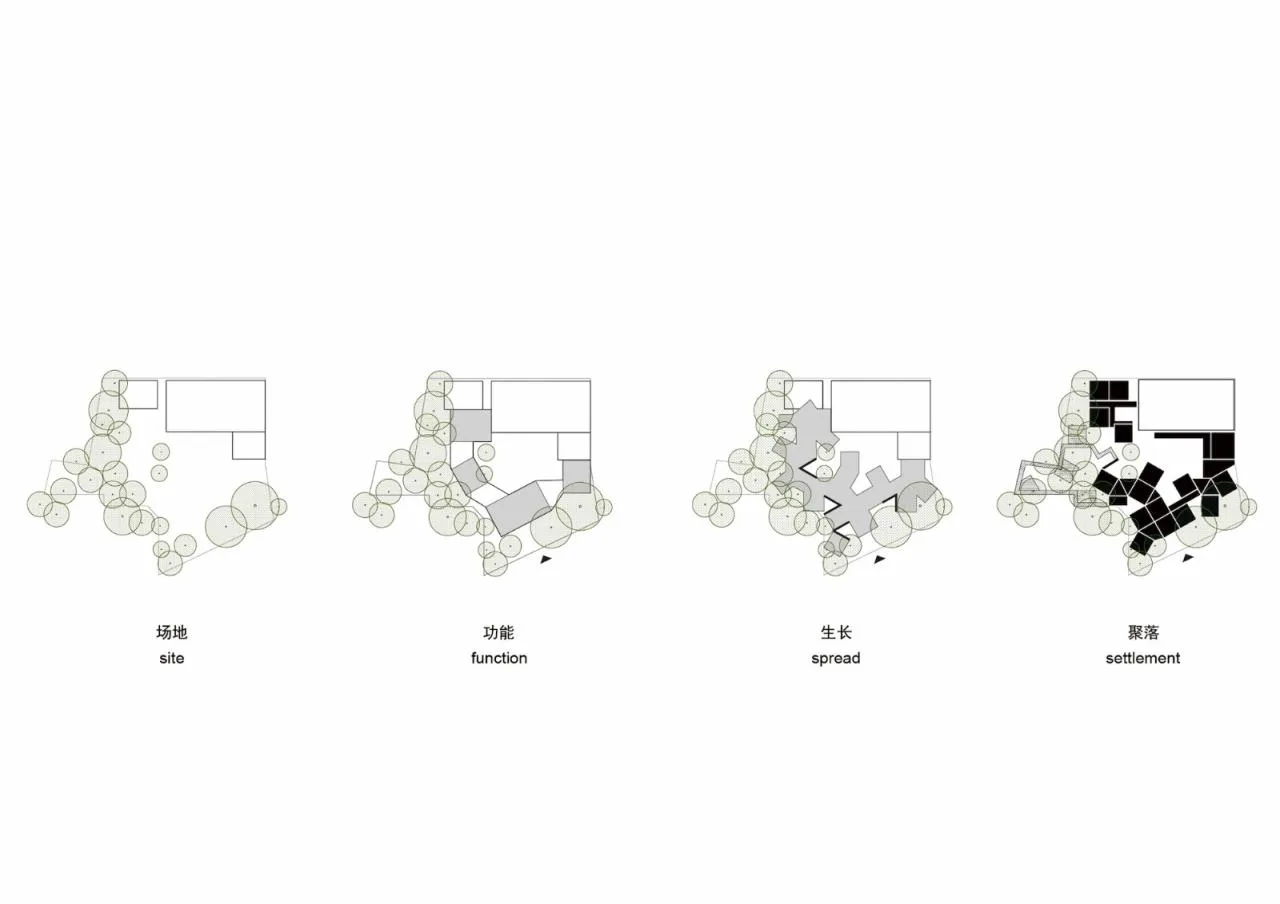
△ Analysis Chart
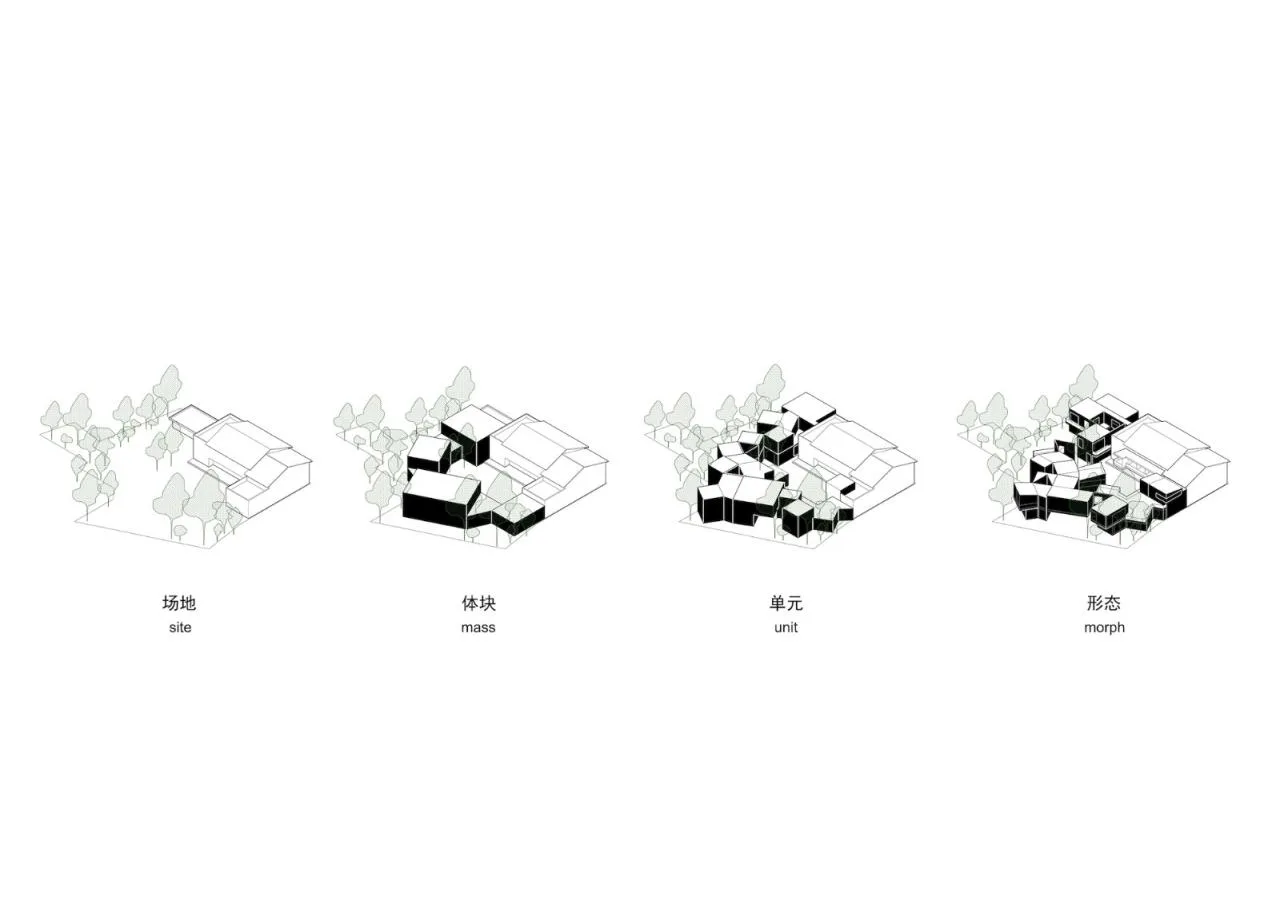
△ Analysis Chart
Project Information
Architect: MAT Super Architecture Firm
Area: 3000 square meters
Completion Year: 2023
Photographers: Jin Weiqi, Existing Architecture
Design Team: Tang Kangshuo, Zhang Miao, Liu Youpeng, He Ningyan, Wang Feiyu, Li Xitong
Design Expression: Li Yue, Li Xin
Client: Wanchun Town, Wenjiang District, Chengdu City
Location: Chengdu














Must log in before commenting!
Sign Up