
Editor’s Note
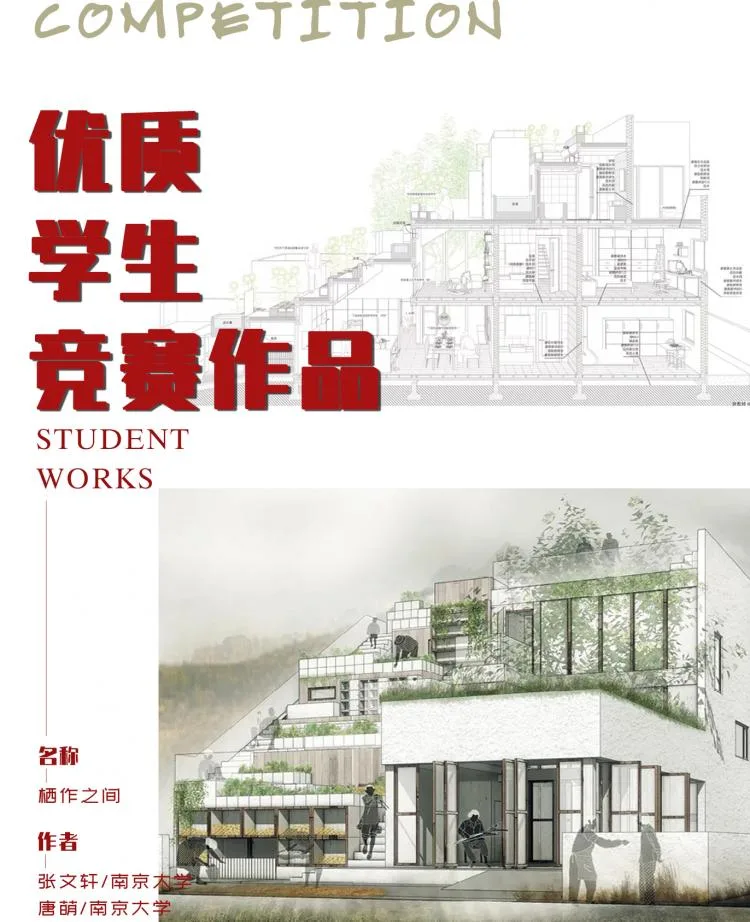
To offer college readers a more structured reading experience, we dedicate one week each month to featuring special topics. This week’s theme is High-Quality Competition Works. Today, we present an in-depth analysis of the Third Prize winner of the 2019 Tianzuo Cup.
The School of Architecture is also launching the Creator Plan & High-Quality Student Works Contribution. If you have outstanding competition projects and are willing to share your design process and methodology in article form, we welcome your submissions. Each article will receive a fee ranging from 300 to 1000 yuan, depending on its reach, with an annual award of 10,000 yuan for the best work. For more information, please leave a message in the background.
Competition Theme
The 2019 “Tianzuo Award” International College Student Architectural Design Competition, hosted by Architect magazine, centered on “The Urban and Rural Areas of a Family”. Participants responded to the challenges of modern living environments and the evolving ideals of home life amid rapid urban-rural transformations. From 281 submissions, students presented diverse visions for contemporary rural living: from modern interpretations of traditional construction, to harmonious blends of architecture and automation, to nostalgic returns to simplicity.
This article interprets the Third Prize-winning project, “Between Dwellings”, by designers Tang Meng and Zhang Wenxuan from Nanjing University, through insights from the designers, mentors, and competition judges.
Award-Winning Project
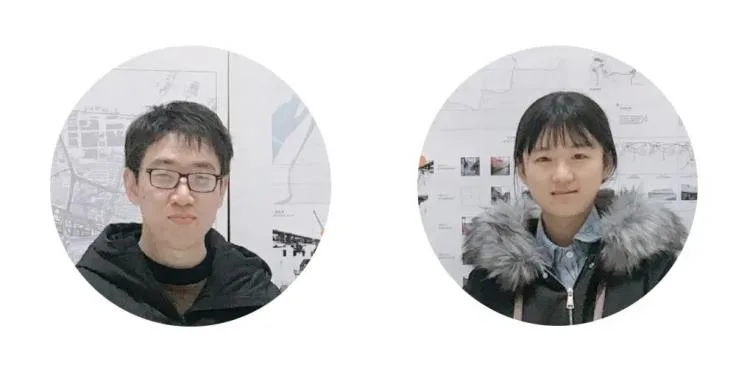
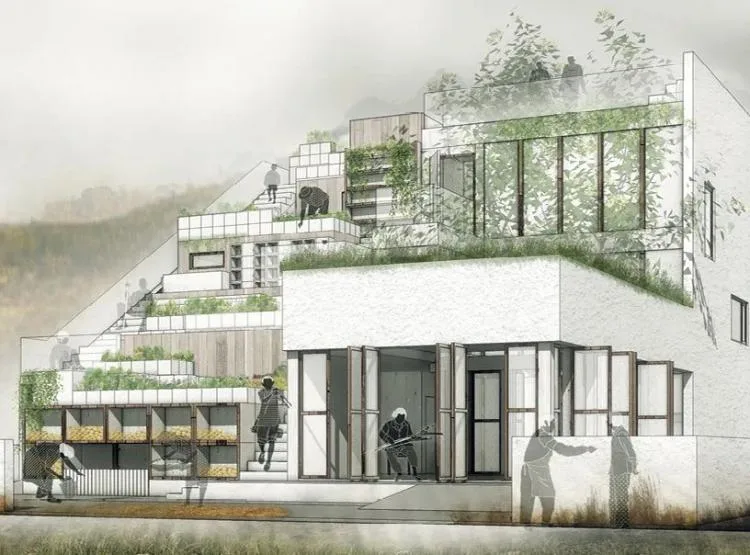
△ Zhang Wenxuan/Nanjing University; Tang Meng/Nanjing University
01 Concept
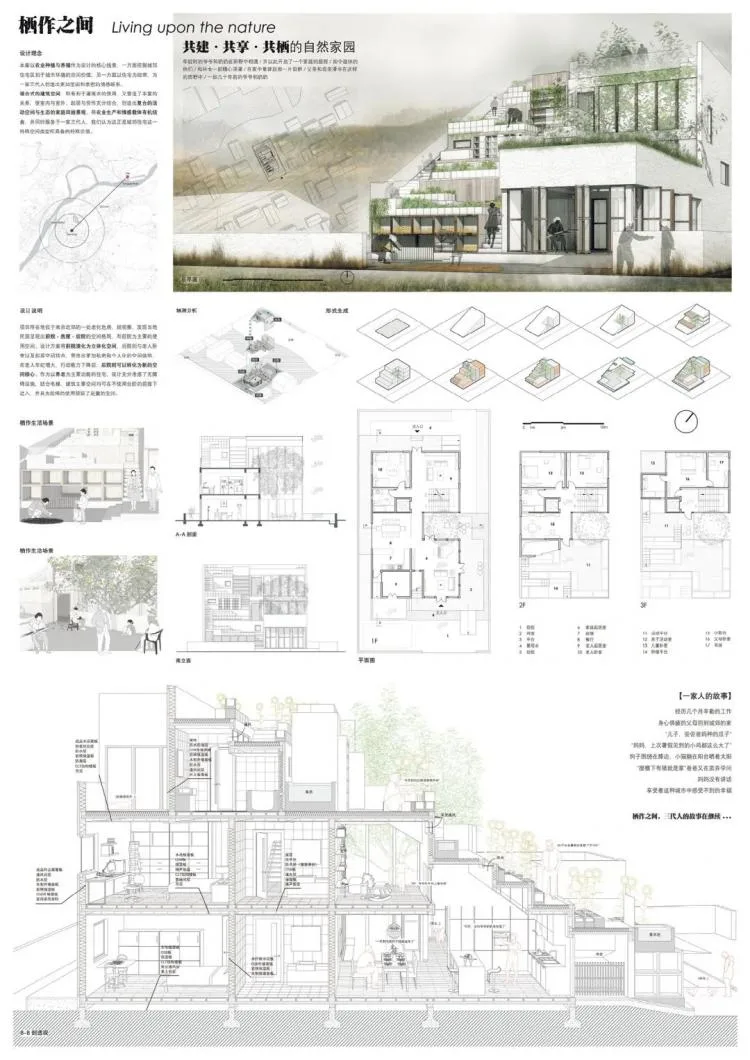
After reviewing the brief, we asked ourselves, “What does suburban living mean to us?” This question sparked our design journey, imagining life in the suburbs where every family member has personal space yet can gather together anytime. They can freely go outside, play, and at night, watch stars from the rooftop.
We envisioned planting flowers, apple trees, tomatoes, sunflowers, and even keeping small animals. Our concept expanded from our own experience to include the older generations: parents seeking temporary relief from city stress, and grandparents prioritizing peace and convenience.
Through this process, we embraced the meaning of “urban and rural areas of a family.” We aimed to create a space where three generations can live their desired lives, united by their shared home. This vision distilled into architectural principles: separation and integration, interior and exterior, and labor and dwelling.
02 Design Proposal
From the building’s perspective, our constant pursuit was elegance. This means using architectural language concisely and achieving maximum value with minimal actions—achieving multiple benefits in a single move. The more advantages we gain, the stronger the logic and aesthetic value of that move.
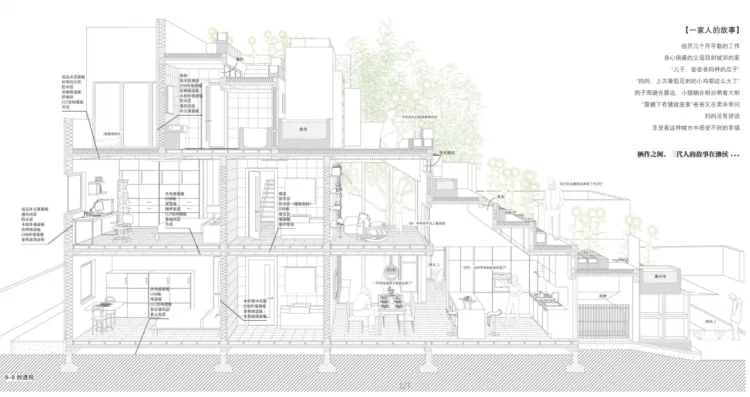
The iconic “big step” in our design embodies this philosophy. It connects the living spaces of three generations vertically, while horizontally linking interior and exterior. It optimizes sunlight for rooftop planting and cleverly uses gravity to enable a water circulation system.
Carrying a diverse and vibrant life through clear and concise architectural form—this principle guided us throughout the design. Though the project has imperfections, we deeply cherish it.
03 Collaboration and Workflow
We completed this competition within four weekends and eight nights, requiring efficient teamwork. Our key insights were the importance of communication and clear division of labor.
During early design stages, we spent significant time discussing and critiquing ideas. This wasn’t just a competitive exercise but a process of integrating thoughts. Through this dialogue, our understanding matured, eventually aligning almost perfectly.
Shared understanding enabled efficient task division, allowing each individual to fully leverage their strengths without conflict. We focused on our respective responsibilities and avoided overburdening each other. Despite the tight timeline, this mindset made the collaboration highly enjoyable.
04 Competition Reflections
Design is often not only about answers but also about asking questions. Although our competition design may never be built, it has sparked deep reflection on contemporary Chinese families and urban-rural relationships.
We are grateful for the opportunity to explore the 2019 Tianzuo Cup theme and will continue to pursue further inquiry. The term “dwelling work” in our title is inspired by Heidegger’s notion that “Man works, but still lives poetically on the earth.”
Judges and Mentors’ Comments
The project selected an old, unsafe house in suburban Nanjing for renovation, aiming to create a gathering place for three generations to maintain emotional bonds. The designer skillfully explored the unique environmental and spatial qualities of the suburbs compared to high-density cities, offering flexible spaces that accommodate the varying needs of a multigenerational family.
The design thoughtfully integrates the older generation’s agricultural memories through platforms and three-dimensional courtyards, enabling continued engagement in farming activities. This inclusive approach fosters cooperation across urban and rural divides, generations, and habitats, achieving a balanced living environment. — Li Shaoyun, General Manager and Design Director, Guangzhou Tianzuo Architectural Planning and Design Co., Ltd.
The 2019 Tianzuo Award theme, proposed by Professor Zhang Lei, addresses critical issues in Chinese architecture. It focuses on the spatial dynamics of urban-rural “stock development” and the needs of aging families.
“Between Dwellings,” by Tang Meng and Zhang Wenxuan, revitalizes an old suburban house in Nanjing, preserving the site and basic layout. It centers on agricultural activities as part of elderly home-based care, uniting generations emotionally. The design employs a “setback style” building form, creatively combining indoor functions and outdoor planting terraces. It ensures smooth vertical and horizontal circulation suited to all ages, supported by appropriate construction measures. This comprehensive approach effectively responds to the competition theme. — Zhao Chen, Professor, School of Architecture and Urban Planning, Nanjing University
Content Coordination: Chen Haijiao
WeChat Editor: Li Xue
Official Account: architect
Sina Weibo: @ Architect Magazine Weibo












Must log in before commenting!
Sign Up