
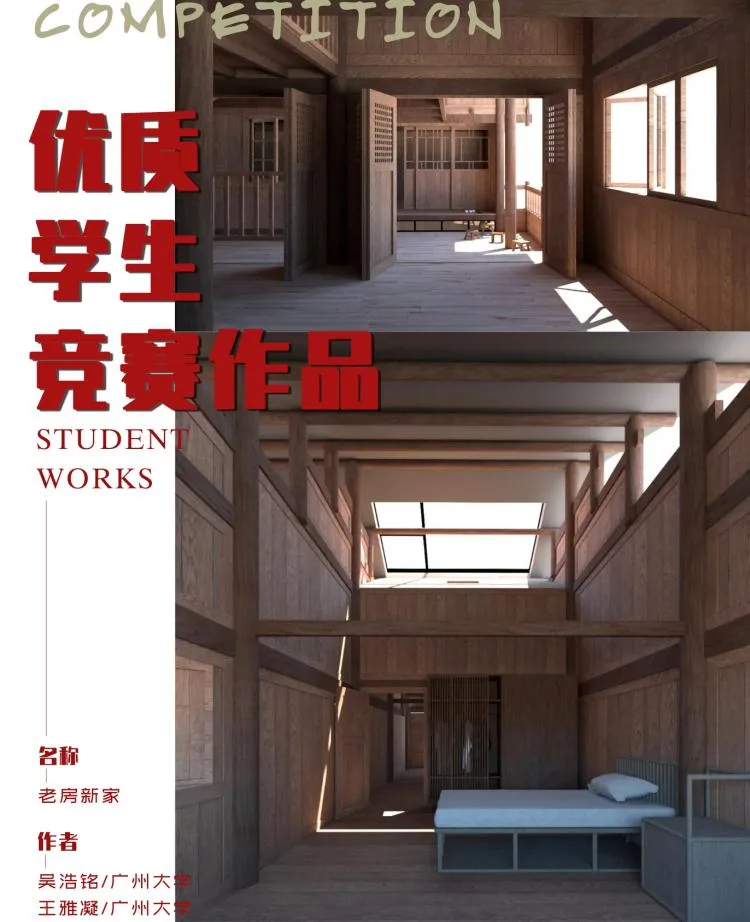
Editor’s Note: To offer college readers a more structured and immersive experience, we dedicate one week each month to feature special topics. This week’s theme is High-Quality Competition Works. Today, we highlight the Third Prize winner of the 2019 Tianzuo Cup, showcasing an outstanding project interpretation.
Additionally, the School of Architecture is launching the Creator Plan & High-Quality Student Works Contribution initiative. If you have impressive competition entries and are interested in sharing your design process and methodology in articles, you are warmly invited to submit your work. We offer remuneration ranging from 300 to 1000 yuan per article, depending on readership, and award 10,000 yuan annually to the best submissions. For more information, feel free to leave a message in the background.
Competition Theme: The 2019 “Tianzuo Award” International College Student Architectural Design Competition, hosted by Architect magazine, centered on “Urban and Rural Areas of a Family”. Participating students responded to the challenges of modern living environments and the evolving ideals of home amid rapid urban-rural transformation. Out of 281 submissions, students expressed diverse visions of modern rural living — from contemporary adaptations of traditional building techniques and the integration of architecture with mechanical automation, to nostalgic returns to simplicity and natural rhythms.
This article presents an interpretation of the Third Prize-winning project of the 2019 Tianzuo Award, titled “Old House and New Home”, designed by Wu Haoming and Wang Yaning from Guangzhou University.
Winning Project

Wu Haoming / Guangzhou University; Wang Yaning / Guangzhou University
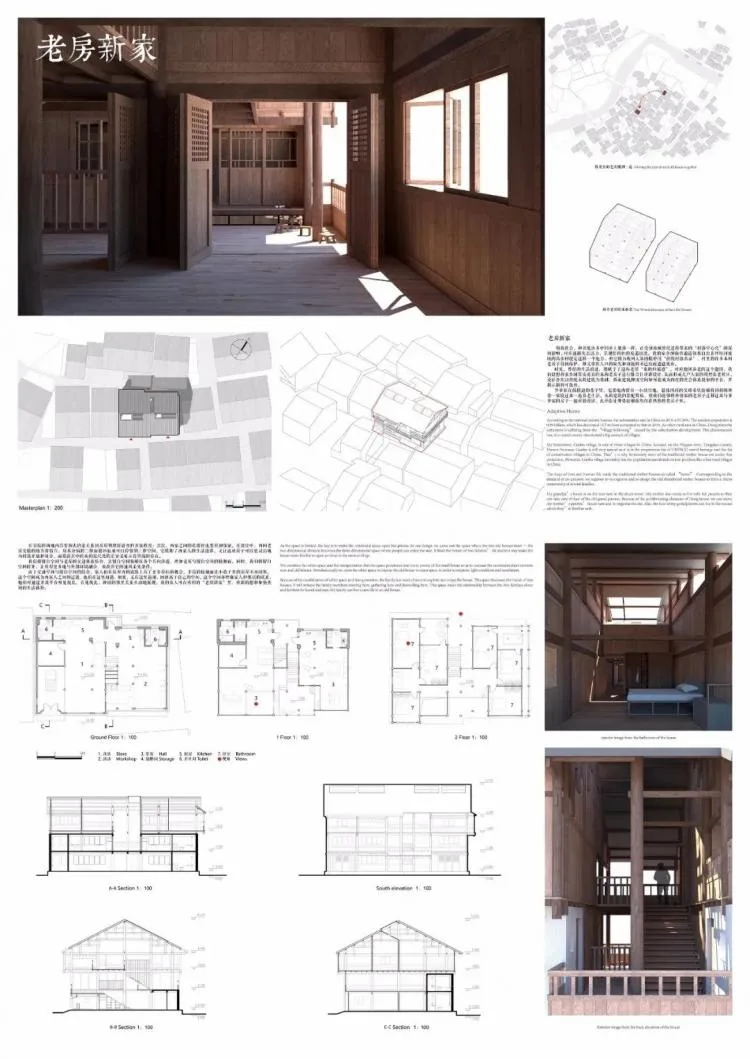
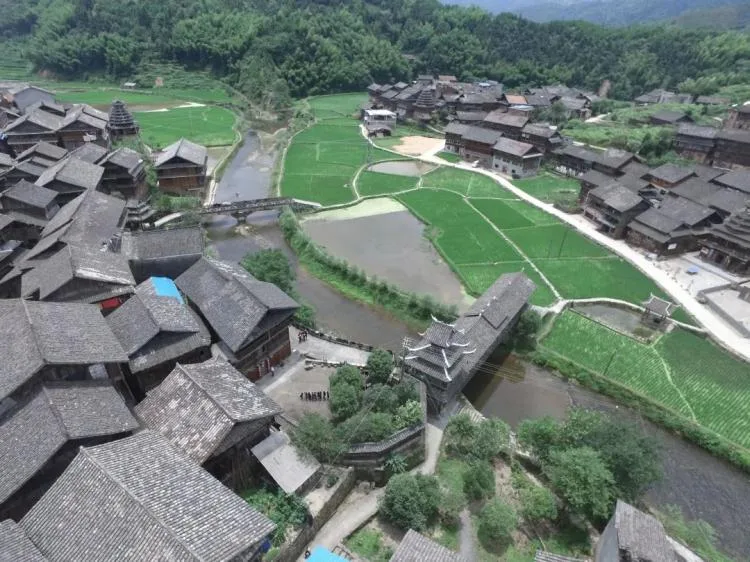
△ Gaobu Village
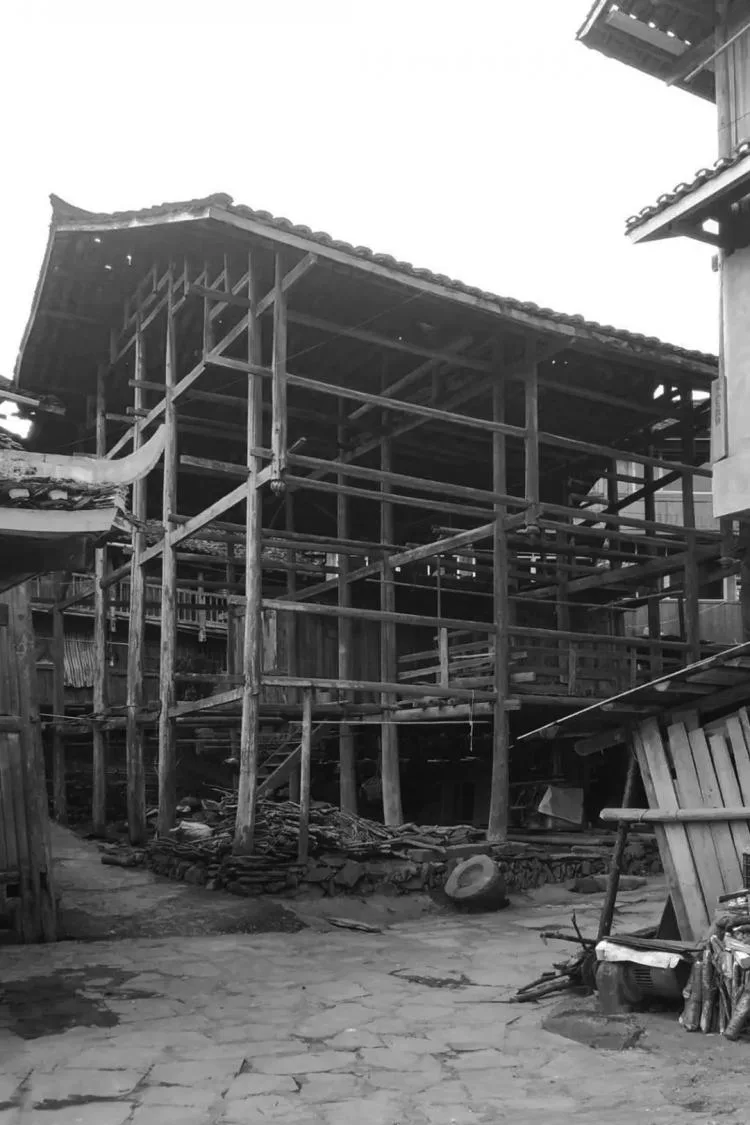
Abandoned Houses
Gaobu Village, a Dong ethnic settlement in Tongdao County, Hunan Province, is part of a UNESCO World Heritage site. Its appearance is strictly preserved under government construction regulations. However, many houses in the village face abandonment due to population decline and mismatched functional needs.
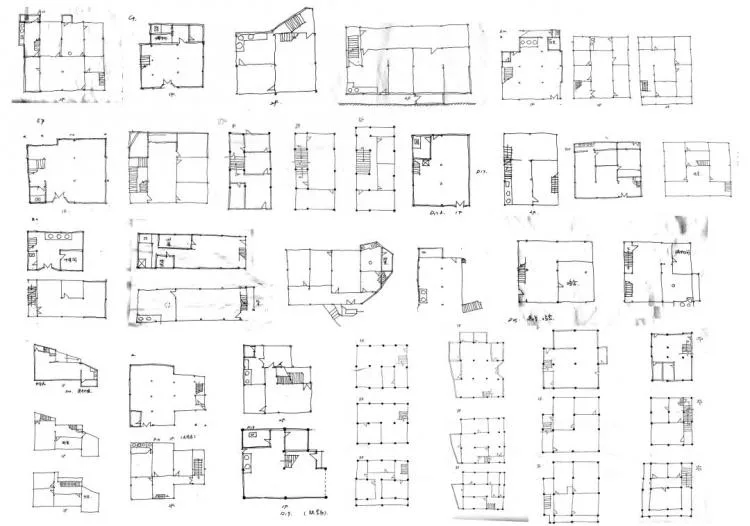
During the initial research phase, faculty and students conducted comprehensive fieldwork in Gaobu Village, including surveys, documentation, and interviews focusing on living conditions, structural forms, materials, and spatial organization. Their aim was to understand not only the architecture of Dong ethnic dwellings but also their relationship to villagers’ daily lives. This in-depth observation generated valuable insights and inspiration for the subsequent design strategy.
△ Plan of Residential Buildings in Gaobu Village
These abandoned houses hold the memories, life traces, and strong sense of home belonging. The competition theme, “Urban and Rural Areas of a Family,” directly shaped the project’s concept, which aligns with the idea of Group Elderly Care.
The design addresses challenges like village hollowing and the aging population remaining in rural areas. It proposes combining and redesigning idle or abandoned houses to create a micro-community for elderly care, accommodating several families.
The plan aims to foster harmonious neighborhood relations while preserving residents’ memories and emotions tied to their old homes, nurturing a genuine sense of belonging within the community. This consensus was established early in the design process.
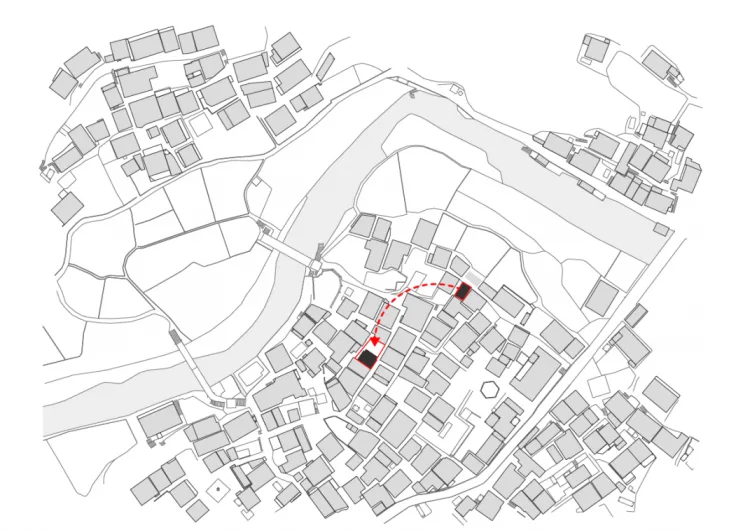
Combining Idle Old Houses
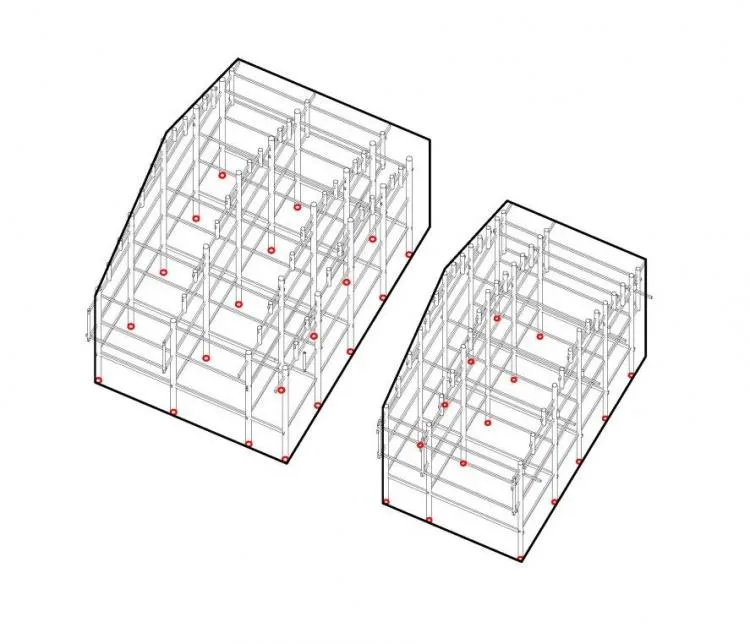
The Wooden Frames of Two Old Houses
Traditional Dong dwellings feature wooden frames and specific living customs, resulting in a distinctive spatial layout that includes halls, corridors, and gathering spaces. Over time, some functional areas such as fire pits have disappeared or evolved (e.g., adding kitchen stoves). The main issues in these homes are poorly arranged kitchens and bathrooms, as well as inadequate lighting and ventilation.
The design focuses on improving openness and physical comfort within the limited indoor space. Reinforced concrete structures are introduced in key areas to meet waterproofing and fire safety requirements for kitchens and bathrooms, while reinforcing the wooden frame’s stability. Bedrooms are redesigned with partial skylight openings to enhance lighting and airflow, with most other spaces preserved in their original layout.
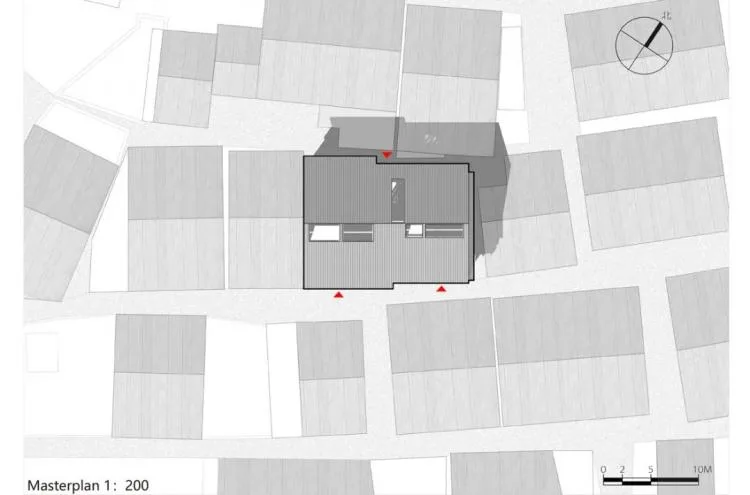
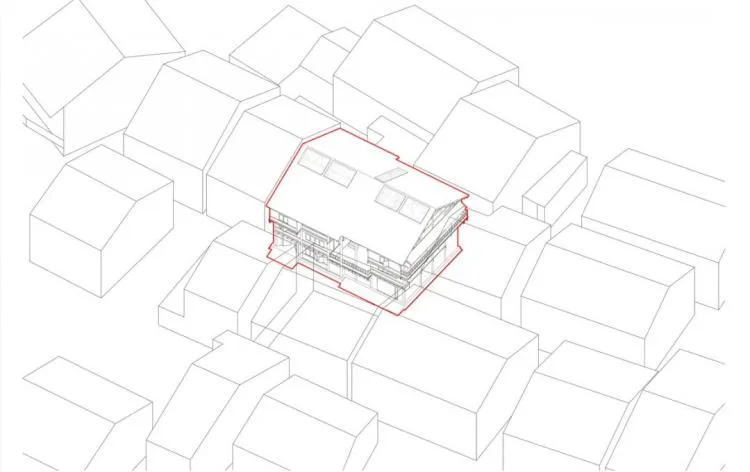
With limited flexibility indoors, the design shifts focus to the stairs, which in traditional Dong houses are typically located in side buildings at the residence’s edge, with entrances positioned on the hillside. The first floor stair landing serves as a transitional space where residents remove shoes and enter the home—essentially the house’s small foyer.
The concept uses stairs as a focal point to connect wooden frames, the external environment, and residents, breaking down boundaries between two adjacent old houses and the village through subtle interventions. Stairs and elevated platforms are installed at the junction of the two houses, redefining the stairwell’s spatial scale. This transforms the previously flat, separated surfaces into a three-dimensional gathering space, blurring the boundaries between two families and allowing more flexible interaction with the village.
The variation in exposed wooden frame sizes signals boundaries while providing spots for residents to pause along circulation paths inside the home. This rich interface reactivates the alleyway, making the houses feel less isolated.
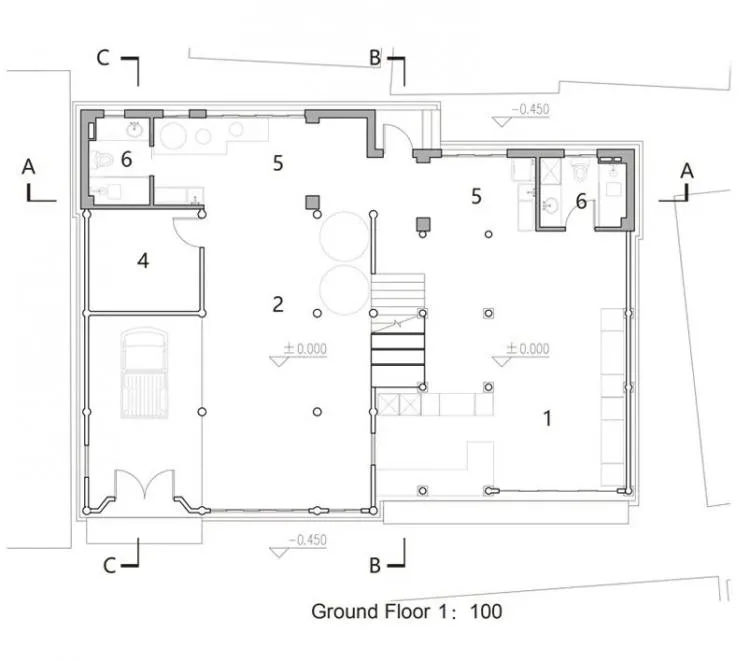
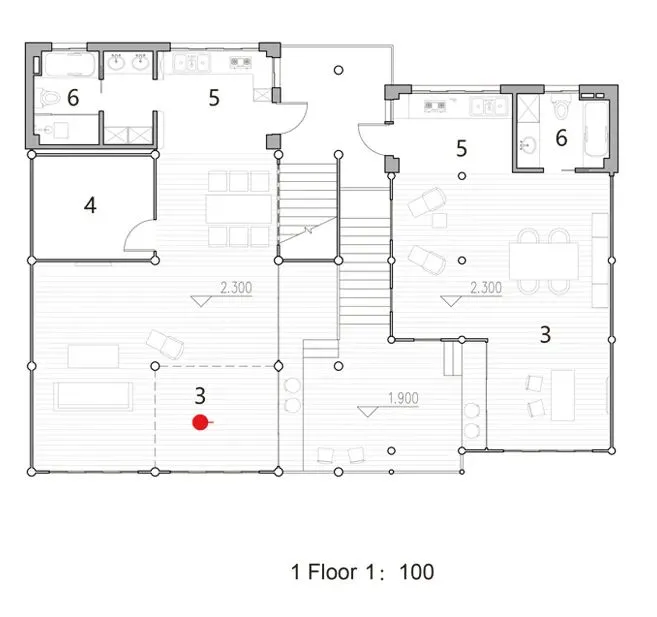
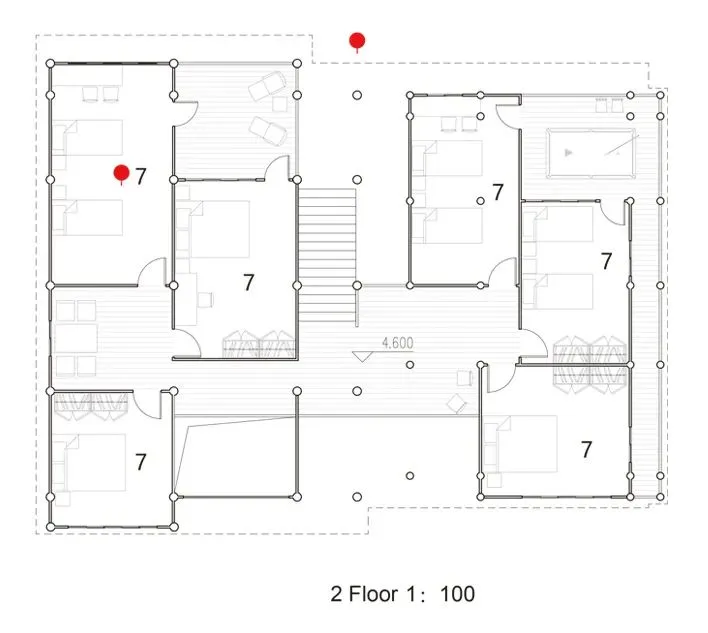
△ Floor Plan (1. Store 2. Distillery 3. Hall 4. Storage Room 5. Kitchen 6. Bathroom 7. Bedroom; ● Perspective)
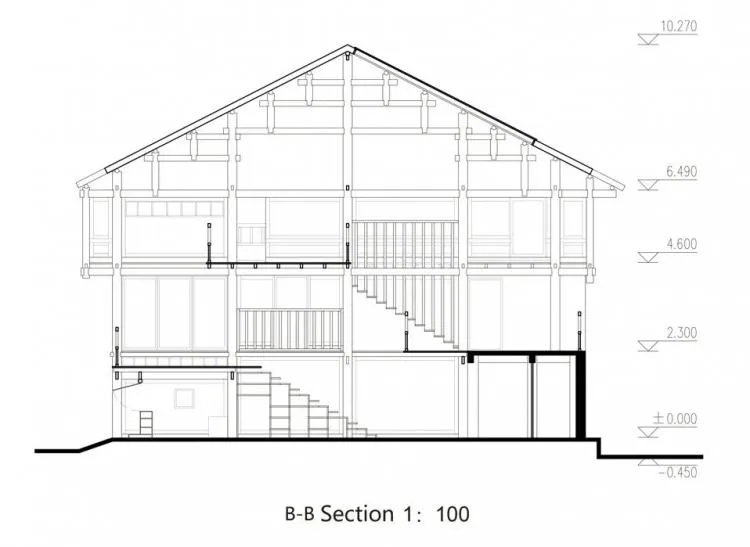
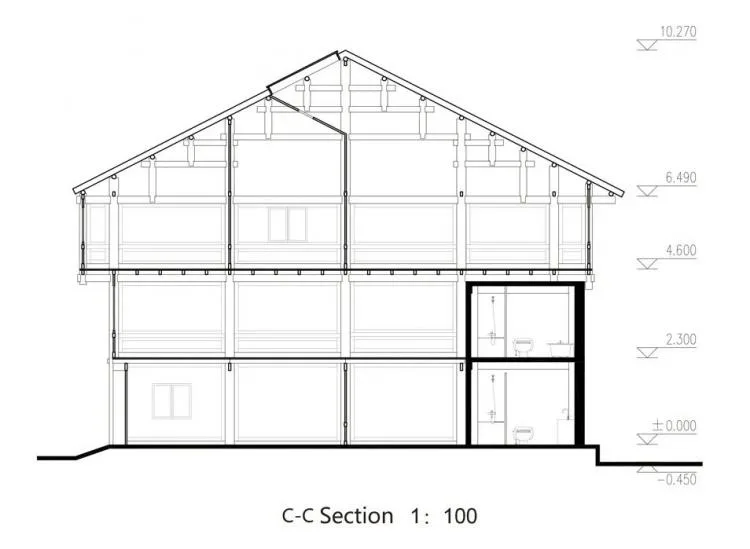
△ Section Diagram
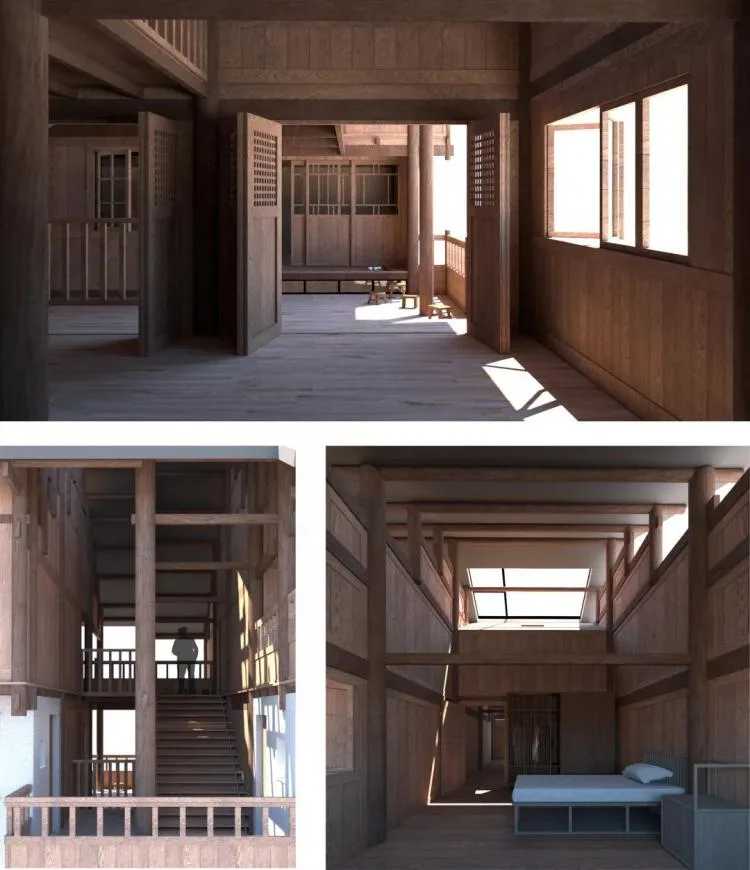
The lives of both families revolve around these ‘stairs and platforms’, where family members, occasional neighbors, and long-lost friends meet, gather, and say goodbye.
This is the essence of the ‘Old House, New Home’ project. Like any design, there are always regrets after completion. As I reflect and write about this project, I recognize many shortcomings that I aim to address in future research and practice.
Finally, I want to express gratitude to everyone who contributed to the smooth running of this competition. Participating allowed us to share our insights and reflections on life and architecture through our work, which in itself is a rewarding experience.
Judges and Instructors’ Comments
The project envisions a scenario where a family member returns home to rebuild, telling a touching story of merging the old structures of two families to create a shared “new home”. The concept is clever, preserving familiar living patterns through the regeneration of the old roof truss spaces — thus “retaining nostalgia”. It introduces a translucent passage at the junction of the two roof trusses, achieving a “merge without mixing” that is quite compelling.
The visual tone fits the theme perfectly, with perspectives that highlight the texture and atmosphere of the wooden construction. While the design could improve in areas like stair accessibility for the elderly, it remains a work with strong overall coherence and appeal.
—— Fan Yue, Distinguished Professor and Dean, School of Architecture and Urban Planning, Shenzhen University
The work “Old House, New Home” directly and naturally addresses the competition’s theme. The topic of group elderly care has been prominent recently, as has the challenge of repurposing idle buildings amid village depopulation.
Two students selected a site in a Dong ethnic village near Tongdao County, Hunan Province. Their clear site understanding and comprehensive approach incorporate elderly care and the reuse of old homes for left-behind seniors.
Rural residences differ from urban ones, encompassing varied rural lifestyles. Design must be rooted in a thorough understanding of daily life. This project emphasizes user-centered care, balancing elderly care standards and functionality with the village’s geographical and cultural context.
By leveraging the unique prefabricated features of traditional Dong wooden houses with dry railings, the design attempts to relocate, combine, and integrate new functions into old structures. This approach revitalizes idle buildings and creates a “new home” suited for group elderly care.
Recognizing elderly people’s need to remain in familiar environments — including houses, streets, and neighborly connections — the students designed communal spaces reflecting lively scenes of several elderly residents interacting, while maintaining the single-family living model. The final outcome embodies this vision and breathes new life into the formerly dilapidated homes.
—— Cai Ling, Associate Professor and Director of Architectural History Teaching and Research, School of Architecture and Urban Planning, Guangzhou University;
Deng Yi, Professor and Vice Dean, School of Architecture and Urban Planning, Guangzhou University
Content Coordination: Chen Haijiao
WeChat Editor: Li Xue
Official Account: architect
Sina Weibo: @ Architect Magazine Weibo













Must log in before commenting!
Sign Up