
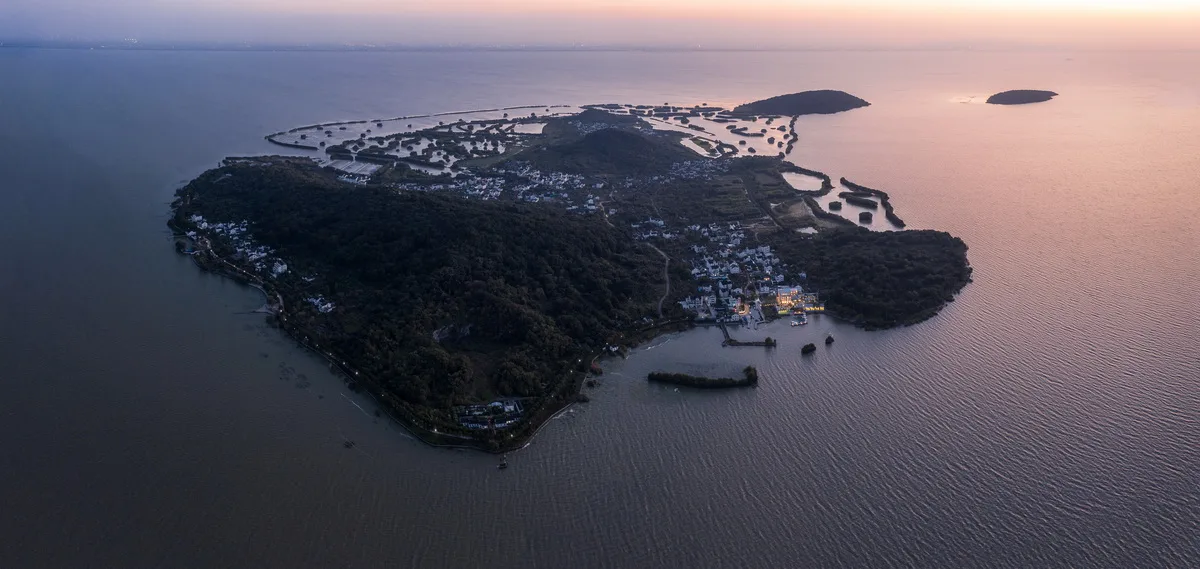
△ Aerial view of the venue © Wu Qingshan
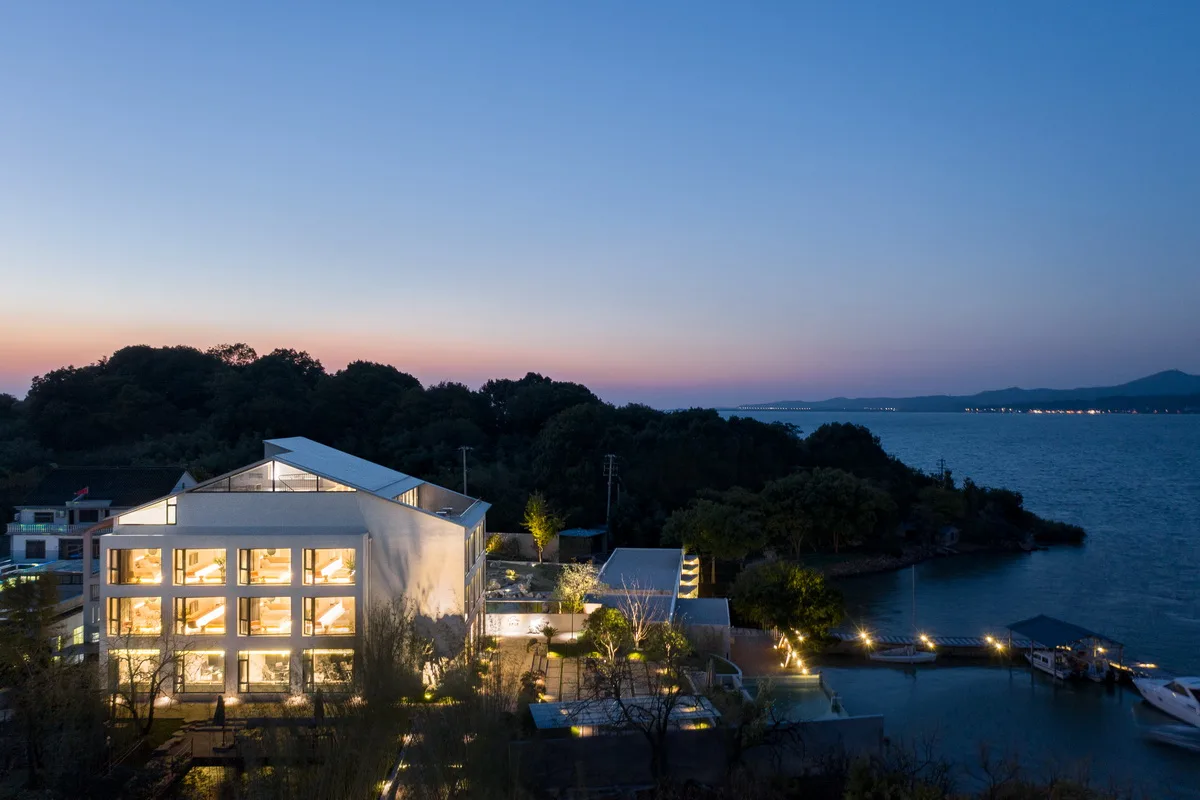
△ Appearance of the main building © Wu Qingshan
In the summer of 2019, commissioned by the owner, we visited the project site located at the center of Taihu Lake. At that point, the project was halfway done but faced significant design revisions due to various factors. Originally, the building volume planned to occupy the lake was halved, leaving only a single box-shaped building with a large open courtyard. Furthermore, the initial modernist white box design was required to be “leveled and sloped” to comply with appearance regulations. This led to a complete overhaul of the original plan, demanding a fresh redesign and continuation of the project from a new perspective. We initiated a hotel design process centered around renovation and renewal of the existing structures.
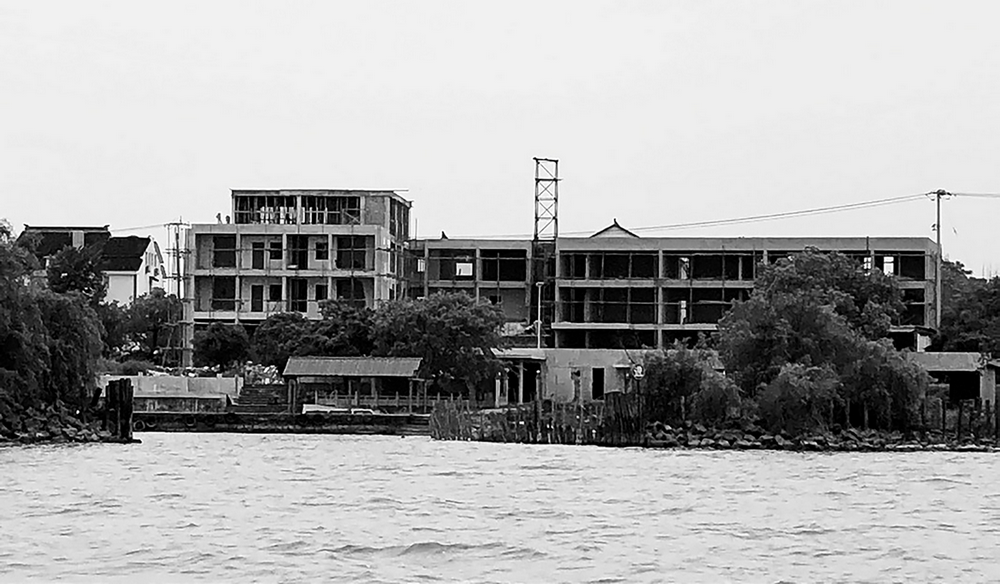
△ Original state before renovation © Wang Weishi
The renovation design faced three main challenges: first, how to utilize the vacant land left after demolishing the original building and reorganize circulation; second, how to creatively transform strict flatness requirements into dynamic design conditions and spatial qualities; third, how to enhance the building’s character and quality through thoughtful interior spatial design. To address these, we focused on three targeted spatial interventions as the foundation for solving the design problems.
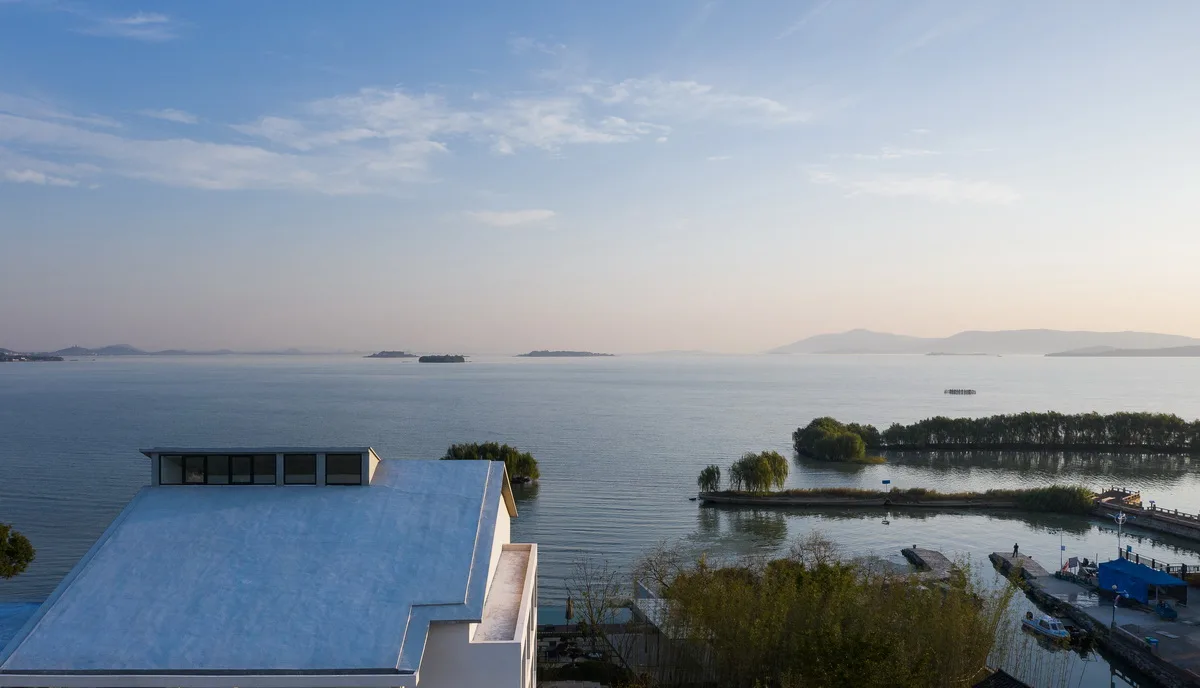
△ Slope crest facing Taihu Lake © Wu Qingshan
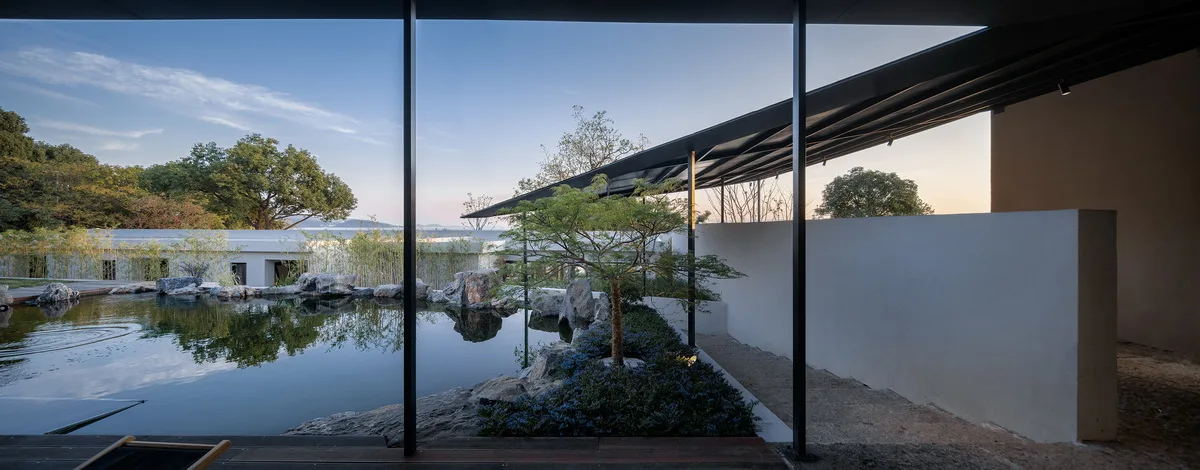
Half corridor, half pavilion © Wu Qingshan
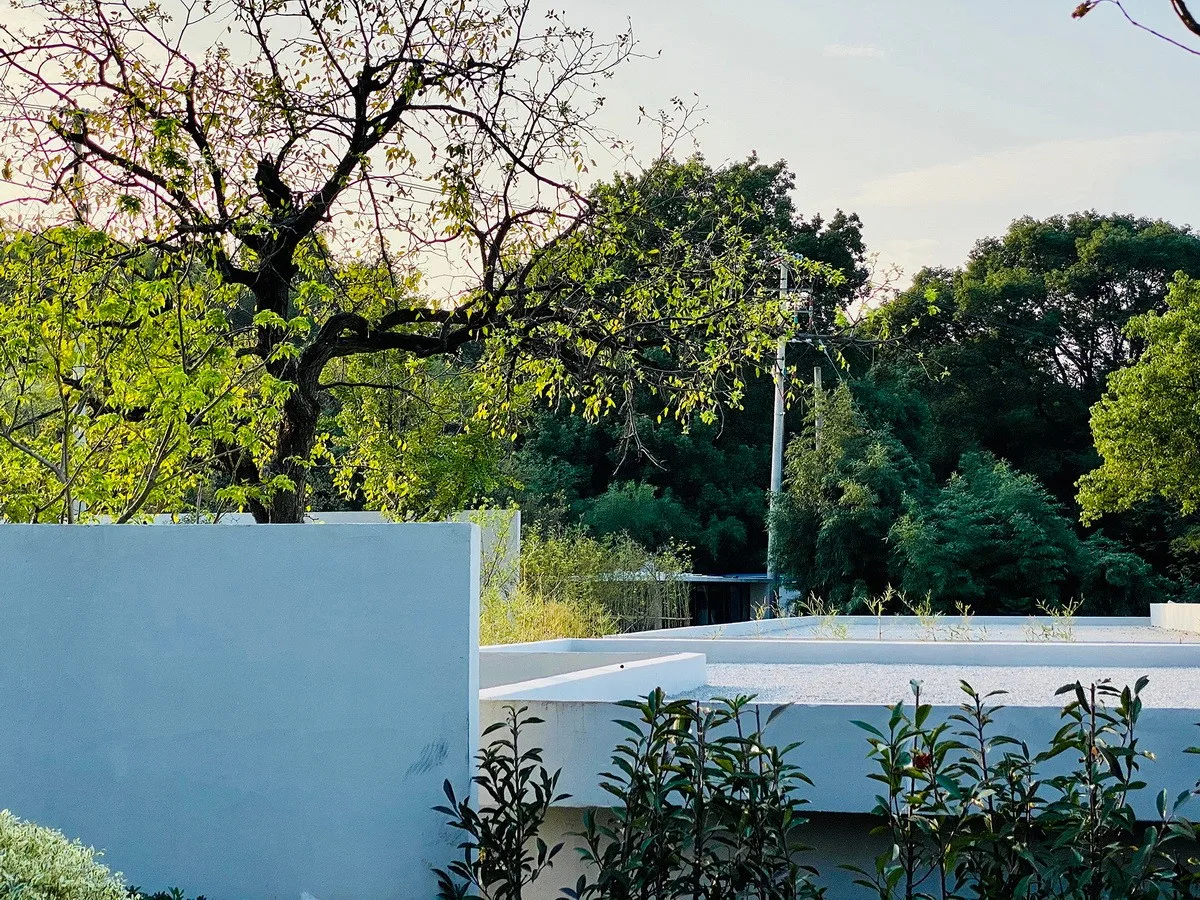
△ Seamlessly integrated with the landscape © Wang Weishi
Half Corridor, Half Pavilion
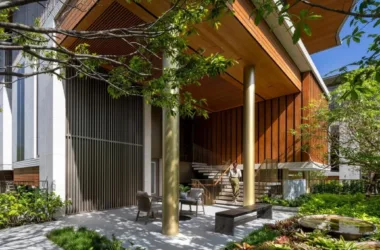
Serving as the hotel’s gateway, this space is enclosed by a single sloped irregular steel structure. It shelters the entrance and accommodates several independent functional areas while marking the boundary between interior and exterior, as well as between rooms and gardens.
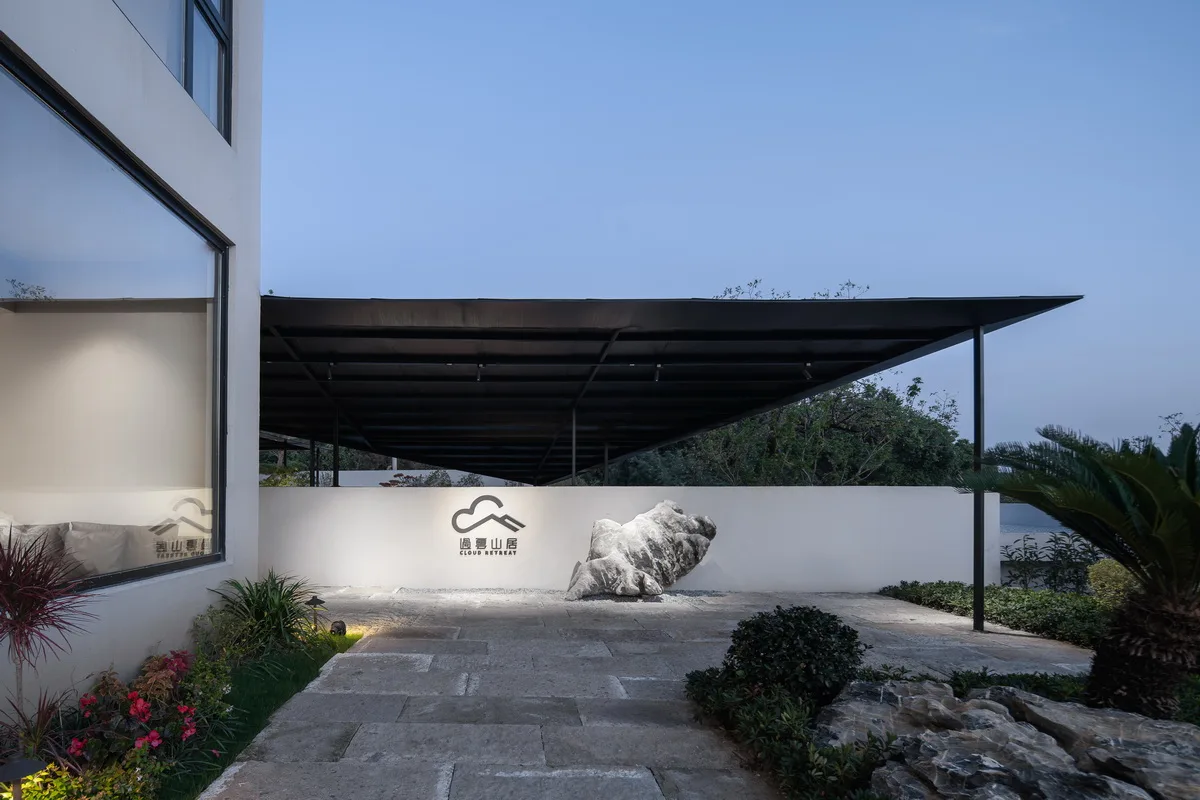
△ Entrance porch © Wu Qingshan
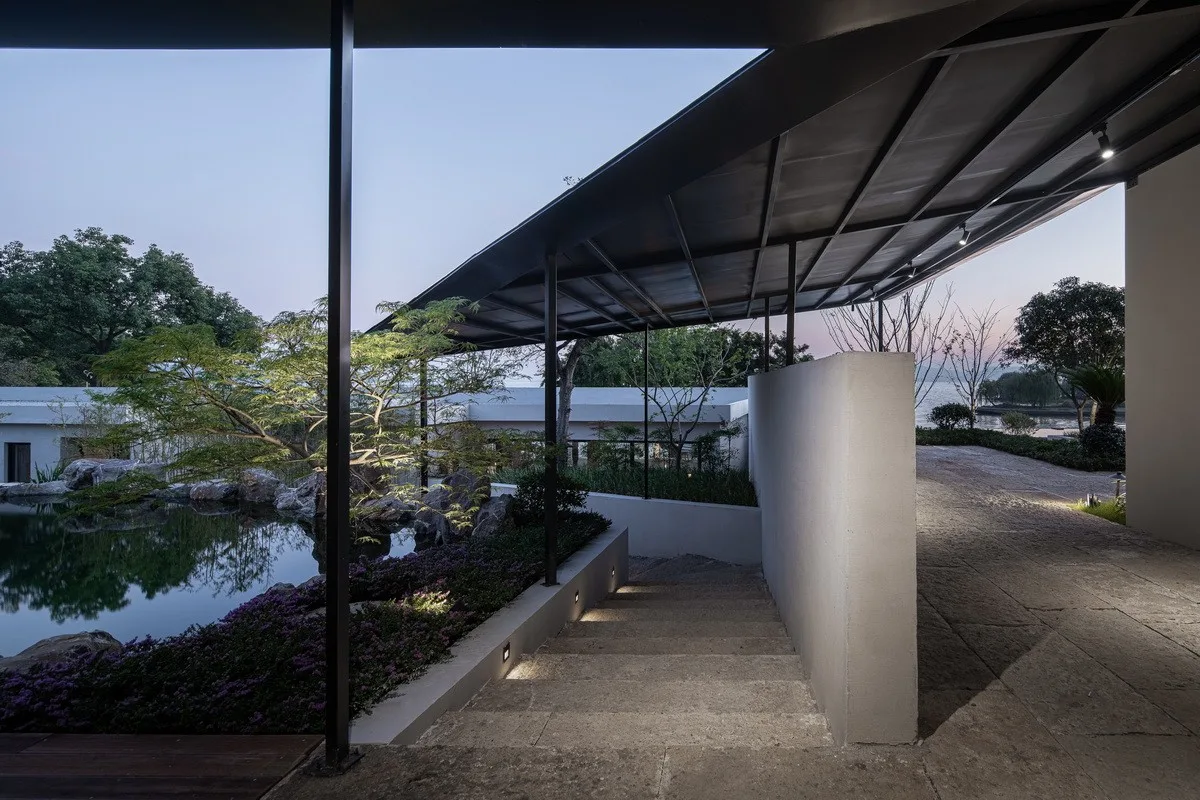
The low wall beneath the porch separates the outer plaza from the inner sunken ramp © Wu Qingshan
The design stems from reorganizing and utilizing existing spatial relationships: the area originally occupied by guest rooms was freed to create a fully enclosed courtyard. The original height differences and terraces that structured the architectural landscape and sightlines remain. Reorganizing these spatial dynamics in line with the current context was our core challenge.
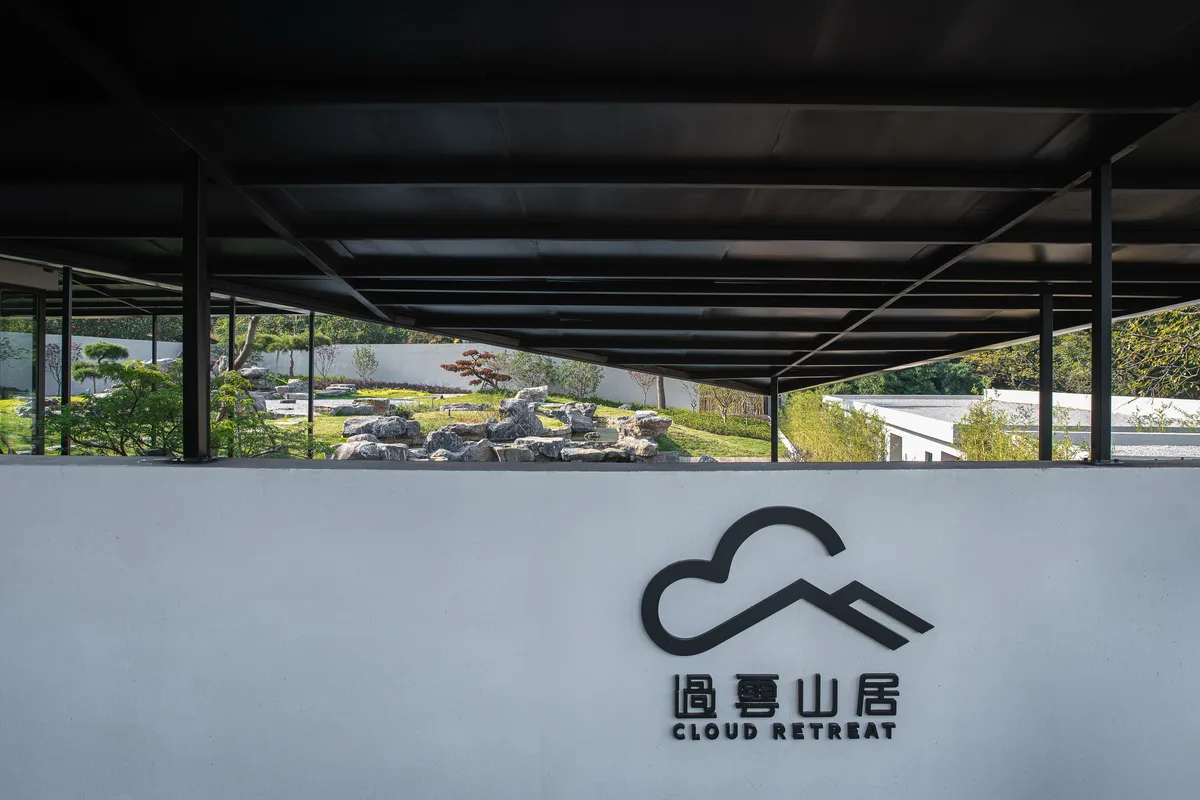
△ Courtyard perspective framed by the porch © Wu Qingshan
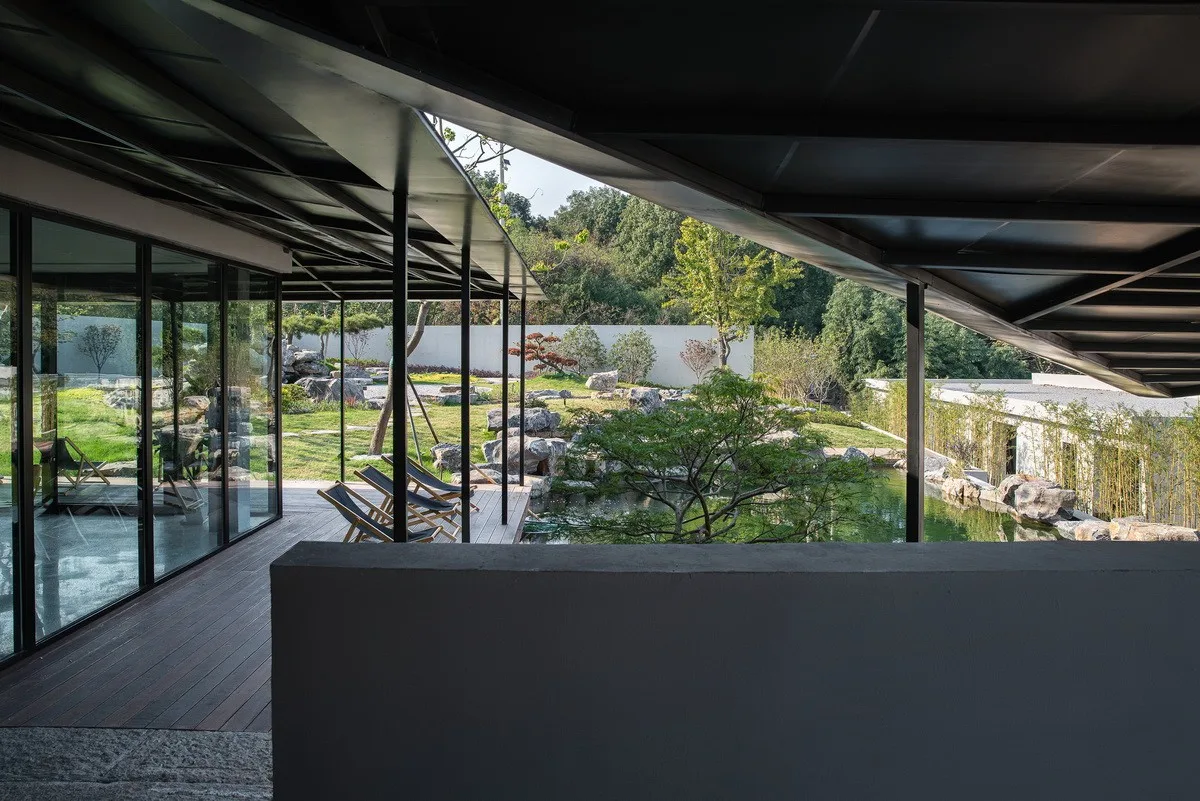
△ Porch and courtyard landscape © Wu Qingshan
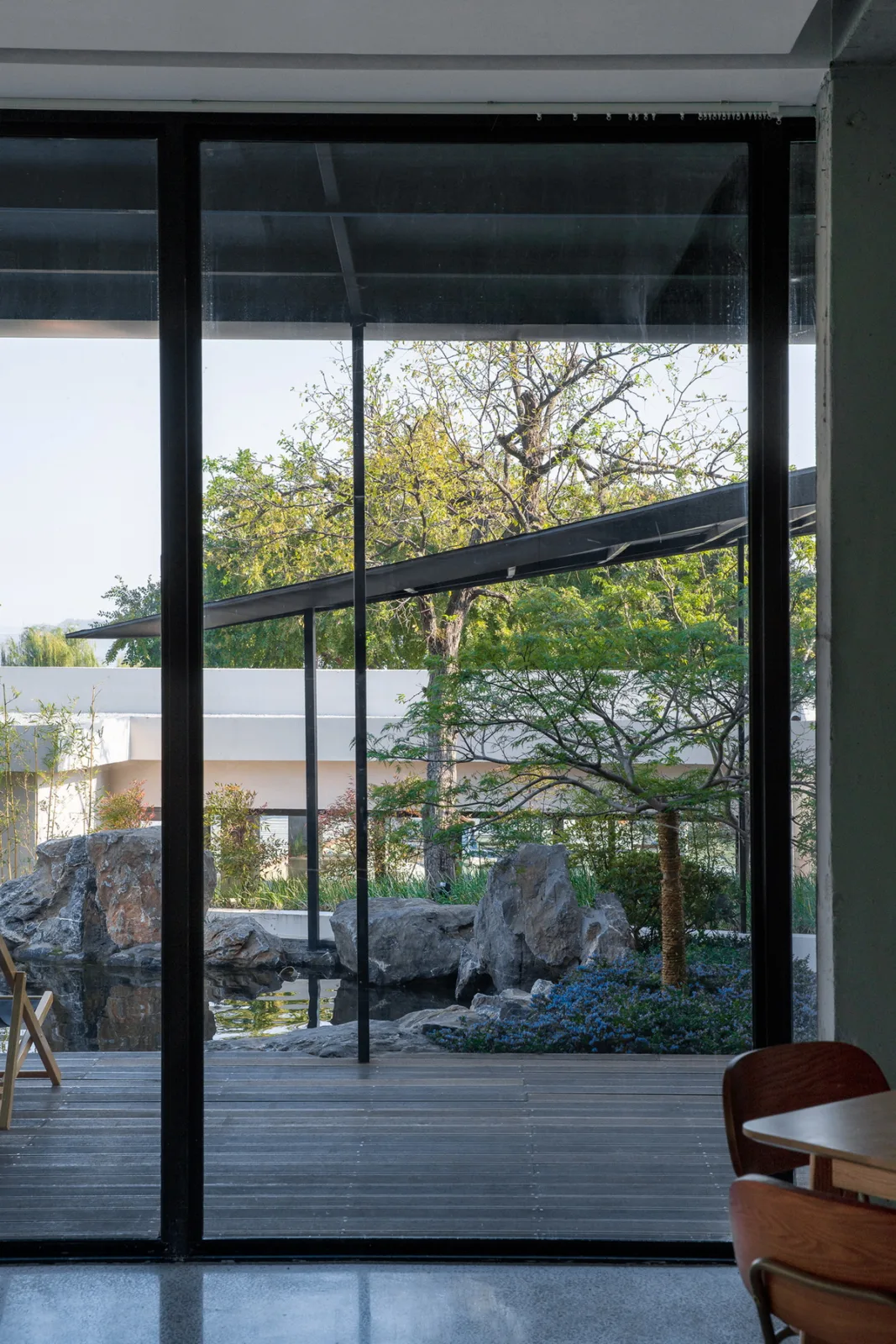
△ Indoor view of the corridor landscape © Wu Qingshan
In the initial design, we defined the boundary between building and courtyard with corridor-like “grey spaces,” forming a continuous corridor system that connects various interior spaces and organizes complex height differences and circulation paths. This boundary serves both interior and exterior functions, redefining the courtyard and shaping the relationship between the building’s interior and the courtyard. The corridors’ interfaces open and close dynamically, creating a rich experiential landscape. At the entrance, the corridor system expands to protect an old jujube tree, transforming into a pavilion that interacts with the landscape through a dramatic change in scale. A 1.5-meter-high low wall below separates the outer plaza from the inner sloping ramp, creating a “double corridor” — a dual interior-exterior space beneath a shared roof.
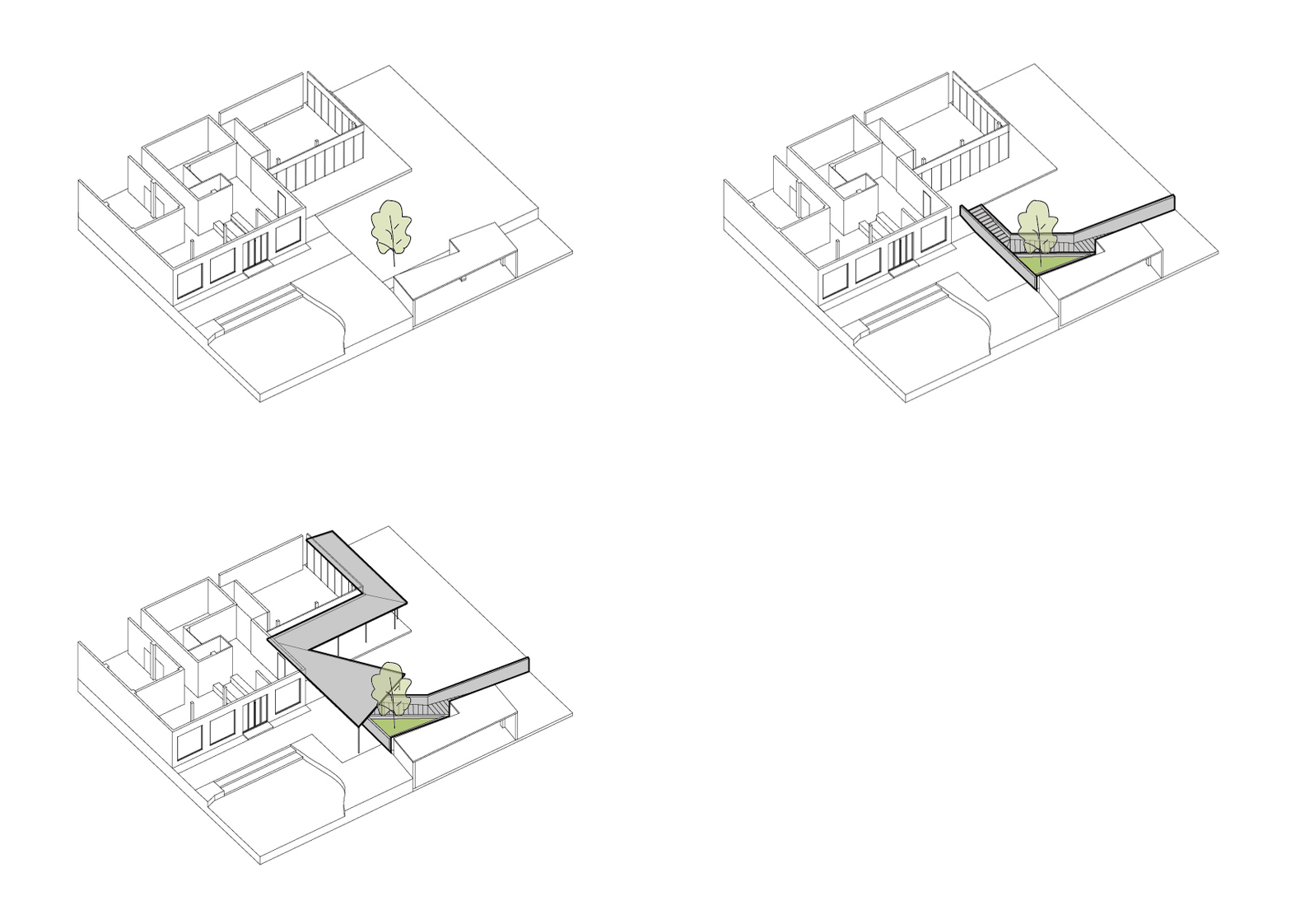
△ Step-by-step entrance renovation
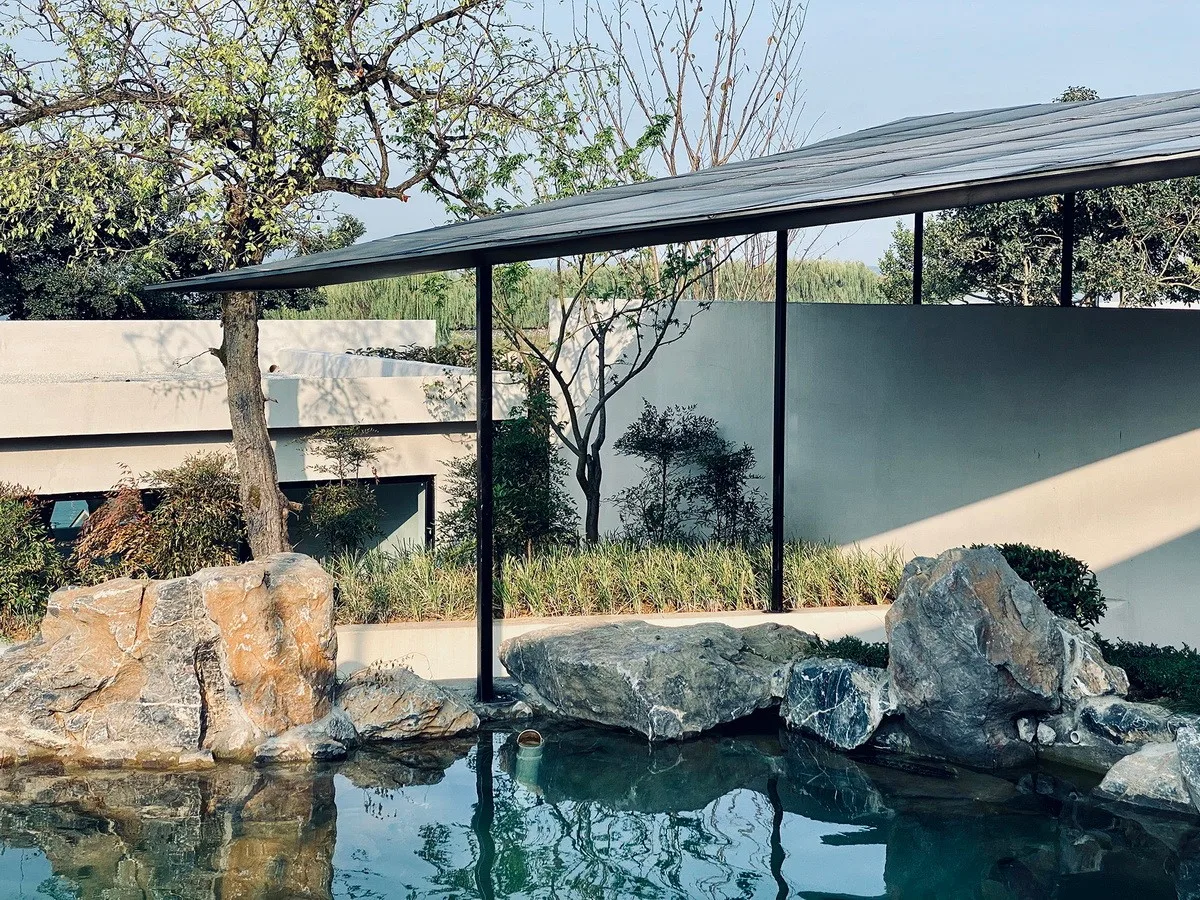
△ Corridor transformed into a pavilion integrated with the landscape inside © Wang Weishi
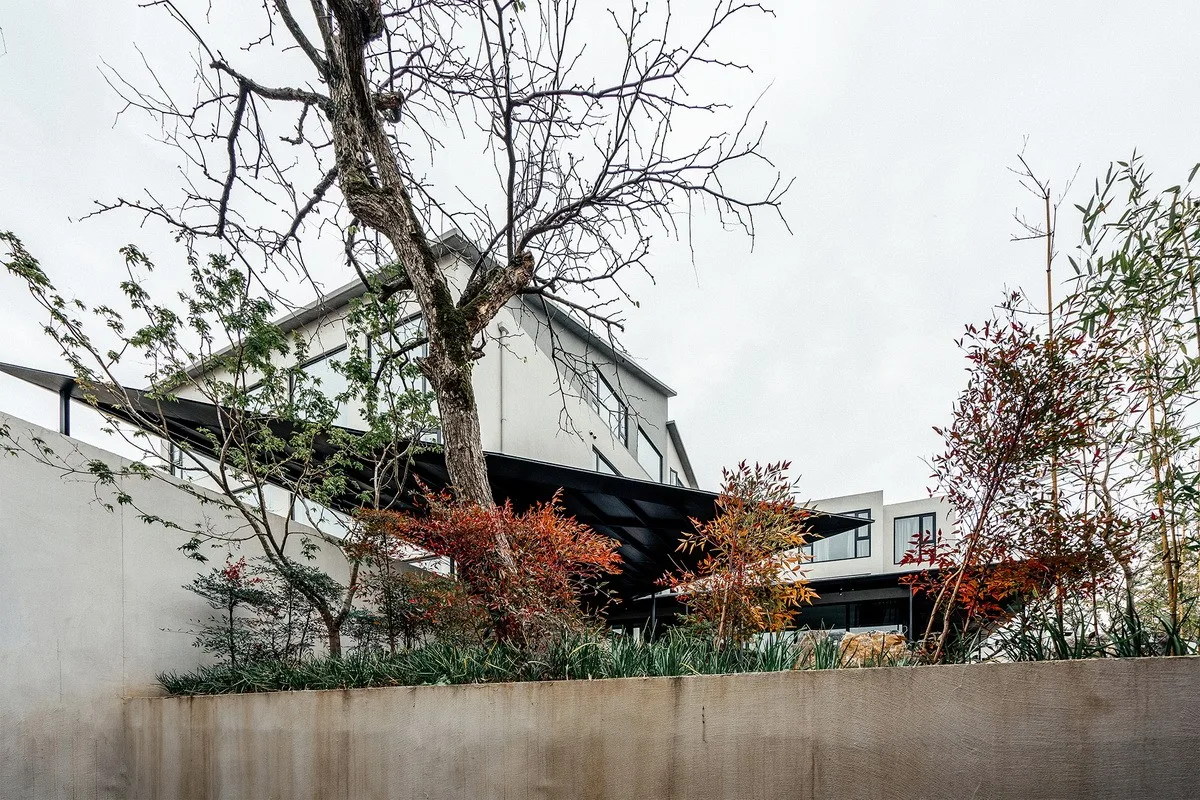
A pavilion formed by a single roof © Yang Yang
During construction, the full corridor system could not be realized due to various constraints; only the entrance section was retained. However, this limitation enhanced its independence and spatial significance as a boundary. The half corridor, half pavilion serves as a distinctive architectural device, establishing interactive boundaries between inside and outside through the entrance space and creating two different spatial interpretations. It expresses both interior and exterior conditions and reveals latent relationships and spatial perceptions embedded within the landscape, terrain, and indoor-outdoor interplay.
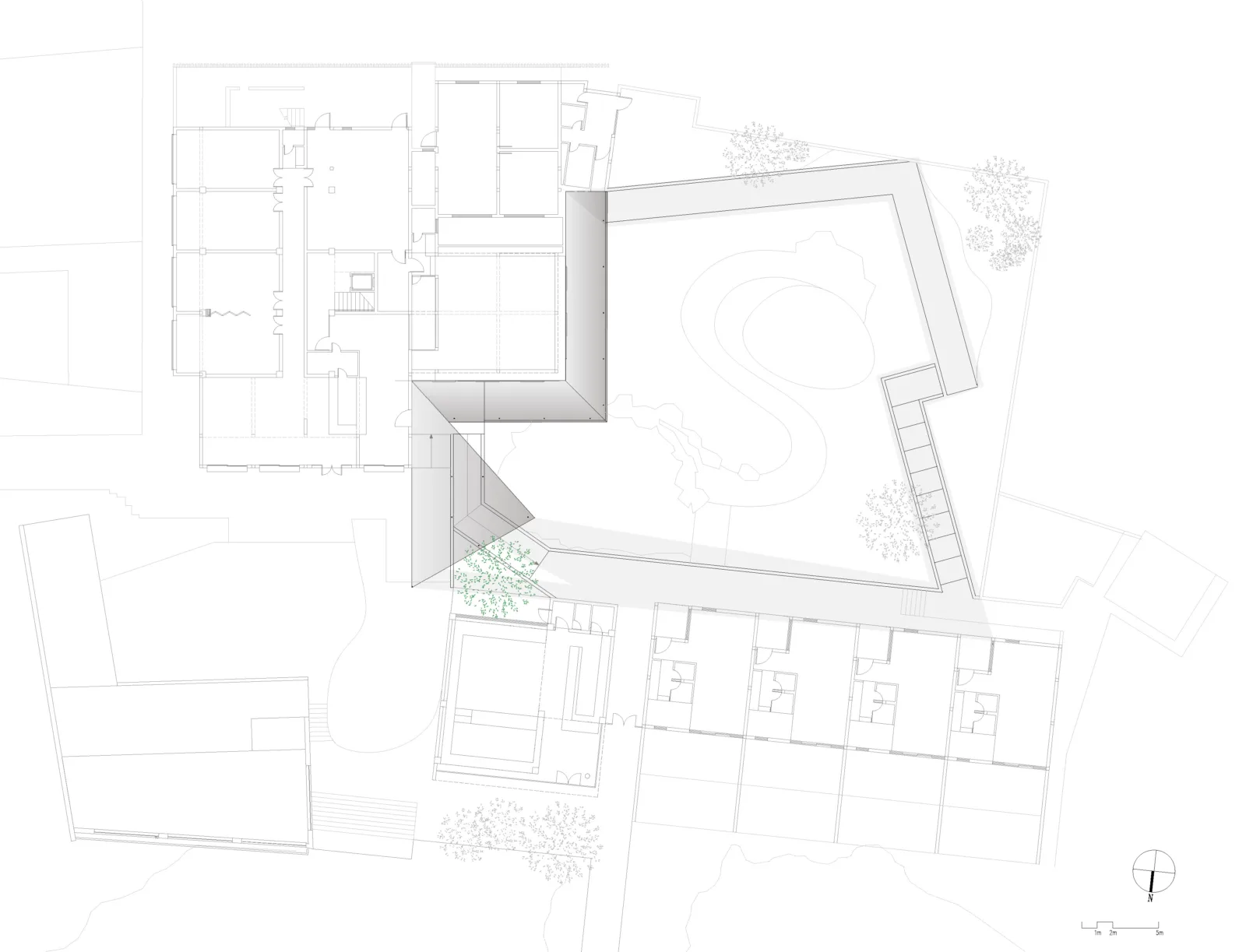
Surrounding the corridor
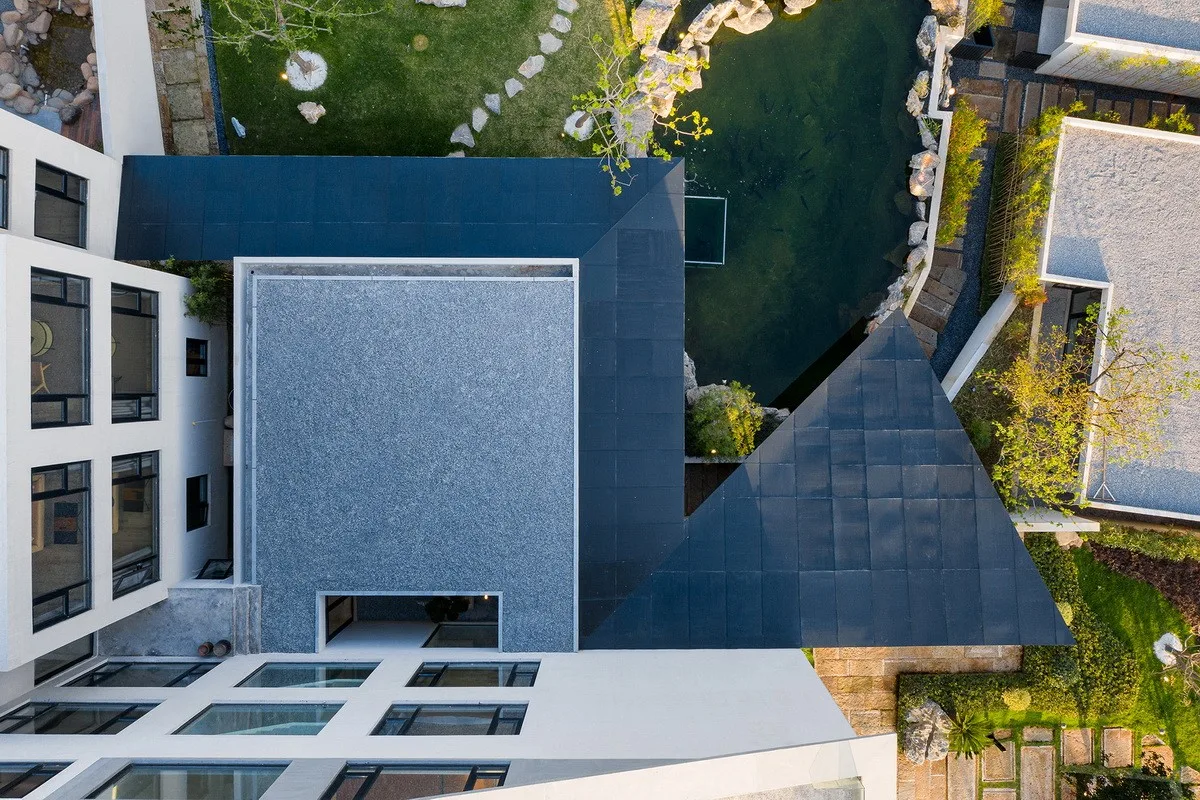
Aerial view of the corridor system © Wu Qingshan
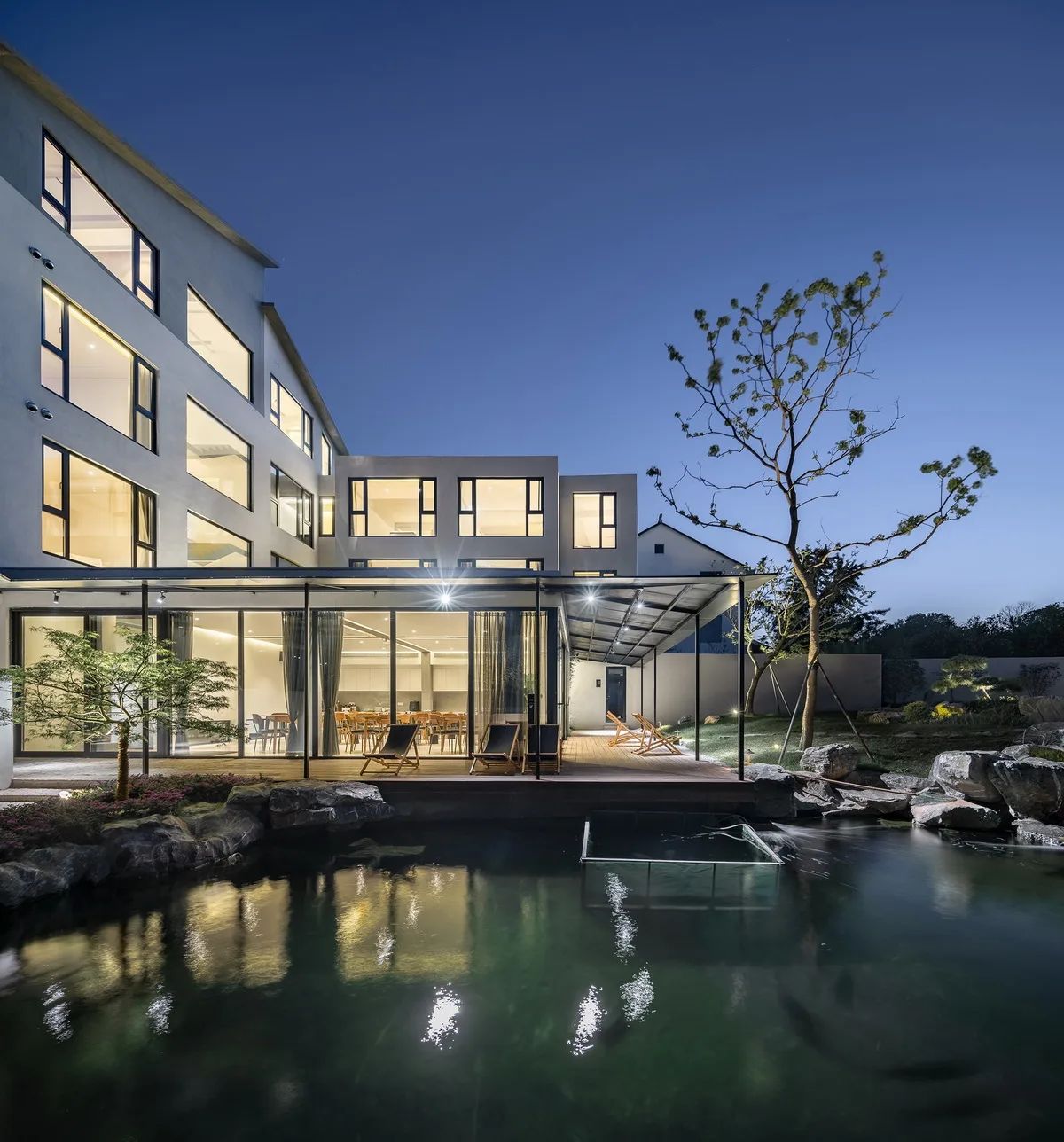
The corridor acts as a grey space linking inside and outside © Wu Qingshan
Hanging Slope with Scenic Views
The attic, constructed atop the main building with a simple concrete slope, was developed to meet strict requirements mandating a sloped roof instead of a flat one. The design situates the slope’s peak above the existing roof structure, maintaining a light and minimal posture externally, while creating a public landscape space at the building’s highest point.
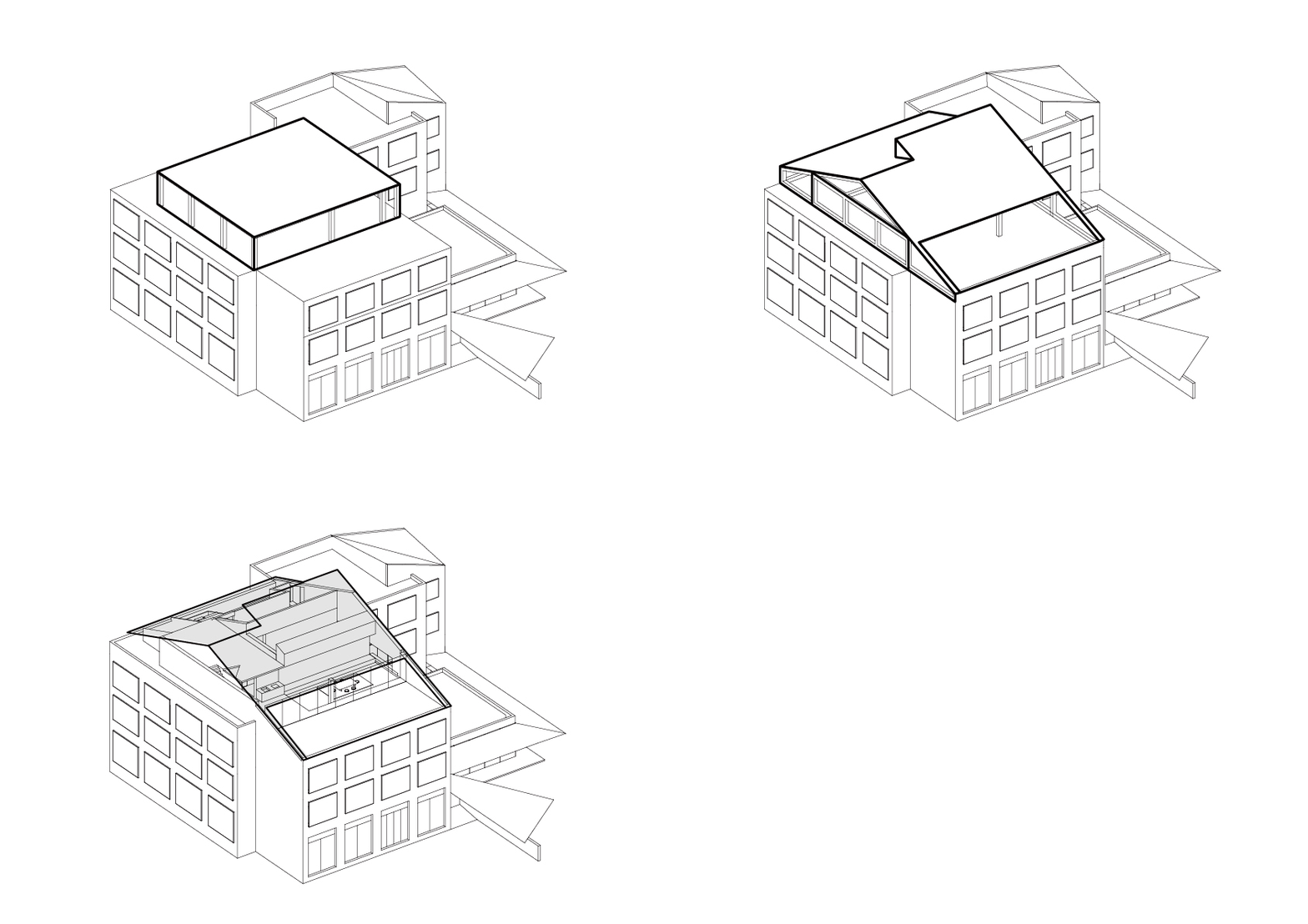
△ Step-by-step renovation of the top level
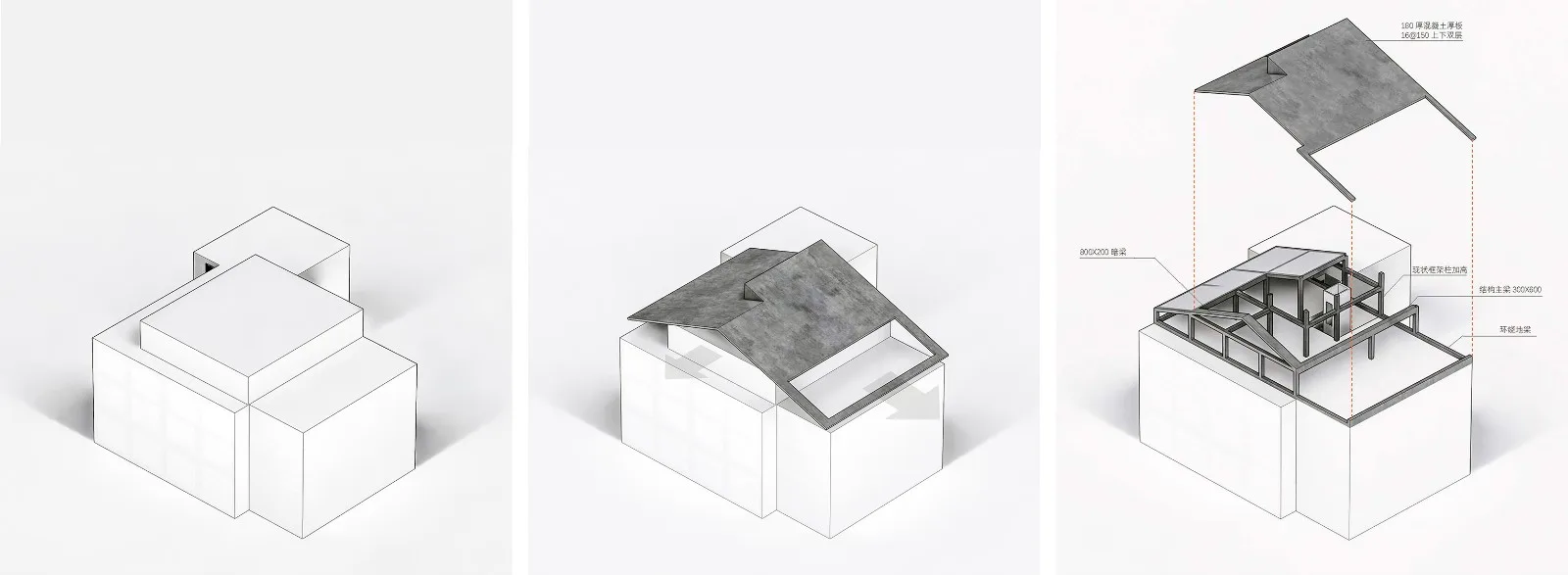
△ Top level analysis diagram
The attic features 180mm thick cast-in-place concrete slabs, exploiting the structural stability of a triangle formed by the inclined double slopes and the horizontal plane. This creates an interior without beams and a consistent slab roof form inside and outside. The structure connects only at column points, suspending the roof above the top floor and allowing greater integration with the landscape. On the north side, the lake-facing slope forms a terrace embedded into the incline, with a full-length horizontal opening. This opening, framed by a low overhanging cornice, offers expansive views toward Taihu Lake. The eastern roof extends beyond the wall, bringing the mountain’s outline into the space through a triangular opening. The landscape is thus painted onto the slope and becomes an integral part of the interior space.
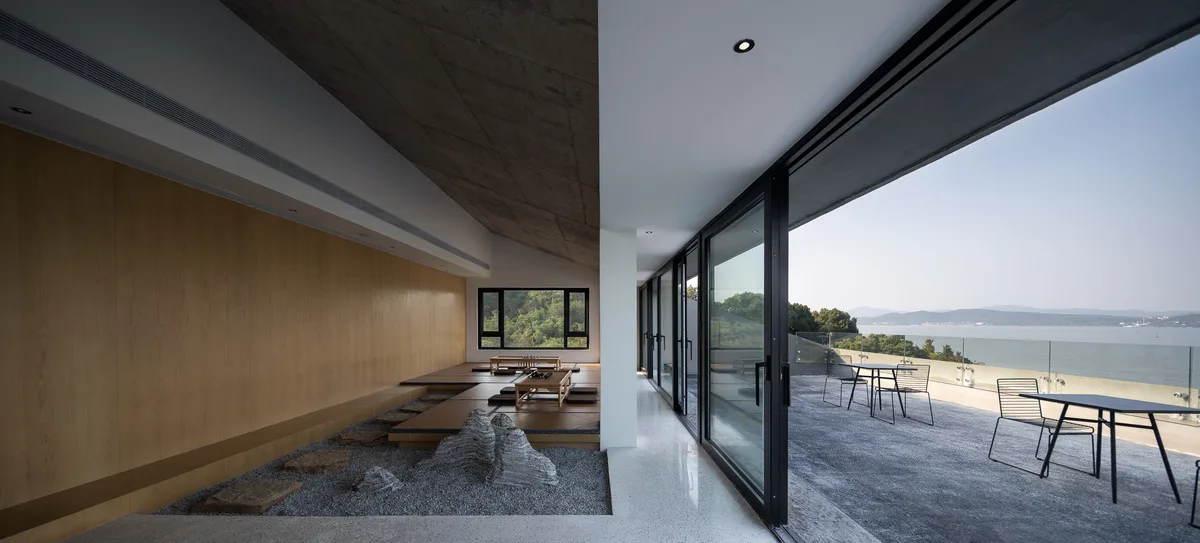
Tea Room and Terrace © Wu Qingshan
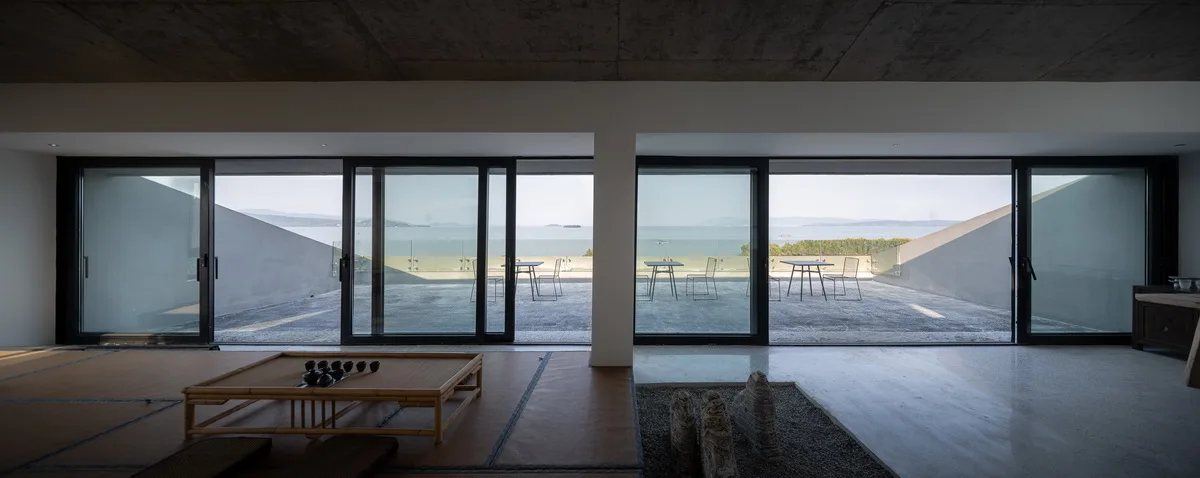
△ Horizontal landscape view facing Taihu Lake © Wu Qingshan
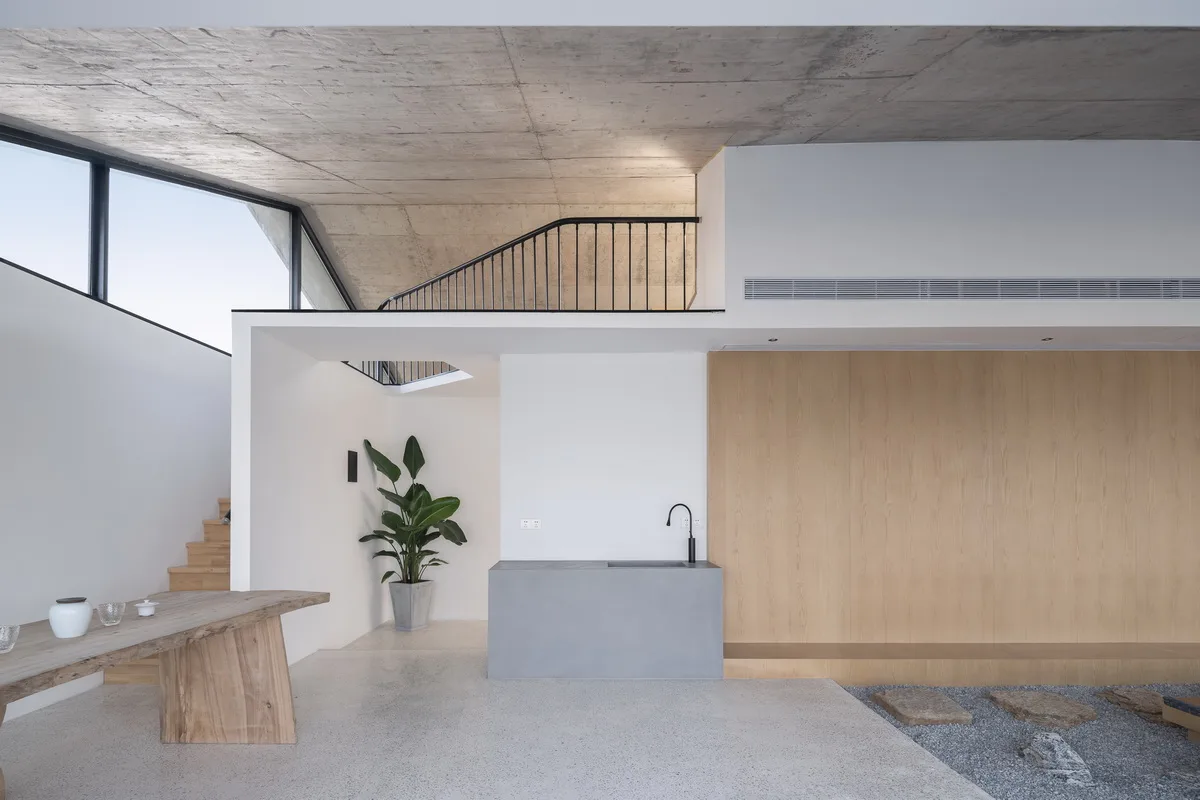
△ Tea Room interior © Wu Qingshan
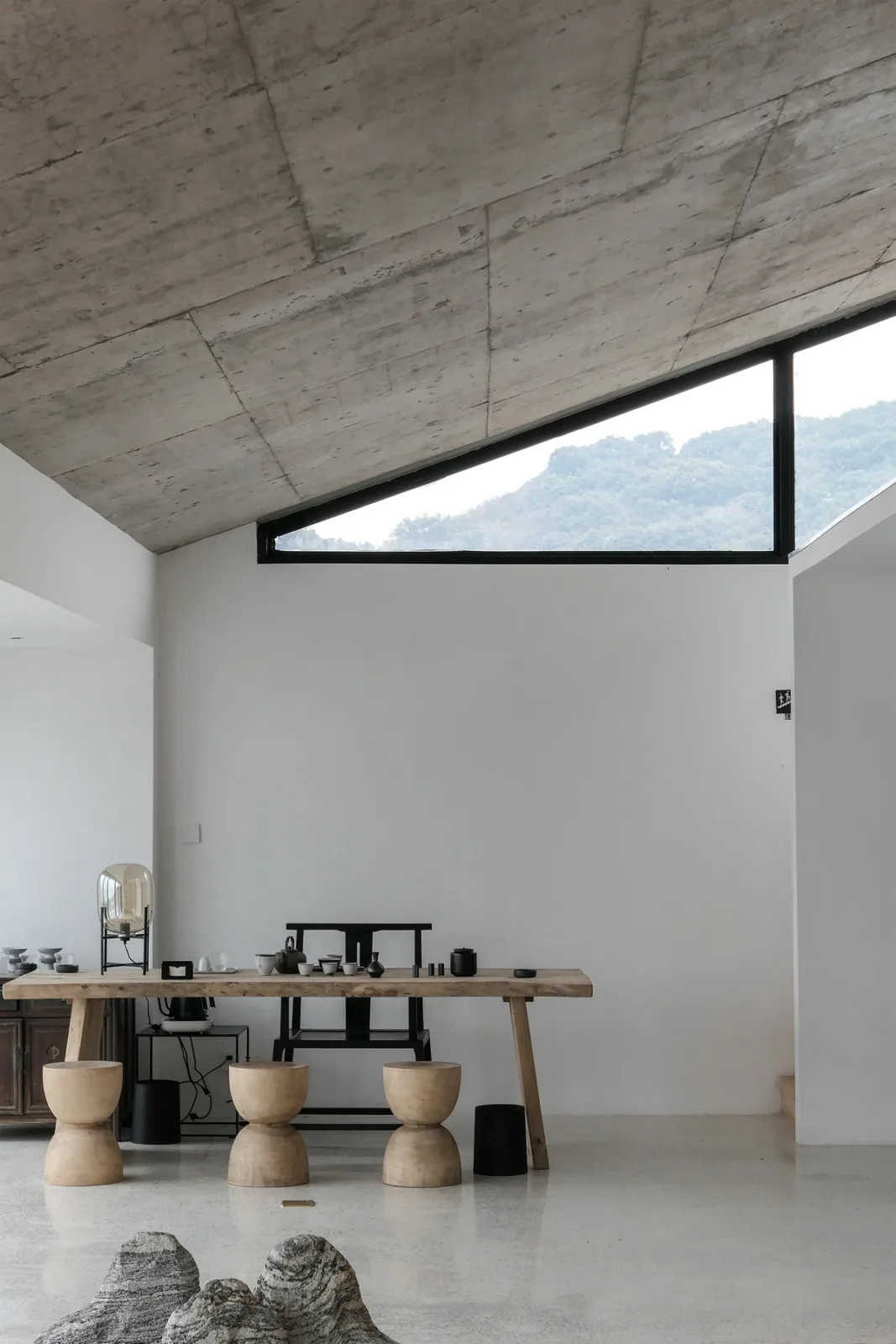
The mountain outline enters the interior through a framed view of the borrowed slope top © Chen Xin
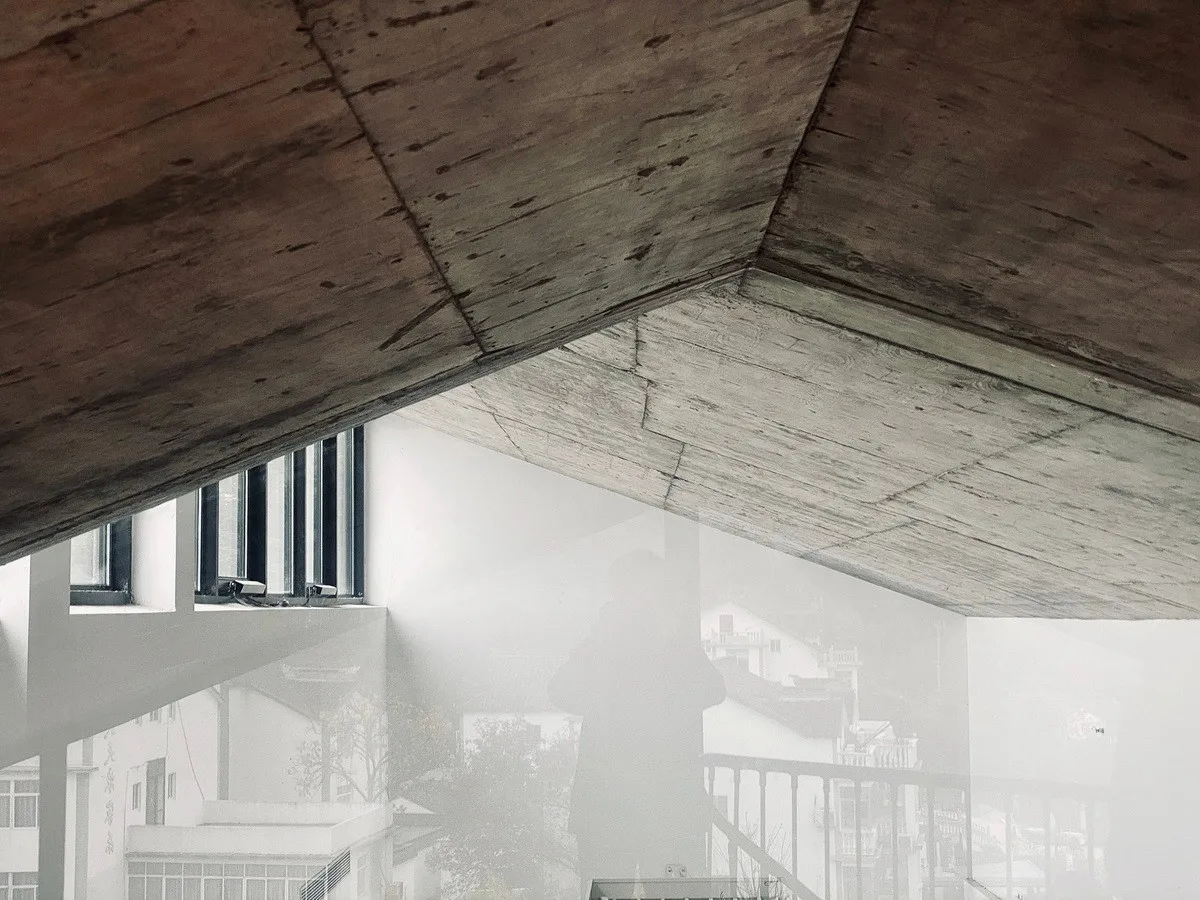
Local area at the top of the slope © Wang Weishi
The Mianhu Tea Room serves as the central feature of the top-level space. Its low seating arrangement aligns with the horizontally unfolding landscape, contrasting the upward-reaching sloping roof and creating a multi-scale spatial experience. The roof’s extension from the slope’s peak not only frames the scenery but also integrates the terrace as part of the tea room. The slightly sunken area within this space uses stones instead of water to symbolize the abstract relationship between mountains, water, and human presence, building a psychological connection with the outside world.
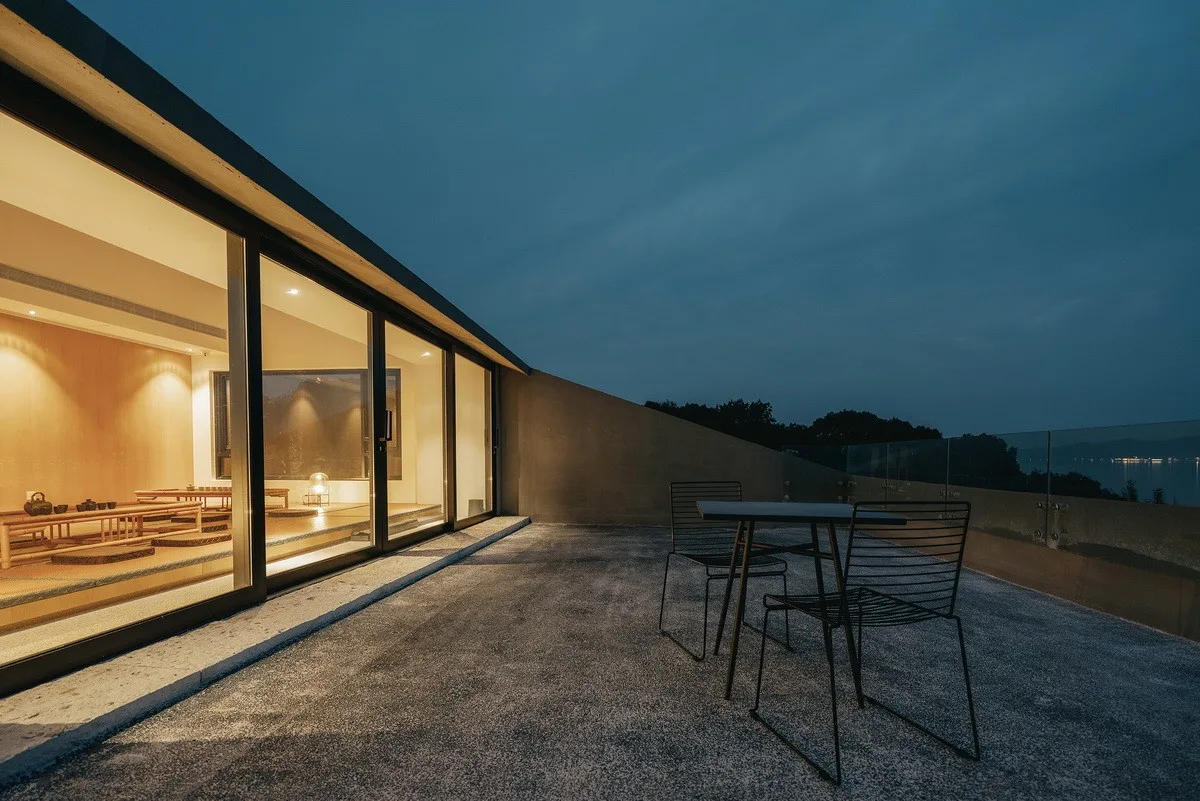
△ Terrace Space © Yang Yang
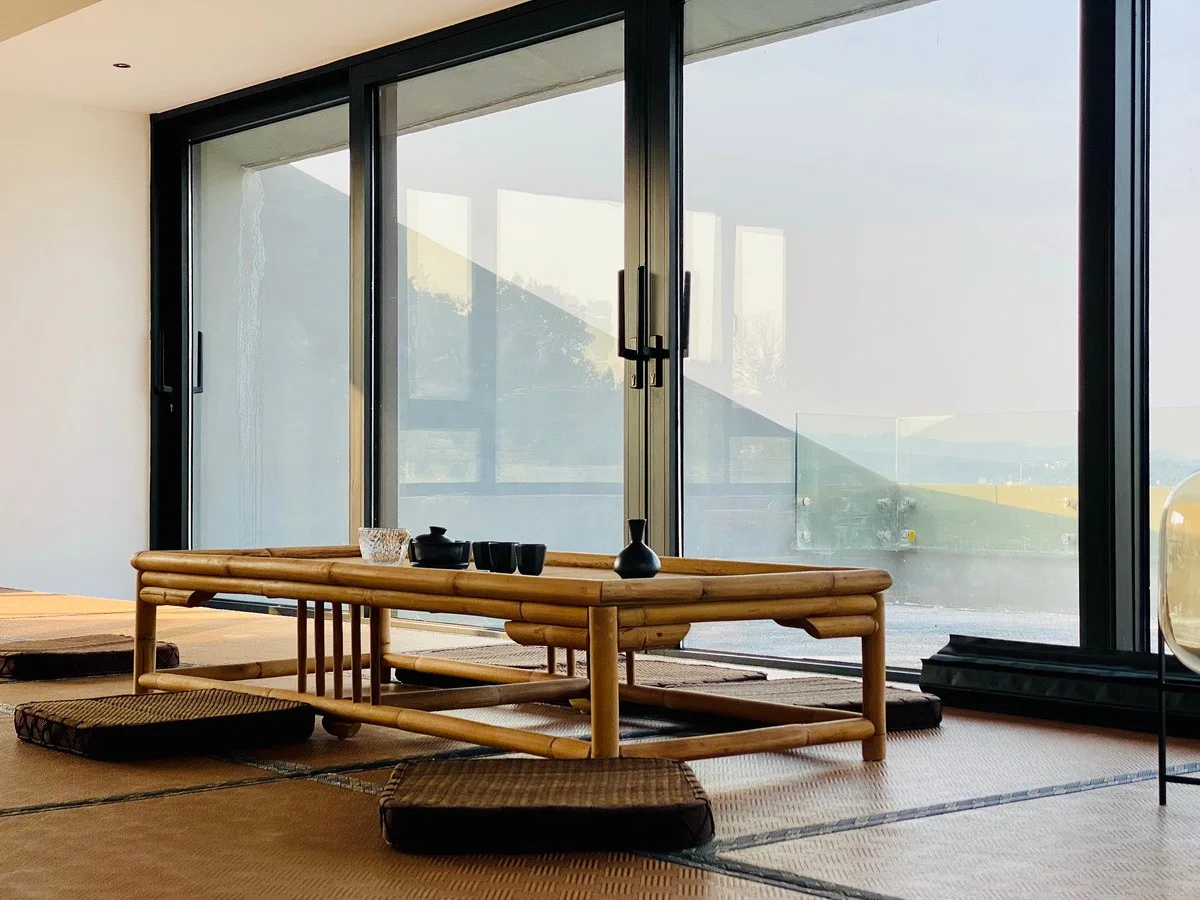
Low seating in the tea room © Wang Weishi
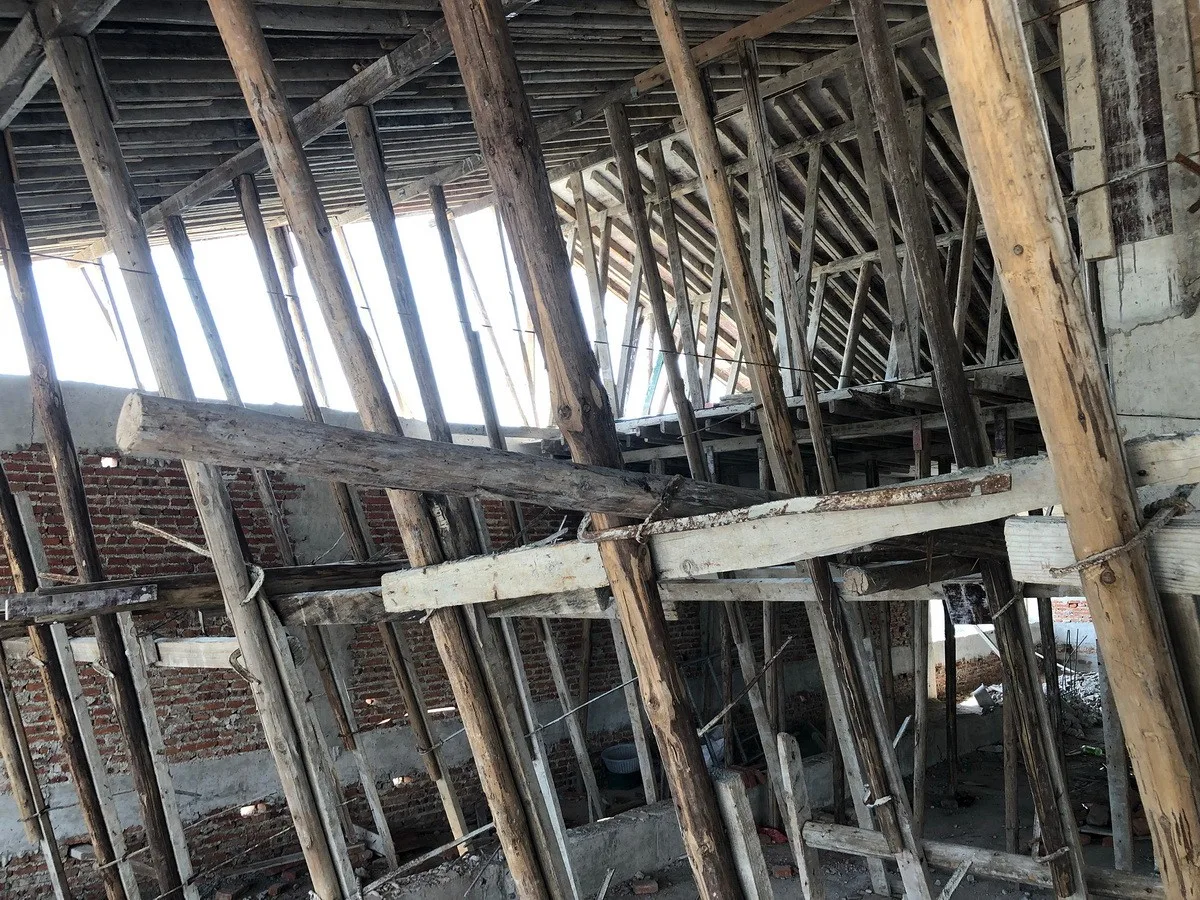
△ Construction progress during formwork support © Wang Weishi
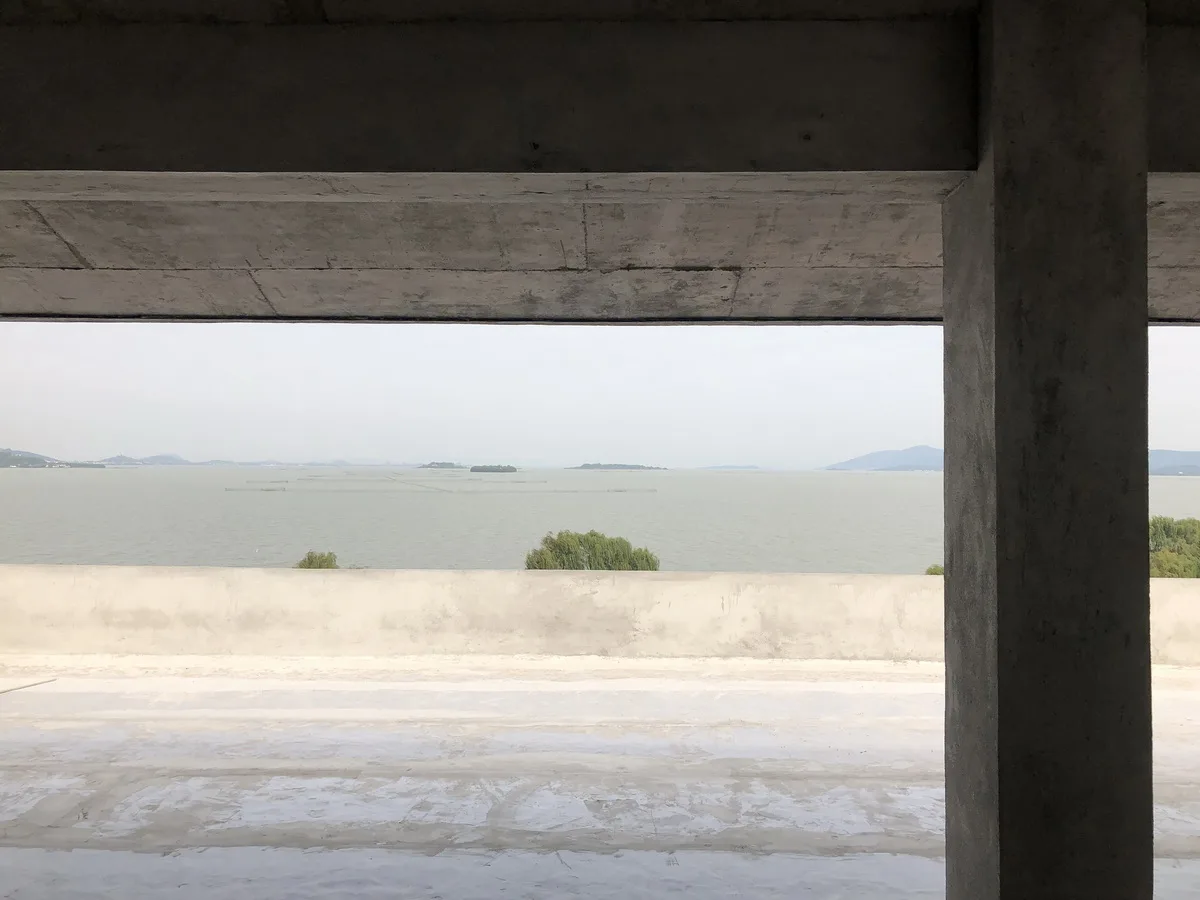
Space presentation at the top of the slope after formwork removal © Wang Weishi
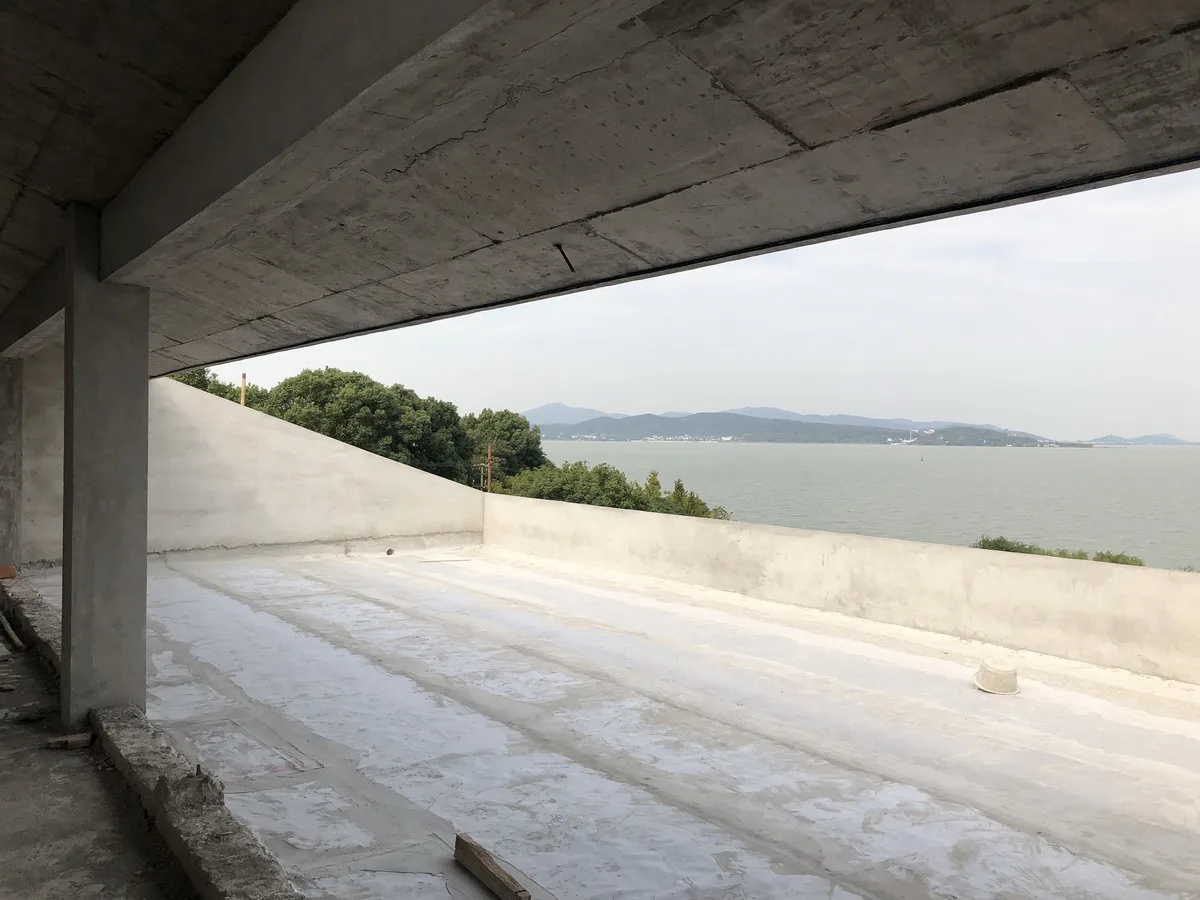
Space presentation at the top of the slope after formwork removal © Wang Weishi
Low and Remote Living
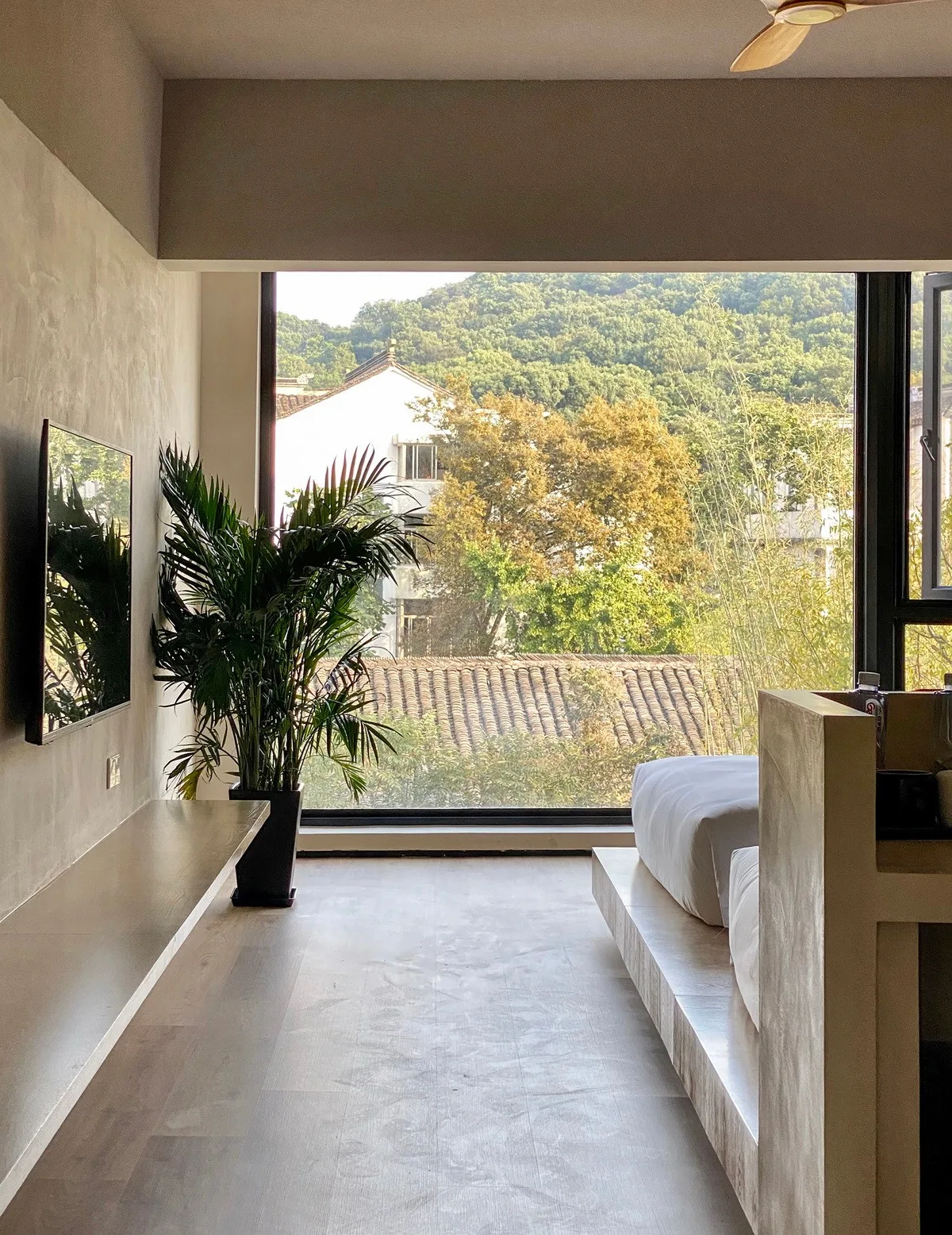
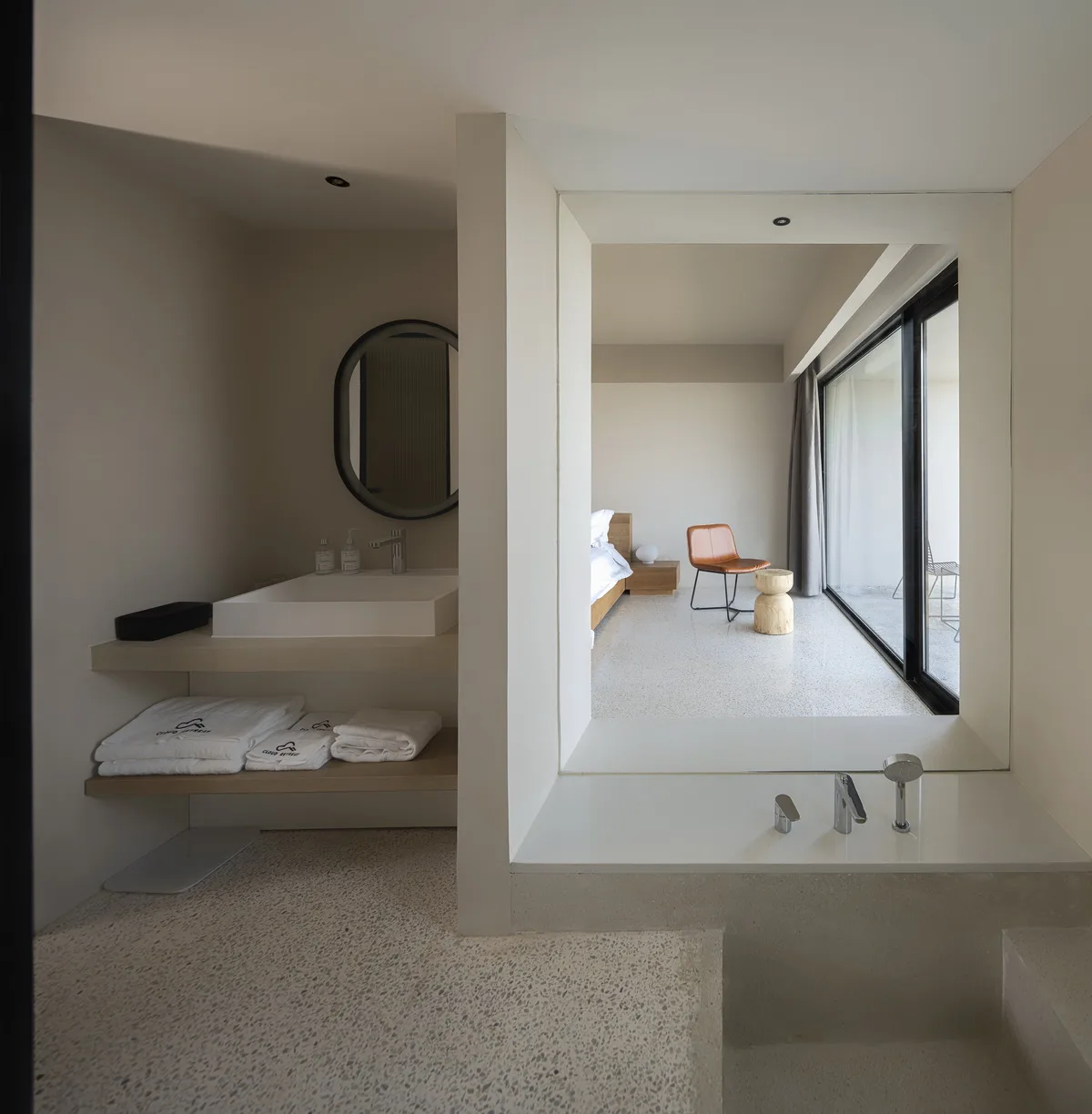
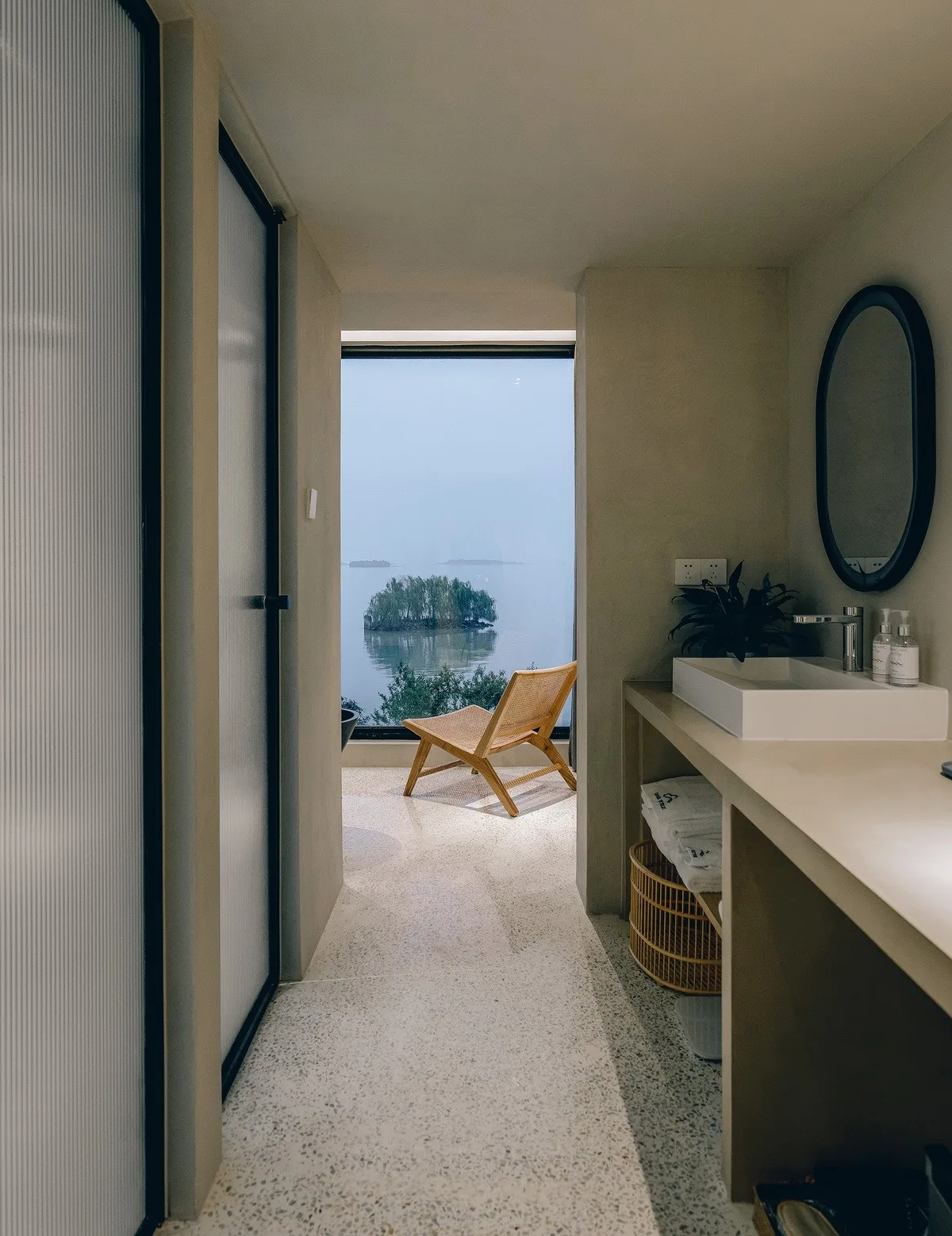
“Remote living” refers to dwelling on an island, while “low living” describes the quality and posture of lakeside life. In designing the guest rooms, we aimed to express this quality spatially: by intentionally lowering ceiling heights and incorporating a circular flow layout, we created distant views toward the landscape and fostered a relaxed, ground-level living pattern. The horizontally flowing rooms feature partial elevation changes and varied ceiling heights to define distinct territories within the space. We introduced two materials of similar color but contrasting textures—rough sandblasted surfaces for the high walls and ceilings, and soft, human-scale wall finishes for the low areas—establishing a dual spatial scale. This approach turns the original low floor height from a limitation into a defining characteristic.
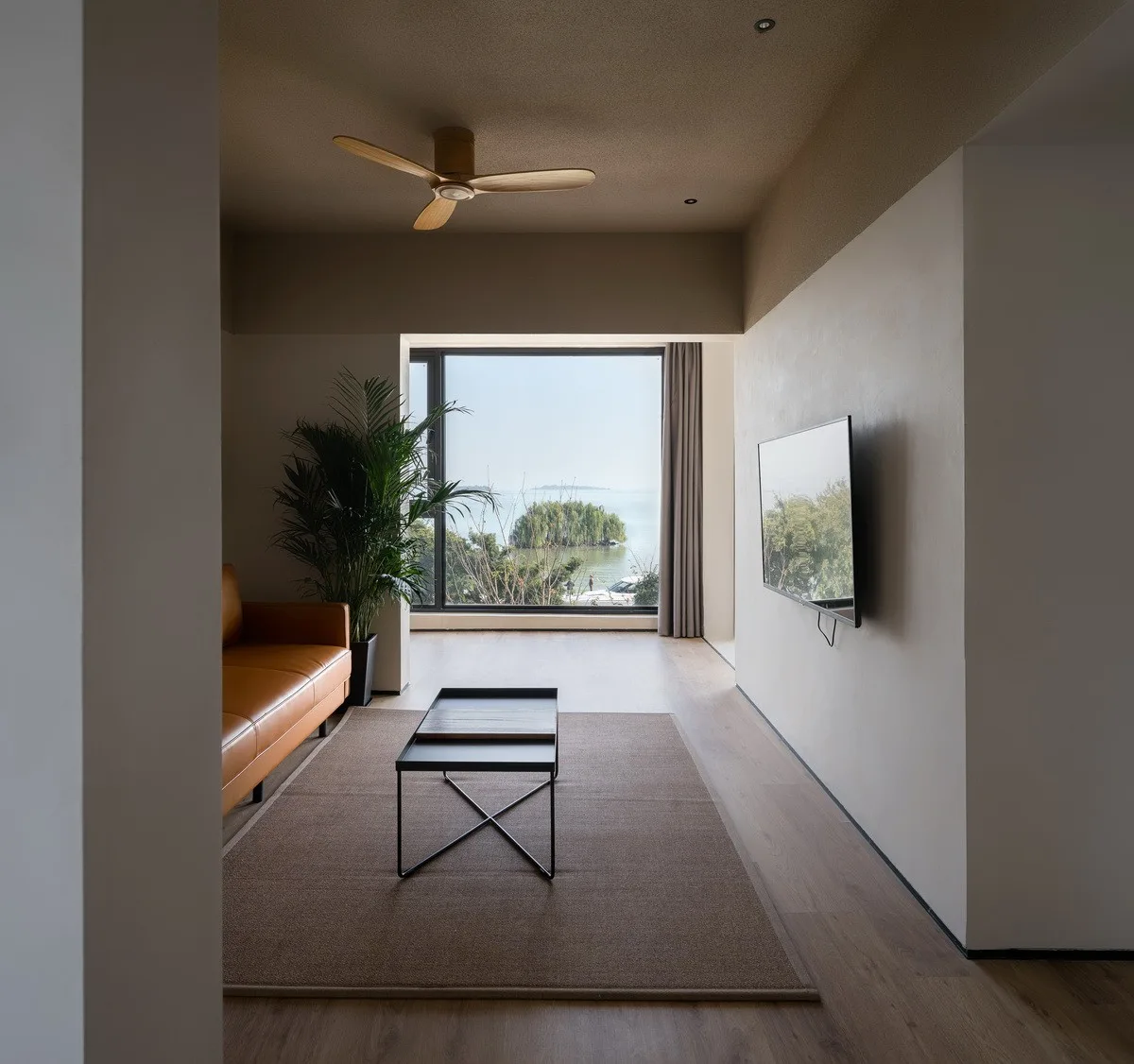
△ Guest rooms with views of Taihu Lake © Wu Qingshan
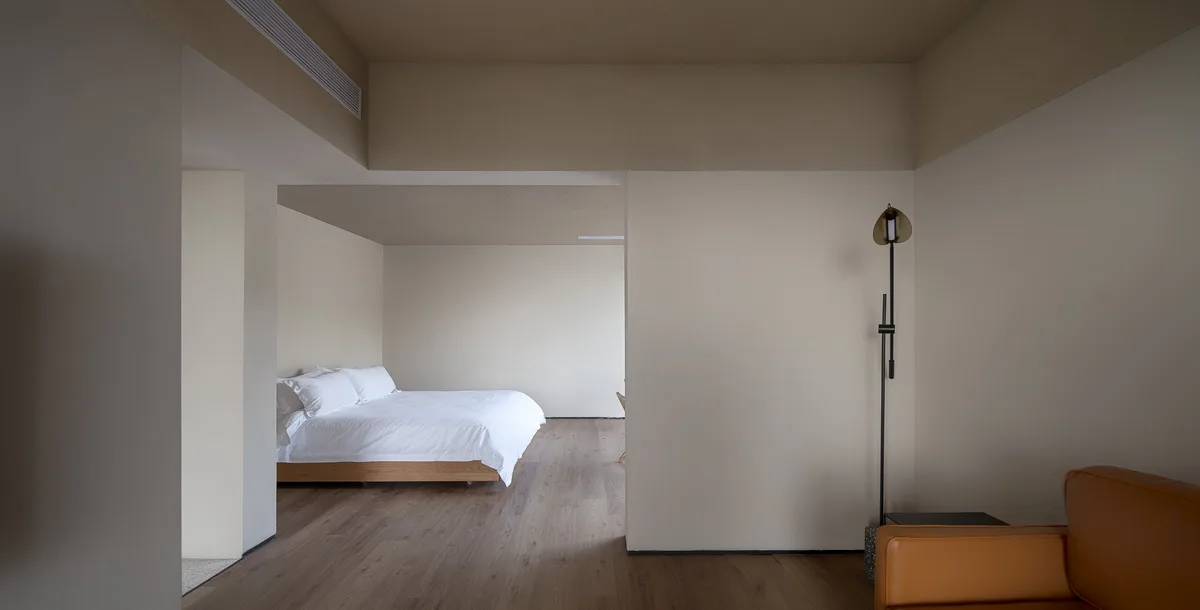
△ Room interior © Wu Qingshan
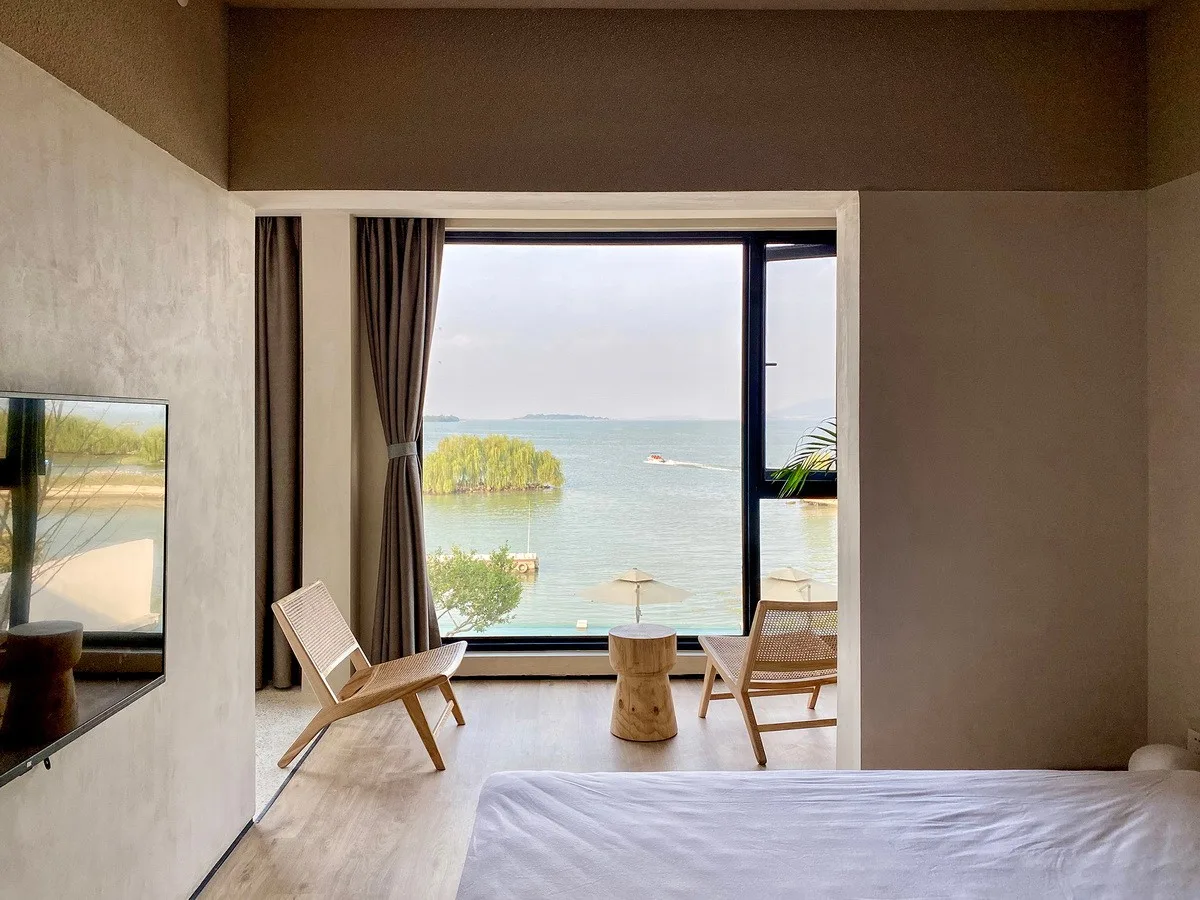
△ Partial room view © Wang Weishi
△ Partial room view © Wang Weishi
△ Partial room view © Wu Qingshan
△ Partial room view © Yang Yang
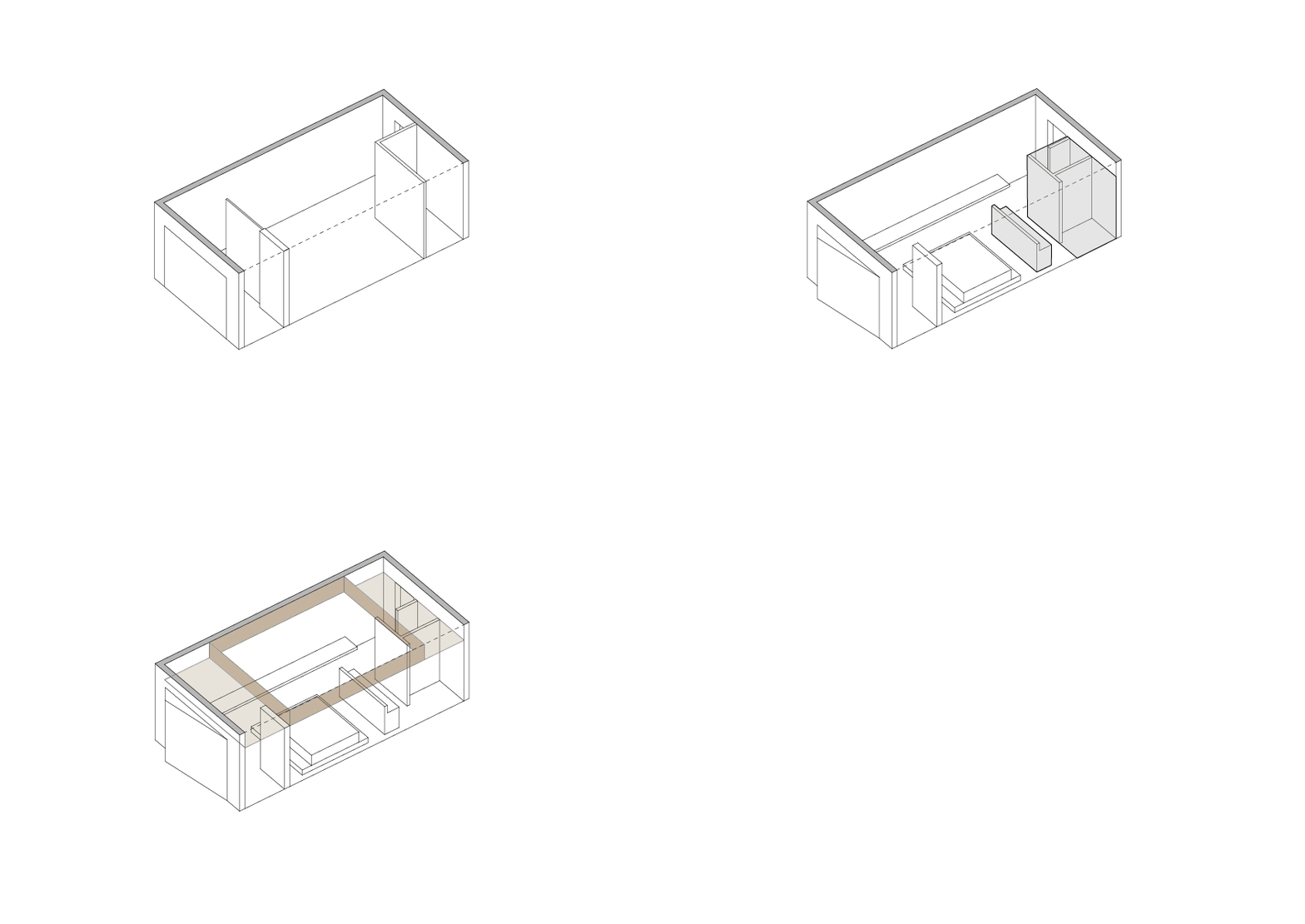
△ Step-by-step room renovation
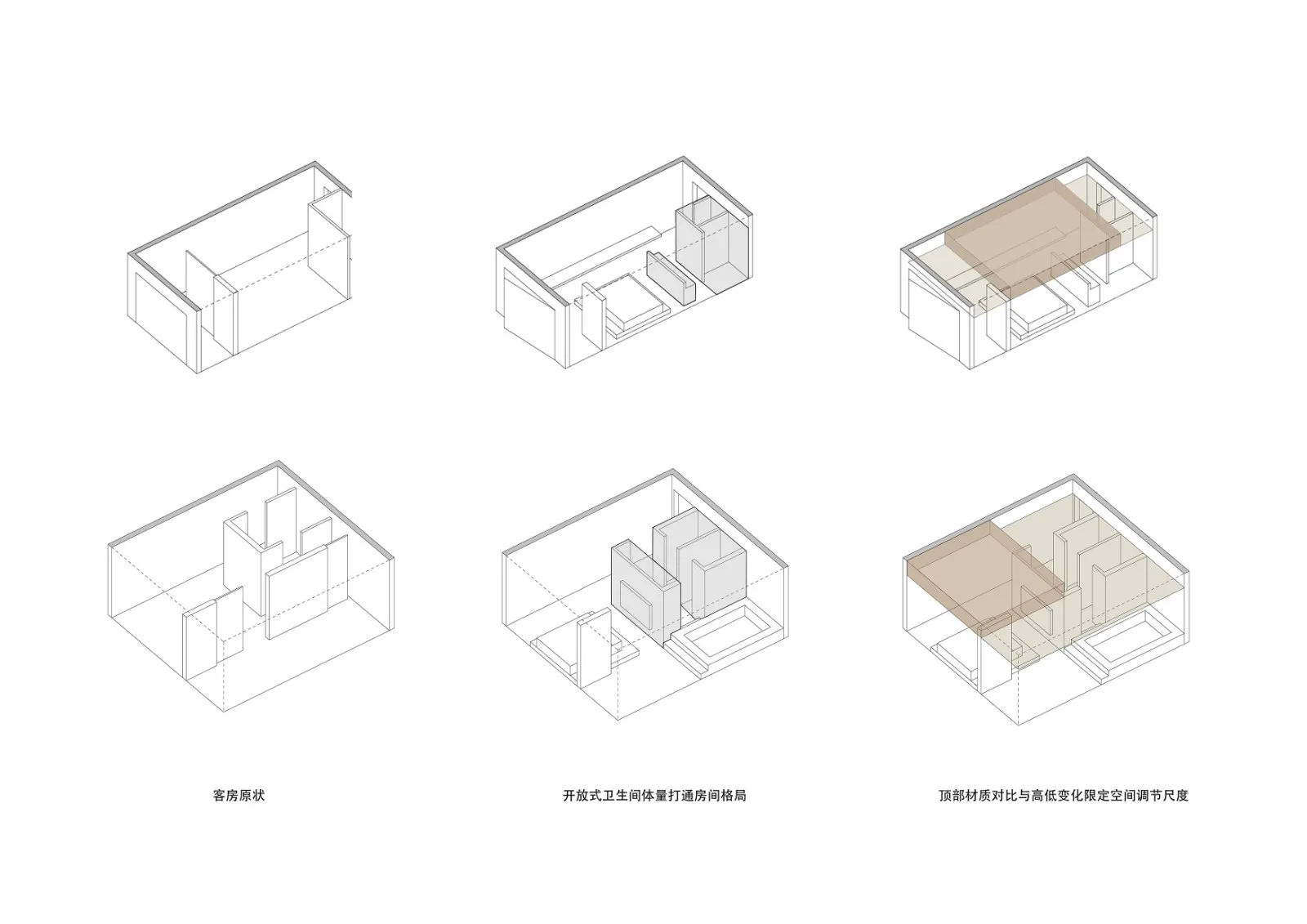
△ Room analysis diagram
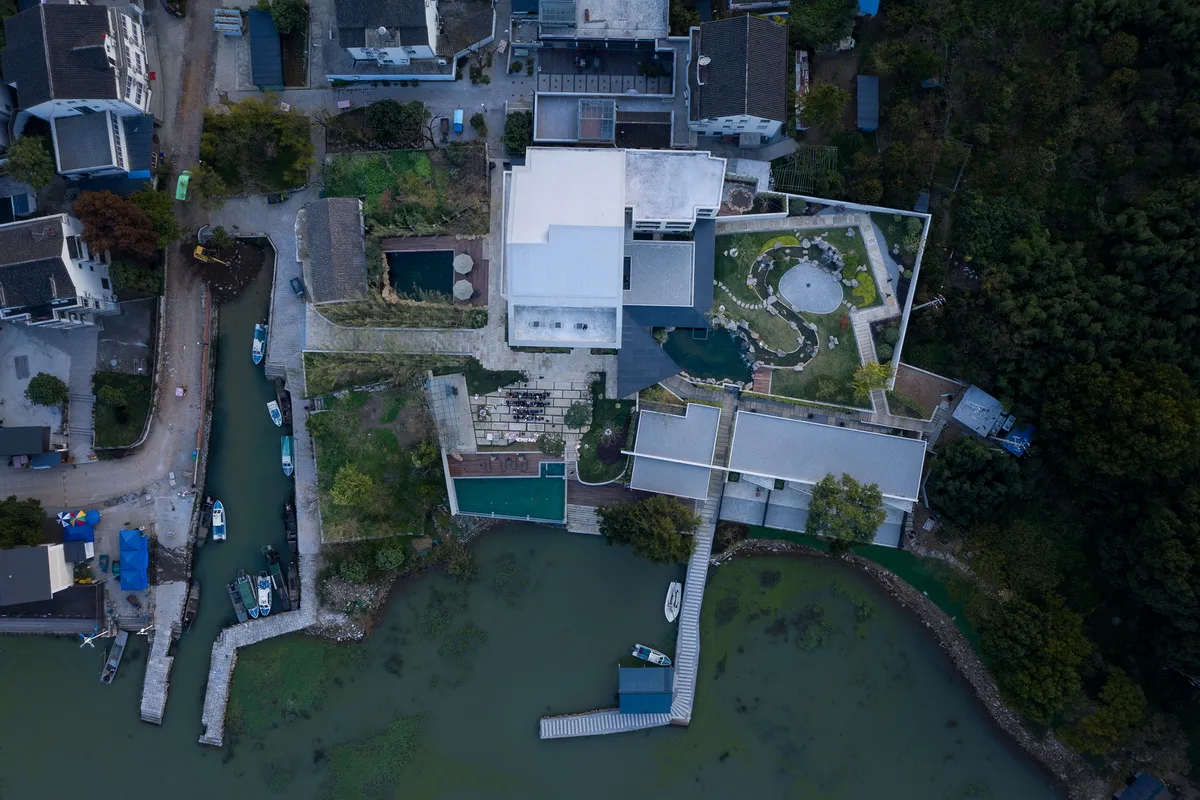
△ Building overview © Wu Qingshan
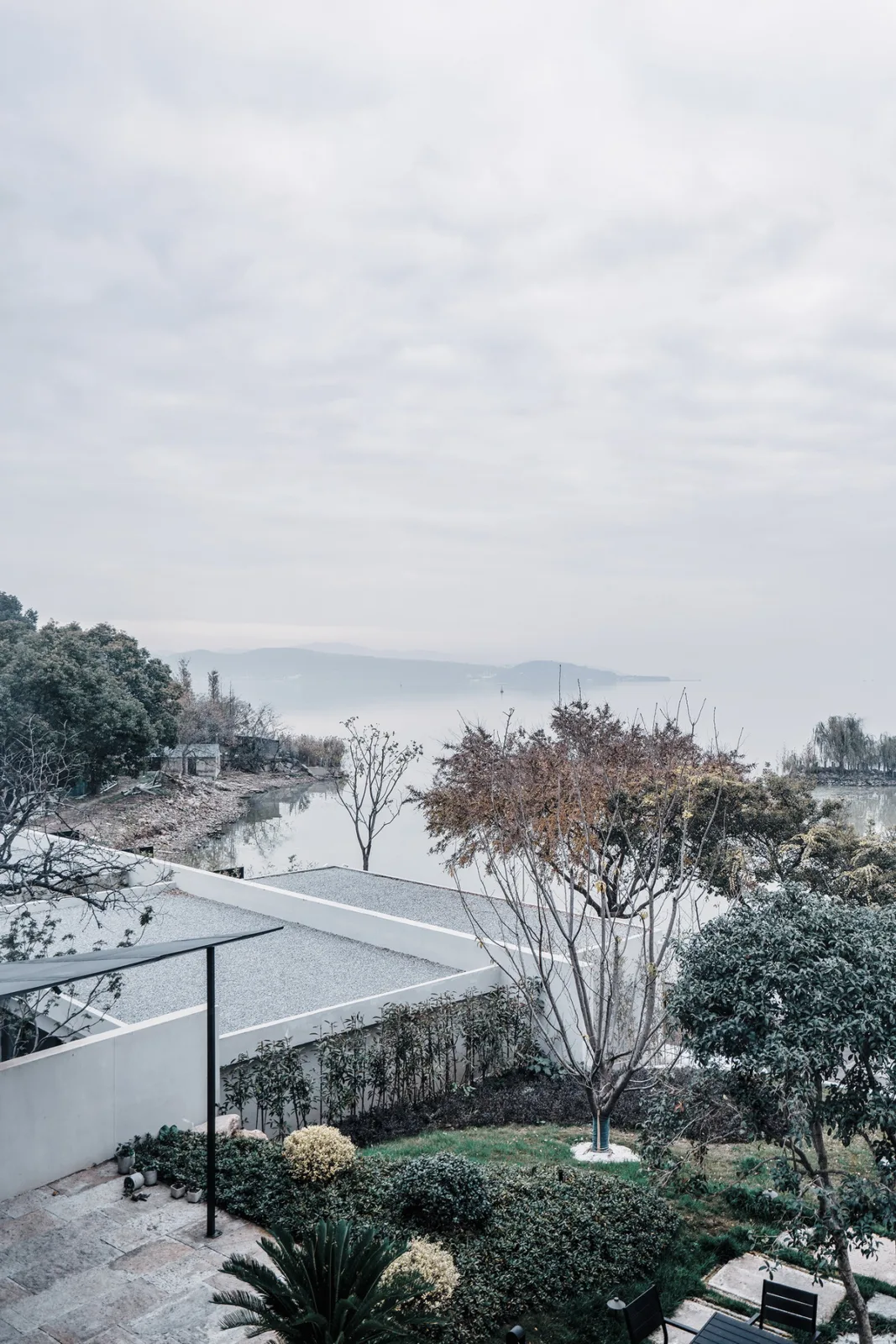
△ Buildings facing Taihu Lake © Yang Yang
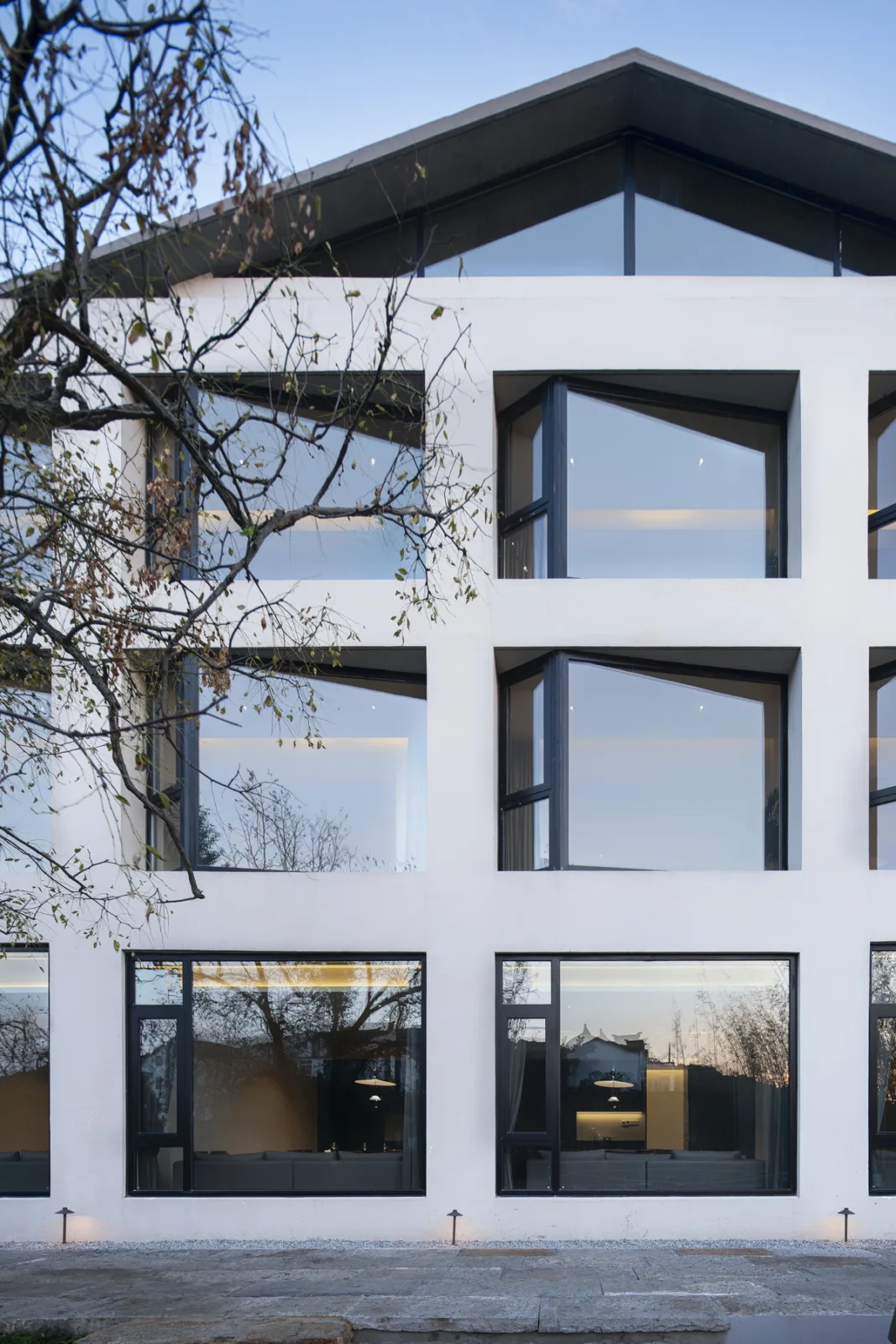
△ East facade © Wu Qingshan
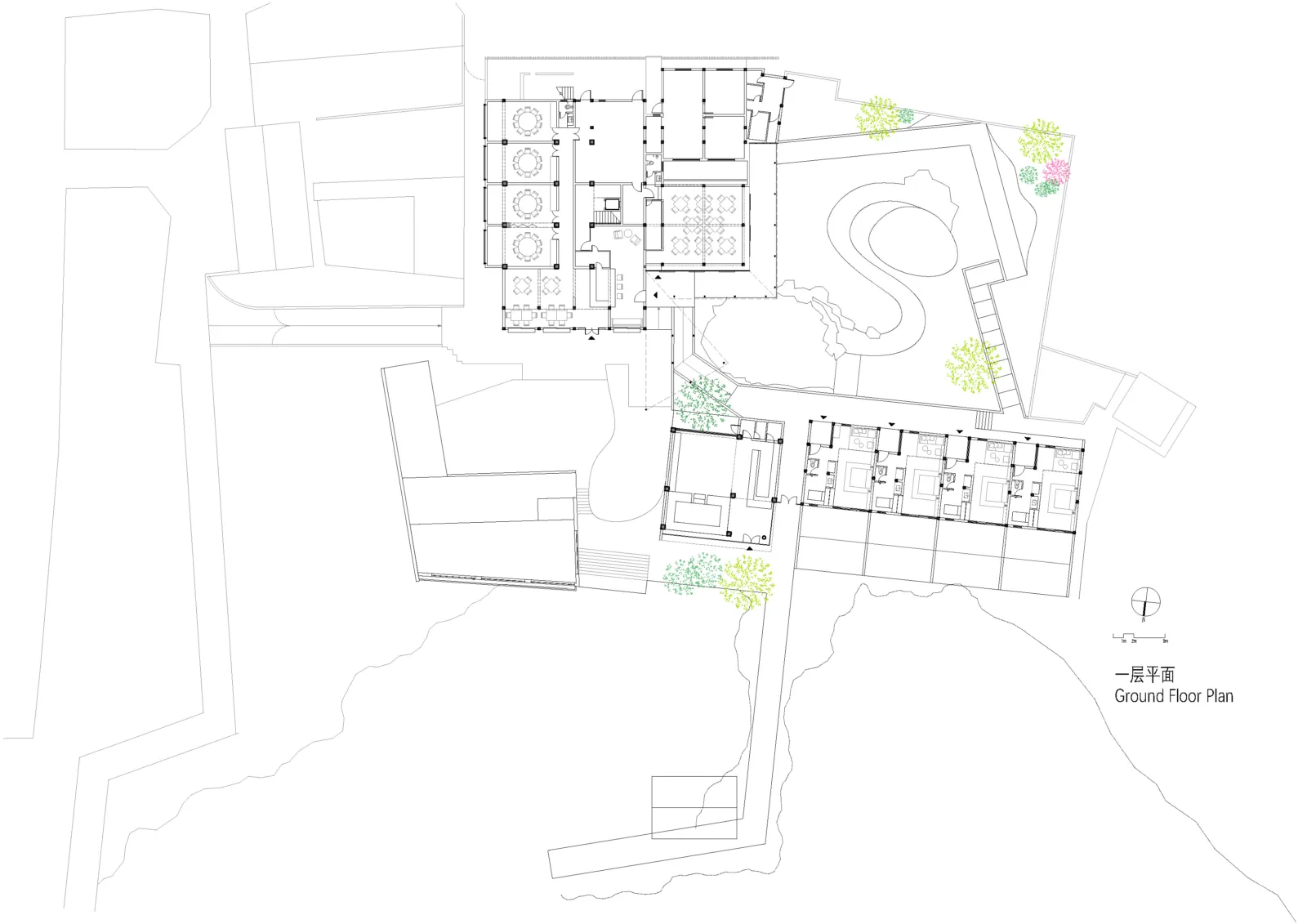
△ First floor plan
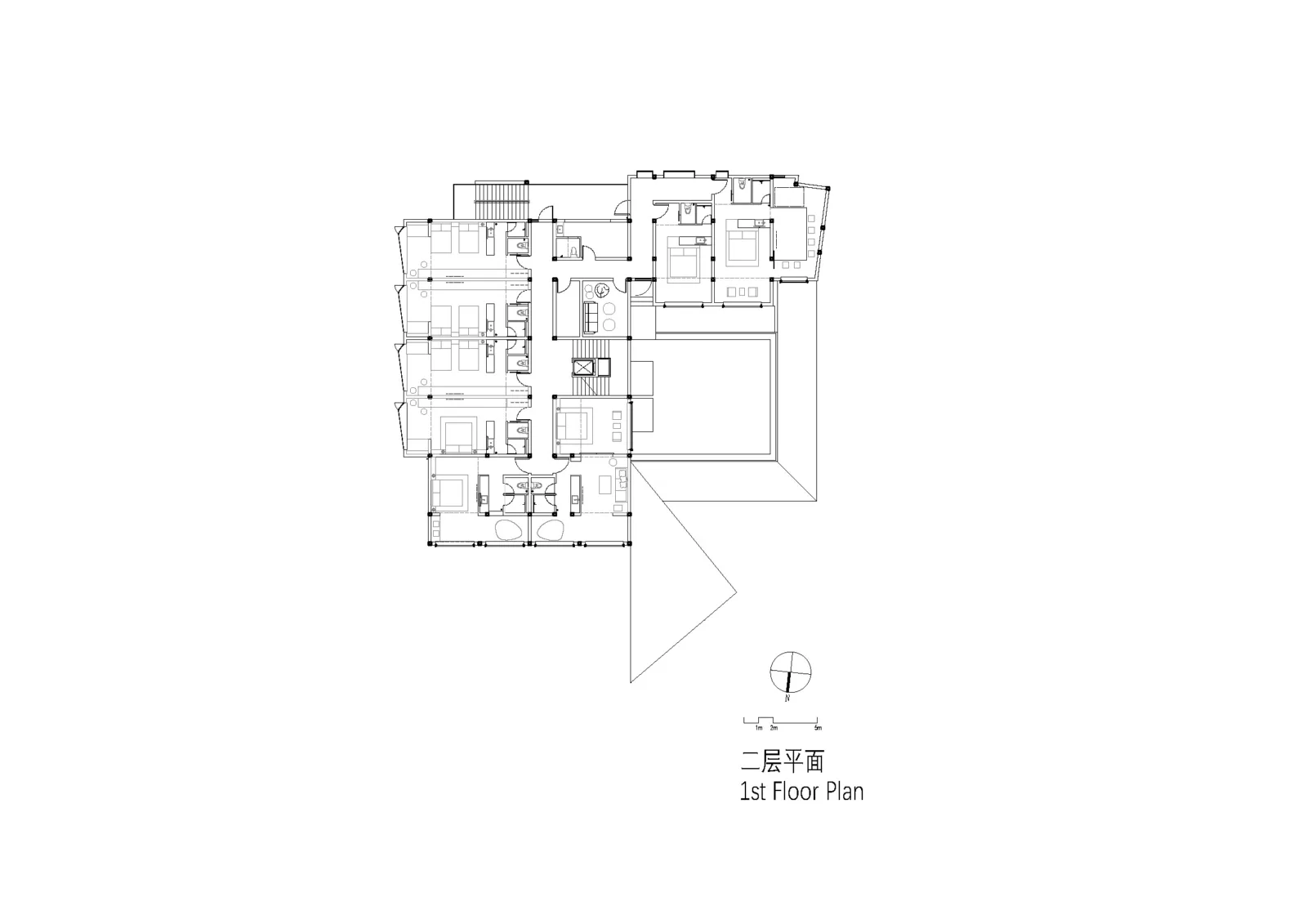
△ Second floor plan
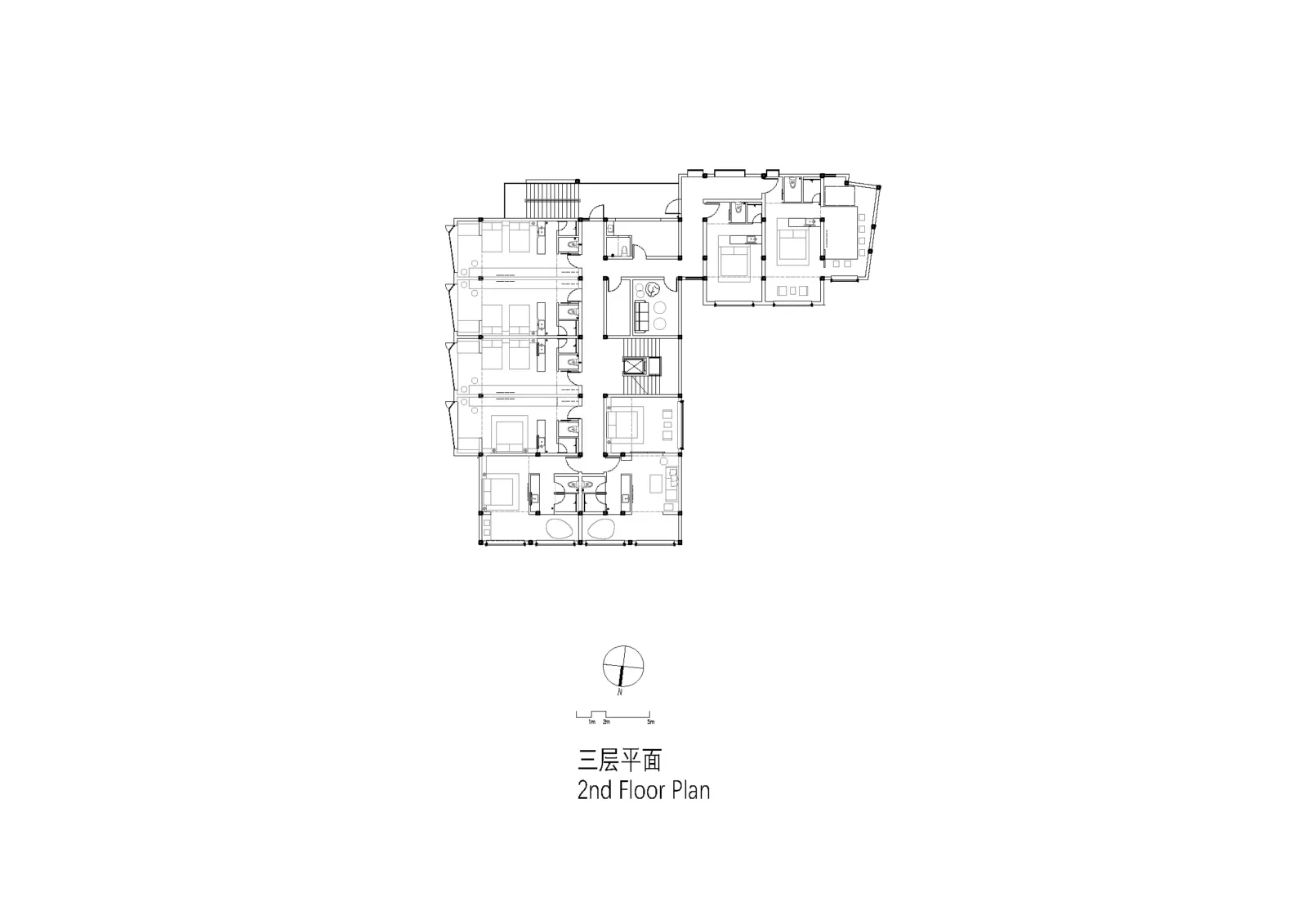
△ Third floor plan
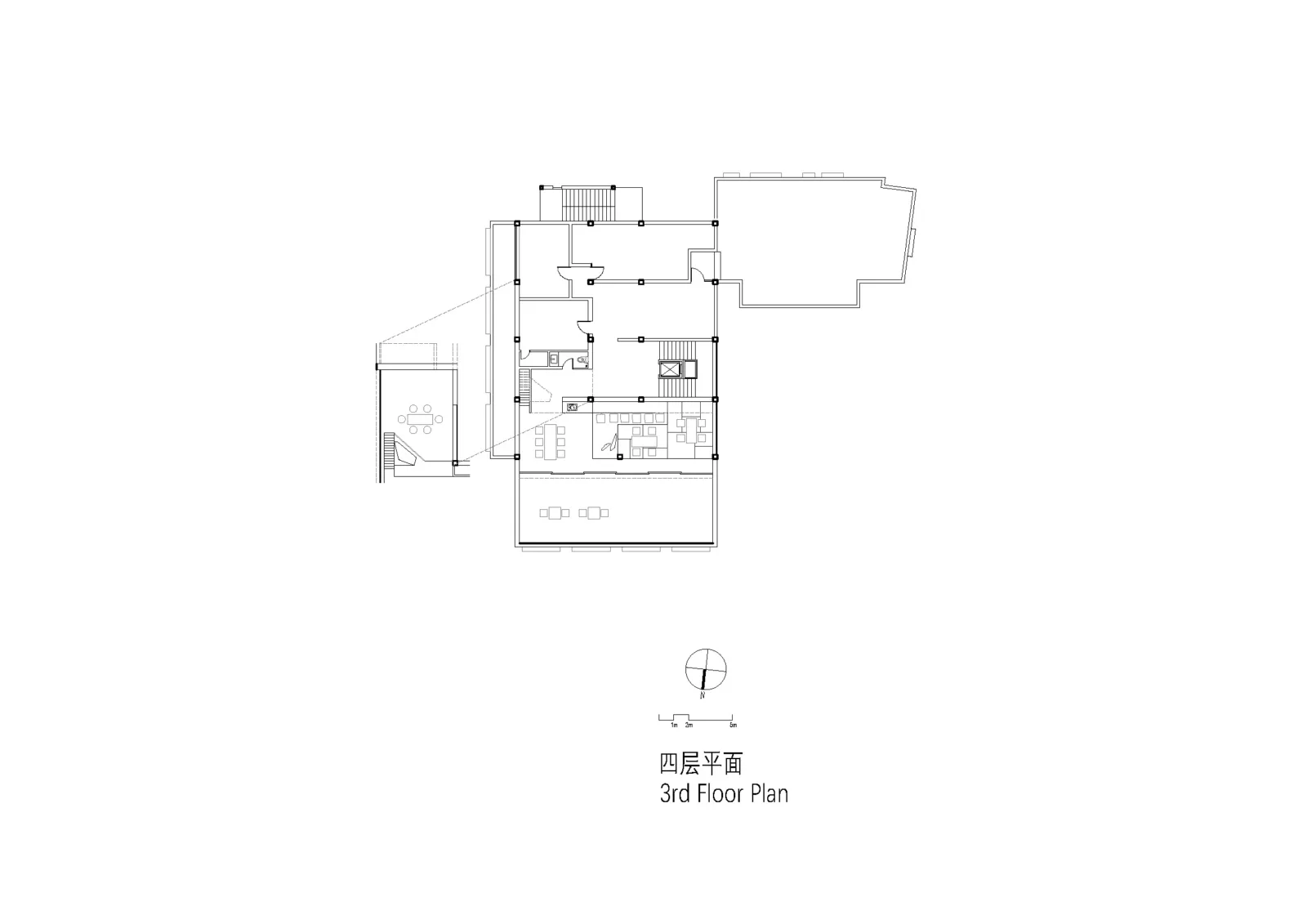
△ Fourth floor plan
Project Information
Project Name: Guoyun Mountain Residence, Suzhou Sanshan Island
Project Type: Architectural Renovation & Interior Design
Location: Sanshan Island, Taihu Lake, Suzhou
Design Firm: Shanghai Kekong Architectural Design Studio
Lead Architect: Wang Weishi
Design Team: Wang Weishi
Owner: Guoyunshan Residential Hotel
Status: Built
Design Period: June 2019 – September 2019
Construction Period: June 2019 – October 2020
Land Area: 3,425 m²
Building Area: 2,150 m²
Coordination (Original Design & Renovation): Suzhou Bolang Architectural Space Design Studio
Structural Consultant: Zhang Zhun
Landscape: Shanghai Yingjing Landscape
Photographers: Wu Qingshan, Wang Weishi, Yang Yang, Chen Xin













Must log in before commenting!
Sign Up