
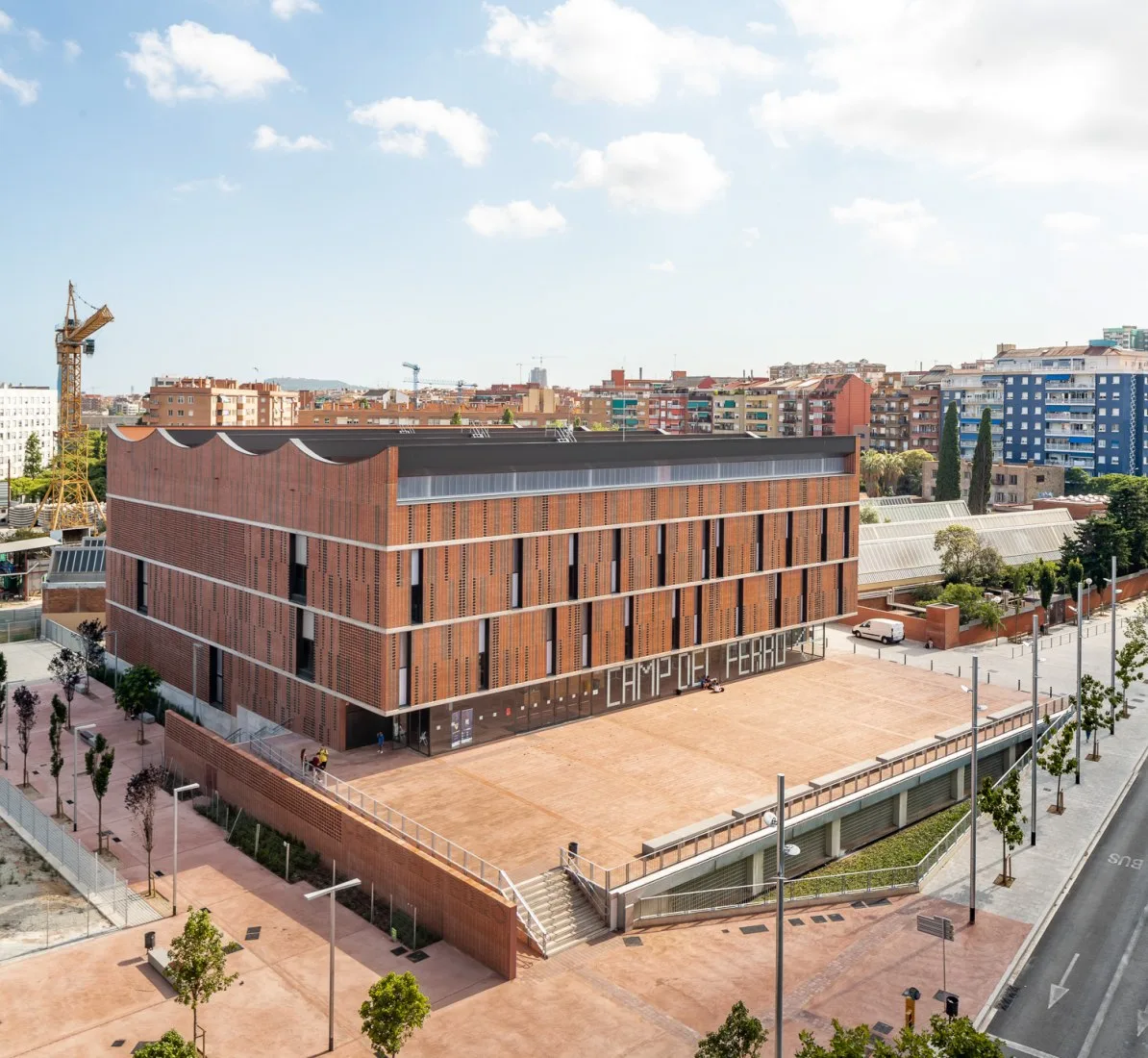
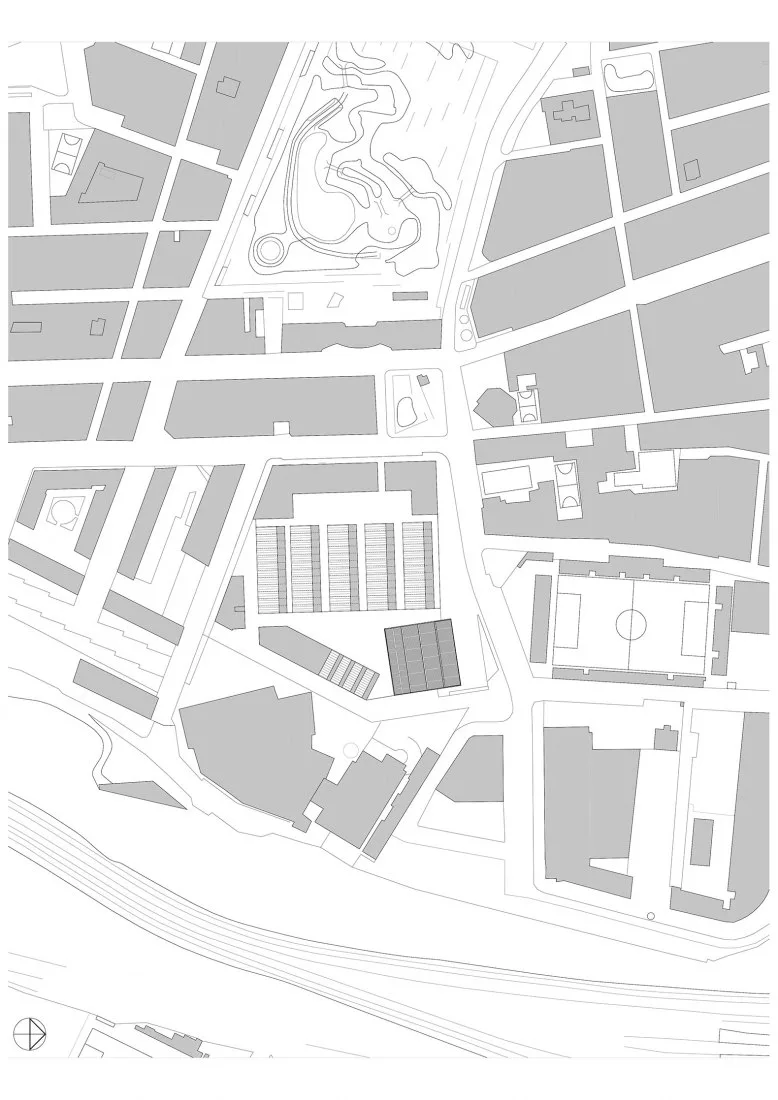
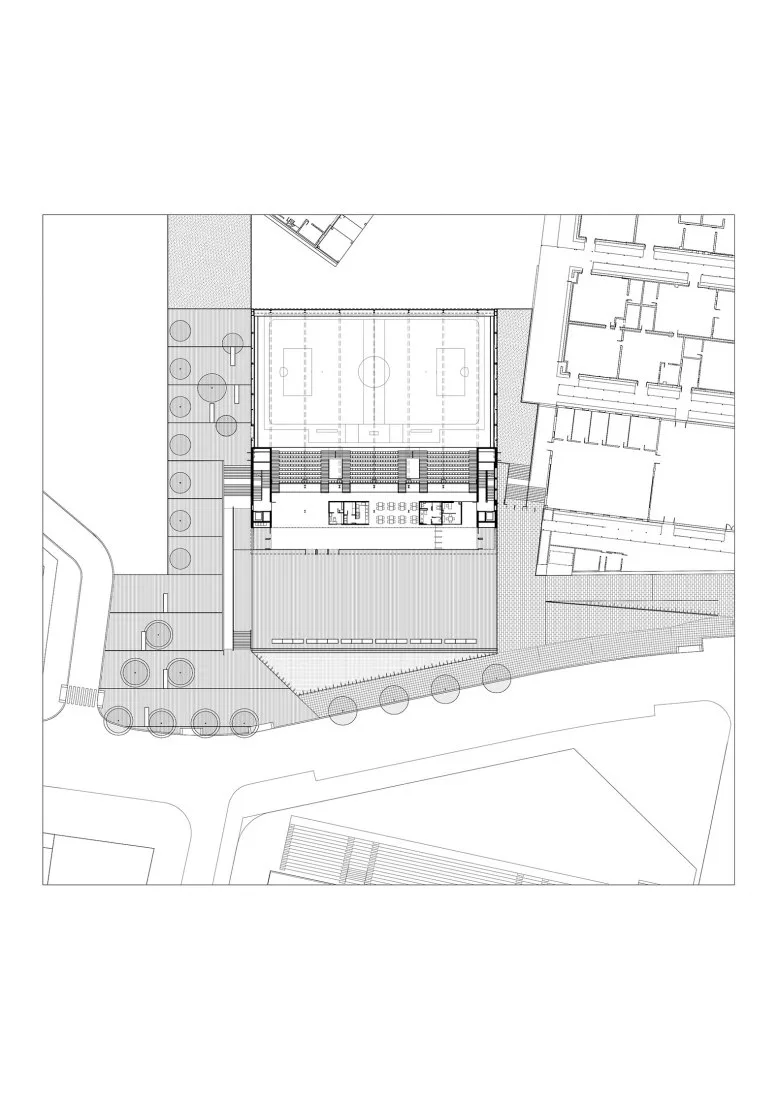
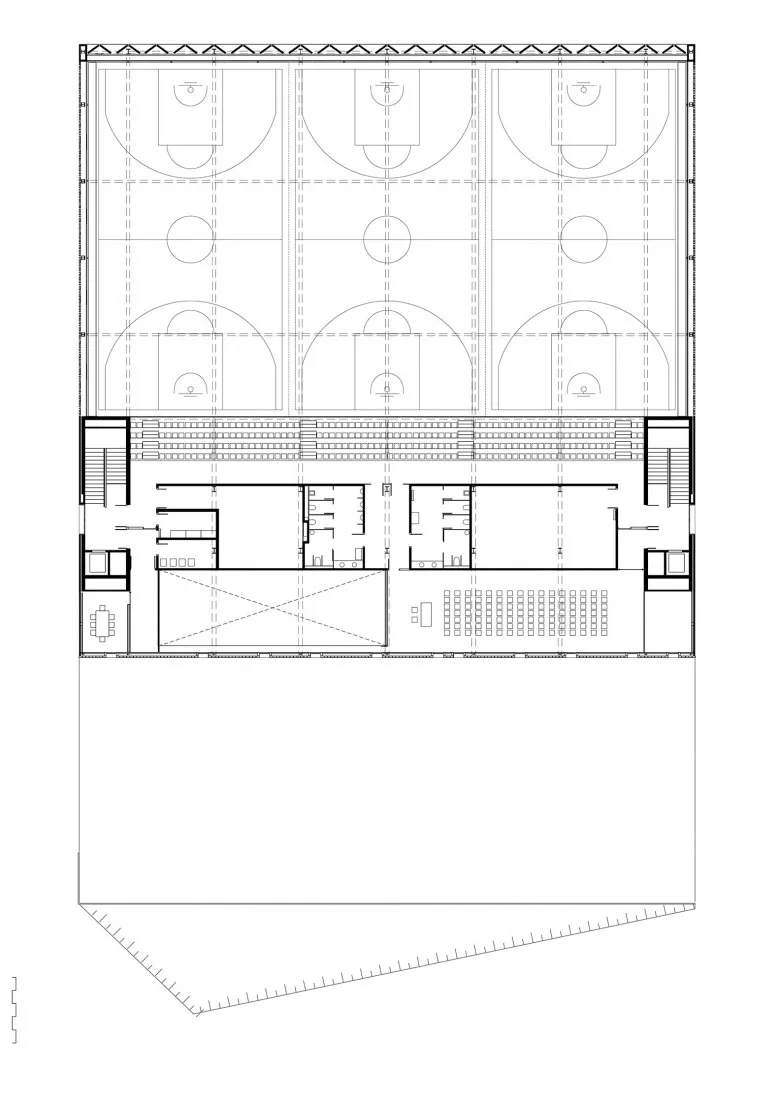
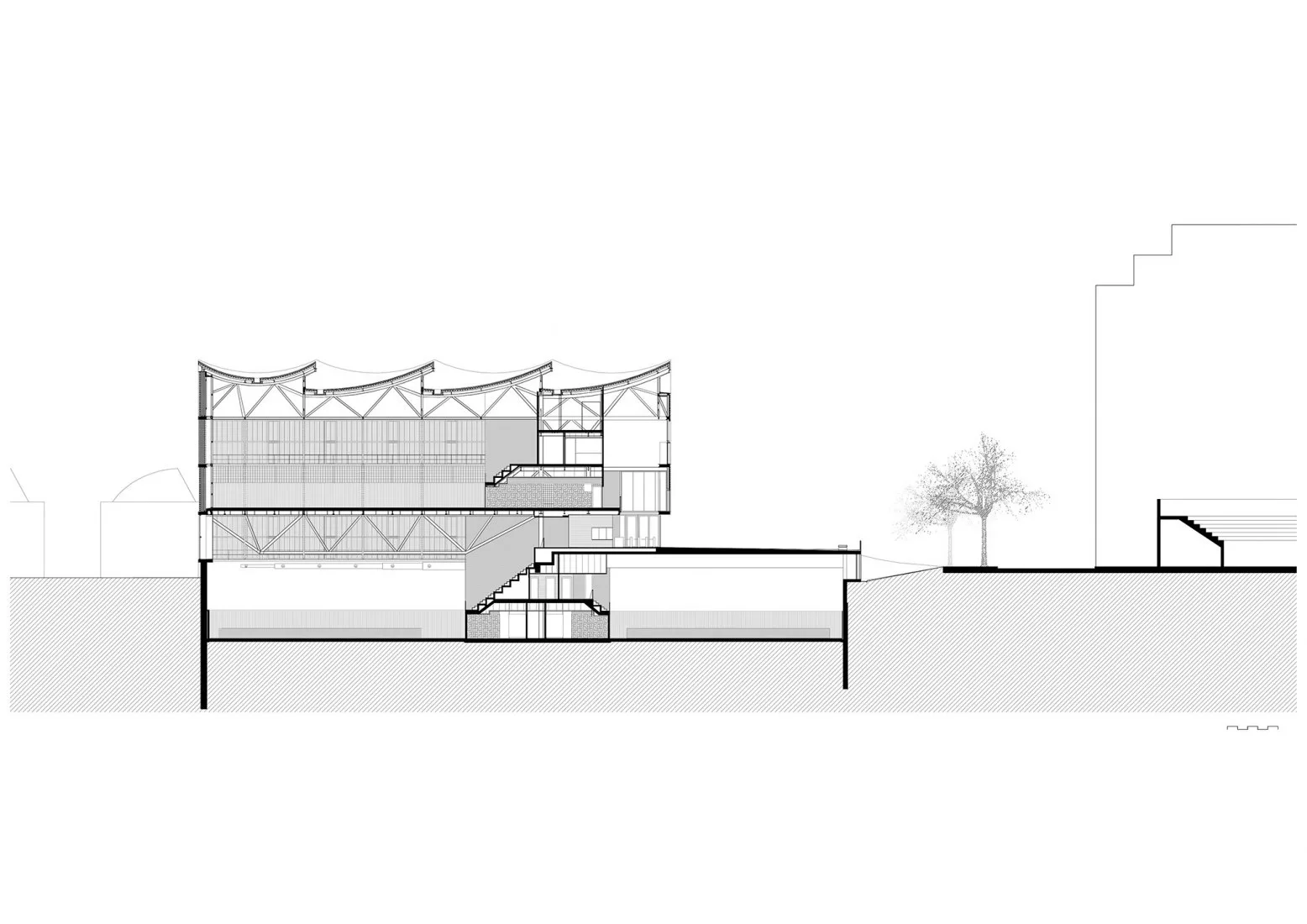
Facing the challenge of accommodating three sports fields within a limited site in a densely urban area, the architect chose to design most of the sports complex as semi-underground. This approach addresses the large building volume required while fitting into the constrained site conditions.
Careful design considerations were made to ensure that the semi-underground spaces benefit from ample natural light, ventilation, easy access, and safe evacuation routes.
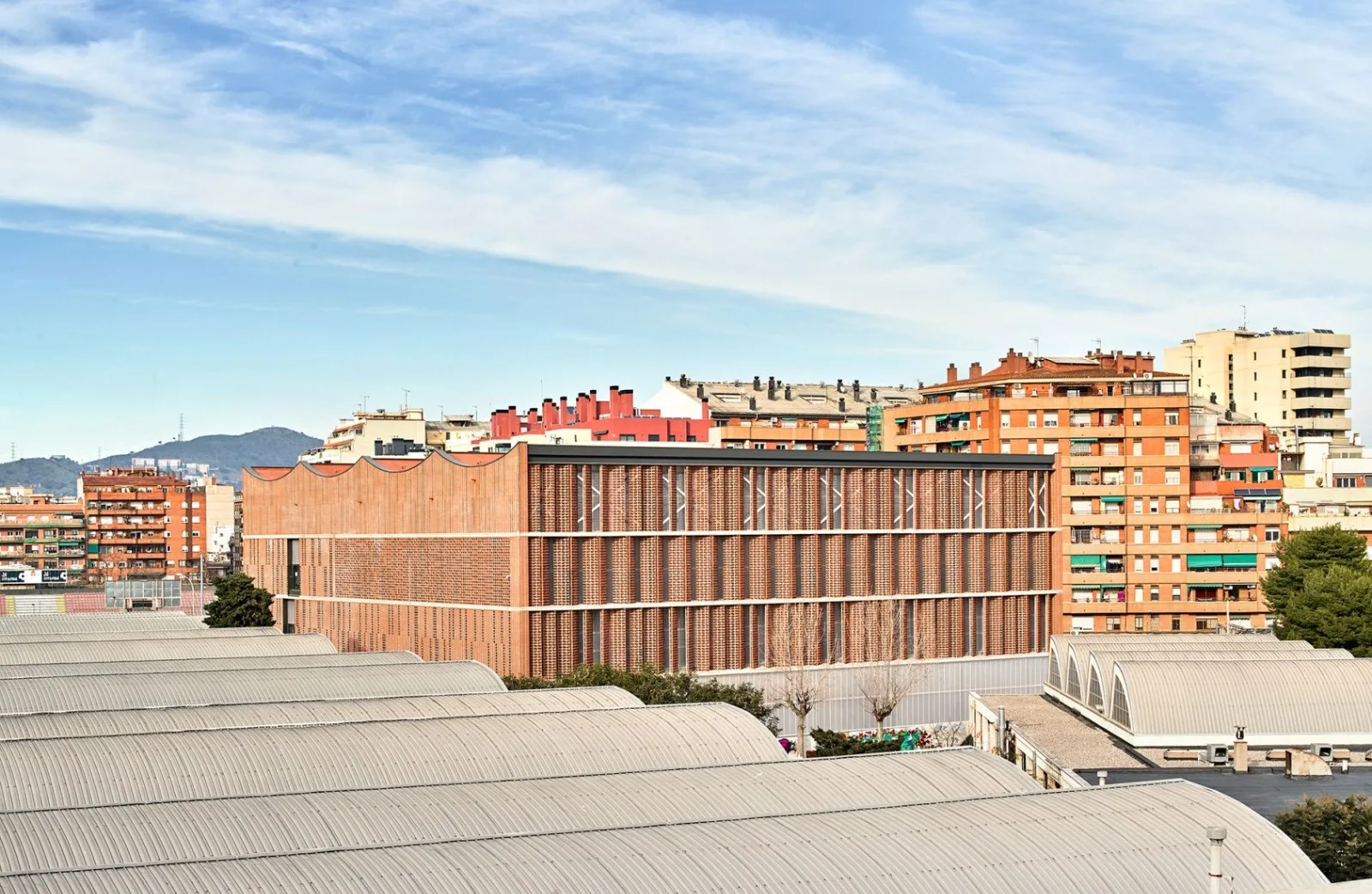
By placing most of the building volume underground, the design minimizes visual impact at street level and simultaneously creates an additional urban open space. This space acts as a public foyer, capable of accommodating occasional large crowds of tourists and local residents as they pass through, integrating seamlessly with the surrounding city streets.
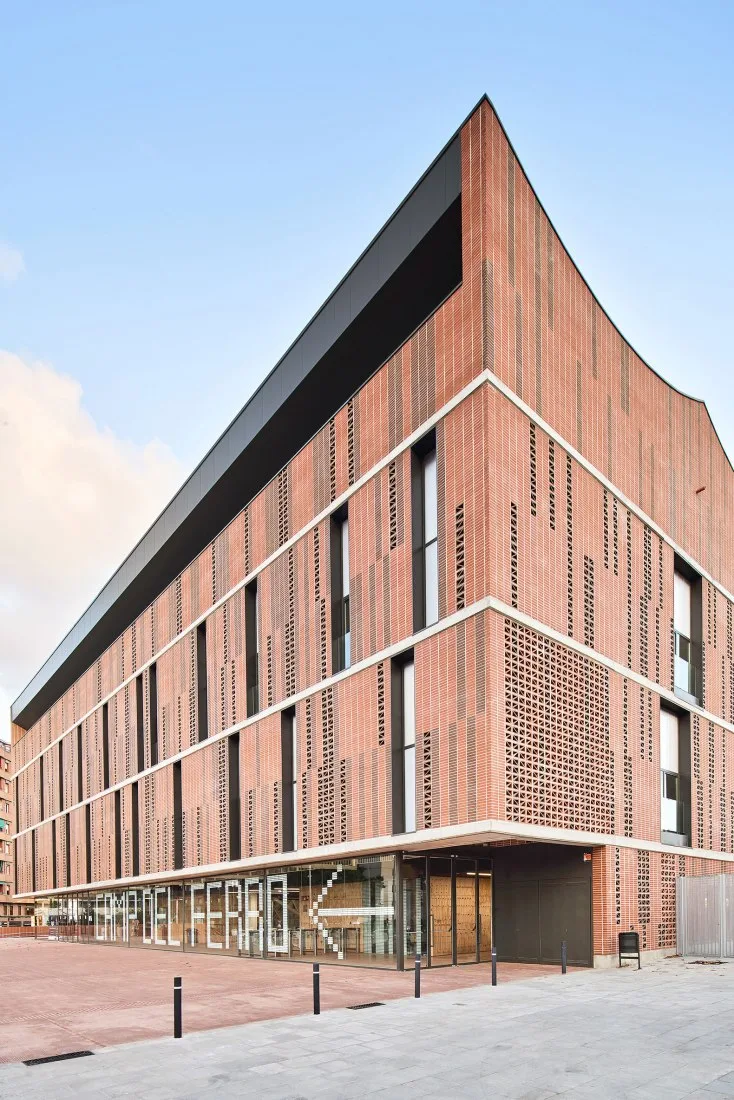
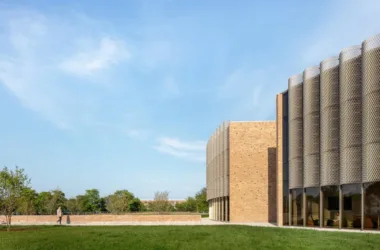
The building’s structure primarily uses brick, reflecting the architectural style of many nearby old factories, warehouses, and workshops. The architect embraced the raw materiality of the bricks without adding superfluous elements, making the brickwork the defining feature of the architecture.
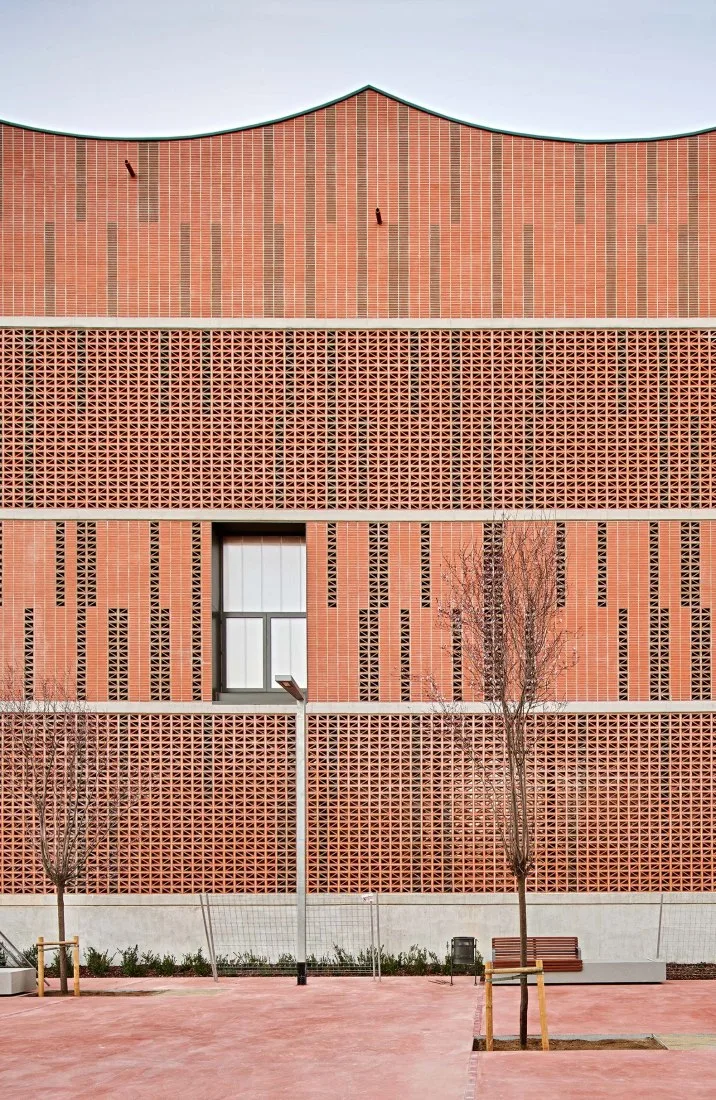
The exposed red bricks are arranged at varying angles with strategically placed transparent gaps throughout the facade. These translucent sections allow natural light to enter the building, while the intricate brick placements create a unique and textured exterior.
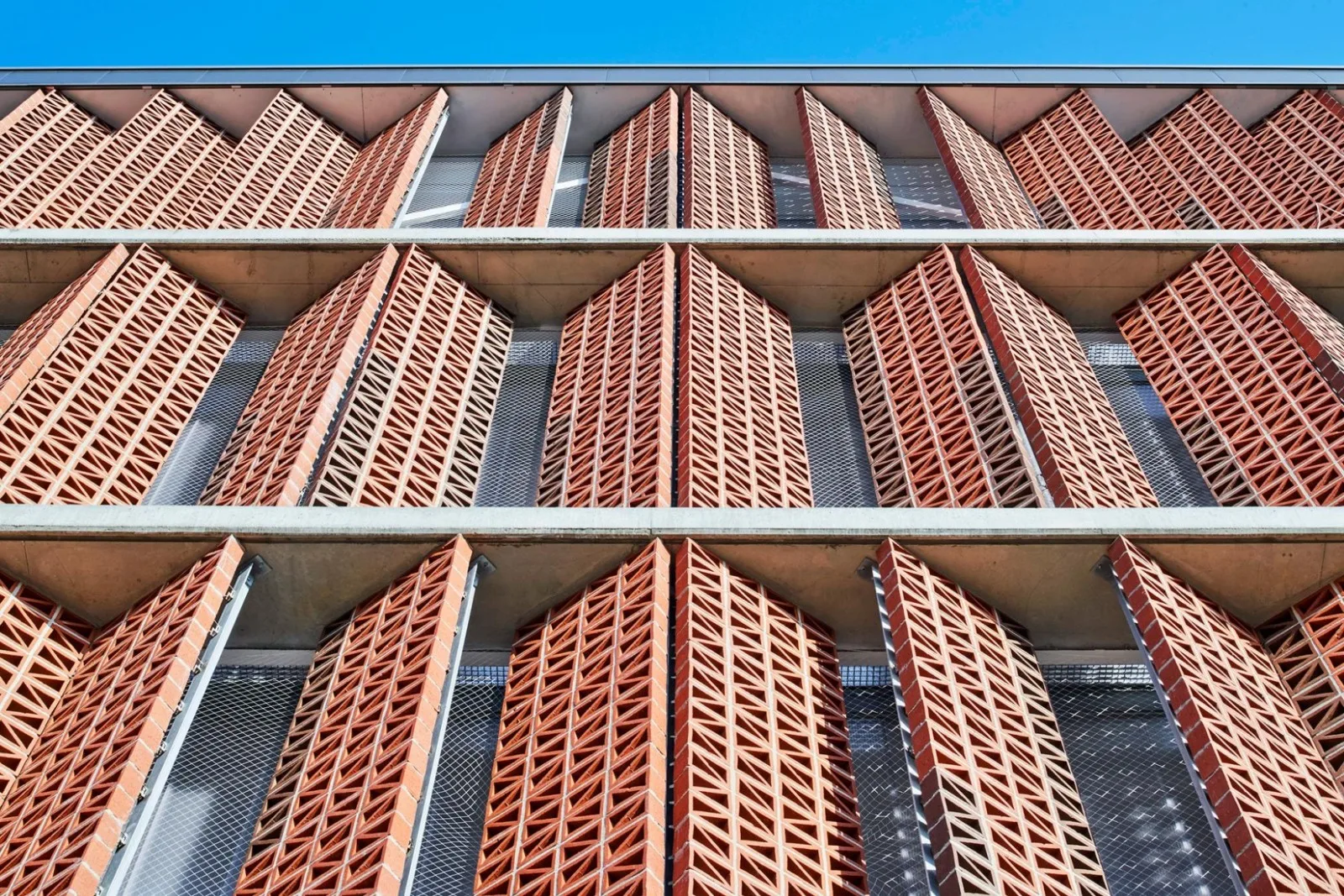
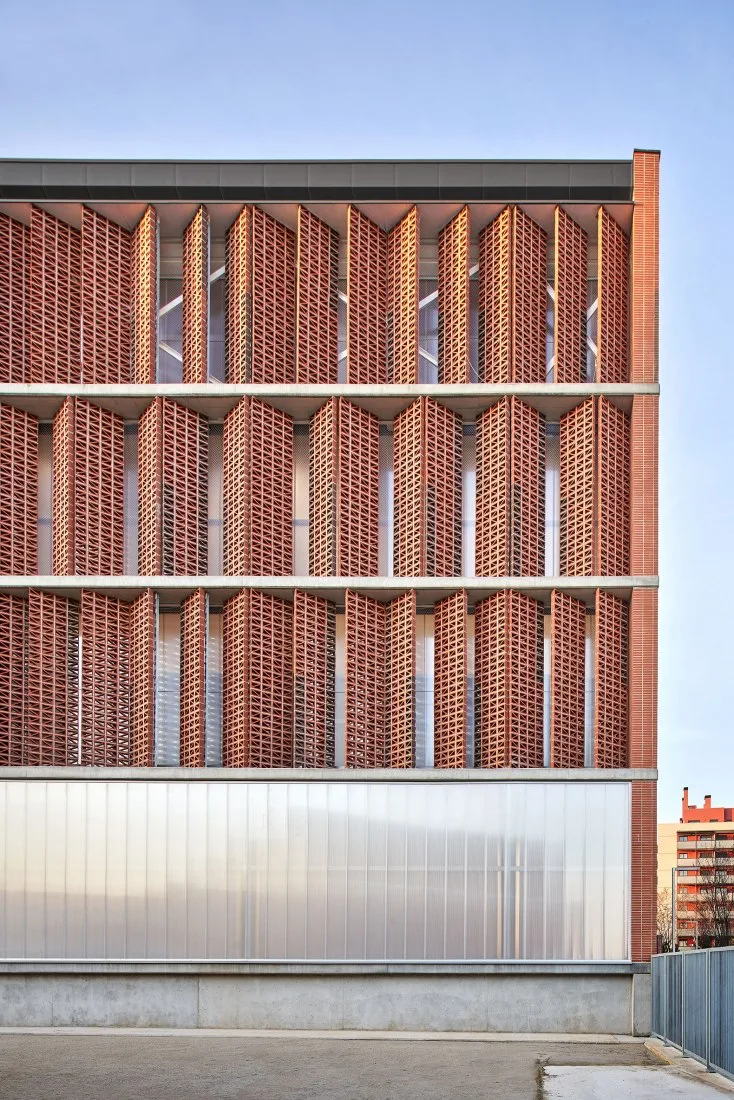
The brick lattice walls of the exposed facade shield the courtyard from direct sunlight and glare, creating a comfortable outdoor environment. Meanwhile, the large glass panels at the base of the north facade open up to the main entrance hall, fostering a welcoming atmosphere.
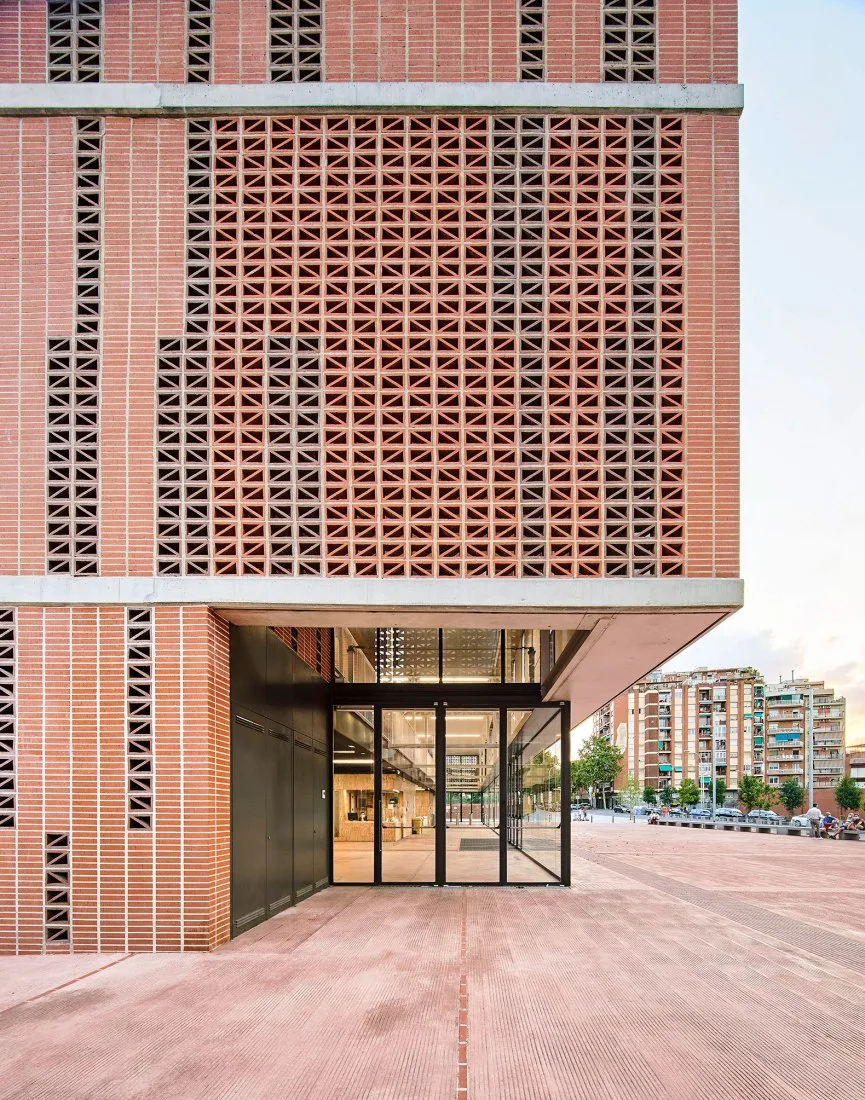
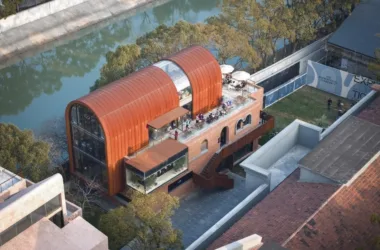
The building’s volume above ground is capped with a gently curved roof featuring an inverted arch. This design element harmonizes with the surrounding environment and echoes the forms of nearby warehouse roofs. The curved roof helps mitigate the visual massiveness of the building and contributes to its overall character.
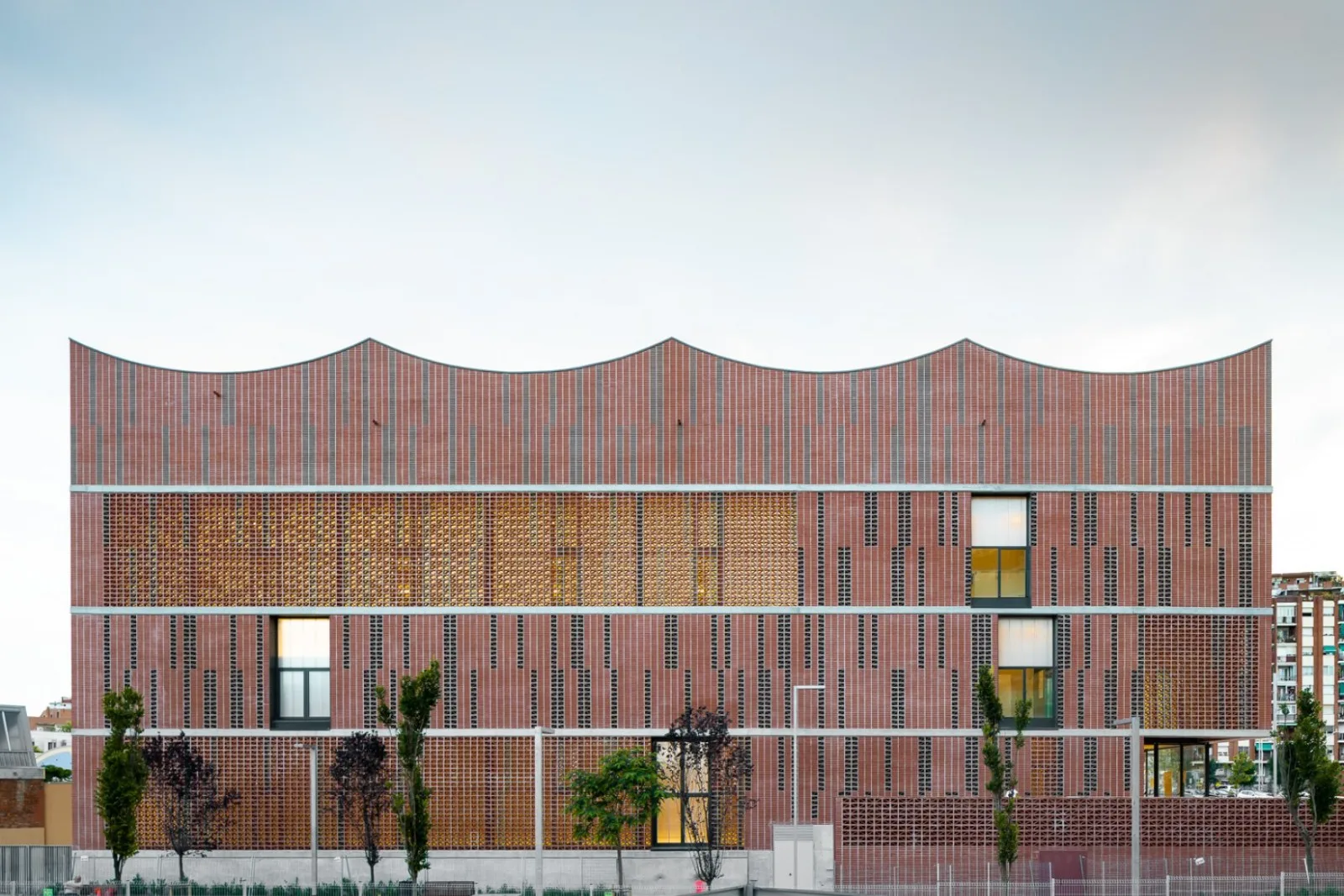
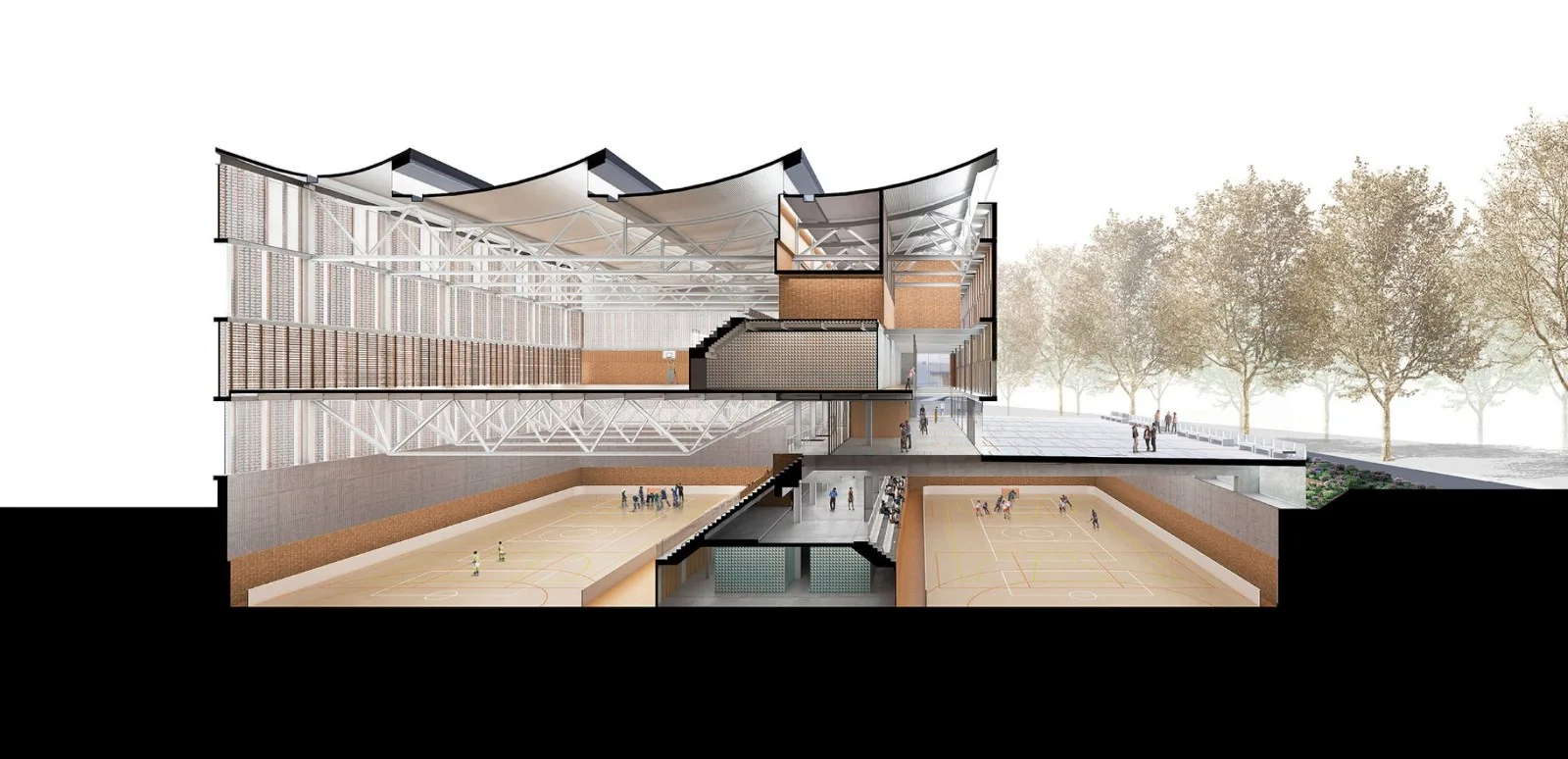
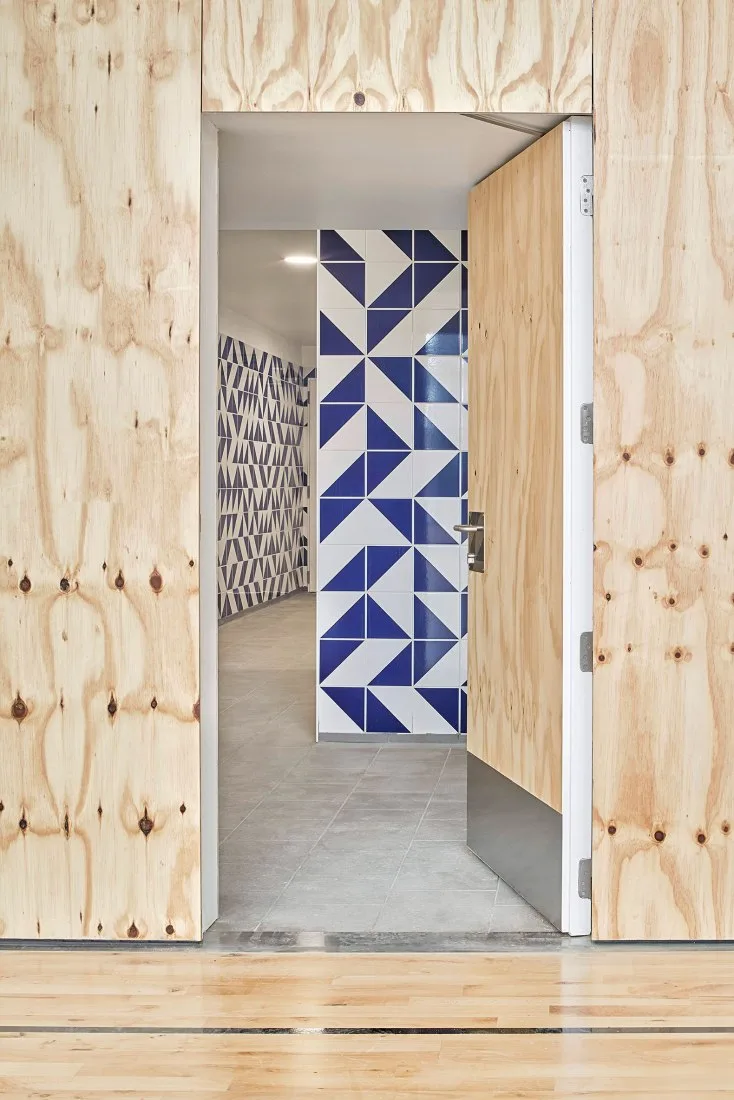
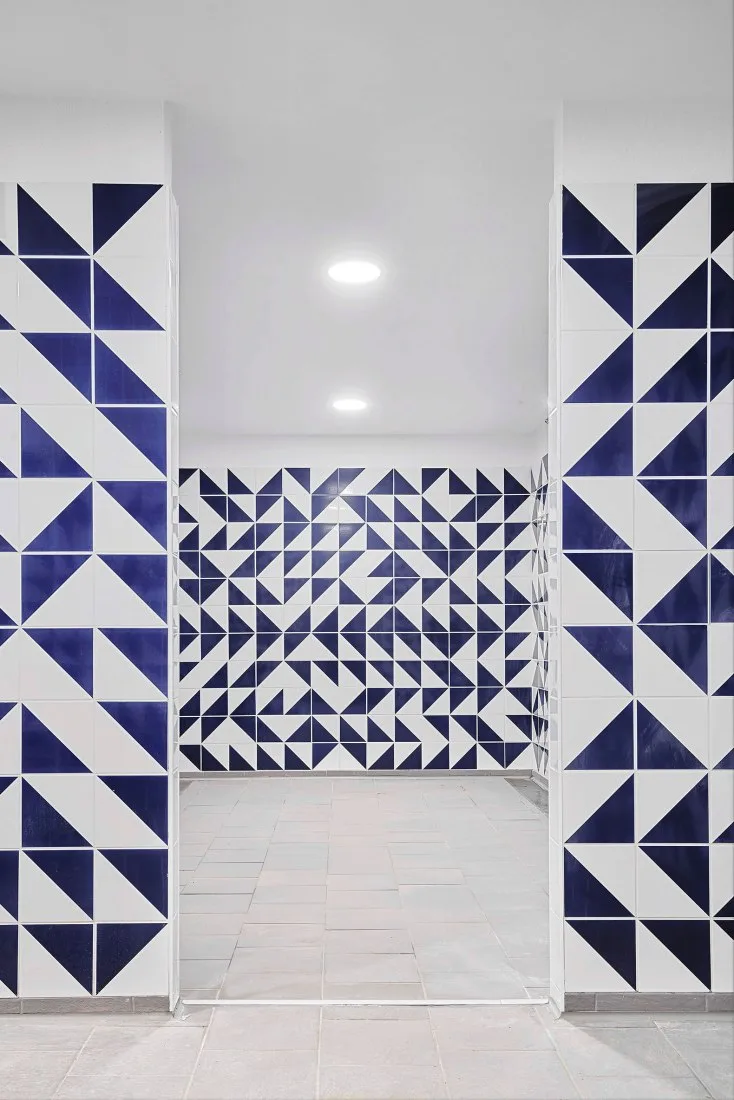
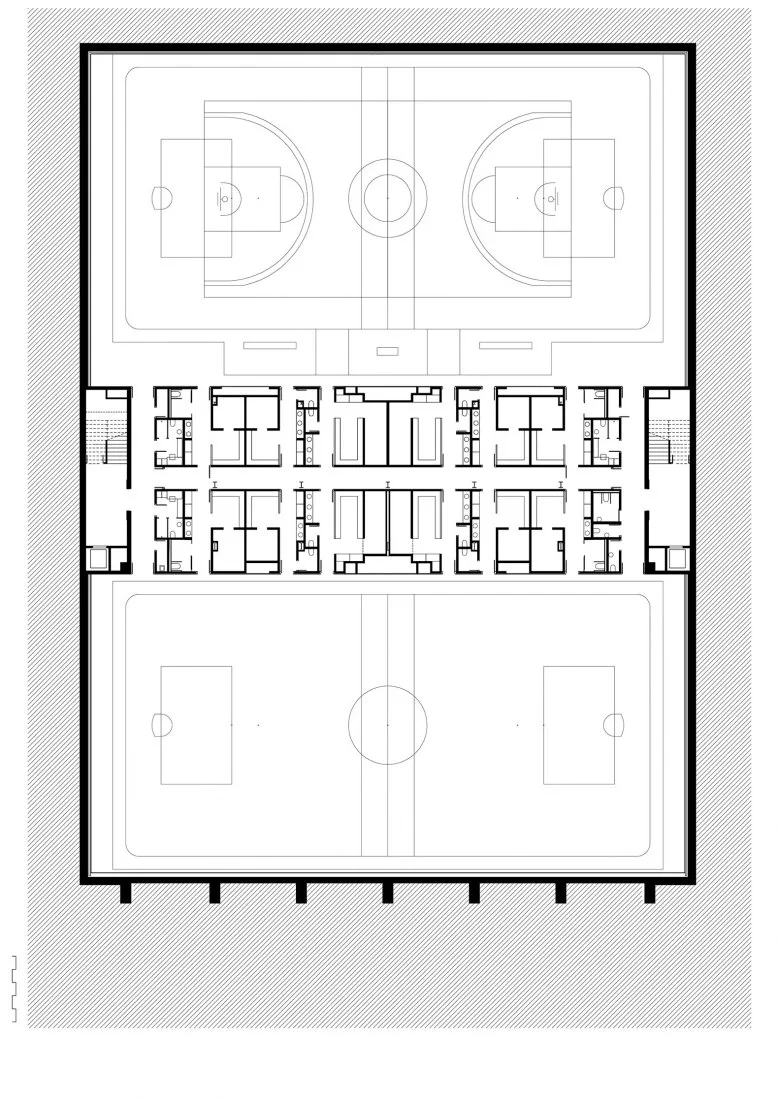
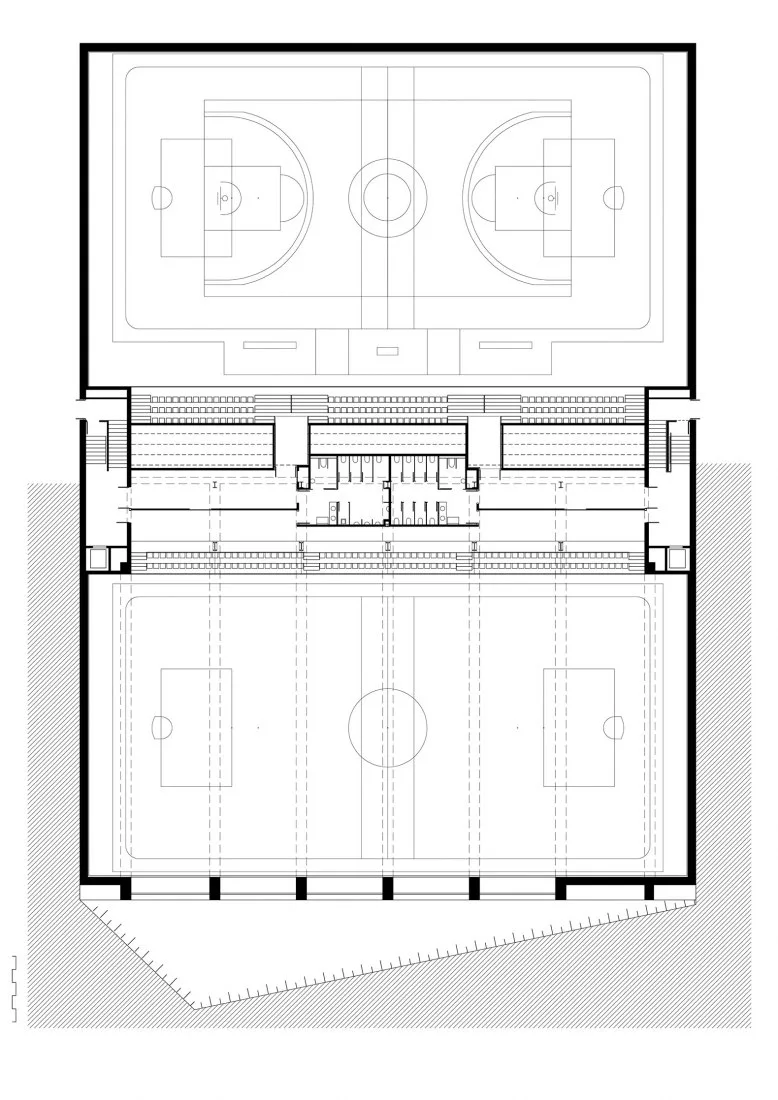
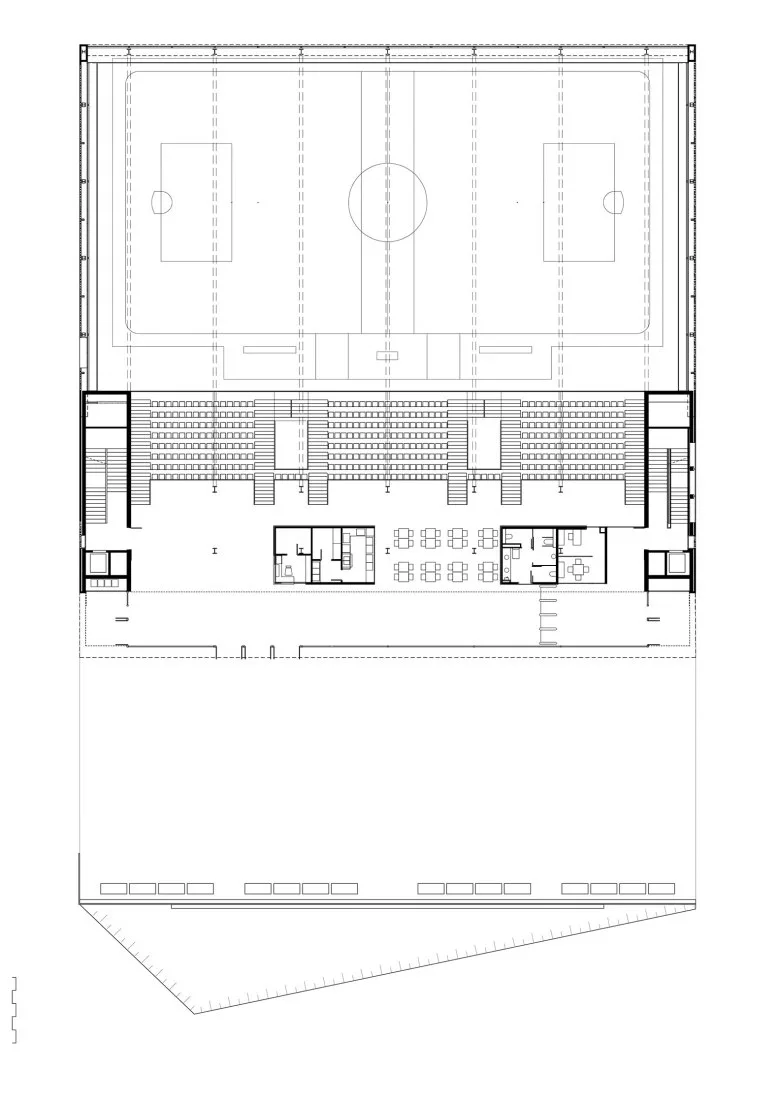
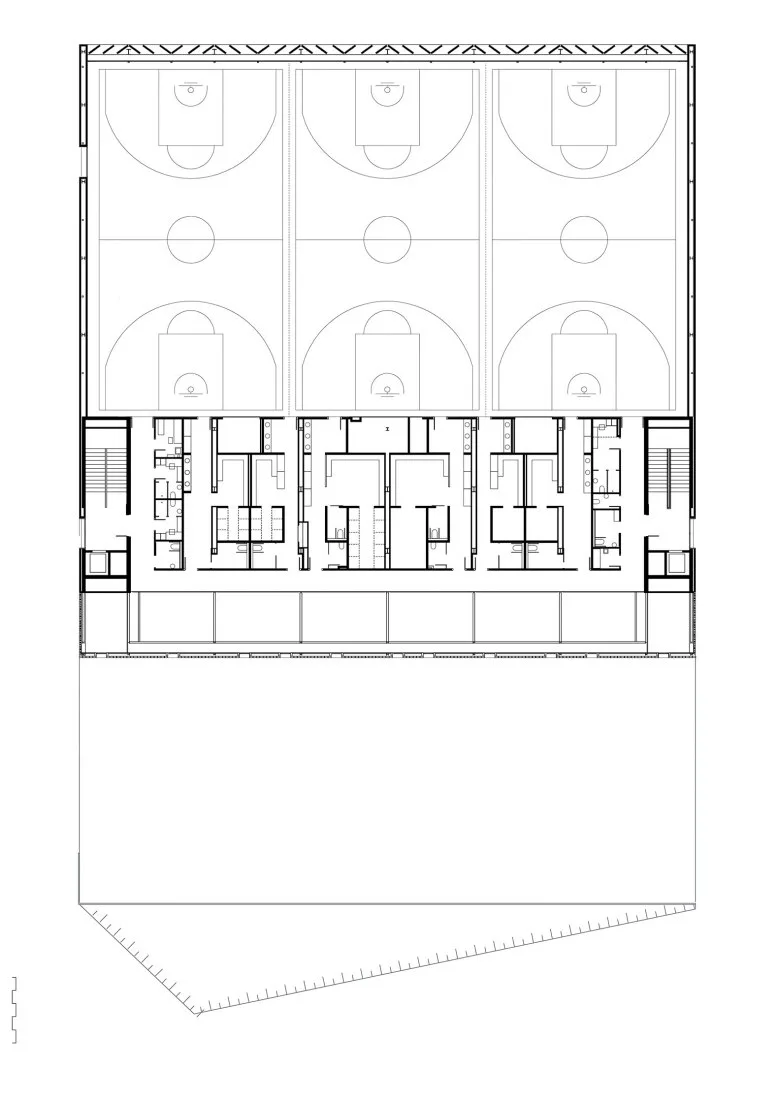
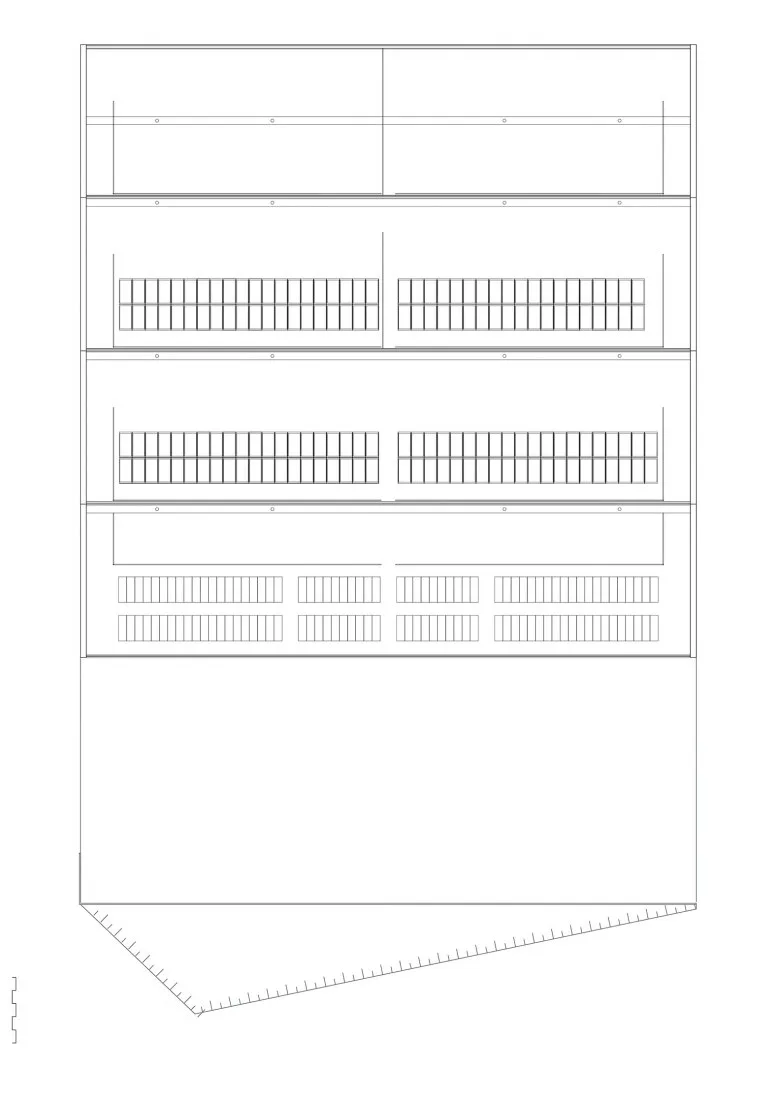
The interior layout is clearly organized. It includes sports venues distributed across multiple floors, as well as smaller facilities such as changing rooms, storage and service spaces, and areas for communication infrastructure (both vertical and horizontal). Despite its large size, the interior remains functionally compact.
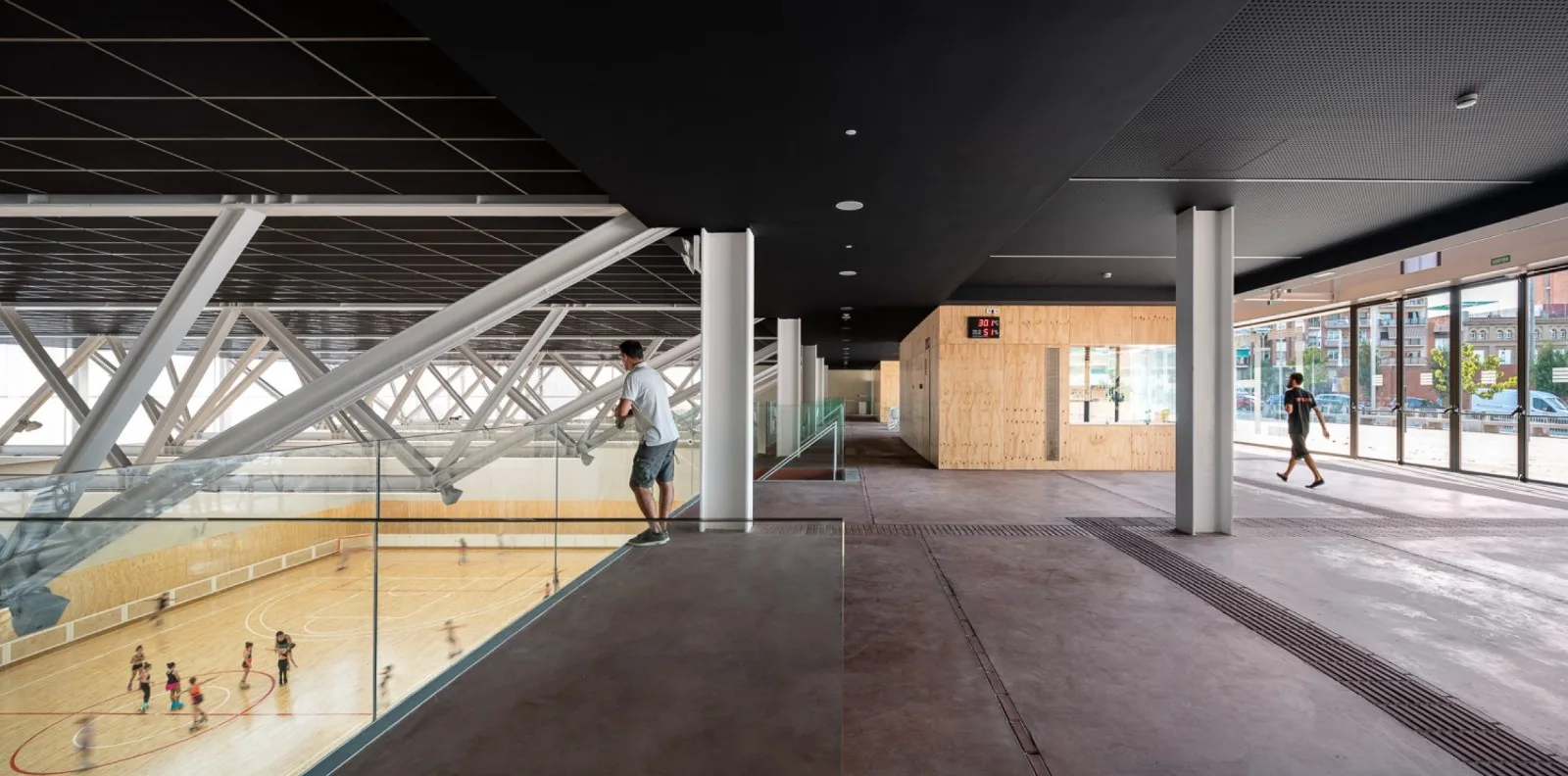
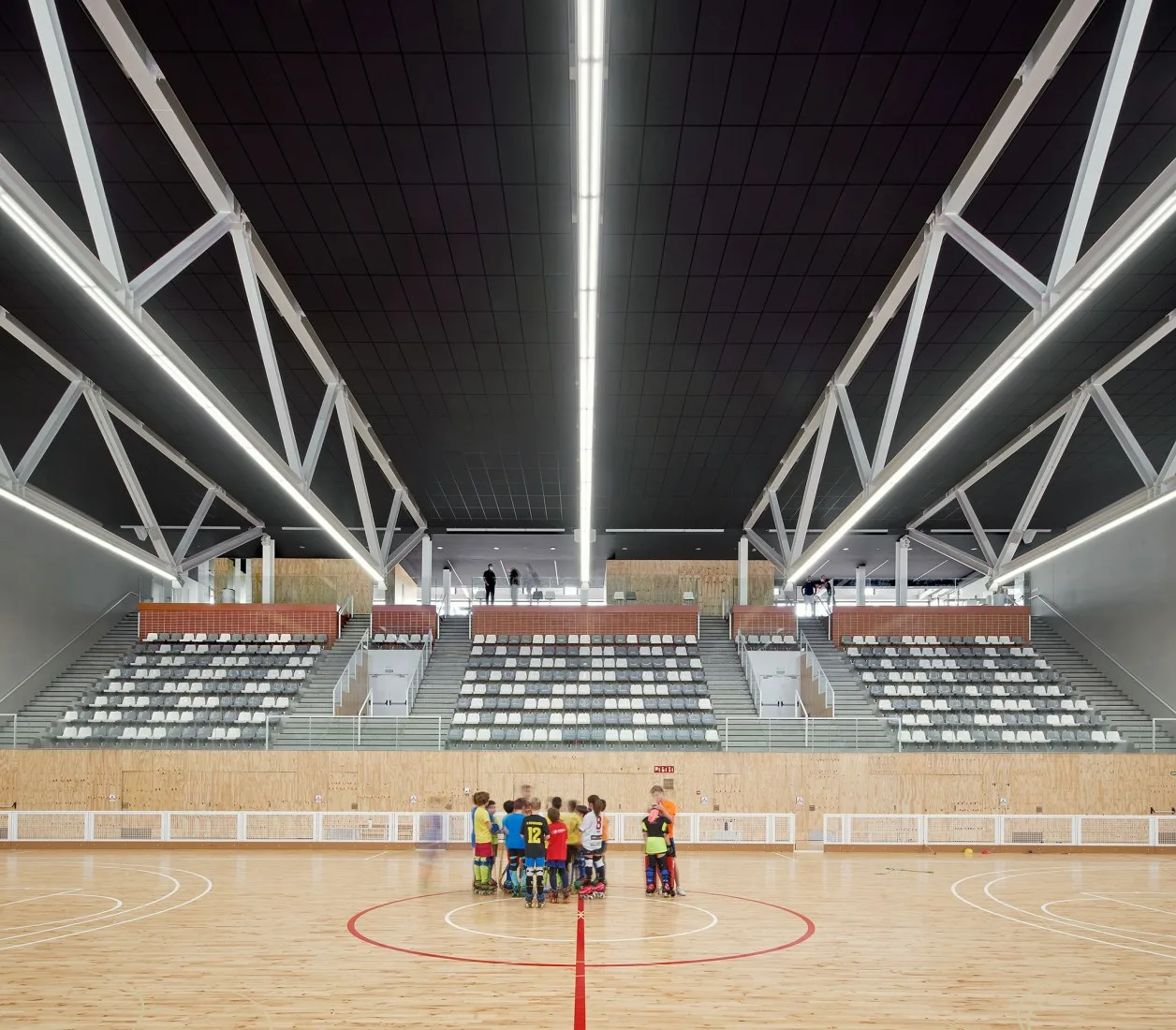
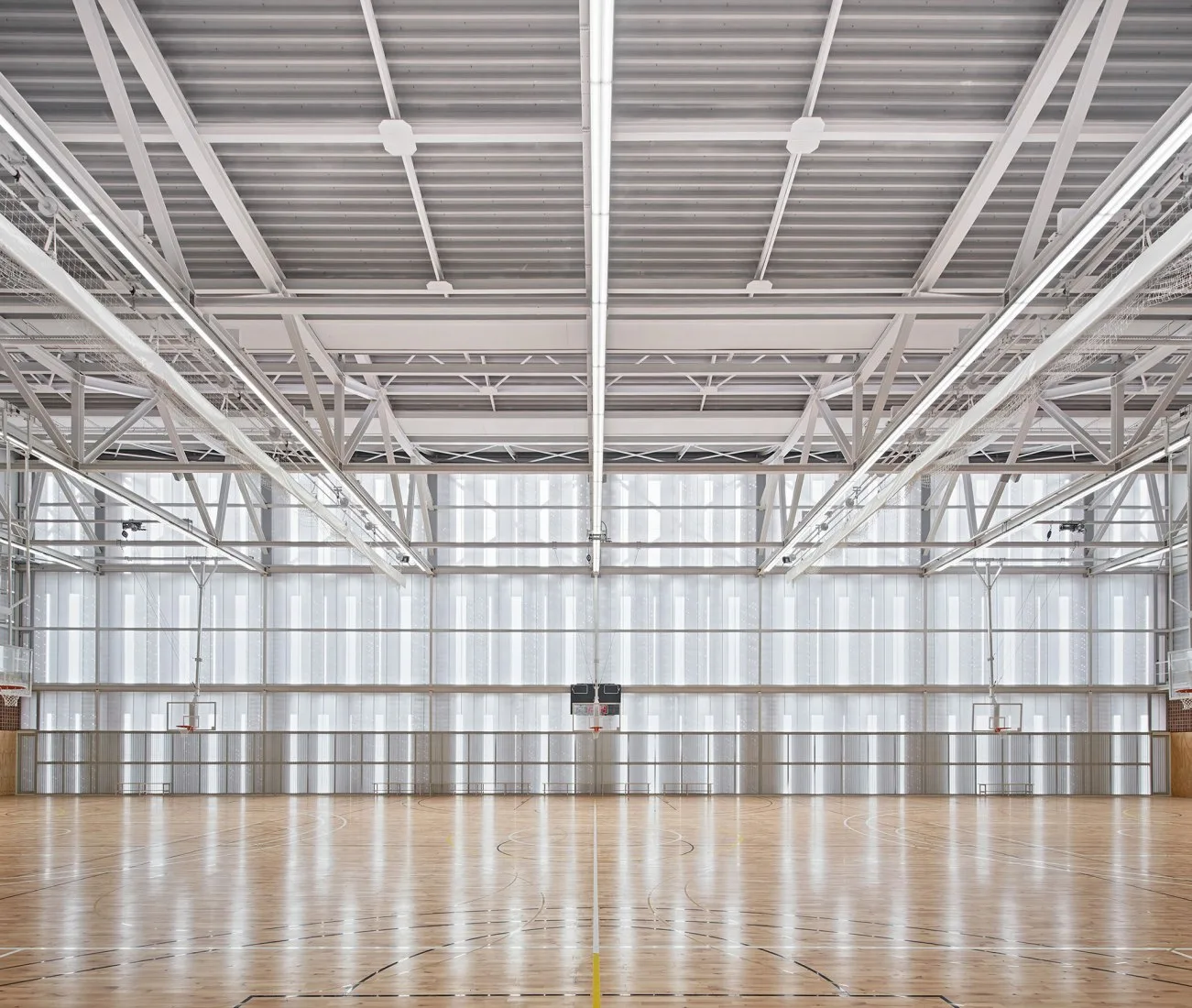
One key advantage of the semi-underground design is the reduction of exposed building surface, which enhances insulation and energy efficiency. The building’s energy performance has been thoroughly optimized.
Additional strategies—including solar protection, cross ventilation, natural lighting, and the integration of renewable energy sources—further reduce operational energy demands. As a result, the building has achieved LEED Gold certification.
Project Drawings
Project Information
Architects: AIA Architectural Activities, Barcelo-Balanzo Architects, Gustau Gili Galfetti
Structure: BAC
Energy Efficiency: AIA
Site Management: SGS
Project Management: Qestudi
LEED Management: Development Index Ambiental
Client: District of Sant Andreu / Barcelona City Council, managed by BIMSA
Construction: UTE OHL / Calaf
Area: 7,237 square meters
Date: 2016–2020
Location: Barcelona, Spain
Photography: José Hevia, Simón García (arqa)












Must log in before commenting!
Sign Up