
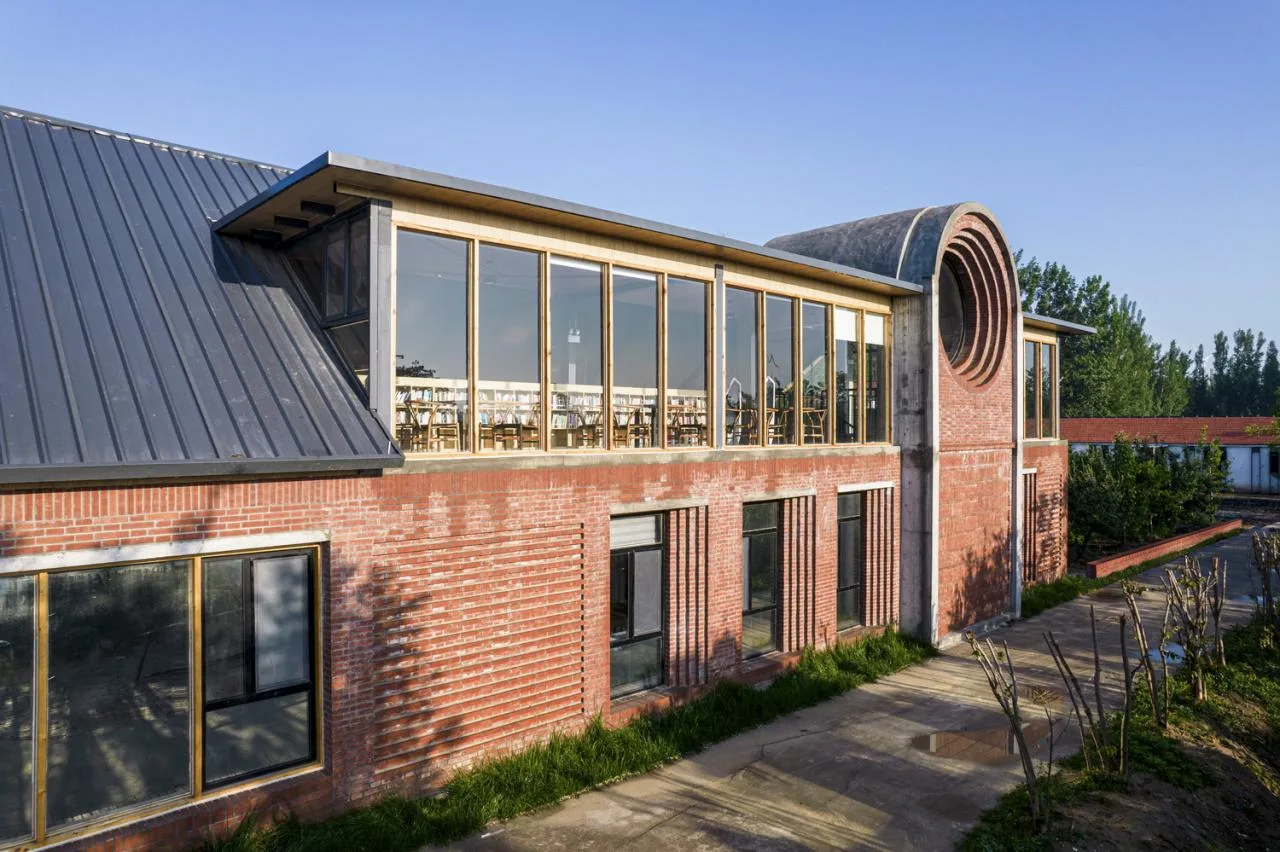
The building is situated in a village named Li Guifen—a name that evokes a sense of curiosity and warmth. It closely resembles names from my grandmother’s generation, a rare and cherished legacy today, embodying a broad spirit of tolerance and resilience.
It is wheat harvest season again. The golden fields outside the car window have accompanied this land for millennia, embedding themselves into our collective unconscious—etched deeply into our bones and blood. This shared memory stirs a longing, hope, and anticipation for a bountiful harvest during the Mangzhong solar term.
As we grow older, our memories of distant childhood gradually blur, becoming abstract like paintings—only bold brushstrokes remain to hint at the background. In Chinese culture, this golden hue symbolizes hope, reflecting the dreams tied to the wheat fields of our youth.
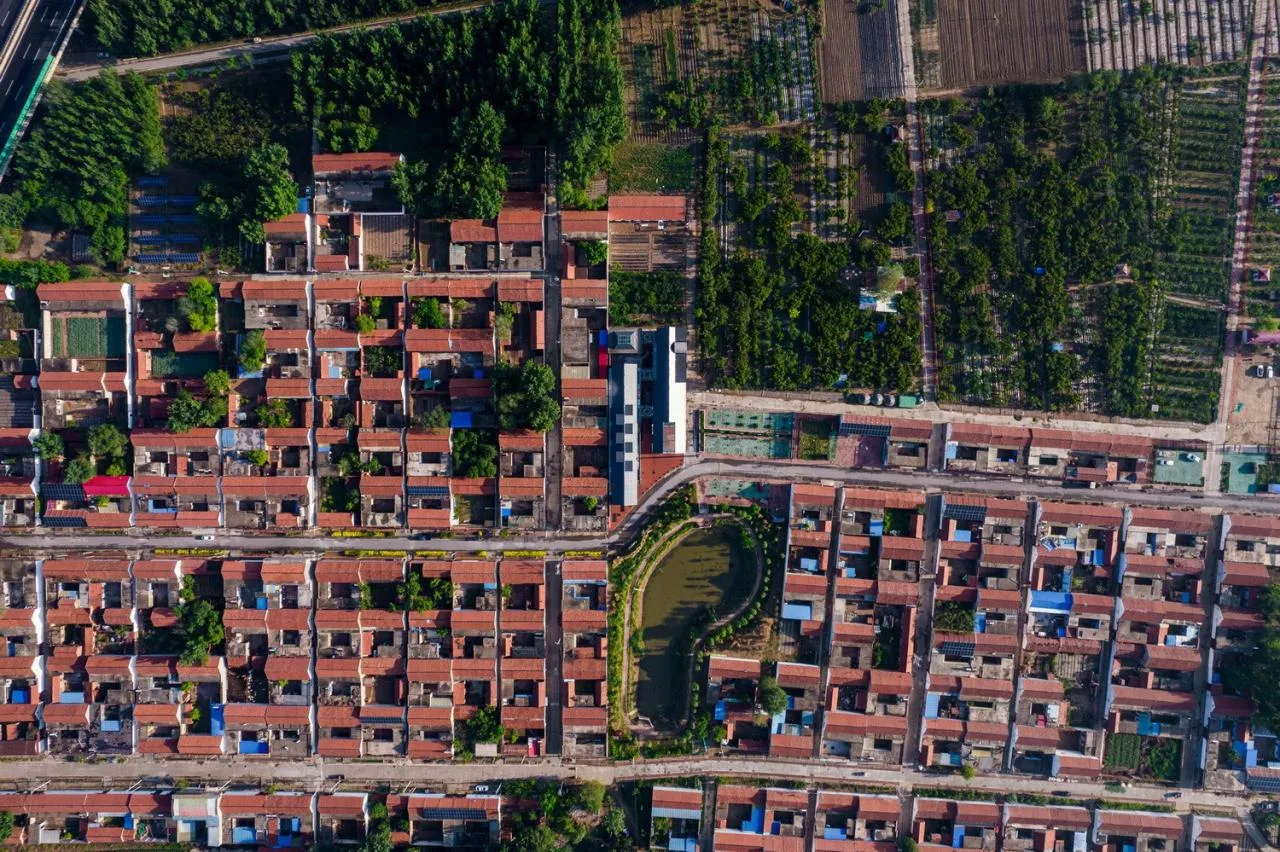
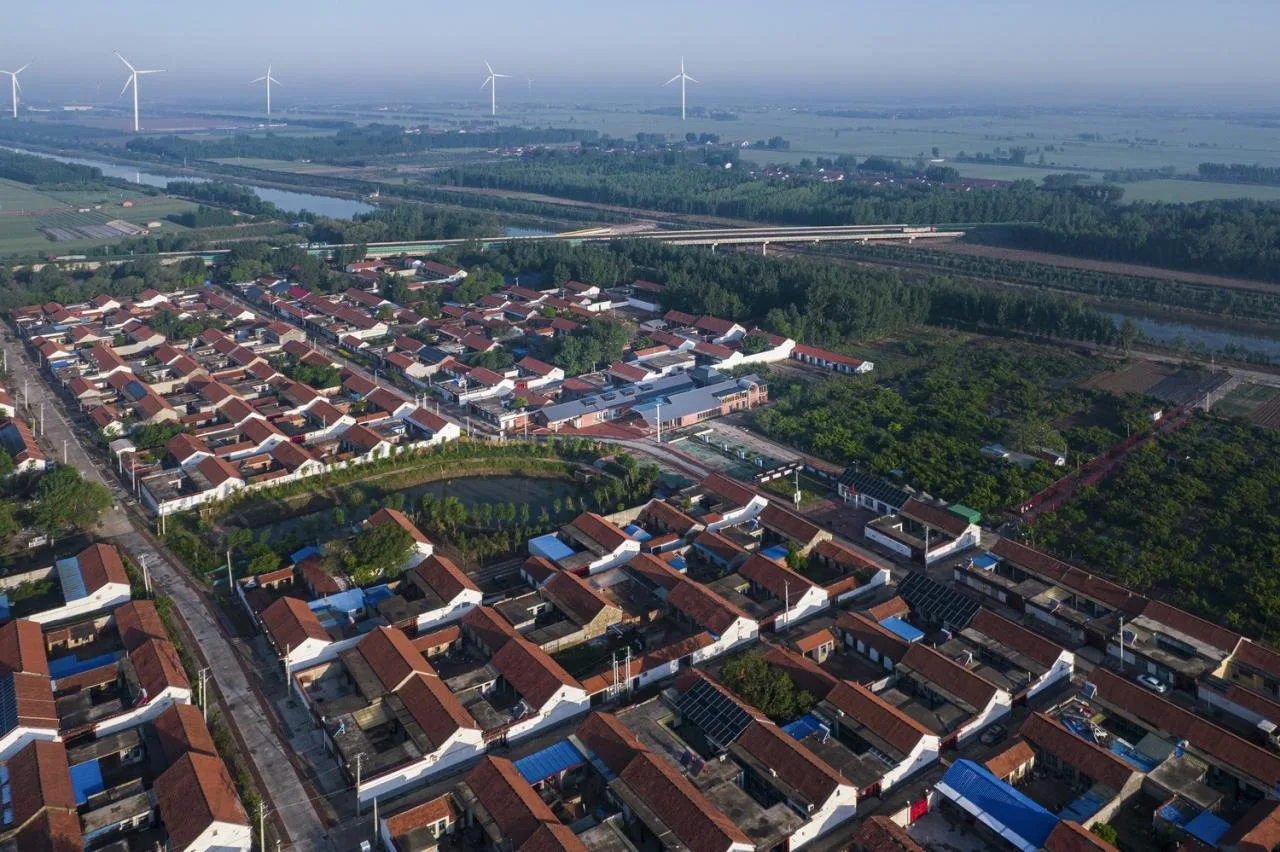
In a small town called Yinxiang in Beishanghe County, Jinan, two villages sit closely side by side. In China’s long agricultural history, villages often form a cellular geographical pattern, where fields resemble cytoplasm and settlements the nucleus. From the Linpan settlements in western Sichuan to Datian villages in Shandong, this pattern is common. However, cases where two villages are this adjacent are rare. This proximity creates a subtle dynamic—shared discourse with slightly different subcultures.
Consequently, the area between these villages has become a gathering place for communal elements like ponds, forests, and abandoned farms. With the farms no longer in use, we are prompted to rethink how these boundaries might serve as clear, collective public spaces.
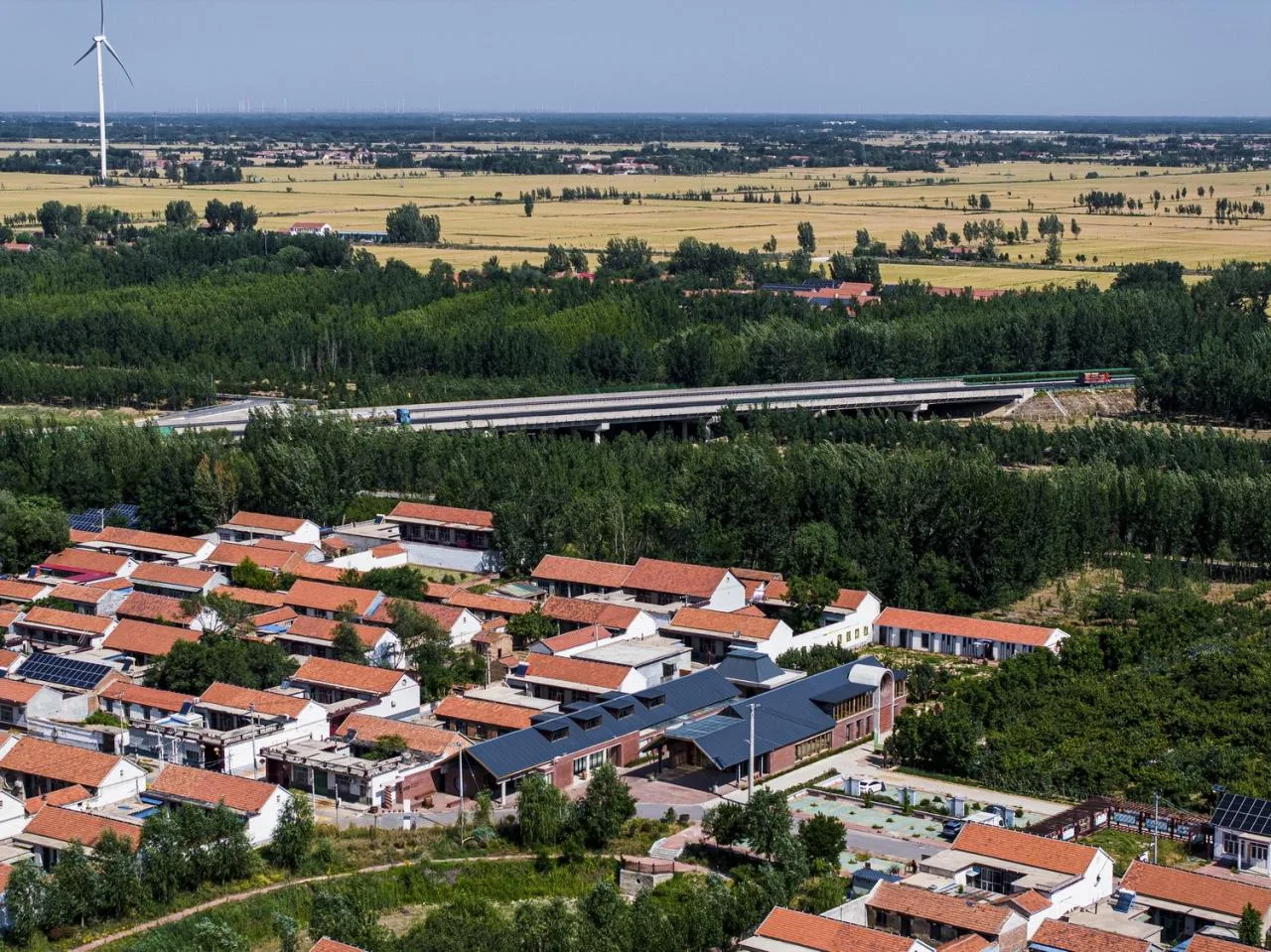
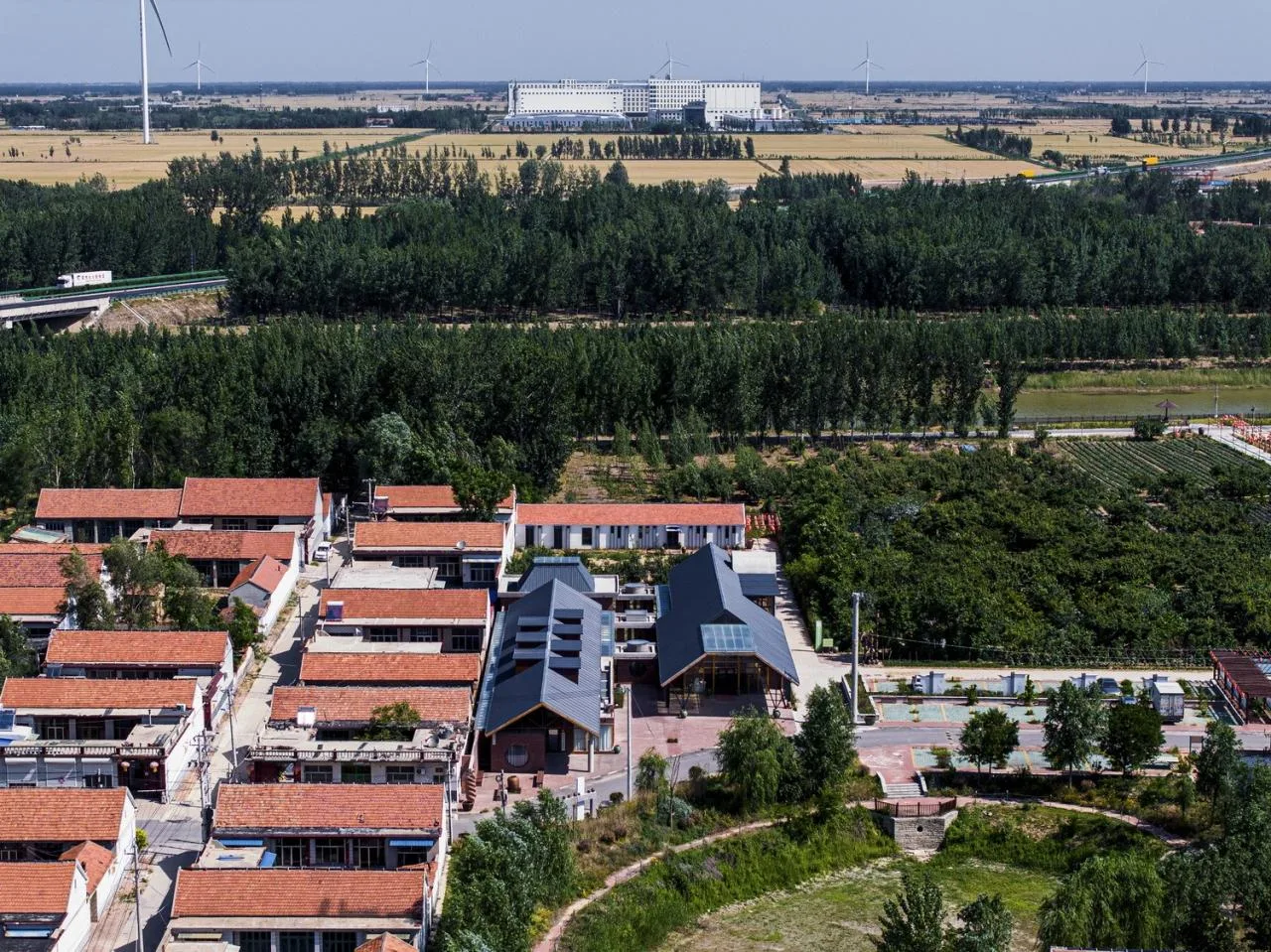
This collection serves as concrete evidence of the creative center’s approach to rural construction. Focusing solely on architecture, while setting aside sociological and economic factors, architecture here acts as a narrative and spatial text—expressing conflict and rationality within a postmodern context.
Unlike the rural scenery of Jiangnan’s Qiaoerbuya style, the land of Qilu offers a warmer backdrop. When multiple activities interact precisely within defined time and space, the natural elements—earth, sky, and human presence—combine with spatial form to create organic, multidimensional structures.
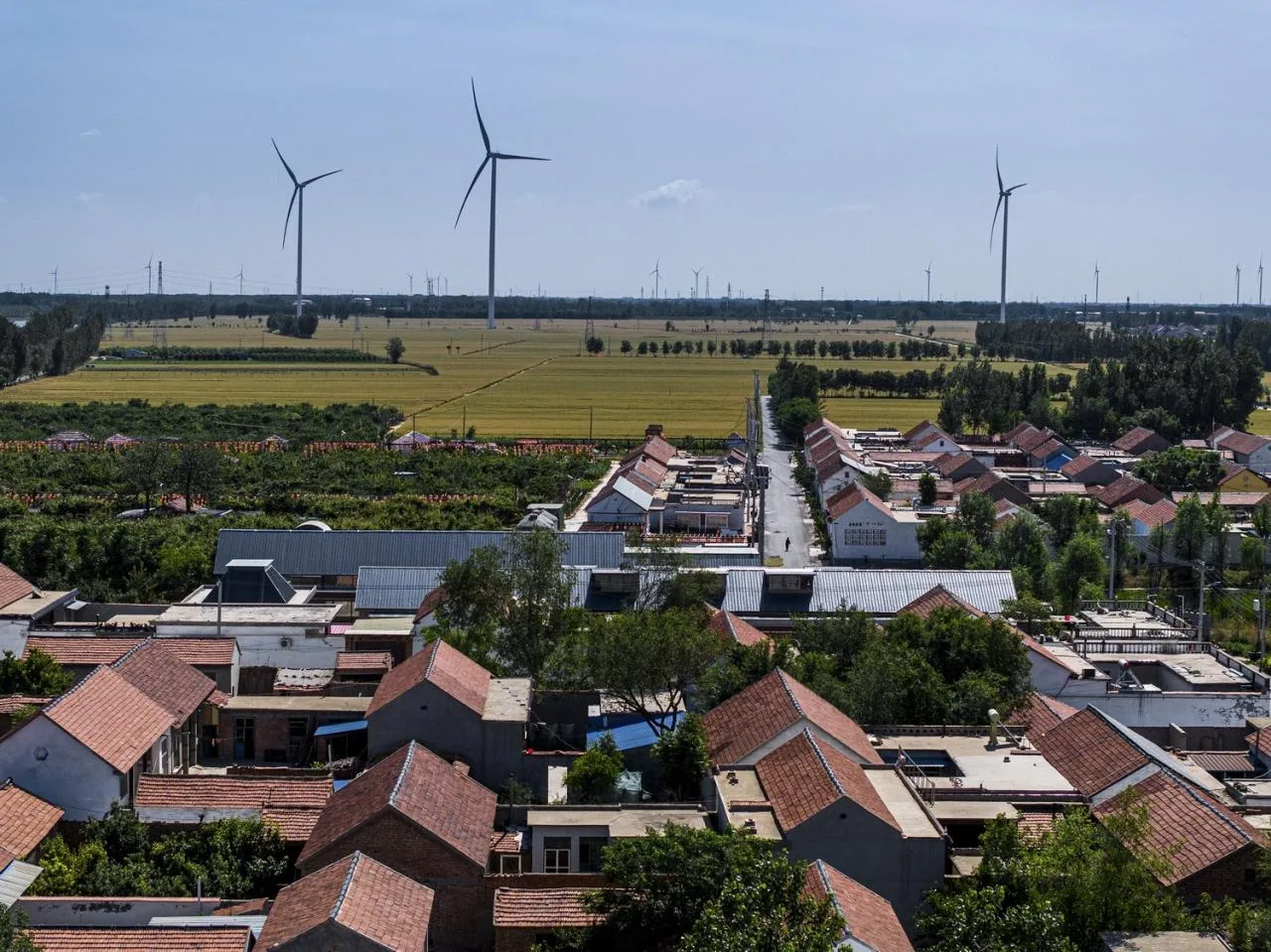
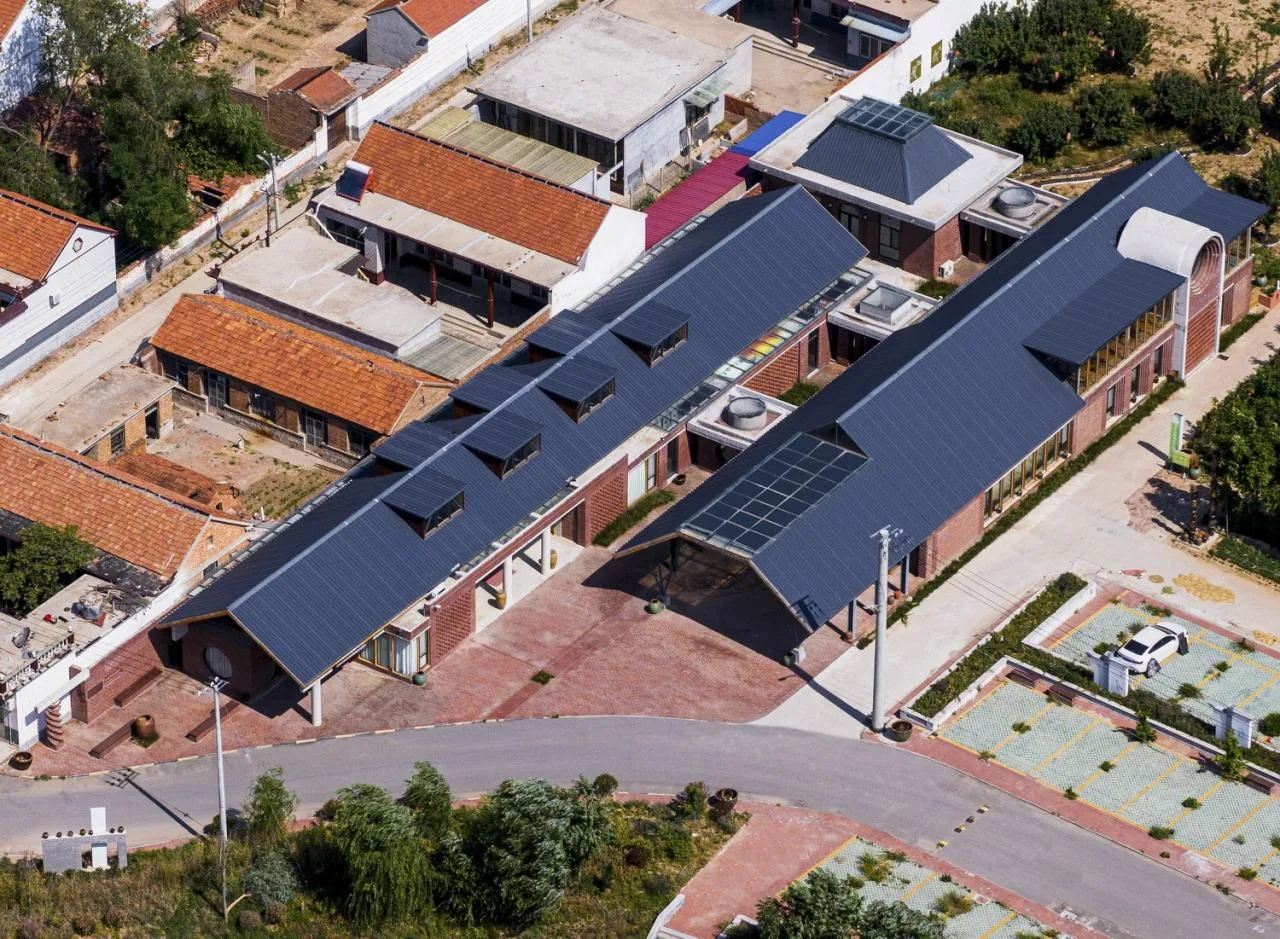
Project Description
We designed a rural complex that highlights clear boundaries, aiming to define the two villages to the east and west as distinct spatial entities. A strong sense of boundary provides security. Instead of the traditional east-west village layout, the design adopts a north-south linear arrangement, fitting the site’s scale and establishing a unique public order.
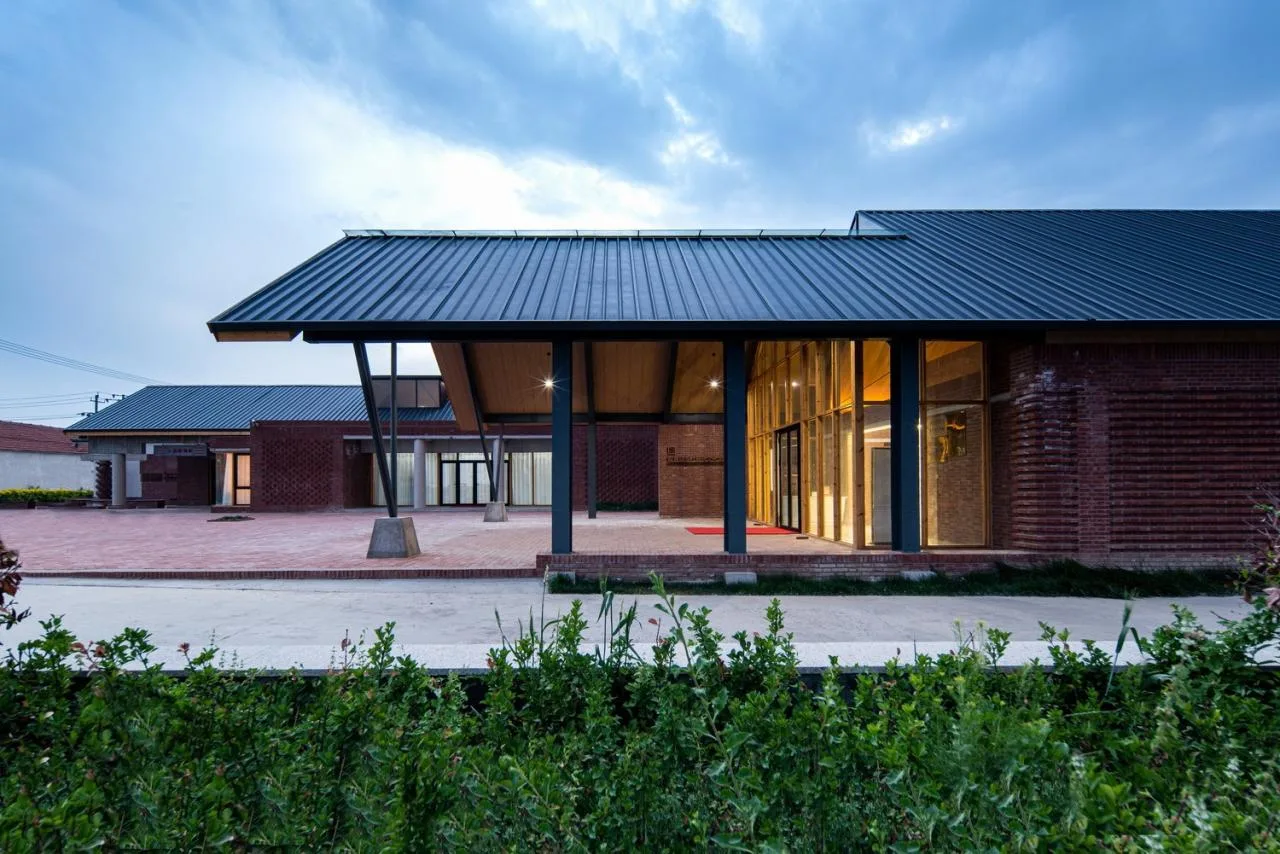
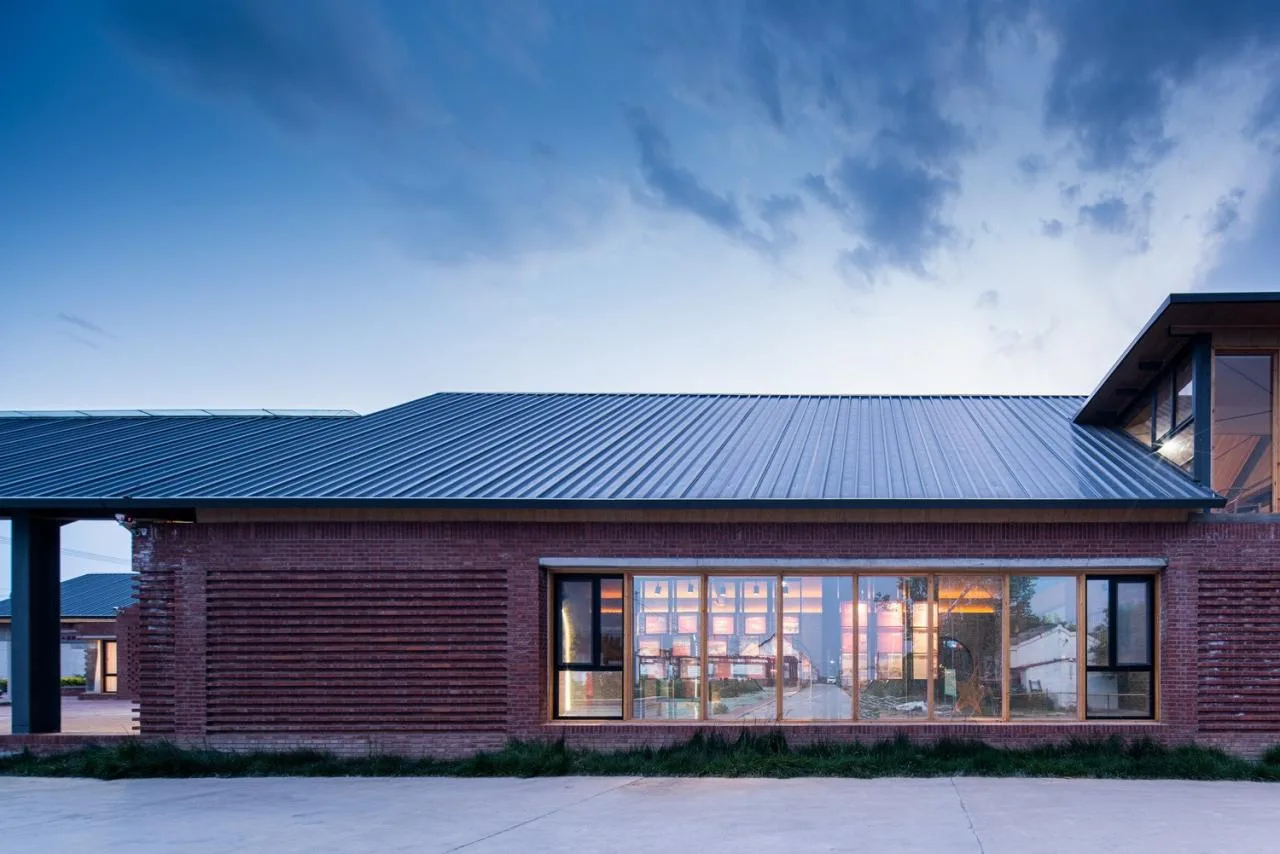
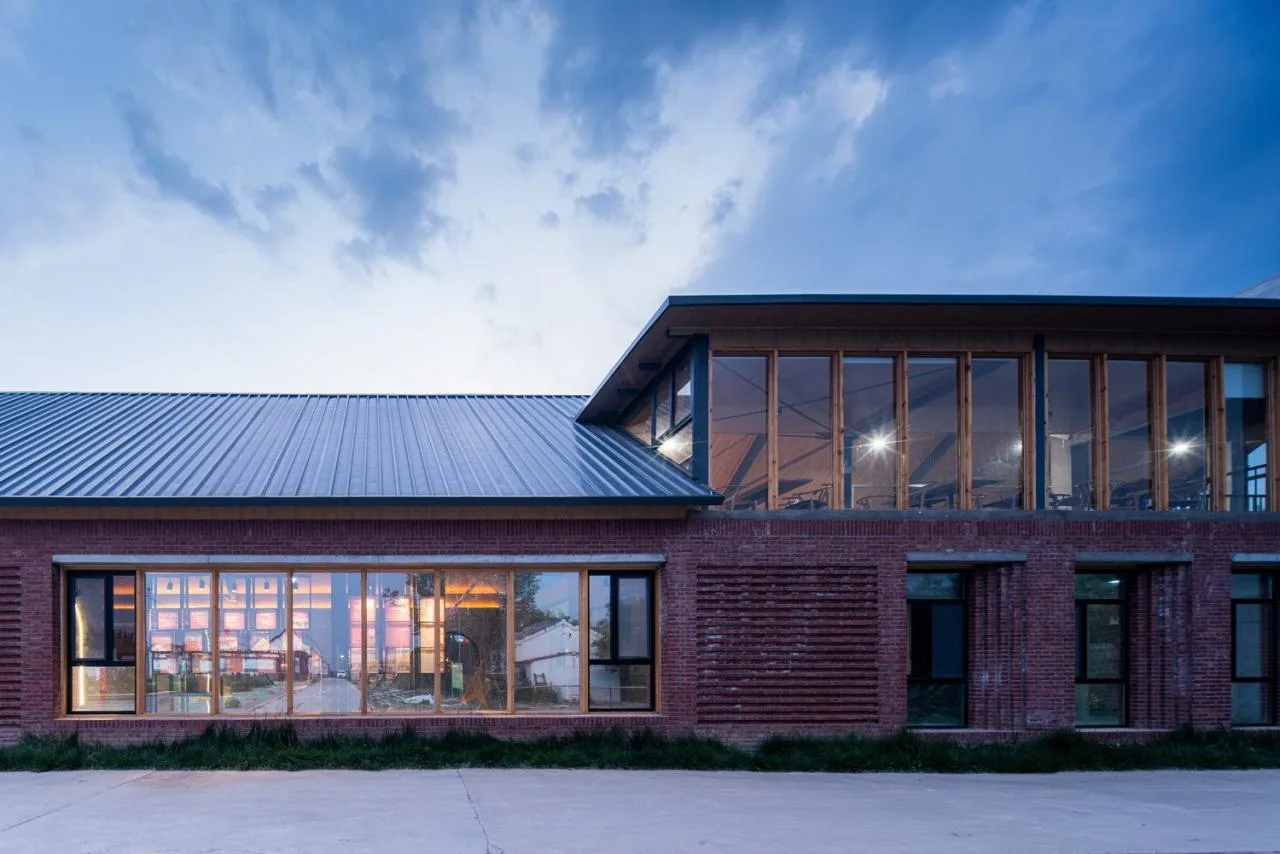
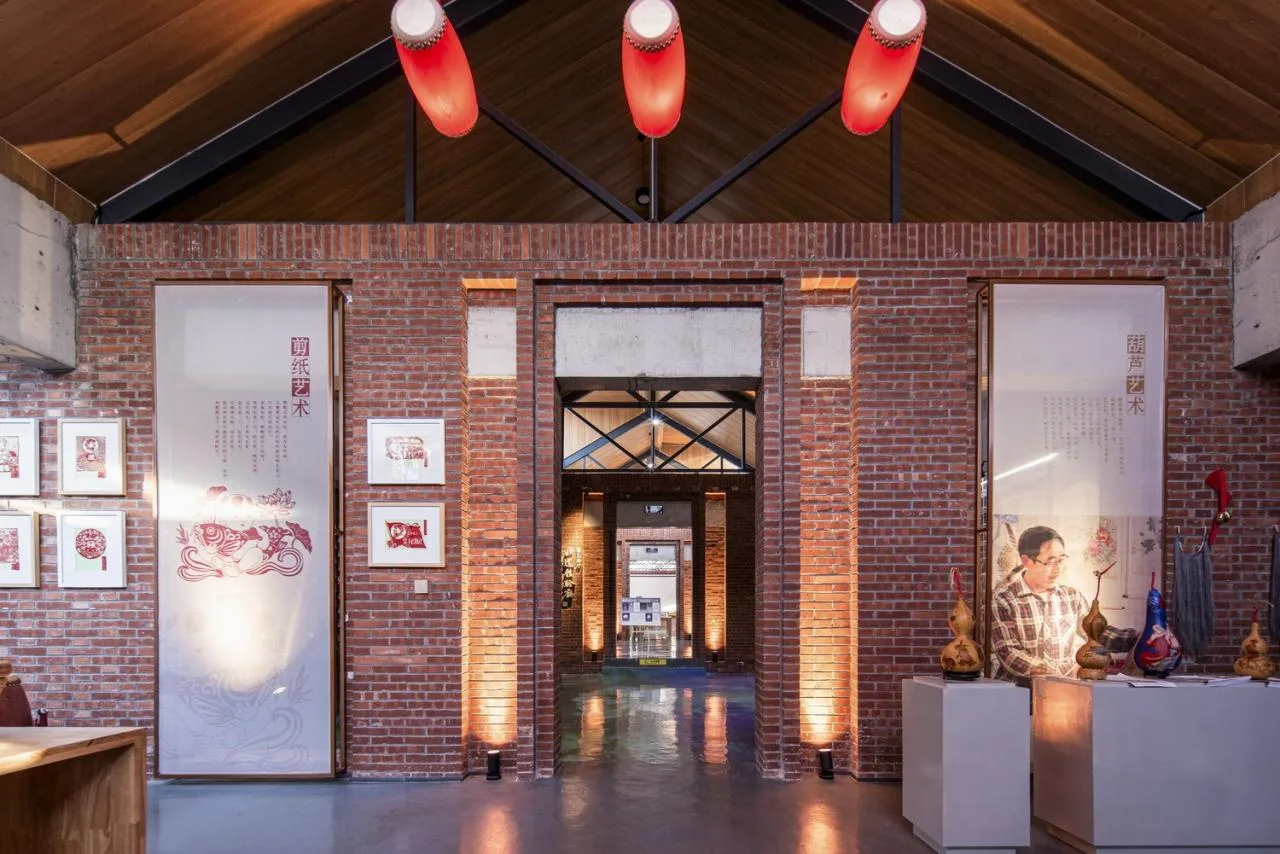
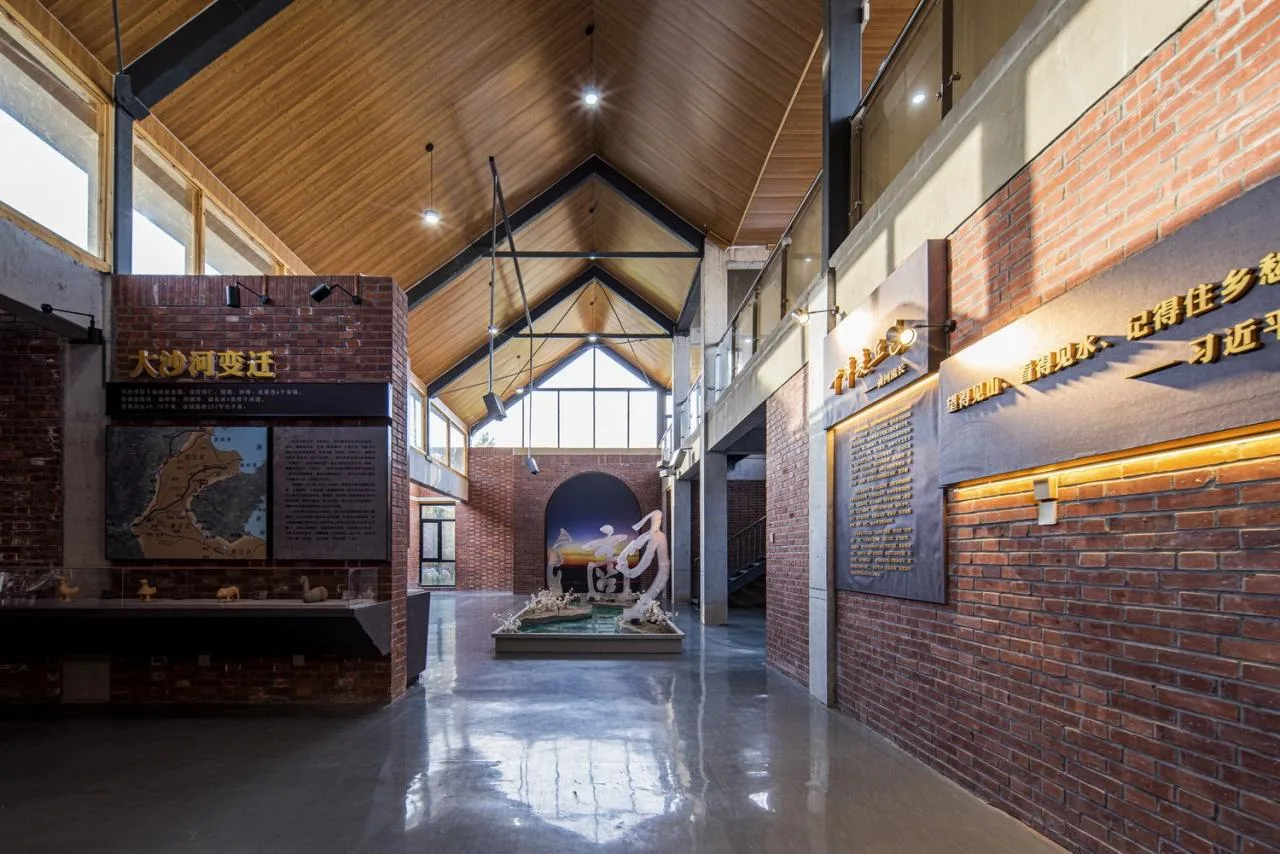
Defining public space in rural areas is challenging, especially when it comes to specific functions like cultural centers or exhibition halls. Rural public buildings tend to have generalized functions rather than clearly labeled uses. Similar to ancestral halls in southern villages, these spaces act as symbiotic places. While ancestral halls in the north have become rare, our design focuses on spatial connectivity. Besides the necessary indoor and outdoor distinctions, there is no rigid indoor zoning. Functions such as dining, activities, services, exhibitions, and displays coexist fluidly within the layout.
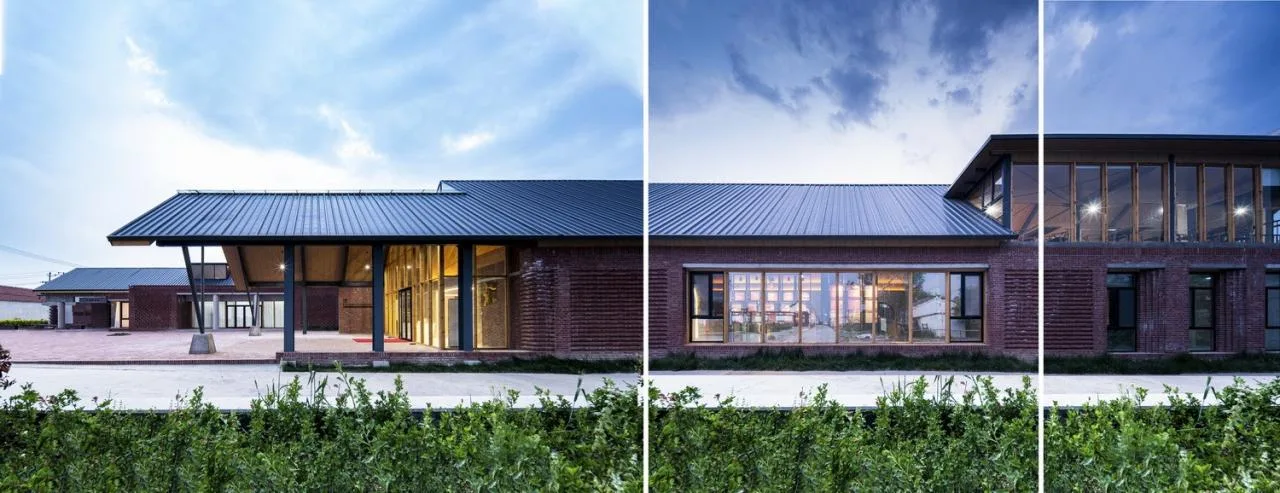
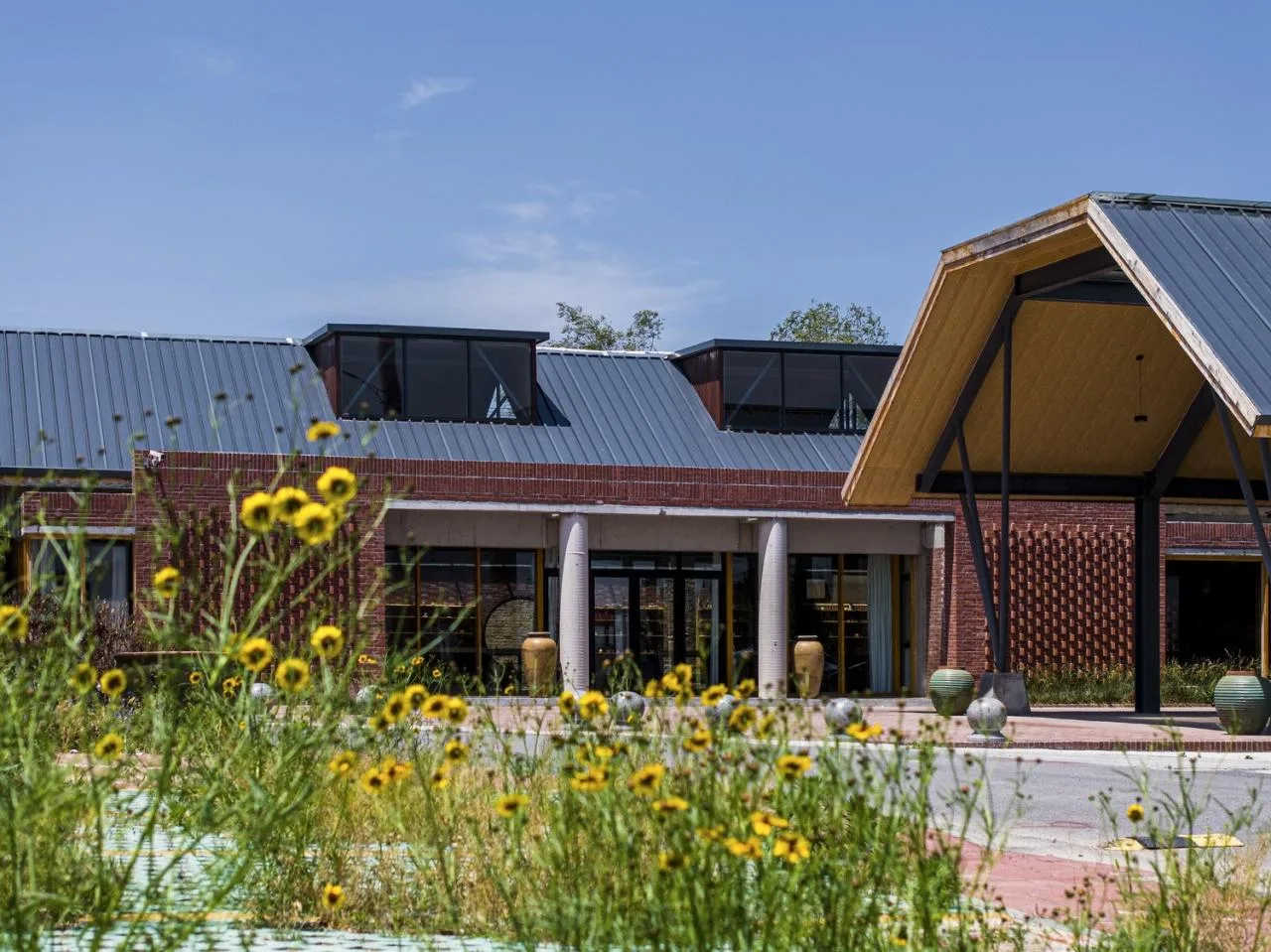
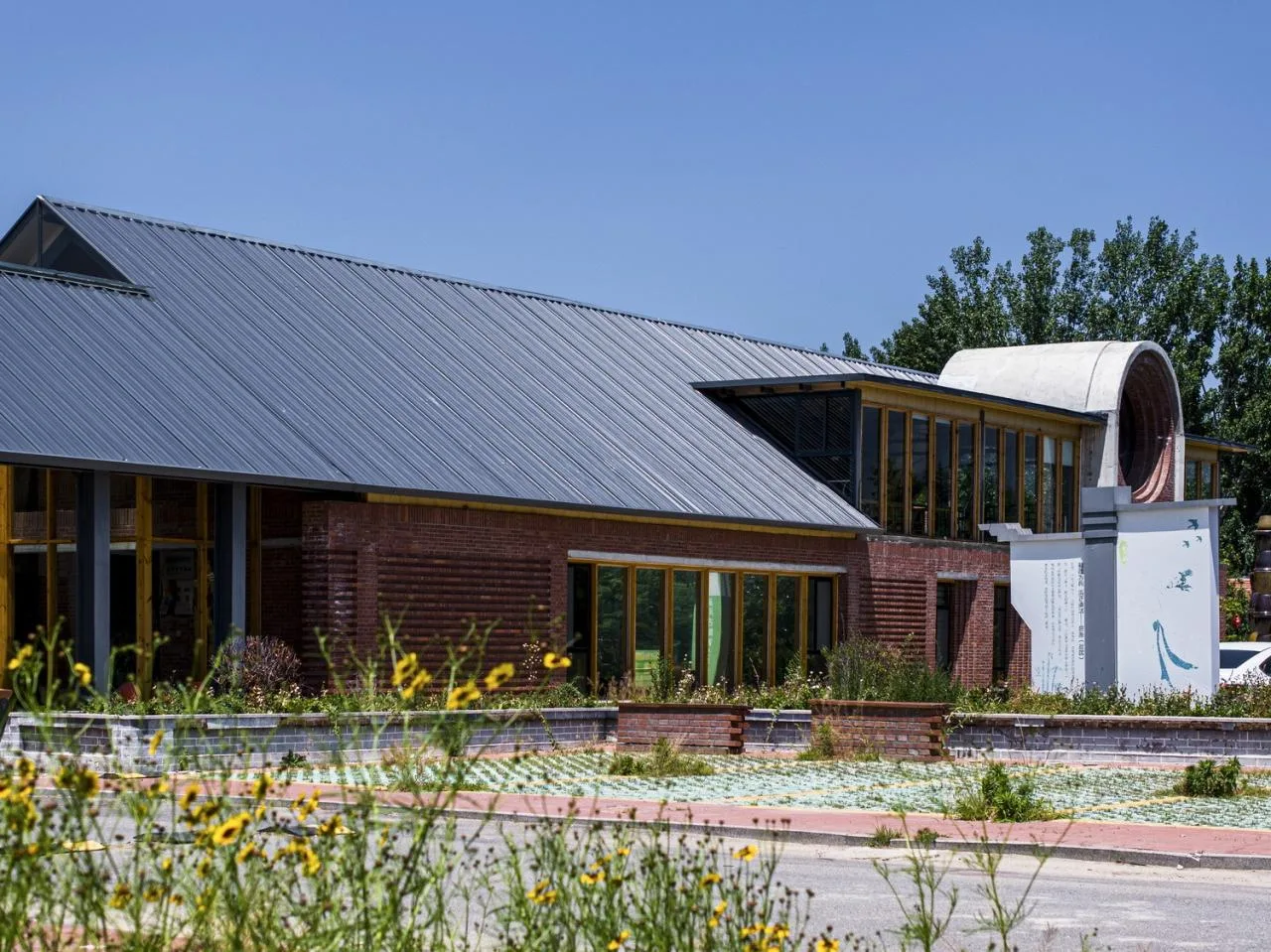
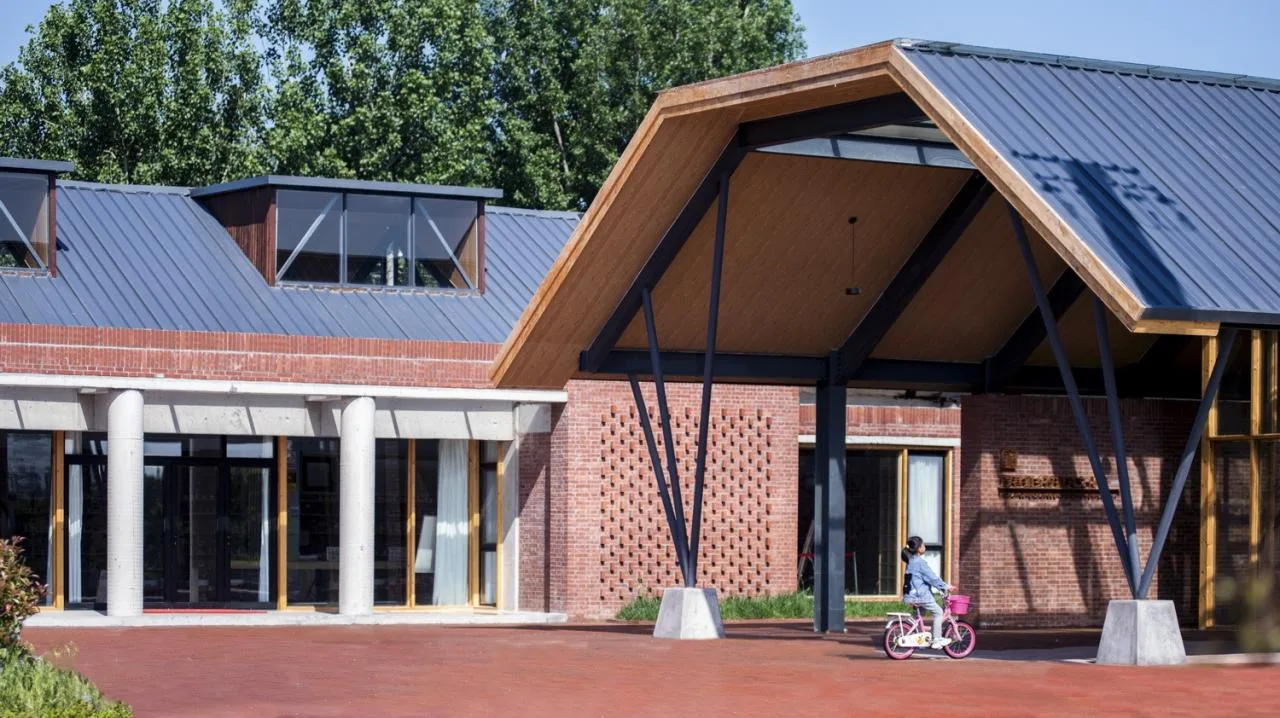
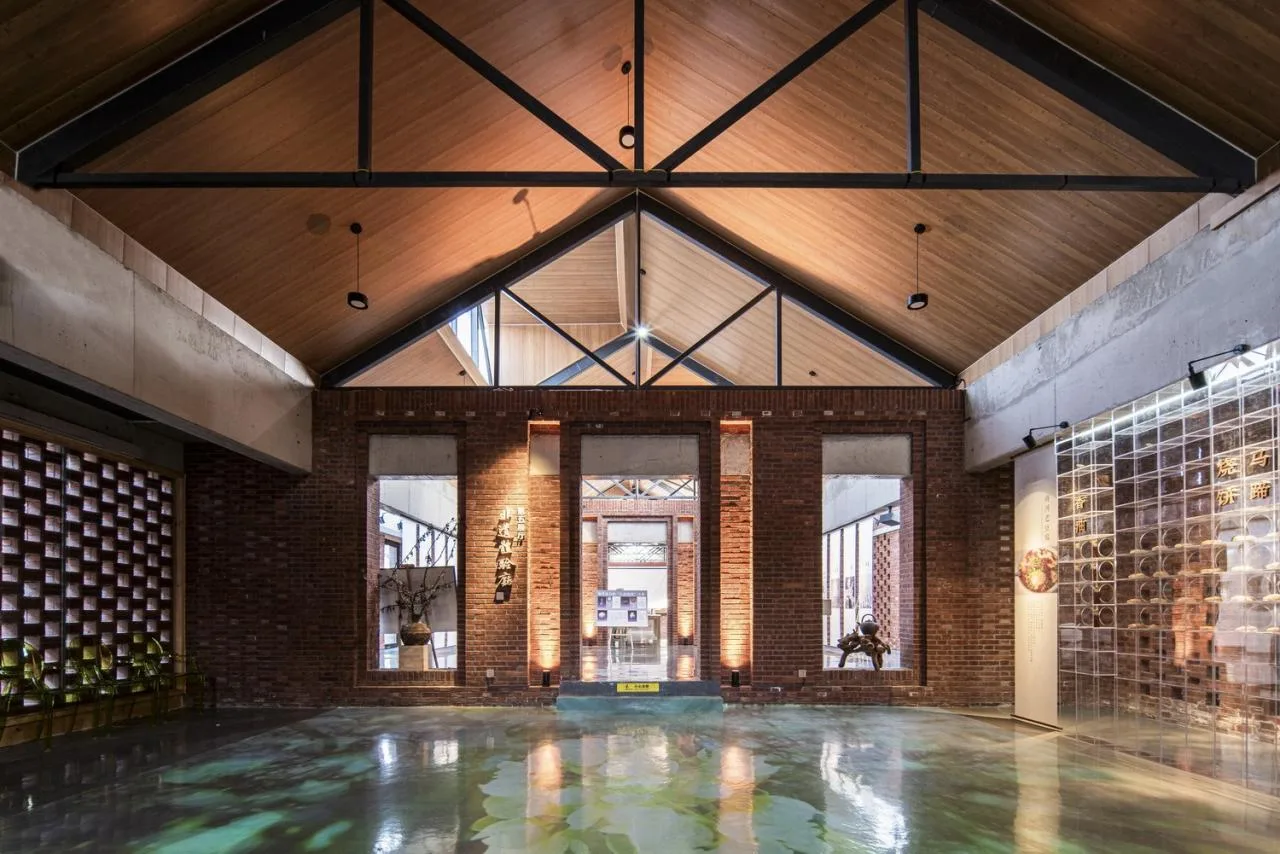
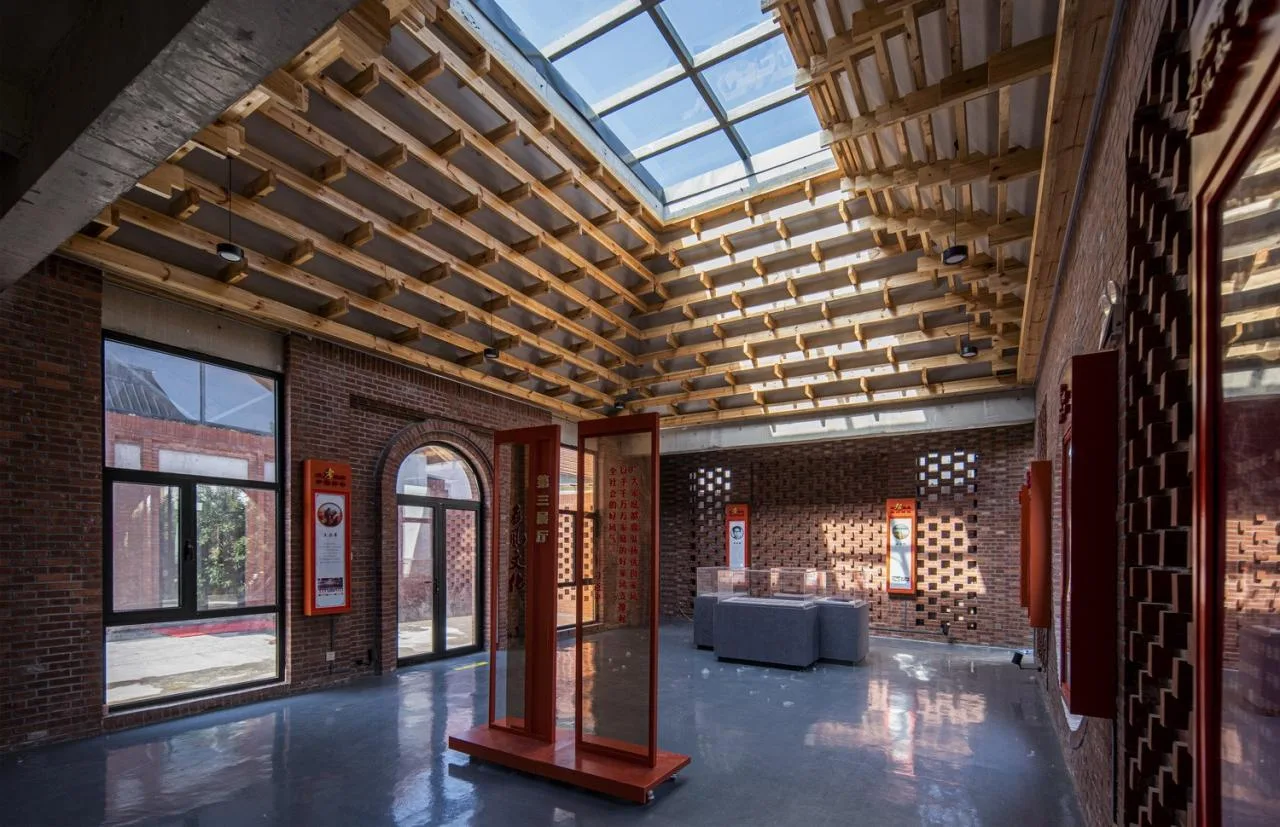
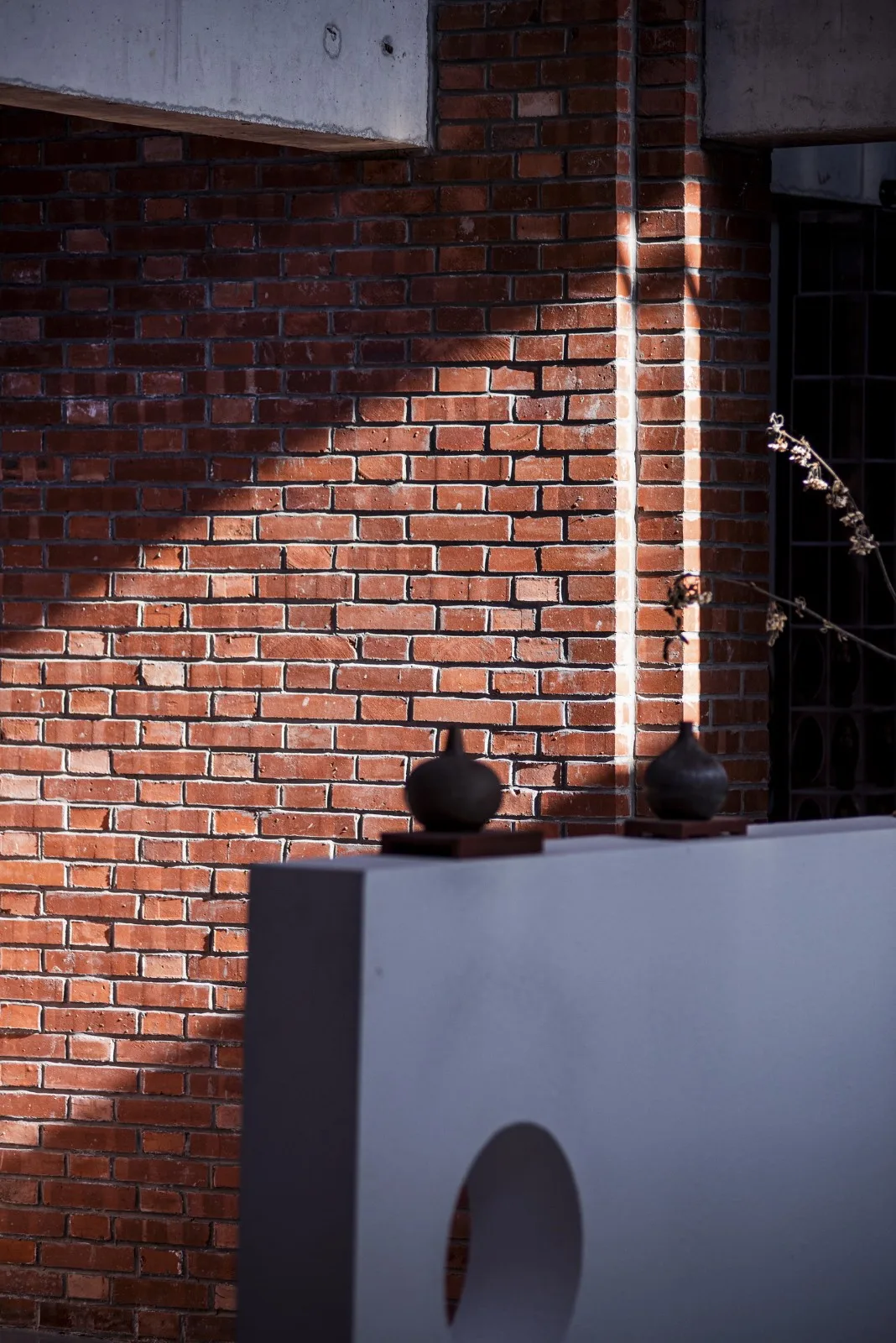
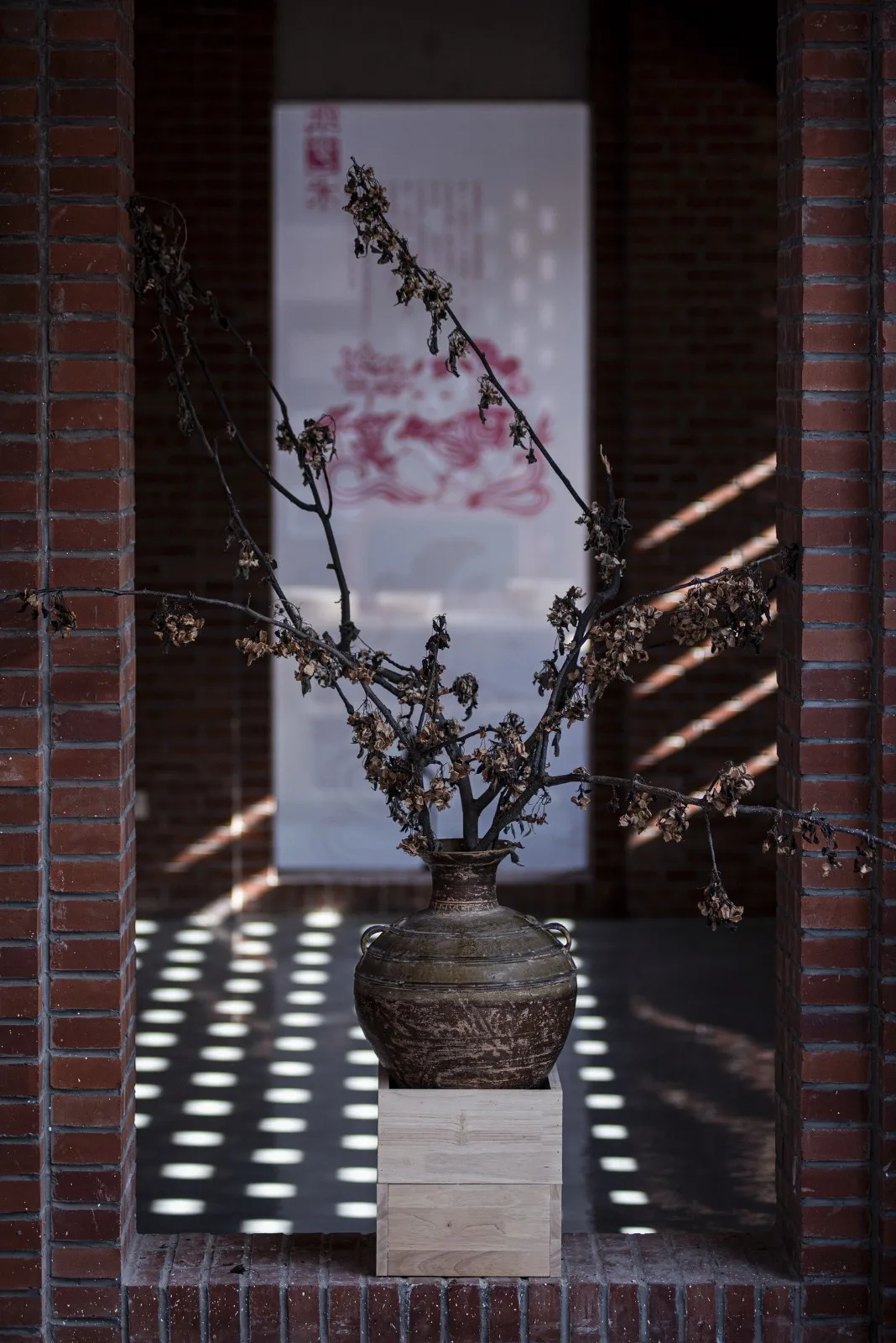
Having worked with red bricks in rural construction at Zhuwang Village, I once regarded them as our signature style. Though I’ve critiqued the overuse and personal stylization of materials elsewhere, I still maintain a hopeful and even negotiating stance: “Let’s continue using red bricks.” This choice reflects simplicity, sincerity, and depth—qualities reminiscent of Li Guifen’s name. Yet, the true art lies not in the material itself but in the constructivist, structural, and geometric knowledge orchestrating these clustered bricks, surpassing even the appeal of costly materials.
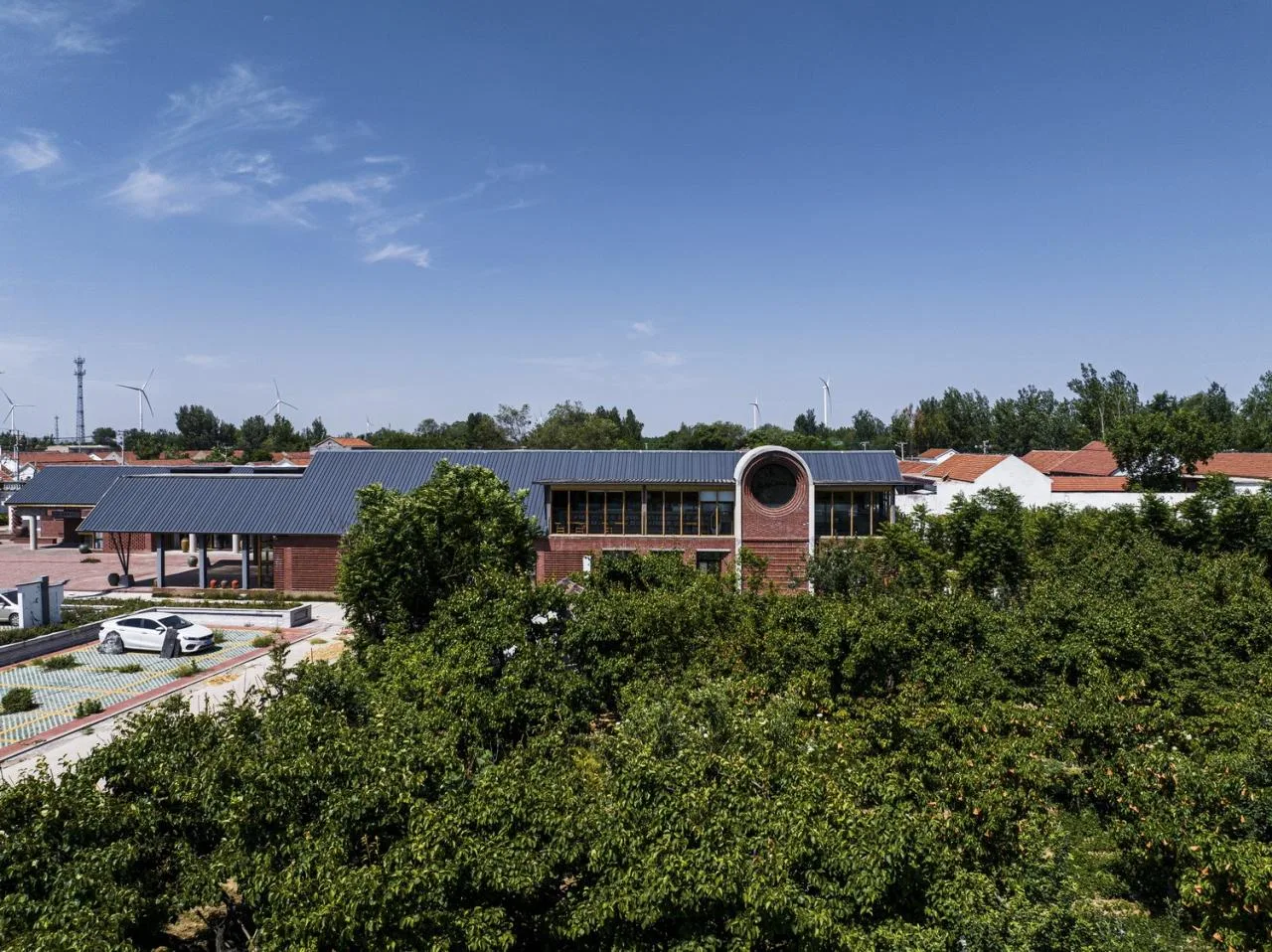
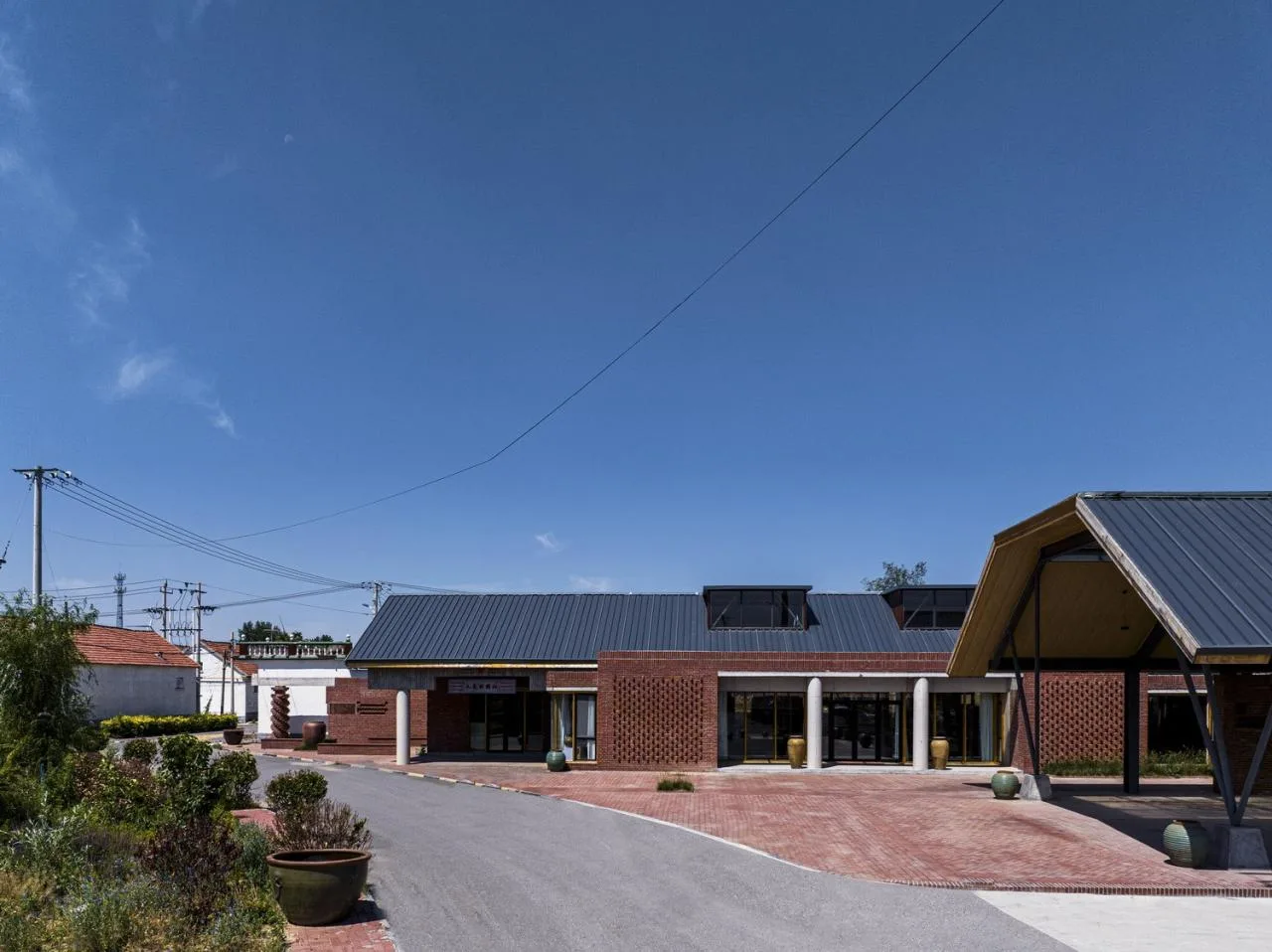
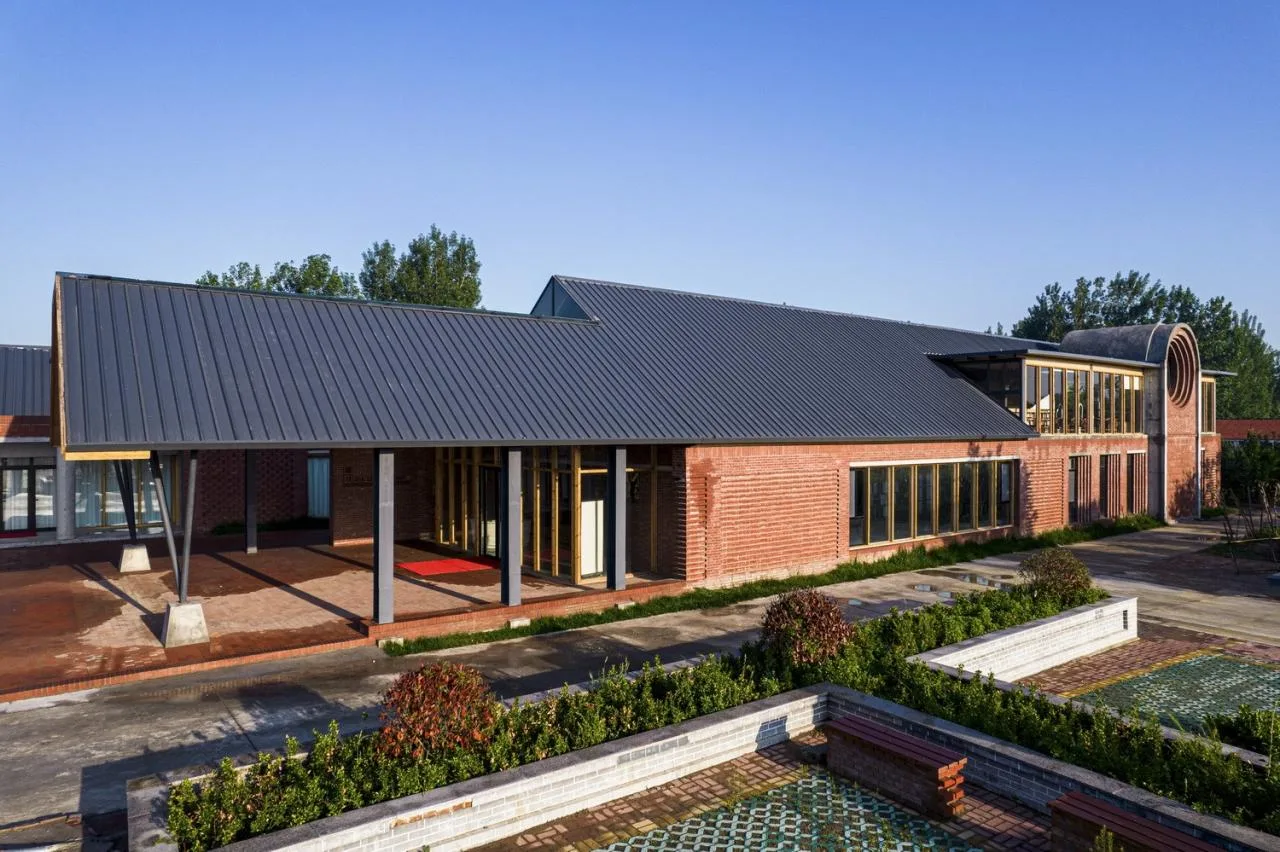
Yet, the greatest challenge was not the materials but the resistance from the construction team. Craftsmanship and precision requirements conflicted with their daily wage system, making it impossible to build walls to the set standards within a day. Initial murmurs grew into open complaints: “Using your brain is the real issue! Construction work was supposed to reduce mental labor, but mental work is tougher than physical labor!” Our designers responded with understanding and engagement. Hearing these remarks was fascinating—a mix of surprise at their technical detachment, an apology for disrupting their habits, and a bittersweet smile.
This dynamic reflects the northern spirit—full of unresolved conflicts, stubbornness, and competition. The process was imperfect but vibrant, distinct from industrial coldness. I casually remarked, “Though it’s not perfect, it’s possible!” However, this was taken as a criticism, prompting the team to dismantle and rebuild. Soon, smooth structures emerged one after another, symbolizing a determined reconciliation—a competition between industry and craftsmanship that perhaps explains the enduring resilience and toughness of northern Qilu’s people.
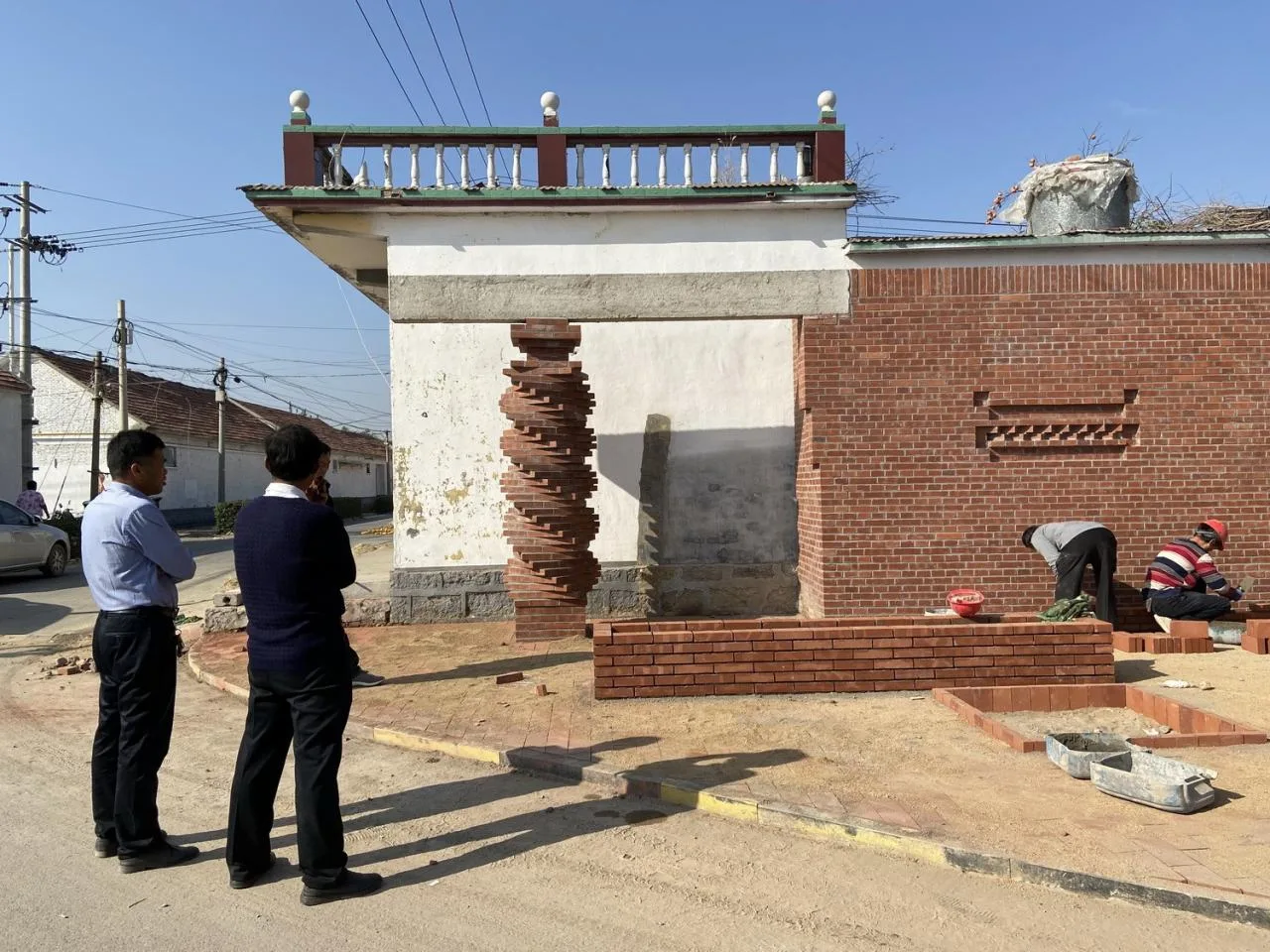
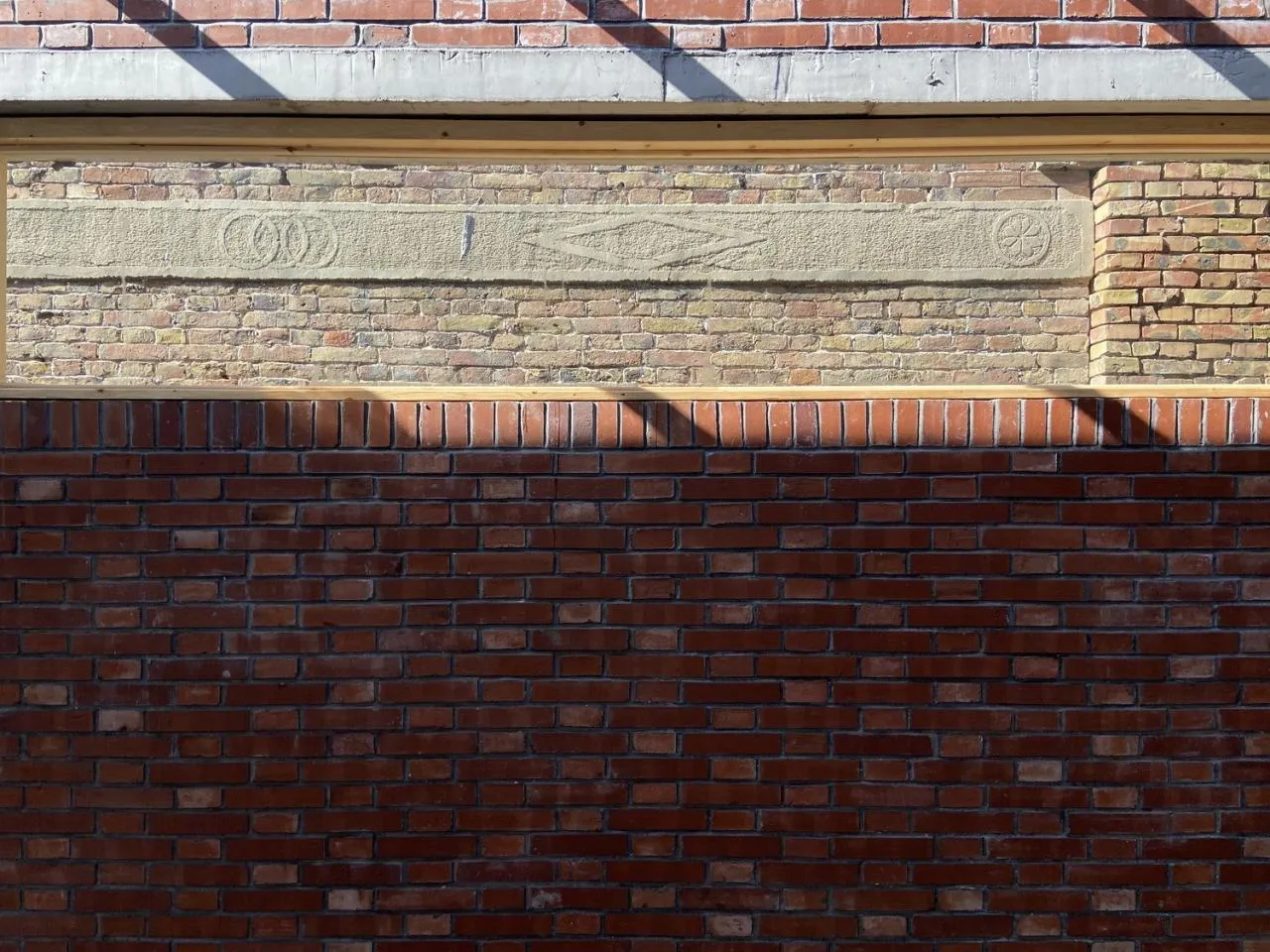
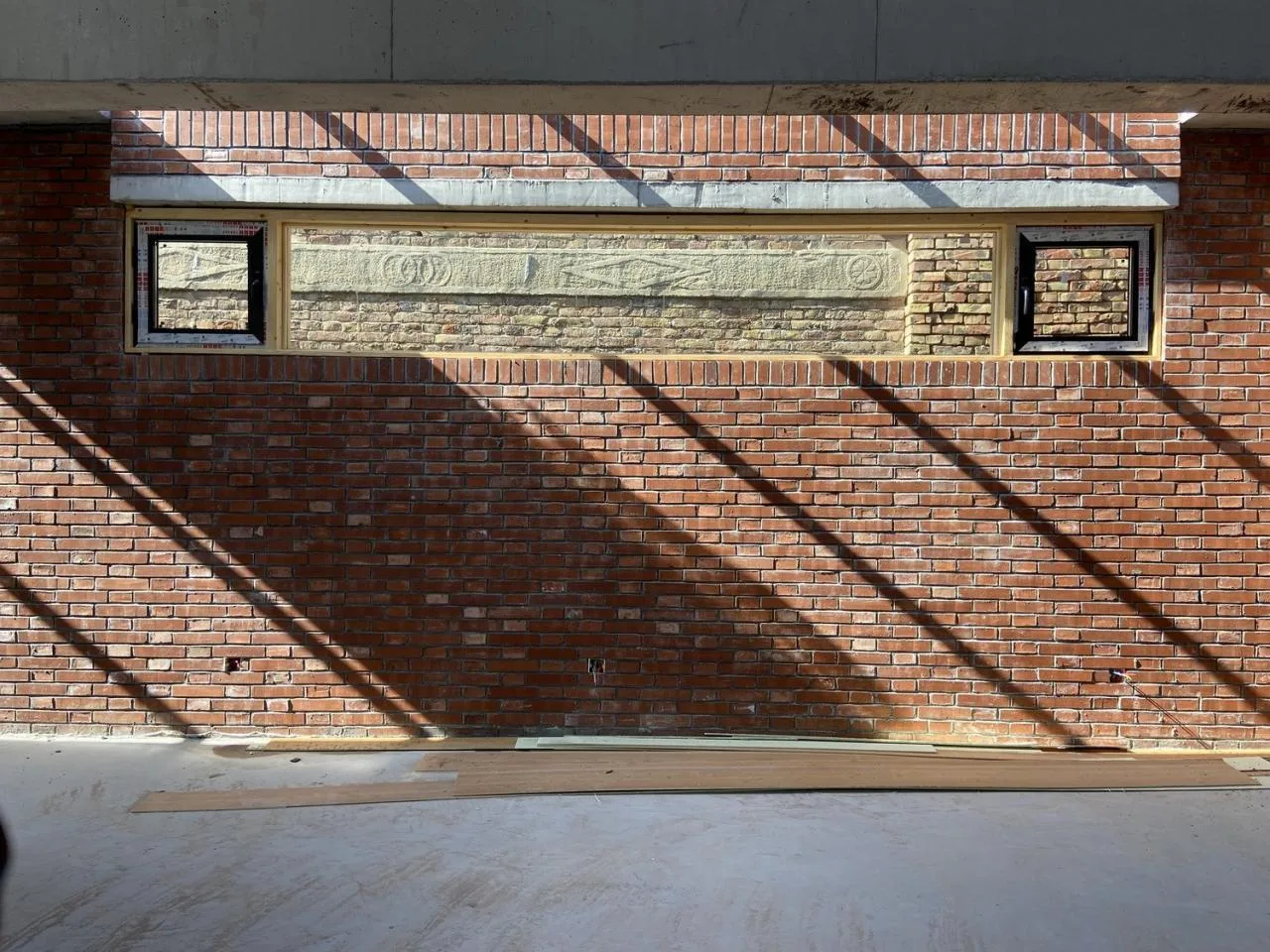
We advocate for the return of traditional materials and craftsmanship to rural areas. However, resistance from construction teams raises questions about the limits of reviving traditional crafts. Tradition is relative: five thousand years ago, cast iron tools did not exist; three thousand years ago, corn was not cultivated; a thousand years ago, cement and glass were unknown. Therefore, true tradition means adapting to the times.
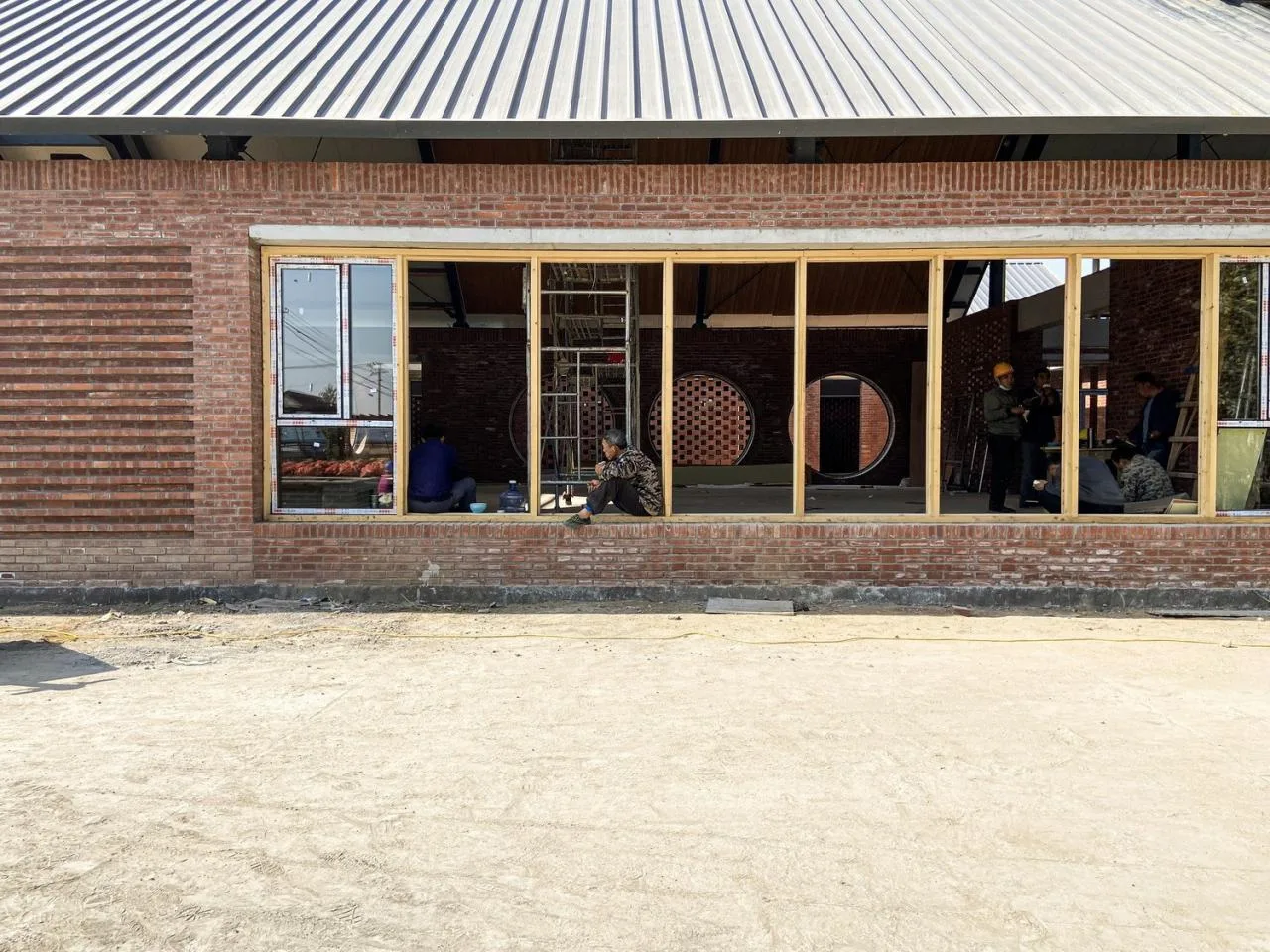
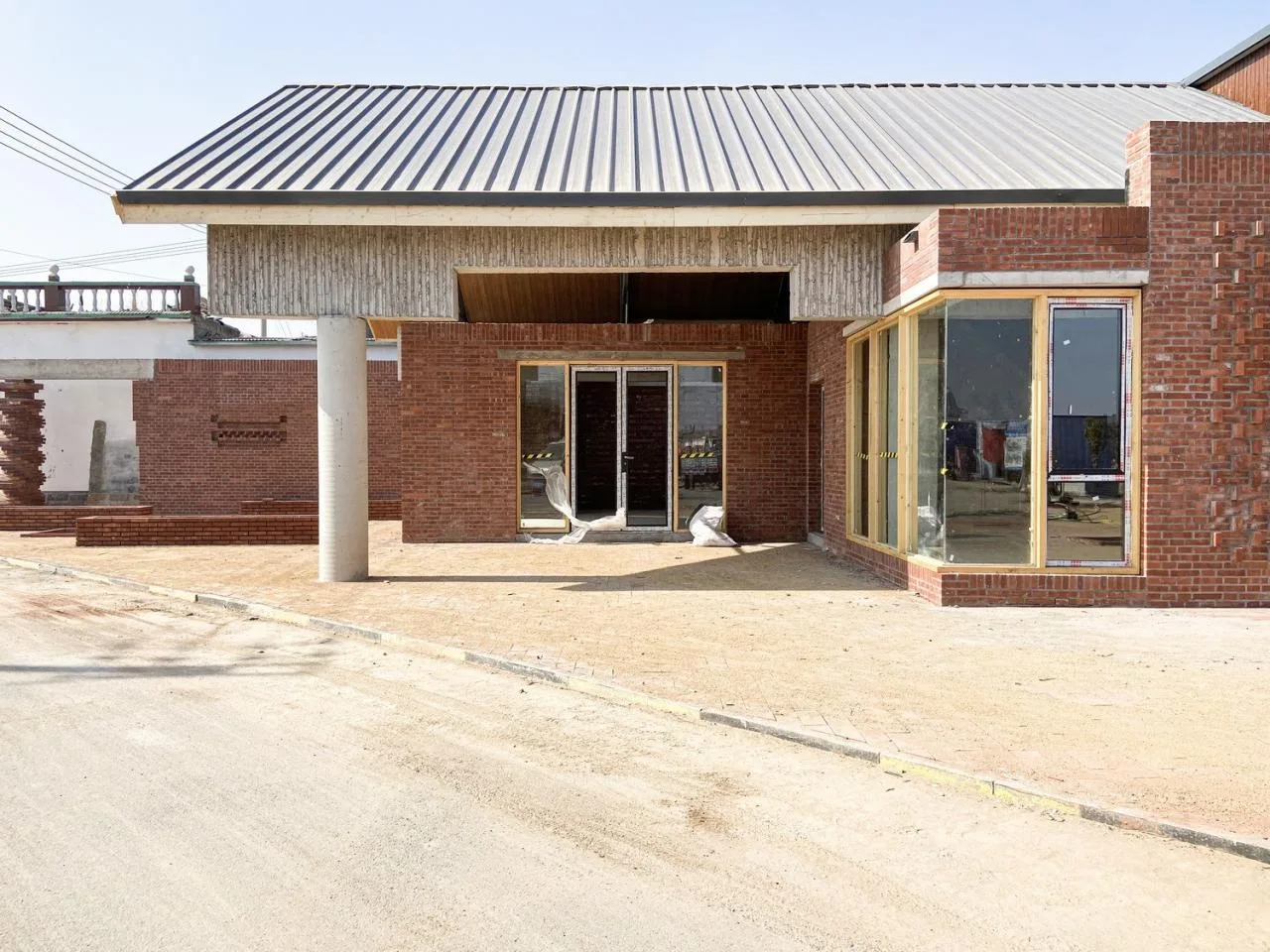
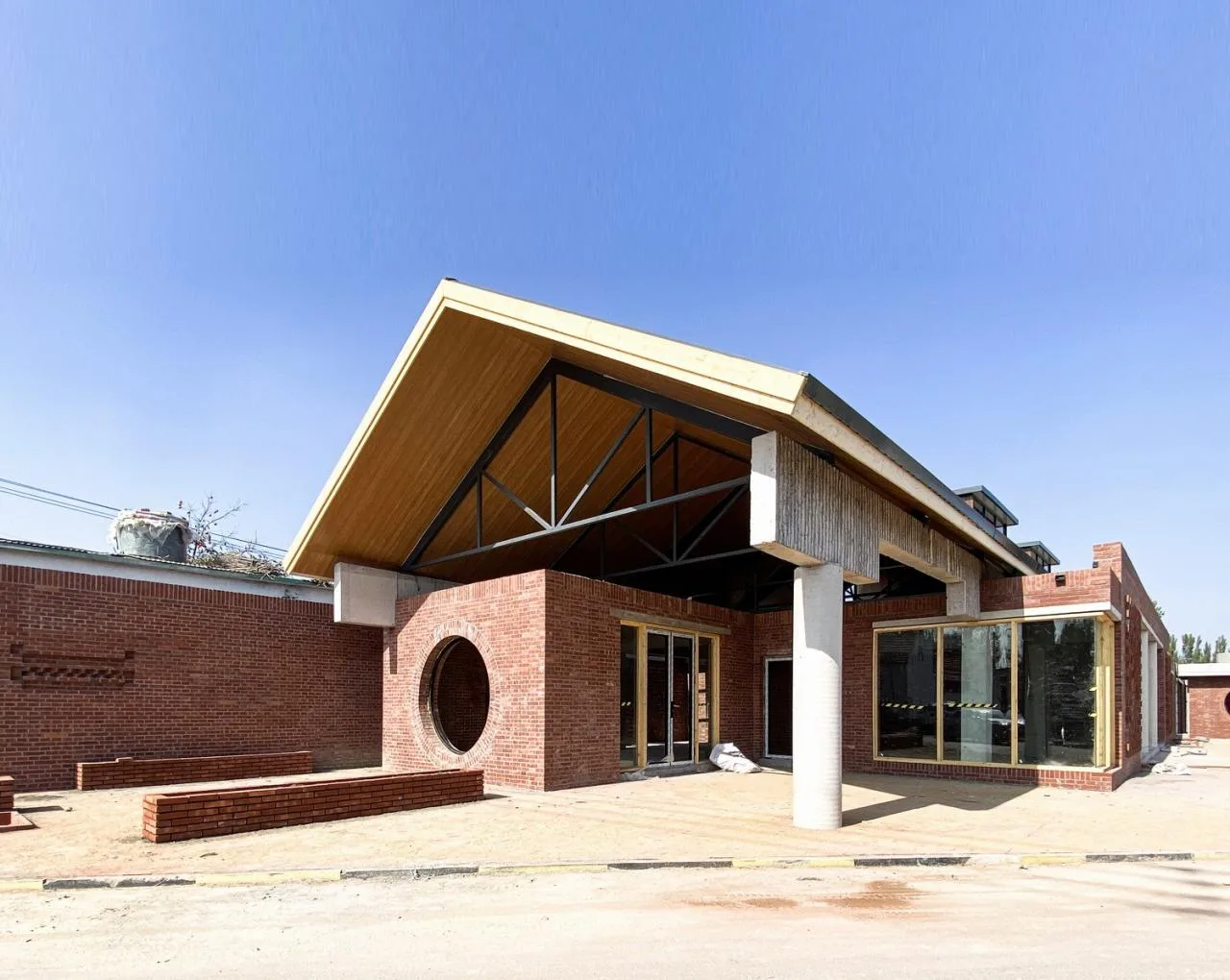
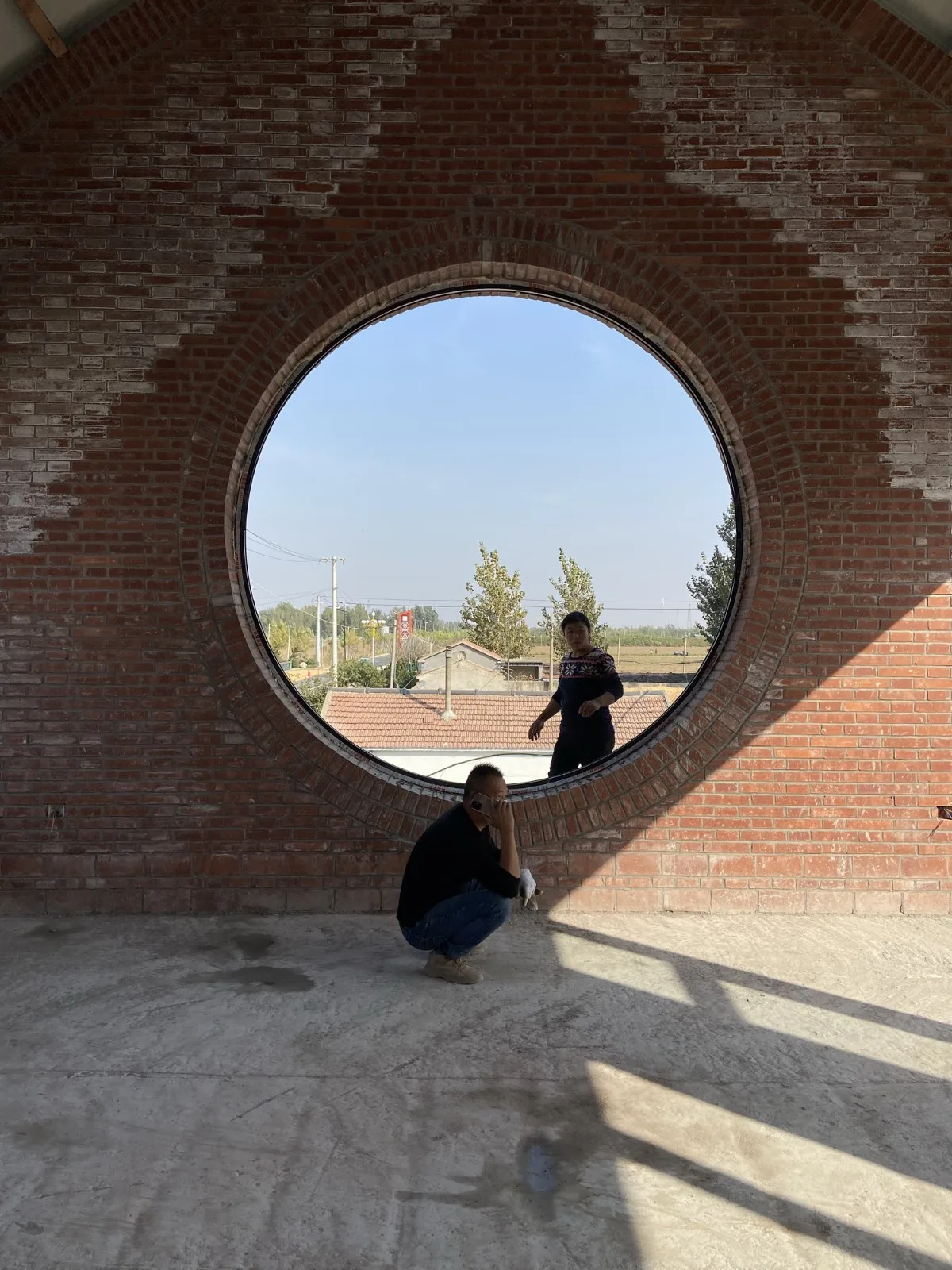
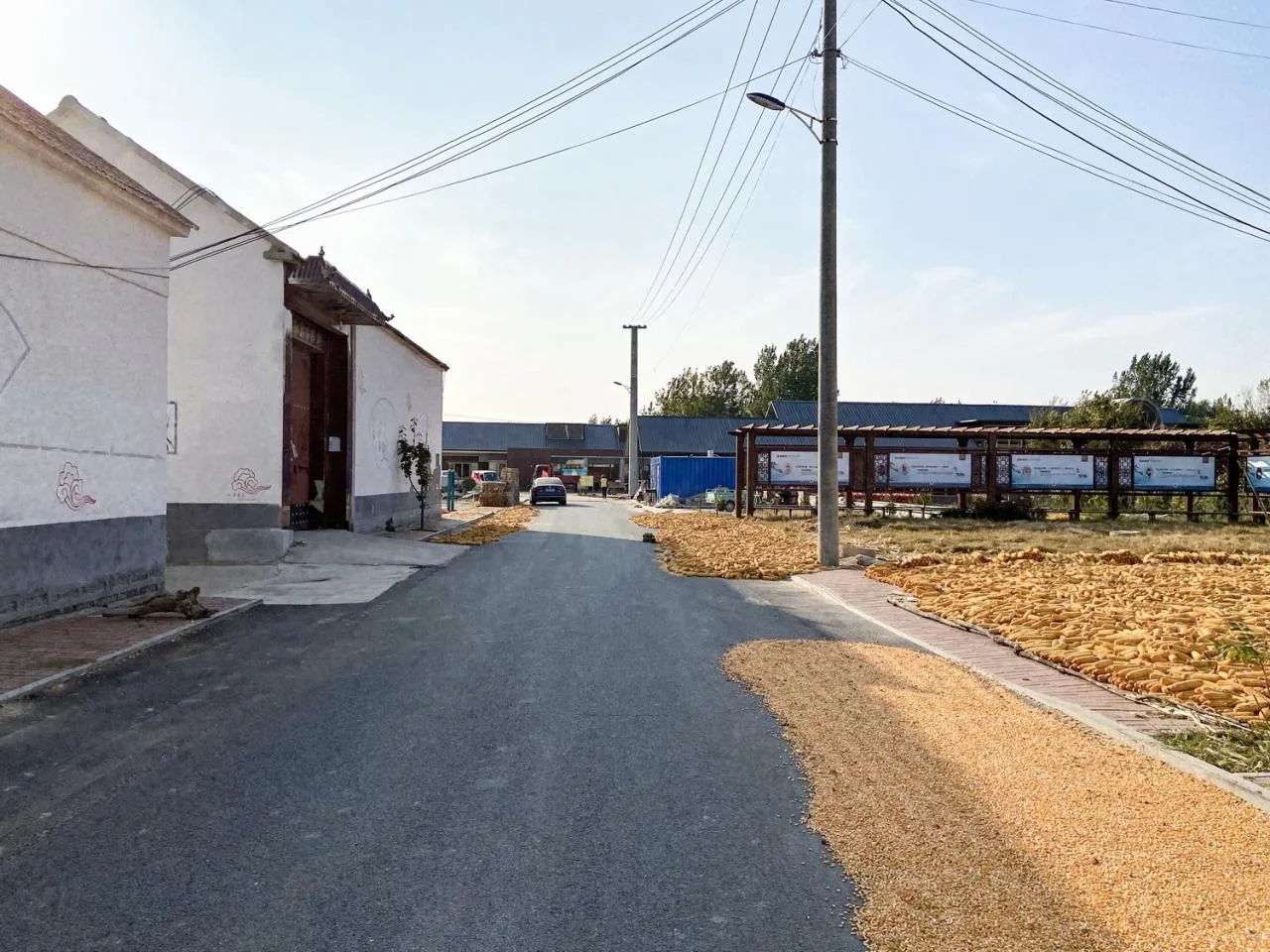
One morning after completion, as I approached the building, I reflected on whether this blend of simplicity and complexity, roughness and refinement, resembled Li Guifen in its earlier days. I recalled a scene from my Jiaodong research: an elderly woman standing before a humble seagrass house warmly invited me inside. She opened a decades-old door to reveal a courtyard blooming with roses. For a long moment, an unexpected emotion lingered. In Qilu’s villages, despite hardships, flowers continue to fill the courtyards with fragrance. Though I never learned the old lady’s name, I feel calling her Li Guifen would be entirely fitting.
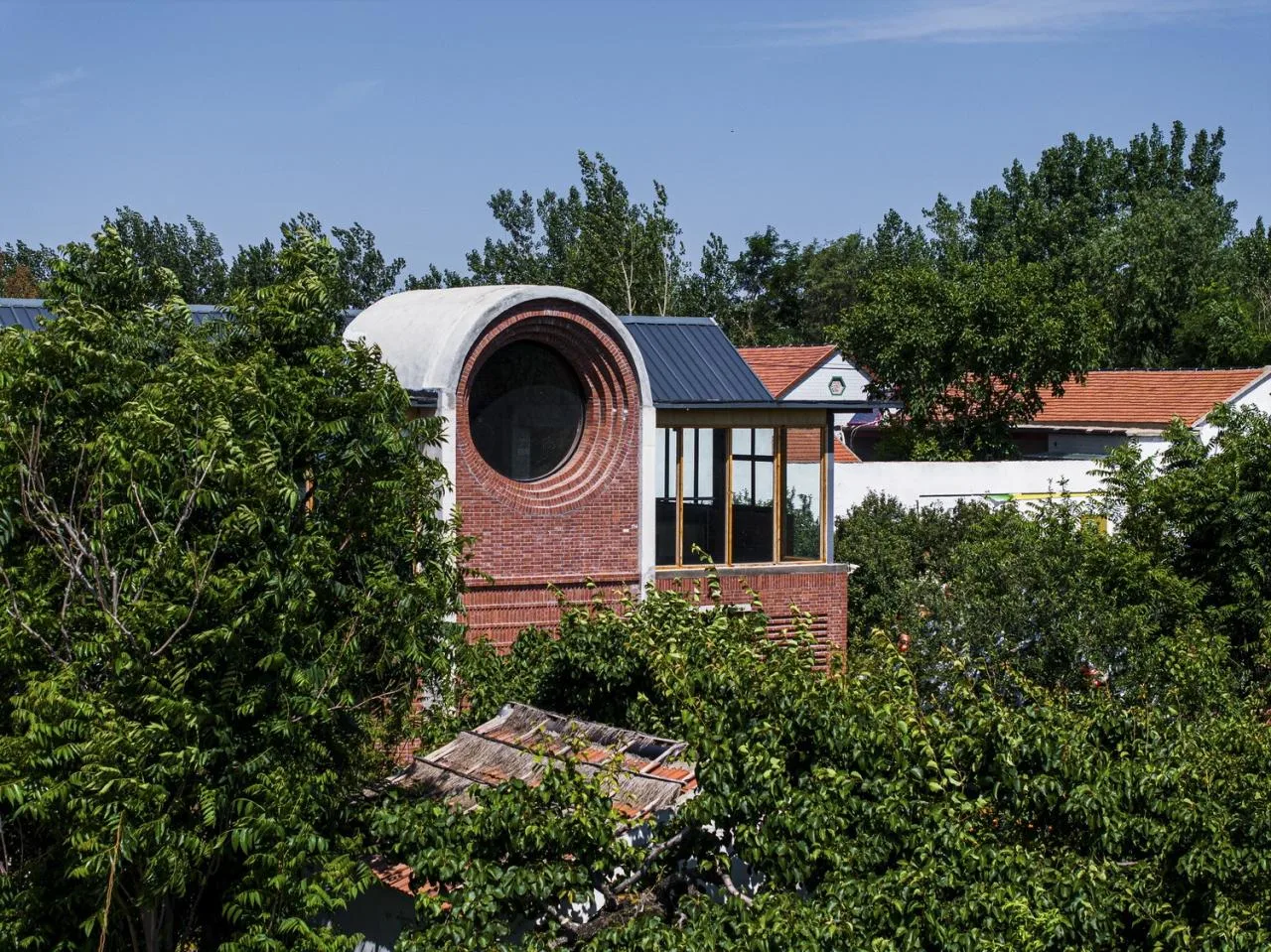
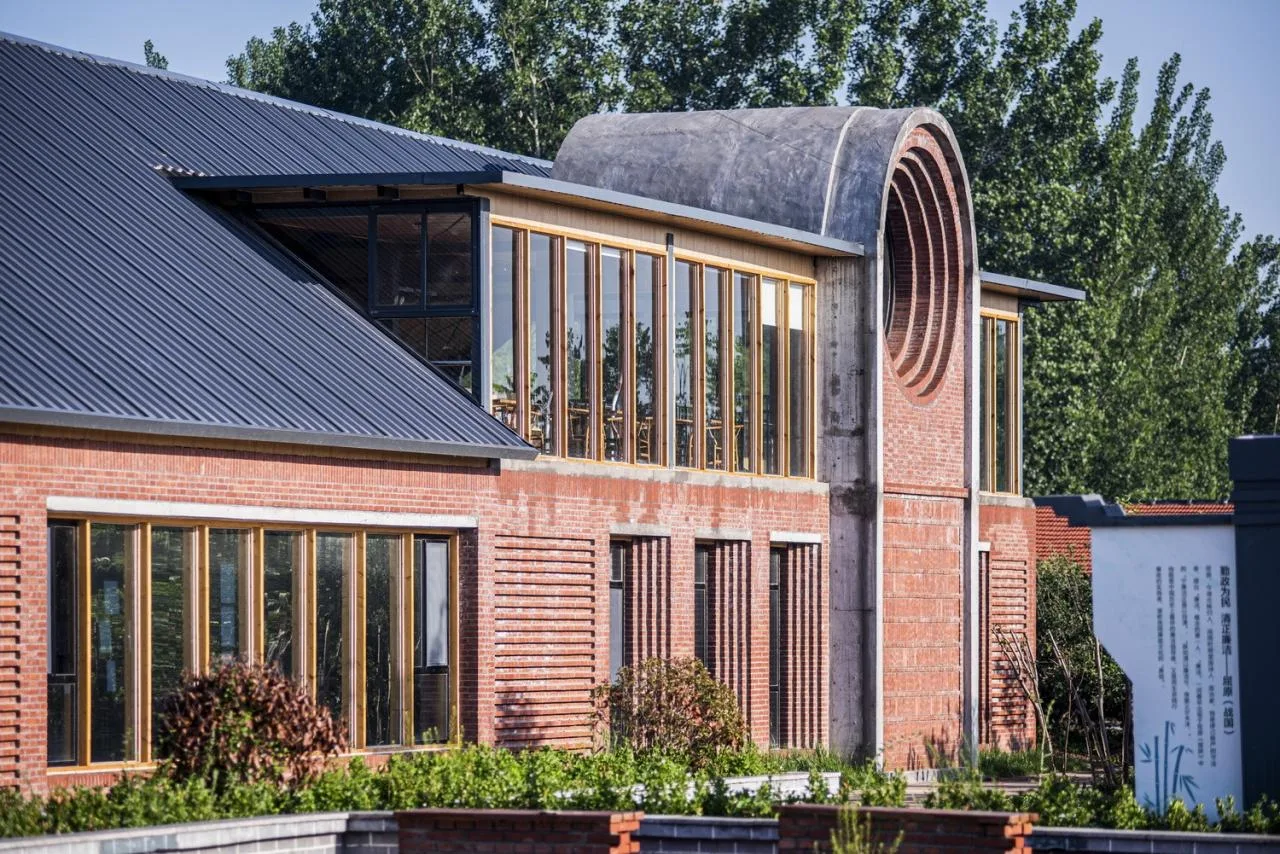
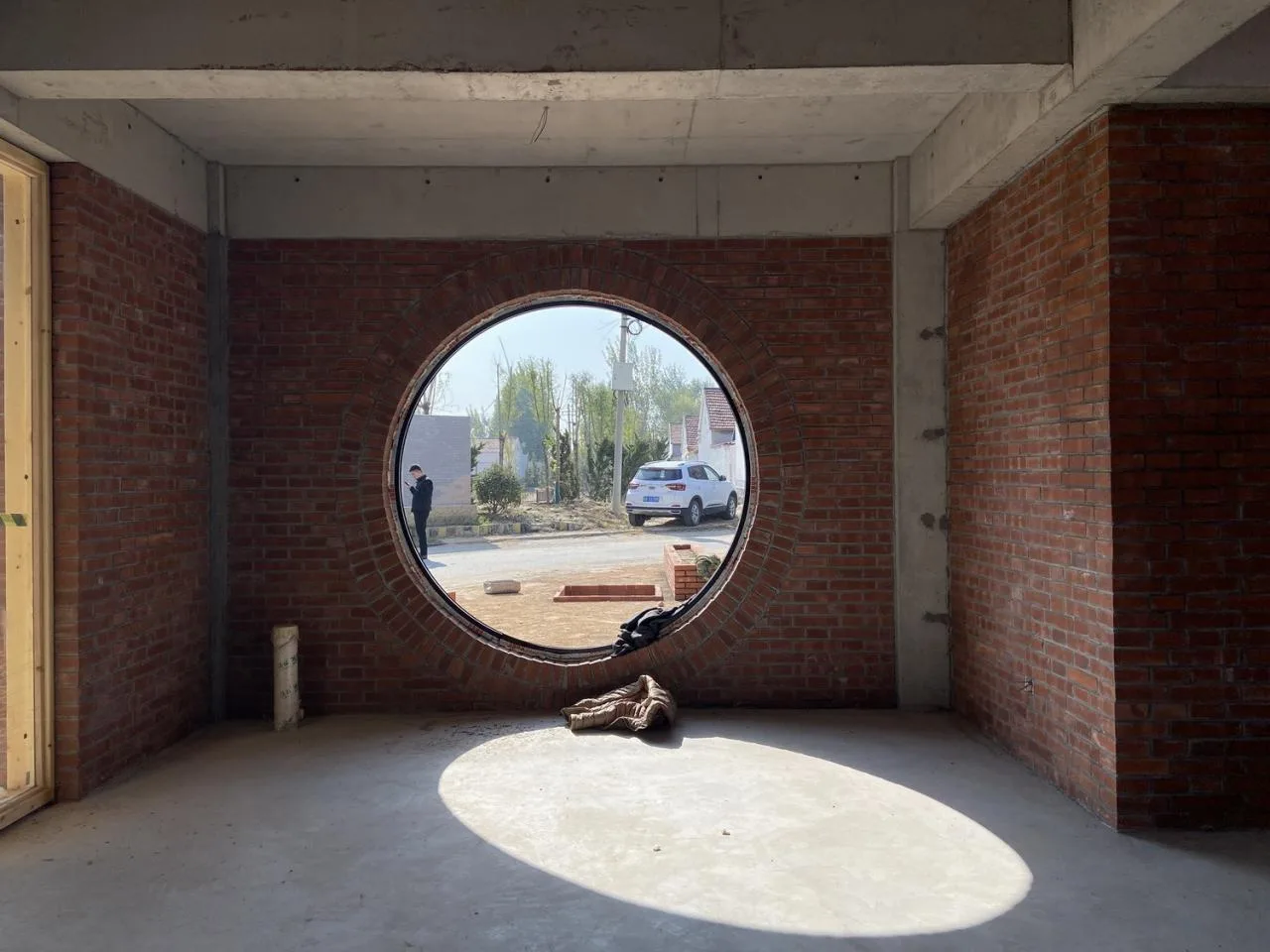
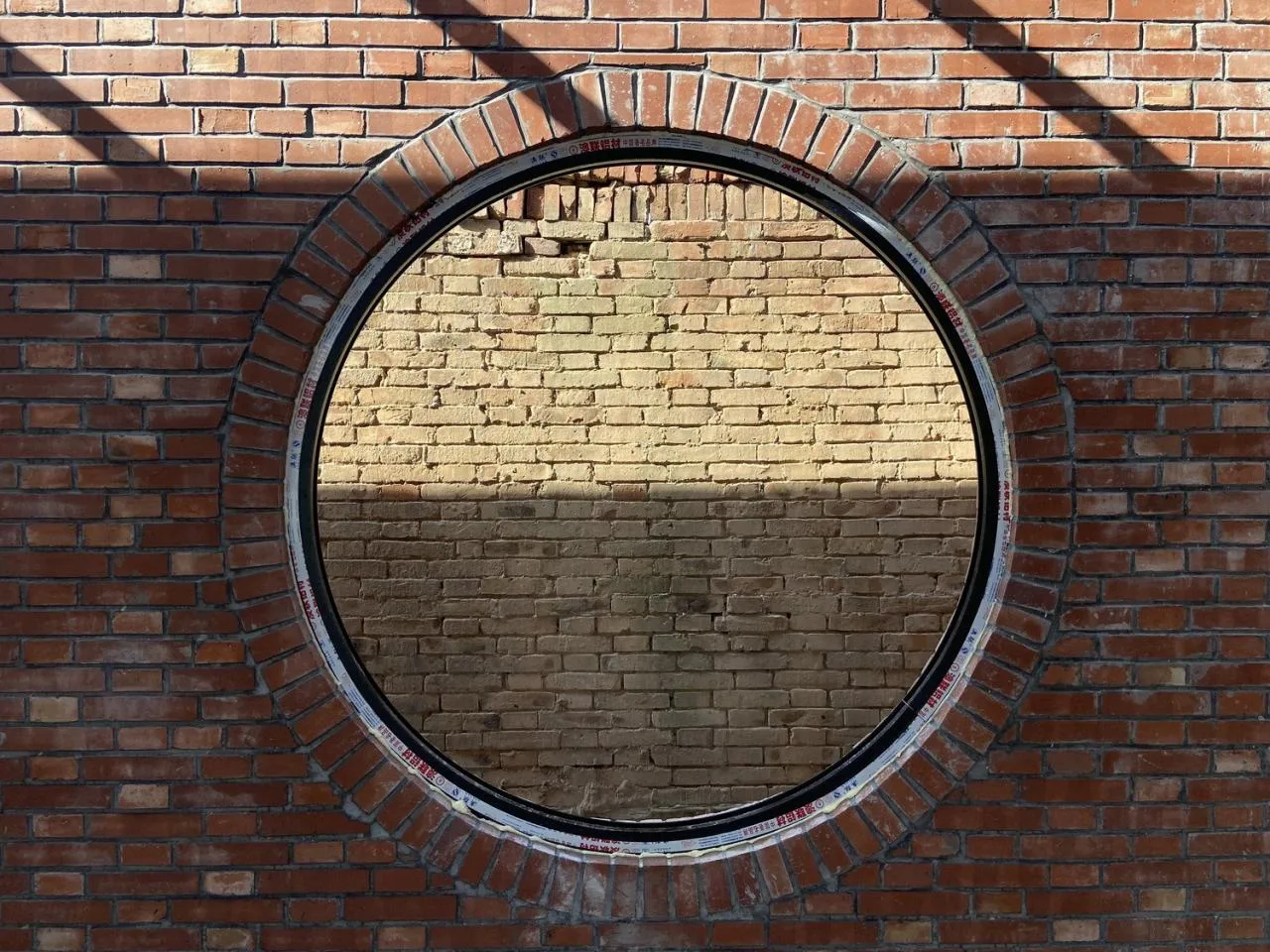
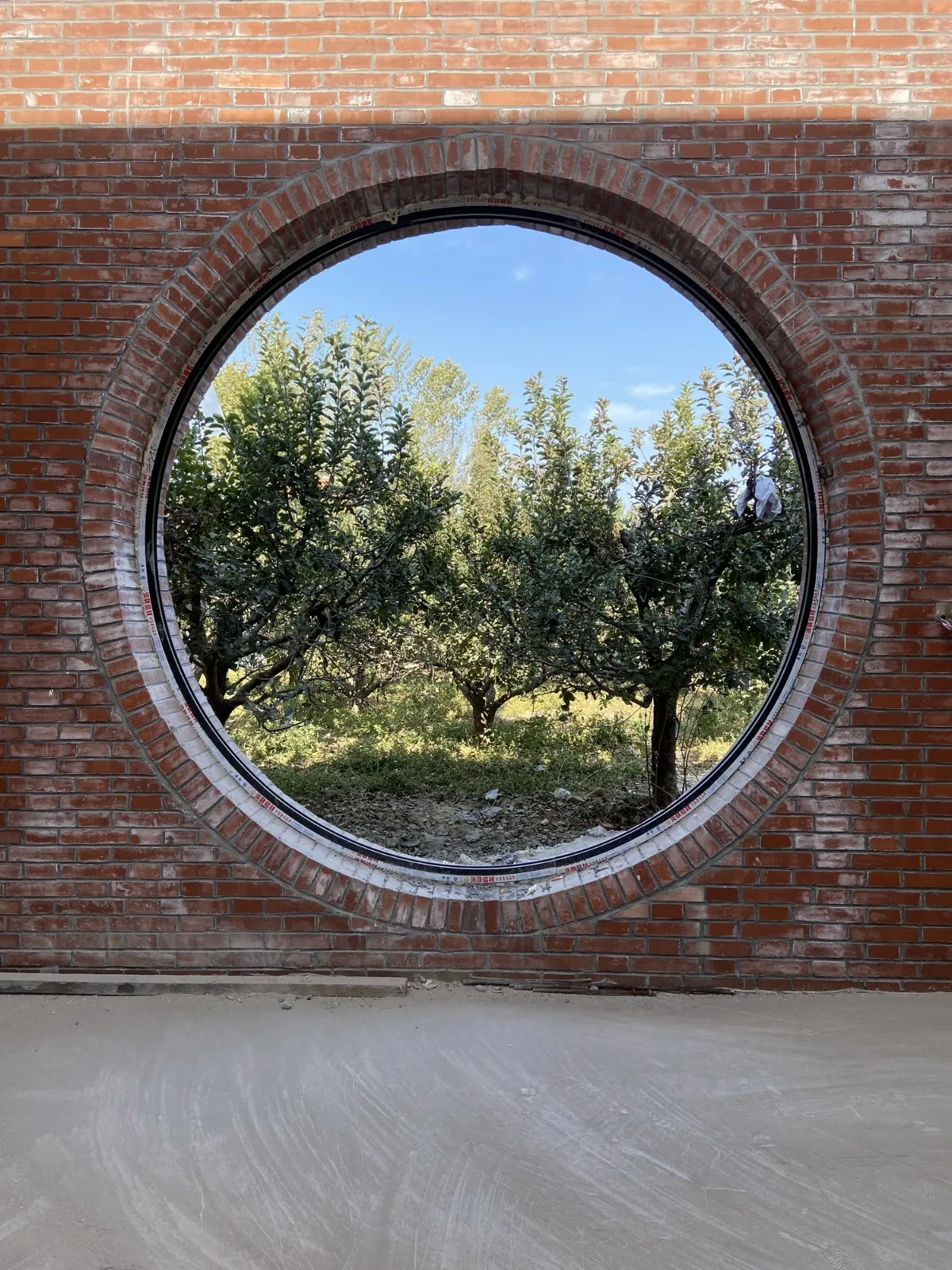
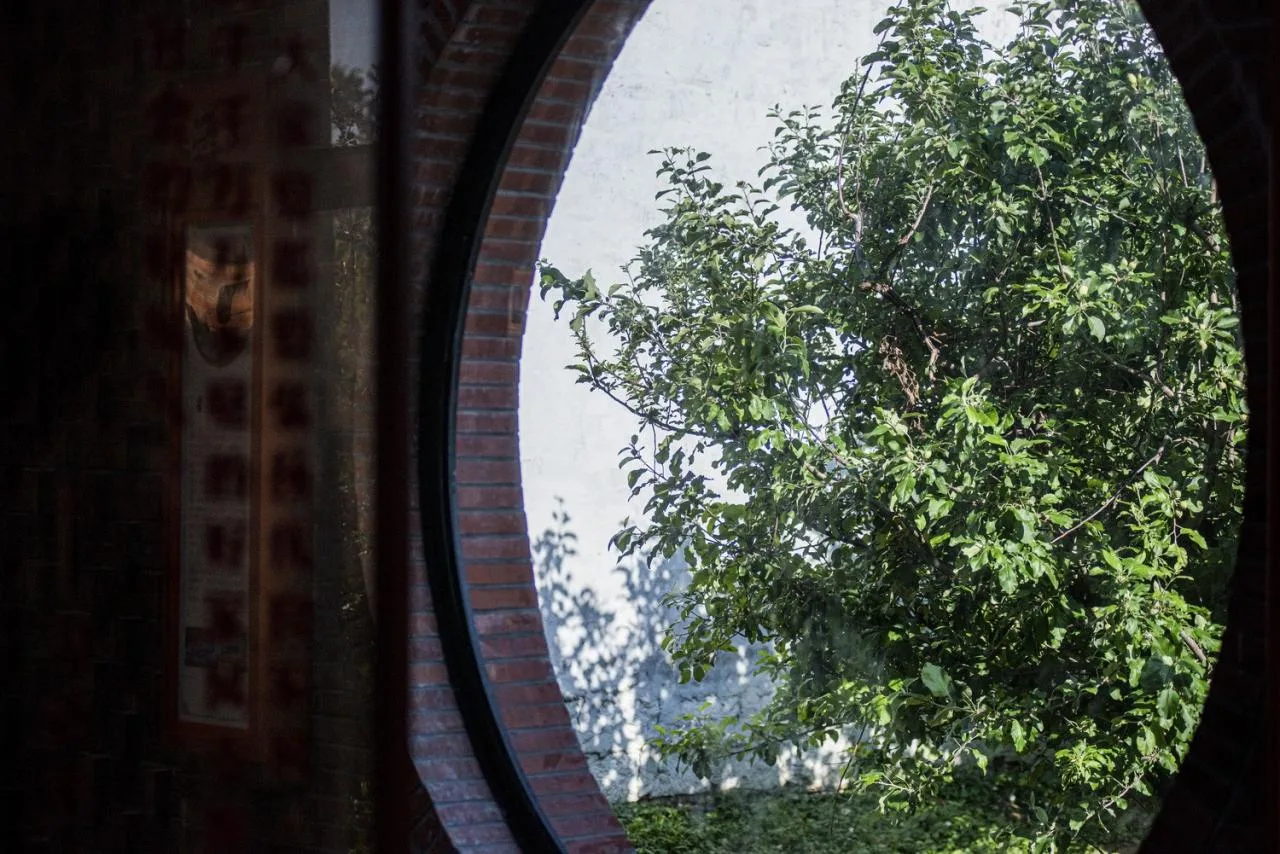
Finally, the building features a series of distinct windows. I’ve always believed windows are the most important architectural element—the eyes of the building and the key to guiding human sight. Because of the relationship between seeing and being seen, these framed views magnify and highlight specific elements. Within these small indoor-outdoor transitional spaces, stories are captured and preserved like lenses over time.
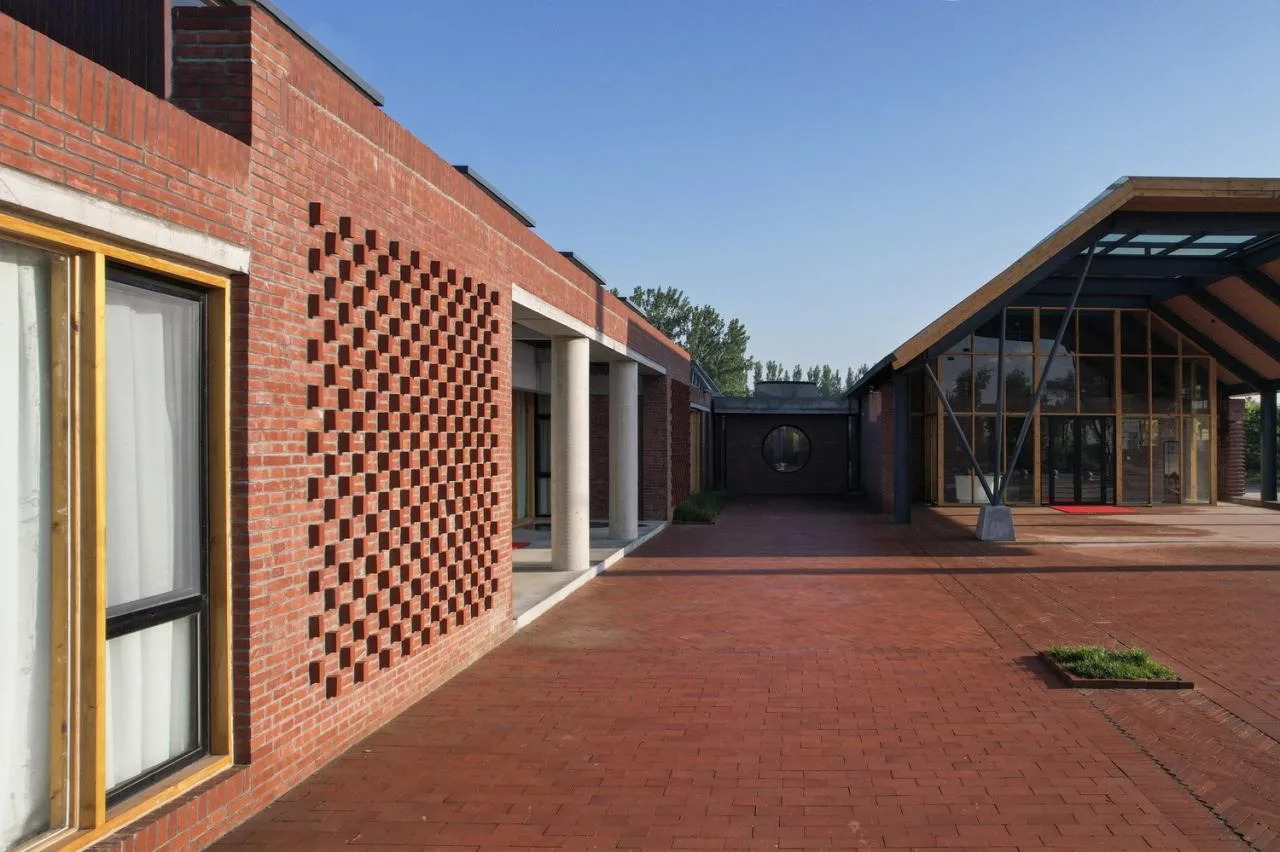
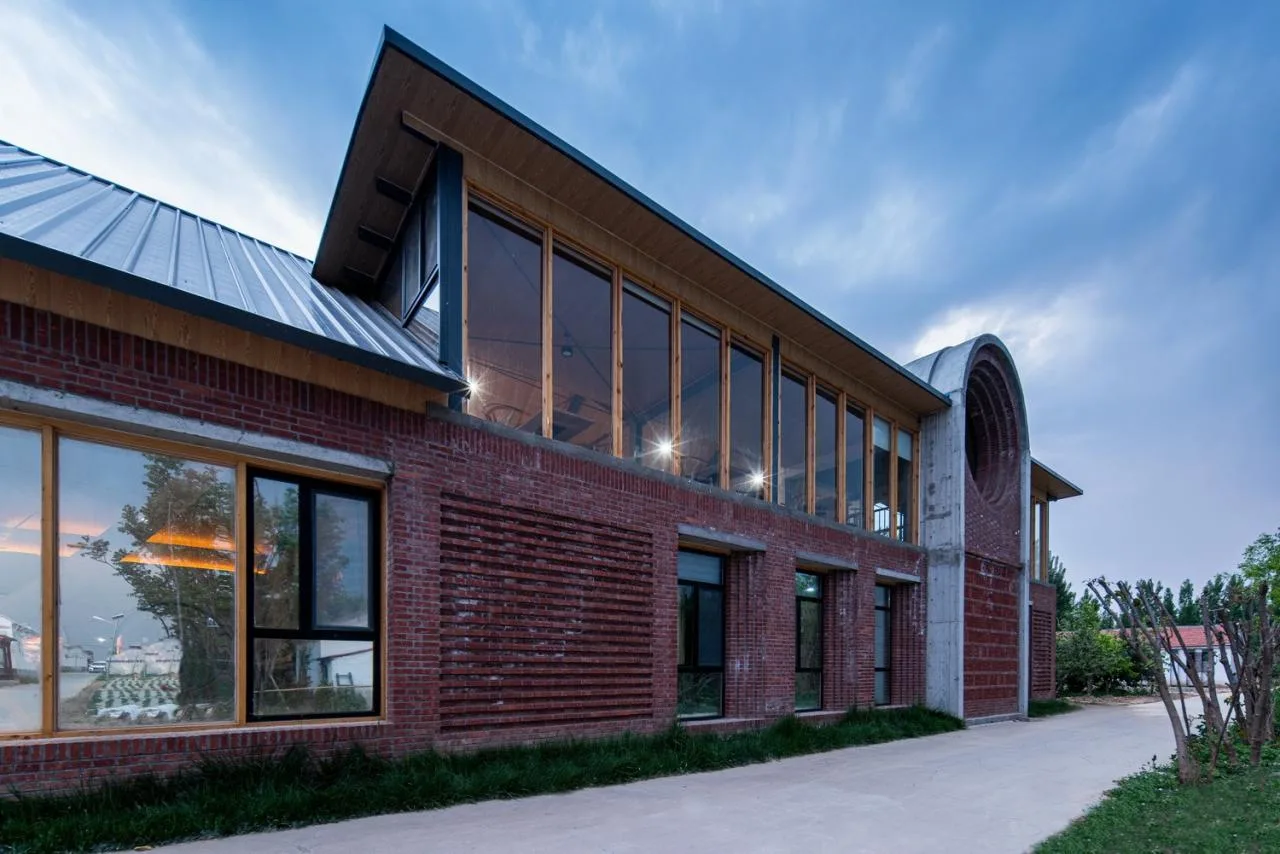
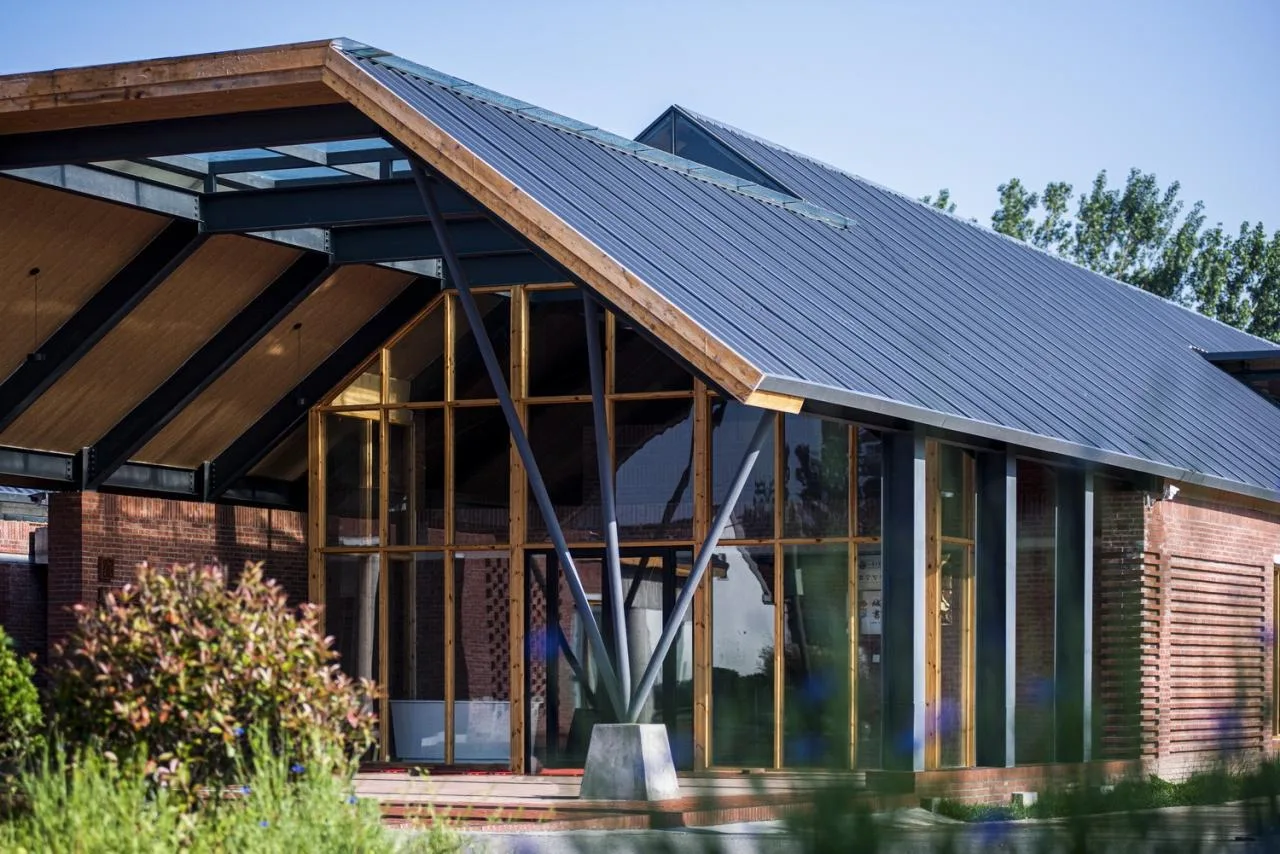
Reflecting on this group of buildings, now two years completed, I sometimes ponder long and hard. But looking back carefully, many things are right before my eyes. This intermittent impression resembles this article—jumping and piecing together fragments, like a Tarkovsky film or childhood memories on sunny days.
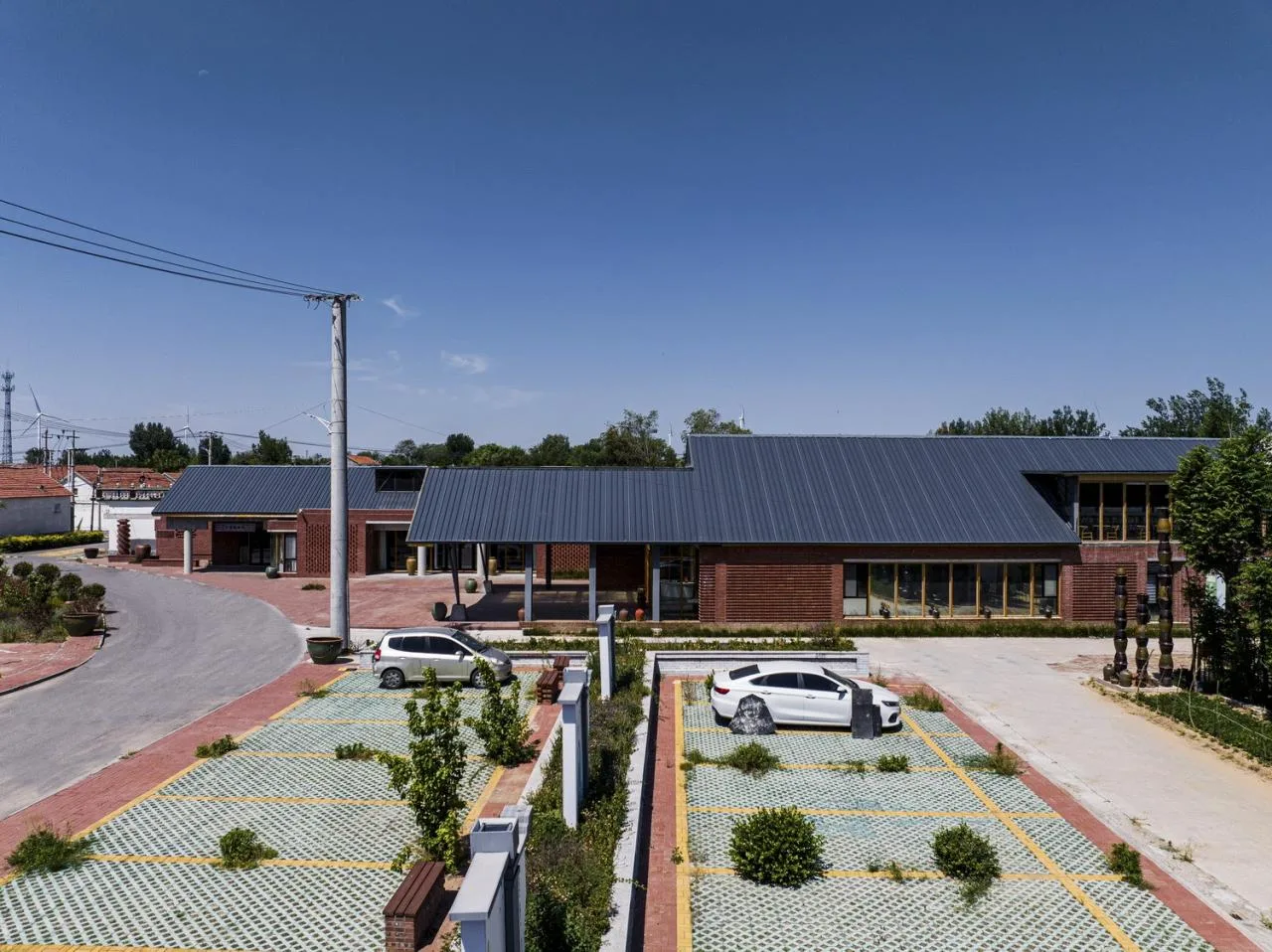
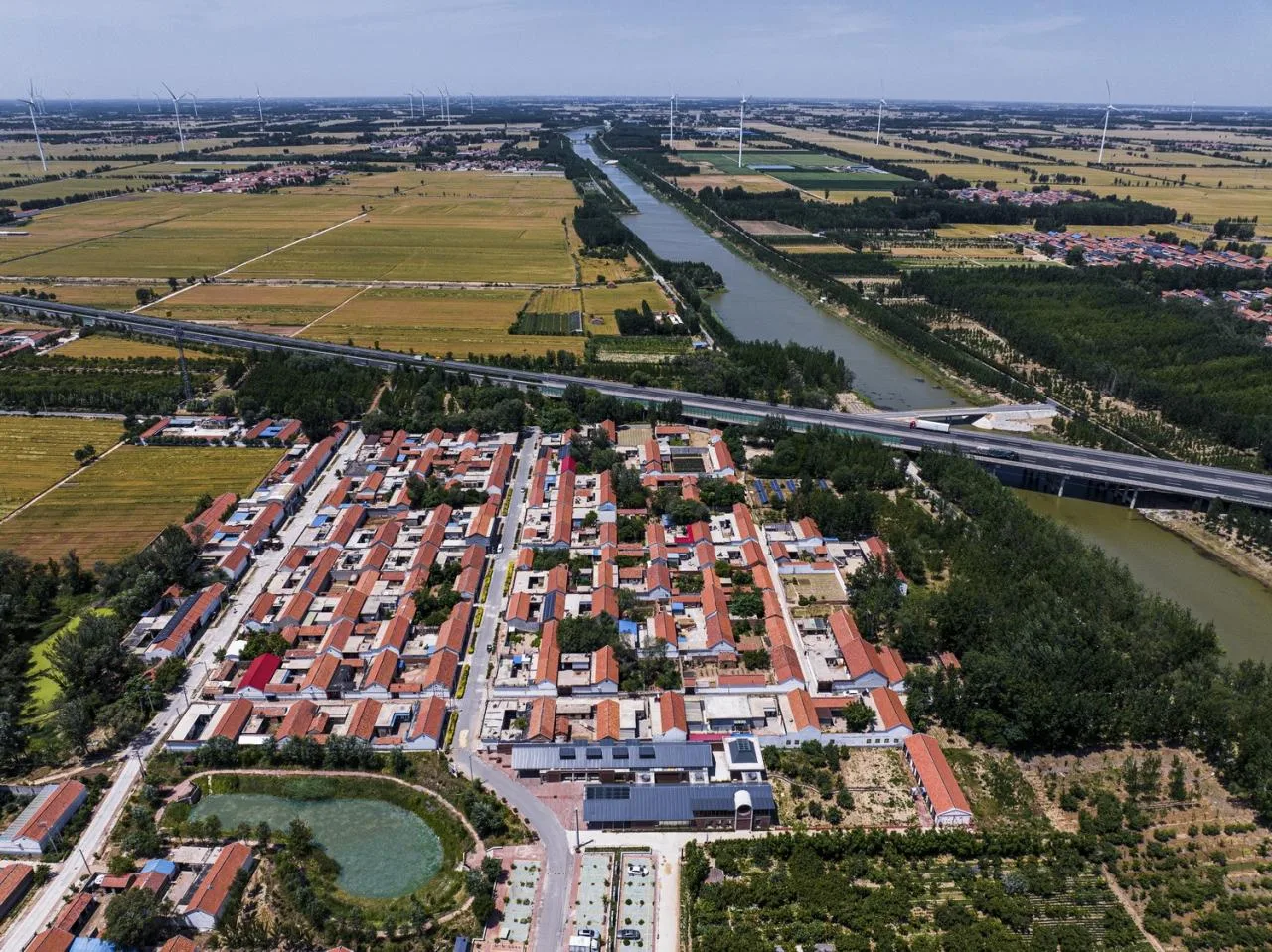
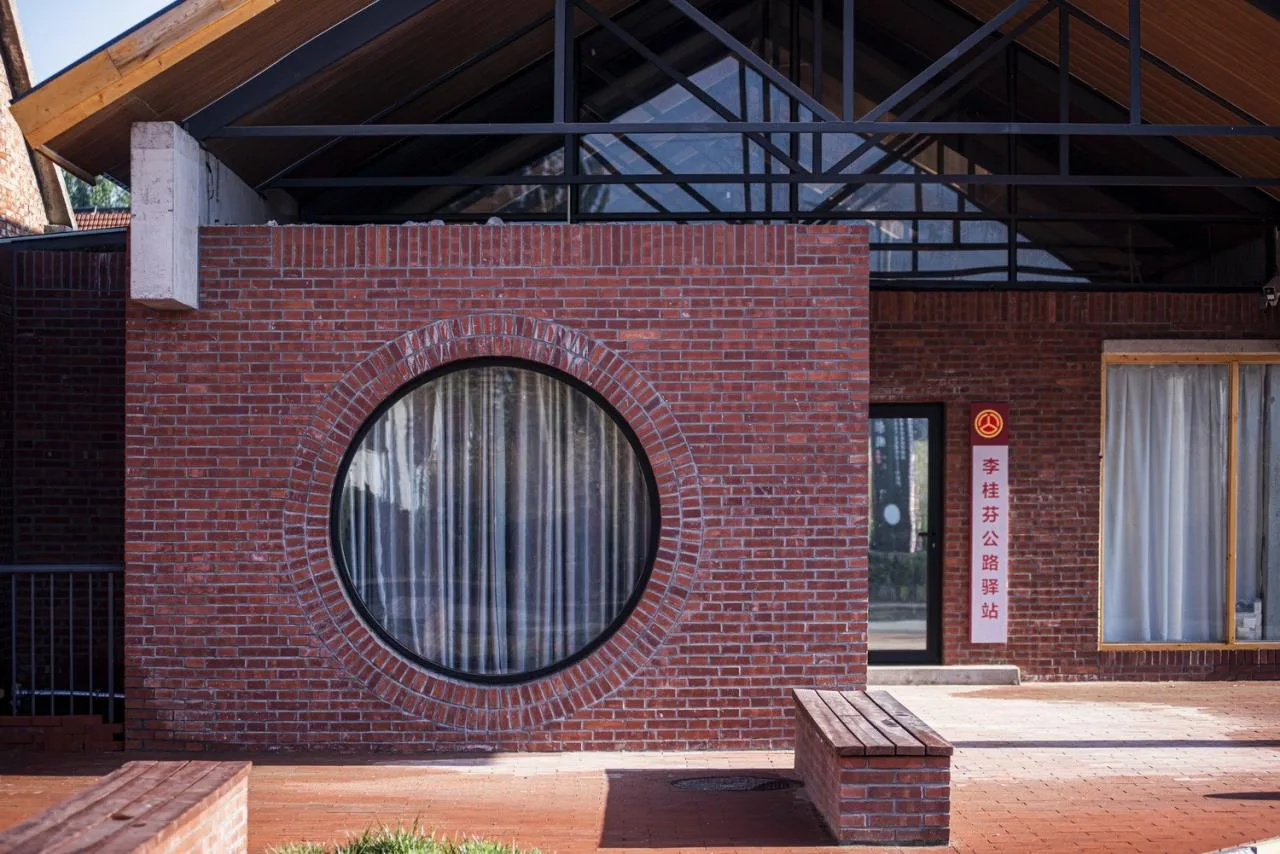
Project Drawings
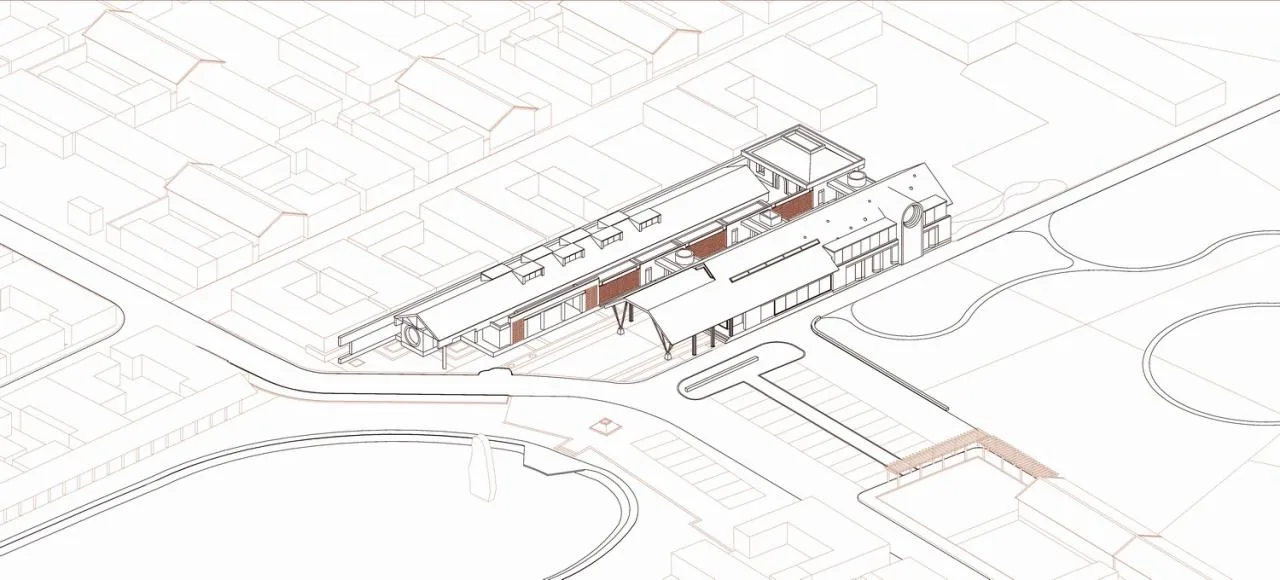
△ Axonometric Diagram
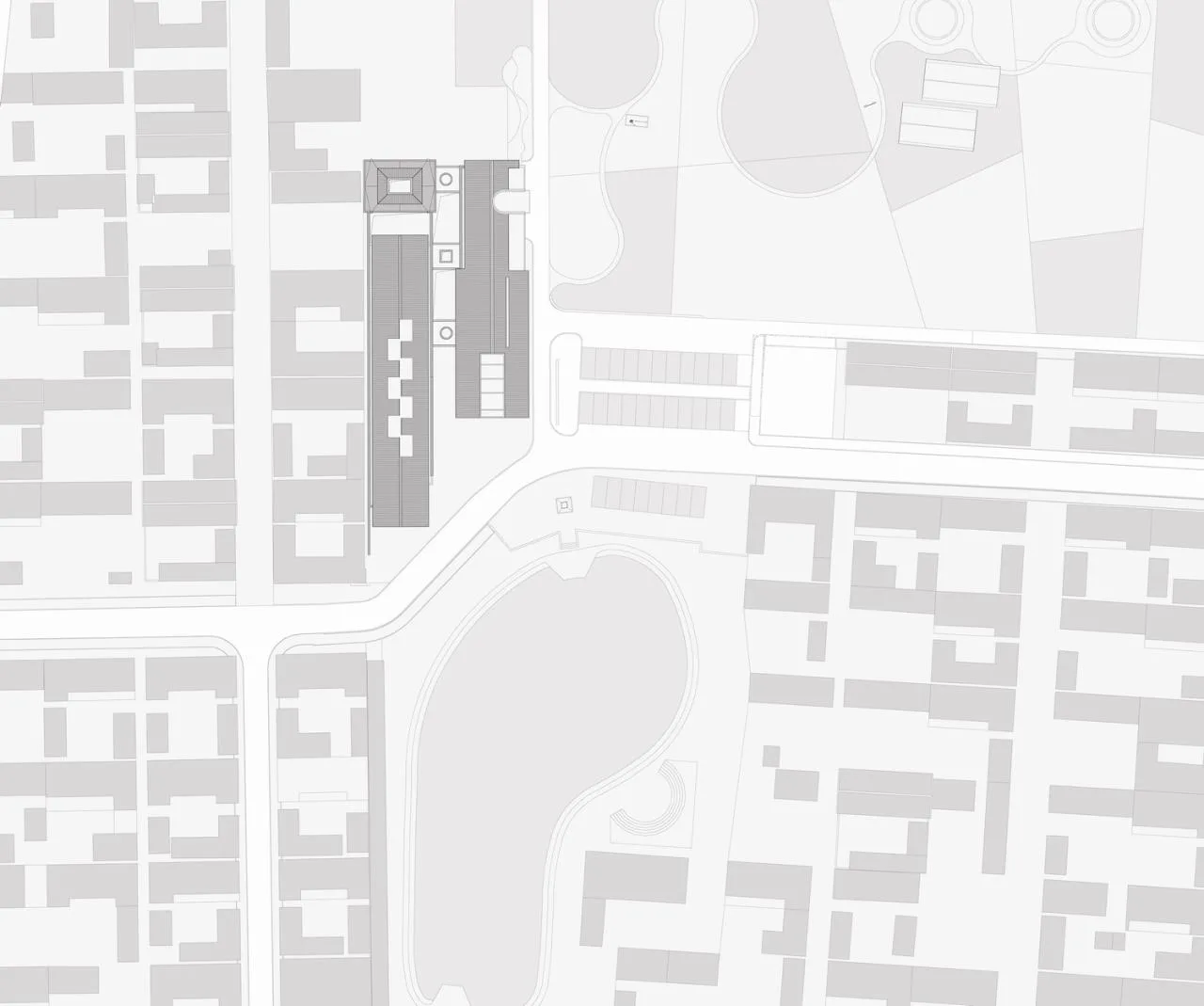
△ General Layout Plan
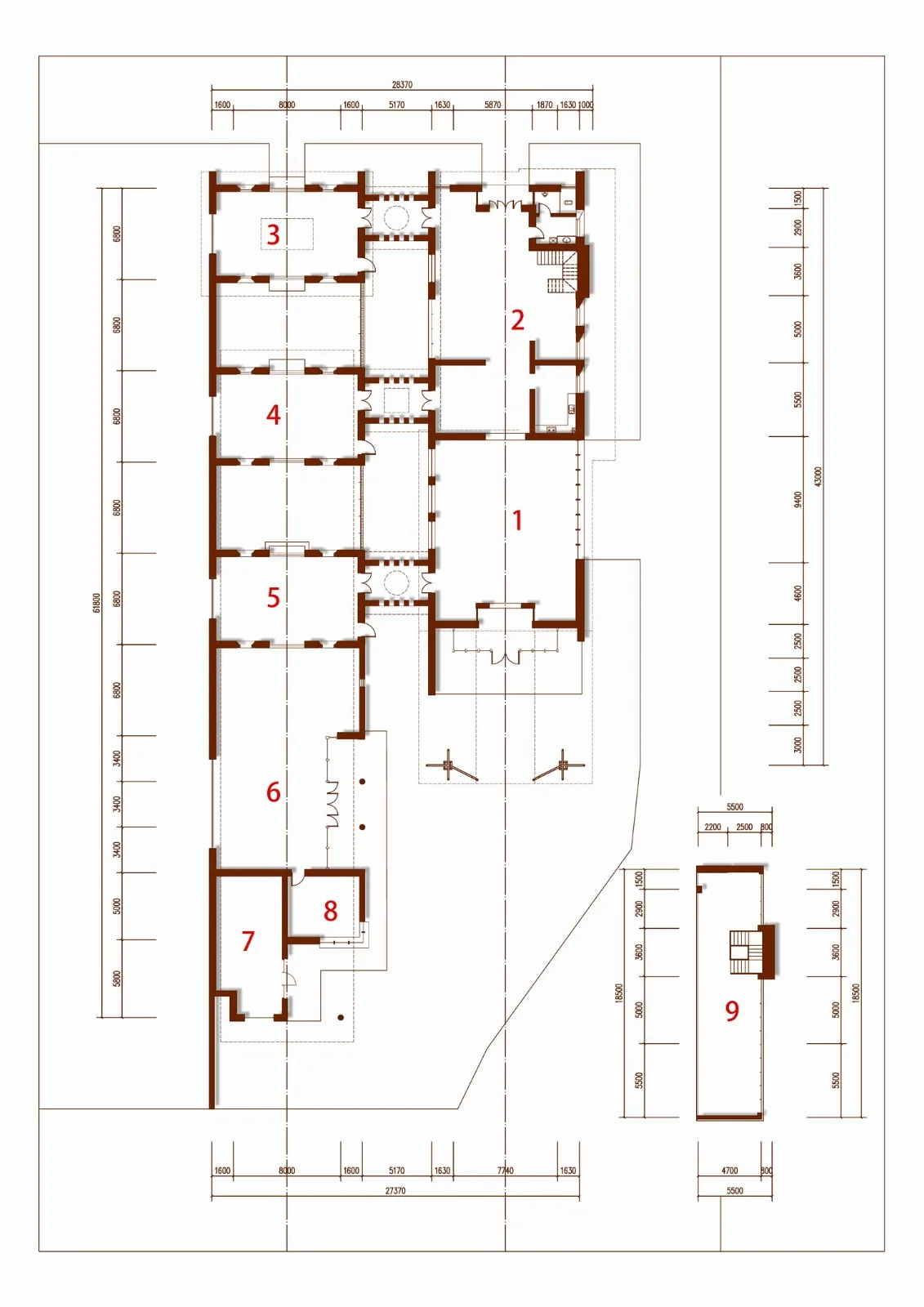
△ Plan View
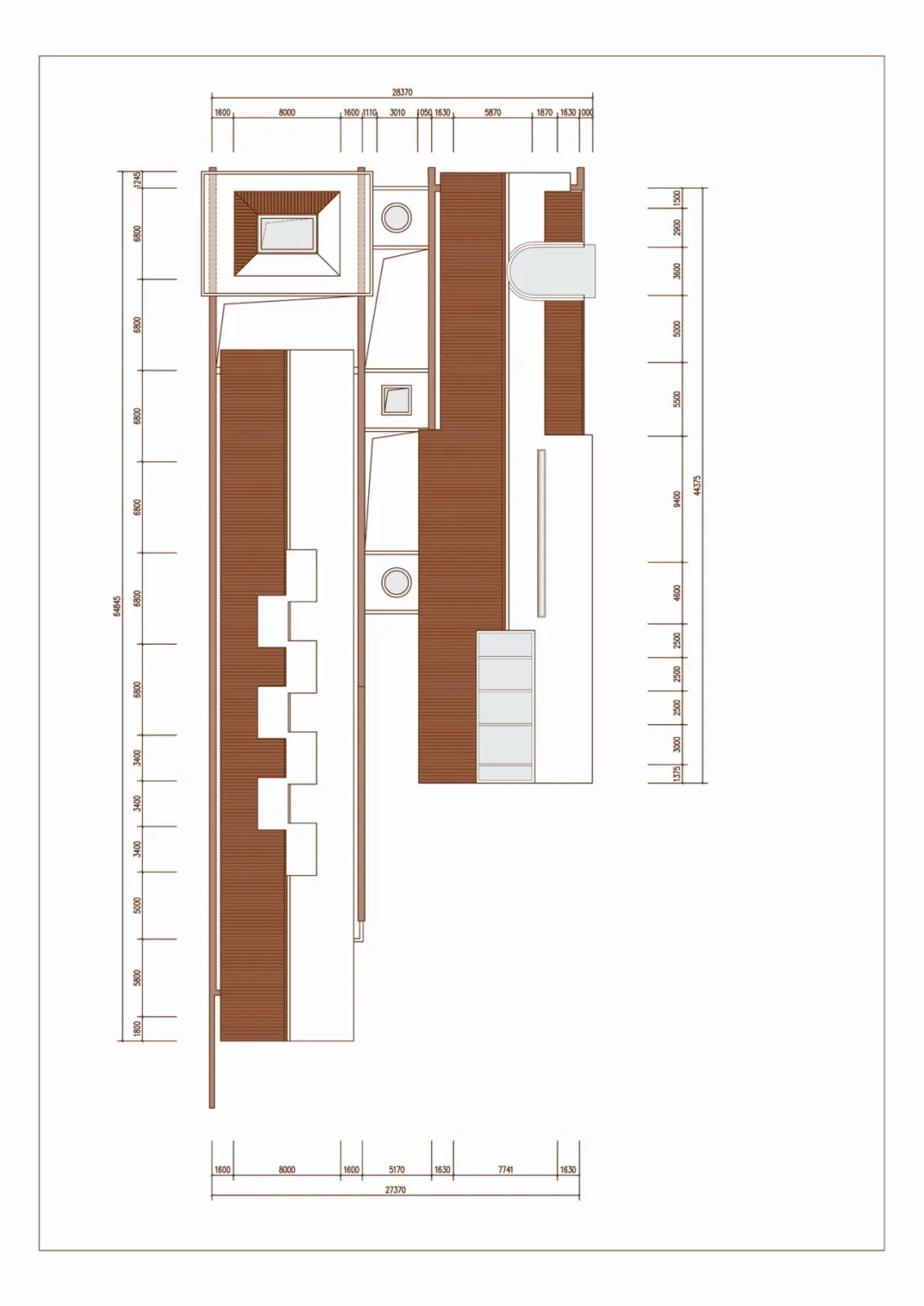
△ Roof Plan
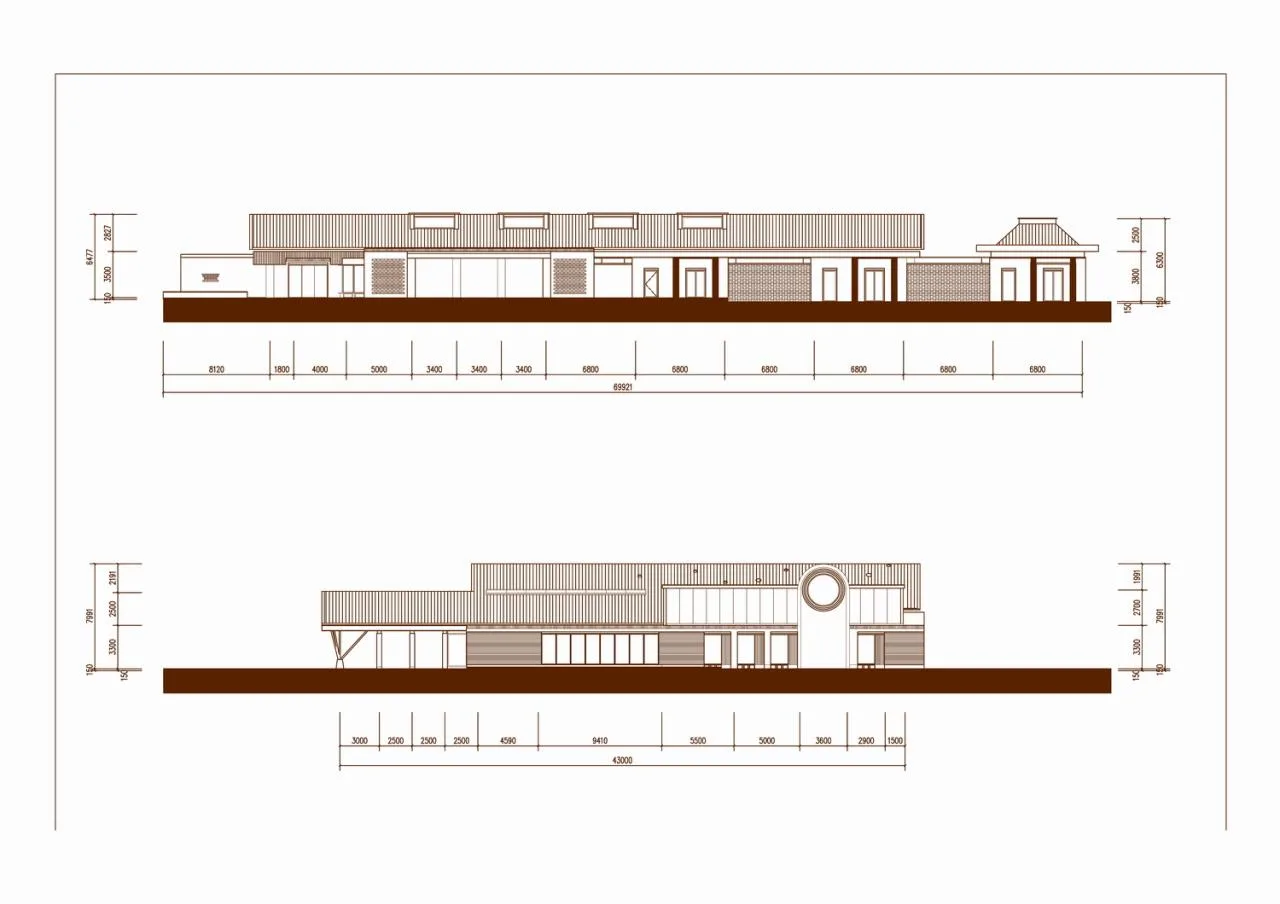
△ Elevation Drawing
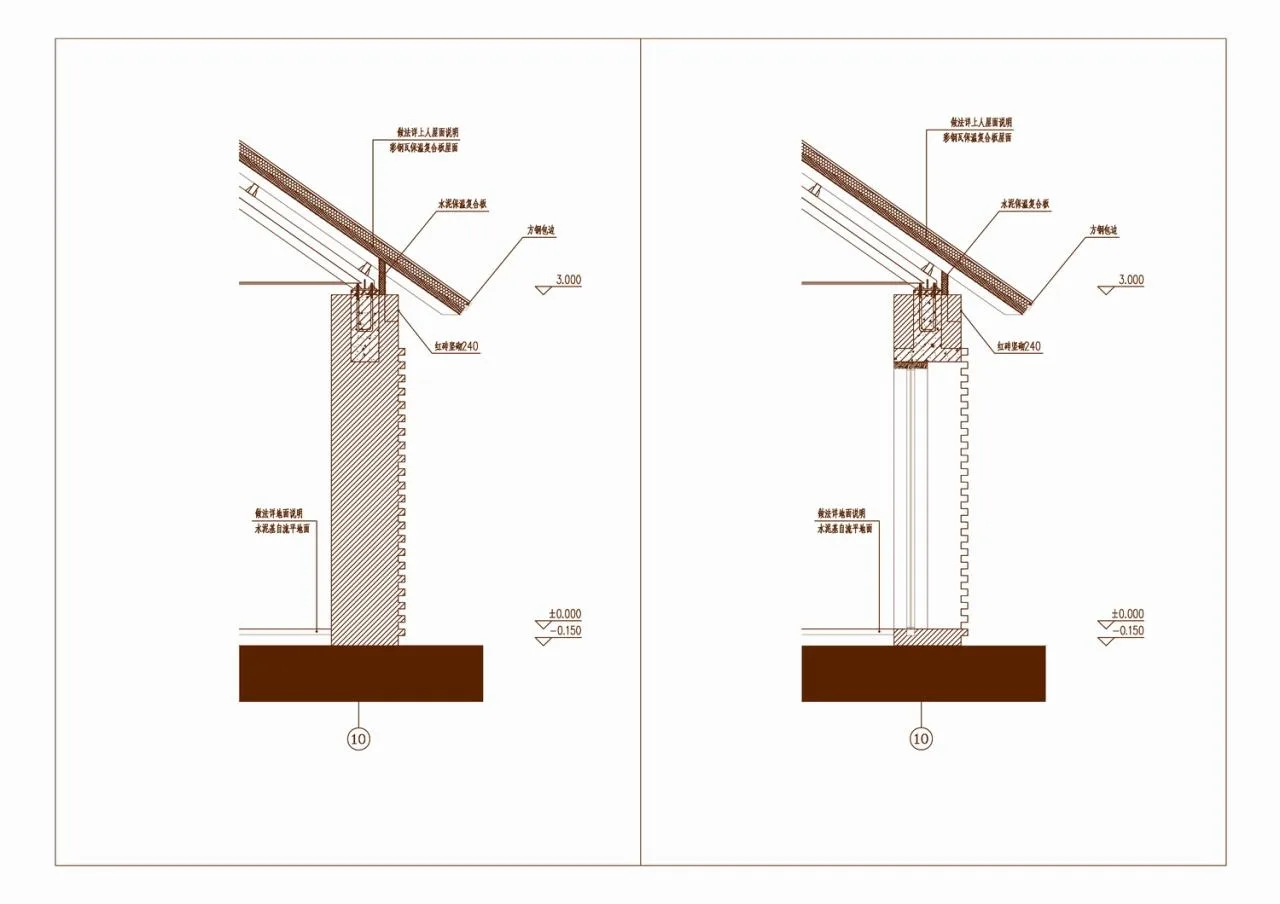
△ Detailed Drawing
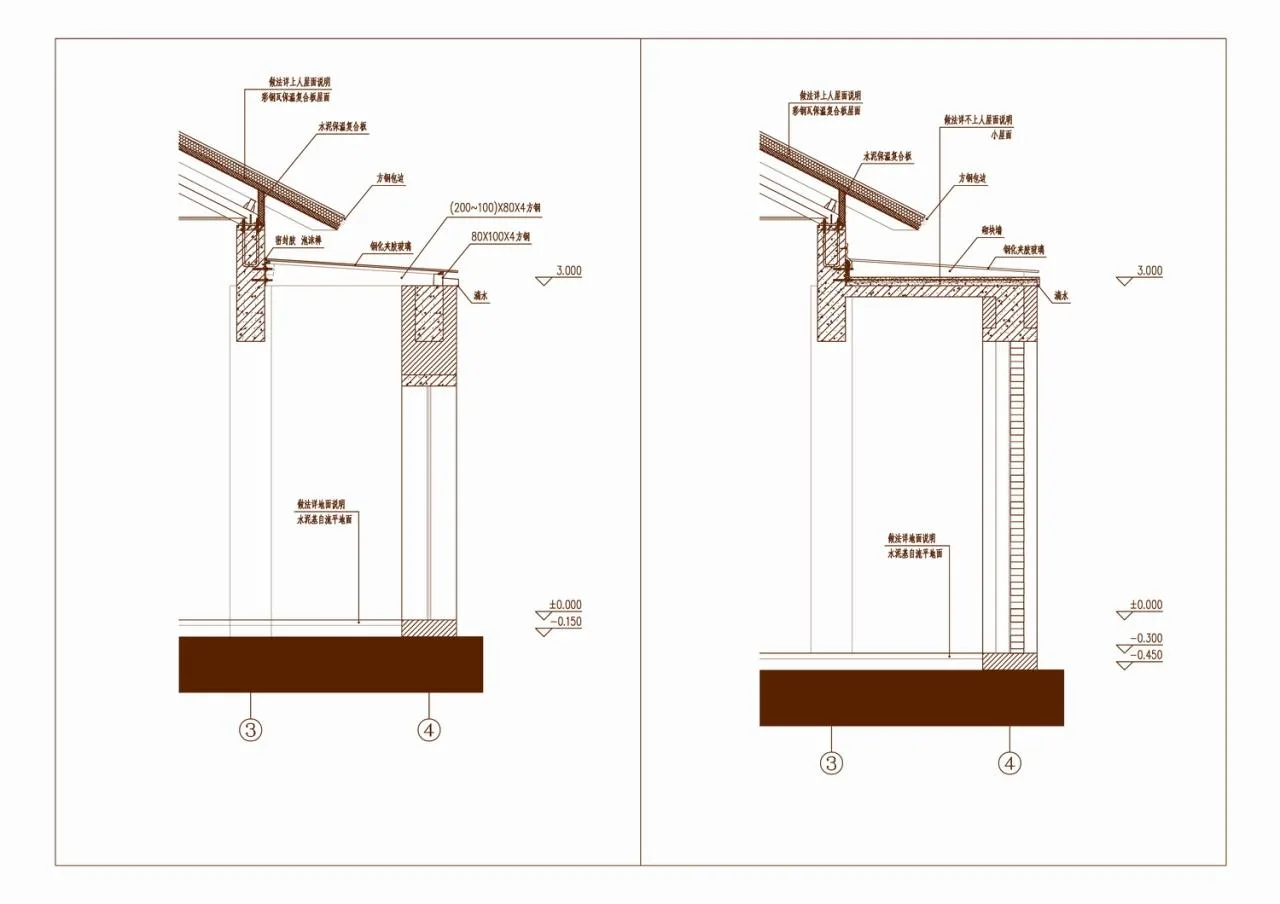
△ Detailed Drawing
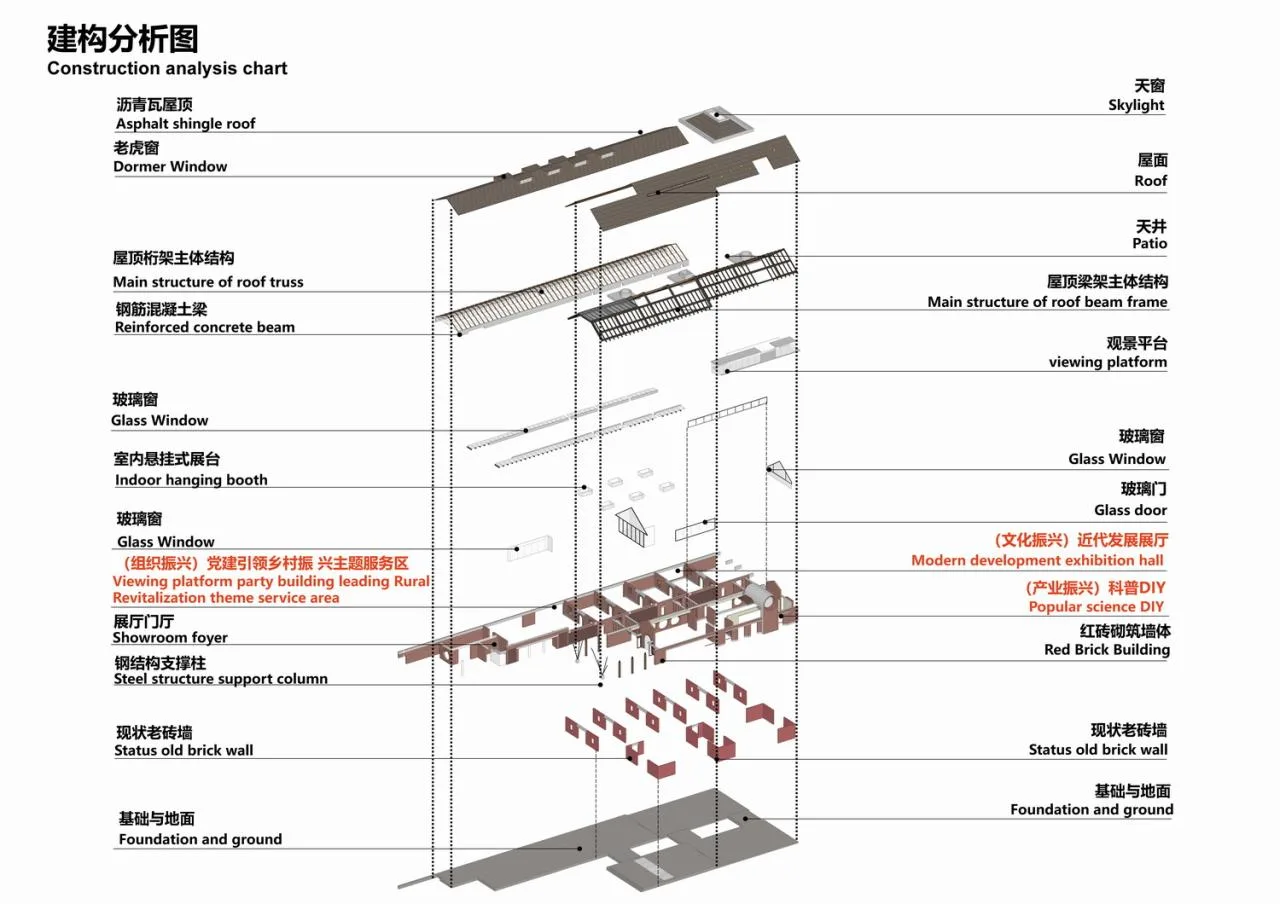
△ Exploded Diagram
Project Information
Project Name: Li Guifen Rural Complex
Architectural Firm/Company: Shandong Urban and Rural Planning and Design Research Institute Co., Ltd., Architectural Creation Center
Company Location: No. 9 Jiefang Road, Lixia District, Jinan City, Shandong Province
Project Completion: December 2021 – July 2022
Building Area: 1,543 square meters
Project Address: Li Guifen Village, Yinxiang Town, Shanghe County, Jinan City, Shandong Province
Lead Architect: Gai Shuai Shuai
Photographer: Waterjet Wood
Design Team: Liang Shuyang, Li Zhen, Li Yuanyuan, Liu Quanyi
Principal: People’s Government of Yinxiang Town, Shanghe County
Structural Design: Zhang Jian, Dong Xingping
Mechanical and Electrical Design: Bu Qinggui, Li Tao, Wang Yongwei















Must log in before commenting!
Sign Up