
Kindergarten represents the first public environment children encounter during their development. The scale of the space, its flexibility, and the atmosphere all play crucial roles in shaping young children’s emotions and perceptions, posing a unique challenge for architects.
Yuyao Road Kindergarten, a top-tier institution in Shanghai, is situated in a modern, upscale residential area in the northwest corner of Jing’an District. Established in 1957, it boasts 48 years of history in early childhood education. For decades, Yuyao Road Kindergarten has upheld the principle of “everything for children,” a philosophy equally embraced by Liu Yuyang Architectural Firm in their educational projects.
The firm aims to ignite children’s curiosity and passion for learning through thoughtful design, while creating a warm, secure environment and a playground that children cherish.
During the 2016 international design competition, Liu Yuyang Architectural Firm outperformed two strong local contenders and secured first place. However, the firm did not participate in the subsequent design development phase. It was only in 2018, through online government announcements, that they learned construction was about to begin.
The kindergarten was completed in spring 2020, but the ALYA team officially visited the site only in late spring 2024. Despite initial high expectations and some regrets over the process, this project remains a significant example of Liu Yuyang Architectural Firm’s architectural DNA.
During the follow-up visit, Principal Tan Yanwen engaged in detailed discussions with Teacher Liu Yuyang and the design team about various design details and post-occupancy usage scenarios. What stood out was the understanding that excellent design goes beyond clear architectural strategy and precise construction—it evolves continuously through the everyday experiences of its users.
City and Context: The Micro Lane
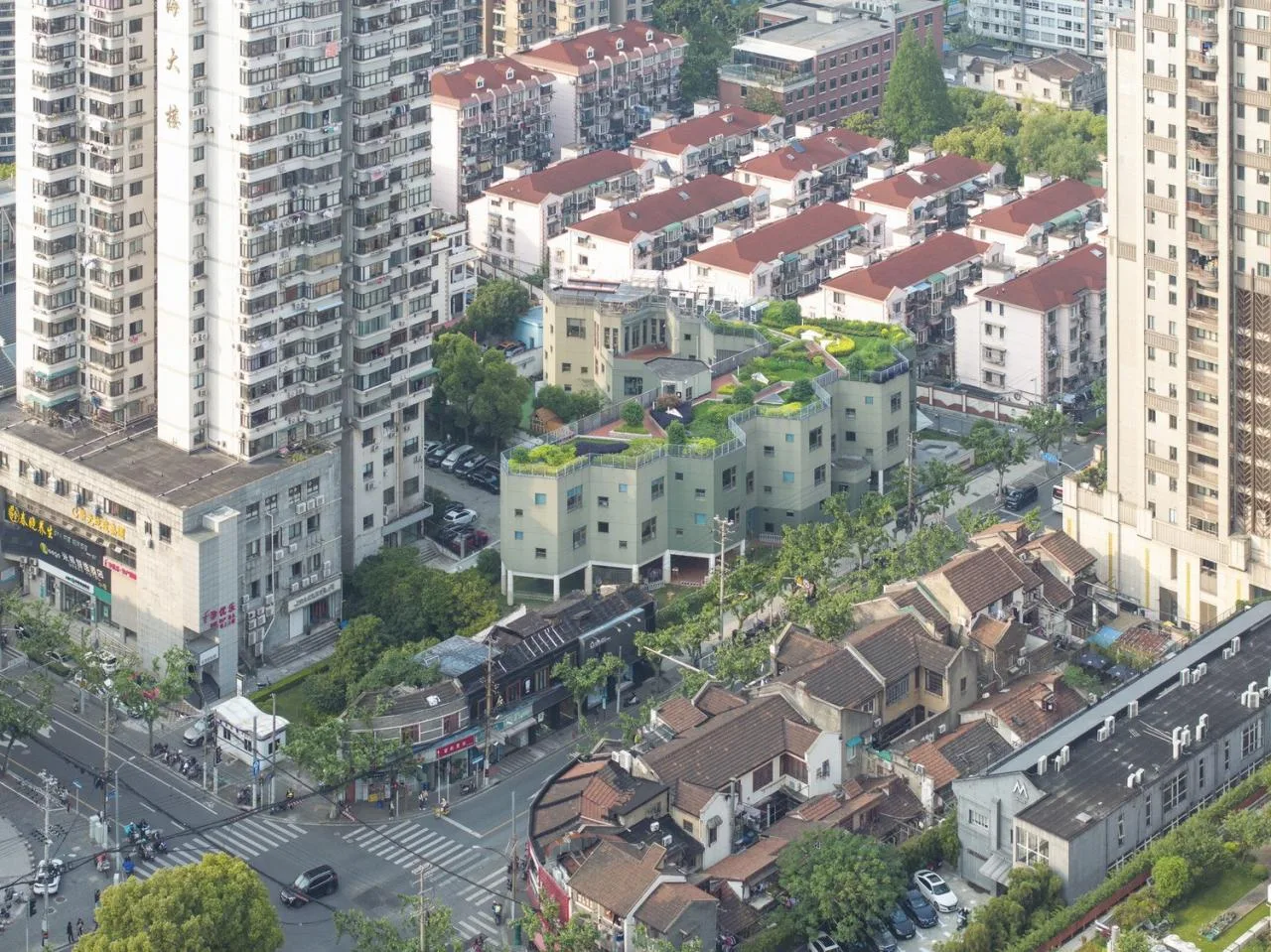
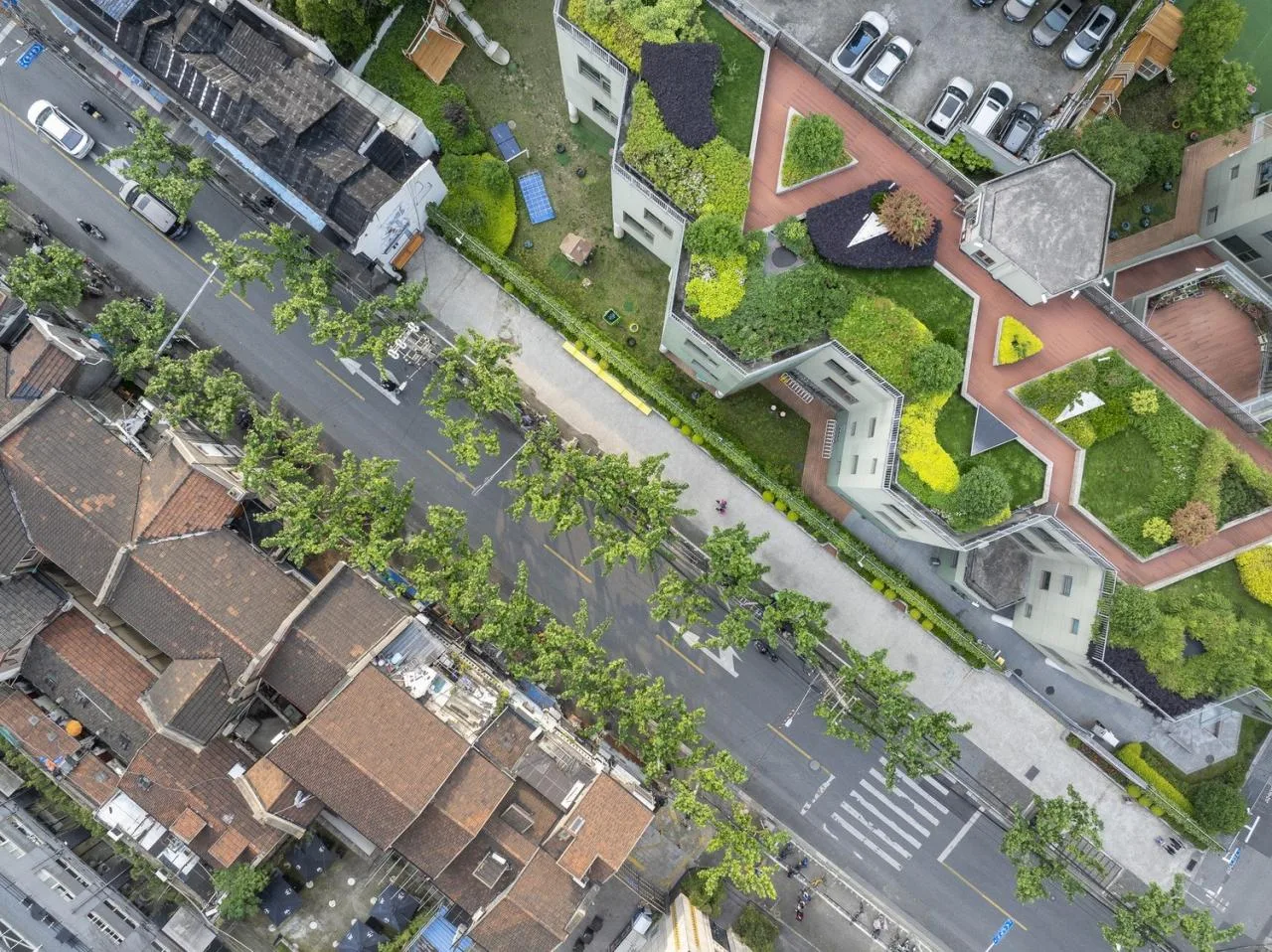
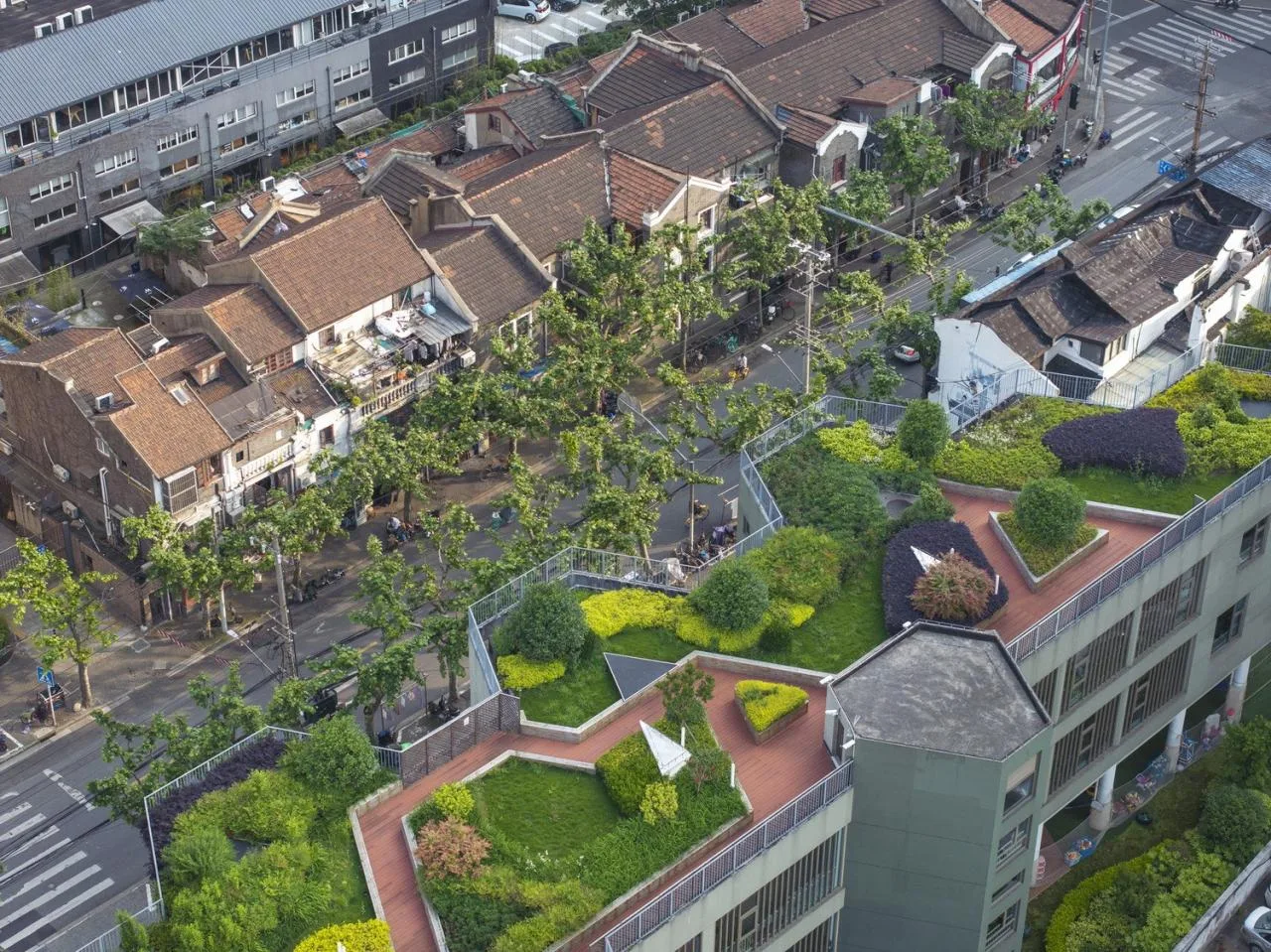
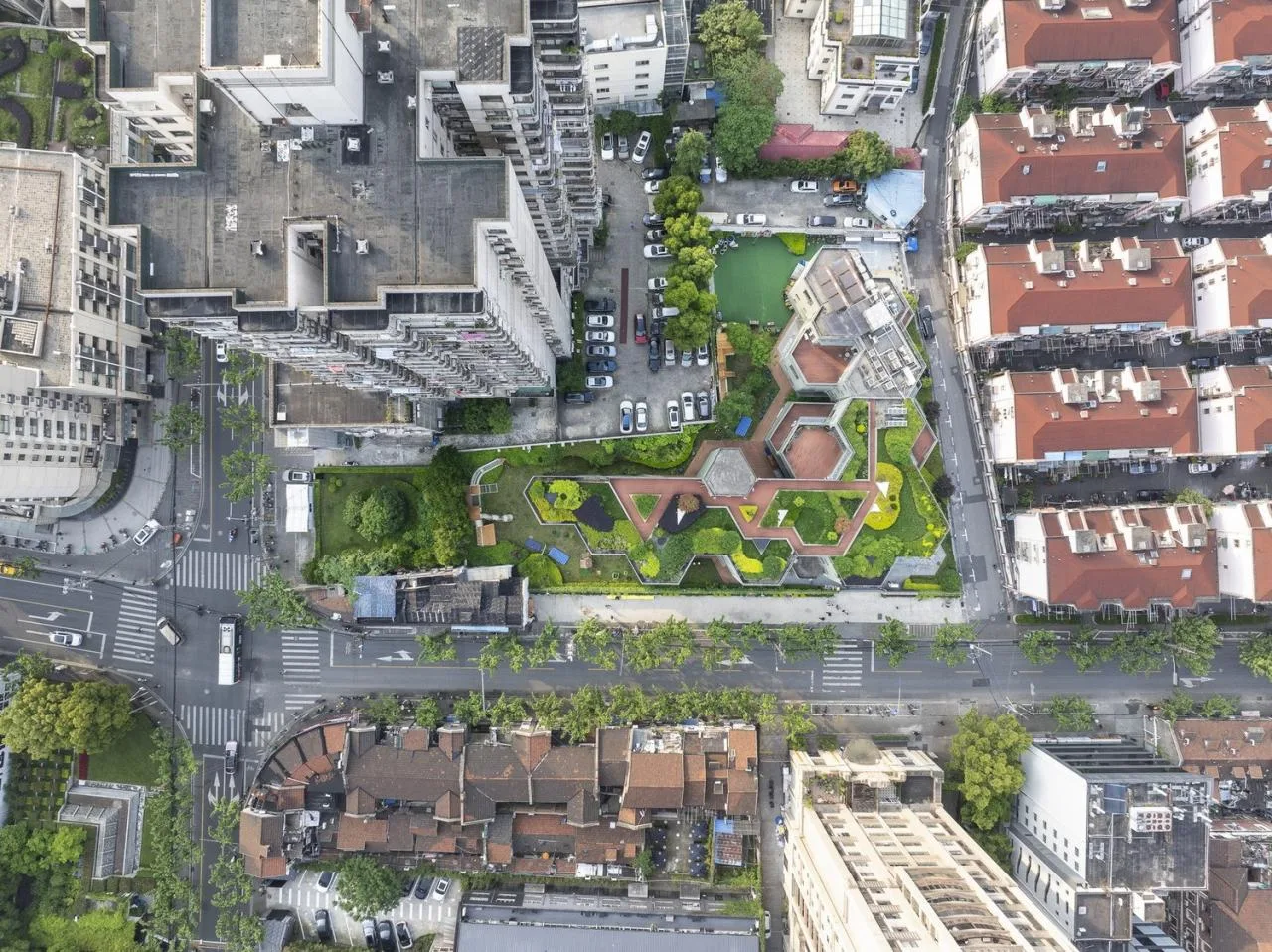
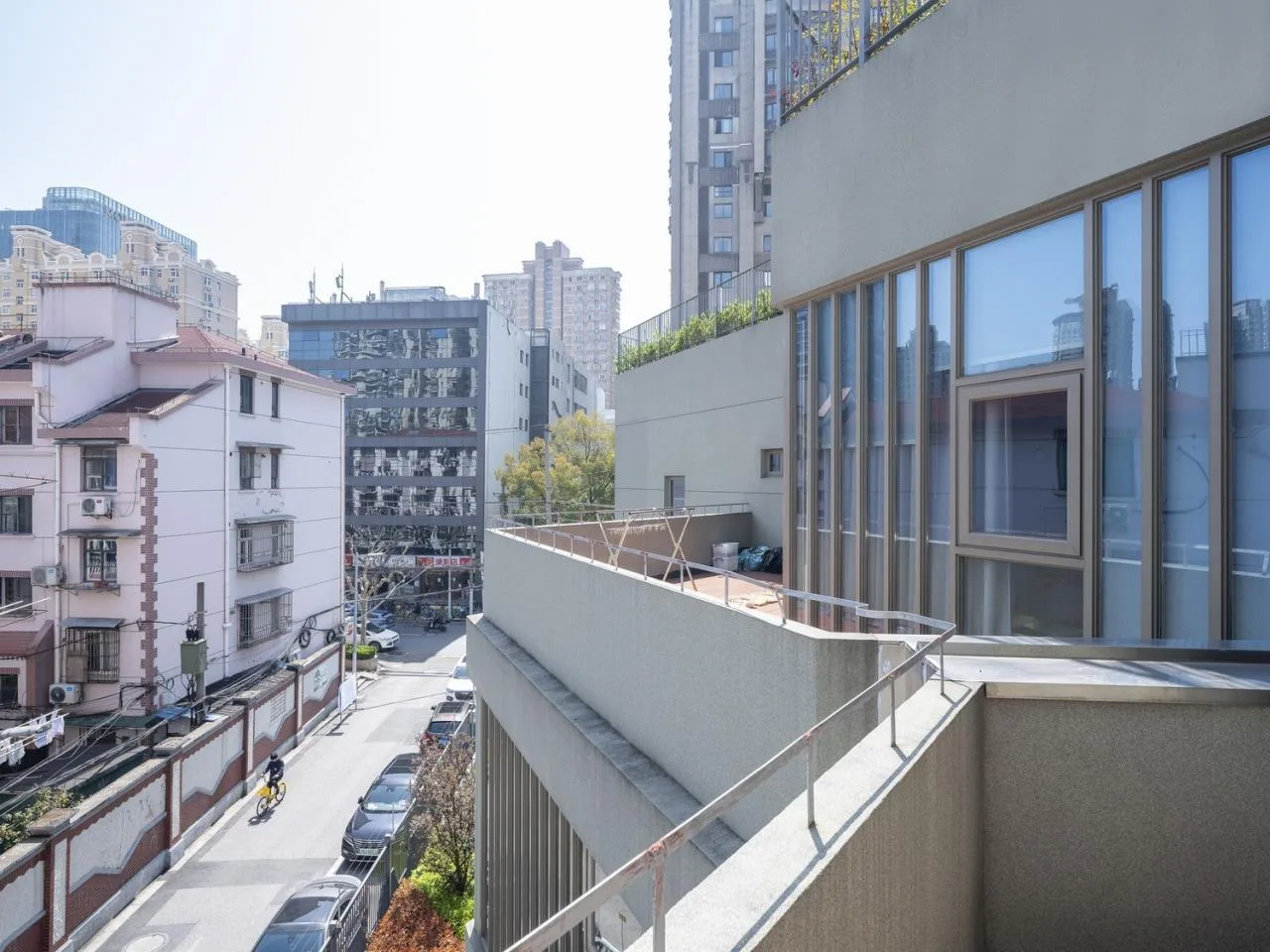
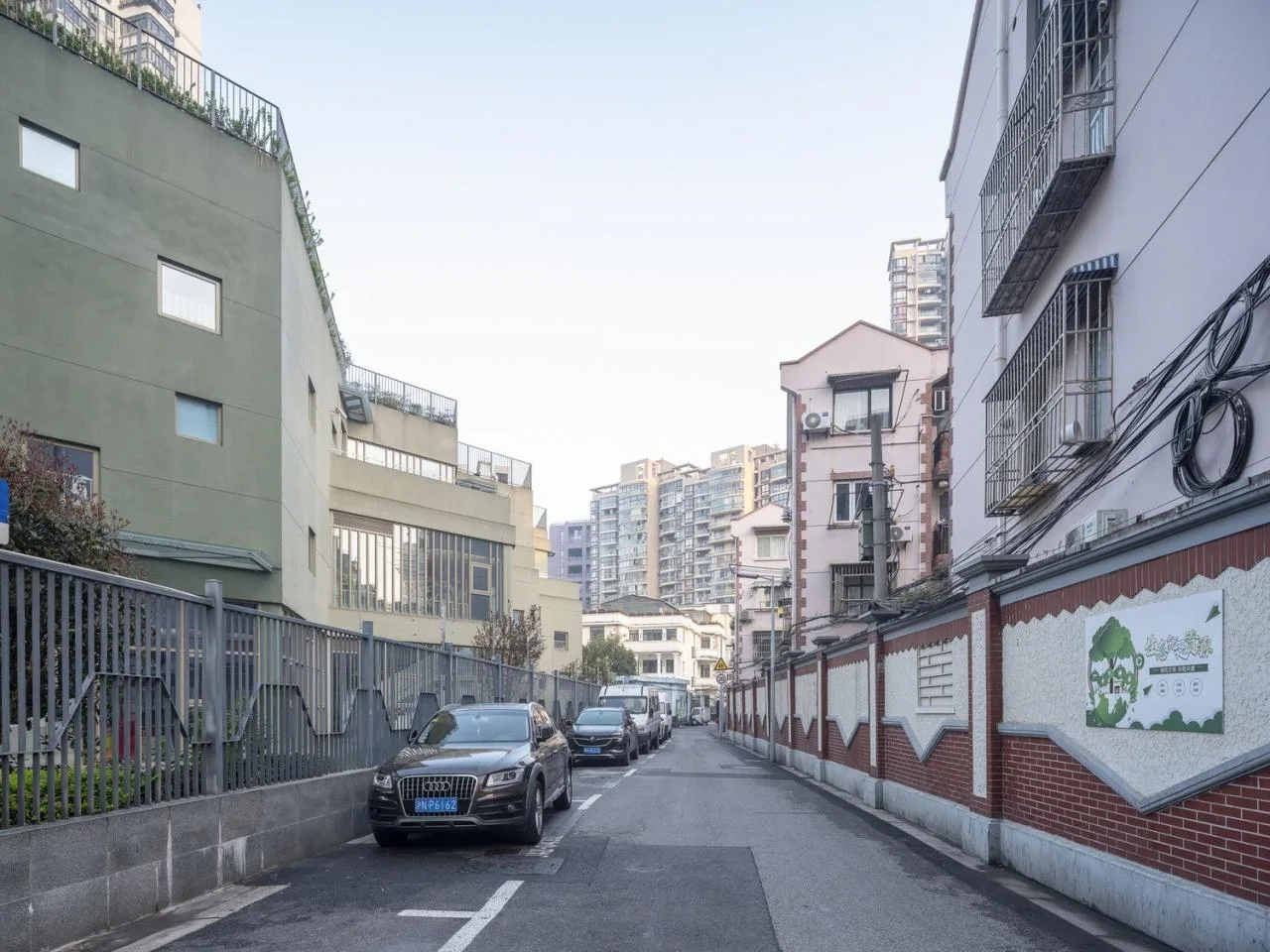
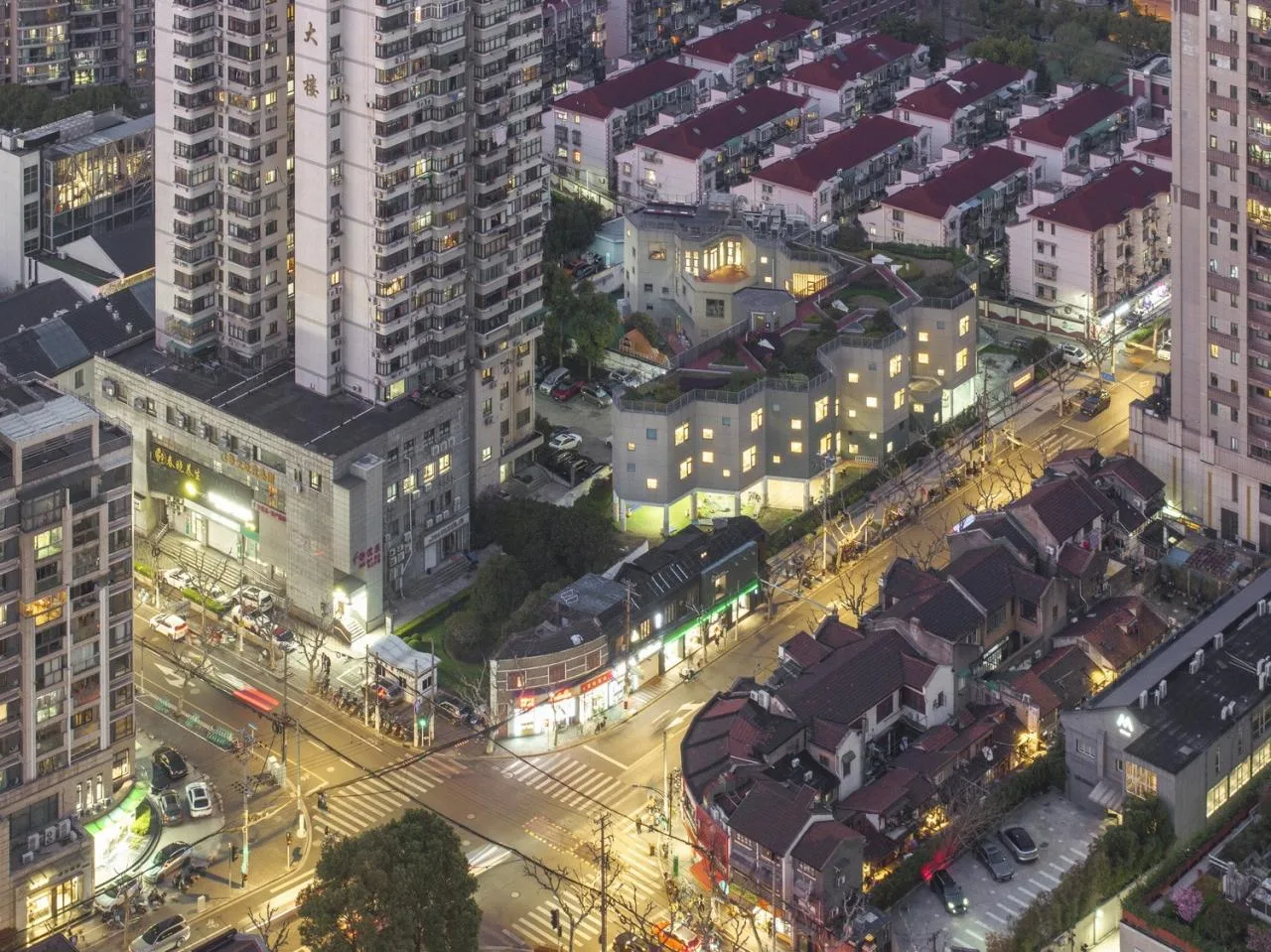
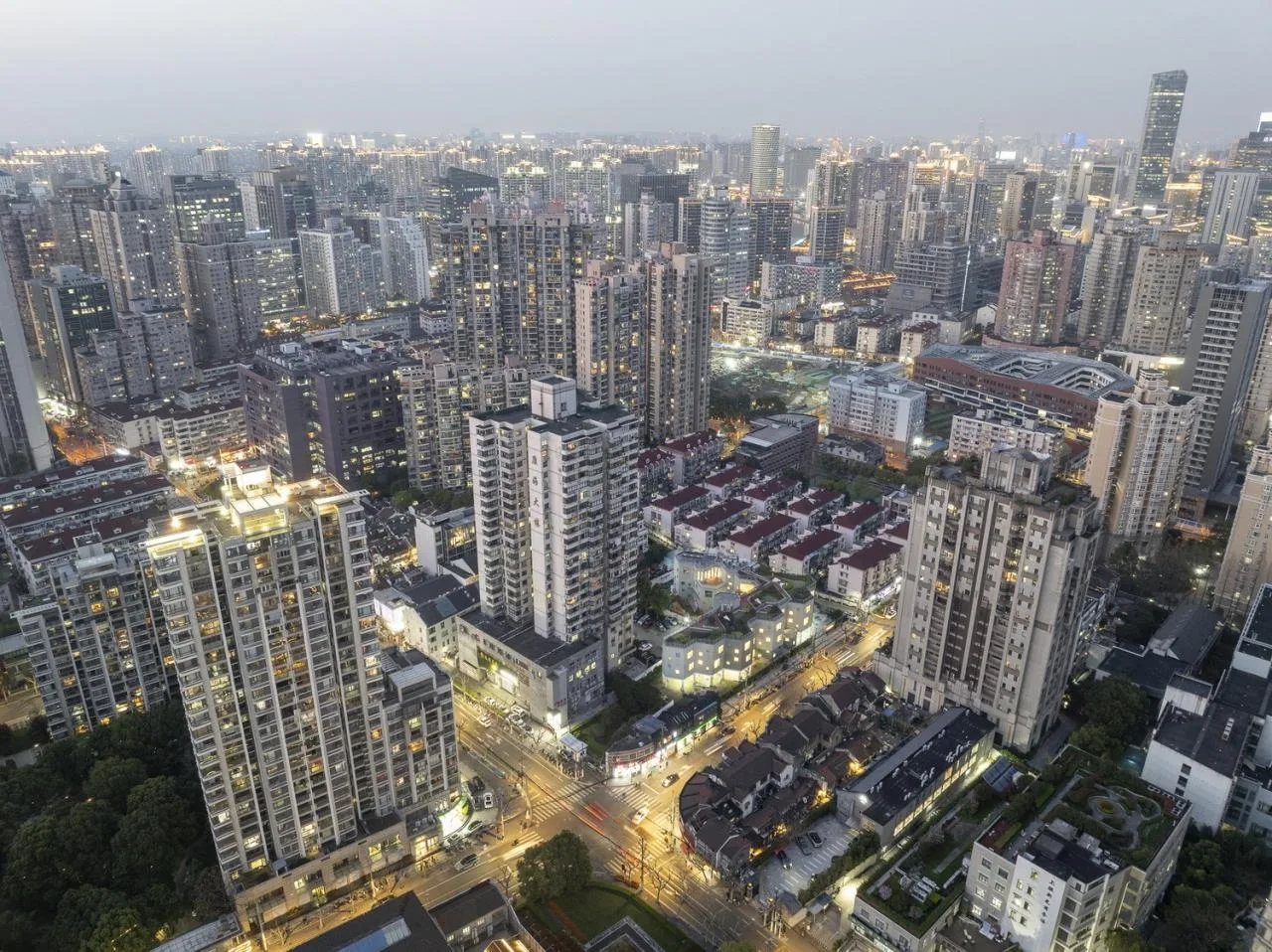
Located on Haiphong Road, lined with wutong trees in Jing’an District’s northwest corner, the kindergarten is surrounded by a mix of old alleys, mid-rise communities, high-rise residences, and shops. This blend forms a rich urban tapestry that reflects the neighborhood’s history and evolution.
Opposite Yuyao Road Kindergarten on Haiphong Road lies a cluster of traditional alleyway buildings known as Linong — emblematic of Shanghai’s most representative living and public spaces. These mini-community collages intertwine life, architecture, and people.
The bustling urban interface and pedestrian flow along Haiphong Road resemble an enlarged lane. The close interactions among buildings and people, combined with the layered textures developed over time, give the area a distinct human warmth and cultural charm.
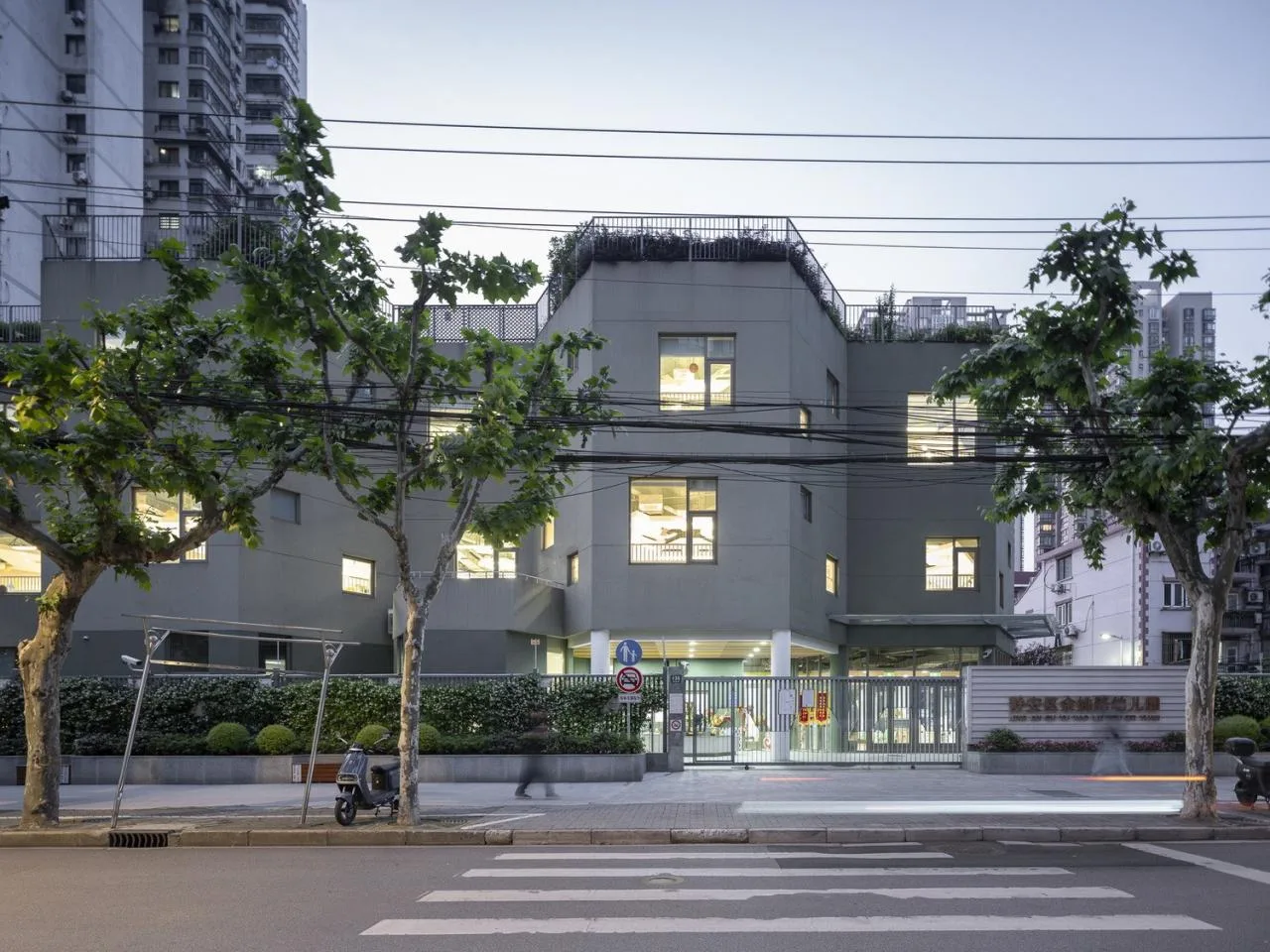
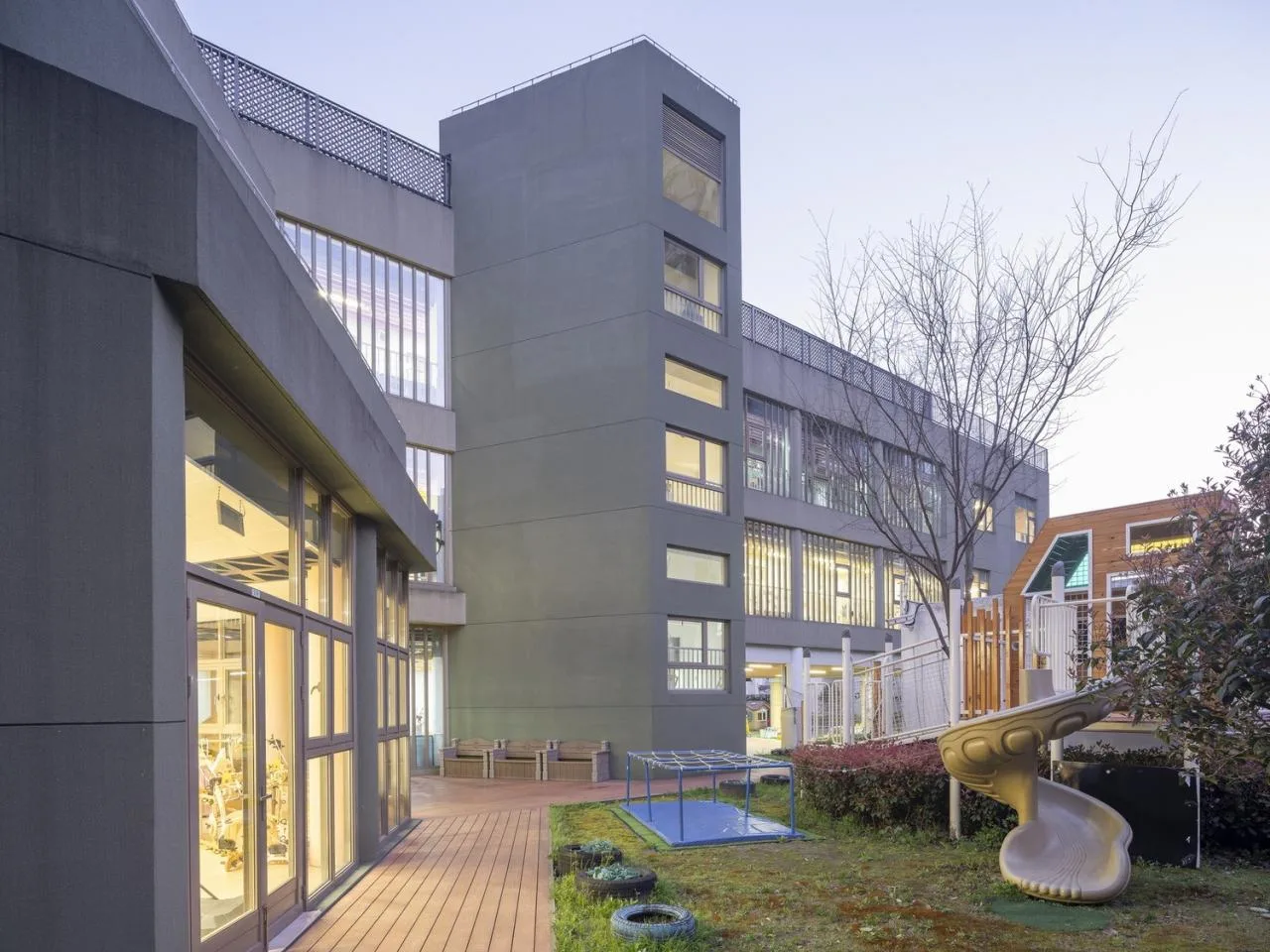
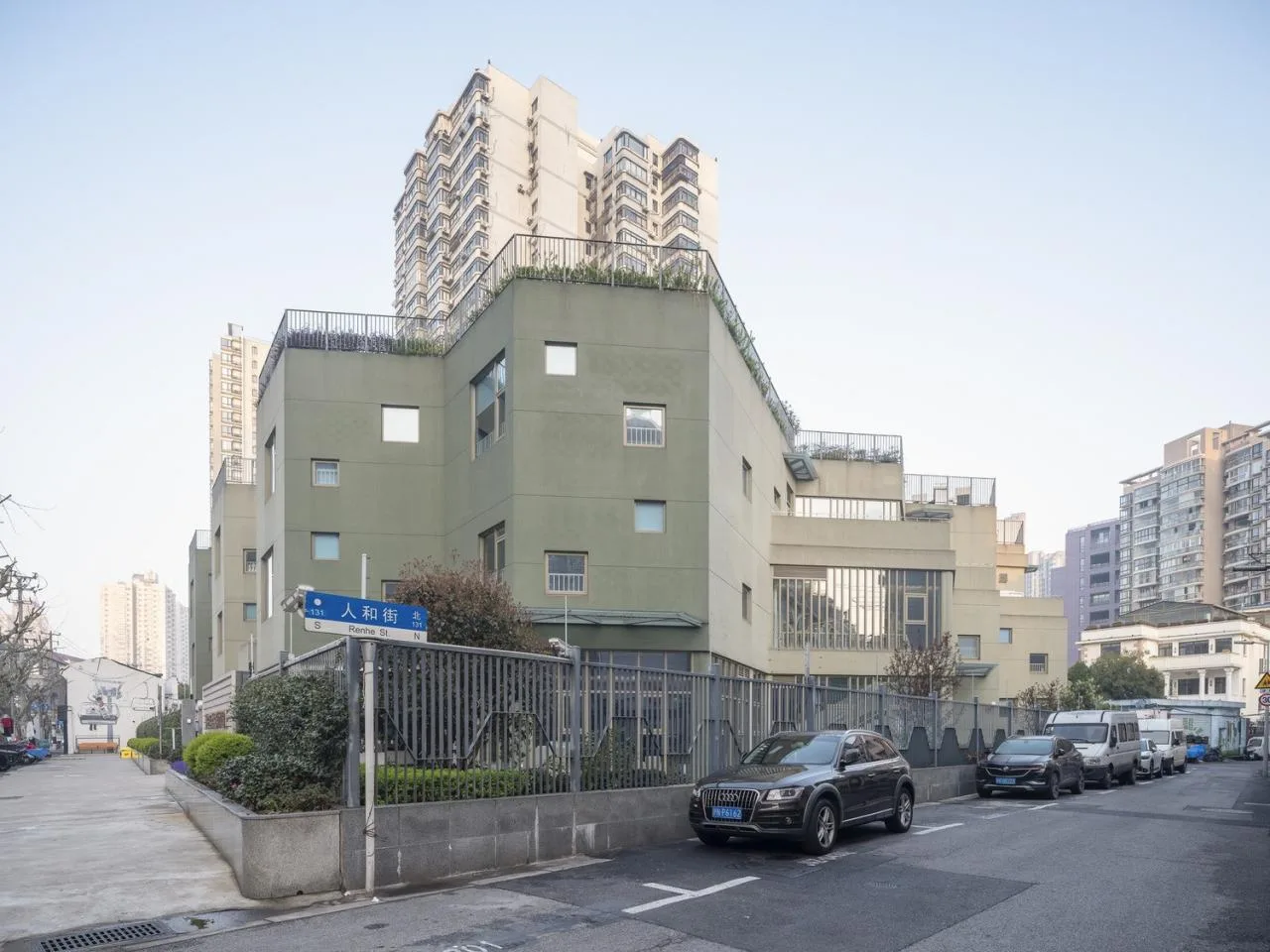
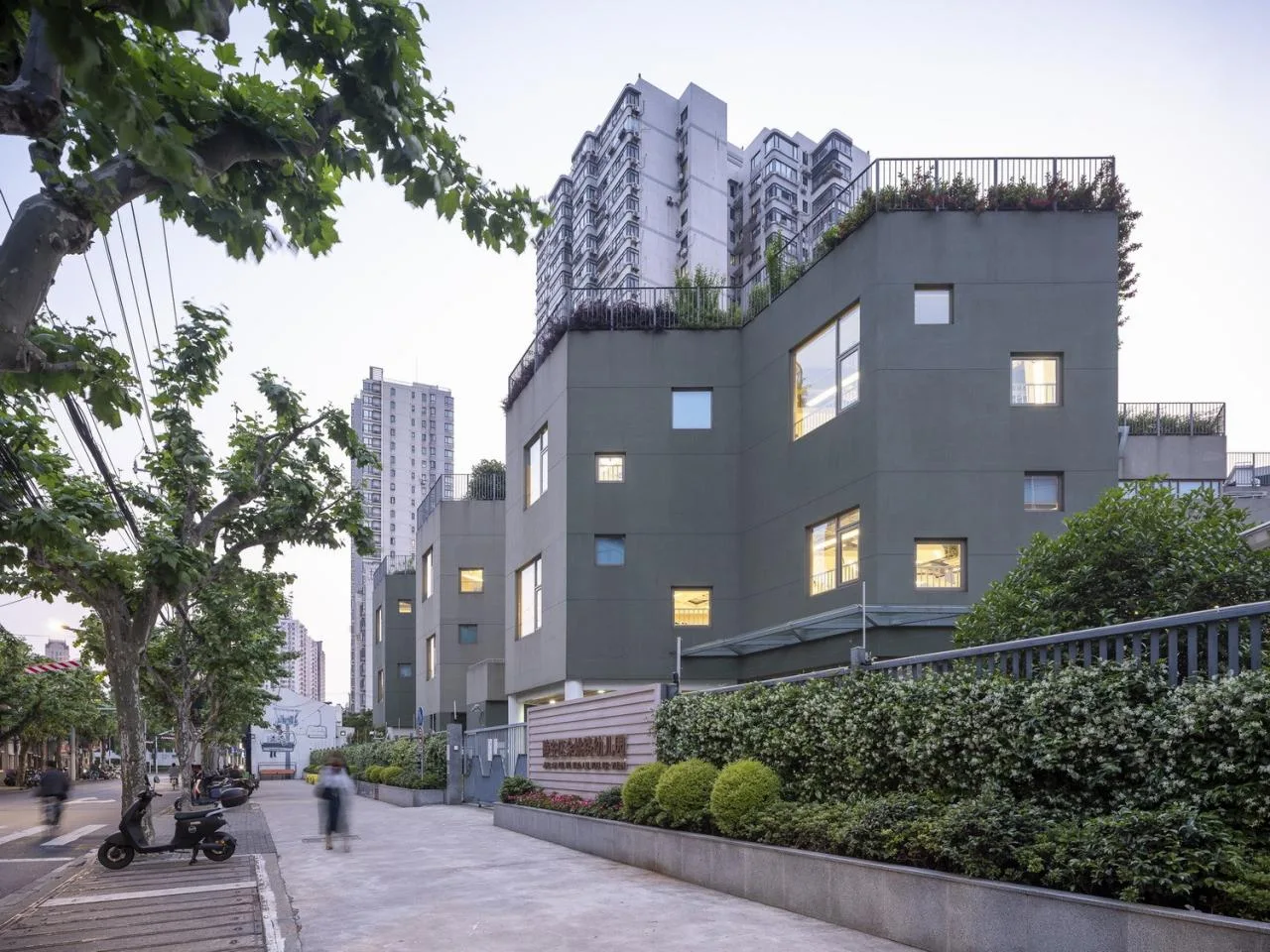
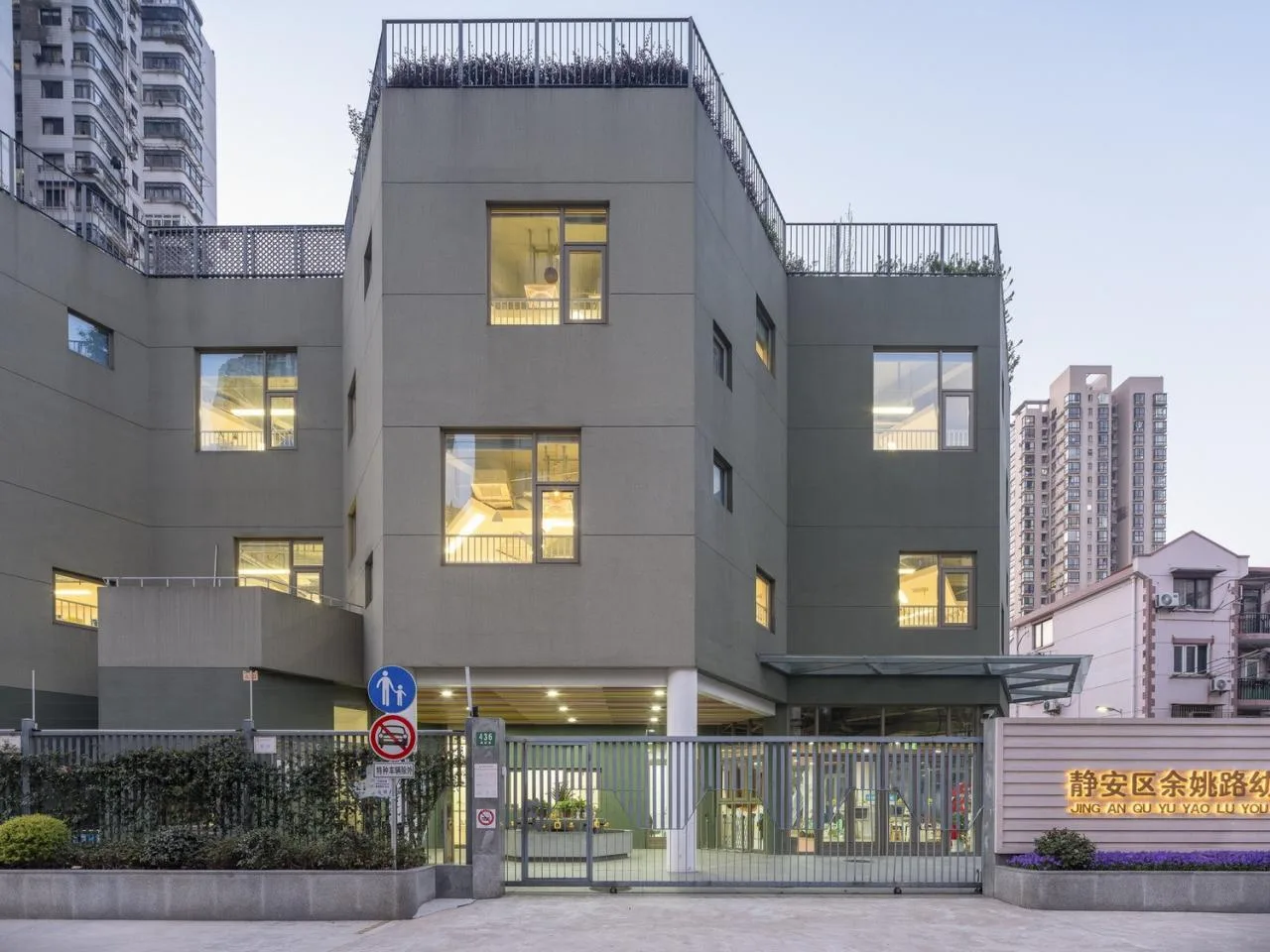
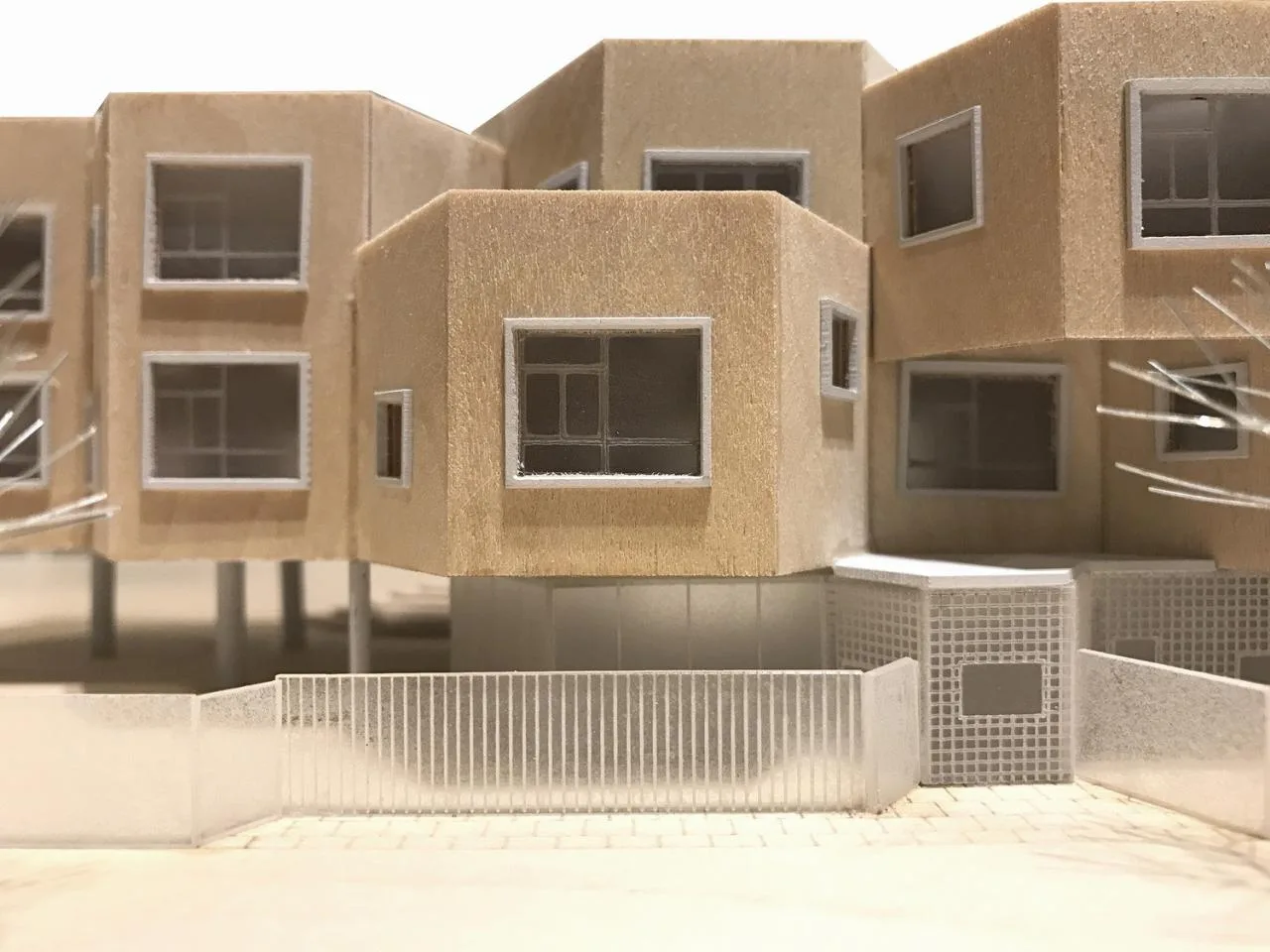
Drawing inspiration from this context, the design of Yuyao Road Kindergarten adopts a human-centered approach that re-examines its relationship with the city. The campus architecture acts as a “miniature alley,” emphasizing the building’s massing and its connection to the ground at a human scale.
The design highlights rhythmic variations along the street facade to convey a communicative presence. Carefully chosen materials and colors evoke a character that aligns with the project’s identity.
The three-story kindergarten building’s combined volumes further diminish its scale. The facade’s black-green and grass-green color palette blends harmoniously with the wutong trees lining the street, preserving a sense of nature and innocence amid a city dominated by large-scale developments.
Concept and Analysis: Enlightenment Geometry
“The study of geometry, including shape, size, position, orientation, and motion, describes the real world we live in.” — Juanita V. Copley, Teaching Methods for Preschool Mathematics Textbooks
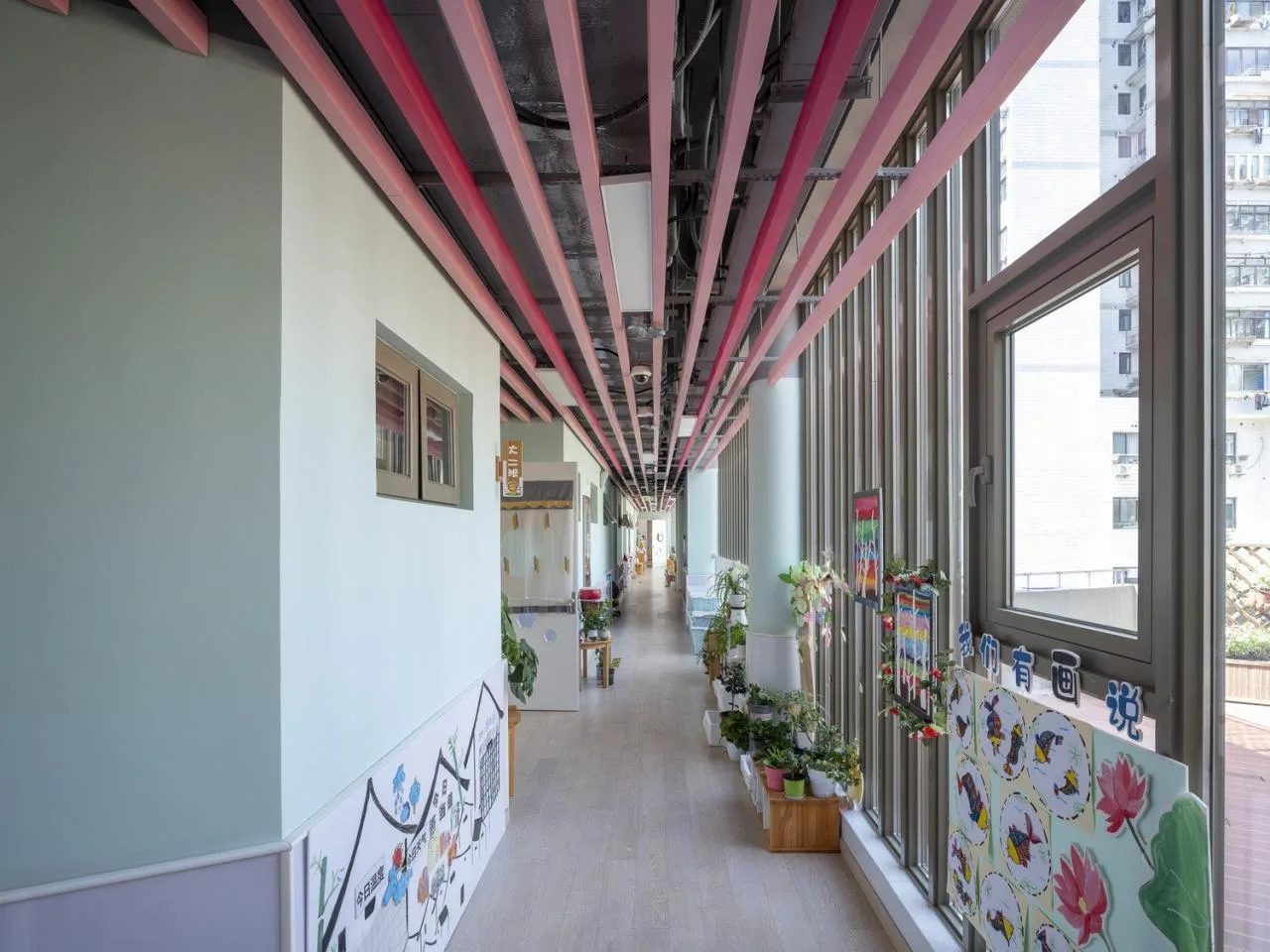
Modern kindergarten designs often follow mature functional standards, leading to a homogenization of layouts. However, during research, the design team discovered that informal spaces—such as corridors outside activity rooms—serve as vital areas where children live, socialize, and play.
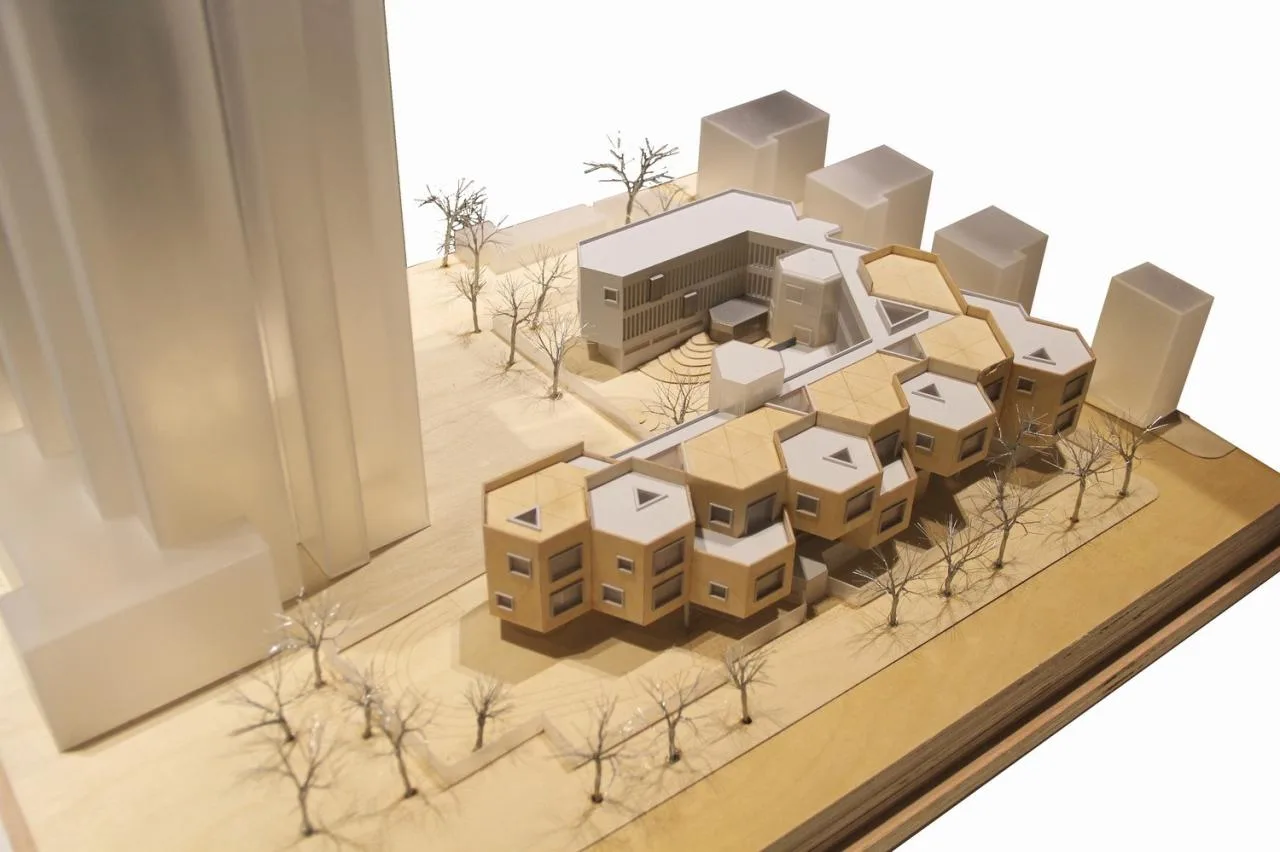
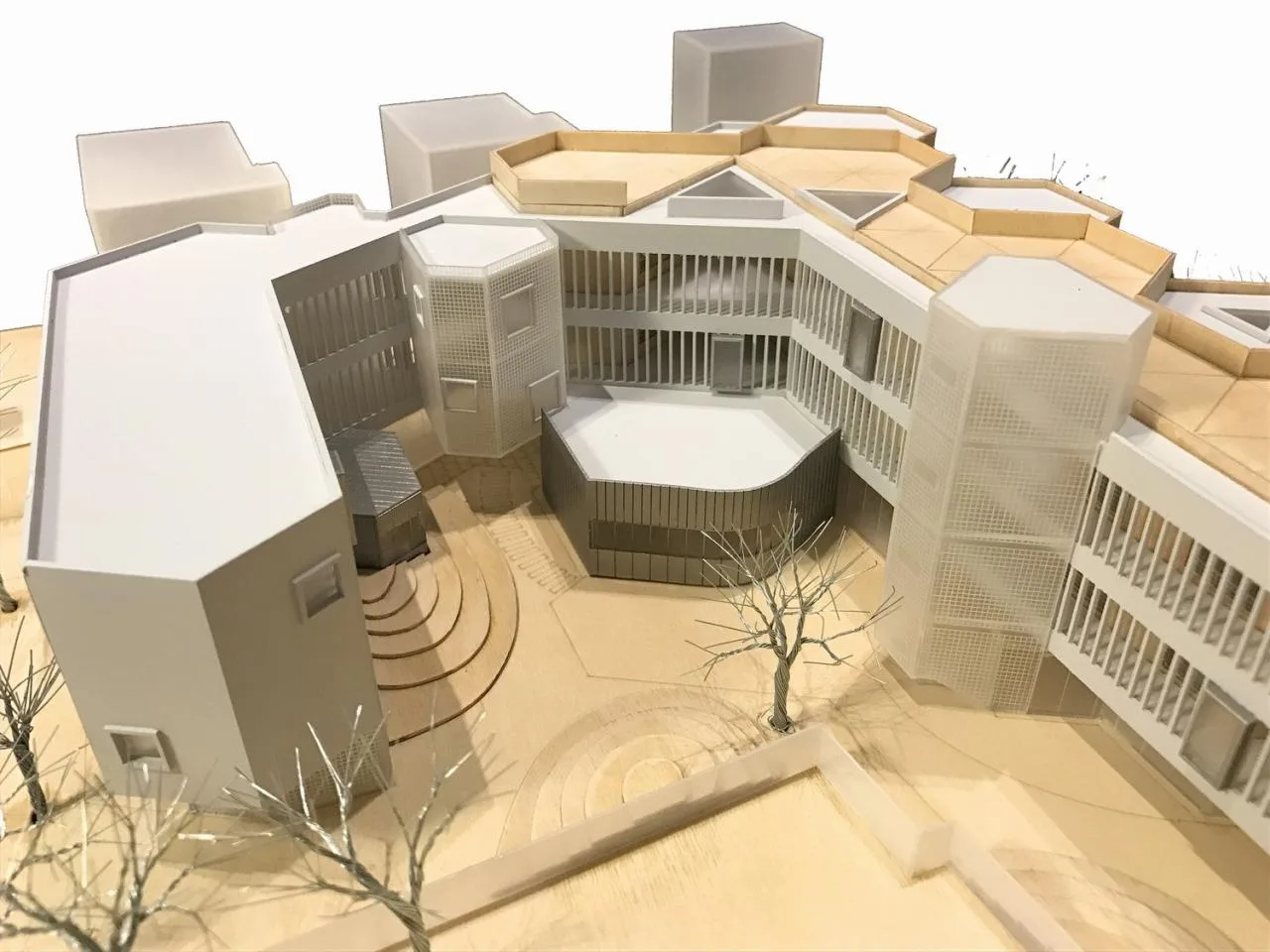
Inspired by the tangram puzzle, and based on the principle of “Enlightenment Geometry,” the traditional layout of eight activity rooms was transformed from “standardized” to “modular.” This approach extends throughout the building, with walls that advance and retreat to create a rich spatial hierarchy, offering teachers and students flexible, expandable teaching and activity spaces.
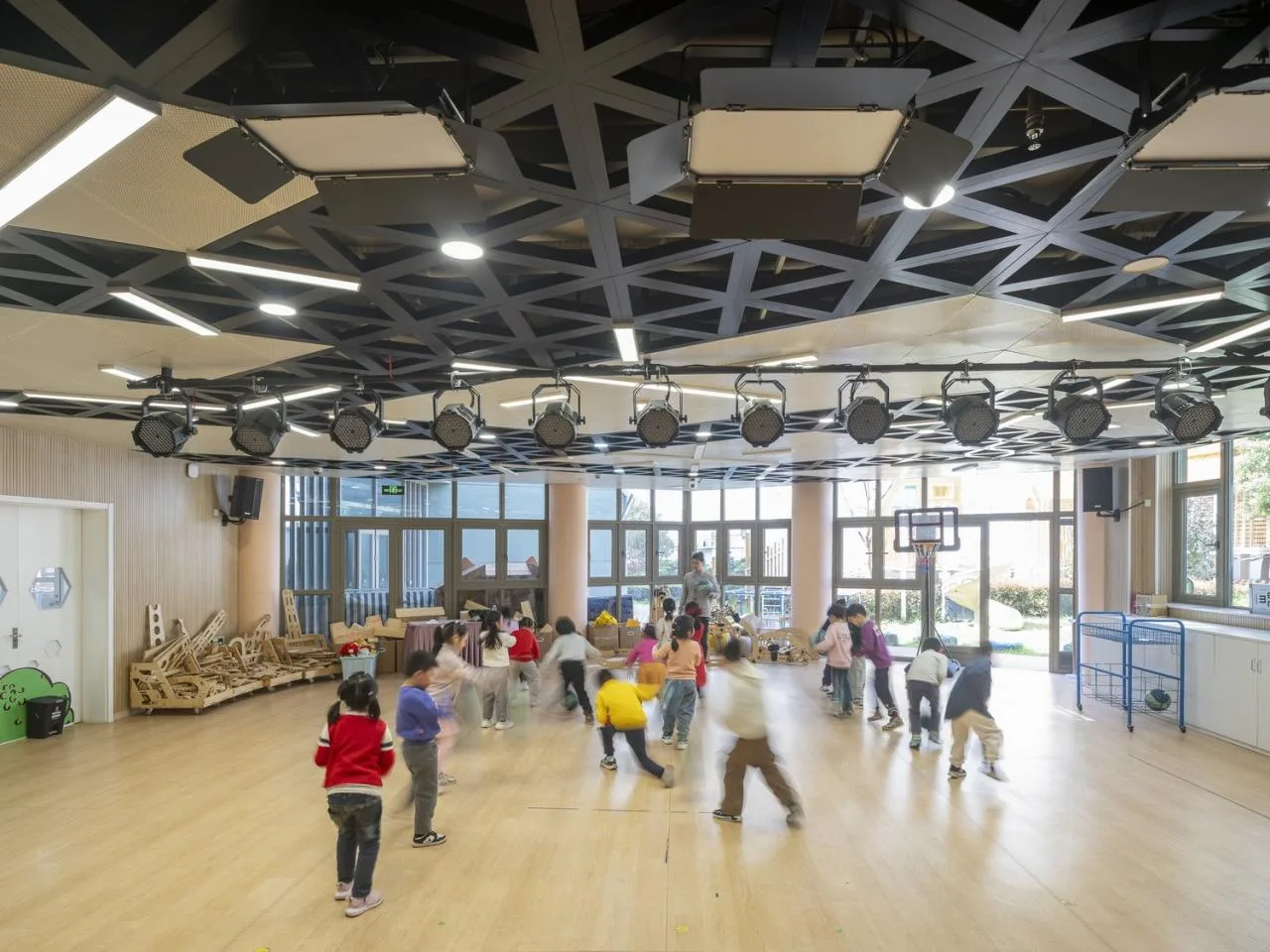
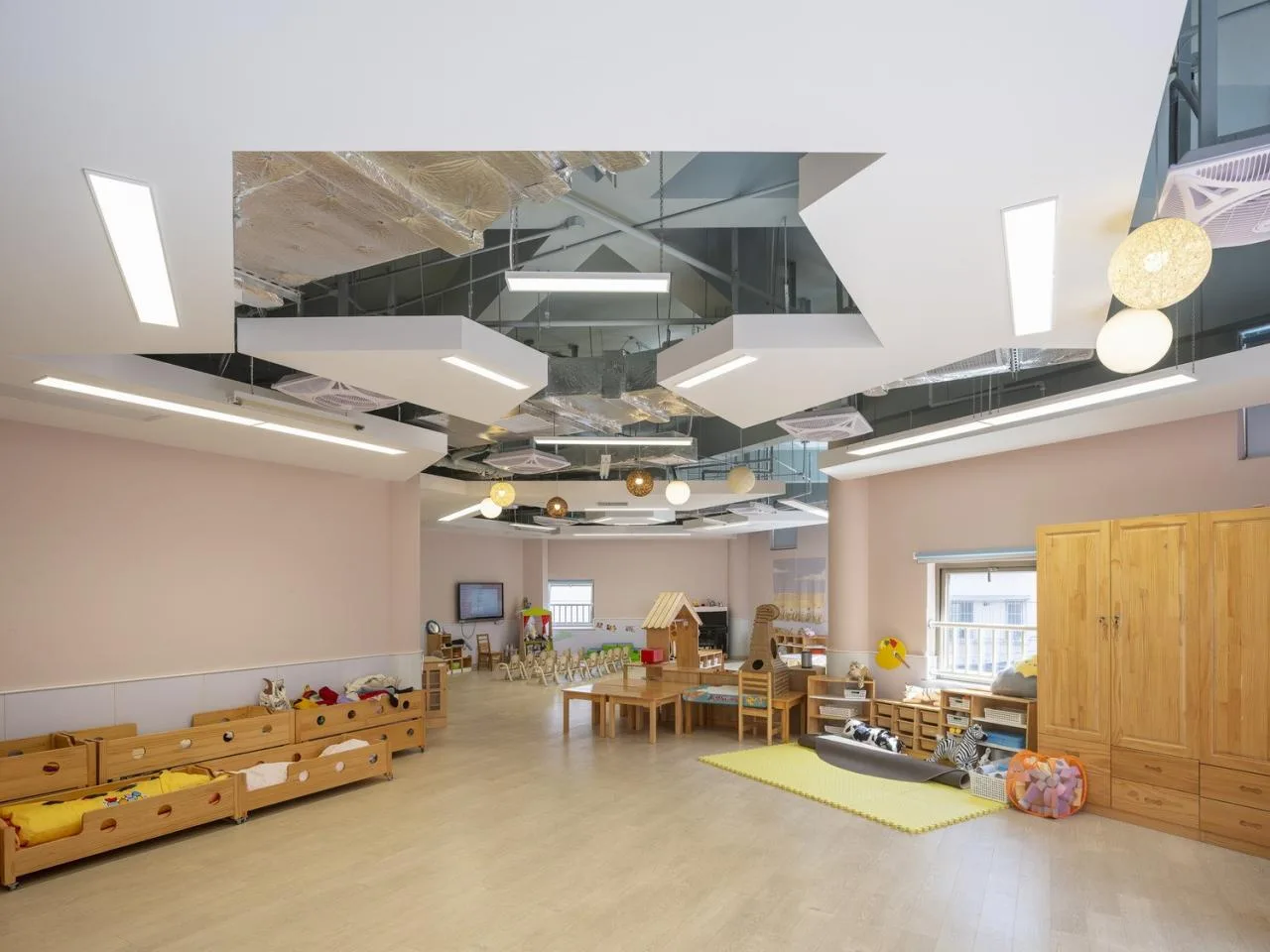
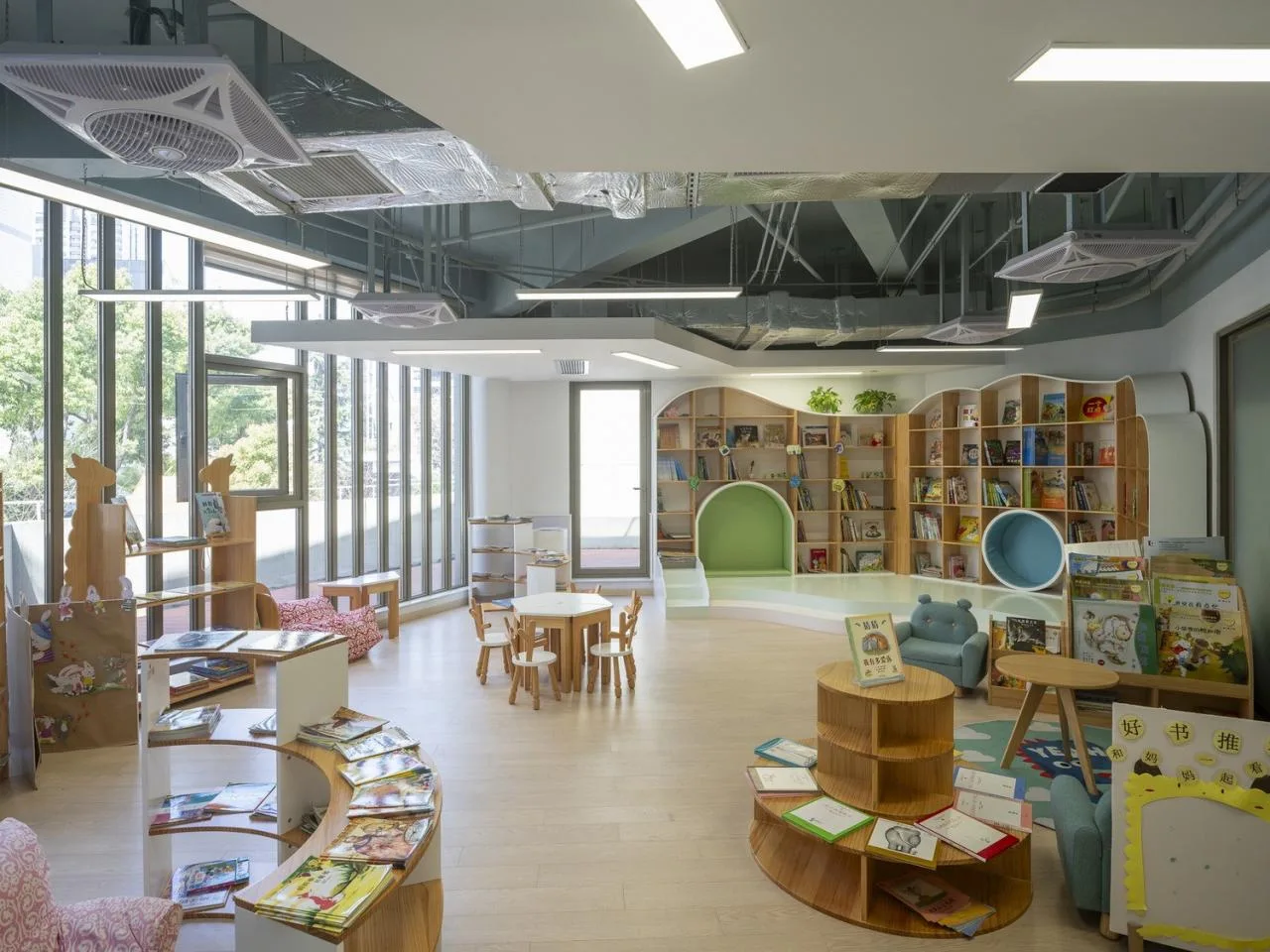
The kindergarten’s irregular hexagonal units take inspiration from honeycomb structures, symbolizing the collective wisdom fostered through human cooperation. The honeycomb metaphor embodies collaboration, dedication, and sharing, reflecting the mutual support between teachers and students at Yuyao Road Kindergarten.
This design creates a dynamic, natural environment that nurtures children’s imagination and innocence, using realistic techniques to shape spaces that awaken warmth and love throughout their growth.
During a follow-up visit, the team compared the completed layout with initial plans. Despite some notable adjustments, the “Enlightenment Geometry” strategy, centered on hexagonal modules, remained the guiding design principle.
Venue and Space: Play Boundaries
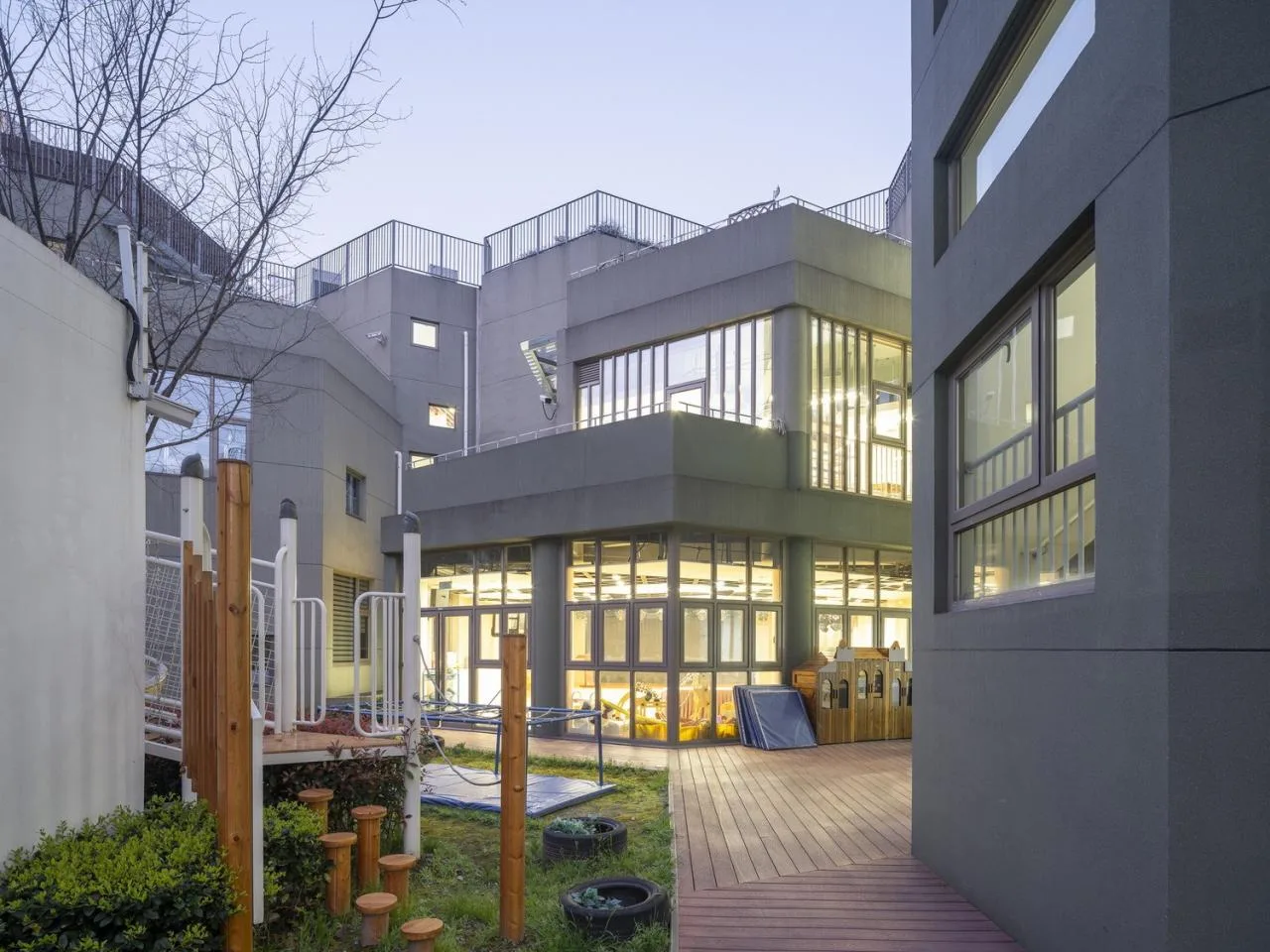
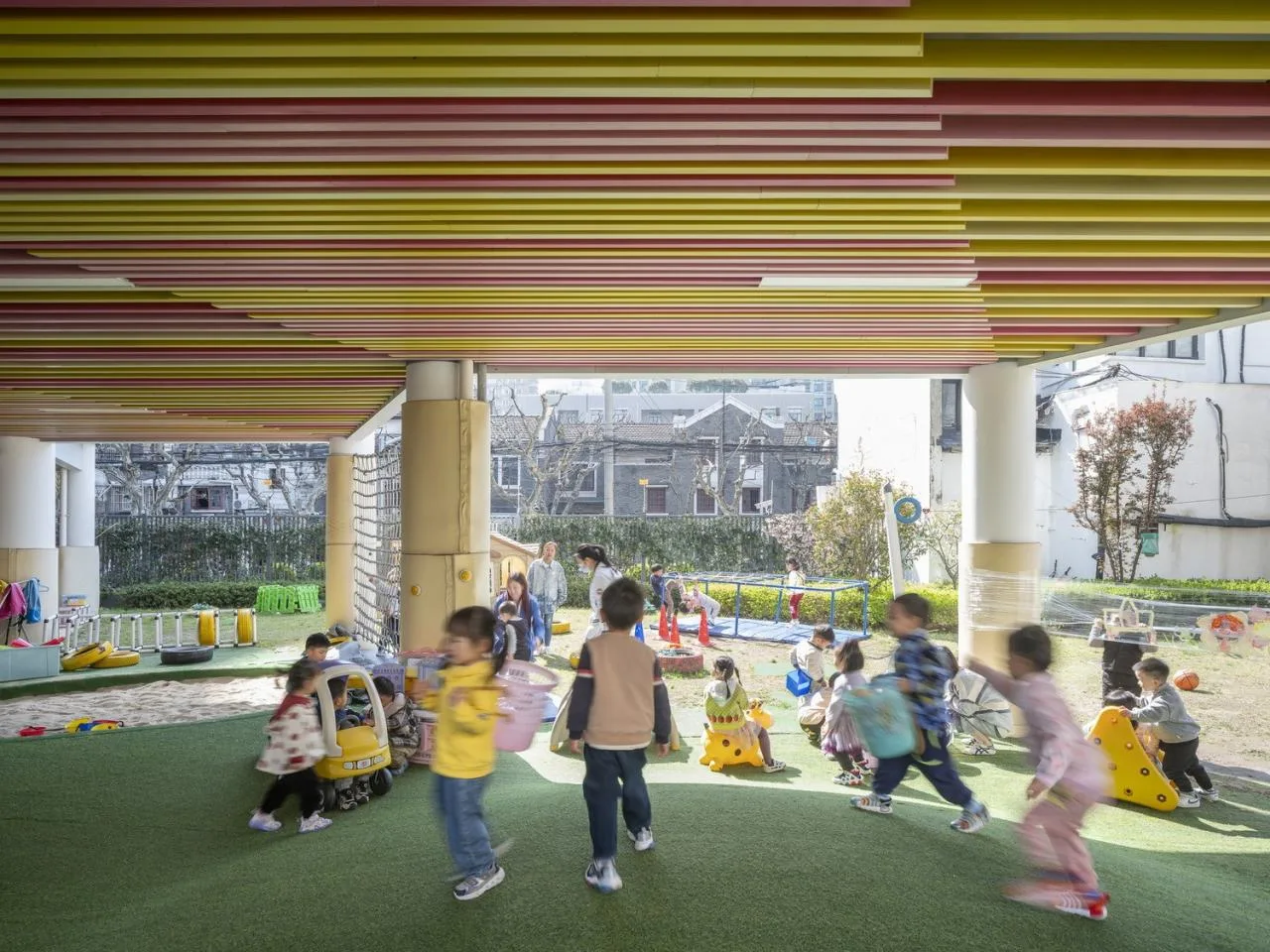
For children, even a simple line or circle can unlock the key to exploring the world. The courtyard, designed with a “C”-shaped architectural layout, geometric exterior walls, and subtle landscape topography, blends perceptible geometry with organic nature.
Public activity spaces, classroom areas, and rooftop nurseries are seamlessly integrated with the building and landscape, creating an engaging and stimulating environment.
Venue and Space: Protective Distance
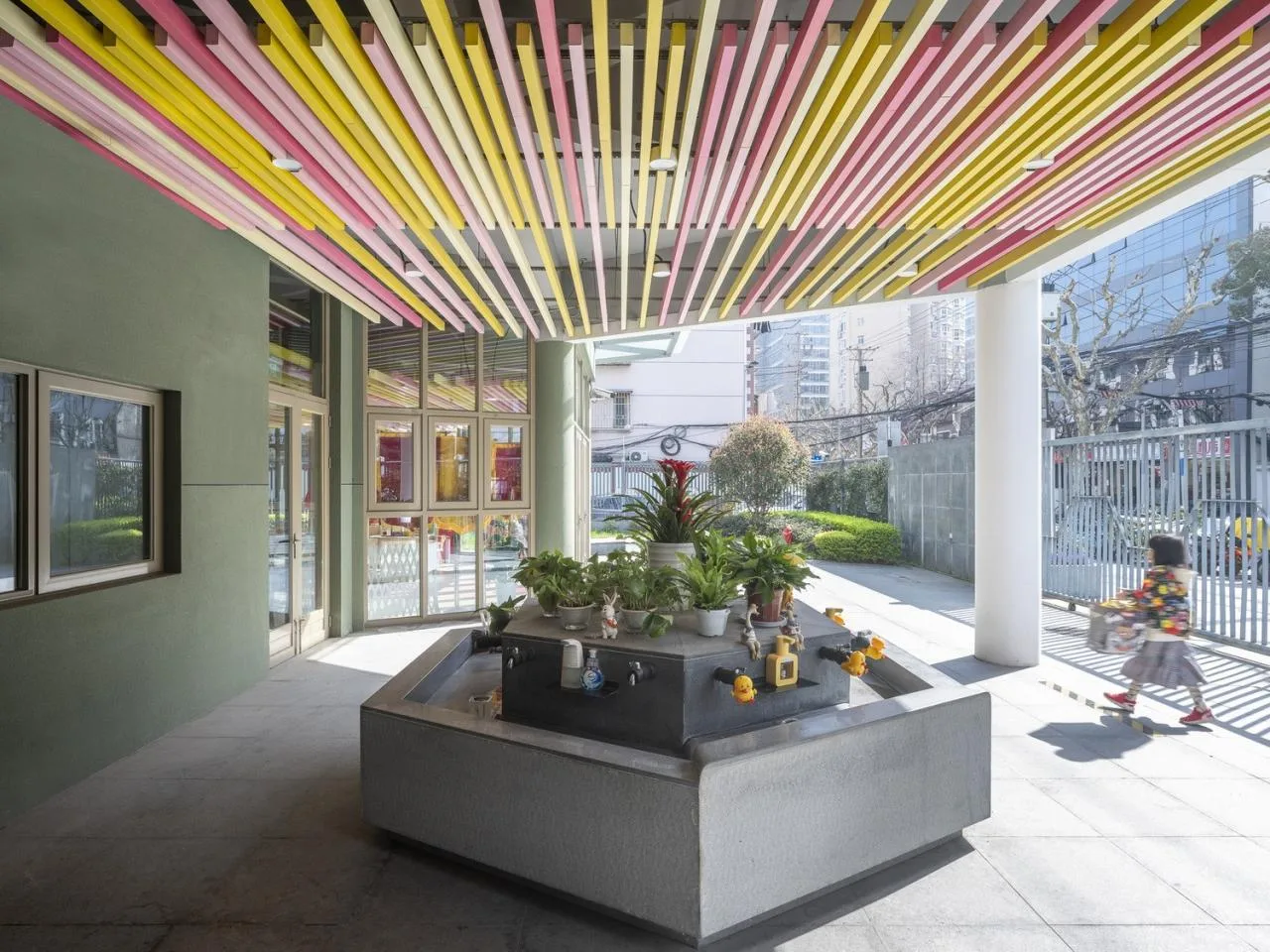
Student safety is a shared responsibility among schools and society, but safety shouldn’t mean isolation, nor should supervision equate to overprotection. Designing multidimensional boundaries between the community and the campus establishes an appropriate “protective distance” among parents, community members, and students—balancing safety with integration.
The scale of campus boundaries varies, requiring tailored design strategies. Early childhood demands not only safety but also a sense of security within the space.
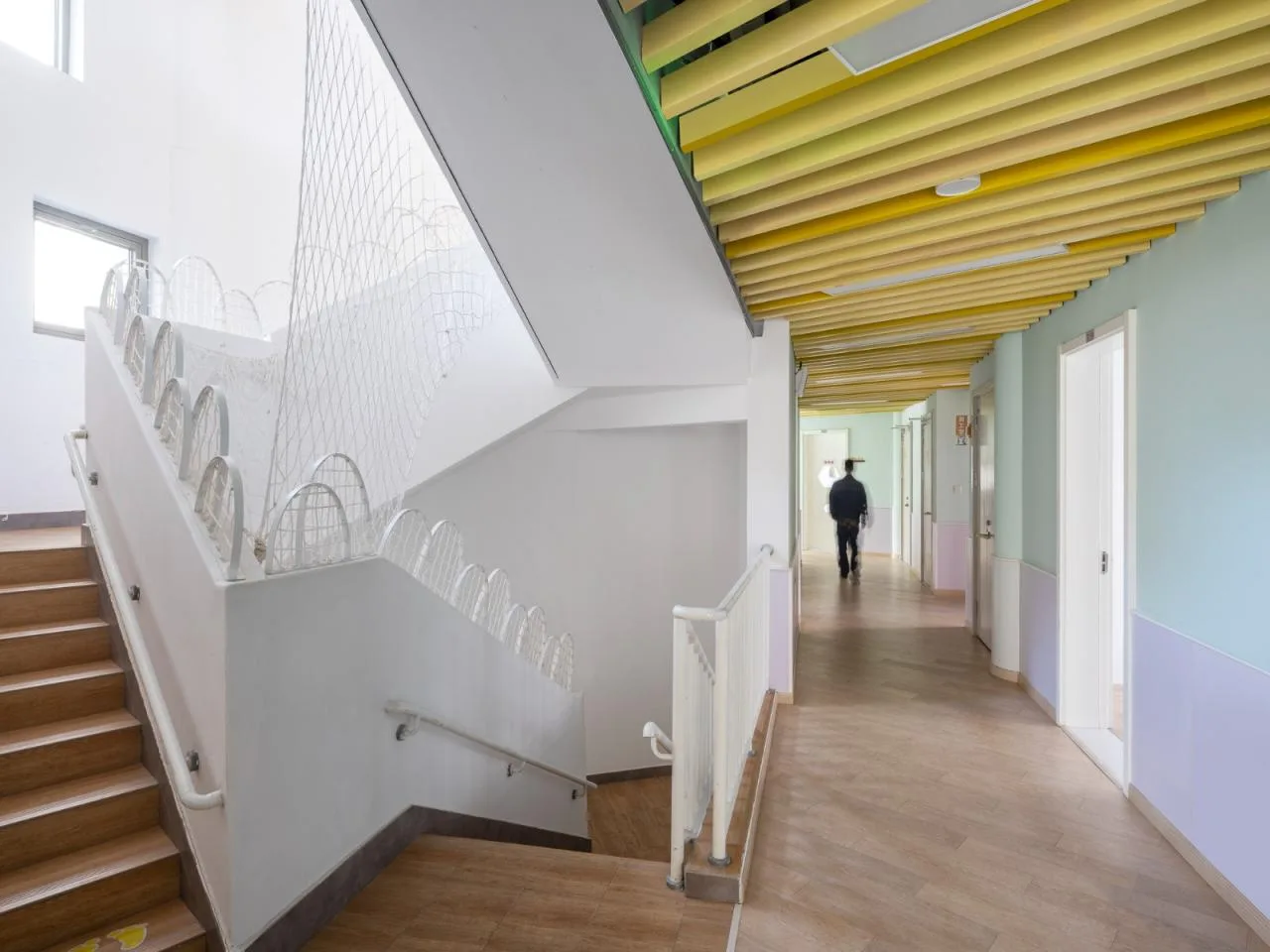
The lobby on the first floor merges with an expanded corridor, offering ample activity space for teachers and children. Transparent views to the outside enable teachers to supervise children easily. Corridors on the second and third floors feature interactive built-in cabinets that serve both recreational and display purposes.
The entrance to activity rooms includes buffer spaces, and partitions separate activity areas from bedrooms, allowing flexible use—either independently or combined—supporting diverse living and teaching scenarios.
Project Follow-up and Discussion
During the follow-up visit, Principal Tan, Teacher Liu Yuyang, and the design team conducted a thorough onsite review, from the kindergarten’s entrance to the rooftop vegetable garden. They then engaged in an hour-long discussion reflecting on the facility’s use since opening.
Teacher Liu recalled being drawn to the rich, complex urban interface during his initial exploration. Principal Tan sees the kindergarten building as a continuation of the city’s historical context, a small yet intimate presence amid towering skyscrapers and alleys.
As they toured the outdoor activity area, Principal Tan shared that children enjoy two hours of outdoor exercise and play daily. The ground features a mix of plastic wood flooring and grass, offering varied tactile experiences that nurture children’s understanding of the world and promote sensory development.
Walking along the corridors, the agency team noted the thoughtful decorations along the walls, emphasizing the importance of considering children’s growth and habits in design. Wu Congbao, project manager and deputy partner at Liu Yuyang Architectural Firm, highlighted that while primary and secondary schools require careful planning at the square meter level, kindergartens demand attention to every square centimeter. For children, kindergarten is not just a school, but a vital living space where every detail shapes their worldview.
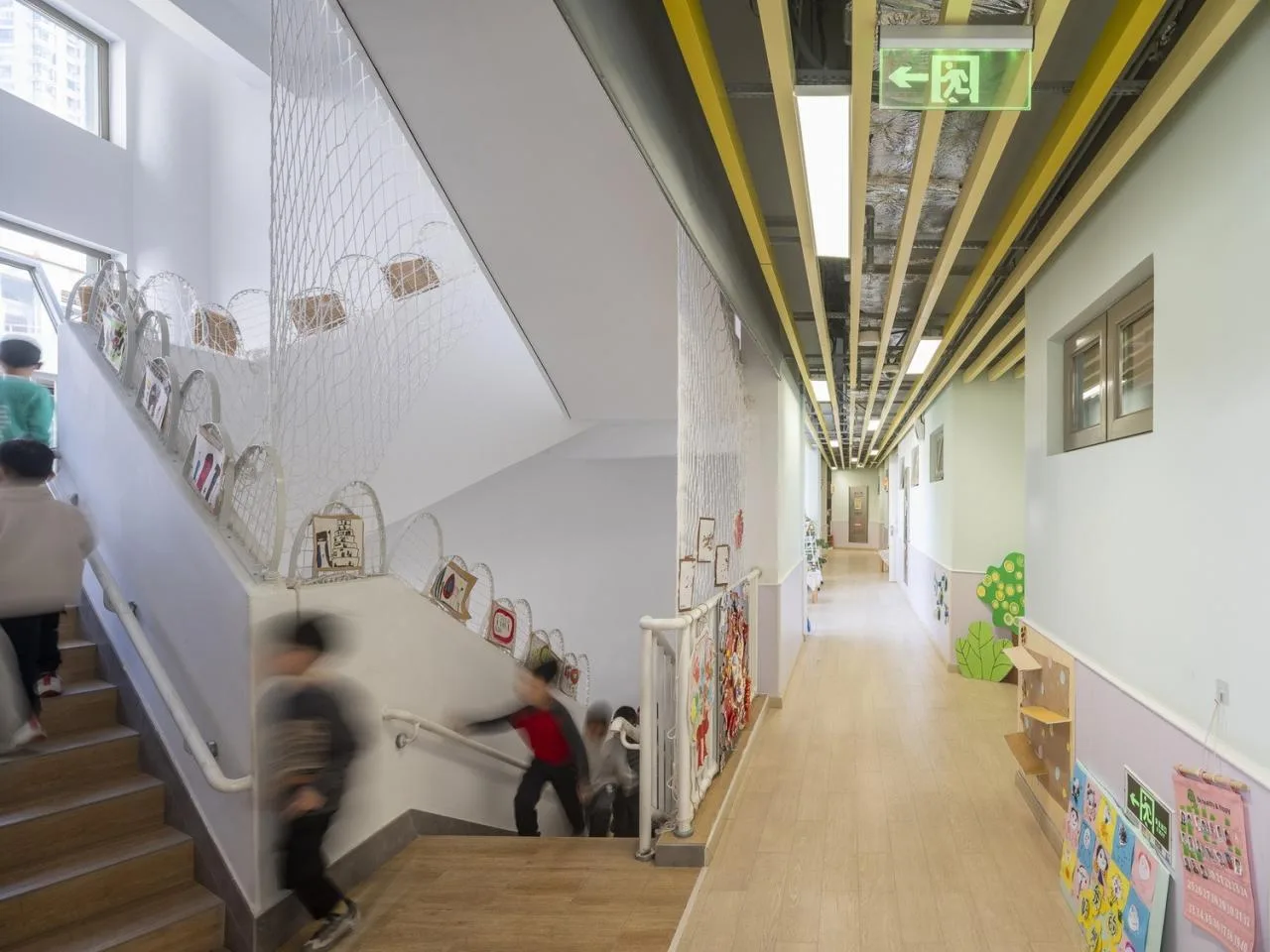
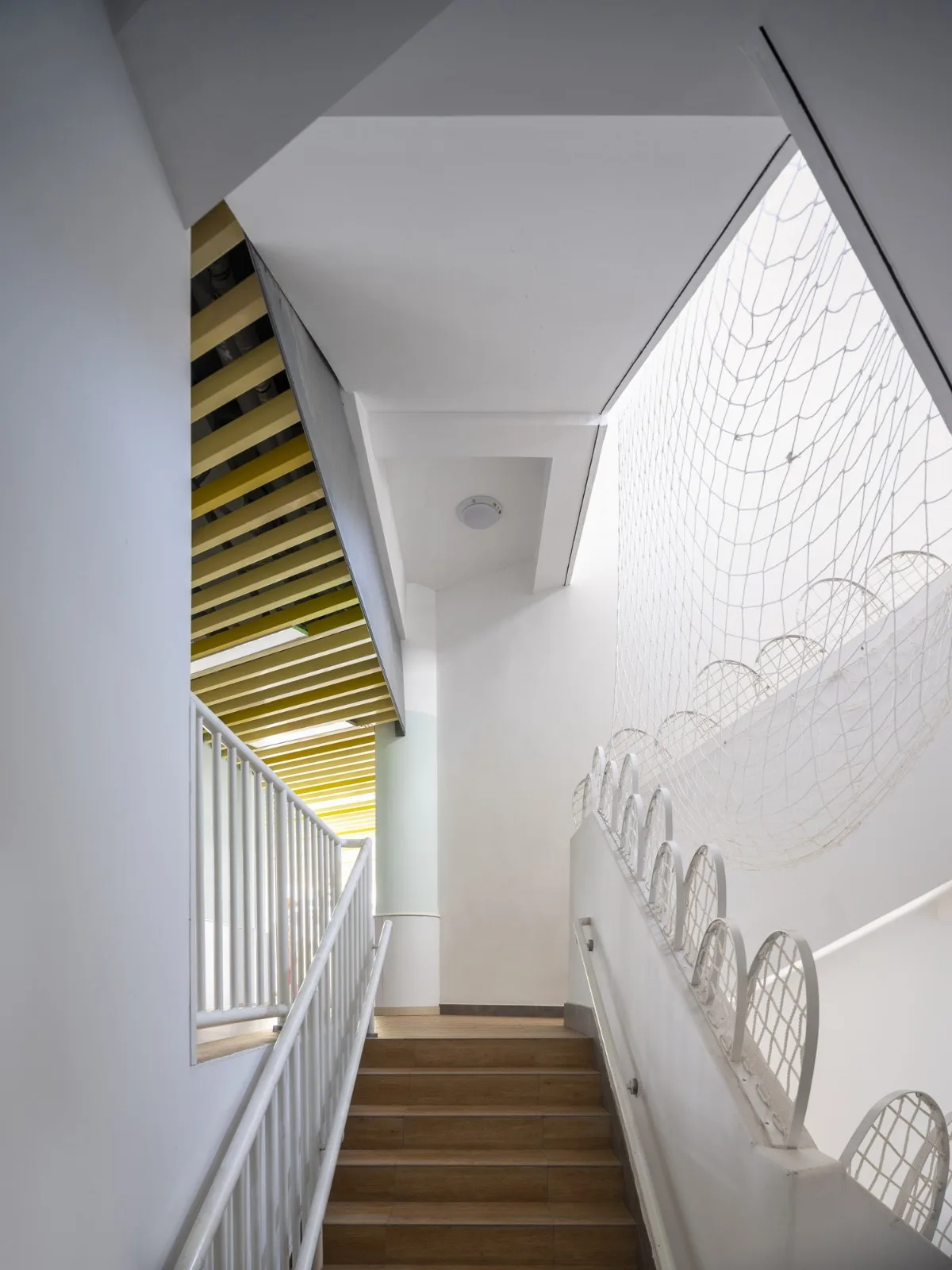
They also observed new guardrails and protective nets added to staircases, prompted by discrepancies between design standards and those of the Education Bureau—an important consideration for future kindergarten designs.
In the bedroom area, Director Tan demonstrated the adaptability of pull-out beds: mornings see the bedroom and adjacent activity room combined as a play area, while afternoons transform the space into a bedroom via the pulled-out beds.
Principal Tan explained that other kindergartens briefly occupied the building around 2021. When Yuyao Road Kindergarten officially moved in, the principal and her team independently selected and designed the soft furnishings, resulting in the welcoming environment seen today. This underscores that building design is a collaborative process involving not only architects and interior designers but also its users.
Project Drawings
△ Model diagram
△ Model diagram
△ Model diagram
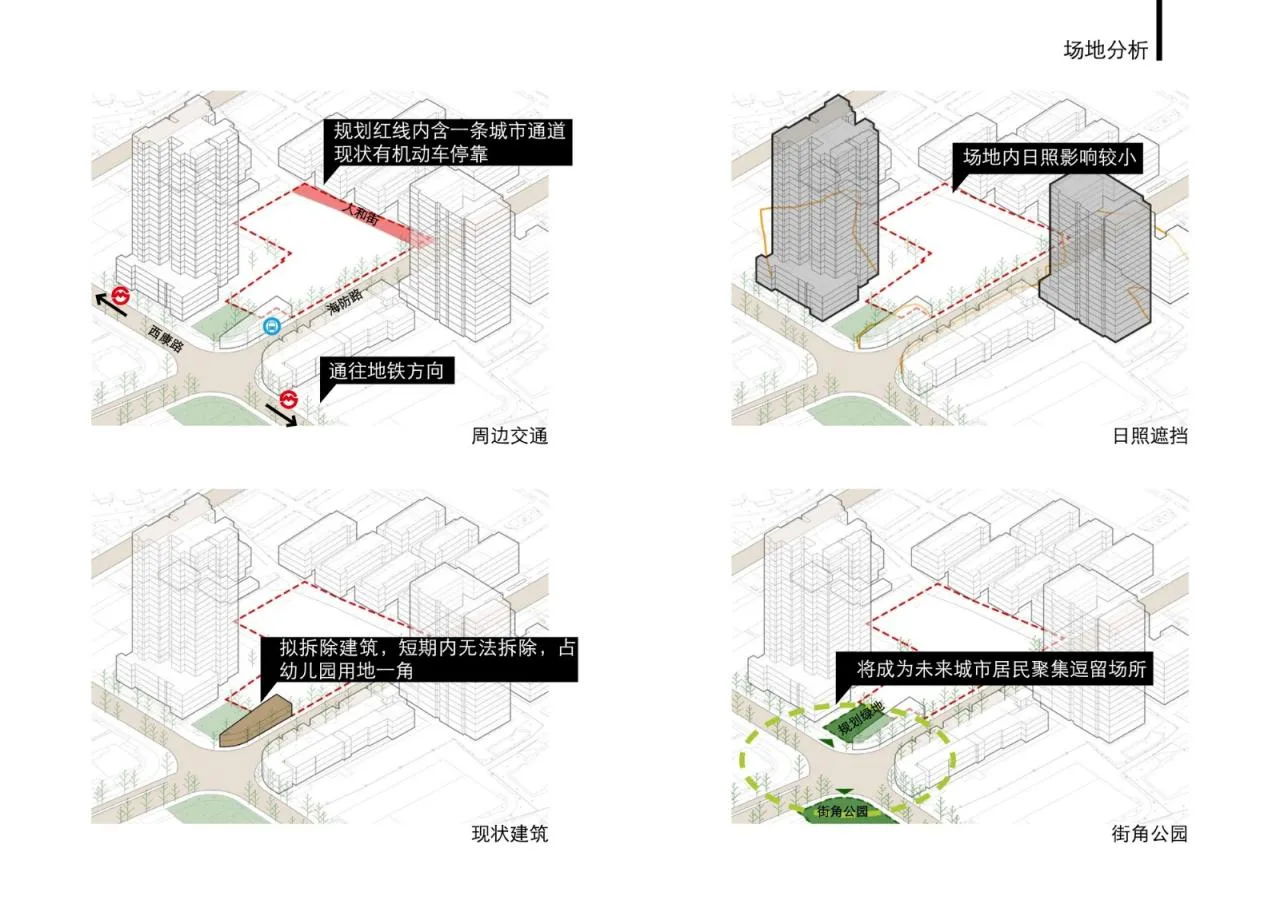
△ Analysis chart
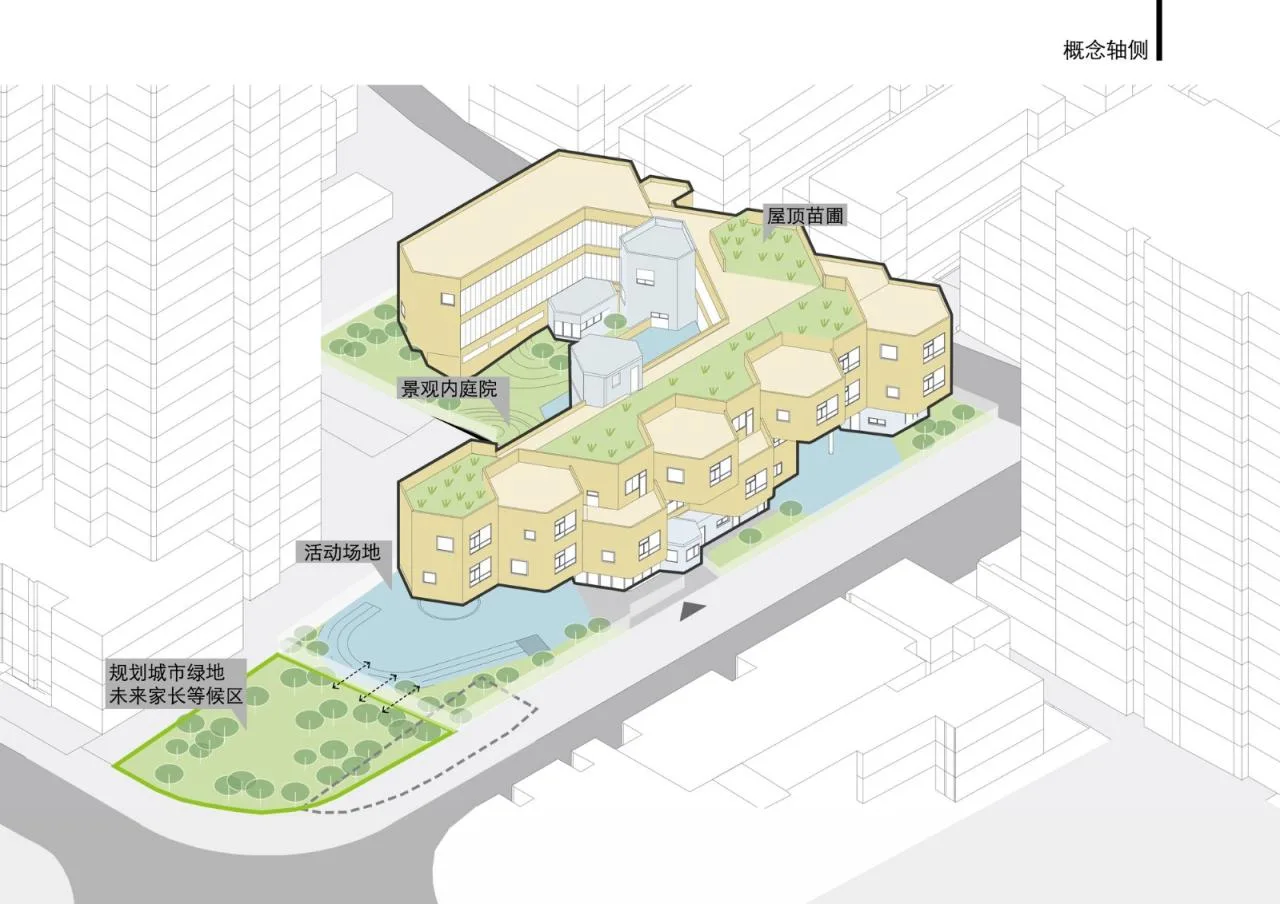
△ Axonometric diagram
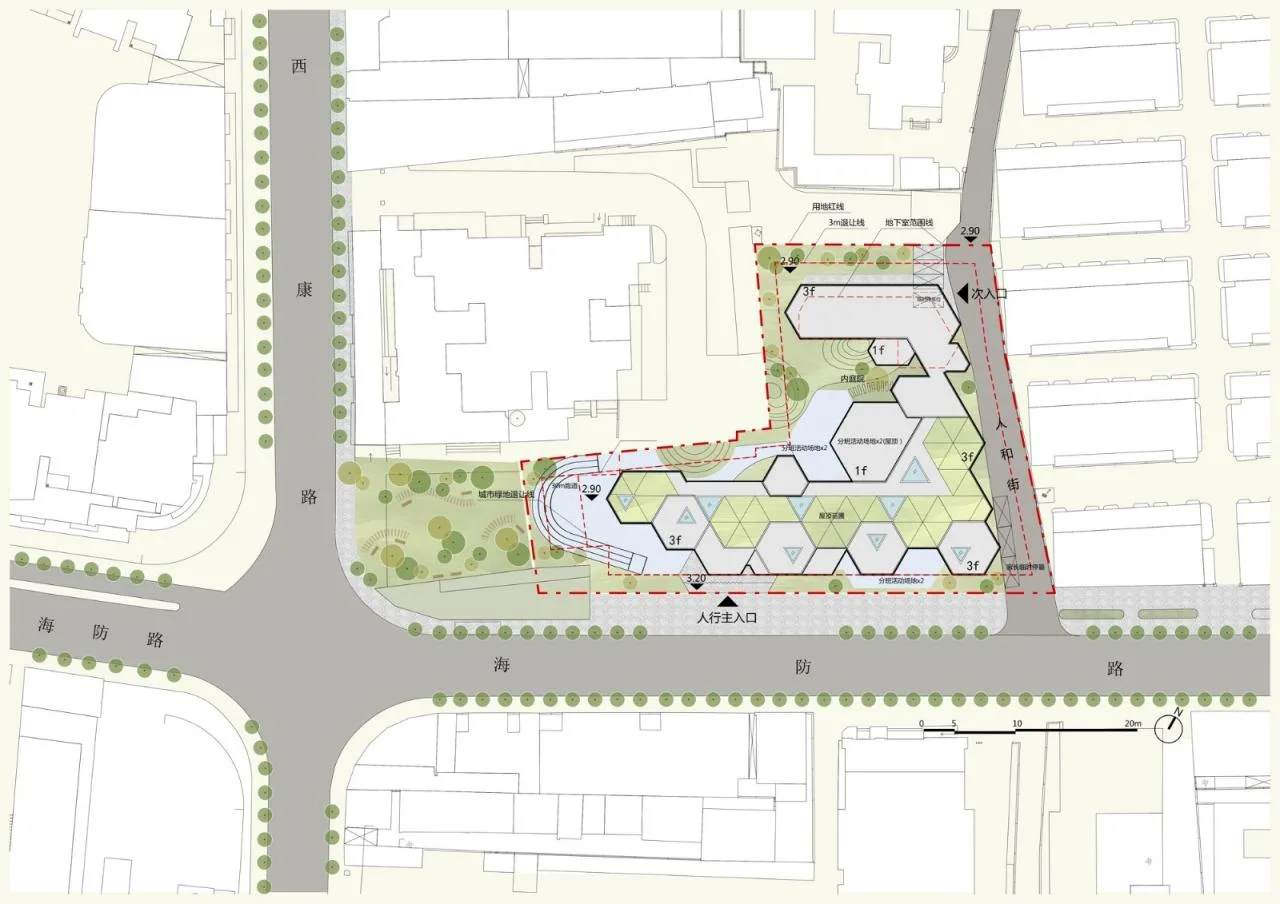
△ General layout plan
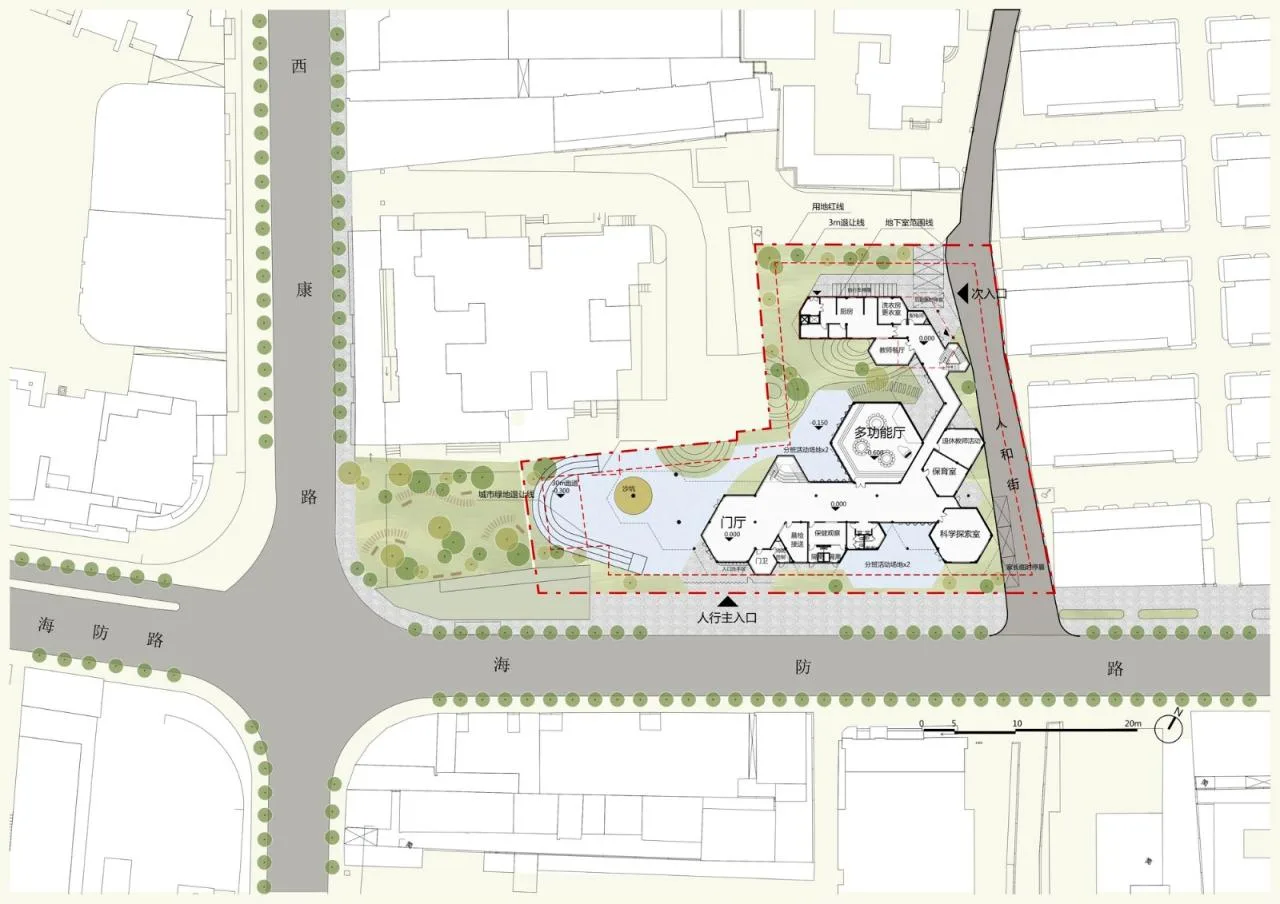
△ First floor plan
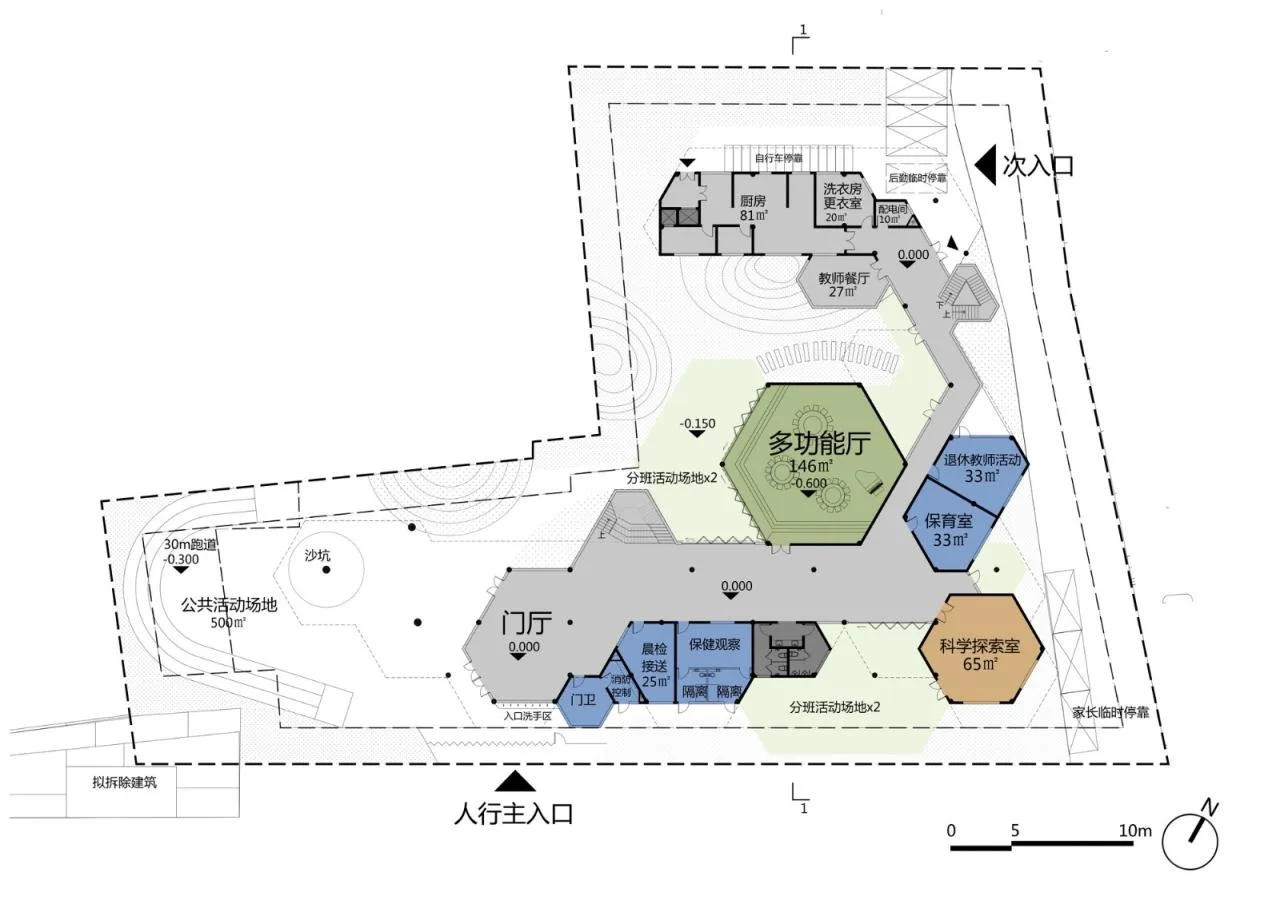
△ Plan view
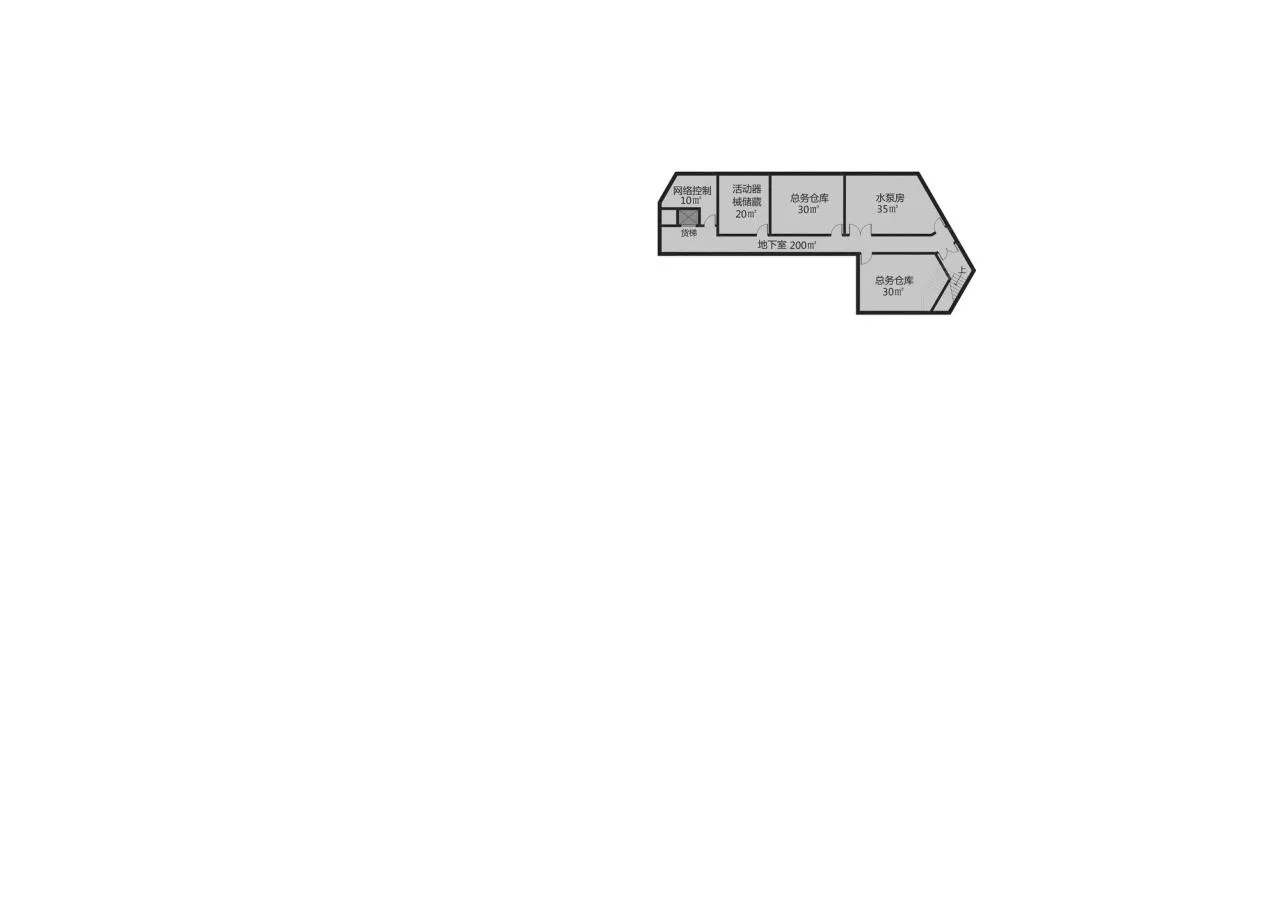
△ Underground Floor Plan
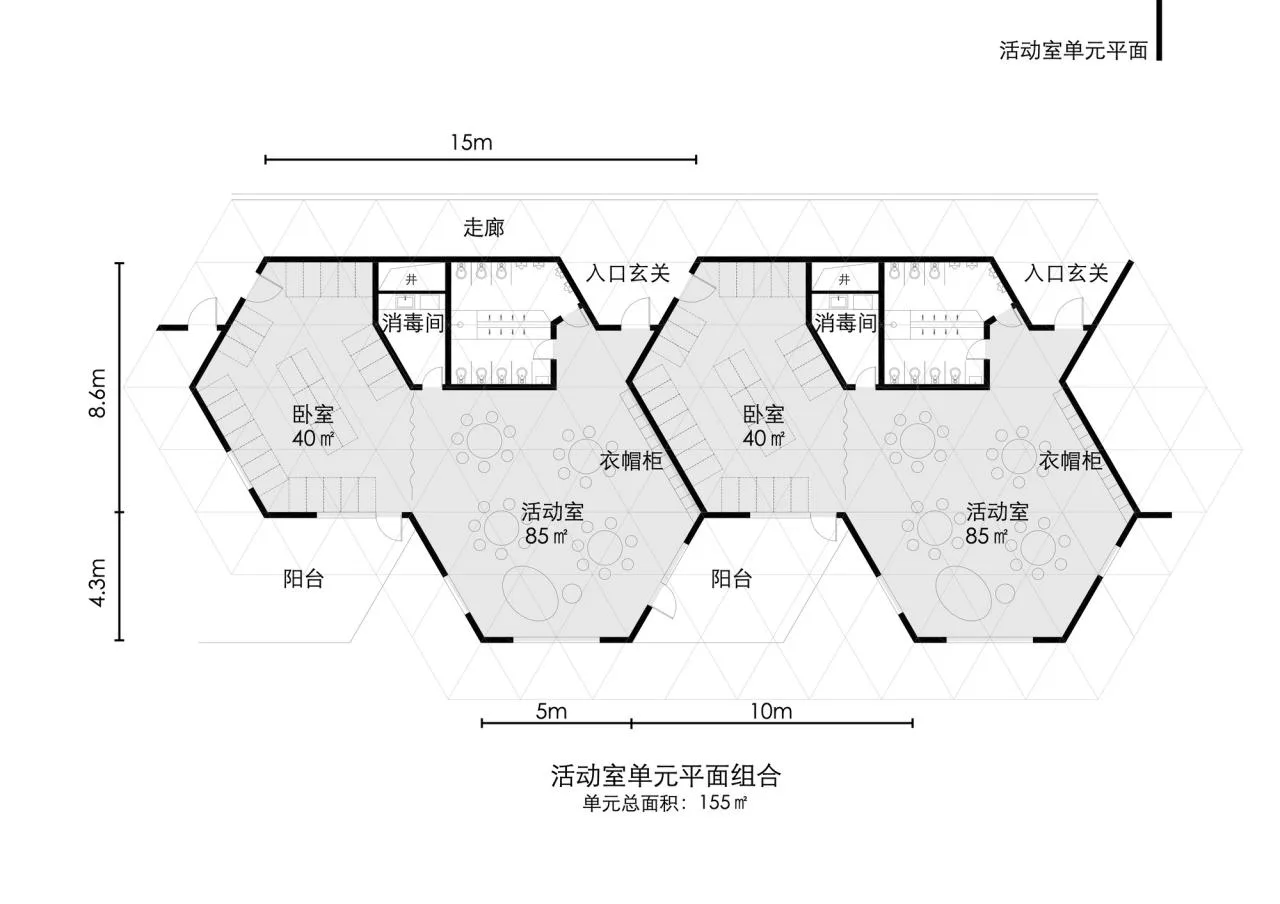
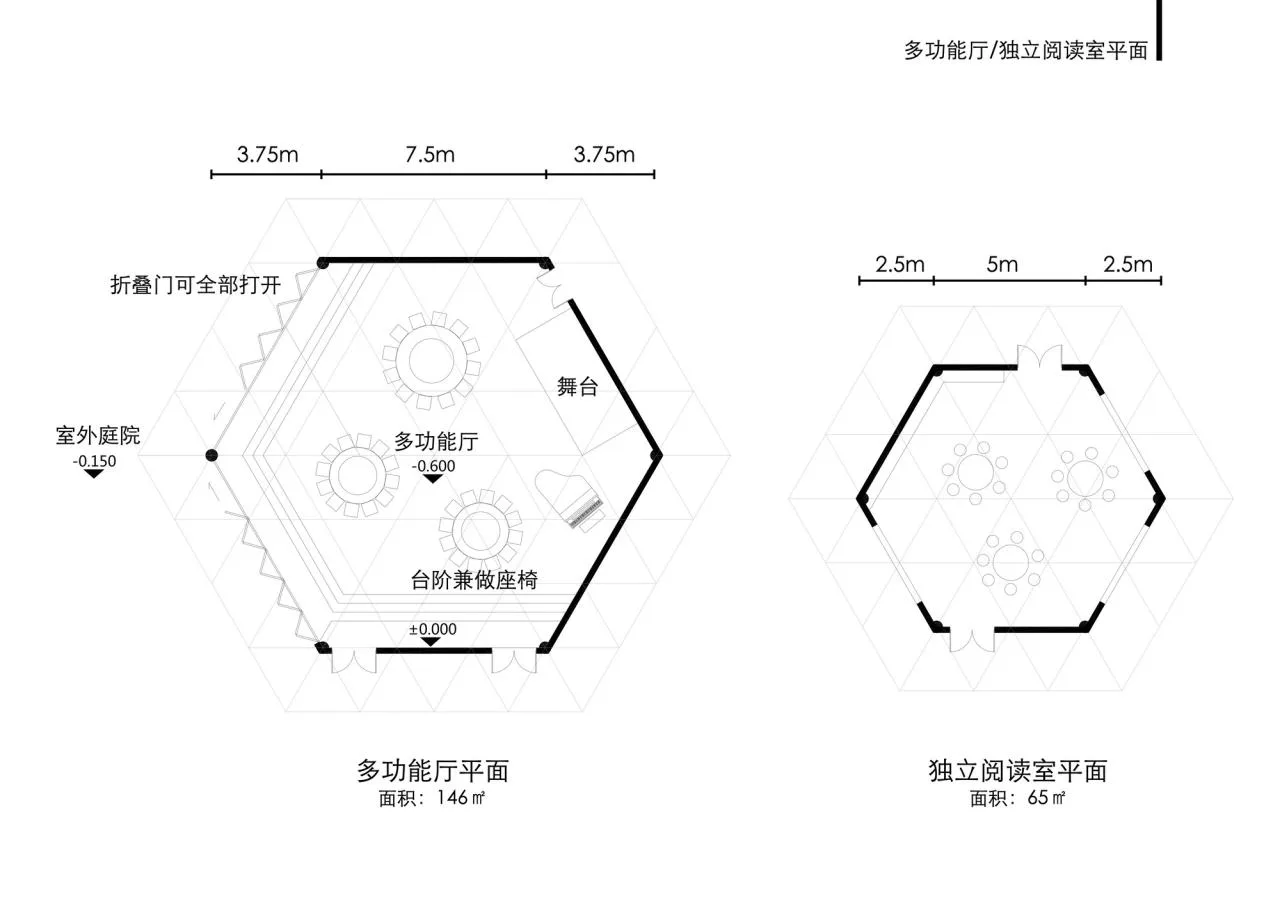
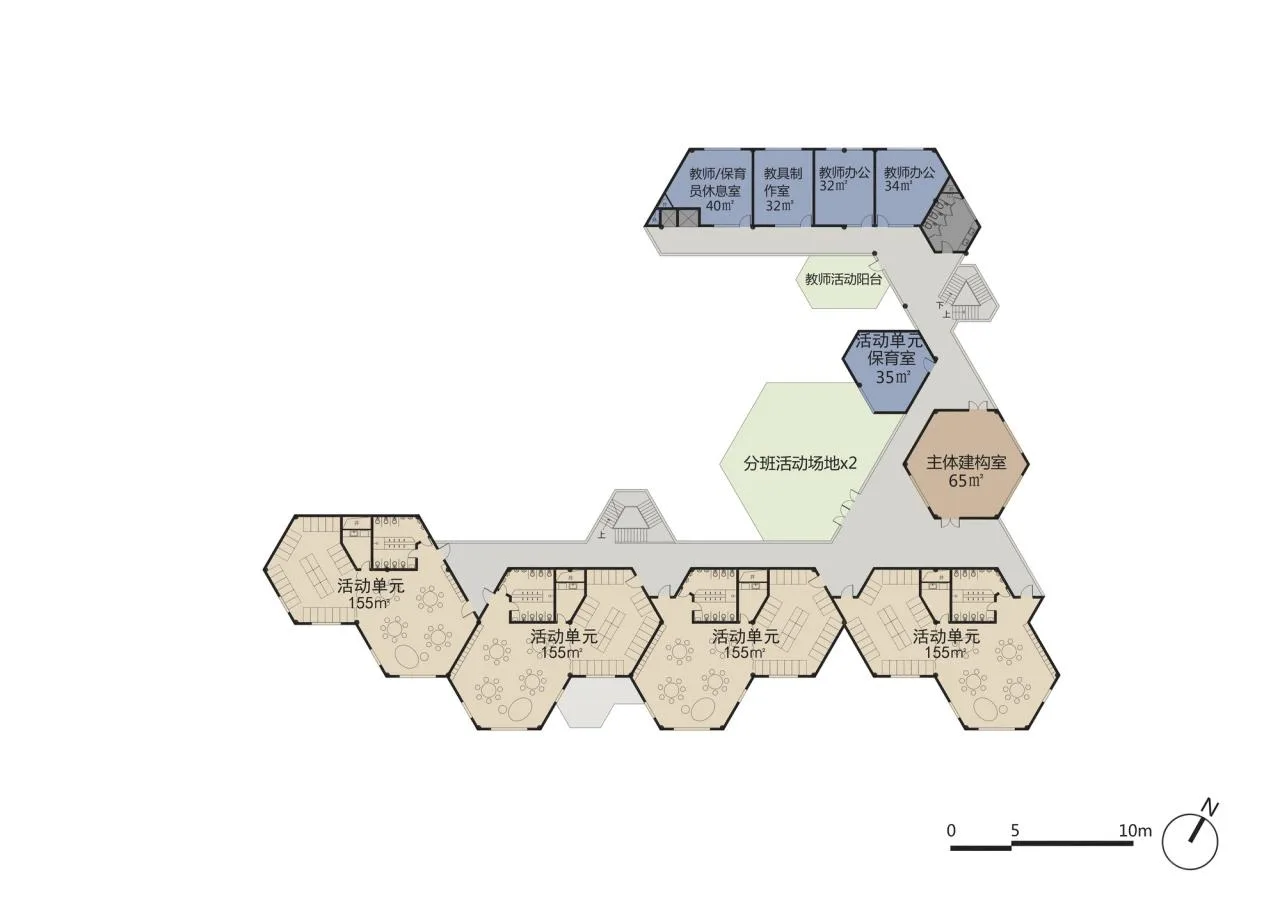
△ Plan view
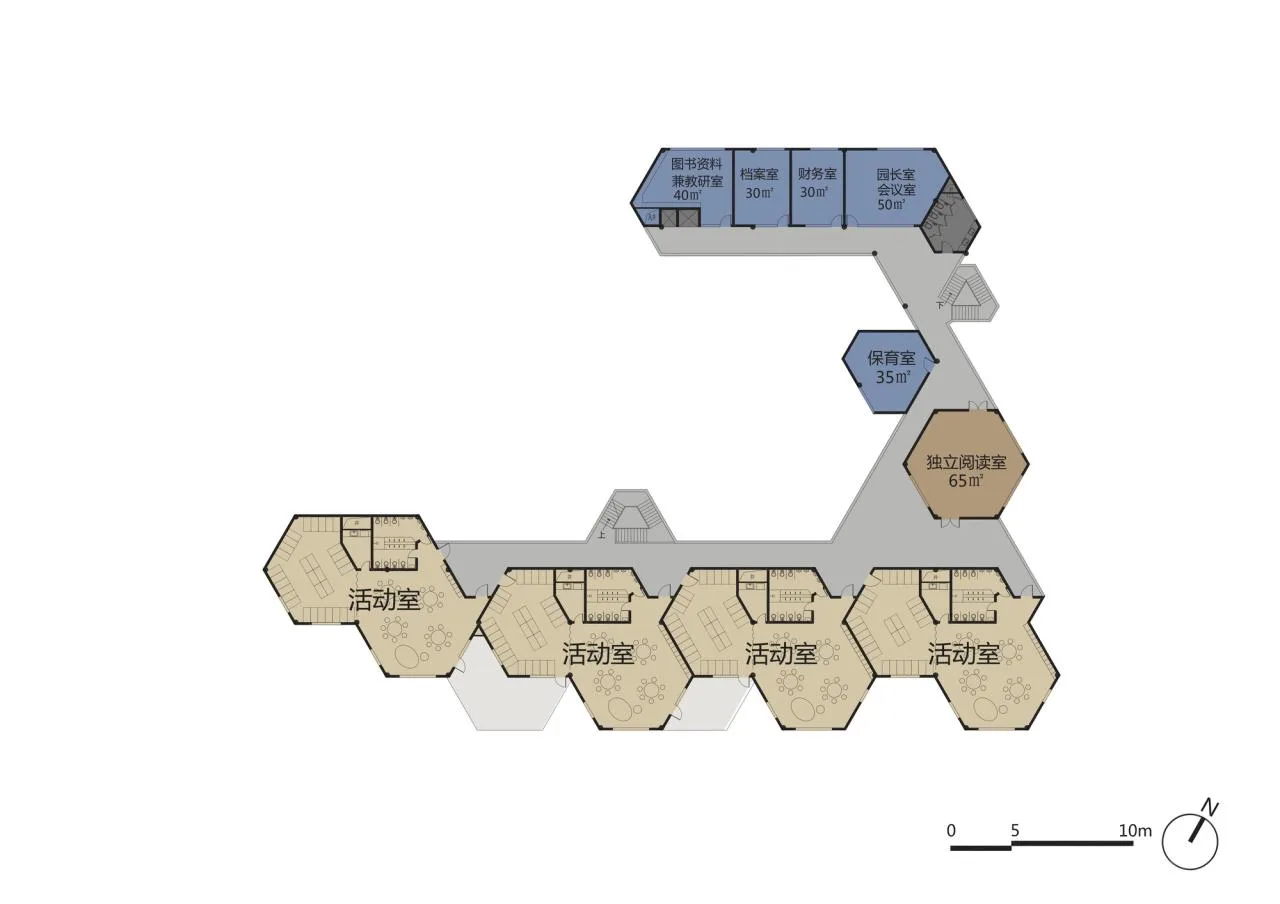
△ Plan view
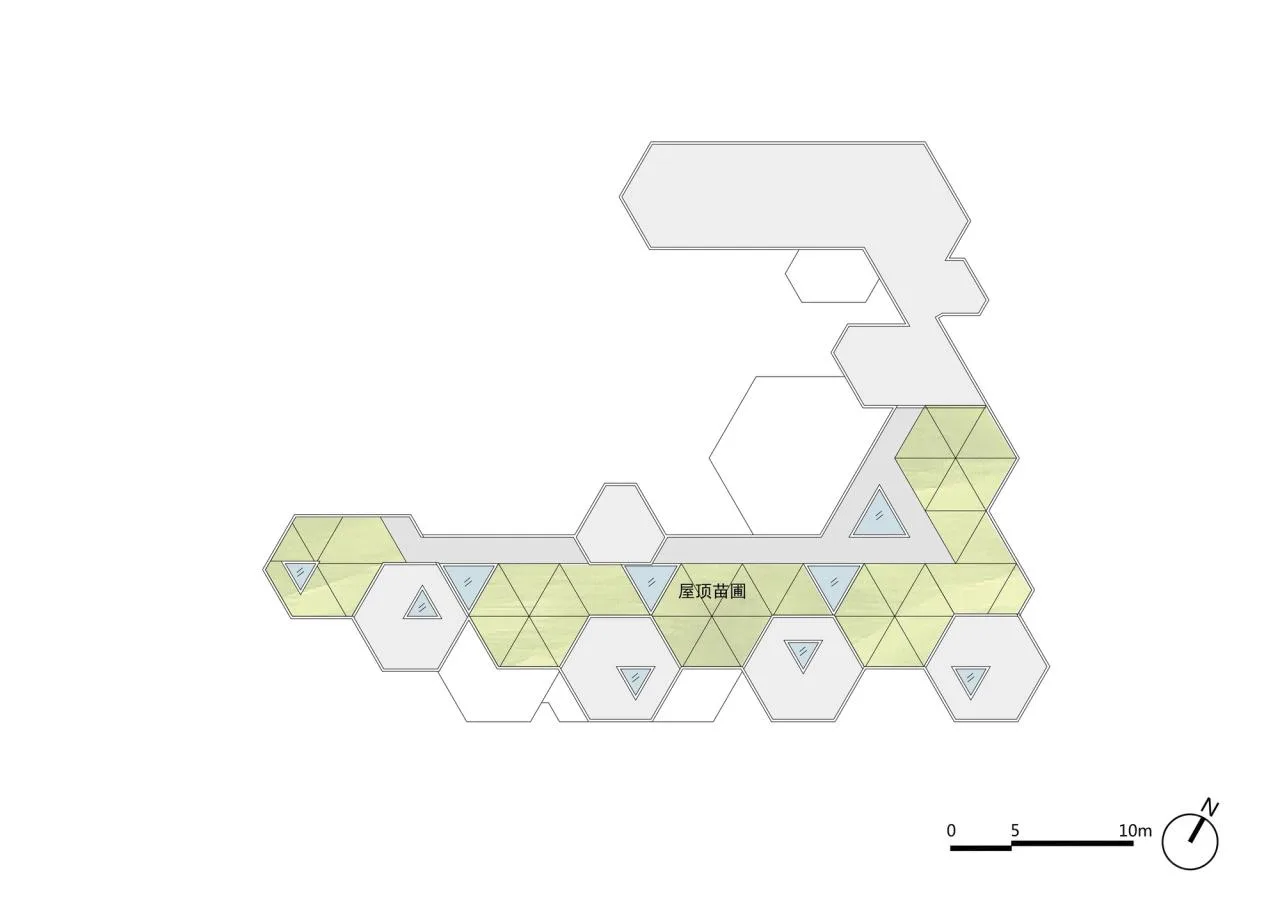
△ Roof Plan
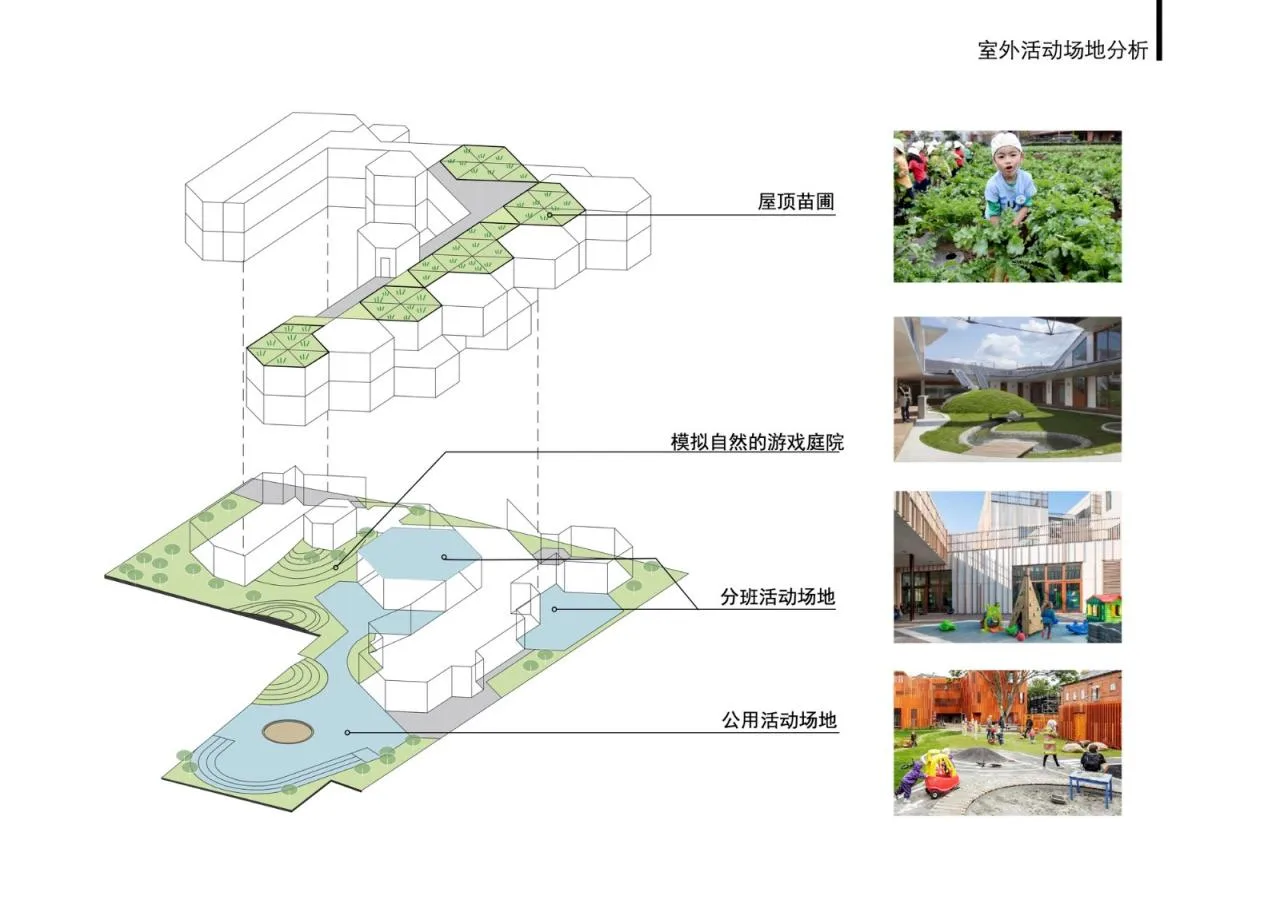
△ Roof analysis diagram
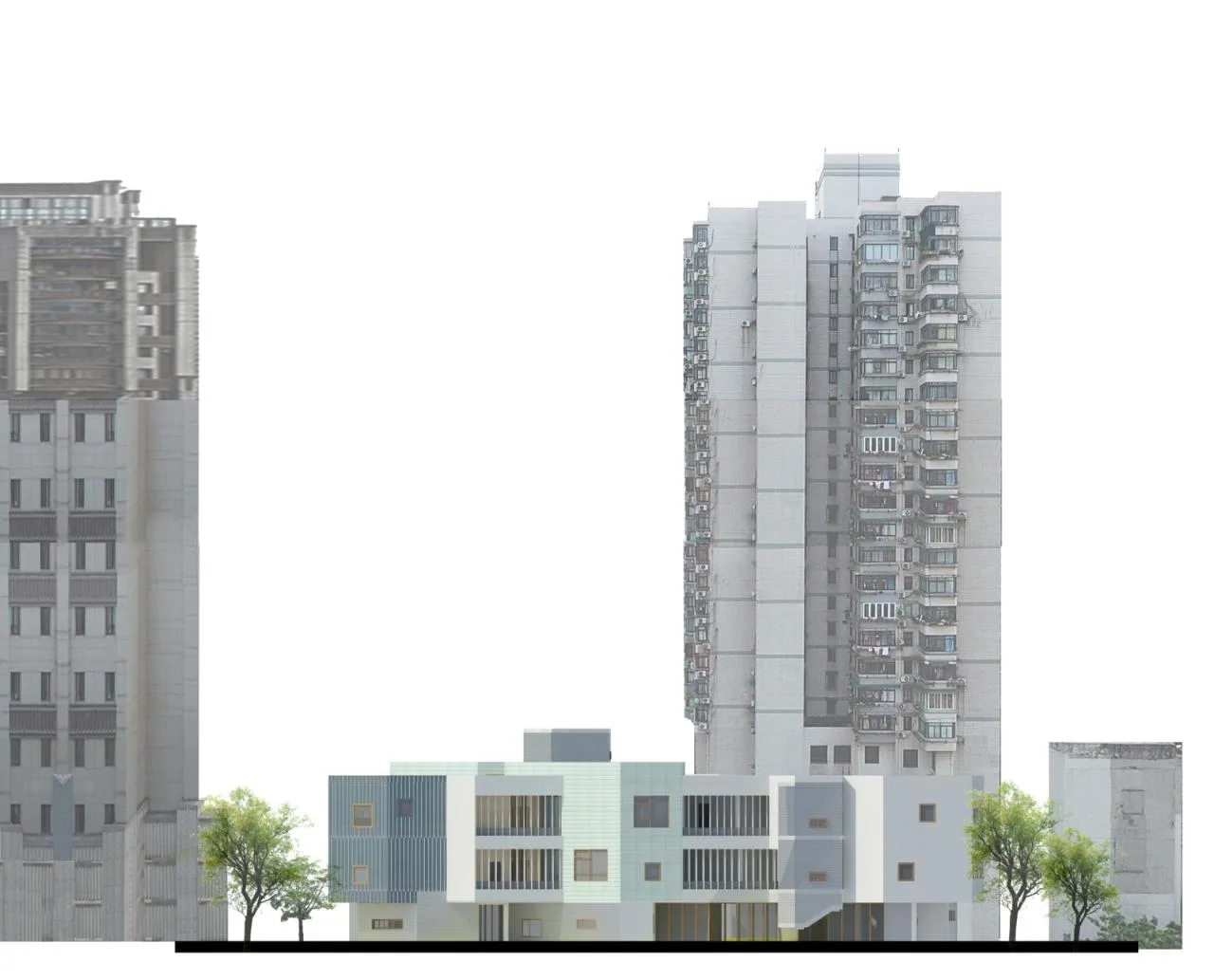
△ Elevation drawing
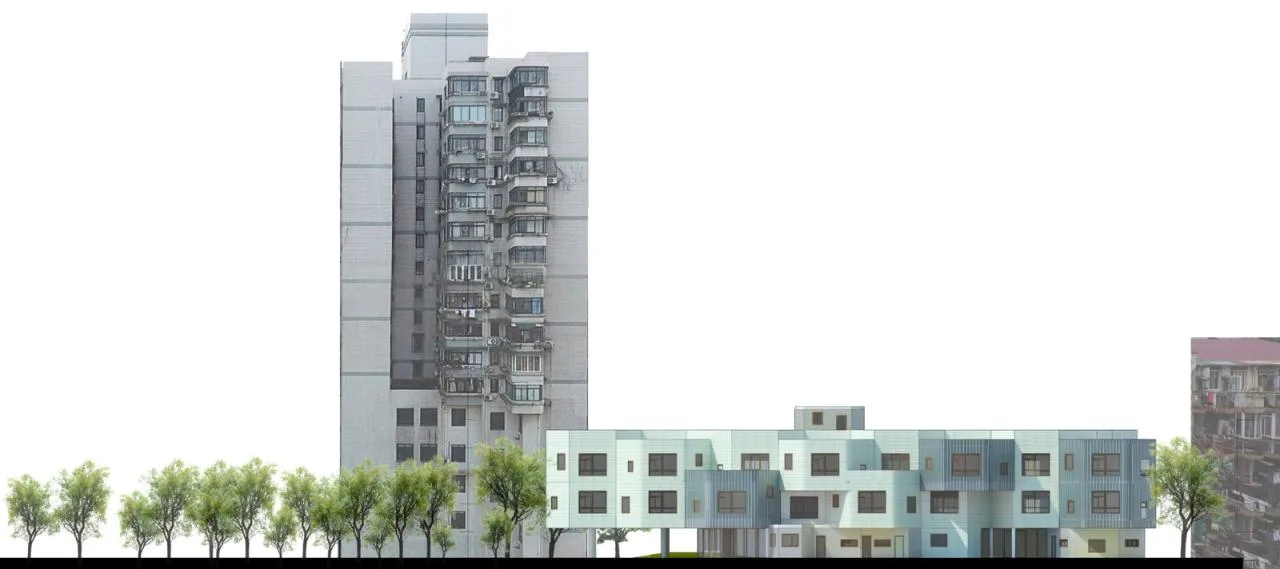
△ Elevation drawing
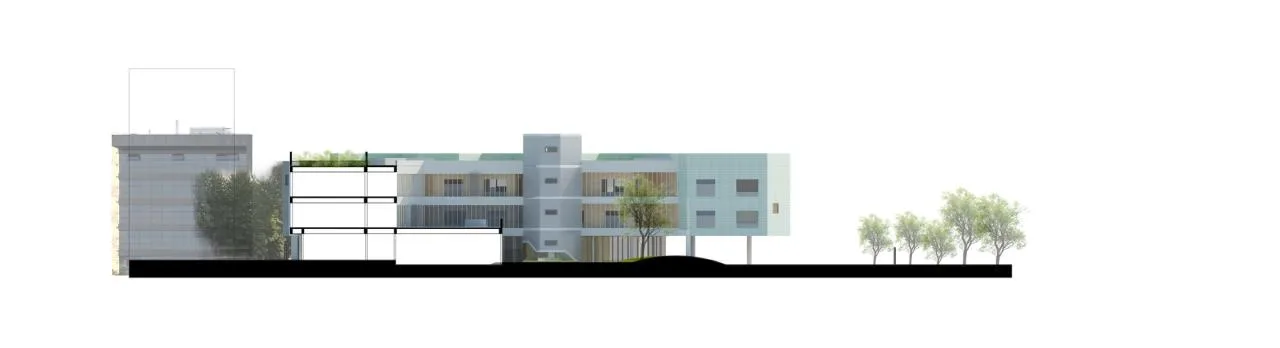
△ Section diagram
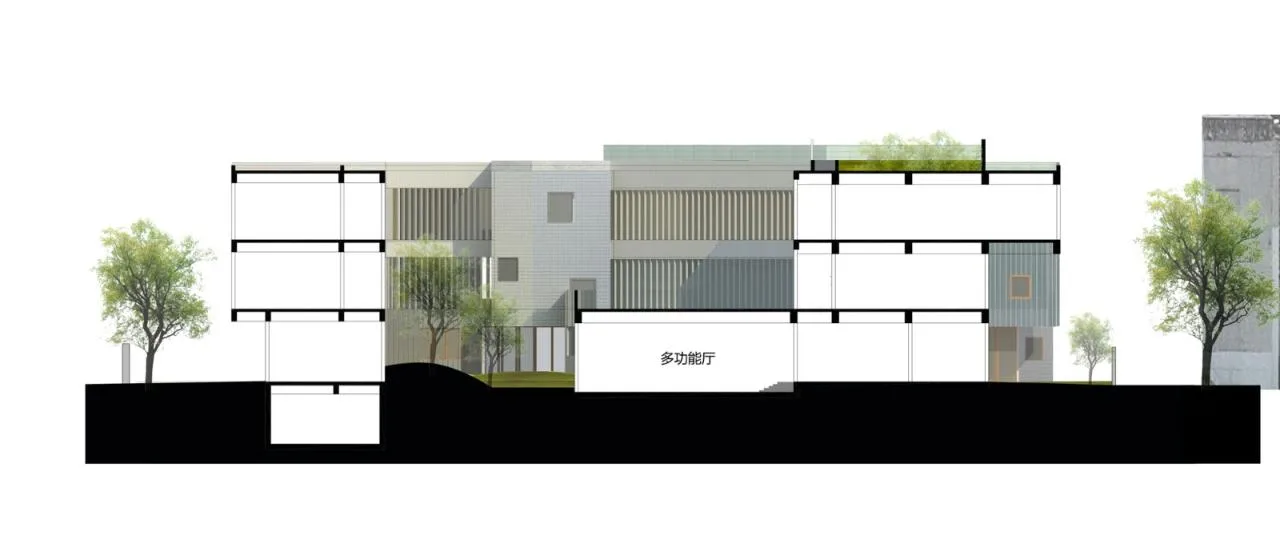
△ Section diagram
Project Information
Architect: Liu Yuyang Architectural Firm
Area: 2,900 m²
Photographer: Tian Fangfang, ALYA
Conceptual Design Team: Liu Yuyang, Wu Congbao, Wu Yaping, Liu Guoyu, Deng Wenjun
Scope of Conceptual Design: Architectural design, landscape design, interior design
Client: Jing’an District Education Bureau
Design Development Unit: Qingdao Times Architectural Design Co., Ltd
Structural System: Reinforced concrete frame
Main Materials: Colored decorative mortar
Enlightenment Geometry: Integrating into the Market — Follow-up on the Completion of Yuyao Road Kindergarten
Location: Jing’an District















Must log in before commenting!
Sign Up